“Indeed, humankind was created impatient: distressed when touched with evil, and withholding when touched with good—except those who pray, consistently performing their prayers.” (Qur’an 70:19-23)

﷽
“The prayer was prescribed as consisting of two rak’as both when one was resident and when travelling. Then the travelling prayer was kept as it was, and an increase was made in the prayer (observed) at the place of residence.”
Source: (Al-Jami’i Al-Sahih Musnad Al- Imam Al-Rabii hadith #186)
In other words, contrary to what is commonly believed that the prayers for dhur and asr and isha were 4 rak’as they were initially 2 rak’a and an increase was made when in your resting place (your home).
Now before we start, let us say that the title of this entry may be misunderstood. That is because the Sunnah, in a legal sense, is understood as the words, deeds, actions and treaties of the Blessed Prophet (saw).
So even the five daily prayers that we say are fardh (obligatory) are, in a sense, Sunnah, as the Blessed Prophet (saw) did them.
Then there are aspects of the Sunnah where the Blessed Prophet (saw) may have had a personal preference that he did not impose upon others.
Then there are those aspects of the Sunnah that the Blessed Prophet (saw) did and did not stop doing which are wajib for us to do.
Lastly, there are different reports that are transmitted that do not give us the impression that these were parts of the acts that the Blessed Prophet (saw) did and did not stop doing. So, in those one may have a choice, to observe or not observe it.
I was prompted to write this entry after a sincere brother (May Allah continue to bless him) asked if the following were the Sunnah prayers according to the Ibadi school:

What is worse is that the information provided by this AI did provide any source for the information. The above is most definitely incorrect, especially the point about 2 rak’as before Maghrib, because it is considered one of those times in which praying is makruh (disliked).
What this article attempts to do is to discuss those prayers that are connected to the fardh (obligatory) prayers. This is commonly called: Sunan Al-Rawatib
When it comes to prayers, they differ in terms of their level of obligation. Obviously, the five daily prayers are those which are fardh (absolutely obligatory).
They consist of:
2 rak’as for fajr. The fajr prayer itself.
4 rak’as for dhuhr. The dhuhr prayer itself.
4 rak’as for ‘asr. The asr prayer itself.
3 rak’as for maghrib. The maghrib prayer itself.
4 rak’as for isha. The isha prayer itself.
When we say the ‘Sunnah’ prayers, we are talking about those rak’as which the Blessed Prophet (saw) used to pray or perform in addition to those obligatory (fardh) prayers.
Mu’akkad are the confirmed Sunnah. The Blessed Prophet (saw) ALWAYS did them. He did not leave it. For us, the Mu’akkad are Sunnah, which are Wajib. Wajib means we must perform them. If a person does not do it, that person is considered to be vile.
What is the point in quoting the text of the Qur’an that confirms the Sunnah and then abandoning the Sunnah of the Blessed Messenger (saw) which we know he did not leave?
Ghair mu’akkadah is the non-confirmed sunnah. Meaning the Blessed Prophet (saw) did it sometimes, or sometimes he did not do it. Or, the fact that the lone narrator reports are in conflict on the matter.
What is the difference between: Qabliyah & Ba’diyyah sunnah?
Qabliyah are those sunnah prayers (rather they are mu’akkad or ghair mu’akkadah) that are done BEFORE the obligatory prayers (fardh).
B’adiyyah are those sunnah prayers (rather they are mu’akkad or ghair mu’akkadah) that are done AFTER the obligatory prayers (fardh).
So let us focus on the Mu’akkad, the confirmed Sunnah prayers that are Sunan Al-Rawatib: connected to the 5 daily fardh (obligatory) prayers.
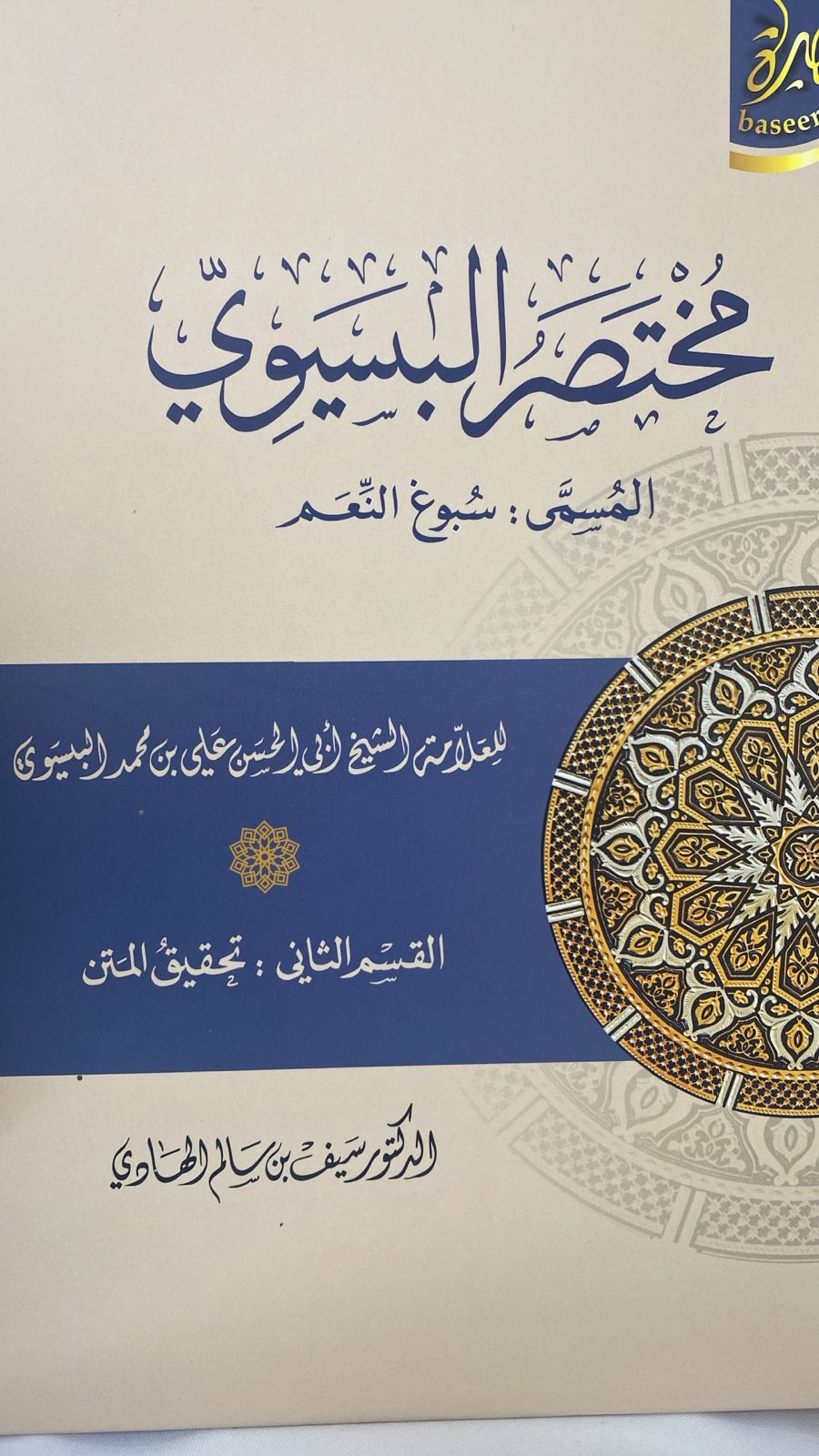
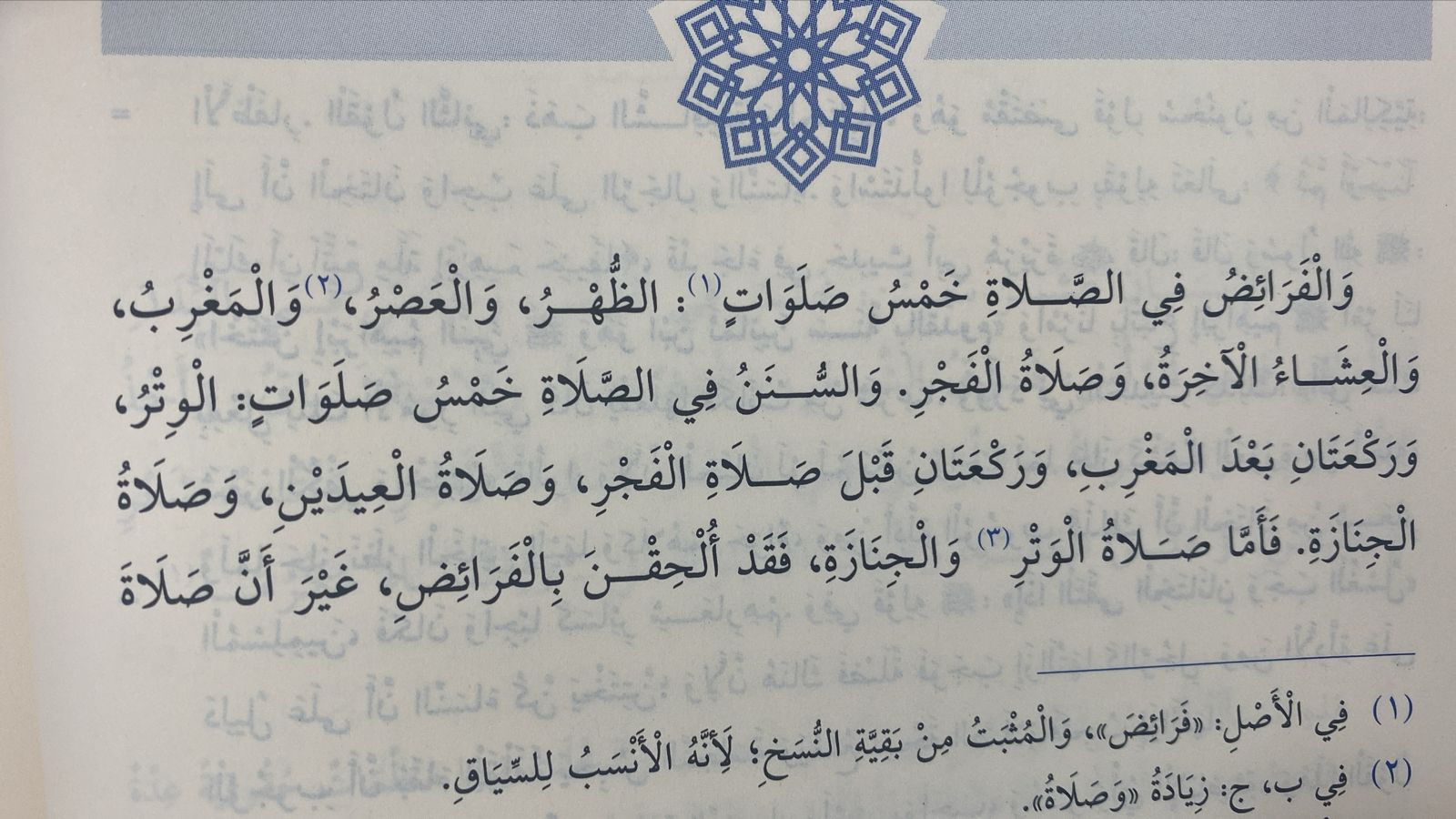

You can see the above information is taken from Shaykh Abu Hassan Ali Muhammed Al Basyawi. May Allah (swt) have mercy on him and grant him the highest paradise. Volume 2 Mokhtasar Al Basyawi (Subuughu Niami) pg. 44-46
So, again, our focus is primarily: Mu’akkad, the confirmed Sunnah prayers that are Sunan Al-Rawatib–connected to the 5 daily fardh. Those sunnah prayers in which the Blessed Messenger (saw) he never abandoned them.
That would be as follows:
2 Sunnah mu’akkad +2 rak’as for fajr.
4 rak’as for dhuhr.
4 rak’as for ‘asr.
3 rak’as for maghrib. +2 Sunnah mu’akkad
4 rak’as for isha.
So now let us focus on the Ghair mu’akkadah, the non-confirmed Sunnah prayers that are Sunan Al-Rawatib: connected to the 5 daily fardh (obligatory) prayers.
2 Sunnah mu’akkad +2 rak’as for fajr.
4 rak’as sunnah or 2 rak’as sunnah + 4 rak’as for dhuhr. + 4 rak’as sunnah. Or 2 rak’as sunnah.
4 rak’as for ‘asr.
3 rak’as for maghrib. +2 Sunnah mu’akkad
4 rak’as sunnah or 2 rak’as sunnah + 4 rak’as for isha. + 4 rak’as sunnah or 2 rak’as sunnah
Prima Qur’an comments:
Now that which you see highlighted in green, are those Ghair mu’akkadah. They are non confirmed Sunnah prayers. This means that it is possible that the Blessed Prophet (saw) did them at times and other times he did not do them.
So why is there disagreement or dispute over the ghair mu’akkadah? Insh’Allah, we will do our level best to try and explain using an example. It is also hoped that you, the seeker of truth, will understand why one must take care of the lone narrator reports. One narrator reports put a few strokes on the canvas but they do not paint the whole picture.you.
Let us take the following hadith for example:
“Narrated `Abdullah bin Mughaffal:
The prophet said, “There is a prayer between the two Adhans (Adhan and Iqama), there is a prayer between the two Adhans.” And then while saying it the third time he added, “For the one who wants to (pray).”
Source: (https://sunnah.com/bukhari:627)
The above hadith is specific about there being a prayer before every prayer (inclusive of Isha). However, it is not specific as regards the number of rak’as. Are we talking about 2 rak’as or 4 rak’as.
Thus, even though this is a musnad hadith of Imam Bukhari, some may not see it as sufficient evidence to suggest that this was a continued practice.
Interestingly enough, some may leave it so as not to practice bid’ah (innovation). Others, avoid the difficulty by labeling it as nawafil (optional prayers).
So this beloved sunnah is not to be confused with the confirmed sunnah (Sunnah mu’akkad). The beloved sunnah or nafila (if you do it you earn good and if you do not do it you do not accrue sins).
So to recap we have:
2 rak’as (qabliyah) before Fajr, which is Sunnah mu’akkad
2 rak’as (ba’diyyah) after Maghrib, which is Sunnah mu’akkad
You have other Sunnah prayers that are mu’akkadah, like: the two eid prayers, the eclipse prayer, the 2 rak’as Tahiyyatul Masjid (greeting the Masjid) and salat janazah. These are all a MUST.
In the case of salat janazah, this is a fard al kifayyah. In Islam, we have:
Fard al ‘ayn (personal responsibility that others cannot do on your behalf, like the five daily prayers).
Fard al kifayya (collective responsibility) such that if some do, they lift the obligation upon the collective. What this means is that it is not necessary for everyone in a city or village to come to the funeral prayers. What is necessary is that some people come to perform the funeral prayers.
The place of the witr prayer according to the Ibadi school.
The witr prayer is a prayer that falls outside Sunan Al-Rawatib.
That being said, the witr prayer is a Sunnah mu’akkad. This means it is wajib for us to pray it.
“Narrated AbuAyyub al-Ansari:
The Prophet (saw) said: “The witr is a duty for every Muslim, so if anyone wishes to observe it with five rak’ahs, he may do so; if anyone wishes to observe it with three, he may do so, and if anyone wishes to observe it with one, he may do so.”
Source: (https://sunnah.com/abudawud:1422)
The question is: Did the Blessed Prophet (saw) abandon the witr or was it part of his Blessed Sunnah that he never abandoned? For us, it is part of the Sunnah that he never abandoned. That is to say it is Sunnah mu’akkad.
How many rak’as for witr?
Witr itself means odd. As one can see from the hadith above: (1 rak’as, 3 rak’as, 5 rak’as).
In reality, it can be up to 13 rak’as.
There is no need to dispute and set in stone a certain number of rak’as for witr other than the odd numbers. That is because the Blessed Prophet (saw) would perform these rak’as with odd numbers. The reports would come down to us about the odd numbers and people would hold on to these solitary reports as if they were set in stone. What is confirmed by sunnah is that it was done. What is not confirmed sunnah is the number of rak’as.
“Technically speaking, al-witr could be performed with one unit (rak‘ah). Also, it could be done with three, five, seven, nine, eleven or thirteen units; thirteen is the maximum.2
Allāh’s Messenger (saw) is reported to have said: ‘Whoever wants to pray al-witr with seven rak‘ahs, let him do so, and whoever wants to pray al-witr with five rak‘ahs, let him do so, and
whoever wants to pray al-witr with three rak‘ahs, let him do so, and whoever wants to pray al-witr with one rak‘ah, let him do so, and whoever wants to do so gesturing, let him do so’.3
It is allowable to perform al-witr in the al-fașl way or the alwașl way, yet the former is preferred to the latter.”
Source: (Al-Muatamad The Reliable Jurisprudence on Prayer pg. 401.)
al-Fașl way: Is to do taslim after sitting in the second unit. Then, you pronounce the consecrating takbir (takbirat al-Iḥram) after being upright for the third unit.
al-wașl way: It is to perform the three units continuously, without this first taslim after sitting for the second unit; rather, you stand up after sitting, with a transitional takbir for the third unit.
What is the situation of the Sunnah prayers connected to Sunan Al-Rawatib when traveling?
When traveling, the Sunnan prayers fall. Meaning the obligation to perform them falls.
The units of rak’as revert to their origin (recall the hadith at the beginning of this article).
Thus, it would be :
2 rak’as for fajr.
2 rak’as for dhuhr. + 2 rak’as for ‘asr.
3 rak’as for maghrib. + 2 rak’as for isha.
Witr 1 rak’a only.
In general, a person can pray nafila whenever they like. That is apart from the prohibited prayer timings.
The forbidden and disliked times to pray.
The three forbidden times to pray are (sunrise), noon — when the sun reaches its zenith and sunset. The disliked timings are from Asr to Maghrib.
We pray during the eclipse (rather it is solar or lunar)
We do not pray at these specific times so as not to imitate the solar cults and those who worship the Sun.
“And he brought me into the inner court of the LORD’S house, and, behold, at the door of the temple of the LORD, between the porch and the altar, were about five and twenty men, with their backs toward the temple of the LORD, and their faces toward the east; and they worshiped the sun toward the east.” (Ezekiel 8:16)
Or, for example, like the majority of Christians who give deference to the Sun. The majority of Christians will worship the birth of their God on December 25th without any biblical textual evidence.
In the ancient Roman calendar, December 25 was the date of the winter solstice. The emperor Aurelian made this the date of the festival Dies Natalis Solis Invicti, the birthday of Sol Invictus or the ‘Invincible Sun’
Although there are Christians that disagree with the date (December 25th), such as the EO and Oriental Orthodox and Jehovah’s Witness.
The Christians worship on Sunday, the day of the Sun.
The Christian symbol: The Cross, is an adaptation of the Ankh. The symbol was of Re/Ra, who would take his boat to the underworld (the realm of death) associated with the Nile River.

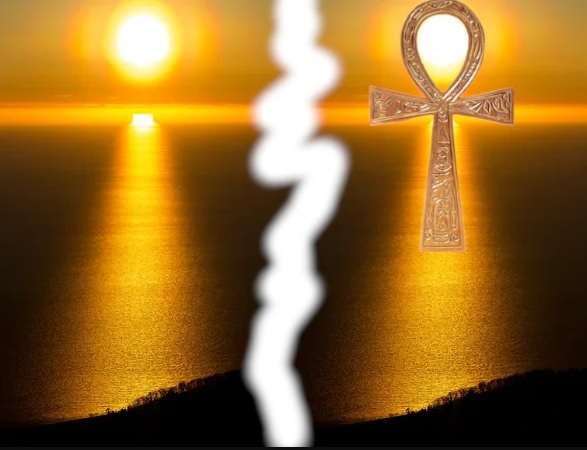
Thus, Muslims do not pray at certain times if we are not to be associated with those solar cults and those who worship the sun and or take their mythos from other earlier-based solar-cults like Christianity.
The status of those who abandoned the Sunnah mu’akkad
“Generally speaking, all Sunnah prayers, be it stressed or non-stressed, are not to be neglected by a faithful believer, as they are authentically proven to have been practiced, or verbally recommended by the one whom Allah set as a good example for us. Once, a Muslim scholar was asked regarding the status of one who habitually leaves as-Sunan ar-Ratibah. He replied, ‘He is religiously inferior’. Thereupon, Imām as-Sālimī (May his soul rest in peace) commented ‘And Paradise is not inhabited by inferiors’. If this is the case with as-Sunan ar-Rātibah, the situation with the emphasized/stressed Sunnah should be even more strict. Likewise, another scholar was questioned about one who does not care to perform the optional prayers that were authentically reported by the Prophet (saw). Upon being asked about this situation, he answered, ‘He is a man of evil’, and furthermore he mentioned that ‘his witness is rejected ’.”
Source: (Al-Muatamad The Reliable Jurisprudence on Prayer pg. 399.)
The following video with the title: He who abandons the confirmed Sunnah is of low status. By His Eminence Shaykh Ahmed bin Hamad Al-Khalili (h).
ما حكم من ترك السنن المؤكدة، وهل يأثم في ذلك؟
من ترك السنن المؤكدة فهو خسيس المنزلة وأمره إلى الله. والله أعلم.
Translated: What is the judgment on someone who abandons the confirmed Sunnahs, and is he sinful for that?
Whoever abandons the confirmed Sunnahs is of lowly status and his matter is up to Allah. And Allah knows best.
The people of the past were fighting to follow the practice of the Blessed Prophet (saw) ; what we call the Sunnah. Now they leave it because it’s a Sunnah!
May Allah (swt) forgive the Ummah.
May Allah (swt) guide the Ummah.


 Prima Quran
Asalaam ‘aleikum warahmatuLlaah wabarakatuh, Sheikh Shukran, JazaakaLlaah khairan for good writings about Islam. I personally benefit much from your knowledge through your writings. Sheikh, I would like to share some ideas if it’s okay, that when you’re writing Prophet Muhammad SwalaLlaahu ‘aleih wasalamu it’s better than (SAW), If you write in Short some of the readers they will not complit to say “SwalaLlaahu ‘aleih Wasalamu” If I’m wrong for this advice Please forgive me. Your Brother in Islam, Ashraf Mohamed al-Mauly Dar es Salaam, Tanzania.
Walakum salaam warahmutallah wabarkatuh dear Sheikh Ashraf, al-Mualy. May this message find you in good health and in good emaan. Jazak’Allahu khayran for your advise it is something to take into consideration. It is must understanding that most Muslims in English do understand this acronym, in the way that Arabs can read the language without the use for vowels and Allah knows best. None the less this is good advise. Please forgive me for my short comings and please keep me and this site in your du’a noble brother. I have your contact number but I did not share it in your comment (as to give you privacy).
Please keep our brothers and sisters in Palestine, Sudan, Mynamar, China, Kashmir, Yemen, Syria, Lebanon and all over the world in your du’a.
Allahumma Aamiin Yaa Rabil’alamiin
Aslamualaikum brother please provide me hadith book in english translation that ibadi scholars consider authentic I am not a Omani I am muslim from india. I love Quran but hadiths are contradicting quran.
i love islam some time when I listen some hadiths and sects I got confused and I also affect my studies.please help me.
“Aslamualaikum” this makes the second time I have come across the greeting transliterated as such into English.
If your intention was to greet me with the greetings of peace, then unto you peace as well.
“me hadith book in english translation that ibadi scholars consider authentic.”
Dear brother we do not currently have this translated into English. We have a translation from a translation. In other words from French into English. If you are interested that would be under our resource page: https://primaquran.com/2022/10/05/ahl-al-haqq-wa-l-istiqama-resource-page/
So this sources is still in Arabic.
“I am not a Omani I am muslim from india.”
Al hamdulillah, our brother. Not all Ibadis are Omani and not all Omani are Ibadis.
You have Ibadis from China, Turkey, Russia, United States, Ireland, Ghana, Uganada, many places.
“I love Quran but hadiths are contradicting quran.”
Yes, there are some hadiths that conflict with the Qur’an, but certainly not all of them.
One can also argue that the Qur’an conflicts with itself. This is why proper understanding and tools are very helpful to aid us as tools to seek clarification insh’Allah.
“i love islam some time when I listen some hadiths and sects I got confused and I also affect my studies.”
First and foremost Allah (swt) did not give us a religion other than Islam, and he did not give us a name other than Muslim.
Since the early community had some unfortunate disagreements the ummah began to have some differences among one another.
Our primary sources is and always will be the Qur’an. We also follow the example of the Blessed Prophet (saw).
Continue to ask Allah (swt) for guidance and he will do exactly that (guide you).
If we can try and assist on our end we will do our level best.
May Allah (swt) love you and bless you and may Allah (swt) continue to keep the Muslims of India safe.