“Indeed, We have made it (ja’alnahu) an Arabic Qur’an that you might understand.” (Qur’an 43:3)
﷽
The truth of the matter is that the entire Muslim Ummah are in agreement that some aspect of the Qur’an is created. What they differ and disagree about are the specifics.
This debate has been framed incorrectly. It has been framed as a debate between those who believe the Qur’an is created and those who believe the Qur’an is uncreated.
The reality: The debate is about to what degree and which aspects of the Qur’an are created.
For example:
1. The Mushaf. The pages that the ink is printed upon. All Muslims call this the Qur’an. There is etiquette in regard to it. We do not bring it to dirty places. The proper disposal is to burn it’s pages. Yet, this is called ‘Qur’an’. Everyone who can be called Muslim agrees to this. That is that the Mushaf of the Qur’an is created. If there is a person who disagrees with this and or is hesitant to affirm this then know that they are upon something very strange.
2. The ink and the words which are written. The words and letters on the pages that were placed there by ink or the printing press. All Muslims call this the Qur’an. Everyone who can be called Muslim agrees to this. That is that the ink and the words on the pages are created.If there is a person who disagrees with this or is hesitant to affirm this then know they upon something very strange.
3. The recitation of the words of the Qur’an. This is is what we will be discussing today.
We will learn that the one who compiled ‘Sahih Bukhari’, whose full name is: Abū ʿAbd Allāh Muḥammed ibn Ismāʿīl ibn Ibrāhīm ibn al-Mughirah ibn Bardizbah al-Juʿfī al-Bukhārī and his supporter who compiled ‘Sahih Muslim’ . Both believed that their recitation of the Qur’an is created. This caused a boycott of Bukhari by major Hanbali scholars..
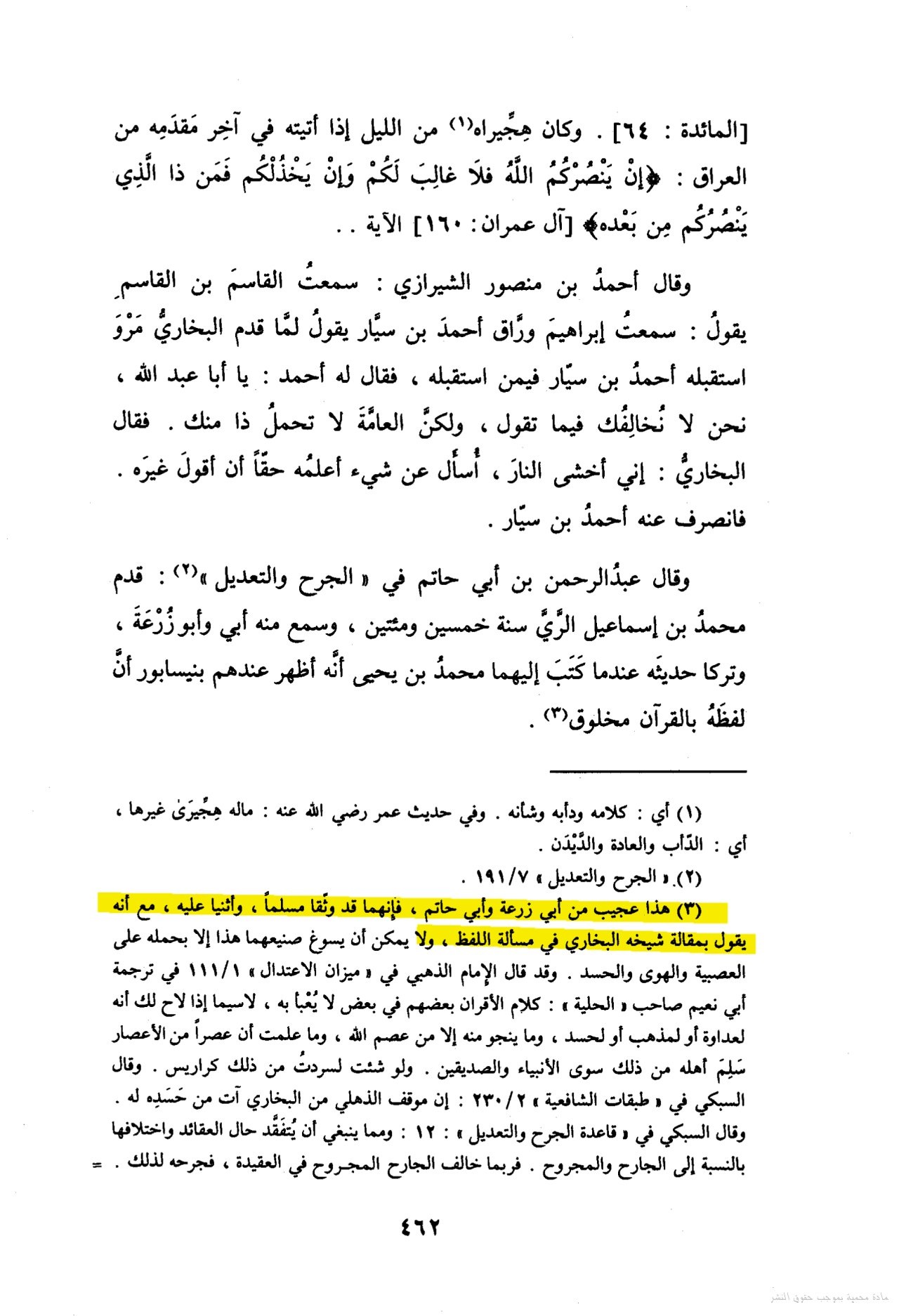
“Muhammed bin Yahya al-Nisaburi wrote to the people of Rayy, informing them of al-Bukhari’s position. The accusation was that al-Bukhari held “lafzi bil-Quran makhluq”. That his pronunciation/recitation of the Quran is created.”
“My father and Abu Zur’ah heard from him, then they both abandoned his hadith when Muhammed bin Yahya al-Nisaburi wrote to them that he [al-Bukhari] had made it apparent to them that his pronunciation of the Qur’an is created.”
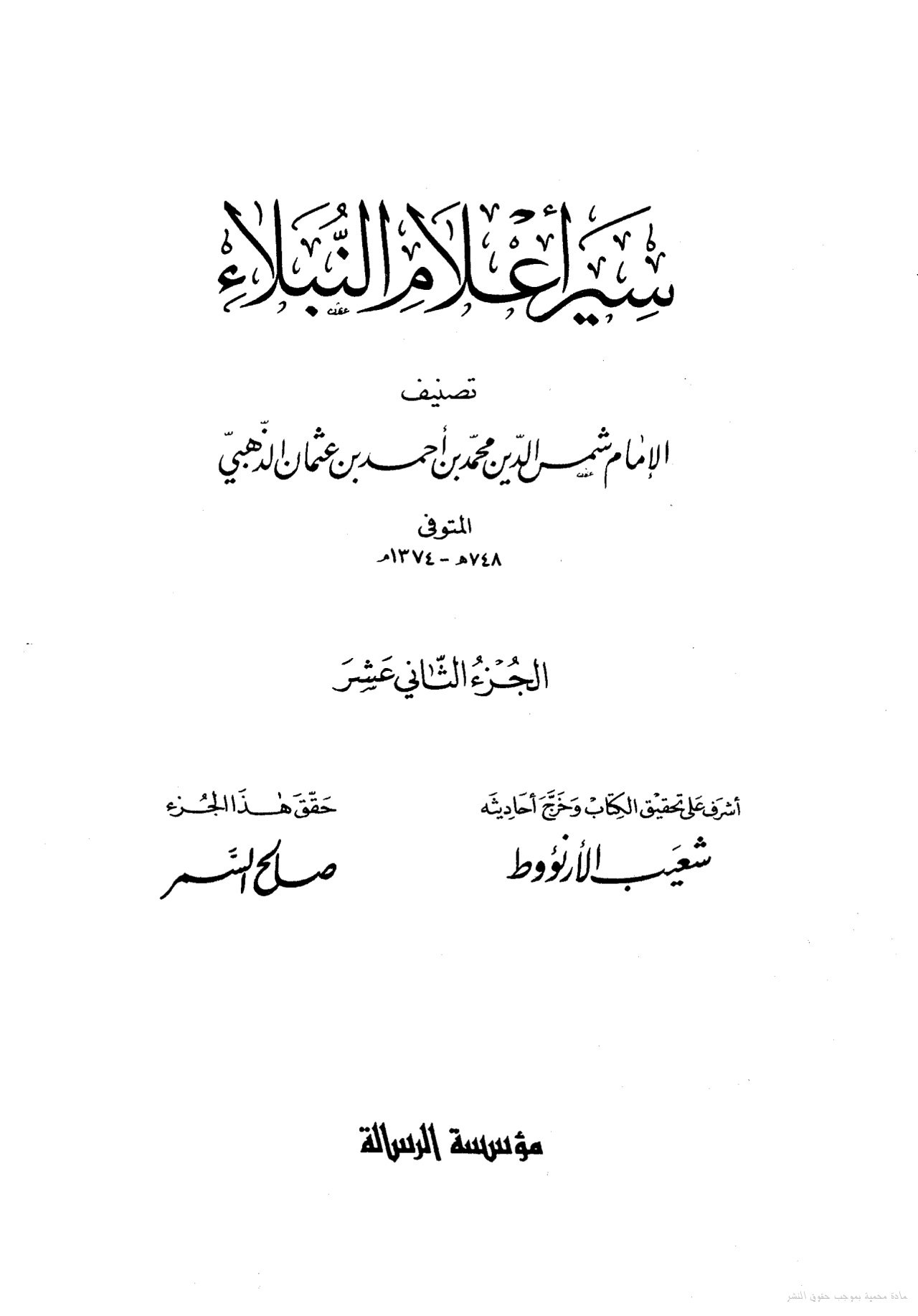
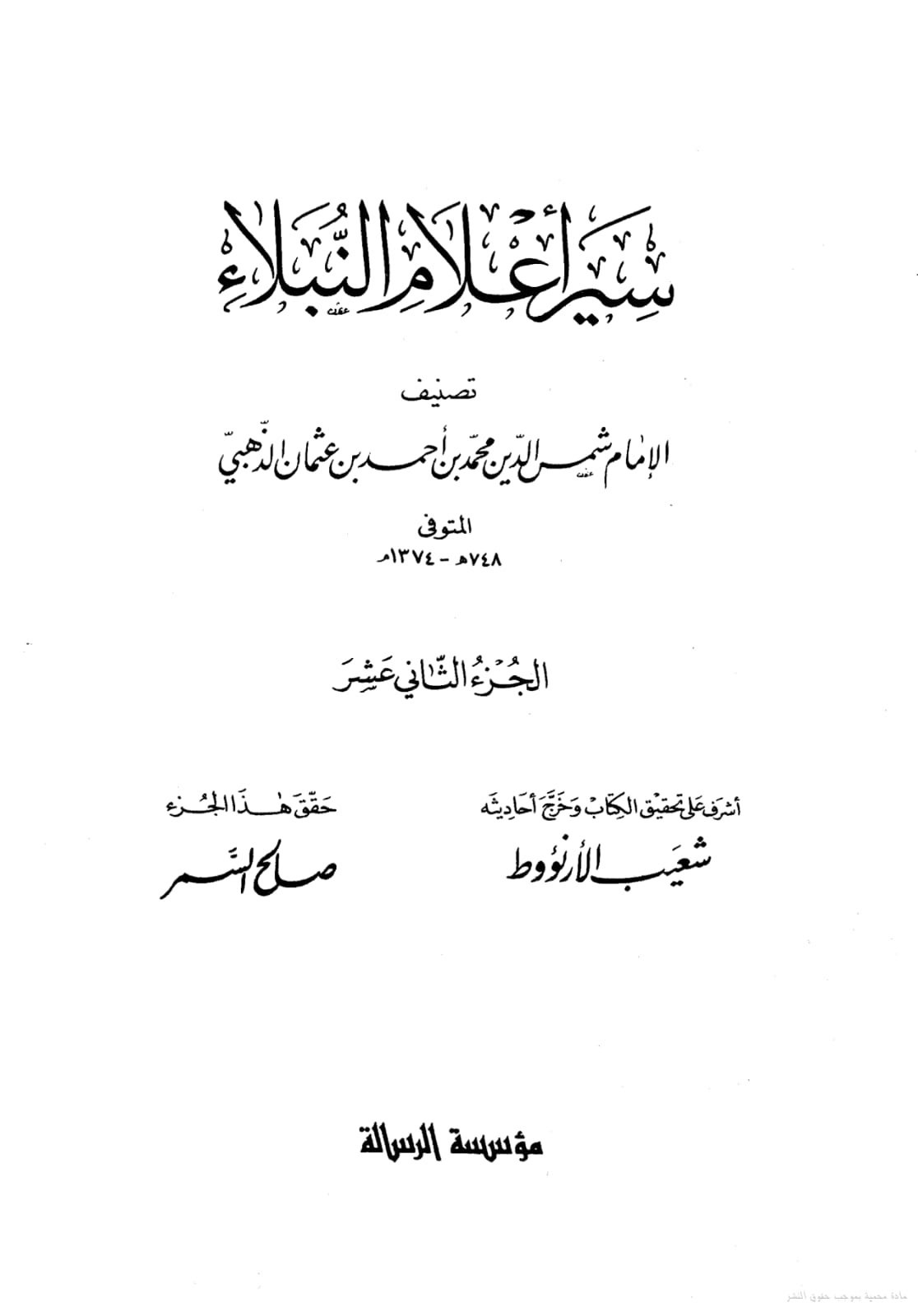
Source: (page 462 from Volume 12 of Siyar A’lam al-Nubala’ (Biographies of the Noble Scholars) by Imam al-Dhahabi, edited by Shu’ayb al-Arna’ut.)
“[Al-Ma’idah: 64]. And his emigration (hijrah)(1) was from Mecca. He came to Iraq at the end of the night… [Quranic verse]: “If Allah helps you, none can overcome you; and if He forsakes you, who is there after Him that can help you?” [Al Imran: 160].”
“And Ahmad bin Mansur al-Shirazi said: I heard al-Qasim bin al-Qasim say: I heard Ibrahim, the scribe of Ahmad bin Sayyar, say: When al-Bukhari arrived in Marw, Ahmad bin Sayyar met him. So he said to him: “O Abu Abdullah, we do not oppose you in what you say, but the common people cannot bear this from you.” He [al-Bukhari] said: “I only ask about something I know to be true, fearing the Fire, lest I say other than it.” So Ahmad bin Sayyar turned away from him.”
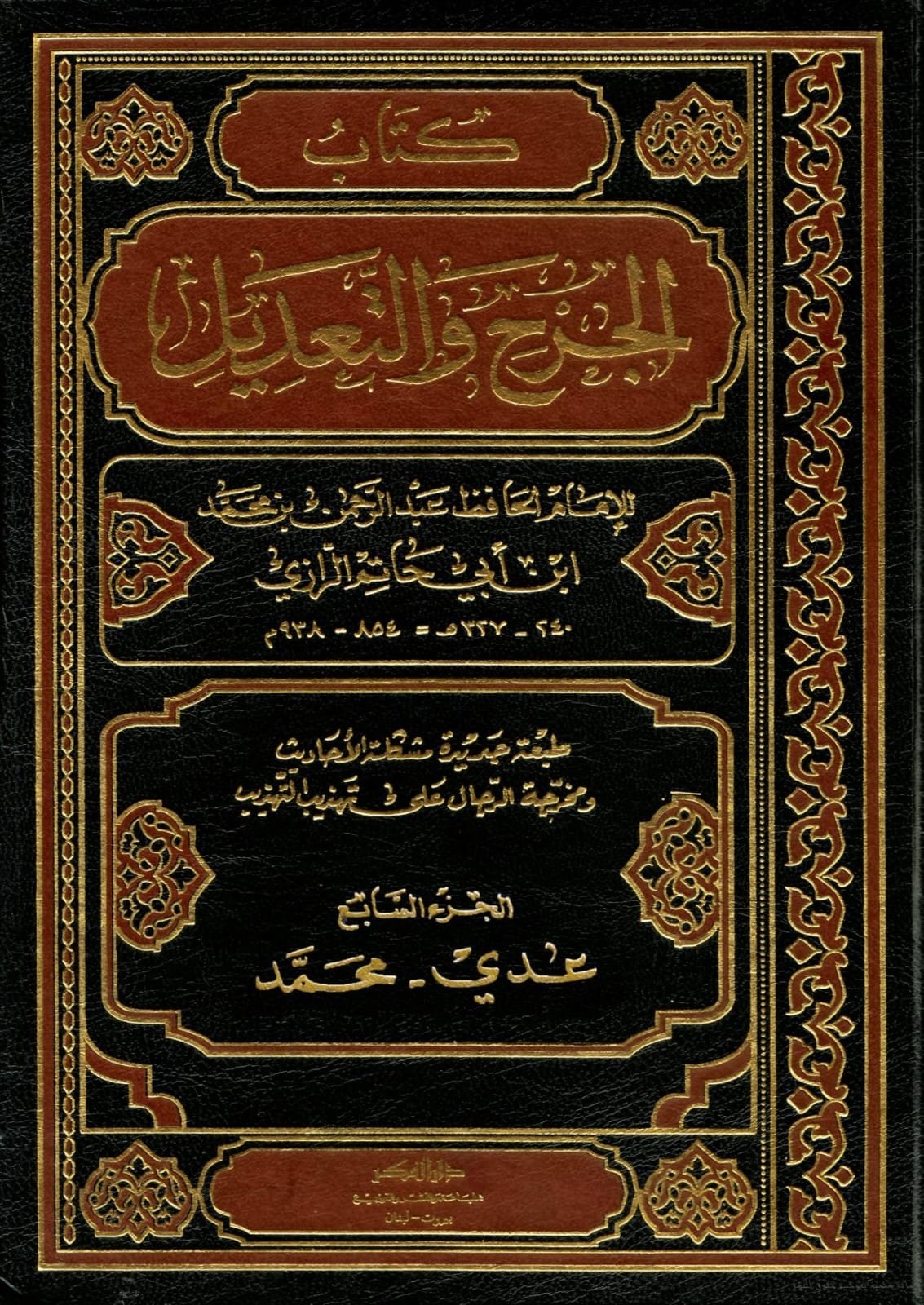
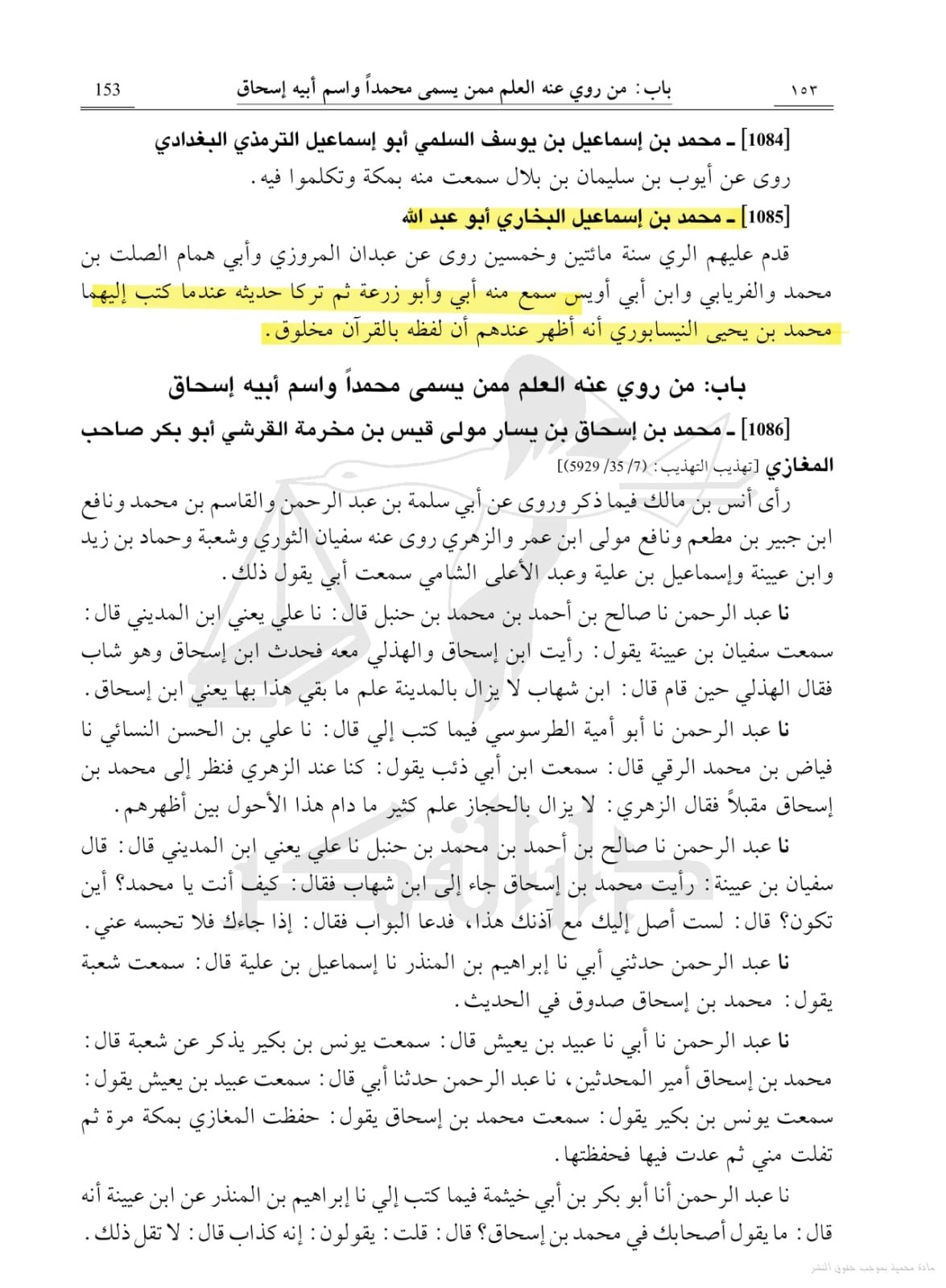
“And Abd al-Rahman bin Abi Hatim said in Al-Jarh wa al-Ta’dil (2): Muhammed bin Isma’il al-Rayy came in the year 210 AH, and my father and Abu Zur’ah heard from him. And they abandoned his hadith when Muhammed bin Yahya al-Nisaburi wrote to them that he [al-Bukhari] had made it apparent to them that his pronunciation of the Quran is created.“
Then Shu’ayb al-Arna’ut comments on this.
By the way for those not familiar when you see the name Shu’ayb al-Arna’ut it is a reference to Abū Usāmah Shuʿayb ibn Muḥarram ibn ʿAlī al-Albānī al-Arnāʾūṭ.
Most people in Salafi/Athari circles simply refer to him as: al-Albānī.
So al-Albānī (Shu’ayb al-Arna’ut) comments:
“This is strange from Abu Zur’ah and Abu Hatim, for they both had already heard from him [al-Bukhari] and narrated from him, and they did not abandon him except based on the statement of their teacher al-Bukhari regarding the issue of lafz [pronunciation]. And it is not permissible for them to act upon this, due to what it entails of sin, caprice, and envy. And Imam al-Dhahabi said in Mizan al-I’tidal 1/111 in the biography of Abu Nu’aym, the author of Al-Hilyah: “The words of some of them regarding others are not to be relied upon, especially if it becomes clear to him that it is due to partisanship for a madhhab or envy. And no one is safe from that except one whom Allah protects. And I do not know of an era from the eras that is safe from that except the era of the Prophets and the Rightly Guided Caliphs. And if you wish, I could list that in volumes.” And al-Subki said in Tabaqat al-Shafi’iyyah 2/230: “The position of al-Dhuhali [Muhammed bin Yahya] regarding al-Bukhari came from envy of him.” And al-Subki said in Qa’idah al-Jarh wa al-Ta’dil 12: “And from what should be examined is the state of beliefs and their differences in relation to the critic and the criticized. For perhaps the critic is wronged in creed, so his criticism of him is [invalid].”-Shaykh al-Albānī
Source: (page 462 from Volume 12 of Siyar A’lam al-Nubala’ (Biographies of the Noble Scholars) by Imam al-Dhahabi, edited by Shu’ayb al-Arna’ut.)
Examining Shaykh al-Albānī charge of envy for abandoning Bukhari for his position on the createdness of the Qur’an.
Shaykh Shaykh al-Albānī’s argument in the highlighted footnote is essentially this: Abu Zur’ah’s criticism cannot be sincere because he also narrated from Muslim, who shared al-Bukhari’s theological position.
If Abu Zur’ah was willing to accept hadith from Muslim, he should have accepted them from al-Bukhari on the same grounds. Unless his abandonment of al-Bukhari was motivated by petty jealousy, or partisanship.
We have to be fair here in saying that Shaykh al-Albānī’s claim has a very strong basis.
This reasoning has some historical traction, but it is not the whole picture:
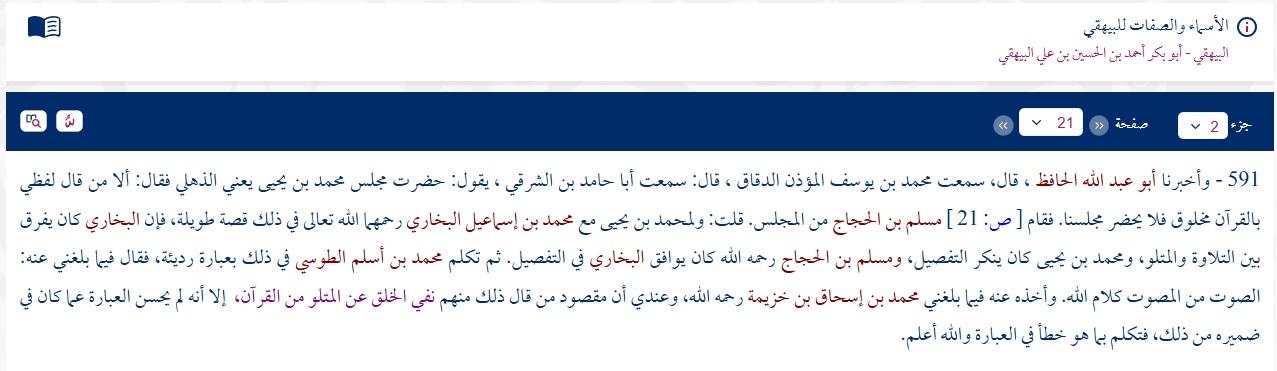
Muslim’s Position: It is well-established that Imam Muslim did agree with al-Bukhari on the lafz issue. Al-Bayhaqi explicitly stated that Muslim “was on the madhhab of al-Bukhari in the distinction” between recitation and the recited. Muslim also famously stood by al-Bukhari during the boycott, taking his written works back from al-Dhuhali and withdrawing from his circle.
Source: (Siyar A’lam al-Nubala’ 12/460, Huda al-Sari in the introduction to Fath al-Bari 2/264)
Imam Muslim was the only one who did not abandon Imam al-Bukhari, since they were upon the same creed. Their creed opposed that of the Hanbali who opposed them.
“And Makki bin Abdan said: Dawud bin Ali al-Asbahani came to Nisapur during the days of Ishaq bin Rahwayh. They held a session of debate for him, and he attended the circle of Yahya bin al-Dhuhali, and Muslim bin al-Hajjaj. A theological issue was discussed in which Yahya spoke, and he silenced him, saying: “Be quiet, O boy!” So Muslim did not support him. He returned to his father and complained to him. His father said: “Who was he?” He said: “Muslim.” He said: “You have returned from every single one of my hadiths!” [Meaning: you have ruined your standing with him]. When this reached Muslim, he gathered what he had written from him in a notebook, sent it to him, and said: “I will never narrate anything from you ever again.”
“Abu Abdullah al-Hakim said:I have noted this story from Tahir bin Ahmad, from Makki, and Muslim may have differed after this incident with Muhammed bin Yahya, but he only cut him off because of the issue of al-Bukhari. And al-Hafiz Abu Abdullah bin al-Akhram knew that, so he informed about the alienation [that occurred] later.”
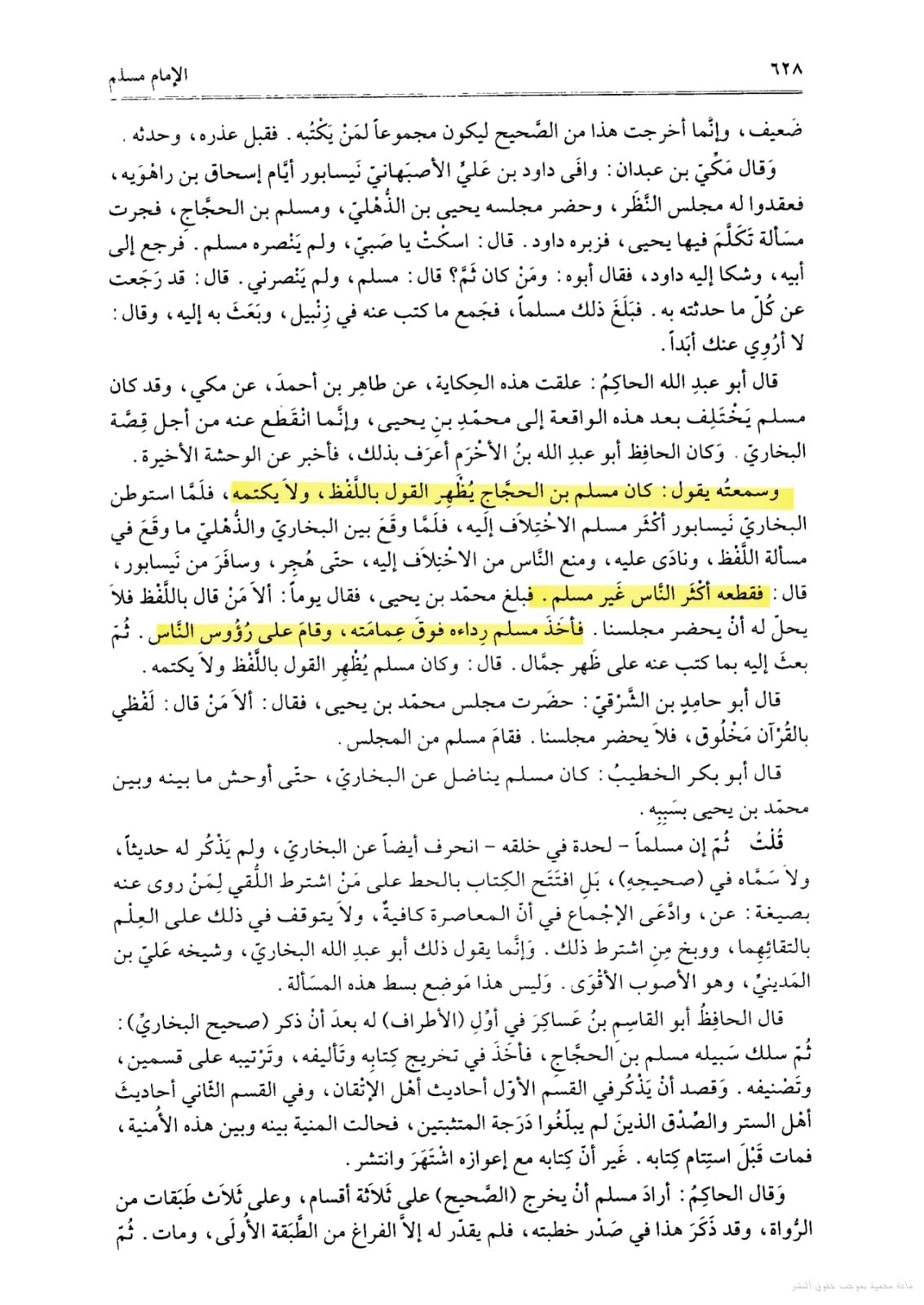
“And I heard him [al-Hakim] saying:Muslim bin al-Hajjaj used to openly declare the statement regarding al-lafz [the pronunciation of the Quran], and he did not conceal it. When al-Bukhari settled in Nisapur, he openly declared more of the disagreement with him. When the issue of al-lafz occurred between al-Bukhari and al-Dhuhali, and the people of Nisapur were prevented from differing with him [al-Dhuhali], and he called to that, the majority of people cut off from Muslim, other than a few. It reached Muhammed bin Yahya, and he said one day: “Whoever says al-lafz is not created, it is not permissible for him to attend my circle.” So Muslim took his garment, placed it on his shoulder, stood up before the people, and sent to him what he had written from him, saying: “We only used to narrate from you because of al-lafz.” And Muslim used to openly declare the statement regarding al-lafz and not conceal it.“
“Abu Hamid bin al-Sharqi said: I attended the circle of Muhammed bin Yahya, and he said: “Whoever says: ‘My pronunciation of the Quran is created,’ let him not attend my circle.” So Muslim stood up from the circle.”
“Abu Bakr al-Khatib said: Muslim used to fight on behalf of al-Bukhari, until the relationship between him and Muhammed bin Yahya became estranged, due to his [al-Bukhari’s] reason.”
“I [al-Dhahabi] said:Then, [if] he was a Muslim due to his createdness [meaning: his stance on the creation of actions] he also turned away from al-Bukhari, and did not mention him as a narrator of hadith, nor did he name him in his Sahih. Rather, he began the book with the wording of those who stipulated al-lafz for whomever he narrated from, in a manner that claims consensus in the contemporary era is sufficient [to establish it], and he did not pause on that knowledge of the two of them, and he criticized whoever stipulated that. But rather, Abu Abdullah al-Bukhari said that, and his teacher Ali bin al-Madini, and it is the most correct and most sound [position]. And this is not the place to elaborate on this issue.”
“The Hafiz Abu al-Qasim bin Asakir said in Al-Atraf: It is after he mentioned [the Sahih of al-Bukhari]: Then he followed the path of Muslim bin al-Hajjaj, and he took the extraction of his book, its composition, and its arrangement into two parts. He intended to mention in the first part the hadiths of the reliable people of precision, and in the second part the hadiths of the people of covering and truthfulness, those who did not reach the rank of the firmly established. The death prevented him from completing this aspiration, and between him and this aspiration was the completion of his book. However, his book became famous and spread despite his need for it [to be completed].”
“And al-Hakim said: Muslim wanted to extract the Sahih into three categories, and upon three generations of narrators. He mentioned this at the beginning of his introduction, but he was not able to finish except the first category, and he died.”
Source: (page 628 from Volume 12 of Siyar A’lam al-Nubala’, in the biography of Imam Muslim)
The second point.
Abu Zur’ah’s Relationship with Muslim: Abu Zur’ah was not hostile to Muslim. In fact, Muslim submitted his Sahih to Abu Zur’ah for review, and Abu Zur’ah’s approval was seen as a mark of its authenticity. if Abu Zur’ah accepted Muslim’s Sahih despite his lafz views, why did he abandon al-Bukhari?
Insh’Allah we will update this page and provide an easily accessible online source when it becomes available.
If you would like to learn more about this specific subject please read the following:
“We sent them with clear proofs and the Zabur. And we revealed to you the message that you may make clear to mankind what was sent down to them and that they might give thought.” (Qur’an 16:44)
﷽
This section will be on engaging the Pseudo-Islamic.
In particular this section of the blog will have all articles related to two Pseudo-Islamic movements.
The first being the Hafs Qur’an Only Religion.
THE HAFS QUR’AN ONLY RELIGION
It is important to understand that we believe that the adherents of the Hafs Qur’an only movement are a distinct religion in much as we respect the way the Baha’i movement is a distinct religion from Islam.
Insh’Allah this section will deal with common arguments among the federation of sects that are known collectively as the ‘Qur’anist’.
This section will be refuting their many bold assertions; as well as showing why this particular attempt to re-interpret Islam and make it altogether different religion is deeply flawed.
Now why are they called the Hafs Qur’an only view? These people will either out of ignorance about the transmission and textual history of the Qur’an refer to their platform as ‘Qur’an Only’ or Quraniyoon. However, the Hafs Qur’an did not fall out of the sky. Thus, is important for them to reflect on why so much foundational trust is put into the men that transmittedthe Hafs Qur’an to the exclusion of all other transmissions of the Qur’an.
At the core of this religion of theirs is a massive epistemological problem.
In regard to approving comments from followers of the Hafs Qur’an Only Religion we have taken seriously the verse of the Qur’an: “And cooperate in righteousness and piety, but do not cooperate in sin and aggression. And fear Allah ; indeed, Allah is severe in penalty.” (Qur’an 5:2)
Thus, they would do well to read the article listed below: Is the Qur’an a detailed explanation of all things? to understand the policy on this website that keeps them as well as us from sinning and keeps them consistent with in their worldview. Insh’Allah.
THE QADIANI MOVEMENT Also known as AHMADIYYA MOVEMENT is a divided movement, split into two competing jama’at or congregations. That is the LAHORI whom we refer to as The Ahmadiyya A and the QADIANI whom we refer to as the Ahmadiyya B.
As the Qadiani or Ahmadiyyah B believe that Mirza Ghulam Ahmad is a Prophet after The Blessed Prophet Muhammed (saw), they have been marked as being outside the millat of Islam. Likewise, they (the Ahmadiyyah B) or Qadiani have made anyone outside of their jama’at to be kafirs. Though, their is some tongue in cheek wordplay see their website. Source: (https://www.alislam.org/articles/are-non-ahmadis-muslim-or-non-muslim-ahmadiyya-muslim-perspective/)
To the dismay of the Muslim Ummah, The Qadiani have a Khalifa, named MIrza Masroor Ahmed, he lives in Tilford, United Kingdom, where he pays taxes to the United Kingdom. Abu Bakr, Umar, Uthman and Ali were not known to have paid taxes to a Non Muslim government.
For future reference all articles addressed to either of the above movements will be found under: AHL AL-QIBLA / AHL AL-KHILAF under: Engaging with the Pseudo-Islamic:
Refutation that oral traditions came 300 years after the Prophet.
Even though they used to say that the hadith -oral traditions came some 300 years after the Blessed Messenger (saw). Praise be to Allah the more educated among them have backed away from that claim. However, this article is here because many in that movement may be unaware.
See Harold Motzki (a Non-Muslim orientalist and academic) who made short work of that Quranist claim
Does the Qur’an itself tell us to reject all hadith?
This article is a nail in the coffin for the entire movement. Some from their movement have commented but ended up leaving in frustration. It looks at their arguments and misquotations of the Qur’an. Also given in this article is an irrefutable example of Allah confirming a hadith to the Blessed Messenger [saw].
Did the Blessed Prophet Muhammed (saw) write the Qur’an?
Our colleague had written a refutation like this many years ago on the ‘Qur’an only‘ web site known as http://www.ourbeacon.com/ or it used to be known as ‘GalaxyDastak‘. Dr. Shabbir Ahmed founder of the forum had me banned. This was also the last our colleague heard from their former teacher Hamza AbdulMalik. Hamza AbdulMalik used to be the director of IPCI international until he dropped off the radar and re-emerged as a Quranist.
Well, our colleague may have been removed from the forum but here is the refutation of their arguments for all to see here:
A pre-eminent argument used by ‘Quranist’ ripped to shreds By Dr. Jeffery Lang.
The most oft-quoted verse used by Quranist is analyzed and ripped apart by a Muslim convert, academic, and professor of math, Dr. Jeffery Lang.
This is a centerpiece argument used by Edip Yuksel, Sam Gerrans, “Joseph Islam”, Rashad Khilafa, Shabir Ahmed and the lot of them. The reason why this argument is especially devastating coming from someone like Dr. Jeffry Lang is that Dr. Lang is critical of the hadith corpus as we have it today.
The following is a look how Quranist have both misunderstood the word hikma as a reference to the Qur’an and how they do not understand that it is something that Allah gives his messengers to deal with situations and context not immediately addressed by the revelations they were given.
Hating a hadith just for the sake of hating a hadith.
This article a hypothetical question is posed. What if a particular ahad hadith turned out to be correct? Especially one that is of a scientific nature? What would the Quranist do in such a scenario?
Salaat in the Qur’an is not ritual prayer? Examining the claim of some Quranist.
This article looks at one Quranist claim that salat is not ritual prayer. This is what happens when you abandon the understanding of the Blessed Messenger and follow the ‘every man for himself’ approach of the Quranist.
“Surely your Lord is Allah Who created the heavens and the earth in six Days, then established Himself on the Throne, conducting every affair. None can intercede except by His permission. That is Allah—your Lord, so worship Him. Will you not then be mindful?” (Qur’an 10:3)
“He knows what is ahead of them and what is behind them. They do not intercede except for whom He approves, and they tremble in awe of Him.” (Qur’an 21:28)
“Allah! There is no god except Him, the Ever-Living, All-Sustaining. Neither drowsiness nor sleep overtakes Him. To Him belongs whatever is in the heavens and whatever is on the earth. Who could possibly intercede with Him without His permission? He knows what is ahead of them and what is behind them, but no one can grasp any of His knowledge—except what He wills . His Throne encompasses the heavens and the earth, and the preservation of both does not tire Him. For He is the Most High, the Greatest.” (Qur’an 2:255)
“It is You we worship and You we ask for help.” (Qur’an 1:5)
“And he entered the city at a time of inattention by its people and found therein two men fighting: one from his faction and one from among his enemy. And the one from his faction called him for help ( fa-is’taghathahu)against the one from his enemy, so Moses struck him and killed him. said, “This is from the work of Satan. Indeed, he is a manifest, misleading enemy.” (Qur’an 28:15)
﷽
Seems there has been a great deal of heated debate and discussion on this topic as of late. However, this has been the case with the Muslim Ummah for quite some time.
Tawassul is asking Allah for help through an intermediary. This has it’s types and conditions.
Istigatha is asking for urgent help in times of distress. This too has it’s types and conditions.
First point.
Note that all three of the text (Qur’an 10:3) & (Qur’an 21:28) & (Qur’an 2:255) that are quoted above are speaking about third parties that may be in a position to to ask something on behalf of others.
None of the above three text speak about a first person party (a petitioner) seeking something from Allah (swt) via an intermediary, be it an angel, a wali of Allah (swt) or even his Blessed Prophets (upon them all be peace).
Second point.
None can intercede except by what Allah (swt) grants permission or approves.
If a righteous person like the Blessed Prophet (saw) for example prays for his Uncle to enter into heaven and his Uncle did not repent or enter into Islam, then the intercession of the Blessed Prophet (saw) is of no use.
“You surely cannot guide whoever you like, but it is Allah Who guides whoever He wills, and He knows best who are guided.” (Qur’an 28:56)
“Praying or not praying for their forgiveness will make no difference. Even if you (O Prophet) were to pray seventy times for their forgiveness, Allah would not forgive thembecause they reject Allah and His Messenger. Allah does not guide those who are defiantly disobedient people.” (Qur’an 9:80)
Or for example if the Prophet (saw) tried to intercede with Allah (swt) for those Muslims who died without repenting from taking the life without right, shirk, fornication or adultery and they did not seek repentance from Allah (swt). The Prophet’s intercession would be null and void!
“And those who do not invoke with Allah another deity or kill the soul which Allah has forbidden [to be killed], except by right, and do not commit unlawful sexual intercourse. And whoever should do that will meet a penalty. Multiplied for him is the punishment on the Day of Resurrection, and he will abide therein humiliated –Except for those who repent, believe and do righteous work. For them Allah will replace their evil deeds with good. And ever is Allah Forgiving and Merciful.” (Qur’an 25:68-70)
This is the world of asbab (أَسْبَابْ) a world of cause, means and occasions.
The Muslim understands that this is the world of cause, means and occasions. We are 3D carbon based platforms and this is how we understand and perceive things. However, we are also informed:
la hawla wala quwwata illa billah -there is no power or no strength except with Allah.
“If only you had said, upon entering your property, ‘This is what Allah has willed! There is no power except with Allah!’ Even though you see me inferior to you in wealth and offspring.” (Qur’an 18:39)
That is to say that if we believe that we can type this very text independent of Allah’s power, we are either making a claim to divinity or asserting a share of divine power.
A Muslim does not believe that a knife in and of itself has the ability to cut but that Allah (swt) grants it that quality and ability.
“It is You we worship and You we ask for help.” (Qur’an 1:5)
So if a Muslim seeks a doctor for a cure, or builds a shelter from the rain are they seeking or depending upon other than Allah (swt) for help? Of course not. The recognition is that we live in the world of causes, means and occasions. That is what is immediately perceptible to us.
Take the example of Mary (as) she was pregnant with Jesus (as) and was hungry.
The Angel directs Mary (as) towards a creation of Allah (swt).
“And shake the trunk of this palm tree towards you, it will drop fresh, ripe dates upon you.” (Qur’an 19:25)
The Angel could have directed Mary (as) to a dead tree, or a dead branch or a log. However, she (as) was directed towards a living tree.
جَزَاكَ ٱللَّٰهُ خَيْرًا or Jazak Allahu Khayran is a common Arabic expression among Muslims. It is said when receiving some good, service or benefit from another person.
It is a way of showing gratitude in a dual manner, by immediately thanking the person (he/she) that brought the good but also realizing that ultimately it is Allah (swt) whom used this person (he/she) to bring the khayer (goodness) to you.
Tawassul in the Qur’an?
First what is Tawassul?
Basically it means to use something to arrive to something else. As a path.
Tawassul is the act of seeking help from Allah (swt) via an intermediary. In relation to this we have the Arabic word Al-Wasila.
You can find derivates of the word twice in the Qur’an.
The first text ((Qur’an 5:35)is the one the usual champions of tawassul are quick to quote.
The second text (Qur’an 17:57) is the one the champioins of tawawassul are not so quick to quote. Insh’Allah you will see why.
1st instance of wasila.
“O you who believe! Be careful of (your duty to) Allah and seek means of nearness (l-wasilata) to Him and strive hard in His way that you may be successful.” (Qur’an 5:35)
This is the text that usual champions of Tawassul would prefer you rather not quote.
Note that the text says to seek a means of nearness and it could have easily mentioned the Blessed Prophet (saw) exclusively but it did not.
Seeking the means of nearness is not exclusive to asking the pious to pray for us.
We know that praying in a group (Jamaat) is more beloved to Allah (swt) then praying alone. We know that praying in a Masjid is more beloved to Allah (swt) then not praying in the Masjid.
We know that praying in Mecca or Medina is more beloved to Allah (swt) then not praying in either of those two cities. Prayer in Mecca is more preferable then prayer in Medina.
Now the usual advocates of tawassul would have to prove that a singular individual praying to Allah (swt) via the station of the Blessed Prophet (saw) would be superior to a whole congregation of people doing dhikr of Allah (swt).
They would have to prove that a singular individual praying to Allah via the station of the Blessed Prophet (saw) would be superior to an individual praying to Allah (swt) in Mecca without mentioning the Blessed Prophet (saw).
In other words there are a plethora of acts and actions in Islam that are more meritorious then praying to Allah (swt) and beseeching Allah (swt) via the station of the Blessed Prophet (saw).
2nd instance of wasila.
“Say, “Invoke those you claim besides Him. They do not have the power to undo harm from you or transfer it.” “˹Even˺ the closest ˹to Allah˺ of those invoked would be seeking a way (l-wasilata) to their Lord, hoping for His mercy, and fearing His punishment. Indeed, your Lord’s torment is fearsome.” (Qur’an 17: 56-57)
Shaykh Dr. Kahlan Al Kharousi (h) speaks on three types of Tawassul.
First type: Asking Assad to make du’a and thinking that it will be accepted because Assad has got the power to do so. This is clearly shirk. We are very clear about this.
The evidence from this is from the Qur’an:
“If only you had said, upon entering your property, ‘This is what Allah has willed! There is no power except with Allah!’ Even though you see me inferior to you in wealth and offspring.” (Qur’an 18:39)
“How powerless are those who invoke and those invoked!“ (Qur’an 22:73)
For example if as a Muslim one were to believe that they could type this very text independent of the power of Allah (swt) this would be a claim to divinity and shirk.
Second type: (which all madhabs classify as Mubaah Halaal-meaning neutral or permissible.) -This includes the Ibadis.
This is the request of means and reason. Not a request of response and refuge.
That is to let someone who’s considered righteous amongst of people make du’a.
For example: Ridael and Assad and Hakki just had some food, Assad asked Ridael to make du’a; however, Ridael believes that Assad (at least what it apparent) is a better Muslim than him, so he says to Assad to make the du’a instead.
Examples of this in the Qur’an:
“They begged, “O our father! Pray for the forgiveness of our sins. We have certainly been sinful.” (Qur’an 12:97)
“And We did not send any messenger except to be obeyed by permission of Allah. And if, when they wronged themselves, they had come to you, [O Muhammed], and asked forgiveness of Allah and the Messenger had asked forgiveness for them, they would have found Allah Accepting of repentance and Merciful.” (Qur’an 4:64)
“Take from their wealth ˹O Prophet˺ charity to purify and bless them,and pray for them. Surely your prayer is a source of comfort for them. And Allah is All-Hearing, All-Knowing.” (Qur’an 9:103)
Or when we as believers pray on behalf of all believers no less than 17 times a day:
“Guide us to the straight path.” (Qur’an 1:6)
The third type: Is that when you mention someone’s name (in this case Assad) thinking by doing so your du’a gets accepted.
For example: In a battle and one were to say: “Oh Allah Assad is with us grant us victory.” Some say this is shirk and some say it is not. This has lead to allot of fighting among the Muslims.
Our school’s position is to leave these doubtful matters. Stick with what is firm from the Qur’an & Sunnah.
In the case of the person above a simple gentle reminder from the Qur’an and the history of the Blessed Prophet (saw) may suffice to set their thinking on the right course.
For example, having the Blessed Prophet (saw) with the Muslims was not a guarantee of victory. In fact, they lost conflicts when he (saw) was among them; and this was a test for the believers.
“Do you think you will be admitted into Paradise without being tested like those before you? They were afflicted with suffering and adversity and were so ˹violently˺ shaken that ˹even˺ the Messenger and the believers with him cried out, “When will Allah’s help come?” Indeed, Allah’s help is ˹always˺ near.” (Qur’an 2:214)
It was narrated that Abu Al-Hawra’ As-Sa’di said:
“I said to Al-Hasan bin ‘Ali, may Allah be pleased with him: ‘What did you memorize from the Messenger of Allah (saw) ?’ He said: I memorized from him: ‘Leave that which makes you doubt for that which does not make you doubt.'”
Because there is dispute it is best to leave that which is doubtful. The Muslim is one who practices wara’ and it is best to leave the doubtful. That is also because this act is not wajib. The side that is very vocal for their practices have labeled it as mustahab, which is merely recommended.
So there is no harm in sticking with the clear formula of the Qur’an and Sunnah.
Our way is the moderate way and the safe passage. Let us turn to the Qur’an.
All duas in the Qur’an are just Allahumma, Rabbi or Rabbana. So what is wrong if the believer sticks with that sort of formulation and puts their trust solely in Allah (swt)?
“Your Lord has proclaimed, “Call upon Me, I will respond to you. Surely those who are too proud to worship Me will enter Hell, fully humbled.” (Qur’an 40:60)
“When My servants ask you ˹O Prophet˺ about Me: I am truly near. I respond to one’s prayer when they call upon Me. So let them respond ˹with obedience˺ to Me and believe in Me, perhaps they will be guided ˹to the Right Way˺.” (Qur’an 2:186)
As Allah (swt) is the Sovereign Lord of all creation.
Surely a Muslim can’t go wrong by calling upon Allah (swt) alone and trusting in Allah (swt) to answer us in the time and manner that Allah (swt) deems fit.
One can make du’a for others and when requested also have friends and family make du’a for them. This is very clearly sanctioned in the Qur’an because we see examples of Prophets praying for others as has already been mentioned.
So if we stick with the du’a formulations in the Qur’an and preserved Sunnah we are safe.
Who better than Allah (swt) and his Messenger (saw) to teach us?
So yes why not direct all supplication , du’a , petition and request to Allah (swt) knowing full well that Allah (swt) can respond to that du’a, petition and request by using this world of asbab to send to you a person(s), angel(s), Muslim Jinn(s), or any of His (swt) creation to aid you.
In the Qur’an we find the following formulations when addressing Allah (swt).
Rabbi Rabbanaa A’udhu billahi Rabbanaghfir Rabbihkum Rabbighfir Rabbanaa Bismillahi (Qur’an 11:41) Ma’adhallahi (Qur’an 12:23) Inni a’udhu bir-Rahmani (Qur’an 19:18) Inni maghloobun fantasir (Qur’an 54:10) In all these passages: (Qur’an 7:155- 7:156), (Qur’an 7:189), (Qur’an 10:22) it is clear that the one being addressed is Allah (swt). Qul a‘ūdhu birabbil-falaq (Qur’an 113:1) Qul a‘ūdhu birabbin-nās (Qur’an 114:1)
So in conclusion on the issue of Tawassul is that for the Ibadi school asking the pious to make du’a for us is permissible.
We should ask each other to make du’a for one another all the time.
“Guide usto the straight path.” (Qur’an 1:6)
Allah (swt) for example, encourages us to make du’a for our parents.
“And be humble with them out of mercy, and pray, “My Lord! Be merciful to them as they raised me when I was young.” (Qur’an 17:24)
The woman who pleaded her path went direct to Allah (swt) for help even bypassing the Blessed Prophet (saw).
“Indeed,Allah has heard the argument of the woman who pleaded with you ˹O Prophet˺ concerning her husband, and appealed to Allah. Allah has heard your exchange. Surely Allah is All-Hearing, All-Seeing.” (Qur’an 58:1)
In the above case in was Allah (swt) who was the refuge and succor of this woman and not Prophet Muhammed (saw). In fact, the above verse is one of those that let us know the Qur’an is not from the Blessed Prophet (saw), His, Sunnah is a form of guidance,-when not overruled by Allah (swt) and that the Prophet (saw) is genuine and authentic.
If it was good enough for the woman to appeal directly to Allah (swt) in her life time (by passing the Prophet -saw) while he (saw) was alive, it is good enough for us to go directly to Allah (swt) after the death of the Blessed Prophet (saw).
“Tawassul is not an obligation or a necessary matter, neither is the response to the supplication conditional upon it, Rather, the basis for the supplication is to call upon Allah, the Exalted, as Allah said: And if my servants ask you concerning me, then say that I am close (al-Baqara: 186) and: Say, “Call upon Allah or call upon al-Rahman: Whatever you call him by -to Him belong the best names.”
Source: (pgs. 74-75 Notions that must be corrected by Shaykh Muhammed b. Alawi al-Maliki al-Hasani)
ISTIGATHA
Istigatha is asking for urgent help in times of distress.
Those who are in favour of Istigatha themselves put it in the category of mustahab (مُسْتَحَبّ) meaning something that is recommended. However, it is not something that is fard or wajib.
An example of this from the Qur’an.
“And he entered the city at a time of inattention by its people and found therein two men fighting: one from his faction and one from among his enemy. And the one from his faction called him for help (fa-is’taghathahu)against the one from his enemy, so Moses struck him and killed him. said, “This is from the work of Satan. Indeed, he is a manifest, misleading enemy.” (Qur’an 28:15)
The example in the Qur’an of istigatha is of someone who is physically alive calling out to other people who are physically alive.
CAN AN ACT OR ACTION GO FROM NOT BEING SHIRK TO BEING SHIRK?
There have been those who claim that something is in a category of shirk or non shirk and these categories do not change.
This is absolutely not true.
If one has animals that they use and even call out to while alive. They call out to these animals after they have died. This is clearly shirk.
Another example is the following:
Fight those who do not believe in Allah or in the Last Day and who do not consider unlawful what Allah and His Messenger have made unlawful and who do not adopt the religion of truth from those who were given the Scripture – [fight] until they give the jizyah willingly while they are humbled. The Jews say, “Ezra is the son of Allah “; and the Christians say, “The Messiah is the son of Allah .” That is their statement from their mouths; they imitate the saying of those who were kafara (ungrateful disbelievers [before them]. May Allah destroy them; how are they deluded? They have taken their scholars and monks as lords besides Allah , and [also] the Messiah, the son of Mary. And they were not commanded except to worship one God; there is no deity except Him. Exalted is He above whatever they associate (yush’rikuna) with Him. They want to extinguish the light of Allah with their mouths, but Allah refuses except to perfect His light, although the (ungrateful disbelievers) dislike it. It is He who has sent His Messenger with guidance and the religion of truth to manifest it over all religion, although they who associate others (l-mush’rikuna) with Allah dislike it. (Qur’an 9:29-33)
Narrated ‘Adi bin Hatim:
“I came to the Prophet (saw) while I had a cross of gold around my neck. He said: ‘O ‘Adi! Remove this idol from yourself!’ And I heard him reciting from Surah Bara’ah: They took their rabbis and monks as lords besides Allah (9:31). He said: ‘As for them, they did not worship them, but when they made something lawful for them, they considered it lawful, and when they made something unlawful for them, they considered it unlawful.'”
So if you previously followed a command of Allah (swt) and then abandoned it in favour of what the monks and rabbis said that would be an act of worship and thus shirk.
Likewise, if you previously abstained from a prohibition of Allah (swt) and then indulged in that prohibition in favour of what the monks and rabbis have said that would be an act of worship, and thus shirk.
CAN THE DEAD (THAT WHICH WAS BIOLOGICALLY ALIVE) BENEFIT OTHERS AFTER IT’S DEATH?
We know this from direct empirical data. We benefit from the meat of an animal after it has been slaughtered, the hide or wool from animals after they have died. The Inuit Eskimos have shown us how to essentially use virtually all parts of a whale after it has died.
We as human beings are living testimony that we continue to benefit by the knowledge of those who have died. From every facet of knowledge, to mathematics, to architecture to cherished recipes. We continue to benefit from from those who have long since passed.
Just as we benefit from them, what ever benefit we receive from them is accredited to them as well. So for example, when you teach someone to read the Qur’an you benefit from every time that person reads the Qur’an, even after you have long since died.
ISTIGATHA OF THE DEAD AND SCANT EVIDENCE.
Calling out to those who have died for aid and assistance.
There are some cold hard facts that stare in the face of those who advocate for Istigatha.
There are 25 Prophets mentioned by name in the Qur’an. We don’t have a single example of any of those Prophets doing Istigatha to a prophet that proceeded him that has died.
Considering that the Blessed Prophet Muhammed (saw) is the best example for us and considering that he is the last of the Prophets we do not have a single example of the Blessed Prophet (saw) making Istigatha of any of those prophets that proceeded him that has died!
Point 2 is extremely important considering there are 124,000 prophets and he did not consider to call upon any of them!
If the reply to point 2 is that the Blessed Prophet (saw) is the supreme prophet and the seal he is not in need of them to ask it still does not take away from point 1.
Narrated Anas:
Whenever drought threatened them, `Umar bin Al-Khattab, used to ask Al-Abbas bin `Abdul Muttalib to invoke Allah for rain. He used to say, “O Allah! We used to ask our Prophet to invoke You for rain, and You would bless us with rain, and now we ask his uncle to invoke You for rain. O Allah ! Bless us with rain.” And so it would rain
قوله : ( أن عمر بن الخطاب كان إذا قحطوا ) بضم القاف وكسر المهملة أي أصابهم القحط ، وقد بين الزبير بن بكار في الأنساب صفة ما دعا به العباس في هذه الواقعة والوقت الذي وقع فيه ذلك ، فأخرج بإسناد له أن العباس لما استسقى به عمر قال : اللهم إنه لم ينزل بلاء إلا بذنب ، ولم يكشف إلا بتوبة ، وقد توجه القوم بي إليك لمكاني من نبيك ، وهذه أيدينا إليك بالذنوب ونواصينا إليك بالتوبة فاسقنا الغيث . فأرخت السماء مثل الجبال حتى أخصبت الأر
Translation:
His statement: (That ‘Umar bin al-Khattab used to say that when they were parched) with the addition of the qāf and the kasra of the neglected one, that is, they were afflicted with drought. Al-Zubair ibn Bakkar explained in the genealogies the description of what Al-Abbas called for in this incident and the time in which it occurred, so he narrated with his chain of transmission that when Al-Abbas asked for rain with it, ‘Umar said: “Oh Allah, no affliction has descended except due to sin, and it has not been removed except with repentance, and the people have turned to me in place of your Prophet, and these are our hands to you for sins.” And We enjoined upon you repentance, and We poured rain. Then the sky fell like the mountains until the trees became fertile
Source: (Ibn Hajar Al Asqalani Fath al-Bari Sharhu Sahih Al Bukhari)
“And O my people! Seek your Lord’s forgiveness and turn to Him in repentance. He will shower you with rain in abundance, and add strength to your strength. So do not turn away, persisting in wickedness.” (Qur’an 11:52)
The above example, often brought up by proponents of tawassul and istigatha realize just how deadly the above example is to their doctrines. In particular the doctrine of calling out to those who are in their graves or seeking a means by those who are now in their graves.
O Allah! We used to ask our Prophet to invoke You for rain, and You would bless us with rain, and now we ask his uncle
This is crystal clear. We used to (past tense) this of course is when the Blessed Prophet (saw) was alive.
However, NOW (in this time) we are asking his uncle.
To add insult to injury to proponents of tawassul and istigatha the formula of the du’a used by Ibn Abbas (ra) looks like this:
“Oh Allah, no affliction has descended except due to sin, and it has not been removed except with repentance, and the people have turned to me in place of your Prophet, and these are our hands to you for sins.”
Notice there is no ‘Oh Allah by the status of the Prophet’.
Notice there is no ‘Oh Allah by your love of the Prophet’.
These formulas are not used by Ibn Abbas (ra) !!
Now there have been some weak sauce replies by those who are clearly overwhelmed in the face of such evidence. It is clear that copium is the only reply in the face of such powerful evidence.
They will offer meekly. Umar Ibn Al Khattab (ra) has choice. So he choose Ibn Abbas (ra). Yes, but why not choose the best of Creation? Especially if that was an option?
The Prophet Muhammed (saw) is he (currently) dead or alive in his grave?
The central point of the controversy surrounding the issue is rather or not one can do istigatha to the Blessed Prophet (saw) after he died.
Narrated `Aisha:
All sides of the debate have agreed that the Blessed Prophet (saw) has died.
Abu Bakr came riding his horse from his dwelling place in As-Sunh. He got down from it, entered the Mosque and did not speak with anybody till he came to me and went direct to the Prophet, who was covered with a marked blanket. Abu Bakr uncovered his face. He knelt down and kissed him and then started weeping and said, “My father and my mother be sacrificed for you, O Allah’s Prophet! Allah will not combine two deaths on you. You have died the death which was written for you.” Narrated Abu Salama from Ibn `Abbas : Abu Bakr came out and `Umar , was addressing the people, and Abu Bakr told him to sit down but `Umar refused. Abu Bakr again told him to sit down but `Umar again refused. Then Abu Bakr recited the Tashah-hud (i.e. none has the right to be worshipped but Allah and Muhammed is Allah’s Messenger (saw)) and the people attended to Abu Bakr and left `Umar. Abu Bakr said, “Amma ba’du, whoever amongst you worshipped Muhammed, then Muhammed is dead, but whoever worshipped Allah, Allah is alive and will never die. Allah said: ‘Muhammed is no more than an Apostle and indeed (many) Apostles have passed away before him ..(up to the) grateful.‘ “ (Qur’an 3.144) (The narrator added, “By Allah, it was as if the people never knew that Allah had revealed this verse before till Abu Bakr recited it and then whoever heard it, started reciting it.”)
The interesting point about the above hadith is why would such shock over come the believers and why would Allah (swt) need to remind them that the Prophet (saw) will die as other humans have died if it was firmly planted in their (the companions) hearts that they would have a direct line of communication with the Prophet (saw) after his earthly life?
This verse would constitute an unnecessary redundancy.
The other point to be noted is that often proponents of those who say we can do istigatha to the Blessed Prophet (saw) after he died is to compare the situation of the Blessed Prophet (saw) to that of martyrs.
But this begs the question: How did the Prophet (saw) die?
Are we prepared to believe that The Prophet (saw) was indeed poisoned by a Jewish woman -thus making the Prophet (saw) a martyr?
One evidence brought forward to try and claim that the Prophet (saw) is alive in his grave is the following:
“And ˹remember˺ when they prayed, “O Allah! If this is indeed the truth from You, then rain down stones upon us from the sky or overcome us with a painful punishment.” But Allah would never punish them while you ˹O Prophet˺ were in their midst. Nor would He ever punish them if they prayed for forgiveness.” (Qur’an 8:32-33)
Some have used this as a proof text to try and say that the Blessed Prophet (saw) is still alive and the context shows that this misunderstanding of theirs is certainly in error.
The context is the disbelievers and not the believers.
However, when one looks into this matter it can be seen that the Muslim Ummah can be seen to have reached a sort of stalemate on the matter.
Rather or not the Blessed Prophet (saw) is dead or alive in his grave (currently) seems to be a secondary matter to the issue of rather or not we can call out to him, that is to say, making Istigatha to him, after he has died.
ISTIGATHA OF THE DEAD SIFTING FOR GOLD AND TRYING TO FIND ANYTHING!
The above video is apt when we are talking about proofs and evidences for calling out to the dead after they are deceased.
One should not be surprised to see when looking into this matter that there is a dearth of evidence from the Qur’an and Sunnah that advocates of calling out to an individual after they have deceased can produce.
The book to your left: Islamic Concept of Intermediation (Tawassul) by Dr. Muhammed Tahir-ul-Qadri. The book to your right: Notions that must be corrected by Shaykh Muhammed b. Alawi al-Maliki al-Hasani.
Both books are in our colleagues personal library and both books in their estimation failed to deliver.
In the book: Islamic Concept of Intermediation (Tawassul) by Dr. Muhammed Tahir-ul-Qadri. You would think that a book that is 389 pages excluding the glossary, bibliography and general index would be teaming with evidences.
This is simply not the case at all.
On page 197 of the book we have: Intermediation through the Blessed Holy Prophet (saw) after his death. This section runs until page 253.
So one of the arguments advanced on page 208 is the following verse of the Qur’an.
“And We did not send any messenger except to be obeyed by permission of Allah. And if, when they wronged themselves, they had come to you, [O Muhammed], and asked forgiveness of Allah and the Messenger had asked forgiveness for them, they would have found Allah Accepting of repentance and Merciful.” (Qur’an 4:64)
There is no indication that this verse is a reference to people calling upon the Blessed Prophet (saw) after he has died. In fact, the Qur’an has not given a single example of any of the former people calling upon any of the earlier prophets that have died. If the Qur’an recorded such incidents then these proponents would be quick to quote it. However, the Qur’an does not indicate any one doing this.
The other text often quoted: (Qur’an 8:32-33) has already been addressed above.
Taking a look at the evidence from the traditions to call out to the Prophet (saw) after he has died
Now, keep in mind dear reader you are reading from the perspective of an Ibadi.
We take a different approach to these matters as we are different kettle of fish.
The sanad-the chains are important to us. Equally important to us is the matn -the actual text. Are the text consistent with one another, do they present to us any anomalies or inconsistencies?
We ask you dear reader to ask Allah (swt) for guidance and to use the brain he has given you to reflect on what you are about to read.
The anonymous Bedouin and the dream of ‘Utbi.
“In this Qur’anic verse Allah is exhorting the sinners and evildoers that when they commit sins and errors they should call on the Messenger of Allah (saw) and ask forgiveness from Allah. They should also request the Messenger of Allah (saw) to pray for them. When they do so, Allah will turn to them and forgive them and He will show mercy to them. That is why He used the words la-wajadullaha tawwaban-rahima (they (on the basis of this means and intercession) would have surely found Allah the Granter of repentance, extremely Merciful). Many have stated this tradition. One of them is Abu Mansur Sabbagh who writes in his book al-Hikayat-ul-mashhurah that, according to ‘Utbi, once he was sitting beside the Prophet’s grave when a Bedouin came and he said, “Peace be on you, O Allah’s Messenger. I have heard that Allah says: ‘(O beloved!) And if they had come to you, when they had wronged their souls, and asked forgiveness of Allah, and the Messenger also had asked forgiveness for them, they (on the basis of this means and intercession) would have surely found Allah the Granter of repentance, extremely Merciful.’ I have come to you, asking forgiveness for my sins and I make you my intermediary before my Lord and I have come to you for this purpose.” The he recited these verses: “O, the most exalted among the buried people who improved the worth of the plains and hillocks! May I sacrifice my life for this grave which is made radiant by you, (the Prophet,) the one who is (an embodiment) of mercy and forgiveness.” Then the Bedouin went away and I fell asleep. In my dream I saw the Holy Prophet (saw). He said to me: O ‘Utbi the Bedouin is right, go and give him the good news that Allah has forgiven his sins.”
Source: (pg. 209-211. Islamic Concept of Intermediation (Tawassul)by Dr. Muhammed Tahir-ul-Qadri)
You will not fail to note in these narrations that the individual is an unnamed or undisclosed person.
Why the redundancy on behalf of the Prophet (saw)?
Why not just show up in that unnamed man’s dream and tell him directly?
Next, why can’t the Prophet (saw) name the individual?
In other words why say: “O ‘Utbi the Bedouin is right.” Why not say O ‘Utbi, Abdullah bin Marwan ibn Khalid etc…”
On page 212 we are given another tradition by Imam Qurtubi in his famous exegesis al-Jami li-ahkam-il-Qur’an (5:265-6) similar to the ‘Utbi tradition. It states:
The anonymous villager and ‘Ali.
“Abu Sadiq has reported it from ‘Ali, A villager came to see us three days after the burial of the Holy Prophet (saw). He placed himself near the Prophet’s grave, sprinkled its earth over his body and said : ‘O Messenger of Allah, you said and we have heard it from you. You received commands from Allah and we received commands from you, and one of these divine commands is wa law annahum idh zalamu anfusahum. It is true that I have wronged myself, therefore, you should pray for my forgiveness.” (In response o the villager’s act of imploring) he was called out from the grave: ‘there is no doubt that you have been forgiven.’”
Source: (page 212 Islamic Concept of Intermediation (Tawassul)by Dr. Muhammed Tahir-ul-Qadri)
What is quite eye opening is that these traditions, one can imagine if being circulated on their own may have passed in many circles as credible.
Yet, when we have them juxtaposed together the questions start to arise.
This time we have an anonymous villager. This anonymous villager unlike the anonymous Bedouin gets an immediate response from the grave.
Why in this case does the anonymous villager get an immediate response where as the anonymous Bedouin has be told via an intermediary via a dream at that?
Now in regard to the second report Dr. Muhammed Tahir-ul-Qadri is displeased that Shaykh Muhammed b. Alawi al-Maliki al-Hasani does not find it reliable.
Dr. Qadri states:
“Muhammed bin ‘Alawi al-Maliki expresses in his review an ambivalent attitude towards the tradition as he cannot positively, certify its authenticity,but in spite of its lack of certainty, most of the traditionalist have relied on its credibility.” Source: (pg. 213 Islamic Concept of Intermediation (Tawassul) by Dr. Muhammed Tahir-ul-Qadri)
Actually what Shaykh Muhammed bin ‘Alawi al-Maliki says in his book is as follows:
“So, this is the story of al-‘Utbi, and these are the (scholars) who quoted it. It is irrelevant if this report is authentic or weak. We inquire: Did these (scholars) quote something that is idolatry and misguidance? Did they quote from something that invites to idol worship and grave worship? If that is indeed the case, then what reliability is there to be found in tehm or their books? Glorified are You my Lord this is manifest slander!”
Source: (pg. 119 Notions that must be corrected by Shaykh Muhammed b. Alawi al-Maliki al-Hasani)
In reality. Dr. Qadri basically re-words Shaykh ‘Alawi al-Malki’s words as his own so it is not wholesale plagiarism.
But these are eye opening statements.
“It is irrelevant if this report is authentic or weak.”
“but in spite of its lack of certainty, most of the traditionalist have relied on its credibility.”
As Allah (swt) states:“They have taken their scholars and monks as lords besides Allah”
Apparently this only applies to Jewish and Christian scholars and never to Muslim scholars!
The tradition concerning rain through the means of the Prophet (saw) after his death.
“The people of Medina were in the grip of a severe famine. They complained to ‘Aisha (about their terrible condition). She told them to go towards the Prophet’s grave and open a window in the direction of the sky so that there is no curtain between the sky and the grave. The narrator says they do so. Then it started raining heavily; even the lush green grass sprang up (everywhere) and the camel’s had grown so fat (it seemed) they would burst out due to their over piling of blubber. So the year was named as the year of greenery and plenty.”
Source: (pg. 215-216 Islamic Concept of Intermediation (Tawassul) by Dr. Muhammed Tahir-ul-Qadri.)
The chain of transmission for this hadith is: Abu an-Nu’man heard it from Sa’id bin Zayd, he from ‘Amr bin Malik an-Nukri and he from Abu al-Jawza Aws bin Abdullah who has reported it.
Abu an-Nu’man ‘Arim was Muhammed bin al-Fadl Sadusi. He was Imam Bukhari’s teacher, and memorizer of traditions and they (Ahl Sunnah)claim he was a very truthful person.
This man who would say about Imam Ali ibn Abu Talib – “The son of the prostitute.” – This Abu an-Nu’man /Muhammed ibn Al-Fadl Sadusi he is the reliable and truthful one with these people?!
Nonetheless objections have been made against virtually the entire chain of transmitters. Against Abu an-Nu’man.
Against Sa’id bin Zayd. He has been classified as weak.
Against ‘Amr bin Malik and Abu al-Jawza.
At the end of the day let us say that this tradition had no one who disputed it. What does it say? It shows that Allah (swt) honoured the grave of the Blessed Prophet (saw) as he does till today.
There is nothing in the above narration about people either making tawassul or istigatha to the Blessed Prophet (saw) after his death.
In fact, we have the right to ask what would be the advise of the advocates of those who say we can do istigatha to the Blessed Prophet (saw) after he has died, if for example a similar situation happened any where else in the world that doesn’t have the grave of the Blessed Prophet (saw) near by?
A) If they can get similar results by doing istigatha to the Blessed Prophet (saw) after he died without needing to do any action at the grave; then why do people need to perform some action with the grave in order to receive the blessing?
I know the response is that it is not because of the grave but the person in the grave.
However, if my question in A) above is not answered the impression is that it is not the Prophet (saw) alone but a combo of Grave + Prophet that the people did istigatha to receive rain.
Thus, if people in remote parts of the world can do istigatha of the Blessed Prophet (saw) to receive rain and they do not have to do any action to his grave why did the people of Medina need to do so?
In other words, these people instead of trying to sell the Muslim masses a combo meal, inclusive of fries and a drink, they want to give us a Combo Istigatha Grave + Prophet.
B) If the teaching of istigatha by calling out to the Blessed Prophet (saw) after he died or making means of his burial site was a known thing among the people why did Aisha (ra) have to inform them what to do to begin with?
After all the text does say: “The people of Medinawere in the grip of a severe famine.” Among the people of Medina are heavy weights of knowledge concerning the Qur’an and Sunnah.
Intermediation through the Prophet’s grave during ‘Umar’s tenure?
Malik ad-Dar has related:
“The people were gripped by famine during the tenure of ‘Umar (bin al-Khattab), Then a Companion walked up to the Prophet’s grave and said, “O Messenger of Allah, please ask for rain from Allah for your Community who is in dire straights.” Then the Companion saw the Prophet (saw) in a dream. The Prophet (saw) said to him, “Go over to ‘Umar, give him my regards and tell him that the rain will come to you. And tell ‘Umar that he should be on his toes, he should be on his toes. (he should remain alert).” Then the Companion went over to see ‘Umar and passed on to him the tidings. On hearing this, ‘Umar broke into a spurt of crying. He said, “O Allah, I exert myself to fall until I am completely exhausted.”
Source: (pg. 229 to 230 Islamic Concept of Intermediation (Tawassul) by Dr. Muhammed Tahir-ul-Qadri.)
What can be said about this. There are some people that the truth comes out of their own mouths and they do not stop to think about it! Allah is our refuge.
In this chain of narration is A’mash.
“A’mash is regarded a second-grade impostor, and this is a class of impostors from whom our religious leaders recorded traditions in their authentic books. Therefore, it is proved that this tradition narrated by A’mash is accepted.”
Source: (pg. 231 Islamic Concept of Intermediation (Tawassul) by Dr. Muhammed Tahir-ul-Qadri)
What can we say people? Admitted imposters inform of us our faith! Do people have no hayya?
Also, this whole narration is flatly contradicted by the narration above!
O Allah! We used to ask our Prophet to invoke You for rain, and You would bless us with rain, and now we ask his uncle
This is crystal clear. We used to (past tense) this of course is when the Blessed Prophet (saw) was alive.
Take a close look at the above report and then go back and compare/contrast it with the two above ( The anonymous villager and ‘Ali & The anonymous Bedouin and the dream of ‘Utbi)
The anonymous Bedouin who ask himself has yet ‘Utbi (the one who did not even ask) is the one who has the dream.
“Then the Bedouin went away and I fell asleep. In my dream I saw the Holy Prophet (saw). He said to me: O ‘Utbi the Bedouin is right, go and give him the good news that Allah has forgiven his sins.”
The anonymous Villager who ask himself gets called out to directly from the grave.
(In response o the villager’s act of imploring) he was called out from the grave: ‘there is no doubt that you have been forgiven’
The anonymous companion who ask himself has a dream to go inform Umar (who did not even ask)
“Then the Companion saw the Prophet (saw) in a dream. The Prophet (saw) said to him, “Go over to ‘Umar, give him my regards and tell him that the rain will come to you.”
What on Earth is going on?!
The hadith of ‘Uthman bin Hunayf.
When it comes to this hadith I found it very curious as to why the Arabic was rendered into English the way that it was by Dr. Tahir-Ul-Qadri.
“By God! I did not say this, but once I was in the company of the Messenger of Allah (saw) that a blind man came over to see him and complained t him about the loss of his eyesight. The Prophet (saw) asked him to be patient, but he said: “O Messenger of Allah! I don’t have any servant and I am in great trouble. The Prophet (saw) said: fetch an earthen pot and perform the ablution, then offer two cycles of prayer and implore Allah with these praying words.‘ Then ‘Uthman bin Hunayf said: ‘By God! We had neither gone out far away from the meeting nor had the conversation among us stretched out that the man came running to us as if he had never been blind.”
Source: (pg. 242 Islamic Concept of Intermediation (Tawassul) by Dr. Muhammed Tahir-ul-Qadri)
Two things to take note.
The first point to take note of.
The Prophet (saw) asked him to be patient. This is quite sly and I will tell you why this is.
`Uthman bin Hunaif narrated that a blind man came to the Prophet (saw) and said:
“Supplicate to Allah to heal me.” He (saw) said: “If you wish I will supplicate for you, and if you wish, you can be patient, for that is better for you.” He said: “Then supplicate to Him.” He said: “So he ordered him to perform Wudu’ and to make his Wudu’ complete, and to supplicate with this supplication: ‘O Allah, I ask You and turn towards You by Your Prophet Muhammed (saw), the Prophet of Mercy. Indeed, I have turned to my Lord, by means of You, concerning this need of mine, so that it can be resolved, so O Allah so accept his intercession for me (Allāhumma innī as’aluka wa atawajjahu ilaika binabiyyka Muḥammedin nabi-ir-raḥmati, innī tawajjahtu bika ila rabbī fī ḥājatī hādhihī lituqḍā lī, Allāhumma fashaffi`hu fīyya).’”
Why leave out the fact that the Blessed Prophet (saw) himself told the man that being patient with what Allah (swt) decreed would be better than the Prophet (saw) supplicating or interceding on his behalf?!!
In fact, the Qur’an mentions the action in which Allah (swt) rewards us without measure and it is not tawassul or istigatha.
“Say ˹O Prophet, that Allah says˺, “O My servants who believe! Be mindful of your Lord. Those who do good in this world will have a good reward. And Allah’s earth is spacious.Only those who endure patiently will be given their reward without limit.” (Qur’an 39:10)
The second point to take note of.
The text quoted does not give you the formula of the prayer. “with these praying words.” Well, what are those praying words?
Shaykh Muhammed Alawi al-Maliki does the same thing!
We read:
“From ‘Uthman b. Hunayf (ra) who said: “When a blind man came to the Messenger of Allah (saw) complaining from his loss of sight, he said: ‘O Messenger of Allah! I have no one to lead me and things are difficult for me. The Messenger of Allah (saw) said: ‘Go perform wudu’, pray two units of ritual Prayer, then supplicate: ‘O Allah, I ask you and turn to you through Your Prophet, the Prophet of Mercy, O Muhammed, I turn to your Lord through you so that He returns to me my sight. O Allah, grant him intercession for me, and grant me intercession for myself.” ‘Uthman said: “By Allah, we did not part company or speak for a very long, before the man came to us as if there was nothing wrong with him.”
Source: (pg. 87 Notions that must be corrected by Shaykh Muhammed b. Alawi al-Maliki al-Hasani)
Where is the statement: “be patient, for that is better for you” ?!!
Why leave out this key text?
For the record we (as Ibadis would have no issue) with the narration in Tirmidhi. This happened while the Blessed Prophet (saw) was still alive. No problem.
Yet,
The above hadith of ‘Uthman bin Hunayf comes under a section that is titled:Tawassul through the Prophet (saw) in his life and after his death. In Shaykh Muhammed b. Alawi al-Maliki’s book.
It is also is quoted by Dr. Muhammed Tahir-ul-Qadri is under a section titled:
“Intermediation through the holy Prophet (saw) after his death.”
So why would they include a hadith that is talking about an action of the Blessed Prophet (saw) while he was still alive in a section about intermediation after his (saw) death?
Because they both go on to provide another narration where ‘Uthman bin Hunayf teaches a man to pray the following formula after the Prophet (saw) died:
O Allah, I ask you and turn to you through Your Prophet, the Prophet of Mercy, O Muhammed, I turn to your Lord through you so that He returns to me my sight. O Allah, grant him intercession for me, and grant me intercession for myself.”
Remember this clashes with what we know from Umar Ibn Al Khattab (ra) who stated:
O Allah! We used to ask our Prophet to invoke You for rain, and You would bless us with rain, and now we ask his uncle
This is crystal clear. We used to (past tense) this of course is when the Blessed Prophet (saw) was alive.
Umar Ibn Al Khattab (ra) is using the plural form “We” this means a collective understanding and this trumps an individual understanding.
On what consistent basis can it be argued that we can’t ask the Prophet (saw) for rain now that he is dead but we can invoke him for other purposes?
In summary about 5 different traditions are cited by those who propose that we call upon the Prophet (saw) after his death. These traditions are either fraught with challenges to their chains of transmissions or out right contradict other transmissions that are stronger or have no challenges to their chains of transmissions.
I have been in circles and gatherings before that practice istigatha and tawassul to not only the Blessed Prophet (saw), but to scholars, people deemed saints or awilya (friends of Allah) and the frequency to which it occurs among them was really what put this whole thing into perspective.
Given the frequency of this occurrence among them and the fact that you would think that if such a practice was really going on in the early Muslim community then these people would not need to be like pan handlers or gold prospectors trying to sift and find anything, anything at all to support their claims.
So recall that the side that is saying that to call upon the Prophet (saw) even after he has died it is mustahab -recommended, not that it is wajib or fardh.
Also recall the quote from Shaykh Muhammed b. Alawi al-Maliki
“Tawassul is not an obligation or a necessary matter, neither is the response to the supplication conditional upon it, Rather, the basis for the supplication is to call upon Allah, the Exalted, as Allah said: And if my servants ask you concerning me, then say that I am close (al-Baqara: 186) and: Say, “Call upon Allah or call upon al-Rahman: Whatever you call him by -to Him belong the best names.”
Source: (pgs. 74-75 Notions that must be corrected by Shaykh Muhammed b. Alawi al-Maliki al-Hasani)
Thus, given the extremely contentious nature of this issue, it is best to keep to that tawassul which the scholars and the Muslims are in agreement upon. Leave that tawassul in which the scholars and the Muslims dispute about. It also would be best to keep to that istigatha which the scholars and the Muslims are in agreement upon. Leave that istigatha which the scholars and the Muslims dispute about.
Narrated Abu Huraira:
When Allah revealed the Verse: “Warn your nearest kinsmen,” Allah’s Messenger (saw) got up and said, “O people of Quraish (or said similar words)! Buy (i.e. save) yourselves (from the Hellfire) as I cannot save you from Allah’s Punishment; O Bani `Abd Manaf! I cannot save you from Allah’s Punishment, O Safiya, the Aunt of Allah’s Messenger (saw)! I cannot save you from Allah’s Punishment; O Fatima bint Muhammed! Ask me anything from my wealth, but I cannot save you from Allah’s Punishment.”
I heard the Prophet (saw) saying, “Do not exaggerate in praising me as the Christians praised the son of Mary, for I am only a Slave. So, call me the Slave of Allah and His Apostle.”
“Praise be to Allah, the Lord of the Universe” Allah (swt) is the Rabil alamin.
Allah (swt) is not once addressed in the entire Qur’an as: “The Lord of Muhammed (saw)”, as if that was some exclusive title.
Allah takes pleasure in not simply being The Rabb of Muhammed but “The Rabb of all mankind”.
“We have sent you ˹O Prophet˺ only as a mercy for the whole world.” (Qur’an 21:107)
And the Blessed Prophet(saw) continues to be a mercy for the whole of mankind by leaving behind his examples, his Sunnah, his beautiful and noble character.
Summary:
Aqidah principles have to be based upon that which is certain.
Tawassul 1st Type: Asking Assad to make du’a thinking it will be accepted because Assad has the power to make it accepted. -This is shirk.
2nd Type: Asking Assad to make du’a thinking it will be accepted because of his closeness and proximity to Allah. -This is acceptable.
3rd Type: Thinking Allah will assit us simply by mentioning the name of someone in your du’a. Exampe: “Oh Allah Assad is with us, so grant us victory!” This seems to occupy a place between the 1st and 2nd type. Some say it is shirk some say it is not. We leave the doubtful so we abstain from this.
Istigatha.
Calling out to someone or something that is alive and has the abilty to aid you. Examples: Your friend, your brother, your parents, your children. -This is acceptable
Calling out to those who have died. Some say it is shirk and some say it is not shirk. We leave the doubtful so we abstain from this.
“When My servants ask you about Me: I am truly near. I respond to one’s prayer when they call upon Me. So let them respond ˹with obedience˺ to Me and believe in Me, perhaps they will be guided.” (Qur’an 2:186)
Some people say they call upon others to bring them closer to Allah (swt). However, Allah (swt) said that he is truly near.
“Your Lord has proclaimed, “Call upon Me, I will respond to you. Surely those who are too proud to worship Me will enter Hell, fully humbled.” (Qur’an 40:60)
Calling upon other than Allah. Any Muslim that says your du’a or prayer is defective if you don’t call upon other than Allah should cause alarm bells. How can you be faulted for calling upon or worshipping Allah alone?
Conclusion: A believer cannot go wrong by leaving the doubtful.
We maintain our connection via the Blessed Prophet (saw) via following his Blessed Sunnah.
“We sent thee not, but as a Mercy for all creatures.” (Quran 21:107)
﷽
The Mufti of Oman, Shaykh Ahmed Al Khalili (H) has informed us:
“Celebrating the birth of the Prophet ﷺ was not practiced during the time of the Companions (may Allah be pleased with them), nor during the time of the Successors (tābi‘īn), nor during the time of the successors of the Successors (atbā‘ al-tābi‘īn). Most likely, this celebration began during the era of the Fatimids. It is said that their intention behind this celebration was to deflect accusations that they were not truly Muslims. There is much discussion about the Fatimids. Some even refer to them as the “ʿUbaydīs”. Though they attributed themselves to Fāṭimah (may Allah be pleased with her) and thus were called “Fāṭimids.” Yet, many exaggerations surrounding them go so far as to take them outside the fold of Islam. For example, some said about al-Muʿizz al-Fāṭimī: “Whatever you will happens, not what fate decrees; you rule, for you are the One, the Subduer.” This is evidence that those people were far from Islam and from the oneness of Allah, as this is deification of human beings.”
“They were the first to introduce the celebration, and Muslims later adopted it from them. Perhaps the desire to celebrate the Prophet’s birthday was in order to remind people of this great blessing. The blessing of Allah sending His Messenger ﷺ to us. However, we must consider several important factors. Among these is that people, in commemorating the Prophet’s birth, have attributed sanctity to human-authored texts recounting the story of the noble birth. They came to revere such writings as if they were the Qur’an itself, and this is impermissible. Nothing is sacred except the words of Allah. As for the words of the Prophet ﷺ, when we read them, it is for the sake of deriving benefit and guidance; reading them in itself is not an act of worship. If someone who does not understand the Prophet’s words were to recite them thinking it was an act of devotion, it would not count as worship. Unlike the Qur’an, whose recitation is worship whether one understands it or not.”
“Therefore, attributing sacredness to anything other than the words of Allah is problematic. If the celebration is meant to remind people of this great blessing, then one should not be bound to a single text authored by a person centuries ago as though it were a chapter of the Qur’an. Rather, the occasion can be connected to present-day circumstances. What the community needs to draw from this remembrance, such as reviving the call to Islam and renewing the message. This can be done by giving lectures, enlightening people about this blessing, and renewing the spirit of the message according to the needs of the time.”
“At the same time, all that contradicts the Sharīʿah in such celebrations must be avoided. Gatherings involving drums, dancing by men and women, and similar practices are contrary to Islamic teachings. These must be avoided. Likewise, the extravagant spending of large amounts of money on such occasions does not please the Messenger of Allah ﷺ. These funds would be better spent on things that benefit the Muslim community. Excessive decoration and lavish displays are also not a proper way of honoring the Prophet. These are matters that must be carefully avoided.” -The Mufti of Oman, Shaykh Ahmed Al Khalili (H)
Prima Qur’an comments:
So there is no need for people to try and justify this practice to the people on the basis of what the early generation did or what the Blessed Prophet (saw) ordered us to do.
If people celebrate to remember the blessings of the Blessed Prophet (saw), by giving lectures etc then this is not something in our estimation that is totally forbidden.
Celebrating the birth of the Blessed Prophet (saw) with speech, and poems has become ‘urf (culture/custom). -It does not violate Islamic Principles.
Do we become the beloved of Allah (swt) by following the beloved of Allah (swt).
Celebrating the birth of our noble Prophet (saw) Say, “If you ˹sincerely˺ love Allah, then follow me; Allah will love you and forgive your sins. For Allah is All-Forgiving, Most Merciful.” (Qur’an 3:31)
We do not believe such celebrations should be done with haram music, dancing or free mixing. This time is used to send abundant blessings down upon the Blessed Prophet (saw) and used as a time to reflect on rather or not we become the beloved of Allah (swt) by following the beloved of Allah (swt).
#متابعات أحيت منارة الاستقامة لتعليم القرآن الكريم وعلومه بمدينةنالوت بالأمس ذكرى #المولد_النبوي_الشريف ضمن البرنامج الذي أعلن عنه مكتب أوقاف #نالوت حيث ألقيت بعض الكلمات بمناسبة هذه الذكرى الجميلة كما تخلل هذه الأمسية بعض القصائد والأناشيد والمدائح النبوية. @Taha_Asker12 pic.twitter.com/kMeVcCZDvp
Often in Oman, Sunni and Ibadi come together to celebrate the Maulid
“Indeed, in the Messenger of Allah you have an excellent example for whoever has hope in Allah and the Last Day, and remembers Allah often.” (Qur’an 33:21)
و كان نبينا صلى الله عليه وسلم يتسابق في طاعته القرشي والحبشي و الفارسي و الرومي يذكر اسمه فتفيض العيون بالدمع، وتورد أحاديثه فتجيش الارواح بالشوق، له في كل مكان أتباع، وفي كل بلد أنصار، وفي كل قطر محبون، يدوي اسمه في الأذان وفي المنائر، ويذكر على المنابر، ويدرس في الدفاتر،… pic.twitter.com/3HQWoiCazd
Some of the justifications that we use to allow the practice are as follows:
“And as for the blessings of your Lord, speak of them” (Qur’an 93:11)
Is not the birth of the Blessed Prophet (saw) a blessing to humanity?
It heralds the arrival of Allah’s beloved.
It is a way to convey the message of Muhammed (saw).
It is a way to send blessings and peace upon him.
A way to adhere to his love and follow what he (saw) brought.
This entry is quite short because it is not a hair splitting issue for us. Our scholars are very clear that we do not have records of the early generations celebrating this. This is something from ‘urf that the people love to do out of their burning love for Allah’s beloved.
Those who do not participate are not looked down upon. Those who wish to participate are received warmly.
This section will be miscellaneous information on a wide range of topics. This section does not necessarily reflect the views or attitudes of either the Ibadi school or adherents of the school.
Do note some links are broken. We are in the process of restoring those links.
Allah willing we will continue to update this section and organize it accordingly as well:
“And each one hath a goal toward which he turns; so contend with one another in good works. Wheresoever you may be, Allah will bring you all together. Lo! Allah is Able to do all things.” (Qur’an 2:148)
“Allah will judge between you on the Day of Resurrection concerning that over which you used to differ.” (Qur’an 22:69)
“So after the truth, what else can there be, save error? How then are you turned away?” –(Qur’an 10:32).
﷽
Insh’Allah the following section in the future will be found under the section above: Engaging The Sunni & Shi’I
This is a collection of articles in regard to the Shi’i and their various claims. Also are articles in relation to the Shi’i.
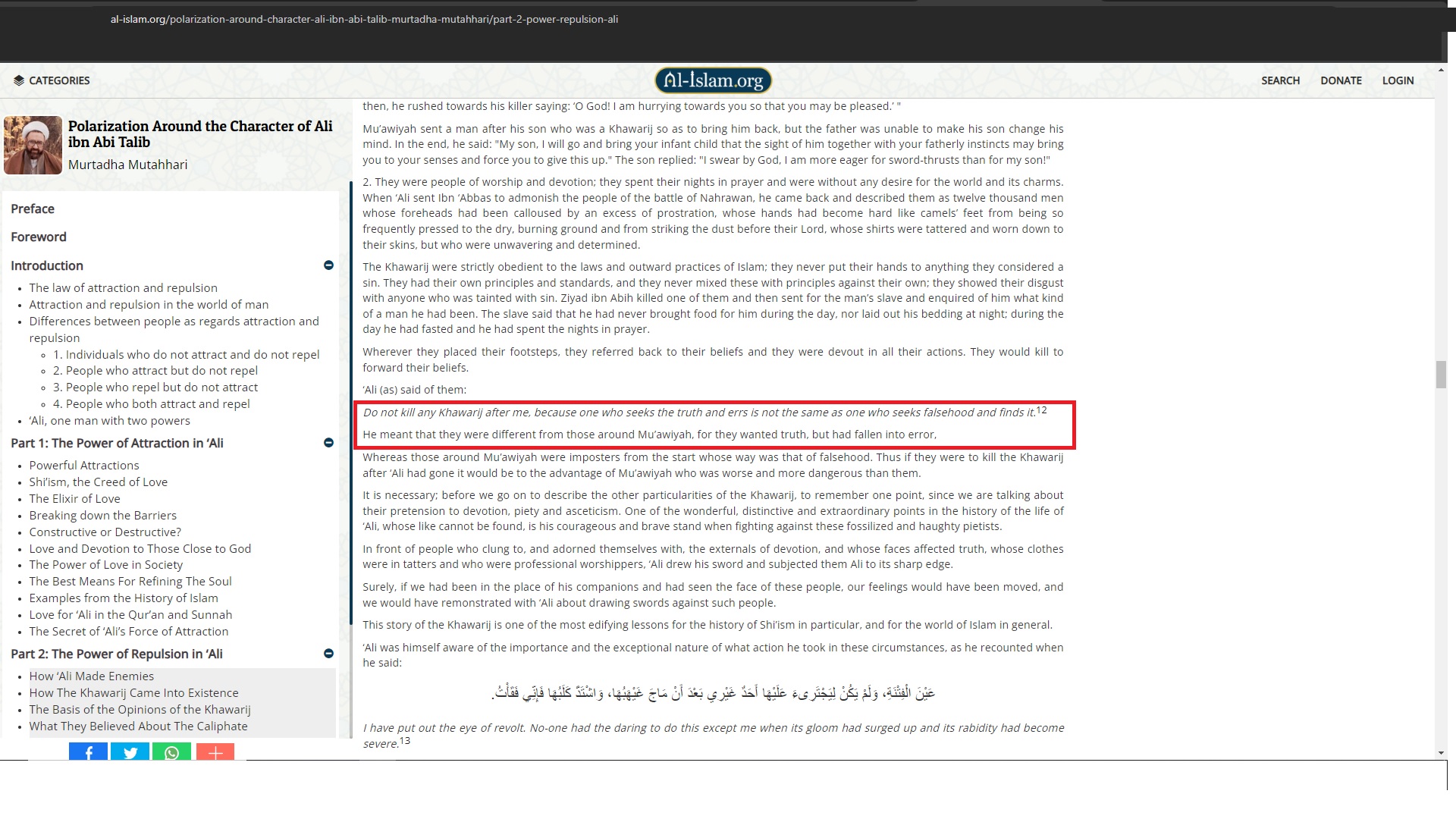
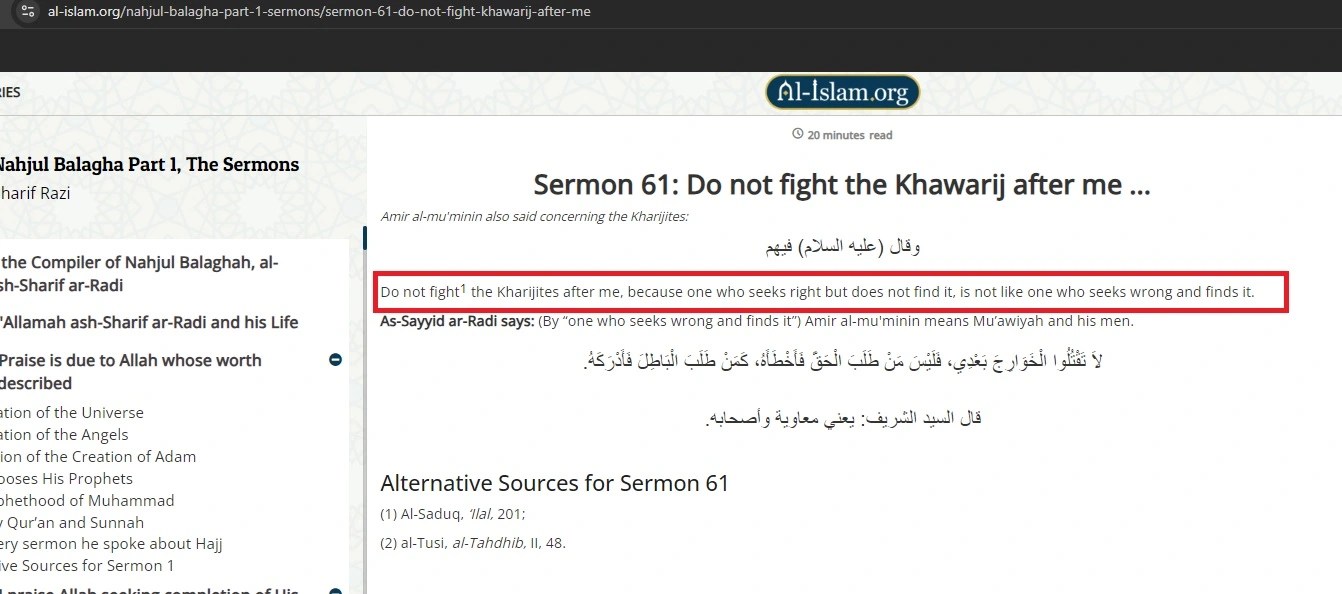
“Do not fight the kharijites after me, because one who seeks a right but does not find it, is not like the one who seeks a wrong and finds it.” –Ali Ibn Abu Talib
Source: (Nahju Al-Balagha Vol. 1, p. 67, speech no. 56.)
The words “He who seeks a right but does not find it” – as ‘Ali himself says – is an allusion to the Nahrawanees who are otherwise known as the Khawarij. The words “Unlike he who seeks misguidance intentionally” refer to Mu’awiya and his Syrian forces.
“Are the Khawarij mushrikun?” Ali said: “They flee from shirk.” Are they munafiqun? Ali said: “The hypocrites remember Allah only a little.” Then what are they? Ali said: “They are our brothers who transgressed against us (ikhwanuna baghaw ‘alayna), so we fought them for their transgression.”
Source: (Al-Bidāya wa l-Nihāya 10:591)
The Ibadi are obviously not Khawarij to anyone who has common sense. However, for those who insist that we are you have to contend with the above statements.
DO READ THIS FIRST. It is important to understand that we believe and accept that those who call themselves ‘Shi’i’ are Muslims.
We understand that ‘Shi’i’ is a term for a loose federation of various sects that all come under the understanding that Ali Ibn Abu Talib should have been the first Amir of the Muslims or was the most deserving of being that Amir.
Be considerate when speaking to Imami Shi’i!
The issue and status of Ali for Imami Shi’is very simillar to the issue and status of Jesus (as) when speaking to a Christian. Let us give you an example. Imagine us as Muslims asking a Christian to become a Muslim. Think for a moment about who Jesus is to the Christian. Overall, Christians believe Jesus is God, he is the Son of God, he is central to their salvation, he is their entry into heaven and their protection from the hellfire. To ask a Christian to become a Muslim seems like such a massive downgrade in the status of Jesus (as).
So to ask these type of Shi’i to even entertain the Ibadi position(s) on Ali is such a massive downgrade in his status for them. The analogy here is on the status and the centrality not in regard to worship or deficiation.
The Shi’i are not all the same.
The name shi’i refers to a broad spectrum. From among them are those who simply prefer Ali. Believing he had the qualities best suited for leadership. Among them are those who believe in esoteric doctrines which blur the lines and distinction between the Creator and the created.
Even before the Amman accord the Ibadi have regarded the Shi’i as Ahl Al Qiblah.
You have your polemical works directed towards each other -Ithna-Ashari versus Zaydi versus Ismaili.
Thus it is in that spirit that this section is created. We have just as much right to contend for the truth as anyone else does.We have the right to allow the Muslim community to make an informed decision on various controversial issues.
You have your narrative and we have our narrative. Allah is with those who are the truthful!
“So after the truth, what else can there be, save error? How then are you turned away?” –(Qur’an 10:32).
There are a few reasons why we need to becareful or approach with caution what the Shi’i claim about themselves and their sources.
Dr. Musa Al-Musawi (The grandson of Ayatollah Abu L-Hassan al-Isfahani) says the following:
“Although we believe that most of the forged narratives from the Imams, were forged after al-ghiba al-kubra (the disappearance of Al-Mahdi Al Muntadhar)…..but any impartial researcher will necessarily conclude that even during the time of the Shiite Imams, many narratives were fabricated and ascribed to the Imams, in the like manner as they were fabricated and attributed to the Prophet.”
Source: (al-Shi’a wa-l-tashih: al-Sira’ bayn al-shi’a wa-l-tashayyu'(the struggle between Shia and Shiism p. 135)
We cannot take Ali at face value.
Abu Huraira narrated that the Prophet (saw) said:
“On the Day of Resurrection a group of companions will come to me, but will be driven away from the Lake-Fount, and I will say, ‘O Lord (those are) my companions!’ It will be said, ‘You have no knowledge as to what they innovated after you left; they turned apostate as renegades (reverted from Islam).
There are those who would make the Ummah believe that Ali is an article of faith or part of the testimony of faith. This is a far cry from the truth. This hadith shows that Ali has to be examined like anyone else. One cannot cite a particular hadith and say that Ali is exempted from examination. Why is this? Once one accepts this particular hadith,everyone becomes suspect. There are no exemptions. Because at this point we cannot be sure that those who narrate this or that in favour of this or that one are not among the apostates themselves! Therefore, we have to systematically examine the data case by case. Islam is a faith of proof and evidence and not a faith of emotions and rhetoric.
Our school is pragmatic.
Narrated Abu Huraira:
When Allah revealed the Verse: “Warn your nearest kinsmen,” Allah’s Messenger (saw) got up and said, “O people of Quraish (or said similar words)! Buy (i.e. save) yourselves (from the Hellfire) as I cannot save you from Allah’s Punishment; O Bani `Abd Manaf! I cannot save you from Allah’s Punishment, O Safiya, the Aunt of Allah’s Messenger (saw)! I cannot save you from Allah’s Punishment; O Fatima bint Muhammed! Ask me anything from my wealth, but I cannot save you from Allah’s Punishment.”
“Neither your relatives nor children will benefit you on Judgment Day—He will decide between you ˹all˺. For Allah is All-Seeing of what you do.” (Qur’an 60:3)
“It is not ˹proper˺ for the Prophet and the believers to seek forgiveness for the polytheists, even if they were close relatives, after it has become clear to the believers that they are bound for the Hellfire.” (Qur’an 9:113)
Social experiment: If Shi’i sources are to be believed it portrays Umar Ibn Al Khattab (ra) as a violent woman abuser and Ali Ibn Abu Talib as a cowardly man.
“And what is there after the truth but error.” (Qur’an 10:32)
﷽
It has been our observation that many in the Muslim Ummah take the wrong approach when dealing with the Shi’a or Pro-Alids in general. They revisit historical disputes and the same ol tired back and forth between those who think that Ali was robbed and those who say he was never intended to be the leader of the Muslims after the death of the Prophet (saw).
However, you see, at Primaquran.com we like to think ahead.
WE TOOK A RIDE ON THE SHI’A BUS AND WE HIGHLY RECOMMEND THAT YOU DO AS WELL!
That’s right! Pack your backs as we are going on an adventure folk!
So imagine if you will that you no longer differ with anything the Shi’i said in regard to who should have led the Muslims after the Prophet (saw). In this scenario, you just simply agree. Ali was robbed. Ali should have been the one and he was dealt a mighty injustice!
So let us say we agree with all of that. Where does this lead us? Where does the Ummah end up?
But here is the thing that is only the first leg of our journey. Ali is the first city on this tour. He is by no means the last. So, after Ali then who? Hassan or Hussein? Then after them, then who?
So we are currently on the Imam Ali bus, and we made an exchange and now are on the Imam Hassan bus (though later you will see some will not acknowledge this bus at all).
After the Imam Hassan Bus, we took the Imam Hussein bus. From here we get on board the Imam Ali ibn Hussein bus. This bus is also known as the Imam Zayn al-Abidin bus.
Before we can get on to the next bus, we have a major dispute among the planners of our journey. There is a huge tumult among the followers of the Imam Ali ibn Hussein bus.
ZAYDI Zayd Ibn Ali /Muhammed ibn Ali al-Baqir conflict on which bus to take
We have a huge layover, and it looks like for the rest of our journey the passengers will now be split. We will have to make a choice between taking the Imam Zayd Ibn Ali bus or the Muhammed Ibn Ali al-Baqir bus.
So the passengers get on different buses at this point. Those passengers that take the Muhammed ibn Ali Al-Baqir bus then get on board the Ja’far al Sadiq bus and, not long after the travel on this bus, we unfortunately face another major dispute among the planners of the journey. There is another huge tumult among the followers of the Ja’far al Sadiq bus.
ISMAI’LI/JA’FARI Isma’il ibn Ja’far/Musa ibn Ja’far al-Kazim conflict on which bus to take.
We have another huge layover, and it looks like for the rest of our journey the passengers will now again be split. We will have to make a choice between taking the Isma’il ibn Ja’far bus or the Musa ibn Ja’far al-Kazim bus.
So the passengers get on different buses at this point. Those passengers who get on the Musa Ibn Ja’far al-Kazim bus continue to take a series of buses until they board the last bus, known as the Muḥammed ibn al-Ḥasan al-Mahdi bus, which concludes the journey…thus far.
Those who get on board the Isma’il ibn Jafar bus continue to take a long series and succession of buses without further ado until they get on board the Abu Tamim Maʿad al-Mustanṣir biʾllah bus and not long after the travel on this, but we unfortunately face another major dispute among the planners of this journey. There is a huge tumult among the followers of the Abu Tamim Ma’ad al-Mustansir bi’llah bus.
NIZARI/MUSTA’LI Abu al-Qasim Aḥmad ibn al-Mustanṣir/Abu Mansur Nizar ibn al-Mustansir conflict on which bus to take.
Those who get on board the Abu Mansur Nizar ibn al-Mustansir bus take a series of buses until they get on board the current bus, the Rahim Al-Hussain bus.
Those who get on board the Abu al-Qasim Aḥmad ibn al-Mustanṣir bus continue to take a series of buses and a succession of buses without further ado until they get on board the Abuʾl-Qasim al-Ṭayyib ibn al-Amir bus and not very long after the travel on this bus, that we unfortunately face another major dispute among the planners of this journey. There is a huge tumult among the followers of the Abuʾl-Qasim al-Ṭayyib ibn al-Amir bus.
HAFIZI/TAYYIBI Abuʾl-Maymun ʿAbd al-Majid ibn Muḥammed ibn al-Mustanṣir/Abuʾl-Qasim al-Ṭayyib ibn al-Amir conflict on which bus to take.
For the first time in the Fatimid dynasty, power was not passed from father to son. This had to be justified. Thus, an appeal was made for the supposed appointment of the Blessed Prophet (saw) to Imam Ali.
Those who take the Abuʾl-Maymun ʿAbd al-Majid ibn Muḥammed ibn al-Mustanṣir bus continue taking the bus until the 15th century, when it takes an abrupt turn off a cliff and the captain of the bus and those on board come to a tragic end. Those that remained on the Abuʾl-Qasim al-Ṭayyib ibn al-Amir bus believed that although al-Tayyib was gone, he and the subsequent Tayyibi imams all remain hidden. Thus, instead of one hidden Imam, we have a whole line of hidden imams. The Tayyibi community was instead led by a sequence of ‘absolute missionaries’, also known as the da’i al-mutlaq.
At this point, there is even more commotion as to which bus is being driven by the da’a that correctly speaks on behalf of the hidden imams.
DAWOODI/SULAYMINI/ Dawood Bin Qutubshah/Sulayman Bin Hassan conflict over which is the correct bus to take.
It is worth taking note that a huge contingent of these Ismai’li Mustaali converted to Sunni Islam. In particular, the Hanafi School. They were known as Sunni Bohra. Among some noteworthy descendants are: Shaykh Mufti Menk, Shaykh Ahmed Deedat, Hafiz Muhammed Patel-known for establishing the Tabligh Jamaat in the U.K., Ghulam Muhammed Vastanvi, the former vice chancellor of Darul Uloom Deoband. Yusuf Ali, the world-renowned translator of the Qur’an into English.
The historical conversion of groups like the Sunni Bohras to Sunni Islam often stemmed from a desire to exit this complex and fractious system of succession and return to what they saw as the simpler, more stable foundations of the Quran and Sunnah as understood by the majority scholarly tradition they immediately had as alternative.
Shi’i Bus Tour Division
REFLECTIONS ON WHERE THE SHI’A BUSLEADS.
So, at the end of the day, many Muslims spend time arguing with Shi’a over the succession of the Blessed Prophet (saw). However, as we suggested, we would rather a person take a peak into the future and see where it leads. As we said, if one were to grant that the Shi’a (as much as Ali should have been the one to lead the Muslims) are right, what does it say about further successions? As we said, the story begins with Ali. It certainly does not end there. So one would have to investigate further claims.
Are the Zaydis correct in their claim? Or are the Imami (Ja’fari/Dawoodi-Taybi-Musta’li-Ismai’li/Sulaymani-Taybi-Must’ali-Ismai’li/Nizari-Ismai’li)
If we lean on the Imami side, then who is correct in the following schism?
The Ja’fari or the Ismai’li?
If one were to lean on the Ismai’li side, then who is correct in the following schism?
The Nizari or the Must’ali?
If one were to lean on the Musta’ali side, then who is correct in the following schism?
Dawoodi or Sulaymani?
By “taking the Shia bus,” one is not just accepting the status of Ali as the one who should have been the Imam. One is implicitly accepting the entire theological system of Imamah—the belief in a divinely appointed, and necessary guide in every age.
The subsequent splits we have mapped reveal the inherent instability of this system of succession outside of a clear, unambiguous, and divinely protected text (like the Qur’an). Each schism is proof that the question “Who is the Imam now?” has rarely had a single, universally accepted answer within the Shia paradigm. This is the primary theological objection that Allah would not leave guidance for His Ummah to a system that results in such perpetual uncertainty and division.
Our bus tour is a simple heuristic device. It demonstrates that:
The doctrine of Imamah is the engine of the Shia bus, and every major dispute is a breakdown in that engine’s transmission.
The journey doesn’t end with acknowledging Ali; it requires navigating a labyrinth of subsequent successions, each with its own claims and counter-claims.
The question isn’t just “Was Ali right?” but also “If he was, what was the system supposed to be, and does any group actually have it functioning today?”
It presents some difficult challenges.
Example: Two brothers both claim to be Imam. Both of these brothers are descendants of the Blessed Prophet (saw), they are Ahl Bayt.
If the masses support Brother A and fight Brother B, does this mean they hate the ahl bayt?
If the masses support Brother B and fight Brother A, does this mean they hate the ahl bayt?
Will the masses make an infallible decision to choose an infallible guide?
So let us look at where each of these would bring us today.
The Zaydis have been without an Imam from the line of Fatima (ra) since the passing of Imam Muhammed al Badir in 1996. 30 years without an Amir Ul Mumineen and the community seems to be doing just fine without one.
The Ja’fari have been without a living accessible Imam available to all since 874. Instead, the faithful have to put their trust in the Wilayat al-Faqih , which they hope is able to discern the will of the Mahdi. They have to settle for the Imam to return in some future dramatic eschatological event.
The Nizari Ismai’li are the only ones who can, at the very least, claim they have a living accessible Imam in the Aga Khan. They are basically a philanthropic organization for those satisfied with secularism. If their Imam walks into a 7-11 and buys a Snickers candy bar, he has to pay taxes like everyone else.
Dawoodi-Taybi-Musta’li-Ismai’li & The Sulaymani-Taybi-Must’ali-Ismai’li are in the same condition as the Ja’fari in that their living Imam is not accessible to the masses but only available via the da’i al-mutlaq.
CONCLUSION AFTER TAKING A RIDE ON THE SHI’A BUS.
Zaydis have not put themselves in a corner by describing their imams as being infallible or by having nass imamate. So they can have an interlude (like they have currently).
When we think of the last Zaydi Imam, Muhammed ibn al-Hasan, again, some may have a hard time registering in their minds that the commander of the faithful would leave a war-torn region to go live in the United Kingdom and pay taxes to their government. It is just not something that one pictures Ali doing. Especially considering the English government recognized the Yemeni government in the same way that the Saudis did.
Zaydis have two perspectives when it comes to dealing with what are believed to be the rights of Ali.
Al-Jarudiyyah (Jarudiyyah) Named after its founder, Abu’l-Jarud Ziyad ibn Abi Ziyad.
Key Belief: This is the most hardline Zaydi position regarding the early Caliphs.
They hold that the Blessed Prophet Muhammed (saw) explicitly designated Ali ibn Abi Talib as his successor through numerous clear texts (nass jali).
Therefore, anyone who opposed Ali’s right to leadership was effectively an unbeliever or a major sinner who had strayed from the truth. This view is very close to that of Twelver (Ithna’ashari) Shi’a.
This position is perhaps the most dominant among the Yemeni Zaydis today.
Al-Batriyyah (Batriyyah) A more moderate wing of early Zaydism. The name “Batri” is said to come from the word batr, meaning “to curtail” or “cut off,” implying they “curtailed” their allegiance to Ali or his rights.
Key Belief: They took a much softer stance on the early Caliphs.
They believed that while Ali was the most qualified and deserved to be the Imam, the community’s election of Abu Bakr and Umar was valid because they were righteous rulers who judged according to the Qur’an and Sunnah. They practiced “postponement” (irja), withholding judgment on the matter.
Here is Hussain Badreddin al-Huti, a Yemeni scholar and Zaydi politician who says that Umar Ibn Al Khattab (ra) is the beginning of all the problems.
“Every calamity the ummah has faced, Umar was the main cause of that evil”
The Ja’fari. One would think if we are going to say that we need an infallible guide and interpreter to correctly understand the Qur’an and the Sunnah, and then we are going to say that a fallible human being (wilayat al-faqih) now interprets infallible information (from the hidden Imam) this view is wanting.
That being said, the more traditional and sober among them (The Ja’fari) will have to reign in some of these more extreme practices and statements that would put those who state them outside the fold of Islam, without doubt. Granted, this video is polemical in nature and directed towards some online Ja’fari personalities. Albeit the concern of the rest of the Ummah is that the more sober-minded among the Ja’fari will reign in these practices and statements. In a gathering that is more akin to a rave, you can hear the main correcting people who say that Ali is Allah. He corrects them by asserting that Ali can create 1000s of Allahs! May Allah forgive us and guide us!
The video below is an example of some of these extreme beliefs. We also want to inform the readers that we do endorse the personal attacks at the beginning of the video.
“O believers! Do not let some ridicule others, they may be better than them, nor letwomen ridicule other women, they may be better than them. Do not defame one another, nor call each other by offensive nicknames. How evil it is to act rebelliously after having faith! And whoever does not repent, it is they who are the wrongdoers.” (Qur’an 49:11)
Ali created Allah? Ali can create 1000s of Allahs?
Unfortunately, there is much to be done by the Ja’fari Shi’a scholarship to reign in these beliefs and practices.
The current biggest challenge of the Ja’fari Shi’a?
. The Paradox of the Fallible Interpreting the Infallible
The point is devastatingly logical from first principles:
Premise 1: Humanity requires an infallible (ma’sum), divinely-appointed guide to correctly understand and implement the Quran and Sunnah. Without him, error is inevitable.
Premise 2: This guide, the 12th Imam, is in occultation and inaccessible.
Solution: A class of fallible scholars (fuqaha) study his teachings and deduce his will.
Contradiction: The entire system was created because fallible humans (the community without an Imam) are deemed incapable of correctly understanding revelation on their own. Yet, the solution is to have… fallible humans interpret the will of the infallible guide.
Nizari Ismai’li
Maintain a living, present Imam. Result: The Imam’s role adapts (some would say dilutes) to fit a modern, secular world.
This may surprise the readers, but of all Shi’a groups that believe we should be led by an Imam from the line of Fatima (ra) the Nizari Ismaili would be the sensible choice. Muhammed (saw) was the Imam of the Muslims, and he was accessible to all. He was not hidden by some “pay wall”. The Nizari Ismai’li never needed the doctrine of wilayat al-faqih or needed some da’i al-mutlaq (fallible human-contrived methods) to ascertain the infallible perfect guide.
Alas, the current Aga Khan does not declare it wajib for Muslims to pray five times a day or fast in the month of Ramadan.
The Aga Khan’s role is indeed heavily focused on global philanthropy, development, and cosmopolitanism. Critics argue this comes at the expense of traditional Islamic law and ritual, making the faith more of a cultural-ethical identity. Our “7-11 and Snickers” analogy humorously drives home the point: the Imam exists within the modern secular system; he doesn’t stand entirely outside it as a purely spiritual sovereign.
Dawoodi-Taybi-Musta’li-Ismai’li & The Sulaymani-Taybi-Must’ali-Ismai’li
They may need to challenge the Nizari view who has the correct Nass of the Imam.
Something that one cannot help to notice is all those 7 year old children among the Sulaymani and Dawoodi that have better recitation of the Qur’an than a proclaimed Imam of the Muslims! The Nizari Imam-The Aga Khan. We have never seen a public demonstration of his ability to properly recite the Qur’an.
However; the Musta’li Ismai’li have the same problem that the Ja’fari do. The doctrine of wilayat al-faqih or some da’i al-mutlaq (fallible human contrived methods) to ascertain the infallible perfect guide. Both will have continuing to look to the horizons.
So this brings us to the end of the Shi’a bus tour. This is where we are in 2025. The journey begins with Ali, but it does not end there.
So your choices are…
Zaydi-no current Imam.
Ja’fari-Imam in hiding relates matters to Wilayat Al Faqih
Ismai’li Nizari-Aga Khan
Ismai’li Mustali Sulaymani-Imam in hiding relates matters to Da’i al-Mutlaq.
Ismai’li Mustali Dawoodi-Imam in hiding relates matters to Da’i al-Mutlaq.
When we step back and look at the landscape we’ve so thoroughly mapped—the complex schisms, the theological paradoxes, the modern-day compromises—the question “what’s the big deal?” isn’t a dismissal of history; it’s a profound critique of present-day priorities.
Our encouragement to “ride the Shi’a bus and see where it takes you” is the ultimate reality check. That journey, as we’ve shown, doesn’t lead to a single, unified, triumphant destination of perfect justice and guidance. Instead, it leads to:
A 30-year vacancy for the Zaydis.
A 1,150-year (and counting) absence for the Twelvers, managed by fallible scholars.
A living but secular-adjacent Imam for the Nizaris, focused on philanthropy within the modern nation-state system.
A hidden Imam represented by a single “Absolute Missionary” for the Bohras.
This isn’t a critique of the sincerity of their faith. It is, however, a stark demonstration that no branch of Shiism has successfully actualized the ideal of a divinely-guided, infallible political and spiritual leader in the modern era. Every group has had to adapt, compromise, or accept a state of perpetual waiting.
Therefore, the intense focus on who was right about 7th-century succession begins to look like a monumental distraction from the pressing issues facing the entire Ummah today: oppression, poverty, intellectual stagnation, and internal strife.
Further implications.
Shi’i often talk about Shi’i -Sunni unity. To the credit of Sunni Muslims, they do often have
Intra-Sunni unity conferences where they come together. Sunni-Sunni unity.
When can we expect the same from the Shi’i? Shi’i-Shi’i Unity?
When can we see an intra-Shi’i unity conference? A conference that would include a Jafari, Taybi, Zaydi, Nizari Shi’a altogether?
“O believers! Stand firm for justice as witnesses for Allah even if it is against yourselves, your parents, or close relatives. Be they rich or poor, Allah is best to ensure their interests. So do not let your desires cause you to deviate. If you distort the testimony or refuse to give it, then Allah is certainly All-Aware of what you do.” (Qur’an 4:135)
﷽
The position of the Ibadi school concerning the Wali of Allah. Whoever has attained the rank of wilāyat al-ḥaqīqah (true spiritual guardianship), his guardianship is never nullified under any circumstance. Therefore, there is no room for enmity against him, even if he were to commit grave sins.
However, falsehood is never accepted from him, and if he falls into one of the prescribed punishments of Allah, the punishment of Allah is carried out upon him yet his guardianship is not revoked.
In our view, true wilayah (divinely established authority/guardianship) is not affirmed except through revelation-either a verse from the book of Allah. Specifically referring to the person granted wilayah by name, kunyah, or title, or through direct hearing from the mouth of the Messenger of Allah (saw), via a mutawatir (mass-transmitted) narratioin.
Accordingly, we do not know of anyone in this ummah who is specifically singled out with true wilayah except the messenger of Allah (saw) and his wives (May Allah be pleased with them all), according to the opinion of some of our scholars, may Allah have mercy on them.
Indeed, the Messenger of Allah (saw) carried out the punishment of stoning on Māʿiz (may Allah be pleased with him), and instructed his companions to seek forgiveness for him. The same was the case with the Ghamīdī woman. Thus, wilāyat al-ḥaqīqah neither nullifies rights nor abolishes punishments.
The Ghamīdī woman & Ma’iz b. Malik al-Aslami -may Allah be pleased with them both.
‘Abdullah b. Buraida reported on the authority of his father that Ma’iz b. Malik al-Aslami came to Allah’s Messenger (saw) and said:
Allah’s Messenger, I have wronged myself; I have committed adultery and I earnestly desire that you should purify me. He turned him away. On the following day, he (Ma’iz) again came to him and said: Allah’s Messenger, I have committed adultery. Allah’s Messenger (saw) turned him away for the second time, and sent him to his people saying: Do you know if there is anything wrong with his mind. They denied of any such thing in him and said: We do not know him but as a wise good man among us, so far as we can judge. He (Ma’iz) came for the third time, and he (The Blessed Prophet) sent him as he had done before. He asked about him and they informed him that there was nothing wrong with him or with his mind. When it was the fourth time, a ditch was dug for him and he (The Blessed Prophet) pronounced judgment about him and he wis stoned.
أُرِيدُ أَنْ تُطَهِّرَنِي -I want you to purify me.
He (the narrator) said: There came to him (The Blessed Prophet) a woman from Ghamid and said: Allah’s Messenger, I have committed adultery, so purify me. He (The Blessed Prophet) turned her away. On the following day she said: Allah’s Messenger, Why do you turn me away? Perhaps, you turn me away as you turned away Ma’iz. By Allah, I have become pregnant. He said: Well, if you insist upon it, then go away until you give birth to (the child). When she was delivered she came with the child (wrapped) in a rag and said: Here is the child whom I have given birth to. He said: Go away and suckle him until you wean him. When she had weaned him, she came to him (The Blessed Prophet) with the child who was holding a piece of bread in his hand. She said: Allah’s Apostle, here is he as I have weaned him and he eats food. He (The Blessed Prophet) entrusted the child to one of the Muslims and then pronounced punishment. And she was put in a ditch up to her chest and he commanded people and they stoned her. Khalid b Walid came forward with a stone which he flung at her head and there spurted blood on the face of Khalid and so he abused her. Allah’s Messenger (saw)heard his (Khalid’s) curse that he had huried upon her. Thereupon he (The Blessed Prophet) said: Khalid, be gentle. By Him in Whose Hand is my life, she has made such a repentance that even if a wrongful tax-collector were to repent, he would have been forgiven. Then giving command regarding her, he prayed over her and she was buried.
Buraida told that Ma’iz b. Malik came to the Prophet and said, “Purify me, Messenger of Allah.” He replied, “Out upon you! Go back, ask Allah’s forgiveness and turn to Him in repentance.” He said that he went back not very far, then came and said, “Purify me, Messenger of Allah,” and the Prophet said the same as he had said before. When this went on till a fourth time he asked, “For what am I to purify you?” and he replied that it was because of fornication. Allah’s Messenger then asked if the man was mad, and when he was told that he was not, he asked if he had drunk wine. A man got up and smelt his breath but noticed no smell of wine, so the Prophet asked him if he had committed fornication, and when he replied that he had, he gave orders regarding him and he was stoned to death. Two or three days later Allah’s Messenger came and said, “Ask forgiveness for Ma’iz b. Malik. He has repented to such an extent that if it were divided among a people it would be enough for them all.”
The Key Point: After the execution of the punishment, the Blessed Prophet (saw) did not declare them to be enemies of Allah or eternal denizens of Hellfire. Instead, he spoke well of their repentance and even instructed the companions to pray for them. This prayer (ṣalāt al-janāzah) itself is an act that is only performed for Muslims.
This proves that while their sinful action demanded earthly punishment, their essential faith and status as believers (awlīyāʾ in the true sense) were not completely obliterated. Their sincere repentance preserved their wilāyat al-ḥaqīqah
The 10 sons of Yaʿqūb/Jacob -peace be upon him.
We also believe in the wilāyat al-ḥaqīqah of the ten sons of Prophet Yaʿqūb (peace be upon him) who wronged their brother, fabricated false stories to cover their crimes their falsehood is not accepted, yet their guardianship is not revoked. It remains upon them, their father, their brother, and our Messenger (peace and blessings be upon them all).
“But My Promise is not within the reach of (zalimin) evil-doers.”(Qur’an 2:124)
What did these descendants of Prophet Ibrahim (as) get up to?
They cried, “Our father! We went racing and left Joseph with our belongings, and a wolf devoured him! But you will not believe us, no matter how truthful we are.” (Qur’an 12:17)
These Muwahid, The Ahl Bayt of Jacob (as), Sons of a Prophet lied to their father! Imagine telling your own father that his son (your own brother) was eaten by a wolf! Can you imagine the grief it would bring him?!
Allah (swt) tells us in very vivid language how severe the grief and trauma of Jacob (as). The trauma that Prophet Jacob (as) went through on account of his progeny, the progeny of the Household.
“He turned away from them, lamenting, “Alas, poor Joseph!” And his eyes turned white out of the grief he suppressed.” (Qur’an 12:84)
He replied, “O my dear son! Do not relate your vision to your brothers, or they will devise a plot against you. Surely Satan is a sworn enemy to humankind.” (Qur’an 12:5)
Jacob (as) knew among his ahl bayt were schemers!
“˹Remember˺ when they said ˹to one another˺, “Surely Joseph and his brother ˹Benjamin˺ are more beloved to our father than we, even though we are a group of so many. Indeed, our father is clearly mistaken.” (Qur’an 12:8)
Can you imagine talking about your father (a Prophet) like that?
“Kill Joseph or cast him out to some ˹distant˺ land so that our father’s attention will be only ours, then after that you may ˹repent and˺ become righteous people!” (Qur’an 12:9)
They said, “O our father! Why do you not trust us with Joseph, although we truly wish him well? (Qur’an 12:11)
The Ahl Bayt of Jacob (as) Lie #1 to their father.
“Send him out with us tomorrow so that he may enjoy himself and play. And we will really watch over him.” (Qur’an 12:12)
So he can enjoy himself, Lie #2, and they will watch over him Lie #3.
“Then they returned to their father in the evening, weeping. They cried, “Our father! We went racing and left Joseph with our belongings, and a wolf devoured him! But you will not believe us, no matter how truthful we are.” (Qur’an 12:16-17)
“And they brought his shirt, stained with false blood. He responded, “No! Your souls must have tempted you to do something ˹evil˺. So ˹I can only endure with˺ beautiful patience! It is Allah’s help that I seek to bear your claims.” (Qur’an 12:18)
Look at the extent of their manipulation! Fake tears like actors crying on que! A prop piece—his shirt stained with false blood. Gaslighting their father.
Joseph was eaten by a wolf. Lie #4 Brought a shirt with false blood Lie #5
“Return to your father and say, ‘O our father! Your son (Benjamin)committed theft. We testify only to what we know. We could not guard against the unforeseen.” (Qur’an 12:81)
They claimed their other brother, Benjamin, was a thief and lied to their father, yet again. Lie #6
The Ahl Bayt of Jacob, the guilty among them, finally return in repentance to Allah (swt)
“They admitted, “By Allah! Allah has truly preferred you over us, and we have surely been sinful.” (Qur’an 12:91)
“They begged, “O our father! Pray for the forgiveness of our sins. We have certainly been sinful.” (Qur’an 12:97)
Satan ignited rivalry between the Ahl Bayt of Jacob (as)
“Then he raised his parents to the throne, and they all fell down in prostration to Joseph,1 who then said, “O my dear father! This is the interpretation of my old dream. My Lord has made it come true. He was truly kind to me when He freed me from prison, and brought you all from the desert after Satan had ignited rivalry between me and my siblings. Indeed my Lord is subtle in fulfilling what He wills. Surely He ˹alone˺ is the All-Knowing, All-Wise.” (Qur’an 12:100)
What to make of the sons of Jacob (as) Al Muwahid who lied to their father (a Prophet) because they were jealous of their brother? The sons of a prophet can conspire against their brother.
Their falsehood is not accepted, yet their guardianship is not revoked.
Analysis of the Examples Provided
The Sons of Prophet Yaʿqūb (AS):
This example is even more striking and is particularly emphasized in Ibāḍī theology to drive the point home.
Their crime was immense: they attempted murder on their brother Yūsuf (AS), threw him in a well, lied to their father, and caused him immense grief. This constitutes major sins involving injustice, deception, and breaking familial ties.
Ibāḍī Interpretation: Despite this, the Qur’an never refers to them as disbelievers (kuffār). They are still considered among the prophets’ descendants. Prophet Yaʿqūb (AS) and Prophet Yūsuf (AS) eventually forgave them. Their story ends with forgiveness and family reconciliation.
This demonstrates that even such heinous sins did not irrevocably sever their essential connection to the legacy of prophethood and faith (wilāyat al-ḥaqīqah), though they were certainly held accountable for their actions in this world and were rebuked in the Qur’an.
The established principle regarding spiritual guardianship (wilayah) is that one who possesses true guardianship never loses it, regardless of sins committed — we are certain they will die repentant. Thus, we reject their wrong actions while maintaining a connection to their essential spiritual station. The converse is equally true.
An example of the converse being true: Bara’ah al-Haqiqa
The example of Abu Lahab.
May the hands of Abu Lahab perish, and he perish! Neither his wealth nor gains will benefit him. He will burn in a flaming Fire, and his wife, the carrier of kindling,around her neck will be a rope of palm-fibre. (Qur’an 111:1-5)
Some Muslims use a flawed argument about Abu Lahab to prove the truth of the Qur’an, saying: “If Abu Lahab had taken the shahādah, it would have made the Qur’an false.”
This is incorrect. The words of Allah (swt) are absolute truth, whereas Abu Lahab’s actions (if he had ever claimed faith) would have been deception. Allah (swt) has already decreed his fate. He is the very definition of one being in barā’ah ḥaqīqah (the true dissociation), being truly cut off.
If Allah (swt) did not reveal this about Abu Lahab, and he took the testification of faith, he would be in Walayah al-Dhahir – The apparent friendship. This is a matter of jurisprudence.
However, since Allah (swt) revealed his state Bara’ah al-Haqiqah – The real dissociation. This is a matter of theology.
The example of Adam -upon him be peace.
We believe in the true spiritual guardianship of our father Adam (as), while Allah explicitly states in Scripture that he disobeyed and erred, then sought forgiveness and repented. We affirm his true guardianship while disassociating from his wrong actions. Similarly:
“They said: ‘Our Lord we have wronged ourselves souls. If You forgive us not and bestow not upon us Your Mercy, we shall certainly be of the losers’ ” (Quran 7:23)
“So Adam disobeyed his Lord, and lost his way. Then his Lord chose him, accepted his repentance, and guided him.” (Qur’an 20:121-122)
Thus, Adam-upon him be peace, is in true spiritual guardianship.
The Ahl Bayt of Adam (as). The household of the Prophet Adam (as)
The first murderer in human history was a descendant of a Prophet.
Cain killed his brother Abel. Both were descendants of the Prophet Adam (as). Yet, one was righteous and the other became the ‘first’ murderer. Such that Allah (swt) made an example of this particular incident throughout time.
“So his soul permitted to him the murder of his brother, so he killed him and became among the losers.” (Qur’an 5:30)
“And recite to them the story of Adam’s two sons, in truth, when they both offered a sacrifice, and it was accepted from one of them but was not accepted from the other. Said [the latter], “I will surely kill you.” Said [the former], “Indeed, Allah only accepts from the righteous [who fear Him]”. (Qur’an 5:27)
Humanity is not even in its infancy and here we have two descendants of the Prophet Adam (as). One of them has the hallmark of being remembered for all time as being the first murderer. Allah (swt) said that one of them was (mutaqi) righteous, meaning the other was not.
Does the son of Adam (as) get a pass for murdering his brother simply because he is the son of a Prophet?
“Then Allah sent a crow digging in the ground, in order to show him how to bury the corpse of his brother. He cried, “Alas! Have I failed to be like this crow and bury the corpse of my brother?” So he became regretful.” (Qur’an 5:31)
The regret here is not from his action but because he was not able to cover up his action. This son of Adam is in Barā’ah. This son of a Prophet is in Barā’ah
It is from the Sunnah of the Prophet to disavow any Muslim (including a companion) when they commit a sin.
First and foremost, to disavow any Muslim when they commit a sin is from the Sunnah of the Blessed Prophet (saw). This includes the companions.
Narrated Salim’s father:
The Prophet (saw) sent Khalid bin Al-Walid to the tribe of Jadhima and Khalid invited them to Islam but they could not express themselves by saying, “Aslamna (i.e. we have embraced Islam),” but they started saying “Saba’na! Saba’na (i.e. we have come out of one religion to another).” Khalid kept on killing (some of) them and taking (some of) them as captives and gave every one of us his Captive. When there came the day then Khalid ordered that each man (i.e. Muslim soldier) should kill his captive, I said, “By Allah, I will not kill my captive, and none of my companions will kill his captive.” When we reached the Prophet, we mentioned to him the whole story. On that, the Prophet (saw) raised both his hands and said twice, “O Allah, I disavow before You what Khalid has done.” اللَّهُمَّ إِنِّي أَبْرَأُ إِلَيْكَ مِمَّا صَنَعَ خَالِدٌ
Core Principles of the Ibāḍī Position on Wilāyat al-Ḥaqīqah
The Separation of Status from Action: A person’s fundamental spiritual state (ḥāl)—their belief, inner conviction, and love for Allah—is distinct from their outward actions. A major sin is a catastrophic failure in action, but it does not automatically annihilate the foundation of faith (īmān) in the heart.
Two Types of Wilāyah: Our scholars often delineate between:
Wilāyat al-Ḥaqīqah (True/Essential Guardianship): This is the inner, spiritual reality of being a friend of Allah. It is based on sincere belief, knowledge of Allah (maʿrifah), and righteous intention. This state, once truly attained, is considered by us Ibāḍīs to be a permanent reality that is not nullified by subsequent sin. It is a matter of the heart’s condition, which is known only to Allah.
Wilāyat al-Dīn (Religious/Legal Guardianship): This is the outward, legal expression of that friendship. It governs how the community interacts with the individual. This can be nullified by public, major sin because the community must judge based on what is apparent (ẓāhir). Loss of wilāyat al-dīn means the person is no longer considered part of the community of believers in a socio-legal sense; they may be ostracized or subject to legal penalties.
If they sincerely repent, they are put back into Wilāyat al-Dīn. If they have committed an offense that comes under qisas, hadd, or ta’zir, they are dealt with accordingly.
Our examples perfectly explain the consequence of this distinction: the inner wilāyah remains, but the outer consequences of sin are not waived.
To find out more on this please see our article here:
This position places classical Ibāḍīsm in a unique middle ground between other schools:
Vs. Khawārij: The Khawārij held that any major sin makes a person a disbeliever (kāfir), nullifying any form of wilāyah and making them eternally damned. The Ibāḍīs vehemently reject this, as shown by our text.
Vs. Murjiʾah: The Murjiʾah held that sin does not harm faith at all; a person’s faith remains complete regardless of their actions. We, the Ibāḍīs reject this, insisting that sins have real consequences and that outward wilāyah is lost.
A person’s essential spiritual identity as a friend of Allah (wilāyat al-ḥaqīqah), once truly established through sincere faith, is a resilient reality that is not erased by sin. However, this inner state does not provide immunity from divine law or its consequences in the world. The community must uphold justice (execute punishments, reject falsehood) while maintaining a principled optimism about the depth of Allah’s mercy and the potential for a sinner’s heart to still be oriented toward Him.
Understanding Qur’an 49:9
First, regarding the noble verse: ‘If two groups of believers fight each other…’(Quran 49:9) – Note here that before identifying which party is the aggressor, Allah says “from the believers” and not “two believing groups”, commanding reconciliation because mistakes may occur. As stated: ‘It is not for a believer to kill another believer except by mistake.’ (Qur’an 4:92)
Through reconciliation, the aggressor party becomes known and must repent to remain within the circle of faith. If they persist in their aggression, then fighting them becomes obligatory – this being one of Allah’s prescribed limits (hudud), like the punishments for theft, slander, adultery, brigandage, and alcohol consumption. Whoever violates these divine limits must face the prescribed punishment, even if they possess true spiritual guardianship (wilayat al-haqiqah).
This is why Ammar (ra) fought against the Mother of the Believers, Aisha (ra), in the Battle of the Camel while still affirming her status.
The example of Aisha-may Allah be pleased with her.
The amr of Allah belonged with Ali. Ayesha (ra) opposed him and later repented. We also know this because she (Ayesha) — may Allah be pleased with her is in real spiritual guardianship (wilayat al-haqiqah).
Narrated Abu Maryam `Abdullah bin Ziyad Al-Aasadi:
“When Talha, AzZubair and `Aisha moved to Basra, `Ali sent `Ammar bin Yasir and Hasan bin `Ali who came to us at Kufa and ascended the pulpit. Al-Hasan bin `Ali was at the top of the pulpit and `Ammar was below Al-Hasan. We all gathered before him. I heard `Ammar saying, “`Aisha has moved to Al-Busra. By Allah! She is the wife of your Prophet in this world and in the Hereafter. But Allah has put you to test whether you obey Him (Allah) or her (`Aisha).”
So even though Aisha (ra) is acknowledged by Ammar bin Yasir (ra) to be the ‘wife of the Prophet in this world and in the Hereafter‘, he was not about to leave the commands of Allah (swt).
Whoever violates these divine limits must face the prescribed punishment, even if they possess true spiritual guardianship (wilayat al-haqiqah).
Allah makes known the status of the wives of the Blessed Prophet (saw) when he states:
“The Prophet has a stronger affinity to the believers than they do themselves. And his wives are their mothers.” (Qur’an 33:6)
Yet, Allah (swt) also informs us:
“O wives of the Prophet! If any of you were to commit a blatant misconduct, the punishment would be doubled for her. And that is easy for Allah.” (Qur’an 33:30)
We affirm the true guardianship of Aisha (ra) while disassociating from her wrong action in fighting against the Imam of the Muslims.
Summary of the battle of the camel and the actions of Aisha -May Allah be pleased with her.
Quranic Mandate:Qur’an 49:9 provides a clear command: if two groups of believers fight, Muslims must seek reconciliation. If one group is clearly the aggressor (baghat), the community must fight that oppressive group until it returns to the “command of Allah” (amr Allah).
Historical Application: In the conflict between Imam ʿAlī and the group led by ʿĀ’ishah (ra), Talḥah, and Al-Zubayr, we posit that the amr Allah (the legitimate command and authority) was with ʿAlī. Therefore, the group that took up arms against him was, in that specific instance, the oppressing party (al-bāghiyah).
Theological Principle: This is where we link it to the previous concept. Even though ʿĀ’ishah (ra) holds the rank of wilāyat al-ḥaqīqah (“the wife of your Prophet in this world and in the Hereafter”), this spiritual status does not grant immunity from the consequences of worldly actions that violate divine law and order.
Consequence: Therefore, it became obligatory to oppose her military action and fight to bring that group back to obedience, exactly as ʿAmmār ibn Yāsir (ra) stated. The punishment for this political transgression was the worldly consequence of battle.
Status Preserved: Following the event, ʿĀ’ishah (ra) repented and was deeply remorseful, which is a key point. Her repentance and her esteemed status indicate that her wilāyat al-ḥaqīqah was not nullified by this error in political judgment and action.
Analysis and Further Context:
The ḥadīth we cited is crucial. ʿAmmār (ra) perfectly encapsulates the dilemma and its solution:
Acknowledgment of Status: He begins by unequivocally affirming ʿĀ’ishah’s (ra) unparalleled status and virtue. This establishes the principle of wilāyat al-ḥaqīqah.
Primacy of Obedience to Allah: He immediately follows by stating that this status is not the ultimate factor in deciding political allegiance. The test from Allah is whether Muslims will obey Allah by obeying the legitimate authority He has placed, or obey a person, no matter how esteemed, in opposition to that authority.
This is a death blow to Shi’i aqidah. Because the guardianship of Allah (swt) does not change, and, likewise, Allah’s enmity does not change. That is because He is the All-Knowing, nothing is hidden from Him. Therefore, whoever is a friend of Allah is His Friend. Even if sins and grave offenses appear from the person, that person will not die except after repenting from them. And whoever is an enemy of Allah is his enemy, even if piety and acts of righteousness appear from them, that one will certainly die persisting in sinning against Allah the Almighty.
Thus, since Allah (swt) called Aisha (ra) the mother of the believers, she cannot, as Shi’i claim, be a person of the hellfire. This would indicate a change in guardianship and thus a change within Allah (swt).
The example of Fatima-May Allah be pleased with her.
Narrated `Aisha: Usama approached the Prophet (saw) on behalf of a woman (who had committed theft). The Prophet (saw) said, “The people before you were destroyed because they used to inflict legal punishments on the poor and forgive the rich. By Him in Whose Hand my soul is! If Fatima (the daughter of the Prophet (saw) did that (i.e. stole), I would cut off her hand.”
Now, does one need to hate Fatima (ra) in order to administer the justice of Allah? How do people reason? Does anyone think that Adam (as) did not love both his sons? Even though one is a murderer?
The core question is about reconciling love/respect for individuals with the obligation to uphold Allah’s laws.
Does one need to hate Fatima (ra) to administer the justice of Allah?
Absolutely not. In fact, the opposite is true. One must love and respect her so much that they will uphold the command of Allah and the Sunnah of His Prophet (saw) even upon her.
The hadith we cited is one of the most powerful illustrations of the principle of blind justice in Islam. The Blessed Prophet’s (saw) statement is the ultimate expression of his commitment to divine justice.
Love for Allah and His Law Supersedes Personal Love: The Prophet’s (saw) love for his daughter was immense. But his love for Allah and His commandments was greater. By declaring he would punish her, he was teaching that no personal relationship, no matter how cherished, can stand between a Muslim and the fulfillment of Allah’s law.
Administering Justice is an Act of Worship: The judge who would carry out the ruling is not doing it out of personal hatred for the criminal. He is doing it as an act of obedience to Allah, fulfilling a trust (amanah) placed upon him. Carrying out a hadd punishment on a beloved individual would be one of the most difficult tests of faith, precisely because it requires separating personal feelings from divine obligation.
True Love is to Want What is Right for Someone: From a spiritual perspective, allowing a beloved person to escape punishment for a crime corrupts their soul and increases their burden of sin in the Hereafter. Enforcing the law, as difficult as it is, serves as a purification for the offender and a deterrent for society. In this sense, administering justice is a form of tough love that seeks the ultimate good of the individual and the community.
Therefore, the reasoning is: We love and honor Fatima (ra) because, first and foremost, she is a righteous believer and second, because she is the daughter of the Prophet (saw). And because we love and honor him, we would uphold his command and his Sunnah without exception, even if it were to apply to her.
People who struggle with this concept often conflate two separate domains:
The Legal Domain (Justice – Haqq Allah/ Haqq al-‘Ibad): This is the realm of objective, applied law. Here, relationships, status, and personal feelings are irrelevant. The law must be applied equally to the prince and the pauper.
The Emotional/Spiritual Domain (Love/Hate): This is the realm of personal feeling and spiritual assessment (wilayah).
The error is to believe that these two domains must be connected—that administering a punishment requires personal hatred, or that loving someone requires being lenient with them regarding Allah’s laws.
The Islamic reasoning, as demonstrated by the prophets, is that these domains are separate and must be kept separate. A judge can deeply love his own son while convicting him of a crime. A parent can love a child while disciplining them. The action is condemned, but the person is still loved.
The example of Ibrahim (as) and his son (as). A Wali of Allah proceeds to kill another Wali of Allah.
If we are to ask is Ibrahim (as) a wali of Allah? The answer would be yes.
If we are to ask the son of Ibrahim (as) a wali of Allah? The answer would be yes.
Yet this did not stop Ibrahim (as) to kill another wali of Allah (his son) because it was an ‘amr (command) of Allah.
“Then when the boy reached the age to work with him, Abraham said, “O my dear son! I have seen in a dream that I sacrifice you. So tell me what you think.” He replied, “O my dear father! Do as you are commanded. Allah willing, you will find me steadfast.” (Qur’an 37:102)
If someone were to say that Ibrahim (as) knew that his son would be spared, then this would hardly be a test of faith or obedience. The point here is that one wali of Allah was asked to kill another wali of Allah in order to show his obedience.
This is when the son of Ibrahim (as) is not known to us to have done any violations that would require the forfeiture of his life.
How much more for those who commit violations that require such a forfeiture?
And can it be said that Ibrahim (as) in carrying out such an act had hatred for his son?
We seek protection in Allah from that! Of course not! His obedience to Allah (swt) was foremost.
We judge by the apparent-the dhahir.
‘Abdullah bin ‘Utbah bin Mas’ud reported:
I heard ‘Umar bin Al- Khattab (ra) reported saying: “In the lifetime of Messenger of Allah (saw) some people were called to account through Revelation. Now Revelation has discontinued and we shall judge you by your apparent acts. Whoever displays to us good, we shall grant him peace and security, and treat him as a near one. We have nothing to do with his insight. Allah will call him to account for that. But whosoever shows evil to us, we shall not grant him security nor shall we believe him, even if he professed that his intention is good.”
This brings us full circle to the initial principle of wilayat al-haqiqah:
A person’s spiritual status (wilayat al-haqiqah) does not invalidate their worldly responsibilities or protect them from the consequences of their actions. Likewise, our love and respect for an individual (their spiritual status) does not invalidate the need for justice.
Fatima (ra) is revered and loved, but had she stolen, the law would apply.
The Sons of Ya’qub (as) were among the chosen family of prophets, but their crime against Yusuf (as) had consequences and they were rebuked in the Qur’an.
Cain was the son of a prophet, but he was punished for murder.
In conclusion: Islamic justice is not built on the emotion of hatred but on the principle of objective, divine command. True faith is demonstrated when one can uphold the law of Allah without being swayed by personal love or personal hatred. The greatest examples of this are the Prophets themselves, who administered justice and taught truth, all while maintaining love and compassion in their hearts for their people, even for those who wronged them.
This is why Imam Abu Sa’id al-Kudmi (May Allah have mercy on him) said: ‘We accept no falsehood from the blessed, nor reject any truth from the wretched.’
If you want to learn more about this all too important concept in Islam we recommend the following articles:
“And hold firmly together to the rope of Allah and do not be divided. Remember Allah’s favour upon you when you were enemies, then He united your hearts, so you—by His grace—became brothers. And you were at the brink of a fiery pit and He saved you from it. This is how Allah makes His revelations clear to you, so that you may be ˹rightly˺ guided.” (Qur’an 3:103)
﷽
As they say a picture is worth a thousand words.
Like any school of Islam of course we believe that our school is upon haqq. Yet our scholars study and take from the works of the great scholars across all schools. That is because we firmly believe on this verse:
“He gives wisdom to whom He chooses, and whoever is given wisdom is blessed abundantly. But only insightful people bear this in mind.” (Qur’an 2:269)
We want more cooperation and harmony among the Muslim Ummah. We want Muslims to work together to solve the challenges confronting this Ummah.
ونحن لا نطالب العباد
فوق شهادتيهم اعتقاداً
فمن اتى بالجملتين قلنا
إخواننا وبالحقوق قمنا
إلا إذا ما نقضوا المقالا
أو أحدثوا في دينهم ضلالا
قمنا نبين الصواب لهم
ونحسبن ذاك من حقهم
And we do not obligate over servants[of Allah] over their shahada any belief. Whoever came with the two testimonies we say our brothers and we treat them with their rights, unless they break the religion; or they created in their religion an error. Than we will show the truth to them, and we will consider this their right.
Source: (From the poem كشف الحقيقة لمن جهل الطريقة for Imam Noor Al-Deen Al-Salemi) -May Allah have abundant mercy on him.
Sheikh Ahmad bin Hamad Al-Khalili أحمد بن حمد الخليليSheikh Ahmad bin Hamad Al-Khalili أحمد بن حمد الخليلي
A special prayer meet was organised at Markazu Saquafathi Sunniyya for Sultan Qaboos Bin Said. Grand Mufti of India مفتي جمهورية الهند led the prayer and he requested all believers in India to pray for Sultan Qaboos Bin Said at Mosques and Madrasas.
Under the leadership of Umar bin Abdul-Aziz the Ibadi school sent a group of six great scholars, J’afer bin A’Simak, Abu AlHur Ali bin AlHusain Al’Anbri, AlHattat bin Kateb, AlHabab bin Kulaib, Abu Suyan Qanber AlBasri, and Salim bin Thakwan among other unnamed scholars,(May Allah have his mercy upon them all)
Non-Ibadi historians mentioned these delegates to Umar bin Abdul-Aziz though they said with their usual insinuation: “The Khawarij sent him a delegation”. However, they did not mention what happened between them and the Caliph Umar and his acceptance of all their suggestions about spreading justice and purging the country of the Umayyad tradition of cursing Ali from the pulpit. The Ibadi delegation said to Umar, “Muslims are cursing from pulpits in mosques, so this evil tradition must be changed”. Thus, Umar replaced it with the words of Allah:
“Indeed, Allah orders justice and good conduct and giving to relatives and forbids immorality and bad conduct and oppression. He admonishes you that you remember”, (Qur’an 16: 90)
May Allah (swt) guide the Ummah.
May Allah (swt) forgive the Ummah.
You may also be interested in reading the following:
“It is He Who has sent down to thee the Book: In it are Verses that are entirely clear; they are the foundation of the Book: others are not entirely clear. But those in whose hearts is perversity follow the part thereof that is not entirely clear, seeking discord, and searching for its hidden meanings, but no one knows its hidden meanings except Allah. And those who are firmly grounded in knowledge say: “We believe in the Book; the whole of it is from our Lord:” and none will grasp the Message except men of understanding.” (Qur’an 3:7)
﷽
It is our humble opinion that the verse above in the Qur’an is a very wise and beautiful criterion for establishing when someone or some group is trying to create dissension among the ranks of the Muslims. Namely, when they are trying to create sectarian views and/or break away from the faith of Islam altogether.
It has been our experience time and again that every time we run into some pseudo-Islamic group that want us to join their particular theological, juristic or spiritual understanding of Islam, they will more often than not quote those verses that are not entirely clear. They will attempt to give fixed meanings to verses that are not entirely clear. Rather, what they should do is fear Allah and be humble.
These people should say rather, ‘This is what it could mean.’ ‘This is a possible meaning or an interpretation of the verse.’
One such group is the ‘submitters’. As they have also split into several groups over the years, or there has arisen dissension in their ranks, we will give you links to their websites so that you can read from their perspectives and form your own conclusion. Ultimately, Allah alone is the source of guidance.
We have included two additional websites that are ‘spin-offs’ from the submitters -splinter groups. Those that, over the course of time, ended up having some differences between each other.
These, to our limited knowledge, are the more prominent websites that espouse the view of following one of the many sects among the Qur’an alone religion.
What is interesting is that submission.org claims that the Qur’an is divinely protected and safeguarded by an interlocking mathematical code based upon the number 19.
“Over it are nineteen. And We have not made the keepers of the Fire except angels. And We have not made their number except as a trial for those who disbelieve – that those who were given the Scripture will be convinced and those who have believed will increase in faith and those who were given the Scripture and the believers will not doubt and that those in whose hearts is hypocrisy and the disbelievers will say, “What does Allah intend by this as an example?” Thus does Allah leave astray whom He wills and guides whom He wills. And none knows the soldiers of your Lord except Him. And mention of the Fire is not but a reminder to humanity. (Qur’an 74:30-31)“
What the submission.org people advocate is that this verse above refers to the phrase ‘bismillah ir rahman ir raheem‘ which is translated as ‘with the name of Allah the Most Gracious the Most Merciful’. That this phrase is key to the interlocking mathematical code that the Qur’an is based upon.
To us, the numbernineteen above in context refers to the angels, or ‘soldiers’ who are guarding the hellfire. However, if it is unclear what the number nineteen is a reference to, then this is exactly what Allah warned us about in the (Qur’an 3:7) “But those in whose hearts is perversity follow the part thereof that is not entirely clear, seeking discord, and searching for its hidden meanings…”
The submission.org people also make an issue of the letters that will often appear at the beginning of many chapters of the Qur’an.
For example:
Alif Laam Meem Raa (Qur’an 13:1)
Alif Laam Meen (Qur’an 3:1)
Alif Laam Meem (Qur’an 2:1)
These letters, standing alone at the beginning of chapters, have puzzled many Muslim scholars. However, submission.org attempts to give fixed meaning to that which is not entirely clear.
Rashad Khalifa (chief architect) of submission.org also completely ignored what Allah said by taking two verses out of the Qur’an!
He took them out because the letters in the verses did not tally with his number nineteen interlocking mathematical code.
“We have, without doubt, sent down the Message; and We will assuredly guard it.” (Qur’an 15:9)
So for 1400 years, the Qur’an had these ‘two extra verses’ and no one noticed that until Rashad Khalifa came with his interlocking mathematical code based upon the number nineteen?
The number 19 interlocking mathematical code has not been shown to work with other ahruf/qira’at*of the Qur’an.
*Note. ahruf/qira’at refer to different transmissions of the Qur’an and ways of recitation. Allah willing, we will have some entries about this in the future as well.
To us, these facts alone make the claims of Rashad Khilafa very dubious.
Here is a glaring inconsistency for anyone to investigate for themselves.
You will see them give their take on the prayer. Now notice something very interesting when it comes to the call to prayer (azaan)
This is what they have written:
Azaan is not a part of the Contact Prayers, nor is it required. But it has become a tradition in the Muslim communities to summon the people to prayer through a loud announcement. The original Azaan used to conform with the Quran’s teachings and became corrupted with time.
Originally, the call to prayer consisted of: (1) Allahu Akbar (God is Great), 4 times. (2) Laa Elaaha Ellah Allah (There is no other god beside God), once. Many years later, some people added Muhammad’s name to the Azaan. This violates God’s commandments in 2:136, 2:285, 3:84, 4:150, and 72:18. Later, other groups of Muslims added the names of Ali and his family. Today, the Azaan is severely corrupted throughout the Muslim world and constitutes idol worship, not submission to God ALONE.
Prima Qur’an comments:
1 Notice that there is no problem with the call to prayer being accepted as a handed-down tradition or practice in the Muslim community?
2. “The original Azaam used to conform with the Quran’s teachings, and became corrupted with time.” Notice that they do not even furnish any evidence or proof for this.
3. “Originally, the call to prayer consisted of.” Again noticed that no proof is furnished of how the call to prayer was ‘originally’.
4. When Muslims say in the call to prayer that Muhammed is the Messenger of God, submission takes things too far by declaring it idol worship.
Under the section:
What Nullifies Ablution
“Digestive excretions through the intestines, including gas, solids, or urine nullify ablution. Sleeping also nullifies ablution, since one becomes unaware. Thus, one may observe a number of Contact Prayers with one ablution, provided he or she does not go to the bathroom, pass gas, or fall asleep.”
Notice absolutely no reference from the Qur’an.
2.The Intention
“In your own language, secretly or audibly, state your intention that you are about to observe the Contact Prayer. Remember to state the time (dawn, noon, afternoon, sunset, or night).”
Notice absolutely no reference to the Qur’an. Why would I have to say my intention? Isn’t God aware of what I am about to do?
3. “Raise your hands to the sides of your face: Your thumbs touch your ears, and the palms of your hands face forward.”
Notice absolutely no reference from the Qur’an.
5. The Standing Position:
“You are now standing with your arms resting naturally at your side. Some people place the left hand on the stomach, and the right hand on top of the left hand. Either position is correct – you may place your hands on your stomach while standing, or you may let your arms hang down by your sides.”
Notice absolutely no reference from the Qur’an. How does he know that ‘either position is correct’? The Qur’an does not say anything on the matter!
The Contact Prayers and The Quran’s Mathematical Code
“As noted above, the Dawn, Noon, Afternoon, Sunset, and Night Prayers consist of 2, 4, 4, 3, & 4 units, respectively. When we put these 5 numbers next to each other we get 24434, and this number is a multiple of 19 (24434 = 19 x 1286). The common denominator of the Quran’s code is 19. This phenomenon confirms that the number of units for each Contact Prayer has been preserved intact, but the sequence 2, 4, 4, 3, and 4 is also confirmed.”
Now notice how contrived this is! He claims that the sequence of 2, 4, 4, 3, and 4 is confirmed. Where is it confirmed? Well, accordingly, you can place 24434 divided by 19 and get 1286! Hmm well, o.k! So what is so special about 1286? Also, notice we could shift the number of units around. For example, we could say the night prayer is 2 units, the dawn prayer is 3 units, the sunset prayer is 4 units, the afternoon prayer is 4 units, the noon prayer is 4 units and we would get 23444. In fact, you could shift it around a number of ways.
This is completely contrived! If you don’t believe that, just read on and see what he says concerning the Friday Prayer.
The Friday Prayer
“The Friday Congregational Prayer (Salat Al-Jum`ah) is so important, a whole sura is entitled “Friday” and a commandment is decreed in Verse 62:9 to observe this prayer. Every Submitter – man, woman, and child – is commanded by God to observe the Friday Congregational Prayer.”
“The Friday Prayer replaces the Noon Prayer every Friday. Instead of 4 units, the Friday Prayer consists of listening to two sermons delivered by the Imam, and two units of prayer.”
Where does he get this from? The Qur’an does not say that. Let us see if we use his formula of 19. 22434/19 =1180.7368. Hmm, well o.k. What is so special about 1180.7368?
We have given the links above to their web sites. As far as we are concerned this whole idea of the Qur’an is based upon the number 19 is more arbitrary than anything else.
However, not all of the Qur’an only groups that broke away from Islam to form their own religion direct their anti-tradition stance simply based upon the number 19. Many of the followers of the Qur’an only religion also have broken off from Rashad Khilafa. They do not buy into the number 19 claim. Many of them simply refer to verses contained within the Qur’an itself.
Examples:
“Shall I then seek a judge other than Allah? When it is He Who has revealed to you the Book fully detailed?” (Qur’an 6:114)
“Should We treat the ones who have surrendered the same as those who are criminals? What is wrong with you, how do you judge? Or do you have another book which you study? In it, you find whatever you wish to find?” (Qur’an 68:36-38)
“Have you considered those who were asked to accept judgement from Allah’s Book? When they are asked to accept judgement from Allah’s Book, some of them turn their backs and walk away!” (Qur’an 3:23)
“These are the verses of Allah which we rehearse to you with the truth. Then in what Hadith will they believe in after Allah and His verses? (Qur’an45:6).”
Here are some of the many reasons why we feel it is not practical to take from the Qur’an alone. We will also present some reasons why it can be problematic to take from the Qur’an alone.
1) The position of Qur’an Only Religion simply divorces the Qur’an from history. The Qur’an becomes devoid of any context. There are many verses in the Qur’an that address the Blessed Messenger (saw) and his community. Anyone who even has a cursory reading of the Qur’an will see this is the case. There is no doubt that there is an intimate relationship between the Qur’an and the Blessed Messenger (saw), as well as his community. The Qur’an was revealed in ‘real-time’ to address the needs and concerns of the community.
Allah never says in the Qur’an that we cannot look outside the Qur’an for guidance and elucidation. Allah simply reminds us that the Qur’an is the final criterion for this.
“And they say: “None will enter Paradise unless he is a Jew or a Christian.” Those are their desires. Say: “Produce your proof if you are truthful.” (Qur’an 2:111)
Now can you imagine Allah commanding us to tell the Jews and Christians to produce their proof/evidence, and we do not have people who are qualified to do that? It doesn’t make any sense. You can imagine that the Jews and Christians will indeed produce their proof/evidence. If the claim to produce your proof is a sincere claim, then we have to examine what they produce.
“Say, “I do not find within that which was revealed to me] forbidden to one who would eat it unless it is a dead animal or blood spilled out or the flesh of swine – for indeed, it is impure – or it is disobedience, dedicated to other than Allah. But whoever is forced, neither desiring nor transgressing, then indeed, your Lord is Forgiving and Merciful.” (Qur’an 6:145)
So could we understand from this verse that it is perfectly fine for us to cook food with bone marrow from swine, and we could also consume swine fat. We could technically cook with pig lard. The command in the Qur’an is very clear that the prohibition is only against the flesh of swine. Believe it or not, this is the opinion of the scholar Ibn Hazm. He rejected Qiyas (analogy) though he later modified some of his positions. Ibn Hazm was a follower of Dawud Az-Zahiri and promoted a literal interpretation of the Qur’an.
“Permitted to you, on the night of the fasts, is the approach to your wives. They are your garments and ye are their garments. Allah knoweth what you used to do secretly among yourselves, but He turned to you and forgave you; so now associate with them, and seek what Allah Has ordained for you, and eat and drink, until the white thread of dawn appear to you distinct from its black thread; then complete your fast till the night appears.” (Qur’an 2:187)
How are we to obey this ruling of the Qur’an if we were to live in parts of Alaska, Finland, Norway, and Sweden when there are 6 months of darkness and 6 months of light? If we live in that region, do we just not fast at all?
“And establish prayer and give zakah and bow with those who bow [in worship and obedience].” (Qur’an 2:43)
How much are we to pay for the zakah?
“O you who have believed, when you rise to perform the prayer, wash your faces and your forearms to the elbows and wipe over your heads and wash your feet to the ankles. And if you are in a state of janabah, then purify yourselves. But if you are ill or on a journey or one of you comes from the place of relieving himself or you have contacted women and do not find water, then seek clean earth and wipe over your faces and hands with it. Allah does not intend to make difficulty for you, but He intends to purify you and complete His favor upon you that you may be grateful.” (Qur’an 5:6)
Those who are familiar with the Shafi school of jurisprudence know that they understand ‘have contacted women‘ means simply touching a woman. That, by simply touching a woman, a person would need to perform their ablutions. This is due to an ambiguity in the Arabic word for ‘touch’ or ‘contacted’. So does the phrase above ‘you have contacted women‘ mean sexual intimacy or simply touching them?
“As to the thief, male or female, cut off his or her hands: a punishment,by way of example, from Allah, for their crime: and Allah is Exalted in power.” (Qur’an 5:38)
Would this verse mean a child who steals ice cream from a shop? Would it mean any theft regardless of the monetary value? What happens if the person has one hand? Does that also get lobbed off? What happens if the person has no hands, but is simply an assistant thief? For example, we help a person to steal by filling his or her pockets with items. In this case, we are both stealing something. This person has no hands, so what is the punishment here?
One could go on and on with this.
Conclusion:
It is clear from the Qu’ran itself that it does not explicitly prohibit Muslims from taking other sources of guidance. There is no such verse in the Qur’an that would not allow us to quote the hadith. There is not a single prohibition in the Qur’an. The Qur’an only warns us to be on guard against false teachings. The Qur’an teaches us that it is the filter for any source of guidance. That, ultimately, the Qur’an is the source of guidance. To take the Qur’an alone presents many problems, simply because the Arabic language lends itself to an array of interpretations or understandings. If we were to take a literal approach to the Qu’ran without recourse to customs, analogy, logic, deduction, inference, etc, it would present us with many conundrums.