
“Behold! Allah said: “O Jesus! I will take thee AND raise thee to Myself and clear thee (of the falsehoods) of those who blaspheme; I will make those who follow thee superior to those who reject faith, to the Day of Resurrection: Then shall ye all return unto me, and I will judge between you of the matters wherein ye dispute.” (Qur’an 3:55 Yusuf Ali translation)
“Never said I to them aught except what You did command me to say,’worship Allah, my Lord and your Lord’; and I was a witness over them while I dwelt among them; when You did take me up You were the Watcher over them, and You are a witness to all things.” (Qur’an 5:117 Yusuf Ali translation)
We have used two translations that are friendly towards those who claim that Jesus (as) did not die.
In this article we will comment on a discussion concerning Qur’an 3:55 given by Shaykh, Saleh bin Siddina al-Maliki.
There were some very interesting points that were brought up during his commentary of Qur’an 3:55. Chief of which is that the Shaykh is convinced that the verse specifically refers to the death of Jesus (as).
However, the Shaykh gave us a perhaps scenario using an acceptable literary device.
Now if we only had Qur’an 5:117 and didn’t have Qur’an 3:55 and only IF we were feeling really charitable (despite the fact the word is translated as death everywhere else) — we could say o.k maybe those who believe Jesus (as) was to put sleep have some merit.
However, Qur’an 5:117 also has to be in harmony with Qur’an 3:55 doesn’t it?
This is where our interlocutors are in a most difficult situation. Why are they in the most difficult situation? Qur’an 3:55 says, “mutawaffīka WA rāfiʿuka.”
Thus, their arguments make the Qur’an a redundant revelation. It would have been sufficient to just say that Allah (swt) ‘took him up’.
However, we have this slight problem. We have this very troublesome conjunction called ‘WA‘ –AND.
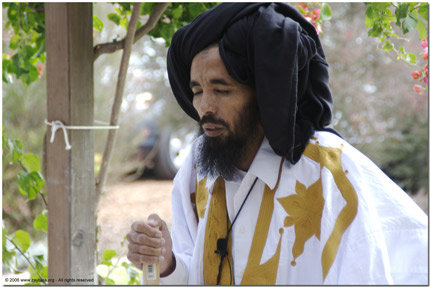
In fact, one of the Mauritanian Shaykhs — Shaykh Salek bin Siddina āl-Māliki doesn’t buy into the argument of redundancy either.
Respected Shaykh, Saleh bin Siddina al-Maliki has attempted to give a response to a question on Qur’an 3:55 about a possible scenario.
This Shaykh knows full well what the text says, and so he uses a different strategy — to save the hadith traditions—of course!
See for yourself!
Here are some notes we took of the video.
We thought it was interesting. The translator said: @ 0:55 “Isa alayi salam has died a complete death.”
Prima Qur’an comments: “What other kind of death is there?”
@ 3:30 minutes, the translator addresses what the Shaykh says:
“Mutawafikka is a word that can be translated to ‘I will cause you to die.’ It is mentioned in a way that it does not indicate any particular order.”
“Allah says I will cause you to die, and I will raise you to me, it doesn’t it is used…”
@5:11 minutes, the translator addresses what the Shaykh says:
“So this ‘And’ is the type of WA that is being used. Those are both things that are being done, not necessarily in a particular order.” “In the statement that Zayd and Umar came, it doesn’t mean that Zayd came first. Not in any way does it indicate an order of those things.”
Prima Qur’an comments:
The respected Shaykh knows full well the obvious that ‘mutawafikka’ means ‘I will cause you to die’.
Secondly, he definitely is not on board with the interpretation: “No, he raises him up first and then will put him to sleep in the future!” Or the view that Allah (swt) put him to sleep first and then will raise him up.
Third, the Shaykh, being influenced by the traditions, has to make the Qur’an confirm his presuppositions. As we have said before, if it were not for the traditions (which the Shaykh brought up quite often) you would wonder if he would have felt the need to use this literary device.
In English, we call this hysteron proteron.
For example, in the Arabic language you could say I put on my shoes and socks. No one understands that you put the shoes on and then the socks.
So what the Shaykh has given us is a perhaps scenario. And a ‘perhaps’ scenario is not something definitive in aqidah.
Also, do take note of the interesting admissions in the above interview:
@11:24 “There is a weak narration or a weak statement, an opinion that Allah (swt) caused Isa (as) to die for a few moments, or a few minutes or a short period of time, and then resurrected him after that.”
@12:04 “A place of acceptance, elevated and exalted; because Allah (swt) is not confined to space or time.”
Prima Qur’an comments:
This is very important because it shows us that rafi’uka does not necessarily mean a physical location. “I will take these AND raise thee to Myself.”
In fact, Ibn Taymiyyah used Qur’an 3:55 to try and say that Allah (swt) has a location. This was responded to by Ibn Jahbal Al-Kilabi
“Perhaps he believes that elevation (al-raf’) can only be in the upward direction? If this is what occurred to him, then this, also, is inconceivable except in corporeal and dimensional terms. If he holds other than that, then his inference is not on a literal basis at all. If he actually asserts corporeality and dimensionality, then there is no need to point out his error. Perhaps he never heard of elevation being used in the sense of rank and the obtainment of status in the language of the Arabs and in common usage. Perhaps he never heard the phrase “Allah raised So-and-so’s state.”
Source: (The Refutation of Him Who Attributes Direction to Allah translated by Gibril Fouad Haddad on page 178)
Which, by the way, there is no evidence that Jesus (as) was raised with a body in the Qur’an.
Also, do take note. They spent some time talking about Muhammad al-Tahir ibn Ashur, a famous Maliki scholar who wrote a tafsir of the Qur’an. He believed that Jesus (as) died. We did not hear any takfir made of him or any excommunication made of him.
You can read about Ibn Ashur’s view here: (which can easily be translated into English)
So what is important that we take away from this is the following:
- The Shaykh understands the word mutawafikka in Qur’an 3:55 means death, not sleep. It’s just that he believes it is something that is yet to come.
- A cursory reading of the text would be ‘I will cause you to die and then elevate you.’ The Shaykh has to rely upon a perhaps scenario. A perhaps scenario is not definitive in aqidah.
- The obvious understanding of the text is made to conform to a literary device. This is obviously based upon the presupposition the Shaykh holds in given deference to the ahadith about Jesus (as) coming back.
May Allah Guide the Ummah.
May Allah Forgive the Ummah.


 Prima Quran