Tag Archives: jesus

Paul The Anti Christ

“Say: Whoever is an enemy to Gabriel-for he brings down the (revelation) to your heart by Allah’s will, a confirmation of what went before, and guidance and glad tidings for those who believe. Who is an enemy to Allah, and His angels and His messengers, and Gabriel and Michael! Then, lo! Allah (Himself) is an enemy to the ungrateful.”(Qur’an 2:97-98)

“But though we, or an angel from heaven preach any other gospel unto you than that which we have preached unto you, let him be accursed.” (Galatians 1:8)

﷽ 

Note: The Angel of revelation is none other than Gabriel. Paul here is foreshadowing the coming of the Blessed Prophet Muhammed (saw) who is the culmination of the ‘Good News‘.

The Ibadi school is the earliest school to warn the people about Paul

8th century Ibāḍī theologian ʿAbd Allāh al-Fazārī writes:

“Every nation after its prophet has a Sāmirī to misguide it and a Paul to deceive it like the Sāmirī of the Jews and the Paul of the Christians, Allāh curse them.”

First, we need to remove two contentions that Christians raise against us as Muslims.

The first is to quote the following verse:

“Allah said, O Jesus, I shall cause you to die and will raise you up to Me and shall purify you of the ungrateful, disbelieving people, and shall place those who follow you above those who deny the truth, until the Day of Judgement; then to Me shall all return and I will judge between you regarding your disputes.” (Qur’an 3:55)

“Those who follow you” is a reference to the believers who followed Jesus in his time and then to the Muslims with the coming of the Prophet Muhammed (saw).

“O believers! Stand up for Allah, as Jesus, son of Mary, asked the disciples, “Who will stand up with me for Allah?” The disciples replied, “We will stand up for Allah.” Then a group from the Children of Israel believed while another disbelieved. We then supported the believers against their enemies, so they are apparent.” (Qur’an 61:14)

The first question to ask is: How did Allah (swt) support the believers against their enemies?

The same way he did Jesus (as).

“Indeed, We gave Moses the Book and sent after him successive messengers. And We gave Jesus, son of Mary, clear proofs and supported him with the holy spirit. Why is it that every time a messenger comes to you ˹Israelites˺ with something you do not like, you become arrogant, rejecting some and killing others?” (Qur’an 2:87)

So Allah (swt) supported Jesus with the Angel Gabriel and with clear proof.

The second question is what does the word ẓāhirīna actually mean?

zahrina (apparent) who is it speaking about? alladhina amanu (those who believed).

What became apparent? Those who believed vs those who disbelieved.

The word actually means apparent. That those true followers of Jesus (as) it became apparent that they were upon the truth. How? By means of the clear proofs that Allah (swt) supplied them with by their Prophet and Teacher, Jesus — alayhi salam.

Not that they became dominant or victorious. This is contrary to the reality. They were killed, wiped out.

What does False or Anti-Christ mean?

Answer: “Antichristos can mean either “against Christ” or “instead of Christ” or perhaps, combining the two, ‘one who, assuming the guise of Christ, opposes Christ” (Westcott)

Pseudo Christos — “one who falsely lays claim to the name and office of the Messiah”

Source: (VINES concourse dictionary of the biblical words W.E. Vine pg.13 and pg.54)


Note: The term ‘Anti‘ is sinister in that it does not necessarily mean opposed to as it means in place of.

THE ANTICHRIST WILL BE A CHRISTIAN ACCORDING TO JESUS

“For many will come in my name, saying, I am (Χριστός) Christ; and shall deceive many.” (Matthew 24:5)

Χριστός literally means annointed one.

Source: (https://biblehub.com/greek/5547.htm)

“Not everyone who says to me, ‘Lord, Lord,’ will enter the kingdom of heaven, but only the one who does the will of my Father in heaven. Many will say to me on that day, ‘Lord, Lord, did we not prophesy in your name? Did we not drive out demons in your name? Did we not do mighty deeds in your name?’ Then I will declare to them solemnly, ‘I never knew you. Depart from me, you workers of lawlessness ‘” (Matthew 7:21-23)

Prima Qur’an comments:

Do Hindus make prophecies in the name of Jesus?

Do Buddhists drive out demons in the name of Jesus?

Do Muslims do mighty deeds in the name of Jesus?

The only religion on this planet that does anything in the name of Jesus are Christians!

The Anti-Christ will come in the guise of a follower of Christ.

“For certain men whose condemnation was written about long ago have secretly slipped in among you . They are godless men who change the grace of our God into a license for immorality and deny Jesus Christ our only Sovereign Lord.”(Jude 1:4)

Was Paul historically ever Anti-Christ himself?

Answer: Yes!

“For at the very beginning I was determined that I ought to do many things contrary to the name of Jesus of Nazareth.” (Acts 26:9-10)

Note: “contrary to the name of Jesus” (Contra-Christ /In place of Christ/ Anti-Christ)

“On that day, a great persecution broke out against the church of Jerusalem, and all except the apostles were scattered throughout Judea and Samaria. Godly men buried Stephen and mourned deeply for him. But Saul(Paul) began to destroy the church . Going from house to house, he dragged off men and women and put them in prison.” (Acts 8:1-3)

“Meanwhile, Saul (Paul) was still breathing out murder threats against the Lord’s disciples.” (Acts 9:1)

“And Saul (Paul) was there, giving approval to his (Stephen’s) death.” (Acts 7:61)

Common misconceptions about Anti-Christ

Prima Qur’an Comment: Some common misconceptions about the Anti-Christ are that there is only one anti-Christ. The other misconception is that the anti-Christ will only show up at the end of time. The following text clears this up.

“Dear children, this is the last hour; and as you have heard that The ANTICHRIST is coming, even now , many antichrist have come. This is how we know it is the last hour.” (1 John 2:18)

Note: We can see that there will be many false Christ, and we can see that even in the time of Jesus’ disciples there were antichrist.

Paul’s Unconfirmed “Conversion”.

Question: Did Paul convert to the teachings of Jesus?

Answer: No!

The only testimony we have that Paul is a ‘disciple’ of Jesus is Paul’s own contradictory accounts in Acts chapters 9, 22 and 26.

Acts 9:7 says:

“The men which journeyed with him stood speechless, hearing a voice, but seeing no man.”

Acts 22:9 says:

“And they that were with me saw indeed the light, and were afraid; but they heard not the voice of him that spoke to me.”

Acts 26:14 says:

“And when we were all fallen to the earth, I heard a voice speaking unto me, and saying in the Hebrew tongue, Saul Saul why persecute me? It is hard for you to kick against the pricks.”

Prima Qur’an Comment: All these instances in which Paul speaks about Jesus speaking to him for the first time are obviously flat lies.


Not only that, but in Acts 22:9 it says the same people traveling with him “saw indeed the light.”

This is very strange because Paul also says in Acts 26:23

“At midday, O King, I saw in the way a light from heaven, Above the brightness of the sun, shining around me and Them which journeyed WITH me.”

Besides the above contradictions, Paul said this light was brighter than the sun and that those with him “saw indeed the light” yet read the following:

“And Saul arose from the earth; and when his eyes were opened he saw no man, but they led him by the hand, and brought him into Damascus. And he was three days without sight, and neither did eat nor drink.” (Acts 9:8-9)

Prima Qur’an Comment: Now this light was “brighter than the sun” yet his companions were fine! Paul’s whole “conversion” story is a fabrication.

Establishing testimony for yourself according to Christ Jesus.

“But if he will not hear thee, then take with thee one or two more that in the mouth of two or three witness every word may be established.” (Matthew 18:16)

Prima Qur’an Comment: According to the criteria set by Christ Jesus, Paul’s testimony of conversion is blatantly false. The only record we have of Paul’s so-called conversion is from the writer Luke. There is no testimonial from the men who traveled with Paul.

The above contradictory accounts of Paul’s conversion in Acts chapters 9,22 and 26 render his account baseless!

Two important points about Paul.

1) Paul never met the historical Jesus.

2) Paul only claimed to have met Jesus in a vision of light.

Paul’s ‘vision of light’ was none other than Satan?

“For such are false apostles, deceitful workers, transforming themselves into the apostles of Christ And little wonder; for Satan himself is transformed into an angel of light” (2 Corinthians 11:13-14)

Prima Qur’an Comment: Paul transformed himself into an apostle of Christ Jesus. Because Paul’s conversion story is not confirmed and it is contradictory.

The being of light who was speaking to Paul in the vision was Satan.

Satan is the one who made the seeing blind in the instance of Paul.

Christ Jesus as a prophet of Allah never once made anyone blind! Jesus made the blind to see!

“And lest I should be exalted above measure through the abundance of revelations, there was given me a thorn in the flesh, the MESSENGER OF SATAN, to buffet me lest I should be exalted above measure.” (2 Corinthians 12:7)

Question: What does the word messenger mean in 2 Corinthians 12:7 ?

Answer:

Angelos, “a messenger, an angel, one sent,” of Paul’s “thorn in the flesh,” “a messenger of Satan.”

Source: (VINES concourse dictionary of the biblical words W.E. Vine pg.239)

Comment: Paul keeps talking about this revelation that he is getting from this being of light he met. Yet he also interestingly lets the cat out of the bag by speaking of the ‘angel of Satan‘ sent to him.

Paul’s Gnostic Anti-Christ teachings.

Paul’s belief that we are saved through hidden Gnosis.

What is Gnosis?

Answer:

Gnosis=knowledge

Who are the Gnostics?

Answer:

The Gnostics, headed by Valentius, who lived in Rome for almost 30 years until ca.165 claimed fresh revelations and added to the scriptures. In their antimaterial scheme of things, spiritual knowledge, or gnosis, meant that the pneumatics or people of higher spirit were already saved, the psychics or people of the psyche or living soul could be redeemed, whereas the hylics or people of matter were incapable of deliverance from matter and so remained beyond or rather below redemption.

“My brothers, I could not talk to you as a spiritual people, but as fleshly people , as infants in Christ. I fed you milk, not solid food, because you were unable to take it. Indeed, you are still not able, even now. For you are still of the flesh. While there is jealousy and rivalry among you, are you not of the flesh and behaving in an ordinary human way? Whenever someone says “I belong to Paul,’ and another, “ I belong to Apollos,” are you not merely human?” (1 Corinthians 3:1-4)

Prima Qur’an Comment: The New American Bible had the following to say in its footnote above.

“Spiritual people…fleshly people: Paul employs two clusters of concepts and terms to distinguish what later theology will call the natural and the supernatural. The natural person is one whose existence perceptions and behavior are determined by purely natural principles. The psyche and the sarx ( flesh) a biblical term that connotes creatureliness. Such person are only infants; they remain on a purely human level(anthropo) On the other hand, they are called to be animated by a higher principle, the pneuma, God’s spirit. They are to become spiritual(pneumatikoi) and mature in their perception and behavior. The culmination of existence in the Spirit is described.”

Note: Paul, in the above passage 1 Corinthians 3:1-4 clearly expresses Gnostic belief. He also clearly shows that those he called “brothers” were not on a spiritual (pneumatik) level and therefore not saved because they were not initiated into Paul’s secret doctrines.

Irenaeus insisted on salvation being mediated through the flesh; this cohered with the missions of the Holy Spirit and the Son. “Human beings,” he wrote, are made “spiritual” not by the abolition of the flesh “but by outpouring of the Spirit: (ibid., 5.6.1). Renewal in the image of God comes about “:not by getting rid of the material body but by sharing in the Spirit.” (ibid., 5,8.1)

Paul, himself being a Gnostic, taught that the only way people would gain true salvation was if secret knowledge (gnosis) was imparted to them.

“This is what we speak, not in words taught us by human wisdom but in words taught by the Spirit, expressing spiritual truths in spiritual words.” ( 1 Corinthians 2:13 )

“Howbeit we speak wisdom among them that are perfect, yet not wisdom of this world, nor of the princes of this world, that come to naught: But we speak of the wisdom of God in a mystery ,even the hidden wisdom, which God ordained before the world unto our glory.” ( 1 Corinthians 2:67 )

The apple was a gift of gnosis.

Remember that the apple Satan gave Adam and Eve was a form of hidden gnosis.

Now the serpent was the most cunning of all the animals that the Lord God had made. The serpent asked the woman, “Did God really tell you not to eat from any of the trees in the garden?” The woman answered the serpent: “ We may eat of the fruit of the trees in the garden; It is about the fruit of the tree in the middle of the garden that God said, “ You shall not eat it or even touch it, lest you die.” But the serpent said to the woman: “ You certainly will not die! No, God knows well that the moment you eat of it your eyes will be opened and you will be like gods who know what is good and what is bad.” The woman saw that the tree was good for food, pleasing to the eyes, and desirable for gaining wisdom. So she took some of it’s fruit and ate it; and she also gave some to her husband who was with her, and he ate it. Then the eyes of both of them were opened, and they realized that they were naked; so they sewed fig leaves together and made loincloths for themselves.” (Genesis 3: 1-7)

What is the hidden wisdom Paul wants to share with you?

“Undeniably great is the mystery of our devotion; which was manifest in the flesh, vindicated by the spirit seen by angels proclaimed to gentiles, believed throughout the whole world and received up into glory.” (1 Timothy 3:16)

The mystery and secret gnosis that Paul is talking about is his concept of a risen crucified Christ revealed in him! That this risen crucified Christ is Paul himself! For those of you unable to see this or recognize it as the truth, well, we will just borrow the words of Paul…

“My brothers, I could not talk to you as a spiritual people, but as fleshly people , as infants (babies that have little comprehension or reasoning skills )in Christ.”

Again, what Christ he is talking about is questionable.

“But when it pleased God, who separated me from my mother’s womb, and called me by his grace, To reveal his Son IN me, that I might preach him among the heathen; immediately I conferred not with flesh and blood:” (Galatians 1:15-16)

Paul denied Christ Jesus as coming in the flesh.

“Have among yourselves the same attitude that is also yours in Christ Jesus,

Who though he was in the form of God, did not regard equality with God something to be grasped. Rather, he emptied himself, taking the form of a slave, coming in human likeness; and found in humanappearance, he humbled himself, becoming obedient to death, even death on a cross. Because of this, God greatly exalted him and bestowed on him the name that is above every name, that at the name of Jesus every knee should bend, of those in heaven and on earth and under the earth, and every tongue confess that Jesus Christ is Lord, to the glory of God the Father.” (Philippians 2:5-11)

Note: Contrary to what others may have told you or statements written in the name of Paul, this is Paul’s concept of Jesus.

Paul claims, in true Gnostic form, Jesus was found in human likeness, not that he was human. Paul claims Jesus was found inhuman appearance, not that he was human.

“Consequently, from now on we regard no one according to the flesh; even if we once knew Christ according to the flesh, yet now we know him so no longer.”(2 Corinthians 5:16)

Note: Bishop Irenaeus also rejected both the Marcionite separation of the NT God the Father from the OT Creator who made all things, and the Gnostic denial of the Son of God being truly made flesh for our salvation.

PAUL’S CRYPTIC GNOSTIC CLAIM TO BEING CHRIST.

Question: Did Paul claim that he was Christ?

Answer: Yes!

“I am crucified with Christ: nevertheless I live; YET NOT I, BUT CHRIST lives in me: and the life which I now live in the flesh I live by the faith of the Son of God, who loved me, and gave Himself for me.” (Galatians 2:20)

Prima Qur’an Comment:

Paul says it is not really “him” that you see, the “he” was crucified, and it is “not I but Christ” living in his body. He is claiming that he is essentially Christ, and for this reason he is superior to all of Christ’s disciples who opposed him at every turn.

“And my temptation which was in my flesh you despised not, nor rejected; but received me as an angel of God, even as Christ Jesus( Galatians 4:14)

Prima Qur’an Comment People received Paul as if he was Jesus Christ himself!

“Even as Christ Jesus” This is interesting as Paul is saying that people received him as a person would receive Christ Jesus himself; on that very same level.

Jesus is speaking about bearing a record of one’s self.

“If I bear witness of myself, my witness is not true.” (John 5:31)

Yet Lo, and Behold Paul says:

“I am become a fool in glorying; you have compelled me: for I ought to have been commended of you: for in nothing am I behind the very chief apostles, though I be nothing. Truly the signs of an apostle were wrought among you in all patience, in signs, and wonders, and mighty deeds.” (2 Corinthians 12:11-12)

Note: Paul is bearing testimony of himself. Also, the very thing which Paul says makes him someone worthy of being listened to are his signs and wonders the very thing Jesus warned about in the following:

SIGNS AND WONDERS

Jesus warned about signs and wonders

“For there shall arise false Christ and false prophets, and show great signs (miracles) and wonders; insomuch that, if it were possible, they shall deceive the very elect.” (Matthew 24:24)

Prima Qur’an Comment: Jesus said that when the false christ come they will deceive you by way of signs and miracles. The very thing that Paul uses as a sign of a true apostle, ” signs and wonders”.

Jesus warning about “Signs and Wonders”

Speaking of Paul and other false Christ, Jesus said:

“For there shall arise false Christ and false prophets, and show great signs (miracles) and wonders; insomuch that, if it were possible, they shall deceive the very elect.” (Matthew 24:24)

Note: This is exactly what Paul did in front of the “very elect” at the Jerusalem council!

“Then all the multitude kept silence, and gave audience to Barnabas and Paul, declaring what miracles and wonders God had wrought among the Gentiles by them.” (Acts 15:12)

“And after they had held their peace, James answered, saying, Men and brothers, Listen to me!” (Acts 15:13)

Note: Paul and Barnabas (son of the Father) were busy trying to fool the “very elect” with signs and wonders. When James (the very brother of Christ Jesus) saw what was happening, he said, “Listen to me”!

Jesus said as well,

“I come to you in my Father’s name, and you receive me not: if another shall come in his own name, him you will receive.” (John 5:43)

“And now I am no more in the world, but these are in the world, and I come to thee. Holy Father, I kept them in your own name those whom you have given me, that they may be one, as we are.” (John 17:11)

Again, Paul bears witness of himself, even claiming that God revealed Jesus in him!

“But when it pleased God, who separated me from my mother’s womb, and called me by his grace, To reveal his Son IN me, that I might preach him among the heathen; immediately I conferred not with flesh and blood:” (Galatians 1:15-16)

Prima Qur’an Comment: Paul once again referring to himself. Paul did not immediately consult with James, the brother of Jesus (flesh and blood), i.e. other disciples of Christ Jesus.

Paul’s gnostic teaching that God’s plan was revealed through Gnosis (secret knowledge) to him is worthy of note.

Paul and his divisions: sowing tears among the wheat.

Beware of false prophets, which come in sheep’s clothing, but inwardly they are ravening wolves.” (Matthew 7:15)

“Another parable put he forth unto them, saying, The kingdom of heaven is like unto a man which sowed good seed in his field:But while men slept, his enemy came and sowed tears among the wheat, and went his way.” (Matthew 13:24-25)

The Gospel of Christ Jesus vs. the Gospel of Paul.

“And there had been much disputing, Peter rose up , and said unto them, Men and brothers, you know how that a good while ago God made choice among us, that the Gentiles by my mouth should heard the word of the gospel, and believe.” (Acts 15:7)

“But contra wise, when they saw that the gospel of the un circumcision was committed unto me (Paul), as the gospel of the circumcision was unto Peter.” (Galatians 2:7)

Prima Qur’an Comments: Here we are confronted with a major contradiction because Peter teaches that he was to go and teach to the gentiles. However, Paul teaches that he actually was to go to the uncircumcised (Gentiles), and Peter was to go to the circumcision (Jews).

Not only that, but here we can plainly see there were two gospels! So which one is true? The gospel of circumcision or the gospel of uncircumcision?

Paul continues bashing Peter…

But when Peter was come to Antioch, I rebuked him to his face! He was to be blamed. For before that certain came from James, he did eat with the Gentiles: but when they were come, he width drew and separated himself, fearing them which were of the circumcision. And the other Jews dissembled likewise with him; insomuch that Barnabas also was carried away with their dissimulation. But when I saw that they walked not uprightly according to the truth of the gospel, I said unto Peter before them all, If you, being a Jew,live in the manner of Gentiles, and not as do the Jews, why compel you the Gentiles to live as do the Jews?” (Galatians 2:11-14)

Note: Paul is not shy in writing that he rebuked Peter to his face for being a hypocrite. Paul is clearly distinguished from James (The brother of Jesus) and the Jerusalem council in the above remarks!

Some who had come down from Judea were instructing the brothers, ” Unless you are circumcised according to the law of Moses, you cannot be saved.” Because there arose little dissension and debate by Paul and Barnabas (Son of the Father)with them, it was decided that Paul, Barnabas and some of the others should go up to Jerusalem to the apostles and presbyters about this question.” (Acts 15:1-2)

“And Barnabas was determined to take with them John, whose surname was Mark. But Paul thought not good to take him with them, who departed from them from Pamphylia, and went not with them to the work. And the contention was so sharp between them, that they departed asunder one from the other: and so Barnabas took Mark, and sailed unto Cyprus:” (Acts 15:37-39)

The “Great Commission”

Paul’s great commission is a forgery and a lie.

Prima Qur’an Comment: Jesus came only for the Jews. Jesus mission was to “seek and to save that which was lost”: namely the 12 tribes of Israel. Jesus foretold the coming of Ahmad who was to be a universal messenger.

We have established this in our article here:

Paul, who wanted to destroy the teachings of Christ Jesus, at first went to the Aramaic Christians, who turned away from him and his theology.

Little wonder Paul made the following comment,

“This, you know, that all those who are in Asia be turned away from me; of whom are Phygellus and Germogenes”. (2 Timothy 1:15)

The Aramaic Christians knew of Christ Jesus warning of anti-christ. The early Christian community turned away from Paul and his secret gnosis teachings. Paul, in his frustration, turned to the Greek-speaking Gentiles.

“Then Paul and Barnabas waxed bold, and said, It was necessary that the word of God should first have been spoken to you: But seeing ye put it from you, and judge yourselves unworthy of everlasting life, Lo, We turn to the Gentiles.” (Acts 13:46)


Note: Paul was upset that the early Aramaic Jews were turning from his theology. So he and Barnabas (the son of the Father) ‘waxed bold’, and clearly stated that their mission now was to win over the gentiles to his theology. The Mediterranean world that Paul lived in was full of tri-theistic theologies, inundated with Greek philosophy, in particular Neoplatonic thought, and gods who incarnated for the salvation of mankind. Paul definitely had an audience.

The Gospel of Jesus was the gospel of circumcision

In Matthew 15:24 we have Jesus saying:

“I am not sent but unto the lost sheep of the house of Israel.” (Matthew 15:24)

Luke 22:29-30 He says to his apostle:

“And I appoint unto you a kingdom, as my father has appointed unto me: “That you may eat and drink at my table in my kingdom, and sit in thrones judging the twelve tribes of Israel.” (Luke 22:29-30)

Note: What Paul did was a direct violation of the commandments of Jesus. (MATTHEW 15:22-24), and (MATTHEW 10:5-6) quoted above.

Jesus commissioned his 12 apostles:

These twelve Jesus sent forth, and commanded them, saying, go not into the way of the Gentiles, and into any city of the Samaritans enter ye not. But go rather to the lost sheep of the house of Israel.” (Matthew 10:5-6)

Note: There was no admitting even a Samaritan into the kingdom, much less uncircumcised gentiles. Being with a gentile was often considered as sinful behavior.

“You worship what you know not: we know what we worship: For salvation is of the Jews.” (John 4:22)

Note: Jesus, when he tells the woman that “salvation is of the Jews”

He is insisting on the right of the Pharisaic Sanhedrin to legislate for all Israelites, including descendants of the ten northern tribes.

“For the Son of man is come to save that which was lost”. (Matthew 18:11)

The Healing of the Canaanite Girl:

“And Behold, A Woman of Canaan came out of the same coast, and cried unto him, saying have mercy on me, O Lord, thou son of David: My daughter is grievously vexed with the devil. “But He (Jesus) answered her not a word. And his disciples came and besought him, saying, send her away; for she cries after us.” “But he answered and said, I am not sent but unto the lost sheep of the house of Israel.” (Matthew 15:22-26)

Note: In verse 24 Jesus’ response was to his apostles.

Then she came and worshipped him, saying, Lord Help Me.”

But he answered and said, It is not suitable to take the children’s bread and cast it to the dogs.”

Note: Verse 26 was Jesus’ response to the woman with the Jewish custom of referring to gentiles as “dogs” is reflected in the reaction of Jesus to the Syrophoenician woman who requested help from Jesus.

“But Jesus said unto her, Let the children first be filled: for it is not suitable to take the children’s bread and to cast it unto the dogs.” (Mark 7:26)

Note: The woman was a Greek, a Syrophoenician by nation. Again Jesus says in

Give not that which is holy unto the dogs, neither cast your pearls before swine, lest they trample them under your feet, and turn again and rend you.” (Matthew 7:6)

“But contra wise, when they saw that the gospel of the un circumcision was committed unto me (Paul), as the gospel of the circumcision was unto Peter.” (Galatians 2:7)

Christians tell us that the parting command of Jesus to his apostles was:

Mark 16:15 & 20:

“Go you into the world and preach the Gospel to every creature…”

“And they went forth and preached everywhere…”

This is totally irreconcilable with early church history; for some ten years after Jesus, Peter is accused and condemned by the apostles and brethren because they had heard that Gentiles had also received the word of God:

Acts 11:1-19

1. “And the apostles, and brethren that were in Judea heard that the Gentiles had also received the word of God.

2. “And when Peter was come up to Jerusalem, they that were of the circumcision contended with him.”

3. “Saying, you went unto men uncircumcised, and didst eat with them.”

4. “But Peter rehearsed the matter from the beginning, and expounded it by order unto them saying,”

5. “I was in the city of Joppa praying: And in a trance I saw a vision, a certain vessel descended, as it had been a great sheet, let down from the heavens by four corners; and it came even to me.”

6. “Upon the which when I had fastened mine eyes, I considered and saw four footed beasts of the Earth, and wild beast, and creeping things, and fowls of the air.”

7. “And I heard a voice saying unto me, arise Peter slay and eat.”

8. “But I said, not so, Lord: For nothing common or unclean has at any time entered into my mouth.”

9. “But the voice answered me again from heaven, what God has cleansed, do not call common.”

10. “And this was done three times: And all were drawn up again unto heaven.

11. “And, behold, immediately there were three men already come unto the house where I was, sent from Caesarea to me.”

12. “And the spirit bade me go with them, nothing doubting. Moreover these six brethren accompanied me, and we entered into the man’s house:”

13. “And he showed us how he had seen an Angel in his house, which stood and said unto him, send me to Joppa, and call for Simon, whose surname is Peter;”

14. ” who shall tell thee words, whereby you and all your house shall be saved.

15. “And as I began to speak, the Holy Ghost fell on them, as on us at the beginning.”

16. “Then remembered I the word of the Lord, how that he said, John indeed baptized with the Holy Ghost.”

17. “Forasmuch then as God gave them the like gift as he did unto us, who believed on the Lord Jesus Christ; what was I, that I could withstand God?”

18. “When they heard these things, they held their peace, and glorified God saying, then has God also to the Gentiles granted repentance unto life.”

19. “Now they which were scattered abroad upon the persecution that arose about Stephen traveled as far as Phenice and Cyprus, and Antioch, preaching the word to none but the Jews only.”

Consider also Peter’s statement in Acts 10:28

“You know how that it is an unlawful thing for a man that is a Jew to keep company, or come unto one of another nation;…”

Prima Qur’an Comment: If Christ Jesus really gave the command above in Mark 16:16 to preach to the whole world all would have known about it.

It would not be unlawful for a Jew to be with a Gentile. Thus, to have the Jerusalem council say, “You went into men uncircumcised, and didst eat with them.” would be a very strange thing indeed!

Not only this but the concept that Christ Jesus came to die for the sins of mankind is also a doctrine of Paul.


If Christ Jesus’ mission was to die for the sins of all mankind as Paul and his followers teach, then the following comment would be quite strange as well:

“When they heard these things, they held their peace, and glorified God, saying, then has God also to the Gentiles, granted repentance unto life.”

Paul’s method of deception is exactly like the snake in the garden.

“But I fear, lest by any means as the serpent BEGUILED Eve, through his subtlety, so your minds should be corrupted from the simplicity that is in Christ. For if he that comes preach another Jesus, whom we have not preached, or if you receive another spirit, which you have not received, or another gospel, which you have not received, you might as well bear with him.” (2 Corinthians 11:3-4)

Prima Qur’an Comment: Here Paul is worried people will be beguiled into accepting another spirit (prophet). They will accept another Gospel. They will accept another Jesus.


It is likened to being in the very presence of God and hearing things explicitly stated by God and then turning around and doing something in place of that.

In this case, something Anti Christ because Christ teachings came from God.

Question: Could this be an analogy of what Paul did with Jesus’ teachings? By initiating Greeks into a secret doctrine concerning Christ Jesus.

Answer: Yes!

Paul beguiled the early followers of Christ Jesus.

Question: What does the word Beguile or Guile mean?

Answer: (Greek) – Dolos means Evil, cunning, treachery, deceit.

Source: (VINES concourse dictionary of the biblical words W.E.Vine pg.167 )

A Look at how the word Guile/Beguiled is used in the Bible.

“Jesus saw Nathaniel coming to him and said, Behold an Israelite indeed in whom is no GUILE(John 1:47)

“Blessed is the man unto whom the Lord, imputed not iniquity, and in whose spirit there is no GUILE.” (Psalms 32:2)

“For he that will love life, and see good days, let him refrain his tongue from evil, and his lips that they speak no GUILE.” (1 Peter 3:10)

“Now the SERPENT was more CRAFTY than any of the wild animals the Lord God had made.” (Genesis 3:1)

“For our exhortation was not in deceit nor of uncleanliness, nor in GUILE(1 Thessalonians 2:3)


Note: Paul was speaking above, yet, lo and behold, what he says now…

“But be it so, I did not burden you: nevertheless, being CRAFTY, I caught you with GUILE.” (2 Corinthians 13:16)

Prima Qur’an Comment:

So this beguiling Paul was afraid people would fall into, is the same beguiling he used. Paul, who was receiving secret revelations from an unidentified ‘being of light’, was using craft to ensnare people with his theology.

Paul didn’t burden people with laws, he caught them with DOLOS (GUILE) -treachery, deceit, evil etc…

THE CHARACHTER OF PAUL.

Paul: The Scriptural distorter

“Wherefore he says, When he ascended up on high, he led captivity captive, and gave gifts to men.” (Ephesians 4:8)

“You have ascended on high, you have led captivity captive: you have received gifts for men; yes, for the rebellious also, that the Lord God might dwell among them.”(Psalms 68:18)

Prima Qur’an Comment: Paul misquoted the scripture by saying that God “gave gifts to men” when it says that God has “received gifts for men”.

Paul: The thief

I robbed other churches, taking wages of them, to do you service.” (2 Corinthians 11:8)

Prima Qur’an Comment: Where do all these Christian evangelists get their inspiration from when they steal money from the masses? They get it from Paul, of course!

Paul: Mocks commands of God for his own theological points.

“For it is written in the Torah, You shall not muzzle the mouth of the ox that treaded out the corn. Does God really take care of oxen?” (1 Corinthians 9:9)

“You shall not muzzle the ox when he treaded out the corn.” (Deuteronomy 25:4)

Prima Qur’an Comment:

“A righteous man regards the life of his beast: but he that follows vain persons is void of understanding”. (Proverbs 12:10)

Paul: The Liar

“For if the truth of God has more abounded through my lie unto his glory; why yet am I also judged as a sinner?” (Romans 3:7)

Prima Qur’an Comment: Paul was accused by others of doing “evil that good may come“. For example above he claims he ‘robbed churches’ to do people service. He also claimed that he didn’t burden anyone but caught them with guile. Paul’s concept of lying for the greater glory of God to advance his theology is anything but noble.

Paul: Calls Jesus accursed.

“Christ has redeemed us from the curse of the law by becoming a curse for us, for it is written: “Cursed is everyone who is hung on a tree.” (Galatians 3:13)

Therefore I tell you that no one who is speaking by the Spirit of God calleth Jesus accursed: and that no man can say that Jesus is the Lord, but by the Holy Spirit.” (1 Corinthians 12:3)

Note: I wonder what spirit motivates Paul to say that Jesus is a curse?

Paul: The not so sure

“But if she is happier if she so abide, after my judgment: and I think I have the Spirit of God. (1 Corinthians 7:40)

Prima Qur’an Comment: If Paul was a man of God he would know.

Paul’s uncertainty is quite interesting and disturbing.

Paul: The hypocrite

“Behold, I Paul, say unto you, that if you be circumcised, Christ shall profit you nothing.” (Galatians 5:2)

However, look at what Paul did in the following verses…

“Him would Paul have to go forth with him; and took and circumcised him because of the Jews which were in those quarters: for they knew all that his father was a Greek.” (Acts 16:3)

“Then Paul took the men, and the next day purifying himself with them entered into the temple, to signify the accomplishment of the days of purification, until that an offering should be offered for everyone of them.” (Acts 21:26)

Paul Above the law

“Because the law works wrath: for where no law is, there is notransgression.” (Romans 4:15)

All things are lawful unto me, but all things are not expedient: all things are lawful for me, but I will not be brought under the power of any.” (1 Corinthians 6:12)

All things are lawful unto me, but all things are not expedient: all things are lawful for me, but all things edify not.” (1 Corinthians 10:23)

THE ANTICHRIST TEACHINGS OF PAUL.

Remember what the term anti/false christ means….

Antichristos can mean either “against christ” or “in place of Christ”

Christ Jesus verses Paul the false Christ: Mono Y Mono.

Question: Are we to live by faith (a feeling) or by our faith (a code set of laws)?

What Christ Jesus teaches:

“But Jesus turned him. about, and when he saw her, he said, Daughter, be of good comfort; thy faith hath made thee whole. And the woman was made whole from that hour.” (Matthew 9:22)

Prima Qur’an Comment: Jesus didn’t say that faith made the woman whole. He said that her faith made her whole.

What Paul teaches:

“For therein is the righteousness of God revealed from faith to faith: as it is WRITTEN, The just shall live by faith.” (Romans 1:17)

Paul directly misquoted from where this was WRITTEN in Habakkuk 2:4

“Behold, his soul which is lifted up is not upright in him: but the just shall live by his faith.” (Habukkuk 2:4)

Prima Qur’an Comment: Christ Jesus and the TNCH teach that we are to live by our faith (set code of laws).

However, Paul’s antichrist teaching is that we are to live by faith(feeling).

Question: Who is our Father according to Christ Jesus?

What Jesus teaches:

And do not call anyone on earth ‘father’ for you have one Father, and he is in HEAVEN.” (Matthew 23:9)

What the TNCH teaches:

“Have we not all one father? Did not one God create us?” (Malachi 2:10)

What Paul teaches: 

“Even though you have ten thousand guardians in Christ, you do not have many fathers, for in Christ Jesus I became your father through the gospel.” (Corinthians 4:15)

Prima Qur’an Comment: Christ Jesus teaches that only one should be called father and that is ‘God in heaven’. However, Paul’s Antichrist teaching is that he(Paul) is now a father!

Question: Can we eat any type of food?

What Christ Jesus teaches:

“Nevertheless, I have a few things against you: You have people there who hold to the teachings of Balaam, who taught Balak to entice the Israelites to sin by “eating food sacrificed to idols, and by committing sexual immorality.” (Revelation 2:14)

“It seemed good to the HOLY SPIRIT and to US not to burden you with anything beyond the following requirements: You are to abstain from food sacrificed to idols, from blood, from the meat of strangled animals from sexual immorality. You will do well to avoid these things.” (Acts 15:28-29)

What Paul teaches:

“As one who is in the Lord Jesus, I am fully convinced that no food is unclean itself.” (Romans 14:14)

Note: Paul should have known better than to say, “I am fully convinced no food is unclean” when he was at the Jerusalem council when James The Brother Of Jesus gave the edict.

Comment: Christians in every country EAT BLOOD PRODUCTS and things such as ‘blood puddings‘ and pork meats. Why? Because of this anti christ teaching of Paul’s. However, there is a group of Christians called the ‘Seventh day Adventist” that are a little more sensible in the way they approach food.

Question: Can you call people fools? (Greek: Moron)

What Christ Jesus teaches:

“But I tell you that anyone who is angry with his brother will be subject to judgment. Again, anyone who says to his brother Raca is answerable to the Sanhedrin. But anyone of you who says, ‘you fool!” will be in danger of the hell fire.”  (Matthew 5:22)

What Paul teaches:

“But someone will ask, “How are the dead raised? With what kind of body do they come?” “You Fool, What you sow does not come to life unless it dies.” (1 Corinthians 15:35-36)

Prima Qur’an Comment: Apparently Paul was the fool, because if a seed does indeed die there can be no sprouts and thus no plant life.

You foolish Galatians, who has bewitched you? It was before your eyes that Jesus Christ was publicly exhibited as crucified.” (Matthew Galatians 3:1)

Prima Qur’an Comment: Christ Jesus taught that to call someone a fool would put them in danger of ‘hell fire‘. However, Paul’s anti christ behavior taught him to call people ‘fool’ in a most unhumble manner!

Question: Is it important for one to be circumcised?

What Christ Jesus teaches:

“Think not that I have come to destroy the laws of the Torah or what the prophets said: I am not come to destroy, but to observe. For verily I say unto you. Till heaven and earth pass, one jot or one tittle shall in on wise pass from the Torah, till all be fulfilled, Whosoever therefore shall break one of these least commandments, and shall teach men so, he shall be called the least in the kingdom of heaven: but whosoever shall do and teach them, the same shall be called great in the kingdom of heaven.” (Matthew 5:17-19)

“And when eight days were accomplished for the circumcising of the child, his name was called JESUS, which was so named of the angel before he was conceived in the womb.” (Luke 2:21)

“And God said unto Abraham, Thou shall keep my covenant therefore, you , and your seed after thee in their generations. This is my covenant, which you shall keep, between me and you and your seed after you, Every man child among you shall be circumcised, And you shall circumcise the flesh of your foreskin; and it shall be a token of the covenant between me and you. And he that is eight days old shall be circumcised among you , every man child in your generations, he that is born in the house, or bought with money of any stranger, which is not of your seed. He that is born in your house, and be that is bought with your money, must needs be circumcised: and my covenant shall be in your flesh for an EVERLASTING COVENANT.” (Genesis 17:9-13)

What Paul teaches:

“Behold, I Paul say unto you, that if you be circumcised, Christ shall profit you nothing. For I testify again to every man that is circumcised, that he is a debtor to do the whole law. Christ is become of no effect unto you ,whosoever of you are justified by the law; you are fallen from grace.” (Galatians 5:2-4)

Prima Qur’an Comment: Christ Jesus observed the Torah and taught the everlasting covenant of circumcision. However, Paul’s anti christ teaching is that it will profit you nothing’. Remember he said, “I Paul say unto you”

Question: Is the Law (Torah) a curse?

What Christ Jesus teaches:

“For I say unto you, That except your righteousness shall exceed the righteousness of the scribes and Pharisees, You shall in no case enter into the kingdom of heaven.” (5:20)

“Then spoke Jesus to the multitude and to his disciples, Saying: The scribes and the Pharisees sit in Moses seat: All therefore whatsoever they bid you observe, that observe and do; but do not you after their works: for they say , and do not.” (Matthew 23:1-3)

“But the people who know not the law are cursed.” (John 7:49)

What Paul teaches:

For as many as are of the works of the law are under the curse: for it is written, Cursed is every one that continue not in all things which are written in the Torah to do them. But that no man is justified by the law in the sight of God, it is evident : for, The Just shall live by faith.” (Galatians 3:10-11)

“Christ has redeemed us from the curse of the law, being made a curse for us: for it is written, Cursed is everyone that hangs on a tree:” (Galatians 3:13)

Prima Qur’an Comment: Paul above mentions that the law is a curse. However’ Jesus said that EXCEPT our piety is more than that of scribes and Pharisees we will in NO CASE enter heaven. Jesus also pointed out before Paul made this statement, “” That there will be such hypocrites but it does not take away that they SIT IN MOSES SEAT, so be not like them for they SAY, AND DO NOT.

Question: Is it fine to be without works of the law?

James, the brother of Jesus says:

Was not Abraham our father justified by works, when he had offered Isaac his son upon the altar? See you how faith wrought with his works, and by works was faith made perfect.” (James 2:21-23)

What Christ Jesus says:

“Not everyone who says to me, ‘Lord, Lord,’ will enter the kingdom of heaven, but only the one who does the will of my Father in heaven. Many will say to me on that day, ‘Lord, Lord, did we not prophesy in your name? Did we not drive out demons in your name? Did we not do mighty deeds in your name?’ Then I will declare to them solemnly, ‘I never knew you. Depart from me, you workers of LAWLESSNESS (anomian).'” (Matthew 7:21-22)

What Paul teaches:

“But that no man is justified by the law in the sight of God, it is evident: for, The just shall live by faith.” (Galatians 3:11)

Priam Qur’an Comment: Christ Jesus taught that we should follow the scribes and pharisees in that they have knowledge. Christ Jesus also taught that he would tell the Christians on the day of judgment to depart from him for being workers of lawlessness. James, the very brother of Jesus, also wrote that Abraham was justified by works. However, Paul’s anti Christ teaching is that this new Christ he is preaching is the Christ of grace and thus being justified by the law is not necessary.

Question: Do we need a blood sacrifice to forgive our sins?

What Christ Jesus taught

“But go you and learn what that means, I desire mercy, and not sacrifice: for I am not come to call the righteous, but sinners to repentance.” (Matthew 9:13)

 Jesus quotes from:

For I desire mercy and not sacrifice; and the knowledge of God more than burnt offerings.” (Hosea 6:6)

 “By Loving kindness and truth iniquity is atoned for.” (Proverbs 16:6)

What Paul teaches:

“And almost all things are by the law purged with blood; and without the shedding of blood there is no forgiveness.” (Hebrews 9:22)

Prima Qur’an Comment: Christ Jesus as well as the entire TNCH taught that God desires mercy and not sacrifice that what he really wants is his people to be obedient to him with their heart and not doing outward rituals devoid of spirit.

Paul’s anti christ teaching is that, contrary to the tnch and Christ Jesus, he believes “without shedding blood there is no forgiveness.”

What he means by that is that there is no forgiveness of any sins or faults!

Question: is there anyone righteous?

What Christ Jesus taught

“But go you and learn what that means, I desire mercy, and not sacrifice: for I am not come to call the righteous, but sinners to repentance.” (Matthew 9:13)

“And they were both righteous before God, walking in all the commandments and ordinances of the Lord blameless.” (Luke 1:6)

What Paul teaches.

There is none righteous, no not one.” (Romans 3:10)

Prima Qur’an Comment: Jesus taught that the righteous were on the right track. Jesus came so that the sinners could be called away from their sins. Zechariah and Elizabeth were two great examples of God-fearing righteous people before God. They obeyed “all the commands of God blameless.” However, Paul’s anti christ teaching is that everyone is a sinner and there is no one righteous, including Zechariah and Elizabeth. Paul’s anti christ theology is that everyone is doomed unless they accept his christ of grace teaching.

Question: Is everyone a sinner?

Christ Jesus taught

“And as Jesus passed by, he saw a man which was blind from his birth. And his disciples asked him, saying, Master, who did sin, this man or his parents, that he was born blind? Jesus answered, neither has this man sinned, nor his parents: but that the works of God should be made manifest in him.” (John 9:1-3)

What Paul teaches.

All have sinned and come short of the glory of God.” (Romans 3:23)

Prima Qur’an Comment: Christ Jesus did not teach original sin. Christ Jesus also clearly distinguished that he came for ” sinners and not the righteous”. However, Paul’s anti christ teaching is that all have sinned.

PAUL: The founder of modern ‘Christianity’.

Question: Whose Gospel was it that Jesus would raise from the dead?

Answer: Paul’s

“Remember that Jesus Christ of the seed of David was raised from the dead, according to My Gospel.(2 Timothy 2:8)

“I marvel that you are so soon removed from him that called you unto the grace of Christ unto another gospel which is not another; but there be some that trouble you and would pervert the gospel of Christ.” (Galatians 1:6-7)

Prima Qur’an Comment: Paul is claiming that his gospel is the only true gospel. However, we can see that his gospel radically differs from that taught by Christ Jesus.

Paul is truly anti christ in that he opposed christ teachings. Paul is also truly anti christ in that he taught things in place of what Christ Jesus came to teach.

Question: Who wrote the majority of today’s accepted New Testament?

Answer: Paul

Out of 27 books of the ‘New Testament’ Paul is said to have written the following 14!

Romans-written by Paul

1 Corinthians-written by Paul

2 Corinthians-written by Paul

Galatians- written by Paul

Ephesians-written by Paul

Philippians-written by Paul

Colossians-written by Paul

1 Thessalonians-written by Paul

2 Thessalonians-written by Paul

1 Timothy-written by Paul

2 Timothy-written by Paul

Titus-written by Paul

Philemon-written by Paul

Hebrews-writer disputed but usually said to be Paul

Question: What does Michael H. Hart in his book-“The 100” say about Paul?

Answer:

“Since there are probably roughly twice as many Christians in the world, it may initially seem strange that Muhammed has been ranked higher than Jesus.

There are two principal reasons for that decision.

First, Muhammed played a far more important role in the development of Islam than Jesus did in the development of Christianity.

Although Jesus was responsible for the main ethical and moral precepts of Christianity(Insofar as these differed from Judaism),

St. Paul was the main developer of Christian theology, it’s principal proselytizer, and the author of a large portion of the New Testament.

Source: (Michael H. Hart “The 100” pages 38-39)

A bold statement by Paul

“But though we,or an angel from heaven preach any other gospel unto you than that which we have preached unto you, let him be accursed.” (Galatians 1:8)

Note: The Angel of revelation is none other than Gabriel.

Question: What does the Qur’an say in response to Paul?

Answer:

“Say: Whosoever is an enemy to Gabriel- for he brings down the revelation to thy heart by Allah’s will; a confirmation of what went before, and guidance and glad tidings for those who believe, Whoever is an enemy to Allah and His angels and apostles, To Gabriel and Michael-Lo! Allah is an enemy to those who are ungrateful.” (Qur’an 2:97-98)

Prima Qur’an Comment: What if God wants to send an angel from heaven to the Prophet Muhammad (saw) 700 years after the Gnostic Paul made his comments above? What if that angel came to restore the true good news of Christ?

Namely, the following:

“If you love me, keep my commandments, and I will pray the Father, and he shall give you ANOTHER comforter, that HE may abide with you forever”. (John 14:15-16)

Little wonder Paul made the following comment,

“This you know, that all they which are in Asia be turned away from me; of whom are Phygellus and Germogenes.” (2 Timothy 1:15)

Prima Qur’an Comment:

This statement of Paul can not be easily overlooked. Paul is stating the very early Churches of Jesus (those speaking Aramaic) turned away from him. These early Christians knew of the prophecy of Jesus concerning the coming of Ahmed ( Muhammed)

This is why Paul turns his attention and evangelizes the Greek-speaking Romans!

“And when they hear what has been revealed to the Messenger, you see their eyes overflowing with tears because of what they have recognized of the truth. They say, “Our Lord, we have believed, so register us among the witnesses.” (Qur’an 5:83)

You may also wish to read the following:

May Allah Guide the Christians so that they do not burn in the hellfire.

May Allah Guide the Ummah.

May Allah Forgive the Ummah.
3 Comments

Filed under Uncategorized

The False Prophecies of Jesus.

“When the angels proclaimed, “O Mary! Allah gives you good news of a Word from Him, his name will be the Messiah, Jesus, son of Mary; honoured in this world and the Hereafter, and he will be one of those nearest.” (Qur’an 3:45)

﷽ 

This article is to warn people against Jesus the son of the Father. This article invites people to believe in Jesus the Messiah!

“So when the crowd had gathered, Pilate asked them, “Which one do you want me to release to you: Jesus Barabbas, or Jesus, who is called the Messiah?” (Matthew 27:17)

There are two different Jesus here. There is Jesus, the Son of the Father (Bar-Abbas) and there is Jesus who is called the Messiah.

“For there shall arise false Christs, and false prophets, and shall shew great signs and wonders; insomuch that, if it were possible, they shall deceive the very elect.” (Matthew 24:24)

“When the angels proclaimed, “O Mary! Allah gives you good news of a Word from Him, his name will be the Messiah, Jesus, son of Mary; honoured in this world and the Hereafter, and he will be one of those nearest.” (Qur’an 3:45)

“For if someone comes to you and preaches a Jesus other than the Jesus we preached, or if you receive a different spirit from the Spirit you received, or a different gospel from the one you accepted, you put up with it easily enough.” (2 Corinthians 11:4)

Jesus, who is called “Son of the Father” in the New Testament. The one that has autobiographies written about him in the so-called Gospels. That one is a Dajjal, a Liar and an impostor. That Jesus is the Anti-Christ. The word Anti-means in place of.

Jesus, who is known as The Christ, The Messiah, The Word of Allah, The Servant and Messenger of Allah that is captured in the New Testament, that preached the Gospel. That is the Muslim Jesus.

It is this False Jesus that was known by his many, many failed prophecies.

The many many false prophecies of Jesus.

“But a prophet who presumes to speak in my name anything I have not commanded, or a prophet who speaks in the name of other gods, is to be put to death.” (Deuteronomy 18:20)

Now, for Muslims, there is no issue if Jesus died a natural death or was killed by his enemies. As mentioned in the Qur’an, the NT and the TNCH all have no problem with the admission that people have, can and did kill the Prophets of Allah.

The real dilemma for the Jew, Agnostic, atheists, and other religions (not Muslim) is that Jesus (according to the records of the New Testament) simply made so many false prophecies that one would be hard-pressed to take anything he said seriously.

We will be quoting the text of the New Testament, which we as Muslims know to be a false Jesus and a false portrayal of who he was. Anything from this point that seems demeaning of the status of Jesus is only directed at the conclusions one would reach if we were to believe the New Testament.

Jesus gives a three-fold failed prophecy. He made three failed prophecies in one go!

“They will pick up snakes with their hands; and when they drink deadly poison, it will not hurt them at all; they will place their hands on sick people, and they will get well.” (Mark 16:18)

This has to be one of the biggest and most embarrassing failed prophecies. It is a three-fold failed prophecies. So this text makes Jesus (as) give three failed prophecy.

  1. You will pick up snakes with your hands, and it will not hurt you at all.
  2. You will drink deadly poison, and it will not hurt you at all.
  3. You will place hands on sick people and they will get well.

The following is a link to a Christian who put his faith in Jesus false words and paid for it with his life.

“It will not hurt them at all.” We would say that having your finger amputated because you got bit by a poisonous snake more than qualifies as hurt.

Not only this but they have died handling snakes!

https://abcnews.go.com/US/snake-handling-pentecostal-pastor-dies-snake-bite/story?id=22551754

The Roman Catholics, Eastern Orthodox, and Oriental Orthodox dare not to take Jesus up on this prophecy.

Those Christians who do not hold Mark 16:18 to be inspired scripture breathed a huge sigh of relief. However, the Orthos and Catholics run from it until this very day.

However, there are a great many Christians who believe that the above text is spurious, non-canonical and, in fairness, we cannot hold them to this challenge, nor would this text prove that Christ Jesus is false—not to them at least.

Other Christians will say that this is a prophecy of Jesus and not an instruction.

“Jesus told him, “It is also written: Do not test the Lord your God.” (Matthew 4:7).

But we say if that is the case, it is a prophecy that is unfalsifiable. Let us say that some mean-spirited individual poured strychnine into the chalice of an Orthodox Bishop or Catholic Priest and his congregation drank from it and all dropped dead. This would only strengthen the faith of other sects of Christians that those who dropped dead were not true Christians anyway. They had no true communion with God.

Notice the three points.

  1. You will pick up snakes with your hands, and it will not hurt you at all.
  2. You will drink deadly poison, and it will not hurt you at all.
  3. You will place hands on sick people and they will get well.

If it is meant that all three of these are a means of testing God, then Jesus himself would be guilty of violating point 3. That is because he did put his hands on the sick people and they were healed.

This is not happening today by any Christian denomination under the sun. Which country on the Earth have Christians put hospitals out of buisness? None.

The One and Only Sign Jesus Ever Gave That He Was The True Messiah Turns Out To Be A Failed Prophecy.

“Then some of the Pharisees and teachers of the law said to him, “Teacher, we want to see a sign from you.”  He answered, “A wicked and adulterous generation asks for a sign! But none will be given it except the sign of the prophet Jonah. For as Jonah was three days and three nights in the belly of a huge fish, so the Son of Man will be three days and three nights in the heart of the earth.” (Matthew 12:38-40)

There has been so much Christian ink poured into trying to save this failed prophecy. Because no matter how you slice it, it does not add up.

Since Jesus says ‘For as’ and Muslims like Ahmed Deedat, Zakir Naik and others say that ‘as’ is a reference to Jonas being alive whereas Jesus was dead. So now some Christians have wised up and tried another angle. This new angle is not rather Jesus or Jonah being dead or alive, which they (these Christians admit) is not the same. Rather, if we allow metaphor, it references entombment. 

Rather, this is a reference to the enotmbment or the condition of the body being alive or dead is really irrelevant, as Jesus’ emphasis is on the time factor.

However, some Christians (Protestants) were ready to stake a stand and kick in the teeth of the Eastern Orthodox, the Oriental Orthodox and the Roman Catholics and show that Jesus did not indeed make a false prophecy. Rather, these traditional churches were not guided by the Holy Spirit and they were false. Thus was born the idea that Jesus died on a Wednesday and not on a ‘Good Friday’.

No matter the game of cat and mouse the various Christian sects want to play with one another, the embarrassment still stands:

For as Jonah was three days and three nights in the belly of a huge fish, so the Son of Man will be three days and three nights in the heart of the earth.

“Will be three days and three nights in the heart of the earth.” Jesus was actually never put ‘in the earth’ , much less the heart of the Earth!


Jesus failed the prophecy with regard to how many times the Rooster would crow before he would be betrayed.

“Jesus answered him, “Will you lay down your life for my sake? Most assuredly, I say to you, the rooster shall not crow till you have denied Me three times.” (John 13:38)

It is very clear that Peter would not deny him until the rooster crows three times. Mark tells us otherwise. The rooster crowed after the first denial and not the third.

“Now as Peter was below in the courtyard, one of the servant girls of the high priest came.  And when she saw Peter warming himself, she looked at him and said, “You also were with Jesus of Nazareth.” But he denied it, saying, “I neither know nor understand what you are saying.” And he went out on the porch, and a rooster crowed.” (Mark 14:16-68)

This whole failed prophecy is a contrived concocted mess!

Jesus failed prophecy about a man being with him in paradise that day.

“Then Jesus said to him, “Truly I say to you, today you shall be with Me in Paradise.” (Luke 23:43) What a flat lie and a failed prophecy!

“Jesus said unto her, “Touch Me not, for I am not yet ascended to My Father.” (John 20:17)


Jesus, accordingly, was in the tomb for three days and three nights! So there was no ‘today you will be with me in Paradise’. Furthermore, many Orthos and Catholics believe that Jesus was actually in hell during that time!

Jesus’ false prophecy about the unity of the body of Christ.

“I have other sheep that are not of this sheep pen. I must bring them also. They, too, will listen to my voice, and there shall be one flock and one shepherd.” (John 10:16)

This one is a Phat L. Out of all the world’s religions, there is perhaps none on Earth that is so fractious and has done so much violence to those deemed dissenters and heretics, as has the Christian faith tradition. Love thy brother and turn the other cheek went out of style long before bell-bottoms and vhs.

In fact, the most non-violent Christian groups tend to live in isolation or have the fewest numbers on the planet. Amish, Mennonites, Quakers, Shakers, Society of Friends.

Contrary to the above failed prophecy, the prophecy of the Qur’an still reigns true.

“And from those who say, “We are Christians” We took their covenant; but they forgot a portion of that of which they were reminded. So We caused among them animosity and hatred until the Day of Resurrection. And Allah is going to inform them about what they used to do.” (Qur’an 5:14)

Want to prove Islam false? Simple. Unite and become one flock with one shepherd.

Jesus failed prophecy to the high priest.

“Jesus said to him, “It is as you said. Nevertheless, I say to you, hereafter you will see the Son of Man sitting at the right hand of the Power, and coming on the clouds of heaven.” Then the high priest tore his clothes, saying, “He has spoken blasphemy! What further need do we have of witnesses? Look, now you have heard His blasphemy!” (Matthew 26:64-65)

That is a failed prophecy. It never took place.

Failed Prophecy of Jesus Promising Followers Immense Wealth By Bribing Them.

“So Jesus answered and said, “Assuredly, I say to you, there is no one who has left house or brothers or sisters or father or mother or wife or children or lands, for My sake and the gospel’s, who shall not receive a hundredfold now in this time—houses and brothers and sisters and mothers and children and lands, with persecutions—and in the age to come, eternal life.” (Mark 10:29-30)

Which Christian has left his wife and received 100 wives in return?

Jesus falsely predicted that his followers would outshine him in works.

“Very truly, I tell you, whoever believes in me will do the works I have been doing, and they will do even greater things than these, because I am going to the Father.” (John 14:12)

Which follower of Jesus ever turned water into wine? Which follower of Jesus walked on water? Which Christian was dead supposedly for three days and three nights and came back to life?

Jesus gives a clear false prophecy about broken promises and shattered dreams that clearly shows that he is a false prophet.

“And whatever you ask in My name, that I will do, that the Father may be glorified in the Son.  If you ask anything in my name, I will do it.” (John 14:13-14)

This is easily shown to be divorced from reality. Even if we were to ask in the name of Yeshua, Immanuel, there are millions of requests that go out in the name of Jesus/Yeshua that are simply not answered.

Jesus either gives a failed prophecy or has a real dark sense of humor.

I am coming soon. Hold on to what you have, so that no one will take your crown.” (Revelation 3:11)

I am coming soonish…

At least the Jehovah’s Witnesses got tired of waiting (2000 plus years) and they made Jesus return in 1914.

Jesus gives a failed prophecy about Christians walking in the light.

“When Jesus spoke again to the people, he said, “I am the light of the world. Whoever follows me will never walk in darkness, but will have the light of life.” (John 8:12)

Under Christianity, Europe was literally in what is known as the dark ages. It was not until contact with Muslims and the re-introduction of ancient Greek and Roman archives, coupled with the findings of the Arabs, Persians, Indians, among others, that Europe actually and ironically experienced the renaissance—the rebirth.

Jesus falsely predicted that his words would endure, but we have evidence that Jesus said things that we do not have records of.

“Heaven and earth will pass away, but my words will never pass away.” (Matthew 24:35)

We don’t have a record of the questions Jesus asked them. If Christians say that “will pass away” means cease to be true or binding as opposed to preserved, then they have made our argument for us. That Allah’s words can change not in the sense of passing away or being true but in the sense of being preserved.

This is false because of the following:

“And it came to pass, that after three days they found him in the temple, sitting in the midst of the doctors, both hearing them, and asking them questions.” (Luke 2:46)

The failed prophecy that C.S Lewis called this “The Most Embarrassing Verse in the Bible.”

“Truly, I say to you, there are some standing here who will not taste death until they see the Son of Man coming in his kingdom.” (Mathew 16:28)

https://www.behindthegospels.com/p/surprised-by-cs-lewis-the-most-embarrassing

Jesus made a false prophecy that no sign would be given to ‘this generation’ .

“He sighed deeply and said, “Why does this generation ask for a sign? Truly, I tell you, no sign will be given to it.” (Mark 8:12)

But this is also a false prophecy because signs were indeed given.

“Jesus performed many other signs in the presence of his disciples, which are not recorded in this book.” (John 20:30)

The apostles performed many signs and wonders among the people. And all the believers used to meet together in Solomon’s Colonnade.” (Acts 5:12)

“Now Stephen, a man full of God’s grace and power, performed great wonders and signs among the people.” (Acts 6:8)

“Simon himself believed and was baptized. And he followed Philip everywhere, astonished by the great signs and miracles he saw.” (Acts 8:13)

They performed signs, so Jesus’ prediction that no sign would be given to that generation proved false.

“But a prophet who presumes to speak in my name anything I have not commanded, or a prophet who speaks in the name of other gods, is to be put to death.” (Deuteronomy 18:20)

It is precisely all these false and failed prophecies that are attributed to Jesus coupled with the view that his enemies killed him that ultimately give an image of a false Prophet. We seek protection with Allah (swt) from this. We seek protection from those who ascribe false things to the Blessed Prophets Jesus (as) or Muhammed (saw).

May Allah (swt) guide the sincere Christians to abandon Jesus the Son of the Father and embrace Jesus the Messiah!

May Allah (swt) guide the Christians to the truth so that they do not burn in the hellfire.

May Allah Guide the Ummah!

May Allah Forgive the Ummah!

Leave a comment

Filed under Uncategorized

Does the Christian Heaven have a place for women?

“Women shall derive benefit from what they acquired. Ask, therefore, Allah out of His bounty: behold, Allah has indeed full knowledge of everything.”(Qur’an 4:32)

﷽ 

Does The Christian Heaven Have a Place For Women?

We were recently thinking sincerely about this very issue. It seems that Christianity is a bit ambiguous over whom ‘the elect are‘. Many people will say that Jesus died for ‘all‘. However, Calvinists are usually quick to point out that this is not the case. Jesus only died for a few ‘elect‘ whom they believe God has chosen before the foundation of the world.

With that said, texts in the New Testament that tend to generalize salvation, or promises of heaven to all can no longer be taken at face value or for granted.

The very sad thing one quickly realizes about Christian concepts of God, as well as Christian concepts of salvation, is that they are all very male-oriented and male-dominated.

Now it is possible that one might say well what about the women in John’s vision found in the book of Revelation?

We have two “women” in John’s Vision. Neither of these can be taken to be real, actual women. One of them is a whore (false church) and the other is a whore (Israel) that found redemption.

“A great sign appeared in heaven: a woman clothed with the sun, with the moon under her feet and a crown of twelve stars on her head.” (Revelation 12:1)

What can be immediately seen from this text is that it is symbolism and nothing literal about it.

In fact, the word for ‘heaven‘ is ‘ouranoj‘.

The word can mean the sky, the air, the vaulted expanse of the sky. You will note that this woman is wearing various heavenly bodies like the sun, the moon under her feet, and she is wearing a crown of 12 stars.

You will also note the symbolism in the following passage:

“The woman fled into the wilderness to a place prepared for her by God, where she might be taken care of for 1,260 days.”(Revelation 12:6)

You have to wonder why this “woman” would need to flee into the wilderness to be taken care of if “she” was already in heaven.

Many commentators say that this symbolic “woman” is actually Israel herself. The same Israel that God likened to an adulterous prostitute spoke of in the Bible when God said the following about her:

If this symbolic woman is Israel, Israel too has been likened to a whore:

“But you trusted in your beauty and used your fame to become a prostitute.”(Ezekiel 16:15)

“You adulterous wife! You prefer strangers to your own husband!”(Ezekiel 16:32)

However, this prostitute and adulterous wife, Israel, finally gets to wear a crown of glory in the following passage:

“Then, when I make atonement for you for all you have done, you will remember and be ashamed and never again open your mouth because of your humiliation, declares the Sovereign Lord.” (Ezekiel 16:63)

So there is no woman in heaven at all. What is relayed is a vision of glorified Israel that God has forgiven for its past adultery and prostitution.

The other “woman” mentioned is a whore who has not found redemption.

“One of the seven angels who had the seven bowls came and said to me, “Come, I will show you the punishment of the great prostitute, who sits by many waters. With her, the kings of the earth committed adultery, and the inhabitants of the earth were intoxicated with the wine of her adulteries.”

Then the angel carried me away in the Spirit into a wilderness. There I saw a woman sitting on a scarlet beast that was covered with blasphemous names and had seven heads and ten horns. The woman was dressed in purple and scarlet and was glittering with gold, precious stones, and pearls. She held a golden cup in her hand, filled with abominable things and the filth of her adulteries. The name written on her forehead was a mystery: Babylon the great the mother of prostitutes and of the abominations of the earth. I saw that the woman was drunk with the blood of God’s holy people, the blood of those who bore testimony to Jesus.” (Revelation 17:1-6)

So neither of these provide us with examples of actual women. It is symbolism.

For example, within the Trinity itself, God’s self-love is only expressed in an eternal relationship of Masculine self-love. God — The Father, who loves God The Son. God — The Holy Spirit is a conduit of this love.

It is an eternal bond of masculine self-love.

Now it is interesting that within the Trinity there is no concept of feminine self-love expressed anywhere. There is no Mother and no Daughter in the Trinity. Not even a relationship between a father and a daughter. Nor a relationship between a mother and a son.

How unfortunate that the concept of God dwelling in a community of eternal self-love includes only manifestations of the masculine.

In Islamic theology, the very word that is used to describe the essence of Allah (swt) is the Arabic word ‘dhat‘ and surprise, it is a feminine word.

“But when he, the Spirit of truth, comes, he will guide you into all truth. He will not speak on his own; he will speak only what he hears, and he will tell you what is yet to come”.(John 16:13)

The Holy Spirit is expressed here in terms of the masculine.

What about heaven? Is there a place for Christian women?

Do keep in mind that there are some very negative sentiments towards women in general in the Bible.

“I find more bitter than death the woman who is a snare, whose heart is a trap and whose hands are chains. The man who pleases God will escape her, but the sinner she will ensnare….while I was still searching but not finding, I found one upright man among a thousand but not one upright woman among them all(Ecclesiastes 7:26-28).

“No wickedness comes anywhere near the wickedness of a woman…..Sin began with a woman and thanks to her we all must die” (Ecclesiastes 25:19,24).

St. Tertullian rips into women when he says:

“Do you not know that you are each an Eve? The sentence of God on this sex of yours lives in this age: the guilt must of necessity live too. You are the Devil’s gateway: You are the unsealer of the forbidden tree: You are the first deserter of the divine law: You are she who persuaded him whom the devil was not valiant enough to attack. You destroyed so easily God’s image, man. On account of your desert, even the Son of God had to die.”

Source: (https://www.earlychristianwritings.com/text/tertullian27.html)

Source: (The Gospel According to Woman, London: Elm Tree Books, 1986, pp. 52-62. See also Nancy van Vuuren, The Subversion of Women as Practiced by Churches, Witch-Hunters, and Other Sexists Philadelphia: Westminster Press pp.28-30)

“As in all the congregations of the saints, women should remain silent in the churches. They are not allowed to speak but must be in submission as the law says. If they want to inquire about something, they should ask their own husbands at home, for it is disgraceful for a woman to speak in the church.” (I Corinthians 14:34-35)

Unfortunately, we have no record of Jesus ever once calling Mary, Mother.

“And the third day there was a marriage in Cana of Galilee, and the mother of Jesus was there: And both Jesus was called, and his disciples, to the marriage. And when they wanted wine, the mother of Jesus saith unto him, They have no wine. Jesus saith unto her, Woman, what have I to do with thee? My hour is not yet come. His mother saith unto the servants, Whatsoever he saith unto you, do it.” (John 2:1-5)

How beautiful, loving, and intimate it would be to have said to Mary, “mother” instead of just the very disconnected “woman”.

And your Lord has decreed that you not worship except Him, and to parents, good treatment. Whether one or both of them reach old age while with you, say not to them so much as, “uff,” and do not repel them but speak to them a noble word. (Qur’an 17:23)

For you are all the children of God by faith in Christ Jesus. For as many of you as having been baptized into Christ have put on Christ. There is neither Jew nor Greek, there is neither slave nor free, there is neither male nor female: for you are all one in Christ Jesus. And if you be Christ’s, then are you Abraham’s seed, and heirs according to the promise.” (Galatians 3:26-29)

(Now the above passage is simply talking about status in the mystical union Christians have in Christ).

Citing Galatians 3:28 as “proof that women are included as women in heaven” is theologically weak. Paul’s point is about soteriological access (all can be saved regardless of social category), not about resurrection embodiment. Christian eschatology does not promise you will be a woman in the new creation in the same sense you are now. This point will rapidly unfold in what follows.

There is still rank on the Earth. Notice the Holy Spirit informs us that women rank below men.

“But I would have you know that the head of every man is Christ, and the head of a woman is the man, and the head of Christ is God” (1 Corinthians 11:3)

Slaves, obey your earthly masters with respect and fear, and with sincerity of heart, just as you would obey Christ.” (Ephesians 6:5)

We (believers) shall be like Him (Jesus): All Christians are transformed into Sons of God.

“Beloved, now we are now the sons of God; and it has not yet been revealed what we shall be, but we know that when He is revealed, we shall be like Him, for we shall see Him as He is.” (1 John 3:2)

Prima Qur’an Comments: One thing you will learn very quickly is that this wequickly becomes a reference to men only. Notice it says that weshall be like him.

What is the proof that the children of God are not daughters but sons? The New Testament is replete with evidence that we will be sons of God.

”Just as He chose us in Him before the foundation of the world, that we should be holy and without blame before Him in love, having predestined us to adoption as sons by Jesus Christ to Himself, according to the good pleasure of His will.” (Ephesians 1:4-5)

He (God) chose ‘us‘ for adoption as sons not daughters!

“But as many, as received Him, to them He gave the right to become the sons of God, even to those who believe in His name: who were born, not of blood, nor of the will of the flesh, nor of the will of man, but of God.” (John 1:12-13)

“Behold what manner of love the Father has bestowed on us, that we should be called the sons of God! Therefore the world does not know us, because it did not know Him.” (1 John 3:1)

“For you did not receive the spirit of bondage again to fear, but you received the Spirit of adoption by whom we cry out, “Abba”, Father.” (Romans 8:15)

“For as many as are led by the Spirit of God, these are sons of God.” (Romans 8:14)

“Yet the Israelites will be like the sand on the seashore, which cannot be measured or counted. In the place where it was said to them, ‘You are not my people,’ they will be called sons of the living God.’” (Hosea 1:10)

Prima Qur’an: Now some may muse that ‘Israelites’ here would be a reference to both men and women. However, it is not women who were created to become the sons of God. Women were simply created for the good pleasure of men.

The New Testament affirms this when it says,
“Neither was man created for woman, but woman for man.” (1 Corinthians 11:9)

“A man is the image and glory of God: but the woman is the glory of the man.” (1 Corinthians 11:7)

These texts do not really need any comment.

No women or feminity in heaven, so God’s horny sons had to sleep with earth women.

“And it came to pass when men began to multiply on the face of the earth, and daughters were born unto them, That the sons of God saw the daughters of men that they were fair; and they took them wives of all which they chose.” (Genesis 6:1-2)

If there were ‘daughters of God‘, the lusty sons wouldn’t have made a play for Earth women.

In fact, Jesus reinforces this point.

“ For in the resurrection, they neither marry, nor are given in marriage, but are as the angels of God in heaven.” (Matthew 22:30)

Some people may see a contraction between Matthew and Genesis, but there isn’t any.

A. There are no females in heaven and that is why the Sons of God went after the daughters of men. They had the courtesy to marry them.

B. As humanity as we know it comes to an end, the institution of marriage will no longer be around. You will be like the angels, aka SONS OF GOD.

How St. Augustine of Hippo plays the role of a concern troll on this very issue!

In The City of God (Book XXII) he states the following:

Chapter 17.— Whether the Bodies of Women Shall Retain Their Own Sex in the Resurrection.

“From the words, Till we all come to a perfect man, to the measure of the age of the fullness of Christ, Ephesians 4:13, and from the words, Conformed to the image of the Son of God, Romans 8:29, some conclude that women shall not rise women, but that all shall be men, because God made man only of earth, and woman of the man. For my part, they seem to be wiser who make no doubt that both sexes shall rise. For there shall be no lust, which is now the cause of confusion. For before they sinned, the man and the woman were naked, and were not ashamed.”- St Augustine of Hippo.

“From those bodies, then, vice shall be withdrawn, while nature shall be preserved. And the sex of woman is not a vice, but nature. It shall then indeed be superior to carnal intercourse and child-bearing; nevertheless the female members shall remain adapted not to the old uses, but to a new beauty, which, so far from provoking lust, now extinct, shall excite praise to the wisdom and clemency of God, who both made what was not and delivered from corruption what He made.” – St Augustine of Hippo.

“For at the beginning of the human race the woman was made of a rib taken from the side of the man while he slept; for it seemed fit that even then Christ and His Church should be foreshadowed in this event. For that sleep of the man was the death of Christ, whose side, as He hung lifeless upon the cross, was pierced with a spear, and there flowed from it blood and water, and these we know to be the sacraments by which the Church is built up. For Scripture used this very word, not saying He formed or framed, but built her up into a woman; Genesis 2:22, whence also the apostle speaks of the edification of the body of Christ, Ephesians 4:12, which is the Church.” – St Augustine of Hippo.

“The woman, therefore, is a creature of God even as the man; but by her creation from man unity is commended; and the manner of her creation prefigured, as has been said, Christ and the Church. He, then, who created both sexes will restore both. Jesus Himself also, when asked by the Sadducees, who denied the resurrection, which of the seven brothers should have to marry the woman whom all in succession had taken to raise up seed to their brother, as the law enjoined, says, You err, not knowing the Scriptures nor the power of God. Matthew 22:29. And though it was a fit opportunity for His saying, She about whom you make inquiries shall herself be a man, and not a woman, He said nothing of the kind; but In the resurrection they neither marry nor are given in marriage, but are as the angels of God in heaven. Matthew 22:30. They shall be equal to the angels in immortality and happiness, not in flesh, nor in resurrection, which the angels did not need, because they could not die.” – St Augustine of Hippo.

“The Lord then denied that there would be in the resurrection, not women, but marriages; and He uttered this denial in circumstances in which the question mooted would have been more easily and speedily solved by denying that the female sex would exist, if this had in truth been foreknown by Him. But, indeed, He even affirmed that the sex should exist by saying, They shall not be given in marriage, which can only apply to females; Neither shall they marry, which applies to males. There shall therefore be those who are in this world accustomed to marry and be given in marriage, only they shall there make no such marriages.” – St Augustine of Hippo.

Source: (https://www.newadvent.org/fathers/120122.htm)

First, this text is a clear admission that such a view that women shall not be raised as women, but all shall be men was a known position. This is enough to show anyone that the text is certainly not clear on the matter. In fact, this is the reason why, in the case of Catholics, Orthodox and others, they need such people to begin with.

Second, St. Augustine, in his genius, feigns to address. He pretends to address it. Why do we say this? Of all the text that St. Augustine could have used, he uses the text that says: “but are as the angels of God in heaven.”

ὡς hos in Greek translates as: even as.

St. Augustine plays the role of a concern troll. He feigns opposition but brings a text that actually proves his opponent’s position.

Angels in heaven are all masculine and have masculine names. They always appear as men. They certainly do have lust as well.

“And it came to pass when men began to multiply on the face of the earth, and daughters were born unto them, That the sons of God saw the daughters of men that they were fair; and they took them wives of all which they chose.” (Genesis 6:1-2)

The angels visiting Abraham are called anashim (men).

“The Lord appeared to Abraham near the great trees of Mamre while he was sitting at the entrance to his tent in the heat of the day. Abraham looked up and saw three men standing nearby. When he saw them, he hurried from the entrance of his tent to meet them and bowed low to the ground.” (Genesis 18:1-2)

The angel who appears to Joshua is described as a “man” (ish).

“Now when Joshua was near Jericho, he looked up and saw a man standing in front of him with a drawn sword in his hand. Joshua went up to him and asked, “Are you for us or for our enemies?” (Joshua 5:13)

Angels at the tomb of Jesus (Matt 28, Mark 16, Luke 24) – described as neaniskos (young man) or andres (men).

“There was a violent earthquake, for an angel of the Lord came down from heaven and, going to the tomb, rolled back the stone and sat on it. His appearance was like lightning, and his clothes were white as snow. The guards were so afraid of him that they shook and became like dead men.” (Matthew 28:2-4)

“But when they looked up, they saw that the stone, which was very large, had been rolled away. As they entered the tomb, they saw a young man dressed in a white robe sitting on the right side, and they were alarmed.” (Mark 16:4-5)

“While they were wondering about this, suddenly two men in clothes that gleamed like lightning stood beside them. In their fright the women bowed down with their faces to the ground, but the men said to them, “Why do you look for the living among the dead?” (Luke 24:4-5)

The two angels with Lot (Gen 19) – called anashim.

The two angels arrived at Sodom in the evening, and Lot was sitting in the gateway of the city. When he saw them, he got up to meet them and bowed down with his face to the ground.  “My lords,” he said, “please turn aside to your servant’s house. You can wash your feet and spend the night and then go on your way early in the morning.” (Genesis 19:1-2)

The two men said to Lot, “Do you have anyone else here—sons-in-law, sons or daughters, or anyone else in the city who belongs to you? Get them out of here,  because we are going to destroy this place. The outcry to the Lord against its people is so great that he has sent us to destroy it.” (Genesis 19:12-13)

“And I heard a man’s voice from the Ulai calling, “Gabriel, tell this man the meaning of the vision.” (Daniel 8:16)

“While I was still in prayer, Gabriel, the man I had seen in the earlier vision, came to me in swift flight about the time of the evening sacrifice.” (Daniel 9:21)

“The angel said to him, “I am Gabriel. I stand in the presence of God, and I have been sent to speak to you and to tell you this good news.” (Luke 1:19)

“In the sixth month of Elizabeth’s pregnancy, God sent the angel Gabriel to Nazareth, a town in Galilee.” (Luke 1:26)

“But even the archangel Michael, when he was disputing with the devil about the body of Moses, did not himself dare to condemn him for slander but said, “The Lord rebuke you.” (Jude 9:9)

 And there was war in heaven: Michael and his angels fought against the dragon; and the dragon fought and his angels.” (Revelation 12:7)

All this is very clear. The angels always appear as men. The voice from heaven sounds masculine. The angels all have masculine names.

Everyone in Christ gets transformed into a son of God. Rather you are male or female.

This is very important when you read the following passages. At first blush, it looks like it includes all mankind or humanity. However, as we have seen previously, there will not be any women in paradise.

The Bible makes it very clear that all men and women can be saved under the title of ‘men’ but they, the women, will be transformed into the sons of God.

“For those God foreknew he also predestined to be conformed to the image of his Son, that he might be the firstborn among many brothers and sisters.” (Romans 8:29)

The greek word for conformed is σύμμορφος (summorphos)

Morphe (μορφή) is an ancient Greek word meaning the form, shape, outward appearance, or nature of a person or object.

“He came as a witness to testify concerning that light so that through him all men might believe.” (John 1:7)

Paul says quite clearly about who God wants to be saved, and who he sent his Son for, in 1 Tim. 2:4-6:

Who desires all men to be saved and to come to the knowledge of the truth. For there is one God, and there is one mediator between God and men, the man Christ Jesus, who gave himself as a ransom for all, the testimony to which was borne at the proper time.” (1 Timothy 2:4-6)

“For to this end we toil and strive, because we have our hope set on the living God, who is the Savior of all men, especially of those who believe.” (1 Timothy 4:10)

While it is true that the word ‘men’ is a euphemism for mankind; the other texts that have been quoted show clearly that the feminine presence has no place in the kingdom of heaven. Any woman that is to be saved becomes a ‘son of God’. She does not retain her feminine identity.


The children of God are never ‘daughters of Godthey are always ‘sons of God.

At the very least, in the Qur’an, Allah (swt) has acknowledged that people attribute daughters to the divine. In the Bible, not even the faintest whisper of that being a possibility.

“And they attribute to Allah daughters– exalted is He – and for them is what they desire.” (Qur’an 16:57)

For those who are led by the Spirit of God are the sons of God. The Spirit you received does not make you slaves so that you live in fear again; rather, the Spirit you received brought about your adoption to sonship. And by him, we cry, “Abba, Father.” The Spirit himself testifies with our spirit that we are God’s children. Now if we are children, then we are heirs—heirs of God and co-heirs with Christ, if indeed we share in his sufferings in order that we may also share in his glory. I consider that our present sufferings are not worth comparing with the glory that will be revealed in us. For the creation waits in eager expectation for the sons of God to be revealed.” (Romans 8:14-19)

Prima Qur’an: All men will be able to share in the glory of God and Christ. The glory of God and Christ, both of whom are masculine persons. In the passage above, ‘God’s children‘ and ‘sons of God‘ are used interchangeably. God’s children are his sons. They were never his daughters! They never become his daughters.

You are all sons of God through faith in Christ Jesus.” (Galatians 3:26)

This is how we know who the children of God are and who the children of the devil are: Anyone who does not do what is right is not a child of God; nor is anyone who does not love his brother.” (1 John 3:10)

“Then I looked, and there before me was the Lamb, standing on Mount Zion, and with him 144,000 who had his name and his Father’s name written on their foreheads.” (Revelation 14:1)

No one could learn the song except the 144,000 who had been redeemed from the earth. These are those who did not defile themselves with women, for they remained virgins(parthenos). They follow the Lamb wherever he goes. They were purchased from among mankind and offered as firstfruits to God and the Lamb. (Revelation 14:3-5)

Not one of the 144,000 is a woman! No women are ever mentioned to be in the kingdom of heaven! No women are mentioned among those who could learn the song. Not even one honourable mention among them.

In Christianity, as explained above, women are created for men, not for the glory of God.

Remember it says “who did not defile themselves with women, for they remained virgins” -This also means sex in marriage. Men are created for heaven as they ultimately reflect the glory of God. Women, however, only reflect the glory of men as the Bible tells us.

“A man is the image and glory of God: but the woman is the glory of the man.” (1 Corinthians 11:7)

Let us make man in our image (Genesis 1:26)

Jesus was sent to save men. Those men who accept Jesus will be accepted as God’s sons. They will become the sons of God.

Some modern translations of the Bible have tried to say ‘children of God’ or they even have gender-sensitive Bibles now! They do this to cover up the facts and the truth.

Christianity does not have heaven for women! In Christianity, the ideal scenario is virgin men in mystical union with (The Son (masculine), The Father (masculine), and the Holy Spirit (masculine).

This is unlike heaven as Allah mentioned in the Qur’an. It is for everyone. Men and Women!

Notice in the New Testament as to the salvation and status of women in the hereafter and contrast that with the very crystal clear teachings of the Qur’an!

Women shall derive benefit from what they acquired. Ask, therefore, God out of His bounty: behold, God has indeed full knowledge of everything.” (Qur’an 4:32)

“And whoever does righteous deeds, whether male or female, while being a believer – those will enter Paradise and will not be wronged, even as much as the speck on a date seed.” (Qur’an 4:124)

The Christians’ only wish is that they had a verse like this.

Prima Qur’an Conclusion:

The Christian heaven is not a place for women. There is no expression of eternal feminine love within the ‘godhead’. If anything ,a woman (who sheds the flesh) is changed into a ‘son of God‘ so that “she” now ‘he‘ as a ‘son of God‘ can enjoy fellowship as the bridegroom of Christ.

Whereas in Islam, the text is very clear that women will be among those who partake in heaven.

If one had to ask which text (The New Testament) or the (Qur’an) is unambiguous and very clear about women being in paradise the Qur’an wins this hands down.

“Whoever does righteousness, whether male or female, while he is a believer, We will surely cause him to live a good life, and We will surely give them their reward in the Hereafter according to the best of what they used to do.”(Qur’an 16:97)

“And their Lord responded to them,“Never will I allow to be lost the work of [any] worker among you, whether male or female; you are of one another. So those who emigrated or were evicted from their homes or were harmed in My cause or fought or were killed – I will surely remove from them their misdeeds,and I will surely admit them to gardens beneath which rivers flow as reward from Allah, and Allah has with Him the best reward.” (Qur’an 3:195)


Allahu Akbar! Allah is the greatest!

To the women reading this. We invite you to Islam!

You are all most welcome!

May Allah Guide the Christians so they do not burn in hellfire!

May Allah Guide the Ummah!

May Allah Forgive the Ummah!

10 Comments

Filed under Uncategorized

A Christian Dilemma & How might Jesus have died?


“And so, for the breaking of their pledge, and their refusal to acknowledge Allah’s signs, and their slaying of prophets against all right, and their boast, “Our hearts are already full of knowledge”- not so, but Allah has sealed their hearts as a result of their denial of the truth, and now they believe in but few things.(Qur’an 4:155)

﷽ 

“And because of their disbelief and of their speaking against Mary a terrible slander.”

“And for their saying: “We have killed the Messiah Jesus the son of Mary, the messenger of Allah!” They did not kill him, nor did they impale him, but it appeared to them so. Those who dispute are in doubt of him, they have no knowledge except to follow conjecture; they certainly did not kill him.”

“Rather, Allah exalted him in his presence. Allah is Almighty, the Wise.” (Qur’an 4:155-158)

It is important to understand that the whole context of these verses is in reference to Jews. The Qur’an asserts they, their and them all in reference to Jews. There is absolutely no reference to Romans.

The Qur’an asserts that the Jews mocked Jesus, ‘We have killed the Messiah, Jesus the son of Mary the messenger of Allah!’

This is similar to the mocking recorded here:


“And they said, Prophecy to us, Messiah. Who hit you?” (Matthew 26:68)

As well as:

“In the same way the chief kohen and the teachers of the law mocked him among themselves. “He saved others,” they said, “But he can’t save himself. Let this Messiah, this King of Israel, come down from the cross, that we may see and believe.” (Mark 15:31-32)

It is important to note that the Qur’an in the above passages does not categorically deny the death of Christ Jesus. The Qur’an refutes that Jews were responsible for it.

They did not kill him” (It means in any way conceivable)

This statement is also asserted here:

“And behold! I did restrain the Children of Israel from (violence to) you when you did show them the clear Signs, and the unbelievers among them said: ‘This is nothing but evident magic.'” (Qur’an 5:110)

Qur’an 4:157 is not a reference to the supposed “Crucifixion” either in support or denial. The Qur’an simply does not mention the event known as the ‘Crucifixion’. The Qur’an is simply ambivalent about it.

Also of importance to note is that the Qur’an 4:157 does not interact with the supposed historical event called the “Crucifixion”. There is no mention of the Romans anywhere in the Qur’an 4:157. It does not even interact with Christian historical beliefs at all!

The only place that Allah (swt) mentions Romans is the following text:

“The Romans have been defeated.” (Qur’an 30:2)

Some people just see Romans where there are no Romans!

Is Qur’an 4:157 an Anti-Semitic Anti-Jewish Text of the Qur’an?

First, the Qur’an cannot be anti-Semitic, because the Arabs themselves are a Semitic people.

Allah informs us in regard to the children of Israel:

“Yet they are not all alike: there are some among the People of the Book who are upright, who recite Allah’s revelations throughout the night, prostrating.” (Qur’an 3:113)

As regards to the clam of Qur’an 4:157 let’s examine the text closely

This is important because most Muslims see Qur’an 4:157 as relating to the so-called “Crucifixion”. They also somehow see Romans in the text! Those Muslims make Jews culpable in the death of Jesus.

Because they somehow, for some ungodly reason, think that the text has to do with Romans crucifying Jesus, they have to make sense of the following:

BUT IT APPEARED TO THEM SO.

It is important that the following views all posit cross, crucifixion and Roman involvement in Qur’an 4:157.

View one: Mistaken identity. Allah made someone look like Jesus, and presumably he was killed. Jews are still culpable. They just got the wrong guy. Jews kill “stealth” Jesus.

Second view: Swoon theory. Jews attempted murder via Roman proxy. Jesus was crucified but, he was not crucified to death.

Third view: The Jews didn’t kill Jesus the Romans did! Jews are culpable though, as they hand Jesus over to Roman authorities. The Jews, via Roman proxy, did indeed kill Jesus’ body but not his soul. People like Todd Lawson hold this view.

Prima-Qur’an comments:


Notice that “but it appeared to them so” is in reference to the double denial. Whereas the three views above connect it only to “they did not (ṣalabūhu) him”.

However, the “but it appeared to them so” is in reference to any and all accusations. It is obvious that all the accusations cannot be synchronous, unless it is to be interpreted as a denial of a death (like stoning) and a post-mortem event (like impaling). Which means that(salabuhu) is not a death act.

Please see our article under the discussion of Qur’an 5:33

The three above views believe somehow there was only one particular event and the people were contemporaneous to said event.

Jews did not kill Jesus at all. They are not culpable, they did not kill the body and they did not use the Romans as proxies. The Qur’an does not affirm any of this.

Anti-Semitic. Anti-Jewish Text of the New Testament?

Note this statement by Paul:

“For you, brothers and sisters, became imitators of God’s churches in Judea, which are in Christ Jesus: You suffered from your own people the same things those churches suffered from the Jews who killed the Lord Jesus and the prophets and also drove us out. They displease God and are hostile to everyone.” Source: (1 Thessalonians 2:14-15)  

This one statement, ‘The Jews who killed the Lord Jesus’, has been the bedrock of Christian hatred of Jews for centuries. They were called ‘Christ Killers’ and guilty of committing deicide. Upon this statement, Jews were put in ghettos.

The Protestant Reformer Martin Luther wrote a book: “The Jews and their Lies.”

Some of Martin Luther’s comments were:

That the Jews were: “venomous beasts, vipers, disgusting scum, canders, devils incarnate.”

He also stated: “Their private houses must be destroyed and devastated, they could be lodged in stables. Let the magistrates burn their synagogues and let whatever escapes be covered with sand and mud. Let them be forced to work, and if this avails nothing, we will be compelled to expel them like dogs in order not to expose ourselves to incurring divine wrath and eternal damnation from the Jews and their lies.”

At one point he wrote: “...we are at fault in not slaying them...”

There can be no doubt that such sentiment was influential among Christians who did what they did to Jews during World War 2.

Prior to that, history tells us that:

“On 31 March 1492,Ferdinand 2 of Aragon and Isabella I of Castile, the rulers of Spain in 1492, declared that all Jews in their territories should either convert to Christianity or leave the country.”

It is very important that we give you just an overview of why the Qur’an clears Jews of this false charge; as well as the theological, social and political impact that such a belief had among Christians towards Jews.

The Qur’an refutes the idea that Jews did either of two things:

They did not kill him, nor did they impale him.”

They did not kill him: (Which is a very general meaning. They did not kill him at all)

Nor did they impale (ṣalabūhu) him.

The Qur’an is interacting with information in circulation among Jews concerning any notion they had about him killing him or playing a part in him being impaled in reference to the idea circulating from oral traditions that Jesus was stoned to death and his body was impaled.

One such report in circulation could be:

Other writings assert that Jesus was killed AND THAN displayed in a tree.

“The mishna teaches that a crier goes out before the condemned man. This indicates that it is only before him, i.e., while he is being led to his execution, that yes, the crier goes out, but from the outset, before the accused is convicted, he does not go out. The Gemara raises a difficulty: But isn’t it taught in a baraita: On Passover Eve they hung the corpse of Jesus the Nazarene after they killed him by way of stoning. And a crier went out before him for forty days, publicly proclaiming: Jesus the Nazarene is going out to be stoned because he practiced sorcery, incited people to idol worship, and led the Jewish people astray. Anyone who knows of a reason to acquit him should come forward and teach it on his behalf. And the court did not find a reason to acquit him, and so they stoned him and hung his corpse on Passover eve.”

Source: [ https://www.sefaria.org/Sanhedrin.43a ]


This is, of course, from the Jewish rabbinical literature. It asserts that Jesus was stoned to death for sorcery, idol worship and leading the Jewish people astray — all charges of which Allah clears Christ Jesus from.

By the way, the above text is taken from the Jewish Sanhedrin. Many times we have noted that Christian apologists will cut the passage up and not mention anything about stoning. Some people can be very slippery.

Remember that according to the Gospel of John, Jews say to Pilate:

“Pilate said, “Take him yourselves and judge him by your own law.” “But we have no right to execute anyone,” they objected.” (John 18:31)

However, this itself is flatly contradicted by the following:

“Then they suborned men, which said, We have heard him speak blasphemous words against Moses, and against God. And they stirred up the people, and the elders, and the scribes, and came upon him, and caught him, and brought him to the council.” (Acts 6:11-12)

” The Jews and religious leaders listened to Stephen. Then they became angry and began to grind their teeth at him. He was filled with the Holy Spirit. As he looked up to heaven, he saw the shining-greatness of God and Jesus standing at the right side of God. He said, “See! I see heaven open and the Son of Man standing at the right side of God!” They cried out with loud voices. They put their hands over their ears and they all pushed on him. Then they took him out of the city and threw stones at him. The men who were throwing the stones laid their coats down in front of a young man named Saul. While they threw stones at Stephen, he prayed, “Lord Jesus, receive my spirit.” After that he fell on his knees and cried out with a loud voice, “Lord, do not hold this sin against them.” When he had said this, he died.” (Acts 7:54-60)

In fact, several times the Gospel accounts tell us that Jews tried to stone Jesus.

“At this, they picked up stones to stone him, but Jesus hid himself, slipping away from the temple grounds.” (John 8:59)

“Again his Jewish opponents picked up stones to stone him..” (John 10:31)

Those Jews certainly don’t sound like people who would say, ” But we have no right to execute anyone, “


“And we are witnesses of all things which he did both in the land of the Jews, and in Jerusalem; whom they slew and hanged on a tree.” (Acts 10:39)

Jesus was put to death first and than hanged on a tree.

“The God of our fathers raised up Jesus, whom you slew and hanged on a tree.” (Acts 5:30)

Jesus was put to death first and then hanged on a tree.

By the way, some translations see the problem with the above text, and they cover this up by saying: “Hung him on the tree and killed him.” or ‘Killed him by hanging him on the tree.”

Again very slippery.

“Christ has redeemed us from the curse of the law, being made a curse for us: for it is written, cursed is everyone that hangs on a TREE.” (Galatians 3:13)

(This is the text that will eventually come back to haunt the Christians.)

Note: The above-mentioned verse is found here:

“If a man have a stubborn and rebellious son, which will not obey the voice of his father, or the voice of his mother, and that, when they have chastened him, will not listen to them: Then shall his father and his mother lay hold on him, and bring him out to the elders of his city, and to the gate of his place; And they will say to the elders of his city, This our son is stubborn and rebellious, he will not obey our voice; he is a glutton, and a drunkard. And all the men of his city should stone him with stones, that he will die: so that you put evil away from among you; and all Israel will hear, and fear.”


“If a man guilty of a sin worthy of death, and is put to death AND his corpse hung on a tree, it shall not remain on the tree overnight. You shall bury it the same day, otherwise, since God’s curse rest on him who hangs on a tree, you will defile the land which the Lord, your God is giving you as an inheritance.” (Deuteronomy 21:18-23)

The Hebrew root ת.ל.ה/י can mean hang. But in the context of corpses, it means “impale,” and thus עץ here means not “tree” or “gallows” but “stake.”

You will notice this as well when you look at disparate translations of the text.

Hung on a tree‘ or ‘impaled on a tree.’

In any case, the hanging or impaling was not the means used to execute the criminal; he was first put to death by the ordinary means, stoning, and his corpse was then exposed on high as a salutary warning for others.” Source: (New American Bible pg. 180 commentary on Deuteronomy 21)

So what is the objective of Qur’an 4:157-158 ?

a) It repudiates the claims of those Jews who claimed that they killed him in any way shape or form. In this case, the ‘they didn’t kill him’ would be a reference to stoning.

b) It repudiates the claims of those Jews who claimed the impailed Jesus. The text clearly mentions salabu-impailed. Jesus died by being impailed. The text of Qur’an 4:157 is a reference to what Jews claimed about Jesus.

c) In connection to this, it repudiates the claim that Jesus became a curse or accursed. (Deuteronomy 21:18-23)

All of this can be seen by the following:

Rather, Allah exalted him in his presence. Allah is Almighty, the Wise.” Source: (Qur’an 4:158)

Whereas the New Testament claims:

Christ has redeemed us from the curse of the law, being made a curse for us: for it is written, cursed is everyone that hangs on a TREE.” (Galatians 3:13)

Question? Did Jesus commit a sin worthy of death?

“And if a man have committed a sin worthy of death, and he be put to death, and you hang him on a TREE: his body shall not remain all night upon the TREE, but you shall in any wise bury him that day; that thy land be not defiled, which the Lord thy God gives thee for an inheritance.” (Deuteronomy 21:22-23)

If the answer is yes, then Jesus is not an unblemished sacrifice!
If the answer is no, then Jesus is obviously not accursed as he is not guilty of sin and thus never lifted anyone from any law! Allah obviously knows who is guilty and who is not.

Merely being displayed in the tree does not mean one is accursed. You have to have committed a sin worthy of death.

Paul said above in Galatians 3:13 that Jesus became a curse for us.

“Therefore, I make known to you that no one speaking by the Spirit of God calls Jesus accursed, and no one can say that Jesus is Lord except by the Holy Spirit.” (1 Corinthians 12:3)

If no one speaking ‘by the Spirit of God’ calls Jesus accursed, we wonder what spirit motivated Paul to make such a statement?

Accursed has reference to the state of one’s heart. This is not something to attribute to a messenger of Allah.

“When you do read the Qur’an, seek Allah’s protection from Satan the l-rajimi.” (Qur’an 16:98)

l-rajimi means the rejected, accursed or stoned. This verse is also a rejection of the claims of Christians that Jesus became a curse, or those Jews who claim that Jesus was stoned, or the overall claim by those who never accepted him as being rejected.

Satan is the raijim not Jesus!

All three claims in one are refuted.

This is why Christians believe that Jesus said:

“And about the ninth hour, Jesus cried out with a loud voice, saying, “Eli, Eli, lama sabachthani?” that is, “My God, My God, why have You forsaken Me?” (Matthew 27:46)

The Qur’an also repudiates the claim that Jesus was ever forsaken by Allah. Both before, during, and after the death of Jesus.

BEFORE HIS DEATH

“Behold,” the angels told Mary, “Allah has given you the glad news of the coming birth of a son whom He calls His Word, whose name will be Messiah, Jesus, son of Mary, who will be a man of honor in this life and the life to come, and who will be one of the ones nearest to Allah.” (Qur’an 3:45)

Can it be argued that there ever was a time in which Jesus was not ‘near to Allah‘?

During his death. If we assume the Roman imperium impaled Jesus, the following could have been revealed to him as reassurance and solace:

“Allah said, O Jesus, I shall cause you to die and will exalt you in my presence and shall purify you of the ungrateful disbelieving people, and shall place those who follow you above those who deny the truth, until the Day of Judgement; then to Me shall all return and I will judge between you regarding your disputes.” (Qur’an 3:55)

This is also what is meant by:

“The Day when Allah will say, “O Jesus, Son of Mary, remember My favor upon you and upon your mother when I supported you with the Holy Spirit.” (Qur’an 5:110)


This is why we know that if Jesus actually cried out while being impaled, it is an acknowledgment of him willing to die in holy armed struggle against the Roman imperium.

“And at the ninth hour, Jesus cried out with a loud voice, saying, Eli, Ali, lemana, shabakthani! Which means, My God, my God, for this is my purpose! “

Source: (Mark 15: 34 George M Lamsa translation)

AFTER HIS DEATH

“Rather, Allah exalted him in his presence. Allah is Almighty, the Wise.” (Qur’an 4:158)

” And how I prevented the children of Israel from harming you when you came to them with all evidence of the truth.” (Qur’an 5:116)

“I did not say anything to them except what you commanded me with: That worship Allah, my Lord, and your Lord.” (Qur’an 5:116)

THE CHRISTIAN DILEMA. REVISITING GALATIANS 3:13

Temporal Mismatch (Ante-mortem vs. Post-mortem)

Deuteronomy 21:22-23 explicitly describes a two-step process:

  1. The man is put to death (executed by legal means, typically stoning).
  2. Then his corpse is hung on a tree.

The hanging is not the means of execution. It is an additional act of post-mortem shaming.

In Roman crucifixion (or impalement), the person dies on the tree. The tree/cross is the instrument of death, not a display after death. Paul applies “cursed is everyone who hangs on a tree” to a living person dying on the tree. That is a category error according to the original legal context.

The Curse Attaches to a Convicted Criminal, Not the Method Alone

Deuteronomy 21:22 says the man was put to death for a capital offense — a sin worthy of death. The curse is not magical or mechanical. It is juridical: God’s law says a executed criminal’s displayed corpse brings a defilement if left overnight.

Paul, however, treats the phrase “cursed is everyone who hangs on a tree” as if hanging itself imparts a curse, regardless of the person’s innocence or guilt. He then claims Jesus became that curse for us, even though Jesus was (in Christian belief) innocent.

But the Torah text assumes guilt. An innocent person would never be executed, let alone hung. So Paul inverts the logic: an innocent person takes on a curse meant for the guilty by undergoing a death resembling the post-mortem display.

This is massively devastating to Christianity.

The Qur’anic Critique.

The Qur’an implicitly rejects this entire move in *Q 4:157-158* by:

  • Denying Jewish claims to have killed or impaled Jesus.
  • Affirming God exalted Jesus to Himself — no curse, no humiliation.
  • Rejecting the idea that any prophet of God could be in a state of divine curse or abandonment.

From a Qur’anic perspective, Paul’s error is not exegetical sloppiness but theological overreach — applying a law about executed criminals to an innocent messenger of Allah, and then turning that into a doctrine of vicarious atonement.

The writer of Galatians misapplies Deuteronomy 21:22-23 by:

  1. Ignoring the post-mortem context and treating it as ante-mortem.
  2. Ignoring the requirement of a prior capital crime.
  3. Using the verse to claim Jesus became a “curse” — something the Qur’an explicitly denies.

The Dilemma Restated

Premise 1 (from Torah, Deuteronomy 21:22-23):
The “curse of God” applies only to a person who has committed a sin worthy of death, who is executed, and whose corpse is then displayed on a tree.

Premise 2 (from Christian theology):
Jesus died by hanging on a tree (cross), and Galatians 3:13 says he became a curse for us.

Question: Did Jesus commit a sin worthy of death?


A: Yes, Jesus committed a sin worthy of death.

  • If yes, then:
    • Jesus was a legitimate criminal under Torah law.
    • He was not innocent.
    • He cannot be an “unblemished” or sinless sacrifice (contradicting 1 Peter 1:19, Hebrews 9:14).
    • His death was his own just punishment, not a vicarious atonement for others.
    • Christianity collapses because the entire sacrificial logic requires a sinless victim.

Conclusion: Christianity is false.


B: No, Jesus did not commit any sin worthy of death.

  • If no, then:
    • Deuteronomy 21:22-23 does not apply to him.
    • The “curse” in that verse has no legal or theological standing over an innocent person.
    • Paul’s application of the curse to Jesus in Galatians 3:13 is invalid — he is quoting a verse that has nothing to do with an innocent man.
    • Jesus did not “become a curse” for anyone.
    • He therefore did not redeem anyone from the curse of the law, because there is no mechanism by which an innocent person’s undeserved death transfers to the guilty under Torah.

Conclusion: Paul made an exegetical and theological error. Jesus remains innocent, but Pauline atonement theology is unfounded.


Why This Dilemma Is Fatal to Pauline Christianity?

Christian theology wants both:

  1. Jesus is absolutely sinless (no sin worthy of death).
  2. Jesus became a curse for us (Galatians 3:13 quoting Deuteronomy 21).

But the Torah text does not allow an innocent person to be “cursed” in that juridical sense. The curse is not magical or transferable — it is a legal declaration attached to a guilty, executed criminal’s corpse.

Paul’s move is to sever the curse from guilt and reattach it to the method of death alone. That is not exegesis; it is creative theology. But it violates the plain meaning of the Hebrew text.


The Qur’anic Resolution

The Qur’an simply rejects the premise that Jesus was ever in a state of curse or humiliation before God:

“Rather, Allah exalted him in His presence. Allah is Almighty, the Wise.” (Qur’an 4:158)

And:

“They did not kill him, nor did they impale him, but it appeared to them so.” (Qur’an 4:157)

From the Qur’anic perspective:

  • Jesus committed no sin.
  • He was not accursed.
  • He was not abandoned by God (contra Matthew 27:46).
  • Therefore, Galatians 3:13 is a false attribution to God’s law.
  • Allah knows who is guilty and who is innocent. An innocent man does not become cursed, and no prophet is made a curse for others.

Possible Christian Responses (And Why They Fail)

Christian ResponseWhy It Fails
“Jesus became a curse representatively, not because he was guilty.”Deuteronomy 21 does not recognize representative curse. The curse is on the actual criminal.
“The curse is on the manner of death, not the person’s sin.”The text says “cursed by God is everyone who hangs” — but that “everyone” is already defined as an executed criminal. You cannot separate the curse from guilt.
“Paul is doing midrash, not literal exegesis.”Then it is not a proof text. If you abandon literal meaning, you abandon legal force.
“Jesus bore the curse for us as a substitution.”Substitution requires the substitute to be legally eligible to bear the curse. Torah never allows an innocent substitute to be cursed in place of the guilty.

None of these responses resolve the core logical contradiction we have identified.

THE LESSON FOR MUSLIMS IN THE DEATH OF JESUS AS A MARTYR.

This is based on speculation.

It is likely that Jesus died as a martyr in an armed struggle against the authority of the Roman imperium.

And never think of those who have been killed in the cause of Allah as dead. Rather, they are alive with their Lord, receiving provision, Rejoicing in what Allah has bestowed upon them of His bounty, and they receive good tidings about those after them who have not yet joined them – that there will be no fear concerning them, nor will they grieve.” (Qur’an 3:169-170)

Allow me to share with you a very interesting text from the Qur’an.

The Injil or Gospel is mentioned 12 times in 12 verses of the Qur’an. In one of those verses we have the following:

“Indeed, Allah has purchased from the believers their lives and their properties [in exchange] for that they will have Paradise. They fight in the cause of Allah, so they kill and are killed. [It is] a true promise [binding] upon Him in the Torah and the Gospel and the Qur’an. And who is truer to his covenant than Allah? So rejoice in your transaction which you have contracted. And it is that which is the great attainment.” (Qur’an 9:111)

Prima Qur’an Comment: Out of all the teachings that Allah could inform us about concerning what Jesus taught in the Injil, why did Allah mention the teaching concerning martyrdom? Why would Jesus teach about ‘killing and being killed’ if he was simply a pacifist?

“Do not be afraid of those who kill the body, but cannot kill the soul. Rather, be afraid of the One who can destroy both soul and body in hell.” (Matthew 10:28)

“I tell you, my friends, do not be afraid of those who kill the body and after that can do no more.” (Luke 12:4)

This is exactly what Allah [swt] would have revealed to Jesus if indeed the Romans impaled Christ Jesus.

“Allah said, O Jesus, I shall cause you to die and will exalt you in my presence and shall purify you of the ungrateful disbelieving people, and shall place those who follow you above those who deny the truth, until the Day of Judgement; then to Me shall all return and I will judge between you regarding your disputes.” (Qur’an 3:55)

Jesus received good tidings about those that would come after him and have not joined him yet. While the people were perceiving that Jesus had a horrible ending, the death of Jesus was a tranquil experience, and Jesus was told that he would be cleared of the falsehoods said concerning him.

It is Allah Who takes away the souls at the time of their death, and those that die not during their sleep. He keeps those for which He has ordained death and sends the rest for a term appointed. Verily, in this are signs for a people who think deeply” (Qur’an 39:42)

“And do not say about those who are killed in the way of Allah, “They are dead.” Rather, they are alive, but you perceive [it] not.(Qur’an 2:154)

“Indeed, Allah has purchased from the believers their lives and their properties in exchange for that they will have Paradise. They fight in the cause of Allah, so they kill and are killed. It is a true promise binding upon Him in the Torah and the GOSPEL and the Qur’an. And who is truer to his covenant than Allah? So rejoice in your transaction which you have contracted. And it is that which is the great attainment.” (Qur’an 9:111)

Look at this astonishing verse above. That the idea of fighting in the cause of Allah [swt] killing and being killed is established in the Qur’an, the Torah and the GOSPEL.

Rather than Christ Jesus being seen as some theological projection onto Judaism, a very different picture emerges. We have a Christ Jesus who was a Jewish prophet, a Muslim, a Messenger of Allah [swt], and a figure ultimately wanted dead by the Roman authorities.

Instead, what emerges is a picture of a Messenger of Allah [swt] who was defiant to the very end. He challenged the religious authorities of his time and challenged the government of his time, ultimately leading to his trial and his death. In the face of this death, Jesus became triumphant and became a symbol of martyrdom.


Jesus had spent most of his life calling the children of Israel to Allah and correcting the learned on points where they were in error. Jesus’ teachings on martyrdom were a threat to the Roman government. Jesus and a group of pious Jews who were sick and tired of the Roman Imperium most likely led a violent revolt against the Romans. Jesus and some of his people were charged with sedition and impailed.

Jesus didn’t die with relative dignity hanging from the cross. He died, suspended on one single stake penetrating his body: he was impaled. There were no nails in his hands or feet. He did not die on a cross-shaped execution tool († or T). Just a sharp stake shoved right into his body upon which he was suspended – that is the most logical and plausible form of execution of Jesus by far…

Furthermore, one of the alleged witnesses, St. Mark, tells us that at the most critical juncture in the life of Jesus — “All his disciples forsook him and fled“- (Mark 14:50).

The Roman spectacle of impalement was meant to be as savage and tortuously cruel as possible because it had to accomplish two things.

  1. To act as a visual deterrent to crime and, in the case of Jesus — uprising against an oppressive regime.
  2. To provide a theater of gore to satisfy the bloodlust of those who came to watch. The spike was the centerpiece of this typically gruesome Roman conception. That is why they didn’t just kill Jesus with a sword and be done with it.


Most likely the Romans introduced the tip of the spike into the victim’s back side and continued hammering it, pushing it far enough to where it passed under the pelvic bone so it would support the body on the impale.

The two thieves, if they were real, (most likely really guilty of sedition), get the same treatment. When the impale device was upright, it kept the victim’s body from being torn loose by his own weight and sliding off. That was its practical use.


But there was also a kind of diabolical sideshow, something to further attract the viewer interest in the impalement process. With the spike thrust under the pelvic bone, but not yet coming out of the body, a man could use the leverage of his arms and his legs to project his body outward, curving it away from the impale and thus preventing the spike from penetrating any further up into the bowels. But as one’s arms gave out, one’s body would slowly sink down on the spike, causing the spike to penetrate further along through one’s maze of intestines.

Eventually, after the leg strength also gave out, all leverage was lost and the body, of its own weight, would slump/slide back against the vertical beam, driving the spike slightly upwards through the body’s maze of vital organs until it pierced the stomach lining from the inside out, spewing blood and guts all over the ground.

Mercifully, death usually followed in a short time thereafter. When it came to devising fiendish methods of torture and death, the Romans were absolutely without equal. They left no sadistic, bloodthirsty detail behind.

It is also reasonable that Jesus hastened his own death by forcing his body down on the spike, an extremely awesome and heroic achievement! It indicates that Jesus had no fear of death. We imagine Jesus looking on at the Romans, with a certain look in his eye as if to say, “Go ahead, make my day!” Whereas the two thieves, if they were real, (most likely rebels) used all their strength to cling to life as long as possible. Hence, the breaking of the legs!

During his death: When the Romans impaled Jesus, it is possible the following was revealed to him as reassurance:

“Allah said, O Jesus, I shall cause you to die and will exalt you in my presence and shall purify you of the ungrateful disbelieving people, and shall place those who follow you above those who deny the truth, until the Day of Judgement; then to Me shall all return and I will judge between you regarding your disputes.” (Qur’an 3:55)

This is also what is meant by:

“The Day when Allah will say, “O Jesus, Son of Mary, remember My favor upon you and upon your mother when I supported you with the Holy Spirit.” (Qur’an 5:110)

WHAT HAPPENS TO THE BODY OF JESUS?

This would be an obvious question from Christian. One that they may find suspect.

The Christian version:

“Jesus, when he began his ministry, was about thirty years of age, being the son (as was supposed) of Joseph, the son of Heli.” (Luke 3:23)

We are told that God incarnate was on the earth for 30-something years, not really doing much of anything. Only 3 years of his life were truly important. He died on the double cross, rose from the dead and ascended bodily up into heaven.

A possible Muslim version

During the impalement, Allah (swt)took the soul of Jesus, leaving behind his body, as he does with everyone else. His body was either given over to his followers or they stole it at night for a more proper burial.

“While the women were on their way, some of the guards went into the city and reported to the chief priests everything that had happened. When the chief priests had met with the elders and devised a plan, they gave the soldiers a large sum of money, telling them, “You are to say, ‘His disciples came during the night and stole him away while we were asleep.’ If this report gets to the governor, we will satisfy him and keep you out of trouble.” So the soldiers took the money and did as they were instructed. And this story has been widely circulated among the Jews to this very day.” (Matthew 28:11-15)

Even though we have not even a shred of evidence outside the New Testament accounts that this was a Jewish polemic directed towards Christianity, we believe it to be plausible. Namely, the disciples took the corpse of Jesus and buried it in a place they found suitable.

The life of Jesus can be likened to a 3-hour Blu-ray in which, in the Christian version, the first 2 hours and 30 minutes are missing (30 years) and in the Islamic version [that we find plausible] the last 15 minutes are missing (last few days).

Whatwe mean by this is that the last 15 minutes are so important to Christian theology that they are obviously not going to be agreeable to what we believe.

Muslims don’t have to lose any sleep over where the bodies of prophets are buried. In the end Allah (swt) knows best.

For reasons why we do not find the supposed crucifixion historical kindly see our article here:

“The Messiah, son of Mary, was no other than a messenger, messengers (the like of whom) had already passed away before him. And his mother was a saintly woman. And they both used to eat (earthly) food. See how We make the revelations clear for them, and see how they are turned away!” (Qur’an 5:75)

“And when they hear what has been revealed to the Messenger, you see their eyes overflowing with tears because of what they have recognized of the truth. They say, “Our Lord, we have believed, so register us among the witnesses.” (Qur’an 5:83)

May Allah (swt) Guide the Ummah.

May Allah (swt) Forgive the Ummah.

11 Comments

Filed under Uncategorized

Yasir Qadhi: The Qur’an has no definitive and conclusive evidence that Jesus will return.

“This is a Warner of the series of the Warners of old. The (hour) ever approaches draws nigh” (Qur’an 53:56-57).

﷽ 

Yasir Qadhi: The Return of Jesus and the Qur’an.

Shaykh Yasir Qadhi takes a look at the four verses that are often advanced to make the claim.

“The issue about coming back at the end of times is one that has caused a little bit of controversy uh in the last few years online and before this point in time has also been a point of contention actually for the last few decades. I thought that in today’s library chat let’s take an academic look. Let’s remove ourselves from the emotional back and forth and let us see uh the reality of this issue and uh allow the evidences to speak for themselves. So today’s talk is going to be about a very interesting topic inshalla and it’s also one that uh on the one hand it is a very introductory level in the sense that everybody will benefit but on the other hand um because of the nature of this talk there will be quite a lot of packed information with names and dates and uh I will be at times speeding up uh I I know people say I talk uh quickly but I think I’m going to have to speed up quite a lot for this particular talk because I have quite a lot of information I want to just um uh put into today’s uh library chat. So it is at the same time an introduction and also it is a very uh comprehensive inshallah uh introductory level talk.”- Shaykh Yasir Qadhi

“Obviously I always make that caveat uh so that people don’t think that this is the end all and be all. Uh today’s talk will be dealing with theology uh with history even with methodology. And before I begin I’d like to point out that there’s there’s two primary ways to look at a controversy or to look at a contentious issue. Uh usually what I do is uh one of the ways to look at it is start from the end and to lay out all of the opinions and then to backtrack and say who says what and why did they say that and that’s a very standard and academic approach. You can flip it around and you have another approach and that is to build and that is to go back to the beginning and say what does the Quran have to say? What does the sunnah have to say? And so today we’re going to be following uh that particular uh procedure and I’m going to be working chronologically forward. And what we’re going to do is divide this entire library chat into a number of different sections. Firstly, does the Quran mention the return of or not? Uh secondly, what does the hadith have to say? And is are they a hadith mutawat or not? And who said they uh thirdly, uh what did the early scholars of Islam have to say about this issue? Uh fourthly uh the is there unanimous consensus on this issue. Uh fifthly what do the other strands of Islam say? Sunni Islam is obviously you know generally clear but what do the other strands of Islam say? And then finally sixth point uh what is the modern controversy and where did this arise and who are the main figures and players with regards to the modern controversy.” – Shaykh Yasir Qadhi

“So uh this is a fairly comprehensive uh lengthy introduction to the entire uh topic and I did spend a good amount of time uh around a day and a half doing uh this research to demonstrate uh a methodology of of how we talk about uh contentious issues. So we begin from the beginning and that is the book uh the book of Allah the Quran. The Quran uh has four verses in it that are used by some uh to posit that the Quran preaches the return “Isa of two of these verses have the exact same phrase in them. And so in reality it boils down to three particular phrases in the Quran because once again there are four verses but two of the verses are pretty much the same for what we want to do. So the two that are the same are (Qur’an 3:46 and Qur’an 5:110)and the both of them have the phrase that is going to speak this is repeated twice in the Quran. He shall speak shall speak to mankind which basically means you know in the cradle he’s going to speak as a baby.” – Shaykh Yasir Qadhi

“Now uh the the word has been defined by many early scholars including that means when the whiteness of the hair begins to appear. So that’s what means and the actual age is something that is disputed. Most say around 40 some say 35 some say even beyond the age of 30. The number is not what is important. means that uh at at an older age and the the notion here is that the Quran says something that should be miraculous that he’s going to speak as a baby and he’s going to speak at an older age. Now it’s not a miracle to speak at an older age but if is not around at an older age then this is a prediction that he’s going to come back and speak when he’s an older man. So both the word and the context of the verse according to a group of scholars is indicating that is going to uh come back and uh this is the interpretation of quite a number of early authorities.” – Shaykh Yasir Qadhi

“Nonetheless, it is not something that is explicit and uh the verse is ambiguous about this point about the return of this particular verse because even if we say that was 33 when his ministry finished Jesus was 33. So 33 would be considered by quite a number of uh linguists. Therefore, we say that this verse has been interpreted by a group of to imply that will come back. Nonetheless, A, it is not universally interpreted that way and B, the language in and of itself does not indicate that Isa is coming back. Okay? But it can be said that the context would indicate this. Okay? that why would it be miraculous unless there is a miracle involved.” – Shaykh Yasir Qadhi

“The third verse that we’re going to discuss is verse (Qur’an 4:159).That Allah subhana wa ta’ala says there’s not a single person of the people of the book except that he will believe in Isa before his death. Now the context of this series of verses is the context of the notion that the Yahood killed Isa. And Allah says very explicitly that they neither killed him nor did they crucify him but rather it was made to appear to them so. And Allah says they did not kill him for sure for certainty. They did not kill him. Rather Allah raised him up to himself. And then Allah subhana wa ta’ala says, “And there is no one from the people of the book except that he shall believe in him.” These are now pronouns. He shall believe in him before he dies. These are all pronouns here. Okay, the majority of early Mufasirun have interpreted this verse to mean that there will not remain a single person of the Ahl Kitab except that they will believe in Jesus before Jesus dies. Okay. So the and according to the majority say that this is Isa Ibn Maryam and therefore before Isa dies the Ahl Kitab will believe in him. Okay the Ahl Kitab will affirm him.” – Shaykh Yasir Qadhi

“However, there is a minority opinion from Qatada and Saeed Ibn Jubary and others that the pronoun biti and mauti are different and the bihi is a reference according to them to the Prophet sallallahu alaihi wasallam and the mauti is a reference to the person of the Ahl Kitab and therefore the verse will translate and there is not a single person of the Ahl Kitab except that he shall believe in the Prophet Muhammed sallallahu alaihi wasallam before he dies. And so they had a bizarre belief. Well, we say it’s bizarre. They don’t they wouldn’t think it is bizarre. They have a bizarre belief that at the time of death of the soul of the when the angel of death comes that before the angel of death takes the soul of the of the Ahl Kitab, the Kitabi must confess their emaan in the Prophet sallallah aii wasallam. This confession is a spiritual one. It doesn’t make them a Muslim. In other words, they’re not going to confess with the tongue that is physical. They’re going to confess with their soul and then they shall be allowed to uh escape their bodies. Now the problem of course is that uh the context of this these series of verses does not mention the Prophet sallallahu alaihi wasallam at all. And also by the way uh the the the the notion that the soul is going to have to uh confess the belief of the Prophet it’s something that’s not found in any other source neither a verse of the Quran nor hadith of the Prophet sallallahu alaihi wasallam. And that is why uh says so says the correct position about this verse is that it goes back to Isa and that none of the people of the book shall remain alive at that time except that they believe in Jesus before Jesus dies. and uh kir says there is no doubt that what says is the better opinion. So this verse therefore seems to be pretty strong. However to be clear it has been interpreted differently as well.” – Shaykh Yasir Qadhi

“There is a third uh problem if you like or problematization and that is done by the famous grammarian Abū Isḥāq Ibrāhīm ibn Muḥammed ibn al-Sarī al-Zajjāj and al-Zajjāj says that how can all of the Ahl Kitab believe in Jesus when most of them would have died before the coming of Jesus. Right? So al-Zajjāj says this verse does not mean what people think it means because he is saying that uh uh the verse says not a single person of the Ahl Kitab shall remain except that they believe in Jesus before Jesus dies. He is saying the bulk of Ahl Kitab have lived and died before the return of Jesus. By the way, al-Zajjāj is affirming the return of Jesus, he’s simply saying that this verse does not apply to that. That’s his interpretation. Others have responded that this verse is going to be restricted by common sense and the restriction by common sense means there is no person of the Ahl kitab that shall be alive when Jesus comes down except that he shall believe in Jesus before Jesus dies. So that restriction that shall be alive when Jesus comes down, it’s not in the Quran but it is assumed. It is something that is understood by the context of the uh verse. And another problematization that occurs is that uh the verse says there is not a single person of the Ahl Kitab except that they shall believe in him before he dies. Even if we say it is Jesus, what do we say to the Yehood that will be fighting on the side of the Dajjal and they’re seeing Jesus? they’re not going to believe in Jesus, right? So, what does this mean? And some have responded to this by the claim that well, iman here does not necessarily mean they shall believe uh in Jesus the belief of the Kalima and the belief of an acceptance of Islam, but rather they shall believe that Jesus was a prophet even if they reject his prophethood. Just like Allah says in the Quran that Allah affirmed the Quraysh have in Allah but they commit. So this is a partial im and so they believe in the concept of God. They believe that there is an Allah out there but they don’t believe that Allahel alone is the and the now the the same can apply over here that when you’re fighting on the side of the those people that are fighting they’re going to recognize that that is Jesus and they’re going to believe that that is the prophet but they know or they for whatever reason they are rejecting likel rejected they’re rejecting the following but they know that he is Jesus so to summarize this verse This verse seems to strongly indicate but to be fair uh a number of dissenting voices have not interpreted this verse to to confirm the return of Jesus Christ.” – Shaykh Yasir Qadhi

“The fourth verse that we will uh discuss is considered to be the most explicit and it is considered to be uh uh the strongest indication that the Quran is affirming the coming of Jesus, the second coming of Jesus and that is Qur’an 43:61. Allah says in the Quran and he is or it because again and it or he is a knowledge of the day of judgment. Now what is the context of these verses? Go back a few verses and Allah subhana wa ta’ala describes the that when uh the son of Mary is given as an example your people they uh break out in applause in applause and they they become happy and they say which one is better our gods or Jesus and Allah says they’re only using him to argue now the the context of revelation that when Allah subhana wa ta’ala revealed uh in the Quran you and those whom you worship uh besides Allah will all end up in Jahannam. One of the members of the Quraysh thought that he had outwit the Quran. And he said, “Okay, if everything that is worshiped besides Allah is going to end up in Jahannam. How about the Christians who worship Jesus and you guys think that Jesus is a prophet? This means that Jesus is going to go to Jahannam as well.” And of course we know from the Quran and from the Sunnah that uh the righteous who were mistakenly worshiped uh will not end up in Jahannam and uh the idols that were constructed as false god will end up in Jahannam. So the verse here says when the son of Mary is given as an example your pe your people meaning the Quraysh they become happy at this and they say which one is better our gods or Jesus and then the verses go on he is but a righteous example and a good a good servant and then Allah says and he shall be a a knowledge of the day of of the hour a knowledge of judgment So do not have any doubt about this.” – Shaykh Yasir Qadhi

“Now this verse has been interpreted by a number of Sahabah most prominently Abbas as being an explicit affirmation of the return of and in fact Ibn Abbas and a number of other uh early Sahabah Ubai and others they actually had a variant recitation of this verse which is actually even more explicit and that recitation rather than it would become means a flag means a sign means an indication and they would recite the verse. Now, of course, the whole concept of recitations and something is a very very deep one and you’re probably aware that it’s probably best I do not go into a lot of detail because people are super sensitive about this topic even though again the evidences are very clear about this. But uh the Sahabah had their multiple recitations and all of them are valid as our Prophet sallallahu alaihi wasallam said is very explicit that do not argue over these uh verses. Our Prophet said do not argue over these recitations and the Quran was revealed in seven and uh Abbas and others would recite this verse in a different recitation and Jesus is a sign for the day of judgment. Now that recitation it is authentic from the Sahabah. However, it has not been preserved in the 10 recitations. It is not preserved in the 10 karat that are commonly recited in our times. It is however well known in the early books of so the way that we recite the verse and is and he comments on this that whoever recites this verse as it means that he is a knowledge of the closeness and proximity of the day of judgment. And whoever recites it with a fat then that means that he is an and he is a sign for the day of judgment. The point being that whether you recite or uh the meaning uh slightly changes but the concept is still the same. Either Jesus is a knowledge of the proximity of the day of judgment or Jesus is a sign of the day of judgment. So this is the majority interpretation of this verse from a whole bunch of early.” – Shaykh Yasir Qadhi

“However, still there is an alternative interpretation and that is the interpretation of Hassan Al Basri said wa-innahu la’il’mun lilssa’ means wa-innahu the ha goes back to the Quran or goes back to the Prophet sallallahu alaihi wasallam that the Quran is uh the knowledge of the day of judgment and it goes back to the revelation of Allah subhanahu wa ta’ala and so he did not understand this verse to be uh now again Hassan Al Basri affirms the coming of Jesus. It’s just a matter of does the Quran talk about it or not. So these are the four verses in order of strength from the weakest in terms of its uh dala in terms of its evidence to the strongest. And to conclude this particular section about the verses of the Quran, the Quran suggests and indicates there is really a very strong suggestion that isa shall return. And this has been the derivation of the vast majority of Sahabah and the early commentators of the Quran that the Quran indicates the coming of. However, to be academic and pedantic, uh this is not the unanimous uh interpretation of the Quran. And again, right now we’re talking about does the Quran talk about to the coming of Jesus or not. As for other sources of the coming of Jesus, that is a separate topic. Does the Quran talk about the coming back of Jesus or not? For every one of these verses, you will find some of the early authorities, a minority opinion, uh interpreting the verse in a different manner. And therefore uh we can say that the Quran strongly suggests the Quran seems to have a very strong indication that Isa is coming. However, it is not definitive and it is not conclusive in and of itself. Just from the language of the Quran and just from the context of the Quran, we give it the presumption but not the certainty. And that’s the first evidence, the Quran.” – Shaykh Yasir Qadhi

wa-innahu la’il’mun lilssa’ wa-innahu the ha

If you would like to see other articles in regard to Shaykh Yasir Qadhi we would invite you to read the following:

If you would like to see other articles that directly relate to the verses Shaykh Yasir mentioned you might be interested in the following:

The following article addresses the use of (Qur’an 3:46 and Qur’an 5:110)

This article addresses the use of Qur’an 4:159

The following article addresses the use of Qur’an 43:61

May Allah Guide the Ummah.

May Allah Forgive the Ummah.
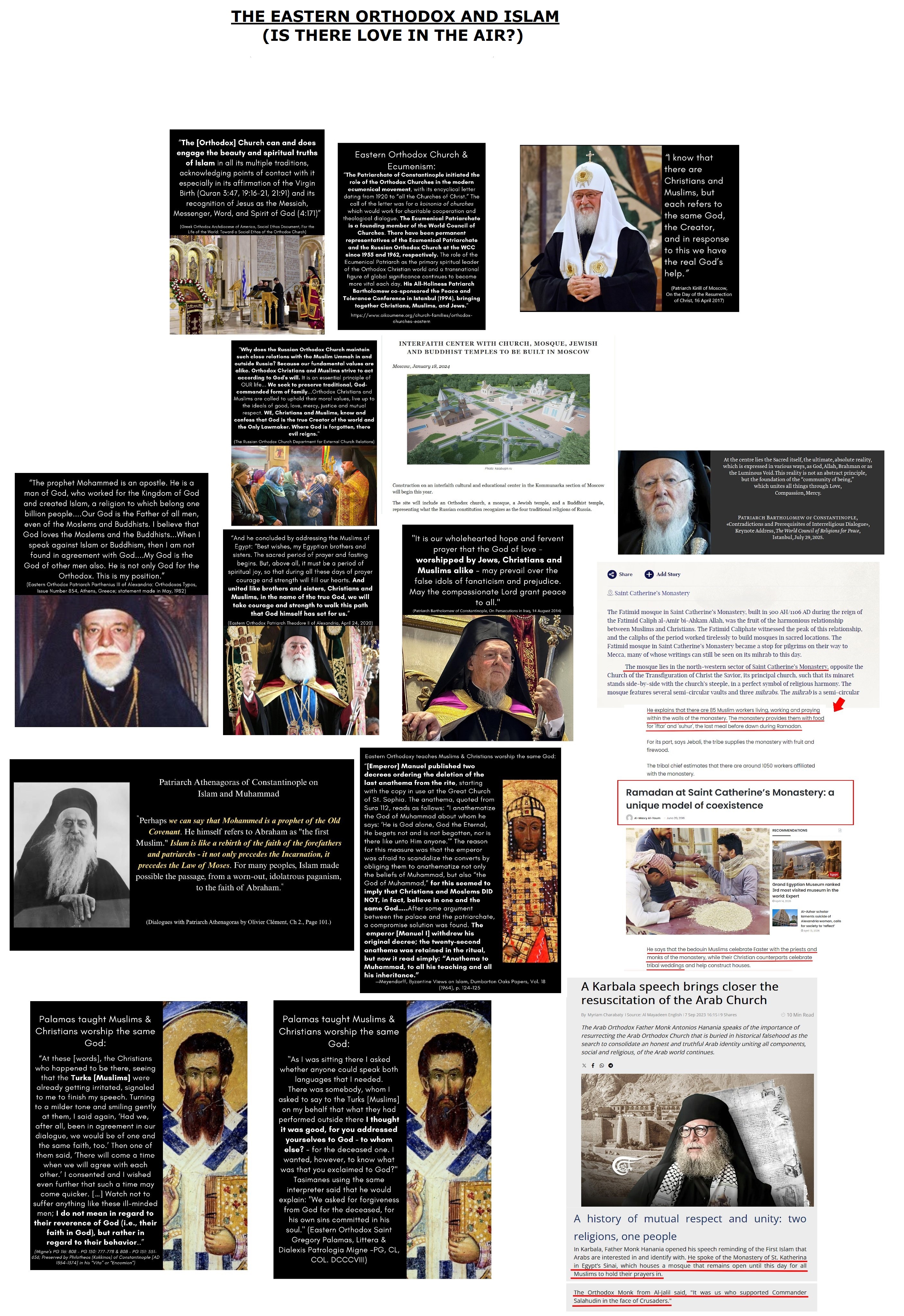
Leave a comment

Filed under Uncategorized

Dr. Shabir Ally: The Text of the Qur’an cannot be used to substantiate the return of Jesus.

 “Do they then only wait for the hour that it should come on them all of a sudden? But already come some tokens thereof, and when it comes to them, how shall they have their reminder?” (Qur’an 47:18).

﷽ 

Dr. Shabir Ally has a channel called: “Let the Qur’an Speak.” In one particular episode he went over the verses that are often used to justify the return of Jesus -alayi salam. Dr. Shabir Ally has concluded that these verses cannot be used to justify the return of Christ Jesus.

The episode is titled: The Coming Messiah | The Quran in Dialogue with Other Faiths, ep. 29 | Dr. Shabir Ally

Below is the transcript:

“Peace be with you. Thanks for joining me for this continuing chat in which we talk about the Quran in conversation with other scriptures and religions. Today I want to look at the widespread belief that there is going to be a future savior or messiah or some personality who is going to bring about all that we expect to be right with the world and do away with injustice and so on. So why do we have such a pervasive feeling among the world’s religions? Let’s look at them one at a time and see what exactly is expected, and then we will analyze why.” -Dr. Shabir Ally.

“First of all, the Quran. In the Quran, we have some mention of apparently something that is going to happen in the future, and then people have taken this to mean that Jesus, on whom be peace, is coming back. Take Surah 4, verse 159, for example, speaking about Jesus having been raised into heaven. Now it says in verse number 159 (Shabir speaks Arabic). In the English translation: “Every one of the people of the book will definitely believe in him before his death. And on the day of judgment, Jesus will be a witness against them.” Now it is interesting that this verse is being used to justify the belief that Jesus, on whom be peace, will come again. But at the same time, there are very ancient commentators on the Quran who said that this does not mean that at all. You see, there is a question: when it says that there is none of the people of the book except that will believe in him before his death, what does the word “his” refer to? Does it refer to “his” meaning Jesus’ death, or does it refer to “his” meaning the person of the book? So if it refers to the person of the book, it means that before the person of the book dies, all of reality will be open to him or her as it is open to every one of us when we reach that moment of death. That is when the person of the book will understand correctly and believe correctly about Jesus. So those who previously rejected him, such as his Jewish opponents, will come to understand him and believe in him correctly. And the Christians, on the other hand, who had so over-glorified him will come to recognize him truly as he is, as a prophet and as a messenger of God. So on that view, it is not really talking about Jesus coming back. But if it is taken to mean that “his” is a reference to Jesus, before his death, that would mean that Jesus has not died yet, and when he comes back, before he dies, at that time every one of the persons of the book will believe in him. So you cannot take an ambiguous verse like this and make it mean something of such major import as a major figure coming back into the future and doing all of these great things. Of course, that belief is in Hadith, and one who takes the Hadith as very authentic will naturally be constrained to that belief. But we should not read that belief back into the Quranic verses without proper warrant.” -Dr. Shabir Ally.

“Another verse that is cited to refer to the second coming of Jesus is Surah 43, verse number 61. So what does it say in the Arabic? (Shabir speaks Arabic). And the English translation – here, I will read first, then we will try to analyze it: “And his second coming is truly a sign for the hour. So have no doubt about it, and follow me. This is the straight path.” Now when it says “second coming” here in the English translation, the translator has used a half square bracket to insert the word “second” and mark it off as an insertion. But even without marking that word as an insertion, even the word “coming” is not there in the Arabic. There is nothing like (Shabir speaks Arabic) in the Arabic – “his coming” – it just says (Shabir speaks Arabic), which literally means “and he is” or “it is.” Now if it is understood to mean “it is,” then that is a reference to the Quran, which has been mentioned previously within the same context. So it (the Quran) will be a sign of the hour, or as it is also read alternatively, it will contain knowledge of the hour – that the Quran itself is knowledge of the hour, or knowledge personified, something like this. Only if it refers to “he” as a human person can it possibly refer to Jesus. But does it refer to his second coming? It may be just that it is referring to him as a fact because of some miracles pertaining to him or associated with him that he will become a sign, or he is a sign of the hour. By his performing these miracles, people can take heed from that and realize that God, who made it possible for Jesus to do all of these things, is able to bring about what is called the hour. So in short, we can say that there is no verse of the Quran that clearly indicates that Jesus, on whom be peace, is coming again. And apart from that, there is no future messianic figure that is mentioned in the Quran. The closest you have to a figure is Dabbat al Ard (a creature from the earth who will speak to people) or Ya’juj and Ma’juj. They are mentioned in the 18th chapter of the Quran and also in the 21st chapter of the Quran. But there is no future messianic figure in the Quran. Why? We will try to come back and analyze that. But I want to go forward to look at scriptures of the other Abrahamic faiths.” Dr. Shabir Ally.

Prima Qur’an: Dr. Shabir Ally is someone who has been involved in interfaith dialogues, discussions and debates for 35 years. If he felt there was some solid proof for the second coming of Christ Jesus in the Qur’an he would have advanced it.

May Allah Guide the Ummah.

May Allah Forgive the Ummah.

Leave a comment

Filed under Uncategorized

Qadiri Sufi Dr. Louay Fatoohi: Jesus has died and will not return.

“Allah said, O Jesus, I shall cause you to die and will raise you up to Me and shall purify you of the ungrateful disbelieving people, and shall place those who follow you above those who deny the truth, until the Day of Judgement; then to Me shall all return and I will judge between you regarding your disputes.” (Qur’an 3:55)

﷽ 

Before we begin for those who do not know that Dr. Louay Fatoohi is a caliph (or representative) of Shaykh Muhammed al Muhammed alal-Kasnazan al-Husayni-https://www.amazon.in/Shaikh-Muhammad-al-Muhammad-al-Kasnazan-al-Husayni/dp/1906342253

He has been a guest at the behest of Paul Williams of Blogging Theology numerous times to discuss topics of interest in regard to Islam and Christianity.

That aside, what has intrigued us about Dr. Louay Fatoohi is that he believes that Jesus (as) has died and that he will not return. This brings him in line with the Ibadi school of Islam, as virtually no other school of Muslims shares this view.

Here is the PDF: The end of Jesus’ Life on Earth in the Qur’an. The title is interesting because it is a bit of bait. Because English can convey a meaning that seems in line with the majority position of Ahl Sunnah. As the majority of Sunni Muslims believe that Jesus (as) Earthly life came to an end (just not that his life itself) came to an end.

The readers are encouraged to show their gratitude for his academic work by subscribing to Dr. Louay’s YouTube channel, visiting his website and purchasing his many, many insightful books!

Now we are going to be very forward in saying we don’t think this particular article is one of Dr. Louay Fatoohi’s best. There is a great deal to be desired.

In some ways, if you are a traditional Sunni who holds the majority traditional views of Jesus (as) being taken up into heaven and returning again towards the end of time, you will enjoy this read….up to a point.

We say, “Up to a point,” because you are in the Jaguar with Dr. Fatoohi doing 160km on the freeway when suddenly he hits the breaks, giving you the biggest whiplash you ever had.


You read this article, and you see the footnotes, you see the scholarly quotations, you see the references from the Qur’an and the arguments that he builds. Then suddenly we get the following bold assertion from the good Doctor:

“In this paper, I have argued in favour of a combination of the majority opinion that Jesus was raised alive in heaven and the minority view that he died naturally. That Jesus died after, not before, he was raised means he died in the abode in heaven to which he was taken.”

and the minority view that he died naturally.” No, no you didn’t, Dr. Fatoohi. Because you did not quote anyone who says: means he died in the abode in heaven to which he was taken.

No one who argues that Jesus (as) died naturally states he was whisked up to heaven alive in a body and then died in heaven. That is a far cry from any natural death. That is a bit of sleight of hand there. We must call it out for what it is.

Not only that, but indeed you did not give us a single quote from the Qur’an or the Sunnah to substantiate that Jesus died in heaven! Heaven being a place of death is news for us. We have to be quite honest in saying this.

Then there is this bit here:

“This phenomenological perspective seems to lend support to the minority view of al-Suddī (d. 127), which is favoured by al-Ṭabarī, 80 that the dialogue in 5:117 between God and Jesus happened after he was raised to heaven, rather than it will happen on the Day of Judgement.”

That makes little sense as Allah (swt) is already aware of this. It makes the knowledge of Allah (swt) redundant, and we seek refuge in Allah from this.

Yet, to make this happen on the day of judgement where it can be witnessed is more sensible. It is not for Allah (swt) to know redundant information but for those who party to the questioning.

Then we need to come back to the following verse of the Qur’an:

“Peace be upon me the day I was born, the day I die, and the day I will be raised back to life!” (Qur’an 19:33)

What is the point of being raised back to life if you have already been made to die (in heaven) and are presumably there now?

Unless the claim is that Jesus is dead in heaven and will be brought back to life (at a point in the future), what is the purpose of this?

Again, heaven being an abode of death, rather than life, is truly news to us as Muslims. It must also be news to Christians and Jews as well.

There are just too many loose ends that Dr. Fatoohi has in the article.

Dr. Fatoohi offers really no engagement at all with the hadith tradition. That now becomes someone else’s task.

“The support for the traditional view comes mainly from aḥadīth. Such narratives are found in all major ḥadīth sources, including al-Bukhārī and Muslim. This has led to the treatment of Jesus’ return as a fundamental Muslim belief and even conflating it with Islam’s articles of faith,82 accusing those who deny it of kufr. 83 The conclusion of this article implies that those aḥadīth are inauthentic. Indeed, scholars who argue that Jesus died naturally on earth claim the aḥadīth on Jesus’ return are aḥād, rather than mutawātir, so their credal status is at best doubtful.84 Consequently, Jesus’ return is not a tenet of Islam. Books of creeds also distinguish it and other beliefs from the six articles of faith.”

The conclusion of this article implies that those aḥadīth are inauthentic.”


A conclusion that we must admit, with all candor, is based upon the filmiest ground possible i.e. he (Jesus) died in heaven!

scholars who argue that Jesus died naturally on earth claim the aḥadīth on Jesus’ return are aḥād, rather than mutawātir.”

Those scholars which have laid charge to the ahadith, none of which have argued that Jesus (as) was brought alive bodily to heaven and then died in heaven.

This became all the more curious in light of Dr. Fatoohi’s recent article:

In that article he states:

“Among the Prophet’s (PBUH) sayings regarding Imām ʿAlī is his address to the Muslims at Ghadir Khumm, when he asked, “Do you not know that I have more authority over every believer than they have over themselves?” They replied, “Yes, we bear witness that you have more authority over every believer than they have over themselves.” He then declared, “Then for whomever I am a guardian, this is his guardian,” and he took ʿAlī’s hand.”

“This ḥadīth has been recorded by many scholars, including Aḥmad ibn Ḥanbal,[29] al-Bazzār (d. 292),[30] al-Nasāʾī (d. 303),[31] Abū Yaʿlā (d. 307),[32] and al-Ṭabarānī (d. 360).[33] Ibn Abī ʿĀṣim (d. 287) reported it via eleven companions, and he also documented a ḥadīth in which thirteen unnamed collectively testified to having heard the Prophet (PBUH) utter those specific words regarding ʿAlī.[34] In other words, this ḥadīth is mutawātir.”

So we asked Dr. Fatoohi in his X post the following:

“Another question I have. Would you regard it as Mutawātir Lafẓī or Mutawātir Maʿnawī? Given that we have thirteen unnamed individuals that are claimed to have heard this particular wording?”

Why is this important? It is important because in our article here:

Dr. Fatoohi appeals to the consensus.

These scholars suggest that the majority consensus is based on a misunderstanding of the Qur’an, which Muslims have failed to correct for fourteen centuries.” -Louay Fatoohi.

The consensus is that Jesus (as) is coming back. Dr. Fatoohi goes against this consensus.

But as regards the distinction between Mutawātir Lafẓī or Mutawātir Maʿnawī, this is important for the following reasons.

The Sunni consensus is that the hadith on the return of Jesus are Mutawātir Maʿnawī. There are many hadith from many Companions. Some say Jesus will “descend,” others say he will “come,” others focus on him “praying behind the Mahdi.” The exact words differ, but the core meaning (Jesus will physically return at the end of time) is from the Sunni persepective, mass-transmitted and undeniable.

The Sunni consensus is that over 100 Companions narrated the event of Ghadir Khum. Few report the phrase “Whoever’s master I am, Ali is his master.” Others report different wordings or focus on different parts of the sermon. However, the core meaning (the Prophet stopped the caravan at Ghadir Khum and declared Ali had the right to the spoils) is transmitted by so many chains that it is historically certain. It is not considered Lafẓī because the wordings vary, and major collections like Bukhari and Muslim did not include it in its most famous verbatim form.

Concerning Ghadir Khum Shi’i will often try to catch people unaware of this very important point.

However, back to Dr. Fatoohi’s article and his views.

“Ibn ʿĀshūr also accepts that Jesus is dead but he argues he will still return, as stated in ḥadīth. He mentions the possibility that Jesus will have a special early resurrection, rather than the later universal resurrection of all other people and will descend to earth”

Source: (Ibn ʿĀshūr, Al-Taḥrīr wal-tanwīr, vol. 3, 258-259)

He is a well-known Sunni Muslim of the Maliki school of jurisprudence and Ash’ari school of theology.

“Being faithful to aḥadīth about Jesus’ return to earth is also given as a reason for the Muslim misunderstanding of wfy contrary to its more frequently used meaning.”

“I have critiqued these claims in detail elsewhere.”

“It concludes that Jesus was raised to heaven where he continued to live, which is the majority view, but he later died naturally there and will not return to earth, in agreement with the minority view.”

Again we are not sure which scholars hold the view that Jesus (as) ascended to heaven alive and died in heaven. That cannot be described as a natural death at all.

Dr. Fatoohi suggests: “When analysing Qur’ānic terminology, the hermeneutical principle that the Qur’ān interprets itself remains the best option when the Qur’ān provides enough relevant information.”

Prima Qur’an comments: Yet Dr. Fatoohi also states: “Twenty-one occurrences of the verbal root wfy in the Qur’ān are unambiguously associated with death, but the term is also used twice in connection with sleep. This fact suggests the term has a broader meaning than just the end of a person’s life.”

So why Dr. Fatoohi wants to interpret the word in light of it’s less common usage instead of the broader usage merits pensive reflection. He is correct, and it establishes that it has a broader meaning. However, the admission is that the overwhelming majority of the time it is used, it unambiguously means death.

“In the two remaining instances, the Qur’ān uses wfy in the context of describing God’s intervention to protect Jesus from the attempt on his life, so most Muslim scholars have taken this word to mean something other than death in the case of Jesus.”

Prima Qur’an comments: What Dr. Fatoohi does not mention is that this too is influenced by the hadith and the idea that Jesus (as) is coming back. If no such aprior belief was held, then it is more than reasonable for the text to translate as death. Since Dr. Fatoohi is not holding to those traditions, it puzzles one anymore why he takes the position that he does. For the sake of having a novel view? Only Allah (swt) knows what is in one’s heart.

Dr. Fatoohi informs us: “This conclusion is informed by other arguments as well, such as the denial of the crucifixion in 4:157 and the belief in Jesus’ return.”

Dr. Fatoohi states: “The fact that most appearances of wfy are in connection with death or separation of the soul from the body is usually used to conclude there is no justification for claiming the two instances of this verb in Jesus’ story have a different meaning.51 This claim ignores the fact that wfy is also used to mean something other than death.”

Prima Qur’an comments: This is a non-argument. None of the people he quoted are ignoring anything. They are astutely aware of the range of meanings.


Dr. Louay Fatoohi is trying to build an argument off of an objection that no one raised. What he did do correctly was to identify the reasons they felt it was translated as such.

He tries to make it look as if he has an argument based upon the trilateral verb of wfy, stating that almost 2/3 of its appearances in the Qur’an are not related to death. Only to follow that with the very revealing “The only form that is connected with death is the V of the verb, which appears 24 times as tawaffa, including once with reference to Jesus, as mutawaffi, which is the second time it is used in relation to him.”

https://www.islamawakened.com/quran/4/15/translations/

Dr. Fatoohi says: “Allah yatawaffā the anfus (souls) at the time of their mawt and those that do not die during their sleep. Then He keeps those for which He has decreed mawt and releases the others
for a specified term. (39:42) Unlike in death, where wfy donates the permanent taking of the nafs (soul), in the case of sleep, it identifies the temporary taking of the soul. In death, the soul is taken for good, whereas in sleep, the soul is sent back, with wfy used in both cases. This is why Muslim exegetes have
identified and distinguished between these two different types of wafat, one of death and the other of sleep.”

Dr. Fatoohi says: “In summary, tawaffī appears in the Qur’ān in the sense of claiming the soul permanently, which denotes death, or claiming it temporarily, which refers to sleep.”

Prima Qur’an comments: But what is very curious is he does not follow through on the conclusion.

If a person’s soul is claimed during sleep and returned, where does the body go? It does not go anywhere. If a person’s soul is claimed during sleep and is not returned to the body, where does the body go? It does not go anywhere.

Keep this very important point in mind when moving forward.

Qur’an 39:42 -manāmihā we have the word for their sleep.

Note Dr. Fatoohi’s translation of Qur’an 6:61 above.

” He sends over you guardians until when mawt comes to one of you, Our messengers
tawaffathu, and they do not fail [in their duties].”

The question has to be asked. If they (the messengers, presumably angels) take the soul, what happens to the body? Does it go some place?

On what basis does Dr. Fatoohi make the following claim:

“These multiple Qur’ānic assertations are mainly behind the view of most Muslim scholars that wfy does not mean “cause to die” in the case of Jesus, although aḥadīth about his return are also cited.”

Prima Qur’an comments: How does he know that is the reason why most Muslim scholars believe that wfy does not mean to die? Did we get a list or a chart or even a citation? We did not see any.

The sleepers of the cave.

In the Qur’an 18:9-26 we have the revelation concerning the sleepers of the cave. There is nothing there that indicates that the bodies went any place.

Uzair and the doneky.

Or the one who passed by a city which was in ruins. He wondered, “How could Allah bring this back to life after its destruction?” So Allah caused him to die for a hundred years then brought him back to life. Allah asked, “How long have you remained?” He replied, “Perhaps a day or part of a day.” Allah said, “No! You have remained here for a hundred years! Just look at your food and drink—they have not spoiled. look at your donkey! And ˹so˺ We have made you into a sign for humanity. And look at the bones, how We bring them together then clothe them with flesh!”1 When this was made clear to him, he declared, I know that Allah is Most Capable of everything.” (Qur’an 2:259)

This can not be understood as an ascension. The bodies decomposed and were resurrected.

Dr. Louay Fatoohi then turns his attention to the ascension of Christ Jesus.

“First, all seven verses that use rfʿ in the sense of raising a person in status, not spatially, include a word that makes this meaning abundantly clear. Six (2:253, 6:83, 6:165, 12:76, 43:32 and 58:11) of these verses use the plural word darajāt (ranks). The other verse (7:176) uses āyāt (signs) as the way God would have raised someone in status.”

Prima Qur’an comments: So Dr. Fatoohi informs us that Jesus is a special case and that raising is only used of a person in terms of rank, darajāt (degrees) or the other word that is used is āyāt (signs).

However, this assertion falls apart rather quickly upon further investigation.

“and elevated (wa rafaʿnā)your renown for you?” (Qur’an 94:4) There is no mention of either āyāt or darajāt.

Secondly, the most glaring example is the case of Idris (as) Dr. Fatoohi was too dismissive of the case of Idris.

“And mention in the Book, Idris. Indeed, he was a man of truth and a prophet. And We (warafa’nahu) raised him to a high station. ” (Qur’an 19:56-57)

makānan ‘aliyyan (a high station/place). Not even Jesus (as) has been given this honour. It is the only place in the Qura’n where this is mentioned.

Dr.Fatoohi states: “Also, the makān (place) to which Idrīs was taken is described as ʿaliyyā (high). Each of the three other occurrences of the word makān in the same Qur’ānic chapter of the Idrīs verse also
denotes a physical location.”

While that may be true, this is the one place in the Qur’an where makanan ‘aliyyan is used.

Dr. Fatoohi bodly states:

“Expectedly, no attempt has been made by proponents of the metaphorical interpretation to explain what that supposed exaltation of Jesus by God means, as there is no mention of it in the Qur’ān.”

Well, actually there is. In the very first example that he gave to prove his analysis actually goes against him.

Dr. Fatoohi says:

“First, all seven verses that use rfʿ in the sense of raising a person in status, not spatially,
include a word that makes this meaning abundantly clear. Six (2:253….)

So what does 2:253 state?

“Those messengers – some of them We caused to exceed others. Among them were those to whom Allah spoke, and He raised some of them in degree. And We gave Jesus, the Son of Mary, clear proofs, and We supported him with the Pure Spirit. If Allah had willed, those [generations] succeeding them would not have fought each other after the clear proofs had come to them. But they differed, and some of them believed and some of them disbelieved. And if Allah had willed, they would not have fought each other, but Allah does what He intends.” (Qur’an 2:253)

So in the very text that Dr. Fatoohi uses to prove that rf’ does not mean spatially but in status none other than Jesus (as) is the first prophet mentioned by name that follows the text!

Recall Dr. Fatoohi’s own words: “When analysing Qur’ānic terminology, the hermeneutical principle that the Qur’ān interprets itself remains the best option when the Qur’ān provides enough relevant information.”

Thus,

Qur’an 4:159 makes perfect sense of raising Jesus (as) in honour, given that an impailed person is, in the eyes of Rabbinical law, cursed.

Also, Allah has already declared that Jesus (as) would be an ayat unto men.

“He said, “Thus [it will be]; your Lord says, ‘It is easy for Me, and We will make him a sign āyāt to the people and a mercy from Us. And it is a matter [already] decreed.’ “

Dr. Fatoohi’s conclusion was thus:

“The traditional, majority view is that Jesus was raised to heaven alive, continues to live there
and will descend to earth close to the end-time. A minority view that developed in the last one
and a half centuries argues that Jesus died naturally on earth, so he was not raised alive to
heaven and will not come back. In this paper, I have argued in favour of a combination of the
majority opinion that Jesus was raised alive to heaven and the minority view that he died
naturally
.”

Now we admire Dr. Fatoohi. We take him to be a serious researcher. However, we were not amused with the line:

“I have argued in favour of a combination of the majority opinion that Jesus was raised alive to heaven and the minority view that he died naturally.”

First. There is no natural scenario where a person is put to sleep, raised bodily to heaven and then dies. Not one! That is supranatural and not natural.
Second. There is no minority view that states that Jesus (as) was put to sleep ,raised bodily to heaven and then died.

Dr. Fatoohi states:

“The traditional, majority view is that Jesus was raised to heaven alive, continues to live there
and will descend to earth close to the end-time.”

Prima Qur’an what is the traditional view?

  1. Jesus was raised alive in heaven.
  2. Continues to live there.
  3. Will descend at the end of times.

Dr. Fatoohi believes in which of these three? He believes in point 1.

What else can Dr. Fatoohi tell us about points 1–3 above? 

“The support for the traditional view comes mainly from aḥadīth.”

Conclusion and Summary.

Fatoohi does not cite any scholar—classical or modern—who explicitly argues that Jesus died in heaven after being raised alive. The minority view he references (e.g., Sayyid Ahmad Khan, Muhammed Abduh, Rashid Rida) holds that Jesus died a natural death on earth, not in heaven. By combining the majority’s “raised alive to heaven” with the minority’s “died naturally,” Dr. Fatoohi creates a hybrid position that lacks clear precedent. This does not make it wrong, but it does mean he is not simply synthesizing existing views—he is proposing something new. His failure to acknowledge this novelty weakens his claim.

Heaven is not described in the Qur’an or Sunnah as a place where death occurs. If Jesus died in heaven, that would imply death exists in the afterlife realm, which contradicts the understanding of Jannah as dār al-ḥayawān (abode of life). Dr.Fatoohi does not address this tension. His reliance on Qur’an 39:42 (sleep vs. death) does not resolve it, because that verse concerns earth, not heaven.

The Hermeneutical Principle – Qur’ān Interprets Itself. Dr. Fatoohi appeals to the principle that the Qur’ān interprets itself. We counter that he then prioritizes the less common meaning of tawaffā (sleep/temporary taking) over the overwhelmingly common meaning (death).

Dr. Fatoohi admits that 20 of 23 occurrences of tawaffā in form V refer to death. Only two refer to sleep, and one refers to Jesus. To then argue that Jesus’ case follows the rare meaning requires external justification (e.g., the denial of crucifixion, the belief in his return). But Dr. Fatoohi claims to be setting aside ḥadīth. Without ḥadīth, why prefer the rare meaning? His argument becomes circular: he assumes Jesus was raised alive (from 4:158) and then reads tawaffā accordingly. That is not the Qur’ān interpreting itself; it is interpretation driven by a prior conclusion.

The Case of Idrīs and Qur’an 94:4. We point out that Dr. Fatoohi’s claim about raf‘ always requiring darajāt or āyāt for non-spatial raising is false, citing Qur’an 94:4 (“We raised your renown”) and the case of Idrīs.

Qur’an 94:4 uses rafa‘nā without any qualifier, and it clearly means elevation in status, not physical ascent. Dr. Fatoohi overstates his case when he says “no attempt has been made by proponents of is claimed to be the ‘metaphorical‘ interpretation” – we have now made that attempt, citing Qur’an 2:253 and Qur’an 94:4.

Qur’an 19:33 – “The day I will be raised back to life” We ask: If Jesus died in heaven, what is the point of a future resurrection? This is a serious problem for Dr. Fatoohi’s view. Qur’an 19:33 lists three events: birth, death, and resurrection. If Jesus already died and is in heaven, then his “death” refers to that heavenly death. But then “raised back to life” would refer to a second resurrection after that death. That would mean Jesus dies twice (once on earth? no – he didn’t die on earth in Dr. Fatoohi’s view; once in heaven) and is resurrected twice. The Qur’ān nowhere suggests such a sequence. The natural reading of Qur’an 19:33 is that death occurs on earth, followed by resurrection on Judgement Day. Dr.Fatoohi does not address this.

Nonetheless we are happy that another independent researcher, and a representative of the ʿAliyya Qādiriyya Kasnazāniyya tariqa no less, has confirmed that Jesus (as) is dead and he will not return to Earth.

May Allah Guide the Ummah.

May Allah Forgive the Ummah.
Leave a comment

Filed under Uncategorized

Jesus was not crucified: the evidence with Dr. Ali Ataie

“And for their saying, “Indeed, we have killed the Messiah, Jesus, the son of Mary, the Messenger of Allah.” And they did not kill him nor did they impale (ṣalabūhu) him; (وَمَا قَتَلُوهُ وَمَا صَلَبُوهُ وَلَٰكِنْ شُبِّهَ لَهُمْ)but it was made to appear to them so. Those who differ therein are full of doubts. They have no certain knowledge of it, but only follow conjecture. For certainly, they did not kill him.”  (Qur’an 4:157)

﷽ 

These are some of our thoughts after an attentive listen of all 3 hours 36 minutes and 33 seconds on the Blogging Theology video entitled: ‘Jesus was not crucified: the evidence with Dr. Ali Ataie.’

You may see this here:

Paul Williams and Blogging Theology are still our number one favourite youtube channel.W

e also feel (for our interest) the most relevant in the English language.

Our thoughts are that Dr. Ali Ataie is almost there. The stand out from this, the absolutely commendable point is that Dr. Ataie is challenging what is considered to be a historical ‘fact,’ namely that Jesus of Nazareth was Crucified to death by the Roman Imperium.

That in and of itself is refreshing. We have been saying this for years. After looking at the so called “evidence” both biblical and extra biblical we haven’t found it convincing at all.

As we have pointed out in a previous article here: how does anyone read Qur’an 4:157 and walk away with the understanding that it is talking about Romans, Crucifixion or Cross at all?

It is simply bizarre to us.

Dr. Ataie has a good opening preface that when it comes to issues like resurrection, and other miracles those are simply things that history cannot attest to. There could be a natural and supra natural explanation. Miracles are not considered by modern historians when looking at the past. That being said miracles are not unhistorical it’s just that being in the realm of the supranatural historians do not consider it.

This is a very fair and reasonable point raised by Dr. Ataie.

Again another reason why Muslims should not be too excitable over claims by historians and /or orientalist. At the heart of research are simply different epistemology.


Paul Of Tarsus conversion story for example, is non historical.

“I trust Allah and his Messenger.”-Dr. Ataie

We can only say that: “Ditto.”


@17:55 “If that man said that Jesus wasn’t crucified then I believe him. And I don’t care what Bart Ehrman…..”-Dr. Ataie

Prima Qur’an comments: You see dear reader for some reason Dr.Ataie, Dr. Shabir Ally, Dr. Fatoohi, all think the Qur’an is engaging with something called “crucifixion”

The Qur’an is neither affirming nor denying any crucifixion. The Qur’an is interacting with claims made by Jews about Jesus (as).

As regard to an event that is commonly called ‘The Crucifixion’ the Qur’an is simply indifferent. It simpy neither denies nor affirms it.

Please see:

@19:34 Why in the world did he (Muhammed) deny the crucifixion of Jesus? -Dr. Ataie

Prima Qur’an comments: Again we have read the same Qur’an Dr. Ataie is reading and we simply do not see crucifixion any where in the Qur’an at all.

“The historical case for the crucifixion is not nearly as strong as what we have been lead to believe.” -Dr. Ataie.


@22:36 “It is axiomatic for Westerns that it has happened.”

@24:09 Dr. Ataie goes into the various theories Muslims have in regards to the “crucifixion” of Jesus.

Dr. Ataie is closet to the truth out of them all (Has he been reading Prima-Qur’an?).

@30:17 Dr. Ali Ataie comments that “Crucified victims were left on their crosses long after they expired.”

Dr. Ali Ataie still struggles with Divine Rapture Theory. As he does not find it to be in agreement with the Qur’an and/or historically plausible.


@32:26 Dr. Ali Ataie addresses the issue of Supranatural identity transference.
@32:50 Dr. Ali says that most Muslim exegetes go with this idea that “Jesus was no where near a cross.”

A common trope that we hear from some atheist is that secular historians are objective, unbiased and inductive.

@34:12 objective, unbiased, inductive. -Historians?

Dr. Ataie does an excellent job of going into an analysis of this. How historians have come up with different perspectives and have contradicted each other and how they may not be as objective or unbiased or even as inductive as they may lead themselves to believe.

Dr. Ataie, We owe you lunch! Well said. May Allah (swt) elevate him.

@40:28 Dr. Ataie states: “But I do believe that myth and legend has probably soo permeated the gospel accounts of Jesus passion narratives that it is not at all beyond reason to dismiss them completely as historical fiction!”

Prima-Qur’an comments: Allahu Akbar! There you go Dr. Ataie now that is the ticket!
Than the idea that someone was “crucified” is likely based upon what? Myth and legend.

Dr. Ataie gets into his understanding of: Qur’an 4:157 “It was made to appear to them so.

@53:38 “They did not have information. It did not come from a reliable source.”
@54:11 “Jews and Christians ended up following hearsay reports about some crucifixion event from non eye-witnesses….”

Prima-Qur’an comments: This is exactly what shubbiha lahum means. It is not shubi ha alayhim!

In fact because we love you the readers insh’Allah we will give you a sneak peak at one of the slides that Shaykh Hilal and those of us at Prima Qur’an have been working on.

  1. Disagreements.
  2. They are in doubt.
  3. They have no knowledge about it.
  4. They are following dhan (assumption or conjecture).

These are not things that we would describe eye witnesses to an event with.


@54:25 “When you say it was made to appear to them that it was so who is the implied actor there? Who made it appear to them it was so. Is this referencing God or some other-who is applied in that if you see what I mean?” -Paul Williams.

Prima Qur’an comments: Brother Paul asked a very great question. Very insightful. This is what was answered above. The whole event in which by the way is Allah (swt) addressing Jews and claims made by Jews is that they killed Jesus and impailed him.

This is based upon Jewish claims that were in orally in circulation in the time of the Prophet (saw).

There is absolutely nothing in Qur’an 4:157 about Romans, or about a cross or about a crucifixion which we will come to Insh’Allah

@1:00:53 “Is there any material evidence of any Jew who was ever crucified by the Romans in ancient Palestine? Apparently tens of thousands of Jews were crucified and all archeologist have ever found was a single heel bone of a man with a nail driven through it, they call him Yohanan. I don’t know how they know his name but that’s what they call him.” -Dr. Ataie.

@1:12:24Paul was the first one in recorded history to claim that Jesus was crucified.”- Dr. Ataie.

Prima-Qur’an comments: This is a genius point not because its clever but because it’s true and it is overlooked by way too many.

Paul lays down his theology in 1 Corinthians 15:3-8.

In fact, Allah-willing we will go ahead and lay out the systematic destruction of this group of text

“If the foundation is destroyed what shall the righteous do?” (Psalms 11:3)

Question: Just how important is the theology in 1 Corinthians 15:3-8?

Answer:

“Now if Christ be preached that he rose from the dead, how say some among you that there is no resurrection of the dead? But if there be no resurrection of the dead, then is Christ not risen: And if Christ be not risen, then is our preaching vain, and your faith is also vain. And if Christ be not raised, your faith is vain; you are still in your sins.” (1st Corinthians 15: 12-14, and 17)

Prima Qur’an Comment: Two major points need to be deduced from the above proof text.

1) If Christ Jesus did not raise from the dead, Christianity is a fruitless endeavor in every respect. Muslims do not say that, the Bible says it.

2) If Christ Jesus is not raised from the dead, Christians are still in their sins; and the whole of Christian theology is fruitless. Muslims do not say that, the Bible does.

Note: (Paul does not try and prove his case on an emptied tomb.)

“For I determine not to know anything among you, save Jesus Christ, and him crucified.” (1st Corinthians 2:2)

Note: Paul is not interested in the historical Christ.

In fact Paul never met the historical Jesus in his lifetime! He only claims to have met Jesus in a vision in Acts 9 , 22 and 26 and each and everyone of those text if juxtaposed contradict and conflict with one another.

“If the foundation is destroyed what shall the righteous do?” (Psalms 11:3)

How sound is that first account of the crucifixion that Paul is relating to us and the whole of Christian theology is hinging on?

How sound is it? Is the foundation solid?

Analyzing the foundation of Christian theology.

(1 Corinthians 15:3-8) <<< The Foundation of Christianity is built upon this text.

“For I delivered unto you first of all that which I also received, how Christ died for our sins according to the scriptures.” (1st Corinthians 15:3)

Prima Qur’an Comment:

Paul is referring to the Hebrew Scriptures because there were no New Testament writings at that time. However the fault in this text is that there is no place in the Hebrew scriptures that says a Messiah will die for our sins! Nowhere from Genesis to Malachi! There are allegories about other things.

“And that he was buried, and that he rose again the third day according to the scriptures.” (1st Corinthians 15:4)

Prima Qur’an Comment:

Again, nowhere in the Hebrew scriptures from Genesis to Malachi does it say that a Messiah will rise from the dead on the third day!

“For as yet they knew not the scripture that he must rise again from the dead.” (John 20:9)

Prima Qur’an Comment:

Even Jesus disciples did not know any scriptures about a Messiah rising from the dead.

There is a major contradiction in this narrative as well.

A Contradiction

“And although THEY found no cause of death in him, yet desired THEY Pilate that he should be slain. And when THEY had fulfilled all that was written of him THEY took him down from the tree, and laid him in a sepulcher.” (Acts 13:28-29)

Note: (They the Jews who desired his death put him in the tomb, which is contradicted point blank by the Gospel of Mark.)

“And HE brought fine linen, and took him down, and wrapped him in the linen, and laid him in a sepulcher which was hewn out of a rock, and rolled a stone unto the door of the sepulcher.” (Mark 15:46)

Note: (Joseph himself put Jesus in the tomb not the Jews who desired his death as in Acts.)

Also, if they fulfilled all that was written of him there would be no “rose again the third day according to the scriptures.”

“And that he was seen of Cephas, then of the Twelve.” (Ist Corinthians 15:5)

Prima Qur’an Comment:

There the Greek word for seen is Opthe, and is used for spiritual seeing as in a vision. No where in the Bible does it say Peter had an independent sighting of Jesus n this order that Paul is giving?

Question: What does ‘opthe’ mean?

Answer: spiritual seeing a vision

Also “ appearing to the twelve” is wrong because Judas committed suicide. To say that twelve is just a terminology is not true! Jesus called them the 12 apostles and when Judas died the terminology changes to 11 until the election of Mathias in Acts 6:2!

Catholics, however, got it right. The Douay-Rheims which was diligently compared with the original Greek’ text they say 11! So Somebody’s Greek text is wrong!

Source: (The Douay-Rheims New Testament (published by Tan Books and Publishers, INC. P.O. box424 Rockford, Illinois 61105)

“After that, he was seen of above five hundred brethren at once; of whom the greater part remain unto the present, but some are fallen asleep.” (1st Corinthians 15:6)

This is contradicted by the following text.

“This man God raised on the third day and granted that he be visible, not to all the people, but to us, the witnesses chosen by God in advance, who ate and drank with him after he rose from the dead.” (Acts 10:40-41)

From Emmaus to Jerusalem Paul wedges in 500 people who he says saw Jesus, and then Jesus ascends up into heaven that day.

“And it came to pass, while he blessed them, he was parted from them, and carried up into heaven.” (Luke 24:51)

This is in contrast to the following

“Until the day in which he was taken up, after that he through the Holy Ghost had given commandments unto the apostles whom he had chosen: To whom also he showed himself alive after his passion by many infallible proofs, being seen of them forty days, and speaking of the things pertaining to the kingdom of God” (Acts 1:2-3)

The “Third Coming of Jesus”?

So if Jesus really did go up into heaven after he was raised again and then ‘beamed’ back down to hang around for 40 more days only to ‘beam’ back up this would mean that Christians are awaiting the 3rd coming of Jesus, and that just doesn’t sound too illustrious.

“After that he was seen of James; then of all the apostles.” (1st Corinthians 15:7)

Prima Qur’an Comment:

No where in the Bible does it say James had an independent sighting of Jesus in this order Paul is projecting. The Epistle of James has no account of a risen lord. What an encounter to leave out!

Again when all the apostles are mentioned are there 11 or 12? Which Greek text?

“And, last of all, he was seen of me also, as one born out of due time.” (1st Corinthians 15:8)

Prima Qur’an Comment:

Finally, Paul insert himself in the picture!

Note: Paul has been using that same word seen in Greek (OPTHE) all the way through to apply to all the apostles. Paul did not have a physical encounter with Jesus.

Paul also believes that the disciples did not have a physical encounter with Jesus as he uses the Greek word Opthe-seen all the way through 1 Corinthians 15:3-8.

Paul’s First account is thus discredited and the ‘foundation has been destroyed’.

We can stop right here and disregard everything else since the source of this crucifixion business is found to be incredible. However, we will pursue this in hopes that some people who did not grasp the argumentation above will find other evidence, Insha’Allah, conclusive.

Our apologies dear reader for the detour; we will continue with Dr. Ataie’s presentation.

Dr. Ataie continues also building his case upon what Paul has presented.

Namely that Paul says:

 I want you to know, brothers and sisters, that the gospel I preached is not of human origin.  I did not receive it from any man, nor was I taught it; rather, I received it by revelation from Jesus Christ.” (Galatians 1:11)

The isnaad-the chain of transmission of the Christian account of the crucifixion it begins with Paul.

@1:30:34 Dr. Ataie is quoting a statement of Bart Ehrman which is “Who would make up a crucified Messiah?”

Dr. Ali Ataie makes some good points butwe are not sold on the idea of the Jews expecting a Crucified Messiah. We do believe that the gospels are literary fiction to create a counter-Jesus narrative.

Also, important to note that the Qur’an no where states that no one killed Jesus. There is however, a specific text addressed to a group of Jews who claimed to have either killed or impailed Jesus.

Allow us to share with you a very interesting text from the Qur’an.

The Injil or Gospel is mentioned 12 times in 12 verses of the Qur’an. In one of those verses we have the following:

Indeed, Allah has purchased from the believers their lives and their properties [in exchange] for that they will have  Paradise. They fight in the cause of Allah, so they kill and are killed. [It is] a true promise [binding] upon Him in the Torah and the Gospel and the Qur’an. And who is truer to his covenant than Allah? So rejoice in your transaction which you have contracted. And it is that which is the great attainment. [Qur’an 9:111]

Qur’an Comment: Out of all the teachings that Allah could inform us about concerning what Jesus taught in the Injil, why did Allah mention the teaching concerning martyrdom? Why would Jesus teach about ‘killing and being killed’ if he was simply a pacifist?

To read more the Ibadi view please read:

https://primaquran.com/2022/10/04/what-happened-to-jesus-and-how-did-he-die/

@1:34:38 “The Qur’an says there was ikhtilaaf among the Christians?” -Dr. Ataie

Prima-Qur’an comment: Wait what??!

Can Dr. Ataie show us in the Qur’an 4:157 where there is mention of Christians? There is no mention of Christians. Allah (swt) is clearly addressing claims made by some Jews.

Dr. Ataie please be more careful in your handling of the text!

Dr. Ataie makes an interesting point that Q: The Sayings Gospel has no passion narrative or resurrection narratives.

Dr. Ataie twice during the presentation used language of obfuscation.

@2:04:09 “impailed on the cross” -Dr. Ataie

Prima-Qur’an comment: crucifixion and Impailment are suspension punishments but they are not the same thing. It is possible that Prima Qur’an is gaininig traction and that some people want to use language that obfuscates the issue.

A) Impailment is a punishment where a pike/spike or other sharpened object is shoved through the loins/lubmus region of the body. The spine is used to hoist the individual. Depending upon the technique used it is designed to be a quick death struggle after. After the hapless victim cannot use their feet or hands to keep the impale device from reaching vital organs due to exhaustion. The impale device pierces vital organs and the victim dies an excruciating death.

B) Crucifixion is a punishment where an individual is put on a patibulum which is than affixed to a crux (a pole or beam). There is no nothing driven through the spine and the spinal column is relatively left intact. This suspension punishment focuses on putting nails through the hands and feet and meant to be a prolonged death struggle. Death is usually from asphyxiations. No vital organs are pierced. In fact people could survive being crucified for days. Hence, Christians make a huge ordeal about Jesus being scourged before Crucifixion.

@2:39:11 Dr. Ataie is quoting the Sefer Toledoth Yeshu, the Aramaic version and yet quotes the following to us in English:

“The Rabbi says Jesus was executed for sorcery by stoning and then crucified his body was than removed from the cross and dragged through the streets.” -Dr. Ataie

Prima-Qur’an comment: We are very curious to know the source that Dr. Ataie is quoting from.We are very doubtful that the Aramaic words are cross and crucify just as we know that the Qur’an 4:157 does not say crucify or cross.

In fact, Jews do not crucify anyone either. But they do impail!

The Sefer Toledoth Yeshu (The Book of the History of Jesus)

You could read other versions that would describe how the Romans convicted him; how he died a charlatan’s death (hanging not even on a tree, but on a cabbage stalk); and suffered a criminal’s burial.

@2:49:21 Dr. Ali Ataie gives his version of events that he thinks happens.

Prima-Qur’an comments: Dr. Alie believes that Jesus Barabbas is crucified instead of Jesus by the Romans. A different take to the substitution theory with the key differences being that no miracles happened and no one was made to look like Jesus. Jesus miraculously ascended into heaven where it is presumed here is there even until this day.

@2:58:44 “wa lakun shuba lahum” Was made to appear to them so by the evangelist it was precisely their passion narratives that made people to think that Jesus was crucified.

“For we did not follow cleverly contrived myths when we made known to you the power and coming of our Lord Jesus Christ; we were eyewitnesses of his majesty.” (2 Peter 1:16)

@3:23:50 “Perhaps what Paul meant is that the Jews killed him by Crucifixion but historically and legally how would the Jews have executed Jesus? If he was found guilty of blasphemy or sorcery which is actually what the Toledoth Yeshu and Qur’an suggest the charges were. “This is evidence sorcery.” If that’s the case they would have stoned him and than crucified his body post mortem.” and thus the Qur’an says wama qataluhu wama salabuhu nor crucify him post mortem.”

Prima-Qur’an comments: Oh Dr. Ataie so close so close. If Dr. Ataie would have simply consulted Jewish legal works he would have found the answer to his question. A very good question btw.

but historically and legally how would the Jews have executed Jesus?”

Once you figure that out Dr. Ataie welcome to the Ibadi position on Qur’an 4:157. Welcome home!

It is not crucifixion it is impalement.

And for their saying, “Indeed, we have killed the Messiah, Jesus, the son of Mary, the Messenger of Allah.” And they did not kill him nor did they impale (ṣalabūhu) him; (وَمَا قَتَلُوهُ وَمَا صَلَبُوهُ وَلَٰكِنْ شُبِّهَ لَهُمْ)but it was made to appear to them so. Those who differ therein are full of doubts. They have no certain knowledge of it, but only follow conjecture. For certainly, they did not kill him.”  (Qur’an 4:157)

  1. Notice that the context Qur’an 4:157 is speaking about Jews. There is no mention of Romans in the text. You may start at Qur’an 4:154 for context.
  2. There is a double denial. They did not kill him nor did they (ṣalabūhu) him.
  3. Why the seemingly redundant text? Is it not sufficient to say “And they did not kill him?” Surely that covers everything?
  4. Why would Allah (swt) deny that Jews “Crucified” Jesus? Especially if Allah (swt) is aware of Jewish laws?
  5. Jews do not crucify anyone nor do they put people on crosses.
  6. Jews do however impale people. So translating (ṣalabūhu) as impale makes complete sense.
  7. The phrase “but it was made to appear to them” does not indicate that this was something Allah (swt) did.

Now what happens is for some reason Muslims look at Qur’an 4:157 and they see Romans! The whole context of the text is that Allah (swt) is talking about Jews.

If Allah (swt) wanted to say Romans he certainly he could have. Yet, Qur’an 4:157 mentions nothing about the Romans.

“The Romans have been defeated.” (Qur’an 30:20)

So where than do Muslims gets Romans or Crucifixion or Cross in Qur’an 4:157 ?? 🤷

Other articles about Dr. Ataie.

May Allah Guide the Christians so that they do not burn in the hellfire.

May Allah (swt) guide us to what is beloved to Allah (swt).

May Allah Forgive the Ummah.
May Allah Guide the Ummah.

3 Comments

Filed under Uncategorized

The Question of the Historical Crucifixion and the Martyrdom of Jesus.

Indeed, Allah has purchased from the believers their lives and their properties [in exchange] for that they will have Paradise. They fight in the cause of Allah, so they kill and are killed. [It is] a true promise [binding] upon Him in the Torah and the Gospel and the Qur’an. And who is truer to his covenant than Allah? So rejoice in your transaction which you have contracted. And it is that which is the great attainment.” (Qur’an 9:111)

Today we examine the evidence for the alleged Crucifixion from the prima facie evidence itself, namely the New Testament. There are many texts in the New Testament that state after the fact, that Jesus died. What we want to do is look at the event itself, the language used as well as the words that are attributed to Jesus in regard to the alleged event.

Every once in awhile a Christian gets the idea that he wants to experience the suffering that Jesus endured on the so called double-cross. So this person will lay down half naked on a beam of wood and gets someone to nail the palms of his hands (or the wrist) and his feet to the beam. When the beam of wood is stood up on its end, the persons’ body weight immediately tears his hands and the feet loose and they slide off the beam in degradation and humiliation.

This happened all to often, and people began to really wonder if the ecclesiastical images of Jesus inspired by painters, having him on the double cross were really true.

Thus, in all effort to make sense of the ecclesiastical images, made popular by paintings, the all too familiar “nailed to the double cross” method, along came the idea that the hands were not only nailed to the cross, but ropes were used to bind the forearms to the horizontal beam. This satisfied the world that such a method would prevent a body from falling off the cross and everyone breathed a sigh of relief.

The below video is a ‘Crucifixion’ that happened on Friday April 29th 2025 in Indonesia, the country with the world’s largest Muslim population.

We are simply fascinated by all the ropes and bonds used to hold the body in place.

WHAT ABOUT THOSE NAILS???

Matthew, Mark, Luke mention nothing at all about nails in the hands and/or feet.

Remember none of the synoptic Gospels (Matthew, Mark, Luke) mention anything at all about nails.

“Behold my hands and my feet, that it is I myself: handle me, and see; for a spirit des not flesh and bones, as you see me have.” (Luke 24:39)

Only in John’s Gospel do we get:

 “Now Thomas (also known as Didymus), one of the Twelve, was not with the disciples when Jesus came. So the other disciples told him, “We have seen the Lord!” But he said to them, “Unless I see the nail marks in his hands and put my finger where the nails were, and put my hand into his side, I will not believe.” (John 20:25)

Nothing about nails in the feet!

We also get this vague passage in Colossians:

“Having canceled the charge of our legal indebtedness, which stood against us and condemned us; he has taken it away, nailing it to the σταυρῷ (staurō) . (Colossians 2:14)

If the etymology of the verse is stressed, this verse is the only direct indication of any nails used to attach Jesus to the stauros.

“They pierce my hands and feet.” (Psalm 21:16)

Nothing about nails in the feet!

WHAT DOES JESUS SAY ABOUT THE FORM OF HIS EXECUTION?

Quite curious when Jesus begins to speak of the passion (according to the evangelist) he does not say much regarding the execution form. He is surprisingly vague.

IN THE GOSPEL OF MARK JESUS DOESN’T MENTION (σταυρόω) stauroó IN CONNECTION TO HIS DEATH AT ALL!

“And he began to teach them, that the Son of man must suffer many things, and be rejected of the elders, and of the chief priests, and scribes, and be killed, and after three days rise again.” (Mark 8:31)

No mention of the ecclesiastical double-cross!

“For he taught his disciples, and said unto them, The Son of man is delivered into the hands of men, and they shall kill him; and after that he is killed, he shall rise the third day”. (Mark 9:31)

No mention of the ecclesiastical double-cross!

And they asked him, saying, Why say the scribes that Elias must first come? And he answered and told them, Elias verily come first, and restore all things; and how it is written of the Son of man, that he must suffer many things, and be held in contempt.” (Mark 9:11-12)

No mention of the ecclesiastical double-cross!

“Saying, Behold, we go up to Jerusalem; and the Son of man shall be delivered unto the chief priests, and unto the scribes; and they shall condemn him to death, and shall deliver him to the Gentiles:  And they shall mock him, and shall scourge him, and shall spit upon him, and shall kill him: and the third day he shall rise again.” (Mark 10:33-34)

No mention of the ecclesiastical double-cross!

IN THE GOSPEL OF LUKE JESUS DOESN’T MENTION (σταυρόω) stauroó IN CONNECTION TO HIS DEATH AT ALL!

“Saying, The Son of man must suffer many things, and be rejected of the elders and chief priests and scribes, and be slain, and be raised the third day.” (Luke 9:22)

No mention of the ecclesiastical double-cross!

” Let these sayings sink down into your ears: for the Son of man shall be delivered into the hands of men. But they understood not this saying, and it was hid from them, that they perceived it not: and they feared to ask him of that saying.” (Luke 9:43-44)

This is certainly the writing of a redactor. It is third person. Here the writer is emphatic that they did not understand this statement. It was hid from them and that they did not perceive the meaning of it. Why not just ask him to explain it? Well apparently, “they feared to ask him about“. It is not explained.

No mention of the ecclesiastical double-cross!

We get much the same in the following passage:

“Then he took unto him the twelve, and said unto them, Behold, we go up to Jerusalem, and all things that are written by the prophets concerning the Son of man shall be accomplished. For he shall be delivered unto the Gentiles, and shall be mocked, and spitefully entreated, and spitted on: And they shall scourge him, and put him to death: and the third day he shall rise again. The disciples did not understand any of this. Its meaning was hidden from them, and they did not know what he was talking about. (Luke 18:31-34)

No mention of the ecclesiastical double-cross!

IN THE GOSPEL OF JOHN JESUS DOESN’T MENTION (σταυρόω) stauroó IN CONNECTION TO HIS DEATH AT ALL!

JESUS COMPARES HIMSELF TO THE SNAKE BEING LIFTED UP (EXALTED)

“And as Moses lifted up (exalted) the serpent in the wilderness, even so must the Son of man be lifted up (exalted).”(John 3:14) This saying may imply some kind of suspension, but nothing more.

The the right is the god Asclepius. The god of medicine, healing, and rejuvenation. Here he is pictured with is serpent entwined staff. On the left is a depiction of the Prophet Moses exalting the snake on a staff. You will find this incident in Numbers 29:6-9

Christians seem to be embarrassed by the idea of Jesus comparing himself to being exalted like the healing snake that Moses put on the pole. However, that healing snake obviously is not the Satan snake of Genesis, as that Satan snake was cursed by God, and the healing snake on Moses pole was directed by God.

Just like Jesus was taken to be worshipped as a false god, so too the snake on the pole was taken to be worshipped. So King Hezekiah did the following:  

“Over time that He removed the high places, smashed the sacred stones and cut down the Asherah poles. He broke into pieces the bronze snake Moses had made, for up to that time the Israelites had been burning incense to it. (It was called Nehushtan.)” (2 Kings 18:4)

THE ONLY GOSPEL WHERE JESUS MENTIONS (σταυρόω) stauroó TWICE IN CONNECTION TO HIS DEATH IS THE GOSPEL OF MATTHEW!

“From that time forth began Jesus to shew unto his disciples, how that he must go unto Jerusalem, and suffer many things of the elders and chief priests and scribes, and be killed, and be raised again the third day.” (Matthew 16:21)

No mention of the ecclesiastical double-cross!

“And while they abode in Galilee, Jesus said unto them, The Son of man shall be betrayed into the hands of men: And they shall kill him, and the third day he shall be raised again. And they were exceeding sorry.” (Matthew 17:22-23)

No mention of the ecclesiastical double-cross!

“Therefore I am sending you prophets and sages and teachers. Some of them you will kill AND ; σταυρώσετε stauosete others you will flog in your synagogues and pursue from town to town.” (Matthew 23:34)

Notice that it says here: “Some of them you will kill AND stauosete.”

ἀποκτενεῖτε (you will kill) καὶ (and) σταυρώσετε (?)

The prophets, sages, and teachers will be killed and some type of suspension/impaling will follow this killing.

Also note that this is an act that the religious Jews carry out. Jesus does not connect σταυρώσετε stauosete to himself here.

What ever σταυρώσετε stauosete means it has to be a punishment that religious Jews would carry out. Otherwise Jesus, would be ignorant of Jewish law!

Jew’s don’t crucify people! They do not suspend people on a double cross! It is not in the TNCH and it is not in the Talmud.

“Behold, we go up to Jerusalem; and the Son of man shall be betrayed unto the chief priests and unto the scribes, and they shall condemn him to death,  And shall deliver him to the Gentiles to mock, and to scourge, and to crucify him staurosai σταυρῶσαι : and the third day he shall rise again.” (Matthew 20:18-19)

Matthew adds here for the first time that the end of Jesus life will be connected with an act referred to with suspension/impaling.

“And it came to pass, when Jesus had finished all these sayings, he said to his disciples, You know that after two days is the feast of the Passover, and the Son of man is betrayed to be staurothenai σταυρωθῆναι .  Then assembled together the chief priests, and the scribes, and the elders of the people, at the palace of the high priest, who was called Caiaphas.  And consulted that they might take Jesus by subtilty, and kill him.” (Matthew 26:1-4)

The second time that the end of Jesus life will be connected with an act referred to with suspension/impaling

THE CONCLUSION:

In the Gospels of Mark, Luke, and John Jesus does not connect his death with (σταυρόω) stauroó at all!

Only in Matthew do we see two passages where Jesus connects his death with (σταυρόω) stauroó.

We also know that what ever (staurothenai σταυρωθῆναι) means in Matthew 26, and (staurosai σταυρῶσαι) in Matthew 20, Jesus connects (stauosete σταυρώσετε) in Matthew 23 with an act that the Jews do!

Juxtapose the text and do the math!

HOW THE WORD (σταυρόω) stauroó IS USED IN CONNECTION WITH JESUS TRIAL

 As soon as the chief priests and their officials saw him, they shouted, “CrΣταύρωσον! CrΣταύρωσον !” (Stauroson) But Pilate answered, “You take him and σταυρώσατε (staurosate) him. As for me, I find no basis for a charge against him.” (John 19:6)

Why would Pilate tell the chief priest and their officials to “crucify” or σταυρώσατε (staurosate) Jesus if:

  1. They had no power to do so.
  2. Pilate was aware of their laws?

Meaning: Jews don’t crucify people! They do not suspend people on a double cross!

Had the Jewish authorities been directly involved, Jesus would have been stoned, or he would have been killed and then impaled.

“Was there ever a prophet your ancestors did not persecute? They even killed those who predicted the coming of the Righteous One. And now you have betrayed and murdered him.” (Acts 7:52)

“While they threw stones at Stephen, he prayed, “Lord Jesus, receive my spirit.”  After that he fell on his knees and cried out with a loud voice, “Lord, do not hold this sin against them.” When he had said this, he died.” (Acts 7:59-60)

“However, biblical law prescribes hanging after execution: every person found guilty of a capital offense and put to death had to be impaled on a stake (Deut. 21:22); but the body had to be taken down the same day and buried before nightfall, “for an impaled body is an affront to God” (ibid., 23).”

Source: https://www.jewishvirtuallibrary.org/capital-punishment

“Then said Pilate unto him, Why do you not speak to me? Do you not know that I have power to (σταυρῶσαί) staurōsai you, and have power to release you?” (John 19:10)

“But they cried out, Away with him, away with him, (σταύρωσον) staurōson him. Pilate said to them, Shall I (σταυρώσω) staurōsō your King? The chief priests answered, We have no king but Caesar. Then delivered he over to them to be (σταυρωθῇ) staurōthē. And they took Jesus, and led him away.” (John 19:15-16)

 “Pilate said unto them, What shall I do then with Jesus which is called Christ? They all said to him, Let him be (Σταυρωθήτω) Staurōthētō. And the governor said, Why, what evil has he done? But they cried out the more, saying, Let him be (Σταυρωθήτω) Staurōthētō.” (Matthew 27:22-23)

“Then released he Barabbas unto them: and when he had scourged Jesus, he delivered him to be (σταυρωθῇ) staurōthē.” (Matthew 27:26)

“And after that they had mocked him, they took the robe off from him, and put his own raiment on him, and led him away to (σταυρῶσαι) staurōsai him.” (Matthew 27:31)

“And they cried out all at once, saying, Away with this man, and release unto us Barabbas: (Who for a certain sedition made in the city, and for murder, was cast into prison.) Pilate therefore, willing to release Jesus, spoke to them again. But they cried, saying, (Σταύρου) Staurou (σταύρου staurou).  And he said unto them the third time, Why, what evil has he done? I have found no cause of death in him: I will therefore chastise him, and let him go.  And they were instant with loud voices, requiring that he might be (σταυρωθῆναι) staurōthēnai. And the voices of them and of the chief priests prevailed.” (Luke 23:18-23)

And Pilate gave sentence that it should be as they required.

“And he released unto them him that for sedition and murder was cast into prison, whom they had desired; but he delivered Jesus to their will.” (Luke 23:24-25)

 “And they cried out again, (Σταύρωσον) Staurōson him. Then Pilate said unto them, Why, what evil has he done? And they cried out the more exceedingly, (σταυρωθῇ) staurōthē him.” (Mark 15:13-14)

“And when they had mocked him, they took off the purple from him, and put his own clothes on him, and led him out to σταυρώσωσιν staurōsōsin him.” (Mark 15:20)

THE CONCLUSION: It is clear from this narrative that the Roman authorities are looked upon as reluctant and even sympathetic to Jesus. Where as the Jews are being looked at as antagonist. If the above accounts are to be harmonized than what ever one understands the terminology for (σταυρόω) stauroó to mean it must be understood in light of Pilate’s statement. “You take him and σταυρώσατε (staurosate) him. (John 19:6)

WHO CARRIED THE (σταυρὸν) stauron AND WHY?

The general public thinks that Jesus carried the cross-shaped execution tool († or T), influenced by ecclesiastical paintings and art-history. The common interpretation that Jesus was carrying the crossbeam (patibulum) is not supported by the Biblical text. The theory may be based on the centuries of ecclesiastical paintings, and/or other art work that would lead to the seemingly logical conclusion that a solid pole together with a solid crossbeam out would be too heavy to be carried. Thus, according to this view Jesus must have been carrying only a part (assumed to the crossbeam) of the execution tool (the assumed cross).

“And they compelled one Simon a Cyrenian, who passed by, coming out of the country, the father of Alexander and Rufus, to bear his (σταυρὸν) stauron.” (Mark 15:20-21)

“As they were going out, they met a man from Cyrene, named Simon, and they forced him to carry the (σταυρὸν) stauron.” (Matthew 27:32)

“As the soldiers led him away, they seized Simon from Cyrene, who was on his way in from the country, and put the (σταυρὸν) stauron on him and made him carry it behind Jesus.” (Luke 23:26)

When it comes to the walk towards Calvary, the gospels do not say that Jesus fell or struggled under the weight of the stauros, contrary to the common assumption. The synoptic gospels say that Simon was forced to carry the staturos, without saying why. The synoptic Gospels of Matthew, Mark and Luke have Simon carrying the stauros. Where as the Gospel of John has Jesus carrying his staturos:

 “And he bearing his (σταυρὸν) stauron went forth into a place called the place of a skull, which is called in the Hebrew Golgotha.” (John 19:17)

Now notice the synoptic Gospel of Matthew, Mark and Luke do not have Jesus bearing his (σταυρὸν) stauron to being with. Where as John says that Jesus bares it himself. Christians imagine scenarios where Jesus carries the (σταυρὸν) stauron and suddenly he cannot.

HOW DID CHRISTIANS TRY TO DEAL WITH THIS DILEMA?

This is an example of how Christian evangelist try and make sense of this:

“Well, John 19:17 does say Jesus bore his own cross to Golgotha. And the synoptics say Simon of Cyrene helped part of the way (Mark 15:21; Matthew 27:32; Luke 23:26).

This is because of Jesus’ weakened state from being flogged. However, John does not say only Jesus carried the cross the whole way, or that Simon of Cyrene did not help him. That is read into the text. John just chose to omit this part of the journey to Golgotha because it was distracting from the themes of his gospel, such as God’s sovereign plan.”

My Response:

Where does (Mark 15:21; Matthew 27:32; Luke 23:26) mention: “helped part of the way“?? That is correct that John does not say that “only Jesus carried the (σταυρὸν) stauron the whole way or that Simon of Cyrene did not help him.” However, the text also does not say that Simon did help him, or that he carried it part way! That is actually ‘reading into the text‘. You have to wonder what prevented Simon from carrying the (σταυρὸν) stauron all the way?

THE CONCLUSION:

The whole account of the gospels so far rest solely on the meaning of the diversely used verb stauros. So far nothing has been said about the notorious crossbeam-neither on Jesus (and/or Simon’s) shoulders nor attached to the pole. In fact, nothing is said about the shape or the nature of the execution tool, other than that it was a staturos. As has been seen, the texts describing Simon of Cyrene carrying Jesus stauros do not even indicate that the carried device was a patibulum and are thus futile to use as evidence that the stauros of Jesus resembles the assumed shape of a cross.

THE ACTUAL EVENT CALLED (σταυρωθῆναι) staurothenai POPULARLY KNOWN ASCRUCIFIXION”

“And they (Σταυρώσαντες) Staurōsantes him, and parted his garments, casting lots: that it might be fulfilled which was spoken by the prophet, They parted my garments among them, and upon my vesture did they cast lots.” (Matthew 27:35)

It is perhaps surprising that the act called “crucifixion” by the masses itself is mentioned only in passing.

On the matters of what sort of “cross” was used to “crucify” Jesus and how he was supposedly fastened, suspended, impaled, hung upon it Matthew is absolutely silent. This becomes all the more interesting when you consider that Matthew is the only book in the entire New Testament where Jesus is actively participating in an act called (staurothenai) σταυρωθῆναι

“Where they (ἐσταύρωσαν) estaurōsan him, and two other with him, on either side one, and Jesus in the middle.  And Pilate wrote a title, and put it on the (σταυροῦ) staurou. And the writing was Jesus Of Nazareth The King Of The Jews. This title then read many of the Jews: for the place where Jesus was (ἐσταυρώθη) estaurōthē was nigh to the city: and it was written in Hebrew, and Greek, and Latin.” (John 19:18-20)

“Then the soldiers, when they had (ἐσταύρωσαν) estaurōsan Jesus, took his garments, and made four parts, to every soldier a part; and also his coat: now the coat was without seam, woven from the top throughout.” (John 19:23)

“Now in the place where he was (ἐσταυρώθη) estaurōthē there was a garden; and in the garden a new sepulchre, wherein was never man yet laid.” (John 19:41)

“And when they had (σταυροῦσιν) staurousin him, they parted his garments, casting lots upon them, what every man should take. And it was the third hour, and they (ἐσταύρωσαν) estaurōsan him.” (Mark 15:24-25)

THE CONCLUSION: There is no mention of nails. There is no mention of ropes. There is not much of a description to label what took place as a “historical account.”

The ecclesiastical tradition that many have taken to be accurate and true cannot be substantiated from the aforementioned text!

DEATH BY ROMAN SPEAR OR (σταυρωθῆναι) staurothenai POPULARLY KNOWN ASCRUCIFIXION”

“But when they came to Jesus and found that he was already dead, they did not break his legs.  Instead, one of the soldiers pierced Jesus’ side with a spear, bringing a sudden flow of blood and water.” (John 19:33-34)

Comments: Now if they saw that Jesus was already dead, they didn’t have any reason to pierce his side! He was dead already! If they were not sure, what would they have done? They would have broken His legs!

This is the version of Matthew most of you read in your bibles

“The rest said, “Now leave him alone. Let’s see if Elijah comes to save him.” (Matthew 27:49)

There is surprising silence about the fact that two of the best manuscripts of the New Testament, the Codices Sinaitcus and Vaticanus, describe Jesus as being killed by a soldier’s spear instead of the suspension per se. Matthew 27:49 according to condex Sinaticus: “The other said, Let [him] be, let us see whether Elijah will come to save him. Another took a spear and pierced his side, and out came water and blood.”

In fact so troubling is this text that Dr. Daniel B Wallace (a prominent defender of the idea that the Bible is inerrant) landed himself in some hot soup!

“Dr. Wallace wrote, “In fact, it has been repeatedly affirmed that no doctrine of Scripture has been affected by these textual differences.” Elsewhere he has adjusted this claim by referring to “cardinal” doctrine and “plausible” variants. I wonder if Dr. Wallace included the doctrine of inerrancy among the doctrines to which he refers. In the same manuscripts that he considers the most reliable (Codex Vaticanus and Codex Sinaiticus), the text of Matthew 27:49 says that Jesus was speared before He died. This textual variant introduces a contradiction with the timing presented in John 19:33-34, where Jesus is speared after His death. I welcome Dr. Wallace to explain how this variant in the “best” manuscripts – a variant which Hort (the most influential compiler of the Revised Text in the 1800’s) regarded as plausibly original – can be embraced without abandoning the doctrine of inerrancy.”

Source: https://purebibleforum.com/index.php?threads/matthew-27-49-doctrinal-question-of-the-blood-of-jesus.946/

You may also see:

http://evangelicaltextualcriticism.blogspot.com/2018/02/matthew-2749-was-jesus-pierced-before.html

THE CONCLUSION:

In the synoptic accounts of the gospels, the spear thrust occurs after Jesus has expired on the supposed “cross”, therefore the Jews who came to see Pilate about the bodies evidently assumed that Jesus and the two thieves would still be alive at that time.

THE WORD (σταυρόω) stauroó IN CONNECTION WITH THE TWO THIEVES.

Most Christians envision in their minds that there were three “crosses” at Calvary. There is nothing in the Gospels that would suggest that the thieves (or revolutionaries) were dealt with in a manner different from Jesus. That is to say there is nothing to suggest three separate “crosses”.

“And with him they (σταυροῦσιν) staurousin two thieves; the one out of his right hand, and the other out of his left. (Mark 15:27)

 “Then were there two thieves (σταυροῦνται) staurountai with him, one out of the right hand, and another out of the left.” (Matthew 27:28)

“And when they were come to the place, which is called Calvary, there they (ἐσταύρωσαν) estaurōsan him, and the malefactors, one out of the right hand, and the other out of the left.” (Luke 23:33)

“Where they (ἐσταύρωσαν) estaurōsan him, and two other with him, on either side one, and Jesus in the middle.” (John 19:18)

Now before you dear reader I would suggest you to look at these disparate Christian translations and watch as some of them try to deceitfully pull the wool over your eyes.

Behold! https://biblehub.com/john/19-31.htm

“Since it was the day of Preparation, and so that the BODIES [PLURAL] would not remain on THE (σταυροῦ) STAUROU [SINGULAR] on the Sabbath (for that Sabbath was a high day), the Jews asked Pilate that their legs might be broken and that THEY [PLURAL] might be taken away. So the soldiers came and broke the legs of the FIRST MAN, and then the legs of the OTHER ONE who had been (συσταυρωθέντος systaurōthentos) together with him. But when they came to Jesus and found that he was already dead, they did not break his legs.” (John 19: 31-33)

You see the Christian translations attempts to cover up the obvious? Doesn’t John say that there were BODIES (PLURAL) on a [SINGULAR]  STAUROU? 

What these verses tell us is that three men were attached/suspended to ONE staurou! 

John 19:32 further substantiates this fact: The Greek word systaurōthentos not only means that the two criminals were simply “with him,” but that both of them were also suspended/impaled “together with him” -“together with him” on the SAME STAUROU!

One more final point as the icing on the cake. Now imagine the popular ecclesiastical images of Jesus with the two thieves, one to his right and one to his left. For example the image posted above. If one robber was crucified on a separate cross on Jesus LEFT side and the other robber was on his RIGHT (THREE crosses, placed side by side by side) with Jesus in the MIDDLE, then this becomes a huge problem with the deaths of the two robbers. This is because the soldiers who killed FIRST the two robbers and LAST they came to Jesus in the MIDDLE to kill him. Jesus being in the MIDDLE would have made him the SECOND to be killed!

HOW DID CHRISTIANS TRY TO DEAL WITH THIS DILEMA?

  1. First was deception through translations which we saw on display above.
  2. Realizing that not everyone has the I.Q of a Turnip they had to come up with some strategies.

Since the New Testament called those “crucified” with the Messiah both robbers (Matthew 27:38) and also malefactors (criminals) (Luke 23:32), One Christian scholar, proposed that there were two malefactors and also two robbers! So we now have a row of five crosses!

The Roman soldiers came to the first one broke his legs, then the second broke his legs and than to Jesus, didn’t break his legs and proceeded on down the row. Even though this interpretation is a valiant effort it still goes against the fact that the two malefactors were two robbers. Also, when we go back and look at the four text in the first section, it is obvious there is only two mentioned; one on each side.

To this Christian scholar’s credit he realized the problem. How could the soldiers first break the legs of the two robbers and then come to Jesus who was in the middle of them?

Actually, the answer is quite simple! They walked AROUND the (σταυροῦ) staurou breaking legs as necessary to hasten death!

THE CONCLUSION:

It is clear from reading these text we do not get the ecclesiastical images of Jesus inspired by painters, having him and two thieves beside him on the double crosses.

HOW THE WORD (σταυρωθῆναι) staurothenai IS USED IN CONNECTION WITH JESUS POST DEATH

He is not here, but is risen: remember how he spoke unto you when he was yet in Galilee, Saying, The Son of man must be delivered into the hands of sinful men, and be (σταυρωθῆναι) staurōthēnai, and the third day rise again. (Luke 24:6-7)

Not spoken by Jesus. Spoken by two super natural beings (angels) about Jesus.

“And how the chief priests and our rulers delivered him to be condemned to death, and have (ἐσταύρωσαν) estaurōsan him.” (Luke 24:20)

Not spoken by Jesus. Spoken about Jesus.

“And the angel answered and said unto the women, Fear not: for I know that you seek Jesus, which was (ἐσταυρωμένον) estaurōmenon.” (Matthew 28:5)

Not spoken by Jesus. Spoken by a super natural being (an angel) about Jesus.

“And he said unto them, Be not affrighted: You seek Jesus of Nazareth, which was (ἐσταυρωμένον) estaurōmenon: he is risen; he is not here: behold the place where they laid him.” (Mark 16:6)

Not spoken by Jesus. Spoken by a super natural being (an angel) about Jesus.

THE CONCLUSION: In his post death appearances. Jesus does not use the word(σταυρωθῆναι) staurothenai in connection to his death at all!

THE USE OF (σταυρόω) stauroó IN OTHER NEW TESTATMENT WRITINGS

Well, we don’t even get passed the first book of Acts without the crafty Christians up to their old tricks.

“He was delivered up by God’s set plan and foreknowledge, and you, by the hands of the lawless, put Him to death by nailing Him to the cross.” (Acts 2:23)

However, is that what it really says?

 “This man was handed over to you by God’s deliberate plan and foreknowledge; and you, with the help of wicked men, put him to death by προσπήξαντες (prospēxantes) (Acts 2:23)

Look at the various translations here:

https://biblehub.com/acts/2-23.htm

“So they cast off the anchors and left them in the sea. At the same time they loosened the ropes that tied the steering-oars; then hoisting (ἐπάραντες) eparantes the foresail to the wind, they made for the beach.” (Acts 27:40)

Actually all the term means is to fasten to, to impale. There is no mention of (σταυρόω) stauroó in Acts 2:23. There is no mention of nails at all!

Hence the added bracketed words (on a cross) in the picture above.

“Therefore let all the house of Israel know assuredly, that God has made the same Jesus, whom you have (ἐσταυρώσατε) estaurōsate, both Lord and Christ.” (Acts 2:36)

“Knowing this, that our old man is (συνεσταυρώθη) synestaurōthē with him, that the body of sin might be destroyed, that henceforth we should not serve sin.” (Romans 6:6)

From sun and stauroo to impale in company with (literally or figuratively) — crucify with.

Source: https://biblehub.com/greek/4957.htm

(συσταυρωθέντος systaurōthentos) together with him”- (John 19:32)

THE USE OF (κρεμάσαντες) kremasantes ON A (ξύλου) xylou IN THE NEW TESTAMENT

“The God of our fathers raised up Jesus, whom you slew (κρεμάσαντες) kremasantes on a (ξύλου) xylou tree.” (Acts 5:30)

“And we are witnesses of all things which he did both in the land of the Jews, and in Jerusalem; whom (κρεμάσαντες) kremasantes on a (ξύλου) xylou tree.” (Acts 10:39)

“And when they had fulfilled all that was written of him, they took him down from the (ξύλου) xylou tree, and laid him in a sepulchre.” (Acts 13:29)

“Who his own self bare our sins in his own body on the (ξύλου xylon) tree, that we, being dead to sins, should live unto righteousness: by whose stripes you were healed.” (1 Peter 2:24)

“But we preach Christ (ἐσταυρωμένον) estaurōmenon, unto the Jews a stumbling block, and unto the Greeks foolishness.” (1 Corinthians 1:23)

Question: Why would a Messiah who was (ἐσταυρωμένον) estaurōmenon be a stumbling block to the Jews?

“Christ has redeemed us from the curse of the law, being made a curse for us: for it is written, “Cursed is every one that (κρεμάμενος) kremamenos on a (xylou) ξύλου tree.” (Galatians 3:13)

“And if a man have committed a sin worthy of death, and he be put to death, and you hang him on a (עֵֽץ) es tree; his body shall not remain all night upon the (הָעֵ֗ץ) ha es tree, but you should surely bury him the same day; for he that is (תָּל֑וּי) ta-lui hanged is accursed by God; that you defile not the land which God gave you gives you for an inheritance.” (Deuteronomy 21:22-23)

Paul’s usage of the text puts the definitive question in focus. The implied definition of the present investigation. Deuteronomy 21:22-23 is OUTSIDE the boundaries of the ecclesiastical “crucifixion.”

To put it in other words, Jesus, was executed by some type suspension or impalement. That is not what Deuteronomy 21:22-23 describes. Paul nevertheless connects the text of Deuteronomy with the death of Jesus.

Thus, Paul connects the death of Jesus, as an ante-mortem suspension, with the text of Deuteronomy 21:22-23, which describes a post-mortem suspension. He connects an event with the boundaries of the definition of the ecclesiastical label “crucifixion” with a text that describes an event that fall out side those boundaries!

Is it then possible to uphold a definition that contradicts the view of Paul?

The present day reader sees a distinct punishment form called the ecclesiastical “crucifixion” which is not compatible with Deuteronomy 21:22-23.

For Paul refers to a diverse suspension punishment in which a person is suspended/impaled as a corpse after an execution (as in Deut 21:22-23).

Paul’s point of view in Galatians 3:13 is that Jesus could have been stoned before being suspended/impaled -post mortem. He would be a curse anyhow.

Remember a few previous points!

“Therefore I am sending you prophets and sages and teachers. Some of them you will kill and ; σταυρώσετε stauosete others you will flog in your synagogues and pursue from town to town.” (Matthew 23:34)

As soon as the chief priests and their officials saw him, they shouted, “CrΣταύρωσον! CrΣταύρωσον !” (Stauroson) But Pilate answered, “You take him and σταυρώσατε (staurosate) him. As for me, I find no basis for a charge against him.” (John 19:6)

“However, biblical law prescribes hanging after execution: every person found guilty of a capital offense and put to death had to be impaled on a stake (Deut. 21:22); but the body had to be taken down the same day and buried before nightfall, “for an impaled body is an affront to God” (ibid., 23).”

Source: https://www.jewishvirtuallibrary.org/capital-punishment

Do you understand what the Jews (who know their text better than any Christian or Muslim) are saying?

SO HOW MIGHT HAVE JESUS ACTUALLY DIED?

Keep in mind this speculation from us based upon reflecting on a plausible scenario.

We drew the conclusion that the Jews did not kill Jesus, the Romans did. The text are written to make the Romans look reluctant to kill Jesus. We believe the Romans wanted Jesus dead. The Jews are portrayed as the ones who killed Jesus. I do not believe that Jesus was some type of pacifists teacher either. Out of all the references to the Injeel in the Qur’an, Allah (swt) informed us that Jesus preached martyrdom!

Indeed, Allah has purchased from the believers their lives and their properties [in exchange] for that they will have Paradise. They fight in the cause of Allah, so they kill and are killed. [It is] a true promise [binding] upon Him in the Torah and the Gospel and the Qur’an. And who is truer to his covenant than Allah? So rejoice in your transaction which you have contracted. And it is that which is the great attainment.” (Qur’an 9:111)

So, allow us to clarify, the concept that Jesus died on, The “cross” or the “double cross” rather, as a cross would actually be one beam and a double cross would be two beams; this it did not happen. The most revered ecclesiastical icon of all of Christianity is a historical fraud.

Jesus didn’t die with relative dignity hanging from the cross. He died, suspended on one single pike penetrating his body: he was impaled. There were no nails in his hands or feet. He did not die on a cross-shaped execution tool († or T). Just a sharp stake shoved right into his body upon which he was suspended – that is the most logical and plausible form of execution of Jesus by far…

Furthermore, one of the alleged witnesses, St. Mark, tells us that at the most critical juncture in the life of Jesus — “All his disciples forsook him and fled“- (Mark 14:50).

The Roman spectacle of impalement was meant to be as savage and tortuously cruel as possible because it had to accomplish two things.

  1. To act as a visual deterrent to crime and in the case of Jesus -uprising against an oppressive regime.
  2. To provide a theatre of gore to satisfy the blood lust of those who came to watch. The spike was the centerpiece of this typically gruesome Roman conception. That is why they didn’t just kill Jesus with a sword and be done with it.

Most likely the Romans introduced the tip of the spike into the victims back side and continued hammering it, pushing it in far enough to where it passed under the pelvic bone so it would support the body on the impale.

Do see our article:

The two thieves if they were real, (most likely really guilty of sedition) get the same treatment. When the impale device was upright it kept the victims body from being torn loose by his own weight and sliding off. That was its practical use.

But there was also a kind of diabolical sideshow, something to further attract the viewer interest in the impalement process. With the spike thrust under the pelvic bone, but not yet coming out of the body a man could use the leverage of his arms and his legs to project his body outward, curving it away from the impale and thus preventing the spike from penetrating any further up into the bowels. But as one’s arms gave out, one’s body would slowly sink down on the spike, causing the spike to penetrate further along through one’s maze of intestines.

Eventually, after the leg strength also gave out, all leverage was lost and the body, of its own weight, would slump/slide back against the vertical beam, driving the spike slightly upwards through the body’s maze of vital organs until it pierced the stomach lining from the inside out, spewing blood and guts all over the ground.

Mercifully, death usually followed in a short time thereafter. When it came to devising fiendish methods of torture and death, the Romans were absolutely without equal. They left no sadistic, bloodthirsty detail behind. The Romans were filthy beast!

It is also reasonable that Jesus hastened his own death by forcing his body down on the spike an extremely awesome and heroic achievement! It indicates that Jesus had no fear of death. We imagine Jesus looking on at the Romans, with a certain look in his eye as if to say, “Go ahead make my day!

Where as the two thieves, if they were real, (most likely rebels) used all their strength to cling to life as long as possible. Hence, the breaking of the legs!

During his death: When the Romans impaled Jesus the following was revealed to him as reassurance:

Allah said, O Jesus, I shall cause you to die and will exalt you in my presence and shall purify you of the ungrateful disbelieving people, and shall place those who follow you above those who deny the truth, until the Day of Judgement; then to Me shall all return and I will judge between you regarding your disputes.” (Qur’an 3:55)

This is also what is meant by:

The Day when Allah will say, “O Jesus, Son of Mary, remember My favor upon you and upon your mother when I supported you with the Holy Spirit.” (Qur’an 5:110)

Thus, to the onlookers what looked like a gruesome death display was for Jesus (as) a rather tranquil experience.

“Allah said, “O fire, be coolness and safety upon Ibrahim.” (Qur’an 21:69)

AND ALLAH (SWT) KNOWS BEST!

“Whoever has ears, let them hear what the Spirit says to the churches. To the one who is victorious, I will give the right to eat from the (ξύλου) xylou tree of life, which is in the paradise of God.” (Revelation 2:7)


 “And do not say of those who are killed in the way of Allah that they are dead; they are alive even though you do not perceive it.” (Qur’an 2:154)

In the end all this is speculation. The Qur’an does not address the event known as the Crucifixion. It neither denies it nor affirms it. The Qur’an addresses Jewish claims and Jewish methods of execution.

Indeed if the Qur’an did try to connect the Jews to any attempt to Crucify Jesus then the Qur’an itself would be a patently false revelation. This would make Allah (swt) unaware of Jewish methods of execution and this is totally unacceptable.

Do see the following articles:

To read more…

May Allah (swt) Guide the Ummah.

May Allah (swt) Forgive the Ummah.
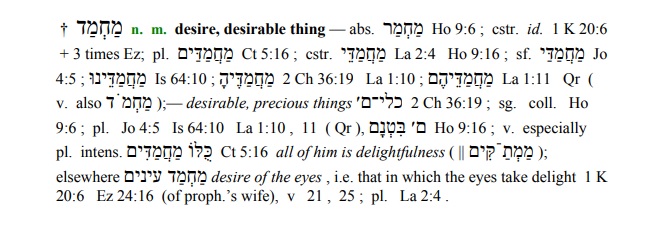
8 Comments

Filed under Uncategorized

All articles on the alleged return of Christ Jesus.

“Muhammed is not the father of any man among you, but he is the messenger of Allah and the Seal of the Prophets, and Allah is ever Aware of all things.” (Qur’an 33:40)

“Blessed is He who has revealed the criteria (for discerning truth from falsehood) to His servant so that He could warn all beings.” (Qur’an 25:1)

﷽ 

All such articles related to this subject will be found here:

This is not an aqidah point for us. Thus, those Muslims who believe in and continue to believe that Jesus (as) will return are not a problem for us.

In regard to the harm or the benefit. The belief that Jesus (as) will return is in the same league with those Muslims who believe in Aliens, Sasquatch or the alleged lost cities of Lemuria and Atlantis. It will only become an issue when those who believe in such things want all others to believe in them as well. When they make it a point of creed or contention.

Of course, no doubt there are innovations introduced to the religion with such beliefs. It certainly undermines the belief that Muhammed (saw) is the last and final messenger. Those who believe that Jesus (as) will return deploy a series of ta’wil (if we want to be nice). copium (if we are being candid).

The idea that Jesus (as) is coming back and Muhammed (saw) is still somehow the last Prophet is usually done via the following three types of novelties (if we want to be nice). bid’ah (innovation if we are being candid).

The first is the idea of the Prophets coming non sequentially. Which has never happened. In order for it not to contradict that the Prophet (saw) is the seal and final Prophet.

The non-sequential argument. Basically, Jesus (as) is A in the diagram below and Muhammed (saw) is B in the diagram below.

It is clear that if A comes before B and comes again after B that B is last in the sequence, and thus the last Prophet. The haqq, the truth about this is so clear that we could ask a small child. Which of the letters appears last? A or B?

The second idea is that a Prophet (saw) left the world with an uncompleted task. In this case, that Prophet would be Jesus -alayi salam.

“And when Jesus, son of Mary, said, “O children of Israel! I am truly Allah’s messenger to you, confirming the Torah which came before me, and giving good news of a messenger after me whose name will be Aḥmad.” Yet when the Prophet came to them with clear proofs, they said, “This is pure magic.” (Qur’an 61:6)

There is nowhere in the Qur’an where Jesus (as) mentions to his people about him returning in the future.

Only in the case of Jesus — alayhi salam is the novelty introduced of a prophet having an unfinished buisness.

The third idea is to strip the prophet from the office of anbiya. In order for it not to contradict that the Prophet (saw) is the seal and final Prophet. No one has the authority to strip a Prophet of Prophethood!

Those who affirm Jesus’ future return cannot, without qualification, say Muhammed (saw) is the last prophet — only the last law-giving prophet.

In effect, Sunnī and Shi’i theology shifted from: “No prophet after Muhammed”

To: “No prophet initiated after Muhammed”

Next, the Sunnī cannot assail the Shi’i belief in the occultation of the Mahdi. Especially if they (Sunnī) believe that Jesus — Alayhi Salam himself is in occultation.

The strength of the belief in the second coming of Christ Jesus is threefold.

  1. It is based upon an erroneous and groundless tafsir of Qur’an 4:157.
  2. Inconsistent application of tawaffa when it relates to Jesus in (Qur’an 5:117 and Qur’an 3.55)
  3. Based upon Hadith reports in which a great many believe are Tawātur and therefore convincing, if not binding, to believe in it altogether.

Lastly, if indeed we are mistaken in this position, we ask Allah (swt) to forgive us. Certainly there is a difference between not believing that Jesus (alayi salam) will return and not believing in him should he return.

Let’s be honest. Who wouldn’t want to see Prophet Jesus (alayi salam) come back and deal justice to the rebellious children of Banī Isrāʾīl?

The erroneous and groundless tafsir of this verse is partially responsible for this belief.

The evidence from the Qur’an that Jesus is dead and will not return.

A Christian Dilemma & How might Jesus have died?

A matter of inconsistent application.

The respected Shaykh knows full well the obvious that ‘mutawafikka’ means ‘I will cause you to die’.

Shaykh Hamza Yusuf statement that there are Muslims who do not believe in Jesus second coming.

Muhammad al-Tahir ibn Ashur, a famous Maliki scholar who wrote a tafsir of the Qur’an. He believed that Jesus (as) died. We did not hear any takfir made of him or any excommunication made of him.

Ali Erbaş Turkish Islamic scholar and president of directorate of religious affairs -diyanet in Turkey, believes that Jesus (as) is dead. The Presidency of Religious Affairs (Diyanet) is Turkey’s highest official Islamic authority.

Dr Kahlan Al-Kharusi (h), assistant Mufti of Oman: Jesus is Dead. Jesus will not return.

Salafis attack Imran Hosein over Jesus and Shaykh Salih al-Fawzan attributes lies to Allah (swt).

The use of Qur’an 3:46 to justify the return of Jesus-alayi salam. Does it add up?

Verses used to justify the return of Jesus — alayhi salam Qur’an 4:159

Verses used to justify the return of Jesus — alayhi salam Qur’an 43:61

Dr. Louay Fatoohi whom is a Caliph of the Ṭarīqa ʿAliyya Qādiriyya Kasnazāniyya lays out why he believes Jesus (as) is dead and that he will not return to Earth.

Dr. Shabir Ally is someone who has been involved in interfaith dialogues, discussions and debates for 35 years. If he felt there was some solid proof for the second coming of Christ Jesus in the Qur’an he would have advanced it.

May Allah Guide the Ummah.
May Allah Forgive the Ummah

Leave a comment

Filed under Uncategorized