
“Because of that, We decreed upon the Children of Israel that whoever kills a soul unless for a soul or for corruption [done] in the land – it is as if he had slain mankind entirely.” (Qur’an 5:32)
﷽
Please excuse the tired clichés (khawārij). Nevertheless, this material may still be of value to researchers and interested readers.
Summary
Sālim ibn Ḥammūd ibn Shāmis al-Siyābī (1908–1993) was an Omani scholar, poet, historian, and judge. He was born in Ghāla, in the ولاية of Bawshār in eastern Oman. A largely self-taught scholar, al-Siyābī memorized the Qur’an at the age of seven and later studied classical Arabic works, including the Alfiyyah of Ibn Malik, a renowned 1,000-line poem on Arabic grammar.
Al-Siyābī was a prolific author, credited with as many as 84 works. According to Sultān ibn Mubārak al-Shaybānī, his writings can be categorized into prose and treatises, poetry and versified compositions, and research and correspondence.
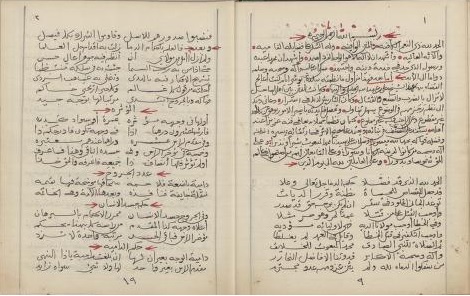
This manuscript was copied by Yūsuf ibn Sāʻid al-Zakwānī in 1386 AH (1966 CE). Written in black ink with rubricated headings, it contains two works by al-Siyābī.
The first is a theological treatise defending Ibadism against accusations made by other Muslim scholars. The second, titled Wahb al-Samāʾ fī Aḥkām al-Dimāʾ (“The Gift from Heaven on the Rulings of Bloodshed”), is primarily composed in verse and addresses the jurisprudence of bodily injuries. It is organized into short sections, each outlining the legal ruling for injury to a specific part of the body.
In the first work, Aṣdaq al-Manāhij fī Tamyīz al-Ibāḍiyya min al-Khawārij (“The Most Truthful Method for Distinguishing the Ibāḍīs from the Khārijites”), al-Siyābī critiques the prejudices held by some scholars against the Ibāḍīs. Writing in a question-and-answer format, he argues that Ibāḍīs should be understood within the broader Sunni tradition rather than as Khārijites.
In the introduction, he explains that he composed the treatise after consulting numerous works of Islamic theology in which certain scholars expressed outrage at the claim that the Ibāḍīs were responsible for the killings of Ali ibn Abi Talib and Uthman ibn Affan.
This claim relates to the early political conflicts that followed the death of the Prophet (saw) and contributed to divisions within the Muslim community. The Khārijites initially supported ʿAlī but later rejected his leadership after he agreed to arbitration during his conflict with Muawiyah I. Declaring both sides illegitimate, they rebelled and became known as khawārij (“those who seceded” or “rebels”).
A subsequent internal split among the Khārijites—particularly regarding methods of political opposition—led to the emergence of the Ibāḍī movement. Today, Ibāḍī communities are found primarily in Oman, as well as in parts of North and East Africa.
- Sayābī, Sālim ibn Ḥammūd, 1908-1993 Author.
- Zakwānī, Yūsuf ibn Sāʻid Scribe.
Source: (https://www.loc.gov/item/2021667310)
مدرسة القراء نقطة انطلاقة في التاريخ العماني ـ الشيخ هلال البرواني
May Allah Guide the Ummah.
May Allah Bless the Ummah.


 Prima Quran