
“And who is more unjust than he who forges a lie against Allah” (Qur’an 6:93)
﷽
“The hadith reported by Al-Bukhari that Adam’s height was sixty yards, has been criticized by Ibn Hajar on the basis of the measurement of the homes and dwellings of some of the ancient nations, which do not show that their inhabitants were enormously tall.”
Source: (A Textbook of Hadith Studies, Authenticity, Compilation, Classification, and Criticism of Hadith pg. 204)
“The hadith, reported by al-Bukhari, that Adam’s height was sixty yards, has been criticized by Ibn Hajar on the basis of the measurement of the homesteads of some of the ancient nations which do not show that their inhabitants were of an enormous height.” (SB, Kitab al-Anbiya, bab khalq Adam; Fb (Egypt, 1320 A.H), vi,230)
Source: (Hadith Literature Its Origin, Development, Special Features, and Criticism pg 202.)
The following hadiths in Bukhari are thought to be taken into account here:
“Narrated Abu Huraira: The Prophet said, “Allah created Adam, making him 60 cubits tall. When He created him, He said to him, “Go and greet that group of angels, and listen to their reply, for it will be your greeting (salutation) and the greeting (salutations of your offspring.” So, Adam said (to the angels), As-Salamu Alaikum (i.e. Peace be upon you). The angels said, “As-salamu Alaika wa Rahmatu-l-lahi” (i.e. Peace and Allah’s Mercy be upon you). Thus the angels added to Adam’s salutation the expression, ‘Wa Rahmatu-l-lahi,’ Any person who will enter Paradise will resemble Adam (in appearance and figure). People have been decreasing in stature since Adam’s creation. “
Source: (https://sunnah.com/bukhari:3326)
“Narrated Abu Huraira: Allah’s Apostle said, “The first group of people who will enter Paradise, will be glittering like the full moon and those who will follow them, will glitter like the most brilliant star in the sky. They will not urinate, relieve nature, spit, or have any nasal secretions. Their combs will be of gold, and their sweat will smell like musk. The aloes-wood will be used in their centers. Their wives will be houris. All of them will look alike and will resemble their father Adam (in statute), sixty cubits tall.“
Source: (https://sunnah.com/bukhari:3327)
Here is how one of the current top scholars of the Ahl Sunnah namely Sheikh Gibril F Haddad tries to reconcile the data:
http://www.livingislam.org/fiqhi/fiqha_e93.html
Question 1)
Hadith of Adam (as) 60 cubits
Wa `alaykum as-Salam wa rahmatullah:
Someone has claimed that Ibn Hajar (rh) rejected the hadith that stated that Adam (as) was 60 cubits tall in his book Fath ul Bari and that the reasoning was archaeological evidence which didn’t conform to the hadith?
Shaykh Haddad’s response:
“Ibn Hajar did not reject the hadith but said that there was an apparent contradiction between its wording of sixty cubits and the archaeological findings of the people of Thamud whose distance from the time of Adam (as), he said, “is less than the time elapsed between them and the beginning of this Umma.” This is phrased as just a thought that causes the explanation of the hadith to be problematic, not a rejection of the basis of the hadith. Further, one might see a problem in the objection itself.”
In sum, (1) the assumption that Ibn Hajar “rejected” the hadith of the sixty cubits is inaccurate even if thus forwarded by M. Zubair Siddiqi in his ‘Hadith Literature’ and (2) the problem raised by Ibn Hajar is open to question.
Question 2) Surely the archaeological information would be subservient to the knowledge of hadith?
Shaykh Haddad’s response
“The knowledge imparted by hadith is assumptive (zanni) and becomes categorically binding only with the mutawatir.”
“Further, is there true conflicting information here, i.e. correctly interpreted and dated findings?”
What Shaykh Gibril mentions here is that Ibn Hajar questions the ‘matn’-text of the hadith because it contradicts known archaeological evidence.
He also makes an interesting plea that the hadith is (zanni) which he translates as ‘assumptive’. The word (zanni) can also be translated as ‘speculative’. This means it has the probability of being true and the probability of not being true.
However, the point here is that if these hadith are sound and then many people would take that to mean that the Messenger of Allah (saw) definitely said it.
The creation of Adam (as) was miraculous creation.
Indeed all of creation is a miracle.
A possible challenge some would have with accepting Adam (as) being 90 feet tall is that the hadith seems to be silent on the height of Eve (as). In Arabic the companion of Adam (as) is known as Hawwāʾ(as).
One would also have to point to a time in the archaeological/historic records in which the offspring of Adam (as) and Eve (as), including subsequent generations, ceased being so tall.
Lastly, many of these hadith have as their source Abu Huraira -a problematic transmitter when it comes to Israʼiliyyat hadith. As they would mix up his reports from the Blessed Messenger (saw) with those of his reports from the Israʼiliyyat.
عن بسر بن سعيد ، قال : اتقوا الله ، وتحفظوا من الحديث ; فوالله لقد رأيتنا نجالس أبا هريرة ; فيحدث عن رسول الله – صلى الله عليه وسلم- ويحدثنا عن كعب ثم يقوم ، فأسمع بعض من كان معنا يجعل حديث رسول الله عن كعب ، ويجعل حديث كعب عن رسول الله ،
صلى الله عليه وسلم .
“On the authority of Busr ibn Sa’id , said: Fear God, and be careful with hadith; for by God, I saw us sitting with Abu Hurayrah ; and he would narrate on the authority of the Messenger of God (peace and blessings be upon him) and he would narrate to us on the authority of Ka’b , then he would get up, and I would hear some of those who were with us attributing the hadith of the Messenger of God to Ka’b , and attributing the hadith of Ka’b to the Messenger of God (peace and blessings be upon him).”
In other words people were mixing up what was being narrated from Ka’b (ra) and what was being narrated from the Blessed Messenger (saw)!
This is from Imam al-Dhahabi in his ‘Siyar A’lam al-Nubala’ under the section talking about Abu Huraira.
Source: (https://www.islamweb.net/ar/library/content/60/263/%D8%A3%D8%A8%D9%88-%D9%87%D8%B1%D9%8A%D8%B1%D8%A9 )
This is one of many reasons why we in the Ibadi school are very careful when it comes to narrations from Abu Huraira concerning the Israʼiliyyat. However we take from him in matters of jurisprudence.
Lastly, even though there are among our Muslim brothers who will cling fast to these hadith we would like to make the following plea to them.
Please stop circulating e-mails and pictures like the following:
http://www.hoax-slayer.com/giant-skeleton.html
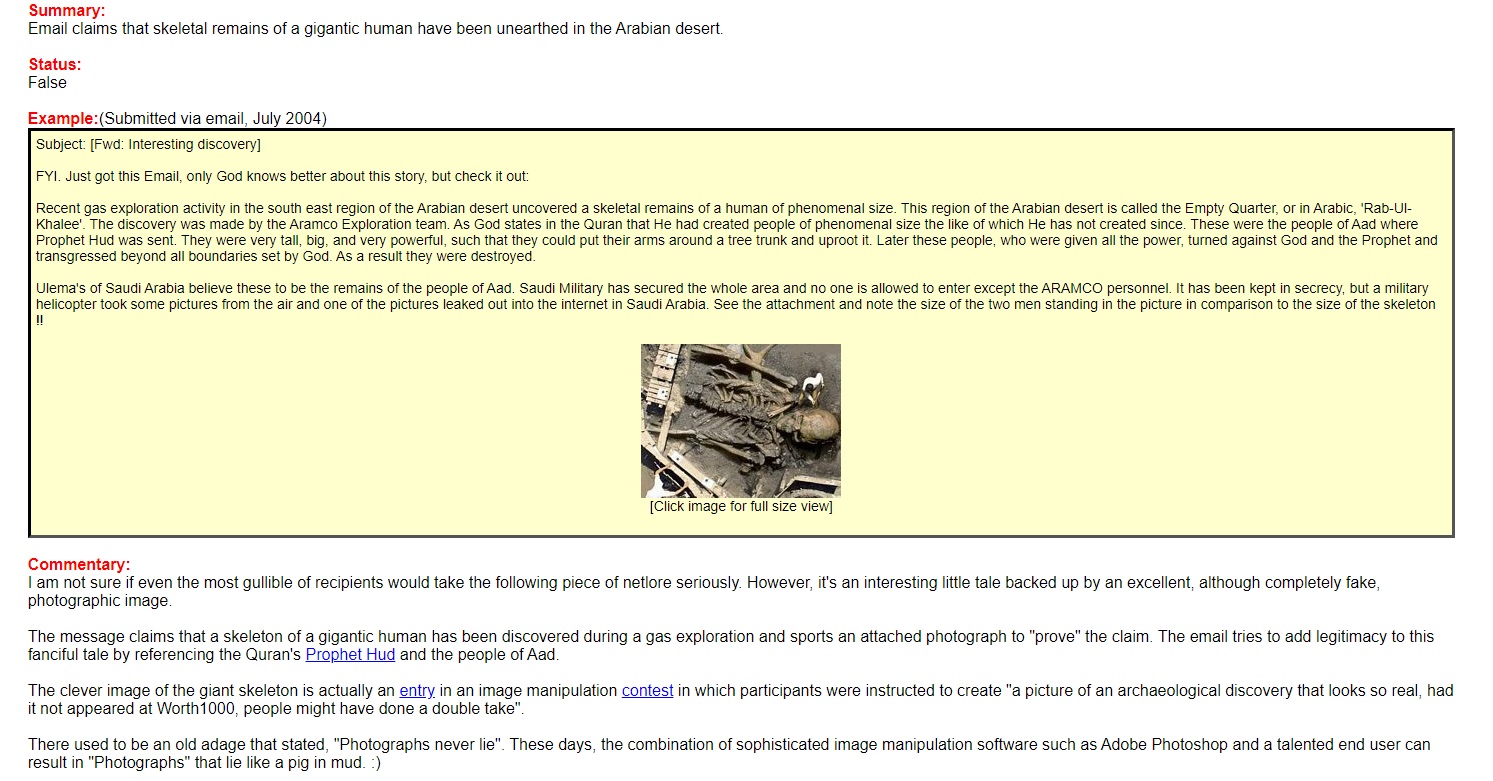
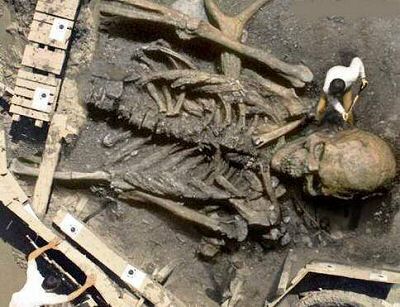
We remember receiving such an e-mail of the ‘giant human’ found in the deserts of Saudi Arabia. Even then we kept wondering why the government would want to keep such a tight lid on something that would support a cherished hadith.
It is things like this that canbe a source of embarrassment, and truly tarnishes the image of Islam in the eyes of others. In the end, Ibn Hajar Al Asqlani did not reject this hadith. Ibn Hajar Al Asqlani also did not reject Bukhari. However, it is very obvious that he did not think that Bukhari was not above being critiqued.
“And who is more unjust than he who forges a lie against Allah” (Qur’an 6:93)
You maybe interested in reading:
May Allah Guide the Ummah.
May Allah Forgive the Ummah.


If the distance from the time of Adam to Thamud was less than the time elapsed between Thamud and the beginning of this Ummah, how does this apparently contradict the hadith? The hadith says Adam was 60 cubits tall, it doesn’t say his contemporaries and successors were 60 cubits tall. Even if his contemporaries were that tall, the hadith says that people have been decreasing in height since Adam’s creation. So, it’s possible for the people of Thamud to have become much shorter since Adam’s earthly life.
Mussab you make some very good and interesting points. I also appreciate that you have decided to interact with the material.
You however make a great point.
For me the evidence is not conclusive about Adam or Eve being 60 cubits tall. I also admitted in the entry above, I have my own bias due to my predilection towards the general theory of evolution.
Yet, here is something that I hope your good self and the readers will reflect on.
Here is Ibn Hajar Al Asqalani whom many have called the ‘spotless’ Imam critiquing the ‘matn’ -the text of a ‘sahih’ or rigorously authenticated hadith.
He did not feel he was committing a sin or an atrocity by doing such. It is unfortunate that such honest inquiry, or expressing doubt about something in our tradition has been met with violence, suppression, and isolation from our community.
May Allah bless you for showing that it is possible for Muslims to have meaningful exchange.
Lastly, if Ibn Hajar Al Asqalani (may Allah have mercy on him) was wrong in his judgement it also shows us that our scholars even if they be ‘the peerless and spotless’ among the Muslims, are not without error or mistake.
Pingback: “The Necessity of the Hadith in Islam” – by Emad Hamdeh a Critical Review. (part 1) | primaquran
Simple. Abu Hurairah lied, since I don’t reckon Bukhari, much less The Prophet being a liar (or in this case: stupidly ignorance).
Bismillah,
Dear respected aa,
You maybe interested in the following article:
https://primaquran.wordpress.com/2013/08/10/abu-hurayrah-a-closer-look/
Pingback: Al-Daraqutni: The Sunni Imam who questioned Bukhari’s collection | primaquran
This hadith violates square cube law. Period.