“It is He who caused the Book to descend to you. In it are verses, that are (muḥkamāt) definitive. They are the essence of the Book and others, ones that are (mutashābihāt) unspecific. Then, those whose hearts are swerving, they follow what was unspecific in it, seeking discord (l-fit’nati) and seeking its interpretation. And none know its interpretation save Allah and those firmly rooted in knowledge. They say, “We believe in it; all is from our Lord.” And none remember, save those who possess intellect.” (Qur’an 3:7).”
﷽
“Biologists as well as philosophers have suggested that the universe, and the living forms it contains, are based on chance, but not accident. To put it another way, forces of chance and of antichance coexist in a complementary relationship. The random element is called entropy, the agent of chaos, which tends to mix up the unmixed, to destroy meaning. The nonrandom element is information which exploits the uncertainty inherent in the entropy principle to generate new structures, to inform the world in novel ways.
Source: (Grammatical Man—Information, Entropy, Language, and Life by Jeremy Campbell. Page 15)
The intent of this entry is so that those who are among the Muslims who come into contact with adherents of the Hafs Qur’an Only religion can have some introspection with regard to their own position.
It is hoped that people may be able to look beyond the oversimplification of issues.
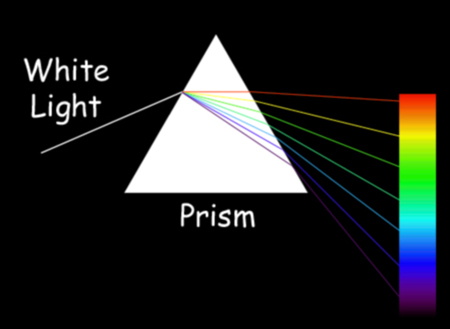
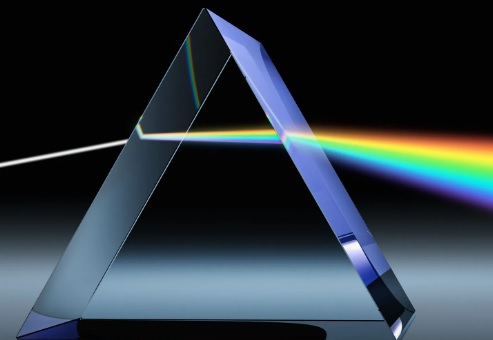
Our colleague was once listening to a lecture by Sheikh Hamza Yusuf where he mentioned that as Muslims we believe that the Creator is One, we believe the revelation is one; however, the revelation is being refracted through the prism of the human mind.
It reminded them of the famous cover of the Pink Floyd album “The Dark of the Moon.”
They found it an interesting point.
Clear has been defined as: 1. easy to perceive, understand, or interpret.
“clear and precise directions”
The quality of being clear, in particular.
The quality of coherence and intelligiblity.
Here are some examples of things that are clear but are they intelligible?
You will understand the meaning of the universe once the ball sings to Jill about the biz. Mace Windu understood the peanut butter sandwich using his clear signals so that the computer would jazz out to Dan Excalibur swimming passing the switchboard flying kites. Very funny though the syntax as he whizzed past the train, who was busy cramming algebraic thoughts into his fish tank.
The answer to five minus five is purple because pancakes don’t have bones.
Anyone familiar enough with the English language should be able to understand every word that we have typed above.
However, would anyone care to tell us what we were talking about above?
If the Qur’an is recited to people who do not understand the Arabic language is it clear to them?
The claim of the Qur’an is that it has has verses that are muḥkamāt and mutashābihāt
“It is He who caused the Book to descend to you. In it are verses, that are (muḥkamāt) definitive. They are the essence of the Book and others, ones that are (mutashābihāt) unspecific. Then, those whose hearts are swerving, they follow what was unspecific in it, seeking discord (l-fit’nati) and seeking its interpretation. And none know its interpretation save Allah and those firmly rooted in knowledge. They say, “We believe in it; all is from our Lord.” And none remember, save those who possess intellect.” (Qur’an 3:7).”
To us, the Qur’an makes it clear that it is both clear and unclear. If it was not the case, it would not be possible to ‘fitna’ or discord with something that is clear. We have already stated that in other places one of the sure signs of a cult or sect among Muslims is that they will try and appeal to a ‘controversial’ verse, or a verse that is subject to many interpretations to base their case. This has happened many times, especially in matters of theology.
For example, the Qur’an has many verses that make it clear that those who enter the hellfire do not escape from it. However, there are one or two verses that could be interpreted contrary to this. Thus, instead of taking the multitude of verses that make it clear that the one who enters hellfire does not escape from it, the people of the opposition take those one or two verses that are not entirely clear, and they build their theology upon this.
Also notice that the above text says: “And none know its interpretation save Allah and those firmly rooted in knowledge.“
If a text or a revelation was clear in and of itself, it would not only be grasped by men of understanding but by anyone.
Often the Qur’an begins a chapter with something ambiguous and then affirms that it is clear.
Examples abound:
“Alif, Lam, Ra. These are the verses of the Book and a clear Qur’an.” (Qur’an 15:1)
“Alif, Lam, Ra. These are the verses of the Clear Book. Indeed, We have sent it down as an Arabic Qur’an that you might understand.” (Qur’an 12:1-2)
“Ta, Seen, Meem. These are the verses of the Clear Book.” (Qur’an 26:1-2)
“Ta, Seen. These are the verses of the Qur’an and a clear Book“ (Qur’an 27:1)
“Ta, Seen, Meem. These are the verses of the Clear Book.” (Qur’an 28:1-2)
“Ha Meem, By the clear Book, (Qur’an 43:1-2)
“Ha Meem, By the clear Book, (Qur’an 44:1-2)
There is also something interesting here.
Allah (swt) informs us throughout the Qur’an that it is possible that his revelation may not be clear to people.
Examples:
“They ask you about intoxicants and gambling: say, “In them, there is a gross sin and some benefits for the people. But their sinfulness far outweighs their benefit.” They also ask you what to give to charity: say, “The excess.” Allah clarifies the revelations for you, that you may reflect,” (Qur’an 2:219)
“Do not marry idolatresses unless they believe; a believing woman is better than an idolatress, even if you like her. Nor shall you give your daughters in marriage to idolatrous men, unless they believe. A believing man is better than an idolater, even if you like him. These invite to Hell, while Allah invites to Paradise and forgiveness, as He wills. He clarifies His revelations for the people, that they may take heed.” (Qur’an 2:221)
“Allah thus explains His revelations for you, that you may understand.” (Qur’an 2:242)
“Do any of you wish to own a garden of palm trees and grapes, with flowing streams and generous crops, then, just as he grows old, and while his children are still dependent on him, a holocaust strikes and burns up his garden? Allah thus clarifies the revelations for you, that you may reflect.” (Qur’an 2:266)
“You shall hold fast to the rope of Allah, all of you, and do not be divided. Recall Allah’s blessings upon you – you used to be enemies, and He reconciled your hearts. By His grace, you became brethren. You were at the brink of a pit of fire, and He saved you there from. Allah thus explains His revelations to you, that you may be guided.” (Qur’an 3:301)
“O you who believe, do not befriend outsiders who never cease to wish you harm; they may even wish to see you suffer. Hatred flows out of their mouths and what they hide in their chests is far worse. We thus clarify the revelations for you, if you understand.” (Qur’an 3:108)
“They consult you; say, “Allah advises you concerning the single person. If one dies and leaves no children, and he had a sister, she gets half the inheritance. If she dies first, he inherits from her, if she leaves no children. If there were two sisters, they get two-thirds of the inheritance. If the siblings are men and women, the male gets twice the share of the female.” Allah thus clarifies for you, lest you go astray. Allah is fully aware of all things.” (Qur’an 4:176)
“Allah does not hold you responsible for the mere utterance of oaths; He holds you responsible for your actual intentions. If you violate an oath, you shall atone by feeding ten poor people with the same food you offer to your own family or clothing them, or by freeing a slave. If you cannot afford this, then you should fast for three days. This is the atonement for violating the oaths that you swore to keep. You shall fulfill your oaths. Allah thus explains His revelations to you, that you may be appreciative.” (Qur’an 5:89)
“Allah thus explains the revelations for you. Allah is Omniscient, Wise.” (Qur’an 24:18)
“O you who believe, permission must be requested by your servants and the children who have not attained puberty (before entering your rooms). This is to be done in three instances – before the Dawn Prayer, at noon when you change your clothes to rest, and after the Night Prayer. These are three private times for you. At other times, it is not wrong for you or them to mingle with one another. Allah thus clarifies the revelations for you. Allah is Omniscient, Most Wise.” (Qur’an 24:58)
“Once the children reach puberty, they must ask permission (before entering) like those who became adults before they have asked permission (before entering). Allah thus clarifies His revelations for you. Allah is Omniscient, Most Wise.” (Qur’an 24:59)
“The blind is not to be blamed, the crippled is not to be blamed, nor is handicapped to be blamed, just as you are not to be blamed for eating at your homes, or the homes of your fathers, or the homes of your mothers, or the homes of your brothers, or the homes of your sisters, or the homes of your fathers’ brothers, or the homes of your fathers’ sisters, or the homes of your mothers’ brothers, or the homes of your mothers’ sisters, or the homes that belong to you, and you possess their keys or the homes of your friends. You commit nothing wrong by eating together or as individuals. When you enter any home, you shall greet each other a greeting from Allah that is blessed and good. Allah thus explains the revelations for you, that you may understand.” (Qur’an 24:61)
“Know that Allah revives the land after it has died. We thus explain the revelations for you, that you may understand.” (Qur’an 57:17)
Prima Qur’an Comments:
All of these verses, if you removed the phrase ‘Allah thus explains/clarifies the revelations for you’, you could still get an understanding of the verses in question. However, Allah (swt) knows why He (swt) has decided to further elucidate on selected passages of the Qur’an.
Even when Allah (swt) says ‘We thus explain the revelations for you’ in the above passage about Allah (swt) giving life to the land after it has died, it doesn’t explain or clarify the ‘how’ of it. It simply says, ‘Know’.
Theological issues concerning the clarity of the Qur’an.
The Shafite Mutzalite ‘Abd al-Jabbar epitomized the Basra Mutazalite position on the principle of clarity. He declared that any form of delayed clarification was impossible not simply because Allah’s justice requires that he make his requirements known, but more importantly because his speech is his created act, and therefore must be good, from which it follows that his every utterance must fulfill its purpose of indicating his will.
This is a very important point that Shaykh Abd al-Jabbar has made. This is why we know many of the followerse of the Qur’an Only religion are in a very difficult situation theologically speaking.
According to the theory of meaning introduced by Shaykh Abu Ali al-Jubbai’ who was a Mutazalite rival of Shaykh Abd al-Jabbar, the meaning of an utterance is not simply a function of its verbal form, but also of the speaker’s will or intent.
Bottom line. If Allah cannot leave the meaning of his speech unclear, then he cannot leave humans without the evidence needed for reconciling seemingly conflicting texts. The fact that we lack evidence about which text came first must itself be evidence that the text should both be implemented, which is best accomplished by particularization. This is a strong logical proof for the Sunnah of the Blessed Messenger (saw).
In light of all of the above, would it not be fair to assert that this argument is oversimplified and the issue is a little more nuanced than that?
In fact, the clarity of the Qur’an is not internal to the Qur’an itself! It is dependent upon thoughtful reflection!
“Thus do We explain the verses for a people who give thought.” (Qur’an 10:24)
The static you hear in an untuned or poorly tuned radio is the random background noise, but the coherent radio transmission signal within that noise requires a radio receiver to decode it.
The receiver performs several critical functions to achieve this:
- Tuning: It selects a specific frequency from the myriad of radio waves the antenna picks up, filtering out others.
- Amplification: It strengthens the weak incoming signal to a usable level.
- Demodulation: This is the actual decoding step. The receiver separates the original information (such as sound or data) from the carrier wave that transported it.
- Output: It converts the decoded electronic signal into an audible sound or viewable data.
The following verse that we are going to quote caused our colleague to drift off in thought. They mentioned that it was challenging to type this as their eyes welled up with tears, and their heart was overflowing in love for the Beloved Vessel (saw) that Allah (swt) gave such a monumental task to carry!
“If We had sent down this Qur’an upon a mountain, you would have seen it humbled and coming apart from fear of Allah. And these examples We present to the people that perhaps they will give thought. (Qur’an 59:21)
Subhan’Allah!
Our point is that the Blessed Messenger (saw) did not have the medium of his mind like we do when approaching the Qur’an with our limited human reasoning and capacity. The total and complete understanding of the Qur’an was poured into his heart. His heart and conscience were light. There is no prism, no spectrum when it comes to the Blessed Messenger. (saw)
Let us be honest for a second and ask ourselves. How many of us can say we have reached the state of total and complete submission in the way that Abraham, Moses, Jesus, Muhammed (May Allah’s choicest blessings and peace be upon them all) did?
The Proof Is In the Pudding.
The very fact that there is now a proliferation of Qur’an only groups, each vying with each other, each with disparate understandings of a revelation that they in their approach to revelation says ‘is clear as day’.
So we end up with some groups saying the Qur’an requires us to pray 2 times a day, or 3 times a day, and some saying that there is no ritual prayer at all!
However, some of the Quraniyoon will just keep throwing their selective verses of choice at you again and again.
I think the point is missed. We as Muslims do not disagree with any verse of the Qur’an as being a revelation. We agree with the Qur’an does it say it ‘explains itself’ and that it is ‘clear’.
Part of that explanation and elucidation comes through the example of the Blessed Messenger (saw) himself.
“It is He Who raised up among the unlettered a Messenger from among them who recounts His signs to them and makes them pure and teaches them the Book and wisdom even though they had been before, certainly, clearly going astray.” (Quran 25:32)
Teaches them– wayuʿallimuhumu — when you teach or instruct someone you are doing more than simply relaying information. A teacher does not simply pass a student a book and say, ‘here you go‘.
Those who follow the Qur’an Onlyl religion will often claim that the Blessed Messenger is only a letter carrier. There is a deception in saying that his only duty is to convey the message.
Yet this is contradicted by the following:
Say, “Obey Allah and obey the Messenger. But if you turn away, then he is only responsible for his duty, and you are responsible for yours. And if you obey him, you will be ˹rightly˺ guided. The Messenger’s duty is only to deliver ˹the message˺ clearly.” (Qur’an 24:54)
“But if they turn away [Messenger], remember that your only responsibility is to deliver this revelation clearly.” (Qur’an 16:82)
The second part of instruction is would relate to things that need demonstration.
“When you are with them and you lead them in prayer, let one group of them pray with you—while armed. When they prostrate themselves, let the other group stand guard behind them. Then the group that has not yet prayed will then join you in prayer—and let them be vigilant and armed.” (Qur’an 4:102)
“Say, [O Muhammed], “If you should love Allah, then follow me, [so] Allah will love you and forgive you your sins. And Allah is Forgiving and Merciful.” (Qur’an 3:31)
The above verse is conditional. The love of Allah (swt) is conditional upon love for the Blessed Prophet (saw).
“Certainly did Allah confer a favour upon the believers when He sent among them a Messenger from themselves, reciting to them His verses and purifying them (wayuzakkihim) and teaching them (wayuʿallimuhumu) the Book and wisdom, although they had been before in manifest error.” (Qur’an 3:164)
It stands to reason that the Blessed Messenger (saw) could not ‘purify’ the believers if he himself was not purified!
teaching them (wayuʿallimuhumu) -it cannot be said that I am teaching anyone if I was simlpy just a mail carrier.
The Qur’an itself refutes this.
“And obey Allah and obey the Messenger. But if you turn away, then Our Messenger is only responsible for conveying the message clearly.”(Qur’an 64:12)
The Blessed Messenger (saw) explained the message. That is the purpose of bayan. This is reflected in the words, deeds, and actions — what we know as the sunnah of the Blessed Messenger (saw).
To believe that the Blessed Messenger (saw) was not an expositor as someone who lived and imbibed the teachings of the Qur’an is difficult to fathom.
“O People of the Scripture, there has come to you Our Messenger, making clear to you much of what you used to conceal of the Scripture and overlooking much. There has come to you from Allah a light and a clear Book.” (Qur’an 5:15)
“Then do they not reflect upon the Qur’an, or are there locks upon their hearts?” (Qur’an 47:24)
There are many people who read the Qur’an and it does not do anything to their hearts. That is because the Islam consist of accepting that Muhammed (saw) is the last of Allah’s Messengers. The Blessed Prophet (saw) is that light. So the people who read the Qur’an without that light they read the Qur’an in darkness.
There was no prism, no veil, and no lock upon the heart of the Blessed Messenger (saw)!
So is the Qur’an clear?
Allah (swt) has made it clear that the Qur’an has verses that are muḥkamāt and mutashābihāt.
“In it are verses, that are (muḥkamāt) definitive. They are the essence of the Book.” (Qur’an 3:7)
Then there are verses that are a trial.
“and others, ones that are (mutashābihāt) unspecific. Then, those whose hearts are swerving, they follow what was unspecific in it, seeking discord (l-fit’nati) and seeking its interpretation.” (Qur’an 3:7)
Even then this verse seems directed at the people who are hasty with the Qur’an as Allah (swt) admonishes the Blessed Prophet (saw).
High above all is Allah, the King, the Truth! Be not in haste with the Qur’an before its revelation to you is completed, but say, “O my Lord! advance me in knowledge.” (Qur’an 20:114)
The Qur’an also makes it clear that it requires clarity. We see Allah (swt) himself has to come and introduce phrases such as, ‘Allah thus explains/clarifies the revelations for you’ as if otherwise it wouldn’t be clear.
The Qur’an makes it clear that the Blessed Prophet (saw) would explain the Qur’an and teach it to us.
“Indeed, Allah does not feel shy in citing any parable, be it that of a gnat or of something above it (in meanness). Now, as for those who believe, they know it is the truth from their Lord; while those who disbelieve say, “What could Allah have meant by this parable?” By this He lets many go astray, and by this He makes many find guidance. But He does not let anyone go astray thereby except those who are sinful.” (Qur’an 2:26)
May Allah Guide the Ummah.


 Prima Quran