
“My Lord! Increase me in knowledge.” (Qur’an 20:114)

﷽
This was a short interview between the writer Anthony T. Fiscella and a friend from our brothers in the Mzab community of Algeria. (May Allah keep them steadfast and support them). Most notable was the semi-autonomy granted to the community and their self governing principles. Located in the Wilaya of Ghardaïa

Most of the brothers here are of Amazigh or Free-Men origins.
Although most of the brothers in the region read and write Arabic, they speak the Zenata dialect of the Berber language, for which there is no written form.
Despite political changes in Algeria over the years, the community continues to peacefully resist interference in the affairs of their community and strive to preserve their unique religious and cultural identity.
They have a reputation of being honest and astute businessmen. They also continue to be productive farmers in the M’zab Valley, supplying the fresh produce needs for their own communities and for marketing elsewhere.
The beautiful M’zab Valley of Algeria was given UNESCO World Heritage Site status in 1982, as a superb example of a traditional human habitat that has been adapted to the environment. This is confirmation that although values in the rest.
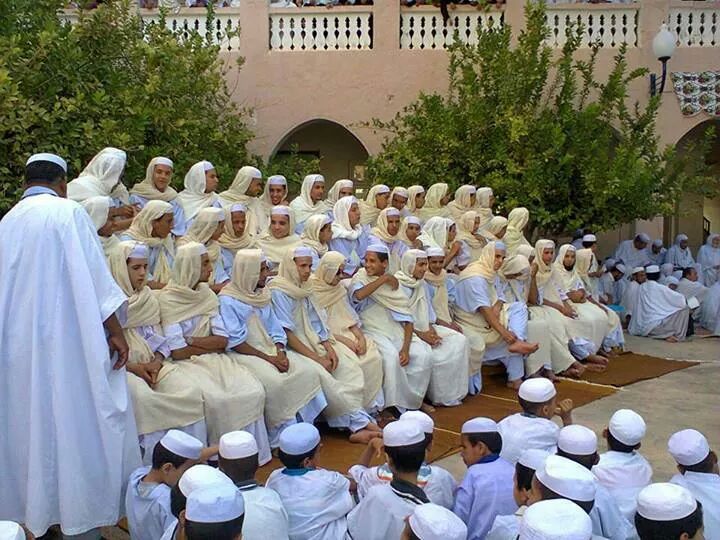
In Ghardaïa, is said that there are no beggars and that no thieves exist. The people of this society is very tightly knit with such activities from business to studies and marriage all done through the community. They cling to the unique clothing, language, architecture, and lifestyle.
Wherever they are, They always have one foot in Ghardaïa. Whatever their social situation, they never sever their roots and actively contribute to the life of the community.
Ghardaïa was founded over 1,000 years ago to provide shelter for their community after the fall of the the Ibadi Rustamid state. The village, 500 kilometres south of Algiers, was founded in the middle of a rocky desert. Other towns from the era existing to this day include El Atteuf, Melika, Bounoura, and Beni Izguène.
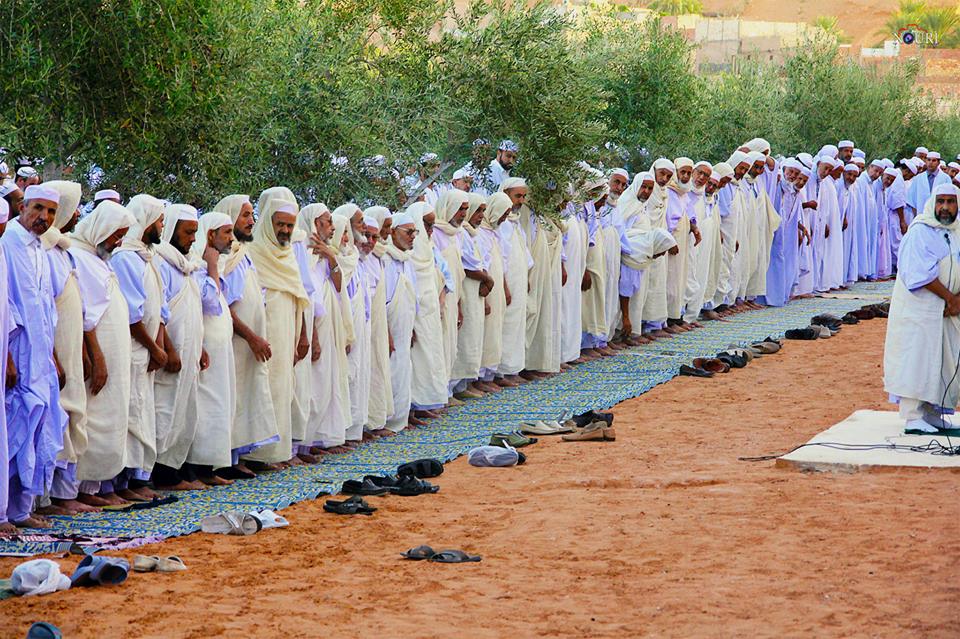
It is said that their insular nature has preserved the area, and the Ibāḍī Σezzaba continue to dominate the social life of the area. A federal council, Majlis Ammi Said, unites representatives of the seven settlements as well as Ouargla, an ancient town located 200 km South-East of the Mzab valley. This council forms a federative body for religious, social and, increasingly, cultural matters. This religious federal council represents an “Islamic type of government” unique today.
Numerous details of Ibāḍiyya social life are ruled by this Islamic government, such as the weight of gold given as a dowry to a woman (maximum 60 grams) to the length of wedding celebrations (three days). The council makes decisions on details such as dowries, celebrations, dress. It used to impose punishments including exile, and a form of tabriyya “quarantine”, where the offender may not interact with his fellow citizens. I would imagine this is a time of dissociation or bara’ until the offender has repented and amended his/her ways.
May Allah (swt) continue to bless them. May Allah (swt) preserve them! May Allah (swt) bring stability and peace to Algeria. May they continue to be the light in the region for the good people of Algeria. Amin!
May Allah Guide the Ummah.
May Allah Forgive the Ummah.


 Prima Quran