“This is the Book! There is no doubt about it—a guide for those mindful ˹of Allah˺, who believe in the unseen, establish prayer, and donate from what We have provided for them.” (Qur’an 2:2-3)
﷽
A video of Shaykh Hisham Kabbani of the Naqshbandi Haqqani Sufi Tariqa resurfaced that I was not aware of at the time it became known.
The Prophet (s) said, “I will tell you that I sent him because in this universe Allah created Creations, and the nearest one to Earth, the dangerous one. If they invade the Earth…if they invade the Earth, The Earth will be finished. They will kill everyone! I send Sayyidina `Ali to fight them alone!!! To these aliens that are they the most nearest to Earth; and with his sword and his power, He is Asadullah al-Ghaalib! Destroyed two-third of them! That’s why they don’t have power anymore to come on Earth. That is why I sent him, he’s absent from the house.” -Shaykh Hisham Kabbani
The above part that is in bold black text is the beginning of the paragraph but it was cut off. You can read the whole transcript and context from their official website:
Now when one reads the context, it does seem like an abrupt change of course to start speaking about the time when it was alleged that the Blessed Messenger (saw) sent Ali Ibn Abu Talib to take down a large contingent of aliens. Apparently 67% of them were wiped out! I do not know if that means their military forces, their people as a whole (men, women, children-offspring) as those details were not provided.
No one knows if these are the same beings that former Minister of Defense Paul Hellyer was speaking about either. I will link to the article where he (Paul Hellyer) speaks of these beings.
As Muslims, we believe in the unseen. Yet, we also believe in what is rational, sensible and logical. I guess the issue that I have with the idea of sending Ali Ibn Abu Talib into cosmic forays to fight these Aliens is you have to wonder about a few things.
Why only take out 2/3 of them? Is leaving the 1/3 left a mercy to them? As in, “Look, I wiped out 2/3, or you so like chill or else!”
But then you really have to wonder about horrific situations like Palestine.
But I know the retort will be swift: “Palestine or the whole planet brother?”
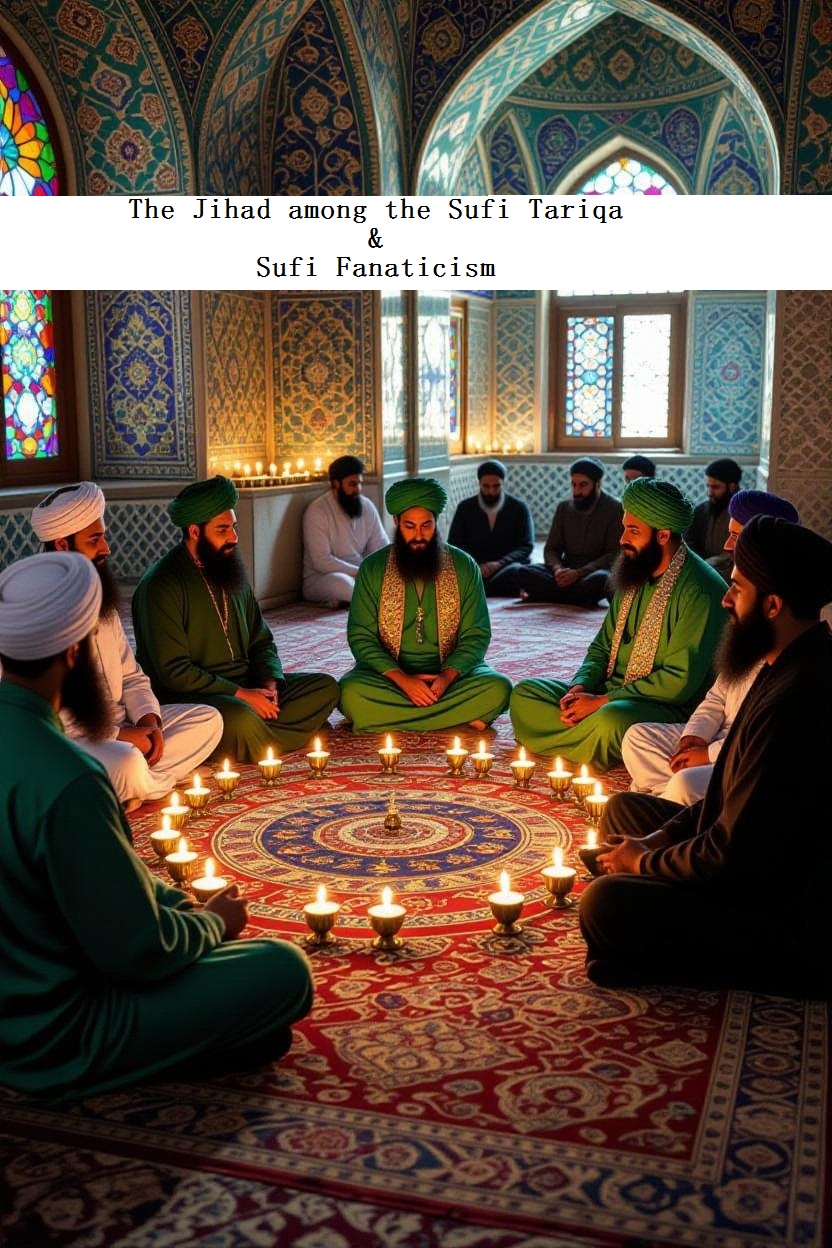
Over all, personally, my encounters with Naqshanbai Haqqani have been positive. Though I know that they, like all Sufi Tariqah, are in a spiritual Jihad with one another to vie for dominance to be ‘The Tariqah above all others’.
May Allah (swt) guide us to the truth of such matters. May Allah (swt) cause us to think logically and reflect upon such matters.
You may also be interested in the following entries:
“O People of the Scripture, do not commit excess in your religion or say about Allah except the truth.” (Qur’an 4:157)
﷽
Though the above particular text was directed towards the Jewish and Christian communities, it applies to the Muslim community as well. This is the case simply because it has nothing to do with the application of law but a general admonition that applies at all times.
Dear reader, do take note that this article is primarily written from the perspective of a team member relating actual experiences and interactions with various tariqa.
“But as for those who strive hard in Our cause -We shall most certainly guide them onto OUR PATHS that lead unto Us: for, behold, Allah is true with the doers of good.” (Qur’an 29:69)
One tariqa to rule them all, one tariqa to find them, One tariqa to bring them all, and through the murshid bind them!
We also want to say that, from the outset, Sufism and the teachings of Sufism have been an integral part of Islam from the very beginning. Sufism has been transformative in the lives of many people. Just as Islam has a branch of science for creed, so that we have purified thoughts about our creator and a branch of science for the law, so that we have interactions with fellow human beings that are of a purified nature, it has a branch of science for the purification of the heart.
However, just as Muslims have clashed over the various narratives in regard to what is the correct creed and what is the correct understanding of the law, so we have clashed over which methodology for the purification of the heart is best.
We are posting this because all too often there is a ‘Public Relations’ game that is being played for people who know little to nothing about Islam.
It is the case of rival siblings trying to get the parent to punish the other. Beyond the many rivalries and divisions among the Muslims, there probably is none fiercer than the internal conflicts among our brothers from the ‘Ahl Sunnah’. Especially when it comes to the issues of creed.
Even more fierce than the bloodshed over issues of creed is the fealty given to Sufi Shaykhs and allegiance to their various competing Tariqa’s.
Today the west is being told that the ‘innocent’ Muslims aka ‘Sufis’ are in a struggle with the ‘Wahhabi’ or extreme Muslims. Thus, the hope is that the western powers, intelligence apparatus, and so forth will listen to these cries of ‘wolf, wolf’ and bring their might down to bare upon their rivals.
Sufism is being touted as the ‘non-violent’, ‘apolitical’ version of Islam. Nothing could be further from the truth.
Truth be told, the various rival Sufi factions do not have the political or financial influence they once did. Although certain groups are cozy with certain political powers.
Middle East & North Africa
Safavid Empire (1501–1736) – Originated from the Ṣafaviyya Sufi order in Ardabil, which transformed into a powerful Shi‘i state in Persia.
Mamluk Sultanate (1250–1517, Egypt & Syria) – Strong patrons of Sufi institutions, endowed khanqahs (lodges), and integrated Sufis into religious life.
Ottoman Empire (1299–1924) – Deeply tied with Sufism: Mevlevis, Bektashis, Halvetis, Naqshbandis flourished under their patronage. The Janissaries were historically linked to the Bektashi order.
Ayyubid Sultanate (1171–1260) – Saladin and successors promoted early Sufi institutions, building khanqahs in Cairo and Damascus.
Almohad Caliphate (12th–13th c.) – While initially reformist, many later rulers patronized North African Sufi saints.
Marinid Dynasty (1244–1465, Morocco) – Major sponsors of Sufi zawiyas, especially tied with the Shadhili order.
Saadi Dynasty (16th–17th c., Morocco) – Claimed sharifian and mystical legitimacy; closely linked to Moroccan Sufi networks.
Alaouite Dynasty (17th c.–present, Morocco) – Continued deep integration with Moroccan Sufi orders.
Persia & Central Asia
Timurid Empire (1370–1507) – Supported Naqshbandiyya and Kubrawiyya; Sufi sheikhs often had major political influence.
Mughal Empire (1526–1857) – Profoundly influenced by Sufism, especially the Chishtiyya order; Akbar and later emperors associated themselves with Sufi saints.
Delhi Sultanate (1206–1526) – Closely linked to Chishti Sufis, who shaped India’s Islamic culture.
Karakhanids (9th–13th c.) – Early patrons of Sufis in Central Asia.
Khoqand Khanate (18th–19th c., Central Asia) – Heavily influenced by the Naqshbandiyya-Mujaddidiyya.
Sub-Saharan Africa
Bornu Empire (1380–1893, Chad/Nigeria) – Supported Qadiriyya Sufi networks.
Sokoto Caliphate (1804–1903, Nigeria) – Founded by Usman dan Fodio, a Qadiriyya scholar and Sufi reformer.
Senegambian Muslim States (18th–19th c.) – Founded by leaders of the Tijaniyya and Qadiriyya (e.g., Umar Tall’s empire).
Moroccan-ruled West African emirates often spread Sufism through political expansion.
South & Southeast Asia
Bahmani Sultanate (1347–1527, Deccan) – Strong ties with Chishtis and Qadiris.
Deccan Sultanates (15th–17th c.) – Patronized Sufi saints; many rulers sought legitimacy through them.
Aceh Sultanate (1496–1903, Indonesia) – Promoted Sufism (especially Shattariyya and Qadiriyya).
Malacca Sultanate (1400–1511, Malaysia) – Spread Islam through Sufi-influenced networks.
Brunei Sultanate – Deeply intertwined with Sufi Islam.
The Ottoman Empire, for example, was certainly not ‘Wahhabi”
This should be an eye-opener for many. Timothy Winter (Abdal-Hakim Murad) is certainly no friend of Wahhabism.
This Sufi vision cherished by simple cavalrymen gave the Turks a military prowess whose achievements in some ways recalled the early conquests of Islam. The first Ottoman sultans were urged to continue the fight for the faith by spiritual guides whose fame and sanctity had brought them into the intimate circle of the ruler, thereby adding to his charisma. The most prominent example was Ak Semseddin (d.1459), the physician, mystic poet and Sufi instructor (“seyh) who encouraged Mehmed II to conquer Constantinople, and who preached the first Friday sermon at the former cathedral of Aya Sofya. [ii] The power of his spiritual impact, as well as the Islamic sophistication of the ruler, are evident in much of Mehmed’s poetry, as in a lyric poem where the sultan uses the classical Sufi metaphors of spiritual drunkenness to affirm his dependence on his preceptor:”
So now we turn our attention to the Sufi, Ibn Tumart. Ibn Tumart traveled to Baghdad where he met with contemporaries of Imam Al Ghazali as well as his students. This interaction ignited a flame, a passion within Ibn Tumart, who came back to the Maghrib (North Africa) and virtually slaughtered all those who did not accept the Ashari’ theological creed.
Here is an interesting extract:
“It is nothing but bigotry and small-mindedness, if not political. Indeed, in Morocco, when Al-Mahdi b. Toumart returned from his travels seeking knowledge in the East, meeting many great Ash’ari scholars, like Al-Kiya Al-Harrasi. He proceeded to disseminate the school throughout Morocco, when he claimed to disseminate the school throughout Morocco. When he claimed to be the Mahdi, and established the Almohad state, he obliged the population to adhere to the school, and fought against the school of the early Muslims, dismissing the previous Almoravid state as “anthropomorphists”, when they actually were upon the way of the early Muslims in their beliefs. He called his own dynasty Muwahhidun (“Monotheist”). He also opposed the Maliki school and the scholars of Morocco and Andalusia who adhered to it. In this way, enmity developed between the two groups; and the inherent cause was political.”
Source: -The Hadith Scholar, Professor ‘Abdullah Guenon Al-Hasani, President of the Morrocan League of Scholars and Member of the Islamic World League, Mecca’ taken from page 326 (Notions that Must Be Corrected by Shaykh Muhammad b ‘Alawi Al-Maliki Al Hasani)
We would encourage you to read an account of Ibn Tumart’s slaughter of Muslims who opposed his Sufi Sunni Ashari vision of Islam.
The Rivalry between the Sufis factions.
The rivalry between various Sufi /Sunni factions is unreal.
Here are some articles by Shaykh Gibril Fouad Haddad (himself a follower of the Shafi madhab of the Ahl Sunnah, a believer in the Ashari school of creed and follower of the Naqshabandi Sufi Tariqa.
Thus, he fired off some refutations of the followers of a rival Sufi order. The followers of this Sufi order follow the Shafi madhab of the Ahl Sunnah, they believe in the Ashari school of creed and follow the Rif’ai Sufi Tariqa.
You can see the following refutations of them here:
In the above article, there are also some harsh words for fellow Sunni Muslims. This time, those who follow the Maliki madhab of the Ahl Sunnah, believe in the Ashari school of creed and follow the Darqawi Sufi Tariqa.
Most likely the following statement was not very well appreciated by the Naqshabandi Haqqani Sufi Tariqa:
“There is a man associated with Shaykh Nazim al-Haqqani who holds a belief of this nature. He wrote: “As with many things that need changing, I’ve said it before, and I’ll say it again: it probably won’t happen until Sayiddina Mahdi, alayhi wa Salam, reveals his presence. Until then, I do not consider my participation in the paper-money system any kind of sin whatsoever.” The question of paper-money is irrelevant here. What is evident is that the coming of the Mahdi could somehow exonerate some, or indeed any, wrongdoing. Later this statement was tacitly endorsed by Dr. Fouad Haddad (who would appear to be the qaddem/representative of Shaykh Nazim) in a new statement: “Waiting on the Mahdi is part of the Sunna,” written immediately after the aforementioned statement was issued. In addition, they seem to support the well known Shi’a story of the ‘occultation’ of the Mahdi. I shall provide more details later. One of his students confided to us that Shaykh Nazim often refers to the coming of the Mahdi in his speeches.”
Source: (pg 103 Esoteric Deviation In Islam by Shaykh Umar Vadillo)
Then another refutation of the Naqshabani Haqqani Tariqa, by fellow followers of the Ahl Sunnah, who follow the Hanafi and Shaf’i schools of jurisprudence and follow the Ashari and Maturdi schools of theology; and follow the Rifa’i Sufi Tariqa.
The above refutation was done by Shaykh Samir Kadi, who says that he is ‘An Ashari in creed, a Shaf’i in jurisprudence and a Rifa’i in Tariqa.
Sharif Abu-al-‘Abbas Lakhdar Sidi Ahmed El Idrissi Tamacini of the Tijani Sufi Tariqa was involved in a long and protracted conflict with another faction of the Tijani Sufi Tariqa over a prayer entitled “The Pearl of Perfection” should it be said 11 or 12 times. Tijani Sufi killed Tijani Sufi.
Al-Hajj ‘Umar b Sa’id Tall, himself a leading Tijani Sufi shaykh, waged ruthless wars against members of the Mukhtariyya Qadiriyya Sufi Tariqa.
What is the fruit of all this killing of Muslims by Muslims?
Shaykh Muhammad ibn al-Habib, master of the Darqawi Sufi order, is said to have commented about a Tijani aspirant who visited him.
“A Tijani faqir came to Shaykh Ibn al-Habib once while we sat with him. He informed the Shaykh that in the Tijani tariqa they did not have a Shaykh and that they did not consider one necessary. It was enough to follow the guidance of Sidi Ahmad Tijani. Our Master was silent for a while before he spoke. Then he raised his eyes and looked at the young man. ‘A dead midwife,’ he told him, ‘cannot deliver a live child.’ The faqir turned pale and then buried his head in his hands and wept from the depth of his being.”
“Everything that you know of is under the spiritual control of the Sultan ul Auliya. He is the one who is in charge of all mankind in this universe. He is also in charge of all the world of Jinn’s and Angels as the Sultan of Mankind is also in charge of all the Jinn and of all Malaika (Angels). This Maqam (station) of Sultan ul Auliya is a Maqam related to the hearts. Not even a thought can be comprehended of the greatness of this Maqam. This Maqam in this time is related to Moulana Sheik Nazim.”
“Moulana has been given the power to be in every heart of every human being in this universe. He also has the immense power of being able to make the Divine Light of Allah Almighty and all the 124,000 Prophets to enter into the hearts and bodies of all humanity in just one moment.“
Also, very interesting is that both the Naqashabandi Sufi and their rivals, the Tijani Sufi, have said that ‘Imam Mahdi‘ will come from their ranks!
So watch as these and other rival Sufi groups rumble over this issue in the future. May Allah (swt) protect us and safeguard the unity of Muslims!
An experience from one of our team members:
When Imam Abdul Latif Finch was in Singapore some years back, he made the comment that “When I was a Shadhili I was hardly receiving any openings, but the moment I became a Tijani I received so many openings.”
I was having a light moment with a friend of mine and I said to him, “I can guarantee you that somewhere on this planet there is someone saying, “I was a Tijani and I hardly received any openings, but the moment I became a Shadhili I received so many openings.”
Prima Qur’an Conclusion:
When you look at the kind of loyalty and even blind fanaticism and sycophants that surround these Shaykhs and various competing Sufi Tariqah, it could make for some very tragic situations in the future.
Realize this dear brothers and sisters. Allah (swt) has not given all of his blessings to any single creature. The proof of this is that even his most noble creation, Muhammed (saw) was not given the blessing to read and to write.
If anyone thinks that this is speaking in an irreverent manner, then the question needs to be put to them. “Is Allah (swt) in need of Muhammed (saw) or is Muhammed (saw) in need of Allah (swt)?”
Only Allah (swt) the Self Sufficient.
Allah (swt) reminds us concerning those who elevated the station of Christ Jesus son of Mary (alayhi salam) to an extreme.
“The Messiah, son of Mary, was no other than a messenger, messengers (the like of whom) had passed away before him. And his mother was a saintly woman. And they both used to eat food. See how We make the revelations clear for them, and see how they are turned away!” (Qur’an 5:75)
As well as the following statement in the Qur’an:
“Blessed is He who, if He willed, could have made for you [something] better than that – gardens beneath which rivers flow – and could make for you palaces.” (Qur’an 25:10)
Whatever station, whatever claim, ever baraka or blessing that anyone ever makes know that Allah (swt) is capable of doing more than that!
We have not even scratched the surface at the tip of an iceberg in regard to the gravity of this situation. I haven’t even touched the many rivalries of the Indian subcontinent, nor those of the Middle East and Turkey. I have no doubt that a multitude of volumes could be written detailing and documenting the rival claims, rivalries, and bloodshed between the various competing Sufi Tariqa
The issue with the various competing Sufi factions is that they show a face of peace and cooperation and tolerance, but underneath the thin veneer is oftentimes some disquieting agenda in which the dominance of their particular tariqa over all others is sadly the goal.
People will claim that the Shaykh can do this and that they witnessed that. We have seen them all make contradictory and competing claims. Our question to all these Shaykhs is that when they do these miracles and have these visions and dreams, the question is this. “How much of that is Allah, and how much of it is you?”
“If Allah were to punish men for their wrong-doing, He would not leave, on the (earth), a single living creature: but He gives them respite for a stated Term: When their Term expires, they would not be able to delay (the punishment) for a single hour, just as they would not be able to anticipate it (for a single hour).” (Qur’an 16:61)
“But as for those who strive hard in Our cause -We shall most certainly guide them onto OUR PATHS that lead unto Us: for, behold, Allah is true with the doers of good.” (Qur’an 29:69)
“And each one hath a goal toward which he is turned; so vie with one another in good works. Wheresoever you may be, Allah will bring you all together. Lo! Allah is Able to do all things.” (Qur’an 2:148)




 Prima Quran