
“Wherever you are ˹O Prophet˺, turn your face towards the Sacred Mosque. And wherever you ˹believers˺ are, face towards it, so that people will have no argument against you, except the wrongdoers among them. Do not fear them; fear Me, so that I may ˹continue to˺ perfect My favour upon you and so you may be ˹rightly˺ guided.” (Qur’an 2:150)
﷽
Logic and facts will always rule over feelings and fallacy.
First it should be known that the default position of all the companions of the Blessed Prophet (saw) is Wilayat al dhahir. Which means they are known to follow the Qur’an and the Sunnah, and they are known for their piety. This is the default position for all companions.
Now, if anyone of them did a major sin and did not make tauba to Allah (swt) up until his death, you can put that companion in Bara’ah al Dhahir.
So, in regard to Ali, there are three positions held among the Ibadi.
- Wuqoof. Suspend judgement. That is not to put Ali in wilayah or bara’ah. To leave his matter to Allah.
- Bara’ah al-Dhahir – The apparent dissociation. This is a matter of jurisprudence. Ali committed kufr ni’ma and there is no indication that he repented of his sins.
- Walayah al-Dhahir – The apparent friendship. This is a matter of jurisprudence. Ali was remorseful and repented of his sins.
Bara’ah and Wilayah are a huge part of Islam of which many Muslims are ignorant of. If you want to know how it is understood. We would suggest you read the following:
Wuqoof is to pause if there is khilaf on the person. Wuqoof is to stop at everyone you don’t know. You do not make a judgement on him/her to be in Walayah or Bara’ah. This is a very safe path to take.
Bara’ah al Dhahir– The Apparent disassociation. This to perform Bara’ah to whoever you see disobeying the commandments of his Lord. Be it in the Quran or Sunnah- whether you’ve seen him by yourself or by him admitting to committing that sin or by the famous/infamous act that he did. They can return to Walayah if they repent and reform.
Walayah al-Dhahir – The Apparent Friendship. This means to show walayah (loyalty/friendship) to anyone you see following the commandments of Allah—whether from the Qur’an or Sunnah. Even those who have committed sins and repented of the sins.
Shaykh Massoud bin Muhammed Al Miqbali (hafidullah) gives the range of the Ibadi views regarding Ali bin Abi Talib. We did our best to clean up the subtitles below. The Shaykh is giving a reply to one of the Salafi detractors.
The Ibadi stance regarding Ali bin Abi Talib.
“The Ibadis have different positions on Ali bin Abi Talib. And it cannot be said that Ibadis takfir Imam Ali (kufr ni’amah) and it cannot be said that they associate with him (wilayah), and it can not also be said that Ibadis stop on him (Wuqoof). Rather, all three positions exist.”
“So it cannot be said that it is only one of these sayings that the Ibadi adopt.”
“And those that stated he was a kafir by that didn’t mean to remove him out of the fold of Islam. Rather, they looked upon the events and clashes that occurred in Siffin, and they built upon it a judgement. And it’s a Godly judgement. They see that Ali is alike to the people, alike to anyone else. For him, it is that for others, and for him, it is that for others, and he is obligated by what they’re obligated to.”
“So, if it falls on that which obligates deviance, he is considered a deviant, tafseeq he is considered a fasiq, kufr he is takfeered. And this is the madhab of the sahaba which you narrate. The companions who had insulted, killed and cursed him. Was it out whim? Or by a religious obligation?”
“Without a doubt, the madhab of the sahaba (and you claim you follow the salaf, and you say that you’re salafiyyah). This is the madhab of the salaf, where whoever falls on kufr is takfeered, and whoever falls on that which obligates cursing is cursed, and whoever falls on what obligates criticism is criticized. This is the madhab of the salaf, rather it is the madhab of the Qur’an and the honest Prophet (saw). This is the madhab that we adopt.”
“And we do not, after that, believe that if it’s permissible to takfir him, that he’s out of the fold of Islam. No! We say that kufr is split into two. Kufr Shirk and Kufr ni’ama. (That doesn’t take him out of Islam). To make this simple: all mushriks are kafirs, but not all kafirs are mushriks. This is with those that adopted the madhab of takfir, but there are those that didn’t adopt it. And there’s him who stopped.”
“And if you have knowledge just like they have, then it is permissible for you to judge like they have. And if you’re a jahi (not learned), then stopping on him is enough for you, and that is a known way with us.”
“And they say that a monotheist isn’t takfeered except for shirk, and this is a false saying. Here are the texts of the shari’ah and its infallible proof that the takfir doesn’t take its committer out of islam.”
“It is the duty of all men towards Allah to come to the House a pilgrim, if he is able to make his way there. As for the (kafara) ungrateful, Allah is All-sufficient nor needs any being.” (Qur’an 3:97)
“This is a favor from my Lord by which He wants to test whether I am grateful or ungrateful.” (Qur’an 27:40)
Narrated ‘Abdullah:
The Prophet (saw) said, “Abusing a Muslim is Fusuq (an evil doing) and killing him is Kufr (disbelief).” Source: (https://sunnah.com/bukhari:48)
Narrated Ibn `Umar:
I heard the Prophet (saw) saying, “Do not revert to disbelief (kuffaran) after me by striking (cutting) the necks of one another.”
Source: (https://sunnah.com/bukhari:7077)
“Abu Hurairah narrated that the Prophet (saw) said: “Whoever engages in sexual intercourse with a menstruating woman, or a woman in her anus, consults a soothsayer, then he has disbelieved (kafar) in what was revealed to Muhammed.”
Source: (https://sunnah.com/tirmidhi:135)
You may read more about that here:
“All of these texts show clearly that there is from kufr which doesn’t take its committer out of Islam. Rather, it’s a synonym to fusooqi, fujoori, isyaani. So trying to distort the picture of the Ibadi madhab is a miserable and desperate and unsuccessful try. And I said that there are those that said he (Ali) repented, and that narration has been denied by the other group.”
“This narration exists within our books, and if we hated and considered him (Ali) a kafir for personal reasons, we wouldn’t have mentioned this narration, which acquits his position.”
“We have in our athars and books like Bayan al-Shar‘ (بيان الشرع) — written by Muhammed b. Ibrahim al-Kindi, which was written in the 5th century, shows evidence of him (Ali) repenting. And this repenting narration maybe it is something that only the Ibadis have. It doesn’t exist with others. So if they were opposing him (Ali) personally, they wouldn’t have narrated his repentance.”
“But they (The Ibadi scholars) are the just ummah, the righteous ummah, they narrate all that is for them, and they narrate all that is against them. There is no opposition between them and the truth.”
“So we take the truth whenever we see it, even if it’s a hater that brought it, and the false is the rejected by us, even if it was brought by a friend who is taken highly.”
“We accept what Allah accepts from his deen, and reject what He rejects. Our biography is that of Ahmed (saw) companions. We do not accept people of injustice as models. This is the Minhaj that we walked upon. We narrate that which is for us, and narrate that which is against us, and it’s not really our concern about the pleasure of whoever is pleased and the anger of whoever is angry.”
First: From the outset, one must understand that our predecessors were what one may call the Shiat Ali. They were in the battles of the Camel and Siffin and fought hard on behalf of Ali Ibn Abu Talib. Losing life and limbs and relatives. Which is more than what those who claim to profess him can claim.
Second: The disappointment comes with his decision at Siffin, and his injustice in taking the life of the believers at Nahrawan. It becomes abundantly clear that his followers never had even any concept of the terms maʿṣūm (معصوم) and ʿiṣmah (عصمة) being applied to him. If that were the case, they would not have left his camp. Nor were these concepts used by Ibn Abbas (ra) in his debate with the people of the river. (Nahrawan).
Third: The issue surrounding Ali Ibn Abu Talib is similar to that of Uthman ibn Affan, in that
they are political in nature. No one from our school accuses either Ali Ibn Abu Talib or Uthman ibn Affan of being a mushrik. Far from it.
Fourth: Just like a group of companions were the ones to rise up against Uthman ibn Affan, likewise, a group of companions differed with Ali’s decision of arbitration.
All Muslim groups today are formed on the basis of political events in the early period of Islamic history.
There are a few things in the video a person should take away.
The differences in the types of kufr. Kufr ni’ma doesn’t put the person out of the fold of Islam.
The other point is that those who have knowledge of this subject may form a particular opinion on it. Those who do not have knowledge of this subject can and should refrain from having any opinion on it. (wuqoof)
The fact that he (Ali) went against the Qur’an-based ruling at Siffin and killed the Muslims at Nahrawan put him in the state of kufr ni’ma (which doesn’t take the person out of Islam).
However, that person would still need to repent of their kufr before they died. To us, Ali is like others. He can make mistakes.
Indeed, major sins nullify obedient acts, no matter how great. In the case of Ali, he committed major sins. So the point of difference in the school is on rather or not he repented before he met his end.
Those who do not believe he repented before death can say that Ali would be in Bara’ah-al dhahir. The apparent disassociation.
For those that believe Ali repented before he died. Ali would be in Walayah al dhahir. The apparent association.
So, basically to sum up, the Ibadi position. There are three positions regarding Ali Ibn Abi Talib.
Anyone who refuses to mention this (three views) or relates only one view is either willfully ignorant or a deceiver and a liar.
Background into some of the reasons for the opposition of the companions against Ali bin Abi Talib
The main cause of fierce opposition to Ali was the perceived failure or reluctance to punish the culprits, including his stepson, Muhammed bin Abu Bakr, who was involved in the killing of Uthman. Ali married his (Abi Bakar’s) mother, Asma (ra), after the death of Abu Bakr (ra). So there was a marriage relationship between Ali and Muhammed bin Abu Bakr, although, as we have seen, Muhammed bin Abu Bakr did not actually kill Uthman, at best he aided and abetted the assassins. (This for another article).
What might have strengthened people’s suspicion on Ali was that Ali appointed Muhammed bin Abi Bakar as governor of Egypt, which his opponents may have interpreted (right or wrong) as a type of reward for his hand in the matter of killing Uthman.
Furthermore, Ali’s own brother Aqil ibn Abi Talib fought on the side of Muawiya. Aqil ibn Abi Talib is the cousin of the Blessed Prophet (saw) and elder brother of Ali. So, as one can see, these were quite chaotic times.
Prior to this, there was the whole incident of Ali bin Abi Talib burying Fatima (ra) in secret and people were not pleased about it. You may read about this here:
https://sunnah.com/bukhari:4240
Ali bin Abi Talib disappeared from the scene of events throughout the caliphate of the three Shaykhs: Abu Bakr (ra), Umar (ra), and Uthman. For a total of 25 years (a quarter of a century), the man was absent, completely out of sight. No one knew what he was doing. It is said that he did not participate in a single Muslim battle, neither with himself, nor with his children, nor with his money. While the chieftains of the Arabs were crushing the apostates and toppling the thrones of the Caesars, not a single inch did he conquer for Islam!
To many, the greatest of shocks came. When he finally ascended to power after what many saw as the conspiracy to kill Uthman, the momentum of the conquests was paralyzed, the flame of victories of tawhid was extinguished, so that the sword that “slept” on the enemies of the Ummah would awaken suddenly in the breasts of the Muslims!
Furthermore, what set the people against Ali are the various conflicting narratives about how he dealt with Aisha (ra), a member of the purified household according to (Qur’an 33:30-34) as well as “Mother of the Believers” as per (Qur’an 33:6).
They ask how Ali bin Abi Talib would face the Messenger of Allah, (saw) when he fought his wife!! And he sent his helpers against her until they hamstrung her camel and she fell from her litter, and her enemies paraded her around like a captive? This is a sign of humiliation for the man’s family, her violation, her captivity, and the foreigners’ force to subjugate, humiliate, and degrade her!
The test of Aisha (ra) and the test of Ali.
Thus, the case of Ali with us, Ibadi, is similar to the case of Aisha (ra) with many Shi’i. Consider the following:
Aisha (ra) was a test on rather the believers will follow her or the Imam. Ali Ibn Abu Talib himself became a test for the believers at Siffin; to see whether or not people would follow what Allah (swt) ordered in the Qur’an, or Ali’s decision.
Narrated by Abu Maryam `Abdullah bin Ziyad Al-Aasadi:
“When Talha, AzZubair and `Aisha moved to Basra, `Ali sent `Ammar bin Yasir and Hasan bin `Ali who came to us at Kufa and ascended the pulpit. Al-Hasan bin `Ali was at the top of the pulpit and `Ammar was below Al-Hasan. We all gathered before him. I heard `Ammar saying, “`Aisha has moved to Al-Busra. By Allah! She is the wife of your Prophet in this world and in the Hereafter. But Allah has put you to test whether you obey Him (Allah) or her (`Aisha).”
Source: (https://sunnah.com/bukhari:7100)
So even though Aisha (ra) is acknowledged by Ammar bin Yasir to be the ‘wife of the Prophet in this world and in the Hereafter‘, he was not about to leave the dhahir (the apparent) evidence.
Which is that Ali was the rightful 4th Imam of the Muslims. One who is to be obeyed as long as he obeys the Qur’an and Sunnah.
The idea that a particular blood tie, clan or family affiliation exempted one from the Sharī’ah is absolutely foreign to the Blessed Prophet (saw).
Narrated `Aisha:
Usama approached the Prophet (saw) on behalf of a woman (who had committed theft). The Prophet (saw) said, “The people before you were destroyed because they used to inflict legal punishments on the poor and forgive the rich. By Him in Whose Hand my soul is! If Fatima (the daughter of the Prophet (saw) did that (i.e. stole), I would cut off her hand.”
Source: (https://sunnah.com/bukhari:6787)
Narrated Abu Huraira:
When Allah revealed the verse: “Warn your nearest kinsmen,” Allah’s Messenger (saw) got up and said, “O people of Quraish (or said similar words)! Buy (i.e. save) yourselves (from the Hellfire) as I cannot save you from Allah’s Punishment; O Bani `Abd Manaf! I cannot save you from Allah’s Punishment, O Safiya, the Aunt of Allah’s Messenger (saw)! I cannot save you from Allah’s Punishment; O Fatima bint Muhammed! Ask me anything from my wealth, but I cannot save you from Allah’s Punishment.”
Source: (https://sunnah.com/bukhari:2753)
Likewise, whatever alleged superiority that Ali enjoyed and is claimed to have had does not eclipse one’s obedience to the Qur’an and Sunnah.
As Aisha (ra) was abandoned in favour of the apparent, likewise Ali was abandoned in favour of the apparent. In our madhab, Jabir Bin Zaid (ra) informed us that Ayesha (ra) repented from her sins before she died. The sin being to make war against the legitimate Imam of the Muslims.
This must be the case because Allah (swt) has confirmed this.
Aisha (ra) mother of the believers.
“The Prophet is more worthy of the believers than themselves, and his wives are their mothers (ummahatuhum). And those of relationship are more entitled in the decree of Allah than the] believers and the emigrants, except that you may do to your close associates a kindness. That was in the Book inscribed.” (Qur’an 33:6)
So Aisha (ra) is in Walayah al Haqiqah -The real friendship or friendship that is with Allah (swt).
The Three views among Ibadis regarding Ali Ibn Abu Talib.
1. Bara’ah al Dhahir- The Apparent disassociation. Disavowed.
This view is that Ali Ibn Abi Talib did not repent of his sins and, therefore, the one who dies without repenting of major sins is doomed. What happens to the one who does not repent from major sins is no secret in Islam.
We must understand that disavowing a person who commits major sins (even if they are a companion) is actually a Sunnah of the Blessed Prophet (saw).
Narrated Salim’s father:
The Prophet (saw) sent Khalid bin Al-Walid to the tribe of Jadhima and Khalid invited them to Islam but they could not express themselves by saying, “Aslamna (i.e. we have embraced Islam),” but they started saying “Saba’na! Saba’na (i.e. we have come out of one religion to another).” Khalid kept on killing (some of) them and taking (some of) them as captives and gave every one of us his Captive. When there came the day then Khalid ordered that each man (i.e. Muslim soldier) should kill his captive, I said, “By Allah, I will not kill my captive, and none of my companions will kill his captive.” When we reached the Prophet, we mentioned to him the whole story. On that, the Prophet (saw) raised both his hands and said twice, “O Allah! I am free from what Khalid has done.” اللَّهُمَّ إِنِّي أَبْرَأُ إِلَيْكَ مِمَّا صَنَعَ خَالِدٌ
Source: (https://sunnah.com/bukhari:4339)
Loyalty to the Qur’an and Sunnah takes primacy over any other affiliation, or perceived rank or status of an individual.
“You will not find those who believe in Allah and in the Hereafter having (yuwadduna) love/affection with those who oppose Allah and His Messenger, even though they may be their fathers or their sons or their brothers or their clan. They are such that Allah has inscribed faith on their hearts, and has supported them with a spirit from Him. He will admit them to gardens beneath which rivers flow, in which they will live forever. Allah is pleased with them, and they are pleased with Allah. Those are the party of Allah. Be assured that it is (the members of) the party of Allah that are the successful.” (Qur’an 58:22)
Imami Shi’i would take issue with this because of the doctrine of ‘Iṣmah
Todays Sunnis would take issue with this because of they under went aa Shi’ification under the Abbasid empire and developed the doctrine of Adalat al-Sahaba.
2. Walayah al-Dhahir – The Apparent Friendship.
This view is that Ali Ibn Abi Talib, possibly after seeing that the arbitration with Muaviya did not bring any good for the Muslim ummah, and seeing the world crumble around him and possibly at the prompting of Ibn Abbas (ra), he repented to Allah (swt) and therefore his ending was a good ending.
The evidence that Imam Ali was remorseful and repented is found at the end of this article:
Under the section: Evidence used by the Ibadi school to show that Ali Ibn Abu Talib had repented for his sins.
https://primaquran.com/2024/09/12/the-battle-of-nahrawan-the-ibadi-perspective/
Often these Ibadi’ may say, Karram-Allah-u Wajhah, meaning: “Allah honored his face” as a statement of fact, rather than a du’a. Meaning that he embraced Islam and was not known to have worshiped idols. Also, the statement: “Allah honored his face” is almost said with a tinge of disappointment, as if to recall what could have been and what sadly was not.
These Ibadi will not do Taraddi. This is a technical term which refers to invoking Allah’s pleasure upon someone by saying Radiy Allahu ‘Anh
“May Allāh be pleased with him”. That is because it is not possible to say May Allah be pleased with the deeds of the one who went against the word of Allah and killed the Muslims without right.
For example: The Mufti of Oman, Shaykh Ahmed Al Khalili (h) is not known to say “May Allah be pleased with him” after mentioning the name of Ali. So some of the detractors point this out. Trying to make a mountain out of a molehill. We share with you because nothing is hidden about our school. Cards are on the table!
So one of them, this @ahmedalanzi1 (who blocked many Ibadi who tried to engage with him) his claim is that saying Radiy Allahu ‘Anh : meaning: May Allah be pleased with him is higher and better than saying: Karram-Allah-u Wajhah: meaning Allah honoured his face.
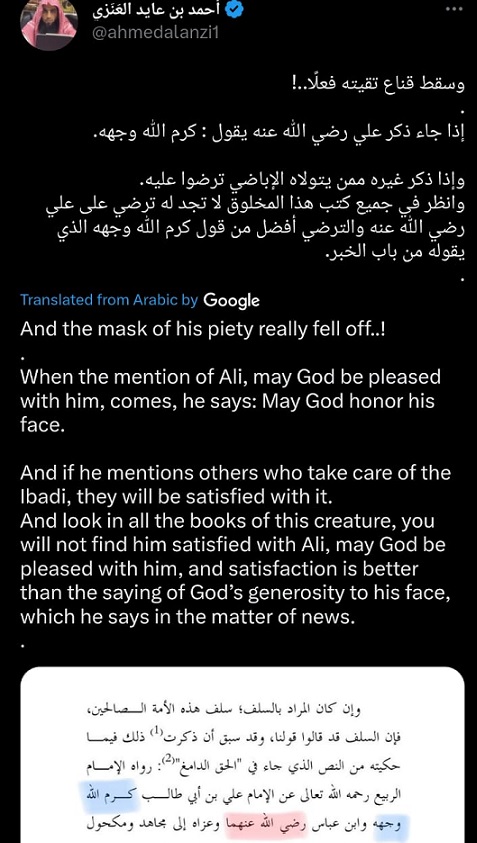
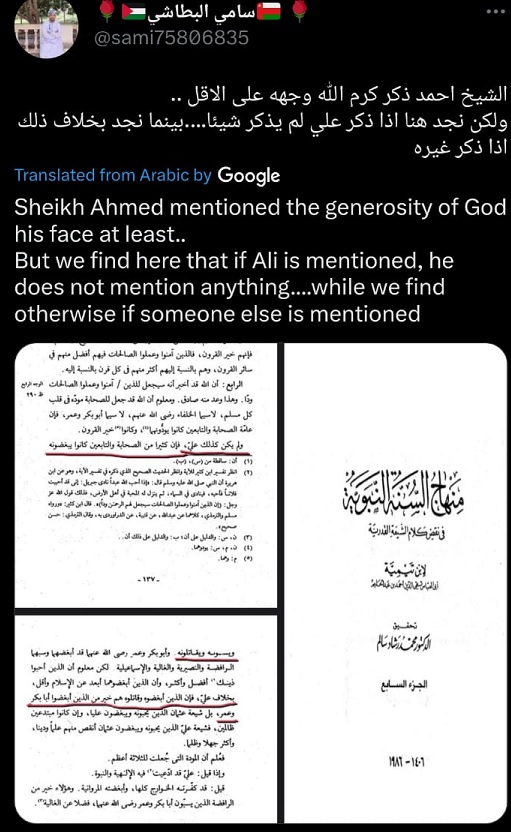
The following is where our teacher: Shaykh Juma Al Mazruii explained this is not necessarily the case:
So Shaykh Juma Al Mazruii mentioned that this Salafi agitator (which is what he is) wants to have some issue about it than he can take it up with Ibn Kathir. Ibn Kathir was not happy that people say, “Allah honuored his face” after mentioning Ali, but not when mentioning Abu Bakr (ra) or Umar (ra). So he (Ibn Kathir) actually feels that statement is higher than saying, “May Allah be pleased with him.”
Likewise, Shaykh Juma mentions that Ibn Taymiyyah himself felt Ali was inferior to other companions. So this Salafi agitator can go and sort out his own house before he tries to knock on our door or the door of anyone else, for that matter.
To this, our beloved Shaykh Juma Al Mazrui gave a very befitting reply (the audio above).
3. Ambivalence (Wuqoof) towards Ali Ibn Abu Talib. An individual does not have enough data or information to put Ali in Bara’ah or Walayah.
Wuqoof is to pause iif there is khilaf on the person. Wuqoof is to stop at everyone you don’t know. You do not make a judgement on him to be in Walayah or Bara’ah. This is by far the position of the vast majority, as they are layman and do not bother to look into these matters..
Those who are ambivalent as they just do not have enough data to give a conclusive answer. They hold their tongues regarding companions like Ali Ibn Abi Talib. They do not say radhiallahu anhu for those who are possibly under Allah’s wrath. Nor do they say this one met doom when they may have repented for their sins and met a good end under Allah’s spacious grace. This regards students of knowledge and the masses of Muslims in particular who have not investigated these matters. This is a recommended and safe road.
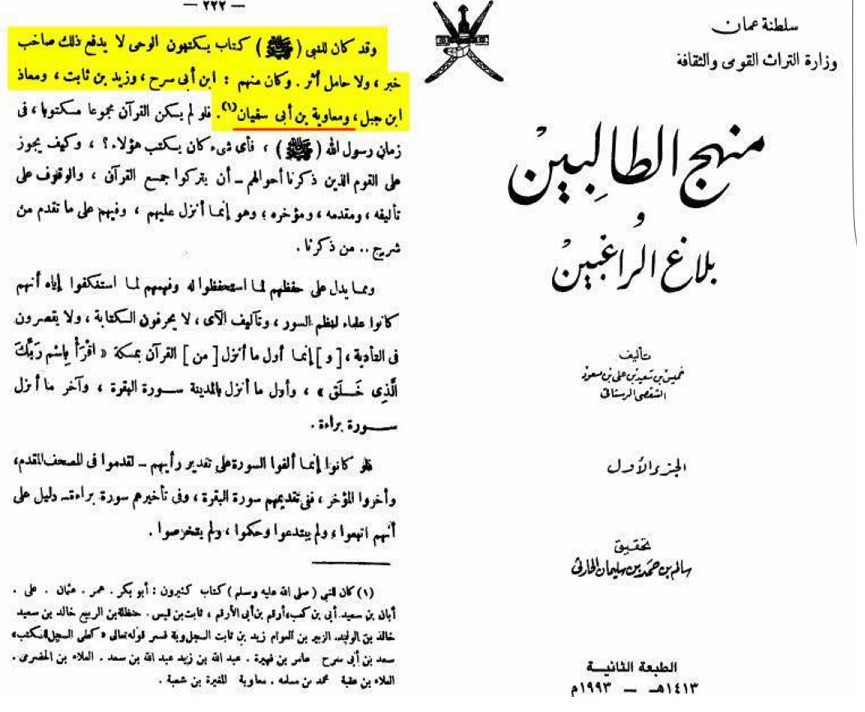
Do not be surprised to find none other than Shaykh Khamis bin Saeed Al-Shaqsi (r) say, “May Allah be pleased with him” after mentioning the name of Muaviya!
Do not be surprised to find none other than Shaykh Khamis bin Saeed Al-Shaqsi (خميس بن سعيد الشقصي) (r) say, “May Allah be pleased with him” after mentioning the name of Muaviya! He is a highly significant and foundational scholar in the Ibadi school of Islam. He is best known for his monumental encyclopedia, Manhaj al-Talibin wa Balagh al-Raghibin (منهج الطالبين وبلاغ الراغبين).
Sources: (Manhaj Al Talibeen and Balagh Al-Raghibhin)
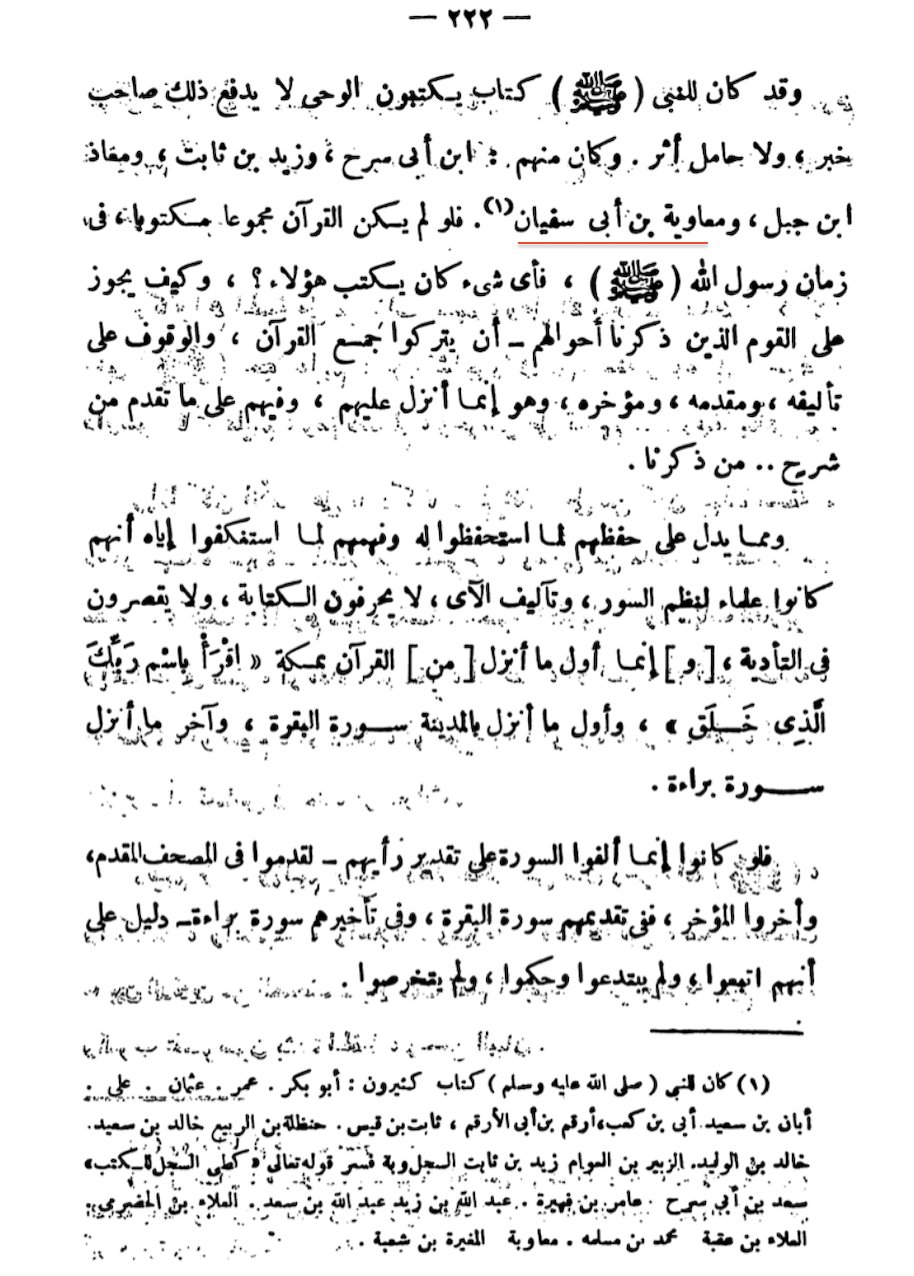
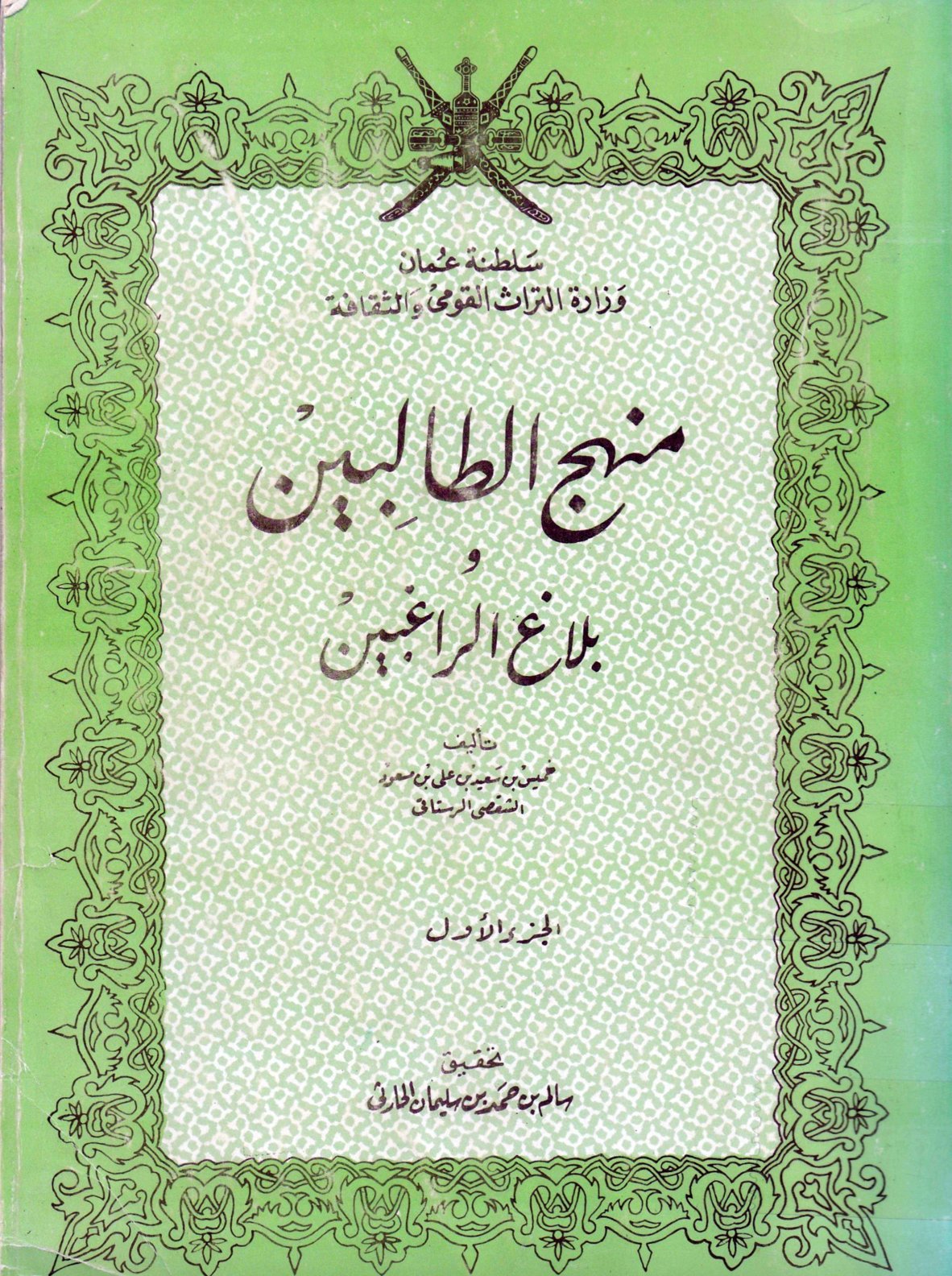
Do the Ibadi hate Ali because of his actions at Siffin and Nahrawan?
As we have seen, there are three views of the Ibadi. We ask you to imagine that if you were among those companions of the Blessed Prophet (saw) that personally suffered loss at the hands of Ali and his soldiers, you would not have a high or favourable view of him. This is human nature. However, those people would not be Ibadi in a technical sense. As they were the companions and successors who disengaged from Ali. The term ‘Ibadi’ or the school was simply non-existent at that point. This could be a reason why Abd al-Rahman ibn Muljam took revenge. Allah knows best.
You must hate those whom you apply the judgement of Allah (swt) to? No, not necessarily.
Based upon mantiq (logic) and the fact that this particular statement of the narration would clash with the qati’i (decisive) nature of Qur’an, such that a particular understanding of being infallible or not accountable becomes null and void.
Secondly. There is a story which you can read here full of grandiose verbiage that many are familiar with. Ali fights a man and the man spits in Ali’s face. Ali is said to have sheathed his sword. You can read that here: https://www.dar-al-masnavi.org/n-I-3721.html
The point is that just because you oppose someone does not necessarily entail hatred.
An example is this:
Narrated `Aisha:
Usama approached the Prophet (saw) on behalf of a woman (who had committed theft).
The Prophet (saw) said, “The people before you were destroyed because they used to inflict legal punishments on the poor and forgive the rich. By Him in Whose Hand my soul is! If Fatima (the daughter of the Prophet (saw) did that (i.e. stole), I would cut off her hand.”
Source: (https://sunnah.com/bukhari:6787)
So let us imagine a scenario where Fatima (ra) did steal, and she did get caught. Would one necessarily have to have hatred in his/her heart towards Fatima (ra) when executing the punishment?
That means that every judge or Qadi would need to hate the person they pass sentence on?
Would it mean that Ali, as an Amir, any time he inflicted a punishment upon anyone who transgressed, means he would need hatred in his heart as a prerequisite?
However, does one need to necessarily hate an individual that has gone against Allah (swt) and his Messenger (saw)?
Lastly, if someone loves or hates someone or something for the sake of Allah (swt), then there is no harm in this.
Narrated Abu Umamah: The Prophet (saw) said: “If anyone loves for Allah’s sake, hates for Allah’s sake, gives for Allah’s sake and withholds for Allah’s sake, he will have perfect faith.”
Source: (https://sunnah.com/abudawud:4681)
First point. As Shaykh Massoud bin Muhammed Al Miqbali (hafidullah) has mentioned in the video, if the matter of Ali was based upon whims and personal grudges you would not have found in our books that he (Ali) repented..
Second point.
Third point.
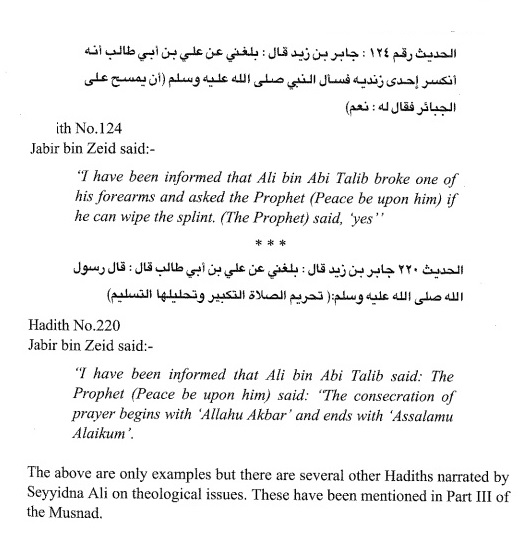
Ali Ibn Abi Talib is quoted as a transmitter of hadith in our Musnad Al-Imam Ar-Rabee’.
Ali Ibn Abi Talib is used as a transmitter of hadith in the Musnad Al- Imam Ar-Rabee’
Parting thoughts.
So let us be practical for a moment. Whatever feelings may have been stirred up by you reading this entry, think of the feelings that may be stirred up among Sunni Muslims when they know of your view concerning some of the companions? Yet, you want to be on cordial terms with them? Then do the same with us.
What amazes and perplexes the thinking individual is that there are among the Shi’i who hold very unfavorable views of Muviyah, Abu Bakr (ra), Umar(ra), Aisha (ra) and other companions, and they expect, no! They almost demand unity with Sunni Muslims.
So, if there are Sunnis who want unity with Shi’i, knowing full well that they (Shi’i) hold unfavourable views of Talha, Zubair, Muaviya and others, then they should have no issues wanting unity with Ibadi, who holds three distinct positions concerning Ali.
So, those who are thinking about following the Ibadi school and have reservations due to certain positions in regard to Ali Ibn Abu Talib. This is not something fundamental to our school. Our school is not about digging up the graves of the people of the past or cursing anyone. We simply give our account of how things were and what that may entail. Practice Wuqoof and focus on your relationship with Allah (swt). Simple.
“We take the truth even from a man of hatred, and we reject falsehood even from a chosen friend. We have no respect for a man, however exalted, if from the truth he has deflected.”-Shaykh Abdullah bin Humeid Al Salmy.
You may also wish to read the following:
There is a very moving poem by the eloquent poet, the Sufi, Abu Muslim al-Bahlani expressing his remorse and admonishment over the actions of Ali at Siffin.
https://primaquran.com/2023/02/11/the-genius-of-mufti-abu-layth-can-we-criticize-the-companions
May Allah guide the Ummah
May Allah Forgive the Ummah.


 Prima Quran
how prominent is this view among ibadi scholars today? and what about the past?
The majority position today and I would imagine for quite some time is wuqoof, given how far removed we are from said events. As regard those who affirm him as being in Bara’ah or disavowed, Of the 35 scholars and teachers that I know of, including the Mufti of Oman, the Assistant Mufti, their children, the heads of the Ibadi communities in Mzab Algeria, Nafusa Libya, Ghana, I cannot think of any of them that hold him in Bara’ah or account him as Disavowed. There is either mention of his name with no honorifics after, or mention of his name with the honorific ‘karamallahu wajhah’.
If you read the following entry: https://primaquran.com/2024/09/12/the-battle-of-nahrawan-the-ibadi-perspective/
towards the end (of the article) you will see some citied quotations from Al-Jawahir Al-Muntaqah الجواهر المنتقاه The selected gems By Abul-Qasem Bin Ibrahim Al-Barradi -May Allah have mercy on him, that show Ali was remorseful for his actions and repented.
As regard the past that is also challenging to say. One would have to get an account of all our major scholars and people and survey their opinions.
For example in this entry here: https://primaquran.com/2024/09/18/ibadis-encourage-umar-ibn-abdul-aziz-to-stop-the-cursing-of-ali-at-the-pulpits/ you will find that it was actually our people who had approached Umar Ibn Abdul Aziz and asked him to prevent the cursing of Ali at the pulpits. If Ali had been in bara’ah with them you would not have seen this request.
Allah (swt) knows best and the help of Allah (swt) is sought.
Hi there.
Does Ali were a sympatiser of killers of Uthman ?
like all of (Sunni) history narrations feels like something wrong with these actions…these historians like wants wash everybody and nobody was wrong and if i point out something is wrong you are trying to destroy the prohets religion…
Forced? to get elected by uthmans killers….
Trying to protect these killers from muawiya or Talha zubayr aisha….
His justification for not punishing is seems like he was try to gain time…. Or what?
And also did Ali fought nahrawan because he really belived his religiuous conviction and he believed was righteous side or because of his personal ambitions?
Hello Weird Man,
I believe what you are saying is , Is it possible Ali had a hand in the death of Uthman and did he have ulterior motives in the battle of Nahrawan.
So I’ll start with Nahrawan, The Muslims -those sahaba and tabi’een that broke away from Ali at Siffin, had elected Imam Ar Rasibi (Ra) as the Imam Al Difa (The Imam of Defense), this is also the FIRST time that a NON-Qurashi was elected as Amir over Muslims.
So, it is very likely that Ali’s decision to engage the Muslims at Nahrawan was politically motivated. Not the stories we are taught.
As regard his hand in the death of Uthman (I personally do not preclude that as a possibility) after all, the companions rose up and displaced Uthman by force.
So this is why you actually have TWO SUNNI ISLAMS.
I am not talking about Aqidah issues like Ashari, Athari.
I am not talking about Madhab issues like Maliki, Shafi’i, and Hanafi.
I am talking about UMAYYAD SUNNIS vs ABBASID SUNNIS.
Umayyad Sunnis (and this movement is growing among Sunni Muslims) they have an aversion towards Ali. They believe he was responsible for the death of Uthman.
They don’t care if they are called Nasibis or not, to them it is a badge of honour.
You will see allot more Salafi/Athari/Taymi types become attracted to this movement. They are very active in Syria, Iraq, Kuwait, Bahrain etc..
Then you have the ABBASID SUNNIS, those who rehabilitated the image of Imam Ali, and made him among the four “Rightly guided Caliphs” they may have also had a hand in forging hadiths that cast Ali in a more positive light.
Their objective was cohesion and cohesiveness of the empire.
In fact, Allah-willing I plan to write a full article on this in the near future.