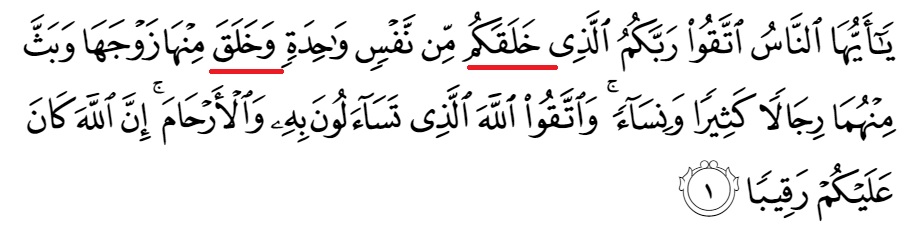
“Proclaim! (or read!) in the name of thy Lord and the One whom Cherishes, Who created” (Qur’an 96:1)
﷽
We have seen this issue raised by Christians repeatedly. We have also remembered Dr. Anis Shorrosh using it in his debate with Dr. Jamal Badawi. Debate: (Qur’an word of God or word of Muhammed?)
It is one of the reasons why we choose the Yusuf Ali translation above.
One could ask: what was God thinking?
You are approaching a man that is obviously illiterate, and you’re asking him to read, again and again….and yet again.
However, the narrative shows that the term ‘Iqra‘ can mean read (as from a book) or recite, or repeat (as in a repetition).
What we find fascinating is that the account of the Blessed Messenger (saw) and his receiving of the revelation are not found in the Qur’an. Rather, it is found in secondary sources. We think this is very profound.
In the Bible, we would read the historical bits, get some revelation as well as the thoughts of the narrators all mixed in together.
The very fact that the Qur’an does not have a detailed narrative of how the Blessed Messenger (saw) received the revelation speaks well for the Prophet (saw), the Qur’an, and the veracity of Islam.
In fact, it is one of the most remarkable things for us. Because we never hear in the Bible what that was like. What is that moment like when you encounter the divine? What is it like to know that you are being appointed as a Prophet of God? What is your mental state? How does that feel?
That has to be indescribable beyond words! Powerful!
In the Bible, we are just given the impression that one day the Holy Spirit moved Matthew to write, so he picked up his pen and off he went. Not really inspiring. Rather lackluster for a divine encounter.
“So if you are in doubt, [O Muhammed], about that which We have revealed to you, then ask those who have been reading the Scripture before you. The truth has certainly come to you from your Lord, so never be among the doubters.” (Qur’an 10:94)
Question: If Muhammed (saw) were in the habit of reading and writing, he wouldn’t need to ask the people of the book anything. He could simply go to their text for verification.
Now, this is, of course, assuming that they had their text with them.
However, the interesting thing about this passage is asking the Blessed Messenger (saw) to verify the truth outside the Qur’an or at the very least corroborate with what the divine directive was, by checking outside references.
No doubt those who follow the ‘Qur’an Only Religion’ would like to dismiss the dominant narrative for two reasons.
Our colleague was in an exchange with Dr. Shabbir Ahmed, @ our Beacon http://www.galaxydastak.com refuting the points he made that the Blessed Messenger (saw) was the one who wrote the Qur’an. Needless to say, he was banned from the forum for ‘not participating in the project’.
He was initially invited there by a friend and former teacher, Hamza Abdulmalik from IPCI. He believes his former teacher was testing the waters before he decided to leave Islam for the “Qur’an Only Religion“.
The two reasons that ‘Qur’an Only Religion’ would want to reject the dominant narrative are these:
The very first word ‘iqra‘ suggests that the Qur’an is composed in a language that has depth, nuances, clarity, and ambiguity. This takes the wind out of one of their sails. Namely, that the Qur’an is clear; which usually means “Agree with our interpretation.”
The very first word ‘iqra’ also suggests that the Qur’an would be transmitted through both written and oral means. The idea that the Qur’an would be transmitted orally is problematic to those who castigate oral transmission in its entirety.
Understand that point 2. above is their sole reason for making the claim that the Blessed Prophet (saw) wrote the Qur’an. It is because they do not like the idea of the Qur’an being preserved through oral transmission.
This might cause other uncomfortable thoughts like: “What else may be preserved through oral transmission?“
The “Qur’an Only Religion” does not like the historical narrative that has been passed down to us about how the Blessed Messenger (saw) received the revelation.
Let us see if their perspective holds true.
“Read in the name of your Lord Who created. He created man from a clot. Read and your Lord is Most Honorable,” (Qur’an 96:1-3)
If the Blessed Messenger (saw) is being asked to ‘read‘ rather than recite/repeat, where is this text at?
In other words, whoever is telling Muhammed (saw) to read, what exactly is he being asked to read? Is it a divine template? Is this an ethereal revelation that is appearing like a holographic image?
Wouldn’t it make sense to say, ‘write‘?
So let us deal with the next point.
“Who taught (to write) with the pen. Taught man what he knew not.” (Qur’an 96:4-5)
So the “Qur’an Only Religion” will say, “How can Muhammed be taught by the PEN if he cannot write?“
However, this assumes two things.
That this verse does not generally address the gift of literacy, which is a blessing from Allah (swt).
That Muhammed (saw) is the one being addressed here. After all, the verse does say, taught man (plural)…
. To suggest that the above verse is imperative. Meaning that Allah (swt) has taught every person to read that would be incorrect. Vast swathes of humanity still cannot read. The proliferation of literacy is a modern phenomenon.
“In honored sheets, exalted and purified, In the hands of scribes noble, virtuous.” (Qur’an 80:13-16)
It would have been a perfect occasion to say, “I will teach you the use of the pen, or I will teach you that which you know not.”
In fact, we never get an example of the Blessed Messenger (saw) reading the Qur’an to anyone. However, we do have examples of him reciting it.
“A messenger from Allah, reciting pure pages.” (Qur’an 98:2)
“Move not thy tongue concerning the (Qur’an) to make haste therewith. It is for Us to collect it and promulgate it; but when We have promulgated it, follow thou its recital’ (Qur’an 75: 16-19).
Why not ‘move not thy eyes‘ concerning the Qur’an?
Why not ‘move not thy pen‘ concerning the Qur’an?
It is interesting to note here that the Blessed Messenger (saw) was told to not be hasty in his recitation; nothing about ‘move not thy pen‘ concerning the Qur’an.
Now we are going to use a translation of the Qur’an that we think is one of the worst possible. Interestingly enough, this translation gets as close as is grammatically possible to supporting the proposition that the Blessed Messenger (saw) wrote the Qur’an.
So we are going to use a translation that actually favours our interlocutors (Qu’ran only Religion) in this regard.
“Neither did you (O Muhammed SAW) read any book before it (this Quran), nor did you write any book (whatsoever) with your right hand. In that case, indeed, the followers of falsehood might have doubted.” (Qur’an 29:48) – Muhsin Khan translation.
We would encourage the readers to see how this verse is translated from disparate translations from translators with disparate theological backgrounds etc…
The reason we chose the ‘Muhsin Khan’ translation above; is because it can give the impression that Muhammed (saw) didn’t read any book before the Qur’an; meaning he can now! Nor has he (saw) written any book (until now!!)…
So let us put our focus on the second part of this verse…
“In that case, indeed, the followers of falsehood might have doubted.”
Let us say that for the sake of argument we take the understanding of those who claim the Blessed Prophet (saw) wrote the Qur’an. Meaning that, suddenly, Muhammed (saw) is now able to read and write.
How does that alleviate the doubt of unbelievers?
It seems the argument being made is that “Haha, you can’t doubt that the Qur’an is a product of Muhammed because he can read and write, and therefore wrote it!
Erm…….. (stares off blankly into space)….. are we missing something here?
What argument is that? Seriously?
We would encourage anyone to carefully read how “Qur’an Only Religion” will posture in regard to the above verse. They half quote it.
Let us look at some of their other claims.
“Moreover, they say, “Legends of the former peoples which he has written, and they are dictated to him morning and afternoon.” (Qur’an 25:5)
We actually found this argument to be very desperate. The fact that (unbelievers) alleged that the Blessed Messenger (saw) wrote down the Qur’an is now proof that he actually did write the Qur’an?
This is a specious argument for anyone who is intellectually honest.
“We know indeed that they say, “It is a man that teaches him.” The tongue of him they wickedly point to is notably foreign, while this is Arabic, pure and clear.” (Qur’an 16:103)
“Moreover, the Unbelievers would almost trip you up with their eyes when they hear the Message; and they say: “Surely he is possessed!” (Qur’an 68:51)
Let’s stop for a moment on this above claim. The claim that ‘he is possessed.’
This is a very fascinating and insightful claim against our Blessed Prophet (saw). The unbelievers ascribed to the Qur’an a supra natural origin. They were just not ready to say that it came from Allah. However, the fact that even they ascribed to it a supra natural origin is quite powerful.
Let us follow the fuzzy logic given to us by these people who claim that the Blessed Messenger (saw) could read and write the Qur’an.
So here it is:
Just because the (unbelievers) charged Muhammed (saw) with writing the Qur’an, does it also follow that a man taught him the Qur’an?
Just because the (unbelievers) charged Muhammed (saw) that he was possessed means that it is true?
So those people who make such claims would do well to remember it was non-Muslims who charged that the Prophet Muhammed (saw) wrote the Qur’an.
The first claim that the Blessed Messenger (saw) wrote the Qur’an came from (unbelievers). That is the company that followers of the ‘Quran Only‘ religion are in; not the company we would like to be in.
Another text they would use.
“And if he had invented false sayings concerning Us We surely should have seized him by his right hand (or with power and might), And then severed his life-artery.” (Qur’an 69:44-46)
There is certainly a lot to be desired in this translation.
Invented is taqawwala -this should have been translated as spoken
So this should read: “And if he had spoken some sayings over Us, We surely should have...”
seized him –la-akhadhna-can be translated as to take or to seize or to call to account.
his right hand-bil-yamini-can be translated as hand or oath.
So this should read: “And if he had spoken some sayings over Us, We surely should have seized him with power and might.”
Alternatively, it could read: “And if he had spoken some sayings over Us, We surely would have called him to account for his oath.”
The first part is how we understand the second part. If someone is speaking and saying it would make sense to say, ‘we seize him by his tongue.’
That is why that argument put forward by the ‘Hafs Qur’an Only Religion’ is easily dismissed. When someone is speaking lies, why is the attention directed towards the hand?
So let us take their understanding and translate it the way they want to: “We surely should have seized him by his right hand.”
Why doesn’t the text before it say:
“So if he had written false sayings concerning Us.”
“Had he uttered any other teachings.”-Rashad Khilafa
“Also, had he attributed anything falsely to Us.”-The Monotheist Group.
In fact, the only person trying to be sly among the Quraniyoon in their translation is Shabir Ahmed
“So if he had ascribed his sayings unto Us.” -Shabir Ahmed
Why handle the Qur’an in such a false manner? Why the deception? What is the agenda here?
Was the Qur’an only revealed to those who were literate? Even today, there are vast areas of the world where people cannot read and write. What of the situation in the past? What was the situation of slaves, farmers, and people from other trades?
How was a textual Qur’an distributed to all of these people? If that is the case, why is there a dearth of written Qur’anic material from the early period?
“However, if they turn away, you are responsible only for conveying the message clearly.” (Qur’an 16:82)
If the Blessed Messenger (saw) was writing the Qur’anand the Qur’an is clear, there would be no need for him to explain anything to anyone. He would simply tell them to refer to the book itself! Better yet to their own written copies, parchments, etc. I think we know better.
We think the idea that the Blessed Messenger (saw) wrote the Qur’an is both intellectually lazy and the result of wanting to skirt around the issue of the preservation through oral transmission of the Qur’an.
We think that issues are nuanced, and sometimes a little more academically challenging than we are ready to admit. Some answers are simply not microwavable.
Something else we want to point out. Was it possible that the Blessed Messenger (saw) learned to recognize and understand some words in the Arabic script over time? Of course!
When our colleague was the Executive Docent Officer at the Singapore Sultan Mosque and leading the ATMT (Awareness Through Mosque Tour) program, they used to have fun showing copies of the Qur’an to curious non-Muslims.
They would open a page of the Qur’an that had many usages of the word ‘Allah‘ in Arabic. They would point out the word. They would then ask them to find that word anywhere on the two pages. They did without fail! They asked them to read that word, and they said, ‘Allah’!
For example, they have highlighted the word ‘Allah’ in the Arabic text below. See if you can find at least 3 other examples of it.
This was a great interactive experience for our colleague and them. Our point here is that it’s possible that the Blessed Messenger (saw) was able to recognize words (after all they are simply symbols) and say or repeat what they mean.
“Neither did you (O Muhammed SAW) read any book before it (this Quran), nor did you write any book (whatsoever) with your right hand. If that was the case, indeed, the followers of falsehood might have doubted.” (Qur’an 29:48)
“My Lord! Increase me in knowledge.” (Qur’an 20:114)
﷽
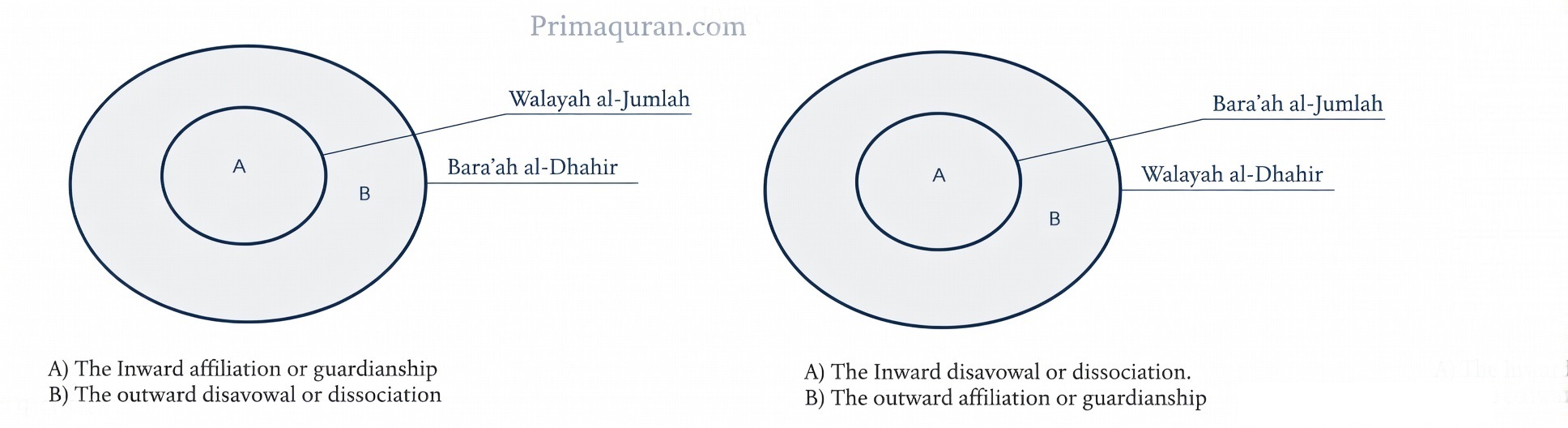
We have the principle of al-walāya (allegiance) and al-barā’a (disavowal), which are either general or specific. The specificity is either established by truth through a text from the Book of Allah and direct hearing from the Messenger of Allah, peace and blessings be upon him. Or apparent through observation, acknowledgment, testimony of just witnesses, or evident truth supported by proof. If someone’s status is unclear, one should refrain from including them in al-walāya or al-barā’a. No one is definitively assigned to Paradise or Hell except those who are in the state of true allegiance and true disavowal, as established by a text from the Book of Allah and direct hearing from the Messenger of Allah, peace and blessings be upon him.
The Companions and others are equal in this principle, except that the default for the Companions is al-walāya (allegiance) only.
Allah’s rulings encompass everyone, and no one is above the ruling of Allah Almighty.
The status of the companions of the Blessed Prophet (saw).
The position of our school is not in agreement with those who call themselves the people of the Sunnah. Their position is that all the companions are considered just and righteous.
However, our school is not built upon the praise of anyone other than the Blessed Prophet (saw). Nor is it built upon the cursing of anyone other than Iblis and his minions.
We can console ourselves with the noble verse of the Qur’an:
“That is a nation which has passed on. It will have [the consequence of] what it earned, and you will have what you have earned. And you will not be asked about what they used to do.” (Qur’an 2:141)
For the layperson and the laity, the default position is one of wuqoof. This means pausing or to stop on anyone we are not certain of. It is based upon insufficient data. This is the position of the vast majority of people in our school, as the vast majority are the laity.
That is to say they are in wuqoof with all those companions in which there is some dispute about their status in our school. Uthman, Ali, Talha, Zubayr, for example.
They need not concern themselves with these disputes that happened among the companions. However, the scholars or those who have studied under them take various positions based upon what they gather is sufficient data. That sufficient data may lead them to disavow a companion or to put a companion in guardianship.
What is also important is that everyone in our school ascribes to general friendship as well as general dissociation. So, no matter the conclusions we reach based upon apparent evidence, our friendship or dissociation is with people based upon reality.
What does this mean in a practical sense?
Example 1
You put person A in Bara’ah based upon some apparent evidence. Based upon the current condition of person A.
However, since you declared the Walayah al-Jumlah and that person had a good ending, they are in wilayah with you in reality.
You made an ijtihad based upon the conditions of the person that were apparent to you at the time. However, you made a declaration based upon the reality of a person’s condition with Allah (swt).
Example 2
You put person A in Walayah based upon some apparent evidence. Based upon the current condition of person A.
However, since you declared the Bara’ah al-Jumlah and that person had a bad ending, they are in bara’ah with you in reality.
You made an ijtihad based upon the conditions of the person that were apparent to you at the time. However, you made a declaration based upon the reality of a person’s conditon with Allah (swt).
How to declare the intention for the general wilayah and the general bara’ah?
Walayah al-Jumlah – The general or common friendship.
One declares (you reading this can declare now.) “I ally with every single person among mankind and jinn who ever lived or ever will live that has died righteous.”
Bara’ah al-Jumlah – The general or common dissociation.
One declares (you reading this can declare now.) “I disown every person among mankind and jinn whoever lived or ever will live that will be among the denizens of hellfire.”
It is to say in your heart: Anybody Allah loves, I love him. Anyone whom Allah hates, I hate them.
Thus, if Uthman, Ali, Talha, Zubayr fall into either category, we have already declared our walāya with them or a barā’a of them based upon reality. The reality overrides the apparent. And this is well known in our school. As well as the position of those who are students of knowledge is that of wuqoof.
How many are those who declare with their tongues that which is not in their hearts?
“They were closer to disbelief than to belief on that day—for saying with their mouths what was not in their hearts. Allah is All-Knowing of what they hide.” (Qur’an 3:167)
How can an individual be both in walayah and bara’ah with the righteous?
Possible scenario.
Person A left Gwadar Port. The people of that place know person A to be upright and fair dealing. However, Person A, when he arrives in Port Bell, is known to swindle and cheat people.
The righteous people at Gwadar port judge based upon his outward actions. The righteous at Port Bell judge based upon his outward actions.
The actions of the person in Port Bell never reach the people of Gwadar port.
Walayah and Bara’ah are ultimately not about personal relationships.
Allah is always the focus!
Whether it is a relationship between yourself and another person. Or a relationship between person A and person B. You are neither person A nor person B.
Example: You have someone who is very close to you. Your mother, your father, or even your child. You love this person. You have familiar ties to that person. However, if this person is a sinner. They would be in bara’ah for the duration of the time they indulge the sin. It has nothing to do with your relationship to them at any given moment and everything to do with their relationship to Allah at any given moment.
Example: There is a tyrant ruler. This tyrant ruler gives everyone their full rights. This person prays the five daily prayers. However, he gets drunk. He drinks alcohol. In this case, do you ally with him or dissociate from him? Even though he treats you well and gives you your full rights. Because he drinks alcohol in that condition, he is an enemy of Allah (swt). He will be so for the duration of the time he spends doing so. Your relationship with this ruler may be cordial, but you disown him because it has nothing to do with your relationship to him at any given moment and everything to do with his/her relationship to Allah at any given moment.
Example: A fellow Muslim for whom, whatever reason, you do not like. Human beings can be fickle. Maybe it is the way they laugh or anything at all you personally find fault with. However, that person prays, fasts and does not commit any sins that you are aware of. No matter your personal feelings towards this person, you must ally with them. They are in wilaya with you, and you cannot put this person in bara’ah based upon personal feelings or a whim. That is because it has nothing to do with your relationship between you and him at any given moment and everything to do with his/her relationship to Allah at any given moment.
This is more about recognizing the rights of Allah (swt). Allah (swt) reigns supreme over all his creation.
You might be interested to read our other articles on the subject here:
“Then learned Adam from his Lord words of inspiration, and his Lord turned towards him; for He is Oft-Returning, Most Merciful” (Qur’an 2:35-37)
“Say, “Is it other than Allah I should desire as a lord while He is the Lord of all things? And every soul earns not [blame] except against itself, and no bearer of burdens will bear the burden of another. Then to your Lord is your return, and He will inform you concerning that over which you used to differ.” (Qur’an 6:164)
﷽
“Then learned Adam from his Lord words of inspiration, and his Lord turned towards him; for He is Oft-Returning, Most Merciful” (Qur’an 2:35-37)
The above touching heartfelt verse teaches us original forgiveness.. We know that he was forgiven because it was Allah that taught Adam the very words by which to seek reconciliation with The Divine!
Allah! Ar Rahman Ar Raheem! Allah!!!! Most Merciful!!!! The Ever Compassionate!!!!
After he learned to turn towards Allah (swt), he was forgiven. That is it. Full stop!
There is no sin through which death entered the world, causing amoebas and single-celled organisms and everything else to die because of this person’s actions!
Now, dear respected reader, what you read is two different accounts of what happened with Adam and Eve.
You are not reading a Muslim response to Genesis chapter 3. We want to make that very clear.
What you are reading is what Allah has revealed in the Qur’an.
The choice you need to make is to discern which of these two accounts is true.
The account as given by Allah in the Qur’an or the account as given in Genesis chapter 3.
It is important for you as a Christian, dear reader, to understand that the concepts of Original Sin, Inherited Sin, Total Depravity, Limbo, God Incarnate, the idea of God sending a ‘Son’, the Crucifixion, the Resurrection, Vicarious Atonement, Justification by Faith, Paul’s letters and the entirety of the New Testament all have their basis in Genesis chapter 3.
There is no need for Muslims to engage in any of these other beliefs, because if what God revealed in the Qur’an about Adam and Eve is correct, then all of these Christian beliefs that have their basis in Genesis chapter 3 are in and of themselves irrelevant!
Genesis chapter three is all that stands between Islam and Christianity.
One chapter in the entire Bible is all that separates Islam and Christianity.
If it was not for that chapter in the Bible there would be no Christianity.
That particular chapter gives us the following:
Original Sin
Inherited Sin
Total Depravity
Limbo
The concept of God Incarnate
The need for God to send His Son
The Crucifixion
The Resurrection
Vicarious Atonement
Justification By Faith
Paul’s Letters
The New Testament as a whole.
Adam and the events that unfolded in the Garden of Eden is such a central theme in Christology and if we were to juxtapose the events as related by Genesis chapter 3 with what is revealed in the Qur’an, we will be able to get a deeper appreciation of what is central that divides the two faith traditions.
We will also find out that which brings much needed clarity.
Let us begin with the question:
Who truly committed The First Sin?How does sin enter into the universe?
What does sin mean?
Christians define sin as transgression, lawlessness, and missing the mark.
The first issue to clear up is is one that Christians are absolutely forced to agree with Muslims on this.
The first sin, missing the mark or transgression against Allah, was done by a non-human entity!
In Christian theology, it is an X-Angel named Lucifer.
In Islamic theology, it is a Jinn named Iblis.
Either way, it was not Adam or Eve (May Allah’s peace be upon them both) that erred first.
“So behold, We said to the angels: “Bow down to Adam: “And they bowed down: not so Iblis: he refused and was arrogant: he was of those who reject Faith. We said: “O Adam! Dwell you and your wife in the Garden, and eat of the bountiful things in that respect as you will, but approach not this tree, or you will run into harm and transgression.”(Qur’an 2:30-37)
Sin enters into the universe via beings created with sovereign choice.
The sovereign choice to obey or to submit to the will of God.
So the position of Islamic theology is clear.
Howeve, have you ever read any text anywhere in the Bible that makes the claim that Satan was an X-Angel named Lucifer and that he rebelled against Allah?
There is no such text anywhere in the Bible at all! It is a fable that came into Christian circles from apocryphal sources. The best attempt at trying to glean such a view comes from the following:
“How have you fallen from heaven, the morning star? You have been cut down to earth, You who cast lots on nations.” (Isaiah Chapter 14:12)
What did Protestant reformer John Calvin have to say about this text?
“How art thou fallen from heaven! Isaiah proceeds with the discourse which he had formerly begun as personating the dead, and concludes that the tyrant differs in no respect from other men, though his object was to lead men to believe that he was some god. He employs an elegant metaphor, by comparing him to Lucifer, and calls him the Son of the Dawn; 220 and that on account of his splendor and brightness with which he shone above others. The exposition of this passage, which some have given, as if it referred to Satan, has arisen from ignorance; for the context plainly shows that these statements must be understood in reference to the king of the Babylonians. But when passages of Scripture are taken up at random, and no attention is paid to the context, we need not wonder that mistakes of this kind frequently arise. Yet it was an instance of very gross ignorance, to imagine that Lucifer was the king of devils, and that the Prophet gave him this name. But as these inventions have no probability whatever, let us pass by them as useless fables.”
As Calvin rightly states, it is a metaphor. Otherwise, we have the very awkward situation of calling Jesus ‘Lucifer’ as Lucifer simply means “Morning Star” or a reference to Venus — a star that outshines the others.
Jesus is called “Lucifer” or Morning Star in the following verse in the Bible.
“I, Jesus, have sent my angel to testify to you about these things for the churches. I am the root and the descendant of David, the bright morning star.” (Revelations 22:16)
There are two other texts that Christians often appeal to as well:
“And he said to them, “I saw Satan fall like lightning from heaven.” (Luke 10:18)
This text says nothing about Satan being an X-Angel or that his name was Lucifer etc.
“So war broke out in heaven and Michael and his angels fought against the Dragon and his angels, and the Dragon and his angels prevailed not.” (Revelation 12:7)
This is possibly the closest text as it does mention angels waring with each other in heaven. Yet this text does not mention angels becoming X-Angels, but rather angels at war with each other.
At the very least, the Christian book of Revelation and the Qur’an both point to the fact that a non-human(s) was(were) the first to transgress or sin against Allah; however, there are major points of difference in the two theologies.
In Christian theology, an X-Angel rebelled against Allah. However, in Islamic theology it was a Jinn.
In Islamic theology, angels do not go against the divine plan. There is a race of beings known as the Jinn that can go against the divine plan.
So the first question here would be: Why is there not a doctrine of salvation for fallen angels?
In Islam, we know that the Qur’an was sent to save humanity and the Jinn.
“So when we (Jinn) heard the guidance, we believed in it. And whoever believes in his Lord will not fear deprivation or burden.” (Qur’an 72:13)
“And We have sent you not but as a mercy for the ‘Alamin.” (Qur’an 21:107)
‘Alamin (mankind, jinn, and all that exists beyond)
“You say you have faith, for you believe that there is one God. Good for you! Even the demons believe this, and they tremble in terror.” (James 2:9)
So, in Islam, any being that sins against Allah (swt) can repent and reconcile with Allah (swt).
“By which Allah guides those who pursue His pleasure to the ways of peace and brings them out of darknesses into the light, by His permission, and guides them to a straight path.” (Qur’an 5:16)
The second question would be: Who wants to go to a heaven where wars break out? I mean people constantly deride the Qur’an for its usages of women and wine in paradise; yet the Christian heaven is one of intrigue, assassination attempts, and wars!!!
In Islamic theology, the fall of Iblis (not the fall of humanity) fits logically into the greater picture of Allah’s wisdom.
However, we want to know in Christian theology what is to prevent the next disgruntled angel from trying to create wars and strife in heaven?
Finally, the Qur’an gives us a teaching of original forgiveness!! Allahu Kareem (Allah is Most Generous)
Though Adam did transgress, he was not the first transgressor.
The story of Adam, Eve and the Garden as compared/contrasted by Genesis chapter 3 and the Qur’an.
The whole Genesis account gives us a picture of a capricious divine being that lacks attributes of mercy, wisdom, justice or foreknowledge.
Again, dear truth seeker, contrast again the accounts in Genesis and the Qur’an.
“The Lord saw how great the wickedness of the human race had become on the earth, and that every inclination of the thoughts of the human heart was only evil all the time. The Lord regretted that he had made human beings on the earth, and his heart was deeply troubled.So the Lord said, “I will wipe from the face of the earth the human race I have created—and with them the animals, the birds and the creatures that move along the ground—for I regret that I have made them.” (Genesis 6:5-7)
Now, this does not sound like a divine plan at all. This sounds like a plan going terribly wrong.
How can a person find hope in the Christian tradition when Allah himself is in despair?
To attribute despair and regret to Allah is an affront to divine sovereignty and to the understanding that Allah is All-Knowing, All-Aware.
Contrast dear reader the absolute lack of sovereignty, will, and divine foreknowledge as given in the above passage with what Allah has revealed to us in the Qur’an.
“Behold, your Lord said to the angels: “I will create a vicegerent on earth.” They said: “Will you place therein one who will make mischief therein and shed blood?- while we do celebrate Thy praises and glorify your sanctity?” He said: “I know what you know not.” (Qur’an 2:30)
“So set your purpose for the way of life aligned with humanity’s upright nature – the nature (framed) by Allah, in which He has created humanity. There is no altering of the work wrought by Allah. That is the correct way of life, but most men do not know.” (Qur’an 30:30)
The angels look at the crude form of humanity and immediately see the capacity for violence. Also, notice that the angels are basically saying that they praise and worship Allah (swt) as is so what possible purpose does humanity serve?
The response of Allah (swt) is “I know what you know not.” That was a sufficient response to the angels. In other words, there is a plan for humanity.
You should know, dear reader, that in the order of Creation in Islam there are four types of creation with regard to will (choice).
Two in the unseen world.
Angels which oscillate at frequencies of pure light. They do not go against their nature. Thus, there is no concept of fallen angels in Islam.
Jinn are beings which are made from a fire that does not emit smoke. These beings can go against their nature and go against the divine plan.
No doctrine of fallen angels in Islam.
“O believers! Protect yourselves and your families from a Fire whose fuel is people and stones, overseen by formidable and severe angels, who never disobey whatever Allah orders—always doing as commanded.” (Qur’an 66:6)
“Who do not speak until He has spoken, acting at His command.” (Qur’an 21:27)
Islam is for mankind and jinnkind.
“Verily, this (the Quran) is no less than a Reminder to (all) the ‘Alamin (mankind and jinns).” (Qur’an 81:27)
Say, “It has been revealed to me that a group of the jinn listened and said, ‘Indeed, we have heard an amazing Qur’an. It guides to the right course, and we have believed in it. And we will never associate with our Lord anyone.” (Qur’an 72:1-2)
Two in the natural seen world.
Animals, plants and other living creations that do not go against their nature.
Humanity can go against nature and go against the divine plan.
The first point of agreement between Christianity and Islam concerning Adam and Eve is that they were both blameless and sinless. They also had to have in some sense had the faculties of reasoning and understanding in order to understand commands and prohibitions.
The whole of Christianity is based upon Genesis chapter 3.
That one chapter presents to humanity a bizarre picture of The Divine Being and human destiny. It is the very foundation upon which Christian theology is built.
Whereas the Islamic Theological position is simply surrendering to the will of Allah. Adam and Eve slipped, they were reprimanded and ultimately forgiven.
Whereas in Christology, Adam and Eve were placed in the company of their mortal enemy with absolutely no heads up and no warning!
Can you imagine what kind of loving father puts their children in a garden with a shape-shifting entity intent on hurting the children and when the shape-shifting entity ends up duping the children, not only are the children punished but the whole of humanity is culpable for their slip?
Contrast this with what Allah revealed in the Qur’an.
“Did I not forbid you from the tree and tell you that Satan is to you a clear enemy?” (Qur’an 7:22-23)
“So We cautioned, “O Adam! This is surely an enemy to you and to your wife. So do not let him drive you both out of Paradise, for you would then suffer hardship.” (Qur’an 20:177)
“We cautioned, “O Adam! Live with your wife in Paradise and eat as freely as you please, but do not approach this tree, or else you will be wrongdoers.” (Qur’an 2:35)
Adam and Eve were good creatures with a free will. Yet they chose to sin. Why?
Adam and Eve had sovereign free will.
Adam and Eve were not alone. They had an agent provocateur.
We can see that Allah clearly gave warning to Adam and Eve about their enemy and disobeying Allah. In fact, due to this warning about an adversary in Islam, Adam and Eve are more culpable than they are in the Christian tradition!
Whereas in Genesis 3 there is no indication of any agent provocateur at all! It’s as if Adam and Eve were walking into an ambush!
“God saw all that he had made, and it was very good. And there was evening, and there was morning—the sixth day.” (Genesis 1:31)
“Now the serpent was more crafty than any other beast of the field that the LORD God had made.”(Genesis 3:1)
All that God creates is very good. God created snakes (serpentes) that were very good and very crafty at the same time?
Not only this, but to show you this vengeful portrayal of the Divine has whole entire species (serpentes) or snakes condemned simply because a shape-shifting entity imitated one of their kind!
“So the Lord God said to the serpent, “Because you have done this, “Cursed are you above all livestock and all wild animals! You will crawl on your belly and you will eat dust all the days of your life.” (Genesis 3:14)
So even more bizarre is the fact that Satan doesn’t get punished at all in Genesis chapter 3. It is the entire species of snakes (serpentes) that get punished instead!
“Allah said, “Descend, both of you, from here together ˹with Satan˺ as enemies to each other. Then, when guidance comes to you from Me, whoever follows My guidance will neither go astray ˹in this life˺ nor suffer ˹in the next˺. (Qur’an 20:123)
What was the snake’s method of locomotion before it was to “crawl on it’s belly?”
Why wouldn’t Allah know that Satan was either a shapeshifter who appeared as a snake (serpentes) or that Satan made it appear that a snake (serpentes) was speaking to them?
It doesn’t justify a punishment upon a whole suborder of animals, namely snakes (serpentes).
So none of this is good! None of this is an accurate portrayal of A Wise and Judicious Creator working in this world. None of this is an accurate portrayal of the attributes of mercy, wisdom, justice, foreknowledge, or will at all!
The whole Genesis account gives us a picture of a capricious divine being that lacks attributes of mercy, wisdom, justice or foreknowledge.
Again, dear truth seeker, contrast again the accounts in Genesis and the Qur’an.
“The Lord saw how great the wickedness of the human race had become on the earth, and that every inclination of the thoughts of the human heart was only evil all the time. The Lord regretted that he had made human beings on the earth, and his heart was deeply troubled.So the Lord said, “I will wipe from the face of the earth the human race I have created—and with them the animals, the birds and the creatures that move along the ground—for I regret that I have made them.” (Genesis 6:5-7)
Now, this does not sound like a divine plan at all. This sounds like a plan going terribly wrong.
How can a person find hope in the Christian tradition when Allah himself is in despair?
In the Christian tradition, the agent provocateur is not immediately punished. Rather, wrathful punishment is given to an entire suborder of animals, namely snakes (serpentes).
To a Muslim reading and reflecting on this, it all seems very bizarre and even a case of misplaced judgement.
As Allah says in the Qur’an:
“My mercy has encompassed everything.” (Qur’an 7: 156).
Allah (swt) never states that his wrath encompasses everything but his mercy does.
You cannot imagine anything not benefiting from His mercy; otherwise, nothing could have come to existence, and even if so, nothing could have survived.
Even the fact that Satan is able to continue his life is due to Allah’s mercy. When Satan insisted on his wrong behaviour and was cursed, he requested Allah to be given time until the day of Resurrection:
“My Lord. Respite me until the day they will be resurrected.” (Qur’an 15:36)
Allah replied:
“You are indeed among the reprieved until the day of the known time.” (Qur’an 15:37-38)
The very role of Satan/Iblis as laid out in the Qur’an.
He said: “Since you have let me wander off, I’ll waylay them along Your Straight Road; then I´ll come at them from in front of them and from behind them, on their right and on their left. You will not find that most of them are grateful.” (Qur’an 7:16-17)
The whole point of Iblis, the arch enemy of mankind is to show that most of us (humanity) will be kaffir (ungrateful) to Allah (swt).
“And incite whoever you can of them with your voice, mobilize against them all your cavalry and infantry, manipulate them in their wealth and children, and make them promises.” But Satan promises them nothing but delusion.” “You will truly have no authority over My servants.” And sufficient is your Lord as a Guardian.” (Qur’an 17:64-65)
“Allah said, “This is the Way, binding on Me: you will certainly have no authority over My servants, except the deviant who follow you,” (Qur’an 15:41-42)
What is it that Allah makes obligatory on himself? To give certain of his creations choice.
“Allah responded, “Be gone! Whoever of them follows you, Hell will surely be the reward for all of you—an ample reward.” (Qur’an 17:63)
Genesis chapter 3. The Origin of Wrath or the Origin of Forgiveness? Is the woman to blame or are Adam and Eve both culpable?
Apparently, according to the Book of Genesis, after Adam and Eve ate from the tree of good and evil and had a conversation with Allah, they were quite cavalier about the whole ordeal.
Whereas Allah tells us in the Qur’an that the progenitors of the human race were more sensible, whereas they said:
“They said, “Our Lord, we have wronged ourselves, and if You do not forgive us and have mercy on us, we will surely be among the losers.” (Qur’an 7:23)
“Then Adam learned from his Lord words of inspiration, and his Lord turned towards him; for He is Oft-Returning, Most Merciful” (Qur’an 2:35-37)
This is the teaching of original forgiveness, and we know that he was forgiven because it was Allah that taught Adam the words by which to seek reconciliation with the divine.
Also, of note that in Islamic theology both Adam and his wife were deceived and both asked for forgiveness, and they were both forgiven. Whereas in Christian theology the woman is the one who was deceived.
“And he succeeded in deceiving them. As soon as the two had tasted [the fruit] of the tree, their nakedness became obvious to them, and they started covering themselves with leaves from the Garden. Their Lord called to them, “Did I not forbid that tree to you and tell you, ‘Satan is your clear enemy?” (Qur’an 7:22)
“And Adam was not the one deceived; it was the woman who was deceived and became a sinner.” (1 Timothy 2:14)
When the woman saw that the fruit of the tree was good for food and pleasing to the eye, and also desirable for gaining wisdom, she took some and ate it. She also gave some to her husband, who was with her, and he ate it. Then the eyes of both of them were opened, and they realized they were naked; so they sewed fig leaves together and made coverings for themselves. (Genesis 3:6-7)
Now pay attention to the above text. The woman was apparently duped by the Snake (Serpentes). However, when she took the fruit and ate it didn’t she realize immediately that she was naked so that she could warn her husband?
Apparently not. The text allows for interpretative story telling. Such that Eve got the fruit (she hadn’t eaten it yet) and then brought some to Adam. They began to eat together and had the joint discovery together. Yet, this is where the text is extremely hurtful to women in a way that the Qur’an never is.
The question now arises.
Did Eve just give Adam the fruit without telling him what it was? Or did Eve tell Adam where that fruit was from, and he ate it anyway?
The text simply does not say.
Imagine a man who steals a fruit from a garden, and he gives it to another man to eat that fruit. In Christian theology, both the man who stole the fruit and the one who ate it are guilty. However, in Islamic theology, as long as the man who eats the stolen fruit is unaware that the fruit is stolen, he is not guilty of eating stolen fruit.
So, in Christian theology, Adam is punished for a sin he very well could have been unaware of! Islamic theology does not allow this type of ambiguity. Especially, in regard to the severity of the consequences of such an action in Christian theology.
The real reason God removed Adam and Eve from the garden of Eden?
According to the Bible it was not due to sin but due to God’s fear.
Contary to what some may think in the Bible God does not remove Adam and Eve from the garden for their sin. He removes them from the garden for fear that they will become immortal!
“Then the Lord God said: See! The man has become like one of us, knowing good and evil! Now, what if he also reaches out his hand to take fruit from the tree of life, and eats of it and lives forever? The Lord God therefore banished him from the garden of Eden, to till the ground from which he had been taken. He expelled the man, stationing the cherubim and the fiery revolving sword east of the garden of Eden, to guard the way to the tree of life.” (Genesis 3:22-24)
According to the Qur’an it was due to sin.
“But Satan caused them to slip out of it and removed them from that in which they had been. And We said, “Go down, as enemies to one another, and you will have upon the earth a place of settlement and provision for a time.” (Qur’an 2:36)
The nature of death and dying in Christianity and Islam. Are human beings culpable for the sin and errors of others?
“And no burdened soul can bear another’s burden. And if one weighed down by a burden calls another to carry his load, naught of it will be carried, even though he be near of kin. You warn only those who fear their Lord in secret and keep up prayer. And whoever purifies himself purifies himself only for his own good. And to Allah is the eventual coming.” (Qur’an 35:18)
Contrast this with:
“For since death came through a human being, the resurrection of the dead came also through a human being: For just as in Adam all die, so too in Christ shall all be brought to life.” (1 Corinthians 15:21-22).
“Therefore, just as sin entered the world through one man, and death through sin, and in this way death came to all people because all sinned. To be sure, sin was in the world before the law was given, but sin is not charged against anyone’s account where there is no law. Nevertheless, death reigned from the time of Adam to the time of Moses, even over those who did not sin by breaking a command, as did Adam, who is a pattern of the one to come.” (Romans 5:12-14).
Death and the nature of death.
“He is the One Who created you from clay, then appointed a term ˹for your death˺ and another known only to Him ˹for your resurrection˺—yet you continue to doubt!” (Qur’an 6:2)
“We settle whatever We will in the womb for an appointed term, then bring you forth as infants, so that you may reach your prime. Some of you die earlier, while others are left to reach the most feeble stage of life so that they may know nothing after having known much.” (Qur’an 22:5)
“He brings you out as an infant, then causes you to grow into full maturity, and then causes you to grow further so that you may reach old age, while some of you He recalls earlier. All this is in order that you may reach an appointed term and that you may understand.” (Qur’an 40:67)
“His is the dominion of the heavens and the earth. He gives life and causes death, and He is over all things competent.”(Qur’an 57:2)
Allah is the giver of death, the taker of life. One of the names of Allah is the Taker of Life.
Because Allah is also the giver of life.
“Say, “Call upon Allah or call upon the Most Merciful. Whichever name you call -To Him belongs the best names.”(Qur’an 17:110)
“For the wages of sin is death: but the gift of God is eternal life in Christ Jesus our Lord.” (Romans 6:23)
Prima Qur’an Comment: “The wages of sin is death.” So because of what Adam and Eve did not only does this sin get transferred to every newborn child, but amoebas, single-celled organisms, insects, fish, and every type of living thing dies because of this.
This peculiar doctrine leads one to reflect on some of the following points:
What kind of world would there be if nothing died?
Surely if Allah created predatory animals there would be animals that would be the prey?
If Allah ordered Adam and Eve to eat all the fruit, surely the fruit would ‘die’ once it was removed from said tree or plant?
What would be the population of the planet if nothing died?
Al hamdulilah! We as Muslims do not have such a bizarre and unnatural doctrine. Death is a natural part of life. In fact, we as Muslims believe that Allah (swt) is Al Hayyu (The Ever Living).
What would be the point of calling Allah ‘The-Ever-Living’ if all living things were to be ‘Ever-living’ as well?
The very fact that Allah, God, is ‘The Ever Living’ in and of itself shows you that the nature of everything else is opposite to that. This includes Adam.
Death is a contrast to life so that we understand the sacredness of life, the sanctity of life, and to appreciate the limited time we have been given to live on such a beautiful planet that offers many delights.
There is an entire Goth subculture in the West. They see death as something beautiful.
There is beauty in things not lasting and a peace in knowing that everything is in transition. It causes one to embrace the moment and to cherish the now. Perhaps more than the busy denizens of the city, the goth appreciates the currency of time, and they understand that, perhaps more than most, one must spend it wisely.
One of the contributors to Primaquran, ‘Abd al-Mumit’ chose this name because of this very fact.
There is no eternal permanence except Allah.
If Christians claim that Adam’s death was a ‘spiritual death‘, you have to reflect on the following:
Why is there absolute silence on Adam’s reconciliation to Allah in the Book of Genesis?
In light of Adam’s knowledge of the tree of ‘good and evil‘, why does the Bible portray Adam and Eve as so cavalier regarding their spiritual estrangement from Allah?
Adam is such a central figure, especially in Christology, and we hear nothing more than that he had some children and then died.
The deity of divine forgiveness and restoration for all or the deity of divine wrath, making pain and suffering the path of redemption for the few.
The God that desires that we are sincere, that we repent with a contrite heart and gives opportunity after opportunity for man to reform.
“It is not their flesh, nor their blood, reaches Allah, but it is your piety that reaches him. Thus has He made them subservient to you, that you may magnify Allah for guiding you. And give good news to those who do good.” (Qur’an 22:37)
This statement from the Qur’an is very important. Accordingly, the first idea of blood sacrifice goes back to the story of Cain and Abel.
The Biblical Version:
“Adam made love to his wife Eve, and she became pregnant and gave birth to Cain. She said, “With the help of the Lord I have brought forth a man.” Later she gave birth to his brother Abel. Now Abel kept flocks, and Cain worked the soil. In the course of time, Cain brought some of the fruits of the soil as an offering to the Lord. And Abel also brought an offering—fat portions from some of the firstborn of his flock. The Lord looked with favour on Abel and his offering, but on Cain and his offering, he did not look with favour. So Cain was very angry, and his face was downcast. Then the Lord said to Cain, “Why are you angry? Why is your face downcast? If you do what is right, will you not be accepted? But if you do not do what is right, sin is crouching at your door; it desires to have you, but you must rule over it.” (Genesis 4:1-7)
The Version in the Qur’an:
“Recite to them the truth of the story of the two sons of Adam. Behold! They each presented a sacrifice (to Allah): It was accepted from one, but not from the other. He said: I will most certainly slay you.”Surely,” said the former, “Allah does accept of the sacrifice of those who are righteous.” (Qur’an 5:27)
Prima Qur’an comments:
Notice that in both accounts we are not told of the treachery that one of the brothers did. In fact, up until the point of murder, whatever he did that estranged him from his Lord was kept as a personal matter between him and God.
The Christians get the idea [with absolutely no proof] that Allah favoured Abel’s sacrifice because he brought Allah some fat — a sacrifice from one of his flock. Whereas, according to the Christians, Allah didn’t like the vegetables that Abel brought.
Now think about this for a moment. Doesn’t this make God sound capricious? Of course, it does!
However, you can read in both accounts in the Qur’an and in the Bible that the reason that one sacrifice was accepted was due to the fact that one was righteous. It was the state of his heart and not what was presented!
So who will it be?
Contrasting a divine being that delights in the blood atonement and suffering from an animal, the outward material things of this world, with that of a divine being that looks at the contents of the human heart.
“The Day when neither wealth nor children shall profit, only the one will be saved who comes before God with a sound heart.” (Qur’an 26:88-89).
“And when they hear what has been revealed to the Messenger, you see their eyes overflowing with tears because of what they have recognized of the truth. They say, “Our Lord, we have believed, so register us among the witnesses.” (Qur’an 5:83)
May Allah Guide them to the truth so that they do not burn in hellfire.
“Had We sent down this Quran upon a mountain, you would have certainly seen it humbled and torn apart in awe of Allah. We set forth such comparisons for people, perhaps they may reflect.” (Qur’an 59:21)
﷽
The first thing you should understand dear reader is that this issue on rather or not the Qur’an is created or uncreated was not discussed by the Blessed Prophet (saw) himself.
This issue was also not addressed by the noble companions of the Blessed Prophet (saw).
This issue came about later. The Umayyads did not restrain the tongue of John of Damascus and it is via his machinations that this debate and intrigue came to the Muslims.
Each side took a position and gave their proofs and justifications.
As regarding making takfir of other Muslims on this issue.
As our teacher, Shaykh Juma Muhammed al-Mazrui, (Hafidhullah) taught us we do not make takfir of other Muslims on this issue.
His Eminence Shaykh Dr Kahlan B. Nabhan al Kharusi, The Assistant Mufti of Oman, (Hafidhullah) has made our position clear:
What is not in dispute between us and the Sunni Muslims.
The things we both affirm about the Qur’an.
1) That Allah (swt) has never been unable to produce speech from all eternity.
2) That the Qur’an does not originate from any other than Allah (swt).
3) It is his Word, His Revelation and that which He sent down.
4) It was revealed in letters and words.
5) It was revealed to the heart of the Blessed Messenger (saw).
6) It is inimitable in its combinations and meanings. No human being can produce the like thereof.
7) It has been narrated from the Blessed Messenger (saw) through firm tawatur.
The truth of the matter is that the entire Muslim Ummah are in agreement that some aspect of the Qur’an is created. What they differ and disagree about are the specifics.
This debate has been framed incorrectly. It has been framed as a debate between those who believe the Qur’an is created and those who believe the Qur’an is uncreated.
The reality: The debate is about to what degree and which aspects of the Qur’an are created.
If we are going to have a dispute with Sunni Muslims about something more serious than whether the Qur’an is created, we would dispute with them concerning their belief that Muslims do not have the entire Qur’an.
The Ibadi position is that we have the Qur’an Allah intended for us to have as well as the entire Qur’an.
The Sunni position* is that we have the Qur’an Allah intended for us only. As much of the Qur’an had been lost, abrogated or outright forgotten altogether.
* Note * There are those who call themselves ‘Sunni’ who are not comfortable with the majority position and have pushed back against it.
You can see, as a well-known Sunni apologist argues, that this is actually a miracle for Islam!
Lost/Forgotten chapters of the Qur’an: A Proof/Miracle for Islam?
Many Hanbali scholars including Abu Zur’ah al-Razi abandoned al-Bukhari after learning about al-Bukhari’s belief regarding the creation of the Qur’anic recitation.
This discussion relates to some possible theological conundrums and challenges they can face when holdling the view that the Qur’an is eternal and uncreated.
The position of Sunni/Atheist/Materialist. Allah is worthy of worship based upon auditory perception i.e the ability to be heard.
The Created Qur’an: Yasir Qadhi, Salafis and Atheist.
The position of the Sunni/Neo Platonist. The Monad & the Logos
An uncreated ‘Kun’ by which everything else is created. The ‘kun’ acts as the intermediary between Allah, the transcendant and the material world.
However, the Sunni believe that this uncreated ‘kun’ is not identical to the essence of Allah nor other than Allah’s essence. In our view this is a step away from monotheism and a bridge towards Christology and logos theology.
“In the beginning was the Word, and the Word was with God, and the Word was God.” (John 1:1)
“Through him all things were made; without him nothing was made that has been made.” (John 1:3)
Thus for the Ibadi school. The Qur’an is created because Jesus is Not God.
You can see this student of Bin Baz asking Bin Baz that he had the chance to refute Al Khalili(h) and show that he was upon batil (falsehood) so why did he not take it? Bin Baz replied but what if Khalili (h) has strong evidence then what?
The way the following video is framed it paints a picture as if Bin Baz was the wise one in the situation. As if he was saying: “If I debate him he might have a stronger argument and this will cause the misguidance of many people.”
How can the Qur’an be eternal if the first thing created was the Pen, The Throne, Water, Spatiality, the Light of Muhammed. If any of these are in order then one comes before or one comes after.
Noble Shaykh Khalid Al Abdali (h)has an excellent 10-part series in Arabic on the Qur’an being created.
Conclusion:
As a Muslim, regardless of whether it is created or not, your duty is to adhere to every single verse in it and believe in it all. We are to continue to ponder upon the Qur’an. To be transformed by it and healed by it.
The Ummah has bigger challenges. Many Muslims today are being led astray. There are many expressions of Islam today, pseudo-Islamic groups who follow as Caliphs and Imams, people who do not even know how to recite the Qur’an. It is not even proven that these people know how to recite the Qur’an properly. Yet, people are being duped into following them.
“Indeed, We have made it an Arabic Qur’an that you might understand.” (Qur’an 43:3)
﷽
We never met this beautiful soul, Joshua. May Allah guide him! He is a very intelligent man. This makes sense. We have a feeling that he is keen on Islam. However, just as he is aware that Judaism has various debates on various issues, he is also smart enough to know that the house of Islam, unfortunately, is not one big happy family.
Probing positions and views before deciding to commit to something IS an intelligent thing to do!
This man, Joshua, had Ali Dawah on the ropes when they were discussing the issue of whether Allah (swt) rested. Because, using a consistent approach, Ali Dawah began to realize he had no scope to argue with the forceful position of this young man. To Ali Dawah’s credit, he didn’t force the issue.
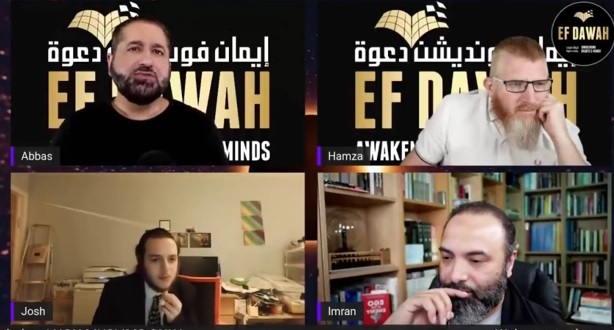
Now to this topic: Discussion with Josh (Jewish) | Is the Quran Being Uncreated Against Tawheed?
Abbas: “I don’t think it was its attribute. We, we’ve, I think we’ve answered the question many times that, with the knowledge of Allah, the Qur’an would have existed eternally. See. The actual physical book the mushaaf that was sent down and this is obviously an English translation, but the actual Arabic text when it was written down it is something that once it gets old it’s even burnt or it’s buried or whatever. To dispose of it in a respectful way.”
Abbas: “Burning it is actually not disrespectful in Islam. It’s a valid way of getting rid of an old manuscript that’s damaged and can’t be read, so you would have to have a new copy or whatever and the old one would be respectfully ah sort of ah, you know, gone away with in that way. But the knowledge of Allah, as a Jew, umm I think that you would accept that whatever knowledge Allah has, for example, the Torah itself. Would you say that the Torah itself is something that came into existence or did God have that in his knowledge but bring it into existence when he chose to?”
Josh: “So I believe that the Torah was in fact created. Only God himself is uncreated. But everything within the so-called “knowledge” of God is created at some point.”
Abbas: “Right, so then are you saying that there was a time when God did not know of the Torah?”
Joshua: “No, there was not a “time” before it, because God is above time. So God created time. Rather or not God created the Torah before he created time is not something I know.“
Abbas: “So, basically what were saying is that was there ever a moment when God did not know of the Torah?”
Joshua.” In a sense, yes. Prior to the creation of the Torah, there could be no knowledge of the Torah.”
Abbas: “So there was a moment when God had no knowledge of the Torah. (Now there is a moment there where the video does a flash sequence. I do not know if that means the video was edited or that is just a video effect.)”
Joshua: “Yes.”
Hamza: “So you don’t believe God has all full knowledge.”
Joshua, “No because, because knowledge we believe is an attribute of God. God’s omniscience is an attribute of him. Therefore, he created his own omniscience.”
Abbas: “Josh, is that a mainstream Jewish belief? In terms of actual rabbinical grounding. That the Torah, at one point God did not actually know what he was going to say. What God was going to give to Moses.”
Hamza (interrupts): “Josh, do you believe that God knows the future?”
Josh: “Yes, because there is no future when it comes to God. Cause for God all time, past, present and future” (could make out due to Hamza speaking over).
Hamza: “So then God knows what the Torah isn’t it always?”
(The team got Josh to admit they had a point that there could be no ‘before’ as he (Joshua) just admitted that past/present/future….)
Imran: (The best listener out of the bunch, in our opinion) He pivots back to the original question: “Your question was really an interesting one because you, you raised this as a question about Tawhid. And you said that this is uh, it requires an explanation having the Qur’an as an uncreated statement that the Qur’an is uncreated, and then you have Allah, who is eternal. Does it affect Tawhid in any way? That was really underlying thing that I think you were trying to get to. So I am going to give you an analogy. Now, obviously, all analogies are imperfect, and we can’t perfect analogies, particularly when it comes to the Creator. But I am gonna try and give an analogy to drawn on and explain. So you’re speaking, right Josh?”
Josh: “Yes.”
Imran: “Can your speech exist without you?” (Can you exist without speaking)
Josh: “I don’t know. Can my speech. Theoretically there could be my speech without me. I suppose. I’m not sure though.”
Imran: “I would say that that’s clearly, that clearly the answer to that question is No. Um, I don’t know how your thinking…if you did not exist, could your speech exist?”
Josh: “Depends. If my speech has to, if there’s prerequisite to the existence of my speech is the existence of myself.”
Imran: “Sorry, sorry to interrupt you. Your thinking. I don’t understand your thinking process. What you’re doing is your taking this speech and your giving it attributes. Now we agreed that speech is an attribute of the Creator. We’ve agreed this. Like just as speech manifests from you. Now the question is do the attributes exist on their own or not?”
Joshua: “With regard to attributes of myself or attributes of God?”
Imran: “So the analogy is to get you to think about the Creator. I am trying to use yourself as an example just to try and give that. So, for example is: Can your speech exist without you?”
Joshua: “So if we (God forbid) leave God out of this picture for this particular analogy. Um, otherwise it’s going to get far too complicated. Then for sure, then you would be right that my speech could not exist without me.”
Imran: “So now I’m going to say now let’s talk about the Creator. Now I’m going to say the attributes of the Creator can’t exist without the Creator.”
Joshua: “Yes, that’s true.”
Imran: “Yup, so now we don’t have a conflation between were not comparing two different things. The Qur’an is the speech of Allah. It’s an attribute you understand? So now the question comes. When we’re talking about (holds up the Qur’an) the text, do we/are we referring to that attribute or not? So there’s two things and now we have to differentiate this. The attribute we’ve agreed is eternal. Why? Because the Creator is eternal, the attribute is eternal. Therefore, the Qur’an is uncreated and eternal. So now that’s a dealt with thing. This is a (holding up the Qur’an) a creation, like somebody has put these pages together, written the pages and the ink down. This (holding up the Qur’an) is not that attribute.”
Joshua: “I understand the difference between the written Qur’an and the spoken Qur’an that..” (unintelligible as Imran talked over him.)
Imran: “So that means coming to the concept of Tawhid. It doesn’t impact that at all. Another example would be: Creation. One of the attributes of God is that he is the Creator. Now, (we agree with this yeah?) “
Joshua: “Yes.”
Imran: “So the creative command is not separate from the creator in any sense, right?”
Joshua: “I would disagree with that because, prior to because prior to having created anything, how can God be considered to be a Creator? In order to be a Creator you need to have a creation.”
Imran: “So o.k that’s interesting, so I think that you sorry Hamza, you wanna…”
Hamza: “You don’t need to create to have the attribute of a creator you just need to create to demonstrate the attribute.“
Joshua: “But that depends on how we understand what the attribute is. Um so, let me just think about how to explain.”
Hamza: (getting visibly impatient) “Oh o.k before Allah, before God created the universe, you believe God created the universe?”
Joshua: “Yes.”
Hamza: “Did he have the attribute of Creator?”
Joshua: “Before he created anything he did not….”
Hamza: “Did he have the attribute of Creator?”
Joshua: “No.”
Hamza: (Surprised) “No!? How did he create than?”
Imran: “O.K. Let’s change the word for a moment, Josh. Let’s make the word ability.”
Joshua: “Ability? o.k. Did God have the ability to create? Yes.”
Imran: “O.K so that’s the attribute.”
Hamza: “That’s the attribute.”
Joshua: “Oh that’s what you mean when you say attributes.”
Hamza: “The Creation is the manifestation of the attribute. Evidence of the attribute if you like.”
Joshua: “It’s the manifestation of ‘Ah’..” (light bulb moment).
Comments:
Over all, that was a very good exchange. In reality, the question Joshua poses is two-fold in nature.
Is the Qur’an created or eternal?
If it is created or eternal, does this pose a problem for the doctrine of Tawhid?
The first argument brought by Abbas is not a good argument.
The eternity of knowledge does not imply the eternity of the known. Otherwise, all things that have come into being would be eternal! Imagine saying, because Allah (swt) has eternal knowledge about Christ Jesus, that Christ Jesus would be eternal! Christians would just love that!
Imran seemed the more learned of the three, at least in terms of Sunni theology. He got straight to the point. However, Imran did a very clever cart before the horse when he asked:
Can your speech exist without you? Actually, we could ask: (Can you exist without speaking?)
The answer to that is yes. You can exist without speaking.
We affirm the attribute of “speech” for Allah (swt) as Imam Diya al-Din ‘Abd al-Aziza Thamini (raheemullah), says in his Mu’alim:
“Know that speech is sometimes referred to Allah in the meaning of negating dumbness of Him, and it then is to be understood as an essential attribute in the way of such attributes. And sometimes it is referred to Him in the sense of its being one of His actions, and it is then to be understood as such. So the meaning of His being Speaking, according to the first interpretation, is that He is not dumb; and according to the second that He is a Creator of Speech.”
Now this is where it gets a bit tricky for Sunni theology.
Imran: “So the creative command is not separate from the creator in any sense, right?”
Response: What do you actually mean by the creator and his attributes? Because the Sunni theological position is that the attributes of Allah (swt) are not equal to Allah (swt) nor other than his essence!
This is a very, very BIG problem for Sunni theology.
Questions for the Athari/Salafi school.
So, if the attributes are not identical to the essence or other than the essence, what are they?
Can you prove your claims that the attributes are not identical to the essence using kitab wa sunnah?
Using the Qur’an and the Sunnah?
Will you need to rely upon kalam?
Actually, a VERY GOOD QUESTION FOR ANY SUNNI MUSLIM IS:
‘What do you mean when you say God is one?’
This may come as a surprise to the readers. They may say the being is one, but can they really, since they also have these attributes that have a quasi/pseudo-being status, in that they are not equal to the being nor other than it?
The second point from Imran
Imran: “So the creative command is not separate from the creator in any sense, right?”
“And the angels called to him as he stood praying in the sanctuary: Allah gives you glad tidings of (a son whose name is) John, (who comes) to confirm A WORD (bikalimatin) from Allah lordly, chaste, a prophet of the righteous. (Qur’an 3:39)
Are we sure that we want to say that Jesus (A WORD) from Allah is not separate from the Creator?
On what consistent basis is Jesus Allah’s word and his spirit and yet be created when the Qur’an is Allah’s word and is eternal and uncreated? On what consistent basis is the claim made?
We are quite certain that Christians are going to be asking themselves why should I leave Christianity, which holds (even in the lesser Arian Christology) that Christ Jesus is a word emanating from the divine nature but sharing the divine nature only to embrace a faith that tells me that Christ Jesus is a word emanating from the divine being but not separate from the divine being?
“His are the creation and the command.” (Qur’an 7:54)
This is answered by the context itself:
Indeed, your Lord is Allah, who created the heavens and earth in six days and then established Himself above the Throne. He covers the night with the day, [another night] chasing it rapidly; and [He created] the sun, the moon, and the stars, subjected by His command. Unquestionably, His is the creation and the command; blessed is Allah, Lord of the worlds. (Qur’an 7:54)
The most that this verse tells us is that, just as Allah (swt) is alone in bringing the universe out of non-being (into being), in the same way, He is alone in the management of it. He has no partner in its creation and in its management. None other than Him has anything of the creation and management. Rather, to HIM alone belong the creation and the command. The meaning here, clearly, is management. And there is nothing in that which even remotely points either to the eternity of the Qur’an or to its contingency.
Examples:
“Maintain with care the [obligatory] prayers and [in particular] the middle prayer and stand before Allah, devoutly obedient.” (Qur’an 2:238)
The middle prayer is not (separated) out of the genus of prayers, the guarding of which has been commanded.
“Whoever is an enemy to Allah and His angels and His messengers and Gabriel and Michael – then indeed, Allah is an enemy to the disbelievers. (Qur’an 2:98)
No one says that Gabriel and Michael are separated out of the genus of angels. The difference between them is relative.
“Indeed, Allah orders justice and good conduct and giving to relatives and forbids immorality and bad conduct and oppression. He admonishes you that perhaps you will be reminded.” (Qur’an 16:90)
No intelligent person will argue about justice being the doing of good, and the doing of good being justice.
The command (amr) of Allah (swt) has been mentioned jointly with what denotes its creation in many places.
“And [remember, O Muhammed], when you said to the one on whom Allah bestowed favor and you bestowed favor, “Keep your wife and fear Allah,” while you concealed within yourself that which Allah is to disclose. And you feared the people, while Allah has more right that you fear Him. So when Zayd had no longer any need for her, We married her to you in order that there not be upon the believers any discomfort concerning the wives of their adopted sons when they no longer have need of them. And ever is the command of Allah accomplished.” (Qur’an 33:37)
“[Remember] when you were on the near side of the valley, and they were on the farther side, and the caravan was lower [in position] than you. If you had made an appointment [to meet], you would have missed the appointment. But [it was] so that Allah might accomplish a matter already destined – that those who perished [through disbelief] would perish upon evidence and those who lived [in faith] would live upon evidence; and indeed, Allah is Hearing and Knowing.” (Qur’an 8:42)
“There is not to be upon the Prophet any discomfort concerning that which Allah has imposed upon him. [This is] the established way of Allah with those [prophets] who have passed on before. And ever is the command of Allah a destiny decreed.” (Qur’an 33:38)
“He arranges [each] matter from the heaven to the earth; then it will ascend to Him in a Day, the extent of which is a thousand years of those which you count.” (Qur’an 32:5)
“Indeed, all things We created with predestination And Our command is but one, like a glance of the eye.” (Qur’an 54:49-50)
“Do the disbelievers await [anything] except that the angels should come to them or there comes the command of your Lord? Thus did those do before them. And Allah wronged them not, but they had been wronging themselves.” (Qur’an 16:33)
All of those examples should be more than sufficient to show our response!
May Allah (swt) open the eyes of the Muslim ummah. May Allah (swt) open the heart of Joshua and bring him to the right way.
If you would like to see more articles on the discussion of the Qur’an, is it created or uncreated? You may wish to see the following:
“Indeed, We have made it an Arabic Qur’an that you might understand.” (Qur’an 43:3)
﷽
Mohamed Hijab, who is a known Muslim speaker based in the United Kingdom, has recently put forward some excellent arguments against the idea of the Qur’an being eternal and uncreated (unbeknownst to him).
Now, to be fair, we want to say from the outset that Mohamed Hijab (as far as we know) believes that the Qur’an is eternal and uncreated.
However, it doesn’t seem that he has pondered the implications of his kalaam argument on the subject of the Qur’an being makhluq (created).
Listen carefully to the exchange between Marwan and Mohamed Hijab
The contingency argument.
@1:28:36 listen to Marwan’s question about pantheism and contingency argument.
@1:30:18 Mohamed Hijab gives his reply listen carefully.
“This is a book, and it’s made out of parts and the parts are the pages of the book right. Correct? So these are the pages of the book. I dunno what book. ‘Jewish historical society of England’ …..This is a book, right, and this is the whole of the book, correct? And it’s made out of parts, correct? Now if I pick a part out. Now if I take all parts out of this book, does it remain as a book? If the parts are taken out, then the whole thing is taken out. If that’s conceivable that parts taken out the whole thing is taken out than there is no way that this thing that I’m talking about is necessary and independent. Because necessary and independent means it’s always there and it can never be any other way. It’s a simple as that. You said, well, if it’s inter-dependent, anything which is inter-dependent by definition is dependent because what does the word inter-dependent mean? Interdependent means things which rely upon each other.So, if in order for this book to exist, there’s an inter-dependence or each page relies upon the existence of other pages in this book in order to exist. Then what we’re saying is this thing is dependent, because everything interdependent is, by definition dependent. What is dependence? Something which relies upon something else for its existence. What is inter-dependence? Something which relies upon something else in order to exist. So, in many ways, what you’re saying is, if we admit that it’s dependent than khalas (finished), it cannot be dependent and necessary at the same time.”
@1:33:16 “How do we describe the kul here? How do we describe the whole of this book? How do we describe the whole of this book? We describe it through its parts, right? Now if I say I just dissembled all its parts, and it’s maybe what 3-400 pages, and I’ve scattered them around. They still exist, but they exist in a different form. Now what I’m saying is the fact that I can re-arrange them like this I can you see this hundred, I dunno, let me see 208 pages of this book, yeah. If I take the 232 pages and make page 1 and page 232 and make it like munaqis (opposite), so instead of 1,2,3,4,5 it’s 232, 231, etc., etc. I’ve re-arranged it. The fact that now I can rearrange this book means there is nothing necessary about the arrangement and the form of this book. There is nothing necessary about it at all.”
@1:34:27 “The book as it is the way in which the book is now from 1 to 232, the way in which the book is like that the form the sura the shaqil the hakel -what ever word you want to use, the form of the book as it is now can be re-arranged. Now let me give you an example because I feel, I feel like the issue here is we don’t know the difference between contingency in this necessity. Necessity: 2 +2=4. 2+2=4. Is there any way 2+2=4 can be arranged any other way. Can it re-arrange in any other way? Can 2+2=anything other than 4? Which means its necessary. So its impossible to re-arrange 2+2 to equal anything other than 4. It’s eternally that way, it’s necessarily that way and it will continue being that way. It cannot be any other way. Now this is not the same with the arrangement of the parts of this book. The arrangement of the parts of this book can be other ways. This book itself can be another way. Instead of this colour; which I will describe as beige I dunno maybe I’m colour blind. It could have been blue. I can actually paint it right now. I can make it blue. I can , you want me to do? It looks like a historic book I dun want to ruin it. But I can change this book. There is nothing necessary about this book. Now you might say well, if we define necessity as something susceptibility, destructibility and generation. Yeah? And then in the closed system of the universe energy cannot be destroyed. Cannot be destroyed and therefore the atoms will take another form. I’m saying. I am not defining. I’m not defining contingency in only that way. I’m defining contingency in three ways. Number 1. Something that can be any other way. Number one yeah? Number 2. Something susceptibility to destruction and generation destruction yeah? And number 3. Something which relies upon something else for its existence. Now even if you argued that well this cannot be really destroyed because it’s atoms will take other form. I’m saying its still not necessary because it can be arranged in another way. The parts of this whole can be arranged in a way which is currently not arranged. It can be a way which is currently not/is. So which means that it, it meets the criterion of contingency; because it can be another way.”
@1:37:24 “You are confusing eternality and necessity. O.K? It’s conceivable that something can be eternal and not necessary. It’s conceivable how so? Because something can be eternal but rely upon something necessary. And that’s why the ‘ulemah of Islam they differentiated between what is referred to as wajibun an nafsi and wajibun al ghayri which is necessary for its own sake and necessary or in and of itself and necessary because of something else. So for example if I were to say. You have a sun. Let’s say the sun is necessary. The sun yani. Shams yeah? And it’s rays are contingent based-dependent upon the sun. The fact that the rays exist and they are contingent on the sun doesn’t’ mean that just because they are both eternal. The fact that the rays exist and are contingent on the sun doesn’t’ mean that the rays are necessary just because their eternal because they are dependent upon something which is necessary in this case, the sun or the eternal. You get it?
@1:38:37 “Yeah that’s his Ibn Cena beliefs. Yeah well Islamic refutation of the universe being eternal is clearly against the Qur’an and the Sunnah. Al Ghazali had this kind of refutation if you wanna.”
Marwan ask about the attributes of Allah (swt).
@1:39:00 “We affirm all the attributes of God through these kind of argumentations. That is why, there is a point where you need like the Rahma of Allah. The fact that he is ghafu and afuw and raheem and all that stuff. That needs to be affirmed through revelation.”
Marwan ask are these attributes necessary or contingent?
@1:39:19 ‘Yeah all attributes of Allah are necessary.” @1:40:25 “We don’t use the word dependent it’s being controlled by the irada (intention) of Allah. By the will of God. So the verb all the attributes of God are controlled by the will of God. If Allah wants to speak yeah? If Allah wants to speak he wills that and he does that.”
Marwan so they are contingent upon his will?
Listen to how uncomfortable is the response of Mohamed Hijab. The sudden shift. Also notice that Mohamed Hijab does not affirm that Allah is speaking, or is speaking eternally. He attributes the speaking to his will! Al hamdulillah! Thank you!
@1:40:44 “We don’t need to use the word contingent. They are controlled by his will.“
I believe at this point Marwan doesn’t really seem to buy it. A quick glance of the ideas upward and simply responds . ‘O.K’
The arguments brought by Mohamed Hijab absolutely decimate the idea that the Qur’an is uncreated.
Its message is dependent upon asbaab an nuzul (occasion of revelation), which conceivably could have been different. According to our brothers from the Sunni denomination, it has text that has been abrogated and that is dependent upon what abrogates and what is abrogated. It is composed of letters and words and sentences that are dependent upon structure to have a coherent meaning. It’s conceivable that the Ahruf /Qir’aat of the Qur’an could be more or less than what they are. It is conceivable that the Qur’an could have been revealed in a language other than Arabic. It is conceivable that the Qur’an itself cannot be necessary, because it is conceivable that Allah (swt) could have had the Torah or any other revelation completely intact and reach us until this very day.
In the words of Fakhr al-Din Al-Razi:
“The impossibility of a word which is composed of letters and sounds being eternal is self-evident to the mind for two reasons:
The first is that a word cannot be a word unless its letters are sequential. The letter uttered before the last that is uttered is originated, and if something’s being originated is affirmed, its eternity is then impossible. So, for the letter following the end of the first, there is no doubt that it originated.
The second is that, if those letters from which the word is composed occurred in one go, the word cannot be. A word composed of three letters can occur in any one of six combinations. If the letters occurred altogether, the words occurring in some of those combinations would not be better than they are occurring in any of the rest. Alternatively, if the letters occurred in succession, then the word is originated.”
Source: (Al-Tafsir al-kabir (Tehran: Dar al-Kutub al-Illmiyyah, 2nd edition, 1:P20.)
Fakhr al-Din took fellow Sunni Muslims of the Hanbali school to task when he says,
“These people are so low as to not deserve mention among the group of the learned. It happened one day that I said to one of them: “If Allah spoke these, then either He spoke them in one go, or in succession. The first is void because the speaking of all these letters in one go will not convey an orderly composition which is a combination in sequence. It necessarily follows that this composition, combined with these successive letters, cannot by themselves be Allah’s speech. The second is void, because if Allah spoke them in succession, then it would be originated.’ When the man heard this statement of mine, he said: ‘It is obligatory for us to affirm and pass on’, i.e., we affirm that the Qur’an is eternal and pass by this statement that we have heard. At that point, I wonder greatly at the safety of this speaker.”
“Have the unbelievers not ever considered that the heavens and the earth were one piece and that We tore them apart from one another. From water, We have MADE/CREATED all living things. Will they then have no faith?” (Qur’an 21:30)
﷽
The Arabic text above says, “waja’alna” (We have created)
When a person makes something, he/she does it out of other materials made by Allah. For example, a carpenter who makes a table does not create it but he/she merely assembles and joins pieces of wood with nails and glue together.
In other words, he/she has made a table out of materials created by Allah. But when Allah (swt) makes something he makes it out of nothing or out of other materials he has created out of nothing.
“And it is He who has created man from water” (Qur’an 25:54)
The Arabic text above says, “khalaqa” (created). Allah (swt) has used in Qur’an 25:54 and Qur’an 21:30 two different Arabic terms, yet both of these words are synonymous in what they convey.
“It is He who created you from one soul and created from it its mate so that he might dwell in security with her.” (Qur’an 7:189)
In the above text, the first term used is “khalaqakum” (created) and the second term “ja’ala” (created). Again, this shows the interchangeable nature of these two terms.
“Oh, mankind! Fear your Lord, who created you from a single person and created, out of him, his wife.” (Qur’an 4:1)
The above Arabic text is “khalaqakum” (created) and wa “khalaqa”(created). Allah (swt) used the same word twice. Allah (swt) did not use the word “ja’ala” (created) as he did in Qur’an 7:189. This once more shows that the two words convey the same meaning.
“Indeed, We have made it an Arabic Qur’an that you might understand.” (Qur’an 43:3)
The Arabic term that is used here is “ja’alnahu” (made/created)
“Truly I am going to create man from clay” (Qur’an 38:71)
The Arabic term here is “khaliqun” (create)
Now let us look at Qur’an 38:72
The underlying words in verse 72 have, however, been given contradictory interpretations.
Professor Abdullah Yusuf Ali has translated them as: “And I breathed unto him of my spirit.”
So when I have fashioned him and breathed into him (his) soul created by Me, then you fall down prostrate to him.”
The implication of the first translation is that Allah (swt) has given part of His spirit, so man is the essence of Allah.
This sounds very much like those who say the Qur’an is the essence of Allah.
In the second translation by Dr. Al Hilali and Dr. Khan, it means that Allah created man’s soul and then breathed it into him. This interpretation agrees with those who say that the Qur’an is created.
This is also the way the Sahih International translates it this way: “So when I have proportioned him and breathed into him of My [created] soul, then fall down to him in prostration.” (Qur’an 38:72)
The three translations (Abdullah Yusuf Ali & Dr. Al Hilali /Dr. Khan and Sahih International are all three contradictory and have both been endorsed by the religious institutions in Saudi Arabia.
Fortunately for us, neither of the translators were Ibadi or the so-called, “Khariji” and thus, no sectarian uproar in the Islamic World!!
Unfortunately, this particular issue is complicated by the fact that there is quite a bit of obfuscation on behalf of our brothers from ‘Ahl Sunnah’ and that is because they do not want to tell us if they regard the attributes of Allah (swt) as being identical with the essence of Allah (swt) or being outside the essence of Allah (swt).
If you would like to learn more about the Qur’an being a creation of Allah (swt), you may wish to read the following:
“He only orders you to evil and immorality and to say about Allah what you do not know. And when it is said to them, “Follow what Allah has revealed,” they say, “Rather, we will follow that which we found our fathers doing.” Even though their fathers understood nothing, nor were they guided?” (Qur’an 2:169-170)
﷽
When it comes to the issue of the Qur’an being created and the topic of the attributes of Allah (swt), we could put this into four views. This brief entry will show where these four denominations have overlapping agreement and/or disagreement.
A. There are four denominations in this subject.
Ibadi.
Muutazila.
Ahl Sunnah.
Jahmia.
Here are the points.
Ibadi & Mutazila say: The attributes of Allah (swt) are nothing other than Allah (swt)
Ahl Sunnah & Jahmia say: The attributes of Allah (swt) are other things with/than Allah (swt).
Ahl Sunnah & Jahmia say: Qur’an is one of the attributes of Allah (swt).
Ibadi & Mutzalia say: Qur’an is not an attribute of Allah (swt).
Jahmia say: Attributes of Allah are created by Allah (swt).
Ahl Sunnah say: All attributes of Allah aren’t created by Allah (swt).
We (The Ibadi) say there is evidence to prove that the Qur’an is created by Allah (swt).
For the Jahmia, the proof that the Qur’an is created by Allah (swt) is that the Qur’an is one of the attributes of Allah (swt). For them, all the attributes of Allah (swt) are created by Allah (swt).
Ibadi, Mutazalia & Ahl Sunnah all say anyone who believes that the attributes of Allah is created are kaafir. (disbelievers of shirk)
We, the Ibadi, say: The Qur’an is a word of Allah and created by Allah, but we don’t say the Qur’an is an attribute of Allah (swt).
“Our belief is upon Haqq and the belief of the Jahmia is upon kufr and batil.” -Shaykh Hamed Hafidh
We want to thank our teacher Shaykh Hamed Hafidh As Sawafi (hafidullah) for this explanation.
We do not have any reports from a companion(sahabah) to the contrary. So, our interlocutors will either have to weaken the hadith or employ interpretive principles to dismiss it as sound evidence.
Alas, Saudi, Salafi translations cannot hide the fact that the Qur’an is created.
The making the Qur’an Arabic is natural making, because it is a meaning abiding with the Qur’an, namely its being Arabic. This means that it will either be transforming from one quality to another.
1) It was first not-Arabic then Allah invented in it this quality (of being Arabic).
2) Or (it will be) creating it with this quality from the beginning
As Allah created, the sun joined with the quality of being a lamp; and as Allah created the night with the quality of being a covering, and created the day with the quality of being a space for seeking livelihood. That is definitely the sense that it is used here. In the case of making an Arabic Qur’an. This is also because of the non-existence of anything to indicate that it was not non-Arabic before, and then Allah transformed it into Arabic. As for its being Arabic since forever, relating the verb ‘making’ to it in this way is impermissible in reason and in the dictionary, because ‘making’ is an action and action precedes what is enacted, so ‘making’ definitely precedes the made.
The same will be said about His saying, Glorified is He: ‘But We made it a light, We guide by it whoever We will from among Our servants’ (Qur’an 42:52)
This will appear as self-evident to whoever reflects on the meaning of ‘making’, and thinks about the Eternal Necessary attributes of Allah, Exalted is He, and the impossibility of relating ‘making’ to these attributes. For it is impossible in law that one should say that Allah has made His Knowledge All-Encompassing, or His Power All-Containing, or that Allah has made His Existence Pre-Eternal and Sempiternal, or that He has made His Hearing catch all sounds, or made His Seeing encompass all that is visible-because these phrases imply Allah’s production of these attributes.
Even if the interlocutors want to state that Allah (swt) could have made his revelation in Hebrew or Aramaic or Hindi or Greek, they have no escape from the two categories above.
A) First, there is no textual proof that the Qur’an was non-Arabic before being Arabic. Even if it was the case, that would be a clear admission of defeat. That is because of the admission of contradiction-an eternal abiding quality going through a change. From one state to another.
B) Because there is no proof for A we are left with the clear meaning of the Qur’an. One in which we do not superimpose our theology upon it. The Qur’an has been made in Arabic.
The knock-out blow has already been delivered. However, some are tenacious in clinging to false beliefs. They will often use every day Arabic vernacular that they think are great examples that the layperson will understand. However, those examples actually work against them!
“He made us dance.” ”He made his son the King.”
So, even in both of these examples, we need to ask:
Is being the King an eternal quality abiding in the individual or was this something that came about before it did not exist?
Can it be said that dancing is an eternal action abiding in the individual or is it merely a transitional state from non-dancing to dancing?
Made — is that which is transferred from one state to the other, which cannot be except in that which is created. The second is the reasoning of its being made in the Arabic language with the intention that the one being addressed may understand it.
Like that verse are all the verses which make it clear that it is made. For example, His saying, Exalted is He: “But We have made it a light, We guide by it whomever We will from among our servants.” (Qur’an 42:52).
Imam Muhammad b. Aflah, (Ra) has commented on the evidence of ‘making’ as affirmation of its being created; he says:
“The ummah is in consensus that every doer is before his doing, and the maker is before the making, and the artist is before the art, and that the maker is other than the made. When the difference and precedence between them has been affirmed, then it is true that they are two things, and that the first and precedent is the Eternal Maker, and the second, the made, is the originated, being after it had not been.” Source: (The Overwhelming Truth)
He has argued from ‘making’ when referred to Allah, in many verses which denote it-such as His saying, Exalted is He: “He made the darkness and the light”. (Qur’an 6:1)
His saying: “Me made from it, its pair.” (Qur’an 7:189)
His saying: “He it is that has made for you the night that you may rest therein, and the day to make things visible to you.” (Qur’an 10:67)
His saying: “Or who has made the earth firm to live in; made rivers in its midst; set thereon mountains immovable; and set a separating barrier between the two seas.” (Qur’an 27:61)
His saying: “Of the hills He made some for your shelter.” (Qur’an 16:81)
His saying: “And has made for you ships and cattle on which you ride.” (Qur’an 43:2)
His saying: “And made the sun as a lamp.”(Qur’an 71:16)
His saying: “And We made the night and the day signs.” (Qur’an 17:12). Similar to those (verses is the meaning of ‘making’) in His saying:
“Have WE not made the earth as a place to draw together.” (Qur’an 77:25)
His saying: ‘Have We not made the earth as a wide expanse; and the mountains as pegs; and created you in pairs; and made your sleep for rest; and made the night as a covering; and made the day as a means of subsistence’. (Qur’an 78:6-11) and other verses.
Imam Abu l-Yaqazan Muhammed b.Aflah (May Allah have mercy on him), says:
“The meaning of ‘made’ in these places that we have cited is ‘created’. And so it is for the one who opposes [our argument], but not, he claims, in the context of the Qur’an, because ‘making’ in the Qur’an is other than creation. If that is allowed for him, then it must be allowed [also] for another to oppose that and say some similar thing about [something] other than the Qur’an-that the ‘making’, about which we [Ibadis and Hanbalis] agree, has the meaning ‘creation’, has [for him] another meaning than ‘creation’. But what is the difference between the two ‘makings’? For [if there is a difference] it means that Allah has addressed the Arabs with what they do not understand of their speech, and what they do not know of their language, and with what there in it is allowed for them to be in doubt and uncertainty about. In one place, ‘making’ is in the meaning of ‘creation’, ‘origination’ and ‘management’. And in another place [it has] another meaning that we do not understand, and we do not know. The All-Wise is not described as such!”
When we and they agree that ‘making’ in His saying ”And He made the sun a lamp.” (Qur’an 71:16)
His saying: “Indeed, We have made what is on the earth an adornment for it.” (Qur’an 18:7) His saying: “He made for you from yourselves pairs.” (Qur’an 42:11)
His saying: “And He made darkness and light.” (Qur’an 6:1) -is in the meaning of ‘creation’, then all ‘making’ when it is by Allah is in the meaning of creation. In that will be included the Qur’an and other than the Qur’an. Otherwise, debating will become pointless and any evidence [for the argument] will not be valid.
“If they oppose -relying on the saying of Allah: “It was not Allah who made slit eared she-camels or she-camels let loose in pasture.” (Qur’an 5:103) It will be said-Yes Allah did not create a slit-eared she-camel as a slit-eared she-camel, as you claim, nor a she-camel let loose in pasture as a she-camel let loose in pasture, as you claim. Rather, He negated from Himself what He did not do as the polytheist claimed [that He did]. So he criticized them because of their innovation. Its meaning is that We did not create you as you have described, rather, We created against that which you have described. The negation here is of the particular qualifier, not of the particular creation.”
“Like that is His saying: “Surely I will make you a leader for mankind.” (Qur’an 2:124) i.e. I will create in you the quality that was not in you, and the meaning that was not found in you, and I had not done so in you before that. The meaning of ‘made’ wherever it is found is ‘created’, ‘managed’, and all that is the same meaning, though the words are different.”
Prima-Qur’an comment: Another example is the following:
“Allāh has not made (ja’ala) for a man two hearts in his interior. And He has not made (ja’ala) your wives whom you declare unlawful your mothers. And He has not made (ja’ala) your claimed [i.e., adopted] sons your [true] sons. That is [merely] your saying by your mouths, but Allāh says the truth, and He guides to the [right] way.” (Qur’an 33:4)
One of them actually made the comment to us: “Can we say that Allah didn’t create sons or hearts or wives?” Of course not! Such a bizarre conclusion. Again, the negation is of a particular type or qualifier, not of the creation itself. Another thing we wish they had pondered is that if Allah (swt) had made (ja’ala) for man two hearts, or made (ja’ala) our wives our mothers, or made (ja’ala) our adopted sons our real sons the same word (ja’ala) would still be applicable.
That is Muhammad b. Aflah’s statement about ‘making’. (May Allah’s abundant mercy be upon him).
We add to that, we investigated occurrences of ‘making’ in the Qur’an referred to Allah, and we found it fell in either of two classes.
The ‘making’ is either natural or legal. In both there is creation of what did not exist (before).
In natural making, for example, there are the following:
In His saying: “He made from it its pair.” (Qur’an 7:189)
His saying: “And has made for you ships and cattle on which you ride.” (Qur’an 32:12)
His saying: “He made the sun a lamp.” (Qur’an 71:16) –The meaning of origination and contingency is clear.
The legal ‘making’ is as in His saying in the following:
“Surely I will make you a leader for mankind.” (Qur’an 2:124)
Another example of the same is the negated making in His saying, Exalted is He: “It was not Allah Who made a slit-ear she-camel or a she-camel let loose in pasture.” (Qur’an 5:103) i.e. He did not legalize the slitting of its ear. An(other) example of the legal ‘making’ is His saying, Exalted is He: “And He made the qiblah to which you were used only to test those who followed the Messenger from those who would turn on their heels.” (Qur’an 2:143)
The differences between the two ‘makings’ are as follows:
The first of them is bringing into existence the essence of the made thing or an abiding quality of it which did not exist before. That implies bringing the made from one state to another state, or from one quality to another quality. That (turning from one to another state) is accomplished when ‘making’ is referred to mankind, and it is in the meaning of turning from one state to another, as (when) I made the dough bread, the flour dough. In both cases, there is a turning of the made from one state to another state in which it was not before. The flour being made dough was not dough, and the dough before being made bread was not bread. It is not understood from this other than that the thing made is moving with the making from what it was before (to the changed state).
The second is inventing a law that turns (the object of the action) from one verdict to another one, like the Ka’bah being made the qiblah of the Muslims after Bayt al-Maqdis had been their qiblah.
Dealing with objections: May Allah (swt) guide the sincere.
An objection has been offered to the argument for the creation of the Qur’an from its being made Arabic-that ‘making’ is sometimes other than creation, as in the following examples:
“They make for Allah daughters, Glorified Is He.” (Qur’an 16:57)
“Still, the pagans have made some of His creation out to be a part of Him. Indeed, humankind is clearly ungrateful.” (Qur’an 43:15)
“They made angels who are servants of the Most Gracious females.” (Qur’an 43:19)
His saying: “You make it your provision that you lie.” (Qur’an 56:82).
The answer to this is that the distance between the two ‘makings’ and makers is immense. The making, in the context of what we are here discussing,is an affirmed action referring to Allah, Exalted is He. Whoever rejects it or rejects its effect (namely, the Qur’an), has unbelieved. That which is made—namely, the Qur’an in Arabic, its giving light and its guidance is an established reality. Whoever rejects it, he has certainly unbelieved.
The ‘making’ in what they have objected to is a falsehood referring to the unbelievers. They made—namely, the angels being feminine — is nothing. Whoever affirms that will be regarded as an unbeliever. Who affirms that the made some of his creation to be a part of him is an unbeliever.
There is no problem with the sameness of the letters of the verb (ja’ala)in both references—namely,jim, ‘ayn, lam—because the verb in reference to Allah has one meaning, and in reference to someone else has another meaning regardless of there being no difference in the word. Examples:
“He is who created you and those before you.” (Qur’an 2:21)
“And Allah created you and whatever you do.” (Qur’an 37:96)
“Indeed We have created man from a quintessence of clay.” (Qur’an 23:12)
“We have indeed created man in the best of molds.” (Qur’an 95:4)-and other similar verses where the creation is referred to Allah.
It is in all cases with the meaning of bringing from non-being into being. You will find this same verb, the same word and the same letters, referred to the unbelievers. It has (in those references) a sense that is not proper to the righteous servants of Allah, let alone its being permissible in respect of Allah, the Lord of the Worlds, Exalted is He. That (meaning) is (explicit) in His saying: “And you created falsehood.”(Qur’an 29:17).
So the meaning of the word is the same.
Is there any way to interpret that in one place according to the meaning of the other?
Or is the comparison between the two verbs as impossible as the impossibility of the comparison between the two doers?
“For that is Allah, your Lord, the Truth. And what can be beyond truth except error? How then are you turned away?”(Qur’an 10: 32)
For more information you may wish to read our article here:
“Truly, the likeness of Jesus, in God’s sight, is as Adam’s likeness; He created (khalaqahu) him of dust, then said He unto him, ‘Be,’ and he was.” (Qur’an 3:59)
﷽
The Qur’an is Created because Jesus is Not God.
That is to say, because Jesus (as) is not the uncreated word of Allah, neither is the Qur’an the uncreated word of Allah.
The Qur’an is Uncreated = Jesus is the eternal attribute of Allah.
This would mean, according to Sunni theology (Athari, Ash’ari, Maturidi), that Jesus is not identical to Allah’s essence, but he is not other than Allah’s essence either.
Christian theology states that Jesus (as) existed as the Word of Allah before being placed inside of Mary (as).
فِي البَدْءِ كَانَ الكَلِمَةُ مَوْجُودًا -In the beginning the Word (AlKalimat) Existed.
وَكَانَ الكَلِمَةُ مَعَ اللهِ، -And the Word (AlKalimat) was with Allah.
وَكَانَ الكَلِمَةُ هُوَ اللهَ. –And the Word (AlKalimat) was Allah.
كَانَ الكَلِمَةُ مَعَ اللهِ فِي البَدْءِ – The Word (AlKaimat) was with Allah in the beginning.
بِهِ خُلِقَ كُلُّ شيءٍ، -By Him all things were created.
وَبِدُونِهِ لَمْ يُخلَقْ شَيءٌ مِمَّا خُلِقَ. -And without Him nothing would have been created.
Is Jesus the created word of Allah or the uncreated word of Allah?
“When the angels said, “O Mary, indeed Allah gives you good tidings of a word (bikalimatin)from Him, whose name will be the Messiah, Jesus, the son of Mary – distinguished in this world and the Hereafter and among those brought near [to Allah]. (Qur’an 3:45)
Jesus (as) is a word from Him.
“And [the example of] Mary, the daughter of ‘Imran, who guarded her chastity, so We blew into [her garment] through Our angel, and she believed in the words (bikalimati) of her Lord and His scriptures and was of the devoutly obedient.” (Qur’an 66:12)
Mary (as) is believing in the Lord and his words. Meaning they are not identical.
“O People of the Scripture do not commit excess in your religion or say about Allah except the truth. The Messiah, Jesus, the son of Mary, was but a messenger of Allah and a word (kalimatuhu) from Him which He directed to Mary and a soul from Him. So, believe in Allah and His messengers. And do not say, “Three”; desist – it is better for you. Indeed, Allah is but one God. Exalted is He above having a son. To Him belongs whatever is in the heavens and whatever is on the earth. And sufficient is Allah as Disposer of affairs.” (Qur’an 4:171)
Jesus (as) is a word from Him.
“And if anyone of the polytheists seeks your protection, then grant him protection so that he may hear the (kalam al-lahi) Words of Allah.” (Quran 9:6)
“Those who remained behind will say when you set out toward the war booty to take it, “Let us follow you.” They wish to change the (kalama l-lahi) Words of Allah.” (Quran 48:15)
All these words come from the same Arabic trilateral root.
ك ل م (kaf) (lam) (mim) Jesus is the created word of Allah (swt) just as the Qur’an is the created word of Allah (swt). If someone was to believe that Jesus (as) is the uncreated word of Allah (swt), then that would be Christianity. If someone was to believe that Jesus (as) is the created word of Allah (swt), that would be Islam and the path of safety.
One of our teachers has known of people who have left Islam for Christianity. You also encounter them online and some of them have said a study of the Qur’an helped in making that decision. We would submit that it was not the Qur’an that lead them to this decision but a certain theological perspective about the Qur’an and Jesus being Allah’s creation and command not being able to distinguish between the two.
We have never heard of a Muslim who believes that Allah (swt) alone is the Creator and everything else (including the Qur’an as being created) becomes a Christian.
So what we are looking for is consistency.
On what consistent basis is Jesus ‘the word of Allah’ (kalimatuhu) created but the Qur’an (kalam al-lahi) ‘the words of Allah’ uncreated? Listen to what Mohamed Hijab says above.
“The word is actually defined as Kun.” -Mohamed Hijab
If the word is defined as ‘Kun’, then according to the following Sunni Muslims, then Jesus (as) is the uncreated Word of Allah.
We have actually had one Sunni Muslim brother from India (no doubt equipped with his Shaykhs and Alims) come and assert the following thinking it would be some powerful argument and not realizing they had erred in the following:come
1) The lack of depth in understanding the Qur’an and Arabic.
2) The bizarre theological implications of their view.
So they advanced the following:
“He is the One Who has originated the heavens and the earth, and when He wills to (originate) a thing, He only says to (lahu) it: ‘Be’, and it becomes.” (Qur’an 2:117)
“All it takes, when He wills something ˹to be˺, is simply to say to (lahu) it: “Be!” And it is!” (Qur’an 36:82)
So their argument was that if the ‘kun’ was created, then you would need another ‘kun’ to create that ‘kun’, leading to an infinite number of ‘kun’ regressing back through time.
If this saying (of ‘Be’) had (itself) been created, then it would not be correct to (say that) the creations were created by it, because the creation is not created by a creature.
Going back to the opening verse of this article:
“Truly, the likeness of Jesus, in God’s sight, is as Adam’s likeness; He created (khalaqahu) him of dust, then said He unto him, ‘Be,’ and he was.” (Qur’an 3:59)
A transliteration would be:
inna mathala ʿīsā ʿinda l-lahi kamathali ādama khalaqahu min turābin thumma qāla lahu kun fayakūn
The audio of it is here:
A) It is not really explained by our interlocutors how the word ‘kun’in which the sound‘n’ is eternal when that sound itself is preceded by the sound‘k’, which presumably is eternal.
B) One will not fail to note that in all the verses above (Q 3:59, 2:117, 36:82) that grammatically the structure of the sentence is that Allah (swt) is saying to the ‘lahu’ translated above as ‘he’ or ‘it. “Be!”
Thus, they want us to believe that Allah (swt) is saying to his knowledge of all things (which exist for all eternity) to ‘be’ and it becomes!
The meaning of ‘Be’ in the like of His saying, exalted, is He, “For to anything which We have willed, We but say “Be” then it is.” (Qur’an 16:40)
This relates to the execution of His Will. Exalted is He, in respect of anything of the mumkinat (what is possible) in the context of giving it existence or completing it. It is explained by his Saing, “When We have willed’ i.e. When Our Will has conjoined with it in a way of execution (of the command). Because ‘when’ is for time in the future, and this is emphasized in His saying: “an naqula la-hu.” (that We say to it), (Qur’an 16:40) which is in the imperfect tense which, when it is with ‘an’, means the future.
It is known with certainty that whatever is since forever-like His Knowledge, His Power and His Life-the Will cannot be conjoined with it, because nothing can precede (what is eternal).
And this is emphasized by His saying ‘fa-yakun’ (then it is), the connecting particle ‘fa’ meaning order and sequence. From this you know that His saying, exalted is He, ‘kun fa-yakun’, is, wherever it occurs, nothing but an indirect expression of the speedy response of things to Him, glorified is He, in accordance with the conjunction of His Will with these things. Otherwise, there is no utterance of kaf nun (kun) in the concrete sense (of utterance). If we accept that, then we will say that our discussion is about the Word revealed, such as the Qur’an, not the Word unrevealed.
It is also a metaphor for the expediency of Allah’s creative command.
“Allah created the heavens and the earth, and all that is between them, in six days” (Qur’an 7:54).