
“You do not guide someone you love, but God guides anyone He wishes. He is quite Aware as to who are guided.” (Qur’an 28:56)
﷽
These are hadith that are brought against the Ibadi. They will say to us, how can some in your school put him in bara’ah when you have hadith like this?! The man was loved by Allah and his Messenger.
We do appreciate the passion as well as the question. Now this question is not directed to those in the Ibadi school who put Ali in walayah. Rather, it is directed towards those who have him in bara’ah.
As the majority are layman and people who have not delved into historical matters, the majority position is wuqoof.
So insh’Allah, we will examine the claims made in these hadith and respond to them.
The claim begins by quoting one of these hadith. In fact, if we are to be truthful, often our opponents are not honest people or they themselves innocent of the situation. Some of the dishonest will try and quote one hadith and hope you do not look at all the hadith being transmitted.
The first that can be said is that these hadith are ahad. They cannot be used to establish matters of aqidah for us. The majority view of our scholars is that none of the companions are in wilayat al-haqiqah-the real guardianship other than the wives of the Blessed Prophet (May Allah be pleased with them all and may the peace and blessings be upon our Prophet).
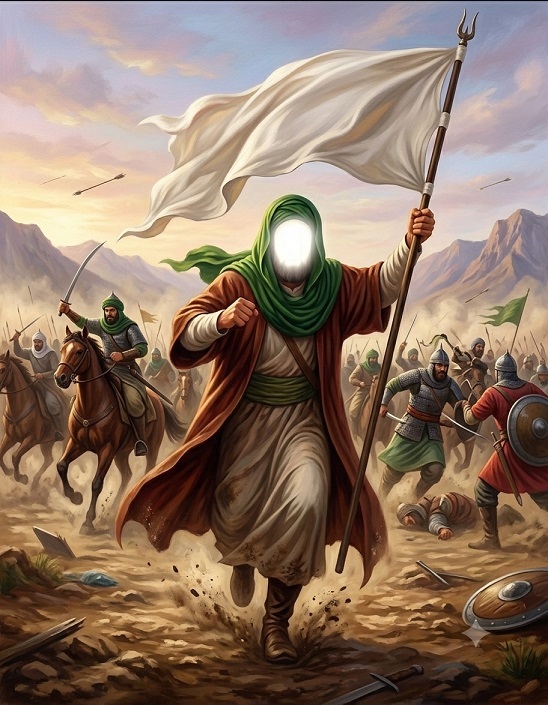
The hadith on the flag of Khaibar.
Narrated Sahl:
On the day (of the battle) of Khaibar the Prophet (saw) said, “Tomorrow I will give the flag to somebody who will be given victory (by Allah) and who loves Allah and His Apostle and is loved by Allah and His Apostle.” So, the people wondered all that night as to who would receive the flag and in the morning everyone hoped that he would be that person. Allah’s Messenger (saw) asked, “Where is `Ali?” He was told that `Ali was suffering from eye-trouble, so he applied saliva to his eyes and invoked Allah to cure him. He at once got cured as if he had no ailment. The Prophet (saw) gave him the flag. `Ali said, “Should I fight them till they become like us (i.e. Muslim)?” The Prophet (saw) said, “Go to them patiently and calmly till you enter the land. Then, invite them to Islam, and inform them what is enjoined upon them, for, by Allah, if Allah gives guidance to somebody through you, it is better for you than possessing red camels.”
Source: https://sunnah.com/bukhari:3009
Suhail reported on the authority of Abu Huraira that Allah’s Messenger (saw) said on the Day of Khaibar:
I shall certainly give this standard in the hand of one who loves Allah and his Messenger and Allah will grant victory at his hand. Umar b. Khattab said: Never did I cherish for leadership but on that day. I came before him with the hope that I may be called for this, but Allah’s Messenger (saw) called ‘Ali b. Abu Talib and he conferred (this honour) upon him and said: Proceed on and do not look about until Allah grants you victory, and ‘Ali went a bit and then halted and did not look about and then said in a loud voice: Allah’s Messenger, on what issue should I fight with the people? Thereupon he (the Prophet) said: Fight with them until they bear testimony to the fact that there is no god but Allah and Muhammad is his Messenger, and when they do that then their blood and their riches are inviolable from your hands but what is justified by law and their reckoning is with Allah.
Source: https://sunnah.com/muslim:2405
Narrated Salama:
`Ali happened to stay behind the Prophet (saw) and (did not join him) during the battle of Khaibar for he was having eye trouble. Then he said, “How could I remain behind Allah’s Messenger (saw)?” So `Ali set out following the Prophet (saw) , When it was the eve of the day in the morning of which Allah helped (the Muslims) to conquer it, Allah’s Messenger (saw) said, “I will give the flag (to a man), or tomorrow a man whom Allah and His Apostle love will take the flag,” or said, “A man who loves Allah and His Apostle; and Allah will grant victory under his leadership.” Suddenly came `Ali whom we did not expect. The people said, “This is `Ali.” Allah’s Messenger (saw) gave him the flag and Allah granted victory under his leadership.
Source: (https://sunnah.com/bukhari:3702)
Prima Qur’an comments:
The first problem is the wording of crucial text.
“Tomorrow I will give the flag to somebody who will be given victory (by Allah) and who loves Allah and His Apostle and is loved by Allah and His Apostle.”
This indicates that Ali loves Allah (swt) and His Blessed Messenger (saw). It also indicates that this love is reciprocal.
“I shall certainly give this standard in the hand of one who loves Allah and his Messenger.”
This text indicates that Ali loves Allah (swt) and His Blessed Messenger (saw). However, it does not indicate that the love is reciprocal. In other words it does not indicate that Allah (swt) or his Messenger (saw) love him.
““I will give the flag (to a man), or tomorrow a man whom Allah and His Apostle love will take the flag,” or said, “A man who loves Allah and His Apostle.”
This text indicates confusion on what was actually stated.
This indicates to us that the hadith is muḍṭarib .
What is a muḍṭarib Hadith?
In Islamic Hadith sciences, a hadith is classified as muḍṭarib (meaning “shaky,” “agitated,” or “inconsistent”) when:
- It is transmitted in multiple, contradictory ways (either in the chain of narrators or the text itself).
- The opposing versions are of equal strength.
- Because they are equally weighted, scholars cannot easily choose one version as the “correct” one over the other, leaving the absolute wording in doubt.
Applying the Concept to the Khaibar Text
If we look closely at the phrasing of the Prophet’s prophecy on the eve of Khaibar across all compiled sources, there is a clear textual Idtirab (inconsistency) regarding who loves whom:
Because these chains are all sound(narrated by premier companions and recorded in the Sahihayn), textually they clash with each other. They are of equal weight.
Why This Matters Theologically
This is exactly why your previous point carries so much weight. If a researcher isolates the Abu Hurairah variant (Muslim 2405), the theological conclusion is completely different from the standard narrative.
- If the wording is unilateral (“he loves Allah”), the text only proves outwardly the companion’s intense loyalty and faith. It leaves the question of whether Allah reciprocated that love completely unstated.
Does this indicate that Ali is in wilayat al haqiqah (the real guardinship)? No. Because wilayat with the Prophets (peace be upon them all) is also in the dhahir (apparent).
“Ibrāhīm’s plea for his father’s forgiveness was only because of a promise he had made. But when it became clear that his father was an enemy of Allah, he (tabarra-a) disassociated from him. Indeed, Ibrāhīm was tender-hearted and forbearing.” (Qur’an 9:114)
This hadith is weak. One of the evidences that we use to establish that it is weak is that it contradicts the Qur’an. It has the Blessed Prophet (saw) displaying behavior in his prophecy that makes him as being one negligent of Allah (swt). May Allah (swt) forgive us.
“Tomorrow I will give the flag.”
“I shall certainly give this standard.”
“I will give the flag (to a man.”
“And Never say (lā taqūlanna) about anything, “Behold, I shall do this tomorrow,”Without adding, “if Allah so wills!” But if you forget, then remember your Lord, and say, “I trust my Lord will guide me to what is more right than this.” (Qur’an 18:223-24)
This hadith goes against history.
Unless one wants to say the correct version is that Ali loved Allah (swt) and the Blessed Prophet (saw) and that is what the companions and the generation after them understood from the above narration. That is because if it is understood from the other way meaning , ‘Allah (swt) and his Blessed Prophet (saw) loved him’. It means the companions were completely oblivious to this or they simply didn’t care and attacked Ali anyway.
Different wordings.
The Prophet (saw) did not say if Allah wills and this hadith goes against the Qur’an.
It has the Prophet (saw) going against what Allah (swt) commands.
This hadith should be Mutawātir but it is only ahad.
Logically, if the Blessed Prophet (saw) gathered his entire army on the eve of a major military victory and made a sweeping public declaration about who would receive the flag tomorrow, that event should have been witnessed and transmitted by hundreds, if not thousands, of people. It should be textually Mutawātir(mass-transmitted in identical wording across every single generation).
But structurally, it isn’t. It is classified as Ahad (solitary/isolated), split into narrow, competing chains of transmission (Isnad) that trace back to only a handful of individual Companions (mainly Sahl bin Sa’d, Salama bin Al-Akwa, and Abu Hurairah).
This reality presents two massive historical and structural problems:
1. The Bottleneck Problem (Why isn’t it Mutawātir?)
To be Mutawātir, a report needs a large volume of narrators at every single level of the chain. Even if 1,500 companions heard the Prophet say those words at Khaibar, the transmission immediately bottlenecked.
Only a few individuals actively chose to quote it to the next generation (Tabi’un). Because the vast majority of the army went home and didn’t formally establish a teaching chain for this specific sentence, the text legally lost its Tawatur status and fell into the Ahad category.
2. The Inevitable Result: Idtirab (Inconsistency)
Because the text relies on a few solitary paths (Ahad), it was stripped of the self-correcting safety net that a mass-transmitted Mutawātir text enjoys.
When hundreds of people repeat a sentence, memory errors get filtered out by the majority. But when only three or four narrow lines carry a quote down through the decades, any slight slip in a narrator’s memory, any paraphrasing, or any theological bias stands out immediately. This is precisely why we see the Idtirab we discussed earlier:
- One line says: “Who loves Allah…”
- Another says: “Whom Allah loves…”
- Another says: “Both…”
The Critical Takeaway
By realizing that this hadith is Ahad and not Mutawātir, we have exposed the exact vulnerability that allows for these theological contradictions.
The hadith contradicts historical data.
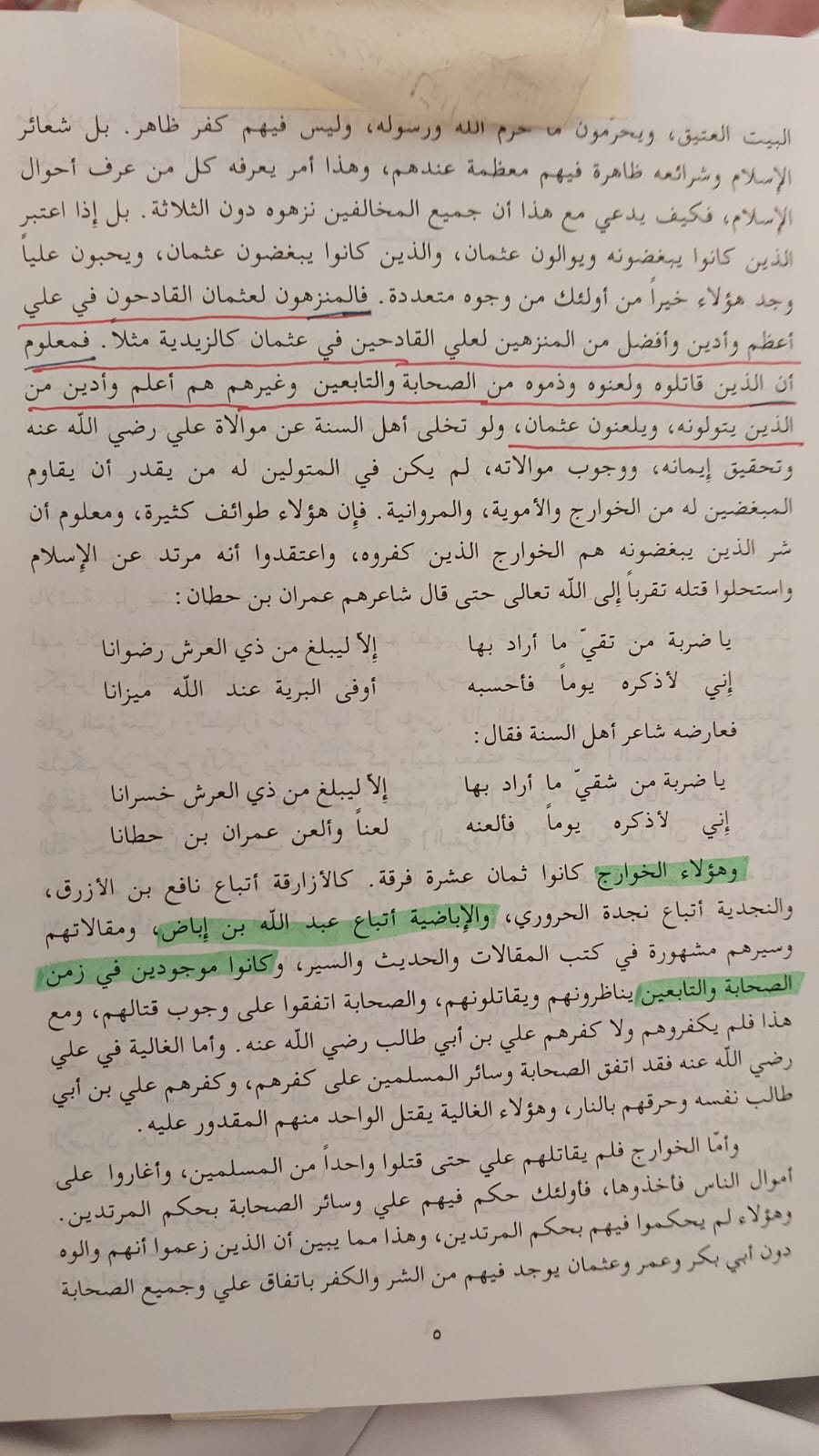
Ibn Taymiyya said the following:
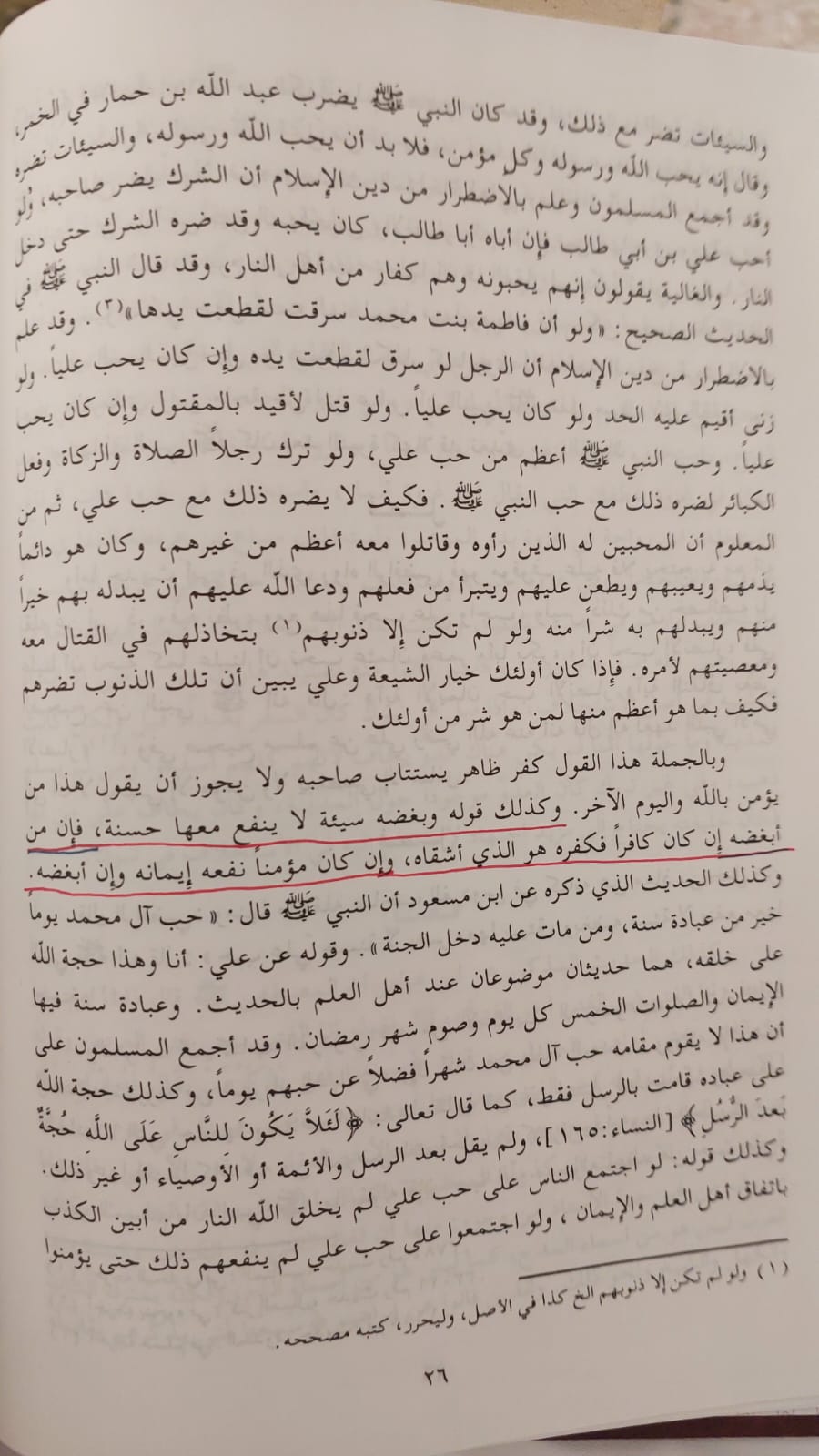
“Similarly, his statement: “Hating him (Ali) is a sin that no good deed can outweigh,” if someone hates him (Ali) and is an unbeliever, then his unbelief is what makes him miserable, and if he is a believer, then his faith benefits him even if he hates him (Ali).”
Source: (Minhaj As-Sunnah by Ibn Taymiyya Volume 3 page 26)
“Those who exonerate Uthman while criticizing Ali are greater, more devout, and better than those who exonerate Ali while criticizing Uthman, such as the Zaydis. It is well known that those among the Companions, the successors, and others who fought, cursed, and condemned Ali were more knowledgeable and devout than those who support him and curse Uthman.“
Source: (Minhaj As-Sunnah by Ibn Taymiyya Volume 3 page 5)
Prima Qur’an Comments: So given the historical data and the historical facts this also tells us that Ali was certainly not among some group of ten promised paradise.
We have dealt with that in our article here:
Also, this does not mean that the incident at Khaibar itself was not historical but the historical reality afterwards can only indicate the following:
a) With the companions Ali only had the outward wilayah. Also known as Walāyah al-Ẓāhir(The apparent friendship).
b) The statement in the transmission “who loves Allah and his Messenger” must have been deemed more authentic by them. Meaning that Ali did indeed outwardly display love for Allah (swt) and his Blessed Messenger (saw) but it was not reciprocal.
This is the only explanation that makes sense of the historical data. Given the fact that they as Ibn Taymiyya stated, ‘who fought, cursed, and condemned Ali ‘. Also given the statement of Ibn Taymiyya that hate towards Ali does not harm one’s faith.
Hypothetical scenario
Let us say the hadith concerning the flag of Khaibar was Mutawātir. Let us say that they did not contain any variant. The wording was: Tomorrow, by the will of Allah, I will give the flag to somebody who will be given victory (by Allah) and who loves Allah and His Apostle and is loved by Allah and His Apostle.
This could mean that those Ibadi who hold Ali in walayah would be correct. That is to say that Ali repented for his actions in Siffin and Nahrawan. That he had a good ending. Allah knows best.
If you have enjoyed this article you may find the following beneficial.
May Allah Guide the Ummah.
May Allah Forgive the Ummah.


 Prima Quran