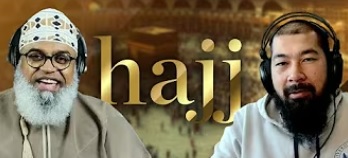
“Call people to the pilgrimage. They will come to you on foot and on every lean camel from every distant path.” (Qur’an 22:27)
﷽
Eid Mubarak! May this blessed occasion fill your heart with joy, your home with warmth, and your life with countless blessings. May Allah grant you peace, love, and unity in the company of family and friends. 🌙✨Please forgive our many short comings and faults. While we celebrate let us not forget those who can’t due to war and oppression. Let us not forget the converts, often alone and isolated. 🌹❤️
Congratulations the many hundreds of thousands who have fulfilled thier obligation of Hajj. May Allah bless you all and may it be a witness for you on the day of judgement.
May this be a very blessed and joyous Eid for all of you!
We give you the Eid Khutbah from Shaykh Dr. Kahlan Al Kharusi assistant Mufti of Oman. May Allah have mercy on him.
In the name of Allah, the Most Gracious, the Most Merciful. Indeed, all praise is due to Allah. We praise Him, seek His help, and ask for His forgiveness. We seek refuge in Allah from the evils of our souls and the wickedness of our deeds. Whomever Allah guides, none can lead astray, and whomever He allows to stray, none can guide. I bear witness that there is no deity worthy of worship except Allah, alone, without any partner. And I bear witness that Muhammed is His servant and His Messenger. O Allah, bestow Your blessings and peace upon him, upon his family, his companions, and all those who follow his guidance until the Day of Judgment. Allah is the Greatest, Allah is the Greatest, Allah is the Greatest. There is no deity worthy of worship except Allah, and Allah is the Greatest, infinitely great. Allah is the Greatest, Allah is the Greatest, Allah is the Greatest. There is no deity worthy of worship except Allah, and Allah is the Greatest. And to Allah belongs all praise, abundant praise. Glory be to Allah in the morning and the evening.
O you who believe, be mindful of Allah and speak words that are just and right. He will then rectify your deeds for you and forgive you your sins. Whoever obeys Allah and His Messenger has indeed achieved a magnificent triumph.
Now then, indeed the hearts of Muslims today beat with a call, renewing their covenant with Allah Almighty, either through spoken words or through their very state: “Here I am, O Allah, here I am. Here I am, You have no partner, here I am. Indeed, all praise, blessings, and dominion are Yours. You have no partner.” It is a sincere faith, absolute obedience, profound gratitude, abundant remembrance, and much supplication. How great these days are, and how magnificent the meanings and signs they bring! They all come with Eid to renew in the Islamic nation that its creed is a pure and tolerant monotheism, that its message is one of goodness, guidance, and mercy to the worlds, that its guidance is that of justice and truth, and its hallmark is high moral character, noble values, and generous traits. By the truth of Allah, these are the very things that unite the word of Muslims, give them honor among nations, guide their standing, preserve their homelands, and call for their unity—if only they understood them and embraced them. Whoever submits his face to Allah while doing good has grasped the most trustworthy handhold. And to Allah is the final return of all matters. Allah is the Greatest, Allah is the Greatest, Allah is the Greatest. There is no deity worthy of worship except Allah, and Allah is the Greatest. And to Allah belongs all praise.
O servants of Allah, can it be hidden from any rational person what humanity is experiencing today of turmoil in conditions, imbalance in the foundations of understanding and cooperation, distance from guidance and righteousness, and the rejection of the causes of peace? Yet the sincere Muslim is commanded in all his affairs to adhere to truth, uphold justice, reject oppression and aggression, and embody patience, diligence, and wisdom. If he does so, Allah Almighty guarantees him the overcoming of tribulations, the attainment of goals, and the realization of goodness.
Consider how our Lord, Glorious and Exalted, gave us glad tidings in Surah Al-Ma’idah through a verse revealed to the Messenger of Allah (saw) during such blessed days as these, on the Day of Arafah. It is His saying, Exalted is He: “Today I have perfected for you your religion, completed My favor upon you, and have approved for you Islam as your religion.” Then He informs us of another great glad tiding we remember with the renewed memory of these fragrant, blessed days, which dispels despair from souls and brings joy and hope. For He, Glorified is He, says in the same surah: “Your only ally is Allah, His Messenger, and the believers—those who establish prayer, give charity, and bow down in worship. Whoever takes Allah, His Messenger, and the believers as allies—indeed, the party of Allah will be victorious.” And from His mercy, Glorious and Exalted, upon His servants is that He made clear to them the method of achieving that in the same surah, revealing what they need when nations conspire and balances are distorted. He, Glorified is He, says: “O you who believe, be steadfast for Allah as witnesses in justice, and do not let the hatred of a people prevent you from being just. Be just, for it is closer to righteousness. And be mindful of Allah. Indeed, Allah is All-Aware of what you do.” Allah is the Greatest, Allah is the Greatest, Allah is the Greatest. There is no deity worthy of worship except Allah, and Allah is the Greatest. And to Allah belongs all praise.
O Muslims, may Allah have mercy on you, seize these good and blessed days by glorifying Allah Almighty through remembrance and gratitude, performing the Takbir and remembrance after the obligatory prayers until the end of the Days of Tashreeq, and offering sacrifices for the sake of Allah Almighty, while being diligent in acts of kindness, righteousness, benevolence, and striving to reconcile between people. Strive for what increases our beloved homeland, Oman, in status, honor, cohesion, security, and peace, appreciating the efforts of every hand that builds, and being vigilant against anyone who seeks evil, division, or detraction. The path to all of this lies in us, the people of this generous land, realizing the meanings of fraternity, mercy, mutual love, compassion, turning to noble matters, and disregarding trivial ones. No season is more worthy of reviving these meanings and realizing them in our reality than these well-known days. We always advise ourselves and others to heed Allah Almighty’s commandment where He says: “And fear a Day when you will be returned to Allah, then every soul will be fully compensated for what it has earned, and they will not be wronged.”
And send blessings and peace upon the trustworthy Messenger, for your Lord has commanded you to do so when He said: “Indeed, Allah and His angels send blessings upon the Prophet. O you who believe, send blessings upon him and greet him with full respect.” O Allah, send blessings upon our Prophet Muhammed and upon the family of our Prophet Muhammed, as You sent blessings upon Ibrahim. And bestow blessings upon our Prophet Muhammad and upon the family of our Prophet Muhammed, as You bestowed blessings upon Ibrahim and the family of Ibrahim in the worlds. Indeed, You are Praiseworthy, Glorious. O Allah, be pleased with his rightly-guided successors, his wives, the mothers of the believers, all the other companions, and with us along with them, by Your mercy, O Most Merciful of the merciful.
O Allah, our Lord, protect our homelands and strengthen our ruler, Haitham bin Tarik. Support him with truth, and support truth through him, O Lord of the worlds. O Allah, shower him with Your blessings, support him with the light of Your wisdom, guide him with Your success, guard him with Your protective care, and bring about through him abundant goodness, honor, and elevation for his people and his nation, O Possessor of Majesty and Honor. O Allah, we ask You to decree for Oman and its people honor, elevation, growth, security, and peace, to avert from them all evil and dislike, and to suffice us, O our God, against the evil of trials, both apparent and hidden. O Allah, send down upon us blessings from the heavens, bring forth for us the good of the earth, and bless us in our fruits, crops, and all our provisions, O Possessor of Majesty and Honor. O Allah, grant glory to Islam, guide Muslims to the truth, unite their word upon goodness, support our oppressed brothers in Gaza, Palestine, and all other Muslim lands, and be their Protector, Sufficer, and Supporter. O Allah, suffice them against Your enemy and their enemy as You will, O Possessor of Majesty and Honor. O Allah, protect the pilgrims to Your Sacred House, accept their rituals from them, and return them to their families safe and successful. Our Lord, grant us good in this world and good in the Hereafter, and protect us from the punishment of the Fire.
Indeed, Allah commands justice, goodness, and giving to close relatives, and forbids immorality, evil, and oppression. He admonishes you so that you may take heed.
May Allah Guide the Ummah.
May Allah Forgive the Ummah.