
“Every soul shall have a taste of death: And only on the Day of Judgment shall you be paid your full recompense. Only he who is saved far from the Fire and admitted to the Garden will have attained the object (of Life): For the life of this world is but goods and chattels of deception.” (Qur’an 3:185)

﷽
The first point to keep in mind while reading this is there is absolutely no definite text anywhere in the Qur’an that says that Jesus will return. Albeit we recognize that there are texts that have been interpreted to be understood as such.
Our position.
We do not believe that Jesus -alayi salam will return. We do not believe that he will return physically, metaphysically, a shadow Jesus, or one in his likeness. Nothing of the kind.
The strength of the belief in the second coming of Christ Jesus is threefold.
- It is based upon an erroneous and groundless tafsir of Qur’an 4:157.
- Inconsistent application of tawaffa when it relates to Jesus in (Qur’an 5:117 and Qur’an 3.55)
- Based upon Hadith reports in which a great many believe to be Tawātur and therefore convincing, if not binding, to believe in it altogether.
We have discussed the first issue here: (No Romans and No Christians!)
We have discussed the second issue here:
The reports that are considered to be Tawātur. We will not address those reports in this article. Insh’Allah, that will be for another entry. We may touch on a few. Suffice it to say that the Ummah iare not in agreement about what is Tawātur.
For example, illustrious scholars of our school such as Shaykh Imam Al-Salimi (r) regarded the evidence for the punishment in the grave to be mutawatir whereas Shaykh Nabhan (r) regarded them as ahad.
So for the Sunni. Seeing Allah (Ruʾyat Allāh) in the hereafter is something which many of them regard as being mutawatir whereas we do not.
For the Shi’i. Ghadir Khumm is considered mutawatir whereas we do not.
The purpose of this article is to outline the reasons from the Qur’an that we believe Jesus (as) has died and that he will not return.
It is important to keep in mind while reading this is there is absolutely no definite text anywhere in the Qur’an that says nobody killed Jesus ever or that he did not die.
“Get you down, with enmity between yourselves. On earth, it will be your dwelling place and your means of livelihood—for a time. Allah said: “Therein shall you live, and therein shall you die, but from it shall you be taken out.” (Qur’an 7:24-25)
“And they say, “There is not but our worldly life; we die and live, and nothing destroys us except time.” And they have of that no knowledge; they are only assuming. And when Our verses are recited to them as clear evidence, their argument is only that they say, “Bring [back] our forefathers, if you should be truthful. ”Say, “ Allah causes you to live, then causes you to die; then He will gather you for the Day of Resurrection, about which there is no doubt, but most of the people do not know.” (Qur’an 45:24-26)
The Qur’an’s universal law: life → death → resurrection
We anchor the discussion in verses like Qur’an 45:24–26 and Qur’an 7:24–25. These establish a non-negotiable human pattern:
- Life on earth
- Death on earth
- Resurrection from earth
This is presented as a universal sunnah, from Adam (as) onward, without exception.
No verse ever states:
- A prophet bypasses death
- A prophet lives bodily in heaven
- A prophet returns after death to resume earthly legislation
Any claim of exception must be explicit in the Qur’an. It is not.
This has been the case from the time of Adam (as) and his descendants for every human being until today, without exception.
If anyone tries to counter by saying that Christ Jesus (as) is still living on Earth just in one of the seven heavens, then we have the right to ask them. “When it says that Allah (swt) took him to himself do any of you believe that Allah (swt) is one of the seven heavens?”
And He has made me blessed wherever I am and has enjoined up me prayer and zakah as long as I remain alive.” (Qur’an 19:31)
What kind of embellished claims is one going to make about Jesus (as) giving zakat in the heavens?
Does Rafaʿa mean bodily ascent in the Qur’an?
“Rather, Allah raised him to Himself. And ever is Allah Exalted in Might and Wise.“(Qur’an 4:158)
rafaʿahu is the Arabic used here.
“And mention Idrīs in the Book, surely he was a truthful man, a Prophet. And We elevated him to an honourable status.” (Qur’an 19:57-58)
warafa’nahu – is the Arabic used here.
The comparison with Idrīs is devastating to the “bodily ascension” claim.
- Qur’an 4:158 (Jesus): rafaʿahu Allāhu ilayhi
- Qur’an 19:57 (Idrīs): rafaʿnāhu makānan ʿaliyyā
What happened to Idris?
So, now taking the example of Idrīs, commonly identified as Enoch [Akhnukh] in the Judeo-Christian tradition, one should ask the scholars that they trust, what happened to Idrīs ? Where is he now? If you believe that Jesus is alive bodily in heaven based upon your understanding of that verb, then what about Enoch?
We would invite you, dear reader, to look at the various views they have on this matter here:
The hadiths they quote about the Blessed Messenger (saw) meeting Idrīs in heaven does nothing to establish that Idrīs died. Just like they would argue that the Blessed Messenger (saw) meeting Jesus in heaven does nothing to establish that Jesus died.
A similar belief is found here:
“By faith, Enoch was taken from this life, so that he did not experience death: “He could not be found, because God had taken him away.” For before he was taken, he was commended as one who pleased God. ” (Hebrews 11:5)
“Enoch walked faithfully with God; then he was no more because God took him away.” (Genesis 5:24)
Now there are three things we can do with this verb form – rafaʿah
1) Apply it consistently in saying that Jesus and Idrīs were both raised in honor and status by Allah [swt]. This is sensible.
2) Apply it consistently in saying that Jesus and Idrīs are both bodily alive in heaven. Neither has yet to die. Yet the question then becomes :why isn’t Idrīs coming back to aid the Muslims? If Jesus is 2000 years of age, Idrīs has to be thousands of years older.
3) Apply it inconsistently and have it mean one thing to Jesus which has never been used in any other instance and have it mean something else to Idrīs.
In every Qur’anic usage, rafaʿa means:
- Raising in rank
- Raising in honor
- Raising in status
Never:
- Spatial relocation to heaven
- Suspension of death
- Immortality
If one insists Jesus was bodily raised:
- Consistency demands Idrīs is too.
- Yet no coherent doctrine exists for Idrīs’ return.
So the options are:
- Consistent metaphorical elevation (Qur’anic)
- Consistent bodily elevation (speculative, incoherent)
- Inconsistent special pleading (what actually happened)
Qur’an 3:55 only makes sense if Jesus has died
“Allah said, O Jesus, I shall cause you to die and will raise you up to Me and shall purify you of the ungrateful, disbelieving people, and shall place those who follow you above those who deny the truth, until the Day of Judgement; then to Me shall all return and I will judge between you regarding your disputes.” (Qur’an 3:55)
Four points to note here:
a. Allah [swt] is the one who causes Jesus to die and takes his life.
b. That Allah will raise Jesus up to him.
c. That Allah will purify Jesus.
d. That to Allah shall all return [not just Jesus].
Point A Allah [swt] causes Jesus to die and takes his life.
“His is the dominion of the heavens and earth. He gives life and causes death, and He is over all things competent.” (Qur’an 57:2)
The verb tawaffā (verbal noun: tawaffī) seems to cause a great deal of needless distress among Muslim exegetes. Why is this so?
Yet the Qur’an itself offers no cause for confusion. Tawaffā appears in twenty-five passages in the Qur’an, and twice in relation to Christ Jesus (Q 5:117 and Q 3.55).
For twenty-three of those passages the Muslim commentators generally follow the standard definition of this term, that is that Allah (swt) separates the soul from the body or makes someone die.
Think about it. For those passages that are not tied into ahadith about Jesus(as) coming back, they are translated and understood as per usual.
This is sufficient evidence that Jesus is dead. It is clear.
For more on this please see:
In the above article we have demonstrably shown that if it was not for these oral traditions Muslim exegetes would not argue the way they do at all.
So keep in mind that the interpretation of the verses that clearly say that Jesus died is influenced by ‘the tradition‘.
Point B Allah will raise Jesus up to him.
This is exactly what will eventually happen to everyone.
It does not indicate a spatial location.
For example:
“And he said: Lo! I am going to my Lord Who will guide me.”(Qur’an 37:99)
Ibrahim(as) says, I am going to my Lord. Did he mean from place to place? No.
Another example:
“Behold,” the angels told Mary, “Allah has given you the glad news of the coming birth of a son whom He calls His Word, whose name will be Messiah, Jesus, son of Mary, who will be a man of honor in this life and the life to come, and who will be one of the ones nearest to Allah.” (Qur’an 3:45)
Can it be argued that there ever was a time in which Jesus was not ‘near to Allah‘?
In fact, Ibn Taymiyyah used Qur’an 3:55 to try and say that Allah (swt) has a location. This was responded to by Ibn Jahbal Al-Kilabi
“Perhaps he believes that elevation (al-raf’) can only be in the upward direction? If this is what occurred to him, then this, also, is inconceivable except in corporeal and dimensional terms. If he holds other than that, then his inference is not on a literal basis at all. If he actually asserts corporeality and dimensionality, then there is no need to point out his error. Perhaps he never heard of elevation being used in the sense of rank and the obtainment of status in the language of the Arabs and in common usage. Perhaps he never heard the phrase “Allah raised So-and-so’s state.”
Source: (The Refutation of Him Who Attributes Direction to Allah translated by Gibril Fouad Haddad on page 178)
Point C that Allah [swt] will purify Jesus.
What would Allah (swt) need to purify Jesus of? You mean Allah(swt)hasn’t already purified Jesus and cleared him of that which was said about him?
That line of thinking makes absolutely no sense, especially if the following conversation is taking place after some second coming:
“Allah said, O Jesus, I shall cause you to die and will raise you up to Me and shall purify you of the ungrateful, disbelieving people, and shall place those who follow you above those who deny the truth, until the Day of Judgement; then to Me shall all return and I will judge between you regarding your disputes.” (Qur’an 3:55)
The very presence of Jesus creates a bizarre redundant time paradox.
Think about it.
Look at the verse again: Imagine that Allah (swt) is saying this to Jesus, who came down from the skies, fought the Dajjal, got married and died.
Allah said, O Jesus, I shall cause you to die and will raise you up to Me and shall purify you of the ungrateful, disbelieving people, and shall place those who follow you above those who deny the truth, until the Day of Judgement; then to Me shall all return and I will judge between you regarding your disputes.”
If Jesus is alive in the heavens,why is he not aware of this already?
Why is he not aware that Allah (swt) has already cleared him of falsehood by the Qur’an?
Even if he wasn’t aware after 2000 plus years, then surely he would have access to the Qur’an when he returned to Earth, and he could read the text that had already cleared him? After all, he gets married and lives among the Muslims. Muslims recite the Qur’an all the time. Jesus (as) would not hear of these verses?
Whereas if we understand the text as a revelation from Allah (swt) to his Prophet Jesus at the time of his death, it comes across as very comforting and reassuring. That Allah(swt) is the cause of your death (as he is ultimately the cause of all death) and you will return to your lord as the statement: “Indeed, to Allah we belong and to Allah we shall return.” That he [Jesus] will be cleared of false accusations. That his followers will be superior to his detractors on the day of judgment.
“His is the dominion of the heavens and earth. He gives life and causes death, and He is over all things competent.” (Qur’an 57:2)
All of this makes more sense and is in keeping with context. This fits more with the context rather than a redundant revelation to Jesus about something he already knows.
Point D. That to Allah shall all return [not just Jesus].
“Indeed, to Allah we belong and to Allah we shall return.” (Qur’an 2: 156)
Our four-point breakdown (a-d) is key.
“I shall cause you to die (mutawaffīka), raise you to Me, purify you, and judge all disputes.”
This reads naturally as:
- A deathbed reassurance
- Not a 2,000-year-later reminder of facts Jesus already knows
Otherwise, absurdities arise:
- Why tell a living heavenly Jesus he will be purified? He read the Qur’an while on Earth the second time. Why relate redundant information?
- Why tell him his followers will be vindicated when the Qur’an already did that?
Under the death reading, the verse is coherent, pastoral, and Qur’anically elegant.
Further proofs:
We have a word already established in the Qur’an, that the word was used of the Blessed Messenger (swt), to show that he was carried up, and that word is ‘asra’.
“Holy is He Who carried ‘asra’ His servant by night from the Holy Mosque (in Makka) to the farther Mosque (in Jerusalem) – whose surroundings We have blessed – that We might show him some of Our signs. Indeed He alone is All-Hearing, All-Seeing.” (Qur’an 17:1)
Qur’an 5:75 and Qur’an 3:144 destroy the “exception” theory.
“The Messiah, son of Mary, was no other than a messenger, messengers (the like of whom) had already passed away before him. And his mother was a saintly woman. And they both used to eat (earthly) food. See how We make the revelations clear for them, and see how they are turned away!” (Qur’an 5:75)
This text is in reference to the prophet ‘Isa, Christ—Jesus. If you read this text, it does not occur in your mind to think that Moses, David, and Solomon are alive. You have no reason to think that.
There is no reason to believe that Idrīs, commonly identified as Enoch [Akhnukh] in the Judeo-Christian tradition, is alive.
There is no reason to believe that Khidr has been alive since the time of Moses. The above text indicates the opposite of it. That is to say that Jesus is not divine. Thus, one should expect him to pass away like those before have.
However, if Jesus did not pass away like those before him, then perhaps the people of that time have credible evidence to suggest divine-like qualities.
“And Muhammed is no more than a messenger; the messengers have already passed away before him; if then he dies or is killed, will you turn back upon your heels? And whoever turns back upon his heels! He will by no means do harm to Allah in the least and Allah will reward the grateful”. (Qur’an 3:144)
This same text that is used of Jesus above is also used of the Blessed Messenger (swt).
In fact, if Jesus had not already passed away, this text would make little to no sense. It could be objected that, ‘Jesus, Khidr, and Idrīs are still alive; and we expect the same for Muhammed‘.
Why would the All-Wise Creator open himself up to such an obvious counter-argument?
If an objection is raised that this means ‘some prophets and not all prophets’, the text would lose the thrust of its argument. “is no more than a messenger.”
How does it argue that he is no more than a messenger? It does this by asserting the fact that those before him have died.
“The Messiah, son of Mary, was not but a messenger; [other] messengers have passed on before him.” (Qur’an 5:75)
In fact, if those before him have not died, then it can be argued that they [Khidr, Idrīs, and Jesus] are something other than just prophets.
These verses argue against divinization by stressing mortality:
- “Messengers before him passed away”
- “Muhammed is no more than a messenger…”
The force of the argument collapses if:
- Jesus
- Idrīs
- Khidr
are secretly alive somewhere.
If exceptions existed, opponents could reply: “Some messengers don’t die.”
Yet the Qur’an never allows that escape.
The Seal of the Prophets (33:40) excludes a returning prophet.
“Muhammed is not the father of any man among you, but he is the messenger of Allah and the Seal of the Prophets, and Allah is ever Aware of all things.” (Qur’an 33:40)
wakhatama l-nabiyina This seal is a barrier over which nothing can penetrate or go beyond. The term alone completely turns to ash any argument that prophets come non-sequentially.
The non-sequential argument is used by the ‘Qadiani Ahmadiyya’ as well as Sunni Muslims.
Not only that, but all messengers were prophets, but not all prophets were messengers. If the term used here was messenger, then one could have scope to argue that more prophets would come. However, as the term used here is prophet, it is inclusive and final.
Not only this, but often the crucial statement ‘not the father of any man among you‘ is overlooked.
There are many Father-Son combo prophets that have come and gone. Abraham was the father of Ishmael and Isaac. Isaac was the father of Jacob. Nathan was the father of David and David was the father of Solomon.
Even though being a son of a Prophet does not guarantee that one will become a prophet. An example of this is Adam’s son Cain.
However, the fact that the Blessed Messenger (swt)has not left behind any sons and the phrase ‘not the father of any man among you‘ make it abundantly clear that he (swt) is the last.
The Blessed Messenger (swt) message is not meant for one tribe or nation but for the whole of mankind. His message is universal in scope.
“Blessed is He who has revealed the criteria (for discerning truth from falsehood) to His servant so that He could warn all beings.” (Qur’an 25:1)
Verses 33:40 and 25:1 form a powerful one-two combination that knocks out any concept or idea that any prophet will come after the Blessed Messenger (swt). This includes the prophet Jesus or any misguided sects that have claimed prophets after the Blessed Messenger (saw).
Khatam al-nabiyyīn is final, inclusive, and absolute
- A returning prophet who:
- Rules
- Judges
- Abrogates law
- Compels belief
is not functionally different from a new prophet.
A prophet returning after finality voids finality.
That is why:
- Qādiyānī claims
- Sunni second-coming claims
Both struggle here, despite opposing each other.
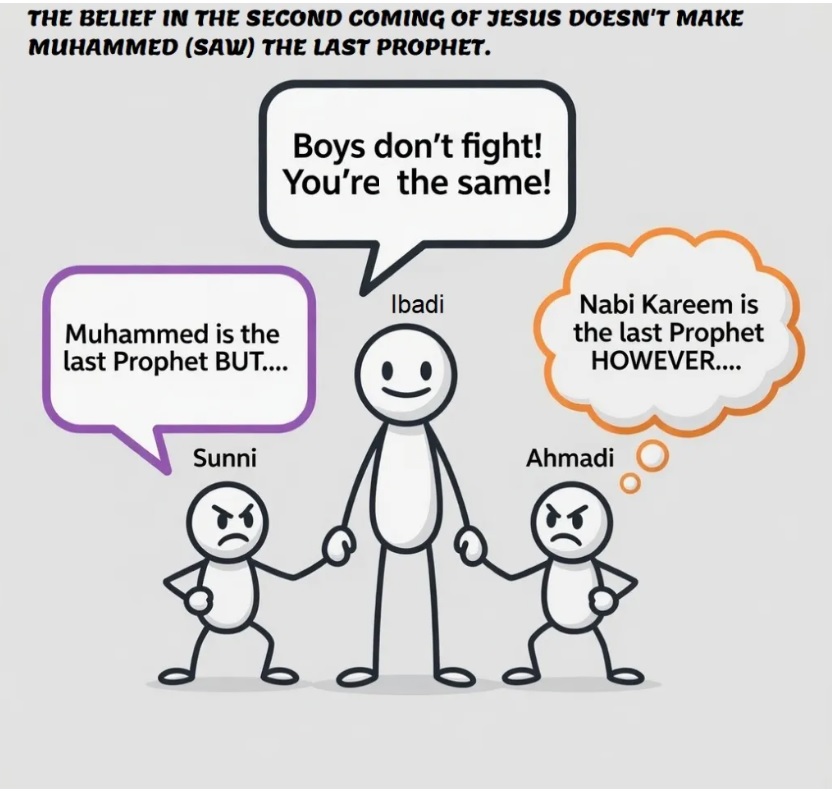
There are three types of Bid’ah introduced in the belief in the second coming of Jesus (as)
- The idea that a Prophet (saw) left the world with an uncompleted task.
- Stripping a Prophet from the office of anbiya.In order for it not to contradict that the Prophet (saw) is the seal and final Prophet. No one has the authority to strip a Prophet of Prophethood!
- The idea of the Prophets coming non sequentially. Which has never happened. In order for it not to contradict that the Prophet (saw) is the seal and final Prophet.
A cursory look at some of the hadith on the matter.
Hadith that support the Ibadi position.
Although this is a subject for another article. We will take a cursory look at some hadith on the matter that supports our position.
Narrated Abu Huraira:
Allah’s Messenger (saw) said, “My similitude, in comparison with the other prophets before me, is that of a man who has built a house nicely and beautifully, except for a place of one brick in a corner. The people go about it and wonder at its beauty, but say: ‘Would that this brick be put in its place!’ So I am that brick, and I am the last of the Prophets.”
Source: (https://sunnah.com/bukhari:3535)
* Note* that the Blessed Messenger (saw) is the completion of the house and the final brick. That would not be so if Jesus (as) was to come again in the future. In fact, if any other Prophet were to come, then the Blessed Messenger (saw) would not be that final brick. More work would need to be done.
Narrated Abu Huraira:
The Prophet (saw) said, “The Israelis used to be ruled and guided by prophets: Whenever a prophet died, another would take over his place. There will be no prophet after me, but there will be Caliphs who will increase in number.” The people asked, “O Allah’s Messenger (saw)! What do you order us (to do)?” He said, “Obey the one who will be given the pledge of allegiance first. Fulfil their (i.e. the Caliphs) rights, for Allah will ask them about (any shortcoming) in ruling those Allah has put under their guardianship.”
Source: (https://sunnah.com/bukhari:3455)
Narrated ‘Uqbah bin ‘Amir:
That the Messenger of Allah (saw) said: “If there was to have a Prophet after me, it would have been ‘Umar bin Al-Khattab.”
Source: https://sunnah.com/tirmidhi:3686
Thawban narrated that the Messenger of Allah(saw) said:
“The Hour shall not be established until tribes of my Ummah unite with the idolaters, and until they worship idols. And indeed there shall be thirty imposters in my Ummah, each of them claiming that he is a Prophet. And I am the last of the Prophets, there is no Prophet after me.”
Source: https://sunnah.com/tirmidhi:2219
Narrated Sa`d:
Allah’s Messenger (saw) set out for Tabuk, appointing Ali as his deputy (in Medina) Ali said, “Do you want to leave me with the children and women?” The Prophet (saw) said, “Will you not be pleased that you will be to me like Aaron to Moses? But there will be no prophet after me.”
Source: https://sunnah.com/bukhari:4416
Hadith that support the opposition and oppose the Qur’an.
The day of judgement was already supposed to have happened.
‘A’isha reported that when the desert Arabs came to Allah’s Messenger (saw they asked about the Last Hour as to when that would come. And he looked towards the youngest amongst them and said:
If he lives, he would not grow very old that he would find your Last Hour coming to you (he would see you dying).
Source: (https://sunnah.com/muslim:2952)
First. This is a flat contradiction of the Qur’an.
“They ask you regarding the Hour, “When will it be?” Say, “That knowledge is only with my Lord. He alone will reveal it when the time comes. It is too tremendous for the heavens and the earth and will only take you by surprise.” They ask you as if you had full knowledge of it. Say, “That knowledge is only with Allah, but most people do not know.” (Qur’an 7:187)
Narrated Abu Hurayrah:
The Prophet (saw) said: There is no prophet between me and him, that is, Jesus (as). He will descend (to the earth). When you see him, recognise him: a man of medium height, reddish fair, wearing two light yellow garments, looking as if drops were falling down from his head, even though it will not be wet. He will fight the people for the cause of Islam. He will break the cross, kill swine, and abolish jizyah. Allah will perish all religions except Islam. He will destroy the Antichrist and will live on the earth for forty years and then he will die. The Muslims will pray over him.
Source: (https://sunnah.com/abudawud:4324)
So, according to the above hadith, Jesus abolished the following:
“Fight those who do not believe in Allah nor in the Last Day and who do not consider unlawful what Allah and His Messenger have made unlawful and who do not adopt the religion of truth from those who were given the Scripture – [fight] until they give the jizyah willingly while they are humbled.” (Qur’an 9:29)
“And had your Lord willed, those on earth would have believed – all of them entirely. Then, [O Muhammed], would you compel the people in order that they become believers?” (Qur’an 10:99)
There are so many teachings of the Qur’an that Jesus would be abrogating if we were to believe the above hadith.
The hadith indicates a change in Allah (swt) because the Qur’an teaches that Allah [saw]doesn’t want people to be compelled to believe and yet sends Jesus to compel people to believe. It is rejected. It is totally rejected.
There are other hadiths in which the Muslims are supposed to take these as if they are revelations, they contain patently false information.
For example:
Ibn Hajar Al Asqalani made a calculation that the time of the Ummah should have already come and gone:
Narrated `Abdullah bin `Umar:
I heard Allah’s Messenger (saw) while he was standing on the pulpit, saying, “The remaining period of your stay (on the earth), in comparison to the nations before you, is like the period between the `Asr prayer and sunset. The people of the Torah were given the Torah, and they acted upon it till midday, and then they were worn out and were given for their labor, one Qirat each. Then the people of the Gospel were given the Gospel,and they acted upon it till the time of the `Asr prayer, and then they were worn out and were given (for their labor), one Qirat each. Then you people were given the Qur’an and you acted upon it till sunset and so you were given two Qirats each (double the reward of the previous nations).” Then the people of the Torah said, ‘O our Lord! These people have done a little labor (much less than we) but have taken a greater reward.’ Allah said, ‘Have I withheld anything from your reward?’ They said, ‘No.’ Then Allah said, ‘That is My Favor which I bestow on whom I wish.’ “
Source: (https://sunnah.com/bukhari:7467)
Narrated Salman:
“The interval between Jesus and Muhammad was six hundred years.“
Source: (https://sunnah.com/bukhari:3948)
Hafiz Ibn al-Hajr al-Asqalani says in his Fath al-Bari, (in vol.4, the book of hijara, page 448-449) commenting on these two narrations: “and it is evident ( from these stated narrations) that the lasting of this Islamic nation is somewhat a thousand years, this is because the age of the Jewish nation is equivalent to that of the time periods of the Christian and Muslim ages combined, and the people of transmission (ahl an naql) have agreed that the period of the Jews till the advent of Allah’s final Apostle Muhammad was more than 2000 years, and the span of the age of the Christians was 600 years from them. And also this narration points the fact about how little of the age of this world has remained.”
Torah time is = to Injil time + Qur’an time.
Torah time =2000 years.
Torah time = 2000 years -600 years = (1400) From Moses to Jesus.
Let us be generous and add 100 years.
The time of this ummah of the Blessed Messenger (saw) is 1500–600, which means only 900 years, and now we are in 1441.
When Muslims reached the 1,000th year, they thought they were nearing the end because of these Sahih ahadith which indicated we would have half the time the Jewish nation had, but Imam as-Suyuti [the author of the Tafsir al jalalayn] who was born in the 10th century and lived into the 11th century was alive during these times, he wrote a fatwa [legal ruling] to reassure Muslims, in which he said it was supposed to be 1000 years, but there is a dua of Rasul Allah in which he supplicates Allah to give his Ummah another half a day and the companions asked the prophet how long is half a day, and he answered 500 years. So the imam said the life of this Ummah is 1,500 years.
Imam as Suyuti mentions in his book: “Risalah Al-Kashf ‘An Mujawazt Hadeedth ul Ummah Al Alf” ”, or “Treatise on Revealing of the Proceeding of this Nation Beyond the Thousand,” page 206 about the advent of the Mahdi that:
“From what the narrations reveal is that the age of this ummah extends beyond a thousand, but it doesn’t exceed in increase another 500 in actuality beyond this thousand.”
So, if you do the math, 1500-1441=59 years left. So in these next 59 years, according to them, we should see this Mahdi, the coming of Jesus, the Gog and Magog causing havoc on the Earth, the Sun rising in the West.
Keep in mind according to the above hadith: “He will destroy the Antichrist and will live on the earth for forty years, and then he will die.” 59-40=19. So, accordingly, Jesus will show up in the year 2039.
So what is going to happen to these Muslims who, after 59 years have passed and nothing of the sort has happened? Will they apostate from the faith? Will they leave the deen?
Ya Allah (saw) we sincerely hope not. wehope that they realize that just because certain interpretations and understandings of Islam are wrong, it does not mean that Islam is wrong.
This is very similar to the following:
Matthew: 20: 1-16
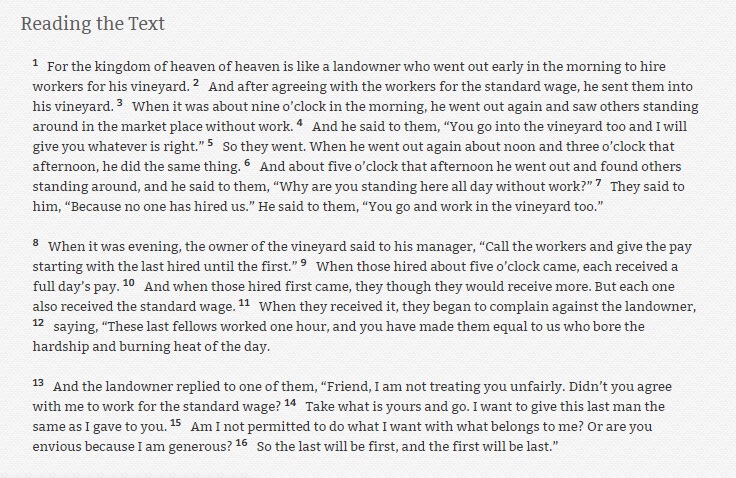
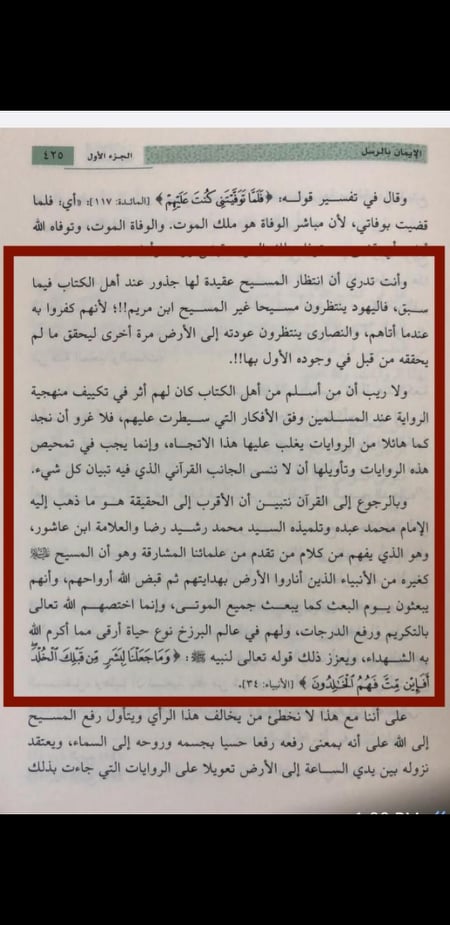
You can read more abou that here:
Qur’an 5:116–117 decisively closes the case
“And when Allah will say: O Jesus, son of Mary! did you say to men, Take me and my mother for two gods besides Allah, he will say: Glory be to You, it did not befit me that I should say what I had no right to (say); if I had said it, You would indeed have known it; You know what is in my mind, and I do not know what is in your mind, surely you are the great Knower of the unseen things. I did not say anything to them except what you commanded me with: That worship Allah, my Lord and your Lord, and I was a witness over them as long as I was among them, but when you caused me to die (Arabic: Tawafaytani), you were the watcher to them, and you are witness of all things.” (Qur’an 5:116-117)
There are several things to take from the above passage:
1) This dialogue takes place on the Day of Judgment, where Prophet Jesus suggests that he has no knowledge of what has happened since his demise on Earth and after his ministry ended. “I was a witness to them as long as I was among them.”
2) From the discussion, it is clear that Prophet Jesus only came to Earth once, acting as a witness to his people. If indeed there was a ‘second coming’ before the Day of Judgment, he would have full knowledge of what had happened since his first departure. After all, he abolished the Jizya and forced the Christians and Jews to convert to Islam. This conversation with Allah (swt) would make little to no sense.
3) For the sake of the argument, let us imagine that those hadith that are claimed to have been spoken by the Blessed Prophet (saw) were true for a moment. So now Jesus (as) comes back and everyone becomes a Muslim. The Dajjal is defeated. Jesus (as) gets married. Then Allah (swt) causes Jesus (as) to die.
Then we have Jesus (as) saying after he dies to Allah (swt) “I was a witness to them as long as I was among them, but when you caused me to die, you were the watcher over them, and you are witness of all things.”
A rather bizarre understanding, it seems.
Especially, if we take the following text into consideration: “And there is none from the People of the Scripture but that he will surely believe in Jesus before his death.” (Qur’an 4:159)
A rather bizarre situation the ‘traditional‘ and ‘dominant‘ position leaves us in.”
Jesus says on the Day of Judgment:
“I was a witness to them as long as I was among them, but when You caused me to die (tawaffaytanī), You were the Watcher over them.”
This statement is incompatible with:
- A second earthly mission
- A global enforcement of Islam
- A forty-year reign
If such events occurred, Jesus could not truthfully say this.
The verse only works if:
- Jesus lived once
- Died once
- And never returned
Shaykh Abdullah As Salmi (h) says:
“Let it be known that the Prophet has no Prophet after him. What people narrate that Christ will descend has not been heard before.” -meaning this is something not grounded in strong evidence.
Shaykh Nasser bin Abi Nabhan (h) says:
“Some people narrate that Allah sends the Mahdi and Anti-Christ appears. They also believe that Christ descends. All of this is a far cry from the truth. What we know is that Jesus is dead.”
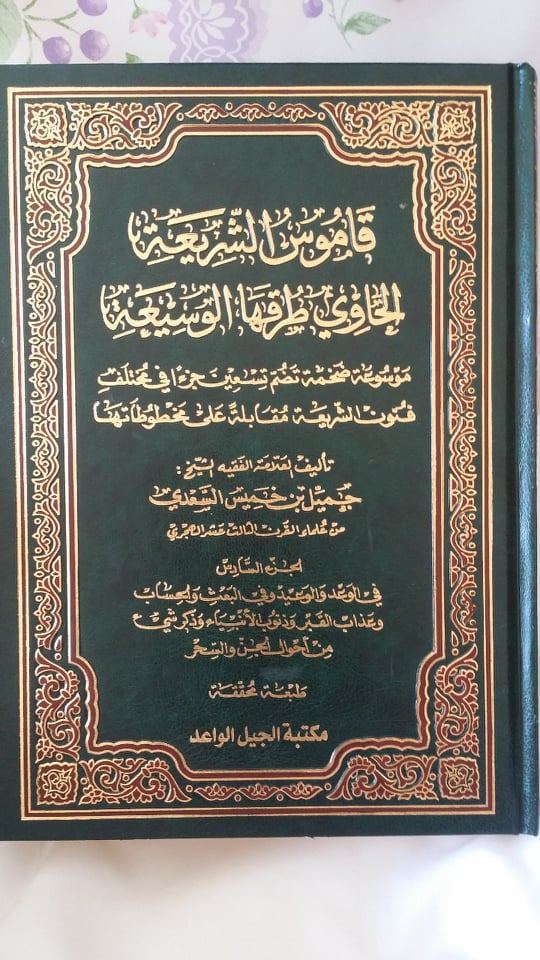
Ibadi position: historically sober, Qur’an-first
Our citations from Ibadi scholars reflect a methodological clarity:
- No doctrine without Qur’anic certainty
- No speculative eschatology overriding revelation
- No imported Judeo-Christian motifs
This is not “denialism.”
It is discipline.
“And when they hear what has been revealed to the Messenger, you see their eyes overflowing with tears because of what they have recognized of the truth. They say, “Our Lord, we have believed, so register us among the witnesses.”(Qur’an 5:83)
May Allah (swt) Forgive the Ummah.
May Allah (swt) Guide the Ummah.


 Prima Quran
Salaam Alaykum my dear brother in Islam!
May Allah (SWT) bless you and guide us to the Sirateem Mustaqeem.
A wonderful piece yet again brother and it was a delight reading it first thing Monday morning. Allah says that His Book is clear (Kitaabun Mubeem, Qur’aanin Mubeen) and yet people still insist on twisting the words and looking elsewhere for the answers. Verse 3:55 perfectly and very clearly mentions that Allah caused Jesus (A.S) to DIE and RAISED him:
“Allah said, O Jesus, I shall cause you to die and will raise you up to Me and shall purify you of the ungrateful disbelieving people, and shall place those who follow you above those who deny the truth, until the Day of Judgement; then to Me shall all return and I will judge between you regarding your disputes.” [Holy Qur’an 3:55]
The Arabic word ‘Mutawaffika’ means (without a doubt) to cause to die! Another Verse in the Qur’an reads:
“Our Lord, indeed we have heard a caller calling to faith, [saying], ‘Believe in your Lord,’ and we have believed. Our Lord, so forgive us our sins and remove from us our misdeeds AND CAUSE US TO DIE (watawaffana) with the righteous.” [3:193]
Surely, the believers are not asking Allah to raise them up to the Heavens ALIVE! Another Verse reads:
“My Lord, You have given me [something] of sovereignty and taught me of the interpretation of dreams. Creator of the heavens and earth, You are my protector in this world and in the Hereafter. CAUSE ME TO DIE (tawaffani) a Muslim and join me with the righteous.” [12:101]
So, is Yusuf (A.S) asking Allah to take him up into the heavens alive as a Muslim??
It doesn’t surprise me anymore how stupid Muslims can be. It really doesn’t because Allah makes it clear that He guides Whom He wills and also says the worst of creatures are the death, dumb, and blind who do not reason.
You said (very eloquently):
“If an objection is raised that this means ‘some prophets and not all prophets‘ the text would lose the thrust of its argument. “is no more than a messenger“.
How does it argue that he is no more than a messenger? It does this by asserting the fact that those before him have died.”
Exactly! It says this because Muhammad (A.S) was a Messenger like every other Messengers before him who lived and died.
You said:
“wakhātama l-nabiyīna – This seal is a barrier in which nothing can penetrate or go beyond. The term alone completely turns to ash any argument that prophets come non-sequentially”.
What more does Allah have to say? Think of the following analogy:
You have 2 men: John and Peter. John enters a room and stays there for 6 hours. Then Peter enters the same room. Peter stays for 1 hour and then leaves the room. Question: Who is the LAST person in the room? Obviously, John! Then, if John leaves the room soon after woods, who is the LAST PERSON to leave the room? Wait a minute… maybe I need to consult the Sheikhs for this one! If Jesus (A.S) is still alive and up in the heavens (Fis-Samaa), then wouldn’t he be the last prophet standing??? This makes no sense whatsoever!
I remember reading some ridiculous explanations to this from scholars and they would say something like: “Oh, you see Jesus (A.S) won’t be returning as a prophet but will return as a just ruler and follow the Shariah”. So, Jesus has now retired (hung up his gloves) as Allah’s prophet??? This even sounds more ridiculous and laughable in Turkish trust me. This is like saying: “Moses (A.S) will return to earth not as a Prophet but as a Chef!” Hungry, anyone?
You said:
“The Holy Qur’an is a universal message for all times. If our brothers from Ahl Sunnah are to be believed the coming of Jesus abrogates the teachings of the Qur’an, making Jesus the Furqan”.
Actually, this is no issue for the Hadeeth worshiping monkeys because they have no problem elevating a Sahih Hadeeth up and above the Quran. So, the hadeeth mentioning Jesus abolishing the Jizyah (disregarding the Verses of Allah) is no problem for them. SunhanAllah, I can only imagine their faces on the Day of Judgment when Bukhari turns away from them. May Allah protect us and guide us!
You said:
“And He has made me blessed wherever I am and has enjoined up me prayer and zakah as long as I remain alive.” (Holy Qur’an 19:31)
What kind of embellished claims are you going to make about Jesus (a.s) giving zakat in the heavens?
This is the ultimate “hadooken” finishing move brother! This Verse ALONE is enough to refute these brainless people. The Verse reads “Maa Dumtu Hayya” which means “as long as I’m alive. So, according to them, Jesus (A.S) must be still offering Salaat and paying Zakaat. In fact, the Verse (19:32) continues and says “And dutiful to my mother, and made me not arrogant, unblest”. So, does that mean Mariam (AS) is together with Jesus in the heavens and will also return with him to earth so he can continue being dutiful to her??
There are overwhelming proofs from the Quran which perfectly describe the situation of Jesus (AS). If people want to still continue worshiping their scholars, then what more can be said bro?
Keep up the great work bother! Wallahi we need more intellectuals like yourself out there and may Allah reward you for your brilliant work.
Until next time, Salaam alaykum.
Abdullah
Walakum salaam wr wb, brother Abdullah I hope you are in the best of health and emaan.
Thank you again for your comments and your thoughts on the article.
I appreciate your insights as well as your high opinion of me. May Allah [swt] keep you and I humble and sincere.
So I just needed to reach out to you because you are not in the habit of saying things like this respected brother….
“Actually, this is no issue for the Hadeeth worshiping monkeys because they have no problem elevating a Sahih Hadeeth up and above the Quran”
We should not be calling other people as such. We deal with them , interact with them and refute them based upon what is presented as evidence. insh’Allah.
Don’t worry because I interact with people via social media and some times can lose my cool with people.
May Allah [swt] increase us to be patient with each other.
I hope that you have a blessed year again. Take good care of yourself brother.
As salamu ‘alikum wr wb.
What is the interpretation of Qur’an 43:61 in the Ibadi madhhab:-
“And he shall be a sign of the Hour [of Judgement]. So do not doubt it.”
To whom does “he” refer to in this verse if it wasn’t for Jesus (as)? Or is there a variant reading to this verse by your scholars?
You may be interested to see the following: http://corpus.quran.com/wordbyword.jsp?chapter=43&verse=61#(43:61:1) This is a very quick reference.
You may also wish to read all these disparate translations. Some of them are quite forced, so that they comply with the idea of Jesus returning.
https://www.islamawakened.com/quran/43/61/default.htm
JazaKallah Khayran!.
Wa iyyakum
I believe Jesus died but whether he’s coming back ultimately depends on how one explains verse 4:157, this verse i find quite interesting, in it’s entirety it affirms that “they” did not kill him but it further goes on to say “it was made to look so”, although the other verses clearly do establish his death, this one i’ve decided to leave as ambiguous because it is indeed a bit ambigous and Allah knows best
what are your thoughts on the verse?
I believe that this article may give you some insights into my thoughts and reflections upon this verse, as well as the challenges Muslim exegetes have had in dealing with it:
https://primaquran.com/2020/04/12/crucifixion-or-impaled-understanding-quran-4157/
Will check it out InshaaAllah
Dear sir-yet if the ‘Son of Mary’ is indeed dead, does this not imply that the Islamic community misunderstood their scripture really very quickly and at a very early stage? I only as because the substitution theory has precedence at least from the days of Ibn Abbas and St John of Damascus, of blessed memory.
” the Islamic community misunderstood their scripture” It is an assumption that the whole of the Islamic community held this view. None of the schools of Islamic theology hold that blind taqlid is acceptable. Also, am I comfortable with the idea that there was mistaken interpretation, given that these interpretations are formed with the back ground of secondary sources about substitution of some random individual based upon broken chains of transmissions, and secondary sources claiming that Jesus will return? I have no issue with it. Interpretations can be right or wrong.
It does raise an eye brow though why a Christian would be so invested with Muslims continuing to promote an concept that is based upon anonymous sources. One that has NEVER held water under scrutiny in a debate with Christians.
Now, I have seen Ahmed Deedat and Shabir Ally use the swoon theory to great effect in debates. I just haven’t seen Muslims do well, in debates about the so called “crucifixion ” concerning the substitution theory.
Often I have found those who are acclaimed to be scholars or academics would simply not really question the work of their predecessors.
https://www.islamawakened.com/quran/4/157/
Perhaps close to 62 disparate translators with different bents towards Islam. They all translate ṣalabūhu as crucified.
Now some may say it is hubris on my behalf and may Allah (swt) guide me on this; yet I will tell you no Muslim scholar or academic has ever for the life of me explained why ṣalabūhu is translated as crucified?
Let us talk all the great works of tafsir. The very FIRST basic principle is to interpret the Qur’an in light of the Qur’an itself.
Sad Lam Ba. It appears in combination 6 times in verb form and twice in noun form in the Holy Qur’an.
How does one come up with crucified? It simply is not explained. It is just taken prima facie.
May Allah (swt) guide us to what is beloved to Allah (swt).
Also want to add that far worse than matters of interpretation we have all segments of Christianity that mistakenly believe certain books are non canonical when according to others they are; and vice versa. Segments of the Christian population that for centuries and even until today that believe John 5:7 attest to the Trinity, still unaware of the research in regards to this. Whole segments of Christian learned people who are uncertain in regards to the longer/shorter endings of the Gospel according to Mark. I would imagine these are more pressing issues for Christians, than Muslim misinterpretation of their own sources?
When was Ibadi founded, who was the founder of Ibadi?
Some say Jabir bin Zayed, others Ibn Ibad. But we call ourselves “The Muslims” or Ahl Haqq Wal Istiqama
How do you explain the translation for Q. 4:159?
I have read your article on it and you can only argue that conclusion because of the word “must” in the sentence. But when reading the Arabic text of the verse, I don’t see what matches with “must”.
A naturally reading of the verse would give “will” instead of “must”.
Will, must what ever you feel suits. We take that with the over all text of the Qur’an so that thematically the message is crystal clear. Jesus is dead he will not return.
Imagine if the ahadiths that are put in the mouth of the Blessed Prophet (saw) are true for a moment. So now Jesus (a.s) comes back and everyone becomes a Muslim. The Dajjal is defeated. Jesus (a.s) gets married. Than Allah (swt) causes Jesus (a.s) to die.
Than we have Jesus (a.s) saying after he dies to Allah (swt) “I was witness over them as long as I was among them, but when you caused me to die, you were the watcher over them, and you are witness of all things.” Rather bizarre it seems.
Especially if we take the majority interpretation of “And there is none from the People of the Scripture but that he will surely believe in Jesus before his death.” (Qur’an 4:159)
A rather bizarre situation the majority position leaves us in.
I do understand that the other verses can be explained in a different way that makes sense..
But this 1 verse is what’s not fully explained. Reading it word for word, you cannot read the English translation with “must” but “will”.
The word “ لَيُؤْمِنَنَّ” in the verse means “will believe”, not “must believe”.
This 1 verse is preventing me from fully acknowledging the argument that Jesus won’t come back.
You can check out the Study Quran’s translation as well which has a literal translation:
“ There is not one of the People of the Book, but will surely believe
in him before his death, and on the Day of Resurrection he will be a witness against them.”
-Quran 4:159 (Study Quran Translation)
You can also check this link out: https://corpus.quran.com/wordbyword.jsp?chapter=4&verse=159
I believe you are trying to make a mountain out of a molehill.
I can translate it as will believe and it doesn’t change anything. And to say this one word in the face of all the evidence; which you yourself admitted. Well, we are spinning wheels at this point.
Study Qur’an I don’t give weight to them.
This is confirmed by: “I said not to them except what You commanded me – to worship Allah , my Lord and your Lord. And I was a witness over them as long as I was among them; but when you caused me to die, You were the Observer over them, and You are, over all things, Witness. (Qur’an 5:117)
Who else would he be a witness against?
People can ignore it but it is obvious. As I said will/must I have no issue w either.
The overwhelming evidence even 4:159 when taking with the rest of the Qur’an is that Jesus is dead and will not return.
All the best on your journey.
But the problem is “will” implies a promise or prediction while “must” implies it is a command.
I know decent Arabic and I would like to understand linguistically how one can get “must” or read this verse as a command.
Thank you
Especially, if we take the following text into consideration: “And there is none from the People of the Scripture but that he will surely believe in Jesus before his death.” (Qur’an 4:159)
As mentioned we can have it say will believe in him before his death.
Than how do you understand it?
Especially, if we take the following text into consideration: “And there is none from the People of the Scripture but that he must surely believe in Jesus before his death.” (Qur’an 4:159)
So what do you understand the text to be saying at this point?