“This is the Book! There is no doubt about it—a guide for those mindful ˹of Allah˺, who believe in the unseen, establish prayer, and donate from what We have provided for them.” (Qur’an 2:2-3)
﷽
A video of Shaykh Hisham Kabbani of the Naqshbandi Haqqani Sufi Tariqa resurfaced that I was not aware of at the time it became known.
The Prophet (s) said, “I will tell you that I sent him because in this universe Allah created Creations, and the nearest one to Earth, the dangerous one. If they invade the Earth…if they invade the Earth, The Earth will be finished. They will kill everyone! I send Sayyidina `Ali to fight them alone!!! To these aliens that are they the most nearest to Earth; and with his sword and his power, He is Asadullah al-Ghaalib! Destroyed two-third of them! That’s why they don’t have power anymore to come on Earth. That is why I sent him, he’s absent from the house.” -Shaykh Hisham Kabbani
The above part that is in bold black text is the beginning of the paragraph but it was cut off. You can read the whole transcript and context from their official website:
Now when one reads the context, it does seem like an abrupt change of course to start speaking about the time when it was alleged that the Blessed Messenger (saw) sent Ali Ibn Abu Talib to take down a large contingent of aliens. Apparently 67% of them were wiped out! I do not know if that means their military forces, their people as a whole (men, women, children-offspring) as those details were not provided.
No one knows if these are the same beings that former Minister of Defense Paul Hellyer was speaking about either. I will link to the article where he (Paul Hellyer) speaks of these beings.
As Muslims, we believe in the unseen. Yet, we also believe in what is rational, sensible and logical. I guess the issue that I have with the idea of sending Ali Ibn Abu Talib into cosmic forays to fight these Aliens is you have to wonder about a few things.
Why only take out 2/3 of them? Is leaving the 1/3 left a mercy to them? As in, “Look, I wiped out 2/3, or you so like chill or else!”
But then you really have to wonder about horrific situations like Palestine.
But I know the retort will be swift: “Palestine or the whole planet brother?”
Over all, personally, my encounters with Naqshanbai Haqqani have been positive. Though I know that they, like all Sufi Tariqah, are in a spiritual Jihad with one another to vie for dominance to be ‘The Tariqah above all others’.
May Allah (swt) guide us to the truth of such matters. May Allah (swt) cause us to think logically and reflect upon such matters.
You may also be interested in the following entries:
“There is nothing like unto Him, and He is the Hearing, the Seeing.” (Qur’an 42:11)
﷽
You shall not make for yourself an idol in the form of anything in heaven above or on the earth beneath or in the waters below.” (Exodus 20:4)
So rather than making an image of God, the command goes far beyond that. Christians should not make idols of anything.
“You shall not make for yourself an idol in the form of anything in heaven above or on the earth beneath or in the waters below.” (Deuteronomy 5:8)
The irony is that this text has been a source of controversy among Christians as if God did not provide clarity for them. So they say, well God says do not make an idol. So their argument goes like this: “We can make the likeness of living created beings, but we just cannot worship them, and thus they are not idols.”
From left to right: Credit to Mart Production and Varan Nm. All photos taken from pexels.com
When it comes to the Bible, both the TNCH and the New Testament are replete with Anthropomorphic descriptions of God.
This is by no means an exhaustive list.
God rides upon a cherubim (usually depicted in art as a naked baby angel)
“He mounted the cherubim and flew; he soared on the wings of the wind.” (Psalm 18:10)
God’s thigh and his self promotional tattoo?!
“On his robe and on his thigh he has this name written: king of kings and lord of lords.” (Revelation 19:16)
How anyone writes created words on the uncreated God merits pensive reflection.
Not only this but usually human females get tattoos in provocative places to draw attention to their assets.
Who has time to focus on a thigh tattoo when there are flashing dazzling lights shooting out from the groin area!
The God of the Bible has loins.
“”And I saw as the colour of amber, as the appearance of fire round about within it, from the appearance of his loins even upward, and from the appearance of his loins even downward, I saw as it were the appearance of fire, and it had brightness round about.” (Ezekiel 1:27)
God’s feet?
“And saw the God of Israel. Under his feet was something like a pavement made of lapis lazuli, as bright blue as the sky.” (Exodus 24:10)
The nostrils of God?
“Smoke went up from his nostrils..” (Psalms 18:8)
God has one ear (not more).
“Give EAR, our God, and hear; open your eyes and see the desolation of the city that bears your Name.” (Daniel 9:18) An Ear, not ears..
Or God has ears (plural)
“In my distress I called to the LORD; I called out to my God. From his temple he heard my voice; my cry came to his ears.” (2 Samuel 22:7)
The God of the Bible has a shadow.
“He who dwells in the shelter of the Most High Will abide in the shadow of the Almighty.” (Psalm 91:1)
How a God that is supposed to be light has a shadow is certainly a mystery!
The God of the Bible whistles?
“At that time the Lord will whistle for the Egyptians.” (Isaiah 7:18)
The God of the Bible gets jealous?
“For I the Lord your God am a jealous God.” (Daniel 5:9)
The God of the Bible smears poo poo (dung) on people’s faces.
“Because of you I will rebuke your descendants; I will smear on your faces the dung from your festival sacrifices, and you will be carried off with it.” (Malachi 2:3)
The God of the Bible emits a sound and walks.
“Then the man and his wife heard the sound of the Lord God as he was walking in the garden in the cool of the day, and they hid from the Lord God among the trees of the garden.” (Genesis 3:8)
The God of the Bible breaths.
“And the Lord God formed man of the dust of the ground, and breathed into his nostrils the breath of life; and man became a living soul.” (Genesis 2:7)
God has thoughts and people have thoughts.
“For my thoughts are not your thoughts.” (Isaiah 55:8)
So do we deny that God has thoughts because people have thoughts or are his thoughts not like our thoughts?
Do we affirm without asking how or is the how known?
The backside of God?!!
“And I will take away mine hand, and you shall see my backside: but my face shall not be seen.” (Exodus 33:23)
God only needs one digit (a single finger to write)
“And when He (God) had made an end of speaking with him on Mount Sinai, He gave Moses two tablets of the Testimony, tablets of stone, written with the finger of God.” (Exodus 31:18)
God has an unknowable number of fingers.
“When I consider you heavens, the work of your fingers, The moon and the stars, which you have ordained.” (Psalm 8:3)
The God of the Bible has hands (plural).
“The sea is his, for he made it, and his hands formed the dry land.” (Psalm 95:5)
“So I reflected on all this and concluded that the righteous and the wise and what they do are in God’s hands, but no one knows whether love or hate awaits them.” (Ecclesiastes 9:1 )
The God of the Bible has a right hand and Jesus is sitting next to it.
“He sat down at the right hand of the Majesty in heaven.” (Hebrews 1:3)
The God of the Bible has a right hand and Jesus is standing next to it.
“But Stephen, full of the Holy Spirit, looked up to heaven and saw the glory of God, and Jesus standing at the right hand of God. “Look,” he said, “I see heaven open and the Son of Man standing at the right hand of God.” (Acts 7:55-56)
*NOTE* NO WHERE DOES THE BIBLE SAY GOD HAS A LEFT HAND!
Now obviously, I do not follow Salafiyya/Athari creed. However, those Christians who think they have landed some points against them have erred tremendously.
All that Daniel Haqiqatjou, Mohamed Hijab, Uthman Ibn Faruq, The Muslim Lantern (Chainless Slave) Muhammed Ali, Jake The Muslim Metaphysician, Farid Al Bahraini, or Bassam Zawadi-all that they have to do is ask the following to the Christians.
Does the Bible assert hands for God? Answer: Yes.
Does the Bible assert a right hand for God? Answer: Yes.
Does the Bible assert a left hand for God? Answer: No.
If the Bible does not assert a left hand for God how can you NOT assert that both his hands are right?
Game over! Those Christians would be cooked.
For the Bible says:
“Trust in the LORD with all your heart and lean not on your own understanding.” (Proverbs 3:5)
God of the Bible finds the aroma of charred dead animal flesh soothing and sweet.
The God of the Bible smells (Not what the Rock is cooking but still…)
“Then Noah built an altar to the Lord and took of every clean animal, and of every clean bird, and offered burnt offerings on the altar. And the Lord smelled a soothing aroma.” (Genesis 8:20-21)
Other translations say: ‘a sweet savour’. “And the Lord smelled a sweet savour”.
God of the Bible repents from his own evil.
“And the LORD repented of the evil which he thought to do unto his people.” (Exodus 32:14)
Like this God was thinking of doing something so nasty and cruel to humans and than thought , “Naah that’s a bit too much!”
God of the Bible regrets that he creates his own creation.
“The LORD regretted that he had made human beings on the earth, and his heart was deeply troubled.” (Genesis 6:6)
God of the Bible can cancel out his own knowledge.
“For I will be merciful to their iniquities, And I will remember their sins no more.” (Hebrews 8:12)
The God of the Bible has wings and feathers.
“He shall cover you with Hisfeathers, and under His wings you will trust” (Psalm 91:4).
The God of the Bible mounts, swoops and spreads out his wings.
“Behold, He will mount up and swoop like an eagle and spread out His wings against Bozrah; and the hearts of the mighty men of Edom in that day will be like the heart of a woman in labor.” (Jeremiah 49:22)
God of the Bible sends delusions on people so they believe what is false.
“For this reason God will send upon them a deluding influence so that they will believe what is false.” (2 Thessalonians 2:11)
The God of the Bible shaves people’s head, legs, and removes the beard.
“In that day the Lord will shave with a razor, hired from regions beyond the Euphrates (that is, with the king of Assyria), the head and the hair of the legs; and it will also remove the beard.” (Isaiah 7:20)
Some Christian commentators make matters worse by saying this is a full hair removal; for total purity as mentioned in the following text:
“The one to be cleansed shall then wash his clothes and shave off all his hair and bathe in water and be clean. Now afterward, he may enter the camp, but he shall stay outside his tent for seven days.” (Leviticus 14:8)
Thus, and we seek refuge in Allah, the Bible is claiming that God will shave all the hair off (pubic hair, you name it!)
The Bible says God is a man of war.
“The Lord is a man of war: the Lord is his name.” (Exodus 15:3)
The God of the Bible sends an evil spirit upon Saul.
“And it came to pass on the morrow, that the evil spirit from God came upon Saul, and he prophesied in the midst of the house: and David played with his hand, as at other times: and there was a javelin in Saul’s hand. ” (1 Samuel 18:10)
The biggest incident of Saul disobeying God in the Bible is because he did not completely genocide everything and he spared some animals.
Which according to the Bible, God inspires Samuel to inform Saul is just as bad as worshipping idols! So this evil spirit that comes from God comes upon Saul and Saul is agitated knowing that God is going to supplant him with David.
Christians claim that God does not want people to be gay. However; this evil spirit inspires Saul to tell David to collect 100 penis skins for him! Does it get more gay?!
By the way think about this narrative. Do you really think that David went around and methodically cut a perfect circle around every man’s Penis and collected a bunch of foreskins in a bag? No! It means he cut off 200 penises put them in some bags and threw them down in the kings court like ‘Yo! Here’s the Penis skins you wanted!’ -which by the way the evil spirit the Bible God sent to Saul inspired him to tell David to do! Does it get more gay than this?!
Speaking of Gay. Unicorns and Rainbows Oh my!
The God of the Bible has strength comparable to a unicorn.
“God brought them out of Egypt; he has as it were the strength of an unicorn.” (Numbers 23:22)
The God of the Bible relies upon a rainbow in order to remember.
“Whenever I bring clouds over the earth and the rainbow appears in the clouds, I will remember my covenant between me and you and all living creatures of every kind. Never again will the waters become a flood to destroy all life.” (Genesis 9:14-15)
God of the Bible feels sorry that the man he appointed to kill babies saved some animals.
Read the following from (1 Samuel 15:3-26)
One day, Samuel told Saul:
The Lord told me to choose you to be king of his people, Israel. Now listen to this message from the Lord: “When the Israelites were on their way out of Egypt, the nation of Amalek attacked them. I am the Lord All-Powerful, and now I am going to make Amalek pay! “Go and attack the Amalekites! Destroy them and all their possessions. Don’t have any pity. Kill their men, women, children, and even their babies. Slaughter their cattle, sheep, camels, and donkeys.” Saul sent messengers who told every town and village to send men to join the army at Telaim. There were 210,000 troops in all, and 10,000 of these were from Judah. Saul organized them,then led them to a valley near one of the towns in Amalek, where they got ready to make a surprise attack. Some Kenites lived nearby, and Saul told them, “Your people were kind to our nation when we left Egypt, and I don’t want you to get killed when I wipe out the Amalekites. So stay away from them.” The Kenites left,and Saul attacked the Amalekites from Havilah to Shur, which is just east of Egypt. Every Amalekite was killed except King Agag.Saul and his army let Agag live, and they also spared the best sheep and cattle. They didn’t want to destroy anything of value, so they only killed the animals that were worthless or weak. The Lord told Samuel, “Saul has stopped obeying me, and I’m sorry that I made him king.” Samuel was angry, and he cried out in prayer to the Lord all night. Early the next morning he went to talk with Saul. Someone told him, “Saul went to Carmel, where he had a monument built so everyone would remember his victory. Then he left for Gilgal.” Samuel finally caught up with Saul, and Saul told him, “I hope the Lord will bless you! I have done what the Lord told me.” “Then why,” Samuel asked, “do I hear sheep and cattle?”“The army took them from the Amalekites,” Saul explained. “They kept the best sheep and cattle, so they could sacrifice them to the Lord your God. But we destroyed everything else.” “Stop!” Samuel said. “Let me tell you what the Lord told me last night.” “All right,” Saul answered. Samuel continued, “You may not think you’re very important, but the Lord chose you to be king, and you are in charge of the tribes of Israel. When the Lord sent you on this mission, he told you to wipe out those worthless Amalekites. Why didn’t you listen to the Lord? Why did you keep the animals and make him angry?” “But I did listen to the Lord!” Saul answered. “He sent me on a mission, and I went. I captured King Agag and destroyed his nation. All the animals were going to be destroyed anyway. That’s why the army brought the best sheep and cattle to Gilgal as sacrifices to the Lord your God.” “Tell me,” Samuel said. “Does the Lord really want sacrifices and offerings? No! He doesn’t want your sacrifices. He wants you to obey him. Rebelling against God or disobeying him because you are proud is just as bad as worshiping idols or asking them for advice. You refused to do what God told you, so God has decided that you can no longer be king.”“I have sinned,” Saul admitted. “I disobeyed both you and the Lord. I was afraid of the army, and I listened to them instead. Please forgive me and come back with me so I can worship the Lord.” “No!” Samuel replied, “You disobeyed the Lord, and I won’t go back with you. Now the Lord has said that you can’t be king of Israel any longer.”
God of the Bible is the creator of evil.
“I form the light, and create darkness: I make peace, and create evil: I the Lord do all these things.” (Isaiah 45:7)
The God of the Bible hates.
“”I have loved you,” says the Lord. But you say, “How have you loved us?” “Is not Esau Jacob ‘s brother?” declares the Lord. “Yet I have loved Jacob but Esau I have hated. I have laid waste his hill country and left his heritage to jackals of the desert.” (Malachi 1:2-3)
(So the God of the Bible is a God of Love and Hate)
(A God of Love, that Hates or A God of Hate that Loves)
The God of the Bible jeers and pokes fun at his creation.
“He who sits in the heavens laughs; the Lord holds them in derision.” (Psalm 2:4)
The God of the Bible laughs.
“but the Lord laughs at the wicked, for he knows their day is coming.” (Psalm 37:13)
The God of the Bible rages. (Maybe not Rage Against The Machine, but …..)
“The LORD is a jealous and vengeful God; the LORD is vengeful and strong in wrath. The LORD is vengeful against his foes; he rages against his enemies.” (Nahum 1:2)
The God of the Bible has a mouth.
“Jesus answered, “It is written: ‘Man shall not live on bread alone, but on every word that comes from the mouth of God.” (Matthew 4:4)
The God of the Bible is meticulous in how his food should be prepared.
“Command the sons of Israel and say to them, ‘You shall be careful to present My offering, My food for My offerings by fire, of a soothing aroma to Me, at their appointed time.” (Numbers 28:2)
The God of the Bible has knowledge which is impeded by distance.
“But the LORD came down to see the city and the tower the people were building.” (Genesis 11:5)
The God of the Bible is affected by a certain type of wine which cheers him up.
“And the vine said unto them, Should I leave my wine, which cheers up God and man, and go to be promoted over the trees?” (Judges 9:13)
The God of the Bible did not stop Jephthah from burning his small daughter if God gave him victory over his enemies.
“Then the Spirit of the Lord came on Jephthah. He crossed Gilead and Manasseh, passed through Mizpah of Gilead, and from there he advanced against the Ammonites. And Jephthah made a vow to the Lord: “If you give the Ammonites into my hands, whatever comes out of the door of my house to meet me when I return in triumph from the Ammonites will be the Lord’s, and I will sacrifice it as a burnt offering.” Then Jephthah went over to fight the Ammonites, and the Lord gave them into his hands. He devastated twenty towns from Aroer to the vicinity of Minnith, as far as Abel Keramim. Thus Israel subdued Ammon. When Jephthah returned to his home in Mizpah, who should come out to meet him but his daughter, dancing to the sound of timbrels! She was an only child. Except for her he had neither son nor daughter. When he saw her, he tore his clothes and cried, “Oh no, my daughter! You have brought me down and I am devastated. I have made a vow to the Lord that I cannot break.” “My father,” she replied, “you have given your word to the Lord. Do to me just as you promised, now that the Lord has avenged you of your enemies, the Ammonites. But grant me this one request,” she said. “Give me two months to roam the hills and weep with my friends, because I will never marry.” “You may go,” He said. And he let her go for two months. She and her friends went into the hills and wept because she would never marry. After the two months, she returned to her father, and he did to her as he had vowed. And she was a virgin. (Judges 11:29-39)
Prima Qur’an Comments: Now there is major major copium from Christians and Jews regarding this.
Copium # 1. They try and put a spin that the sacrifice is to dedicate his daughter to the Lord as a virgin (meaning temple service) and Jephthah bemoaned that due this he would never have any descendants.
Response: and I will sacrifice it as a burnt offering & After the two months, she returned to her father, and he did to her as he had vowed The emphasis on her being a virgin is so she would be an unblemished sacrificed.
2. Copium #2. God commands against sacrificing Children in the Bible.
Response. No, no he doesn’t!
“You shall not give any of your offspring to offer them to Molech, nor shall you profane the name of your God; I am the Lord.” (Leviticus 18:21)
“I will also set My face against that man and will cut him off from among his people, because he has given some of his offspring to Molech, so as to defile My sanctuary and to profane My holy name.” (Leviticus 20:3)
“You shall not behave thus toward the Lord your God, for every abominable act which the Lord hates they have done for their gods; for they even burn their sons and daughters in the fire to their gods.” (Deuteronomy 12:31)
As well as the related practice of passing the children through the fire and not consuming them by the fire:
“There shall not be found among you anyone who makes his son or his daughter pass through the fire, one who uses divination, one who practices witchcraft, or one who interprets omens, or a sorcerer.” (Deuteronomy 18:10)
“You shall also say to the sons of Israel: ‘Any man from the sons of Israel or from the aliens sojourning in Israel who gives any of his offspring to Molech, shall surely be put to death; the people of the land shall stone him with stones.” (Leviticus 20:2)
Offering your children up as a burnt offering is not against the Torah teachings of the Jews. Nor was it something unacceptable to God. The offence in question was offering them up to Molech and NOT THE GOD OF ISRAEL!
“For I the Lord your God am a jealous God.” (Daniel 5:9)
There is no issue with offering up children as a holocaust (burnt offering) to God. The issue is doing it to false Gods. Because the God of the Bible is jealous.
Did we forget?
“After these things God tested Abraham and said to him, “Abraham!” And he said, “Here I am.” He said, “Take your son, your only son Isaac, whom you love, and go to the land of Moriah, and offer him there as a burnt offering on one of the mountains of which I shall tell you.” (Genesis 22:1-2)
The Bible likens God to a groomer that watches a baby grow up develop breast, “body hair” waiting until she was mature enough for “love” and marry her.
“And I helped you to thrive like a plant in the field. You grew up and became a beautiful jewel. Your breasts became full, and your body hair grew, but you were still naked. And when I passed by again, I saw that you were old enough for love. So I wrapped my cloak around you to cover your nakedness and declared my marriage vows. I made a covenant with you, says the Sovereign LORD, and you became mine.” (Ezekiel 16:7-8)
This passage is basically stating that God married “Israel” and it likens God to a man marrying a very young girl. Notice that no one officiates God’s marriage of course. It is just that God wraps his cloak around her and….”Surprise! You’re my wife!”
However, latter we find out that God gets cheated on. That the ‘wife’ of God became like a prostitute.
“‘But you trusted in your beauty and capitalized on your fame by becoming a prostitute. You offered your sexual favors to every man who passed by so that your beauty became his. You took some of your clothing and made for yourself decorated high places; you engaged in prostitution on them.” (Ezekiel 16:15-16)
Prima Qur’an: I always wondered why many Christian and Jewish men had a very unhealthy relationship and attitude towards women. When The Creator of Heaven and Earth gets cheated on then who is the average man compared to God?
Even some Christian polemist who got cheated on may feel a kindred spirit with God.
Many Christians who were sexually violated as youth have read the above passages with a great deal of discomfort. May Allah (swt) guide them and console them.
Granted we as Muslims are understanding concerning metaphor, allegories and rhetorical devices in literature. The Qur’an itself deploys metaphor, allegory and an array of rhetorical and literary devices.
Yet, some of these passages and text in the Bible are quite concerning.
May Allah (swt) guide the Jews and Christians to the truth.
Ha-Mim By the Book that makes things clear,-We have made it a Qur’an in Arabic, that you may be able to understand and learn wisdom. And verily, it is in the Mother of the Book, in Our Presence, high in dignity, full of wisdom. Shall We then take away the Message from you and repel (you), for that you are a people transgressing beyond bounds? (Qur’an 43:15)
“Nay! it is a Glorious Qur’an, In a guarded tablet” (Qur’an 85:21-22)
﷽
This is an entry that discusses the problematic theological position held by those who call themselves ‘Salafi’ or ‘Athari. That is the belief that the Qur’an is the eternal uncreated word of Allah.
Now this is a belief of those who ascribe to Ahl Sunnah in general. However, there is an aberrant and bizarre perspective held by those who call themselves as ‘Salafi’ or ‘Athari’.
That is what this article will focus on.
I want to say from the outset that the Ibadi school does not make takfir of any Muslim who believes the Qur’an is created. This issue was not addressed by the Blessed Prophet (saw) nor by his companions. Takfir of other Muslims is not something that our school is known for.
This is a matter of dispute between the scholars. Each side will bring thier proofs and justifications for the position that they hold.
It is truly unfortunate that some of the Muslim intelligentsia and academics would feel so threatened by any discussion on this subject that it would incur a death penalty.
For example in one of the great works that are praised by the Sufi Muslims, Qadi Iyad we find
He said about someone who said that the Qur’an is created, “He is an unbeliever, so kill him.” He said in the version of Ibn Nafi’, “He should be flogged and painfully beaten and imprisoned until he repents.” In the version of Bishr ibn Bakr at-Tinnisi we find, “He is killed and his repentance is not accepted.”
Source: (Qadi ‘Iyad Musa al-Yahsubi, Muhammed Messenger of Allah (Ash-Shifa of Qadi ‘Iyad), translated by Aisha Abdarrahman Bewley [Madinah Press, Inverness, Scotland, U.K. 1991; third reprint, paperback], p. 419)
In fact, Muhammed ibn Isma’il Al-Bukhari (of Sahih Bukhari oral collection fame) was persecuted by a group of those from the Hanbali school of jurisprudence for a remark he made.
“Al-Dhuhli was fierce (shadîd) in his adhesion to the Sunna. He confronted Muhammed ibn Isma‘il [al-Bukhari] because the latter had alluded, in his Khalq Af‘al al-‘Ibad, to the fact that the reader’s utterance of the Qur’an was created. Bukhari made it understood without explicitly saying it, but he certainly made it clear. On the other hand, Ahmad ibn Hanbal flatly refused to explore the question, as well as Abu Zur‘a and al-Dhuhli, or indulge in the terminology of dialectic theologians (al-mutakallimûn), and they did well – may Allah reward them excellently. Ibn Isma‘il had to travel from Naysabur undercover, and he was pained by what Muhammed ibn Yahya [al-Dhuhli] had done to him.”
Source: (Al-Dhahabi, Siyar (10:207)
Also:
Al-Hakim [narrated with his chains]: Muhammed ibn Yahya [al-Dhuhli] said: “This Bukhari has openly subscribed to the doctrine of ‘pronunciationists’ (al-lafziyya), and for me those are worse than the Jahmiyya.” . . . Ahmad ibn Salama visited Bukhari and told him: “O Abu ‘Abd Allah, this is a respected man [i.e. al-Dhuhli] in Khurasan, especially in this town [Naysabur], and he has thundered with this speech until none of us can say anything to him about it, so what do you think we should do?” Bukhari grasped his beard then he said: (I confide my cause unto Allah. Lo! Allah is Seer of His slaves.) (40:44) He continued: “O Allah! You know that I did not want for one moment to settle in Naysabur out of arrogance, nor in quest of leadership, but only because my soul would not let me return to my own country [Bukhara] because of my opponents; and now this man intends harm for me out of jealousy, only because of what Allah gave me and for no other reason.” Then he said to me: “O Ahmad, tomorrow I shall leave and you will be rid of his talk which I caused.” . . . Muhammed ibn Ya‘qub the hadith master said: “When al-Bukhari settled in Naysabur Muslim ibn al-Hajjaj took to visiting him frequently. When the affair of the pronunciation of Qur’an took place between al-Bukhari and [al-Dhuhli] and the latter roused people against him and forbade them to visit him, most people stopped visiting him, but not Muslim. Then al-Dhuhli said: ‘Anyone that subscribes to the pronunciation [being created], it is not permitted for them to attend our gathering.’ Whereupon Muslim placed a cloak on top of his turban, stood up in front of everyone, and sent back to al-Dhuhli what he had written from him carried by a camel-driver, for Muslim openly subscribed to the pronunciation and made no attempt to conceal it.” . . . Ahmad ibn Mansur al-Shirazi also narrated it from Muhammed ibn Ya‘qub, adding: “And Ahmad ibn Salama stood up and followed him.” (See Al-Dhahabi, Siyar (10:314-315). Cf. Bayhaqi’s al-Asma’ wa al-Sifat (al-Hashidi ed. 2:20-21 #591).
As Hamza Yusuf correctly remarked. if you follow this line of reasoning you eventually end up with
@ 1:32 Listen carefully people. Shaykh Hamza Yusus if a public orator and a supremely articulate man. Listen very carefully to the doctrine you are being asked to subscribe to.
@ 3:00 “It definitely doesn’t mean though the mushaf you have in your house. Because that would then…I mean some of the Christians argue that well the Qur’an is imbibliation. Like we believe in incarnation of the logos the Muslims believe in imbibliation of the logos. That God became book and so we don’t we don’t see that as valid. That view of it so.” -Hamza Yusuf.
Salafi Da’wah hooks you with the transcendence of Allah (swt). Most people who are introduced to Islam through the street preachers who hold Salafi doctrine are intrigued by concepts such as: Allah being one. What seems to look like a simplistic creed. That Allah has no parents or no children or no partners. Allah is neither black nor white. Allah is not male or female.
However, once you have taken your Shahadah or delcaration of faith how much longer until you are taught ‘Kitab Al Tawhid’ and here come the bizarre concepts. Allah has two right hands, and one of those right hands is a left hand, Allah occupies space, has a shin, a foot, chuckles at people’s despair, comes down the third part of the night, appears to the disbelievers in forms and shapes that they knew and then appears to the disbelievers in forms and shapes they do not know.
SaidNO ONE EVER!
Yasir Qadhi, Salafis and Atheist.
Unfortunately Yasir Qadhi has come under fire from people who seemingly do not understand what he has been saying as of late.
Atheist and Agnostics have a different epistemology and world view when evaluating history then do believers. This also should not come as a shock or a surprise to anyone.
Agnostic/Skeptic: “We have not found any evidence of X.”
Believer: “They have yetto find any evidence of X.” The believer takes note that the Agnostic/Skeptic did not claim “We will neverfind.”
However, in one of his books he has given a very powerful argument to the atheist and agnostics to dismantle Salafi theology.
In reality I should not fault Yasir Qadhi for this as if it was some novel idea that he came up with. Rather, he is parroting the learned polemic that he would have picked up from his teachers.
Yasir Qadhi says:
“These Attributes are understood literally (in the case of the Attributes of kalam, that Allah, Speaks, whenever He wishes, with a sound, in different languages, and this Speech is composed of words and letters and is not created), but the actuality and ‘how-ness’ of these Attributes are not delved into, and any negative similarity be-tween these Attributes and the attributes of the creation are negated (in the case of this Attribute, that the speech of the creation is created, but the Speech of Allah is not.) Understanding these Attributes ‘literally’ does not mean understanding them in the manner that they are found in the creation, or comparing them with the attributes of the creation; rather, it means affirming the linguistic meaning of that Attribute in a manner that befits the Creator, and will never completely be understood by mankind.”
Source: (An Introduction to the Sciences of the Qur’an pg 52)
We are told that the ‘how-ness‘ is not delved into and yet this whole paragraph does exactly that! When you negate comparison you are comparing and contrasting ‘how‘ something is unlike something else.
When speaking of prophet Ibrahim (a.s) and the story of the idols Shaykh Yasir Qadhi says:
“In these verses, Ibrahim showed his people that their idols were not worthy of worship, primarily because they could not speak. After they themselves acknowledged this, Ibrahim rebuked them, and asked them, “Have you no sense?!” meaning, “How can an object that cannot even speak be worthy of worship?” Notice that Ibrahim was referring to a speech that could be heard, for Ibrahim’s people did not answer Ibrahim with the belief of the Ash’arees, “Our god speaks, but a speech that is not heard-an internal speech of the mind!” for they understood what Ibrahim meant!! This is why they turned to themselves, and realized the foolishness of their actions, and could only reply with the feeble response that everyone knew that their idols could not speak!”
Source: (An Introduction to the Sciences of the Qur’an pg 46)
Yasir Qadhi thinks that he has the goods on the Ash’ari Sunnis latter making a quote that in effect turns the Ash’ari Sunnis into idol worshipers.
Yet, look at the quotation above where he says:
“‘literally’ does not mean understanding them in the manner that they are found in the creation.”
Rather than help Islam, Yasir Qadhi and his Salafist-Athari creed and those who think like him have handed over to skeptics of their position a devastating argument.
So like Ibrahim (as) demands above the atheist has the right to demand from him speech from his Creator.
They have the right to demand “a speech that could be heard”
A typical discussion between an Atheist-Agnostic/Skeptic and one who follows Salafist theology could go something like this:
Atheist/Agnostic/Skeptic: “Does your god, Allah speak? Let’s hear it then!”
Salafi: “Of course and here is the proof!” (pulls out Qur’an).
Atheist/Agnostic/Skeptic: “Ibrahim didn’t ask the idols for a book; he asked if they can speak!”
Salafi:
Yet Yasir Qadhi is not done with the Ash’ari.
Yasir Qadhi thinks he has the goods on the Ash’ari when he says,
“1) If the kalam of Allah is without sound, then what did Musa hear when Allah spoke to Him? If they respond that Allah created a sound, and caused Musa to hear that created sound, then this means that this created object stated, “O Musa, verily, I am your Lord…Verily, I am Allah, there is no God save Me, so worship Me… [ Qur’an 20:12-14]
Therefore, if they state this, it implies that this created object claimed to be Allah, and asked Musa to worship it! However, if they stated that it was the actual kalam of Allah, then it must be asked, “How then did Musa hear it if you claim that Allah’s kalam is without sound? ” The scholars of the Ash’arees have not been able to provide a satisfactory response for this.”
Source: (An introduction to the Sciences of the Qur’an pg 44)
Prima Qur’an Comments:
So Yasir Qadhi thinks that it was the object cried out ‘I am Allah, there is no God save Me, so worship Me’. Yet, obviously, we know that Moses (as) did not perform any act of worship towards the direction of the voice. Or at least no act of worship is recorded.
Yasir Qadhi and those who agree with his position have to wonder the following:
What did Rasul Allah (saw) think when Angel Gabriel (as) said. ” Indeed this, your religion, is one religion, and I am your Lord, so worship Me.” (Qur’an 21:92)
Did the Blessed Messenger (saw) fall down and worship Gabriel? Obviously not!
Gabriel(as) was used as a medium in the same way the burning bush was.
As regards if Musa (as) heard audible sounds from the burning bush you ask yourself, did the companions hear audible sounds as the Qur’an was being revealed to the Blessed Messenger (saw)?
“And [We sent] messengers about whom We have related [their stories] to you before and messengers about whom We have not related to you. And Allah spoke to Moses with [direct] speech.” (Qur’an 4:164)
“When he saw a fire and said to his family, “Stay here; indeed, I have perceived a fire; perhaps I can bring you a torch or find at the fire some guidance.” And when he came to it, he was called, “O Moses, Indeed, I am your Lord, so remove your sandals. Indeed, you are in the sacred valley of Tuwa. And I have chosen you, so listen to what is revealed [to you] Indeed, I am Allah. There is no deity except Me, so worship Me and establish prayer for My remembrance.” (Quran 20:10-14)
“And when Moses had completed the term and was traveling with his family, he perceived from the direction of the mount a fire. He said to his family, “Stay here; indeed, I have perceived a fire. Perhaps I will bring you from there [some] information or burning wood from the fire that you may warm yourselves.” But when he came to it, he was called from the right side of the valley in a blessed spot – from the tree, “O Moses, indeed I am Allah, Lord of the worlds.” (Qur’an 28:29-30)
“Has there reached you the story of Moses? When his Lord called to him in the sacred valley of Tuwa” (Qur’an 79:15-16)
Likewise, since the Qur’an acts as a guardian of the previous scriptures let us see what is claimed to be the Torah has to say as well.
“There the angel of the LORD appeared to him in flames of fire from within a bush. Moses saw that though the bush was on fire it did not burn up. So Moses thought, “I will go over and see this strange sight–why the bush does not burn up.”When the LORD saw that he had gone over to look, God called to him from within the bush, “Moses! Moses!” And Moses said, “Here I am.””Do not come any closer,” God said. “Take off your sandals, for the place where you are standing is holy ground.” (Exodus 3:2-5)
Allah (swt) created a sound and caused Moses (as) to hear that created sound. In fact, if you go on further the whole context shows how Allah (swt) is the creator of perception. Moses (as) was made to perceive a burning fire, it did not indicate if anyone saw it or not. He (as) was made to perceive his hand becoming white. He (as) was made to perceive a voice from a tree. He (as) was made to perceive his staff move like a snake.
“And it is not for any human being that Allah should speak to him except by revelation or from behind a partition or that He sends a messenger to reveal, by His permission, what He wills. Indeed, He is Most High and Wise.” (Qur’an 42:51)
Unless our respected Yasir Qadhi wants to say that the Qur’an contains a flat contradiction he will need to understand ‘Allah spoke to Moses with direct speech‘ in light of the above verses.
Coming back to Ibrahim:
First of all notice that there are different approaches that the Prophets of Allah take when dealing with different groups.
“Say: “Do you see what it is you invoke besides Allah? Show me what it is they have created on earth, or have they a share in the heavens bring me a book (bikitabin) before this, or any remnant (atharatin) of knowledge (you may have), if you are telling the truth!” (Qur’an 46:4)
Why do people worship at all?
What is the motivation for worship?
A) Either derive from benefit. These deities bring fortune, or blessings.
B) Either to avoid some harm. These deities will bring misfotune, or wrath.
Now comes the question: What is the authority for this worship!
Notice that in the Qur’an 46:4 The Blessed Prophet (saw) is asking if these people have some authority for doing what they do. Do they have a revelation or an athar (report, hadith from a previous athority).
Ibrahim (as) and his approach is very logical and methodical.
There is no prophet or oracle from these people he needs to consult or contend with.
There is no claim of sacred revelation that he needs to consult or contend with.
It is obvious that Ibrahim (as) is trying to trigger these people. He is getting them to reflect on the basis for dong what they do.
They said, “Have you done this to our gods, O Ibrahim?” He said, “Rather, this – the largest of them – did it, so ask them, if they should speak.” (Qur’an 21:62-63)
“Ibrahim asked, “Can they hear you when you call upon them? Or can they benefit or harm you?” (Qur’an 26:72-73)
There is nothing in these text that even remotely suggest that it is the personal belief of Ibrahim (as) that in order for Allah to exist and be real, then He must communicate via audible sounds that can be perceived by the ear.
It would be great if we had the response of these idol worshippers.
Wait..we do!
In reply to Qur’an 26:72-73 we have:
“They replied, “No! But we found our forefathers doing the same.” Ibrahim responded, “Have you considered what you have been worshipping, you and your ancestors?” (Qur’an 26:74-76)
Now we get to the justification. They are simply following what the people who came before them did. At least here they are forthcoming.
In reply to (Qur’an 26:72-73) we have:
“So they came back to their senses, saying, “You yourselves are truly the wrongdoers. Then they regressed to their mind -set. “You already know that they cannot speak.” He said “Do you then worship besides Allah, what can neither benefit nor harm you? (Qur’an 21:64-66)
What can neither benefit nor harm you. This is proven by the previous episode of the idols being smashed to pieces. If they cannot benefit or protect themselves then what guarantee do you have that they can benefit or protect you.
People should really think carefully before they set up a whole generation of young people to be demolished in an age of Atheist, Agnostics and Skeptics.
“Behold, you received it on your tongues, and said out of your mouths things of which you had no knowledge; and you thought it to be a light matter, while it was most serious in the sight of Allah.” (Qur’an 24:15)
For those interested the book: “An Introduction to the Sciences of the Qur’an” by Yasir Qadhi is still the best book in the English language on the topic. Nothing else comes close.
“My Lord, increase me in knowledge.” (Qur’an 20:114)
﷽
Background
Ar-Rabee’ ibn Habib ibn Rashid ibn Amr Al-Farahidi Al-Azdi Al-Omani, nicknamed Abu Amr Al-Bisri, was the third Ibadhi imam of knowledge. Al-Shammakhi says about him in Al-Siyar: “The lofty mountain of Maddhab (sect), and the great sea of knowledge.”
Birth and upbringing
Ar-Rabee’ Al-Farahidi was born in Al-Batinah region in Oman; either in the State of Sohar or in the State of Liwa or in the State of Widam, in the second half of the first century, around the year 75 A.H. (694 A.D.). He grew up and spent his childhood in Oman and then he traveled to seek knowledge from Basrah, which was the center of knowledge and packed with scholars at that time. He studied under great Successors and was keen on meeting scholars and taking from them and hearing their Hadith narrations. He also took Tafsir (Quran exegesis) and jurisprudence. He became one of the counted scholars in Basrah and, therefore, he deserved to succeed his teacher Abu ‘Ubaidah at the head of the Ibadhi mission in Basrah.
Teachers
Imam Ar-Rabee’ was considered as one of the prominent students of Imam Abu ‘Ubaidah Muslim and was one of the oldest students (in age); as some historians have stated that he overtook Imam Jabir ibn Zaid when he was a young man and took knowledge from him. He also received knowledge from Dhummam ibn Al-Sa’eb and Abu Noah Salih ibn Al-Duhhan. It was reported that he was saying: “I memorized jurisprudence from three (persons): Abu ‘Ubaidah, Dhummam, and Abu Noah.” He meant that these scholars are his principal teachers.
Whoever reads his book “Musnad Ar-Rabee'” and its additions will find that Imam Ar-Rabee’ has taken knowledge from a large number of the nation’s scholars and has sat in circles of a number of narrators, but has narrated more from his three principle teachers than others.
He overtook the Ibadhi School in Basrah at the peak of its bounty. He devoted himself to taking knowledge in Abu ‘Ubaidah’s Centers (Majalis) and acquired the merits of the people of mission. He also elevated among his associates in the grades of the ability of leadership and pioneering.
Students
A large number of students took knowledge from Imam Ar-Rabee’, among them Abu Sufyan Mahbub ibn Al-Rahil Al-Qurashi, Musa ibn Abi Jaber Al-Uzkawi, Bashir ibn Al-Munthir Al-Nazwani, Abu Sufrah Abdul Malik ibn Sufrah, Munir ibn Al-Nayir Al-Ju’lani, Mohammed ibn Al-Mu’ala Al-Kindi, Abu Ayyub Wa’il ibn Ayyub Al-Hadhrami, Hisham ibn Ghailan Al-Sijani, and many other scholars.
Tawtheeq (Reliability)
Praise increased upon Imam Ar-Rabee’ from Ibadhis and others. His teacher, Abu ‘Ubaidah, said about him: “He (i.e Ar-Rabee’) is our Jurist, our imam, and our confidence.” Mahbub ibn Al-Rahil, Ar-Rabee”s student, said about him: “The jurist and scholar of Muslims after Abu ‘Ubaidah.”
Imam Ar-Rabee’ was described asthiqah (reliable) by a number of Traditionalists. Yahya ibn Ma’een and Ibn Shaheen said about him: “Thiqah“. Al-Daraqutni said: “Ar-Rabee’ ibn Habib Al-Basri (Hadith’s) is not left.” Ibn Hibban mentioned him in “Ath-thiqat” and Al-Bukhari in “At-Tareekh Al-Kabeer” but they did not mention any Jarh (criticizing) or Ta’deel (praising) regarding him. In addition, Ahmad ibn Hanbal in “Al-Ilal” said: “I see no problem with him.” From here, it is obvious that Imam Ar-Rabee’ is among the great Traditionalists and his narration is not rejected by Hadith scholars and others.
Death
Imam Ar-Rabee’ lived the last of his life in Oman. He died in Ghadhafan, a village in Oman, around the year 175 A.H. (791 A.D.), thus he lived more than ninety years that he spent in education, dissemination of knowledge and leadership of the mission, which was established by Imam Jabir and Imam Abu ‘Ubaidah, Allah’s mercy upon them all.
Writings
Imam Ar-Rabee’ had many writings besides the monumental Al-Jami’ Al-Sahih. He was one of the first scholars who wrote in Sharia science in the second AH century. Unfortunately, not all of his works have survived to this day. His most prominent works include the following:
· Musnad Al-Imam Ar-Rabee’ (Al-Jami’ Al-Sahih)
This is a compilation of hadith narrated by Ar-Rabee’ from his teachers. It is the oldest book of Prophetic traditions and most of it is tripartite in ascription. Ar-Rabee’ organized his book according to the names of narrators. Insh’Allah
· The Book of Creed
This book contains some prophetic traditions and some traditions that were narrated by some companions. These narrations were added by Imam Abu Ya’qub Al-Wrajalani to Al-Jami’ Al-Sahih. They occupy part three of the current editions and contain the narrations from Ar-Rabee’ on theological questions.
· Ar-Rabee”s Traditions Book
This book contains traditions narrated by Ar-Rabee’ from his teacher Dhummam ibn Al-Sa’eb from Jaber ibn Zaid. They were Maqtu’ (Severed) Hadiths, and they were compiled by Abu Sufrah Abdul Malik ibn Sufrah.
· His opinions and juristic answers
They are scattered in the books of his students and who came after them; e.g. Abu Ghanim Bishr ibn Ghanim Al-Kharasani.
· Ar-Rabee”s Futya (Legal Opinions)
It is a manuscript which contains legal opinions of Ar-Rabee’; almost on rulings, worships and transactions.
· The Argumental Letter (for Ar-Rabee’ and Others)
This is a letter that was attributed to Ar-Rabee’ ibn Habib, Mukhallad ibn Al-Amrud and Wa’il ibn Ayyub, on the matter of separation that was in the East and the West; about the ruling of Juma Prayer, a suspicion of adultery on a woman, and the opinion on interpreters.
· Ar-Rabee”s (and others) Letter to the People of Maghrib in the Matter of Ibn Fundeen.
References:
The Doctrines of the Ibadhi Creed Till the End of the Second AH Century; by Musallam Salim Al-Wahibi
“And We have also sent down unto you (Muhammed) the Reminder and the Advice (the Qur’an), that you may explain clearly to men what is sent down to them.” (Qur’an 16:44)
﷽
This article if anything is going to show the importance of understanding the Arabic language. Not only understanding the Arabic language but understanding the breadth, depth and richness of this language.
I have seen Christian polemist try to twist the Arabic meaning of the Qur’an to suit an agenda that they have. I have seen a “Muslim” from Harvard chime in to the same effect, to suggest that Christianity and Islam are basically the same. That same reformist surprise surprise, not grounded in the Arabic language.
I have seen a known follower of the ‘Hafs Only Quranic Transmission’ Religion opine on the matter. Relying upon his Lisan Al Arabi and Hans WEHR Dictionary of Modern Arabic.
All of them suffer from the same issue. They do not have even foundational knowledge of the Arabic language, let alone advanced knowledge.
For those interested you may want to revisit our article in which our noble teacher Shaykh Juma Mazrui (May Allah bless him) instructed us on the usage of Majaz in the Qur’an and Sunnah.
I’ll pull up something from the article there and re-post it here as it is relevant.
“Be patient over what they say, and remember Our servant, David, the possessor of many hands(l-aydi); he was one who repeatedly turned back [to Us].” (Qur’an 38:17)
Plural in Arabic begins with three and not two! So, at the very least David had three hands. However, notice something from the following site:
It is unanimous that they all translate ‘many hands’ as strength! Even the Salafi/Saudi translations do! Even the translation that gives us the most literal word for word meaning possible was too shy to translate David having many hands.
Be patient over what they say and remember Our servant, David, the possessor of strength; indeed, he was one who repeatedly turned back [to Allah ] (Sahih International)
Be patient (O Muhammad SAW) of what they say, and remember Our slave Dawood (David), endued with power. Verily, he was ever oft-returning in all matters and in repentance (toward Allah) (Muhsin Khan & Muhammed Al Hilal)
So we can say to those who believe in literal translations: Why don’t you take these verses on the apparent meaning? If Allah (swt) says that David has many hands then say that David had many hands!
You are shy to ascribe many hands to David but not to Allah (swt)?!
This is also the case any place any where we see ‘hands’ attributed to Allah (swt).
You can see all such instances relating to having power over, authority over, under the provision of etc…
“And that which We have revealed to you, of the Book is the truth, (ma bayna yadayhi) that is between its hands. Indeed, Allah , of His servants, is Acquainted and Seeing.” (Qur’an 35:31)
“They said, “O our people, indeed we have heard a Book revealed after Moses and (ma bayna yadayhi) what is between its hands. which guides to the truth and to a straight path.” (Qur’an 46:30)
“He has sent down upon you, the Book in truth, (ma bayna yadayhi) what is between its hands. And He revealed the Torah and the Gospel.” (Qur’an 3:3)
All of those verses when taken literally clearly states that the Qur’an has something ‘in between its hands’.
In the case of our Harvard graduate (mentioned above) he is among those who rail against the Salafist and their literal interpretations; but he himself is bereft of a consistent hermeneutic.
Even in the case of the one who follows the ‘Hafs Only Quranic Transmission’ Religion there was a clear acknowledgement that the text is an idiomatic expression and yet still decided on a literal translation! He even used Qur’an 3:3 as an example!
“Indeed, it is not the eyes that are blind, but it is the hearts in the chests that grow blind.” (Qur’an 22:46)
The very definition of idiomatic expression is:
an expression whose meanings cannot be inferred from the meanings of the words that comprise it.
THE DECEPTION OF CHRISITAN POLEMICIST
So how do these Christian apologist and polemicist use these idiomatic expressions in the Qur’an to deceive the layman Muslim?
“And We sent, following in their footsteps, Jesus , the son of Mary, (ma bayna yadayhi) having authority over the Torah; and We gave him the Gospel, in which was guidance and light and having authority over that which preceded it of the Torah as guidance and instruction for the righteous.” (Qur’an 5:46)
“And when Jesus, the son of Mary, said, “O children of Israel, indeed I am the messenger of Allah to you(ma bayna yadayhi) having authority over that which came before me of the Torah and bringing good tidings of a messenger to come after me, whose name is Ahmad.” But when he came to them with clear evidences, they said, “This is obvious magic.” (Qur’an 61:6)
“He has sent down upon you, the Book in truth, (ma bayna yadayhi) have total authority. And He revealed the Torah and the Gospel.” (Qur’an 3:3)
How do these Christian polemist and apologist twist Qur’an 5:46 and Qur’an 61:6?
They want it to read something like this:
“And We sent, following in their footsteps, Jesus , the son of Mary, confirming the Torah that is between his hands; and We gave him the Gospel, in which was guidance and light and having authority over that which preceded it of the Torah as guidance and instruction for the righteous.” (Qur’an 5:46)
“And when Jesus, the son of Mary, said, “O children of Israel, indeed I am the messenger of Allah to you confirming the Torah that is between my hands and bringing good tidings of a messenger to come after me, whose name is Ahmad.” But when he came to them with clear evidences, they said, “This is obvious magic.” (Qur’an 61:6)
Is it now obvious what they are up to?
They are trying by way of deception to make it look as if Jesus (as) had some physical copy of the Torah in his hands that he is reading from. Since the Torah of the time of Christ Jesus can reasonably be argued to be the one that Jews are using today -ipso facto it is preserved, untampered and uncorrupted.
This very idea has been destroyed by the Qur’an itself. It charges something much deeper than textual corruption. We are talking about corruption of in the oral process before it even becomes written text.
“Then woe to those who write the Book with their own hands, and then say:” This is from Allah,” to traffic with it for miserable price!- Woe to them for what their hands do write, and for the gain they make thereby.” (Qur’an 2:79)
Note the text above is not talking about people editing a book. It is stating that the very things they are writing themselves are a fabrication! Not that they had something in hand and started editing and omitting. It is deeper than that!
The Qur’an has no qualms about the fact that what Christians and Jews call sacred scriptures can have some truth in them. However, it has never endorsed their sacred text wholesale.
It is not possible to do so because Jews and Christians have internal disputes about what their sacred canon consist of. The Qur’an never settles these disputes between them.
“But why do they come to you for judgment when they have the Torah containing Allah’s judgment, then they turn away after all? They are not believers.” (Qur’an 5:43)
“And let the People of the Gospel(ahlu l’injili) judge by what Allah has revealed therein. And whoever does not judge by what Allah has revealed – then it is those who are the defiantly disobedient.” (Qur’an 5:47)
“We sent thee not, but as a Mercy for all creatures.” (Quran 21:107)
﷽
The Mufti of Oman, Shaykh Ahmed Al Khalili (H) has informed us:
Celebrating the birth of the Prophet ﷺ was not practiced during the time of the Companions (may Allah be pleased with them), nor during the time of the Successors (tābi‘īn), nor during the time of the successors of the Successors (atbā‘ al-tābi‘īn). Most likely, this celebration began during the era of the Fatimids. It is said that their intention behind this celebration was to deflect accusations that they were not truly Muslims. There is much discussion about the Fatimids—some even refer to them as the “ʿUbaydīs”—though they attributed themselves to Fāṭimah (may Allah be pleased with her) and thus were called “Fāṭimids.” Yet, many exaggerations surrounding them go so far as to take them outside the fold of Islam. For example, some said about al-Muʿizz al-Fāṭimī: “Whatever you will happens, not what fate decrees; you rule, for you are the One, the Subduer.” This is evidence that those people were far from Islam and from the oneness of Allah, as this is deification of human beings.
They were the first to introduce the celebration, and Muslims later adopted it from them. Perhaps the desire to celebrate the Prophet’s birthday was in order to remind people of this great blessing—the blessing of Allah sending His Messenger ﷺ to us. However, we must consider several important factors. Among these is that people, in commemorating the Prophet’s birth, have attributed sanctity to human-authored texts recounting the story of the noble birth. They came to revere such writings as if they were the Qur’an itself, and this is impermissible. Nothing is sacred except the words of Allah. As for the words of the Prophet ﷺ, when we read them, it is for the sake of deriving benefit and guidance; reading them in itself is not an act of worship. If someone who does not understand the Prophet’s words were to recite them thinking it was an act of devotion, it would not count as worship—unlike the Qur’an, whose recitation is worship whether one understands it or not.
Therefore, attributing sacredness to anything other than the words of Allah is problematic. If the celebration is meant to remind people of this great blessing, then one should not be bound to a single text authored by a person centuries ago as though it were a chapter of the Qur’an. Rather, the occasion can be connected to present-day circumstances—what the community needs to draw from this remembrance, such as reviving the call to Islam and renewing the message. This can be done by giving lectures, enlightening people about this blessing, and renewing the spirit of the message according to the needs of the time.
At the same time, all that contradicts the Sharīʿah in such celebrations must be avoided. Gatherings involving drums, dancing by men and women, and similar practices are contrary to Islamic teachings. These must be avoided. Likewise, the extravagant spending of large amounts of money on such occasions does not please the Messenger of Allah ﷺ. These funds would be better spent on things that benefit the Muslim community. Excessive decoration and lavish displays are also not a proper way of honoring the Prophet. These are matters that must be carefully avoided.
So there is no need for people to try and justify this practice to the people on the basis of what the early generation did or what the Blessed Prophet (saw) ordered us to do.
If people celebrate to remember the blessings of the Blessed Prophet (saw), by giving lectures etc then this is not something in our estimation that is totally forbidden.
Celebrating the birth of the Blessed Prophet (saw) with speech, and poems has become ‘urf (culture/custom). -it does not violate Islamic Principles.
We do not believe such celebrations should be done with haram music, dancing or free mixing. This time is used to send abundant blessings down upon the Blessed Prophet (saw) and used as a time to reflect on rather or not we become the beloved of Allah (swt) by following the beloved of Allah (swt).
#متابعات أحيت منارة الاستقامة لتعليم القرآن الكريم وعلومه بمدينةنالوت بالأمس ذكرى #المولد_النبوي_الشريف ضمن البرنامج الذي أعلن عنه مكتب أوقاف #نالوت حيث ألقيت بعض الكلمات بمناسبة هذه الذكرى الجميلة كما تخلل هذه الأمسية بعض القصائد والأناشيد والمدائح النبوية. @Taha_Asker12 pic.twitter.com/kMeVcCZDvp
Celebrating the birth of our noble Prophet (saw) Say, ˹O Prophet,˺ “If you ˹sincerely˺ love Allah, then follow me; Allah will love you and forgive your sins. For Allah is All-Forgiving, Most Merciful.” (Qur’an 3:31)
Often in Oman, Sunni and Ibadi come together to celebrate the Maulid
“Indeed, in the Messenger of Allah you have an excellent example for whoever has hope in Allah and the Last Day, and remembers Allah often.” (Qur’an 33:21)
و كان نبينا صلى الله عليه وسلم يتسابق في طاعته القرشي والحبشي و الفارسي و الرومي يذكر اسمه فتفيض العيون بالدمع، وتورد أحاديثه فتجيش الارواح بالشوق، له في كل مكان أتباع، وفي كل بلد أنصار، وفي كل قطر محبون، يدوي اسمه في الأذان وفي المنائر، ويذكر على المنابر، ويدرس في الدفاتر،… pic.twitter.com/3HQWoiCazd
Some of the justifications that we use to allow the practice are as follows:
“And as for the blessings of your Lord, speak of them” (Qur’an 93:11)
Is not the birth of the Blessed Prophet (saw) a blessing to humanity? It heralds the arrival of Allah’s beloved.
It is a way to convey the message of Muhammed (saw).
It is a way to send blessings and peace upon him.
A way to adhere to his love and follow what he (saw) brought.
This entry is quite short because it is not a hair splitting issue for us. Our scholars are very clear that we do not have records of the early generations celebrating this. This is something from ‘urf that the people love to do out of their burning love for Allah’s beloved.
Those who do not participate are not looked down upon. Those who wish to participate are received warmly.
“Tell believing men to lower their gaze and guard their private parts. That is purer for them. God is acquainted with what they do.” (Qur’an 24:30)
“And do not spy, nor backbite one another. Would any of you like to eat the flesh of their dead brother? You would despise that! And fear Allah. Surely Allah is ˹the˺ Accepter of Repentance, Most Merciful.” (Qur’an 49:12)
﷽
Ramadan Day 25:The two that lead to hellfire: The private parts and the tongue.
25th of Ramadan* ——————————– *Heart Illness: Hypocrisy* Allah and his messenger have described hypocrites for us so that we can avoid being like them, here are some attributes extracted from the Qur’an and the Sunnah:
Disloyalty: and it’s the opposite of trustworthiness, it can be in covenants, wealth, responsibilities and others. Lying: starting from light lies until lying becomes a habit for the hypocrite. Betrayal: the hypocrite will try to find anyway to betray. Immorality: making no difference between a Haram and a Halal due to the lack of faith. Laziness in worship: Allah says about them: (“And when they stand for prayer, they stand lazily, showing [themselves to] the people and not remembering Allah except a little.” (Qur’an 4:142)) Over-caring about looks: Allah said:
“When you see them, their appearance impresses you. And when they speak, you listen to their ˹impressive˺ speech. But they are ˹just˺ like ˹worthless˺ planks of wood leaned ˹against a wall’ (Qur’an 63:4) Deception: Allah said:
“They seek to deceive Allah and the believers, yet they only deceive themselves, but they fail to perceive it.” (Qur’an 2:9) Corruption: Allah says:
“And when it is said to them, Do not cause corruption on the earth, they say, We are but reformers.” (Qur’an 2:11)
*Walayah and Bara’ah of Jumlah and Haqiqah* We spoke about Walayah and Bara’ah previously, now we will know some types of walayah and bara’ah.
Firstly, “Jumlah” meaning “as a whole” and it’s an obligation for every Muslim, it’s to (ally all the allies of Allah from the past and the present until the day of judgment, and to dissociate from all the enemies of Allah in the past, present and until the day of judgment)
The other type we will mention today is Haqiqah, and it’s to ally and dissociate based on certain texts, like to ally the wife of Fir’aun, Maryam the mother of Isa (as), the messengers etc, and dissociate from people like Abu Lahab, the wife of Nuh and Lut because these people are mentioned in the Qur’an for their righteousness or misery
*Things allowed in prayer* from the things that are allowed in the prayer are: To open the next verse for the Imam if he forgets To say SubhanAllah for the Imam if he made a mistake in the prayer To cry for the matters of the hereafter Light movement to fix the prayer To stop people from walking In front of you Killing the snake and the scorpion and other harmful things To save souls or wealth from destruction To carry a child and to quite him To swallow the saliva or spit the saliva.
“Allah will throw their mockery back at them, leaving them to continue wandering blindly in their defiance.” (Qur’an 2:15)
﷽
The people who have attacked us on this issue act as if they are scoring points for their team. They act like the fact we say it is haram to eat the penis of goats as something negative about us and our school, our approach to the Qur’an and Sunnah.
Let the people of sincerity and good reason judge the truth of the matter.
Of the issues, that the detractors have with the Muslims, the People of the Truth and Steadfastness is that we do not eat the Goat’s Penis.
This on top of other lies. That we say one can make the hajj all year around. That we require that a fish be ritually slaughtered before being eaten! Ibadis allow tayammum near wells!
I mean really?
Honestly?
Out of all the things to find fault with the path of another you want to take issue with this?
When this individual decided to write such vitriolic against the Muslims, the People of the Truth and Steadfastness, our noble Shaykh (raheemullah) replied:
“By Allah, a sacrifice is placed within your hands, with its meant and fat, you leave all that and go to the penis?! For us is the sacrifice, and we’ll leave the penis for the Shaykh.” -Shaykh Saeed bin Hamed Al Harthi
“Because of that, We decreed upon the Children of Israel that whoever kills a soul unless for a soul or for corruption in the land it is as if he had slain mankind entirely. And whoever saves one – it is as if he had saved mankind entirely. And our messengers had certainly come to them with clear proofs. Then indeed many of them, after that, throughout the land, were transgressors.” (Qur’an 5:32)
﷽
Narrated `Ikrima:
“Some Zanadiqa (atheists) were brought to `Ali and he burnt them. The news of this event reached Ibn `Abbas who said, “If I had been in his place, I would not have burnt them, as Allah’s Apostle forbade it, saying, ‘Do not punish anybody with Allah’s punishment (fire).’ I would have killed them according to the statement of Allah’s Apostle, ‘Whoever changed his Islamic religion, then kill him.'”
‘Ali came to some people of Az-Zutt, who worshipped idols, and burned them. Ibn ‘Abbas said: “But the Messenger of Allah [SAW] said: ‘Whoever changes his religion, kill him.'”
There is something similar in Imami Shi’i sources.
Narrated from Abū ʿAbdillāh (Imām Jaʿfar al-Ṣādiq), who said: Amīr al-Muʾminīn (ʿAlī), said: “If it were possible for me, and if I found someone to help me, I would kill all the adherents of these sects (aṣnāf), and I would burn them with fire. And this is [in accordance with] the saying of Allah, Mighty and Exalted:
‘Say, I am only a man like you to whom it has been revealed that your God is but one God. So whoever would hope for the meeting with his Lord – let him do righteous work and not associate anyone in the worship of his Lord’ (Qur’an 18:110).”
Source: (Bihār al-Anwār al-Jāmiʿah li-Durar Akhbār al-Aʾimmat al-Aṭhār Volume and Page: Vol. 25, p. 265, Hadith #30)
Now we are going to examine a hadith that reports that Ali Ibn Abi Talib had a group of apostates burned alive.
What is important to note is that Ibn Abbas (ra) felt that Ali made an error in his ijtihad, in his decision to burn apostates.
In this regard Ibn Abbas (ra) was acting upon what Allah (swt) has mentioned in the Qur’an.
You are the best nation that ever existed among humanity. You command people to good and prohibit them from (l-munkari) evil, and you believe in Allah.” (Qur’an 3:11)
Ibn Abbas (ra) was saying he would not have done the munkar that Ali had done. He would have acted according to the Sunnah of the Blessed Messenger (saw).
We are also going to look at how a top Sunni scholar and a top Sunni apologist approach the issue.
Thus, in this particular article. We are also get to see some insights from Bassam Zawadi and Shaykh Abdullah Bin Bayyah
Now according to the scholars of our brothers from ‘Ahl Sunnah’, all the companions are ‘adil’-just.
Burning people alive doesn’t seem to be a very upright thing to do!
I have saved the published works of both links. Things do tend to disappear from the internet (from time to time).
Let us deal with imminent and respected scholar Shaykh Abdullah bin Bayyah and his response to this first.
“I read on a website that Ali ibn Abu Talib burnt some of the Kharijites during his caliphate. But this made me confused due to the hadith we know where the Prophet (peace and blessings be upon him) forbade torturing others with fire since this is a sort of associating others with Allah. So how did Ali do this?”
Shaykh Abdullah bin Bayyah replies:
“And upon you is the peace of Allah, together with his mercy and blessings. This report was narrated by al-Bukhary (6922) on the authority of `Ikrimah who said: Heretics were brought before Ali and he burnt them. When Ibn `Abbas was informed about this, he said, “If I were in his place, I would not have burnt them for the Messenger of Allah (peace and blessings be upon him) forbade this saying, “Do not torment with the torment of Allah” and I would have killed them, for the Messenger of Allah (peace and blessings be upon him) said, “Whoever changes his religion, kill him.”“
When a deviant group called al-Saba’iyyah, who were the followers of the Jewish `Abdullah ibn Saba’, went astray and believed that Ali was a god – we seek refuge with Allah from this – he (Ali) set them on fire and said, “When I saw such an enormous evil, I set them on fire and called.”
“Besides, this issue is a particular case that has no general application, as al-Shatiby said,
In general, there are many interpretations concerning this report, whether he burnt them after he had killed them, or he was just about to burn them, but he did not. Whatever the case was, this was an opinion viewed by a companion that has nothing to do with associating gods with Allah. Burning a person is not permissible in the Shari`ah; but this does not amount to associating others with Allah. Associating others with Allah means to worship another god with Allah or to believe in other gods with Almighty Allah. Yes, the Prophet (peace and blessings be upon him) forbade burning others and said, “None should torment with fire except Allah.” [Reported by al-Bukhary (3016)]”
“Yet, this does not mean that whoever burns others with fire is considered as associating others with Allah. It rather means that this punishment is a punishment in the Hereafter, not in this world. This is what we should believe. The issue has no relation to associating others with Allah. As mentioned above, this interpretation may prove untrue. Perhaps he intended to burn them, but he did not, or he intended to burn them after killing them. Even if he actually burnt them, this would be a kind of ijtihad from a companion that disagrees with the text. The ultimate reference is always to the text. Nonetheless, we have to believe that they acted according to their ijtihad and that they are illuminating guides.” -Shayh Bin Bayyah (May Allah continue to benefit many by him and bless him)
Our focus here is on the following statement:
“Even if he actually burnt them, this would be a kind of ijtihad from a companion that disagrees with the text. The ultimate reference is always to the text. Nonetheless, we have to believe that they acted according to their ijtihad and that they are illuminating guides.”
This is because for our brothers in ‘Ahl Sunnah’ the doctrine is that the companions can do no wrong. Even though we clearly have Ibn Abbas (ra) saying that he would not have done what Ali did!
Prima Qur’an comments:
Notice that Shaykh Abdullah bin Bayyah did not attack the chain of narrators. He also did not have any critique of the hadith at all.
The frightening prospect from respected Shaykh bin Bayyah’s response is that even if he did burn them it’s simply his ‘ijtihad’ and we have to believe he is still an illuminating guide.
Can you imagine? This is the standard for being ‘adil’ -upright.
The noble Shaykh bin Bayyah’s response was short and yet it has left us wanting.
In many ways, Shaykh Bin Bayyah’s understanding of this text gives grounds for extremism.
Why?
“Even if he actually burnt them, this would be a kind of ijtihad from a companion that disagrees with the text. The ultimate reference is always to the text. Nonetheless, we have to believe that they acted according to their ijtihad and that they are illuminating guides.”- Shaykh Abdullah Bin Bayyah.
Now take a moment and think about that. So even if Ali actually burned apostates, it was his ijtihad. In other words, he did what he thought was right! The very problematic response by Shaykh Abdullah bin Bayyah is that no principles of the sanctity of life, rules of engagement, etc. were given to us.
So, what if now ISIS, Al-Qaeda, and others want to use their ‘ijtihad’?
So let us look at how brother Bassam Zawadi deals with the issue:
A Christian missionary has cited the following Hadith from Bukhari and is demanding an explanation:
Volume 9, Book 84, Number 57:
Narrated `Ikrima:
“Some Zanadiqa(atheists) were brought to `Ali and he burnt them. The news of this event reached Ibn `Abbas who said, “If I had been in his place, I would not have burnt them, as Allah’s Apostle forbade it, saying, ‘Do not punish anybody with Allah’s punishment (fire).’ I would have killed them according to the statement of Allah’s Apostle, ‘Whoever changed his Islamic religion, then kill him.'”
—————
“Can you briefly describe the background, which compelled Hadhrat`Ali to take this action? How valid is the isnad[1] and matn [2] and the legality of such a punishment? If there is an argument that Hadhrat`Ali cited to justify this action, that too is welcome. Jazakumallah Khaira”
Answer Bassam Zawadi:
“The referred narrative is placed in the Kitaab Al-Jihaad as well as the Kitaab Istitaabah Al-Murtaddeen by Al-Bukhari in his “Sahih”.
Although Bukhari’s narratives do not give any details regarding the incident, yet in his exegesis on Bukhari – “Fath Al-Baari” – Ibn Hajar has mentioned a few other versions of the same incident [3]. Considering all the narratives reporting this incident, the following major variations come to the forefront:
Firstly, there is quite a bit of variation regarding the people, who were subjected to this punishment. According to one version, they were atheists, according to a second version, they were apostates, according to a third version, they were a group of people, who secretly used to practice idolatry and according to a fourth version, they were a group of Rawafidh [4], who believed in the divinity of Ali.”
“Secondly, there is a significant difference between the reports regarding the incident itself. Although, the narratives given in Bukhari do not give any details of how the incident happened, yet Ibn Hajar has given a few narratives, which give some details of the happening. According to one version, when `Ali was informed regarding a people who considered him to be God, he called them and asked them to refrain from such blasphemy. They refused to comply. This went on for three days. Till, finally, `Ali ordered to dig a deep pit and burn a huge fire in it. The criminals were brought to the fire. `Ali told them that if they do not agree to refrain from their blasphemy, they would be thrown in the fire. They persisted in their refusal and were, subsequently, thrown in the fire. According to a second version, `Ali was informed of a people who secretly worshipped idols in a house. `Ali went to investigate the report. An idol was recovered from the house and, subsequently, the house was burnt to ashes. According to a third version, `Ali was informed of some apostates. He called for them. When they arrived, `Ali gave them food to eat and asked them to return to Islam. They refused. At their refusal, `Ali made them stand in a pit and killed them in it. Subsequently, he burnt them.”
“These are some of the various versions of the incident as reported in books of history and Hadith. One may take whichever explanation he believes to be more plausible to be accurate.”
“In my opinion, the second and third versions of the incident are quite considerable. It seems that:
After it had become evident that the house was secretly being used for idolatry, `Ali (ra) ordered that it be burnt down. However, due to a mistake on the part of one or more of the narrators, the incident has been reported in a way that it gives the impression that the house was burnt down with its inhabitants. Whereas, it may not have been so; or
People were killed for their apostasy and later, their corpses were burnt to ashes. This is clearly implied in the third stated version of the incident.”
“Nevertheless, if someone is not willing to accept any of the above explanations and is persistent that `Ali actually burnt these criminals to death, even then the most that can be said is that `Ali’s decision of burning the criminals to death was not correct, in view of the directive of the Prophet (pbuh) to the contrary. This, obviously, would amount to criticism of Ali’s decision – not a criticism of Islam.”
“After all, `Ali was but a human being, he may have erred in his decision.”
I hope this helps.
October 11, 2000
[1] That is the chain of narrators of this reporting.
Now, this is why I really miss Bassam Zawadi when he was involved in apologetic. I know Bassam Zawadi is passionate about his understanding of Islam, but who isn’t?
Notice also, that Bassam like Bin Bayyah did not attack the chain of narrators, nor does he have any issue with the hadith themselves.
Though it would have been nice to have all the narrations laid out for us, we can clearly see that there is a need to rescue Ali from anything wrongfully attributed to him. That is admirable. That is understandable because that is usually what our brothers from the ‘Ahl Sunnah’ will do to rescue the character of all the companions.
However, at least Bassam is willing to make the following assertion/concession.
“`Ali actually burnt these criminals to death, even then the most that can be said is that `Ali’s decision of burning the criminals to death was not correct, in view of the directive of the Prophet (pbuh) to the contrary. This, obviously, would amount to criticism of `Ali’s decision – not a criticism of Islam.
After all, `Ali was but a human being, he may have erred in his decision.”
Beautiful! Well said!
So, in other words like Shaykh Abdullah bin Bayyah, Bassam is trying to clear Ali of these reports. Yet, unlike Shaykh Abdullah bin Bayyah, Bassam is not willing to be defined by this! In other words, look the companions could have made mistakes, big errors in judgment, and did things that are not correct.
I also hope that one has gleaned the following from what Bassam has said as well.
“Although Bukhari’s narratives do not give any details regarding the incident”
“Firstly, there is quite a bit of variation regarding the people, who were subjected to this punishment. According to one version.”
“According to a second version,”
“According to a third version”
“According to a fourth version,”
“The narratives given in Bukhari do not give any details of how the incident happened, yet Ibn Hajar has given a few narratives, which give some details of the happening.”
“However, due to a mistake on the part of one or more of the narrators, the incident has been reported in a way that it gives the impression….”
I hope people reflect well on these statements. This is true for the vast corpus of hadith literature. They simply give you snippets and snapshots. Just bits and pieces of information.
The interesting observation is how two champions of the ‘Ahl Sunnah’ have made their concluding remarks.
To me, in my humble opinion brother, Bassam’s response was more robust and more keeping to the truth.
Whatever these companions and successors did does not have to be a reflection upon Islam!
Lastly, I also think that Bassam Zawadi’s understanding and response is much grounded and keeping with the justice and compassion of Islam.
Bassam Zawadi’s response does not give room for groups like ISIS and Al-Qaeda to act brash in the name of “personal ijtihad.” Where as Bin Bayyah’s response certainly does.
THE REACTION OF IBN ABBAS IS KEY
Also, Bassam Zawadi’s response shows that Ali could have made an error in his ijtihad. In fact, Ibn Abbas (ra) is shown not to agree with Ali’s decision. This means that Ibn Abbas (ra) felt that the Ijtihad of Ali was incorrect. After all that is a key part of these hadith reports about what Ali is said to have done. Surely Ibn Abbas (ra) is not going to object to Ali burning dead bodies?
If Ali could be wrong in ijtihad in this area, could he have been wrong in his ijtihad in the battle of Siffin?
Whereas Shaykh Abdullah bin Bayyah’s response was, well, ‘It was his opinion’. This is important in the jargon of ‘Ahl Sunnah’ because it implicitly implies that Ali could very well have made an error.
However, he would still be rewarded for his error. Whereas Bassam Zawadi made clear daylight between the teachings of the Blessed Messenger (saw) and a very probable and unjust emotional decision based upon a companion.
This is also important because this is exactly what happened at Siffin. Many companions felt that Ali not only made an error in his ijtihad but that he failed to judge by what Allah (swt) had instructed us to judge by.
Alas, some people maybe dismissive of Bassam Zawadi being a Salafi. It is rather unfortunate to dismiss him on account of that. However, this statement by Shaykh Muhammed Al Yaqubi in his book is not so easily dismissed. * Would like to give credit to a brother who commented on this entry for the following information. Hamza Malik -May Allah (swt) reward you.
“ISIS uses the story of Ali as a proof, as it is narrated that he burned someone. However, the story does not provide any proof to the permissibility of burning people for the following reasons. First, Ibn Abbas, cousin of Ali, opposed him and declared that it was wrong. Second, Imam al-Bukhari narrated this story to caution the reader that it is not valid, as he narrated the counter-proofs. His job was to compile every text related to the subject, and the job of the doctors of law was to establish what is valid and what is not. Third, Ali himself agreed with his cousin Ibn Abbas that this is forbidden, as narrated by al-Tirmidhi (Tuhfat al-Ahwadhi, vol. 5, pp. 24-25).”
Source: (Refuting Isis (2nd edition p. 27) in regard to Ali using fire to punish.)
It is note worthy that Shaykhs: Muhammed Al Yaqubi is widely believed to be a descendant of the Blessed Prophet’s grandson Hassan. Yet, this did stop Shaykh Yaqubi from seeing Ali as someone who could be mistaken in his ijtihad.
In other words, the common gas lighting tactics of: “He is from the Ahl Bayt how could you?” was not used.
Islam does not stand, or fall based upon what companions did or did not do. It is based upon the teachings of the Qur’an and the clear teachings of the Blessed Messenger (saw).
May Allah (swt) bless Bassam Zawadi and Shaykh Bin Bayyah for their sincere efforts.
Allah (swt) knows best, and the help of Allah (swt) is sought in all matters. It is also interesting that this hadith so bothers crypto-Shi’i (Shi’a in the guise of a Sunni) don’t be surprised to see them try and discredit ‘Ikrma altogether! Not only that but some Shi’a have failed to discredit ‘Ikrma have tried to have a go at Ibn Abbas (ra) Even though, ‘Ikrma also narrates a juicy hadith that the Shi’i like to use about Ammar bin Yassar being killed by the rebellious group. Can’t have your cake and eat it to folks!








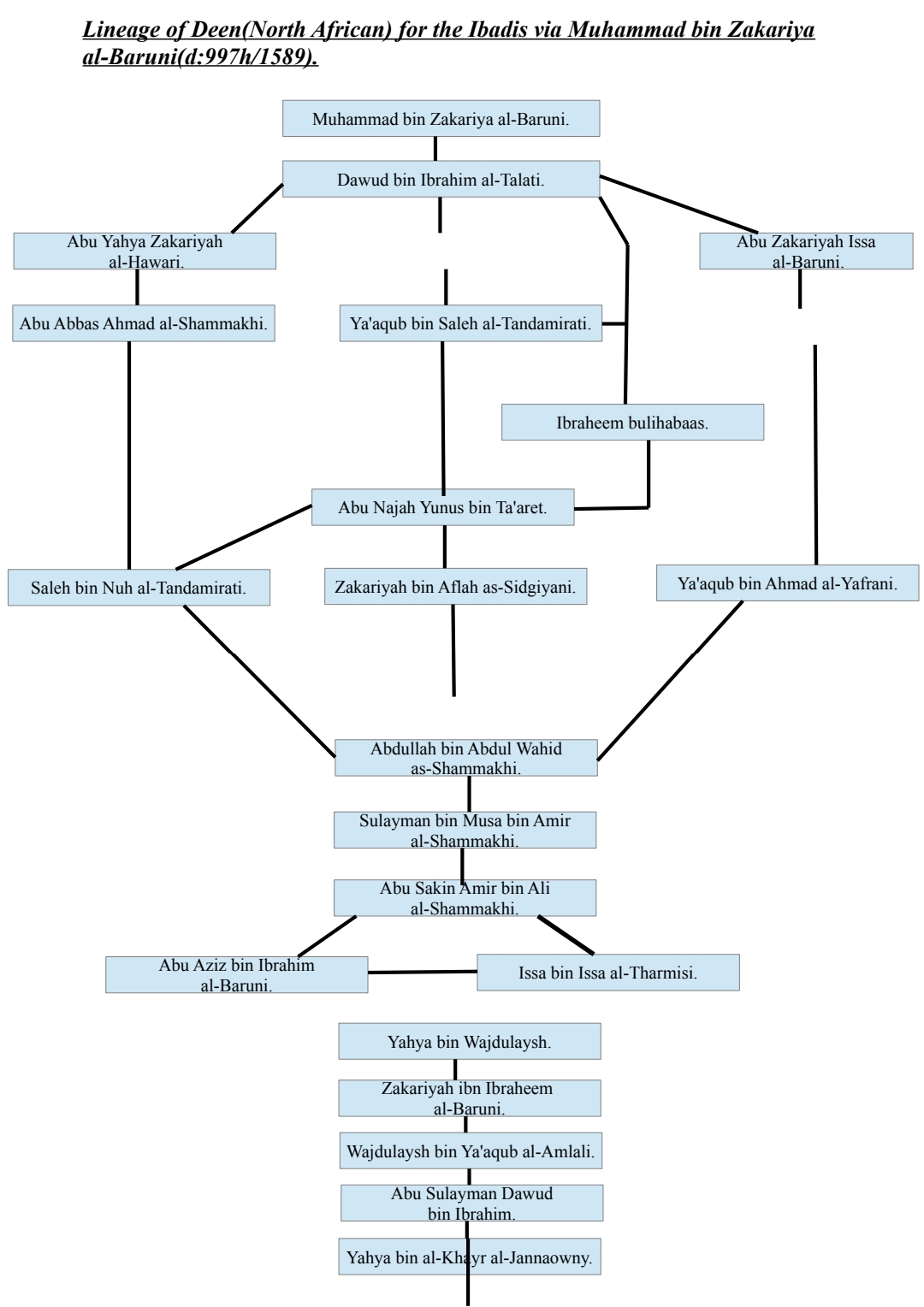
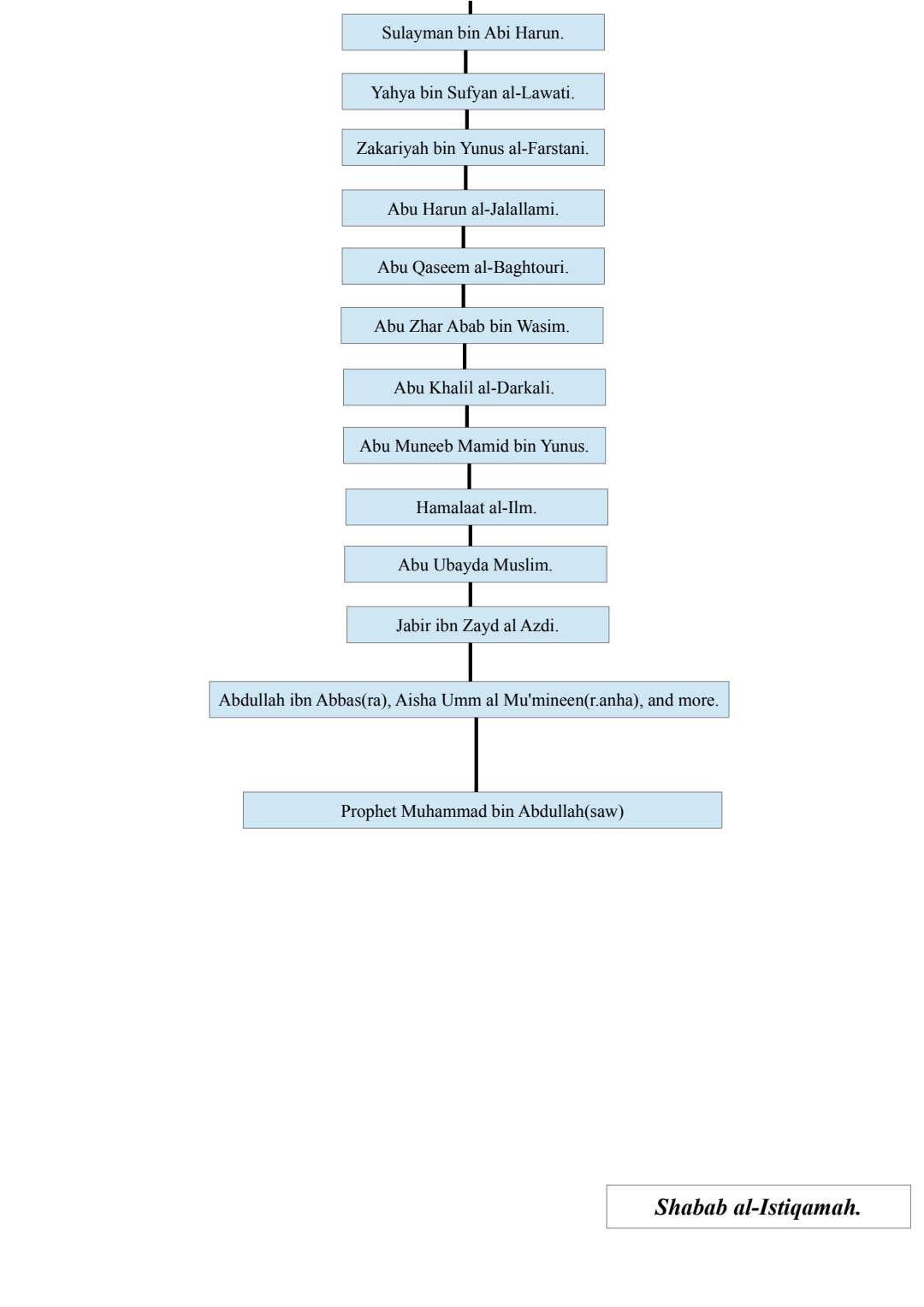



 Prima Quran