“When they see it, the criminal will wish he can ransom himself from the chastisement of that day by sacrificing his children.” (Qur’an 70:11)
“Indeed, Allah does not do injustice, [even] as much as an atom’s weight; while if there is a good deed, He multiplies it and gives from Himself a great reward.” (Qur’an 4:40)
﷽
“And the request of forgiveness of Ibrahim for his father was only because of a promise he had made to him. But when it became apparent to Ibrahim that his father was an enemy to Allah, he disassociated himself from him. Indeed was Ibrahim compassionate and patient.” (Qur’an 9:114)
In this short entry we will be discussing a very curious hadith found in Bukhari.
We like to call this: The TO BE CONTINUED….hadith.
We call the above hadith: The TO BE CONTINUED hadith.
You know, sometimes you get wrapped up in watching a series on television, and suddenly they cancel season three just when it was getting really interesting!
That’s the case with the following hadith:
“Ibrahim will meet his father on the Day of Resurrection, and Azar’s face will be dark and covered with dust. Ibrahim will say to him, “Did I not tell you not to disobey me?’ His father will say, ‘Today I will not disobey you.” Ibrahim will say, ‘O Lord! You promised me not to disgrace me on the Day of Resurrection; and what will be more disgraceful to me than cursing and dishonoring my father?” Then Allah will say, ‘I have forbidden Paradise to the disbelievers.’ Then he will be addressed, ‘O Ibrahim, what is beneath your feet?’ He will look and there will be a sacrificial animal (Dhahb) WHICH WILL BE CAUGHT BY THE LEGS AND THROWN INTO THE FIRE!”
In ya go ya little booger!
“He will look and there will be a sacrificial animal (Dhahb) which will be caught by the legs and thrown into the fire!”
When you look at this text, it is sensible that it stops at this part: “Then Allah will say, ‘I have forbidden Paradise to the disbelievers.” This concludes the matter.
Now the messy part.
The following part is all too easily an accretion by a redactor:
“Then he will be addressed, ‘O Ibrahim, what is beneath your feet?’ He will look and there will be a sacrificial animal (Dhahb) which will be caught by the legs and thrown into the fire!”
So we saw that this particular Hadith had a sensible conclusion. Yet theology won’t have it that way….we need it to continue…. “THEN….”
From this part on, the redactor just lets the imagination run wild…..
This becomes more interesting when you consider that, in Islamic history, both theShi’i Muslims and the Ash’ari Sunni Muslims have had a real problem with the idea of the parents of the Prophet (saw) being in hellfire or even the father of Ibrahim being in the hellfire.
The Shi’i have made some very wild attempts to assert that Azar is not the father of Ibrahim but his uncle instead. Not to be outdone by none no other than Jalal Al-Din Al-Suyuti, threw his weight behind the idea as well.
(insh’Allah, perhaps these are subjects for future articles) ..
So there are two things to be immediately said about the Hadith above.
First point.
If Prophet Ibrahim (as) gets to ask for privileges on behalf of his father, then this means that all the Prophets will get to ask privileges for their wives, sons, daughters, uncles. Noah (as) gets to ask for his sons. Lut (as) gets to ask for his wife.
Second point.
This will indicate double standards. The Prophets get special treatment from Allah (swt) — Astaghfirullah and the rest of us. If we go to the Jannah, can we ask the same for our family members:” Will Allah (swt) be just and give this same treatment to everyone or only to the Prophets?
“And certainly We know best those who are most worthy of being burned therein.” (Qur’an 19:70)
So what did the sacrificial animal do to be burned by the fire?
Was this (let’s say a goat) was he:
Among the Mujrimun-criminals?
Among the Fasiq-defiantly disobedient?
Among the Munafiq-hypocrites?
Among the Mushrik-those who associate partners with Allah (swt) ?
May Allah (swt) forgive us. May Allah (swt) deal justly with those who forge narrations and put words in the mouth of the Blessed Messenger (saw).
Our understanding in the Ibadi school is that the animals are the creations of Allah (swt). They are created according to their fitra, and they do not rebel against Allah (swt). They are not subject to any punishment, certainly not hellfire.
To believe that the Blessed Messenger (saw) would not overburden camels or that he would cut his robe so as not to disturb a sleeping cat and then turn around and think that he narrated something like this is certainly wanting.
All praise be to Allah. Al hamdulillah.
“And the request of forgiveness of Ibrahim for his father was only because of a promise he had made to him. But when it became apparent to Ibrahim that his father was an enemy to Allah, he disassociated himself from him. Indeed was Ibrahim compassionate and patient.” (Qur’an 9:114)
The idea of not accepting that the father of Prophet Ibrahim (as) goes to hell is the same train of thought that leads some Sunni Muslims to launch attacks upon the very Sahih hadith themselves!
“The Originator of the heavens and the earth; He made mates for you from among yourselves, and mates of the cattle too, multiplying you thereby; there is nothing like unto Him; and He is the Hearing, the Seeing.”(Qur’an 42:11)
﷽
This verse is sufficient to refute the rational proofs that the Ashari may try and bring forth to assert that Allah (swt) is perceptible.
This article will give the position of the Ibadi School, The Muslims, also known as: (Ahl al Haqq wal Istiqamah) on seeing Allah (swt) on the day of judgement.
We will critique the position of our brothers from Ahl Sunnah. As Ahl Sunnah is divided on this issue we need to make sure that our arguments are addressed to both sides of the divide among Ahl Sunnah itself.
The school of Ahl Sunnah that asserts that Muslims will see Allah (swt) in an apparent sense. (Athari, Salafiyya)
The school of Ahl Sunnah that asserts that Muslims will see Allah (swt) as being perceptible in the heart or mind.
In our estimation, the Athari, Salafiyya among the Ahl Sunnah are more consistent in their principles on ‘seeing’ Allah (swt) than are the Ashari. We will leave that to you the reader to decide where lay the truth.
Whereas we regard the Ashari/Maturidi to be the most inconsistent in this regard, as there are a few positions of them on this matter. Insh’Allah that will be shown in this article. We will present two examples straight away to prove this point:
“The Day the shin will be uncovered and they are invited to prostration but the disbelievers will not be able.” (Qur’an 68:42)
Ask all the Ashari/Maturidi on the planet, do they take the outward meaning of this verse? Certainly, this would be a strong verse to support their position? That people will see Allah (swt) by seeing the ‘shin’ of Allah (swt).
“People asked the Prophet (saw): O’ Messenger of Allah will we see our Lord in the Day of Resurrection? Then the Messenger of Allah replied: Is there any dispute among you whether a full moon is visible? They answered: No. then The Prophet (saw) continued asking them: “ Is there any dispute among you whether the sun is visible in a cloudless sky? They replied in the negative. Then The Prophet stated (saw): “Then you will see your Lord JUST LIKE this”. Allah will get the people together in the Day of Resurrection then He says: those who were worshiping any deity shall follow it. Then the ones who were worshiping the sun will follow the sun and the ones who were worshiping the moon will follow the moon and those who were worshiping Rebels will follow Rebels …Then Allah will come to them in a FORM other than WHAT THEY KNEW and say: “I am your Lord”, they reply: “We seek refuge in Allah from you. This is our place until our Lord Comes to us, and when our Lord comes to us, we will recognize Him. THEN ALLAH WILL COME TO THEM IN A SHAPE THEY KNOW and will say, I am your Lord’ They will say, ‘(No doubt) You are our Lord,’ and they will follow Him.”
Source:(Al Bukhari hadith no.6573 Book Of Ar-Riqaq)
They (Ashari/Maturidi) leave their students absolutely gob smacked that on the one hand, they battle against fellow Sunni who takes the outward meaning and they(the Ashari/Maturidi) constantly deny corporeality, and space/time for Allah (swt) and yet at the same time assert that we will see (sorry Mohamed Ghilan) I mean look upon Allah (swt) !!
We will show the strength and consistency both textually and intellectually of those of us who say that we will not see Allah (swt) on the day of judgement.
We will also be interacting with material from two videos. In the first video, you will only need to watch the first half-hour. That is the only section relevant to this post. https://youtu.be/5_6zRI0eH44 When we quote from this we will reference this as video A.
I personally was quite shocked and taken aback as I listened to our respected brother Mohamed Ghilan. Yet, as I listened he showed such what has to be described as a simple understanding of basic tenets of creed and certainly did not understand the beliefs of others. May Allah guide him and us.
Mohamed Ghilan echoing Shaykh Hamza Yusuf calls seeing Allah (swt) in the hereafter as “beatific vision” borrowing terminology from Roman Catholics. He states this @ 54:14 seconds (Video B) into the discussion.
Like when he says about Moses and the burning bush… “He really spoke.”
Oh, do tell us what do you mean when you say that, “He (swt) really spoke”??
What follows will be fromvideo A above. The Ustaz ask:
First Question: Is it rationally conceivable that Allah (swt) can be seen?
The Ustaz says that we can conceive of images in our minds. So Allah (swt) is being compared to temporal objects and bodies with accidents!
Now, this is important you will notice some bait and switch tactics going on with Ahl Sunnah. They are all over the place on this point of creed. All of this about “seeing” Allah (swt) and yet the first point is to talk about “seeing” Allah (swt) in the mind! Not with the eyes, not with the faces nor with the hearts.
So the Ustaz ask” “Is it possible in the mind?” He responds: “Yes he can! Why? Because he is existent. He is an existent being!”
My response:
That is a very weak argument. Because what will soon to follow will be likening Allah (swt) to spatial objects with accidents and bodies.
And sure enough @14:51 The Ustaz does exactly that. “Now this pen is made of substance body (plastic) and it’s made up of accidents, colour, shape size, weight, occupying space, etc, moving not moving. These are all accidents. Now can you is it possible in the mind for you to see this body without the accidents. Now you don’t see it. You don’t see it separate from its accidents but that does not mean it’s not possible. There is nothing in your mind to say to you, hear me out. There is nothing in your mind to say that you cannot see substance without the accidentsexcept that you are unable since bodies do not exist except with accidents. But there is nothing inconceivable in your mind. There is nothing that is blocking it in your mind.”
@21:19 the Ustaz continues… “Is it a contradiction in the mind that an accident can be seen. It’s not a contradiction. It actually can be seen because it exists. Anything that exists as an existent being can be seen.”
Notice the student @21:49 (whomever he is) he is brilliant. He tried to save the whole creed and its nonsense by saying what they should be saying, that is: “Because Allah exists it’s possible we can grasp his existence.” Then the teacher responds abruptly “That he is seen yes.” My response: “WOW!”
The student was on to something brilliant but the teacher wanted to quickly make sure that he affirms his (the teacher’s) position in the creed.
So the questions we really should be asking is:
“Is Allah an accident or a substance?”
“Is Allah’s wujud like or unlike his creation?”
The argument that Ustadh is making is that you can’t see accidents but that it is possible. However, he failed to give a single example of someone actually seeing an accident. So you can’t affirm something is possible when you haven’t given a single example of untold thousands of examples of this being a reality. That is even in relation to created things! How much more for that which is not contingent upon or dependent upon anything?
One of the students uses an argument about a man in a dark room. He is there but you cannot see him. So then the Ustaz replies that:
“The reason he can be seen is because he exists is not the means by which he is seen.”
This is fallacious. The reason he can be seen here is that he is a substance, a body. Which still does not make the argument the Ustaz is trying to establish at all. In fact, even in the case of the man in the darkroom, there are many things to be said:
He can’t be seen but he could be perceived. He could be perceptible without even being seen.
Even if you saw him would you say that you comprehend him?
The man has that which you can see his outward and that which you cannot see his inward.
It is part of the fitra that Allah (swt) created us and actually, a proof of his wahdat al wujud is the fact we can’t see him. The Ustaz can’t give a single example because it goes against the fitra. Another example that Allah (swt) has put inside of human beings that is quite powerful is the following:
The concept of nothing. It is part of your fitra, that you cannot picture nothing in your mind. Your mind will either picture an all-black space or an all-white space. That is still something. The irony here is that you can comprehend nothingness but you cannot see nothingness. Certainly, Allah (swt) is more than nothingness! If you cannot see nothingness how much more do you think you can see Allah (swt) who is the wahdat al wujud! You cannot comprehend Allah (swt) let alone see Allah (swt).
“Or were they created by nothing, or were they the creators.”(Qur’an 52:35)
On the possibility of seeing Allah (swt) this claim is demolished by the fact that there are so many invisible existents The soul, the intellect, the sense, perception, sounds, ether, etc.
Their opening the door of comparison of the Creator and the creation will lead to describing Him with many of those that are impossible about Him, Exalted is He. The existence of creatures cannot be perceived except with the existence of space and time. Perishing existents do not have the capacity to see the Eternal.
The peak of perceptibility of Allah (swt) ends with: “There is nothing like Him, and He is All-Hearing, All-Seeing” (Qur’an 42:11)
Muslim narrated from Abu Dhar, he said: “I asked the Prophet Muhammad (Blessings and peace of Allah be upon him), Have you seen your Lord? He replied: ” A light. How can I see Him”.
Source: (Sahih Muslim hadith 341. Kitab Al Iman)
The aforementioned evidence is enough to demolish the rational proofs that the Ashari/Maturidi bring forth in trying to liken Allah (swt) to his creation. May Allah (swt) protect the believers from it!
BE CAREFUL OF THE BAIT AND SWITCH-RUHYA-IDRAAK-NAZAR
I want to caution you the student of knowledge the seeker of truth on something very important. Do yourself a favour and note down every time someone from Ahl Sunnah uses these words ‘Ruhya’ or ‘Idraak’ or ‘Nazar’. I have often found that one speaker will claim Ruhya means this and Idraak means that and then another speaker will actually turn around and say the exact opposite!
Also, take note of the proof text they use. When they use a proof text from the Qur’an which word is being used there and why? Are they using ‘Ruhya’ or are they using ‘Idraak’ or are they using ‘Nazar’?
When they use a proof text from the hadith which word is being used there and why? Are they using ‘Ruhya’ or are they using ‘Idraak’ or are they using ‘Nazar’?
What about Idraak?
Be familiar with these arguments because the advocates of seeing Allah (swt) will rush to this argument first. It is perhaps the strongest they feel that they have. Even in the comment section below you will see one of our brothers from Ahl Sunnah rush to it.
“And what will make you know (idraka) what the Reality is?” (Qur’an 69:3)
The meaning of idraka here means perception when it is connected to the senses.
It has the sense of seeing when connected to the eyes or sight. When Idraak is connected to sight (ba sad ra) it means to see.
In this text yud’rikkumu is to reach or overtake.
“Wherever you may be, death will (yud’rikkumu) reach you, though you should be in raised-up towers. And if a good thing visits them, they say, ‘This is from Allah’; but if an evil thing visits them, they say, ‘This is from you.’ Say: ‘Everything is from Allah.’ How is it with this people? They scarcely understand any tiding.” (Qur’an 4:78)
So will we totally comprehend Allah (swt) or not? To totally comprehend Allah (swt) undermines the Wahdat al Wujud of Allah (swt). Can it be said that the finite will comprehend the infinite?
If we only partially comprehend Allah (swt) this means Allah (swt) would be broken into parts. He would be a part that we can comprehend and a part that we cannot comprehend. If we do not comprehend Allah (swt) at all it strengthens the argument of those of us who say that we will not see Allah (swt) at all. This is because comprehension is of the eyes.
Now, one has to be careful when dealing with various translations of the Qur’an. No doubt the translators have to toe the line of the various theologies they are beholden to.
The faculties ofseeing (tudriku) cannot grasp Him, and He grasp all–seeing (yudriku), He is the All-Subtle and All-Aware.” (Qur’an 6:103)
Now the Ustaz in (video A) gave to his students the impression that Idraak means to ‘behold something in its entirety’. ‘To encompass‘ ‘To see something in its entirety to comprehend it‘.
My response:
There is a difference between reaching (idrak) and encompassing (ihata)
There is no lexical reference work which interprets idrak as ‘encompassing’. That is sufficient proof as to the error of this interpretation by the respected Ustaz and anyone else who follows suit in this.
One’s saying (for example) lahiqtu al-jidara bi yad-i (I reached the wall with my hand) does not mean anything other than touching the wall. It is impossible that the hand should ‘encompass‘ the wall.
if someone says, “ahata bi-hi al-sahmu (the arrow reached him) it is sensible. If someone says “ahata bi-hi al-sahmu (the arrow encompassed him) then no reasonable person will regard his utterance as anything but senseless.
“Allah will say, “Enter among nations which had passed on before you of jinn and mankind into the Fire.” Every time a nation enters, it will curse its sister until, when they have caught up with one another (‘iddarku) therein, the last of them will say about the first of them “Our Lord, these had misled us, so give them a double punishment of the Fire. He will say, “For each is double, but you do not know.” (Qur’an 7:38)
“when they catch up with one another.” It does not mean that each group encompassed the other.
If I cannot make you see this and if the usage of the lexicons cannot make you see it than I pray that Allah (swt) will open your eyes and your heart to what the pure Arab, and mother of the believers had to say about this.
Narrated Masruq:
I said to ‘Aisha, “O Mother! Did Prophet Muhammad see his Lord?” Aisha said, “What you have said makes my hair stand on end! Know that if somebody tells you one of the following three things, HE IS A LIAR: Whoever tells you that Muhammad saw his Lord, IS A LIAR.” Then Aisha recited the Verses:
‘No vision can grasp Him, but His grasp is overall vision. He is the Most Courteous Well-Acquainted with all things.’ (Qur’an 6:103)
‘It is not fitting for a human being that Allah should speak to him except by inspiration or from behind a veil.’ (Qur’an 42:51)
Source: (Al Bukhari Volume 6, Book 60, Number 378)
Notice our mother Aisha (May Allah be pleased with her). Notice the response? “What you have said makes my hair stand on end!”
Now a desperate response to the above text after realizing that the first argument did not work is they may well say:
“The negation is without any condition, and therefore not bound to any meaning of ‘for all time’.”
Response to that claim:
Obviously this is now how our mother Aisha (r.a) understood this verse. She did not reason that perhaps he did see that time whereas other times he did not. No. In fact, that argument also works in our favour as it is not conditioned upon a time (this life or the life to come).
Other textual evidence from the Qur’an.
“When Moses came to the place appointed by Us, and his Lord addressed him, He said: “O my Lord! show (Yourself) to me, that I may look upon you.” Allah said: “You shall never see me; But look upon the mount; if it abides in its place,then you will see me.”
When his Lord manifested His glory on the Mount, He made it as dust. And Moses fell down in a swoon. When he recovered his senses he said: “Glory be to Thee! to Thee I turn in repentance, and I am the first to believe.” (Qur’an 7:143)
This is a powerful text against the claims of the Ashari/Maturidi and all those who say that we can see Allah (swt)!
Moses was dealing with his stubborn and rebellious people and demonstrated them the futility of their request which was:
“The People of the Scripture ask you to bring down to them a book from heaven. But they had asked of Moses [even] greater than that and said, “Show us, Allah, outright,” so the thunderbolt struck them for their wrongdoing. Then they took the calf [for worship] after clear evidences had come to them, and We forgave them for that ˹after their repentance˺ And We gave Moses a clear authority.” (Qur’an 4:153)
“And [recall] when you said, “O Moses, we will never believe you until we see Allah outright”; so the thunderbolt took you while you were looking on.” (Qur’an 2:55)
“And Moses chose from his people seventy men for Our appointment. And when the earthquake seized them, he said, “My Lord, if You had willed, You could have destroyed them before and me [as well]. Would You destroy us for what the foolish among us have done? This is not but Your trial by which You send astray whom You will and guide whom You will. You are our Protector, so forgive us and have mercy upon us; and You are the best of forgivers.” (Qur’an 7:155)
Prima Qur’an Comments: There is so much to be said about the above-mentioned ayats. First of all Allah (swt) said, ‘you will never see me‘. However some of these people have no shame nor fear of their Lord and they will play with the English translations and perform all kinds of maneuvers to make you think that this verse should be understood as, “You will not see me now” meaning the possibility of being seen in the future is there.
In fact, the Ustaz in (video A) unfortunately, he did exactly that.
This is similar to the following verse:
Say: Shall I choose for a protecting friend other than Allah, the Originator of the heavens and the earth,Who feeds and is never fed? Say: I am ordered to be the first to surrender (unto Him). And be not you (O Muhammed) of the idolaters. (Qur’an 6:14)
No one who reads the Arabic text understands this as Allah (swt) is not currently fed but has the possibility of being fed in the future! Authubillah min dhalik.
Not only that but if we do not understand the negative imperative to include all times what does it say about the laws of Islam? Does it ever occur to the mind that there will be a time in the future where shirk would be permissible? Authubillah! There will be a time in the future where adultery and taking the soul without the right will become permissible? Authubillah!
This argument is also negated by the fact that there is division among the Ahl Sunnah as regards Allah (swt) will be seen in this life or not.
Look at the hadith again.
“People asked the Prophet (saw): O’ Messenger of Allah will we see our Lord in the Day of Resurrection? Then the Messenger of Allah replied: Is there any dispute among you whether a full moon is visible? They answered: No. then The Prophet (saw) continued asking them: “ Is there any dispute among you whether the sun is visible in a cloudless sky? They replied in the negative. Then The Prophet stated (saw): “Then you will see your Lord JUST LIKE this”. Allah will get the people together in the Day of Resurrection then He says: those who were worshiping any deity shall follow it. Then the ones who were worshiping the sun will follow the sun and the ones who were worshiping the moon will follow the moon and those who were worshiping Rebels will follow Rebels …Then Allah will COME TO THEM in a FORM other than WHAT THEY KNEW and say: “I am your Lord”, they reply: “We seek refuge in Allah from you. This is our place until our Lord Comes to us, and when our Lord comes to us, we will recognize Him. THEN ALLAH WILL COME TO THEM IN A SHAPE THEY KNOW and will say, I am your Lord’ They will say, ‘(No doubt) You are our Lord,’ and they will follow Him.”
Source:(Al Bukhari hadith no.6573 Book Of Ar-Riqaq)
Can it really be imagined that Allah (swt) who knows all things, and is perfect in the expression of his language would say to Moses (a.s), ‘You shall never see me’ knowing that Moses (a.s) would see him in the afterlife?
Someone should ask the Ustaz (from video A) what form is it that the believers KNOW concerning Allah (swt)?
Not only that but if the negation in this verse is taken to mean for this world, not for the hereafter, then it must be allowed in similar verses, like His saying:
“Slumber does not overtake Him, nor sleep.”(Qur’an 2:255)
“He has neither a companion nor a son”(Qur’an 72:3)
“He is not brought forth from like-kind nor does like kind come forth from him.” (Qur’an 112:3-4)
Whatever is forbidden in this world like slumber, sleep, companion, peers must be permitted in the hear-after. Should we really reason like this?
It is obligatory for every Muslim to believe that this world and the next world have no effect on the essence of Allah!
It is impossible for Allah (swt) that time can affect him or space to accompany him. His essence never changes and his attributes never shift.
What are we to do about the challenge of Allah (swt) in the Qur’an?
“But if you do not – and you will never (walan) be able to – then fear the Fire, whose fuel is men and stones, prepared for the disbelievers.”(Qur’an 2:24)
This negation is eternal and permanent. Is the Ustaz (in video A) or any other going to claim no this statement of Allah (swt) is only for a ‘period of time’. Which means it is possible people will create the like of the Qur’an!
Also, we know that the mountain did not abide. Allah (swt) didn’t set his being perceived on the condition of the mountain but on his knowledge that it is not possible and that was manifest clearly to the people of Moses.
Also, note the concept of blasphemous ideas and concepts being related to mountains being destroyed as with the following blasphemous concept.
“The heavens almost rupture therefrom and the earth splits open and the mountains collapse in devastation That they attribute to the Most Merciful a son.” (Qur’an 19:90-91)
These are the people of disbelief. It is obvious when they say that they will not attain to faith until they see Allah (swt) plainly at which it says in response that the thunderbolt overtook them! Think about it! They are the ones who wanted a golden calf a ‘sura’ a form. These are the same people who want to look upon Allah (swt). They are wanting something perceptible to the eyes.
The people who adhere to the Ashari/Maturidi doctrine need to think clearly on this matter.
Again we have the following text…
And those who do not expect the meeting with Us say, “Why were not angels sent down to us,or [why] do we [not] see our Lord?” They have certainly become arrogant within themselves and [become] insolent with great insolence.” (Qur’an 25:21)
So now let us look at the positive proof that the Ashari/Maturidi will bring forth from the Qur’an to try and establish their proofs. Let us see if it is consistent with
a) The Qur’an itself.
b) with their own theology concerning Allah (swt) not being in space/time
c) reason.
Positive proof for the Ashari/Maturidi position from the Qur’an.
“The heart did not lie [about] whatit saw. So will you dispute with him over whathe saw? And he certainly saw him in another descent. (Qur’an 53:11-13)
“Andwithout doubt, he saw him in the clear horizon.” (Qur’an 81:23)
#1) If we are to believe that this is Allah (swt) then it clashes with the clear text of the Qur’an.
#2) If we are to believe that this is Allah (swt) then it clashes with Ashari/Maturidi Aqidah. For example:
Abu Huraira reported: The Messenger of Allah, peace, and blessings be upon him, said, “Our Lord descends to the lowest heaven in the last third of every night, and he says: Who is calling upon me that I may answer him? Who is asking me that I may give him? Who is seeking my forgiveness that I may forgive him?”
Source:(al-Bukhārī 1094,Muslim 758)
So do the Ashari/Maturidi believe that in the hadith above that Allah (swt) descends?
Do the Ashari/Maturidi believe that distance is a hindrance to Allah (swt)?
Do the Ashari/Maturidi believe that Allah (swt) does the ascending and descending depending on the time of day as (the last third of every night) is depending upon the relative timings of the globe?
So if the Ashari/Maturidi use the above verses to argue that the Blessed Messenger (saw) had seen Allah (swt) then they must believe the part where it says, “certainly saw him in anotherdescent.”
#3) It goes against reason as already mentioned above. Allah (swt) is imperceptible.
#4) Lastly, it contradicts well-established hadith on the matter:
It is narrated that `Aisha, may Allah be pleased with her, said: “I asked the Messenger of Allah about these two verses. He said, “That is Jibreel; I never saw him in the form in which Allah created him except on these two occasions. I saw him descending from the heavens, with his huge size filling the horizon between heaven and the earth.”
Source: (Muslim Book 1 Hadith Number 0337 Book of Faith)
`Aisha may Allah be pleased with her, was asked about the verse (which means): “Then he [Jibreel] approached and descended.”[Quran 53:8] She, may Allah be pleased with her, said, “That is Jibreel. He used to come to him (the Prophet ) in human form, but on this occasion, he came in his real form, and he filled the horizons of the sky.”
Source: (Muslim Book 1 Hadith Number 0340 Book of Faith)
Those counter proofs should be enough to ground to powder any Ashari/Maturidi pretension concerning those verses.
The big verse that the Ashari/Maturidi use to support their position from the Qur’an is the following:
“ Some faces, that Day, will be radiant, Looking toward their Lord. And some faces, that Day, will be contorted, Expecting that there will be done to them something backbreaking.” (Qur’an 75:22-25)
So here the Ashari/Maturidi interpret the word Nazar as looking, seeing. (Insh’Allah we will come back to this, especially in the context of brother Mohamed Ghilan above).
This word (Nazar) is more general than ru’yah.
Will they see with their faces?
Will they see with their eyes?
Will they see with some sixth sense?
This confusion is clear evidence that they do not have any ground for their opinion.
Remember the hadith:
“Soon you will see your Lord openly as you see the moon on the night of the full moon.”
We understand this verse as: “waiting for their Lord”.
We need to again ask if the Ashari/Maturidi position contradicts the following:
a)The Qur’an itself.
b) with their own theology that Allah (swt) is not in space/time.
c) reason.
We would translate or understand the text as: “Faces, that day looking forward to receiving mercy from their Lord.”
The first thing that should be pointed out, is that no one from the Ashari/Maturidi school can find fault with our interpretation of the text. Observe yourself and see the many forms, as a verb, noun, active participle, and passive participle.
Second, the context of the verse itself shows the people of the station waiting to receive their just rewards:
‘Some faces will be radiant, looking forward to receiving mercy from their Lord. Some faces will be contorted, expecting something backbreaking.’
To give you (the truth seeker) a solid proof to show you that Nazir does not have to mean seeing ponder the following text.
“Indeed, those who exchange the covenant of Allah and their [own] oaths for a small price will have no share in the Hereafter, and Allah will not speak to them or look at them on the Day of Resurrection, nor will He purify them; and they will have a painful punishment.”(Qur’an 3:77)
If Nazar in this verse is interpreted as seeing, it will lead to the meaning that Allah will not see these people on the Day of Resurrection. This is not possible, and such a belief is in real error because it is a rejection of faith in Allah (swt)! There is no way but to interpret Nazar here as mercy and favour. Allah (swt) will not show his mercy or favour upon them.
Now going back to what our brother Mohamed Ghilan said in his talk @ 54:32 “But the Sunni position is that we will actually see Allah (swt), but you can but that does not negate that Allah is above everything and he’s above comprehension.”
The other thing that our brother Mohamed Ghilan does is bring in a straw man argument. This is clear evidence that he is not confident of his position.
Thus, he brings up the following verse:
“And if you invite them to guidance, they do not hear; and you see them looking at you while they do not see.” (Qur’an 7:198)
It is clear to me that our brother Mohamed Ghilan by bringing into the discussion a non-argument he is preaching to the choir.
Perhaps our brother Mohamed Ghilan can mention to his students who among the Ahl Al Haqq Wal Istiqimah (The Muslims), the Mu’tazilis, the Jahmis, the Zaydi’s , the Imamis-12er Shia and from among those who scholarsfrom Ahl Sunnah who are independent of taqlid, who among them holds to the position or view that Allah (swt) is comprehensible?
Again a straw man.
As regardsQur’an 75: 22-25 The Ahl Sunnah differ who will see him in the next life.
They are of three views;
1) Only believers will see Him.
2) All people will see him at the Station, believers and unbelievers then the unbelievers will be veiled from him.
3) The third is that hypocrites will see Him but not the unbelievers.
This is enough to prove the weakness of the foundation on which they have established their belief.
By contrast, the truth cannot bear such conflict, because its arguments are clear and its path is straight.
Is this a special treat for the believers only? Is this a special treat just for the believers and people who have remained steadfast?
Apparently not. Ponder the following:
“Soon you will see your Lord.”-Hadith The context of this hadith requires the seeing to take place at the station where all are gathered. It will not be restricted to believers only, Hypocrites, “and this ummah will remain with its hypocrites. Then, Allah, Exalted is He, will come to them in a form other than what they knew, then he will say: “I am your Lord.” Then they will say: “We seek refuge in Allah from you. This is our place until our Lord comes.”
It also follows from it that Allah, will be seen by this ummah believers and hypocrites- This goes against the verse in the Qur’an from
Moses: “NEVER WILL YOU SEE HIM.”
Why the unbelievers and hypocrites from the time of Moses did not get to see Allah (swt) but the unbelievers and hypocrites will be able to see now?
As regards this hadith. Let me put the hadith again for you to read and reflect upon it.
“People asked the Prophet (saw): O’ Messenger of Allah will we see our Lord in the Day of Resurrection? Then the Messenger of Allah replied: Is there any dispute among you whether a full moon is visible? They answered: No. then The Prophet (saw) continued asking them: “ Is there any dispute among you whether the sun is visible in a cloudless sky? They replied in the negative. Then The Prophet stated (saw): “Then you will see your Lord JUST LIKE this”. Allah will get the people together in the Day of Resurrection then He says: those who were worshiping any deity shall follow it. Then the ones who were worshiping sun will follow the sun and the ones who were worshiping moon will follow the moon and those who were worshiping Rebels will follow Rebels …Then Allah will COME TO THEM in a FORM other than WHAT THEY KNEW and say: “I am your Lord”, they reply: “We seek refuge in Allah from you. This is our place until our Lord Comes to us, and when our Lord comes to us, we will recognize Him. THEN ALLAH WILL COME TO THEM IN A SHAPE THEY KNOW and will say, I am your Lord’ They will say, ‘(No doubt) You are our Lord,’ and they will follow Him.”
Source: (Al Bukhari hadith no.6573 Book Of Ar-Riqaq)
Response:
First point. It also follows from it that His Essence (dhat), Exalted is He, changes from one form to the other. Such change is a characteristic of contingent existents (huduth).
Second point.
Shaykh Ahmed Al Khalili (May Allah continue to benefit us through him) asked our brothers from the Ahl Sunnah, the following:
“Whoever has read the Book of Allah and has studied the Sunnah of His Messenger must know that real form in which He will see His Lord, Exalted is He, so that, when he sees Him in another form he does not recognize Him.Then please bring me the description of this form and definition of it from your knowledge through your reading of the Qur’an and your study of the hadiths of the Messenger (saw)? Then they were taken aback and their arguments became void.”
Third point.
Both wordings are clear that their knowledge of His form will be a result of previous seeing. There is no way for those who take the hadith literally but to say that He is seen in this world. Yet most of them have rejected that (the seeing of Him in this world).
Fourth point.
Most believers in the seeing hold that it will happen without kayf (without an understanding how it will happen). The comparison in the hadith with the seeing of the moon ‘like that you will see Him‘ contradicts this view. So too does the mention of the form in the hadith and their not recognizing it when it has changed from what they were familiar with.
Fifth point. How will an angel be commanded to lie? It is a shameful thing.
Abu Musa reported: The Prophet (saw) said, Verily, In Paradise are two gardens with silver vessels and two gardens with golden vessels. Nothing comes between the people and their looking at their Lord but the mantle of Majesty on His Face in the Garden of Eden.”
Source: (Sunan al-Tirmidhi 2527)
In other words, you won’t be seeing Allah (swt) in the afterlife after all!
Remember the Ashari/Maturidi understand face as Allah himself, his essence! That ‘mantle of majesty‘ will prevent you from looking at Allah (swt).
“It is not fitting for a man that Allah should speak to him except by inspiration or from behind a veil.”(Qur’an 42:51)
“The Messenger of Allah stood among us with five words he said Verily Allah exalted is he does not sleep, and that is not appropriate for Him. He lowers the Balance and raises it. To him are carried aloft the actions done in the night before the actions done in the day and the actions of the day before the actions of the night. His veil is “light” (and on one narration “fire”). If He lifts the veil then the light of His Face will burn whatever it reaches of His creation.” The universe itself will be utterly annihilated! Allahu Akbar!
Source: (Sahih Muslim 179a, Book 1 Hadith 352 English reference Book 1 Hadith 343)
“And call not, besides Allah, on another god. There is no god but He. Everything that exists will perish except His Face. To Him belongs the Command, and to Him will you all be brought back.” (Qur’an 28:88)
So regarding this verse that those of our brothers from Ahl Sunnah believe that the Qur’an 75:22 to be strong proof. However, it is weak from all conceivable angles.
It also goes to show to anyone who has eyes and a heart after the truth that the Ahl Sunnah and their consensus down through the ages, has not been guided on this matter. Rather they are in error.
Is it reasonable to assume that the seeing of Allah (swt) is merely hinted at in the Qur’an whereas food and drink, accommodation, gardens, rivers are mentioned time after time with clear phrases with no scope for any other interpretation? Think about it. May Allah (swt) be with you.
So we can see that the Ashari/Maturidi position concerning thee verses in question contradicts other clear text of the Qur’an.
It also contradicts their own theological position.
It also contradicts reason.
The difference between us Ibadi (Ahl Haqq Wal Istiqama) and our brothers from the (Ahl Sunah) when it comes to Qur’an 75:22is that we use an understanding that is consistent with the verb form itself, used throughout the Qur’an: in the way we translate and interpret it, and is consistent with the clear verses of the Qur’an, that clearly negate seeing Allah (swt).
We do that in all verses that indicate corporeality, or time/space for Allah (swt). It is clear that some of our brothers from Ahl Sunnah do so only when it suits them. Allah (swt) knows best.
“Would you question your Messenger as Musa was questioned before? But whoever changes from faith to unbelief has strayed without doubt from the even way.”(Qur’an 2:108)
“The servants of the RaHmān (the All-Merciful, Allah) are those who walk on the earth humbly, and when the ignorant people speak to them, they reply peacefully.” (Qur’an 25:63)
﷽
So it was just after Farj on Jumaa morning here in Singapore when I checked my WhatsApp and there from that gentle and noble soul, brother Nazzam were the latest links of interest. Bless him! I would get updates from time to time on articles, blog posts and vlogs and debates that have taken place. So this particular morning was a debate between two people I had not really known before.
So I head over to twitter and what do I see, already that one side has censored comments. So, I go and click on the link to the debate posted on YouTube. The comment section was clearly pro Dr. Khalil. I saw many people in vigorous exchanges with followers of the Athari creed; and they were getting pressed. I then recalled that the first time I heard of this Jake guy. I believe he was introduced by Mufti Abu Layth (Naheim Ajmal) in one of his episodes. I believe it was pointed out that he used arguments he pinched from Professor Emad Hamdeh’s against the Quraniyoon, to use as reasons why (he), Jake, was no longer intrigued with that movement. From there on this Jake threw in his lot with the Athari/Salafist crowd. In this day and age if you want to gain followers and notoriety quickly through social media that is the most strategic decision one could make.
Not knowing of Dr. Khalil Andani, however, was clearly a loss for me. It is clear to me that Professor Andani is quite formidable. There is no doubt in mind that anyone who ever had the blessing of attending his class got their hard-earned money’s worth. Beyond that, they learned at the hands of an adept.
As for those people who are sitting comfortably in their homes drinking high grade coffee shrugging their shoulders and saying ‘who cares’ about such a debate. Welcome to the world of privilege and security! Professor Andani is doing you and everyone else a huge service! He is debating a person who is representative of a certain strain of thought that on the regular participates in the anathematization of other Muslims.
It is no stretch of the imagination to say that by putting a dent in such creedal positions he could be saving lives! Imagine an impressionable young Muslim who believes that Professor Andani and all like him hold such abhorrent aberrant and dangerous views that they must be dealt with. Imagine a gathering of high profile Muslim philosophers conducting a symposium, Professor Andani is in attendance, suddenly an attacker unleashes a few rounds killing many people in the process.
Imagine that same impressionable young Muslim saw the disasters performance on behalf of Jake, and although he may not be inclined to agree with everything Professor Andani says, he witnessed enough to make him question the absolute certainty that he once placed in the Athari creedal position. Instead of wanting to pop off a few rounds into a crowd of people who have been anathematized; this youth leaves Salafism altogether, or he becomes convinced of his own position, while holding space for other views.
I will be fair to say that Al Qaeda, Al Nusrat, ISIS and others do not necessary represent Salafism per say. However, it is not even a point of debate to say that Al Qaeda, Al Nusrat, ISIS have more in common with Salafi/Athari thought than they do Ashari/Maturidi/Mutazali theological positions.
Make no mistake about it, this debate is a watershed moment. The Athari creed has never been laid bare, deconstructed and destroyed in such a public formatted debate as it was in this debate.
Jake went in so cocksure of himself thinking Dr. Andani would be easy prey.
It was like watching a Discovery Channel documentary where you see the Mongoose carefree through the forest, and you spot a cobra skulking and slithering its way through the foliage, poised to strike. Yet, this Mongoose will be no prey! On the contrary, once the Mongoose caught on to the scent, and pressed the attack, the poor cobra takes such a thrashing that you almost feel sorry for the elapid.
Let us look at the opening statements of each of the debaters. The big surprise for me not really knowing anything about these two debaters is who actually used more naql or text? My presumption would be that Professor Andani would come in using more philosophy, and logic and less textual proofs. My presumption is that the Athari would come to a debate loaded with textual proofs and evidence.
This was simply a no contest!
Professor Andani used 7 positive arguments from the Qur’an. Jake used 4. Andani gave us some commentary on how these text support his position. Jake simply quoted them without explaining how they support the Athari school. Jake used two other text from the Qur’an from Khusraw and Al Tusi in a polemical fashion against Andani. When it came to the Sunnah or ahadith, Professor Andani gave 5 a hadith. Firstly to show us that the guardians of proper understanding of the primary and secondary sources come from the Ahl Bayt. Secondly he gave two ahadith for his argument concerning the pen. Professor Andani quoted no less than 20 different source showing questionable ahadith that are an affront to the idea of a transcendent divine being. When it came to giving positive ahadith for the Athari position Jake gave us nothing. When it came to ahadith bringing into question Islamic philosophy Jake gave us nothing. Since Jake lacks the trade mark beard of the bulk of Salafi/Athari Muslims one could easily mistake Andani for being the Athari in the debate.
Since Athar means remnant or report, clearly not only is Professor Andani an adept in Islamic science, he is actually the true Athari between the two! Jake on the other hand, a nothing burger.
Not necessarily an argument against either Ismaili doctrine or Islamic Philosophy in general Jake repeated several times the Professor Andani asserts that anyone who claims that who ever states that Allah (swt) has names and attributes is tantamount to shirk and anthropomorphism. Please see @22:06 minute mark:
“Khalil does not believe that Allah is the direct creator of the heavens and the earth. He does not believe that Allah is All Knowing, All Powerful and Perfect, in fact HIS BOOK states: that to ascribe such names and attributes to God is shirk and anthropomorphism.”
A similar claim is made at the 23:37 minute mark.
Why didn’t Jake show us the extract from Professor Andani’s book? He claims that these are the beliefs of Professor Andani yet he doesn’t give us the quotes for this. This would certainly help Jake, as Jake has made takfir of Andani, he can now turn around and claim that Andani did the same thing.
Professor Khalil gives 5 arguments for refuting the Hanbali creed. He gives 5 arguments for the Absolute Oneness of Allah & His Creation of First Intellect. Although, I feel Professor Khalil more than proved his case in regards to the Absolute Oneness of Allah (swt), he possibly needed more time to flesh out his argument of the creation of the First Intellect.
Professor Khalil showed quite forcefully the issue with Tafwid.
Affirming the apparent meaning, or do ta’wil for metaphorical meaning. Jake must affirm the apparent meaning and reject ta’wil. This leads us to Tafwid al-Ma’na where you deny the apparent meaning and deny the opposite of the apparent meaning. This position is logically incoherent. If you say you do not know the meaning, then there is no meaning that is accessible to humans. This is a devastating argument because it shows that Athari are actually the one with some esoteric belief in the divine. The Qur’an and Sunnah conveys that which is not intelligible to humanity. Another devastating point given by Professor Khalil @39:27 minute mark that if you want to argue for Tafwid al-Ma’na and Tafwid al-Kayf and say ‘Bi Li Kayf’ than you should stop debating with Christians. The argument here is that Athari are in reality believers of Mysterianism.
All of the points given in Professor Andani’s slides are effectively devastating for the Athari position.
“No Qur’anic verse and NO Prophetic Report teaches that God possesses real attributes (sifat) that are additional to and distinct from His Essence.” Where did they get the idea from? They got it from speculative theology.
During his first 10 minute rebuttal.
Surprisingly for someone who has done many debates Jake seemed to forget how the rebuttal part of a debate goes. Instead of showing why Dr. Andani’s five points against Athari creed were wrong, Jake continued his opening presentation of attacking Andani’s views. The only thing he really interacted with was that which was easy pickings. He scanned the list of the slide Professor Andani put up and picked out Shaykh Abdul Qadir Al Jilani. (An Athari). Even, I am not sure why Professor Khalil had him on that list.
When quoting Shaykh Abdul Qadir Al Jilani
“We believe that Allah CONSTRICTS, EXPANDS, rejoices, loves, dislikes, becomes pleased, becomes angry, and abhors, he has two hands and both of his hands are right. The hearts of his servants are between two of his fingers and he is in the direction of uluh…..” Jakes says @ 50:35 “This sounds like Athari creed to me.”
What did Jake mean when he says Allah (swt) constricts and expands? Does he mean that it is an action that Allah (swt) does to the creation? As in constricting the breast or expanding the breast? Or does he mean that Shaykh Abdul Qadir Al Jilani is asserting that Allah (swt) himself, his essence, expands/constricts? This sort of irresponsible reading of the text in English without proper explanation is no Bueno. Jake did not deal with the issues of divine simplicity or the problem of the ontological collapse of his position.
Professor Andani’s first 10 minute rebuttal.
@1:03:27 They were not putting up Professor Adnani slides. It is hard to know if that was intentional or not.
@1:11:36 Professor Adnani claims that Jake was intellectually dishonest by admitting a fact from Nasir al-Din Tusi’s work by not admitting the fact of what he had actually written. @1:12:07 Professor Adnani bemoans the fact that Jake cannot read Arabic and therefore cannot go to the primary sources. He is overly reliant upon Orientalism and Orientalist.
Jake’s second 5 minute rebuttal.
@1:18:34 Jake puts up the claim that he has a document ‘with all these references if anyone is interested I’ll make them publicly available and you can read them yourself.” This statement is followed up with a dig @ Professor Khalil doing Taqiyyah, practicing obfuscation or lying.
@1:19:44 “No it does not mean there are multiple necessary beings, we don’t say there are multiple humans, that Jake is multiple humans just because I have multiplicity within me. I’m still one being. We don’t say that there are multiple uh beings within Jake. This is not the language that we use”
Did he just use himself to compare with Allah (swt)? This is very problematic. It is a violation of “There is nothing like unto Him, and He is the Hearing, the Seeing.” (Qur’an 42:11)
@1:20:07 “My argument is quite simple, just read the Qur’an, for the most part.” WHAT??
@1:21:23 Jake says that he trusts someone else over going directly to the text himself! Especially doesn’t trust Professor Andani. “You keep talking about Arabic but you cannot even pronounce basic words, which I find to be quite shocking.” You can tell that Jake felt the sting of Professor Andani’s comment about Jake not being able to go to the primary sources because Jake lacks the requisite command of Arabic to do so.
Professor Khalil second 5 minute rebuttal.
@ 1:24:06 Professor Adnani wanted to know whom Jake will rely upon for creedal positions. Prior to the debate Jake gave Professor Andani the creed of Ibn Qudama. Ibn Qudama says: “We do not go beyond the traditions from the Prophet and his companions; nor do we know the how these, save by the acknowledgement of the Messenger and the confirmation of the Qur’an.”-Ibn Qudama (Tahrim)
“Debate is for people who can use logic and reason which you are not allowed to do!”
Ouch! That was yet another stinging point from Professor Andani.
@1:26:00 Professor Adnani makes another great point. Jake did not specify what he meant by necessary attributes.
1:26:34 I almost fell out of my chair, Captain Planet? It is good to see that Dr. Khalil is forceful in his presentation and can keep a serious topic light-hearted.
@1:26:45 Professor Adnani bemoans the fact that Jake is severely handicapped in this debate by not being able to read the primary sources.
@1:26:58 Professor Adnani puts forth a very blunt question to Jake. “How do you define wujud, existence?
15 minute cross examinations. Jake cross-examines Professor Andani
During his 15 minute cross-examination, Jake spent less time asking questions and more time giving a sermon. As regards demeanor, Jake was like this angry child, who ran away from home only to find a wise and comforting father in Dr. Khalil Andani. Khalil was warm and had presence, Jake was bitter and needed consoled.
@ 1:30:19 Jake ask Professor Andani about true knowledge of Allah (swt) only coming through the Imams. Through the intellect or the imams (qualified scholarship). Jake himself admits its from qualified scholarship when he even queerly offered, “just read the Qur’an, for the most part.”
1:30:57 Jake could frame his question another way. ‘During the time of the Blessed Messenger (saw) was true Tawhid known only through the Prophet (saw), whom would be the ‘rightly guided Imam’ or through other means? If we can understand this, it will help us to understand the position of not only Ismaili Shi’a but our Shi’a brothers in general. Even if we disagree with them.
When Professor Adnani gives his reply that there are two types of ‘ilm and one is supra discursive, also known as marifa. This is something that adherents of Sufi paths would appreciate. Where as those who have no familiarity with the Seeker-Shaykh relationship would have no appreciation of this.
@1:33:41, Jake moves on to the next point because he saw no way in. Usually if you strongly argue, you will overwhelm your opponent and press the attack until you get them to capitulate through the sheer strength of your argument.@1:34:12 Jake started to bite his fingernails which is usually a sign of stress or anxiety. I don’t know if it is me but it looks like he proceeds to chew for a moment on a piece of fingernail.
@1:37:40 Professor Andani makes the point that there is no way Kirmani is refuting Ibn Sina because Ibn Sina has not even written his works yet!!! “Remember Ibn Sina died in 1037 and Kirmani died in 1020. There is no way Kirmani is refuting Ibn Sina because Ibn Sina hasn’t even written his major works when Kirmani is writing. Kirmani is likely referring to a pre Ibn Sina falsifa tradition.”
@1:38:40 Professor Andani enlightens Jake who confuses the Ashari position of the divine will that is entirely self determined, with that of the Ismail’i position.
1@:40:00 Jake when pressed on whether he knows what type of shirk Al Sharistani is referencing, Jake replies, ‘You can’t respond with a question.” Professor Khalil is not familiar with debates or debate territory. So, he could have used the most common trick there is in this situation, which would be to ask a statement of clarity, ‘I’m not sure the type of shirk you are referring to?’ Interestingly, as a point of order Jake ignored the ‘you are not supposed to respond with a question’ when he was being questioned. He (Jake) did this multiple times.
Anyway, Jake gets educated on the two different types of shirk, shirk kafi and shirk jalil. This itself shows further lack of preparation on his behalf.
@1:40:40 You really have to love Professor Andani at this point, he is totally, relaxed and having a great time. That slight smile on the face is transporting him straight to the class room where he is tenured Professor teaching a subject he has full grasp of to a first year student, thirsty for knowledge and information.
More Than an interlocutor or debate opponent, Professor Andani at this point takes on the role of a willing teacher, trying to help Jake in writing a thesis paper. It’s delightful to watch the good Professor work and it has made me keen to read his published works and follow up with more of his material.
@1:42:11 Jake asks Professor Andani the question: “If creation did not exist would God exist? Khalil asks a question, but Jake doesn’t’ pause him. At this point Jake is clearly forsaken any crusade he may have thought he was upon. Jake actually looks tired.
@1:42:31 Jake asserts about Professor Andani “You said he couldn’t exist without creation” -Always not a good sign in a debate when the opponent wants to put words in the other’s mouth.
@1:43:54 Professor Andani again asserts that Jake is unfortunately relying upon secondary sources. Jake responds that’s not true. “Well it is!” Quick to the rejoinder Professor Andani is!
15 minute cross examinations. Professor Andani cross-examines Jake.
@1:45:24 “Do the attributes depend on God’s essence or are they ā sē necessary in themselves?
@1:45:27 Jake ask a question: “What do you mean by depend?” As you can see as a point of order Jake violates the stipulations of the debate.
Professor Andani presses the question again: “Does the existence of an attribute of Allah depend on the essence?”
Jake responds: @1:45:34 “In the SAME WAY that for you the existence of creation or God’s existence depends on the existence of creation.”
This is what happens when you are in attack mode and you do not think your arguments through.
Here Jake is involved in pure speculative theology upon which he has provided no clear proof text from the Qur’an or the Sunnah. He is comparing the creation of Allah (swt) with his attributes. He is also arguing against Athari creed; because, if he is saying he believes THE SAME WAY (that he assumes Adnani believes) this is a problem.
Again Professor Andani presses: “Do the attributes depend on God’s essence, either they do or they don’t?”
@1:45:44 Jake responds: “Yes, in the SAME WAY you would say that God’s existence depends upon creation.”
Trust me people there are Muslims who are Athari/Salafi in Aqidah listening to these statements of Jake and their jaws are gaping open and they are stroking beards repeated ‘astaghfirullah’ over and over upon hearing these things.
@1:46:15 Professor Andani ask: “Are the attributes of Allah are they ā sē or not ā sē?
1:46:22 Jake breaks the rules again and asks a question: “Why are you changing the question?”
The reason he is changing the question is you are so elusive and Professor Andani is trying to get you to clarify your position. @1:46:30 Professor Andani has to bring in the moderator because Jake is evading the questions.
@1:47:24 Professor Andani is having none of it. He presses Jake ‘You define dependence and tell us whether the attributes depend upon the essence or not.”
@1:47:42 Professor Khalil “Let’s make some breakthrough here. Creation depends on God I said that? Are you saying the attributes depend on the essence the same way creation depends on God?”
@1:47:50 Jake responds: “I am saying there is a counterfactual dependence.”
May Allah (swt) guide us and protect us from being among the lost! At this point I began to wonder if Jake really is a Muslim. Because, if he is now stating there is a counterfactual dependence, which is to state that the attributes and the essence are mutually dependent or inter-dependent. Not necessarily problematic in and of itself; However, either one in Islam is major shirk, especially if you juxtapose that statement to Jake’s earlier admission:
Thus, Allah (swt) and his creation are counterfactual? They are mutually dependant or inter-dependant? That is not the belief of the Muslims, and for us, Jakes’ statements take him out of Islam. That is unless Jake claims he misspoke or he was confused during the debate. Hopefully he will clarify in the future. Those statements juxtaposed together take one out of Islam.
Listen @1:48:48 “In a sense, one cannot exist without the other. We don’t say it’s a casual dependence.” @1:49:12 Professor Andani says, “The attributes depend upon the essence.”
Moreover, Jake responds: “Only in the sense that they cannot exist without each other.”
I was surprised by Professor Andani’s continued line of questioning considering Jake’s admission that he believes the essence and attributes are counterfactual and that the attributes depend on the essence in the same way that God depends on the existence of creation.
Nonetheless @1:49:45 “If something is not ā sē (aseity) can it be God?”
Jake responds: “Sorry” I do not believe that Jake is familiar with the Latin terminology for aseity.
Professor Andani continues: “If something is not ā sē is it contingent?”
Jake is uncertain about what he is being asked. He is not supposed to ask questions but answer them. Nonetheless: “Anything that is not God is a contingent is that the question?”
Jake responds: “Yeah sure.”
@1:51:00 Jake is buckling under the pressure, disengaging the rules of the debate, speaking out of turn. Jake established that he believes that God is the essence and the attributes.
@1:52:08 Professor Andani “So God contains and essence and real distinct attributes?”
1:52:22 Professor Andani presses the point: “The attributes are not identical to the essence and not identical to one another.”
“Jake responds: “Correct.”
@1:52:25 Professor Andani states: “O.K Therefore your God is a conglomerate of different entities. Thank you for confirming that. Next, I’m gonna move on now.”
@1:52:47 A very classic moment in this debate. Professor Andani set this up nicely. “My view is this, O.K.? The will of God is necessary. Every decision, choice that God has made could not have been any other way O.K.? Its the best possible choice. And any choice God has made it is impossible to conceive it could have been other way. This is my position.” “Is that position compatible with Islam according to you or not?
@1:53:24 Professor Andani “Does it go against Tawhid?” To which Jake responds: Yes it does!”
“It goes against Tawhid in the sense that your saying God does not have free will, that creation is just a necessitated by his essence. Yes that goes against Islam because the Qur’an and the authentic Sunnah say otherwise.”
An odd statement from Jake considering he just stated earlier:
Jake responds: @1:45:34 “In the SAME WAY that for you the existence of creation or God’s existence depends on the existence of creation.”
This Jake does not have a sound aqeedah position. Nonetheless, go back and read Professor Andani’s statement above @1:52:47 you will see that he is reading from either a piece of paper or screen. He is reading verbatim a statement from Mohamed Hijab!
That was very cunning of Professor Khalil. Remind me never to debate that guy!
If Professor Andani made any “bad” move during the debate it was @1:54:26. It is not an error per say. It’s just that he should have saved that explosive bit of information for his closing remarks! Because, the way that Professor Andani puts the bait on the hook, Jake caught on real fast, and knew what was up.
@1:55:05 Jake is sensible enough to know the trap that Dr. Khalil is laying out before him. However, he is reluctant to make that commitment. This shows the shifting nature of his own doctrinal position. Haqq is Haqq. How can you be firm on a position literally just 3 minutes ago and now you are hesitant!
@1:55:43 Professor Andani drops the bomb on Jakes “I read to you the words of Mohamed Hijab during his Londoniyyah video published 6 months ago! You can go see it! He literally says, what I just said!”
Professor Andani doesn’t stop there: “
“So Mohamed Hijab is teaching a view of Tawhid that you think is not Tawhid yet you go and work for the Sapiens Institute!” If there was a debate equivalent of Khabib Nurmagomedov making Conor McGregor submit during their UFC bout that was it! @1:55:57 “Can you read it?”
Jake at this point is desperate to find any contentious point to avoid the devastating blow just dealt to him. “Your claiming he is my Ustadh.” “How is he my Ustadh?”
Asking Professor Andani to read a text is a strategic move. It also gives Jake a breather, so that Professor Andani will just stop asking more devastating questions and the timer can run out.
You wanna know something telling. Is the heavy weights in the Athari/Salafi community. Those most visible out there in the Daw’ah. If anyone thinks for an iota of a second that Jake won this debate surely the silence of the Athari/Salafi dai’ee is deafening.@ 2:00:42 Professor Andani asks: “Where is Allah? Can you point with your finger?”
Jake pointing towards the direction of Allah (swt). The Earth spins on its axis on a 24 hour rotation. Now imagine if we placed someone on the polar opposite side of the Earth and asked the same question at the same time. Allah’s throne would have to be somewhere in the middle of the Earth. Then next we put Jake in a space suit in zero gravity and ask him the same question.
@2:00:50 Professor Andani asks: “Is the Throne below Allah?” Jake responds: “Yes”
Professor Andani ask: “Is the lowest heaven below the throne?” Jake responds: “Yes”
@2:01:26 Professor Andani ask: “Do you affirm Allah as per the hadith descends every night to the lowest heaven?” Jake responds: “Yes I affirm Nuzul.”
@2:01:41 Professor Andani ask: “Do you affirm that Allah descends from above the throne to below the throne?” Jake responds: “He never leaves the throne.”
22:01:51 Professor Andani asks: “What is the meaning of a descent here? Because descent means to go from above to below. So what does Nuzul mean?” Jake responds: “Yes we understand it in the plain meaning which is mentioned in a hadith….it’s very clear I think everybody knows what descent means.”
2:2:02:11 Professor Andani asks: “So you affirm that Allah descends from above the throne to the lowest heaven below the throne.” Jake: “Without entering his creation. Yes”
Jake just posited pure speculative theology. Where is there a text from the Qur’an or Sunnah that says that Allah (swt) does not enter his creation? Where did he get that idea from?!
2:02:08 Jake claims: “It’s very clear I think everyone knows what descent means.”
@2:02:25 Professor Andani asks: “What is the meaning of descent that everybody knows? Jake responds: “I just explained it to you.”
As one person on Twitter described this segment: “Descending means descending but not descending as descending can be descending when we say descending but you know and I know you know what descending is.”
Another point of contention. From what text of the Qur’an and Sunnah do the Athari get the idea that Allah (swt) is above the throne as some ‘default position‘?
Jakes closing remarks:
@2:06:36 Jake claims he will have a talk with Mohamed Hijab. So it will be interesting in the future, if Jake retracts his claim or claims Mohamed Hijab’s views on Tawhid are mistaken.
@2:08:30 Jake is clearly upset that he couldn’t turn this into an Athari Sunni vs a Shi’a Ismaili debate. This is also why either he or his team changed the name of the YouTube Video.The misleading and dishonest title vs the agreed upon debate topic and correct title.
@2:08:50 An admission from Jake that he did not address many of Khalil’s points.
Professor Adnani closing remarks:
In his closing remarks Dr. Khalil Andani had made comments about Jake that was not insulting. He said that Jake is certainly a smart individual; however, Jake needs practice in defending his creed (which he does).
In my humble opinion, Professor Andani messed up with giving good will points. Professor Andani means well but unfortunately in Jake’s mind saying that he (Jake) is intelligent but utterly demolishing his (Jakes) ability to defend the Athari creed was worse than if Andani had not said anything in good will at all.
@2:18:25 Professor Andani brings up a point that should have been brought up during his rebuttal period. I am not a fan of either party introducing pertinent points of a debate during closing statements. However, it would be interesting to see if Jake has any rejoinders to that statement in the future concerning Kashf Al Asrar-‘Abd al-Qadir al-Jilani
@2:19:35 Professor Andani comments on how Jake calls his presentation a machine gun approach, because he (Jake) was utterly unprepared. Which is true.
@2:21: Professor Andani likened Athari creed to mysterianism which was a very tight intellectual slap. It certainly hurts the Daw’ah and prepared Christians WILL use these counter arguments, as well they should.
Conclusion: Final Thoughts.
Professor Andani put on a clinic in that debate! If someone mentions his name to me I will reply, ‘Oh you mean the excellence of execution?’ Because Jake was excellently executed by the excellence of execution, Professor Andani. The man is not even a seasoned debater, but he was methodical, lucid and on point!
In fact as stated before, this is a watershed moment. Never that I can think of has Athari creed been laid bare in public in such a way. Professor Andani reached deep and took a piece of Jake’s soul. Not that this was the good Professor’s intention; however, you can tell by Jake’s Kamkazi approach after the debate that he realized he got destroyed.
Observe: Jake: The Kamkazi: I got destroyed in this debate but I am going to do my best in my little Mitsubishi A5M to take you down with me!
Who won this debate?
When I was first told about the debate in the early morning hours of 17/6/2002 I went to see the video and I observed in the comment section the Athari’s were getting pressed. The majority of comments were in favour of the Professor. So they deleted comments in favour of the Professor. They deleted comments of exchanges where athari were not doing too well. They changed the title of the debate. Finally, they stopped comments altogether.
You want to know something telling? It is this. The heavy weights in the Athari/Salafi community, those most visible out there in the Daw’ah, if they think one of their people did well in a debate it will be broadcasted all over social media. It will go viral. The after math of this debate is radio silence. If anyone thinks for an iota of a second that Jake won this debate surely the silence of the Athari/Salafi community is deafening. May Jake repent of the blasphemy he uttered during the debate and renew his Shahadah. May Allah (swt) bless Professor Andani, illuminate the way for him, forgive him and us, guide him and us.
Oh I see we are already playing games of censorship and control my Salafi friends?
Good thing I came prepared. For those of you who do not want to watch the debate (on a channel that blocks comments) I have uploaded the debate here:
“Today those who disbelieve have lost all hope of damaging your faith. So, do not fear them, and fear Me. Today, I have perfected your religion for you, and have completed My blessing upon you, and chosen Islam as a way of life) for you.” (Qur’an 5:3)
﷽
Anyone who says, “There is no Allah but Allah and Muhammed is the Messenger of Allah.” enters Islam. That person is a monotheist. Simple. The Blessed Messenger (saw) never taught that tawhid consists of two parts, one part being tawhid al-rubuiyya and the other tawhid al-uluhiyya.
“When the Prophet sent Mu’adh to Yemen, he said to him, “You are going to a nation from the people of the Scripture, so let the first thing to which you will invite them, be the Tauhid of Allah. If they learn that, tell them that Allah has enjoined on them, five prayers to be offered in one day and one night. And if they pray, tell them that Allah has enjoined on them Zakat of their properties and it is to be taken from the rich among them and given to the poor. And if they agree to that, then take from them Zakat but avoid the best property of the people.”
According to those who are truly ignorant in the religion they believe that the Prophet (saw) should have said to Mu’adh, “call the people to tawhid al-uluhiyya of which they are ignorant, as far as tawhid al-rubiyya they knew it already.”
Allah (swt) in his Book never ordered or even mentioned tawhid al-uluhiyya to anyone! Even in Surah al-Ikhlas which is one equivalent to 1/3 of the entire Qur’an!
If Ibn Taymiyya is to be believed then it means Allah (swt) did not deliver to us the knowledge of tawhid al-uluhiyya since everyone and their father knew about tawhid al-rubiyya.
Authubillah min dhalik! May Allah protect us from that!
Since this doctrine is so central according to certain sects, it means the following verse was not completed:
“Today those who disbelieve have lost all hope of damaging your faith. So, do not fear them, and fear Me. Today, I have perfected your religion for you, and have completed My blessing upon you, and chosen Islam as a way of life) for you.” (Qur’an 5:3)
We had to wait for Ibn Taymiyya who introduced this division in tawhid and this bid’ah in the religion!
So in the view of this sect, the average Muslim (possibly you the reader) your knowledge of tawhid is on the same level of that of idolaters! Authubillah min dhalik!
Imam Ahmad ibn Hanbal never said that tawhid consisted of two parts, one being tawhid al-rubiyya and the other tawhid al-uluhiyya.
Imam Ahmad is nowhere recorded to have said, “Whoever does not know tawhid al-uluhiya, his knowledge of tawhid al-rububiyya is not taken into account because the idolaters also had such knowledge.”
Tawhid Al-Hakamiyyah!! Why Should Ibn Taymiyya Have All The Fun?
“They say that there is a Tawheed of Allah’s Lordship, the Tawheed of Allah’s worship, the Tawheed of Allah’s Names and Attributes and the Tawheed Al-Hākimiyyah ―i.e. The Tawheed of Allah’s rule and judgment. This is founded upon the false assumption that the division of Tawheed is a mere matter of terminology, merely tradition and it is not connected to the textual proofs. So, there is no harm, as far as they are concerned, in increasing upon the three categories. They have made the same mistake as many people make, believing that Tawheed is merely an issue of terminology and that the number of categories does not matter. But, in reality, the affair of the division of Tawheed into three categories can only be seen through these categories, and there is no fourth. There is no reduction or increase because anywhere Allah (the Most High) speaks about Himself in the Qur’an, and He explains and clarifies Tawheed, He does so in one of these three categories, and no more.”
“So, it is said to such a person who divides and adds to Tawheed: “This division is not merely invented terminology, rather, this categorisation refers back to the Book and the Sunnah.”
“When the Salaf categorised Tawheed into three categories, they established it from the Book and the Sunnah.”
Well, well, well. we are told that dividing Tawheed into three categories, “is from the Book and the Sunnah” So we have the right to ask where? Where did the Blessed Messenger (saw) teach that tawhid consists of three parts? Or where did He (saw) teach that tawhid consists of two parts, one part being tawhid al-rubuiyya and the other tawhid al-uluhiyya?
Where does the Book of Allah (swt) teach that tawhid is divided into two or three parts? Didn’t the people who advocate Tawhid al Hakimiyyah find that the Blessed Messenger (saw) already divided the tawhid into two or three? Didn’t they find these clear descriptions in the Qur’an? The answer is: They didn’t. Just like Ibn Taymiyya and those who follow him today can’t find the Blessed Messenger (saw) teaching two or three tawhids either! It is Bid’ah! It’s reprehensible innovation in the religion.
However, in the case of Tawhid al-Hakimiyya we can understand why some people who call themselves Salafi distance themselves from it. It has little to do with evidence and truth and more to do with $$$ We get our answer here:
“They are mistaken in adding a fourth category and in saying that there are more than three categories of Tawheed. They have innovated into the Religion with intentions to raise the people against their Rulers with this slogan of Tawheed Al-Hākimiyyah.”
Why are they mistaken in adding a fourth category? On what consistent basis can they not add a fourth category when you people have added three categories? I am only allowed to quote excerpts and not the full article but take a look at the list of scholars that are said to refute Tawheed Al-Hakimiyyah.
The truth of the matter is all those who say that tawhid is divided into tawhid al-uluhiyya, tawhid al-rubiyya and tawhid al-hakimiyya are upon bid’ah (innovation). That’s a consistent position.
However, if I was on a government payroll of course I would be told to preach against tawhid al-hakimiyyah.
Which this idea of theirs that one can never go against the government is absolutely refuted in our article here:
“(Some) faces, that day, will be radiant. Looking towards their lord.” (Qur’an 75:22-23)
﷽
May Allah (swt) reward brother Assad, the servant of Allah (swt) who did the translation from our noble Shaykh and teacher.
From his book “Bughyat al-Rāqī fī Sharḥ Khulāṣat al-Marāqī” By Shaykh Rashid bin Salim Al-Busafi (h)
The Impossibility of Seeing Allah (SWT): Evidences and Analysis.
1. Qur’anic Evidence: The Permanence of Non-Perception
Surah al-An’am 6:103
{لَّا تُدْرِكُهُ الْأَبْصَارُ وَهُوَ يُدْرِكُ الْأَبْصَارَ وَهُوَ اللَّطِيفُ الْخَبِيرُ} “Vision perceives Him not, but He perceives [all] vision; and He is the Subtle, the Acquainted.”
Linguistic Analysis:
“لَا” (Lā al-Nāfiyah): Implies permanent negation (“visions do not and will never perceive Him”).
“الْأَبْصَارُ” (Al-Abṣār): Plural of baṣar (vision), emphasizing all types of sight fail to perceive Him.
Divine Contrast: Allah’s complete perception of creation vs. creation’s inability to perceive Him underscores His transcendence.
Context: The verse is a declarative praise, not a reproach, confirming Allah’s incomparability.
Surah al-A’raf 7:143: The Case of Prophet Musa (AS)
{قَالَ لَن تَرَانِي} “[Allah] said, ‘You will never see Me.'”
“لَن” (Lan) vs. “لَا” (Lā):
“لَن”: Stronger negation, implying eternal impossibility (not just in this world but also the Hereafter).
Context: A rebuke to the demand for visual perception, linked to the Israelites’ disbelief (Qur’an 2:55).
The Mountain’s Destruction:
Allah’s tajallī (manifestation) to the mountain reduced it to dust, proving physical creation cannot endure His manifestation.
Logical conclusion: If a mountain cannot withstand Allah’s presence, how could human vision perceive Him?
3. Linguistic and Theological Principles
A. Meaning of “Idrāk” (الإدراك):
Literally: “To catch up/comprehend fully” (e.g., “أدركته بيدك” = “You grasped it with your hand”).
In the Qur’an: Used for complete perception, not mere sight (e.g., “إِنَّا لَمُدْرَكُونَ” [7:38] = “We are overtaken”).
B. The Three Parts of Ayah 6:103:
Negation of Perception (لَّا تُدْرِكُهُ الْأَبْصَارُ).
Allah’s Full Perception (وَهُوَ يُدْرِكُ الْأَبْصَارَ).
Divine Attributes (وَهُوَ اللَّطِيفُ الْخَبِيرُ).
“Al-Laṭīf”: The Subtle (beyond physical perception).
“Al-Khabīr”: The All-Aware (knows creation’s limitations).
C. Muqābala (Contrastive Rhetoric):
The juxtaposition of “لَّا تُدْرِكُهُ الْأَبْصَارُ” and “وَهُوَ يُدْرِكُ الْأَبْصَارَ” emphasizes asymmetry: Creation’s incapacity vs. Allah’s omnipotence.
Refutation of “Seeing Allah in the Hereafter”
A. Qur’an 75:22-23: {وُجُوهٌ يَوْمَئِذٍ نَّاضِرَةٌ إِلَىٰ رَبِّهَا نَاظِرَةٌ}
“نَاظِرَةٌ” (Nāẓirah): Does not necessarily mean “seeing”:
Alternate meanings: “Awaiting” (e.g., Qur’an 3:77: “وَلَا يَنظُرُ إِلَيْهِمْ” = “He will not look upon them”).
Context: Contrast between radiant faces (awaiting mercy) and gloomy faces (fearing punishment).
The correct meaning is confirmed through the context it has been mentioned in, so the Al Nathar (النظر) comes with the meaning of waiting even if it was preceded by (Ila) إلى
“Indeed, those who exchange the covenant of Allah and their [own] oaths for a small price will have no share in the Hereafter, and Allah will not speak to them or look at them on the Day of Resurrection, nor will He purify them; and they will have a painful punishment.” (Qur’an 3:77)
So is it said that, those who sell out Allah’s covenant and their own oaths for a small price, is it said that Allah doesn’t see them in the Akhira?!
This Ayah came in the context of describing the day of judgment, and the day of gathering to be exact. And that’s by the proof of its context {{On that Day ˹some˺ faces will be bright,() Awaiting the mercy of their lord ()And ˹other˺ faces will be gloomy,() ا ِض َرةٌ ُو ُجوهٌ َيْو َمِئٍذ } {.in anticipation of something devastating ن )22ٰ )ى َّ لَ ِإ َنا ِظ َرةٌ )23ِ )إ َرِّب َها َت ن ُظ َبا ِس َرةٌ )24ُّ )ن َوُو ُجوهٌ َيْو َمِئٍذ َأ َع َل َأ ُيف َها ْ ِ ٌرة َقِفا َب { so if (Nathira) (ناظرة (was of the meaning of seeing then it won’t be except on that day; because he described that by saying (on that day) (ذٍيومئ (and those who differ with us they have not agreed on it happening on the gathering, add to that, the ayah came with the style of comparison between two types of faces, so these are radiant, happy, waiting for the mercy of its lord, while the others are contorted and gloomy expecting what will break their backs from punishment. So, it’s in pity waiting for it to come. Add to that that the description by faces in this ayah means the known organ which the feelings appear on. What is in the soul. What the soul is feeling will be expressed on the face. As the contentment and happiness can be identified through his face, and fearful and frightened can also be identified by his face, and the face organ is not the organ responsible for seeing.
B. Hadith of the “Two Gardens”:
Claim: The ridā’ al-kibriyā’ (Cover of Majesty) is the only barrier to seeing Allah.
Rebuttal:
The “barrier” is an eternal attribute of Allah’s majesty, not a temporary veil.
Asserting its removal implies Allah changes His essence, which is impossible.
C. Theological Absurdity:
If seeing Allah were possible, it would necessitate:
Spatial limitation (violating His transcendence).
Change in divine attributes (e.g., “pride” being removed).
5. Critique of Pro-Visual Perception Arguments
A. Misinterpretation of “نَاظِرَةٌ”:
Error: Assuming it means “seeing” despite contextual evidence to the contrary.
Qur’anic Precedent: “وَلَا يَنظُرُ إِلَيْهِمْ” (3:77) cannot mean “He does not see them,” as Allah is All-Seeing.
B. Anthropocentric Fallacy:
Claiming “seeing Allah is the ultimate reward” reduces worship to physical gratification, contrary to the Qur’an’s emphasis on spiritual nearness (e.g., “قُرْبًا إِلَى اللَّهِ” [3:45]).
C. Quotes from Classical Scholars:
Ibn al-Qayyim’s Attribution to al-Shafi’i:“If Muhammed ibn Idris [al-Shafi’i] knew he would not see his Lord in the Hereafter, he would not have worshipped Him.”
Rebuttal: This contradicts the Qur’anic principle that worship is due to Allah’s lordship, not contingent on visual perception.
This is not acceptable to us. It is as if one links to Imam al-Shafi’i the belief of the Atheist!
And they hold that seeing Allah is the thing that made Allah the Exalted worthy to be worshiped, and that if he Allah Tabaraka wa Ta’ala was not seen in the Akhira then he was not worthy to be worshiped in this dunya, and to you some of what they said: we find ibn Al Qayyim links to Imam Shafi’e that he said “if Mohammed bin Idrees did not known that he won’t see his lord in the akhira then he wouldn’t have worshiped him” and he said “I oppose ibn Aliyyah in everything even in saying La Illaha Illa Allah, as I say: la Illaha Illa Allah that can be seen in the akhira, and he says: La Illaha Illa Allah that cannot be seen in the Akhira…” and in another narration he said “ If Mohammed ibn Idrees was not certain that he’ll see Allah Azza Wa Jal he wouldn’t have worshiped him”. And this is talk that makes bodies grasp, and minds flabbergasted, as this is the Quran within our hands, we do not find that that the worship of Allah the Exalted was conditioned in any position of it with seeing him swt!! This is the belief of the Atheist!
“There is nothing like Him: He is the All Hearing, the All Seeing.” (Qur’an 42:11)
“Do you say things regarding Allah that you do not know?” (Qur’an 7:28)
﷽
There are those who make it a point of aqidah/imam a creedal position to assert that Allah (swt) has two hands, and both of these hands are right hands and one of these right hands is a left hand.
We must accept this “without asking how“. Then they also turn around and say, “but the meaning is known.“
Interestingly this issue is not about denying/affirming any attribute of Allah (swt). Nor is about the way of the Salaaf. It is a simply a matter of does the Arabic language have idioms and expressions?
Apparently some people in the Muslim community simply do not get this! Kindly read the four articles linked at the end.
Thus, they will go on an inquisition and label as deviants anyone who does not hold to the idea that Allah (swt) has two hands, both of those hands are right hands and one of those right hands is a left hand.
The Salafi Aqidah Check List:
1. Two hands
2. Both his hands are right hands.
3. One of those right hands is a left hand.
4. He has two additional hands (we do not talk about). Which makes four but we affirm two.
That is correct you heard them. Allah (swt) has “two right hands“
I came across a Hadith of Sahih Muslim which states:
“Abdullah b. ‘Umar reported Allah’s Messenger (may peace be upon him) saying: Allah, the Exalted and Glorious, would fold the Heavens on the Day of Judgment and then He would place them on His right hand and say: I am the Lord; where are the haughty and where are the proud (today)? He would fold the’ earth (placing it) on the left hand and say: I am the Lord; where are the haughty and where are the proud (today)?
The God of the Bible has hands (plural).
“The sea is his, for he made it, and his hands formed the dry land.” (Psalm 95:5)
“So I reflected on all this and concluded that the righteous and the wise and what they do are in God’s hands, but no one knows whether love or hate awaits them.” (Ecclesiastes 9:1 )
The God of the Bible has a right hand and Jesus is sitting next to it.
“He sat down at the right hand of the Majesty in heaven.” (Hebrews 1:3)
The God of the Bible has a right hand and Jesus is standing next to it.
“But Stephen, full of the Holy Spirit, looked up to heaven and saw the glory of God, and Jesus standing at the right hand of God. “Look,” he said, “I see heaven open and the Son of Man standing at the right hand of God.” (Acts 7:55-56)
*NOTE* NO WHERE DOES THE BIBLE SAY GOD HAS A LEFT HAND!
Thus it can be deduced that the God of the Bible has two right hands (if not more right hands).
Now you can clearly see from the above text that many Salafi preachers have asserted that Allah (swt) has two hands and that “both his hands are right hands.” They get that from the above hadith!
Mudraj – interpolated: an addition by a reporter to the text of the hadith being narrated. It even tells you in the hadith itself! Muhammad (one of the narrators said in his Hadith: “And both of His hands are right hands.”
How does one not see that?!
This cannot be said to be attributed to the Blessed Messenger (saw). This is the statement of the sub-narrator.
These people in their guilty conscious did not want people to think Allah (swt) has a left hand. Which also shows they are involved in dhan (speculation) about Allah (swt). They did not just let the words pass they had to make bold assertions without proof!
Some of the claimants to the Salaaf who hold these positions will expose themselves by blatantly comparing Allah (swt) to the creation by saying something along the following:
“You see akhi All of Allah’s attributes (hands, shin, face ect) can be described as right. Right here means blessed (تَيَمُّن). As Muslims we know the right is preferred and more virtuous than the left. For example the verse in the Qur’an that says:
“So those on the Right Hand (i.e. those who will be given their Records in their right hands) – how (fortunate) will be those on the Right Hand! (As a respect for them, because they will enter Paradise).” (Qur’an 56:8)
Or for example:
“And those on the Left Hand (i.e. those who will be given their Record in their left hands) – how (unfortunate) will be those on the Left Hand! (As a disgrace for them, because they will enter Hell).”(Qur’an 56:9)
This is Tamthil clear as day. Let us say for the sake of discussion that Allah (swt) does indeed have a left hand as the hadith Sahih Muslim clearly says he does above. Why would any attribute of Allah (swt) not be blessed? That is a bizarre thought.
Then, the person commits a clear act of Tamthil (likening Allah (swt) to the creation) by negating a left hand for Allah (swt)!! They do this by comparing/contrasting the unfortunate news of people receiving their records in their left hands and right hands on the day of judgement. But these are actual hands of people!
This claimant to Salafiyah has committed a clear act of Tamthil.
Is negating what clearly says he has: “a left hand” according to the sahih hadith.
Making claims that an attribute of Allah (swt) would not be blessed?!
ALLAH (SWT) ACTUALLY HAS FOUR HANDS, TWO HANDS, BOTH OF WHICH ARE RIGHT HANDS EXCEPT ONE OF THOSE RIGHT HANDS IS A LEFT HAND!
“And He (is) the One Who sends the winds (of glad news between the two hands of his Mercy, until, when they have carried clouds ”(Qur’an 7:57)
Allah sends winds like herald of glad news, between the two hands of his Mercy.
Now his Mercy has two hands?
So those who believe in literal translations tell us that Allah (swt) has two right hands, and he has an attribute of Mercy and this attribute has two hands. Are they also right hands? Does Allah (swt) now have a total of four hands?
Please see for yourself at Islam Awakened the literal translation that the Salafi do not use.
Thank you gentleman for some honest translations. So now not only does Allah (swt) have two hands, and both of his hands are right hands and one of those right hands is a left hand, but his attribute of mercy also has two hands.
One of their scholars likened Allah (swt) to the moon!
Let us get something out of the way from the very beginning. There is not a single narration from the Blessed Messenger (saw) where when he speaks of Allah’s “hands” where the Blessed Messenger (saw), says, “In a way that befits his majesty” or “unlike his creation.”
That is an open challenge. For the person who can bring that I will shutdown this website!
I challenge any of those people who make such a disclaimer statement after mentioning “hands”, “foot”, “eyes”, “shin” “leg” “foot” or “side” to show this!
The fact that such people have to put a disclaimer after such a statement is an innovation!
“They have not appraised Allah with true appraisal, while the earth entirely will be within His grip on the Day of Resurrection, and the heavens will be folded in His right hand. Exalted is He and high above what they associate with Him.”(Qur’an 39:67)
“Allah said, “O Iblis, what prevented you from prostrating to that which I created with My hands? Were you arrogant then, or were you already among the haughty?” (Qur’an 38:75)
Some of these people have tried to argue that this word translated as “hands” must be understood as “hands” as something special concerning the creation of Adam. However, this is refuted by the following text of the Qur’an:
“Do they not see that We have created for them from what Our hands have made, grazing livestock, and then they are their owners?”(Qur’an 36:71)
Are we to say that cattle have an advantage or distinction over other animals because they were created by the “hands” of Allah (swt)?
“And the sky we built it with hands.” (Qur’an 51:47)
Look at the following three Saudi English translations of the Qur’an translate the above text!!
“And the heaven We constructed with strength, and indeed, We are its expander.”(Qur’an 51:47 Sahih International)
“With power did we Construct heaven. Truly, We can extend the vastness of space thereof.” (Qur’an 51:47 Muhsin Khan & Muhammed Al Hilali)
“With power and skill did We construct the Firmament: for it is We Who create the vastness of pace.” (Qur’an 51:47 Yusuf Ali Saudi 1985)
The hands of Allah (swt) tied up?
“And the Jews say, ‘The hand of Allah is tied up.’ Chained are their hands, and cursed are they for what they say. Rather, both His Hands are extended, HE spends however He Wills.” (Qur’an 5:64)
It is obvious, to begin with, that this very verse is allegorical. The Jews are not literally saying that Allah’s hand is “tied up”. Rather they are claiming that Allah (swt) is not bestowing upon them what they feel he should bestow. What this verse means is that both the power and generosity of Allah (swt) is on full display.
“Indeed, those who pledge allegiance to you, they are actually pledging allegiance to Allah. The hand (yadu) of Allah is over their hands (aydihim). So he who breaks his word only breaks it to the detriment of himself. And he who fulfills that which he has promised Allah – He will give him a great reward.” (Qur’an 48:10)
This is a metaphorical usage of the word hand that is allowed within the context of the Qur’an itself. Will it be said that people who have no hands or people who are amputees could never make such a pledge?
The word that is used for hand (yadu) the singular noun is also used for the plural noun (aydihim) above. The apparent understanding of the text, is that Allah (swt) has a hand and people have hands. Yet the following verse should make the matter more clear.
“Oh Prophet, say to whoever is in your hands (aydikum) of the captives, “If Allah knows any good in your hearts, He will give you something better than what was taken from you, and He will forgive you, and Allah is Forgiving and Merciful.” (Qur’an 8:70)
Are we supposed to imagine that the Blessed Prophet (saw) was a giant with little tiny people in his hands!?!
“Moreover, whatever strikes you of disaster – it is for what your hands have earned, but He pardons much.” (Qur’an 42:30)
Are we to understand from the above verse that as long as we do evil with our tongues, eyes, feet that disaster will not befall us? As far as those who do not have physical hands does this verse still apply to them?
“And remember Our servants Ibrahim and Ishaq and Yaqoub, men who possessed hands (l-aydi) and vision.” (Qur’an 38:45)
l-aydi is a plural noun literally it would be hands.
Here the word hands literally does mean power. Look how virtually everyone under the sun translates this!
Say, “My Lord has only forbidden immoralities – what is apparent of them and what is concealed – and sin, and oppression without right, and that you associate with Allah that for which He has not sent down authority, and that you say about Allah that which you do not know.” (Qur’an 7:33)
﷽
Once I was approached by a Salafi Muslim in a Masjid who asked me, “Brother where is Allah?” I thought this was an extraordinary question to ask but I asked him “What time it was“. He seemed puzzled but told me the current time. I thereby responded, “Allah is in London, England!”
He rapidly started to stroke his beard rapidly repeating “istaghfirullah!'” “‘istaghfirullah!” “Allah forgive you!” “Allah forgive you!”
This seemed like very neurotic behavior so I offered the following mutawatir hadith.
Abu Huraira reported Allah’s Messenger (saw) as saying:
“Allah descends every night to the lowest heaven when one-third of the first part of the night is over and says: I am the Lord; I am the Lord: who is there to supplicate Me so that I answer him? Who is there to beg of Me so that I grant him? Who is there to beg forgiveness from Me so that I forgive him? He continues like this till the day breaks.”
I don’t see what was so wrong with saying that Allah was in London, England considering that it was around 4:45 a.m London time (which would be the last third of the night).
I guess that was not the answer he was expecting. He was visibly upset as he said, “But brother Allah is in the highest heaven.” “What?!” I responded. I thought this was very strange for how could Allah be in London England and in heaven at the same time! Surely this man does not believe that Allah is multi-present? Could it be that he believed that Allah (swt) was in many places simultaneously?
“Who said Allah is in heaven?” I asked.
“Firaun (Pharoah) said Allah is in heaven.” the brother offered.
“Where does he say this?” I demanded!
The brother quoted the following,
“And Fir’aun (Pharaoh) said: “O Hâmân! Build me a tower that I may arrive at the ways, The ways of the heavens, and I may look upon the Ilâh (God) of Mûsa (Moses) but verily, I think him to be a liar.”(Qur’an 40:37)
I was simply shocked by this! “Brother,” I said, “I do not think we need to be taking our Aqidah (belief) from Fir’aun (Pharaoh)! We do not need to build a tower of babel to reach heaven.“
This was a real conversation that happened between me and a Malay Salafi brother in a Masjid in Singapore. Needless to say, I feigned ignorance of the subject and admittedly baited the brother because I am all too familiar with these topics.
However, keep in mind he did approach me first.
However, I did advise him that in the future he may wish to use the hadith of the blind woman pointing upwards into heaven or when asked, ‘Who said Allah is in heaven‘ perhaps he could say, ‘Allah himself says this.’ It is also advisable to simply use the verse of the Qur’an “The Beneficent One, Who is established on the Throne.” (Qur’an 20:5)
I am quite sure that our Salafi brothers continue to improve their techniques.
Yet the problem remains. The issue of Allah (swt) presumably being over the throne and descending down into the lowest part of the earth every night of course (in a way that befits his majesty) …..of course.
Now the Ashari and Maturidi among our Sunni brothers are quite sensible on this issue. However, those Sunni Muslims from the Salafi, Hanbali, Athari can get quite agitated over this very sensitive issue.
So sensitive that they tell you to just shut up and accept it! Blind faith!
You can’t make taqlid to a legal school but you damn well better make taqlid to their belief system!
Don’t worry yours truly has screenshots of the entire Q & A as many people make web sites, articles, and entries that disappear in a flash!
So here we go… I’ll highlight the text of interest.
Question
When asked, “Where is Allah ?” I reply “Above the seven Heavens and the Arsh” But taking the Hadith regarding that Allah descends to the lowest heaven in the latter part of the night. If someone asks where is Allah (swt) and they state He is the latter 3rd of the night now. What reply should you give?
Another point is that some people say it is the latter part of the night all the time (somewhere on the earth at a particular point in time) From this they conclude that Allah is not above His Arsh.
Answer
Praise be to Allah.
Firstly, we have to know the ‘aqeedah (belief) of Ahl al-Sunnah wa’l-Jamaa’ah concerning the names and attributes of Allah. The belief of Ahl al-Sunnah wa’l-Jamaa’ah is to affirm the names and attributes which Allah has affirmed for Himself, without distorting or denying them, discussing how they are or likening them to anything else. They believe that which Allah has commanded them to believe, for Allah says (interpretation of the meaning):
“There is nothing like Him, and He is the All-Hearer, the All-Seer”
[Qur’an 42:11]
Allah has told us about Himself. He says (interpretation of the meaning):
“Indeed, your Lord is Allah, Who created the heavens and the earth in Six Days, and then He rose over (Istawaa) the Throne (really in a manner that suits His Majesty).
Prima Qur’an comments: “The Throne (really in a manner that suits His Majesty)…” So now they are going to say no one knows how but then use the word ‘really’. Interesting.
[Qur’an 7:54]
“The Most Gracious (Allah) rose over (Istawaa) the (Mighty) Throne (in a manner that suits His Majesty).
[Qur’an 20:5]
and there are other ayats which mention that Allah rose over His Throne.
The rising of Allah over His Throne, which means that He Himself is High and above the Throne, is of a special nature which befits His Majesty and Might. No one knows how it is except Him.
This was proven in the saheeh Sunnah, where it is narrated from the Prophet (peace and blessings of Allaah be upon him) that Allaah descends during the last third of the night. It was narrated from Abu Hurayrah that the Messenger (peace and blessings of Allaah be upon him) said: “Our Lord descends every night to the lowest heaven when the last third of the night remains, and He says, ‘Who will call Me that I might answer him, who will ask of Me that I might give him, who will ask My forgiveness, that I might forgive him?’” (narrated by al-Bukhaari, Kitaab al-Tawheed, 6940; Muslim, Salaat al-Musaafireen, 1262)
According to Ahl al-Sunnah, the meaning of this descent is that Allaah Himself comes down to the lowest heaven in a real sense, as befits His Majesty, and no one knows how that is except Him.
Prima-Qur’ancomments: I thought that the doctrine of Ahl al-Sunnah according to the Hanbali, Salafi, and Athari is that no one knows how? So how are they saying tongue in cheek, “comes down to the lowest heaven in a real sense, as befits His Majesty.”
They continue:
“But does the fact that Allaah comes down means that He vacates the Throne or not? Shaykh Ibn ‘Uthaymeen said concerning a similar question: we say that this question is based on unnecessary and excessive questioning and that the one who asked this is not to be thanked for his question. We ask, are you keener than the Sahaabah to understand the attributes of Allah? If he says yes, we tell him, you are lying. And if he says no, we tell him, then be content with what they were content with. They did not ask the Messenger of Allah (peace and blessings of Allah be upon him), ‘O Messenger of Allah, when He comes down, does He vacate the Throne?’ Why do you need to ask this question? Just say, He comes down. Whether or not the Throne is vacated is not your business. You are commanded to believe the reports, especially concerning the essence of Allah and His attributes, for this matter is above rational thought.”
Prima-Qur’an comments: I have read many of Shaykh ‘Uthaymeen’s legal verdicts and this is as close to ‘Shut the hell up‘ as I have ever seen the Shaykh get. The whole of his response is about intimidation and shutting down the inquiry of the questioner.
They continue:
Majmoo’ Fataawa Shaykh Muhammad al-‘Uthaymeen, 1/204-205
Shaykh al-Islam Ibn Taymiyah (may Allaah have mercy on him) said concerning this matter:
“The correct view is that He descends and that He does not vacate the Throne. A person’s soul remains attached to his body night and day until he dies, but when he is asleep it ascends… It was said, night varies, and the last third of the night comes sooner in the east than in the west, so the descent of Allaah to the lowest heaven, of which His Messenger spoke, happens in the east first and then in the west…”
Prima-Qur’an comments: Whoa there Shaykh Ibn Taymiyah! Hold your horses! Are you now likening the descent/ascent of Allah (swt) to a human soul leaving the body? Furthermore are you saying that Allah (swt) has division with him self? A part of him that travels and a part of him that remains? By saying that Allah (swt) does not ‘vacate‘ the throne you are in fact establishing a ‘how’ for Allah swt! Authubillah min dhalik! Or if the Shaykh is suggesting that by his comparison to human beings that Allah (swt) can be in two places at the same time than my initial response to the brother that questioned me is not wrong at all!
They continue:
See Majmoo’ Fataawa Ibn Taymiyah, 5/132
Rising over (istiwaa’) and descending are two of the practical attributes which have to do with the will of Allaah. Ahl al-Sunnah wa’l-Jamaa’ah believe in that, but in this belief they avoid likening Allaah to any of His creation or discussing how He is. It cannot occur to them that Allaah’s descending is like the descending of any of His creatures or that His rising over the Throne is like the rising over of any of His creatures, because they believe that there is nothing like unto Allaah and He is the All-Hearer, All-Seer. They know on rational grounds that there is a great difference between the Creator and His creatures, in their essence, attributes and actions. It cannot occur to them to ask how He descends, or how He rose over His Throne. The point is that they do not ask how His attributes are; they believe that there is a ‘how’, but it is unknown, so we can never imagine how it is.
Prima Qur’an comments: Respected Shaykh Taymiyah you said, ‘we can never imagine how it is’ and yet you also say in the paragraph above, A person’s soul remains attached to his body night and day until he dies, but when he is asleep it ascends.
“We know for certain that what is narrated in the Book of Allaah or the Sunnah of His Prophet (peace and blessings of Allaah be upon him) is true and is not self-contradictory, because Allaah says (interpretation of the meaning):
“Do they not then consider the Qur’aan carefully? Had it been from other than Allaah, they would surely, have found therein many a contradiction”
[Qur’an 4:82]
Prima Qur’an comments: Well, you see 4:82 actually is a reference to the Qur’an. It is not a reference to hadith, sunnah, fiqh, ijtihad of imams, or anything else. How you lump the sunnah in with the Qur’an is anyone’s guess.
He continues:
“Because contradictions in the reports would mean that some of them were showing others to be false, and this is impossible in the case of that which Allaah and His Messenger tell us.
Whoever imagines that there are any contradictions in the Book of Allaah or the Sunnah of His Messenger (peace and blessings of Allaah be upon him), or between the two, it is either because of his lack of knowledge or because he has failed to understand properly or to ponder the matter correctly, so let him seek further knowledge and strive to think harder until the truth becomes clear to him. Then if the matter is still not clear to him, let him leave it to the One Who is All-Knowing and let him put a stop to his illusions and say, as those who are firmly grounded in knowledge say, “We believe in it; the whole of it (clear and unclear Verses) are from our Lord” [Aal ‘Imraan 3:7 – interpretation of the meaning]. Let him know that there is no contradiction in the Qur’aan and Sunnah and no conflict between them. And Allaah knows best.”
Prima Qur’an comments: Well, you see 3:7 actually is a reference to the Qur’an. It is not a reference to hadith, sunnah, fiqh, ijtihad of imams, or anything else. How you lump the sunnah in with the Qur’an is anyone’s guess.
He continues:
“See Fataawa Ibn ‘Uthaymeen, 3/237-238
Imagining that there is a conflict between Allaah’s descending to the lowest heaven and His having risen over the Throne and His being high above the heavens stems from making a comparison between the Creator and the created being. For man cannot imagine the unseen things of His creation, such as the delights of Paradise, so how can he imagine the Creator, may He be glorified and exalted, the Knower of the Unseen. So we believe in what has been narrated of His rising over (the Throne), His descending and His being High and Exalted. We affirm that (and state that it is) in a manner that befits His Majesty and Might.”
Prima-Qur’an comments: So there you have it. ‘Uthaymeen telling a person to shut up. Ibn Taymiyah basically resorted to blatant Tashbih and Tamthil. (Making resemblance and drawling parallels to) the creation.
Being accurate and circumspect in our beliefs. So the next time someone asks you, “Where is Allah?”’ in order to answer the question accurately one would need to ask the person back. “Do you believe Allah is the creator of all things?” “Do you believe Allah is the creator of space and time?”
Because apparently Allah (swt) is separate and distinct from his creation. Who said that? This website affirms that Imam Ahmad (r) said that.
“So Yoosuf bin Moosaa al-Qattaan, the Shaykh of Abu Bakr al-Khallaal, said: It was said to Abu Abdullah (Ahmad bin Hanbal): “Allaah is above the seventh heaven, over His Throne, separate and distinct (baa’in) from His creation, and His power and knowledge are in every place?” He said:
Yes, He is over His Throne, and nothing escapes His knowledge.”
If the answer is yes, you have to wonder if the throne is a creation or not. If the throne, space, and time are all creations you have to wonder at the question: “Where is Allah?” before the creation of the throne.
We also have this interesting verse. This has to be taken into consideration since some of our brothers from Ahl Sunnah say that Allah (swt) will “come in ranks with the angels.”
“So your Lord comes and also the angels in ranks..” (Qur’an 89:22)
“Lo! those who swear allegiance unto you (Muhammed), swear allegiance only unto Allah. The Hand of Allah is above their hands. So whoever breaks his oath, breaks it only to his soul’s hurt; while whoever keeps his covenant with Allah, on him will He bestow immense reward.” (Qur’an 48:10)
We also have to take into account this hadith:
Narrated Anas:
The Prophet (saw) said, “The people will be thrown into the (Hell) Fire and it will say: “Are there any more (to come)?’ (50.30) till Allah puts His Foot over it and it will say, ‘Qati! Qati! (Enough Enough!)'”
THE DIFFERENCE BETWEEN WHERE IS ALLAH AND WHEN IS ALLAH?
So what does all this mean? Especially if it is admitted that Allah (swt) is separate and distinct from his creation?
It means that the true answer of an Athari, someone who takes the apparent meaning of a text, that the true answer to the question “Where is Allah?” is to respond by saying:
Allah is as he is before space/time. While also being over the throne, while also coming down in the third part of the night (depending upon the time) and coming with rows of his angels. Allah’s foot is on the hellfire. His hand is over their hands. All of that in a way that befits his majesty.
Because here is the point. I challenge anyone to show me where the Blessed Messenger (saw) or any of the companions disputed any of those points above?
Why is Allah (swt) being over the throne: The Default Answer to the Question-Where is Allah?
Why is ‘Allah being over the throne’ THE DEFAULT POSITION?
Again I challenge anyone to show me where the Blessed Messenger (saw) or the companions made ‘above the throne’ as the default position to the exclusion of the other text/positions? Thus, making everything else like ‘coming down’ or ‘existing as he was before creation’ or ‘coming in rows’ relational to that?
Because keep in mind the person is asking you, “Where is Allah?” They are not asking you, “When is Allah?” They are not asking you ‘Where is Allah now?” Because ‘now‘ does not apply to Allah (swt).
Who gave them the authority to make ‘the throne’ the default position? So yes, when someone asks, “Where is Allah?” You could reply, “London England” depending upon what time of day/night it is where you are.
Those who say that Allah (swt) is over the throne bi dhati (in essence) have made a reprehensible innovation because we have nothing reliably transmitted to us on this account.
This is the state of these people who want to police the beliefs of the Muslims and do actually approach people in the Masjid and ask random people, “Where is Allah?” With beliefs like this no wonder, they go around asking such a question, because it certainly seems they have lost their Lord. If only Allah (swt) was always in the dhirk of their minds and and in their hearts they would not need to ask this. They are searching for Allah (swt).
“He is Allah , other than whom there is no deity, the Sovereign, the Pure, the Perfection, the Bestower of Faith, the Overseer, the Exalted in Might, the Compeller, the Superior. Exalted is Allah above whatever they associate with Him.” (Qur’an 59:23)
﷽
The Salafis agreed to debate The Muslims, The People of Truth and Steadfastness, on the issue of ‘Seeing Allah in the hereafter‘. The Salafis are a people not very strong or grounded in theology.
Our noble Shaykh Masoud ibn Muhammed al Maghbali, from the Muslims debated with representatives of the Salafi sect. Professor Hossam Al-Jed from Egypt. Shaykh Masoud went to Egypt to represent the Muslims, while Professor Hossam Al-Jed represented the Salafi sect.
The full debate can be seen here:
Allah’s victory is in the creed of those whom he has purified. The Muslims, The People of the Truth and Steadfastness. The Professor read from his paper, but our noble Shaykh was confident with the arguments Allah (swt) supplied him from sound theology. All praises be to Allah (swt).
Indeed, the arguments for seeing Allah Almighty are weak.
Did Allah (swt) really reveal himself to that mountain? In the anthropomorphic sense that the Salafi claim?
He appeared in His true form?
Then where is he after this Transfiguration? Did he remain there or did he disappear?
Did he vanish?
Allah (swt) is the friend of the Blessed and Noble Messenger, Ibrahim who said in the same Qur’an:
“When the night overshadowed him, he saw a star and said, “This is my Lord!” But when it went down he said, “I do not like things that vanish.” (Qur’an 6:76)
Then they go against the apparent meaning of the verse: “The eyes do not perceive him, and he perceives the sight, and he is The Gentle, The Expert.” (Qur’an 6:103)
So they interpreted the word that the eyes cannot see him in another sense contrary to what came in the linguistic dictionaries, where they interpreted perception by ‘encompassing’ as some type of victory for their scandalous and decrepit doctrine.
After these debates many from among the Arabs left the Salafi sect and entered upon the way of the Muslims, The People of The Truth and Steadfastness. The Salafi’s deleted videos. Their Professor Hossam Al-Jed from Egypt was demoted from Professor to ‘Student of Knowledge’. Well, in this case Shaykh Masoud ibn Muhammed al Maghbali is also a student of knowledge.
We continue to call them and all others to the way of the Muslims, To the doctrine of transcendence. For this is the safest and securest road.
The faculties ofseeing (tudriku) cannot grasp Him, and He grasp all–seeing (yudriku), He is the All-Subtle and All-Aware.” (Qur’an 6:103)
﷽
Salafi Shaykh Muqbil Al Wadi’i Hadith in Sahih Muslim on Seeing Allah is actually weak!
So Imam Al Daraqutni had a commentary about these hadith. In his book he made notes about these ahadith. Than comes along this big hadith scholar from Yemen. This hadith scholar is from the Salafi sect. His name is Muqbil bin Hadi bin Muqbil bin Qa’idah al-Hamdani al-Wadi’i al-Khallali.
So he took the book written by Imam Al Daraqutni and he made his own notes.
He said about the hadith of Ziyada under Sahih Muslim about the hadith ziyada that the ahl jannah will see Allah (swt) in the Jannah. (Astaghfirullah)
Imam Muqbil al-Wadi’i As Salafi, says this hadith is mistake by Thabit Umani. In the chain, the sanaad.
No one else has ever made this claim other than Muqbil al-Wadi’i Only Thabit al Bunani says this hadith is from Suhayb
The words of the hadith from Shaykh Thabit Bunani only go up to Abdulrahman bin Abi Laylaa only!
It is not from Suhayb nor from the Blessed Messenger (saw).
The words go up to Shaykh Abdulrahman bin Abi Laylaa (only!)
And according to their statement the mistake is coming by Hamaad bin Salamah. For any Hadith that comes through the channel of this man be careful!
There are four students under Thabit al Bunani
Hammad ibn Salamah
Sulaymān ibn al-Mughīrah
Hammad bin Zayd
Hamaad bin Waaqid
So this Imam Muqbli is saying the hadith is in Sahih Muslim is either weak or outright fabricated! On this point he is in agreement with the safe road, The Muslims, the Ibadi school.
May Allah (swt) guide this ummah to what is beloved to Allah (swt). We continue to call the people to the way of the Muslims, To the doctrine of transcendence. The way of the Qur’an and the Sunnah. For this is the safest and securest road.
Say, “My Lord has only forbidden immoralities – what is apparent of them and what is concealed – and sin, and oppression without right, and that you associate with Allah that for which He has not sent down authority, and that you say about Allah that which you do not know.” (Qur’an 7:33)
“And who is more unjust than he who invents a lie about Allah ? Those will be presented before their Lord, and the witnesses will say, “These are the ones who lied against their Lord.” Unquestionably, the curse of Allah is upon the wrongdoers.” (Qur’an 11:18)
﷽
It is wrong to lie about a messenger of Allah (swt) and to deceive the people in the matter of theology.
“Even in the case of Prophet Moses (Peace be upon him) Prophet Musa (alayi salam) begged Allah to see him. Because he could hear him. Now he wanted to see him. He said, and that is recorded in surah Al Araf My Lord allow me to see you. His Lord said, You will never be able to see me….in this life. But when he insisted He said: Look at the mountain if the mountain stands still then perhaps you can see me. And a mountain is definitely much more stronger and powerful than Musa and all the human beings. So Allah The Almighty did as follows: The ayat 143 of surah Al Araf So Allah The Almighty allowed light beam of his light to shine at the mountain, the mountain turned into dust. Full of thunder, it turned into dust, like shredded wool. Then Musa (alayi salam) upon seeing what happened to the mountain he fell unconscious and then when he came back to his consciousness he realized that he was mistaken when he insisted on seeing Allah The Almighty. I repent unto you, I shall not ask for that again.” -Dr. Muhammad Salah
There are quite a few things wrong here with what the Salafi preacher had said.
#1) No where in the Qur’an does Allah (swt) say, “You will never be able to see me in this life” as if to indicate you will see Allah (swt) in the next life. It simply says, ‘You will never be able to se me!’ These people will tell lies about Allah (swt) and go against the clear text of the Qur’an and the Sunnah.
#2) Actually what Musa (alayi salam) said was:
“Highly Exalted are You; I have indeed repented to you, and I am the first of the believers.“
First of the believers in what?
Let us look at how various translations deal with verse in question:
“When Moses came at the appointed time and his Lord spoke to him, he said, “My Lord, show [Yourself] to me, so that I might see You.” Allah said, “You can never see Me. However, behold this mountain. If it remains firm in its place, then you will see Me.” As soon as his Lord revealed His limitless glory to the mountain, He caused it to crumble to dust and Moses fell down unconscious. After he recovered, he said, “May You be exalted in Your glory! I repent! I will be the first of the believers!” (Qur’an 7:143)
Time to manipulate English translations based upon the theological bent one has!
“Never can you see me.”
“You can never see me”
Both of the above translations are correct. It is the one that Dr. Muhammad Salah uses as well. Except, that he added to what Allah (swt) stated with the “in this life.”
“You cannot see me” This translation can be understood as “You cannot see me now” Notice the absence of the word ‘never’.
“But when his Lord manifested Himself to the mountain.” Is the belief that Allah (swt) did reveal himself to the mountain.
Did Allah (swt) really reveal himself to that mountain? In the anthropomorphic sense that the Salafi claim? He appeared in His true form? Then where is he after this Transfiguration? Did he remain there or did he disappear? Did he vanish? Allah (swt) is the friend of the Blessed and Noble Messenger, Ibrahim who said in the same Qur’an:
“When the night overshadowed him, he saw a star and said, “This is my Lord!” But when it went down he said, “I do not like things that vanish.” (Qur’an 6:76)
“When his Lord manifested His glory on the mountain.” This is more sensible especially when consider that even the revelation of Allah (swt), the Qur’an could crush mountains.
“If We had sent down this Qur’an upon a mountain, you would have seen it humbled and coming apart from fear of Allah. And these examples We present to the people that perhaps they will give thought.” (Qur’an 59:21)
What is the view of the Muslims, The Ahl Al Haqq Wal Istiqamah?
Well, dear reader, know that we Muslims put the Qur’an first. We do not attribute words and sayings to Allah (swt) that Allah (swt) did not say. This is a huge sin.
Musa (alayi salam) was aware of the impossibility of seeing Allah, but in asking for it he did not intend obtaining the impossible. He only intended thereby to hold back his people, who were stubborn in seeking it and made their belief in his Message dependent upon it.
“And recall when you said, “O Moses, we will not believe in you unless we see Allah plainly.” Thereupon the thunderbolt struck you while you were beholding.” (Qur’an 2:55)
It is obvious that these demands came before the Musa (alayi salam) approached Allah (swt). Musa (alayi salam) It is not difficult to see that this was a repeated request on their behalf, as the Qur’an mentions this in another place as well.
“The People of the Book demand that you make a book physically come down to them from heaven, but they demanded even more than that of Moses when they said, ‘Show us Allah face to face,’ and were struck by the thunderbolt for their presumption. Even after clear revelations had come down to them, they took the calf as an object of worship, yet We pardoned this, and gave Moses clear authority.” (Qur’an 4:153)
Now is it sensible to think that Musa would ask for the very same thing that they asked for and received the rebuke that they did for doing so? By Allah, to allege such a thing is nothing other than to put Musa (alayi salam) among the despicable ones from among the Children of Israel and to lower him to the level of the ignorant ones.
The proof that Musa (alayi salam) was not asking for himself, is because Allah (swt) could have replied to Musa (alayi salam), “You can never see Me.” This would have been sufficient for a believer.
The proof is that the mountain was destroyed.
Who witnessed the destruction of this mountain? Do you not think people would notice the sudden destruction of a mountain?
If the following happened to Musa (alayi salam) “He caused it to crumble to dust and Moses fell down unconscious.”
What do you think happened to the children of Israel who witnessed this?
“Thereupon the thunderbolt struck you while you were beholding.”
“and were struck by the thunderbolt for their presumption“
Notice after Musa (alayi salam) recovered he says, “”May You be exalted in Your glory! I repent! I will be the first of the believers!“
Why did Musa (alayi salam) say that he will be ‘the first of the believers’ when he is already a believer? Did the incident prove that Allah (swt) can be seen or not seen? Was Allah (swt) seen? No! So Musa (alayi salam) was testifying that he would be foremost among those who deny that Allah (swt) can be seen.
This is the correct belief on the matter:
This is the belief of the Muslims, those who are upon sound theology.

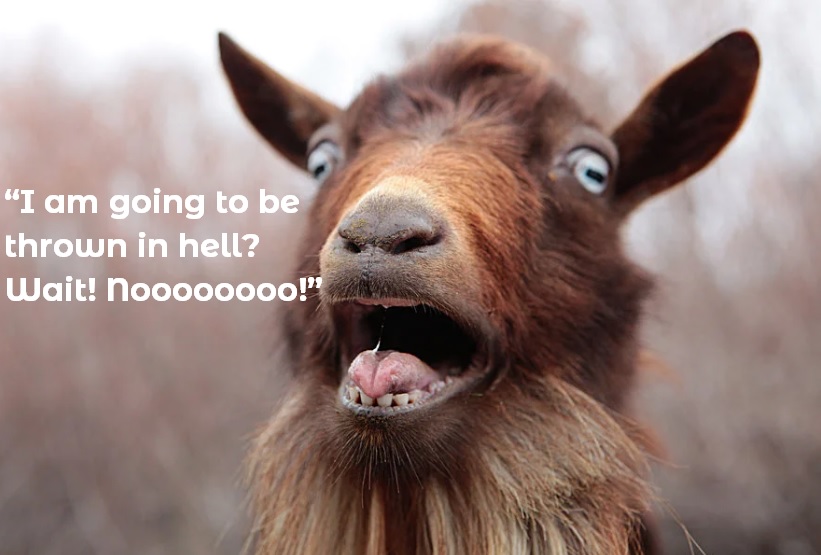
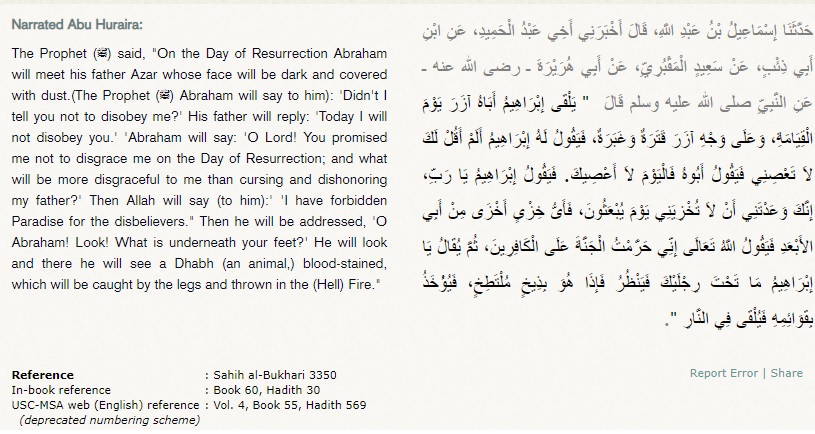



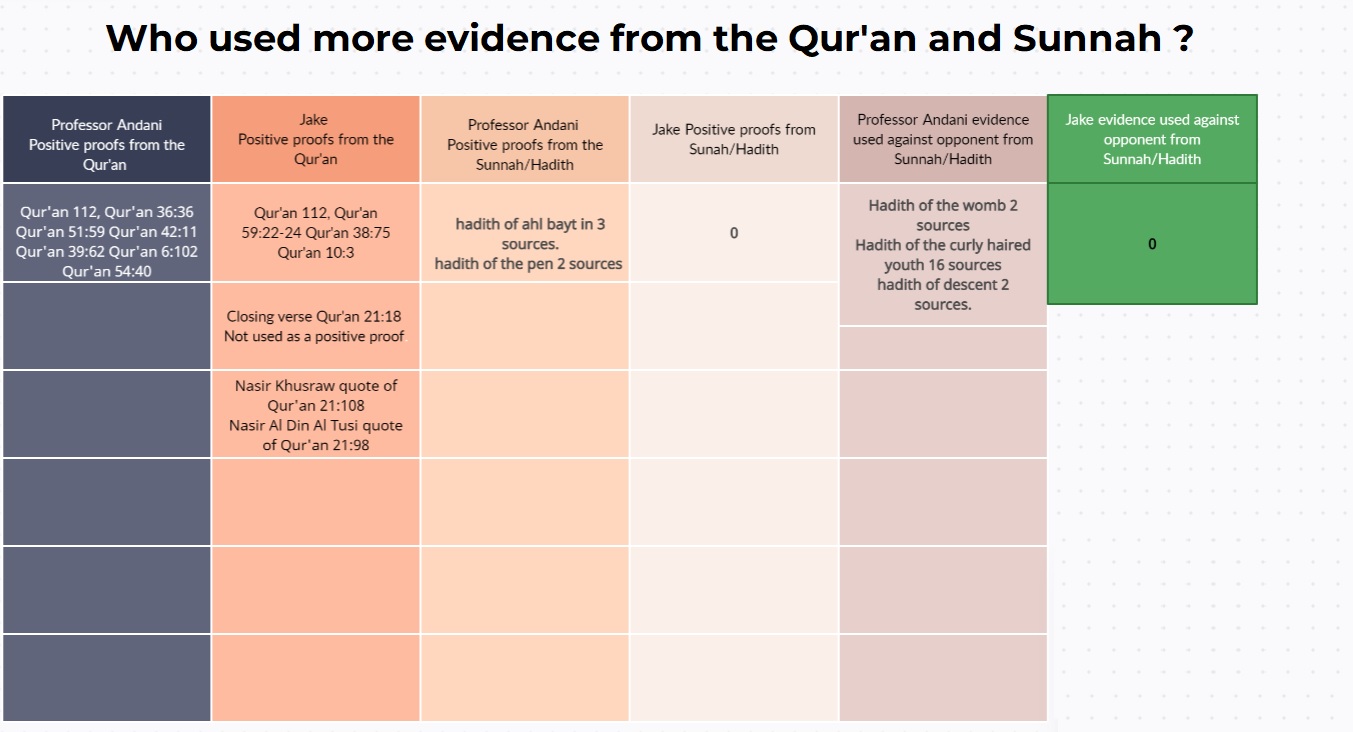
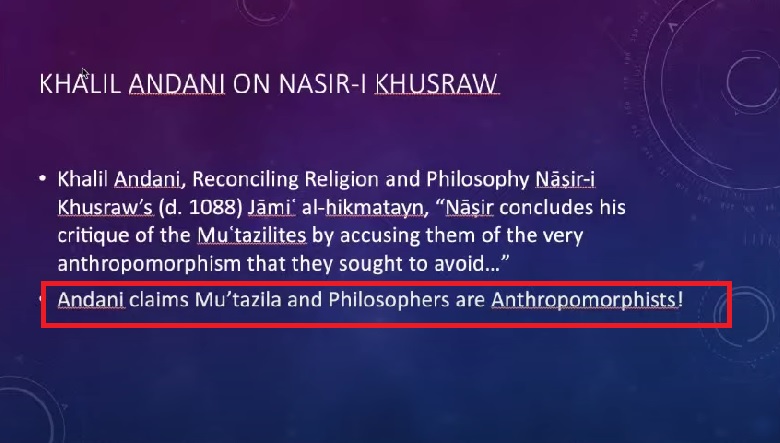
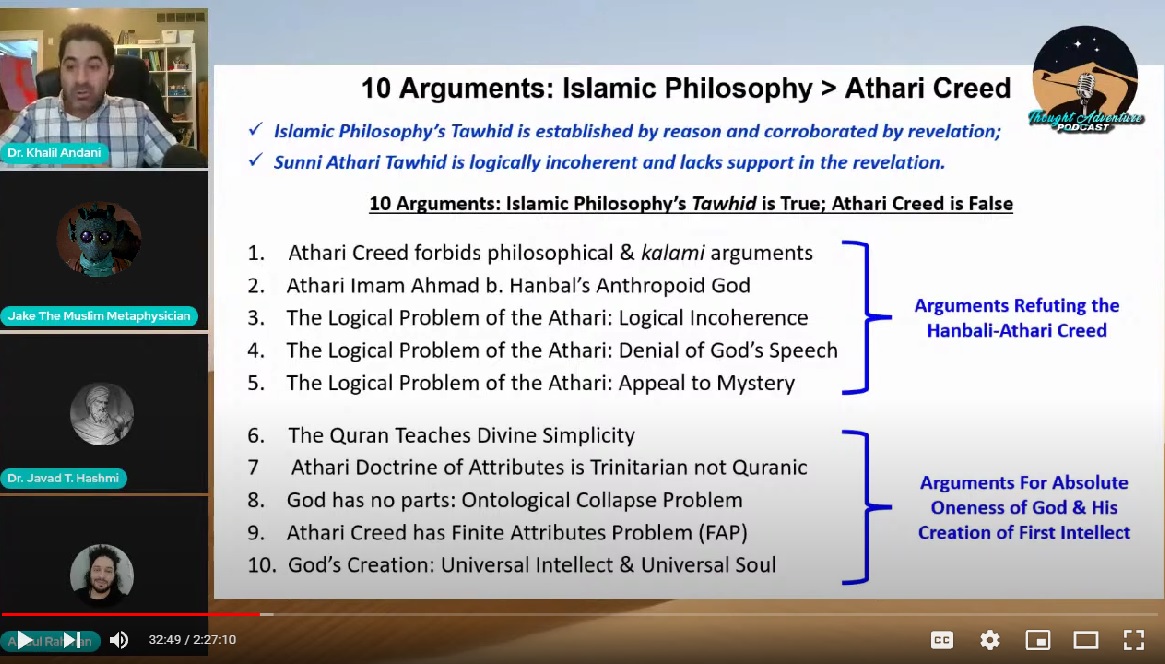

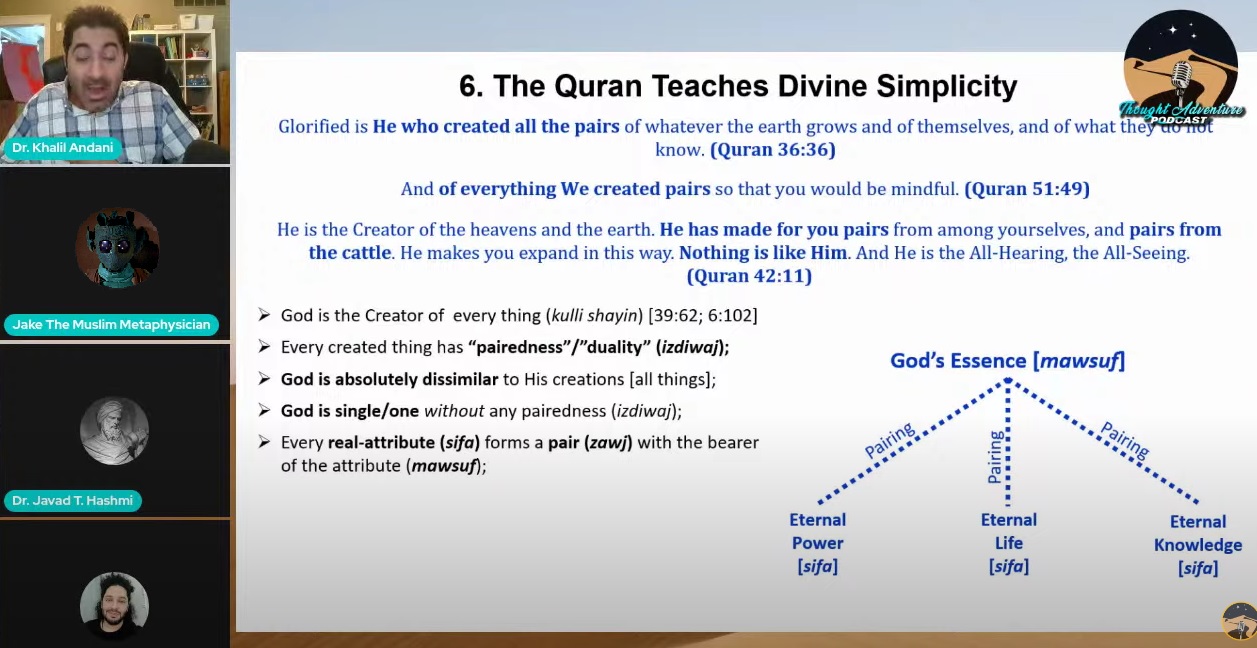
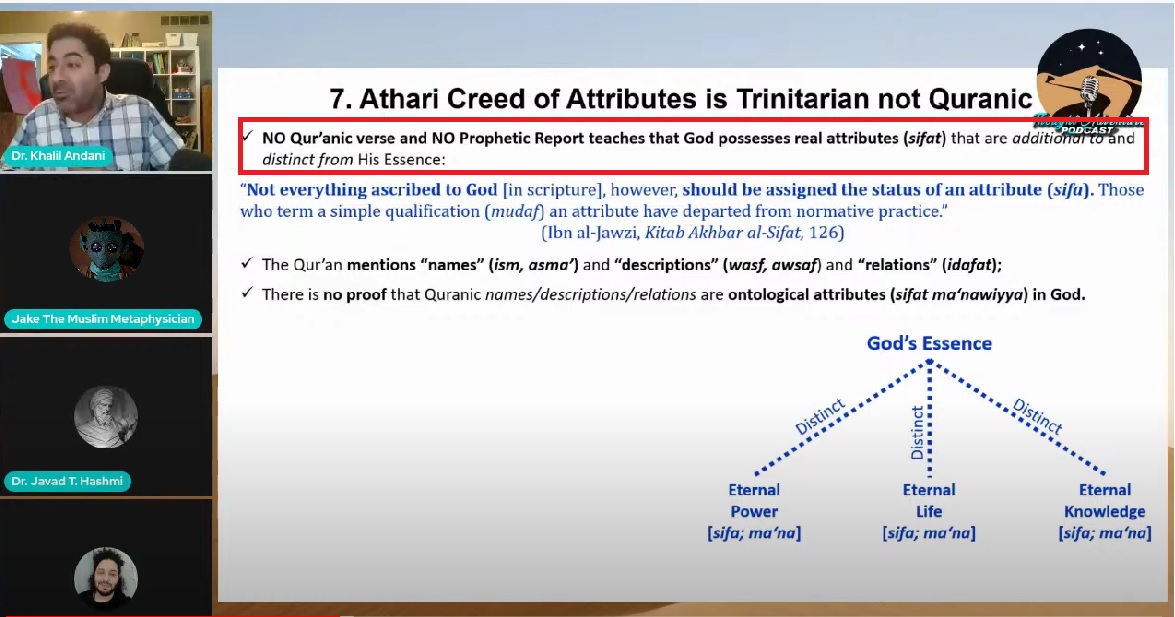




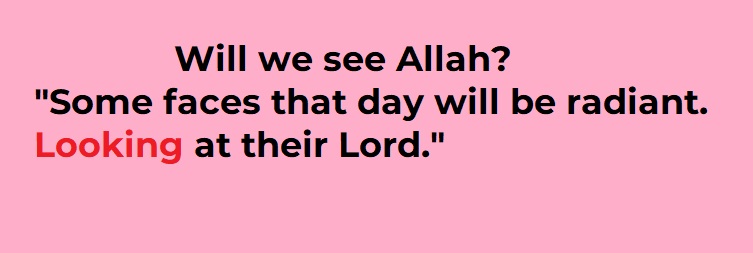
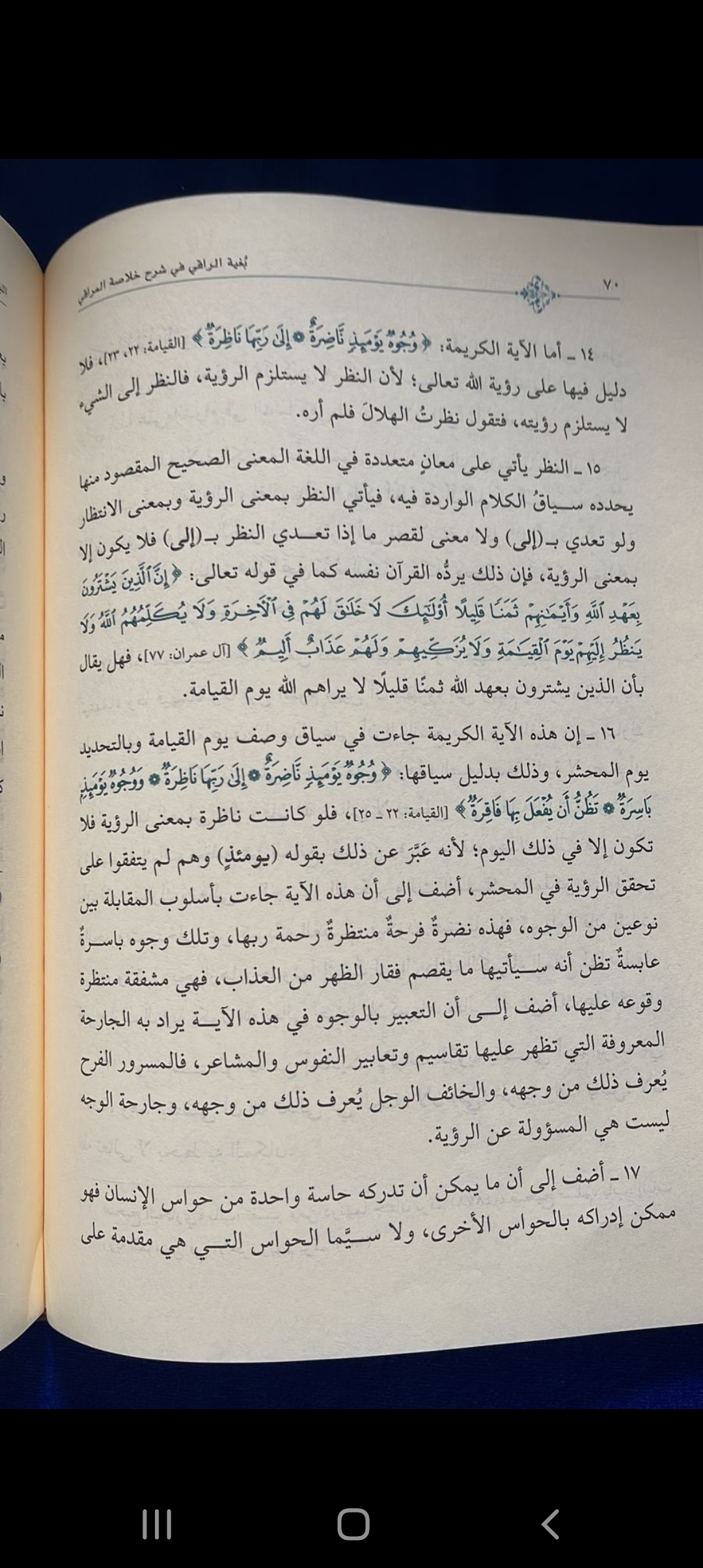
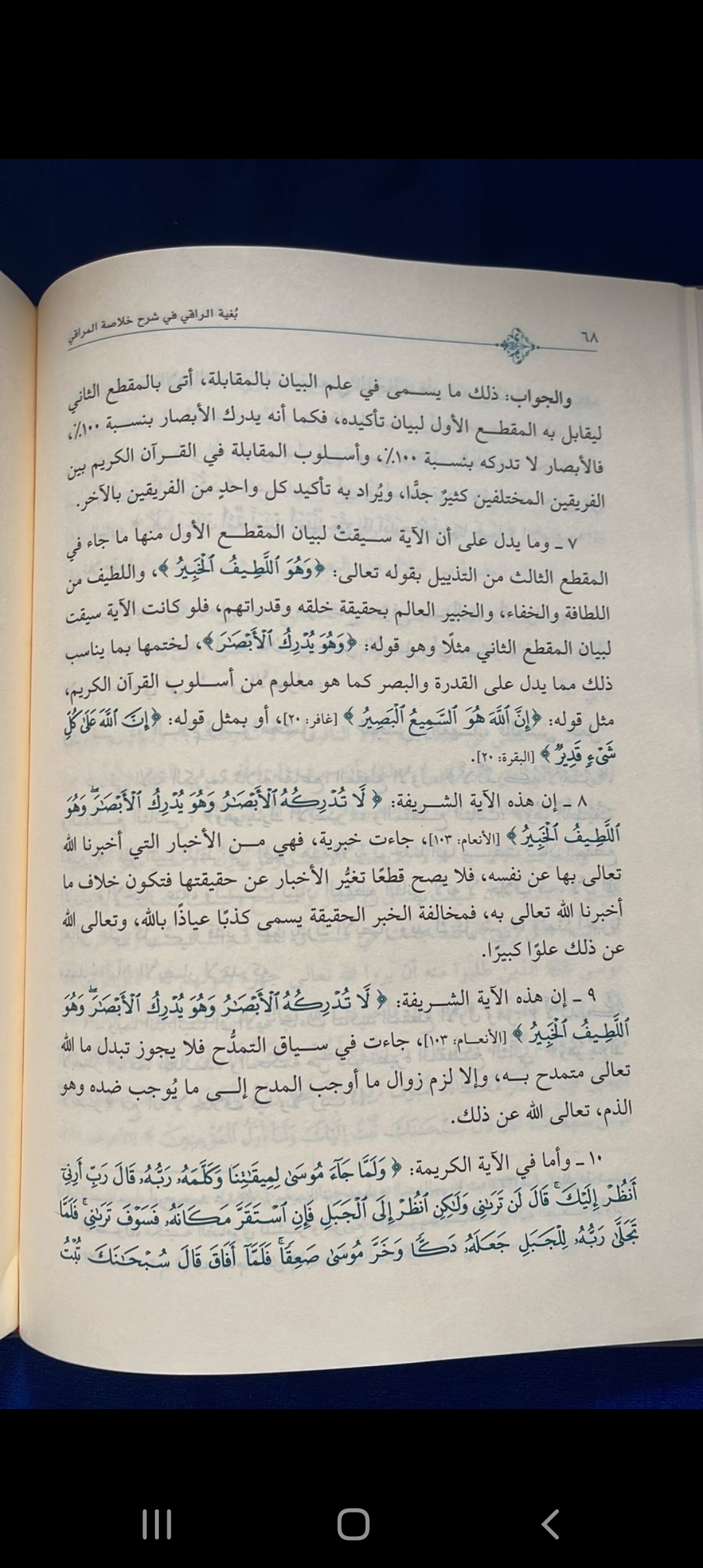

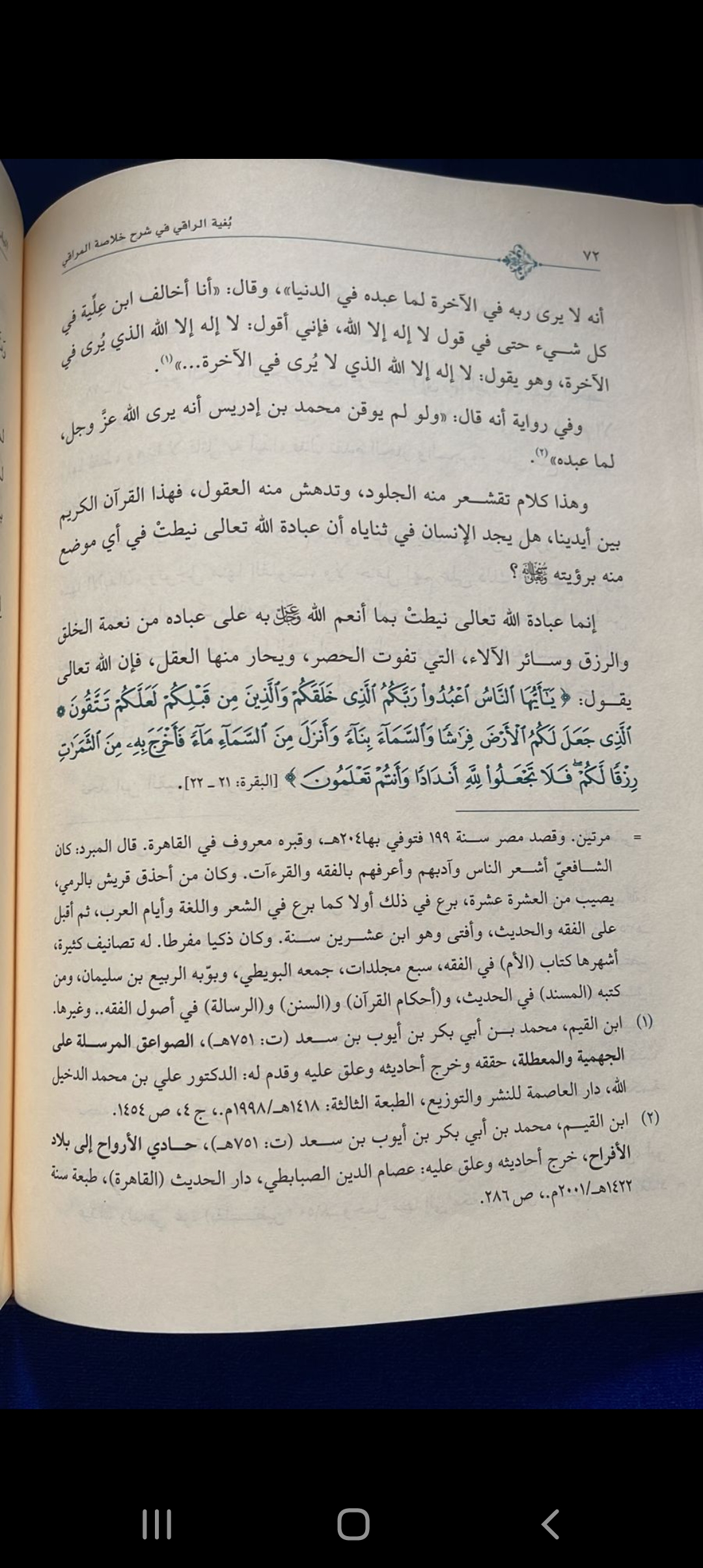


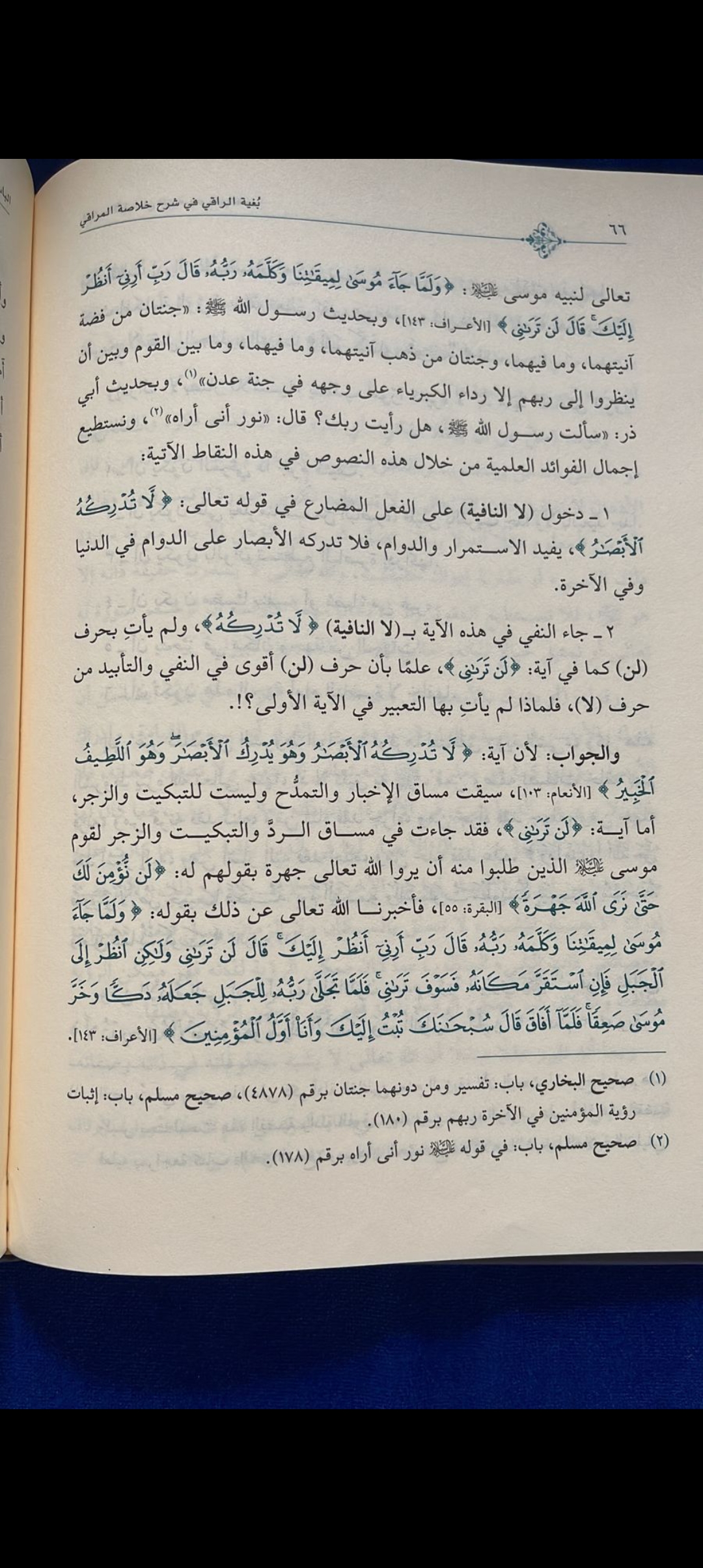

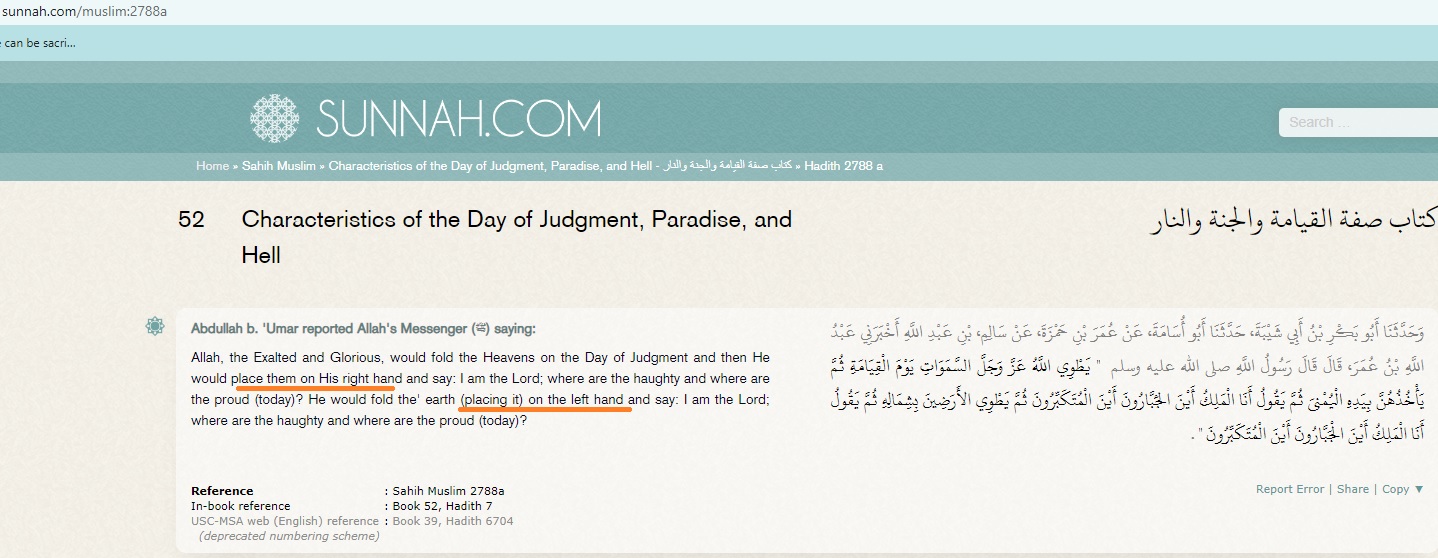








 Prima Quran