“That was a nation which has passed on. It will have what it earned, and you will have what you have earned. And you will not be asked about what they used to do.” (Qur’an 2:133-134)
Or do you say that Abraham and Ishmael and Isaac and Jacob and the Descendants were Jews or Christians? Say, “Are you more knowing or is Allah ?” And who is more unjust than one who conceals a testimony he has from Allah? And Allah is not unaware of what you do That is a nation that has passed on. It will have what it earned, and you will have what you have earned. And you will not be asked about what they used to do. Those are people who have passed away; theirs is that which they earned and yours that which ye earn. And ye will not be asked of what they used to do. (Qur’an 2:140-141)
﷽
It has been said about the Ibadi school, that we revile, abuse and curse the companions!
It has been said that we are Khawarij who curse, revile and abuse the companions.
Nothing can be further from the truth!
When you hear people say such things about us, ask them to bring their evidence!
Please listen to what our teacher and Shaykh Dr. Khalid bin Mohammed Al Abdali (Hafidullah) shares with us what should be the stance of the Muslims in regard to the companions and those who have gone before us.
One group says about some of the companions of the Blessed Messenger (saw) that they “Are the dogs of hellfire!”
Another group says, “These are sinners and have disobeyed the order of Allah.”
Who is doing the cursing? Who is doing the reviling?
In our books, the Ibadi, we haven’t named someone a dog from the dogs of Jahannam. Al hamdulllah! That Allah (swt) has purified our tongues from it. That being said, we do not say the Sahabah/companions were all angels and saints. We tell the history.
This should be very clear. If our books say that such and such a companion is a sinner or sinned, that is not reviling anyone. It is simply reporting the news. If our books say such and such a companion went against the amr, the command of Allah (swt), that is not reviling anyone. That is simply reporting the news.
You are welcome to dispute with us about whether such and such a companion sinned on this or that occasion, but stop saying that the Ibadi revile, curse or abuse the companions.
It is the Ahl Khilaf (The People of the opposition). It is their books that are filled with statements companions reviling each other.
It was our teachers (Ibadi scholars) who approached Umar Ibn Abdul Aziz (ra), who was a righteous Caliph and a just Imam. It was they who went to him and urged him to stop the cursing and reviling of the companions at the minbar. It is not the place for it.
In fact, if you want to see who really reviled who see this entry. Read it and weep!
Abu Huraira reported Allah’s Messenger (saw) as saying:
“Do not revile my Companions, do not revile my Companions. By Him in Whose Hand is my life, if one amongst you would have spent as much gold as Uhud it would not amount to as much as one much on behalf of one of them or half of it.”
The Prophet (saw) said, “Some of my companions will come to me at my Lake Fount, and after I recognize them, they will then be taken away from me, whereupon I will say, ‘My companions!’ Then it will be said, ‘You do not know what they innovated (new things) in the religion after you.”
It was narrated from Abu Hurairah that the Prophet (saw) came to a graveyard and greeted (its occupants) with Salam, then he said:
“Peace be upon you, abode of believing people. We will join you soon, if Allah wills.” Then he said: “Would that we could see our brothers.” They said: “O Messenger of Allah, are we not your brothers?” He said: “You are my Companions. My brothers are those who will come after me. I will reach the Cistern ahead of you.” They said: “O Messenger of Allah, how will you recognize those of your nation who have not yet come?” He said: “If a man has a horse with a blaze on its forehead and white feet, don’t you think that he will recognize it among horses that are deep black in color?” They said: “Of course.” He said: “On the Day of Resurrection they will come with radiant faces, hands, and feet, because of the traces of ablution.” He said: “I will reach the Cistern ahead of you.” Then he said: “Men will be driven away from my Cistern just as stray camels are driven away. And I will call to them: ‘Come here!’ But it will be said: ‘They changed after you were gone, and they kept turning on their heels.’ So I will say: “Be off with you!”
We were in a Ghazwa and a man from the emigrants kicked an Ansari (on the buttocks with his foot). The Ansari man said, “O the Ansari! (Help!)” The emigrant said, “O the emigrants! (Help).” When Allah’s Messenger (saw) heard that, he said, “What is that?” They said, “A man from the emigrants kicked a man from the Ansar (on the buttocks his foot). On that the Ansar said, ‘O the Ansar!’ and the emigrant said, ‘O the emigrants!” The Prophet (saw) said’ “Leave it (that call) for it Is a detestable thing.” The number of Ansar was larger (than that of the emigrants) at the time when the Prophet (saw) came to Medina, but later the number of emigrants increased. `Abdullah bin Ubai said, “Have they, (the emigrants) done so? By Allah, if we return to Medina, surely, the more honorable will expel therefrom the meaner,” `Umar bin Al-Khattab said, “O Allah’s Messenger (saw)! Let me chop off the head of this hypocrite!” The Prophet said, “Leave him, lest the people say Muhammad kills his companions:”
The Prophet (saw) sent (an army unit under the command of) Khalid bin Al-Walid to fight against the tribe of Bani Jadhima and those people could not express themselves by saying, “Aslamna,” but they said, “Saba’na! Saba’na! ” Khalid kept on killing some of them and taking some others as captives, and he gave a captive to everyone of us and ordered everyone of us to kill his captive. I said, “By Allah, I shall not kill my captive and none of my companions shall kill his captive!” Then we mentioned that to the Prophet (saw) and he said, “O Allah! I am free from what Khalid bin Al-Walid has done,” and repeated it twice.
Or what about the tremendous and horrible statement put into the mouth of the Blessed Messenger (saw), calling some of his companions “the dogs of hellfire?” Many are those from among the Shi’i and Ah Sunnah quotes this with absolutely no shame.
So we would implore those in dawah, and we would implore teachers and learned people from among the Sunni and Shi’i to be educated on this matter. You may not agree with us, and you are free to differ with us, but you do not have a license to lie about us or misrepresent us.
In fact, on matters of lying and not being truthful, one should have awareness and fear of Allah (swt) who sees and knows all that we do.
May Allah (swt) guide us all to what is beloved to him.
“The Originator of the heavens and the earth; He made mates for you from among yourselves, and mates of the cattle too, multiplying you thereby; there is nothing like unto Him; and He is the Hearing, the Seeing.”(Qur’an 42:11)
﷽
This verse is sufficient to refute the rational proofs that the Ashari may try and bring forth to assert that Allah (swt) is perceptible.
This article will give the position of the Ibadi School, The Muslims, also known as: (Ahl al Haqq wal Istiqamah) on seeing Allah (swt) on the day of judgement.
We will critique the position of our brothers from Ahl Sunnah. As Ahl Sunnah is divided on this issue we need to make sure that our arguments are addressed to both sides of the divide among Ahl Sunnah itself.
The school of Ahl Sunnah that asserts that Muslims will see Allah (swt) in an apparent sense. (Athari, Salafiyya)
The school of Ahl Sunnah that asserts that Muslims will see Allah (swt) as being perceptible in the heart or mind.
In our estimation, the Athari, Salafiyya among the Ahl Sunnah are more consistent in their principles on ‘seeing’ Allah (swt) than are the Ashari. We will leave that to you the reader to decide where lay the truth.
Whereas we regard the Ashari/Maturidi to be the most inconsistent in this regard, as there are a few positions of them on this matter. Insh’Allah that will be shown in this article. We will present two examples straight away to prove this point:
“The Day the shin will be uncovered and they are invited to prostration but the disbelievers will not be able.” (Qur’an 68:42)
Ask all the Ashari/Maturidi on the planet, do they take the outward meaning of this verse? Certainly, this would be a strong verse to support their position? That people will see Allah (swt) by seeing the ‘shin’ of Allah (swt).
“People asked the Prophet (saw): O’ Messenger of Allah will we see our Lord in the Day of Resurrection? Then the Messenger of Allah replied: Is there any dispute among you whether a full moon is visible? They answered: No. then The Prophet (saw) continued asking them: “ Is there any dispute among you whether the sun is visible in a cloudless sky? They replied in the negative. Then The Prophet stated (saw): “Then you will see your Lord JUST LIKE this”. Allah will get the people together in the Day of Resurrection then He says: those who were worshiping any deity shall follow it. Then the ones who were worshiping the sun will follow the sun and the ones who were worshiping the moon will follow the moon and those who were worshiping Rebels will follow Rebels …Then Allah will come to them in a FORM other than WHAT THEY KNEW and say: “I am your Lord”, they reply: “We seek refuge in Allah from you. This is our place until our Lord Comes to us, and when our Lord comes to us, we will recognize Him. THEN ALLAH WILL COME TO THEM IN A SHAPE THEY KNOW and will say, I am your Lord’ They will say, ‘(No doubt) You are our Lord,’ and they will follow Him.”
Source:(Al Bukhari hadith no.6573 Book Of Ar-Riqaq)
They (Ashari/Maturidi) leave their students absolutely gob smacked that on the one hand, they battle against fellow Sunni who takes the outward meaning and they(the Ashari/Maturidi) constantly deny corporeality, and space/time for Allah (swt) and yet at the same time assert that we will see (sorry Mohamed Ghilan) I mean look upon Allah (swt) !!
We will show the strength and consistency both textually and intellectually of those of us who say that we will not see Allah (swt) on the day of judgement.
We will also be interacting with material from two videos. In the first video, you will only need to watch the first half-hour. That is the only section relevant to this post. https://youtu.be/5_6zRI0eH44 When we quote from this we will reference this as video A.
I personally was quite shocked and taken aback as I listened to our respected brother Mohamed Ghilan. Yet, as I listened he showed such what has to be described as a simple understanding of basic tenets of creed and certainly did not understand the beliefs of others. May Allah guide him and us.
Mohamed Ghilan echoing Shaykh Hamza Yusuf calls seeing Allah (swt) in the hereafter as “beatific vision” borrowing terminology from Roman Catholics. He states this @ 54:14 seconds (Video B) into the discussion.
Like when he says about Moses and the burning bush… “He really spoke.”
Oh, do tell us what do you mean when you say that, “He (swt) really spoke”??
What follows will be fromvideo A above. The Ustaz ask:
First Question: Is it rationally conceivable that Allah (swt) can be seen?
The Ustaz says that we can conceive of images in our minds. So Allah (swt) is being compared to temporal objects and bodies with accidents!
Now, this is important you will notice some bait and switch tactics going on with Ahl Sunnah. They are all over the place on this point of creed. All of this about “seeing” Allah (swt) and yet the first point is to talk about “seeing” Allah (swt) in the mind! Not with the eyes, not with the faces nor with the hearts.
So the Ustaz ask” “Is it possible in the mind?” He responds: “Yes he can! Why? Because he is existent. He is an existent being!”
My response:
That is a very weak argument. Because what will soon to follow will be likening Allah (swt) to spatial objects with accidents and bodies.
And sure enough @14:51 The Ustaz does exactly that. “Now this pen is made of substance body (plastic) and it’s made up of accidents, colour, shape size, weight, occupying space, etc, moving not moving. These are all accidents. Now can you is it possible in the mind for you to see this body without the accidents. Now you don’t see it. You don’t see it separate from its accidents but that does not mean it’s not possible. There is nothing in your mind to say to you, hear me out. There is nothing in your mind to say that you cannot see substance without the accidentsexcept that you are unable since bodies do not exist except with accidents. But there is nothing inconceivable in your mind. There is nothing that is blocking it in your mind.”
@21:19 the Ustaz continues… “Is it a contradiction in the mind that an accident can be seen. It’s not a contradiction. It actually can be seen because it exists. Anything that exists as an existent being can be seen.”
Notice the student @21:49 (whomever he is) he is brilliant. He tried to save the whole creed and its nonsense by saying what they should be saying, that is: “Because Allah exists it’s possible we can grasp his existence.” Then the teacher responds abruptly “That he is seen yes.” My response: “WOW!”
The student was on to something brilliant but the teacher wanted to quickly make sure that he affirms his (the teacher’s) position in the creed.
So the questions we really should be asking is:
“Is Allah an accident or a substance?”
“Is Allah’s wujud like or unlike his creation?”
The argument that Ustadh is making is that you can’t see accidents but that it is possible. However, he failed to give a single example of someone actually seeing an accident. So you can’t affirm something is possible when you haven’t given a single example of untold thousands of examples of this being a reality. That is even in relation to created things! How much more for that which is not contingent upon or dependent upon anything?
One of the students uses an argument about a man in a dark room. He is there but you cannot see him. So then the Ustaz replies that:
“The reason he can be seen is because he exists is not the means by which he is seen.”
This is fallacious. The reason he can be seen here is that he is a substance, a body. Which still does not make the argument the Ustaz is trying to establish at all. In fact, even in the case of the man in the darkroom, there are many things to be said:
He can’t be seen but he could be perceived. He could be perceptible without even being seen.
Even if you saw him would you say that you comprehend him?
The man has that which you can see his outward and that which you cannot see his inward.
It is part of the fitra that Allah (swt) created us and actually, a proof of his wahdat al wujud is the fact we can’t see him. The Ustaz can’t give a single example because it goes against the fitra. Another example that Allah (swt) has put inside of human beings that is quite powerful is the following:
The concept of nothing. It is part of your fitra, that you cannot picture nothing in your mind. Your mind will either picture an all-black space or an all-white space. That is still something. The irony here is that you can comprehend nothingness but you cannot see nothingness. Certainly, Allah (swt) is more than nothingness! If you cannot see nothingness how much more do you think you can see Allah (swt) who is the wahdat al wujud! You cannot comprehend Allah (swt) let alone see Allah (swt).
“Or were they created by nothing, or were they the creators.”(Qur’an 52:35)
On the possibility of seeing Allah (swt) this claim is demolished by the fact that there are so many invisible existents The soul, the intellect, the sense, perception, sounds, ether, etc.
Their opening the door of comparison of the Creator and the creation will lead to describing Him with many of those that are impossible about Him, Exalted is He. The existence of creatures cannot be perceived except with the existence of space and time. Perishing existents do not have the capacity to see the Eternal.
The peak of perceptibility of Allah (swt) ends with: “There is nothing like Him, and He is All-Hearing, All-Seeing” (Qur’an 42:11)
Muslim narrated from Abu Dhar, he said: “I asked the Prophet Muhammad (Blessings and peace of Allah be upon him), Have you seen your Lord? He replied: ” A light. How can I see Him”.
Source: (Sahih Muslim hadith 341. Kitab Al Iman)
The aforementioned evidence is enough to demolish the rational proofs that the Ashari/Maturidi bring forth in trying to liken Allah (swt) to his creation. May Allah (swt) protect the believers from it!
BE CAREFUL OF THE BAIT AND SWITCH-RUHYA-IDRAAK-NAZAR
I want to caution you the student of knowledge the seeker of truth on something very important. Do yourself a favour and note down every time someone from Ahl Sunnah uses these words ‘Ruhya’ or ‘Idraak’ or ‘Nazar’. I have often found that one speaker will claim Ruhya means this and Idraak means that and then another speaker will actually turn around and say the exact opposite!
Also, take note of the proof text they use. When they use a proof text from the Qur’an which word is being used there and why? Are they using ‘Ruhya’ or are they using ‘Idraak’ or are they using ‘Nazar’?
When they use a proof text from the hadith which word is being used there and why? Are they using ‘Ruhya’ or are they using ‘Idraak’ or are they using ‘Nazar’?
What about Idraak?
Be familiar with these arguments because the advocates of seeing Allah (swt) will rush to this argument first. It is perhaps the strongest they feel that they have. Even in the comment section below you will see one of our brothers from Ahl Sunnah rush to it.
“And what will make you know (idraka) what the Reality is?” (Qur’an 69:3)
The meaning of idraka here means perception when it is connected to the senses.
It has the sense of seeing when connected to the eyes or sight. When Idraak is connected to sight (ba sad ra) it means to see.
In this text yud’rikkumu is to reach or overtake.
“Wherever you may be, death will (yud’rikkumu) reach you, though you should be in raised-up towers. And if a good thing visits them, they say, ‘This is from Allah’; but if an evil thing visits them, they say, ‘This is from you.’ Say: ‘Everything is from Allah.’ How is it with this people? They scarcely understand any tiding.” (Qur’an 4:78)
So will we totally comprehend Allah (swt) or not? To totally comprehend Allah (swt) undermines the Wahdat al Wujud of Allah (swt). Can it be said that the finite will comprehend the infinite?
If we only partially comprehend Allah (swt) this means Allah (swt) would be broken into parts. He would be a part that we can comprehend and a part that we cannot comprehend. If we do not comprehend Allah (swt) at all it strengthens the argument of those of us who say that we will not see Allah (swt) at all. This is because comprehension is of the eyes.
Now, one has to be careful when dealing with various translations of the Qur’an. No doubt the translators have to toe the line of the various theologies they are beholden to.
The faculties ofseeing (tudriku) cannot grasp Him, and He grasp all–seeing (yudriku), He is the All-Subtle and All-Aware.” (Qur’an 6:103)
Now the Ustaz in (video A) gave to his students the impression that Idraak means to ‘behold something in its entirety’. ‘To encompass‘ ‘To see something in its entirety to comprehend it‘.
My response:
There is a difference between reaching (idrak) and encompassing (ihata)
There is no lexical reference work which interprets idrak as ‘encompassing’. That is sufficient proof as to the error of this interpretation by the respected Ustaz and anyone else who follows suit in this.
One’s saying (for example) lahiqtu al-jidara bi yad-i (I reached the wall with my hand) does not mean anything other than touching the wall. It is impossible that the hand should ‘encompass‘ the wall.
if someone says, “ahata bi-hi al-sahmu (the arrow reached him) it is sensible. If someone says “ahata bi-hi al-sahmu (the arrow encompassed him) then no reasonable person will regard his utterance as anything but senseless.
“Allah will say, “Enter among nations which had passed on before you of jinn and mankind into the Fire.” Every time a nation enters, it will curse its sister until, when they have caught up with one another (‘iddarku) therein, the last of them will say about the first of them “Our Lord, these had misled us, so give them a double punishment of the Fire. He will say, “For each is double, but you do not know.” (Qur’an 7:38)
“when they catch up with one another.” It does not mean that each group encompassed the other.
If I cannot make you see this and if the usage of the lexicons cannot make you see it than I pray that Allah (swt) will open your eyes and your heart to what the pure Arab, and mother of the believers had to say about this.
Narrated Masruq:
I said to ‘Aisha, “O Mother! Did Prophet Muhammad see his Lord?” Aisha said, “What you have said makes my hair stand on end! Know that if somebody tells you one of the following three things, HE IS A LIAR: Whoever tells you that Muhammad saw his Lord, IS A LIAR.” Then Aisha recited the Verses:
‘No vision can grasp Him, but His grasp is overall vision. He is the Most Courteous Well-Acquainted with all things.’ (Qur’an 6:103)
‘It is not fitting for a human being that Allah should speak to him except by inspiration or from behind a veil.’ (Qur’an 42:51)
Source: (Al Bukhari Volume 6, Book 60, Number 378)
Notice our mother Aisha (May Allah be pleased with her). Notice the response? “What you have said makes my hair stand on end!”
Now a desperate response to the above text after realizing that the first argument did not work is they may well say:
“The negation is without any condition, and therefore not bound to any meaning of ‘for all time’.”
Response to that claim:
Obviously this is now how our mother Aisha (r.a) understood this verse. She did not reason that perhaps he did see that time whereas other times he did not. No. In fact, that argument also works in our favour as it is not conditioned upon a time (this life or the life to come).
Other textual evidence from the Qur’an.
“When Moses came to the place appointed by Us, and his Lord addressed him, He said: “O my Lord! show (Yourself) to me, that I may look upon you.” Allah said: “You shall never see me; But look upon the mount; if it abides in its place,then you will see me.”
When his Lord manifested His glory on the Mount, He made it as dust. And Moses fell down in a swoon. When he recovered his senses he said: “Glory be to Thee! to Thee I turn in repentance, and I am the first to believe.” (Qur’an 7:143)
This is a powerful text against the claims of the Ashari/Maturidi and all those who say that we can see Allah (swt)!
Moses was dealing with his stubborn and rebellious people and demonstrated them the futility of their request which was:
“The People of the Scripture ask you to bring down to them a book from heaven. But they had asked of Moses [even] greater than that and said, “Show us, Allah, outright,” so the thunderbolt struck them for their wrongdoing. Then they took the calf [for worship] after clear evidences had come to them, and We forgave them for that ˹after their repentance˺ And We gave Moses a clear authority.” (Qur’an 4:153)
“And [recall] when you said, “O Moses, we will never believe you until we see Allah outright”; so the thunderbolt took you while you were looking on.” (Qur’an 2:55)
“And Moses chose from his people seventy men for Our appointment. And when the earthquake seized them, he said, “My Lord, if You had willed, You could have destroyed them before and me [as well]. Would You destroy us for what the foolish among us have done? This is not but Your trial by which You send astray whom You will and guide whom You will. You are our Protector, so forgive us and have mercy upon us; and You are the best of forgivers.” (Qur’an 7:155)
Prima Qur’an Comments: There is so much to be said about the above-mentioned ayats. First of all Allah (swt) said, ‘you will never see me‘. However some of these people have no shame nor fear of their Lord and they will play with the English translations and perform all kinds of maneuvers to make you think that this verse should be understood as, “You will not see me now” meaning the possibility of being seen in the future is there.
In fact, the Ustaz in (video A) unfortunately, he did exactly that.
This is similar to the following verse:
Say: Shall I choose for a protecting friend other than Allah, the Originator of the heavens and the earth,Who feeds and is never fed? Say: I am ordered to be the first to surrender (unto Him). And be not you (O Muhammed) of the idolaters. (Qur’an 6:14)
No one who reads the Arabic text understands this as Allah (swt) is not currently fed but has the possibility of being fed in the future! Authubillah min dhalik.
Not only that but if we do not understand the negative imperative to include all times what does it say about the laws of Islam? Does it ever occur to the mind that there will be a time in the future where shirk would be permissible? Authubillah! There will be a time in the future where adultery and taking the soul without the right will become permissible? Authubillah!
This argument is also negated by the fact that there is division among the Ahl Sunnah as regards Allah (swt) will be seen in this life or not.
Look at the hadith again.
“People asked the Prophet (saw): O’ Messenger of Allah will we see our Lord in the Day of Resurrection? Then the Messenger of Allah replied: Is there any dispute among you whether a full moon is visible? They answered: No. then The Prophet (saw) continued asking them: “ Is there any dispute among you whether the sun is visible in a cloudless sky? They replied in the negative. Then The Prophet stated (saw): “Then you will see your Lord JUST LIKE this”. Allah will get the people together in the Day of Resurrection then He says: those who were worshiping any deity shall follow it. Then the ones who were worshiping the sun will follow the sun and the ones who were worshiping the moon will follow the moon and those who were worshiping Rebels will follow Rebels …Then Allah will COME TO THEM in a FORM other than WHAT THEY KNEW and say: “I am your Lord”, they reply: “We seek refuge in Allah from you. This is our place until our Lord Comes to us, and when our Lord comes to us, we will recognize Him. THEN ALLAH WILL COME TO THEM IN A SHAPE THEY KNOW and will say, I am your Lord’ They will say, ‘(No doubt) You are our Lord,’ and they will follow Him.”
Source:(Al Bukhari hadith no.6573 Book Of Ar-Riqaq)
Can it really be imagined that Allah (swt) who knows all things, and is perfect in the expression of his language would say to Moses (a.s), ‘You shall never see me’ knowing that Moses (a.s) would see him in the afterlife?
Someone should ask the Ustaz (from video A) what form is it that the believers KNOW concerning Allah (swt)?
Not only that but if the negation in this verse is taken to mean for this world, not for the hereafter, then it must be allowed in similar verses, like His saying:
“Slumber does not overtake Him, nor sleep.”(Qur’an 2:255)
“He has neither a companion nor a son”(Qur’an 72:3)
“He is not brought forth from like-kind nor does like kind come forth from him.” (Qur’an 112:3-4)
Whatever is forbidden in this world like slumber, sleep, companion, peers must be permitted in the hear-after. Should we really reason like this?
It is obligatory for every Muslim to believe that this world and the next world have no effect on the essence of Allah!
It is impossible for Allah (swt) that time can affect him or space to accompany him. His essence never changes and his attributes never shift.
What are we to do about the challenge of Allah (swt) in the Qur’an?
“But if you do not – and you will never (walan) be able to – then fear the Fire, whose fuel is men and stones, prepared for the disbelievers.”(Qur’an 2:24)
This negation is eternal and permanent. Is the Ustaz (in video A) or any other going to claim no this statement of Allah (swt) is only for a ‘period of time’. Which means it is possible people will create the like of the Qur’an!
Also, we know that the mountain did not abide. Allah (swt) didn’t set his being perceived on the condition of the mountain but on his knowledge that it is not possible and that was manifest clearly to the people of Moses.
Also, note the concept of blasphemous ideas and concepts being related to mountains being destroyed as with the following blasphemous concept.
“The heavens almost rupture therefrom and the earth splits open and the mountains collapse in devastation That they attribute to the Most Merciful a son.” (Qur’an 19:90-91)
These are the people of disbelief. It is obvious when they say that they will not attain to faith until they see Allah (swt) plainly at which it says in response that the thunderbolt overtook them! Think about it! They are the ones who wanted a golden calf a ‘sura’ a form. These are the same people who want to look upon Allah (swt). They are wanting something perceptible to the eyes.
The people who adhere to the Ashari/Maturidi doctrine need to think clearly on this matter.
Again we have the following text…
And those who do not expect the meeting with Us say, “Why were not angels sent down to us,or [why] do we [not] see our Lord?” They have certainly become arrogant within themselves and [become] insolent with great insolence.” (Qur’an 25:21)
So now let us look at the positive proof that the Ashari/Maturidi will bring forth from the Qur’an to try and establish their proofs. Let us see if it is consistent with
a) The Qur’an itself.
b) with their own theology concerning Allah (swt) not being in space/time
c) reason.
Positive proof for the Ashari/Maturidi position from the Qur’an.
“The heart did not lie [about] whatit saw. So will you dispute with him over whathe saw? And he certainly saw him in another descent. (Qur’an 53:11-13)
“Andwithout doubt, he saw him in the clear horizon.” (Qur’an 81:23)
#1) If we are to believe that this is Allah (swt) then it clashes with the clear text of the Qur’an.
#2) If we are to believe that this is Allah (swt) then it clashes with Ashari/Maturidi Aqidah. For example:
Abu Huraira reported: The Messenger of Allah, peace, and blessings be upon him, said, “Our Lord descends to the lowest heaven in the last third of every night, and he says: Who is calling upon me that I may answer him? Who is asking me that I may give him? Who is seeking my forgiveness that I may forgive him?”
Source:(al-Bukhārī 1094,Muslim 758)
So do the Ashari/Maturidi believe that in the hadith above that Allah (swt) descends?
Do the Ashari/Maturidi believe that distance is a hindrance to Allah (swt)?
Do the Ashari/Maturidi believe that Allah (swt) does the ascending and descending depending on the time of day as (the last third of every night) is depending upon the relative timings of the globe?
So if the Ashari/Maturidi use the above verses to argue that the Blessed Messenger (saw) had seen Allah (swt) then they must believe the part where it says, “certainly saw him in anotherdescent.”
#3) It goes against reason as already mentioned above. Allah (swt) is imperceptible.
#4) Lastly, it contradicts well-established hadith on the matter:
It is narrated that `Aisha, may Allah be pleased with her, said: “I asked the Messenger of Allah about these two verses. He said, “That is Jibreel; I never saw him in the form in which Allah created him except on these two occasions. I saw him descending from the heavens, with his huge size filling the horizon between heaven and the earth.”
Source: (Muslim Book 1 Hadith Number 0337 Book of Faith)
`Aisha may Allah be pleased with her, was asked about the verse (which means): “Then he [Jibreel] approached and descended.”[Quran 53:8] She, may Allah be pleased with her, said, “That is Jibreel. He used to come to him (the Prophet ) in human form, but on this occasion, he came in his real form, and he filled the horizons of the sky.”
Source: (Muslim Book 1 Hadith Number 0340 Book of Faith)
Those counter proofs should be enough to ground to powder any Ashari/Maturidi pretension concerning those verses.
The big verse that the Ashari/Maturidi use to support their position from the Qur’an is the following:
“ Some faces, that Day, will be radiant, Looking toward their Lord. And some faces, that Day, will be contorted, Expecting that there will be done to them something backbreaking.” (Qur’an 75:22-25)
So here the Ashari/Maturidi interpret the word Nazar as looking, seeing. (Insh’Allah we will come back to this, especially in the context of brother Mohamed Ghilan above).
This word (Nazar) is more general than ru’yah.
Will they see with their faces?
Will they see with their eyes?
Will they see with some sixth sense?
This confusion is clear evidence that they do not have any ground for their opinion.
Remember the hadith:
“Soon you will see your Lord openly as you see the moon on the night of the full moon.”
We understand this verse as: “waiting for their Lord”.
We need to again ask if the Ashari/Maturidi position contradicts the following:
a)The Qur’an itself.
b) with their own theology that Allah (swt) is not in space/time.
c) reason.
We would translate or understand the text as: “Faces, that day looking forward to receiving mercy from their Lord.”
The first thing that should be pointed out, is that no one from the Ashari/Maturidi school can find fault with our interpretation of the text. Observe yourself and see the many forms, as a verb, noun, active participle, and passive participle.
Second, the context of the verse itself shows the people of the station waiting to receive their just rewards:
‘Some faces will be radiant, looking forward to receiving mercy from their Lord. Some faces will be contorted, expecting something backbreaking.’
To give you (the truth seeker) a solid proof to show you that Nazir does not have to mean seeing ponder the following text.
“Indeed, those who exchange the covenant of Allah and their [own] oaths for a small price will have no share in the Hereafter, and Allah will not speak to them or look at them on the Day of Resurrection, nor will He purify them; and they will have a painful punishment.”(Qur’an 3:77)
If Nazar in this verse is interpreted as seeing, it will lead to the meaning that Allah will not see these people on the Day of Resurrection. This is not possible, and such a belief is in real error because it is a rejection of faith in Allah (swt)! There is no way but to interpret Nazar here as mercy and favour. Allah (swt) will not show his mercy or favour upon them.
Now going back to what our brother Mohamed Ghilan said in his talk @ 54:32 “But the Sunni position is that we will actually see Allah (swt), but you can but that does not negate that Allah is above everything and he’s above comprehension.”
The other thing that our brother Mohamed Ghilan does is bring in a straw man argument. This is clear evidence that he is not confident of his position.
Thus, he brings up the following verse:
“And if you invite them to guidance, they do not hear; and you see them looking at you while they do not see.” (Qur’an 7:198)
It is clear to me that our brother Mohamed Ghilan by bringing into the discussion a non-argument he is preaching to the choir.
Perhaps our brother Mohamed Ghilan can mention to his students who among the Ahl Al Haqq Wal Istiqimah (The Muslims), the Mu’tazilis, the Jahmis, the Zaydi’s , the Imamis-12er Shia and from among those who scholarsfrom Ahl Sunnah who are independent of taqlid, who among them holds to the position or view that Allah (swt) is comprehensible?
Again a straw man.
As regardsQur’an 75: 22-25 The Ahl Sunnah differ who will see him in the next life.
They are of three views;
1) Only believers will see Him.
2) All people will see him at the Station, believers and unbelievers then the unbelievers will be veiled from him.
3) The third is that hypocrites will see Him but not the unbelievers.
This is enough to prove the weakness of the foundation on which they have established their belief.
By contrast, the truth cannot bear such conflict, because its arguments are clear and its path is straight.
Is this a special treat for the believers only? Is this a special treat just for the believers and people who have remained steadfast?
Apparently not. Ponder the following:
“Soon you will see your Lord.”-Hadith The context of this hadith requires the seeing to take place at the station where all are gathered. It will not be restricted to believers only, Hypocrites, “and this ummah will remain with its hypocrites. Then, Allah, Exalted is He, will come to them in a form other than what they knew, then he will say: “I am your Lord.” Then they will say: “We seek refuge in Allah from you. This is our place until our Lord comes.”
It also follows from it that Allah, will be seen by this ummah believers and hypocrites- This goes against the verse in the Qur’an from
Moses: “NEVER WILL YOU SEE HIM.”
Why the unbelievers and hypocrites from the time of Moses did not get to see Allah (swt) but the unbelievers and hypocrites will be able to see now?
As regards this hadith. Let me put the hadith again for you to read and reflect upon it.
“People asked the Prophet (saw): O’ Messenger of Allah will we see our Lord in the Day of Resurrection? Then the Messenger of Allah replied: Is there any dispute among you whether a full moon is visible? They answered: No. then The Prophet (saw) continued asking them: “ Is there any dispute among you whether the sun is visible in a cloudless sky? They replied in the negative. Then The Prophet stated (saw): “Then you will see your Lord JUST LIKE this”. Allah will get the people together in the Day of Resurrection then He says: those who were worshiping any deity shall follow it. Then the ones who were worshiping sun will follow the sun and the ones who were worshiping moon will follow the moon and those who were worshiping Rebels will follow Rebels …Then Allah will COME TO THEM in a FORM other than WHAT THEY KNEW and say: “I am your Lord”, they reply: “We seek refuge in Allah from you. This is our place until our Lord Comes to us, and when our Lord comes to us, we will recognize Him. THEN ALLAH WILL COME TO THEM IN A SHAPE THEY KNOW and will say, I am your Lord’ They will say, ‘(No doubt) You are our Lord,’ and they will follow Him.”
Source: (Al Bukhari hadith no.6573 Book Of Ar-Riqaq)
Response:
First point. It also follows from it that His Essence (dhat), Exalted is He, changes from one form to the other. Such change is a characteristic of contingent existents (huduth).
Second point.
Shaykh Ahmed Al Khalili (May Allah continue to benefit us through him) asked our brothers from the Ahl Sunnah, the following:
“Whoever has read the Book of Allah and has studied the Sunnah of His Messenger must know that real form in which He will see His Lord, Exalted is He, so that, when he sees Him in another form he does not recognize Him.Then please bring me the description of this form and definition of it from your knowledge through your reading of the Qur’an and your study of the hadiths of the Messenger (saw)? Then they were taken aback and their arguments became void.”
Third point.
Both wordings are clear that their knowledge of His form will be a result of previous seeing. There is no way for those who take the hadith literally but to say that He is seen in this world. Yet most of them have rejected that (the seeing of Him in this world).
Fourth point.
Most believers in the seeing hold that it will happen without kayf (without an understanding how it will happen). The comparison in the hadith with the seeing of the moon ‘like that you will see Him‘ contradicts this view. So too does the mention of the form in the hadith and their not recognizing it when it has changed from what they were familiar with.
Fifth point. How will an angel be commanded to lie? It is a shameful thing.
Abu Musa reported: The Prophet (saw) said, Verily, In Paradise are two gardens with silver vessels and two gardens with golden vessels. Nothing comes between the people and their looking at their Lord but the mantle of Majesty on His Face in the Garden of Eden.”
Source: (Sunan al-Tirmidhi 2527)
In other words, you won’t be seeing Allah (swt) in the afterlife after all!
Remember the Ashari/Maturidi understand face as Allah himself, his essence! That ‘mantle of majesty‘ will prevent you from looking at Allah (swt).
“It is not fitting for a man that Allah should speak to him except by inspiration or from behind a veil.”(Qur’an 42:51)
“The Messenger of Allah stood among us with five words he said Verily Allah exalted is he does not sleep, and that is not appropriate for Him. He lowers the Balance and raises it. To him are carried aloft the actions done in the night before the actions done in the day and the actions of the day before the actions of the night. His veil is “light” (and on one narration “fire”). If He lifts the veil then the light of His Face will burn whatever it reaches of His creation.” The universe itself will be utterly annihilated! Allahu Akbar!
Source: (Sahih Muslim 179a, Book 1 Hadith 352 English reference Book 1 Hadith 343)
“And call not, besides Allah, on another god. There is no god but He. Everything that exists will perish except His Face. To Him belongs the Command, and to Him will you all be brought back.” (Qur’an 28:88)
So regarding this verse that those of our brothers from Ahl Sunnah believe that the Qur’an 75:22 to be strong proof. However, it is weak from all conceivable angles.
It also goes to show to anyone who has eyes and a heart after the truth that the Ahl Sunnah and their consensus down through the ages, has not been guided on this matter. Rather they are in error.
Is it reasonable to assume that the seeing of Allah (swt) is merely hinted at in the Qur’an whereas food and drink, accommodation, gardens, rivers are mentioned time after time with clear phrases with no scope for any other interpretation? Think about it. May Allah (swt) be with you.
So we can see that the Ashari/Maturidi position concerning thee verses in question contradicts other clear text of the Qur’an.
It also contradicts their own theological position.
It also contradicts reason.
The difference between us Ibadi (Ahl Haqq Wal Istiqama) and our brothers from the (Ahl Sunah) when it comes to Qur’an 75:22is that we use an understanding that is consistent with the verb form itself, used throughout the Qur’an: in the way we translate and interpret it, and is consistent with the clear verses of the Qur’an, that clearly negate seeing Allah (swt).
We do that in all verses that indicate corporeality, or time/space for Allah (swt). It is clear that some of our brothers from Ahl Sunnah do so only when it suits them. Allah (swt) knows best.
“Would you question your Messenger as Musa was questioned before? But whoever changes from faith to unbelief has strayed without doubt from the even way.”(Qur’an 2:108)
“Today those who disbelieve have lost all hope of damaging your faith. So, do not fear them, and fear Me. Today, I have perfected your religion for you, and have completed My blessing upon you, and chosen Islam as a way of life) for you.” (Qur’an 5:3)
﷽
Anyone who says, “There is no Allah but Allah and Muhammed is the Messenger of Allah.” enters Islam. That person is a monotheist. Simple. The Blessed Messenger (saw) never taught that tawhid consists of two parts, one part being tawhid al-rubuiyya and the other tawhid al-uluhiyya.
“When the Prophet sent Mu’adh to Yemen, he said to him, “You are going to a nation from the people of the Scripture, so let the first thing to which you will invite them, be the Tauhid of Allah. If they learn that, tell them that Allah has enjoined on them, five prayers to be offered in one day and one night. And if they pray, tell them that Allah has enjoined on them Zakat of their properties and it is to be taken from the rich among them and given to the poor. And if they agree to that, then take from them Zakat but avoid the best property of the people.”
According to those who are truly ignorant in the religion they believe that the Prophet (saw) should have said to Mu’adh, “call the people to tawhid al-uluhiyya of which they are ignorant, as far as tawhid al-rubiyya they knew it already.”
Allah (swt) in his Book never ordered or even mentioned tawhid al-uluhiyya to anyone! Even in Surah al-Ikhlas which is one equivalent to 1/3 of the entire Qur’an!
If Ibn Taymiyya is to be believed then it means Allah (swt) did not deliver to us the knowledge of tawhid al-uluhiyya since everyone and their father knew about tawhid al-rubiyya.
Authubillah min dhalik! May Allah protect us from that!
Since this doctrine is so central according to certain sects, it means the following verse was not completed:
“Today those who disbelieve have lost all hope of damaging your faith. So, do not fear them, and fear Me. Today, I have perfected your religion for you, and have completed My blessing upon you, and chosen Islam as a way of life) for you.” (Qur’an 5:3)
We had to wait for Ibn Taymiyya who introduced this division in tawhid and this bid’ah in the religion!
So in the view of this sect, the average Muslim (possibly you the reader) your knowledge of tawhid is on the same level of that of idolaters! Authubillah min dhalik!
Imam Ahmad ibn Hanbal never said that tawhid consisted of two parts, one being tawhid al-rubiyya and the other tawhid al-uluhiyya.
Imam Ahmad is nowhere recorded to have said, “Whoever does not know tawhid al-uluhiya, his knowledge of tawhid al-rububiyya is not taken into account because the idolaters also had such knowledge.”
Tawhid Al-Hakamiyyah!! Why Should Ibn Taymiyya Have All The Fun?
“They say that there is a Tawheed of Allah’s Lordship, the Tawheed of Allah’s worship, the Tawheed of Allah’s Names and Attributes and the Tawheed Al-Hākimiyyah ―i.e. The Tawheed of Allah’s rule and judgment. This is founded upon the false assumption that the division of Tawheed is a mere matter of terminology, merely tradition and it is not connected to the textual proofs. So, there is no harm, as far as they are concerned, in increasing upon the three categories. They have made the same mistake as many people make, believing that Tawheed is merely an issue of terminology and that the number of categories does not matter. But, in reality, the affair of the division of Tawheed into three categories can only be seen through these categories, and there is no fourth. There is no reduction or increase because anywhere Allah (the Most High) speaks about Himself in the Qur’an, and He explains and clarifies Tawheed, He does so in one of these three categories, and no more.”
“So, it is said to such a person who divides and adds to Tawheed: “This division is not merely invented terminology, rather, this categorisation refers back to the Book and the Sunnah.”
“When the Salaf categorised Tawheed into three categories, they established it from the Book and the Sunnah.”
Well, well, well. we are told that dividing Tawheed into three categories, “is from the Book and the Sunnah” So we have the right to ask where? Where did the Blessed Messenger (saw) teach that tawhid consists of three parts? Or where did He (saw) teach that tawhid consists of two parts, one part being tawhid al-rubuiyya and the other tawhid al-uluhiyya?
Where does the Book of Allah (swt) teach that tawhid is divided into two or three parts? Didn’t the people who advocate Tawhid al Hakimiyyah find that the Blessed Messenger (saw) already divided the tawhid into two or three? Didn’t they find these clear descriptions in the Qur’an? The answer is: They didn’t. Just like Ibn Taymiyya and those who follow him today can’t find the Blessed Messenger (saw) teaching two or three tawhids either! It is Bid’ah! It’s reprehensible innovation in the religion.
However, in the case of Tawhid al-Hakimiyya we can understand why some people who call themselves Salafi distance themselves from it. It has little to do with evidence and truth and more to do with $$$ We get our answer here:
“They are mistaken in adding a fourth category and in saying that there are more than three categories of Tawheed. They have innovated into the Religion with intentions to raise the people against their Rulers with this slogan of Tawheed Al-Hākimiyyah.”
Why are they mistaken in adding a fourth category? On what consistent basis can they not add a fourth category when you people have added three categories? I am only allowed to quote excerpts and not the full article but take a look at the list of scholars that are said to refute Tawheed Al-Hakimiyyah.
The truth of the matter is all those who say that tawhid is divided into tawhid al-uluhiyya, tawhid al-rubiyya and tawhid al-hakimiyya are upon bid’ah (innovation). That’s a consistent position.
However, if I was on a government payroll of course I would be told to preach against tawhid al-hakimiyyah.
Which this idea of theirs that one can never go against the government is absolutely refuted in our article here:
“Do not mix truth with falsehood and do not deliberately hide the truth” (Qur’an 2:42)
﷽
*Note This entry is being updated as of 15, July 2020. Those of the Salafi denomination of Ahl Sunnah can be unfortunately quite slippery and many links have already been taken down!
So those links that I do put up you owe it to yourself and truth seekers to save those links! I even anticipated in my very first paragraph of this entry that they would do this. Whatever they are after it certainly doesn’t’ look like its truth.
I would encourage you to click on the link to verify before the link is mysteriously taken down. Unfortunately, many of those who follow the Salafi denomination of Ahl Sunnah, are quite ignorant in terms of actual historical criticism of hadith
Also many among the Salafi denomination imitate the Shi’i denomination’s belief in “infallible imams” in that they grant the status of infallibility when it comes to the hadith canons of Bukhari and Muslim.
However, Salafi Shaykh Al Abani distanced himself from adopting a Shi’i like attitude towards Bukhari and Muslim that the majority of those from the Salafi denomination of Ahl Sunnah Islam adopted.
It is also possible that Shaykh Al Abani took Imam As Shafi’i (raheemullah) seriously when Shafi’i said, “Only Allah’s Book is perfect and free from error.” *
source: (Narrated by al-Khatib in Mudih Awham al Jam’wal-Tafriq 1:6)
Keep in mind that Nasir Al Abani had already died before he could begin to take a part in Bukhari’s canon in a more exquisite fashion.What follows is a small taste of this Shaykh’s thoughts and attitude towards Bukhari’s hadith collection.
Here is the link to the interview with the late Shaykh Al Abani. NOTE IMPORTANT! The video below had been deleted in the past by the Salafis below is the full captured text from the links that have been deleted. However, I will put up a new video link at the end of the discussion with Shaykh Al Abani. Please do make sure that you save this video before it goes missing as well!
Was Shaykh Al Albani the first to classify some Hadith in Al Bukhari as weak?
“O our Shaykh the question is; was the Shaykh preceded by anyone in declaring some Hadith in Sahih Bukhari to be weak and collecting them in a book. And if this has occurred were you preceded by some of the scholars in that? We would appreciate references. May Allah reward you with good.” -Questioner
Shaykh Al Albani:
“Define the demonstrative, “in that”; in what? Because your question contains two things. Have you been preceded in classifying some Hadith in Bukhari as weak and did you collect this in a book? So in your question, “have I been preceded in that”, what do you mean? Have I been preceded in classifying some Hadith in Bukhari as weak or have I been preceded in authoring a book containing these weak Hadith?”-Shaykh Al Albani
Questioner: Both
Shaykh Albani:
(Laughs) “Both? As for if I was preceded in classifying some Hadith found in Bukhari as weak then this is a reality which is obligatory to acknowledge and it is not permissible to deny it; and there are numerous reasons for this.”-Shaykh Al Albani
“First of all; all the Muslims whether they are from the scholars, the students of knowledge, or the ignorant Muslims; they are all in agreement that there is no one who is infallible in this religion except the Messenger of Allah peace and blessings are upon him.”-Shaykh Al Albani
“Moreover, from this, we also understand another undeniable conclusion and that is any book that crosses the mind of a Muslim or any book title that he hears of, even before he reads the manuscript, it is incumbent that he must have firmly established in his mind that this book will surely contain some errors in it. Because the aforementioned belief states that no one will obtain infallibility except for the Messenger of Allah peace and blessing are upon him.”-Shaykh Al Albani”And on this note, it has been narrated that Imam Shafi’i, may Allah be pleased with him said, “Allah has refused to perfect any book except for His own.” –Shaykh Al Albani
“So this is the truth, it is not debatable. So this it the first affair, this is the principle.:-Shaykh Al Albani
“As for the applied science concerning this matter; then we, due to the virtue of Allah upon us and upon the people, but most of the people do not know, but most of the people are not grateful. Allah the Exalted has given me firmness in the study of Hadith…its foundation matters, subsidiary matters, its criticisms, and collections to the extent that I became grounded with a high level in this science due to the virtue of Allah and His mercy. Also, I know the authentic hadiths from the weak, from the fabricated due to my studies of this science. I applied this study to some of the Hadiths that appear in Sahih Al Bukhari. Thus I found that the result of this study that there are some Hadiths that are not considered to be on the grade of Hasan much less the level of Sahih, in Sahih Al Bukhari not to mention Sahih Muslim.”-Shaykh Al Albani
“This is my answer to that which relates to me, myself. As for that which relates to other than me, from that which came in your question; has anyone proceeded me? Then I say: All praises belong to Allah. I have been preceded by many people who are more grounded and more knowledgeable than me concerning this noble science and preceding me by almost one thousand years.”-Shaykh Al Albani
“Imam Daraqutni and others have scrutinized Sahih Al Bukhari and Sahih Muslim concerning dozens of Hadiths. As for me, then I did not reach the extent of criticizing dozens of Hadiths. That is because during this time I am not able to devote myself to criticizing the Hadiths in Al Bukhari then the Hadiths in Muslim, that is because we are in greater need to scrutinize the Hadiths found in the four Sunan not to mention the chains of narration, terminology and the like in order to ascertain the authentic from the weak. As for Al Bukhari and Muslim then they both performed the task of purifying the Hadiths that are collected in their two books, from the hundreds of thousands of Hadiths. And this effort was extremely tremendous. For this reason, it is not from knowledge or wisdom that I focus on criticizing Sahih Al Bukhari and Sahih Muslim and leaves alone the Hadiths found in the four Sunan and other than them, where it is not known if they are authentic or weak.”-Shaykh Al Albani
“But during my knowledge-based research, I passed over some Hadiths in Sahih Al Bukhari and Sahih Muslim or in one of them and it was revealed to me that there are some Hadiths that are weak. But whoever is in doubt about what I judge concerning some Hadiths then return to the explanation of Sahih Al Bukhari and he will find plenty of things criticized by Al Hafidh Ahmad ibn Hajr Al ‘Asqalaani; the one who is rightfully called the leader of the believer’s of Hadith. The one who I believe; and I believe everyone who participates in the science will agree with me, that no woman gave birth to the likes of him after him. This is Imaam Ahmad ibn Hajr Al ‘Asqalaani, he clarifies during his explanation many mistakes in the Hadiths of Al Bukhari. He not only address that which is not found in the Hadiths of Sahih Muslim rather (he also addresses) what appears in some of the reports and some of the chain of narrations.”-Shaykh Al Albani
“The criticism found in the Hadiths of Sahih Al Bukhari is sometimes related to the entire Hadith, meaning it is said; this Hadith is weak. And sometimes the criticism is concerning a portion of the Hadith. The origin of the Hadith is authentic but there is a part of it that is not authentic.”-Shaykh Al Albani
“An example of the first type is the Hadith of ibn Abbass; he said: “The Prophet, prayers and peace are upon him, married Maimunah while in a state of Ihram.” This Hadith is not from the Hadiths which is only found in Sahih Al Bukhari and not Sahih Muslim, rather they both agreed upon the narration of the Hadith in their books. And the reason for this is the report of this Hadith comes from the narrator and he is Abdullah ibn Abbas, and he is morally impeccable. Thus the chain of narration is authentic; no one can criticize its narrator. Whereas there are other Hadith where there is room to criticize the Hadith just from the standpoint of the narrator.”-Shaykh Al Albani
“An example from the men of Al Bukhari, there is a man named: Fulaih bin Sulaiman. Ibn Hajr described him, in his book Al Taqreeeb, as Sadooq (one who is a level below reliable) with a bad memory. Therefore if this person narrates a Hadith in Sahih Al Bukari, as a lone narrator and it is not supported by a Mutabi’ah (Two or more Hadith which are the same, narrated by the same Companion, while the rest of the men in the chain are different) nor it is supported by a Shaahid (Two or more Hadith which are the same narrated by different Companions) then his Hadith remains at the level of weak, that which can be strengthened with a Mutabi’ah or a Shaahid.”-Shaykh Al Albani
“As for the Hadith of Maimunah, that the Messenger of Allah prayers and peace are upon him, married her while he was in a state of Ihram, there is no room to criticize the chain of narration due to the lone narration as in the case of Fulaih bin Sulaiman for example. No, all of the people in the chain of narration are reliable and trustworthy. For that reason you do not find those who criticize this Hadith from the scholars, who preceded us by generations, that they found an angle to criticize this Hadith except concerning the first narrator in the Hadith, ibn Abbass and he is a noble Companion.”-Shaykh Al Albani
“They said this was a surmise from ibn Abbass and that is because he was young; from one standpoint. And from another standpoint, in his narration his contradicted the person in the Hadith, meaning the wife of the Prophet prayers and peace are upon him, who was Maimunah. As it has been authentically narrated from her the Prophet prayers and peace are upon him, married her while neither of them was in a state of Ihram. Therefore this Hadith was the surmise of the first narrator, him being ibn Abbass. Thus this Hadith is weak. And it is as you see; a limited number of words. “He married Maimunah while is a state of Ihram.” Four words (in the original Arabic) “He married Maimunah while is a state of Ihram.” -Shaykh Al Albani
“Similar to this Hadith and perhaps it is longer, there is another example in Sahih Al Bukhari”-Shaykh Al Albani
“The second category: The Hadith could be in its origin authentic, but one of the narrators erred by inserting in the text a sentence that was not from the Hadith of the Prophet, prayers, and peace be upon him.”-Shaykh Al Albani
“An example of that is the well-known Hadith in Sahih Al Bukhari that the Prophet, prayers and peace are upon him said: “Verily my nation will come on the Day of Judgment with bright streaks of light from the traces of wudu.” -Shaykh Al Albani
“Up until this point, the Hadith is authentic, and it has many supporting Hadiths. One of the narrators in Sahih Al Bukhari added: “Thus whoever is able to extend his streaks then let him do so”. Al Hafidh bin Hajr Al Asqalaani, and Ibn Al Qayyim Al Jawziyah, and his Shaykh ibn Al Taymiyyah, and Al Hafidh Al Muntharee, and other scholars have said this addition was inserted and it is not from the speech of the Messenger of Allah, prayers, and peace are upon him; rather it is from the speech of Abu Huraira.”-Shaykh Al Albani
“Thus the answer is complete in reference to the first condition, meaning I criticized some Hadiths and I have been proceeded by many Imaams. As for did I or someone other than me author a book (surrounding this topic) then I did not author a book. As for other than me, then they have authored books, but we are not able to mention a book today in this regard. This is the answer to what you asked.” -Shaykh Al Albani
NOTE IMPORTANT. This is a link to the video that was deleted above. Please do your self a favour and save this video before it becomes missing to or they take it down!
You may also listen to the mp3 here:
Conclusion:
Salafi Shaykh Nasir Al Abani has said that Bukhari has weak hadith and errors in its text. In many ways the Shakyh made it sound like it was a matter of Iman (of faith) to recognize that before even picking up Bukhari, acquiring Arabic, hadith sciences, and so forth that as a matter of Iman (faith) one can know that Bukhari has mistakes!
Look what he says above: “Another undeniable conclusion and that is, any book that crosses the mind of a Muslim, or any book title that he hears of, even before he reads the manuscript, it is INCUMBENT that he MUST have FIRMLY ESTABLISHED in his mind that this book WILL SURELY contain some errors in it.”
Also, note that the Shaykh made the following statement:
“As for me, then I did not reach the extent of criticizing dozens of Hadiths. That is because during this time I am not able to devote myself to criticizing the Hadiths in Al Bukhari then the Hadiths in Muslim…”
But just in the small amount of time, he did allot to it it was enough for him to find weak hadith and mistakes in Bukhari.
“ So other scholars have said this addition was inserted and it is not from the speech of the Messenger of Allah, prayers, and peace are upon him; rather it is from the speech of Abu Huraira.”
Please also keep in mind that Shaykh Nasiruddin al-Albani is the Imam of Hadith for the Salafiyya. Nothing proves that more than the following interaction between Bin Baaz, Al al-Albani, and Uthaymeen.
May Allah guide the Ummah! May Allah forgive the Ummah! May Allah bless the Ummah!
“By which Allah guides those who pursue His pleasure to the ways of peace and brings them out from darkness into the light, by His permission, and guides them to a straight path.”(Qur’an 5:16)
﷽
F1 Racing, Tourism, WWE Wrestling… the Middle East had a new Sheriff in town.
Abu Dhabi opens its first ever brewery. Where U.A.E goes Saudi usually follows.
“Never did We send a Messenger or a Prophet before you but that when he recited Satan would make insinuations about the revelations But Allah abrogates whatever insinuations Satan may make, and then He confirms and establishes His Revelations. Allah is All-Knowing, All-Wise.” (Qur’an 22:52)
“They will ask you about intoxicants (khamri) and games of chance. Say: “In both, there is great evil as well as some benefit for man; but the evil which they cause is greater than the benefit which they bring.” And they will ask you as to what they should spend Say: “Whatever you can spare.” In this way, Allah makes clear unto you His messages, so that you might reflect.” (Qur’an 2:219)
“Oh, you who have attained to faith! Intoxicants (khamru), and games of chance, and idolatrous practices, and the divining of the future are but a loathsome evil of Satan’s doing:’ shun it, (fa-ij’tanibuhu) then so that you might attain to a happy state!” (Qur’an 5:90)
What does Allah (swt) tell us about Satan?
“Eat what Allah has provided for you and do not follow the footsteps of Satan. Indeed, he is to you a clear enemy.” (Qur’an 6:142)
Would you even sip from a cup from someone who was unto you a clear and open enemy? Think about it.
“By means of intoxicants (khamri) and games of chance, Satan seeks only to sow enmity and hatred among you, and to turn you away from the remembrance of God and from prayer. Will you not, then, desist?’ “(Qur’an 5:91)
The terms khamri, khamru also find another form here:
“And tell the believing women to reduce [some] of their vision and guard their private parts and not expose their adornment except that which [necessarily] appears thereof and to wrap [a portion of] their head-covers (bikhumurihinna) over their chests and not expose their adornment.” (Qur’an 24:31)
From the trilateral root khā mīm rā the word khamar means to cloud, obfuscate, conceal or cover.
Allah (swt) tells us about Khamar in verse 5:90 above to shun it (fa-ij-tanibuhu)
Let’s TAKE A LOOK AT THE TERM ‘IJTANIBU’
“And We certainly sent into every nation a messenger, saying, “Worship Allah and avoid (wa-ij’tanibu) Taghut.” And among them were those whom Allah guided, and among them were those upon whom error was deservedly]decreed. So proceed through the earth and observe how was the end of the deniers.” (Qur’an 16:36)
Comment: Now would anyone say that oppression in small quantities is good? Can I oppress my neighbor, fellow believer, fellow human being, wife, husband, parents, children just as long as it’s a little oppression and I don’t full-on oppress?
“That has been commanded, and whoever honors the sacred ordinances of Allah – it is best for him in the sight of his Lord. And permitted to you are the grazing livestock, except what is recited to you. So avoid (fa-ij’tanibu) the uncleanliness of idols and avoid (wa-ij’tanibu) a false statement.” (Qur’an 22:30)
Comment: Now is anyone going to say that it is ok to dabble with the uncleanliness of idols just a bit? Is anyone really going to say that it’s o.k to partake in false statements here and there just don’t make it a habit?
“And mention, when Ibrahim said, “My Lord, make this city secure and keep me and my sons away from (wa-uj-nub’ni) worshiping idols.” (Qur’an 14:35)
Comment: Now is anyone going to say that worshiping idols in small quantities or a bit is fine? It means to be careful when indulging in such things? Of course not!
Just as strong as the term ‘Haram’ the term ‘Ijtanibu’ is to avoid, shun, decline, reject, repudiate.
The other ayat that people will often use to say that alcohol was prohibited gradually or that you can drink as long as you don’t come to pray drunk is the following verse:”O you who believe, do not approach prayer with a confused mind (Sakara) until you can understand all that you say. Nor in a state of ceremonial impurity, until after washing your entire body. If you are ill, or on a journey, or one of you comes from offices of nature, or you have been intimate with your woman, and you find no water, then take for yourselves earth, and rub your faces and hands with it, for Allah removes sins and forgives again and again.” (Qur’an 4:43)
*Note* This is taken from: (A.L Bilal Muhammed et al 2018) translation of the Qur’an in English which is the most sensible translation of the entire list here: https://www.islamawakened.com/quran/4/43/default.htm
Honestly, these other translations when it comes to this verse are horrible. Don’t approach the prayer drunk or intoxicated so the unassuming English reader will think this relates to alcohol and it doesn’t!
The word ‘Khamar’ is not where in the Arabic text. The term used in the Arabic text is Sakara, which can mean intoxicating drinks like in the following text.
“And from the fruit of the date-palm and the grape-vine, you derive both intoxicants (sakaran) and wholesome provision. There is certainly a Sign in that for people who use their intellect.”(Quran 16:67)
However, the term Sakara refers to a confused and befuddled mind, be that from alcohol or not. Notice the text continues ‘until you can understand what you say‘.
So the text in 4:43 in no way is a proof text to advocate minimal drinking of alcohol or drinking in between prayers. It does not even address the issue of alcohol as it addresses being in a conscious and aware and sober state when approaching the prayers regardless if the cause is alcohol or not.
Finally for those who say well Allah (swt) is going to allow us to drink wine in heaven so how can Satan’s handiwork get into heaven?
“A cup shall be made to go round them from water running out of springs, White, delicious to the drinkers, Neither will these (drinks) cause any ruinous effect, nor they be deprived of intellectual faculties thereby.” (Qur’an 37:45-47)
Allah (swt) has told us that this drink will be pure not causing fatigue, or deprivation of mental faculties and thus it will not be like the drinks we find on Earth.
Mantiq-Logic. It is amazing that Muslims think that they are able to go from ritual impurity to ritual impurity and yet do not believe that Allah (swt) can make something that is impure into something that is pure.
So now we come to the fatwa of the Shaykh of the Salafiyah, Shaykh Saleh Al Uthaymeen.
What is the ruling on drinking beer, noting that there are two kinds of beer – one with an alcoholic content and one with no alcoholic content? Is that regarded as an intoxicant?.
Answer:
“Praise be to Allah. It is essential to differentiate between the two kinds of beer” -Shaykh Saleh Al Uthaymeen
“The first is the intoxicating beer that is sold in some countries. This beer is khamr (an intoxicant) and it is haram to sell it, buy it and drink it. The Prophet (peace and blessings of Allah be upon him) said: “Every intoxicant is khamr and every intoxicant is haram.” Narrated by Muslim, 2003.”-Shaykh Saleh Al Uthaymeen
“It is haram to drink a lot or a little of it, even a single drop, because the Prophet (peace and blessings of Allah be upon him) said: “Whatever intoxicates in large quantities, a little of it is haram.” Narrated by al-Tirmidhi, 1865; classed as sahih by al-Albaani in Sahih al-Tirmidhi.”-Shaykh Saleh Al Uthaymeen
“The second type is the beer that is not intoxicating, either because it is completely free of alcohol, or because it contains a minuscule amount of alcohol that does reach the level of causing intoxication no matter how much a person drinks of it. The scholars have ruled that this is permissible.”-Shaykh Saleh Al Uthaymeen
Shaykh Ibn ‘Uthaymeen said:
“The beer that is on sale in our marketplaces [in Saudi Arabia] is all halal, because it has been inspected by the officials and is completely free of alcohol. The basic principle concerning all kinds of food, drink and clothing is that they are permissible until and unless proof is established that they are haram. Allah says (interpretation of the meaning):
“It is He Who created for you all that is on the earth.”
(Qur’an 2:29)
So if anyone says, this drink is haram, or this food is haram, or this garment is haram, say to him, Bring your proof. If he brings proof then we should do whatever is indicated by the proof. If he does not bring proof, then his words are to be rejected because Allah says (interpretation of the meaning):
“It is He Who created for you all that is on the earth.”
(Qur’an 2:29)
Everything in this world Allah has created for us. This general meaning is confirmed by the word jamee’an (translated here as “all”). And Allah says (interpretation of the meaning):
“while He has explained to you in detail what is forbidden to you.”
(Qura’n 6:119)
“So if something is haram, there should be a clear and detailed indication that it is haram. If there is no such proof then it is not haram. The beer that is to be found in our markets here in the Land of the Two Holy Sanctuaries (Saudi Arabia) is all halal and there is no doubt concerning that in shaAllaah.”-Shaykh Saleh Al Uthaymeen
“We do not think that any alcoholic content in a thing makes it haram, rather if something contains a percentage of alcohol which will make a person intoxicated if he drinks it, then it is haram. But if the amount is minuscule and does not have any effect, then it is halal.”-Shaykh Saleh Al Uthaymeen
“Some people think that the words of the Prophet (peace and blessings of Allah be upon him), “Whatever intoxicates in large quantities, a little of it is haram”, meaning that if a small percentage of an intoxicant is mixed with a large amount of a substance that is not intoxicating, then it is haram. This is a misunderstanding of the hadith. “Whatever intoxicates in large quantities, a little of it is haram” means that if a lot of something will cause intoxication, and a little of it will not cause intoxication, then a lot or a little are both haram, because you may drink a little that does not cause intoxication, then you may be tempted to drink more and become intoxicated. But if something is mixed with alcohol but the alcohol is a small amount and does not have any effect, then it is halal and does not come under the ruling of this hadith.” -Shaykh Saleh Al Uthaymeen
Al-Baab al-Maftooh, 3/381-382.
COMMENTS
Where to begin?
Let us take a first look at the absolute abuse of the following verse:
“It is He Who created for you all that is on earth.” (Qur’an 2:29)
It is true that Allah (swt) is the creator of everything on this Earth. No one disputes this. However, the assumption that everything on the Earth is permissible is certainly mistaken.
“So consume of the lawful and good food which Allah has provided for you, and thank the bounty of your Lord if it is Him you serve.” (Qur’an 16:67)
Allah (swt) has made plutonium and uranium and yet I do not think the desire of Allah (swt) is for us to make weapons-grade materials and kill each other with them!
The reasoning of Shaykh Uthaymeen and those like him is evidently flawed.
Shaykh Uthaymeen says,
“So if anyone says, this drink is haram, or this food is haram, or this garment is haram, say to him, Bring your proof. If he brings proof, then we should do whatever is indicated by the proof. If he does not bring proof, then his words are to be rejected,……”
Well, we have done exactly that. This whole article was about giving the proofs of why it is forbidden to be shunned, a handiwork of Satan, and any sane person would not receive a drink from one who is an open enemy to them.
Now let us juxtapose three texts together that Shaykh Uthaymeen uses and see if it makes any sense.
The Prophet (peace and blessings of Allah be upon him) said: “Every intoxicant is khamr and every intoxicant is haram.” Narrated by Muslim, 2003.
Shaykh Uthameen says,
Some people think that the words of the Prophet (peace and blessings of Allah be upon him), “Whatever intoxicates in large quantities, a little of it is haram”, meaning that if a small percentage of an intoxicant is mixed with a large amount of a substance that is not intoxicating, then it is haraam. This is a misunderstanding of the hadith.
Yet didn’t Shaykh Uthaymeen just quote a hadith that said every intoxicant is kharm and every intoxicant is haram? Yet here we have Shaykh Uthaymeen saying, a small percentage of an intoxicant is fine??
That is a flat contradiction!
Not only that but Shaykh Uthaymeen says,
“Whatever intoxicates in large quantities, a little of it is haram” means that if a lot of something will cause intoxication, and a little of it will not cause intoxication, then a lot or a little are both haram, because you may drink a little that does not cause intoxication, then you may be tempted to drink more and become intoxicated.”
So here Shaykh Uthaymeen seems to have his wits about him. Here he is acknowledging the problem of saying it only contains a bit of intoxication because the person will end up drinking more and becoming intoxicated. This looks like the light is on upstairs. He has finally come to his senses!
Yet he finishes with saying,
” But if something is mixed with alcohol but the alcohol is a small amount and does not have any effect, then it is halal and does not come under the ruling of this hadith. “
What on Earth is going on! How does that not lead to the problem he mentioned in the paragraph just above the sentence? How does this not lead to someone drinking a small amount of another small amount and another small amount and another small amount?
Who or what determines what this ‘small amount‘ is? Who or determines the effects it will have on various weight classes, men, women, children?
Yet low and behold this so-called ‘non-alcohol‘ and so-called ‘low-level alcohol‘ is gaining ground in Saudi Arabia. Yes, that is correct, Saudi Arabia!
The truth of the matter is that psychologically this need or desire to drink alcohol or even ‘halal beer’ comes from an inferiority complex. The need to fit in and the desire to be accepted by western businessmen, the socially upward, etc…
Allah (swt) knows best!
We even have a video of Shaykh Saleh al Uthaymeen mentioning the drinking of alcoholic beverages with 1,2, and even 3% alcohol!!
Saleh al Uthaymeen was asked about beers. He said all the beers are halal in Saudi Arabia, then he continues to discuss the beers with alcohol content. He says even though if a beer has an alcohol content of about 1,2 or 3% it is still Halal.
Some people have misunderstood the hadith “Whatever intoxicates in larger quantities is also haram in smaller quantities”.
That if a smaller amount is mixed then it is haram as well, this is a wrong understanding.
Rather the correct understanding is if a larger quantity intoxicates and the smaller quantity doesn’t intoxicate then both quantities are haram, Why?
Because if a person takes a smaller quantity then his conscience asks for more and then he consumes a larger quantity thus becomes intoxicated.
However, if the amount of alcohol is smaller, then it is fine to drink it, as it is Halal.
Heineken has 3.2% alcohol content!!!
I have seen with my own eyes in Singapore in a place called Little India that our brothers from Bangladesh have begun picking up drinking.
They can get unruly and get into fights. In Algeria, alcohol consumption has picked up, which has led to domestic abuse and an increase in divorce cases.
Alcohol was the weapon of the colonizer against the Aboriginal people of Australia and against the Native people of North America.
These tailor-made fatwas are there for the benefit of the ruling elite and excuses for those who wish to satisfy their nafs! Can you imagine giving dawah at Hide Park while holding a can of 3% Heineken? Imagine going to a lecture on Islam and you have your beverage of choice, your 3% alcohol just sipping away on it during the conference!
Imagine breaking your fast with Heineken!
The unfortunate thing is, that it is actually Western nations and people that are slowing down their alcohol consumption whereas apparently Muslims and Muslim countries are slowly and steadily increasing their alcohol consumption!
May Allah (swt) protect the Ummah of the Blessed Messenger (saw). May Allah (swt) forgive the Ummah. It is my hope that the Muslim ummah will drop the scholars that call to fitna darkness and haram and follow those scholars that call them to peace, light and the permissible.
The following article has some excellent advice for Shaykh Saleh Al Uthaymeen.
Whether other drugs are taken around the same time
The amount consumed
The strength of the drink
Is there a safe alcohol limit?
Alcohol is a drug and, at the risk of being labeled a wowser, there is no safe level of drug use. The use of any drug, legal or illegal, always carries some risk. Due to the radically different ways that alcohol can affect people, there can be no one-size-fits-all safety rule for everyone. While there will always be some risk to general health and social well-being from consuming alcohol, there are ways to minimize the risks of alcohol-related harm.
So when Shaykh Saleh Al Uthayeem made such a fatwa did he consider.
size, weight, health, prescription drugs, amount consumed?No, he wrote a blank check by playing with what he felt were ambiguities in the sacred law!
Yet, when you look at the Qur’an carefully there are no ambiguities about this!
Dear brothers and sisters, the colonial powers introduced alcohol to the proud and noble Aborigines and Native American people before they worked their evil on them.
I leave you with the words of Allah (swt).
“Oh, you who have attained to faith! Intoxicants (khamru), and games of chance, and idolatrous practices, and the divining of the future are but a loathsome evil of Satan’s doing:’ shun it, (fa-ij’tanibuhu) then so that you might attain to a happy state!” (Qur’an 5:90)
“Invite to the way of your Lord with wisdom and good instruction, and argue with them in a way that is best. Indeed, your Lord is most knowing of who has strayed from His way, and He is most knowing of who is rightly guided.”(Qur’an 16:125)
﷽
Saudi Dr. Saad Al-Humid flees from debate with Shaykh Saeed Al-Qanoubi and his evasion of contact with Shaykh Dr.Khaled Abdali on the issue of the creation of the Qur’an.
Honorable Shaykh Saeed bin Mabrouk Al-Qanoubi is one of the contemporary Omani scholars specializing in the sciences of hadith. He is called by Omanis the Imam of the Sunnah and the Fundamentals, and they consider him their reference in the sciences of the Prophetic Sunnah.
Saad Al-Hamid is a professor of Hadith sciences at the Imam Muhammed bin Saud University in Medina (May Allah honor her). However, he appeared in a T.V episode with a stray Egyptian brother and hurled insult after insult and lied about Al-Ibadiyah.
Honorable Shaykh Saeed Al-Qanoubi stands upon what is the truth and the firm position. But those misguided people are not able to confront him.
We are posting this video to show the Muslims the reality and the truth. May Allah (swt) protect us from being perverts and those who treat lying like a minor thing.
Noble Shaykh Khalid Al Abdali (h)has an excellent 10-part series in Arabic on the Qur’an being created. Huge thanks to Brother Ahmad Abu Azzan for this!
Just as their premier scholar, Ibn Baz, refused to debate our Shaykh, the honorable Ahmed bin Hamad Al-Khalili (h). So his followers follow him in escaping from the people of truth and straightness. You can see that here:
“So remain on the right course as you have been commanded, you and those who have turned back with you to Allah, and do not transgress. Indeed, He is Seeing of what you do.” (Qur’an 11:112)
﷽
This will be a resource page that will be updated from time to time. It is hope that this gives you various resources to know more about the school of Ahl al-Haqq wa-l istiqama (The People of Truth and Straightness) Otherwise, this school is commonly known as the ‘Ibadi’ school. For those Muslims who are curious about the Ibadi school and/or the Not-Yet Muslims who when coming to Islam want to choose the Ibadi school.
It is hoped that this will continue to be a wellspring of beneficial resources for your continued guidance and wellbeing. You will find contained blogs, websites, YouTube channels and pdf files in Arabic, English, Swahili, French, & Russian
English section for resource on the Ibadi School:
General Information on the Ibadi school:
The Following are websites in English with general information on the Ibadi school:
Bint Ibadh Blogspot: (May Allah continue to benefit us by her). A great source with many articles in English.
I will say that this sister is the FIRST presence of Istiqama daw’ah on the internet. She is due immense credit. May Allah (swt) bless her in this life and the hereafter
A link to our brothers in the United Kingdom. If you are in the U.K why not pay a visit to the brothers here:
A great channel by our brother Assad Al Muharami who translates important issues from Arabic into English.
An amazing channel that clarifies doubts and accusations that are hurled at our school. Perhaps the first channel in the English language in the history of the school, to do so!
A great channel by our brother the Ibadi theologian who translates important issues from Arabic into English
For those of you always keen to learn more about the Ibadi school and want more resources in the English language I can only give a huge endorsement to this YouTube Channel.
I know the person behind the channel to be passionate about sharing the truth, humble, kind and always ready to rectify his errors or shortcomings before his Lord-as should be the case for all of us. You will find a great deal of very useful information.
The YouTube channel of the Noble Shaykh Al-Muatasim al- Maawali. (May Allah continue to benefit us by him)
Those two PDF files are titled: Ibadhism a moderate sect of Islam & Ibadism in the studies of Ali Yahya Mu’ammar and they are available for download here:
Click on the following link to read my brief entry sharing my thoughts about these next two PDF books.
This is truly a monumental work and achievement by Shaykh Al-Muatasim Al-Mawali (Religious Studies Supervisor at Sultan Qaboos University). This book, Al-Muatamad (The Reliable Jurisprudence on Prayer) was going for a fee. However, Shaykh Muatasim has given me permission to share the pdf file to this website. Many times people will come and take and not appreciate the efforts that others have done. So I am humbly asking you that if you follow this method in your prayers to ask Allah (swt) to reward Shaykh Muatasim for delivering to us in the English speaking world the method of prayer as instructed by the Blessed Messenger (saw).
Prayer in Sketches and Color Prints by Dr. Ali Bin Hilal Al-Abri.
Towards Understanding Hadith-Ibadi approach (Our Noble Teacher, the respected Shaykh Juma Al Mazrui (hafidhullah)
May Allah (swt) bless him his family and his descendants. May Allah (swt) grant him felicity in this life and in the life to come. He has certainly benefited many. Those who would like to hear more from Shaykh Mazrui you may find many of his talks on YouTube: https://youtu.be/O0rHyn9N_m8
Information about Ibadi History, Battles of Siffin & Nahrawan etc.
Al-Khawarij Reality or Legend series: The is a set of books from the honorable Shaykh Juma Muhammad Rashid Al-Mazrui (May Allah continue to benefit us by him).
Ibadism East of Mesopotamia (Early Islamic Iran, Central Asia and India) by Abdulrahman Al-Salimi. (May Allah continue to benefit us by him).
Abdulrahman al-Salimi, is working in early Islamic sources. He is currently editing and studying Ibadi texts of the 8th and 9th centuries, in regard to their authenticity, and contents, in an effort to further the understanding of early Islamic political and theological thought.
Al-Jawahir AlMuntaqah الجواهر المنتقاه The selected gems By Abul-Qasem Bin Ibrahim Al-Barradi -May Allah have mercy on him -available for download here:
“Indeed, the religion in the sight of Allah is Islam. And those who were given the Scripture did not differ except after knowledge had come to them – out of jealous animosity between themselves. And whoever disbelieves in the verses of Allah , then indeed, Allah is swift in account.” (Qur’an 3:19)
﷽
May Allah (swt) reward our brother who has done an excellent service in provided a translation to those seeking the truth in the English language. May Allah (swt) continue to bless and reward our noble Shaykh, and illustrious scholar, Abdullah bin Saeed Al Ma’mari (May Allah benefit us from him.)
“And whoever desires other than Islam as religion – never will it be accepted from him, and he, in the Hereafter, will be among the losers.” (Qur’an 3:85)
“And whoever denies the faith – his work has become worthless, and he, in the Hereafter, will be among the losers.” (Qur’an 5:5)
“But for those who deny the Truth, their deeds are like a mirage in the desert, which the thirsty supposes to be water until he comes to it only to find that it was nothing; he found instead that Allah was with Him and He paid his account in full. Allah is swift in settling the account. Or its similitude is that of depths of darkness upon an abysmal sea, covered by a billow, above which is a billow, above which is cloud, creating darkness piled one upon another; when he puts forth his hand, he would scarcely see it. He to whom Allah assigns no light, he will have no light. (Qur’an 29:39-40)
“And We will regard what they have done of deeds and make them as dust dispersed. (Qur’an 25:23)
“And it was already revealed to you and to those before you that if you should associate anything with Allah , your work would surely become worthless, and you would surely be among the losers.” (Qur’an 39:65)
As for the evidences that those rely upon, the followers of Perennialism, the religion of Humanism and the like:
“Indeed, those who believed and those who were Jews or Christians or Sabeans [before Prophet Muhammed] – those [among them] who believed in Allah and the Last Day and did righteousness – will have their reward with their Lord, and no fear will there be concerning them, nor will they grieve.” (Qur’an 2:62)
“Indeed, those who have believed [in Prophet Muhammed] and those [before Him] who were Jews or Sabeans or Christians – those [among them] who believed in Allah and the Last Day and did righteousness – no fear will there be concerning them, nor will they grieve.” (Qur’an 5:69)
It is important to understand that Islam has manifested through the previous Prophets/Messengers.
So this is why it is important to understand the word ‘Muslim’ as-a state of being.
So the verses above are in reference to those Christians, Sabeans and Jews who believed and died as Muslims will have no fear nor shall they grieve.
“And the same did Ibrahim enjoin on his sons and (so did) Yaqoub. O, my sons! surely Allah has chosen for you (this) faith, therefore die not unless you are Muslims (muslimuna). (Qur’an 2:132)
“O you who believe! be careful of (your duty to) Allah with the care which is due to Him, and do not die unless you are Muslims.” (Qur’an 3:102)
“And if only the People of the Scripture had believed and feared Allah, We would have removed from them their misdeeds and admitted them to Gardens of Pleasure. “ (Qur’an 5:65)
“Indeed, they who disbelieved among the People of the Scripture and the polytheists will be in the fire of Hell, abiding eternally therein. Those are the worst of creatures.” (Qur’an 98:6)
It is narrated on the authority of Abu Huraira that the Blessed Messenger of Allah (saw) said:
By Him in Whose hand is the life of Muhammed, he who amongst the community of Jews or Christians hears about me, but does not affirm his belief in that with which I have been sent and dies in this state (of disbelief), he shall be but one of the denizens of Hell-Fire.
“(Some) faces, that day, will be radiant. Looking towards their lord.” (Qur’an 75:22-23)
﷽
May Allah (swt) reward brother Assad, the servant of Allah (swt) who did the translation from our noble Shaykh and teacher.
From his book “Bughyat al-Rāqī fī Sharḥ Khulāṣat al-Marāqī” By Shaykh Rashid bin Salim Al-Busafi (h)
The Impossibility of Seeing Allah (SWT): Evidences and Analysis.
1. Qur’anic Evidence: The Permanence of Non-Perception
Surah al-An’am 6:103
{لَّا تُدْرِكُهُ الْأَبْصَارُ وَهُوَ يُدْرِكُ الْأَبْصَارَ وَهُوَ اللَّطِيفُ الْخَبِيرُ} “Vision perceives Him not, but He perceives [all] vision; and He is the Subtle, the Acquainted.”
Linguistic Analysis:
“لَا” (Lā al-Nāfiyah): Implies permanent negation (“visions do not and will never perceive Him”).
“الْأَبْصَارُ” (Al-Abṣār): Plural of baṣar (vision), emphasizing all types of sight fail to perceive Him.
Divine Contrast: Allah’s complete perception of creation vs. creation’s inability to perceive Him underscores His transcendence.
Context: The verse is a declarative praise, not a reproach, confirming Allah’s incomparability.
Surah al-A’raf 7:143: The Case of Prophet Musa (AS)
{قَالَ لَن تَرَانِي} “[Allah] said, ‘You will never see Me.'”
“لَن” (Lan) vs. “لَا” (Lā):
“لَن”: Stronger negation, implying eternal impossibility (not just in this world but also the Hereafter).
Context: A rebuke to the demand for visual perception, linked to the Israelites’ disbelief (Qur’an 2:55).
The Mountain’s Destruction:
Allah’s tajallī (manifestation) to the mountain reduced it to dust, proving physical creation cannot endure His manifestation.
Logical conclusion: If a mountain cannot withstand Allah’s presence, how could human vision perceive Him?
3. Linguistic and Theological Principles
A. Meaning of “Idrāk” (الإدراك):
Literally: “To catch up/comprehend fully” (e.g., “أدركته بيدك” = “You grasped it with your hand”).
In the Qur’an: Used for complete perception, not mere sight (e.g., “إِنَّا لَمُدْرَكُونَ” [7:38] = “We are overtaken”).
B. The Three Parts of Ayah 6:103:
Negation of Perception (لَّا تُدْرِكُهُ الْأَبْصَارُ).
Allah’s Full Perception (وَهُوَ يُدْرِكُ الْأَبْصَارَ).
Divine Attributes (وَهُوَ اللَّطِيفُ الْخَبِيرُ).
“Al-Laṭīf”: The Subtle (beyond physical perception).
“Al-Khabīr”: The All-Aware (knows creation’s limitations).
C. Muqābala (Contrastive Rhetoric):
The juxtaposition of “لَّا تُدْرِكُهُ الْأَبْصَارُ” and “وَهُوَ يُدْرِكُ الْأَبْصَارَ” emphasizes asymmetry: Creation’s incapacity vs. Allah’s omnipotence.
Refutation of “Seeing Allah in the Hereafter”
A. Qur’an 75:22-23: {وُجُوهٌ يَوْمَئِذٍ نَّاضِرَةٌ إِلَىٰ رَبِّهَا نَاظِرَةٌ}
“نَاظِرَةٌ” (Nāẓirah): Does not necessarily mean “seeing”:
Alternate meanings: “Awaiting” (e.g., Qur’an 3:77: “وَلَا يَنظُرُ إِلَيْهِمْ” = “He will not look upon them”).
Context: Contrast between radiant faces (awaiting mercy) and gloomy faces (fearing punishment).
The correct meaning is confirmed through the context it has been mentioned in, so the Al Nathar (النظر) comes with the meaning of waiting even if it was preceded by (Ila) إلى
“Indeed, those who exchange the covenant of Allah and their [own] oaths for a small price will have no share in the Hereafter, and Allah will not speak to them or look at them on the Day of Resurrection, nor will He purify them; and they will have a painful punishment.” (Qur’an 3:77)
So is it said that, those who sell out Allah’s covenant and their own oaths for a small price, is it said that Allah doesn’t see them in the Akhira?!
This Ayah came in the context of describing the day of judgment, and the day of gathering to be exact. And that’s by the proof of its context {{On that Day ˹some˺ faces will be bright,() Awaiting the mercy of their lord ()And ˹other˺ faces will be gloomy,() ا ِض َرةٌ ُو ُجوهٌ َيْو َمِئٍذ } {.in anticipation of something devastating ن )22ٰ )ى َّ لَ ِإ َنا ِظ َرةٌ )23ِ )إ َرِّب َها َت ن ُظ َبا ِس َرةٌ )24ُّ )ن َوُو ُجوهٌ َيْو َمِئٍذ َأ َع َل َأ ُيف َها ْ ِ ٌرة َقِفا َب { so if (Nathira) (ناظرة (was of the meaning of seeing then it won’t be except on that day; because he described that by saying (on that day) (ذٍيومئ (and those who differ with us they have not agreed on it happening on the gathering, add to that, the ayah came with the style of comparison between two types of faces, so these are radiant, happy, waiting for the mercy of its lord, while the others are contorted and gloomy expecting what will break their backs from punishment. So, it’s in pity waiting for it to come. Add to that that the description by faces in this ayah means the known organ which the feelings appear on. What is in the soul. What the soul is feeling will be expressed on the face. As the contentment and happiness can be identified through his face, and fearful and frightened can also be identified by his face, and the face organ is not the organ responsible for seeing.
B. Hadith of the “Two Gardens”:
Claim: The ridā’ al-kibriyā’ (Cover of Majesty) is the only barrier to seeing Allah.
Rebuttal:
The “barrier” is an eternal attribute of Allah’s majesty, not a temporary veil.
Asserting its removal implies Allah changes His essence, which is impossible.
C. Theological Absurdity:
If seeing Allah were possible, it would necessitate:
Spatial limitation (violating His transcendence).
Change in divine attributes (e.g., “pride” being removed).
5. Critique of Pro-Visual Perception Arguments
A. Misinterpretation of “نَاظِرَةٌ”:
Error: Assuming it means “seeing” despite contextual evidence to the contrary.
Qur’anic Precedent: “وَلَا يَنظُرُ إِلَيْهِمْ” (3:77) cannot mean “He does not see them,” as Allah is All-Seeing.
B. Anthropocentric Fallacy:
Claiming “seeing Allah is the ultimate reward” reduces worship to physical gratification, contrary to the Qur’an’s emphasis on spiritual nearness (e.g., “قُرْبًا إِلَى اللَّهِ” [3:45]).
C. Quotes from Classical Scholars:
Ibn al-Qayyim’s Attribution to al-Shafi’i:“If Muhammed ibn Idris [al-Shafi’i] knew he would not see his Lord in the Hereafter, he would not have worshipped Him.”
Rebuttal: This contradicts the Qur’anic principle that worship is due to Allah’s lordship, not contingent on visual perception.
This is not acceptable to us. It is as if one links to Imam al-Shafi’i the belief of the Atheist!
And they hold that seeing Allah is the thing that made Allah the Exalted worthy to be worshiped, and that if he Allah Tabaraka wa Ta’ala was not seen in the Akhira then he was not worthy to be worshiped in this dunya, and to you some of what they said: we find ibn Al Qayyim links to Imam Shafi’e that he said “if Mohammed bin Idrees did not known that he won’t see his lord in the akhira then he wouldn’t have worshiped him” and he said “I oppose ibn Aliyyah in everything even in saying La Illaha Illa Allah, as I say: la Illaha Illa Allah that can be seen in the akhira, and he says: La Illaha Illa Allah that cannot be seen in the Akhira…” and in another narration he said “ If Mohammed ibn Idrees was not certain that he’ll see Allah Azza Wa Jal he wouldn’t have worshiped him”. And this is talk that makes bodies grasp, and minds flabbergasted, as this is the Quran within our hands, we do not find that that the worship of Allah the Exalted was conditioned in any position of it with seeing him swt!! This is the belief of the Atheist!
“There is nothing like Him: He is the All Hearing, the All Seeing.” (Qur’an 42:11)
“Do you say things regarding Allah that you do not know?” (Qur’an 7:28)
﷽
There are those who make it a point of aqidah/imam a creedal position to assert that Allah (swt) has two hands, and both of these hands are right hands and one of these right hands is a left hand.
We must accept this “without asking how“. Then they also turn around and say, “but the meaning is known.“
Interestingly this issue is not about denying/affirming any attribute of Allah (swt). Nor is about the way of the Salaaf. It is a simply a matter of does the Arabic language have idioms and expressions?
Apparently some people in the Muslim community simply do not get this! Kindly read the four articles linked at the end.
Thus, they will go on an inquisition and label as deviants anyone who does not hold to the idea that Allah (swt) has two hands, both of those hands are right hands and one of those right hands is a left hand.
The Salafi Aqidah Check List:
1. Two hands
2. Both his hands are right hands.
3. One of those right hands is a left hand.
4. He has two additional hands (we do not talk about). Which makes four but we affirm two.
That is correct you heard them. Allah (swt) has “two right hands“
I came across a Hadith of Sahih Muslim which states:
“Abdullah b. ‘Umar reported Allah’s Messenger (may peace be upon him) saying: Allah, the Exalted and Glorious, would fold the Heavens on the Day of Judgment and then He would place them on His right hand and say: I am the Lord; where are the haughty and where are the proud (today)? He would fold the’ earth (placing it) on the left hand and say: I am the Lord; where are the haughty and where are the proud (today)?
The God of the Bible has hands (plural).
“The sea is his, for he made it, and his hands formed the dry land.” (Psalm 95:5)
“So I reflected on all this and concluded that the righteous and the wise and what they do are in God’s hands, but no one knows whether love or hate awaits them.” (Ecclesiastes 9:1 )
The God of the Bible has a right hand and Jesus is sitting next to it.
“He sat down at the right hand of the Majesty in heaven.” (Hebrews 1:3)
The God of the Bible has a right hand and Jesus is standing next to it.
“But Stephen, full of the Holy Spirit, looked up to heaven and saw the glory of God, and Jesus standing at the right hand of God. “Look,” he said, “I see heaven open and the Son of Man standing at the right hand of God.” (Acts 7:55-56)
*NOTE* NO WHERE DOES THE BIBLE SAY GOD HAS A LEFT HAND!
Thus it can be deduced that the God of the Bible has two right hands (if not more right hands).
Now you can clearly see from the above text that many Salafi preachers have asserted that Allah (swt) has two hands and that “both his hands are right hands.” They get that from the above hadith!
Mudraj – interpolated: an addition by a reporter to the text of the hadith being narrated. It even tells you in the hadith itself! Muhammad (one of the narrators said in his Hadith: “And both of His hands are right hands.”
How does one not see that?!
This cannot be said to be attributed to the Blessed Messenger (saw). This is the statement of the sub-narrator.
These people in their guilty conscious did not want people to think Allah (swt) has a left hand. Which also shows they are involved in dhan (speculation) about Allah (swt). They did not just let the words pass they had to make bold assertions without proof!
Some of the claimants to the Salaaf who hold these positions will expose themselves by blatantly comparing Allah (swt) to the creation by saying something along the following:
“You see akhi All of Allah’s attributes (hands, shin, face ect) can be described as right. Right here means blessed (تَيَمُّن). As Muslims we know the right is preferred and more virtuous than the left. For example the verse in the Qur’an that says:
“So those on the Right Hand (i.e. those who will be given their Records in their right hands) – how (fortunate) will be those on the Right Hand! (As a respect for them, because they will enter Paradise).” (Qur’an 56:8)
Or for example:
“And those on the Left Hand (i.e. those who will be given their Record in their left hands) – how (unfortunate) will be those on the Left Hand! (As a disgrace for them, because they will enter Hell).”(Qur’an 56:9)
This is Tamthil clear as day. Let us say for the sake of discussion that Allah (swt) does indeed have a left hand as the hadith Sahih Muslim clearly says he does above. Why would any attribute of Allah (swt) not be blessed? That is a bizarre thought.
Then, the person commits a clear act of Tamthil (likening Allah (swt) to the creation) by negating a left hand for Allah (swt)!! They do this by comparing/contrasting the unfortunate news of people receiving their records in their left hands and right hands on the day of judgement. But these are actual hands of people!
This claimant to Salafiyah has committed a clear act of Tamthil.
Is negating what clearly says he has: “a left hand” according to the sahih hadith.
Making claims that an attribute of Allah (swt) would not be blessed?!
ALLAH (SWT) ACTUALLY HAS FOUR HANDS, TWO HANDS, BOTH OF WHICH ARE RIGHT HANDS EXCEPT ONE OF THOSE RIGHT HANDS IS A LEFT HAND!
“And He (is) the One Who sends the winds (of glad news between the two hands of his Mercy, until, when they have carried clouds ”(Qur’an 7:57)
Allah sends winds like herald of glad news, between the two hands of his Mercy.
Now his Mercy has two hands?
So those who believe in literal translations tell us that Allah (swt) has two right hands, and he has an attribute of Mercy and this attribute has two hands. Are they also right hands? Does Allah (swt) now have a total of four hands?
Please see for yourself at Islam Awakened the literal translation that the Salafi do not use.
Thank you gentleman for some honest translations. So now not only does Allah (swt) have two hands, and both of his hands are right hands and one of those right hands is a left hand, but his attribute of mercy also has two hands.
One of their scholars likened Allah (swt) to the moon!
Let us get something out of the way from the very beginning. There is not a single narration from the Blessed Messenger (saw) where when he speaks of Allah’s “hands” where the Blessed Messenger (saw), says, “In a way that befits his majesty” or “unlike his creation.”
That is an open challenge. For the person who can bring that I will shutdown this website!
I challenge any of those people who make such a disclaimer statement after mentioning “hands”, “foot”, “eyes”, “shin” “leg” “foot” or “side” to show this!
The fact that such people have to put a disclaimer after such a statement is an innovation!
“They have not appraised Allah with true appraisal, while the earth entirely will be within His grip on the Day of Resurrection, and the heavens will be folded in His right hand. Exalted is He and high above what they associate with Him.”(Qur’an 39:67)
“Allah said, “O Iblis, what prevented you from prostrating to that which I created with My hands? Were you arrogant then, or were you already among the haughty?” (Qur’an 38:75)
Some of these people have tried to argue that this word translated as “hands” must be understood as “hands” as something special concerning the creation of Adam. However, this is refuted by the following text of the Qur’an:
“Do they not see that We have created for them from what Our hands have made, grazing livestock, and then they are their owners?”(Qur’an 36:71)
Are we to say that cattle have an advantage or distinction over other animals because they were created by the “hands” of Allah (swt)?
“And the sky we built it with hands.” (Qur’an 51:47)
Look at the following three Saudi English translations of the Qur’an translate the above text!!
“And the heaven We constructed with strength, and indeed, We are its expander.”(Qur’an 51:47 Sahih International)
“With power did we Construct heaven. Truly, We can extend the vastness of space thereof.” (Qur’an 51:47 Muhsin Khan & Muhammed Al Hilali)
“With power and skill did We construct the Firmament: for it is We Who create the vastness of pace.” (Qur’an 51:47 Yusuf Ali Saudi 1985)
The hands of Allah (swt) tied up?
“And the Jews say, ‘The hand of Allah is tied up.’ Chained are their hands, and cursed are they for what they say. Rather, both His Hands are extended, HE spends however He Wills.” (Qur’an 5:64)
It is obvious, to begin with, that this very verse is allegorical. The Jews are not literally saying that Allah’s hand is “tied up”. Rather they are claiming that Allah (swt) is not bestowing upon them what they feel he should bestow. What this verse means is that both the power and generosity of Allah (swt) is on full display.
“Indeed, those who pledge allegiance to you, they are actually pledging allegiance to Allah. The hand (yadu) of Allah is over their hands (aydihim). So he who breaks his word only breaks it to the detriment of himself. And he who fulfills that which he has promised Allah – He will give him a great reward.” (Qur’an 48:10)
This is a metaphorical usage of the word hand that is allowed within the context of the Qur’an itself. Will it be said that people who have no hands or people who are amputees could never make such a pledge?
The word that is used for hand (yadu) the singular noun is also used for the plural noun (aydihim) above. The apparent understanding of the text, is that Allah (swt) has a hand and people have hands. Yet the following verse should make the matter more clear.
“Oh Prophet, say to whoever is in your hands (aydikum) of the captives, “If Allah knows any good in your hearts, He will give you something better than what was taken from you, and He will forgive you, and Allah is Forgiving and Merciful.” (Qur’an 8:70)
Are we supposed to imagine that the Blessed Prophet (saw) was a giant with little tiny people in his hands!?!
“Moreover, whatever strikes you of disaster – it is for what your hands have earned, but He pardons much.” (Qur’an 42:30)
Are we to understand from the above verse that as long as we do evil with our tongues, eyes, feet that disaster will not befall us? As far as those who do not have physical hands does this verse still apply to them?
“And remember Our servants Ibrahim and Ishaq and Yaqoub, men who possessed hands (l-aydi) and vision.” (Qur’an 38:45)
l-aydi is a plural noun literally it would be hands.
Here the word hands literally does mean power. Look how virtually everyone under the sun translates this!




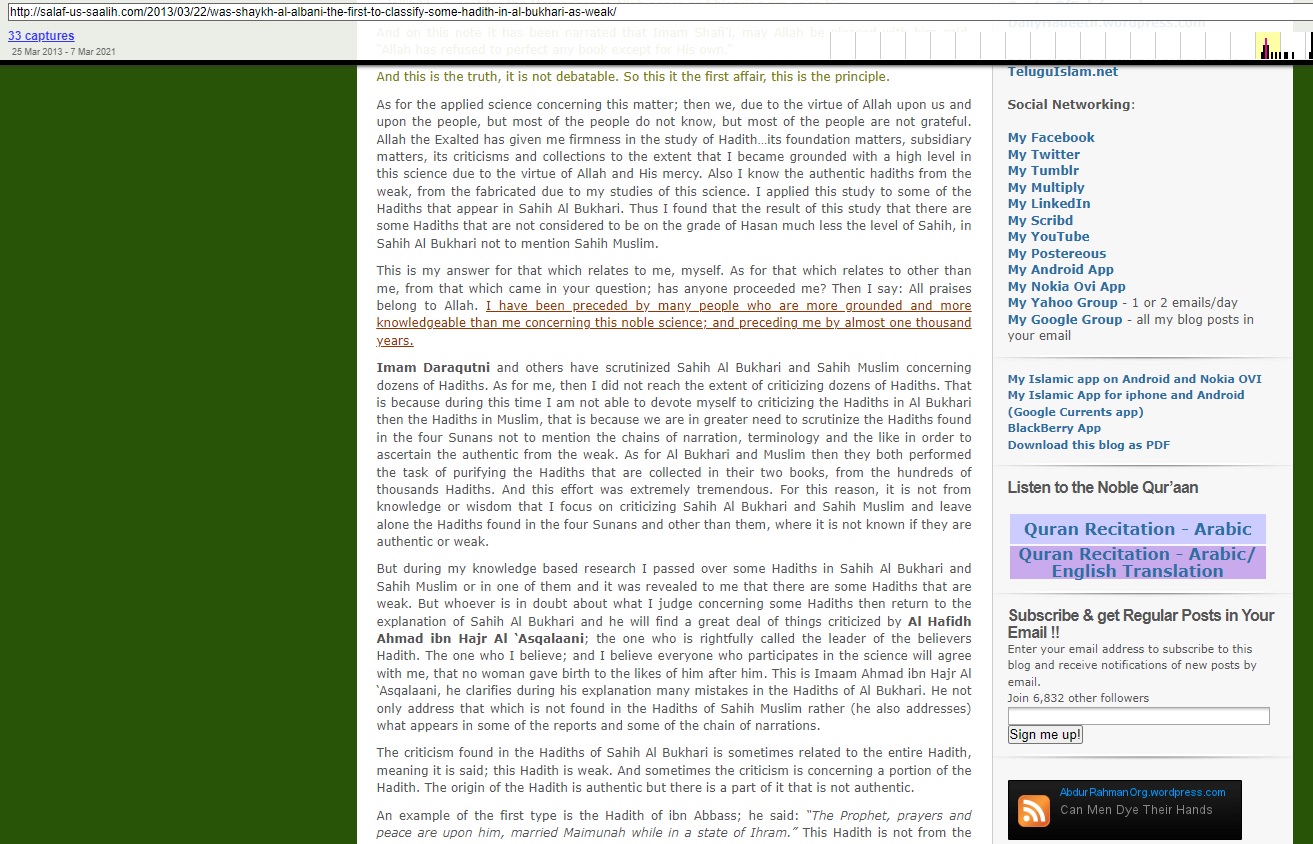


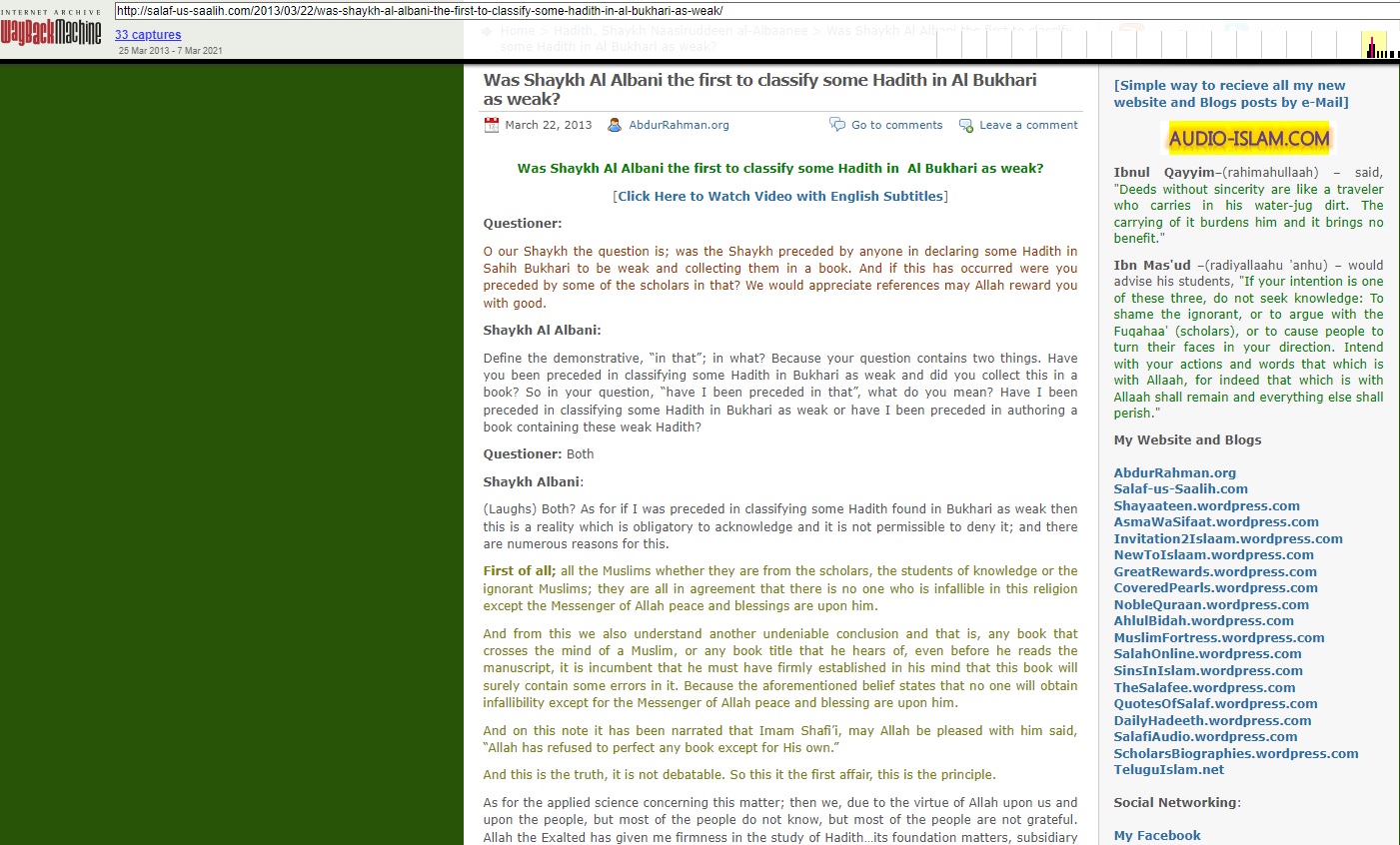
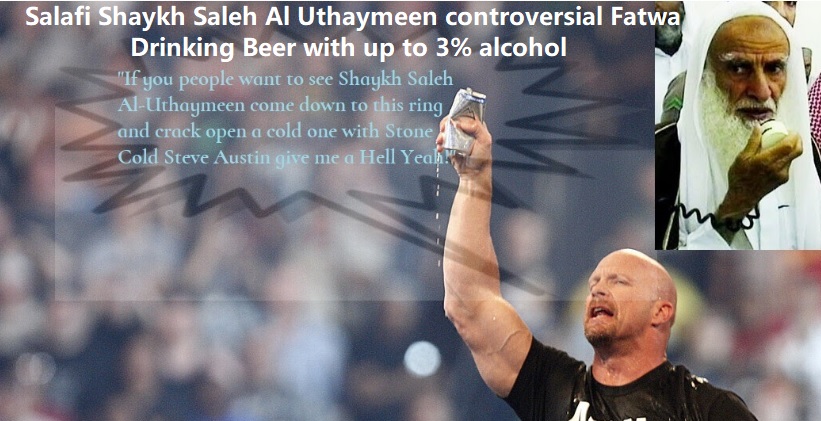


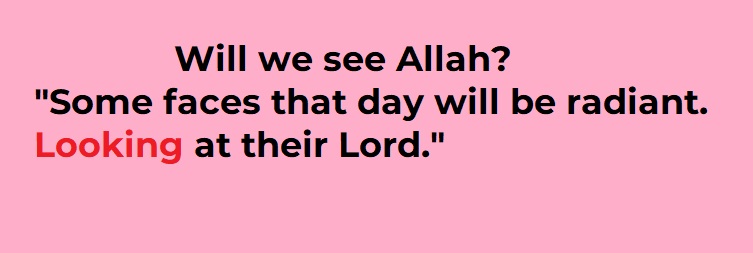
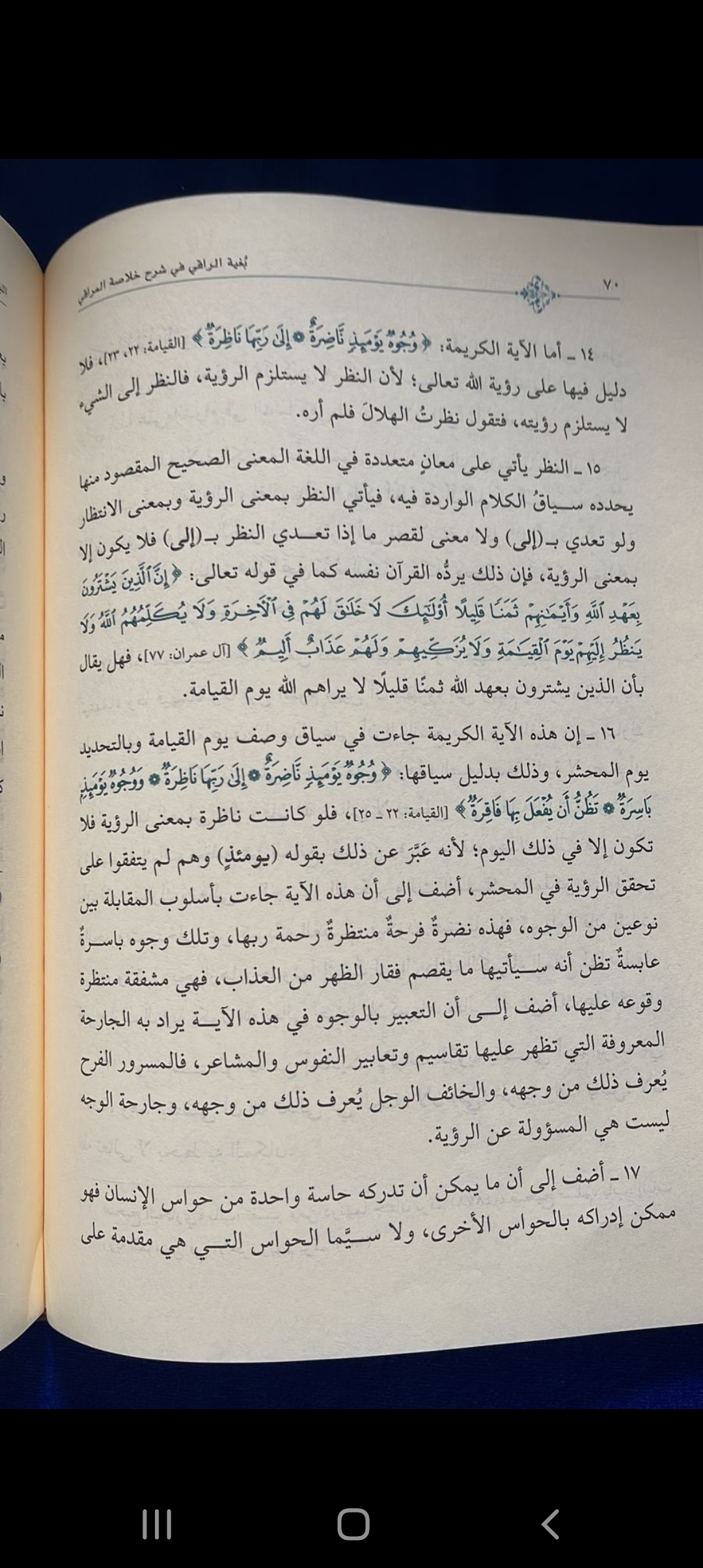
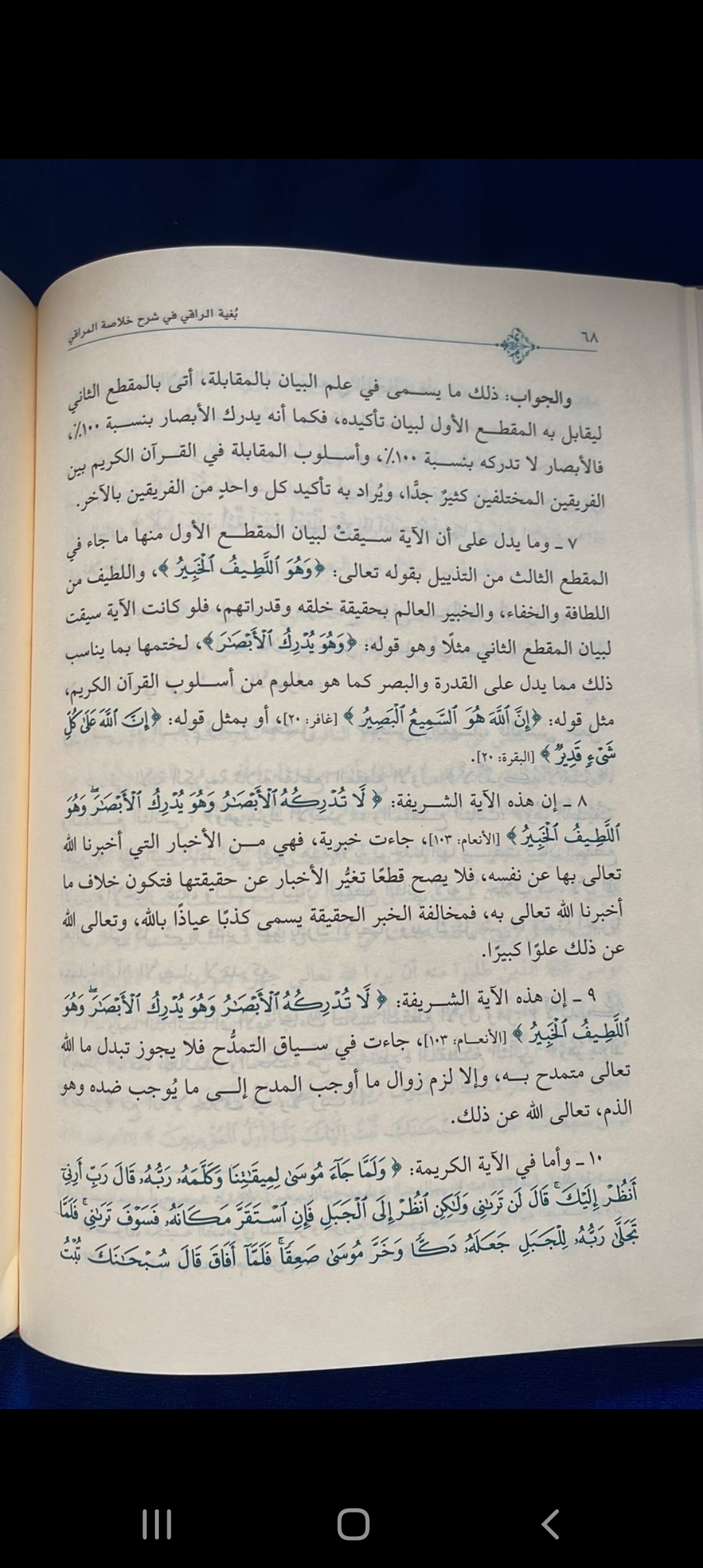

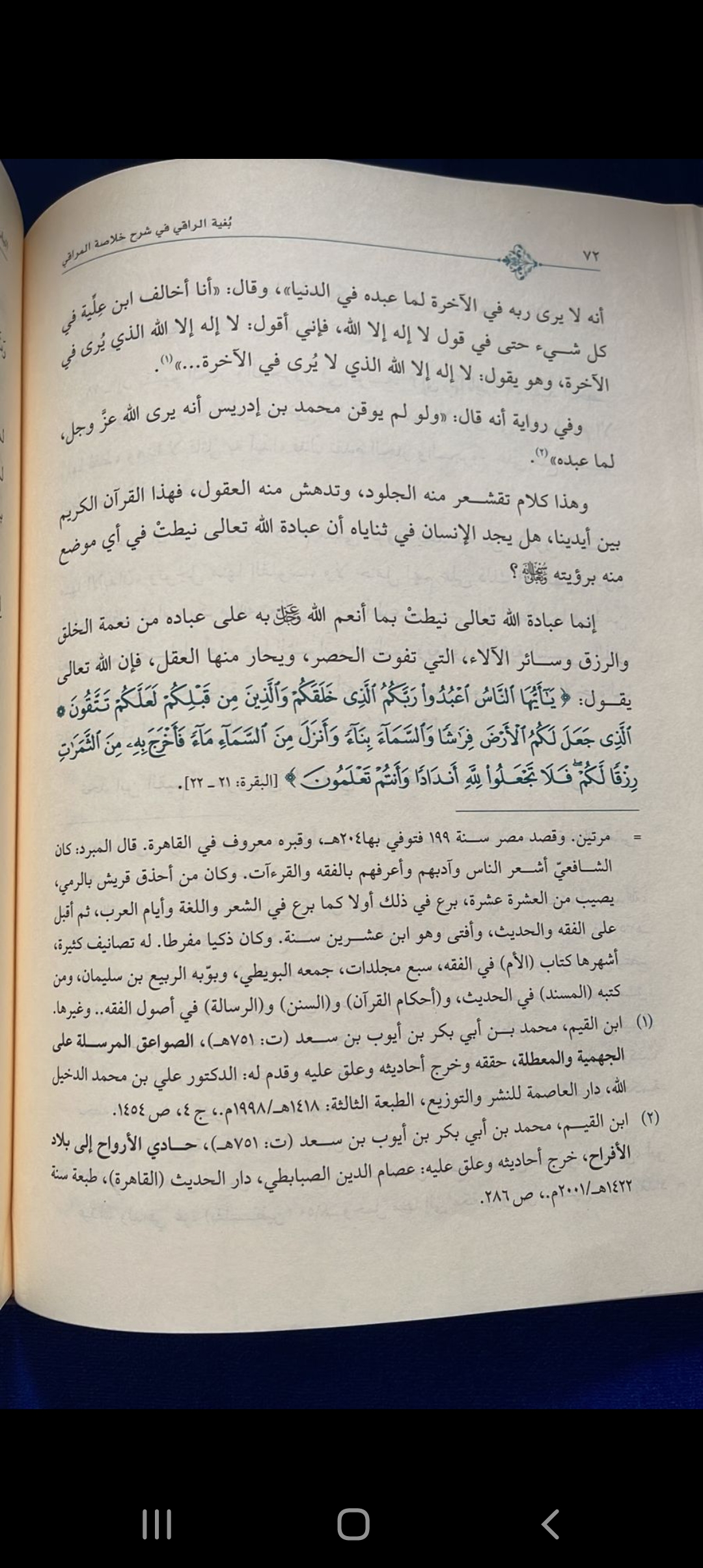


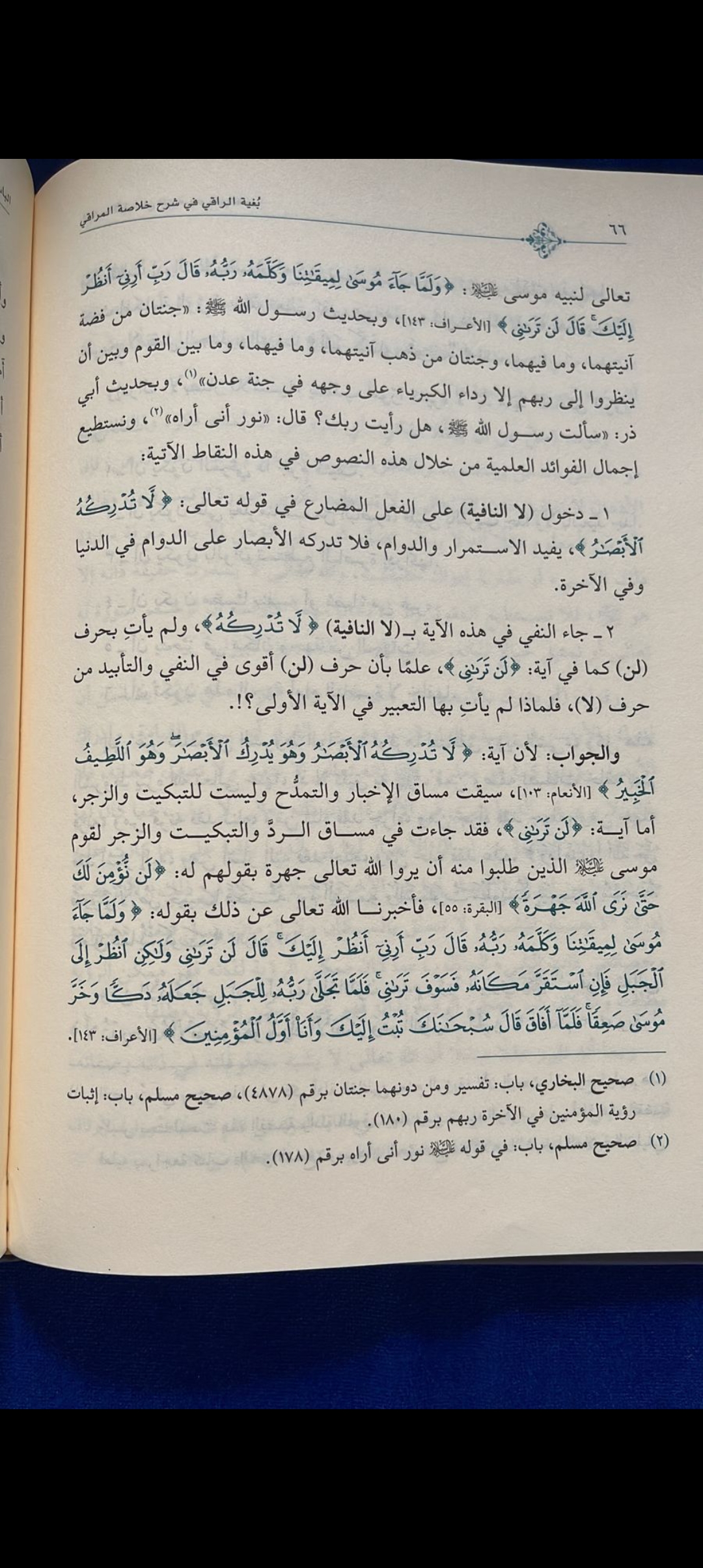

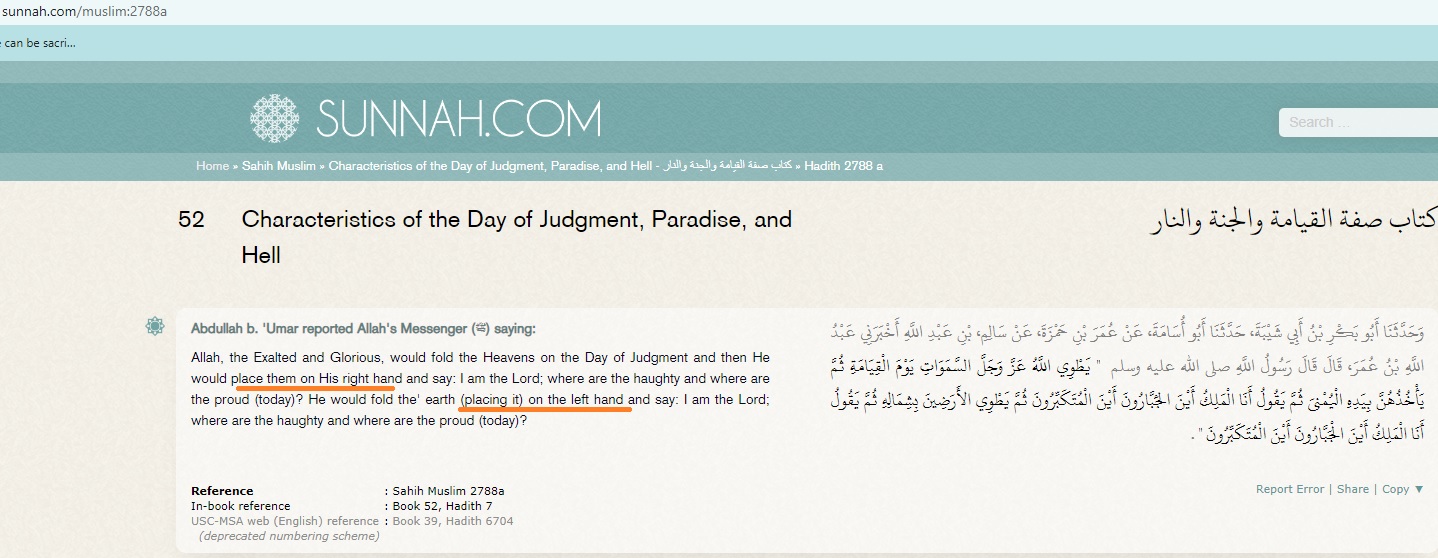





 Prima Quran