“And DO NOT OBEY the order of the transgressors, Who cause corruption in the land and do not amend their ways” (Qur’an 26:151-152)
﷽
What Did Imam Malik Say About Abu Hamzas Khutbah? – His Eminence Shaykh Nasir al MarMuri رحمة الله تعالى.
English subtitles:
Abu Hamza al-Mukhtar bin ‘Awf, one of the prominent Ibadi’s of Basrah had this to say about the Umayyad rulers in general and Yazid in particular during a Friday sermon in Medina in the presence of Imam Malik ibn Anas:
“There came Yazid, a libertine in religion and unmanly in behavior, in whom was never perceived right guidance. He would eat forbidden food, and drink wine, and wear a robe worth a thousand dinars, through which you could see his flesh so that the veil of modesty was rent, an unpardonable disrobe. And Haraba the singing girl on his right, and Salama the singing girl on his left, both singing if you had taken drink away from him, he would rent his garments!
And he would turn to one of them and say, Shall I fly? Aye, he flew. To God’s damnation, and the burning Fire, and a painful torment!
He then turns to the Umayyads:
“The sons of Umayyads are a party of error, and their strength is the strength of tyrants. They take conjecture for their guide, and judge as they please, and put men to death in anger, and govern by mediation and take the law out of context and distribute the public money to those not entitled to them. For God has revealed those who are entitled, and they are eight classes of men, for He says:
“The freewill offerings are for the poor and the needy, those who work to collect them, those whose hearts are to be reconciled, and slaves and debtors, and those in the way of Allah and the travelers.”
They, the Umayyads make themselves the ninth category and take it all! Such are those who rule by what Allah has not sent down.” (The World of Islam John A Williams p 218)
After the Muslims, the People of the Truth and Steadfastness had captured Mecca and Medina the following Khutbah was given.
Abu Hamza al-Mukhtar bin Awf al-Uzdy al-Umany. Also known as Abu Hamza al-Shari. One of the prominent Ibadhi’s of Basra. The sermon was delivered in Medina in the presence of Imam Malik ibn Anas:
“I counsel you in fear of Allah and the Sunnah of His Prophet (Blessings and peace be upon him) and to observe the ties of blood, and magnify the truth of Allah which tyrants have diminished, and to diminish the falsehood they have magnified, to put to death the injustice they have brought to life, and to revivify laws they have let die; to obey Allah and to those who obey Him, disobey others in obedience to Him, for there is no obeying a creature which disobeys its Creator. We call you to the Book of Allah and the Sunna of His Prophet, and to equal sharing, and to justice for the subject peoples and to putting the fifth of the booty in the place Allah ordained for them. As for us, we have not taken arms lightly or frivolously, for play or amusement, or for a change of government on which we hope to immerse ourselves, or for the revenge that was taken from us; but we did it when we saw the earth had grown wicked, and proofs of tyranny had appeared, and religious propagandist increased, but men did as the pleased, and laws were neglected, and the just were put to death, and speakers of truth treated violently, and we heard a herald calling us to Truth and the straight Path, so we answered the summoner of Allah…And by His grace we became brethren.”
“O people of Medina! Children of the Muhajirin and the Ansar! How sound are your roots, and how rotten are your branches! Your fathers were men of certainty and religious knowledge and you are a people of error and ignorance. For Allah opened the door of religion for you, and you (let it grow choked with rubbish); He locked the door of this world for you and you forced it open; hasty to temptation and laggards in the way of the Prophet; blind to the demonstration of Truth and deaf to knowledge; slaves of greed and allies of affliction! How excellent was the legacy your fathers left, had you preserved it, and how miserable will be that of your children if you hold on to it! Them He aided to the Truth you He deserts in error. Your ancestors were few and pious, and you are many and malicious. The preachers of the Qur’an cry out to you, and you are not chidden’ they warn you, and you do not ponder!
(Islam by John A. Williams (London & New York 1961 pp 215-217)
“I did not translate this too give validation by Malik’s statement far from that, I only did this too show the irony in the term “salaf” and how precedent this School Of Thought Is. What Malik thinks or thought about us grants me no relief nor worry-Wallahu Mustaan.”- Abu Azzan al-Muttarjim
“Turn you back in repentance to Him, and fear Him: establish regular prayers, and be not among those who join gods with Allah,- Those who split up their Religion, and become (mere) Sects,- each party rejoicing in that which is with itself!” (Qur’an 30:31-32)
“O mankind! there hath come to you a direction from your Lord and a healing for the (diseases) in your hearts,- and for those who believe, a guidance and a Mercy.” (Qur’an 10:57)
﷽
When looking at the issue of forgeries of hadith one does not have to look further than the pro-Sufi and anti-Sufi forces within the ‘Ahl Sunnah‘.
Abd Allah ibn al-Mubarak said, “The isnad is from the religion; were it not for the isnad anyone could say anything they wanted.”
Source: (Reported by Muslim in the introduction to his Sahih, vol. 1, pg. 9, Dar Taibah.)
The isnad -is the chain of narration.
The word hadith in the title of the article is used in the Arabic sense of a report. Thus, for the purposes of this article it is not necessarily a statement attributed to the Blessed Prophet (saw).
Anyone who has been among people who claim to practice ‘Sufism‘ and/ or have inclinations towards a branch of study in Islam called ‘tassawuf‘ has most likely heard innumerable times the following statement attributed to Imam Malik.
“He who practices tassawuf without learning Sacred Law corrupts his faith (tazandaq) , while he who learns Sacred Law without practicing Tasawwuf corrupts himself (tafassaqa).”
Now when I studied at Zaytuna I was told time and again the importance of being connected in an ‘unbroken‘ chain of sacred knowledge that goes all the way back to the Blessed Messenger (saw) himself.
Of course, what I’m about to say may seem cynical to you the reader, but it is the atmosphere that was created around Zaytuna when I was there.
The atmosphere seemed to say to me, “Don’t you dare question anything that is presented to you, because after all who are you to question? You don’t have the requisite tools; and you didn’t study under a Shaykh who toes the line that we tell you to tow. Therefore, all of your sincere lines of inquiry are invalid.”
So let us say that someone has reservations about giving their complete allegiance (the custody of their soul) to a Shaykh. However, this person agrees to or understands the necessity of following someone learned in jurisprudence.
Thus, the concept of the following someone learned in jurisprudence is used as a jump-off point for handing over complete sovereignty of your soul to a Spiritual guide or Shaykh. Many who call themselves ‘Sufi’ today use the following modus operandi:
Start by getting the spiritual aspirant the necessity of following someone learned in jurisprudence. Use the idea of following Imams in jurisprudence to advance their position. Thus, if Imams like Shaf’i and Malik are seen to be in favor of Sufism or ‘Tassawuf‘ then whom are we to question it!
So even until today, you have world-renown people like Shaykh Hamza Yusuf attributing such statements to Imam Malik.
You can see the following video where he attributes the above-mentioned statement to Imam Malik. http://www.youtube.com/watch?v=2_5d9c2UdiU @ 1:14 in the video you can hear Shaykh Hamza attribute this statement to Imam Malik
Interestingly the term Sufi was applied to those given the appellation “Mutazalites” long before it was applied to Junayd.
“The term Sufi was applied to Mu’tazili ascetics before it was to Junayd and his circle. Early Mu’tazili ascetics and the later Karramiyya, who more or less absorbed Mu’tazili asceticism, sometimes exalted complete renunciation of normal gain, counting it best to live off alms.”
Origins of the term ‘Ahl al sunnah’
Christopher Melchert also gives some very keen insights into the term ‘Ahl al sunnah’ and the fact that a great many factions were called themselves by this appellation.
He says,
“The 9th-century hadith folk’s own preferred term for themselves was“Ahl al-sunna.” It is not convenient for us to call the hadith folk “Sunnis” because that term now calls to mind the great tripartite division of Sunnis, Shi’is, and Kharijis. At least for the 9th century and earlier, a mere tripartite division is simplistic and practically impossible to document. To begin with, 9th-century definitions of Shi’ism were considerably different from those of later times; for example, traditionalist rijal critics regularly distinguished between ‘tashayyu’, special regard for ‘Ali and his house that the hadith folk was willing to overlook, and rafid, the rejection of Abu Bakr and ‘Umar that they thought put one outside the Muslim community. With equal emphasis, the 9th-century hadith folk distinguished themselves from Qadariyya, Murji’a, Mu’tazila, and other theological parties not accounted for by a simple, anachronistic dichotomy between Sunnis and Shi’is. The polarity of Sunni and Shi’i was not strong until the mid-10th century, and full Sunni mutual recognition and self-awareness appeared only in the mid 10th century. Finally, modern scholars should avoid endorsing the hadith folk’s own estimate that they were the overwhelming majority, as calling them “Sunnis” might do.”
” The significance of their calling themselves ‘Ahl al-sunna’ is not that their views were identical to those of the later, great Sunni community, which they were not, but that the later community deliberately identified them as its forebears. We need to understand their piety. Their adversaries preferred not to call them ‘Ahl al-sunna’ and proposed various other terms.’ Al-Jahiz disparaged the nabita, those who sprouted up like weeds to extol the enemies of ‘Ali and to promulgate such crass ideas as assigning God an imaginable body (tajsim, taswfr). Other writers attributed similar errors to the hash- wiyya (vulgar). The hadith folk complained that the Murji’a called them shukkak (doubters) for saying, “I am a believer, God willing,” while the Qadariyya called them mujbira or jabriyya for upholding divine predestination. To use any of these terms for the hadith folk would mean taking sides as much as it would mean calling them ‘Ahl al-sunna’, which is needless for modern scholars.”
“The hadith folk emerged as a distinct group at about the end of the 8th century. They lost importance in the 10th century. Chroniclers usually refer to their 10th-century successors in Baghdad as the Hanabila or simply al-‘amma (the general), periodically rioting against the Shias. Meanwhile, their own name for themselves, ‘Ahl al-sunna’, was claimed by virtually all parties except the Shi’is.Even Mu’tazila called themselves Ahl al-sunna wa-al-jama’a, on the plea that if they were not actually the great majority, they ought to have been. (I have not compared the piety of the hadith folk with that of 9th-century Shi’is, rewarding though such a comparison would be. At least a wing of the Shi’ movement probably had something very close, which ought to show up in Shi’i hadith.)”
So again we can see there was a lot of conflict and turmoil in the very early history of Islam. Conflict and turmoil that is with us until this very day. So less I digress let me go back to the opening quotation attributed to Imam Malik:
“He who practices tassawuf without learning Sacred Law corrupts his faith (tazandaq) , while he who learns Sacred Law without practicing Tasawwuf corrupts himself (tafassaqa).”
Gibril Fouad Haddad who is a follower of the Sufi group ‘The Naqshabandi Haqqani‘ * has provided some very insightful information to this claim above.
* note: This Sufi group is to be distinguished from their rivals the ‘Naqshabandi Mujaddidi‘ as well as other rival Sufi groups.
He has the following to say about the above quotation attributed to Imam Malik :
“Cited without the chain of transmission by Al-Qari in Sharh ‘Ayn al-Ilm and Mirqat al-Mafatih, Ahmad Zarruq in the Forth of his Qawa’id al-Tassawuf in his commentary on Ibn Abi Zayd’s Risal a (Beirut: Dar Ihya al-Kutub al Arabiyyah, Ibn Ajiba in Iaqaz, Al Himan fi Sharh al-Hikam and Al-Tata’i in his commentary on Ibn Rushd’s Muaqaddima.”
Source: (The Four Imams and their Schools page 180)
Ponder that for a moment, respected readers. A statement seemingly in support of ‘Tassawuf‘ put into the mouth of Imam Malik and then repeated by men like Al Qari, Ahmad Zarruq, Ibn Abi Zayd, Ibn Ajiba, and At Tata’i. Yet, no chain of narration!
In my previous conversations with Dr. Abdullah bin Hamid Ali and Ustadh AbdasSamad Clarke, both have confirmed to me that it is not authentically ascribed to Malik.
Anti-Sufi reports attributed to Imam Malik
Incident no. 1 )
“Al -Tinnisi said: We were sitting with Malik with his companions around him. A man from the people of Nasibin said, ‘We have some people who go by the name of Sufis. They eat a lot then they start (chanting) poems (qasa’id), after which they stand and start (chanting) dancing.” Malik asked, “Are they boys (sibyan)?” He said no. Malik asked, “Are they insane?” He said, No, they are old men (mashaykh) and other than that, and they are mature and sane (‘uqala.” Malik said, “I never heard that any of the people of Islam do this.” The man said to him, “Indeed, they do! They eat, then they stand up and start dancing intensively (dawa’ib), and some of them slap their heads, and some of their faces.” Malik started laughing then went into his house. His companions said to the man. “You were, O man, ill luck (mash’um) for our friend [Malik]. We have been sitting with him thirty-odd years and never saws him laugh except today.” “Narrated without a chain by Al-Qadi ‘Iyad in Tartib Al-Madarak.”
Source: (The Four Imams and their Schools by Gibril Fouad Haddad page 180)
Incident no.2 )
“Abd al-Malik ibn Ziyad al-Nasibi said: “We were with Malik when I mentioned to him Sufis in our city. I said to him that they wear fancy Yemenite clothes, and do such and such. He replied, ‘Woe to you! Are they Muslims?’. He then laughed until he lay on his back. Some of his companions said to me, ‘What is this?’ We have not seen more trouble (fitna) caused to the Shaykh than you, for we never saw him laugh!” “Narrated by al-Khallal in al-Hathth ‘ala al-Tijara wal-Sina’a wal-Amal (Abu Ghudda) with a weak chain because of ‘Abd al-Malik ibn Ziyad al-Nasibi who is “disclaimed in his narrations and untrustworthy” (munkar al hadith, gahyr thiqa) according to al-Aazdi as per Ibn al-Jawzi in al-Du’afa wal-Matrukin (1:149) while Ibn Hibban in his Thiaqat (8:390) said he reports oddities from Malik.”
Source: (The Four Imams and their Schools by Gibril Fouad Haddad page 181)
So you can imagine the incongruity of all of this. Notice the similarities between the two seemingly Anti-Sufi reports attributed to Imam Malik.
1) His strong reaction: ‘I never heard that any of the people of Islam do this. &Woe to you! Are they Muslims?’
2) His hearty laugh after hearing of their doings. ‘Malik started laughing then went into his house. &He then laughed until he lay on his back’.
3) The shock of the people present at Maliks’ reaction. ‘You were O man, ill-luck (mash’um) for our friend [Malik]. We have been sitting with him thirty-odd years and never saws him laugh except today. & What is this?’ We have not seen more trouble (fitna) caused to the Shaykh than you, for we never saw him laugh’!
You can scroll down to the section: “Imam Malik and the Sufis” Gibril Fouad Haddad has the following to say about the two incidents, reported above:
Concerning the first incident, he says, “This is narrated without chain by al-Qadi `Iyad. in Tartib al-Madarik (2:53-54).” That is all he has to say. There is no chain of transmitters. Case closed.
Concerning the second incident, he simply gives the reason one of the transmitters is dismissed. Then he concludes by saying:
“Content-wise, neither of the above reports shows unambiguous condemnation of group dhikr but only that some people who passed for Sufis in the Imam’s time reportedly committed certain childish excesses or irrational breaches of decorum. The reports only show that Imam Malik found the story amusing. The delator seems obsessed with the ‘eating and dancing’ which he mentions twice as if afraid Malik didn’t hear it the first time. There is also on the part of Malik’s circle clear disapproval of the delator who is apparently perceived as an interloper. And Allah knows best.”
Actually what the reports show assuming they are true at all is the following:
The reports show that Imam Malik does not even seem to be even vaguely familiar with such groups. The asking ‘if the people are Muslim‘, and making statements such as ‘the people of Islam are not heard of doing this‘ would be very difficult for Muslims having a pro-Sufi bias to fathom. Especially, in the first report since, we don’t have Imam Malik laughing until after hearing about people slapping their faces.
“And do not mix the truth with falsehood or conceal the truth while you know it.” (Qur’an 2:42)
﷽
In Islam, one of our most cherished principles is to cover up the faults of others. To be tactful in how we correct each other. Yet, this needs to be balanced with those who are recalcitrant and unwilling to admit to their errors. When their publications and social media become widely viewed, the layperson takes at face value what is said than something must be done.
One of the more unfortunate things is that those who are claimants of a movement called ‘Salafiyah’ are being woefully uninformed about the prayer of the Blessed Messenger (saw). Namely, by saying that praying with arms to the side is some sort of innovative practice. When in reality that IS the default way the Blessed Messenger (saw) prayed!
One of those who have circulated this misunderstanding is the Salafi preacher Abu Ameenah Bilal Philips. Bilal Philips has otherwise benefited the English-speaking Muslim community through his media lectures and audio series.
We as human beings make mistakes. We hope that one day Allah (swt) will encourage him to correct this error.
In his book he says:
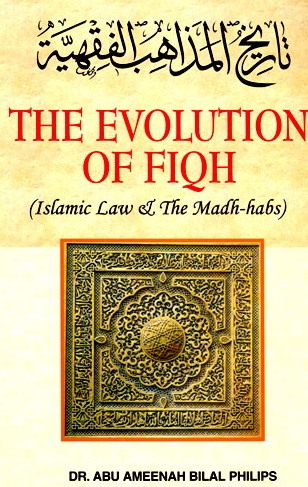
“He was severely beaten in the year 764 CE by the order of the Ameer of Madeenah, because he made a legal ruling that forced divorce was invalid. This ruling opposed the ‘Abbaasid rulers’ practice of adding in the oath of allegiance given to them by the masses the clause that whoever broke the oath was automatically divorced. Malik was tied and beaten until his arms became severely damaged to such a degree that he became unable to clasp them on his chest in Salaah and thus he began the practice of praying with his hands at his sides according to some reports.”
Source: (pg. 78. The Evolution of Fiqh Islamic Law & The Madh-habs By Abu Ameenah Bilal Philips International Islamic Publishing House.)
“Some reports” such as? Doesn’t Abu Ammenah Bilal Philips have to give his evidence or are we just supposed to accept what he said? No asterisk *, no footnote with a source or reference. Unforutnately, Bilal Philips gives us nothing.
Can such a claim be verified by and in any of the traditionally relied upon books of Islamic history? No! One will be hard-pressed to find any evidence substantiating this argument.
Remember what Allah said:
“Verily, those who conceal the clear proofs, evidence, and the guidance, which We have sent down after We have made it clear for the people in the Book, they are the ones cursed by Allah and cursed by those who curse.” (Qur’an: 2:159)
So where is the proof?
Secondly, how could Imam Malik not have enough strength to clasp his hands on his chest but still be able to do the tabkir—, go into ruku, and go into sajdah and to push his hands up from sujuud, since Imam Malik’s view is that the knees go up than the hands after sajdah?
What about all the other Tabieen who prayed the way Imam Malik did? Did each one of them have their arms broken as well?
Also, don’t you think Imam Malik would have said as plain as day, “Hey everyone, as you know, I’m only praying this way because my arm was pulled out of my socket, don’t follow me, follow the Blessed Messenger!”
Next are the flat untruths coming from Assim al Hakeem.
“Some scholars say that the followers of Imam Malik started doing this when he started praying like that. Why would Imam Malik, Imam Dar Al Hijra, pray like that way? He knows that the Sunnah of the Prophet (as) as in the hadith of Wail Ibn Hujr (May Allah be pleased with him) was to put the right over the left on the chest and this is the sunnah of all the prophets. Why would Imam Malik do this? The reason was that at some time or period of history there was a disagreement between the Muslim ruler and Imam Malik; which happens throughout history with all scholars. This happened with Imam Ahmad. This happened with Imam Abu Hanifa. This happened with uh Imam Ibn Taymiyah, who died in prison. All great scholars are tested; and usually if they don’t kiss the backside or they don’t polish shoes, they will be thrown in jail. This is the norm. So there was this disagreement which Imam Malik refused to compromise the religion, which led then to a Muslim ruler to flog him and beat him in prison. That led to an injury to his arm which prevented him from being able to lift it so he began to pray with his arms to his side. Some of his disciples and students (apparently who were not very smart followed that way of prayer instead of going back to his books, to his hadiths that he used to teach to learn how the prophet used to pray. And they mimicked that and made it part of their religion, or part of their school of thought. Which is totally bogus. Which is totally not true. And Ali my friend as a Muslim we have to go back to the references, Qur’an and Sunnah. Not to what Tom, Dick and Harry did (with all due respect to THEM), but Allah ordered us to follow the Qur’an and the Sunnah. And people differ. People have their different preferences, and understanding of things. So we are not to get closer to Allah by THEIR understanding rather by the Qur’an and the Sunnah whereby the understanding of the three favourite generations, the companions, tabi’een and tab’tabi’een.”
Let us analyze what Shaykh Assim al Hakeem says.
“Some scholars say.” Who are these scholars? What do they base their statements on?
“Some of his disciples and students (apparently who were not very smart) followed that way of prayer instead of going back to his books, to his hadiths that he used to teach to learn how the prophet used to pray. And they mimicked that and made it part of their religion.”
Let us do a little thought experiment. Let us assume the arms were broken, so he prayed like that story checks out. So this means….
Group A
Imam Malik was negligent.
Direct students of Imam Malik started doing that. Imam Malik was derelict in his duties and said nothing while his students did innovation in their prayer. This is a huge evil to attribute to Imam Malik.
Which of these students, who were “apparently who were not very smart” started this innovative practice? Was it:
Asad ibn al Furat ?
Ibn al-Qasim ?
Sahnun ?
Ashhab ibn ‘Abd al-Aziz ?
Group B.
The students of Imam Malik’s students innovated this practice.
All of Imam Malik’s students were faithful and diligent in following the Sunnah. However, the students of these teachers decided to start practicing sadl in honour of Imam Malik being tortured. So then, when they started to do this, why didn’t their teachers (the students of Imam Malik) stop them? Why would they do what their teachers were not even doing?
ABU HANIFA, IMAM MALIK, IMAM SHAFI’I, IMAM AHMAD = (TOM, DICK, AND HARRY) ?
“Not to what Tom, Dick and Harry did (with all due respect to THEM), but Allah ordered us to follow the Qur’an and the Sunnah. And people differ. People have their different preferences, and understanding of things. So we are not to get closer to Allah by THEIR understanding.”
The shocking and dismissive statements directed at some of his own great scholars are most unfortunate. This is nothing new for the Salafi preachers. In one breath he speaks of Imam Malik as ‘Imam Dar Al Hijra‘, and in the next breath he is just a ‘Tom, Dick or Harry‘.
I guess we as Muslims, those that follow the Ibadi school, shouldn’t be shocked when some of the more uneducated among the ‘Salafiyah’ call us dogs, and kafir. After all, these men will refer to their own Imams as ‘Tom, dick or harry’. This makes for an unfortunate discourse.
May Allah (swt) guide them and us to a way and course that is just.
Shaykh Assim Al-Hakeem has yet to correct his lie concerning Imam Malik. However, he has stated in public it is no problem if you leave your arms to the side.





 Prima Quran