Tag Archives: Islam

Request from the readers on the term ‘Ahl Sunnah Wal Jammah’

“And strive in His cause as ye ought to strive, (with sincerity and under discipline). He has chosen you, and has imposed no difficulties on you in religion; it is the cult of your father Abraham. It is He Who has named you Muslims, both before and in this (Revelation); that the Messenger may be a witness for you, and ye be witnesses for mankind! So establish regular Prayer, give regular Charity, and hold fast to Allah! He is your Protector – the Best to protect and the Best to help!” (Qur’an 22:78)

﷽ 

Did you know that the vast majority of Muslim layman and even some learned people believe that the Blessed Prophet (saw) said something along the following:

“My Ummah will be split into 73 groups and all of them will be in the hellfire except one, and that is ‘Ahl Sunnah Wal Jammah‘.

  1. This is absolutely not true. In fact, it is imputing a lie to the Blessed Prophet (saw).

There is absolutely no such statement of the Blessed Prophet (saw).

Does anyone know any verse in the Qur’an any sound Hadith that says that we as Muslims are to call ourselves: ourselves ‘Ahl Sunnah Wal Jammah‘?

I have been searching high n low, and coming up empty. I am not infallible or above reproach. So I think its best I consult with others.

Have you the readers found any clear statement from the Qur’an that we are to call ourselves: ‘Ahl Sunnah Wal Jammah‘?

Have you the readers found any clear statement from the Qur’an that the saved people on the day of judgement are: ‘Ahl Sunnah Wal Jammah‘?

Have you the readers found any sound hadith, (whose chain of narration was so spotless it was not disputed by any of the scholars) where the blessed Prophet Muhammed (saw) told us to call ourselves: ‘Ahl Sunnah Wal Jammah‘?

Have you the readers found any sound hadith, (whose chain of narration was so spotless it was not disputed by any of the scholars) where the blessed Prophet Muhammed (saw) said that the saved group are the: ‘Ahl Sunnah Wal Jammah‘?

Here is what I found.

I found that there has been some deception and sleight of hand to fool people into thinking words have meaning that they do not have.

jama’a literally denotes a group, a collective, a congregation.

jama’a does NOT mean largest group, largest collective, largest congregation.

If one searches through the history books, he will find the origin story of the ‘Jama’ah is the year in which Muawiyah seized the power. It was known as the “The Year of al- Jama’ah”.

It was called so, because the Ummah of the Blessed Prophet (saw) had already become divided into two factions after the death of Uthman: The Shia of Ali and the followers of Muawiyah. When Imam Ali was killed and Muawiyah took over the power, the year was called “al- Jama’ah”. Out of the many Jama’ah. The majority was being lead by Muawiyah, who usurped power and any other parties were considered as a dangerous rivals. Therefore the name of “Ahl al-Sunnah and al-Jama’ah” indicates a forged terminology between the Blessed Sunnah of the Prophet (saw) merged with the innovations by Muawiyah, and the agreement upon his leadership.

Source: (History of al-Tabari, English version, v10, p97) https://www.kalamullah.com/Books/The%20History%20Of%20Tabari/Tabari_Volume_10.pdf

Correction: The Muslim community did not come together in recognizing Mu’awiyah. There remained Muslims that up until today do not recognize Mu’awiyah usurping the Imamate of the Muslims.

MORE DECEPTION IN REGARD TO THE TERM JAMA’A

You may have heard a hadith along the lines of: “Allah’s hand is with the Jammah.”

However, as we have already noted jama’a literally denotes a group, a collective, a congregation.

So now watch some manipulation at work.

If we go to the following website islamqa we find the following: (https://islamqa.info/en/answers/147341/can-large-numbers-be-quoted-as-evidence-of-truth-and-the-meaning-of-the-hadith-my-ummah-will-not-agree-on-misguidance)

“Praise be to Allah.

At-Tirmidhi (2167) narrated from Ibn ‘Umar (may Allah be pleased with him) that the Messenger of Allah (blessings and peace of Allah be upon him) said: “Allah will not cause my ummah to agree on falsehood; the hand of Allah is with the jamaa‘ah (the main body of the Muslims).” Classed as hasan by al-Albaani.”

(the main body of the Muslims) is a bracketed insertion. It is not the meaning of the word jama’a.

Manipulation at work once again. Observe:

” ‘Arfajah ibn Shurayh reported: I saw the Prophet, peace and blessings be upon him, delivering a sermon to the people, saying, “Verily, the Hand of Allah is over the united community, for Satan is with one who secedes from the community, running after him.

Source: Sunan al-Nasā’ī 4020

Grade: Sahih (authentic) according to Al-Albani.”

However, the Arabic text says no such thing. Observe how it (along with the fuller text) is translated here:

It was narrated that ‘Arfajah bin Shuraih Al-Ashja’I said:

“I saw the Prophet [SAW] on the Minbar addressing the people. He said: ‘After me there will be many calamities and much evil behavior. Whoever you see splitting away from the Jama’ah or trying to create division among the Ummah of Muhammed [SAW], then kill him, for the Hand of Allah is with the Jama’ah, and the Shaitan is with the one who splits away from the Ummah, running with him.'”

Source: (https://sunnah.com/nasai:4020)

Again, nothing about ‘united community’. Which would be problematic even if that were to be accepted. All the different group of Muslims are united with in themselves. When they become disunited on a matter they split and become another Jama’ah.

This is why the people over at islamqa inserted: the main body of the Muslims

WHAT I AND MY COMPANIONS ARE UPON.

Then we have the following:

Narrated ‘Abdullah bin ‘Amr:

that the Messenger of Allah (saw) said: “What befell the children of Isra’il will befall my Ummah, step by step, such that if there was one who had intercourse with his mother in the open, then there would be someone from my Ummah who would do that. Indeed the children of Isra’il split into seventy-two sects, and my Ummah will split into seventy-three sects. All of them are in the Fire Except one sect.” He said: “And which is it O Messenger of Allah?” He said: “What I am upon and my Companions.”

Source: (https://sunnah.com/tirmidhi:2641)

This hadith has been classified as weak. Not everyone is in agreement upon it’s authenticity.

Notice there is no mention of the theologically and politically loaded terminology jama’a

Certainly this hadith which has been classified as weak has to be tempered in light of the hadith that has been graded sound which states:

Narrated Anas:

The Prophet (saw) said, “Some of my companions will come to me at my Lake Fount, and after I recognize them, they will then be taken away from me, whereupon I will say, ‘My companions!’ Then it will be said, ‘You do not know what they innovated (new things) in the religion after you.

Source: (https://sunnah.com/bukhari:6582)

or the following hadith:

Qais reported:

I said to ‘Ammar: What is your opinion about that which you have done in case (of your siding with Hadrat ‘Ali)? Is it your personal opinion or something you got from Allah’s Messenger (saw)? ‘Ammar said: We have got nothing from Allah’s Messenger (saw) which people at large did not get, but Hudhaifa told me that Allah’s Apostle (saw) had especially told him amongst his Companion, that there would be twelve hypocrites out of whom eight would not get into Paradise, until a camel would be able to pass through the needle hole. The ulcer would be itself sufficient (to kill) eight. So far as four are concerned, I do not remember what Shu’ba said about them

Source: (https://sunnah.com/muslim:2779a)

FOLLOW MY SUNNAH AND THE RIGHTLY GUIDED CALIPHS

Narrated Irbad ibn Sariyah:

AbdurRahman ibn Amr as-Sulami and Hujr ibn Hujr said: We came to Irbad ibn Sariyah who was among those about whom the following verse was revealed: “Nor (is there blame) on those who come to thee to be provided with mounts, and when thou saidst: “I can find no mounts for you.”

We greeted him and said: We have come to see you to give healing and obtain benefit from you.

Al-Irbad said: One day the Messenger of Allah (saw) led us in prayer, then faced us and gave us a lengthy exhortation at which the eyes shed tears and the hearts were afraid.

A man said: Messenger of Allah! It seems as if it were a farewell exhortation, so what injunction do you give us?

He then said: I enjoin you to fear Allah, and to hear and obey even if it be an Abyssinian slave, for those of you who live after me will see great disagreement. You must then follow my sunnah and that of the rightly-guided caliphs. Hold to it and stick fast to it. Avoid novelties, for every novelty is an innovation, and every innovation is an error.

Source: (https://sunnah.com/abudawud/42/12)

Even though this particular hadith is classified as sound I believe that it has been subject to mudraj (interpolated). In particular the phrase: “and that of my rightly -guided caliphs.”

The Arabic term: الْمَهْدِيِّينَ or almahdiiyn also could be translated as ‘The Mahdis’ is certainly problematic.

This hadith does not leave really any good options either for the Umayyad Sunni(s) or the Abbasid Sunni (s).

Why?

  1. There are just too many companions that fought against Imam Ali to have thought him to be (rightly guided) in all his actions.
  2. This means they heard this hadith and ignored it. Not good!
  3. It means that they never heard this hadith because it is mudraj (interpolated) i.e forged.

This extra addition: “and that of my rightly -guided caliphs.” seems cooked up after the fact. Most likely to counter opposition to a particular historical narrative.

If some groups are going to have rightly guided Imams why not rightly guided Caliphs?! Allah (swt) knows best!

THE POSSIBILITY OF NO JAMA’A OR NO IMAM? THEN WHAT?

Narrated Hudhaifa bin Al-Yaman:

The people used to ask Allah’s Messenger (saw) about the good but I used to ask him about the evil lest I should be overtaken by them. So I said, “O Allah’s Messenger (saw)! We were living in ignorance and in an (extremely) worst atmosphere, then Allah brought to us this good (i.e., Islam); will there be any evil after this good?” He said, “Yes.” I said, ‘Will there be any good after that evil?” He replied, “Yes, but it will be tainted (not pure.)” I asked, “What will be its taint?” He replied, “(There will be) some people who will guide others not according to my tradition? You will approve of some of their deeds and disapprove of some others.” I asked, “Will there be any evil after that good?” He replied, “Yes, (there will be) some people calling at the gates of the (Hell) Fire, and whoever will respond to their call, will be thrown by them into the (Hell) Fire.” I said, “O Allah s Apostle! Will you describe them to us?” He said, “They will be from our own people and will speak our language.” I said, “What do you order me to do if such a state should take place in my life?” He said, “Stick to the group of Muslims and their Imam (ruler).” I said, “If there is neither a group of Muslims nor an Imam (ruler)?” He said, “Then turn away from all those sects (al-firqa) even if you were to bite (eat) the roots of a tree till death overtakes you while you are in that state.”

Source: (https://sunnah.com/bukhari:7084)

Here this text addresses the possible scenario of there being no jama’a at all! In particular, no group of Muslims (jamaat al muslimin)

Also, it is hard to imagine that the Blessed Prophet (saw) is advocating for a ‘do it yourself’ Islam in the statement: Then turn away from all those sects (al-firqa)

So let us look at what has been clearly established. We have nothing from the Qur’an or the Sunna of the Blessed Prophet (saw) telling us to follow: Ahl al-Sunnah and al-Jama’ah

CLAIMS THAT THE COMPANIONS USED THE TERM: ‘AHL SUNNAH WAL JAMMAH’ ?

‘Amr ibn Maymun reported: Abdullah ibn Mas’ud, may Allah be pleased with him, said, “Verily, the majority of groups have left the united community. The united community is only the one that conforms to the obedience of Allah, even if you are by yourself.”

Source: Sharḥ Uṣūl I’tiqād Ahl al-Sunnah wal-Jamā’ah 160

From:

Now note somethings from the above site:

The title is: Ibn Mas’ud on Jama’ah: You are Ahl al-Sunnah even if you are alone

But Ibn Mas’ud (ra) did not say: “You Are Ahl al-Sunnah even if you are alone!”

What he is reported to have said is: “The jamaat is only the one that conforms to the obedience of Allah, even if you are by yourself

Remember this translator likes to translate jamaat as ‘united community’ and we already went over this.

The above transmission that is reported to have come from Ibn Mas’ud (ra) is quite eye opening because the truth has nothing to do with a group and especially not an overwhelming majority group. Rather, the truth is that which conforms to the obedience of Allah (swt).

Unfortunately some people will dismiss the above website: https://www.abuaminaelias.com/ because of it’s association with the Salafi sect or Ahl Hadith sect.

Well, if you are an acclaimed Sunni Muslim whom has an aversion for the Salafi you can chew on the following bit of information:

Imam an-Nablusi stated in his book al-Hadiqat an-Nadiyya (vol. 2, pg. 103)

“Jama’ah is rahma, that is, the union of Muslims on truth brings Allahu ta’ala’s Compassion. Tafriqa is adhab, that is, separation from the Community of Muslims brings about punishment from Allahu ta’ala. Hence, it is necessary for every Muslim to unite with those who are on the right path. He must join and believe like them even if they are only a small group. The right path is the path of as-Sahaba al-Kiram. Those who follow this path are called Ahl as-Sunnah Wa’l Jama’ah. It should not confuse us that many heretical groups appeared after the time of as-Sahaba al-Kiram. Al-Imam al-Bayhaqi (d. 458/1066; Rahimahullah) said, ‘When Muslims go astray, you should follow the right path of those who came before them! You should not give up that path even if you are left alone on the path!

Source: (https://masud.co.uk/who-are-the-ahl-as-sunnah-wal-jamaah/)

It is said that Ibn Mas’ud (ra) had a commentary on the following verse of the Qur’an:

“And hold fast, all of you together, to the Rope of Allah, and be not divided among yourselves.” (Qur’an 3:103). Where apparently he explains that the rope mentioned in the verse was the Jama’ah (group).

Insh’Allah when I get the source for this attributed statement I will share it. However, even if it checks out the term again is Jama’ah or simply ‘group’.

The closest you will get to any companion of the Blessed Prophet (saw) coining the phrase: “Ahl al-Sunnah and al-Jama’ah” is that which has been attributed to Abdullah Ibn Abbas (ra).

Commenting on the verse:

“On the Day when some faces will be (lit up with) white, and some faces will be (in the gloom of) black: To those whose faces will be black, (will be said): “Did you reject Faith after accepting it? Taste then the penalty for rejecting Faith.” (Qur’an 3:106)

Ibn Kathir in his commentary on the above verses attributes the following to Ibn Abbas (ra)

“This is when the faces of followers of the Sunnah and the Jama`ah will radiate with whiteness, and the faces of followers of Bid`ah (innovation) and division will be darkened, as has been reported from Ibn `Abbas.”

Source: (https://quranx.com/Tafsirs/3.106)

However, even this statement cannot be authentically attributed to Ibn Abbas (ra).

What I DO find interesting about this particular grouping of words being attributed to Ibn Abbas (ra) is that the Abbasids (from his name sake) are the real intellectual progenitors of what is now commonly known as: Ahl al-Sunnah and al-Jama’ah

Christopher Melchert, Professor of Arabic and Islamic studies at the University of Oxford’s Oriental Institute and fellow in Arabic at Pembroke College, Oxford had the following to say:

“The 9th-century hadith folk’s own preferred term for themselves was “Ahl al-sunna.” It is not convenient for us to call the hadith folk “Sunnis” because that term now calls to mind the great tripartite division of Sunnis, Shi’is, and Kharijis. At least for the 9th century and earlier, a mere tripartite division is simplistic and practically impossible to document. To begin with, 9th-century definitions of Shi’ism were considerably different from those of later times; for example, traditionalist rijal critics regularly distinguished between ‘tashayyu’, special regard for ‘Ali and his house that the hadith folk was willing to overlook, and rafid, the rejection of Abu Bakr and ‘Umar that they thought put one outside the Muslim community. With equal emphasis, the 9th-century hadith folk distinguished themselves from Qadariyya, Murji’a, Mu’tazila, and other theological parties not accounted for by a simple, anachronistic dichotomy between Sunnis and Shi’is. The polarity of Sunni and Shi’i was not strong until the mid-10th century, and full Sunni mutual recognition and self-awareness appeared only in the mid 10th century. Finally, modern scholars should avoid endorsing the hadith folk’s own estimate that they were the overwhelming majority, as calling them “Sunnis” might do.”

” The significance of their calling themselves ‘Ahl al-sunna’ is not that their views were identical to those of the later, great Sunni community, which they were not, but that the later community deliberately identified them as its forebears. We need to understand their piety. Their adversaries preferred not to call them ‘Ahl al-sunna’ and proposed various other terms.’ Al-Jahiz disparaged the nabita, those who sprouted up like weeds to extol the enemies of ‘Ali and to promulgate such crass ideas as assigning God an imaginable body (tajsim, taswfr). Other writers attributed similar errors to the hash- wiyya (vulgar). The hadith folk complained that the Murji’a called them shukkak (doubters) for saying, “I am a believer, God willing,” while the Qadariyya called them mujbira or jabriyya for upholding divine predestination. To use any of these terms for the hadith folk would mean taking sides as much as it would mean calling them ‘Ahl al-sunna’, which is needless for modern scholars.”

“The hadith folk emerged as a distinct group at about the end of the 8th century. They lost importance in the 10th century. Chroniclers usually refer to their 10th-century successors in Baghdad as the Hanabila or simply al-‘amma (the general), periodically rioting against the Shias. Meanwhile, their own name for themselves, ‘Ahl al-sunna’, was claimed by virtually all parties except the Shi’is. Even Mu’tazila called themselves Ahl al-sunna wa-al-jama’a, on the plea that if they were not actually the great majority, they ought to have been. (I have not compared the piety of the hadith folk with that of 9th-century Shi’is, rewarding though such a comparison would be. At least a wing of the Shi’ movement probably had something very close, which ought to show up in Shi’i hadith.)

Source: (The Piety of the Hadith Folk by Christopher Melchert)

Ahl al-Sunnah and al-Jama’ah is the biggest game in town and so they are upon the truth!

I have always found claims that the majority =truth to be quite dubious.

1st and foremost is that the Qur’an never indicates that the majority are upon the truth, quite the opposite.

Then when you actually look at those who claim: Ahl al-Sunnah and al-Jama’ah you begin to realize the difference between those who claim that title, and all the one’s that think the others have misappropriated the title.

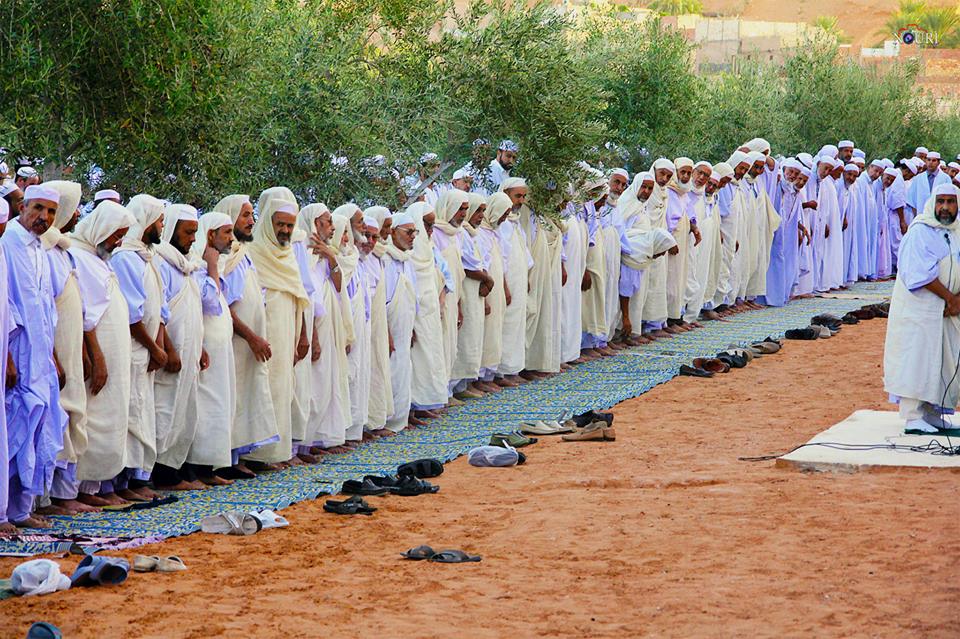
As long as one goes to the Masjid and performs their prayers there seems to be a great deal of unity among those who call themselves: Ahl Al-Sunnah And Al-Jama’ah‘. This actually happens any where in Muslim majority countries. It happens in Mecca where the Sunni, Shi’i and Ibadi all pray together, behind one Imam.
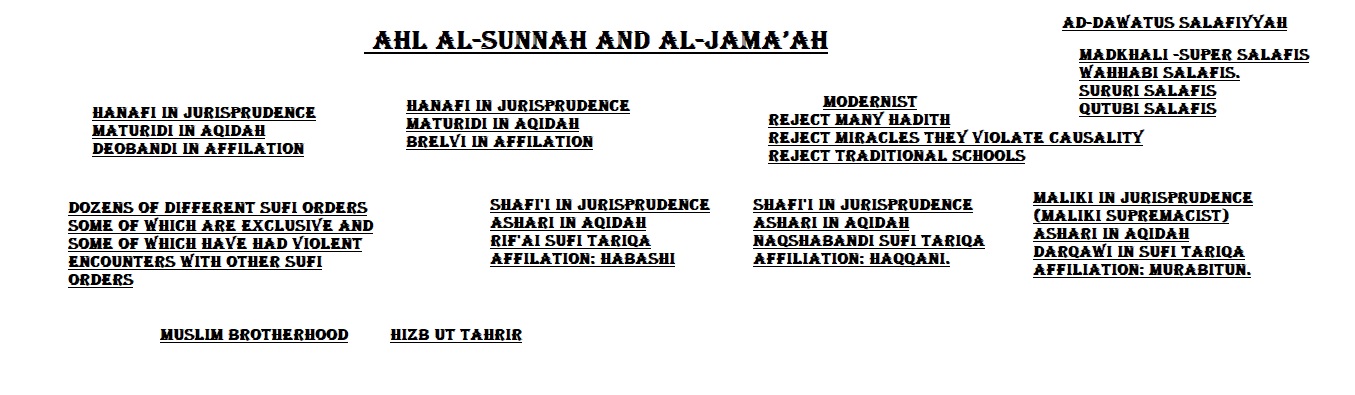
However, the secret to maintaining this outward unity is simply this: Be very very careful what you talk about. Because depending upon the topic, jurisprudence, theology, history, science, politics things could turn quite volatile.

The above image no where does justice to the very real divisions that exist among those who claim the title: Ahl Al-Sunnah And Al-Jama’ah‘.

It seems this ahadith about the ‘jamaat’ or the ‘group’ can easily be interpreted by any group of any given sect of Muslims at any point in history as a reference to themselves.

If Sunni Muslims believe that the majority is correct then the whole lot of them should follow the Hanafi school of jurisprudence. That is because around 60% of Sunni Muslims follow this particular school.

The Abbasids, Mughal and Ottoman empires adopted it and promulgated it. The followers of other schools of Sunni jurisprudence would have to be considered shameful to hold on to to the Hanbali, Maliki and Shafi’i schools of jurisprudence in light of what looks like the apparent favour of Allah (swt) given to the Hanafi school.

Conclusion:

The term or phrase: “Ahl Al-Sunnah Wal-Jama’ah” cannot be authentically attributed to the Blessed Messenger (saw).  This term is not in the Qur’an. This term is not from the Blessed Messenger (saw).

May Allah (swt) Guide the Ummah.

May Allah (swt) Forgive the Ummah.

Leave a comment

Filed under Uncategorized

Seeing Allah Collection of Articles.

“The faculties of seeing (tudriku) cannot grasp Him, and He grasp all–seeing (yudriku), He is the All-Subtle and All-Aware.” (Qur’an 6:103)

﷽ 

Dear Muslim Ummah.

This is a collection of articles on the issue of Seeing Allah (swt) in the hereafter. May Allah (swt) guide you to the path and way of the Muslims. May Allah (swt) guide you to the doctrine of transcendence. The way of the Qur’an and the Sunnah. Because this is the safest and secure road.

Among those who profess to be Sunni Muslims, you see such a division among them on this matter. One will claim that their lord has a shape and a form. The other side, realizing the problematic nature of such a position, will claim a sort of ‘beatific vision’. All sides come with their proofs and evidence.

Among them are those who say both believers and disbelievers will see Allah and others say seeing Allah is a reward exclusive to the believers.

For example: what form or shape did the disbelievers see Allah in?

https://sunnah.com/bukhari:7439

https://sunnah.com/bukhari:6573

https://sunnah.com/bukhari:4581

If there are levels in paradise and all believers see Allah (which would be the ultimate reward), what is the point of the various levels of paradise? 

This section will go to top of Prima-Qur’an under Theology al-ʿaqīdah. Any article related to this matter will be placed here for ease of navigation.

Explanation of “Those who do good will have the finest reward and more.” (Qur’an 10:26)

The Proper Understanding of Musa (as) Request of Seeing Allah.

Looking at their Lord? Looking at the so called proof text.

Shaykh Juma Al Mazrui commentary on the hadith: Seeing the Lord As you see the Moon.

Response to Dr. Hamza Bakri on distance not being necessary to see Allah

On Seeing Allah: The following article breaks down a video from a brother upon the Ashʿarī theology giving our critical analysis from the Ibadi perspective.

Imam Ash Shafi’i’s unfortunate statement likening belief in Allah to that which the Atheist demand.

The following section deals with a fringe group who call themselves ‘Salafi;: They claim that they are upon the belief of the early generation of Muslims. In reality they are those who have very eccentric and bizarre views.

According to Sahih Bukhari what Form/Shape of Allah did the disbelievers see? What Every Christian Should Ask Every Muslim. Christians believe that God took upon himself a form or a shape. The Salafi sect also believes that Allah took upon a form or a shape.

Preacher of the Salafi Sect in Dubai talks about Allah being 60 cubits tall.

Strong hadith evidence that prove contrary to the preacher’s claims.

The debate the Salafi do not want you to see. The Salafi sect vs the Muslims.

Salafi Shaykh, Muqbil Al Wadi’i turns weakens a Sahih hadith. Thus strengthening the claim of the Muslims.

Salafi teacher, Dr. Muhammad Salah lies about Allah (swt). Explaining the request of Moses (a.s) to see Allah (swt).

Irrefutable proof that the Salafi God is one that can take human form.

May Allah guide the Ummah!

May Allah forgive the Ummah!

Leave a comment

Filed under Uncategorized

Does the Qur’an state that the majority are believers and grateful?

They built for him as many temples as he wished, and figures, basins like cisterns, and caldrons fixed [in the ground]. ‘O House of David, observe thanksgiving, and few of My servants are grateful.’ (Qur’an 34:13)

﷽ 

Perhaps one of the more sobering reminders of the Qur’an is the fact that the believers are never described as being the vast majority or even the majority of people.

How or why you came to this blog is best known to Allah (swt). Perhaps you want to learn more about this particular school of Islam, or perhaps you just want to learn about Islam. You may even be a believer of some other faith and antagonistic to Islam. Yet, here you are.

To know that we are blind is itself a blessing. To be blind to our blindness is a calamity beyond measure.

“Indeed, your Lord is most knowing of who has strayed from His way, and He is most knowing of who is guided” (Qur’an 16:125)

A few are those who believe.

David] said, “He has certainly wronged you in demanding your ewe [in addition] to his ewes. And indeed, many associates oppress one another, except for those who believe and do righteous deeds – and few are they.” And David became certain that We had tried him, and he asked forgiveness of his Lord and fell down bowing [in prostration] and turned in repentance [to Allah]. (Qur’an 38:24)

And [recall] when We took the covenant from the Children of Israel, [enjoining upon them], “Do not worship except Allāh; and to parents do good and to relatives, orphans, and the needy. And speak to people good [words] and establish prayer and give zakāh.” Then you turned away, except a few of you, and you were refusing. (Qur’an 2:83)

When Saul marched forth with his army, he cautioned: “Allah will test you with a river. So whoever drinks ˹his fill˺ from it is not with me, and whoever does not taste it—except a sip from the hollow of his hands—is definitely with me.” They all drank ˹their fill˺ except for a few! When he and the ˹remaining˺ faithful with him crossed the river, they said, “Now we are no match for Goliath and his warriors.” But those ˹believers˺ who were certain they would meet Allah reasoned, “How many times has a small force vanquished a mighty army by the Will of Allah! And Allah is ˹always˺ with the steadfast.” (Qur’an 2:249)

Until, when Our command came and the oven overflowed1, We said, “Carry in it, of each kind, a male and female couple , and your family—except those against whom the sentence has already been passed—and those who have attained faith.” But none attained faith with him except a few. (Qur’an 11:40)

And [We cursed them] for their breaking of the covenant and their disbelief in the signs of Allah and their killing of the prophets without right and their saying, “Our hearts are wrapped”. Rather, Allah has sealed them because of their disbelief, so they believe not, except for a few. (Qur’an 4:155)

Most are ungrateful. Most are defiantly disobedient. Most are liars. Most of them do not know, are ignorant and do not believe.

Or ˹because˺ they say, “He is insane?” In fact, he has come to them with the truth, but most of them are resentful of the truth: (Qur’an 23:70)

You are the best nation produced [as an example] for mankind. You enjoin what is right and forbid what is wrong and believe in Allah. If only the People of the Scripture had believed, it would have been better for them. Among them are believers, but most of them are defiantly disobedient.  (Qur’an 3:110)

Have you ˹O Prophet˺ not seen those who fled their homes in the thousands for fear of death? Allah said to them, “Die!” then He gave them life. Surely Allah is ever Bountiful to humanity, but most people are ungrateful. (Qur’an 2:243)

They listen eagerly, but most of them are liars.(Qur’an 26:223)

And if you ask them who sends down rain from the sky, giving life to the earth after its death, they will surely say, “Allah!” Say, “Praise be to Allah!” In fact, most of them do not understand. (Qur’an 29:63)

Is it not that whenever they make a covenant, a group of them throws it away? In fact, most of them do not believe.” (Qur’an 2:100)

But verily thy Lord is full of grace to mankind: Yet most of them are ungrateful(Qur’an 27:73)

And We have not sent you except comprehensively to mankind as a bringer of good tidings and a warner. But most of the people do not know (Qur’an 34:28)

And even if We had sent down to them the angels [with the message] and the dead spoke to them [of it] and We gathered together every [created] thing in front of them, they would not believe unless Allah should will. But most of them, [of that], are ignorant. (Qur’an 6:111)

“Surely in this is a sign. Yet most of them would not believe.” (Qur’an 26:8)

And most of them believe not in Allah except that they attribute partners (unto Him). (Qur’an 12:106)

Do not be deceived by this life. Allah (swt) never in the Qur’an states that the majority believed or that the majority are grateful. The opposite is true. The believers are few. The grateful are few. May each and everyone of us die as grateful believers. In a state of Islam.

May Allah (swt) Forgive the Ummah.

May Allah (swt) Guide the Ummah.

2 Comments

Filed under Uncategorized

Ramadan Day 24

“The Night of Glory is better than a thousand months.” (Qur’an 97:3)

﷽ 

Ramadan Day 24: Getting distracted by shopping for Post-Ramadan to pull you from Laylat Ul Qadr

24th of Ramadan
——————————–
*Heart Illness: Anger*
Anger is from the things that corrupt the heart and the soul, it pushes the person out of the circle of balance and mildness.

Anger in its natural form is good, like the anger when seeing evil, or seeing the sanctities being violated.

When The Blessed Prophet (saw) was asked for advice he said: (do not get angry).

Narrated Abu Huraira:

A man said to the Prophet (saw) , “Advise me! “The Prophet (saw) said, “Do not become angry.” The man asked (the same) again and again, and the Prophet (saw) said in each case, “Do not become angry.”

Source: (https://sunnah.com/bukhari:6116)

If someone gets angry, then Islam gave some solutions to this problem, the most important steps are:
To think about the rewards of holding back anger, Allah says:

“Be gracious, enjoin what is right, and turn away from those who act ignorantly.” (Qur’an 7:199)

To mention the name of Allah so that no evil comes out of him, which would cause the anger of Allah

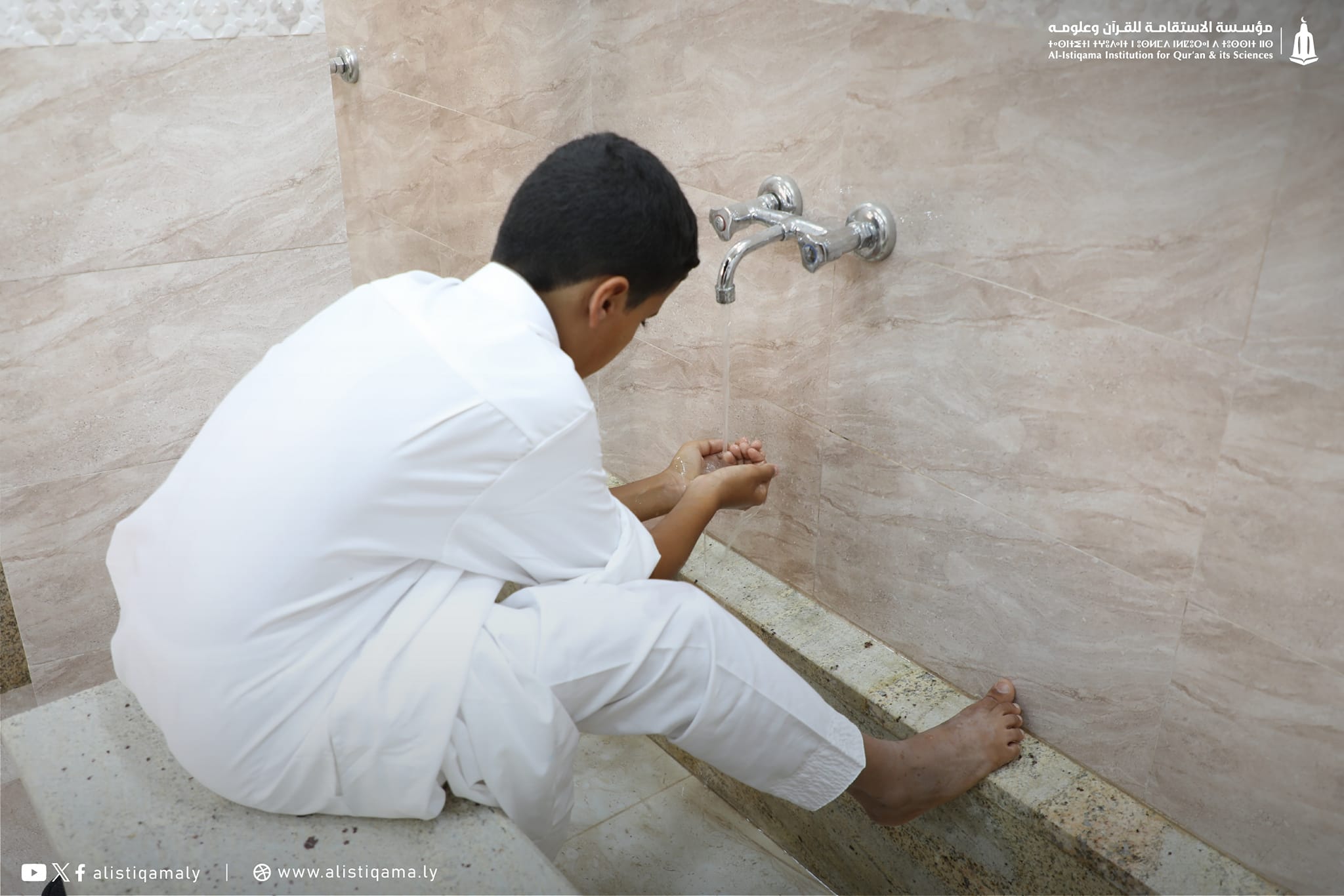
To seek refuge from the devil when he gets angry, and it’s preferred to sit if he was standing, and to lay down if he was sitting, after that to perform Wudu’ if that doesn’t help.

*The Amulet of the Religion*
The amulet here is the protection or the cause of safety.

It’s by allying with the righteous(walayah), dissociating the sinners(Bara’ah) and to remain ambivalent from those you are unsure of (Wuquf).

This is the protection by strengthening the links between the righteous, by advising each other and helping each other, so Walayah is like a spiritual bond between believers, until the believer dislikes for his brother what his dislikes for himself, and to have his best interest like he wants his best interest, and that is why the prominent feature of believers in Walayah is enjoining good and forbidding evil, as Allah said:

“The believing men and believing women are allies of one another. They enjoin what is right and forbid what is wrong and establish prayer and give zakāh and obey Allāh and His Messenger. Those – Allāh will have mercy upon them. Indeed, Allāh is Exalted in Might and Wise.” (Qur’an 9:71)

The way this protection works is:
For the believers: They find a safe zone to return to. A place of comfort where they are helped to do good and discouraged from doing evil. They are assisted in the matters of this life and the hereafter.
For the sinners: They feel like an outcast in the believers community and that the earth has closed in on them. So they would have to either have some self accountability and return to the truth or they would have to find a more fitting environment for them, and in both cases the community would be safe from their evil.

To learn more about Walayah & Bara’ah (a very important teaching in Islam) kindly see the following:

*Prayer Invalidation*
There are some things -you should- that invalidate the prayer.

They are either related to the psychological state: or related to actions.

Psychological state:
Apostasy
If the intention is cut or changed
Hypocrisy
Loss of mind
Intentionally thinking of things outside the prayer

In relation to actions like:
To leave a pillar of the prayer
To repeat a pillar
Playing around, eating or drinking
Talking

May Allah Guide the Ummah.

May Allah Forgive the Ummah.

Leave a comment

Filed under Uncategorized

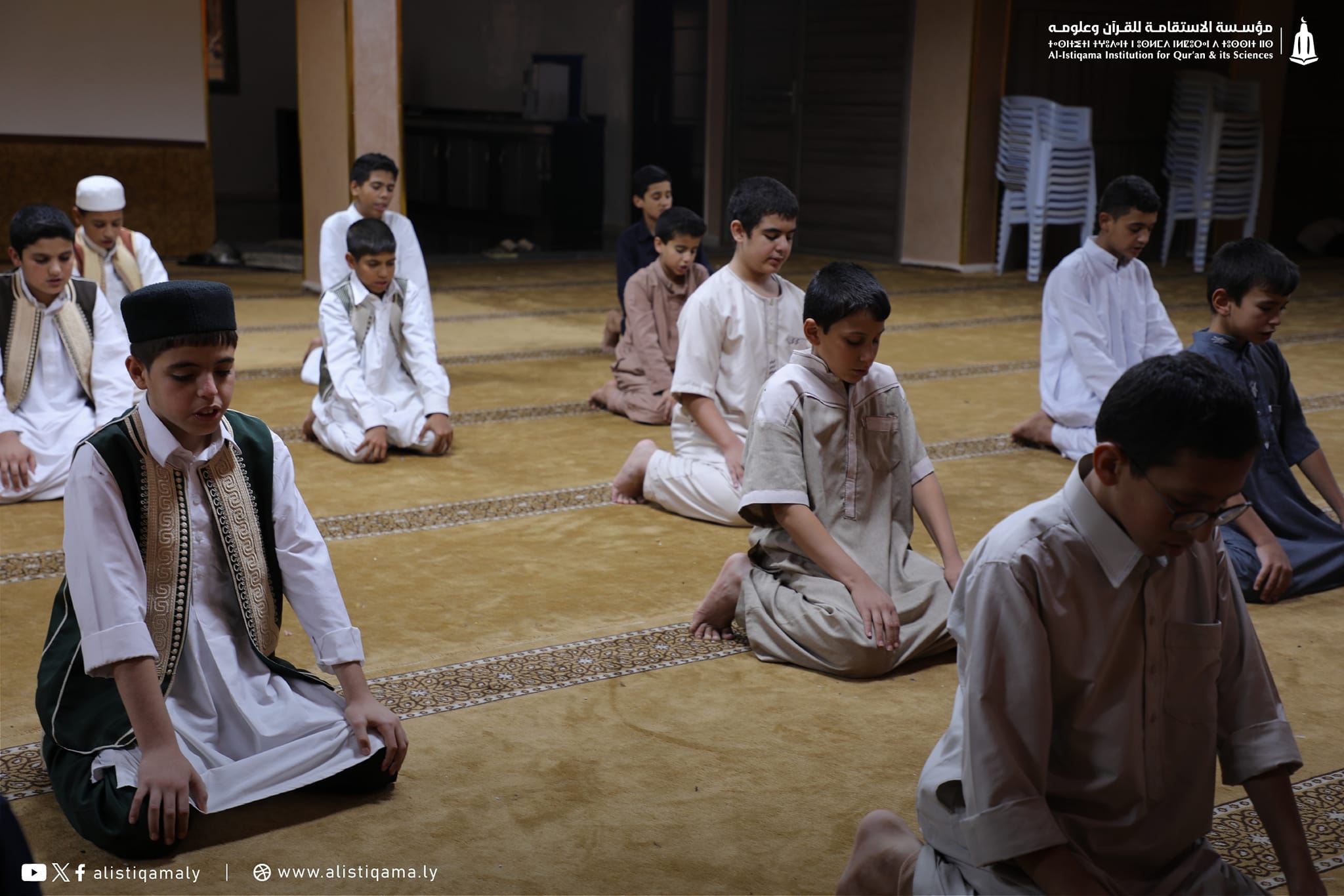
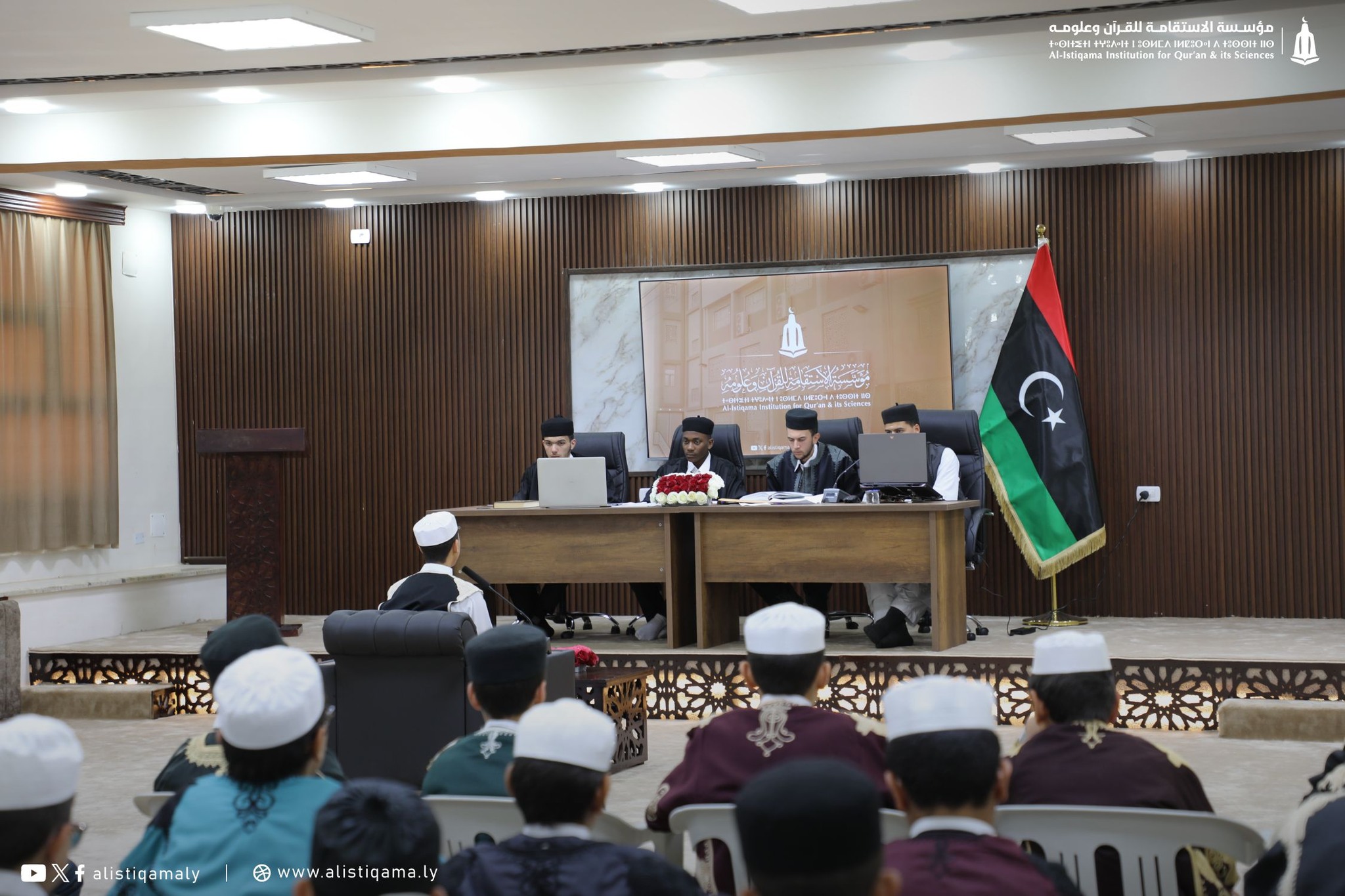
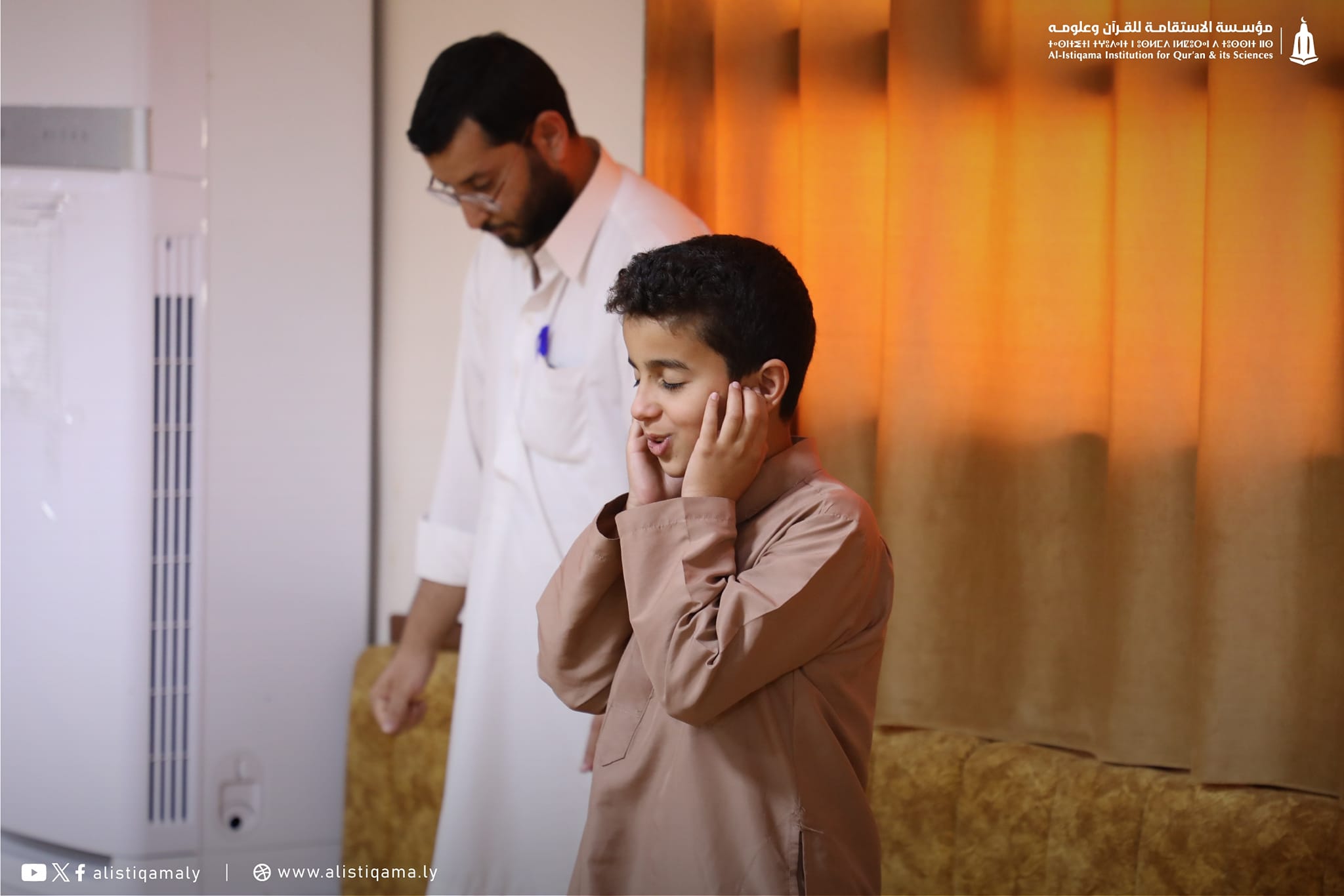
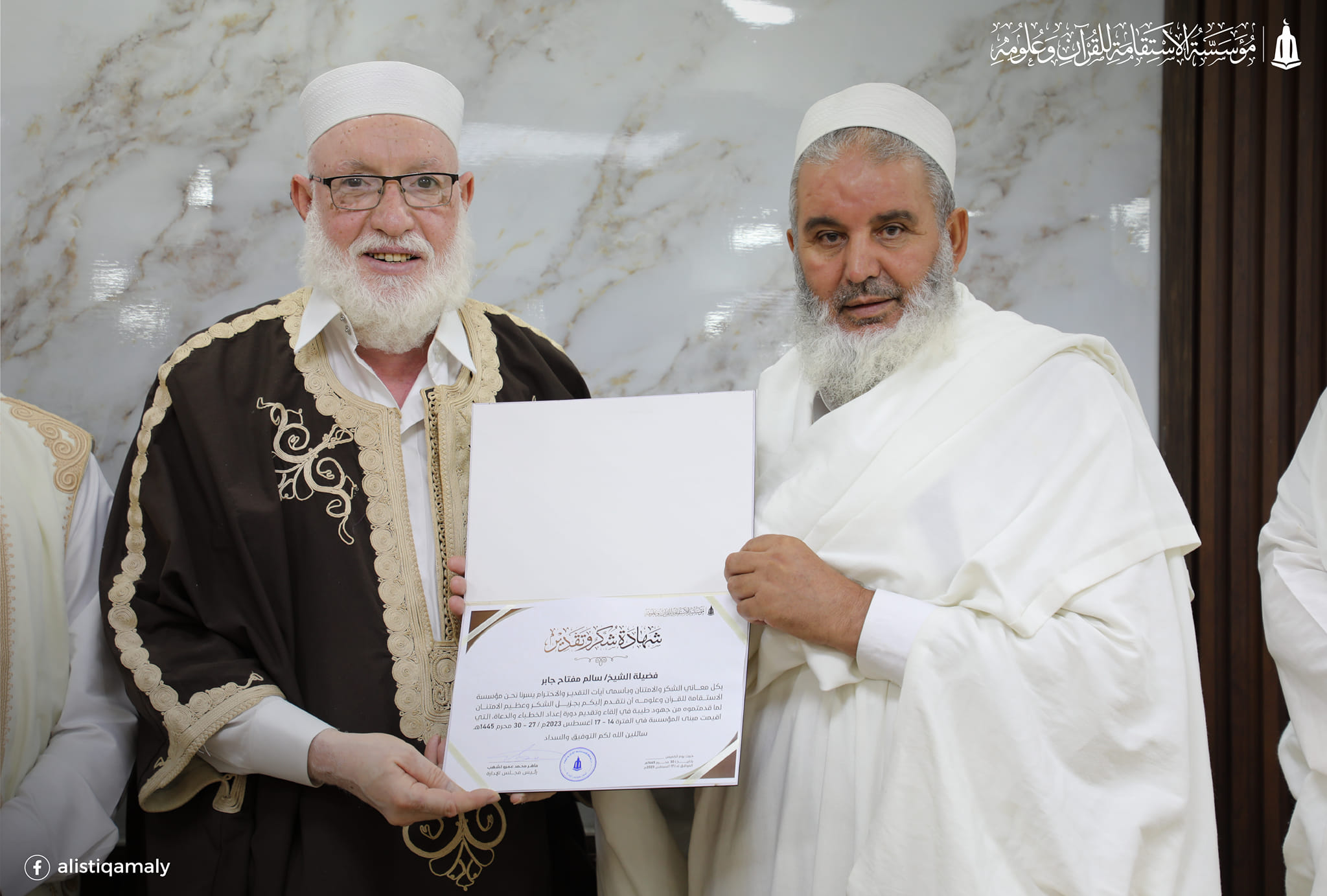
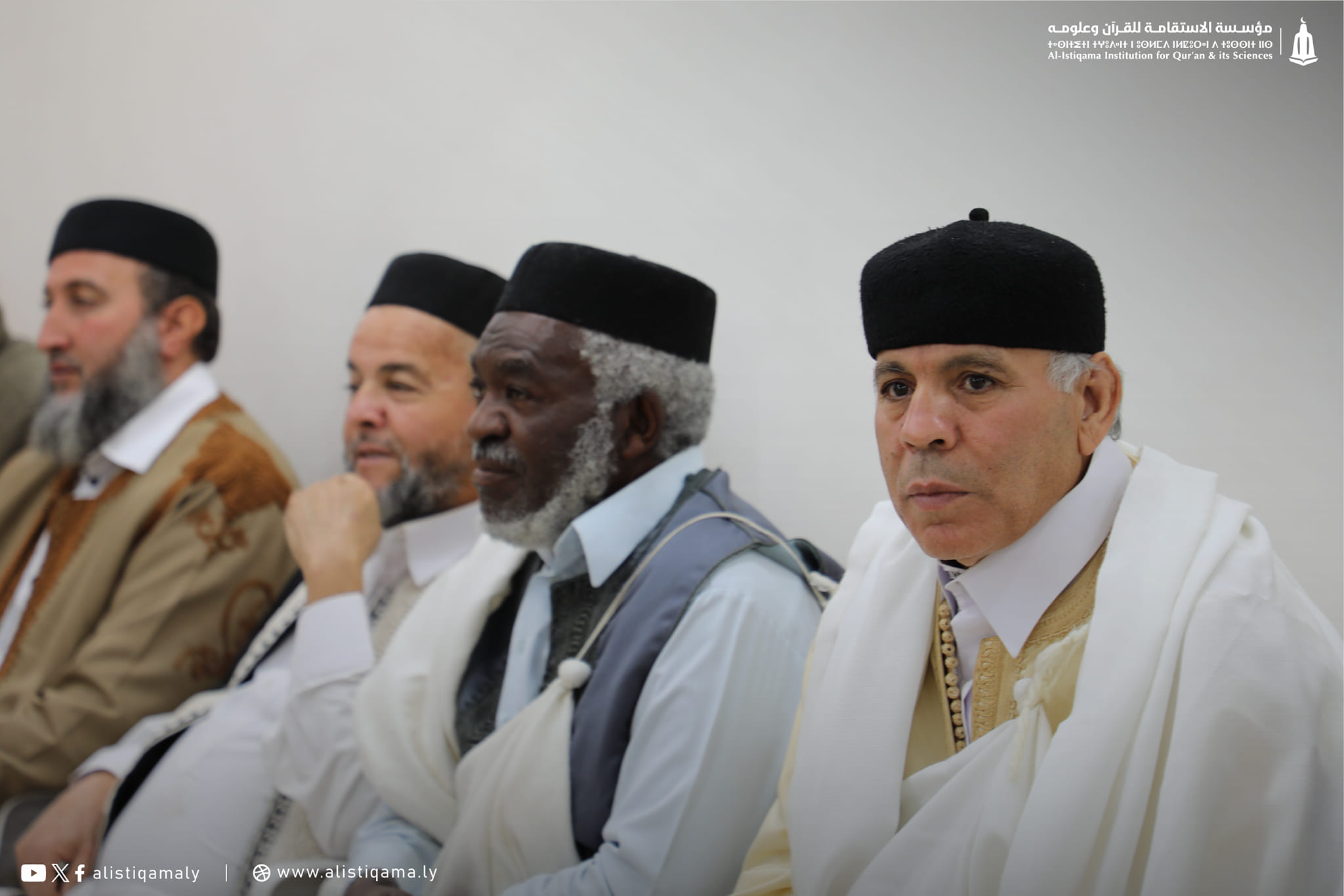
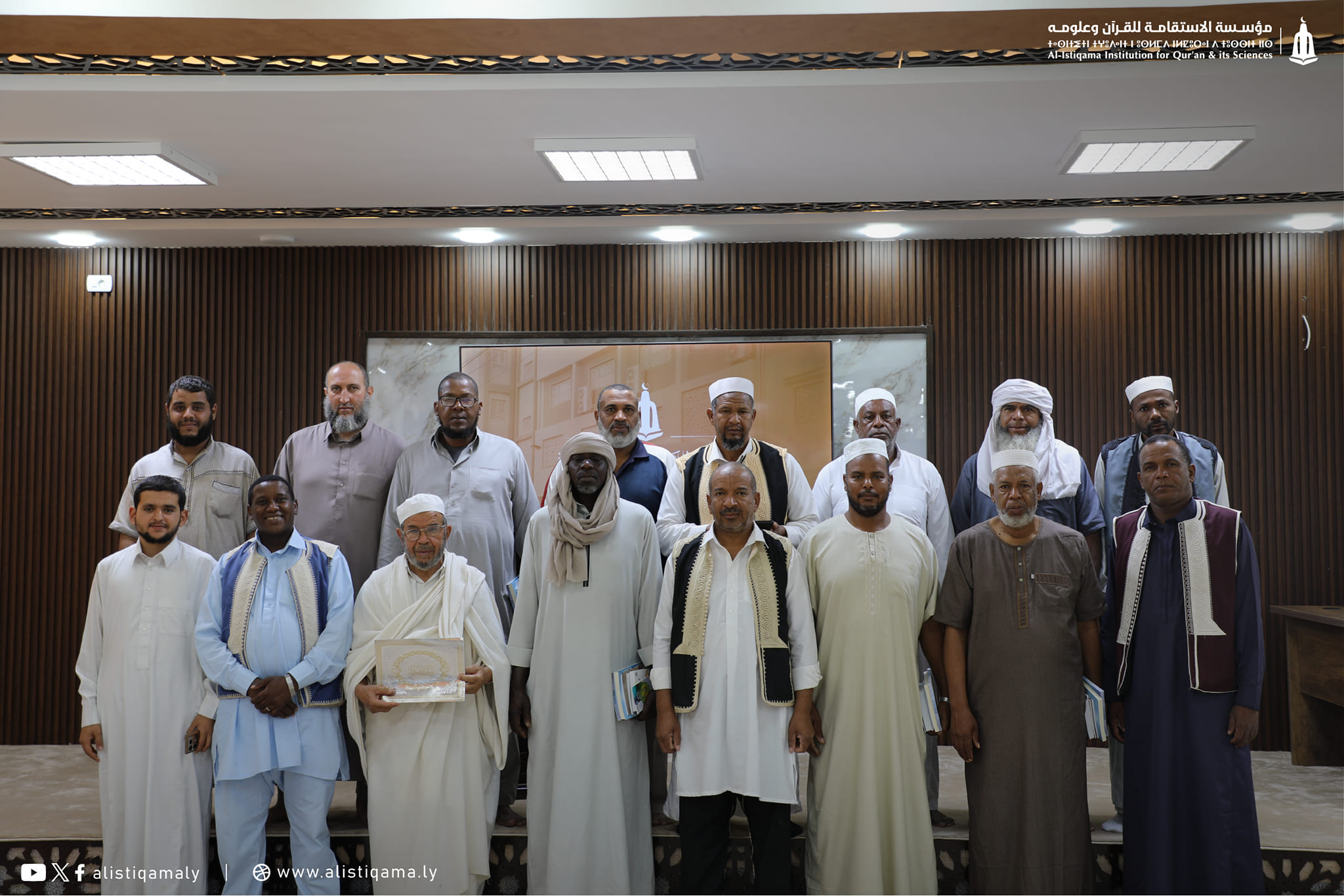
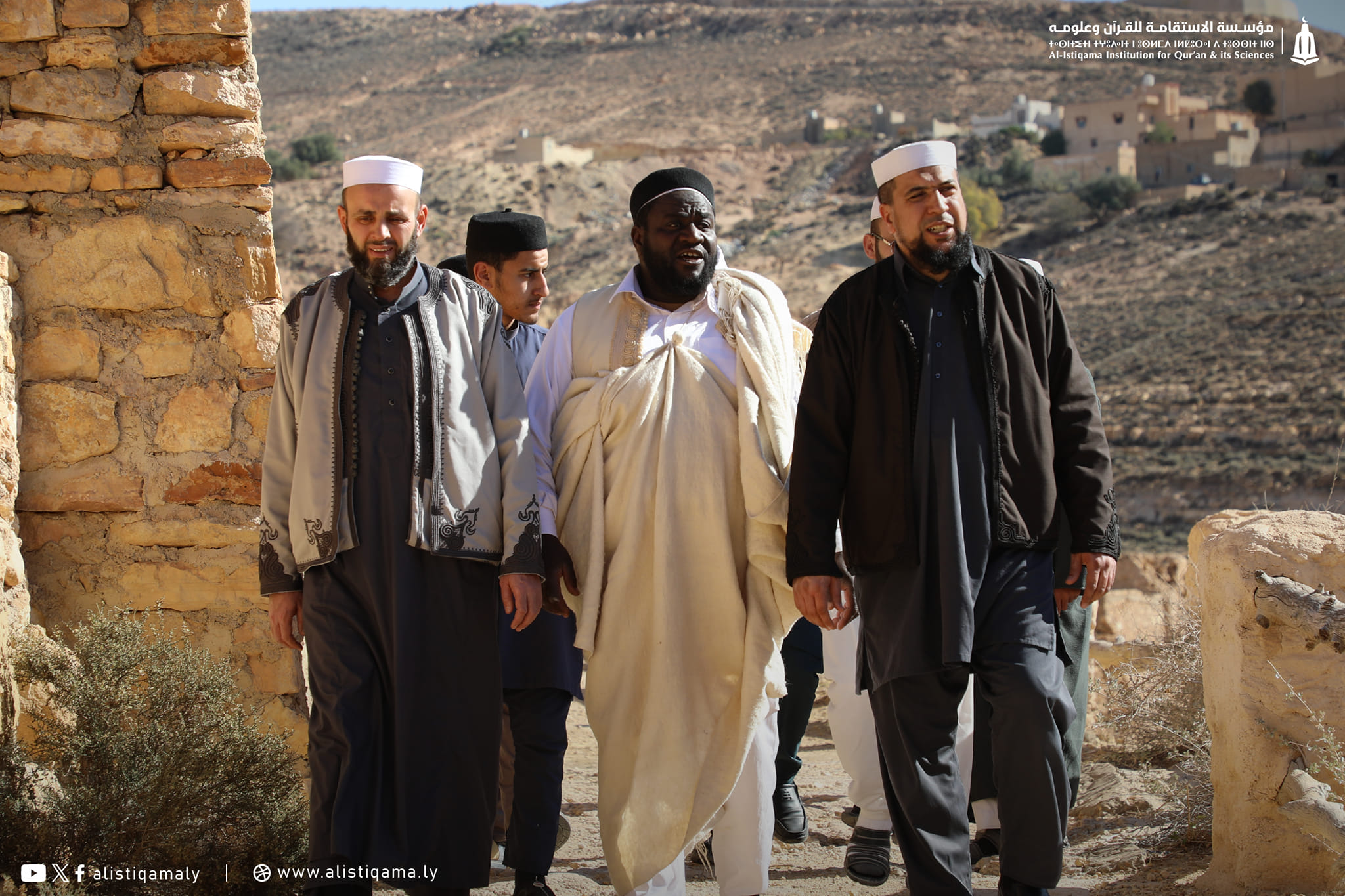
Al-Istiqama Institution for Qur’an & Its Sciences in Libya

“My Lord, increase me in knowledge.” (Qur’an 20:114)

﷽ 

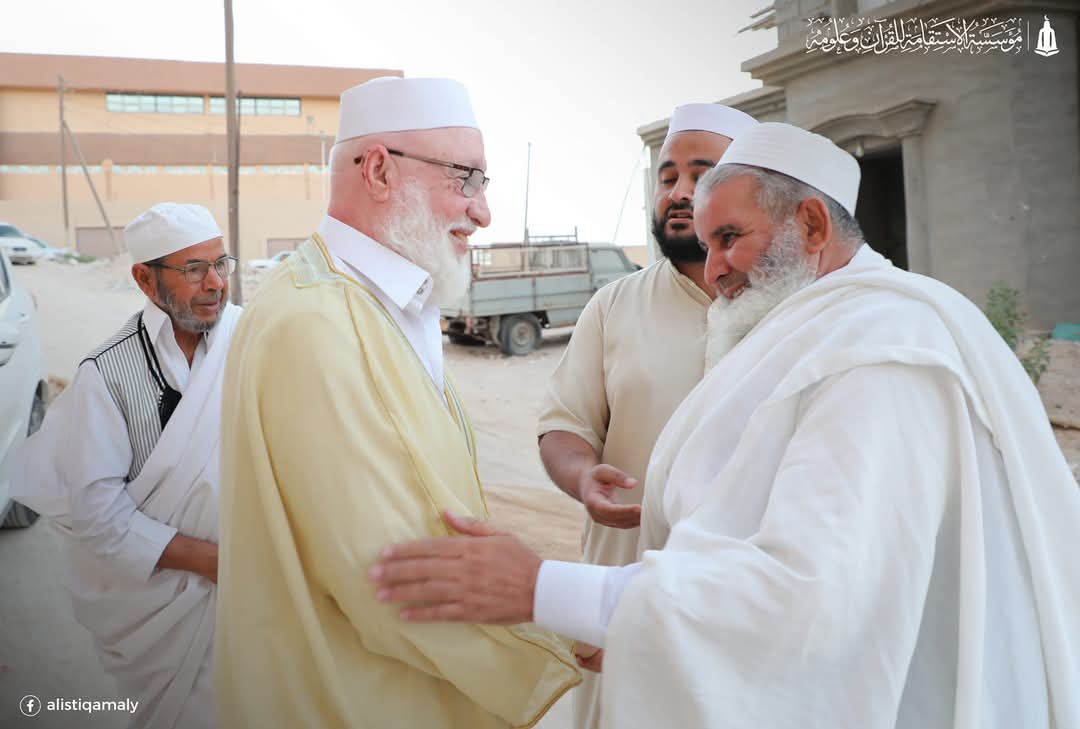
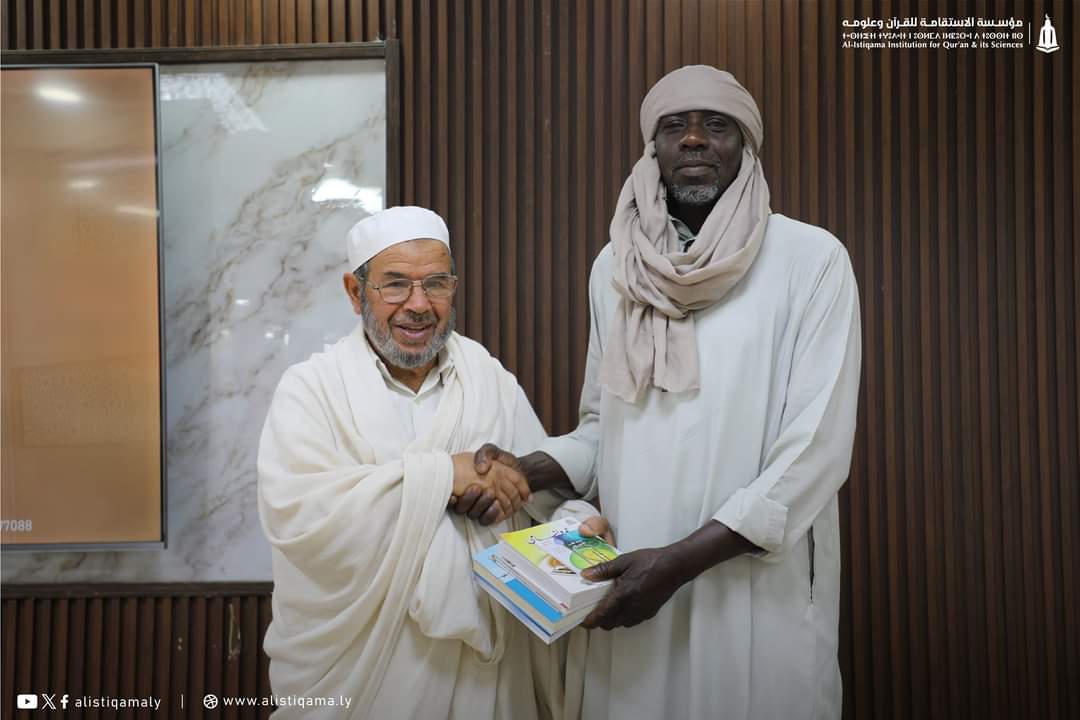
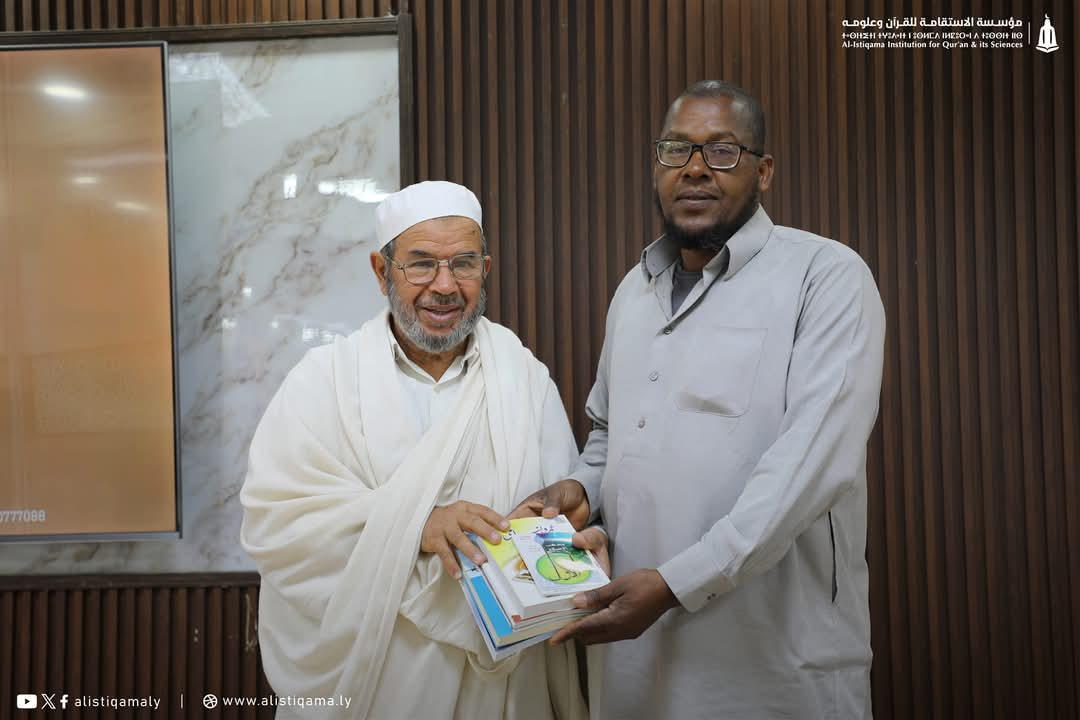
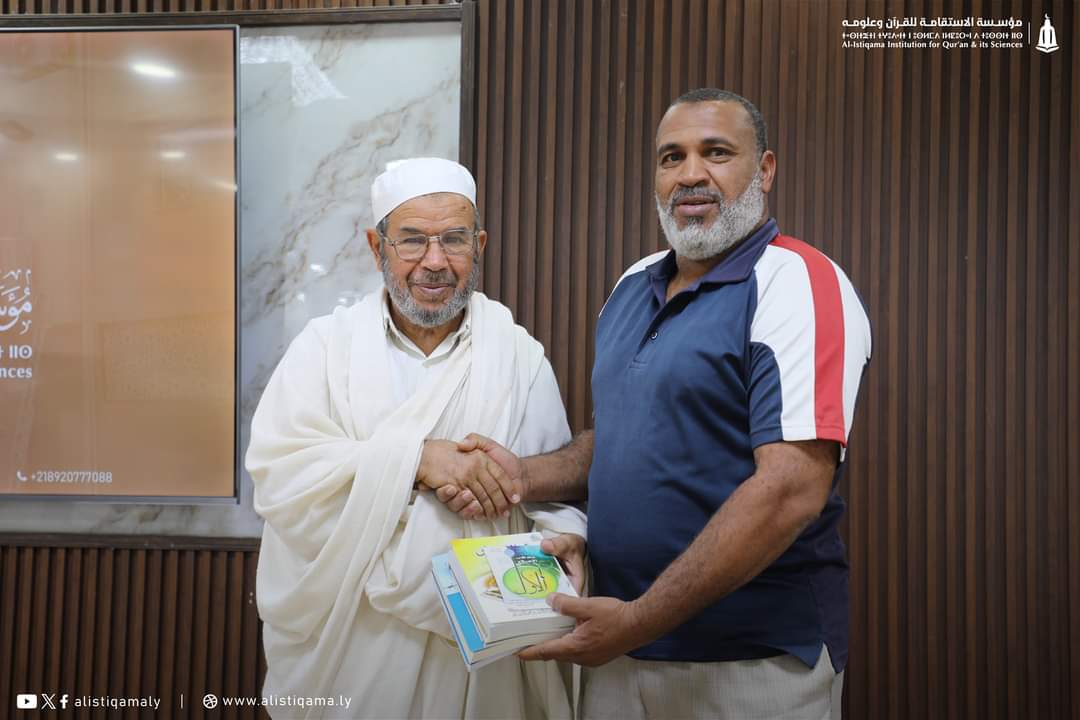
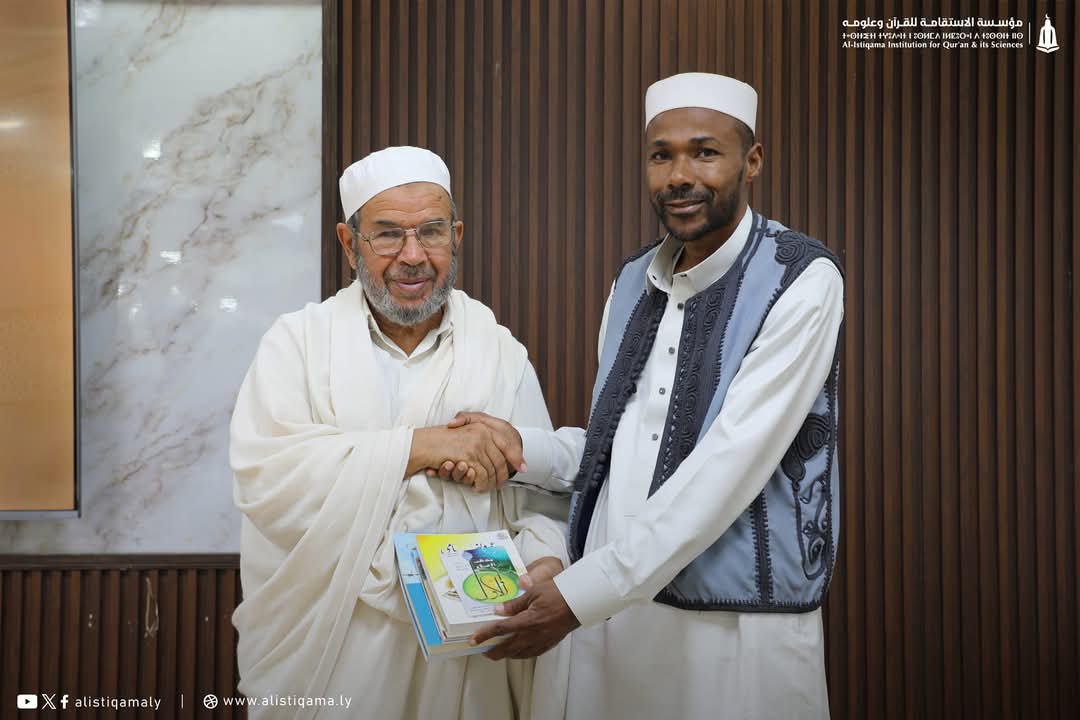
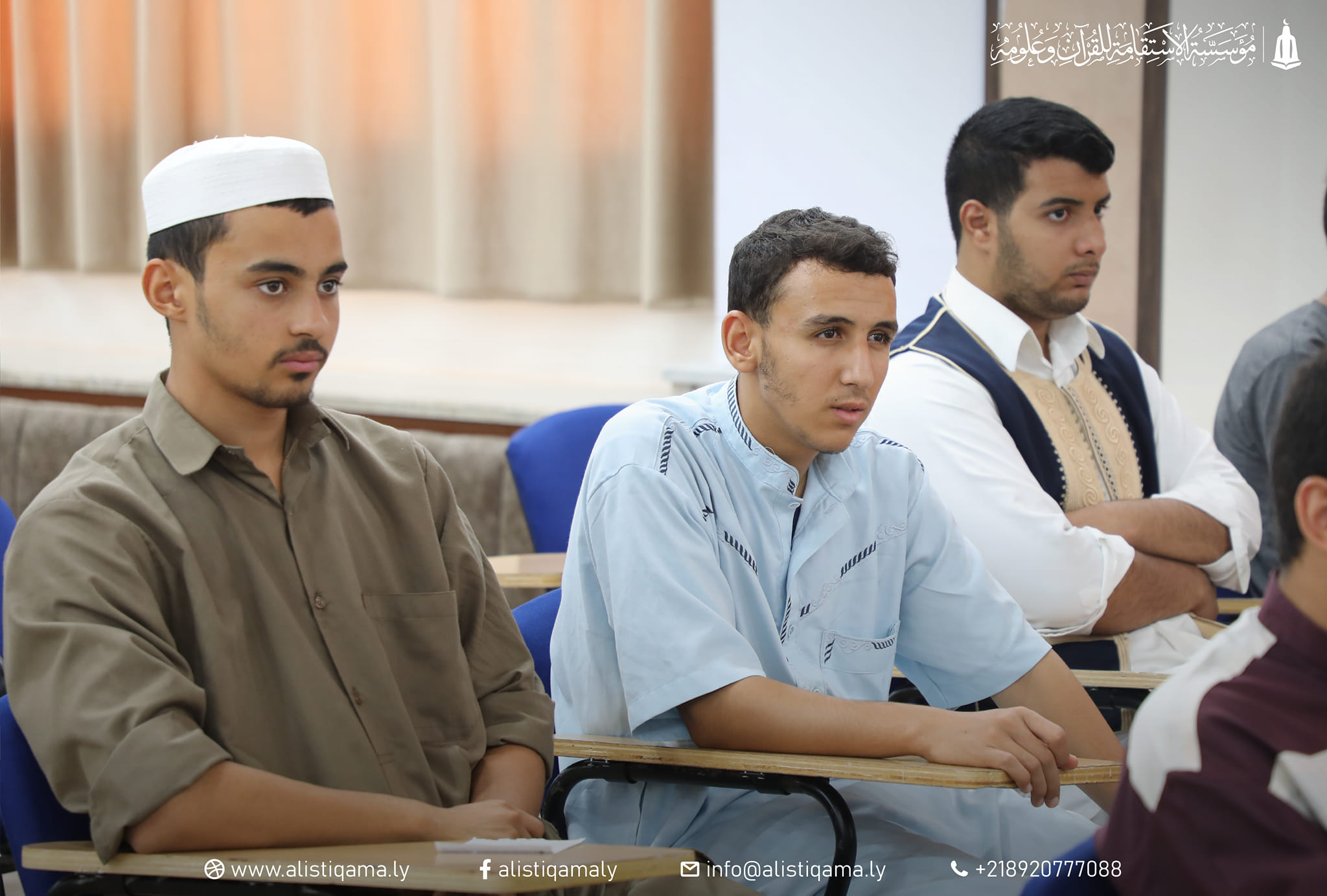
This post is to congratulate the graduates of the Istiqama community in Libya and to ask for Allah (swt) to continue to send his blessings down upon the people of Nafusa for their warmth, hospitality and continued guidance and beacon of light for the Ummah.

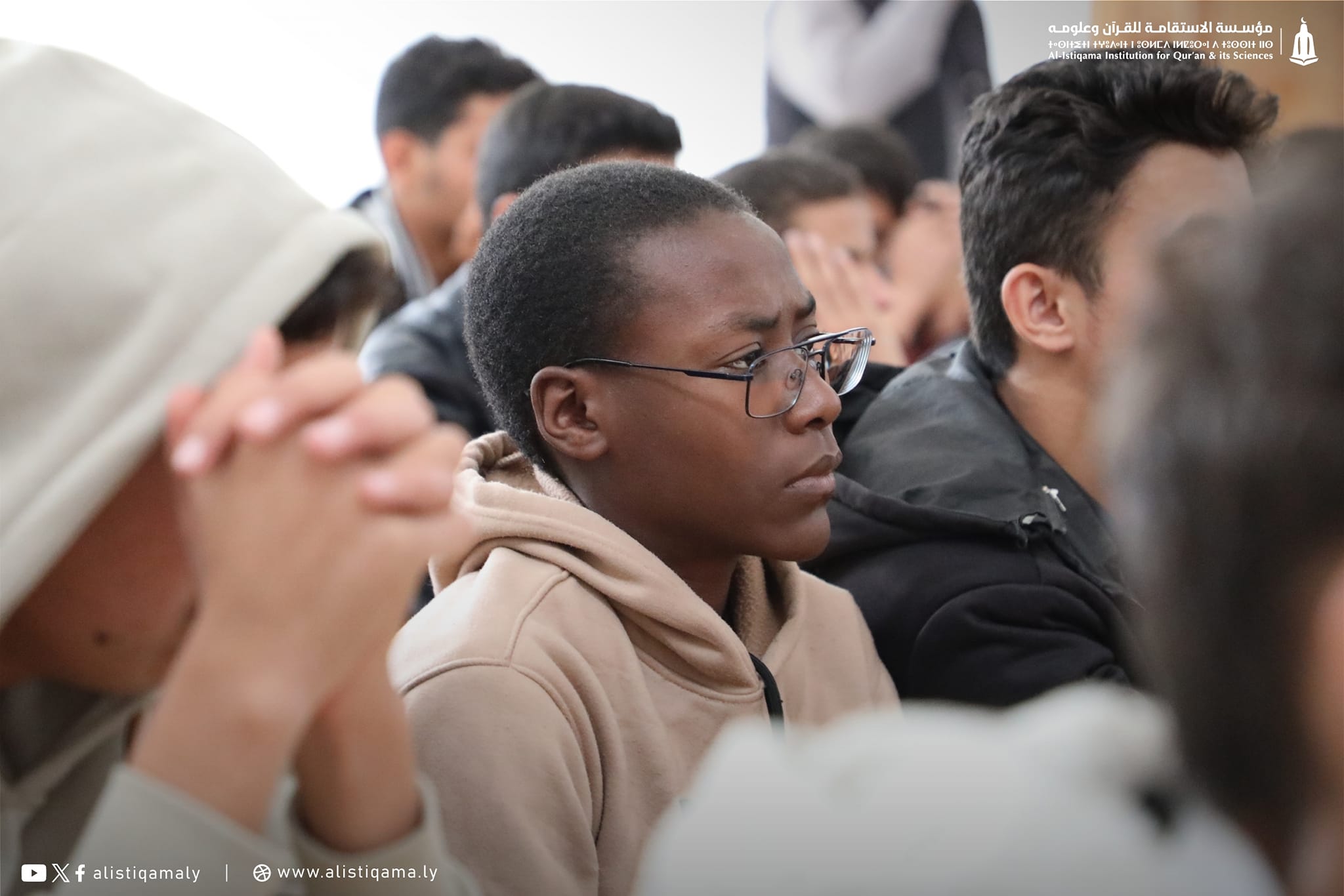
Those brothers who came from different regions and countries in the region to dedicate themselves to this path and to the deen of Allah (swt). May Allah (swt) bless them!

Brothers from all over the great continent of Africa, from Libya, Tunisia, Sudan, Chad, Burkina Faso, Mali, Egypt, Algeria, Ghana they come to learn and pass on what they learn to those in their homelands.

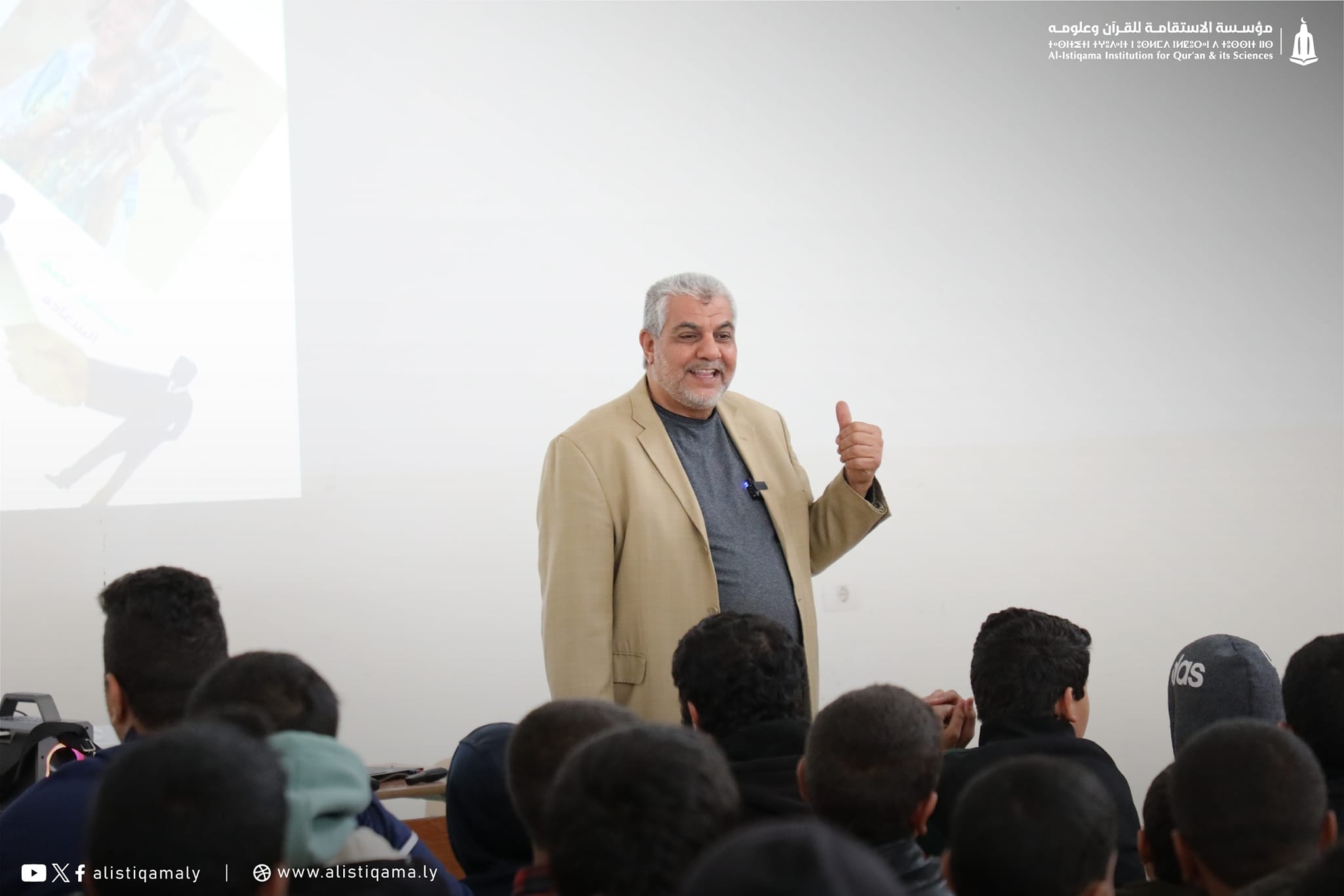
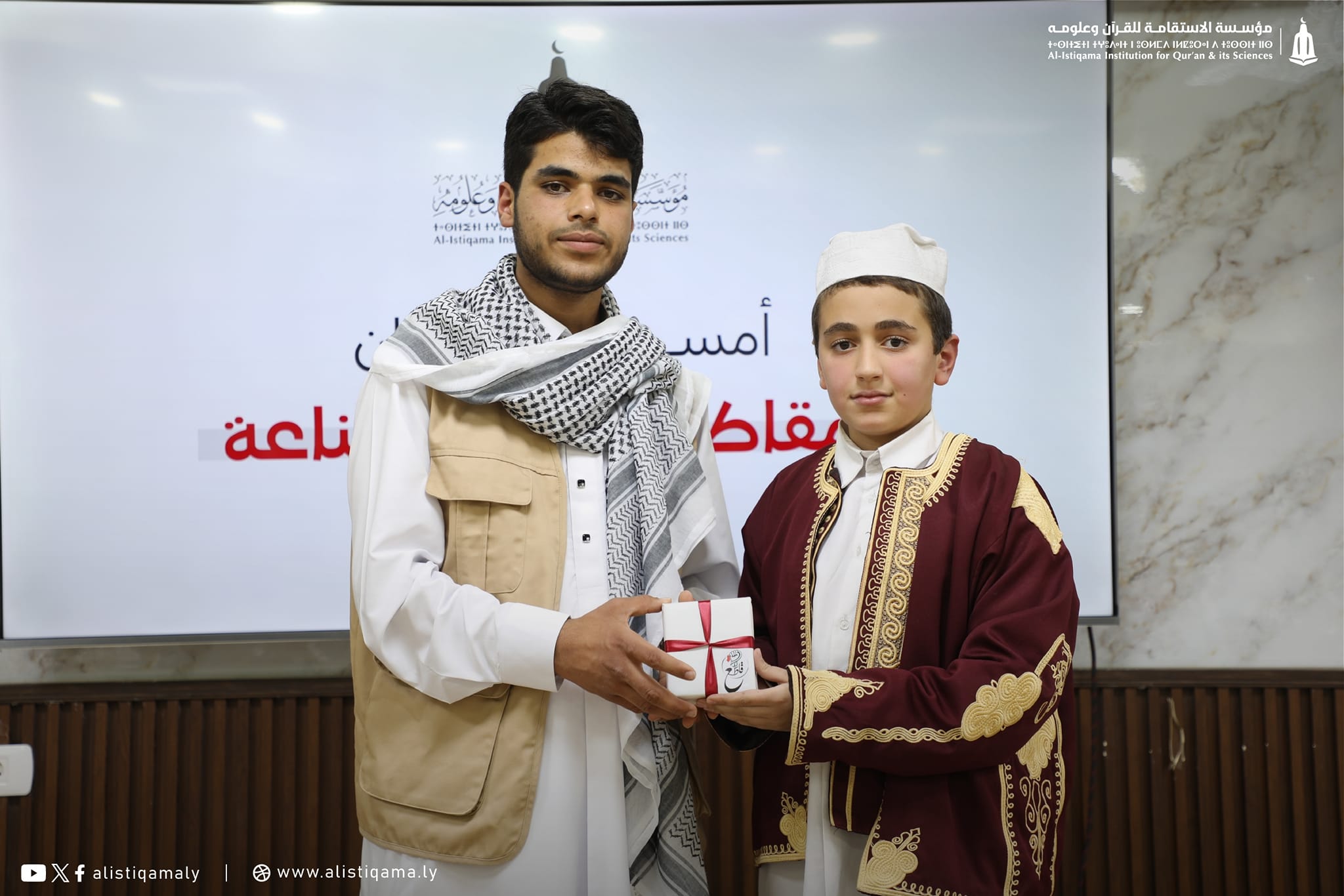
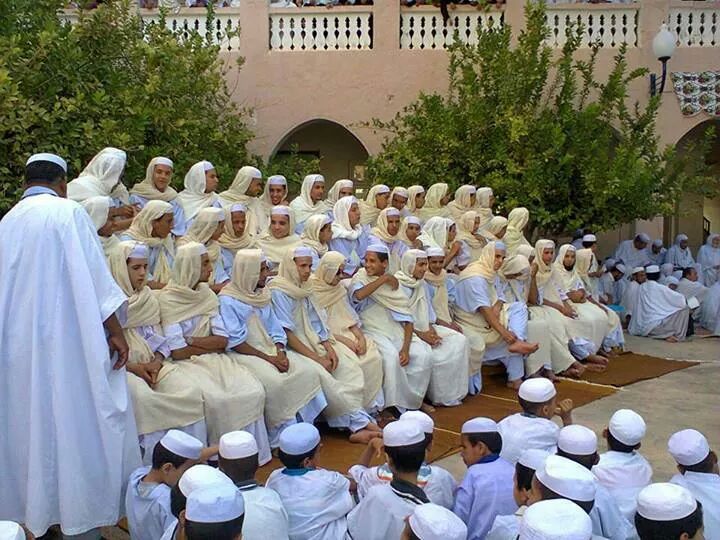
Children are often mentored by their peers, and helped along by children a few years older than them as a way of encouragement and to let those children see themselves in those who inspire them.

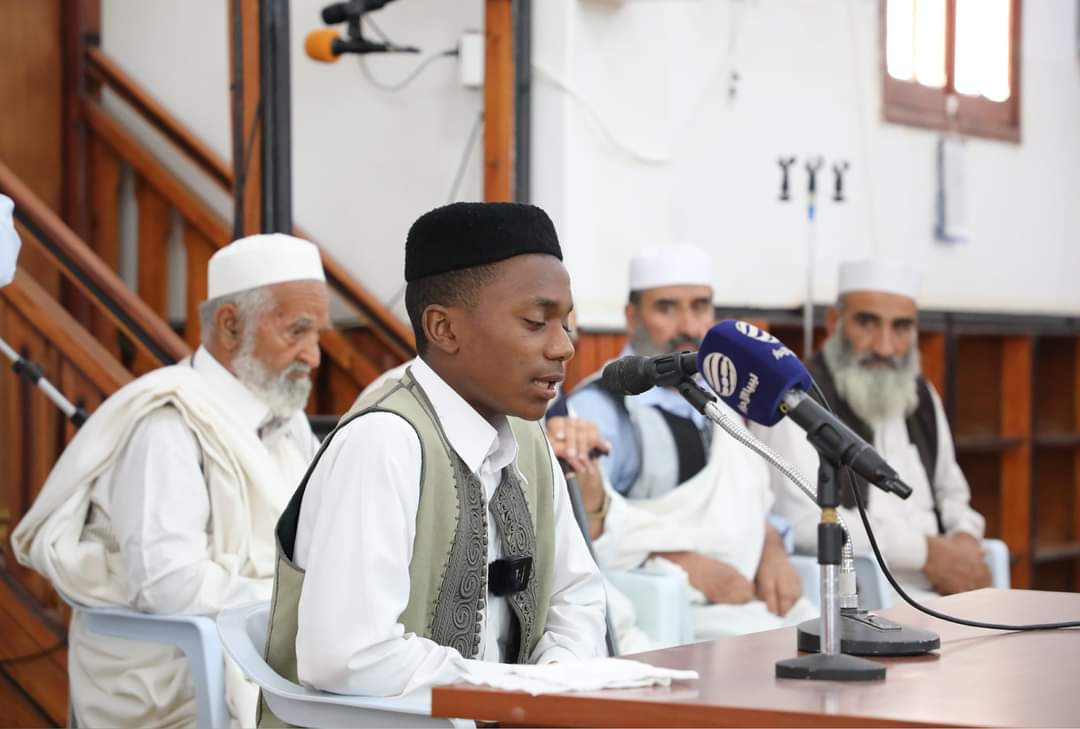
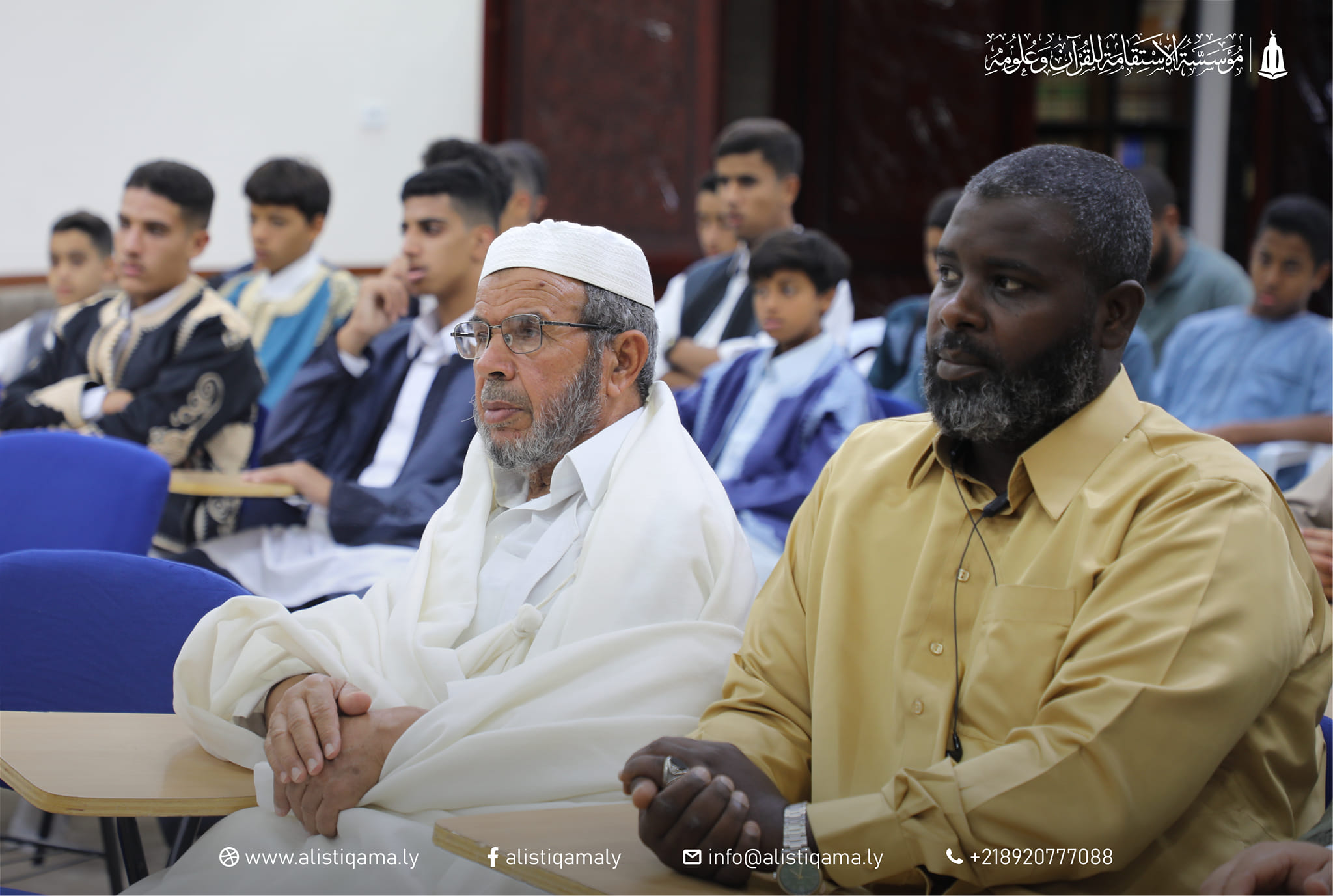
Youth attentively listen to lessons.

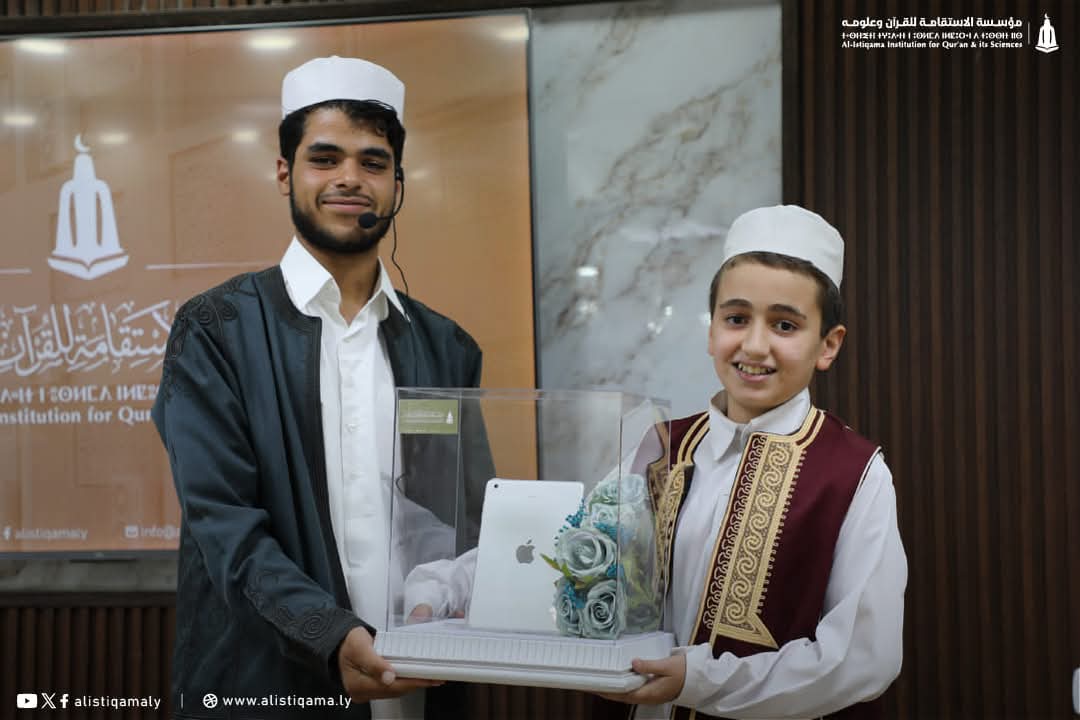
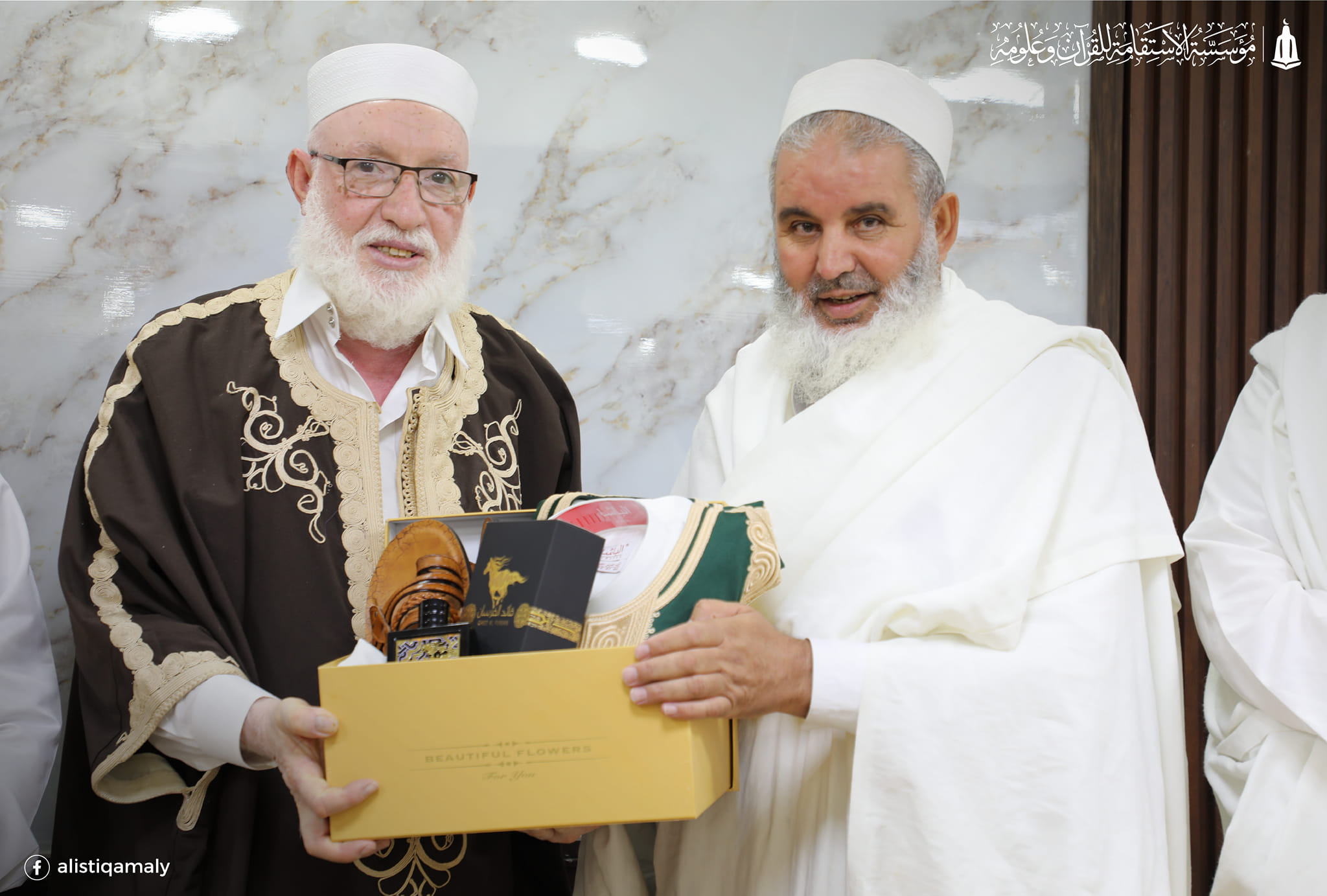
There are award ceremonies in which ijaza certificates are given by the Shyookh. The students are honoured with gifts and other accolades for being the future bearers of knowledge and light.

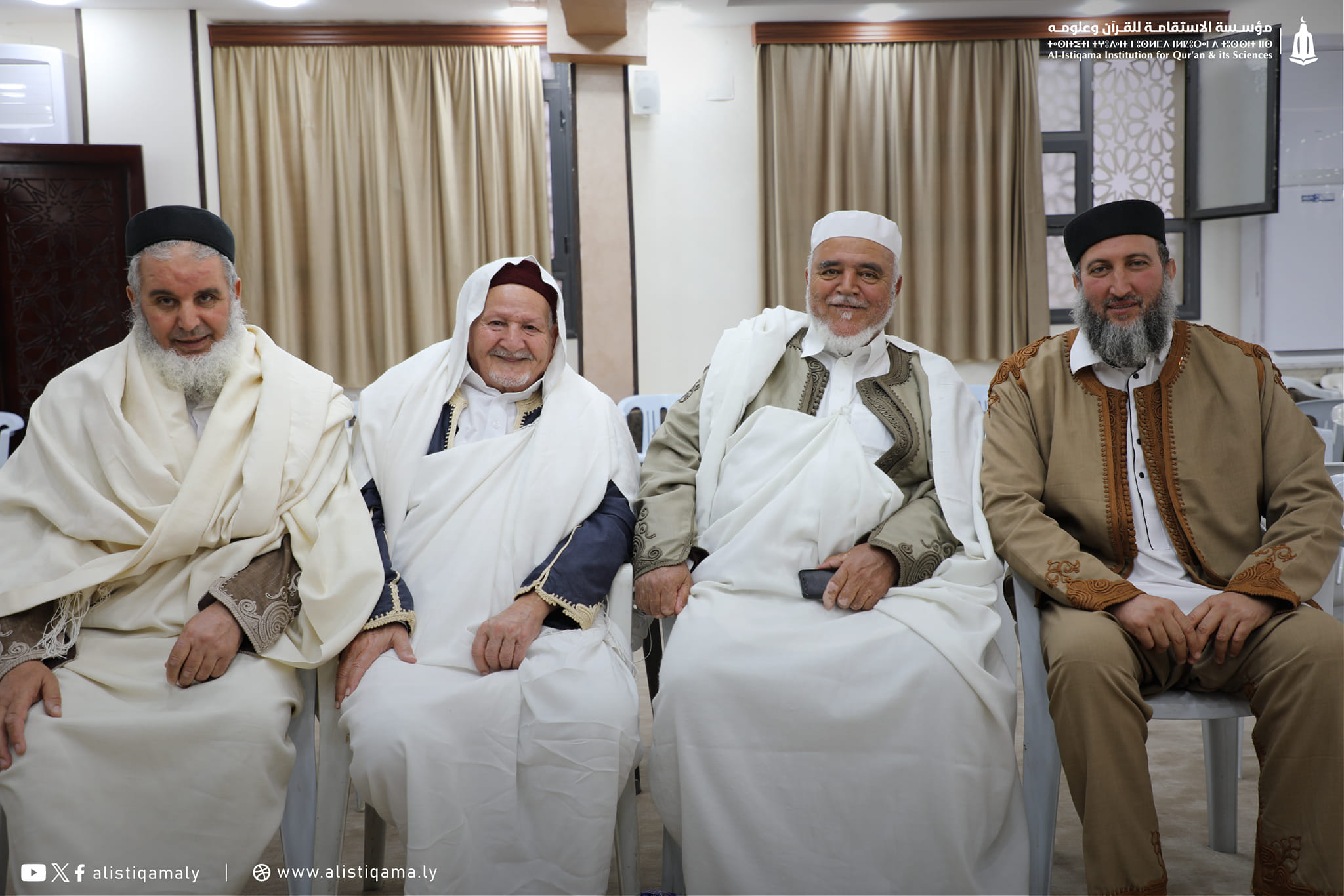
Time for brotherhood and being in the company of the people of knowledge.

May Allah (swt) continue to bless this school and bless its teachers and bless its students. May Allah (swt) grant them strong conviction and resolute faith. May Allah (swt) fortify them from all evil and may Allah (swt) continue to bless and assist them to be beacons of light for all of North, West Africa and beyond!

May Allah (swt) Guide the Ummah.

May Allah (swt) Forgive the Ummah.

Leave a comment

Filed under Uncategorized

Neither Shi‘a nor Sunni: An Interview with a Mozabite -Anthony T. Fiscella

“My Lord! Increase me in knowledge.” (Qur’an 20:114)

﷽ 

This was a short interview between the writer Anthony T. Fiscella and a friend from our brothers in the Mzab community of Algeria. (May Allah keep them steadfast and support them). Most notable was the semi-autonomy granted to the community and their self governing principles. Located in the Wilaya of Ghardaïa

Most of the brothers here are of Amazigh or Free-Men origins. 

Although most of the brothers in the region read and write Arabic, they speak the Zenata dialect of the Berber language, for which there is no written form.

Despite political changes in Algeria over the years, the community continues to peacefully resist interference in the affairs of their community and strive to preserve their unique religious and cultural identity.

They have a reputation of being honest and astute businessmen. They also continue to be productive farmers in the M’zab Valley, supplying the fresh produce needs for their own communities and for marketing elsewhere.

The beautiful M’zab Valley of Algeria was given UNESCO World Heritage Site status in 1982, as a superb example of a traditional human habitat that has been adapted to the environment. This is confirmation that although values in the rest.

In Ghardaïa, is said that there are no beggars and that no thieves exist. The people of this society is very tightly knit with such activities from business to studies and marriage all done through the community. They cling to the unique clothing, language, architecture, and lifestyle.

Wherever they are, They always have one foot in Ghardaïa. Whatever their social situation, they never sever their roots and actively contribute to the life of the community.

Ghardaïa was founded over 1,000 years ago to provide shelter for their community after the fall of the the Ibadi Rustamid state. The village, 500 kilometres south of Algiers, was founded in the middle of a rocky desert. Other towns from the era existing to this day include El Atteuf, Melika, Bounoura, and Beni Izguène.

It is said that their insular nature has preserved the area, and the Ibāḍī Σezzaba continue to dominate the social life of the area. A federal council, Majlis Ammi Said, unites representatives of the seven settlements as well as Ouargla, an ancient town located 200 km South-East of the Mzab valley. This council forms a federative body for religious, social and, increasingly, cultural matters. This religious federal council represents an “Islamic type of government” unique today.

Numerous details of Ibāḍiyya social life are ruled by this Islamic government, such as the weight of gold given as a dowry to a woman (maximum 60 grams) to the length of wedding celebrations (three days). The council makes decisions on details such as dowries, celebrations, dress. It used to impose punishments including exile, and a form of tabriyya “quarantine”, where the offender may not interact with his fellow citizens. I would imagine this is a time of dissociation or bara’ until the offender has repented and amended his/her ways.

May Allah (swt) continue to bless them. May Allah (swt) preserve them! May Allah (swt) bring stability and peace to Algeria. May they continue to be the light in the region for the good people of Algeria. Amin!

Leave a comment

Filed under Uncategorized

The Ibāḍī Traders of Bilād al-Sūdān -Jason van Riel

“O believers! Do not devour one another’s wealth illegally, but rather trade by mutual consent” (Qur’an 4:29)

﷽ 

It has been narrated by Sa’d b. Abu Waqqas that the Messenger of Allah (saw) said:

The people of (Al Gharb) the West will continue to triumphantly follow the truth until the Hour is established.

Source: (https://sunnah.com/muslim:1925)

This remains true as the people M’zab valley Algeria, Nafusa Mountains in Libya, Djerba Tunisia, have remained steadfast upon the Haqq. As well as the revival of the Qur’an and Sunnah via the Ibadi school among the Hausa, Tuareg, and Fulani peoples. Al hamdulillah!

It is hard to imagine how this paper granted Jason Van Riel a Master’s thesis. I have said it before and I will say it again. Universities are basically just handing credentials to people.

I can’t imagine writing about another people’s history, culture and religion and writing with the type of smug dismissiveness and pretention that Orientalist and others often write with.

It is simply gross.

1st Jason van Riel rides on the tired coattails of the Ibadis being Khawarij and worse yet, a sect from among the Khawarij; and even bigger blunder rest assured.

We can see this in his thesis where he states:

He asserts:
“Ibāḍī Islam has its origins in the Khārijite sect that came into existence during the first fitna (37/657), the civil war…”

“although the Ibāḍīs were not Azraki they were still a Khārijite sub sect.”

“To ensure that Ibāḍī traders were not restricted in and around Sijilmasa, to the commercial and financial advantage of both the Rustamids and Midrārirds, the two ruling houses frequently intermarried with each other, even though they were of rival Khārijite sects.”

Calling groups of Muslims by the pejorative labels used by their opponents is anything but academic.

https://primaquran.com/2023/02/18/the-differences-between-ibadis-and-khawarij/

To support my position on why I believe universities almost feel obligated to confer credentials upon people because they paid their course fees will be readily seen. How on Earth does one read a paper like Jason Van Riel and not wonder what basis are his smug and dismissive comments made?

Here just some samples:

“Although it must be noted that only the Ibāḍī doctrine of “all-Muslim equality regardless of social or ethnic origin” was what the Berbers cared for, they had very little interest in any of the other aspects of Ibāḍīsm and Khārijism.”

For example if I am reading his paper I would press him. Van Riel on what basis did you draw this conclusion?

“The control and maintenance of these trade routes was an important source of income for these Berber tribes, either through the levying of tolls or through the blackmail of merchants travelling the roads under their control.”

Again you have to wonder where Van Riel has basis for this. Why would you need to blackmail travelers via trade routes that are mutually beneficial for all involved?

Does it not occur that if trade routes are the subject of blackmail they become troublesome?

“And even though the Arab chroniclers would want to have the their readers believe that the local rulers of Bilād al-Sūdān were Muslim (and converted in a most spectacular fashion) they were in most cases Muslim in name only.”

This is the type of comment that a non serious person would make. This is where if I were grading Van Riel’s paper I would ask him why does he need to muse on the intentions and sincerity of people’s conversion to Islam? If he said it was perhaps possible that some were not sincere that maybe possible.

However, to assert : “They were in most cases Muslim in name only.” It is really hard to see this as unacademic disdain.

However it is perfectly fine for orientalist and so called historians to “fill in the blanks” so to speak.

We read:

“One of the main concerns that this thesis faces is a lack of available sources, and this will be
explained – along with an elaboration of the available sources – in the next section. In my
opinion it is important for scholars to be creative when they face a lack of sources, as this does not entail that historical events did not occur
. In combination with this I also strongly believe in Karl Popper’s criterion of falsifiability whereby “only if I can say how my theory might be refuted, or falsified, can I claim that my theory has the character of an empirical theory.”

This is very cringe.

Then Van Riel also states:

“Even if these sources can be located, the families owning them are wary of outsiders digging through their, sometimes centuries old, papers for fear of “secrets” being divulged.

He doesn’t care to elaborate what these “secrets” might be. Just another off the cuff comment that strikes one as truly bizarre. In fact, this would have been a perfect opportunity for Van Riel to make another smug remark about other cultures by saying something along the lines of:

“Given the poverty that many people face in these countries, historians should seize the opportunity as locals would only be too willing to hand over parchments for a paltry sum!”

Surprised he didn’t!

Van Riel states:

The main problem with Lewicki’s work is that his articles tend to focus on a single category and, more importantly, Lewicki is considered to have approached Ibāḍī documents uncritically. Or as E. Savage puts it: “Curiously, Lewicki never takes up the theme of the historiographic context of his Ibāḍī sources but appears to have accepted them a priori as historical.”

Huh?! The treachery of it all! Imagine! Allowing a people to present their own history and narrative!

The orientalist must always approach and other the ‘other’ as being dishonest, having a motive and or an agenda. Did it not occur to Van Riel that even Ibadi opponents acknowledge our honesty and transparency.

Kitman is one thing when needed. Yet, lying is a major sin. We do not play with fire!

So that is my critique. I did find the thesis informative over all.

These are some notable bits of information.

“Even though Ibāḍī merchants were not the first Muslims to reach Bilād al-Sūdān, they did end up staying to ensure that the trans-Saharan trade became a constant source of gold and slaves for the north and salt and other general trade goods for the south.”

“It is generally believed that in pre-Almoravid times the majority of Muslim merchants in Bilād al-Sūdān, those who originated from the Maghreb, were Ibāḍī.”

According to Professor T. Lewicki’s research the Ibāḍī merchant-shayks where very active missionaries who tried to convert the pagan populace in Bilād al-Sūdān to Ibāḍīsm. And Lewicki continues by stating that these Ibāḍī merchant-shayks represented “the only form of Islam in West Africa, until the Almoravids brought their Sunni-Islam.”

The reason why it is generally accepted that the kings of Ghana were converted to Ibāḍī Islam was because of the combination of Ibāḍī architecture used for the Grand Mosque of Gao, the capital of Ghana, and because of the historically close ties between Gao and Tahert, since the 2nd/8th century, that still existed when the kings of Ghana converted to Islam.”

After the rulers of Ghana were defeated by the Almoravids and forced to convert to Sunni Islam (Malikite Islam), halfway through the 5th/11th century, Tādmekka became one of the many towns in the western part of Bilād al-Sūdān that was cleansed of all Ibāḍī influences

Because many prominent Ibāḍī ‘ulamā’ had left Basra for either Oman or the Maghreb, its Ibāḍī community went through a period of intellectual decline which ultimately meant that it lost its position as the most important center of theology and jurisprudence in the Ibāḍī world.”

“It was not long before Ibāḍī merchants could be found all the way from the Maghreb to India, and it is even alleged that Ibāḍī merchants were amongst the first to set up business ventures in China.”

You may be interested in reading the following:

https://primaquran.com/2024/10/19/the-question-of-slavery-milk-al-yamin-in-islam/

https://primaquran.com/2024/02/27/the-omani-empire/

May Allah (swt) Guide the Ummah.

May Allah (swt) Forgive the Ummah.
Leave a comment

Filed under Uncategorized

The Omani Empire

“My Lord! Increase me in knowledge.” (Qur’an 20:14)

﷽ 

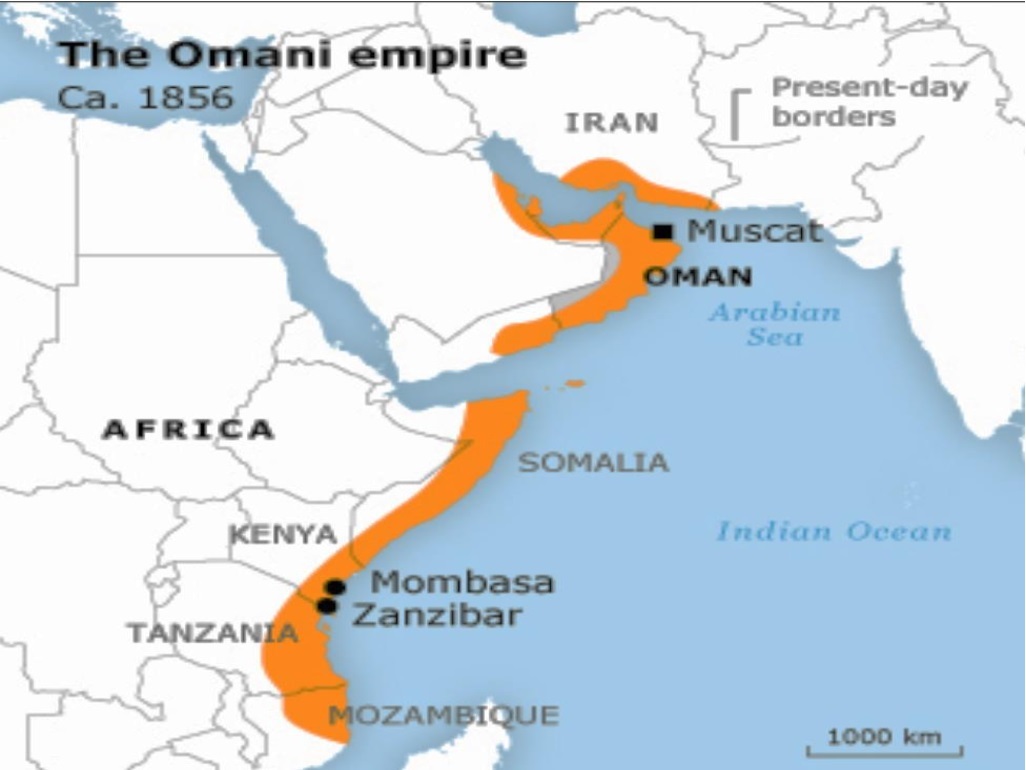
This entry is to share a brief over view about the territory that was once under the Omani Empire and which countries they would be considered part of today.

Also is an interesting bit of information about the the three longest lasting Muslim empires/dynasties.

The Omani Empire extended over part of what is today Iran-Bandar Abbas, U.A.E, Pakistan -Balochistan, Yemen, Comoros , Saudi Arabia-pecifically the region of Al-Hasa (or Al-Ahsa Oasis, Somalia, Kenya, Tanzania, Mozambique. Madagascar, Djibouti,

Which are the top 3 longest lasting Muslim empires/dynasties in terms of longevity & stability?

1. 1299-1922 Ottoman/Sunni/Hanafi = 623 years

2. 750-1258 Abbasid/Sunni/Hanafi = 508 years

3. 1154-1624 Nabhani/Ibadi = 470 years

I would like to add here a brief yet very insightful and helpful message. This additional information is accredited to ‘The servant of Allah’ and surely his reward is with his Lord. May Allah (swt) bless him!

A small comment about Omani history(

1- The map of the Omani empire that you see here which is supposedly at the time of the Sultan Saeed Bin Sultan…but how accurate is it? Because we know that The Sultan ruled parts of the East African coast as he even lived there. However, did he rule all the colored land? The answer is definitely no. He had different degrees of influence in different areas, but in east Africa, he mostly ruled Zanzibar and its surroundings, like Mumbasa, Dar Al-Salam and Pempa. As for Iran, Oman actually didn’t rule the south coast, rather there was an agreement that Oman basically rented the port of Bandar Abbas, (which is still impressive) However, not as impressive as the map shows it to be. I also don’t think there was Omani sovereignty in Madagascar, Nor in Somalia just influence in trade. Yet, there was some control of trade routes to the African interior.

I should say that after the Imam Ahmed Bin Saeed, Oman was ruled by a monarchy all the way to this present day. Even though yes the rulers where Ibadi, they didn’t rule in the Ibadi way. This is especially true after the British colonized Oman, as they fought against the idea of an Islamic Ibadi state in the interior. Similarly for the Nabhani state, they were just a monarchy. Oman wasn’t even stable or flourishing, it was in chaos and it wasn’t really Islamic at all. They were in constant rivalry with Imams, like Imam Mohammed Bin Isma’il Al-Haderi, which was able to establish an Imamate that ended the first Nabhani era in the year 1500 AD / 906 AH then after his death the second Nabhani era began(1556 AD/964 AH), which then lasted for less than 100 years until the Portuguese invasion.

So what’s my point here?

1- Omani doesn’t equal Ibadi

2- History is not as simple as it looks

3- Ibadis could have done more in the past

4- If we want to be proud, we should look at the Omani Imams like:(Al-Julanda Bin Mas’ood, Al-Salt Bin Malik, Naser Bin Murshid, Mohammed Bin Abdullah Al-Khalil and All the others Imams that carried the Banner of Islam and Ibadism in the proper way).

May Allah Guide the Ummah.

May Allah Forgive the Ummah.

Leave a comment

Filed under Uncategorized

What about all those hadith that promise a Muslim paradise based upon testimony alone?

And of no effect is the repentance of those who continue to do evil deeds until death faces one of them and he says: ‘Now I repent;’ NOR of those who die while they are ungrateful disbelievers. For them We have prepared a painful torment” (Qur’an 4:17-18)

﷽ 

What about all those hadiths that say if you do this or that you will be GUARANTEED PARADISE?

So for example there are a great many hadith that say that if a person does this act or says this statement they will be guaranteed paradise.

Examples:

It is narrated on the authority of ‘Uthman that the Messenger of Allah (saw) said. He who died knowing (fully well) that there is no god but Allah entered Paradise.

Source: (https://sunnah.com/muslim:26a)

Narrated Mu’adh bin Jabal :

The Messenger of Allah (saw) as saying: If anyone’s last words are “There is no god but Allah” he will enter Paradise.

Source: (https://sunnah.com/abudawud:3116)

Abu Huraira reported:

The Prophet, (saw) said, “Whoever recites ten times, ‘Say: He is Allah, the One,’ a palace will be built for him in Paradise. Whoever recites it twenty times, two palaces will be built for him. Whoever recites it three times, three palaces will be built for him.

Source: (al-Mu’jam al-Awsaṭ lil-Ṭabarānī 281) (https://www.abuaminaelias.com/dailyhadithonline/2016/02/23/surah-al-ikhlaas-10-jannah/)

Abu Umamah reported: The Messenger of Allah, peace and blessings be upon him, said, “Whoever recites the ‘verse of the Throne’ after every prescribed prayer, there will be nothing standing between him and entry into Paradise but his death.”

Source: (al-Mu’jam al-Awsaṭ lil-Ṭabarānī 8068)

(https://www.abuaminaelias.com/dailyhadithonline/2012/08/27/ayat-al-kursi-after-salat/)

Abu Hurairah narrated that the Prophet (saw) said:

“Indeed, Allah has ninety-nine Names, whoever counts them shall enter Paradise.”

Source: (https://sunnah.com/tirmidhi:3508)

The first response to the above hadith is that they have to be all taken into account with many other hadith. Because the singular narrations (ahad) put a few strokes on the canvas they do not paint the whole picture.

Hadith that do not guarantee Muslims paradise.

Narrated Abu Huraira:

Allah’s Messenger (saw) said, “All my followers will enter Paradise except those who refuse.” They said, “O Allah’s Messenger (saw)! Who will refuse?” He said, “Whoever obeys me will enter Paradise, and whoever disobeys me is the one who refuses (to enter it).”

Source: (https://sunnah.com/bukhari:7280)

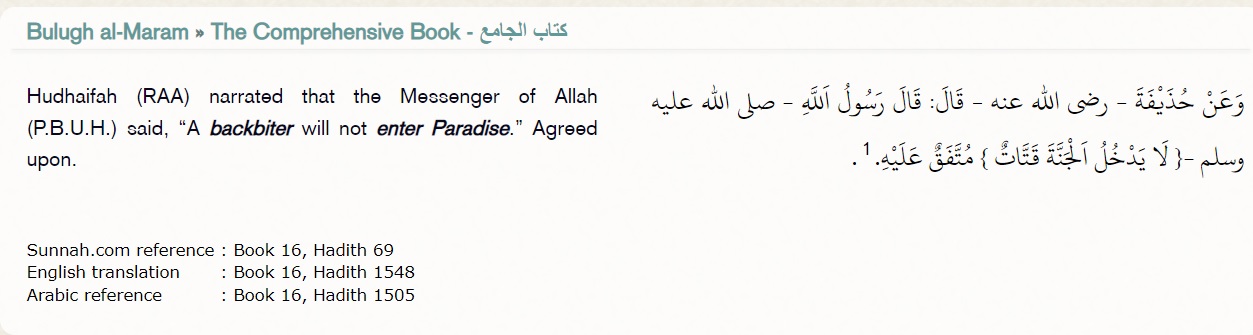
Hudhaifah narrated that the Messenger of Allah (saw) said:

“A backbiter will not enter Paradise.” Agreed upon.

Source: (https://sunnah.com/bulugh/16/69)

It was narrated from Abu Darda’ that the Prophet (saw) said:

No one who is addicted to wine will enter Paradise.”

Source: (https://sunnah.com/ibnmajah:3376)

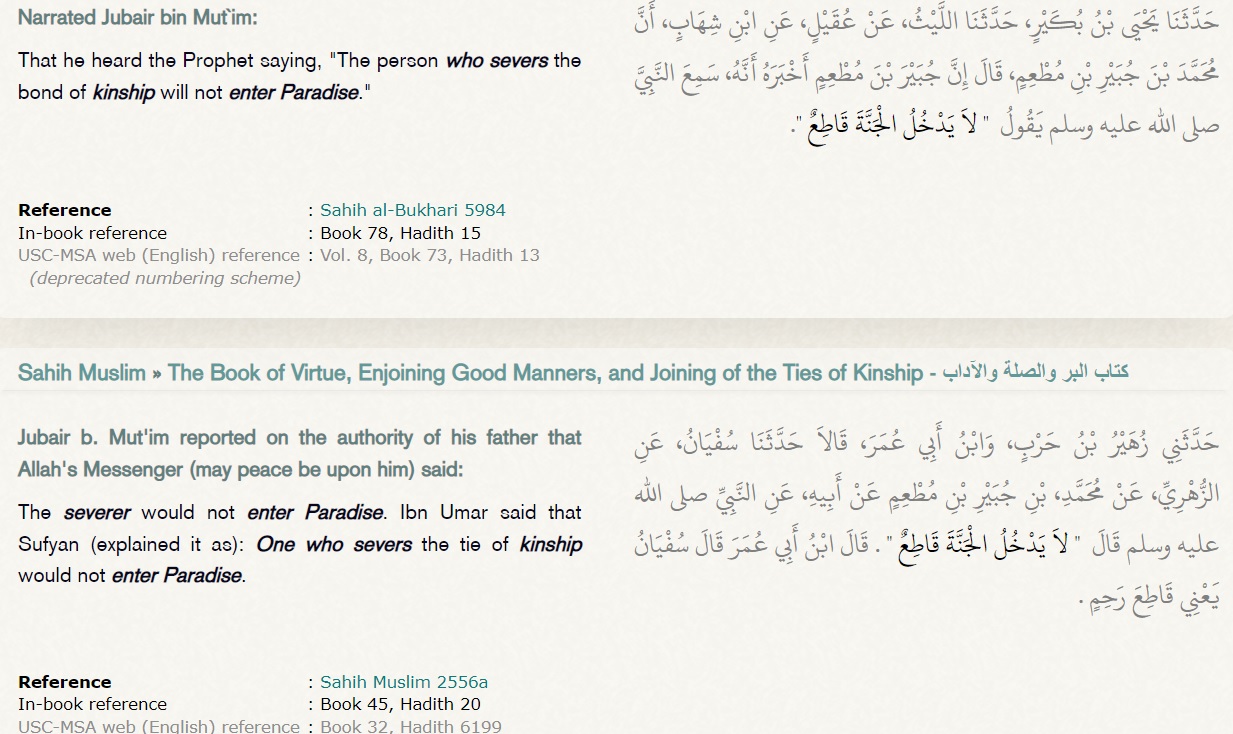
Narrated Jubair bin Mut`im:

That he heard the Prophet (saw) saying, “The person who severs the bond of kinship will not enter Paradise.”

Source: (https://sunnah.com/bukhari:5984)

How to reconcile these contradictory hadith? A simple solution and one that even Sunni schools of theology are forced to acknowledge.

All of those ahadith that guarantee paradise for a Muslim based upon this action or this statement have to be taken into context with all those hadith that says if a Muslim does this or that they will not enter paradise. Those hadith about the guarantee for paradise is for a Muslim who stays the course, who practices their Islam who is diligent in all matters of their faith.

Otherwise we run into the following logical problems. Examples:

Question: What happens if that person was to miss the verse of the throne recitation even after just one prayer?

Would they now not be guaranteed paradise?

The Prophet, (saw) said, “Whoever recites ten times, ‘Say: He is Allah, the One,’ a palace will be built for him in Paradise. Whoever recites it twenty times, two palaces will be built for him. Whoever recites it three times, three palaces will be built for him.

Question: What happens if I recite surah ikhlas ten times today 7/7/2024 but decide to stop praying, fasting paying zakat?

Am I guaranteed paradise then?

Also what happens if I recite surah ikhlas ten times and then I become a backbiter and I break the ties of kinship?

So it is not logical that one statement or one action is going to get a person into paradise. Especially when all the ahadith are taken as a whole.

What happens to the one leaves Islam completely?

Do their deeds, and statements of creed effect their salvation?

Do the murtad become the people of paradise?

There is no verse in the Qur’an that says Kafir will enter paradise! None!

There is no verse in the Qur’an that states you can sin and continue sinning without repentance without restitution and you will enter paradise! None.

“Allah accepts only the repentance of those who do evil in ignorance and foolishness and repent SOON afterwards; it is THEY WHOM Allah will forgive and Allah is Ever All-Knower, All-Wise.

And of no effect is the repentance of those who continue to do evil deeds until death faces one of them and he says: ‘Now I repent;’ NOR of those who die while they are disbelievers. For them We have prepared a painful torment” (Qur’an 4:17-18)

Truly, Allah loves THOSE who turn unto Him in repentance and loves those who purify themselves” (Qur’an 2:222)

“But whosoever repents AFTER his crime and does righteous good deeds (by obeying Allah), then verily, Allah will pardon him (accept his repentance). Verily, Allah is Oft Forgiving, Most Merciful.” (Qur’an 5:39)

“O you who believe! Turn to Allah with sincere repentance! It may be that your Lord will expiate from you your sins, and admit you into Gardens under which rivers flow (Paradise)” (Qur’an 66:8)

“Say to those who have disbelieved, if they cease (from disbelief), their past will be forgiven” (Qur’an 8:38)

“Your Lord has written (prescribed) Mercy for Himself, so that if any of you does evil in ignorance, and thereafter repents and does righteous good deeds (by obeying Allah), then surely, He is Oft-Forgiving, Most Merciful” (Qur’an 6:54)

Allah wishes to accept your repentance, but those who follow their lusts, wish that you (believers) should deviate tremendously away (from the Right Path).”  (Qur’an 4:27)

“Say: Oh my slaves who have transgressed against themselves (by committing evil deeds and sins)! Despair not of the Mercy of Allah, verily, Allah forgives all sins. Truly, He is Oft-Forgiving, Most Merciful” (Qur’an 39:53)

“And whoever does evil or wrongs himself but afterwards seeks Allah’s forgiveness, he will find Allah Oft Forgiving, Most Merciful” (Qur’an 4:110)

Islam is salvation through repentance. Islam is NOT salvation simply because I am Muslim.

All of those verses explicitly tell us as Muslims that we have an incredibly Merciful, Compassionate, Loving and Forgiving Creator. The verse even says that Allah wishes to accept your repentance. It doesn’t get more clear than this!

Yet, if we do not care about our own selves, and our own salvation, if we do not even have a modicum of decency and awareness to turn towards Allah (swt) and repent for our sins. Make restitution, reform our conduct, than we have absolutely no one to blame if we end up in hellfire forever.

The point we can make is that even if all such hadith are 100% correct, chains hold up etc. It shows the extent of Allah’s mercy. His readiness to accept us into paradise. 

Yet as mentioned they need to be interpreted in light of all such hadith that say the polar opposite. 

A logical problem if one takes those hadith in isolation.

Also, logic as mentioned I say Shahahada with sincerity guarantees me paradise but then I decide not to practice the deen? 

Surely they see it as problematic. 

If one takes those hadith that promise a person paradise in isolation without considering all the other hadith evidence that clearly state if one does such and such as well as the clear text of the Qur’an we will end up with serous logical contradictions.

Likewise, this is an issue of morals and ethics.

Has Islam really come to teach that a person can take the declaration of fast and afterwards not pray, not fast, not purify our wealth, and that one can lie, cheat, steal, commit fornication and adultery and will be among the people of paradise?

We are to do our level best to control our based desires, restrain our tongues and hands from harm. We are NOT to be the very devils Allah tells us to seek refuge from.

So it is very clear that Sunni Muslims have to agree with us on these points. They are crystal clear. That the kafir does not enter paradise.

We are upon the model of Adam (alayi salam) One who sinned and repented and was forgiven.

To sin and to never seek forgiveness. What is that except the model of Iblis.

Choose wisely dear truth seekers.

The only difference that now remains between us is as follows:

Our school states that no disbeliever enters into the paradise and no believer enters into the hellfire. Such a belief about the believer entering into hellfire has no basis in the primary source of Islam, the Qur’an.

So the differences are:

Do some believers go to hell for a while (as Sunni schools claim).

Or.

Do believers all go to paradise without any sojourn in hell (as the Ibadi school claims).

Does Allah replace some Jews and Christians (destined to paradise) and swap them for (Muslims destined to hell) as some Sunni claim?

Does Allah grant polytheist salvation (as the case of Ibrahim’s father) and place in his stead a goat or sheep?

https://primaquran.com/2023/02/24/do-sunni-muslims-believe-animals-can-go-to-hell/

Forget what this one claims or that one claims.

https://primaquran.com/2023/02/16/a-huge-misunderstanding-among-muslims/

What does Allah (swt) say in the Qur’an?

May Allah Forgive the Ummah.

May Allah Guide the Ummah.

5 Comments

Filed under Uncategorized

I’ll go to hell for a little while and then enter heaven. Think again!

“And they say, “Never will the Fire touch us, except for a few days.” Say, “Have you taken a covenant with Allah? For Allah will never break His covenant. Or do you say about Allah that which you do not know?” Yes, whoever earns evil and his sin has encompassed him – those are the companions of the Fire; they will abide therein eternally.” (Qur’an 2:80-81)

﷽ 

This is by no means an exhaustive list. However, this should suffice. Yet there is much much more hadith evidence.

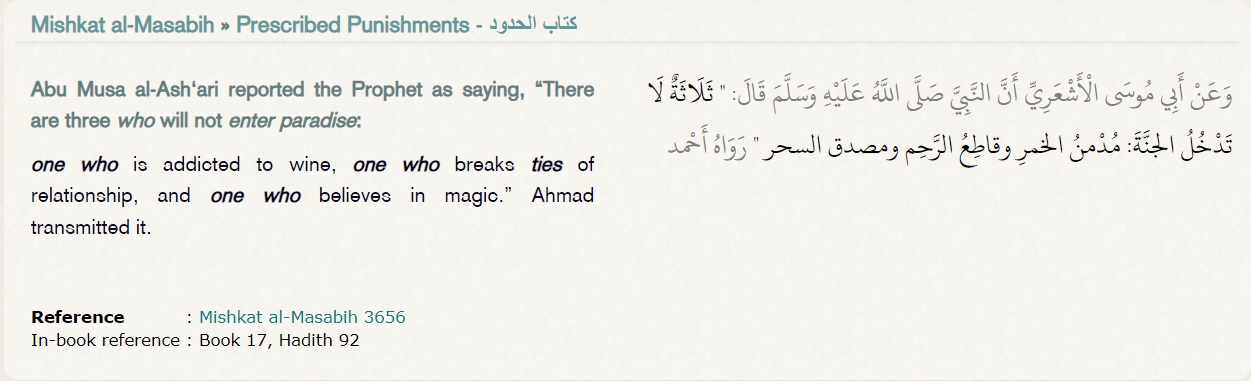
Abu Musa al-Ash’ari reported the Prophet as saying, “There are three who will not enter paradise: one who is addicted to wine, one who breaks ties of relationship, and one who believes in magic.” Ahmad transmitted it.

“But the Children of Israel certainly knew that whoever purchased the magic would not have in the Hereafter any share. And wretched is that for which they sold themselves, if they only knew.” (Qur’an 2:102)

Hudhaifah (ra) narrated that the Messenger of Allah (saw) said:

“A backbiter will not enter Paradise.” Agreed upon.

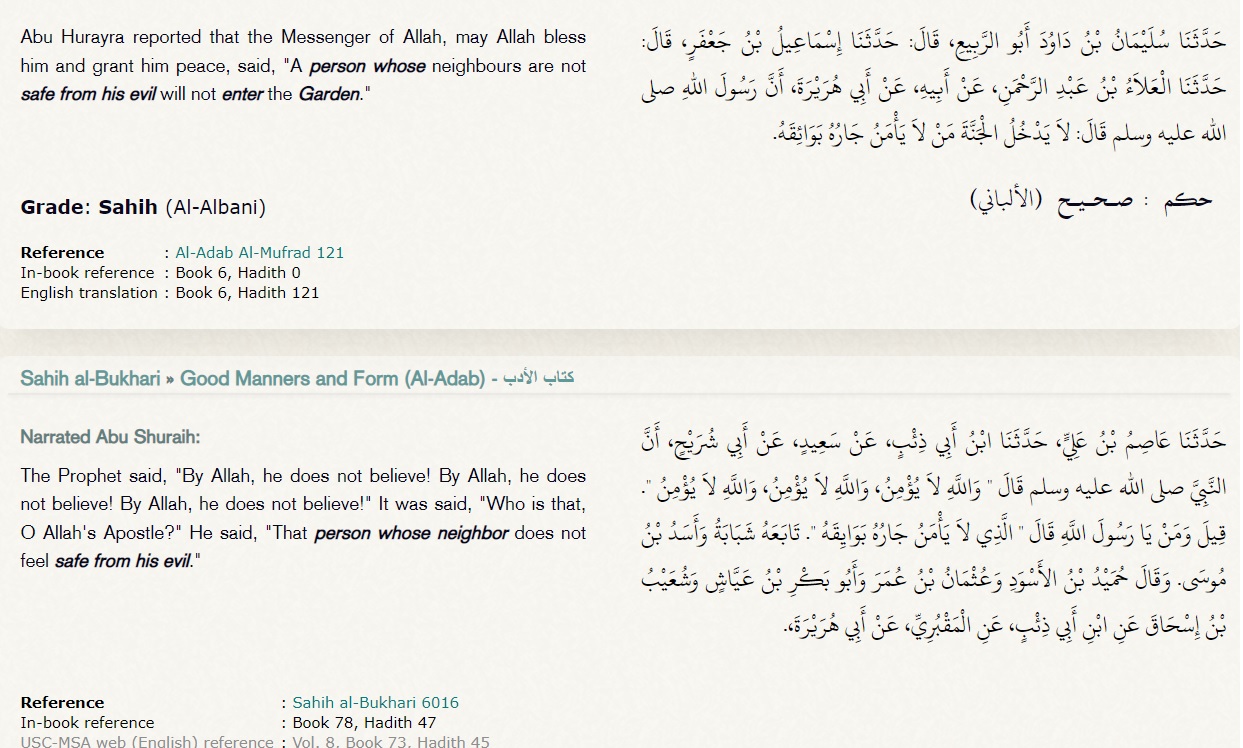
Narrated Abu Shuraih:

The Prophet (saw) said, “By Allah, he does not believe! By Allah, he does not believe! By Allah, he does not believe!” It was said, “Who is that, O Allah’s Messenger (saw)?” He said, “That person whose neighbor does not feel safe from his evil.”

Abu Hurayra reported that the Messenger of Allah, may Allah bless him and grant him peace, said, “A person whose neighbors are not safe from his evil will not enter the Garden.”

“Worship Allah and associate nothing with Him, and to parents do good, and to relatives, orphans, the needy, the near neighbor, the neighbor farther away, the companion at your side, the traveler, and those whom your right hands possess. Indeed, Allah does not like those who are self-deluding and boastful.” (Qur’an 4:36)

Jubair bin Mut’am (RAA) narrated that the Messenger of Allah (saw) said: “The one who severs the ties of kinship will not enter Paradise.” Agreed upon.

Jubayr ibn Mu’tim reported that he heard the Messenger of Allah, may Allah bless him and grant him peace, say, “The one who severs ties of kinship will not enter the Garden.”

Jubair b. Mut’im reported on the authority of his father that Allah’s Messenger (saw) said:

The severer would not enter Paradise. Ibn Umar said that Sufyan (explained it as): One who severs the tie of kinship would not enter Paradise.

Narrated Jubair bin Mut`im:

That he heard the Prophet (saw) saying, “The person who severs the bond of kinship will not enter Paradise.”

“So would you perhaps, if you turned away, cause corruption on earth and sever your ties of relationship.” (Qur’an 47:22)

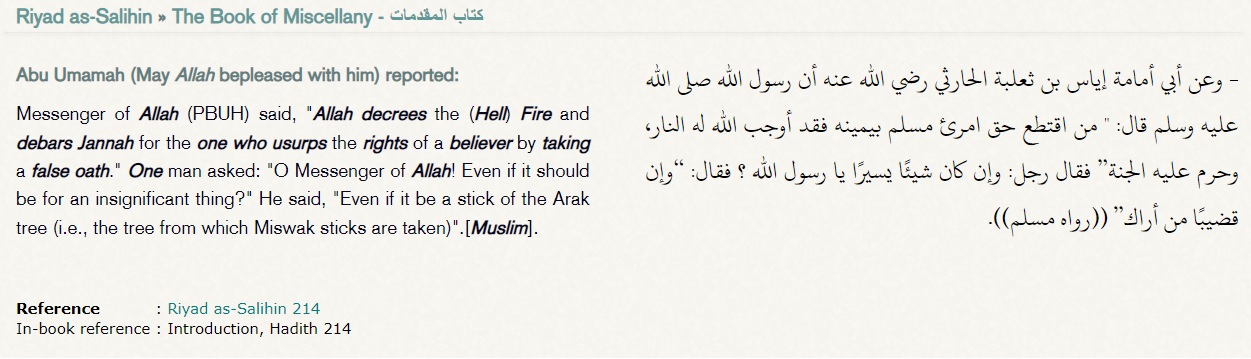
Abu Umamah (May Allah bepleased with him) reported:

Messenger of Allah (saw) said, “Allah decrees the (Hell) Fire and debars Jannah for the one who usurps the rights of a believer by taking a false oath.” One man asked: “O Messenger of Allah! Even if it should be for an insignificant thing?” He said, “Even if it be a stick of the Arak tree (i.e., the tree from which Miswak sticks are taken)”.

“They took their false oaths as a cover, so they averted people from the way of Allah , and for them is a humiliating punishment.” (Qur’an 58:16)

Narrated Ma’qil:

Allah’s Messenger (saw) said, “If any ruler having the authority to rule Muslim subjects dies while he is deceiving them, Allah will forbid Paradise for him.”

Narrated Ma’qil:

I heard the Prophet (saw) saying, “Any man whom Allah has given the authority of ruling some people and he does not look after them in an honest manner, will never feel even the smell of Paradise.”

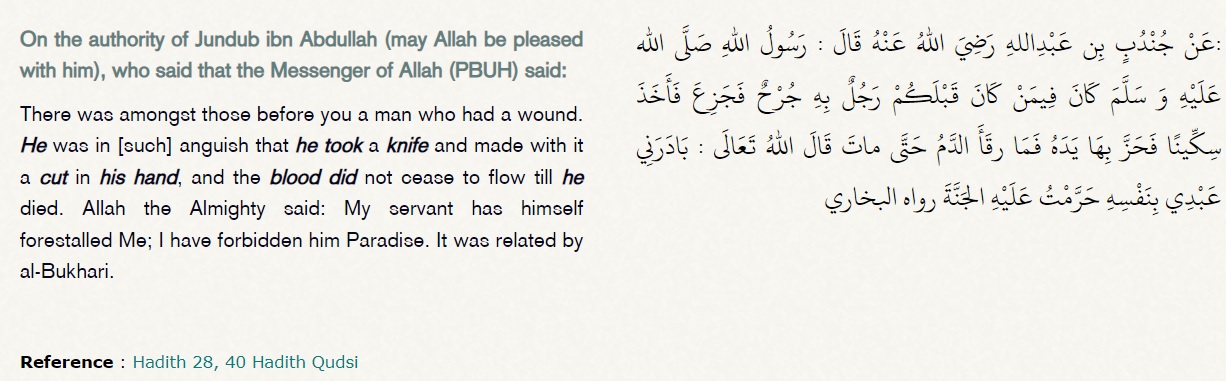
On the authority of Jundub ibn Abdullah (may Allah be pleased with him), who said that the Messenger of Allah (peace be upon him) said: There was a among those before you a man who had a wound. He was in [such] anguish that he took a knife and made with it a cut in his hand, and the blood did not cease to flow till he died. Allah the Almighty said: My servant has himself forestalled Me; I have forbidden him Paradise. It was related by al-Bukhari.

May Allah (swt) protect us and guide and keep us on a path that is straight. We seek the forgiveness of Allah (swt) and turn in repentance to Allah (swt).

I would encourage you to read the following:

“Allah loves those who are constantly repentant and loves those who purify themselves.” (Qur’an 2:222)

May Allah Forgive the Ummah.

May Allah Guide the Ummah.

3 Comments

Filed under Uncategorized