“And each one hath a goal toward which he turns; so contend with one another in good works. Wheresoever you may be, Allah will bring you all together. Lo! Allah is Able to do all things.” (Qur’an 2:148)
“Allah will judge between you on the Day of Resurrection concerning that over which you used to differ.” (Qur’an 22:69)
“So after the truth, what else can there be, save error? How then are you turned away?” –(Qur’an 10:32).
﷽
Insh’Allah the following section in the future will be found under the section above: Engaging The Sunni & Shi’I
This is a collection of articles in regard to the Shi’i and their various claims. Also are articles in relation to the Shi’i.
“Do not fight the kharijites after me, because one who seeks a right but does not find it, is not like the one who seeks a wrong and finds it.” –Ali Ibn Abu Talib
Source: (Nahju Al-Balagha Vol. 1, p. 67, speech no. 56.)
The words “He who seeks a right but does not find it” – as ‘Ali himself says – is an allusion to the Nahrawanees who are otherwise known as the Khawarij. The words “Unlike he who seeks misguidance intentionally” refer to Mu’awiya and his Syrian forces.
“Are the Khawarij mushrikun?” Ali said: “They flee from shirk.” Are they munafiqun? Ali said: “The hypocrites remember Allah only a little.” Then what are they? Ali said: “They are our brothers who transgressed against us (ikhwanuna baghaw ‘alayna), so we fought them for their transgression.”
Source: (Al-Bidāya wa l-Nihāya 10:591)
The Ibadi are obviously not Khawarij to anyone who has common sense. However, for those who insist that we are you have to contend with the above statements.
DO READ THIS FIRST. It is important to understand that we believe and accept that those who call themselves ‘Shi’i’ are Muslims.
We understand that ‘Shi’i’ is a term for a loose federation of various sects that all come under the understanding that Ali Ibn Abu Talib should have been the first Amir of the Muslims or was the most deserving of being that Amir.
The Shi’i are not all the same.
The name shi’i refers to a broad spectrum. From among them are those who simply prefer Ali. Believing he had the qualities best suited for leadership. Among them are those who believe in esoteric doctrines which blur the lines and distinction between the Creator and the created.
Even before the Amman accord the Ibadi have regarded the Shi’i as Ahl Al Qiblah.
You have your polemical works directed towards each other -Ithna-Ashari versus Zaydi versus Ismaili.
Thus it is in that spirit that this section is created. We have just as much right to contend for the truth as anyone else does.We have the right to allow the Muslim community to make an informed decision on various controversial issues.
You have your narrative and we have our narrative. Allah is with those who are the truthful!
“So after the truth, what else can there be, save error? How then are you turned away?” –(Qur’an 10:32).
There are a few reasons why we need to becareful or approach with caution what the Shi’i claim about themselves and their sources.
Dr. Musa Al-Musawi (The grandson of Ayatollah Abu L-Hassan al-Isfahani) says the following:
“Although we believe that most of the forged narratives from the Imams, were forged after al-ghiba al-kubra (the disappearance of Al-Mahdi Al Muntadhar)…..but any impartial researcher will necessarily conclude that even during the time of the Shiite Imams, many narratives were fabricated and ascribed to the Imams, in the like manner as they were fabricated and attributed to the Prophet.”
Source: (al-Shi’a wa-l-tashih: al-Sira’ bayn al-shi’a wa-l-tashayyu'(the struggle between Shia and Shiism p. 135)
We cannot take Ali at face value.
Abu Huraira narrated that the Prophet (saw) said:
“On the Day of Resurrection a group of companions will come to me, but will be driven away from the Lake-Fount, and I will say, ‘O Lord (those are) my companions!’ It will be said, ‘You have no knowledge as to what they innovated after you left; they turned apostate as renegades (reverted from Islam).
There are those who would make the Ummah believe that Ali is an article of faith or part of the testimony of faith. This is a far cry from the truth. This hadith shows that Ali has to be examined like anyone else. One cannot cite a particular hadith and say that Ali is exempted from examination. Why is this? Once one accepts this particular hadith,everyone becomes suspect. There are no exemptions. Because at this point we cannot be sure that those who narrate this or that in favour of this or that one are not among the apostates themselves! Therefore, we have to systematically examine the data case by case. Islam is a faith of proof and evidence and not a faith of emotions and rhetoric.
Our school is pragmatic.
Narrated Abu Huraira:
When Allah revealed the Verse: “Warn your nearest kinsmen,” Allah’s Messenger (saw) got up and said, “O people of Quraish (or said similar words)! Buy (i.e. save) yourselves (from the Hellfire) as I cannot save you from Allah’s Punishment; O Bani `Abd Manaf! I cannot save you from Allah’s Punishment, O Safiya, the Aunt of Allah’s Messenger (saw)! I cannot save you from Allah’s Punishment; O Fatima bint Muhammed! Ask me anything from my wealth, but I cannot save you from Allah’s Punishment.”
“Neither your relatives nor children will benefit you on Judgment Day—He will decide between you ˹all˺. For Allah is All-Seeing of what you do.” (Qur’an 60:3)
“It is not ˹proper˺ for the Prophet and the believers to seek forgiveness for the polytheists, even if they were close relatives, after it has become clear to the believers that they are bound for the Hellfire.” (Qur’an 9:113)
Social experiment: If Shi’i sources are to be believed it portrays Umar Ibn Al Khattab (ra) as a violent woman abuser and Ali Ibn Abu Talib as a cowardly man.
Agakhanism/Nizarism is an absolute joke. A womanizing playboy, “Imam Kardashian” who marries models and drinks alcohol on his megayacht? Such a good Muslim leader he is! A few online Nizari apologists probably know more about their religion than their actual “imam” (and since he has the right to change laws to keep up with modernity, a couple of imams down the line, and we’ll probably see their jamaat legalizing same-sex marriages, smoking cannabis, etc.).
The Mustaalite branches are even smaller in numbers, more isolated than Agakhanis and live in their bubbles, suffering from a number of schisms. These branches are just dying off. And before they vanish, they may suffer a few more schisms on their way. Irrelevant. إن شاء الله, some of them join the jamaat of أهل الحق والاستقامة!
Zaydis are like Ibadis in sheer numbers, but geographically limited to Yemen and a few thousand in Saudi Najran geographically (unlike Ibadis who’re more distributed). Their monarchist imamate has been absent since the establishment of the unified Yemeni Republic. If this dormant imamate is ever revived, it will be purely spiritual (no political governance). Unless Yemen breaks up again. The Houthis are more about politics than religion, they want to control the entire country, and so they don’t claim to revive their imamate. Their Zaydi imamate is as pointless as that of the Twelvers. Twelvers at least have the excuse that their imam is wandering the Earth and waiting for some right conditions to leave the state of occultation. Zaydis just outright don’t care about their imamate anymore, no explanation whatsoever, no efforts to revive it.
As for Twelvers, brother, you have a slight misconception. I have a Twelver Shia Azeri friend, quite knowledgeable and religious.
I was surprised to learn from him that the Iranian regime departed quite a lot from “orthodox” Twelverism (in general fiqh and in aqeeda too, e.g. Sufi pantheism/وحدة الوجود, false unity between the Creator and His creation, أعوذ بالله, but I digress, here I’ll be talking about fiqh of governance specifically).
He told me that when Khomeini succeeded in overthrowing Pahlavi and declared his Islamic Republic, the vast majority of then-ayatollahs actually refused to recognize the regime of wali al-faqih (one ayatollah who did later did tawba and rejected it, was placed under house arrest and died).
Since the constitution required the most knowledgeable cleric to take over after Khomeini’s death, the regime got stuck because other ayatollahs rejected it. So they just changed the constitution to allow a mid-ranking cleric like Khamenei to take over. They put loyalty above proper religious credentials.
Some Twelver clerics opposed to Wilayat al-faqih still support the idea of some collective clerical rule (shura al-fuqaha). Because however knowledgeable a single cleric is, he is not infallible (unlike their alleged Mahdi), so to mitigate the potential impact (mistakes in ijtihad, etc.) of political/religious decisions, you should have a BENCH with SEVERAL governing clerics (and even then the political extent of their authority is debatable), not one-man dictatorship we see in Iran. Because having one-man rule is usurping the rights of their awaited Mahdi. So no single wali faqih/imam/caliph (he told me referring to Khomeini and Khamenei as imams is blasphemous, the title of imam is reserved for their 12 infallible imams). If Sunnis are supposed to have a caliph elected by their shura (أهل الحل والعقد), Twelvers may be ruled by their shura itself.
Some more radical Twelvers even go as far as claiming ANY Islamic governance (even by several clerics) is fake. Any such “Islamic” regime should be rejected as a taghoot. Because there are several narrations in their hadith collections which promote passivity (and the Khomeinist revolution of 1979 is thus contrary to their view, for they don’t believe in any Islamic political activity and any Islamic state except the state of Mahdi. Only he is infallible and can properly apply sharia, so until he comes, just enjoy your secular rule). Some narrations he cited:
Sort of “Shia Madkhalism”, you know. It’s a possible option for Usulis (depending on whether they perceive these narrations as reliable by isnad or not). And it’s a MUST for Akhbaris (who accept these alleged narrations from their imams without questioning isnad).
It was a very eye-opening experience. Wilayat al-faqih is a “makeshift” heteredox doctrine, a بدعة. If the Iranian regime falls, it will be utterly discredited. And since Twelvers have no other shot at Islamic governance (Iraq has a significant Sunni minority, almost a third of its population, Twelver Islamic state is unviable there, lest we see a new Da’esh from reactionary Sunnis. Azerbaijan is the same, huge Sunni minority + ruled by a secular post-Soviet pro-Israeli dictator. Bahrain is the same + ruled by an apartheid Sunni monarchy propped up by the Saudis), Islamic governance will be completely dead for them (whether it is Wilayat al-faqih or Shura al-fuqaha). They will end up in the same situation as Zaydis.
I hope it helps you understand the Twelverist perspective better. It’s not just Iran.
You know, the whole situation serves as an additional confirmation of Ibadism to me as the most valid Islam. The Qur’an clearly instructs not to divide:
And yet Shias are divided: many sects have died off, but Twelvers, Zaydis, several Ismaili branches still remain there, and Twelvers are further subdivided into 3 aqeedas: Usuli, Akhbari, Ihqaqi (and Usulis are subdivided into allies of “Iranian” Shiism with Wilayat al-faqih, wahdat al-wujood, irfan and everything related and its enemies from more orthodox Twelvers).
So did Sunnis, with a bunch of fiqh schools (some died off, but 4 survive, Hanafi, Shafi’i, Hanbali, Maliki + there are some small ultra-rare pockets for the 5th madhab, Zahiri + there are some Salafi/athari who don’t follow any particular madhab) and 3 aqeedas (Salafi/athari, Maturidi, Ashari. Maybe 4 if you count neo-Mutazilites). And don’t forget a truckload of Sufi orders.
Ibadis are the only Muslims who take this ayat seriously. One fiqh school, one aqeeda, no Sufism, no schisms, no nonsense. It’s just beautiful.
“They made not a just estimate of Allah such as is due to Him. ” (Qur’an 39:67)
﷽
So Shaykh Uthaymeen was asked about Allah’s blanket.
The questioner says, can we say it is a metaphor?
Uthaymeen is agitated. “Will you say to Allah on judgement day that he doesn’t have a blanket?!”
If you want to perfect your aqidah (your creed) in accordance with this bizarre sect then if it is affirmed that Allah (swt) has a blanket are you going to deny this?!
You may also be interested in reading the following:
“And whoever obeys Allah and the Messenger will be in the company of those blessed by Allah: the prophets, the people of truth, the martyrs, and the righteous—what honourable company!” (Qur’an 4:69)
﷽
Shaykh Al Qanoubi (h) is the luminary of the Ibadi school in the sciences of the hadith. The one whom Allah (swt) has illuminated his mind, and given sharp wit. Able to be among the scientists who detect the ʿillah, the hidden defects that often escape the grasp of the most astute.
This entry is in regard to what is known as: Hadith Al Thaqalyan or two matters of weight or two matters of importance.
Source: (Hadith 40, in Al Jami’ Al Sahih)
In the short video clip below, Shaykh Dr. Abdullah bin Sa’ed Al Ma’mari (h) mentions that Shaykh Al Qanoubi (h), in his study on the subject, has not found the narrations that include: “and my family” as being authentic from the Blessed Prophet (saw).
As Shaykh Dr Abdullah bin Sa’ed Al Ma’mari (h) says, what is authentic for us in the Ibadi school are the words: “The book of Allah and my Sunnah.”
Obeying Allah and his Messenger is transmitted via tawatur from the Qur’an.It does not need confirmation from the hadith.
What Shaykh Dr Abdullah bin Sa’ed Al Ma’mari (h) has said is true. We don’t find a single mention of obey Allah, Obey the Messenger and Obey the Ahl Bayt.
“He who obeys the Messenger has obeyed Allah, but those who turn away-We have not sent you over them as a guardian.” (Qur’an 4:80)
“O you who believe, you shall obey Allah, and obey the messenger. Otherwise, all your works will be in vain.” (Qur’an 47:33)
“And obey Allah and obey the Messenger. But if you turn away, then Our Messenger is responsible only for conveying the message clearly. (Quran 64:12)
“Say, “Obey Allah and obey the Messenger. But if you turn away, then he is only responsible for his duty, and you are responsible for yours. And if you obey him, you will be guided. The Messenger’s duty is only to deliver the message clearly.” (Qur’an 24:54)
“Believe in Allah and His Messenger, and the scripture which He has sent to His Messenger and the scripture which He sent to those before (him)” (Qur’an 4:136)
O you who have believed, obey Allah and obey the Messenger and those in authority among you. And if you disagree over anything, refer it to Allah and the Messenger, if you should believe in Allah and the Last Day. That is the best [way] and best in the result. (Qur’an 4:59)
The hadiths that the Sunni and Shi’i primarily dispute about are as follows:
Follow the Qur’an
“I have left among you the Book of Allah, and if you hold fast to it, you would never go astray. And you would be asked about me (on the Day of Resurrection), (now tell me) what would you say? They (the audience) said: We will bear witness that you have conveyed (the message), discharged (the ministry of Prophethood) and given wise (sincere) counsel. He (the narrator) said: He (the Holy Prophet) then raised his forefinger towards the sky and pointing it at the people (said):” O Allah, be witness. 0 Allah, be witness,” saying it thrice.”
On the authority of Ikrimah, on the authority of Ibn Abbas, that the Messenger of Allah, (saw) , addressed the people during the Farewell Pilgrimage and said: “O people, I have I have left among you that which if you hold fast to it you will never go astray: the Book of Allah and the Sunnah of His Prophet.”
“On the authority of Ikrimah, on the authority of Ibn Abbas, that the Messenger of Allah, (saw), The Prophet (saw) addressed the people during the Farewell Pilgrimage and said: “Satan has despaired of being worshipped in your land, but he is content to be obeyed in other than that, of your deeds that you despise. So beware, O people, for I have left among you that which, if you hold fast to it, you will never go astray: The Book of Allah and the Sunnah of His Prophet (saw). Indeed, every Muslim is a brother to Allah.” A Muslim, Muslims are brothers, and it is not permissible for a man to take from his brother’s wealth except what he gives of his own free will. And do not wrong, and do not revert after me to disbelief, striking one another’s necks . ”
That the Messenger of Allah (saw) said: “Indeed, I am leaving among you, that which if you hold fast to them, you shall not be misguided after me. One of them is greater than the other: The Book of Allah is a rope extended from the sky to the earth, and my family – the people of my house – and they shall not split until they meet at the Hawd, so look at how you deal with them after me.”
The problem with the above hadith is it contains the vile and evil al-A’mash! No consideration is given to it.
Narrated Jabir bin ‘Abdullah:
“I saw the Messenger of Allah during his Hajj, on the Day of ‘Arafah. He was upon his camel Al-Qaswa, giving a Khutbah, so he said: ‘O people! Indeed, I have left among you, that which if you hold fast to it, you shall not go astray: The Book of Allah and my family, the people of my house.'”
Yazid b. Hayyan reported, I went along with Husain b. Sabra and ‘Umar b. Muslim to Zaid b. Arqam and, as we sat by his side, Husain said to him:
Zaid. you have been able to acquire a great virtue that you saw Allah’s Messenger (saw) listened to his talk, fought by his side in (different) battles, offered prayer behind me. Zaid, you have in fact earned a great virtue. Zaid, narrate to us what you heard from Allah’s Messenger (saw). He said: I have grown old and have almost spent my age and I have forgotten some of the things which I remembered in connection with Allah’s Messenger (saw), so accept whatever I narrate to you, and which I do not narrate do not compel me to do that. He then said: One day Allah’s Messenger (saw) stood up to deliver sermon at a watering place known as Khumm situated between Mecca and Medina. He praised Allah, extolled Him and delivered the sermon and. exhorted (us) and said: Now to our purpose. O people, I am a human being. I am about to receive a messenger (the angel of death) from my Lord and I, in response to Allah’s call, (would bid good-bye to you), but I am leaving among you two weighty things: the one being the Book of Allah in which there is right guidance and light, so hold fast to the Book of Allah and adhere to it. He exhorted (us) (to hold fast) to the Book of Allah and then said: The second are the members of my household I remind you (of your duties) to the members of my family.He (Husain) said to Zaid: Who are the members of his household? Aren’t his wives the members of his family? Thereupon he said: His wives are the members of his family (but here) the members of his family are those for whom acceptance of Zakat is forbidden. And he said: Who are they? Thereupon he said: ‘Ali and the offspring of ‘Ali, ‘Aqil and the offspring of ‘Aqil and the offspring of Ja’far and the offspring of ‘Abbas. Husain said: These are those for whom the acceptance of Zakat is forbidden. Zaid said: Yes.
Notice dear reader: “and the offspring of ‘Abbas.” Surely Ibn Abbas (ra) would know best what the Blessed Prophet (saw) said.
Prima Qur’an comments:
As mentioned, the inclusion of the Book of Allah and my family is important for the Shi’i in helping to establish their positions. This is not the case for us (the Ibadi school).
Some Sunni Muslims (in particular those who follow a Sufi Tariqah) reconcile the narrations by stating that they (Sunni Muslims who follow a Sufi Tariqah) follow the Qur’an and Sunnah via the descendants of the Blessed Messenger (saw). Since it is claimed by Sunni Muslims that the bulk of the descendants of Prophet Muhammed (saw) are actually contained within the house of ‘Ahl Sunnah Wal Jammah’, then they are best suited to teach and guide.
So, for example: Shaykh Muhammed Al Yaqoubi, who is a claimed descendant of the Blessed Prophet (saw) via Hasan ibn Ali. People who follow a Sufi order that he is affiliated with would find that he is best suited to guide.
As seen in two of the narrations above, Ibn Abbas (ra) is in the chain of transmission. For us (The Ibadi school) he is part of the household of the Blessed Prophet (saw). Thus, he, being a member of Ahl Bayt, transmitted that we are to follow the Qur’an and Sunnah.
That statement aligns with what we find in the Qur’an.
It could be very well that the Prophet (saw) was meant to convey the following:
Did he convey the message? Did he bring the Qur’an? Of which everyone agrees that he did.
That he would want people to look after and take care of his kinsfolk. This is only natural and something any honourable person would desire. How much more the most honorable among creation?
As we find in the Qur’an:
“That is the good news which Allah gives to His servants who believe and do good. Say, “I do not ask you for a reward for this—only honour for kinship.” Whoever earns a good deed, We will increase it in goodness for them. Surely Allah is All-Forgiving, Most Appreciative” (Qur’an 42:23)
Rest assured that if there are any lectures or writings from Shaykh Al Qanoubi (h) where he fleshes out the more reasons for not accepting the transmissions that include ‘and my family’ insh’Allah will be sure to share them. Allah-Willing.
“As for those who divide their religion and break up into (sects), you have no part in them in the least: their affair is with Allah: He will, in the end, tell them the truth of all that they did.” (Qur’an, 6:159)
﷽
This idea of the Muslims following 12 Imams is a total concoction.
First and foremost, it has absolutely no support from the Qur’an.
The Sunni Muslims the following hadith that the Shi’i will often use against them.
Narrated Jabir Ibn Samura:
I heard the Prophet (saw) saying, “There will be twelve commanders (Amir).” He then said a sentence which I did not hear. My father said the Prophet (saw) added, “All of them will be from Quraish.”
It has been narrated on the authority of Jabir b. Samura, who said:
I heard the Messenger of Allah (saw) say: Islam will continue to be triumphant until there have been twelve Caliphs. Then the Prophet (saw) said something which I could not understand. I asked my father: What did he say? He said: He has said that all of them (twelve Caliphs) will be from the Quraish.
It is actually quite easy-peasy lemon squeezy from a Sunni Muslim perspective to shut down Shi’i intrigue over these hadiths.
None of these hadith say anything at all about the family of the Blessed Prophet (saw). So the wide-eyed speculation stops there.
None of these hadith say anything at all about them ruling in succession. That is to say, one after the other.
Did Hussein ibn Abi Talib ever rule over the Muslim ummah? We all know the answer to this is a resounding No! He didn’t rule over jack squat!
The reason we mention Hussein ibn Abi Talib is that the Shi’i who are quite imaginative see the succession of the Blessed Prophet (saw) as:
Ali ibn Abi Talib Hasan ibn Ali Husayn ibn Ali (Hussein ibn Abi Talib) Ali ibn Husayn
So, from the perspective of a Sunni Muslim or an Ibadi Muslim, that’s a wrap. That means there is nothing more to discuss. Because the points that the Shi’i want to desperately prove from these hadiths cannot be established at all.
We will come back with our critique of this hadith. However, let us first look at the history of this number 12 prior to the advent of the Blessed Prophet Muhammed (saw).
THE NUMBER 12 HAS NO SIGNIFICANCE IN ISLAM.
The number 12 is not significant or important, in any shape or form, in Islam. It is the atomic number of atoms in Magnesium. 12 is the number of zodiac characters in both the Western and Chinese models. There are 12 months in a year of the Gregorian calendar. The 12th surah in the Qur’an is called ‘Yusuf’ or Joseph.
The 12th chapter and 12th verse of the Qur’an say the following:
“Send him with us tomorrow to enjoy himself and play, and we shall take every care of him.” (Qur’an 12:12)
“Surely, the number of months with Allah is twelve months in Allah’s ordinance since the day when He created the heavens and the earth, of these four being sacred.” (Qur’an 9:36)
Nothing here is analogous to 12 Imams. The verse says of the 12 months, 4 of them are sacred.
Are the Shi’i going to tell us that of the 12 Imams only four of them are sacred?
This holds no significance to 12 tribes, 12 disciples or 12 imams, or 12 rulers at all.
12 relates to Israel, and the tribes. It has absolutely nothing to do with Islam.
THE NUMBER 12 AND THE TRIBES OF ISRAEL
Let us look at Israel (Jacob) and the 12 tribes in the Qur’an and in the Bible.
“Allah made a covenant of old with the Children of Israel and We raised among them twelve chieftains, and Allah said: Lo! I am with you. If ye establish worship and pay the poor-due, and believe in My messengers and support them, and lend unto Allah a kindly loan, surely I shall remit your sins, and surely I shall bring you into Gardens underneath which rivers flow. Whoso among you disbelieves after this will go astray from a plain road.” (Qur’an 5:12)
“Moreover, We divided them into twelve tribes And when his people asked Moses for water, We inspired him, “Strike the rock with your staff!” -after which twelve springs gushed forth from it so that all the people knew whence to drink., And We caused the clouds to comfort them with their shade, and We sent down unto them manna and quails, [saying:] “Partake of the good things which We have provided for you as sustenance.” And [by all their sinning] they did no harm unto Us-but [only] against their own selves did they sin.” (Qur’an 7:160)
“So We dispersed them as separate communities all over the earth; some of them were righteous, and some of them less than that: and the latter We tried with blessings as well as with afflictions so that they might mend their ways.” (Qur’an 7:168)
“Say (O Muslims): We believe in Allah and that which is revealed unto us and that which was revealed unto Abraham, and Ishmael, and Isaac, and Jacob, and the tribes, and that which Moses and Jesus received, and that which the prophets received from their Lord. We make no distinction between any of them, and unto Him, we have surrendered.” (Qur’an 2:136)
“Nay! do you say that Abraham and Ismail and Jacob and the tribes were Jews or Christians? Say: Are you better knowing or Allah? And who is more unjust than he who conceals a testimony that he has from Allah? And Allah is not at all heedless of what you do.” (Qur’an 2:140)
“Truly We gave unto Moses nine tokens, clear proofs (of Allah’s Sovereignty). Do but ask the Children of Israel how he came unto them, then Pharaoh said unto him: Lo! I deem you one bewitched, O Moses.” (Qur’an 7:101)
“Say: We believe in Allah and what has been revealed to us, and what was revealed to Abraham and Ismail and Ishaq and Jacob and the tribes, and what was given to Musa and Isa and to the prophets from their Lord; we do not make any distinction between any of them, and to Him do we submit. ” (Qur’an 3:84)
“Lo! Thus spoke Joseph unto his father: “O my father! Behold, I saw [in a dream] eleven stars, as well as the sun and the moon: I saw them prostrate themselves before me!” (Qur’an 12:6)
Here Joseph mentions 11 stars and, altogether, 13 celestial bodies. No mention of anything 12 here.
There is absolutely nothing in the entirety of the Qur’an that would assign or even remotely hint that the 12 sons of Israel (Jacob) played any role that the 12er Shi’i designates for their 12 Imams. Nothing analogous here at all.
Now, what does the Bible say about these 12 sons of Jacob/Israel?
While Israel was living in that region, Reuben went in and slept with his father’s concubine Bilhah, and Israel heard of it. Jacob had twelve sons:
The sons of Leah:
Reuben, the firstborn of Jacob,
Simeon, Levi, Judah, Issachar and Zebulun.
The sons of Rachel:
Joseph and Benjamin.
The sons of Rachel’s servant Bilhah:
Dan and Naphtali.
The sons of Leah’s servant Zilpah:
Gad and Asher.
These were the sons of Jacob, who were born to him in Paddan Aram.
Source: (Genesis 35:22-26)
“All these are the twelve tribes of Israel, and this is what their father said to them when he blessed them, giving each the blessing appropriate to him.” (Genesis 49:28)
There is absolutely nothing in the entirety of the Bible that would assign or even remotely hint that the 12 sons of Israel (Jacob) played any role that the 12er Shi’i designate for their 12 Imams.
Were the 12 Imams the names of 12 tribes? Did the descendants of these Imams fight each other in a bitter civil war as was the case with Judah and Benjamin against the other 10 tribes? We all know that the answer to all of this is a resounding No! Nothing analogous here at all.
The tribes descended from the twelve sons of Jacob. They all existed alive simultaneously as separate people. According to the Imami Shi’i, was there any point in history in which their 12 imams existed simultaneously as separate people? We all know that the answer to all of this is a resounding No! Nothing analogous here at all.
Reuben
Simeon
Levi
Judah
Issachar
Zebulun
Dan
Naphtali
Gad
Asher
Joseph
Benjamin
NUMBER 12 AND THE DISCIPLES OF JESUS.
Jesus had 12 disciples because they were to go to each of the 12 tribes of Israel as previously mentioned. That’s it.
Now let us turn our attention to the disciples of Christ Jesus (as), as they are mentioned in the Qur’an.
“When Jesus found Unbelief on their part He said: “Who will be My helpers to (the work of) Allah?” Said the disciples: “We are Allah’s helpers: We believe in Allah, and do bear witness that we are Muslims.” (Qur’an 3:50)
“And behold! I inspired the disciples to have faith in Me and Mine Messenger: they said, ‘We have faith, and do you bear witness that we bow to Allah as Muslims'”. (Quran 5:111)
“O you who believe! Be Allah’s helpers, even as Jesus son of Mary said unto the disciples: Who are my helpers for Allah? They said: We are Allah’s helpers. And a party of the Children of Israel believed while a party disbelieved. Then We strengthened those who believed against their foe, and they became the uppermost.” (Qur’an 61:14)
There is absolutely no mention of the number of disciples anywhere in the Qur’an, which is both telling and interesting.
Now let us turn our attention to the disciples of Jesus (a.s) as they are mentioned in the New Testament.
“The names of the twelve apostles are these: first, Simon, who is called Peter, and Andrew his brother; James the son of Zebedee, and John his brother; Philip and Bartholomew; Thomas and Matthew the tax collector; James the son of Alphaeus, and Thaddaeus; Simon the Zealot, and Judas Iscariot, who betrayed Jesus.” (Matthew 10: 2-4)
“Jesus said to them, “Truly I tell you, at the renewal of all things, when the Son of Man sits on his glorious throne, you who have followed me will also sit on twelve thrones, judging the twelve tribes of Israel.” (Matthew 19:28)
“These twelve Jesus sent out with the following instructions: “Do not go among the Gentiles or enter any town of the Samaritans. Go rather to the lost sheep of Israel.” (Matthew 10:6)
“It had a great, high wall with twelve gates, and with twelve angels at the gates. On the gates were written the names of the twelve tribes of Israel.” (Revelation 21:12)
The Twelve Disciples (Apostles)
Peter the Apostle (Simon Peter)
Andrew the Apostle (Peter’s brother)
James the Great
John the Apostle
Philip the Apostle
Bartholomew the Apostle
Thomas the Apostle
Matthew the Apostle
James son of Alphaeus
Thaddeus
Simon the Zealot
Judas Iscariot
Replacement after Judas
After the betrayal and death of Judas Iscariot, the remaining apostles selected:
Matthias the Apostle
We have no record anywhere of the 12 sons of Jacob or the 12 disciples of Jesus giving legal verdicts, and so forth to anyone.
Not only that but the analogy creates real problems for the 12er Shi’i concept because the 12 sons of Jacob and the 12 disciples of Jesus were concurrent (not in succession).
Not only that, but one of the 12 disciples of Jesus was a traitor.
So, if this is analogous to the 12er Shi’i do tell us which of the “12 imams” was a traitor to Rasul Allah (saw)?
In fact, the 12er Shi’i seem to catch the unsuspecting Sunni Muslims with something that they may be remotely familiar with or something that seems vague.
“You remember about the 12 tribes of Israel?” “Oh yeah,” says the Sunni layman. “You remember Jesus had 12 disciples?” “Hmm, sounds right”, says the unsure Sunni Muslim who has never bothered to look into these matters.
So, after they “establish” something murky about the number 12 being significant, then they come and put their spin on the ahadith from Bukhari and Muslim about 12 rulers, and so forth. Even then, as we saw, those hadiths did not even allow the Shi’i to put their spin on the aware Sunni Muslim.
Now, note that these 12 disciples of Jesus, according to the above text, were with him concurrently, not in succession. None of these disciples ever disappeared, waiting until the present. One of these disciples betrayed Jesus. Which of the “12 Imams” betrayed Rasul Allah (saw)?
Also, you will note that these 12 disciples were to go unto the 12 tribes of Israel (Jacob). The whole of the New Testament is about Jesus (The Messiah) coming for his people, not the whole wide world. That is why you have the names of the 12 tribes of Israel at the gates of heaven in the vision.
Are these 12 Shi’i Imams going to have their names on 12 gates for 12 tribes of Arabs (only) numbering 12,000 each?
The only thing analogous between the 12 Imams and the 12 disciples of Jesus, who were sent to the 12 descendant tribes of Jacob, is in fact the number 12. That is all.
We have clearly pulled the rug out of the 12er Shi’i idea of there being anything analogous here.
Unfortunately, our respected Imams of Hadith were not infallible in their collection of Hadith. They allowed a bizarre narration about 12 leaders to slip in their corpus.
The 12er Shi’i then use that hadith to persuade Sunni Muslims to their perspective.
Mohammed Hashim Kamali explains the situation best.
“Hadith critics have expressed reservations. Nevertheless, over the authenticity of various hadiths. Some politically tendentious hadith have come under criticism. One such hadith that al-Bukhari has recorded on the authority of Jabir b Samura is as follows:
“I heard the Prophet, peace be on him, saying that ‘there will be twelve rulers (amiran), ‘ and then the Prophet uttered words which I did not hear-but my father believed they were ‘…all of them will be from Quraysh’. “
“The Shi’i scholars have taken this hadith as “decisive evidence”, on the veracity of their belief in the twelve Imams. The Sunnis themselves have advanced different interpretations of this hadith. One interpreter thus understood this to mean that the twelve amirs will be simultaneous, all to whom will be laying claim to leadership, and the context is, therefore, one of tumult (al-fitna). “
“The various versions of probably this same hadith that Muslim and Abu Dawud have recorded say something different. Briefly, Muslim recorded a hadith to the effect that “this matter (i.e the Caliphate) will not go away until twelve Caliphs have come and gone.” Abu Dawud similarly recorded a hadith to the effect that “this religion shall remain until twelve Caliphs have ruled, all of them with the agreement and support of the umma.”
“The commentator of al-Bukhari, Ibn Hajar al-‘Asqalani, has quoted these views, and reading all of them together, he thought that the reference in that respect was to the Caliphate. But this only added to complication in view of the common knowledge that the approved Caliphs were only four, not twelve, According to Qadi ‘Iyad Al-Yahsubi the hadith “probably meant just leaders (‘a’immat al’adl) of whom four have lived and the rest may emerge any time before the day of resurrection.” This was “just the right sort of interpretation,” according to Jawad Yasin, for its Shi’i readers with which to vindicate their belief in occultation and the return of their twelfth Imam any time before the day of resurrection.”
“Ibn al -Jawzi surmised the meaning of the hadith at issue and commented that the Prophet had probably meant twelve rulers, excluding his companions. It was then suggested that the hadith had referred to the Umayyad Caliphs. The problem here was that the Umayyad Caliphs, starting from Mu’awiya (d. 41 H) to Marwan al-Thani (d. 127 H) numbered fourteen, not twelve. Ibn al-Jawzi’s response to this was that Mu’awiya may be excluded since he was a Companion. Then he added that Marwan Ibn al-Hakam (d. 65 H) should also be excluded as he was a usurper and took office after the people had elected ‘Abd Allah b al-Zubayr. This rather imaginative interpretation fitted in with the counting of the Umayyad Caliphs at twelve and the image that was consequently conveyed of them was that they were leaders who ruled with the support of the umma.”
“This interpretation was based on several questionable assumptions, one of which excluded the first four Caliphs from the counting altogether, then it was assumed that Mu’awiya as not a usurper of political power; that Marwan b. al-Hakam was not to be counted as a Caliph, and that ‘Abd Allah b al-Zubayr had been conclusively elected to be the Caliph.”
“All of these rather weak interpretations were attempted with the pious yet questionable motive of upholding the reliability of the leading hadith collections and also to lend support perhaps to the Umayyad rule. The episode sustained itself simply because the chain of transmitters of the hadith in question appeared sound. Al-Bukhari and Muslim evidently recorded it because of its isnad without paying much attention to its meaning. And then a series of apologetic commentaries followed suit to justify what they had done.”
“If the true purpose of all hadith is to clarify and interpret the Qur’an and those aspects of Islam that can properly be said to be a necessary part of its belief structure and its Shari’a, then the hadith we have just reviewed is so peripheral that it hardly merits all the speculative effort that is undertaken to justify it.”
Source: (A Textbook of Hadith Studies, pages 206-208 by Mohammed Hashim Kamali)
However, all this fuss is over nothing. As we have shown it is too easy to refute the Shi’i claims in regard to the above hadith.
Critique of the matn (text) of the hadith.
Narrated Jabir Ibn Samura:
“I heard the Prophet saying, “There will be twelve commanders (Amir).” He then said a sentence which I did not hear. My father said the Prophet added, “All of them will be from Quraish.”
It has been narrated on the authority of Jabir b. Samura, who said:
I heard the Messenger of Allah (saw) say: Islam will continue to be triumphant until there have been twelve Caliphs. Then the Prophet (saw) said something which I could not understand. I asked my father: What did he say? He said: He has said that all of them (twelve Caliphs) will be from the Quraish.
Our critique of this hadith will not focus so much on the chain of narration as it will focus on the text itself, but rather using aql and mantiq.
Is it not odd that Jabir Ibn Samura is to have related something of purportedly such importance to the Messenger of Allah (saw) and yet, did not catch all of it so that his father (or the man standing next to him) had to be the one to inform him of the missing bits?
Why is Jabir Ibn Samura the only one narrating this? He was possibly only 10 years of age at the time.
Why is no clarification sought? The companions are known to ask the Blessed Messenger (saw) about the most minute details of his blessed life. Why is there no clarification sought on a matter of purportedly such weight?
If the Blessed Prophet Muhammed (saw) narrated about the future, why not simply mention Abu Bakr, or Ali as his successor?
What if the missing bits were as follows:
“I heard the Prophet saying, “There will be twelve commanders (Amir).” He then said they would all be corrupt and vile. My father, said the Prophet added, “All of them will be from Quraish.”
It does seem odd that the Blessed Messenger (saw) would foretell about 12 rulers and yet not state plainly that Abu Bakr, or Ali, was to be the successor?
Look at this map of the umayyad dynasty. That is quite an accomplishment for an empire that did not put the familiy of Ali at the centre of thier doctrine!
The Shi’i have yet to produce a single hadith where the Blessed Messenger (saw) explicitly stated in no uncertain terms that Ali would be the Amir of the Muslims, after his death. Not one!
We know you might be thinking about the incident at Ghadir Khum. Don’t worry, we have you covered.
“The servants of the RaHmān (the All-Merciful, Allah) are those who walk on the earth humbly, and when the ignorant people speak to them, they reply peacefully.” (Qur’an 25:63)
﷽
So it was just after Farj on Jumaa morning here in Singapore when I checked my WhatsApp and there from that gentle and noble soul, brother Nazzam were the latest links of interest. Bless him! I would get updates from time to time on articles, blog posts and vlogs and debates that have taken place. So this particular morning was a debate between two people I had not really known before.
So I head over to twitter and what do I see, already that one side has censored comments. So, I go and click on the link to the debate posted on YouTube. The comment section was clearly pro Dr. Khalil. I saw many people in vigorous exchanges with followers of the Athari creed; and they were getting pressed. I then recalled that the first time I heard of this Jake guy. I believe he was introduced by Mufti Abu Layth (Naheim Ajmal) in one of his episodes. I believe it was pointed out that he used arguments he pinched from Professor Emad Hamdeh’s against the Quraniyoon, to use as reasons why (he), Jake, was no longer intrigued with that movement. From there on this Jake threw in his lot with the Athari/Salafist crowd. In this day and age if you want to gain followers and notoriety quickly through social media that is the most strategic decision one could make.
Not knowing of Dr. Khalil Andani, however, was clearly a loss for me. It is clear to me that Professor Andani is quite formidable. There is no doubt in mind that anyone who ever had the blessing of attending his class got their hard-earned money’s worth. Beyond that, they learned at the hands of an adept.
As for those people who are sitting comfortably in their homes drinking high grade coffee shrugging their shoulders and saying ‘who cares’ about such a debate. Welcome to the world of privilege and security! Professor Andani is doing you and everyone else a huge service! He is debating a person who is representative of a certain strain of thought that on the regular participates in the anathematization of other Muslims.
It is no stretch of the imagination to say that by putting a dent in such creedal positions he could be saving lives! Imagine an impressionable young Muslim who believes that Professor Andani and all like him hold such abhorrent aberrant and dangerous views that they must be dealt with. Imagine a gathering of high profile Muslim philosophers conducting a symposium, Professor Andani is in attendance, suddenly an attacker unleashes a few rounds killing many people in the process.
Imagine that same impressionable young Muslim saw the disasters performance on behalf of Jake, and although he may not be inclined to agree with everything Professor Andani says, he witnessed enough to make him question the absolute certainty that he once placed in the Athari creedal position. Instead of wanting to pop off a few rounds into a crowd of people who have been anathematized; this youth leaves Salafism altogether, or he becomes convinced of his own position, while holding space for other views.
I will be fair to say that Al Qaeda, Al Nusrat, ISIS and others do not necessary represent Salafism per say. However, it is not even a point of debate to say that Al Qaeda, Al Nusrat, ISIS have more in common with Salafi/Athari thought than they do Ashari/Maturidi/Mutazali theological positions.
Make no mistake about it, this debate is a watershed moment. The Athari creed has never been laid bare, deconstructed and destroyed in such a public formatted debate as it was in this debate.
Jake went in so cocksure of himself thinking Dr. Andani would be easy prey.
It was like watching a Discovery Channel documentary where you see the Mongoose carefree through the forest, and you spot a cobra skulking and slithering its way through the foliage, poised to strike. Yet, this Mongoose will be no prey! On the contrary, once the Mongoose caught on to the scent, and pressed the attack, the poor cobra takes such a thrashing that you almost feel sorry for the elapid.
Let us look at the opening statements of each of the debaters. The big surprise for me not really knowing anything about these two debaters is who actually used more naql or text? My presumption would be that Professor Andani would come in using more philosophy, and logic and less textual proofs. My presumption is that the Athari would come to a debate loaded with textual proofs and evidence.
This was simply a no contest!
Professor Andani used 7 positive arguments from the Qur’an. Jake used 4. Andani gave us some commentary on how these text support his position. Jake simply quoted them without explaining how they support the Athari school. Jake used two other text from the Qur’an from Khusraw and Al Tusi in a polemical fashion against Andani. When it came to the Sunnah or ahadith, Professor Andani gave 5 a hadith. Firstly to show us that the guardians of proper understanding of the primary and secondary sources come from the Ahl Bayt. Secondly he gave two ahadith for his argument concerning the pen. Professor Andani quoted no less than 20 different source showing questionable ahadith that are an affront to the idea of a transcendent divine being. When it came to giving positive ahadith for the Athari position Jake gave us nothing. When it came to ahadith bringing into question Islamic philosophy Jake gave us nothing. Since Jake lacks the trade mark beard of the bulk of Salafi/Athari Muslims one could easily mistake Andani for being the Athari in the debate.
Since Athar means remnant or report, clearly not only is Professor Andani an adept in Islamic science, he is actually the true Athari between the two! Jake on the other hand, a nothing burger.
Not necessarily an argument against either Ismaili doctrine or Islamic Philosophy in general Jake repeated several times the Professor Andani asserts that anyone who claims that who ever states that Allah (swt) has names and attributes is tantamount to shirk and anthropomorphism. Please see @22:06 minute mark:
“Khalil does not believe that Allah is the direct creator of the heavens and the earth. He does not believe that Allah is All Knowing, All Powerful and Perfect, in fact HIS BOOK states: that to ascribe such names and attributes to God is shirk and anthropomorphism.”
A similar claim is made at the 23:37 minute mark.
Why didn’t Jake show us the extract from Professor Andani’s book? He claims that these are the beliefs of Professor Andani yet he doesn’t give us the quotes for this. This would certainly help Jake, as Jake has made takfir of Andani, he can now turn around and claim that Andani did the same thing.
Professor Khalil gives 5 arguments for refuting the Hanbali creed. He gives 5 arguments for the Absolute Oneness of Allah & His Creation of First Intellect. Although, I feel Professor Khalil more than proved his case in regards to the Absolute Oneness of Allah (swt), he possibly needed more time to flesh out his argument of the creation of the First Intellect.
Professor Khalil showed quite forcefully the issue with Tafwid.
Affirming the apparent meaning, or do ta’wil for metaphorical meaning. Jake must affirm the apparent meaning and reject ta’wil. This leads us to Tafwid al-Ma’na where you deny the apparent meaning and deny the opposite of the apparent meaning. This position is logically incoherent. If you say you do not know the meaning, then there is no meaning that is accessible to humans. This is a devastating argument because it shows that Athari are actually the one with some esoteric belief in the divine. The Qur’an and Sunnah conveys that which is not intelligible to humanity. Another devastating point given by Professor Khalil @39:27 minute mark that if you want to argue for Tafwid al-Ma’na and Tafwid al-Kayf and say ‘Bi Li Kayf’ than you should stop debating with Christians. The argument here is that Athari are in reality believers of Mysterianism.
All of the points given in Professor Andani’s slides are effectively devastating for the Athari position.
“No Qur’anic verse and NO Prophetic Report teaches that God possesses real attributes (sifat) that are additional to and distinct from His Essence.” Where did they get the idea from? They got it from speculative theology.
During his first 10 minute rebuttal.
Surprisingly for someone who has done many debates Jake seemed to forget how the rebuttal part of a debate goes. Instead of showing why Dr. Andani’s five points against Athari creed were wrong, Jake continued his opening presentation of attacking Andani’s views. The only thing he really interacted with was that which was easy pickings. He scanned the list of the slide Professor Andani put up and picked out Shaykh Abdul Qadir Al Jilani. (An Athari). Even, I am not sure why Professor Khalil had him on that list.
When quoting Shaykh Abdul Qadir Al Jilani
“We believe that Allah CONSTRICTS, EXPANDS, rejoices, loves, dislikes, becomes pleased, becomes angry, and abhors, he has two hands and both of his hands are right. The hearts of his servants are between two of his fingers and he is in the direction of uluh…..” Jakes says @ 50:35 “This sounds like Athari creed to me.”
What did Jake mean when he says Allah (swt) constricts and expands? Does he mean that it is an action that Allah (swt) does to the creation? As in constricting the breast or expanding the breast? Or does he mean that Shaykh Abdul Qadir Al Jilani is asserting that Allah (swt) himself, his essence, expands/constricts? This sort of irresponsible reading of the text in English without proper explanation is no Bueno. Jake did not deal with the issues of divine simplicity or the problem of the ontological collapse of his position.
Professor Andani’s first 10 minute rebuttal.
@1:03:27 They were not putting up Professor Adnani slides. It is hard to know if that was intentional or not.
@1:11:36 Professor Adnani claims that Jake was intellectually dishonest by admitting a fact from Nasir al-Din Tusi’s work by not admitting the fact of what he had actually written. @1:12:07 Professor Adnani bemoans the fact that Jake cannot read Arabic and therefore cannot go to the primary sources. He is overly reliant upon Orientalism and Orientalist.
Jake’s second 5 minute rebuttal.
@1:18:34 Jake puts up the claim that he has a document ‘with all these references if anyone is interested I’ll make them publicly available and you can read them yourself.” This statement is followed up with a dig @ Professor Khalil doing Taqiyyah, practicing obfuscation or lying.
@1:19:44 “No it does not mean there are multiple necessary beings, we don’t say there are multiple humans, that Jake is multiple humans just because I have multiplicity within me. I’m still one being. We don’t say that there are multiple uh beings within Jake. This is not the language that we use”
Did he just use himself to compare with Allah (swt)? This is very problematic. It is a violation of “There is nothing like unto Him, and He is the Hearing, the Seeing.” (Qur’an 42:11)
@1:20:07 “My argument is quite simple, just read the Qur’an, for the most part.” WHAT??
@1:21:23 Jake says that he trusts someone else over going directly to the text himself! Especially doesn’t trust Professor Andani. “You keep talking about Arabic but you cannot even pronounce basic words, which I find to be quite shocking.” You can tell that Jake felt the sting of Professor Andani’s comment about Jake not being able to go to the primary sources because Jake lacks the requisite command of Arabic to do so.
Professor Khalil second 5 minute rebuttal.
@ 1:24:06 Professor Adnani wanted to know whom Jake will rely upon for creedal positions. Prior to the debate Jake gave Professor Andani the creed of Ibn Qudama. Ibn Qudama says: “We do not go beyond the traditions from the Prophet and his companions; nor do we know the how these, save by the acknowledgement of the Messenger and the confirmation of the Qur’an.”-Ibn Qudama (Tahrim)
“Debate is for people who can use logic and reason which you are not allowed to do!”
Ouch! That was yet another stinging point from Professor Andani.
@1:26:00 Professor Adnani makes another great point. Jake did not specify what he meant by necessary attributes.
1:26:34 I almost fell out of my chair, Captain Planet? It is good to see that Dr. Khalil is forceful in his presentation and can keep a serious topic light-hearted.
@1:26:45 Professor Adnani bemoans the fact that Jake is severely handicapped in this debate by not being able to read the primary sources.
@1:26:58 Professor Adnani puts forth a very blunt question to Jake. “How do you define wujud, existence?
15 minute cross examinations. Jake cross-examines Professor Andani
During his 15 minute cross-examination, Jake spent less time asking questions and more time giving a sermon. As regards demeanor, Jake was like this angry child, who ran away from home only to find a wise and comforting father in Dr. Khalil Andani. Khalil was warm and had presence, Jake was bitter and needed consoled.
@ 1:30:19 Jake ask Professor Andani about true knowledge of Allah (swt) only coming through the Imams. Through the intellect or the imams (qualified scholarship). Jake himself admits its from qualified scholarship when he even queerly offered, “just read the Qur’an, for the most part.”
1:30:57 Jake could frame his question another way. ‘During the time of the Blessed Messenger (saw) was true Tawhid known only through the Prophet (saw), whom would be the ‘rightly guided Imam’ or through other means? If we can understand this, it will help us to understand the position of not only Ismaili Shi’a but our Shi’a brothers in general. Even if we disagree with them.
When Professor Adnani gives his reply that there are two types of ‘ilm and one is supra discursive, also known as marifa. This is something that adherents of Sufi paths would appreciate. Where as those who have no familiarity with the Seeker-Shaykh relationship would have no appreciation of this.
@1:33:41, Jake moves on to the next point because he saw no way in. Usually if you strongly argue, you will overwhelm your opponent and press the attack until you get them to capitulate through the sheer strength of your argument.@1:34:12 Jake started to bite his fingernails which is usually a sign of stress or anxiety. I don’t know if it is me but it looks like he proceeds to chew for a moment on a piece of fingernail.
@1:37:40 Professor Andani makes the point that there is no way Kirmani is refuting Ibn Sina because Ibn Sina has not even written his works yet!!! “Remember Ibn Sina died in 1037 and Kirmani died in 1020. There is no way Kirmani is refuting Ibn Sina because Ibn Sina hasn’t even written his major works when Kirmani is writing. Kirmani is likely referring to a pre Ibn Sina falsifa tradition.”
@1:38:40 Professor Andani enlightens Jake who confuses the Ashari position of the divine will that is entirely self determined, with that of the Ismail’i position.
1@:40:00 Jake when pressed on whether he knows what type of shirk Al Sharistani is referencing, Jake replies, ‘You can’t respond with a question.” Professor Khalil is not familiar with debates or debate territory. So, he could have used the most common trick there is in this situation, which would be to ask a statement of clarity, ‘I’m not sure the type of shirk you are referring to?’ Interestingly, as a point of order Jake ignored the ‘you are not supposed to respond with a question’ when he was being questioned. He (Jake) did this multiple times.
Anyway, Jake gets educated on the two different types of shirk, shirk kafi and shirk jalil. This itself shows further lack of preparation on his behalf.
@1:40:40 You really have to love Professor Andani at this point, he is totally, relaxed and having a great time. That slight smile on the face is transporting him straight to the class room where he is tenured Professor teaching a subject he has full grasp of to a first year student, thirsty for knowledge and information.
More Than an interlocutor or debate opponent, Professor Andani at this point takes on the role of a willing teacher, trying to help Jake in writing a thesis paper. It’s delightful to watch the good Professor work and it has made me keen to read his published works and follow up with more of his material.
@1:42:11 Jake asks Professor Andani the question: “If creation did not exist would God exist? Khalil asks a question, but Jake doesn’t’ pause him. At this point Jake is clearly forsaken any crusade he may have thought he was upon. Jake actually looks tired.
@1:42:31 Jake asserts about Professor Andani “You said he couldn’t exist without creation” -Always not a good sign in a debate when the opponent wants to put words in the other’s mouth.
@1:43:54 Professor Andani again asserts that Jake is unfortunately relying upon secondary sources. Jake responds that’s not true. “Well it is!” Quick to the rejoinder Professor Andani is!
15 minute cross examinations. Professor Andani cross-examines Jake.
@1:45:24 “Do the attributes depend on God’s essence or are they ā sē necessary in themselves?
@1:45:27 Jake ask a question: “What do you mean by depend?” As you can see as a point of order Jake violates the stipulations of the debate.
Professor Andani presses the question again: “Does the existence of an attribute of Allah depend on the essence?”
Jake responds: @1:45:34 “In the SAME WAY that for you the existence of creation or God’s existence depends on the existence of creation.”
This is what happens when you are in attack mode and you do not think your arguments through.
Here Jake is involved in pure speculative theology upon which he has provided no clear proof text from the Qur’an or the Sunnah. He is comparing the creation of Allah (swt) with his attributes. He is also arguing against Athari creed; because, if he is saying he believes THE SAME WAY (that he assumes Adnani believes) this is a problem.
Again Professor Andani presses: “Do the attributes depend on God’s essence, either they do or they don’t?”
@1:45:44 Jake responds: “Yes, in the SAME WAY you would say that God’s existence depends upon creation.”
Trust me people there are Muslims who are Athari/Salafi in Aqidah listening to these statements of Jake and their jaws are gaping open and they are stroking beards repeated ‘astaghfirullah’ over and over upon hearing these things.
@1:46:15 Professor Andani ask: “Are the attributes of Allah are they ā sē or not ā sē?
1:46:22 Jake breaks the rules again and asks a question: “Why are you changing the question?”
The reason he is changing the question is you are so elusive and Professor Andani is trying to get you to clarify your position. @1:46:30 Professor Andani has to bring in the moderator because Jake is evading the questions.
@1:47:24 Professor Andani is having none of it. He presses Jake ‘You define dependence and tell us whether the attributes depend upon the essence or not.”
@1:47:42 Professor Khalil “Let’s make some breakthrough here. Creation depends on God I said that? Are you saying the attributes depend on the essence the same way creation depends on God?”
@1:47:50 Jake responds: “I am saying there is a counterfactual dependence.”
May Allah (swt) guide us and protect us from being among the lost! At this point I began to wonder if Jake really is a Muslim. Because, if he is now stating there is a counterfactual dependence, which is to state that the attributes and the essence are mutually dependent or inter-dependent. Not necessarily problematic in and of itself; However, either one in Islam is major shirk, especially if you juxtapose that statement to Jake’s earlier admission:
Thus, Allah (swt) and his creation are counterfactual? They are mutually dependant or inter-dependant? That is not the belief of the Muslims, and for us, Jakes’ statements take him out of Islam. That is unless Jake claims he misspoke or he was confused during the debate. Hopefully he will clarify in the future. Those statements juxtaposed together take one out of Islam.
Listen @1:48:48 “In a sense, one cannot exist without the other. We don’t say it’s a casual dependence.” @1:49:12 Professor Andani says, “The attributes depend upon the essence.”
Moreover, Jake responds: “Only in the sense that they cannot exist without each other.”
I was surprised by Professor Andani’s continued line of questioning considering Jake’s admission that he believes the essence and attributes are counterfactual and that the attributes depend on the essence in the same way that God depends on the existence of creation.
Nonetheless @1:49:45 “If something is not ā sē (aseity) can it be God?”
Jake responds: “Sorry” I do not believe that Jake is familiar with the Latin terminology for aseity.
Professor Andani continues: “If something is not ā sē is it contingent?”
Jake is uncertain about what he is being asked. He is not supposed to ask questions but answer them. Nonetheless: “Anything that is not God is a contingent is that the question?”
Jake responds: “Yeah sure.”
@1:51:00 Jake is buckling under the pressure, disengaging the rules of the debate, speaking out of turn. Jake established that he believes that God is the essence and the attributes.
@1:52:08 Professor Andani “So God contains and essence and real distinct attributes?”
1:52:22 Professor Andani presses the point: “The attributes are not identical to the essence and not identical to one another.”
“Jake responds: “Correct.”
@1:52:25 Professor Andani states: “O.K Therefore your God is a conglomerate of different entities. Thank you for confirming that. Next, I’m gonna move on now.”
@1:52:47 A very classic moment in this debate. Professor Andani set this up nicely. “My view is this, O.K.? The will of God is necessary. Every decision, choice that God has made could not have been any other way O.K.? Its the best possible choice. And any choice God has made it is impossible to conceive it could have been other way. This is my position.” “Is that position compatible with Islam according to you or not?
@1:53:24 Professor Andani “Does it go against Tawhid?” To which Jake responds: Yes it does!”
“It goes against Tawhid in the sense that your saying God does not have free will, that creation is just a necessitated by his essence. Yes that goes against Islam because the Qur’an and the authentic Sunnah say otherwise.”
An odd statement from Jake considering he just stated earlier:
Jake responds: @1:45:34 “In the SAME WAY that for you the existence of creation or God’s existence depends on the existence of creation.”
This Jake does not have a sound aqeedah position. Nonetheless, go back and read Professor Andani’s statement above @1:52:47 you will see that he is reading from either a piece of paper or screen. He is reading verbatim a statement from Mohamed Hijab!
That was very cunning of Professor Khalil. Remind me never to debate that guy!
If Professor Andani made any “bad” move during the debate it was @1:54:26. It is not an error per say. It’s just that he should have saved that explosive bit of information for his closing remarks! Because, the way that Professor Andani puts the bait on the hook, Jake caught on real fast, and knew what was up.
@1:55:05 Jake is sensible enough to know the trap that Dr. Khalil is laying out before him. However, he is reluctant to make that commitment. This shows the shifting nature of his own doctrinal position. Haqq is Haqq. How can you be firm on a position literally just 3 minutes ago and now you are hesitant!
@1:55:43 Professor Andani drops the bomb on Jakes “I read to you the words of Mohamed Hijab during his Londoniyyah video published 6 months ago! You can go see it! He literally says, what I just said!”
Professor Andani doesn’t stop there: “
“So Mohamed Hijab is teaching a view of Tawhid that you think is not Tawhid yet you go and work for the Sapiens Institute!” If there was a debate equivalent of Khabib Nurmagomedov making Conor McGregor submit during their UFC bout that was it! @1:55:57 “Can you read it?”
Jake at this point is desperate to find any contentious point to avoid the devastating blow just dealt to him. “Your claiming he is my Ustadh.” “How is he my Ustadh?”
Asking Professor Andani to read a text is a strategic move. It also gives Jake a breather, so that Professor Andani will just stop asking more devastating questions and the timer can run out.
You wanna know something telling. Is the heavy weights in the Athari/Salafi community. Those most visible out there in the Daw’ah. If anyone thinks for an iota of a second that Jake won this debate surely the silence of the Athari/Salafi dai’ee is deafening.@ 2:00:42 Professor Andani asks: “Where is Allah? Can you point with your finger?”
Jake pointing towards the direction of Allah (swt). The Earth spins on its axis on a 24 hour rotation. Now imagine if we placed someone on the polar opposite side of the Earth and asked the same question at the same time. Allah’s throne would have to be somewhere in the middle of the Earth. Then next we put Jake in a space suit in zero gravity and ask him the same question.
@2:00:50 Professor Andani asks: “Is the Throne below Allah?” Jake responds: “Yes”
Professor Andani ask: “Is the lowest heaven below the throne?” Jake responds: “Yes”
@2:01:26 Professor Andani ask: “Do you affirm Allah as per the hadith descends every night to the lowest heaven?” Jake responds: “Yes I affirm Nuzul.”
@2:01:41 Professor Andani ask: “Do you affirm that Allah descends from above the throne to below the throne?” Jake responds: “He never leaves the throne.”
22:01:51 Professor Andani asks: “What is the meaning of a descent here? Because descent means to go from above to below. So what does Nuzul mean?” Jake responds: “Yes we understand it in the plain meaning which is mentioned in a hadith….it’s very clear I think everybody knows what descent means.”
2:2:02:11 Professor Andani asks: “So you affirm that Allah descends from above the throne to the lowest heaven below the throne.” Jake: “Without entering his creation. Yes”
Jake just posited pure speculative theology. Where is there a text from the Qur’an or Sunnah that says that Allah (swt) does not enter his creation? Where did he get that idea from?!
2:02:08 Jake claims: “It’s very clear I think everyone knows what descent means.”
@2:02:25 Professor Andani asks: “What is the meaning of descent that everybody knows? Jake responds: “I just explained it to you.”
As one person on Twitter described this segment: “Descending means descending but not descending as descending can be descending when we say descending but you know and I know you know what descending is.”
Another point of contention. From what text of the Qur’an and Sunnah do the Athari get the idea that Allah (swt) is above the throne as some ‘default position‘?
Jakes closing remarks:
@2:06:36 Jake claims he will have a talk with Mohamed Hijab. So it will be interesting in the future, if Jake retracts his claim or claims Mohamed Hijab’s views on Tawhid are mistaken.
@2:08:30 Jake is clearly upset that he couldn’t turn this into an Athari Sunni vs a Shi’a Ismaili debate. This is also why either he or his team changed the name of the YouTube Video.The misleading and dishonest title vs the agreed upon debate topic and correct title.
@2:08:50 An admission from Jake that he did not address many of Khalil’s points.
Professor Adnani closing remarks:
In his closing remarks Dr. Khalil Andani had made comments about Jake that was not insulting. He said that Jake is certainly a smart individual; however, Jake needs practice in defending his creed (which he does).
In my humble opinion, Professor Andani messed up with giving good will points. Professor Andani means well but unfortunately in Jake’s mind saying that he (Jake) is intelligent but utterly demolishing his (Jakes) ability to defend the Athari creed was worse than if Andani had not said anything in good will at all.
@2:18:25 Professor Andani brings up a point that should have been brought up during his rebuttal period. I am not a fan of either party introducing pertinent points of a debate during closing statements. However, it would be interesting to see if Jake has any rejoinders to that statement in the future concerning Kashf Al Asrar-‘Abd al-Qadir al-Jilani
@2:19:35 Professor Andani comments on how Jake calls his presentation a machine gun approach, because he (Jake) was utterly unprepared. Which is true.
@2:21: Professor Andani likened Athari creed to mysterianism which was a very tight intellectual slap. It certainly hurts the Daw’ah and prepared Christians WILL use these counter arguments, as well they should.
Conclusion: Final Thoughts.
Professor Andani put on a clinic in that debate! If someone mentions his name to me I will reply, ‘Oh you mean the excellence of execution?’ Because Jake was excellently executed by the excellence of execution, Professor Andani. The man is not even a seasoned debater, but he was methodical, lucid and on point!
In fact as stated before, this is a watershed moment. Never that I can think of has Athari creed been laid bare in public in such a way. Professor Andani reached deep and took a piece of Jake’s soul. Not that this was the good Professor’s intention; however, you can tell by Jake’s Kamkazi approach after the debate that he realized he got destroyed.
Observe: Jake: The Kamkazi: I got destroyed in this debate but I am going to do my best in my little Mitsubishi A5M to take you down with me!
Who won this debate?
When I was first told about the debate in the early morning hours of 17/6/2002 I went to see the video and I observed in the comment section the Athari’s were getting pressed. The majority of comments were in favour of the Professor. So they deleted comments in favour of the Professor. They deleted comments of exchanges where athari were not doing too well. They changed the title of the debate. Finally, they stopped comments altogether.
You want to know something telling? It is this. The heavy weights in the Athari/Salafi community, those most visible out there in the Daw’ah, if they think one of their people did well in a debate it will be broadcasted all over social media. It will go viral. The after math of this debate is radio silence. If anyone thinks for an iota of a second that Jake won this debate surely the silence of the Athari/Salafi community is deafening. May Jake repent of the blasphemy he uttered during the debate and renew his Shahadah. May Allah (swt) bless Professor Andani, illuminate the way for him, forgive him and us, guide him and us.
Oh I see we are already playing games of censorship and control my Salafi friends?
Good thing I came prepared. For those of you who do not want to watch the debate (on a channel that blocks comments) I have uploaded the debate here:
O you who have believed, obey Allah and obey the Messenger and those in authority among you. And if you disagree over anything, refer it to Allah and the Messenger, if you should believe in Allah and the Last Day. That is the best [way] and best in the result. (Qur’an 4:59)
﷽
Some time back, an Ismaili Shi’i e-mailed us with regard to our entry on the Hadith of Ghadir Khum. Though he has sent us a PDF with many contentions he asked us to address, we feel that we have needed to respond to the heart of the matter.
The heart of the matter is to understand what the Qur’an says about this issue. He had sent us a link that we are sure he felt would help to establish the case. Unfortunately, if you click on the link, it shows that the page is not there! Thankfully, we have the habit of saving materials.
So here is the PDF file with the arguments in it. This was written by Mohib Ebrahim.
So, for now, let us deal with the heart of the issue. What if we left all the contentious issues aside, and we stuck with the question of what evidence we have in the Qur’an to substantiate this position?
So in the e-mail, he wrote:
“Likewise, there are numerous verses in the Qur’an that highlight the doctrines of the Imamate, infallibility of the Shi’a Imams (as) and the nobility of the Ahl ul Bayt (peace be upon them). It is not true that such concepts are absent from the Qura’n in a way that we, the Shi’i of Ali (as), are forced to consult supplementary ahadith to support our viewpoints. For more information on the Qura’nic and philosophical/rational proofs of Imamate you can visit: https://ismailignosis.com/2014/07/08/how-to-validate-the-shia-imamat-from-the-holy-quran/ “
So let us address what Mohib Ebrahim has written.
What immediately stood out to us was the very diplomatic way that the reader was being prepped for the clear admission that there is no‘smoking gun verse’ in the Quran with regard to the Imamate at all.
Instead, the reader is teased with information like:
“The dilemma is not improved, but rather compounded, when evidence from the Qur’an is relied upon simply because the Qur’an itself admits, in verse 3:7, to its own partial ambiguity thereby rendering those parts open to individual interpretation “
“Given the disagreement about a historical event despite overwhelming agreement on its record by both sides, one can only imagine the disagreement over arguments relying on the Qur’an, given its admitted ambiguity”
Interestingly, the issue is compared to the ‘Gordian Knot‘
He continues thus,
“So does this Gordian Knot have a solution or are we of modern and later times hamstrung with the vexing task of trying to tease out the truth from an incomplete historical record 1,400 years after the fact?” “Leaving aside those ambiguous verses that require the Imamat to explain they refer to the Imamat, past attempts to validate the Imamat from the Qur’an were, in general, based on arguing a specific interpretation of what were, hopefully, “smoking gun” verses that one could then point to and proclaim, “Here, clear verses where Allah ordained the Imamat.” However, the fact is that such “smoking gun” verses are few and far between — if they are to be found at all, given the disagreements over interpretation, as explained above. Furthermore, even if they are very clear when read in a certain light, it is precisely because they need to be read in that certain light and then argued in isolation, that they do not, in my opinion, provide substantive, let alone conclusive, evidence.”
This creates an infinite regress or a closed loop:
To understand the Quran, you need the Imam. To know who the Imam is, you need to understand the Quran. To understand the Quran, you need the Imam.
Now you people are intelligent. This is not a misrepresentation by us. This is a clear-cut admission.
So, ultimately, this is the intellectual endeavor of Ismail’s. The gentleman in the e-mail asked us to be circumspect with regard to Islamic sects. Let us just say this particular sect of Ismaili Shi’i, as they too have many subdivisions.
Ultimately, the intellectual endeavors of this particular sect of Ismaili Shi’i want us to believe in circular reasoning, putting the cart before the horse and finding passages simply because we want so desperately to find them.
In fact, the author, Mohib Ebrahim, states:
“I find it hard to accept that Allah has left the truth of this matter hostage either to the irreconcilable differences of expert Arabic linguists or personal interpretations of the Qur’an’s ambiguous verses.”
“Surely it is self-evident that answers must be found in the “plain verses,” and not the ambiguous ones, for otherwise we would have an unresolvable paradox where the instructions on how we are to acquire the correct meaning of the Qur’an’s ambiguous verses, were themselves cloaked in ambiguity.”
“Therefore, rather than trying to find and interpret a single “smoking gun” verse, argued and relied on in isolation, to justify Imamat, I use what I call Qur’anic Threads.”
To preface one’s argument in such a way, it is the end of the discussion, period. In fact, there was no beating around the bush. We have no ‘smoking gun‘ verse. Such ambiguous verses require us to put the cart before the horse, believe in the infallible imam’s ability to interpret before finding such passages. However, we will continue the article with a look into these various ‘threads‘ insh’Allah.
We don’t know if it would be appropriate to say that Ibrahim, Jacob, Issac were leaders of mankind. As in the whole of humanity. It is more appropriate to say leader for the people, meaning his people.
Also, to say that Allah (swt) appoints a leader, the question has to be asked. If people appoint a leader and Allah (swt) appoints a leader, are the two things mutually exclusive? After all, that is the reason for this post. That is the reason for this discussion. There is no clear-cut verse in the Qur’an for us to follow infallible Imams. There is no clear-cut verse in the Qur’an that names Ali as a leader for the community. In fact, people point to extraneous sources to indicate that Ali was to be preferred as a leader.
Look at verse Qur’an2:124 “His covenant is not with the evildoers.” If a purified lineage also equates to purified offspring, then why did Allah (swt) put the clause‘My covenant does not include the doers of evil‘?
Look at the verses: Qur’an3:33-34 THEY were descendants of one another is true, but not all prophets are descendants of one another. Unless one means that we all come from Adam (as). In that sense, the whole of humanity is the Ahl Bayt of Adam (as)
They were all descendants of one another.. We are all from Adam (as). So what is the point?
From Adam (as) we got two sons, one of whom is the first murderer of another human being. Which brings us back to what Ibrahim (as) prayed for, ‘and of my offspring?’ to which Allah (swt) responds, ‘My covenant does not include the doers of evil.’
You can imagine Adam (as) making such a du’a for his Ahl Bayt, his offspring, one of which became a murderer.
Look at verse Qur’an 57:26 among their seed…
It is interesting that the verse above is half quoted. The full verse says,
“And We have already sent Noah and Abraham and placed in their descendant’s prophethood and scripture; and among them is he who is guided, but many of them are (fasiqun) defiantly disobedient.” (Qur’an 57:26)
Among those descendants of Noah and Abraham are those who are guided but most of their descendants are defiantly disobedient. We have a clear example of one of the children of Noah (as) who disobeyed.
“And Noah called to his Lord and said, “My Lord, indeed MY SON IS OF MY FAMILY (AHLI) and indeed, Your promise is true; and You are the most just of judges! He said, “O NOAH, INDEED HE IS NOT OF YOUR (AHLIKA) FAMILY; indeed, he is one whose work was other than righteous, so ask Me not for that about which you have no knowledge. Indeed, I advise you, lest you be among the ignorant. Noah said, “My Lord, I seek refuge in You from asking that of which I have no knowledge. And unless You forgive me and have mercy upon me, I will be among the losers.” (Qur’an 11:45-47)
Also, look at verses Qur’an17:2-3 quoted above. “From the seeds carried along with Noah” came evil beyond evil. In fact, it is interesting that if we continue to read the passage it says:
“And We conveyed to the seeds of Israel in the Scripture that, “You will surely cause corruption on the earth twice, and you will surely reach [a degree of] great haughtiness.” (Qur’an 17:4)
“Those were the ones upon whom Allah bestowed favor from among the prophets of the seeds of Adam and of those We carried [in the ship] with Noah, and of the seeds of Abraham and Israel, and of those whom We guided and chose. When the verses of the Most Merciful were recited to them, they fell in prostration and weeping.” (Qur’an 19:58)
So why didn’t that guidance and choice descend to their progeny? If Allah (swt) saved Noah (as) and wiped out the evil, it is only reasonable that evil manifested from among the descendants of Noah (as)
Allah (swt) clearly said that the seeds of Israel would cause corruption and become haughty.
Just like one of the seeds of Adam was a murderer.
Just like Allah (swt) put a clause in Ibrahim’s du’a request.
It’s almost as if these people would own a chain of hotels across Europe one day that sells alcohol. It is as if these people one day would preoccupy themselves with the worldly life and marry supermodels.
“Also, from their fathers and their seed and their brothers-and, We chose them and We guided them to a straight path.” (Qur’an 6:87)
“Those are they unto whom We gave the Scripture and command and prophet-hood. But if these disbelieve in that, then indeed We shall entrust it to a people who will not be disbelievers in that.” (Qur’an 6:89)
Allah (swt) chose and guided them, but if they were to disbelieve therein, they would be replaced by those who would not disbelieve therein. So the possibility of disbelieve is there. This is also confirmed to me by our experience meeting people who are descendants of the Blessed Messenger (saw) who are atheists.
Look at what he says above about “Obey Allah and Obey the Messenger” (Quran 4:59)
Mohib Ebrahim continues:
“For, it is self-evident that if “those who are in authority” were also not pure, like Allah and the Messenger, they will make mistakes and, thus by definition, cannot be rightly guided. Consequently, to avoid being misled by such leaders, others with more knowledge would have to double-check them rendering such leaders redundant and undermining the legitimacy of their claim as rightly guided leadership.”
Wait a minute. When did tahara (purity) become equated with infallibility? No, that is certainly not the case. We hope no one thought they could sneak that one past us.
“So they ask you about menstruation. Say, “It is harmful, so keep away from wives during menstruation. And do not approach them until they are pure (tatahharna). And when they have purified themselves, then come to them from where Allah has ordained for you. Indeed, Allah loves those who are constantly repentant and loves those who purify themselves.” (Qur’an 2:222)
We hope no one is seriously suggesting that we do not approach our wives until they become infallible?
“Truly, it is a noble Quran in a protected book. None touch it but the purified.” (Qur’an 56:79)
Ibn Abbas said concerning the verse, “None touch it except the purified,” that this refers to the Book in the heavens and “the purified” refers to the angels.
To say that people who are in ritual impurity touch the Qur’an is true. However, to turn around and apply an esoteric meaning to a plain word ‘touch‘ doesn’t help the ‘thread‘ case at all. Nowhere is that word in Arabic used for touch means to interpret.
Notice he says, “Consequently, to avoid being misled by such leaders, others with more knowledge would have to double-check them, rendering such leaders redundant and undermining the legitimacy of their claim as rightly guided leadership.”
The Qur’an itself subjects itself to a falsification test by even the most uncouth of people. How is that the Qur’an is subject to a falsification test and these supposed Imams are not?
In fact, this whole argument used by Shi’i is critiqued here:
As we noted, one would have to prove the odd assertion that purity equates to infallibility. If that is the case, then we know that Ali is not pure because he made a colossal error in the battle of Siffin.
“Furthermore and notwithstanding the above, the Sunni position — that “those in authority” do not need to be pure and faultless — is just an interpretation since there aren’t, to my knowledge, any verses in the Qur’an stating that Allah left mankind free to choose their own leaders .” -Mohib Ebrahim
Are there any verses in the Qur’an where Allah (swt) categorically tells mankind that we are not free to choose our leaders?
So should Western Democracy’s be wary of being too cozy to Aga Khan and the Ismail’i since their doctrine is that democracy is at its core an aberration of what Allah (swt) wants?
Mohib Ebrahim wants us to believe in even more circular reasoning:
“Since we are unable to judge — perfectly and without error — who are the pure, Thread III will address the apparently impossible command not to follow disbelievers or those who have sinned. Indeed, Allah has said He will judge wherein we differ (42:10,22:67-69,5:48,39:46,6:164, etc.), thus precluding us from even making such assessments.”
“Since we are unable to judge or assess..perfectly and without error.”
Ponder that for a moment.
Question: Are we supposed to believe in perfect error-free Imams?
Answer: Yes you are.
Question: Are we able to judge perfectly and without error who these Imams are?
Answer: No you are not.
So these infallible Imams are objectively useless.
Which ahurf or qir’aat are the masses of Muslims to follow?
These ‘infallible pure imams‘ could simply throw it up in the air and pick one.
Who was the divine guide for 700 years between Jesus (as) and Muhammed (saw)?
It doesn’t matter because these ‘infallible pure imams’ don’t have an answer, and you are in no position to judge.
The Qur’an itself subjects itself to a falsification test; these imams do not.
We will tell you what is really convenient. It’s really convenient that we only have one infallible pure imam at a time. Apparently, in the time of the Blessed Prophet Muhammed (saw), we had him, Ali, and his two sons.
Wouldn’t it have been quite cool to have put Ali and his two sons in isolated rooms and give them a couple of questions and see if they come up with the same answers?
Question: What are the people to do when there become violent fractious splits between these infallible Imams?
Answer: Pick up your sword and hope to Allah that you start stabbing the wrong one. You have no way of objectively knowing which one is the right one!
Conclusion.
The “No Smoking Gun” Admission: We seized on Ebrahim’s acknowledgment that there is no single, clear, and unambiguous verse in the Quran that establishes the Imamate of infallible leaders or names Ali specifically. We argue that this admission is fundamentally damaging to the Shia case, forcing them into circular reasoning.
The Flawed “Purity = Infallibility” Equation: We refuted the Shii attempt to equate the Quranic term for purity (tahara) with theological infallibility (‘isma). We provided clear counter-examples, such as the verse about menstruation (2:222) and the interpretation of “none touch it but the purified” (56:79) referring to angels, to show the word has a different, context-dependent meaning.
The Problem of Progeny and Sin: We used several Quranic examples (Adam’s son, Noah’s son, the prophesied corruption from the seed of Israel) to demonstrate that being a descendant of a prophet does not guarantee righteousness or leadership. This directly challenges the Shia concept of a lineage-based, infallible Imamate.
The Practical Uselessness of an Unidentifiable Infallible Imam: Which is a brilliant logical critique. If ordinary people are unable to “judge perfectly and without error” who the infallible Imam is, then the Imam’s existence provides no practical guidance. How can people be commanded to follow someone they cannot reliably identify? This stands in stark contrast to the Quran, which issues a clear challenge of falsification and is accessible to all.
The Question of Choice: We challenge the notion that Muslims are not free to choose their leaders, asking for the Quranic verse that prohibits this. This highlights the fundamental political and theological difference: Shiaism posits divine appointment.
O you who have believed, obey Allah and obey the Messenger and those in authority among you. And if you disagree over anything, refer it to Allah and the Messenger, if you should believe in Allah and the Last Day. That is the best [way] and best in the result. (Qur’an 4:59)
1) In this clear verse, we find that in matters of disagreement between those in authority and those under authority, we need to refer back to Allah and the Messenger.
Had it been that those in authority were infallible or divinely appointed then, Allah wouldn’t have given any scope to disagree with them.
The fact that there is disagreement proves that “those in authority, aka the Ulil Amr”, are neither an absolute nor an infallible authority.
It means that Ali Ibn Abu Talib and Ibn Abbas can disagree with one another. Yet, if they have a disagreement, they would refer the matter back to Allah (swt) and his Blessed Messenger.
2) If their authority was infallible, Allah(swt) wouldn’t have put authority above them. (.i.e) Allah and His Prophet.
3) If “those in authority, aka the Ulil Amr” were divinely appointed, then Allah would have asked the believers to refer them along with Allah and the Prophet in matters of disagreement.
But Allah(swt), giving the possibility of disagreement with those in authority, asked us to refer back to Allah (swt) and the Blessed Messenger; which is clear evidence that “those in authority aka the Ulil Amr” were not divinely appointed.
The huge advantage that the Sunni have over the Imami Shi’i’ is as follows:
Since in Sunni Islam they do not believe that their Imams are infallible or above reproach, a mistake in jurisprudence, reasoning, deduction or logic does not entail disaster for Sunni Islam. However, just one mistake in jurisprudence, reasoning, deduction or logic would be absolutely disastrous for the Imami Shi’i’.
“You see, then the Imamate goes from the Imam to his first cousin, and when the first cousin dies, then the Imamate goes to his first cousin and so on. Because that is the Sunnah of the Prophet (saw).”
Huh?
The battle of Siffin and practical implications of the above verse.
O you who have believed, obey Allah and obey the Messenger and those in authority among you. And if you disagree over anything, refer it to Allah and the Messenger, if you should believe in Allah and the Last Day. That is the best [way] and best in the result. (Qur’an 4:59)
The battle of Siffin gives us a demonstration of how some of the companions understood the above verse. If we are to believe the historical narrative as told by Shi’i and Sunni sources.
If we are to believe the Shi’i narrative.
Ali agreed to arbitration with Muaviya on the basis that they would judge by the Qur’an. If Ali understood that he was of the same authority as the Qur’an and the Messenger (saw) he would not have submitted to arbitration. He would have been on the same page as those in his army who wanted to continue the fight. However, if he did think he was of the same authority as the Qur’an and the Messenger (saw), then he would be a hypocrite for going against what he himself believed. Or he was not sincere in submitting to the authority of the Qur’an.
If we are to believe the Sunni narrative.
If those in Muaviya’s camp believed that the Shi’i held any of the views about Ali that Imami Shi’i held, namely that he (Ali) was maʿṣūm (معصوم) and he (Ali) held ʿiṣmah (عصمة) they themselves would have never asked for arbitration as it too would have simply been a ruse. This becomes very clear that these concepts were not among the followers of Ali because Muaviya’s camp would have known this and would have never cooked up the idea of raising the Mushafs as it would have easily backfired
May Allah (swt) guide us all to what is beloved to Allah (swt).



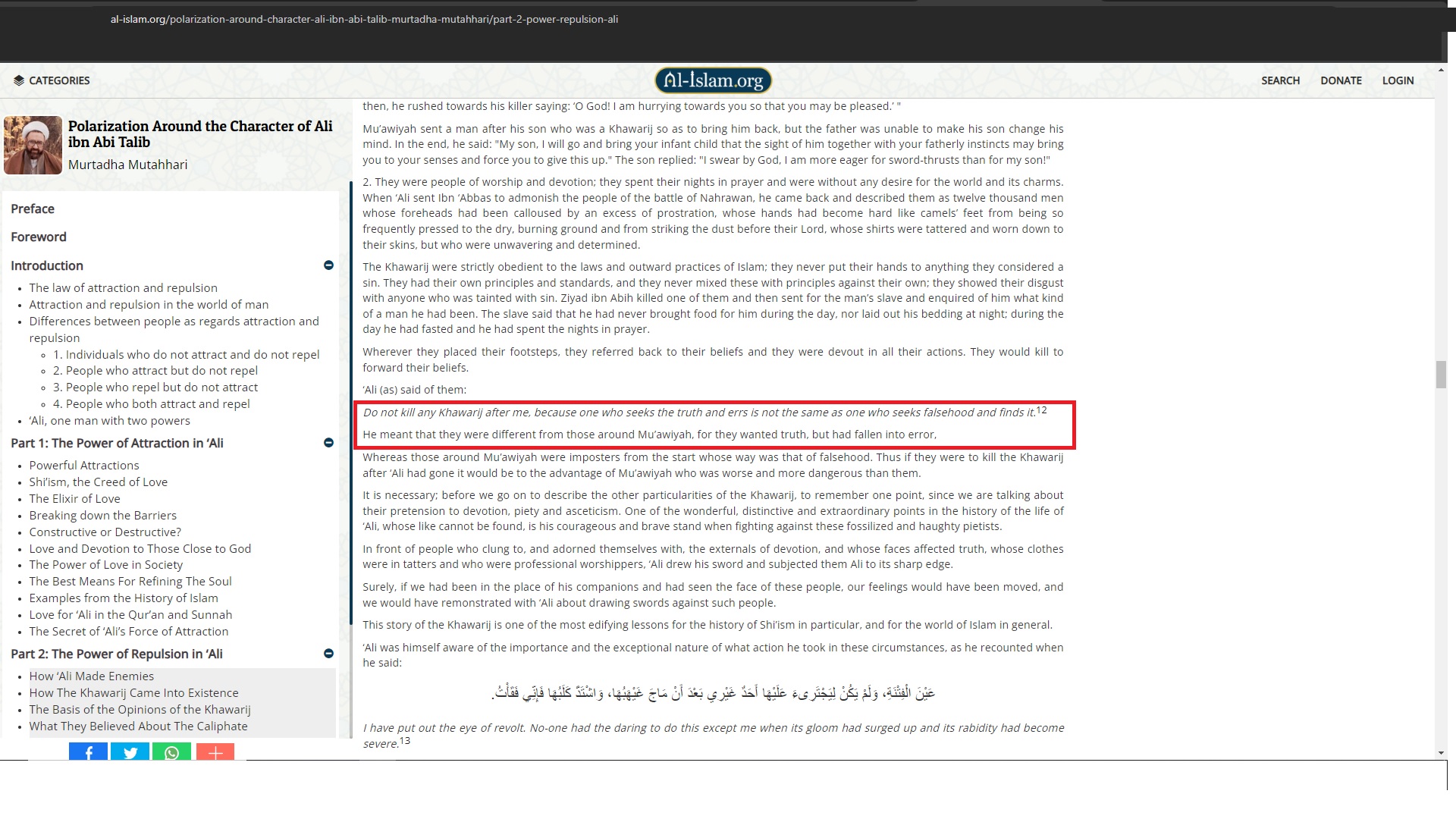
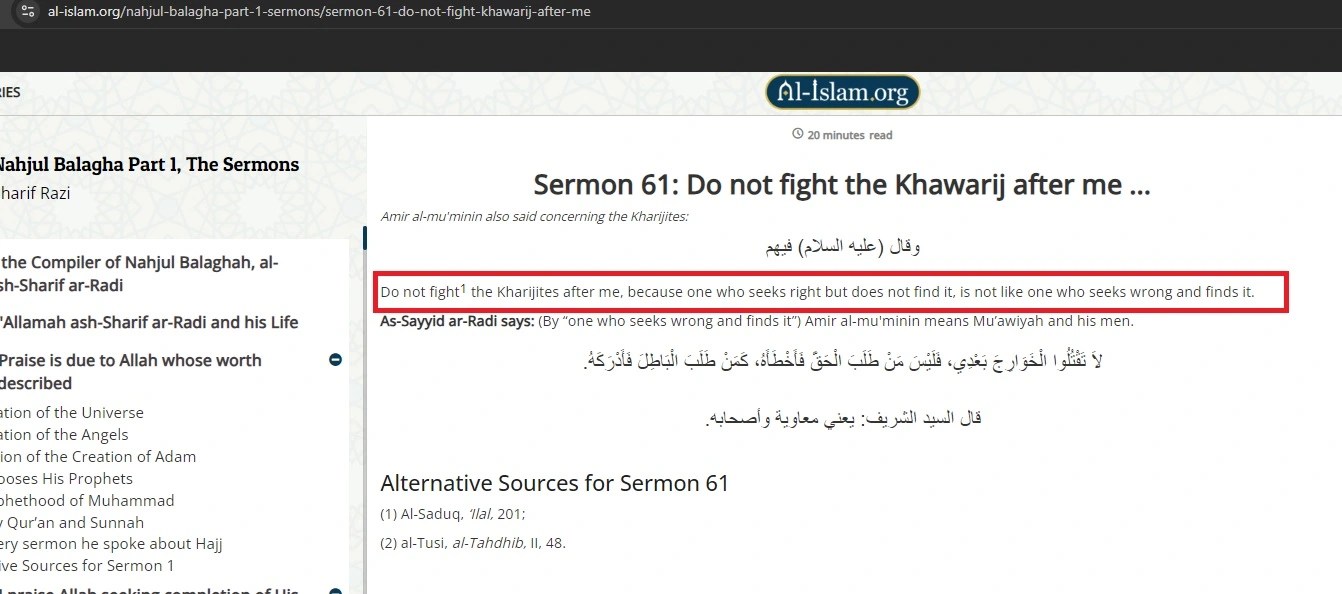
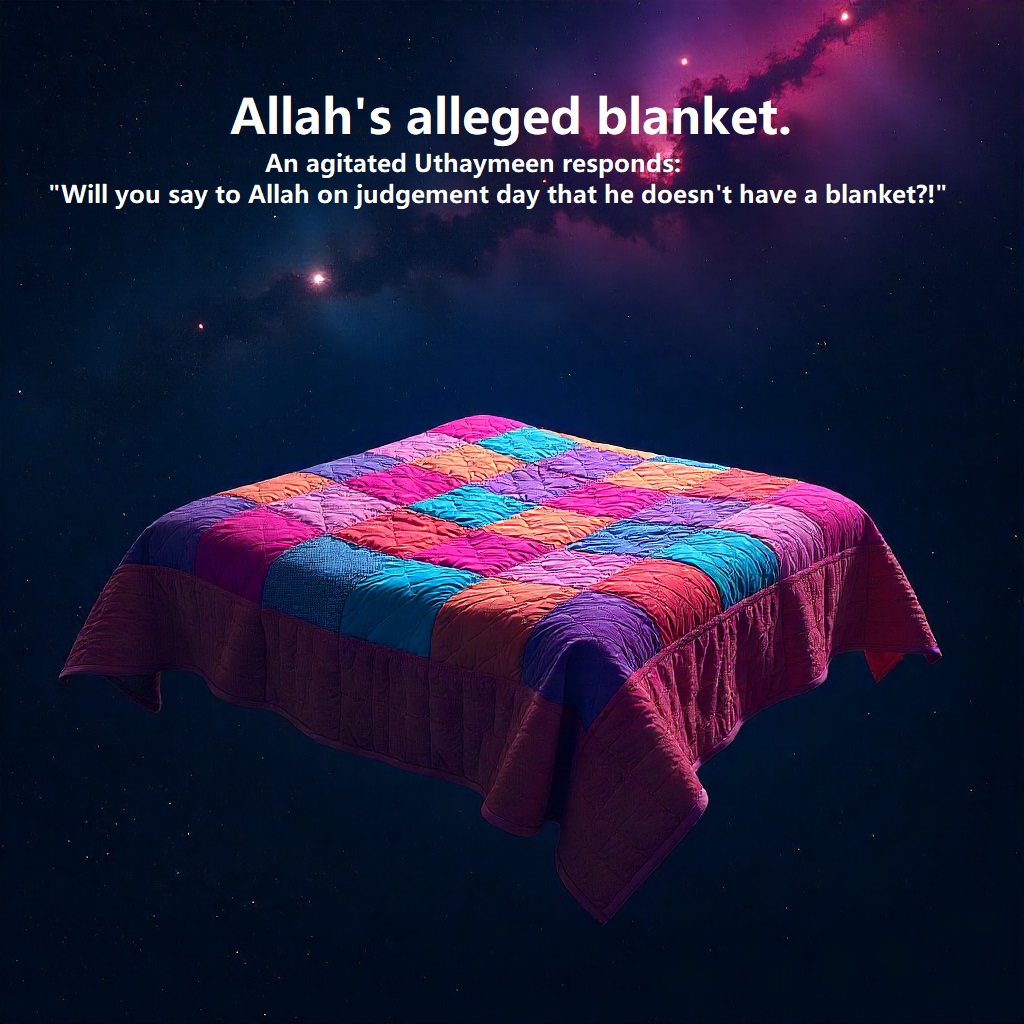
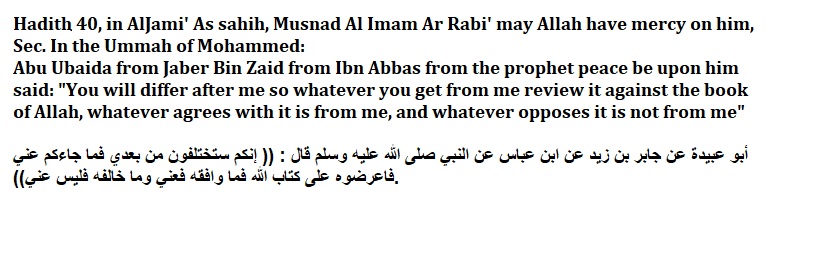
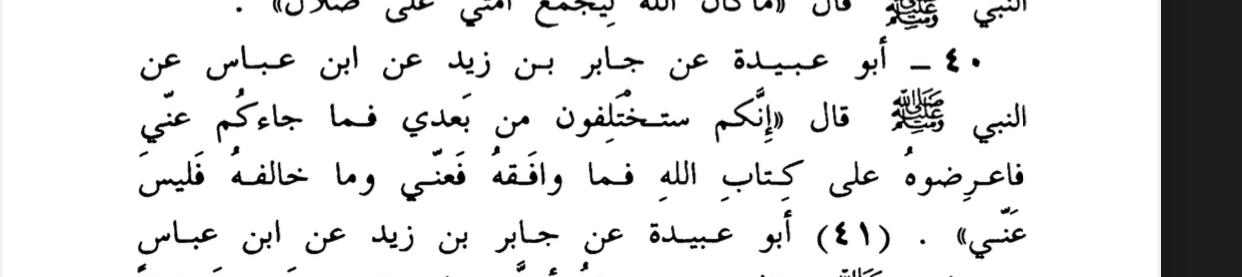
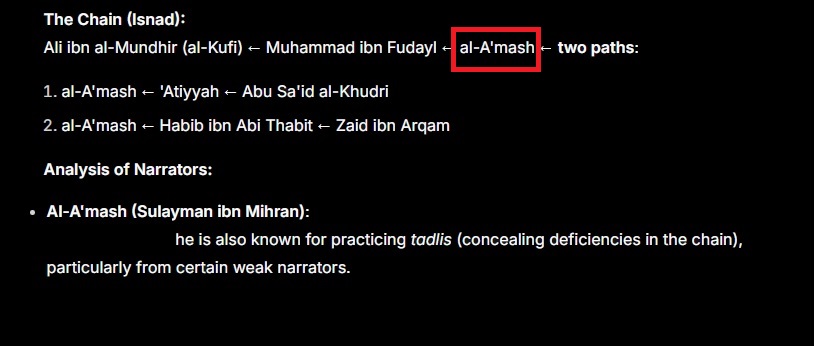
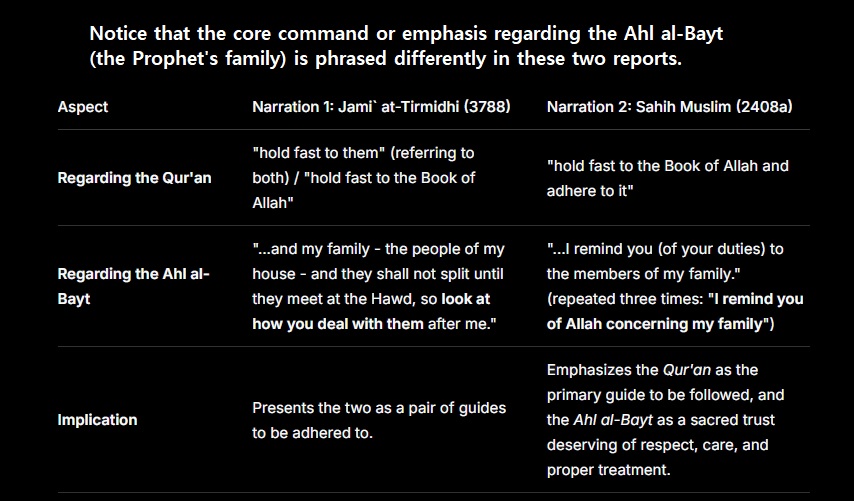
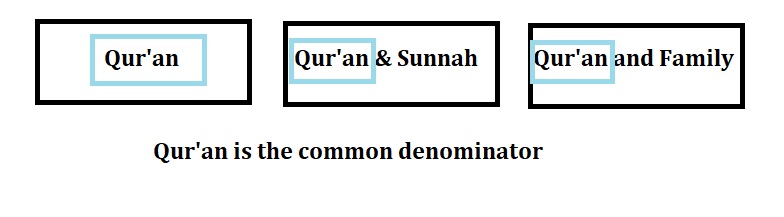
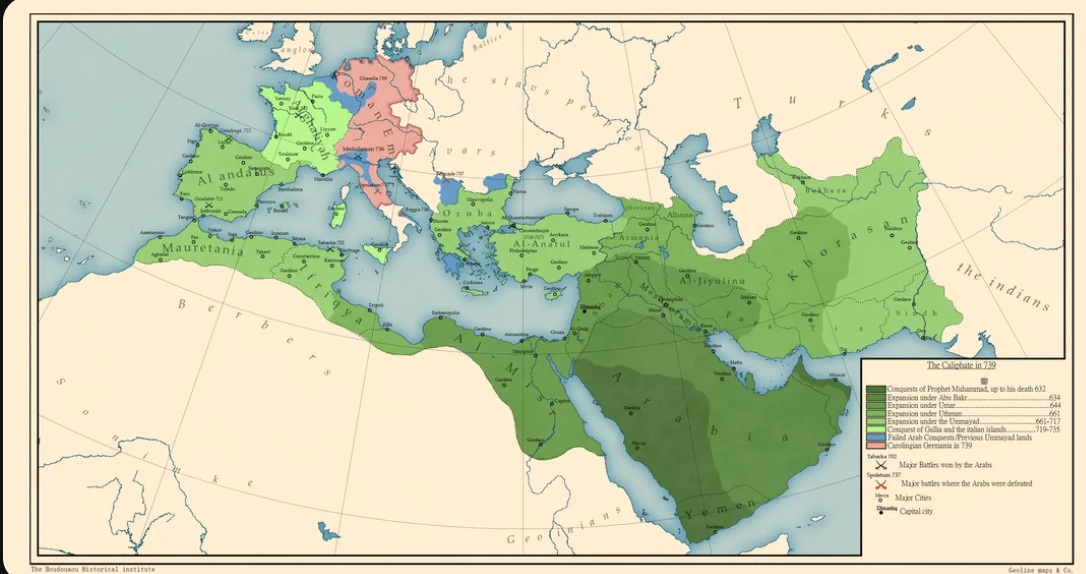

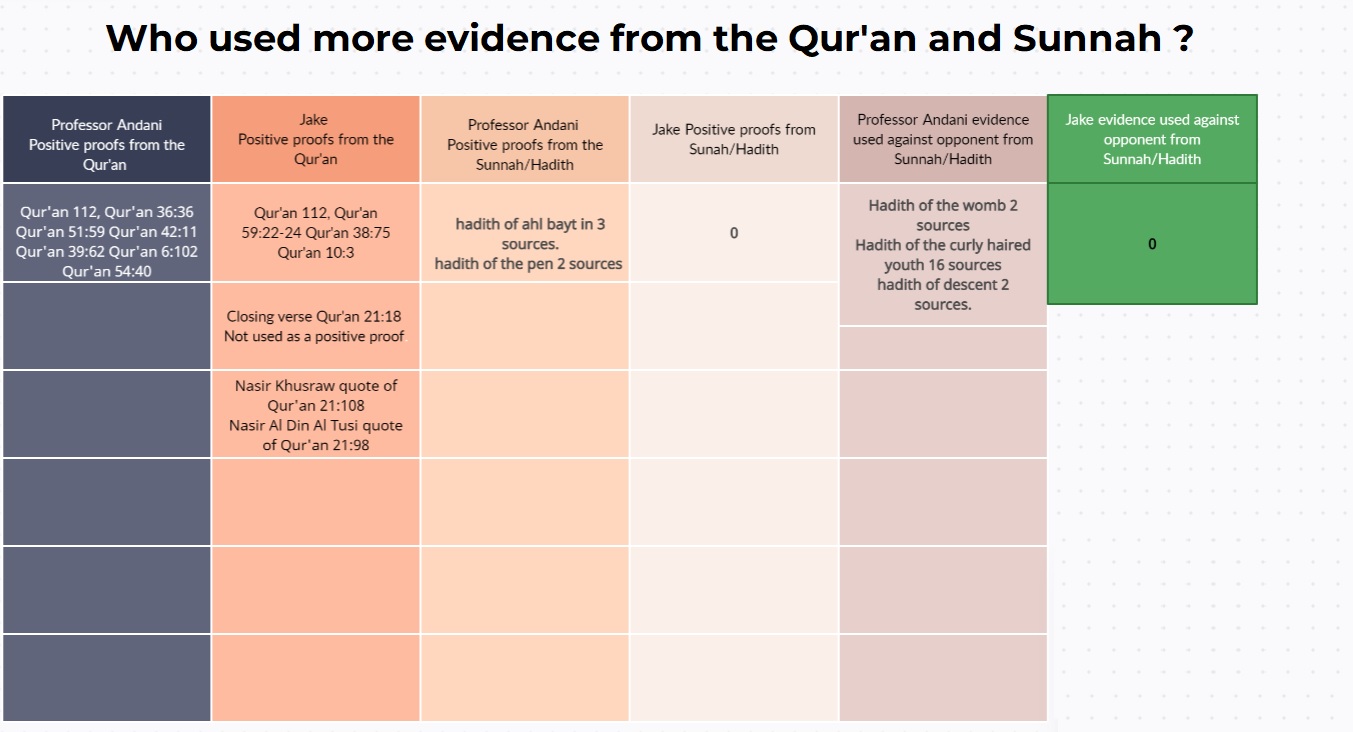
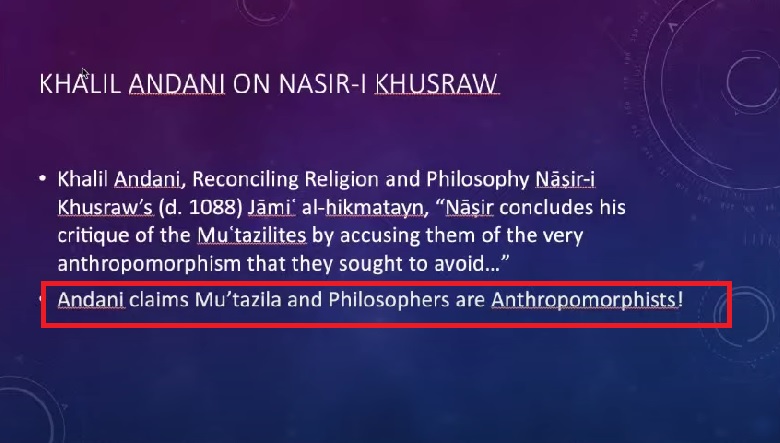
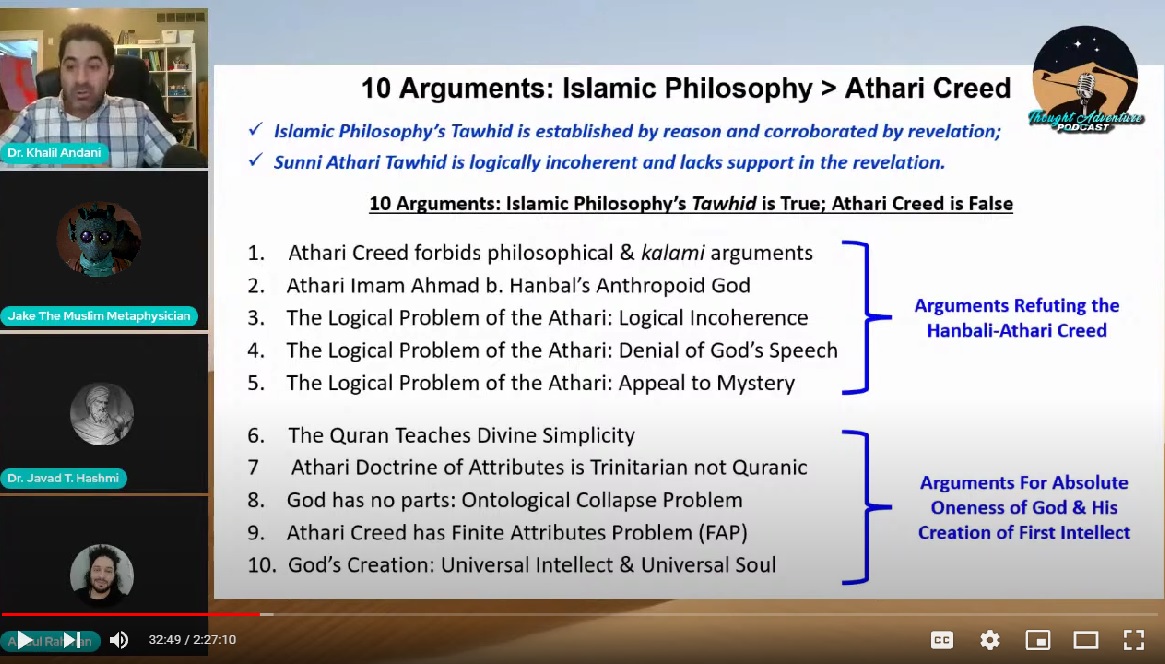

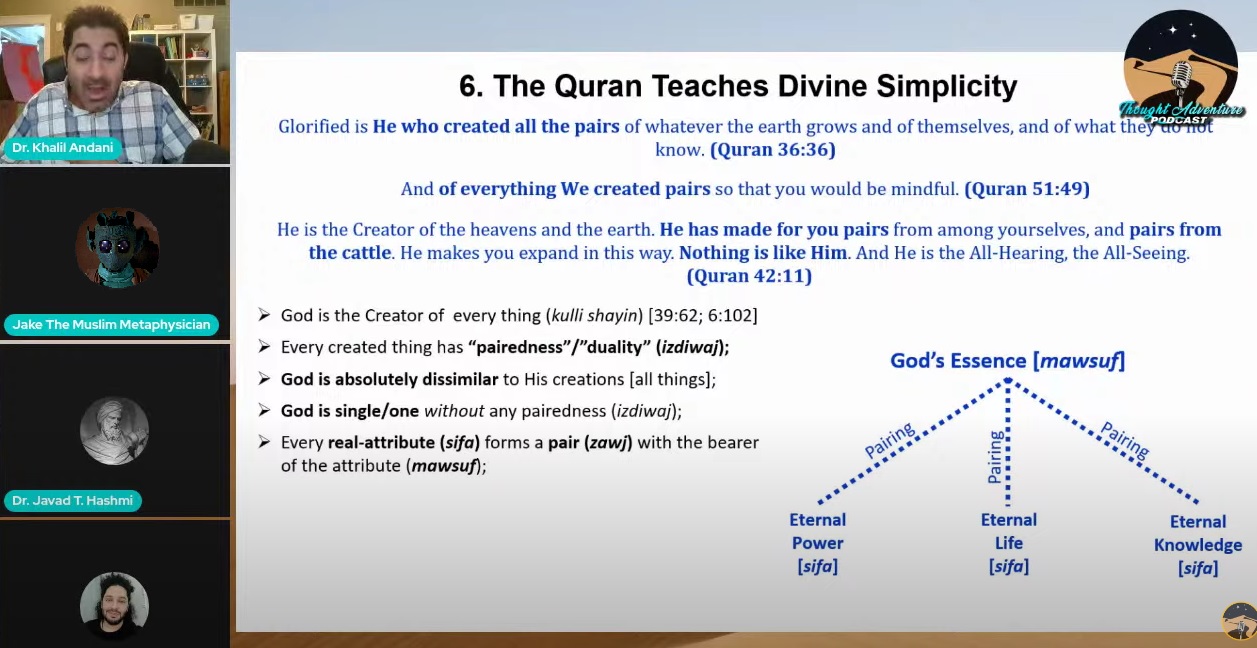
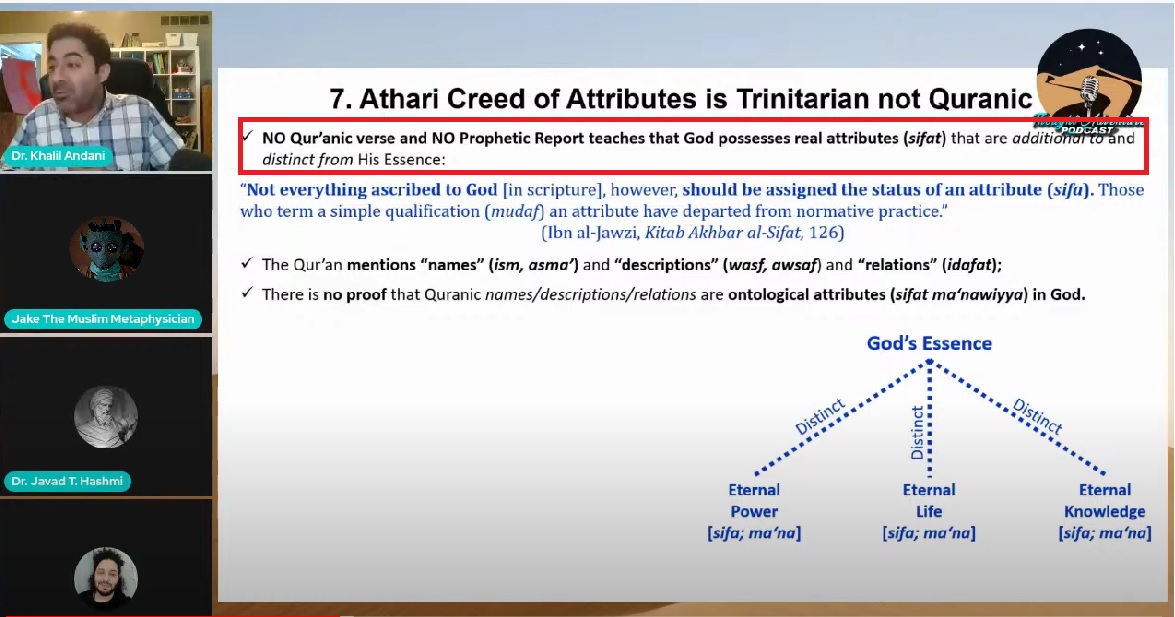


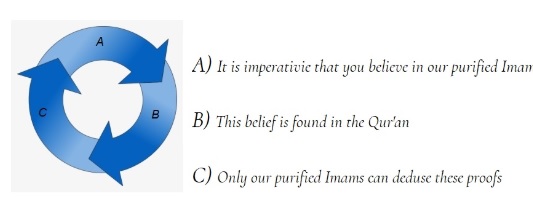
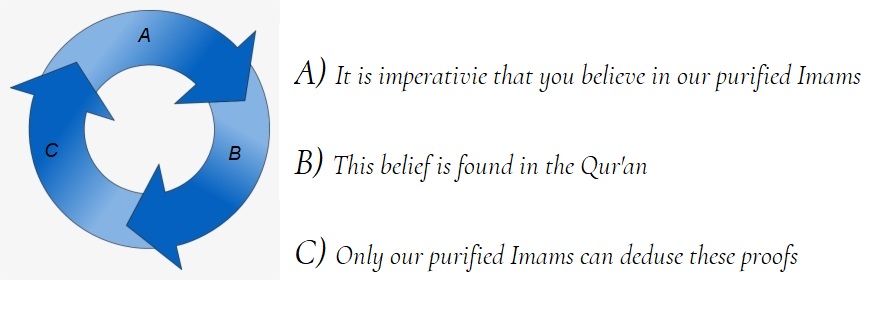
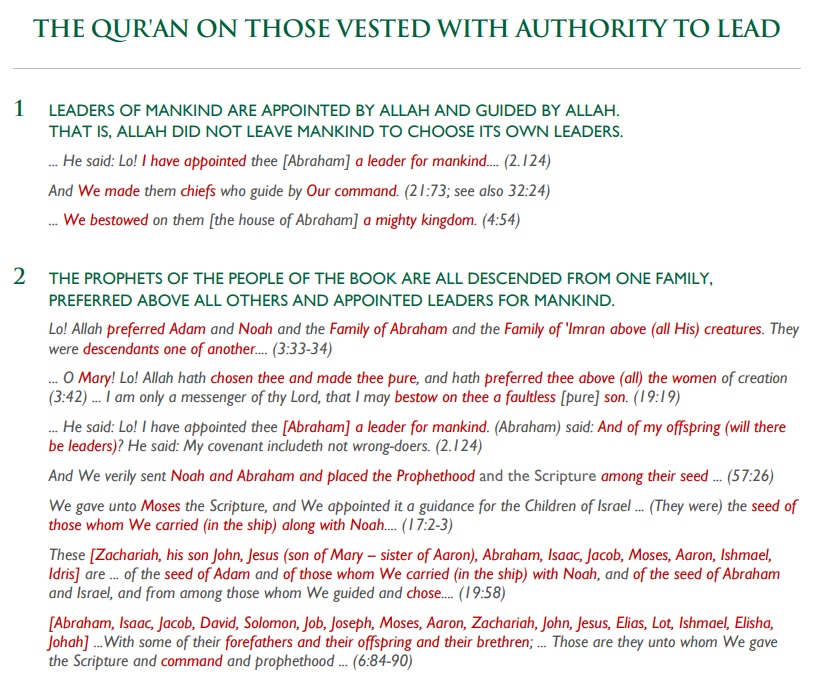
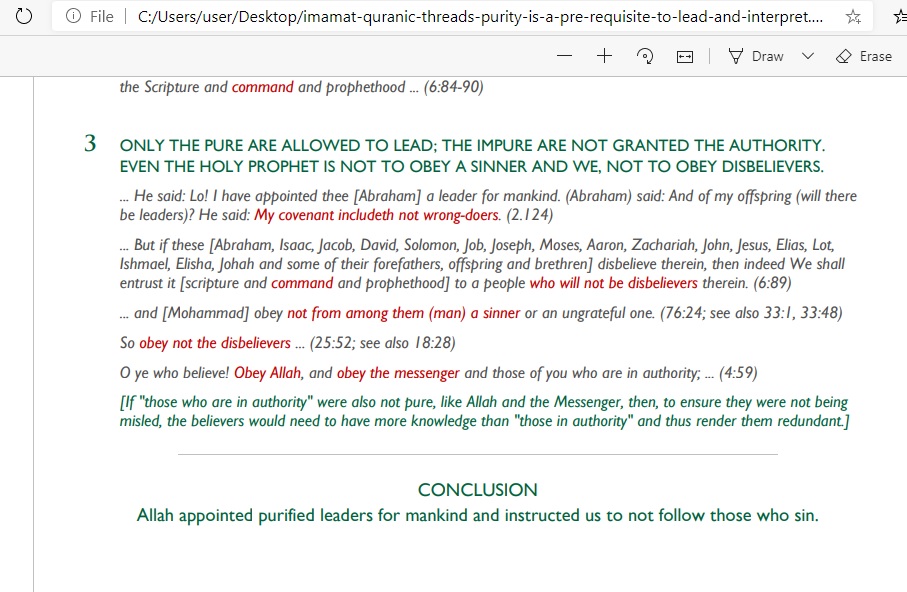
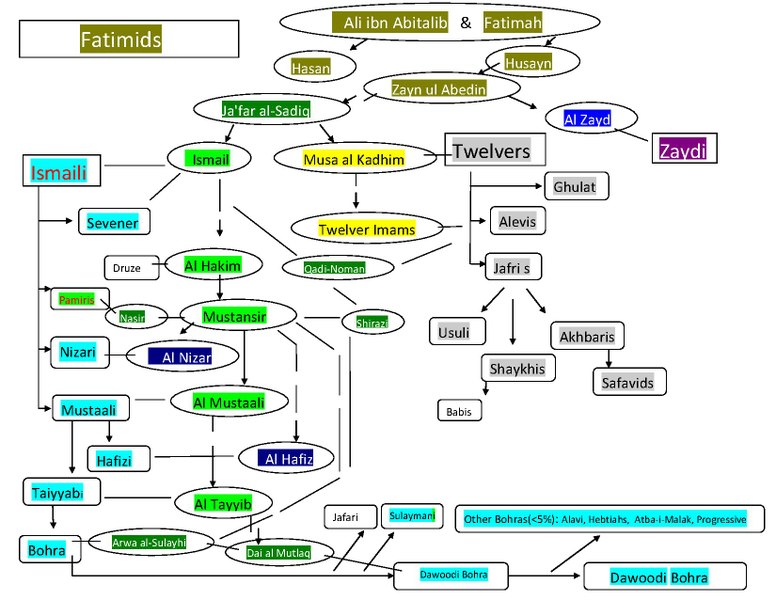


 Prima Quran