“And each one hath a goal toward which he turns; so contend with one another in good works. Wheresoever you may be, Allah will bring you all together. Lo! Allah is Able to do all things.” (Qur’an 2:148)
“Allah will judge between you on the Day of Resurrection concerning that over which you used to differ.” (Qur’an 22:69)
“So after the truth, what else can there be, save error? How then are you turned away?” –(Qur’an 10:32).
﷽
Insh’Allah the following section in the future will be found under the section above: Engaging The Sunni & Shi’I
This is a collection of articles in regard to the Shi’i and their various claims. Also are articles in relation to the Shi’i.
“Do not fight the kharijites after me, because one who seeks a right but does not find it, is not like the one who seeks a wrong and finds it.” –Ali Ibn Abu Talib
Source: (Nahju Al-Balagha Vol. 1, p. 67, speech no. 56.)
The words “He who seeks a right but does not find it” – as ‘Ali himself says – is an allusion to the Nahrawanees who are otherwise known as the Khawarij. The words “Unlike he who seeks misguidance intentionally” refer to Mu’awiya and his Syrian forces.
“Are the Khawarij mushrikun?” Ali said: “They flee from shirk.” Are they munafiqun? Ali said: “The hypocrites remember Allah only a little.” Then what are they? Ali said: “They are our brothers who transgressed against us (ikhwanuna baghaw ‘alayna), so we fought them for their transgression.”
Source: (Al-Bidāya wa l-Nihāya 10:591)
The Ibadi are obviously not Khawarij to anyone who has common sense. However, for those who insist that we are you have to contend with the above statements.
DO READ THIS FIRST. It is important to understand that we believe and accept that those who call themselves ‘Shi’i’ are Muslims.
We understand that ‘Shi’i’ is a term for a loose federation of various sects that all come under the understanding that Ali Ibn Abu Talib should have been the first Amir of the Muslims or was the most deserving of being that Amir.
The Shi’i are not all the same.
The name shi’i refers to a broad spectrum. From among them are those who simply prefer Ali. Believing he had the qualities best suited for leadership. Among them are those who believe in esoteric doctrines which blur the lines and distinction between the Creator and the created.
Even before the Amman accord the Ibadi have regarded the Shi’i as Ahl Al Qiblah.
You have your polemical works directed towards each other -Ithna-Ashari versus Zaydi versus Ismaili.
Thus it is in that spirit that this section is created. We have just as much right to contend for the truth as anyone else does.We have the right to allow the Muslim community to make an informed decision on various controversial issues.
You have your narrative and we have our narrative. Allah is with those who are the truthful!
“So after the truth, what else can there be, save error? How then are you turned away?” –(Qur’an 10:32).
There are a few reasons why we need to becareful or approach with caution what the Shi’i claim about themselves and their sources.
Dr. Musa Al-Musawi (The grandson of Ayatollah Abu L-Hassan al-Isfahani) says the following:
“Although we believe that most of the forged narratives from the Imams, were forged after al-ghiba al-kubra (the disappearance of Al-Mahdi Al Muntadhar)…..but any impartial researcher will necessarily conclude that even during the time of the Shiite Imams, many narratives were fabricated and ascribed to the Imams, in the like manner as they were fabricated and attributed to the Prophet.”
Source: (al-Shi’a wa-l-tashih: al-Sira’ bayn al-shi’a wa-l-tashayyu'(the struggle between Shia and Shiism p. 135)
We cannot take Ali at face value.
Abu Huraira narrated that the Prophet (saw) said:
“On the Day of Resurrection a group of companions will come to me, but will be driven away from the Lake-Fount, and I will say, ‘O Lord (those are) my companions!’ It will be said, ‘You have no knowledge as to what they innovated after you left; they turned apostate as renegades (reverted from Islam).
There are those who would make the Ummah believe that Ali is an article of faith or part of the testimony of faith. This is a far cry from the truth. This hadith shows that Ali has to be examined like anyone else. One cannot cite a particular hadith and say that Ali is exempted from examination. Why is this? Once one accepts this particular hadith,everyone becomes suspect. There are no exemptions. Because at this point we cannot be sure that those who narrate this or that in favour of this or that one are not among the apostates themselves! Therefore, we have to systematically examine the data case by case. Islam is a faith of proof and evidence and not a faith of emotions and rhetoric.
Our school is pragmatic.
Narrated Abu Huraira:
When Allah revealed the Verse: “Warn your nearest kinsmen,” Allah’s Messenger (saw) got up and said, “O people of Quraish (or said similar words)! Buy (i.e. save) yourselves (from the Hellfire) as I cannot save you from Allah’s Punishment; O Bani `Abd Manaf! I cannot save you from Allah’s Punishment, O Safiya, the Aunt of Allah’s Messenger (saw)! I cannot save you from Allah’s Punishment; O Fatima bint Muhammed! Ask me anything from my wealth, but I cannot save you from Allah’s Punishment.”
“Neither your relatives nor children will benefit you on Judgment Day—He will decide between you ˹all˺. For Allah is All-Seeing of what you do.” (Qur’an 60:3)
“It is not ˹proper˺ for the Prophet and the believers to seek forgiveness for the polytheists, even if they were close relatives, after it has become clear to the believers that they are bound for the Hellfire.” (Qur’an 9:113)
Social experiment: If Shi’i sources are to be believed it portrays Umar Ibn Al Khattab (ra) as a violent woman abuser and Ali Ibn Abu Talib as a cowardly man.
“Whatever the Messenger gives you, take it. And whatever he forbids you from, leave it. And fear Allah. Surely Allah is severe in punishment.” (Qur’an 59:7)
“The Messenger believes in what has been revealed to him from his Lord, and so do the believers. They believe in Allah, His angels, His Books, and His messengers. “We make no distinction between any of His messengers.” And they say, “We hear and obey. Your forgiveness, our Lord! And to You is the final return.” (Qur’an 2:285)
﷽
Narrated ‘Ubaidullah bin `Abdullah:
Ibn `Abbas said, “When the ailment of the Prophet (saw) became worse, he said, ‘Bring for me (writing) paper and I will write for you a statement after which you will not go astray.’ But `Umar said, ‘The Prophet is seriously ill, and we have got Allah’s Book with us and that is sufficient for us.’ But the companions of the Prophet (saw) differed about this and there was a hue and cry. On that the Prophet (saw) said to them, ‘Go away (and leave me alone). It is not right that you should quarrel in front of me.” Ibn `Abbas came out saying, “It was most unfortunate (a great disaster) that Allah’s Messenger (saw) was prevented from writing that statement for them because of their disagreement and noise. (Note: It is apparent from this Hadith that Ibn `Abbas had witnessed the event and came out saying this statement. The truth is not so, for Ibn `Abbas used to say this statement on narrating the Hadith and he had not witnessed the event personally. See Fath Al-Bari Vol. 1, p.220 footnote.) (See Hadith No. 228, Vol. 4).
The first problem is that the hadith portrays the Prophet (saw) as someone literate enough to write something lengthy. This goes against the ‘ijma that it is well known that the Blessed Prophet (saw) was unlettered.
The second problem is that if it was something short, why couldn’t he have simply said it?
The third problem is as follows. Everyone would agree that by writing down he meant for others to transcribe his words. The Blessed Prophet (saw) had many more days ahead of him. Why not simply ask the people to reconvene and write down what he willed?
The fourth problem is that the Prophet (saw) said to them, :Go away (and leave me alone). It is not right that you should quarrel in front of me.” So, if he had the strength to make this statement surely he could have said what he needed to say, presuming it was short and to the point.
The fifth problem is that the hadith speaks ill of Allah (swt).
Today I have perfected your faith for you, completed My favour upon you, and chosen Islam as your way. But whoever is compelled by extreme hunger—not intending to sin—then surely Allah is All-Forgiving, Most Merciful.” (Qur’an 5:3)
Allah speaks the truth and in this case the hadith is batil (falsehood). The hadith is batil (falsehood) as indicates the faith has not been perfected.
The sixth problem is the statement attributed to the Prophet (saw) ‘Bring for me (writing) paper and I will write for you a statement after which you will not go astray.’ and the statement attributed to Ibn Abbas (ra): “It was most unfortunate (a great disaster) that Allah’s Messenger (saw) was prevented from writing that statement for them because of their disagreement and noise” have problems.
Why is it a problem? It does not preclude the possibility that everyone present there and not present there would all go astray. That would include Umar, Ali, Ibn Abbas, and whoever else was present. Without that alleged document, they were all (without exception) liable to go astray.
The seventh problem. What good is a written letter to an unlettered people?!
“It is He who sent among the unlettered [Arabs] a Messenger from themselves reciting to them His verses and purifying them and teaching them the Book and wisdom – although they were before in clear error.” (Qur’an 62:2)
We know that the Qur’an was transmitted orally. So what good does some document on a piece of paper with few witnesses do for a population that is mostly illiterate?
The eighth problem is that this is a strong argument for Christian missionaries or anyone else under the sun that Muslims do not have complete guidance.
The ninth problem is that it makes the Prophet (saw) as someone who did not submit to Allah (swt).
“O Messenger! Deliver what has been revealed to you from your Lord, for if you fail to do that, you have not fulfilled the task of His messengership. Allah will certainly protect you from the evil of men. Surely Allah will not guide the unbelievers.” (Qur’an 5:67)
So this is an admission that the Blessed Prophet (saw) did not submit to Allah (swt) fully.
Aisha (ra), a member of the household of the Blessed Prophet (saw) should know if there was anything pressing. She crushes such satanic innuendo with the following:
“She said: He who presumes that the Messenger of Allah saw) concealed anything from the Book of Allah fabricates the greatest lie against Allah. Allah says: “O Messenger, announce that which has been revealed to you from your Lord, and if you do not, then you have not conveyed His message. And Allah will protect you from the people. Indeed, Allah does not guide the disbelieving people.” (Al-Qur’an, Surat al-Ma’idah, 5:67).
The tenth problem is makes the Blessed Prophet (saw) as someone who wasn’t responsible or thinking carefully about his duties and role as a Messenger to mankind. If you have something so important to say, you do not wait until you are feeble and meek.
The eleventh problem is that if what is given was to be a matter of creed, we cannot take our creed upon the ahad. The lone narrator reports.
There are more that a well-trained eye can spot.
The issue with the sanad.
Narrated Yahya ibn Sulaiman: Ibn Wahb told me: Yunus informed me, from Ibn Shihab, from ‘Ubaidullah ibn ‘Abdullah, from Ibn ‘Abbas, who said:
The wording used by Ibn Shihab al-Zuhrī is: “عَنِ ابْنِ شِهَابٍ، عَنْ عُبَيْدِ اللَّهِ” — meaning “‘an” (from/on the authority of) , not “haddathanā” (he narrated to us) or “sami’tu” (I heard).
Why This Matters
Form
Meaning
Implication for Authenticity
haddathanā / akhbaranā
Explicit confirmation that the narrator heard directly from his teacher.
The transmission is muttaṣil (connected) and can be accepted if the narrators are trustworthy.
‘an (عن)
Ambiguous; could mean direct hearing, but could also mean through an intermediary or even from a written source without direct audition.
If the narrator is known to be a mudallis (one who conceals), ‘an is problematic unless it is proven he heard it directly.
However, there are additional problems for Shi’i when it comes to this.
It presents the Prophet (saw) as someone who was unaware that people would prevent him from writing these things down and, it is not acceptable for a Prophet to be unaware of it.
It is a tacit admission that it was not made clear that Ali should be the leader of anyone at Ghadir Khum.
It makes our faith one of esoteric secrecy in which the truth cannot be openly proclaimed but rather revealed via secret channels to a select few. More akin to a gnostic cult than an abrahamic faith.This ultimately explains the various disputes among the shi’i in their lines of succession which we discussed here: https://primaquran.com/2026/02/28/how-the-muslim-ummah-approach-the-shia-in-the-wrong-way/
It shows that if Ali was present he was disobedient as well. Since he obviously did not obey the Prophet (saw) at that moment either.
No one in that room felt that the order of the Prophet (saw) was worth fighting and dying for.
Ultimately, for the Shi’i to rely upon such things it does not make their case look strong.
“It is He who has sent down to you, [O Muhammed], the Book; in it are verses [that are] precise – they are the foundation of the Book – and others unspecific. As for those in whose hearts is deviation [from truth], they will follow that of it which is unspecific, seeking discord and seeking an interpretation [suitable to them]” (Qur’an 3:7)
Our faith has to be built upon that which is certain and foundational. It cannot be built upon ambiguity, uncertainty or matters that are not clear.
From Shaykh Ahmed Al Khalili (h) the Mufti of Oman.
“He who was dead and whom We raised to life, and We set a light for him to walk among men – is he like the one steeped in darkness out of which he does not come out? Thus have their own doings been made to seem fair to the unbelievers.” (Qur’an 6:122)
“And obey Allah and obey the Messenger. But if you turn away, then Our Messenger is responsible only for conveying the message (l-balaghu) clearly(l-mubina). (Quran 64:12)
“But if you they turn away [Prophet], remember that your only conveying this message clearly.” (Qur’an 16:82)
﷽
“The Day when no relation (mawlan) will avail a relation (mawlan) at all, nor will they be helped .” (Qur’an 44:41)
“You see, then the Imamate goes from the Imam to his first cousin, and when the first cousin dies, then the Imamate goes to his first cousin and so on. Because that is the Sunnah of the Prophet (saw).” Huh?🤨🧐
First and foremost, let us be clear.
The Blessed Prophet (saw) did not organize some event known as Ghadir Khum. The way that Shi’i and Pro-Alids portray the event, they make it sound as if the Blessed Prophet (saw) organized some event and gathered everyone together.
Those who say this are either ignorant or extremely deceptive. The Blessed Prophet (saw) isresponding to an incident that we later know to be the incident at Ghadir Khum. This, in of itself, is a major cause for reflection.
Why a cause for major reflection? Because if there was no complaint about Ali, then there would be no occasion for the Blessed Prophet (saw) to say and do what he (saw) did.
To make a major declaration is a proactive measure, not a response to an incident. If the Blessed Prophet (saw) had intended to appoint a successor, he would have done so proactively and publicly, not as a reaction to grumblings.
Second major point.The issue of the textual variants.
There is no such thing as ‘The’ hadith of Ghadir Khum. We had to correct a Zaydi Shi’i at this point. We informed him there was no such hadith. As if it is an ahad narration with only one type of matn (textual tradition). That is simply not true. What is true, however, is that there is ‘The’ incident of Ghadir Khum, and then we have many narrations of that incident with many textual variations.
Thus, the first point of difference is upon which of these chains are established and which of them contain weaknesses. The process of separating the wheat from the chaff.
Which brings us to the second point. These hadith are not Mutawātir.
In fact, the next time someone claims they are Mutawātir, ask them if it is Mutawātir Lafẓī or Mutawātir Maʿnawī. Dear readers and those searching for truth. Do not let us (Ibadi) or the Shi’i or the Sunni tell you something is Mutawātir unless and until they clarify between these two! It is a huge difference.
Mutawātir Lafẓī (متواتر لفظي): This refers to a hadith whose exact wording has been transmitted by so many different chains of narration at every level that it is impossible for them all to have agreed upon a lie. Mutawātir Maʿnawī (متواتر معنوي): This refers to a hadith whose core meaning or concept is mutawātir, even if the exact wording varies from one narration to another.Which brings us to the third point of difference.
Ssorting out the transmission and textual variants. What actually was said?
Why would certain sects in Islam prefer textual variants over others?
For example. Does it sauce up what the Blessed Prophet (saw) is alleged to have said?
Let us give an example of this.
“Oh Allah! Love those who love him (‘Ali) and antagonize those who antagonize him; and help those who help him and forsake those who forsake him” has been one of those additions meant to sauce up the original statement of the Blessed Messenger (saw).
Source: (Among those who have said so, is Al-Imam Ahmad bin Hanbal as quoted by Ibn Kathir in his Al-Bidaya Wa Al-Nihaya 7, p. 348. Ibn Taymiyya in his Minhaju Al-Sunnah Vol. 4, p. 86, this is so in accordance with the quotation of him by Al-Sayyid Al-Saqqaf in his Al-Salafiyya Al-Wahabiyya p. 65. Also, Ibn Hazm, as quoted by Al-Sayyid Al-Saqqaf op. ct., has classified the tradition as an inauthentic one.)
“The first addition commonly cited, “Allahummu wali man walahu wa ‘adi man ‘adahu (O Allah, befriend whosoever befriends him and be the enemy of whosoever is hostile to him).”
“This additional wording of the hadith, “O Allah, befriend whosoever befriends him and be the enemy of whosoever is hostile to him,” is an uncorroborated addition by the narrator, Sharik ibn ‘Abdullah al Qadi, who is weak of memory.[15] As such it will be treated as an irregular addition which means that these additional words are not considered to be the Prophet’ssalla Llahu ‘alayhi wa sallam words. However, some scholars have accepted only this addition to be part of the Hadith.”
What is the motivation? The motivation is obvious. It is to try and prove that Ali was in Wilāyat al-Ḥaqīqah (real guardianship of Allah), whereas he (Ali) only has the Wilāyatal-Dhahir.
However, let us assume that the statement is correct. What would this mean in the wider scope of the Sharī’ah?
The one that hates ‘Ali without any lawful reason for which it is incumbent upon a Muslim to hate another, has, by so-doing, committed a sin.
This point of view is basically founded on the fact that Islam has one general and equal outlook on all Muslims, which means that Allah antagonizes anyone that hates a Muslim without having a valid, sound reason based upon Islam is in error.
It is for this reason that Allah, in one of the Ahadith Qudsiyya (Divine hadiths), says: “Whosoever shows enmity to someone devoted to Me, I shall be at war with him.”
Allah’s Messenger (saw) said, “Allah said, ‘I will declare war against him who shows hostility to a pious worshipper of Mine. And the most beloved things with which My slave comes nearer to Me, is what I have enjoined upon him; and My slave keeps on coming closer to Me through performing Nawafil (praying or doing extra deeds besides what is obligatory) till I love him, so I become his sense of hearing with which he hears, and his sense of sight with which he sees, and his hand with which he grips, and his leg with which he walks; and if he asks Me, I will give him, and if he asks My protection (Refuge), I will protect him; (i.e. give him My Refuge) and I do not hesitate to do anything as I hesitate to take the soul of the believer, for he hates death, and I hate to disappoint him.”
The irony of the above text is that Ali allegedly antagonizes Aisha (ra), who is in Wilāyat al-Ḥaqīqah (real guardianship of Allah), whereas he (Ali) only has the Wilāyatal-Dhahir (apparent guardianship) If the hadith reports are to be believed where Ali antagononizes Aisha (ra) in the story of ‘ifk.
The verses that Allah (swt) mentions below is the is are in regard to different types of Wilāyat.
Example: (Wilāyatal-Dhahir apparent guardianship), which all believers based upon their dhahir (apparent) share with each other.
“The believing men and believing women are friends (awliyau) of one another. They enjoin what is right and forbid what is wrong and establish prayer and give zakah and obey Allah and his Messenger. Those-Allah will have mercy upon them. Indeed, Allah is Exalted in Might and Wise.” (Qur’an 9:71)
Example: (Wilāyat al-Ḥaqīqah real guardianship of Allah)
“Lo, verily, the friends (awliyaa) of Allah are those on whom fear comes not, nor do they grieve. Those who believe and keep their duty to Allah.” (Qur’an 10:62-63)
“Then those who We chose of Our servants inherited the Book. But of them are some who wrong themselves and of them are some who are intermediate, and of them are some who outstrip others through their good deeds, by Allah’s leave.” (Qur’an 35:32)
So all those who believe and keep their duty they are in wilayat with Allah (swt). He knows best who they are. Thus, to hate a believer without a valid reasonconstitutes a sin.
The strongest tie of Islam is to love and hate for the sake of Allah.
Narrated Abu Umamah: The Prophet (saw) said: “If anyone loves for Allah’s sake, hates for Allah’s sake, gives for Allah’s sake and withholds for Allah’s sake, he will have perfect faith.”
This is regardless of one’s familiar ties, clan ties, or social economic status. After all, was this not true from the time of the early companions? They fought those who were their family, their tribe, clan or even of the same social or economic status. This is because we love and hate for Allah’s sake!
The one that hates Ali without any lawful reason for which it is incumbent upon a Muslim to hate another, has, by so-doing, committed a sin.
Whereas the one who hates Ali for a lawful reason and dissociates from him for a sin he may have committed is a dutiful servant of Allah.
So those Shi’i or Pro-Alids who are telling you there is such a hadith known as ‘Ghadir Khum’ are either ignorant or being extremely deceptive. As we mentioned, there are variations of the incident.
The third point of difference and perhaps the real point of contention is what the incident really means and what it entails.
To us, this incident concerning Ghadir Khum is really quite simple to address.
The concept of Muslims being ruled by Imams in the lineage of the Blessed Prophet (saw) is not a clear teaching in the Qur’an, and it is a huge reason why Shi’i (Imami & Zaydi) are quick to deflect any conversation about it from the Qur’an and quickly rush to the secondary sources of Islam. Fair enough.
One of the most important aspects of Islam is the five daily prayers. Every Muslim knows how to perform the five daily prayers one would need to turn to the Sunnah of the Blessed Messenger (saw). However, the actions mentioned in the Qur’an: Prayer, Zakat, etc. are doings which are explained via the Sunnah.
Whereas the belief in Imams is a belief and does not relate to actions and doings, thus, it remains a huge point of constant embarrassment for the Shi’i. Why isn’t such a major belief not simply spelled out in the Qur’an? Thus, the hadith is the hill they must live or die upon.
So a few questions are in order.
Why wasn’t this occasion a proactive measure and public proclamation rather than a response to a complaint? Strongly suggesting that without the complaint no statement would have been made.
Why didn’t the blessed Messenger (saw) reveal such a belief while in Mecca when more people would have heard this?
If this hadith is the time in which the Blessed Prophet (saw) is expounding upon the truth of Ali and his future role, is that a tacit admission that the Qur’an is silent about following Imams?
If the answer is Yes to question 2, then let that stand on the record.
If the answer is no, which ayat of the Qur’an is this hadith elaborating upon?
The incident of Ghadir Khum as narrated by Imam Al-Bukhari in his Sahih, and the commentary of Fath Al-Bari.
Explanation of Sahih Al Bukari by Ahmad ibn Ali ibn Hajar al-Asqalani.
This is the summary:
Khalid bin Al-Walid and Buraidah Al-Aslami were in Yemen to fight in the way of Allah and to call people to Islam, so the Messenger of Allah (saw), sent Ali to them to “seize the spoils.” Ali came and took the spoils, and his eyes fell on a Yemeni girl whom he liked, so he took her into the tent, after he fufilled what he did with her, and went out to the companions, his head dripping with water.
Khalid bin Al-Walid said to Buraidah: Don’t you see what this man is doing??? Buraydah became angry and decided to file a complaint against him to the Blessed Messenger (saw).
It maybe that he filed a complaint for the following reasons:
The first possible reason. Having intercourse with female slaves is subject to conditions and laws.
The most important of which is: Waiting for the woman to be purified. She may already be married, so in order for lineages not to be mixed, the waiting period or waiting period must end. Some scholars patched up Ali’s case and said: The Yemeni woman might be a child who does not menstruate!! That is why Ali saw it permissible to have intercourse with her without waiting for her period to be completed!
Then we respond with the question: Is it permissible to have intercourse with young girls who have not even menstruated? Based upon what?
Then think about these people who think they are defending Ali. That out of all the war booty he only found this young girl? How is that a defense?
The second possible reason. How could Ali divide and choose for himself?
The blessed Prophet (saw) sent him “to collect the fifth only,” and Buraidah saw that the division should be divided only by the Imam, who is the Prophet, (saw) When the Blessed Prophet (saw) had seen the anger in Buraidah, he said to him: “O Buraidah, do you hate Ali?” Buraidah said: (Yes).
Here the Blessed Prophet (saw), wanted not to increase the gap of hostility and to mend the rift and reconcile and bring the Companions together. So the Blessed Messenger of Allah (saw) said: “Do not hate him, for he has more than that in the fifth.” Meaning: Ali originally had a right to the spoils, so do not hate him for this.
The story ends at this point, and the details of what happened after that have not reached us.
The Prophet (saw) sent `Ali to Khalid to bring the Khumus (of the booty) and I hated `Ali, and `Ali had taken a bath (after a sexual act with a slave-girl from the Khumus). I said to Khalid, “Don’t you see this (i.e. `Ali)?” When we reached the Prophet (saw), I mentioned that to him. He said, “O Buraida! Do you hate `Ali?” I said, “Yes.” He said, Do you hate him? Because he deserves more than that from the Khumlus.”
“O Buraidah, do you hate Ali? Buraidah said: “Yes.”
Note: The Blessed Messenger (saw) did not say: “You have left Islam, O Buraydah, O Nasibi! Do you not know that hating Ali is disbelief and hypocrisy?” “You must repent, O Buraydah, from your disbelief and enter Islam once again.” None of this happened!
All that the Blessed Prophet (saw) said: Ali has a right to the spoils, so do not hate him because of this matter.
So we ask the Sunni Muslims (not the Shi’i) if the “hatred of Ali bin Abi Talib” is hypocrisy and unbelief then did the companion Buraidah Al-Aslami fall into hypocrisy and apostasy?
You have two bitter options:
If you say no, he did not commit hypocrisy nor unbelief, because hating Ali is not one of the things that leads to hypocrisy nor disbelief. Especially if love and hate is done for the sake of Allah (swt). Then let that stand on the record.
If you say yes, then he (Buraidah), a companion of the Blessed Prophet (saw) by your admission, has committed hypocrisy and worse yet, disbelief!
After hearing that Buraidah hated Ali, the response of the Blessed Prophet (saw) was very mild. He simply told him that the hate was misplaced.
Shi’i are often involved in some major gas lighting when it comes to Ghadir Khum.
They gaslight by saying: “Did the Prophet really bring all these people together simply to say Ali is my buddy?”
This is just gas lighting by them, and they should know better. Everyone knows that the event was not orchestrated by the Blessed Prophet (saw). That is just beyond absurd. Rather, the Blessed Prophet (saw) is reacting to an event that happened. Nothing he orchestrated, so the gas lighting done by the Shi’i is exactly that: gas lighting.
Shi’i scholar Syed Husain Mohammad Jafri lays out some highlights for us:
“The bone of contention between the Sunnis and the Shi’a is not, however, and never has been, the authenticity of the event of Ghadir Khum, nor the declaration of the Prophet in favour of ‘Ali, as quoted above: the real disagreement is in the meaning of the word ‘mawla’ used by the Prophet. The Shi’a unequivocally takes the word in the meaning of leader, master, and patron, and therefore the explicitly nominated successor of the Prophet. The Sunnis, on the other hand, interpret the word mawla in the meaning of a friend, or the nearest kin and confidant.” –Sayyid Husayn Muhammed
“No doubt the richness of the meaning of many an Arab word and the resulting ambiguity does render both the interpretations equally valid. The Sunnis, while accepting the tradition, assert that in that sentence the Prophet simply meant to exhort his followers to hold his cousin and the husband of his only surviving daughter in high esteem and affection.”-Sayyid Husayn Muhammed
“Further, the Sunnis explain the circumstance which necessitated the Prophet’s exhortation in that some people were murmuring against ‘Ali due to his harsh and indifferent treatment in the distribution of the spoils of the expedition of Al-Yaman, which had just taken place under ‘Ali’s leadership, and from where he, along with those who participated in the expedition, directly came to Mecca to join the Prophet at the Hajj.”-Sayyid Husayn Muhammed
“To dispel these ill feelings against his son-in-law, the Prophet spoke in this manner. Accept this explanation as such, the fact still remains that this declaration of the Prophet in such an extraordinary manner, equating ‘Ali as an authority and person with himself, does provide a strong basis for the Shi’i claims.”-Sayyid Husayn Muhammed
“Taking for granted the controversial character in interpreting of the Ghadir tradition, the events mentioned above could have been understood by some of the Prophet’s Companions as indicative of his inclination towards ‘Ali, though he did not or could not nominate him explicitly, perhaps because of the old North Arabian custom of leaving the selection of a leader to the people. A commonly suggested obstacle in the way of ‘Ali is said to have been his comparatively young age at the time of Muhammed’s death.” –Sayyid Husayn Muhammed
“Some try to explain the circumstances which led the Prophet to his pronouncement. In their view, the problem was that a number of people were grumbling about ‘Ali because of the way he dealt with the distribution of the spoils in the al-Yaman expedition. This expedition had just been successfully executed under ‘Ali’s leadership and he and others who had taken part in it had gone directly to Mecca to join the Prophet in the pilgrimage. The Prophet was, they argue, merely trying to dispel these ill-feelings against ‘Ali.” -Arzina R. Lalani
Source: (Early Shi’i Thought: The Teachings of Imam Muhammed al-Baqir by Arzina R. Lalani page 72)
Ghadir Khum is possibly one of the more weaker arguments advanced.
To us, this has to be the weakest evidence used by the Shi’i for their claim. This also shows weakness in Ali -if we are to believe the Shi’i narrative.
We are not saying that we believe Ali to be weak. However, if we are to believe the narrative of the Shi’i, it certainly shows weakness in Ali.
In fact, we believe it shows weakness on behalf of Ali. We are not saying that we believe that Ali was weak. We are saying the events as they are related to us show weakness.
They also show that those people who complained about Ali and his treatment of the spoils of battle certainly were not aware of any concept of some infallible imam. Or some Imam who is beyond reproach.
So it was after this event that the Blessed Prophet (saw) is reported to have said:
By the way when you click on the link it says Grade: Sahih (Darussalam). Meaning that is the grade the organization gave it. However, Tirmidhi himself has it as Hasan Gharib (Good but strange in this particular chain).
Another major textual variant. “Whoever I am, his mawla, then Ali is his mawla.”
This addition is not found in the following: It is not in the Muwatta of Imam Malik. It is not contained in Sahih Bukhari. It is not contained in Sahih Muslim. It is not contained in Musnad Al-Imam Ar-Rabi’ (Al-Jami’ Al-Sahih).
We do not have to grant the textual variant. It is the type of textual variant that would be a red flag in the transmission of the New Testament text. However, Muslims should not give this a pass. However, for the sake of discussion, let us say that the textual variant was contained in the above four collections of hadith. How would we understand it?
So let us quote from the Qur’an.
“The Prophet is a friend (awla) to the believers more than they are to their own selves, and his wives are their mothers. Blood relations have more rights to one another, according to the Book of Allah, than do the believers and Muhajirun. Nevertheless, you may act kindly toward your (awla) friends. All this is inscribed in the Book.” (Qur’an 33:6)
1) The Prophet (saw) is a friend to the believers. He is or should be dearer to us than we are to ourselves.
Say, “If your fathers, your sons, your brothers, your wives, your relatives, wealth which you have obtained, commerce wherein you fear decline, and dwellings with which you are pleased are more beloved to you than Allah and His Messenger and jihad in His cause, then wait until Allah executes His command. And Allah does not guide the defiantly disobedient people.” (Qur’an 9:24)
2) Keeping the blood ties/familiar ties.
“O men! Fear your Lord Who created you from a single being and out of it created its mate; and out of the two spread many men and women. Fear Allah in Whose name you plead for rights, and heed the ties of kinship. Surely, Allah is ever watchful over you.” (Qur’an 4:1)
3) There is nothing new or novel in the idea that either the Blessed Prophet (saw) or Ali being a mawla.
“The believing men and believing women are friends (awliyau) of one another. They enjoin what is right and forbid what is wrong and establish prayer and give zakah and obey Allah and his Messenger. Those-Allah will have mercy upon them. Indeed, Allah is Exalted in Might and Wise.” (Qur’an 9:71)
4) His wives are their mothers. Ask your Shi’i friend, “Is Ayesha (ra) your mother?”
5) Nevertheless, you may act kindly toward your (awla) friends
The Blessed Prophet (saw) always had a beautiful and gentle way about him. So in saying, ‘Whoever I am his Mawla, then Ali is his Mawla‘ is a gentle reminder to those who took issue with Ali during the expedition. And if it is true that a verse of the Qur’an is quoted, the context itself tells us that we can act kindly towards our ‘awla’ and certainly one could believe that Ali was an awla of the believers during that time.
He (Ali)had the (Wilāyatal-Dhahir apparent guardianship), which all believers based upon their dhahir (apparent) share with each other.
Al-walāya (allegiance) and al-barā’a (disavowal), are big teachings in Islam that, unfortunately, are not taught to the majority of Muslims.
We give an overview of the Ibadi school position here:
“Taking for granted the controversial character in interpreting of the Ghadir tradition, the events mentioned above could have been understood by some of the Prophet’s Companions as indicative of his inclination towards ‘Ali, though he did not or could not nominate him explicitly, perhaps because of the old North Arabian custom of leaving the selection of a leader to the people. A commonly suggested obstacle in the way of ‘Ali is said to have been his comparatively young age at the time of Muhammed’s death.” —Sayyid Husayn Muhammed
So then the author goes on to mention other young people who were on a council. So there is a tacit admission here that people decide things by council. Which happens to be a verse in the Qur’an. Unlike the Shi’i concepts which are nowhere in the Qur’an.
“So those who have responded to their lord and established prayer and whose affair is determined by consultation among themselves, and from what We have provided for them, they spend.” (Qur’an 42:38)
This one verse blows the whole idea of infallible imams right out of the water.
So an excellent question to ask about this Ghadir Khum would be to ask:
How did Ali Ibn Abi Talib himself understand it? Well, we get our answer right here!
Narrated `Abdullah bin `Abbas:
`Ali bin Abu Talib came out of the house of Allah’s Messenger (saw) during his fatal illness. The people asked, “O Abu Hasan (i.e. `Ali)! How is the health of Allah’s Messenger (saw) this morning?” `Ali replied, “He has recovered with the Grace of Allah.” `Abbas bin `Abdul Muttalib held him by the hand and said to him, “In three days you, by Allah, will be ruled (by somebody else ), And by Allah, I feel that Allah’s Apostle will die from this ailment of his, for I know how the faces of the offspring of `Abdul Muttalib look at the time of their death. So let us go to Allah’s Messenger (saw) and ask him who will take over the Caliphate. If it is given to us we will know as to it, and if it is given to somebody else, we will inform him so that he may tell the new ruler to take care of us.” `Ali said, “By Allah, if we asked Allah’s Apostle for it (i.e. the Caliphate) and he denied it us, the people will never give it to us after that. And by Allah, I will not ask Allah’s Messenger (saw) for it.”
Clear as day that the Ghadir Khum did not delegate Ali as the Amir of the Muslims!
Although it can be argued from the text that he did feel he had some stake in being the Amir (possibly based upon kinship) It is clear as day that he di dnot see himself as the default Amir of the Muslims.
Clear as day that Ali could see the Blessed Messenger (saw) as possibly denying the Caliphate to him!
In fact, what Ali seemed to be most distressed about was the $$$. That is a very practical concern.
Now the Shi’i will actually say that Ali was practicing Taqiya or dissimulation. Our response to that could be as follows: “Yes! This whole idea of Ali and Fatima (ra) being upset with Abu Bakr (ra) was possibly the taqiya! It was done between them so they could find and root out the real enemies of Abu Bakr(ra).”
We know that it is quite plausible that Ali, in his heart of hearts, loved Abu Bakr (ra) and one of the huge proofs of that is that out of all the names he could have possibly chosen for his children, he named one Abu Bakr(ra)!
Shi’i, outraged over this, will retort: “It was a common name!” Yeah, well, so is Larry, Lester and Kyle and yet not every Englishman names his child one of these names.
The Jews do not name their heir children Yeshu (Joshua), the Hebrew form of Jesus. That is done because of the extreme disdain they have for Jesus (as). However, Ali did not have that disdain towards Abu Bakr (ra).
Some of the Shi’i seem to imply that Ali went against this verse of the Qur’an.
“O you who have believed, obey Allah and obey the Messenger and those in authority among you. And if you disagree over anything, refer it to Allah and the Messenger, if you should believe in Allah and the Last Day. That is the best [way] and best in the result.” (Qur’an 4:59)
Narrated `Aisha:
Fatima the daughter of the Prophet (saw) sent someone to Abu Bakr (when he was a caliph), asking for her inheritance of what Allah’s Messenger (saw) had left of the property bestowed on him by Allah from the Fai (i.e. booty gained without fighting) in Medina, and Fadak, and what remained of the Khumus of the Khaibar booty. On that, Abu Bakr said, “Allah’s Messenger (saw) said, “Our property is not inherited. Whatever we leave, is Sadaqa, but the family of (the Prophet) Muhammad can eat of this property.’ By Allah, I will not make any change in the state of the Sadaqa of Allah’s Messenger (saw) and will leave it as it was during the lifetime of Allah’s Messenger (saw), and will dispose of it as Allah’s Messenger (saw) used to do.” So Abu Bakr refused to give anything of that to Fatima. So she became angry with Abu Bakr and kept away from him, and did not task to him till she died. She remained alive for six months after the death of the Prophet. When she died, her husband `Ali, buried her at night without informing Abu Bakr and he said the funeral prayer by himself. When Fatima was alive, the people used to respect `Ali much, but after her death, `Ali noticed a change in the people’s attitude towards him. So `Ali sought reconciliation with Abu Bakr and gave him an oath of allegiance. `Ali had not given the oath of allegiance during those months (i.e. the period between the Prophet’s death and Fatima’s death). `Ali sent someone to Abu Bakr saying, “Come to us, but let nobody come with you,” as he disliked that `Umar should come, `Umar said (to Abu Bakr), “No, by Allah, you shall not enter upon them alone ” Abu Bakr said, “What do you think they will do to me? By Allah, I will go to them’ So Abu Bakr entered upon them, and then `Ali uttered Tashah-hud and said (to Abu Bakr), “We know well your superiority and what Allah has given you, and we are not jealous of the good what Allah has bestowed upon you, but you did not consult us in the question of the rule and we thought that we have got a right in it because of our near relationship to Allah’s Messenger (saw).” Immediately Abu Bakr’s eyes flowed with tears. And when Abu Bakr spoke, he said, “By Him in Whose Hand my soul is to keep good relations with the relatives of Allah’s Messenger (saw) is dearer to me than to keep good relations with my own relatives. But as for the trouble which arose between me and you about his property, I will do my best to spend it according to what is good, and will not leave any rule or regulation which I saw Allah’s Messenger (saw) following, in disposing of it, but I will follow.” On that `Ali said to Abu Bakr, “I promise to give you the oath of allegiance in this afternoon.” So when Abu Bakr had offered the Zuhr prayer, he ascended the pulpit and uttered the Tashah-hud and then mentioned the story of `Ali and his failure to give the oath of allegiance, and excused him, accepting what excuses he had offered; Then `Ali (got up) and praying (to Allah) for forgiveness, he uttered Tashah-hud, praised Abu Bakr’s right, and said, that he had not done what he had done because of jealousy of Abu Bakr or as a protest of that Allah had favored him with. `Ali added, “But we used to consider that we too had some right in this affair (of rulership) and that he (i.e. Abu Bakr) did not consult us in this matter, and therefore caused us to feel sorry.” On that, all the Muslims became happy and said, “You have done the right thing.” The Muslims then became friendly with `Ali as he returned to what the people had done (i.e. giving the oath of allegiance to Abu Bakr).”
Also note that this section: “So she became angry with Abu Bakr and kept away from him, and did not task to him till she died.” is not authentically attributed to Aisha. It known as idraj (interpolation) which has been added by Al Zuhri.
“O you who have believed, whoever of you should revert from his religion – Allah will bring forth in place of them a people He will love and who will love Him, Who are humble toward the believers, powerful against the ungrateful disbelievers; they strive in the cause of Allah and do not fear the blame of a critic. That is the favor of Allah; He bestows it upon whom He wills. And Allah is All-Encompassing and Knowing. Your ally (waliyykumu) is none but Allah and His Messenger and those who have believed – those who establish prayer and give zakah, and they bow in worship. And whoever is an ally of Allah and His Messenger and those who have believed – indeed, the party of Allah – they will be predominant.” (Qur’an 5:54-56)
To us, this has to be the weakest evidence used by the Shi’i for their claim. This also shows weakness in Ali. We are not saying that we believe Ali to be weak, but if we are to believe the narrative of the Shi’i, it certainly shows weakness in Ali.
Consider what Allah (swt) said to the Blessed Messenger (saw)
“O Messenger, announce that which has been revealed to you from your Lord, and if you do not, then you have not conveyed His message. And Allah will protect you from the people. Indeed, Allah does not guide the disbelieving people.” (Qur’an 5:67)
If this was true for the Blessed Prophet (saw), what did Ali have to fear if none other than Allah (swt)?
“And [remember, O Muhammed], when you said to the one on whom Allah bestowed favor and you bestowed favor, “Keep your wife and fear Allah ,” while you concealed within yourself that which Allah is to disclose. And you feared the people, while Allah has more right that you fear Him.” (Qur’an 33:37)
If Allah (swt) chided the Prophet (saw) for being concerned with what people thought, doesn’t Ali deserve to be reprimanded for fearing the people?
“By Allah, I had no liking for the caliphate nor any interest in government, but you yourselves invited me to it and prepared me for it. When the caliphate came to me, I kept the Book of Allah in my view and all that Allah had put therein for us, and all that according to which He has commanded us to take decisions; and I followed it, and also acted on whatever the Prophet – may Allah bless him and his descendants – had laid down as his sunnah. In this matter I did not need your advice or the advice of anyone else, nor has there been any order of which I was ignorant so that I ought to have consulted you or my Muslim brethren. If it were so I would not have turned away from you or from others.”
This sermon is said to have happened long after the Blessed Prophet Muhammed (saw) died. This sermon itself proves that Ali never considered that he was already the appointed Khilafa of the Muslims.
He said, “When the Caliphate came to me,” This means he was not the Caliph at the time; he recognized it as such and nor did he want it. Someone who is divinely appointed by Allah (swt) to the Khilafa of the Muslims takes pride in it, claims it and upholds that as a great trust.
Someone who recognizes they are not divinely appointed but that people have chosen who will lead them and then gets forced into a position of leadership makes the kind of statements that Ali made above.
Shi’i claims about Ghadir Khum are so aggrandizing, sensational and melodramatic because their belief system (being ruled by Imams from Ahl Bayt) is not foundational to the Qur’an!
Shi’i impute failure to the Blessed Prophet (saw) if we are to believe their sensational claims.
Remember, that Allah (swt) instructed the Blessed Prophet (saw) the following:
“O Messenger, announce that which has been revealed to you from your Lord, and if you do not, then you have not conveyed His message. And Allah will protect you from the people. Indeed, Allah does not guide the disbelieving people.” (Qur’an 5:67)
“And obey Allah and obey the Messenger. But if you turn away, then Our Messenger is responsible only for conveying the message (l-balaghu) clearly(l-mubina). (Quran 64:12)
“But if you they turn away [Prophet], remember that your only conveying this message clearly.” (Qur’an 16:82)
What the Shi’i do with Ghadir Khum is akin to what many Christians try to do with passages of the TNCH. No one reading the passages will see Jesus (as) in the text unless they already come with the predisposition to want to see Jesus (as) in the text!
“And was there until the death of Herod: that it might be fulfilled which was spoken of the Lord by the prophet, saying, Out of Egypt have I called my son.” (Matthew 2:15)
“When Israel was a child, I loved him, and out of Egypt I called my son. But the more they were called, the more they went away from me. They sacrificed to the Baals and they burned incense to images.” (Hosea 11:1-2)
None in their right mind does not see Jesus (as) in the text of Hosea 11:1-2. But when you are desperate to justify a belief, one will see what one needs to see.
Take, for example, this debacle in the ongoing debate between Christians and Jews concerning whether Jesus (as) was born of a virgin.
As Sheikh Ahmed Deedat has mentioned in his Pamphlet “Is the Bible God’s Word?” page 11:
“We do not have the time and space to go into the tens of thousands of — grave or minor —defects that the authors of the Revised Standard Version (RSV) have attempted to revise. We leave that privilege to the Christian scholars of the Bible. Here I will endeavor to cast just a cursory glance at a “half-a-dozen” or so of those “minor” changes.”
1. “Therefore the Lord himself shall give you a sign: Behold, a VIRGIN shall conceive, and bear a son, and shall call his name Immanuel.” (Isaiah 7:14 – AV) The indispensable “VIRGIN” in the above verse has now been replaced in the RSV with the phrase “a young woman,” which is the correct translation of the Hebrew word almah. Almah is the word that has occurred all along in the Hebrew text and NOT bethulah which means VIRGIN. This correction is only to be found in the English language translation, as the RSV is only published in this tongue. For the African and the Afrikaner, the Arab and the Zulu, in fact, in the 1 500 other languages of the world, Christians are made to continue to swallow the misnomer “VIRGIN.”
Let us go back to the Qur’an.
“O Messenger, announce that which has been revealed to you from your Lord, and if you do not, then you have not conveyed His message. And Allah will protect you from the people. Indeed, Allah does not guide the disbelieving people.” (Qur’an 5:67)
“And obey Allah and obey the Messenger. But if you turn away, then Our Messenger is responsible only for conveying the message (l-balaghu) clearly(l-mubina). (Quran 64:12)
You know what would have been fantastic? You know what would have been great?
For the Prophet (saw) to gather as many people as he could: (Not responding to an incident) but taking the impetus to gather the greatest possible number of people together and say in his blessed and eloquent tongue:
“When I die you should be led by Ali. For he will judge all matters for you from the book of Allah and my Sunnah. When he dies, the eldest of his sons will then lead you. And the like for his sons. If two sons are born simultaneously, the first son out the womb will lead you.”
Voilà! Why is that so difficult? Why is it so difficult for the one who is the most noble in speech and has the sweetest of tongues? The answer is it is not difficult. It is simply that no such proclamation took place.
Dear brothers and sisters and truth seekers. We are not to be ruled by a particular tribe of people, be it the Qurash or the Children of Israel. It is not human destiny to be ruled by the Jews or the Arabs. We are not to be ruled over by a particular family. The Shi’i themselves are in disarray over that matter.
We are to be ruled by any righteous Muslim (regardless of family, tribe, ethnicity) that meets and fulfils the conditions to be the Imam.
May Allah (swt) guide us to what is beloved to Allah (swt).
Let us be honest. The Caliphate of Ali was a short 5 years in which most of the time his sword was wet with the blood of the believers. Have you ever noticed that there is really a dearth of literature concerning the Muslim accomplishments during the time of Ali? We ask you what barakah really came from his leadership, if we are, to be honest? His caliphate was a tragedy that is only remembered for tragedies.
The Ahl Bayt are above reproach.
It was narrated from Jabir that:
“A woman from Banu Makhzum stole (something), and she was brought to the Prophet. She sought the protection of Umm Salamah, but the Prophet said: “If Fatimah bint Muhammad were to steal, I would cut off her hand.” And he ordered that her hand be cut off.”
Now if one did have to cut off the hand of Fatimah (ra) for theft does that mean one would need to hate her? This does not make sense. Likewise if Ali had to punish someone for violation of the law does that mean Ali would have to hate that person? That does not make sense.
There is but only one beautiful soul that each Muslim strives to emulate with every fiber of his or her being.
It is not Abu Bakr(ra) . It is not Umar Ibn Al Khattab (ra). It is not Uthman Ibn Affan. It is not Ali ibn Abi Talib.
IT IS
“We have not sent you, save as a mercy unto all beings. (Qur’an 21:107)
If you enjoyed this article you may wish to read the following:
“We sent a messenger to every community, saying, ‘Worship Allah and shun false gods.’ Among them were some Allah guided; misguidance took hold of others. So travel through the earth and see what was the fate of those who denied the truth.” (Qur’an 16:36)
“We have sent other messengers before you- some We have mentioned to you and some We have not- and no messenger could bring about a sign except with Allah’s permission.” (Qur’an 40:78)
“And remember, Jesus, the son of Mary, said: “O Children of Israel! I am the messenger of Allah (sent) to you, confirming the Law (which came) before me, and giving Glad Tidings of a Messenger to come after me, whose name shall be Ahmad.” But when he came to them with Clear Signs, they said, “this is evident sorcery!” (Qur’an 61:6)
﷽
Narrated Abu Huraira:
I heard Allah’s Messenger (saw) saying, “I am the nearest of all the people to the son of Mary, and all the prophets are paternal brothers, and there has been no prophet between me and him (i.e. Jesus).”
Whoever dies without knowing the imam of his time dies the death of unbelief.
Whoever dies without knowing the Imam of his time dies the death of a jāhiliyyah
Many of us have heard something narrated to us along these lines.
Now we are going to link to two sites that interact with that material. One will be a Sunni website and the other will be a 12er Shi’i website.
Now, obviously the idea of humanity being without an Imam/Prophet/Guide for 700 years is a real conundrum for Imami Shi’i.
However, there maybe a way around this. We do our level best to help the Imami Shi’i get out of this conundrum. So, the following justifications occurred to us.
Imami Shi’i (Jafari, Ismaili) could put forward the following argument. Though this would not be supported by historians or Orientalists, as it is in the domain of faith and belief.
That argument could be based upon the following verse with a particular understanding:
“We have sent other messengers before you- some We have mentioned to you and some We have not- and no messenger could bring about a sign except with Allah’s permission.” (Qur’an 40:78)
That is, they would reject the hadith that states there is no prophet between Jesus (as) and the blessed Messenger, Muhammed (saw).
They could say that there is a prophet/imam sent between them, it’s just he is not known to us.
So then this begs the question. Seeing as how some Imami Shi’i interpret the hadith about dying without knowing the Imam of the time is tantamount to dying the death of kufr, what are we to do about this imam/prophet not being known for those 700 years?
The answer to this could be one of scope. Meaning that as long as some people know who he is, then it fulfills the requirement of him being known (at least to that small group).
Again, we do not have any historical evidence for this. At least someone who would fit the mold as per the Islamic model. Then again, it becomes a matter of belief.
Here is one particular Sunni understanding of the various hadiths about dying without knowing the Imam.
Yet, the issue of justice remains. If everyone did not have access to the Imam, and they died a death of kufr, how is this tallied against the Mercy and Justice of Allah (swt)?
Other schools of Muslim theology have a way of dealing with the question of the people of fatara (creation).
So where are the imams in this 700 year gap?
The Problem of the Missing List
This is the most empirically damning point. If the doctrine of continuous divine guidance through specific, identifiable individuals is true, then there should be a record. The Imami Shi’i tradition is meticulous in its documentation of the fourteen infallibles (the Prophet (saw), Fatima (ra), and the twelve Imams). They can provide birth dates, death dates, places of residence, titles, and specific sayings for each.
Yet, for the 600-year gap between Jesus(as)and Muhammed (saw), there is complete silence.
No names are given. Who were these “Wasī” (executors of will)? What were their names? Where did they live? Who did they teach?
No teachings are preserved. What did these guardians of the true religion teach? Do any of their sayings exist?
No chain of succession is documented. How was the “executorship” passed from one person to the next?
The contrast is stark. The Shi’i tradition can name the eleven Imams after the Prophet (saw), and the twelve Imams from Ali to al-Mahdi. But for the six centuries before the Prophet (saw), there is a vacuum. This silence is itself an argument. It suggests that this chain is not a matter of transmitted knowledge but a theological construct invented to solve the “gap” problem.
If this were a real doctrine taught by the Imams, they would have provided names. They did not.
The Verdict of History
Independent history, as we have noted, verifies nothing of this sort. The historical record for that period—from the 1st to the 6th century CE—is not empty. We have:
Roman and Byzantine histories documenting the rise of Christianity, the development of Church doctrine, and the various councils (Nicaea, Constantinople, Ephesus, Chalcedon).
Jewish histories (like the Talmud and the writings of Josephus) documenting the development of Rabbinic Judaism.
Arabian sources (inscriptions, poetry, and later genealogical works) documenting the polytheistic and Hanif traditions of the peninsula.
In none of these records do we find evidence of a continuous line of divinely appointed “Wasī” preserving a pristine monotheistic message. What we find instead is a world of religious diversity, controversy, and what Muslims would call corruption of earlier revelations.
If these guides existed and were known to “some people” (as per our earlier scope argument), then those “some people” left no trace. The claim becomes unfalsifiable and, therefore, theologically weak.
The Redundancy of Prophethood
This is the most profound theological point. If the true message was preserved through an unbroken chain of Wasī and disciples, then why send Muhammed (saw) at all?
The Qur’an itself answers this question repeatedly. It describes the mission of the Prophet in terms that assume a break in guidance:
“O People of the Scripture! There has come to you Our Messenger making clear to you much of what you used to conceal of the Scripture and overlooking much. There has come to you from Allah a light and a clear Book.” (Qur’an 5:15)
This verse implies concealment and loss. The Messenger comes to clarify what was hidden, not to repeat what was already known.
“That you not say on the Day of Resurrection, ‘Indeed, we were of this unaware.'” (Qur’an 7:172)
The very logic of sending prophets, as the Qur’an articulates it, is to remove excuses. If humanity always had access to a guide, the excuse would already be removed. The coming of Muhammed would be redundant.
Consider also:
“Mankind was one community; then Allah sent the prophets as bringers of good tidings and warners and sent down with them the Scripture in truth to judge between the people concerning that in which they differed.” (Qur’an 2:213)
The purpose of prophets is to resolve difference and restore unity. If the Wasī had been present, there would have been no fundamental difference to resolve. The very existence of religious diversity in the pre-Islamic world is evidence, from an Islamic perspective, that divine guidance had been lost or corrupted.
The word ‘without knowing the Imam of his time’ is not mentioned in the hadith books.
As for the following hadith, which is, ‘Whoever dies without an Imam, dies a pre-ignorant-era death’ is mentioned in Muslim, Tabrani, Jam’u’l-Fawa’id, Musnad al-Tayalisi, Ilal al-Dar al-Qutni. Also, the following words are in the hadith book, ‘whoever dies and does not have the noose of allegiance on his neck has died a pre-ignorant-era death.’ [Muslim]
Nafi (may Allah have mercy on him) reports, (When they deposed Yazid and gathered on Abdullah Ibn Muti’) Ibn’ Umar (may Allah be pleased with him) came to Abdullah ibn Muti’. He said, Put up a pillow for Abu’ Abd al-Rahman (Abdullah ibn Umar). He replied, I did not come to sit down; I came to you to speak to you; I heard the Messenger of Allah (peace and blessings of Allah be upon him) say: “Whoever takes off a hand of obedience to Allah, on the Day of Judgment he has no argument, and whoever dies and does not have the noose of allegiance on his neck, has passed a pre-ignorant death.” [Muslim]
Explanation
The meaning of both the hadith is that if there is a Caliph/Supreme Leader (Imam), one should not break allegiance, and it is not permissible to go against him unless one sees clear disbelief. The companions put ahead the matter of appointing a Caliph before the burial of the Prophet (Allah bless him and give him peace), as it is necessary to appoint a Caliph who can fulfill and take care of its interests and rights, organize its army and collect its obligatory alms. Supreme leadership (Imamah) may be legally affected through the selection of those with discretionary power to enact or dissolve a pact (Ahl al-hall wa-l’-aqd) like the appointment of Abu Bakr (Allah be pleased with him), or through the caliph appointing a successor, for Abu Bakr appointed ‘Umar as his successor. [Nahlawi, Al-Durar al-Mubaha]
Now how to 12er Imami Shi’i understand these collection of hadith?
Whoever dies without knowing his Imam, he dies the death of jāhiliyyah.”
Jāhiliyyah is term used for pre-Islamic era and non-Islamic values. “Death of Jāhiliyyah” means that that person’s death is death of kufr, infidelity.
Then the Imam applies this ḥadīth to the Prophet Muḥammad (s) and the Imams of Ahlul Bayt (a). He said: “There was the Messenger of Allah (s) and after Rasul is ‘Ali (a). Some say Mu’āwiyah. Then Ḥasan (a), then Ḥusayn (a). And yet others says Yazid bin Mu‘āwiyah. Yazid and Husayn bin ‘Ali (a) are not same nor can you compare [Mu‘āwiyah with ‘Ali (a)]!”
The Imam was then silent for a moment until someone from the audience asked him to elaborate more. Then Imam said, “Then you have ‘Ali ibn al-Husayn (a) then Muhammad ibn ‘Ali, Abu Ja’far (a)…” (Then he describes the role of the Fifth Imam in educating the Shi’a about their faith and rituals).
Then the Imam says: “This is how the reality will be, and the earth does not remain without an Imam ever —
So this is quite clear: No one should sugar coat anything. No need to be ecumenical. Imagine saying those that do not recognize the Imam of their time die the death of a kafir.
So this would mean the whole of Ahl Sunnah, the entire rest of humanity, the Ibadi, as well as other Shi’i sects that do not recognize the “real” and “true” Imam.
So, according to this line of thinking, Ismaili Shi’i and Zaydi Shi’i also died upon kufr. According to this line of thinking, 12er Shi’i and Zaydi Shi’i die upon kufr. According to this line of thinking, if Ahmad al-Mustalin is the rightful Imam, this would make the Nizari Ismailis Kafir. In contrast, if Nizar ibn Mustansir was the rightful Imam, this would make the Mustali -Tayyibi Ismailis Kafir.
So that is the information that is available and something for you all to think about.
Some additional thoughts.
We believe that the Sunni understanding of the hadiths (taken as a whole) is more sensible than the Shi’i view. However, we are very empathetic of the Imami Shi’i view with regard to humanity not being without a guide, Imam or Prophet.
Why?
Imagine an Atheist, Agnostic or Skeptic asks us as a Muslim: “Is the guidance of Allah good sometimes or all the time?” Quite naturally we as Muslims will say ‘The Guidance of Allah is good all the time!”
Which Muslim would pray, “Oh Allah guide me on Tuesday but not on Thursday?” Or “Oh Allah guide me in the month of June but not in the month of July?” It sounds ridiculous, right?
So, likewise, why would the creator not have a prophet/imam in those 700 years?
However, here is where the Shi’i /Imami view loses its traction with us at this point. This is where the rubber meets the road, so to speak.
They speak of ‘The Imam’ or ‘The Guide’, whereas it is more sensible for us to speak of Guides and Imams and Prophets (plural). How sensible is it to expect people living in South America to be able to not only understand the purpose of their Creation but to also now seek out this particular Imam or this particular prophet or this particular guide on a continent far, far away?
May Allah (swt) be our guide and may Allah (swt) suffice us.
If you are keen to read more articles about Shi’a perhaps you would be interested to read the following:
“And what is there after the truth but error.” (Qur’an 10:32)
﷽
It has been our observation that many in the Muslim Ummah take the wrong approach when dealing with the Shi’a or Pro-Alids in general. They revisit historical disputes and the same ol tired back and forth between those who think that Ali was robbed and those who say he was never intended to be the leader of the Muslims after the death of the Prophet (saw).
However, you see, at Primaquran.com we like to think ahead.
WE TOOK A RIDE ON THE SHI’A BUS AND WE HIGHLY RECOMMEND THAT YOU DO AS WELL!
That’s right! Pack your backs as we are going on an adventure folk!
So imagine if you will that you no longer differ with anything the Shi’i said in regard to who should have led the Muslims after the Prophet (saw). In this scenario, you just simply agree. Ali was robbed. Ali should have been the one and he was dealt a mighty injustice!
So let us say we agree with all of that. Where does this lead us? Where does the Ummah end up?
But here is the thing that is only the first leg of our journey. Ali is the first city on this tour. He is by no means the last. So, after Ali then who? Hassan or Hussein? Then after them, then who?
So we are currently on the Imam Ali bus, and we made an exchange and now are on the Imam Hassan bus (though later you will see some will not acknowledge this bus at all).
After the Imam Hassan Bus, we took the Imam Hussein bus. From here we get on board the Imam Ali ibn Hussein bus. This bus is also known as the Imam Zayn al-Abidin bus.
Before we can get on to the next bus, we have a major dispute among the planners of our journey. There is a huge tumult among the followers of the Imam Ali ibn Hussein bus.
ZAYDI Zayd Ibn Ali /Muhammed ibn Ali al-Baqir conflict on which bus to take
We have a huge layover, and it looks like for the rest of our journey the passengers will now be split. We will have to make a choice between taking the Imam Zayd Ibn Ali bus or the Muhammed Ibn Ali al-Baqir bus.
So the passengers get on different buses at this point. Those passengers that take the Muhammed ibn Ali Al-Baqir bus then get on board the Ja’far al Sadiq bus and, not long after the travel on this bus, we unfortunately face another major dispute among the planners of the journey. There is another huge tumult among the followers of the Ja’far al Sadiq bus.
ISMAI’LI/JA’FARI Isma’il ibn Ja’far/Musa ibn Ja’far al-Kazim conflict on which bus to take.
We have another huge layover, and it looks like for the rest of our journey the passengers will now again be split. We will have to make a choice between taking the Isma’il ibn Ja’far bus or the Musa ibn Ja’far al-Kazim bus.
So the passengers get on different buses at this point. Those passengers who get on the Musa Ibn Ja’far al-Kazim bus continue to take a series of buses until they board the last bus, known as the Muḥammed ibn al-Ḥasan al-Mahdi bus, which concludes the journey…thus far.
Those who get on board the Isma’il ibn Jafar bus continue to take a long series and succession of buses without further ado until they get on board the Abu Tamim Maʿad al-Mustanṣir biʾllah bus and not long after the travel on this, but we unfortunately face another major dispute among the planners of this journey. There is a huge tumult among the followers of the Abu Tamim Ma’ad al-Mustansir bi’llah bus.
NIZARI/MUSTA’LI Abu al-Qasim Aḥmad ibn al-Mustanṣir/Abu Mansur Nizar ibn al-Mustansir conflict on which bus to take.
Those who get on board the Abu Mansur Nizar ibn al-Mustansir bus take a series of buses until they get on board the current bus, the Rahim Al-Hussain bus.
Those who get on board the Abu al-Qasim Aḥmad ibn al-Mustanṣir bus continue to take a series of buses and a succession of buses without further ado until they get on board the Abuʾl-Qasim al-Ṭayyib ibn al-Amir bus and not very long after the travel on this bus, that we unfortunately face another major dispute among the planners of this journey. There is a huge tumult among the followers of the Abuʾl-Qasim al-Ṭayyib ibn al-Amir bus.
HAFIZI/TAYYIBI Abuʾl-Maymun ʿAbd al-Majid ibn Muḥammed ibn al-Mustanṣir/Abuʾl-Qasim al-Ṭayyib ibn al-Amir conflict on which bus to take.
For the first time in the Fatimid dynasty, power was not passed from father to son. This had to be justified. Thus, an appeal was made for the supposed appointment of the Blessed Prophet (saw) to Imam Ali.
Those who take the Abuʾl-Maymun ʿAbd al-Majid ibn Muḥammed ibn al-Mustanṣir bus continue taking the bus until the 15th century, when it takes an abrupt turn off a cliff and the captain of the bus and those on board come to a tragic end. Those that remained on the Abuʾl-Qasim al-Ṭayyib ibn al-Amir bus believed that although al-Tayyib was gone, he and the subsequent Tayyibi imams all remain hidden. Thus, instead of one hidden Imam, we have a whole line of hidden imams. The Tayyibi community was instead led by a sequence of ‘absolute missionaries’, also known as the da’i al-mutlaq.
At this point, there is even more commotion as to which bus is being driven by the da’a that correctly speaks on behalf of the hidden imams.
DAWOODI/SULAYMINI/ Dawood Bin Qutubshah/Sulayman Bin Hassan conflict over which is the correct bus to take.
It is worth taking note that a huge contingent of these Ismai’li Mustaali converted to Sunni Islam. In particular, the Hanafi School. They were known as Sunni Bohra. Among some noteworthy descendants are: Shaykh Mufti Menk, Shaykh Ahmed Deedat, Hafiz Muhammed Patel-known for establishing the Tabligh Jamaat in the U.K., Ghulam Muhammed Vastanvi, the former vice chancellor of Darul Uloom Deoband. Yusuf Ali, the world-renowned translator of the Qur’an into English.
The historical conversion of groups like the Sunni Bohras to Sunni Islam often stemmed from a desire to exit this complex and fractious system of succession and return to what they saw as the simpler, more stable foundations of the Quran and Sunnah as understood by the majority scholarly tradition they immediately had as alternative.
Shi’i Bus Tour Division
REFLECTIONS ON WHERE THE SHI’A BUSLEADS.
So, at the end of the day, many Muslims spend time arguing with Shi’a over the succession of the Blessed Prophet (saw). However, as we suggested, we would rather a person take a peak into the future and see where it leads. As we said, if one were to grant that the Shi’a (as much as Ali should have been the one to lead the Muslims) are right, what does it say about further successions? As we said, the story begins with Ali. It certainly does not end there. So one would have to investigate further claims.
Are the Zaydis correct in their claim? Or are the Imami (Ja’fari/Dawoodi-Taybi-Musta’li-Ismai’li/Sulaymani-Taybi-Must’ali-Ismai’li/Nizari-Ismai’li)
If we lean on the Imami side, then who is correct in the following schism?
The Ja’fari or the Ismai’li?
If one were to lean on the Ismai’li side, then who is correct in the following schism?
The Nizari or the Must’ali?
If one were to lean on the Musta’ali side, then who is correct in the following schism?
Dawoodi or Sulaymani?
By “taking the Shia bus,” one is not just accepting the status of Ali as the one who should have been the Imam. One is implicitly accepting the entire theological system of Imamah—the belief in a divinely appointed, and necessary guide in every age.
The subsequent splits we have mapped reveal the inherent instability of this system of succession outside of a clear, unambiguous, and divinely protected text (like the Qur’an). Each schism is proof that the question “Who is the Imam now?” has rarely had a single, universally accepted answer within the Shia paradigm. This is the primary theological objection that Allah would not leave guidance for His Ummah to a system that results in such perpetual uncertainty and division.
Our bus tour is a simple heuristic device. It demonstrates that:
The doctrine of Imamah is the engine of the Shia bus, and every major dispute is a breakdown in that engine’s transmission.
The journey doesn’t end with acknowledging Ali; it requires navigating a labyrinth of subsequent successions, each with its own claims and counter-claims.
The question isn’t just “Was Ali right?” but also “If he was, what was the system supposed to be, and does any group actually have it functioning today?”
It presents some difficult challenges.
Example: Two brothers both claim to be Imam. Both of these brothers are descendants of the Blessed Prophet (saw), they are Ahl Bayt.
If the masses support Brother A and fight Brother B, does this mean they hate the ahl bayt?
If the masses support Brother B and fight Brother A, does this mean they hate the ahl bayt?
Will the masses make an infallible decision to choose an infallible guide?
So let us look at where each of these would bring us today.
The Zaydis have been without an Imam from the line of Fatima (ra) since the passing of Imam Muhammed al Badir in 1996. 30 years without an Amir Ul Mumineen and the community seems to be doing just fine without one.
The Ja’fari have been without a living accessible Imam available to all since 874. Instead, the faithful have to put their trust in the Wilayat al-Faqih , which they hope is able to discern the will of the Mahdi. They have to settle for the Imam to return in some future dramatic eschatological event.
The Nizari Ismai’li are the only ones who can, at the very least, claim they have a living accessible Imam in the Aga Khan. They are basically a philanthropic organization for those satisfied with secularism. If their Imam walks into a 7-11 and buys a Snickers candy bar, he has to pay taxes like everyone else.
Dawoodi-Taybi-Musta’li-Ismai’li & The Sulaymani-Taybi-Must’ali-Ismai’li are in the same condition as the Ja’fari in that their living Imam is not accessible to the masses but only available via the da’i al-mutlaq.
CONCLUSION AFTER TAKING A RIDE ON THE SHI’A BUS.
Zaydis have not put themselves in a corner by describing their imams as being infallible or by having nass imamate. So they can have an interlude (like they have currently).
When we think of the last Zaydi Imam, Muhammed ibn al-Hasan, again, some may have a hard time registering in their minds that the commander of the faithful would leave a war-torn region to go live in the United Kingdom and pay taxes to their government. It is just not something that one pictures Ali doing. Especially considering the English government recognized the Yemeni government in the same way that the Saudis did.
Zaydis have two perspectives when it comes to dealing with what are believed to be the rights of Ali.
Al-Jarudiyyah (Jarudiyyah) Named after its founder, Abu’l-Jarud Ziyad ibn Abi Ziyad.
Key Belief: This is the most hardline Zaydi position regarding the early Caliphs.
They hold that the Blessed Prophet Muhammed (saw) explicitly designated Ali ibn Abi Talib as his successor through numerous clear texts (nass jali).
Therefore, anyone who opposed Ali’s right to leadership was effectively an unbeliever or a major sinner who had strayed from the truth. This view is very close to that of Twelver (Ithna’ashari) Shi’a.
This position is perhaps the most dominant among the Yemeni Zaydis today.
Al-Batriyyah (Batriyyah) A more moderate wing of early Zaydism. The name “Batri” is said to come from the word batr, meaning “to curtail” or “cut off,” implying they “curtailed” their allegiance to Ali or his rights.
Key Belief: They took a much softer stance on the early Caliphs.
They believed that while Ali was the most qualified and deserved to be the Imam, the community’s election of Abu Bakr and Umar was valid because they were righteous rulers who judged according to the Qur’an and Sunnah. They practiced “postponement” (irja), withholding judgment on the matter.
Here is Hussain Badreddin al-Huti, a Yemeni scholar and Zaydi politician who says that Umar Ibn Al Khattab (ra) is the beginning of all the problems.
“Every calamity the ummah has faced, Umar was the main cause of that evil”
The Ja’fari. One would think if we are going to say that we need an infallible guide and interpreter to correctly understand the Qur’an and the Sunnah, and then we are going to say that a fallible human being (wilayat al-faqih) now interprets infallible information (from the hidden Imam) this view is wanting.
That being said, the more traditional and sober among them (The Ja’fari) will have to reign in some of these more extreme practices and statements that would put those who state them outside the fold of Islam, without doubt. Granted, this video is polemical in nature and directed towards some online Ja’fari personalities. Albeit the concern of the rest of the Ummah is that the more sober-minded among the Ja’fari will reign in these practices and statements. In a gathering that is more akin to a rave, you can hear the main correcting people who say that Ali is Allah. He corrects them by asserting that Ali can create 1000s of Allahs! May Allah forgive us and guide us!
The video below is an example of some of these extreme beliefs. We also want to inform the readers that we do endorse the personal attacks at the beginning of the video.
“O believers! Do not let some ridicule others, they may be better than them, nor letwomen ridicule other women, they may be better than them. Do not defame one another, nor call each other by offensive nicknames. How evil it is to act rebelliously after having faith! And whoever does not repent, it is they who are the wrongdoers.” (Qur’an 49:11)
Ali created Allah? Ali can create 1000s of Allahs?
Unfortunately, there is much to be done by the Ja’fari Shi’a scholarship to reign in these beliefs and practices.
The current biggest challenge of the Ja’fari Shi’a?
. The Paradox of the Fallible Interpreting the Infallible
The point is devastatingly logical from first principles:
Premise 1: Humanity requires an infallible (ma’sum), divinely-appointed guide to correctly understand and implement the Quran and Sunnah. Without him, error is inevitable.
Premise 2: This guide, the 12th Imam, is in occultation and inaccessible.
Solution: A class of fallible scholars (fuqaha) study his teachings and deduce his will.
Contradiction: The entire system was created because fallible humans (the community without an Imam) are deemed incapable of correctly understanding revelation on their own. Yet, the solution is to have… fallible humans interpret the will of the infallible guide.
Nizari Ismai’li
Maintain a living, present Imam. Result: The Imam’s role adapts (some would say dilutes) to fit a modern, secular world.
This may surprise the readers, but of all Shi’a groups that believe we should be led by an Imam from the line of Fatima (ra) the Nizari Ismaili would be the sensible choice. Muhammed (saw) was the Imam of the Muslims, and he was accessible to all. He was not hidden by some “pay wall”. The Nizari Ismai’li never needed the doctrine of wilayat al-faqih or needed some da’i al-mutlaq (fallible human-contrived methods) to ascertain the infallible perfect guide.
Alas, the current Aga Khan does not declare it wajib for Muslims to pray five times a day or fast in the month of Ramadan.
The Aga Khan’s role is indeed heavily focused on global philanthropy, development, and cosmopolitanism. Critics argue this comes at the expense of traditional Islamic law and ritual, making the faith more of a cultural-ethical identity. Our “7-11 and Snickers” analogy humorously drives home the point: the Imam exists within the modern secular system; he doesn’t stand entirely outside it as a purely spiritual sovereign.
Dawoodi-Taybi-Musta’li-Ismai’li & The Sulaymani-Taybi-Must’ali-Ismai’li
They may need to challenge the Nizari view who has the correct Nass of the Imam.
Something that one cannot help to notice is all those 7 year old children among the Sulaymani and Dawoodi that have better recitation of the Qur’an than a proclaimed Imam of the Muslims! The Nizari Imam-The Aga Khan. We have never seen a public demonstration of his ability to properly recite the Qur’an.
However; the Musta’li Ismai’li have the same problem that the Ja’fari do. The doctrine of wilayat al-faqih or some da’i al-mutlaq (fallible human contrived methods) to ascertain the infallible perfect guide. Both will have continuing to look to the horizons.
So this brings us to the end of the Shi’a bus tour. This is where we are in 2025. The journey begins with Ali, but it does not end there.
So your choices are…
Zaydi-no current Imam.
Ja’fari-Imam in hiding relates matters to Wilayat Al Faqih
Ismai’li Nizari-Aga Khan
Ismai’li Mustali Sulaymani-Imam in hiding relates matters to Da’i al-Mutlaq.
Ismai’li Mustali Dawoodi-Imam in hiding relates matters to Da’i al-Mutlaq.
When we step back and look at the landscape we’ve so thoroughly mapped—the complex schisms, the theological paradoxes, the modern-day compromises—the question “what’s the big deal?” isn’t a dismissal of history; it’s a profound critique of present-day priorities.
Our encouragement to “ride the Shi’a bus and see where it takes you” is the ultimate reality check. That journey, as we’ve shown, doesn’t lead to a single, unified, triumphant destination of perfect justice and guidance. Instead, it leads to:
A 30-year vacancy for the Zaydis.
A 1,150-year (and counting) absence for the Twelvers, managed by fallible scholars.
A living but secular-adjacent Imam for the Nizaris, focused on philanthropy within the modern nation-state system.
A hidden Imam represented by a single “Absolute Missionary” for the Bohras.
This isn’t a critique of the sincerity of their faith. It is, however, a stark demonstration that no branch of Shiism has successfully actualized the ideal of a divinely-guided, infallible political and spiritual leader in the modern era. Every group has had to adapt, compromise, or accept a state of perpetual waiting.
Therefore, the intense focus on who was right about 7th-century succession begins to look like a monumental distraction from the pressing issues facing the entire Ummah today: oppression, poverty, intellectual stagnation, and internal strife.
Further implications.
Shi’i often talk about Shi’i -Sunni unity. To the credit of Sunni Muslims, they do often have
Intra-Sunni unity conferences where they come together. Sunni-Sunni unity.
When can we expect the same from the Shi’i? Shi’i-Shi’i Unity?
When can we see an intra-Shi’i unity conference? A conference that would include a Jafari, Taybi, Zaydi, Nizari Shi’a altogether?
“And whoever obeys Allah and the Messenger will be in the company of those blessed by Allah: the prophets, the people of truth, the martyrs, and the righteous—what honourable company!” (Qur’an 4:69)
﷽
Shaykh Al Qanoubi (h) is the luminary of the Ibadi school in the sciences of the hadith. The one whom Allah (swt) has illuminated his mind, and given sharp wit. Able to be among the scientists who detect the ʿillah, the hidden defects that often escape the grasp of the most astute.
This entry is in regard to what is known as: Hadith Al Thaqalyan or two matters of weight or two matters of importance.
Source: (Hadith 40, in Al Jami’ Al Sahih)
In the short video clip below, Shaykh Dr. Abdullah bin Sa’ed Al Ma’mari (h) mentions that Shaykh Al Qanoubi (h), in his study on the subject, has not found the narrations that include: “and my family” as being authentic from the Blessed Prophet (saw).
As Shaykh Dr Abdullah bin Sa’ed Al Ma’mari (h) says, what is authentic for us in the Ibadi school are the words: “The book of Allah and my Sunnah.”
Obeying Allah and his Messenger is transmitted via tawatur from the Qur’an.It does not need confirmation from the hadith.
What Shaykh Dr Abdullah bin Sa’ed Al Ma’mari (h) has said is true. We don’t find a single mention of obey Allah, Obey the Messenger and Obey the Ahl Bayt.
“He who obeys the Messenger has obeyed Allah, but those who turn away-We have not sent you over them as a guardian.” (Qur’an 4:80)
“O you who believe, you shall obey Allah, and obey the messenger. Otherwise, all your works will be in vain.” (Qur’an 47:33)
“And obey Allah and obey the Messenger. But if you turn away, then Our Messenger is responsible only for conveying the message clearly. (Quran 64:12)
“Say, “Obey Allah and obey the Messenger. But if you turn away, then he is only responsible for his duty, and you are responsible for yours. And if you obey him, you will be guided. The Messenger’s duty is only to deliver the message clearly.” (Qur’an 24:54)
“Believe in Allah and His Messenger, and the scripture which He has sent to His Messenger and the scripture which He sent to those before (him)” (Qur’an 4:136)
O you who have believed, obey Allah and obey the Messenger and those in authority among you. And if you disagree over anything, refer it to Allah and the Messenger, if you should believe in Allah and the Last Day. That is the best [way] and best in the result. (Qur’an 4:59)
The hadiths that the Sunni and Shi’i primarily dispute about are as follows:
Follow the Qur’an
“I have left among you the Book of Allah, and if you hold fast to it, you would never go astray. And you would be asked about me (on the Day of Resurrection), (now tell me) what would you say? They (the audience) said: We will bear witness that you have conveyed (the message), discharged (the ministry of Prophethood) and given wise (sincere) counsel. He (the narrator) said: He (the Holy Prophet) then raised his forefinger towards the sky and pointing it at the people (said):” O Allah, be witness. 0 Allah, be witness,” saying it thrice.”
On the authority of Ikrimah, on the authority of Ibn Abbas, that the Messenger of Allah, (saw) , addressed the people during the Farewell Pilgrimage and said: “O people, I have I have left among you that which if you hold fast to it you will never go astray: the Book of Allah and the Sunnah of His Prophet.”
“On the authority of Ikrimah, on the authority of Ibn Abbas, that the Messenger of Allah, (saw), The Prophet (saw) addressed the people during the Farewell Pilgrimage and said: “Satan has despaired of being worshipped in your land, but he is content to be obeyed in other than that, of your deeds that you despise. So beware, O people, for I have left among you that which, if you hold fast to it, you will never go astray: The Book of Allah and the Sunnah of His Prophet (saw). Indeed, every Muslim is a brother to Allah.” A Muslim, Muslims are brothers, and it is not permissible for a man to take from his brother’s wealth except what he gives of his own free will. And do not wrong, and do not revert after me to disbelief, striking one another’s necks . ”
That the Messenger of Allah (saw) said: “Indeed, I am leaving among you, that which if you hold fast to them, you shall not be misguided after me. One of them is greater than the other: The Book of Allah is a rope extended from the sky to the earth, and my family – the people of my house – and they shall not split until they meet at the Hawd, so look at how you deal with them after me.”
The problem with the above hadith is it contains the vile and evil al-A’mash! No consideration is given to it.
Narrated Jabir bin ‘Abdullah:
“I saw the Messenger of Allah during his Hajj, on the Day of ‘Arafah. He was upon his camel Al-Qaswa, giving a Khutbah, so he said: ‘O people! Indeed, I have left among you, that which if you hold fast to it, you shall not go astray: The Book of Allah and my family, the people of my house.'”
Yazid b. Hayyan reported, I went along with Husain b. Sabra and ‘Umar b. Muslim to Zaid b. Arqam and, as we sat by his side, Husain said to him:
Zaid. you have been able to acquire a great virtue that you saw Allah’s Messenger (saw) listened to his talk, fought by his side in (different) battles, offered prayer behind me. Zaid, you have in fact earned a great virtue. Zaid, narrate to us what you heard from Allah’s Messenger (saw). He said: I have grown old and have almost spent my age and I have forgotten some of the things which I remembered in connection with Allah’s Messenger (saw), so accept whatever I narrate to you, and which I do not narrate do not compel me to do that. He then said: One day Allah’s Messenger (saw) stood up to deliver sermon at a watering place known as Khumm situated between Mecca and Medina. He praised Allah, extolled Him and delivered the sermon and. exhorted (us) and said: Now to our purpose. O people, I am a human being. I am about to receive a messenger (the angel of death) from my Lord and I, in response to Allah’s call, (would bid good-bye to you), but I am leaving among you two weighty things: the one being the Book of Allah in which there is right guidance and light, so hold fast to the Book of Allah and adhere to it. He exhorted (us) (to hold fast) to the Book of Allah and then said: The second are the members of my household I remind you (of your duties) to the members of my family.He (Husain) said to Zaid: Who are the members of his household? Aren’t his wives the members of his family? Thereupon he said: His wives are the members of his family (but here) the members of his family are those for whom acceptance of Zakat is forbidden. And he said: Who are they? Thereupon he said: ‘Ali and the offspring of ‘Ali, ‘Aqil and the offspring of ‘Aqil and the offspring of Ja’far and the offspring of ‘Abbas. Husain said: These are those for whom the acceptance of Zakat is forbidden. Zaid said: Yes.
Notice dear reader: “and the offspring of ‘Abbas.” Surely Ibn Abbas (ra) would know best what the Blessed Prophet (saw) said.
Prima Qur’an comments:
As mentioned, the inclusion of the Book of Allah and my family is important for the Shi’i in helping to establish their positions. This is not the case for us (the Ibadi school).
Some Sunni Muslims (in particular those who follow a Sufi Tariqah) reconcile the narrations by stating that they (Sunni Muslims who follow a Sufi Tariqah) follow the Qur’an and Sunnah via the descendants of the Blessed Messenger (saw). Since it is claimed by Sunni Muslims that the bulk of the descendants of Prophet Muhammed (saw) are actually contained within the house of ‘Ahl Sunnah Wal Jammah’, then they are best suited to teach and guide.
So, for example: Shaykh Muhammed Al Yaqoubi, who is a claimed descendant of the Blessed Prophet (saw) via Hasan ibn Ali. People who follow a Sufi order that he is affiliated with would find that he is best suited to guide.
As seen in two of the narrations above, Ibn Abbas (ra) is in the chain of transmission. For us (The Ibadi school) he is part of the household of the Blessed Prophet (saw). Thus, he, being a member of Ahl Bayt, transmitted that we are to follow the Qur’an and Sunnah.
That statement aligns with what we find in the Qur’an.
It could be very well that the Prophet (saw) was meant to convey the following:
Did he convey the message? Did he bring the Qur’an? Of which everyone agrees that he did.
That he would want people to look after and take care of his kinsfolk. This is only natural and something any honourable person would desire. How much more the most honorable among creation?
As we find in the Qur’an:
“That is the good news which Allah gives to His servants who believe and do good. Say, “I do not ask you for a reward for this—only honour for kinship.” Whoever earns a good deed, We will increase it in goodness for them. Surely Allah is All-Forgiving, Most Appreciative” (Qur’an 42:23)
Rest assured that if there are any lectures or writings from Shaykh Al Qanoubi (h) where he fleshes out the more reasons for not accepting the transmissions that include ‘and my family’ insh’Allah will be sure to share them. Allah-Willing.
” Indeed, it is We who sent down the Qur’an and indeed, We will be its guardian.” (Qur’an 15:9)
﷽
First let us post what the original video clip has to say about Sayyid Ali’s presentation:
“In this video, the Sayyid responds to a questioner who asks whether the Qurʾān that is present between us today has been subject to distortion or not. Instead of going through the traditions related to whether this has indeed been the case, the Sayyid outlines some epistemological points to bear in mind when trying to evaluate this claim. He delineates general historical principles and facts that cause us to deem such an occurrence, as historians, to be extremely far-fetched. He then outlines the possible goals of a distorter and contrasts these objectives to what is found within the Qurʾānic text, whence we find that had these been the objectives of the distorters, then we would not possess certain verses and contents of the Qurʾān that we do today.” –Source:https://www.youtube.com/watch?v=l7y9bstcnXM&t=1453s
We would also like to say that this explanation by Sayyid Ali is one of the best, if not the best we have seen. It answers a lot of questions that are put forward in regard to this.
There are those who claim that the Shi’i themselves make this claim. The claim of tahrif of the Qur’an. Sayyid Ali beautifully responds to these claims.
This is a short and succinct lecture, equal to about 29 minutes of your time. It is absolutely worth it.
Those Orientalists and advocates of the historical critical method are most welcome to put this in their pipes and smoke it. The Imam laid out a very cohesive and cogent argument.
We would highly recommend you listen to the whole of the presentation.
@20:04 “Pay attention with me, in the Glorious Qur’an, now if someone wants to distort, what would they want to distort? What are his objectives hind distortion? I mean, what are the possible objectives of distortion? We will mention objectives, and let’s see if they have any basis.”
@20:18 “It may be said, for example, that among the objectives of distortion: Is the removal of certain criticisms directed towards some of the Companions who ruled. I mean, those who had authority. They are all present in the Qur’an. They are found in Surat al-Tahrim, Surat al-Hujurat, which contains: {Do not raise your voices above the voice of the Prophet} [Qur’an 49:2]“
@20:40 “And it’s mentioned about whom it was revealed. The issue of fleeing on the day of Uhud, and Hunayn, all these details are mentioned. The details of the events are mentioned. If someone wanted to distort, why would they distort? I mean, if one of the objectives of authorities was distortion, it would have been something related to them.”
@:20:58 “Those who ruled, the criticisms directed at them in the Book of Allah are present. This is a possible objective [for distortion]. Of coruse, I mention these as supporting points, not as evidence. The [main] evidence has concluded. The evidence has concluded, now we’re mentioning supporting [points].
@21:10 “The second objective is, for example, that these individuals want to remove some matters regarding the Prophet (peace be upon him and his family) [being portrayed in a negative light].
@21:19 “They love the Prophet, so they try. The Glorious Qur’an, the criticisms made by the polytheist against the Prophet (peace be upon him and his family) are present in the harshest articulation. In fact, some addresses in the Qur’anic chapters to the Prophet (peace be upon him and his family) that contain-where principally one may perceive some sort of harshness and severity within, for example, {And had We not strengthened you, you would have almost inclined to them a little} [Qur’an 17:74], it’s all there.”
@21:49 “Alright? Of course, we say it’s in the sense of “I mean you, and listen O neighbor.” But the address is there.”
@22:17 “Very well. Among the objectives that are mentioned, is removing the names of Ahl al-Bayt (upon them be peace), from the Qur’an. I say—I say, firstly, what’s the meaning of this verse? We’re talking now as Shi’a. {O Messenger, announce that which has been revealed to you from your Lord, and if you do not not, then you have not conveyed His message}[Qur’an 5:67]
@22:38 “How do we interpret this? Isn’t it about Wilaya? Isn’t it about Wilaya in the last days of the Prophet (peace be upon him and his family). And Surat al-Ma’ida is amongst the last [chapters] to be revealed, if not the very last.”
@22:53 “If Wilaya was detailed in previous chapters, then what would be the meaning of: {announce that which has been revealed to you from your Lord} [Qur’an 5:67]? We fundamentally believe that it’s natural for the mention of the Commander of the Faithful (peace be upon him) to not be frequent in the Qur’an.“
“This is natural. And this is what we believe. I mean, his mentioned as an Imam. I speak of his mention as an Imam. Clear? Not as a man of virtues. Otherwise if we’re speaking of virtues, then a “a quarter [of the Qur’an] is about us”. Clear?”
@23:23 “We are not speaking for that perspective. We’re speaking from the perspective of those in power. Alright? Concerning those in power, {Announce that which has been revealed to you from your Lord, and if you do not, then you have not conveyed His message} [Qur’an 5:67] Now, this verse, what’s the reason for its revelation? It’s natural that the mention of Imam ‘Ali (upon him be peace) will not be frequent in the Qur’an. As for mentioning the rest of the Imams (upon them be peace), in the Qur’an.”
@23:50 “Fundamentally, we Shi’a do not believe in the necessity of believing in [all] the Imams (upon them be peace) except after the death of the previous Imam.
However the Imam later admits:
@27:25 “The thing that may be brought up is the issue of Wilaya. So it would be problematic only on the Shi’a side. But we explained that the Shi’a, when it comes to revealing all of the Imams’ [names], that is something they have deemed far-fetched. Fundamentally. It’s not something to be expected, that there would be something in the Qur’an about Imamate. And on the other hand, concerning the Commander of the Faithful (upon him be peace), we believe that the Prophet (peace be upon him and his family) proclaimed this towards the end of his life. {O Messenger, announce that which has been revealed to you from your Lord, and if you do not, then you have not conveyed His message} [Qur’an 5:67]. So in reality, naturally, if the name of the Commander of the Faithful (upon him be peace) was in the Qur’an, it would have been rare and minimal. For example, had it been the case. Up to this extent, I mean, this degree of speculation.”
@28:14 “This does not outright negate the existence of the name of Imam ‘Ali (upon him be peace). This is a speculative argument. However, I just want to say, that upon reflection on the matter, the degree of distortion will not, some people, I mean, naturally, the name of Imam Ali, had it been in the Qur’an, it would be rare, Had it been there, it would be rare. Had it been there. Clear? According to the Shi’i view. Nothing else. I’m saying this according to the Shi’i Twelver view. Alright?”
Prima Qur’an comments: First and foremost again, the overall explanation by the respected Imam was/is brilliant! It is unfortunate that some people will allow themselves to be clouded by sectarianism and not benefit by what he said.
The only part where he dropped the ball was giving his minor points (because, as he mentioned, the main case has already been established), but in regard to the minor points is concerning the mention of the ahl bayt and/or the mention of the name of Imam Ali (at the very least).
By quoting a vague reference:”Announce that which has been revealed to you from your Lord, and if you do not, then you have not conveyed His message} [Qur’an 5:67] This does little to dissuade anyone from the idea that a redactor or editor wanted to remove explicit mention of the Ahl Bayt or Imam Ali as the leader of Imam of the Muslims.
The Imam was also honest and transparent enough to say:
“@22:38 “How do we interpret this? Isn’t it about Wilaya? Isn’t it about Wilaya in the last days of the Prophet (peace be upon him and his family)
“How do we interpret this.”
“I mean, naturally, the name of Imam Ali, had it been in the Qur’an, it would be rare, Had it been there, it would be rare. Had it been there.”
He was also very objective and fair-minded when he stated:
“The thing that may be brought up is the issue of Wilaya. So it would be problematic only on the Shi’a side. But we explained that the Shi’a, when it comes to revealing all of the Imams’ [names], that is something they have deemed far-fetched
That is correct. It would only be a problem for the Shi’a side, as they are the ones who have as a theological foundation the concept of being ruled by the family of the Prophet (saw), a concept we absolutely do not find in the Qur’an at all.
So, for the Sunni or the Ibadi, this is not something we would expect to find in the Qur’an.
“Indeed, We have granted you, al-Kawthar. So pray to your Lord and sacrifice. Indeed, your enemy is the one cut off.” (Qur’an 108:1-3)
﷽
These sublime verses (Qur’an 108:1-3) were revealed to console the heart of the Blessed Prophet Muhammed (saw) in the face of repeated antagonism by those who called him, ‘abtar‘, which means ‘the animal whose tail is cut off’.
It means one who has no one to come in succession, the one who has none to inherit.
1. Truly, We have granted you Al-Kawthar.)
2. Therefore, turn in prayer to your Lord and sacrifice.)
3. For he who hates you, he will be cut off.)
Muslim, Abu Dawud, and An-Nasa’i, all recorded from Anas that he said, “While we were with the Messenger of Allah in the Masjid, he dozed off into a slumber. Then he lifted his head smiling. We said, `O Messenger of Allah! What has caused you to laugh?’ He said,
(Truly, a Surah was just revealed to me.) Then he recited…
“Indeed, We have granted you, al-Kawthar. So pray to your Lord and sacrifice. Indeed, your enemy is the one cut off.” (Qur’an 108:1-3)
The Blessed Prophet (saw) had lost his flesh and blood son Ibrahim — May Allah have abundant mercy on him.
“When Ibrahim, the son of the Messenger of Allah (saw), died, the Messenger of Allah (saw) wept. The one who was consoling him, either Abu Bakr or ‘Umar, said to him: ‘You are indeed the best of those who glorify Allah with what is due to him.’ The Messenger of Allah (saw) said: ‘The eye weeps and the heart grieves, but we do not say anything that angers the Lord. Were it not that death is something that inevitably comes to all, and that the latter will surely join the former, then we would have been more than we are, verily we grieve for you.’”
We can see that the Blessed Messenger (saw) was overcome with grief from the death of his flesh and blood son. It was a cause of derision from his enemies. Yet, Allah (swt) revealed an entire chapter of the Qur’an on account of this.
“And We will surely test you with something of fear and hunger and a loss of wealth and lives and fruits, but give good news to the patient,
Who, when disaster strikes them, say, “Indeed we belong to Allah, and indeed to Him, we will return.“ (Qur’an 2:155-156)
So this is the attitude of the believers and who best to lead by example than the Blessed Messenger (saw). He expressed grief over the loss of his flesh and blood son. Allah (swt) revealed an entire chapter of the Qur’an which, He did not do for the death of anyone else in the Blessed Prophet’s family.
Furthermore…
Narrated Al-Mughira bin Shu`ba:
“On the day of Ibrahim’s death, the sun eclipsed, and the people said that the eclipse was due to the death of Ibrahim (the son of the Prophet). Allah’s Messenger (saw) said, “The sun and the moon are two signs among the signs of Allah. They do not eclipse because of someone’s death or life. So when you see them, invoke Allah and pray till the eclipse is clear.”
Now, if there was an occasion for the Muslims of this Ummah to mourn annually, it would certainly have been for the death of the Blessed Prophet’s son.
There is not a single hadith of the Blessed Prophet Muhammed (saw) proclaiming Hussain will be a martyr or that the Prophet (saw) cried because he was a martyr. Not one!
People commemorate the deaths of others because, in their hearts, it is politics and the stirring of emotions. Yet, the Blessed Prophet Muhammed (saw) son dies and our Noble Prophet (saw)cried and the whole Muslim Ummah has no day of grieving?
Now someone may retort, ‘There are millions of Hadiths. Have you read them all?’ It would be hubris to say that we have read them all.
However, what we can say is this. We can say that those who are more studied than us, more learned than us, more familiar with the traditions, and those who make political capital out of tragedy would have such hadith and utilize them.
The fact that they did not and still have not until this very day makes our case airtight.
Hadith from the Shi’a sources: (Update 8/31/2020) This is a typo. It is meant to say: Hadith that Shi’a relies on.
“Ummul Fadhl the daughter of al-Harith said that she entered on the Messenger of Allah (S) and she said: “Oh! Messenger of Allah, I had a strange dream last night. He said: And what is it? She said: It was difficult. He said: And what is it? She said: I saw, as if, a piece of your body was severed and was put in my lap! The Messenger of Allah (S) said: You saw well – Fatima will give birth, God willing, a boy so he will be in your lap. Then Fatima gave birth to al-Hussain (AS) and he was in my lap – just as the Messenger of Allah (S) said. So I entered one day on the Messenger of Allah (S) and put him in his lap, but I noticed that the eyes of the Messenger of Allah (S) were pouring tears! So I said: Oh! Prophet of Allah, my parents are your ransom, what is with you? He said: Gabriel (AS) came to me and informed me that my nation (ummah) will kill this son of mine.”
Source: (al-Mustadrak al-Sahih, al-Hafidh al-Hakim al-Nisapouri, v. 3, p. 176)
“Umm Salamah has said: “al-Hussain entered on the Prophet (S), while I was sitting at the door, so I saw in the hand of the Prophet (S) something he turned over while (Hussain) sleeping on his stomach. I said: Oh Messenger of Allah, I looked and saw you turning something over in your hand when the kid was sleeping on your stomach and your tears were pouring? He said: Gabriel came to me with the sand upon which he (Hussain) will be killed. And he informed me that my nation (umma) will kill him.”
Source: (al-Musannaf, al-Hafidh Abu Bakr bin abi Shaibah, v. 12.)
Prima Qur’an Comments:
Both of these hadiths are from sources that the Shi’i rely upon. Yet notice the following:
1 There is absolutely no mention that Hussain would die as a martyr. No mention at all.
2 That the Blessed Messenger (saw) cried upon information that a family member died would be a very human thing to do.
3 That the Blessed Messenger (saw) said that ‘my nation will kill him’.
The Blessed Messenger (saw) could have said, ‘renegades will kill him’. ‘He will be killed by unbelievers’ etc…..and He (saw) did not say that at all.
This is crucial when we consider the following:
Narrated `Aisha:
“Usama approached the Prophet (saw) on behalf of a woman (who had committed theft). The Prophet (saw) said, “The people before you were destroyed because they used to inflict legal punishments on the poor and forgive the rich. By Him in Whose Hand my soul is! If Fatima (the daughter of the Prophet) did that (i.e. stole), I would cut off her hand.”
So even if the mother of Hussain, the wife of Ali, stole something, the law would apply to her. This is important because there is no unequivocal statement from the Blessed Messenger (saw) stating that Hussain would die as a martyr.
Now imagine that noble Fatima (ra) did steal something. You don’t think it would grieve the Blessed Messenger (saw)?
Wouldn’t you as a parent be grieved if your child or grandchild was injured or punished? Even if they did something right or wrong?
How do we know that the Blessed Messenger (saw) wasn’t crying over the fact that Hussain brought women and children into a conflict where he was advised by senior companions not to do so?
What does it say about the character of Hussain if what we are told is true? That he ‘knowingly‘ knew that he would be ‘sacrificed?’ That he would ‘knowingly‘ sacrifice the honour of his noble sister Zaynab (ra) as well?
“He (saw) said: Gabriel came to me with the sand.”
If Gabriel could bring the sand, he could have brought an item of Hussain clothing. He could have brought anything. Yet, he brought the sand. The sand where many children and women were unnecessarily killed. Ill-advised indeed.
Hadith from the Sunni sources:
“Narrated Wakee’, narrated Abdullah bin Sa’eed, from his father from Aisha or Umm Salamah [Wakee’ said this doubt came from Abdullah bin Sa’eed] that the Prophet (saw) said to one of them [either Aisha or Umm Salamah], “An angel entered the house on me, he never entered on me before, and he said to me, ‘this son of yours, al-Hussain, will be killed, and if you wish I can show you the soil from the earth where he will be killed’. Then he took out some red soil”.
Source:[Recorded in Musnad al-Imam Ahmad, vol. 6 p. 294]
“Narrated Muhammed bin Udaid, narrated Shurahbil bin Mudrik, from Abdullah bin Nujayy, from his father, that he traveled with Ali, and he used to carry his purifying water. When they were next to Nainawa on his way to Siffin, Ali called, “Be patient Oh Abu Abdillah (the kunya of his son al-Hussain), be patient Oh Abu Abdillah by the banks of the Euphrates. I [Nujayy] said, “what is this?”. He [Ali] said, “I entered upon the Prophet (saw) one day while his eyes were shedding tears. I said, ‘what is it with yours eyes shedding tears?’. He said, ‘Rather, Jibreel was here earlier and he told me that al-Hussain will be killed by the bank of the Euphrates and he [Jibreel] said ‘do you want me to provide you a sample from his soil [where he will be killed] so you can smell it?’ and I said ‘yes’. So he extended his hand and he took a grip from the soil and gave it to me so I couldn’t help my eyes to fill with tears’”
Source: [Recorded by Ahmad, vol. 1, p. 85.]
Prima Qur’an Comments:
What is interesting and indeed telling, is that the Shi’i -from what we observe love to jump on the chance to show that there are problems with Sunni narrations on this or that. They are quite the hadith critiques. However, when it comes to anything from Sunni sources that will make their claims legitimate, all the critical thinking skills seem to go right out the window.
The first hadith has an interesting statement: “An angel entered the house on me, he never entered on me before, ” An unknown angel apparently comes to give the information.
The other odd contradictory piece of information is this.
That he traveled with Ali,
They were next to Nainawa on his way to Siffin,
Entered the house on me
So did the angel give this information when they were traveling on the way to Siffin or while the Blessed Messenger(saw) was in his house? It is quite redundant to bring the same information. Three of the hadith feel it is important to mention the sand, and one of them leaves it out completely.
Who entered in on the Blessed Messenger (saw)?
Ummul Fadhl?
Ali Ibn Abu Talib?
Umm Salamah?
Aisha?
We can reconcile this because Aisha and Umm Salamah are both wives of the Blessed Messenger (saw). Ummul Fadhl is a paternal Aunt. Ali Ibn Abu Talib, of course, is a cousin and son-in-law. So it is reasonable that they all entered in on different occasions. However, it is not reasonable to think these were separate locations and days. So, one can search the history and see if there are records of the four of them traveling together at that location. Which can’t be true as one of the narrations has it that the unidentified angel came to the Blessed Messenger (saw) while he was at home.
One thing is abundantly clear from the two Hadith from Sunni sources. There is absolutely no mention that Hussain would die as a martyr. No mention at all.
The conclusion?
People commemorate the deaths of others because, in their hearts, it is politics and the stirring of emotions. Yet, the Blessed Prophet Muhammed (saw) son dies and our Noble Prophet (saw) cried, and the whole Muslim Ummah has no day of grieving?
The text of the hadith themselves raise questions and none of them unequivocally say that Hussain died as a martyr. There was one individual who tried to interact with this article some time ago on Facebook. That individual was shutdown. He did not interact with the material at all. Simply used emotionalism.
(After rebuking his people) Moses turned to Aaron and said: “Aaron! What prevented you, when you saw them going astray, from following my way? Have you disobeyed my command? Aaron answered: “Son of my mother! Do not seize me with my beard, nor by (the hair of) my head. I feared that on returning you might say: ‘You sowed discord among the Children of Israel, and did not pay heed to my words.” (Qur’an 20:91-93)
﷽
This is in response to other hadith that the Shi’i often use. They try to justify their claims of Ali being the correct or rightful Imam of the Muslims after the Blessed Messenger (saw).
It is another example (of many) of them making a mountain out of a molehill.
The following hadith comes to mind:
Narrated Sa`d:
Allah’s Messenger (saw) set out for Tabuk, appointing Ali as his deputy (in Medina). Ali said, “Do you want to leave me with the children and women?” The Prophet (saw) said, “Will you not be pleased that you will be to me like Aaron to Moses? But there will be no prophet after me.”
The hadith about Umar (ra) neutralizes any attempt to single out Ali for a uniquely elevated status.
This hadith (https://sunnah.com/bukhari:4416) shows clear as daylight that Ali was not pleased being left to take charge of the affairs of the people of Medina. So how much more the whole Ummah?!
Rather than seeing this as an honor bestowed upon him as one being the most trustworthy to take care of the most vulnerable, Ali saw it as a slight.
So not being content with trusting his station to his Imam, which is none other than the Blessed Messenger (see), Ali quipped, “Do you want to leave me with the children and women?”
Was Ali not aware of this verse of the Qur’an?
“Whoever obeys the Messenger has truly obeyed Allah. But whoever turns away, then ˹know that˺ We have not sent you ˹O Prophet˺ as a keeper over them.” (Qur’an 4:80)
Because the Shi’i cannot prove their case for the concept of the Imamate of Ahl Bayt from the Qur’an, they must quickly pivot the conversation to Hadith, which they feel justifies their position.
The Blessed Prophet (saw) is said to have replied to the recalcitrant Ali,
“Will you not be pleased that you will be unto me like Aaron to Moses? But there will be no prophet after me.”
Somehow, the Shi’i seemed to close their eyes over the fact that the Blessed Messenger (saw) was trying to console his otherwise temperamental cousin.
Perhaps Ali sought glory or standing on the battlefield? Allah (swt) knows best. Yet, the Blessed Messenger (saw) gave Ali a more noble task than what Ali could have longed for.
The Shi’i run wild.
So, the Shi’i became laser focused on the part: “You will be unto me like Aaron to Moses? But there will be no prophet after me.”
They start to surmise that this must be a strong indication that Ali, without a doubt, is the one who will lead the Muslims after the Blessed Messenger (saw) is gone.
So they start to imagine that the Blessed Messenger (saw) said things that he did not say. For example, the Hadith says, ‘no prophet after me’ but it does not say ‘no messenger after me’.
So perhaps Ali could be a Messenger after the Prophet Muhammed (saw) ?
The Shi’i who are known to be lovers of Qiyas (analogy) so well …maybe just this once.. 😉 🤫
So, with the above hadith in tow, we can quickly turn to the Qur’an and find:
“We made an appointment of thirty nights with Moses (On Mount Sinai), to which We added ten more; so the term set by the Lord was completed in forty nights. Moses said to Aaron, his brother: “Deputize for me ((ukh’luf’nī) among my people. Dispose rightly, and do not follow the way of the authors of evil.” (Qur’an 7:142)-Ahmed Ali
“And We treated with Musa thirty nights, and We completed them with ten; so the appointment of his Lord was completed by forty nights. And Musa said unto his brother Harun: act thou (ukh’luf’nī) in my place among my people, and rectify, and follow not the way of the corrupters.” (Qur’an 7:142)=Abdul Majid Daryabadi
As archaic and jumbled as Abdul Majid Daryabadi’s translation sounds to us, it best represents both the Arabic and the context. Although Ahmed Ali’s translation is good as well.
As always, because we are not here to tell you how to think or what to think, but for you to research and come to your own conclusions, please proceed to:
Even some of the more modern translations do a very horrible job of translating the verse:
For example, Sahih International has:
“And We made an appointment with Moses for thirty nights and perfected them by [the addition of] ten; so the term of his Lord was completed as forty nights. And Moses said to his brother Aaron, “Take my place among my people, do right [by them], and do not follow the way of the corrupters.” (Qur’an 7:142)
“Take my place.” No. Moses was not going anywhere permanently. Moses went somewhere briefly.
The following translators translate (ukh’luf’nī) in a Shi’i friendly manner.
Dr. Laleh Bakhtiar-Iranian Christian translator Muhammed Mahmoud Ghali -Al Ahzar Ali Quli Qara’i -Shi’i translator Ali Bakhtiari Nejad -Shi’ia translator The Monotheist Group [2013 Edition]-Quranist
The following translates the verse that we feel best expresses the meaning of ukh’luf’nī given the context.
Abdul Majid Daryabadi Ahmed Ali Hamid S Aziz A.L Bilal Muhammed et al Mushraff Hussain Mohammed Shafi
So we know that it cannot mean to “take my place” permanently because Moses came back. We also know that it cannot mean taking my place in succession. How do we know this?
The historical data does not support this.
“Now Joshua son of Nun was filled with the spirit of wisdom because Moses had laid his hands on him. So the Israelites listened to him and did what the Lord had commanded Moses.” (Deuteronomy 34:9)
The following, which is quite literally, is titled: Joshua to Succeed Moses.
Then Moses went out and spoke these words to all of Israel: “I am now a hundred and twenty years old, and I am no longer able to lead you. The Lord has said to me, ‘You shall not cross the Jordan.’ The Lord your God himself will cross over ahead of you. He will destroy these nations before you, and you will take possession of their land. Joshua also will cross over ahead of you, as the Lord said. And the Lord will do to them what he did to Sihon and Og, the kings of the Amorites, whom he destroyed along with their land. The Lord will deliver them to you, and you must do to them all that I have commanded you. Be strong and courageous. Do not be afraid or terrified because of them, for the Lord your God goes with you; he will never leave you nor forsake you.”
Then Moses summoned Joshua and said to him in the presence of all Israel, “Be strong and courageous, for you must go with this people into the land that the Lord swore to their ancestors to give them, and you must divide it among them as their inheritance. The Lord himself goes before you and will be with you; he will never leave you nor forsake you. Do not be afraid; do not be discouraged.”
Next time your overly excited Shi’a friend starts to tell you about the above Hadith and quotes the above verse of the (Qur’an 7:142), inform them what it says just 8 verses later.
“And when Moses returned to his people, angry and grieved, he said, “How wretched is that by which you have replaced me after [my departure]. Were you impatient over the matter of your Lord?” And he threw down the tablets and seized his brother by his head, pulling him toward him. [Aaron] said, “O son of my mother, indeed the people oppressed me and were about to kill me, so let not the enemies rejoice over me and do not place me among the wrongdoing people.” (Qur’an 7:150)
“And recall when We summoned Moses for a term of forty nights, and then you set up the calf as your god in his absence. You indeed committed a grave wrong.” (Qur’an 2:51)
Moses scolded, “O Aaron! What prevented you, when you saw them going astray, from following after me? How could you disobey my orders? Aaron pleaded, “O son of my mother! Do not seize me by my beard or my head. I really feared that you would say, ‘You have caused division among the Children of Israel, and did not observe my word.’” (Qur’an 20:92-94)
So, if the Shi’i want to make Ali analogous to Harun (as) in a very literal way, we have some real problems.
Let us replace the words Moses (as) with the Prophet Muhammed (saw) and wewill replace Aaron (as) with Ali and let us see how this works.
“And when Muhammed returned to his people, angry and grieved, he said, “How wretched is that by which you have replaced me after [my departure]. Were you impatient over the matter of your Lord?” And he threw down the tablets and seized Ali by his head, pulling him toward him. [Ali] said, “O son of my mother, indeed the people oppressed me and were about to kill me, so let not the enemies rejoice over me and do not place me among the wrongdoing people.” (Qur’an 7:150)
Muhammed scolded, “O Ali! What prevented you, when you saw them going astray, from following after me? How could you disobey my orders? Ali pleaded, “O son of my mother! Do not seize me by my beard or my head. I really feared that you would say, ‘You have caused division among the Children of Israel, and did not observe my word.’” (Qur’an 20:92-94)
Are we to believe that it only takes the Prophet Muhammed (saw) to be gone for 40 days as Ali, fearing for his life, allows the people to fall into blatant shirk?
Are we to believe there could be a scenario where the Blessed Prophet Muhammed (saw) is so furious with Ali that he snatches him up by his beard?!
Are we to believe there is a scenario where the Blessed Prophet (saw) scolded Ali for disobeying his orders? Even to the point where Ali feared that the Blessed Prophet (saw) would say that he (Ali) caused division among the Muslims?
Keep in mind that Moses (as), like the Blessed Prophet Muhammed (saw) would have been given knowledge by Allah (swt) that Aaron (as) was not, in any way shape or form, in dereliction of his duties. Yet Musa (as) snatched Aaron (as) up!
We do not believe these are things the Shi’i are willing to entertain regarding Ali.
The Moses Aaron comparison is also devastating to Shi’i claims.
Why? Because they do not have equal authority.
“When there comes to them some matter touching (public) safety or fear, they divulge it. If they had only referred it to the Messenger, or to those charged with (ulī l-amri) authority among them, the proper investigators would have tested it for them (direct). Were it not for the Grace and Mercy of Allah unto you, all but a few of you would have fallen into the clutches of Satan.” (Qur’an 4:83)
Aaron did not have the knowledge of the divine will that Moses had.
“I really feared that you would say, ‘You have caused division among the Children of Israel, and did not observe my word.’
“And [recall] when Moses said to his people, “O my people, indeed you have wronged yourselves by your taking of the calf [for worship]. So repent to your Creator and kill yourselves [i.e., the guilty among you]. That is best for [all of] you in the sight of your Creator.” Then He accepted your repentance; indeed, He is the Accepting of Repentance, the Merciful.” (Qur’an 2:54)
This line: “I really feared that you would say, ‘You have caused division among the Children of Israel, and did not observe my word.” This absolutely does not refer to Ali ibn Abi Talib at all! This was a man who, instead of pursuing the killers of Uthman, wasted no time in collecting his army to go fight the people of Sham!
Translation of the above:
“This year of his caliphate, the Commander of the Faithful, Ali ibn Abi Talib, assumed leadership and appointed governors over the regions. He appointed Abdullah ibn Abbas over Yemen, Samurah ibn Jundab over Basra, Imarah ibn Shihab over Kufa, Qays ibn Sa’d ibn Ubadah over Egypt, and over Syria, Sahl ibn Hunayf in place of Muawiyah. Sahl marched until he reached Tabuk, when the close associates of Muawiyah met him and said, “We want to say…” It was said, “He knows.” They said, “We want to say…” It was said, “He knows.” They then said, “If Uthman sent you in his capacity [as the rightful caliph, then proceed], but if it was someone else, then go back.” They said, “Have you not heard what happened?” They replied, “Yes.” So he returned to Ali.”
“As for Qays ibn Sa’d, the people of Egypt differed concerning him. The majority pledged allegiance to him, but a group said, “We will not pledge allegiance until the killers of Uthman are brought to us.” The situation was similar in Basra. As for Imarah ibn Shihab, who was sent as governor to Kufa, Talhah ibn Khuwaylid prevented him from entering out of anger for Uthman. He returned to Ali and informed him. The strife intensified, the matter became grave, and opinions differed. Abu Musa wrote to Ali informing him of the obedience and pledge of allegiance of the people of Kufa, except for a few. Ali sent many letters to Muawiyah, but he did not receive any reply. This continued repeatedly until the third month after the murder of Uthman, in Safar.”
“Then Muawiyah sent a scroll with a man who came to Ali. Ali asked, “What news do you bring?” The man replied, “I come to you from people who desire nothing but revenge, deeply aggrieved. I left seventy thousand elderly men gathered under the shirt of Uthman, which is displayed on the pulpit of Damascus.” Ali said, “O Allah, I declare myself innocent before You of the blood of Uthman.” Then the messenger of Muawiyah left Ali’s presence, and those Kharijites who had killed Uthman intended to kill him, but he barely escaped after much effort.”
“Ali, may Allah be pleased with him, resolved to fight the people of Syria. He wrote to Qays ibn Sa’d in Egypt, urging the people to mobilize for fighting them, and to Abu Musa in Kufa. He also sent word to Uthman ibn Hunayf about this. He addressed the people, inciting them for that purpose. He was determined to prepare and depart from Medina, appointing Qutham ibn Abbas as his deputy over it. He was resolved to fight, with those who obeyed him, against those who disobeyed him, rebelled against his command, and did not pledge allegiance to him along with the people.”
“His son, Al-Hasan ibn Ali, came to him and said, “O my father, abandon this, for it involves the shedding of Muslim blood and the occurrence of division among them.” But he did not accept that from him; rather, he insisted on fighting and organized the army. He gave the standard to Muhammed ibn al-Hanafiyyah, appointed Ibn Abbas to be in charge of important matters, and Umar ibn Abi Salama over the vanguard. It is also said he appointed Umar ibn Sufyan ibn Abd al-Assad over the vanguard. He appointed as the commander of his advance guard Abu Layla ibn Amr ibn al-Jarrah, the nephew of Abu Ubaydah. He appointed Qutham ibn Abbas as his deputy over Medina. Nothing remained except for him to depart from Medina heading towards Syria, until there came to him what diverted him from all of that, which we will mention.”
Source: Al-Bidāyah wa al-Nihāyah (البداية والنهاية) by Ibn Kathir Volume: around Vol. 7 or 8 (depending on the edition)
Prima Qur’an comments:
Ali claimed that he is in Bara’ah with those who killed Uthman.
He did not spend his time looking for these killers. Ali did not seem concerned at all about finding the killers of Uthman.
Trying to find the killers of Uthman could have easily disuaded the tension or at the very least exposed Muawiyah as a hypocrite.
Rather, Ali wasted no time in raising an army for the continued fighting, and killing and slaughter among the Muslims.
Al Hasan ibn Ali was much wiser than his father (Ali), who was spoiling for a fight.
Look at the words of Al Hasan ibn Ali.
“O my father, abandon this, for it involves the shedding of Muslim blood and the occurrence of division among them.” But he (Ali) did not accept that from him.”
So try to apply the following statement of Aaron (as) to Ali : “I really feared that you would say, ‘You have caused division among the Children of Israel, and did not observe my word.” This absolutely does not apply to Ali.
In addition to that, we have the following:
Narrated by ‘Abdullah bin Abbas
“Ali bin Abu Talib came out of the house of Allah’s Apostle during his fatal illness. The people asked, “O Abu Hasan (i.e. Ali)! How is the health of Allah’s Apostle this morning?” ‘Ali replied, “He has recovered with the Grace of Allah.” ‘Abbas bin ‘Abdul Muttalib held him by the hand and said to him, “In three days you, by Allah, will be ruled (by somebody else), And by Allah, I feel that Allah’s Apostle will die from this ailment of his, for I know how the faces of the offspring of ‘Abdul Muttalib look at the time of their death. So let us go to Allah’s Apostle and ask him who will take over the Caliphate. If it is given to us we will know as to it, and if it is given to somebody else, we will inform him so that he may tell the new ruler to take care of us.” ‘Ali said, “By Allah, if we asked Allah’s Apostle for it (i.e. the Caliphate) and he denied it us, the people will never give it to us after that. And by Allah, I will not ask Allah’s Apostle for it.”
It is quite clear that Ibn Abbas was not aware of any Shi’i interpretations that Ali should be the one to lead the Muslims after the death of the Blessed Prophet (saw).
Ali himself was not of the understanding that it was something that was his to take simply by being related to the Blessed Prophet (saw).
This is another reason why it is best to make the Qur’an the pillar of our theology and faith, as the hadith themselves have narrations that the Shi’i themselves wince at.
Then there is this straight from Nahjul balagha itself. Straight from a Shi’i website:
“By Allah, I had no liking for the caliphate nor any interest in government, but you yourselves invited me to it and prepared me for it. When the caliphate came to me, I kept the Book of Allah in my view and all that Allah had put therein for us, and all that according to which He has commanded us to take decisions; and I followed it, and also acted on whatever the Prophet – may Allah bless him and his descendants – had laid down as his sunnah. In this matter I did not need your advice or the advice of anyone else, nor has there been any order of which I was ignorant so that I ought to have consulted you or my Muslim brethren. If it were so I would not have turned away from you or from others.”
This sermon is said to have happened long after the Blessed Prophet Muhammed (saw) died. This sermon itself proves that Ali never considered that he was already the appointed Khilafa of the Muslims.
He said, “When the Caliphate came to me.” This means he was not the Caliph at the time, he recognized it as such and nor did he want it. Someone who is divinely appointed by Allah (swt) to the Khilafa of the Muslims takes pride in it, claims it and upholds that as a great trust.
It shows Ali himself viewed the caliphate as something that came to him by people’s invitation after Uthman’s death, not as a pre-appointed right he was claiming.
Someone who recognizes they are not divinely appointed but that people have chosen who will lead them and then gets pushed into a position of leadership makes the kind of statements that Ali made above.
May Allah (swt) guide us to what is beloved to Allah (swt).
“As for those who divide their religion and break up into (sects), you have no part in them in the least: their affair is with Allah: He will, in the end, tell them the truth of all that they did.” (Qur’an, 6:159)
﷽
This idea of the Muslims following 12 Imams is a total concoction.
First and foremost, it has absolutely no support from the Qur’an.
The Sunni Muslims the following hadith that the Shi’i will often use against them.
Narrated Jabir Ibn Samura:
I heard the Prophet (saw) saying, “There will be twelve commanders (Amir).” He then said a sentence which I did not hear. My father said the Prophet (saw) added, “All of them will be from Quraish.”
It has been narrated on the authority of Jabir b. Samura, who said:
I heard the Messenger of Allah (saw) say: Islam will continue to be triumphant until there have been twelve Caliphs. Then the Prophet (saw) said something which I could not understand. I asked my father: What did he say? He said: He has said that all of them (twelve Caliphs) will be from the Quraish.
It is actually quite easy-peasy lemon squeezy from a Sunni Muslim perspective to shut down Shi’i intrigue over these hadiths.
None of these hadith say anything at all about the family of the Blessed Prophet (saw). So the wide-eyed speculation stops there.
None of these hadith say anything at all about them ruling in succession. That is to say, one after the other.
Did Hussein ibn Abi Talib ever rule over the Muslim ummah? We all know the answer to this is a resounding No! He didn’t rule over jack squat!
The reason we mention Hussein ibn Abi Talib is that the Shi’i who are quite imaginative see the succession of the Blessed Prophet (saw) as:
Ali ibn Abi Talib Hasan ibn Ali Husayn ibn Ali (Hussein ibn Abi Talib) Ali ibn Husayn
So, from the perspective of a Sunni Muslim or an Ibadi Muslim, that’s a wrap. That means there is nothing more to discuss. Because the points that the Shi’i want to desperately prove from these hadiths cannot be established at all.
We will come back with our critique of this hadith. However, let us first look at the history of this number 12 prior to the advent of the Blessed Prophet Muhammed (saw).
THE NUMBER 12 HAS NO SIGNIFICANCE IN ISLAM.
The number 12 is not significant or important, in any shape or form, in Islam. It is the atomic number of atoms in Magnesium. 12 is the number of zodiac characters in both the Western and Chinese models. There are 12 months in a year of the Gregorian calendar. The 12th surah in the Qur’an is called ‘Yusuf’ or Joseph.
The 12th chapter and 12th verse of the Qur’an say the following:
“Send him with us tomorrow to enjoy himself and play, and we shall take every care of him.” (Qur’an 12:12)
“Surely, the number of months with Allah is twelve months in Allah’s ordinance since the day when He created the heavens and the earth, of these four being sacred.” (Qur’an 9:36)
Nothing here is analogous to 12 Imams. The verse says of the 12 months, 4 of them are sacred.
Are the Shi’i going to tell us that of the 12 Imams only four of them are sacred?
This holds no significance to 12 tribes, 12 disciples or 12 imams, or 12 rulers at all.
12 relates to Israel, and the tribes. It has absolutely nothing to do with Islam.
THE NUMBER 12 AND THE TRIBES OF ISRAEL
Let us look at Israel (Jacob) and the 12 tribes in the Qur’an and in the Bible.
“Allah made a covenant of old with the Children of Israel and We raised among them twelve chieftains, and Allah said: Lo! I am with you. If ye establish worship and pay the poor-due, and believe in My messengers and support them, and lend unto Allah a kindly loan, surely I shall remit your sins, and surely I shall bring you into Gardens underneath which rivers flow. Whoso among you disbelieves after this will go astray from a plain road.” (Qur’an 5:12)
“Moreover, We divided them into twelve tribes And when his people asked Moses for water, We inspired him, “Strike the rock with your staff!” -after which twelve springs gushed forth from it so that all the people knew whence to drink., And We caused the clouds to comfort them with their shade, and We sent down unto them manna and quails, [saying:] “Partake of the good things which We have provided for you as sustenance.” And [by all their sinning] they did no harm unto Us-but [only] against their own selves did they sin.” (Qur’an 7:160)
“So We dispersed them as separate communities all over the earth; some of them were righteous, and some of them less than that: and the latter We tried with blessings as well as with afflictions so that they might mend their ways.” (Qur’an 7:168)
“Say (O Muslims): We believe in Allah and that which is revealed unto us and that which was revealed unto Abraham, and Ishmael, and Isaac, and Jacob, and the tribes, and that which Moses and Jesus received, and that which the prophets received from their Lord. We make no distinction between any of them, and unto Him, we have surrendered.” (Qur’an 2:136)
“Nay! do you say that Abraham and Ismail and Jacob and the tribes were Jews or Christians? Say: Are you better knowing or Allah? And who is more unjust than he who conceals a testimony that he has from Allah? And Allah is not at all heedless of what you do.” (Qur’an 2:140)
“Truly We gave unto Moses nine tokens, clear proofs (of Allah’s Sovereignty). Do but ask the Children of Israel how he came unto them, then Pharaoh said unto him: Lo! I deem you one bewitched, O Moses.” (Qur’an 7:101)
“Say: We believe in Allah and what has been revealed to us, and what was revealed to Abraham and Ismail and Ishaq and Jacob and the tribes, and what was given to Musa and Isa and to the prophets from their Lord; we do not make any distinction between any of them, and to Him do we submit. ” (Qur’an 3:84)
“Lo! Thus spoke Joseph unto his father: “O my father! Behold, I saw [in a dream] eleven stars, as well as the sun and the moon: I saw them prostrate themselves before me!” (Qur’an 12:6)
Here Joseph mentions 11 stars and, altogether, 13 celestial bodies. No mention of anything 12 here.
There is absolutely nothing in the entirety of the Qur’an that would assign or even remotely hint that the 12 sons of Israel (Jacob) played any role that the 12er Shi’i designates for their 12 Imams. Nothing analogous here at all.
Now, what does the Bible say about these 12 sons of Jacob/Israel?
While Israel was living in that region, Reuben went in and slept with his father’s concubine Bilhah, and Israel heard of it. Jacob had twelve sons:
The sons of Leah:
Reuben, the firstborn of Jacob,
Simeon, Levi, Judah, Issachar and Zebulun.
The sons of Rachel:
Joseph and Benjamin.
The sons of Rachel’s servant Bilhah:
Dan and Naphtali.
The sons of Leah’s servant Zilpah:
Gad and Asher.
These were the sons of Jacob, who were born to him in Paddan Aram.
Source: (Genesis 35:22-26)
“All these are the twelve tribes of Israel, and this is what their father said to them when he blessed them, giving each the blessing appropriate to him.” (Genesis 49:28)
There is absolutely nothing in the entirety of the Bible that would assign or even remotely hint that the 12 sons of Israel (Jacob) played any role that the 12er Shi’i designate for their 12 Imams.
Were the 12 Imams the names of 12 tribes? Did the descendants of these Imams fight each other in a bitter civil war as was the case with Judah and Benjamin against the other 10 tribes? We all know that the answer to all of this is a resounding No! Nothing analogous here at all.
The tribes descended from the twelve sons of Jacob. They all existed alive simultaneously as separate people. According to the Imami Shi’i, was there any point in history in which their 12 imams existed simultaneously as separate people? We all know that the answer to all of this is a resounding No! Nothing analogous here at all.
Reuben
Simeon
Levi
Judah
Issachar
Zebulun
Dan
Naphtali
Gad
Asher
Joseph
Benjamin
NUMBER 12 AND THE DISCIPLES OF JESUS.
Jesus had 12 disciples because they were to go to each of the 12 tribes of Israel as previously mentioned. That’s it.
Now let us turn our attention to the disciples of Christ Jesus (as), as they are mentioned in the Qur’an.
“When Jesus found Unbelief on their part He said: “Who will be My helpers to (the work of) Allah?” Said the disciples: “We are Allah’s helpers: We believe in Allah, and do bear witness that we are Muslims.” (Qur’an 3:50)
“And behold! I inspired the disciples to have faith in Me and Mine Messenger: they said, ‘We have faith, and do you bear witness that we bow to Allah as Muslims'”. (Quran 5:111)
“O you who believe! Be Allah’s helpers, even as Jesus son of Mary said unto the disciples: Who are my helpers for Allah? They said: We are Allah’s helpers. And a party of the Children of Israel believed while a party disbelieved. Then We strengthened those who believed against their foe, and they became the uppermost.” (Qur’an 61:14)
There is absolutely no mention of the number of disciples anywhere in the Qur’an, which is both telling and interesting.
Now let us turn our attention to the disciples of Jesus (a.s) as they are mentioned in the New Testament.
“The names of the twelve apostles are these: first, Simon, who is called Peter, and Andrew his brother; James the son of Zebedee, and John his brother; Philip and Bartholomew; Thomas and Matthew the tax collector; James the son of Alphaeus, and Thaddaeus; Simon the Zealot, and Judas Iscariot, who betrayed Jesus.” (Matthew 10: 2-4)
“Jesus said to them, “Truly I tell you, at the renewal of all things, when the Son of Man sits on his glorious throne, you who have followed me will also sit on twelve thrones, judging the twelve tribes of Israel.” (Matthew 19:28)
“These twelve Jesus sent out with the following instructions: “Do not go among the Gentiles or enter any town of the Samaritans. Go rather to the lost sheep of Israel.” (Matthew 10:6)
“It had a great, high wall with twelve gates, and with twelve angels at the gates. On the gates were written the names of the twelve tribes of Israel.” (Revelation 21:12)
The Twelve Disciples (Apostles)
Peter the Apostle (Simon Peter)
Andrew the Apostle (Peter’s brother)
James the Great
John the Apostle
Philip the Apostle
Bartholomew the Apostle
Thomas the Apostle
Matthew the Apostle
James son of Alphaeus
Thaddeus
Simon the Zealot
Judas Iscariot
Replacement after Judas
After the betrayal and death of Judas Iscariot, the remaining apostles selected:
Matthias the Apostle
We have no record anywhere of the 12 sons of Jacob or the 12 disciples of Jesus giving legal verdicts, and so forth to anyone.
Not only that but the analogy creates real problems for the 12er Shi’i concept because the 12 sons of Jacob and the 12 disciples of Jesus were concurrent (not in succession).
Not only that, but one of the 12 disciples of Jesus was a traitor.
So, if this is analogous to the 12er Shi’i do tell us which of the “12 imams” was a traitor to Rasul Allah (saw)?
In fact, the 12er Shi’i seem to catch the unsuspecting Sunni Muslims with something that they may be remotely familiar with or something that seems vague.
“You remember about the 12 tribes of Israel?” “Oh yeah,” says the Sunni layman. “You remember Jesus had 12 disciples?” “Hmm, sounds right”, says the unsure Sunni Muslim who has never bothered to look into these matters.
So, after they “establish” something murky about the number 12 being significant, then they come and put their spin on the ahadith from Bukhari and Muslim about 12 rulers, and so forth. Even then, as we saw, those hadiths did not even allow the Shi’i to put their spin on the aware Sunni Muslim.
Now, note that these 12 disciples of Jesus, according to the above text, were with him concurrently, not in succession. None of these disciples ever disappeared, waiting until the present. One of these disciples betrayed Jesus. Which of the “12 Imams” betrayed Rasul Allah (saw)?
Also, you will note that these 12 disciples were to go unto the 12 tribes of Israel (Jacob). The whole of the New Testament is about Jesus (The Messiah) coming for his people, not the whole wide world. That is why you have the names of the 12 tribes of Israel at the gates of heaven in the vision.
Are these 12 Shi’i Imams going to have their names on 12 gates for 12 tribes of Arabs (only) numbering 12,000 each?
The only thing analogous between the 12 Imams and the 12 disciples of Jesus, who were sent to the 12 descendant tribes of Jacob, is in fact the number 12. That is all.
We have clearly pulled the rug out of the 12er Shi’i idea of there being anything analogous here.
Unfortunately, our respected Imams of Hadith were not infallible in their collection of Hadith. They allowed a bizarre narration about 12 leaders to slip in their corpus.
The 12er Shi’i then use that hadith to persuade Sunni Muslims to their perspective.
Mohammed Hashim Kamali explains the situation best.
“Hadith critics have expressed reservations. Nevertheless, over the authenticity of various hadiths. Some politically tendentious hadith have come under criticism. One such hadith that al-Bukhari has recorded on the authority of Jabir b Samura is as follows:
“I heard the Prophet, peace be on him, saying that ‘there will be twelve rulers (amiran), ‘ and then the Prophet uttered words which I did not hear-but my father believed they were ‘…all of them will be from Quraysh’. “
“The Shi’i scholars have taken this hadith as “decisive evidence”, on the veracity of their belief in the twelve Imams. The Sunnis themselves have advanced different interpretations of this hadith. One interpreter thus understood this to mean that the twelve amirs will be simultaneous, all to whom will be laying claim to leadership, and the context is, therefore, one of tumult (al-fitna). “
“The various versions of probably this same hadith that Muslim and Abu Dawud have recorded say something different. Briefly, Muslim recorded a hadith to the effect that “this matter (i.e the Caliphate) will not go away until twelve Caliphs have come and gone.” Abu Dawud similarly recorded a hadith to the effect that “this religion shall remain until twelve Caliphs have ruled, all of them with the agreement and support of the umma.”
“The commentator of al-Bukhari, Ibn Hajar al-‘Asqalani, has quoted these views, and reading all of them together, he thought that the reference in that respect was to the Caliphate. But this only added to complication in view of the common knowledge that the approved Caliphs were only four, not twelve, According to Qadi ‘Iyad Al-Yahsubi the hadith “probably meant just leaders (‘a’immat al’adl) of whom four have lived and the rest may emerge any time before the day of resurrection.” This was “just the right sort of interpretation,” according to Jawad Yasin, for its Shi’i readers with which to vindicate their belief in occultation and the return of their twelfth Imam any time before the day of resurrection.”
“Ibn al -Jawzi surmised the meaning of the hadith at issue and commented that the Prophet had probably meant twelve rulers, excluding his companions. It was then suggested that the hadith had referred to the Umayyad Caliphs. The problem here was that the Umayyad Caliphs, starting from Mu’awiya (d. 41 H) to Marwan al-Thani (d. 127 H) numbered fourteen, not twelve. Ibn al-Jawzi’s response to this was that Mu’awiya may be excluded since he was a Companion. Then he added that Marwan Ibn al-Hakam (d. 65 H) should also be excluded as he was a usurper and took office after the people had elected ‘Abd Allah b al-Zubayr. This rather imaginative interpretation fitted in with the counting of the Umayyad Caliphs at twelve and the image that was consequently conveyed of them was that they were leaders who ruled with the support of the umma.”
“This interpretation was based on several questionable assumptions, one of which excluded the first four Caliphs from the counting altogether, then it was assumed that Mu’awiya as not a usurper of political power; that Marwan b. al-Hakam was not to be counted as a Caliph, and that ‘Abd Allah b al-Zubayr had been conclusively elected to be the Caliph.”
“All of these rather weak interpretations were attempted with the pious yet questionable motive of upholding the reliability of the leading hadith collections and also to lend support perhaps to the Umayyad rule. The episode sustained itself simply because the chain of transmitters of the hadith in question appeared sound. Al-Bukhari and Muslim evidently recorded it because of its isnad without paying much attention to its meaning. And then a series of apologetic commentaries followed suit to justify what they had done.”
“If the true purpose of all hadith is to clarify and interpret the Qur’an and those aspects of Islam that can properly be said to be a necessary part of its belief structure and its Shari’a, then the hadith we have just reviewed is so peripheral that it hardly merits all the speculative effort that is undertaken to justify it.”
Source: (A Textbook of Hadith Studies, pages 206-208 by Mohammed Hashim Kamali)
However, all this fuss is over nothing. As we have shown it is too easy to refute the Shi’i claims in regard to the above hadith.
Critique of the matn (text) of the hadith.
Narrated Jabir Ibn Samura:
“I heard the Prophet saying, “There will be twelve commanders (Amir).” He then said a sentence which I did not hear. My father said the Prophet added, “All of them will be from Quraish.”
It has been narrated on the authority of Jabir b. Samura, who said:
I heard the Messenger of Allah (saw) say: Islam will continue to be triumphant until there have been twelve Caliphs. Then the Prophet (saw) said something which I could not understand. I asked my father: What did he say? He said: He has said that all of them (twelve Caliphs) will be from the Quraish.
Our critique of this hadith will not focus so much on the chain of narration as it will focus on the text itself, but rather using aql and mantiq.
Is it not odd that Jabir Ibn Samura is to have related something of purportedly such importance to the Messenger of Allah (saw) and yet, did not catch all of it so that his father (or the man standing next to him) had to be the one to inform him of the missing bits?
Why is Jabir Ibn Samura the only one narrating this? He was possibly only 10 years of age at the time.
Why is no clarification sought? The companions are known to ask the Blessed Messenger (saw) about the most minute details of his blessed life. Why is there no clarification sought on a matter of purportedly such weight?
If the Blessed Prophet Muhammed (saw) narrated about the future, why not simply mention Abu Bakr, or Ali as his successor?
What if the missing bits were as follows:
“I heard the Prophet saying, “There will be twelve commanders (Amir).” He then said they would all be corrupt and vile. My father, said the Prophet added, “All of them will be from Quraish.”
It does seem odd that the Blessed Messenger (saw) would foretell about 12 rulers and yet not state plainly that Abu Bakr, or Ali, was to be the successor?
Look at this map of the umayyad dynasty. That is quite an accomplishment for an empire that did not put the familiy of Ali at the centre of thier doctrine!
The Shi’i have yet to produce a single hadith where the Blessed Messenger (saw) explicitly stated in no uncertain terms that Ali would be the Amir of the Muslims, after his death. Not one!
We know you might be thinking about the incident at Ghadir Khum. Don’t worry, we have you covered.



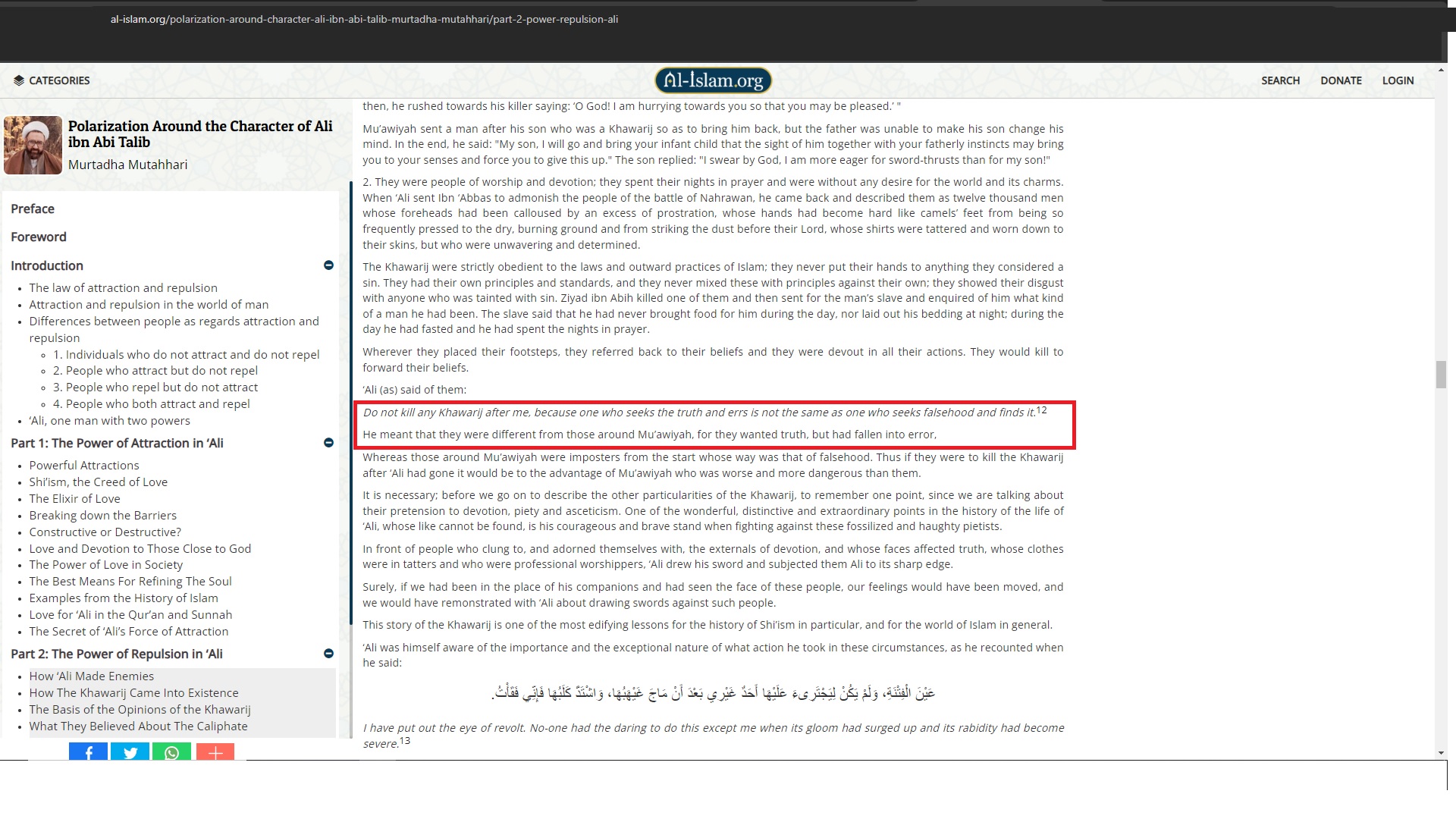
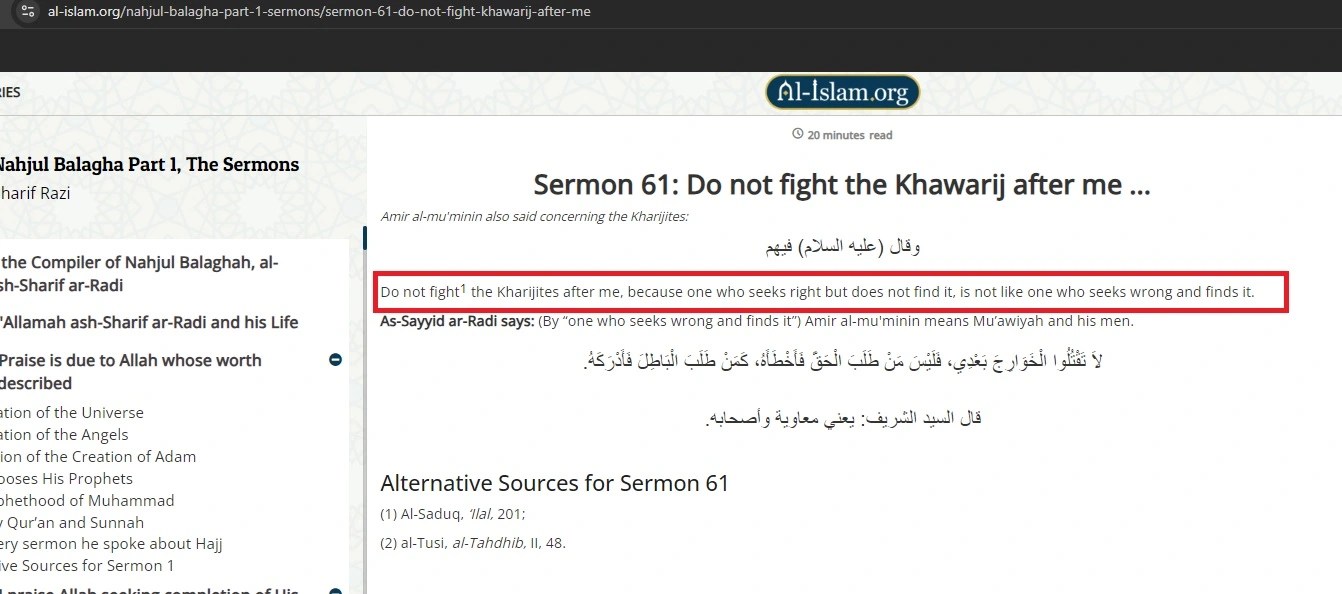

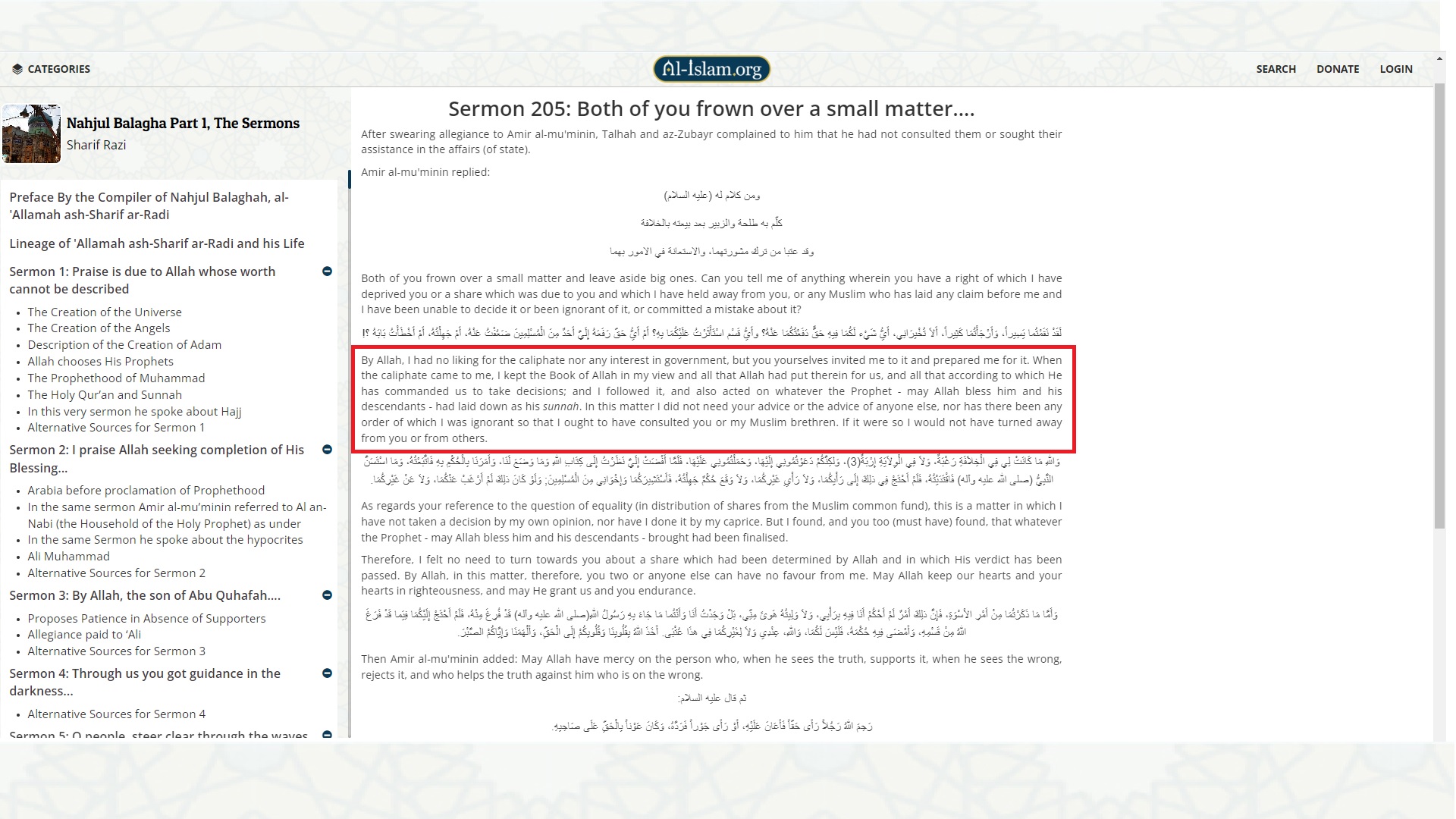

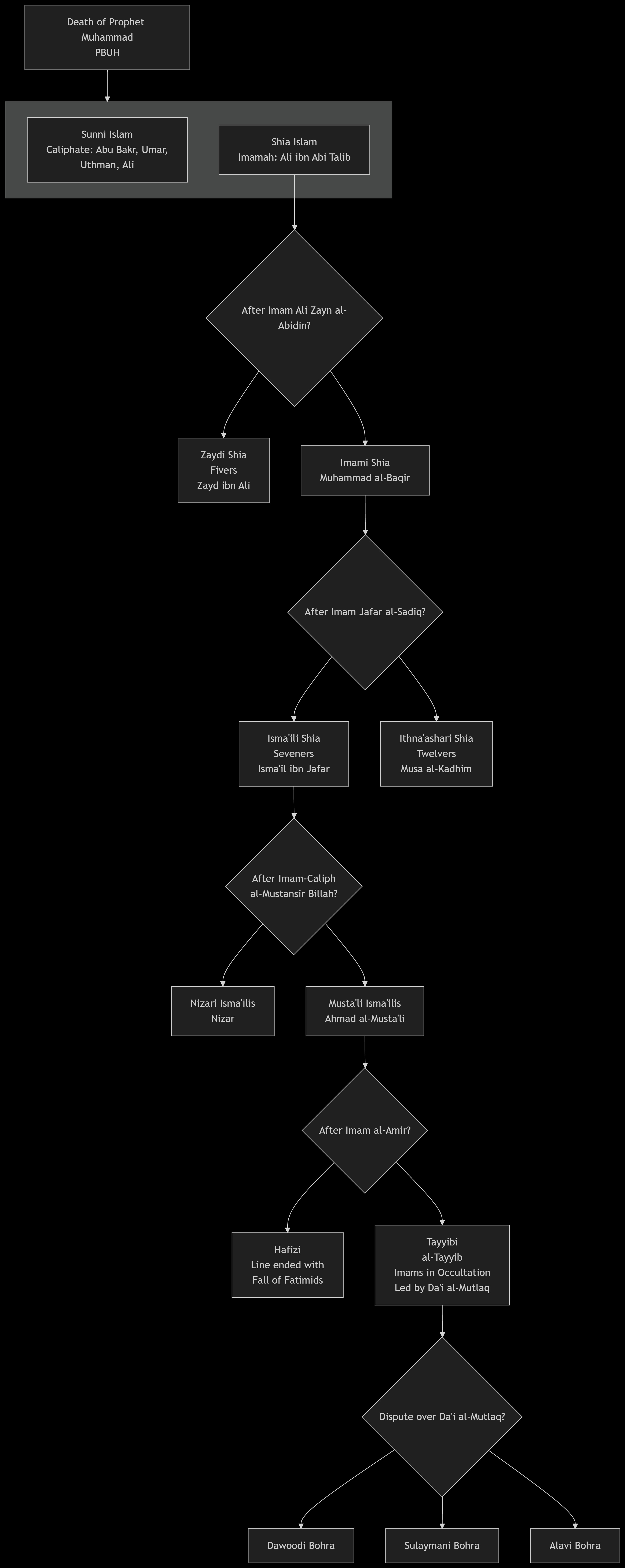

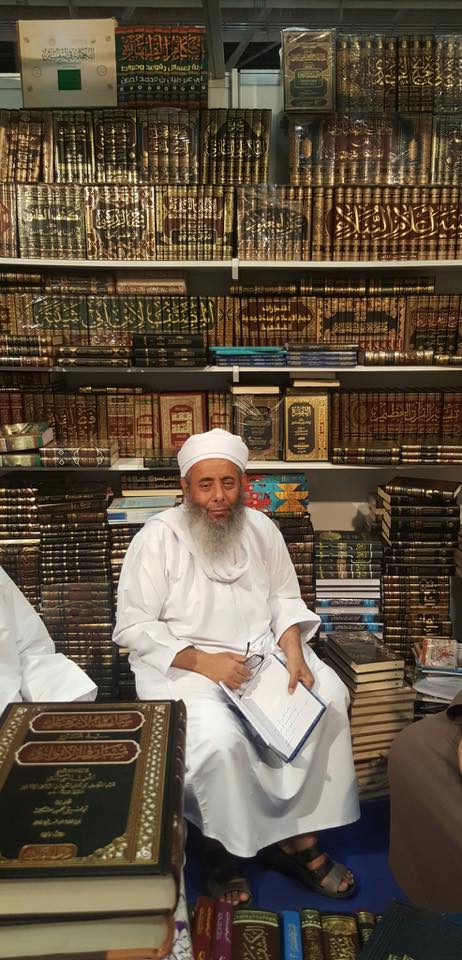
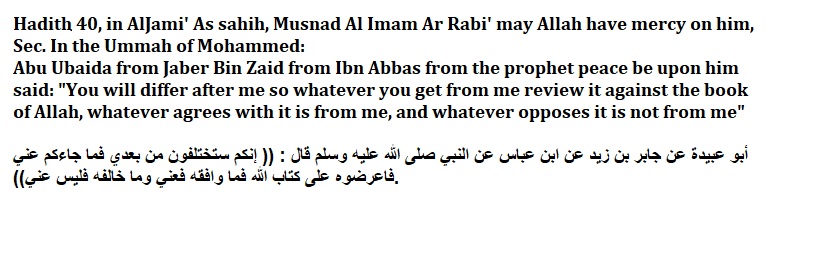
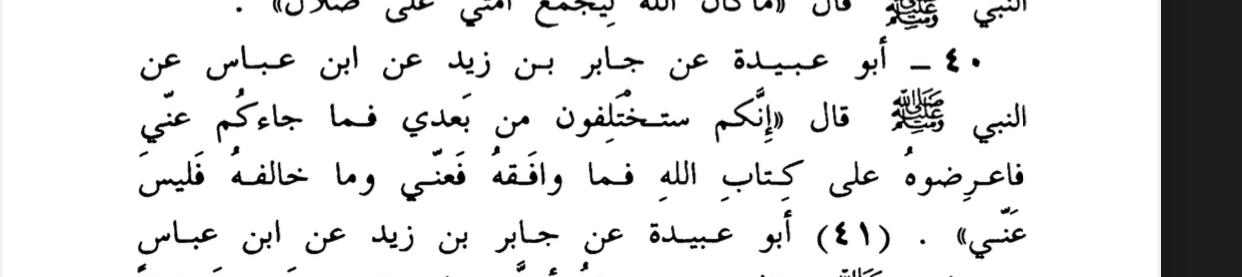
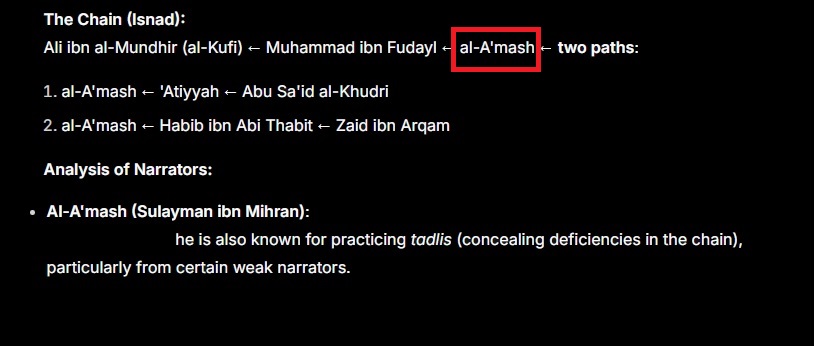
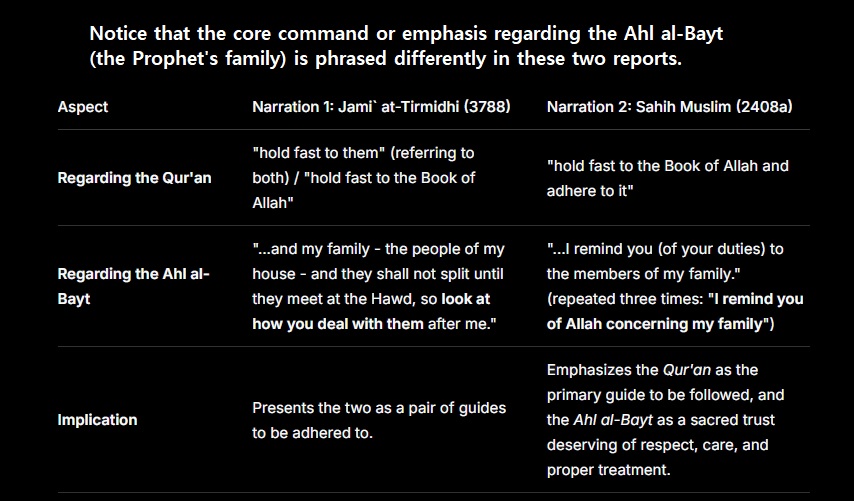
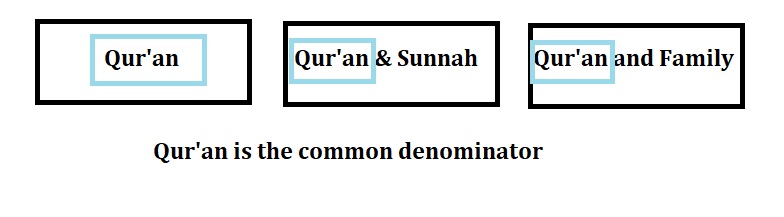
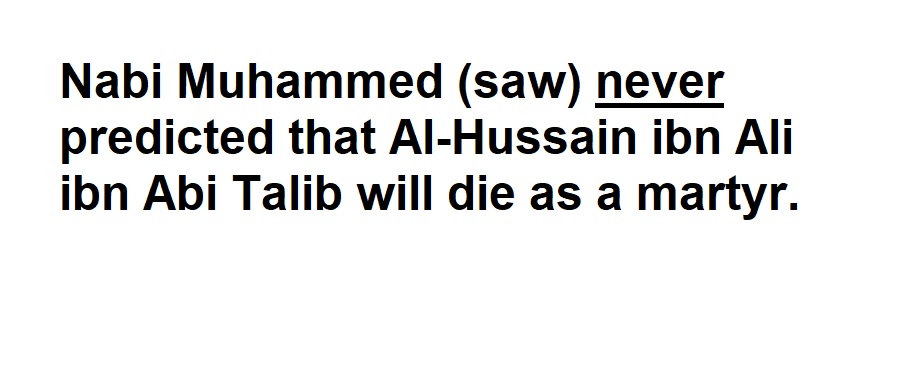
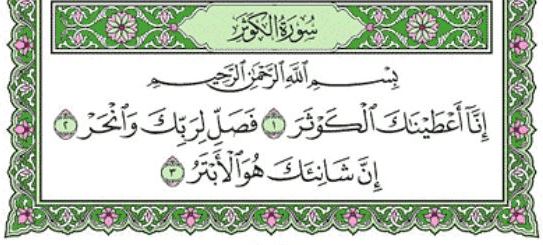

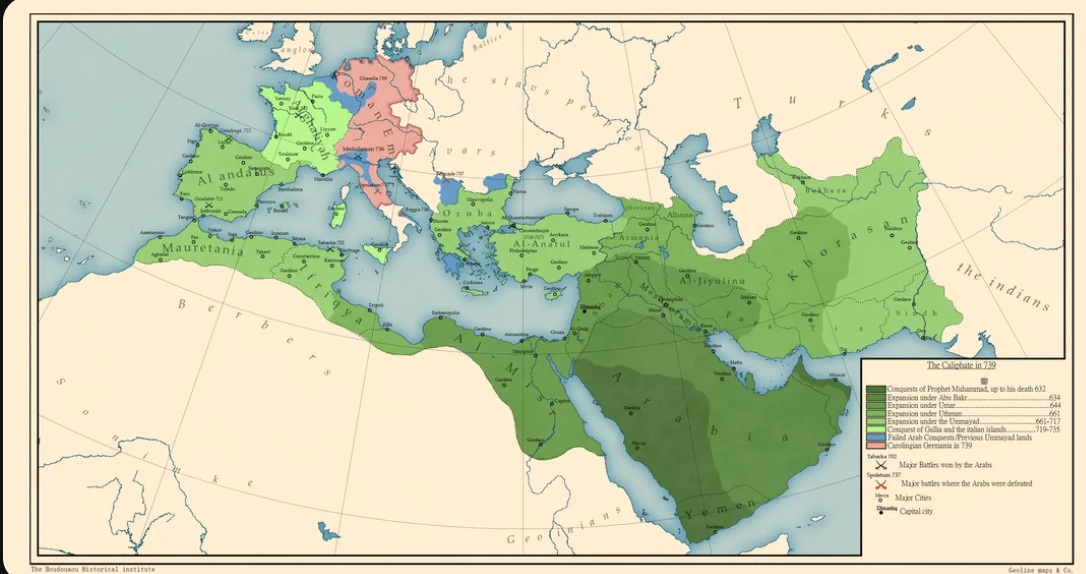


 Prima Quran