“This is a favor from my Lord by which He wants to test whether I am grateful or ungrateful.” (Qur’an 27:40)
A person has only two choices: either to be grateful or to be ungrateful. Now the question is If he is ungrateful, do we say that he has committed shirk (associating partners with Allah)?
So when one reads the books of the Ibadi scholars and luminaries of the past and they come across the statement that such and such was declared to be a kafir one needs to read this with the correct lenses.
First point. For the vast majority of Muslims they follow schools that have defined kafir meaning to expel them from the millat of Islam. In other words to expel them from Islam altogether. This is simply not the case with t he Ibadi. We use the word kufr as Allah (swt) used it in the Qur’an to describe those who are ungrateful.
Excommunicating other Muslims is not something the Ibadi school is known for. Many may get this impression when our scholars have addressed someone as being a kafir. That is because they come from a framework in which kafir is understood to mean execommunicated or outside the fold of Islam. This is absolutely not true for the Ibadi school. That is because the word kafir literally means ingratitude or to be ungrateful.
Second point. Not every act of kufr is shirk. However, every act of shirk is kufr.
Third point. Kufr does not necessitate a permanent condition. If someone became a kafir by something they did deserving of Bara’ah (shunning/ostracization) that same person can repent, reform and be deserving of Wilayah (friendship/protection/solidarity).
Fourth point. There are different types of Kufr according to Sunni, Imami and Zaydi perspectives.
Kufr al-Amal
Kufr al-Inkar
Kufr al-Juhud
Kufr al-Nifaq
Kufr bi’l-l’rad
Kufr al-Irad
Kufr al-Ni’mah
Kufr al-‘Inad
Kufr al-Takdhib
Kufr al-Inad
WHAT IS A MUSLIM AND HOW IS THE WORD MUSLIM DEFINED?
Muslim =one who submits to Allah. Now ask yourself. Does this mean submit to Allah 50% of the time? Does it mean to submit to Allah 99% of the time?
“Yes, whoever submits his whole self in Islam to Allah while being a doer of good will have his reward with his Lord, and no fear will there be concerning them, nor will they grieve (Qur’an 2:112)
“So who is better in religion than one who submits himself to Allah while being a doer of good and follows the religion of Abraham, inclining toward truth? And Allah took Abraham as an intimate friend.” (Qur’an 4:125)
“So whoever submits his whole self to Allah while he is a doer of good, then he has grasped the most trustworthy handhold. And to Allah will be the outcome of all matters. (Qur’an 31:22)
WHAT IS IBADAH (DEVOTION)?
In Arabic ‘Abd carries the meaning of both slave and devotee.
“And I did not create the jinn and mankind except to worship (liya ‘buduni) Me.” (Qur’an 51:56)
“Lo! My slaves (‘ibadi) – over them you have no authority. And sufficient is your Lord as Disposer of affairs.” (Qur’an 17:65)
“And if you are in doubt about what We have sent down upon Our Slave (‘abdina) [Muhammed], then produce a Surah the like thereof and call upon your witnesses other than Allah , if you should be truthful.” (Qur’an 2:23)
Ustadh Nouman Ali Khan has made it a point to drive home the concept of what a slave in Islam actually means. A slave to Allah (swt) is something that we all hope to strive for. May we die as obedient slaves to Allah (swt).
WHAT IS KUFR AND HOW IS THE WORD DEFINED?
“And if We give man a taste of mercy from Us and then We withdraw it from him, indeed, he is despairing and ungrateful (kafarun)(Qur’an 11:9)
“Indeed, the wasteful are brothers of the devils, and ever has Satan been to his Lord ungrateful (kafuran)“ (Qur’an 17:27)
It is important to understand here that Satan knows the truth. He knows the unseen. Being chief of the Jinn he knows allot. He even made du’a to Allah (swt) not to punish him immediately!
“He said, “My Lord, then reprieve me until the Day they are resurrected.” (Qur’an 15:36)
Satan also made the following pledge.
“Then I will surely come upon them from before them and from behind them and from their right and from their left, and then You will not find most of them (shakirina) grateful.” (Qur’an 7:17)
“Indeed, Allah defends those who have believed. Indeed, Allah does not like everyone treacherous and ungrateful (kafurin)” (Qur’an 22:38)
“Indeed, We guided him to the way, be he grateful (shakiran) or be he ungrateful (kafuran).” (Qur’an 76:3)
“And We had certainly given Luqman wisdom [and said], “Be grateful (ush’kur) to Allah.” And whoever is grateful (yashkur) is grateful (yashkuru) for [the benefit of] himself. And whoever is ungrateful (kafara) [His favor] – then indeed, Allah is Free of need and Praiseworthy.” (Qur’an 31:12)
“Certainly they are ungrateful (KAFARA)who say: Surely, Allah– He is the Messiah, son of Mary. Say: Who then could control anything as against Allah when He wished to destroy the Messiah son of Mary and his mother and all those on the earth? And Allah’s is the kingdom of the heavens and the earth and what is between them; He creates what He pleases; and Allah has power over all things,” (Qur’an 5:17)
“O my sons! Go you and enquire about Yusuf (Joseph) and his brother, and never give up hope of Allah’s Mercy. Certainly no one despairs of Allah’s Mercy, except the people who are ungrateful (l-kakiruna) .”
“And [remember] when your Lord proclaimed, ‘If you are grateful (shakartum), I will surely increase you [in favor]; but if you are ungrateful (kafartum), indeed, My punishment is severe. (Qur’an 14:7)
“And of no effect is the repentance of those who continue to do evil deeds until death faces one of them and he says: “Now I repent;” nor of those who die while they are ungrateful (kuffarun). For them, We have prepared a painful torment.” (Qur’an 4:18)
“It is the duty of all men towards Allah to come to the House a pilgrim, if he is able to make his way there. As for the (kafara) ungrateful, Allah is All-sufficient nor needs any being.” (Qur’an 3:97)
We can see from the above text that kufr is of two types.
Kufr Ni’mah
Ni’mah means: favour, ease, blessings, grace.
Kufr Ni’mah is not the ingratitude of disbelief, but the ingratitude of not recognizing Allah’s blessings, grace, and favour, by going against his commands, prohibitions, guidance.
Kufr Shirk.
Shirk/Mushrik means: To give worship to something other than Allah, along with Allah.
Kufr Shirk is the ingratitude of not recognizing and acknowledging who Allah (swt) is. As well as not directing one’s devotion to Allah (swt) and Allah (swt) alone.
So for us kufr is ingratitude. Rather than disbelief.
“Say: O ungrateful (l-kafiruna) ones! I will not be a devoted slave (a’budu) to what you are a devoted slave (ta’buduna) to. Neither are you devoted slave (‘abiduna) to Him whom I am devoted slave (a’budu) to. Nor will I be devoted slave (‘abidun) to that which you base your (‘abadttum) devoted slavery. Nor are you going to be devoted slave (‘abiduna) to Him who I am devoted slave (a’budu) to. To you is your way of life (worldview),and to me, my way of life (worldview). (Qur’an 109:1-6)
WHAT IS EMAAN? (BELIEF)
“Indeed, those who believed (amanu) and those who were Jews or Christians or Sabeans [before Prophet Muhammed] – those [among them] who believed (amanu) in Allah and the Last Day and did righteousness – will have their reward with their Lord, and no fear will there be concerning them, nor will they grieve.” (Qur’an 2:62)
“And when it is said to them: Believe (aminu) as the people believe (amana) they say: Shall we believe (anu’minu) as the fools believe (amana)? Now surely they are the fools, but they do not know.” (Qur’an 2:13)
“These are the verses of Allah which We recite to you in truth. Then in what statement after Allah and His verses will they (yu’minuna) believe“? (Qur’an 45:6)
It is narrated on the authority of Abu Huraira that the Messenger of Allah (saw) said:
“Faith has over seventy branches or over sixty branches, the most excellent of which is the declaration that there is no god but Allah, and the humblest of which is the, removal of what is injurious from the path: and modesty is a branch of faith.”
So even an agnostic or an atheist who removes an obstacle on a path they have some faith.
Remember, Iblis himself was a devoted Muslim until…
“So when We said to the angels: Prostrate to Adam they did prostrate, but Iblis (did it not). He refused and he was proud, and he was one of the ungrateful (l-kafirina).” (Qur’an 2:33)
At this moment, this one act of defiance, made Iblis go from being a devoted slave (‘abdina) to being in a state of Kufr Ni’mah.
Heaven is not a place for the ungrateful!
“Get down from here! Here is no place for your arrogance, Get out! You are the lowest of creatures!” (Qur’an 7:13)
“Like the Shaitan when he says to man: be (uk’fur) ungrateful, but when man is (kafara) ungrateful, he says: I am surely clear of you; surely I fear Allah, the Lord of the worlds.” (Qur’an 59:16)
Iblis is not said to be a disbeliever in Allah (swt) nor in his last day. Yet, this one sin (kufr niama), this one act of transgression was enough to bar him from paradise and to have him to burn in hellfire forever. There is absolutely no indication anywhere that Iblis will repent.
“He said, “My Lord, then reprieve me until the Day they are resurrected.” (Qur’an 15:36)
Allah! There is no god but He. The Most Merciful, The Most Gracious! Can you imagine! Iblis wants respite, not to make repentance, not to turn from his waves, not to show himself a devoted slave of Allah (swt) but a persistent and continuous rebel until the very end!
Look at how Merciful Allah (swt) is to humanity! We have been given chance after chance to make tawbah, to repent, to amend, to reform, to turn towards Allah (swt) as devoted slaves.
The Hadith Evidences.
Brothers and sisters there is no verse in the Qur’an anywhere that believers will enter the hellfire. This is a trap and false belief that clashes with stronger evidence.
Hadith such as the following:
Narrated ‘Ubada:
The Prophet (saw) said, “If anyone testifies that None has the right to be worshipped but Allah Alone Who has no partners, and that Muhammed is His Slave and His Apostle, and that Jesus is Allah’s Slave and His Apostle and His Word which He bestowed on Mary and a Spirit created by Him, and that Paradise is true, and Hell is true, Allah will admit him into Paradise with the deeds which he had done even if those deeds were few.” (Junada, the sub-narrator said, ” ‘Ubada added, ‘Such a person can enter Paradise through any of its eight gates he likes.”)
‘Itban bin Malik (May Allah be pleased with him) said in his long Hadith cited in the Chapter entitled ‘Hope’ reported:
When the Prophet (saw) stood up to offer As-Salat (the prayer) he asked, “Where is Malik bin Ad-Dukhshum?” A man replied: “He is a hypocrite. He does not love Allah and His Messenger.” The Prophet (saw) said, “Do not say that. Do you not know that he said: La ilaha illallah (there is no true god except Allah),’ seeking His Pleasure. Allah has made the fire of Hell unlawful for him who affirms that none has the right to be worshipped but Allah.”
Prima Qur’an Comment: It is becoming readily apparent that those hadith need to be taken contextually. First of all the hadith about Allah (swt) making hellfire unlawful for those who say “la ilaha illallah seeking His Pleasure” cannot simply mean just saying the testimony of faith. This is obvious as it is attached to “seeking his Pleasure.”
This goes directly against the following verse:
“Do people think once they say, “We believe,” that they will be left without being put to the test?” (Qur’an 29:2)
“So of no effect is the repentance of those who continue to do evil deeds until death faces one of them and he says: “Now I repent;” norof those who die while they are ungrateful. For them We have prepared a painful torment”. (Qur’an 4:18)
This idea that Muslims can just do what ever they wish and say the testimony of faith and they will be absolutely fine has no basis in the Qur’an. It is a dangerous belief. Not only this but how many times have we seen kufr ni’mah become kufr shirk? Virtually every apostate I have ever encountered was involved in some major sin and then they slipped away into darkness. When in reality the problem was sin to begin with.
When the believer commits sin, a black spot appears on his heart. If he repents and gives up that sin and seeks forgiveness, his heart will be polished. But if (the sin) increases, (the black spot) increases. That is the Ran that Allah mentions in His Book: “Nay! But on their hearts is the Ran (covering of sins and evil deeds) which they used to earn.” (Qur’an 83:14)
It is well known that the companions certainly did fight among each other and killed each other. So the question is; Was their kufr an act of Kufr Ash-Shirk or Kufr An Ni’mah?
It is narrated on the authority of ‘Abdullah b. Mas’ud that the Messenger of Allah (saw) observed:
Abusing a Muslim is an outrage and fighting against him is (kufr)unbelief. Zubaid said: I asked Abu Wa’il: Did you hear it from Abdullah narrating if from the Messenger of Allah (may peace and blessings be upon him)? He replied: Yes. But there is mention of the talk between Zubaid and Abu Wa’il in the hadith narrated by Shu’ba.
It is well known that the companions certainly did fight among each other and killed each other. So the question is; Was their kufr an act of Kufr Ash-Shirk or Kufr An Ni’mah?
“Abu Hurairah narrated that : the Prophet (saw) said: “Whoever engages in sexual intercourse with a menstruating woman, or a woman in her anus, consults a soothsayer, then he has disbelieved (kafar) in what was revealed to Muhammed.”
The one who did intercourse with a menstruating woman, or in her anus are those acts of kufr ash-shirk or kufr an-ni’mah ?
By the way, There is commentary in Arabic on the above hadith. That if intercourse with a woman was considered disbelieve than expiation would not have been ordered for it. However, this is not true. Expiation depends on the type and manner of sin. So there is something strange in the commentary.
It is narrated on the authority of Jarir that he heard (the Holy Prophet) saying, The slave who fled from his master committed an act of infidelity as long as he would not return to him.
Another hadith evidence that supports our position. I will show you where those who call themselves ‘Salafi’ try to fool those who are not familiar with the Arabic. Then I will show you were the majority Sunni position comes clean and basically their view is in alignment with us.
Narrated Abu Dhar:
The Prophet (saw) said,
“A man who knowingly claims to be the father of someone other than himself has committed an act of disbelief. And whoever claims to be the father of a people when he is not one of them, let him take his place in hellfire.”
However, notice how the above link renders the Arabic text as:
Narrated Abu Dhar:
The Prophet (saw) said, “If somebody claims to be the son of any other than his real father knowingly, he but disbelieves in Allah, and if somebody claims to belong to some folk to whom he does not belong, let such a person take his place in the (Hell) Fire.”
Notice that ‘he but disbelieves in Allah’ to the English reader gives the indication that this person is on the same level of an Atheist.
We all know those who disbelieve in Allah are bound for hell. So knew information is being presented. So we know that ‘he but disbelieves in Allah’ is not a rendering of the Arabic text. The new information being presented is: “if somebody claims to be the son of any other than his real father knowingly..”
Now notice the interesting observation the followers of majority Sunni Islam make here:
However, the scholars explain that the term kufr in this hadith has two interpretations.
“The first interpretation applies to someone who considers such an act permissible. The second interpretation is that it refers to ingratitude for blessings and kindness, as well as violating the rights of Allah (Most High) and the rights of his father. However, the intended meaning is not disbelief that takes one out of the fold of Islam. This is similar to when the Prophet (Allah bless him and give him peace) mentioned “disbelief” concerning women and then explained it as their ingratitude for kindness and their ingratitude toward their husbands.” [Nawawi, Sharh Sahih Muslim]
Now notice something dear readers. Context is important. The above hadith that promise someone paradise is dependent upon all the other text (Qur’an and Sunnah) that put terms and conditions.
The same is true for the above hadith about affirming that the one who makes such a statement would take his place in hellfire. This too is dependent upon all other text (Qur’an and Sunnah) that mention the acceptance of those who sincerely repent.
‘Abdullah bin ‘Umar bin Al-Khattab (May Allah be pleased with them) reported that:
The Prophet (saw) said, “Allah accepts a slave’s repentance as long as the latter is not on his death bed (that is, before the soul of the dying person reaches the throat)”.
And of no effect is the repentance of those who continue to do evil deeds until death faces one of them and he says: “Now I repent;” nor of those who die while they are ungrateful disbelievers. For them We have prepared a painful torment. (Qur’an 4:18)
Narrated Ibn `Abbas:
The Prophet (saw) said, “When (a person) an adulterer commits illegal sexual intercourse, then he is not a believer at the time he is doing it; and when somebody steals, then he is not a believer at the time he is stealing .”
The Prophet (saw) said, “An adulterer, at the time he is committing illegal sexual intercourse is not a believer; and a person, at the time of drinking an alcoholic drink is not a believer; and a thief, at the time of stealing, is not a believer.” Ibn Shihab said: `Abdul Malik bin Abi Bakr bin `Abdur-Rahman bin Al- Harith bin Hisham told me that Abu Bakr used to narrate that narration to him on the authority of Abu Huraira. He used to add that Abu Bakr used to mention, besides the above cases, “And he who robs (takes illegally something by force) while the people are looking at him, is not a believer at the time he is robbing (taking).
All the above acts: Fornication, Adultery, Stealing, Drinking, none of these acts are committing shirk. Yet, the people who do such are not to be described as believers at the time of doing such actions.
Narrated ‘Ikrima from Ibn ‘Abbas:
Allah’s Messenger (saw) said, “When a slave (of Allah) commits illegal sexual intercourse, he is not a believer at the time of committing it; and if he steals, he is not a believer at the time of stealing; and if he drinks an alcoholic drink, when he is not a believer at the time of drinking it; and he is not a believer when he commits a murder,” ‘Ikrima said: I asked Ibn Abbas, “How is faith taken away from him?” He said, Like this,” by clasping his hands and then separating them, and added, “But if he repents, faith returns to him like this, by clasping his hands again.
Taking the life without right is not committing shirk. Yet, the people who do such are not to be described as believers at the time of doing such actions.
Not every act of Kufr is Shirk.
However, every act of Shirk is Kufr.
May Allah (swt) continue to bless us and guide us and keep us on the straight path. May Allah (swt) cause us all to die as devoted slaves, as Muslims.
Please also see the following:
” And when your Lord made it known: If you are (shakartum)grateful, I would certainly give to you more, and if you are (kafartum) ungrateful, My chastisement is truly severe.” (Qur’an 14:7)
“This is a favor from my Lord by which He wants to test whether I am grateful (a-ashkuru) or ungrateful (akfuru).” (Qur’an 27:40)
“Truly, those who were ungrateful (kafaru), and they died and they were ones who are ungrateful (kuffarun), those, on them is a curse of Allah, and the angels and humanity, one and all.” (Qur’an 2:161)
” And whoever does not judge by what Allah has revealed – then it is those who are the disbelievers (l-kāfirūna).” (Qur’an 5:44)
While the immediate context is a reference to the Jews it would be a strange thing to say that Jews who do not judge by what Allah has revealed are kafir while Muslims get a free pass.
“Surely your Lord is Allah Who created the heavens and the earth in six Days, then established Himself on the Throne, conducting every affair. None can intercede except by His permission. That is Allah—your Lord, so worship Him. Will you not then be mindful?” (Qur’an 10:3)
“He knows what is ahead of them and what is behind them. They do not intercede except for whom He approves, and they tremble in awe of Him.” (Qur’an 21:28)
“Allah! There is no god except Him, the Ever-Living, All-Sustaining. Neither drowsiness nor sleep overtakes Him. To Him belongs whatever is in the heavens and whatever is on the earth. Who could possibly intercede with Him without His permission? He knows what is ahead of them and what is behind them, but no one can grasp any of His knowledge—except what He wills . His Throne encompasses the heavens and the earth, and the preservation of both does not tire Him. For He is the Most High, the Greatest.” (Qur’an 2:255)
“It is You we worship and You we ask for help.” (Qur’an 1:5)
“And he entered the city at a time of inattention by its people and found therein two men fighting: one from his faction and one from among his enemy. And the one from his faction called him for help ( fa-is’taghathahu)against the one from his enemy, so Moses struck him and killed him. said, “This is from the work of Satan. Indeed, he is a manifest, misleading enemy.” (Qur’an 28:15)
﷽
Seems there has been a great deal of heated debate and discussion on this topic as of late. However, this has been the case with the Muslim Ummah for quite some time.
Tawassul is asking Allah for help through an intermediary. This has it’s types and conditions.
Istigatha is asking for urgent help in times of distress. This too has it’s types and conditions.
First point.
Note that all three of the text (Qur’an 10:3) & (Qur’an 21:28) & (Qur’an 2:255) that are quoted above are speaking about third parties that may be in a position to to ask something on behalf of others.
None of the above three text speak about a first person party (a petitioner) seeking something from Allah (swt) via an intermediary, be it an angel, a wali of Allah (swt) or even his Blessed Prophets (upon them all be peace).
Second point.
None can intercede except by what Allah (swt) grants permission or approves.
If a righteous person like the Blessed Prophet (saw) for example prays for his Uncle to enter into heaven and his Uncle did not repent or enter into Islam, then the intercession of the Blessed Prophet (saw) is of no use.
“You surely cannot guide whoever you like, but it is Allah Who guides whoever He wills, and He knows best who are guided.” (Qur’an 28:56)
“Praying or not praying for their forgiveness will make no difference. Even if you (O Prophet) were to pray seventy times for their forgiveness, Allah would not forgive thembecause they reject Allah and His Messenger. Allah does not guide those who are defiantly disobedient people.” (Qur’an 9:80)
Or for example if the Prophet (saw) tried to intercede with Allah (swt) for those Muslims who died without repenting from taking the life without right, shirk, fornication or adultery and they did not seek repentance from Allah (swt). The Prophet’s intercession would be null and void!
“And those who do not invoke with Allah another deity or kill the soul which Allah has forbidden [to be killed], except by right, and do not commit unlawful sexual intercourse. And whoever should do that will meet a penalty. Multiplied for him is the punishment on the Day of Resurrection, and he will abide therein humiliated –Except for those who repent, believe and do righteous work. For them Allah will replace their evil deeds with good. And ever is Allah Forgiving and Merciful.” (Qur’an 25:68-70)
This is the world of asbab (أَسْبَابْ) a world of cause, means and occasions.
The Muslim understands that this is the world of cause, means and occasions. We are 3D carbon based platforms and this is how we understand and perceive things. However, we are also informed:
la hawla wala quwwata illa billah -there is no power or no strength except with Allah.
“If only you had said, upon entering your property, ‘This is what Allah has willed! There is no power except with Allah!’ Even though you see me inferior to you in wealth and offspring.” (Qur’an 18:39)
That is to say that if I believe that I can type this text independent of Allah’s power, I am either making a claim to divinity or asserting a share of divine power.
A Muslim does not believe that a knife in and of itself has the ability to cut but that Allah (swt) grants it that quality.
“It is You we worship and You we ask for help.” (Qur’an 1:5)
So if a Muslim seeks a doctor for a cure, or builds a shelter from the rain are they seeking or depending upon other than Allah (swt) for help? Of course not. The recognition is that we live in the world of causes, means and occasions. That is what is immediately perceptible to us.
Take the example of Mary (as) she was pregnant with Jesus (as) and was hungry.
The Angel directs Mary (as) towards a creation of Allah (swt).
“And shake the trunk of this palm tree towards you, it will drop fresh, ripe dates upon you.” (Qur’an 19:25)
The Angel could have directed Mary (as) to a dead tree, or a dead branch or a log. However, she (as) was directed towards a living tree.
جَزَاكَ ٱللَّٰهُ خَيْرًا or Jazak Allahu Khayran is a common Arabic expression among Muslims. It is said when receiving some good, service or benefit from another person.
It is a way of showing gratitude in a dual manner, by immediately thanking the person (he/she) that brought the good but also realizing that ultimately it is Allah (swt) whom used this person (he/she) to bring the khayer (goodness) to you.
Tawassul in the Qur’an?
First what is Tawassul?
Basically it means to use something to arrive to something else. As a path.
Tawassul is the act of seeking help from Allah (swt) via an intermediary. In relation to this we have the Arabic word Al-Wasila.
You can find derivates of the word twice in the Qur’an. The first text is the one champions of tawassul are quick to quote.
The second text (Qur’an 17:57) they are not so quick to quote. Insh’Allah you will see why.
1st instance of wasila.
“O you who believe! Be careful of (your duty to) Allah and seek means of nearness (l-wasilata) to Him and strive hard in His way that you may be successful.” (Qur’an 5:35)
This is the text that champions of Tawassul would prefer you rather not quote.
Note that the text says to seek a means of nearness and it could have easily mentioned the Blessed Prophet (saw) exclusively but it did not.
Seeking the means of nearness is not exclusive to asking the pious to pray for us.
We know that praying in a group (Jamaat) is more beloved to Allah (swt) then praying alone. We know that praying in a Masjid is more beloved to Allah (swt) then not praying in the Masjid.
We know that praying in Mecca or Medina is more beloved to Allah (swt) then not praying in either of those two cities. Prayer in Mecca is more preferable then prayer in Medina.
Now advocates of tawassul would have to prove that a singular individual praying to Allah (swt) via the station of the Blessed Prophet (saw) would be superior to a whole congregation of people doing dhikr of Allah (swt).
They would have to prove that a singular individual praying to Allah via the station of the Blessed Prophet (saw) would be superior to an individual praying to Allah (swt) in Mecca without mentioning the Blessed Prophet (saw).
In other words there are a plethora of acts and actions in Islam that are more meritorious then praying to Allah (swt) and beseeching Allah (swt) via the station of the Blessed Prophet (saw).
2nd instance of wasila.
“Say, “Invoke those you claim besides Him—they do not have the power to undo harm from you or transfer it.” “˹Even˺ the closest ˹to Allah˺ of those invoked would be seeking a way (l-wasilata) to their Lord, hoping for His mercy, and fearing His punishment. Indeed, your Lord’s torment is fearsome.” (Qur’an 17: 56-57)
Shaykh Dr. Kahlan Al Kharousi (h) speaks on three types of Tawassul.
First type: Asking Assad to make du’a and thinking that it will be accepted because Assad has got the power to do so. This is clearly shirk. We are very clear about this.
The evidence from this is from the Qur’an:
“If only you had said, upon entering your property, ‘This is what Allah has willed! There is no power except with Allah!’ Even though you see me inferior to you in wealth and offspring.” (Qur’an 18:39)
“How powerless are those who invoke and those invoked!“ (Qur’an 22:73)
For example if I as a Muslim believe that I am typing this text independent of the power of Allah (swt) this would be a claim to divinity and shirk.
Second type: (which all madhabs classify as Mubaah Halaal-meaning neutral or permissible.) -This includes the Ibadis.
This is the request of means and reason. Not a request of response and refuge.
That is to let someone who’s considered righteous amongst of people make du’a.
For example: Ridael and Assad and Hakki just had some food, Assad asked Ridael to make du’a; however, Ridael believes that Assad (at least what it apparent) is a better Muslim than him, so he says to Assad to make the du’a instead.
Examples of this in the Qur’an:
“They begged, “O our father! Pray for the forgiveness of our sins. We have certainly been sinful.” (Qur’an 12:97)
“And We did not send any messenger except to be obeyed by permission of Allah. And if, when they wronged themselves, they had come to you, [O Muhammed], and asked forgiveness of Allah and the Messenger had asked forgiveness for them, they would have found Allah Accepting of repentance and Merciful.” (Qur’an 4:64)
“Take from their wealth ˹O Prophet˺ charity to purify and bless them,and pray for them—surely your prayer is a source of comfort for them. And Allah is All-Hearing, All-Knowing.” (Qur’an 9:103)
Or when we as believers pray on behalf of all believers no less than 17 times a day:
“Guide us to the straight path.” (Qur’an 1:6)
The third type: Is that when you mention someone’s name (in this case Assad) thinking by doing so your du’a gets accepted.
For example: We are in a battle and I say: “Oh Allah Assad is with us grant us victory.” Some say this is shirk and some say it is not. This has lead to allot of fighting among the Muslims. Our school’s position is to leave these doubtful matters. Stick with what is firm from the Qur’an & Sunnah.
In the case of the person above a simple gentle reminder from the Qur’an and the history of the Blessed Prophet (saw) may suffice to set their thinking on the right course.
For example, having the Blessed Prophet (saw) with the Muslims was not a guarantee of victory. In fact, they lost conflicts when he (saw) was among them; and this was a test for the believers.
“Do you think you will be admitted into Paradise without being tested like those before you? They were afflicted with suffering and adversity and were so ˹violently˺ shaken that ˹even˺ the Messenger and the believers with him cried out, “When will Allah’s help come?” Indeed, Allah’s help is ˹always˺ near.” (Qur’an 2:214)
“Your Lord has proclaimed, “Call upon Me, I will respond to you. Surely those who are too proud to worship Me will enter Hell, fully humbled.” (Qur’an 40:60)
“When My servants ask you ˹O Prophet˺ about Me: I am truly near. I respond to one’s prayer when they call upon Me. So let them respond ˹with obedience˺ to Me and believe in Me, perhaps they will be guided ˹to the Right Way˺.” (Qur’an 2:186)
As Allah (swt) is the Sovereign Lord of all creation.
Surely a Muslim can’t go wrong by calling upon Allah (swt) alone and trusting in Allah (swt) to answer us in the time and manner that Allah (swt) deems fit.
It was narrated that Abu Al-Hawra’ As-Sa’di said:
“I said to Al-Hasan bin ‘Ali, may Allah be pleased with him: ‘What did you memorize from the Messenger of Allah (saw) ?’ He said: I memorized from him: ‘Leave that which makes you doubt for that which does not make you doubt.'”
Because there is dispute it is best to leave that which is doubtful. The Muslim is one who practices wara’ and it is best to leave the doubtful. That is also because this act is not wajib. The side that is very vocal for their practices have labeled it as mustahab, which is merely recommended.
So there is no harm in sticking with the clear formula of the Qur’an and Sunnah.
Our way is the moderate way and the safe passage. Let us turn to the Qur’an.
All duas in the Qur’an are just Allahumma, Rabbi or Rabbana. So what is wrong if the believer sticks with that sort of formulation and puts their trust solely in Allah (swt)?
One can make du’a for others and when requested also have friends and family make du’a for them. This is very clearly sanctioned in the Qur’an because we see examples of Prophets praying for others as has already been mentioned.
So if we stick with the du’a formulations in the Qur’an and preserved Sunnah we are safe.
Who better than Allah (swt) and his Messenger (saw) to teach us?
So yes why not direct all supplication , du’a , petition and request to Allah (swt) knowing full well that Allah (swt) can respond to that du’a, petition and request by using this world of asbab to send to you a person(s), angel(s), Muslim Jinn(s), or any of His (swt) creation to aid you.
In the Qur’an we find the following formulations when addressing Allah (swt).
Rabbi Rabbanaa A’udhu billahi Rabbanaghfir Rabbihkum Rabbighfir Rabbanaa Bismillahi (Qur’an 11:41) Ma’adhallahi (Qur’an 12:23) Inni a’udhu bir-Rahmani (Qur’an 19:18) Inni maghloobun fantasir (Qur’an 54:10) In all these passages: (Qur’an 7:155- 7:156), (Qur’an 7:189), (Qur’an 10:22) it is clear that the one being addressed is Allah (swt). Qul a‘ūdhu birabbil-falaq (Qur’an 113:1) Qul a‘ūdhu birabbin-nās (Qur’an 114:1)
So in conclusion on the issue of Tawassul is that for the Ibadi school asking the pious to make du’a for us is permissible.
We should ask each other to make du’a for one another all the time.
“Guide usto the straight path.” (Qur’an 1:6)
Allah (swt) for example, encourages us to make du’a for our parents.
“And be humble with them out of mercy, and pray, “My Lord! Be merciful to them as they raised me when I was young.” (Qur’an 17:24)
The woman who pleaded her path went direct to Allah (swt) for help even bypassing the Blessed Prophet (saw).
“Indeed,Allah has heard the argument of the woman who pleaded with you ˹O Prophet˺ concerning her husband, and appealed to Allah. Allah has heard your exchange. Surely Allah is All-Hearing, All-Seeing.” (Qur’an 58:1)
In the above case in was Allah (swt) who was the refuge and succor of this woman and not Prophet Muhammed (saw). In fact, the above verse is one of those that let us know the Qur’an is not from the Blessed Prophet (saw), His, Sunnah is a form of guidance,-when not overruled by Allah (swt) and that the Prophet (saw) is genuine and authentic.
If it was good enough for the woman to appeal directly to Allah (swt) in her life time (by passing the Prophet -saw) while he (saw) was alive, it is good enough for us to go directly to Allah (swt) after the death of the Blessed Prophet (saw).
“Tawassul is not an obligation or a necessary matter, neither is the response to the supplication conditional upon it, Rather, the basis for the supplication is to call upon Allah, the Exalted, as Allah said: And if my servants ask you concerning me, then say that I am close (al-Baqara: 186) and: Say, “Call upon Allah or call upon al-Rahman: Whatever you call him by -to Him belong the best names.”
Source: (pgs. 74-75 Notions that must be corrected by Shaykh Muhammed b. Alawi al-Maliki al-Hasani)
ISTIGATHA
Istigatha is asking for urgent help in times of distress.
Those who are in favour of Istigatha themselves put it in the category of mustahab (مُسْتَحَبّ) meaning something that is recommended. However, it is not something that is fard or wajib.
An example of this from the Qur’an.
“And he entered the city at a time of inattention by its people and found therein two men fighting: one from his faction and one from among his enemy. And the one from his faction called him for help (fa-is’taghathahu)against the one from his enemy, so Moses struck him and killed him. said, “This is from the work of Satan. Indeed, he is a manifest, misleading enemy.” (Qur’an 28:15)
The example in the Qur’an of istigatha is of someone who is physically alive calling out to other people who are physically alive.
CAN AN ACT OR ACTION GO FROM NOT BEING SHIRK TO BEING SHIRK?
There have been those who claim that something is in a category of shirk or non shirk and these categories do not change.
This is absolutely not true.
If one has animals that they use and even call out to while alive. They call out to these animals after they have died. This is clearly shirk.
Another example is the following:
Fight those who do not believe in Allah or in the Last Day and who do not consider unlawful what Allah and His Messenger have made unlawful and who do not adopt the religion of truth from those who were given the Scripture – [fight] until they give the jizyah willingly while they are humbled. The Jews say, “Ezra is the son of Allah “; and the Christians say, “The Messiah is the son of Allah .” That is their statement from their mouths; they imitate the saying of those who were kafara (ungrateful disbelievers [before them]. May Allah destroy them; how are they deluded? They have taken their scholars and monks as lords besides Allah , and [also] the Messiah, the son of Mary. And they were not commanded except to worship one God; there is no deity except Him. Exalted is He above whatever they associate (yush’rikuna) with Him. They want to extinguish the light of Allah with their mouths, but Allah refuses except to perfect His light, although the (ungrateful disbelievers) dislike it. It is He who has sent His Messenger with guidance and the religion of truth to manifest it over all religion, although they who associate others (l-mush’rikuna) with Allah dislike it. (Qur’an 9:29-33)
Narrated ‘Adi bin Hatim:
“I came to the Prophet (saw) while I had a cross of gold around my neck. He said: ‘O ‘Adi! Remove this idol from yourself!’ And I heard him reciting from Surah Bara’ah: They took their rabbis and monks as lords besides Allah (9:31). He said: ‘As for them, they did not worship them, but when they made something lawful for them, they considered it lawful, and when they made something unlawful for them, they considered it unlawful.'”
So if you previously followed a command of Allah (swt) and then abandoned it in favour of what the monks and rabbis said that would be an act of worship and thus shirk.
Likewise, if you previously abstained from a prohibition of Allah (swt) and then indulged in that prohibition in favour of what the monks and rabbis have said that would be an act of worship, and thus shirk.
CAN THE DEAD (THAT WHICH WAS BIOLOGICALLY ALIVE) BENEFIT OTHERS AFTER IT’S DEATH?
We know this from direct empirical data. We benefit from the meat of an animal after it has been slaughtered, the hide or wool from animals after they have died. The Inuit Eskimos have shown us how to essentially use virtually all parts of a whale after it has died.
We as human beings are living testimony that we continue to benefit by the knowledge of those who have died. From every facet of knowledge, to mathematics, to architecture to cherished recipes. We continue to benefit from from those who have long since passed.
Just as we benefit from them, what ever benefit we receive from them is accredited to them as well. So for example, when you teach someone to read the Qur’an you benefit from every time that person reads the Qur’an, even after you have long since died.
ISTIGATHA OF THE DEAD AND SCANT EVIDENCE.
Calling out to those who have died for aid and assistance.
There are some cold hard facts that stare in the face of those who advocate for Istigatha.
There are 25 Prophets mentioned by name in the Qur’an. We don’t have a single example of any of those Prophets doing Istigatha to a prophet that proceeded him that has died.
Considering that the Blessed Prophet Muhammed (saw) is the best example for us and considering that he is the last of the Prophets we do not have a single example of the Blessed Prophet (saw) making Istigatha of any of those prophets that proceeded him that has died!
Point 2 is extremely important considering there are 124,000 prophets and he did not consider to call upon any of them!
If the reply to point 2 is that the Blessed Prophet (saw) is the supreme prophet and the seal he is not in need of them to ask it still does not take away from point 1.
Narrated Anas:
Whenever drought threatened them, `Umar bin Al-Khattab, used to ask Al-Abbas bin `Abdul Muttalib to invoke Allah for rain. He used to say, “O Allah! We used to ask our Prophet to invoke You for rain, and You would bless us with rain, and now we ask his uncle to invoke You for rain. O Allah ! Bless us with rain.” And so it would rain
قوله : ( أن عمر بن الخطاب كان إذا قحطوا ) بضم القاف وكسر المهملة أي أصابهم القحط ، وقد بين الزبير بن بكار في الأنساب صفة ما دعا به العباس في هذه الواقعة والوقت الذي وقع فيه ذلك ، فأخرج بإسناد له أن العباس لما استسقى به عمر قال : اللهم إنه لم ينزل بلاء إلا بذنب ، ولم يكشف إلا بتوبة ، وقد توجه القوم بي إليك لمكاني من نبيك ، وهذه أيدينا إليك بالذنوب ونواصينا إليك بالتوبة فاسقنا الغيث . فأرخت السماء مثل الجبال حتى أخصبت الأر
Translation:
His statement: (That ‘Umar bin al-Khattab used to say that when they were parched) with the addition of the qāf and the kasra of the neglected one, that is, they were afflicted with drought. Al-Zubair ibn Bakkar explained in the genealogies the description of what Al-Abbas called for in this incident and the time in which it occurred, so he narrated with his chain of transmission that when Al-Abbas asked for rain with it, ‘Umar said: “Oh Allah, no affliction has descended except due to sin, and it has not been removed except with repentance, and the people have turned to me in place of your Prophet, and these are our hands to you for sins.” And We enjoined upon you repentance, and We poured rain. Then the sky fell like the mountains until the trees became fertile
Source: (Ibn Hajar Al Asqalani Fath al-Bari Sharhu Sahih Al Bukhari)
“And O my people! Seek your Lord’s forgiveness and turn to Him in repentance. He will shower you with rain in abundance, and add strength to your strength. So do not turn away, persisting in wickedness.” (Qur’an 11:52)
The above example, often brought up by proponents of tawassul and istigatha realize just how deadly the above example is to their doctrines. In particular the doctrine of calling out to those who are in their graves or seeking a means by those who are now in their graves.
O Allah! We used to ask our Prophet to invoke You for rain, and You would bless us with rain, and now we ask his uncle
This is crystal clear. We used to (past tense) this of course is when the Blessed Prophet (saw) was alive.
However, NOW (in this time) we are asking his uncle.
To add insult to injury to proponents of tawassul and istigatha the formula of the du’a used by Ibn Abbas (ra) looks like this:
“Oh Allah, no affliction has descended except due to sin, and it has not been removed except with repentance, and the people have turned to me in place of your Prophet, and these are our hands to you for sins.”
Notice there is no ‘Oh Allah by the status of the Prophet’.
Notice there is no ‘Oh Allah by your love of the Prophet’.
These formulas are not used by Ibn Abbas (ra) !!
Now there have been some weak sauce replies by those who are clearly overwhelmed in the face of such evidence. It is clear that copium is the only reply in the face of such powerful evidence.
They will offer meekly. Umar Ibn Al Khattab (ra) has choice. So he choose Ibn Abbas (ra). Yes, but why not choose the best of Creation? Especially if that was an option?
The Prophet Muhammed (saw) is he (currently) dead or alive in his grave?
The central point of the controversy surrounding the issue is rather or not one can do istigatha to the Blessed Prophet (saw) after he died.
Narrated `Aisha:
All sides of the debate have agreed that the Blessed Prophet (saw) has died.
Abu Bakr came riding his horse from his dwelling place in As-Sunh. He got down from it, entered the Mosque and did not speak with anybody till he came to me and went direct to the Prophet, who was covered with a marked blanket. Abu Bakr uncovered his face. He knelt down and kissed him and then started weeping and said, “My father and my mother be sacrificed for you, O Allah’s Prophet! Allah will not combine two deaths on you. You have died the death which was written for you.” Narrated Abu Salama from Ibn `Abbas : Abu Bakr came out and `Umar , was addressing the people, and Abu Bakr told him to sit down but `Umar refused. Abu Bakr again told him to sit down but `Umar again refused. Then Abu Bakr recited the Tashah-hud (i.e. none has the right to be worshipped but Allah and Muhammed is Allah’s Messenger (saw)) and the people attended to Abu Bakr and left `Umar. Abu Bakr said, “Amma ba’du, whoever amongst you worshipped Muhammed, then Muhammed is dead, but whoever worshipped Allah, Allah is alive and will never die. Allah said: ‘Muhammed is no more than an Apostle and indeed (many) Apostles have passed away before him ..(up to the) grateful.‘ “ (Qur’an 3.144) (The narrator added, “By Allah, it was as if the people never knew that Allah had revealed this verse before till Abu Bakr recited it and then whoever heard it, started reciting it.”)
The interesting point about the above hadith is why would such shock over come the believers and why would Allah (swt) need to remind them that the Prophet (saw) will die as other humans have died if it was firmly planted in their (the companions) hearts that they would have a direct line of communication with the Prophet (saw) after his earthly life?
This verse would constitute an unnecessary redundancy.
The other point to be noted is that often proponents of those who say we can do istigatha to the Blessed Prophet (saw) after he died is to compare the situation of the Blessed Prophet (saw) to that of martyrs.
But this begs the question: How did the Prophet (saw) die?
Are we prepared to believe that The Prophet (saw) was indeed poisoned by a Jewish woman -thus making the Prophet (saw) a martyr?
One evidence brought forward to try and claim that the Prophet (saw) is alive in his grave is the following:
“And ˹remember˺ when they prayed, “O Allah! If this is indeed the truth from You, then rain down stones upon us from the sky or overcome us with a painful punishment.” But Allah would never punish them while you ˹O Prophet˺ were in their midst. Nor would He ever punish them if they prayed for forgiveness.” (Qur’an 8:32-33)
Some have used this as a proof text to try and say that the Blessed Prophet (saw) is still alive and the context shows that this misunderstanding of theirs is certainly in error.
The context is the disbelievers and not the believers.
However, when one looks into this matter it can be seen that the Muslim Ummah can be seen to have reached a sort of stalemate on the matter.
Rather or not the Blessed Prophet (saw) is dead or alive in his grave (currently) seems to be a secondary matter to the issue of rather or not we can call out to him, that is to say, making Istigatha to him, after he has died.
ISTIGATHA OF THE DEAD SIFTING FOR GOLD AND TRYING TO FIND ANYTHING!
The above video is apt when we are talking about proofs and evidences for calling out to the dead after they are deceased.
One should not be surprised to see when looking into this matter that there is a dearth of evidence from the Qur’an and Sunnah that advocates of calling out to an individual after they have deceased can produce.
The book to your left: Islamic Concept of Intermediation (Tawassul) by Dr. Muhammed Tahir-ul-Qadri. The book to your right: Notions that must be corrected by Shaykh Muhammed b. Alawi al-Maliki al-Hasani.
Both books are in my personal library and both books in my estimation failed to deliver.
In the book: Islamic Concept of Intermediation (Tawassul) by Dr. Muhammed Tahir-ul-Qadri. You would think that a book that is 389 pages excluding the glossary, bibliography and general index would be teaming with evidences.
This is simply not the case at all.
On page 197 of the book we have: Intermediation through the Blessed Holy Prophet (saw) after his death. This section runs until page 253.
So one of the arguments advanced on page 208 is the following verse of the Qur’an.
“And We did not send any messenger except to be obeyed by permission of Allah. And if, when they wronged themselves, they had come to you, [O Muhammed], and asked forgiveness of Allah and the Messenger had asked forgiveness for them, they would have found Allah Accepting of repentance and Merciful.” (Qur’an 4:64)
There is no indication that this verse is a reference to people calling upon the Blessed Prophet (saw) after he has died. In fact, the Qur’an has not given a single example of any of the former people calling upon any of the earlier prophets that have died. If the Qur’an recorded such incidents then these proponents would be quick to quote it. However, the Qur’an does not indicate any one doing this.
The other text often quoted: (Qur’an 8:32-33) has already been addressed above.
Taking a look at the evidence from the traditions to call out to the Prophet (saw) after he has died
Now, keep in mind dear reader you are reading from the perspective of an Ibadi.
We take a different approach to these matters as we are different kettle of fish.
The sanad-the chains are important to us. Equally important to us is the matn -the actual text. Are the text consistent with one another, do they present to us any anomalies or inconsistencies.
We ask you dear reader to ask Allah (swt) for guidance and to use the brain he has given you to reflect on what you are about to read.
The anonymous Bedouin and the dream of ‘Utbi.
“In this Qur’anic verse Allah is exhorting the sinners and evildoers that when they commit sins and errors they should call on the Messenger of Allah (saw) and ask forgiveness from Allah. They should also request the Messenger of Allah (saw) to pray for them. When they do so, Allah will turn to them and forgive them and He will show mercy to them. That is why He used the words la-wajadullaha tawwaban-rahima (they (on the basis of this means and intercession) would have surely found Allah the Granter of repentance, extremely Merciful). Many have stated this tradition. One of them is Abu Mansur Sabbagh who writes in his book al-Hikayat-ul-mashhurah that, according to ‘Utbi, once he was sitting beside the Prophet’s grave when a Bedouin came and he said, “Peace be on you, O Allah’s Messenger. I have heard that Allah says: ‘(O beloved!) And if they had come to you, when they had wronged their souls, and asked forgiveness of Allah, and the Messenger also had asked forgiveness for them, they (on the basis of this means and intercession) would have surely found Allah the Granter of repentance, extremely Merciful.’ I have come to you, asking forgiveness for my sins and I make you my intermediary before my Lord and I have come to you for this purpose.” The he recited these verses: “O, the most exalted among the buried people who improved the worth of the plains and hillocks! May I sacrifice my life for this grave which is made radiant by you, (the Prophet,) the one who is (an embodiment) of mercy and forgiveness.” Then the Bedouin went away and I fell asleep. In my dream I saw the Holy Prophet (saw). He said to me: O ‘Utbi the Bedouin is right, go and give him the good news that Allah has forgiven his sins.”
Source: (pg. 209-211. Islamic Concept of Intermediation (Tawassul)by Dr. Muhammed Tahir-ul-Qadri)
You will not fail to note in these narrations that the individual is an unnamed or undisclosed person.
Why the redundancy on behalf of the Prophet (saw)?
Why not just show up in that unnamed man’s dream and tell him directly?
Next, why can’t the Prophet (saw) name the individual?
In other words why say: “O ‘Utbi the Bedouin is right.” Why not say O ‘Utbi, Abdullah bin Marwan ibn Khalid etc…”
On page 212 we are given another tradition by Imam Qurtubi in his famous exegesis al-Jami li-ahkam-il-Qur’an (5:265-6) similar to the ‘Utbi tradition. It states:
The anonymous villager and ‘Ali.
“Abu Sadiq has reported it from ‘Ali, A villager came to see us three days after the burial of the Holy Prophet (saw). He placed himself near the Prophet’s grave, sprinkled its earth over his body and said : ‘O Messenger of Allah, you said and we have heard it from you. You received commands from Allah and we received commands from you, and one of these divine commands is wa law annahum idh zalamu anfusahum. It is true that I have wronged myself, therefore, you should pray for my forgiveness.” (In response o the villager’s act of imploring) he was called out from the grave: ‘there is no doubt that you have been forgiven.’”
Source: (page 212 Islamic Concept of Intermediation (Tawassul)by Dr. Muhammed Tahir-ul-Qadri)
What is quite eye opening is that these traditions, one can imagine if being circulated on their own may have passed in many circles as credible.
Yet, when we have them juxtaposed together the questions start to arise.
This time we have an anonymous villager. This anonymous villager unlike the anonymous Bedouin gets an immediate response from the grave.
Why in this case does the anonymous villager get an immediate response where as the anonymous Bedouin has be told via an intermediary via a dream at that?
Now in regard to the second report Dr. Muhammed Tahir-ul-Qadri is displeased that Shaykh Muhammed b. Alawi al-Maliki al-Hasani does not find it reliable.
Dr. Qadri states:
“Muhammed bin ‘Alawi al-Maliki expresses in his review an ambivalent attitude towards the tradition as he cannot positively, certify its authenticity,but in spite of its lack of certainty, most of the traditionalist have relied on its credibility.” Source: (pg. 213 Islamic Concept of Intermediation (Tawassul) by Dr. Muhammed Tahir-ul-Qadri)
Actually what Shaykh Muhammed bin ‘Alawi al-Maliki says in his book is as follows:
“So, this is the story of al-‘Utbi, and these are the (scholars) who quoted it. It is irrelevant if this report is authentic or weak. We inquire: Did these (scholars) quote something that is idolatry and misguidance? Did they quote from something that invites to idol worship and grave worship? If that is indeed the case, then what reliability is there to be found in tehm or their books? Glorified are You my Lord this is manifest slander!”
Source: (pg. 119 Notions that must be corrected by Shaykh Muhammed b. Alawi al-Maliki al-Hasani)
In reality. Dr. Qadri basically re words Shaykh ‘Alawi al-Malki’s words as his own so it is not wholesale plagiarism.
But these are eye opening statements.
“It is irrelevant if this report is authentic or weak.”
“but in spite of its lack of certainty, most of the traditionalist have relied on its credibility.”
As Allah (swt) states:“They have taken their scholars and monks as lords besides Allah”
Apparently this only applies to Jewish and Christian scholars and never to Muslim scholars!
The tradition concerning rain through the means of the Prophet (saw) after his death.
“The people of Medina were in the grip of a severe famine. They complained to ‘Aisha (about their terrible condition). She told them to go towards the Prophet’s grave and open a window in the direction of the sky so that there is no curtain between the sky and the grave. The narrator says they do so. Then it started raining heavily; even the lush green grass sprang up (everywhere) and the camel’s had grown so fat (it seemed) they would burst out due to their over piling of blubber. So the year was named as the year of greenery and plenty.”
Source: (pg. 215-216 Islamic Concept of Intermediation (Tawassul) by Dr. Muhammed Tahir-ul-Qadri.)
The chain of transmission for this hadith is: Abu an-Nu’man heard it from Sa’id bin Zayd, he from ‘Amr bin Malik an-Nukri and he from Abu al-Jawza Aws bin Abdullah who has reported it.
Abu an-Nu’man ‘Arim was Muhammed bin al-Fadl Sadusi. He was Imam Bukhari’s teacher, and memorizer of traditions and they (Ahl Sunnah)claim he was a very truthful person.
This man who would say about Imam Ali ibn Abu Talib – “The son of the prostitute.” – This Abu an-Nu’man /Muhammed ibn Al-Fadl Sadusi he is the reliable and truthful one with these people?!
Nonetheless objections have been made against virtually the entire chain of transmitters. Against Abu an-Nu’man.
Against Sa’id bin Zayd. He has been classified as weak.
Against ‘Amr bin Malik and Abu al-Jawza.
At the end of the day let us say that this tradition had no one who disputed it. What does it say? It shows that Allah (swt) honoured the grave of the Blessed Prophet (saw) as he does till today.
There is nothing in the above narration about people either making tawassul or istigatha to the Blessed Prophet (saw) after his death.
In fact, we have the right to ask what would be the advise of the advocates of those who say we can do istigatha to the Blessed Prophet (saw) after he has died, if for example a similar situation happened any where else in the world that doesn’t have the grave of the Blessed Prophet (saw) near by?
A) If they can get similar results by doing istigatha to the Blessed Prophet (saw) after he died without needing to do any action at the grave; then why do people need to perform some action with the grave in order to receive the blessing?
I know the response is that it is not because of the grave but the person in the grave.
However, if my question in A) above is not answered the impression is that it is not the Prophet (saw) alone but a combo of Grave + Prophet that the people did istigatha to receive rain.
Thus, if people in remote parts of the world can do istigatha of the Blessed Prophet (saw) to receive rain and they do not have to do any action to his grave why did the people of Medina need to do so?
In other words, these people instead of trying to sell the Muslim masses a combo meal, inclusive of fries and a drink, they want to give us a Combo Istigatha Grave + Prophet.
B) If the teaching of istigatha by calling out to the Blessed Prophet (saw) after he died or making means of his burial site was a known thing among the people why did Aisha (ra) have to inform them what to do to begin with?
After all the text does say: “The people of Medinawere in the grip of a severe famine.” Among the people of Medina are heavy weights of knowledge concerning the Qur’an and Sunnah.
Intermediation through the Prophet’s grave during ‘Umar’s tenure?
Malik ad-Dar has related:
“The people were gripped by famine during the tenure of ‘Umar (bin al-Khattab), Then a Companion walked up to the Prophet’s grave and said, “O Messenger of Allah, please ask for rain from Allah for your Community who is in dire straights.” Then the Companion saw the Prophet (saw) in a dream. The Prophet (saw) said to him, “Go over to ‘Umar, give him my regards and tell him that the rain will come to you. And tell ‘Umar that he should be on his toes, he should be on his toes. (he should remain alert).” Then the Companion went over to see ‘Umar and passed on to him the tidings. On hearing this, ‘Umar broke into a spurt of crying. He said, “O Allah, I exert myself to fall until I am completely exhausted.”
Source: (pg. 229 to 230 Islamic Concept of Intermediation (Tawassul) by Dr. Muhammed Tahir-ul-Qadri.)
What can be said about this. There are some people that the truth comes out of their own mouths and they do not stop to think about it! Allah is our refuge.
In this chain of narration is A’mash.
“A’mash is regarded a second-grade impostor, and this is a class of impostors from whom our religious leaders recorded traditions in their authentic books. Therefore, it is proved that this tradition narrated by A’mash is accepted.”
Source: (pg. 231 Islamic Concept of Intermediation (Tawassul) by Dr. Muhammed Tahir-ul-Qadri)
What can we say people? Admitted imposters inform of us our faith! Do people have no hayya?
Also, this whole narration is flatly contradicted by the narration above!
O Allah! We used to ask our Prophet to invoke You for rain, and You would bless us with rain, and now we ask his uncle
This is crystal clear. We used to (past tense) this of course is when the Blessed Prophet (saw) was alive.
Take a close look at the above report and then go back and compare/contrast it with the two above ( The anonymous villager and ‘Ali & The anonymous Bedouin and the dream of ‘Utbi)
The anonymous Bedouin who ask himself has yet ‘Utbi (the one who did not even ask) is the one who has the dream.
“Then the Bedouin went away and I fell asleep. In my dream I saw the Holy Prophet (saw). He said to me: O ‘Utbi the Bedouin is right, go and give him the good news that Allah has forgiven his sins.”
The anonymous Villager who ask himself gets called out to directly from the grave.
(In response o the villager’s act of imploring) he was called out from the grave: ‘there is no doubt that you have been forgiven’
The anonymous companion who ask himself has a dream to go inform Umar (who did not even ask)
“Then the Companion saw the Prophet (saw) in a dream. The Prophet (saw) said to him, “Go over to ‘Umar, give him my regards and tell him that the rain will come to you.”
What on Earth is going on?!
The hadith of ‘Uthman bin Hunayf.
When it comes to this hadith I found it very curious as to why the Arabic was rendered into English the way that it was by Dr. Tahir-Ul-Qadri.
“By God! I did not say this, but once I was in the company of the Messenger of Allah (saw) that a blind man came over to see him and complained t him about the loss of his eyesight. The Prophet (saw) asked him to be patient, but he said: “O Messenger of Allah! I don’t have any servant and I am in great trouble. The Prophet (saw) said: fetch an earthen pot and perform the ablution, then offer two cycles of prayer and implore Allah with these praying words.‘ Then ‘Uthman bin Hunayf said: ‘By God! We had neither gone out far away from the meeting nor had the conversation among us stretched out that the man came running to us as if he had never been blind.”
Source: (pg. 242 Islamic Concept of Intermediation (Tawassul) by Dr. Muhammed Tahir-ul-Qadri)
Two things to take note.
The first point to take note of.
The Prophet (saw) asked him to be patient. This is quite sly and I will tell you why this is.
`Uthman bin Hunaif narrated that a blind man came to the Prophet (saw) and said:
“Supplicate to Allah to heal me.” He (saw) said: “If you wish I will supplicate for you, and if you wish, you can be patient, for that is better for you.” He said: “Then supplicate to Him.” He said: “So he ordered him to perform Wudu’ and to make his Wudu’ complete, and to supplicate with this supplication: ‘O Allah, I ask You and turn towards You by Your Prophet Muhammed (saw), the Prophet of Mercy. Indeed, I have turned to my Lord, by means of You, concerning this need of mine, so that it can be resolved, so O Allah so accept his intercession for me (Allāhumma innī as’aluka wa atawajjahu ilaika binabiyyka Muḥammedin nabi-ir-raḥmati, innī tawajjahtu bika ila rabbī fī ḥājatī hādhihī lituqḍā lī, Allāhumma fashaffi`hu fīyya).’”
Why leave out the fact that the Blessed Prophet (saw) himself told the man that being patient with what Allah (swt) decreed would be better than the Prophet (saw) supplicating or interceding on his behalf?!!
In fact, the Qur’an mentions the action in which Allah (swt) rewards us without measure and it is not tawassul or istigatha.
“Say ˹O Prophet, that Allah says˺, “O My servants who believe! Be mindful of your Lord. Those who do good in this world will have a good reward. And Allah’s earth is spacious.Only those who endure patiently will be given their reward without limit.” (Qur’an 39:10)
The second point to take note of.
The text quoted does not give you the formula of the prayer. “with these praying words.” Well, what are those praying words?
Shaykh Muhammed Alawi al-Maliki does the same thing!
We read:
“From ‘Uthman b. Hunayf (ra) who said: “When a blind man came to the Messenger of Allah (saw) complaining from his loss of sight, he said: ‘O Messenger of Allah! I have no one to lead me and things are difficult for me. The Messenger of Allah (saw) said: ‘Go perform wudu’, pray two units of ritual Prayer, then supplicate: ‘O Allah, I ask you and turn to you through Your Prophet, the Prophet of Mercy, O Muhammed, I turn to your Lord through you so that He returns to me my sight. O Allah, grant him intercession for me, and grant me intercession for myself.” ‘Uthman said: “By Allah, we did not part company or speak for a very long, before the man came to us as if there was nothing wrong with him.”
Source: (pg. 87 Notions that must be corrected by Shaykh Muhammed b. Alawi al-Maliki al-Hasani)
Where is the statement: “be patient, for that is better for you” ?!!
Why leave out this key text?
For the record we (as Ibadis would have no issue) with the narration in Tirmidhi. This happened while the Blessed Prophet (saw) was still alive. No problem.
Yet,
The above hadith of ‘Uthman bin Hunayf comes under a section that is titled:Tawassul through the Prophet (saw) in his life and after his death. In Shaykh Muhammed b. Alawi al-Maliki’s book.
It is also is quoted by Dr. Muhammed Tahir-ul-Qadri is under a section titled:
“Intermediation through the holy Prophet (saw) after his death.”
So why would they include a hadith that is talking about an action of the Blessed Prophet (saw) while he was still alive in a section about intermediation after his (saw) death?
Because they both go on to provide another narration where ‘Uthman bin Hunayf teaches a man to pray the following formula after the Prophet (saw) died:
O Allah, I ask you and turn to you through Your Prophet, the Prophet of Mercy, O Muhammed, I turn to your Lord through you so that He returns to me my sight. O Allah, grant him intercession for me, and grant me intercession for myself.”
Remember this clashes with what we know from Umar Ibn Al Khattab (ra) who stated:
O Allah! We used to ask our Prophet to invoke You for rain, and You would bless us with rain, and now we ask his uncle
This is crystal clear. We used to (past tense) this of course is when the Blessed Prophet (saw) was alive.
Umar Ibn Al Khattab (ra) is using the plural form “We” this means a collective understanding and this trumps an individual understanding.
On what consistent basis can it be argued that we can’t ask the Prophet (saw) for rain now that he is dead but we can invoke him for other purposes?
In summary about 5 different traditions are cited by those who propose that we call upon the Prophet (saw) after his death. These traditions are either fraught with challenges to their chains of transmissions or out right contradict other transmissions that are stronger or have no challenges to their chains of transmissions.
I have been in circles and gatherings before that practice istigatha and tawassul to not only the Blessed Prophet (saw), but to scholars, people deemed saints or awilya (friends of Allah) and the frequency to which it occurs among them was really what put this whole thing into perspective.
Given the frequency of this occurrence among them and the fact that you would think that if such a practice was really going on in the early Muslim community then these people would not need to be like pan handlers or gold prospectors trying to sift and find anything, anything at all to support their claims.
So recall that the side that is saying that to call upon the Prophet (saw) even after he has died it is mustahab -recommended, not that it is wajib or fardh.
Also recall the quote from Shaykh Muhammed b. Alawi al-Maliki
“Tawassul is not an obligation or a necessary matter, neither is the response to the supplication conditional upon it, Rather, the basis for the supplication is to call upon Allah, the Exalted, as Allah said: And if my servants ask you concerning me, then say that I am close (al-Baqara: 186) and: Say, “Call upon Allah or call upon al-Rahman: Whatever you call him by -to Him belong the best names.”
Source: (pgs. 74-75 Notions that must be corrected by Shaykh Muhammed b. Alawi al-Maliki al-Hasani)
Thus, given the extremely contentious nature of this issue, it is best to keep to that tawassul which the scholars and the Muslims are in agreement upon. Leave that tawassul in which the scholars and the Muslims dispute about. It also would be best to keep to that istigatha which the scholars and the Muslims are in agreement upon. Leave that istigatha which the scholars and the Muslims dispute about.
Narrated Abu Huraira:
When Allah revealed the Verse: “Warn your nearest kinsmen,” Allah’s Messenger (saw) got up and said, “O people of Quraish (or said similar words)! Buy (i.e. save) yourselves (from the Hellfire) as I cannot save you from Allah’s Punishment; O Bani `Abd Manaf! I cannot save you from Allah’s Punishment, O Safiya, the Aunt of Allah’s Messenger (saw)! I cannot save you from Allah’s Punishment; O Fatima bint Muhammed! Ask me anything from my wealth, but I cannot save you from Allah’s Punishment.”
I heard the Prophet (saw) saying, “Do not exaggerate in praising me as the Christians praised the son of Mary, for I am only a Slave. So, call me the Slave of Allah and His Apostle.”
“Praise be to Allah, the Lord of the Universe” Allah (swt) is the Rabil alamin.
Allah (swt) is not once addressed in the entire Qur’an as: “The Lord of Muhammed (saw)”, as if that was some exclusive title.
Allah takes pleasure in not simply being The Rabb of Muhammed but “The Rabb of all mankind”.
“We have sent you ˹O Prophet˺ only as a mercy for the whole world.” (Qur’an 21:107)
And the Blessed Prophet(saw) continues to be a mercy for the whole of mankind by leaving behind his examples, his Sunnah, his beautiful and noble character.
Summary:
Aqidah principles have to be based upon that which is certain.
Tawassul 1st Type: Asking Assad to make du’a thinking it will be accepted because Assad has the power to make it accepted. -This is shirk.
2nd Type: Asking Assad to make du’a thinking it will be accepted because of his closeness and proximity to Allah. -This is acceptable.
3rd Type: Thinking Allah will assit us simply by mentioning the name of someone in your du’a. Exampe: “Oh Allah Assad is with us, so grant us victory!” This seems to occupy a place between the 1st and 2nd type. Some say it is shirk some say it is not. We leave the doubtful so we abstain from this.
Istigatha.
Calling out to someone or something that is alive and has the abilty to aid you. Examples: Your friend, your brother, your parents, your children. -This is acceptable
Calling out to those who have died. Some say it is shirk and some say it is not shirk. We leave the doubtful so we abstain from this.
“When My servants ask you about Me: I am truly near. I respond to one’s prayer when they call upon Me. So let them respond ˹with obedience˺ to Me and believe in Me, perhaps they will be guided.” (Qur’an 2:186)
Some people say they call upon others to bring them closer to Allah (swt). However, Allah (swt) said that he is truly near.
“Your Lord has proclaimed, “Call upon Me, I will respond to you. Surely those who are too proud to worship Me will enter Hell, fully humbled.” (Qur’an 40:60)
Calling upon other than Allah. Any Muslim that says your du’a or prayer is defective if you don’t call upon other than Allah should cause alarm bells. How can you be faulted for calling upon or worshipping Allah alone?
Conclusion: A believer cannot go wrong by leaving the doubtful.
We maintain our connection via the Blessed Prophet (saw) via following his Blessed Sunnah.
“Surely We have made/created it an Arabic Quran that you may understand.” (Qur’an 43:3)
“Have the unbelievers not ever considered that the heavens and the earth were one piece and that We tore them apart from one another. From water, We have made/created all living things. Will they then have no faith?.” (Qur’an 21:30)
“And it is He who has made/created man from water” (Qur’an 25:54)
“It is He who made/created you from one soul and made/created from it its mate that he might dwell in security with her.” (Qur’an 7:189)
“Oh, mankind! fear your Lord who made/created you from a single person and created, out of him, his wife.” (Qur’an 4:1)
﷽
Ramadan Day 12: Including Your Children in Ramadan.
*Heart health: Accompanying The Blessed Prophet (saw) in his deeds and sayings*
“Indeed, in the Messenger of Allah you have an excellent example for whoever has hope in Allah and the Last Day, and remembers Allah often.” (Qur’an 33:21)
Whoever wants purification of the heart and soul, let him take the Blessed Prophet Muhammed (saw)as an example: How he was in is worship: prays the night until his feet swells. How he was in asceticism: three days go by and his stomach never filled even with bread. How he was in humbleness: used to sit like any other person, on the ground, eats with the servant, and finishes when the everyone finishes. How he was in his generosity: more generous than wind.
So every Muslim should follow him in all his daily affairs.
*Paradise and Hell*
There is not in the Qur’an a single verse that says that believers will enter the hellfire. Not one.
There is not in the Qur’an a single verse that says those who enter paradise will exist it.
There is not in the Qur’an a single verse that says those who enter hellfire will exist it.
“Whoever obeys Allah and His Messenger will be admitted into Gardens under which rivers flow, to stay there forever. That is the ultimate triumph!, But whoever disobeys Allah and His Messenger and exceeds their limits will be cast into Hell, to stay there forever. And they will suffer a humiliating punishment.” (Qur’an 4:13-14)
So whoever obeys Allah and dies upon straightness will enter the paradise forever, and whoever disobeys him and dies without repentance will enter hell forever.
Allah says:
“Those who do good will have the finest reward and ˹even˺ more. Neither gloom nor disgrace will cover their faces. It is they who will be the residents of Paradise. They will be there forever. As for those who commit evil, the reward of an evil deed is its equivalent. Humiliation will cover them—with no one to protect them from Allah—as if their faces were covered with patches of the night’s deep darkness. It is they who will be the residents of the Fire. They will be there forever.” (Qur’an 10:26-27)
He also says:
“Indeed, the virtuous will be in bliss, and the wicked will be in Hell, burning in it on Judgment Day، and they will have no escape from it.” (Qur’an 82:13-16)
As well as many other clear verses. May Allah make us with the virtuous, the repentant, the recalcitrant and save as from hellfire.
*Waking up just before sunrise* As we know the time of Fajr ends after the sun’s first ray appears, after that there is a period where it’s prohibited to pray until the sun is fully risen.
What If someday someone wakes up 5 minutes before sunrise for example? If this person was able to perform Wudu’ and pray at least one Rak’a then this is the best scenario, although he has to finish the first Rak’a for this to count, but in this case he will pray the Fardh (obligatory) 2 Rak’as first so that he prays Fajr on time, and after sunrise he can perform the 2 Rak’as of Sunnah Qadha (make up what he missed), and if he doesn’t find the time, then he should make up both Sunnah and Fardh after sunrise as usual.
If this person saw that he has time to pray Sunnah and Fardh, then he should pray as usual Sunnah + Fardh.
We hope this is clear and Allah knows best
Oh Allah (swt) continue to bless the men and women who stand, attentive listening to the revelation you have sent to mankind!
“A Book We have sent down to you so that you may bring forth mankind from the darkness into the light.” (Qur’an 14:1)
﷽
Ramadan Day 11: Parents are Responsible for Teaching Their Children.
A gentle reminder to those of you going shopping in Ramadan or night bazaars for food.
If you have children that you bring with you we want you to give your children some notes (some money)
When you see people who are in need and they are obviously destitute encourage your children to give them the money.
This insh’Allah can teach the children several important points.
1) Not to be selfish. 2) To think of others. 3) To earn the reward of giving in Ramadan. 4) That they are part of a human family in which the poor and the destitute have rights over those whom Allah’ has favoured with more wealth or abundance.
*Heart health contentment and love with Allah* Factors that contribute to the servant’s love to his lord: Knowing Allah: and this can be achieved by contemplating his creation. Benevolence: humans by nature love those who are good to them, so knowing the blessings of Allah upon us, will increase our love for him.
True love of Allah will appear after: Cutting attachment to the world and the love of other than Allah Avoiding sins Constantly and zealous remembrance of Allah Finding joy and pleasure being in seclusion to pray to Allah and recite his book Enjoying worship and not making it a burden Sitting with people who love Allah and picking the fruits of their speech.
*Sirat and reckoning* (The so called bridge over hellfire) Sirat (path) is not a bridge on top of hell as many claimed, Allah informs us to pray:
“Guide us to the straight path.” (Qur’an 1:6)
This path is the religion of Allah, and whatever is mentioned in some narrations that Sirat is a thin bridge and people contrast in crossing it is all a metaphor about the religion
See the Hadith (Ibn Mas’ud reported God’s messenger as saying, “God has propounded as a parable a straight path on the sides of which are walls with open doors over which curtains are hanging down. At the top of the path there is one who calls, ‘Go straight on the path and do not follow an irregular course.’ Above that one is another who calls out as often as anyone tries to open any of those doors, ‘Woe to you! do not open it, for if you open it you will go through it.’” He then interpreted it telling that the path is Islam, the open doors are the things God has forbidden, the curtains hanging down are the limits God has set, the crier at the top of the path is the Qur’an, and the one above him is God’s monitor in every believer’s heart.)
Ibn Katheer mentioned some chains of narrations and said: the chain is good and authentic, also with Tirmithi, Ahmed, Al Hakem, Nisa’i, Ibn Jareer, Ibn Al Munthir, Abi Shaykh, Ibn Mardaweih, and Baihaqi in “Shu’ab Al Iman”
We mentioned the authenticity just because Albani says there is no basis to the Hadith which is wrong, and the information is from commentary to (The poem ‘Ghayat Al Murad’ by Imam Noor Ad-Deen Assalemi May Allah have mercy on him by Shaykh Ahmed Al Khalili (h)
We also believe that reckoning is not counting like the counting of humans, but counting is Showing the deeds good and evil to people in the day of judgment.
*Wet dreams when fasting* Firstly we should make it clear that consciously masturbating breaks the fast and obligates a heavy atonement which is to fast two months.
But in the case if someone woke up to wet dreams, then they would have to hasten to perform Ghusl and nothing is on him. Meaning the person does not make up any days of fasting. The pen is lifted from one while in the state of dreaming.
“My Lord! Increase me in knowledge.” (Qur’an 20:114)
﷽
If you do not know the Ibadi, know that they are the ones who preserved the methodology of the Rightly Guided Caliphate—the Imamate. Their imams safeguarded the pure religion, from the day it was said that for Allah’s faith, there are many.
If you do not know the Ibadi, know that they are the only Islamic school of thought that managed to encompass various Islamic sects and schools under one umbrella in an astonishingly peaceful and harmonious coexistence.
If you do not know the Ibadi, know that their great Imam, Jabir ibn Zayd, was praised by Ibn Abbas, who said: “It is astonishing that the people of Iraq seek knowledge from us when they have Jabir ibn Zayd among them. If they turned to him, he would suffice them in knowledge.”
If you do not know the Ibadi, know that among them was the eloquent orator Abu Hamza al-Shari, Mukhtar ibn Awf, who delivered a sermon from the pulpit of the Prophet (saw) that resonated through time. Malik ibn Anas said it enlightened the doubtful.
If you do not know the Ibadi, know that they defended Ali ibn Abi Talib (may Allah honor his face) when they approached Caliph Umar ibn Abdul Aziz (may Allah have mercy on him) to change the practice of cursing Ali, established by the Umayyads. He complied with their request.
If you do not know the Ibadi, know that among them was Al-Khalil ibn Ahmad al-Farahidi, the pioneer of prosody and the teacher of Sibawayh.
That system—you use to teach their children, which enables tajwīd, which facilitates tarāwīḥ prayers, and which is the very means of correctly reciting the Qur’an—was systematized by an Ibadi scholar.
If you do not know the Ibadi, they protected the Arabian Peninsula, fought against the Portuguese invasion, drove them out of the region, and cleared the seas of them—a history written in gold.
If you do not know the Ibadi, their naval fleets were so formidable that European fleets feared them and considered them a serious force. Their fleet was the second most powerful in the world at the time.
If you do not know the Ibadi, they spread Islam throughout East Africa, reaching deep into its jungles, transforming Zanzibar into the jewel of Africa, and establishing an Omani-Zanzibari kingdom.
If you do not know the Ibadi, among them was the great merchant Abdullah ibn al-Qasim, whom the Emperor of China honored with the title *”General of Noble Ethics.”*
If you do not know the Ibadi, among them was the Libyan Mujahid Sheikh Suleiman Pasha al-Barouni, whom Sultan Abdul Hamid II of the Ottoman Empire entrusted with fighting the Italian invasion in Libya.
If you do not know the Ibadi, they were the ones who liberated the island of Socotra from the Christian Abyssinians when Imam Al-Salt ibn Malik dispatched a naval fleet to rescue them after a plea from Az-Zahra, in the third century Hijri.
If you do not know the Ibadi, they built mosques and gifted them to their Sunni brethren in Algeciras when they ruled it—a pinnacle of tolerance and noble character.
If you do not know the Ibadi, among them were the Rustamid Imams who ruled North Africa for a century and a half. The Maliki historian Ibn al-Saghir described them as *”people of justice, asceticism, and equality.”*
If you do not know the Ibadi, they were the first in the Islamic world to compile books. The *Diwan* of Imam Jabir ibn Zayd was written in the first Hijri century but was lost during the Mongol invasions.
If you do not know the Ibadi, among them was the pioneer of Algerian journalism, Abu al-Yaqzan, who presented Khedive Ismail with the *Mizab* newspaper during his visit to Algeria, impressing him with his bravery.
If you do not know the Ibadi, among them was Imam Muhammed ibn Abdullah Al-Khalili (may Allah have mercy on him), for whom the late Saudi Prince Faisal ibn Abdulaziz ordered the absentee funeral prayer at the Grand Mosque in Mecca.
If you do not know the Ibadi, they fought against the extremist Kharijite sect known as the Sufriyya in Oman during the reign of Imam Al-Julandah ibn Masoud in the early second Hijri century, and in Kairouan during the time of Imam Abu al-Khattab al-Ma’afari (may Allah have mercy on them).
If you do not know the Ibadi, among them was the Algerian scholar and freedom fighter Sheikh Ibrahim Bioudh, who resisted French colonialism, endured torture, and was imprisoned.
If you do not know the Ibadi, among them was Imam Qutb al-A’immah Muhammad Atfiyyash, whom the great Egyptian reformer Muhammad Abduh once said: *”We in Egypt seek his counsel.”*
If you do not know the Ibadi, their city is Nizwa, the *”Egg of Islam,”* where, at one point in history, three hundred scholars gathered, issuing legal rulings. It was the capital of the valiant Imams of Oman.
If you do not know the Ibadi, among them was the scholar-poet Abu Muslim, who wrote a poem urging Riyad Pasha of Egypt to strengthen the resolve of the people of the Nile against colonial rule.
If you do not know the Ibadi, among their books are:
– *Qamus al-Shari’a* (92 volumes)
– *Bayan al-Shari’a* (73 volumes)
– *Al-Diya’* (40 volumes)
– *Al-Musannaf* (42 volumes)
– *Sharh al-Nayl* (18 volumes), and many others.
If you do not know the Ibadi, the Damascus scholar Izz al-Din al-Tanoukhi said: *”Whoever accuses the Ibadi of misguidance is among those who have divided their religion and become sects and is of the ignorant and misguided.”*
If you do not know the Ibadi, they were acknowledged by Abdul Hafiz Abdul Rabuh, who wrote the insightful book *The Ibadi: A Doctrine and a Way of Life*, where he stated: *”They are the true and valid currency for exchange.”*
If you do not know the Ibadi, the renowned Islamic thinker Salim Al-Awwa, after thorough research, concluded: *”The Ibadi are not a sect of the Kharijites, as is commonly claimed.”*
If you do not know the Ibadi, they have never fabricated a single hadith about the Prophet (saw) as they consider lying a major sin that dooms a person unless they repent.
If you do not know the Ibadi, the historian Ahmad Amin described them as a people *”who neither indulge in wine nor lewdness, for you will not find any reference to such things in their literature—a pinnacle of chastity and purity.”*
“Do they not reflect upon the Quran, or are there locks on their hearts.” (Qu’ran 47:24)
﷽
Ramadan Day 10: Tips for Parents on Getting Children to Fast.
Dear brothers and sisters this is the 10th day of Ramadan. This means 1/3 of Ramadan will be behind us. Let us all make haste in doing what we can to make the most out of this Ramadan.
Know this dear brothers and sisters. If Allah (swt) is inspiring you to ask for something this means he wants to give you something!
Repeat this du’a again and again in this month! Allahumma inaka afuwon kareemun tuhibu alafwa faafu anaa (Oh Allah you are The Forgiver, the Generous and you Love Forgiving So Forgive Us.)
Dear brothers and sisters this is the month where we ask Allah (swt) to save us from the hellfire and all that is needed, let me repeat this ALL THAT IS NEEDED is for you to make this du’a this request ONCE and for Allah (swt) to ACCEPT IT and insh’Allah you have obtained the goal! Subhan’Allah!
*Heart Health Trusting Allah* “So in Allah let the believers put their trust.” (Qur’an 9:51)
Trusting Allah should be in the core of a believers daily affairs. However, we should know the difference between Tawakkul توكل and Tawakul تواكل.
Tawakkul is trust in Allah, and it should be done always, for example: when someone is sick, he should do All he can to get back his health, by taking medicine, visiting doctor or avoiding pathogens, but on top of this, one must have his full trust on Allah
Tawakul is reliance on Allah without taking reason, and this is a wrong behaviour, for example: when someone is sick and says I won’t go to the doctor, I trust on Allah, this kind of thinking will literally kill him.
However, Tawakkul is a powerful idea, knowing that everything you do is nothing without Allah’s help and will
*The Weights* “The weighing on that Day is truth. As for those whose scale will be heavy ˹with good deeds˺, ˹only˺ they will be successful.” (Qur’an 7:8)
In the day of judgment people’s deeds will be weighted, and Muslims have differed on this interpretation:
There will be a physical scale on which people’s deeds will be weighted, this is the opinion of Ash’aries and who agrees with them
Scale is just a metaphor meaning that deeds will be sorted to good and bad, as Allah doesn’t require a physical scale to know the deeds, and from the Qur’an we see that Allah describes the weights with Truth and Justice, both of them are not used to describe physical objects, and this is the opinion of our scholars and of Mu’tazilah
*Local customs are an authority and judge* The fifth of the five comprehensive rules, its explanation is that established norms by members of society is a valid reference in people’s transactions, as long as they don’t contradict the legal rulings
For example: conducting a transaction without any party verbally offering their services in the way of “give and take”.
Proof: “And due to the wives is similar to what is expected of them, according to what is reasonable.” (Qur’an 2:228)
If you wish to support Prima Qur’an.
Prima Qur’an humbly ask of the readers for any support. Many hours are often invested in research of articles and compilation of material. Academics usually devote themselves fully for research. This web site is for truth seekers helping truth seekers.
May Allah (swt) reward you all for your du’a, support and sincere efforts!
“O you who have believed, decreed upon you is fasting as it was decreed upon those before you that you may become righteous.” (Qur’an 2:183)
﷽
Ramadan Day 9: Guidance on teaching children how to fast.
*Heart health Praying to Allah* “When My servants ask you ˹O Prophet˺ about Me: I am truly near. I respond to one’s prayer when they call upon Me. So let them respond ˹with obedience˺ to Me and believe in Me, perhaps they will be guided ˹to the Right Way˺” (Qur’an 2:186)
Praying is to supplicate and take refuge to Allah, and praying has some manners, such as: To mention the names of Allah in the prayer Praying for The Blessed Prophet peace be upon him Avoiding prohibited food and drink To insist on the prayer and repeat it To not despair if it seems the prayer is not answered To pray with sincerity and a present heart To pray for every demand, big or small for Allah owns the treasures of the seen and unseen. To avoid sins and bad deeds To lower the voice when praying To respect the time of Du’as answer, which is encouraged for us to pray in: After obligated prayer At the depth of night The day of Arafah Friday Between call to prayer and starting When breaking the fast When it rains After reciting the entire Qur’an When prostrating (in Nafilah not obligation)
As is said: The most powerless person is the one who doesn’t make Du’a. For what weapon will you have against your lower self and the vile forces of chaos?
*Death, resurrection and reckoning* The arguments of proof came speaking of death, resurrection and reckoning.
Death is the truth that nobody disagrees upon, and it’s the separation of the soul from the body, to port from this life to the hereafter, from mortality to eternity, and from work to reward.
After death comes resurrection which is for the soul to return back to the body.
after that comes reckoning, where every human being is accountable for all his action, small or big. “You will then be presented ˹before Him for judgment˺, and none of your secrets will stay hidden.” (Qur’an 69:18)
We ask Allah safety when there is no way out except for his mercy.
*difficulty brings ease* The fourth of the five comprehensive rules of Shari’a, its explanation is when there is difficulty in some ruling, there would be clearance by law, there are many examples that illustrate this rule:
Breaking the fast in Ramadan in the state of illness or traveling Tayammum when there is no water for Wudu’ Eating prohibited food in the state of necessity Shortening prayer when traveling
Proofs: “Allah intends ease for you, not hardship.” (Qur’an 2:185) “For ˹it is˺ He ˹Who˺ has chosen you, and laid upon you no hardship in the religion.” (Qur’an 22:78) “And it is Allah’s Will to lighten your burdens, for humankind was created weak.” (Qur’an 4:28)
“We send down the Quran as a healing and mercy for the believers, but it only increases the wrongdoers in loss.” (Qur’an 17:82)
﷽
Ramadan Day 8: The Social Benefit where people are more charitable in assisting those in need.
*Heart health Remembering Allah* “O believers! Always remember Allah often.” (Qur’an 33:41)
It’s the worship that’s not bound by time or conditions, and from the forms of remembrance: Reciting the Qur’an Prayers Seeking knowledge Mentioning Allah (mentioning Allah in the morning أذكار الصباح, mentioning Allah at the evening أذكار المساء, mentioning Allah after every prayer, mentioning Allah before sleeping…etc)
Allah’s remembrance has many benefits, some of them are: Alienating the devil and the forces of darkness. Removes worries and sadness Strengthening the heart Planting the love of Allah in the heart Erases sins A reason for the descendance of mercy Keeps the tongue busy from backbiting and gossip Take the heart away from toughness and hypocrisy.
*Muhammed is the messenger of Allah* “Muhammed is not the father of any of your men, but is the Messenger of Allah and the seal of the prophets. And Allah has ˹perfect˺ knowledge of all things.” (Qur’an 33:40)
We should believe that Muhammed (saw) is the final Messenger of Allah (swt). And that he is the best of all prophets. We can believe all the prophets as a whole, but we should still believe in Muhammed (saw)by name, as this is a fundamental in the religion of Islam.
May Allahs peace and blessings be upon him.
*The Harm is Removed* The third of the five comprehensive rules. Its explanation is that every harm or damage is eliminated or prevented in Islam.
Islam came to protect the five necessities: (Ad-Darooriyyaat Al-Khams)
Which are religion, life, mind, wealth and lineage, for example:
Jihad. This protects religion. Prohibition of unlawful killing and suicide. This protects life. Prohibition of alcohol. This protects the mind. Prohibition of stealing. This protects wealth. Prohibition of fornicating. This protects lineage.
and so are the other things that cause harm.
Proof: The hadith: (There is no harm or return of harm), and many verses from the Qur’an like:
“No mother should be harmed through her child.” (Qur’an 2:233)
Sources: ( Musnad Al Rabi’i 692- ‘Abū Ubayda narrated from Jābir ‘Ibn Zayd that the Prophet, ﷺ, said: “Let him who believes in Allah and the last day, speak only good or keep quiet and do no harm to his neighbor”)
It was narrated from ‘Ubadah bin Samit that the Messenger of Allah (saw) ruled:
“There should be neither harming nor reciprocating harm.”
Source: (https://sunnah.com/ibnmajah:2340) -chain of transmission is weak but the matn is sound based upon the general principles of Islam.
“The Night of Glory is better than a thousand months.” (Qur’an 97:3)
﷽
Ramadan Day 7: The Mental Benefits of Fasting.
7th Day of Ramadan* ——————————– *Heart Health Struggle & Punishment of Nafs* “As for those who struggle in Our cause, We will surely guide them along Our Way.” (Qur’an 29:69)
Nafs is the self, the soul, the inner psyche, and the struggle of Nafs (Jihad An-nafs) is to force the Nafs to do the obligations, the Sunnan, and the Nafilahs, especially when the Nafs is in a lazy/fatigued state. When The Blessed Prophet (saw) used to pray the night until his feet swells, Aisha (ra) told him: (take it easy, Allah pardoned you from All your sins), so he replies: (should I not be a thankful servant!)
After Struggle of the Nafs comes punishing the Nafs. Thus, if a Muslim struggled his Nafs but then felt his shortcomings and laziness he increases his worship to tame the Nafs. , Here is Umar Bin Al Khattab (ra), entered a garden of his and when he returned he found that the people have finished Asr prayer, so he donated his garden for the sake Allah.
Practically people can apply this, whenever someone feels shortcomings by missing prayer in Jama’a for example, he can donate some money, fast some days, or increase the number of Nafilah prayers, so that he can tame his Nafs. To make his nafs tamed for the worship of Allah The Exalted.
*Allah is not encompassed by vision* “No vision can encompass Him, but He encompasses all vision. For He is the Most Subtle, All-Aware.” (Qur’an 6:103)
Allah is sanctified from being seen in this life or the hereafter, because there is nothing like him. His existence is not like any other beings existence. He is not in a physical place, and he can’t be described with color or visibility. Visibility cannot exist without a position, dense body described with a color, and Luminant or hit by a ray emitted by another object.
In fact, one of the reasons people cannot see Allah (swt) in this life or the next is due to his being absolutely one. Anything the mind tries to establish as one will be a multiple, or a compound unity. The human mind cannot picture absolute oneness, to do so would be to see Allah. Absolute oneness is a concept the mind can grasp but cannot envision.
Think of the concept of emptiness or nothingness. If you were asked to recline on a couch fold your hands on your chest, relax and take a deep breath in and out until you reach a calm state. Now you are told to picture or envision absolute nothingness. You are unable to do so. You will either picture or envision an all white space or an all black space. You can grasp the concept but your mind will always posit something.
Likewise you can grasp the concept of absolute oneness but given that we live in a reality where everything other than Allah (swt) is composite in some way so too our mind will picture or envision something composite, or multiple.
For more information about this topic return to the book: “The overwhelming truth”
*Things are judged by their purposes* The second of the five comprehensive rules. It’s explanation: legal considerations of actions are bound to their intentions not to their apparent wording. For example, if someone who is used to uttering the intention of a prayer prays Asr but accidentally utters that his intention is to pray Maghrib, then the consideration will be based on his real intention not on his wording.
The proof is what has been narrated by both Ibn ‘Abbas and ‘Umar b. al-Khattab that the Prophet (saw) said: ‘[The value of] an action depends on the intention behind it’
“Indeed, ˹it is˺ We ˹Who˺ sent this ˹Quran˺ down on the Night of Glory.” (Qur’an 97:1)
﷽
The Spiritual Benefits of Ramadan.
*5th of Ramadan* ——————————– *Heart Health Hope and Fear*
“They fear a Day when hearts and eyes will tremble.” (Qur’an 24:37)
Fear is one of the attributes of the righteous in the Qur’an, and it’s the pain in the heart that’s caused by expecting harm in the future.
“Say, ˹O Prophet, that Allah says,˺ “O My servants who have exceeded the limits against their souls! Do not lose hope in Allah’s mercy, for Allah certainly forgives all sins. He is indeed the All-Forgiving, Most Merciful.” (Qur’an 39:53)
Hope is the comfort in the heart caused by expecting something loved by it.
If fear overwhelmed hope, the servant will lose hope in Allah (And do not lose hope in the mercy of Allah, for no one loses hope in Allah’s mercy except those with no faith).
In contrast, if hope overwhelmed fear, the servant will guarantee paradise for himself.
“Neither by your wishes nor those of the People of the Book! Whoever commits evil will be rewarded accordingly, and they will find no protector or helper besides Allah.” (Qur’an 4:123)
So the Muslim should try to keep the balance between these two forces, and if we take a look at the Salaf, they gave the best examples of this, here is Imam Abu Hamza Ashari (may Allah have mercy on him) describing the companions in his famous speech in Medina after freeing it from the injustice of Bani Umayah: (Were the companions of the prophet peace be upon him anything but youth, by Allah they were youth, perfect in their youth, their eyes are hidden from evil, their feet are slow to falsehood, weak from worship, hungry from staying late, when one of them goes through a verse that mentions paradise he cries in eagerness to it, and if he goes through a verse mentioning hell, he sobbed as if the roaring of hell is in his ears…TO THE END OF HIS SPEACH)
*The attributes of essence* Allah’s attributes can be described as attributes of Dhat (essence) and attributes of Fi’l (action).
The attributes of essence are the attributes that Allah cannot be described by with their opposites.
Examples: Knowledge, so we can’t say Allah is ignorant. Vision so we can’t say Allah is blind. Eternal so we can’t say Allah is created ‘ and so on.
We should know that the attributes of essence are Allah him self and not something other than Allah.
How?
We say Allah is all seeing in his essence, so he doesn’t need a tool to see like humans that need eyes, if we say that Allah is all seeing with something else that would mean Allah is dependent on that thing, this will also mean that Allah has parts which contradicts the absolute oneness.
In conclusion, the attributes of essence are the essence of Allah Subhanahu Wata’ala
*Ghusl from impurity* Ghusl is an important topic in Fiqh, it’s like Wudu’ but it should be done after ejaculation (sleeping or awake), sexual intercourse or menstruation for women.
If someone had this and didn’t perform Ghusl then he is in a state of major Hadath, and in this state no prayer or fasting is accepted, and one can not touch a Mushaf or enter a mosque.
How to perform Ghusl: 1- Intention 2- Washing the private part(s) 3- Wash between the naval and the knee, and clean any filth in the body 4- Perform normal ablution while delaying the feet 5- Wash the entire body with water (with force like rubbing or shower) starting from the top to The bottom and the right before the left 6- Wash the feet
Other notes: From the sunna is saying Basmalah, passing urine before Ghusl, performing ablution before Ghusl, starting from the top to bottom and right to left. Water should reach every piece of hair in Ghusl.
May Allah (swt) bless this youth for his beautiful recitation of the glorious Qur’an.




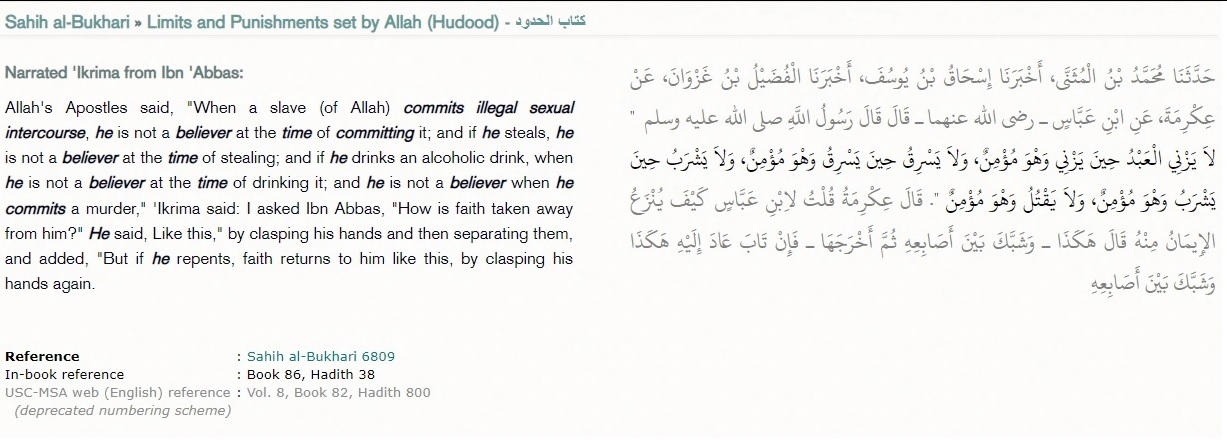
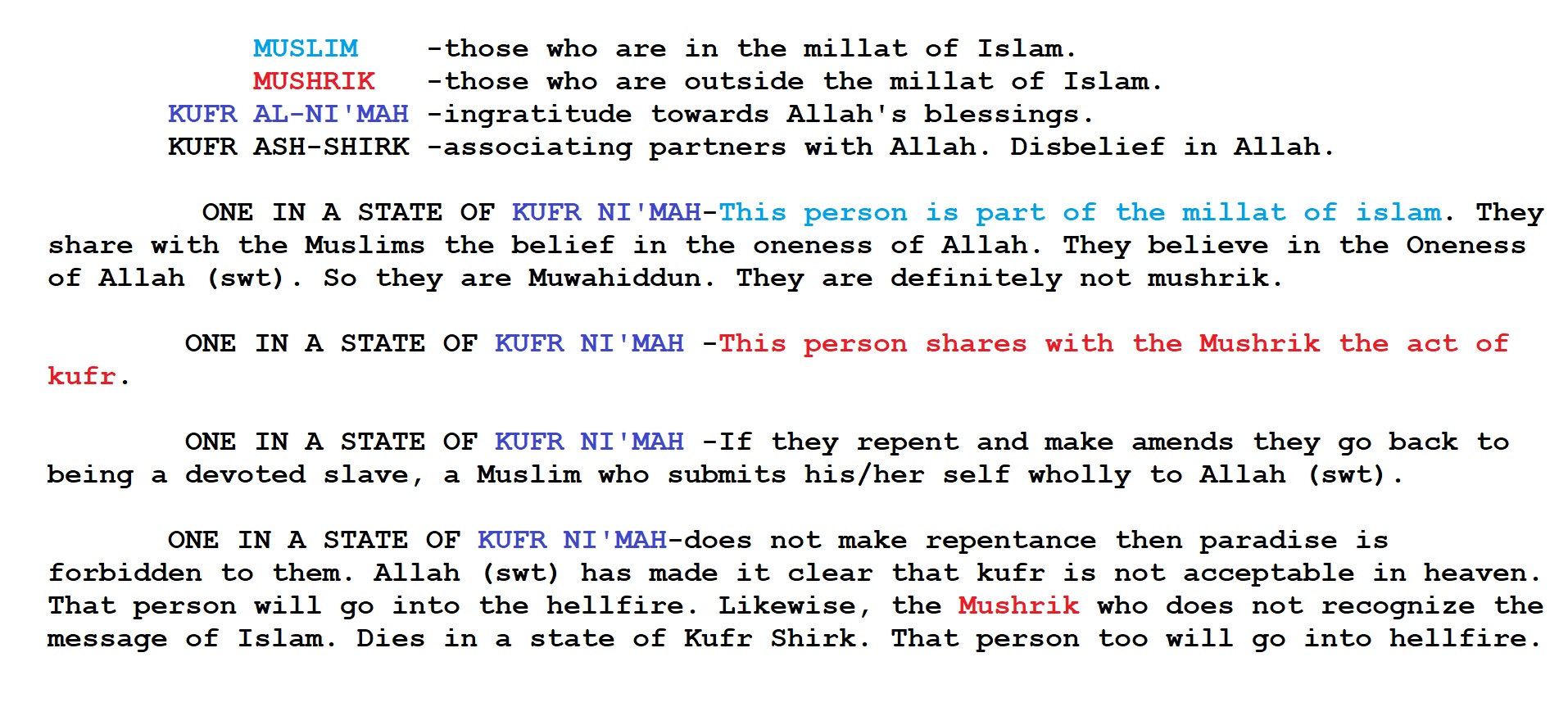




 Prima Quran