“Then We will give them a full account with sure knowledge—for We were never absent. “And the weighing that Day will be the truth. So those whose scales are heavy – it is they who will be the successful.”But those whose scale is light, they have doomed themselves for wrongfully denying Our signs.” (Qur’an 7: 7-9)
“We set up the scales of justice for the Day of Judgment, so no soul will be wronged in the least. And if a deed is the weight of a mustard seed, We will bring it forth. And sufficient are We as a Reckoner.” (Qur’an 21:47)
﷽
The vast majority of Muslims believe that they will be weighed on some scales on the day of judgement in which Allah (swt) will weigh their deeds. They imagine their good deeds being placed on some balance to the right and their bad deeds being placed on some balance on the left.
This has also led to the idea that we merit paradise through our deeds. If we do x amount of this or that than Allah (swt) is bound to grant us paradise.
This belief arises out of the corruption of the belief sent by the earlier messengers to the people of Egypt. After the truth was mixed with falsehood they came to believe that the heart recorded all the good and bad deeds of a person’s life. When the person died their heart was weighted against the feather of the Goddess Ma’at.
Ma’at was the personification of truth and justice. (Themes you will come to see soon enough).
The scales were watched by the results of the weighing were recorded by Anubis, The jackal headed deity of embalming. Known as ‘He who is Upon His Mountain’ meaning Necropolis (The City of the Dead).
The results were recorded by Thoth -the God associated with writing and judgement of the dead. If the person was said to have led a descent life they would live forever with Osiris.
Do Muslims have any justification for believing in scales that weigh good and bad deeds?
The following verses are usually appealed to.
“Then, when the Trumpet will be blown, there will be no kinship between them on that Day, nor will they ask about one another. As for those whose scale is heavy, it is they who will be successful. But those whose scale is light, they will have doomed themselves, staying in Hell forever.” (Qur’an 23:101-103)
“The Striking Disaster! What is the Striking Disaster? And what will make you realize what the Striking Disaster is? The Day people will be like scattered moths, and the mountains will be like carded wool. So as for those whose scale is heavy, they will be in a life of bliss. And as for those whose scale is light, their home will be the abyss. And what will make you realize what that is? A scorching Fire.” (Qur’an 101:1-11)
“Then We will give them a full account with sure knowledge—for We were never absent. “And the weighing that Day will be the truth. So those whose scales are heavy – it is they who will be the successful.”But those whose scale is light, they have doomed themselves for wrongfully denying Our signs.” (Qur’an 7: 7-9)
“We set up the scales of justice for the Day of Judgment, so no soul will be wronged in the least. And if a deed is the weight of a mustard seed, We will bring it forth. And sufficient are We as a Reckoner.” (Qur’an 21:47)
wal-waznu yawma-idhin l-haqu = The weighing that day is the Truth.
wanada’u l-mawazina l-qis’ta = And we set the weighing as justice.
Notice that in the Egyptian theology Ma’at is the personification of Truth and Justice.
So we can see that the Qur’an has used as a metaphor for the Truth and Justice being done that day. The Truth is Justice and Justice is nothing but the Truth.
Allah (swt) is not need of any scale to weigh people’s deeds. He already knows what we have done. He knows even before we have done it!
A BOOK NOT TWO BOOKS
Remember the Qur’an always mentions we are given a book. We are not given two books, so that one may each be weighted.
In fact every minutia of our life is recorded in THE book of eternal life.
“This, Our record, speaks about you in truth. Indeed, We were having transcribed whatever you used to do.” (Qur’an 45:29)
This will be shown to us and as Allah (swt) says:
“And the record will be placed, and you will see the criminals fearful of that within it, and they will say, “Oh, woe to us! What is this book that leaves nothing small or great except that it has enumerated it?” And they will find what they did present. And your Lord does injustice to no one.” (Qur’an 18:49)
Notice the verse says: “Your Lord does injustice to no one.” This is what is given a book. We are not put on some scale physical or metaphysical and weighed. This is incorrect.
These ideas about being weighed in a balance are Egyptian ideas that are important to Christianity and influenced some Muslim understanding of our sacred text.
“Tekel: You have been weighed on the scales and found wanting.” (Daniel 5:7)
It is ultimately Christian belief that one cannot merit salvation and thus Christ Jesus alleged death by being nailed to a patibulum acts as a shield against this judgement or weighing.
As was discussed in a previous article, Christians are absolutely unassured of their salvation.
We know our fate at the moment of death based upon how the angels take our souls.
“The ones whom the angels take in death [while] wronging themselves, and [who] then offer submission, [saying], “We were not doing any evil.” But, yes! Indeed, Allah is Knowing of what you used to do.” (Qur’an 16:28)
“The ones whom the angels take in death, [being] good and pure; [the angels] will say, “Peace be upon you. Enter Paradise for what you used to do.” (Qur’an 16:32)
“And We took the Children of Israel across the sea, and Pharaoh and his soldiers pursued them in tyranny and enmity until, when drowning overtook him, he said, “I believe that there is no deity except that in whom the Children of Israel believe, and I am of the Muslims. Now? And you had disobeyed before and were of the corrupters? So today We will save you that you may be to those who succeed you a sign. And indeed, many among the people, of Our signs, are heedless.” (Qur’an 10:90-92)
“Pharaoh declared, “O chiefs! I know of no other god for you but myself. So bake bricks out of clay for me, O Hamân, and build a high tower so I may look at the God of Moses, although I am sure he is a liar.” And so he and his soldiers behaved arrogantly in the land with no right, thinking they would never be returned to Us. So We seized him and his soldiers, Casting them into the sea. See then what was the end of the wrongdoers! We made them leaders inviting to the Fire. And on the Day of Judgment they will not be helped. We caused a curse to follow them in this world. And on the Day of Judgment they will be among the outcasts.” (Qur’an 28:38-42)
“When the angels seize the souls of those who have wronged themselves—scolding them, “What was wrong with you?” they will reply, “We were oppressed in the land.” The angels will respond, “Was Allah’s earth not spacious enough for you to emigrate?” It is they who will have Hell as their home—what an evil destination!“ (Qur’an 4:97)
Prima Qur’an comments: In fact, if you are reading this above verse and may Allah (swt) protect you and I from being among these people. However, the very fact that there will be people aware of this verse and have this reaction by the angels is sobering indeed!
“Indeed, those who relapse ˹into disbelief˺ after ˹true˺ guidance has become clear to them, ˹it is˺ Satan ˹that˺ has tempted them, luring them with false hopes. That is because they said ˹privately˺ to those who ˹also˺ detest what Allah has revealed, “We will obey you in some matters.” But Allah ˹fully˺ knows what they are hiding. Then how ˹horrible˺ will it be when the angels take their souls, beating their faces and backs! This is because they follow whatever displeases Allah and hate whatever pleases Him, so He has rendered their deeds void. Or do those with sickness in their hearts think that Allah will not ˹be able to˺ expose their malice?” (Qur’an 47:25-29)
Prima Qur’an comments:
It can be readily seen that those whom the angel takes their souls leave this world in one of two conditions. They are either righteous or in a dreadful condition. Their state is not mixed.
There is no such thing as people being raised up in the hereafter with two types of qualities both sinful and righteous; and thus, need to be weighed to see what out weighs what. If the angels take their souls at death saying to them:
“Peace be upon you. Enter Paradise for what you used to do.” Where is the sin to put in another scale against this?!
What is the truth and justice is what is recorded in THE BOOK OF LIFE. (The entire 100,000 volume Blue-Ray edition of every iota of your life)
Every circumstance, every context and every intention.
The quality of the person is known before Allah (swt) not the quantity of his/her deeds. Quality is a measure of excellence and quantity is a measure of items.
“And abase me not on the day when they are raised, “The Day whereon neither wealth nor sons will avail, “But only he (will prosper) that brings to Allah a sound heart.” (Qur’an 26:88-90)
“Narrated An-Nu’man bin Bashir:
I heard Allah’s Messenger (saw) saying, ‘ Beware! There is a piece of flesh in the body if it becomes good (reformed) the whole body becomes good but if it gets spoilt the whole body gets spoilt and that is the heart.”
“That is Paradise, which We give as inheritance to those of Our servants who were fearing of Allah.” (Qur’an 19:63)
“Indeed, Allah only accepts from the righteous [who fear Him]” (Qur’an 5:27)
“Those who believe and do righteous deeds and perform their prayers and give the purifying alms have their reward from their Lord, and they will not fear or grieve.” (Qur’an 2:277)
“As for those who repent, believe, and do good deeds, they are the ones whose evil deeds Allah will change into good deeds. For Allah is All-Forgiving, Most Merciful.” (Qur’an 25:70)
Prima Qur’an comments:
If the person is fasiq, does not repent, is unjust than Allah refuse his all his deeds and that one will be in hell.
“Those who disbelieved, and prevented (others) from Allah’s way, He (Allah) has rendered their deeds vain.” (Qur’an 47:1)
“As for the unbelievers, how miserable will they be? Allah brought their deeds to nothing.“ (Qur’an 47:8)
“That is because they followed what angered Allah and disliked [what earns] His pleasure, so He rendered worthless their deeds.” (Qur’an 47:28)
Where is the good to put in another scale to benefit them?!
“And those who do not invoke with Allah another deity or kill the soul which Allah has forbidden [to be killed], except by right, and do not commit unlawful sexual intercourse. And whoever should do that will meet a penalty. Multiplied for him is the punishment on the Day of Resurrection, and he will abide therein humiliated –Except for those who repent, believe and do righteous work. For them Allah will replace their evil deeds with good. And ever is Allah Forgiving and Merciful.” (Qur’an 25:70)
Shirk, adultery, fornication none of them will be in paradise. Except those who repent, amend and do righteous. Allah (swt) will replace their evil deeds with good deeds.
So where is the sin to put in another scale against them?!
The book of life that is given in the right hand or the left hand
“As for those given their records in their right hand, they will cry ˹happily˺, “Here ˹everyone˺! Read my record! I surely knew I would face my reckoning.” They will be in a life of bliss, in an elevated Garden, whose fruit will hang within reach. ˹They will be told,˺ “Eat and drink joyfully for what you did in the days gone by.” And as for those given their record in their left hand, they will cry ˹bitterly˺, “I wish I had not been given my record, nor known anything of my reckoning! I wish death was the end! My wealth has not benefited me! My authority has been stripped from me.” ˹It will be said,˺ “Seize and shackle them, then burn them in Hell, then tie them up with chains seventy arms long. For they never had faith in Allah, the Greatest.” (Qur’an 69:19-33)
“As for those who are given their record in their right hand, they will have an easy reckoning, and will return to their people joyfully. And as for those who are given their record ˹in their left hand˺ from behind their backs, they will cry for ˹instant˺ destruction, and will burn in the blazing Fire. For they used to be prideful among their people, thinking they would never return ˹to Allah˺.” (Qur’an 7-14)
Prima Qur’an comments:
So it is very clear to these people when they are given their book of life in which hand they are given it what will be their fate. There is no need to put people on scales and weigh them.
Also do take note that you have been lead to believe that the all Muslims take their book by their right hand. The verse does not say that at all!
“As for those given their records in their right hand.”
This can only mean the believers who were righteous and died in a good condition. Some will try and counter and say but the verses are references to the kafir: “For they never had faith in Allah, the Greatest.” & “For they used to be prideful among their people, thinking they would never return ˹to Allah˺”
Notice. They did not really believe in Allah. Nor did they really believe in the last day.
“And there are some who say, “We believe in Allah and the Last Day,” yet they are not believers.” (Qur’an 2:8)
We human beings can only judge by the dhahir (the apparent) and Allah (swt) judges by the dhahir and the batin (the apparent and the hidden) and he knows who are the truly righteous.
It is not simply a proclamation with the tongue! Also, note that the Murji’ah (Ahl Sunnah) are divided on rather or not the disobedient sinful believer takes their book with their left hand. Some interpolate statements saying by the left hand in the front (not behind their back).
The Qur’an has left no ambiguity as Shaykh Masoud Al Miqbali (r) says:
“Certainly you have in the Messenger of Allah an excellent example for him who hopes in Allah and the latter day and remembers Allah much.” (Qur’an 33:21)
“Allah and His angels send blessings on the Prophet: O ye that believe! Send ye blessings on him, and salute him with all respect.” (Qur’an 33:56)
﷽
Among the Ahl al-Haqq wa-l istiqama (The People of Truth and Straightness) you will find circles of learning where the righteous gather and recite poetry and other praise of the Blessed Prophet (saw). You will also find those doing collective dhikr (group remembrance and praise) of Allah (swt).
The difference between us and Sufi who do this are many. However, let us first start by what is common.
What is common is that anyone and everyone who does so insh’Allah does so in remembrance and praise of Allah (swt) declaring his absolute majesty and declaring Him (swt) free from imperfections.
What is common is a deep burning desire and love for the Blessed Prophet (saw) and a longing to be in his presence.
“O You who believe! Make much dhikr of Allah. And declare His innocence from imperfection by morning and evening.” (Qur’an 33: 41)
On the authority of Abu Hurayra, the Messenger of Allah(saw) is reported to have said,
“Verily Allah has supernumerary angels who rove about seeking out gatherings in which Allah’s name is being invoked: they sit with them and fold their wings round each other, filing that which is between them and between the lowest heaven. When [the people in the gathering] depart, [the angels] ascend and rise up to heaven. He (saw) said, “Then their Lord asks them [about it], even though He knows better than they do how His slaves will respond. One says: “They declare Your innocence from imperfection. They declare Your greatness. They praise You. And, they declare Your majesty.” He (Allah) says: “Have they ever seen Me?” They say: “No! By Allah! They have not seen You!” Then He says: “What if they saw Me?” They say: “If they saw You, they would be more intense in [their] service to You, more intense in praise of You, and more intense in glorification of You.” Then He says: “What do they ask of Me?” One replies: “They ask of You Paradise.” He says: “And have they seen it?” One replies: “No! By Allah, O Lord! They have not seen it!” He then says: “What if they had seen it?” They say: “If they had seen it, they’d be more intense in eagerness for it, more intense in seeking it, and greater in their desire for it.” He then says, “Then from what do they seek refuge?” They say: “From the Fire.” He says: “And have they seen My fire?” They say: “No! By Allah, O Lord! They have not seen it!” He then says: “And what if they had seen it?” They say: “If they saw it, they’d be most intense in flight from it, and more vehement in fear of it.” Then He says: “Then I make you all witness to that I have forgiven them.” Then an angel from the angels says: “But So-and-So is amongst them, who is not from them. He only came for some need he had!” He (Allah) responds: “They are those who sit, with whom the one who sits doesn’t suffer misfortune.”
If one was to ask the teachers of our ummah is it permissible to exercise the body? They would tell you that it is in fact encouraged.
If one was to ask the teachers of our ummah can we go jogging with friends? They would tell you that this is a good thing.
Seeing that ibadah (worship) is everything we do than this would become a form of collective ibadah.
However, when it comes to other collective acts of worship they suddenly frown upon it.
As regards remembering of Allah (swt) in a group this is of course done every time we do a congregational prayer and it is especially done on the Friday prayer.
As regards collective worship of Allah (swt) this has a precedent in the time of the Blessed Messenger (saw).
On the day of the Eid prayers, Muslims come together to recite the takbira. And the takbira is to say: “Allahu Akbar Allahu Akbar Allahu Akbar! La Ilaha Illa Allah! Allahu Akbar Allahu Akbar! Wa lillahilHamd!”
This is one form of collective worship of Allah (swt).
During the Hajj there is the reciting the Talbiya. The talbiya, being the following:
“Labbayk Allahumma Labbayk! Labbaka La Sharika laka Labbak! InnalHamda wan-Ni’mata laka wal-Mulk! La Sharika lak!”
This is said in a group and it is a form of collective worship of Allah (swt).
Also, as an urf (or custom) among the Muslims when Muslims orators or speakers try to pump up the crowd, or even when a new Muslim enters into the guidance of Islam, you will often hear someone say, “Takbir” to which a crowd responds collectively, ‘Allahu Akbar’ and this too is a form of collective praise and worship of Allah (swt). It is group dhikr.
On the authority of Abu Hurayra, the Messenger of Allah said,
“No people gather together in one of the Houses of Allah, reciting the Book of Allah and studying it among themselves, except that sakeenah (tranquility) descends upon them, and mercy envelops them, and the angels surround them, and Allah mentions them amongst those who are with Him.”
So just as praying in the masjid has more rewards than praying in your home, so does praying in a group in your home have more rewards than praying as an individual.
Praying in a group in the masjid at the time the prayer is prescribed has more rewards. Praying in Mecca or Madinah has more spiritual weight than doing so outside.
So there is nothing wrong in our school in reciting poetry and showing abundance of love for the Blessed Prophet (saw).
We simply avoid access. Do not ascribe to the Prophet (saw) qualities which are only befitting Allah (swt). This is something that is impermissible.
Those who which to participate in group nasheed and group dhikr may do so. Where it becomes problematic is if it coupled with elements that are in clear violation of the sacred law. Where it becomes problematic is when such voluntary acts of group worship are made wajib (obligatory) upon others.
The school of Ahl al-Haqq wa-l istiqama does not have formal bayah (oath of allegiance) given to Shaykhs. Your oath of allegiance as a Muslim is slavehood to Allah (swt) and loyalty to the teachings of our Blessed Prophet (saw). We do not say of our teachers and shaykhs other than they are men whom Allah (swt) blessed with knowledge and piety. None of them control the universe, or the fates of others.
The idea of guilt tripping other Muslims if they do not attend such gatherings or making them feel less in their worship is outright impermissible.
Any group of Muslim brothers, or sisters who may wish to find a quite place along the beach with the ocean waves crashing down near by, or wish to find a quite place in the forest, to do dhikr alone or collectively may do so. Provided that no one is violating the sacred shari’ah. These gatherings do not need to take place like clock work every Thursday/Tuesday at this time on this day. No. They can be spontaneous.
Allah (swt) has made wajib upon us what he has made wajib upon us.
Often there are some groups with good intentions who make such gatherings wajib upon people, at certain timings and certain days, and the guilt trip individuals who do not do so even to the point of making threats or shunning such individuals. All of that is most unfortunate. You push people away from Allah (swt) when initially you invited them to Allah (swt).
The best form of worship is that which is done in private with out a single soul knowing. The only ones aware are yourself and Allah (swt).
“Call upon your Lord in humility and privately; indeed, He does not like transgressors.” (Qur’an 7:55)
“If you disclose your charitable expenditures, they are good; but if you conceal them and give them to the poor, it is better for you, and He will remove from you some of your misdeeds [thereby]. And Allah, with what you do, is [fully] acquainted.” (Qur’an 2:271)
Most of all let every deed, act of worship rather done in private, in a group, secretly or openly be done solely and purely for the sake of Allah (swt).
Narrated Jundub:
The Prophet (saw) said, “He who lets the people hear of his good deeds intentionally, to win their praise, Allah will let the people know his real intention (on the Day of Resurrection), and he who does good things in public to show off and win the praise of the people, Allah will disclose his real intention (and humiliate him).
Ultimately Allah (swt) has made wajib what he has made wajib. This is what every Muslim is duty bound to follow. Other than this are voluntary acts of worship. One may prefer late night vigils of solitude and others a mellifluous gathering of voices and hearts crying out in unison for Allah (swt).
What ever the act of worship, may Allah (swt) make all of it for the sake of Allah (swt) alone, sincere, pure, blessed and a means to draw closer to Allah (swt) and forsaking the pitfalls of this world. May Allah (swt) help us to rectify ourselves and may Allah (swt) guide us to what is beloved to Allah (swt).
May Allah forgive the Ummah! May Allah guide the Ummah! May Allah bless the Ummah!
“Then if you were to dispute among yourselves about anything refer it to Allah and the Messenger if you indeed believe in Allah and the Last Day; that is better and more commendable in the end.” (Qur’an 4:59)
﷽
This subject is something that has stirred the emotions and passions of the Muslims in their history. It is a highly volatile subject. In the history of Islam, one party of Muslims, would persecute the other. When the persecuted party came into power, they returned the favour.
The Ibadi school was removed from these bloody affairs and allowed them to approach the subject with sobriety dealing only with the proof text and the justifications for the views.
From the outset it should be clear that all sides have their proofs and justifications for their positions. Albeit some like to pretend that the other side blatantly ignore verses of the Qur’an, this is a clear misrepresentation and meanness.
So, in this dispute we are commanded by Allah (swt) In the Qur’an:
“Then if you were to dispute among yourselves about anything refer it to Allah and the Messenger if you indeed believe in Allah and the Last Day; that is better and more commendable in the end.” (Qur’an 4:59)
It is up to you dear reader to see who relies more upon revealed text and who relies more upon theological speculation to draw their conclusions.
Any clear statement from the Blessed Messenger (saw) on this matter?
There is no clear statement from the Blessed Messenger (saw) on this matter.
Any clear statement from the immediate companions on this matter?
The only clear statement we have from a companion(sahabah) is the following:
Narrated ‘Abdullah bin Mas’ud:
“Allah has not created (khalaq) in the heavens nor in the earth what is more magnificent than Ayat Al-Kursi.”
We do not have any reports from a companion(sahabah) to the contrary. So, our interlocutors will either have to weaken the hadith or employ interpretive principles to dismiss it as sound evidence.
Any clear statement from the Qur’an on the matter?
As regarding the Qur’an there is no clear statement that is it is uncreated. Those who oppose us on this matter have made it a theological conclusion. This is deduced after making certain assumptions about Allah (swt) and what are his essential attributes.
Whereas the Qur’an does have a clear text that states that is created. If there was such a text our interlocutors would be quick to quote it.
“Indeed, We have made it (ja’alnahu) an Arabic Qur’an that you might understand.” (Qur’an 43:3)
Our interlocutors have never been able to find any usage of the above word (ja’alnahu) in the Qur’an to show that something is uncreated, unmade, without origin, having an eternally abiding quality or trait.
In the Ibadi school we ground our aqidah on the source common to all Muslims (the Qur’an) and then we draw our beliefs from this.
We do not have theological speculations about Allah (swt) and then try and make the Qur’an conform to our theological suppositions about Allah (swt) as you the reader will soon see.
The issue regarding Sifat (Attributes) and Dhat (Essence) of Allah (swt)
Before I have approached this topic as a novice, and I still very much am a layman and not a scholar. With that out of the way I think it is very important to start with the crux of this issue which is really about the clash of understanding of essence (dhat) of Allah (swt) and what are/are not his essential sifat (attributes) and what categories they fall under as well as how different schools of aqidah (creed) further categorize those sifat (attributes).
The categorization of the Attributes of Allah is based on whether the Attributes are intrinsically bound to the Self (or Dhāt) of Allah or not bound intrinsically to the Self of Allah. So according to this, the Attributes are divided into three categories:
Attributes ascribed to His Self (Sifāt Dhātiyyah).
Attributes ascribed to His Actions (Sifāt Fi’liyyah).
Attributes ascribed to both His Self and His Actions (Sifāt Dhātiyyah Fi’liyyah)
A definition for each: 1. As for As-Sifāt Adh-Dhātiyyah (Attributes ascribed to His Self) then what is intended is those Attributes that are intrinsically bound to the Self of Allahsuch that He never ceases and will never cease to be described with them. Examples are Life (Al-Hayāt), Knowledge (Al-‘Ilm), Ability (Al-Qudrah), Might and Power (Al-‘Izzah), Wisdom (Al-Hikmah), Majesty (Al-Jalāl), Highness (Al-‘Uluw) and other such Attributes of the Self. They are referred to as Adh-Dhātiyyah (i.e. ascribed to the Self) because they are intrinsically bound to the Self of Allah, and similarly His other Attributes such as His Two Hands (Al-Yadayn),Two-Eyes(Al-‘Aynayn) and Face (Al-Wajh) — and these Attributes can be called As-Sifāt Al-Khabariyyah (i.e. Attributes that provide information of the Self of Allah, such as, Two Hands, Two Eyes, Fingers, etc.).
2. As for As-Sifāt Al-Fi’liyyah (Attributes ascribed to His Actions), they are the Attributes connected to His Will (Al-Mashee’ah) and they are not intrinsically bound to His Self (Adh-Dhāt), not in type and nor in their individual occurrence. Examples are the Ascending (Al-Istiwā) of Allah over the Throne, the Descending (An-Nuzool) of Allah to nearest Heaven of this world and the Coming (Al-Majee’u) of Allah on the Day of Resurrection to judge between the people. These are all Attributes ascribed to His Actions and connected to His Will — If He Wills, He does these actions and if He Wills, He does not do them. So, these Attributes are [newly] happening events in terms of their type and in their individual occurrences. So, the Ascending of Allah over the Throne did not take place until after He had created the Throne; the Descending of Allah to the nearest Heaven of this world did not occur except after He had created the Heavens, and [of course] the Coming of Allah will not occur before the Hour is established.
3. As for As-Sifāt Adh-Dhātiyyah Al-Fi’liyyah (Attributes ascribed to both His Self and His Actions) then if one was to consider this type of Attribute, he would find that Allah never ceases and will never cease to be described with it, so it is intrinsically bound to the Self (Dhāt) of Allah. And if one was to consider its occurrence, he would find that it is also connected to His Will, and not intrinsically bound to the Self (Adh-Dhāt). The Scholars use as an example the Speech (Kalām) of Allāh, the Most High. Speech (Al-Kalām) — in terms of the type of Attribute, it is ascribed to Allah’s Self, since He does not cease and will not cease to be described with speaking. His Speech is from His perfection that is due to Him (free is He from all imperfections). And as for individual occurrences of His Speech, then He speaks whenever He Wills [to whom He Wills at a time designated by Him] — so His Speaking is from the Sifāt Fi’liyyah (i.e. it is an Attribute ascribed to His Actions) because it is done according to His Will (i.e. when He Wills).
Do note that these categories and descriptions are the categories and descriptions not found in the Qur’an or the Sunnah of the Blessed Messenger (saw).
Our main point of difference with this sect of the Sunni Muslims (the ones who have been most vocal on the issue) is that where they would put the quality of speaking in category 3, we would put the quality of speaking in category 2. That being Sifāt Al-Fi’liyyah.
“These are all Attributes ascribed to His Actions and connected to His Will — If He Wills, He does these actions and if He Wills, He does not do them. So, these Attributes are [newly] happening events in terms of their type and in their individual occurrences.”
Also note some interesting admission in their description in point 3. They state: “And if one was to consider its occurrence, he would find that it is also connected to His Will, and not intrinsically bound to the Self.”
So what are the points of difference between us on this?
First, we don’t’ agree with them that anything and everything attributed to Allah (swt)is an attribute. Examples being but not limited to the following: Their belief that Allah (swt) has such attributes as: hands, face, eyes, that Allah chuckles or laughs, has a leg or foot. Some of them even affirm the idea that Allah (swt) has an uvular, runs, trots or jogs and so forth.
Then they make lofty claims that they take the outward meaning of text and leave it at and do not perform ta’wil (interpretation)yet from their own sources
“There is in no private conversation of three but that He is the fourth of them, nor are there five but that He is the sixth of them, and no less than that and no more but that He is with them wherever they are. Then, He will inform them of what they did on the Day of Resurrection. Verily, Allah knows all things.” (Qur’an 58:7)
Notice the title when speaking about the text in the Qur’an states: “By His Knowledge not His Essence) and that is not what the text (of the Qur’an) says at all! This is them applying their understanding of a text to refute other rival Muslim sects.
Another view concerning Allah (swt) that they have which has no support in the Qur’an or Sunnah is a what can be termed as pseudo-attributes or quasi-attributes of Allah (swt). Their claim ultimately is that Allah (swt) has attributes that are not identical to his essence nor other than it! You can see them try and make justification for it here: https://www.islamweb.net/en/fatwa/282904/elaboration-required-if-one-says-allaahs-attributes-are-other-than-him
Notice that they make no recourse to the Qur’an nor to the Sunnah. This is speculative theology, and, in this manner, they are ahl kalam. Though they will claim they are people who take only the text.
“And that you say about Allah that which you do not know.” (Qur’an 7:33)
Whereas we rely upon the following text to show the absolute oneness of Allah (swt)
Your God is One (wāḥidun) God; there is no god but He, the All-merciful, the All-compassionate.” (Qur’an 2:153)
Say: ‘He is God, One (ahadun),” (Qur’an 112:1)
Wahid is that Allah (swt) is one and there is no other. When this is coupled with ahad it means that Allah (swt) is absolutely one. This is what the Qur’an affirms, and it is what we believe.
“The word ahad, -conveys an uncountable oneness. It is not one in a series. It cannot be added to or divided into fractions. It stands for a singular, unique entity.”-Shaykh Salman al-Oadah
However, our interlocutors believe Allah (swt) has attributes that are neither his essence nor other than it. This is important to keep in mind when reading the article.
The belief in the eternity of the Qur’an though its meanings differ, and its ways are diverse because of the differences among its supporters emanates from one source, namely not differentiating between Speaking as an Essential attribute of Allah and its EFFECTS, the Books that Allah has sent down to His Messengers. All who hold this opinion must necessarily believe in the eternity of all originated things, because these (also) are effects of Allah’s attributes. Because the creatures, regardless of their differences (from each other), are not other than effects of His Power, Will and Knowledge. His Power, Will and Knowledge is an eternal essential attribute because of the impossibility of Allah’s qualification with their opposites.
So, understand that by this when we say kalaam Allah it literally translates as the speech of Allah. And it is known the speech is but a by-product, an EFFECT of the attribute of Speaking. This is what we affirm.
And now here comes the real differentiation between the two:
1.Having the ability to speak.
2.Creating the speech itself.
If it’s the first, then it’s a necessary for the mind to affirm it as an attribute. If it’s the latter, then it’s a possible attribute, as Allah (swt) make create speech or may not create speech.
So, the kalaam Allah is from the Sifāt Al-Fi’liyyah
Remember above they themselves have defined Sifat Al-Fi’liyyah as:
These are all Attributes ascribed to His Actions and connected to His Will — If He Wills, He does these actions and if He Wills, He does not do them. So, these Attributes are [newly] happening events in terms of their type and in their individual occurrences.
You know that those among them who hold that Allah’s being Speaking is without His Will base their opinion on what is necessitated by making His worldly speech an eternal attribute abiding in His Essence. For the Eternal, no Will can precede His Eternity, as also for knowledge, Power, Life and other attribute of Allah, exalted is He. Just as it cannot be said that Allah is Powerful by His Will, Alive by His Will, Knower by His Will lest minds should infer origination (and contingency) in respect of these attributes, in the same way it becomes necessary for those who believe in the eternity of His being Speaking to say that it is not bound by His Will.
SPEAKING AS AN ESSENTIAL ATTRIBUTE ABIDING WITH ALLAH (SWT)
Whereas the Athari (also called Salafi), Ash’ari and Maturidi schools of aqidah (creed)of what is known as Sunni Islam affirm speaking as an essential attribute we do not. Whereas Power, Will, and Knowledge are essential attributes of Allah (swt) because of the impossibility of Allah’s being qualified by their opposites. Revealed books are, indications of His Knowledge which is an attribute of His Essence.
They are not the attribute of the Knowledge itself which is a quality of his eternal Essence.
Our response to the first rational objection by the Athari/Salafi school of Sunni Islam.
They will say: “Just as the attribute of speech is a noble attribute, its opposite, muteness, is a characteristic that is not desired, nor is it considered praiseworthy. It is well known that the one who is mute is not like the one who speaks. Therefore, to claim that Allah does not possess the attribute of speech (or to interpret it away as the Ash’aris do) is in reality blasphemous, as this then implies that the Creator is mute, yet Allah is free of all attributes of imperfection.”
Source: (pg. 45. An Introduction to the Sciences of the Qur’an by Yasir Qadhi)
The above statement is inter-Sunni polemic. Salafi/Athari Sunni Muslims directing this at Ash’ari Sunni Muslims, this line of thinking is severely flawed.
First, it is sufficient to attribute to Allah (swt) the attribute of Power without the attribution of speech. Speech is not the opposite of dumbness such that dumbness is negated by affirming it. The opposite of speech is silence. It does not mean that a non-speaking person is dumb; rather he is not non-silent.
We affirm the attribute of speech for Allah (swt) as Imam Diya al-Din ‘Abd al-Aziza Thamini (raheemullah), says in his Mu’alim:
“Know that speech is sometimes referred to Allah in the meaning of negating dumbness of Him, and it then to be understood as an essential attribute in the way of such attributes. And sometimes it is referred to Him in the sense of its being one of His actions, and it is then to be understood as such. So, the meaning of His being Speaking, according to the first interpretation, is that He is not dumb; and according to the second that He is a Creator of Speech.”
The meaning of Allah’s being Speaking is producing speech on the occasion of it.
What is not in dispute between us and the Sunni Muslims.
1) That Allah (swt) has never been unable to produce speech from all eternity.
2) That the Qur’an does not originate from any other than Allah (swt).
3) It is his Word, His Revelation and that which He sent down.
4) It was revealed in letters and words.
5) It was revealed to the heart of the Blessed Messenger (saw).
6) It is inimitable in its combinations and meanings. No human being can produce the like thereof.
7) It has been narrated from the Blessed Messenger (saw) through firm tawatur
It does not emanate from other than Allah (swt).
Just as all created things. “That is Allah—your Lord! There is no god ˹worthy of worship˺ except Him. ˹He is˺ the Creator of all things, so worship Him ˹alone˺. And He is the Maintainer of everything.” (Qur’an 6:102)
The dispute among the Sunni Hanbali school of Aqidah(creed). Due to the Hanbali school being among the Ahl Kalaam and people of speculative theology they have produced some of the more bizarre debates the Muslim Ummah has ever seen. If you research this matter you will find it to be true.
Among the Hanbali differences:
a) The voice of the reciter of the Qur’an and his recitation. Are they created or not?
b) The letters of the alphabet from which the words of the Qur’an and others are composed. Is it created or not?
c) Allah’s being Speaking, whether it is by His Will or not (By His Will).
Since their differences about the letters, sounds and recitation overlap, we have considered them together in reviewing and criticizing their opinions about them.
They attribute to Imam Ahmad the statement: ‘Whoever says My utterance of the Qur’an is created, he is a Jahmi and whoever says it is not created, he is an innovator.’
In this text that they have narrated, there is a contradiction that cannot be obscure to any intelligent person. There is no intermediary between creature and non-creature.
The thing is neither created nor non-created. If it is created, then why does he not accuse of error those who speak of its creation? If it is not, then why does he attribute innovation to those who speak of its non-creation? “Ahmad said: ‘Whoever says that any letter of the alphabet is created, he is a Jahmi, because he has walked on a path of innovation, and whoever says that the alphabet is created, then he [also] says that the Qur’an is created.’
Source: (Fatawa Ibn Taymiyyah, 12:83-85)
That is an excuse of no use. To deny the being created of what is known by reason and tawatur tradition to be created, and to attach it to Allah, exalted is He, in eternity, avoiding the firm Qur’anic texts that everything other than Allah is created-such as Allah’s saying:
“That is Allah—your Lord! There is no god ˹worthy of worship˺ except Him. ˹He is˺ the Creator of all things, so worship Him ˹alone˺. And He is the Maintainer of everything.” (Qur’an 6:102)
His saying: “The One Who holds control over Heaven and Earth, Who has not adopted any son nor has He any associate in control. He has created everything and measured it out precisely.” (Qur’an 25:2) is in no way permissible. How so, when the driving force behind this is only the fear of the rising sun of reality, and the evaporation of the fog of fancies, which they intended as a veil between reason and their grasp of the realities. Not content with mere refusal of reality, they went further to pass judgements on those who proclaim the reality as being Jahmi, innovators and unbelievers. Fa in-na li-l-lahi wa in-na ilayhi raji’un: so surely, we belong to Allah and to Him surely, we are returning!!
In how wretched a state Islam is left when interpreted in these contradictory directions! How far astray are the people of Islam if they do not recognize Islam but through these things.
Imam Ahmad was asked: “What is your opinion concerning those who say, ‘Our recitation of the Qur’an is created”? Imam Ahmad replied: “These people are worse than the Jahmiyah. Whoever believes this, then he believes that Gabriel came with something created, and the Prophet (saw) preached something created!” Source: (adh-Dhahabi, Ual-Uluww, p 212.)
So, then is our recitation uncreated?
No evidence from the Qur’an, the Sunnah or rational proofs, except what they bring from Ahmad. The make Ahmad and their scholars the standard by which the truth is measured. They will often use the term “salaaf” as the standard but what was the standard that Allah (swt) gave the salaaf if they should fall into disputes?
“Then if you were to dispute among yourselves about anything refer it to Allah and the Messenger if you indeed believe in Allah and the Last Day; that is better and more commendable in the end.” (Qur’an 4:59)
If that standard is good enough for them it is good enough for us! Whoever wants a more comprehensive understanding (of their various positions) should refer to the books of the holders of this belief, such as the 12th volume of Fatawa Ibn Taymiyya, which exceeds 600 pages. You will not move from one topic therein to another without witnessing the contradiction of what he says such as will suffice to demonstrate that the foundation on which they have laid down this belief is crumbling from its bases.
These huge disagreements among them are an indication that they are the people of innovation -differing among themselves in these matters in Aqidah (creed).
The positive evidence advanced by those that say that the Qur’an is uncreated.
Please note that the Sunni are divided on this issue, thus not all of them will agree to using the same arguments. However, this is as brief over view of arguments and evidences that they claim justify their position.
What they feel are logical/rational arguments.
The first one was already dealt with above. That was under the section: Our response to the first rational objection by the Athari/Salafi school of Sunni Islam.
Another logical/rational argument they bring is the following:
Only Allah (swt) is perfect, and the creation is imperfect. Thus, the trap they intend is this. Those who say that the Qur’an is created must therefore have to admit that it is imperfect!
However, this is a very flawed argument that you will see them retreat from. This argument destroys them. If A=B and B=C than A=C. So let us play the game: If only Allah (swt) is perfect. And the Qur’an is perfect = Allah (swt) is the Qur’an!
So, they must retreat further to their quasi-attribute. The one that is neither Allah(swt) nor other than Allah (swt). Since that is between negation and affirmation that really can’t say by their reasoning that the Qur’an is not Allah (swt).
Secondly, this can be answered by saying that the Qur’an is perfect in one way in that is a perfection revelation of Allah (swt). This is affirmed by:
“Lo! We, even We, reveal the Reminder, and lo! We verily are its Guardian.” (Qur’an 15:9)
Allah (swt) doesn’t have a guardian. That should be clear.
However, it is not absolutely perfect as Allah (swt) and the proof for that is:
There is nothing like unto Him. (Qur’an 42:11)
Yet do not be surprised nor dismayed if those who disputed on rather or not the ink, recitation or mushaf is created would not be swayed by such clear evidence.
Positive evidence from the Qur’an for those who argue it is eternal and uncreated.
The Creation and the Command argument:
“His are the creation and the command.” (Qur’an 7:54)
The argument that those who believe the Qur’an is eternal and uncreated is that the creation is the created and the command is His Word -which is not-created.
The command is His saying ‘Be’: “Indeed when He intents a thing, His is “be” and it is’ (Qur’an 36:82)
So, they feel this is strong evidence for their position. For if His Word which is command has been created, then He would have said: “His are the creation and the creation.”
Their reasoning fails on several counts:
1) The first is that the context of this statement is nothing other than Allah’s being alone in originating the originated things and turning them according to His will.
The text of the whole verse is: “Surely your Lord is none other than Allah, Who created the heavens and the earth in six days, and then ascended His Throne; Who causes the night to cover the day and then the day swiftly pursues the night; Who created the sun and the moon and the stars making them all subservient to His command. Lo! His is the creation and His is the command. Blessed is Allah, the Lord of the universe.” (Qur’an 7:54)
The most that this verse tells us is that, just as Allah, glorified is He, is alone in bringing the universe out of non-being (into being), in the same way He is alone
in the management of it. He has no partner in its creation and in its management. None other than Him alone belong the creations and the command. The meaning here, clearly, is management. And there is nothing in that which even remotely points either to the eternity of the Qur’an or to its contingency.
2) The second point that the conjunction ‘Wa’ or ‘And’ in English does not necessarily mean difference between the conjoined elements in every respect. Rather, it is enough that the difference is relatively, like the difference between specific and general, unconditioned and conditioned, or the difference of qualifiers with sameness of the noun.
Among the examples of that are His saying: “Guard strictly prayers and the middle prayer.” (Qur’an 2:238) The middle prayer is not (separated) out of the genus of the prayers, the guarding of which has been commanded.
And His saying:
“Whoever is an enemy to Allah, and His angels, and His Messengers, and Jibril and Mikael.” (Qur’an 2:98)
No-one says that Jibril and Mikael are (separated) out of the genus of angels.
There are many other examples. That should suffice.
3) The third point is that the command of Allah, exalted is He, has been mentioned in the Qur’an jointly with what denotes its creation. He says: “And Allah’s command must be fulfilled.” (Qur’an 33:37)
And He says: “So that Allah might accomplish a matter (amr) already decided.” (Qur’an 8:42)
And he says” “And the command of Allah is a decree determined.” (Qur’an 33:38)
4) The fourth point is that His command means in one place in the Qur’an something different from what it means in another. In His saying: “(So it was) till then there came Our Command and the oven gushed forth (water like fountains from the earth)” (Qur’an 11:40). It is not the same as in His saying: “Has come the command of Allah, seek not then to hasten it.” (Qur’an 16:1)
5) The fifth is that the interpretation of ‘the command’ in these verses which we have cited as (meaning) the Qur’an is not correct. It is known with certainty that the Qur’an is not meant (by ‘command’) in His saying: “Or there comes the command of your Lord.” (Qur’an 16:33) and His saying: “Until, when Our command came, and the oven overflowed.” (Qur’an 11:40)
As well as His saying: “So that Allah might accomplish a matter(amran) already destined.” (Qur’an 8:42)
So how can ‘command’ (amr) in His saying; “His are the creation and the command” be interpreted as the Qur’an, whereas the text denotes the opposite of it?
The next argument that they advance is creating with ‘be’ and the understanding of bi-l-haqq.
“We created not the heavens, the earth and all between them, but for just ends (bi-l-haqq) (Qur’an 15:85)
The way they argue is that the ‘haqq’ with which Allah has created them is His saying to them ‘Be’. If this saying (of ‘Be’) had (itself) been created, then it would not be correct to (say that) the creations were created by it, because the creation is not created by a creature. First, we do not accept that the meaning of ‘bi-l’haqq’ is as they say. The best tafsir of the Qur’an is the Qur’an itself.
His saying: “Our Lord, not for nothing have you created this.” (Qur’an 3:191), firmly denotes that the meaning of bi-l-haqq in the verse is in opposition to al-batil (i.e. Creation for nothing, vanity). The intention of describing Allah’s creation of the heavens and the earth and whatever is between them as bi-l-haqq is to negate the futility of Allah, exalted is He, in His actions.
It is refutation of the futility that the unbelievers thought of His actions, as is clear His saying: “Not without purpose did We create heaven and earth and all between. That was the thought of the unbelievers. But woe to the unbelievers because of the Fire.” (Qur’an 38:27)
The meaning of ‘Be’ in the like of His saying, exalted is He, “For to anything which We have willed, We but say “Be” then it is.” (Qur’an 16:40)
This relates to the execution of His Will, exalted is He, in respect of anything of the mumkinat (what is possible) in the context of giving it existence or completing it. It is explained by his Saing, “When We have willed’ i.e. When Our Will has conjoined with it in a way of execution (of the command). Because ‘when’ is for time in the future, and this is emphasized in His saying: “an naqula la-hu.” (that We say to it), (Qur’an16:40) which is in the imperfect tense which, when it is with ‘an’, means the future.
It is known with certainty that whatever is since forever-like His Knowledge, His Power and His Life-the Will cannot be conjoined with it, because nothing can precede (what is eternal).
And this is emphasized by His saying ‘fa-yakun’ (then it is), the connecting particle ‘fa’ meaning order and sequence. From this you know that His saying, exalted is He, ‘kun fa-yakun’, is, wherever it occurs, nothing but an indirect expression of the speedy response of things to Him, glorified is He, in accordance with the conjunction of His Will with these things. Otherwise, there is no utterance of kaf nun (kun) in the concrete sense (of utterance). If we accept that, then we will say that our discussion is about the Word revealed such as the Qur’an, not the Word unrevealed.
It is also a metaphor for the expediency of Allah’s creative command.
“Allah created the heavens and the earth, and all that is between them, in six days” (Qur’an 7:54).
“The similitude of Jesus before Allah is as that of Adam; He created him from dust, then said to him: “Be”. And he was.” (Qur’an 3:59) Yet didn’t Jesus (as) take time to form in the womb?
Some scholars have said that Allah (swt) created this word and willed for it to follow his orders. So, all in all it’s not something coexisting with Allah (swt).
The next argument they bring: Seeking refuge in Allah’s complete words.
This is from the following hadith:
Khaula bint Hakim Sulamiyya reported:
I heard Allah’s Messenger (saw) as saying: When anyone lands at a place, and then says: “I seek refuge in the Perfect Word of Allah from the evil of what He has created,” nothing would harm him until he marches from that stopping place.
Second, that this seeking refuge in fact is with Allah (swt), because He is the Lord of the words. The words are included (in the sense) because of the blessing and goodness that Allah (swt) has put therein. It is a kind of metaphor.
And in the sound hadith has come seeking refuge in His actions, exalted is He, as in the prayer of the Prophet (saw) as follows:
It was narrated from Abu Hurairah that ‘Aishah said:
“I noticed the Prophet (saw) was not there one night, so I started looking for him with my hand. My hand touched his feet, and they were held upright, and he was prostrating and saying: ‘I seek refuge in Your pleasure from Your anger, in Your forgiveness from Your punishment, and I seek refuge in You from You. I cannot praise You enough, You are as You have praised yourself.'” Source: (https://sunnah.com/nasai:169)
Forgiveness is one of His actions, exalted is He, and it is (therefore) definitely originated. Seeking refuge in it was allowed because (forgiveness) does not emanate from other than Allah (swt).
Is Allah’s forgiveness Allah himself? Is Allah’s punishment Allah himself?
The next argument is the hadith of Ali in making the Qur’an and not a creature a judge.
The fifth is what Abu l-Qasim al-Lalka’i has narrated from Ali bin Abi Talib that he said -when it was to him that you made two men as your judges -‘I did make a creature a judge, I did not make a judge but the Qur’an’.
The answer to this is simple: His negation of making a creature as judge by making the Qur’an as judge is because the Qur’an is from Allah (swt). All that it in it the commands, prohibitions, permissions, restrictions, approval, rejection it is from Allah (swt). So, making the Qur’an as judge is referring for judgement to Allah who has sent it down with His Knowledge, and has related its judgement to Himself.
He says: “Who is better than Allah in judgement?” (Qur’an 5:50)
Do Note I have not been able to find the hadith attributed to Ali bin Abi Talib. Insh’Allah when I have the source it will be included.
The next argument is that Ibn Abbas (ra) critiqued a man for saying: Lord of the Qur’an
Is what has been narrated from ‘Abdullah b Abbas (ra) that he criticized a man who said: “Lord of the Qur’an.”
The answer is: that the evidence as to its not being sound is in abundance.
Do Note I have not been able to find the hadith attributed to Ali bin Abi Talib. Insh’Allah when I have the source it will be included.
Some discussion on Allah (swt) speaking with Musa (as)
The Hanbali/Salafi agree with us (The Ibadi School) that Musa (as) heard from Allah’s Speaking a speech composed of letters and that it had sound. On this point the Ashari disagree with us both. However, we differ on its eternity or origination. They believe in its eternity, and we believe in its origination.
Those who said that the speaking to Musa (as) that it is an eternal attribute, or that it is abiding with the essence of Allah (swt) both are incorrect.
Weak argument used by Hanbali/Salafi Sunni Muslims against Ashari Sunni Muslims.
There is however a very weak argument used by the Hanbali/Salafi in their discussion with the Ashari. They feel it is a strong argument.
The Hanbali/Salafi argument against the Ashari goes like this:
“If the Kalaam of Allah is without sound, then what did Musa (as) hear when Allah spoke to Him? If they respond that Allah (swt) created a sound, and caused Musa (as) to hear that created sound, then this means that this created object stated, “Oh Musa, Verily, I am your Lord, Verily, I am Allah, there is no god save me, so worship Me.” (Qur’an 20:12-14)
Source: (Pg. 44 An Introduction to the Sciences of the Qur’an by Yasir Qadhi)
Yet, obviously, we know that Musa (as) did not perform any act of worship towards the direction of the voice. Or at least no act of worship is recorded.
Shaykh Yasir Qadhi and those who think this is some knock down killer argument must really have to wonder about the following:
What did Rasul Allah (saw) think when Angel Gabriel (as) said. “Indeed this, your religion, is one religion, and I am your Lord, so worship Me.” (Qur’an 21:92)
What? Did the Blessed Messenger (saw) make sujud and worship Gabriel? Obviously not!
Gabriel(as) was used as a medium in the same way the burning bush was.
Has the story of Musa reached you ˹O Prophet˺? When he saw a fire, he said to his family, “Wait here, ˹for˺ I have spotted a fire. Perhaps I can bring you a torch from it or find some guidance at the fire.” But when he approached it, he was called, “O Moses! It is truly I. I am your Lord! So, take off your sandals, for you are in the sacred valley of Ṭuwa. I have chosen you, so listen to what is revealed: ‘It is truly I. I am Allah! There is no god ˹worthy of worship˺ except Me. So, worship Me ˹alone˺, and establish prayer for My remembrance.” (Qur’an 20:9-14)
“And when Musa had completed the term and was traveling with his family, he perceived from the direction of the mount a fire. He said to his family, “Stay here; indeed, I have perceived a fire. Perhaps I will bring you from there [some] information or burning wood from the fire that you may warm yourselves.” But when he came to it, he was called from the right side of the valley in a blessed spot – from the tree (mina l-shajarati), “O Musa, indeed I am Allah, Lord of the worlds.” (Qur’an 28:29-30)
So rather it was a created word, or created tree or created angel, the Prophets of Allah (swt) are peak monotheist and understand the difference between the which is spoken (created) and the real source of the one speaking (Creator).
Allah (swt) also can make anything speak that wishes to make speak. An example would be:
“And they will say to their skins, “Why have you testified against us?” They will say, “We were made to speak by Allah , who has made everything speak; and He created you the first time, and to Him you are returned.” (Qur’an 41:21)
Imagine being in a masjid and a man recites from the Qur’an: “Indeed, this, your religion, is one religion, and I am your Lord, so worship me!”
Would anyone in that masjid begin to worship that man? Of course, they wouldn’t. The man is a created being reciting created speech. Yet, understanding the ultimate source of the statement is the key.
Another example: “Surely Allah is my Lord and your Lord, so worship Him ˹alone˺. This is the Straight Path.” (Qur’an 19:36)
Allah (swt) could have revealed the Qur’an in which he was always spoken about in the third person such as above.
However, he has allowed for his creation to recite the created speech: “I am Allah! There is no god ˹worthy of worship˺ except Me. So, worship Me ˹alone.”
The scholars have never declared someone a kafir for reciting this if they speaker did not claim the speech was a reference to him/herself.
“When Musa came at the appointed time and his Lord spoke to him.” (Qur’an 7:143)
“And messengers We have mentioned unto you before and messengers We have not mentioned unto thee; and Allah spoke (takliman) directly unto Musa.” (Qur’an 4:164)
“And it is not for any human being that Allah should speak to him except by inspiration, or from behind a partition or that He sends a messenger to reveal, by His permission, what He wills. Indeed, He is Most High and Wise.” (Qur’an 42:51)
Unless our interlocutors want to say that the Qur’an contains a flat contradiction than they will need to understand ‘Allah spoke to Musa with directly’ considering the above verse.
This spoke to Musa directly must fall under the category of inspiration, behind a partition or by sending a messenger to reveal his will to them.
Surely this is something to ponder for those who believe that Allah (swt) has a location.
WORDS OF FOREIGN ORIGIN IN THE QUR’AN AND THE IMPACT UPON THIS DEBATE.
This is not an argument from the scholars our school (Ibadi Scholars). Nor is it an argument that they rely upon.
This is an argument that I (Prima-Qur’an) conceived when investigating this issue.
“In other words, these particular phrases are originally non-Arabic in origin. However, as is the case with any language, these words were ‘borrowed’ by Arabic, and were used so commonly that they became a part of the Arabic language. Thus, for all practical purposes, these words became ‘a part of fluent Arabic, and were use din poetry…and if an Arab were ignorant of these words, it was as if he were ignorant of other Arabic words.” Source: (az-Zarkashee, v 1, p, 289)
“Therefore, the correct opinion is that there are no non-Arabic words in the Qur’an, although there are words that have non-Arabic origins. Due to the continued usage of these words by the Arabs, however, they can no longer be considered foreign.”
Source: (pg. 27 An Introduction to the Sciences of the Qur’an by Yasir Qadhi)
Now this is a matter of debate among Muslim scholars and orientalist. That is rather or not the Qur’an contains words of foreign origin. Now, Praise be to Allah (swt) no matter the outcome: Yes, the Qur’an contains words that are borrowed from other languages and became part of the Arabic language or no it does not contain as such either way our position is untouched.
However, if one was to believe that the Qur’an is eternal and uncreated the discovery of foreign words borrowed from other languages is devastating to such a theological position A revelation that is eternal and uncreated does not need to incorporate words and expressions that are from languages that do not even exist at the time.
Now some clever theologian may try and argue: “Yes, but Allah (swt) knew in his infinite knowledge that those words would one day end up in the Qur’an, and thus he chose them for his revelation.” That creates a type of paradox in which a series of events are caused in such a way to have created words from a created language that are chosen to be part of an uncreated eternal attribute.
All in all, no matter the outcome it does not have an impact on our theological position on the matter.
The origins of statements in the Qur’an and the eternal knowledge of such statements.
If the khatib during a Friday sermon quotes a hadith of the Blessed Messenger (saw) the whole of the sermon is the speech of the khatib. However, it cannot be said that everything stated with the in speech of the khatib had its origin with the khatib. For example, if the khatib is quoting a hadith of the Prophet (saw), even though it is the speech of the khatib the quote has its origin with the speech of the Blessed Prophet (saw).
The Qur’an is Kalam Allah.
The Qur’an is a revelation from Allah.
It is clear when we read the Qur’an that we can see Allah (swt) speaking and addressing His creation in it. We can also see conversations between Iblis and Allah (swt). We can see conversations between Allah (swt) and his Angels. We can see conversations between the created beings. All of this known in the pre-eternal knowledge of Allah (swt). However, not all statements in the Qur’an are original statements of Allah (swt).
Examples:
Allah said, “What made you disobey Me?” Iblis replied, “I am better than Adam, for You have created me out of fire and Adam out of clay.” (Qur’an 7:12)
The part: “I am better than Adam, for you created me out of fire and Adam out of clay.” Is originally the statement of Iblis. In the Qur’an Allah (swt) is quoting Iblis.
Anyone who believes that it was Allah (swt) who stated: “You have created me out of fire.” And not that it was the words of Iblis has entered disbelief.
“And lo! those who disbelieve would fain disconcert you with their eyes when they hear the Reminder, and they say: Lo! he is indeed mad.” (Qur’an 68:51)
Anyone who believes that it was Allah (swt) who said about the Blessed Prophet (saw): “Lo! He is indeed mad!” that person has entered disbelief.
The part: “Lo he is indeed mad!” This is the statement of some of the Quraish against the Blessed Prophet (saw). In The Qur’an Allah (swt) is quoting the Quraish.
All this is from the knowledge of Allah (swt). Yet, the origins of the statements are from created entities. These statements from them are from the actions they have acquired.
The eternity of knowledge does not imply the eternity of the known, otherwise, all things that have come into being would be eternal!
Positive evidence from the Qur’an for those who argue it created.
Arguments from logic and rationality.
An obvious point is that everything other than Allah (swt) is created. So, is the Qur’an a creation or not?
If the interlocutors respond that the attributes of Allah (swt) are uncreated do keep in mind as above that the attributes are in a quasi-or pseudo status. They cannot say that they are the essence nor other than the essence.
Argument against attributing multiplicity to Allah (swt)
Permitting multiplicity of the eternal is contradictory to the unicity which is the most special of the attributes of Allah, Exalted Is He. (It is rejected) because it leads to permitting multiplicity of gods. Because the True God, Glorified and Exalted is He, only deserved Godhood in connection with His precedence over everything in existence. If there were any equal to Him in being eternal, then it would be correct for that equal to be His partner in Godhood, for there is nothing to prevent its being creator, sustainer, manager and wise.
If it is said that Allah (swt) is distinct from the Qur’an and other (instances of the) eternal Word, because of attributes other than eternity -such as Knowledge, Power, Hearing, Seeing-by Which He alone merits Godhood and Lordship.
The answer to it is that specification of Allah, glorified is He, with these attributes, as against His equal in being eternal, is giving a preference to Him over it, and this giving preference must have a justification. If it is said-that the (attribute of) being Speaking is itself, one of those attributes by which Allah merits being alone in the creation and command than We say that those attributes are not separated from Him, glorified is He.
Everything whose eternity is affirmed, its non-existence is impossible because the existence of the eternal is Essential Necessary Existence, which does not need justification in contrast to the existence of (that which) is only permissible (not necessary). It is impossible that anyone should have any authority over it in establishing, or removing, sending down or raising up, maintaining or taking away. While Allah Exalted is He, says about the Qur’an: “If it were Our Will, We could take away which we have revealed to you. (Qur’an 17:86)
The effects of that which is produced is apparent in the Qur’an. Each letter of it needs the other in sequence, its words being composed form them. And each word needs other words to combine as a sentence. Composition is an artwork that points to the artist and the artist must precede in existence the made art.
That kind of reasoning in not allowed in respect of any of His attributes. Thus, (in respect of His attribute of Power) it will not be said that Allah got power over this because of this, and (in respect of His Knowledge) that He knows this because of this, and (in respect of His being All-Seeing) that He saw this for this reason. And the same in respect of the other attributes.
The Proof Text from The Qur’an That Establish that is Created.
1. The first proof is that Allah (swt) has explicitly told us he created it in Arabic.
“Indeed, We have made it (ja’alnahu) an Arabic Qur’an that you might understand.” (Qur’an 43:3)
Our interlocutors have never been able to find any usage of the above word (ja’alnahu) in the Qur’an to show that something is uncreated, unmade or without origin.
“And thus, We have revealed to you an inspiration of Our command. You did not know what the Book is or, what is faith, but We have made (ja’alnahu) ita light by which We guide whom We will of Our servants. And indeed, you are guiding to a straight path.” (Qur’an 42:52)
“It is He who CREATED you from one soul and CREATED from it its mate that he might dwell in security with her.” (Qur’an 7:189)
The above text the first term used is “khalaqakum” (created) and the second term “ja’ala” (created). Again, this shows the interchangeable nature of these two terms.
We could simply stop here. That which is made-namely, the Qur’an in its Arabic, its giving light and its guidance is an established reality. Whoever rejects it, he has certainly unbelieved.
The Maker is other than the made. Making precedes the made.
2. The second proof is regarding its obvious order and arrangement.
“And He created all things, then made them in order.” (Qur’an 25:2)
“Verily, all things have We created in proportion and measure.” (Qur’an 54:49)
This is a quality apparent in the Qur’an. It is also showing the Qur’an is subject to order.
Just as Ibrahim (as) understood that the celestial bodies were subject to order.
That which follows laws and order is not that which creates the laws and order, namely Allah (swt). Ibrahim (as) understood this, yet it seems some Muslims do not.
Each letter needs the other in sequence, its words being composed from them. And each word needs other words to combine as a sentence. The letters are different, and none of them is not in need of the other. From what has been said of the distinctness of these letters, and their being absorbed in the composition, (it is clear) that someone has made this distinctness and has made each of them different from the other, and composed them with this art of composition, and made of it this eloquent speech!
3. The third proof is a Logical and textual proof.
Is the Qur’an a thing or nothing?
If the Qur’an is nothing than let that stand on the record. No need to discuss with those who do not see the obvious. If the Qur’an was a nothing or a non-thing there would be no discussion or dispute about it. However, If the Qur’an is a thing, then please be reminded of what Allah (swt) says:
“That is Allah, your Lord; there is no deity except Him, the Creator of all things, so worship Him. And He is Disposer of all things.” (Qur’an 6:102)
So if the Qur’an is a thing, what excludes it from the generality of ‘all things’ mentioned in the verse?
4. The fourth proof. Nothing comes anew from your Lord.
Muhdath in Arabic means newly made. And since it’s newly made it cannot be eternal. i.e. It came after being nothing which means it is created.
“No mention comes to them anew (muh’dathin) from their Lord except that they listen to it while they are at play.” (Qur’an 21:2)
“And no revelation comes to them anew (muh’dathin) from the Most Merciful except that they turn away from it. (Qur’an 26:5)
Our interlocutors and opponents say it refers to the sending down of the book and not the book itself. The response to this is that the eternal does not shift from its root, and that which is merely (accidental) cannot happen to it.
Second there is no authority of anyone or anything over the eternal because the eternal is not caused to be.
5. The fifth proof is that the Qur’an itself has been established and detailed by something external to it.
“This is a Book with verse established and further explained in detail from One who is All-Wise and All Informed.” (Qur’an 11:1)
The argument from this verse is that Allah has described the Qur’an as being established and detailed. Both attributes are an effect emanating from an effect-giver. It is not possible that the effect should be eternal since forever, because of the necessity of the effect-giver having precedence over it. The preceded is originated because evidently it is after when it was not.
So either
A) This Qur’an either it is joined with being established and detailed from its beginning, or these are qualities that Allah has created in it, after it had been void of them. Both possibilities point to its creation and origination.
B) Establishing and detailing are two effects falling upon it. The effect emanates from the effect-giver, attesting to the transferring from one state to the other of that upon which the effect has fallen. That is impossible for the eternal, because of the impossibility of anyone having authority over it. That is the reason why it is impossible to say that Allah has established His Power, or detailed It, or that He has established His Knowledge or detailed it.
Because that phrase necessarily implies origination of His Power and His Knowledge, exalted is He.
“Indeed, We brought them a Book, We detailed it knowingly.” (Qur’an 7:52) A) being ‘brought’ is transferal from one state to another state. That is impossible for the eternal as was explained above.
B) The second is the report about it that it is detailed. As in the foregoing already mentioned point.
C) The third is that its detailing emanates from His Knowledge, glorified is He. The emanating from a thing must be preceded by it.
6. The abrogation is impossible for the eternal.
“None of Our revelations do We abrogate or cause to be forgotten, but We substitute something better or similar.” (Qur’an 2:106)
Abrogation is omission and removal, and that is impossible for the eternal. The idea that some part of Allah’s eternal attribute of speech would be more perfect or more suitedthan other parts merits pensive reflection. Remember their argument from reason is the Qur’an perfect or not. This also falls back on them like a crushing tsunami wave.
7. Is that which is sent greater than that which sent it?
“The month of Ramadan, in which the Qur’an was sent down.” (Qur’an 2:185)
Sending down is moving from one place to the other, which is impossible for the eternal, because of the impossibility of anything having authority over it, or its being changed in its state.
“Very truly I tell you, no servant is greater than his master, nor is a messenger greater than the one who sent him.” (John 13:16)
Is the Qur’an fulfilling a task or a mission or a purpose from Allah (swt) is or Allah (swt) fulfilling a mission, task or purpose of the Qur’an?
8. The preservation of the Qur’an.
“Surely We have sent down the message, and surely We will preserve it.” (Qur’an 15:9)
The preserved cannot but be the created, because the eternal does not need preserving by those that preserve. It is impermissible to say that Allah preserved His Life, or His Existence, or His Power, whereas it is permissible to say that Allah (swt) has preserved his Word, if the Word revealed is intended by that, and not kalam al-nafsi. The verse is a proof of its permissibility.
9. The division of the Qur’an into clear and allegorical and one is dependent upon the other.
The saying, exalted is He: “In it are verses clearly defined-they are the core of the Book-and others allegorical (mutashabihat).” (Qur’an 3:7)
The argument from this verse is that the verses of the Qur’an are divided into two types: the clearly defined and the allegorical, and that the clearly defined verses are the base for the allegorical which should be referred to the former in interpretation. That is impossible in respect of what is eternal.
This shows the division in the Qur’an. The Qur’an has division; this cannot be an abiding quality with Allah (swt) that has a division within it. If it has division as mukham and mutashabi it is divided, and we cannot ascribe that to Allah (swt).
10. The created cannot be a vessel for the uncreated.
“Rather: it is clear verses in the hearts of those who are given the knowledge.” (Qur’an 29:49)
The argument from it is that the hearts of scholars are originated the originated cannot be a vessel for the eternal. It is not appropriate to say we contain Allah (swt) in our hearts. That maybe appropriately only in a metaphorical way as mystics say. This is another objection to those Christians and other belief systems or ideas who believe that something eternal can reside in that which is originated.
11. The Qur’an itself mentions it is preserved in a created tablet.
“But it is a Glorious Qur’an, in a Preserved Tablet.” (Qur’an 85:21)
A) The Tablet is created, and the created cannot be a vessel for the non -created, as mentioned above. After all, if one were to believe that the Tablet is eternal and uncreated, then this is nothing other than Allah (swt).
B) This is the perfect opportunity for Allah (swt) the All-Mighty to say: “But it is a Glorious Qur’an, abiding with the All-Mighty, the All Praised.” That is not what was said. It is abiding in a preserved tablet, a created thing.
This is like Christian theology here:
“In the beginning was the Word, and the Word was with God, and the Word was God.” (John 1:1)
12. The evidence of that which is mastered is originated.
“We have sent down to you the Book with the truth, confirming the Book before it, and mastering it.” (Qur’an 5:48)
The argument (from this verse) is that He has affirmed its being preceded by other (than it). The preceded cannot but be originated. And He has said that it is mastering its predecessor. The mastering is evidence that the mastered is originated. If the one before it is originated, then the quality of being originated its quite appropriate for it also.
The mastering is evidence that the mastered is originated. Alas the Torah is revealed in Hebrew, and the Injeel in Aramaic and thus the opponents cannot say that this eternal attribute is in Arabic, for it is also in Hebrew, and Syriac and Greek and all other languages, which is an attribute of his knowledge of the diverse languages of humanity and that revelation is produced in the language of the recipients.
13. Is Allah (swt) divided?
“It is a Qur’an which We have divided in order that you might recite it to men at intervals: We have revealed it by stages.” (Qur’an 17:106)
That which is divided is made and the made cannot be but originated.
So, are the believers in Allah (swt) saying He is One or divided?
14. No mention or admonishment of human beings in an eternal uncreated attribute that has mention and admonishment of human beings?
“There was certainly a time when there was no mention of the human being.” (Qur’an 76:1)
If the Qur’an is eternal than this verse would make little sense. Allah (swt) would be speaking for all eternity and human beings would be mentioned/remembered and given admonishment all throughout the Qur’an.
15. Allah (swt) acting upon a revelation prior to the Qur’an.
“Before this We wrote in the Zabur, after the reminder: My servants the righteous, shall inherit the earth.” (Qur’an 21:105)
The fact that Allah (swt) wrote in the Zabur (before the Qur’an) says that he did not something to a revelation that was prior to the Qur’an.
16.Allah (swt) is ascribed as writing his supposed eternal attribute of speech in the Torah
Narrated Abu Huraira:
“The Prophet (saw) said, “Adam and Moses argued with each other. Moses said to Adam. ‘O Adam! You are our father who disappointed us and turned us out of Paradise.’ Then Adam said to him, ‘O Moses! Allah favored you with His talk (talked to you directly) and He wrote (the Torah) for you with His Own Hand. Do you blame me for action which Allah had written in my fate forty years before my creation?’ So Adam confuted Moses, Adam confuted Moses,” the Prophet (saw) added, repeating the Statement three times.”
17. Allah (swt) the effects of Allah (swt) upon revelation given to Musa
And We wrote for him on the tablets [something] of all things – instruction and explanation for all things, [saying], “Take them with determination and order your people to take the best of it. I will show you the home of the defiantly disobedient.” (Qur’an 7:145)
This clearly shows that this is creation from Allah (swt)
18.Did Musa (as) throw down a creation of Allah (swt) or did he throw down something uncreated from Allah (swt)?
“And he threw down the tablets and seized his brother by [the hair of] his head, pulling him toward him.” (Qur’an 7:150)
Wonder what the Hanbali would have thought of Musa (as) and this action?
19. The Qur’an taking on forms and shapes and making intercession for us?
The eternal attribute of speech making intercession with the dhat (essence) of Allah?
“Abu Umama said he heard Allah’s Messenger (saw) say:
“Recite the Qur’an, for on the Day of Resurrection it will come as an intercessor for those who recite It. Recite the two bright ones, al-Baqara and Surah Al ‘Imran, for on the Day of Resurrection they will come as two clouds or two shades, or two flocks of birds in ranks, pleading for those who recite them. Recite Surah al-Baqara, for to take recourse to it is a blessing and to give it up is a cause of grief, and the magicians cannot confront it.”
Narrated Abu Hurairah narrated that the Prophet (saw) said:
“The one who memorized the Qur’an shall come on the Day of Judgement and (the reward for reciting the Qur’an) says: ‘O Lord! Decorate him.” So he is donned with a crown of nobility. Then it says: “O Lord! Give him more!’ So he is donned with a suit of nobility. Then it says: “O Lord! Be pleased with him.’ So He is pleased with him and says: “Recite and rise up, and be increased in reward with every Ayah.'”
This text is not devastating for those Sunni Muslims who follow the Māturīdī & Ash`ari schools of aqidah (creed) This is because they apply taw’il (interpretation) as you can see in the second hadith quoted above: (the reward for reciting the Qur’an) The are smart enough to realize the dangers to their creed in taking the position that an uncreated attribute of Allah (swt) comes in forms and shapes.
However, these text are absolutely devastating to those Sunni Muslims who follow the Salafi/Athari/ strand of aqidah (creed). Because they take the text as it is without taw’il (figurative interpretation).
So they have to do one of two very unpleasant things by their standards and one is a bitter pill to swallow and the other is simply game over on this whole debate.
a) follow the Ash’ari & Maturidi in applying taw’il (interpretation) to the text which they have apparently done at sunnah.com
b) admit that the eternal attribute of Allah (swt) takes on forms and shapes and thus check mate.
20. Can Allah (swt) destroy Jesus (as) completely or partially?
“They have certainly disbelieved who say that Allāh is Christ, the son of Mary. Say, “Then who could prevent Allāh at all if He had intended to destroy Christ, the son of Mary, or his mother or everyone on the earth?” And to Allāh belongs the dominion of the heavens and the earth and whatever is between them. He creates what He wills, and Allāh is over all things competent.” (Qur’an 5:17)
Naturally Allah (swt) can destroy Jesus (as) completely. This includes him as flesh and blood and as (bikalimatin). If a word from Allah (swt) can be destroyed it is not eternal.
21. Is Jesus the created word of Allah or the uncreated word of Allah?
“When the angels said, “O Mary, indeed Allah gives you good tidings of a word (bikalimatin)from Him, whose name will be the Messiah, Jesus, the son of Mary – distinguished in this world and the Hereafter and among those brought near [to Allah]. (Qur’an 3:45)
Jesus (as) is a word from Him.
“And [the example of] Mary, the daughter of ‘Imran, who guarded her chastity, so We blew into [her garment] through Our angel, and she believed in the words (bikalimati) of her Lord and His scriptures and was of the devoutly obedient.” (Qur’an 66:12)
Mary (as) is believing in the Lord and his words. Meaning they are not identical.
“O People of the Scripture do not commit excess in your religion or say about Allah except the truth. The Messiah, Jesus, the son of Mary, was but a messenger of Allah and a word (kalimatuhu) from Him which He directed to Mary and a soul from Him. So, believe in Allah and His messengers. And do not say, “Three”; desist – it is better for you. Indeed, Allah is but one God. Exalted is He above having a son. To Him belongs whatever is in the heavens and whatever is on the earth. And sufficient is Allah as Disposer of affairs.” (Qur’an 4:171)
Jesus (as) is a word from Him.
“And if anyone of the polytheists seeks your protection, then grant him protection so that he may hear the (kalam al-lahi) Words of Allah.” (Quran 9:6)
“Those who remained behind will say when you set out toward the war booty to take it, “Let us follow you.” They wish to change the (kalama l-lahi) Words of Allah.” (Quran 48:15)
All these words come from the same Arabic trilateral root.
ك ل م (kaf) (lam) (mim) Jesus is the created word of Allah (swt) just as the Qur’an is the created word of Allah (swt). If someone was to believe that Jesus (as) is the uncreated word of Allah (swt) than that would be Christianity. If someone was to believe that Jesus (as) is the created word of Allah (swt) that would be Islam and the path of safety.
One of our teachers has known of people who have left Islam for Christianity. You also encounter them online and some of them have said a study of the Qur’an helped them make that decision.
I have never heard of a Muslim that believes that Allah (swt) alone is the Creator and everything else (including the Qur’an as being created) become a Christian.
I do not doubt, respected reader, that after your acquaintance with the arguments and debates presented in this discussion on the issue of the Creation of the Qur’an, you will have realized that the correctness and safety lie in the belief that it is, like all other existing things, other than Allah. It came into existence after it had not been. Whatever is like that, it is without doubt created. You will have realized also that this belief in its being eternal opens the door for those who believe in the possibility of multiplicity of the eternal to the extent that it leads to belief in the world’s being eternal.
Our reliance is upon Allah (swt).
“So, in Allah let the believers put their trust.” (Qur’an 9:51)
“Do not mix truth with falsehood and do not deliberately hide the truth.”(Qur’an 2:42)
﷽
What we hear may not necessarily be the truth. Nowadays the anti-Sufi groups, which are at the same time strict followers of Ibn Taimiyya, as well as Sufi groups (namely the Ashari) affiliated with theological schools that Ibn Taymiyya was not affiliated with have both misrepresented and seemingly suppressed the truth about this iconic figure in the history of Islam.
When searching the history of Ibn Taimiyya we find that he himself was not against ‘Sufism’ but he was even adorned with the cloak (khirqa) of shaikhood of the Qadiri Order! Believe it or not, Ibn Taimiyya was himself a Sufi, but he accepted Tasawwuf on the condition that it follows shari’ah, which no Sufi order objects to. In fact in the Hidayua al-Addhkiya ila Tariq al-awliya by A’ynal Din b. Ali Ma’bari a very beautiful description is given to Shari’a (Laws), Tariqah (path), and Haqiqa (Truth.)
He said, “Shari’a is like a boat, Tariqa is like an ocean and Haqiiqah is like the precious pearl. Whoever aspires after the pearl must (definitely) embark on the boat and then divine into the ocean.” Logically nobody reaches the pearl without having to sail into the boat. In this book will you find many more shocking realities about Ibn Taimiyya that contradict the very foundation of the neo-Salafite movements. It will also shed light upon the reason why many Sufi groups affiliated with theological positions that Imam Ahmad, Shaikh Abdul Qadir Al Jilani, and Ibn Taimiyya were not upon may like to cast aspersions upon the shaykh.
In fact, Ibn Taimiyya says: “The miracles of saints are absolutely true and correct, by acceptance of all Muslim scholars. And the Qur’an has pointed to it in different places and the Hadith of the Prophet (s) have mentioned it, and whoever denies the miraculous power of saints are only people who are innovators and their followers.”
IBN TAYMIYYA AND TASAWWUF.
Orientalist, Modern Islamist, and Sufi orders who follow theological schools that Ibn Taimiyya, Imam Ahmad, and Shaikh Abdul Qadir Al Jilani were not upon having contributed to the misrepresentation of Ibn Taymiyya as an enemy of Sufis. This has been propounded even more strongly lately by the scholars of the “neo-Salafi” school, whose followers claim to strictly adhere to Ibn Taymiyya’s teachings, but who in fact have severely deviated from them in this area of understanding.
However, regardless of the desires of one group or another, the facts provide a clarification of reality: that Ibn Taymiyya accepted Tasawwuf on the condition that it follows shari’ah, and that Ibn Taymiyyah himself was not only a Sufi follower but was adorned with the cloak (khirqa) of the shaikhood of the Qadiri Order.
A closer look at the facts:
Ibn Taymiyya’s supposed anti-Sufism sentiment is a clear cut misrepresentation of the truth. To conclude that Ibn Taymiyya opposed Sufism/Tasawwuf as a whole, simply because he considered particular activities or statements by some individuals and groups as unacceptable in shari’ah, is like concluding that he opposed the Science of Fiqh because he criticized the viewpoints and practices of certain fuqaha (jurists). This would be more than exaggeration, it is completely inaccurate.
Ibn Taymiyya received initiation as a Sufi Sheikh. The fact that Ibn Taymiyya himself was Sufi has been conveniently ignored by those who chose to misrepresent him, and with good reason: how could someone say that Ibn Taymiyya opposed Sufism/Tasawwuf and that he was a Sufi/mutassawwif/ in one and the same breath? Hence the corollary statement to Ibn Tamiyya’s alleged anti-Tassawuf stance is that “he could certainly not have been a Sufi,” compounding inaccuracy with speculation.
Clear proof that most of the great ‘ulama and the major figures of the Four Schools of Islam were trained in tassawwuf exists in the specialized biographical books known as “Tabaqat.” Tasawwuf was part and parcel of the complete education of a Muslim scholar, from the beginning of the formation of the Islamic curriculum until the gradual weakening and dismantling of the institutions and figures of Islamic higher education in the twentieth century. This resulted in the replacement of the Islamic ‘ijaza’ system (being “licensed” or receiving permission to teach from one’s own teacher), with the modern doctoral system of degrees, inherited from the West.
Far from denigrating or attacking the Sufi component of the Islamic sciences like some of our contemporaries who claim him as their reference, Ibn Taymiyya, in fact, praised it in his time, endorsed it, participated in it, and achieved its highest formal level, which is to receive the khirqah, the equivalent of the ‘ijaza or permission in Sufi terms, from a Sufi shaikh. The khirqah, representing the cloak of the Prophet (saw), is passed to a student of a Sufi shaikh, only when he is seen to be fit and fully qualified to pass on the teachings he has acquired from his shaikh in turn to students of his own. In this he has simply been one of many among the Hanbali ‘ulama who both educated him or were educated by him, to undergo the expected training and instruction in the various disciplines of Tassawuf appropriate to the scholarly vocation.
Many well-read specialists of Islam are to this day still surprised to hear that Sufis al-Ansari al-Harawi (d.481 H.) and ‘Abdul Qadir al-Jilanai (d. 561 H) were both very strong Hanblis. When one refers to their biographical notices in Ibn Rajab’s [student of Ibn Qayyim] “Dhail ‘ala Tabaqat al-Hanbabila,” one finds al-Ansari referred to as “as-Sufi” and Jilani referred to a “az-zahid.” Ibn Rajabs use of these terms in close proximity indicates their inter-changeability.
Ibn Rajab’s two-volume biographical work covers a period of three centuries, from the middle of the 5th century Hijri to the middle of the 8th. Identifiable as Sufis are over one-third of all the Hanbalis scholars treated by Ibn Rajab and other sources from the same time period.
The theory, presented by some Orientalists, that Abdul Faraja Ibn al-Jawzi (d. 597 H) and Iban Taymiyya (d.728 H), were antithetical to Tasawwuf does not stand up to scholarly scrutiny. In fact, neither of these Hanbali doctors of law qualifies as in any way antithetical to Tasawwuf.
Let us examine their record.
Ibn al-Jawzi’s work Talbis Iblis is perhaps the most important single factor in keeping alive the notion of this hostility towards Sufism. In reality, this work was not written against Tasawwuf as such at all, nor against Sufis alone. However, it was an indictment of all unorthodox doctrines and practices (according to Sunnis), regardless of their sources, and opposed any which were innovations in the rule of shari’ah-i.e not found in the Qur’an and Sunnah, wherever found in the Islamic community, especially in Ibn al-Jawzi’s time. It was written against specific innovated practices of many groups, including philosophers (mutakallimoon), theologians, traditionalists (‘ulama-al-hadith), jurists (fuqaha), preachers, philologist, poets, and Sufis. It is in no way an indictment of the subjects they studied and taught, but were an indictment of specific introductions of innovation into respective disciplines and fields.
Ibn al-Jawzi has written other works, which are not only in favor of Tasawwuf, but present its greatest figures in the most complimentary light. Two works considered as pillars in the field of Tasssawuf are Safwat as-Safa and Minhaj al Qasidin wa Mufid as-Sadiqin. In addition, full-length biographies in praise of the early Sufis have been penned by Ibn al Jawzi, including Fada’il Hasan al-Basri (The Gracious Character of Hasan al-Basri), and Manaqib Ibrahim bin Adhan, (The Good qualities of Ibrahim bin Adham), Manaqib Bishr al-Hafi, Manaqib Ma’ruf al-Karhkhi, “Manaqib Rabi’a al-Adawiyya,. In sections of his book al-Muntazam many biographical notices may be found in praise of the Mutasawwifeen.
IBN TAYMIYYA’S DONNING OF THE QADIRI CLOAK.
As for Ibn Taymiyya, one would search in vain to find his works the least condemnation of Sufism as a discipline. He opposed the seemingly pantheist description of certain Sufis, known as the “ittihadiyya,” but he showed his great admiration for the works of the Sufis Junayd Baghdadi, Sahl at-Tustari, Bayzaid al-Bistami, Abu Talib al-Makki, al-Qusharyri, Adul Qadir al-Jilani, and Abu Hafs as-Suhrawardi.
At present we are in the position to show that this allegedly great opponent of Sufism was himself a Sufi, who belonged to at least one ‘tariqat’, but especially to that of ‘Abdul Qadir Jilani.
In a manuscript of the Hanbali ‘alim, Shaikh Yusuf bin ‘Abd al-Hadi (d. 909H), entitled Bad’ al-‘ula bi labs al-Khirqa [found in Princeton, Sorbonne, and Damascus, Ibn Taymiyya is found in a Sufi spiritual genealogy with other well-known Hanbali scholars, all except one (Say. Jilani) heretofore unknown as Sufis. The links in this genealogy are, in descending order:
Abdul Qadir Jilani (d. 561 H.)
Abu ‘Umar bin Qudama (d. 607 H.)
Muwaffaq ad-Din bin Qudama (d. 620 H.)
Ibn Abi ‘Umar bin Qudama (d. 682 H.)
Ibn Taymiyya (d. 728 H.)
Ibn Qayyim al-Jawziyya (d. 751 H.)
Ibn Rajab (d. 795 H.)
(Both Abu ‘Umar b. Qudama and his brother Muwaffaq received the khirqa directly from Abdul Qadir Jilani himself.) Further corroboration of two links separating him from ‘Abdul Qadir Jilani comes from Ibn Taymiyya himself, as quoted in a manuscript of the work al-Mas’ala at-Tabriziyya (manuscripts, Damascus, 1186 H):
“labistu al-khiraqata mubarakata lish-Shaikh ‘Abdul Qadir wa bayni wa baynahu ‘than” “I wore the blessed Sufi cloak of ‘Abdul Qadir, there being between him and me two.”
Ibn Taymiyya is quoted by Yusuf ibn ‘Abd al-Hadi, affirming his Sufi affiliation in more than one Sufi order:
“Have worn the Sufi cloak [khirqata at-Tasawwuf] of a number of shaikhs belonging to various tariqas [min turuqi jama’atin min ash-shyukhi], among them the Shaikh ‘Abdul Qadir al-Jiliani, whose tariqa is the greatest of the well-known ones.”
Further on he continues: “The greatest tariqa [ajallu-t-turuqi] is that of my master [sayyidi], ‘Abdul Qadir al-Jilani, May Allah have mercy on him.”
[Found in “Al-Hadi” manuscript in Princeton Library, collection folio 154a, 169b, 171b-172a and Damascus University, copy of original Arabic manuscript, 985H.: also mentioned in “at-Taylani”, manuscript Chester Beatty 3296 (*) in Dublin, folio 67a.]
Additional evidence of Ibn Taymiyya’s connection to the Qadiri silsila (lineage) is found in his lengthy commentary of the seminal Sufi work by his grand shaikh, ‘Abdul Qadir Jilani, entitled “Futuh al-Ghaby.” [This is found in a Princeton manuscript, uncatalogued, also in Leipzig University Library, Arabic manuscript #223, and Istanbul University, Turkish translation, “Futuh ulGayb Hakkinda Yorum”]
The essence of this commentary on “Futuh al-Ghaib” is to show that Sufism, when orthodox, is completely in consonance with the Qur’an and sunnah and that the consensus of the community. A Tasawwuf not based on the revealed law is heretical. In his commentary, Ibn Taymiyya upholds ‘ilham’ or Sufi inspiration, as evidence stronger than weak analogy [qiyas], or a weak tradition [hadith], or istis-hab cited by those who are immersed in fiqh, or divergences of the law [khilaf], or the principles and sources of the law [usul-al-fiqh]. HE places inspiration [ilham] on a level of legally valid evidence on which to base a preference for one action against another when all other sources fail.
The perfection of the soul, says Ibn Taymiyya, does not consist in mere knowledge. On the contrary, along with the knowledge concerning Allah, there must necessarily be love [mahabba] of Allah, worship of Allah, and the turning back to Him in repentance. Real tawhid consists in worshiping no one but Allah, and worship calls for perfect love [kamat al-hubb][, perfect veneration [kamal at-ta’zim], perfect hope, fear, reverence, and respect [kamal ar-raja’ wal-khishya wal-ijlal wal-ikram].
Insh’Allah there will be more to come.
There are a number of reasons why many different groups (especially those who want division and discord) among Muslims would keep this information hidden.
#1) Sunni Muslims who belong to Sufi groups and associated with the Ashari theological school don’t want people to know Ibn Taymiyyah who was Athari in his school was a Sufi. This gives the impression that Sufism is a monopoly of those who follow the Maturdidi or Ashari theological position.
#2) Those Sunni Muslims who belong to the theological schools of the Maturdidi and Ashari and also follow Sufi tariqat have high esteem for Sheikh Abdul Qadir Al Jilani (who was Athari in creed) don’t want people to connect the dots. The reason being is it takes the wind out of the sails of those who make takfir upon the Atharis. They dare not do this with Sheikh Abdul Qadir Al Jilani.
#3) Those who say they follow the ‘Salafi Manhaj‘ -they rely heavily upon Ibn Taimiyya and they are harsh in their critique of Sufism and Tassawuf in general. They would not want any of their followers to even get the slightest whiff that Ibn Taimiyya belonged to a Sufi order.
#4) It is a useful tool in the heads of those who have machinations upon Muslim lands and have a vested interest in keeping the divide going among Muslims; especially Sunni Muslims (the largest group).
If you enjoyed this please feel free to read part 2.
“Do not mix truth with falsehood and do not deliberately hide the truth.” (Qur’an 2:42)
﷽
Those who have not read part 1 may be interested to read that here:
Before I begin this part 2 I would like to begin with the conclusion from part 1.
There are a number of reasons why many different groups (especially those who want division and discord) among Muslims would keep this information hidden.
#1) Sunni Muslims who belong to Sufi groups and associated with the Ashari theological school don’t want people to know Ibn Taymiyya who was Athari in his school was a Sufi. This gives the impression that Sufism is a monopoly of those who follow the Maturdidi or Ashari theological positions.
#2) Those Sunni Muslims who belong to the theological schools of the Maturdidi and Ashari and also follow Sufi tariqat have high esteem for Shaykh Abdul Qadir Al Jilani (who was Athari in creed) don’t want people to connect the dots. The reason being is it takes the wind out of the sails of those who make takfir upon the Atharis. They dare not do this with Sheikh Abdul Qadir Al Jilani!
#3) Those who say they follow the ‘Salafi Manhaj‘ -they rely heavily upon Ibn Taimiyya and they are harsh in their critique of Sufism and Tassawuf in general. They would not want any of their followers to even get the slightest whiff that Ibn Taimiyya belonged to a Sufi order.
#4) It is a useful tool in the heads of those who have machinations upon Muslim lands and have a vested interest in keeping the divide going among Muslims; especially Sunni Muslims (the largest group).
IBN TAYMIYYA’S DISCUSSION OF TASAWWUF IN HIS MAJMU’A FATAWA
What Ibn Taymiyya Says About the Term ‘Tasawwuf’?
Here we will mention what Imam Ibn Taymiya, mentioned about the definition of Tasawwuf, from Volume 11, “At-Taswassuf” of “Majmu’a Fatawa Ibn Taymiyya al-Kubra, ” Dar Ar-Rahmah, Cairo:
“Alhamdulillah, the pronunciation of the word Tasawwuf has been thoroughly discussed. From those who spoke about Tasawwuf were not just the Imams and Shaikhs, but also included were Ahmad bin Hanbal, Abi Sulayman ad-Daarani, As-Sirr as-Saqati, al-Junayd al-Bahgdadi, Hasan al-Basri, Ma’auruf al-Karkhi, Abdul Qadir Jilani, Bayazid al-Bistami [one of the grand Shaykhs of the Naqshbandi Tariqat] and many others. This is a term that was given to those who were dealing with that kind of science [tazkiyyat an-nafs and Ihsan].”
Imam Ibn Taymiyya says:
“Tassawuf has realities and states of experience which they talk about in their science. Some of it is that the Sufi is that one who purifies himself from anything which distracts him from the remembrance of Allah and who will be so filled up with the knowledge of the heart and knowledge of the mind to the point that the value of gold and stones will be the same to him. And Tasawwuf is safeguarding the precious meanings and leaving behind the call to fame and vanity in order to reach the state of Truthfulness, because the best of humans after the prophets are the Siddiqeen, as Allah mentioned them in the verse:
“(And all who obey Allah and the Apostle) are in the company of those whom is the grace of Allah: of the prophets, the sincere lovers of truth, the martyrs and the righteous; Ah! What a beautiful fellowship.” (an-Nisa’, 69,70)
Ibn Taymiyya continues: “as-Sufi hua fil-haqiqa naw’un min as-siddiqeen. Fahua as-siddiq alladhee iktassa bil-zuhadiwal-‘ibadada.” which translates:
“And the Sufi is, in reality, a kind of Siddiq (Truthful One), that Siddiq who specialized in zuhd and worship.”
He continues about the Sufis,
“Some people criticized the Sufiyya and Tasawwuf and they said they were innovators, out of the Sunnah, but the truth is they are striving in Allah’s obedience [mujtahidin fi ta’at-illahi], as others of Allah’s People strove in Allah’s obedience. So from them, you will find the Foremost in Nearness in virtue of his striving [as-saabiq ul-muqarrab bi hasab ijtihadhi]. And some of them are from the People of the Right hand [ Ahl al-Yameen mentioned in Qur’an in Surah Waqiah], but slower in their progress. For both kinds, they might make ijtihad and in that case, they might be correct and they might be wrong. And from both types, some of them might make sin and repent. And this is the origin of Tasawwuf. And after that origin, it ha been spread and (tasha’aabat wa tanawa’at) has its mainline and its branches. And it has become three kinds:
1.) Sufiyyat il-Haqa’iq-the True Sufis
2.) Sufiyyat il-Arzaaq -the Professional Sufis (Those who use Sufism for personal gain)
3.) Sufiyyat il-Rasm -The Caricature Sufis. (Sufi by appearance only).”
IMAM IBN TAYMIYYA ABOUT SAINTS AND SAINTHOOD
Imam Ibn Taymiyya mentions in volume 11, page 190 of Majmu’a Fatawi Shaikh ul-Islam Ibn Taymiyya , edition published in Egypt by Dar ar-Rahma:
“A servant of Allah ‘azza wa-Jal’, cannot be considered a saint unless he is a true believer. Allah mentions in the Qur’an:
“Now surely the friends of Allah-they shall have no fear nor shall they grieve. Those who believe and guarded (against evil):” (Yunus, 61,62)
He then quotes from the famous hadith from Bukhari:
“My servant draws not near to Me with anything more loved by Me than the religious duties I have enjoined upon him, and My servant continues to draw near to Me with supererogatory works so that I shall love him. When I love him I am his hearing with which he hears, his seeing with which he sees, his hand with which he strikes and his foot with which he walks. Were he to ask [something] of Me, I would surely give it to him and were he to ask Me for refuge, I would surely grant him it. I do not hesitate about anything as much as I hesitate about [seizing] the soul of My faithful servant: he hates death and I hate hurting him.”
Imam Ibn Taymiyya About Miracles Of Saints
In his book al-Mukhtasar al-Fatawa al-Masriyya, published by al-Madani Publishing House,1980, page 603:
“The miracles of saints are absolutely true and correct, by the acceptance of all Muslim scholars. And the Qur’an has pointed to it in different places, and the Hadith of the Prophet (s) have mentioned it, and whoever denies the miraculous power of saints are only people who are innovators and their followers.”
He continues in Majmu’a Fatawai Ibn Taymiyya:
“What is considered as a miracle for a saint is that sometimes the saint might hear something that others do not hear and they see something that others do not see, while not in a sleeping state, but in a woken state of vision. And he can know something others cannot know, through revelation or inspiration.”
All that Imam Ibn Taymiyya says about the subject of Tasawwuf is found in a large book (volume 11) consisting of 704 pages only about Tasawwuf. And we would like to mention briefly what he said on page 314, about the hadith Qudsi [i.e. related form Allah Himself]:
Verily Allah ta’ala has said: ‘Whosoever shows enmity to a wali (friend) of Mine, then I have declared war against him.”
“Which means that Allah is expressing: I will seek revenge against anyone who comes against My saints like an aggressive lion.'”
He continues on p. 314 quoting Prophet’s saying about the saints: “You are the martyrs of Allah on Earth.”
Imam Ibn Taymiyya About The Unveiling Of Appearances
He said: “Allah Almighty will unveil to his saint’s states that have never been given before and give them support without measure…If that saint will begin to speak form the things of the unseen, past, or present or future it is considered from “Bab al’ilm al-khaariq” the miraculous unseen knowledge…..Anything that a saint does which is form unveiling to people or to listeners or curing or healing or teaching knowledge, it is accepted….and we have to thank Allah for it.”
Imam Ibn Taymiyya Mentions Some Great Shaikhs of Sufism
And we wish to mention some of the shaikhs, who Imam Ibn Taymiyya accepted from the well-known Sufi shaikhs. This is found in his volume entitled ‘Ilm as-Sulook [The Science of Travelling the Way to Allah], which consist of the whole volume 10 of Majmu’a Fatawa Ibn Taymiyya which is 775 pages in length, all of which is about the knowledge of the ways of true Sufism, the Science of Traveling to Allah, [‘ilm us-sulook].
On page 516, the third paragraph he says:
“The great Sufi shaikhs are the best shaykhs to be known and accepted, such as Bayazid al-Bistami [a grand shaikh of the Golden Chain of the Naqshabandi Tariqat], Shaikh Abdul Qadir Jilani, Junayd bin Muhammad [the most well-known Sufi]. Hasan-al-Basri, al-Fudayl ibn al-Ayyad, Ibrahim bin al-Adham [very famous Sufi, known as Sultan of the Ascetics], Abi Sulayman ad-Daarani,
Ma’ruf’al-Karkhi[a well-known Sufi], Siri-as-Saqati, Shaikh Hammad, Shaikh Abdul Bayyan.”
And Ibn Taymiyya continues:
“Those great Sufi people were the leaders of humanity and they were calling to what is right and forbidding what is wrong.”
In Majmu’a Fatawa Ibn Taymiyya , published by Dar ar-Rahmat, Cairo, Vol, 11, page 497. Book of Tassuwuf), Ibn Taymiyya says:
“You have to know that the rightly -guided shaikhs must be taken as guides and examples in the Din, as they are following in the footsteps of the Prophets and Messengers. And the Way (tariqat) of those shaikhs is to call people to Allah’s Divine Presence and obedience to the Prophet.”
Here we find Ibn Taymiyya calling for people to take a guide and mentioning that each guide has his own method (tariqat) in calling people to the Prophet’s ways.
Ibn Taymiyya says on page 499 of the same volume:
“And the shaikhs whom we need to take as guides are our examples that we have to follow, as when on the Hajj, (the pilgrimage) one needs a guide [daleel] to reach the Ka’aba, these shaikhs our guide [daleel] to Allah and our Prophet (s).”
Ibn Taymiyya quotes from Bayazid al-Bistami, who said, on page 510, Volume 10:
“….the great Sufi shaikh Bayazid al-Bistami and the famous story about him when he saw Allah in a vision (kashf) and said to Him: ‘ O Allah what is the way to You?’ and Allah responded ‘Leave yourself and come to Me.'”
Ibn Taymiyya continues quoting Bayazid al-Bistami, “I shed my self as a snake sheds its skin.” This quotation is an indication of the need for zuhd (self-denial or abstention from the worldly life), as that was the path followed by Bayazid al-Bistami.
So we see from the above quotes, that Ibn Taymiyya was accepting many shaikhs by quoting them and urging people to follow guides to show the way to obey Allah and to obey the Prophet (s).
Imam Ibn Taymiyya Explains Those Who Are Speaking About Fana’
In Book 2, volume 2, pages 396-397 of Majumu’a Fatawi Ibn Taymiyya, published by Dar ar-Rahmat, Cairo, Ibn Taymiyya speaks about the subject of fana’ also known is Sufism as annihilation, He said,
“This state of love is the state of many people that are from the people of Love of Allah ‘azza wa jall, they are the people of the love of Allah and the People of the Will (al-Irada) of Allah (it is typical of many of the people who love Allah and seek Him.) Because that person has vanished in his lover, in Allah ‘azza wa jall-through the intensity of the love, because He vanished in Allah’s love, not his own ego’s love. And he will recall Allah, not recalling himself, he would remember Allah not remembering himself, visualizing Allah [yastashhid], not visualization himself, existing in Allah, not in the existence of himself. When he reaches that stage, he no longer feels his own existence. And that is why he says in this state, ‘Ana al-Haqq” ( I am the Truth), or “Subhanee. (Glory to Me!)” And he will say “maa fil jubba ill-Allah” (there is nothing in this cloak except Allah) because he is drunk in the love of Allah and this is a pleasure and happiness that he cannot control.”
Further on Ibn Taymiyya says:
“This [matter] has in it Haqq and there is in it Batil. But when someone will enter a state with his fervor intense love (‘ishq) to Allah, he will enter a state of absentmindedness, and when he enters the state of absentmindedness, he will find himself as if he is accepting the [concept] ittihad. I do not consider this a sin. Because that person is excused and no one may punish him as he is not aware of what he is doing. Because the pen doe snot condemns the crazy except when he is restored to sanity. And when that person is in that state and he was wrong in what he did, he will be under Allah’s address:
“Rabbana laa tuakhidhna iin-nasseena aw ak-htaana” “O Our Lord, do not take us to task if we forget or make mistakes.” (Baqara, 286)
“And Allah says in other verse, “wa laa junaaha ‘alwaykum fimma akhtaatum bihi” “there is no blame on you if you unintentionally do a mistake.”
On page 339, in Volume 10, he says:
“There is a story of two men who were so respectful and loved each other very much. One of them fell in the water [of the sea] and immediately the other threw himself behind him. Then the first, one who was sinking asked, “what made you throw yourself here?” He said, “I vanished in you. And when I vanished in you I thought you were me and I was you.”
And further on he continues:
“As long as he is not drunk through something that is prohibited, it is accepted, but if it were prohibited, (the intention was bad) then he is not excused.”
And he continues (vol 2,, page 397):
“And because of that [situation] many of the saints, like ‘Abdul Qadir Jilani, have an excuse, because they are in a state of love (‘ishq).”
That subject is also mentioned in a whole chapter in detail from page 337 page 343, entitled: al-Fana’ alladhee yujad fi kalam as-sufiyya yuffassar bi-thalathat umur.
This title means: “the Word of Annihilation found in Sufism explained in Three Ways.” This chapter describes in detail the concept of fana’.
This is the conclusion of the 2 part series. It is now up to you the reader to do your own research and reflection on this matter.
“The Originator of the heavens and the earth; He made mates for you from among yourselves, and mates of the cattle too, multiplying you thereby; there is nothing like unto Him; and He is the Hearing, the Seeing.” (Qur’an 42:11)
The faculties of seeing (tudriku) cannot grasp Him, and He grasp all–seeing (yudriku), He is the All-Subtle and All-Aware.” (Qur’an 6:103)
“Allah has promised the believing men and believing women Gardens beneath which rivers flow. They shall abide in it. There are delightful dwelling places for them in the Gardens of Eternity. They shall, above all, enjoy the good pleasure of Allah. That is the great achievement.” (Qur’an 9:72)
﷽
My friend had his brother in law send him these clips by a preacher from the Salafi sect claiming people will ‘see the face of Allah’ in the paradise.
The preacher in the above video says:
“O Rabb, show Your Face.” “We want to look at You.” “So Allah (swt) Orders for the Hijab to be removed. And the Hijab of Allah Is Light (Noor).” “And you will see your Lord Like you see the sun at its noon Or the moon at its full. ” “There will be faces looking at their Lord. Looking so much so that Allah” (swt)
“May Allah makes us of those who will lay eyes On the Blessed Face of Allah” (swt)
You ever notice how these people talk about seeing the ‘Face of Allah’ ? Why don’t they ask to see the foot of Allah? Why don’t they ask to see the two right hands of Allah? Why don’t they ask to see the shin of Allah? Why would it be shameful to ask that? Does Allah (swt) have attributes that are shameful? Astaghfiurllah! Of course not!
When I asked this of a brother his response was:
“I guess because the face is considered to be the seat of beauty in human beings.”
Right! However,
“There is nothing like unto Him; and He is the Hearing, the Seeing.” (Qur’an 42:11)
AS FAR AS ALLAH (SWT) REMOVING SOME HIJAB….WELL THINK AGAIN!
Curious to see more?
Like where Imam Shafi’i is reported to have said that if he knew he would not see Allah (swt) he would not worship him, even though Allah (swt) NEVER made that a condition of worshipping him.
Allah (swt) has already told us what the great attainment is! It is not seeing his face!
“Allah has promised the believing men and believing women Gardens beneath which rivers flow. They shall abide in it. There are delightful dwelling places for them in the Gardens of Eternity. They shall, above all, enjoy the good pleasure of Allah. Thatis the great achievement.” (Qur’an 9:72)
You might benefit from reading the following articles:


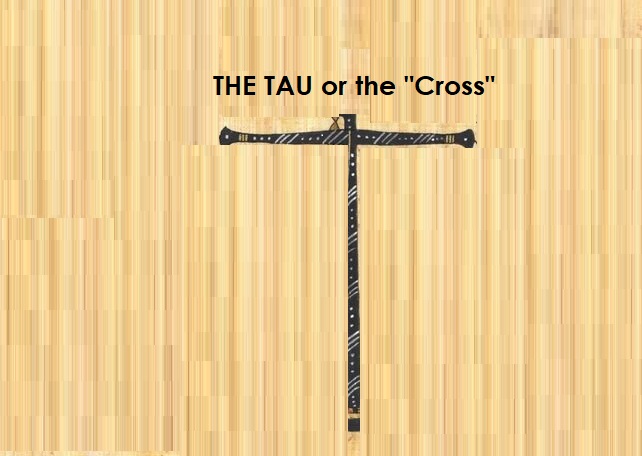






 Prima Quran
