“This is the Book! There is no doubt about it—a guide for those mindful ˹of Allah˺, who believe in the unseen, establish prayer, and donate from what We have provided for them.” (Qur’an 2:2-3)
﷽
A video of Shaykh Hisham Kabbani of the Naqshbandi Haqqani Sufi Tariqa resurfaced that I was not aware of at the time it became known.
The Prophet (s) said, “I will tell you that I sent him because in this universe Allah created Creations, and the nearest one to Earth, the dangerous one. If they invade the Earth…if they invade the Earth, The Earth will be finished. They will kill everyone! I send Sayyidina `Ali to fight them alone!!! To these aliens that are they the most nearest to Earth; and with his sword and his power, He is Asadullah al-Ghaalib! Destroyed two-third of them! That’s why they don’t have power anymore to come on Earth. That is why I sent him, he’s absent from the house.” -Shaykh Hisham Kabbani
The above part that is in bold black text is the beginning of the paragraph but it was cut off. You can read the whole transcript and context from their official website:
Now when one reads the context, it does seem like an abrupt change of course to start speaking about the time when it was alleged that the Blessed Messenger (saw) sent Ali Ibn Abu Talib to take down a large contingent of aliens. Apparently 67% of them were wiped out! I do not know if that means their military forces, their people as a whole (men, women, children-offspring) as those details were not provided.
No one knows if these are the same beings that former Minister of Defense Paul Hellyer was speaking about either. I will link to the article where he (Paul Hellyer) speaks of these beings.
As Muslims, we believe in the unseen. Yet, we also believe in what is rational, sensible and logical. I guess the issue that I have with the idea of sending Ali Ibn Abu Talib into cosmic forays to fight these Aliens is you have to wonder about a few things.
Why only take out 2/3 of them? Is leaving the 1/3 left a mercy to them? As in, “Look, I wiped out 2/3, or you so like chill or else!”
But then you really have to wonder about horrific situations like Palestine.
But I know the retort will be swift: “Palestine or the whole planet brother?”
Over all, personally, my encounters with Naqshanbai Haqqani have been positive. Though I know that they, like all Sufi Tariqah, are in a spiritual Jihad with one another to vie for dominance to be ‘The Tariqah above all others’.
May Allah (swt) guide us to the truth of such matters. May Allah (swt) cause us to think logically and reflect upon such matters.
You may also be interested in the following entries:
“O People of the Scripture, do not commit excess in your religion or say about Allah except the truth.” (Qur’an 4:157)
“And those who strive for Us – We will surely guide them to (subulana) Our ways. And indeed, Allah is with the doers of good.” (Qur’an 29:69)
﷽
The very first point to establish is that for us there is no spirituality or baraka apart from the Muhammedan reality. There is no believer that does not part take in the silsila of all acts of worship.
There is not a single act of worship that a Muslim partakes in that is not traced back to the Blessed Prophet (saw).
“So whoever renounces false gods and believes in Allah has certainly grasped the firmest, unfailing hand-hold. And Allah is All-Hearing, All-Knowing.” (Qur’an 2:256)
If you are a Muslim right here right now you are part of the tariqa of the Blessed Prophet Muhammed (saw). Allah has bestowed upon you the single greatest act of love, mercy, guidance and blessing that could ever befall any among mankind.
If we are to ask for example the Tariqa of Al Ghazali, Hasan al Basri, or Al Junayd of Baghdad etc. you will not readily see them ascribed to a particular tariqa. Those that ascribe to them as such do not have anything firm to rely upon.
A Sufi for us is not one who belongs to this or that order. Often these orders themselves become barriers for themselves as well as those who seek closeness to Allah (swt).
Thus, the ‘Ilm Al Suluk’ (Sufism) of Al Ghazali, Hasan al Basri or Al Junayd is that which the Ibadi are upon.
Our scholars both embraced and wrote extensively about ‘Ilm Al Suluk’ (Sufism)
For cleansing of the soul and dedication of self to Allah, is the very essence of Islam as given to us via the Qur’an and the Sunnah of the Blessed Messenger (saw).
“The Day when neither wealth nor sons will be of any benefit. Only those who come before Allah with a pure heart.” (Qur’an 26:88-89)
Narrated Abu Huraira:
Allah’s Messenger (saw) said, “Allah said, ‘I will declare war against him who shows hostility to a pious worshipper of Mine. And the most beloved things with which My slave comes nearer to Me, is what I have enjoined upon him; and My slave keeps on coming closer to Me through performing Nawafil (praying or doing extra deeds besides what is obligatory) till I love him, so I become his sense of hearing with which he hears, and his sense of sight with which he sees, and his hand with which he grips, and his leg with which he walks; and if he asks Me, I will give him, and if he asks My protection (Refuge), I will protect him; (i.e. give him My Refuge) and I do not hesitate to do anything as I hesitate to take the soul of the believer, for he hates death, and I hate to disappoint him.”
This above hadith is a key feature of Sufism (‘Ilm Al Suluk’)
And the most beloved things with which My slave comes nearer to Me, is what I have enjoined upon him.
What I enjoined upon him = The Qur’an and Sunnah.
There are people who wonder why there is no blessing in their life or they receive no spiritual openings. I will tell you here and now there is not a single tariqa on this planet that can open for you something that has not been opened by the Blessed Prophet (saw).
So those who have abandoned the Qur’an and Sunnah are on a path other than Islam, other than Sufism. At best they follow a Dajjal.
2. And My slave keeps on coming closer to Me through performing Nawafil (praying or doing extra deeds besides what is obligatory) till I love him.
Through performing Nawafil = (this means extra rakats of prayer, extra acts of worship of any kind. This is where the wirds kick in effect, or group dhikr). Yet, it must be kept in mind that if one has abandoned the Qur’an and Sunnah you will ultimately arrive no where but self delusion.
The companions of the Blessed Prophet (saw) were described as “monks of the night,” apart from being “knights of the day.” This became the essence of Sufism.
Ibadis however define Sufism in a different original way such as what Abu Hamza AI Shari described his companions:
“Young but followed the path of the wise elders, their eyes blinded from evil, their feet are heavy to walk the path of wrong doings, dedicated to worship and in love with late hours of the night. They gave away their souls that may die tomorrow in exchange for eternal souls. Allah looks upon them in the hollowness of the night and sees their bodies bent over their copies of the Quran, and if they happen to read any verse about heaven, they would cry longing for it, and if they read a verse bout hell they would gasp as if the hellish fires are breathing in their ears. Earth has eaten their knees, hands, noses and foreheads, and they know no rest whether at day or night, their bodies have turned yellow and withered from long standing and fasting. They do all this for the sake of their promise to Allah. However, if they see the arrows, spears and swords of the enemy approaching and the thunder of war calls out, they take the fear of legions lightly for the sake of their reward from Allah; they never take the promise of Allah lightly in fear of legions of the enemy. They take spears and arrows heads on with their chests and faces. A young man (such as them) moves ahead with his head high and when he falls down and the earth dirties his handsome face and the birds and predators prey on his body …”
Source: (Safwat, Ahmed Zaki, Jamharat Khutab Al Arab, 2/469-476.)
However, the relation between Ibadis and Sufism was barely notable with the early Ibadi scholars; there are no books on Sufism and they didn’t use Sufi terminology in their books. This relationship thrived though in the 18th century with many scholars such as Shaykh Ja’ed and his son Nasser(r), Al Mohaqiq Al Khalili (r) and Abu Muslim Al Bahlani (r) embracing Sufism and producing some of the most influential and hard-core Sufism writings. The contributions of those scholars can be summed up in the following:
Books: Those four scholars added a number of rich books in Sufism and behavioral science (‘ilm al-suluk), most famous of which are:
1. Commentary on Hayat Al Mohaj poem and the poem itself by Shaikh Ja’ed bin Khamis Al Kharusi (r):
Hayat Al Mohaj poem is a lengthy poem in Sufism and behaviors, and starts with:
My brothers in Allah listen to me,
as I am always advising for the Sake of Allah till He is pleased.
2. Other poems of Shaikh Ja’ed (r): He wrote other poems in Sufism, and one of them starts with:
The sun of the enlightened is above all,
and they are abstinent from the love of anything but Allah
3. Al Nawamees Al Rahmaniya fi Tasheel Turuq Ela oloum ArRabaniya, a book by Shaykh Said bin Khalfan Al Khalili (r). This book was described by Shaikh Khalfan Al Harthi (r) as: “This book tackles issues of knowledge acquisition tools. He started by talking about the brain and the beneficial food and drugs. After that the book talks about the secrets of verses, prayers and divine names of Allah. In doing so, Shaikh Said (r) quotes Al Antaki, Al Ghazali Al Bani and others.
4. Lydah Nudum AsSoluk Ela Hadarat Malik AlMolok by Shaikh Nasser bin Ja’ed Al Kharusi (r) in which he gives extensive commentary on Ibn Al Faridh’s “T rhyming” poem in Sufism, a lengthy poem that runs to about 759 lines, and starts with:
Yes, my heart has longed for my beloved…
This book was printed in 2011 in 786 pages with an introduction by Dr. Waleed Mahmood Khalis (r). This is a valuable and unique book that reflects deep understanding and knowledge of Shaikh Nasser (r).
5. Poems of Shaikh Said bin Khalfan Al Khalili (r) in Sufism and behavior: Shaikh Said Al Harthi says: “He wrote many poems in the divine love, supplication, prayer, motivation and guidance to the path of the enlightened”. Some of the poems are very lengthy; one of them runs to 220 lines. Shaikh Abu Muslim Al Bahlani (r) did Takhmis (extension of a poem line by adding one and a half line to an existing line) of one of those poems.
6. Poems of Abu Muslim Al Bahlani (r) in Sufism: Lengthy poems that can reach to 1000 lines. The total number of lines in prayer poems of Abu Muslim reached about 5500 lines, which can be considered a full book on their own.
Dr. Mohamed Nasser (r) says about these poems:
“All these poems can be categorized under the supplication, because they were simply written for this purpose as can be seen in the introductions. The author puts forward a certain behavior before and during the poems which means he used to practice a certain ritual. He would prepare himself by Ablution, supplication and prayer at midnight. The poem lines would flow in his tongue and he uses them to call upon his creator in moments of spiritual highness and emotional fulfillment”
Source: (Nasser, Dr. Mohammed, Abu Muslim Al Rawahi Hassan Oman p.39-40.)
Do not commit excess in your religion!
“O People of the Scripture, do not commit excess in your religion or say about Allah except the truth.” (Qur’an 4:157)
As Allah (swt) has said this to those who come before us it stands to reason that this admonishment is for us as well. Thus, there are beliefs and practices that became associated with ‘Ilm Al Suluk’ (Sufism) that the Ibadi masters wished to purify it of.
Uniqueness of Ibadis Sufism
Despite embracing, practicing and writing in Sufism, those scholars did not follow that path blindly without critique.
Dr. Waleed Khalis says: “It is important to note that, in embracing Sufism, those Omani scholars and poets chose only what aligns with their ‘Aqidah and sect principles. We did hint to this earlier. That is why they used the concept of Suluk not Hulul or Wahdat al-Wujud(unity of existence) or other concepts embraced by some Sufis. Ibn Al Faridh in fact himself falls under a conservative group that keeps the Quran and Sunnah always as the super guide. Omani scholars and poets expressed interest in Al Faridh’s works because they share common foundations objectives”
Source: (Khalis, Dr. Waleed, Iydah Nudum Al Soluk, p.32.)
Shaykh Ja’ed and his son Nasser(r), Al Mohaqiq Al Khalili (r) and Abu Muslim Al Bahlani (r), those four scholars used in their books and poems many Sufi terms.
Dr. Sharifa Al Yahyai(h) said: “The pioneering of Al Khalili in Sufi poetry made his poems a reservoir of Sufi terminology, a rich pool for research on Sufi language. Moreover, his poems acquired some linguistic alienness as a result of the deep connection with Sufism literature and this influence is demonstrated in complex structures, a common feature of Sufi poetry. He was also influenced by Ibn Al Faridh, one of the most prominent Sufi poets”
Source: (Al Yahyaiya, Sharifa, Al Shaikh Said bin Khalfan AI Khalili, Doyen of Sufi Poetry in Oman,p.3)
However, they also tried to avoid misleading terms, such as the word ‘Sufi’ itself and replaced it with ‘Suluk’ which denotes the objective of this movement, to reach to the ultimate understanding of Allah and His attributes and get His blessings.
Holding on to the Ibadi ‘Aqidah: The Sufi movement emerged and grew in non-Ibadi cultures and no Ibadi scholar wrote on this field before those four who remained rooted and firmly holding their Ibadi ‘Aqidah principles. Whenever they felt something contradicting the Ibadi ‘Aqidah, they would promptly reject it and rectify it.
Beliefs that one may find in Sunni and Shi’a Sufism but not in Ibadi Sufism.
Wahdat al-Wujud(unity of existence): The meaning of (unity) with Allah in Sufism.
One of the more extreme thoughts of Sufism is the actual unity between the creator and the created, which is claimed to happen when a person rises high in love and closeness to Allah. However, Shaykh Nasser bin Ja’ed explains that Sufism (or the correct Sufism) doesn’t actually mean so. What it actually means is not a unity of entities but rather of attributes, as a believer takes on the attributes of Allah when he draws closer to Him. With this explanation, Shaykh Nasser may be referring to the following hadith:
Narrated Abu Huraira:
Allah’s Messenger (saw) said, “Allah said, ‘I will declare war against him who shows hostility to a pious worshipper of Mine. And the most beloved things with which My slave comes nearer to Me, is what I have enjoined upon him; and My slave keeps on coming closer to Me through performing Nawafil (praying or doing extra deeds besides what is obligatory) till I love him, so I become his sense of hearing with which he hears, and his sense of sight with which he sees, and his hand with which he grips, and his leg with which he walks; and if he asks Me, I will give him, and if he asks My protection (Refuge), I will protect him; (i.e. give him My Refuge) and I do not hesitate to do anything as I hesitate to take the soul of the believer, for he hates death, and I hate to disappoint him.”
Ibn Abbas reported: The Messenger of Allah (saw) said, “Reflect deeply upon the creation, but do not reflect upon the essence of the Creator. Verily, His essence cannot be known other than to believe in it.”
Source: (Musnad al-Rabī’ 742 عَنِ ابْنِ عَبَّاسٍ قَالَ قَالَ رَسُولُ اللَّهِ صَلَّى اللَّهُ عَلَيْهِ وَسَلَّمَ تَفَكَّرُوا فِي الْخَلْقِ وَلا تَتَفَكَّرُوا فِي الْخَالِقِ فَإِنَّهُ لا يُدْرَكُ إِلا بِتَصْدِيقِهِ 742 مسند الربيع بن حبيب 2976 المحدث الألباني خلاصة حكم المحدث حسن في صحيح الجامع)
2. Hulul (infusion of the divine into the human).
“When Moses asked to see Allah, Allah said, “You cannot see Me! But look at the mountain. If it remains firm in its place, only then will you see Me”. When Allah appeared to the mountain, it was leveled to dust and Moses collapsed unconscious. When he recovered, he said, “Glory be to You! I have repented to You, and I am the first of the believers”. (Qur’an 7:143)
Abu Musa reported:
The Messenger of Allah (saw) was standing amongst us and he told us five things. He said: Verily the Exalted and Mighty Allah does not sleep, and it does not befit Him to sleep. He lowers the scale and lifts it. The deeds in the night are taken up to Him before the deeds of the day, and the deeds of the day before the deeds of the night. His veil is the light. In the hadith narrated by Abu Bakr (instead of the word “light” ) it is fire. If he withdraws it (the veil), the splendour of His countenance would consume His creation so far as His sight reaches.
The universe itself will be utterly annihilated! Allahu Akbar!
The human form as a three dimensional carbon based platform is so immersed in this paradigm of conscious reality that is perceived via what could be considered a hologram in nature that when this form is disciplined and mastered one can have heightened awareness and experiences of what is normally perceived. Thus a person can have supranatural and spiritual experiences. The one writing to you (myself) have experienced such states. However, at no point can or has there ever been a merger between the divine and the creation. It is too much information for any vessel to carry and it would be destroyed.
3. Seeing Allah (Witnessing Allah)
Our school is upon the firm belief that Allah (swt) cannot be seen by the eye sight in this world or in the afterlife. In fact, many of those among the Sunni tradition have resigned themselves to the belief that it is a beatific vision. The common Sunni opinion is that Allah can be seen, and most of them agree that this seeing happen only in the afterlife as a reward for believers.
The evidence from the Qur’an and Sunnah that Allah (swt) will not be seen is overwhelming.
That the Blessed Prophet (saw) intercedes for all Muslims including the major sinners. Ibadi Sufism is that the intercession of the Blessed Prophet (saw) is a formality for those whom Allah (swt) is pleased with:
5. Allah is everywhere. Our school is upon the firm belief that Allah (swt) created all things which includes spatiality. Not all those who claim to be Sufis believe this. However, this is a belief held among many of them. Just as the question: “When did Allah begin” is inappropriate for Allah (swt), so to the question “Where is Allah?” is inappropriate for Allah (swt).
Practices that one may find in Sunni and Shi’a Sufism but not in Ibadi Sufism.
The centrality of the family of the Blessed Prophet (saw) giving fealty to their descendants. The promotion and propagation of the ‘Syed Culture’ wherein other Muslims are made to feel less in station simply because of their lineage. You will not find this in Ibadi Sufism. I have written about this here:
2. Istiagatha: or calling for help via Saints and Pirs both living and dead. You will not find this in Ibadi Sufism. Perhaps can write more about this in the future (insh’Allah)
3. Visiting the graves of the dead saints and pirs. You will not find this in Ibadi Sufism.
4. The formation of specific tariqa (orders) that are often in conflict with other tariqa (orders). All of them vying for supremacy over the other. I have written about that here:
You will not find specific orders (tariqa) in Ibadi Sufism.
The purification of Sufism (‘Ilm Al Suluk’) by the Ibadi masters.
One will find that in Sufism practiced in particular among Sunni tariqa (spiritual orders) that the various paths may focus on particular aspects. Such that a tariqa could be defined as burhani, haqqani or shukri. Meaning that they give direction and focus to one of three aspects:
a) Fearing Allah to obtain closeness and proximity to Allah (swt).
b) Loving Allah to obtain closeness and proximity to Allah (swt).
c) Gratitude towards Allah to obtain closeness and proximity to Allah (swt).
In Ibadi Sufism, Indeed Islam itself it is a trial by fire in which all these aspects are combined in the human being if one is to be successful in this life and in the life to come.
If we want to talk about ishq (love) we have:
“Say, ˹O Prophet,˺ “If you ˹sincerely˺ love Allah, then follow me; Allah will love you and forgive your sins. For Allah is All-Forgiving, Most Merciful.” (Qur’an 3:31)
Imagine being the object of Allah’s love!
Notice the theme? If we love Allah than we follow the Sunnah. By doing such Allah (swt) will love us!
If we want to talk about ittaqu (fear) we have:
“Indeed Allah loves those who honour their covenants and fear Him. Allah loves the righteous.” (Qur’an 3:76)
If we want to talk about shukr (gratitude) we have:
“Therefore remember Me, I will remember you, and be thankful to Me, and do not be ungrateful to Me.” (Qur’an 2:12)
Moving Sufism (‘Ilm Al Suluk’) away from extremism.
Those Ibadi Sufi scholars they stressed that Sufism in its essence calls for good and virtue, and all impurities have to be ruled out.
Shaykh Nasser bin Ja’ed said: “A person shall not overlook Sufism; even if he couldn’t reach its peak he should pray and supplicate with whatever is possible to him. Sufism cannot be achieved by roaming the lands, but by the dedication to Allah in everything and following the straight path. Then a person needs to ask Allah and supplicate by abandoning bad habits and traits and embracing the steps of Iman after completing the mandatory prayers and worships…”
Source: (Al Kharusi, Nasser, Iydah Nudum Al Soluk, p.482.)
“But the Monasticism which they invented for themselves, We did not prescribe for them, but (they sought it) only to please Allah therewith, but that they did not observe it with the right observance. So We gave those among them who believed, their (due) reward, but many of them are Fasiqun (rebellious, disobedient to Allah)” (Qur’an 57:27)
Sufism doesn’t mean solitude and escape from other religious duties, and it doesn’t mean monasticism; it is rather a state of the heart that a Muslim tries to deepen by drawing closer to Allah through prayers and supplications. This is clearly noted by Shaykh Nasser bin Abi Nabhan when he said:
“You should know that supplications to Allah is the tool of Sufism and it works even if a person sleeps with four women (his wives) at night, righteously fight the infidels during the day, helps people and works in Sharia; all of this can’t spoil Sufism. No one knows that a person is Sufi without a revelation from Allah or by direct hearing from the mouth of a prophet as Sufism is a hidden state in the heart. Naming someone ‘Sufi’ on the basis of outlooks is allowed …”
Source: (Al Kharusi, Nasser, Iydah Nudum AI Soluk, p.485.)
This precise understanding of the essence of religion and Sufism is what is clearly referred to by many verses of the Holy Quran and many Hadiths. In the days of the Blessed Prophet Muhammed some people misunderstood religion for monasticism but the prophet explained to them that religion is not about solitude and worship only.
Narrated Anas bin Malik:
A group of three men came to the houses of the wives of the Prophet (saw) asking how the Prophet (saw) worshipped (Allah), and when they were informed about that, they considered their worship insufficient and said, “Where are we from the Prophet (saw) as his past and future sins have been forgiven.” Then one of them said, “I will offer the prayer throughout the night forever.” The other said, “I will fast throughout the year and will not break my fast.” The third said, “I will keep away from the women and will not marry forever.” Allah’s Messenger (saw) came to them and said, “Are you the same people who said so-and-so? By Allah, I am more submissive to Allah and more afraid of Him than you; yet I fast and break my fast, I do sleep and I also marry women. So he who does not follow my tradition in religion, is not from me (not one of my followers).
This definition and conception of Sufism by these scholars is not theoretical but had been their way of living, despite having been very active in political, social and intellectual life. Sufism didn’t restrain them from engaging in life activities. Shaykh Said bin Khalfan AI Khalili (r)was the strongest pillar of the Imamate of Azzan bin Qais AI Busaidi(r); he was the one backing the Imam, the one who appointed him and the one who fought his wars and battles until he got killed for the sake of his principles.
Shaykh Ja’ed bin Khamis (r) and his son were very active in political, social and intellectual life in their days. This is evident in their multidisciplinary books; Shaykh Ja’ed(r) himself left behind more than 20 books.
On the other hand, Abu Muslim Al Bahlani (r)played a critical role in the intellectual renaissance in Zanzibar and his newspaper (Al Falaq) was one of the first Arabic newspapers at that time. He printed a number of books and his deep devotion to Sufism didn’t withhold him from writing poetry in other fields such as praise, ghazal, humor and obituary.
Often ignorance can be a source of inspiration and it should always be a call to action.
May Allah (swt) forgive us, and our school for not getting out the information to the general public so that they may not bask in ignorance.
You may also be interested in reading the following:
“Surely your Lord is Allah Who created the heavens and the earth in six Days, then established Himself on the Throne, conducting every affair. None can intercede except by His permission. That is Allah—your Lord, so worship Him. Will you not then be mindful?” (Qur’an 10:3)
“He knows what is ahead of them and what is behind them. They do not intercede except for whom He approves, and they tremble in awe of Him.” (Qur’an 21:28)
“Allah! There is no god except Him, the Ever-Living, All-Sustaining. Neither drowsiness nor sleep overtakes Him. To Him belongs whatever is in the heavens and whatever is on the earth. Who could possibly intercede with Him without His permission? He knows what is ahead of them and what is behind them, but no one can grasp any of His knowledge—except what He wills . His Throne encompasses the heavens and the earth, and the preservation of both does not tire Him. For He is the Most High, the Greatest.” (Qur’an 2:255)
“It is You we worship and You we ask for help.” (Qur’an 1:5)
“And he entered the city at a time of inattention by its people and found therein two men fighting: one from his faction and one from among his enemy. And the one from his faction called him for help ( fa-is’taghathahu)against the one from his enemy, so Moses struck him and killed him. said, “This is from the work of Satan. Indeed, he is a manifest, misleading enemy.” (Qur’an 28:15)
﷽
Seems there has been a great deal of heated debate and discussion on this topic as of late. However, this has been the case with the Muslim Ummah for quite some time.
Tawassul is asking Allah for help through an intermediary. This has it’s types and conditions.
Istigatha is asking for urgent help in times of distress. This too has it’s types and conditions.
First point.
Note that all three of the text (Qur’an 10:3) & (Qur’an 21:28) & (Qur’an 2:255) that are quoted above are speaking about third parties that may be in a position to to ask something on behalf of others.
None of the above three text speak about a first person party (a petitioner) seeking something from Allah (swt) via an intermediary, be it an angel, a wali of Allah (swt) or even his Blessed Prophets (upon them all be peace).
Second point.
None can intercede except by what Allah (swt) grants permission or approves.
If a righteous person like the Blessed Prophet (saw) for example prays for his Uncle to enter into heaven and his Uncle did not repent or enter into Islam, then the intercession of the Blessed Prophet (saw) is of no use.
“You surely cannot guide whoever you like, but it is Allah Who guides whoever He wills, and He knows best who are guided.” (Qur’an 28:56)
“Praying or not praying for their forgiveness will make no difference. Even if you (O Prophet) were to pray seventy times for their forgiveness, Allah would not forgive thembecause they reject Allah and His Messenger. Allah does not guide those who are defiantly disobedient people.” (Qur’an 9:80)
Or for example if the Prophet (saw) tried to intercede with Allah (swt) for those Muslims who died without repenting from taking the life without right, shirk, fornication or adultery and they did not seek repentance from Allah (swt). The Prophet’s intercession would be null and void!
“And those who do not invoke with Allah another deity or kill the soul which Allah has forbidden [to be killed], except by right, and do not commit unlawful sexual intercourse. And whoever should do that will meet a penalty. Multiplied for him is the punishment on the Day of Resurrection, and he will abide therein humiliated –Except for those who repent, believe and do righteous work. For them Allah will replace their evil deeds with good. And ever is Allah Forgiving and Merciful.” (Qur’an 25:68-70)
This is the world of asbab (أَسْبَابْ) a world of cause, means and occasions.
The Muslim understands that this is the world of cause, means and occasions. We are 3D carbon based platforms and this is how we understand and perceive things. However, we are also informed:
la hawla wala quwwata illa billah -there is no power or no strength except with Allah.
“If only you had said, upon entering your property, ‘This is what Allah has willed! There is no power except with Allah!’ Even though you see me inferior to you in wealth and offspring.” (Qur’an 18:39)
That is to say that if I believe that I can type this text independent of Allah’s power, I am either making a claim to divinity or asserting a share of divine power.
A Muslim does not believe that a knife in and of itself has the ability to cut but that Allah (swt) grants it that quality.
“It is You we worship and You we ask for help.” (Qur’an 1:5)
So if a Muslim seeks a doctor for a cure, or builds a shelter from the rain are they seeking or depending upon other than Allah (swt) for help? Of course not. The recognition is that we live in the world of causes, means and occasions. That is what is immediately perceptible to us.
Take the example of Mary (as) she was pregnant with Jesus (as) and was hungry.
The Angel directs Mary (as) towards a creation of Allah (swt).
“And shake the trunk of this palm tree towards you, it will drop fresh, ripe dates upon you.” (Qur’an 19:25)
The Angel could have directed Mary (as) to a dead tree, or a dead branch or a log. However, she (as) was directed towards a living tree.
جَزَاكَ ٱللَّٰهُ خَيْرًا or Jazak Allahu Khayran is a common Arabic expression among Muslims. It is said when receiving some good, service or benefit from another person.
It is a way of showing gratitude in a dual manner, by immediately thanking the person (he/she) that brought the good but also realizing that ultimately it is Allah (swt) whom used this person (he/she) to bring the khayer (goodness) to you.
Tawassul in the Qur’an?
First what is Tawassul?
Basically it means to use something to arrive to something else. As a path.
Tawassul is the act of seeking help from Allah (swt) via an intermediary. In relation to this we have the Arabic word Al-Wasila.
You can find derivates of the word twice in the Qur’an. The first text is the one champions of tawassul are quick to quote.
The second text (Qur’an 17:57) they are not so quick to quote. Insh’Allah you will see why.
1st instance of wasila.
“O you who believe! Be careful of (your duty to) Allah and seek means of nearness (l-wasilata) to Him and strive hard in His way that you may be successful.” (Qur’an 5:35)
This is the text that champions of Tawassul would prefer you rather not quote.
Note that the text says to seek a means of nearness and it could have easily mentioned the Blessed Prophet (saw) exclusively but it did not.
Seeking the means of nearness is not exclusive to asking the pious to pray for us.
We know that praying in a group (Jamaat) is more beloved to Allah (swt) then praying alone. We know that praying in a Masjid is more beloved to Allah (swt) then not praying in the Masjid.
We know that praying in Mecca or Medina is more beloved to Allah (swt) then not praying in either of those two cities. Prayer in Mecca is more preferable then prayer in Medina.
Now advocates of tawassul would have to prove that a singular individual praying to Allah (swt) via the station of the Blessed Prophet (saw) would be superior to a whole congregation of people doing dhikr of Allah (swt).
They would have to prove that a singular individual praying to Allah via the station of the Blessed Prophet (saw) would be superior to an individual praying to Allah (swt) in Mecca without mentioning the Blessed Prophet (saw).
In other words there are a plethora of acts and actions in Islam that are more meritorious then praying to Allah (swt) and beseeching Allah (swt) via the station of the Blessed Prophet (saw).
2nd instance of wasila.
“Say, “Invoke those you claim besides Him—they do not have the power to undo harm from you or transfer it.” “˹Even˺ the closest ˹to Allah˺ of those invoked would be seeking a way (l-wasilata) to their Lord, hoping for His mercy, and fearing His punishment. Indeed, your Lord’s torment is fearsome.” (Qur’an 17: 56-57)
Shaykh Dr. Kahlan Al Kharousi (h) speaks on three types of Tawassul.
First type: Asking Assad to make du’a and thinking that it will be accepted because Assad has got the power to do so. This is clearly shirk. We are very clear about this.
The evidence from this is from the Qur’an:
“If only you had said, upon entering your property, ‘This is what Allah has willed! There is no power except with Allah!’ Even though you see me inferior to you in wealth and offspring.” (Qur’an 18:39)
“How powerless are those who invoke and those invoked!“ (Qur’an 22:73)
For example if I as a Muslim believe that I am typing this text independent of the power of Allah (swt) this would be a claim to divinity and shirk.
Second type: (which all madhabs classify as Mubaah Halaal-meaning neutral or permissible.) -This includes the Ibadis.
This is the request of means and reason. Not a request of response and refuge.
That is to let someone who’s considered righteous amongst of people make du’a.
For example: Ridael and Assad and Hakki just had some food, Assad asked Ridael to make du’a; however, Ridael believes that Assad (at least what it apparent) is a better Muslim than him, so he says to Assad to make the du’a instead.
Examples of this in the Qur’an:
“They begged, “O our father! Pray for the forgiveness of our sins. We have certainly been sinful.” (Qur’an 12:97)
“And We did not send any messenger except to be obeyed by permission of Allah. And if, when they wronged themselves, they had come to you, [O Muhammed], and asked forgiveness of Allah and the Messenger had asked forgiveness for them, they would have found Allah Accepting of repentance and Merciful.” (Qur’an 4:64)
“Take from their wealth ˹O Prophet˺ charity to purify and bless them,and pray for them—surely your prayer is a source of comfort for them. And Allah is All-Hearing, All-Knowing.” (Qur’an 9:103)
Or when we as believers pray on behalf of all believers no less than 17 times a day:
“Guide us to the straight path.” (Qur’an 1:6)
The third type: Is that when you mention someone’s name (in this case Assad) thinking by doing so your du’a gets accepted.
For example: We are in a battle and I say: “Oh Allah Assad is with us grant us victory.” Some say this is shirk and some say it is not. This has lead to allot of fighting among the Muslims. Our school’s position is to leave these doubtful matters. Stick with what is firm from the Qur’an & Sunnah.
In the case of the person above a simple gentle reminder from the Qur’an and the history of the Blessed Prophet (saw) may suffice to set their thinking on the right course.
For example, having the Blessed Prophet (saw) with the Muslims was not a guarantee of victory. In fact, they lost conflicts when he (saw) was among them; and this was a test for the believers.
“Do you think you will be admitted into Paradise without being tested like those before you? They were afflicted with suffering and adversity and were so ˹violently˺ shaken that ˹even˺ the Messenger and the believers with him cried out, “When will Allah’s help come?” Indeed, Allah’s help is ˹always˺ near.” (Qur’an 2:214)
“Your Lord has proclaimed, “Call upon Me, I will respond to you. Surely those who are too proud to worship Me will enter Hell, fully humbled.” (Qur’an 40:60)
“When My servants ask you ˹O Prophet˺ about Me: I am truly near. I respond to one’s prayer when they call upon Me. So let them respond ˹with obedience˺ to Me and believe in Me, perhaps they will be guided ˹to the Right Way˺.” (Qur’an 2:186)
As Allah (swt) is the Sovereign Lord of all creation.
Surely a Muslim can’t go wrong by calling upon Allah (swt) alone and trusting in Allah (swt) to answer us in the time and manner that Allah (swt) deems fit.
It was narrated that Abu Al-Hawra’ As-Sa’di said:
“I said to Al-Hasan bin ‘Ali, may Allah be pleased with him: ‘What did you memorize from the Messenger of Allah (saw) ?’ He said: I memorized from him: ‘Leave that which makes you doubt for that which does not make you doubt.'”
Because there is dispute it is best to leave that which is doubtful. The Muslim is one who practices wara’ and it is best to leave the doubtful. That is also because this act is not wajib. The side that is very vocal for their practices have labeled it as mustahab, which is merely recommended.
So there is no harm in sticking with the clear formula of the Qur’an and Sunnah.
Our way is the moderate way and the safe passage. Let us turn to the Qur’an.
All duas in the Qur’an are just Allahumma, Rabbi or Rabbana. So what is wrong if the believer sticks with that sort of formulation and puts their trust solely in Allah (swt)?
One can make du’a for others and when requested also have friends and family make du’a for them. This is very clearly sanctioned in the Qur’an because we see examples of Prophets praying for others as has already been mentioned.
So if we stick with the du’a formulations in the Qur’an and preserved Sunnah we are safe.
Who better than Allah (swt) and his Messenger (saw) to teach us?
So yes why not direct all supplication , du’a , petition and request to Allah (swt) knowing full well that Allah (swt) can respond to that du’a, petition and request by using this world of asbab to send to you a person(s), angel(s), Muslim Jinn(s), or any of His (swt) creation to aid you.
In the Qur’an we find the following formulations when addressing Allah (swt).
Rabbi Rabbanaa A’udhu billahi Rabbanaghfir Rabbihkum Rabbighfir Rabbanaa Bismillahi (Qur’an 11:41) Ma’adhallahi (Qur’an 12:23) Inni a’udhu bir-Rahmani (Qur’an 19:18) Inni maghloobun fantasir (Qur’an 54:10) In all these passages: (Qur’an 7:155- 7:156), (Qur’an 7:189), (Qur’an 10:22) it is clear that the one being addressed is Allah (swt). Qul a‘ūdhu birabbil-falaq (Qur’an 113:1) Qul a‘ūdhu birabbin-nās (Qur’an 114:1)
So in conclusion on the issue of Tawassul is that for the Ibadi school asking the pious to make du’a for us is permissible.
We should ask each other to make du’a for one another all the time.
“Guide usto the straight path.” (Qur’an 1:6)
Allah (swt) for example, encourages us to make du’a for our parents.
“And be humble with them out of mercy, and pray, “My Lord! Be merciful to them as they raised me when I was young.” (Qur’an 17:24)
The woman who pleaded her path went direct to Allah (swt) for help even bypassing the Blessed Prophet (saw).
“Indeed,Allah has heard the argument of the woman who pleaded with you ˹O Prophet˺ concerning her husband, and appealed to Allah. Allah has heard your exchange. Surely Allah is All-Hearing, All-Seeing.” (Qur’an 58:1)
In the above case in was Allah (swt) who was the refuge and succor of this woman and not Prophet Muhammed (saw). In fact, the above verse is one of those that let us know the Qur’an is not from the Blessed Prophet (saw), His, Sunnah is a form of guidance,-when not overruled by Allah (swt) and that the Prophet (saw) is genuine and authentic.
If it was good enough for the woman to appeal directly to Allah (swt) in her life time (by passing the Prophet -saw) while he (saw) was alive, it is good enough for us to go directly to Allah (swt) after the death of the Blessed Prophet (saw).
“Tawassul is not an obligation or a necessary matter, neither is the response to the supplication conditional upon it, Rather, the basis for the supplication is to call upon Allah, the Exalted, as Allah said: And if my servants ask you concerning me, then say that I am close (al-Baqara: 186) and: Say, “Call upon Allah or call upon al-Rahman: Whatever you call him by -to Him belong the best names.”
Source: (pgs. 74-75 Notions that must be corrected by Shaykh Muhammed b. Alawi al-Maliki al-Hasani)
ISTIGATHA
Istigatha is asking for urgent help in times of distress.
Those who are in favour of Istigatha themselves put it in the category of mustahab (مُسْتَحَبّ) meaning something that is recommended. However, it is not something that is fard or wajib.
An example of this from the Qur’an.
“And he entered the city at a time of inattention by its people and found therein two men fighting: one from his faction and one from among his enemy. And the one from his faction called him for help (fa-is’taghathahu)against the one from his enemy, so Moses struck him and killed him. said, “This is from the work of Satan. Indeed, he is a manifest, misleading enemy.” (Qur’an 28:15)
The example in the Qur’an of istigatha is of someone who is physically alive calling out to other people who are physically alive.
CAN AN ACT OR ACTION GO FROM NOT BEING SHIRK TO BEING SHIRK?
There have been those who claim that something is in a category of shirk or non shirk and these categories do not change.
This is absolutely not true.
If one has animals that they use and even call out to while alive. They call out to these animals after they have died. This is clearly shirk.
Another example is the following:
Fight those who do not believe in Allah or in the Last Day and who do not consider unlawful what Allah and His Messenger have made unlawful and who do not adopt the religion of truth from those who were given the Scripture – [fight] until they give the jizyah willingly while they are humbled. The Jews say, “Ezra is the son of Allah “; and the Christians say, “The Messiah is the son of Allah .” That is their statement from their mouths; they imitate the saying of those who were kafara (ungrateful disbelievers [before them]. May Allah destroy them; how are they deluded? They have taken their scholars and monks as lords besides Allah , and [also] the Messiah, the son of Mary. And they were not commanded except to worship one God; there is no deity except Him. Exalted is He above whatever they associate (yush’rikuna) with Him. They want to extinguish the light of Allah with their mouths, but Allah refuses except to perfect His light, although the (ungrateful disbelievers) dislike it. It is He who has sent His Messenger with guidance and the religion of truth to manifest it over all religion, although they who associate others (l-mush’rikuna) with Allah dislike it. (Qur’an 9:29-33)
Narrated ‘Adi bin Hatim:
“I came to the Prophet (saw) while I had a cross of gold around my neck. He said: ‘O ‘Adi! Remove this idol from yourself!’ And I heard him reciting from Surah Bara’ah: They took their rabbis and monks as lords besides Allah (9:31). He said: ‘As for them, they did not worship them, but when they made something lawful for them, they considered it lawful, and when they made something unlawful for them, they considered it unlawful.'”
So if you previously followed a command of Allah (swt) and then abandoned it in favour of what the monks and rabbis said that would be an act of worship and thus shirk.
Likewise, if you previously abstained from a prohibition of Allah (swt) and then indulged in that prohibition in favour of what the monks and rabbis have said that would be an act of worship, and thus shirk.
CAN THE DEAD (THAT WHICH WAS BIOLOGICALLY ALIVE) BENEFIT OTHERS AFTER IT’S DEATH?
We know this from direct empirical data. We benefit from the meat of an animal after it has been slaughtered, the hide or wool from animals after they have died. The Inuit Eskimos have shown us how to essentially use virtually all parts of a whale after it has died.
We as human beings are living testimony that we continue to benefit by the knowledge of those who have died. From every facet of knowledge, to mathematics, to architecture to cherished recipes. We continue to benefit from from those who have long since passed.
Just as we benefit from them, what ever benefit we receive from them is accredited to them as well. So for example, when you teach someone to read the Qur’an you benefit from every time that person reads the Qur’an, even after you have long since died.
ISTIGATHA OF THE DEAD AND SCANT EVIDENCE.
Calling out to those who have died for aid and assistance.
There are some cold hard facts that stare in the face of those who advocate for Istigatha.
There are 25 Prophets mentioned by name in the Qur’an. We don’t have a single example of any of those Prophets doing Istigatha to a prophet that proceeded him that has died.
Considering that the Blessed Prophet Muhammed (saw) is the best example for us and considering that he is the last of the Prophets we do not have a single example of the Blessed Prophet (saw) making Istigatha of any of those prophets that proceeded him that has died!
Point 2 is extremely important considering there are 124,000 prophets and he did not consider to call upon any of them!
If the reply to point 2 is that the Blessed Prophet (saw) is the supreme prophet and the seal he is not in need of them to ask it still does not take away from point 1.
Narrated Anas:
Whenever drought threatened them, `Umar bin Al-Khattab, used to ask Al-Abbas bin `Abdul Muttalib to invoke Allah for rain. He used to say, “O Allah! We used to ask our Prophet to invoke You for rain, and You would bless us with rain, and now we ask his uncle to invoke You for rain. O Allah ! Bless us with rain.” And so it would rain
قوله : ( أن عمر بن الخطاب كان إذا قحطوا ) بضم القاف وكسر المهملة أي أصابهم القحط ، وقد بين الزبير بن بكار في الأنساب صفة ما دعا به العباس في هذه الواقعة والوقت الذي وقع فيه ذلك ، فأخرج بإسناد له أن العباس لما استسقى به عمر قال : اللهم إنه لم ينزل بلاء إلا بذنب ، ولم يكشف إلا بتوبة ، وقد توجه القوم بي إليك لمكاني من نبيك ، وهذه أيدينا إليك بالذنوب ونواصينا إليك بالتوبة فاسقنا الغيث . فأرخت السماء مثل الجبال حتى أخصبت الأر
Translation:
His statement: (That ‘Umar bin al-Khattab used to say that when they were parched) with the addition of the qāf and the kasra of the neglected one, that is, they were afflicted with drought. Al-Zubair ibn Bakkar explained in the genealogies the description of what Al-Abbas called for in this incident and the time in which it occurred, so he narrated with his chain of transmission that when Al-Abbas asked for rain with it, ‘Umar said: “Oh Allah, no affliction has descended except due to sin, and it has not been removed except with repentance, and the people have turned to me in place of your Prophet, and these are our hands to you for sins.” And We enjoined upon you repentance, and We poured rain. Then the sky fell like the mountains until the trees became fertile
Source: (Ibn Hajar Al Asqalani Fath al-Bari Sharhu Sahih Al Bukhari)
“And O my people! Seek your Lord’s forgiveness and turn to Him in repentance. He will shower you with rain in abundance, and add strength to your strength. So do not turn away, persisting in wickedness.” (Qur’an 11:52)
The above example, often brought up by proponents of tawassul and istigatha realize just how deadly the above example is to their doctrines. In particular the doctrine of calling out to those who are in their graves or seeking a means by those who are now in their graves.
O Allah! We used to ask our Prophet to invoke You for rain, and You would bless us with rain, and now we ask his uncle
This is crystal clear. We used to (past tense) this of course is when the Blessed Prophet (saw) was alive.
However, NOW (in this time) we are asking his uncle.
To add insult to injury to proponents of tawassul and istigatha the formula of the du’a used by Ibn Abbas (ra) looks like this:
“Oh Allah, no affliction has descended except due to sin, and it has not been removed except with repentance, and the people have turned to me in place of your Prophet, and these are our hands to you for sins.”
Notice there is no ‘Oh Allah by the status of the Prophet’.
Notice there is no ‘Oh Allah by your love of the Prophet’.
These formulas are not used by Ibn Abbas (ra) !!
Now there have been some weak sauce replies by those who are clearly overwhelmed in the face of such evidence. It is clear that copium is the only reply in the face of such powerful evidence.
They will offer meekly. Umar Ibn Al Khattab (ra) has choice. So he choose Ibn Abbas (ra). Yes, but why not choose the best of Creation? Especially if that was an option?
The Prophet Muhammed (saw) is he (currently) dead or alive in his grave?
The central point of the controversy surrounding the issue is rather or not one can do istigatha to the Blessed Prophet (saw) after he died.
Narrated `Aisha:
All sides of the debate have agreed that the Blessed Prophet (saw) has died.
Abu Bakr came riding his horse from his dwelling place in As-Sunh. He got down from it, entered the Mosque and did not speak with anybody till he came to me and went direct to the Prophet, who was covered with a marked blanket. Abu Bakr uncovered his face. He knelt down and kissed him and then started weeping and said, “My father and my mother be sacrificed for you, O Allah’s Prophet! Allah will not combine two deaths on you. You have died the death which was written for you.” Narrated Abu Salama from Ibn `Abbas : Abu Bakr came out and `Umar , was addressing the people, and Abu Bakr told him to sit down but `Umar refused. Abu Bakr again told him to sit down but `Umar again refused. Then Abu Bakr recited the Tashah-hud (i.e. none has the right to be worshipped but Allah and Muhammed is Allah’s Messenger (saw)) and the people attended to Abu Bakr and left `Umar. Abu Bakr said, “Amma ba’du, whoever amongst you worshipped Muhammed, then Muhammed is dead, but whoever worshipped Allah, Allah is alive and will never die. Allah said: ‘Muhammed is no more than an Apostle and indeed (many) Apostles have passed away before him ..(up to the) grateful.‘ “ (Qur’an 3.144) (The narrator added, “By Allah, it was as if the people never knew that Allah had revealed this verse before till Abu Bakr recited it and then whoever heard it, started reciting it.”)
The interesting point about the above hadith is why would such shock over come the believers and why would Allah (swt) need to remind them that the Prophet (saw) will die as other humans have died if it was firmly planted in their (the companions) hearts that they would have a direct line of communication with the Prophet (saw) after his earthly life?
This verse would constitute an unnecessary redundancy.
The other point to be noted is that often proponents of those who say we can do istigatha to the Blessed Prophet (saw) after he died is to compare the situation of the Blessed Prophet (saw) to that of martyrs.
But this begs the question: How did the Prophet (saw) die?
Are we prepared to believe that The Prophet (saw) was indeed poisoned by a Jewish woman -thus making the Prophet (saw) a martyr?
One evidence brought forward to try and claim that the Prophet (saw) is alive in his grave is the following:
“And ˹remember˺ when they prayed, “O Allah! If this is indeed the truth from You, then rain down stones upon us from the sky or overcome us with a painful punishment.” But Allah would never punish them while you ˹O Prophet˺ were in their midst. Nor would He ever punish them if they prayed for forgiveness.” (Qur’an 8:32-33)
Some have used this as a proof text to try and say that the Blessed Prophet (saw) is still alive and the context shows that this misunderstanding of theirs is certainly in error.
The context is the disbelievers and not the believers.
However, when one looks into this matter it can be seen that the Muslim Ummah can be seen to have reached a sort of stalemate on the matter.
Rather or not the Blessed Prophet (saw) is dead or alive in his grave (currently) seems to be a secondary matter to the issue of rather or not we can call out to him, that is to say, making Istigatha to him, after he has died.
ISTIGATHA OF THE DEAD SIFTING FOR GOLD AND TRYING TO FIND ANYTHING!
The above video is apt when we are talking about proofs and evidences for calling out to the dead after they are deceased.
One should not be surprised to see when looking into this matter that there is a dearth of evidence from the Qur’an and Sunnah that advocates of calling out to an individual after they have deceased can produce.
The book to your left: Islamic Concept of Intermediation (Tawassul) by Dr. Muhammed Tahir-ul-Qadri. The book to your right: Notions that must be corrected by Shaykh Muhammed b. Alawi al-Maliki al-Hasani.
Both books are in my personal library and both books in my estimation failed to deliver.
In the book: Islamic Concept of Intermediation (Tawassul) by Dr. Muhammed Tahir-ul-Qadri. You would think that a book that is 389 pages excluding the glossary, bibliography and general index would be teaming with evidences.
This is simply not the case at all.
On page 197 of the book we have: Intermediation through the Blessed Holy Prophet (saw) after his death. This section runs until page 253.
So one of the arguments advanced on page 208 is the following verse of the Qur’an.
“And We did not send any messenger except to be obeyed by permission of Allah. And if, when they wronged themselves, they had come to you, [O Muhammed], and asked forgiveness of Allah and the Messenger had asked forgiveness for them, they would have found Allah Accepting of repentance and Merciful.” (Qur’an 4:64)
There is no indication that this verse is a reference to people calling upon the Blessed Prophet (saw) after he has died. In fact, the Qur’an has not given a single example of any of the former people calling upon any of the earlier prophets that have died. If the Qur’an recorded such incidents then these proponents would be quick to quote it. However, the Qur’an does not indicate any one doing this.
The other text often quoted: (Qur’an 8:32-33) has already been addressed above.
Taking a look at the evidence from the traditions to call out to the Prophet (saw) after he has died
Now, keep in mind dear reader you are reading from the perspective of an Ibadi.
We take a different approach to these matters as we are different kettle of fish.
The sanad-the chains are important to us. Equally important to us is the matn -the actual text. Are the text consistent with one another, do they present to us any anomalies or inconsistencies.
We ask you dear reader to ask Allah (swt) for guidance and to use the brain he has given you to reflect on what you are about to read.
The anonymous Bedouin and the dream of ‘Utbi.
“In this Qur’anic verse Allah is exhorting the sinners and evildoers that when they commit sins and errors they should call on the Messenger of Allah (saw) and ask forgiveness from Allah. They should also request the Messenger of Allah (saw) to pray for them. When they do so, Allah will turn to them and forgive them and He will show mercy to them. That is why He used the words la-wajadullaha tawwaban-rahima (they (on the basis of this means and intercession) would have surely found Allah the Granter of repentance, extremely Merciful). Many have stated this tradition. One of them is Abu Mansur Sabbagh who writes in his book al-Hikayat-ul-mashhurah that, according to ‘Utbi, once he was sitting beside the Prophet’s grave when a Bedouin came and he said, “Peace be on you, O Allah’s Messenger. I have heard that Allah says: ‘(O beloved!) And if they had come to you, when they had wronged their souls, and asked forgiveness of Allah, and the Messenger also had asked forgiveness for them, they (on the basis of this means and intercession) would have surely found Allah the Granter of repentance, extremely Merciful.’ I have come to you, asking forgiveness for my sins and I make you my intermediary before my Lord and I have come to you for this purpose.” The he recited these verses: “O, the most exalted among the buried people who improved the worth of the plains and hillocks! May I sacrifice my life for this grave which is made radiant by you, (the Prophet,) the one who is (an embodiment) of mercy and forgiveness.” Then the Bedouin went away and I fell asleep. In my dream I saw the Holy Prophet (saw). He said to me: O ‘Utbi the Bedouin is right, go and give him the good news that Allah has forgiven his sins.”
Source: (pg. 209-211. Islamic Concept of Intermediation (Tawassul)by Dr. Muhammed Tahir-ul-Qadri)
You will not fail to note in these narrations that the individual is an unnamed or undisclosed person.
Why the redundancy on behalf of the Prophet (saw)?
Why not just show up in that unnamed man’s dream and tell him directly?
Next, why can’t the Prophet (saw) name the individual?
In other words why say: “O ‘Utbi the Bedouin is right.” Why not say O ‘Utbi, Abdullah bin Marwan ibn Khalid etc…”
On page 212 we are given another tradition by Imam Qurtubi in his famous exegesis al-Jami li-ahkam-il-Qur’an (5:265-6) similar to the ‘Utbi tradition. It states:
The anonymous villager and ‘Ali.
“Abu Sadiq has reported it from ‘Ali, A villager came to see us three days after the burial of the Holy Prophet (saw). He placed himself near the Prophet’s grave, sprinkled its earth over his body and said : ‘O Messenger of Allah, you said and we have heard it from you. You received commands from Allah and we received commands from you, and one of these divine commands is wa law annahum idh zalamu anfusahum. It is true that I have wronged myself, therefore, you should pray for my forgiveness.” (In response o the villager’s act of imploring) he was called out from the grave: ‘there is no doubt that you have been forgiven.’”
Source: (page 212 Islamic Concept of Intermediation (Tawassul)by Dr. Muhammed Tahir-ul-Qadri)
What is quite eye opening is that these traditions, one can imagine if being circulated on their own may have passed in many circles as credible.
Yet, when we have them juxtaposed together the questions start to arise.
This time we have an anonymous villager. This anonymous villager unlike the anonymous Bedouin gets an immediate response from the grave.
Why in this case does the anonymous villager get an immediate response where as the anonymous Bedouin has be told via an intermediary via a dream at that?
Now in regard to the second report Dr. Muhammed Tahir-ul-Qadri is displeased that Shaykh Muhammed b. Alawi al-Maliki al-Hasani does not find it reliable.
Dr. Qadri states:
“Muhammed bin ‘Alawi al-Maliki expresses in his review an ambivalent attitude towards the tradition as he cannot positively, certify its authenticity,but in spite of its lack of certainty, most of the traditionalist have relied on its credibility.” Source: (pg. 213 Islamic Concept of Intermediation (Tawassul) by Dr. Muhammed Tahir-ul-Qadri)
Actually what Shaykh Muhammed bin ‘Alawi al-Maliki says in his book is as follows:
“So, this is the story of al-‘Utbi, and these are the (scholars) who quoted it. It is irrelevant if this report is authentic or weak. We inquire: Did these (scholars) quote something that is idolatry and misguidance? Did they quote from something that invites to idol worship and grave worship? If that is indeed the case, then what reliability is there to be found in tehm or their books? Glorified are You my Lord this is manifest slander!”
Source: (pg. 119 Notions that must be corrected by Shaykh Muhammed b. Alawi al-Maliki al-Hasani)
In reality. Dr. Qadri basically re words Shaykh ‘Alawi al-Malki’s words as his own so it is not wholesale plagiarism.
But these are eye opening statements.
“It is irrelevant if this report is authentic or weak.”
“but in spite of its lack of certainty, most of the traditionalist have relied on its credibility.”
As Allah (swt) states:“They have taken their scholars and monks as lords besides Allah”
Apparently this only applies to Jewish and Christian scholars and never to Muslim scholars!
The tradition concerning rain through the means of the Prophet (saw) after his death.
“The people of Medina were in the grip of a severe famine. They complained to ‘Aisha (about their terrible condition). She told them to go towards the Prophet’s grave and open a window in the direction of the sky so that there is no curtain between the sky and the grave. The narrator says they do so. Then it started raining heavily; even the lush green grass sprang up (everywhere) and the camel’s had grown so fat (it seemed) they would burst out due to their over piling of blubber. So the year was named as the year of greenery and plenty.”
Source: (pg. 215-216 Islamic Concept of Intermediation (Tawassul) by Dr. Muhammed Tahir-ul-Qadri.)
The chain of transmission for this hadith is: Abu an-Nu’man heard it from Sa’id bin Zayd, he from ‘Amr bin Malik an-Nukri and he from Abu al-Jawza Aws bin Abdullah who has reported it.
Abu an-Nu’man ‘Arim was Muhammed bin al-Fadl Sadusi. He was Imam Bukhari’s teacher, and memorizer of traditions and they (Ahl Sunnah)claim he was a very truthful person.
This man who would say about Imam Ali ibn Abu Talib – “The son of the prostitute.” – This Abu an-Nu’man /Muhammed ibn Al-Fadl Sadusi he is the reliable and truthful one with these people?!
Nonetheless objections have been made against virtually the entire chain of transmitters. Against Abu an-Nu’man.
Against Sa’id bin Zayd. He has been classified as weak.
Against ‘Amr bin Malik and Abu al-Jawza.
At the end of the day let us say that this tradition had no one who disputed it. What does it say? It shows that Allah (swt) honoured the grave of the Blessed Prophet (saw) as he does till today.
There is nothing in the above narration about people either making tawassul or istigatha to the Blessed Prophet (saw) after his death.
In fact, we have the right to ask what would be the advise of the advocates of those who say we can do istigatha to the Blessed Prophet (saw) after he has died, if for example a similar situation happened any where else in the world that doesn’t have the grave of the Blessed Prophet (saw) near by?
A) If they can get similar results by doing istigatha to the Blessed Prophet (saw) after he died without needing to do any action at the grave; then why do people need to perform some action with the grave in order to receive the blessing?
I know the response is that it is not because of the grave but the person in the grave.
However, if my question in A) above is not answered the impression is that it is not the Prophet (saw) alone but a combo of Grave + Prophet that the people did istigatha to receive rain.
Thus, if people in remote parts of the world can do istigatha of the Blessed Prophet (saw) to receive rain and they do not have to do any action to his grave why did the people of Medina need to do so?
In other words, these people instead of trying to sell the Muslim masses a combo meal, inclusive of fries and a drink, they want to give us a Combo Istigatha Grave + Prophet.
B) If the teaching of istigatha by calling out to the Blessed Prophet (saw) after he died or making means of his burial site was a known thing among the people why did Aisha (ra) have to inform them what to do to begin with?
After all the text does say: “The people of Medinawere in the grip of a severe famine.” Among the people of Medina are heavy weights of knowledge concerning the Qur’an and Sunnah.
Intermediation through the Prophet’s grave during ‘Umar’s tenure?
Malik ad-Dar has related:
“The people were gripped by famine during the tenure of ‘Umar (bin al-Khattab), Then a Companion walked up to the Prophet’s grave and said, “O Messenger of Allah, please ask for rain from Allah for your Community who is in dire straights.” Then the Companion saw the Prophet (saw) in a dream. The Prophet (saw) said to him, “Go over to ‘Umar, give him my regards and tell him that the rain will come to you. And tell ‘Umar that he should be on his toes, he should be on his toes. (he should remain alert).” Then the Companion went over to see ‘Umar and passed on to him the tidings. On hearing this, ‘Umar broke into a spurt of crying. He said, “O Allah, I exert myself to fall until I am completely exhausted.”
Source: (pg. 229 to 230 Islamic Concept of Intermediation (Tawassul) by Dr. Muhammed Tahir-ul-Qadri.)
What can be said about this. There are some people that the truth comes out of their own mouths and they do not stop to think about it! Allah is our refuge.
In this chain of narration is A’mash.
“A’mash is regarded a second-grade impostor, and this is a class of impostors from whom our religious leaders recorded traditions in their authentic books. Therefore, it is proved that this tradition narrated by A’mash is accepted.”
Source: (pg. 231 Islamic Concept of Intermediation (Tawassul) by Dr. Muhammed Tahir-ul-Qadri)
What can we say people? Admitted imposters inform of us our faith! Do people have no hayya?
Also, this whole narration is flatly contradicted by the narration above!
O Allah! We used to ask our Prophet to invoke You for rain, and You would bless us with rain, and now we ask his uncle
This is crystal clear. We used to (past tense) this of course is when the Blessed Prophet (saw) was alive.
Take a close look at the above report and then go back and compare/contrast it with the two above ( The anonymous villager and ‘Ali & The anonymous Bedouin and the dream of ‘Utbi)
The anonymous Bedouin who ask himself has yet ‘Utbi (the one who did not even ask) is the one who has the dream.
“Then the Bedouin went away and I fell asleep. In my dream I saw the Holy Prophet (saw). He said to me: O ‘Utbi the Bedouin is right, go and give him the good news that Allah has forgiven his sins.”
The anonymous Villager who ask himself gets called out to directly from the grave.
(In response o the villager’s act of imploring) he was called out from the grave: ‘there is no doubt that you have been forgiven’
The anonymous companion who ask himself has a dream to go inform Umar (who did not even ask)
“Then the Companion saw the Prophet (saw) in a dream. The Prophet (saw) said to him, “Go over to ‘Umar, give him my regards and tell him that the rain will come to you.”
What on Earth is going on?!
The hadith of ‘Uthman bin Hunayf.
When it comes to this hadith I found it very curious as to why the Arabic was rendered into English the way that it was by Dr. Tahir-Ul-Qadri.
“By God! I did not say this, but once I was in the company of the Messenger of Allah (saw) that a blind man came over to see him and complained t him about the loss of his eyesight. The Prophet (saw) asked him to be patient, but he said: “O Messenger of Allah! I don’t have any servant and I am in great trouble. The Prophet (saw) said: fetch an earthen pot and perform the ablution, then offer two cycles of prayer and implore Allah with these praying words.‘ Then ‘Uthman bin Hunayf said: ‘By God! We had neither gone out far away from the meeting nor had the conversation among us stretched out that the man came running to us as if he had never been blind.”
Source: (pg. 242 Islamic Concept of Intermediation (Tawassul) by Dr. Muhammed Tahir-ul-Qadri)
Two things to take note.
The first point to take note of.
The Prophet (saw) asked him to be patient. This is quite sly and I will tell you why this is.
`Uthman bin Hunaif narrated that a blind man came to the Prophet (saw) and said:
“Supplicate to Allah to heal me.” He (saw) said: “If you wish I will supplicate for you, and if you wish, you can be patient, for that is better for you.” He said: “Then supplicate to Him.” He said: “So he ordered him to perform Wudu’ and to make his Wudu’ complete, and to supplicate with this supplication: ‘O Allah, I ask You and turn towards You by Your Prophet Muhammed (saw), the Prophet of Mercy. Indeed, I have turned to my Lord, by means of You, concerning this need of mine, so that it can be resolved, so O Allah so accept his intercession for me (Allāhumma innī as’aluka wa atawajjahu ilaika binabiyyka Muḥammedin nabi-ir-raḥmati, innī tawajjahtu bika ila rabbī fī ḥājatī hādhihī lituqḍā lī, Allāhumma fashaffi`hu fīyya).’”
Why leave out the fact that the Blessed Prophet (saw) himself told the man that being patient with what Allah (swt) decreed would be better than the Prophet (saw) supplicating or interceding on his behalf?!!
In fact, the Qur’an mentions the action in which Allah (swt) rewards us without measure and it is not tawassul or istigatha.
“Say ˹O Prophet, that Allah says˺, “O My servants who believe! Be mindful of your Lord. Those who do good in this world will have a good reward. And Allah’s earth is spacious.Only those who endure patiently will be given their reward without limit.” (Qur’an 39:10)
The second point to take note of.
The text quoted does not give you the formula of the prayer. “with these praying words.” Well, what are those praying words?
Shaykh Muhammed Alawi al-Maliki does the same thing!
We read:
“From ‘Uthman b. Hunayf (ra) who said: “When a blind man came to the Messenger of Allah (saw) complaining from his loss of sight, he said: ‘O Messenger of Allah! I have no one to lead me and things are difficult for me. The Messenger of Allah (saw) said: ‘Go perform wudu’, pray two units of ritual Prayer, then supplicate: ‘O Allah, I ask you and turn to you through Your Prophet, the Prophet of Mercy, O Muhammed, I turn to your Lord through you so that He returns to me my sight. O Allah, grant him intercession for me, and grant me intercession for myself.” ‘Uthman said: “By Allah, we did not part company or speak for a very long, before the man came to us as if there was nothing wrong with him.”
Source: (pg. 87 Notions that must be corrected by Shaykh Muhammed b. Alawi al-Maliki al-Hasani)
Where is the statement: “be patient, for that is better for you” ?!!
Why leave out this key text?
For the record we (as Ibadis would have no issue) with the narration in Tirmidhi. This happened while the Blessed Prophet (saw) was still alive. No problem.
Yet,
The above hadith of ‘Uthman bin Hunayf comes under a section that is titled:Tawassul through the Prophet (saw) in his life and after his death. In Shaykh Muhammed b. Alawi al-Maliki’s book.
It is also is quoted by Dr. Muhammed Tahir-ul-Qadri is under a section titled:
“Intermediation through the holy Prophet (saw) after his death.”
So why would they include a hadith that is talking about an action of the Blessed Prophet (saw) while he was still alive in a section about intermediation after his (saw) death?
Because they both go on to provide another narration where ‘Uthman bin Hunayf teaches a man to pray the following formula after the Prophet (saw) died:
O Allah, I ask you and turn to you through Your Prophet, the Prophet of Mercy, O Muhammed, I turn to your Lord through you so that He returns to me my sight. O Allah, grant him intercession for me, and grant me intercession for myself.”
Remember this clashes with what we know from Umar Ibn Al Khattab (ra) who stated:
O Allah! We used to ask our Prophet to invoke You for rain, and You would bless us with rain, and now we ask his uncle
This is crystal clear. We used to (past tense) this of course is when the Blessed Prophet (saw) was alive.
Umar Ibn Al Khattab (ra) is using the plural form “We” this means a collective understanding and this trumps an individual understanding.
On what consistent basis can it be argued that we can’t ask the Prophet (saw) for rain now that he is dead but we can invoke him for other purposes?
In summary about 5 different traditions are cited by those who propose that we call upon the Prophet (saw) after his death. These traditions are either fraught with challenges to their chains of transmissions or out right contradict other transmissions that are stronger or have no challenges to their chains of transmissions.
I have been in circles and gatherings before that practice istigatha and tawassul to not only the Blessed Prophet (saw), but to scholars, people deemed saints or awilya (friends of Allah) and the frequency to which it occurs among them was really what put this whole thing into perspective.
Given the frequency of this occurrence among them and the fact that you would think that if such a practice was really going on in the early Muslim community then these people would not need to be like pan handlers or gold prospectors trying to sift and find anything, anything at all to support their claims.
So recall that the side that is saying that to call upon the Prophet (saw) even after he has died it is mustahab -recommended, not that it is wajib or fardh.
Also recall the quote from Shaykh Muhammed b. Alawi al-Maliki
“Tawassul is not an obligation or a necessary matter, neither is the response to the supplication conditional upon it, Rather, the basis for the supplication is to call upon Allah, the Exalted, as Allah said: And if my servants ask you concerning me, then say that I am close (al-Baqara: 186) and: Say, “Call upon Allah or call upon al-Rahman: Whatever you call him by -to Him belong the best names.”
Source: (pgs. 74-75 Notions that must be corrected by Shaykh Muhammed b. Alawi al-Maliki al-Hasani)
Thus, given the extremely contentious nature of this issue, it is best to keep to that tawassul which the scholars and the Muslims are in agreement upon. Leave that tawassul in which the scholars and the Muslims dispute about. It also would be best to keep to that istigatha which the scholars and the Muslims are in agreement upon. Leave that istigatha which the scholars and the Muslims dispute about.
Narrated Abu Huraira:
When Allah revealed the Verse: “Warn your nearest kinsmen,” Allah’s Messenger (saw) got up and said, “O people of Quraish (or said similar words)! Buy (i.e. save) yourselves (from the Hellfire) as I cannot save you from Allah’s Punishment; O Bani `Abd Manaf! I cannot save you from Allah’s Punishment, O Safiya, the Aunt of Allah’s Messenger (saw)! I cannot save you from Allah’s Punishment; O Fatima bint Muhammed! Ask me anything from my wealth, but I cannot save you from Allah’s Punishment.”
I heard the Prophet (saw) saying, “Do not exaggerate in praising me as the Christians praised the son of Mary, for I am only a Slave. So, call me the Slave of Allah and His Apostle.”
“Praise be to Allah, the Lord of the Universe” Allah (swt) is the Rabil alamin.
Allah (swt) is not once addressed in the entire Qur’an as: “The Lord of Muhammed (saw)”, as if that was some exclusive title.
Allah takes pleasure in not simply being The Rabb of Muhammed but “The Rabb of all mankind”.
“We have sent you ˹O Prophet˺ only as a mercy for the whole world.” (Qur’an 21:107)
And the Blessed Prophet(saw) continues to be a mercy for the whole of mankind by leaving behind his examples, his Sunnah, his beautiful and noble character.
Summary:
Aqidah principles have to be based upon that which is certain.
Tawassul 1st Type: Asking Assad to make du’a thinking it will be accepted because Assad has the power to make it accepted. -This is shirk.
2nd Type: Asking Assad to make du’a thinking it will be accepted because of his closeness and proximity to Allah. -This is acceptable.
3rd Type: Thinking Allah will assit us simply by mentioning the name of someone in your du’a. Exampe: “Oh Allah Assad is with us, so grant us victory!” This seems to occupy a place between the 1st and 2nd type. Some say it is shirk some say it is not. We leave the doubtful so we abstain from this.
Istigatha.
Calling out to someone or something that is alive and has the abilty to aid you. Examples: Your friend, your brother, your parents, your children. -This is acceptable
Calling out to those who have died. Some say it is shirk and some say it is not shirk. We leave the doubtful so we abstain from this.
“When My servants ask you about Me: I am truly near. I respond to one’s prayer when they call upon Me. So let them respond ˹with obedience˺ to Me and believe in Me, perhaps they will be guided.” (Qur’an 2:186)
Some people say they call upon others to bring them closer to Allah (swt). However, Allah (swt) said that he is truly near.
“Your Lord has proclaimed, “Call upon Me, I will respond to you. Surely those who are too proud to worship Me will enter Hell, fully humbled.” (Qur’an 40:60)
Calling upon other than Allah. Any Muslim that says your du’a or prayer is defective if you don’t call upon other than Allah should cause alarm bells. How can you be faulted for calling upon or worshipping Allah alone?
Conclusion: A believer cannot go wrong by leaving the doubtful.
We maintain our connection via the Blessed Prophet (saw) via following his Blessed Sunnah.
“When they see it, the criminal will wish he can ransom himself from the chastisement of that day by sacrificing his children.” (Qur’an 70:11)
“Indeed, Allah does not do injustice, [even] as much as an atom’s weight; while if there is a good deed, He multiplies it and gives from Himself a great reward.” (Qur’an 4:40)
﷽
“And the request of forgiveness of Ibrahim for his father was only because of a promise he had made to him. But when it became apparent to Ibrahim that his father was an enemy to Allah, he disassociated himself from him. Indeed was Ibrahim compassionate and patient.” (Qur’an 9:114)
In this short entry we will be discussing a very curious hadith found in Bukhari.
We like to call this: The TO BE CONTINUED….hadith.
We call the above hadith: The TO BE CONTINUED hadith.
You know, sometimes you get wrapped up in watching a series on television, and suddenly they cancel season three just when it was getting really interesting!
That’s the case with the following hadith:
“Ibrahim will meet his father on the Day of Resurrection, and Azar’s face will be dark and covered with dust. Ibrahim will say to him, “Did I not tell you not to disobey me?’ His father will say, ‘Today I will not disobey you.” Ibrahim will say, ‘O Lord! You promised me not to disgrace me on the Day of Resurrection; and what will be more disgraceful to me than cursing and dishonoring my father?” Then Allah will say, ‘I have forbidden Paradise to the disbelievers.’ Then he will be addressed, ‘O Ibrahim, what is beneath your feet?’ He will look and there will be a sacrificial animal (Dhahb) WHICH WILL BE CAUGHT BY THE LEGS AND THROWN INTO THE FIRE!”
In ya go ya little booger!
“He will look and there will be a sacrificial animal (Dhahb) which will be caught by the legs and thrown into the fire!”
When you look at this text, it is sensible that it stops at this part: “Then Allah will say, ‘I have forbidden Paradise to the disbelievers.” This concludes the matter.
Now the messy part.
The following part is all too easily an accretion by a redactor:
“Then he will be addressed, ‘O Ibrahim, what is beneath your feet?’ He will look and there will be a sacrificial animal (Dhahb) which will be caught by the legs and thrown into the fire!”
So we saw that this particular Hadith had a sensible conclusion. Yet theology won’t have it that way….we need it to continue…. “THEN….”
From this part on, the redactor just lets the imagination run wild…..
This becomes more interesting when you consider that, in Islamic history, both theShi’i Muslims and the Ash’ari Sunni Muslims have had a real problem with the idea of the parents of the Prophet (saw) being in hellfire or even the father of Ibrahim being in the hellfire.
The Shi’i have made some very wild attempts to assert that Azar is not the father of Ibrahim but his uncle instead. Not to be outdone by none no other than Jalal Al-Din Al-Suyuti, threw his weight behind the idea as well.
(insh’Allah, perhaps these are subjects for future articles) ..
So there are two things to be immediately said about the Hadith above.
First point.
If Prophet Ibrahim (as) gets to ask for privileges on behalf of his father, then this means that all the Prophets will get to ask privileges for their wives, sons, daughters, uncles. Noah (as) gets to ask for his sons. Lut (as) gets to ask for his wife.
Second point.
This will indicate double standards. The Prophets get special treatment from Allah (swt) — Astaghfirullah and the rest of us. If we go to the Jannah, can we ask the same for our family members:” Will Allah (swt) be just and give this same treatment to everyone or only to the Prophets?
“And certainly We know best those who are most worthy of being burned therein.” (Qur’an 19:70)
So what did the sacrificial animal do to be burned by the fire?
Was this (let’s say a goat) was he:
Among the Mujrimun-criminals?
Among the Fasiq-defiantly disobedient?
Among the Munafiq-hypocrites?
Among the Mushrik-those who associate partners with Allah (swt) ?
May Allah (swt) forgive us. May Allah (swt) deal justly with those who forge narrations and put words in the mouth of the Blessed Messenger (saw).
Our understanding in the Ibadi school is that the animals are the creations of Allah (swt). They are created according to their fitra, and they do not rebel against Allah (swt). They are not subject to any punishment, certainly not hellfire.
To believe that the Blessed Messenger (saw) would not overburden camels or that he would cut his robe so as not to disturb a sleeping cat and then turn around and think that he narrated something like this is certainly wanting.
All praise be to Allah. Al hamdulillah.
“And the request of forgiveness of Ibrahim for his father was only because of a promise he had made to him. But when it became apparent to Ibrahim that his father was an enemy to Allah, he disassociated himself from him. Indeed was Ibrahim compassionate and patient.” (Qur’an 9:114)
The idea of not accepting that the father of Prophet Ibrahim (as) goes to hell is the same train of thought that leads some Sunni Muslims to launch attacks upon the very Sahih hadith themselves!
“O People of the Scripture, do not commit excess in your religion or say about Allah except the truth.” (Qur’an 4:157)
﷽
Though the above particular text was directed towards the Jewish and Christian communities, it applies to the Muslim community as well. This is the case simply because it has nothing to do with the application of law but a general admonition that applies at all times.
Dear reader, do take note that this article is primarily written from the perspective of a team member relating actual experiences and interactions with various tariqa.
“But as for those who strive hard in Our cause -We shall most certainly guide them onto OUR PATHS that lead unto Us: for, behold, Allah is true with the doers of good.” (Qur’an 29:69)
One tariqa to rule them all, one tariqa to find them, One tariqa to bring them all, and through the murshid bind them!
We also want to say that, from the outset, Sufism and the teachings of Sufism have been an integral part of Islam from the very beginning. Sufism has been transformative in the lives of many people. Just as Islam has a branch of science for creed, so that we have purified thoughts about our creator and a branch of science for the law, so that we have interactions with fellow human beings that are of a purified nature, it has a branch of science for the purification of the heart.
However, just as Muslims have clashed over the various narratives in regard to what is the correct creed and what is the correct understanding of the law, so we have clashed over which methodology for the purification of the heart is best.
We are posting this because all too often there is a ‘Public Relations’ game that is being played for people who know little to nothing about Islam.
It is the case of rival siblings trying to get the parent to punish the other. Beyond the many rivalries and divisions among the Muslims, there probably is none fiercer than the internal conflicts among our brothers from the ‘Ahl Sunnah’. Especially when it comes to the issues of creed.
Even more fierce than the bloodshed over issues of creed is the fealty given to Sufi Shaykhs and allegiance to their various competing Tariqa’s.
Today the west is being told that the ‘innocent’ Muslims aka ‘Sufis’ are in a struggle with the ‘Wahhabi’ or extreme Muslims. Thus, the hope is that the western powers, intelligence apparatus, and so forth will listen to these cries of ‘wolf, wolf’ and bring their might down to bare upon their rivals.
Sufism is being touted as the ‘non-violent’, ‘apolitical’ version of Islam. Nothing could be further from the truth.
Truth be told, the various rival Sufi factions do not have the political or financial influence they once did. Although certain groups are cozy with certain political powers.
Middle East & North Africa
Safavid Empire (1501–1736) – Originated from the Ṣafaviyya Sufi order in Ardabil, which transformed into a powerful Shi‘i state in Persia.
Mamluk Sultanate (1250–1517, Egypt & Syria) – Strong patrons of Sufi institutions, endowed khanqahs (lodges), and integrated Sufis into religious life.
Ottoman Empire (1299–1924) – Deeply tied with Sufism: Mevlevis, Bektashis, Halvetis, Naqshbandis flourished under their patronage. The Janissaries were historically linked to the Bektashi order.
Ayyubid Sultanate (1171–1260) – Saladin and successors promoted early Sufi institutions, building khanqahs in Cairo and Damascus.
Almohad Caliphate (12th–13th c.) – While initially reformist, many later rulers patronized North African Sufi saints.
Marinid Dynasty (1244–1465, Morocco) – Major sponsors of Sufi zawiyas, especially tied with the Shadhili order.
Saadi Dynasty (16th–17th c., Morocco) – Claimed sharifian and mystical legitimacy; closely linked to Moroccan Sufi networks.
Alaouite Dynasty (17th c.–present, Morocco) – Continued deep integration with Moroccan Sufi orders.
Persia & Central Asia
Timurid Empire (1370–1507) – Supported Naqshbandiyya and Kubrawiyya; Sufi sheikhs often had major political influence.
Mughal Empire (1526–1857) – Profoundly influenced by Sufism, especially the Chishtiyya order; Akbar and later emperors associated themselves with Sufi saints.
Delhi Sultanate (1206–1526) – Closely linked to Chishti Sufis, who shaped India’s Islamic culture.
Karakhanids (9th–13th c.) – Early patrons of Sufis in Central Asia.
Khoqand Khanate (18th–19th c., Central Asia) – Heavily influenced by the Naqshbandiyya-Mujaddidiyya.
Sub-Saharan Africa
Bornu Empire (1380–1893, Chad/Nigeria) – Supported Qadiriyya Sufi networks.
Sokoto Caliphate (1804–1903, Nigeria) – Founded by Usman dan Fodio, a Qadiriyya scholar and Sufi reformer.
Senegambian Muslim States (18th–19th c.) – Founded by leaders of the Tijaniyya and Qadiriyya (e.g., Umar Tall’s empire).
Moroccan-ruled West African emirates often spread Sufism through political expansion.
South & Southeast Asia
Bahmani Sultanate (1347–1527, Deccan) – Strong ties with Chishtis and Qadiris.
Deccan Sultanates (15th–17th c.) – Patronized Sufi saints; many rulers sought legitimacy through them.
Aceh Sultanate (1496–1903, Indonesia) – Promoted Sufism (especially Shattariyya and Qadiriyya).
Malacca Sultanate (1400–1511, Malaysia) – Spread Islam through Sufi-influenced networks.
Brunei Sultanate – Deeply intertwined with Sufi Islam.
The Ottoman Empire, for example, was certainly not ‘Wahhabi”
This should be an eye-opener for many. Timothy Winter (Abdal-Hakim Murad) is certainly no friend of Wahhabism.
This Sufi vision cherished by simple cavalrymen gave the Turks a military prowess whose achievements in some ways recalled the early conquests of Islam. The first Ottoman sultans were urged to continue the fight for the faith by spiritual guides whose fame and sanctity had brought them into the intimate circle of the ruler, thereby adding to his charisma. The most prominent example was Ak Semseddin (d.1459), the physician, mystic poet and Sufi instructor (“seyh) who encouraged Mehmed II to conquer Constantinople, and who preached the first Friday sermon at the former cathedral of Aya Sofya. [ii] The power of his spiritual impact, as well as the Islamic sophistication of the ruler, are evident in much of Mehmed’s poetry, as in a lyric poem where the sultan uses the classical Sufi metaphors of spiritual drunkenness to affirm his dependence on his preceptor:”
So now we turn our attention to the Sufi, Ibn Tumart. Ibn Tumart traveled to Baghdad where he met with contemporaries of Imam Al Ghazali as well as his students. This interaction ignited a flame, a passion within Ibn Tumart, who came back to the Maghrib (North Africa) and virtually slaughtered all those who did not accept the Ashari’ theological creed.
Here is an interesting extract:
“It is nothing but bigotry and small-mindedness, if not political. Indeed, in Morocco, when Al-Mahdi b. Toumart returned from his travels seeking knowledge in the East, meeting many great Ash’ari scholars, like Al-Kiya Al-Harrasi. He proceeded to disseminate the school throughout Morocco, when he claimed to disseminate the school throughout Morocco. When he claimed to be the Mahdi, and established the Almohad state, he obliged the population to adhere to the school, and fought against the school of the early Muslims, dismissing the previous Almoravid state as “anthropomorphists”, when they actually were upon the way of the early Muslims in their beliefs. He called his own dynasty Muwahhidun (“Monotheist”). He also opposed the Maliki school and the scholars of Morocco and Andalusia who adhered to it. In this way, enmity developed between the two groups; and the inherent cause was political.”
Source: -The Hadith Scholar, Professor ‘Abdullah Guenon Al-Hasani, President of the Morrocan League of Scholars and Member of the Islamic World League, Mecca’ taken from page 326 (Notions that Must Be Corrected by Shaykh Muhammad b ‘Alawi Al-Maliki Al Hasani)
We would encourage you to read an account of Ibn Tumart’s slaughter of Muslims who opposed his Sufi Sunni Ashari vision of Islam.
The Rivalry between the Sufis factions.
The rivalry between various Sufi /Sunni factions is unreal.
Here are some articles by Shaykh Gibril Fouad Haddad (himself a follower of the Shafi madhab of the Ahl Sunnah, a believer in the Ashari school of creed and follower of the Naqshabandi Sufi Tariqa.
Thus, he fired off some refutations of the followers of a rival Sufi order. The followers of this Sufi order follow the Shafi madhab of the Ahl Sunnah, they believe in the Ashari school of creed and follow the Rif’ai Sufi Tariqa.
You can see the following refutations of them here:
In the above article, there are also some harsh words for fellow Sunni Muslims. This time, those who follow the Maliki madhab of the Ahl Sunnah, believe in the Ashari school of creed and follow the Darqawi Sufi Tariqa.
Most likely the following statement was not very well appreciated by the Naqshabandi Haqqani Sufi Tariqa:
“There is a man associated with Shaykh Nazim al-Haqqani who holds a belief of this nature. He wrote: “As with many things that need changing, I’ve said it before, and I’ll say it again: it probably won’t happen until Sayiddina Mahdi, alayhi wa Salam, reveals his presence. Until then, I do not consider my participation in the paper-money system any kind of sin whatsoever.” The question of paper-money is irrelevant here. What is evident is that the coming of the Mahdi could somehow exonerate some, or indeed any, wrongdoing. Later this statement was tacitly endorsed by Dr. Fouad Haddad (who would appear to be the qaddem/representative of Shaykh Nazim) in a new statement: “Waiting on the Mahdi is part of the Sunna,” written immediately after the aforementioned statement was issued. In addition, they seem to support the well known Shi’a story of the ‘occultation’ of the Mahdi. I shall provide more details later. One of his students confided to us that Shaykh Nazim often refers to the coming of the Mahdi in his speeches.”
Source: (pg 103 Esoteric Deviation In Islam by Shaykh Umar Vadillo)
Then another refutation of the Naqshabani Haqqani Tariqa, by fellow followers of the Ahl Sunnah, who follow the Hanafi and Shaf’i schools of jurisprudence and follow the Ashari and Maturdi schools of theology; and follow the Rifa’i Sufi Tariqa.
The above refutation was done by Shaykh Samir Kadi, who says that he is ‘An Ashari in creed, a Shaf’i in jurisprudence and a Rifa’i in Tariqa.
Sharif Abu-al-‘Abbas Lakhdar Sidi Ahmed El Idrissi Tamacini of the Tijani Sufi Tariqa was involved in a long and protracted conflict with another faction of the Tijani Sufi Tariqa over a prayer entitled “The Pearl of Perfection” should it be said 11 or 12 times. Tijani Sufi killed Tijani Sufi.
Al-Hajj ‘Umar b Sa’id Tall, himself a leading Tijani Sufi shaykh, waged ruthless wars against members of the Mukhtariyya Qadiriyya Sufi Tariqa.
What is the fruit of all this killing of Muslims by Muslims?
Shaykh Muhammad ibn al-Habib, master of the Darqawi Sufi order, is said to have commented about a Tijani aspirant who visited him.
“A Tijani faqir came to Shaykh Ibn al-Habib once while we sat with him. He informed the Shaykh that in the Tijani tariqa they did not have a Shaykh and that they did not consider one necessary. It was enough to follow the guidance of Sidi Ahmad Tijani. Our Master was silent for a while before he spoke. Then he raised his eyes and looked at the young man. ‘A dead midwife,’ he told him, ‘cannot deliver a live child.’ The faqir turned pale and then buried his head in his hands and wept from the depth of his being.”
“Everything that you know of is under the spiritual control of the Sultan ul Auliya. He is the one who is in charge of all mankind in this universe. He is also in charge of all the world of Jinn’s and Angels as the Sultan of Mankind is also in charge of all the Jinn and of all Malaika (Angels). This Maqam (station) of Sultan ul Auliya is a Maqam related to the hearts. Not even a thought can be comprehended of the greatness of this Maqam. This Maqam in this time is related to Moulana Sheik Nazim.”
“Moulana has been given the power to be in every heart of every human being in this universe. He also has the immense power of being able to make the Divine Light of Allah Almighty and all the 124,000 Prophets to enter into the hearts and bodies of all humanity in just one moment.“
Also, very interesting is that both the Naqashabandi Sufi and their rivals, the Tijani Sufi, have said that ‘Imam Mahdi‘ will come from their ranks!
So watch as these and other rival Sufi groups rumble over this issue in the future. May Allah (swt) protect us and safeguard the unity of Muslims!
An experience from one of our team members:
When Imam Abdul Latif Finch was in Singapore some years back, he made the comment that “When I was a Shadhili I was hardly receiving any openings, but the moment I became a Tijani I received so many openings.”
I was having a light moment with a friend of mine and I said to him, “I can guarantee you that somewhere on this planet there is someone saying, “I was a Tijani and I hardly received any openings, but the moment I became a Shadhili I received so many openings.”
Prima Qur’an Conclusion:
When you look at the kind of loyalty and even blind fanaticism and sycophants that surround these Shaykhs and various competing Sufi Tariqah, it could make for some very tragic situations in the future.
Realize this dear brothers and sisters. Allah (swt) has not given all of his blessings to any single creature. The proof of this is that even his most noble creation, Muhammed (saw) was not given the blessing to read and to write.
If anyone thinks that this is speaking in an irreverent manner, then the question needs to be put to them. “Is Allah (swt) in need of Muhammed (saw) or is Muhammed (saw) in need of Allah (swt)?”
Only Allah (swt) the Self Sufficient.
Allah (swt) reminds us concerning those who elevated the station of Christ Jesus son of Mary (alayhi salam) to an extreme.
“The Messiah, son of Mary, was no other than a messenger, messengers (the like of whom) had passed away before him. And his mother was a saintly woman. And they both used to eat food. See how We make the revelations clear for them, and see how they are turned away!” (Qur’an 5:75)
As well as the following statement in the Qur’an:
“Blessed is He who, if He willed, could have made for you [something] better than that – gardens beneath which rivers flow – and could make for you palaces.” (Qur’an 25:10)
Whatever station, whatever claim, ever baraka or blessing that anyone ever makes know that Allah (swt) is capable of doing more than that!
We have not even scratched the surface at the tip of an iceberg in regard to the gravity of this situation. I haven’t even touched the many rivalries of the Indian subcontinent, nor those of the Middle East and Turkey. I have no doubt that a multitude of volumes could be written detailing and documenting the rival claims, rivalries, and bloodshed between the various competing Sufi Tariqa
The issue with the various competing Sufi factions is that they show a face of peace and cooperation and tolerance, but underneath the thin veneer is oftentimes some disquieting agenda in which the dominance of their particular tariqa over all others is sadly the goal.
People will claim that the Shaykh can do this and that they witnessed that. We have seen them all make contradictory and competing claims. Our question to all these Shaykhs is that when they do these miracles and have these visions and dreams, the question is this. “How much of that is Allah, and how much of it is you?”
“If Allah were to punish men for their wrong-doing, He would not leave, on the (earth), a single living creature: but He gives them respite for a stated Term: When their Term expires, they would not be able to delay (the punishment) for a single hour, just as they would not be able to anticipate it (for a single hour).” (Qur’an 16:61)
“But as for those who strive hard in Our cause -We shall most certainly guide them onto OUR PATHS that lead unto Us: for, behold, Allah is true with the doers of good.” (Qur’an 29:69)
“And each one hath a goal toward which he is turned; so vie with one another in good works. Wheresoever you may be, Allah will bring you all together. Lo! Allah is Able to do all things.” (Qur’an 2:148)
“Do not mix truth with falsehood and do not deliberately hide the truth.”(Qur’an 2:42)
﷽
What we hear may not necessarily be the truth. Nowadays the anti-Sufi groups, which are at the same time strict followers of Ibn Taimiyya, as well as Sufi groups (namely the Ashari) affiliated with theological schools that Ibn Taymiyya was not affiliated with have both misrepresented and seemingly suppressed the truth about this iconic figure in the history of Islam.
When searching the history of Ibn Taimiyya we find that he himself was not against ‘Sufism’ but he was even adorned with the cloak (khirqa) of shaikhood of the Qadiri Order! Believe it or not, Ibn Taimiyya was himself a Sufi, but he accepted Tasawwuf on the condition that it follows shari’ah, which no Sufi order objects to. In fact in the Hidayua al-Addhkiya ila Tariq al-awliya by A’ynal Din b. Ali Ma’bari a very beautiful description is given to Shari’a (Laws), Tariqah (path), and Haqiqa (Truth.)
He said, “Shari’a is like a boat, Tariqa is like an ocean and Haqiiqah is like the precious pearl. Whoever aspires after the pearl must (definitely) embark on the boat and then divine into the ocean.” Logically nobody reaches the pearl without having to sail into the boat. In this book will you find many more shocking realities about Ibn Taimiyya that contradict the very foundation of the neo-Salafite movements. It will also shed light upon the reason why many Sufi groups affiliated with theological positions that Imam Ahmad, Shaikh Abdul Qadir Al Jilani, and Ibn Taimiyya were not upon may like to cast aspersions upon the shaykh.
In fact, Ibn Taimiyya says: “The miracles of saints are absolutely true and correct, by acceptance of all Muslim scholars. And the Qur’an has pointed to it in different places and the Hadith of the Prophet (s) have mentioned it, and whoever denies the miraculous power of saints are only people who are innovators and their followers.”
IBN TAYMIYYA AND TASAWWUF.
Orientalist, Modern Islamist, and Sufi orders who follow theological schools that Ibn Taimiyya, Imam Ahmad, and Shaikh Abdul Qadir Al Jilani were not upon having contributed to the misrepresentation of Ibn Taymiyya as an enemy of Sufis. This has been propounded even more strongly lately by the scholars of the “neo-Salafi” school, whose followers claim to strictly adhere to Ibn Taymiyya’s teachings, but who in fact have severely deviated from them in this area of understanding.
However, regardless of the desires of one group or another, the facts provide a clarification of reality: that Ibn Taymiyya accepted Tasawwuf on the condition that it follows shari’ah, and that Ibn Taymiyyah himself was not only a Sufi follower but was adorned with the cloak (khirqa) of the shaikhood of the Qadiri Order.
A closer look at the facts:
Ibn Taymiyya’s supposed anti-Sufism sentiment is a clear cut misrepresentation of the truth. To conclude that Ibn Taymiyya opposed Sufism/Tasawwuf as a whole, simply because he considered particular activities or statements by some individuals and groups as unacceptable in shari’ah, is like concluding that he opposed the Science of Fiqh because he criticized the viewpoints and practices of certain fuqaha (jurists). This would be more than exaggeration, it is completely inaccurate.
Ibn Taymiyya received initiation as a Sufi Sheikh. The fact that Ibn Taymiyya himself was Sufi has been conveniently ignored by those who chose to misrepresent him, and with good reason: how could someone say that Ibn Taymiyya opposed Sufism/Tasawwuf and that he was a Sufi/mutassawwif/ in one and the same breath? Hence the corollary statement to Ibn Tamiyya’s alleged anti-Tassawuf stance is that “he could certainly not have been a Sufi,” compounding inaccuracy with speculation.
Clear proof that most of the great ‘ulama and the major figures of the Four Schools of Islam were trained in tassawwuf exists in the specialized biographical books known as “Tabaqat.” Tasawwuf was part and parcel of the complete education of a Muslim scholar, from the beginning of the formation of the Islamic curriculum until the gradual weakening and dismantling of the institutions and figures of Islamic higher education in the twentieth century. This resulted in the replacement of the Islamic ‘ijaza’ system (being “licensed” or receiving permission to teach from one’s own teacher), with the modern doctoral system of degrees, inherited from the West.
Far from denigrating or attacking the Sufi component of the Islamic sciences like some of our contemporaries who claim him as their reference, Ibn Taymiyya, in fact, praised it in his time, endorsed it, participated in it, and achieved its highest formal level, which is to receive the khirqah, the equivalent of the ‘ijaza or permission in Sufi terms, from a Sufi shaikh. The khirqah, representing the cloak of the Prophet (saw), is passed to a student of a Sufi shaikh, only when he is seen to be fit and fully qualified to pass on the teachings he has acquired from his shaikh in turn to students of his own. In this he has simply been one of many among the Hanbali ‘ulama who both educated him or were educated by him, to undergo the expected training and instruction in the various disciplines of Tassawuf appropriate to the scholarly vocation.
Many well-read specialists of Islam are to this day still surprised to hear that Sufis al-Ansari al-Harawi (d.481 H.) and ‘Abdul Qadir al-Jilanai (d. 561 H) were both very strong Hanblis. When one refers to their biographical notices in Ibn Rajab’s [student of Ibn Qayyim] “Dhail ‘ala Tabaqat al-Hanbabila,” one finds al-Ansari referred to as “as-Sufi” and Jilani referred to a “az-zahid.” Ibn Rajabs use of these terms in close proximity indicates their inter-changeability.
Ibn Rajab’s two-volume biographical work covers a period of three centuries, from the middle of the 5th century Hijri to the middle of the 8th. Identifiable as Sufis are over one-third of all the Hanbalis scholars treated by Ibn Rajab and other sources from the same time period.
The theory, presented by some Orientalists, that Abdul Faraja Ibn al-Jawzi (d. 597 H) and Iban Taymiyya (d.728 H), were antithetical to Tasawwuf does not stand up to scholarly scrutiny. In fact, neither of these Hanbali doctors of law qualifies as in any way antithetical to Tasawwuf.
Let us examine their record.
Ibn al-Jawzi’s work Talbis Iblis is perhaps the most important single factor in keeping alive the notion of this hostility towards Sufism. In reality, this work was not written against Tasawwuf as such at all, nor against Sufis alone. However, it was an indictment of all unorthodox doctrines and practices (according to Sunnis), regardless of their sources, and opposed any which were innovations in the rule of shari’ah-i.e not found in the Qur’an and Sunnah, wherever found in the Islamic community, especially in Ibn al-Jawzi’s time. It was written against specific innovated practices of many groups, including philosophers (mutakallimoon), theologians, traditionalists (‘ulama-al-hadith), jurists (fuqaha), preachers, philologist, poets, and Sufis. It is in no way an indictment of the subjects they studied and taught, but were an indictment of specific introductions of innovation into respective disciplines and fields.
Ibn al-Jawzi has written other works, which are not only in favor of Tasawwuf, but present its greatest figures in the most complimentary light. Two works considered as pillars in the field of Tasssawuf are Safwat as-Safa and Minhaj al Qasidin wa Mufid as-Sadiqin. In addition, full-length biographies in praise of the early Sufis have been penned by Ibn al Jawzi, including Fada’il Hasan al-Basri (The Gracious Character of Hasan al-Basri), and Manaqib Ibrahim bin Adhan, (The Good qualities of Ibrahim bin Adham), Manaqib Bishr al-Hafi, Manaqib Ma’ruf al-Karhkhi, “Manaqib Rabi’a al-Adawiyya,. In sections of his book al-Muntazam many biographical notices may be found in praise of the Mutasawwifeen.
IBN TAYMIYYA’S DONNING OF THE QADIRI CLOAK.
As for Ibn Taymiyya, one would search in vain to find his works the least condemnation of Sufism as a discipline. He opposed the seemingly pantheist description of certain Sufis, known as the “ittihadiyya,” but he showed his great admiration for the works of the Sufis Junayd Baghdadi, Sahl at-Tustari, Bayzaid al-Bistami, Abu Talib al-Makki, al-Qusharyri, Adul Qadir al-Jilani, and Abu Hafs as-Suhrawardi.
At present we are in the position to show that this allegedly great opponent of Sufism was himself a Sufi, who belonged to at least one ‘tariqat’, but especially to that of ‘Abdul Qadir Jilani.
In a manuscript of the Hanbali ‘alim, Shaikh Yusuf bin ‘Abd al-Hadi (d. 909H), entitled Bad’ al-‘ula bi labs al-Khirqa [found in Princeton, Sorbonne, and Damascus, Ibn Taymiyya is found in a Sufi spiritual genealogy with other well-known Hanbali scholars, all except one (Say. Jilani) heretofore unknown as Sufis. The links in this genealogy are, in descending order:
Abdul Qadir Jilani (d. 561 H.)
Abu ‘Umar bin Qudama (d. 607 H.)
Muwaffaq ad-Din bin Qudama (d. 620 H.)
Ibn Abi ‘Umar bin Qudama (d. 682 H.)
Ibn Taymiyya (d. 728 H.)
Ibn Qayyim al-Jawziyya (d. 751 H.)
Ibn Rajab (d. 795 H.)
(Both Abu ‘Umar b. Qudama and his brother Muwaffaq received the khirqa directly from Abdul Qadir Jilani himself.) Further corroboration of two links separating him from ‘Abdul Qadir Jilani comes from Ibn Taymiyya himself, as quoted in a manuscript of the work al-Mas’ala at-Tabriziyya (manuscripts, Damascus, 1186 H):
“labistu al-khiraqata mubarakata lish-Shaikh ‘Abdul Qadir wa bayni wa baynahu ‘than” “I wore the blessed Sufi cloak of ‘Abdul Qadir, there being between him and me two.”
Ibn Taymiyya is quoted by Yusuf ibn ‘Abd al-Hadi, affirming his Sufi affiliation in more than one Sufi order:
“Have worn the Sufi cloak [khirqata at-Tasawwuf] of a number of shaikhs belonging to various tariqas [min turuqi jama’atin min ash-shyukhi], among them the Shaikh ‘Abdul Qadir al-Jiliani, whose tariqa is the greatest of the well-known ones.”
Further on he continues: “The greatest tariqa [ajallu-t-turuqi] is that of my master [sayyidi], ‘Abdul Qadir al-Jilani, May Allah have mercy on him.”
[Found in “Al-Hadi” manuscript in Princeton Library, collection folio 154a, 169b, 171b-172a and Damascus University, copy of original Arabic manuscript, 985H.: also mentioned in “at-Taylani”, manuscript Chester Beatty 3296 (*) in Dublin, folio 67a.]
Additional evidence of Ibn Taymiyya’s connection to the Qadiri silsila (lineage) is found in his lengthy commentary of the seminal Sufi work by his grand shaikh, ‘Abdul Qadir Jilani, entitled “Futuh al-Ghaby.” [This is found in a Princeton manuscript, uncatalogued, also in Leipzig University Library, Arabic manuscript #223, and Istanbul University, Turkish translation, “Futuh ulGayb Hakkinda Yorum”]
The essence of this commentary on “Futuh al-Ghaib” is to show that Sufism, when orthodox, is completely in consonance with the Qur’an and sunnah and that the consensus of the community. A Tasawwuf not based on the revealed law is heretical. In his commentary, Ibn Taymiyya upholds ‘ilham’ or Sufi inspiration, as evidence stronger than weak analogy [qiyas], or a weak tradition [hadith], or istis-hab cited by those who are immersed in fiqh, or divergences of the law [khilaf], or the principles and sources of the law [usul-al-fiqh]. HE places inspiration [ilham] on a level of legally valid evidence on which to base a preference for one action against another when all other sources fail.
The perfection of the soul, says Ibn Taymiyya, does not consist in mere knowledge. On the contrary, along with the knowledge concerning Allah, there must necessarily be love [mahabba] of Allah, worship of Allah, and the turning back to Him in repentance. Real tawhid consists in worshiping no one but Allah, and worship calls for perfect love [kamat al-hubb][, perfect veneration [kamal at-ta’zim], perfect hope, fear, reverence, and respect [kamal ar-raja’ wal-khishya wal-ijlal wal-ikram].
Insh’Allah there will be more to come.
There are a number of reasons why many different groups (especially those who want division and discord) among Muslims would keep this information hidden.
#1) Sunni Muslims who belong to Sufi groups and associated with the Ashari theological school don’t want people to know Ibn Taymiyyah who was Athari in his school was a Sufi. This gives the impression that Sufism is a monopoly of those who follow the Maturdidi or Ashari theological position.
#2) Those Sunni Muslims who belong to the theological schools of the Maturdidi and Ashari and also follow Sufi tariqat have high esteem for Sheikh Abdul Qadir Al Jilani (who was Athari in creed) don’t want people to connect the dots. The reason being is it takes the wind out of the sails of those who make takfir upon the Atharis. They dare not do this with Sheikh Abdul Qadir Al Jilani.
#3) Those who say they follow the ‘Salafi Manhaj‘ -they rely heavily upon Ibn Taimiyya and they are harsh in their critique of Sufism and Tassawuf in general. They would not want any of their followers to even get the slightest whiff that Ibn Taimiyya belonged to a Sufi order.
#4) It is a useful tool in the heads of those who have machinations upon Muslim lands and have a vested interest in keeping the divide going among Muslims; especially Sunni Muslims (the largest group).
If you enjoyed this please feel free to read part 2.
“Do not mix truth with falsehood and do not deliberately hide the truth.” (Qur’an 2:42)
﷽
Those who have not read part 1 may be interested to read that here:
Before I begin this part 2 I would like to begin with the conclusion from part 1.
There are a number of reasons why many different groups (especially those who want division and discord) among Muslims would keep this information hidden.
#1) Sunni Muslims who belong to Sufi groups and associated with the Ashari theological school don’t want people to know Ibn Taymiyya who was Athari in his school was a Sufi. This gives the impression that Sufism is a monopoly of those who follow the Maturdidi or Ashari theological positions.
#2) Those Sunni Muslims who belong to the theological schools of the Maturdidi and Ashari and also follow Sufi tariqat have high esteem for Shaykh Abdul Qadir Al Jilani (who was Athari in creed) don’t want people to connect the dots. The reason being is it takes the wind out of the sails of those who make takfir upon the Atharis. They dare not do this with Sheikh Abdul Qadir Al Jilani!
#3) Those who say they follow the ‘Salafi Manhaj‘ -they rely heavily upon Ibn Taimiyya and they are harsh in their critique of Sufism and Tassawuf in general. They would not want any of their followers to even get the slightest whiff that Ibn Taimiyya belonged to a Sufi order.
#4) It is a useful tool in the heads of those who have machinations upon Muslim lands and have a vested interest in keeping the divide going among Muslims; especially Sunni Muslims (the largest group).
IBN TAYMIYYA’S DISCUSSION OF TASAWWUF IN HIS MAJMU’A FATAWA
What Ibn Taymiyya Says About the Term ‘Tasawwuf’?
Here we will mention what Imam Ibn Taymiya, mentioned about the definition of Tasawwuf, from Volume 11, “At-Taswassuf” of “Majmu’a Fatawa Ibn Taymiyya al-Kubra, ” Dar Ar-Rahmah, Cairo:
“Alhamdulillah, the pronunciation of the word Tasawwuf has been thoroughly discussed. From those who spoke about Tasawwuf were not just the Imams and Shaikhs, but also included were Ahmad bin Hanbal, Abi Sulayman ad-Daarani, As-Sirr as-Saqati, al-Junayd al-Bahgdadi, Hasan al-Basri, Ma’auruf al-Karkhi, Abdul Qadir Jilani, Bayazid al-Bistami [one of the grand Shaykhs of the Naqshbandi Tariqat] and many others. This is a term that was given to those who were dealing with that kind of science [tazkiyyat an-nafs and Ihsan].”
Imam Ibn Taymiyya says:
“Tassawuf has realities and states of experience which they talk about in their science. Some of it is that the Sufi is that one who purifies himself from anything which distracts him from the remembrance of Allah and who will be so filled up with the knowledge of the heart and knowledge of the mind to the point that the value of gold and stones will be the same to him. And Tasawwuf is safeguarding the precious meanings and leaving behind the call to fame and vanity in order to reach the state of Truthfulness, because the best of humans after the prophets are the Siddiqeen, as Allah mentioned them in the verse:
“(And all who obey Allah and the Apostle) are in the company of those whom is the grace of Allah: of the prophets, the sincere lovers of truth, the martyrs and the righteous; Ah! What a beautiful fellowship.” (an-Nisa’, 69,70)
Ibn Taymiyya continues: “as-Sufi hua fil-haqiqa naw’un min as-siddiqeen. Fahua as-siddiq alladhee iktassa bil-zuhadiwal-‘ibadada.” which translates:
“And the Sufi is, in reality, a kind of Siddiq (Truthful One), that Siddiq who specialized in zuhd and worship.”
He continues about the Sufis,
“Some people criticized the Sufiyya and Tasawwuf and they said they were innovators, out of the Sunnah, but the truth is they are striving in Allah’s obedience [mujtahidin fi ta’at-illahi], as others of Allah’s People strove in Allah’s obedience. So from them, you will find the Foremost in Nearness in virtue of his striving [as-saabiq ul-muqarrab bi hasab ijtihadhi]. And some of them are from the People of the Right hand [ Ahl al-Yameen mentioned in Qur’an in Surah Waqiah], but slower in their progress. For both kinds, they might make ijtihad and in that case, they might be correct and they might be wrong. And from both types, some of them might make sin and repent. And this is the origin of Tasawwuf. And after that origin, it ha been spread and (tasha’aabat wa tanawa’at) has its mainline and its branches. And it has become three kinds:
1.) Sufiyyat il-Haqa’iq-the True Sufis
2.) Sufiyyat il-Arzaaq -the Professional Sufis (Those who use Sufism for personal gain)
3.) Sufiyyat il-Rasm -The Caricature Sufis. (Sufi by appearance only).”
IMAM IBN TAYMIYYA ABOUT SAINTS AND SAINTHOOD
Imam Ibn Taymiyya mentions in volume 11, page 190 of Majmu’a Fatawi Shaikh ul-Islam Ibn Taymiyya , edition published in Egypt by Dar ar-Rahma:
“A servant of Allah ‘azza wa-Jal’, cannot be considered a saint unless he is a true believer. Allah mentions in the Qur’an:
“Now surely the friends of Allah-they shall have no fear nor shall they grieve. Those who believe and guarded (against evil):” (Yunus, 61,62)
He then quotes from the famous hadith from Bukhari:
“My servant draws not near to Me with anything more loved by Me than the religious duties I have enjoined upon him, and My servant continues to draw near to Me with supererogatory works so that I shall love him. When I love him I am his hearing with which he hears, his seeing with which he sees, his hand with which he strikes and his foot with which he walks. Were he to ask [something] of Me, I would surely give it to him and were he to ask Me for refuge, I would surely grant him it. I do not hesitate about anything as much as I hesitate about [seizing] the soul of My faithful servant: he hates death and I hate hurting him.”
Imam Ibn Taymiyya About Miracles Of Saints
In his book al-Mukhtasar al-Fatawa al-Masriyya, published by al-Madani Publishing House,1980, page 603:
“The miracles of saints are absolutely true and correct, by the acceptance of all Muslim scholars. And the Qur’an has pointed to it in different places, and the Hadith of the Prophet (s) have mentioned it, and whoever denies the miraculous power of saints are only people who are innovators and their followers.”
He continues in Majmu’a Fatawai Ibn Taymiyya:
“What is considered as a miracle for a saint is that sometimes the saint might hear something that others do not hear and they see something that others do not see, while not in a sleeping state, but in a woken state of vision. And he can know something others cannot know, through revelation or inspiration.”
All that Imam Ibn Taymiyya says about the subject of Tasawwuf is found in a large book (volume 11) consisting of 704 pages only about Tasawwuf. And we would like to mention briefly what he said on page 314, about the hadith Qudsi [i.e. related form Allah Himself]:
Verily Allah ta’ala has said: ‘Whosoever shows enmity to a wali (friend) of Mine, then I have declared war against him.”
“Which means that Allah is expressing: I will seek revenge against anyone who comes against My saints like an aggressive lion.'”
He continues on p. 314 quoting Prophet’s saying about the saints: “You are the martyrs of Allah on Earth.”
Imam Ibn Taymiyya About The Unveiling Of Appearances
He said: “Allah Almighty will unveil to his saint’s states that have never been given before and give them support without measure…If that saint will begin to speak form the things of the unseen, past, or present or future it is considered from “Bab al’ilm al-khaariq” the miraculous unseen knowledge…..Anything that a saint does which is form unveiling to people or to listeners or curing or healing or teaching knowledge, it is accepted….and we have to thank Allah for it.”
Imam Ibn Taymiyya Mentions Some Great Shaikhs of Sufism
And we wish to mention some of the shaikhs, who Imam Ibn Taymiyya accepted from the well-known Sufi shaikhs. This is found in his volume entitled ‘Ilm as-Sulook [The Science of Travelling the Way to Allah], which consist of the whole volume 10 of Majmu’a Fatawa Ibn Taymiyya which is 775 pages in length, all of which is about the knowledge of the ways of true Sufism, the Science of Traveling to Allah, [‘ilm us-sulook].
On page 516, the third paragraph he says:
“The great Sufi shaikhs are the best shaykhs to be known and accepted, such as Bayazid al-Bistami [a grand shaikh of the Golden Chain of the Naqshabandi Tariqat], Shaikh Abdul Qadir Jilani, Junayd bin Muhammad [the most well-known Sufi]. Hasan-al-Basri, al-Fudayl ibn al-Ayyad, Ibrahim bin al-Adham [very famous Sufi, known as Sultan of the Ascetics], Abi Sulayman ad-Daarani,
Ma’ruf’al-Karkhi[a well-known Sufi], Siri-as-Saqati, Shaikh Hammad, Shaikh Abdul Bayyan.”
And Ibn Taymiyya continues:
“Those great Sufi people were the leaders of humanity and they were calling to what is right and forbidding what is wrong.”
In Majmu’a Fatawa Ibn Taymiyya , published by Dar ar-Rahmat, Cairo, Vol, 11, page 497. Book of Tassuwuf), Ibn Taymiyya says:
“You have to know that the rightly -guided shaikhs must be taken as guides and examples in the Din, as they are following in the footsteps of the Prophets and Messengers. And the Way (tariqat) of those shaikhs is to call people to Allah’s Divine Presence and obedience to the Prophet.”
Here we find Ibn Taymiyya calling for people to take a guide and mentioning that each guide has his own method (tariqat) in calling people to the Prophet’s ways.
Ibn Taymiyya says on page 499 of the same volume:
“And the shaikhs whom we need to take as guides are our examples that we have to follow, as when on the Hajj, (the pilgrimage) one needs a guide [daleel] to reach the Ka’aba, these shaikhs our guide [daleel] to Allah and our Prophet (s).”
Ibn Taymiyya quotes from Bayazid al-Bistami, who said, on page 510, Volume 10:
“….the great Sufi shaikh Bayazid al-Bistami and the famous story about him when he saw Allah in a vision (kashf) and said to Him: ‘ O Allah what is the way to You?’ and Allah responded ‘Leave yourself and come to Me.'”
Ibn Taymiyya continues quoting Bayazid al-Bistami, “I shed my self as a snake sheds its skin.” This quotation is an indication of the need for zuhd (self-denial or abstention from the worldly life), as that was the path followed by Bayazid al-Bistami.
So we see from the above quotes, that Ibn Taymiyya was accepting many shaikhs by quoting them and urging people to follow guides to show the way to obey Allah and to obey the Prophet (s).
Imam Ibn Taymiyya Explains Those Who Are Speaking About Fana’
In Book 2, volume 2, pages 396-397 of Majumu’a Fatawi Ibn Taymiyya, published by Dar ar-Rahmat, Cairo, Ibn Taymiyya speaks about the subject of fana’ also known is Sufism as annihilation, He said,
“This state of love is the state of many people that are from the people of Love of Allah ‘azza wa jall, they are the people of the love of Allah and the People of the Will (al-Irada) of Allah (it is typical of many of the people who love Allah and seek Him.) Because that person has vanished in his lover, in Allah ‘azza wa jall-through the intensity of the love, because He vanished in Allah’s love, not his own ego’s love. And he will recall Allah, not recalling himself, he would remember Allah not remembering himself, visualizing Allah [yastashhid], not visualization himself, existing in Allah, not in the existence of himself. When he reaches that stage, he no longer feels his own existence. And that is why he says in this state, ‘Ana al-Haqq” ( I am the Truth), or “Subhanee. (Glory to Me!)” And he will say “maa fil jubba ill-Allah” (there is nothing in this cloak except Allah) because he is drunk in the love of Allah and this is a pleasure and happiness that he cannot control.”
Further on Ibn Taymiyya says:
“This [matter] has in it Haqq and there is in it Batil. But when someone will enter a state with his fervor intense love (‘ishq) to Allah, he will enter a state of absentmindedness, and when he enters the state of absentmindedness, he will find himself as if he is accepting the [concept] ittihad. I do not consider this a sin. Because that person is excused and no one may punish him as he is not aware of what he is doing. Because the pen doe snot condemns the crazy except when he is restored to sanity. And when that person is in that state and he was wrong in what he did, he will be under Allah’s address:
“Rabbana laa tuakhidhna iin-nasseena aw ak-htaana” “O Our Lord, do not take us to task if we forget or make mistakes.” (Baqara, 286)
“And Allah says in other verse, “wa laa junaaha ‘alwaykum fimma akhtaatum bihi” “there is no blame on you if you unintentionally do a mistake.”
On page 339, in Volume 10, he says:
“There is a story of two men who were so respectful and loved each other very much. One of them fell in the water [of the sea] and immediately the other threw himself behind him. Then the first, one who was sinking asked, “what made you throw yourself here?” He said, “I vanished in you. And when I vanished in you I thought you were me and I was you.”
And further on he continues:
“As long as he is not drunk through something that is prohibited, it is accepted, but if it were prohibited, (the intention was bad) then he is not excused.”
And he continues (vol 2,, page 397):
“And because of that [situation] many of the saints, like ‘Abdul Qadir Jilani, have an excuse, because they are in a state of love (‘ishq).”
That subject is also mentioned in a whole chapter in detail from page 337 page 343, entitled: al-Fana’ alladhee yujad fi kalam as-sufiyya yuffassar bi-thalathat umur.
This title means: “the Word of Annihilation found in Sufism explained in Three Ways.” This chapter describes in detail the concept of fana’.
This is the conclusion of the 2 part series. It is now up to you the reader to do your own research and reflection on this matter.
“Turn you back in repentance to Him, and fear Him: establish regular prayers, and be not among those who join gods with Allah,- Those who split up their Religion, and become (mere) Sects,- each party rejoicing in that which is with itself!” (Qur’an 30:31-32)
“O mankind! there hath come to you a direction from your Lord and a healing for the (diseases) in your hearts,- and for those who believe, a guidance and a Mercy.” (Qur’an 10:57)
﷽
When looking at the issue of forgeries of hadith one does not have to look further than the pro-Sufi and anti-Sufi forces within the ‘Ahl Sunnah‘.
Abd Allah ibn al-Mubarak said, “The isnad is from the religion; were it not for the isnad anyone could say anything they wanted.”
Source: (Reported by Muslim in the introduction to his Sahih, vol. 1, pg. 9, Dar Taibah.)
The isnad -is the chain of narration.
The word hadith in the title of the article is used in the Arabic sense of a report. Thus, for the purposes of this article it is not necessarily a statement attributed to the Blessed Prophet (saw).
Anyone who has been among people who claim to practice ‘Sufism‘ and/ or have inclinations towards a branch of study in Islam called ‘tassawuf‘ has most likely heard innumerable times the following statement attributed to Imam Malik.
“He who practices tassawuf without learning Sacred Law corrupts his faith (tazandaq) , while he who learns Sacred Law without practicing Tasawwuf corrupts himself (tafassaqa).”
Now when I studied at Zaytuna I was told time and again the importance of being connected in an ‘unbroken‘ chain of sacred knowledge that goes all the way back to the Blessed Messenger (saw) himself.
Of course, what I’m about to say may seem cynical to you the reader, but it is the atmosphere that was created around Zaytuna when I was there.
The atmosphere seemed to say to me, “Don’t you dare question anything that is presented to you, because after all who are you to question? You don’t have the requisite tools; and you didn’t study under a Shaykh who toes the line that we tell you to tow. Therefore, all of your sincere lines of inquiry are invalid.”
So let us say that someone has reservations about giving their complete allegiance (the custody of their soul) to a Shaykh. However, this person agrees to or understands the necessity of following someone learned in jurisprudence.
Thus, the concept of the following someone learned in jurisprudence is used as a jump-off point for handing over complete sovereignty of your soul to a Spiritual guide or Shaykh. Many who call themselves ‘Sufi’ today use the following modus operandi:
Start by getting the spiritual aspirant the necessity of following someone learned in jurisprudence. Use the idea of following Imams in jurisprudence to advance their position. Thus, if Imams like Shaf’i and Malik are seen to be in favor of Sufism or ‘Tassawuf‘ then whom are we to question it!
So even until today, you have world-renown people like Shaykh Hamza Yusuf attributing such statements to Imam Malik.
You can see the following video where he attributes the above-mentioned statement to Imam Malik. http://www.youtube.com/watch?v=2_5d9c2UdiU @ 1:14 in the video you can hear Shaykh Hamza attribute this statement to Imam Malik
Interestingly the term Sufi was applied to those given the appellation “Mutazalites” long before it was applied to Junayd.
“The term Sufi was applied to Mu’tazili ascetics before it was to Junayd and his circle. Early Mu’tazili ascetics and the later Karramiyya, who more or less absorbed Mu’tazili asceticism, sometimes exalted complete renunciation of normal gain, counting it best to live off alms.”
Origins of the term ‘Ahl al sunnah’
Christopher Melchert also gives some very keen insights into the term ‘Ahl al sunnah’ and the fact that a great many factions were called themselves by this appellation.
He says,
“The 9th-century hadith folk’s own preferred term for themselves was“Ahl al-sunna.” It is not convenient for us to call the hadith folk “Sunnis” because that term now calls to mind the great tripartite division of Sunnis, Shi’is, and Kharijis. At least for the 9th century and earlier, a mere tripartite division is simplistic and practically impossible to document. To begin with, 9th-century definitions of Shi’ism were considerably different from those of later times; for example, traditionalist rijal critics regularly distinguished between ‘tashayyu’, special regard for ‘Ali and his house that the hadith folk was willing to overlook, and rafid, the rejection of Abu Bakr and ‘Umar that they thought put one outside the Muslim community. With equal emphasis, the 9th-century hadith folk distinguished themselves from Qadariyya, Murji’a, Mu’tazila, and other theological parties not accounted for by a simple, anachronistic dichotomy between Sunnis and Shi’is. The polarity of Sunni and Shi’i was not strong until the mid-10th century, and full Sunni mutual recognition and self-awareness appeared only in the mid 10th century. Finally, modern scholars should avoid endorsing the hadith folk’s own estimate that they were the overwhelming majority, as calling them “Sunnis” might do.”
” The significance of their calling themselves ‘Ahl al-sunna’ is not that their views were identical to those of the later, great Sunni community, which they were not, but that the later community deliberately identified them as its forebears. We need to understand their piety. Their adversaries preferred not to call them ‘Ahl al-sunna’ and proposed various other terms.’ Al-Jahiz disparaged the nabita, those who sprouted up like weeds to extol the enemies of ‘Ali and to promulgate such crass ideas as assigning God an imaginable body (tajsim, taswfr). Other writers attributed similar errors to the hash- wiyya (vulgar). The hadith folk complained that the Murji’a called them shukkak (doubters) for saying, “I am a believer, God willing,” while the Qadariyya called them mujbira or jabriyya for upholding divine predestination. To use any of these terms for the hadith folk would mean taking sides as much as it would mean calling them ‘Ahl al-sunna’, which is needless for modern scholars.”
“The hadith folk emerged as a distinct group at about the end of the 8th century. They lost importance in the 10th century. Chroniclers usually refer to their 10th-century successors in Baghdad as the Hanabila or simply al-‘amma (the general), periodically rioting against the Shias. Meanwhile, their own name for themselves, ‘Ahl al-sunna’, was claimed by virtually all parties except the Shi’is.Even Mu’tazila called themselves Ahl al-sunna wa-al-jama’a, on the plea that if they were not actually the great majority, they ought to have been. (I have not compared the piety of the hadith folk with that of 9th-century Shi’is, rewarding though such a comparison would be. At least a wing of the Shi’ movement probably had something very close, which ought to show up in Shi’i hadith.)”
So again we can see there was a lot of conflict and turmoil in the very early history of Islam. Conflict and turmoil that is with us until this very day. So less I digress let me go back to the opening quotation attributed to Imam Malik:
“He who practices tassawuf without learning Sacred Law corrupts his faith (tazandaq) , while he who learns Sacred Law without practicing Tasawwuf corrupts himself (tafassaqa).”
Gibril Fouad Haddad who is a follower of the Sufi group ‘The Naqshabandi Haqqani‘ * has provided some very insightful information to this claim above.
* note: This Sufi group is to be distinguished from their rivals the ‘Naqshabandi Mujaddidi‘ as well as other rival Sufi groups.
He has the following to say about the above quotation attributed to Imam Malik :
“Cited without the chain of transmission by Al-Qari in Sharh ‘Ayn al-Ilm and Mirqat al-Mafatih, Ahmad Zarruq in the Forth of his Qawa’id al-Tassawuf in his commentary on Ibn Abi Zayd’s Risal a (Beirut: Dar Ihya al-Kutub al Arabiyyah, Ibn Ajiba in Iaqaz, Al Himan fi Sharh al-Hikam and Al-Tata’i in his commentary on Ibn Rushd’s Muaqaddima.”
Source: (The Four Imams and their Schools page 180)
Ponder that for a moment, respected readers. A statement seemingly in support of ‘Tassawuf‘ put into the mouth of Imam Malik and then repeated by men like Al Qari, Ahmad Zarruq, Ibn Abi Zayd, Ibn Ajiba, and At Tata’i. Yet, no chain of narration!
In my previous conversations with Dr. Abdullah bin Hamid Ali and Ustadh AbdasSamad Clarke, both have confirmed to me that it is not authentically ascribed to Malik.
Anti-Sufi reports attributed to Imam Malik
Incident no. 1 )
“Al -Tinnisi said: We were sitting with Malik with his companions around him. A man from the people of Nasibin said, ‘We have some people who go by the name of Sufis. They eat a lot then they start (chanting) poems (qasa’id), after which they stand and start (chanting) dancing.” Malik asked, “Are they boys (sibyan)?” He said no. Malik asked, “Are they insane?” He said, No, they are old men (mashaykh) and other than that, and they are mature and sane (‘uqala.” Malik said, “I never heard that any of the people of Islam do this.” The man said to him, “Indeed, they do! They eat, then they stand up and start dancing intensively (dawa’ib), and some of them slap their heads, and some of their faces.” Malik started laughing then went into his house. His companions said to the man. “You were, O man, ill luck (mash’um) for our friend [Malik]. We have been sitting with him thirty-odd years and never saws him laugh except today.” “Narrated without a chain by Al-Qadi ‘Iyad in Tartib Al-Madarak.”
Source: (The Four Imams and their Schools by Gibril Fouad Haddad page 180)
Incident no.2 )
“Abd al-Malik ibn Ziyad al-Nasibi said: “We were with Malik when I mentioned to him Sufis in our city. I said to him that they wear fancy Yemenite clothes, and do such and such. He replied, ‘Woe to you! Are they Muslims?’. He then laughed until he lay on his back. Some of his companions said to me, ‘What is this?’ We have not seen more trouble (fitna) caused to the Shaykh than you, for we never saw him laugh!” “Narrated by al-Khallal in al-Hathth ‘ala al-Tijara wal-Sina’a wal-Amal (Abu Ghudda) with a weak chain because of ‘Abd al-Malik ibn Ziyad al-Nasibi who is “disclaimed in his narrations and untrustworthy” (munkar al hadith, gahyr thiqa) according to al-Aazdi as per Ibn al-Jawzi in al-Du’afa wal-Matrukin (1:149) while Ibn Hibban in his Thiaqat (8:390) said he reports oddities from Malik.”
Source: (The Four Imams and their Schools by Gibril Fouad Haddad page 181)
So you can imagine the incongruity of all of this. Notice the similarities between the two seemingly Anti-Sufi reports attributed to Imam Malik.
1) His strong reaction: ‘I never heard that any of the people of Islam do this. &Woe to you! Are they Muslims?’
2) His hearty laugh after hearing of their doings. ‘Malik started laughing then went into his house. &He then laughed until he lay on his back’.
3) The shock of the people present at Maliks’ reaction. ‘You were O man, ill-luck (mash’um) for our friend [Malik]. We have been sitting with him thirty-odd years and never saws him laugh except today. & What is this?’ We have not seen more trouble (fitna) caused to the Shaykh than you, for we never saw him laugh’!
You can scroll down to the section: “Imam Malik and the Sufis” Gibril Fouad Haddad has the following to say about the two incidents, reported above:
Concerning the first incident, he says, “This is narrated without chain by al-Qadi `Iyad. in Tartib al-Madarik (2:53-54).” That is all he has to say. There is no chain of transmitters. Case closed.
Concerning the second incident, he simply gives the reason one of the transmitters is dismissed. Then he concludes by saying:
“Content-wise, neither of the above reports shows unambiguous condemnation of group dhikr but only that some people who passed for Sufis in the Imam’s time reportedly committed certain childish excesses or irrational breaches of decorum. The reports only show that Imam Malik found the story amusing. The delator seems obsessed with the ‘eating and dancing’ which he mentions twice as if afraid Malik didn’t hear it the first time. There is also on the part of Malik’s circle clear disapproval of the delator who is apparently perceived as an interloper. And Allah knows best.”
Actually what the reports show assuming they are true at all is the following:
The reports show that Imam Malik does not even seem to be even vaguely familiar with such groups. The asking ‘if the people are Muslim‘, and making statements such as ‘the people of Islam are not heard of doing this‘ would be very difficult for Muslims having a pro-Sufi bias to fathom. Especially, in the first report since, we don’t have Imam Malik laughing until after hearing about people slapping their faces.



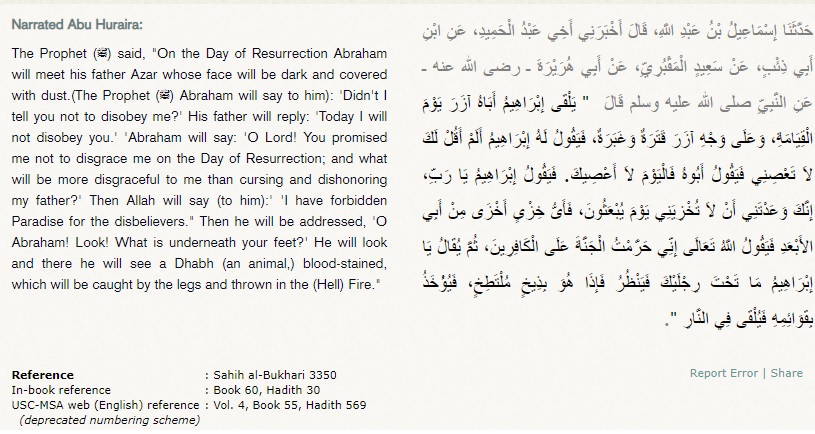




 Prima Quran