
“Who can be more wicked than one who invents a lie against Allah, or says, “I have received inspiration,” when he has received none, or again who says, “I can reveal the like of what Allah has revealed”? If you could but see how the wicked fare in the flood of confusion at death! – the angels stretch forth their hands, saying,” Yield up your souls: this day you will receive your reward,- a penalty of shame, for that you used to tell lies against Allah, and scornfully to reject of His signs!” (Qur’an 6:93)

﷽
The subject of Islamic Eschatology is vast, especially as it relates to the sacred sublime oral traditions. There have been many claimants to be the ‘Mahdi’ in the past. More often than not, it led to disastrous consequences for their followers.
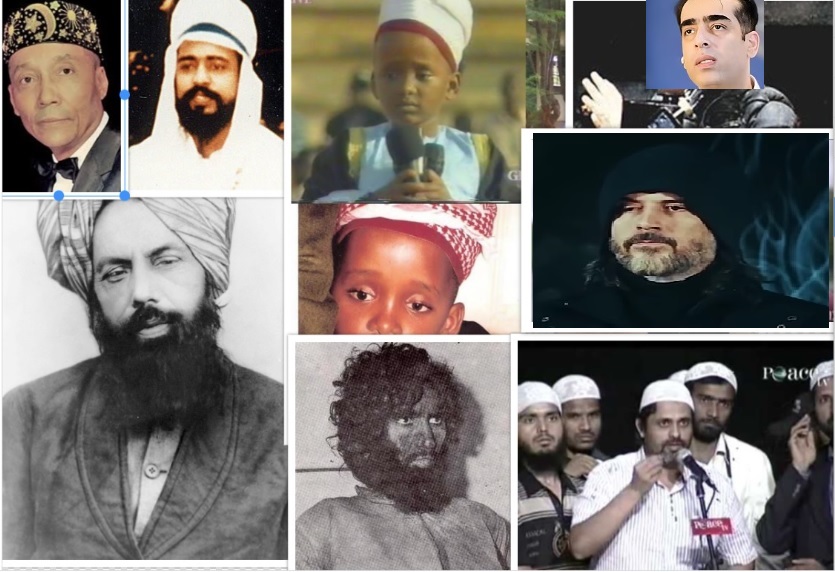
This particular entry will focus on the subject of the Mahdi. We have found it curious time and time again how certain partisans and sectarians among Muslims will claim time and time again that many certain views are only espoused by ‘modernists’ and ‘those with an agenda against Islam’. Yet, when we delve into the history and works of scholars, we find that they hold many of the claims that ‘modernist’ Muslims advocate.
One should bear this in mind. The Islamic tradition is vast.
Hopefully, this will be an eye-opener for many with regard to one of the great scholars of the past who raised questions about the various well-known and widely reported oral traditions as they relate to the ‘Mahdi’.
One particular interesting figure is Ibn Khaldun.
He was an active teacher and taught various Islamic disciplines in Cairo. He was appointed a Qadi, a judge, a number of times.
Before we begin with the honourable scholar Ibn Khaldun, let us give you a quote from Professor Mohammad Hashim Kamali:
“Muhammad Zubayr Siddiqi has similarly stated that “In spite of the great care of their compilers, there are still some weak or forged traditions in the standard collections; which have been discussed and criticized by their commentators.” Siddiqi then commented that “most of the traditions concerning the coming of Dajjal and the Mahdi, and those concerning Khidr in the various collections of hadith are declared by the traditionalist as forged ones, and are included in the works on Mawdu’at.”
Source: (pg. 204 A Textbook of Hadith Studies: Authenticity, Compilation, Classification, and Criticism of Hadith by Mohammad Hashim Kamali)
Interestingly, the above quote is under the section of the book entitled: “Conclusion and Reform Proposals.”
This, in turn, is taken from the following source:
This, in turn, is taken from the following source:
(pg. 202-203 Hadith Literature: Its Origin, Development, Special Features and Criticism by Muhammad Zubayr Siddiqi)
The Qur’an has no mention of any Imam Mahdi.
The silence of Bukhari & Muslim.
The two great Imams of Hadith, Bukhari and Muslim, neither of them mentions Hadith concerning Imam Mahdi. What’s interesting about this is that both of them are aware of narrations on the subject that meet their criteria, yet they did not include them.
The Ibadi hadith collection has no mention of Imam Mahdi.
There is no hadith about Mahdi in the Al-Jami’i Al-Salih, otherwise known as the Musnad Al-Imam Al Rabii.
The silence of the Muwatta of Malik ibn Anas.
There is no hadith about Mahdi in the Muwatta of Malik ibn Anas.
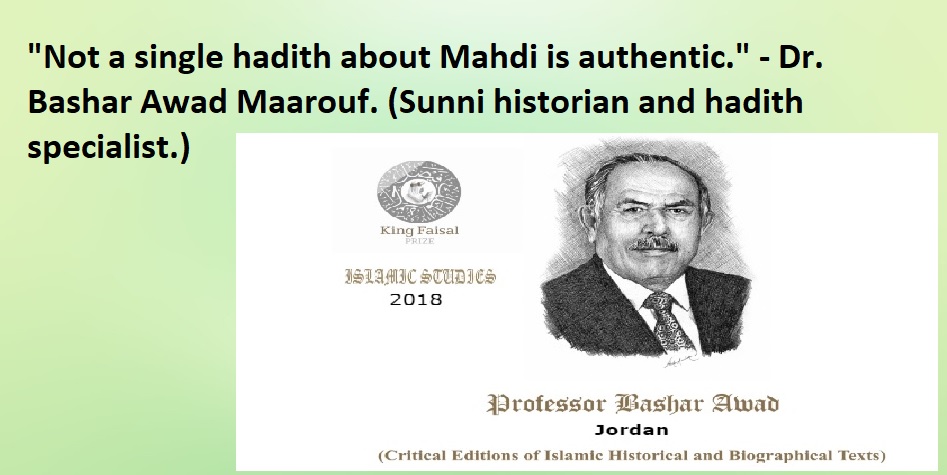
In fact, there is no authentic chain of narration going back to the Blessed Messenger (saw) on the subject of ‘Mahdi’ that is not disputed or challenged.
In our school, the Ibadi school, we do not believe that there will be any Mahdi that will come. The majority of Ibadis also do not believe in any second coming of Jesus (as). This view protects us from any invitation from deviant groups that try and get us to believe in any Prophet to come after the Prophet Muhammed (saw).
The following information is taken from http://www.bogvaerker.dk/Bookwright/Mahdi.html
The following information is made available to English-speaking audiences by the hard work and vigilant efforts of the respected, Abdassamad Clarke. Ustaz Abdassamad Clarke is an English convert to Islam and a follower of the Maliki school of jurisprudence in Islam. A very respected and respectable man. Very humble and sincere individual. May Allah (swt) grant him paradise.
The Fatimi (Mahdi): translated by Abdassamad Clarke
FROM THE MUQADDIMAH OF IBN KHALDUN
Section 51 (of the Muqaddimah of Ibn Khaldun)
On the matter of the Fatimi (The Mahdi) and the position people take concerning him, removing the veil from all of that.
“Know that it has been commonly accepted (mashhour) among the masses (al-kaffah) of the people of Islam throughout the ages that there must be at the end of time the appearance of a man from the People of the House who will help the deen and make justice triumphant and whom the Muslims will follow and who will gain control over the Islamic lands, and who will be called the Mahdi. The appearance of the Dajjal and what comes after him of the preconditions of the Hour which are firmly established in the Sahih (literature) will be right after him. ‘Isa, peace be upon him, will descend after him and will kill the Dajjal or he will descend at the same time as he (appears) and will help him to kill him and then he will follow the Mahdi as his Imam in prayer. They argue in favour of this matter using hadith which the Imams published. Those who deny (the Mahdi) discussed them (those hadith) and opposed them with some other traditions.”
“The later Sufis have another path with respect to this Fatimi and a way of drawing indications and they probably rely on that upon the unveiling which is the source of their paths.”
“Here we will now mention the hadith which are narrated about this matter and what matters those who deny them have which would invalidate them, and what hadiths with isnads they have with which to oppose them, which we will follow with mention of the Sufis’ words so that the sound and authentic of them may become clear to you, insha’Allah ta’ala.”
“We say a group of the Imams narrated the hadith about the Mahdi, of whom are at-Tirmidhi, Abu Dawud, al-Bazzar, Ibn Majah, al-Hakim, at-Tabarani, and Abu Ya’ala al-Mawsili, and they ascribed them to a group of the companions, for example, ‘Ali, Ibn ‘Abbas, Ibn ‘Umar, Talhah, Ibn Mas’ud, Abu Hurairah, Anas, Abu Sa’id al-Khudri, Umm Habibah, Umm Salamah, Thawban, Qurrah ibn Iyas, ‘Ali al-Hilali and ‘Abdullah ibn al-Harith ibn Jaz’ with isnads which those who deny (the Mahdi) object to, as we shall mention, except that it is well known to the people of hadith that (the factors which cause the) invalidation (of a hadith narrator) take precedence over the (the factors which result in the) attribution of veracity (to him), so that when we find a flaw in some of the men in the isnads because of carelessness, bad memory, weakness or a bad view that will find a way (to affect) the soundness of the hadith and will weaken it.”
“Do not say, “Similar things may affect the soundness of the men of the two Sahih volumes,” because the consensus of the Ummah has been reached on accepting both of them and acting upon the contents of both of them, and in consensus, there is the greatest and best protection. Books other than the two Sahihs do not have the same degree of agreement in that respect. You will find an opportunity to discuss their isnads in what has been transmitted from the Imams of hadith about that.”
Criticism:
“Abu Bakr ibn Abi Khaythamah went excessively far, according to that which as-Suhaili transmitted from him, in his collecting the hadith which have been related concerning the Mahdi, so he said, “One of the strangest of them in isnad is that which Abu Bakr al-Iskaf mentioned in his Fawa’id al-Akhbar with an isnad to Malik ibn Anas from Muhammad ibn al-Munkadir from Jabir that he said, “The Messenger of Allah, may Allah bless him and grant him peace, said, ‘Whoever denies the Mahdi has become a kafir, and whoever denies the Dajjal has become a liar’.” And he said, “In The Rising of the Sun from its Place of Setting is the like of it, I think,” and this is enough for excessive behaviour, and Allah knows best about the soundness of its path to Malik ibn Anas, because Abu Bakr al-Iskaf is suspected of forgery by them (the scholars of hadith).”
“As for at-Tirmidhi, he and Abu Dawud published, with their two isnads to Ibn ‘Abbas by way of ‘Asim ibn Abi an-Nujud, one of ‘The Seven’ Qur’an reciters, to Zirr ibn Hubaysh from ‘Abdullah ibn Mas’ud from the Prophet, may Allah bless him and grant him peace, “If there did not remain of the world anything but one day, Allah would lengthen that day until Allah would send in it a man from me, or from the people of my house, whose name coincides with my name and whose father’s name coincides with my father’s name.” This is the wording of Abu Dawud, and he remained silent about it, and he said in his famous letter/treatise, “What he was silent about in his book is correct.” The wording of at-Tirmidhi is, “The world will not depart until a man of my house will take control of the Arabs, whose name coincides with my name,” and in another wording, “…until a man from the people of my house rules…”
Criticism: And both of them are good sound hadiths, and he related them also by a path that stops short at Abu Hurairah. Al-Hakim said, “Ath-Thawri, Shu’bah, Za’idah, and other Imams of the Muslims narrated it from ‘Asim.”
“He said, “The paths of ‘Asim from Zirr from ‘Abdullah are all sound according to what? Of deriving a proof from the traditions of ‘Asim since he is one of the Imams of the Muslims.” (What these Imams have said is) finished (here). However, Ahmad ibn Hanbal said about him (‘Asim), “He was a right-acting man, reciting the Qur’an, good and trustworthy, and al-‘Amash has a better memory than him, and Shu’bah used to choose al-‘Amash over him if he was trying to make sure of a particular hadith, and al-‘Ijli said, ‘They used to disagree about him concerning his narration from Zirr and Abu Wa’il,’ indicating by that the weakness of his narration from the two of them.” Muhammad ibn Sa’d said, “He was trustworthy except that he made a lot of mistakes in his hadith.” Ya’qub ibn Sufyan said, “There is some disquiet about his hadith.” ‘Abdarrahman ibn Abi Hatim said, “I said to my father, ‘Abu Zar’ah says that ‘Asim is trustworthy.’ He said, ‘That is not his place. Ibn ‘Ulayyah spoke about him and said, “Everyone whose name is ‘Asim has a bad memory”.’ Abu Hatim said, ‘His standing with me is a standing of truthfulness, with good hadith, and yet, by that, he is not a memoriser of hadith (a hafidh).’” There are different statements from an-Nasa’i about him. Ibn Harrash said, “In his hadith there is an indefiniteness.” Abu Ja’far al-‘Aqeeli said, “He had nothing (said against him) but (that he had) a bad memory.” Ad-Daraqutni said, “There was something about his memorization.” Yahya al-Qattan said, “I have not found a man whose name was ‘Asim but that I found him to have a weak memory.” He also said, “I heard Shu’bah say, ‘Asim ibn Abu an-Nujud narrated to us, and in people is what is in it/her.’”Adh-Dhahabi said, “(He was) Firm (trustworthy) in recitation and good in hadith (i.e. less than his rank in recitation), and if any argues with us saying that the two Shaykhs (Bukhari and Muslim) narrated from him then we say, ‘They narrated from him coupling (his hadith) with another person, not as a source (in himself) and Allah knows best.‘”
“Abu Dawud published in the chapter (of hadith on the Mahdi) from ‘Ali, may Allah be pleased with him, from the narration of Qatan ibn Khalifah from al-Qasim ibn Abi Murrah from Abu at-Tufail from ‘Ali from the Prophet, may Allah bless him and grant him peace, that he said, “Even if nothing remained of time but one day, Allah would send a man from the people of my house who would fill it with justice just as it has been filled with injustice.”
Criticism: And even if Ahmad, Yahya ibn al-Qattan, Ibn Mu’in, an-Nasa’i, and others found Qatan ibn Khalifah trustworthy, yet al-‘Ijli said, “He has good hadith but there is a little bit of Shi’a in him.” Ibn Mu’in once said, “A Shi’a trustworthy.” Ahmad ibn Abdullah ibn Yunus said, “We used to pass by Qatan and he was rejected; we would not write down (hadith) from him.” He said once, “I used to pass by him and leave him alone like a dog.” Ad-Daraqutni said, “He may not be used as a proof.” Abu Bakr ibn ‘Ayyash said, “I did not abandon narrating from him except because of the evil of his school.” Al-Jurjani said, “A deviant who is untrustworthy.”
“Abu Dawud also published with his isnad to Ali, may Allah be pleased with him, from Marwan ibn al-Mughirah from ‘Umar ibn Abi Qays from Shu’ayb ibn Abi Khalid from Abu Ishaq an-Nasafi, that ‘Ali said while looking at his son al-Hasan, “This son of mine is a lord as the Messenger of Allah, may Allah bless him and grant him peace, named him; a man will come from his loins who will be named with the name of your Prophet, salla’llahu ‘alaihi wa sallam; he will resemble him in disposition but he will not resemble him in appearance; he will fill the earth with justice.” Harun said, “Umar ibn Abi Qays narrated to us from Mutarfif ibn Tarif from Abu’l-Hasan from Hilal ibn ‘Umar, ‘I heard ‘Ali saying, “The Prophet, may Allah bless him and grant him peace, said, ‘A man will come out from beyond the river who will be known as al-Harith, in advance of whom will be a man known as Mansur, who will facilitate or establish things for the family of Muhammad as Quraysh established things for the Messenger of Allah, salla’llahu ‘alaihi wa sallam; it is obligatory on every believer to help him’ or he said, ‘…to respond to him’.”‘”
Criticism: Abu Dawud was silent about it. He said in another place, “Harun is one of the offspring of the shi’ah.” And as-Sulaymani said, “There is an opinion about him.” Abu Dawud said about ‘Umar ibn Abi Qays, “No harm. And in his hadith there is a mistake.” Adh-Dhahabi said, “Straight (as a spear)! He has suppositions.” As for Abu Ishaq the shi’ah, even if he has been narrated from in the two Sahih books it is established that he mixed things up towards the end of his life, and his narration from ‘Ali is interrupted, and similarly the narration of Abu Dawud from Harun ibn al-Mughirah. As for the second isnad, Abu’l-Hasan and Hilal ibn ‘Umar in it are unknown and Abu’l-Hasan is not known except in Mutarrif ibn Tarif’s narration from him.”
“Abu Dawud also published from Umm Salamah, radiya’llahu ‘anha, that she said, “I heard…” and in Al-Mustadrak by way of ‘Ali ibn Nufayl from Sa’eed ibn al-Musayyab from Umm Salamah that she said, “I heard the Messenger of Allah, may Allah bless him and grant him peace, saying, ‘The Mahdi is one of the descendants of Fatimah’.” The wording of al-Hakim is, “I heard the Messenger of Allah, may Allah bless him and grant him peace, mentioning the Mahdi and then he said, ‘Yes, he is real, and he is one of the descendants of Fatimah’.
Criticism: ”And he (al-Hakim) did not speak about it as being sahih or anything else, and Abu Ja’far al-‘Aqeeli declared it weak. He said, “‘Ali ibn Nufayl is not to be followed over it, and it is unknown except him.”
“Abu Dawud also published from Umm Salamah by way of Salih Abu’l-Khaleel from a companion of his from Umm Salamah, that he said, “There will be disagreement at the death of a khalifah, so a man from Madinah will come out fleeing to Makkah, and the people of Makkah will come to him and bring him out (as a claimant for the khalifate) against his will and swear allegiance to him between the Corner (of the Ka’bah in which the Black Stone is) and the Station (of Ibrahim). An expeditionary force will be sent against him from Sham (Syria) and the earth will swallow them up in the water-less desert between Makkah and Madinah. When people see that, the Abdal of the people of Sham will come to him and the companies of the people of Iraq and they will swear allegiance to him. Then a man of Quraysh will arise (in rebellion) whose maternal uncles are (the tribe of) Kalb, and an expeditionary force will be sent against them and they will conquer them, and that is the expeditionary force of Kalb, and there is a disappointment for whoever does not attend (the division of) the spoils of Kalb. So he will divide up the wealth, and he will act among people according to their Prophet’s Sunnah, may Allah bless him and grant him peace, and he will throw Islam by its neck on the earth. He will remain for seven years.” One of them said, “Nine years.” Moreover, Abu Dawud narrated it from the narration of Abu’l-Khaleel from ‘Abdullah ibn al-Harith from Umm Salamah, which will make clear to you the unnamed person in the former isnad, and its men are men of the two Sahihs against whom there are no allegations or cause for slander. It has been said that it is one of the narrations of Qatadah from Abu’l-Khaleel, and Qatadah was a mudallis (who neglected to mention an intermediary in the isnad between him and the first man in the isnad). Perhaps because the intermediary was less well trusted than the first name in the isnad) and he narrated his hadith using the terminology “from so-and-so from so-and-so” (to avoid saying “I heard it from so-and-so who heard it from so-and-so” and thus having to give the name of the less trusted intermediary) and the hadith of a mudallis is not to be accepted unless he declares unequivocally that he heard it (directly from the first person he mentions in his isnad who heard it directly from his transmitter, and so on). Along with that, there is no mention of the Mahdi by name in the hadith. Yes, though, Abu Dawud mentioned it in his chapters (on the Mahdi).
Abu Dawud also published, and al-Hakim followed him in it, from Abu Sa’id al-Khudri that he said, “The Messenger of Allah, may Allah bless him and grant him peace, said, ‘The Mahdi is from me, clear-browed, crook-nosed, he will fill the earth with equity and justice as it was filled with wrongdoing and injustice; he will have seven years’.” This is the wording of Abu Dawud and he was silent about it. The wording of al-Hakim is, “The Mahdi is from us, the people of the house, proud-nosed, hooked, clear (browed), he will fill the earth with equity and justice just as it was filled with tyranny and injustice; he will live like this,’ and he spread out (the fingers of) his left hand and two fingers of his right hand, the index finger, and the thumb, and he bent down (the other) three (fingers).”
Criticism: Al-Hakim said, “This is a sahih hadith according to the conditions of Muslim, and the two of them (Bukhari and Muslim) did not publish it.” There is disagreement about seeking to prove something by means of ‘Amran al-Quttan. Bukhari only published as extra evidence, not as a primary source. Yahya al-Qattan would not narrate from him and Yahya ibn Mu’in said, “He is not strong,” and he said one time, “He is not anything.” Ahmad ibn Hanbal said, “I would hope that he would be (a) good (source) of hadith.” Yazid ibn Zurai’ said, “He was a Haruri, and he held the view that the sword could be used against the people of the Qiblah.” An-Nasa’i said, “Weak.” Abu ‘Ubaidah al-Ajiri said, “I asked Abu Dawud about him and he said, ‘(He was) One of the companions of al-Hasan (al-Basri) and I have not heard anything but good about him.’ Another time I heard him mention him and he said, ‘Weak. He gave a severe fatwa about Ibrahim ibn ‘Abdullah ibn Hasan (who contended for the Khalifate and took up arms against the Abbasids and was killed), in which there was the spilling of blood’.”
“At-Tirmidhi, Ibn Majah and al-Hakim all published from Abu Sa’id al-Khudri by way of Zayd al-‘Ammi from Abu Sadeeq an-Naji from Abu Sa’id al-Khudri that he said, “We were afraid that things might happen, so we asked the Prophet of Allah, may Allah bless him and grant him peace,‘In my Ummah there will be the Mahdi; he will come out and live five, seven or nine,’” Zayd was the one who was not sure. He said, “We said, ‘What is that?’ He said, ‘Years.’ He said, ‘So he will come to him and say, “O Mahdi, give me!” He said, ‘So he will spread his garment for him as open as he can to carry it (what the Mahdi will give him)’.” The wording is that of at-Tirmidhi, and he said, “This is a good hadith,” and he narrated it in more than one way from Abu Sa’id from the Prophet, may Allah bless him and grant him peace. The wording of Ibn Majah and al-Hakim is, “There will be in my Ummah the Mahdi; if it is shortened then seven, and if not, then nine, and my Ummah will be blessed in him with a blessing the like of which they will have never heard. The earth will give its produce and nothing of it will be stored, and wealth on that day will be in heaps so that a man will stand up and say, ‘Mahdi, give me!’ and he will say, ‘Take’.”
Criticism: (As for) Zayd al-‘Ammi, even if ad-Daraqutni, Ahmad ibn Hanbal and Yahya ibn Mu’in said about him that he was right-acting, and Ahmad said moreover that he was above Yazid ar-Rafashi and Fadl ibn ‘Isa yet Abu Hatim said about him, “(He was) Weak. He used to write his hadith and he is not used as a proof.” Yahya ibn Mu’in said in another narration, “Nothing,” and he said one time, “He writes his hadith and he is weak.” Al-Jurjani said, “One who holds on strongly.” Abu Zar’ah said, “He is not strong, baseless hadith, weak.” Abu Hatim said, “He is not that, and Shu’bah narrated from him.” An-Nasa’i said, “Weak.” Ibn ‘Adi said, “The mass of what he narrates and those from whom it was narrated are weak, except that Shu’bah narrated from him, and perhaps Shu’bah narrated from nobody weaker than him.”
“It has been said, “The hadith of at-Tirmidhi came about as a commentary for that which Muslim narrated in his Sahih of the hadith of Jabir. He said, ‘The Messenger of Allah, may Allah bless him and grant him peace, said, “There will be at the end of my Ummah a Khalifah who will pour out wealth without counting it.” And also the hadith of Abu Sa’id that he said, “Of your khulafa there will be a khalifah who will pour out wealth,” and by another way from the two of them that he said, “There will be at the end of time a khalifah who will apportion out wealth and he will not count it’.”‘”
Criticism: “In the ahadith of Muslim, there is no mention of the Mahdi and there is no indication which would establish that he was intended by them.”
“Al-Hakim also narrated it by way of al-‘Awf al-A’rabi from Abu as-Sadeeq an-Naji from Abu Sa’id al-Khudri that he said, “The Messenger of Allah, may Allah bless him and grant him peace, said, ‘The Hour will not arise until the earth is filled with tyranny, injustice and enmity, and then a man will come out from the people of my house who will fill it with equity and justice just as it was filled with injustice and enmity’.” Al-Hakim said about it, “It is sahih according to the conditions of the two shaykhs, and they did not publish it.” Al-Hakim also narrated it by way of Sulayman ibn ‘Ubaid from Abu as-Sadeeq an-Naji from Abu Sa’id al-Khudri from the Messenger of Allah, may Allah bless him and grant him peace, that he said, “The Mahdi will come out at the end of my Ummah, and Allah will give him the rain to drink, and the land will produce its plants and he will give wealth free from defect, cattle will be plentiful, and the Ummah will be vast. He will live seven, or eight,” meaning years. Al-Hakim said about it, “It is a hadith whose isnad is sahih, and the two of them did not publish it,” although none of the six published anything from Sulayman ibn ‘Ubaid, Ibn Hibban mentioned him among the trustworthy and he did not relate that anyone had said anything (negative) about him. Moreover, al-Hakim narrated it by way of Asad ibn Musa from Hamad ibn Salamah from Matar al-Warraq and Abu Harun al-‘Abdi from Abu as-Sadeeq an-Naji from Abu Sa’id that the Messenger of Allah, may Allah bless him and grant him peace, said, “The earth will be filled with tyranny and injustice, then a man from my offspring will come out and he will have seven or nine, and the earth will be filled with justice and equity as much as it was filled with tyranny and injustice.”
Criticism: Al-Hakim said about it, “This is a sahih hadith according to the condition of Muslim since it was published from Hamad ibn Salamah and from his shaykh, Matar al-Warraq,” but as for his other shaykh, Abu Harun al-‘Abdi he did not publish anything from him and he is extremely weak and suspected of lying, and there is no need to publish the sayings of the Imams in which they expose his weakness.” “As for the one who narrated to him from Hamad ibn Salamah, Asad ibn Musa who was nicknamed Asad as-Sunnah (The Lion of the Sunnah), even if al-Bukhari said, “His hadith are well-known,” and he used him as evidence in his Sahih, and Abu Dawud and an-Nasa’i sought to use him in proof, yet he said about him another time, “(He is) trustworthy; if only he did not compile (hadith) it would be better for him.” Muhammad ibn Hazm said about him, “(His) hadith are rejected.”
“At-Tabarani narrated it in his al-Mu’jam al-Awsat in the narration of Abu al-Wasil ibn ‘Abd al-Hamid ibn Wasil from Abu as-Sadeeq an-Naji from al-Hasan ibn Yazid as-Sa’di one of Bani Bahdalah from Abu Sa’id al-Khudri that he said, “I heard the Messenger of Allah, may Allah bless him and grant him peace, saying, ‘A man from my Ummah will come out speaking by my Sunnah. Allah, mighty and majestic is He will send down the rain for him from the sky and the earth will bring out its blessing and the earth will be filled because of him with equity and justice as it had been filled with tyranny and injustice. He will rule over this Ummah seven years and he will dwell at the Bayt al-Maqdis’.”
Criticism: At-Tabarani said about it, “A group narrated it from Abu as-Sadeeq and none of them entered anyone between him and between Abu Sa’id except for Abu al-Wasil, for he narrated it from al-Hasan ibn Yazid from Abu Sa’id.” Abu Hatim mentioned this al-Hasan ibn Yazid and he did not make him known for anything more than this isnad of his narration from Abu Sa’id, and Abu as-Sadeeq’s narration from him. Adh-Dhahabi said, in al-Mizan, “He is unknown.” However, Ibn Hibban mentioned him among the trustworthy. As for Abu al-Wasil who narrated it from Abu as-Sadeeq none of the six narrated from him, but Ibn Hibban mentioned him among the trustworthy of the second rank, and said about him, “He narrated from Anas and Shu’bah and ‘Itab ibn Bushr narrated from him.”
“Ibn Majah published in the book as-Sunan from ‘Abdullah ibn Mas’ud by way of Yazid ibn Abi Ziyad from Ibrahim ibn* from ‘Alqamah from ‘Abdullah that he said, “While we were with the Messenger of Allah, may Allah bless him and grant him peace, some men of Banu Hashim came up. When the Messenger of Allah, may Allah bless him and grant him peace, saw them his eyes flowed and his complexion changed colour.” He said, “I said, ‘We still see something in your face which we dislike.’ Then he said, ‘We, the people of the house, Allah has chosen the next life for us over the world, and the people of my house after me will receive trial, dispersal, and expulsion until a people come from the direction of the east with whom there are black banners, and they will ask for news and will not be given it, and so they will fight and be given victory and be given what they asked, but they will not accept it until they give it to a man from the people of my house, and he will fill it (the earth) with equity as much as they had filled it with tyranny. Whoever of you reaches that let him come to them even if it were crawling on the snow.”
Criticism: This hadith is known among the scholars of hadith as the “hadith of the banners”. Shu’bah said about its narrator, Yazid ibn Abi Ziyad, “He used to be araffa’”, meaning that he would raise unknown hadith (by ascribing them to the Prophet, salla’llahu ‘alaihi wa sallam). Muhammad ibn al-Fadeel said, “One of the great Imams of the Shi’ah.” Ahmad ibn Hanbal said, “He was not a hafidh (memoriser of the hadith),” and he said one time, “His hadith is not that.” Yahya ibn Mu’in said, “Weak.” Al-‘Ijli said, “His hadith are permissible, and he used at his end to yulaqqinu* *.”Abu Zar’ah said, “Soft; he writes his hadith, and a proof cannot be made by him.” Abu Hatim said, “He is not strong.” Al-Jurjani said, “I heard them declaring his hadith to be weak.” Abu Dawud said, “I don’t know of anybody who abandoned his hadith, and (anyone) other than him is preferable to me.” Ibn ‘Adi said, “He is one of the Shi’a of the people of Kufah, and along with his weakness he writes his hadith.” Muslim did narrate from him except coupled with others (not as an independent source). In sum, most people hold him to be weak, and the Imams have openly declared the weakness of this hadith which he narrated from Ibrahim from ‘Alqamah from ‘Abdullah, which is the ‘hadith of the banners’. Wakee’ ibn al-Jarrah said about it, “It is not anything,” and Ahmad ibn Hanbal said the same. Abu Qudamah said, “I heard Abu Usamah saying about the hadith of Yazid from Ibrahim on the banners, ‘Even if Usamah were to swear fifty oaths in my presence I would not believe it. Is this the madhhab of Ibrahim? Is this the madhhab of ‘Alqamah? Is this the madhhab of ‘Abdullah?‘”Al-‘Aqeeli narrated this hadith among the weak, and adh-Dhahabi said, “It is not sahih.”
“Ibn Majah narrated from ‘Ali, may Allah be pleased with him, by the narration of Yasin al-‘Ijli from Ibrahim ibn Muhammad al-Hanafiyyah from his father from his grandfather (‘Ali) that he said, “The Messenger of Allah, may Allah bless him and grant him peace, ‘The Mahdi is from us, the people of the house. Allah will put things right by him in one night’.”
Criticism: Even if Ibn Mu’in said about Yasin al-‘Ijli, “There is nothing wrong with him,” yet al-Bukhari had said, “There is an opinion about him,” and this expression is one of his technical terms which very strongly expresses his view of him as being weak. Ibn ‘Adi narrated this hadith from him in al-Kamil and adh-Dhahabi in al-Mizan as a way of rejecting it, and said, “He is well known for it.”
“At-Tabarani published in his al-Mu’jam al-Awsat from ‘Ali, may Allah be pleased with him, that he said to the Prophet, may Allah bless him and grant him peace, “Is the Mahdi from us or from other than us, Messenger of Allah?” So he said, “No, he is from us. With us will Allah conclude, as with us He began. With us, they will rescue from shirk and by us, Allah will unite their hearts after clear enmity, just as by us He united their hearts after the enmity of shirk.” ‘Ali said, “Believers or disbelievers?” He said, “One who is tried and a disbeliever.”
Criticism: In it, there is ‘Abdullah ibn Luhay’ah who is weak, whose state is known. In it, there is ‘Umar ibn Jabir al-Hadrami who is weaker than him. Ahmad ibn Hanbal said, “Many things which are to be rejected are narrated from Jabir and it has reached us that he used to lie.” An-Nasa’i said, “He is not trustworthy.” He said, “Ibn Luhay’ah was a foolish old man, weak of the intellect. He used to say, ‘Ali is in the clouds’, and he would sit with us and, seeing a cloud, he would say, ‘This is ‘Ali who has passed in the clouds’.”
“At-Tabarani published from ‘Ali, may Allah be pleased with him, that the Messenger of Allah, may Allah bless him and grant him peace, said, “There will be a trial at the end of time in which men will be extracted as gold is extracted from the mines, so do not curse the people of Syria, but curse their worst ones, because among them are the Abdal. Soon a rain-cloud from the sky will be sent against the people of Syria which will divide up their community, so much so that if foxes were to fight them they would conquer them. At that time one of the people of my house will come out with three banners; the one who estimates (their number) high would say, ‘They have fifteen thousand,’ and the one who estimates low would say, ‘They have twelve thousand,’ and their mark is ‘Amit! [Kill!] Amit!’ They will cast seven banners, underneath each of those banners a man seeking kingship. Allah will kill all of them and Allah will return to the Muslims their union, their blessing, their distance and their view.”
Criticism: In it is ‘Abdullah ibn Luhay’ah who is weak, and whose state is well known. Al-Hakim narrated it in al-Mustadrak and said, “A sahih isnad and the two of them (al-Bukhari and Muslim) did not narrate it.” In his narration of it, there is, “Then later the Hashimi will appear and Allah will return people to their union.” Ibn Luhay’ah is not in this isnad, and it is a sahih isnad as he mentioned.”
“Al-Hakim published in al-Mustadrak from ‘Ali, may Allah be pleased with him, from the narration of Abu at-Tufail from Muhammad ibn al-Hanafiyyah that he said, “We were with ‘Ali, may Allah be pleased with him, and a man asked him about the Mahdi. He said to him ‘How remote from the truth!’ Then he counted with his hand seven, and said, ‘That one will come out at the end of time, when if a man says, “Allah, Allah,” he will be killed. Allah will unite around him a wispy people like the wisps of the clouds, and Allah will unite their hearts so that they do not need anyone and do not rejoice in anyone who joins them. Their number will be as the number of the people of Badr the first ones will not outrace them and the last ones will not reach them and as the number of Talut’s companions who crossed the river with him.’” Abu at-Tufail said, “Ibn al-Hanafiyyah said, ‘Do you want it?’ I said, ‘Yes.’ He said, ‘He will come out from between these two rugged mountains.’ I said, ‘By Allah, I will not leave it until I die.’” And he died in it, i.e. Makkah.
Criticism: Al-Hakim said, “This is a sahih hadith according to the conditions of the two shaykhs.” And it is only on the condition of Muslim, because ‘Ammar adh-Dhahabi, Yunus ibn Abi Ishaq are in it, and al-Bukhari did not narrate from the two of them. ‘Amr ibn Muhammad al-‘Abqari is in it, and al-Bukhari never narrated from him as a proof but only as extra evidence, as well as what connects to that of the Shi’ah inclinations of ‘Amr adh-Dhahbabi. Even if Ahmad, Ibn Mu’in, Abu Hatim, an-Nasa’i and others regarded him as trustworthy, ‘Ali ibn al-Madani said from Sufyan that Bushr ibn Marwan cut his Achilles’ tendons. I said, “For what reason?” He said, “For his becoming a Shi’a.”
“Ibn Majah published from Anas ibn Malik, may Allah be pleased with him, in the narration of Sa’d ibn ‘Abd al-Hamid ibn Ja’far from ‘Ali ibn Ziyad al-Yamami from ‘Ikrimah ibn ‘Ammar from Ishaq ibn ‘Abdullah from Anas that he said, “I heard the Messenger of Allah, may Allah bless him and grant him peace, saying, ‘We, the descendants of ‘Abd al-Muttalib, are the lords of the people of the Garden: I, Hamzah, ‘Ali, Ja’far, al-Hasan, al-Husein, and al-Mahdi.’”
Criticism: Even if Muslim published from ‘Ikrimah ibn ‘Ammar, yet he only did so in following (on from someone else already having published the hadith); some did declare him to be weak and others declared him trustworthy. Abu Hatim ar-Razi said, “He was a mudallis (i.e. he covered up gaps in his isnads by not mentioning missing persons or by saying so-and-so “from” so-and-so rather than the more explicit so-and-so “heard” it from so-and-so), and he is not accepted until he declares that ‘Ali ibn Ziyad heard (the hadith directly).” Adh-Dhahabi said in al-Mizan, “We don’t know who he was,” then he said, “The correct statement concerning him ‘Abdullah ibn Ziyad and Sa’d ibn ‘Abd al-Hamid even if Ya’qub ibn Abi Shaybah declared him to be trustworthy.” Yahya ibn Mu’in said about him, “There is no harm in him.” Ath-Thawri spoke against him, they say because he saw him giving fatwas on some issues and making mistakes in them. Ibn Hibban said, “He was one of those whose giving was excessive, so no proof can be derived from him.” Ahmad ibn Hanbal said, “Sa’id ibn ‘Abd al-Hamid claims that he heard the review of the books of Malik, and people reject that, and here he is in Baghdad and no-one takes him as a proof, so how could he have heard them?” Adh-Dhahabi regarded him as one of those whom the words of those who talk against him do not injure.”
“Al-Hakim published in al-Mustadrak in the narration of Mujahid from Ibn ‘Abbas stopping short at him, that Mujahid said, “Ibn ‘Abbas said to me, ‘If I had not heard that you are like the people of the house I would not have told you this hadith.’” He said, “Mujahid said, ‘Then it is in a veil and I will not mention it to whoever dislikes it’.” He said, “Ibn ‘Abbas said, ‘From us, the people of the house, there are four: there is as-Saffah, there is al-Mundhir, there is al-Mansur, and from us, there is the Mahdi.’” He said, “Mujahid said, ‘Explain to me these four.’ Ibn ‘Abbas said, ‘As for as-Saffah, most likely he will kill his friends and pardon his enemies. As for al-Mundhir,’ I think that he said, ‘He will give away much wealth and will not become exalted in himself, and he will withhold a little which is his own right. As for al-Mansur, he will be given half of the victory over his enemy which the Messenger of Allah, may Allah bless him and grant him peace, was given, for his enemy feared from the distance of a two month’s journey, and al-Mansur’s enemy will fear him from the distance of a month’s journey. As for al-Mahdi, he will fill the earth with justice as it was filled with tyranny, and (in his time) the wild beasts will be secure, and the earth will cast out the pieces of its liver.’ He said, “I said, ‘And what are the pieces of its liver.’ He said, ‘The likes of columns of gold and silver.’”
Criticism: Al-Hakim said, “This hadith has a sound isnad, and the two of them (al-Bukhari and Muslim) did not publish it,” and it is one of the narrations of Isma’il ibn Ibrahim ibn Muhajir from his father, and Isma’il is weak. As for Ibrahim, his father, even if Muslim related from him, most people regard him as weak.”
“Ibn Majah published from Thawban that he said, “The Messenger of Allah, may Allah bless him and grant him peace, said, ‘Three will fight at the moment of your pride, each one the son of a khalifah, then it will not go to anyone of them, then the black banners will rise from the direction of the east and they will kill them with a killing which a people have not killed with,’ then he mentioned a thing which I have forgotten, and said, ‘So when you see him, pledge allegiance to him, even if it must be crawling on snow, for he is the Khalifah of Allah, the Mahdi.‘”
Criticism: The men of it are the men of the two Sahihs except that in it there is Abu Qalabah al-Jarmi, and adh-Dhahabi and others mentioned that he was a mudallis,and in it, there is Sufyan ath-Thawri who is famous for being a mudallis,and both of them narrated “from” so-and-so “from” so-and-so, and did not clearly state that they had heard it so that it is not accepted. In it, there is ‘Abd ar-Razzaq ibn Hammam who was well-known for his being a Shi’a, and he became blind at the end of his life and became confused. Ibn ‘Adi said, “He narrated hadith about the excellent qualities about which no-one agrees with him, and which they ascribed to his espousal of Shi’ism.”
“Ibn Majah also published from ‘Abdullah ibn al-Harith ibn Jaz’, az-Zabeedi by way of Ibn Luhay’ah from Abu Zar’ah from ‘Umar ibn Jabir al-Hadrami from ‘Abdullah ibn al-Harith ibn Jaz’ that he said, “The Messenger of Allah, may Allah bless him and grant him peace, said, ‘A people will come from the east and they will facilitate things for the Mahdi, meaning for his authority.‘”
Criticism: At-Tabarani said, “It is unique to Ibn Luhay’ah,” and we have previously seen, in respect of the hadith of ‘Ali which at-Tabarani narrated in his al-Mu’jam al-Awsat, that Ibn Luhay’ah is weak, and that his shaykh ‘Umar ibn Jabir is weaker than him.”
“Al-Bazzar narrated in his Musnad and at-Tabarani in his a l-Mu’jam al-Awsat, and the wording is that of at-Tabarani, from Abu Hurairah from the Prophet, may Allah bless him and grant him peace, that he said, “The Mahdi will be among my Ummah, if only for a little (time) then seven, and if not then eight, and if not then nine, in which my Ummah will be blessed with a blessing the like of which they will not have been blessed, the sky will be loosed upon them with abundant rain and the earth will not store up (and withhold) anything of its plants, and wealth will be plentiful (piled up in heaps). The man will stand and say, ‘Mahdi! Give me!’ and he will say, ‘Take!’”
Criticism: At-Tabarani and al-Bazzar said, “It is unique to Muhammad ibn Marwan al-‘Ijli.” Al-Bazzar added, “And we do not know of anyone following him in it.” Even if Abu Dawud declared him to be trustworthy and Ibn Hibban, inasmuch as he counted him among the trustworthy, and Yahya ibn Mu’in said about him, “Right acting,” and he said one time, “There is nothing wrong with him,” yet they disagreed about him. Abu Zar’ah said, “He is not, in my view, that (i.e. right-acting or trustworthy).” ‘Abdullah ibn Ahmad ibn Hanbal said, “I saw Muhammad ibn Marwan al-‘Ijli narrating hadith when I was present and we did not write them down. I intentionally abandoned them, and some of our company wrote them down from him,” as if he were declaring that he was weak.”
“Abu Ya’la al-Mawsili published in his Musnad from Abu Hurairah, and he said, “My close friend (khaleel) Abu’l-Qasim, may Allah bless him and grant him peace, told me. He said, ‘The Hour will not arise until a man from the people of my house comes out against them and strikes them until they return to the truth.’” He said, “I said, ‘How many (years) will he possess?’ He said, ‘Five plus two.’” He said, “I said, ‘What are five plus two?’ He said, ‘I don’t know.’”
Criticism: This isnad is not used in argument or proof. Even if Basheer ibn Naheek spoke about him, and Abu Hatim said about him, “He is not used in adducing a proof,” yet the two Shaykhs adduced proofs by him, and people regarded him as being trustworthy, and they didn’t turn to the statement of Abu Hatim that proof could not be adduced by him, except that Raja’ ibn Abi Raja’ al-Yashkuri said about him, “And there is disagreement about him.” Abu Zar’ah said, “Trustworthy.”Yahya ibn Mu’in said, “Weak.” Abu Dawud said, “Weak,” and he said one time, “Right-acting.” Al-Bukhari attached to him in his Sahih one hadith.”
“Abu Bakr al-Bazzar published in his Musnad, and at-Tabarani in his al-Mu’jam al-Kabir and al-Awsat from Qurrah ibn Iyas, that he said, “The Messenger of Allah, may Allah bless him and grant him peace, said, ‘The earth will definitely be filled with tyranny and injustice, then when it is full of tyranny and injustice, Allah will send a man from my Ummah whose name is my name and whose father’s name is my father’s name. He will fill it with justice and equity, just as it was filled with tyranny and injustice. The sky will not hold back anything of its rain, and the earth will not store anything of its plants. He will remain among you seven, or eight or nine,’ meaning years.”
Criticism: In it, there is Dawud ibn al-Muhibbi ibn al-Muhrim from his father, and they are both extremely weak.
“At-Tabarani published in his al-Mu’jam al-Awsat from Ibn ‘Umar that he said, “The Messenger of Allah, may Allah bless him and grant him peace, was in a group of the Muhajirun and the Ansar, and ‘Ali ibn Abi Talib was on his left, and al-‘Abbas on his right when al-‘Abbas and a man of the Ansar quarreled, and the Ansari became tough on al-‘Abbas. The Prophet, may Allah bless him and grant him peace, took hold of al-‘Abbas’s hand and ‘Ali’s hand, and said, ‘There will come out of the loins of this one until the earth is filled with tyranny and injustice, and there will come out of the loins of this one until he fills the earth with equity and justice. When you see that, you must take yourselves to the Tamimi youth, because he will come from the direction of the east, and he is the owner of the Mahdi’s banner.’”
Criticism: In it, there is ‘Abdullah ibn ‘Umar and ‘Abdullah ibn Luhay’ah and they are both weak.”
At-Tabarani published in his al-Mu’jam al-Awsat from Talhah ibn ‘Abdullah (perhaps Talhah ibn ‘Ubaidillah) from the Prophet, may Allah bless him and grant him peace, that he said, “There will be a trial from which, if one side will be at peace another side will break out in dispute, until a crier from the heaven announces, ‘Your Amir is so-and-so.’”
Criticism: In it, there is al-Muthanna ibn as-Sabah who is extremely weak, and there is no clear open mention of the Mahdi in the hadith, but they only mentioned it in his chapters and in his anticipatory biographical notice.
“This is the sum total of the hadith which the Imams related concerning the Mahdi and his appearance at the end of time. As you see they are not free of criticism except for a few which are the very least of them.”
“Those who reject his business probably seize hold of that which Muhammad ibn Khalid al-Jundi related from Aban ibn Salih ibn Abi ‘Ayyash from al-Hasan al-Basri from Anas ibn Malik from the Prophet, may Allah bless him and grant him peace, that he said, “There is no Mahdi but ‘Isa ibn Maryam.”
Criticism: Yahya ibn Mu’in said of Muhammad ibn Khalid, “He is trustworthy.” Al-Baihaqi said, “Only Muhammad ibn Khalid had it (narrated it).”Al-Hakim said about him, “He is an unknown man.” There is disagreement about its isnad, so that sometimes they narrate it as above, and that is ascribed to Muhammad ibn Idris ash-Shafi’i, and sometimes they narrate it from Muhammad ibn Khalid from Abban from al-Hasan from the Prophet, may Allah bless him and grant him peace, as a mursal (hadith). Al-Baihaqi said, “So, it (this second isnad as well as the first) returns to the narration of Muhammad ibn Khalid and he is unknown, from Abban ibn Abi ‘Ayyash and he is one (whose hadith are) abandoned, from al-Hasan from the Prophet, may Allah bless him and grant him peace so that its narration is interrupted. In summation then the hadith is weak and disquieting.”
Desperate interpretation of a Qur’anic ayat to equate Mahdi = Jesus.
“It has been said, “There is no Mahdi but ‘Isa ibn Maryam,” i.e. there is none who will speak in the cradle (mahd) except for ‘Isa, trying through this interpretation (ta’weel) to refute the line of argumentation utilizing it, or to synthesis between it and the (other) hadith, and it is rebutted by the hadith of Juraij and the like of it of the extraordinary (hadith).” – Ibn Khaldun
The Sufis Did not concern themselves with this.
“As for the Sufis, the early generations did not plunge into anything of this. Their speech was only about struggling with the nafs (mujahadah) in actions and what results from that of ecstasies and states.” – Ibn Khaldun
The Evidence is that the early Shi’a themselves did not delve into this idea of a Mahdi.
“The talk of the Imamiyyah and the Rafidah (i.e. “rejectors” of the Khalifates of the first three Companions) of the Shi’ah used to be on the superiority of ‘Ali, may Allah be pleased with him, and about his Imamate and their claim of his having been bequeathed that by the Prophet, may Allah bless him and grant him peace, and their declaring themselves free of the two Shaykhs (Sayyiduna Abu Bakr and Umar, radiya’llahu ‘anhuma) as we mentioned previously about their madhhabs. Then after that, they began to talk about the ‘Infallible (ma’sum) Imam’, and there grew to be a great number of compilations in their madhhabs. Then, of them, there came the Isma’iliyyah claiming the divinity of the Imam with a type of incarnation and others claiming the return of Imams who had died with a type of metempsychosis and there are others who are awaiting the coming of one of them who was cut off by his death. There are others who are awaiting the return of authority to the People of the House seeking an indication of that in those hadith on the Mahdi we have mentioned already and others.”– Ibn Khaldun
“Then there also occurred among later Sufis some talk about unveiling and what lies behind the sensory realm. Many of them began to talk in an unqualified manner about incarnation and unity, in which they shared with the Imamiyyah and Rafidah because of their saying about the divinity of the Imams and the incarnation of God in them.” — Ibn Khaldun
“They also began to talk about the Qutb and the Abdal, which was as if in imitation of the madhhab of the Rafidah in respect to the ‘Imam’ and his nuqaba (chiefs). They were made to imbibe the sayings of the Shi’ah. They advanced further into the sect with their madhhabs so much so that they made the support of their path, in respect of the wearing of the Khirqah (patched robe), that ‘Ali, may Allah be pleased with him, had robed al-Hasan al-Basri in it and had taken a promise from him on that occasion to stick to the path, and that had continued from them until al-Junaid, one of their Shaykhs. This is not known of ‘Ali in any sound and authentic manner, nor was this path something particularly to do with ‘Ali, may Allah ennoble his face, rather all of the Companions are models on the path of guidance, and to single out Ali apart from them reeks of Shi’ism, from which it is known, and from other things which come from the people, their entrance into Shi’ism and their entrance into its community. They also began to speak about the Qutb and the books of the Isma’iliyyah from among the Rafidah, and the books of the later Sufis are full of the like of this about the awaited Fatimi.” — Ibn Khaldun
“Some of them have dictated it to others and some have been instructed in it by others, and it is as if it is built on feeble foundations by both parties. Probably some of them try to seek evidence in the words of the astrologers on the conjunctions which is like the type of talk about massacres, about which we will talk in the chapter which follows this.” — Ibn Khaldun
“The ones, of these later Sufis, who most talked about the matter of the Fatimi was Ibn al-Arabi al-Hatimi in his book ‘Unqa al-Maghrib (The Phoenix of the West), and Ibn Qissi in the book Khal’ an-Na’layn (Removal of the Sandals) and ‘Abdalhaqq ibn Sab’een and Ibn Abi Wasil his pupil in his commentary on the book Khal’ an-Na’layn . Most of their discussion of his affair is enigmas and metaphors, and probably they, or the commentators on their words, speak clearly the least. The upshot of their madhhab on him, according to what Ibn Abi Wasil says, is that by prophethood truth and guidance appeared after error and blindness and that Khilafah followed it and then later kingship followed Khilafah which then later returned to the condition of tyranny and arrogance and falsehood. They said, that since it is well known of the Sunnah of Allah that affairs must return to what they were, it became necessary that the matter of prophethood and the truth must live in wilayah then later in its khilafah, then later in deceit in place of the kingship and authority, then later kufr itself returned, indicating by this that which happened of prophethood and the khalifate after it, and the kingship after khilafah, which are three degrees. Similarly, the wilayah of this Fatimi and the deceit after that, alluding to the coming out of the Dajjal right after him, and then the kufr after that, and they are three degrees in accordance with the above three degrees. They said, since the affair of Khilafah belongs to Quraysh by a Sharia’h judgement which is unanimously agreed upon with a unanimity which is not weakened by the denial of one who did not apply himself to its study, then it is necessary that the Imamate should belong to a group which is more select to the Prophet, may Allah bless him and grant him peace, than Quraysh, either outwardly such as Bani Abd al-Muttalib or inwardly from among whoever was of the reality of the Family, and the Family is whoever, when he is present he does not give a title to whoever is his family.”– Ibn Khaldun
“Ibn al-Arabi al-Hatimi named him, in his book,‘Unqa al-Maghrib from among his authorship, the Seal of the Awliya, and nicknamed him the Brick of Silver indicating the hadith of al-Bukhari in the chapter of the “Seal of the Prophets”. He said, may Allah bless him and grant him peace, “My likeness with respect to whoever was before me of the prophets is like a man who built a house and completed it until there only remained the place for one brick, and I am that one brick,” and they interpret the Seal of the Prophets as the Brick, “until I complete the building.” Its meaning is the Prophet who received complete prophethood, and they liken wilayah with its different degrees to prophethood, and they make the possessor of perfection in it to be the Seal of the Awliya, i.e. the one who obtains the rank which is the seal of wilayah just as the Seal of the Prophets obtained the rank which is the seal of prophethood, the commentator alluding to this concluding rank as the brick of the house in the aforementioned hadith. They are based on one relationship between them, so there is one brick in representation. In prophethood, it is the brick of gold and in wilayah the brick of silver according to the difference in the degree which is as the difference between gold and silver. They make the brick of gold an allusion to the Prophet, may Allah bless him and grant him peace, and the brick of silver an allusion to this awaited Fatimi wali.” – Ibn Khaldun
“That one is the Seal of the Prophets, and this one is the Seal of the Awliya. Ibn al-Arabi said, in that which Ibn Abi Wasil narrated from him, “This awaited Imam is from the Family of the House from the descendants of Fatimah, and his appearance will be after the passing of kha faa jeem after the Hijrah”, and he symbolised it with three letters, meaning its number (the number of years) by the arithmetic of using letters of the alphabet according to their numerical value, which is the kha with one dot above, which is 600, the fa which is the sister of the qaf which is eighty, and the jeem with one dot beneath, which is three. That is 683, which is at the end of the seventh century. When that time had passed and he had not appeared, then some of their followers took that to mean that what was meant was his birth, and they took his ‘appearance’ to be an expression indicating his birth, and that his uprising would be after 710AH, and he is the Imam who will appear from the direction of the Maghrib.” – Ibn Khaldun
“He said, if his birth is as Ibn al-Arabi claimed 683AH, then his age at his uprising would be twenty-six years. He said, and they claimed that the uprising of the Dajjal would be 743 years after the Muhammadan day, and the Muhammadan day begins according to them from the day of the death of the Prophet, may Allah bless him and grant him peace, up until the completion of a thousand years. Ibn Abi Wasil said in his commentary on the book Khal’ an-Na’layn, “The awaited wali who undertakes the command of Allah and who is indicated by Muhammad al-Mahdi and the Seal of the Awliya, and he is not a prophet, but he is only a wali whose ruh and whose beloved dispatched him. He said, may Allah bless him and grant him peace, ‘The man of knowledge among his people is like the prophet among his Ummah,’ and he said, ‘The men of knowledge of my Ummah are like the prophets of Bani Isra’il.’ The good tidings never ceased to follow about him in succession from the beginning of the Muhammadan Day to just shortly before 500 [years], which is a half of the Day, and it was emphasized and compounded by the Shaykhs bringing the good tidings of the closeness of his time and the approach of his age since it came to an end, and so on.” – Ibn Khaldun
“He said, “And al-Kindi mentioned that this Wali is the one who will lead the people in praying Salat adh-Dhuhr and he will renew Islam, and make justice manifest and he will conquer the Andalusian peninsula and reach Rome and conquer it, and travel to the east and conquer it and conquer Constantinople, and the kingdom of the earth will become his, the Muslims will become strong, Islam will be exalted and the deen of the Hanif will be purified, for from Salat adh-Dhuhr to Salat al-‘Asr is a time for prayer. He said, ‘alaihi’s-salatu wa’s-salam, ‘What is in between these two [prayers] is a time.’ Al-Kindi also said, “The undotted Arabic letters, meaning those with which the Surahs of the Qur’an open, the sum of their numbers is seven hundred and forty-three, [perhaps there is something missing here] and seven are Dajjali in nature, and then later ‘Isa will descend at the time of al-‘Asr, and he will reform the world, and the sheep will walk with the wolf. Then the extent of the kingdom of the non-Arabs after their acceptance of Islam with ‘Isa will be one hundred and sixty years according to the number of the dotted letters, which are Qaf, Ya, Nun, of which the just state will be forty years.” – Ibn Khaldun
“Ibn Abi Wasil said, “That which is narrated of his saying ‘There is no Mahdi except for ‘Isa,’ means that there is no Mahdi whose guidance will equal his [‘Isa’s] guidance, and it has been said that no one will speak in the cradle [mahd] except for ‘Isa, and this is refuted by the hadith of Jurayj and others.” – Ibn Khaldun
“It has been narrated in the Sahih [hadith] that, “This matter will continue to stand until the Hour rises or there will have been [in command] over them twelve khalifahs” meaning from Quraysh, and existence has given that of them there are some who were at the beginning of Islam, and of them some who will be at the end of it. He said, may Allah bless him and grant him peace, “The Khalifate after me will be thirty, or thirty-one or thirty-six” and it ended during the Khalifate of al-Hasan and at the beginning of the Khalifate of Mu’awiyyah, so that the beginning of Mu’awiyyah’s affair was a khalifate, taking by the beginnings of the names, so he is the sixth of the khulafah. As for the seventh of the khulafa, he was ‘Umar ibn ‘Abd al-‘Azeez, and of the rest, five are from the Ahl al-Bayt from the descendants of ‘Ali, which is supported by his saying, “You are the possessor of two of its horns [or generations],” meaning the Ummah, i.e. “You are the khalifah at its beginning and your descendants at its end.” It is very probable that those who assert the return of ‘Ali seek to prove it by this hadith. So the first, according to them, is the one indicated by the rising of the sun from its place of setting.” — Ibn Khaldun
“The Messenger of Allah, may Allah bless him and grant him peace, said, “When Khosrau perishes there will be no Khosrau after him, and when Caeser perishes there will be no Caesar after him. By the One in Whose hand my self is! You will spend their treasures in the way of Allah,” and ‘Umar ibn al-Khattab spend the treasures of Khosrau in the way of Allah. The one who will destroy Caesar and who will spend his treasures in the way of Allah is this awaited one when he conquers Constantinople, so blessed is its Amir and blessed is that army, and in that manner spoke the Messenger of Allah, may Allah bless him and grant him peace, and the extent of his rule will be several [years] and ‘several’ is from three up to nine, and it has been said ten. Forty has been mentioned and in some narrations seventy. As for forty, it is the extent of he himself (his rule) and of the four khulafa remaining from his family who undertake his affair after him, peace be upon all of them. He said, “And the astrologers mention that the extent of the duration of his affair and [the affair] of his family after him is 159 years. The affair will be in the form of the khilafah and justice for forty or seventy, then conditions will change, and it will become a kingdom.” This is the end of what Ibn Abi Wasil said.”- Ibn Khaldun
“He said in another place, “The descent of ‘Isa will be at the time of Salat al-‘Asr of the Muhammadan Day when three-quarters of it has passed.” He said, “Al-Kindi Ya’qoub ibn Ishaq mentioned in the book al-Jafr in which he mentioned astrological conjunctions that when the Qur’an reaches Taurus at the beginning of“da ha” with the two letters, ‘dad’ with the diacritical point and the ‘ha’ without a diacritical point, meaning 698 after the Hijrah, the Messiah will descend and will rule over the earth as long as Allah ta’ala wills.” He said, “And it has been narrated in the hadith that ‘Isa will descend at the white minaret to the east of Damascus.”- Ibn Khaldun
1 It is impossible that this should be the Companion ‘Abdullah ibn ‘Umar, may Allah be pleased with him, for no-one has ever said that he is weak. Al-Bukhari’s golden silsilah, i.e. the best of all possible isnads, was Malik from Nafi’ from ‘Abdullah ibn ‘Umar from the Messenger of Allah, may Allah bless him and grant him peace. Some people said that the Golden silsilah was ash-Shafi’i from Malik from Nafi’ from ‘Abdullah ibn ‘Umar from the Messenger of Allah, may Allah bless him and grant him peace, because of the honour of each person in the silsilah.
2 A pre-Islamic Christian Wali accused of having made a young girl pregnant. The baby spoke and exonerated him. The baby was the only other baby, apart from ‘Isa, ‘alaihi’s-salam, who spoke in the cradle.”
===========================END TRANSMISSION================
In the words of the great Maliki Shaykh ‘Muhammed bin ‘Alawi al-Maliki al Hasan, who says it best:
“The scholars differ concerning many Hadith, and they refute each other in authentication, weakening, or rejecting them due to their differing views concerning the strength of the chains of narration and the critique of the men (in the chain). Whoever among them authenticates that which is weak, weakens that which is authentic, establishes the authenticity of that which is rejected, or rejects that which is established—all with evidence, interpretation, or what resembles proof—then he has traversed the path of the scholars in research and investigation. That is his right as a human who possesses his own intellect and understanding. The sphere is open, the field is expansive, and the knowledge is spread among all.”
Source: (pg. 160 Notions That Must Be Corrected by Shaykh Muhammed b. ‘Alawi al-Maliki al-Hasani)
May Allah (swt) open the hearts and minds of the Muslims. Amin! For the Ibadi school we have never really given any credence to narrations concerning any Mahdi. It is not part of our belief system, and we do not hang any future hopes upon it.
However, if, in any event that it is true, may Allah (swt) open all our eyes to the reality of it. Amin!
For further reading, you might be interested in the following:
https://primaquran.com/2024/01/28/what-will-ahl-sunnah-do-after-57-years-have-passed-and-no-mahdi/
https://primaquran.com/2024/02/27/which-mahdi-would-you-choose/
May Allah Guide the Ummah.
May Allah Forgive the Ummah.







 Prima Quran