“O People of the Book! Our Messenger has indeed come to you, making things clear to you after an interval between the messengers so you do not say, “There has never come to us a deliverer of good news or a warner.” Now there has come to you a deliverer of good news and a warner. And Allah is Most Capable of everything.” (Qur’an 5:19)
﷽
The Shi’a, from the Zaydi and the Imami persuasions have told us that there are lines of Imams from the time of Ibrahim (as).
However, it has never been made clear to the public what role these Imams had in either being complicit in or bulkwarks against the corruption of the Torah and the Gospel.
In layperson’s terminology: Just what were these Imams doing when Allah’s revelations were being corrupted?
Allah informs us:
“Indeed, those who conceal what We sent down of clear proofs and guidance after We made it clear for the people in the Scripture – those are cursed by Allah and cursed by those who curse…” (Qur’an 2:159)
Islam is a faith based upon proof and evidence. Proof and evidence.
For example: From the time of Jesus (as) to Muhammed (saw), we have absolutely no historical data or information that even remotely suggest a line of Imams from the time of Jesus (as) until the time of Muhammed (saw) in the way that Shi’i suggest.
The Blessed Prophet (saw) never told us who the Imam that came before him? No one concurrent with the time of the Blessed Prophet (saw) seems to know anything about such an individual at all.
The “400 Silent Years“
For Christians, this is the most commonly referenced gap, occurring between the time of prophet Malachi and John the Baptist (as).
In terms of history, there is roughly a 1000-year gap between the Psalms (Zabur) and the time in which Jesus (as) received the Gospel (Injeel).
The 700 Silent Years.
Between the of Jesus (as) and the Blessed Prophet (saw) there is a 700-year gap.
If the Imām’s role is to guard divine truth, what is the practical meaning of that if divine revelation itself became corrupted in public form?
If the Imām was hidden or inaccessible for centuries, how does that differ from him being absent altogether?
“O People of the Book! Our Messenger has indeed come to you, making things clear to you after an interval between the messengers so you do not say, “There has never come to us a deliverer of good news or a warner.” Now there has come to you a deliverer of good news and a warner. And Allah is Most Capable of everything.” (Qur’an 5:19)
You may take a look at disparate translations here:
“And if You (Muhammed) are in doubt concerning that which We reveal unto you, then question those who read the Scripture (that was) before you. Verily the Truth from your Lord has come to you. So be not of those who doubt.” (Qur’an 10:94)
﷽
Before we get started, we would like to address you: the curious, the truth seeker, the student of comparative religion. The state of apologetics and polemics between Muslims and Christians today has reached a point that neither side wants to give an inch. It is up to you, the truth-seeker, to open your heart to the truth. We are not able to win any over We are simply able to try and convey the message to the best of our abilities.
Addressing the thought process of why Christians try to take this approach with Muslims.
In other words, even if Christians did manage to convince Muslims to accept one of their competing canons of the Bible, that does not automatically mean that the Bible itself is a revelation from Allah. Thus, leaving the Muslim to consider Christianity. Equally possible is that the Muslim would question why the Qur’an would endorse any competing Christian canon of the Bible that is riddled with errors. The Qur’an asking us to follow error for guidance would mean that the Qur’an itself is in error. Thus, rather than becoming a Christian, the Muslim might very well become an Agnostic or an Atheist altogether.
“That is Allah—your True Lord. So what is beyond the truth except falsehood? How can you then be turned away?” (Qur’an 10:32)
So let us come to the matter.
Does the Qur’an teach that ‘The Bible’ was corrupted?
One of the amazing things that Muslims believe today, especially Muslim apologists, is that the Qur’an teaches that the Bible is corrupted. There could be nothing further from the truth.
Nowhere in the entire Qur’an will you find any of the following statements:
“The Bible has been corrupted.”
“The Vedas have been corrupted.”
“The Gospel was corrupted.”
“The Torah was corrupted.”
“The Book of Mormon was corrupted.”
These statements are just not there!
Does the Qur’an endorse the various Christian canons known as the Bible?
However, the following statements are also not there:
“The New Testament is from Allah.”
“The Bible is from Allah.”
“The Book of Tobit is from Allah.”
“The Book of Mormon is from Allah.”
“The Injeel equals the 22 books of the New Testament”
“The Torah equals the first 5 books known as the Pentateuch.”
“Mark 16:9-20 is canon.”
But do Muslims have the right to question the Bag Ga-vita, Book of Mormon, the Book of Tobit, The book of Jude, The Infancy Gospel of Thomas, Mark 16:9-20, or the Zen Avesta?
Our answer to that is simply yes!
Based upon the Qur’an, Muslims have the right to view with skepticism any claim that a revelation is from Allah.
Before you proceed, you may also wish to read the following article:
We believe that Allah has sent a prophet to every people and thus has communicated to that prophet. However, not all of those communications sent by Allah to his prophets were preserved in their original or pristine forms.
“For We assuredly sent among every People an apostle,(with the Command), “Serve Allah, and eschew Evil”: of the People were some whom Allah guided, and some on whom error became inevitably (established). So travel through the earth, and see what was the end of those who were ungrateful” (Qur’an 16: 36)
“Of some apostles, We have already told you their story; of others, We have not;- and to Moses, Allah spoke direct;” (Qur’an 4:164)
“We did send messengers before you: of them, there are some whose story We have related to you, and some whose story We have not related to you. “(Qur’an 40:78)
So one can readily see from the above that Muslims believe in the universality of the message of Islam. Every nation had a prophet sent to them. One of the proofs that Muslims would use to establish this is that every language on this earth has a word for Allah/God.
Specific types of revelations are mentioned in the Qur’an.
The Qur’an mentions four specific types of revelation in the Qur’an: The ‘Suhuf’ of Abraham. The ‘Taurat’ of Moses. The ‘Zabur’ of David and the ‘Injeel’ of Jesus.
Scrolls that Abraham had. (Which the Christians and Jews do not accept nor acknowledge)
We would now like to examine the use of the word ‘Suhuf’ in the Qur’an.
“The admonition will be received by those who fear(Allah):
But it will be avoided by those most unfortunate ones, Who will enter the Great Fire, In which they will then neither die nor live. But those will prosper who purify themselves, And glorify the name of their Guardian-Lord, and (lift their hearts) in prayer. Day (behold), you prefer the life of this world; But the Hereafter is better and more enduring. And this is in the earliest (Revelation),-The Suhuf of Abraham and Moses.” (Qur’an 87:10-19)
“Nay is he not acquainted with what is in the Suhuf of Moses-
And of Abraham who fulfilled his engagements?-Namely, that no bearer of burdens can bear the burden of another; He has promised a Second Creation (Raising of the Dead)..” (Qur’an 53:36-38 and verse 47)
Prima Qur’an Comments:
Now to our knowledge, there is no Christian or follower of Judaism who believes that Abraham was given a collection of scrolls that was a revelation from Allah.
They do not believe this, and we do not contain such a collection of scrolls today. This becomes a matter of belief. Now there are three pieces of information above that we have found to be very interesting.
Namely, the following:
Who will enter the Great Fire?
Mention of the Hereafter.
The promise of a Second Creation (Raising of the Dead).
Now, the Qur’an says that these three items are mentioned in the scrolls of Ibrahim and Moses.
However, a person can search the five books attributed to Moses and find nothing mentioned concerning the afterlife, the rising of the dead, or the hellfire. This is proof enough that the Torah today that Christians and Jews reference is not what Allah had in mind.
There are three possibilities:
A) Either the Qur’an is in error in making such an assertion.
B) This particular revelation is lost (either forever or somewhere at the bottom of the sea or in some temple waiting to be discovered).
C) The ‘Suhuf’ of Ibrahim and Moses today is mostly intact with some editing of the text.
As Muslims, We find it highly suspicious that the teachings about the raising of the dead and the hereafter would not be in the Torah. Especially since the Hebrew slaves came out of Egypt; a culture immersed in afterlife theology.
In fact, the jewishvirtuallibrary, which is said to represent all things Jewish, accurately had the following to say:
“Jewish teachings on the subject of the afterlife are sparse: The Torah the most important Jewish text, has no clear reference to the afterlife at all.”
We would now like to look at the use of the word ‘Taurat’ in the Qur’an.
Torah/Tawrat: meaning teaching, instruction or law.
“But why do they come to you for a decision, when they have the Taurat before them?- therein is the (plain) command of Allah. yet even after that, they would turn away. For they are not (really) People of Faith. It was We who revealed the Taurat (to Moses): therein was guidance and light. By its standard have been judged the Jews, by the prophets who bowed (as in Islam) to Allah’s will, by the rabbis and the doctors of law: for to them was entrusted the protection of Allah’s book, and they were witnesses thereto: therefore fear not men, but fear me, and sell not my signs for a miserable price. If any do fail to judge by (the light of) what Allah has revealed, they are (no better than) the ungrateful. We ordained therein for them: “Life for life, eye for eye, nose or nose, an ear for ear, tooth for tooth, and wounds equal for equal.” But if anyone remits the retaliation by way of charity, it is an act of atonement for himself. And if any fail to judge by (the light of) what Allah has revealed, they are (No better than) wrong-doers.
To you We sent the Scripture in truth, confirming the scripture that came before it, and assessing it in safety: so judge between them by what Allah has revealed, and follow not their vain desires, diverging from the Truth that has come to you. To each among you have We prescribed a law and an open way. If Allah had so willed, He would have made you a single people, but (His plan is) to test you in what He has given you: so strive as in a race in all virtues. The goal of you all is to Allah. it is He that will show you the truth of the matters in which you dispute. (Qur’an 5:43-45 and verse 48)
Prima Qur’an Comments:
In regard to verse 43 above, there is a sublime oral tradition or ‘hadith’ about the Prophet Muhammed (saw) that relates to us the following:
Narrated Abdullah Ibn Umar:
A group of Jews came and invited the Messenger of Allah (saw) to Quff. So he visited them in their school. They said: AbulQasim, one of our men has committed fornication with a woman; so pronounce judgment upon them. They placed a cushion for the Messenger of Allah (saw) who sat on it and said: Bring the Torah. It was then brought. He then withdrew the cushion from beneath him and placed the Torah on it saying: I believed in you and in Him Who revealed you. He then said: Bring me one who is learned among you. Then a young man was brought. The transmitter then mentioned the rest of the tradition of stoning similar to the one transmitted by Malik from Nafi'(No. 4431).
This whole account relates to what to do with married people who committed adultery. Do Muslims continue the practice that Allah revealed to Moses (as) or not?
Among the Jewish community in Madinah, this very issue came up. The charge was that the aristocracy committed adultery so much that the Jews dare not stone for every account of adultery. Muhammed (saw) had a man who could read, read the verse of the stoning, and it was applied.
The Qur’an says the following about the Taurat that Moses was given.
“By its standard have been judged the Jews.”
The Qur’an than goes on to say in verse 44 that If any do fail to judge by (the light of) what Allah has revealed, they are (no better than) ungrateful disbelievers. We see that in this statement based upon verse 43 the Jews were chided for coming to Muhammed (saw) when they had the particular ruling before them.
Verse 45 states that it was revealed to them “Life for life, eye for eye, nose or nose, ear for ear, tooth for tooth, and wounds equal for equal.”
This statement of the Qur’an appears to also agree in principle with the statement found in Exodus 21:24-25. “Eye for an eye, tooth for tooth, hand for hand, foot for foot, Burning for burning, wound for wound, stripe for stripe.”
However, the very curious thing is why do Christians/Perennialist/Pseudo-Islamic scholars only quote part of the verse of the Qur’an?
The verse in total says, But if anyone remits the retaliation by way of charity, it is an act of atonement for himself. And if any fail to judge by what Allah hath revealed, they are wrong-doers.
You do not find this statement: “But if anyone remits the retaliation by way of charity, it is an act of atonement for himself.” in the sacred text of the Jews and Christians!!
Anyone who does not assert that the Qur’an is affirming revelation sent before it is also missing the fact that the Qur’an itself is setting its own criteria for truth is just being dishonest. As Allah clearly says, “And if any fail to judge by what Allah has revealed, they are wrong doers.”
Notice that verse 48 states: “To you, we have sent Scripture in truth, confirming the scripture that came before it, and assessing it in safety: so judge between them by what Allah has revealed.
The scripture that is being assessed is that which came before is the Qur’an. If it was perfectly preserved, it would not be in need of assessment.
It is very tongue in cheek for a person, be they a Jew or a Christian, to say:
“Oh, the Qur’an is confirming the revelation before it, but the Qur’an itself is not revelation.”
The only authority given to any revelation that precedes the Qur’an comes from the Qur’an itself. Anyone who misses this point is either being deceitful or simply hasn’t thought about it deeply enough.
Thus if the Qur’an is stripped of it’s authority this brings us to the conundrum we spoke about at the beginning of our article.
Note: The Qur’an never says that the Torah is the five books known today as (Genesis, Exodus, Leviticus, Numbers, Deuteronomy)
If we examine the above statement of an eye for an eye. One may wonder. What happens if a person is blind and that person now blinds someone else?
If we take a text at face value and literal interpretation, it can become very problematic.
This is why in Rabbinical Judaism there is an understanding that Allah gave Moses the Torah as a written revelation as well as an oral Torah.
An example of the Oral Torah being quoted by the Qur’an
“On that account: We ordained for the Children of Israel that if any one slew a person- unless it be for murder or for spreading mischief in the land-it would be as if he slew the whole people: and if any one saved a life, it would be as if he saved the life of the whole people.”
This could easily be a quote of/or something that predates Mishnah Sanhedrin 4:5
This alone is enough to refute the ‘Kara-rite’ Jews and ‘Protestant’ Christian claims that Islam only validates and accepts a written Torah.
“Muhammed is the apostle of Allah. and those who are with him are strong against the Ungrateful, (but) compassionate among each other. You will see them bow and prostrate themselves (in prayer), seeking Grace from Allah and (His) Good Pleasure. On their faces are their marks, (being) the traces of their prostration. This is their similitude in the Taurat; and their similitude in the Injeel is: like a seed which sends forth its blade, then makes it strong; it then becomes thick, and it stands on its own stem, (filling) the sowers with wonder and delight. As a result, it fills the Ungrateful with rage at them. Allah has promised those among them who believe and do righteous deeds forgiveness, and a great Reward.” (Qur’an 48:29)
There is no such similitude that we know of in the sacred text of what the Jews and Christians would consider the Taurat or the Injeel.
So there are three possibilities for this:
A) The Qur’an is wrong that such a similitude exists.
B) The entirety of the Taurat and Injeel message is not with us today.
C) The Taurat and the Injeel are not with us at all.
As a Muslim, we would hold that option B would be our position. We use the Qur’an as the final criterion.
“Those who follow the Messenger, the Prophet, the Unlettered, whom they find mentioned in their own (scriptures),- in the Taurat and the Injeel;- for he commands them what is just and forbids them what is evil; he allows them as lawful what is good (and pure) and prohibits them from what is bad (and impure); He releases them from their heavy burdens and from the yokes that are upon them. So it is those who believe in him, honor him, help him, and follow the light which is sent down with him,- it is they who will prosper.” (Qur’an 7:157)
The verse above says that Muhammed (saw) is mentioned in the ‘Law’ and the ‘Gospel’. Now there are a few ways Jews, and Christians and Muslims can approach this.
A) When it says ‘The unlettered” it could mean that this prophet is not spelled out by name. Or there could be a reference to a person who is illiterate. It could be a form of what we know as metonymy. Jesus (as) is not mentioned by name in the TNCH, for example.
It could also be that there are allegories about this Prophet in the Torah and the Gospel that are preserved therein.
B) His name is mentioned in black and white and since we do not see that in today’s Torah or Gospels, then obviously, today’s Torah and Gospels are not what the Qur’an has in mind.
C) The Qur’an is in error as today’s Torah and Gospel of Jesus are intact and mention nothing about Muhammed (saw).
We are inclined to go with option A, and we give our reasons and justifications for doing so with the following entry:
In the end, we do not believe that the Qur’an states, for Muslims in black and white terms, what the Taurat is. We do know for certain that the Qur’an, nor the sacred oral tradition, state that Taurat are the five books commonly attributed to Moses. No one has yet proved this to us.
Even in the above hadith, where the prophet Muhammed (saw) says to bring the Torah, the burden of proof could go either way. By calling it part of the ‘Taurat’, the Torah is as appropriate as calling Qur’an 2:256 the Qur’an, even though it is not the entire Qur’an.
However, one argument that is brought forward and that is easily debunked is the idea that: “Well, Allah hasn’t revealed anything to Muhammed (saw) yet.”
This cannot be a solid argument because of the previous verse we mentioned.
“But why do they come to you for a decision, when they have the Taurat before them?- therein is the (plain) command of Allah. yet even after that, they would turn away. For they are not (really) People of Faith”. (Qur’an 5:43)
One would be hard-pressed to believe that the Torah brought to Muhammed (saw) consisted of the five books commonly attributed to Moses. Let us argue that it could have simply been a scroll and that scroll is what we find in the book of Leviticus today. This would not argue that the entire book of Leviticus is endorsed; nor would it argue that the five books commonly attributed to Moses were endorsed either.
It would be a huge fallacy to assume, based upon today’s printing press, that every Jew and Christian had copies of their respective scriptures in one whole volume or corpus and took it with them everywhere they went.
This is wishful thinking indeed.
So on what basis could Muslims question the claims made about today’s so-called Taurat?
Muslims have a basis to question the claims made about today’s ‘taurat’ do to the internal evidence itself.
“How can you say, We are wise, and the Law of the Lord is with us’? But, behold, the false pen of the scribes has made it into a lie,” (Jeremiah 8:8)
Note (Whenever you see that term ‘law of the Lord’ the Hebrew word is Torah)
“And Hiil-kiah, the high priest, said unto Shaphan, the scribe, I have found the book of the law in the house of the Lord. And Hil-kiah gave the book to Sha phan, and he read it.” (2 Kings 22:8)
“The accession of Josiah and his eagerness to restore the worship of Jehovah led to the renovation of the Temple, and in the course of this, B.C. 621, the book of Deuteronomy was discovered. The priest took it to the king, who joyfully welcomed it and set about putting its program of religious reformation into effect. The dramatic story is told in 2 Kings 22 and 23. Josiah put a stop to the idolatrous practices of the people,…”
Source: (Edgar J. Goodspeed ‘How came the Bible?’ pgs. 22-23)
The Book of Deuteronomy is thought to be written by Moses.
“So Moses the servant of the LORD died there in the land of Moab, according to the word of the LORD. And he buried him in a valley in the land of Moab, over against Bethpeor: but no man knows of his sepulcher unto this day. And Moses was a hundred and twenty years old when he died: his eye was not dim, nor his natural force abated.” (Deuteronomy 34:5-7)
Prima Qur’an Comments:
Does this mean that Allah, in His wisdom and power, could not choose to reveal to Moses the time of his death? It’s true Allah could have done so. Yet this response seems more like a theological response to what is plain to anyone who reads this.
It is most likely that Moses did not write, “I am 120 years old when I die.” The fact that the whole context refers to Moses in the third person supports this view.
Something fascinating and a step ahead may have been something like this. “The Lord revealed to me that I will be 120 years old when I die.”
Which 10 commandments?
You may hear many times people bring up the so called:
‘The 10 commandments’.
This might be an interesting challenge when engaging with our Jewish or Christian friends. It is not an exhaustive list to memorize. Ask your Jewish or Christian friend the next time you meet them to recite ‘The 10 commandments’.
Remember the Jews and Christians tell us that Allah gave Moses ‘The 10 commandments’. In fact, it is the only revelation known to be written directly by Allah. We are then told that Moses broke these the stones which the commandments were written on. So Allah said that he would re-write them.
And the LORD said to Moses, “Cut two tablets of stone like the first ones, and I will write on these tablets the words that were on the first tablets which you broke.” (Exodus 34:1)
“Then the LORD said to Moses, “Write these words, for according to the tenor of these words I have made a covenant with you and with Israel.”(Exodus 34:1)
“I am the Lord your God, who brought you out of Egypt, out of the land of slavery. “You shall have no other gods before me. “You shall not make for yourself an image in the form of anything in heaven above or on the earth beneath or in the waters below. You shall not bow down to them or worship them; for I, the Lord your God, am a jealous God, punishing the children for the sin of the parents to the third and fourth generation of those who hate me, but showing love to a thousand generations of those who love me and keep my commandments. “You shall not misuse the name of the Lord your God, for the Lord will not hold anyone guiltless who misuses his name. “Observe the Sabbath day by keeping it holy, as the Lord your God has commanded you. Six days you shall labor and do all your work, but the seventh day is a sabbath to the Lord your God. On it you shall not do any work, neither you, nor your son or daughter, nor your male or female servant, nor your ox, your donkey or any of your animals, nor any foreigner residing in your towns, so that your male and female servants may rest, as you do. Remember that you were slaves in Egypt and that the Lord your God brought you out of there with a mighty hand and an outstretched arm. Therefore the Lord your God has commanded you to observe the Sabbath day. “Honor your father and your mother, as the Lord your God has commanded you, so that you may live long and that it may go well with you in the land the Lord your God is giving you. “You shall not murder. “You shall not commit adultery. “You shall not steal. “You shall not give false testimony against your neighbor. “You shall not covet your neighbor’s wife. You shall not set your desire on your neighbor’s house or land, his male or female servant, his ox or donkey, or anything that belongs to your neighbor.” (Deuteronomy 5:6-21)
“I am the Lord your God, who brought you out of Egypt, out of the land of slavery. “You shall have no other gods before me. “You shall not make for yourself an image in the form of anything in heaven above or on the earth beneath or in the waters below. You shall not bow down to them or worship them; for I, the Lord your God, am a jealous God, punishing the children for the sin of the parents to the third and fourth generation of those who hate me, but showing love to a thousand generations of those who love me and keep my commandments. “You shall not misuse the name of the Lord your God, for the Lord will not hold anyone guiltless who misuses his name. “Remember the Sabbath day by keeping it holy. Six days you shall labor and do all your work, but the seventh day is a sabbath to the Lord your God. On it you shall not do any work, neither you, nor your son or daughter, nor your male or female servant, nor your animals, nor any foreigner residing in your towns. For in six days the Lord made the heavens and the earth, the sea, and all that is in them, but he rested on the seventh day. Therefore the Lord blessed the Sabbath day and made it holy. “Honor your father and your mother, so that you may live long in the land the Lord your God is giving you. “You shall not murder. “You shall not commit adultery.“ You shall not steal. “You shall not give false testimony against your neighbor. “You shall not covet your neighbor’s house. You shall not covet your neighbor’s wife, or his male or female servant, his ox or donkey, or anything that belongs to your neighbor.” (Exodus 20:2-17)
“Obey what I command you today. I will drive out before you the Amorites, Canaanites, Hittites, Perizzites, Hivites and Jebusites. Be careful not to make a treaty with those who live in the land where you are going, or they will be a snare among you. Break down their altars, smash their sacred stones and cut down their Asherah poles. Do not worship any other god, for the Lord, whose name is Jealous, is a jealous God. “Be careful not to make a treaty with those who live in the land; for when they prostitute themselves to their gods and sacrifice to them, they will invite you and you will eat their sacrifices. And when you choose some of their daughters as wives for your sons and those daughters prostitute themselves to their gods, they will lead your sons to do the same. “Do not make any idols. “Celebrate the Festival of Unleavened Bread. For seven days eat bread made without yeast, as I commanded you. Do this at the appointed time in the month of Aviv, for in that month you came out of Egypt. “The first offspring of every womb belongs to me, including all the firstborn males of your livestock, whether from herd or flock. Redeem the firstborn donkey with a lamb, but if you do not redeem it, break its neck. Redeem all your firstborn sons. “No one is to appear before me empty-handed.“ Six days you shall labor, but on the seventh day you shall rest; even during the plowing season and harvest you must rest. “Celebrate the Festival of Weeks with the first fruits of the wheat harvest, and the Festival of Ingathering at the turn of the year. Three times a year all your men are to appear before the Sovereign Lord, the God of Israel. I will drive out nations before you and enlarge your territory, and no one will covet your land when you go up three times each year to appear before the Lord your God. “Do not offer the blood of a sacrifice to me along with anything containing yeast, and do not let any of the sacrifice from the Passover Festival remain until morning.“ Bring the best of the first fruits of your soil to the house of the Lord your God. “Do not cook a young goat in its mother’s milk.” (Exodus 34:11-26)
And the LORD said to Moses, “Cut two tablets of stone like the first ones, and I will write on these tablets the words that were on the first tablets which you broke.” (Exodus 34:1)
What was written on the first two tablets which Allah gave and Moses broke? The book of Exodus doesn’t record it.
The two different sets of 10 commandments are also problematic for many people to accept.
Lost records and books according to the Bible?
“Wherefore it is said in the book of the wars of the LORD, What he did in the Red sea, and in the brooks of Arnon, And at the stream of the brooks that goes down to the dwelling of Ar, and rest upon the border of Moab.” (Numbers 21:14-15)
What is this ‘Book of the Wars of the Lord’?
Who wrote it, and where is it?
If Numbers is the Torah that was written by Moses, then is the Torah quoting a historical document no longer with us?
Is this document inspired?
If it is inspired, then the idea that inspired writing can be lost to posterity should no longer be unheard of among Jews and Christians.
If this document is uninspired, then it should be understood that one may be inspired to quote from uninspired documents.
A Look At The Zabur In the Qur’an
Here is a look at the mention of the ‘Zabur‘ in the Qur’an. The mention of ‘Zabur‘ to our knowledge comes in three places.
The word Zabur is: understood to be a song or music.
“And it is your Lord that knows best all beings that are in the heavens and on earth: We did bestow on some prophets more gifts than others: and We gave to David the Zabur” (Qur’an 17:55)
“We have sent thee inspiration, as We sent it to Noah and the Apostle after him: we sent inspiration to Abraham, Ishmael, Isaac, Jacob, and the Tribes, to Jesus, Job, Jonah, Aaron, Solomon and to David We gave the Zabur.”(Qur’an 4:163)
“Before this, We wrote in the Zabur, after the Message: My servants the righteous shall inherit the earth.” (Qur’an 21:105)
Many people today, both Muslim and non-Muslim, wish to associate the Zabur with the Psalms that are mentioned in the Bible.
The reason many do this is probably due to the statement above in Chapter 21, “My servants, the righteous, shall inherit the earth.”
Some see a parallel to this statement in Psalms 37:29 that says,
“The righteous shall inherit the land, and dwell therein forever.”
There is a huge difference in that the Qur’an does not state that the righteous will inherit the land ‘forever‘. The statement mentioned in the Qur’an in its exact form is nowhere to be found and is lost. The closest proximity would be the passage citation of Psalms 37:29
Other than the quote above, we have no idea why Muslims or non-Muslims would assume that Zabur is the Psalms of David in today’s Bible?
We do not believe that there is a statement anywhere in the Qur’an or the sacred Hadith literature that states that the Psalms of David contained in today’s Bible is or has been corrupted.
Likewise, we also do not believe that there is a statement in the Qur’an or the sacred Hadith literature that equates the Zabur mentioned in the Qur’an with today’s Psalms of David in the Bible.
We believe this is fanciful thinking.
Any Muslim or Christian who disagrees with our position is welcome to state their reasons for doing so and provide the evidence.
A Look At The Injeel In the Qur’an
Injeel means: The good news. However, the etymological reality means revelation from an Angel.
First, let us look at some of the instances and mention of the Injeel in the Qur’an.
“Then, in their wake, We followed them up with (others of) Our apostles: We sent after them Jesus the son of Mary and bestowed on him the Injeel, and We ordained in the hearts of those who followed him Compassion and Mercy. But the Monasticism which they invented for themselves, We did not prescribe for them: only the seeking for the Good Pleasure of Allah. but that they did not foster as they should have done. Yet We bestowed, on those among them who believed, their (due) reward, but many of them are rebellious transgressors.”(Qur’an 57:27)
We believe that Allah had given Jesus the Injeel (Good news singular). We would repudiate the following attribution to Jesus:
“His disciples said unto Him, “If the case of the man is so with his wife, it is not good to marry.” But He said unto them, “All men cannot receive this saying, save they to whom it is given. For there are some eunuchs who were so born from their mother’s womb, and there are some eunuchs who were made eunuchs by men, and there are eunuchs who have made themselves eunuchs for the Kingdom of Heaven’s sake. He that is able to receive it, let him receive it.”(Matthew 19:10-12)
Of course, we would repudiate this based upon what Allah has revealed: based upon what the Qur’an says above: ‘the Monasticism which they invented for themselves, We did not prescribe for them‘.
Now it can be argued that this only has Jesus recommending the practice, but Muslims would argue that this is an interpolation put in the mouth of Jesus based upon our presupposition, and our belief in what the Qur’an states. This was not ordered upon people. So the Qur’an would not confirm the above statement, but it would repudiate it.
“Then will Allah say: “O Jesus the son of Mary! Recount My favor to you and to your mother. Behold! I strengthened you with the Holy Spirit so that you did speak to the people in the cradle and in maturity. Behold! I taught you the Book and Wisdom, the Law and the Injeel and behold! You make out of clay, as it were, the figure of a bird, by My leave, and you breath into it and it becomes a bird by My leave, and you heal those born blind, and the lepers, by My leave. And behold! you bring forth the dead by My leave. And behold! I did restrain the Children of Israel from (violence to) you when you didstshow them the clear Signs, and the ungrateful among them said: ‘This is nothing but evident magic.” (Qur’an 5:110)
The Christians reject the above verse of the Qur’an because they say that this story of Jesus comes from apocryphal sources. This is a very dubious claim. They first want to assert that the Qur’an was an invention of Muhammed (saw), so they imagine that he retrieved this story from some Christians he had contacts with in Syria.
This would then beg the question. Wouldn’t those particular Christians find the story acceptable, and thus not apocryphal?
For example, let us imagine that Muhammed (saw) takes some source from the book of Revelation, Jude, or the book of James. There are many Christians of that time and era that would believe it to be spurious because those particular Christians only recognized a New Testament canon of 22 books.
For us, the Qur’an filling in some accounts of Jesus when he was a baby and his teenage years is very fulfilling and refreshing. we find it hard to believe that the ‘Son of God‘ walked around for 30 years of his life on this earth and didn’t do or say anything noteworthy?
For example, the New Testament says:
“Jesus did many other things as well. If every one of them were written down, I suppose that even the whole world would not have room for the books that would be written.”(John 21:25)
We have dealt with this line of attack (used by skeptics, atheist, and agnostics) here:
So it seems rather odd that some Christians that are still disputing canon and scripture with other Christians would find it scandalous that a story of Jesus not found in one particular canon, oral tradition, or the other would be very similar to one found in the Qur’an.
The Bible itself says there are many things that Jesus did that are not written down, and the whole world would be filled with books if everything was to be written. To begrudge the Muslim revelation about Jesus’ early life when the New Testament is silent about 30 years of his life seems a bit self-refuting.
“Allah has purchased of the believers their persons and their goods; for theirs (in return) is the garden (of Paradise): they fight in His cause, and slay and are slain: a promise binding on Him in truth, through the Law, the Injeel, and the Qur’an: and who is more faithful to his covenant than Allah. then rejoice in the bargain which ye have concluded: that is the achievement supreme.” (Qur’an 9:111)
We have never found this statement anywhere in the Bible. As Muslims, this gives us pause that everything in the New Testament is the preserved word of God. The Qur’an specifically states that such a promise is made and binding. However, we have read the New Testament and have not found such a statement. As Muslims, it is a matter of self-evidence that the New Testament cannot contain all of Allah’s revelation given to Jesus, as the Qur’an states clearly that Jesus was given such a binding promise.
“And Allah will teach him the Book and Wisdom, the Taurat and the Injeel” (Qur’an 3:48)
If we look carefully, we will note that in the above verse the ‘Book‘, ‘Taurat‘ and the “Injeel‘ are all different.
“Jesus went about all Galilee, teaching in their synagogues, and preaching the gospel of the kingdom.”(Matthew 4:23)
Now this piece of information above is interesting. We believe every Christian would readily agree that Jesus was not teaching from a book. Jesus was not teaching from the Gospel of Matthew or Mark. These are writings that came much later. The Gospel that Jesus is teaching is what Muslims call, ‘the Injeel’. What Christians and Muslims dispute is the contents of this Injeel.
“It is He Who sent down to thee (step by step), in truth, the Book, assessing what went before it; and He sent down the Taurat (of Moses) andthe Injeel (of Jesus) before this, as a guide to mankind, and He sent down the criterion (of judgment between right and wrong).”(Qur’an 3:3)
The verse above in the Qur’an states that Allah gave the Injeel to Jesus and that he sent down Al Furqan (The Filter) that is able to distinguish, and it(Al Furqan) is one of the names of the Qur’an.
The next verse is also quite interesting.
“People of the Book! Why dispute you about Abraham, when the Law and the Gospel Were not revealed Till after him? Have you no understanding?” (Qur’an 3:65)
Now, this is an interesting point the Qur’an is driving home. We know that Abraham was not a Christian because Jesus brought his message after him. We also know that he didn’t follow rabbinical Judaism as the Law also came after him. So here we come full circle.
Sometimes, Christians will argue as such: “Oh, you Muslims, are supposed to look to the New Testament for guidance.” However, the Qur’an is calling both Christians and Jews to look back to that which is primordial, original, and primary.
And even then that cannot be a call to the layman. Also keeping in mind that the Christian nor the Jewish masses had their scriptures with them. Where as the Muslims had committed the Qur’an to memory.
“Let the people of the Injeel judge by what Allah has revealed therein. If any do fail to judge by (the light of) what Allah has revealed, they are (no better than) those who rebel”(Qur’an 5:47)
*Note this is nowhere saying that Muslims need to look at the Injeel.
It also does not tell the Jews to judge by the Injeel.
This nowhere says that Muslims are to turn to the Injeel for direction and guidance. This statement is made to the people of the Injeel. Whatever they believe that Allah has revealed in it, thenl et them make judgments based upon that.
It’s not for Muslims because the following verse makes it clear when it says ‘So judge between them by what Allah hath revealed‘.
By the way, this text is proof that Muslims do not force Islam upon Christians. The Jews and the Christians, as history testifies, were able to derive their own marriage, divorce, and other laws based upon what they feel was revealed to them by Allah.
People may well ask what was that ‘Injeel’ that they were supposed to judge by? Notice that it says ‘what Allah has revealed therein’. The thoughtful Christian might ask how are we to know what Allah has revealed therein?
Of course, the average Christian is not asked to do redaction criticism. However, when we look at 2 Timothy 3:16 we get the following:
“Every scripture inspired of God is also profitable for teaching, for reproof, for correction, for instruction which is in righteousness.” (English Revised Version)
We have chosen this translation in English because it more accurately reflects the Greek. One must remember that the ‘Catholic’ and ‘Protestant’ factions of Christianity are in conflict over ‘Sola Scriptura’ meaning ‘scripture alone’.
Thus, the Protestant factions have mostly translated 2:Timothy 3:16 as ‘All scripture IS-inspired’.
For example, we have yet to receive a response from a Christian apologist of any sect about Paul’s First Corinthian Letter.
In 1 Corinthians 5:9, Paul said: “I wrote to you in my epistle not to keep company with sexually immoral people.”
While some would argue that Paul is referring to a previous section of 1 Corinthians (perhaps 5:1-8) rather than referring to a previous epistle, he then continued (in verse 10) to explain exactly what he meant by that statement, which is not what is said in 5:1-8. After explaining what the statement from the previous letter meant, Paul continued in 5:11 by showing the contrasting point, “But now I have written to you…”—explaining the difference between the statement from the previous epistle and the one from our 1 Corinthians.
So there are two ways to understand this.
That letter is inspired and thus not everything inspired by Allah is preserved.
Or, that letter is not inspired, and therefore everything written by Paul is not inspired by Allah.
The other matter is this curious statement at the end of John’s Gospel.
“Jesus did many other things as well. If every one of them were written down, I suppose that even the whole world would not have room for the books that would be written.” (John 21:25)
As Muslims, we are a bit troubled that for 30 years of his life Jesus didn’t say anything. That, as Christian theology would have it, that Alah would ‘be in the flesh’ for 30 years not doing much of anything seems incredulous.
This really should be a matter of reflection for our Christian friends. Because if you believe that all of it is from Allah, then live your life according to it, be true and faithful.
However, if you are not sure about what Allah has revealed, then it means you have doubts. Many Christians will read (5:47) of the Qur’an, and they will totally ignore (5:66) and (5:68) mentioned below because it does not suit their interest.
Let’s look at the verses in context.
“To you We sent the Scripture in truth, confirming the scripture that came before it, and assessing it in safety: so judge between them by what Allah has revealed, and follow not their vain desires, diverging from the Truth that has come to you. To each among you have We prescribed a law and an open way. If Allah had so willed, He would have made you a single people, but (His plan is) to test you in what He has given you: so strive as in a race in all virtues. The goal of you all is to Allah. it is He that will show you the truth of the matters in which ye dispute.” (Qur’an 5:48)
“And this (He commands): Judge you between them by what Allah has revealed, and follow not their vain desires, but beware of them lest they beguile you from any of that which Allah has sent down to you. And if they turn away, be assured that for some of their crime it is Allah’s purpose to punish them. And truly most men are rebellious.” (Qur’an 5:49)
“If only they had stood fast by the Taurat, the Injeel, AND ALLthe revelation that was sent to them from their Lord, they would have enjoyed happiness from every side. There is from among them a party on the right course: but many of them follow a course that is evil.” (Qur’an 5:66)
It is admonishing to stand fast not only by the Injeel and Taurat, but by all the revelation given by Allah.
Say: “O People of the Book! you have no ground to stand upon unless you stand fast by the Law, the Gospel, and all the revelation that has come to you from your Lord.” It is the revelation that comes to you from your Lord, that increase in most of them their obstinate rebellion and ingratitude. But sorrow you not over an ungrateful people.” (Qur’an 5:68)
Again, the people of the book, the Jews, are told to come to terms with the Christians. This means accepting John and Jesus and prophets sent to other nations. The Christians are told to come to terms with the Zoroastrians, and the other nations on this earth that were sent revelation, including the Qur’an. It says ‘all the revelation that has come from your Lord.”
“And dispute you not with the People of the Book, except with means better (than mere disputation), unless it is with those of them who inflict wrong (and injury): but say, “We believe in the revelation which has come down to us and in that which came down to you; Our Allah and your Allah is one, and it is to Him we bow (in Islam).” (Qur’an 29:46)
“We settled the Children of Israel in a beautiful dwelling-place, and provided for them sustenance of the best: it was after knowledge had been granted to them, that they fell into schisms. Verily Allah will judge between them as to the schisms amongst them, on the Day of Judgement.” (Qur’an 10:93)
“If you were in doubt as to what We have revealed unto you, then ask those who have been reading the Book from before you: the Truth hath indeed come to you from thy Lord: so be in no wise of those in doubt.”(Qur’an 10:94)
The Christians conveniently love to leave out the context of these verses. Verse 93 clearly states that the children of Israel fell into schisms.
Therefore, the understanding that they would give Muhammed (saw) would be very divergent one from the other. This is one of the main reasons why Muhammed (saw) had to be cautious.
When we take verse 94 in context with verse 93, what would we ask ‘those‘?
For example, if we asked about Jesus being Allah. What would rabbinical Judaism say?
If we asked the Kara-rites about hellfire and an afterlife in the Torah, what would their understanding be?
If we asked rabbinical Judaism about John the Baptist, what would be the response?
What about the followers of Zoroastrianism? They are also ‘those who have been reading the Book from before you ‘.
Notice also that there is a conditional statement placed at the beginning of verse 94 the Christians conveniently look over, the word ‘If’. Could the Christians or anyone claiming that Muhammed (saw) doubted anything in the Qur’an prove that he even once deferred a matter to the Jews, Christians, and Zoroastrians?
“Oh, you who believe! Believe in Allah and His Messenger, and the scripture which He has sent to His Messenger and the scripture which He sent to those before (him). Anyone who denies Allah, His angels, His Books, His Messenger., and the Day of Judgement, has gone far, far astray.” (Qur’an 4:136)
It is a dubious claim to equate the word Injeel with the entire New Testament canon. It becomes dubious on many accounts. The word Injeel or Gospel has never come to mean in any dictionary, ‘The entire New Testament’. Any Christian making such a claim is being woefully uninformed. Second, even if the word Injeel would equate to the ‘New Testament’, which one would it be? The New Testament of 22 books or the New Testament of 27 books?
Again, who was the body that decided which books were ‘Inspired‘ by Allah and which were not?
Why are Christians still in dispute about 5 books? In reality, 12 books considering the ‘Catholic’, and ‘Orthodox’ ‘Old Testament’ canons are different from those accepted by ‘Protestants’.
We believe there are some other points that we will address here.
However, we believe what is given is sufficient for Muslims to give pause to the idea that what Christians today possess is the Word of Allah, in its entirety.
The following text is quite explicit in that not every time that Paul spoke was he being moved upon by the Holy Spirit.
“Now to the married I command, yet not I but the Lord: A wife is not to depart from her husband. But even if she does depart, let her remain unmarried or be reconciled to her husband. And a husband is not to divorce his wife. But to the rest I, not the Lord, say this: If any brother has a wife who does not believe, and she is willing to live with him, let him not divorce her.” (1 Corinthians 7:12)
“Now concerning virgins: I have no commandment from the Lord, yet I give judgment as one whom the Lord in His mercy has made trustworthy.” (1 Corinthians 7:25)
The above statements are contrasted below with where Paul was making decisions while concurring with the Holy Spirit.
“It seemed good to the Holy Spirit and to us not to burden you with anything beyond the following requirements.” (Acts 15:28)
“And Jesus himself began to be about thirty years of age, being (as was supposed) the son of Joseph, which was the son of Heli,” (Luke 3:23)
We are not comfortable with the fact that whoever is writing this has to guess the age that Jesus began preaching. Saying ‘about’. Though some may not find this very serious, we would hold inspiration from a deity to a different standard.
The next text is also troubling.
“Where he stayed until the death of Herod. And so was fulfilled what the Lord had said through the prophet “Out of Egypt I called my son.” (Matthew 2:15)
The above is quoted from Hosea 11:1-2.
“When Israel was a child, I loved him, and out of Egypt, I called my son.
But the more I called Israel, the further they went from me. They sacrificed to the Baals and they burned incense to images.” (Hosea 11:1-2)
We see the statement of Matthew 2:15 as a completely fraudulent and a dubious fulfilled prophecy claim.
We do not see the name of Jesus anywhere in the text of Hosea 11:1-2. We see that Israel is whom the text is talking about. Also, we believe that whoever wrote the piece in Matthew 2:15 completely ignored the context. We do not believe the context allows for this to be Jesus in any way, shape or form particularly. The reason being is that this statement ‘They sacrificed to the Baals, and they burned incense to images.’
As Muslims, we would never allow Jesus to sacrifice to false idols and burn incense to graven images!
These teachings are not compatible.
“Jesus replied, “Moses permitted you to divorce your wives because your hearts were hard. But it was not this way from the beginning. I tell you that anyone who divorces his wife, except for sexual immorality, and marries another woman commits adultery.” (Matthew 19:8-9)
O Prophet! When you divorce women, divorce them for their (legal) period and reckon the period, and keep your duty to Allah, your Lord. Expel them not from their houses nor let them go forth unless they commit open immorality. Such are the limits (imposed by) Allah; and whoever transgresses Allah’s limits, he surely has wronged his soul. You do not: it is possible that Allah will afterward bring about a reunion. Then, when they have reached their term, take them back in kindness or part from them in kindness, and call to witness two just men among you, and keep your testimony upright for Allah. Whoso believes in Allah and the Last Day is exhorted to act thus. And whoever keeps his duty to Allah, Allah will appoint a way out for him.” (Qur’an 65:1-2)
Finally, to those who are utterly blind, if this does not make you come to your senses about the matter, we are not sure what will.
“They say: “(Allah) Most Gracious has a son!” Indeed you have put forth a thing most monstrous! At it the skies are ready to burst, the earth to split asunder, and the mountains to fall down in utter ruin, That they should invoke a son (like-kind) for (Allah) Most Gracious. For it is not consonant with the majesty of (Allah) Most Gracious that He should take a (like-kind) son.” (Qur’an 19:88-92)
There are too many verses in the New Testament that say Jesus is the son of God to make it compatible with the Qur’an.
So, since the Qur’an nowhere states that the Bible, Taurat, Injeel, Zabur or Suhuf are corrupted; then on what basis in the Qur’an do Muslims have the right to examine, investigate and question the Vedas, Book of Mormon, Infancy, Gospel of Thomas, Book of Revelation, Talmud, or book of Deuteronomy?
We as Muslims can do this based upon three verses in the Qur’an that tell us to be on our guard.
‘There is among them a section who distort the Book with their tongues: (As they read) you would think it is a part of the Book, but it is no part of the Book; and they say, ‘That is from Allah,’ but it is not from Allah: It is they who tell a lie against Allah…’(Qur’an 3:78)
This, of course, is because most people during that time were illiterate (be they Jew, Christian, Zoroastrian, Pagan, or Muslim). They obviously could not read a book for themselves, but were told to be on their guard because of people not being forthcoming about what the text says, possibly taking advantage of their ignorance of the original language (that the person did not understand) or the fact that they were illiterate and couldn’t verify it.
We see this happening today and this is why all Muslims are encouraged to learn to read and write Arabic.
Every time you read a translation of the Qur’an you are reading someone’s theological musings as well. Same with any sacred literature that claims to come from Allah.
‘But because of their breach of their Covenant, We cursed them, and made their hearts grow hard: They change the words from their (right) places and forget a good part of the message that was sent…’(Qur’an 5:13)
Now some Christians may act in a very mischievous way by attempting to say that the Qur’an confirms the Infancy Gospel of Thomas, The book of Revelation, The Gospel of Barnabas, The Gospel of Mark 16:9-20, etc. will say that the above verse of the Qur’an is only talking about people who change things with their tongues.
Any truthful reader can see as obviously and plain as day that the Qur’an says, “that they forgot a good portionof what was sent”and they changed the words from their places. This can only happen if there is an oral tradition being passed along and some people willfully pervert this oral tradition before it becomes text/OR it is a reference to those who willfully change the text.
‘Then woe to those who write the Book with their own hands, and then say: “This is from Allah,” to traffic with it for miserable price!- Woe to them for what their hands do write, and for the gain they make thereby.’ (Qur’an 2:79)
No doubt this verse is directly related to the following man-made law that is attributed to Allah.
The following says that Jews can give interest to non-Jews but not to one another.
“Unto a foreigner you may lend interest; but not unto your brother you shall not lend interest, that Jehovah your God may bless you in all that you put your hand on, in the land wherever you go into possess it. When you shall vow a vow unto Jehovah your God, you shall not be slack to pay it: For Jehovah your God will surely require it of you; and it would be sin in you.” (Deuteronomy 23:20-21)
Allah (swt) says in relationship to those who made such scriptures and attributed to Him:
Then woe to those who write the Book with their own hands, and then say: “This is from Allah,” to traffic with it for miserable price!- Woe to them for what their hands do write, and for the gain they make thereby.’ (Qur’an 2:79)
This is the verse that conveniently is left out of the discussion. This verse does not say the Bible, or Injeel, Taurat, Zabur, etc. However, it does say that there are people who are in the habit of writing books and then saying, ‘this is from Allah‘. It is on this basis that Muslims have the right to be skeptical of the Infancy Gospel of Thomas, The Book of Mormon, The Vedas, The book of Tobit, Hebrews, The Gospel of Barnabas, The Gospel of Mark 16:9-20, etc.
Another point that the Qur’an categorically rejects is that Solomon (as) was involved in shirk (association of partners with Allah). May Allah (swt) project us!
“They followed what the Shayatin (devils) gave out, in the Mulki Sulaymān (Kingdom of Solomon). Sulaymān did not disbelieve, but the Shayāṭīn disbelieved, teaching men magic and such things that came down upon the two Angels in Babylon, Hārūt and Mārūt, but neither of these two taught anyone, till they had said, “We are only a Fitnah (trial), so do not disbelieve.” And from these, people learn that by which they cause separation between a man and his wife, but they could not thus harm anyone except by the Leave of Allāh. And they learn that which harms them and profits them not. And indeed they knew that the buyers of it (magic) would have no share in the Akhirah (Hereafter). And how bad indeed was that for which they sold their own selves, if they but knew!” (Qur’an 2:102)
“For it came to pass, when Solomon was old, that his wives turned away his heart after other gods: and his heart was not perfect with the Lord his God, as was the heart of his father David.” (1 Kings 11:4)
In the end, we have done our best to give an answer to the detractors of truth. If there are any mistakes, surely they belong to us. All the praise is due to Allah, the Lord of all the worlds!
“And when they hear what has been revealed to the Messenger, you see their eyes overflowing with tears because of what they have recognized of the truth. They say, “Our Lord, we have believed, so register us among the witnesses.” (Qur’an 5:83)
“So for their breaking of the covenant We cursed them and made their hearts hard. They distort (yuḥarrifūna) words upon delivery (mawāḍiʿihi) and have forgotten(wanasu) a portion of that of which they were (dhukkiru) reminded. And you will still observe deceit among them, except a few of them. But pardon them and overlook [their misdeeds]. Indeed, Allah loves the doers of good.” (Qur’an 5:13)
﷽
This article we will discuss the forceful argument of the Qur’an about the corruption of the previous revelations during the oral transmission process.
“Have you any hope that they will be true to you when a party of them used to listen(yasma’una) to the word of Allah, then used to (yuharrifunahu)change it, after they had understood(‘aqaluhu) it, knowingly.” (Qur’an 2:75)
This verse is quite explicit in the damnation of these people. That they actually would listen to the words of Allah (auditory hearing), they understood it, confirmed it and knowingly changed it — during the oral transmission process!
Received the revelation from Allah.
Understood it.
Knowingly distorted it during the oral transmission process.
One would have to be extremely vile to do such a thing.
Those Christians who accept the following text to be canon (approved by the Church as acceptable) — have something interesting in the following:
“I warn everyone who hears the words of the prophecy of this scroll: If anyone adds anything to them, God will add to that person the plagues described in this scroll. And if anyone takes words away from this scroll of prophecy, God will take away from that person any share in the tree of life and in the Holy City, which are described in this scroll.” (Revelation 22:18-19)
*note* keep in mind that there are Christian sects who do not accept the above as canon. As their particular Church did not approve of the book of Revelation as authoritative.
” Among the Jews are those who distort(yuḥarrifūna) words upon their delivery(mawadi’ihi) and say, “We hear and disobey” and “Hear but be not heard” and “Ra’ina,” twisting their tongues and defaming the religion. And if they had said [instead], “We hear and obey” and “Wait for us [to understand],” it would have been better for them and more suitable. But Allah has cursed them for their ingratitude, so they believe not, except for a few.” (Qur’an 4:46)
Again Allah (swt) says he has cursed them for their ingratitude. By use of their tongues, they change the truth during the oral transmission process.
“O Messenger, let them not grieve you who hasten into disbelief of those who say, “We believe” with their mouths, but their hearts believe not, and from among the Jews. [They are] avid listeners (sammāʿūna) to falsehood(lil’kadhibi), listening (sammāʿūna) to another people who have not come to you. They distort (yuharrifuna)words upon their delivery (mawadi’ihi), saying “If you are given this, take it; but if you are not given it, then beware.” But he for whom Allah intends fitnah – never will you possess [power to do] for him a thing against Allah. Those are the ones for whom Allah does not intend to purify their hearts. For them in this world is disgrace, and for them in the Hereafter is a great punishment.” (Qur’an 5:41)
Because of their disbelief, Allah (swt) caused them to be in fitnah. There can be no greater fitnah than not having certainty about what Allah (swt) revealed. Note the above text states that they will claim belief by their tongues, because in their hearts there is no belief. That they already listen to those who lie. They take from people who lie. That in turn also distorts the oral transmission.
“So for their breaking of the covenant We cursed them and made their hearts hard. They distort (yuḥarrifūna) words upon delivery (mawāḍiʿihi) and have forgotten(wanasu) a portion of that of which they were (dhukkiru) reminded. And you will still observe deceit among them, except a few of them. But pardon them and overlook [their misdeeds]. Indeed, Allah loves the doers of good.” (Qur’an 5:13)
People think that the above text is speaking about scribal alterations to a text. Not at all! The text speaks about something more sinister. The above text is speaking about the oral corruption of the revelation before it becomes committed to text.
So what we can see from the Qur’an 2:75 is that they received revelation and knowingly distorted it during the oral transmission process. We can also see from the Qur’an 5:13 that many of them forgot (wanasu) through the oral transmission process.
We see this same charge directed pointedly towards the Christians.
“And with those who say ‘We are Christians’ We took a covenant; and they have forgotten (fanasū) a portion(ḥaẓẓan) of that they were reminded of. So We have stirred up among them enmity and hatred, till the Day of Resurrection; and Allah will assuredly tell them of the things they wrought.” (Qur’an 5:14)
You can see that the Christians forgot (fanasu) similar to the Jews (wanasu) through the oral transmission process. In fact, it says immediately after, “So we have stirred up among them enmity and hatred.” — The Christians, due to these errors in their transmission process, became a point of strife among them.
For example:
“See to it that no one takes you captive through hollow and deceptive philosophy, which depends on human tradition and the cosmic spirits of this world rather than on Christ.” (Colossians 2:8)
So, in what has passed, there is nothing in those texts that would even remotely suggest to Muslims that the Jews or Christians possess sacred scripture that would not have been free from this. Every text (including the Qur’an) starts as an oral transmission.
ORAL TRANSMISSION IN THE NEW TESTAMENT.
“Many have undertaken to draw up an account of the things that have been fulfilled[a] among us, just as they were handed down to us by those who from the first were eyewitnesses and servants of the word. With this in mind, since I myself have carefully investigated everything from the beginning, I too decided to write an orderly account for you, most excellent Theophilus, so that you may know the certainty of the things you have been taught. (Luke 1:1-4)
There are a few things to unpack here.
This writer (whom tradition says is Luke) does not claim to be an eyewitness to said events that he is about to write about.
His book was based upon oral transmission that was given to him from those who were eyewitnesses.
He does not state if he is receiving information directly from the eyewitnesses or how many links there are in the chains of transmission. In Islam, such a person who transmitted oral reports from the Blessed Prophet (saw) would be known as Mudallas.
This individual, “Luke”, is aware of other written reports, of which he claims his will be ‘orderly’.
This individual, ‘Luke’, feels that his task in writing his document is to give an orderly account that will let this individual (Theophilus) to have certainty.
Most striking of all, this person is not making any claim to write under the inspiration or authority of God.
“Different ways of reporting, e.g. (he narrated to us), (he informed us), (I heard), and (on the authority of) are used by the reporters of hadith. The first three indicate that the reporter personally heard from his shaikh , whereas the fourth mode can denote either hearing in person or through another reporter.”
Keep in mind that the type of attack against Islam on whether the Qur’an affirms the scriptures of Judaism or any number of competing Christian canons is an attack born of the Protestant tradition.Catholics and Orthodox Christians did not develop this line of attack. Nor do they employ them unless they are among the useful ‘idiots’.
Do note the position of the Roman Catholic Church.
“It is not from sacred Scripture alone that the Church draws her certainty about everything which has been revealed.Therefore both sacred Tradition and sacred Scripture are to be accepted and venerated with the same sense of devotion and reverence” (Dei Verbum 9)
“The first objection creates more questions than it answers. However, nowhere in scripture does Jesus command that all or part of what He said should be written down. Jesus Himself never wrote anything down, except in the sand.”
“Nor do the Scriptures make clear what was transmitted orally, so we have no way to know if some or anything of what was said was ever written down. John, at the end of his Gospel, makes the statement the world could not contain all the books that could be written about Jesus (John 21:25). Surely, there is much that was passed down orally that was never written down. Our Bible is simply too small to contain it all!”
except in the sand
“This they said to test him, that they might have some charge to bring against him. Jesus bent down and wrote with his finger on the ground. And as they continued to ask him, he stood up and said to them, “Let him who is without sin among you be the first to throw a stone at her.” And once more he bent down and wrote on the ground.” (John 8:6-8)
What is striking and fascinating to Muslims is that the one place where Christ Jesus is said to have written anything is in a text that Christians now dispute as being an interpolation!
Your Bible likely has brackets around this story with a note that says something like “The earliest manuscripts do not include 7:53-8:11.” The majority of scholars believe a later Christian scribe inserted the passage into John’s Gospel at John 8:1-8:11
This is also interesting considering the following text:
“Heaven and earth will pass away, but my words will never pass away.” (Matthew 24:35)
So Christians have had to come up with alterative ways of understanding the above text beyond the obvious and apparent meaning.
Also, keep in mind that, according to Christians, Jesus, who is supposed to be God in the Human Flesh, was walking around on Earth for 30 years and the New Testament has very little to say about it at all.
“Now Jesus himself was about thirty years old when he began his ministry. He was the son, so it was thought, of Joseph, the son of Heli.” (Luke 3:23)
So can you imagine that the Holy Spirit (God the Third of Three) is inspiring someone to write like this? That Jesus was ‘about’. That he was the son ‘so it was thought’.
What percent of 33 is 30? The answer: 90.91. So the New Testament leaves out approximately 91% of the life of Christ Jesus!
The New Testament holds oral traditions both in a positive light and not in a positive light. It seems to distinguish between those traditions given by men and those approved of by God.
“In the name of the Lord Jesus Christ, we command you, brothers and sisters, to keep away from every believer who is idle and disruptive and does not live according to the traditions you received from us.” (2 Thessalonians 3:6)
So, here a command is given to this particular audience to actually ostracize and keep away from those people who do not hold fast to the traditions.
“Concerning the coming of our Lord Jesus Christ and our being gathered to him, we ask you, brothers and sisters, not to become easily unsettled or alarmed by the teaching allegedly from us—whether by a prophecy or by word of mouth or by letter—asserting that the day of the Lord has already come.” (2 Thessalonians 2:1-2)
So, here the early community is being warned to be careful of letters falsely penned in Paul’s name or oral transmissions that claim to come from authority but are not.
“So then, brothers and sisters, stand firm and hold fast to the traditions we passed on to you, either by our spoken word of mouth or by letter.” (2 Thessalonians 2:15)
“And we also thank God continually because, when you received the word of God, which you heard from us, you accepted it not as a human word, but as it actually is, the word of God, which is indeed at work in you who believe.” (1 Thessalonians 2:13)
“I praise you for remembering me in everything and for holding to the traditions just as I passed them on to you.” (1 Corinthians 11:2)
“And the things you have heard me say in the presence of many witnesses entrust to reliable people who will also be qualified to teach others.” (2 Timothy 2:2)
“That what was spoken by the prophets might be fulfilled, ‘He shall be called a Nazarene.’” (Matthew 2:23)
There is no such prophecy written any where in the TNCH (what Christians call the Old Testament). Christians have tried and failed to deal with this. The most successful response is what the text says, spoken. In other words this came from an oral tradition.
There are examples where the oral tradition is not held in high esteem.
“They are not to ‘honor their father or mother’ with it. Thus you nullify the word of God for the sake of your tradition.” (Matthew 15:6)
“You have let go of the commands of God and are holding on to human traditions.” And he continued, “You have a fine way of setting aside the commands of God in order to observe your own traditions!” (Mark 7:8-9)
“Their worship is a farce, for they teach man-made ideas as commands from God.” (Mathew 15:9)
So, for example, in the Qur’an we are told concerning the Christian tradition of celibacy and becoming Monks and Nuns.
“Then in the footsteps of these, We sent Our messengers, and We sent Jesus, son of Mary, and granted him the Gospel, and instilled compassion and mercy into the hearts of his followers. As for monasticism, they made it up—We never ordained it for them—only seeking to please Allah, yet they did not observe it strictly. So We rewarded those of them who were faithful. But most of them are rebellious.” (Qur’an 57:27)
This teaching is self-destructive, because if the whole of Christianity was to embrace it, it is quite conceivable that their numbers would diminish.
We can see the destructive cost of having low populations in places like Japan and the alarm bells are ringing in many countries to encourage their people to populate.
This goes against an earlier teaching that they claim is from God, namely: “God blessed them and said to them, “Be fruitful and increase in number; fill the earth and subdue it.” (Genesis 1:28)
Allah says, ‘yet they did not observe it strictly’ and we know this because when suppressing one’s natural sexual urges they end up violating small children, being involved in homosexual relationships etc.
So, when we hear that this is a teaching attributed to Jesus (as) we categorically reject it.
“For there are eunuchs who have been so from birth, and there are eunuchs who have been made eunuchs by men, and there are eunuchs who have made themselves eunuchs for the sake of the kingdom of heaven. Let the one who is able to receive this receive it.” (Matthew 19:12)
“Are you pledged to a woman? Do not seek to be released. Are you free from such a commitment? Do not look for a wife. But if you do marry, you have not sinned; and if a virgin marries, she has not sinned. But those who marry will face many troubles in this life, and I want to spare you this. What I mean, brothers and sisters, is that the time is short. From now on those who have wives should live as if they do not” (1 Corinthians 7:27-29)
“These are they which were not defiled with women; for they are virgins. These are they which follow the Lamb whithersoever he goes. These were redeemed from among men, being the first-fruits unto God and to the Lamb” (Revelations 14:4)
You see how the above verse makes women and sexuality something of the flesh, dirty and vile. Most unfortunate.
How did this tampering of the oral tradition start?
This is a rather straightforward in that tradition itself asserts that John the Baptist (Yahya) and Christ Jesus (Isa ibn Maryam) were killed.
Thus, those that, from the perspective of Muslims (The Prophets themselves) that could exercise authority over the process of what is /is not the Injeel were eliminated.
So, relying upon the oral tradition of which the Qur’an mentioned, there was faulty memory involved. This cannot be a ground upon which one places certainty and /or eternal security.
So, relying upon oral tradition, the Gospels, according to Mark and Luke, say some very embarrassing things about why women went to the tomb of Jesus (as).
“When the Sabbath was over, Mary Magdalene, Mary the mother of James, and Salome bought spices so that they might go to anoint Jesus’ body.” (Mark 16:1)
“On the first day of the week, very early in the morning, the women took the spices they had prepared and went to the tomb.” (Luke 24:1)
Why do Jewish women bring spices to anoint a dead body? This is absolute nonsense.
In Islam and in Judaism, men wash the bodies of men (even your own wife does not wash your body) and women wash the bodies of women (even your own husband does not wash your body).
That being said, the idea that women would be coming to anoint the dead body of Jesus (as) is ludicrous.
Bodies are not anointed or bound AFTER they have been buried or entombed! Bodies are anointed with spice BEFORE they are buried, in order to mask the smell during display.
Can you think of any example in history when a body was anointed with spice or fragrance after burial or entombment?
This is total and utter nonsense.
The TNCH itself gives an example of this:
“They buried him in the tomb that he had cut out for himself in the City of David. They laid him on a bier covered with spices and various blended perfumes, and they made a huge fire in his honor.” (2 Chronicles 16:14)
“And with those who say ‘We are Christians’ We took a covenant; and they have forgotten (fanasū) a portion(ḥaẓẓan) of that they were reminded of. So We have stirred up among them enmity and hatred, till the Day of Resurrection; and Allah will assuredly tell them of the things they wrought.” (Qur’an 5:14)
“And do not be like those who forgot Allah, so He made them forget themselves. It is they who are rebellious.” (Qur’an 59:19)
This word, fanasu -forgotten, comes to us by two meanings:
A type of forgetfulness—like when Adam ate from the tree.
An intentional neglect where you want to avoid something so you pretend to forget.
Those who forgot Allah. They forgot who he really is, did not appraise him with a proper appraisal, so Allah made them forget the straight path.
The Qur’an tells us that the Christians, because of his second type of fanasu in relating the revelation, it became a point of strife and hatred among them.
How many actual words attributed to Jesus are even in the New Testament?
Next you have to take into account, that according to the document of the New Testament (27 book canon and not the 22 book New Testament or the 35 book New Testament that rival Christians hold as canon; that the actual number of words attributed to Christ Jesus are (once you exclude the duplication of Jesus’s speeches in the four accepted gospels), the total number of words spoken by Jesus is 31,426.
So we have about 4 hours of reading the words attributed to Jesus.
In the 27 New Testament book canon accepted by Latin Roman Catholics, the Eastern Orthodox and most Protestants, the following words are attributed to Jesus outside the Four Gospels.
Acts 1:4 And, being assembled together with them, commanded them that they should not depart from Jerusalem, but wait for the promise of the Father, which, saith he, ye have heard of me. 1:5 For John truly baptized with water; but ye shall be baptized with the Holy Ghost not many days hence. 1:6 When they therefore were come together, they asked of him, saying, Lord, wilt thou at this time restore again the kingdom to Israel?1:7 And he said unto them, It is not for you to know the times or the seasons, which the Father hath put in his own power.1:8 But ye shall receive power, after that the Holy Ghost is come upon you: and ye shall be witnesses unto me both in Jerusalem, and in all Judaea, and in Samaria, and unto the uttermost part of the earth.
9:4 And he fell to the earth, and heard a voice saying unto him, Saul, Saul, why persecutest thou me? 9:5 And he said, Who art thou, Lord? And the Lord said, I am Jesus whom thou persecutest: it is hard for thee to kick against the pricks.9:6 And he trembling and astonished said, Lord, what wilt thou have me to do? And the Lord said unto him, Arise, and go into the city, and it shall be told thee what thou must do. 9:7 And the men which journeyed with him stood speechless, hearing a voice, but seeing no man. 9:8 And Saul arose from the earth; and when his eyes were opened, he saw no man: but they led him by the hand, and brought him into Damascus. 9:9 And he was three days without sight, and neither did eat nor drink. 9:10 And there was a certain disciple at Damascus, named Ananias; and to him said the Lord in a vision, Ananias. And he said, Behold, I am here, Lord. 9:11 And the Lord said unto him, Arise, and go into the street which is called Straight, and inquire in the house of Judas for one called Saul, of Tarsus: for, behold, he prayeth, 9:12 And hath seen in a vision a man named Ananias coming in, and putting his hand on him, that he might receive his sight. 9:13 Then Ananias answered, Lord, I have heard by many of this man, how much evil he hath done to thy saints at Jerusalem: 9:14 And here he hath authority from the chief priests to bind all that call on thy name. 9:15 But the Lord said unto him, Go thy way: for he is a chosen vessel unto me, to bear my name before the Gentiles, and kings, and the children of Israel: 9:16 For I will shew him how great things he must suffer for my name’s sake.
11:16 Then remembered I the word of the Lord, how that he said, John indeed baptized with water; but ye shall be baptized with the Holy Ghost.
18:9 Then spake the Lord to Paul in the night by a vision, Be not afraid, but speak, and hold not thy peace: 18:10 For I am with thee, and no man shall set on thee to hurt thee: for I have much people in this city.
20:35 I have shewed you all things, how that so labouring ye ought to support the weak, and to remember the words of the Lord Jesus, how he said, It is more blessed to give than to receive.
22:7 And I fell unto the ground, and heard a voice saying unto me, Saul, Saul, why persecutest thou me? 22:8 And I answered, Who art thou, Lord? And he said unto me, I am Jesus of Nazareth, whom thou persecutest. 22:9 And they that were with me saw indeed the light, and were afraid; but they heard not the voice of him that spake to me. 22:10 And I said, What shall I do, Lord? And the Lord said unto me, Arise, and go into Damascus; and there it shall be told thee of all things which are appointed for thee to do.
22:18 And saw him saying unto me, Make haste, and get thee quickly out of Jerusalem: for they will not receive thy testimony concerning me. 22:19 And I said, Lord, they know that I imprisoned and beat in every synagogue them that believed on thee: 22:20 And when the blood of thy martyr Stephen was shed, I also was standing by, and consenting unto his death, and kept the raiment of them that slew him.22:21 And he said unto me, Depart: for I will send thee far hence unto the Gentiles.
23:11 And the night following the Lord stood by him, and said, Be of good cheer, Paul: for as thou hast testified of me in Jerusalem, so must thou bear witness also at Rome.
26:14 And when we were all fallen to the earth, I heard a voice speaking unto me, and saying in the Hebrew tongue, Saul, Saul, why persecutest thou me? it is hard for thee to kick against the pricks. 26:15 And I said, Who art thou, Lord? And he said, I am Jesus whom thou persecutest. 26:16 But rise, and stand upon thy feet: for I have appeared unto thee for this purpose, to make thee a minister and a witness both of these things which thou hast seen, and of those things in the which I will appear unto thee; 26:17 Delivering thee from the people, and from the Gentiles, unto whom now I send thee, 26:18 To open their eyes, and to turn them from darkness to light, and from the power of Satan unto God, that they may receive forgiveness of sins, and inheritance among them which are sanctified by faith that is in me.
1 Corinthians 11:24 And when he had given thanks, he brake it, and said, Take, eat: this is my body, which is broken for you: this do in remembrance of me. 11:25 After the same manner also he took the cup, when he had supped, saying, This cup is the new testament in my blood: this do ye, as oft as ye drink it, in remembrance of me.
2 Corinthians 12:9 And he said unto me, My grace is sufficient for thee: for my strength is made perfect in weakness. Most gladly therefore will I rather glory in my infirmities, that the power of Christ may rest upon me.
Romans (no words of Jesus) Galatians (no words of Jesus) Colossians (no words of Jesus) 1 Timothy (no words of Jesus) 2 Timothy (no words of Jesus) Ephesians (no words of Jesus) Philippians (no words of Jesus) 1 Thessalonians (no words of Jesus) 2 Thessalonians (no words of Jesus) Hebrews (no words of Jesus) James (no words of Jesus) Titus (no words of Jesus) Philemon (no words of Jesus) 1 John (no words of Jesus) 2 John (no words of Jesus) 3 John (no words of Jesus) Jude (no words of Jesus) 1 Peter (no words of Jesus) 2 Peter (no words of Jesus)
Revelation
If we are to grant a 27 NT Canon as opposed to the 22 or 35 book New Testaments that were in dispute among Christians in the time of the Blessed Prophet (saw). 19/27 have absolutely no words of Jesus in them at all! 1 Cor 11:24 & 2 Cor 12:9 The rest of these two letters nothing.
This means only the Four traditional Gospels, the Apocalypse of John, and the Book of Acts are the only NT books that have words attributed to Jesus in them! (other than the 2 Corinthians citations) Most Christians do not stop to think about this.
So Muslims have very little to work with in terms of what is actually attributed to Christ Jesus. This becomes compounded by the fact that what we have to work with presents us with a plethora of contradictions and errors. The corruption of the revelation that took place during the oral tradition becomes evident.
“Then do they not reflect upon the Qur’an? If it had been from [any] other than Allah , they would have found within it much contradiction.” (Qur’an 4:82)
So how do we know what is from Allah or not? Is to apply for this test. A test that Christians often wish to quickly escape from or divert the topic away from.
We are personally not bothered by the issue of preservation. In the sense that if Christians want to imagine that their text has been preserved intact, we will offer little push back against such a claim.
Christian Circular Reasoning. Where is authority derived from?
Our first contention is that a certain text is actually a revelation to begin with.
“And how from infancy you have known the Holy Scriptures, which are able to make you wise for salvation through faith in Christ Jesus.All Scripture God-breathed and is useful for teaching, rebuking, correcting and training in righteousness, so that the servant of God may be thoroughly equipped for every good work.” (2 Timothy 3:15-17)
Most translations are dishonest and will say something like the following:
“All Scripture is God-breathed.” However, this is not in the Greek text at all.
Lastly, how from infancy you have known the Holy Scriptures or the ἱερὰ -heira γράμματα grammata, could only be a reference to the TNCH. Because there were no New Testament writings when Timothy was an infant.
None of that substantiates the New Testament as authoritatively from God. Not only this, but one of the documents called ‘Hebrews’ the authorship is in dispute, (among Christians themselves!)
Of the 27 books of the New Testament (according to the West), not the 22 books of the New Testament (according to Churches in the East) nor the 35 books of the New Testament (according to the Oriental Orthodox Ethiopian Church), Paul wrote 13/14 of them.
So, according to the 27-book New Testament canon, Paul wrote 48% of the New Testament. According to the 22 book New Testament canon, Paul wrote 59% of the New Testament.
Paul’s Unconfirmed “Conversion”.
Question: Did Paul convert to the teachings of Jesus?
Answer: No!
The only testimony we have that Paul is a ‘disciple’ of Jesus is Paul’s own contradictory accounts in Acts chapters 9, 22 and 26.
Acts 9:7 says:
“The men which journeyed with him stood speechless, hearing a voice, but seeing no man.”
Acts 22:9 says:
“And they that were with me saw indeed the light, and were afraid; but they heard not the voice of him that spoke to me.”
Acts 26:14 says:
“And when we were all fallen to the earth, I heard a voice speaking unto me, and saying in the Hebrew tongue, Saul Saul why persecute me? It is hard for you to kick against the pricks.”
Prima Qur’an Comment: All these instances in which Paul speaks about Jesus speaking to him for the first time are obviously flat lies.
Not only that but in Acts 22:9 it says the same people traveling with him “saw indeed the light“.
This is very strange because Paul also says in Acts 26:23
“At midday, O King, I saw in the way a light from heaven, Above the brightness of the sun, shining around me and Them which journeyed WITH me.”
Besides the above contradictions, Paul said this light was brighter than the sun and that those with him “saw indeed the light“ yet read the following:
“And Saul arose from the earth; and when his eyes were opened he saw no man, but they led him by the hand, and brought him into Damascus. And he was three days without sight, and neither did eat nor drink.” (Acts 9:8-9)
Prima Qur’an Comment: Now this light was “brighter than the sun,” yet his companions were fine! Paul’s whole “conversion” story is a fabrication.
Establishing testimony for yourself according to Christ Jesus.
“But if he will not hear thee, then take with thee one or two more that in the mouth of two or three witness every word may be established.” (Matthew 18:16)
Prima Qur’an Comment: According to the criteria set by Christ Jesus, Paul’s testimony of conversion is blatantly false. The only record we have of Paul’s so-called conversion is from the writer Luke. There is no testimonial of the men who traveled with Paul.
The above contradictory accounts of Paul’s conversion in Acts chapters 9,22 and 26 render his account baseless!
Two important points about Paul.
1) Paul never met the historical Jesus.
2) Paul only claimed to have met Jesus in a vision of light.
Paul’s ‘vision of light’ was none other than Satan?
“For such are false apostles, deceitful workers, transforming themselves into the apostles of Christ And little wonder; for Satan himself is transformed into an angel of light” (2 Corinthians 11:13-14)
Ponder these text:
I must go on boasting. Although there is nothing to be gained, I will go on to visions and revelations from the Lord.I know a man in Christ who fourteen years ago was caught up to the third heaven. Whether it was in the body or out of the body I do not know—God knows. And I know that this man—whether in the body or apart from the body I do not know, but God knows—was caught up to paradise and heard inexpressible things, things that no one is permitted to tell. “I will boast about a man like that, but I will not boast about myself, except about my weaknesses. Even if I should choose to boast, I would not be a fool, because I would be speaking the truth. But I refrain, so no one will think more of me than is warranted by what I do or say or because of these surpassingly great revelations. Therefore, in order to keep me from becoming conceited, I was given a thorn in my flesh, a messenger of Satan, to torment me Three times I pleaded with the Lord to take it away from me. But he said to me, “My grace is sufficient for you, for my power is made perfect in weakness.” Therefore I will boast all the more gladly about my weaknesses, so that Christ’s power may rest on me. (2 Corinthians 12:1-9)
“For I received from the Lord what I also passed on to you.” (1 Corinthians 11:23)
“I want you to know, brothers and sisters, that the gospel I preached is not of human origin.I did not receive it from any man, nor was I taught it; rather, I received it by revelation from Jesus Christ.” (Galatians 1:1-12)
So here Paul has bypassed the disciples and the eyewitnesses. He is claiming direct revelation from Jesus!
Muslims have good grounds to question these assertions of Paul.
My second contention is that what they have that is claimed to be preserved is filled with the errors and contradictions that obviously came from the oral tradition that was relied upon.
The Four Canonical Gospels are works of literary fiction
They are derived from disparate oral traditions, embellishments and outright errors.
Allah (swt) has opened the eyes of some Christians to this. Of recent memory was a Christian who debated many Muslims and skeptics and defended the Christian faith tradition. I am speaking of none other than Mike Licona.
“At that moment the curtain of the temple was torn in two from top to bottom. The earth shook, the rocks split and the tombs broke open. The bodies of many holy people who had died were raised to life. They came out of the tombs after Jesus’ resurrection and went into the holy city and appeared to many people. When the centurion and those with him who were guarding Jesus saw the earthquake and all that had happened, they were terrified, and exclaimed, “Surely he was the Son of God!” (Matthew 27:51-54)
The fact that no one else (outside the New Testament) records this has certainly raised eyebrows. Because Dr. Licona was honest and wrote that he thought that this was basically fiction. His fellow Christians hammered him for it!
“Jesus called out with a loud voice, “Father, into your hands I commit my spirit.” When he had said this, he breathed his last.” (Luke 23:46)
“When Jesus had received the sour wine, he said, “It is finished,” and he bowed his head and gave up his spirit.” (John 19:30)
We cannot know the so-called dying words of Jesus or, in light of these contradictions, that there were any at all.
Who was the father of Joseph, husband of Mary?
“And Jacob begat Joseph the husband of Mary, of whom was born Jesus, who is called Christ.” (Matthew 1:16)
“Now Jesus himself was about thirty years old when he began his ministry. He was the son, so it was thought, of Joseph, the son of Heli.” (Luke 3:23)
Jesus descended from which son of David?
“And Jesse the father of King David. David was the father of Solomon, whose mother had been Uriah’s wife, (Matthew 1:6)
“The son of Melea, the son of Menna, the son of Mattatha, the son of Nathan, the son of David.” (Luke 3:31)
“When the evening came, they brought unto him MANY that were possessed with devils: and he cast out the spirits with his word, and healed ALL that were sick.” (Matthew 8:16)
“And at evening, when the sun did set, they brought unto him ALL that were diseased and them that were possessed with devils. And ALL the city was gathered together at the door. And he healed MANY that were sick of diverse diseases, and cast out MANY devils; and suffered not the devils to speak, because they knew him.” (Mark 1:32-34)
Prima Qur’an Comment: The Greek word for many is (pantas) and the Greek word for all is (pollous).
Matthew saw some deficiency in a Jesus that only healed many, so he switched the Greek words around. A Jesus who can heal all is better than a Jesus that can only heal many.
Another example:
“And there came a voice from heaven, saying YOU ARE my beloved Son, in whom I am well pleased.” (Mark 1:11)
“And lo a voice from heaven, saying, THIS IS my beloved Son, in whom I am well pleased.” (Matthew 3:17)
Prima Qur’an Comment: The Greek word for you is su and the Greek word for this is would be (outos). Mark held that Jesus was the adopted son of God, called adoptionist theology. Matthew felt Jesus already knew who he was because he was the son of God based on the Virgin birth and therefore did not need to be told who he was. He changes the wording of the voice, so the people are addressed.
Another example:
“While he spoke these things unto them, behold, there came a certain ruler, and worshipped him, saying, My daughter is EVEN NOW DEAD: but come and lay thy hand upon her, and she shall live.” (Matthew 9:18)
“And sought him greatly, saying, My little daughter LIES AT THE POINT OF DEATH: I pray thee, come and lay hands on her, that she may be healed; and she shall live.” (Mark 5:23)
Prima Qur’an Comment:
The Greek term for the deceased is (teleute). Again, Matthew thought that a Jesus who could save a dead person was going to be more illustrious than a Jesus who merely saved a dying person. So this contradiction is the result of the developing theology surrounding the person of Jesus.
Another example:
“And when he knew it of the Centurion, he gave the body to JOSEPH. And HE brought fine linen, and took him down, and wrapped him in the linen, and laid him in a sepulcher which was hewn out of a rock, and rolled a stone unto the door of the sepulcher.” (Mark 15:45-46)
“And though THEY found no cause of death in him, yet desired THEY Pilate that he should be slain. And when THEY had fulfilled all that was written of him, THEY took him down from the tree, and laid him in a sepulcher.” (Acts 13:28-29)
Prima Qur’an comment: This goes back to the conflict on whether Jesus killed and was impailed on a tree or rather he was nailed to a Patibulum (T tau or + cross-shaped fixture)-while alive. Here it says the same Jews who desired his death put him in the tomb and not Joseph.
Another example:
“And when Jesus was entered into Capernaum, there came unto him A CENTURION, beseeching him,” (Matthew 8:5)
“And a certain centurion’s servant, who was dear unto him, was sick, and ready to die. And when he heard of Jesus, HE SENT UNTO THEM ELDERS OF THE JEWS, beseeching him that he would come and heal his servant.” (Luke 7:2-3)
Prima Qur’an Comment:
The Greek phrase for older men is (presbuteros). The Greek word for centurion is (hekatontarchos) The reason this exists has more to do with oral tradition than ideas either of the writers had.
“In the prophet Isaiah it stands written: “Here is my herald whom I send on ahead of you, and he will prepare your way. A voice crying aloud in the wilderness, ‘ Prepare a way for the Lord; clear a straight path for him.'” (Mark. 1:2·3)
This quote is not directly the text of Isaiah, for he is clearly unaware that half his quotation, supposedly from lsaiah 40:3, is not from Isaiah at all, but is a misquotation of Malachi 3:1, which actually reads, “I am sending my messenger who will clear a path before me.”
These mistakes are typical for drawling from oral traditions.
On and on and on this goes. It is very clear that what Allah (swt) said about oral transmission being the cause of distortion is factual and indisputable.
If you are interested in reading more, we would recommend:
” Indeed, it is We who sent down the Qur’an and indeed, We will be its guardian.” (Qur’an 15:9)
﷽
First let us post what the original video clip has to say about Sayyid Ali’s presentation:
“In this video, the Sayyid responds to a questioner who asks whether the Qurʾān that is present between us today has been subject to distortion or not. Instead of going through the traditions related to whether this has indeed been the case, the Sayyid outlines some epistemological points to bear in mind when trying to evaluate this claim. He delineates general historical principles and facts that cause us to deem such an occurrence, as historians, to be extremely far-fetched. He then outlines the possible goals of a distorter and contrasts these objectives to what is found within the Qurʾānic text, whence we find that had these been the objectives of the distorters, then we would not possess certain verses and contents of the Qurʾān that we do today.” –Source:https://www.youtube.com/watch?v=l7y9bstcnXM&t=1453s
We would also like to say that this explanation by Sayyid Ali is one of the best, if not the best we have seen. It answers a lot of questions that are put forward in regard to this.
There are those who claim that the Shi’i themselves make this claim. The claim of tahrif of the Qur’an. Sayyid Ali beautifully responds to these claims.
This is a short and succinct lecture, equal to about 29 minutes of your time. It is absolutely worth it.
Those Orientalists and advocates of the historical critical method are most welcome to put this in their pipes and smoke it. The Imam laid out a very cohesive and cogent argument.
We would highly recommend you listen to the whole of the presentation.
@20:04 “Pay attention with me, in the Glorious Qur’an, now if someone wants to distort, what would they want to distort? What are his objectives hind distortion? I mean, what are the possible objectives of distortion? We will mention objectives, and let’s see if they have any basis.”
@20:18 “It may be said, for example, that among the objectives of distortion: Is the removal of certain criticisms directed towards some of the Companions who ruled. I mean, those who had authority. They are all present in the Qur’an. They are found in Surat al-Tahrim, Surat al-Hujurat, which contains: {Do not raise your voices above the voice of the Prophet} [Qur’an 49:2]“
@20:40 “And it’s mentioned about whom it was revealed. The issue of fleeing on the day of Uhud, and Hunayn, all these details are mentioned. The details of the events are mentioned. If someone wanted to distort, why would they distort? I mean, if one of the objectives of authorities was distortion, it would have been something related to them.”
@:20:58 “Those who ruled, the criticisms directed at them in the Book of Allah are present. This is a possible objective [for distortion]. Of coruse, I mention these as supporting points, not as evidence. The [main] evidence has concluded. The evidence has concluded, now we’re mentioning supporting [points].
@21:10 “The second objective is, for example, that these individuals want to remove some matters regarding the Prophet (peace be upon him and his family) [being portrayed in a negative light].
@21:19 “They love the Prophet, so they try. The Glorious Qur’an, the criticisms made by the polytheist against the Prophet (peace be upon him and his family) are present in the harshest articulation. In fact, some addresses in the Qur’anic chapters to the Prophet (peace be upon him and his family) that contain-where principally one may perceive some sort of harshness and severity within, for example, {And had We not strengthened you, you would have almost inclined to them a little} [Qur’an 17:74], it’s all there.”
@21:49 “Alright? Of course, we say it’s in the sense of “I mean you, and listen O neighbor.” But the address is there.”
@22:17 “Very well. Among the objectives that are mentioned, is removing the names of Ahl al-Bayt (upon them be peace), from the Qur’an. I say—I say, firstly, what’s the meaning of this verse? We’re talking now as Shi’a. {O Messenger, announce that which has been revealed to you from your Lord, and if you do not not, then you have not conveyed His message}[Qur’an 5:67]
@22:38 “How do we interpret this? Isn’t it about Wilaya? Isn’t it about Wilaya in the last days of the Prophet (peace be upon him and his family). And Surat al-Ma’ida is amongst the last [chapters] to be revealed, if not the very last.”
@22:53 “If Wilaya was detailed in previous chapters, then what would be the meaning of: {announce that which has been revealed to you from your Lord} [Qur’an 5:67]? We fundamentally believe that it’s natural for the mention of the Commander of the Faithful (peace be upon him) to not be frequent in the Qur’an.“
“This is natural. And this is what we believe. I mean, his mentioned as an Imam. I speak of his mention as an Imam. Clear? Not as a man of virtues. Otherwise if we’re speaking of virtues, then a “a quarter [of the Qur’an] is about us”. Clear?”
@23:23 “We are not speaking for that perspective. We’re speaking from the perspective of those in power. Alright? Concerning those in power, {Announce that which has been revealed to you from your Lord, and if you do not, then you have not conveyed His message} [Qur’an 5:67] Now, this verse, what’s the reason for its revelation? It’s natural that the mention of Imam ‘Ali (upon him be peace) will not be frequent in the Qur’an. As for mentioning the rest of the Imams (upon them be peace), in the Qur’an.”
@23:50 “Fundamentally, we Shi’a do not believe in the necessity of believing in [all] the Imams (upon them be peace) except after the death of the previous Imam.
However the Imam later admits:
@27:25 “The thing that may be brought up is the issue of Wilaya. So it would be problematic only on the Shi’a side. But we explained that the Shi’a, when it comes to revealing all of the Imams’ [names], that is something they have deemed far-fetched. Fundamentally. It’s not something to be expected, that there would be something in the Qur’an about Imamate. And on the other hand, concerning the Commander of the Faithful (upon him be peace), we believe that the Prophet (peace be upon him and his family) proclaimed this towards the end of his life. {O Messenger, announce that which has been revealed to you from your Lord, and if you do not, then you have not conveyed His message} [Qur’an 5:67]. So in reality, naturally, if the name of the Commander of the Faithful (upon him be peace) was in the Qur’an, it would have been rare and minimal. For example, had it been the case. Up to this extent, I mean, this degree of speculation.”
@28:14 “This does not outright negate the existence of the name of Imam ‘Ali (upon him be peace). This is a speculative argument. However, I just want to say, that upon reflection on the matter, the degree of distortion will not, some people, I mean, naturally, the name of Imam Ali, had it been in the Qur’an, it would be rare, Had it been there, it would be rare. Had it been there. Clear? According to the Shi’i view. Nothing else. I’m saying this according to the Shi’i Twelver view. Alright?”
Prima Qur’an comments: First and foremost again, the overall explanation by the respected Imam was/is brilliant! It is unfortunate that some people will allow themselves to be clouded by sectarianism and not benefit by what he said.
The only part where he dropped the ball was giving his minor points (because, as he mentioned, the main case has already been established), but in regard to the minor points is concerning the mention of the ahl bayt and/or the mention of the name of Imam Ali (at the very least).
By quoting a vague reference:”Announce that which has been revealed to you from your Lord, and if you do not, then you have not conveyed His message} [Qur’an 5:67] This does little to dissuade anyone from the idea that a redactor or editor wanted to remove explicit mention of the Ahl Bayt or Imam Ali as the leader of Imam of the Muslims.
The Imam was also honest and transparent enough to say:
“@22:38 “How do we interpret this? Isn’t it about Wilaya? Isn’t it about Wilaya in the last days of the Prophet (peace be upon him and his family)
“How do we interpret this.”
“I mean, naturally, the name of Imam Ali, had it been in the Qur’an, it would be rare, Had it been there, it would be rare. Had it been there.”
He was also very objective and fair-minded when he stated:
“The thing that may be brought up is the issue of Wilaya. So it would be problematic only on the Shi’a side. But we explained that the Shi’a, when it comes to revealing all of the Imams’ [names], that is something they have deemed far-fetched
That is correct. It would only be a problem for the Shi’a side, as they are the ones who have as a theological foundation the concept of being ruled by the family of the Prophet (saw), a concept we absolutely do not find in the Qur’an at all.
So, for the Sunni or the Ibadi, this is not something we would expect to find in the Qur’an.


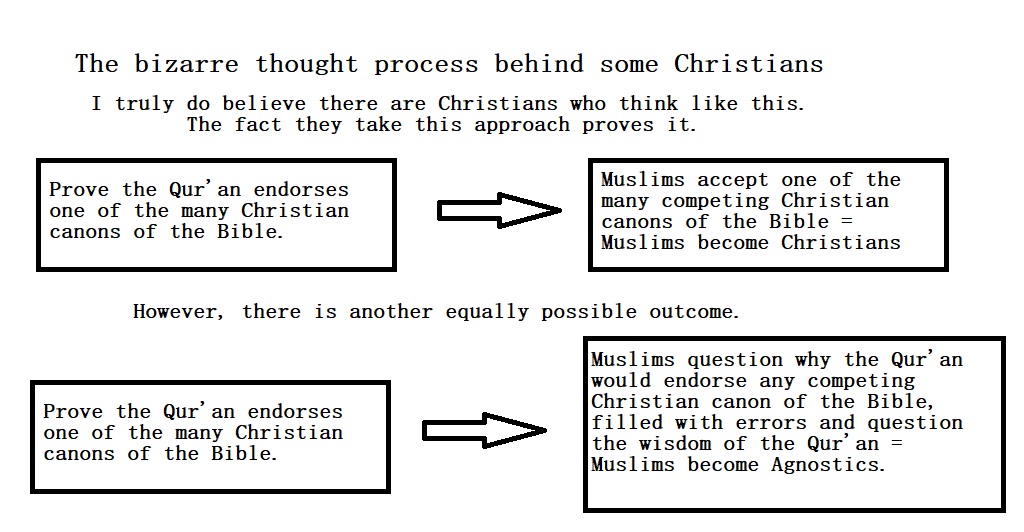


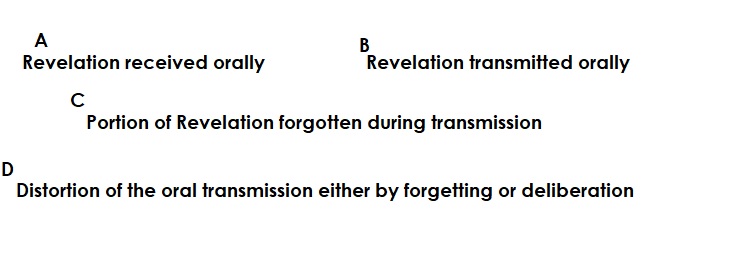
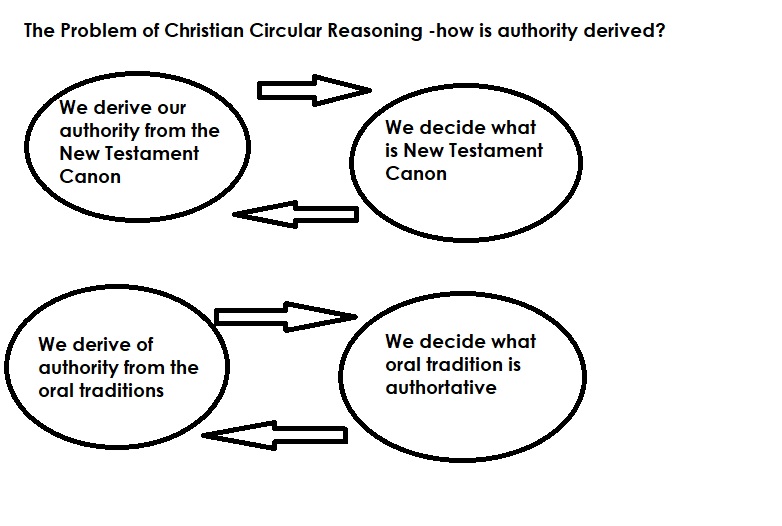



 Prima Quran