
“Indeed, Allah showers His blessings upon the Prophet, and His angels pray for him. O believers! Invoke Allah’s blessings upon him, and salute him with worthy greetings of peace.” (Qur’an 33:56)

﷽
This article aims to tell the reader about the Tashahhud in the Ibadi school as well as the proper meaning about Āl Ibrahim and Āl Muhammed (peace be upon them both)
The Āl in the Tashahhud is a reference to the people of Ibrahim (as) and the people of Muhammed (saw). This is inclusive of the familes but is not exclusive to them. This is important.
The Āl cannot be excluisve to the families for the following reason:
“Ibrāhīm’s plea for his father’s forgiveness was only because of a promise he had made. But when it became clear that his father was an enemy of Allah, he disassociated from him. Indeed, Ibrāhīm was tender-hearted and forbearing.” (Qur’an 9:114)
Likewise the uncle of the Blessed Prophet (saw), Abu Lahab was condemned and destined for Hellfire, as in the Qurān.
“”May the hands of Abu Lahab perish, and he perish! Neither his wealth nor gains will benefit him.
He will burn in a flaming fire, and his wife, the carrier of kindling around her neck will be a rope palm fibre.” (Qur’an 111:1-5)
As regard the status of the uncle Abu Talib and Parents of the Blessed Prophet (saw) their status is disputed.
You may see our article here:
Thus The Āl is a reference to the followers of the Blessed Prophets Ibrahim (as) and Muhammed (saw).
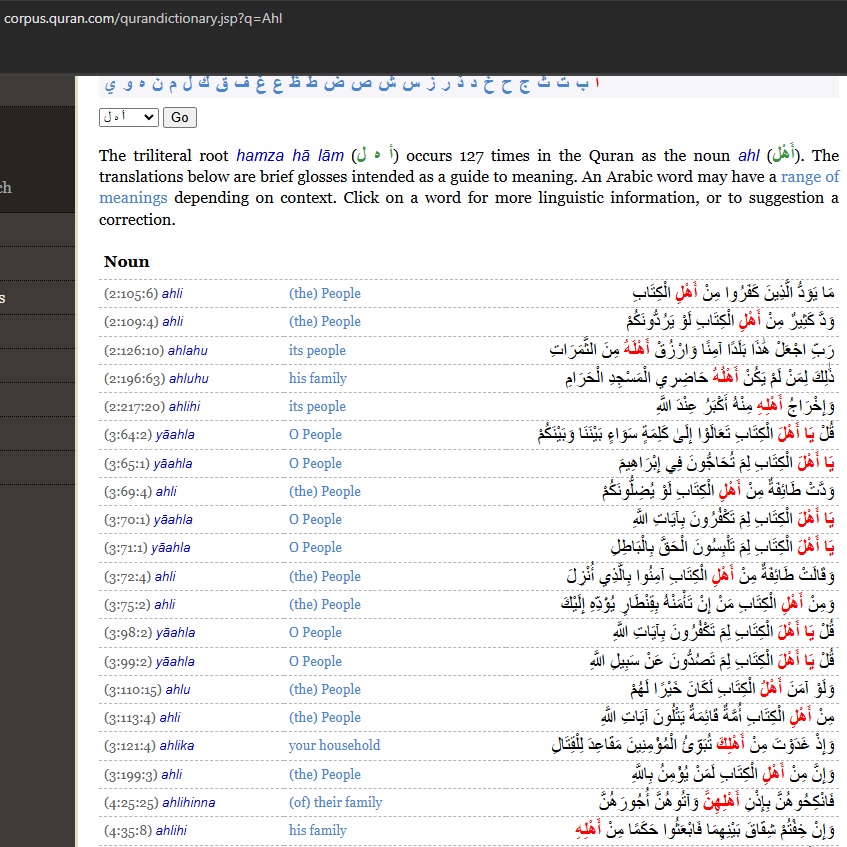
Āl simply means people. Āl Kitab the People of the Book. Not the Family of the Book.
“And then he went to his people, swaggering [in pride]. (Qur’an 75:33)
Another example:
“The Fire, they are exposed to it morning and evening. And the Day the Hour appears [it will be said], “Make the people of Pharaoh (ala fir’awna) enter the severest punishment.” (Qur’an 40:46)
You can see how the following have translated (with 7 translators translating al as family)
“https://www.islamawakened.com/quran/40/46/
So here the Āl is the nation and the followers.
ahlihi -his family, or his people. So we can read the prayer as:
“Say: ‘O Allah exalt the mention of Muhammed and the people of Muhammed as you exalted the mention of Ibrahim. And bless Muhammed and the people of Muhammed as you blessed Ibrahim and the people of Ibrahim in all the Worlds. You are the Praised, the Glorified.”
Here the very straight forward meaning would be the Muslims in general.
That is to say is a general prayer asking one to send blessings upon the Muslims of the people of Ibrahim (as) and the Muslims of the people of Muhammed (saw) be they of their families or not of their families.
Certainly, the Āl cannot be asking for blessings exclusively upon families as we have mentioned above.
It is very clear that the father of Ibrahim (as) is missed by such an invocation for example.
Or even the descendants of Ibrahim (as) that were evil doers, for example.
“And remember that Abraham was tried by his Lord with certain commands, which he fulfilled: He said: “I will make thee an Imam to the Nations.” He pleaded: “And also (Imams) from my offspring!” He answered: “But My Promise is not within the reach of evil-doers.” (Qur’an 2: 124)
This is the very clear understanding.
Another point of consideration.
Let us take a closer look at the innovation:
“”Say: ‘Oh Allah, exalt the mention of Muhammed, and the family of Muhammed as you exalted the mention of Ibrahim. And Bless Muhammed and the family of Muhammed
as you Blessed Ibrahim and the family of Ibrahim in all the Worlds. You are the Praised, the Glorified.”
- If Muhammed (saw) is already a descendant of Ibrahim (as) this du’a is redundant.
- The Blessed Prophet (saw) is already blessed -being included in Ibrahim’s family lineage.
This strengthens a view that the du’a is a general du’a of the people of Muhammed (saw), inclusive of any of his family, followers or descendants that held fast to the Qur’an and the example of the Blessed Prophet (saw).
Here are some examples of how the Tashah-hud looked in the early Muslim community.
They (the Companions of the Holy Prophet) said: Apostle of Allah, how should we bless you? He (the Holy Prophet) observed: Say:” O Allah! bless Muhammed, his wives and his offspring as You did bless Ibrahim, and grant favours to Muhammed, and his wives and his offspring as You did grant favours to the family of Ibrahim; You are the Praiseworthy and Glorious.”
Source: (https://sunnah.com/muslim:407)
Narrated Ibn Mas`ud:
Allah’s Messenger (saw) taught me the Tashah-hud as he taught me a Sura from the Qur’an, while my hand was between his hands. (Tashah-hud was) all the best compliments and the prayers and the good things are for Allah. Peace and Allah’s Mercy and Blessings be on you, O Prophet! Peace be on us and on the pious slaves of Allah, I testify that none has the right to be worshipped but Allah, and I also testify that Muhammed is Allah’s slave and His Apostle. (We used to recite this in the prayer) during the lifetime of the Prophet (saw) , but when he had died, we used to say, “Peace be on the Prophet.”
Source: (https://sunnah.com/bukhari:6265)
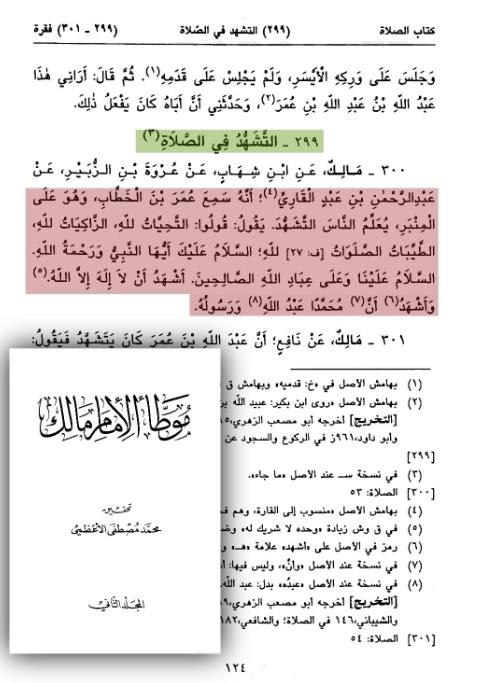
Yahya related to me from Malik from Ibn Shihab from Urwa ibn az- Zubayr from Abd ar-Rahman ibn Abd al-Qari that he heard Umar ibn al- Khattab say, while he was teaching people the tashahhud from the mimbar, “Say, Greetings belong to Allah. Pure actions belong to Allah. Good words and prayers belong to Allah. Peace on you, Prophet, and the mercy of Allah and His blessings. Peace be upon us and on the slaves of Allah who are salihun. I testify that there is no god except Allah. And I testify that Muhammed is His slave and His messenger.”
‘At-tahiyatu lillah, az-zakiyatu lillah, at-tayibatu wa’s-salawatu lillah. As-salamu alayka ayyuha’nnabiyyu wa rahmatu’llahi wa barakatuhu. As-salamu alayna wa ala ibadi’llahi s-salihin. Ash-hadu an la ilaha illa ‘llah wa ash-hadu anna Muhammadan abduhu wa rasuluh.”
Source: (https://sunnah.com/malik/3/56)
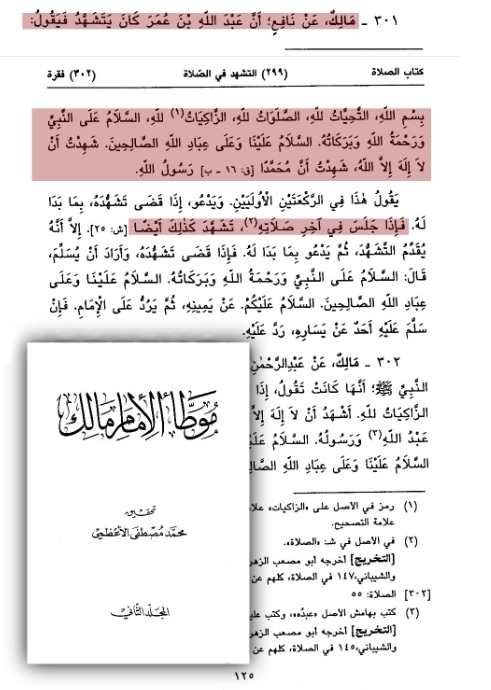
Yahya related to me from Malik from Nafi that Abdullah ibn Umar used to say the tashahhud saying, “In the name of Allah. Greetings belong to Allah. Prayers belong to Allah. Pure actions belong to Allah. Peace be on the Prophet and the mercy of Allah and His blessings. Peace be on us and on the slaves of Allah who are salihun. I testify that there is no god except Allah. I testify that Muhammad is the Messenger of Allah.”
“Bismillah, at-tahiyatu lillah, as-salawatu lillah, az-zakiyatu lillah. As-salamu ala’n-nabiyyi wa rahmatullahi wa barakatuhu. As-salamu alayna wa ala ibadi’llahi’s-salihin. Shahidtu an la ilaha illallah. Shahidtu anna Muhammadu’r-rasulu’llah.”
He used to say this after the first two rakas and he would make supplication with whatever seemed fit to him when the tashahhud was completed. When he sat at the end of the prayer, he did the tashahhud in a similar manner, except that after the tashahhud he made supplication with whatever seemed fit to him. When he had completed the tashahhud and intended to say the taslim, he said, “Peace be on the Prophet and His mercy and blessings. Peace be upon us and on the slaves of Allah who are salihun.“
“As- salamu ala’n-nabiyyi wa rahmatu’llahi wa barakatuhu. As-salamu alayna wa ala ibadi’llahi’ssalihin .”
He then said, “Peace be upon you” to his right, and would return the greeting to the imam, and if anyone said “Peace be upon you” from his left he would return the greeting to him.
Source: (https://sunnah.com/malik/3/57)
There is a great deal of information that has been kept from the public in regard to this subject.
الإمام مالك بن أنس إمام دار الهجرة:
ينقل لنا بأسانيد ذهبية صحيحة صيغة “التشهد في الصلاة” على لسان: الفاروق عمر بن الخطاب، وابنه الفقيه عبدالله بن عمر بن الخطاب، وأم المؤمنين عائشة.
وكلها ليس فيها ما تعلمناه منذ الصغر: (اللهم صلي على محمد “وعلى آل محمد” كما صليت على إبراهيم ….).
يقول النووي: (ولنا -يعني عند الشافعية- وجهٌ (شاذ) أنه يجب الصلاة على ” الآل ” وليس بشيء).
Imam Malik bin Anas, Imam of the House of Migration: He transmits to us, with authentic golden chains of transmission, the formula for “testifying in prayer” on the tongues of: Al-Farouq Umar ibn Al-Khattab (ra), his son, the jurist Abdullah bin Omar bin Al-Khattab, and the Mother of the Believers Aisha (ra). None of them contain what we learned from childhood: (O Allah, bless Muhammed and the family of Muhammed as you blessed Abraham ….) . Al-Nawawi says: (We – meaning the Shafi’is – have an (odd) view that it is obligatory to pray for the “family” and that is nothing).
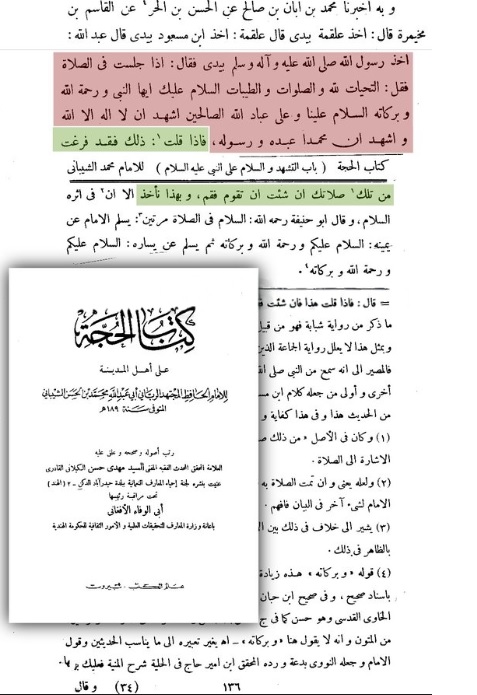
ننقل الآن قول الأحناف والأمر كما ترون أيضاً ليس في التشهد عند الأحناف أي ذكر للـ “آل”.
We will now quote the Hanafi view, and the matter is as you can see. The Hanafi view also does not mention the “Al” in the testimony of faith.
In an Ibadi fiqh book on prayer published in the English language we find on page 271 the following:

Source: (The Reliable Jurisprudence of Prayer (Al -Mu’tamad fi’ Fiqh as-Salah -written by al-Mu’tasim b. Sa’id al-Ma’wali. page 271)
So we reached out ot Shaykh al-Mu’tasim about this. And his reply was the following:
“Regarding the issue at hand, you made a valid point: the correct understanding is that the Prophet’s Āl are his followers. If it is exclusive to his blood relatives, then the term would include the likes of Abū Jahl, the Prophet’s uncle, who was condemned and destined for Hellfire, as in the Qurān. This is the outweighing opinion on the issue.”
We as Ibadi follow the wording in Mudawwana of Abu Ghanim al-Khorasani (a prominent early Ibadi jurist).
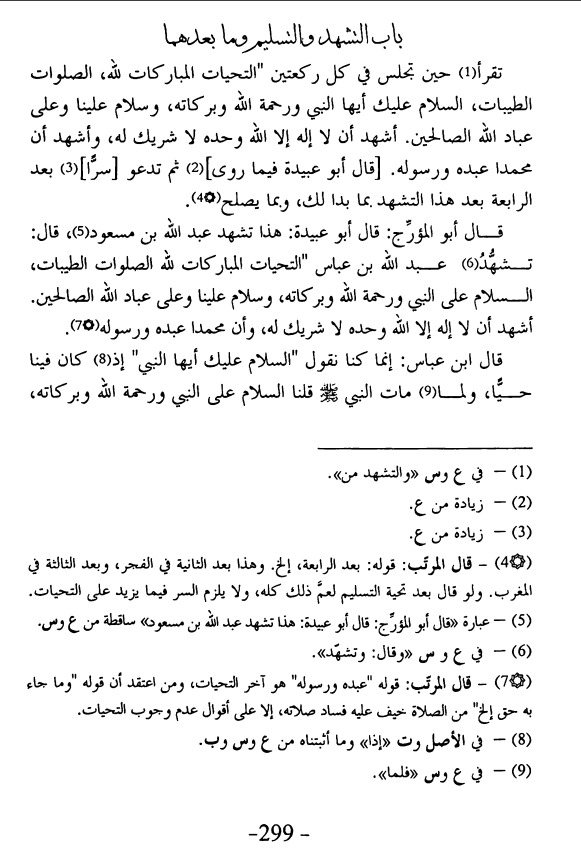
The text translated into English states:
Chapter on the Tashahhud and what comes after it
You recite (1) when you sit for every two rak’ahs: “All greetings, blessings, and good prayers are due to Allah. Peace be upon you, O Prophet, and the mercy of Allah and His blessings. Peace be upon us and upon the righteous servants of Allah. I bear witness that there is no god but Allah, alone, without any partner, and I bear witness that Muhammed is His servant and His Messenger.” [Abu ‘Ubaydah said, according to what was narrated (2): Then you make a supplication [silently] (3) after the fourth rak’ah, after this tashahhud, whatever you wish, and whatever is appropriate (4).]
Abu al-Umurrij said: Abu ‘Abdih said: This is the tashahhud of ‘Abdullah bin Mas’ud (5). He said: ‘Abdullah bin ‘Isa recited it (6) (as): “All greetings, blessings, and good prayers are due to Allah. Peace be upon the Prophet and the mercy of Allah and His blessings, and peace be upon us and upon the righteous servants of Allah. I bear witness that there is no god but Allah, alone, without any partner, and that Muhammed is His servant and His Messenger.” (8)
Ibn ‘Abbas said: We used to say “Peace be upon you, O Prophet” when he was still alive among us. But when the Prophet ﷺ passed away, we said “Peace be upon the Prophet and the mercy of Allah and His blessings.” (9)
Footnotes from the original text:
(1) In ‘A and S: “And the tashahhud from.”
(2) Addition from ‘A.
(3) Addition from ‘A.
(4) The editor said: His statement “after the fourth rak’ah,” etc. This is after the second rak’ah in the Fajr prayer, and after the third in Maghrib. Had he said “after completing the tashahhud” it would have included all cases, and there is no requirement for silence in what is added beyond the tashahhud.
(5) The phrase “Abu al-Mu’arrij said: Abu ‘Ubaydah said: This is the tashahhud of ‘Abdullah bin Mas’ud” is missing from ‘A and S.
(6) In ‘A and S: “And he said: ‘Abdullah bin ‘Isa recited.”
(7) The editor said: His statement “His servant and His Messenger” is the end of the tashahhud. Whoever believes that the phrase “and what he brought is the truth, etc.” is part of the prayer, his prayer is feared to be invalid, except according to those who hold that the tashahhud is not obligatory.
(8) In the original and T: “idha” (when/if), but what we have confirmed from ‘A, S, and B.
(9) In ‘A and S: “So when.”
You will find some interesting points about the above.
- The chain of transmission (isnad): The names mentioned (Abu ‘Ubaydah, ‘Abdullah bin Mas’ud, ‘Abdullah bin ‘Isa) are key figures in early Ibadi legal tradition. Abu Ghanim’s Mudawwana is a foundational text for the Ibadi school, comparable in some ways to the Mudawwana of Sahnun in the Maliki school, though the Ibadi work is more focused on hadith and reports from early authorities.
- The tashahhud wording: The Ibadi school is known for preferring the tashahhud attributed to Ibn Mas’ud (as opposed to the versions attributed to Ibn ‘Abbas or others that became more common in Sunni practice). The variant reading noted—”al-salam ‘ala al-nabi” (peace be upon the Prophet) rather than “‘alayka ayyuha al-nabi” (peace be upon you, O Prophet)—reflects the well-attested position that the latter formulation was appropriate only during the Prophet’s lifetime.
- Editorial commentary: The footnotes (marked as “qala al-murattib” or “the editor said”) likely come from later Ibadi scholars who transmitted and commented on Abu Ghanim’s work. Their concern about additions to the tashahhud (footnote 7) reflects intra-madhab debates about what constitutes a valid prayer.
- The instruction on silent supplication: The direction to supplicate silently after the fourth rak’ah (with the parenthetical noting application to Fajr and Maghrib) is characteristic of the detailed procedural guidance found in Ibadi fiqh manuals.
You will note that the earliest Ibadi formula matches what we find in the Qur’an here:
“Indeed, Allah showers His blessings upon the Prophet, and His angels pray for him. O believers! Invoke Allah’s blessings upon him, and salute him with worthy greetings of peace.” (Qur’an 33:56)
In fact there is no prayers upon Ibrahim and his Āl .
During the Shiaf’ication of Sunnism during the Abbasid era the Āl became exclusive to the family of the Blessed Prophet (saw).
For about a century, from 945 to 1055, the Abbasid Caliphs in Baghdad were effectively puppets of the Buyid dynasty.
A Shi’a “Protectorate”: The Buyids were a powerful Shi’i dynasty from Iran. They kept the Abbasid Caliph as a figurehead to appease the majority Sunni population. While they held the real political and military power. It is likely that the transformation of Āl was influenced by them. Allah knows best.
“Your Lord is best aware of what is in your hearts. If you are righteous, He will indeed forgive those who relent and revert.” (Qur’an 17:25)
May Allah (swt) help the Ummah to purify the community from Bid’ah.
May Allah (swt) forgive our scholars who are not free from error.
May Allah (swt) guide us to what is beloved to Allah (swt).
May Allah Guide the Ummah.
May Allah Forgive the Ummah.


 Prima Quran