“O believers! Stand firm for justice as witnesses for Allah even if it is against yourselves, your parents, or close relatives. Be they rich or poor, Allah is best to ensure their interests. So do not let your desires cause you to deviate . If you distort the testimony or refuse to give it, then Allah is certainly All-Aware of what you do.” (Qur’an 4:135)
﷽
Imagine you happend upon someone calling Ali Ibn Abu Talib a sinful treacherous deceitful liar what would cross your mind? Would we call this person a Nasibi? Would we call this person a hypocrite? A vile sinner?
Well, where we come from we call such a person, a member of Banu Hashim, Uncle to the Prophet, thaer of Ibn Abbas the scholar of the Qur’an, none other than Al Abbas (ra).
It is reported by Zuhri that this tradition was narrated to him by Malik b. Aus who said:
Umar b. al-Khattab sent for me and I came to him when the day had advanced. I found him in his house sitting on his bare bed-stead, reclining on a leather pillow. He said (to me): Malik, some people of your tribe have hastened to me (with a request for help). I have ordered a little money for them. Take it and distribute it among them. I said: I wish you had ordered somebody else to do this job. He said: Malik, take it (and do what you have been told). At this moment (his man-servant) Yarfa’ came in and said: Commander of the Faithful, what do you say about Uthman, Abd al-Rabman b. ‘Auf, Zubair and Sa’d (who have come to seek an audience with you)? He said: Yes, and permitted them. so they entered. Then he (Yarfa’) came again and said: What do you say about ‘Ali and Abbas (who are present at the door)? He said: Yes, and permitted them to enter. Abbas said: Commander of the Faithful, decide (the dispute) between me and this sinful, treacherous, dishonest liar. The people (who were present) also said: Yes. Commander of the Faithful, do decide (the dispute) and have mercy on them. Malik b. Aus said: I could well imagine that they had sent them in advance for this purpose (by ‘Ali and Abbas). ‘Umar said: Wait and be patient. I adjure you by Allah by Whose order the heavens and the earth are sustained, don’t you know that the Messenger of Allah (ﷺ) said:” We (prophets) do not have any heirs; what we leave behind is (to be given in) charity”? They said: Yes. Then he turned to Abbas and ‘Ali and said: I adjure you both by Allah by Whose order the heavens and earth are sustained, don’t you know that the Messenger of Allah (ﷺ) said:” We do not have any heirs; what we leave behind is (to be given in) charity”? They (too) said: Yes. (Then) Umar said: Allah, the Glorious and Exalted, had done to His Messenger (ﷺ) a special favour that He has not done to anyone else except him. He quoted the Qur’anic verse:” What Allah has bestowed upon His Apostle from (the properties) of the people of township is for Allah and His Messenger”. The narrator said: I do not know whether he also recited the previous verse or not. Umar continued: The Messenger of Allah (ﷺ) distrbuted among you the properties abandoned by Banu Nadir. By Allah, he never preferred himself over you and never appropriated anything to your exclusion. (After a fair distribution in this way) this property was left over. The Messenger of Allah (ﷺ) would meet from its income his annual expenditure, and what remained would be deposited in the Bait-ul-Mal. (Continuing further) he said: I adjure you by Allah by Whose order the heavens and the earth are sustained. Do you know this? They said: Yes. Then he adjured Abbas and ‘All as he had adjured the other persons and asked: Do you both know this? They said: Yes. He said: When the Messenger of Allah (ﷺ) passed away, Abu Bakr said:” I am the successor of the Messenger of Allah (ﷺ).” Both of you came to demand your shares from the property (left behind by the Messenger of Allah). (Referring to Hadrat ‘Abbas), he said: You demanded your share from the property of your nephew, and he (referring to ‘Ali) demanded a share on behalf of his wife from the property of her father. Abu Bakr (Allah be pleased with him) said: The Messenger of Allah (ﷺ) had said:” We do not have any heirs; what we leave behind is (to be given in) charity.” So both of you thought him to be a liar, sinful, treacherous and dishonest. And Allah knows that he was true, virtuous, well-guided and a follower of truth. When Abu Bakr passed away and (I have become) the successor of the Messenger of Allah (ﷺ) and Abu Bakr (Allah be pleased with him), you thought me to be a liar, sinful, treacherous and dishonest. And Allah knows that I am true, virtuous, well-guided and a follower of truth. I became the guardian of this property. Then you as well as he came to me. Both of you have come and your purpose is identical. You said: Entrust the property to us. I said: If you wish that I should entrust it to you, it will be on the condition that both of you will undertake to abide by a pledge made with Allah that you will use it in the same way as the Messenger of Allah (ﷺ) used it. So both of you got it. He said: Wasn’t it like this? They said: Yes. He said: Then you have (again) come to me with the request that I should adjudge between you. No, by Allah. I will not give any other judgment except this until the arrival of the Doomsday. If you are unable to hold the property on this condition, return it to me.
The above hadith is an indication that the companions were people just like anyone else. They could be petty and had disputes with each other, called each other names and as we all know at one point in history killed one another.
So Al Abbas said: “O Commander of the Faithful, judge between me and this one – the liar, the sinful, the treacherous, the deceitful.”
Umar Ibn Al Khattab (ra) did not object to this statement. Others that were said to be present:
Uthman ibn Affan. Abd Al-Rahman ibn Awf & Al-Zubayr ibn al-Awwan.
The Abbasid Sunni Muslims who are the bulk of the Sunni Muslims today are those who underwent a Shi’ification. Go bring this narration to your teachers and watch how they react! They panic out over such statements. Whereas the original Sunni Muslims, the Umayyad Sunnis had no problems with such narrations. The proof of this is that this is one of the narrations of al-Zuhri, who was an Umayyad and one of the elders of the Umayyad court.The Abbasid Sunnis, the bulk of the Sunni Muslims today, will say about the statement of Al Abbas. “The statement is not befitting of him.” However, the chain is sound, and thus elaborate interpretative measures are deployed. They even go so far as to admit that the people of the past would remove such statements from the copies of their books. It has nothing to do with the truth and everything to do with the doctrine they contrived: Adalah al-Sahabah.
If only we could be honest with ourselves and honest with our history.
In the Khutba the Khatib says:
…وَعَلَى آلِهِ وَصَحْبِهِ أَجْمَعِينَ …wa ‘ala aalihi wa sahbihi ajma’een.
Which means upon the people of Muhammed (saw) and companions. So to this we say amin. Because it is generic and general.
This is exactly the position of the angels.
“Those (angels) who bear the Throne and those around it glorify the praises of their Lord, and believe in Him, and ask forgiveness for those who believe (saying): ‘Our Lord! You comprehend all things in mercy and knowledge, so forgive those who repent and follow Your Way, and save them from the torment of the blazing Fire! Our Lord! And make them enter the Paradise which you have promised them, and to the righteous among their fathers, their wives, and their offspring! Verily, You are the All-Mighty, the All-Wise. And save them from the sins, and whomsoever You save from the sins that Day, him verily, You have taken into mercy.” And that is the supreme success.’” (Qur’an 40: 7-9)
Those. Those. Them. Them. Their. Their. Their. Them. Whomsoever. All very generic and general. Because at the end of the day Allah (swt) knows best who dies upon Islam.
We can apply this in every situation and absolutely safeguard our faith. This goes for those of you who are Muslim converts or those of you who are looking into Islam. The testimony of faith is to bear witness that Allah is the one and only God. That Muhammed (peace be upon him) is his last and final messenger.
As regards to the politics and the events of the past.
“That was a community that had already gone before. For them is what they earned and for you is what you have earned. And you will not be accountable for what they have done.” (Qur’an 2:141)
From the questions one will be asked in the grave:
The Questions:
Rabbu-ka? (Who is your Lord?)
Ma Deenu-ka? (What is your religion?)
Man Nabiyyu-ka? (Who is your Prophet? / Or what did you say about Muhammed?)
The angels are not asking you about the companions and your affiliation or dissociation with any of them.
Then the day of judgement. That awesome and terrifying day.
You will then be presented ˹before Him for judgment˺, and none of your secrets will stay hidden. (Qur’an 69:18)
One thing Allah (swt) already exhonerated us from is about what people in the past did. Al hamdulillah! Allah is the Most Merciful!
“That was a community that had already gone before. For them is what they earned and for you is what you have earned. And you will not be accountable for what they have done.” (Qur’an 2:141)
Today there are is much writing about what are claimed to be Nasibi tendencies in our books of history and even in the hadith narrations. Yet, no one speaks about on the censorship and the injustice did to the umayyad clan. Surely they did injustice themselves by the Abbasids were no angels.
“Fight in the cause of Allah ˹only˺ against those who wage war against you, but do not exceed the limits. Allah does not like transgressors.” (Qur’an 2:190)
Systematically wiping out entire bloodlines is certainly exceeding the limits.
Abd al-Rahman ibn Mu’awiya the founder of the Umayyad dynasty in Al-Andalus was helped in his escape by the friendly Ibadi Nafza Berber tribes. This inspite of the conflict the Ibadis had with the Umayyads. However, Ibadis are not people who go beyond the limits. No Muslim should go beyond thelimits. In fact, he (Abd-al Rahman ibn Mu’awiya) received support from the Ibadis. Beyond the help from these village communities.
Our school simply does not like bullies. Whoever they are and whatever form they take at the time. Yesterday’s monster is now today’s vulnerable individual.
“Non-Ibadi historians mentioned these delegates to Umar bin Abdul-Aziz, though they said with their usual insinuation: “The Khawarij sent him a delegation.” However, they did not mention what happened between them and the Caliph Umar and his acceptance of all their suggestions about spreading justice and purging the country of the Umayyad tradition of cursing Ali from the pulpit. The Ibadi delegation said to Umar, “Muslims are cursing from pulpits in mosques, so this evil tradition must be changed.” Thus, Umar replaced it with the words of Allah: ‘
“Indeed, Allah orders justice and good conduct and giving to relatives and forbids immorality and bad conduct and oppression. He admonishes you that you remember.” (Qur’an 16: 90)
This is a legacy of the Ibadi school that is found in a Friday Khutba in Sunni Masjids all over the world.
A powerful verse and a reminder to the entire Ummah.
“And what is there after the truth but error.” (Qur’an 10:32)
﷽
It has been our observation that many in the Muslim Ummah take the wrong approach when dealing with the Shi’a or Pro-Alids in general. They revisit historical disputes and the same ol tired back and forth between those who think that Ali was robbed and those who say he was never intended to be the leader of the Muslims after the death of the Prophet (saw).
However, you see, at Primaquran.com we like to think ahead.
WE TOOK A RIDE ON THE SHI’A BUS AND WE HIGHLY RECOMMEND THAT YOU DO AS WELL!
That’s right! Pack your backs as we are going on an adventure folk!
So imagine if you will that you no longer differ with anything the Shi’i said in regard to who should have led the Muslims after the Prophet (saw). In this scenario, you just simply agree. Ali was robbed. Ali should have been the one and he was dealt a mighty injustice!
So let us say we agree with all of that. Where does this lead us? Where does the Ummah end up?
But here is the thing that is only the first leg of our journey. Ali is the first city on this tour. He is by no means the last. So, after Ali then who? Hassan or Hussein? Then after them, then who?
So we are currently on the Imam Ali bus, and we made an exchange and now are on the Imam Hassan bus (though later you will see some will not acknowledge this bus at all).
After the Imam Hassan Bus, we took the Imam Hussein bus. From here we get on board the Imam Ali ibn Hussein bus. This bus is also known as the Imam Zayn al-Abidin bus.
Before we can get on to the next bus, we have a major dispute among the planners of our journey. There is a huge tumult among the followers of the Imam Ali ibn Hussein bus.
ZAYDI Zayd Ibn Ali /Muhammed ibn Ali al-Baqir conflict on which bus to take
We have a huge layover, and it looks like for the rest of our journey the passengers will now be split. We will have to make a choice between taking the Imam Zayd Ibn Ali bus or the Muhammed Ibn Ali al-Baqir bus.
So the passengers get on different buses at this point. Those passengers that take the Muhammed ibn Ali Al-Baqir bus then get on board the Ja’far al Sadiq bus and, not long after the travel on this bus, we unfortunately face another major dispute among the planners of the journey. There is another huge tumult among the followers of the Ja’far al Sadiq bus.
ISMAI’LI/JA’FARI Isma’il ibn Ja’far/Musa ibn Ja’far al-Kazim conflict on which bus to take.
We have another huge layover, and it looks like for the rest of our journey the passengers will now again be split. We will have to make a choice between taking the Isma’il ibn Ja’far bus or the Musa ibn Ja’far al-Kazim bus.
So the passengers get on different buses at this point. Those passengers who get on the Musa Ibn Ja’far al-Kazim bus continue to take a series of buses until they board the last bus, known as the Muḥammed ibn al-Ḥasan al-Mahdi bus, which concludes the journey…thus far.
Those who get on board the Isma’il ibn Jafar bus continue to take a long series and succession of buses without further ado until they get on board the Abu Tamim Maʿad al-Mustanṣir biʾllah bus and not long after the travel on this, but we unfortunately face another major dispute among the planners of this journey. There is a huge tumult among the followers of the Abu Tamim Ma’ad al-Mustansir bi’llah bus.
NIZARI/MUSTA’LI Abu al-Qasim Aḥmad ibn al-Mustanṣir/Abu Mansur Nizar ibn al-Mustansir conflict on which bus to take.
Those who get on board the Abu Mansur Nizar ibn al-Mustansir bus take a series of buses until they get on board the current bus, the Rahim Al-Hussain bus.
Those who get on board the Abu al-Qasim Aḥmad ibn al-Mustanṣir bus continue to take a series of buses and a succession of buses without further ado until they get on board the Abuʾl-Qasim al-Ṭayyib ibn al-Amir bus and not very long after the travel on this bus, that we unfortunately face another major dispute among the planners of this journey. There is a huge tumult among the followers of the Abuʾl-Qasim al-Ṭayyib ibn al-Amir bus.
HAFIZI/TAYYIBI Abuʾl-Maymun ʿAbd al-Majid ibn Muḥammed ibn al-Mustanṣir/Abuʾl-Qasim al-Ṭayyib ibn al-Amir conflict on which bus to take.
For the first time in the Fatimid dynasty, power was not passed from father to son. This had to be justified. Thus, an appeal was made for the supposed appointment of the Blessed Prophet (saw) to Imam Ali.
Those who take the Abuʾl-Maymun ʿAbd al-Majid ibn Muḥammed ibn al-Mustanṣir bus continue taking the bus until the 15th century, when it takes an abrupt turn off a cliff and the captain of the bus and those on board come to a tragic end. Those that remained on the Abuʾl-Qasim al-Ṭayyib ibn al-Amir bus believed that although al-Tayyib was gone, he and the subsequent Tayyibi imams all remain hidden. Thus, instead of one hidden Imam, we have a whole line of hidden imams. The Tayyibi community was instead led by a sequence of ‘absolute missionaries’, also known as the da’i al-mutlaq.
At this point, there is even more commotion as to which bus is being driven by the da’a that correctly speaks on behalf of the hidden imams.
DAWOODI/SULAYMINI/ Dawood Bin Qutubshah/Sulayman Bin Hassan conflict over which is the correct bus to take.
It is worth taking note that a huge contingent of these Ismai’li Mustaali converted to Sunni Islam. In particular, the Hanafi School. They were known as Sunni Bohra. Among some noteworthy descendants are: Shaykh Mufti Menk, Shaykh Ahmed Deedat, Hafiz Muhammed Patel-known for establishing the Tabligh Jamaat in the U.K., Ghulam Muhammed Vastanvi, the former vice chancellor of Darul Uloom Deoband. Yusuf Ali, the world-renowned translator of the Qur’an into English.
The historical conversion of groups like the Sunni Bohras to Sunni Islam often stemmed from a desire to exit this complex and fractious system of succession and return to what they saw as the simpler, more stable foundations of the Quran and Sunnah as understood by the majority scholarly tradition they immediately had as alternative.
Shi’i Bus Tour Division
REFLECTIONS ON WHERE THE SHI’A BUSLEADS.
So, at the end of the day, many Muslims spend time arguing with Shi’a over the succession of the Blessed Prophet (saw). However, as we suggested, we would rather a person take a peak into the future and see where it leads. As we said, if one were to grant that the Shi’a (as much as Ali should have been the one to lead the Muslims) are right, what does it say about further successions? As we said, the story begins with Ali. It certainly does not end there. So one would have to investigate further claims.
Are the Zaydis correct in their claim? Or are the Imami (Ja’fari/Dawoodi-Taybi-Musta’li-Ismai’li/Sulaymani-Taybi-Must’ali-Ismai’li/Nizari-Ismai’li)
If we lean on the Imami side, then who is correct in the following schism?
The Ja’fari or the Ismai’li?
If one were to lean on the Ismai’li side, then who is correct in the following schism?
The Nizari or the Must’ali?
If one were to lean on the Musta’ali side, then who is correct in the following schism?
Dawoodi or Sulaymani?
By “taking the Shia bus,” one is not just accepting the status of Ali as the one who should have been the Imam. One is implicitly accepting the entire theological system of Imamah—the belief in a divinely appointed, and necessary guide in every age.
The subsequent splits we have mapped reveal the inherent instability of this system of succession outside of a clear, unambiguous, and divinely protected text (like the Qur’an). Each schism is proof that the question “Who is the Imam now?” has rarely had a single, universally accepted answer within the Shia paradigm. This is the primary theological objection that Allah would not leave guidance for His Ummah to a system that results in such perpetual uncertainty and division.
Our bus tour is a simple heuristic device. It demonstrates that:
The doctrine of Imamah is the engine of the Shia bus, and every major dispute is a breakdown in that engine’s transmission.
The journey doesn’t end with acknowledging Ali; it requires navigating a labyrinth of subsequent successions, each with its own claims and counter-claims.
The question isn’t just “Was Ali right?” but also “If he was, what was the system supposed to be, and does any group actually have it functioning today?”
It presents some difficult challenges.
Example: Two brothers both claim to be Imam. Both of these brothers are descendants of the Blessed Prophet (saw), they are Ahl Bayt.
If the masses support Brother A and fight Brother B, does this mean they hate the ahl bayt?
If the masses support Brother B and fight Brother A, does this mean they hate the ahl bayt?
Will the masses make an infallible decision to choose an infallible guide?
So let us look at where each of these would bring us today.
The Zaydis have been without an Imam from the line of Fatima (ra) since the passing of Imam Muhammed al Badir in 1996. 30 years without an Amir Ul Mumineen and the community seems to be doing just fine without one.
The Ja’fari have been without a living accessible Imam available to all since 874. Instead, the faithful have to put their trust in the Wilayat al-Faqih , which they hope is able to discern the will of the Mahdi. They have to settle for the Imam to return in some future dramatic eschatological event.
The Nizari Ismai’li are the only ones who can, at the very least, claim they have a living accessible Imam in the Aga Khan. They are basically a philanthropic organization for those satisfied with secularism. If their Imam walks into a 7-11 and buys a Snickers candy bar, he has to pay taxes like everyone else.
Dawoodi-Taybi-Musta’li-Ismai’li & The Sulaymani-Taybi-Must’ali-Ismai’li are in the same condition as the Ja’fari in that their living Imam is not accessible to the masses but only available via the da’i al-mutlaq.
CONCLUSION AFTER TAKING A RIDE ON THE SHI’A BUS.
Zaydis have not put themselves in a corner by describing their imams as being infallible or by having nass imamate. So they can have an interlude (like they have currently).
When we think of the last Zaydi Imam, Muhammed ibn al-Hasan, again, some may have a hard time registering in their minds that the commander of the faithful would leave a war-torn region to go live in the United Kingdom and pay taxes to their government. It is just not something that one pictures Ali doing. Especially considering the English government recognized the Yemeni government in the same way that the Saudis did.
Zaydis have two perspectives when it comes to dealing with what are believed to be the rights of Ali.
Al-Jarudiyyah (Jarudiyyah) Named after its founder, Abu’l-Jarud Ziyad ibn Abi Ziyad.
Key Belief: This is the most hardline Zaydi position regarding the early Caliphs.
They hold that the Blessed Prophet Muhammed (saw) explicitly designated Ali ibn Abi Talib as his successor through numerous clear texts (nass jali).
Therefore, anyone who opposed Ali’s right to leadership was effectively an unbeliever or a major sinner who had strayed from the truth. This view is very close to that of Twelver (Ithna’ashari) Shi’a.
This position is perhaps the most dominant among the Yemeni Zaydis today.
Al-Batriyyah (Batriyyah) A more moderate wing of early Zaydism. The name “Batri” is said to come from the word batr, meaning “to curtail” or “cut off,” implying they “curtailed” their allegiance to Ali or his rights.
Key Belief: They took a much softer stance on the early Caliphs.
They believed that while Ali was the most qualified and deserved to be the Imam, the community’s election of Abu Bakr and Umar was valid because they were righteous rulers who judged according to the Qur’an and Sunnah. They practiced “postponement” (irja), withholding judgment on the matter.
Here is Hussain Badreddin al-Huti, a Yemeni scholar and Zaydi politician who says that Umar Ibn Al Khattab (ra) is the beginning of all the problems.
“Every calamity the ummah has faced, Umar was the main cause of that evil”
The Ja’fari. One would think if we are going to say that we need an infallible guide and interpreter to correctly understand the Qur’an and the Sunnah, and then we are going to say that a fallible human being (wilayat al-faqih) now interprets infallible information (from the hidden Imam) this view is wanting.
That being said, the more traditional and sober among them (The Ja’fari) will have to reign in some of these more extreme practices and statements that would put those who state them outside the fold of Islam, without doubt. Granted, this video is polemical in nature and directed towards some online Ja’fari personalities. Albeit the concern of the rest of the Ummah is that the more sober-minded among the Ja’fari will reign in these practices and statements. In a gathering that is more akin to a rave, you can hear the main correcting people who say that Ali is Allah. He corrects them by asserting that Ali can create 1000s of Allahs! May Allah forgive us and guide us!
The video below is an example of some of these extreme beliefs. We also want to inform the readers that we do endorse the personal attacks at the beginning of the video.
“O believers! Do not let some ridicule others, they may be better than them, nor letwomen ridicule other women, they may be better than them. Do not defame one another, nor call each other by offensive nicknames. How evil it is to act rebelliously after having faith! And whoever does not repent, it is they who are the wrongdoers.” (Qur’an 49:11)
Ali created Allah? Ali can create 1000s of Allahs?
Unfortunately, there is much to be done by the Ja’fari Shi’a scholarship to reign in these beliefs and practices.
The current biggest challenge of the Ja’fari Shi’a?
. The Paradox of the Fallible Interpreting the Infallible
The point is devastatingly logical from first principles:
Premise 1: Humanity requires an infallible (ma’sum), divinely-appointed guide to correctly understand and implement the Quran and Sunnah. Without him, error is inevitable.
Premise 2: This guide, the 12th Imam, is in occultation and inaccessible.
Solution: A class of fallible scholars (fuqaha) study his teachings and deduce his will.
Contradiction: The entire system was created because fallible humans (the community without an Imam) are deemed incapable of correctly understanding revelation on their own. Yet, the solution is to have… fallible humans interpret the will of the infallible guide.
Nizari Ismai’li
Maintain a living, present Imam. Result: The Imam’s role adapts (some would say dilutes) to fit a modern, secular world.
This may surprise the readers, but of all Shi’a groups that believe we should be led by an Imam from the line of Fatima (ra) the Nizari Ismaili would be the sensible choice. Muhammed (saw) was the Imam of the Muslims, and he was accessible to all. He was not hidden by some “pay wall”. The Nizari Ismai’li never needed the doctrine of wilayat al-faqih or needed some da’i al-mutlaq (fallible human-contrived methods) to ascertain the infallible perfect guide.
Alas, the current Aga Khan does not declare it wajib for Muslims to pray five times a day or fast in the month of Ramadan.
The Aga Khan’s role is indeed heavily focused on global philanthropy, development, and cosmopolitanism. Critics argue this comes at the expense of traditional Islamic law and ritual, making the faith more of a cultural-ethical identity. Our “7-11 and Snickers” analogy humorously drives home the point: the Imam exists within the modern secular system; he doesn’t stand entirely outside it as a purely spiritual sovereign.
Dawoodi-Taybi-Musta’li-Ismai’li & The Sulaymani-Taybi-Must’ali-Ismai’li
They may need to challenge the Nizari view who has the correct Nass of the Imam.
Something that one cannot help to notice is all those 7 year old children among the Sulaymani and Dawoodi that have better recitation of the Qur’an than a proclaimed Imam of the Muslims! The Nizari Imam-The Aga Khan. We have never seen a public demonstration of his ability to properly recite the Qur’an.
However; the Musta’li Ismai’li have the same problem that the Ja’fari do. The doctrine of wilayat al-faqih or some da’i al-mutlaq (fallible human contrived methods) to ascertain the infallible perfect guide. Both will have continuing to look to the horizons.
So this brings us to the end of the Shi’a bus tour. This is where we are in 2025. The journey begins with Ali, but it does not end there.
So your choices are…
Zaydi-no current Imam.
Ja’fari-Imam in hiding relates matters to Wilayat Al Faqih
Ismai’li Nizari-Aga Khan
Ismai’li Mustali Sulaymani-Imam in hiding relates matters to Da’i al-Mutlaq.
Ismai’li Mustali Dawoodi-Imam in hiding relates matters to Da’i al-Mutlaq.
When we step back and look at the landscape we’ve so thoroughly mapped—the complex schisms, the theological paradoxes, the modern-day compromises—the question “what’s the big deal?” isn’t a dismissal of history; it’s a profound critique of present-day priorities.
Our encouragement to “ride the Shi’a bus and see where it takes you” is the ultimate reality check. That journey, as we’ve shown, doesn’t lead to a single, unified, triumphant destination of perfect justice and guidance. Instead, it leads to:
A 30-year vacancy for the Zaydis.
A 1,150-year (and counting) absence for the Twelvers, managed by fallible scholars.
A living but secular-adjacent Imam for the Nizaris, focused on philanthropy within the modern nation-state system.
A hidden Imam represented by a single “Absolute Missionary” for the Bohras.
This isn’t a critique of the sincerity of their faith. It is, however, a stark demonstration that no branch of Shiism has successfully actualized the ideal of a divinely-guided, infallible political and spiritual leader in the modern era. Every group has had to adapt, compromise, or accept a state of perpetual waiting.
Therefore, the intense focus on who was right about 7th-century succession begins to look like a monumental distraction from the pressing issues facing the entire Ummah today: oppression, poverty, intellectual stagnation, and internal strife.
Further implications.
Shi’i often talk about Shi’i -Sunni unity. To the credit of Sunni Muslims, they do often have
Intra-Sunni unity conferences where they come together. Sunni-Sunni unity.
When can we expect the same from the Shi’i? Shi’i-Shi’i Unity?
When can we see an intra-Shi’i unity conference? A conference that would include a Jafari, Taybi, Zaydi, Nizari Shi’a altogether?
“Do not mix truth with falsehood or hide the truth knowingly.” (Qur’an 2:42)
﷽
So, an ex-12er, Shi’i shared the following video with us and what an eye-opener!
The YouTube channel, known to be Pro-Alid, featured a “Sunni” ?? Scholar Dr. Suhail Zakkar (possibly Shi’i or diet-Shi’i) who pulled out all the stops to throw Ibn Abbas (ra) under the bus!
Ibn ‘Abbas reported that Allah’s Messenger (saw) came to the privy and I placed water for him for ablution. When he came out he said:
Who placed it here? And in one version of Zuhair they (the Companions) said, and in the version of Abu Bakr (the words are): I said: It is Ibn ‘Abbas (who has done that), whereupon he (the Holy Prophet) said: May Allah grant him a deep understanding of religion.
Dr. Suhail Zakkar (1936–2020) was a highly respected and prolific Syrian historian and academic, widely considered a leading authority on medieval Arab history, particularly the Crusades and early Islamic history.
Early Life & Formative Years: Being born under the French Mandate and experiencing its economic hardships firsthand instilled in him a strong sense of Arab nationalism and a desire to understand the forces—historical and colonial—that shaped the modern Arab world. This personal context deeply influenced his academic pursuits.
Academic Credentials: After obtaining his bachelor’s and master’s degrees in Damascus, he earned a doctorate from the prestigious School of Oriental and African Studies (SOAS), University of London. This gave him Western academic training which he combined with his deep knowledge of Arabic sources.
Magnum Opus: His life’s work, the “Comprehensive Encyclopedia in the History of the Crusades” (Al-Mawsuʻah al-shamilah fi tarikh al-hurub al-salibiyah), is a monumental 50-volume reference work. It is not a narrative history but a critical compilation and analysis of primary sources, making it an indispensable resource for scholars.
Legacy: He represented a school of serious, source-critical Arab historiography. He passed away in Damascus in March 2020.
Ibn Abbas (ra) and his empathy with the Khawarij?
Complete Withdrawal and Neutrality: Ibn Abbas did not just withdraw from his post; he withdrew entirely from the conflict. He did not return to Ali’s camp in Kufa, nor did he offer further political or military support during the escalating war with the so-called Khawarij. This neutrality in a conflict he had previously argued was a matter of truth versus error that could be interpreted by Dr. Zakkar as a fundamental shift in allegiance.
Interpretation of His Silence: From a historical analysis perspective, Dr. Zakkar could argue that Ibn Abbas’s silence and absence during the latter part of Ali’s caliphate and during the period of the so-called Khawarij’s peak activity is deafening. For a figure of his stature and previous unwavering support, this silence could be read as tacit approval or, at a minimum, a strong empathy for the Khawarij’s grievances against Ali.
In our school we know why this is. For those who are reading up on history, and they know that Ibn Abbas (ra) saw the soundness of the argument of the sahaba of Al Nahrawan.
What the good Dr. left out was the fact that Ali sent Ibn Abbas (ra) to the sahaba of Al Nahrawan to try and when them back after leaving Ali’s camp over the arbitration.
Ali knew that they had been correct from the beginning!
The companion Ibn Abbas (ra) debates the companions at Nahrawan.
Argument #1
“O you who believe! Kill not game while in the sacred precincts or in pilgrim garb. If any of you does so intentionally, the compensation is an offering, brought to the Ka’ba, of a domestic animal equivalent to the one he killed, AS ADJUDGED BY TWO JUST MEN AMONG YOU; or by way of atonement, the feeding of the indigent; or its equivalent in fasts: that he may taste of the penalty of his deed. Allah forgives what is past: for repetition, Allah will exact from him the penalty. For Allah is Exalted, and Lord of Retribution.”(Qur’an 5:95)
‘As adjudged by two just men among you’. Keep this in mind as well. This is a key part of the text.
The companions of the Blessed Prophet (saw) replied:
“Are you comparing the law relating to the killing of game animal on the sacred land or the law that is intended to resolve the misunderstandings that occur between a man and his wife, with the law that is intended to govern the matters of greater magnitude such as the act of shedding of Muslims’ blood?”
Source: (Al-Tabari, Al-Taarikh Vol. 6, p. 13.)
So, through qiyas (analogy), it is logical to reason that, in the above verse, during the pilgrimage, when someone kills a game animal, they are ordered to compensate for the following judgement by two just men than it stands to reason the shedding of Muslim blood has a better claim to be dealt with diplomatically.
In response to what Ibn Abbas (ra) had presented, the companions of the Blessed Prophet (saw) argued that there is a significant difference between the verses Ibn Abbas (ra) refereed to and the verse which is used to justify Ali’s war against Mu’awiya.
In the verses Ibn Abbas (ra) referred to, Allah did not mention any ruling, nor did he make any decision between contending parties. Instead, He assigned the task of arbitrating to men.
On this point, there is no issue with Ibn Abbas (ra) and his thought process here.
However, in the verse which gave Ali the right to fight the war against Mu’awiya, Allah (swt) Himself has mentioned step by step the measures that should be taken and decided on. What should be done at each step?
Thus, Allah (swt) lays down the ruling in this case. The verse states: “Moreover, if two factions among the believers should fight, then make settlement between the two. But if one of them oppresses the other, then fight against the one that oppresses until it returns to the ordinance of Allah. And if it returns, then make settlement between them in justice and act justly. Indeed, Allah loves those who act justly.” (Qur’an 49:9)
Also, another point concerning the text that Ibn Abbas brought forth.
‘As adjudged by two just men among you’
Naturally, people would ask, “Are you saying Amru bin Al-As is a man of justice when it was he who spilled our blood yesterday?” If you believe that he is just, then we (including you — Ibn Abbas and Ali) are not just because we all fought the war against Mu’awiya and Amru bin Al-As who are just!”
So, the unfilled questions put to Ibn Abbas (ra) were.
A) Were there two arbitrators or one?
B) Were they just or unjust?
To the Shi’i reading this (Zaydi and Imami), we implore you to tell us. Who are the just ones in the camp of Mu’awiya? Can one who takes up arms against Ali be considered just? If you say yes, then let that stand on the record.
To the Sunnis reading this, we implore you to tell us. The one who rebels against the recognized Imam who has not been proven to go against the Qur’an and Sunnah. Are they just or unjust?
Ibn Abbas (ra) was quoted by Ahmad Ibn A’tham as saying: “O, men! Amru bin Al’As was not an arbiter, why then oppose us because of him? He was but an arbiter representing Mu’awiya.” Source: (Ibn A’tham, Al Futuh Vol. 4, p. 94.)
Is it imaginable that Ibn Abbas (ra) wanted to substantiate his position with a verse which strongly opposed him?
Naturally, our brothers from among the ‘Ahl Sunnah’ or the ‘Shi’i’ are either not informed about this side of the story or simply the learned among them withhold information. Allah (swt) sees and knows all.
It has been narrated on the authority of Aba Sa’id al-Khudri that the Messenger of Allah (saw) said: “When oath of allegiance has been taken for two caliphs, kill the one for whom the oath was taken later.”
Argument #2 Let us look at the other verse that is said that Ibn Abbas (ra) brought as proof.
“If you fear a breach between couples, send an arbiter from his people and an arbiter from her people. If the couple desire to put things right, Allah will bring about a reconciliation between them. “Allah is All-Knowing, All-Aware” (Qur’an 4:35)
This verse orders us to reconcile between a man and his wife in case of misunderstanding or breach. But the steps that ought to be taken when resolving such domestic disputes have not been mentioned. The arbiters are generally required to do their best, in being fair and just, to reach a peaceful, acceptable resolution for the concerned parties.
When you compare the two mentioned verses you will notice that they are intended for different purposes.
In the verse which gave Ali the right to wage war against Mu’awiya, Allah (swt) delegated no one to rule and decide on the issue. But He rather ordered the believers to abide by what He had ruled.
On the other hand, what Ibn Abbas (ra) armed himself with, was the verse that Allah (swt) granted deciding on a role to two fair and just arbiters. That is a clear and a huge difference between the two verses. So, we can say with confidence that Ibn Abbas’s analogy of linking this verse with the conflict of war between Ali and Mu’awiya is debatable.
It does not seem suitable for a person of his stature and understanding. Now, as mentioned above, Ibn Abbas (ra), after hearing all of this, knew very well that the arguments produced by the companions of the Blessed Prophet (saw) that were in Nahrawan were airtight!
When Ibn Abbas (ra) was convinced by their arguments, he (Ibn Abbas) sheathed his sword. Meaning he did not assist Ali in his unprovoked attack upon the Muslims at Nahrawan. Remember, as the Dr. said, this same Ibn Abbas (ra) was with Ali at the battle of the Camel & Siffin.
So we are talking about the same Ibn Abbas (ra) who was with Ali opposite a field with Aisha (ra), Talha and Zubayr, and Ibn Abbas (ra) was with Ali opposite a field with Muaviya and Amr ibn al-As.
This same Ibn Abbas (ra) who said after his debate with the sahaba of Al Nahrawan the following:
“(The People of Nahrawan) have been on the Right Path“
Source: (Al-Shammakhi, Al-Siyar Vol. 1 p, 72,)
Another account says concerning Ibn Abbas (ra) and his debate with the sahaba of Al Nahrwan, that he (Ibn Abbas) “could not crush their proofs.”
Source: (Abu Qahtaan, Al-Siyar p. 107)
Another narration says he (Ibn Abbas) went back from this exchange with them: “Without being able to do anything.”
Source: (Al-Tabari, Al-Taarikh Vol 6, p 18, Al-Barrad Al-Jawaahir p. 122)
“He could not prove anything to them!“
Source: (Ibn Abi Shaibah, Al-Musannaf Vol. 15, p. 312)
“The Nahrawanees established their proofs to him(Ibn Abbas).”
Source: (Al-Ya’qubi, Al-Taarikh Vol. 2 p. 191)
First they (Diet-Shi’i) tried to throw Ikrima (ra) under the bus. So, when they did not turn over any leaves, some of them started to go after Ibn Abbas (ra).
Ibn Abbas (ra) begins to distance himself from Ali
Can’t keep the truth hidden from the Muslims for too long!
Look at what Ibn Abbas (ra) says here
“I swear by Allah, it is better for me that I meet Allah with all that are beneath the Earth, starting with its gold and silver, and all that its surface is full with than meeting Him with my hands having split the blood of this umma (Islamic Nation) so that I may attain a kingship or leadership.” -Ibn Abbas
Ouch!
Source: (Al-Baladhuri, Al Ansab Vol 2, p 398. Ibn Abd Rabbi, Al-‘Iqdu Al-Farid Vol. 4, p. 326. Al Futuh by Ibn A’atham Vol. 4, p.75)
“If my act of taking money was wrong, that could be easier to me than taking part in shedding the blood of a believer.” -Ibn Abbas.
Ouch Again!
Source: (Al-Qalhati, Al-Kashf Vol 2, p 251. IbnAbdiRabih, Al-Iqdu Al-Farid Vol. 4, p. 331.)
It is very clear from the aforementioned that Ibn Abbas (ra) had developed a disapproving attitude towards the war fought against the sahaba of Al Nahrawan. A complete change of heart from the previous conflicts.
It is clear that, in this war with the Nahrawanees, Ibn Abbas (ra) found fault with Ali and condemned him for his unjustifiably wrong act of fighting those fellow sahaba.
After he was sent to debate with them, Ibn Abbas (ra) realized they were upon the truth. He accepted that he (Ibn Abbas) was wrong and the sahaba of Al Nahrawan were right. Certainly there is a lesson to be learnt from this experience that the accurate criteria with which to draw a distinction between right and wrong is not a coin-flip, but rather the Qur’an and authentic Prophetic traditions. After all, Ali made his hasty decision in the heat of the moment (giving in to pro-arbitration forces) and possibly did not consider the full ramifications of his decision.
When those sahaba who left Ali’s camp answered Ibn Abbas (ra) and his objections clearly and decisively, there was nowhere to go but the truth.
Having been fully convinced by the position of the Nahrwanees and the evidence that they had for their succession from Ali’s leadership, Ibn Abbas also detached himself from Ali and set out for Mecca.
Source: (Al-Tabari, Al-Taarikh Vol 6, p. 20)
Even though one of the reasons why Ibn Abbas (ra) left Ali and set out to Mecca was from their differences in the bait al-mal (House of Treasury/House of Properties), from which Ibn Abbas (ra) took what he regarded to be his lawful portion of the money, their differences were compounded by the fact that they were on opposing sides of the issue of the Nahrwanees.
Recall the statement:
“If my act of taking money was wrong, that could be easier to me than taking part in shedding the blood of a believer,” — Ibn Abbas.
In this statement, Ibn Abbas (ra) is basically saying: If I disagree with you on the issue of bait al-mal, then I am strongly opposing you on the issue of the Companions at Nahrawan. This was about the point in time where Ibn Abbas (ra) detached himself from Ali’s leadership.
May Allah (swt) open the eyes of the truth seekers!
Dear readers, you have been provided the information. All you need to do is to plug in the pieces. You were told that Ibn Abbas (ra) went and debated the companions at Nahrawan and that he (Ibn Abbas) had won hands down. Notice how you are never told their reply or their responses?
Brought to you by the same people who have no problem with mocking their own Imams!
“This is the Book! There is no doubt about it—a guide for those mindful ˹of Allah˺, who believe in the unseen, establish prayer, and donate from what We have provided for them.” (Qur’an 2:2-3)
﷽
A video of Shaykh Hisham Kabbani of the Naqshbandi Haqqani Sufi Tariqa resurfaced that I was not aware of at the time it became known.
The Prophet (s) said, “I will tell you that I sent him because in this universe Allah created Creations, and the nearest one to Earth, the dangerous one. If they invade the Earth…if they invade the Earth, The Earth will be finished. They will kill everyone! I send Sayyidina `Ali to fight them alone!!! To these aliens that are they the most nearest to Earth; and with his sword and his power, He is Asadullah al-Ghaalib! Destroyed two-third of them! That’s why they don’t have power anymore to come on Earth. That is why I sent him, he’s absent from the house.” -Shaykh Hisham Kabbani
The above part that is in bold black text is the beginning of the paragraph but it was cut off. You can read the whole transcript and context from their official website:
Now when one reads the context, it does seem like an abrupt change of course to start speaking about the time when it was alleged that the Blessed Messenger (saw) sent Ali Ibn Abu Talib to take down a large contingent of aliens. Apparently 67% of them were wiped out! I do not know if that means their military forces, their people as a whole (men, women, children-offspring) as those details were not provided.
No one knows if these are the same beings that former Minister of Defense Paul Hellyer was speaking about either. I will link to the article where he (Paul Hellyer) speaks of these beings.
As Muslims, we believe in the unseen. Yet, we also believe in what is rational, sensible and logical. I guess the issue that I have with the idea of sending Ali Ibn Abu Talib into cosmic forays to fight these Aliens is you have to wonder about a few things.
Why only take out 2/3 of them? Is leaving the 1/3 left a mercy to them? As in, “Look, I wiped out 2/3, or you so like chill or else!”
But then you really have to wonder about horrific situations like Palestine.
But I know the retort will be swift: “Palestine or the whole planet brother?”
Over all, personally, my encounters with Naqshanbai Haqqani have been positive. Though I know that they, like all Sufi Tariqah, are in a spiritual Jihad with one another to vie for dominance to be ‘The Tariqah above all others’.
May Allah (swt) guide us to the truth of such matters. May Allah (swt) cause us to think logically and reflect upon such matters.
You may also be interested in the following entries:
“Because of that, We decreed upon the Children of Israel that whoever kills a soul unless for a soul or for corruption in the land it is as if he had slain mankind entirely. And whoever saves one – it is as if he had saved mankind entirely. And our messengers had certainly come to them with clear proofs. Then indeed many of them, after that, throughout the land, were transgressors.” (Qur’an 5:32)
﷽
Narrated `Ikrima:
“Some Zanadiqa (atheists) were brought to `Ali and he burnt them. The news of this event reached Ibn `Abbas who said, “If I had been in his place, I would not have burnt them, as Allah’s Apostle forbade it, saying, ‘Do not punish anybody with Allah’s punishment (fire).’ I would have killed them according to the statement of Allah’s Apostle, ‘Whoever changed his Islamic religion, then kill him.'”
‘Ali came to some people of Az-Zutt, who worshipped idols, and burned them. Ibn ‘Abbas said: “But the Messenger of Allah [SAW] said: ‘Whoever changes his religion, kill him.'”
There is something similar in Imami Shi’i sources.
Narrated from Abū ʿAbdillāh (Imām Jaʿfar al-Ṣādiq), who said: Amīr al-Muʾminīn (ʿAlī), said: “If it were possible for me, and if I found someone to help me, I would kill all the adherents of these sects (aṣnāf), and I would burn them with fire. And this is [in accordance with] the saying of Allah, Mighty and Exalted:
‘Say, I am only a man like you to whom it has been revealed that your God is but one God. So whoever would hope for the meeting with his Lord – let him do righteous work and not associate anyone in the worship of his Lord’ (Qur’an 18:110).”
Source: (Bihār al-Anwār al-Jāmiʿah li-Durar Akhbār al-Aʾimmat al-Aṭhār Volume and Page: Vol. 25, p. 265, Hadith #30)
Now we are going to examine a hadith that reports that Ali Ibn Abi Talib had a group of apostates burned alive.
What is important to note is that Ibn Abbas (ra) felt that Ali made an error in his ijtihad, in his decision to burn apostates.
In this regard Ibn Abbas (ra) was acting upon what Allah (swt) has mentioned in the Qur’an.
You are the best nation that ever existed among humanity. You command people to good and prohibit them from (l-munkari) evil, and you believe in Allah.” (Qur’an 3:11)
Ibn Abbas (ra) was saying he would not have done the munkar that Ali had done. He would have acted according to the Sunnah of the Blessed Messenger (saw).
We are also going to look at how a top Sunni scholar and a top Sunni apologist approach the issue.
Thus, in this particular article. We are also get to see some insights from Bassam Zawadi and Shaykh Abdullah Bin Bayyah
Now according to the scholars of our brothers from ‘Ahl Sunnah’, all the companions are ‘adil’-just.
Burning people alive doesn’t seem to be a very upright thing to do!
I have saved the published works of both links. Things do tend to disappear from the internet (from time to time).
Let us deal with imminent and respected scholar Shaykh Abdullah bin Bayyah and his response to this first.
“I read on a website that Ali ibn Abu Talib burnt some of the Kharijites during his caliphate. But this made me confused due to the hadith we know where the Prophet (peace and blessings be upon him) forbade torturing others with fire since this is a sort of associating others with Allah. So how did Ali do this?”
Shaykh Abdullah bin Bayyah replies:
“And upon you is the peace of Allah, together with his mercy and blessings. This report was narrated by al-Bukhary (6922) on the authority of `Ikrimah who said: Heretics were brought before Ali and he burnt them. When Ibn `Abbas was informed about this, he said, “If I were in his place, I would not have burnt them for the Messenger of Allah (peace and blessings be upon him) forbade this saying, “Do not torment with the torment of Allah” and I would have killed them, for the Messenger of Allah (peace and blessings be upon him) said, “Whoever changes his religion, kill him.”“
When a deviant group called al-Saba’iyyah, who were the followers of the Jewish `Abdullah ibn Saba’, went astray and believed that Ali was a god – we seek refuge with Allah from this – he (Ali) set them on fire and said, “When I saw such an enormous evil, I set them on fire and called.”
“Besides, this issue is a particular case that has no general application, as al-Shatiby said,
In general, there are many interpretations concerning this report, whether he burnt them after he had killed them, or he was just about to burn them, but he did not. Whatever the case was, this was an opinion viewed by a companion that has nothing to do with associating gods with Allah. Burning a person is not permissible in the Shari`ah; but this does not amount to associating others with Allah. Associating others with Allah means to worship another god with Allah or to believe in other gods with Almighty Allah. Yes, the Prophet (peace and blessings be upon him) forbade burning others and said, “None should torment with fire except Allah.” [Reported by al-Bukhary (3016)]”
“Yet, this does not mean that whoever burns others with fire is considered as associating others with Allah. It rather means that this punishment is a punishment in the Hereafter, not in this world. This is what we should believe. The issue has no relation to associating others with Allah. As mentioned above, this interpretation may prove untrue. Perhaps he intended to burn them, but he did not, or he intended to burn them after killing them. Even if he actually burnt them, this would be a kind of ijtihad from a companion that disagrees with the text. The ultimate reference is always to the text. Nonetheless, we have to believe that they acted according to their ijtihad and that they are illuminating guides.” -Shayh Bin Bayyah (May Allah continue to benefit many by him and bless him)
Our focus here is on the following statement:
“Even if he actually burnt them, this would be a kind of ijtihad from a companion that disagrees with the text. The ultimate reference is always to the text. Nonetheless, we have to believe that they acted according to their ijtihad and that they are illuminating guides.”
This is because for our brothers in ‘Ahl Sunnah’ the doctrine is that the companions can do no wrong. Even though we clearly have Ibn Abbas (ra) saying that he would not have done what Ali did!
Prima Qur’an comments:
Notice that Shaykh Abdullah bin Bayyah did not attack the chain of narrators. He also did not have any critique of the hadith at all.
The frightening prospect from respected Shaykh bin Bayyah’s response is that even if he did burn them it’s simply his ‘ijtihad’ and we have to believe he is still an illuminating guide.
Can you imagine? This is the standard for being ‘adil’ -upright.
The noble Shaykh bin Bayyah’s response was short and yet it has left us wanting.
In many ways, Shaykh Bin Bayyah’s understanding of this text gives grounds for extremism.
Why?
“Even if he actually burnt them, this would be a kind of ijtihad from a companion that disagrees with the text. The ultimate reference is always to the text. Nonetheless, we have to believe that they acted according to their ijtihad and that they are illuminating guides.”- Shaykh Abdullah Bin Bayyah.
Now take a moment and think about that. So even if Ali actually burned apostates, it was his ijtihad. In other words, he did what he thought was right! The very problematic response by Shaykh Abdullah bin Bayyah is that no principles of the sanctity of life, rules of engagement, etc. were given to us.
So, what if now ISIS, Al-Qaeda, and others want to use their ‘ijtihad’?
So let us look at how brother Bassam Zawadi deals with the issue:
A Christian missionary has cited the following Hadith from Bukhari and is demanding an explanation:
Volume 9, Book 84, Number 57:
Narrated `Ikrima:
“Some Zanadiqa(atheists) were brought to `Ali and he burnt them. The news of this event reached Ibn `Abbas who said, “If I had been in his place, I would not have burnt them, as Allah’s Apostle forbade it, saying, ‘Do not punish anybody with Allah’s punishment (fire).’ I would have killed them according to the statement of Allah’s Apostle, ‘Whoever changed his Islamic religion, then kill him.'”
—————
“Can you briefly describe the background, which compelled Hadhrat`Ali to take this action? How valid is the isnad[1] and matn [2] and the legality of such a punishment? If there is an argument that Hadhrat`Ali cited to justify this action, that too is welcome. Jazakumallah Khaira”
Answer Bassam Zawadi:
“The referred narrative is placed in the Kitaab Al-Jihaad as well as the Kitaab Istitaabah Al-Murtaddeen by Al-Bukhari in his “Sahih”.
Although Bukhari’s narratives do not give any details regarding the incident, yet in his exegesis on Bukhari – “Fath Al-Baari” – Ibn Hajar has mentioned a few other versions of the same incident [3]. Considering all the narratives reporting this incident, the following major variations come to the forefront:
Firstly, there is quite a bit of variation regarding the people, who were subjected to this punishment. According to one version, they were atheists, according to a second version, they were apostates, according to a third version, they were a group of people, who secretly used to practice idolatry and according to a fourth version, they were a group of Rawafidh [4], who believed in the divinity of Ali.”
“Secondly, there is a significant difference between the reports regarding the incident itself. Although, the narratives given in Bukhari do not give any details of how the incident happened, yet Ibn Hajar has given a few narratives, which give some details of the happening. According to one version, when `Ali was informed regarding a people who considered him to be God, he called them and asked them to refrain from such blasphemy. They refused to comply. This went on for three days. Till, finally, `Ali ordered to dig a deep pit and burn a huge fire in it. The criminals were brought to the fire. `Ali told them that if they do not agree to refrain from their blasphemy, they would be thrown in the fire. They persisted in their refusal and were, subsequently, thrown in the fire. According to a second version, `Ali was informed of a people who secretly worshipped idols in a house. `Ali went to investigate the report. An idol was recovered from the house and, subsequently, the house was burnt to ashes. According to a third version, `Ali was informed of some apostates. He called for them. When they arrived, `Ali gave them food to eat and asked them to return to Islam. They refused. At their refusal, `Ali made them stand in a pit and killed them in it. Subsequently, he burnt them.”
“These are some of the various versions of the incident as reported in books of history and Hadith. One may take whichever explanation he believes to be more plausible to be accurate.”
“In my opinion, the second and third versions of the incident are quite considerable. It seems that:
After it had become evident that the house was secretly being used for idolatry, `Ali (ra) ordered that it be burnt down. However, due to a mistake on the part of one or more of the narrators, the incident has been reported in a way that it gives the impression that the house was burnt down with its inhabitants. Whereas, it may not have been so; or
People were killed for their apostasy and later, their corpses were burnt to ashes. This is clearly implied in the third stated version of the incident.”
“Nevertheless, if someone is not willing to accept any of the above explanations and is persistent that `Ali actually burnt these criminals to death, even then the most that can be said is that `Ali’s decision of burning the criminals to death was not correct, in view of the directive of the Prophet (pbuh) to the contrary. This, obviously, would amount to criticism of Ali’s decision – not a criticism of Islam.”
“After all, `Ali was but a human being, he may have erred in his decision.”
I hope this helps.
October 11, 2000
[1] That is the chain of narrators of this reporting.
Now, this is why I really miss Bassam Zawadi when he was involved in apologetic. I know Bassam Zawadi is passionate about his understanding of Islam, but who isn’t?
Notice also, that Bassam like Bin Bayyah did not attack the chain of narrators, nor does he have any issue with the hadith themselves.
Though it would have been nice to have all the narrations laid out for us, we can clearly see that there is a need to rescue Ali from anything wrongfully attributed to him. That is admirable. That is understandable because that is usually what our brothers from the ‘Ahl Sunnah’ will do to rescue the character of all the companions.
However, at least Bassam is willing to make the following assertion/concession.
“`Ali actually burnt these criminals to death, even then the most that can be said is that `Ali’s decision of burning the criminals to death was not correct, in view of the directive of the Prophet (pbuh) to the contrary. This, obviously, would amount to criticism of `Ali’s decision – not a criticism of Islam.
After all, `Ali was but a human being, he may have erred in his decision.”
Beautiful! Well said!
So, in other words like Shaykh Abdullah bin Bayyah, Bassam is trying to clear Ali of these reports. Yet, unlike Shaykh Abdullah bin Bayyah, Bassam is not willing to be defined by this! In other words, look the companions could have made mistakes, big errors in judgment, and did things that are not correct.
I also hope that one has gleaned the following from what Bassam has said as well.
“Although Bukhari’s narratives do not give any details regarding the incident”
“Firstly, there is quite a bit of variation regarding the people, who were subjected to this punishment. According to one version.”
“According to a second version,”
“According to a third version”
“According to a fourth version,”
“The narratives given in Bukhari do not give any details of how the incident happened, yet Ibn Hajar has given a few narratives, which give some details of the happening.”
“However, due to a mistake on the part of one or more of the narrators, the incident has been reported in a way that it gives the impression….”
I hope people reflect well on these statements. This is true for the vast corpus of hadith literature. They simply give you snippets and snapshots. Just bits and pieces of information.
The interesting observation is how two champions of the ‘Ahl Sunnah’ have made their concluding remarks.
To me, in my humble opinion brother, Bassam’s response was more robust and more keeping to the truth.
Whatever these companions and successors did does not have to be a reflection upon Islam!
Lastly, I also think that Bassam Zawadi’s understanding and response is much grounded and keeping with the justice and compassion of Islam.
Bassam Zawadi’s response does not give room for groups like ISIS and Al-Qaeda to act brash in the name of “personal ijtihad.” Where as Bin Bayyah’s response certainly does.
THE REACTION OF IBN ABBAS IS KEY
Also, Bassam Zawadi’s response shows that Ali could have made an error in his ijtihad. In fact, Ibn Abbas (ra) is shown not to agree with Ali’s decision. This means that Ibn Abbas (ra) felt that the Ijtihad of Ali was incorrect. After all that is a key part of these hadith reports about what Ali is said to have done. Surely Ibn Abbas (ra) is not going to object to Ali burning dead bodies?
If Ali could be wrong in ijtihad in this area, could he have been wrong in his ijtihad in the battle of Siffin?
Whereas Shaykh Abdullah bin Bayyah’s response was, well, ‘It was his opinion’. This is important in the jargon of ‘Ahl Sunnah’ because it implicitly implies that Ali could very well have made an error.
However, he would still be rewarded for his error. Whereas Bassam Zawadi made clear daylight between the teachings of the Blessed Messenger (saw) and a very probable and unjust emotional decision based upon a companion.
This is also important because this is exactly what happened at Siffin. Many companions felt that Ali not only made an error in his ijtihad but that he failed to judge by what Allah (swt) had instructed us to judge by.
Alas, some people maybe dismissive of Bassam Zawadi being a Salafi. It is rather unfortunate to dismiss him on account of that. However, this statement by Shaykh Muhammed Al Yaqubi in his book is not so easily dismissed. * Would like to give credit to a brother who commented on this entry for the following information. Hamza Malik -May Allah (swt) reward you.
“ISIS uses the story of Ali as a proof, as it is narrated that he burned someone. However, the story does not provide any proof to the permissibility of burning people for the following reasons. First, Ibn Abbas, cousin of Ali, opposed him and declared that it was wrong. Second, Imam al-Bukhari narrated this story to caution the reader that it is not valid, as he narrated the counter-proofs. His job was to compile every text related to the subject, and the job of the doctors of law was to establish what is valid and what is not. Third, Ali himself agreed with his cousin Ibn Abbas that this is forbidden, as narrated by al-Tirmidhi (Tuhfat al-Ahwadhi, vol. 5, pp. 24-25).”
Source: (Refuting Isis (2nd edition p. 27) in regard to Ali using fire to punish.)
It is note worthy that Shaykhs: Muhammed Al Yaqubi is widely believed to be a descendant of the Blessed Prophet’s grandson Hassan. Yet, this did stop Shaykh Yaqubi from seeing Ali as someone who could be mistaken in his ijtihad.
In other words, the common gas lighting tactics of: “He is from the Ahl Bayt how could you?” was not used.
Islam does not stand, or fall based upon what companions did or did not do. It is based upon the teachings of the Qur’an and the clear teachings of the Blessed Messenger (saw).
May Allah (swt) bless Bassam Zawadi and Shaykh Bin Bayyah for their sincere efforts.
Allah (swt) knows best, and the help of Allah (swt) is sought in all matters. It is also interesting that this hadith so bothers crypto-Shi’i (Shi’a in the guise of a Sunni) don’t be surprised to see them try and discredit ‘Ikrma altogether! Not only that but some Shi’a have failed to discredit ‘Ikrma have tried to have a go at Ibn Abbas (ra) Even though, ‘Ikrma also narrates a juicy hadith that the Shi’i like to use about Ammar bin Yassar being killed by the rebellious group. Can’t have your cake and eat it to folks!
“Verily, those who believe and work deeds of righteousness, the Most Beneficent (Allah) will bestow love for them (in the hearts of the believers).” (Qur’an 19:96)
﷽
Ibn Taymiyya al Harrani in his as–Sunnah an-Nabawiyyah when he comments about the above ayat in relation to Ali ibn Abi Talib that:
“Allah (swt) has told that He will place on the believers and those that preform good, love. And this is a true promise from him. Especially for the Caliphs Abu Bakr (ra) and Umar Ibn Al Khattab (ra) for the general amount of companions loved them and they were the best periods of Islam. Ali was not like that, as a large number of companions (sahabah) and followers (tab’ieen) hated him, cursed him and fought him.”
Source: (منهاج السنة النبوية في نقض كلام الشيعة والقدريةMinhaj al-Sunnah al-Nabawiyyah fi Naqd Kalam al-Shi’a wa al-Qadariyyah)
The implication (though not explicitly stated by Ibn Taymiyya) was that Ali was not of those who worked deeds of righteousness.
Ibn Taymiyya continues:
“They love and venerate him, while Abu Bakr and Umar – may God be pleased with them – have been hated and cursed by the Rafidah (Rejectors), the Nusayriyyah, the Ghulat (Extremists), and the Ismailis. However, it is known that those who loved those two (1) are better and more numerous, and that those who hated them are further from Islam and fewer.”
“This contradicts the case of Ali, for those who hated and fought him are better than those who hated Abu Bakr and Umar. In fact, the faction of Uthman, who love him and hate Ali, even if they are innovators and wrongdoers, are more knowledgeable and religious than the faction of Ali who love him and hate Uthman, and they are greater in jihad and justice. Thus, it is clear that the affection mandated for the three [first Caliphs] is greater.”
“And if it is said: ‘Claims of divinity and prophethood have been made about Ali (2),’ it is replied: ‘All the Khawarij considered him a disbeliever and the Marwaniyyah hated him. And these are better than the Rafidah who curse Abu Bakr and Umar – may God be pleased with them – let alone the Extremists (3).'”
Source: [Chapter: The Thirteenth Proof “You are only a warner, and for every people there is a guide.”]
“Indeed, Allah commands you to render trusts to whom they are due and when you judge between people to judge with justice. Excellent is that which Allah instructs you. Indeed, Allah is ever Hearing and Seeing.” (Qur’an 4:58)
﷽
This is a sociological experiment our colleague conducted on their social media regarding the tale of some from among the Shi’i in relation to Umar (ra), Ali and Fatima (ra).
Narrated `Aisha:
Once, Fatima came walking and her gait resembled the gait of the Prophet (saw). The Prophet (saw) said, “Welcome, O my daughter!” Then he made her sit on his right or on his left side, and then he told her a secret and she started weeping. I asked her, “Why are you weeping?” He again told her a secret and she started laughing. I said, “I never saw happiness so near to sadness as I saw today.” I asked her what the Prophet (saw) had told her. She said, “I would never disclose the secret of Allah’s Messenger (saw).” When the Prophet (saw) died, I asked her about it. She replied. “The Prophet (saw) said: ‘Every year Gabriel used to revise the Qur’an with me once only, but this year he has done so twice. I think this portends my death, and you will be the first of my family to follow me.’ So I started weeping. Then he said. ‘Don’t you like to be the chief of all the ladies of Paradise or the chief of the believing women? So I laughed for that.”
If indeed the Shi’i believe that this narration is true and that Fatima (ra) would be the first from among the family of the Beloved Messenger (saw) to die, it cannot also be true that the “unborn” son of Fatima would die as he would technically be the ‘first of my family’ to follow.
Ali bin Abi Talib said:
“When al Hassan was born, the Prophet (saw) came and said: Show me, my boy, what have you named him? I said: I called him Harb, he said: Nay,” He is Hassan When al Hussein was born, the Prophet (saw)said: Show me my boy, what have you named him? I said: Harb, he said: Nay, he is Hussein, and when the third was born, the Prophet (saw) came, then said: Show me, my boy, what have you named him? I said: Harb. He said: Nay, he is Muhassin, then he said: I have named them after the names of the children of Haroun(Aaron). They are Shibr, Shubeir, Mushabbar.”
Source: (Musnad Ahmad 1/98, Isnad is sound)
لمَّا وُلِد الحَسنُ فقال أروني ابنِي ما سمَّيْتُموه قُلْتُ حَرْبًا قال بل هو حَسنٌ قال فلمَّا وُلِد الحُسَينُ سمَّيْتُه حَرْبًا فجاء رسولُ اللهِ صلَّى اللهُ عليه وسلَّم فقال أروني ابنِي ما سمَّيْتُموه قُلْتُ حَرْبًا قال بل هو حُسَينٌ فلمَّا وُلِد الثَّالِثُ سمَّيْتُه حَرْبًا فجاء النَّبيُّ صلَّى اللهُ عليه وسلَّم فقال أروني ابنِي ما سمَّيْتُموه قُلْتُ حَرْبًا قال بل هو مُحَسِّنٌ ثُمَّ قال سمَّيْتُهم بأسماءَ ولدِ هارونَ شَبَرٍ وشُبَيرٍ ومُبشِّرٍ [ وفي روايةٍ ] قال سمَّيْتُهم بأسماءِ ولدِ هارونَ جَبَرٍ وجُبَيرٍ ومُجَبِّرٍ. خلاصة حكم المحدث: رجالهما رجال الصحيح غير هانئ بن هانئ وهو ثقة الراوي: علي بن أبي طالب المحدث: الهيثمي المصدر: مجمع الزوائد الصفحة أو الرقم: 8/55 التخريج : أخرجه أحمد (769)، وابن حبان (6958)، والطبراني (3/ 96) (2773) جميعا بلفظه.
It’s not believable to say that Muhassin was aborted as a fetus and yet the above narration says that he was born.
Here is a video of Ayatollah Sayyid Fadhlallaha, a Shi’i Imam, who thinks this whole tale about Ali, Umar (ra) and Fatima (ra) is a big fat, juicy fabrication. For those who can’t click on English subtitles in the post, we have put the YouTube link where you can click on English subtitles.
Surely the Imam has his reward with Allah (swt) for seeking truth on the matter.
Also, remember the presence of a statement in a book does not necessarily make it authentic. We do not know of anyone who holds this position. The chains of narrators the isnad needs to be scrutinized. Do the reports contradict other pieces of evidence? This is what needs to be understood when engaging in dialogue with anyone from among the Muslims.
Now let us assume, for the sake of argument, that this incident took place as suggested by the Shi’i. Obviously, learned people like the Ayatollah above don’t buy it for a hot minute.
SOCIOLOGICAL EXPERIMENT ON FACEBOOK.I CALL THIS: “THE FATIMA EXPERIMENT”
So, knowing that Muslims have a vested interest in this alleged incident and there are emotional attachments to it, I decided to ask people who were absolutely clueless about this incident.
I decided that I would ask my non-Muslim friends about their thoughts concerning the characters of the two major individuals in this incident. So this is the data that I gave to them:
I want my non-Muslim friends to answer this question. Any Muslim who comments, I’ll delete it. This is a sociological experiment.
What would you say about a man (person A) who punched another man’s wife (person B) in the stomach and caused her to miscarry? Person B (a man) does absolutely nothing in response to person A (a man).
Later, person B marries one of his daughters to person A.
Person B names his son after person A.
In the Fatima experiment. Person A is Umar Ibn Al Khattab (ra) and Person B is Ali ibn Abu Talib.
What follows are their responses. Some of them are quite interesting. I have covered up their names to protect/respect their personal privacy. These are mostly U.S. Americans. They hold nothing back.
Well, so there you have it. 20 different responses to this scenario. Not favourable views of Umar (ra) and almost unanimously unfavourable views of Ali
Now we have The Lady of Heaven film that has created quite a controversy.
May Allah (swt) guide our tongues to speak the truth and our hearts to have the courage to say it. May Allah (swt) guide us from speaking falsely about any person’s incident or matter. Amin!
“Wherever you are ˹O Prophet˺, turn your face towards the Sacred Mosque. And wherever you ˹believers˺ are, face towards it, so that people will have no argument against you, except the wrongdoers among them. Do not fear them; fear Me, so that I may ˹continue to˺ perfect My favour upon you and so you may be ˹rightly˺ guided.” (Qur’an 2:150)
﷽
Logic and facts will always rule over feelings and fallacy.
First it should be known that the default position of all the companions of the Blessed Prophet (saw) is Wilayat al dhahir. Which means they are known to follow the Qur’an and the Sunnah, and they are known for their piety. This is the default position for all companions.
Now, if anyone of them did a major sin and did not make tauba to Allah (swt) up until his death, you can put that companion in Bara’ah al Dhahir.
So, in regard to Ali, there are three positions held among the Ibadi.
Wuqoof. Suspend judgement. That is not to put Ali in wilayah or bara’ah. To leave his matter to Allah.
Bara’ah al-Dhahir – The apparent dissociation. This is a matter of jurisprudence. Ali committed kufr ni’ma and there is no indication that he repented of his sins.
Walayah al-Dhahir – The apparent friendship. This is a matter of jurisprudence. Ali was remorseful and repented of his sins.
Bara’ah and Wilayah are a huge part of Islam of which many Muslims are ignorant of. If you want to know how it is understood. We would suggest you read the following:
Wuqoof is to pause if there is khilaf on the person. Wuqoof is to stop at everyone you don’t know. You do not make a judgement on him/her to be in Walayah or Bara’ah. This is a very safe path to take.
Bara’ah al Dhahir– The Apparent disassociation. This to perform Bara’ah to whoever you see disobeying the commandments of his Lord. Be it in the Quran or Sunnah- whether you’ve seen him by yourself or by him admitting to committing that sin or by the famous/infamous act that he did. They can return to Walayah if they repent and reform.
Walayah al-Dhahir – The Apparent Friendship. This means to show walayah (loyalty/friendship) to anyone you see following the commandments of Allah—whether from the Qur’an or Sunnah. Even those who have committed sins and repented of the sins.
Shaykh Massoud bin Muhammed Al Miqbali (hafidullah) gives the range of the Ibadi views regarding Ali bin Abi Talib. We did our best to clean up the subtitles below. The Shaykh is giving a reply to one of the Salafi detractors.
The Ibadi stance regarding Ali bin Abi Talib.
“The Ibadis have different positions on Ali bin Abi Talib. And it cannot be said that Ibadis takfir Imam Ali (kufr ni’amah) and it cannot be said that they associate with him (wilayah), and it can not also be said that Ibadis stop on him (Wuqoof). Rather, all three positions exist.”
“So it cannot be said that it is only one of these sayings that the Ibadi adopt.”
“And those that stated he was a kafir by that didn’t mean to remove him out of the fold of Islam. Rather, they looked upon the events and clashes that occurred in Siffin, and they built upon it a judgement. And it’s a Godly judgement. They see that Ali is alike to the people, alike to anyone else. For him, it is that for others, and for him, it is that for others, and he is obligated by what they’re obligated to.”
“So, if it falls on that which obligates deviance, he is considered a deviant, tafseeq he is considered a fasiq, kufr he is takfeered. And this is the madhab of the sahaba which you narrate. The companions who had insulted, killed and cursed him. Was it out whim? Or by a religious obligation?”
“Without a doubt, the madhab of the sahaba (and you claim you follow the salaf, and you say that you’re salafiyyah). This is the madhab of the salaf, where whoever falls on kufr is takfeered, and whoever falls on that which obligates cursing is cursed, and whoever falls on what obligates criticism is criticized. This is the madhab of the salaf, rather it is the madhab of the Qur’an and the honest Prophet (saw). This is the madhab that we adopt.”
“And we do not, after that, believe that if it’s permissible to takfir him, that he’s out of the fold of Islam. No! We say that kufr is split into two. Kufr Shirk and Kufr ni’ama. (That doesn’t take him out of Islam). To make this simple: all mushriks are kafirs, but not all kafirs are mushriks. This is with those that adopted the madhab of takfir, but there are those that didn’t adopt it. And there’s him who stopped.”
“And if you have knowledge just like they have, then it is permissible for you to judge like they have. And if you’re a jahi (not learned), then stopping on him is enough for you, and that is a known way with us.”
“And they say that a monotheist isn’t takfeered except for shirk, and this is a false saying. Here are the texts of the shari’ah and its infallible proof that the takfir doesn’t take its committer out of islam.”
“It is the duty of all men towards Allah to come to the House a pilgrim, if he is able to make his way there. As for the (kafara) ungrateful, Allah is All-sufficient nor needs any being.” (Qur’an 3:97)
“This is a favor from my Lord by which He wants to test whether I am grateful or ungrateful.” (Qur’an 27:40)
Narrated ‘Abdullah:
The Prophet (saw) said, “Abusing a Muslim is Fusuq (an evil doing) and killing him is Kufr (disbelief).” Source: (https://sunnah.com/bukhari:48)
Narrated Ibn `Umar:
I heard the Prophet (saw) saying, “Do not revert to disbelief (kuffaran) after me by striking (cutting) the necks of one another.”
“Abu Hurairah narrated that the Prophet (saw) said: “Whoever engages in sexual intercourse with a menstruating woman, or a woman in her anus, consults a soothsayer, then he has disbelieved (kafar) in what was revealed to Muhammed.”
“All of these texts show clearly that there is from kufr which doesn’t take its committer out of Islam. Rather, it’s a synonym to fusooqi, fujoori, isyaani. So trying to distort the picture of the Ibadi madhab is a miserable and desperate and unsuccessful try. And I said that there are those that said he (Ali) repented, and that narration has been denied by the other group.”
“This narration exists within our books, and if we hated and considered him (Ali) a kafir for personal reasons, we wouldn’t have mentioned this narration, which acquits his position.”
“We have in our athars and books like Bayan al-Shar‘ (بيان الشرع) — written by Muhammed b. Ibrahim al-Kindi, which was written in the 5th century, shows evidence of him (Ali) repenting. And this repenting narration maybe it is something that only the Ibadis have. It doesn’t exist with others. So if they were opposing him (Ali) personally, they wouldn’t have narrated his repentance.”
“But they (The Ibadi scholars) are the just ummah, the righteous ummah, they narrate all that is for them, and they narrate all that is against them. There is no opposition between them and the truth.”
“So we take the truth whenever we see it, even if it’s a hater that brought it, and the false is the rejected by us, even if it was brought by a friend who is taken highly.”
“We accept what Allah accepts from his deen, and reject what He rejects. Our biography is that of Ahmed (saw) companions. We do not accept people of injustice as models. This is the Minhaj that we walked upon. We narrate that which is for us, and narrate that which is against us, and it’s not really our concern about the pleasure of whoever is pleased and the anger of whoever is angry.”
First: From the outset, one must understand that our predecessors were what one may call the Shiat Ali. They were in the battles of the Camel and Siffin and fought hard on behalf of Ali Ibn Abu Talib. Losing life and limbs and relatives. Which is more than what those who claim to profess him can claim.
Second: The disappointment comes with his decision at Siffin, and his injustice in taking the life of the believers at Nahrawan. It becomes abundantly clear that his followers never had even any concept of the terms maʿṣūm (معصوم) and ʿiṣmah (عصمة) being applied to him. If that were the case, they would not have left his camp. Nor were these concepts used by Ibn Abbas (ra) in his debate with the people of the river. (Nahrawan).
Third: The issue surrounding Ali Ibn Abu Talib is similar to that of Uthman ibn Affan, in that they are political in nature. No one from our school accuses either Ali Ibn Abu Talib or Uthman ibn Affan of being a mushrik. Far from it.
Fourth: Just like a group of companions were the ones to rise up against Uthman ibn Affan, likewise, a group of companions differed with Ali’s decision of arbitration.
All Muslim groups today are formed on the basis of political events in the early period of Islamic history.
There are a few things in the video a person should take away.
The differences in the types of kufr. Kufr ni’ma doesn’t put the person out of the fold of Islam.
The other point is that those who have knowledge of this subject may form a particular opinion on it. Those who do not have knowledge of this subject can and should refrain from having any opinion on it. (wuqoof)
The fact that he (Ali) went against the Qur’an-based ruling at Siffin and killed the Muslims at Nahrawan put him in the state of kufr ni’ma (which doesn’t take the person out of Islam).
However, that person would still need to repent of their kufr before they died. To us, Ali is like others. He can make mistakes.
Indeed, major sins nullify obedient acts, no matter how great. In the case of Ali, he committed major sins. So the point of difference in the school is on rather or not he repented before he met his end.
Those who do not believe he repented before death can say that Ali would be in Bara’ah-al dhahir. The apparent disassociation.
For those that believe Ali repented before he died. Ali would be in Walayahal dhahir. The apparent association.
So, basically to sum up, the Ibadi position. There are three positions regarding Ali Ibn Abi Talib.
Anyone who refuses to mention this (three views) or relates only one view is either willfully ignorant or a deceiver and a liar.
Background into some of the reasons for the opposition of the companions against Ali bin Abi Talib
The main cause of fierce opposition to Ali was the perceived failure or reluctance to punish the culprits, including his stepson, Muhammed bin Abu Bakr, who was involved in the killing of Uthman. Ali married his (Abi Bakar’s) mother, Asma (ra), after the death of Abu Bakr (ra). So there was a marriage relationship between Ali and Muhammed bin Abu Bakr, although, as we have seen, Muhammed bin Abu Bakr did not actually kill Uthman, at best he aided and abetted the assassins. (This for another article).
What might have strengthened people’s suspicion on Ali was that Ali appointed Muhammed bin Abi Bakar as governor of Egypt, which his opponents may have interpreted (right or wrong) as a type of reward for his hand in the matter of killing Uthman.
Furthermore, Ali’s own brother Aqil ibn Abi Talib fought on the side of Muawiya. Aqil ibn Abi Talib is the cousin of the Blessed Prophet (saw) and elder brother of Ali. So, as one can see, these were quite chaotic times.
Prior to this, there was the whole incident of Ali bin Abi Talib burying Fatima (ra) in secret and people were not pleased about it. You may read about this here:
Ali bin Abi Talib disappeared from the scene of events throughout the caliphate of the three Shaykhs: Abu Bakr (ra), Umar (ra), and Uthman. For a total of 25 years (a quarter of a century), the man was absent, completely out of sight. No one knew what he was doing. It is said that he did not participate in a single Muslim battle, neither with himself, nor with his children, nor with his money. While the chieftains of the Arabs were crushing the apostates and toppling the thrones of the Caesars, not a single inch did he conquer for Islam!
To many, the greatest of shocks came. When he finally ascended to power after what many saw as the conspiracy to kill Uthman, the momentum of the conquests was paralyzed, the flame of victories of tawhid was extinguished, so that the sword that “slept” on the enemies of the Ummah would awaken suddenly in the breasts of the Muslims!
Furthermore, what set the people against Ali are the various conflicting narratives about how he dealt with Aisha (ra), a member of the purified household according to (Qur’an 33:30-34) as well as “Mother of the Believers” as per (Qur’an 33:6).
They ask how Ali bin Abi Talib would face the Messenger of Allah, (saw) when he fought his wife!! And he sent his helpers against her until they hamstrung her camel and she fell from her litter, and her enemies paraded her around like a captive? This is a sign of humiliation for the man’s family, her violation, her captivity, and the foreigners’ force to subjugate, humiliate, and degrade her!
The test of Aisha (ra) and the test of Ali.
Thus, the case of Ali with us, Ibadi, is similar to the case of Aisha (ra) with many Shi’i. Consider the following:
Aisha (ra) was a test on rather the believers will follow her or the Imam. Ali Ibn Abu Talib himself became a test for the believers at Siffin; to see whether or not people would follow what Allah (swt) ordered in the Qur’an, or Ali’s decision.
Narrated by Abu Maryam `Abdullah bin Ziyad Al-Aasadi:
“When Talha, AzZubair and `Aisha moved to Basra, `Ali sent `Ammar bin Yasir and Hasan bin `Ali who came to us at Kufa and ascended the pulpit. Al-Hasan bin `Ali was at the top of the pulpit and `Ammar was below Al-Hasan. We all gathered before him. I heard `Ammar saying, “`Aisha has moved to Al-Busra. By Allah! She is the wife of your Prophet in this world and in the Hereafter. But Allah has put you to test whether you obey Him (Allah) or her (`Aisha).”
So even though Aisha (ra) is acknowledged by Ammar bin Yasir to be the ‘wife of the Prophet in this world and in the Hereafter‘, he was not about to leave the dhahir (the apparent) evidence.
Which is that Ali was the rightful 4th Imam of the Muslims. One who is to be obeyed as long as he obeys the Qur’an and Sunnah.
The idea that a particular blood tie, clan or family affiliation exempted one from the Sharī’ah is absolutely foreign to the Blessed Prophet (saw).
Narrated `Aisha:
Usama approached the Prophet (saw) on behalf of a woman (who had committed theft). The Prophet (saw) said, “The people before you were destroyed because they used to inflict legal punishments on the poor and forgive the rich. By Him in Whose Hand my soul is! If Fatima (the daughter of the Prophet (saw) did that (i.e. stole), I would cut off her hand.”
When Allah revealed the verse: “Warn your nearest kinsmen,” Allah’s Messenger (saw) got up and said, “O people of Quraish (or said similar words)! Buy (i.e. save) yourselves (from the Hellfire) as I cannot save you from Allah’s Punishment; O Bani `Abd Manaf! I cannot save you from Allah’s Punishment, O Safiya, the Aunt of Allah’s Messenger (saw)! I cannot save you from Allah’s Punishment; O Fatima bint Muhammed! Ask me anything from my wealth, but I cannot save you from Allah’s Punishment.”
Likewise, whatever alleged superiority that Ali enjoyed and is claimed to have had does not eclipse one’s obedience to the Qur’an and Sunnah.
As Aisha (ra) was abandoned in favour of the apparent, likewise Ali was abandoned in favour of the apparent. In our madhab, Jabir Bin Zaid (ra) informed us that Ayesha (ra) repented from her sins before she died. The sin being to make war against the legitimate Imam of the Muslims.
This must be the case because Allah (swt) has confirmed this.
Aisha (ra) mother of the believers.
“The Prophet is more worthy of the believers than themselves, and his wives are their mothers (ummahatuhum). And those of relationship are more entitled in the decree of Allah than the] believers and the emigrants, except that you may do to your close associates a kindness. That was in the Book inscribed.” (Qur’an 33:6)
So Aisha (ra) is in Walayah al Haqiqah -The real friendship or friendship that is with Allah (swt).
The Three views among Ibadis regarding Ali Ibn Abu Talib.
1. Bara’ah al Dhahir- The Apparent disassociation. Disavowed.
This view is that Ali Ibn Abi Talib did not repent of his sins and, therefore, the one who dies without repenting of major sins is doomed. What happens to the one who does not repent from major sins is no secret in Islam.
We must understand that disavowing a person who commits major sins (even if they are a companion) is actually a Sunnah of the Blessed Prophet (saw).
Narrated Salim’s father:
The Prophet (saw) sent Khalid bin Al-Walid to the tribe of Jadhima and Khalid invited them to Islam but they could not express themselves by saying, “Aslamna (i.e. we have embraced Islam),” but they started saying “Saba’na! Saba’na (i.e. we have come out of one religion to another).” Khalid kept on killing (some of) them and taking (some of) them as captives and gave every one of us his Captive. When there came the day then Khalid ordered that each man (i.e. Muslim soldier) should kill his captive, I said, “By Allah, I will not kill my captive, and none of my companions will kill his captive.” When we reached the Prophet, we mentioned to him the whole story. On that, the Prophet (saw) raised both his hands and said twice, “O Allah! I am free from what Khalid has done.” اللَّهُمَّ إِنِّي أَبْرَأُ إِلَيْكَ مِمَّا صَنَعَ خَالِدٌ
Loyalty to the Qur’an and Sunnah takes primacy over any other affiliation, or perceived rank or status of an individual.
“You will not find those who believe in Allah and in the Hereafter having (yuwadduna) love/affection with those who oppose Allah and His Messenger, even though they may be their fathers or their sons or their brothers or their clan. They are such that Allah has inscribed faith on their hearts, and has supported them with a spirit from Him. He will admit them to gardens beneath which rivers flow, in which they will live forever. Allah is pleased with them, and they are pleased with Allah. Those are the party of Allah. Be assured that it is (the members of) the party of Allah that are the successful.” (Qur’an 58:22)
Imami Shi’i would take issue with this because of the doctrine of ‘Iṣmah
Todays Sunnis would take issue with this because of they under went aa Shi’ification under the Abbasid empire and developed the doctrine of Adalat al-Sahaba.
2. Walayah al-Dhahir – The Apparent Friendship.
This view is that Ali Ibn Abi Talib, possibly after seeing that the arbitration with Muaviya did not bring any good for the Muslim ummah, and seeing the world crumble around him and possibly at the prompting of Ibn Abbas (ra), he repented to Allah (swt) and therefore his ending was a good ending.
The evidence that Imam Ali was remorseful and repented is found at the end of this article:
Under the section: Evidence used by the Ibadi school to show that Ali Ibn Abu Talib had repented for his sins.
Often these Ibadi’ may say, Karram-Allah-u Wajhah, meaning: “Allah honored his face” as a statement of fact, rather than a du’a. Meaning that he embraced Islam and was not known to have worshiped idols. Also, the statement: “Allah honored his face” is almost said with a tinge of disappointment, as if to recall what could have been and what sadly was not.
These Ibadi will not do Taraddi. This is a technical term which refers to invoking Allah’s pleasure upon someone by saying Radiy Allahu ‘Anh
“May Allāh be pleased with him”. That is because it is not possible to say May Allah be pleased with the deeds of the one who went against the word of Allah and killed the Muslims without right.
For example: The Mufti of Oman, Shaykh Ahmed Al Khalili (h) is not known to say “May Allah be pleased with him” after mentioning the name of Ali. So some of the detractors point this out. Trying to make a mountain out of a molehill. We share with you because nothing is hidden about our school. Cards are on the table!
So one of them, this @ahmedalanzi1 (who blocked many Ibadi who tried to engage with him) his claim is that saying Radiy Allahu ‘Anh : meaning: May Allah be pleased with him is higher and better than saying: Karram-Allah-u Wajhah: meaning Allah honoured his face.
The following is where our teacher: Shaykh Juma Al Mazruii explained this is not necessarily the case:
So Shaykh Juma Al Mazruii mentioned that this Salafi agitator (which is what he is) wants to have some issue about it than he can take it up with Ibn Kathir. Ibn Kathir was not happy that people say, “Allah honuored his face” after mentioning Ali, but not when mentioning Abu Bakr (ra) or Umar (ra). So he (Ibn Kathir) actually feels that statement is higher than saying, “May Allah be pleased with him.”
Likewise, Shaykh Juma mentions that Ibn Taymiyyah himself felt Ali was inferior to other companions. So this Salafi agitator can go and sort out his own house before he tries to knock on our door or the door of anyone else, for that matter.
To this, our beloved Shaykh Juma Al Mazrui gave a very befitting reply (the audio above).
3. Ambivalence (Wuqoof) towards Ali Ibn Abu Talib. An individual does not have enough data or information to put Ali in Bara’ah or Walayah.
Wuqoof is to pause iif there is khilaf on the person. Wuqoof is to stop at everyone you don’t know. You do not make a judgement on him to be in Walayah or Bara’ah. This is by far the position of the vast majority, as they are layman and do not bother to look into these matters..
Those who are ambivalent as they just do not have enough data to give a conclusive answer. They hold their tongues regarding companions like Ali Ibn Abi Talib. They do not say radhiallahu anhu for those who are possibly under Allah’s wrath. Nor do they say this one met doom when they may have repented for their sins and met a good endunder Allah’s spacious grace. This regards students of knowledge and the masses of Muslims in particular who have not investigated these matters. This is a recommended and safe road.
Do not be surprised to find none other than Shaykh Khamis bin Saeed Al-Shaqsi (r) say, “May Allah be pleased with him” after mentioning the name of Muaviya!
Do not be surprised to find none other than Shaykh Khamis bin Saeed Al-Shaqsi (خميس بن سعيد الشقصي) (r) say, “May Allah be pleased with him” after mentioning the name of Muaviya! He is a highly significant and foundational scholar in the Ibadi school of Islam. He is best known for his monumental encyclopedia, Manhaj al-Talibin wa Balagh al-Raghibin (منهج الطالبين وبلاغ الراغبين).
Sources: (Manhaj Al Talibeen and Balagh Al-Raghibhin)
Do the Ibadi hate Ali because of his actions at Siffin and Nahrawan?
As we have seen, there are three views of the Ibadi. We ask you to imagine that if you were among those companions of the Blessed Prophet (saw) that personally suffered loss at the hands of Ali and his soldiers, you would not have a high or favourable view of him. This is human nature. However, those people would not be Ibadi in a technical sense. As they were the companions and successors who disengaged from Ali. The term ‘Ibadi’ or the school was simply non-existent at that point. This could be a reason why Abd al-Rahman ibn Muljam took revenge. Allah knows best.
You must hate those whom you apply the judgement of Allah (swt) to? No, not necessarily.
Based upon mantiq (logic) and the fact that this particular statement of the narration would clash with the qati’i (decisive) nature of Qur’an, such that a particular understanding of being infallible or not accountable becomes null and void.
Secondly. There is a story which you can read here full of grandiose verbiage that many are familiar with. Ali fights a man and the man spits in Ali’s face. Ali is said to have sheathed his sword. You can read that here: https://www.dar-al-masnavi.org/n-I-3721.html
The point is that just because you oppose someone does not necessarily entail hatred.
An example is this:
Narrated `Aisha:
Usama approached the Prophet (saw) on behalf of a woman (who had committed theft). The Prophet (saw) said, “The people before you were destroyed because they used to inflict legal punishments on the poor and forgive the rich. By Him in Whose Hand my soul is! If Fatima (the daughter of the Prophet (saw) did that (i.e. stole), I would cut off her hand.”
So let us imagine a scenario where Fatima (ra) did steal, and she did get caught. Would one necessarily have to have hatred in his/her heart towards Fatima (ra) when executing the punishment?
That means that every judge or Qadi would need to hate the person they pass sentence on?
Would it mean that Ali, as an Amir, any time he inflicted a punishment upon anyone who transgressed, means he would need hatred in his heart as a prerequisite?
However, does one need to necessarily hate an individual that has gone against Allah (swt) and his Messenger (saw)?
Lastly, if someone loves or hates someone or something for the sake of Allah (swt), then there is no harm in this.
Narrated Abu Umamah: The Prophet (saw) said: “If anyone loves for Allah’s sake, hates for Allah’s sake, gives for Allah’s sake and withholds for Allah’s sake, he will have perfect faith.”
First point. As Shaykh Massoud bin Muhammed Al Miqbali (hafidullah) has mentioned in the video, if the matter of Ali was based upon whims and personal grudges you would not have found in our books that he (Ali) repented..
Ali Ibn Abi Talib is quoted as a transmitter of hadith in our Musnad Al-Imam Ar-Rabee’.
Ali Ibn Abi Talib is used as a transmitter of hadith in the Musnad Al- Imam Ar-Rabee’
Parting thoughts.
So let us be practical for a moment. Whatever feelings may have been stirred up by you reading this entry, think of the feelings that may be stirred up among Sunni Muslims when they know of your view concerning some of the companions? Yet, you want to be on cordial terms with them? Then do the same with us.
What amazes and perplexes the thinking individual is that there are among the Shi’i who hold very unfavorable views of Muviyah, Abu Bakr (ra), Umar(ra), Aisha (ra) and other companions, and they expect, no! They almost demand unity with Sunni Muslims.
So, if there are Sunnis who want unity with Shi’i, knowing full well that they (Shi’i) hold unfavourable views of Talha, Zubair, Muaviya and others, then they should have no issues wanting unity with Ibadi, who holds three distinct positions concerning Ali.
So, those who are thinking about following the Ibadi school and have reservations due to certain positions in regard to Ali Ibn Abu Talib. This is not something fundamental to our school. Our school is not about digging up the graves of the people of the past or cursing anyone. We simply give our account of how things were and what that may entail. Practice Wuqoof and focus on your relationship with Allah (swt). Simple.
“We take the truth even from a man of hatred, and we reject falsehood even from a chosen friend. We have no respect for a man, however exalted, if from the truth he has deflected.”-Shaykh Abdullah bin Humeid Al Salmy.
There is a very moving poem by the eloquent poet, the Sufi, Abu Muslim al-Bahlani expressing his remorse and admonishment over the actions of Ali at Siffin.
“Moreover, cover not Truth with falsehood, nor conceal the Truth when you know.” (Qur’an 2:42)
﷽
The following is from the burning heart of the famous poet, the Sufi, Abu Muslim al-Bahlani. His given name was: Nasir ibn Salem ibn ‘Udayyim ibn Salih ibn Muhammed ibn Abdullah ibn Muhammed al-Bahlani al-Rawahi.
The poem expresses sadness and misfortune with Ali Ibn Abu Talib, who slaughtered the Prophet’s companions at Nahrawan.
Nahrawan Poem A reference to the battle of Nahrawan. In his poem, “Al-Fath wa-’l-ridwan fi ’l-sayf wa-’l- iman” [Conquest and Pleasure in the Sword and Faith] (in al-Rawahi n.d.), al-Rawahi lauds the people of Nizwa, who (he says) all long to drink from the waters of Nahrawan, meaning they share in the zeal the early Muhakkima (among them companions of the Blessed Prophet) who were slaughtered by ‘Ali at Nahrawan, and are willing to share their fate.
Al-‘Aqida ’l-Wahbiyya, “The Wahbi Creed.” The author of this primer, Nasir b. Salim b. ‘Udayyam al-Rawahi, was also a great poet known as Abu Muslim, who wrote a poem in praise of the courage and faith of the thousands of Muhakkima soldiers (among them companions of the Prophet), including Ibn Wahb, who met their death in battle against ‘Ali at Nahrawan on 9 Safar 38/17 July 658 (Al-Qasida ’l-Nahrawaniyya, in al-Rawahi 1987, 7–1


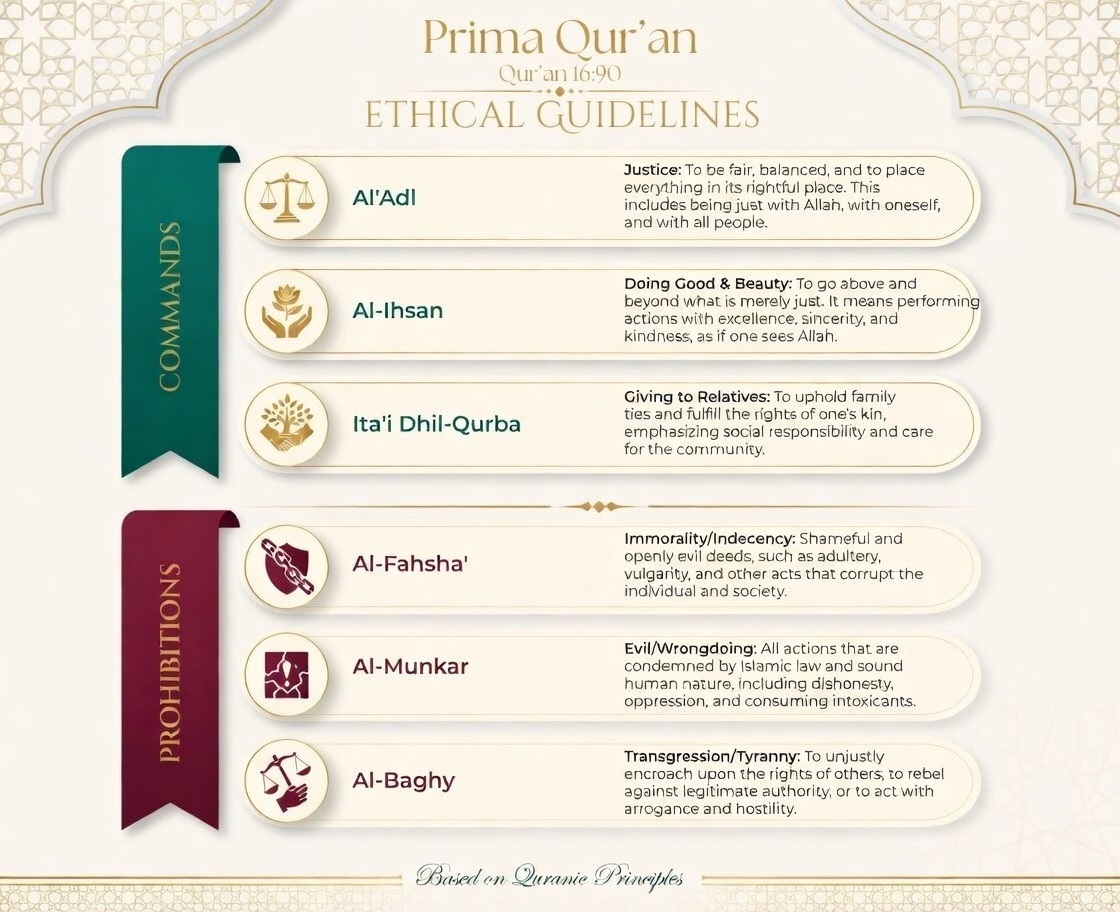

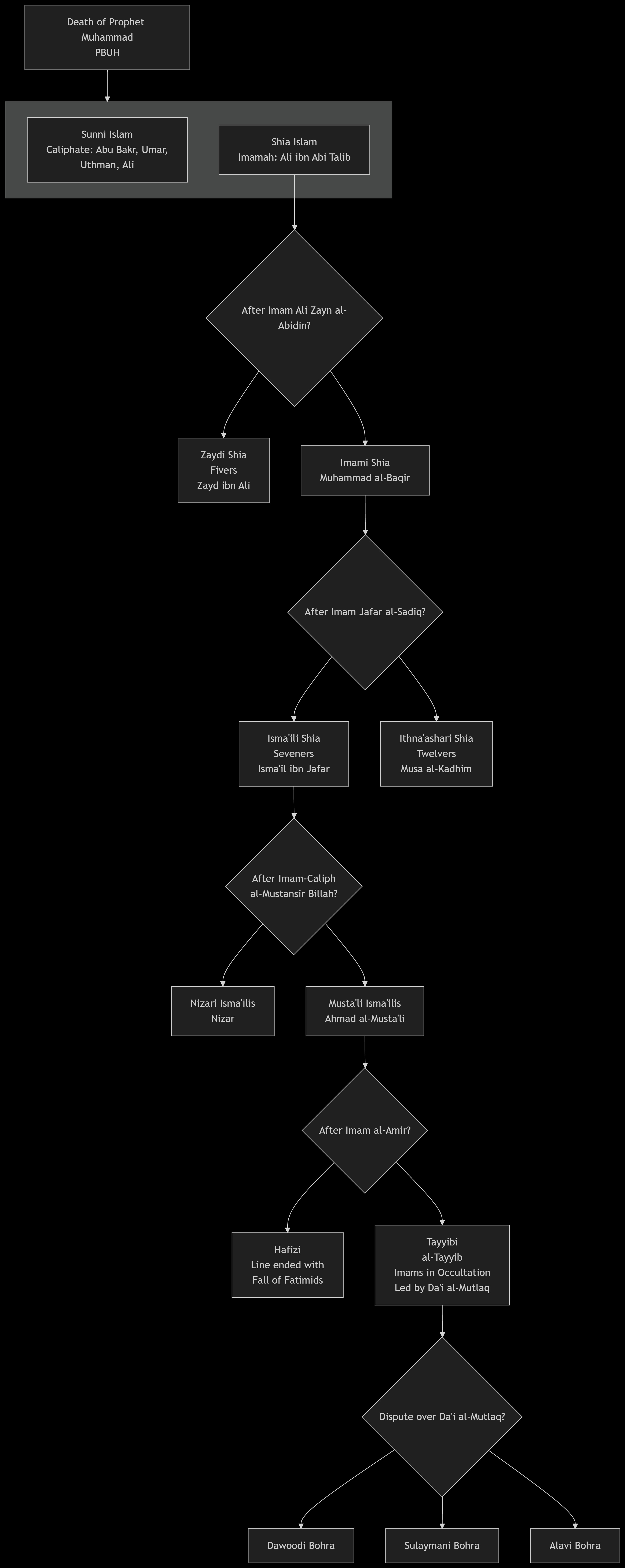






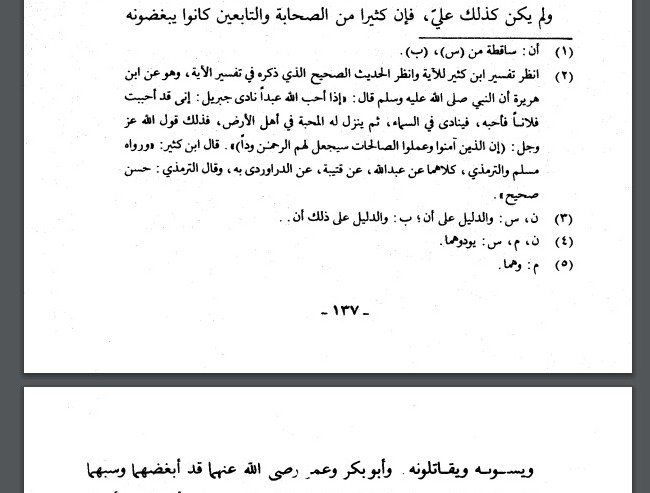


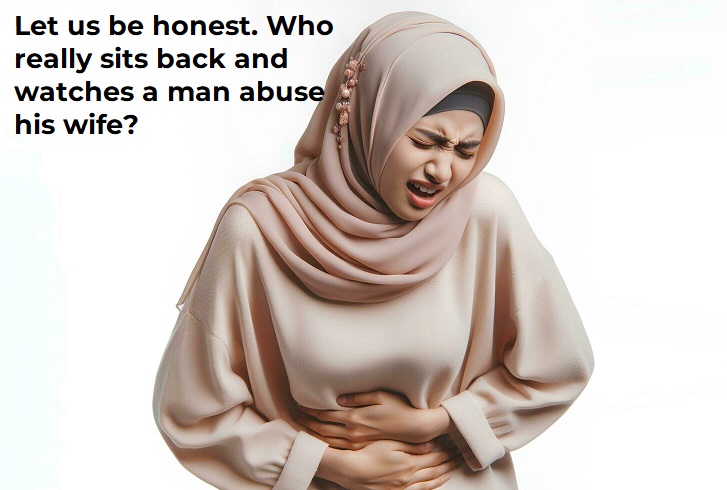
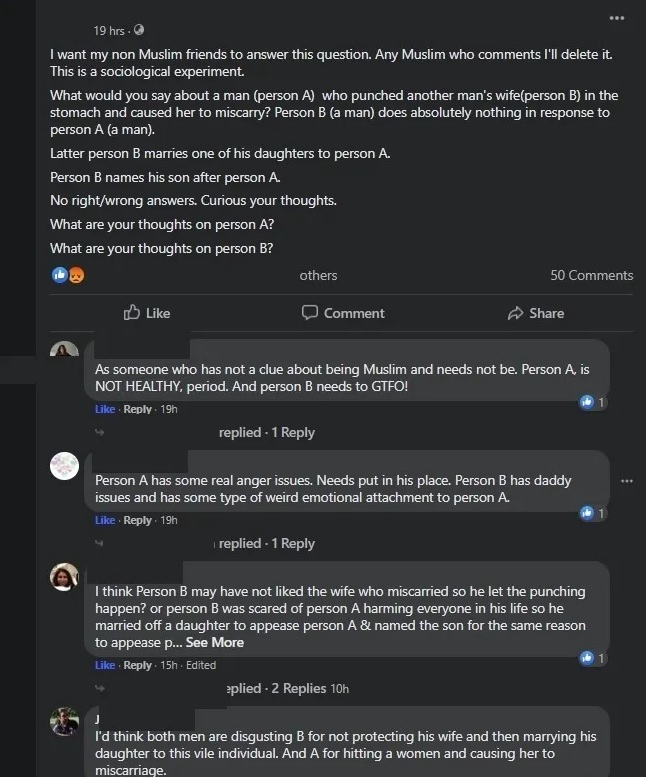
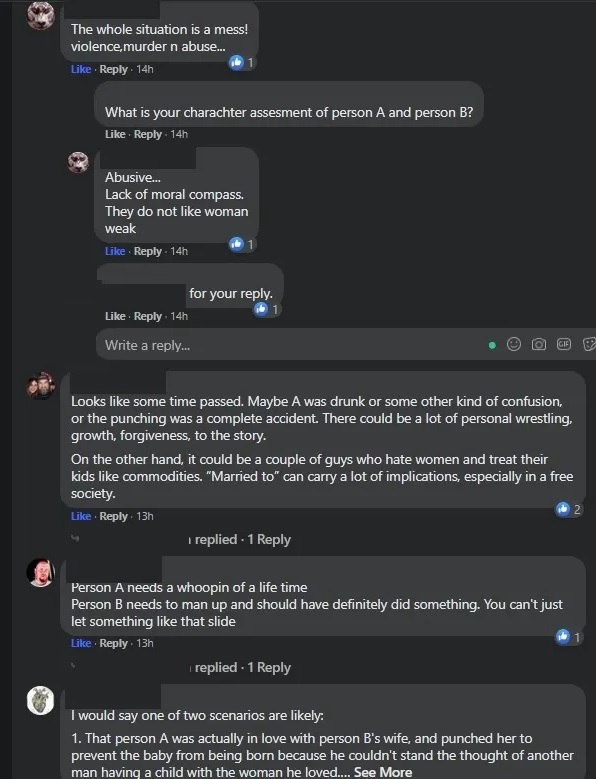
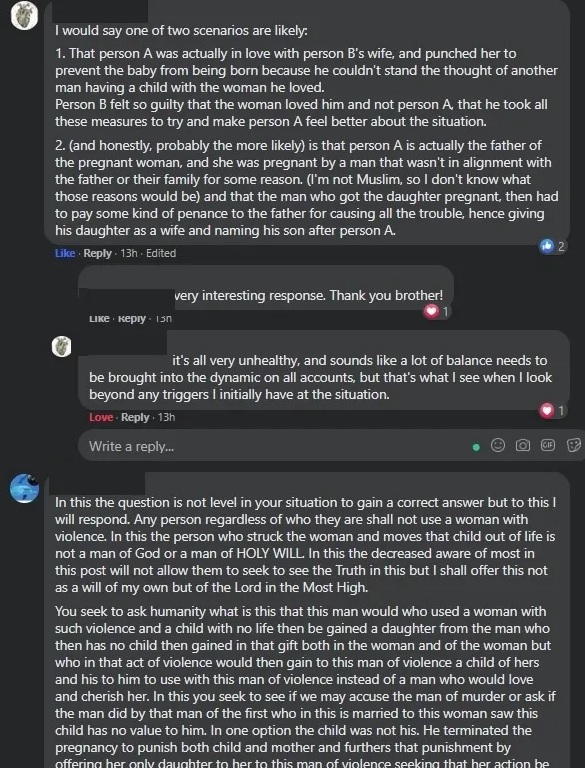
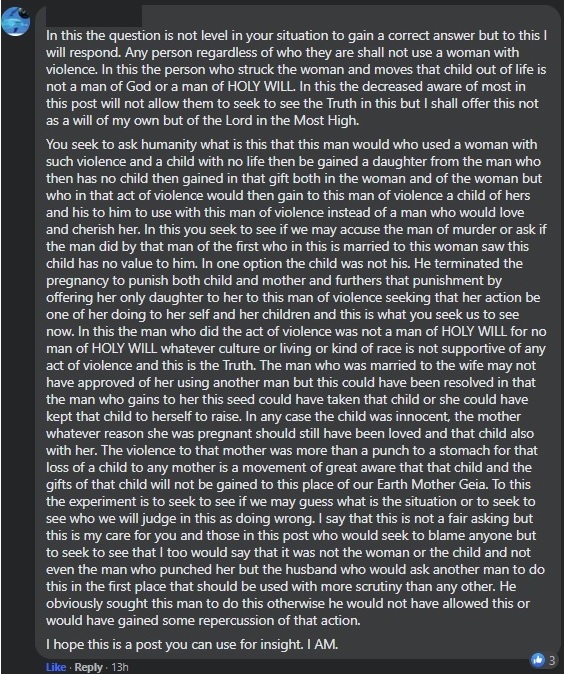
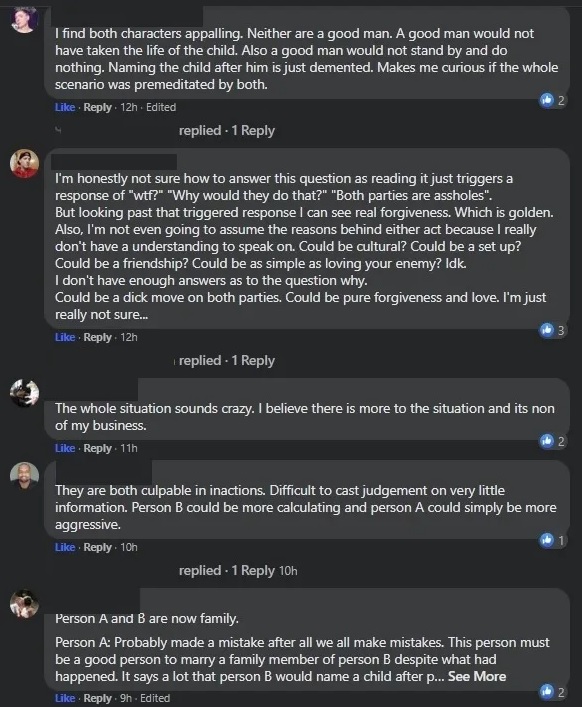
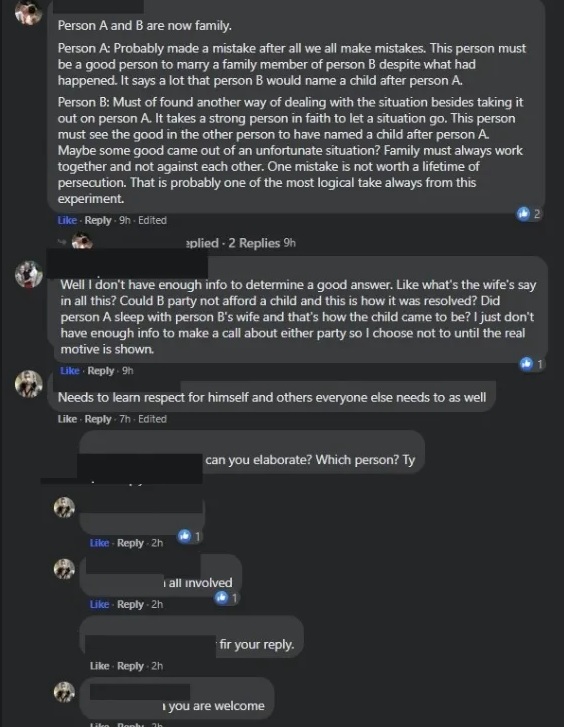
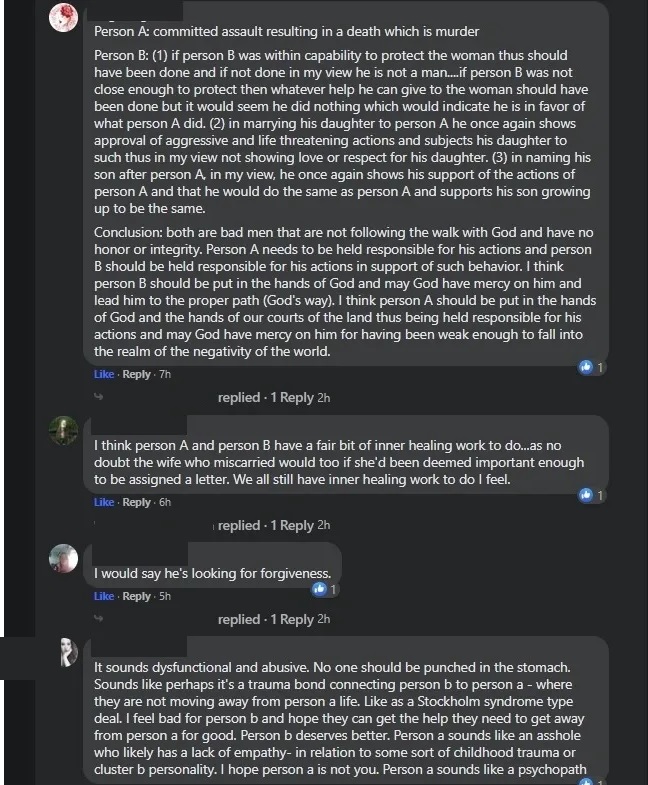
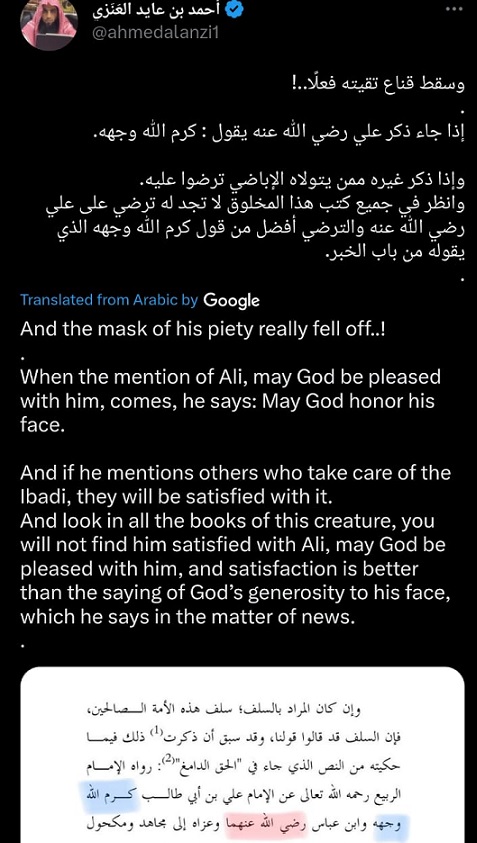
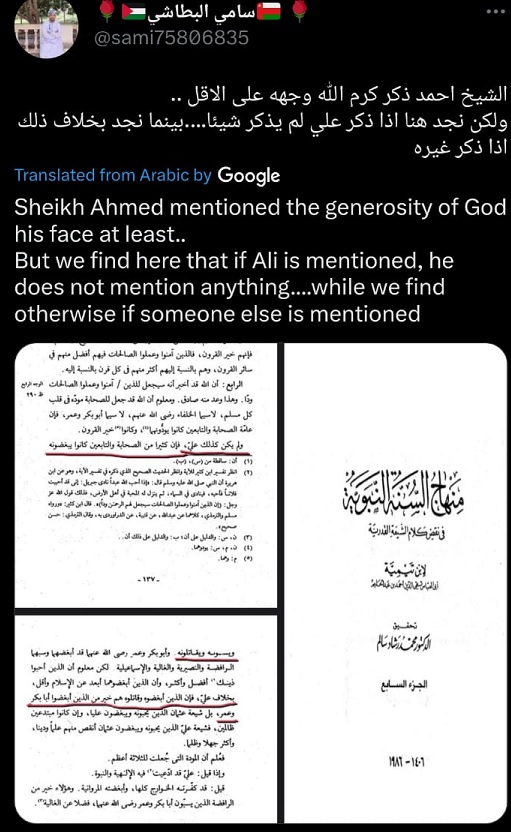
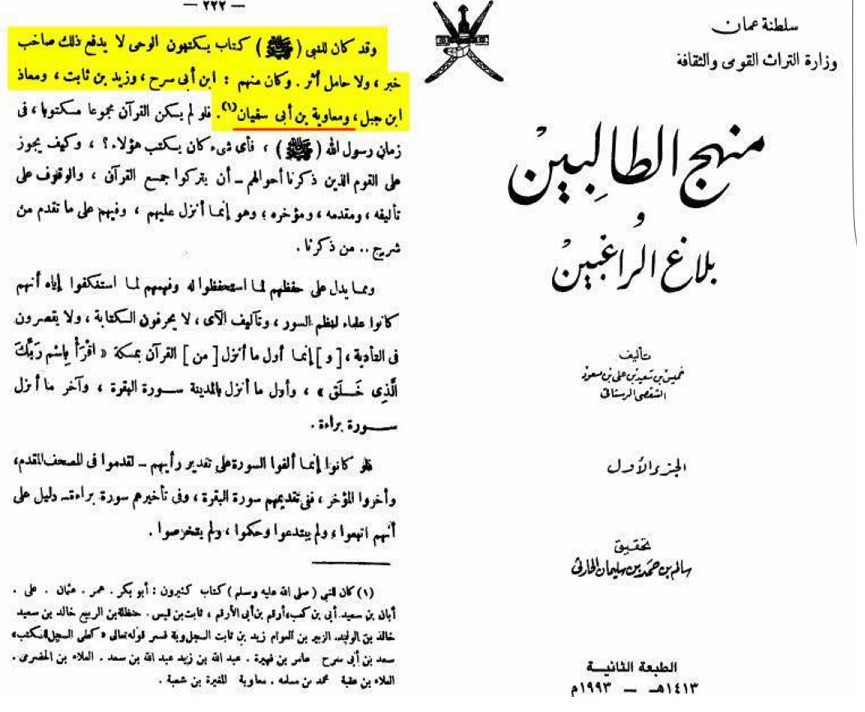
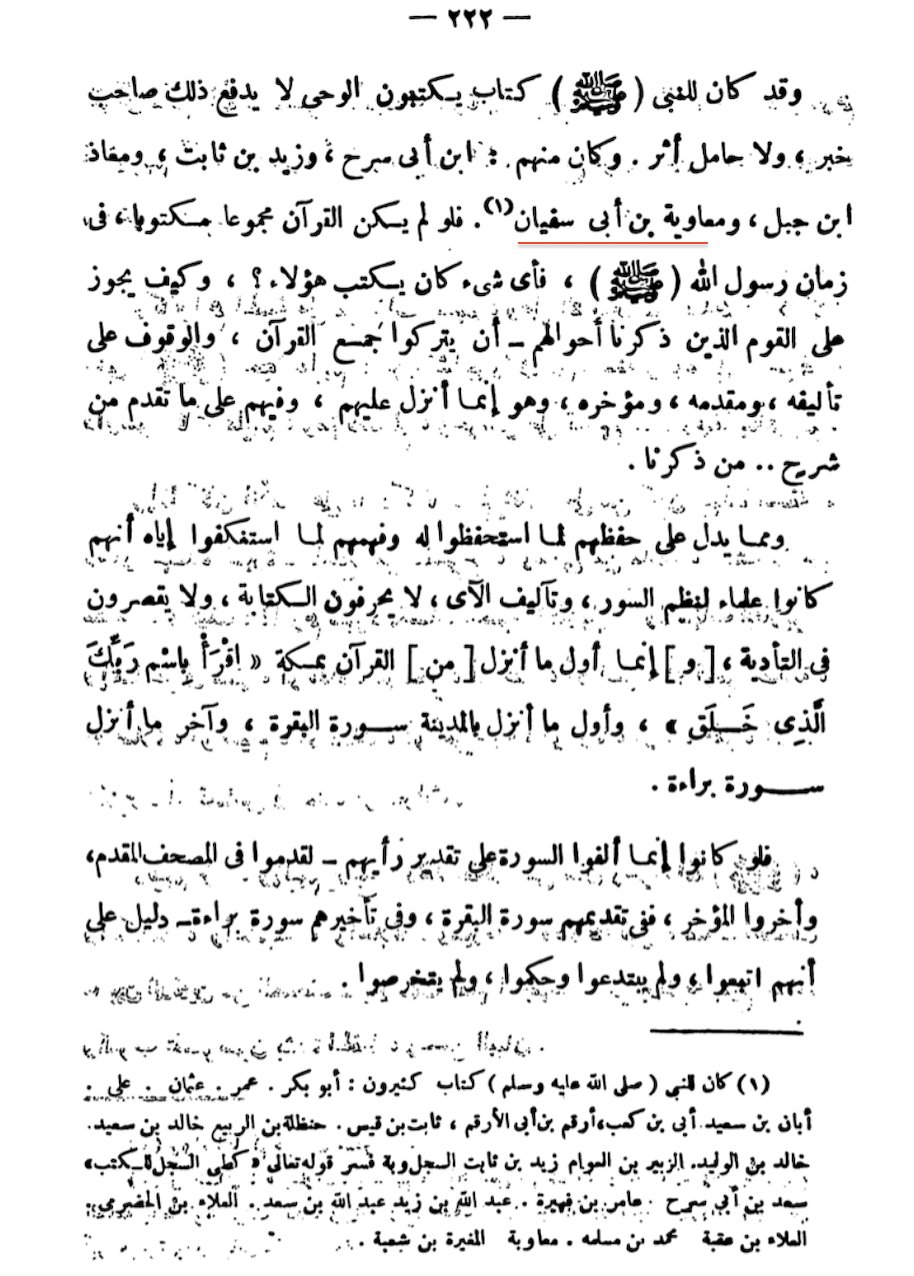
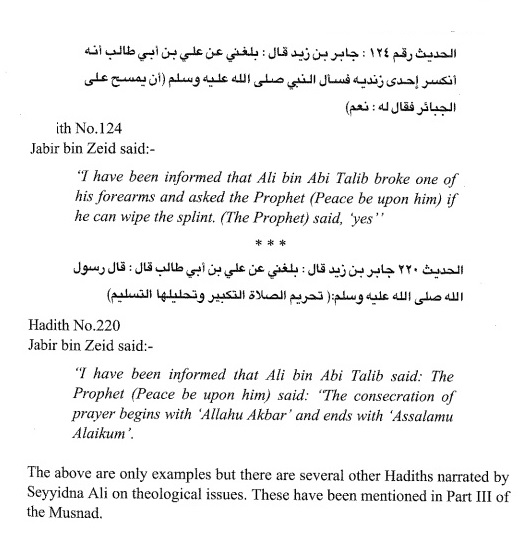
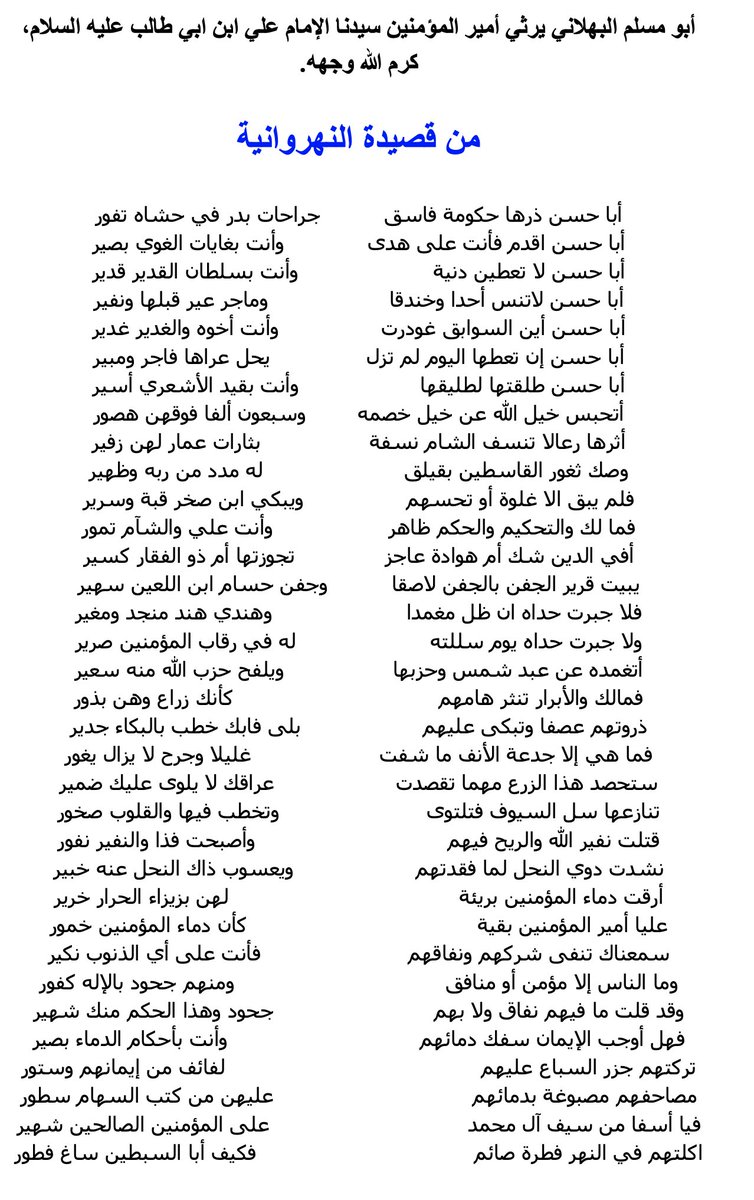


 Prima Quran