“Indeed, We have made it an Arabic Qur’an that you might understand.” (Qur’an 43:3)
﷽
Mohamed Hijab, who is a known Muslim speaker based in the United Kingdom, has recently put forward some excellent arguments against the idea of the Qur’an being eternal and uncreated (unbeknownst to him).
Now, to be fair, we want to say from the outset that Mohamed Hijab (as far as we know) believes that the Qur’an is eternal and uncreated.
However, it doesn’t seem that he has pondered the implications of his kalaam argument on the subject of the Qur’an being makhluq (created).
Listen carefully to the exchange between Marwan and Mohamed Hijab
The contingency argument.
@1:28:36 listen to Marwan’s question about pantheism and contingency argument.
@1:30:18 Mohamed Hijab gives his reply listen carefully.
“This is a book, and it’s made out of parts and the parts are the pages of the book right. Correct? So these are the pages of the book. I dunno what book. ‘Jewish historical society of England’ …..This is a book, right, and this is the whole of the book, correct? And it’s made out of parts, correct? Now if I pick a part out. Now if I take all parts out of this book, does it remain as a book? If the parts are taken out, then the whole thing is taken out. If that’s conceivable that parts taken out the whole thing is taken out than there is no way that this thing that I’m talking about is necessary and independent. Because necessary and independent means it’s always there and it can never be any other way. It’s a simple as that. You said, well, if it’s inter-dependent, anything which is inter-dependent by definition is dependent because what does the word inter-dependent mean? Interdependent means things which rely upon each other.So, if in order for this book to exist, there’s an inter-dependence or each page relies upon the existence of other pages in this book in order to exist. Then what we’re saying is this thing is dependent, because everything interdependent is, by definition dependent. What is dependence? Something which relies upon something else for its existence. What is inter-dependence? Something which relies upon something else in order to exist. So, in many ways, what you’re saying is, if we admit that it’s dependent than khalas (finished), it cannot be dependent and necessary at the same time.”
@1:33:16 “How do we describe the kul here? How do we describe the whole of this book? How do we describe the whole of this book? We describe it through its parts, right? Now if I say I just dissembled all its parts, and it’s maybe what 3-400 pages, and I’ve scattered them around. They still exist, but they exist in a different form. Now what I’m saying is the fact that I can re-arrange them like this I can you see this hundred, I dunno, let me see 208 pages of this book, yeah. If I take the 232 pages and make page 1 and page 232 and make it like munaqis (opposite), so instead of 1,2,3,4,5 it’s 232, 231, etc., etc. I’ve re-arranged it. The fact that now I can rearrange this book means there is nothing necessary about the arrangement and the form of this book. There is nothing necessary about it at all.”
@1:34:27 “The book as it is the way in which the book is now from 1 to 232, the way in which the book is like that the form the sura the shaqil the hakel -what ever word you want to use, the form of the book as it is now can be re-arranged. Now let me give you an example because I feel, I feel like the issue here is we don’t know the difference between contingency in this necessity. Necessity: 2 +2=4. 2+2=4. Is there any way 2+2=4 can be arranged any other way. Can it re-arrange in any other way? Can 2+2=anything other than 4? Which means its necessary. So its impossible to re-arrange 2+2 to equal anything other than 4. It’s eternally that way, it’s necessarily that way and it will continue being that way. It cannot be any other way. Now this is not the same with the arrangement of the parts of this book. The arrangement of the parts of this book can be other ways. This book itself can be another way. Instead of this colour; which I will describe as beige I dunno maybe I’m colour blind. It could have been blue. I can actually paint it right now. I can make it blue. I can , you want me to do? It looks like a historic book I dun want to ruin it. But I can change this book. There is nothing necessary about this book. Now you might say well, if we define necessity as something susceptibility, destructibility and generation. Yeah? And then in the closed system of the universe energy cannot be destroyed. Cannot be destroyed and therefore the atoms will take another form. I’m saying. I am not defining. I’m not defining contingency in only that way. I’m defining contingency in three ways. Number 1. Something that can be any other way. Number one yeah? Number 2. Something susceptibility to destruction and generation destruction yeah? And number 3. Something which relies upon something else for its existence. Now even if you argued that well this cannot be really destroyed because it’s atoms will take other form. I’m saying its still not necessary because it can be arranged in another way. The parts of this whole can be arranged in a way which is currently not arranged. It can be a way which is currently not/is. So which means that it, it meets the criterion of contingency; because it can be another way.”
@1:37:24 “You are confusing eternality and necessity. O.K? It’s conceivable that something can be eternal and not necessary. It’s conceivable how so? Because something can be eternal but rely upon something necessary. And that’s why the ‘ulemah of Islam they differentiated between what is referred to as wajibun an nafsi and wajibun al ghayri which is necessary for its own sake and necessary or in and of itself and necessary because of something else. So for example if I were to say. You have a sun. Let’s say the sun is necessary. The sun yani. Shams yeah? And it’s rays are contingent based-dependent upon the sun. The fact that the rays exist and they are contingent on the sun doesn’t’ mean that just because they are both eternal. The fact that the rays exist and are contingent on the sun doesn’t’ mean that the rays are necessary just because their eternal because they are dependent upon something which is necessary in this case, the sun or the eternal. You get it?
@1:38:37 “Yeah that’s his Ibn Cena beliefs. Yeah well Islamic refutation of the universe being eternal is clearly against the Qur’an and the Sunnah. Al Ghazali had this kind of refutation if you wanna.”
Marwan ask about the attributes of Allah (swt).
@1:39:00 “We affirm all the attributes of God through these kind of argumentations. That is why, there is a point where you need like the Rahma of Allah. The fact that he is ghafu and afuw and raheem and all that stuff. That needs to be affirmed through revelation.”
Marwan ask are these attributes necessary or contingent?
@1:39:19 ‘Yeah all attributes of Allah are necessary.” @1:40:25 “We don’t use the word dependent it’s being controlled by the irada (intention) of Allah. By the will of God. So the verb all the attributes of God are controlled by the will of God. If Allah wants to speak yeah? If Allah wants to speak he wills that and he does that.”
Marwan so they are contingent upon his will?
Listen to how uncomfortable is the response of Mohamed Hijab. The sudden shift. Also notice that Mohamed Hijab does not affirm that Allah is speaking, or is speaking eternally. He attributes the speaking to his will! Al hamdulillah! Thank you!
@1:40:44 “We don’t need to use the word contingent. They are controlled by his will.“
I believe at this point Marwan doesn’t really seem to buy it. A quick glance of the ideas upward and simply responds . ‘O.K’
The arguments brought by Mohamed Hijab absolutely decimate the idea that the Qur’an is uncreated.
Its message is dependent upon asbaab an nuzul (occasion of revelation), which conceivably could have been different. According to our brothers from the Sunni denomination, it has text that has been abrogated and that is dependent upon what abrogates and what is abrogated. It is composed of letters and words and sentences that are dependent upon structure to have a coherent meaning. It’s conceivable that the Ahruf /Qir’aat of the Qur’an could be more or less than what they are. It is conceivable that the Qur’an could have been revealed in a language other than Arabic. It is conceivable that the Qur’an itself cannot be necessary, because it is conceivable that Allah (swt) could have had the Torah or any other revelation completely intact and reach us until this very day.
In the words of Fakhr al-Din Al-Razi:
“The impossibility of a word which is composed of letters and sounds being eternal is self-evident to the mind for two reasons:
The first is that a word cannot be a word unless its letters are sequential. The letter uttered before the last that is uttered is originated, and if something’s being originated is affirmed, its eternity is then impossible. So, for the letter following the end of the first, there is no doubt that it originated.
The second is that, if those letters from which the word is composed occurred in one go, the word cannot be. A word composed of three letters can occur in any one of six combinations. If the letters occurred altogether, the words occurring in some of those combinations would not be better than they are occurring in any of the rest. Alternatively, if the letters occurred in succession, then the word is originated.”
Source: (Al-Tafsir al-kabir (Tehran: Dar al-Kutub al-Illmiyyah, 2nd edition, 1:P20.)
Fakhr al-Din took fellow Sunni Muslims of the Hanbali school to task when he says,
“These people are so low as to not deserve mention among the group of the learned. It happened one day that I said to one of them: “If Allah spoke these, then either He spoke them in one go, or in succession. The first is void because the speaking of all these letters in one go will not convey an orderly composition which is a combination in sequence. It necessarily follows that this composition, combined with these successive letters, cannot by themselves be Allah’s speech. The second is void, because if Allah spoke them in succession, then it would be originated.’ When the man heard this statement of mine, he said: ‘It is obligatory for us to affirm and pass on’, i.e., we affirm that the Qur’an is eternal and pass by this statement that we have heard. At that point, I wonder greatly at the safety of this speaker.”
“This day are things good and pure made lawful unto you. The food of the People of the Book is lawful unto you and yours is lawful unto them. Lawful unto you in marriage are not only chaste women who are believers, but chaste women among the People of the Book, revealed before your time when you give them their due dowers, and desire charity, not lewdness, nor secret intrigues. If anyone rejects faith, fruitless is his work, and in the Hereafter, he will be in the ranks of those who have lost.” (Qur’an 5:5)
“O you who have believed, do not prohibit the good things which Allah has made lawful to you and do not transgress. Indeed, Allah does not like transgressors.” (Qur’an 5:87)
﷽
This entry will give the position of the Muslims, otherwise known as (Ahl Haqq Wal Istiqama) or the Ibadi school. It will give our justifications from the Qur’an and Sunnah for marrying the people of the book (Jews and Christians).
Companions such as Ibn Abbas, Saad bin al-Musayyab, Said bin Jubair, Uthman, Talha, Tawus, Mujahid are all known to have married people of the book. The Blessed Messenger (saw) himself is known to have married from among the Ahl Kitab.
So, yes, in the Ibadi school, a Muslim man can marry a Christian or Jewish woman if certain conditions are met.
Ad-Darooriyyat Al-Khams—The Five Basic Necessities that are protected and recognized by Islamic law-shari’ah.
The five necessities—religion, life, intellect, lineage, and property are defined.
This ruling would fall under the category of: preservation of lineage & preservation of religion.
Among our brothers from the Ahl Sunnah, there are two positions. The position of Imam Malik and Imam Abu Hanifa is that Muslim men can marry Christian and Jewish women and until today there are no restrictions put on this.
The position of Imam Ahmad and Imam Shafi’i is that Muslim men cannot marry Christian or Jewish women.
The position of the Ibadi school is in between these two camps. It is very clear that we cannot make impermissible what Allah (swt) made permissible.
That being said, there is a context to these verses and conditions that must be met.
Conditions placed on marrying the Ahl Kitab.
1st condition is that this takes place under Muslim governance, where there is full compliance of the shariah law.
The 2nd Condition is that the interest of the Muslims dominates. The children, for example, are to be raised as Muslims.
The 3rd condition is that the Muslim man actually is a practicing Muslim.
The 4th Condition is that the Jewish or Christian woman actually be practicing Judaism or Christianity.
The 5th condition is that she did not ever commit fornication or have an extramarital affair.
Understanding the first condition.
“O you who have believed, obey Allah and obey the Messenger and those in authority among you. And if you disagree over anything, refer it to Allah and the Messenger, if you should believe in Allah and the Last Day. That is the best way and best in result.” (Qur’an 4:59)
What happens today in North Africa and in Turkey is that many of these men who are exposed to the Maliki and Hanafi schools of jurisprudence will marry women from the United States, Europe, Russia. Often the children of these marriages are split between nationalities. The inheritance laws are not decided by the laws of Islam they are decided by secular institutions. The fate of the children will be decided by the laws of those lands. More often than not, the court awards the custody of the children to the mother. The children are brought up without a Muslim father, an Imam leading the prayers and teaching the deen of Islam. This is totally unacceptable.
Understanding the second condition.
“Our Lord, and make us Muslims that submit to You, and from our descendants a community that submits to You. And show us our rites and accept our repentance. Indeed, You are Ever-Accepting of our repentance, the Most Merciful.” (Qur’an 2:128)
“O you who have believed, protect yourselves and your own families from a Fire whose fuel is mankind and stones, (and) over which are harsh, severe Angels, who do not disobey Allah in whatever He commands them and who perform whatever they are commanded to.” (Qur’an 66:6)
Anyone who loves their children does not want to expose them to the dangers of hellfire. The best and clearest way to help ensure this is to raise them as Muslims. To instill in them the articles of faith. The love and fear of Allah (swt). The love of the Blessed Messenger (saw) and following his noble example. Muslims cannot give blessings to their children to be raised by other religions because they were all abrogated with the coming of Islam. Qur’an 2:106 establishes this.
“Men are in charge of women by right of what Allah has given one over the other and what they spend for maintenance from their wealth. So righteous women are devoutly obedient, guarding in the husband’s absence what Allah would have them, guard. But those wives from whom you fear ill/strange conduct advise them; then if they persist, forsake them in bed; then if they persist strike them. But if they obey you once more, seek no means against them. Indeed, Allah is ever Exalted and Grand.” (Qu’ran 4:34)
It is difficult enough to get Muslim-majority nations to want to establish the Imamate. Does anyone think that non-Muslim majority nations have a vested interest in doing so? They have different world views and different principles upon which they base their concepts of justice. Many of them promote egalitarianism. Too many times, Muslim men are taken by the charms and beauty of non-Muslim women. Non-Muslim women may make promises to them. However, none of those promises are legally binding. This will lead us to understand the third condition.
Understanding the third and fourth conditions.
“And do not marry polytheistic (l-mush’rikati) women until they believe. And a believing slave woman is better than a polytheist, even though she might please you. And do not marry polytheistic men to your women until they believe. And a believing slave is better than a polytheist, even though he might please you. Those invite you to the Fire, but Allah invites to Paradise and to forgiveness, by His permission. And He makes clear His verses to the people that perhaps they may remember.” (Qur’an 2:221)
This verse is ‘Aam. There is an exception or allowance to marry the mush’rikati women. That exception is given in Qur’an 5:5
Many of these Muslim men who want to marry Christian or Jewish women are themselves not practicing Islam. That is not a good foundation to start a marriage with a Muslim woman, let alone a non-Muslim woman. The children are likely to be swayed by the parent who shows more conviction and practice of their faith tradition than the parent that does not show conviction or practice their faith tradition. That is why Allah (swt) says that marrying someone who is a slave is better than marrying a free, non-believing woman, even though her /his looks may please you.
Allah (swt) also said you can marry Christian and Jewish women.
Understanding fourth and fifth conditions.
“This day are things good and pure made lawful unto you. The food of the People of the Book is lawful unto you and yours is lawful unto them. Lawful unto you in marriage are not only chaste women who are believers, but chaste women among the People of the Book, revealed before your time when you give them their due dowry, and desire charity, not lewdness, nor secret intrigues. If anyone rejects faith, fruitless is his work, and in the Hereafter, he will be in the ranks of those who have lost.” (Qur’an 5:5)
That Christian or Jewish woman has to be a practicing Jewish or Christian woman. She has to follow the tenets and edicts of her faith tradition. She cannot be a ‘nominal’ Jew or a ‘nominal’ Christian. If the Christian or Jew converts to Buddhism, Hinduism, Sikhism, Taoism, Shintoism, New Age spirituality, or anything of the kind, the marriage can become null and void.
Also, Allah (swt) says, ‘chaste women’—muhsanatu. This means if these women have committed fornication or adultery, you cannot marry them. So this only leaves you with the option of marrying someone who is a virgin or a divorcee.
These Muslim men should be aware of one of the very strong positions in the Ibadi school in regard to themselves (the Muslim men) being chaste.
The same rule applies to Muslims as well. Muslims who have committed fornication for adultery can only marry other Muslims who have done similar. They cannot marry chaste believers, nor can they marry those people they have done fornication/adultery with.
This is not an example of abrogation. This is an example of a specification. Now you ask yourself are these conditions met today?
The Ibadi school is priority to Muslim Women First.
What happens in places where the Maliki and Hanafi schools reign supreme? You do see Muslim men often marry “Christian” or “Jewish” women, many of whom are actually agnostic or even atheist. They do so while many hundreds of thousands of Muslim women go unmarried. There are hundreds of thousands of Muslim women who are widows, divorcees, orphans, single people, or simply never been married before.
Shouldn’t our priority be the Ummah of Muhammed (saw)? Remember the wisdom of Allah (swt)
“And a believing slave woman is better than a polytheist, even though she might please you.”
What happens in those places where the Shafi’i school is dominant? For example: places like Indonesia or Malaysia? What happens is that Muslim men or Muslim women will tell non-Muslims to convert to Islam, and then they will marry them. At least these approaches are more sensible. Bringing people to Islam. That, of course, is acceptable by Islamic law. However, every action is judged by intention and so too will be the fruit of that intention.
There are thousands of Muslim men and women who convert to Islam every year of their own free will and volition. Not under any social pressure to convert because of love. Would it not be wise to give preference to these people for marriage?
May Allah (swt) continue to guide the Ummah of Muhammed (saw)!
You may be interested in reading the following articles:
“And do not marry polytheistic (l-mush’rikati) women until they believe. And a believing slave woman is better than a polytheist, even though she might please you. And do not marry polytheistic men [to your women] until they believe. And a believing slave is better than a polytheist, even though he might please you. Those invite [you] to the Fire, but Allah invites to Paradise and to forgiveness, by His permission. And He makes clear His verses to the people that perhaps they may remember.” (Qur’an 2:221)
﷽
“And do not marry polytheistic (l-mush’rikati) women until they believe. And a believing slave woman is better than a polytheist, even though she might please you. And do not marry polytheistic men until they believe. And a believing slave is better than a polytheist, even though he might please you. Those invite [you] to the Fire, but Allah invites to Paradise and to forgiveness, by His permission. And He makes clear His verses to the people that perhaps they may remember.” (Qur’an 2:221)
This verse is known as ‘Aam. It is general. The ruling applies in all situations unless there is an exception made.
The exception to this ruling is the following verse:
“This day [all] good foods have been made lawful, and the food of those who were given the Scripture is lawful for you and your food is lawful for them. And [lawful in marriage are] chaste women from among the believers and chaste women from among those who were given the Scripture before you, when you have given them their due compensation, desiring chastity, not unlawful sexual intercourse or taking [secret] lovers. And whoever denies the faith – his work has become worthless, and he, in the Hereafter, will be among the losers.” (Qur’an 5:5)
This above verse is khaas — It is specific. Notice the words: “This day” meaning before that it was not the case. This often happens in the Qur’an. There is a general ruling and there is either further restriction on a certain aspect or an allowance to the general ruling.
This specific verse also has a further specification in that this allowance is only given to Muslim men to marry the mushrik women from among the People of the Book. Whereas a Muslim woman is not allowed to marry the mushrik men from among the People of the Book.
Why this specific allowance? The Qur’an mentions the Torah and the Injeel. There are shared histories, prophets and beliefs about angels and so forth. The thinking is that the mushrik women from among the People of the Book will be moved by the compassion, love, protection, warmth and guidance given by the Muslim husband. Also, considering that in the situation where such a marriage would be allowed, the children would be Muslim by default, there should be little barrier for these mushrik from the Ahl Kitab to embrace Islam.
For example: Mariyah al-Qibtiyyah (May Allah be pleased with her) was a Christian whom, after marrying the Blessed Prophet (saw), converted to Islam, and she died upon the haqq!
However, note the warning by Allah (swt).
“And whoever denies the faith — his work has become worthless, and he, in the Hereafter, will be among the losers.” An understanding that this could go the other way. The mushrik woman may convince the man to leave his faith.
This is why it becomes all the more clear under which situations and circumstances the Ibadi school allows such marriages to take place.
Fight those who do not believe in Allah or in the Last Day and who do not consider unlawful what Allah and His Messenger have made unlawful and who do not adopt the religion of truth from those who were given the Scripture – [fight] until they give the jizyah willingly while they are humbled. The Jews say, “Ezra is the son of Allah “; and the Christians say, “The Messiah is the son of Allah .” That is their statement from their mouths; they imitate the saying of those who were kafara (ungrateful disbelievers [before them]. May Allah destroy them; how are they deluded? They have taken their scholars and monks as lords besides Allah , and [also] the Messiah, the son of Mary. And they were not commanded except to worship one God; there is no deity except Him. Exalted is He above whatever they associate (yush’rikuna) with Him. They want to extinguish the light of Allah with their mouths, but Allah refuses except to perfect His light, although the (ungrateful disbelievers) dislike it. It is He who has sent His Messenger with guidance and the religion of truth to manifest it over all religions, although those who associate others (l-mush’rikuna) with Allah dislike it. (Qur’an 9:29-33)
“Those who say, “Allah is the Messiah, son of Mary,” have certainly become ungrateful disbelievers. The Messiah ˹himself˺ said, “O Children of Israel! Worship Allah—my Lord and your Lord.” Whoever associates (yush’rik) others with Allah ˹in worship˺ will surely be forbidden Paradise by Allah. Their home will be the Fire. And the wrongdoers will have no helpers. Those who say, “Allah is one in a Trinity,” have certainly become ungrateful disbelievers.There is only One God. If they do not stop saying this, those who disbelieve among them will be afflicted with a painful punishment.” (Qur’an 5:72-73)
Those slippery followers of Perennialism and Qur’an 5:5
“This day [all] good food have been made lawful, and the food of those who were given the Scripture is lawful for you and your food is lawful for them. And [lawful in marriage are] chaste women from among the believers and chaste women from among those who were given the Scripture before you, when you have given them their due compensation, desiring chastity, not unlawful sexual intercourse or taking [secret] lovers. And whoever denies the faith – his work has become worthless, and he, in the Hereafter, will be among the losers.” (Qur’an 5:5)
Now, the slippery among those who follow perennialism have three choices here.
Tell us the sect/denomination of Christians today that would meet the acceptable criteria of “believers” and those upon true understanding of Allah, that would be acceptable in accordance with declarations made by the Qur’an. Those that would not meet with damnation because of their theological positions? Would they be Orthodox Christians? Catholic Christians? Protestant Christians? Perhaps Jehovah’s’ Witness and/or Unitarian Christians?
Admit that such Christians from Ahl Kitab are no longer existent and thus, this verse, as much as it applies to such Christians, is no longer operational.
Concede the point to the correct understanding that the Ibadi school has of the verses.
“And to warn those who claim, Allah has taken to Himself a son, a thing about which they have no knowledge, neither they nor their ancestors. Dreadful is the word that comes out of their mouths. What they utter is merely a lie.” (Qur’an 18:4-5)
Why warn those who claim this?
Because anyone who makes false claims about Allah (swt) will be brought for punishment.
“Allah has children. They are simply liars. Has He chosen daughters over sons? What is the matter with you? How do you judge? Will you not then be mindful? Or do you have any compelling proof? Then bring us your scripture, if what you say is true! They have also established a relationship between Him and the jinn. Yet, the jinn themselves know well that such people will certainly be brought for punishment. Glorified is Allah far above what they claim!” (Qur’an 37: 152-159)
Furthermore, as we explained in our article about the correct understanding if Allah (swt) forgives shirk or not we have shown the text that is relied upon is a reference to the Ahl Kitab.
“Surely Allah does not forgive associating (yush’raka)˹others˺ with Him ˹in worship˺, but forgives anything else of whoever He wills. Indeed, whoever (yush’rik) associates ˹others˺ with Allah has clearly gone far astray.” (Qur’an 4:116)
“Indeed, Allah does not forgive associating (yush’raka) others with Him ˹in worship˺, but forgives anything else of whoever He wills. And whoever (yush’rik) associates others with Allah has indeed committed a grave sin.” (Qur’an 4:48)
“O you who were given the Scripture, believe in what We have sent down, confirming that which is with you, before We obliterate faces and turn them toward their backs or curse them as We cursed the sabbath-breakers. And ever is the decree of Allah accomplished. Indeed, Allah does not forgive association with Him, but He forgives what is less than that for whom He wills. And he who associates others with Allah has certainly fabricated a tremendous sin. Have you not seen those who claim themselves to be pure? Rather, Allah purifies whom He wills, and injustice is not done to them, [even] as much as a thread [inside a date seed]. Look how they invent about Allah untruth, and sufficient is that as a manifest sin. Have you not seen those who were given a portion of the Scripture,who believe in superstition and false objects of worship and say about the disbelievers, “These are better guided than the believers as to the way”? (Qur’an 4:47-4:51)
This particular issue is one in which an orientalist and western academic made a mistake in regard to the jurisprudence of the Ibadi school. You can see our comment on that error here:
“The Khawarij [Kharijites] were groups of people who appeared at the time of Al-Tabieen and those who came after them. Their leaders were Nafi’a bin Al Azraq, Najdah bin Aamir, Abdul-Allah bin Al-Asfer and their followers. They were given this name because of their radical approach of accusing others of unbelief, which set them apart from the truth and the Muslim community. For Khawarij, a sinner was a heretic whom it was permissible to kill and whose properties could be despoiled. This false accusation was all based on their misinterpretation of the A1mighty’s words: “If you were to obey them, you would indeed be heretics”, (Qur’an 6:121).“
“They claimed that this verse meant if you obey heretics in eating carrion, you will be deemed one of them. However, the correct understanding of this verse is that those who make carrion lawful are heretics.”
“When the news reached Imam Al-Rabi bin Habeeb bin Amr Al-Basri Al-Farahidi Al-Ibadhi, the author of Al-Musnad As-Sahih, (r), he said: “Leave them until they apply what they say. If they do so, we will apply Allah’s ruling on them”. Thus, when their wrong innovations [bid’ah] became apparent, and they applied their incorrect and dangerous doctrines, and started killing Muslims, the Ibadis declared their dissociation from them, expelled them from their meetings and fought them in different places. Ibadis announced, based on clear and assertive verses from the Qur’an, that Khawarij were Kufaar [unbelievers] for they permitted what Allah forbade.“
“Omanis, for example, stood with Al-Muhalab to confront the Khawarij armies. (For more information see Al-Kamil written by Al-Mubarad). The famous Umayyad Azdi Omani warrior, Al-Muhallab bin Abi Sufrah, took the responsibility of suppressing this group and motivating people to fight them. However, to give a stronger motive for fighting the Khawarij, Al-Muhallab started creating fabricated hadith against the Khawarij. This doubled the crisis of the Khawarij as not only many Muslims were killed, but also, fabricated hadiths were made up. Because these groups of Khawarij were against arbitration, Ibadis who were against it as well were falsely and unjustly attached to them.”
However, this unjust attachment can be refuted as follows:
“Ibadis do not approve of the ruling of tyrant kings. For them, it is a must that the Caliph should follow the steps of the rightly guided Caliphs, among them Abu Bakr and Umar. This was clearly stated by the Prophet (saw) as he said in an authentic hadith, “Follow the examples of those who came after me, Abu Baker and Umar.” When the hadith was narrated concerning Ammar bin Yasir, (r), “you’ll be killed by the transgressing party”, it was used by the opponents of arbitration as well as the other party. Although its authenticity was confirmed by both parties, Mu’awiyah’s group interpreted it in a way that twists the reality in their favor.”
“Second, driven by their desires, many people claim that the people of Al-Nahrwan rebelled against Ali. This is an unsound claim, for Ibadis had insisted that Ali should stay as the Caliph of the Muslims.”
“However, when he accepted arbitration, they freed themselves from the allegiance because they didn’t see any point in negotiating his right as an elected Caliph by Muslims. His concession to the arbitration with Mu’awiyah’s group means that his election was questioned; therefore, they elected their own Caliph.“
“The Caliph they chose was among the most pious companions of the Prophet (saw). This person was none other than Abdul-Allah bin Wahab Ar-Rasbi Al-Azdi. When Wahab was elected, Ibadis asked their brothers, including Imam Ali, to give allegiance to the newly chosen Imam. However, Ali bin Abi Talib saw that allegiance was given to Azdi, a non-Qurashi, so he fought them before they could get any stronger and thus, the Quraish would lose the Imamate. This was the only reason for the Battle of Al-Nahrawan. Ali’s attack upon the people of Nahrawan was politically motivated.”
“In Dawmat Al-Jandel, Mu’awiyah took the Caliphate after the negotiation of the two arbitrators, Amr bin Alas and Abu Musa Al’Ash’ari. Consequently, Ali debated with and asked Wahab’s group to fight Mu’awiyah and his followers once more, but by this time it was too late as they were free from their allegiance to him. Ibadis didn’t elect a new Caliph, until the result of arbitration appeared. What they warned against happened, for arbitration was hatched by Al’Ash’ath bin Qais, who was put into Ali’s group by Mu’awiyah.”
Prima Qur’an comments: For those who do not know, Abu Bakr (ra) made the following statement:
But the three things I did not do and wish I had: the first is that when Al-Ash’ath bin Qais was brought to me in captivity, I wish I had struck his neck, because I suspect he will enforce evil wherever he finds it; and the other one is that I wish when I sent Khalid Bin Waleed to the battle of the apostates I had remained at Zil Qissah so that I could help the army if they were defeated; and the third one, I wish that when I delegated Khalid to Sham I had sent Omar to Iraq so that I had opened my two hands in the cause of Allah.
Then he opened his hands and added:
I wish I had asked the Messenger of Allah (saw)that to whom the caliphate belonged, so that nobody would go to war on it; and I wish I had asked him did Ansar have any right in this matter; and I wish I had asked him if the the brother’s daughter and the father’s sister would inherit anything [from the deceased], because I’m not sure about it.
Source: (Târîkh Tabarî, v 3 p 429 ; Târîkh Ya’qûbî, v 2 p 137)
Shaykh Attfayish continues…
“Thus, it is not as claimed by falsifiers of history and extreme sectarians that the Battle of Al-Nahrawan happened because of a rebellion against Ali. On the contrary, they did not leave his group when his allegiance was valid. Therefore, people looking for the truth should be aware of making a mistake in this regard, as it is apparent that desires are pervasive among such people.”
“Third, the name Khawarij didn’t appear until the spread of Azariqah’s movement. Thus, the people of Al-Nahrwan were not described as Khawarij. We challenge such claimants to bring forth their evidence.”
“The first use of this name was by Mu’awiyah, using it against one of his visitors from the people of Mu’awiyah, Al-Ahnaf bin Qais. He said to him, “Why do people admire you when they know that you are from Khawarij?” Al-Ahnaf replied, “If people had found water bad, they wouldn’t have drunk it.” Mu’awiyah meant here those who refused to accept him as Caliph (see Al-Amali by Abdu Ali Al-Qali).”
“Was Mu’awiyah’s accusation of Al-Ahnaf as being Khariji because Al-Ahnaf was with the people fought by Ali in the Battle of Al-Nahrwan? Or was it because he did not pledge allegiance to Mu’awiyah? If it were because of the former reason, Mu’awiyah’s party would have been more eligible for this description as he was the one who fought against Ali on the Day of Siffin and freed himself of Ali’s allegiance, knowing that he was given allegiance by prominent companions and his allegiance must be followed by all Muslims.”
“Fourth, Ibadis have never fought against any monotheists [Muslims], even when AI-Hajjaj and Ziyad bin Abeeh got tough on Muslims based on their own doubts. However, they were rebelled against by a group called At-Tawwabun (The Penitents) headed by great scholars like Saeed bin Jubair and Ibrahim A’Nakh’i. Later, Al-Hajjaj killed Saeed bin Jubair, who was a scholar in the interpretation of the Qur’an. What was surprising was that this big group of scholars who took up the sword against the horrible injustice done by Al-Hajjaj were not called Khawarij, but they were called At-Tawaboon [the people of repentance]. They were all carriers of knowledge who died in the fighting. Certainly, a mind is stunned because of such a tragedy, yet many readers overlook it.”
“However, those who scrutinize history objectively will find out that the word Khawarij was unjustly given to Ibadis because they only believed that the Imamate [Caliphate] should not be restricted to the tribe of Quraish.”
“This position is the right of whoever is elected by Muslims to lead them, because it is clearly unwise to accept that Allah places the leadership of all humankind in the hands of only one tribe irrespective of whether it does right or wrong. Common sense supports what Ibadis believe on this issue, and how they have used this belief to interpret the hadith that “the Imams are from Quraish.” It is a kind of arrogance and avoidance of the truth to claim that leadership is restricted to the Quraish.”
“Even the supporters [Ansar] of the Blessed Prophet (saw), who understood his teachings, said to Abu Bakr, “A leader from us and a leader from you.” With the same token, the reply of Abu Bakr was as follows: “Leaders are from us, and ministers are from you as Arabs are subservient to this tribe” does not support the restriction of the Caliphate Quraish. He justified it with Arabs being subservient to the Quraish but not for any other reason as claimed by people of political and sectarian desires. Would nations of different races accept being driven by a man from Quraish only because of his tribe?! It is unlikely.”
“Fifth: Ibadis desire justice to disseminate the application of the Quran and Sunna, and to follow the political paradigm of rightly guided Caliphs whether the person in charge is Qurashi, Habashi [Ethiopian], Arab, or non-Arab, as it was narrated in sound hadiths.“
Prima Qur’an comments: For more on this please see our article:
“This is why they accepted the leadership of Umar bin Abdul-Aziz, and they sent a group of six great Ibadi scholars, J’afer bin A’Simak, Abu AlHur Ali bin AlHusain Al’Anbri, AlHattat bin Kateb, AlHabab bin Kulaib, Abu Suyan Qanber AlBasri, and Salim bin Thakwan among other unnamed scholars, but these were the names I came across, may Allah have his mercy upon them all. “
“Non-Ibadi historians mentioned these delegates to Umar bin Abdul-Aziz, though they said with their usual insinuation: “The Khawarij sent him a delegation.” However, they did not mention what happened between them and the Caliph Umar and his acceptance of all their suggestions about spreading justice and purging the country of the Umayyad tradition of cursing Ali from the pulpit. The Ibadi delegation said to Umar, “Muslims are cursing from pulpits in mosques, so this evil tradition must be changed.” Thus, Umar replaced it with the words of Allah: “Indeed, Allah orders justice and good conduct and giving to relatives and forbids immorality and bad conduct and oppression. He admonishes you that you remember.” (Qur’an 16: 90)“
Prima Qur’an comments: For more on this please see our article here:
Often we hear this in our Friday Prayers during the Khutbah. At the council of these Ibadi luminaries in place of cursing Ali at the pulpit we get the following:
“Indeed, Allah orders justice and good conduct and giving to relatives and forbids immorality and bad conduct and oppression. He admonishes you that you remember.” (Qur’an 16: 90)“
What it Orders:
Al-‘Adl (Justice): This is the foundation of all social interactions, governance, and even personal conduct. It means giving everyone their due rights and being fair.
Al-Ihsan (Goodness/Excellence): This goes beyond mere justice. It is to do good, to be kind, generous, and to perform acts of excellence in worship and dealings with others, as if you are seeing Allah.
Ita’i Dhi al-Qurba (Giving to Relatives): This emphasizes maintaining family ties, fulfilling the rights of kin, and treating them with extra kindness and financial support if needed.
What it Forbids:
Al-Fahsha’ (Immorality/Shameful Deeds): This includes all major sins and lewd behavior.
Al-Munkar (Bad Conduct/Evil): All that is recognized by sound human nature and scripture as wrong and objectionable.
Al-Baghy (Oppression/Transgression): Wronging others, tyranny, and exceeding the limits set by Allah.
Shaykh Attfayish continues…
“Despite this, many historians still do not admit the good that Ibadis have done to this Ummah [Muslim nation]. Blindly, they overlook many incidents that prove how Ibadis were always there defending justice and truth and fighting injustice with words not swords, as was done by Abdul-Allah bin Ibadh, with Abdul-Malik bin Marwan and Abu Bilal Mirdas bin Hudair as well as Ziyad bin Abeeh.”
“They have never accepted that it is permissible to shed blood among Muslims or lawful to despoil their properties. Ibadis have always believed in freedom of choice and opinions, as everyone is accountable for what he/ she has. They were unlike others who used the sword to establish their states or to force people to follow their sects. Ibadis gave people the freedom of expression and the freedom to choose their sects, for there is no compulsion in religion. For Ibadis, truth is acceptable from whoever brings it, and falsehood is returned to whoever brings it.”
“Thus, Ibadism is the only sect that grants a slave freedom once he/ she agrees with his/her lord, even if s/he does not pay the full price of his/her freedom. The remaining amount is a debt the slave must pay later. This shows how Ibadis were ahead of others in understanding the essence of Shari’ah [Islamic Law].”
Prima Qur’an comments: Let us elaborate more on this point.
The Ibadi Position vs. Other Schools
The Ibadi View: The Ibadi school holds that the mere agreement between the master and the slave on the terms of the kitabah is sufficient to enact the contract and grant the slave a new legal status as a mukatab. The payment of the money is not a precondition for the contract’s validity but becomes a debt to be paid afterwards. This means freedom begins with the agreement, not with the final payment.
The Majority Sunni View (Hanafi, Maliki, Shafi’i, Hanbali): The prevailing view in the four major Sunni schools is that the contract is not binding until the first installment is paid. They argue that the kitabah is a contract of sale (of one’s freedom) and, like any sale, requires an exchange of value at the time of agreement to be valid. Therefore, if the slave has no money to make an initial payment, the master is under no obligation to grant the contract.
Why This Difference Matters: “Ahead in Understanding the Essence of Shari’ah”
Ibadis were ahead in understanding the essence of Shari’ah is astute. Here’s why this legal opinion is considered so progressive and aligned with the spirit of Islamic law:
Primacy of Freedom: The Ibadi position places the ultimate objective—freeing a human being—above the commercial formalities of the contract. It prioritizes a person’s liberty immediately upon mutual agreement.
Practicality and Empowerment: It provides a practical path to freedom for those who have no means to make a down payment. By allowing the debt to be incurred after the fact, it empowers the enslaved person to go out, work, and earn the money as a free person, which is psychologically and economically much more feasible than trying to save while still enslaved.
Reducing Barriers: The majority view creates a significant barrier for the poorest slaves. The Ibadi interpretation removes this barrier, making the Islamic directive of facilitating freedom more accessible to all, regardless of their current financial state.
Emphasis on Goodwill and Trust: The ruling is built on the principle of trust and goodwill (husn al-dhann) between the master and the slave, encouraging a merciful and cooperative relationship rather than a purely transactional one.
Shaykh Attfayish continues…
“By mentioning Khawarij’s hideous actions, it has become clear that Ibadis do not have any connection with Khawarij. These differences between Ibadis and Khawarij have become clear for just those non-Ibadi intellectuals who realized the truth and admitted it, for returning to the truth is an obligation and a great virtue.”
“Sixth, Ibadis allow intermarriages between them and all other monotheists, while Khawarij do not because the Khawarij see others as polytheists [heretics] — as explained before. Based on this, they also do not allow inheritance between them and those who disagree with them because heresy that prevents intermarriage prevents inheritance as well. So, did the falsifiers of history turn a blind eye to these differences?”
“That is what a person sees when turning the pages of history in the records and books of other Muslims [non-Ibadis] who have not learned from what Allah says in the Holy Quran: “And those who annoy believing men and women undeservedly, bear on themselves the crime of slander and plain sin” (Qur’an 33: 58).“
“Allah says: “O you who believe! Stand out firmly for Allah, as witnesses to fair dealing, and let not the hatred of others to you make you swerve to wrong and depart from justice. Be just: that is next to piety and fear Allah. For Allah is well-acquainted with all that you do”, (Qur’an 5:8).“
“Indeed, a Muslim gets bewildered by those calumniators on the People of Truth and Straightness, (The lbadis). How dare they say those things for no other reason than for their hidden desires. We seek refuge with Allah from following desires and denying the truth. Do they not know that they would meet Allah with this slander? Or is it their belief that leaving Hell Fire has eased everything for the sake of following desires?”
“Seventh, Ibadis have turned their efforts to serve Islam through knowledge and practice since the Fitnah started. They were the first to write down the hadith of the Prophet; our Imam, Jabir bin Zaid (ra), was the first to write down the hadith and the Blessed Prophet (saw) of the companions’ sayings in his Diwan [volumes of books] which was described to be as large as a load of a camel. Then after him, his students, carriers of knowledge to the east and the west, followed his steps.”
“The Khawarij practiced bloodshed, terrified the people and abolished the rulings of Islam. None of the Khawarij were known to have written a book and those who are attributing books to Khawarij mean Ibadis. Undoubtedly, they want to distort the Ibadis’ repute through this obfuscation.”
“The same thing is said about the Sufriya, Azariqah, and Najdiyah; they did not care about the narrations of the Blessed Prophet (saw) or writing down hadith except a narration by Najdah bin Amer who narrated one hadith and Nafe bin Al-Azraq who had questions addressed to Ibn Abbas, yet this is not the place to mention them. Rather, the Khawarij were concerned about warring rather than the compilation and narration of knowledge. All those who were mentioned as scholars of Khawarij by other non-Ibadi Muslims were in fact Ibadi scholars!”
“Our ancestors [Ibadis] came with wonders in recording knowledge, and they were well known for their piety, trustworthiness, and honesty to a status none but them attained. Therefore, some non-Ibadi Muslim writers resorted to distorting the facts with false and promiscuous propaganda when they were shocked by those bright lights. They did not mix Ibadis with Khawarij except to blur the lines of truth in envy.”
“How would a person who has taken distortions as his principles and whose insight has gone blind admit to the truth?! You find that those false writers would never mention our companions [Ibadis] with any good virtue even when they were to be mentioned. Rather, they would ignore their greatness in knowledge and religious perfection. Indeed, I have come across some books on history and literature in which there must have been a mention of our companions [Ibadis] as to what they have contributed. Yet, with no piety, those authors ignored them as if they did not exist. This is a transgression and indulgence in blurring the truth that you never find with our companions [Ibadis]. Praise be to Allah, the Most High, the Most Great.”
“Eighth, when our Muslim brothers [non-Ibadis] recorded history, and they mentioned our companions [Ibadis], they failed to tell the truth. Instead, they mixed Ibadis with Khawarij. Sometimes, they attribute Ibadis to Khawarij, while other times they attribute Khawarij to Ibadis, as done by many authors in Usul [the Fundamentals of Islamic Law] attribute the sayings of Mutazilah to Ibadis and vice versa. This resulted in mixing things up and distortion, because those authors who depended on copying from these sources fell in the same mistake. To me, they do not have any excuse, for the one who spreads the truth should request it from its source and not forge it as he wants.”
“We find those who claim that Abu Bilal bin Mirdas bin Hudair was among the Khawarij and Qatri bin Al-fuja’a was among the Ibadis! Yet, the reality is the opposite. Another confuses that Imam Talib Al-Haq Abdu-Allah bin Yahya Al-Kindi was Imam Abdu-Allah bin Ibadh, but that was not right. Imam Abdul-Allah bin Ibadh died in the last days of Abdul-Malik bin Marwan, while Talib Al-Haq Abdul-Allah bin Yahya appeared during the time of Marwan Al-Himar [Marwan the donkey] in l30H. This is how those authors mix facts up to distort the Ibadis’ reputation. Looking at the history of Andalusia, you will not see a mention of Ibadis. The truth is that lbadis have attained in Andalusia a great status in knowledge and wealth. Ibiza island in Andalusia was fully inhabited by Ibadis until the sixth century, Hijri, or even further until the fall of Andalusia.”
“When reading Tabakat Ibn S’ad, there is no mention of Ibadis except for Imam Jabir bin Zaid, who had to be mentioned as he was too famous to be ignored.”
“The indisputable truth is that important figures are closer to [well known by] their people and history is better known by its people than others. Allah says the truth, and He guides us to the right path.”
“The innovations of the Khawarij necessitated Islamic guidelines against them. Muslims said that there must be a distinction between major sins, so Muslims do not fall into the crimes of Khawarij. Major sins are of two types: sins of heresy [shirk], and sins of hypocrisy [nifaq].”
“Major sins of heresy [shirk] include every sin that violates Islamic creed, like allowing what Allah forbids, forbidding what Allah allows, rejecting what must be known about religion, or rejecting Islamic rulings such as stoning. The sins of hypocrisy are sins of ingratitude to Allah’s bounties. This is what scholars of hadith call a deviation without unbelief [kufr duna kufr]; they are the major sins of corruption [fisq] to non-lbadis. These sins include committing adultery, anal intercourse, eating unlawful food, perjury, disobedience of parents, and other similar acts and deeds. More examples include ceasing the performance of obligatory orders of Allah without believing that they are non-obligatory.”
Prima Qur’an comments: Kufa duna kufr is an understanding that is attributed to Ibn Abbas (ra)
“Ibadis call all these sins major sins of hypocrisy [nifaq] and ingratitude to Allah’s bounties [kufr ne’mah]. When Ibadis call a sin ‘kufr’, this would lead to the next question: does it affect the major belief [creed] or is it part of doing acts of worship or not? Accordingly, the type of disbelief [kufr] can be recognized whether it is kufr of hypocrisy or kufr of shirk. Our Ibadi companions do not call others kuffar [unbelievers] without a legitimate reason, and they do not call the people of Qibla [Muslims] kuffar [disbelievers] if they are under the word of sincerity [ikhlas].“
“The truth is that they are distinguished by this method even if it is claimed by other Islamic schools of thought. If you realize this, you will know that there is a marked distinction between Ibadis and Khawarij and nothing links them together except rejecting the arbitration, which is the truth that is supported by the Qur’an, Sunnah, the path of Omarein and the consensus of Muslims. So, hold firmly to the truth as anyone who depends on Allah will be guided to the straight path.”
“Some of our scholars and other non-Ibadi scholars said that Khawarij deny stoning. In my opinion, this is not true unless we consider their ruling that a person who commits a major sin is an unbeliever whose blood is lawful. In this case, the one who commits adultery is killed because he is considered a non-believer, not killed as a punishment for adultery; therefore, there is no need to deny stoning.”
“This matter, according to me, is not as many think it is; some non-Ibadi Muslims’ claim that Khawarij reject stoning is an insinuation. This claim backfires on them because they narrated a verse that states “if an old man and old woman commit adultery, stone them as a punishment from Allah and Allah is Almighty All-Wise” was recited in the Holy Quran in Al-Ahzab but was eaten by a goat. Based on this false narration, an imperfection has occurred in the Qur’an. This terrible error will always accompany them despite their claims that its recitation is being abrogated while its ruling remains in effect! However, our Ibadi scholars say that stoning is not prescribed in the Holy Qur’an but in the hadith. Imam Al-Hafidh Al-Hujjah Ar-Rabi bin Habeeb narrated in his Sahih that Imam Jabir bin Zaid said, “Istinja, circumcision, witr and stoning are obligatory Sunnah.”
Praise be to Allah Who has protected our companions from error and may Allah bless our Prophet Muhammed, his righteous family, followers and his companions.
Abu Is’haq Ibrahim Attfayish
________________________________________________
1 This book hopes to clear out some misconceptions that many people hold about Ibadis based on other inaccurate or biased sources written long time ago.
2 Two ways of spelling the same word.
3 Those who met the companions of the Prophet but did not see him.
4 Carrion means here a dead animal meat that is not slaughtered in the lawful way.
5 Once, while Allah’s Messenger, peace be upon him, was reciting the above verse, ‘Adi bin Hatim said, “O Allah’s Prophet! They do not worship them (rabbis and monks).’ Allah’s Messenger said, “They certainly do. They (i.e., rabbis and monks) made legal things illegal, and illegal things legal, and they (i.e., Jews and Christians) followed them; and by doing so they really worshiped them”. Narrated by Ahmed, At-Tirmidhi, and Ibn Jarir. (Tafsai AT-Tabari, Vol. 10, p.114)
6 Died in 175H.
7 A book that has very authentic Prophet’s tradition because the narrators are described as golden chain.
8 This is the author’s note within the original text.
9 Hadiths: The Prophet’s traditions, his sayings and practices and sometimes called ‘the Sunnah of the Prophet’.
10 Arbitration was a trick used by Amr bin Alas, who was in Mu’awiyah’s side, to take the Caliphate from Ali during the Battle of Siffin in 37H/ 657G.
11 They were the first two successors after the Prophet peace be upon him.
12 An authentic hadith narrated by Al-Hakim, and At-Tirmidhi.
13 He was one of the loyal companions who accepted Islam early and was killed in Siffin in 37H.
14 Mu’awiyah claimed that Ali killed Ammar because he brought him and threw him at Mu’awiyah’s lances (or swords)
15 A Place in Iraq, in the southeast of Baghdad
16 The fourth Caliph elected by Muslims and the cousin and son-in-law of the Prophet.
17 He was a companion of the Prophet described as a knowledgeable brave person and one of the reciters of the Qur’an. He supported Imam Ali in his battles, and he participated in the conquest of Iraq with S’ad bin Abi Waqas. He died in 38AH.
18 Azdi is an attribution to a person who belongs a famous Arabic tribe called Azd.
l9 Qurashi is an attribution to a person who belongs a famous Arabic tribe called Quraish from Meccah.
20 Some Ibadi scholars question the validity of this claim.
21 A place 1n the far north of current Saudi Arabia.
22 Falsifiers of history.
23 Died in 67H.
24 A note by the author.
25 Khariji: a singular form of the plural form of Khawarij.
26 An Umayyad Caliph who followed the way of the rightly guided Caliphs. He died in l0lH/ 720CE.
27 He was the political spokesman of a group of Muslims who were attributed to his name, Ibn Ibadh. He lived during the time of Umayyad.
28 He was with Imam Ali’s group then after the arbitration, he was one of the main leaders in Al-Nahrawan and among the few who survived the Battle of Al-Nahrawan. Later, he became the closet companion of Jabir bin Zaid and was killed in 61H.
29 Fitnah, an Arabic word, refers to the time when Muslims split into political groups and fought each other in 37H/ 657CE.
30 of Khawarij.
31 He was the founder of An-Najdat’s group, a group of Khawarij, and took over Bahrain during Umayyad’s era and he was killed in 73H.
32 He was the founder of Azariqah’s group.
33 A metaphor means great scholars.
34 A school of Islamic theology based on rational thought. It emerged in the Umayyad Era, and flourished in the Abbasid period.
35 There are many explanations why he was called the donkey.
36 Al-Andalus was the old Arabic name for the land conquered by Arabs including Spain and Portugal.
37 Hijri refers to the Islamic calendar starting from the emigration of the Prophet from Mecca to Madinah in 622CE.
38 Ibn S’ad was born in 168 AH / 784CE and died in 230 AH/ 845CE. This book is an eight-volume work that included the biographies of outstanding Islamic personalities.
39 This is one level of disbelief. It means a person is insisting on committing sins, but he is still a Muslim.
40 Unbeliever or non-believer is outside the faith, either by choice or because they haven’t been told. Disbeliever implies a deliberate and definite rejection of the belief, ideas, concepts in a religion.
41 The word of sincerity means that people witness that there is no God but Allah and Muhammed is His messenger.
42 The first two rightly guided Caliphs after the Prophet peace be upon him.
43 Chapter 33 in the Holy Qur’an.
44 These names are titles given to Ar-Rabi and many other great scholars as they are distinguished in their field of knowledge.
45 Cleaning private parts by water.
46 An Islamic prayer performed at night after Isha’a (night-time prayer (or before Fajr (dawn prayer)
47 The sayings and practices prescribed by the Prophet Muhammed; (peace be upon him).
48 Ibadi scholars.
Reference:
The Differences between Ibadis and Khawarij, written by: Shaykh Ibrahim Attfayish, translation and commentary by: Muneer Al-Hadhrami and Abdullah Al-Rawahi. May Allah bless them both.
“And do not conceal the testimony, for whoever conceals it, their hearts are indeed sinful. And Allah knows what you do.” (Qur’an 2:283)
﷽
The following snippet is part of a much larger program with Dr. Mahmoud Ismail.
The episode is titled: The Kharijites, History’s Wronged
Again, as with others, it is unfortunate the nomenclature of the word ‘Kharijite’ or ‘Khawarij’. It is something we are unfortunately going to be accustomed to by historians and academics.
“They were the most loyal soldiers of Ali. Firstly, they were from the Qurra’, who read the Qur’an, recite it, and teach it. They taught in the Masjids of Basra and Kufah.”
“They were the most loyal to Ali and the bravest.”
“They rejected arbitration from the beginning, opposite to the Sunni narrations and some Shi’i ones, which say they forced Ali to accept arbitration. Then they turned around and forced him to reject it! This never happened! I have written about this with evidence. Text has been cited with high importance and relevance.”
Their banner was: “There is no rule except from Allah.”
“Everyone pledged to Ali except a man from the Levant called Muawiyah bin Abi Sufian-from the off-hand Muslims. You understand? The accusation of accepting arbitration they distanced themselves from the camp of Ali. They headed to a village called Harura.So they were called ‘Harauris’. These are those who rejected it(arbitration) from the beginning. So how can it be when the results of abritration came they reject it? Ali was with their opinion. The opinion of the Khawarij. Hence, when Ali sent Ibn Abbas to debate them he said be nice witih them, speak to them softly. Ali was with the opinion of Khawarij. However, he indeed was forced. Who forced him? Who forced him to accept arbitration? Al-Ash’ath Bin Qaid Al-Kindi.”
If you wish to watch the full discussion kindly see the following:
In fact, they quote a Sunni historical source as a provocative claim about Abu Bakr (ra) in regards to the house of Fatima (ra). Yet these same Shi’a do not ponder the implications of someone so hated by Abu Bakr (ra) being among one the confidents of Imam Ali!
“Yes, I am not upset for anything in this world, except three things I have done and I wish I had not done them and three things I have not done and I wish I had done them and three things I wish I had asked the Prophet (saw). But what I wish I had not done, first is that I wish I had not invaded the house of Fatima even if they closed it to me for war, second is that I wish I had not burned Fuja’a Sullami and instead I either had killed or released him. The third is that I wish on the Day of Saqifa, I had left the caliphate on either of these two men ‘Umar or Abu ‘Ubayda that one of them would become the caliph and I would become his minister.
But the three things I did not do and wish I had: the first is that when Al-Ash’ath bin Qais was brought to me in captivity, I wish I had struck his neck, because I suspect he will enforce evil wherever he finds it; and the other one is that I wish when I sent Khalid Bin Waleed to the battle of the apostates I had remained at Zil Qissah so that I could help the army if they were defeated; and the third one, I wish that when I delegated Khalid to Sham I had sent Omar to Iraq so that I had opened my two hands in the cause of Allah.
Then he opened his hands and added:
I wish I had asked the Messenger of Allah (saw)that to whom the caliphate belonged, so that nobody would go to war on it; and I wish I had asked him did Ansar have any right in this matter; and I wish I had asked him if the the brother’s daughter and the father’s sister would inherit anything [from the deceased], because I’m not sure about it.
Source: (Târîkh Tabarî, v 3 p 429 ; Târîkh Ya’qûbî, v 2 p 137)
You really have to wonder how someone like Al-Ash’ath bin Qais, an apostate who came back to Islam and found such high favour, station and status in the ranks of Imam Ali.
“Also, abide in your houses and do not display yourselves as was the display of the former times of ignorance. And establish prayer and give zakah and obey Allah and His Messenger. Allah intends only to remove from you the impurity of sin, O people of the Prophet’s household, and to purify you with extensive purification.” (Qur’an 33:33)
﷽
If one is already pure, there is no need to purify. If one claims there are degrees and grades of purification, then this does not indicate absolute perfection.
The totally pure cannot become purer and the totally perfect can’t be purified.
The very verse that the ’12er Shi’i’ rely upon to establish their position gives them trouble from the outset.
“Also, abide in your houses and do not display yourselves as was the display of the former times of ignorance. And establish prayer and give zakah and obey Allah and His Messenger. Allah intends only to remove from you the impurity of sin, O people of the Prophet’s household, and to purify you with extensive purification.” (Qur’an 33:33)
This verse is clearly talking about the women of the Prophet (saw) his wives.
Two points within the verse preclude this being a reference to men.
Point 1)
It would be odd to think of any male of the Prophet (saw) household “displaying themselves” in a feminine manner. Unless now people are going to tell us that the males of the ‘Ahl Bayt’ were displaying themselves in a feminine manner in previous times.
Tabarrajna — display yourselves.
Understand this in light of the following verse:
“Also, women of post-menstrual age who have no desire for marriage — there is no blame upon them for putting aside their outer garments but not displaying adornment. But to modestly refrain from that is better for them. And Allah is Hearing and Knowing.” (Qur’an 24:60)
Mutabarrijātin—displaying your adornment
Point 2)
Also, do the men of the ‘Ahl Bayt’ abide in their houses? No! Obviously, they don’t.
Also, note that the text is an admonition to the people of the ‘Ahl Bayt’ who were doing something that deserves admonishment.
So let us look at the text in context.
“O wives of the Prophet, whoever of you should commit a clear immorality – for her, the punishment would be doubled two fold, and ever is that, for Allah, easy. And whoever of you devoutly obeys Allah and His Messenger and does righteousness – We will give her reward twice; and We have prepared for her a noble provision. O wives of the Prophet, you are not like anyone among women. If you fear Allah, then do not be soft in speech [to men], lest he in whose heart is disease should covet, but speak with appropriate speech. And abide in your houses and do not display yourselves as [was] the display of the former times of ignorance. And establish prayer and give zakah and obey Allah and His Messenger. Allah intends only to remove from you the impurity of sin, O people of the Prophet’s household, and to purify you with extensive purification. And remember what is recited in your houses of the verses of Allah and wisdom. Indeed, Allah is ever Subtle and Acquainted with all things.” (Qur’an 33:30-34)
Wives, women, her.The wives of the Prophet (saw) are all pure and purified. These verses, in their context, have absolutely nothing to do with any male relations of the Prophet (saw).
Keep the following in mind.
The controversy surrounding the Blessed Prophet (saw) parents.
The fact that Abu Muttalib did not die as a believer is well known.
The fact that the Blessed Messenger (saw) is reported to have had three sons, Qasim, Abdullah and Ibrahim (May Allah’s mercy cover them all). None of them lived beyond the age of 2.
The following verse makes it abundantly clear that Allah (swt) will purify whomever He (swt) wills.
“So if not for the favor of Allah upon you and His mercy, not one of you would have been pure, ever, but Allah purifies whom He wills, and Allah is Hearing and Knowing.” (Qur’an 24:21)
O people of the Prophet’s household, and to purify you with extensive purification.
How does Allah (swt) intend to purify the household?
Then do not be soft in speech [to men], lest he whose heart is disease should covet, but speak with appropriate speech.
And abide in your houses.
Do not display yourselves as [was] the display of the former times of ignorance.
And establish prayer and give zakah.
However, the Imams of the ’12er Shi’i’ have come along and made a huge exegetical stretch out of these verses.
So they come along and isolate the following text from context:
“Allah intends only to remove from you (ʿankumu) the impurity of sin, O people of the Prophet’s household, and to purify you with extensive purification.”
So they will focus on (ʿankumu) as it is in the masculine form. In Arabic grammar, this is quite natural. The presence of many women but only one man, the pronoun switches to the masculine. So, the presence of the Blessed Prophet (saw) renders this masculine. Members of the household =the women. Whose household? The household of Muhammed (saw)—whom is masculine.
From this lens, the grammatical argument isn’t a “clue” left by Allah; it’s a “hook” found by later interpreters to hang a doctrine onto a verse that originally had a different, clearer meaning.
Another example is here:
“They said, “Are you amazed at the decree of Allah ? May the mercy of Allah and His blessings be upon you (ʿalaykum), people of the house. Indeed, He is Praiseworthy and Honorable.” (Qur’an 11:73)
Sarah (as) is being addressed in the feminine singular. However, when they address her as a member of the household of Ibrahim (as), the pronoun becomes masculine plural.
The purification of the wives is on account of the Blessed Prophet (saw). So that his consorts may resemble him in purification and perfection.
The term l-rij’sa (the impurity) is originally dirt that soiled bodies. It is borrowed here for sins and religious defects. As they render a person’s reputation in this world and the hereafter despised and disliked, like a body stained with dirt.
Does being a descendant of a Prophet guarantee you to be sinless and free from error?
Keep in mind the following:
“Moreover, it sailed with them through waves like mountains, and NOAH CALLED TO HIS SON, who was apart [from them], “O MY SON, come aboard with us and be not with the disbelievers. [But] he said, “I will take refuge on a mountain to protect me from the water.” [Noah] said, “There is no protector today from the decree of Allah, except for whom is given mercy.” And the waves came between them, and he was among the drowned.”(Qur’an 11:42-43)
Then Allah (swt) informed Noah…
“So Noah called to his Lord and said, “My Lord, indeed MY SON IS OF MY FAMILY and indeed, your promise is true; and You are the most just of judges! He said, “O NOAH, INDEED HE IS NOT OF YOUR FAMILY; indeed, he is [one whose] work was other than righteous, so ask Me not for that about which you have no knowledge. Indeed, I advise you, lest you be among the ignorant. [Noah] said, “My Lord, I seek refuge in You from asking that of which I have no knowledge. And unless You forgive me and have mercy upon me, I will be among the losers.” (Qur’an 11:45-47)
“Moreover, remember that Abraham was tried by his Lord with certain commands, which he fulfilled: He said: “I will make you an Imam to the Nations.” He pleaded: “And also (Imams) from my offspring!” He answered: “But My Promise is not within the reach of evildoers.” (Qur’an 2:124)
If you notice Allah (swt) didn’t write a blank check for the descendants of Abraham. If you were made virtuous by being a descendant of a prophet, then Allah(swt) would have simply granted Abraham’s du’a; however, he did not. He made a caveat, “My promise is not within reach of the evildoers.”
Is this not interesting? Make Imams of me and my offspring!
In other words, I will grant your du’a to those who hold on to my commands and strive their utmost to be righteous servants.
Cain killed his brother Abel. Both were descendants of the Prophet Adam (upon whom be peace). Yet, one was righteous and the other became the ‘first’ murderer. Such that Allah (swt) made an example of this particular incident throughout time.
“So his soul permitted to him the murder of his brother, so he killed him and became among the losers.” (Qur’an 5:30)
In reality, if you want to be technical, from the perspective that we all came from Adam, or are ‘Bani Adam’—the children of Adam, we are in reality all descendants of the Prophets.
Is this not interesting? He murdered his own brother. Both had the blood of a Prophet in their veins.
We love, and we honour the noble Prophet Muhammed (saw) and his family. However, we have no evidence from the Qur’an to substantiate the position that they were infallible or beyond reproach. No one can establish this from the Qur’an.
“Look how We make the signs clear; then look at how deluded they are.” (Qur’an 5:75)
“Indeed, in the Messenger of Allah you have an excellent example for whoever has hope in Allah and the Last Day, and remembers Allah often.” (Qur’an 33:21)
﷽
Why do Ibadis not have Qunut in the prayer?
Malik ibn Al-Huwayrith reported: We came to the Prophet, (saw), while we were young men and we stayed with him twenty nights. Then the Prophet considered that we were anxious to see our families, so he asked us who we had left behind to take care of them and we told him. The Prophet was kindhearted and merciful, and he said, “Return to your families, teach them, and enjoin good upon them. Pray as you have seen me praying. When the time of prayer arrives, then one of you should announce the call to prayer and the eldest of you should lead the prayer.”
We acknowledge that the Blessed Prophet (saw) used to do Qunut for the companions in time of crisis. However, this was something abrogated. That is our position.
Imam Malik and Imam Al Shafi’i considered Qunut in Fajr a confirmed Sunnah. Imam Ahmad considers it recommended during times of crisis. They do it during the witr prayers. Although they are not doing it currently for Palestine. Even if they think Hamas is a calamity, then still let them pray for their brothers! The Hanafi school believes that the Qunut is not done in any of the five daily prayers. However, they believe it is for the witr prayer. Zahiris do not do Qunut unless in times of crisis.
It was narrated from Abu Malik Al-Ashja’i that his father said:
“I prayed behind the Messenger of Allah (saw) and he did not say the Qunut, and I prayed behind Abu Bakr and he did not say the Qunut, and I prayed behind Umar and he did not say the Qunut, and I prayed behind Uthman and he did not say the Qunut, and I prayed behind Ali and he did not say the Qunut.” Then he said: “O my son, this is an innovation.”
“The Messenger of Allah (saw) said the Qunut for a month.”- (One of the narrators) Shu’bah said: “He cursed some men.” Hisham said: “He supplicated against some of the tribes of Arabs.”-“Then he stopped doing that after bowing.” This is what Hisham said. Shu’bah said, narrating from Qatadah, from Anas that the Prophet (saw) said the Qunut for a month, cursing Ri’l, Dhawkan and Lihyan.
Please know, dear reader, that all the schools of Islamic jurisprudence have their proofs and justifications for why they do as they do. We follow what we believe is the correct sunnah of the Blessed Prophet (saw).
We also believe that the Blessed Prophet (saw) abolished raising the hands altogether.
“Glory to Him who journeyed His servant by night, from the Sacred Mosque to the Farthest Mosque, whose precincts We have blessed, in order to show him of Our wonders. He is the Listener, the Beholder.” (Qur’an 17:1)
“Perform the prayer at the decline of the sun, until the darkness of the night; and the Qur’an at dawn. The Qur’an at dawn is witnessed. And keep vigil with it during parts of the night, as an extra prayer. Perhaps your Lord will raise you to a laudable position. And say, “My Lord, lead me in through an entry of truth, and lead me out through an exit of truth, and grant me from You a supporting power.”. And say, “The truth has come, and falsehood has withered away; for falsehood is bound to wither away.”. We send down in the Qur’an healing and mercy for the believers, but it increases the wrongdoers only in loss.” (Qur’an 17:79-82)
﷽
Many believe that Muslims only pray five times a day. However, Muslims have many invocations of divine remembrance throughout the day. There are invocations that are said by Muslims when we eat, embark on a journey, or even sleep.
Embark on a voyage of great spiritual discovery.
The ‘sublime oral tradition’, or hadith, reports that the Blessed Prophet Muhammed, (saw), received the five times daily prayer of Islam during his mystical ascension through the heavens into the glorious (Garden of Spiritual Essence). During this journey, the Noble Prophet was able to contemplate angels performing each of the various movements of prayer.
Prayer is a gift from the Creator, A spiritual technology, displayed first through angelic beings, rather than springing from human intellect, will or initiative. It is reported that The Prophet of Islam proclaimed, “Prayer is the ascension of the faithful.”
Prayer is more of a way of intimate discussion with the Creator than an offering to the Creator. The Creator does not ask for or need any offering. Prayer exists beyond the kingdom of personal will. Rather, it is the key to the kingdom of Divine Will.
The Blessed Prophet Muhammed, (saw), could have brought back from his ascension any gift from the infinite Divine Treasury. Since he returned with the technology of prayer, we can infer that it is most precious.
For Muslims, prayer is ordained by the Creator as the most effective way to unfold the fullness of our humanity. The Creator does not need our prayers but offers the technology of prayer to us as His supreme gift.
We as Muslims pray not only from a sense of obligation but as an act of tender responsiveness, just as a lover desires to fulfill every wish of the Most Beloved, the Most Covetous.
The unified lines of prayer, with the intention of the hearts in perfect alignment as well, produces such an experience of spiritual power and communion, it is as though all humanity was standing together in prayer.
To humble oneself and prostrate during prayer is to plunge directly into the ocean of Divine Mercy. How sublime for the one who discovers it and how unfortunate to miss even a single occasion of it.




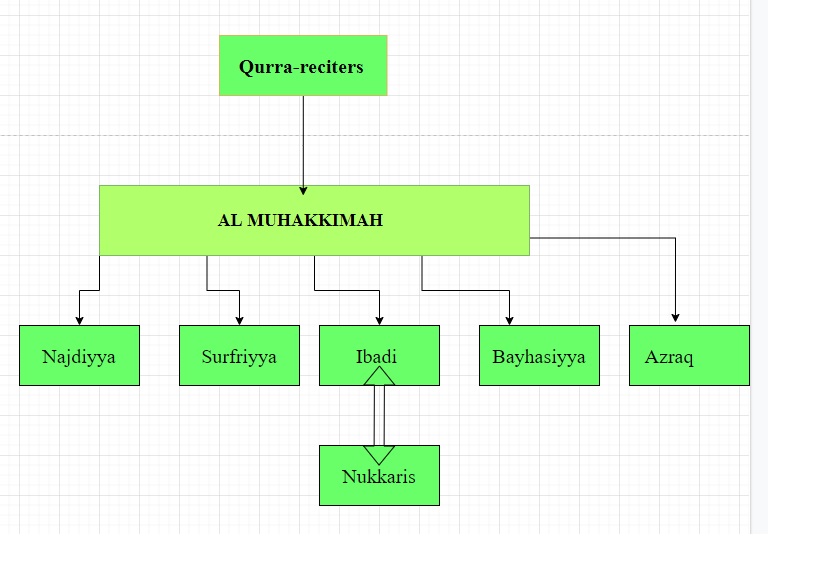


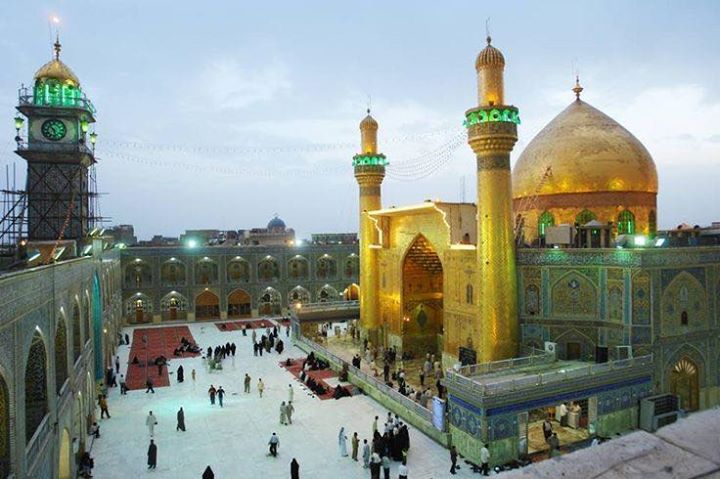


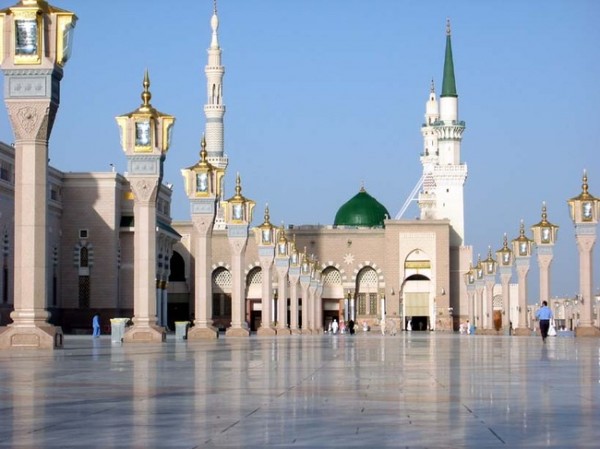
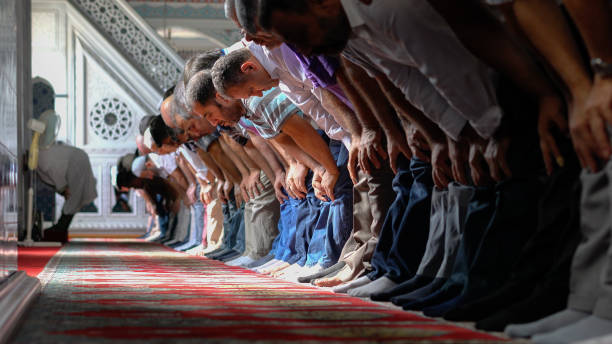
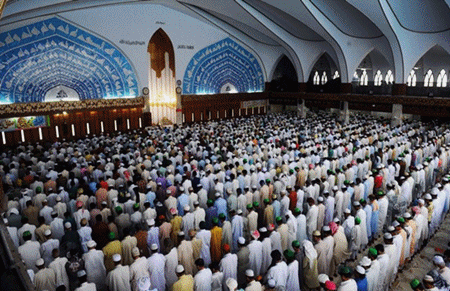


 Prima Quran