Tag Archives: nizari

Hadith on Ghadir Khum ?

“He who was dead and whom We raised to life, and We set a light for him to walk among men – is he like the one steeped in darkness out of which he does not come out? Thus have their own doings been made to seem fair to the unbelievers.” (Qur’an 6:122)

“And obey Allah and obey the Messenger. But if you turn away, then Our Messenger is responsible only for conveying the message (l-balaghu) clearly(l-mubina)(Quran 64:12)

“But if you they turn away [Prophet], remember that your only conveying this message clearly.” (Qur’an 16:82)
﷽ 

“The Day when no relation (mawlan) will avail a relation (mawlan) at all, nor will they be helped .” (Qur’an 44:41)

“You see, then the Imamate goes from the Imam to his first cousin, and when the first cousin dies, then the Imamate goes to his first cousin and so on. Because that is the Sunnah of the Prophet (saw).” Huh?🤨🧐

First and foremost, let us be clear.

The Blessed Prophet (saw) did not organize some event known as Ghadir Khum. The way that Shi’i and Pro-Alids portray the event, they make it sound as if the Blessed Prophet (saw) organized some event and gathered everyone together.

Those who say this are either ignorant or extremely deceptive. The Blessed Prophet (saw) is responding to an incident that we later know to be the incident at Ghadir Khum. This, in of itself, is a major cause for reflection.

Why a cause for major reflection? Because if there was no complaint about Ali, then there would be no occasion for the Blessed Prophet (saw) to say and do what he (saw) did.


To make a major declaration is a proactive measure, not a response to an incident. If the Blessed Prophet (saw) had intended to appoint a successor, he would have done so proactively and publicly, not as a reaction to grumblings.

Second major point.

There is no such thing as ‘The’ hadith of Ghadir Khum. We had to correct a Zaydi Shi’i at this point. We informed him there was no such hadith. As if it is an ahad narration with only one type of matn (textual tradition). That is simply not true. What is true, however, is that there is The’ incident of Ghadir Khum, and then we have many narrations of that incident with many textual variations.

Thus, the first point of difference is upon which of these chains are established and which of them contain weaknesses. The process of separating the wheat from the chaff.

Which brings us to the second point. These hadith are not Tawātur.

The third point of difference is sorting out the textual variants. What actually was said? Why would certain sects in Islam prefer textual variants over others?

For example. Does it sauce up what the Blessed Prophet (saw) is alleged to have said?

Let us give an example of this.

Oh Allah! Love those who love him (‘Ali) and antagonize those who antagonize him; and help those who help him and forsake those who forsake him” has been one of those additions meant to sauce up the original statement of the Blessed Messenger (saw).

Source: (Among those who have said so, is Al-Imam Ahmad bin Hanbal as quoted by Ibn Kathir in his Al-Bidaya Wa Al-Nihaya 7, p. 348. Ibn Taymiyya in his Minhaju Al-Sunnah Vol. 4, p. 86, this is so in accordance with the quotation of him by Al-Sayyid Al-Saqqaf in his Al-Salafiyya Al-Wahabiyya p. 65. Also, Ibn Hazm, as quoted by Al-Sayyid Al-Saqqaf op. ct., has classified the tradition as an inauthentic one.)

“The first addition commonly cited, “Allahummu wali man walahu wa ‘adi man ‘adahu (O Allah, befriend whosoever befriends him and be the enemy of whosoever is hostile to him).”

This additional wording of the hadith, “O Allah, befriend whosoever befriends him and be the enemy of whosoever is hostile to him,” is an uncorroborated addition by the narrator, Sharik ibn ‘Abdullah al Qadi, who is weak of memory.[15] As such it will be treated as an irregular addition which means that these additional words are not considered to be the Prophet’s salla Llahu ‘alayhi wa sallam words. However, some scholars have accepted only this addition to be part of the Hadith.”

Source: (https://mahajjah.com/answering-the-allegation-ali-was-appointed-as-khalifah-at-ghadir-khumm-new-upload/)

What is the motivation? The motivation is obvious. It is to try and prove that Ali was in Wilāyat al-Ḥaqīqah (real guardianship of Allah), whereas he (Ali) only has the Wilāyatal-Dhahir.

However, let us assume that the statement is correct. What would this mean in the wider scope of the Sharī’ah?

The one that hates ‘Ali without any lawful reason for which it is incumbent upon a Muslim to hate another, has, by so-doing, committed a sin.

This point of view is basically founded on the fact that Islam has one general and equal outlook on all Muslims, which means that Allah antagonizes anyone that hates a Muslim without having a valid, sound reason based upon Islam is in error.

It is for this reason that Allah, in one of the Ahadith Qudsiyya (Divine hadiths), says: “Whosoever shows enmity to someone devoted to Me, I shall be at war with him.”

Source: (https://sunnah.com/qudsi40:25)

Narrated Abu Huraira:

Allah’s Messenger (saw) said, “Allah said, ‘I will declare war against him who shows hostility to a pious worshipper of Mine. And the most beloved things with which My slave comes nearer to Me, is what I have enjoined upon him; and My slave keeps on coming closer to Me through performing Nawafil (praying or doing extra deeds besides what is obligatory) till I love him, so I become his sense of hearing with which he hears, and his sense of sight with which he sees, and his hand with which he grips, and his leg with which he walks; and if he asks Me, I will give him, and if he asks My protection (Refuge), I will protect him; (i.e. give him My Refuge) and I do not hesitate to do anything as I hesitate to take the soul of the believer, for he hates death, and I hate to disappoint him.”

Source: (https://sunnah.com/bukhari/81/91)

The irony of the above text is that Ali antagonizes Aisha (ra), who is in Wilāyat al-Ḥaqīqah (real guardianship of Allah), whereas he (Ali) only has the Wilāyatal-Dhahir (apparent guardianship) If the hadith reports are to be believed where Ali antagononizes Aisha (ra) in the story of ‘ifk.

 The verses that Allah (swt) mentions below is the is are in regard to different types of Wilāyat.

Example: (Wilāyatal-Dhahir apparent guardianship), which all believers based upon their dhahir (apparent) share with each other.

“The believing men and believing women are friends (awliyau) of one another. They enjoin what is right and forbid what is wrong and establish prayer and give zakah and obey Allah and his Messenger. Those-Allah will have mercy upon them. Indeed, Allah is Exalted in Might and Wise.” (Qur’an 9:71)

Example: (Wilāyat al-Ḥaqīqah real guardianship of Allah)

“Lo, verily, the friends (awliyaa) of Allah are those on whom fear comes not, nor do they grieve. Those who believe and keep their duty to Allah.(Qur’an 10:62-63)

“Then those who We chose of Our servants inherited the Book. But of them are some who wrong themselves and of them are some who are intermediate, and of them are some who outstrip others through their good deeds, by Allah’s leave.” (Qur’an 35:32)

So all those who believe and keep their duty they are in wilayat with Allah (swt). He knows best who they are. Thus, to hate a believer without a valid reason constitutes a sin.

The strongest tie of Islam is to love and hate for the sake of Allah.

Narrated Abu Umamah: The Prophet (saw) said: “If anyone loves for Allah’s sake, hates for Allah’s sake, gives for Allah’s sake and withholds for Allah’s sake, he will have perfect faith.”

Source: (https://sunnah.com/abudawud:4681)

This is regardless of one’s familiar ties, clan ties, or social economic status. After all, was this not true from the time of the early companions? They fought those who were their family, their tribe, clan or even of the same social or economic status. This is because we love and hate for Allah’s sake!

The one that hates Ali without any lawful reason for which it is incumbent upon a Muslim to hate another, has, by so-doing, committed a sin.

Whereas the one who hates Ali for a lawful reason and dissociates from him for a sin he may have committed is a dutiful servant of Allah

So those Shi’i or Pro-Alids who are telling you there is such a hadith known as ‘Ghadir Khum’ are either ignorant or being extremely deceptive. As we mentioned, there are variations of the incident.

The third point of difference and perhaps the real point of contention is what the incident really means and what it entails.

To us, this incident concerning Ghadir Khum is really quite simple to address.

The concept of Muslims being ruled by Imams in the lineage of the Blessed Prophet (saw) is not a clear teaching in the Qur’an, and it is a huge reason why Shi’i (Imami & Zaydi) are quick to deflect any conversation about it from the Qur’an and quickly rush to the secondary sources of Islam. Fair enough.

One of the most important aspects of Islam is the five daily prayers. Every Muslim knows how to perform the five daily prayers one would need to turn to the Sunnah of the Blessed Messenger (saw). However, the actions mentioned in the Qur’an: Prayer, Zakat, etc. are doings which are explained via the Sunnah.

Whereas the belief in Imams is a belief and does not relate to actions and doings, thus, it remains a huge point of constant embarrassment for the Shi’i. Why isn’t such a major belief not simply spelled out in the Qur’an? Thus, the hadith is the hill they must live or die upon.

So a few questions are in order.

  1. Why wasn’t this occasion a proactive measure and public proclamation rather than a response to a complaint?  Strongly suggesting that without the complaint no statement would have been made.
  2. Why didn’t the blessed Messenger (saw) reveal such a belief while in Mecca when more people would have heard this?
  3. If this hadith is the time in which the Blessed Prophet (saw) is expounding upon the truth of Ali and his future role, is that a tacit admission that the Qur’an is silent about following Imams?
  4. If the answer is Yes to question 2, then let that stand on the record.
  5. If the answer is no, which ayat of the Qur’an is this hadith elaborating upon?

The incident of Ghadir Khum as narrated by Imam Al-Bukhari in his Sahih, and the commentary of Fath Al-Bari.

Explanation of Sahih Al Bukari by Ahmad ibn Ali ibn Hajar al-Asqalani.

This is the summary:

Khalid bin Al-Walid and Buraidah Al-Aslami were in Yemen to fight in the way of Allah and to call people to Islam, so the Messenger of Allah (saw), sent Ali to them to “seize the spoils.” Ali came and took the spoils, and his eyes fell on a Yemeni girl whom he liked, so he took her into the tent, after he fufilled what he did with her, and went out to the companions, his head dripping with water.

Khalid bin Al-Walid said to Buraidah: Don’t you see what this man is doing??? Buraydah became angry and decided to file a complaint against him to the Blessed Messenger (saw).

It maybe that he filed a complaint for the following reasons:

The first possible reason. Having intercourse with female slaves is subject to conditions and laws.

The most important of which is: Waiting for the woman to be purified. She may already be married, so in order for lineages not to be mixed, the waiting period or waiting period must end. Some scholars patched up Ali’s case and said: The Yemeni woman might be a child who does not menstruate!! That is why Ali saw it permissible to have intercourse with her without waiting for her period to be completed!

Then we respond with the question: Is it permissible to have intercourse with young girls who have not even menstruated? Based upon what?

Then think about these people who think they are defending Ali. That out of all the war booty he only found this young girl? How is that a defense?

The second possible reason. How could Ali divide and choose for himself?

The blessed Prophet (saw) sent him “to collect the fifth only,” and Buraidah saw that the division should be divided only by the Imam, who is the Prophet, (saw) When the Blessed Prophet (saw) had seen the anger in Buraidah, he said to him: “O Buraidah, do you hate Ali?” Buraidah said: (Yes).

Here the Blessed Prophet (saw), wanted not to increase the gap of hostility and to mend the rift and reconcile and bring the Companions together. So the Blessed Messenger of Allah (saw) said: “Do not hate him, for he has more than that in the fifth.” Meaning: Ali originally had a right to the spoils, so do not hate him for this.

The story ends at this point, and the details of what happened after that have not reached us.

Source: (https://www.islamweb.net/ar/library/content/52/7846/) You can translate Arabic into English (or your preferred language). Kindly do not forget to scroll down to see the full text.

Narrated Buraida:

The Prophet (saw) sent `Ali to Khalid to bring the Khumus (of the booty) and I hated `Ali, and `Ali had taken a bath (after a sexual act with a slave-girl from the Khumus). I said to Khalid, “Don’t you see this (i.e. `Ali)?” When we reached the Prophet (saw), I mentioned that to him. He said, “O Buraida! Do you hate `Ali?” I said, “Yes.” He said, Do you hate him? Because he deserves more than that from the Khumlus.”

Source: (https://sunnah.com/bukhari:4350)

“O Buraidah, do you hate Ali? Buraidah said: “Yes.”

Note: The Blessed Messenger (saw) did not say: “You have left Islam, O Buraydah, O Nasibi! Do you not know that hating Ali is disbelief and hypocrisy?” “You must repent, O Buraydah, from your disbelief and enter Islam once again.” None of this happened!

All that the Blessed Prophet (saw) said: Ali has a right to the spoils, so do not hate him because of this matter.

So we ask the Sunni Muslims (not the Shi’i) if the “hatred of Ali bin Abi Talib” is hypocrisy and unbelief then did the companion Buraidah Al-Aslami fall into hypocrisy and apostasy?

You have two bitter options:

If you say no, he did not commit hypocrisy nor unbelief, because hating Ali is not one of the things that leads to hypocrisy nor disbelief. Especially if love and hate is done for the sake of Allah (swt). Then let that stand on the record.

If you say yes, then he (Buraidah), a companion of the Blessed Prophet (saw) by your admission, has committed hypocrisy and worse yet, disbelief!

After hearing that Buraidah hated Ali, the response of the Blessed Prophet (saw) was very mild. He simply told him that the hate was misplaced.

Shi’i are often involved in some major gas lighting when it comes to Ghadir Khum.

They gaslight by saying: “Did the Prophet really bring all these people together simply to say Ali is my buddy?”

This is just gas lighting by them, and they should know better. Everyone knows that the event was not orchestrated by the Blessed Prophet (saw). That is just beyond absurd. Rather, the Blessed Prophet (saw) is reacting to an event that happened. Nothing he orchestrated, so the gas lighting done by the Shi’i is exactly that: gas lighting.

Shi’i scholar Syed Husain Mohammad Jafri lays out some highlights for us:

You may read his biography here: https://al-islam.org/person/sayyid-husayn-muhammad-jafari

“The bone of contention between the Sunnis and the Shi’a is not, however, and never has been, the authenticity of the event of Ghadir Khum, nor the declaration of the Prophet in favour of ‘Ali, as quoted above: the real disagreement is in the meaning of the word ‘mawla’ used by the Prophet. The Shi’a unequivocally takes the word in the meaning of leader, master, and patron, and therefore the explicitly nominated successor of the Prophet. The Sunnis, on the other hand, interpret the word mawla in the meaning of a friend, or the nearest kin and confidant.” –Sayyid Husayn Muhammed

“No doubt the richness of the meaning of many an Arab word and the resulting ambiguity does render both the interpretations equally valid. The Sunnis, while accepting the tradition, assert that in that sentence the Prophet simply meant to exhort his followers to hold his cousin and the husband of his only surviving daughter in high esteem and affection.”-Sayyid Husayn Muhammed

“Further, the Sunnis explain the circumstance which necessitated the Prophet’s exhortation in that some people were murmuring against ‘Ali due to his harsh and indifferent treatment in the distribution of the spoils of the expedition of Al-Yaman, which had just taken place under ‘Ali’s leadership, and from where he, along with those who participated in the expedition, directly came to Mecca to join the Prophet at the Hajj.”-Sayyid Husayn Muhammed

“To dispel these ill feelings against his son-in-law, the Prophet spoke in this manner. Accept this explanation as such, the fact still remains that this declaration of the Prophet in such an extraordinary manner, equating ‘Ali as an authority and person with himself, does provide a strong basis for the Shi’i claims.”-Sayyid Husayn Muhammed

“Taking for granted the controversial character in interpreting of the Ghadir tradition, the events mentioned above could have been understood by some of the Prophet’s Companions as indicative of his inclination towards ‘Ali, though he did not or could not nominate him explicitly, perhaps because of the old North Arabian custom of leaving the selection of a leader to the people. A commonly suggested obstacle in the way of ‘Ali is said to have been his comparatively young age at the time of Muhammed’s death.” –Sayyid Husayn Muhammed

Source: The Origins and Early Development of Shia Islam by Sayyid Husayn Muhammed Ja’fari Chapter 2: The First Manifestations https://al-islam.org/origins-and-early-development-shia-islam-sayyid-husayn-muhammad-jafari

“Some try to explain the circumstances which led the Prophet to his pronouncement. In their view, the problem was that a number of people were grumbling about ‘Ali because of the way he dealt with the distribution of the spoils in the al-Yaman expedition. This expedition had just been successfully executed under ‘Ali’s leadership and he and others who had taken part in it had gone directly to Mecca to join the Prophet in the pilgrimage. The Prophet was, they argue, merely trying to dispel these ill-feelings against ‘Ali.” -Arzina R. Lalani

Source: (Early Shi’i Thought: The Teachings of Imam Muhammed al-Baqir by Arzina R. Lalani page 72)

Ghadir Khum is possibly one of the more weaker arguments advanced.

To us, this has to be the weakest evidence used by the Shi’i for their claim. This also shows weakness in Ali -if we are to believe the Shi’i narrative.

We are not saying that we believe Ali to be weak. However, if we are to believe the narrative of the Shi’i, it certainly shows weakness in Ali.

In fact, we believe it shows weakness on behalf of Ali. We are not saying that we believe that Ali was weak. We are saying the events as they are related to us show weakness.

They also show that those people who complained about Ali and his treatment of the spoils of battle certainly were not aware of any concept of some infallible imam. Or some Imam who is beyond reproach.

So it was after this event that the Blessed Prophet (saw) is reported to have said:

“For whoever, I am his Mawla, then ‘Ali is his Mawla.” –Source: (https://sunnah.com/tirmidhi:3713)

So let us quote from the Qur’an.

“The Prophet is a friend (awla) to the believers more than they are to their own selves, and his wives are their mothers. Blood relations have more rights to one another, according to the Book of Allah, than do the believers and Muhajirun. Nevertheless, you may act kindly toward your (awla) friends. All this is inscribed in the Book.” (Qur’an 33:6)

  1. The Prophet (saw) is a friend to the believers. He is or should be dearer to us than we are to ourselves.

Say, “If your fathers, your sons, your brothers, your wives, your relatives, wealth which you have obtained, commerce wherein you fear decline, and dwellings with which you are pleased are more beloved to you than Allah and His Messenger and jihad in His cause, then wait until Allah executes His command. And Allah does not guide the defiantly disobedient people.” (Qur’an 9:24)

2) Keeping the blood ties/familiar ties.

“O men! Fear your Lord Who created you from a single being and out of it created its mate; and out of the two spread many men and women. Fear Allah in Whose name you plead for rights, and heed the ties of kinship. Surely, Allah is ever watchful over you.” (Qur’an 4:1)

3) There is nothing new or novel in the idea that either the Blessed Prophet (saw) or Ali being a mawla.

“The believing men and believing women are friends (awliyau) of one another. They enjoin what is right and forbid what is wrong and establish prayer and give zakah and obey Allah and his Messenger. Those-Allah will have mercy upon them. Indeed, Allah is Exalted in Might and Wise.” (Qur’an 9:71)

4) His wives are their mothers. Ask your Shi’i friend, “Is Ayesha (ra) your mother?”

5) Nevertheless, you may act kindly toward your (awla) friends

The Blessed Prophet (saw) always had a beautiful and gentle way about him. So in saying, ‘Whoever I am his Mawla, then Ali is his Mawla‘ is a gentle reminder to those who took issue with Ali during the expedition. And if it is true that a verse of the Qur’an is quoted, the context itself tells us that we can act kindly towards our ‘awla’ and certainly one could believe that Ali was an awla of the believers during that time.

He (Ali)had the (Wilāyatal-Dhahir apparent guardianship), which all believers based upon their dhahir (apparent) share with each other.

Al-walāya (allegiance) and al-barā’a (disavowal), are big teachings in Islam that, unfortunately, are not taught to the majority of Muslims.

We give an overview of the Ibadi school position here:

Also, notice what the author states above:

“Taking for granted the controversial character in interpreting of the Ghadir tradition, the events mentioned above could have been understood by some of the Prophet’s Companions as indicative of his inclination towards ‘Ali, though he did not or could not nominate him explicitly, perhaps because of the old North Arabian custom of leaving the selection of a leader to the people. A commonly suggested obstacle in the way of ‘Ali is said to have been his comparatively young age at the time of Muhammed’s death.” —Sayyid Husayn Muhammed

So then the author goes on to mention other young people who were on a council. So there is a tacit admission here that people decide things by council. Which happens to be a verse in the Qur’an. Unlike the Shi’i concepts which are nowhere in the Qur’an.

“So those who have responded to their lord and established prayer and whose affair is determined by consultation among themselves, and from what We have provided for them, they spend.” (Qur’an 42:38)

This one verse blows the whole idea of infallible imams right out of the water.

So an excellent question to ask about this Ghadir Khum would be to ask:

How did Ali Ibn Abi Talib himself understand it? Well, we get our answer right here!

Narrated `Abdullah bin `Abbas:

`Ali bin Abu Talib came out of the house of Allah’s Messenger (saw) during his fatal illness. The people asked, “O Abu Hasan (i.e. `Ali)! How is the health of Allah’s Messenger (saw) this morning?” `Ali replied, “He has recovered with the Grace of Allah.” `Abbas bin `Abdul Muttalib held him by the hand and said to him, “In three days you, by Allah, will be ruled (by somebody else ), And by Allah, I feel that Allah’s Apostle will die from this ailment of his, for I know how the faces of the offspring of `Abdul Muttalib look at the time of their death. So let us go to Allah’s Messenger (saw) and ask him who will take over the Caliphate. If it is given to us we will know as to it, and if it is given to somebody else, we will inform him so that he may tell the new ruler to take care of us.” `Ali said, “By Allah, if we asked Allah’s Apostle for it (i.e. the Caliphate) and he denied it us, the people will never give it to us after that. And by Allah, I will not ask Allah’s Messenger (saw) for it.”

Source: (https://sunnah.com/bukhari:4447)

Clear as day that the Ghadir Khum did not delegate Ali as the Amir of the Muslims!

Clear as day that Ali did not see himself as the default Amir of the Muslims!

Clear as day that Ali could see the Blessed Messenger (saw) as possibly denying the Caliphate to him!

In fact, what Ali seemed to be most distressed about was the $$$. That is a very practical concern.

Now the Shi’i will actually say that Ali was practicing Taqiya or dissimulation. Our response to that could be as follows: “Yes! This whole idea of Ali and Fatima (ra) being upset with Abu Bakr (ra) was possibly the taqiya! It was done between them so they could find and root out the real enemies of Abu Bakr(ra).”


We know that it is quite plausible that Ali, in his heart of hearts, loved Abu Bakr (ra) and one of the huge proofs of that is that out of all the names he could have possibly chosen for his children, he named one Abu Bakr(ra)!

Shi’i, outraged over this, will retort: “It was a common name!” Yeah, well, so is Larry, Lester and Kyle and yet not every Englishman names his child one of these names.

The Jews do not name their heir children Yeshu (Joshua), the Hebrew form of Jesus. That is done because of the extreme disdain they have for Jesus (as). However, Ali did not have that disdain towards Abu Bakr (ra).

Some of the Shi’i seem to imply that Ali went against this verse of the Qur’an.

“O you who have believed, obey Allah and obey the Messenger and those in authority among you. And if you disagree over anything, refer it to Allah and the Messenger, if you should believe in Allah and the Last Day. That is the best [way] and best in the result.” (Qur’an 4:59)

Narrated `Aisha:

Fatima the daughter of the Prophet (saw) sent someone to Abu Bakr (when he was a caliph), asking for her inheritance of what Allah’s Messenger (saw) had left of the property bestowed on him by Allah from the Fai (i.e. booty gained without fighting) in Medina, and Fadak, and what remained of the Khumus of the Khaibar booty. On that, Abu Bakr said, “Allah’s Messenger (saw) said, “Our property is not inherited. Whatever we leave, is Sadaqa, but the family of (the Prophet) Muhammad can eat of this property.’ By Allah, I will not make any change in the state of the Sadaqa of Allah’s Messenger (saw) and will leave it as it was during the lifetime of Allah’s Messenger (saw), and will dispose of it as Allah’s Messenger (saw) used to do.” So Abu Bakr refused to give anything of that to Fatima. So she became angry with Abu Bakr and kept away from him, and did not task to him till she died. She remained alive for six months after the death of the Prophet. When she died, her husband `Ali, buried her at night without informing Abu Bakr and he said the funeral prayer by himself. When Fatima was alive, the people used to respect `Ali much, but after her death, `Ali noticed a change in the people’s attitude towards him. So `Ali sought reconciliation with Abu Bakr and gave him an oath of allegiance. `Ali had not given the oath of allegiance during those months (i.e. the period between the Prophet’s death and Fatima’s death). `Ali sent someone to Abu Bakr saying, “Come to us, but let nobody come with you,” as he disliked that `Umar should come, `Umar said (to Abu Bakr), “No, by Allah, you shall not enter upon them alone ” Abu Bakr said, “What do you think they will do to me? By Allah, I will go to them’ So Abu Bakr entered upon them, and then `Ali uttered Tashah-hud and said (to Abu Bakr), “We know well your superiority and what Allah has given you, and we are not jealous of the good what Allah has bestowed upon you, but you did not consult us in the question of the rule and we thought that we have got a right in it because of our near relationship to Allah’s Messenger (saw).” Immediately Abu Bakr’s eyes flowed with tears. And when Abu Bakr spoke, he said, “By Him in Whose Hand my soul is to keep good relations with the relatives of Allah’s Messenger (saw) is dearer to me than to keep good relations with my own relatives. But as for the trouble which arose between me and you about his property, I will do my best to spend it according to what is good, and will not leave any rule or regulation which I saw Allah’s Messenger (saw) following, in disposing of it, but I will follow.” On that `Ali said to Abu Bakr, “I promise to give you the oath of allegiance in this afternoon.” So when Abu Bakr had offered the Zuhr prayer, he ascended the pulpit and uttered the Tashah-hud and then mentioned the story of `Ali and his failure to give the oath of allegiance, and excused him, accepting what excuses he had offered; Then `Ali (got up) and praying (to Allah) for forgiveness, he uttered Tashah-hud, praised Abu Bakr’s right, and said, that he had not done what he had done because of jealousy of Abu Bakr or as a protest of that Allah had favored him with. `Ali added, “But we used to consider that we too had some right in this affair (of rulership) and that he (i.e. Abu Bakr) did not consult us in this matter, and therefore caused us to feel sorry.” On that, all the Muslims became happy and said, “You have done the right thing.” The Muslims then became friendly with `Ali as he returned to what the people had done (i.e. giving the oath of allegiance to Abu Bakr).”


Source: (https://sunnah.com/bukhari:4240)

Also note that this section: “So she became angry with Abu Bakr and kept away from him, and did not task to him till she died.” is not authentically attributed to Aisha. It known as idraj (interpolation) which has been added by Al Zuhri.

“O you who have believed, whoever of you should revert from his religion – Allah will bring forth in place of them a people He will love and who will love Him, Who are humble toward the believers, powerful against the ungrateful disbelievers; they strive in the cause of Allah and do not fear the blame of a critic. That is the favor of Allah; He bestows it upon whom He wills. And Allah is All-Encompassing and Knowing. Your ally (waliyykumu) is none but Allah and His Messenger and those who have believed – those who establish prayer and give zakah, and they bow in worship. And whoever is an ally of Allah and His Messenger and those who have believed – indeed, the party of Allah – they will be predominant.” (Qur’an 5:54-56)

To us, this has to be the weakest evidence used by the Shi’i for their claim. This also shows weakness in Ali. We are not saying that we believe Ali to be weak, but if we are to believe the narrative of the Shi’i, it certainly shows weakness in Ali.

Consider what Allah (swt) said to the Blessed Messenger (saw)

“O Messenger, announce that which has been revealed to you from your Lord, and if you do not, then you have not conveyed His message. And Allah will protect you from the people. Indeed, Allah does not guide the disbelieving people.” (Qur’an 5:67)

If this was true for the Blessed Prophet (saw), what did Ali have to fear if none other than Allah (swt)?

“And [remember, O Muhammed], when you said to the one on whom Allah bestowed favor and you bestowed favor, “Keep your wife and fear Allah ,” while you concealed within yourself that which Allah is to disclose. And you feared the people, while Allah has more right that you fear Him.” (Qur’an 33:37)

If Allah (swt) chided the Prophet (saw) for being concerned with what people thought, doesn’t Ali deserve to be reprimanded for fearing the people?
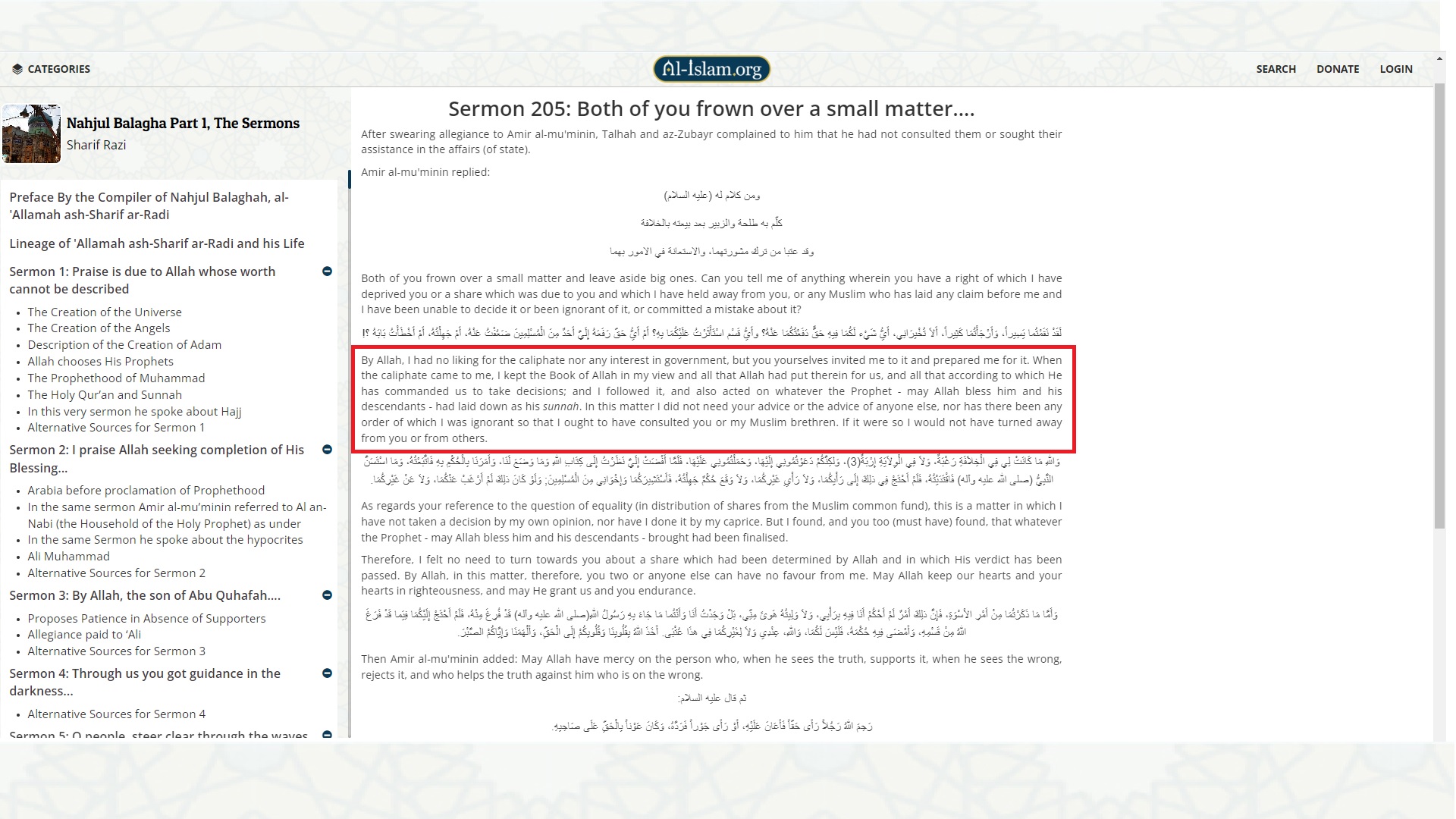
“By Allah, I had no liking for the caliphate nor any interest in government, but you yourselves invited me to it and prepared me for it. When the caliphate came to me, I kept the Book of Allah in my view and all that Allah had put therein for us, and all that according to which He has commanded us to take decisions; and I followed it, and also acted on whatever the Prophet – may Allah bless him and his descendants – had laid down as his sunnah. In this matter I did not need your advice or the advice of anyone else, nor has there been any order of which I was ignorant so that I ought to have consulted you or my Muslim brethren. If it were so I would not have turned away from you or from others.”

Source: (Nahjul Balagha Sermon 205 https://al-islam.org/nahjul-balagha-part-1-sermons/sermon-205-both-you-frown-over-small-matter)

This sermon is said to have happened long after the Blessed Prophet Muhammed (saw) died. This sermon itself proves that Ali never considered that he was already the appointed Khilafa of the Muslims.


He said, “When the Caliphate came to me,” This means he was not the Caliph at the time; he recognized it as such and nor did he want it. Someone who is divinely appointed by Allah (swt) to the Khilafa of the Muslims takes pride in it, claims it and upholds that as a great trust.

Someone who recognizes they are not divinely appointed but that people have chosen who will lead them and then gets forced into a position of leadership makes the kind of statements that Ali made above.

Shi’i claims about Ghadir Khum are so aggrandizing, sensational and melodramatic because their belief system (being ruled by Imams from Ahl Bayt) is not foundational to the Qur’an!

Shi’i impute failure to the Blessed Prophet (saw) if we are to believe their sensational claims.

Remember, that Allah (swt) instructed the Blessed Prophet (saw) the following:

“O Messenger, announce that which has been revealed to you from your Lord, and if you do not, then you have not conveyed His message. And Allah will protect you from the people. Indeed, Allah does not guide the disbelieving people.” (Qur’an 5:67)

“And obey Allah and obey the Messenger. But if you turn away, then Our Messenger is responsible only for conveying the message (l-balaghu) clearly(l-mubina)(Quran 64:12)

“But if you they turn away [Prophet], remember that your only conveying this message clearly.” (Qur’an 16:82)

What the Shi’i do with Ghadir Khum is akin to what many Christians try to do with passages of the TNCH. No one reading the passages will see Jesus (as) in the text unless they already come with the predisposition to want to see Jesus (as) in the text!

“And was there until the death of Herod: that it might be fulfilled which was spoken of the Lord by the prophet, saying, Out of Egypt have I called my son.” (Matthew 2:15)

“When Israel was a child, I loved him, and out of Egypt I called my son. But the more they were called, the more they went away from me. They sacrificed to the Baals and they burned incense to images.” (Hosea 11:1-2)

None in their right mind does not see Jesus (as) in the text of Hosea 11:1-2. But when you are desperate to justify a belief, one will see what one needs to see.

Take, for example, this debacle in the ongoing debate between Christians and Jews concerning whether Jesus (as) was born of a virgin.

As Sheikh Ahmed Deedat has mentioned in his Pamphlet “Is the Bible God’s Word?” page 11:

“We do not have the time and space to go into the tens of thousands of — grave or minor —defects that the authors of the Revised Standard Version (RSV) have attempted to revise. We leave that privilege to the Christian scholars of the Bible. Here I will endeavor to cast just a cursory glance at a “half-a-dozen” or so of those “minor” changes.”


1. “Therefore the Lord himself shall give you a sign: Behold, a VIRGIN shall conceive, and bear a son, and shall call his name Immanuel.” (Isaiah 7:14 – AV)
The indispensable “VIRGIN” in the above verse has now been replaced in the RSV with the phrase “a young woman,” which is the correct translation of the Hebrew word almahAlmah is the word that has occurred all along in the Hebrew text and NOT bethulah which means VIRGIN. This correction is only to be found in the English language translation, as the RSV is only published in this tongue. For the African and the Afrikaner, the Arab and the Zulu, in fact, in the 1 500 other languages of the world, Christians are made to continue to swallow the misnomer “VIRGIN.”

Let us go back to the Qur’an.

“O Messenger, announce that which has been revealed to you from your Lord, and if you do not, then you have not conveyed His message. And Allah will protect you from the people. Indeed, Allah does not guide the disbelieving people.” (Qur’an 5:67)

“And obey Allah and obey the Messenger. But if you turn away, then Our Messenger is responsible only for conveying the message (l-balaghu) clearly(l-mubina)(Quran 64:12)

You know what would have been fantastic? You know what would have been great?

For the Prophet (saw) to gather as many people as he could: (Not responding to an incident) but taking the impetus to gather the greatest possible number of people together and say in his blessed and eloquent tongue:

“When I die you should be led by Ali. For he will judge all matters for you from the book of Allah and my Sunnah. When he dies, the eldest of his sons will then lead you. And the like for his sons. If two sons are born simultaneously, the first son out the womb will lead you.”

Voilà! Why is that so difficult? Why is it so difficult for the one who is the most noble in speech and has the sweetest of tongues? The answer is it is not difficult. It is simply that no such proclamation took place.

Dear brothers and sisters and truth seekers. We are not to be ruled by a particular tribe of people, be it the Qurash or the Children of Israel. It is not human destiny to be ruled by the Jews or the Arabs. We are not to be ruled over by a particular family. The Shi’i themselves are in disarray over that matter.

We are to be ruled by any righteous Muslim (regardless of family, tribe, ethnicity) that meets and fulfils the conditions to be the Imam.

May Allah (swt) guide us to what is beloved to Allah (swt).

Let us be honest. The Caliphate of Ali was a short 5 years in which most of the time his sword was wet with the blood of the believers. Have you ever noticed that there is really a dearth of literature concerning the Muslim accomplishments during the time of Ali? We ask you what barakah really came from his leadership, if we are, to be honest? His caliphate was a tragedy that is only remembered for tragedies.

The Ahl Bayt are above reproach.

It was narrated from Jabir that:

“A woman from Banu Makhzum stole (something), and she was brought to the Prophet. She sought the protection of Umm Salamah, but the Prophet said: “If Fatimah bint Muhammad were to steal, I would cut off her hand.” And he ordered that her hand be cut off.”

Source: (https://sunnah.com/nasai:4891)

Now if one did have to cut off the hand of Fatimah (ra) for theft does that mean one would need to hate her? This does not make sense. Likewise if Ali had to punish someone for violation of the law does that mean Ali would have to hate that person? That does not make sense.

There is but only one beautiful soul that each Muslim strives to emulate with every fiber of his or her being.

It is not Abu Bakr(ra) . It is not Umar Ibn Al Khattab (ra). It is not Uthman Ibn Affan. It is not Ali ibn Abi Talib.

IT IS

“We have not sent you, save as a mercy unto all beings. (Qur’an 21:107)

May Allah (swt) Forgive the Ummah.

May Allah (swt) Guide the Ummah.

If you enjoyed this article you may wish to read the following:

https://primaquran.com/2024/05/10/a-garden-variety-refutation-of-shiaism/

https://primaquran.com/2022/10/04/are-we-to-follow-infallible-imams-according-to-the-holy-quran/

https://primaquran.com/2022/10/04/the-ibadi-stance-on-ali-bin-abi-talib/

https://primaquran.com/2023/04/28/examining-the-hadith-ali-is-with-the-truth-and-the-truth-is-with-ali/

https://primaquran.com/2023/02/13/questions-every-sincere-shii-must-ask-concerning-siffin-and-nahrawan/

May Allah Forgive the Ummah.

May Allah Guide the Ummah.
9 Comments

Filed under Uncategorized

Imami Shi’a 700 years no Imam and no Prophet?

We sent a messenger to every community, saying, ‘Worship Allah and shun false gods.’ Among them were some Allah guided; misguidance took hold of others. So travel through the earth and see what was the fate of those who denied the truth.” (Qur’an 16:36)

We have sent other messengers before you- some We have mentioned to you and some We have not- and no messenger could bring about a sign except with Allah’s permission.” (Qur’an 40:78)

“And remember, Jesus, the son of Mary, said: “O Children of Israel! I am the messenger of Allah (sent) to you, confirming the Law (which came) before me, and giving Glad Tidings of a Messenger to come after me, whose name shall be Ahmad.” But when he came to them with Clear Signs, they said, “this is evident sorcery!” (Qur’an 61:6)

﷽ 

Narrated Abu Huraira:

I heard Allah’s Messenger (saw) saying, “I am the nearest of all the people to the son of Mary, and all the prophets are paternal brothers, and there has been no prophet between me and him (i.e. Jesus).”

Source: (https://sunnah.com/bukhari:3442)

Whoever dies without knowing the imam of his time dies the death of unbelief.

Whoever dies without knowing the Imam of his time dies the death of a jāhiliyyah

Many of us have heard something narrated to us along these lines.

Now we are going to link to two sites that interact with that material. One will be a Sunni website and the other will be a 12er Shi’i website.

Now, obviously the idea of humanity being without an Imam/Prophet/Guide for 700 years is a real conundrum for Imami Shi’i.

However, there maybe a way around this. We do our level best to help the Imami Shi’i get out of this conundrum. So, the following justifications occurred to us.

Imami Shi’i (Jafari, Ismaili) could put forward the following argument. Though this would not be supported by historians or Orientalists, as it is in the domain of faith and belief.

That argument could be based upon the following verse with a particular understanding:

We have sent other messengers before you- some We have mentioned to you and some We have not- and no messenger could bring about a sign except with Allah’s permission.” (Qur’an 40:78)

That is, they would reject the hadith that states there is no prophet between Jesus (as) and the blessed Messenger, Muhammed (saw).

They could say that there is a prophet/imam sent between them, it’s just he is not known to us.

So then this begs the question. Seeing as how some Imami Shi’i interpret the hadith about dying without knowing the Imam of the time is tantamount to dying the death of kufr, what are we to do about this imam/prophet not being known for those 700 years?

The answer to this could be one of scope. Meaning that as long as some people know who he is, then it fulfills the requirement of him being known (at least to that small group).

Again, we do not have any historical evidence for this. At least someone who would fit the mold as per the Islamic model. Then again, it becomes a matter of belief.

Here is one particular Sunni understanding of the various hadiths about dying without knowing the Imam.

Yet, the issue of justice remains. If everyone did not have access to the Imam, and they died a death of kufr, how is this tallied against the Mercy and Justice of Allah (swt)?

Other schools of Muslim theology have a way of dealing with the question of the people of fatara (creation).

So where are the imams in this 700 year gap?

The Problem of the Missing List

This is the most empirically damning point. If the doctrine of continuous divine guidance through specific, identifiable individuals is true, then there should be a record. The Imami Shi’i tradition is meticulous in its documentation of the fourteen infallibles (the Prophet (saw), Fatima (ra), and the twelve Imams). They can provide birth dates, death dates, places of residence, titles, and specific sayings for each.

Yet, for the 600-year gap between Jesus(as)and Muhammed (saw), there is complete silence.

  • No names are given. Who were these “Wasī” (executors of will)? What were their names? Where did they live? Who did they teach?
  • No teachings are preserved. What did these guardians of the true religion teach? Do any of their sayings exist?
  • No chain of succession is documented. How was the “executorship” passed from one person to the next?

The contrast is stark. The Shi’i tradition can name the eleven Imams after the Prophet (saw), and the twelve Imams from Ali to al-Mahdi. But for the six centuries before the Prophet (saw), there is a vacuum. This silence is itself an argument. It suggests that this chain is not a matter of transmitted knowledge but a theological construct invented to solve the “gap” problem.

If this were a real doctrine taught by the Imams, they would have provided names. They did not.

The Verdict of History

Independent history, as we have noted, verifies nothing of this sort. The historical record for that period—from the 1st to the 6th century CE—is not empty. We have:

  • Roman and Byzantine histories documenting the rise of Christianity, the development of Church doctrine, and the various councils (Nicaea, Constantinople, Ephesus, Chalcedon).
  • Jewish histories (like the Talmud and the writings of Josephus) documenting the development of Rabbinic Judaism.
  • Arabian sources (inscriptions, poetry, and later genealogical works) documenting the polytheistic and Hanif traditions of the peninsula.

In none of these records do we find evidence of a continuous line of divinely appointed “Wasī” preserving a pristine monotheistic message. What we find instead is a world of religious diversity, controversy, and what Muslims would call corruption of earlier revelations.

If these guides existed and were known to “some people” (as per our earlier scope argument), then those “some people” left no trace. The claim becomes unfalsifiable and, therefore, theologically weak.

The Redundancy of Prophethood

This is the most profound theological point. If the true message was preserved through an unbroken chain of Wasī and disciples, then why send Muhammed (saw) at all?

The Qur’an itself answers this question repeatedly. It describes the mission of the Prophet in terms that assume a break in guidance:

“O People of the Scripture! There has come to you Our Messenger making clear to you much of what you used to conceal of the Scripture and overlooking much. There has come to you from Allah a light and a clear Book.” (Qur’an 5:15)

This verse implies concealment and loss. The Messenger comes to clarify what was hidden, not to repeat what was already known.

“That you not say on the Day of Resurrection, ‘Indeed, we were of this unaware.'” (Qur’an 7:172)

The very logic of sending prophets, as the Qur’an articulates it, is to remove excuses. If humanity always had access to a guide, the excuse would already be removed. The coming of Muhammed would be redundant.

Consider also:

“Mankind was one community; then Allah sent the prophets as bringers of good tidings and warners and sent down with them the Scripture in truth to judge between the people concerning that in which they differed.” (Qur’an 2:213)

The purpose of prophets is to resolve difference and restore unity. If the Wasī had been present, there would have been no fundamental difference to resolve. The very existence of religious diversity in the pre-Islamic world is evidence, from an Islamic perspective, that divine guidance had been lost or corrupted.

Wording and Authentication

The word ‘without knowing the Imam of his time’ is not mentioned in the hadith books.

As for the following hadith, which is, ‘Whoever dies without an Imam, dies a pre-ignorant-era death’ is mentioned in Muslim, Tabrani, Jam’u’l-Fawa’id, Musnad al-Tayalisi, Ilal al-Dar al-Qutni. Also, the following words are in the hadith book, ‘whoever dies and does not have the noose of allegiance on his neck has died a pre-ignorant-era death.’ [Muslim]

Nafi (may Allah have mercy on him) reports, (When they deposed Yazid and gathered on Abdullah Ibn Muti’) Ibn’ Umar (may Allah be pleased with him) came to Abdullah ibn Muti’. He said, Put up a pillow for Abu’ Abd al-Rahman (Abdullah ibn Umar). He replied, I did not come to sit down; I came to you to speak to you; I heard the Messenger of Allah (peace and blessings of Allah be upon him) say: “Whoever takes off a hand of obedience to Allah, on the Day of Judgment he has no argument, and whoever dies and does not have the noose of allegiance on his neck, has passed a pre-ignorant death.” [Muslim]

Explanation

The meaning of both the hadith is that if there is a Caliph/Supreme Leader (Imam), one should not break allegiance, and it is not permissible to go against him unless one sees clear disbelief. The companions put ahead the matter of appointing a Caliph before the burial of the Prophet (Allah bless him and give him peace), as it is necessary to appoint a Caliph who can fulfill and take care of its interests and rights, organize its army and collect its obligatory alms. Supreme leadership (Imamah) may be legally affected through the selection of those with discretionary power to enact or dissolve a pact (Ahl al-hall wa-l’-aqd) like the appointment of Abu Bakr (Allah be pleased with him), or through the caliph appointing a successor, for Abu Bakr appointed ‘Umar as his successor.  [Nahlawi, Al-Durar al-Mubaha]

Now how to 12er Imami Shi’i understand these collection of hadith?

https://al-m.ca/hadith-whoever-dies-without-an-imam/

Then the Sixth Imam says that: “The Messenger of Allāh said,

“مَنْ مَاتَ وَ لَا يَعْرِفُ إِمَامَهُ مَاتَ مِيتَةً جَاهِلِيَّةً

Whoever dies without knowing his Imam, he dies the death of jāhiliyyah.”

Jāhiliyyah is term used for pre-Islamic era and non-Islamic values. “Death of Jāhiliyyah” means that that person’s death is death of kufr, infidelity.

Then the Imam applies this ḥadīth to the Prophet Muḥammad (s) and the Imams of Ahlul Bayt (a). He said: “There was the Messenger of Allah (s) and after Rasul is ‘Ali (a). Some say Mu’āwiyah. Then Ḥasan (a), then Ḥusayn (a). And yet others says Yazid bin Mu‘āwiyah. Yazid and Husayn bin ‘Ali (a) are not same nor can you compare [Mu‘āwiyah with ‘Ali (a)]!”

The Imam was then silent for a moment until someone from the audience asked him to elaborate more. Then Imam said, “Then you have ‘Ali ibn al-Husayn (a) then Muhammad ibn ‘Ali, Abu Ja’far (a)…” (Then he describes the role of the Fifth Imam in educating the Shi’a about their faith and rituals).

Then the Imam says: “This is how the reality will be, and the earth does not remain without an Imam ever

مَنْ مَاتَ وَ لَا يَعْرِفُ إِمَامَهُ مَاتَ مِيتَةً جَاهِلِيَّةً

Prima-Qur’an comments:

So this is quite clear: No one should sugar coat anything. No need to be ecumenical. Imagine saying those that do not recognize the Imam of their time die the death of a kafir.

So this would mean the whole of Ahl Sunnah, the entire rest of humanity, the Ibadi, as well as other Shi’i sects that do not recognize the “real” and “true” Imam.

So, according to this line of thinking, Ismaili Shi’i and Zaydi Shi’i also died upon kufr. According to this line of thinking, 12er Shi’i and Zaydi Shi’i die upon kufr. According to this line of thinking, if Ahmad al-Mustalin is the rightful Imam, this would make the Nizari Ismailis Kafir. In contrast, if Nizar ibn Mustansir was the rightful Imam, this would make the Mustali -Tayyibi Ismailis Kafir.

So that is the information that is available and something for you all to think about.

Some additional thoughts.

We believe that the Sunni understanding of the hadiths (taken as a whole) is more sensible than the Shi’i view. However, we are very empathetic of the Imami Shi’i view with regard to humanity not being without a guide, Imam or Prophet.

Why?

Imagine an Atheist, Agnostic or Skeptic asks us as a Muslim: “Is the guidance of Allah good sometimes or all the time?” Quite naturally we as Muslims will say ‘The Guidance of Allah is good all the time!”

Which Muslim would pray, “Oh Allah guide me on Tuesday but not on Thursday?” Or “Oh Allah guide me in the month of June but not in the month of July?” It sounds ridiculous, right?

So, likewise, why would the creator not have a prophet/imam in those 700 years?

However, here is where the Shi’i /Imami view loses its traction with us at this point. This is where the rubber meets the road, so to speak.

They speak of ‘The Imam’ or ‘The Guide’, whereas it is more sensible for us to speak of Guides and Imams and Prophets (plural). How sensible is it to expect people living in South America to be able to not only understand the purpose of their Creation but to also now seek out this particular Imam or this particular prophet or this particular guide on a continent far, far away?

May Allah (swt) be our guide and may Allah (swt) suffice us.

If you are keen to read more articles about Shi’a perhaps you would be interested to read the following:

May Allah Guide the Ummah.
May Allah Forgive the Ummah.

2 Comments

Filed under Uncategorized

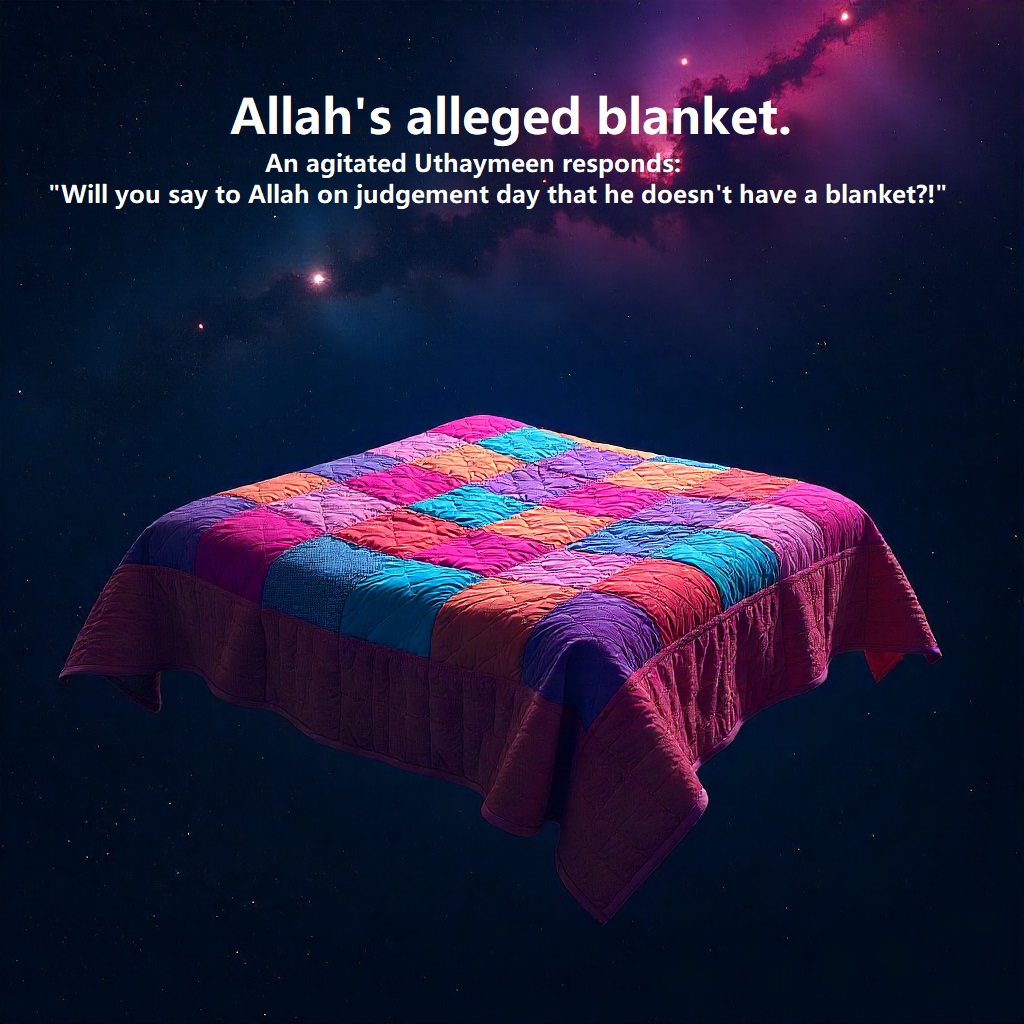
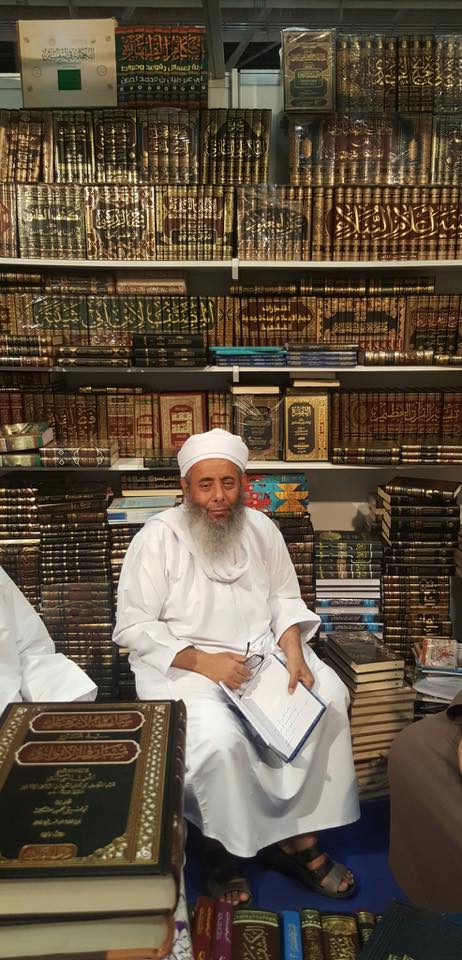
Salafi Shaykh Saleh Al Uthaymeen was asked about Allah’s blanket.

“They made not a just estimate of Allah such as is due to Him. ” (Qur’an 39:67)

﷽ 

So Shaykh Uthaymeen was asked about Allah’s blanket.

The questioner says, can we say it is a metaphor?

Uthaymeen is agitated. “Will you say to Allah on judgement day that he doesn’t have a blanket?!”

If you want to perfect your aqidah (your creed) in accordance with this bizarre sect then if it is affirmed that Allah (swt) has a blanket are you going to deny this?!


You may also be interested in reading the following:

https://primaquran.com/2022/10/05/salafi-shaykh-saleh-al-uthaymeen-and-his-controversial-beer-drinking-fatwa/

May Allah (swt) Guide the Ummah.

May Allah (swt) Forgive the Ummah.

Leave a comment

Filed under Uncategorized

I am at war with the one who is at war with Ali ?

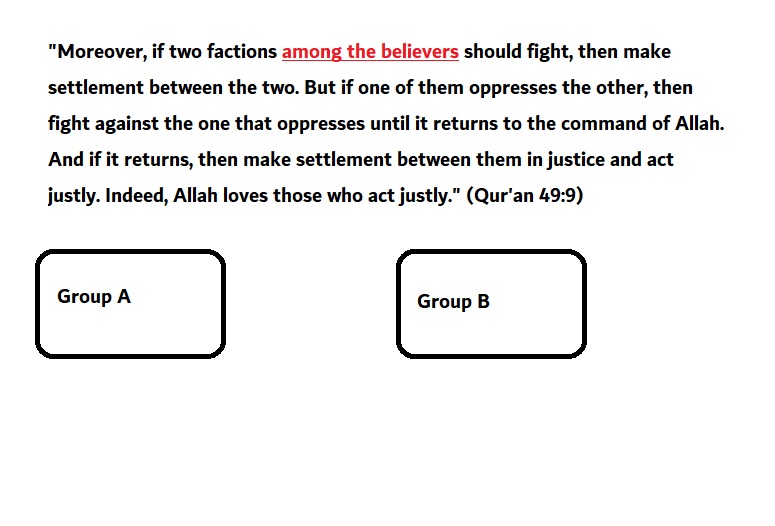
“Moreover, if two factions among the believers should fight, then make settlement between the two. But if one of them oppresses the other, then fight against the one that oppresses until it returns to the command of Allah. And if it returns, then make settlement between them in justice and act justly. Indeed, Allah loves those who act justly.” (Qur’an 49:9)

﷽ 

So today we are going to be looking at the following hadith:

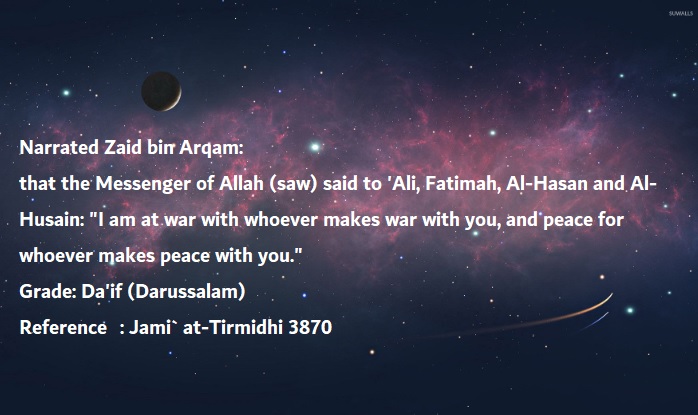
Narrated by Zaid bin Arqam:

That the Messenger of Allah (saw) said to ‘Ali, Fatimah (ra), Al-Hasan and Al-Husain (ra): “I am at war with whoever makes war with you, and peace for whoever makes peace with you.”

Source: (https://sunnah.com/tirmidhi:3870)

You can see from the above source that it has a grading of Da’if (meaning weak/fabricated).

Now, even without going into the chains of narrators, we know that this hadith has a major weakness.

However, let us say, for the sake of argument, that this hadith had a grading of Sahih (meaning sound). It would still have a defect. Not even a hidden one. Not even something that would require a hadith specialist.

It would require familiarity with the text of the Qur’an.

CONTROL GROUP A: BEING OPPRESSED

CONTROL GROUP B: DOING THE OPPRESSING.

So, in the above scenario. Ali, Fatimah (ra), Al-Hasan and Al-Husain (ra) could be in control group B. They could be doing the oppressing. However, since our interlocutors (Shi’i, Sunni, ect) will get emotionally charged over such a suggestion, we will not entertain it at this point.

Thus, Ali, Fatimah (ra), Al-Hasan and Al-Husain (ra) could be in control group A. That means they are being oppressed. They are locked in conflict with control group B. However, notice Allah (swt) says:

“If two factions among the believers should fight.”

And since the hadith states that being in conflict or at war with Ali, Fatimah (ra), Al-Hasan and Al-Husain (ra) is ipso facto being at war with the Blessed Messenger (saw) and since it is not conceivable for one to be labeled as a believer and to be at war with or conflict with the Blessed Prophet (saw) himself that hadith is baseless. It is null and void.

Next: Aisha (ra) has Wilāyat al-Ḥaqīqah (real guardianship of Allah), whereas he (Ali) only has the Wilāyatal-Dhahir (apparent guardianship).

“The Prophet has a stronger affinity to the believers than they do themselves. And his wives are their mothers.” (Qur’an 33:6)

Narrated Abu Huraira:

Allah’s Messenger (saw) said, “Allah said, ‘I will declare war against him who shows hostility to a pious worshipper of Mine. And the most beloved things with which My slave comes nearer to Me, is what I have enjoined upon him; and My slave keeps on coming closer to Me through performing Nawafil (praying or doing extra deeds besides what is obligatory) till I love him, so I become his sense of hearing with which he hears, and his sense of sight with which he sees, and his hand with which he grips, and his leg with which he walks; and if he asks Me, I will give him, and if he asks My protection (Refuge), I will protect him; (i.e. give him My Refuge) and I do not hesitate to do anything as I hesitate to take the soul of the believer, for he hates death, and I hate to disappoint him.”

Source: (https://sunnah.com/bukhari/81/91)

Narrated Abu Maryam `Abdullah bin Ziyad Al-Aasadi:

“When Talha, AzZubair and `Aisha moved to Basra, `Ali sent `Ammar bin Yasir and Hasan bin `Ali who came to us at Kufa and ascended the pulpit. Al-Hasan bin `Ali was at the top of the pulpit and `Ammar was below Al-Hasan. We all gathered before him. I heard `Ammar saying, “`Aisha has moved to Al-Busra. By Allah! She is the wife of your Prophet in this world and in the Hereafter. But Allah has put you to test whether you obey Him (Allah) or her (`Aisha).”

Source: (https://sunnah.com/bukhari:7100)


So using this standard of logic. It is Ali ibn Abi Talib who risks war with Allah (swt) and not Aisha (ra) who risks war with the Messenger of Allah! 

Ali’s own brother Aqil fought on the side of Muawiya.

Aqil ibn Abi Talib (cousin of the Blessed Prophet) and elder brother of Ali. So does this now mean a cousin of the Blessed Prophet (saw) like Ali, and brother of Ali was at war with the Blessed Prophet (saw)?

Food for thought.

As mentioned the hadith (https://sunnah.com/tirmidhi:3870) is classified as Da’if weak.

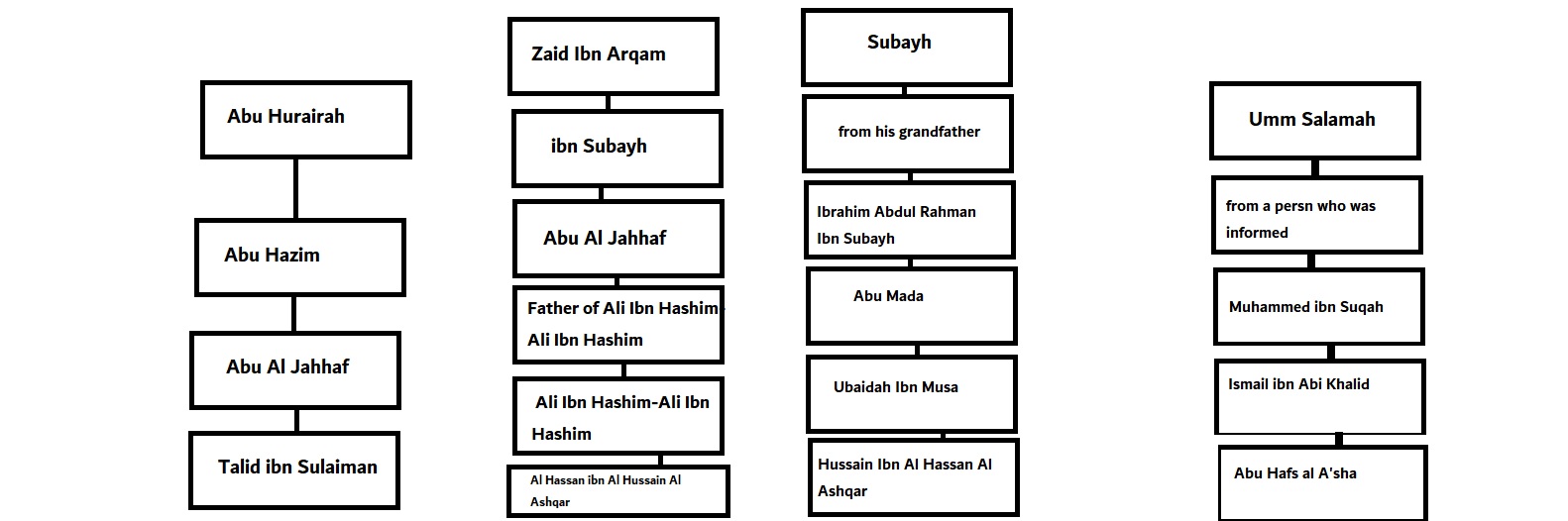
The hadith comes to us by four ways: Abu Hurairah, Zaid Ibn Arqam, Subayh, Umm Salamah:

Abu Hurairah

This comes by way of Talid ibn Sulaiman

Talid Ibn Sulaiman is dai’f jiddan (very weak)Ahmad, Yahya al Saji deemed him a liar.

====================================================


Zaid Ibn Arqam -1) Muslim ibn Subayh—Abu Al Jahhaf-2; father of 3 Ali Ibn Hashim—Ali Ibn Hashim.

4) Al Hassan ibn Al Hussain Al Ashqar

This comes by way of al Hassan ibn al hussain al Ashqar via Abu al Jahhaf.

It is said about Hassan ibn Al Hussain al Ashqar is da’if. Abu Hatim and Ibn Hibban have mentioned this.

Abu al Jahhaf inconsistently narrates the hadith.

====================================================

Subayh

Subayh is from his grandfather, from Ibrahim Abdul Rahman Ibn Subayh, from Abu Mada, from Ubaidah Ibn Musa, from Hussain Ibn Al Hassan Al Ashqar.

Hussain ibn al -Hassan al -Ashqar is da’if (weak)

Abu Mada is weak.

Ibrahim is majhul (unknown)

=======================================================

Umm Salamah

From a person who informed him

From Muhammed ibn Suqah

From Ismail ibn Abi Khalid

From Abu Hafs al A’sha

Abu Hafs al ‘Asha (is munkar al hadith) — narrates unacceptable hadith)

The teacher of Muhammed ibn Suqah is majhul (unknown).

So, in the end, this hadith is discarded.

The Shi’i may not like it. The Zaydi may not like it. The Imami may not like it. But the evidence has been laid out and the refutation (if any awaits).

May Allah guide the Ummah.

May Allah forgive the Ummah.

2 Comments

Filed under Uncategorized

What is Tawhid? Athari Creed vs Plotinus Philosophy

“The servants of the RaHmān (the All-Merciful, Allah) are those who walk on the earth humbly, and when the ignorant people speak to them, they reply peacefully.” (Qur’an 25:63)

﷽ 

So it was just after Farj on Jumaa morning here in Singapore when I checked my WhatsApp and there from that gentle and noble soul, brother Nazzam were the latest links of interest.  Bless him! I would get updates from time to time on articles, blog posts and vlogs and debates that have taken place.  So this particular morning was a debate between two people I had not really known before.

So I head over to twitter and what do I see, already that one side has censored comments.  So, I go and click on the link to the debate posted on YouTube.  The comment section was clearly pro Dr. Khalil.  I saw many people in vigorous exchanges with followers of the Athari creed; and they were getting pressed. I then recalled that the first time I heard of this Jake guy. I believe he was introduced by Mufti Abu Layth (Naheim Ajmal) in one of his episodes.  I believe it was pointed out that he used arguments he pinched from Professor Emad Hamdeh’s against the Quraniyoon, to use as reasons why (he), Jake, was no longer intrigued with that movement.  From there on this Jake threw in his lot with the Athari/Salafist crowd. In this day and age if you want to gain followers and notoriety quickly through social media that is the most strategic decision one could make.

Not knowing of Dr. Khalil Andani, however, was clearly a loss for me. It is clear to me that Professor Andani is quite formidable. There is no doubt in mind that anyone who ever had the blessing of attending his class got their hard-earned money’s worth. Beyond that, they learned at the hands of an adept.

As for those people who are sitting comfortably in their homes drinking high grade coffee shrugging their shoulders and saying ‘who cares’ about such a debate.  Welcome to the world of privilege and security! Professor Andani is doing you and everyone else a huge service!  He is debating a person who is representative of a certain strain of thought that on the regular participates in the anathematization of other Muslims.

It is no stretch of the imagination to say that by putting a dent in such creedal positions he could be saving lives! Imagine an impressionable young Muslim who believes that Professor Andani and all like him hold such abhorrent aberrant and dangerous views that they must be dealt with. Imagine a gathering of high profile Muslim philosophers conducting a symposium, Professor Andani is in attendance, suddenly an attacker unleashes a few rounds killing many people in the process.  

Imagine that same impressionable young Muslim saw the disasters performance on behalf of Jake, and although he may not be inclined to agree with everything Professor Andani says, he witnessed enough to make him question the absolute certainty that he once placed in the Athari creedal position.  Instead of wanting to pop off a few rounds into a crowd of people who have been anathematized; this youth leaves Salafism altogether, or he becomes convinced of his own position, while holding space for other views.

I will be fair to say that Al Qaeda, Al Nusrat, ISIS and others do not necessary represent Salafism per say. However, it is not even a point of debate to say that Al Qaeda, Al Nusrat, ISIS have more in common with Salafi/Athari thought than they do Ashari/Maturidi/Mutazali theological positions.

Make no mistake about it, this debate is a watershed moment. The Athari creed has never been laid bare, deconstructed and destroyed in such a public formatted debate as it was in this debate.

Jake went in so cocksure of himself thinking Dr. Andani would be easy prey.

It was like watching a Discovery Channel documentary where you see the Mongoose carefree through the forest, and you spot a cobra skulking and slithering its way through the foliage, poised to strike.
Yet, this Mongoose will be no prey! On the contrary, once the Mongoose caught on to the scent, and pressed the attack, the poor cobra takes such a thrashing that you almost feel sorry for the elapid.

Let us look at the opening statements of each of the debaters. The big surprise for me not really knowing anything about these two debaters is who actually used more naql or text? My presumption would be that Professor Andani would come in using more philosophy, and logic and less textual proofs. My presumption is that the Athari would come to a debate loaded with textual proofs and evidence.

This was simply a no contest!

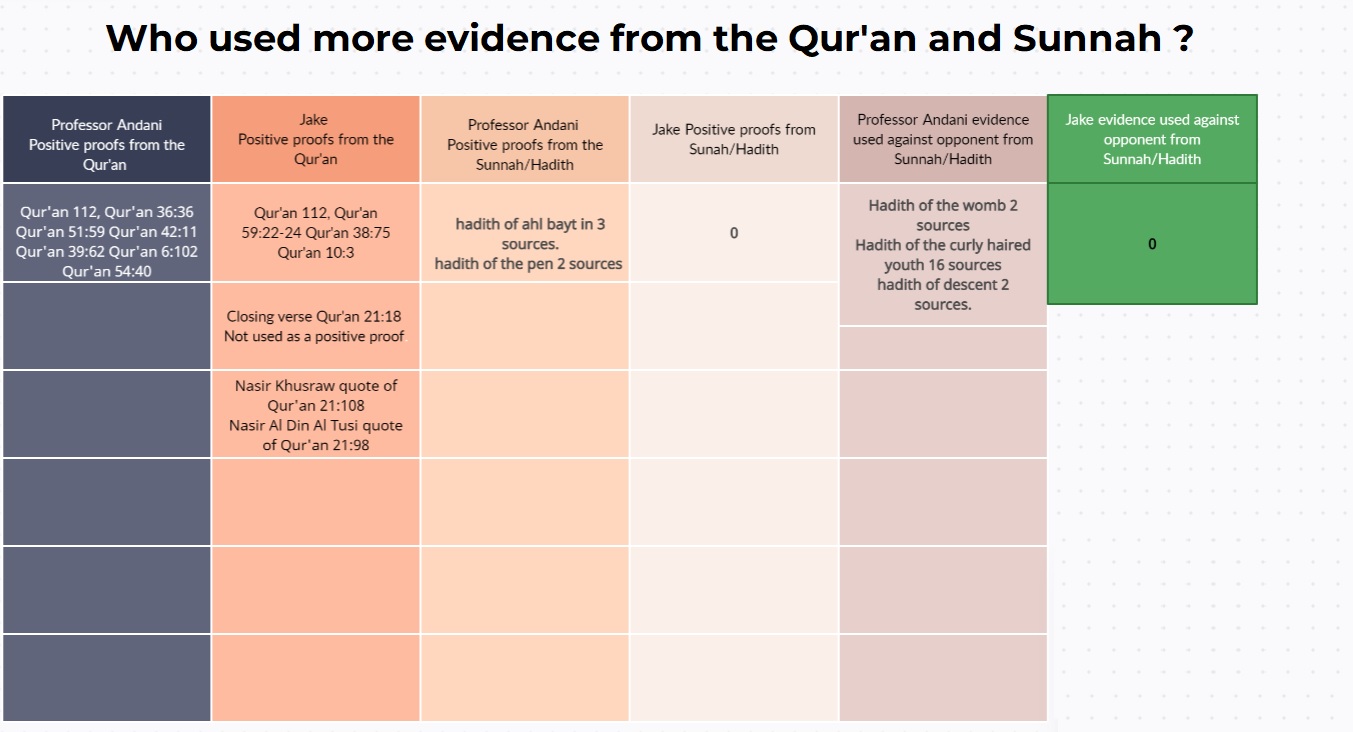
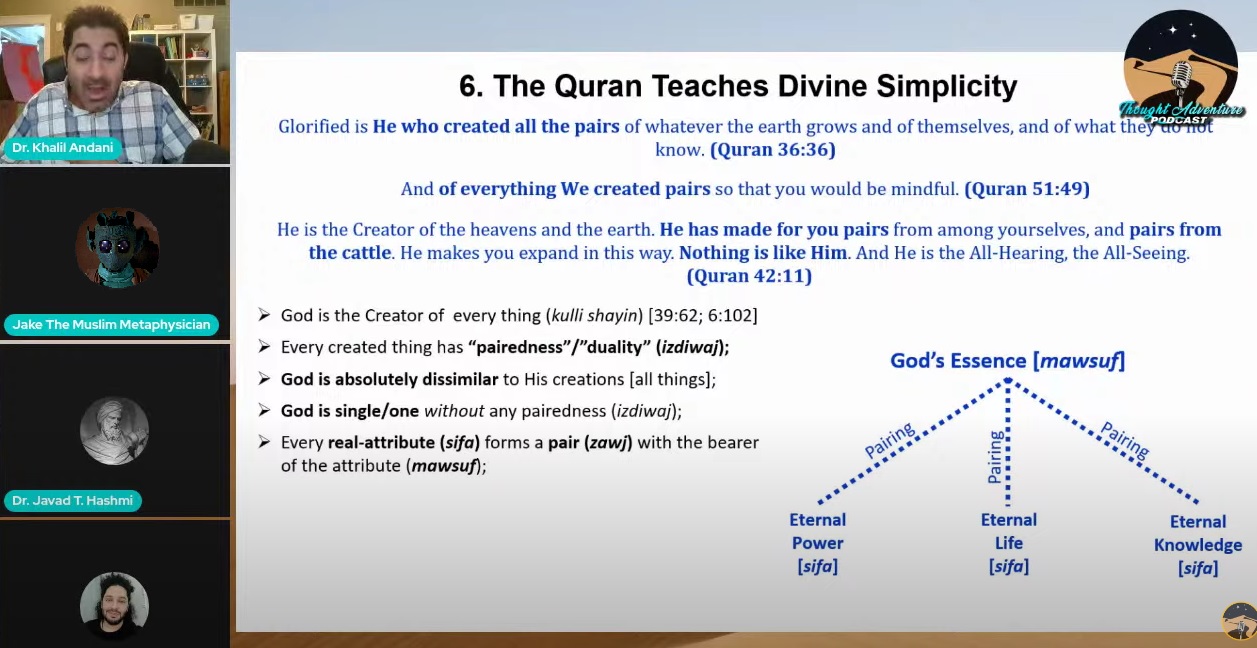
Professor Andani used 7 positive arguments from the Qur’an.  Jake used 4. Andani gave us some commentary on how these text support his position. Jake simply quoted them without explaining how they support the Athari school. Jake used two other text from the Qur’an from Khusraw and Al Tusi in a polemical fashion against Andani.  When it came to the Sunnah or ahadith, Professor Andani gave 5 a hadith. Firstly to show us that the guardians of proper understanding of the primary and secondary sources come from the Ahl Bayt.  Secondly he gave two ahadith for his argument concerning the pen.  Professor Andani quoted no less than 20 different source showing questionable ahadith that are an affront to the idea of a transcendent divine being.  When it came to giving positive ahadith for the Athari position Jake gave us nothing. When it came to ahadith bringing into question Islamic philosophy Jake gave us nothing.  Since Jake lacks the trade mark beard of the bulk of Salafi/Athari Muslims one could easily mistake Andani for being the Athari in the debate.

Since Athar means remnant or report, clearly not only is Professor Andani an adept in Islamic science, he is actually the true Athari between the two! Jake on the other hand, a nothing burger.

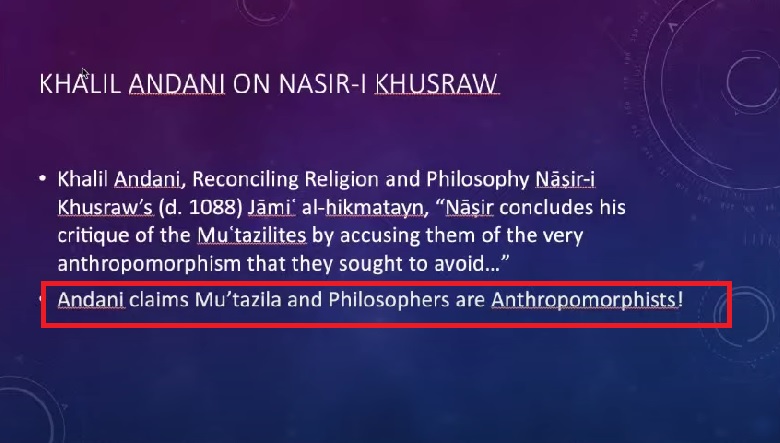
Not necessarily an argument against either Ismaili doctrine or Islamic Philosophy in general Jake repeated several times the Professor Andani asserts that anyone who claims that who ever states that Allah (swt) has names and attributes is tantamount to shirk and anthropomorphism. Please see @22:06 minute mark:

“Khalil does not believe that Allah is the direct creator of the heavens and the earth. He does not believe
that Allah is All Knowing, All Powerful and Perfect, in fact HIS BOOK states: that to ascribe such names and attributes to God is shirk and anthropomorphism.”

A similar claim is made at the 23:37 minute mark.

Why didn’t Jake show us the extract from Professor Andani’s book?
He claims that these are the beliefs of Professor Andani yet he doesn’t give us the quotes for this.
This would certainly help Jake, as Jake has made takfir of Andani, he can now turn around and claim that Andani did the same thing.

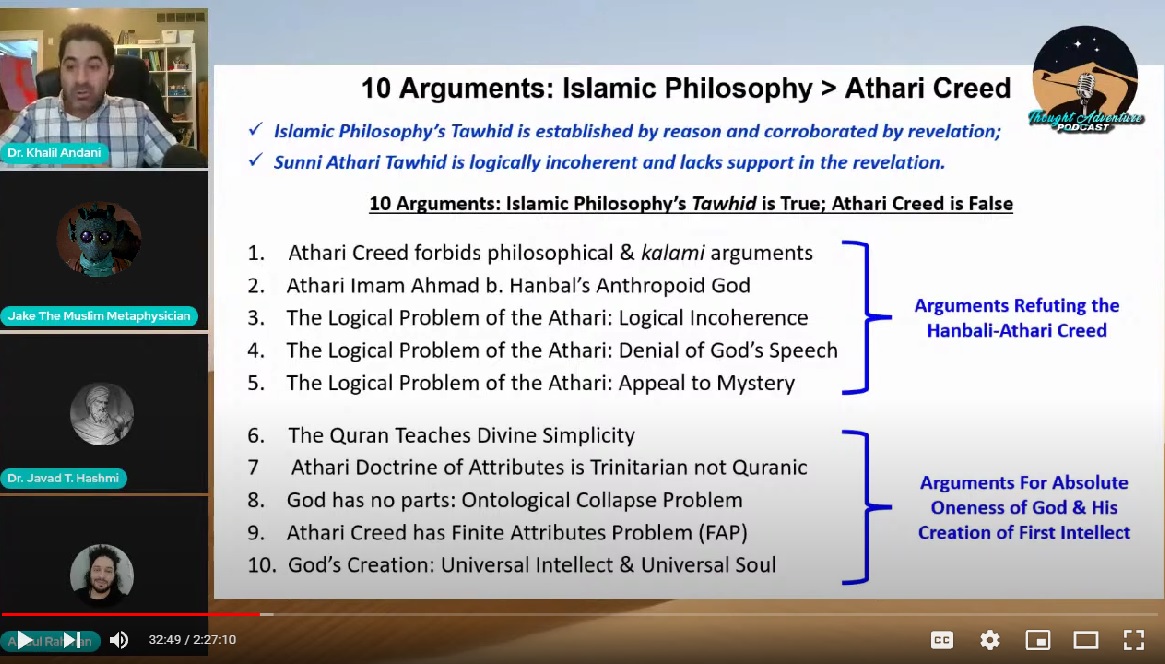
Professor Khalil gives 5 arguments for refuting the Hanbali creed. He gives 5 arguments for the Absolute Oneness of Allah & His Creation of First Intellect.  Although, I feel Professor Khalil more than proved his case in regards to the Absolute Oneness of Allah (swt), he possibly needed more time to flesh out his argument of the creation of the First Intellect.

Professor Khalil showed quite forcefully the issue with Tafwid.

Affirming the apparent meaning, or do ta’wil for metaphorical meaning. Jake must affirm the apparent meaning and reject ta’wil. This leads us to Tafwid al-Ma’na where you deny the apparent meaning and deny the opposite of the apparent meaning. This position is logically incoherent.
If you say you do not know the meaning, then there is no meaning that is accessible to humans. This is a devastating argument because it shows that Athari are actually the one with some esoteric belief in the divine. The Qur’an and Sunnah conveys that which is not intelligible to humanity. Another devastating point given by Professor Khalil @39:27 minute mark that if you want to argue for Tafwid al-Ma’na and Tafwid al-Kayf and say ‘Bi Li Kayf’ than you should stop debating with Christians.  The argument here is that Athari are in reality believers of Mysterianism.

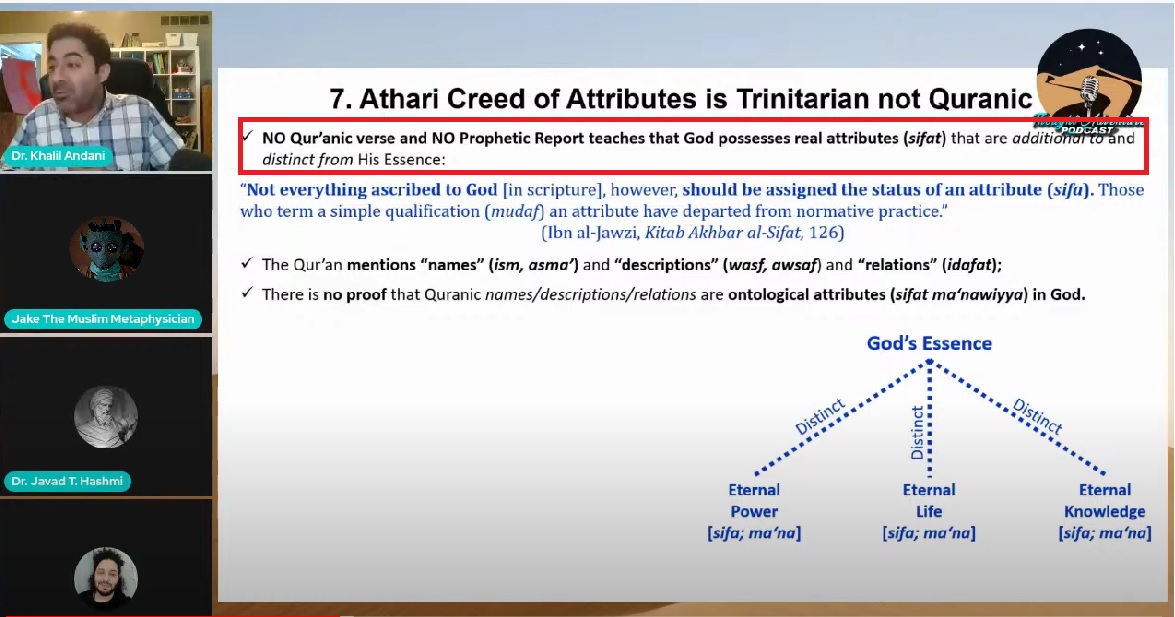
All of the points given in Professor Andani’s slides are effectively devastating for the Athari position.

“No Qur’anic verse and NO Prophetic Report teaches that God possesses real attributes (sifat) that are additional to and distinct from His Essence.”
Where did they get the idea from? They got it from speculative theology.

During his first 10 minute rebuttal.

Surprisingly for someone who has done many debates Jake seemed to forget how the rebuttal part of a debate goes. Instead of showing why Dr. Andani’s five points against Athari creed were wrong, Jake continued his opening presentation of attacking Andani’s views. The only thing he really interacted with was that which was easy pickings. He scanned the list of the slide Professor Andani put up and picked out Shaykh Abdul Qadir Al Jilani. (An Athari).  Even, I am not sure why Professor Khalil had him on that list.

When quoting Shaykh Abdul Qadir Al Jilani

“We believe that Allah CONSTRICTS, EXPANDS, rejoices, loves, dislikes, becomes pleased, becomes angry, and abhors, he has two hands and both of his hands are right.
The hearts of his servants are between two of his fingers and he is in the direction of uluh…..” Jakes says @ 50:35 “This sounds like Athari creed to me.”

What did Jake mean when he says Allah (swt) constricts and expands? Does he mean that it is an action that Allah (swt) does to the creation? As in constricting the breast or expanding the breast? Or does he mean that Shaykh Abdul Qadir Al Jilani is asserting that Allah (swt) himself, his essence, expands/constricts?  This sort of irresponsible reading of the text in English without proper explanation is no Bueno. Jake did not deal with the issues of divine simplicity or the problem of the ontological collapse of his position.  

Professor Andani’s first 10 minute rebuttal.

@1:03:27 They were not putting up Professor Adnani slides. It is hard to know if that was intentional or not.

@1:11:36 Professor Adnani claims that Jake was intellectually dishonest by admitting a fact from Nasir al-Din Tusi’s work by not admitting the fact of what he had actually written.
@1:12:07 Professor Adnani bemoans the fact that Jake cannot read Arabic and therefore cannot go to the primary sources. He is overly reliant upon Orientalism and Orientalist.

Jake’s second 5 minute rebuttal.

@1:18:34 Jake puts up the claim that he has a document ‘with all these references if anyone is interested I’ll make them publicly available and you can read them yourself.”
This statement is followed up with a dig @ Professor Khalil doing Taqiyyah, practicing obfuscation or lying.

@1:19:44 “No it does not mean there are multiple necessary beings, we don’t say there are multiple humans, that Jake is multiple humans just because I have multiplicity within me.
I’m still one being. We don’t say that there are multiple uh beings within Jake. This is not the language that we use”

Did he just use himself to compare with Allah (swt)? This is very problematic. It is a violation of “There is nothing like unto Him, and He is the Hearing, the Seeing.” (Qur’an 42:11)

@1:20:07 “My argument is quite simple, just read the Qur’an, for the most part.” WHAT?? 

@1:21:23 Jake says that he trusts someone else over going directly to the text himself! Especially doesn’t trust Professor Andani.  “You keep talking about Arabic but you cannot even pronounce basic words, which I find to be quite shocking.” You can tell that Jake felt the sting of Professor Andani’s comment about Jake not being able to go to the primary sources because Jake lacks the requisite command of Arabic to do so.

Professor Khalil second 5 minute rebuttal.

@ 1:24:06 Professor Adnani wanted to know whom Jake will rely upon for creedal positions.
Prior to the debate Jake gave Professor Andani the creed of Ibn Qudama. Ibn Qudama says: “We do not go beyond the traditions from the Prophet and his companions;
nor do we know the how these, save by the acknowledgement of the Messenger and the confirmation of the Qur’an.”-Ibn Qudama (Tahrim)

“Debate is for people who can use logic and reason which you are not allowed to do!”

Ouch! That was yet another stinging point from Professor Andani.

@1:26:00 Professor Adnani makes another great point. Jake did not specify what he meant by necessary attributes.

1:26:34 I almost fell out of my chair, Captain Planet? It is good to see that Dr. Khalil is forceful in his presentation and can keep a serious topic light-hearted.

@1:26:45 Professor Adnani bemoans the fact that Jake is severely handicapped in this debate by not being able to read the primary sources.

@1:26:58 Professor Adnani puts forth a very blunt question to Jake. “How do you define wujud, existence?

15 minute cross examinations. Jake cross-examines Professor Andani

During his 15 minute cross-examination, Jake spent less time asking questions and more time giving a sermon. As regards demeanor, Jake was like this angry child, who ran away from home only to find a wise and comforting father in Dr. Khalil Andani. Khalil was warm and had presence, Jake was bitter and needed consoled.

@ 1:30:19 Jake ask Professor Andani about true knowledge of Allah (swt) only coming through the Imams. Through the intellect or the imams (qualified scholarship). Jake himself admits its from qualified scholarship when he even queerly offered, “just read the Qur’an, for the most part.”

1:30:57 Jake could frame his question another way. ‘During the time of the Blessed Messenger (saw) was true Tawhid known only through the Prophet (saw), whom would be the ‘rightly guided Imam’ or through other means? If we can understand this, it will help us to understand the position of not only Ismaili Shi’a but our Shi’a brothers in general. Even if we disagree with them.

When Professor Adnani gives his reply that there are two types of ‘ilm and one is supra discursive, also known as marifa. This is something that adherents of Sufi paths would appreciate. Where as those who have no familiarity with the Seeker-Shaykh relationship would have no appreciation of this.


@1:33:41, Jake moves on to the next point because he saw no way in. Usually if you strongly argue, you will overwhelm your opponent and press the attack until you get them to capitulate through the sheer strength of your argument.@1:34:12 Jake started to bite his fingernails which is usually a sign of stress or anxiety. I don’t know if it is me but it looks like he proceeds to chew for a moment on a piece of fingernail.

@1:37:40 Professor Andani makes the point that there is no way Kirmani is refuting Ibn Sina because Ibn Sina has not even written his works yet!!! “Remember Ibn Sina died in 1037 and Kirmani died in 1020. There is no way Kirmani is refuting Ibn Sina because Ibn Sina hasn’t even written his major works when Kirmani is writing. Kirmani is likely referring to a pre Ibn Sina falsifa tradition.”

@1:38:40 Professor Andani enlightens Jake who confuses the Ashari position of the divine will that is entirely self determined, with that of the Ismail’i position.

1@:40:00 Jake when pressed on whether he knows what type of shirk Al Sharistani is referencing,
Jake replies, ‘You can’t respond with a question.” Professor Khalil is not familiar with debates or debate territory. So, he could have used the most common trick there is in this situation, which would be to ask a statement of clarity, ‘I’m not sure the type of shirk you are referring to?’ Interestingly, as a point of order Jake ignored the ‘you are not supposed to respond with a question’ when he was being questioned. He (Jake) did this multiple times.

Anyway, Jake gets educated on the two different types of shirk, shirk kafi and shirk jalil. This itself shows further lack of preparation on his behalf.     

@1:40:40 You really have to love Professor Andani at this point, he is totally, relaxed and having a great time.
That slight smile on the face is transporting him straight to the class room where he is tenured Professor
teaching a subject he has full grasp of to a first year student, thirsty for knowledge and information.

More Than an interlocutor or debate opponent, Professor Andani at this point takes on the role of a willing teacher, trying to help Jake in writing a thesis paper.
It’s delightful to watch the good Professor work and it has made me keen to read his published works and follow up with more of his material.

@1:42:11 Jake asks Professor Andani the question: “If creation did not exist would God exist?  Khalil asks a question, but Jake doesn’t’ pause him. At this point Jake is clearly forsaken any crusade he may have thought he was upon. Jake actually looks tired.

@1:42:31 Jake asserts about Professor Andani “You said he couldn’t exist without creation” -Always not a good sign in a debate when the opponent wants to put words in the other’s mouth.

@1:43:54 Professor Andani again asserts that Jake is unfortunately relying upon secondary sources. Jake responds that’s not true. “Well it is!” Quick to the rejoinder Professor Andani is!

15 minute cross examinations. Professor Andani cross-examines Jake.

@1:45:24 “Do the attributes depend on God’s essence or are they ā sē necessary in themselves?

@1:45:27 Jake ask a question: “What do you mean by depend?” As you can see as a point of order Jake violates the stipulations of the debate.

Professor Andani presses the question again: “Does the existence of an attribute of Allah depend on the essence?”

Jake responds: @1:45:34 “In the SAME WAY that for you the existence of creation or God’s existence depends on the existence of creation.”

This is what happens when you are in attack mode and you do not think your arguments through.

Here Jake is involved in pure speculative theology upon which he has provided no clear proof text from the Qur’an or the Sunnah. He is comparing the creation of Allah (swt) with his attributes.
He is also arguing against Athari creed; because, if he is saying he believes THE SAME WAY (that he assumes Adnani believes) this is a problem.

Again Professor Andani presses: “Do the attributes depend on God’s essence, either they do or they don’t?”

@1:45:44 Jake responds: “Yes, in the SAME WAY you would say that God’s existence depends upon creation.”

Trust me people there are Muslims who are Athari/Salafi in Aqidah listening to these statements of Jake and their jaws are gaping open and they are stroking beards repeated ‘astaghfirullah’ over and over upon hearing these things.

@1:46:15 Professor Andani ask: “Are the attributes of Allah are they ā sē or not ā sē?

1:46:22 Jake breaks the rules again and asks a question: “Why are you changing the question?”

The reason he is changing the question is you are so elusive and Professor Andani is trying to get you to clarify your position. @1:46:30 Professor Andani has to bring in the moderator because Jake is evading the questions.

@1:47:24 Professor Andani is having none of it. He presses Jake ‘You define dependence and tell us whether the attributes depend upon the essence or not.”

@1:47:42 Professor Khalil “Let’s make some breakthrough here. Creation depends on God I said that? Are you saying the attributes depend on the essence the same way creation depends on God?”

@1:47:50 Jake responds: “I am saying there is a counterfactual dependence.”

May Allah (swt) guide us and protect us from being among the lost! At this point I began to wonder if Jake really is a Muslim.  Because, if he is now stating there is a counterfactual dependence, which is to state that the attributes and the essence are mutually dependent or inter-dependent.  Not necessarily problematic in and of itself; However, either one in Islam is major shirk, especially if you juxtapose that statement to Jake’s earlier admission:

Thus, Allah (swt) and his creation are counterfactual? They are mutually dependant or inter-dependant?  That is not the belief of the Muslims, and for us, Jakes’ statements take him out of Islam.  That is unless Jake claims he misspoke or he was confused during the debate. Hopefully he will clarify in the future. Those statements juxtaposed together take one out of Islam.  

Listen @1:48:48 “In a sense, one cannot exist without the other. We don’t say it’s a casual dependence.” @1:49:12 Professor Andani says, “The attributes depend upon the essence.”

Moreover, Jake responds: “Only in the sense that they cannot exist without each other.”

I was surprised by Professor Andani’s continued line of questioning considering Jake’s admission that he believes the essence and attributes are counterfactual and that the attributes depend on the essence in the same way that God depends on the existence of creation.

Nonetheless @1:49:45 “If something is not ā sē (aseity) can it be God?”

Jake responds: “Sorry”  I do not believe that Jake is familiar with the Latin terminology for aseity.

Professor Andani continues: “If something is not ā sē is it contingent?”

Jake is uncertain about what he is being asked. He is not supposed to ask questions but answer them. Nonetheless: “Anything that is not God is a contingent is that the question?”

Jake responds: “Yeah sure.”

@1:51:00 Jake is buckling under the pressure, disengaging the rules of the debate, speaking out of turn. Jake established that he believes that God is the essence and the attributes.

@1:52:08 Professor Andani “So God contains and essence and real distinct attributes?”

1:52:22 Professor Andani presses the point: “The attributes are not identical to the essence and not identical to one another.”

“Jake responds: “Correct.”

@1:52:25 Professor Andani states: “O.K Therefore your God is a conglomerate of different entities. Thank you for confirming that. Next, I’m gonna move on now.”

@1:52:47 A very classic moment in this debate. Professor Andani set this up nicely. “My view is this, O.K.? The will of God is necessary. Every decision, choice that God has made could not have been any other way O.K.? Its the best possible choice. And any choice God has made it is impossible to conceive it could have been other way. This is my position.” “Is that position compatible with Islam according to you or not?

@1:53:24 Professor Andani “Does it go against Tawhid?” To which Jake responds: Yes it does!”

“It goes against Tawhid in the sense that your saying God does not have free will, that creation is just a necessitated by his essence. Yes that goes against Islam because the Qur’an and the authentic Sunnah say otherwise.”

An odd statement from Jake considering he just stated earlier:

Jake responds: @1:45:34 “In the SAME WAY that for you the existence of creation or God’s existence depends on the existence of creation.”

This Jake does not have a sound aqeedah position. Nonetheless, go back and read Professor Andani’s statement above @1:52:47 you will see that he is reading from either a piece of paper or screen. He is reading verbatim a statement from Mohamed Hijab!

That was very cunning of Professor Khalil. Remind me never to debate that guy!

If Professor Andani made any “bad” move during the debate it was @1:54:26. It is not an error per say.
It’s just that he should have saved that explosive bit of information for his closing remarks!
Because, the way that Professor Andani puts the bait on the hook, Jake caught on real fast, and knew what was up.

@1:55:05 Jake is sensible enough to know the trap that Dr. Khalil is laying out before him.
However, he is reluctant to make that commitment. This shows the shifting nature of his own doctrinal position. Haqq is Haqq.  How can you be firm on a position literally just 3 minutes ago and now you are hesitant!

@1:55:43 Professor Andani drops the bomb on Jakes “I read to you the words of Mohamed Hijab during his Londoniyyah video published 6 months ago! You can go see it! He literally says, what I just said!”

Professor Andani doesn’t stop there: “

“So Mohamed Hijab is teaching a view of Tawhid that you think is not Tawhid yet you go and work for the Sapiens Institute!” If there was a debate equivalent of Khabib Nurmagomedov making Conor McGregor submit during their UFC bout that was it! @1:55:57 “Can you read it?”

Jake at this point is desperate to find any contentious point to avoid the devastating blow just dealt to him. “Your claiming he is my Ustadh.” “How is he my Ustadh?”

Asking Professor Andani to read a text is a strategic move. It also gives Jake a breather, so that Professor Andani will just stop asking more devastating questions and the timer can run out.

You wanna know something telling. Is the heavy weights in the Athari/Salafi community.
Those most visible out there in the Daw’ah. If anyone thinks for an iota of a second that Jake won this debate
surely the silence of the Athari/Salafi dai’ee is deafening.@ 2:00:42 Professor Andani asks: “Where is Allah? Can you point with your finger?”

Jake pointing towards the direction of Allah (swt). The Earth spins on its axis on a 24 hour rotation. Now imagine if we placed someone on the polar opposite side of the Earth and asked the same question at the same time.  Allah’s throne would have to be somewhere in the middle of the Earth.  Then next we put Jake in a space suit in zero gravity and ask him the same question.

@2:00:50 Professor Andani asks: “Is the Throne below Allah?”
Jake responds: “Yes”

Professor Andani ask: “Is the lowest heaven below the throne?”
Jake responds: “Yes”

@2:01:26 Professor Andani ask: “Do you affirm Allah as per the hadith descends every night to the lowest heaven?”
Jake responds: “Yes I affirm Nuzul.”

@2:01:41 Professor Andani ask: “Do you affirm that Allah descends from above the throne to below the throne?”
Jake responds: “He never leaves the throne.”

22:01:51 Professor Andani asks: “What is the meaning of a descent here? Because descent means to go from above to below. So what does Nuzul mean?”
Jake responds: “Yes we understand it in the plain meaning which is mentioned in a hadith….it’s very clear I think everybody knows what descent means.”

2:2:02:11 Professor Andani asks: “So you affirm that Allah descends from above the throne to the lowest heaven below the throne.”
Jake: “Without entering his creation. Yes”

Jake just posited pure speculative theology. Where is there a text from the Qur’an or Sunnah that says that Allah (swt) does not enter his creation? Where did he get that idea from?!

2:02:08 Jake claims: “It’s very clear I think everyone knows what descent means.”

@2:02:25 Professor Andani asks: “What is the meaning of descent that everybody knows?
Jake responds: “I just explained it to you.”

As one person on Twitter described this segment: “Descending means descending but not descending as descending can be descending when we say descending but you know and I know you know what descending is.”

Another point of contention. From what text of the Qur’an and Sunnah do the Athari get the idea that Allah (swt) is above the throne as some ‘default position‘?

Jakes closing remarks:

@2:06:36 Jake claims he will have a talk with Mohamed Hijab. So it will be interesting in the future, if Jake retracts his claim or claims Mohamed Hijab’s views on Tawhid are mistaken.

@2:08:30 Jake is clearly upset that he couldn’t turn this into an Athari Sunni vs a Shi’a Ismaili debate.
This is also why either he or his team changed the name of the YouTube Video.The misleading and dishonest title vs the agreed upon debate topic and correct title.

@2:08:50 An admission from Jake that he did not address many of Khalil’s points.

Professor Adnani closing remarks:

In his closing remarks Dr. Khalil Andani had made comments about
Jake that was not insulting. He said that Jake is certainly a smart individual; however, Jake needs practice in defending his creed (which he does).

In my humble opinion, Professor Andani messed up with giving good will points. Professor Andani means well but unfortunately in Jake’s mind saying that he (Jake) is intelligent but utterly demolishing
his (Jakes) ability to defend the Athari creed was worse than if Andani had not said anything in good will at all.

@2:18:25 Professor Andani brings up a point that should have been brought up during his rebuttal period.  I am not a fan of either party introducing pertinent points of a debate during closing statements.
However, it would be interesting to see if Jake has any rejoinders to that statement in the future concerning Kashf Al Asrar-‘Abd al-Qadir al-Jilani

@2:19:35 Professor Andani comments on how Jake calls his presentation a machine gun approach, because he (Jake) was utterly unprepared. Which is true.

@2:21: Professor Andani likened Athari creed to mysterianism which was a very tight intellectual slap.
It certainly hurts the Daw’ah and prepared Christians WILL use these counter arguments, as well they should.

Conclusion: Final Thoughts.

Professor Andani put on a clinic in that debate! If someone mentions his name to me I will reply, ‘Oh you mean the excellence of execution?’  Because Jake was excellently executed by the excellence of execution, Professor Andani. The man is not even a seasoned debater, but he was methodical, lucid and on point!

In fact as stated before, this is a watershed moment. Never that I can think of has Athari creed been laid bare in public in such a way. Professor Andani reached deep and took a piece of Jake’s soul. Not that this was the good Professor’s  intention; however, you can tell by Jake’s Kamkazi approach after the debate that he realized he got destroyed.

Observe: Jake: The Kamkazi: I got destroyed in this debate but I am going to do my best in my little Mitsubishi A5M to take you down with me!

Who won this debate?

When I was first told about the debate in the early morning hours of 17/6/2002 I went to see the video and I observed in the comment section the Athari’s were getting pressed. The majority of comments were in favour of the Professor. So they deleted comments in favour of the Professor. They deleted comments of exchanges where athari were not doing too well. They changed the title of the debate. Finally, they stopped comments altogether.

You want to know something telling? It is this. The heavy weights in the Athari/Salafi community, those most visible out there in the Daw’ah, if they think one of their people did well in a debate it will be broadcasted all over social media. It will go viral. The after math of this debate is radio silence.   If anyone thinks for an iota of a second that Jake won this debate surely the silence of the Athari/Salafi community is deafening. May Jake repent of the blasphemy he uttered during the debate and renew his Shahadah.  May Allah (swt) bless Professor Andani, illuminate the way for him, forgive him and us, guide him and us.

Oh I see we are already playing games of censorship and control my Salafi friends?

Good thing I came prepared. For those of you who do not want to watch the debate (on a channel that blocks comments) I have uploaded the debate here:

May Allah (swt) Guide the Ummah.

May Allah (swt) Forgive the Ummah.

3 Comments

Filed under Uncategorized