“He will speak to the people in the cradle and in maturity and will be of the righteous.” (Qur’an 3:46)
﷽
Shaykh Imran Hosein has recently used the following as evidence for the return of Nabi ‘Isa — Christ Jesus the following:
“He will speak to the people in the cradle and in maturity and will be of the righteous.” (Qur’an 3:46)
So what is this all about? It is really about those who believe that Jesus (as) will return again before the end of times being so desperate that they will clutch at straws to try and exegetically extract such an idea from the Qur’an.
Listen to the lecture from the 22 minute mark.
Shaykh Imran Hosein
@ 23:18 Shaykh Imran says, “But the Qur’an went on to say something more. Remember that this is Surah Al Maidah, ‘ tukallimun Nasa fil mahdi wa kahlan.”
“Twice, twice, you will speak. The first time is as a baby in the cradle and the second time is as an adult.” -Shaykh Imran Hosein
“But uh, even in London adults speak. There’s nothing big, there’s nothing miraculous about that. That’s normal. If you are an adult, and you don’t speak you’re dumb.” — Shaykh Imran Hosein
“But if you are an adult, and you are not dumb, then it is normal for an adult to speak. So where is the need for the ‘ruh al qudus’?” “Answer: The Qur’an is saying that you will speak miraculously twice.” -Shaykh Imran Hosein
“You will speak miraculously as a baby in the cradle, and you will speak miraculously again as an adult.” — Shaykh Imran Hosein
“C’mon, put on your thinking caps.” -Shaykh Imran Hosein
Prima Qur’an comments: At this juncture let us stop and do exactly as the Shaykh asks us to do.
Now, this is important because Shaykh Imran Hosein is one of those people who have as his entire focus eschatology, the Mahdi, Dajjal, and the so-called 2nd coming of Christ Jesus.
Someone who holds such views should be able to provide evidence for them, and the fact that Shaykh Imran Hosein has to make such exegetical stretches of the Qur’an shows the patently false nature of such beliefs.
A few minutes into his lecture, Shaykh Imran Hosein has some words for the Ahmadiyyah movement as well as for Muhammed Asad. However, Shaykh Imran’s misinterpretation of the Qur’an is equally bad.
It is amazing how the crowd gathered around Shaykh Imran soaked up all these words he had to say, and we just hope that they did indeed: ‘put on their thinking caps.’
Notice the slyness of his approach here:
“But uh, even in London adults speak. There’s nothing big, there’s nothing miraculous about that. That’s normal. If you are an adult, and you don’t speak you are dumb.” — Shaykh Imran Hosein
This subtle point is where he slowly lures his audience. In almost a trance-like state fixated upon his words, they can’t help but agree. After all, there is nothing miraculous about adults speaking, is there?
This is where he slips in his suggestion and whispers to the subconscious.
First the agreement of the negative: adults speaking is nothing miraculous. [everyone is now on the same page].
Then comes the delivery: The mixture of truth with falsehood.
“Answer: The Qur’an is saying that you will speak miraculously twice.”
As the subconscious is now primed, the reader will understand that Jesus will speak while in the cradle and as an adult. So there is already a bias confirmation: Ah, so Jesus does speak twice. Then comes the falsehood attached: miraculously twice.
wayukallimu l-nāsa fī l-mahdi wakahlan wamina l-ṣāliḥīna -which of these Arabic words means miraculously?
The answer: None of them, of course.
“And do not mix the truth with falsehood or conceal the truth while you know [it].” (Qur’an 2:42)
Now it is a given that if a person speaks like a baby in the cradle that this is indeed miraculous, but even the Shaykh himself said: “Adults speak. There’s nothing big, there’s nothing miraculous about that.”
Thus, what Shaykh Imran has done is to mix the haqq that-Jesus will speak as a baby and in maturity with batil -that both events would be miraculous.
Then you will see how he needs to interpolate such falsehood in the Qur’an in order to get you to buy into his concept of some messianic figure coming later.
So now, after establishing his false premise that he has convinced his audience into accepting, he continues the rest of his speech.
Wake up dear Muslim brothers and sisters. You are being deceived.
What about kahl and kahlan in the Arabic text of the Qur’an.
If people want to say kahlan means 70 years old or even 800, let them roll with it, because no matter how old Nabi ‘Isa Christ Jesus was, we have the following text:
“[The Day] when Allah will say, “O Jesus, Son of Mary, remember My favor upon you and upon your mother when I supported you with the Pure Spirit and you spoke to the people in the cradle[wakahlan]and in maturity; and [remember] when I taught you writing and wisdom and the Torah and the Gospel; and when you designed from clay [what was] like the form of a bird with My permission, then you breathed into it, and it became a bird with My permission; and you healed the blind and the leper with My permission; and when you brought forth the dead with My permission; and when I restrained the Children of Israel from [killing] you when you came to them with clear proofs and those who disbelieved among them said, “This is not but obvious magic.” (Qur’an 5:110)
So, whatever these people want to say, the context of the above verse makes it abundantly clear that Jesus was wakhalan when he was being taught the Torah and the Gospel and dealing with the children of Israel.
Also, those who want to say that Jesus (as) did not reach maturity before he had the chance to speak, thus he must come back. This idea is based upon what? What verse in the Qur’an tells the age in which Jesus (as) died? Even those who say he did die but was taken bodily alive into heaven. Tell us his age? The New Testament is not a proof text for Muslims.
Are we really going to say that Allah [swt] is teaching Nabi ‘Isa—Christ Jesus the Torah and the Gospel upon his return? Why? What for?
So, even if you want to be extremely, and we do mean extremely charitable and go against references like:
Lisan Al Arab or Al Razi in Tafsir al Kabir, just remember to remind them that this 50+-year-old Jesus, this 80+year old Jesus was doing all the above as mentioned in Qur’an 5:110 before ANY SO-CALLED BODILY ASCENSION.
“This day those who disbelieve have despaired of [defeating] your religion; so fear them not, but fear Me. This day I have perfected for you your religion and completed My favor upon you and have approved for you Islam as religion.” (Qur’an 5:3)
“Our Lord, do not take us to task in case we forget or we make mistakes.” (Qur’an 2:286)
﷽
APOLOGY TO FELLOW MUSLIMS AND TRUTH SEEKERS.
May Allah (swt) forgive me. Praise be to Allah (swt) who guides us to a way that is best.
I used to rely upon a particular translation of the Qur’an 4:31 until upon closer examination I realized the game that was being played upon the unaware.
I’m thankful to Shaykh Hafidh Hamed Al Sawafi for pointing this out to me!
Most people are usually familiar with this translation:
“If you avoid major sins that you are prohibited, We will absolve YOU YOUR MINOR SINS and cause you to enter a generous gate.” (Qur’an 4:31)
Any translation that comes remotely close to that is a FALSE
Take a look at the different translations into English here:
Those people who are either translating this text as such are doing so according to their i’tiqad or without giving much thought about it -according to the i’tiqad of others.
The most correct translation is: the one from Yusuf Ali (1985) which states:
“IF (but) eschew the evilest of the things which you are forbidden to do, We shall expel out of (Saiyiatikum) YOU ALL THE EVIL IN YOU, and admit you to a gate of great honor.” -(Qur’an 4:31)
The reason that certain translators translate it the way that they do is because of their theology. Which is that the small sins get wiped out and the big sins get purified in the hell-which one latter is released from.
However, the correct understanding is that if a Muslim avoids the major big sins, or if they do them and rush to repent and reform, Allah (swt) will forgive our minor mistakes and faults.
Imposing their theological suppositions upon the Qur’an Al-Kareem!
As one Muslim brother pointed out: “Saiyiatikum” is “all evil in you”.
To interpret it as “minor sins” or the likes is but an interpretation.
The literal meaning takes precedence over an interpretation unless there’s a hujjah to support the interpretation.
Insh’Allah in time I will begin to replace the translation with the appropriate translation free from i’tiqad -may Allah (swt) help me.
Kindly take note. My humble and sincere apologies.
“And protect them from the evil consequences [of their deeds]. And he whom You protect from evil consequences that Day – You will have given him mercy. And that is the great attainment.” (Qur’an 40:9)
(We told you), “If you do good, it will be for your own benefit, but if you do bad, it will be against your souls. When the prophecy of your second transgression will come to pass, sadness will cover your faces. They (your enemies) will enter the mosque as they did the first time to bring about utter destruction. (Qur’an 17:7)
﷽
Recently I was watching a video circulating the internet over our brother, a former IDF soldier who found the light of Islam. Al hamdulillah! May Allah (swt) increase him in faith and bring him to a state of felicity. May many more of them be guided to the light of Islam.
The brother who was interacting with the former IDF soldier was doing an excellent effort in flashing the verses on the screen. However, something jolted me when the brother quoted Qur’an 17:7 and gave a very strange understanding of this verse. It raised the alarm and this is why I felt the urgency to write this post in hopes that you will also warn those you know!
I have personally not come across people understand the verse this way. unless they were from the United Arab Emirates, or Saudi Arabia.
The verse in question is:
(We told you), “If you do good, it will be for your own benefit, but if you do bad, it will be against your souls. When the prophecy of your second transgression will come to pass, sadness will cover your faces. They (your enemies) will enter the place of prostration (Masjid)as they did the first time to bring about utter destruction.” (Qur’an 17:7)
Please pay special attention to how the Arabic word ٱلۡمَسۡجِدَ is being translated into English.
Here is a complete list of known translations into English:
Notice the word ٱلۡمَسۡجِدَ has been translated as Temple in 32 translations. Why is this even important brothers and sisters?
This is the video I am referencing:
@22:50 minutes into the video The Muslim Lantern states: “In fact Allah azwajala said that the people children of Israel will take the Masjid,Masjid Al Aqsa from you.”
This is dead wrong. There is no such verse in the Qur’an at all. Surely brother Muslim Lantern will have his reward with Allah (swt). However, I think in this regard he is simply transmitting what he heard without investigating the verse.
Let us look at the context:
“And We gave (Clear) Warning to the Children of Israel in the Book, that twice would they do mischief on the earth and be elated with mighty arrogance.!” (Qur’an 17:4)
Allah (swt) is addressing the Children of Israel (Jacob).
“When the first of the warnings came to pass, We sent against you Our servants given to terrible warfare: They entered the very inmost parts of your homes; and it was a warning (completely) fulfilled.” (Qur’an 17:5)
Allah (swt) is mentioning that he sent against you (Meaning children of Israel) -They are the ones being attacked not the attackers!
“Then did We grant you the Return as against them: We gave you increase in resources and sons, and made you the more numerous in man-power.” (Qur’an 17:6)
Allah (swt) grant you (Children of Israel) a return against them (the attackers of the Children of Israel)
(We told you), “If youdo good, it will be for yourown benefit, but if youdo bad, it will be against yoursouls. When the prophecy of your second transgressionwill come to pass, sadness will cover your faces. They (your enemies) will enter the place of prostration (Masjid)as they did the first time to bring about utter destruction.” (Qur’an 17:7)
Allah (swt) is not saying that the children of Israel will be the one’s who will enter the places of prostration and bring utter destruction. It makes no sense! It makes no sense because the place that the destruction will come to is the place that the children of Israel themselves worship!
That is the temple of Solomon (as). Look at the text that are underlined in green. That is what people are getting confused. The Children of Israel will cause corruption in the earth twice and they will be punished by having their place of worship destroyed!
Allah (swt) will use someone else as a means of punishment for the disobedient Children of Israel.
They (your enemies) will enter the place of prostration (Masjid)as they did THE FIRST TIME to bring about utter destruction.”
The first time was the destruction of the place of prostration-by Nebuchadnezzar.
The second time that Allah (swt) is speaking about in the future in Qur’an 17:7 was by the Romans.
WHY IS THIS IMPORTANT AND WHAT HAS THIS HAVE TO DO WITH PALESTINE AND AL AQSA MASJID?
This is important because the false interpretation that was given to our brother The Muslim Lantern and not only him but to many Muslims will be used as a psychological weapon against the Palestinian and Muslim resistance when the Zionist eventually come to attack it!
How will it be used a psychological weapon? Because, the false interpretation makes it that the Zionist (Israel) will conqueror Masjid Al Aqsa.
@22:50 minutes into the video The Muslim Lantern states: “In fact Allah azwajala said that the people children of Israel will take the Masjid,Masjid Al Aqsa from you.”
How will you defend a place knowing that Allah (swt) himself said that your enemies would take it from you? Do you see the point brothers and sisters?
In fact, watch the expression of our new brother in Islam (former IDF) when our brother Muslim Lantern says this. The new brother looked quite surprised? Why? Because he knows how the resistance is fighting, even after being almost entirely abandoned by the whole Muslim Ummah. He looks surprised because he can’t imagine the IDF just taking Al Aqsa Masjid. Jordan is the custodian of Al Aqsa Masjid. Jordan would be forced to go beyond just sending ‘a memo of protest‘ if the Zionist wanted to full on take the Masjid.
Rather or not the Zionist attempt to do so is another matter. The point of this post is do not read these verses of the Qur’an incorrectly. Especially do not read them in such away that would give a moral boost to the enemies of the faith!
“So We did not send any messenger except [speaking] in the language of his people to articulate for them, and Allah sends astray [thereby] whom He wills and guides whom He wills. And He is the Exalted in Might, the Wise.” (Qur’an 14:4)
﷽
Shaykh Juma Mazrui (h) began his topic about the use of Majaz in the sunnah by giving us a recap of the previous lesson.
He mentioned some more examples from the Qur’an which I will now proceed to quote here:
“So do not make your hand [as] chained to your neck or extend it completely and [thereby] become blamed and insolvent.” (Qur’an 17:29 Sahih international translation)
“And do not set up your hand shackled to your neck, (i.e., Do not be niggardly) nor outspread it widespread altogether, (Literally: outspread it all outspreading, i.e., do not be a spendthrift) for then you will sit blamed and regretfully rejected.” (Qur’an 17:29 Dr. Ghali translation)
This is another beautiful example of majaz, of metaphor in the Qur’an. In fact if one was to take the literal interpretation of this verse, where exactly would this half-way point between tying one’s hand to one’s neck and extending it fully? Would that look like?
So what the verse is saying, it using hand as a metaphor for that which gives, or distributes. That one should not be stingy, nor should one be a spendthrift. That we should be balanced in our approach to spending.
“Of them some seem to give heed to you; will you, then, make the deaf hear even though they understand nothing? And of them some look towards you; will you, then, guide the blind, even though they can see nothing?” (Qur’an 10:41-42)
Obviously it means those who are spiritually blind. The eyes are used as a metaphor for the ability to perceive, understand and be open to something.
“Indeed, the worst of living creatures in the sight of Allah are the deaf and dumb who do not use reason.” (Qur’an 8:22)
Yet Allah (swt) who created people in such a condition and than blames them for this? So it cannot mean what the apparent text says.
“They will say, “Indeed, you used to come at us from the right hand.” (Qur’an 37:28)
Look at how various translators have tried to deal with the above text!
Here the right hand is used as a metaphor, majaz which means to approach, admonish strongly.
So than moving to the ahadith, contrary to what people today tell us that the Salaaf, the Blessed Messenger (saw) and his companions took everything from their outward meaning on the contrary they understood the use of majaz in their language.
On the authority of Abu Hurayrah, who said that the Messenger of Allah (saw) said:
“Allah (mighty and sublime be He) said: Pride is my cloak (upper garment) and greatness My robe (waist wrapper), and he who competes with Me in respect of either of them I shall cast into Hell-fire. It was related by Abu Dawud (also by Ibn Majah and Ahmad) with sound chains of authority. This Hadith also appears in Muslim in another version.”
Are we to believe that Allah (swt) has an upper garment and a waist wrapper?
On the authority of Abu Hurayrah, who said that the Messenger of Allah (saw) said:
“Allah (mighty and sublime be He) said: Whoever shows enmity to someone devoted to Me, I shall be at war with him. My servant draws not near to Me with anything more loved by Me than the religious duties I have enjoined upon him, and My servant continues to draw near to Me with supererogatory works so that I shall love him. When I love him I am his ears with which he hears, his eyes with which he sees, his hand with which he strikes and his foot with which he walks. Were he to ask [something] of Me, I would surely give it to him, and were he to ask Me for refuge, I would surely grant him it. I do not hesitate about anything as much as I hesitate about [seizing] the soul of My faithful servant: he hates death and I hate hurting him.”
Are we to believe that Allah (swt) becomes the ear of the person? The eyes of the person? The hand and the foot of the person?
On the authority of Abu Hurayrah, who said that the Messenger of Allah (saw) said:
Allah (swt) will say on the Day of Resurrection: O son of Adam, I fell ill and you visited Me not. He will say: O Lord, and how should I visit You when You are the Lord of the worlds? He will say: Did you not know that My servant So-and-so had fallen ill and you visited him not? Did you not know that had you visited him you would have found Me with him? O son of Adam, I asked you for food and you fed Me not. He will say: O Lord, and how should I feed You when You are the Lord of the worlds? He will say: Did you not know that My servant So-and-so asked you for food and you fed him not? Did you not know that had you fed him you would surely have found that (the reward for doing so) with Me? O son of Adam, I asked you to give Me to drink and you gave Me not to drink. He will say: O Lord, how should I give You to drink when You are the Lord of the worlds? He will say: My servant So-and-so asked you to give him to drink and you gave him not to drink. Had you given him to drink you would have surely found that with Me.”
It is clear that Allah (swt) ascribes acts to himself which he does not actually do, such as falling ill, and asking for that which is apparent that he does not need such as food and drink.
On the authority of Abdullah ibn Umar reported:
The Messenger of Allah, (saw), said, “The upper hand is better than the lower hand. The upper hand is one that gives and the lower hand is one that takes.”
The hadith itself while using hand as a metaphor explains the meaning. Thus the word hand is not used as an apparent real attribute of a person.
On the authority of Abu Hurayrah, who said that the Prophet (saw) said:
“Allah the Almighty said: I am as My servant thinks I am. I am with him when he makes mention of Me. If he makes mention of Me to himself, I make mention of him to Myself; and if he makes mention of Me in an assembly, I make mention of him in an assembly better than it. And if he draws near to Me an arm’s length, I draw near to him a cubit, and if he draws near to Me a cubit, I draw near to him a fathom. And if he comes to Me walking, I go to him running.”
Our Shaykh Juma Mazrui reminded us that unfortunately there are among those who take such statements upon their literal important and thus their teacher, Shaykh Al Uthaymeen has advocated for the ‘jogging of Allah’ as a real action and quality that Allah (swt) does. ‘Jogging but unlike our jogging’.
This hadith also poses other problems if taken upon face value.
If a person draws to Allah (swt) be an arms length, than Allah (swt) draws to that person by a cubit.
If that person draws near by a cubit than Allah (swt) will draw near to them by a fathom.
It gives the impression that the opposite can be true in that a person can eventually go so far away from Allah (swt), that Allah (swt) would be out of reach, so to speak.
“When My slaves ask you ˹O Prophet˺ about Me: I am truly near. I respond to one’s prayer when they call upon Me. So let them respond ˹with obedience˺ to Me and believe in Me, perhaps they will be guided ˹to the Right Way˺. (Qur’an 2:186)
Insh’Allah, the third lesson will be this week. Hopefully what has passed from our respected teacher is more than sufficient to dispel the myth that the Blessed Messenger (saw), his companions, the Salaaf did not understand the Arabic language nor did they employ the use of majaz.
“And We have also sent down unto you (Muhammed) the Reminder and the Advice (the Qur’an), that you may explain clearly to men what is sent down to them.” (Qur’an 16:44)
﷽
In our first lesson Shaykh Juma Mazrui (h) went over some of the disputes the scholars have had in regards to majaz in the Qur’an. Among those who dispute majaz are those who liken Allah (swt) to his creation by stating that he has two right hands, two eyes, and so forth.
Some people are under the mistaken impression that the apparent meaning of certain verses in the Qur’an indicate anthropomorphism. However, most of those who assume as such are either reading translations of the Qur’an into English and/or even among the Arabs those who have forgotten how deep and powerful the language of the Qur’anic Arabic actually is. They have forgotten the use of Majaz.
Such that when a person sees the word ‘yadahu’ they use their mind to scan one of the most common meanings possible for the word. However, not everyone can be said to take that meaning. The context would certainly dictate how one may scan a word search for an understanding.
An example:
And the Jews say, ‘The (yadu l-lahi) is tied up.’ Chained are their (aydihim), and cursed are they for what they say. Rather, (yadahu mabsūṭatāni) , HE spends however He Wills.” (Qur’an 5:64)
So these are words and phrases and terminologies that an Arab in the 7th century would have knowledge of. So when an Arab of that time read this page did they imagine Allah (swt) as being bound (like a prisoner) unable to have use of His “hands”?
Or, did they immediately recognizes the metaphor? That these people are claiming that Allah (swt) does not bestow upon them anything of good and/or is misrely. Where Allah (swt) retorts back that he is boundless in his generosity?
What went through their minds when the yadu (a feminine singular noun in the nominative case switched to yadahu (a noun and a possessive pronoun-the noun being feminine dual in the nominative case with the attached possessive pronoun in third person masculine singular).
Can it be said that they imagine some type of gender swapping happening? Or it can it be said that these people knew the function and style of their language.
Now if one was to give a person the Qur’an without any understanding of who or what Allah (swt) is what is the perception that they would walk away with. (Reading a translation or reading the Arabic).
If for example in our dawah we tell the Christians that Allah is not a man or a woman and Allah (swt) does not have a gender. What would be the impression of that Christian (reading a translation of the Qur’an) or that Arab Christian reading the Arabic Qur’an have when reading the following verse:
“There is nothing likeunto Him, and He is the Hearing, the Seeing.” (Qur’an 42:11)
That apparent meaning or the meaning that comes when they use their mind to scan search for an understanding they may walk away with the impression that they were mislead.
Similarly, when reading the Qur’an when the are certain statements which are assumed to be attributes of Allah (swt) in which you will never find the following statement after such assumed attributes: Bila Kayfa meaning: ‘without how’ ‘without modality’
It is very clear that every language is rich in meaning , scope and depth. All languages to some degree or another deploy a range of literary devices. Chief among them is metaphor or as we would say in Arabic majaz.
Shaykh Juma Mazrui (h) has shown us clearly many examples of Majaz in the Qur’an.
“Allah is the Guardian of those who believe, He brings them out of every darkness into light. And those who disbelieve, their guardians are the evil ones; they bring them out of light into all kinds of darkness. These are destined for the Fire, and there shall they abide.” (Qur’an 2:257)
This is an example of metaphor or Majaz. There is no real darkness that we are being brought out of and into a real light. No one has been able to demonstrably prove this by the apparent meaning.
“Ignominy shall be their portion wherever they are found save (where they grasp) a rope from Allah and a rope from men. They have incurred anger from their Lord, and wretchedness is laid upon them. That is because they used to disbelieve the revelations of Allah, and slew the prophets wrongfully. That is because they were rebellious and used to transgress.” (Qur’an 3:112)
This is another example of metaphor or Majaz. There is no real rope from Allah and a rope from men that people are grasping onto.
Again we find:
“And hold firmly to the rope of Allah and do not be divided. Remember Allah’s favour upon you when you were enemies, then He united your hearts, so you—by His grace—became brothers. And you were at the brink of a fiery pit and He saved you from it. This is how Allah makes His revelations clear to you, so that you may be ˹rightly˺ guided.” (Qur’an 3:103)
There no real, physical or apparent rope from Allah (swt) that any of us are grasping on to for every moment of our life. This is a clear example of metaphor or Majaz. The rope that is referred to that we are to grasp or adhere to is the religion of Islam.
“Moreover, will say to those who were oppressed to those who were arrogant, “Nay, (it was) a plot (by) night and a plot (by) day when you were ordering us that we disbelieve in Allah and we set up for Him equals.” But they will conceal the regret when they see the punishment. And We will put shackles on (the) necks (of) those who disbelieved. Will they be recompensed except (for) what they used to do?” (Qur’an 34:33)
This is the majaz of hadhfi or the metaphor of omission. Can it be said that the night plots and the day plots? This is a clear example of metaphor and the overwhelming majority of translators have not translated nor interpreted it by its apparent meaning.
“To Him belong the keys to the heavens and the earth. As for those who have rejected the verses of Allah, it is they who are the losers.” (Qur’an 39:3)
If you translate this literally, or take it apparently it is to mean that Allah (swt) has two material keys. This would be a case of tashbih to liken one thing to another. Like people have keys that they use to start their car or to unlock their homes.
That Allah (swt) would need two sets of keys to lock/unlock the heavens and the earth merits pensive reflection from those who beleive in the apparent meaning of the text.
17 times a day a Muslim says, “guide is to the right way.” That is from the opening chapter of the Qur’an.
Well, where is this ‘straight path, this straight way’? If you to take it from the apparent, from the literal meaning.
“Be patient over what they say, and remember Our servant, David, the possessor of many hands; he was one who repeatedly turned back [to Us].” (Qur’an 38:17)
Plural in Arabic begins with three and not two! So, at the very least David had three hands. However, notice something from the following site:
It is unanimous that they all translate ‘many hands’ as strength! Even the Salafi/Saudi translations do! Even the translation that gives us the most literal word for word meaning possible was too shy to translate David having many hands.
Be patient over what they say and remember Our servant, David, the possessor of strength; indeed, he was one who repeatedly turned back [to Allah ] (Sahih International)
Be patient (O Muhammad SAW) of what they say, and remember Our slave Dawood (David), endued with power. Verily, he was ever oft-returning in all matters and in repentance (toward Allah) (Muhsin Khan & Muhammed Al Hilal)
So we can say to those who believe in literal translations: Why don’t you take these verses on the apparent meaning? If Allah (swt) says that David has many hands then say that David had many hands!
You are shy to ascribe many hands to David but not to Allah (swt)?!
“He is the One who has made the earth subjugated for you, so walk on its shoulders, and eat out of His provision, and to Him is the Resurrection.” (Qur’an 67:15)
The earth has shoulders? As I have?
“And He (is) the One Who sends the winds (of glad news between the two hands of his Mercy, until, when they have carried clouds ” (Qur’an 7:57)
Allah sends winds like herald of glad news, between the two hands of his Mercy.
Now his Mercy has two hands?
So those who believe in literal translations tell us that Allah (swt) has two right hands, and he has an attribute of Mercy and this attribute has two hands. Are they also right hands?
Look how virtually everyone else translates the text!
“Moreover, it is He who sends the winds as good news before His mercy until, when they have carried heavy rain clouds, We drive them to a dead land and We send down rain in that respect and bring forth thereby [some] of all the fruits. Thus will We bring forth the dead; perhaps you will be reminded.” (Sahih International)
“And it is He Who sends the winds as heralds of glad tidings, going before His Mercy (rain). Till when they have carried a heavy-laden cloud, We drive it to a land that is dead, then We cause water (rain) to descend immediately. Then We produce every fruit besides that. Similarly, We shall raise the dead, so that you may remember or take heed.” (Muhsin Khan and Muhammed Al Hilali)
No one wants to take the literal, or apparent meaning of the text and ascribe to Allah’s mercy two hands! Why is that?
“Also, He (is) the One Who sends the winds (as) glad news (from) between (hands) His Mercy, and We send down from the sky water pure.” (Qur’an 25:48)
Even look at those at Corpus Qur’an. They are literally confused about how to translate the Arabic text:
“So, out of kindness, lower to them the wing of humility, and say: “My Lord! bestow on them your Mercy even as they cherished me in childhood.” (Qur’an 17:24)
Does humility have wings?
“And lower your wing to those who follow you of the believers.” (Qu’ran 26:215 -Sahih International)
For some reason in this case Sahih International decides to go with the literal, apparent text. But the question needs to be asked does the Blessed Messenger (saw) have a wing?
Allah (swt) said he did. So why can’t what Allah (swt) says be good enough for us?
“So when we accepted your covenant and lifted the mountain of Sinai over you, saying, receive the law which we have given you, with a resolution to perform it, and hear; they said, we have heard, and have rebelled: And they were made to drink down the calf into their hearts for their unbelief. Say, a grievous thing has your faith commanded you, if you indeed be true believers.” (Qur’an 2:93)
Does anyone think they were drinking calf? It means that their hearts were filled with worshipping the calf.
“And a faction of the People of the Scripture say [to each other], “Believe in that which was revealed to the believers at the face of the day and reject it at its end that perhaps they will abandon their religion.” (Qur’an 3:72)
wajha-face. Are we really to believe that the day has a face?
“Give good news, glad news, to the believers upon the foot of the truth.”(Qur’an 10:2)
“Have the people been amazed that We revealed [revelation] to a man from among them, [saying], “Warn mankind and give good news to those who believe that they will have a [firm] precedence of honor with their Lord”? [But] the disbelievers say, “Indeed, this is an obvious magician.” (Sahih International)
Muhsin Khan and Muhammed Al Hilali really went wild with this translation:
“Is it wonder for mankind that We have sent Our Inspiration to a man from among themselves (i.e. Prophet Muhammad SAW) (saying): “Warn mankind (of the coming torment in Hell), and give good news to those who believe (in the Oneness of Allah and in His Prophet Muhammad SAW) that they shall have with their Lord the rewards of their good deeds?” (But) the disbelievers say: “This is indeed an evident sorcerer (i.e. Prophet Muhammad SAW and the Quran)” (Muhsin Khan & Muhammed Al Hilali)
The principle of rejecting the Mujaaz usually comes from those who say that Allah (swt) has two limbs, and two right hands, two eyes etc. Shaykh Juma Mazrui had other examples that I did not have the chance to pin down but insh’Allah I will enquire about the missed examples and plug them into this article..
Shaykh Juma Mazrui will be going over with us in the coming weeks the following lessons: Insh’Allah.
In the traditions of the Prophet (saw) did he use Majaaz when he talks to the companions?
Majaz in the Arabic language.
Tawil in the Arabic language.
“See how Allah does make His revelations clear to them; yet see in what ways they are deluded away from the truth!” (Qur’an 5:75)
“We have neglected nothing in the Book, then unto their Lord they (all) shall be gathered.” (Qur’an 6:38)
﷽
We as Muslims believe in an All-Wise, All-Intelligent, All-Knowing, Creator. We do not describe the Creator as being frivolous or mercurial. We seek refuge in Allah.
Thus, while reading through the Qur’an, we come across this very interesting verse.
“And when you said, “O Moses, we can never endure one kind of food. So call upon your Lord to bring forth for us from the earth itsgreen herbs and its cucumbers and its garlic, and its lentils and its onions.” [Moses] said, “Would you exchange what is better for what is less? Go into any settlement and, indeed, you will have what you have asked for.” And they were covered with humiliation and poverty and returned with anger from Allah upon them. That was because they repeatedly disbelieved in the signs of Allah and killed the prophets without right. That was because they disobeyed and were habitually transgressing.” (Qur’an 2:61)
So here our colleague sat with their thoughts looking at this amazing verse. We thought about all the intra-Islamic debates over various points of doctrine and jurisprudence and the blood that has been shed over such. Cucumbers, garlic, lentils & onions, the words just jumped out at them.
“WoW!” they thought. We do not believe this verse has been the centre of any type of controversy among us as Muslims. Empires or dynasties built upon the verse that mentions cucumbers, garlic, lentils and onions.
So let us imagine that this verse came down to us in another form. Would any vital information be lost? Would we not know that the children of Israel complained about not being able to endure only one type of food and that Allah (swt) responded to them expressing disappointment?
So let us imagine that this verse came down to us in another form. Would any vital information be lost? Would we not know that the children of Israel complained about not being able to endure one type of food and that Allah (swt) responded to them expressing disappointment?
Imagine the verse said:
And when you said, “O Moses, we can never endure one kind of food. So call upon your Lord to bring forth for us from the earth its green herbs.” [Moses] said, “Would you exchange what is better for what is less? Go into any settlement and, indeed, you will have what you have asked for.” And they were covered with humiliation and poverty and returned with anger from Allah upon them. That was because they repeatedly disbelieved in the signs of Allah and killed the prophets without right. That was because they disobeyed and were habitually transgressing.” (Qur’an 2:61)
What is missing? What did we excise out?
The following: “and its cucumbers and its garlic and its lentils and its onions!”
Subhan’Allah! We as Muslims do not believe in redundant revelation.
Often, when the Shi’i engage other Muslims (usually Sunni), they will ask them: “Do you really believe that the Blessed Prophet (saw) would leave a matter like the leadership of the Muslims up in the air!?”
Often, questions like this evoke reflection and indeed they should!
But in this case, this is a loaded question. As it implies that such an issue is of vital importance to begin with. That begs the question of whether or not this is even a pillar of faith that is established in the Qur’an first and foremost.
In the Qur’an Allah (swt) establishes our most vitally important beliefs. Yet, nowhere in the entirety of the Qur’an from Al Fatiha to Al-Nas do we find mention of who should succeed the Blessed Prophet (saw)!
Rhetorical questions in the Qur’an like the following do not need to be asked if there is a clear line of succession.
“Muḥammed is not but a messenger. Messengers have passed on before him. So if he was to die or be killed, would you turn back on your heels? And he who turns back on his heels will never harm Allah at all; but Allah will reward the grateful.” (Qur’an 3:144)
We look through this astonishing beautiful revelation, this sublime source of guidance that leaves us enthralled for hours upon hours on end. Pondering its verses and yet there is no clear mention of statements like: “Ali should succeed the Prophet (saw) when he dies.” In fact, his name is not mentioned at all in the Qur’an! Statements like the following are simply not found: “The Ahl Bayt holds the leadership of the Muslims.” “The Muslims should be led by so-and-so when the Prophet (saw) dies. “
Yet…cucumbers and its garlic and its lentils and its onions! Here they are mentioned by name clear as day.
Which of the two matters does one believe is of more weight and magnitude?
Knowing by name and having spelled out to us clearly the four different food types the children of Israel were craving or knowing by name and having spelled out to us clearly that we are to obey infallible guides or guides from the family of the Blessed Messenger (saw)
Which of the two matters have the Muslims wrangled over, fought each other over, and spilled blood the most?
It has to be a point of embarrassment for those that uphold such doctrines:
A) Muslims must be ruled by the family of the Prophet (saw)
&
B) Muslims are to be ruled by infallible family members of the Prophet (saw)
It must be embarrassing for believers in such doctrines to see Our All-Wise, All-Intelligent, All-Knowing, Creator acknowledge cucumbers and its garlic and its lentilsand onionsby name in his glorious revelation and not once mention the name of Ali Ibn Abu Talib.
It should not surprise us that in any discussion in relation to topic A or B above the Shi’a are anxious to pivot the conversation away from the Qur’an and towards any (dear God, sweet Lord in heaven) and we do mean any data extraneous to the Qur’an that assist them in building their case.
We should also not be surprised that some Shi’a held to tahrif (corruption) of the Qur’an on these very topics!
Let us say that we were to gather a bunch of atheists and Agnostics in a room, and we were to pose them the following question.
Are you more likely to believe in a Creator that mentions in passing the name of a few random vegetables that people craved in the past, while not mentioning clearly a line of succession and leadership that leads to internecine conflicts among those devoted to him?
Or
A Creator that mentions clearly a line of succession & leadership that, if not mentioned clearly, would lead to internecine conflicts among those devoted to him?
There are many people on this planet that would argue fiercely, cogently and intelligently that mentioning by name a few random vegetables that the people of the past craved seems almost trivial compared to mentioning by name a clear line of succession and leadership that, if not mentioned, would lead to internecine conflicts and loss of life.
Yazeed is mentioned in the Qur’an and it is a miracle! (Qur’an 19:76)
Now this doesn’t necessitate an argument against the wisdom of the Creator. It just argues for a Creator that may want his creation to figure some things out like a puzzle, an enigma or a riddle.
After all, what would we know, this is simply a run-of-the-mill garden variety refutation.
Those two PDF files are titled: Ibadhism a moderate sect of Islam & Ibadism in the studies of Ali Yahya Mu’ammar
I am sharing these files as I believe researchers of the Ibadi school may come across them online and while they are useful there are some points of information contained with in the books that need addressed as well as the presentation of the books themselves.
Ibadhism a moderate sect of Islam
Let me address this PDF book first.
This paper is written by Harun Yildiz it seems like a translation from Turkish into Arabic and what makes it more challenging is that it seems the writer is translating thoughts from Arabic to Turkish and than into English. Thus, it is not a smooth read. If you would like to clarify any points the Professor is still alive as of 10/5/2024 and maybe reached here:
A discussion about different aspects of Ibadi Jurisprudence. That the Ibadi’s are known for using: The Qur’an. The authentic Sunnah. Mutawattir Mashur, Ahad (all of which can be acted upon provided they meet the requisite conditions). ‘Ijma (consensus), Qiyas. (analogy), Istidlal & Masalih i Mursala (Istislah).
Not cursing the companions of the Blessed Prophet (saw) is not something we are known for. It is not a known way with our school.
He has a section discussing Ibadis accepting the Ottoman Rule while living in their own communities deciding things by the azzaba (the religious/political council)
He talks about Ibadi sub-sects which in reality are more concerned with political divisions than real theological divisions. Nukkariyya Naffasiyya Khalafiyya Husayniyya Umariyya Sakkakiyya (real innovative ideas) -the one that has real theological and bizarre claims Farsiyya
He mentions: “It is permitted to increase the number of Imamates in the Muslim community if the area is expanded and the distance therein becomes far, or if the enemy separates its sections and it becomes difficult to rule it with one system, or if that becomes a cause of its downfall and separation of its forces and destruction of the people’s interests.” pg. 21
So what is meant is imagine there is an an Imamate in North Africa and one in Bangladesh they would be cut off by a great distance. So this idea is practical and pragmatic and the hadith is interpreted to reflect this reality.
As correctly pointed out Ibadis are not known for fighting with other Muslims. on pg. 86 in the footnote: “The first actual movement that was put forward by Ibadis is the movement launched by Talibu’l Hakk(Haqq) Abdullah b. Yahya al-Kindi in Yemen with defensive reasons.”
The mistakes (errors) or clarifications that the book needs.
#1 The author states:
“If a deviation is seen in the president, he would be was overthrown in a hard way, not with a soft method.” pg. 82
But than this is contradicted by:
“The unjust ruler will first be requested to practice justice, if he does not respond, he will be told to leave the Muslim affairs; if he does not respond, it is permitted to fight him and remove him by force even if that will result in his death, if that will not lead to bigger riot.” pg.20
As well as:
“It is not right to revolt against a just president, according to Ibadites. It is not wajib(obligatory) to revolt against a cruel president, as Kharijites posited. In addition, this case isn’t forbidden, as Ash’aris and Salafis say. So, justice is primarily demanded from cruel rulers. If he does not answer, his dismissal is requested. If he still does not answer, revolt is no longer unlawful against him and he should be dismissed by force.” pg. 86
His statement here:
“‘However, Quraishness or Arabness is preferable in case of overlapping conditions here.” pg. 86.
This is incomplete information. These are factors that are not default but given consideration in circumstantial situations as was explained at the end of our article here
You do not need to read the whole article. The section that I deal with the point is at the end of the article.
However, I will also address the point here:
Maslaha (Arabic: مصلحة) is an Arabic word that means “benefit,” “welfare,” “interest,” or “public good.
So case in point where Quraishness is preferable. It is painfully obvious that Muslims would be in a better place if we were united under one Amir, Imam, Caliph.
You could unite the Ibadis, Malikis, Hanafis, Shafi’i and Hanbali under one Amir, Imam, Caliph if there was a person who met all the conditions according to the Ibadi School. The Sunni position is that the Amir, Imam, or Caliph needs to be from the Quraysh.
In this scenario, there is a coalition of Sunnis and Ibadi and the Zaydi are excluded.
Or
You could bring the Zaydi in under this Amir, Imam or Caliph if that person was a descendant of Hassan or Hussein.
So, in theory, if you had an Amir, Imam, Caliph who met the conditions of the Ibadi school, was a descendant of the Quraysh, and was a descendant of either Hassan or Hussein, you could theoretically have a coalition (Sunni, Ibadi, Zaydi) willing to give Bayah a single Imam, Amir, Caliph.
Note: The conditions of the Ibadi school are not objected to by any of the other schools. Thus, for us Ibadis there are practical and pragmatic considerations. As well as for the maslaha of the Ummah, we could unify under the above proposed scenario.
The Imami Shi’i are excluded for obvious reasons. They would still freely practice their school while under the power of such a scenario.
He states:
“He who commits adultery with a woman, she will be unlawful to him for ever.” pg. 34
What he means is fornication , if you are caught there are no conditions in which you can marry her/him. If it was adultery it would be stoning as per the Sunnah.
Ibadism in the studies of Ali Yahya Mu’ammar
Now this paper is said to be written by the noble and blessed Shaykh Ali Yahya Mu’ammar (r)
The translator is: Ahmed Hamoud Al-Maamiry. I do not know if it is the quality of the printing but the paper has many grammatical mistakes, some incomplete thoughts/sentences as well as words combined together. I believe this particular translation into English does not speak to the profundity of the Shaykhs eloquence or wisdom. Certainly the original Arabic would be in the best interest of the researcher. Perhaps even a French translation may have done a better job at conveying the thoughts and reflections of the esteemed Shaykh. May Allah have mercy on him.
The mistakes (errors) or clarifications that the book needs.
This is not an error per se in this book, however, it contradicts the point made on pg. 82 in the above PDF book.
“Even when they were able to change systems of rule, they did so through convocation and conviction, and they achieved what they needed without using the sword or killing souls. The system of government was changed three times in without any violence. The Imam whom they assign would call the former Imam and would give him the option between remaining in the country with all his rights and obligations like any other Muslim and choosing to leave to any place he likes peacefully with his property and with whom he likes among his family.” pg. 17
Which of course is totally contrary to everything you ever heard of us. You see the Amir or Imam of the Muslims is much like a CEO of a vast company. If he starts to run the company into the ground the shura council will advise him much like members of the board. If he is involved in scandal (big sins) will be asked to step down. So, just like the CEO that doesn’t do anything against the law but is simply horrible at management, he is asked to step down without punitive measures taken. However, if the CEO does not step down he can be (emphasis on can) be taken our forcibly.
“They affirm the torment of the grave and the questioning b the two angels according to many traditions confirming the issue.” pg.15
However, this is an error (if the respected Shaykh said this) as there is difference of opinion in our school in grading the hadith reports if they weigh in the balance of mutawatir or not.
This is where Sheikh Dr Scholar Abdullah bin Saeed Al Ma’mari clarifies on this matter.
“or the Arabs, but on merit. When merits are equal then the Quraish or the Arabs have the priority.” pg. 20
This is incomplete information. These are factors that are not default but given consideration in circumstantial situations as was explained at the end of our article here:
“And when it is said to them, “Do not cause corruption on the earth,” they say, “We are but reformers.” Of a surety, they are the ones who make mischief, but they realise (it) not.” (Qur’an 2:11-12)
“And whoever kills a believer intentionally, their reward will be Hell—where they will stay indefinitely. Allah will be displeased with them, condemn them, and will prepare for them a tremendous punishment.” (Qur’an 4:93)
﷽
Ibn Taymiyya and his sect are ready to slaughter all Muslims in the world.
Ibn Taymiyya and his Salafiyyah sect are the one’s who espouse ideas to cut off the heads of all Muslims who are against them and their ideology.
All you need to do is spend a little time on social media, Twitter, Facebook, Instagram, TikTok and you will not fail to who those who are extremist in their ideology, whom they support in reality.
Read it and weep! If people want to ascribe to the early Khawarij the doctrine of take no prisoners and slaughter them all than what do we have here?!
These so called callers of Salafiyyah tell people: “The Khawarij are the dogs of hellfire!” “They Kill Muslims Who Disagree With Them And They’re Views And Give Bloodshedding Fatwas And They’re Blood Is Halal For Them, They’re Extreme Takfiris!”
But let us look at the following text and be reminded of the saying: If the shoe fits wear it!
Interesting…Interesting…
That sounds awfully familiar (ask them the ruling for one who says the Qur’an is Created)
The following text are from Ibn Taymiyya al Harrani as well as his sect!
“We bear witness-and we are the scholars of Makkah-the Authors of these statements and the conclusions found here. That this religion/sect was established by Shaykh Muhammed B. Abdulwahab and was called too by the Imam of the Muslims. Shaykh Saud B AbdulAziz, To the Oneness of Allah and Negating Polytheism. -That is mentioned in the book is the truth of which there is no doubt or uncertainty of. And of that which occurred prior in Makkah and Madinah. -In Egypt and Syria -and all other countries-up until now is from the forms of polytheism (Shirk). That is mentioned in this book as being disbelief (kufr) that makes the committers of such wealth and blood permissible. And they will be damned to hell forever, residing there and whoever does not enter this religion/sect and acts upon it and supports its people and hates its enemies is a disbeliever (kafir) of Allah and the Last Day. And it is obligatory for the Imam of the Muslims and the Muslims themselves to wage war against them (Jihad) and to Kill them until they repent to Allah from that which they were upon. And he must uphold this religion/sect.”
Source: (Al Duraru Sunniyah Fi Al Jawabat Al Najdiyyah, Vol 1, Pg 314.)
“And the caller too innovation what is deserving of them-is the recompense-by agreement of all Muslims. And that recompense is given by killing them or other than that. As the Salaf killed Jahm B. Safwaan, al-Ja’d b. Dirham (teacher of Jahm bin Safwan) and Gilaan Al Qadari and others..”
He goes on to say if you cannot kill them-that being the first and best option-you should at least warn of them. As he says it is from: “Enjoying Good and Forbidding the Evil”, that “Allah has ordered.”
Source: (Majmoo Al Fatawa: Ibn Taymiyya, Page 242.)
“And whoever amongst them is a caller to misguidance, his deviance cannot be removed except by death! Either he shows open repentance and if he does not he is given judgement for his disbelief (kufr). Like the Imams of the Rafidhis (Shias); they are among those who have misguided people. As the Muslims, Gilan Al Qadari, al-Ja’d b. Dirham (teacher of Jahm bin Safwan) and their likes form the deviant callers. Therefore this dajjal is killed absolutely. -And Allah knows best. And for the killing the caller to innovation then he can be killed as well, to stop his misguidance from affecting the people. Just as one at war is killed. Even if the the situation is not the same as the infidels.”
Source: (Majmoo Al Fatawa: Ibn Taymiyya Page 303 And Page 197)
According to the above Fatwa they are ready to kill all Muslims in the world that accept these views!
“And from the book: Taarikh Al Naysapuri – I heard from Muhammed B. Saleh B. Haani, who heard the Imam of the Scholars: Abu Bakr B. Khuzaymah say: “Whoever does not affirm that Allah is over the throne, and has settled on the throne, above the seven heavens and that he is separate from his creation, then he is a kafir-he is obligated to repent or to be struck (killed). Otherwise he will harm the people of the qiblah and the non-Muslims with his presence.”
Source: (Kitab Ijtima Al Juyush Vol 2: Ibn Qayyim.)
“And he was in the 7th Heaven, Because the Prophet (saw) – Saw his Lord. While he was in this world, and did you know that the scholars did no differ that the entirety of the believers will see they’re lord in the hereafter, and not in this world. Whoever denies the seeing of they’re Lord on the day of gathering is not a believer in the eyes of the believers. And He is worse to the scholars than the Jews and Christians and the Magians. As Ibn Mubarak said: “We can bare the sayings of the Christians and Jews but we cannot bare the saying of the Jahmiyyah.” [end of blue section]
Source: (Page 587 Kitab Al Tawheed By Ibn Khuzaymah)
“And from the book: Taarikh Al Naysapuri – I heard from Muhammed B. Saleh B. Haani, who heard the Imam of the Scholars: Abu Bakr B. Khuzaymah say: “Whoever does not affirm that Allah is over the throne, and has settled on the throne, above the seven heavens and that he is separate from his creation, then is a kafir-he is obligated to repent or to be struck (killed). Otherwise he will harm the people of the qiblah and the non-Muslims with his presence.”
The Imam, Ibn Khuzaymah Died In The Year 312 a.h And he says in his book also, “Whoever denies the seeing of Allah in the hereafter, then he is in the sight of the believers, more worse than a Jew or a Christian or a Magian-and they are not believers in the view of the believers.”
Sources: (Kitab ijtima al Juyush Vol 2 Page 194: Ibn Qayyim Kitab Ijtima Al Juyush Vol 2: Ibn Qayyim.)
“This Is The Saved Group, Those who have gathered upon the truth brought by the The Messenger (saw) and that which he was steadfast upon and those who steer upon the path of the Messenger (saw) and his companions. These are the Ahlul Sunnah Wal Jamaah, The people of the noble hadith-the Salafis those that follow the righteous Salaaf-and strive upon their path in upholding the Qur’an and Sunnah and any other sect opposing them-for them is the promise of Hell.”
“Therefore you-oh seeker-are too look at every sect that proclaims they are the saved sect and look into their actions. If their actions actions is in compliance with the Shari’ah then they are the saved sect and if not, then no. And what is the scale that is meant of judging is the Qur’an and Purified Sunnah in (validating) the truth all of it.”
Source: (Fatawaa Noor Alaa Al Darb, Vol 2, Pg 12: Ibn Baz.)
OPEN YOUR EYES DEAR READERS AND SEE FOR YOURSELF! THE SALAFI MANJAH IS UPON THE MANHAJ OF SLAUGHTER AND KILLING.
Ibn Taymiyya al Harrani what is he is talking about!?
If this guy was a transformer his name would be TAKFIRA-TRON.
This Salafiyyah dawah is effective ONLY in that the people they talk to on the streets they only show the people what they want them to see. Those people (who they invite to Islam) are not researchers and they don’t have access to the Arabic language.
If people really know about them they will know that what they present is not Islam at all.
After the Muslims, the People of the Truth and Steadfastness had captured Mecca and Medina the following Khutbah was given.
Abu Hamza al-Mukhtar bin Awf al-Uzdy al-Umany. Also known as Abu Hamza al-Shari. One of the prominent Ibadhi’s of Basra. The sermon was delivered in Medina in the presence of Imam Malik ibn Anas:
“I counsel you in fear of Allah and the Sunnah of His Prophet (Blessings and peace be upon him) and to observe the ties of blood, and magnify the truth of Allah which tyrants have diminished, and to diminish the falsehood they have magnified, to put to death the injustice they have brought to life, and to revivify laws they have let die; to obey Allah and to those who obey Him, disobey others in obedience to Him, for there is no obeying a creature which disobeys its Creator. We call you to the Book of Allah and the Sunna of His Prophet, and to equal sharing, and to justice for the subject peoples and to putting the fifth of the booty in the place Allah ordained for them. As for us, we have not taken arms lightly or frivolously, for play or amusement, or for a change of government on which we hope to immerse ourselves, or for the revenge that was taken from us; but we did it when we saw the earth had grown wicked, and proofs of tyranny had appeared, and religious propagandist increased, but men did as the pleased, and laws were neglected, and the just were put to death, and speakers of truth treated violently, and we heard a herald calling us to Truth and the straight Path, so we answered the summoner of Allah…And by His grace we became brethren.”
“O people of Medina! Children of the Muhajirin and the Ansar! How sound are your roots, and how rotten are your branches! Your fathers were men of certainty and religious knowledge and you are a people of error and ignorance. For Allah opened the door of religion for you, and you (let it grow choked with rubbish); He locked the door of this world for you and you forced it open; hasty to temptation and laggards in the way of the Prophet; blind to the demonstration of Truth and deaf to knowledge; slaves of greed and allies of affliction! How excellent was the legacy your fathers left, had you preserved it, and how miserable will be that of your children if you hold on to it! Them He aided to the Truth you He deserts in error. Your ancestors were few and pious, and you are many and malicious. The preachers of the Qur’an cry out to you, and you are not chidden’ they warn you, and you do not ponder!
(Islam by John A. Williams (London & New York 1961 pp 215-217)
“I did not translate this too give validation by Malik’s statement far from that, I only did this too show the irony in the term “salaf” and how precedent this School Of Thought Is. What Malik thinks or thought about us grants me no relief nor worry-Wallahu Mustaan.”- Abu Azzan al-Muttarjim
“We do not abrogate an ayat or cause it to be forgotten except that We bring forth better than it or similar to it. Do you not know that Allah is over all things competent?” (Qur’an 2:106)
“And when We substitute an ayat in place of an ayat – and Allah is most knowing of what He sends down – they say, “You, [O Muhammed], are but an inventor [of lies].” But most of them do not know.” (Qur’an 16:101)
﷽
One of the major differences in aqidah (creed) between the Ibadi school and those from ‘Ahl Sunnah’ is on the issue of the preservation of the Qur’an.
The Ibadi position is this:
We have the entire Qur’an. (Chart A)
We have the Qur’an that Allah (swt) intended for us to have which is Chart A
The Sunni position is this:
We have the Qur’an that Allah (swt) intended for us to have. Chart B
We do not have the entire Qur’an.* Chart B
*Note. This is not an outlier or strange position. This is the major position with in what is called ‘Ahl Sunnah Wal Jammah‘. You may be surprised at those who call themselves Sunni who are simply ignorant of this. However; as with any school of theology, jurisprudence or approach taken it is always possible to have minority voices and or those that dissent from the mashur (majority view).
This entry will discuss some observations by a Sunni apologist whom is replying to what is commonly referenced on internet culture as team: “Atheist-Christ*” . In this particular response to 1/2 of team Atheist-Christ an enterprising Sunni apologist gives what he feels is a robust response.
*Note: For those not familiar, an Atheist-Christ is a Christian unbothered by an unsaved Atheist among them. He (the Christian) teams up with the Atheist and they jointly attack Islam.
Thus, 1/2 of team Atheist-Christ is an apologist whom has taken issue with the idea of the Qur’an having lost and/or forgotten chapters/verses/words and so forth.
When it comes to the idea or concept of abrogation the only consensus that the Sunni Muslims seem to have is that such a concept exist. What actually abrogates what is anyone’s guess.
Some of them even believe in scenarios such as that the Qur’an used to have verses that explicitly mention stoning adulterers to death and that the verses were abrogated/lost/forgotten/eaten by a goat. However, the ruling remains! In our school this concept is one in which refuge in Allah (swt) is sought.
You get into issues such as the Qur’an abrogating the Qur’an. The Sunnah abrogating the Sunnah. Or even the Sunnah abrogating the Qur’an. The last one being the most dangerous of all, as the sunnah is primarily preserved and transmitted via lone narrator reports. It is an excellent opportunity for something that is dhan (uncertain) to overrule or overwrite something that is qati (decisive) such as the Qur’an.
The basis for this belief is the following text from the Qur’an.
“We do not abrogate an ayat or cause it to be forgotten except that We bring forth better than it or similar to it. Do you not know that Allah is over all things competent?” (Qur’an 2:106)
The assumption here is that the word ayat is referencing a verse in the Qur’an. It is not assumed for example that is a reference to miracles, that are no longer witnessed or tangible. or that it a reference to even the previous revelations. Now there are so many things to be said about this in and of itself. Notice that it does not say the word surah (chapter). For example in the following verse:
“And if you are in doubt about what We have sent down upon Our Slave, then produce a Surah (chapter) the like thereof and call upon your witnesses other than Allah , if you should be truthful.” (Qur’an 2:23)
This part also deserves pensive reflection on the part of those who believe the Qur’an is eternal and uncreated.
“We bring forth better than it or similar to it“
Abrogation is omission, removal and it is impossible for that which is eternal. The idea that some part of Allah’s sifat of attribute of ‘speech‘ would be ‘better‘ or “improved upon” over other parts merits pensive reflection.
“We bring forth better than it or similar to it”
If a person believes that this statement is a reference to the Qur’an than it creates a circular reasoning. If you no longer have the original source to compare it with than you have no way of knowing in what way that which was brought was improved upon.
An example:
As mentioned there is the view among a great many Sunni scholars that there used to be verses of stoning the adulterers in the Qur’an and that was abrogated/lost/forgotten/eaten by a goat. Recall the verse they base their belief on states: “We bring forth better than it or similar to it.” So which verse in the Qur’an now is now similar to it or better than it?
Why are Christians scolded for forgetting the revelation where as for Muslims it becomes a proof and a miracle for Islam? So much so that for the Christians hate and enmity was stirred up between them?!
“And with those who say ‘We are Christians’ We took compact; and they have forgotten (fanasu)a portion of that they were reminded of. So We have stirred up among them enmity and hatred, till the Day of Resurrection; and Allah will assuredly tell them of the things they wrought.” (Qur’an 5: 14)
In fact because I can anticipate how these people think. I can almost guarantee you the immediate response will be something akin to the following: “The difference here is that Allah made the companions forget where as the Christians forgot from negligence.”
Which also baffles me. The Creator causes you to forget his revelation = something meritorious.
The Arabic word Insan is derived from the Arabic nasiya meaning to forget. In fact you can see that in the very text of Q 5:14 above.
So allow me to share with you the video from a Sunni apologist who goes by the name of Farid. I think he means well and over all he some good material.
So after listening to 1/2 of team Atheist-Christ put up his objections against the Qur’an Farid had the following to say:
“”Alright. So Firstly the common answer to this which is the answer I adopt is that this this chapter was abrogated. That’s what that’s the classical position. So the argument for that is really simple. Uh basically this specific verse. This specific verse that speaks of the son of Adam having valleys of gold or valleys of wealth, this specific uh verse was memorized and documented by um according to Sayuti 15 companions. That’s quite a high number. and yet it never got into the Qur’an.” -Farid
Prima Qur’an comments:
Actually, it is very surprising that Farid says this. Perhaps to give him the benefit of the doubt what he means is the Uthmanic codex; because to say that it was never part of the Qur’an is to totally misread what was plainly stated.
Look again:
“We used to recite a surah which resembled in length and severity to (Surah) Bara’at. I have, however, forgotten it with the exception of this…..”
It is clear that was considered part of the Qur’an. We do not call du’a and invocations surah. So the more correct perspective here (if it were true at all) is that it was part of the Qur’an. It just doesn’t become part of the Uthmanic codex.
Farid continues:
“Now there is nothing controversial about the verse. There’s no reason for someone to hide the verse away or anything like that. So yes the traditional Islamic answer is this verse EXCUSE ME THIS CHAPTER was abrogated. And that itself will be convincing to any Muslim.”-Farid
Prima Qur’an comments:
Well, I am a Muslim and I am not the only one that doesn’t buy this at all. The Mufti of Oman, learned scholar and Shaykh, has this to say:
“Abrogation is never permitted in the reports of the Law-Maker because His Knowledge is not refreshed and He is not ignorant of anything that happens, and He does not reveal but the truth.”-Shaykh Ahmed Al Khalili (h)
Notice that Farid does a kind of bait and switch. In the above paragraph he uses the word ‘verse’ twice and the third time finally says, “Excuse me This CHAPTER.” Because that is what is being discussed. Recall “We used to recite a surah which resembled in length and severity to (Surah) Bara’at. I have, however, forgotten it with the exception of this…..”
So since the entirety of the chapter(surah) was lost or forgotten Farid is in no position to say that nothing controversial was in its contents. The reason he cannot say that is accordingly the chapter (surah) as a whole was lost/forgotten. However, the portion the chapter that was remembered was: “If there were two valleys full of riches, for the son of Adam, he would long for a third valley, and nothing would fill the stomach of the son of Adam but dust.”
Also, recall the verse in the Qur’an that is the basis for this belief.
“We bring forth better than it or similar to it”
So what verse did Allah (swt) bring that was better than or equivalent to the one of the two valleys full of riches?
Farid continues.
“Now before getting to my arguments I want you to be aware that the concept of abrogation is not something that is specific to Islam. It’s something that existed in Christianity previously you have the laws of Christianity abrogating the laws of Judaism. Right? Umm You even have specific examples of works that were abrogated because they were not important um in Judaism. So this is again this is not something that’s exclusive to Islam.”-Farid
Prima Qur’an comments:
It would have been great if Farid would have given an example of a law in Christianity abrogating a law of Judaism. If he done that perhaps we could see even how problematic such a concept was in their traditions as well. For example:
Jesus replied, “Moses permitted you to divorce your wives because your hearts were hard. But it was not this way from the beginning. I tell you that anyone who divorces his wife, except for sexual immorality, and marries another woman commits adultery.” (Matthew 19:8-9)
“If a man marries a woman who becomes displeasing to him because he finds something indecent about her, and he writes her a certificate of divorce, gives it to her and sends her from his house, and if after she leaves his house she becomes the wife of another man, and her second husband dislikes her and writes her a certificate of divorce, gives it to her and sends her from his house, or if he dies, then her first husband, who divorced her, is not allowed to marry her again after she has been defiled. That would be detestable in the eyes of the Lord. Do not bring sin upon the land the Lord your God is giving you as an inheritance.” (Deuteronomy 24:1-4)
So initially Jesus (whom is God the Son) according to the Athanasian Trinity gave Moses this command that it was o.k to divorce a woman if he found something displeasing or indecent about her. After she marries another man and he too divorces her or dies she cannot go back to the first husband as that would be ‘detestable’ in the eyes of the Lord. Yet, this same Jesus (whom is God the Son) than tries to say it was Moses who gave such a law because “your hearts’ were hard”
Christian damage control
“Jesus now answers that Moses allowed divorce because of the hardness of the Israelites’ hearts. This means that God created a set of rules limiting the damage which divorce might cause. Jesus adds that it was not so from the beginning. In other words, God’s intention in creation was that all human marriage between man and woman should be lifelong. To separate what God had joined was a violation of God’s design. Under Moses, however, Israel was allowed to break the design because of the sin-hardened hearts of the people—providing limits and restraints on the practice.”
God (Jesus as God the Son) first allowed this type of divorce even though it was a violation of his (Jesus) design. Mostly because of the recognition that people’s hearts were hard. However, he suddenly changes that. Umm why? Aren’t the hearts still hard? You mean to say that human hearts are not hard anymore?
Do you know the irony of all this dear readers?
Religious Jews will see this a proof against Christianity and the capricious nature of how they perceive God.
Religious Christians will see this a proof for Jesus divinity because: Who else can give laws that they personally dislike, and violate the very intended pattern hey have planned for human beings (but not yet cause their hearts are hard) but some time 2000 years ago (possibly their hearts were not as hard) and yes you know what that was not adultery than but it is now: who can do that but God?
Religious Muslims who are involved in polemic with Christians (people like brother Farid) would possibly use arguments like this against the Christian faith and yet see things like this as a case for Islam.
This doesn’t become about being consistent and defending the haqq (truth). It’s about the football jersey that I wear and yours doesn’t’ match mine!
Farid continues.
“Now in regards to this specific matter what I find really interesting here this is referring to Abu Musa Al Ashari; who taught the Qur’an in Basra who taught the Qur’an in Yemen he was seen as one of the main reciters of the Qur’an. We rely upon Abu Musa for our Qir’aat today however, however, interestingly Abu Musa forgot a complete chapter of the Qur’an And what’s really interesting about that specific chapter is like we have no information about it.”-Farid
Prima-Qur’an comments:
These statements by Farid prove my previous points. Namely,
A) We can’t say that the chapter contained anything controversial because as he stated, “We have no information about it.”
B) Farid stated earlier that “and yet it never got into the Qur’an.” Than he says, “Abu Musa forgot a complete chapter of the Qur’an” This is why I give him the benefit of the doubt that what he means is the Uthmanic codex. Not that it was never part of the Qur’an ever.
Farid continues.
“Now in this specific hadith we find Abu Musa not saying not saying I forgot this chapter. He says, I was made to forget this chapter. Where do we find this concept? Well we find it in the Qur’an in verse 106 in Surat al Baqarah mā nansakh min āyatin aw nunsihā nati bikhayrin min’hā aw mith’lihā (We do not abrogate a verse or cause it to be forgotten except that We bring forth [one] better than it or similar to it.”-Farid
Prima Qur’an comments:
Actually, Abu Musa does not say, “I was made to forget this chapter.” He says, “I have, however, forgotten it with the exception of this.” Thus, he did not forget the whole chapter. He forgot all of it with the exception of a certain portion. A portion which Farid admits was recited as the Qur’an and it is still there (as it is in the hadith) but it not recited as part of the Qur’an today.
Is this really what Qur’an 2:106 is saying?
Does it say, “We do not abrogate an entire chapter, with the exception of some verses that will remain but will not be in the final version of this Qur’an, or cause it to be forgotten except that We bring forth [one] better than it or similar to it, except for the two valleys verse which will remain and not be included in the final compilation.”
This is absolutely bizarre.
Farid continues.
“Now I want you to focus on the words cause it to be forgotten. That is what Abu Musa is saying I was made to forget this. That’s what Abu Musa is saying. Now, how can that even be proven right? I mean that’s the concept is very strange in itself, but is there any precedence for this? Now what really blew my mind was this specific narration That is narrated by Abu Umamah ibn Sahl in which he says, One night a man tried to read a chapter of the Qur’an that he had but he could not. Another man tried to read it but he also could not. Another man also tried to read it but failed. In the morning they went to the Messenger of Allah and gathered there. One of them said: “O Messenger of Allah! Yesterday night I tried to read chapter so-and-so but I could not.” The other said: “I have come for this very reason.” The third man said: “Me too.” The Messenger (saw) said: “It was abrogated yesterday.” Uh this specific hadith is narrated in nasikh wal mansukh by Abi Obaid; it was also narrated in other works like (I did not catch this part) Um it was also narrated by Tabarani in his Mu’jam al-Kabir in which he says that the Ansar that actually go to recite this verse only managed to recite the words bismillah ir rahman ir raheem, in the name of Allah, The Most Gracious, Most Merciful, and than they just freeze. Not knowing forgetting the rest of the chapter. Which is just it’s really interesting.Basically, what happened was you have this collective amnesia that occurred. Now, now I don’t have the answers in regards to why this occurred. I have no idea what was in that chapter. I have no idea what was in the chapter that abu musa narrated. Um it may even be the same chapter; but for some reason God in his infinite wisdom decided to abrogate that chapter in the same way he decided to abrogate the laws of the old testament and the..(pause) and other books in the old testament as well.”
Prima Qur’an comments:
Al hamdulillah. At least Farid realizes that this whole thing does seem “very strange'”
Farid proposes that there was some how this “collective amnesia” that occurred.
Now neither Farid or myself (to my knowledge) are medical doctors. However, what I can see is that there are considered to be three types of amnesia.
Types of Amnesia
Retrograde amnesia. Having retrograde amnesia means you’ve lost your ability to recall events that happened just before the event that caused your amnesia. …
Anterograde amnesia. …
Transient global amnesia (TGA).
You may read more the distinction between Anterograde Amnesia VS. Retrograde Amnesia here:
I was not satisfied that what Farid describes really fits into any of these categories. At first I thought that maybe Transient global amnesia (TGA) would fit the description. Yet this seems temporary with the memories coming back. So than I thought I would search selective amnesia. This seems to fall under a type of dissociative psychiatric disorder. I do not believe that Farid attributes that to the companions at all.
Farid quotes an example of a few people not being able to remember a particular surah (chapter) and than the Blessed Messenger (saw) is attributed with saying that it was abrogated the night before.
Farid than quotes two other sources but does not bring the references.
“ it was also narrated in other works like (I did not catch this part) Um it was also narrated by Tabarani in his Mu’jam al-Kabir.”
So for example we do not know the type of “amnesia” they had. Was it temporary?
There seems to be temporary memory loss. Where did I place those car keys? There seem to be permanent memory loss, associated above with one of the types of amnesia.
There seems to be forgetfulness of something tangible and non tangible. There seems to be a situation where you were forgetful of what you are forgetful of. Another is something tangible.
So again this creates a type of circular reasoning where if you do not really recall a particular chapter or verse it is possible that you did not forget it at all but just think that you did. You could misplace or forget where you put your car keys. Yet, you know the item in question is tangible, they are car keys. But where did you place them? However, if you think about something obscure like a passage from a book and you think you forgot how to recollect it, it is very possible that actually didn’t commit it to memory to begin with. A type of paradox.
Farid continues.
“Now the Non-Muslim that’s watching this video naturally will be skeptical. Um will probably say, but you see this hadith of Abu Musa it’s speaking about a miracle why should I believe this narration that’s speaking about a miracle there’s no reason for me to believe this. Now I understand where you’re coming from. But that’s why the hadith of Abu Musa that David{1/2 of Atheist-Christ} is quoting is really interesting; and the reason is because again it’s narrated by around 15 people um at least of course at least that’s what we have received. Right? Now none of those 15 actually provide um any context to this. They simply say stuff like oh I heard Rasulullah (saw) recite this verse that speaks of the son of Adam having two valleys of wealth right? Um and you have them narrating this and it’s preserved arbitrarily. It’s narrated at different times at different places. So, yes you have Abu Musa narrating this in Basra. Uh Ibn Abbas, Ibn Zubair narrating this in Mecca. You have Zaid bin Arqam narrating this in Kufa; and of course you have the rest of the sahaba um narrating this in Medina. That’s really interesting. Their narrating this without a context. No one, none of them are arguing that there is a um collective amnesia going on. However, there is absolutely no trace of this chapter. We don’t know anything about this chapter; except for this one verse. Subhan’Allah. Now, there’s one last thing that comes to mind, which is why does this verse exist. Why do they all remember this verse? And why have they all forgotten the rest of the chapter? Now it seems to me like wallahu’alim that Allah (swt) has left this as a trace to point to there being something there once, and now it’s all gone. Subhan’Allah. And Subhan’Allah I mean I wouldn’t have even come across this if it weren’t for our good friend David Wood {1/2 of Atheist-Christ} Um so thank you David {1/2 of Atheist-Christ} I really appreciate this one. Um trust me I wouldn’t have come across this if not for your video. So please keep it up I’m enjoying, I’m learning I’m hoping that everyone else is enjoying the show as well.” -Farid
Prima-Qur’an comments:
Notice that Farid says, “it’s narrated by around 15 people” latter on he states: “Why do they all remember this verse? And why have they all forgotten the rest of the chapter?“
Now I know that English may not be brother Farid’s native language. May Allah (swt) bless him for doing his level best to combat the false narratives about Islam. However, for an English speaker following along the way Farid words things it gives the impression that these 15 narrators all made comments similar to Abu Musa Al Ashari above; namely, “We used to recite a surah which resembled in length and severity to (Surah) Bara’at. I have, however, forgotten it with the exception of this.” However, that is simply not the case at all. This is why it is important to double check sources and to have those sources available for everyone to scrutinize. Source “Trust me bro” is not helpful. For example:
Anas reported Allah’s Messenger (saw) as saying: قَالَ قَالَ رَسُولُ اللَّهِ
If the son of Adam were to possess two valleys of riches. he would long for the third one. And the stomach of the son of Adam is not filled but with dust. And Allah returns to him who repents.
Ibn Abbas reported Allah’s Messenger (saw) as saying:
If there were for the son of Adam a valley full of riches, he would long to possess another one like it. and Ibn Adam does not feel satiated but with dust. And Allah returns to him who returns (to Him). Ibn Abbas said: I do not know whether it is from the Qur’an or not; and in the narration transmitted by Zuhair it was said: I do not know whether it is from the Qur’an, and he made no mention of Ibn Abbas.
Now it is not possible for the companions to not know the difference between a saying or statement of the Blessed Messenger (saw) and the Qur’an.
Narrated Sahl bin Sa`d:
I heard Ibn Az-Zubair who was on the pulpit at Mecca, delivering a sermon, saying, “O men! The Prophet (saw) used to say, “If the son of Adam were given a valley full of gold, he would love to have a second one; and if he were given the second one, he would love to have a third, for nothing fills the belly of Adam’s son except dust. And Allah forgives he who repents to Him.” Ubai said, “We considered this as a saying from the Qur’an till the Sura (beginning with) ‘The mutual rivalry for piling up of worldly things diverts you..’ (102.1) was revealed.”
If anything is correct about this it is most likely of a similar nature to the Qudsi hadith. That is the content being attributed to Allah (swt) but actually the words of the Blessed Messenger (saw).
Now there is something that Farid said above that sounds sensible when it comes to his point about a trace of something. However, trying to make a connection between 15 narrators and the exact statements of Abu Musa Al Ashari is not something he established. Nonetheless when he says, “Now it seems to me like wallahu’alim that Allah (swt) has left this as a trace to point to there being something there once, and now it’s all gone.“
That is how you avoid the paradox I mentioned earlier. You have to be able to recall that you forgot something and having a trace of that can help to establish something was forgotten(temporarily, forever) that is not established. The point that I made above:
“So again this creates a type of circular reasoning where if you do not really recall a particular chapter or verse it is possible that you did not forget it at all but just think that you did.”
Prima-Qur’an Conclusion:
I do not think that anything presented by Farid presents any type of proof or miracle for Islam and/or the preservation of the Qur’an. Not being able to know if a particular thing forgotten was temporary or permanent is important.
The very hadith cited that kicked off the conversation could very well fall into the genre of Qudsi hadith. There is evidence that the companions felt this was a saying of the Blessed Messenger (saw).
The statement from At Tabarani was not given the source or actual quote. You would think something this phenomena would be more wide spread as well. The concept of abrogation as mentioned in my other entry here: https://primaquran.com/2022/10/04/why-abrogation-in-the-quran-is-a-false-doctrine/ is an absolute train wreck of a doctrine!
Sunni Muslims (with dissenting voices) believe things like there used to be verses about stoning in the Qur’an and it was removed (abrogated) and yet the ruling remains! Why?
Than as Farid states apparently one companion is made to forget an entire chapter of the Qur’an (with the exception of one verse) and even that verse does not end up in the Qur’an we have today.
The idea that Allah’s verses (his eternal speech) and sifat is superseded by (other eternal speech) better than before merits pensive reflection.
When it comes to our school, Ahl Haqq Wal Istiqama we believe the following:
A) We have the whole of the Qur’an with us.
B) We have the Qur’an that Allah (swt) intended for us to have.
Sunni Muslims (with dissenting voices) for the most part hold to position B. They do not hold position A, as they believe whole chapters, verses etc. were lost/forgotten/ etc.
I am motivated to write articles like this because I imagine there is someone persuaded by the depth, comfort, beauty and cohesiveness of Islam. That person than becomes deterred by others telling them, have you seen this video by Atheist-Christ? Than that well intentioned person watches that video and in fairness watches Farid’s video. That person maybe driven further into doubt because Farid’s video could come across as massive copium. In fact that video response could be what drives that person away from embracing the faith!
I want individuals to find responses like this so that they may know that yes Islam is cogent, beautiful, comforting and has depth. If you find certain presentations of Islam disheartening that is not an aspersion on Islam, it is an aspersion on that particular presentation of Islam.
May Allah (swt) guide us to what is beloved to Allah (swt). May Allah (swt) grant victory to our brothers in Palestine amin!
For those interested I also have some entries on abrogation here:
This was in response to statements by Dr. Abdullah Bin Hamid Ali of Lamppost productions and affiliate of Zaytuna Institute in the United States. He is a Sunni Maliki Ashari’i Islamic scholar.




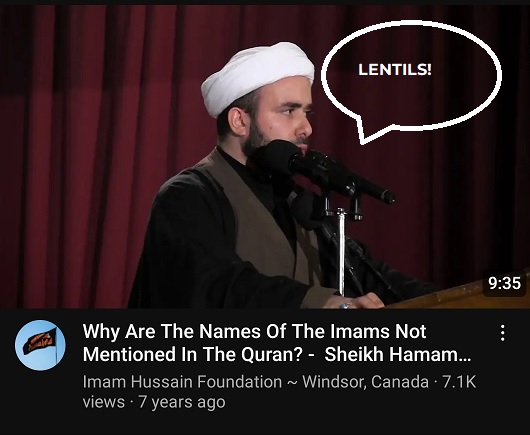
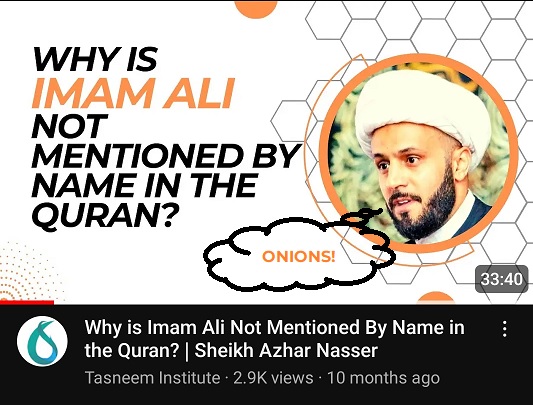

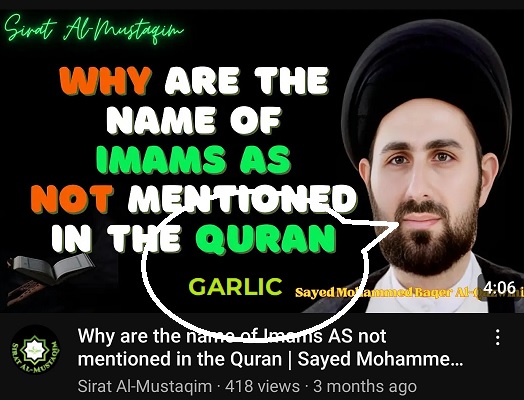
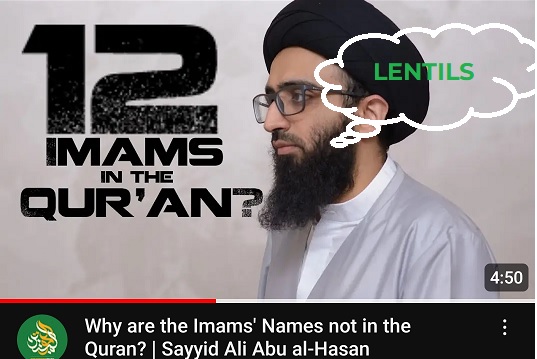

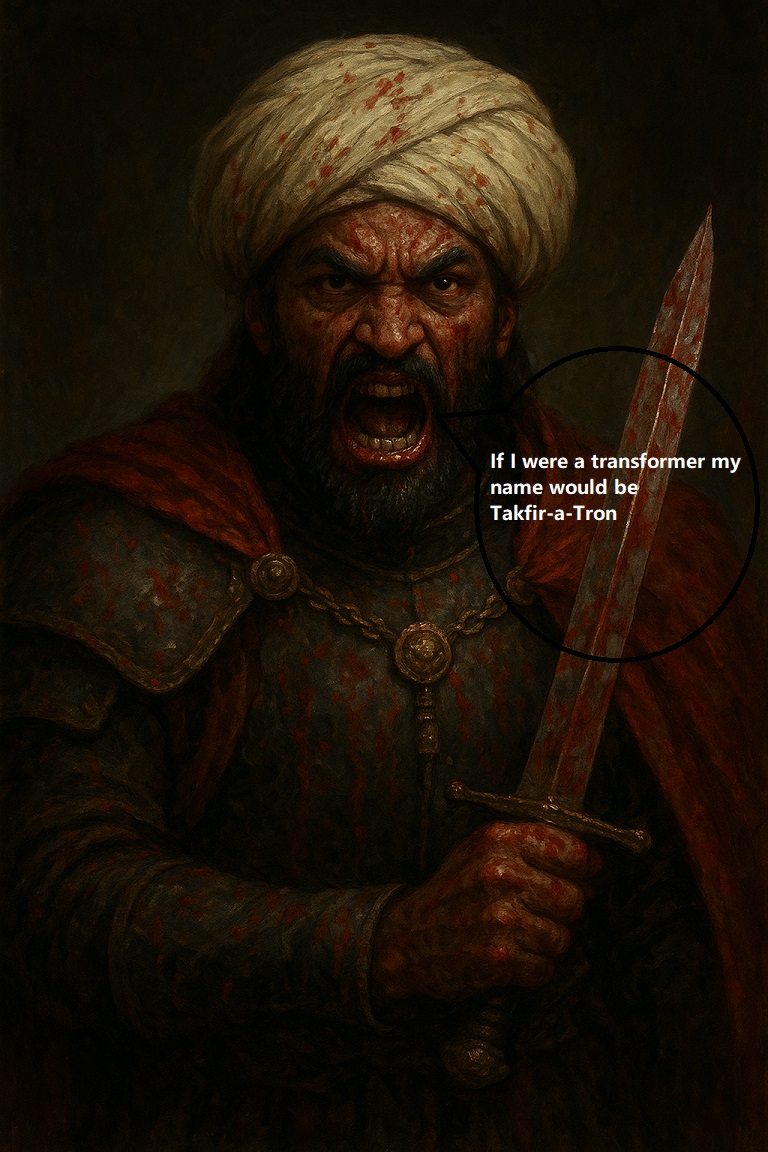


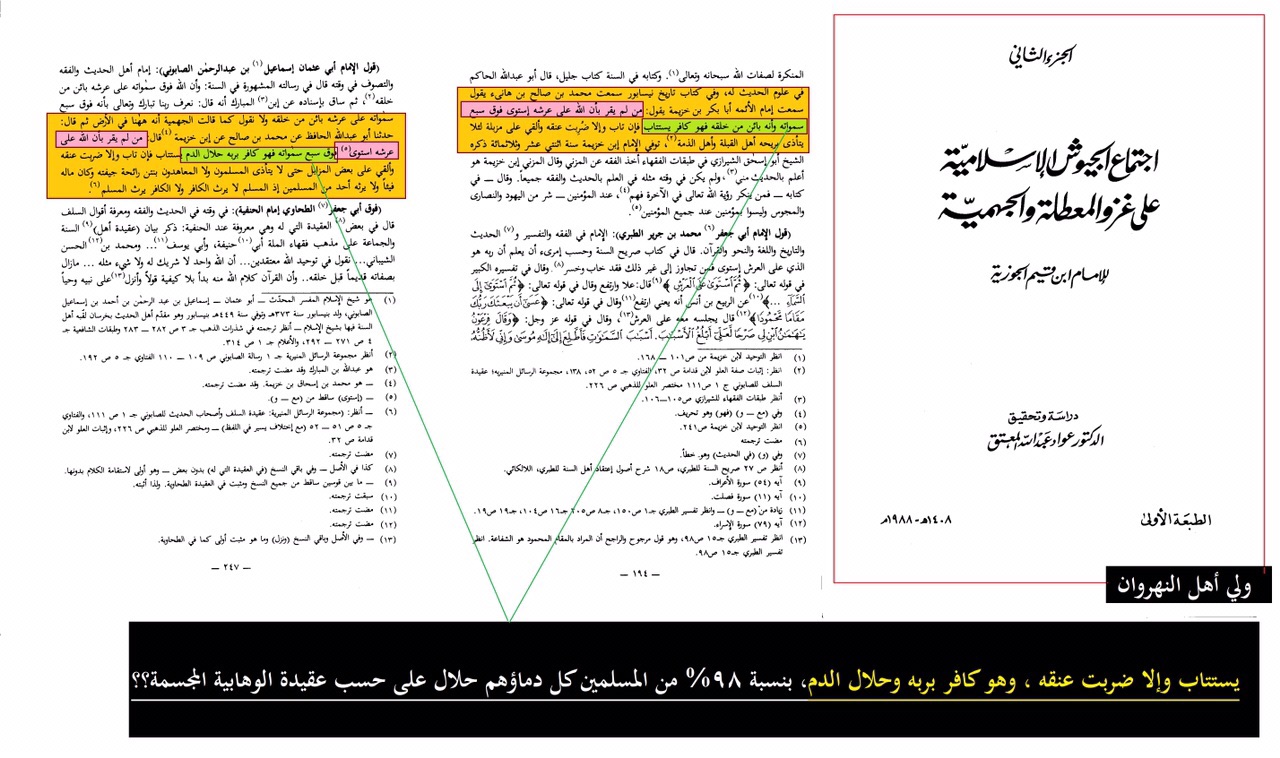

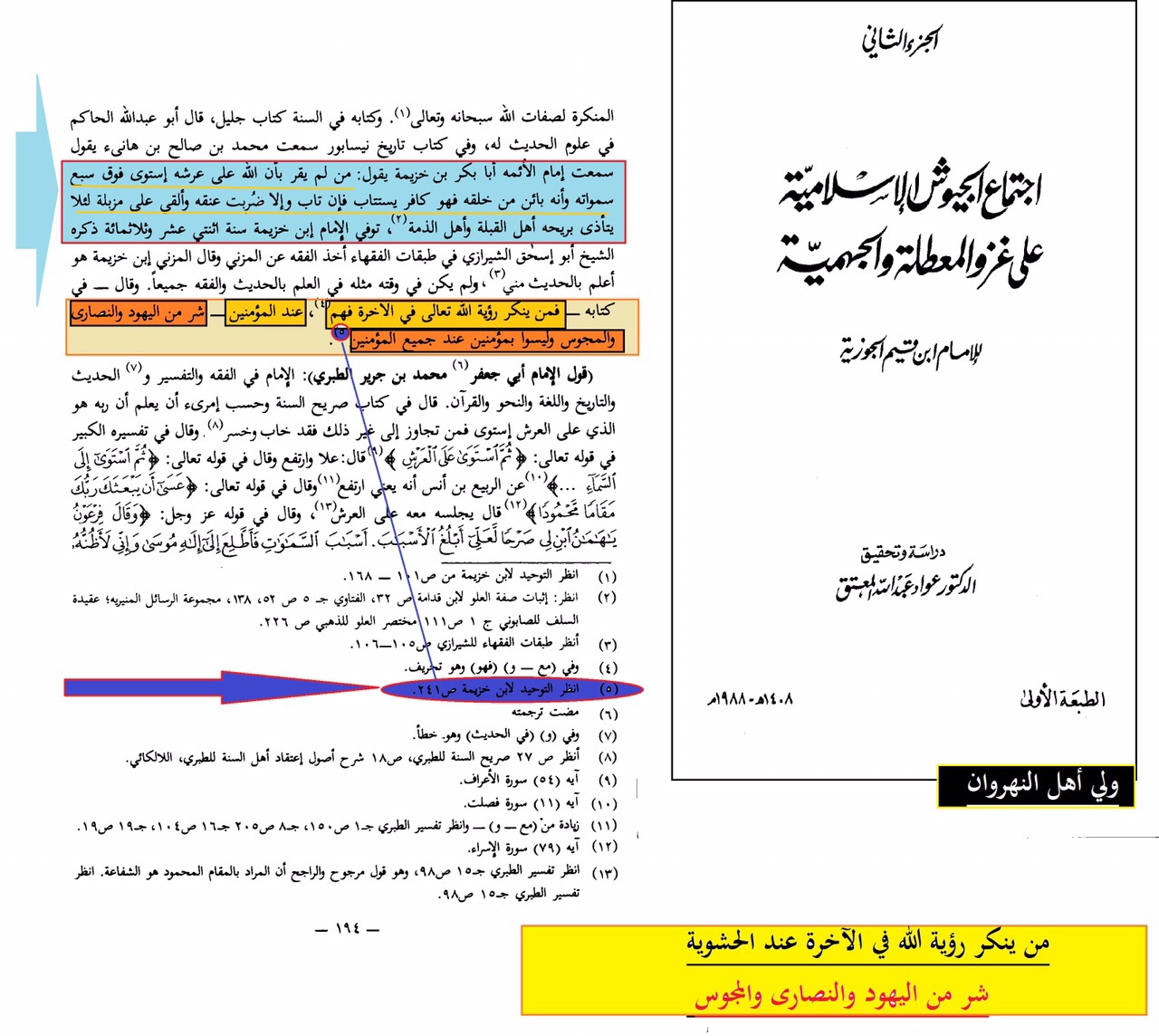

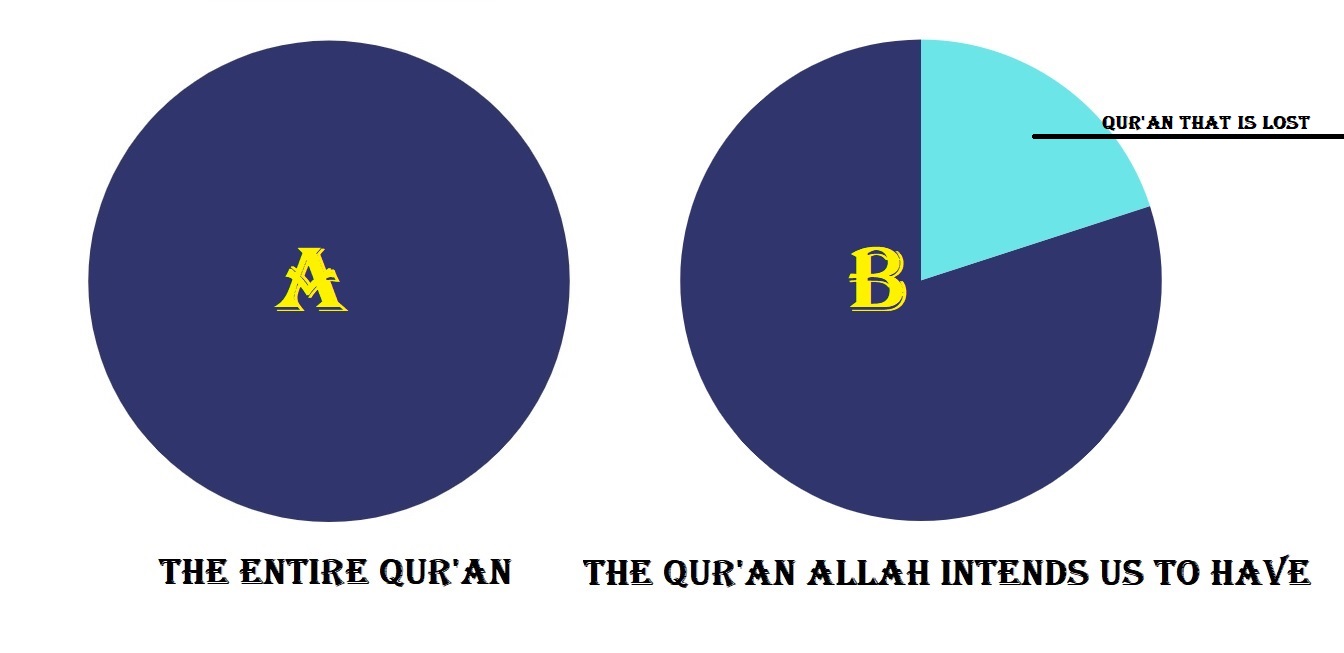
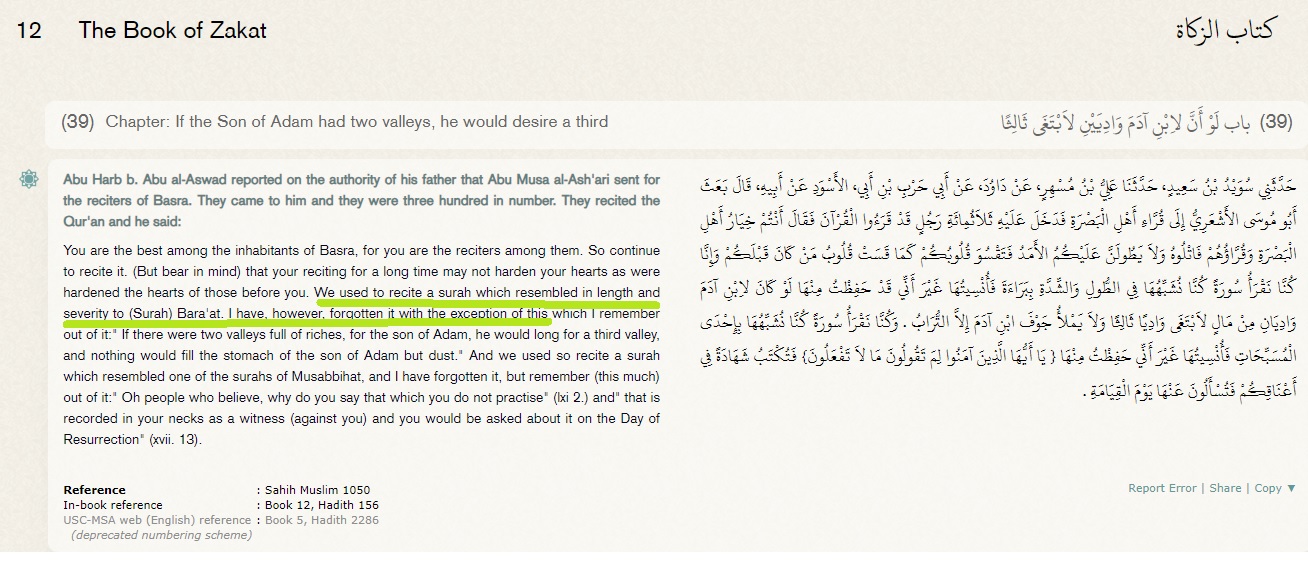
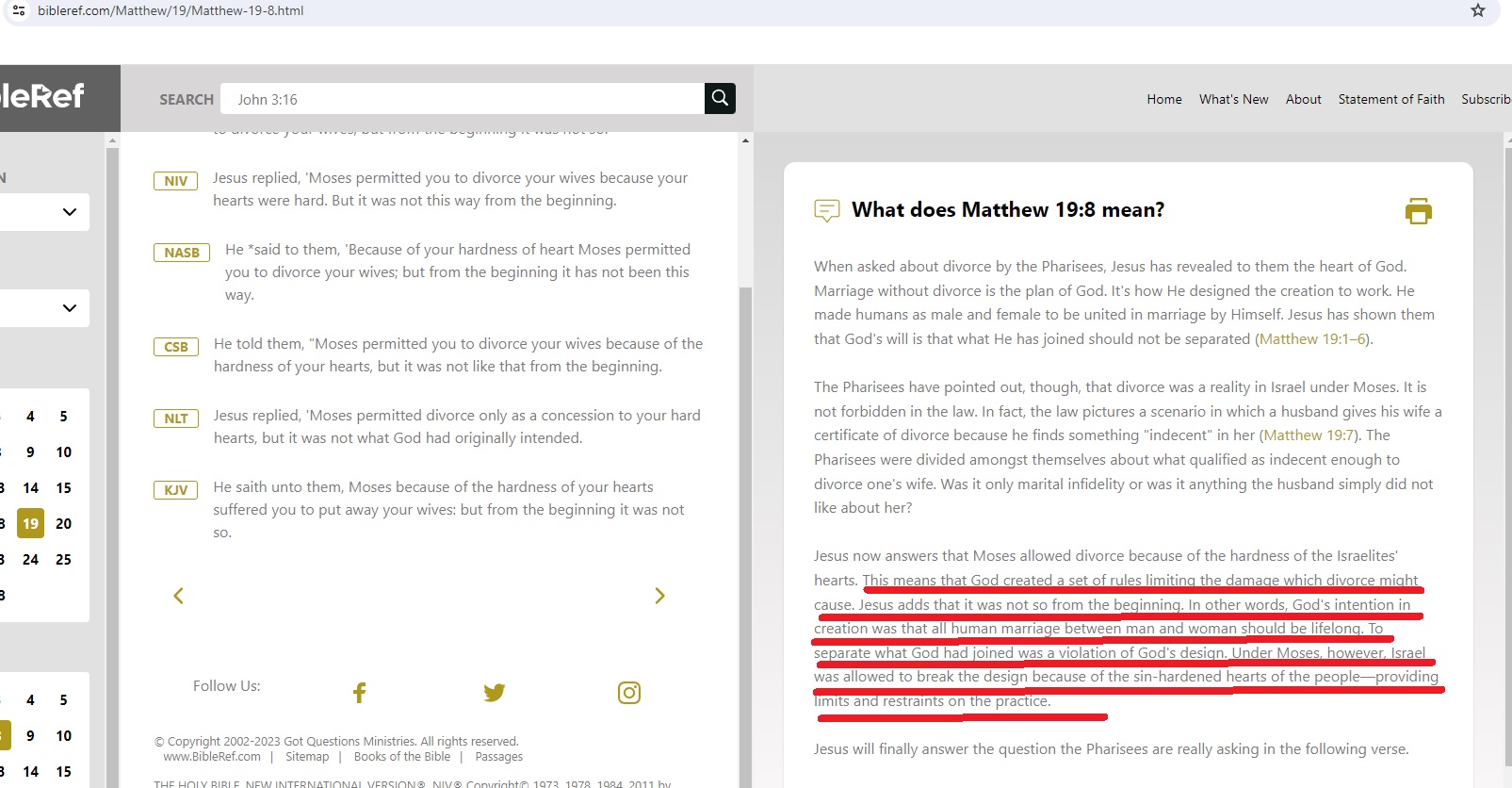
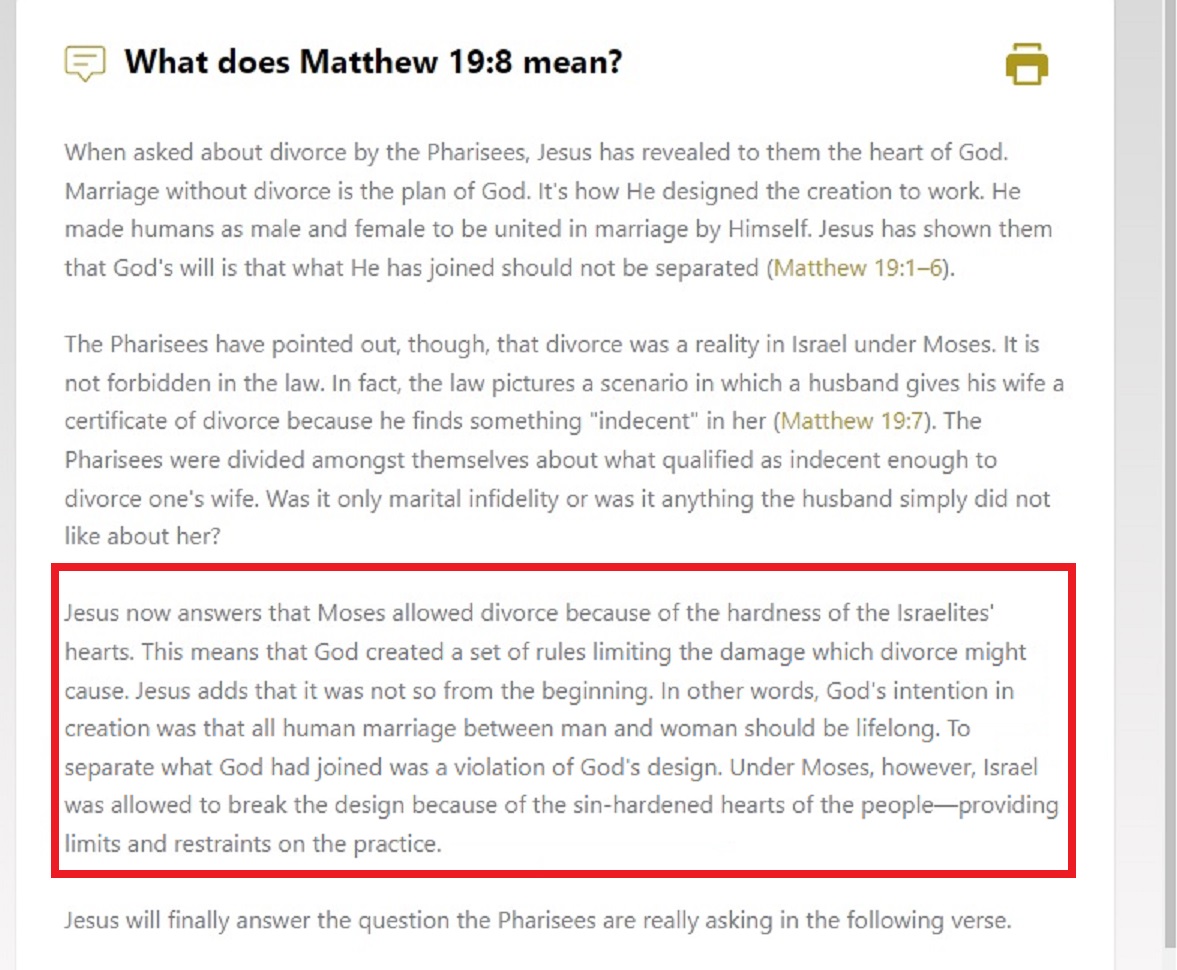


 Prima Quran