“Every soul will taste death. And you will only receive your full reward on the Day of Judgment. Whoever is spared from the Fire and is admitted into Paradise will triumph, whereas the life of this world is no more than the delusion of enjoyment.” (Qur’an 3:185)
﷽
Ramadan Day 26:Purifyyour intentions and work hard.
*26th of Ramadan* ——————————– *Heart Illness: Loving the Dunya* From the things that destroy the heart is the love of this life and its desires. Loving this life is the start of every sin, the permitted things in this life are reckoning, it’s prohibitions are punishments, its start is crying, its middle is pain and its ending is mortality.
Allah says:
“The enjoyment of desires—women, children, treasures of gold and silver, fine horses, cattle, and fertile land—has been made appealing to people. These are the pleasures of this worldly life, but with Allah is the finest destination.” (Qur’an 3:14)
and
“And give them a parable of this worldly life. like the plants of the earth, thriving when sustained by the rain We send down from the sky. Then they turn into chaff scattered by the wind. And Allah is fully capable of all things.” (Qur’an 18:45)
The companions, may Allah be pleased with them, were filled with a love for the Blessed Prophet (saw) that was deeper than the love for their own families. They wished for every comfort and ease for him, and it pained them to see him in any state of hardship.
On one occasion, they entered upon the Messenger of Allah (saw) and saw that he had been sleeping on a simple, coarse mat made of palm fibers. The harsh weave of the mat had left its clear imprint on his blessed side, marking his skin with its pattern.
Their hearts swelled with compassion and concern. One of them exclaimed, “O Messenger of Allah! Why didn’t you call us so that we could have spread a softer, more comfortable bedding for you?”
They longed to provide him with every comfort, to spare him from the slightest discomfort. But the Blessed Prophet (saw), whose mission was to teach humanity the meaning of life, turned to them with a gaze filled with profound wisdom. He was not concerned with the fleeting comforts of a world he understood to be a mere passage.
He (saw) said:
“What have I to do with this world? My example and the example of this worldly life is but that of a rider who journeyed on a scorching summer’s day. He stopped to rest in the shade of a tree for a short while. Then, he rose and continued on his journey, leaving it behind.”
—
Explanation and Meaning:
With this magnificent parable, the Blessed Prophet (saw) distilled the entire Islamic outlook on life:
The Rider: This is the believer, the soul on its journey through existence. Our ultimate destination is not this world, but the Hereafter (al-Ākhirah)—the meeting with our Lord.
The Scorching Summer Day: This represents the toil, trials, heat, and hardships of worldly life. It is a temporary state of difficulty through which one must pass.
The Shade of the Tree: This is the metaphor for the worldly life (ad-Dunyā) itself. It is a temporary respite, a momentary relief from the journey’s heat. It is a blessing from Allah, to be used gratefully but not to be mistaken for a permanent home.
The Short Nap: This signifies the brevity of human life. No matter how long one lives—60, 70, or 100 years—in the grand scale of eternity, it is nothing more than a brief pause, a short nap.
Leaving it Behind: This is the crucial point. The rider does not pack up the tree and take it with him. He does not become attached to the shade. He enjoys its respite, thanks Allah for it, and then moves on toward his real goal without a backward glance. Similarly, a believer uses the comforts and blessings of this world as a means to aid their worship and journey to Allah, never becoming enslaved by them or heartbroken at their loss.
*Walayah and Bara’ah of Dhahir* Last time we mentioned Walayah and Bara’ah of Haqiqah and Jumlah, today we will take a look at the third type which is walayah and bara’ah of Dahir, the word dhahir refers to the appearance, so you judge the people based on their appearance.
Walayat ad-dhahir is based on what is apparent from a person, and his straightness in his sayings and actions, like so, Bara’ah is based on the apparent of the people if they fall in a violation of truth by saying or doing while insisting on it.
There are three ways for walayah: 1. Preview: it is when the person sees the other in what shows his straightness without deviation from the truth by saying or doing, while hastening towards repenting after making a mistake.
2. Reputation: when a person is known for his righteousness and the toungs repeat this around.
3. Testimony: it’s to get this from two witnesses, and there is an opinion regarding if one person can be sufficient.
These ways are the same for bara’ah but it has one more way which is self-endorsement of committing a major sin either by saying, doing or believing.
and if there is some whom is unknown to you, or you can’t fit him in the previous conditions then he should be in Wuquf (to stop) until he can be put in walayah or bara’ah.
If you want to read more on this most important concept in Islam.
*The relationship between the prayer of the Imam and the Followers* The most prominent opinion in this issue is that the the prayer of the followers are linked to the prayer of the Imam, so if the prayer of the Imam is corrupted then the prayer of the followers is corrupted, based on the following pieces of evidence:
The imam carries some actions in the prayer, which the follower should have done if he prayed alone
The follower cannot precede the imam in anything in the prayer or else his prayer will break
If the follower was a traveler he should pray 4 Rak’as behind a resident imam, even though it’s obligatory for him to pray 2
The saying of the Blessed Prophet (saw):
“The imam was made to be followed, so if he prays standing pray standing, and if he prays sitting pray sitting.”
“This is the Book! There is no doubt about it—a guide for those mindful ˹of Allah˺, who believe in the unseen, establish prayer, and donate from what We have provided for them.” (Qur’an 2:2-3)
﷽
A video of Shaykh Hisham Kabbani of the Naqshbandi Haqqani Sufi Tariqa resurfaced that I was not aware of at the time it became known.
The Prophet (s) said, “I will tell you that I sent him because in this universe Allah created Creations, and the nearest one to Earth, the dangerous one. If they invade the Earth…if they invade the Earth, The Earth will be finished. They will kill everyone! I send Sayyidina `Ali to fight them alone!!! To these aliens that are they the most nearest to Earth; and with his sword and his power, He is Asadullah al-Ghaalib! Destroyed two-third of them! That’s why they don’t have power anymore to come on Earth. That is why I sent him, he’s absent from the house.” -Shaykh Hisham Kabbani
The above part that is in bold black text is the beginning of the paragraph but it was cut off. You can read the whole transcript and context from their official website:
Now when one reads the context, it does seem like an abrupt change of course to start speaking about the time when it was alleged that the Blessed Messenger (saw) sent Ali Ibn Abu Talib to take down a large contingent of aliens. Apparently 67% of them were wiped out! I do not know if that means their military forces, their people as a whole (men, women, children-offspring) as those details were not provided.
No one knows if these are the same beings that former Minister of Defense Paul Hellyer was speaking about either. I will link to the article where he (Paul Hellyer) speaks of these beings.
As Muslims, we believe in the unseen. Yet, we also believe in what is rational, sensible and logical. I guess the issue that I have with the idea of sending Ali Ibn Abu Talib into cosmic forays to fight these Aliens is you have to wonder about a few things.
Why only take out 2/3 of them? Is leaving the 1/3 left a mercy to them? As in, “Look, I wiped out 2/3, or you so like chill or else!”
But then you really have to wonder about horrific situations like Palestine.
But I know the retort will be swift: “Palestine or the whole planet brother?”
Over all, personally, my encounters with Naqshanbai Haqqani have been positive. Though I know that they, like all Sufi Tariqah, are in a spiritual Jihad with one another to vie for dominance to be ‘The Tariqah above all others’.
May Allah (swt) guide us to the truth of such matters. May Allah (swt) cause us to think logically and reflect upon such matters.
You may also be interested in the following entries:
Ha-Mim By the Book that makes things clear,-We have made it a Qur’an in Arabic, that you may be able to understand and learn wisdom. And verily, it is in the Mother of the Book, in Our Presence, high in dignity, full of wisdom. Shall We then take away the Message from you and repel (you), for that you are a people transgressing beyond bounds? (Qur’an 43:15)
“Nay! it is a Glorious Qur’an, In a guarded tablet” (Qur’an 85:21-22)
﷽
This is an entry that discusses the problematic theological position held by those who call themselves ‘Salafi’ or ‘Athari. That is the belief that the Qur’an is the eternal uncreated word of Allah.
Now this is a belief of those who ascribe to Ahl Sunnah in general. However, there is an aberrant and bizarre perspective held by those who call themselves as ‘Salafi’ or ‘Athari’.
That is what this article will focus on.
I want to say from the outset that the Ibadi school does not make takfir of any Muslim who believes the Qur’an is created. This issue was not addressed by the Blessed Prophet (saw) nor by his companions. Takfir of other Muslims is not something that our school is known for.
This is a matter of dispute between the scholars. Each side will bring thier proofs and justifications for the position that they hold.
It is truly unfortunate that some of the Muslim intelligentsia and academics would feel so threatened by any discussion on this subject that it would incur a death penalty.
For example in one of the great works that are praised by the Sufi Muslims, Qadi Iyad we find
He said about someone who said that the Qur’an is created, “He is an unbeliever, so kill him.” He said in the version of Ibn Nafi’, “He should be flogged and painfully beaten and imprisoned until he repents.” In the version of Bishr ibn Bakr at-Tinnisi we find, “He is killed and his repentance is not accepted.”
Source: (Qadi ‘Iyad Musa al-Yahsubi, Muhammed Messenger of Allah (Ash-Shifa of Qadi ‘Iyad), translated by Aisha Abdarrahman Bewley [Madinah Press, Inverness, Scotland, U.K. 1991; third reprint, paperback], p. 419)
In fact, Muhammed ibn Isma’il Al-Bukhari (of Sahih Bukhari oral collection fame) was persecuted by a group of those from the Hanbali school of jurisprudence for a remark he made.
“Al-Dhuhli was fierce (shadîd) in his adhesion to the Sunna. He confronted Muhammed ibn Isma‘il [al-Bukhari] because the latter had alluded, in his Khalq Af‘al al-‘Ibad, to the fact that the reader’s utterance of the Qur’an was created. Bukhari made it understood without explicitly saying it, but he certainly made it clear. On the other hand, Ahmad ibn Hanbal flatly refused to explore the question, as well as Abu Zur‘a and al-Dhuhli, or indulge in the terminology of dialectic theologians (al-mutakallimûn), and they did well – may Allah reward them excellently. Ibn Isma‘il had to travel from Naysabur undercover, and he was pained by what Muhammed ibn Yahya [al-Dhuhli] had done to him.”
Source: (Al-Dhahabi, Siyar (10:207)
Also:
Al-Hakim [narrated with his chains]: Muhammed ibn Yahya [al-Dhuhli] said: “This Bukhari has openly subscribed to the doctrine of ‘pronunciationists’ (al-lafziyya), and for me those are worse than the Jahmiyya.” . . . Ahmad ibn Salama visited Bukhari and told him: “O Abu ‘Abd Allah, this is a respected man [i.e. al-Dhuhli] in Khurasan, especially in this town [Naysabur], and he has thundered with this speech until none of us can say anything to him about it, so what do you think we should do?” Bukhari grasped his beard then he said: (I confide my cause unto Allah. Lo! Allah is Seer of His slaves.) (40:44) He continued: “O Allah! You know that I did not want for one moment to settle in Naysabur out of arrogance, nor in quest of leadership, but only because my soul would not let me return to my own country [Bukhara] because of my opponents; and now this man intends harm for me out of jealousy, only because of what Allah gave me and for no other reason.” Then he said to me: “O Ahmad, tomorrow I shall leave and you will be rid of his talk which I caused.” . . . Muhammed ibn Ya‘qub the hadith master said: “When al-Bukhari settled in Naysabur Muslim ibn al-Hajjaj took to visiting him frequently. When the affair of the pronunciation of Qur’an took place between al-Bukhari and [al-Dhuhli] and the latter roused people against him and forbade them to visit him, most people stopped visiting him, but not Muslim. Then al-Dhuhli said: ‘Anyone that subscribes to the pronunciation [being created], it is not permitted for them to attend our gathering.’ Whereupon Muslim placed a cloak on top of his turban, stood up in front of everyone, and sent back to al-Dhuhli what he had written from him carried by a camel-driver, for Muslim openly subscribed to the pronunciation and made no attempt to conceal it.” . . . Ahmad ibn Mansur al-Shirazi also narrated it from Muhammed ibn Ya‘qub, adding: “And Ahmad ibn Salama stood up and followed him.” (See Al-Dhahabi, Siyar (10:314-315). Cf. Bayhaqi’s al-Asma’ wa al-Sifat (al-Hashidi ed. 2:20-21 #591).
As Hamza Yusuf correctly remarked. if you follow this line of reasoning you eventually end up with
@ 1:32 Listen carefully people. Shaykh Hamza Yusus if a public orator and a supremely articulate man. Listen very carefully to the doctrine you are being asked to subscribe to.
@ 3:00 “It definitely doesn’t mean though the mushaf you have in your house. Because that would then…I mean some of the Christians argue that well the Qur’an is imbibliation. Like we believe in incarnation of the logos the Muslims believe in imbibliation of the logos. That God became book and so we don’t we don’t see that as valid. That view of it so.” -Hamza Yusuf.
Salafi Da’wah hooks you with the transcendence of Allah (swt). Most people who are introduced to Islam through the street preachers who hold Salafi doctrine are intrigued by concepts such as: Allah being one. What seems to look like a simplistic creed. That Allah has no parents or no children or no partners. Allah is neither black nor white. Allah is not male or female.
However, once you have taken your Shahadah or delcaration of faith how much longer until you are taught ‘Kitab Al Tawhid’ and here come the bizarre concepts. Allah has two right hands, and one of those right hands is a left hand, Allah occupies space, has a shin, a foot, chuckles at people’s despair, comes down the third part of the night, appears to the disbelievers in forms and shapes that they knew and then appears to the disbelievers in forms and shapes they do not know.
SaidNO ONE EVER!
Yasir Qadhi, Salafis and Atheist.
Unfortunately Yasir Qadhi has come under fire from people who seemingly do not understand what he has been saying as of late.
Atheist and Agnostics have a different epistemology and world view when evaluating history then do believers. This also should not come as a shock or a surprise to anyone.
Agnostic/Skeptic: “We have not found any evidence of X.”
Believer: “They have yetto find any evidence of X.” The believer takes note that the Agnostic/Skeptic did not claim “We will neverfind.”
However, in one of his books he has given a very powerful argument to the atheist and agnostics to dismantle Salafi theology.
In reality I should not fault Yasir Qadhi for this as if it was some novel idea that he came up with. Rather, he is parroting the learned polemic that he would have picked up from his teachers.
Yasir Qadhi says:
“These Attributes are understood literally (in the case of the Attributes of kalam, that Allah, Speaks, whenever He wishes, with a sound, in different languages, and this Speech is composed of words and letters and is not created), but the actuality and ‘how-ness’ of these Attributes are not delved into, and any negative similarity be-tween these Attributes and the attributes of the creation are negated (in the case of this Attribute, that the speech of the creation is created, but the Speech of Allah is not.) Understanding these Attributes ‘literally’ does not mean understanding them in the manner that they are found in the creation, or comparing them with the attributes of the creation; rather, it means affirming the linguistic meaning of that Attribute in a manner that befits the Creator, and will never completely be understood by mankind.”
Source: (An Introduction to the Sciences of the Qur’an pg 52)
We are told that the ‘how-ness‘ is not delved into and yet this whole paragraph does exactly that! When you negate comparison you are comparing and contrasting ‘how‘ something is unlike something else.
When speaking of prophet Ibrahim (a.s) and the story of the idols Shaykh Yasir Qadhi says:
“In these verses, Ibrahim showed his people that their idols were not worthy of worship, primarily because they could not speak. After they themselves acknowledged this, Ibrahim rebuked them, and asked them, “Have you no sense?!” meaning, “How can an object that cannot even speak be worthy of worship?” Notice that Ibrahim was referring to a speech that could be heard, for Ibrahim’s people did not answer Ibrahim with the belief of the Ash’arees, “Our god speaks, but a speech that is not heard-an internal speech of the mind!” for they understood what Ibrahim meant!! This is why they turned to themselves, and realized the foolishness of their actions, and could only reply with the feeble response that everyone knew that their idols could not speak!”
Source: (An Introduction to the Sciences of the Qur’an pg 46)
Yasir Qadhi thinks that he has the goods on the Ash’ari Sunnis latter making a quote that in effect turns the Ash’ari Sunnis into idol worshipers.
Yet, look at the quotation above where he says:
“‘literally’ does not mean understanding them in the manner that they are found in the creation.”
Rather than help Islam, Yasir Qadhi and his Salafist-Athari creed and those who think like him have handed over to skeptics of their position a devastating argument.
So like Ibrahim (as) demands above the atheist has the right to demand from him speech from his Creator.
They have the right to demand “a speech that could be heard”
A typical discussion between an Atheist-Agnostic/Skeptic and one who follows Salafist theology could go something like this:
Atheist/Agnostic/Skeptic: “Does your god, Allah speak? Let’s hear it then!”
Salafi: “Of course and here is the proof!” (pulls out Qur’an).
Atheist/Agnostic/Skeptic: “Ibrahim didn’t ask the idols for a book; he asked if they can speak!”
Salafi:
Yet Yasir Qadhi is not done with the Ash’ari.
Yasir Qadhi thinks he has the goods on the Ash’ari when he says,
“1) If the kalam of Allah is without sound, then what did Musa hear when Allah spoke to Him? If they respond that Allah created a sound, and caused Musa to hear that created sound, then this means that this created object stated, “O Musa, verily, I am your Lord…Verily, I am Allah, there is no God save Me, so worship Me… [ Qur’an 20:12-14]
Therefore, if they state this, it implies that this created object claimed to be Allah, and asked Musa to worship it! However, if they stated that it was the actual kalam of Allah, then it must be asked, “How then did Musa hear it if you claim that Allah’s kalam is without sound? ” The scholars of the Ash’arees have not been able to provide a satisfactory response for this.”
Source: (An introduction to the Sciences of the Qur’an pg 44)
Prima Qur’an Comments:
So Yasir Qadhi thinks that it was the object cried out ‘I am Allah, there is no God save Me, so worship Me’. Yet, obviously, we know that Moses (as) did not perform any act of worship towards the direction of the voice. Or at least no act of worship is recorded.
Yasir Qadhi and those who agree with his position have to wonder the following:
What did Rasul Allah (saw) think when Angel Gabriel (as) said. ” Indeed this, your religion, is one religion, and I am your Lord, so worship Me.” (Qur’an 21:92)
Did the Blessed Messenger (saw) fall down and worship Gabriel? Obviously not!
Gabriel(as) was used as a medium in the same way the burning bush was.
As regards if Musa (as) heard audible sounds from the burning bush you ask yourself, did the companions hear audible sounds as the Qur’an was being revealed to the Blessed Messenger (saw)?
“And [We sent] messengers about whom We have related [their stories] to you before and messengers about whom We have not related to you. And Allah spoke to Moses with [direct] speech.” (Qur’an 4:164)
“When he saw a fire and said to his family, “Stay here; indeed, I have perceived a fire; perhaps I can bring you a torch or find at the fire some guidance.” And when he came to it, he was called, “O Moses, Indeed, I am your Lord, so remove your sandals. Indeed, you are in the sacred valley of Tuwa. And I have chosen you, so listen to what is revealed [to you] Indeed, I am Allah. There is no deity except Me, so worship Me and establish prayer for My remembrance.” (Quran 20:10-14)
“And when Moses had completed the term and was traveling with his family, he perceived from the direction of the mount a fire. He said to his family, “Stay here; indeed, I have perceived a fire. Perhaps I will bring you from there [some] information or burning wood from the fire that you may warm yourselves.” But when he came to it, he was called from the right side of the valley in a blessed spot – from the tree, “O Moses, indeed I am Allah, Lord of the worlds.” (Qur’an 28:29-30)
“Has there reached you the story of Moses? When his Lord called to him in the sacred valley of Tuwa” (Qur’an 79:15-16)
Likewise, since the Qur’an acts as a guardian of the previous scriptures let us see what is claimed to be the Torah has to say as well.
“There the angel of the LORD appeared to him in flames of fire from within a bush. Moses saw that though the bush was on fire it did not burn up. So Moses thought, “I will go over and see this strange sight–why the bush does not burn up.”When the LORD saw that he had gone over to look, God called to him from within the bush, “Moses! Moses!” And Moses said, “Here I am.””Do not come any closer,” God said. “Take off your sandals, for the place where you are standing is holy ground.” (Exodus 3:2-5)
Allah (swt) created a sound and caused Moses (as) to hear that created sound. In fact, if you go on further the whole context shows how Allah (swt) is the creator of perception. Moses (as) was made to perceive a burning fire, it did not indicate if anyone saw it or not. He (as) was made to perceive his hand becoming white. He (as) was made to perceive a voice from a tree. He (as) was made to perceive his staff move like a snake.
“And it is not for any human being that Allah should speak to him except by revelation or from behind a partition or that He sends a messenger to reveal, by His permission, what He wills. Indeed, He is Most High and Wise.” (Qur’an 42:51)
Unless our respected Yasir Qadhi wants to say that the Qur’an contains a flat contradiction he will need to understand ‘Allah spoke to Moses with direct speech‘ in light of the above verses.
Coming back to Ibrahim:
First of all notice that there are different approaches that the Prophets of Allah take when dealing with different groups.
“Say: “Do you see what it is you invoke besides Allah? Show me what it is they have created on earth, or have they a share in the heavens bring me a book (bikitabin) before this, or any remnant (atharatin) of knowledge (you may have), if you are telling the truth!” (Qur’an 46:4)
Why do people worship at all?
What is the motivation for worship?
A) Either derive from benefit. These deities bring fortune, or blessings.
B) Either to avoid some harm. These deities will bring misfotune, or wrath.
Now comes the question: What is the authority for this worship!
Notice that in the Qur’an 46:4 The Blessed Prophet (saw) is asking if these people have some authority for doing what they do. Do they have a revelation or an athar (report, hadith from a previous athority).
Ibrahim (as) and his approach is very logical and methodical.
There is no prophet or oracle from these people he needs to consult or contend with.
There is no claim of sacred revelation that he needs to consult or contend with.
It is obvious that Ibrahim (as) is trying to trigger these people. He is getting them to reflect on the basis for dong what they do.
They said, “Have you done this to our gods, O Ibrahim?” He said, “Rather, this – the largest of them – did it, so ask them, if they should speak.” (Qur’an 21:62-63)
“Ibrahim asked, “Can they hear you when you call upon them? Or can they benefit or harm you?” (Qur’an 26:72-73)
There is nothing in these text that even remotely suggest that it is the personal belief of Ibrahim (as) that in order for Allah to exist and be real, then He must communicate via audible sounds that can be perceived by the ear.
It would be great if we had the response of these idol worshippers.
Wait..we do!
In reply to Qur’an 26:72-73 we have:
“They replied, “No! But we found our forefathers doing the same.” Ibrahim responded, “Have you considered what you have been worshipping, you and your ancestors?” (Qur’an 26:74-76)
Now we get to the justification. They are simply following what the people who came before them did. At least here they are forthcoming.
In reply to (Qur’an 26:72-73) we have:
“So they came back to their senses, saying, “You yourselves are truly the wrongdoers. Then they regressed to their mind -set. “You already know that they cannot speak.” He said “Do you then worship besides Allah, what can neither benefit nor harm you? (Qur’an 21:64-66)
What can neither benefit nor harm you. This is proven by the previous episode of the idols being smashed to pieces. If they cannot benefit or protect themselves then what guarantee do you have that they can benefit or protect you.
People should really think carefully before they set up a whole generation of young people to be demolished in an age of Atheist, Agnostics and Skeptics.
“Behold, you received it on your tongues, and said out of your mouths things of which you had no knowledge; and you thought it to be a light matter, while it was most serious in the sight of Allah.” (Qur’an 24:15)
For those interested the book: “An Introduction to the Sciences of the Qur’an” by Yasir Qadhi is still the best book in the English language on the topic. Nothing else comes close.
“And We have also sent down unto you (Muhammed) the Reminder and the Advice (the Qur’an), that you may explain clearly to men what is sent down to them.” (Qur’an 16:44)
﷽
This article if anything is going to show the importance of understanding the Arabic language. Not only understanding the Arabic language but understanding the breadth, depth and richness of this language.
I have seen Christian polemist try to twist the Arabic meaning of the Qur’an to suit an agenda that they have. I have seen a “Muslim” from Harvard chime in to the same effect, to suggest that Christianity and Islam are basically the same. That same reformist surprise surprise, not grounded in the Arabic language.
I have seen a known follower of the ‘Hafs Only Quranic Transmission’ Religion opine on the matter. Relying upon his Lisan Al Arabi and Hans WEHR Dictionary of Modern Arabic.
All of them suffer from the same issue. They do not have even foundational knowledge of the Arabic language, let alone advanced knowledge.
For those interested you may want to revisit our article in which our noble teacher Shaykh Juma Mazrui (May Allah bless him) instructed us on the usage of Majaz in the Qur’an and Sunnah.
I’ll pull up something from the article there and re-post it here as it is relevant.
“Be patient over what they say, and remember Our servant, David, the possessor of many hands(l-aydi); he was one who repeatedly turned back [to Us].” (Qur’an 38:17)
Plural in Arabic begins with three and not two! So, at the very least David had three hands. However, notice something from the following site:
It is unanimous that they all translate ‘many hands’ as strength! Even the Salafi/Saudi translations do! Even the translation that gives us the most literal word for word meaning possible was too shy to translate David having many hands.
Be patient over what they say and remember Our servant, David, the possessor of strength; indeed, he was one who repeatedly turned back [to Allah ] (Sahih International)
Be patient (O Muhammad SAW) of what they say, and remember Our slave Dawood (David), endued with power. Verily, he was ever oft-returning in all matters and in repentance (toward Allah) (Muhsin Khan & Muhammed Al Hilal)
So we can say to those who believe in literal translations: Why don’t you take these verses on the apparent meaning? If Allah (swt) says that David has many hands then say that David had many hands!
You are shy to ascribe many hands to David but not to Allah (swt)?!
This is also the case any place any where we see ‘hands’ attributed to Allah (swt).
You can see all such instances relating to having power over, authority over, under the provision of etc…
“And that which We have revealed to you, of the Book is the truth, (ma bayna yadayhi) that is between its hands. Indeed, Allah , of His servants, is Acquainted and Seeing.” (Qur’an 35:31)
“They said, “O our people, indeed we have heard a Book revealed after Moses and (ma bayna yadayhi) what is between its hands. which guides to the truth and to a straight path.” (Qur’an 46:30)
“He has sent down upon you, the Book in truth, (ma bayna yadayhi) what is between its hands. And He revealed the Torah and the Gospel.” (Qur’an 3:3)
All of those verses when taken literally clearly states that the Qur’an has something ‘in between its hands’.
In the case of our Harvard graduate (mentioned above) he is among those who rail against the Salafist and their literal interpretations; but he himself is bereft of a consistent hermeneutic.
Even in the case of the one who follows the ‘Hafs Only Quranic Transmission’ Religion there was a clear acknowledgement that the text is an idiomatic expression and yet still decided on a literal translation! He even used Qur’an 3:3 as an example!
“Indeed, it is not the eyes that are blind, but it is the hearts in the chests that grow blind.” (Qur’an 22:46)
The very definition of idiomatic expression is:
an expression whose meanings cannot be inferred from the meanings of the words that comprise it.
THE DECEPTION OF CHRISITAN POLEMICIST
So how do these Christian apologist and polemicist use these idiomatic expressions in the Qur’an to deceive the layman Muslim?
“And We sent, following in their footsteps, Jesus , the son of Mary, (ma bayna yadayhi) having authority over the Torah; and We gave him the Gospel, in which was guidance and light and having authority over that which preceded it of the Torah as guidance and instruction for the righteous.” (Qur’an 5:46)
“And when Jesus, the son of Mary, said, “O children of Israel, indeed I am the messenger of Allah to you(ma bayna yadayhi) having authority over that which came before me of the Torah and bringing good tidings of a messenger to come after me, whose name is Ahmad.” But when he came to them with clear evidences, they said, “This is obvious magic.” (Qur’an 61:6)
“He has sent down upon you, the Book in truth, (ma bayna yadayhi) have total authority. And He revealed the Torah and the Gospel.” (Qur’an 3:3)
How do these Christian polemist and apologist twist Qur’an 5:46 and Qur’an 61:6?
They want it to read something like this:
“And We sent, following in their footsteps, Jesus , the son of Mary, confirming the Torah that is between his hands; and We gave him the Gospel, in which was guidance and light and having authority over that which preceded it of the Torah as guidance and instruction for the righteous.” (Qur’an 5:46)
“And when Jesus, the son of Mary, said, “O children of Israel, indeed I am the messenger of Allah to you confirming the Torah that is between my hands and bringing good tidings of a messenger to come after me, whose name is Ahmad.” But when he came to them with clear evidences, they said, “This is obvious magic.” (Qur’an 61:6)
Is it now obvious what they are up to?
They are trying by way of deception to make it look as if Jesus (as) had some physical copy of the Torah in his hands that he is reading from. Since the Torah of the time of Christ Jesus can reasonably be argued to be the one that Jews are using today -ipso facto it is preserved, untampered and uncorrupted.
This very idea has been destroyed by the Qur’an itself. It charges something much deeper than textual corruption. We are talking about corruption of in the oral process before it even becomes written text.
“Then woe to those who write the Book with their own hands, and then say:” This is from Allah,” to traffic with it for miserable price!- Woe to them for what their hands do write, and for the gain they make thereby.” (Qur’an 2:79)
Note the text above is not talking about people editing a book. It is stating that the very things they are writing themselves are a fabrication! Not that they had something in hand and started editing and omitting. It is deeper than that!
The Qur’an has no qualms about the fact that what Christians and Jews call sacred scriptures can have some truth in them. However, it has never endorsed their sacred text wholesale.
It is not possible to do so because Jews and Christians have internal disputes about what their sacred canon consist of. The Qur’an never settles these disputes between them.
“But why do they come to you for judgment when they have the Torah containing Allah’s judgment, then they turn away after all? They are not believers.” (Qur’an 5:43)
“And let the People of the Gospel(ahlu l’injili) judge by what Allah has revealed therein. And whoever does not judge by what Allah has revealed – then it is those who are the defiantly disobedient.” (Qur’an 5:47)
“We sent thee not, but as a Mercy for all creatures.” (Quran 21:107)
﷽
The Mufti of Oman, Shaykh Ahmed Al Khalili (H) has informed us:
Celebrating the birth of the Prophet ﷺ was not practiced during the time of the Companions (may Allah be pleased with them), nor during the time of the Successors (tābi‘īn), nor during the time of the successors of the Successors (atbā‘ al-tābi‘īn). Most likely, this celebration began during the era of the Fatimids. It is said that their intention behind this celebration was to deflect accusations that they were not truly Muslims. There is much discussion about the Fatimids—some even refer to them as the “ʿUbaydīs”—though they attributed themselves to Fāṭimah (may Allah be pleased with her) and thus were called “Fāṭimids.” Yet, many exaggerations surrounding them go so far as to take them outside the fold of Islam. For example, some said about al-Muʿizz al-Fāṭimī: “Whatever you will happens, not what fate decrees; you rule, for you are the One, the Subduer.” This is evidence that those people were far from Islam and from the oneness of Allah, as this is deification of human beings.
They were the first to introduce the celebration, and Muslims later adopted it from them. Perhaps the desire to celebrate the Prophet’s birthday was in order to remind people of this great blessing—the blessing of Allah sending His Messenger ﷺ to us. However, we must consider several important factors. Among these is that people, in commemorating the Prophet’s birth, have attributed sanctity to human-authored texts recounting the story of the noble birth. They came to revere such writings as if they were the Qur’an itself, and this is impermissible. Nothing is sacred except the words of Allah. As for the words of the Prophet ﷺ, when we read them, it is for the sake of deriving benefit and guidance; reading them in itself is not an act of worship. If someone who does not understand the Prophet’s words were to recite them thinking it was an act of devotion, it would not count as worship—unlike the Qur’an, whose recitation is worship whether one understands it or not.
Therefore, attributing sacredness to anything other than the words of Allah is problematic. If the celebration is meant to remind people of this great blessing, then one should not be bound to a single text authored by a person centuries ago as though it were a chapter of the Qur’an. Rather, the occasion can be connected to present-day circumstances—what the community needs to draw from this remembrance, such as reviving the call to Islam and renewing the message. This can be done by giving lectures, enlightening people about this blessing, and renewing the spirit of the message according to the needs of the time.
At the same time, all that contradicts the Sharīʿah in such celebrations must be avoided. Gatherings involving drums, dancing by men and women, and similar practices are contrary to Islamic teachings. These must be avoided. Likewise, the extravagant spending of large amounts of money on such occasions does not please the Messenger of Allah ﷺ. These funds would be better spent on things that benefit the Muslim community. Excessive decoration and lavish displays are also not a proper way of honoring the Prophet. These are matters that must be carefully avoided.
So there is no need for people to try and justify this practice to the people on the basis of what the early generation did or what the Blessed Prophet (saw) ordered us to do.
If people celebrate to remember the blessings of the Blessed Prophet (saw), by giving lectures etc then this is not something in our estimation that is totally forbidden.
Celebrating the birth of the Blessed Prophet (saw) with speech, and poems has become ‘urf (culture/custom). -it does not violate Islamic Principles.
We do not believe such celebrations should be done with haram music, dancing or free mixing. This time is used to send abundant blessings down upon the Blessed Prophet (saw) and used as a time to reflect on rather or not we become the beloved of Allah (swt) by following the beloved of Allah (swt).
#متابعات أحيت منارة الاستقامة لتعليم القرآن الكريم وعلومه بمدينةنالوت بالأمس ذكرى #المولد_النبوي_الشريف ضمن البرنامج الذي أعلن عنه مكتب أوقاف #نالوت حيث ألقيت بعض الكلمات بمناسبة هذه الذكرى الجميلة كما تخلل هذه الأمسية بعض القصائد والأناشيد والمدائح النبوية. @Taha_Asker12 pic.twitter.com/kMeVcCZDvp
Celebrating the birth of our noble Prophet (saw) Say, ˹O Prophet,˺ “If you ˹sincerely˺ love Allah, then follow me; Allah will love you and forgive your sins. For Allah is All-Forgiving, Most Merciful.” (Qur’an 3:31)
Often in Oman, Sunni and Ibadi come together to celebrate the Maulid
“Indeed, in the Messenger of Allah you have an excellent example for whoever has hope in Allah and the Last Day, and remembers Allah often.” (Qur’an 33:21)
و كان نبينا صلى الله عليه وسلم يتسابق في طاعته القرشي والحبشي و الفارسي و الرومي يذكر اسمه فتفيض العيون بالدمع، وتورد أحاديثه فتجيش الارواح بالشوق، له في كل مكان أتباع، وفي كل بلد أنصار، وفي كل قطر محبون، يدوي اسمه في الأذان وفي المنائر، ويذكر على المنابر، ويدرس في الدفاتر،… pic.twitter.com/3HQWoiCazd
Some of the justifications that we use to allow the practice are as follows:
“And as for the blessings of your Lord, speak of them” (Qur’an 93:11)
Is not the birth of the Blessed Prophet (saw) a blessing to humanity? It heralds the arrival of Allah’s beloved.
It is a way to convey the message of Muhammed (saw).
It is a way to send blessings and peace upon him.
A way to adhere to his love and follow what he (saw) brought.
This entry is quite short because it is not a hair splitting issue for us. Our scholars are very clear that we do not have records of the early generations celebrating this. This is something from ‘urf that the people love to do out of their burning love for Allah’s beloved.
Those who do not participate are not looked down upon. Those who wish to participate are received warmly.
“Tell believing men to lower their gaze and guard their private parts. That is purer for them. God is acquainted with what they do.” (Qur’an 24:30)
“And do not spy, nor backbite one another. Would any of you like to eat the flesh of their dead brother? You would despise that! And fear Allah. Surely Allah is ˹the˺ Accepter of Repentance, Most Merciful.” (Qur’an 49:12)
﷽
Ramadan Day 25:The two that lead to hellfire: The private parts and the tongue.
25th of Ramadan* ——————————– *Heart Illness: Hypocrisy* Allah and his messenger have described hypocrites for us so that we can avoid being like them, here are some attributes extracted from the Qur’an and the Sunnah:
Disloyalty: and it’s the opposite of trustworthiness, it can be in covenants, wealth, responsibilities and others. Lying: starting from light lies until lying becomes a habit for the hypocrite. Betrayal: the hypocrite will try to find anyway to betray. Immorality: making no difference between a Haram and a Halal due to the lack of faith. Laziness in worship: Allah says about them: (“And when they stand for prayer, they stand lazily, showing [themselves to] the people and not remembering Allah except a little.” (Qur’an 4:142)) Over-caring about looks: Allah said:
“When you see them, their appearance impresses you. And when they speak, you listen to their ˹impressive˺ speech. But they are ˹just˺ like ˹worthless˺ planks of wood leaned ˹against a wall’ (Qur’an 63:4) Deception: Allah said:
“They seek to deceive Allah and the believers, yet they only deceive themselves, but they fail to perceive it.” (Qur’an 2:9) Corruption: Allah says:
“And when it is said to them, Do not cause corruption on the earth, they say, We are but reformers.” (Qur’an 2:11)
*Walayah and Bara’ah of Jumlah and Haqiqah* We spoke about Walayah and Bara’ah previously, now we will know some types of walayah and bara’ah.
Firstly, “Jumlah” meaning “as a whole” and it’s an obligation for every Muslim, it’s to (ally all the allies of Allah from the past and the present until the day of judgment, and to dissociate from all the enemies of Allah in the past, present and until the day of judgment)
The other type we will mention today is Haqiqah, and it’s to ally and dissociate based on certain texts, like to ally the wife of Fir’aun, Maryam the mother of Isa (as), the messengers etc, and dissociate from people like Abu Lahab, the wife of Nuh and Lut because these people are mentioned in the Qur’an for their righteousness or misery
*Things allowed in prayer* from the things that are allowed in the prayer are: To open the next verse for the Imam if he forgets To say SubhanAllah for the Imam if he made a mistake in the prayer To cry for the matters of the hereafter Light movement to fix the prayer To stop people from walking In front of you Killing the snake and the scorpion and other harmful things To save souls or wealth from destruction To carry a child and to quite him To swallow the saliva or spit the saliva.
“O you who have believed, let not a people ridicule other people; perhaps they may be better than them, nor let women ridicule other women; perhaps they may be better than them. And do not insult one another and do not call each other by offensive nicknames. Wretched is the name of disobedience after one’s faith. And whoever does not repent – then it is those who are the wrongdoers.” (Qur’an 49:11)
“Allah will throw their mockery back at them, leaving them to continue wandering blindly in their defiance.” (Qur’an 2:15)
﷽
SUNNI HISTORICAL BOOKS MOCK ABU HANIFA AND IMAM AHMAD. (while pretending to mock the belief of others).
Demonstrative evidence of how Sunni historical books mock Imam Abu Hanifa, and Imam Ahmed when attempting to misrepresent the beliefs and views of others.
Recently a brother was asking about reliable information in regards to the historical accounts of Muslims.
I replied by saying, ” walakum salaam wr wb, “reliable and fair ” that will be a challenge because every side will allege that the other is not being truthful.”
“What I can do is provide for you some sources and also suggest you read any sources that anyone suggests to you, and look for the inconsistencies, telltale signs of manipulation.”
When one side distorts the truth and relies upon fabled interactions between their group and the other it is nigh time to question what else they may be content to allow to be propagated in the name of ‘haqq’.
I’m going to give here and now demonstrable evidence of exactly how the misrepresentation of one group by another is done and how often it backfires and makes a mockery of the group who thought they were being clever, to begin with.
The first example is of Imam Abu Hanifa. Here is how the story goes:
“The Khawarij who based their thoughts on rebelling against the leader of the Muslims, accuse the sahaba -especially Abu Musa al-Ashari (ra) and Amr b As (ra)- with ‘committing kufr’ because they witnessed the hakam incident, they also oppressed the ulama among the tabi’in generation.”
“When Dahhak b Kays who is among the khawarij, came to Kufa, he visited Abu Hanifa and asked him to repent. Abu Hanifa asked him what he was supposed to make tawbah from.”
“Dahhak said: ‘Make tawbah from your view which you permit the referring (appointing) the issue of Ali and Muawiyah to the arbitrators for the peace (agreement).’ Abu Hanifa said: ‘Are you going to kill me or, just discuss with me?’ Dahhak said: ‘I am going to discuss it with you.’ Abu Hanifa said: ‘Who is going to be the arbitrator between us –if we come to an opposition- regarding the matter we are going to discuss?’ Dahhak said: ‘Appoint someone as an arbitrator as you wish.’ Therefore Abu Hanifa asked one among the companions of Dahhak: ‘Have a seat. You are going to be the arbitrator between us –if we come to the opposition- regarding the matter we are going to discuss.’ Then he turned to Dahhak and said:‘Do you accept him being an arbitrator between us?’ When Dahhak said: ‘Yes’ Abu Hanifah said:‘So you also accept (the permissibility of) appointing an arbitrator.’ Dahhak, who could not find anything to reply with, left the gathering and went away.”
Source: (Takýyyuddin b. Abdilkadir at-Tamimi, Tabaqatu’s-Saniyye fi Tarajmi’l-Hanafiyya, I, 151-2.)
Source: (The four Imams and their schools Gibril Fouad Haddad pg. 66)
Prima-Qur’an comments:
So here you are reading and quite impressed and saying, “Mash’Allah” Wow! Abu Hanifa was really a clever fellow, wasn’t he!
Actually, whoever narrated this fable should be ashamed of themselves for mocking Abu Hanifa. If this was an example of his debating skills it is at best the utmost mockery of Imam Abu Hanifa.
Why do I say this?
“‘Do you accept him being an arbitrator between us?’ When Dahhak said: ‘Yes’ Abu Hanifah said: ‘So you also accept (the permissibility of) appointing an arbitrator.’ “
This makes Imam Abu Hanifa as someone who is a complete ignoramus when it comes to the beliefs of the beliefs of the Muslims whom were in Narhawan. It is not that the people of Narhawan didn’t accept arbitration. It’s that they didn’t accept arbitration in a matter where Allah (swt) has given a clear ruling.
It is obviously one of the teachings of the Qur’an.
“And if you fear dissension between the two, send an arbitrator from his people and an arbitrator from her people. If they both desire reconciliation, Allah will cause it between them. Indeed, Allah is ever Knowing and Acquainted [with all things].” (Qur’an 4:35).
“O you who believe! Kill not game while in the sacred precincts or in pilgrim garb. If any of you does so intentionally, the compensation is an offering, brought to the Ka’ba, of a domestic animal equivalent to the one he killed, as adjuged by two just men among you; or by way of atonement, the feeding of the indigent; or its equivalent in fasts: that he may taste of the penalty of his deed. Allah forgives what is past: for repetition, Allah will exact from him the penalty. For Allah is Exalted, and Lord of Retribution.” (Qur’an 5:95)
So this is clearly what the people of Narhawan believed in. However, they did not believe in arbitration on a matter that is already decided by Allah! It’s not that they didn’t believe in arbitration at all. That’s a ridiculous misrepresentation and mockery of other people’s beliefs.
So what this narrative does is it makes Imam Abu Hanifa look extremely ignorant of the beliefs of his opponents. It’s a classic example. Now I don’t expect you to embarrass the teachers at Sunniport, Ilmgate, Seekershub, Sunnipath, Eshaykh, or Livingislam or whomever else.
However, you could ask them in private if they could refer you to material written by those who disagreed with Ali’s arbitration and show you where it clearly states that they don’t believe in arbitration at all.
May Allah (swt) guide us to a course that is truthful and just.
May Allah (swt) open the eyes of this Ummah!
Or how about this juicy tale that totally misrepresents those of us who believe that the Qur’an is created.
Excerpt from “Foundations of the Sunnah” pg.93
Imam Ahmed Ibn Hanbal died 241H
“When I arose (the next morning) I made my way to the door (of al-Mu’tasim) and the people were entering, so I entered along with them. Al Mu’tasim approached and sat on his chair and said, “Bring Ahmed ibn Hanbal”, and so he was brought. When he stood in front of him, Al Mu’tasim said to him, “How were you in your cell yesterday, O Ahmad?”.
“Imam Ahmad said, “In goodness and alhamdulillah except that in my cell, O Ameerul Mumineen, I saw something amazing.” He said to him, “And what did you see?”. So he replied, “I arose in the middle of the night, performed ablution for the prayer, and prayed two rakah. In one rakah I recited Alhamdulillah….and Qul Authoo bi rabin naas, and in the second rakah I recited Alhamdulillah….and Qul authoo bi rabil Faalaq. Then I sat down, read the tashahud, and gave salutation (to my right and left)… and then I stood again, made the takbeer and recited Alhumdulillah …and then I desired to read: Qul huwallahu ahad, And I was not able to. I tried hard to read something else from the Quran and I was not able. Then I stretched my eyes to the corner of the prison and (behold) I saw the Quraan laid out on the floor, dead. So I washed it and shrouded it, then prayed over it and buried it.“
“So Al Mu’tasim said, “Woe be to you, O Ahmed, and does the Quraan die!?”. So Ahmed said to him, “Well that is what you say – That is created. And everything created dies”. Al Mu’tasim said, “Ahmad has subdued us, Ahmad has subdued us”.
Prima-Qur’an comments. I really believe that our Ummah is not this gullible.
Now I don’t even know if this needs commenting because I can imagine that 99.9% of the readers understand how absolutely ridiculous this story makes Imam Ahmad out to be. It is an absolute mockery of him.
As for that .1% who may not know how we will explain now insh’Allah
“So Ahmed said to him, “Well that is what you say – That is created. And everything created dies.”
Really?
Rocks die? Minerals, emeralds, rubies, sapphires, diamonds die? How many funeral prayers have Imam Ahmad made over them? Obviously none.
So then you have Al Mu’tasim saying, “Al Mu’tasim said, “Ahmad has subdued us, Ahmad has subdued us”.
This is obviously a flat lie.
Are we expected that a great luminary of Islam subdued his opponent with such ridiculous antics?
Not only this but you are accusing Imam Ahmed of doing bid’ a!
Is there a single example from among the companions doing this? Do we have one example of the companions making the funeral prayer over minerals, emeralds, rubies, sapphires, diamonds, rocks, stones, etc.?
So these are just two examples in relation to the esteemed Imam Abu Hanifa and Imam Ahmad in which they have these fabricated narratives that make it look like they are mocking other people’s beliefs when in reality it makes them both look either ignorant or downright foolish.
Certainly, Allah (swt) will deal justly with those who have redacted these statements, put them in the mouths of these Imams; and willfully misrepresented the beliefs of others.
This type of mockery and caricatures of Sunni Imams by Sunni Muslims in their own books while trying to misrepresent the views of others.
Do better! Fear Allah!
“Allah will throw their mockery back at them, leaving them to continue wandering blindly in their defiance.” (Qur’an 2:15)
“And now they reject the truth when it reaches them: but soon shall they learn the reality of what they used to mock at.” (Qur’an 6:5)
They built for him as many temples as he wished, and figures, basins like cisterns, and caldrons fixed [in the ground]. ‘O House of David, observe thanksgiving, and few of My servants are grateful.’ (Qur’an 34:13)
﷽
Perhaps one of the more sobering reminders of the Qur’an is the fact that the believers are never described as being the vast majority or even the majority of people.
How or why you came to this blog is best known to Allah (swt). Perhaps you want to learn more about this particular school of Islam, or perhaps you just want to learn about Islam. You may even be a believer of some other faith and antagonistic to Islam. Yet, here you are.
To know that we are blind is itself a blessing. To be blind to our blindness is a calamity beyond measure.
“Indeed, your Lord is most knowing of who has strayed from His way, and He is most knowing of who is guided” (Qur’an 16:125)
A few are those who believe.
David] said, “He has certainly wronged you in demanding your ewe [in addition] to his ewes. And indeed, many associates oppress one another, except for those who believe and do righteous deeds – and few are they.” And David became certain that We had tried him, and he asked forgiveness of his Lord and fell down bowing [in prostration] and turned in repentance [to Allah]. (Qur’an 38:24)
And [recall] when We took the covenant from the Children of Israel, [enjoining upon them], “Do not worship except Allāh; and to parents do good and to relatives, orphans, and the needy. And speak to people good [words] and establish prayer and give zakāh.” Then you turned away, except a few of you, and you were refusing. (Qur’an 2:83)
When Saul marched forth with his army, he cautioned: “Allah will test you with a river. So whoever drinks ˹his fill˺ from it is not with me, and whoever does not taste it—except a sip from the hollow of his hands—is definitely with me.” They all drank ˹their fill˺ except for a few! When he and the ˹remaining˺ faithful with him crossed the river, they said, “Now we are no match for Goliath and his warriors.” But those ˹believers˺ who were certain they would meet Allah reasoned, “How many times has a small force vanquished a mighty army by the Will of Allah! And Allah is ˹always˺ with the steadfast.” (Qur’an 2:249)
Until, when Our command came and the oven overflowed1, We said, “Carry in it, of each kind, a male and female couple , and your family—except those against whom the sentence has already been passed—and those who have attained faith.” But none attained faith with him except a few. (Qur’an 11:40)
And [We cursed them] for their breaking of the covenant and their disbelief in the signs of Allah and their killing of the prophets without right and their saying, “Our hearts are wrapped”. Rather, Allah has sealed them because of their disbelief, so they believe not, except for a few. (Qur’an 4:155)
Most are ungrateful. Most are defiantly disobedient. Most are liars. Most of them do not know, are ignorant and do not believe.
Or ˹because˺ they say, “He is insane?” In fact, he has come to them with the truth, but most of them are resentful of the truth: (Qur’an 23:70)
You are the best nation produced [as an example] for mankind. You enjoin what is right and forbid what is wrong and believe in Allah. If only the People of the Scripture had believed, it would have been better for them. Among them are believers, but most of them are defiantly disobedient. (Qur’an 3:110)
Have you ˹O Prophet˺ not seen those who fled their homes in the thousands for fear of death? Allah said to them, “Die!” then He gave them life. Surely Allah is ever Bountiful to humanity, but most people are ungrateful. (Qur’an 2:243)
They listen eagerly, but most of them are liars.” (Qur’an 26:223)
And if you ask them who sends down rain from the sky, giving life to the earth after its death, they will surely say, “Allah!” Say, “Praise be to Allah!” In fact, most of them do not understand. (Qur’an 29:63)
Is it not that whenever they make a covenant, a group of them throws it away? In fact, most of them do not believe.” (Qur’an 2:100)
But verily thy Lord is full of grace to mankind: Yet most of them are ungrateful. (Qur’an 27:73)
And We have not sent you except comprehensively to mankind as a bringer of good tidings and a warner. But most of the people do not know. (Qur’an 34:28)
And even if We had sent down to them the angels [with the message] and the dead spoke to them [of it] and We gathered together every [created] thing in front of them, they would not believe unless Allah should will. But most of them, [of that], are ignorant. (Qur’an 6:111)
“Surely in this is a sign. Yet most of them would not believe.” (Qur’an 26:8)
And most of them believe not in Allah except that they attribute partners (unto Him). (Qur’an 12:106)
Do not be deceived by this life. Allah (swt) never in the Qur’an states that the majority believed or that the majority are grateful. The opposite is true. The believers are few. The grateful are few. May each and everyone of us die as grateful believers. In a state of Islam.
“The Night of Glory is better than a thousand months.” (Qur’an 97:3)
﷽
Ramadan Day 24:Getting distracted by shopping for Post-Ramadan to pull you from Laylat Ul Qadr
24th of Ramadan ——————————– *Heart Illness: Anger* Anger is from the things that corrupt the heart and the soul, it pushes the person out of the circle of balance and mildness.
Anger in its natural form is good, like the anger when seeing evil, or seeing the sanctities being violated.
When The Blessed Prophet (saw) was asked for advice he said: (do not get angry).
Narrated Abu Huraira:
A man said to the Prophet (saw) , “Advise me! “The Prophet (saw) said, “Do not become angry.” The man asked (the same) again and again, and the Prophet (saw) said in each case, “Do not become angry.”
If someone gets angry, then Islam gave some solutions to this problem, the most important steps are: To think about the rewards of holding back anger, Allah says:
“Be gracious, enjoin what is right, and turn away from those who act ignorantly.” (Qur’an 7:199)
To mention the name of Allah so that no evil comes out of him, which would cause the anger of Allah
To seek refuge from the devil when he gets angry, and it’s preferred to sit if he was standing, and to lay down if he was sitting, after that to perform Wudu’ if that doesn’t help.
*The Amulet of the Religion* The amulet here is the protection or the cause of safety.
It’s by allying with the righteous(walayah), dissociating the sinners(Bara’ah) and to remain ambivalent from those you are unsure of (Wuquf).
This is the protection by strengthening the links between the righteous, by advising each other and helping each other, so Walayah is like a spiritual bond between believers, until the believer dislikes for his brother what his dislikes for himself, and to have his best interest like he wants his best interest, and that is why the prominent feature of believers in Walayah is enjoining good and forbidding evil, as Allah said:
“The believing men and believing women are allies of one another. They enjoin what is right and forbid what is wrong and establish prayer and give zakāh and obey Allāh and His Messenger. Those – Allāh will have mercy upon them. Indeed, Allāh is Exalted in Might and Wise.” (Qur’an 9:71)
The way this protection works is: For the believers: They find a safe zone to return to. A place of comfort where they are helped to do good and discouraged from doing evil. They are assisted in the matters of this life and the hereafter. For the sinners: They feel like an outcast in the believers community and that the earth has closed in on them. So they would have to either have some self accountability and return to the truth or they would have to find a more fitting environment for them, and in both cases the community would be safe from their evil.
To learn more about Walayah & Bara’ah (a very important teaching in Islam) kindly see the following:
“My Lord! Increase me in knowledge.” (Qur’an 20:114)
﷽
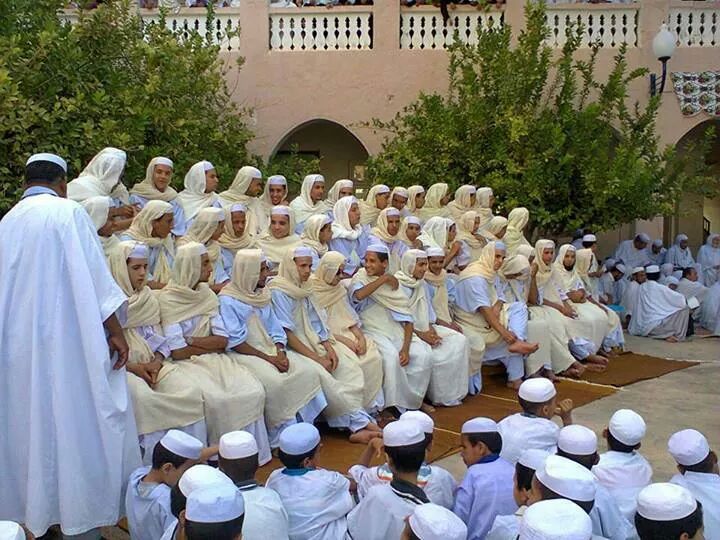
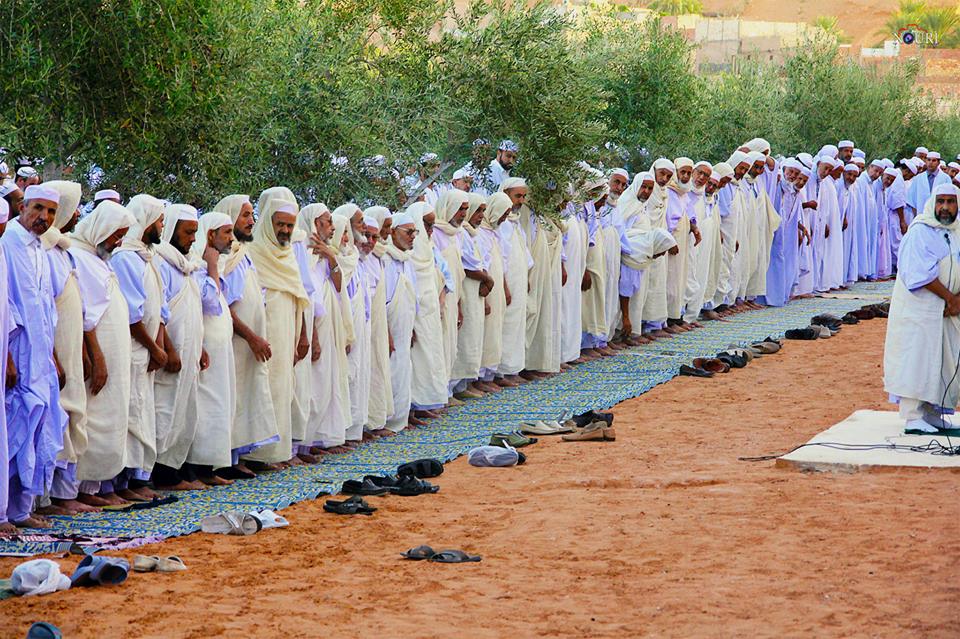
This was a short interview between the writer Anthony T. Fiscella and a friend from our brothers in the Mzab community of Algeria. (May Allah keep them steadfast and support them). Most notable was the semi-autonomy granted to the community and their self governing principles. Located in the Wilaya of Ghardaïa
Most of the brothers here are of Amazigh or Free-Men origins.
Although most of the brothers in the region read and write Arabic, they speak the Zenata dialect of the Berber language, for which there is no written form.
Despite political changes in Algeria over the years, the community continues to peacefully resist interference in the affairs of their community and strive to preserve their unique religious and cultural identity.
They have a reputation of being honest and astute businessmen. They also continue to be productive farmers in the M’zab Valley, supplying the fresh produce needs for their own communities and for marketing elsewhere.
The beautiful M’zab Valley of Algeria was given UNESCO World Heritage Site status in 1982, as a superb example of a traditional human habitat that has been adapted to the environment. This is confirmation that although values in the rest.
In Ghardaïa, is said that there are no beggars and that no thieves exist. The people of this society is very tightly knit with such activities from business to studies and marriage all done through the community. They cling to the unique clothing, language, architecture, and lifestyle.
Wherever they are, They always have one foot in Ghardaïa. Whatever their social situation, they never sever their roots and actively contribute to the life of the community.
Ghardaïa was founded over 1,000 years ago to provide shelter for their community after the fall of the the Ibadi Rustamid state. The village, 500 kilometres south of Algiers, was founded in the middle of a rocky desert. Other towns from the era existing to this day include El Atteuf, Melika, Bounoura, and Beni Izguène.
It is said that their insular nature has preserved the area, and the Ibāḍī Σezzaba continue to dominate the social life of the area. A federal council, Majlis Ammi Said, unites representatives of the seven settlements as well as Ouargla, an ancient town located 200 km South-East of the Mzab valley. This council forms a federative body for religious, social and, increasingly, cultural matters. This religious federal council represents an “Islamic type of government” unique today.
Numerous details of Ibāḍiyya social life are ruled by this Islamic government, such as the weight of gold given as a dowry to a woman (maximum 60 grams) to the length of wedding celebrations (three days). The council makes decisions on details such as dowries, celebrations, dress. It used to impose punishments including exile, and a form of tabriyya “quarantine”, where the offender may not interact with his fellow citizens. I would imagine this is a time of dissociation or bara’ until the offender has repented and amended his/her ways.
May Allah (swt) continue to bless them. May Allah (swt) preserve them! May Allah (swt) bring stability and peace to Algeria. May they continue to be the light in the region for the good people of Algeria. Amin!









 Prima Quran