“Indeed, the religion in the sight of Allah is Islam. And those who were given the Scripture did not differ except after knowledge had come to them – out of jealous animosity between themselves. And whoever disbelieves in the verses of Allah , then indeed, Allah is swift in account.” (Qur’an 3:19)
﷽
May Allah (swt) reward our brother who has done an excellent service in provided a translation to those seeking the truth in the English language. May Allah (swt) continue to bless and reward our noble Shaykh, and illustrious scholar, Abdullah bin Saeed Al Ma’mari (May Allah benefit us from him.)
“And whoever desires other than Islam as religion – never will it be accepted from him, and he, in the Hereafter, will be among the losers.” (Qur’an 3:85)
“And whoever denies the faith – his work has become worthless, and he, in the Hereafter, will be among the losers.” (Qur’an 5:5)
“But for those who deny the Truth, their deeds are like a mirage in the desert, which the thirsty supposes to be water until he comes to it only to find that it was nothing; he found instead that Allah was with Him and He paid his account in full. Allah is swift in settling the account. Or its similitude is that of depths of darkness upon an abysmal sea, covered by a billow, above which is a billow, above which is cloud, creating darkness piled one upon another; when he puts forth his hand, he would scarcely see it. He to whom Allah assigns no light, he will have no light. (Qur’an 29:39-40)
“And We will regard what they have done of deeds and make them as dust dispersed. (Qur’an 25:23)
“And it was already revealed to you and to those before you that if you should associate anything with Allah , your work would surely become worthless, and you would surely be among the losers.” (Qur’an 39:65)
As for the evidences that those rely upon, the followers of Perennialism, the religion of Humanism and the like:
“Indeed, those who believed and those who were Jews or Christians or Sabeans [before Prophet Muhammed] – those [among them] who believed in Allah and the Last Day and did righteousness – will have their reward with their Lord, and no fear will there be concerning them, nor will they grieve.” (Qur’an 2:62)
“Indeed, those who have believed [in Prophet Muhammed] and those [before Him] who were Jews or Sabeans or Christians – those [among them] who believed in Allah and the Last Day and did righteousness – no fear will there be concerning them, nor will they grieve.” (Qur’an 5:69)
It is important to understand that Islam has manifested through the previous Prophets/Messengers.
So this is why it is important to understand the word ‘Muslim’ as-a state of being.
So the verses above are in reference to those Christians, Sabeans and Jews who believed and died as Muslims will have no fear nor shall they grieve.
“And the same did Ibrahim enjoin on his sons and (so did) Yaqoub. O, my sons! surely Allah has chosen for you (this) faith, therefore die not unless you are Muslims (muslimuna). (Qur’an 2:132)
“O you who believe! be careful of (your duty to) Allah with the care which is due to Him, and do not die unless you are Muslims.” (Qur’an 3:102)
“And if only the People of the Scripture had believed and feared Allah, We would have removed from them their misdeeds and admitted them to Gardens of Pleasure. “ (Qur’an 5:65)
“Indeed, they who disbelieved among the People of the Scripture and the polytheists will be in the fire of Hell, abiding eternally therein. Those are the worst of creatures.” (Qur’an 98:6)
It is narrated on the authority of Abu Huraira that the Blessed Messenger of Allah (saw) said:
By Him in Whose hand is the life of Muhammed, he who amongst the community of Jews or Christians hears about me, but does not affirm his belief in that with which I have been sent and dies in this state (of disbelief), he shall be but one of the denizens of Hell-Fire.
“There is nothing like Him: He is the All Hearing, the All Seeing.” (Qur’an 42:11)
“Do you say things regarding Allah that you do not know?” (Qur’an 7:28)
﷽
There are those who make it a point of aqidah/imam a creedal position to assert that Allah (swt) has two hands, and both of these hands are right hands and one of these right hands is a left hand.
We must accept this “without asking how“. Then they also turn around and say, “but the meaning is known.“
Interestingly this issue is not about denying/affirming any attribute of Allah (swt). Nor is about the way of the Salaaf. It is a simply a matter of does the Arabic language have idioms and expressions?
Apparently some people in the Muslim community simply do not get this! Kindly read the four articles linked at the end.
Thus, they will go on an inquisition and label as deviants anyone who does not hold to the idea that Allah (swt) has two hands, both of those hands are right hands and one of those right hands is a left hand.
The Salafi Aqidah Check List:
1. Two hands
2. Both his hands are right hands.
3. One of those right hands is a left hand.
4. He has two additional hands (we do not talk about). Which makes four but we affirm two.
That is correct you heard them. Allah (swt) has “two right hands“
I came across a Hadith of Sahih Muslim which states:
“Abdullah b. ‘Umar reported Allah’s Messenger (may peace be upon him) saying: Allah, the Exalted and Glorious, would fold the Heavens on the Day of Judgment and then He would place them on His right hand and say: I am the Lord; where are the haughty and where are the proud (today)? He would fold the’ earth (placing it) on the left hand and say: I am the Lord; where are the haughty and where are the proud (today)?
The God of the Bible has hands (plural).
“The sea is his, for he made it, and his hands formed the dry land.” (Psalm 95:5)
“So I reflected on all this and concluded that the righteous and the wise and what they do are in God’s hands, but no one knows whether love or hate awaits them.” (Ecclesiastes 9:1 )
The God of the Bible has a right hand and Jesus is sitting next to it.
“He sat down at the right hand of the Majesty in heaven.” (Hebrews 1:3)
The God of the Bible has a right hand and Jesus is standing next to it.
“But Stephen, full of the Holy Spirit, looked up to heaven and saw the glory of God, and Jesus standing at the right hand of God. “Look,” he said, “I see heaven open and the Son of Man standing at the right hand of God.” (Acts 7:55-56)
*NOTE* NO WHERE DOES THE BIBLE SAY GOD HAS A LEFT HAND!
Thus it can be deduced that the God of the Bible has two right hands (if not more right hands).
Now you can clearly see from the above text that many Salafi preachers have asserted that Allah (swt) has two hands and that “both his hands are right hands.” They get that from the above hadith!
Mudraj – interpolated: an addition by a reporter to the text of the hadith being narrated. It even tells you in the hadith itself! Muhammad (one of the narrators said in his Hadith: “And both of His hands are right hands.”
How does one not see that?!
This cannot be said to be attributed to the Blessed Messenger (saw). This is the statement of the sub-narrator.
These people in their guilty conscious did not want people to think Allah (swt) has a left hand. Which also shows they are involved in dhan (speculation) about Allah (swt). They did not just let the words pass they had to make bold assertions without proof!
Some of the claimants to the Salaaf who hold these positions will expose themselves by blatantly comparing Allah (swt) to the creation by saying something along the following:
“You see akhi All of Allah’s attributes (hands, shin, face ect) can be described as right. Right here means blessed (تَيَمُّن). As Muslims we know the right is preferred and more virtuous than the left. For example the verse in the Qur’an that says:
“So those on the Right Hand (i.e. those who will be given their Records in their right hands) – how (fortunate) will be those on the Right Hand! (As a respect for them, because they will enter Paradise).” (Qur’an 56:8)
Or for example:
“And those on the Left Hand (i.e. those who will be given their Record in their left hands) – how (unfortunate) will be those on the Left Hand! (As a disgrace for them, because they will enter Hell).”(Qur’an 56:9)
This is Tamthil clear as day. Let us say for the sake of discussion that Allah (swt) does indeed have a left hand as the hadith Sahih Muslim clearly says he does above. Why would any attribute of Allah (swt) not be blessed? That is a bizarre thought.
Then, the person commits a clear act of Tamthil (likening Allah (swt) to the creation) by negating a left hand for Allah (swt)!! They do this by comparing/contrasting the unfortunate news of people receiving their records in their left hands and right hands on the day of judgement. But these are actual hands of people!
This claimant to Salafiyah has committed a clear act of Tamthil.
Is negating what clearly says he has: “a left hand” according to the sahih hadith.
Making claims that an attribute of Allah (swt) would not be blessed?!
ALLAH (SWT) ACTUALLY HAS FOUR HANDS, TWO HANDS, BOTH OF WHICH ARE RIGHT HANDS EXCEPT ONE OF THOSE RIGHT HANDS IS A LEFT HAND!
“And He (is) the One Who sends the winds (of glad news between the two hands of his Mercy, until, when they have carried clouds ”(Qur’an 7:57)
Allah sends winds like herald of glad news, between the two hands of his Mercy.
Now his Mercy has two hands?
So those who believe in literal translations tell us that Allah (swt) has two right hands, and he has an attribute of Mercy and this attribute has two hands. Are they also right hands? Does Allah (swt) now have a total of four hands?
Please see for yourself at Islam Awakened the literal translation that the Salafi do not use.
Thank you gentleman for some honest translations. So now not only does Allah (swt) have two hands, and both of his hands are right hands and one of those right hands is a left hand, but his attribute of mercy also has two hands.
One of their scholars likened Allah (swt) to the moon!
Let us get something out of the way from the very beginning. There is not a single narration from the Blessed Messenger (saw) where when he speaks of Allah’s “hands” where the Blessed Messenger (saw), says, “In a way that befits his majesty” or “unlike his creation.”
That is an open challenge. For the person who can bring that I will shutdown this website!
I challenge any of those people who make such a disclaimer statement after mentioning “hands”, “foot”, “eyes”, “shin” “leg” “foot” or “side” to show this!
The fact that such people have to put a disclaimer after such a statement is an innovation!
“They have not appraised Allah with true appraisal, while the earth entirely will be within His grip on the Day of Resurrection, and the heavens will be folded in His right hand. Exalted is He and high above what they associate with Him.”(Qur’an 39:67)
“Allah said, “O Iblis, what prevented you from prostrating to that which I created with My hands? Were you arrogant then, or were you already among the haughty?” (Qur’an 38:75)
Some of these people have tried to argue that this word translated as “hands” must be understood as “hands” as something special concerning the creation of Adam. However, this is refuted by the following text of the Qur’an:
“Do they not see that We have created for them from what Our hands have made, grazing livestock, and then they are their owners?”(Qur’an 36:71)
Are we to say that cattle have an advantage or distinction over other animals because they were created by the “hands” of Allah (swt)?
“And the sky we built it with hands.” (Qur’an 51:47)
Look at the following three Saudi English translations of the Qur’an translate the above text!!
“And the heaven We constructed with strength, and indeed, We are its expander.”(Qur’an 51:47 Sahih International)
“With power did we Construct heaven. Truly, We can extend the vastness of space thereof.” (Qur’an 51:47 Muhsin Khan & Muhammed Al Hilali)
“With power and skill did We construct the Firmament: for it is We Who create the vastness of pace.” (Qur’an 51:47 Yusuf Ali Saudi 1985)
The hands of Allah (swt) tied up?
“And the Jews say, ‘The hand of Allah is tied up.’ Chained are their hands, and cursed are they for what they say. Rather, both His Hands are extended, HE spends however He Wills.” (Qur’an 5:64)
It is obvious, to begin with, that this very verse is allegorical. The Jews are not literally saying that Allah’s hand is “tied up”. Rather they are claiming that Allah (swt) is not bestowing upon them what they feel he should bestow. What this verse means is that both the power and generosity of Allah (swt) is on full display.
“Indeed, those who pledge allegiance to you, they are actually pledging allegiance to Allah. The hand (yadu) of Allah is over their hands (aydihim). So he who breaks his word only breaks it to the detriment of himself. And he who fulfills that which he has promised Allah – He will give him a great reward.” (Qur’an 48:10)
This is a metaphorical usage of the word hand that is allowed within the context of the Qur’an itself. Will it be said that people who have no hands or people who are amputees could never make such a pledge?
The word that is used for hand (yadu) the singular noun is also used for the plural noun (aydihim) above. The apparent understanding of the text, is that Allah (swt) has a hand and people have hands. Yet the following verse should make the matter more clear.
“Oh Prophet, say to whoever is in your hands (aydikum) of the captives, “If Allah knows any good in your hearts, He will give you something better than what was taken from you, and He will forgive you, and Allah is Forgiving and Merciful.” (Qur’an 8:70)
Are we supposed to imagine that the Blessed Prophet (saw) was a giant with little tiny people in his hands!?!
“Moreover, whatever strikes you of disaster – it is for what your hands have earned, but He pardons much.” (Qur’an 42:30)
Are we to understand from the above verse that as long as we do evil with our tongues, eyes, feet that disaster will not befall us? As far as those who do not have physical hands does this verse still apply to them?
“And remember Our servants Ibrahim and Ishaq and Yaqoub, men who possessed hands (l-aydi) and vision.” (Qur’an 38:45)
l-aydi is a plural noun literally it would be hands.
Here the word hands literally does mean power. Look how virtually everyone under the sun translates this!
“That Allah may repay the truthful for their truthfulness.” (Qur’an 33:24)
﷽
مہمان: ہم نے آپ کے پیچھے نماز پڑھی اور آپ نے ہمارے پیچھے نماز پڑھی۔
شیخ احمد: "ملت اسلامیہ ایک امت ہے"
یہ ہمارا نقطہ نظر ہے اور ہم اس کی پیروی کرتے ہیں یہ ہمارے نبی، برگزیدہ، ان پر رحمتیں نازل فرمائے اور جس پر صحابہ کرام اور تابعین نے الحمد للہ رب العالمین کی پیروی کی۔ , #عمان کی برکت کے لیے خدا اپنے محترم شیخ، عالم کی حفاظت فرمائے۔
@AhmedHalKhalili
Mufti Tariq Masood gives a talk about the Ibadi school in Oman. Especially interesting is the comment section of other Muslims/Non Muslims who have lived in Oman and have been among the Ahl Haqq Wal Istiqamah.
There is great affinity of the Deobandi for the ‘Ulemah of Ahl Haqq Wal Istiqamah.
Since I have traveled with the tablighi jamaat, and have gone out on khuruj (with has the same etymological root as Kharijite), I guess that makes me and my brothers from the Tabligh, Khariji in that sense! HAHAHA!
Some little light humor is in order from time to time.
Any ways may Allah (swt) bless and guide Mufti Tariq Masood.
Our noble Shaykh, Ahmad bin Hamad al-Khalili, the grand mufti of Oman congratulated the Taliban on their takeover of Afghanistan.
“And say to the believing women that they are lower their gaze and guard their sexual organs; and that they are not to display their ornaments except for what appears thereof. And let them draw their head coverings (bikhumurihinna) over their bosoms.” (Qur’an 24:31)
“O Prophet! Say to your wives, your daughters, and the women of the believers that they are to cast their over-garments (jalābībihinna) over them. That is more convenient, that they be recognized, so that they won’t be molested.” (Qur’an 33:59)
﷽
“And say to the believing women that they are lower their gaze and guard their sexual organs; and that they are not to display their ornaments except for what appears thereof. And let them draw their head coverings (bikhumurihinna) over their bosoms.” (Qur’an 24:31)
Quite often some would point to the fact that the word ḥijāb (حجاب) is not used in Qur’an 24:31 in connection to the head scarf. Thus this lead them to the mistaken notion that woman are not commanded to cover thier hair.
The Qur’ān itself uses the word khimār (خمار) in Sūrah an-Nūr 24:31, where women are instructed to draw their khimār over their bosoms. In classical Arabic, khimār means a cloth or covering that drapes from the head, often covering the hair and neck.
The word ḥijāb (حجاب), on the other hand, literally means a barrier, partition, or veil. In the Qur’ān, it is used in this more general sense (e.g., 33:53, 42:51), not specifically for a head covering. Over time, however, Muslim societies began to use hijab as a broader term for modest dress, especially the headscarf.
“Verily, such (behaviour) annoys the Prophet, and he is shy of (asking) you (to go), but Allah is not shy of (telling you) the truth. And when you ask (his wives) for anything you want, ask them from behind a screen (ḥijābin), that is purer for your hearts and for their hearts.”
“It is not fitting for a man that Allah should speak to him except by inspiration, or from behind a veil(ḥijābin), or by the sending of a messenger to reveal, with Allah’s permission, what Allah wills: for He is Most High, Most Wise.” (Qu’ran 42:51)
There is a hijab between Allah and the creation. The black cloth that is put over the Kaaba in Mecca is a hijab. Men wear a hijab.
Most countries today have a hijab that is enforceable by law.
In most countries, public nudity is an offense that can garner either a fine or jail time. Hudud means: boundaries, limits or restrictions. What those boundaries and limits are can differ from country to country.
There are only a few remote places in the world where there are tribes in which full nudity takes place.
Even countries that allow full nudity at what are known as nudist colonies or nudist resorts these are select places. If you go outside those areas nude, you can and will be either fined or jailed.
That which the Muslim covers herself with is the Khimār.
So, technically:
Khimār = the headscarf covering the hair, neck, and often the shoulders.
Hijab = the general concept of modesty and barrier; in modern usage, often synonymous with headscarf.
Another mistake today is that people believe that wearing a khimar is enough. In the context of the verse, women are, by default, wearing khimar. They are being instructed to pull it down over their bosoms. Both men and women are expected to dress modestly. It is quite possible to find a woman who is not wearing a headscarf dressing more modestly than a woman who, for example, wears a headscarf and tight fitted jeans.
We believe that the Blessed Messenger (saw) explained the Qur’an to his people.
“And obey Allah and obey the Messenger. But if you turn away, then Our Messenger is responsible only for conveying the message clearly. (Qur’an 64:12)
The Muslim woman wearing the Khimār may vary according to custom and culture. Yet this is a transmitted practices that has reached us from the Blessed Prophet (saw).
It has reached us as Muslims across the sectarian divide that a Muslim woman covers all but the hands and face.
That is to say, the Shi’a, the Sunni, and Ibadi have all concurred on this. In fact, the only debate within the community is whether she should cover more than this, meaning — the face veil.
Islam does not oblige a person to wear specific type of clothing as long as it fulfils the purpose of modesty. Rather, this depends on the customs of society, so long as those customs do not contradict the guidelines of Islam.
In a world of nihilism and postmodernism, there can be a lot of pressure upon any faith tradition to amalgamate and transform their faith into something ‘more acceptable’ to an increasingly secularized world.
We feel the issue of women’s Khimār is one such issue. It seems to us that many struggle with this.
Where we feel Muslims do not ponder deeply enough is on the ‘default dress’. When this verse above was being revealed, what was the ‘default dress’ of the people of that time? What was the basic ‘skeleton’ if you will?
This is what has led many who are ignorant of the Arabic language as well as the context of the revelation will leave open the possibility of wearing tight and revealing clothing, or even skirts. It really seems that we could offer a better response than to simply cave in completely to postmodernism. It may be cliché, but a saying comes to mind, ‘If you do not stand for something you will fall for anything.’
There is a real disdain for Muslim women who choose to continue to observe the Khimār as explained by the Blessed Messenger (saw) and preserved in the mass transmitted Sunnah.
Examples where the dress code can be relaxed.
Such elderly women are past the prospect of marriage, there is no blame on them if they lay aside their (outer) garments(thiyābahunna), provided they do not display their beauty/adornment. But it is best for them to modestly refrain: “And God is One Who sees and knows all things” (Qur’an 24:60)
It can be a normal garment and an outer garment. (11:5; 24:58).
In verse Q 24:60, we clearly note that an older woman is permitted to remove this ‘thobe’ without wanton display of her beauty. This cannot refer to her normal garments, as if these were to be removed she would be left exposed.
“The women may relax (their dress code) around their fathers, their sons, their brothers, the sons of their brothers, the sons of their sisters, the other women, and their (female) servants. They shall reverence Allah. Allah witnesses all things.” (Qur’an 33:55)
Remember the five essential objectives of the Sharīʿah (maqāṣid al-sharīʿah). These objectives are:
Protection of religion (ḥifẓ al-dīn)
Protection of life (ḥifẓ al-nafs)
Protection of intellect (ḥifẓ al-ʿaql)
Protection of lineage/progeny (ḥifẓ al-nasl)
Protection of wealth (ḥifẓ al-māl)
“O Prophet! Say to your wives, your daughters, and the women of the believers that they are to cast their over-garments over them. That is more convenient, that they be recognized so that they won’t be molested.” (Qur’an 33:59)
In this case if you stand out in a way that directly identifies you as a Muslim the purpose of this guidance is defeated. You will be recognized and you will be molested. You might even be killed.
There is a principle in Shari’a law
لا ضرر ولا ضرار
“Lā ḍarar wa lā ḍirār” = No harm and no reciprocating harm.
Abu Sa‘īd al-Khudri reported: The Messenger of Allah (saw) said: “There should be no harm or reciprocal harm. Whoever causes harm, Allah harms him, and whoever makes things difficult, Allah makes things difficult for him.
a) A woman who chooses Islam as her faith. If she outwardly dresses or identifies as a Muslim, she could be assaulted or attacked. She does not wear the Khimār. She can dress modestly and, as Allah (swt) cautions us: Do not transgress the limits. A relaxing of outward garb is not an invitation to abandon modesty altogether. That woman lives as such until she can travel to a place where Muslims are numerous, and she can fulfill the commands.
b) A woman who was born and raised a Muslim. Suddenly there is news that Muslims are getting attacked and killed wherever they are found. This woman also does not need to outwardly identify nor dress as a Muslim until she can reach a place where Muslims are numerous, and she can fulfill the commands.
This was a panel that Allah (swt) graced our brother to do for the Sultan Masjid ‘mini-gallery’ in Singapore. It is the first ‘mini-gallery’ in any masjid anywhere. Al hamdulilah.
We would encourage readers to read this very excellent and brief over view of the topic here:
“Do not mix truth with falsehood and do not deliberately hide the truth.”(Qur’an 2:42)
﷽
What we hear may not necessarily be the truth. Nowadays the anti-Sufi groups, which are at the same time strict followers of Ibn Taimiyya, as well as Sufi groups (namely the Ashari) affiliated with theological schools that Ibn Taymiyya was not affiliated with have both misrepresented and seemingly suppressed the truth about this iconic figure in the history of Islam.
When searching the history of Ibn Taimiyya we find that he himself was not against ‘Sufism’ but he was even adorned with the cloak (khirqa) of shaikhood of the Qadiri Order! Believe it or not, Ibn Taimiyya was himself a Sufi, but he accepted Tasawwuf on the condition that it follows shari’ah, which no Sufi order objects to. In fact in the Hidayua al-Addhkiya ila Tariq al-awliya by A’ynal Din b. Ali Ma’bari a very beautiful description is given to Shari’a (Laws), Tariqah (path), and Haqiqa (Truth.)
He said, “Shari’a is like a boat, Tariqa is like an ocean and Haqiiqah is like the precious pearl. Whoever aspires after the pearl must (definitely) embark on the boat and then divine into the ocean.” Logically nobody reaches the pearl without having to sail into the boat. In this book will you find many more shocking realities about Ibn Taimiyya that contradict the very foundation of the neo-Salafite movements. It will also shed light upon the reason why many Sufi groups affiliated with theological positions that Imam Ahmad, Shaikh Abdul Qadir Al Jilani, and Ibn Taimiyya were not upon may like to cast aspersions upon the shaykh.
In fact, Ibn Taimiyya says: “The miracles of saints are absolutely true and correct, by acceptance of all Muslim scholars. And the Qur’an has pointed to it in different places and the Hadith of the Prophet (s) have mentioned it, and whoever denies the miraculous power of saints are only people who are innovators and their followers.”
IBN TAYMIYYA AND TASAWWUF.
Orientalist, Modern Islamist, and Sufi orders who follow theological schools that Ibn Taimiyya, Imam Ahmad, and Shaikh Abdul Qadir Al Jilani were not upon having contributed to the misrepresentation of Ibn Taymiyya as an enemy of Sufis. This has been propounded even more strongly lately by the scholars of the “neo-Salafi” school, whose followers claim to strictly adhere to Ibn Taymiyya’s teachings, but who in fact have severely deviated from them in this area of understanding.
However, regardless of the desires of one group or another, the facts provide a clarification of reality: that Ibn Taymiyya accepted Tasawwuf on the condition that it follows shari’ah, and that Ibn Taymiyyah himself was not only a Sufi follower but was adorned with the cloak (khirqa) of the shaikhood of the Qadiri Order.
A closer look at the facts:
Ibn Taymiyya’s supposed anti-Sufism sentiment is a clear cut misrepresentation of the truth. To conclude that Ibn Taymiyya opposed Sufism/Tasawwuf as a whole, simply because he considered particular activities or statements by some individuals and groups as unacceptable in shari’ah, is like concluding that he opposed the Science of Fiqh because he criticized the viewpoints and practices of certain fuqaha (jurists). This would be more than exaggeration, it is completely inaccurate.
Ibn Taymiyya received initiation as a Sufi Sheikh. The fact that Ibn Taymiyya himself was Sufi has been conveniently ignored by those who chose to misrepresent him, and with good reason: how could someone say that Ibn Taymiyya opposed Sufism/Tasawwuf and that he was a Sufi/mutassawwif/ in one and the same breath? Hence the corollary statement to Ibn Tamiyya’s alleged anti-Tassawuf stance is that “he could certainly not have been a Sufi,” compounding inaccuracy with speculation.
Clear proof that most of the great ‘ulama and the major figures of the Four Schools of Islam were trained in tassawwuf exists in the specialized biographical books known as “Tabaqat.” Tasawwuf was part and parcel of the complete education of a Muslim scholar, from the beginning of the formation of the Islamic curriculum until the gradual weakening and dismantling of the institutions and figures of Islamic higher education in the twentieth century. This resulted in the replacement of the Islamic ‘ijaza’ system (being “licensed” or receiving permission to teach from one’s own teacher), with the modern doctoral system of degrees, inherited from the West.
Far from denigrating or attacking the Sufi component of the Islamic sciences like some of our contemporaries who claim him as their reference, Ibn Taymiyya, in fact, praised it in his time, endorsed it, participated in it, and achieved its highest formal level, which is to receive the khirqah, the equivalent of the ‘ijaza or permission in Sufi terms, from a Sufi shaikh. The khirqah, representing the cloak of the Prophet (saw), is passed to a student of a Sufi shaikh, only when he is seen to be fit and fully qualified to pass on the teachings he has acquired from his shaikh in turn to students of his own. In this he has simply been one of many among the Hanbali ‘ulama who both educated him or were educated by him, to undergo the expected training and instruction in the various disciplines of Tassawuf appropriate to the scholarly vocation.
Many well-read specialists of Islam are to this day still surprised to hear that Sufis al-Ansari al-Harawi (d.481 H.) and ‘Abdul Qadir al-Jilanai (d. 561 H) were both very strong Hanblis. When one refers to their biographical notices in Ibn Rajab’s [student of Ibn Qayyim] “Dhail ‘ala Tabaqat al-Hanbabila,” one finds al-Ansari referred to as “as-Sufi” and Jilani referred to a “az-zahid.” Ibn Rajabs use of these terms in close proximity indicates their inter-changeability.
Ibn Rajab’s two-volume biographical work covers a period of three centuries, from the middle of the 5th century Hijri to the middle of the 8th. Identifiable as Sufis are over one-third of all the Hanbalis scholars treated by Ibn Rajab and other sources from the same time period.
The theory, presented by some Orientalists, that Abdul Faraja Ibn al-Jawzi (d. 597 H) and Iban Taymiyya (d.728 H), were antithetical to Tasawwuf does not stand up to scholarly scrutiny. In fact, neither of these Hanbali doctors of law qualifies as in any way antithetical to Tasawwuf.
Let us examine their record.
Ibn al-Jawzi’s work Talbis Iblis is perhaps the most important single factor in keeping alive the notion of this hostility towards Sufism. In reality, this work was not written against Tasawwuf as such at all, nor against Sufis alone. However, it was an indictment of all unorthodox doctrines and practices (according to Sunnis), regardless of their sources, and opposed any which were innovations in the rule of shari’ah-i.e not found in the Qur’an and Sunnah, wherever found in the Islamic community, especially in Ibn al-Jawzi’s time. It was written against specific innovated practices of many groups, including philosophers (mutakallimoon), theologians, traditionalists (‘ulama-al-hadith), jurists (fuqaha), preachers, philologist, poets, and Sufis. It is in no way an indictment of the subjects they studied and taught, but were an indictment of specific introductions of innovation into respective disciplines and fields.
Ibn al-Jawzi has written other works, which are not only in favor of Tasawwuf, but present its greatest figures in the most complimentary light. Two works considered as pillars in the field of Tasssawuf are Safwat as-Safa and Minhaj al Qasidin wa Mufid as-Sadiqin. In addition, full-length biographies in praise of the early Sufis have been penned by Ibn al Jawzi, including Fada’il Hasan al-Basri (The Gracious Character of Hasan al-Basri), and Manaqib Ibrahim bin Adhan, (The Good qualities of Ibrahim bin Adham), Manaqib Bishr al-Hafi, Manaqib Ma’ruf al-Karhkhi, “Manaqib Rabi’a al-Adawiyya,. In sections of his book al-Muntazam many biographical notices may be found in praise of the Mutasawwifeen.
IBN TAYMIYYA’S DONNING OF THE QADIRI CLOAK.
As for Ibn Taymiyya, one would search in vain to find his works the least condemnation of Sufism as a discipline. He opposed the seemingly pantheist description of certain Sufis, known as the “ittihadiyya,” but he showed his great admiration for the works of the Sufis Junayd Baghdadi, Sahl at-Tustari, Bayzaid al-Bistami, Abu Talib al-Makki, al-Qusharyri, Adul Qadir al-Jilani, and Abu Hafs as-Suhrawardi.
At present we are in the position to show that this allegedly great opponent of Sufism was himself a Sufi, who belonged to at least one ‘tariqat’, but especially to that of ‘Abdul Qadir Jilani.
In a manuscript of the Hanbali ‘alim, Shaikh Yusuf bin ‘Abd al-Hadi (d. 909H), entitled Bad’ al-‘ula bi labs al-Khirqa [found in Princeton, Sorbonne, and Damascus, Ibn Taymiyya is found in a Sufi spiritual genealogy with other well-known Hanbali scholars, all except one (Say. Jilani) heretofore unknown as Sufis. The links in this genealogy are, in descending order:
Abdul Qadir Jilani (d. 561 H.)
Abu ‘Umar bin Qudama (d. 607 H.)
Muwaffaq ad-Din bin Qudama (d. 620 H.)
Ibn Abi ‘Umar bin Qudama (d. 682 H.)
Ibn Taymiyya (d. 728 H.)
Ibn Qayyim al-Jawziyya (d. 751 H.)
Ibn Rajab (d. 795 H.)
(Both Abu ‘Umar b. Qudama and his brother Muwaffaq received the khirqa directly from Abdul Qadir Jilani himself.) Further corroboration of two links separating him from ‘Abdul Qadir Jilani comes from Ibn Taymiyya himself, as quoted in a manuscript of the work al-Mas’ala at-Tabriziyya (manuscripts, Damascus, 1186 H):
“labistu al-khiraqata mubarakata lish-Shaikh ‘Abdul Qadir wa bayni wa baynahu ‘than” “I wore the blessed Sufi cloak of ‘Abdul Qadir, there being between him and me two.”
Ibn Taymiyya is quoted by Yusuf ibn ‘Abd al-Hadi, affirming his Sufi affiliation in more than one Sufi order:
“Have worn the Sufi cloak [khirqata at-Tasawwuf] of a number of shaikhs belonging to various tariqas [min turuqi jama’atin min ash-shyukhi], among them the Shaikh ‘Abdul Qadir al-Jiliani, whose tariqa is the greatest of the well-known ones.”
Further on he continues: “The greatest tariqa [ajallu-t-turuqi] is that of my master [sayyidi], ‘Abdul Qadir al-Jilani, May Allah have mercy on him.”
[Found in “Al-Hadi” manuscript in Princeton Library, collection folio 154a, 169b, 171b-172a and Damascus University, copy of original Arabic manuscript, 985H.: also mentioned in “at-Taylani”, manuscript Chester Beatty 3296 (*) in Dublin, folio 67a.]
Additional evidence of Ibn Taymiyya’s connection to the Qadiri silsila (lineage) is found in his lengthy commentary of the seminal Sufi work by his grand shaikh, ‘Abdul Qadir Jilani, entitled “Futuh al-Ghaby.” [This is found in a Princeton manuscript, uncatalogued, also in Leipzig University Library, Arabic manuscript #223, and Istanbul University, Turkish translation, “Futuh ulGayb Hakkinda Yorum”]
The essence of this commentary on “Futuh al-Ghaib” is to show that Sufism, when orthodox, is completely in consonance with the Qur’an and sunnah and that the consensus of the community. A Tasawwuf not based on the revealed law is heretical. In his commentary, Ibn Taymiyya upholds ‘ilham’ or Sufi inspiration, as evidence stronger than weak analogy [qiyas], or a weak tradition [hadith], or istis-hab cited by those who are immersed in fiqh, or divergences of the law [khilaf], or the principles and sources of the law [usul-al-fiqh]. HE places inspiration [ilham] on a level of legally valid evidence on which to base a preference for one action against another when all other sources fail.
The perfection of the soul, says Ibn Taymiyya, does not consist in mere knowledge. On the contrary, along with the knowledge concerning Allah, there must necessarily be love [mahabba] of Allah, worship of Allah, and the turning back to Him in repentance. Real tawhid consists in worshiping no one but Allah, and worship calls for perfect love [kamat al-hubb][, perfect veneration [kamal at-ta’zim], perfect hope, fear, reverence, and respect [kamal ar-raja’ wal-khishya wal-ijlal wal-ikram].
Insh’Allah there will be more to come.
There are a number of reasons why many different groups (especially those who want division and discord) among Muslims would keep this information hidden.
#1) Sunni Muslims who belong to Sufi groups and associated with the Ashari theological school don’t want people to know Ibn Taymiyyah who was Athari in his school was a Sufi. This gives the impression that Sufism is a monopoly of those who follow the Maturdidi or Ashari theological position.
#2) Those Sunni Muslims who belong to the theological schools of the Maturdidi and Ashari and also follow Sufi tariqat have high esteem for Sheikh Abdul Qadir Al Jilani (who was Athari in creed) don’t want people to connect the dots. The reason being is it takes the wind out of the sails of those who make takfir upon the Atharis. They dare not do this with Sheikh Abdul Qadir Al Jilani.
#3) Those who say they follow the ‘Salafi Manhaj‘ -they rely heavily upon Ibn Taimiyya and they are harsh in their critique of Sufism and Tassawuf in general. They would not want any of their followers to even get the slightest whiff that Ibn Taimiyya belonged to a Sufi order.
#4) It is a useful tool in the heads of those who have machinations upon Muslim lands and have a vested interest in keeping the divide going among Muslims; especially Sunni Muslims (the largest group).
If you enjoyed this please feel free to read part 2.
O you who have believed, obey Allah and obey the Messenger and those in authority among you. And if you disagree over anything, refer it to Allah and the Messenger, if you should believe in Allah and the Last Day. That is the best [way] and best in the result. (Qur’an 4:59)
1) In this clear verse, we find that in matters of disagreement between those in authority and those under authority, we need to refer back to Allah and the Messenger.
Had it been that those in authority were infallible or divinely appointed then, Allah wouldn’t have given any scope to disagree with them.
The fact that there is disagreement proves that “those in authority, aka the Ulil Amr”, are neither an absolute nor an infallible authority.
It means that Ali Ibn Abu Talib and Ibn Abbas can disagree with one another. Yet, if they have a disagreement, they would refer the matter back to Allah (swt) and his Blessed Messenger.
2) If their authority was infallible, Allah(swt) wouldn’t have put authority above them. (.i.e) Allah and His Prophet.
3) If “those in authority, aka the Ulil Amr” were divinely appointed, then Allah would have asked the believers to refer them along with Allah and the Prophet in matters of disagreement.
But Allah(swt), giving the possibility of disagreement with those in authority, asked us to refer back to Allah (swt) and the Blessed Messenger; which is clear evidence that “those in authority aka the Ulil Amr” were not divinely appointed.
The huge advantage that the Sunni have over the Imami Shi’i’ is as follows:
Since in Sunni Islam they do not believe that their Imams are infallible or above reproach, a mistake in jurisprudence, reasoning, deduction or logic does not entail disaster for Sunni Islam. However, just one mistake in jurisprudence, reasoning, deduction or logic would be absolutely disastrous for the Imami Shi’i’.
“You see, then the Imamate goes from the Imam to his first cousin, and when the first cousin dies, then the Imamate goes to his first cousin and so on. Because that is the Sunnah of the Prophet (saw).”
Huh?
The battle of Siffin and practical implications of the above verse.
O you who have believed, obey Allah and obey the Messenger and those in authority among you. And if you disagree over anything, refer it to Allah and the Messenger, if you should believe in Allah and the Last Day. That is the best [way] and best in the result. (Qur’an 4:59)
The battle of Siffin gives us a demonstration of how some of the companions understood the above verse. If we are to believe the historical narrative as told by Shi’i and Sunni sources.
If we are to believe the Shi’i narrative.
Ali agreed to arbitration with Muaviya on the basis that they would judge by the Qur’an. If Ali understood that he was of the same authority as the Qur’an and the Messenger (saw) he would not have submitted to arbitration. He would have been on the same page as those in his army who wanted to continue the fight. However, if he did think he was of the same authority as the Qur’an and the Messenger (saw), then he would be a hypocrite for going against what he himself believed. Or he was not sincere in submitting to the authority of the Qur’an.
If we are to believe the Sunni narrative.
If those in Muaviya’s camp believed that the Shi’i held any of the views about Ali that Imami Shi’i held, namely that he (Ali) was maʿṣūm (معصوم) and he (Ali) held ʿiṣmah (عصمة) they themselves would have never asked for arbitration as it too would have simply been a ruse. This becomes very clear that these concepts were not among the followers of Ali because Muaviya’s camp would have known this and would have never cooked up the idea of raising the Mushafs as it would have easily backfired
May Allah (swt) guide us all to what is beloved to Allah (swt).
Allah asked, “What prevented you from prostrating when I commanded you?” He replied, “I am better than he is: You created me from fire and him from mud.” (Qur’an 7:12)
﷽
THE VERY FIRST SIN ACCORDING TO ISLAM IS THE BOASTFUL PRIDE OF ONE’S ORIGIN…. (TRIBALISM)
If there is one sad and shameful takeaway (from the recent New Zealand Christchurch massacre) that is directed towards our own community (as Muslims) is that SOME in the Muslim community will take this opportunity to deflect the ugly and heinous way that MANY of them treat Muslims who are Black, African, Sub-Sahara African, West African, South Indian etc.….
So, instead of using this as an opportunity to teach, to learn, to grow and to heal…..they deflect their collective guilt upon another group, ‘The Whites’.
Let it be a reminder that, according to Allah Most High that the first sin ever was the PRIDE OF ONES ORIGIN.
When Allah had ordered all the dominions to bow down before the creation of humanity, only one creation stood in rebellion to this command.
Allah asked, “What prevented you from prostrating when I commanded you?” He replied, “I am better than he is: You created me from fire and him from dark mud.”
Iblis felt that it was unbecoming to subservient to one he deemed being of an inferior origin. This is the attitude that SOME White people exhibit towards non White people. This is the attitude that SOME Jews exhibit towards Arabs. This is the attitude that SOME Chinese exhibit towards Non Chinese. This is the attitude that SOME Pathans exhibit towards Punjabis. This is the attitude that SOME Arabs exhibit towards Non Arabs. This is the attitude that SOME fair skinned Mexicans exhibit towards non fair skinned Mexicans. This is the attitude that SOME Japanese exhibit towards non Japanese. This is the attitude that SOME North Indians exhibit towards South Indians. This is the attitude that SOME Hutu exhibit towards Tutsi. This is the attitude that SOME Tutsi exhibit towards Hutu.
Humans are a very interesting and curious species. We often decorate our walls with accolades and awards and many of us like to boast about our lineage and ancestry.
We believe self-esteem is a good thing, and it is especially important to instill this in our children. Yet, we should be cautious as not to make our degrees, accomplishments, accolades or lineage as an opening for whispers to the heart that can cause us to be vainglorious.
Being proud of one’s achievements is a good thing. It can help you in landing a job or to show others that you are competent in a particular field. Yet for those in our community who are constantly boasting about ethnicity, tribal heritage or lineage, it is tantamount to taking a picture of your parents’ privates and proudly displaying that on a wall!
We have seen even some of the most pious and erudite in the Muslim communities do just that.
When Allah (swt) PUTS ALL OF US IN OUR PLACE when He (swt) says the following:
“He (Allah) has created man from a sperm-drop; and behold, this same (man) becomes an open disputer!” (Qur’an 16:4)
“His companion said to him, in the course of the argument with him: “Do you deny Him Who created you out of dust, then out of a sperm-drop, then fashioned you into a man?” (Qur’an 18:37)
Now, except Adam, Eve and Jesus (upon them all be peace), every other single human being created had been created from nutfah or spermatos -semen.
Now there maybe some people who will boast that Adam and Eve were from their tribe, their lineage and their ancestors. The first man and woman on the Earth were not created from sperm, so that tribe or lineage must somehow be better than other humans, correct?
Well, consider that Adam (alayi salam), his son Cain, was the first reordered murderer on Earth. What is there to be boastful about in that?
Especially since in Qur’an 16:4, Allah (swt) has used this to show the very, very low state of human beings who then rise up to become haughty, arrogant, boastful and vainglorious.
SO WHAT IS THE SOLUTION?
“O mankind, indeed We have created you from male and female and made you peoples and tribes that you may know one another. Indeed, the most noble of you in the sight of Allah is the most righteous of you. Indeed, Allah is Knowing and Acquainted.” (Qur’an 49:13)
Allah (swt) did not count nobility, ethnicity, tribal affiliation, family lineage or anything of the kind.
Allah (swt) has recognized us based upon what emanates from our hearts and souls. Our nobility is in how we treat each other, tread upon this earth, fear and love Allah (swt).
Allah (swt) made us with variance so that we may know each other. So that we may learn to live with variance.
What is interesting about this? The interesting thing about this is we will truly know who outranks who in the sight of Allah only on the day of judgement.
There is no annual award or ceremony (most righteous Muslim of the year goes to …..)
You may also be interested in reading the following:
“Do not mix truth with falsehood and do not deliberately hide the truth.” (Qur’an 2:42)
﷽
Those who have not read part 1 may be interested to read that here:
Before I begin this part 2 I would like to begin with the conclusion from part 1.
There are a number of reasons why many different groups (especially those who want division and discord) among Muslims would keep this information hidden.
#1) Sunni Muslims who belong to Sufi groups and associated with the Ashari theological school don’t want people to know Ibn Taymiyya who was Athari in his school was a Sufi. This gives the impression that Sufism is a monopoly of those who follow the Maturdidi or Ashari theological positions.
#2) Those Sunni Muslims who belong to the theological schools of the Maturdidi and Ashari and also follow Sufi tariqat have high esteem for Shaykh Abdul Qadir Al Jilani (who was Athari in creed) don’t want people to connect the dots. The reason being is it takes the wind out of the sails of those who make takfir upon the Atharis. They dare not do this with Sheikh Abdul Qadir Al Jilani!
#3) Those who say they follow the ‘Salafi Manhaj‘ -they rely heavily upon Ibn Taimiyya and they are harsh in their critique of Sufism and Tassawuf in general. They would not want any of their followers to even get the slightest whiff that Ibn Taimiyya belonged to a Sufi order.
#4) It is a useful tool in the heads of those who have machinations upon Muslim lands and have a vested interest in keeping the divide going among Muslims; especially Sunni Muslims (the largest group).
IBN TAYMIYYA’S DISCUSSION OF TASAWWUF IN HIS MAJMU’A FATAWA
What Ibn Taymiyya Says About the Term ‘Tasawwuf’?
Here we will mention what Imam Ibn Taymiya, mentioned about the definition of Tasawwuf, from Volume 11, “At-Taswassuf” of “Majmu’a Fatawa Ibn Taymiyya al-Kubra, ” Dar Ar-Rahmah, Cairo:
“Alhamdulillah, the pronunciation of the word Tasawwuf has been thoroughly discussed. From those who spoke about Tasawwuf were not just the Imams and Shaikhs, but also included were Ahmad bin Hanbal, Abi Sulayman ad-Daarani, As-Sirr as-Saqati, al-Junayd al-Bahgdadi, Hasan al-Basri, Ma’auruf al-Karkhi, Abdul Qadir Jilani, Bayazid al-Bistami [one of the grand Shaykhs of the Naqshbandi Tariqat] and many others. This is a term that was given to those who were dealing with that kind of science [tazkiyyat an-nafs and Ihsan].”
Imam Ibn Taymiyya says:
“Tassawuf has realities and states of experience which they talk about in their science. Some of it is that the Sufi is that one who purifies himself from anything which distracts him from the remembrance of Allah and who will be so filled up with the knowledge of the heart and knowledge of the mind to the point that the value of gold and stones will be the same to him. And Tasawwuf is safeguarding the precious meanings and leaving behind the call to fame and vanity in order to reach the state of Truthfulness, because the best of humans after the prophets are the Siddiqeen, as Allah mentioned them in the verse:
“(And all who obey Allah and the Apostle) are in the company of those whom is the grace of Allah: of the prophets, the sincere lovers of truth, the martyrs and the righteous; Ah! What a beautiful fellowship.” (an-Nisa’, 69,70)
Ibn Taymiyya continues: “as-Sufi hua fil-haqiqa naw’un min as-siddiqeen. Fahua as-siddiq alladhee iktassa bil-zuhadiwal-‘ibadada.” which translates:
“And the Sufi is, in reality, a kind of Siddiq (Truthful One), that Siddiq who specialized in zuhd and worship.”
He continues about the Sufis,
“Some people criticized the Sufiyya and Tasawwuf and they said they were innovators, out of the Sunnah, but the truth is they are striving in Allah’s obedience [mujtahidin fi ta’at-illahi], as others of Allah’s People strove in Allah’s obedience. So from them, you will find the Foremost in Nearness in virtue of his striving [as-saabiq ul-muqarrab bi hasab ijtihadhi]. And some of them are from the People of the Right hand [ Ahl al-Yameen mentioned in Qur’an in Surah Waqiah], but slower in their progress. For both kinds, they might make ijtihad and in that case, they might be correct and they might be wrong. And from both types, some of them might make sin and repent. And this is the origin of Tasawwuf. And after that origin, it ha been spread and (tasha’aabat wa tanawa’at) has its mainline and its branches. And it has become three kinds:
1.) Sufiyyat il-Haqa’iq-the True Sufis
2.) Sufiyyat il-Arzaaq -the Professional Sufis (Those who use Sufism for personal gain)
3.) Sufiyyat il-Rasm -The Caricature Sufis. (Sufi by appearance only).”
IMAM IBN TAYMIYYA ABOUT SAINTS AND SAINTHOOD
Imam Ibn Taymiyya mentions in volume 11, page 190 of Majmu’a Fatawi Shaikh ul-Islam Ibn Taymiyya , edition published in Egypt by Dar ar-Rahma:
“A servant of Allah ‘azza wa-Jal’, cannot be considered a saint unless he is a true believer. Allah mentions in the Qur’an:
“Now surely the friends of Allah-they shall have no fear nor shall they grieve. Those who believe and guarded (against evil):” (Yunus, 61,62)
He then quotes from the famous hadith from Bukhari:
“My servant draws not near to Me with anything more loved by Me than the religious duties I have enjoined upon him, and My servant continues to draw near to Me with supererogatory works so that I shall love him. When I love him I am his hearing with which he hears, his seeing with which he sees, his hand with which he strikes and his foot with which he walks. Were he to ask [something] of Me, I would surely give it to him and were he to ask Me for refuge, I would surely grant him it. I do not hesitate about anything as much as I hesitate about [seizing] the soul of My faithful servant: he hates death and I hate hurting him.”
Imam Ibn Taymiyya About Miracles Of Saints
In his book al-Mukhtasar al-Fatawa al-Masriyya, published by al-Madani Publishing House,1980, page 603:
“The miracles of saints are absolutely true and correct, by the acceptance of all Muslim scholars. And the Qur’an has pointed to it in different places, and the Hadith of the Prophet (s) have mentioned it, and whoever denies the miraculous power of saints are only people who are innovators and their followers.”
He continues in Majmu’a Fatawai Ibn Taymiyya:
“What is considered as a miracle for a saint is that sometimes the saint might hear something that others do not hear and they see something that others do not see, while not in a sleeping state, but in a woken state of vision. And he can know something others cannot know, through revelation or inspiration.”
All that Imam Ibn Taymiyya says about the subject of Tasawwuf is found in a large book (volume 11) consisting of 704 pages only about Tasawwuf. And we would like to mention briefly what he said on page 314, about the hadith Qudsi [i.e. related form Allah Himself]:
Verily Allah ta’ala has said: ‘Whosoever shows enmity to a wali (friend) of Mine, then I have declared war against him.”
“Which means that Allah is expressing: I will seek revenge against anyone who comes against My saints like an aggressive lion.'”
He continues on p. 314 quoting Prophet’s saying about the saints: “You are the martyrs of Allah on Earth.”
Imam Ibn Taymiyya About The Unveiling Of Appearances
He said: “Allah Almighty will unveil to his saint’s states that have never been given before and give them support without measure…If that saint will begin to speak form the things of the unseen, past, or present or future it is considered from “Bab al’ilm al-khaariq” the miraculous unseen knowledge…..Anything that a saint does which is form unveiling to people or to listeners or curing or healing or teaching knowledge, it is accepted….and we have to thank Allah for it.”
Imam Ibn Taymiyya Mentions Some Great Shaikhs of Sufism
And we wish to mention some of the shaikhs, who Imam Ibn Taymiyya accepted from the well-known Sufi shaikhs. This is found in his volume entitled ‘Ilm as-Sulook [The Science of Travelling the Way to Allah], which consist of the whole volume 10 of Majmu’a Fatawa Ibn Taymiyya which is 775 pages in length, all of which is about the knowledge of the ways of true Sufism, the Science of Traveling to Allah, [‘ilm us-sulook].
On page 516, the third paragraph he says:
“The great Sufi shaikhs are the best shaykhs to be known and accepted, such as Bayazid al-Bistami [a grand shaikh of the Golden Chain of the Naqshabandi Tariqat], Shaikh Abdul Qadir Jilani, Junayd bin Muhammad [the most well-known Sufi]. Hasan-al-Basri, al-Fudayl ibn al-Ayyad, Ibrahim bin al-Adham [very famous Sufi, known as Sultan of the Ascetics], Abi Sulayman ad-Daarani,
Ma’ruf’al-Karkhi[a well-known Sufi], Siri-as-Saqati, Shaikh Hammad, Shaikh Abdul Bayyan.”
And Ibn Taymiyya continues:
“Those great Sufi people were the leaders of humanity and they were calling to what is right and forbidding what is wrong.”
In Majmu’a Fatawa Ibn Taymiyya , published by Dar ar-Rahmat, Cairo, Vol, 11, page 497. Book of Tassuwuf), Ibn Taymiyya says:
“You have to know that the rightly -guided shaikhs must be taken as guides and examples in the Din, as they are following in the footsteps of the Prophets and Messengers. And the Way (tariqat) of those shaikhs is to call people to Allah’s Divine Presence and obedience to the Prophet.”
Here we find Ibn Taymiyya calling for people to take a guide and mentioning that each guide has his own method (tariqat) in calling people to the Prophet’s ways.
Ibn Taymiyya says on page 499 of the same volume:
“And the shaikhs whom we need to take as guides are our examples that we have to follow, as when on the Hajj, (the pilgrimage) one needs a guide [daleel] to reach the Ka’aba, these shaikhs our guide [daleel] to Allah and our Prophet (s).”
Ibn Taymiyya quotes from Bayazid al-Bistami, who said, on page 510, Volume 10:
“….the great Sufi shaikh Bayazid al-Bistami and the famous story about him when he saw Allah in a vision (kashf) and said to Him: ‘ O Allah what is the way to You?’ and Allah responded ‘Leave yourself and come to Me.'”
Ibn Taymiyya continues quoting Bayazid al-Bistami, “I shed my self as a snake sheds its skin.” This quotation is an indication of the need for zuhd (self-denial or abstention from the worldly life), as that was the path followed by Bayazid al-Bistami.
So we see from the above quotes, that Ibn Taymiyya was accepting many shaikhs by quoting them and urging people to follow guides to show the way to obey Allah and to obey the Prophet (s).
Imam Ibn Taymiyya Explains Those Who Are Speaking About Fana’
In Book 2, volume 2, pages 396-397 of Majumu’a Fatawi Ibn Taymiyya, published by Dar ar-Rahmat, Cairo, Ibn Taymiyya speaks about the subject of fana’ also known is Sufism as annihilation, He said,
“This state of love is the state of many people that are from the people of Love of Allah ‘azza wa jall, they are the people of the love of Allah and the People of the Will (al-Irada) of Allah (it is typical of many of the people who love Allah and seek Him.) Because that person has vanished in his lover, in Allah ‘azza wa jall-through the intensity of the love, because He vanished in Allah’s love, not his own ego’s love. And he will recall Allah, not recalling himself, he would remember Allah not remembering himself, visualizing Allah [yastashhid], not visualization himself, existing in Allah, not in the existence of himself. When he reaches that stage, he no longer feels his own existence. And that is why he says in this state, ‘Ana al-Haqq” ( I am the Truth), or “Subhanee. (Glory to Me!)” And he will say “maa fil jubba ill-Allah” (there is nothing in this cloak except Allah) because he is drunk in the love of Allah and this is a pleasure and happiness that he cannot control.”
Further on Ibn Taymiyya says:
“This [matter] has in it Haqq and there is in it Batil. But when someone will enter a state with his fervor intense love (‘ishq) to Allah, he will enter a state of absentmindedness, and when he enters the state of absentmindedness, he will find himself as if he is accepting the [concept] ittihad. I do not consider this a sin. Because that person is excused and no one may punish him as he is not aware of what he is doing. Because the pen doe snot condemns the crazy except when he is restored to sanity. And when that person is in that state and he was wrong in what he did, he will be under Allah’s address:
“Rabbana laa tuakhidhna iin-nasseena aw ak-htaana” “O Our Lord, do not take us to task if we forget or make mistakes.” (Baqara, 286)
“And Allah says in other verse, “wa laa junaaha ‘alwaykum fimma akhtaatum bihi” “there is no blame on you if you unintentionally do a mistake.”
On page 339, in Volume 10, he says:
“There is a story of two men who were so respectful and loved each other very much. One of them fell in the water [of the sea] and immediately the other threw himself behind him. Then the first, one who was sinking asked, “what made you throw yourself here?” He said, “I vanished in you. And when I vanished in you I thought you were me and I was you.”
And further on he continues:
“As long as he is not drunk through something that is prohibited, it is accepted, but if it were prohibited, (the intention was bad) then he is not excused.”
And he continues (vol 2,, page 397):
“And because of that [situation] many of the saints, like ‘Abdul Qadir Jilani, have an excuse, because they are in a state of love (‘ishq).”
That subject is also mentioned in a whole chapter in detail from page 337 page 343, entitled: al-Fana’ alladhee yujad fi kalam as-sufiyya yuffassar bi-thalathat umur.
This title means: “the Word of Annihilation found in Sufism explained in Three Ways.” This chapter describes in detail the concept of fana’.
This is the conclusion of the 2 part series. It is now up to you the reader to do your own research and reflection on this matter.
“O you who have believed, be persistently standing firm in justice, witnesses for Allah, even if it be against yourselves or parents and relatives. Whether one is rich or poor, Allah is more worthy of both. So follow not [personal] inclination, lest you not be just. And if you distort [your testimony] or refuse [to give it], then indeed Allah is ever, with what you do, Acquainted.” (Qur’an 4:135)
﷽
I thought that for today’s entry I would share with you dear readers some of my personal experience with those who call themselves ‘Salafi’ or follow what is known as “daawat salafiyyah” as well as those who call themselves ‘Sufi’ and are associated with Sufi Tariqah (spiritual orders).
For the record I am writing this as someone who is not a ‘Salafi’ nor do I follow the manhaj that is known as “daawat salafiyyah”. I am inclined towards some ‘Sufi’ practices -with the exception of tawassul, and I do not belong to any tariqah.
But I want to share my experience with some people who are affiliated with or identify with either ‘Salafi’ or ‘Sufi’.
When I was in Manama Bahrain at the Discover Islam training centre there was a man who was driving us around in one of the vans around the city. To be honest I thought any moment we would meet our Lord because of the way he was driving. I was doing a loud dhikr to myself la ilaha il law lah. Some other brothers in the van joined in. One brother also began to do the dhikr but his Shaykh put his hand on his shoulder and said, “We don’t do that.” That was it. He didn’t condemn me or the others, he simply said of himself and his student that they do not do this.
Also, I observed at the great Masjid in Manama that the tourist were allowed to go into the Masjid unrestricted. They had to wear appropriate attire but they could go anywhere. All the way up to the niche in the wall facing the qiblah.
The hotel I stayed in Manama there was a small Masjid nearby and I can tell you that the Imam and nearly everyone in that masjid prayed in the style of brothers who are known to practice, ” “daawat salafiyyah” and at that time I was following the Maliki school of jurisprudence and I was praying with my arms to the side (as is one of the positions of the Maliki school). No one said anything to me, everyone greeted me, returned my salam, and smiled. They were all very kind.
The same can be said about the people of Discover Islam, whom I gather were a mixture of ‘Salafiyyah’ and ‘Ikwani’ influences.
Whereas when I went with a particular Tariqah (sufi group) to a place in Malaysia called, ‘hulul langat’, just outside of Kuala Lumpur. We had a wonderful group dhikr together. However one day one of the murids was relating how the shaykh got sick and blew his nose in the tissue paper. So one of the followers of the tariqah took the tissue paper out of the wastebasket boiled it in water and drank the water. I couldn’t have been more disgusted.
There was another time when I was with a tariqah in Singapore ‘Firqat ul Huda’ the sect of guidance, a Qadiri tariqah. Beautiful beautiful dhikr, wouldn’t trade it for anything. Yet one time of the murids invited me to his house for tea. Very hospitable brother. He then discussed with me about the hadith about the Blessed Messenger (saw) existing before Adam (as). So then he asked me what I understood about “The Prophet being called the Nur of Allah.” I told him that I thought it meant that he was an illuminating guide and representative of Allah (swt). He replied, “brother the light of Allah IS Allah.” I thanked him for the tea and the hospitality and I told him that he went to a place that I could not follow him in. I parted ways with him and have never seen him since.
I witnessed first hand with my own eyes as I volunteered at the Sultan Mosque in Singapore (predominantly Sunni/Shaf’i/Ashari/Balawi) I have witnessed first-hand tourists being clapped at and shooed away from the Masjid.
One brother came up to me and said, “how do we know they don’t have maniyy (sperm) on their underwear.” To which I exclaimed, “How do you know that I don’t?” Are we going to ask everyone to drop their pants for inspection before they enter the Masjid?”
Now this was coming from someone who
a) followed a madhab -Shafi’i
b- Ashari I cannot clarify this but I’ll assume because
c) he was associated with the Balawi Tariqah.
Whereas in the same Masjid (Sultan Mosque), I witnessed a Salafi brother bring his young daughter to the afternoon salah (prayer) and pray beside him (he would pray at the furthest end so his daughter would be between him and a wall) -this was done to respect the other’s views, and even then many of them shook their head at the brother.
Then came the ban of Mufti Menk from Singapore! Now I am not a follower of Mufti Menk and again it is clear that he is following what is called, ” “Daawat-us-Salafiyyah” -which for those who may not know what this means it is a claim to be following what the Blessed Messenger (saw) and his companions followed.
So Mufti Menk was banned from Singapore because someone asked him if we could say or respond to ‘Merry Christmas’ in kind with ‘Merry Christmas’ and he replied, ‘no’. Now because those Sunni Muslims who follow schools of jurisprudence and who are often associated with Sufi Tariqah are rivals of those Sunni Muslims who claim not to follow a particular school of jurisprudence this was an opportunity for them to ban Mufti Menk from Singapore.
Personally, I thought the way Mufti Menk was dealt with was quite cowardly. After all, if someone would have asked Mufti Menk can we celebrate the ‘Mawlid An Nabi’ (celebration of the Blessed Prophet’s birthday) he would say, ‘no we cannot’. It’s not like this was some personal swipe at Christianity. Mufti Menk comes from a school of thought that doesn’t recognize such ‘urf-customs, or anything such as bid’ah hasanah – (innovations that encourage good and do not contravene establish practices of the faith).
I just thought it was strange that since Christians have been such a huge presence in Syria, Jordan, Lebanon, Egypt etc…that surely there was something from the traditional schools that would warrant replying, ‘Merry Christmas‘ or something that the followers of Imam Shafi’i could have used to refute his (Mufti Menk) position.
I’m telling you this dear reader because not everything is chalk and cheese. Not all of these groups are alike and many of them even have subgroups. There is fierce competition among rival Salafi groups just as there is fierce competition among rival Tariqah groups.
However, as Muslims, we are always commanded to speak plainly, truthfully, and justly about one another even if that group does not share our world view or our approach to the Qur’an and Sunnah.
May Allah (swt) guide us all to what is beloved to Allah (swt).
“And hold firmly to the rope of Allah all together and do not become divided. And remember the favor of Allah upon you – when you were enemies and He brought your hearts together and you became, by His favor, brothers. And you were on the edge of a pit of the Fire, and He saved you from it. Thus does Allah make clear to you His verses that you may be guided.” (Qur’an 3:103)
“Turn you back in repentance to Him, and fear Him: establish regular prayers, and be not among those who join gods with Allah,- Those who split up their Religion, and become (mere) Sects,- each party rejoicing in that which is with itself!” (Qur’an 30:31-32)
“O mankind! there hath come to you a direction from your Lord and a healing for the (diseases) in your hearts,- and for those who believe, a guidance and a Mercy.” (Qur’an 10:57)
﷽
When looking at the issue of forgeries of hadith one does not have to look further than the pro-Sufi and anti-Sufi forces within the ‘Ahl Sunnah‘.
Abd Allah ibn al-Mubarak said, “The isnad is from the religion; were it not for the isnad anyone could say anything they wanted.”
Source: (Reported by Muslim in the introduction to his Sahih, vol. 1, pg. 9, Dar Taibah.)
The isnad -is the chain of narration.
The word hadith in the title of the article is used in the Arabic sense of a report. Thus, for the purposes of this article it is not necessarily a statement attributed to the Blessed Prophet (saw).
Anyone who has been among people who claim to practice ‘Sufism‘ and/ or have inclinations towards a branch of study in Islam called ‘tassawuf‘ has most likely heard innumerable times the following statement attributed to Imam Malik.
“He who practices tassawuf without learning Sacred Law corrupts his faith (tazandaq) , while he who learns Sacred Law without practicing Tasawwuf corrupts himself (tafassaqa).”
Now when I studied at Zaytuna I was told time and again the importance of being connected in an ‘unbroken‘ chain of sacred knowledge that goes all the way back to the Blessed Messenger (saw) himself.
Of course, what I’m about to say may seem cynical to you the reader, but it is the atmosphere that was created around Zaytuna when I was there.
The atmosphere seemed to say to me, “Don’t you dare question anything that is presented to you, because after all who are you to question? You don’t have the requisite tools; and you didn’t study under a Shaykh who toes the line that we tell you to tow. Therefore, all of your sincere lines of inquiry are invalid.”
So let us say that someone has reservations about giving their complete allegiance (the custody of their soul) to a Shaykh. However, this person agrees to or understands the necessity of following someone learned in jurisprudence.
Thus, the concept of the following someone learned in jurisprudence is used as a jump-off point for handing over complete sovereignty of your soul to a Spiritual guide or Shaykh. Many who call themselves ‘Sufi’ today use the following modus operandi:
Start by getting the spiritual aspirant the necessity of following someone learned in jurisprudence. Use the idea of following Imams in jurisprudence to advance their position. Thus, if Imams like Shaf’i and Malik are seen to be in favor of Sufism or ‘Tassawuf‘ then whom are we to question it!
So even until today, you have world-renown people like Shaykh Hamza Yusuf attributing such statements to Imam Malik.
You can see the following video where he attributes the above-mentioned statement to Imam Malik. http://www.youtube.com/watch?v=2_5d9c2UdiU @ 1:14 in the video you can hear Shaykh Hamza attribute this statement to Imam Malik
Interestingly the term Sufi was applied to those given the appellation “Mutazalites” long before it was applied to Junayd.
“The term Sufi was applied to Mu’tazili ascetics before it was to Junayd and his circle. Early Mu’tazili ascetics and the later Karramiyya, who more or less absorbed Mu’tazili asceticism, sometimes exalted complete renunciation of normal gain, counting it best to live off alms.”
Origins of the term ‘Ahl al sunnah’
Christopher Melchert also gives some very keen insights into the term ‘Ahl al sunnah’ and the fact that a great many factions were called themselves by this appellation.
He says,
“The 9th-century hadith folk’s own preferred term for themselves was“Ahl al-sunna.” It is not convenient for us to call the hadith folk “Sunnis” because that term now calls to mind the great tripartite division of Sunnis, Shi’is, and Kharijis. At least for the 9th century and earlier, a mere tripartite division is simplistic and practically impossible to document. To begin with, 9th-century definitions of Shi’ism were considerably different from those of later times; for example, traditionalist rijal critics regularly distinguished between ‘tashayyu’, special regard for ‘Ali and his house that the hadith folk was willing to overlook, and rafid, the rejection of Abu Bakr and ‘Umar that they thought put one outside the Muslim community. With equal emphasis, the 9th-century hadith folk distinguished themselves from Qadariyya, Murji’a, Mu’tazila, and other theological parties not accounted for by a simple, anachronistic dichotomy between Sunnis and Shi’is. The polarity of Sunni and Shi’i was not strong until the mid-10th century, and full Sunni mutual recognition and self-awareness appeared only in the mid 10th century. Finally, modern scholars should avoid endorsing the hadith folk’s own estimate that they were the overwhelming majority, as calling them “Sunnis” might do.”
” The significance of their calling themselves ‘Ahl al-sunna’ is not that their views were identical to those of the later, great Sunni community, which they were not, but that the later community deliberately identified them as its forebears. We need to understand their piety. Their adversaries preferred not to call them ‘Ahl al-sunna’ and proposed various other terms.’ Al-Jahiz disparaged the nabita, those who sprouted up like weeds to extol the enemies of ‘Ali and to promulgate such crass ideas as assigning God an imaginable body (tajsim, taswfr). Other writers attributed similar errors to the hash- wiyya (vulgar). The hadith folk complained that the Murji’a called them shukkak (doubters) for saying, “I am a believer, God willing,” while the Qadariyya called them mujbira or jabriyya for upholding divine predestination. To use any of these terms for the hadith folk would mean taking sides as much as it would mean calling them ‘Ahl al-sunna’, which is needless for modern scholars.”
“The hadith folk emerged as a distinct group at about the end of the 8th century. They lost importance in the 10th century. Chroniclers usually refer to their 10th-century successors in Baghdad as the Hanabila or simply al-‘amma (the general), periodically rioting against the Shias. Meanwhile, their own name for themselves, ‘Ahl al-sunna’, was claimed by virtually all parties except the Shi’is.Even Mu’tazila called themselves Ahl al-sunna wa-al-jama’a, on the plea that if they were not actually the great majority, they ought to have been. (I have not compared the piety of the hadith folk with that of 9th-century Shi’is, rewarding though such a comparison would be. At least a wing of the Shi’ movement probably had something very close, which ought to show up in Shi’i hadith.)”
So again we can see there was a lot of conflict and turmoil in the very early history of Islam. Conflict and turmoil that is with us until this very day. So less I digress let me go back to the opening quotation attributed to Imam Malik:
“He who practices tassawuf without learning Sacred Law corrupts his faith (tazandaq) , while he who learns Sacred Law without practicing Tasawwuf corrupts himself (tafassaqa).”
Gibril Fouad Haddad who is a follower of the Sufi group ‘The Naqshabandi Haqqani‘ * has provided some very insightful information to this claim above.
* note: This Sufi group is to be distinguished from their rivals the ‘Naqshabandi Mujaddidi‘ as well as other rival Sufi groups.
He has the following to say about the above quotation attributed to Imam Malik :
“Cited without the chain of transmission by Al-Qari in Sharh ‘Ayn al-Ilm and Mirqat al-Mafatih, Ahmad Zarruq in the Forth of his Qawa’id al-Tassawuf in his commentary on Ibn Abi Zayd’s Risal a (Beirut: Dar Ihya al-Kutub al Arabiyyah, Ibn Ajiba in Iaqaz, Al Himan fi Sharh al-Hikam and Al-Tata’i in his commentary on Ibn Rushd’s Muaqaddima.”
Source: (The Four Imams and their Schools page 180)
Ponder that for a moment, respected readers. A statement seemingly in support of ‘Tassawuf‘ put into the mouth of Imam Malik and then repeated by men like Al Qari, Ahmad Zarruq, Ibn Abi Zayd, Ibn Ajiba, and At Tata’i. Yet, no chain of narration!
In my previous conversations with Dr. Abdullah bin Hamid Ali and Ustadh AbdasSamad Clarke, both have confirmed to me that it is not authentically ascribed to Malik.
Anti-Sufi reports attributed to Imam Malik
Incident no. 1 )
“Al -Tinnisi said: We were sitting with Malik with his companions around him. A man from the people of Nasibin said, ‘We have some people who go by the name of Sufis. They eat a lot then they start (chanting) poems (qasa’id), after which they stand and start (chanting) dancing.” Malik asked, “Are they boys (sibyan)?” He said no. Malik asked, “Are they insane?” He said, No, they are old men (mashaykh) and other than that, and they are mature and sane (‘uqala.” Malik said, “I never heard that any of the people of Islam do this.” The man said to him, “Indeed, they do! They eat, then they stand up and start dancing intensively (dawa’ib), and some of them slap their heads, and some of their faces.” Malik started laughing then went into his house. His companions said to the man. “You were, O man, ill luck (mash’um) for our friend [Malik]. We have been sitting with him thirty-odd years and never saws him laugh except today.” “Narrated without a chain by Al-Qadi ‘Iyad in Tartib Al-Madarak.”
Source: (The Four Imams and their Schools by Gibril Fouad Haddad page 180)
Incident no.2 )
“Abd al-Malik ibn Ziyad al-Nasibi said: “We were with Malik when I mentioned to him Sufis in our city. I said to him that they wear fancy Yemenite clothes, and do such and such. He replied, ‘Woe to you! Are they Muslims?’. He then laughed until he lay on his back. Some of his companions said to me, ‘What is this?’ We have not seen more trouble (fitna) caused to the Shaykh than you, for we never saw him laugh!” “Narrated by al-Khallal in al-Hathth ‘ala al-Tijara wal-Sina’a wal-Amal (Abu Ghudda) with a weak chain because of ‘Abd al-Malik ibn Ziyad al-Nasibi who is “disclaimed in his narrations and untrustworthy” (munkar al hadith, gahyr thiqa) according to al-Aazdi as per Ibn al-Jawzi in al-Du’afa wal-Matrukin (1:149) while Ibn Hibban in his Thiaqat (8:390) said he reports oddities from Malik.”
Source: (The Four Imams and their Schools by Gibril Fouad Haddad page 181)
So you can imagine the incongruity of all of this. Notice the similarities between the two seemingly Anti-Sufi reports attributed to Imam Malik.
1) His strong reaction: ‘I never heard that any of the people of Islam do this. &Woe to you! Are they Muslims?’
2) His hearty laugh after hearing of their doings. ‘Malik started laughing then went into his house. &He then laughed until he lay on his back’.
3) The shock of the people present at Maliks’ reaction. ‘You were O man, ill-luck (mash’um) for our friend [Malik]. We have been sitting with him thirty-odd years and never saws him laugh except today. & What is this?’ We have not seen more trouble (fitna) caused to the Shaykh than you, for we never saw him laugh’!
You can scroll down to the section: “Imam Malik and the Sufis” Gibril Fouad Haddad has the following to say about the two incidents, reported above:
Concerning the first incident, he says, “This is narrated without chain by al-Qadi `Iyad. in Tartib al-Madarik (2:53-54).” That is all he has to say. There is no chain of transmitters. Case closed.
Concerning the second incident, he simply gives the reason one of the transmitters is dismissed. Then he concludes by saying:
“Content-wise, neither of the above reports shows unambiguous condemnation of group dhikr but only that some people who passed for Sufis in the Imam’s time reportedly committed certain childish excesses or irrational breaches of decorum. The reports only show that Imam Malik found the story amusing. The delator seems obsessed with the ‘eating and dancing’ which he mentions twice as if afraid Malik didn’t hear it the first time. There is also on the part of Malik’s circle clear disapproval of the delator who is apparently perceived as an interloper. And Allah knows best.”
Actually what the reports show assuming they are true at all is the following:
The reports show that Imam Malik does not even seem to be even vaguely familiar with such groups. The asking ‘if the people are Muslim‘, and making statements such as ‘the people of Islam are not heard of doing this‘ would be very difficult for Muslims having a pro-Sufi bias to fathom. Especially, in the first report since, we don’t have Imam Malik laughing until after hearing about people slapping their faces.


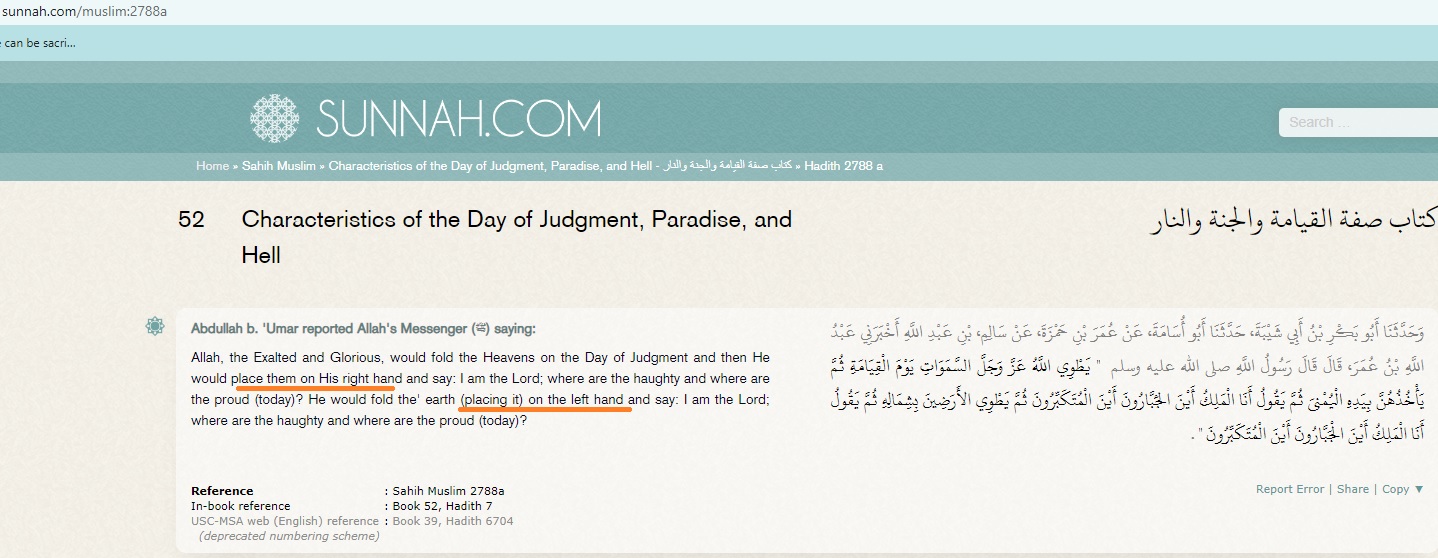




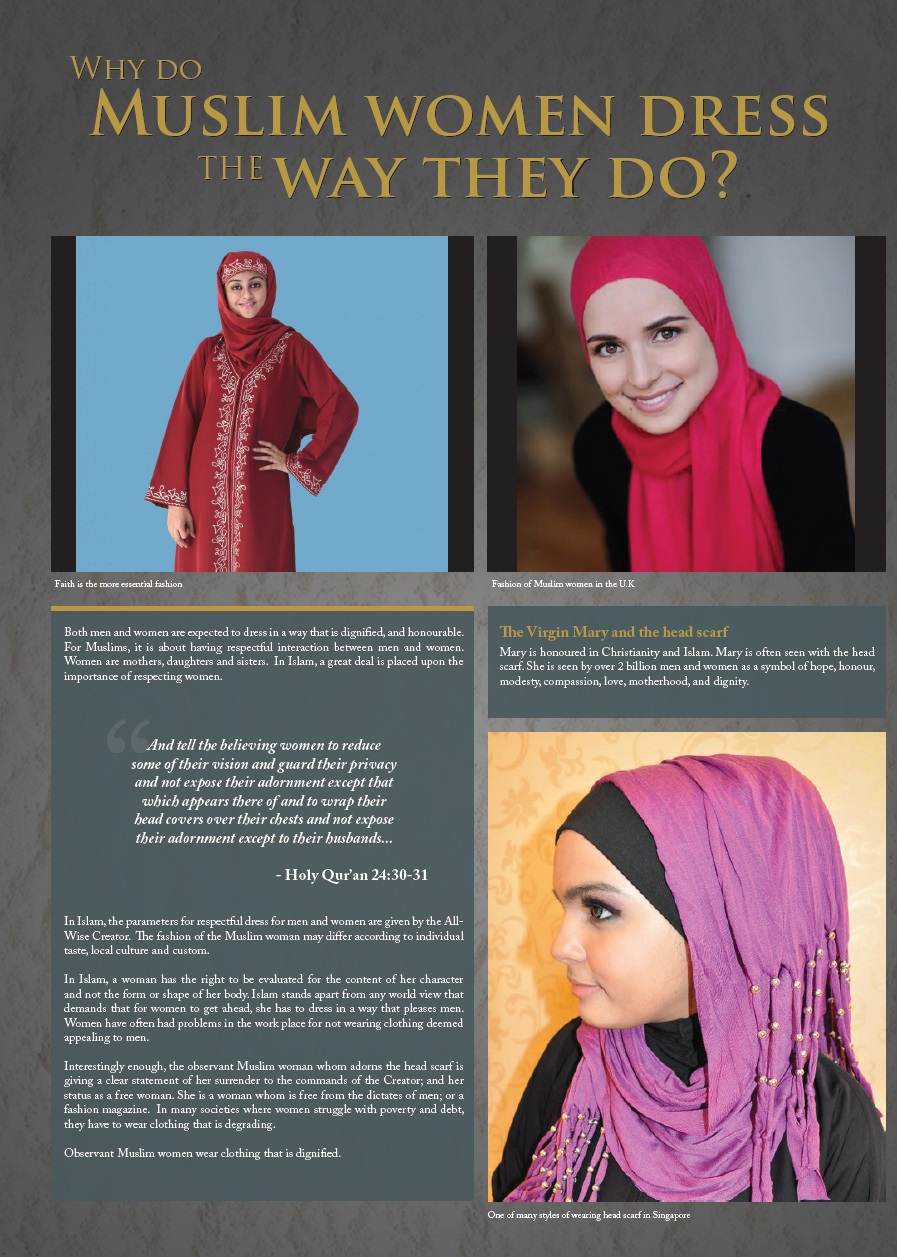

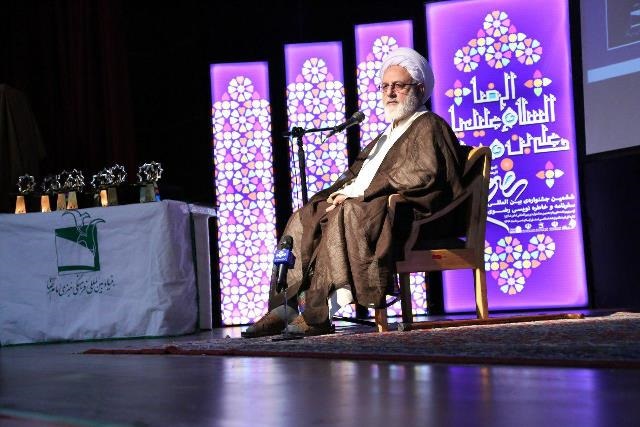
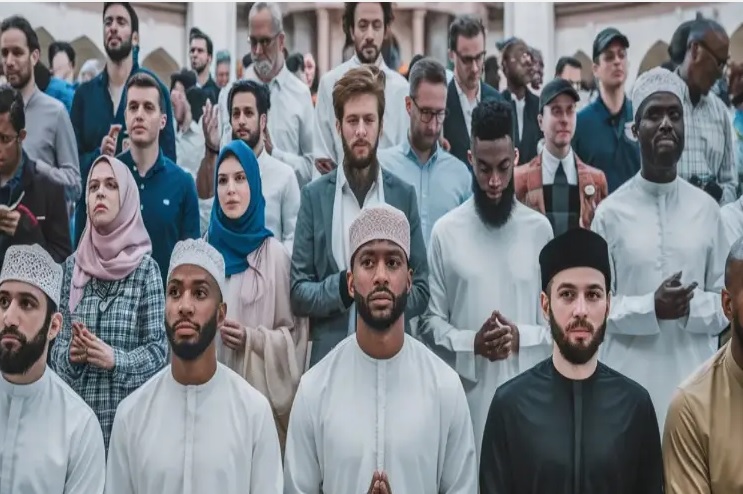



 Prima Quran