“O mankind, there has come to you instruction from your Lord and healing for what is in the breasts and guidance and mercy for the believers.” (Qur’an 10:57)
﷽
Ramadan Day 16: The relationship with the Qur’an should continue beyond Ramadan.
16th of Ramadan ——————————– *Heart Health: Service and Humility* “And be gracious to the believers who follow you.” (Qur’an 26:215) Humility and service are from the ways to achieving purification of the soul and heart tenderness. The Blessed Prophet (saw) him said: (whoever lowers himself for the sake of Allah, Allah will raise him)
Source: (https://sunnah.com/ibnmajah:4176) Though here the grading has been given as Da’if that grading is not given across the board of Islamic scholarship on the matter.
The meaning is sound.
And Abu Bakr May Allah be pleased with him said: “We found generosity in righteousness, wealth in firm belief, and honour in humbleness.”
The human finds tenderness in his heart and mercy for others based on how humble he is, and finds comfort and purity in the conscience bases on his service to others.
*Prophets and Holy Books*
The Messenger ˹firmly˺ believes in what has been revealed to him from his Lord, and so do the believers. They ˹all˺ believe in Allah, His angels, His Books, and His messengers. ˹They proclaim,˺ “We make no distinction between any of His messengers.” (Qur’an 2:285)
Believing in prophets and holy books is a necessity in Islam, so failing to believe in the prophets and books would take you out of the circle of Islam.
Do you have to believe in each prophet and books? The bare minimum is to believe that Allah sent prophets and the last one is Muhammed + Allah sent books and the last is the Qur’an.
After that if the argument is established for you that there is a prophet called Musa by reading the Qur’an or hearing it in a lecture…etc you are obligated to believe in him, and so on…
*Fasting when traveling* “Whoever is ill or on a journey, then ˹let them fast˺ an equal number of days ˹after Ramaḍân˺. Allah intends ease for you, not hardship.” (Qur’an 2:185)
Here is the summary on this issue: – It’s permissible to fast or break the fast when traveling. – There is a difference in opinion regarding what is better? The most prominent opinion is what is easier is better. – The traveling in the context of this issue is the same as travelling in the issue of prayer, so when you pray Qasr you can break the fast. – Who ever has the intention to break the fast by traveling should travel before Fajr, otherwise it’s not allowed to break the fast at home before traveling – The traveler can break his fast after traveling the required different even if he had the intention to fast initially. – If someone committed something that would obligate a heavy atonement with the intention of breaking the fast then there is nothing on him. – If someone returns home from traveling while not fasting, he can continue without needing to abstain from fast breakers – Traveling is a valid excuse to breaking the fast, but breaking the fast isn’t an excuse for traveling, so it’s not allowed to travel with the intention of breaking the fast as this is from the actions of hypocrites: “They seek to deceive Allah and the believers, yet they only deceive themselves, but they fail to perceive it.” (Qur’an 2:9)
“O People of the Scripture, do not commit excess in your religion or say about Allah except the truth.” (Qur’an 4:157)
“And those who strive for Us – We will surely guide them to (subulana) Our ways. And indeed, Allah is with the doers of good.” (Qur’an 29:69)
﷽
The very first point to establish is that for us there is no spirituality or baraka apart from the Muhammedan reality. There is no believer that does not part take in the silsila of all acts of worship.
There is not a single act of worship that a Muslim partakes in that is not traced back to the Blessed Prophet (saw).
“So whoever renounces false gods and believes in Allah has certainly grasped the firmest, unfailing hand-hold. And Allah is All-Hearing, All-Knowing.” (Qur’an 2:256)
If you are a Muslim right here right now you are part of the tariqa of the Blessed Prophet Muhammed (saw). Allah has bestowed upon you the single greatest act of love, mercy, guidance and blessing that could ever befall any among mankind.
If we are to ask for example the Tariqa of Al Ghazali, Hasan al Basri, or Al Junayd of Baghdad etc. you will not readily see them ascribed to a particular tariqa. Those that ascribe to them as such do not have anything firm to rely upon.
A Sufi for us is not one who belongs to this or that order. Often these orders themselves become barriers for themselves as well as those who seek closeness to Allah (swt).
Thus, the ‘Ilm Al Suluk’ (Sufism) of Al Ghazali, Hasan al Basri or Al Junayd is that which the Ibadi are upon.
Our scholars both embraced and wrote extensively about ‘Ilm Al Suluk’ (Sufism)
For cleansing of the soul and dedication of self to Allah, is the very essence of Islam as given to us via the Qur’an and the Sunnah of the Blessed Messenger (saw).
“The Day when neither wealth nor sons will be of any benefit. Only those who come before Allah with a pure heart.” (Qur’an 26:88-89)
Narrated Abu Huraira:
Allah’s Messenger (saw) said, “Allah said, ‘I will declare war against him who shows hostility to a pious worshipper of Mine. And the most beloved things with which My slave comes nearer to Me, is what I have enjoined upon him; and My slave keeps on coming closer to Me through performing Nawafil (praying or doing extra deeds besides what is obligatory) till I love him, so I become his sense of hearing with which he hears, and his sense of sight with which he sees, and his hand with which he grips, and his leg with which he walks; and if he asks Me, I will give him, and if he asks My protection (Refuge), I will protect him; (i.e. give him My Refuge) and I do not hesitate to do anything as I hesitate to take the soul of the believer, for he hates death, and I hate to disappoint him.”
This above hadith is a key feature of Sufism (‘Ilm Al Suluk’)
And the most beloved things with which My slave comes nearer to Me, is what I have enjoined upon him.
What I enjoined upon him = The Qur’an and Sunnah.
There are people who wonder why there is no blessing in their life or they receive no spiritual openings. I will tell you here and now there is not a single tariqa on this planet that can open for you something that has not been opened by the Blessed Prophet (saw).
So those who have abandoned the Qur’an and Sunnah are on a path other than Islam, other than Sufism. At best they follow a Dajjal.
2. And My slave keeps on coming closer to Me through performing Nawafil (praying or doing extra deeds besides what is obligatory) till I love him.
Through performing Nawafil = (this means extra rakats of prayer, extra acts of worship of any kind. This is where the wirds kick in effect, or group dhikr). Yet, it must be kept in mind that if one has abandoned the Qur’an and Sunnah you will ultimately arrive no where but self delusion.
The companions of the Blessed Prophet (saw) were described as “monks of the night,” apart from being “knights of the day.” This became the essence of Sufism.
Ibadis however define Sufism in a different original way such as what Abu Hamza AI Shari described his companions:
“Young but followed the path of the wise elders, their eyes blinded from evil, their feet are heavy to walk the path of wrong doings, dedicated to worship and in love with late hours of the night. They gave away their souls that may die tomorrow in exchange for eternal souls. Allah looks upon them in the hollowness of the night and sees their bodies bent over their copies of the Quran, and if they happen to read any verse about heaven, they would cry longing for it, and if they read a verse bout hell they would gasp as if the hellish fires are breathing in their ears. Earth has eaten their knees, hands, noses and foreheads, and they know no rest whether at day or night, their bodies have turned yellow and withered from long standing and fasting. They do all this for the sake of their promise to Allah. However, if they see the arrows, spears and swords of the enemy approaching and the thunder of war calls out, they take the fear of legions lightly for the sake of their reward from Allah; they never take the promise of Allah lightly in fear of legions of the enemy. They take spears and arrows heads on with their chests and faces. A young man (such as them) moves ahead with his head high and when he falls down and the earth dirties his handsome face and the birds and predators prey on his body …”
Source: (Safwat, Ahmed Zaki, Jamharat Khutab Al Arab, 2/469-476.)
However, the relation between Ibadis and Sufism was barely notable with the early Ibadi scholars; there are no books on Sufism and they didn’t use Sufi terminology in their books. This relationship thrived though in the 18th century with many scholars such as Shaykh Ja’ed and his son Nasser(r), Al Mohaqiq Al Khalili (r) and Abu Muslim Al Bahlani (r) embracing Sufism and producing some of the most influential and hard-core Sufism writings. The contributions of those scholars can be summed up in the following:
Books: Those four scholars added a number of rich books in Sufism and behavioral science (‘ilm al-suluk), most famous of which are:
1. Commentary on Hayat Al Mohaj poem and the poem itself by Shaikh Ja’ed bin Khamis Al Kharusi (r):
Hayat Al Mohaj poem is a lengthy poem in Sufism and behaviors, and starts with:
My brothers in Allah listen to me,
as I am always advising for the Sake of Allah till He is pleased.
2. Other poems of Shaikh Ja’ed (r): He wrote other poems in Sufism, and one of them starts with:
The sun of the enlightened is above all,
and they are abstinent from the love of anything but Allah
3. Al Nawamees Al Rahmaniya fi Tasheel Turuq Ela oloum ArRabaniya, a book by Shaykh Said bin Khalfan Al Khalili (r). This book was described by Shaikh Khalfan Al Harthi (r) as: “This book tackles issues of knowledge acquisition tools. He started by talking about the brain and the beneficial food and drugs. After that the book talks about the secrets of verses, prayers and divine names of Allah. In doing so, Shaikh Said (r) quotes Al Antaki, Al Ghazali Al Bani and others.
4. Lydah Nudum AsSoluk Ela Hadarat Malik AlMolok by Shaikh Nasser bin Ja’ed Al Kharusi (r) in which he gives extensive commentary on Ibn Al Faridh’s “T rhyming” poem in Sufism, a lengthy poem that runs to about 759 lines, and starts with:
Yes, my heart has longed for my beloved…
This book was printed in 2011 in 786 pages with an introduction by Dr. Waleed Mahmood Khalis (r). This is a valuable and unique book that reflects deep understanding and knowledge of Shaikh Nasser (r).
5. Poems of Shaikh Said bin Khalfan Al Khalili (r) in Sufism and behavior: Shaikh Said Al Harthi says: “He wrote many poems in the divine love, supplication, prayer, motivation and guidance to the path of the enlightened”. Some of the poems are very lengthy; one of them runs to 220 lines. Shaikh Abu Muslim Al Bahlani (r) did Takhmis (extension of a poem line by adding one and a half line to an existing line) of one of those poems.
6. Poems of Abu Muslim Al Bahlani (r) in Sufism: Lengthy poems that can reach to 1000 lines. The total number of lines in prayer poems of Abu Muslim reached about 5500 lines, which can be considered a full book on their own.
Dr. Mohamed Nasser (r) says about these poems:
“All these poems can be categorized under the supplication, because they were simply written for this purpose as can be seen in the introductions. The author puts forward a certain behavior before and during the poems which means he used to practice a certain ritual. He would prepare himself by Ablution, supplication and prayer at midnight. The poem lines would flow in his tongue and he uses them to call upon his creator in moments of spiritual highness and emotional fulfillment”
Source: (Nasser, Dr. Mohammed, Abu Muslim Al Rawahi Hassan Oman p.39-40.)
Do not commit excess in your religion!
“O People of the Scripture, do not commit excess in your religion or say about Allah except the truth.” (Qur’an 4:157)
As Allah (swt) has said this to those who come before us it stands to reason that this admonishment is for us as well. Thus, there are beliefs and practices that became associated with ‘Ilm Al Suluk’ (Sufism) that the Ibadi masters wished to purify it of.
Uniqueness of Ibadis Sufism
Despite embracing, practicing and writing in Sufism, those scholars did not follow that path blindly without critique.
Dr. Waleed Khalis says: “It is important to note that, in embracing Sufism, those Omani scholars and poets chose only what aligns with their ‘Aqidah and sect principles. We did hint to this earlier. That is why they used the concept of Suluk not Hulul or Wahdat al-Wujud(unity of existence) or other concepts embraced by some Sufis. Ibn Al Faridh in fact himself falls under a conservative group that keeps the Quran and Sunnah always as the super guide. Omani scholars and poets expressed interest in Al Faridh’s works because they share common foundations objectives”
Source: (Khalis, Dr. Waleed, Iydah Nudum Al Soluk, p.32.)
Shaykh Ja’ed and his son Nasser(r), Al Mohaqiq Al Khalili (r) and Abu Muslim Al Bahlani (r), those four scholars used in their books and poems many Sufi terms.
Dr. Sharifa Al Yahyai(h) said: “The pioneering of Al Khalili in Sufi poetry made his poems a reservoir of Sufi terminology, a rich pool for research on Sufi language. Moreover, his poems acquired some linguistic alienness as a result of the deep connection with Sufism literature and this influence is demonstrated in complex structures, a common feature of Sufi poetry. He was also influenced by Ibn Al Faridh, one of the most prominent Sufi poets”
Source: (Al Yahyaiya, Sharifa, Al Shaikh Said bin Khalfan AI Khalili, Doyen of Sufi Poetry in Oman,p.3)
However, they also tried to avoid misleading terms, such as the word ‘Sufi’ itself and replaced it with ‘Suluk’ which denotes the objective of this movement, to reach to the ultimate understanding of Allah and His attributes and get His blessings.
Holding on to the Ibadi ‘Aqidah: The Sufi movement emerged and grew in non-Ibadi cultures and no Ibadi scholar wrote on this field before those four who remained rooted and firmly holding their Ibadi ‘Aqidah principles. Whenever they felt something contradicting the Ibadi ‘Aqidah, they would promptly reject it and rectify it.
Beliefs that one may find in Sunni and Shi’a Sufism but not in Ibadi Sufism.
Wahdat al-Wujud(unity of existence): The meaning of (unity) with Allah in Sufism.
One of the more extreme thoughts of Sufism is the actual unity between the creator and the created, which is claimed to happen when a person rises high in love and closeness to Allah. However, Shaykh Nasser bin Ja’ed explains that Sufism (or the correct Sufism) doesn’t actually mean so. What it actually means is not a unity of entities but rather of attributes, as a believer takes on the attributes of Allah when he draws closer to Him. With this explanation, Shaykh Nasser may be referring to the following hadith:
Narrated Abu Huraira:
Allah’s Messenger (saw) said, “Allah said, ‘I will declare war against him who shows hostility to a pious worshipper of Mine. And the most beloved things with which My slave comes nearer to Me, is what I have enjoined upon him; and My slave keeps on coming closer to Me through performing Nawafil (praying or doing extra deeds besides what is obligatory) till I love him, so I become his sense of hearing with which he hears, and his sense of sight with which he sees, and his hand with which he grips, and his leg with which he walks; and if he asks Me, I will give him, and if he asks My protection (Refuge), I will protect him; (i.e. give him My Refuge) and I do not hesitate to do anything as I hesitate to take the soul of the believer, for he hates death, and I hate to disappoint him.”
Ibn Abbas reported: The Messenger of Allah (saw) said, “Reflect deeply upon the creation, but do not reflect upon the essence of the Creator. Verily, His essence cannot be known other than to believe in it.”
Source: (Musnad al-Rabī’ 742 عَنِ ابْنِ عَبَّاسٍ قَالَ قَالَ رَسُولُ اللَّهِ صَلَّى اللَّهُ عَلَيْهِ وَسَلَّمَ تَفَكَّرُوا فِي الْخَلْقِ وَلا تَتَفَكَّرُوا فِي الْخَالِقِ فَإِنَّهُ لا يُدْرَكُ إِلا بِتَصْدِيقِهِ 742 مسند الربيع بن حبيب 2976 المحدث الألباني خلاصة حكم المحدث حسن في صحيح الجامع)
2. Hulul (infusion of the divine into the human).
“When Moses asked to see Allah, Allah said, “You cannot see Me! But look at the mountain. If it remains firm in its place, only then will you see Me”. When Allah appeared to the mountain, it was leveled to dust and Moses collapsed unconscious. When he recovered, he said, “Glory be to You! I have repented to You, and I am the first of the believers”. (Qur’an 7:143)
Abu Musa reported:
The Messenger of Allah (saw) was standing amongst us and he told us five things. He said: Verily the Exalted and Mighty Allah does not sleep, and it does not befit Him to sleep. He lowers the scale and lifts it. The deeds in the night are taken up to Him before the deeds of the day, and the deeds of the day before the deeds of the night. His veil is the light. In the hadith narrated by Abu Bakr (instead of the word “light” ) it is fire. If he withdraws it (the veil), the splendour of His countenance would consume His creation so far as His sight reaches.
The universe itself will be utterly annihilated! Allahu Akbar!
The human form as a three dimensional carbon based platform is so immersed in this paradigm of conscious reality that is perceived via what could be considered a hologram in nature that when this form is disciplined and mastered one can have heightened awareness and experiences of what is normally perceived. Thus a person can have supranatural and spiritual experiences. The one writing to you (myself) have experienced such states. However, at no point can or has there ever been a merger between the divine and the creation. It is too much information for any vessel to carry and it would be destroyed.
3. Seeing Allah (Witnessing Allah)
Our school is upon the firm belief that Allah (swt) cannot be seen by the eye sight in this world or in the afterlife. In fact, many of those among the Sunni tradition have resigned themselves to the belief that it is a beatific vision. The common Sunni opinion is that Allah can be seen, and most of them agree that this seeing happen only in the afterlife as a reward for believers.
The evidence from the Qur’an and Sunnah that Allah (swt) will not be seen is overwhelming.
That the Blessed Prophet (saw) intercedes for all Muslims including the major sinners. Ibadi Sufism is that the intercession of the Blessed Prophet (saw) is a formality for those whom Allah (swt) is pleased with:
5. Allah is everywhere. Our school is upon the firm belief that Allah (swt) created all things which includes spatiality. Not all those who claim to be Sufis believe this. However, this is a belief held among many of them. Just as the question: “When did Allah begin” is inappropriate for Allah (swt), so to the question “Where is Allah?” is inappropriate for Allah (swt).
Practices that one may find in Sunni and Shi’a Sufism but not in Ibadi Sufism.
The centrality of the family of the Blessed Prophet (saw) giving fealty to their descendants. The promotion and propagation of the ‘Syed Culture’ wherein other Muslims are made to feel less in station simply because of their lineage. You will not find this in Ibadi Sufism. I have written about this here:
2. Istiagatha: or calling for help via Saints and Pirs both living and dead. You will not find this in Ibadi Sufism. Perhaps can write more about this in the future (insh’Allah)
3. Visiting the graves of the dead saints and pirs. You will not find this in Ibadi Sufism.
4. The formation of specific tariqa (orders) that are often in conflict with other tariqa (orders). All of them vying for supremacy over the other. I have written about that here:
You will not find specific orders (tariqa) in Ibadi Sufism.
The purification of Sufism (‘Ilm Al Suluk’) by the Ibadi masters.
One will find that in Sufism practiced in particular among Sunni tariqa (spiritual orders) that the various paths may focus on particular aspects. Such that a tariqa could be defined as burhani, haqqani or shukri. Meaning that they give direction and focus to one of three aspects:
a) Fearing Allah to obtain closeness and proximity to Allah (swt).
b) Loving Allah to obtain closeness and proximity to Allah (swt).
c) Gratitude towards Allah to obtain closeness and proximity to Allah (swt).
In Ibadi Sufism, Indeed Islam itself it is a trial by fire in which all these aspects are combined in the human being if one is to be successful in this life and in the life to come.
If we want to talk about ishq (love) we have:
“Say, ˹O Prophet,˺ “If you ˹sincerely˺ love Allah, then follow me; Allah will love you and forgive your sins. For Allah is All-Forgiving, Most Merciful.” (Qur’an 3:31)
Imagine being the object of Allah’s love!
Notice the theme? If we love Allah than we follow the Sunnah. By doing such Allah (swt) will love us!
If we want to talk about ittaqu (fear) we have:
“Indeed Allah loves those who honour their covenants and fear Him. Allah loves the righteous.” (Qur’an 3:76)
If we want to talk about shukr (gratitude) we have:
“Therefore remember Me, I will remember you, and be thankful to Me, and do not be ungrateful to Me.” (Qur’an 2:12)
Moving Sufism (‘Ilm Al Suluk’) away from extremism.
Those Ibadi Sufi scholars they stressed that Sufism in its essence calls for good and virtue, and all impurities have to be ruled out.
Shaykh Nasser bin Ja’ed said: “A person shall not overlook Sufism; even if he couldn’t reach its peak he should pray and supplicate with whatever is possible to him. Sufism cannot be achieved by roaming the lands, but by the dedication to Allah in everything and following the straight path. Then a person needs to ask Allah and supplicate by abandoning bad habits and traits and embracing the steps of Iman after completing the mandatory prayers and worships…”
Source: (Al Kharusi, Nasser, Iydah Nudum Al Soluk, p.482.)
“But the Monasticism which they invented for themselves, We did not prescribe for them, but (they sought it) only to please Allah therewith, but that they did not observe it with the right observance. So We gave those among them who believed, their (due) reward, but many of them are Fasiqun (rebellious, disobedient to Allah)” (Qur’an 57:27)
Sufism doesn’t mean solitude and escape from other religious duties, and it doesn’t mean monasticism; it is rather a state of the heart that a Muslim tries to deepen by drawing closer to Allah through prayers and supplications. This is clearly noted by Shaykh Nasser bin Abi Nabhan when he said:
“You should know that supplications to Allah is the tool of Sufism and it works even if a person sleeps with four women (his wives) at night, righteously fight the infidels during the day, helps people and works in Sharia; all of this can’t spoil Sufism. No one knows that a person is Sufi without a revelation from Allah or by direct hearing from the mouth of a prophet as Sufism is a hidden state in the heart. Naming someone ‘Sufi’ on the basis of outlooks is allowed …”
Source: (Al Kharusi, Nasser, Iydah Nudum AI Soluk, p.485.)
This precise understanding of the essence of religion and Sufism is what is clearly referred to by many verses of the Holy Quran and many Hadiths. In the days of the Blessed Prophet Muhammed some people misunderstood religion for monasticism but the prophet explained to them that religion is not about solitude and worship only.
Narrated Anas bin Malik:
A group of three men came to the houses of the wives of the Prophet (saw) asking how the Prophet (saw) worshipped (Allah), and when they were informed about that, they considered their worship insufficient and said, “Where are we from the Prophet (saw) as his past and future sins have been forgiven.” Then one of them said, “I will offer the prayer throughout the night forever.” The other said, “I will fast throughout the year and will not break my fast.” The third said, “I will keep away from the women and will not marry forever.” Allah’s Messenger (saw) came to them and said, “Are you the same people who said so-and-so? By Allah, I am more submissive to Allah and more afraid of Him than you; yet I fast and break my fast, I do sleep and I also marry women. So he who does not follow my tradition in religion, is not from me (not one of my followers).
This definition and conception of Sufism by these scholars is not theoretical but had been their way of living, despite having been very active in political, social and intellectual life. Sufism didn’t restrain them from engaging in life activities. Shaykh Said bin Khalfan AI Khalili (r)was the strongest pillar of the Imamate of Azzan bin Qais AI Busaidi(r); he was the one backing the Imam, the one who appointed him and the one who fought his wars and battles until he got killed for the sake of his principles.
Shaykh Ja’ed bin Khamis (r) and his son were very active in political, social and intellectual life in their days. This is evident in their multidisciplinary books; Shaykh Ja’ed(r) himself left behind more than 20 books.
On the other hand, Abu Muslim Al Bahlani (r)played a critical role in the intellectual renaissance in Zanzibar and his newspaper (Al Falaq) was one of the first Arabic newspapers at that time. He printed a number of books and his deep devotion to Sufism didn’t withhold him from writing poetry in other fields such as praise, ghazal, humor and obituary.
Often ignorance can be a source of inspiration and it should always be a call to action.
May Allah (swt) forgive us, and our school for not getting out the information to the general public so that they may not bask in ignorance.
You may also be interested in reading the following:
“Indeed, those who disbelieve in Allah and His messengers and wish to discriminate between Allah and His messengers and say, “We believe in some and disbelieve in others,” and wish to adopt a way in between.” (Qur’an 4:150)
“The disbelievers vow, “We will never believe in this Quran, nor in those ˹Scriptures˺ before it.” If only you could see when the wrongdoers will be detained before their Lord, throwing blame at each other! The lowly ˹followers˺ will say to the arrogant ˹leaders˺, “Had it not been for you, we would certainly have been believers.” (Qur’an 34:31)
﷽
First understand that we will approach this topic by: Tafsir al-Quran bi-l-Quran. (Interpreting the Qur’an by the Qur’an) That is sufficient to destroy the platform of those who claim that Judaism and Christianity are equally salvific paths. That is to say one can practice Judaism or Christianity without the need to embrace Islam. Or the belief that one need not to enter into the fold of Islam to begin their path to salvation.
We will not rely upon a single hadith or statement of any scholar or anything extraneous to the Qur’an. The tafsir will be: al-Quran bi-l-Quran.
“Whoever chooses to be guided, it is only for their own good. And whoever chooses to stray, it is only to their own loss. No soul burdened with sin will bear the burden of another. And We would never punish ˹a people˺ until We have sent a messenger ˹to warn them˺.” (Qur’an 17:5)
“O Mankind, the Messenger has come to you with the truth from your Lord, so believe; it is better for you. But if you disbelieve – then indeed, to Allah belongs whatever is in the heavens and earth. And ever is Allah Knowing and Wise.” (Qur’an 4:170)
“O mankind, there has come to you a conclusive proof from your Lord, and We have sent down to you a clear light.” (Qur’an 4:174)
“O People of the Book! Now has come to you, making (things) clear to you, Our Messenger, after the break in (the series of) our messengers, So do not say: “There came to us no bringer of glad tidings and no warner (from evil)”: But now has come to you a bringer of glad tidings and a warner (from evil). And Allah has power over all things.” (Qur’an 5:19)
“O children of Adam, if there come to you messengers from among you relating to you My verses, then whoever fears Allah and reforms – there will be no fear concerning them, nor will they grieve.” (Qur’an 7:35)
“We said, “All of you go down from it [the Garden]. When my guidance comes to you, whoever follows my guidance will not have fear or grieve” (Qur’an 2:38)
“Allah said, “Descend, both of you, from here together ˹with Satan˺ as enemies to each other. Then when guidance comes to you from Me, whoever follows My guidance will neither go astray ˹in this life˺ nor suffer ˹in the next˺.“ (Qur’an 20: 123)
The Qur’an is adamant that those who die while in a state of ingratitude (kuffar) that they are cursed by Allah (swt) and that they will be in hell forever.
This means those Non Muslims who express their ingratitude by rejection of Muhammed (saw) as Allah’s Messenger.
It also means Muslims who express their ingratitude by partaking in major sins and not making repentance.
So there is no favoritism shown in these verses. You die as in a state of ingratitude than hell is your destiny no matter who you are.
“Verily, those who are ungrateful(kafaru), and die while they are (kuffarun) ungrateful disbelievers, it is they on whom is the Curse of Allah and of the angels and of mankind, combined. They will abide therein [under the curse in Hell], their punishment will neither be lightened nor will they be reprieved.” (Qur’an 2:161-162)
Let us look at the ‘go to’ verses that are often used to deceive people to make them believe that Allah (swt) endorses creeds other than what is based upon the Qur’an.
Or the idea that Allah (swt) endorses a way of life (Din) other than Islam.
“Indeed, those who believe (amanu) and those who were Jews or Christians or Sabeans – those [among them] who believed (amana) in Allah and the Last Day and did righteousness will have their reward with their Lord, and no fear will there be concerning them, nor will they grieve.” (Qur’an 2:62)
“Those who believe (amanu), as well as the Jews, the Sabeans and the Christians: all who (amana) believe in Allah and the Last Day and did righteous deeds, will have nothing to fear and they will not grieve.” (Qur’an 5:69)
These two verses are what is quoted. They bring the Christians and the Jews and the Sabeans to the table. However, these so-called champions of inclusivism often leave out the Magians. Today they get invited to the discussion. Let us bring in the Magians.
So let us ask which verses would be more inclusive? Those that only mention the Christians, the Jews and the Sabeans? Or the one that mentions the Christians, the Jews, the Sabeans and the Magians? Obviously, the one that mentions four groups rather than three groups.
Subhan’Allah. You see how Allah (swt) has clearly shown us how he would anticipate such manipulation of our religion?
“Indeed, those who have believed (amanu) and those who were Jews and the Sabeans and the Christians and the Magians and all those who associated (ashraku) with Allah – Allah will judge between them on the Day of Resurrection. Indeed Allah is, over all things, Witness.” (Qur’an 22:17)
So why do you suppose they do not quote the above verse?
Why leave out the Magians?
Because the above verse does not give that blanket salvation statement that they love to quote from Qur’an 2:62 & 5:69.
The above verse mentions those who believed (amanu) as well as all those who associated (ashraku) with Allah’ and the fact that Allah will ‘judge between them’.
What do we understand about those who have associated (ashraku) with Allah?
“They have certainly disbelieved who say, “Allāh is the Messiah, the son of Mary” while the Messiah has said, “O Children of Israel, worship Allāh, my Lord and your Lord.” Indeed, he who associates others with Allāh – Allāh has forbidden him Paradise, and his refuge is the Fire. And there are not for the wrongdoers any helpers.” (Qur’an 5:72)
The difference between those who believe in Allah and the last day and those who say so with their mouths.
“And there are some people who say: We believe in Allah and the last day; and they are not at all believers. They desire to deceive Allah and those who believe, and they deceive only themselves and they do not perceive.” (Qur’an 2:8-9)
It makes consistent and logical sense that this would be applicable to anyone who has this condition. The condition of claiming with their mouths what is not really in their hearts.
Does Qur’an 2:62 & 5:69&22:17 mean blanket salvation of Jews, Christians, Sabians or Magians?
The answer is no.
#1) Major Point.
Allah (swt) has already informed us for example that the majority of the (ahl l-kitabi) -Jews, Christians, Sabians, & Magians are fasiquna (defiantly disobedient)
This trait of being fasiquana is the trait of those destined for hellfire.
“You are the best nation produced for mankind. You enjoin what is right and forbid what is wrong and believe (watu’minuna) in Allah. If only the (ahlu l-kitabi) People of the Book had (amana) believed, it would have been better for them. Among them (min’humu) are (l-mu’minuna) believers, but most of them are (l-fasiquna) defiantly disobedient.” (Qur’an 3:110)
Many things to note about this verse.
A) The current gen of Muslims (that the verse is addressing) are the best nation produced for mankind and not (The people of the Book).
B) People of the Book = does not necessarily equate to believers.
C) There is a caveat. among them (min’humu) are believers.
D) However, most of them(People of the Book) are l-fasiquna (defiantly disobedient)
Allah (swt) says among them are believers.
“Yet they are not all alike: there are some among the People of the Book who are upright, who recite Allah’s revelations throughout the night, prostrating ˹in prayer˺. They believe in Allah and the Last Day, encourage good and forbid evil, and race with one another in doing good. They are ˹truly˺ among the righteous. They will never be denied the reward for any good they have done. And Allah has ˹perfect˺ knowledge of those mindful ˹of Him˺. (Qur’an 3:113-115)
“So whoever does an atom’s weight of good will see it.” (Qur’an 99:7)
No one (Atheist, Agnostic, Muslim, Jew, Christian, Hindu, Buddhist, Sikh, Taoist, Sabean, Magian etc.), is denied the good that they do. They will either get rewarded for it in this life or if the end up in the hellfire (it has levels) and they made not be in the lowest level.
Seems like most of them (Christian, Jew, Sabean, Magian) would be believers if all they had to do was believe in Allah and the Last Day and do good. Yet Allah (swt) mentions that most are fasiqun.
“Most of them(People of the Book) are l-fasiquna (defiantly disobedient)
What is the destiny of the fasiqun?
“And as for those who are Fasiqa (disbelievers and disobedient to Allah), their abode will be the Fire, every time they wish to get away therefrom, they will be put back thereto, and it will be said to them: “Taste you the torment of the Fire which you used to deny.” (Qur’an 32:20)
So who are those that have believed (amanu) in verses 2:62 & 5:69&22:17 ?
“And when they hear what has been sent down to the Messenger, you see their eyes overflow with tears because of the truth (l-haqi) they recognize. They say, ‘Our Lord, we believe; so write us down among the witnesses.” (Qur’an 5:83)
They recognize that the Qur’an is l-haqi (The Truth). Not one of many truths. Not a truth. They recognize it as (The Truth).
Also,
“But those firm in knowledge among them and the believers (wal-mu’minuna) believe (yu’minuna)in what has been revealed to you, [O Muhammed], and what was revealed before you. And the establishers of prayer [especially] and the givers of zakah and the believers (wal-mu’minuna) in Allah and the Last Day – those We will give a great reward.” (Qur’an 4:162)
Believe in Allah and the Last Dayand did righteous deedsis that all that is required?
(believe in Allah and the Last Day and did righteous deeds, will have nothing to fear and they will not grieve)
The verse is what is known as ‘Amm (general) verse.
Note that believing in Allah and the Last Day seem straight forward (will come back to this). However, the text also states to do: righteous deeds. So what are those righteous deeds?
That verse is similar to:
“Surely those who say, Our Lord is Allah, then they continue on the right way, they shall have no fear nor shall they grieve.” (Qur’an 46:13)
Notice the above verse has no mention about believing in the Last Day. So are we to assume that if one does not believe in the Last Day than they shall have nothing to fear nor shall they grieve?
“Say, “My Lord has forbidden immoral acts– openly or in secret– sinning and unjustified aggression, and ascribing divinity to others besides Him, and saying things about Him that you do not know.” (Qur’an 7:33)
Notice that the verse above does not simply make believing in Allah one of the requirements for having no cause for fear or grieving. The verse clearly tells us not to: “say thing about Him that we do not know.”
As the honourable Dr. Shadee Elmasry had the following to say in his debate with an envoy from Harvard on the above verses: 2:62 & 5:69
“Believe in God and the last day. That’s it? No, that is a summary! Does the summary explain better or the details?” -Dr. Shadee Elmasry
Very excellent point!
For a more detailed analysis of 2:62 & 5:69 you have verses that add more depth for example:
“O believers! Have faith in Allah, His Messenger, the Book He has revealed to His Messenger, and the Scriptures He revealed before. Indeed, whoever denies Allah, His angels, His Books, His messengers, and the Last Day has clearly gone far astray.” (Qur’an 4:136)
“The Messenger believes (amana) in what has been revealed to him from his Lord, and so do (wal-muminuna) the believers. They (amana) believe in Allah, His angels, His Books, and His Messengers. ˹They proclaim,˺ “We make no distinction between any of His messengers.” And they say, “We hear and obey. ˹We seek˺ Your forgiveness, our Lord! And to you ˹alone˺ is the final return.” (Qur’an 2:285)
Heaven is prepared for the righteous.
“And race towards forgiveness from your Lord, and a Garden as wide as the heavens and the earth, prepared for (lil’muttaqīn) the righteous.” (Qur’an 3:133)
Righteousness is not in turning your faces towards the east or the west. Rather, the righteous are those who believe in Allah, the Last Day, the angels, the Books, and the prophets; who give charity out of their cherished wealth to relatives, orphans, the poor, travellers, beggars, and for freeing captives; who establish prayer, pay alms-tax, and keep the pledges they make; and who are patient in times of suffering, adversity, and in battle. It is they who are true , and it is they who are mindful . (Qur’an 2:177)
#2) Major Point. Allah (swt) has never endorsed any religion that goes by the name of Christianity, Judaism, Sabianism or Magianism. In fact, Allah (swt) has never given as a divine appellation the title of Christian, Jew, Sabean, Magian to anyone. Not in the Qur’an and not ever.
Allah (swt) is acknowledging that these are appellations that they have given to themselves. A clear example of that is what follows:
“You will surely find the most intense of the people in animosity toward the (amanu) believers the Jews (l-yahuda) and those (ashraku) who associate others with Allah; and you will find the nearest of them in affection to the (amanu) believers those who say, (qalu inna Nasara) “We are Christians.” That is because among them are priests and monks and because they are not arrogant.” (Qur’an 5:82)
“Those who say we are Christians” -Allah is not giving as a divine appellation the title of Christianity nor is Allah (swt) endorsing the beliefs of those who call themselves “Christians” Allah (swt) acknowledging that there are those who call themselves “Christians”. Just as there are those who call themselves: Jews, Sabeans, Magians…etc.
The Jews and associators are being contrasted against the (amanu) believers. In the sense of being in the most intense in hatred towards the (amanu) believers.
The Christians are also contrasted with the (amanu) believers, but not in the sense of intense hatred but that at the very least these Christians are prone to show affection as they have among them learned people who are not arrogant.
Go and look once more at the Qur’an 5:69. Notice how all this text that is before that verse is completely ignored. Look at the context that is ignored before they use this “Big Verse”.
“And had they observed the Torah, the Gospel, and what has been revealed to them from their Lord, they would have been overwhelmed with provisions from above and below. Few among them are upright, yet most do nothing but evil. O Messenger! Convey everything revealed to you from your Lord. If you do not, then you have not delivered His message. Allah will ˹certainly˺ protect you from the people. Indeed, Allah does not guide the (l-kafrina)the ungrateful disbelievers. Say, “O People of the Book! You have nothing to stand on unless you observe the Torah, the Gospel, and what has been revealed to you from your Lord.” And your Lord’s revelation to you will only cause many of them to increase in wickedness and becoming (wakuf’ran) ungrateful disbelievers. So do not grieve for the people who are (l-kafrina) ungrateful disbelievers.” (Qur’an 5:66-68)
So what ever you read in that next verse (Qur’an 5:69) it completely rules out any Jew or Christian that does not observe the Torah, the Gospel and what was revealed to Muhammed(saw). They are automatically ruled out!
THE ONLY ACCEPTABLE WAY OF LIFE NAMED BY ALLAH IS ISLAM
“Certainly, The way of life (l-dina) with Allah is (l-is’lamu)Islam. Those who were given the Scripture did not dispute ˹among themselves˺ out of mutual envy until knowledge came to them. Whoever denies Allah’s signs, then surely Allah is swift in reckoning,” (Qur’an 3:19)
Din (way of life) with Allah is Islam.
“If anyone desires other than(l-is’lami) Islam as a way of life (dinan), never will it be accepted of him; and in the Hereafter He will be in the ranks of those who have lost (All spiritual good).” (Qur’an 3:85)
Those who want to choose a Din (way of life) other than Islam it will not be accepted from them.
“This day have I perfected your way of life (dinakum) for you, completed My favour upon you, and have chosen for you Islam (l-is’lama) as your (dinan) way of life. But if any is forced by hunger, with no inclination to transgression, Allah is indeed Oft-forgiving, Most Merciful.” (Qur’an 5:3)
This Din (way of life) that has been perfected and chosen by Allah is called: Islam)
We do not find the word Judaism in the TNCH (What Christians call Old Testament), nor do we find the word Christian as a reference to what Isa (as) was in the New Testament. This absence of the two words tell us that these titles were never authorized by Allah. In addition, these titles were never used by Musa (as) nor Isa (as).
The Qur’an acknowledges the common thread in all the divine messages when it says:
“He has ordained for you of the way of life (l-dini)what He enjoined upon Nuh and that which We have revealed to you, [O Muḥammed], and what We enjoined upon Ibrahim and Musa and Isa – to establish this way of life (l-dina) and not be divided therein. Difficult for those who associate (l-mush’rikina) others with Allāh is that to which you invite them. Allāh chooses for Himself whom He wills and guides to Himself whoever turns back to Him. (Qur’an 42:13)
So what ever Din (way of life) that Muhammed (saw) is upon is what Nuh, Ibrahim, Musa and Isa (upon them all be peace) were upon.
As Allah (swt) in verses: 5:3 & 3:85 & 3:19 has identified that Din (way of) life as Islam we know that all the prophets were upon Islam.
This is why the Blessed Prophet (saw) is commanded to say:
“Say, “I am not something original among the messengers, nor do I know what will be done with me or with you. I only follow that which is revealed to me, and I am not but a clear warner.” (Qur’an 46:9)
“And so those who were given knowledge may know that it is the truth from your Lord and [therefore] believe in it (faya’minu), and their hearts humbly submit to it. And indeed is Allah the Guide of those who have believed to a straight path.” (Qur’an 22:54)
The Qur’an also acknowledges that a universal divine message has been sent to all in all languages and the Qur’an affirms the continuity of the divine message. That universal way of life (Din) that has been affirmed is Islam.
“For every community We appointed a code of life to follow. So do not let them dispute with you ˹O Prophet˺ in this matter. And invite ˹all˺ to your Lord, for you are truly on the Right Guidance.” (Qur’an 22:67)
If the code of life of other communities were acceptable, the Blessed Prophet (saw) would not be inviting to them to the Right Guidance.
“O you People of the Book, believe (aminu)in what We have (NOW) revealed,confirming that which is with you, before We obliterate faces of some of you and turn them toward their backs or curse them as We cursed the sabbath-breakers. And ever is the decree of Allah accomplished. Indeed, Allah does not forgive (yush’raka) association with Him, but He forgives what is less than that for whom He wills. And he who(yush’rik)associates others with Allah has certainly fabricated a tremendous sin. Have you not seen those who claim themselves to be pure? Rather, Allah purifies whom He wills, and injustice is not done to them, as much as a thread . Look how they invent about Allah untruth, and sufficient is that as a manifest sin. Have you not seen those who were given a portion of the Scripture,who believe in superstition and false objects of worship and say about the (kafaru) ungrateful “These are better guided than the believers as to the way”? Those are the ones whom Allah has cursed; and he whom Allah curses – never will you find for him a helper (Qur’an 4:47-4:52)
And he would never ask you to take angels and prophets as lords. Would he ask you to disbelieve after you have submitted?˹Remember˺ when Allah made a covenant with the prophets, ˹saying,˺ “Now that I have given you the Book and wisdom, if there comes to you a messenger confirming what you have, you must believe in him and support him.” He added, “Do you affirm this covenant and accept this commitment?” They said, “Yes, we do.” Allah said, “Then bear witness, and I too am a Witness.” Whoever turns back after this, they will be the rebellious.Do they desire a way other than Allah’s—knowing that all those in the heavens and the earth submit to His Will, willingly or unwillingly, and to Him they will ˹all˺ be returned? Say, ˹O Prophet,˺ “We believe in Allah and what has been revealed to us and what was revealed to Abraham, Ishmael, Isaac, Jacob, and his descendants; and what was given to Moses, Jesus, and other prophets from their Lord—we make no distinction between any of them, and to Him we ˹fully˺ submit.” “If anyone desires other than(l-is’lami) Islam as a way of life (dinan), never will it be accepted of him; and in the Hereafter He will be in the ranks of those who have lost (All spiritual good).” (Qur’an 3:80-85)
You see here that those who believe in the Din (way of life) called Islam has been juxtaposed in contradistinction to those who do not believe in all the revelation from Allah.
MUSLIMS ARE THOSE WHO ARE UPON the MILLAT of IBRAHIM.
The Qur’an never identifies the Jews or the Christians or anyone else as being upon the Millat of Ibrahim (as).
And strive for Allah with the striving due to Him. He has chosen you and has not placed upon you in this way of life (l-dini) any difficulty. [It is] the creed (millata) of your father, Ibrahim.Allah named you (l-mus’limina) before and in this that the Messenger may be a witness over you and you may be witnesses over the people. So establish prayer and give zakah and hold fast to Allah. He is your protector; and excellent is the protector, and excellent is the helper. (Qur’an 22:78)
The way of life (Din) approved by Allah (swt) has already been identified as Islam.
The creed (millata) of Ibrahim (as) is the creed (millata) of Muhammed (saw).
Muhammed (saw) is a Muslim just as Ibrahim (as) is a Muslim.
“Ibrahim was neither a Jew nor a Christian, but he was one inclining toward truth, a Muslim (Mus’liman). And he was not of the (l-mush’rikina)” (Qur’an 3:67)
If Muslim =monotheist than Jews and Christians cannot be by that definition a monotheist. Because Ibrahim (as) as a Muslim is being held in contradistinction with the Jews and Christians.
“Then We revealed to you, [O Muhammed], to follow the creed (millata) Ibrahim, inclining toward truth; and he was not of (l-mush’rikina) those who associate with Allah.” (Qur’an 16:123)
“And who is better in their way of life (dinan) than those who (aslama) submit themselves fully to Allah, do good, and follow the millata (creed) Ibrahim, the upright? Allah chose Ibrahim as a close friend.” (Qur’an 4:125)
Say, “My Lord has guided me to a straight path (siratin mus’taqimin), the way of life (dinan), the millat (creed) of Ibrahim. He was a monotheist and was not of the (l-mush’rikina)” (Qur’an 6:161)
The Jews and Christians are trying to pull us away from the millat (creed) of Ibrahim (as).
“And the Jews will not be pleased with you, nor the Christians until you follow their (millatahum)creed. Say: Surely Allah’s guidance, that is the (true) guidance. And if you follow their desires after the knowledge that has come to you, you shall have no guardian from Allah, nor any helper.” (Qur’an 2:120)
They say, “Be Jews or Christians [so] you will be guided.” Say, “Rather, the (millata)religion of Ibrahim, inclining toward truth, and he was not of the (l-mush’rikina) polytheists.” (Qur’an 2:135)
“O believers(alladina amanu)! If you were to yield to a group (fariqan) of those who were given the Book, they would turn you back from belief (imanikum) to (kafirina) ingratitude.” (Qur’an 3:100)
“Or do you say that Ibrahim and Ismail and Ishaq and Yacoub and the Descendants were Jews or Christians? Say, “Are you more knowing or is Allah ?” And who is more unjust than one who conceals a testimony he has from Allah ? And Allah is not unaware of what you do.” (Qur’an 2:140)
“I have abandoned the millat (creed) of a people who (la yu’minuna) do not believe in Allah, and with regard to the Hereafter, they are (kafiruna) ungrateful disbelievers.” (Qur’an 12:37)
“Those who were ingrates (kafaru) said to their messengers, “We will drive you out of our land unless you return to our (creed) millat.” (Qur’an 14:13)
WHO ACTUALLY ARE THE BELIEVERS?
“The believers (l-mu’minuna) ARE ONLY those who believe (amanu) in Allah and His Messenger and, when they are [meeting] with him for a matter of common interest, do not depart until they have asked his permission. Indeed, those who ask your permission, [O Muhammed] – those are the ones who believe (yu’minuna) in Allah and His Messenger. So when they ask your permission for something of their affairs, then give permission to whom you will among them and ask forgiveness for them of Allah. Indeed, Allah is Forgiving and Merciful.” (Qur’an 24:62)
“The believers (l-mu’minuna) ARE ONLY the ones who have (amanu) believed in Allah and His Messenger and then doubt not but strive with their properties and their lives in the cause of Allah. It is those who are the truthful.” (Qur’an 49:15)
The believers (l-mu’minuna) ARE ONLY those who, when Allah is mentioned, their hearts become fearful, and when His verses are recited to them, it increases them in faith; and upon their Lord they rely (Qur’an 8:2)
When the Qur’an is recited does it increase Jews and Christians in faith?
The Qur’an has either one of two effects upon the Jews & Christians.
It softens their heart, they recognize it as truth and enter into Islam (Qur’an 5:83)
It hardens their heart, they seethe in rage concerning the Muslims. (Qur’an 2:88-90)
“So We saved him and those with him by mercy from Us. And We eliminated those who denied Our signs, and they were not (mu’minina) believers.” (Qur’an 7:72)
On what consistent basis can one be called a believer that reject some of the signs of Allah (swt) and accept others?
If the Qur’an is a sign of Allah (swt) on one consistent basis can those who reject it and be called a believer?
“But whoever desires the Hereafter and exerts the effort due to it while he is a (mu’minun)believer – it is those whose effort is ever appreciated [by Allah].” (Qur’an 17:19)
The above describes an individual that must exert effort and be on guard. No one someone who believes they are saved by grace apart from effort and vigilance.
The Messenger has believed(amana) in what was revealed to him from his Lord, and [so have] the believers (wal-mu’minuna). All of them have (amana)believed in Allah and His angels and His books and His messengers, [saying], “We make no distinction between any of His messengers.” And they say, “We hear and we obey. [We seek] Your forgiveness, our Lord, and to You is the [final] destination. (Qur’an 2:285)
“So if they believe (amanu) in what you believe (amantum), then they will indeed be ˹rightly˺ guided. But if they turn away, they are simply opposed ˹to the truth˺. But Allah will spare you their evil. For He is the All-Hearing, All-Knowing. (Qur’an 2:137)
“As for those who believe(amanu) in Allah and His messengers—accepting all; rejecting none—He will surely give them their rewards. And Allah is All-Forgiving, Most Merciful.” (Qur’an 4:152)
“Surely those who deny (yakfuruna) Allah and His messengers and wish to make a distinction between Allah and His messengers, saying, “We believe (nu-minu) in some and disbelieve (wanakfuru) in others,” desiring to forge a compromise, they are indeed the true disbelievers. And We have prepared for the disbelievers (l-kafiruna) a humiliating punishment. (Qur’an 4:150-151)
The believers are those who accept all of Allah’s Messengers. Where as the ungrateful disbelievers such as the Jews & Christians they believe in some and disbelieve in others. As such, they will be prepared a humiliating punishment.
“But how is it that they come to you for judgement while they have the Torah, in which is the judgement of Allah? Then they turn away, [even] after that; but those are not believers (bil-mu’minina).” (Qur’an 5:43)
“But no, by your Lord, THEY WILL NOT BELIEVE (la yu’minuna) UNTIL (hatta) they make you, [O Prophet], judge concerning that over which they dispute among themselves and then find within themselves no discomfort from what you have judged and submit in [full, willing] submission.” (Qur’an 4:65)
“And whoever opposes the Messenger after guidance has become clear to him and follows other than the way of the believers (l-mu’minina) – We will give him what he has taken and drive him into Hell, and evil it is as a destination.” (Qur’an 4:115)
DO NOT TAKE UNBELIEVERS IN YOUR WILAYAT
“O you who believe (amanu)! Take not the Jews and the Christians as (awliyaa)(friends, protectors, helpers, etc.), they are but (awliyau) to one another. And if any amongst you takes them as (yatawallahum), then surely he is one of them.” (Qur’an 5:51)
“Your only guardians (waliyyukumu) are Allah, His Messenger, and fellow (amanu)believers—who establish prayer and pay alms-tax with humility.” (Qur’an 5:55)
“Let not believers (l-mu’minuna) take disbelievers (l-kafirina)as allies (awliya) rather than (l-mu’minina)believers. And whoever [of you] does that has nothing with Allah , except when taking precaution against them in prudence. And Allah warns you of Himself, and to Allah is the [final] destination.” (Qur’an 3:28)
These verses combine together to perform a powerful combo that totally knocks out any concept of the Jews and Christians as believers.
So what ever you want to understand (awliya) as being: friend, protector, helper, ally -that is not something that the believers keep with the Jews and Christians. (except when taking precaution against them in prudence.) However normally that is not the case.
What would be so bad about “being one of them” if being one of them was acceptable to Allah (swt)?
WHOEVER SURRENDERS COMPLETELY TO ALLAH?
“Yea, indeed: everyone who surrenders his whole being unto Allah, and is a doer of good withal, shall have his reward with his Sustainer; and all such need have no fear, and neither shall they grieve.” (Qur’an 2:112)
Can it be said that one who rejects what Allah has ordained to be among those who “submit their whole being unto Allah?”
Can it be said that those who do not accept the Prophets and Revelation that Allah (swt) has ordered upon us to believe in be among those who “submit their whole being unto Allah?“
Allah (swt) requires total submission and not partial, 1/3rd submission.
Does submit to Allah mean ignore his last Messenger?
Do I have a choice to follow the Blessed Messenger (saw) or not? If the Blessed Messenger (saw) says go right than what? I go left?
“Say, “O People of the Book! You have nothing to stand on unless you observe the Torah, the Gospel, and what has been revealed to you from your Lord.” And your Lord’s revelation to you ˹O Prophet˺ will only cause many of them to increase in wickedness and disbelief. So do not grieve for the people who disbelieve.” (Qur’an 5:68)
“So if they believe (amanu) in what you(amantum) believe, then they will indeed be guided. But if they turn away, they are simply opposed. But Allah will spare you their evil. For He is the All-Hearing, All-Knowing.” (Qur’an 2:137)
They are˺ the ones who follow the Messenger, the unlettered Prophet, whose description they find in their Torah and the Gospel. He commands them to do good and forbids them from evil, permits for them what is lawful and forbids to them what is impure, and relieves them from their burdens and the shackles that bound them. Those who (amanu)believe in him, honour and support him, and follow the light sent down to him will be successful.” (Qur’an 7:157)
“As for those who believe, do good, and have faith(amanu)in what has been revealed to Muḥammed which is the truth from their Lord—He will absolve them of their sins and improve their condition.” (Qur’an 47:2)
To be a believing Jew and Christian-what is the condition? That they follow the Prophet (saw).
Those who believe it is the truth from their Lord he will forgive their sins.
“Nor were the People of the Book divided until after the clear proof came unto them. And they were not commanded except to worship Allah , [being] sincere to Him in the way of life (Din), inclining to truth, and to establish prayer and to give zakah. And that is the correct way of life (Din). Indeed, they who are ungrateful (kafaru)among the People of the Book and the polytheists(wal-mush’rikina) will be in the fire of Hell, abiding eternally therein. Those are the worst of creatures Indeed, they who have believed and done righteous deeds – those are the best of creatures.” (Qur’an 98:4-7)
The people of the book were commanded: Worship Allah. Be sincere to Him in their Islam, establish the Prayer and pay the Zakah. The ungrateful among them they will be in hell where they will abide eternally within.
MUSLIMS MUSLIMS & MUSLIMS NOT CHRISTIANS OR JEWS
“My Lord, You have given me [something] of sovereignty and taught me of the interpretation of dreams. Creator of the heavens and earth, You are my protector in this world and in the Hereafter. Cause me to die a (mus’liman) Muslim and join me with the righteous.” (Qur’an 12:101)
“And do not argue (tujadil) with the People of the Book except in a way that is best, except for those who commit injustice among them, and say, “We believe(amanna) in that which has been revealed to us and revealed to you.” And our God and your God is one; and we are(mus’limuna) Muslims to Him.(Qur’an 29:46)
Who are Muslims according to this verse?
Muslims are those who believe that Our God and your God is one. Who believe in that which was sent to us and you.
If Muslim was interchangeable with Jew or Christian than it could not be said that they are those who believe in what was sent to us and you.
Note that the People of the Book are contrasted with Muslims.
Also note that Allah (swt) advises us to not argue (tujadil) with The People of the Book except in a way that is best. Why would we need to argue at all if the Jews and Christians could be identified with the millat of Ibrahim?
“And Ibrahim instructed his sons [to do the same] and [so did] Jacob, [saying], “O my sons, indeed Allah has chosen for you this way of life (l-dina), so do not die except while you are (mus’limuna) Muslims.” (Qur’an 2:132)
“But when Jesus felt [persistence in] disbelief from them, he said, “Who are my supporters for [the cause of] Allah ?” The disciples said,” We are supporters for Allah. We have believed in Allah and testify that we are (mus’limuna) Muslims.” (Qur’an 3:52)
Testify that we are Muslims not Christians. As already mentioned above no where will you find Allah (swt) giving divine sanction to the name Nasara (translated as Christian). Neither Jesus (as) nor John (as) identify with the term.
No religion called Christianity. Muslim is the name in association with Jesus (as). Notice he did not say: “Nasara”
Does the Qur’an call the followers of Jesus Al-Nasara?
Let us look at the word ‘Al Nasara’ which is often translated as “Christians” in English translations of the Qur’an. One of the things that is most interesting is that the Qur’an never once connects the term (l-nasara) to those who are followers of Jesus(as).
“And Moses said, “O my people, if you have believed in Allah , then rely upon Him, if you should be (mus’limina) Muslims.” (Qur’an 10:84)
No religion called Judaism. Muslim is the name in association with Moses(as). Notice he did not say: “Hudan”
“Say, “O People of the Book, come to a word that is equitable between us and you – that we will not worship except Allah and not associate (nush’rika) anything with Him and not take one another as lords instead of Allah.” But if they turn away, then say, “Bear witness that we are (mus’limuna)Muslims.” (Qur’an 3:64)
Ahl Kitab are associated with associators with Allah. They are contrasted with the Muslims.
Nothing else will drive this point home than the following text:
Fight those who do not believe in Allah or in the Last Day and who do not consider unlawful what Allah and His Messenger have made unlawful and who do not adopt the religion of truth from those who were given the Scripture – [fight] until they give the jizyah willingly while they are humbled. The Jews say, “Ezra is the son of Allah “; and the Christians say, “The Messiah is the son of Allah .” That is their statement from their mouths; they imitate the saying of those who were kafara (ungrateful disbelievers [before them]. May Allah destroy them; how are they deluded? They have taken their scholars and monks as lords besides Allah , and [also] the Messiah, the son of Mary. And they were not commanded except to worship one God; there is no deity except Him. Exalted is He above whatever they associate (yush’rikuna) with Him. They want to extinguish the light of Allah with their mouths, but Allah refuses except to perfect His light, although the (ungrateful disbelievers) dislike it. It is He who has sent His Messenger with guidance and the religion of truth to manifest it over all religion, although they who associate others (l-mush’rikuna) with Allah dislike it. (Qur’an 9:29-33)
“Those who say, “Allah is the Messiah, son of Mary,” have certainly become (kafara) ungrateful disbelievers. The Messiah ˹himself˺ said, “O Children of Israel! Worship Allah—my Lord and your Lord.” Whoever associates (yush’rik) others with Allah ˹in worship˺ will surely be forbidden Paradise by Allah. Their home will be the Fire. And the wrongdoers will have no helpers. Those who say, “Allah is one in a Trinity,” have certainly become (kafara)ungrateful disbelievers. There is only One God. If they do not stop saying this, those who (kafaru) disbelieve among them will be afflicted with a painful punishment.” (Qur’an 5:72-73)
“O you who have believed (amanu), fear Allah as He should be feared and do not die except as (mus’limuna)Muslims.” (Qur’an 3:102)
You will never find a verse in the Qur’an anywhere advising people not to die except as ‘hudan’ or a ‘nasara’. If that was the case than perhaps those who wish to pull the wool over the eyes of the masses namely the bizarre claim that: muslimin are monotheists (including Jews, Christians). There is not a shred of evidence of this from the Qur’an!
Muslim is one who follows the way of life (Din) called Islam. It is not title for a federation of monotheist many of whom who have beliefs that are outright shirk.
In fact, let those who argue that Jews and Christians are just different names for Muslims let them prove those claims from the Bible. Since these same people are very tongue n cheek about the Qur’an apparently stating that one of the many biblical canons was current in the time of the Blessed Prophet (saw). Now, if they want to say well these names: ‘Jews’ and ‘Christians’ just became nomenclature and nothing more. Well, that is exactly the point I’ve established #2) Major Point above.
“Perhaps those who disbelieve (kafaru) will wish that they had been(mus’limina) Muslims.” (Qur’an 15:2)
“And you cannot guide the blind away from their error. You will only make hear those who believe (yu’minu) in Our verses so they are (mus’limuna)Muslims .” (Qur’an 30:53)
Muslims are those who believe in our verses -the Qur’an.
“Who believed (amanu)in Our verses and were (Mus’limina) Muslims.” (Qur’an 43:69)
Not everyone who claims they are Muslim is a Muslim.
“And We took the Children of Israel across the sea, and Pharaoh and his soldiers pursued them in tyranny and enmity until, when drowning overtook him, he said, “I (amantu) believe that there is no deity except that in whom the Children of Israel (amanat) believe, and I am of the (l-mus’limina) Muslims.” (Qur’an 10:90)
You can have faith (iman) in the wrong things.
“And when We took your covenant and raised over you the mount, “Take what We have given you with determination and listen.” They said, “We hear and disobey.” And their hearts absorbed the calf because of their (bikuf’rihim) ungrateful disbelief. Say, “How wretched is that which your faith (imanukum) enjoins upon you, if you should be believers. (mu’minina)” (Qur’an 2:93)
MUSLIMS ARE TO JUDGE BY THE QUR’AN THE TORAH OR THE INJIL?
Some people, even pseudo-Muslim scholars, Christians will themselves try to be very slippery when it comes to this matter. Be vigilant.
When Allah made a covenant with the prophets, “Now that I have given you the Book and wisdom, if there comes to you a messenger confirming what you have, you must believe in him and support him.” He added, “Do you affirm this covenant and accept this commitment?” They said, “Yes, we do.” Allah said, “Then bear witness, and I too am a Witness.” (Qur’an 3:81)
Question: What is the covenant with the Prophets? That if there comes a Messenger confirming what they have with them that they must believe in him and support him.
Now look at the next few verses:
“We have revealed to you this Book with the truth, as a confirmation of previous Scriptures and an assessor over them. So judge between them by what Allah has revealed, and do not follow their desires over the truth that has come to you. To each of you We have ordained a code of law and a way of life. If Allah had willed, He would have made you one community, but His Will is to test you with what He has given you. So compete with one another in doing good. To Allah you will all return, then He will inform you regarding your differences.” (Qur’an 5:48)
“Although they used to pray for victory over the polytheists, when there came to them a Book from Allah which they recognized, confirming the Scripture they had ˹in their hands˺, they rejected it. So may Allah’s condemnation be upon the disbelievers. Miserable is the price they have sold their souls for—denying Allah’s revelation and resenting Allah for granting His grace to whoever He wills of His servants! They have earned wrath upon wrath. And such disbelievers will suffer a humiliating punishment. When it is said to them: “Believe in what Allah has revealed,” they reply, “We only believe in what was sent down to us,” and they deny what came afterwards, though it is the truth confirming their own Scriptures! Ask ˹them, “Why then did you kill Allah’s prophets before, if you are (mu’minina)believers? “Indeed, Moses came to you with clear proofs, then you worshipped the calf in his absence, acting wrongfully.” (Qur’an 2:89-92)
The point being is that no matter what you think the Torah, or the Injil was at the time of the Blessed Prophet (saw) or what it may/may not have consisted of because the deal is this:
Does the Qur’an confirms the previous scriptures? The answer is Yes!
So what is required of you people (Jews & Christians)? “you must believe in him and support him!”
So all that can be said is that Allah (swt) often calls them out on account of what they claim to have.
Examples:
“All food was lawful for the children of Israel, except what Israel made unlawful for himself before the Torah was revealed. Say, “Bring the Torah and read it, if your claims are true.”(Qur’an 3:93)
That statement is a call out and not a confirmation of what is in it.
“Then in the footsteps of the prophets, We sent Jesus, son of Mary, confirming the Torah . And We gave him the Gospel containing guidance and light and confirming what was revealed in the Torah—a guide and a lesson to those who fear Allah.” “So let the people of the Gospel judge by what Allah has revealed in it. And those who do not judge by what Allah has revealed are (l-fasiquna) the rebellious.” (Qur’an 5:46-47)
Notice that the above text is referencing the Torah and the Gospel. Knowing full well that the Christians and the Jews dispute about their scriptures.
“The Jews say, “The Christians have nothing to stand on” and the Christians say, “The Jews have nothing to stand on.” Although both recite the same scriptures. And those who have no knowledge say the same. Surely Allah will judge between them on the Day of Judgment regarding their dispute.” (Qur’an 2:113)
So this is a lesson to Muslims. Those who are the People of the Book still have not settled the matter between them on who is and who is not upon right guidance. Therefore do not be troubled if there are those among them that reject the Prophet (saw).
What we do know is that what ever was in that Injil was certainly not sufficient to guide the Christians to the truth. If Allah (swt) was accepting of the Christian doctrine than why inspire the Prophet (saw) the following:
“Now, whoever disputes with you ˹O Prophet˺ concerning Jesus after full knowledge has come to you, say, “Come! Let us gather our children and your children, our women and your women, ourselves and yourselves—then let us sincerely invoke Allah’s curse upon the liars.”-(Qur’an 3:61)
Islam has the truth concerning Jesus (as) otherwise these people would not be summoned. A summon in which both parties invoke curses upon one another’s children is a matter of serious doctrinal difference!
The People of the Book, the Jews in particular would try and play a game with the Blessed Prophet. For example:
O Messenger! Do not grieve for those who race to (l kuf’ri) be ingrates—those who say, “We believe (amanna)” with their tongues, but their hearts are(wala tu’min) in disbelief. Nor those among the Jews who eagerly listen to lies, attentive to those who are too arrogant to come to you. They distort the Scripture, taking rulings out of context, then say, “If this is the ruling you get ˹from Muḥammed˺, accept it. If not, beware!” Whoever Allah allows to be deluded, you can never be of any help to them against Allah. It is not Allah’s Will to purify their hearts. For them is disgrace in this world, and they will suffer a tremendous punishment in the Hereafter. (Qur’an 5:41)
“If this is the ruling you get ˹from Muḥammed˺, accept it. If not, beware!”
This is why the advise: “and do not follow their desires over the truth that has come to you.”
This is why Allah (swt) poses a rhetorical question to the Prophet (saw)
“But why do they come to you for judgment when they ˹already˺ have the Torah containing Allah’s judgment, then they turn away after all? They are not ˹true˺ believers.” (Qur’an 5:43)
The above verse is not endorsing the Torah as it is throwing a question back to those who think they mock the Prophet (saw). Which is why go to Him (the Prophet) for a ruling unless you think He (the Prophet) is capable to guide?! If He (saw) is capable to guide why not follow him?
“We revealed the Torah with guidance and enlightenment. The prophets, who had submitted themselves to Allah(aslamu), as well as the rabbis and the scholars, all judged according to that part of Allah’s Book they were entrusted to preserve and to which they were witnesses. So do not fear people. Only fear Me. Do not barter my verses for a small profit. Those who do not judge according to what Allah has revealed are (l-kafiruna) unbelievers.” (Qur’an 5:44)
Lastly, anyone who tries to equate the Torah, or the Injil to any number of disputed Christian canons of the New Testament or to the TNCH would need to prove this. This false notion that the belief in the Qur’an means that we have to believe in the whole of this undefined Torah or the whole of an undefined Injil of the Christians and Jews concurrent in the time of the Blessed Prophet (saw) would need to substantiated.
Give us an idea of what that Torah and Gospel looked like. What do the believers of the historical critical method say about it?
However, if one wants to make the claim that the Qur’an confirms the previous scriptures than what is required of the (Jews & Christians)
“you must believe in him and support him!” So there is no escape from that!
“It is He who expelled the ones who disbelieved (kafaru) among the (ahli l-kitabi) People of the Scripture from their homes at the first gathering. You did not think they would leave, and they thought that their fortresses would protect them from Allah ; but [the decree of] Allah came upon them from where they had not expected, and He cast terror into their hearts [so] they destroyed their houses by their [own] hands and the hands of the (l-mu’minina) believers. So take warning, O people of vision.” (Qur’an 59:2)
Say, ˹O Prophet,˺ “O People of the Book! Let us come to common terms: that we will worship none but Allah, (nush’rika)associate none with Him, nor take one another as lords instead of Allah.” But if they turn away, then say, “Bear witness that we are Muslims.” O People of the Book! Why do you argue about Abraham, while the Torah and the Gospel were not revealed until long after him? Do you not understand? Here you are! You disputed about what you have ˹little˺ knowledge of, but why do you now argue about what you have no knowledge of? Allah knows and you do not know. Abraham was neither a Jew nor a Christian, but he was one inclining toward truth, a Muslim (Mus’liman). And he was not of the (l-mush’rikina). Indeed, those who have the best claim to Abraham are his followers, this Prophet, and the (amanu) believers. And Allah is the Guardian of those who (l-mu’minina)believe. Some of the People of the Book wish to mislead you. They mislead none but themselves, yet they fail to perceive it. O People of the Book! Why do you reject the signs of Allah by showing ungrateful disbelief(takfuruna) while you bear witness? O People of the Book! Why do you mix the truth with falsehood and hide the truth knowingly?A group among the People of the Book said ˹to one another˺, “Believe(aminu) in what has been revealed to the (amanu)believers in the morning and reject it in the evening, so they may abandon their faith. And only believe (tu’minu) those who follow your (dinakum) religion.” Say, ˹O Prophet,˺ “Surely, ˹the only˺ true guidance is Allah’s guidance.” ˹They also said,˺ “Do not believe that someone will receive ˹revealed˺ knowledge similar to yours or argue against you before your Lord.” Say, ˹O Prophet,˺ “Indeed, all bounty is in the Hands of Allah—He grants it to whoever He wills. And Allah is All-Bountiful, All-Knowing.” (Qur’an 3:64-3:72)
And strive for Allah with the striving due to Him. He has chosen you and has not placed upon you in this way of life (l-dini) any difficulty. [It is] the creed (millata) of your father, Ibrahim. Allah named you (l-mus’limina) before and in this that the Messenger may be a witness over you and you may be witnesses over the people. So establish prayer and give zakah and hold fast to Allah. He is your protector; and excellent is the protector, and excellent is the helper. (Qur’an 22:78)
The way of life (Din) approved by Allah (swt) has already been identified as Islam.
The creed (millata) of Ibrahim (as) is the creed (millata) of Muhammed (saw).
Muhammed (saw) is a Muslim just as Ibrahim (as) is a Muslim.
Perennialism is a colonial project and a form of gaslighting on various faith traditions. These faith traditions are not allowed to define the parameters of their own world views and beliefs.
If it is true that 2x=10 that all we see are different symbols that are ultimately equal to one another than why not have everyone simply be a 10? In other words, if Jews, Christians, & Muslims are equal in their beliefs and are equally valid paths than it should be no problem for everyone to become Muslim than.
There are too many questions that such advocates have failed to answer. Which Christian denomination in the world has a belief system that would be acceptable to the theology of the Qur’an? Where can we attend this place of worship?
Again using the questions that Dr. Shadee Elmasry so excellent deployed let us bring them here and may Allah (swt) reward him!
“How could the correct interpretation of a religion be that which brings its own destruction?” In other words there is no need to be upon this din (way of life) because you can be upon other dins? Other ways of life are equally acceptable to Islam?
“Why bring a new religion than?” “Why would Allah bring a new religion?” If the previous emanations of this ‘one truth’ are in tact why bring a new religion? This is redundancy.
“The Quran in constant attack upon the The people of the Book. Torah and Injeel are not reliable. Jews and Christians why do you reject the truth. They twist words out of context. They disregard much of what they were reminded of.”-Dr. Shadee Elmasry
If I am a believer in one constant consistent truth (which is shared by Muslims, Jews & Christians) than why are there conflicting views in the sacred sources of these traditions?
Examples abound:
Jesus is the Messiah and he is also a rebel, and He is also not the Messiah, and he is the Son of God and a Prophet and he is also not a Prophet. He conceived of a virginal conception and others say that his mother (May Allah honour in this world and the next) had illicit relations with Pantera (A Roman Soldier). May Allah protect us from the perverts!
Is the blessed Prophet Muhammed (saw) a liar? Was he crazy. He is both a Prophet and not a Prophet.
What has passed is simply just the tip of the iceberg.
There are too many key irreconcilable differences to suggest these are all divinely endorsed paths going in the same direction.
“And whoever disobeys Allah and His Messenger will certainly be in the Fire of Hell, to stay there for ever and ever.” (Qur’an 72:23)
“The ungrateful disbelievers (kafaru) from the People of the Book and the (wal-mush’rikina) polytheists were not going to desist until the clear proof came to them a messenger from Allah, reciting scrolls of purity, containing upright commandments. It was not until this clear proof came to the People of the Book that they became divided even though they were only commanded to worship Allah with sincere devotion to Him (l-dina) the way of life that is upright, establish prayer, and pay alms-tax. That is the upright Way (dinu). Indeed, those who are ungrateful disbelievers(kafaru) from the People of the Book and the (wal-mush’rikina) polytheists will be in the Fire of Hell, to stay there forever. They are the worst of ˹all˺ beings.” (Qur’an 98:1-6)
May Allah (swt) guide us all to the truth! Dear reader may Allah expand your chest and open your heart to the light of Islam!
“Surely your Lord is Allah Who created the heavens and the earth in six Days, then established Himself on the Throne, conducting every affair. None can intercede except by His permission. That is Allah—your Lord, so worship Him. Will you not then be mindful?” (Qur’an 10:3)
“He knows what is ahead of them and what is behind them. They do not intercede except for whom He approves, and they tremble in awe of Him.” (Qur’an 21:28)
“Allah! There is no god except Him, the Ever-Living, All-Sustaining. Neither drowsiness nor sleep overtakes Him. To Him belongs whatever is in the heavens and whatever is on the earth. Who could possibly intercede with Him without His permission? He knows what is ahead of them and what is behind them, but no one can grasp any of His knowledge—except what He wills . His Throne encompasses the heavens and the earth, and the preservation of both does not tire Him. For He is the Most High, the Greatest.” (Qur’an 2:255)
“It is You we worship and You we ask for help.” (Qur’an 1:5)
“And he entered the city at a time of inattention by its people and found therein two men fighting: one from his faction and one from among his enemy. And the one from his faction called him for help ( fa-is’taghathahu)against the one from his enemy, so Moses struck him and killed him. said, “This is from the work of Satan. Indeed, he is a manifest, misleading enemy.” (Qur’an 28:15)
﷽
Seems there has been a great deal of heated debate and discussion on this topic as of late. However, this has been the case with the Muslim Ummah for quite some time.
Tawassul is asking Allah for help through an intermediary. This has it’s types and conditions.
Istigatha is asking for urgent help in times of distress. This too has it’s types and conditions.
First point.
Note that all three of the text (Qur’an 10:3) & (Qur’an 21:28) & (Qur’an 2:255) that are quoted above are speaking about third parties that may be in a position to to ask something on behalf of others.
None of the above three text speak about a first person party (a petitioner) seeking something from Allah (swt) via an intermediary, be it an angel, a wali of Allah (swt) or even his Blessed Prophets (upon them all be peace).
Second point.
None can intercede except by what Allah (swt) grants permission or approves.
If a righteous person like the Blessed Prophet (saw) for example prays for his Uncle to enter into heaven and his Uncle did not repent or enter into Islam, then the intercession of the Blessed Prophet (saw) is of no use.
“You surely cannot guide whoever you like, but it is Allah Who guides whoever He wills, and He knows best who are guided.” (Qur’an 28:56)
“Praying or not praying for their forgiveness will make no difference. Even if you (O Prophet) were to pray seventy times for their forgiveness, Allah would not forgive thembecause they reject Allah and His Messenger. Allah does not guide those who are defiantly disobedient people.” (Qur’an 9:80)
Or for example if the Prophet (saw) tried to intercede with Allah (swt) for those Muslims who died without repenting from taking the life without right, shirk, fornication or adultery and they did not seek repentance from Allah (swt). The Prophet’s intercession would be null and void!
“And those who do not invoke with Allah another deity or kill the soul which Allah has forbidden [to be killed], except by right, and do not commit unlawful sexual intercourse. And whoever should do that will meet a penalty. Multiplied for him is the punishment on the Day of Resurrection, and he will abide therein humiliated –Except for those who repent, believe and do righteous work. For them Allah will replace their evil deeds with good. And ever is Allah Forgiving and Merciful.” (Qur’an 25:68-70)
This is the world of asbab (أَسْبَابْ) a world of cause, means and occasions.
The Muslim understands that this is the world of cause, means and occasions. We are 3D carbon based platforms and this is how we understand and perceive things. However, we are also informed:
la hawla wala quwwata illa billah -there is no power or no strength except with Allah.
“If only you had said, upon entering your property, ‘This is what Allah has willed! There is no power except with Allah!’ Even though you see me inferior to you in wealth and offspring.” (Qur’an 18:39)
That is to say that if I believe that I can type this text independent of Allah’s power, I am either making a claim to divinity or asserting a share of divine power.
A Muslim does not believe that a knife in and of itself has the ability to cut but that Allah (swt) grants it that quality.
“It is You we worship and You we ask for help.” (Qur’an 1:5)
So if a Muslim seeks a doctor for a cure, or builds a shelter from the rain are they seeking or depending upon other than Allah (swt) for help? Of course not. The recognition is that we live in the world of causes, means and occasions. That is what is immediately perceptible to us.
Take the example of Mary (as) she was pregnant with Jesus (as) and was hungry.
The Angel directs Mary (as) towards a creation of Allah (swt).
“And shake the trunk of this palm tree towards you, it will drop fresh, ripe dates upon you.” (Qur’an 19:25)
The Angel could have directed Mary (as) to a dead tree, or a dead branch or a log. However, she (as) was directed towards a living tree.
جَزَاكَ ٱللَّٰهُ خَيْرًا or Jazak Allahu Khayran is a common Arabic expression among Muslims. It is said when receiving some good, service or benefit from another person.
It is a way of showing gratitude in a dual manner, by immediately thanking the person (he/she) that brought the good but also realizing that ultimately it is Allah (swt) whom used this person (he/she) to bring the khayer (goodness) to you.
Tawassul in the Qur’an?
First what is Tawassul?
Basically it means to use something to arrive to something else. As a path.
Tawassul is the act of seeking help from Allah (swt) via an intermediary. In relation to this we have the Arabic word Al-Wasila.
You can find derivates of the word twice in the Qur’an. The first text is the one champions of tawassul are quick to quote.
The second text (Qur’an 17:57) they are not so quick to quote. Insh’Allah you will see why.
1st instance of wasila.
“O you who believe! Be careful of (your duty to) Allah and seek means of nearness (l-wasilata) to Him and strive hard in His way that you may be successful.” (Qur’an 5:35)
This is the text that champions of Tawassul would prefer you rather not quote.
Note that the text says to seek a means of nearness and it could have easily mentioned the Blessed Prophet (saw) exclusively but it did not.
Seeking the means of nearness is not exclusive to asking the pious to pray for us.
We know that praying in a group (Jamaat) is more beloved to Allah (swt) then praying alone. We know that praying in a Masjid is more beloved to Allah (swt) then not praying in the Masjid.
We know that praying in Mecca or Medina is more beloved to Allah (swt) then not praying in either of those two cities. Prayer in Mecca is more preferable then prayer in Medina.
Now advocates of tawassul would have to prove that a singular individual praying to Allah (swt) via the station of the Blessed Prophet (saw) would be superior to a whole congregation of people doing dhikr of Allah (swt).
They would have to prove that a singular individual praying to Allah via the station of the Blessed Prophet (saw) would be superior to an individual praying to Allah (swt) in Mecca without mentioning the Blessed Prophet (saw).
In other words there are a plethora of acts and actions in Islam that are more meritorious then praying to Allah (swt) and beseeching Allah (swt) via the station of the Blessed Prophet (saw).
2nd instance of wasila.
“Say, “Invoke those you claim besides Him—they do not have the power to undo harm from you or transfer it.” “˹Even˺ the closest ˹to Allah˺ of those invoked would be seeking a way (l-wasilata) to their Lord, hoping for His mercy, and fearing His punishment. Indeed, your Lord’s torment is fearsome.” (Qur’an 17: 56-57)
Shaykh Dr. Kahlan Al Kharousi (h) speaks on three types of Tawassul.
First type: Asking Assad to make du’a and thinking that it will be accepted because Assad has got the power to do so. This is clearly shirk. We are very clear about this.
The evidence from this is from the Qur’an:
“If only you had said, upon entering your property, ‘This is what Allah has willed! There is no power except with Allah!’ Even though you see me inferior to you in wealth and offspring.” (Qur’an 18:39)
“How powerless are those who invoke and those invoked!“ (Qur’an 22:73)
For example if I as a Muslim believe that I am typing this text independent of the power of Allah (swt) this would be a claim to divinity and shirk.
Second type: (which all madhabs classify as Mubaah Halaal-meaning neutral or permissible.) -This includes the Ibadis.
This is the request of means and reason. Not a request of response and refuge.
That is to let someone who’s considered righteous amongst of people make du’a.
For example: Ridael and Assad and Hakki just had some food, Assad asked Ridael to make du’a; however, Ridael believes that Assad (at least what it apparent) is a better Muslim than him, so he says to Assad to make the du’a instead.
Examples of this in the Qur’an:
“They begged, “O our father! Pray for the forgiveness of our sins. We have certainly been sinful.” (Qur’an 12:97)
“And We did not send any messenger except to be obeyed by permission of Allah. And if, when they wronged themselves, they had come to you, [O Muhammed], and asked forgiveness of Allah and the Messenger had asked forgiveness for them, they would have found Allah Accepting of repentance and Merciful.” (Qur’an 4:64)
“Take from their wealth ˹O Prophet˺ charity to purify and bless them,and pray for them—surely your prayer is a source of comfort for them. And Allah is All-Hearing, All-Knowing.” (Qur’an 9:103)
Or when we as believers pray on behalf of all believers no less than 17 times a day:
“Guide us to the straight path.” (Qur’an 1:6)
The third type: Is that when you mention someone’s name (in this case Assad) thinking by doing so your du’a gets accepted.
For example: We are in a battle and I say: “Oh Allah Assad is with us grant us victory.” Some say this is shirk and some say it is not. This has lead to allot of fighting among the Muslims. Our school’s position is to leave these doubtful matters. Stick with what is firm from the Qur’an & Sunnah.
In the case of the person above a simple gentle reminder from the Qur’an and the history of the Blessed Prophet (saw) may suffice to set their thinking on the right course.
For example, having the Blessed Prophet (saw) with the Muslims was not a guarantee of victory. In fact, they lost conflicts when he (saw) was among them; and this was a test for the believers.
“Do you think you will be admitted into Paradise without being tested like those before you? They were afflicted with suffering and adversity and were so ˹violently˺ shaken that ˹even˺ the Messenger and the believers with him cried out, “When will Allah’s help come?” Indeed, Allah’s help is ˹always˺ near.” (Qur’an 2:214)
“Your Lord has proclaimed, “Call upon Me, I will respond to you. Surely those who are too proud to worship Me will enter Hell, fully humbled.” (Qur’an 40:60)
“When My servants ask you ˹O Prophet˺ about Me: I am truly near. I respond to one’s prayer when they call upon Me. So let them respond ˹with obedience˺ to Me and believe in Me, perhaps they will be guided ˹to the Right Way˺.” (Qur’an 2:186)
As Allah (swt) is the Sovereign Lord of all creation.
Surely a Muslim can’t go wrong by calling upon Allah (swt) alone and trusting in Allah (swt) to answer us in the time and manner that Allah (swt) deems fit.
It was narrated that Abu Al-Hawra’ As-Sa’di said:
“I said to Al-Hasan bin ‘Ali, may Allah be pleased with him: ‘What did you memorize from the Messenger of Allah (saw) ?’ He said: I memorized from him: ‘Leave that which makes you doubt for that which does not make you doubt.'”
Because there is dispute it is best to leave that which is doubtful. The Muslim is one who practices wara’ and it is best to leave the doubtful. That is also because this act is not wajib. The side that is very vocal for their practices have labeled it as mustahab, which is merely recommended.
So there is no harm in sticking with the clear formula of the Qur’an and Sunnah.
Our way is the moderate way and the safe passage. Let us turn to the Qur’an.
All duas in the Qur’an are just Allahumma, Rabbi or Rabbana. So what is wrong if the believer sticks with that sort of formulation and puts their trust solely in Allah (swt)?
One can make du’a for others and when requested also have friends and family make du’a for them. This is very clearly sanctioned in the Qur’an because we see examples of Prophets praying for others as has already been mentioned.
So if we stick with the du’a formulations in the Qur’an and preserved Sunnah we are safe.
Who better than Allah (swt) and his Messenger (saw) to teach us?
So yes why not direct all supplication , du’a , petition and request to Allah (swt) knowing full well that Allah (swt) can respond to that du’a, petition and request by using this world of asbab to send to you a person(s), angel(s), Muslim Jinn(s), or any of His (swt) creation to aid you.
In the Qur’an we find the following formulations when addressing Allah (swt).
Rabbi Rabbanaa A’udhu billahi Rabbanaghfir Rabbihkum Rabbighfir Rabbanaa Bismillahi (Qur’an 11:41) Ma’adhallahi (Qur’an 12:23) Inni a’udhu bir-Rahmani (Qur’an 19:18) Inni maghloobun fantasir (Qur’an 54:10) In all these passages: (Qur’an 7:155- 7:156), (Qur’an 7:189), (Qur’an 10:22) it is clear that the one being addressed is Allah (swt). Qul a‘ūdhu birabbil-falaq (Qur’an 113:1) Qul a‘ūdhu birabbin-nās (Qur’an 114:1)
So in conclusion on the issue of Tawassul is that for the Ibadi school asking the pious to make du’a for us is permissible.
We should ask each other to make du’a for one another all the time.
“Guide usto the straight path.” (Qur’an 1:6)
Allah (swt) for example, encourages us to make du’a for our parents.
“And be humble with them out of mercy, and pray, “My Lord! Be merciful to them as they raised me when I was young.” (Qur’an 17:24)
The woman who pleaded her path went direct to Allah (swt) for help even bypassing the Blessed Prophet (saw).
“Indeed,Allah has heard the argument of the woman who pleaded with you ˹O Prophet˺ concerning her husband, and appealed to Allah. Allah has heard your exchange. Surely Allah is All-Hearing, All-Seeing.” (Qur’an 58:1)
In the above case in was Allah (swt) who was the refuge and succor of this woman and not Prophet Muhammed (saw). In fact, the above verse is one of those that let us know the Qur’an is not from the Blessed Prophet (saw), His, Sunnah is a form of guidance,-when not overruled by Allah (swt) and that the Prophet (saw) is genuine and authentic.
If it was good enough for the woman to appeal directly to Allah (swt) in her life time (by passing the Prophet -saw) while he (saw) was alive, it is good enough for us to go directly to Allah (swt) after the death of the Blessed Prophet (saw).
“Tawassul is not an obligation or a necessary matter, neither is the response to the supplication conditional upon it, Rather, the basis for the supplication is to call upon Allah, the Exalted, as Allah said: And if my servants ask you concerning me, then say that I am close (al-Baqara: 186) and: Say, “Call upon Allah or call upon al-Rahman: Whatever you call him by -to Him belong the best names.”
Source: (pgs. 74-75 Notions that must be corrected by Shaykh Muhammed b. Alawi al-Maliki al-Hasani)
ISTIGATHA
Istigatha is asking for urgent help in times of distress.
Those who are in favour of Istigatha themselves put it in the category of mustahab (مُسْتَحَبّ) meaning something that is recommended. However, it is not something that is fard or wajib.
An example of this from the Qur’an.
“And he entered the city at a time of inattention by its people and found therein two men fighting: one from his faction and one from among his enemy. And the one from his faction called him for help (fa-is’taghathahu)against the one from his enemy, so Moses struck him and killed him. said, “This is from the work of Satan. Indeed, he is a manifest, misleading enemy.” (Qur’an 28:15)
The example in the Qur’an of istigatha is of someone who is physically alive calling out to other people who are physically alive.
CAN AN ACT OR ACTION GO FROM NOT BEING SHIRK TO BEING SHIRK?
There have been those who claim that something is in a category of shirk or non shirk and these categories do not change.
This is absolutely not true.
If one has animals that they use and even call out to while alive. They call out to these animals after they have died. This is clearly shirk.
Another example is the following:
Fight those who do not believe in Allah or in the Last Day and who do not consider unlawful what Allah and His Messenger have made unlawful and who do not adopt the religion of truth from those who were given the Scripture – [fight] until they give the jizyah willingly while they are humbled. The Jews say, “Ezra is the son of Allah “; and the Christians say, “The Messiah is the son of Allah .” That is their statement from their mouths; they imitate the saying of those who were kafara (ungrateful disbelievers [before them]. May Allah destroy them; how are they deluded? They have taken their scholars and monks as lords besides Allah , and [also] the Messiah, the son of Mary. And they were not commanded except to worship one God; there is no deity except Him. Exalted is He above whatever they associate (yush’rikuna) with Him. They want to extinguish the light of Allah with their mouths, but Allah refuses except to perfect His light, although the (ungrateful disbelievers) dislike it. It is He who has sent His Messenger with guidance and the religion of truth to manifest it over all religion, although they who associate others (l-mush’rikuna) with Allah dislike it. (Qur’an 9:29-33)
Narrated ‘Adi bin Hatim:
“I came to the Prophet (saw) while I had a cross of gold around my neck. He said: ‘O ‘Adi! Remove this idol from yourself!’ And I heard him reciting from Surah Bara’ah: They took their rabbis and monks as lords besides Allah (9:31). He said: ‘As for them, they did not worship them, but when they made something lawful for them, they considered it lawful, and when they made something unlawful for them, they considered it unlawful.'”
So if you previously followed a command of Allah (swt) and then abandoned it in favour of what the monks and rabbis said that would be an act of worship and thus shirk.
Likewise, if you previously abstained from a prohibition of Allah (swt) and then indulged in that prohibition in favour of what the monks and rabbis have said that would be an act of worship, and thus shirk.
CAN THE DEAD (THAT WHICH WAS BIOLOGICALLY ALIVE) BENEFIT OTHERS AFTER IT’S DEATH?
We know this from direct empirical data. We benefit from the meat of an animal after it has been slaughtered, the hide or wool from animals after they have died. The Inuit Eskimos have shown us how to essentially use virtually all parts of a whale after it has died.
We as human beings are living testimony that we continue to benefit by the knowledge of those who have died. From every facet of knowledge, to mathematics, to architecture to cherished recipes. We continue to benefit from from those who have long since passed.
Just as we benefit from them, what ever benefit we receive from them is accredited to them as well. So for example, when you teach someone to read the Qur’an you benefit from every time that person reads the Qur’an, even after you have long since died.
ISTIGATHA OF THE DEAD AND SCANT EVIDENCE.
Calling out to those who have died for aid and assistance.
There are some cold hard facts that stare in the face of those who advocate for Istigatha.
There are 25 Prophets mentioned by name in the Qur’an. We don’t have a single example of any of those Prophets doing Istigatha to a prophet that proceeded him that has died.
Considering that the Blessed Prophet Muhammed (saw) is the best example for us and considering that he is the last of the Prophets we do not have a single example of the Blessed Prophet (saw) making Istigatha of any of those prophets that proceeded him that has died!
Point 2 is extremely important considering there are 124,000 prophets and he did not consider to call upon any of them!
If the reply to point 2 is that the Blessed Prophet (saw) is the supreme prophet and the seal he is not in need of them to ask it still does not take away from point 1.
Narrated Anas:
Whenever drought threatened them, `Umar bin Al-Khattab, used to ask Al-Abbas bin `Abdul Muttalib to invoke Allah for rain. He used to say, “O Allah! We used to ask our Prophet to invoke You for rain, and You would bless us with rain, and now we ask his uncle to invoke You for rain. O Allah ! Bless us with rain.” And so it would rain
قوله : ( أن عمر بن الخطاب كان إذا قحطوا ) بضم القاف وكسر المهملة أي أصابهم القحط ، وقد بين الزبير بن بكار في الأنساب صفة ما دعا به العباس في هذه الواقعة والوقت الذي وقع فيه ذلك ، فأخرج بإسناد له أن العباس لما استسقى به عمر قال : اللهم إنه لم ينزل بلاء إلا بذنب ، ولم يكشف إلا بتوبة ، وقد توجه القوم بي إليك لمكاني من نبيك ، وهذه أيدينا إليك بالذنوب ونواصينا إليك بالتوبة فاسقنا الغيث . فأرخت السماء مثل الجبال حتى أخصبت الأر
Translation:
His statement: (That ‘Umar bin al-Khattab used to say that when they were parched) with the addition of the qāf and the kasra of the neglected one, that is, they were afflicted with drought. Al-Zubair ibn Bakkar explained in the genealogies the description of what Al-Abbas called for in this incident and the time in which it occurred, so he narrated with his chain of transmission that when Al-Abbas asked for rain with it, ‘Umar said: “Oh Allah, no affliction has descended except due to sin, and it has not been removed except with repentance, and the people have turned to me in place of your Prophet, and these are our hands to you for sins.” And We enjoined upon you repentance, and We poured rain. Then the sky fell like the mountains until the trees became fertile
Source: (Ibn Hajar Al Asqalani Fath al-Bari Sharhu Sahih Al Bukhari)
“And O my people! Seek your Lord’s forgiveness and turn to Him in repentance. He will shower you with rain in abundance, and add strength to your strength. So do not turn away, persisting in wickedness.” (Qur’an 11:52)
The above example, often brought up by proponents of tawassul and istigatha realize just how deadly the above example is to their doctrines. In particular the doctrine of calling out to those who are in their graves or seeking a means by those who are now in their graves.
O Allah! We used to ask our Prophet to invoke You for rain, and You would bless us with rain, and now we ask his uncle
This is crystal clear. We used to (past tense) this of course is when the Blessed Prophet (saw) was alive.
However, NOW (in this time) we are asking his uncle.
To add insult to injury to proponents of tawassul and istigatha the formula of the du’a used by Ibn Abbas (ra) looks like this:
“Oh Allah, no affliction has descended except due to sin, and it has not been removed except with repentance, and the people have turned to me in place of your Prophet, and these are our hands to you for sins.”
Notice there is no ‘Oh Allah by the status of the Prophet’.
Notice there is no ‘Oh Allah by your love of the Prophet’.
These formulas are not used by Ibn Abbas (ra) !!
Now there have been some weak sauce replies by those who are clearly overwhelmed in the face of such evidence. It is clear that copium is the only reply in the face of such powerful evidence.
They will offer meekly. Umar Ibn Al Khattab (ra) has choice. So he choose Ibn Abbas (ra). Yes, but why not choose the best of Creation? Especially if that was an option?
The Prophet Muhammed (saw) is he (currently) dead or alive in his grave?
The central point of the controversy surrounding the issue is rather or not one can do istigatha to the Blessed Prophet (saw) after he died.
Narrated `Aisha:
All sides of the debate have agreed that the Blessed Prophet (saw) has died.
Abu Bakr came riding his horse from his dwelling place in As-Sunh. He got down from it, entered the Mosque and did not speak with anybody till he came to me and went direct to the Prophet, who was covered with a marked blanket. Abu Bakr uncovered his face. He knelt down and kissed him and then started weeping and said, “My father and my mother be sacrificed for you, O Allah’s Prophet! Allah will not combine two deaths on you. You have died the death which was written for you.” Narrated Abu Salama from Ibn `Abbas : Abu Bakr came out and `Umar , was addressing the people, and Abu Bakr told him to sit down but `Umar refused. Abu Bakr again told him to sit down but `Umar again refused. Then Abu Bakr recited the Tashah-hud (i.e. none has the right to be worshipped but Allah and Muhammed is Allah’s Messenger (saw)) and the people attended to Abu Bakr and left `Umar. Abu Bakr said, “Amma ba’du, whoever amongst you worshipped Muhammed, then Muhammed is dead, but whoever worshipped Allah, Allah is alive and will never die. Allah said: ‘Muhammed is no more than an Apostle and indeed (many) Apostles have passed away before him ..(up to the) grateful.‘ “ (Qur’an 3.144) (The narrator added, “By Allah, it was as if the people never knew that Allah had revealed this verse before till Abu Bakr recited it and then whoever heard it, started reciting it.”)
The interesting point about the above hadith is why would such shock over come the believers and why would Allah (swt) need to remind them that the Prophet (saw) will die as other humans have died if it was firmly planted in their (the companions) hearts that they would have a direct line of communication with the Prophet (saw) after his earthly life?
This verse would constitute an unnecessary redundancy.
The other point to be noted is that often proponents of those who say we can do istigatha to the Blessed Prophet (saw) after he died is to compare the situation of the Blessed Prophet (saw) to that of martyrs.
But this begs the question: How did the Prophet (saw) die?
Are we prepared to believe that The Prophet (saw) was indeed poisoned by a Jewish woman -thus making the Prophet (saw) a martyr?
One evidence brought forward to try and claim that the Prophet (saw) is alive in his grave is the following:
“And ˹remember˺ when they prayed, “O Allah! If this is indeed the truth from You, then rain down stones upon us from the sky or overcome us with a painful punishment.” But Allah would never punish them while you ˹O Prophet˺ were in their midst. Nor would He ever punish them if they prayed for forgiveness.” (Qur’an 8:32-33)
Some have used this as a proof text to try and say that the Blessed Prophet (saw) is still alive and the context shows that this misunderstanding of theirs is certainly in error.
The context is the disbelievers and not the believers.
However, when one looks into this matter it can be seen that the Muslim Ummah can be seen to have reached a sort of stalemate on the matter.
Rather or not the Blessed Prophet (saw) is dead or alive in his grave (currently) seems to be a secondary matter to the issue of rather or not we can call out to him, that is to say, making Istigatha to him, after he has died.
ISTIGATHA OF THE DEAD SIFTING FOR GOLD AND TRYING TO FIND ANYTHING!
The above video is apt when we are talking about proofs and evidences for calling out to the dead after they are deceased.
One should not be surprised to see when looking into this matter that there is a dearth of evidence from the Qur’an and Sunnah that advocates of calling out to an individual after they have deceased can produce.
The book to your left: Islamic Concept of Intermediation (Tawassul) by Dr. Muhammed Tahir-ul-Qadri. The book to your right: Notions that must be corrected by Shaykh Muhammed b. Alawi al-Maliki al-Hasani.
Both books are in my personal library and both books in my estimation failed to deliver.
In the book: Islamic Concept of Intermediation (Tawassul) by Dr. Muhammed Tahir-ul-Qadri. You would think that a book that is 389 pages excluding the glossary, bibliography and general index would be teaming with evidences.
This is simply not the case at all.
On page 197 of the book we have: Intermediation through the Blessed Holy Prophet (saw) after his death. This section runs until page 253.
So one of the arguments advanced on page 208 is the following verse of the Qur’an.
“And We did not send any messenger except to be obeyed by permission of Allah. And if, when they wronged themselves, they had come to you, [O Muhammed], and asked forgiveness of Allah and the Messenger had asked forgiveness for them, they would have found Allah Accepting of repentance and Merciful.” (Qur’an 4:64)
There is no indication that this verse is a reference to people calling upon the Blessed Prophet (saw) after he has died. In fact, the Qur’an has not given a single example of any of the former people calling upon any of the earlier prophets that have died. If the Qur’an recorded such incidents then these proponents would be quick to quote it. However, the Qur’an does not indicate any one doing this.
The other text often quoted: (Qur’an 8:32-33) has already been addressed above.
Taking a look at the evidence from the traditions to call out to the Prophet (saw) after he has died
Now, keep in mind dear reader you are reading from the perspective of an Ibadi.
We take a different approach to these matters as we are different kettle of fish.
The sanad-the chains are important to us. Equally important to us is the matn -the actual text. Are the text consistent with one another, do they present to us any anomalies or inconsistencies.
We ask you dear reader to ask Allah (swt) for guidance and to use the brain he has given you to reflect on what you are about to read.
The anonymous Bedouin and the dream of ‘Utbi.
“In this Qur’anic verse Allah is exhorting the sinners and evildoers that when they commit sins and errors they should call on the Messenger of Allah (saw) and ask forgiveness from Allah. They should also request the Messenger of Allah (saw) to pray for them. When they do so, Allah will turn to them and forgive them and He will show mercy to them. That is why He used the words la-wajadullaha tawwaban-rahima (they (on the basis of this means and intercession) would have surely found Allah the Granter of repentance, extremely Merciful). Many have stated this tradition. One of them is Abu Mansur Sabbagh who writes in his book al-Hikayat-ul-mashhurah that, according to ‘Utbi, once he was sitting beside the Prophet’s grave when a Bedouin came and he said, “Peace be on you, O Allah’s Messenger. I have heard that Allah says: ‘(O beloved!) And if they had come to you, when they had wronged their souls, and asked forgiveness of Allah, and the Messenger also had asked forgiveness for them, they (on the basis of this means and intercession) would have surely found Allah the Granter of repentance, extremely Merciful.’ I have come to you, asking forgiveness for my sins and I make you my intermediary before my Lord and I have come to you for this purpose.” The he recited these verses: “O, the most exalted among the buried people who improved the worth of the plains and hillocks! May I sacrifice my life for this grave which is made radiant by you, (the Prophet,) the one who is (an embodiment) of mercy and forgiveness.” Then the Bedouin went away and I fell asleep. In my dream I saw the Holy Prophet (saw). He said to me: O ‘Utbi the Bedouin is right, go and give him the good news that Allah has forgiven his sins.”
Source: (pg. 209-211. Islamic Concept of Intermediation (Tawassul)by Dr. Muhammed Tahir-ul-Qadri)
You will not fail to note in these narrations that the individual is an unnamed or undisclosed person.
Why the redundancy on behalf of the Prophet (saw)?
Why not just show up in that unnamed man’s dream and tell him directly?
Next, why can’t the Prophet (saw) name the individual?
In other words why say: “O ‘Utbi the Bedouin is right.” Why not say O ‘Utbi, Abdullah bin Marwan ibn Khalid etc…”
On page 212 we are given another tradition by Imam Qurtubi in his famous exegesis al-Jami li-ahkam-il-Qur’an (5:265-6) similar to the ‘Utbi tradition. It states:
The anonymous villager and ‘Ali.
“Abu Sadiq has reported it from ‘Ali, A villager came to see us three days after the burial of the Holy Prophet (saw). He placed himself near the Prophet’s grave, sprinkled its earth over his body and said : ‘O Messenger of Allah, you said and we have heard it from you. You received commands from Allah and we received commands from you, and one of these divine commands is wa law annahum idh zalamu anfusahum. It is true that I have wronged myself, therefore, you should pray for my forgiveness.” (In response o the villager’s act of imploring) he was called out from the grave: ‘there is no doubt that you have been forgiven.’”
Source: (page 212 Islamic Concept of Intermediation (Tawassul)by Dr. Muhammed Tahir-ul-Qadri)
What is quite eye opening is that these traditions, one can imagine if being circulated on their own may have passed in many circles as credible.
Yet, when we have them juxtaposed together the questions start to arise.
This time we have an anonymous villager. This anonymous villager unlike the anonymous Bedouin gets an immediate response from the grave.
Why in this case does the anonymous villager get an immediate response where as the anonymous Bedouin has be told via an intermediary via a dream at that?
Now in regard to the second report Dr. Muhammed Tahir-ul-Qadri is displeased that Shaykh Muhammed b. Alawi al-Maliki al-Hasani does not find it reliable.
Dr. Qadri states:
“Muhammed bin ‘Alawi al-Maliki expresses in his review an ambivalent attitude towards the tradition as he cannot positively, certify its authenticity,but in spite of its lack of certainty, most of the traditionalist have relied on its credibility.” Source: (pg. 213 Islamic Concept of Intermediation (Tawassul) by Dr. Muhammed Tahir-ul-Qadri)
Actually what Shaykh Muhammed bin ‘Alawi al-Maliki says in his book is as follows:
“So, this is the story of al-‘Utbi, and these are the (scholars) who quoted it. It is irrelevant if this report is authentic or weak. We inquire: Did these (scholars) quote something that is idolatry and misguidance? Did they quote from something that invites to idol worship and grave worship? If that is indeed the case, then what reliability is there to be found in tehm or their books? Glorified are You my Lord this is manifest slander!”
Source: (pg. 119 Notions that must be corrected by Shaykh Muhammed b. Alawi al-Maliki al-Hasani)
In reality. Dr. Qadri basically re words Shaykh ‘Alawi al-Malki’s words as his own so it is not wholesale plagiarism.
But these are eye opening statements.
“It is irrelevant if this report is authentic or weak.”
“but in spite of its lack of certainty, most of the traditionalist have relied on its credibility.”
As Allah (swt) states:“They have taken their scholars and monks as lords besides Allah”
Apparently this only applies to Jewish and Christian scholars and never to Muslim scholars!
The tradition concerning rain through the means of the Prophet (saw) after his death.
“The people of Medina were in the grip of a severe famine. They complained to ‘Aisha (about their terrible condition). She told them to go towards the Prophet’s grave and open a window in the direction of the sky so that there is no curtain between the sky and the grave. The narrator says they do so. Then it started raining heavily; even the lush green grass sprang up (everywhere) and the camel’s had grown so fat (it seemed) they would burst out due to their over piling of blubber. So the year was named as the year of greenery and plenty.”
Source: (pg. 215-216 Islamic Concept of Intermediation (Tawassul) by Dr. Muhammed Tahir-ul-Qadri.)
The chain of transmission for this hadith is: Abu an-Nu’man heard it from Sa’id bin Zayd, he from ‘Amr bin Malik an-Nukri and he from Abu al-Jawza Aws bin Abdullah who has reported it.
Abu an-Nu’man ‘Arim was Muhammed bin al-Fadl Sadusi. He was Imam Bukhari’s teacher, and memorizer of traditions and they (Ahl Sunnah)claim he was a very truthful person.
This man who would say about Imam Ali ibn Abu Talib – “The son of the prostitute.” – This Abu an-Nu’man /Muhammed ibn Al-Fadl Sadusi he is the reliable and truthful one with these people?!
Nonetheless objections have been made against virtually the entire chain of transmitters. Against Abu an-Nu’man.
Against Sa’id bin Zayd. He has been classified as weak.
Against ‘Amr bin Malik and Abu al-Jawza.
At the end of the day let us say that this tradition had no one who disputed it. What does it say? It shows that Allah (swt) honoured the grave of the Blessed Prophet (saw) as he does till today.
There is nothing in the above narration about people either making tawassul or istigatha to the Blessed Prophet (saw) after his death.
In fact, we have the right to ask what would be the advise of the advocates of those who say we can do istigatha to the Blessed Prophet (saw) after he has died, if for example a similar situation happened any where else in the world that doesn’t have the grave of the Blessed Prophet (saw) near by?
A) If they can get similar results by doing istigatha to the Blessed Prophet (saw) after he died without needing to do any action at the grave; then why do people need to perform some action with the grave in order to receive the blessing?
I know the response is that it is not because of the grave but the person in the grave.
However, if my question in A) above is not answered the impression is that it is not the Prophet (saw) alone but a combo of Grave + Prophet that the people did istigatha to receive rain.
Thus, if people in remote parts of the world can do istigatha of the Blessed Prophet (saw) to receive rain and they do not have to do any action to his grave why did the people of Medina need to do so?
In other words, these people instead of trying to sell the Muslim masses a combo meal, inclusive of fries and a drink, they want to give us a Combo Istigatha Grave + Prophet.
B) If the teaching of istigatha by calling out to the Blessed Prophet (saw) after he died or making means of his burial site was a known thing among the people why did Aisha (ra) have to inform them what to do to begin with?
After all the text does say: “The people of Medinawere in the grip of a severe famine.” Among the people of Medina are heavy weights of knowledge concerning the Qur’an and Sunnah.
Intermediation through the Prophet’s grave during ‘Umar’s tenure?
Malik ad-Dar has related:
“The people were gripped by famine during the tenure of ‘Umar (bin al-Khattab), Then a Companion walked up to the Prophet’s grave and said, “O Messenger of Allah, please ask for rain from Allah for your Community who is in dire straights.” Then the Companion saw the Prophet (saw) in a dream. The Prophet (saw) said to him, “Go over to ‘Umar, give him my regards and tell him that the rain will come to you. And tell ‘Umar that he should be on his toes, he should be on his toes. (he should remain alert).” Then the Companion went over to see ‘Umar and passed on to him the tidings. On hearing this, ‘Umar broke into a spurt of crying. He said, “O Allah, I exert myself to fall until I am completely exhausted.”
Source: (pg. 229 to 230 Islamic Concept of Intermediation (Tawassul) by Dr. Muhammed Tahir-ul-Qadri.)
What can be said about this. There are some people that the truth comes out of their own mouths and they do not stop to think about it! Allah is our refuge.
In this chain of narration is A’mash.
“A’mash is regarded a second-grade impostor, and this is a class of impostors from whom our religious leaders recorded traditions in their authentic books. Therefore, it is proved that this tradition narrated by A’mash is accepted.”
Source: (pg. 231 Islamic Concept of Intermediation (Tawassul) by Dr. Muhammed Tahir-ul-Qadri)
What can we say people? Admitted imposters inform of us our faith! Do people have no hayya?
Also, this whole narration is flatly contradicted by the narration above!
O Allah! We used to ask our Prophet to invoke You for rain, and You would bless us with rain, and now we ask his uncle
This is crystal clear. We used to (past tense) this of course is when the Blessed Prophet (saw) was alive.
Take a close look at the above report and then go back and compare/contrast it with the two above ( The anonymous villager and ‘Ali & The anonymous Bedouin and the dream of ‘Utbi)
The anonymous Bedouin who ask himself has yet ‘Utbi (the one who did not even ask) is the one who has the dream.
“Then the Bedouin went away and I fell asleep. In my dream I saw the Holy Prophet (saw). He said to me: O ‘Utbi the Bedouin is right, go and give him the good news that Allah has forgiven his sins.”
The anonymous Villager who ask himself gets called out to directly from the grave.
(In response o the villager’s act of imploring) he was called out from the grave: ‘there is no doubt that you have been forgiven’
The anonymous companion who ask himself has a dream to go inform Umar (who did not even ask)
“Then the Companion saw the Prophet (saw) in a dream. The Prophet (saw) said to him, “Go over to ‘Umar, give him my regards and tell him that the rain will come to you.”
What on Earth is going on?!
The hadith of ‘Uthman bin Hunayf.
When it comes to this hadith I found it very curious as to why the Arabic was rendered into English the way that it was by Dr. Tahir-Ul-Qadri.
“By God! I did not say this, but once I was in the company of the Messenger of Allah (saw) that a blind man came over to see him and complained t him about the loss of his eyesight. The Prophet (saw) asked him to be patient, but he said: “O Messenger of Allah! I don’t have any servant and I am in great trouble. The Prophet (saw) said: fetch an earthen pot and perform the ablution, then offer two cycles of prayer and implore Allah with these praying words.‘ Then ‘Uthman bin Hunayf said: ‘By God! We had neither gone out far away from the meeting nor had the conversation among us stretched out that the man came running to us as if he had never been blind.”
Source: (pg. 242 Islamic Concept of Intermediation (Tawassul) by Dr. Muhammed Tahir-ul-Qadri)
Two things to take note.
The first point to take note of.
The Prophet (saw) asked him to be patient. This is quite sly and I will tell you why this is.
`Uthman bin Hunaif narrated that a blind man came to the Prophet (saw) and said:
“Supplicate to Allah to heal me.” He (saw) said: “If you wish I will supplicate for you, and if you wish, you can be patient, for that is better for you.” He said: “Then supplicate to Him.” He said: “So he ordered him to perform Wudu’ and to make his Wudu’ complete, and to supplicate with this supplication: ‘O Allah, I ask You and turn towards You by Your Prophet Muhammed (saw), the Prophet of Mercy. Indeed, I have turned to my Lord, by means of You, concerning this need of mine, so that it can be resolved, so O Allah so accept his intercession for me (Allāhumma innī as’aluka wa atawajjahu ilaika binabiyyka Muḥammedin nabi-ir-raḥmati, innī tawajjahtu bika ila rabbī fī ḥājatī hādhihī lituqḍā lī, Allāhumma fashaffi`hu fīyya).’”
Why leave out the fact that the Blessed Prophet (saw) himself told the man that being patient with what Allah (swt) decreed would be better than the Prophet (saw) supplicating or interceding on his behalf?!!
In fact, the Qur’an mentions the action in which Allah (swt) rewards us without measure and it is not tawassul or istigatha.
“Say ˹O Prophet, that Allah says˺, “O My servants who believe! Be mindful of your Lord. Those who do good in this world will have a good reward. And Allah’s earth is spacious.Only those who endure patiently will be given their reward without limit.” (Qur’an 39:10)
The second point to take note of.
The text quoted does not give you the formula of the prayer. “with these praying words.” Well, what are those praying words?
Shaykh Muhammed Alawi al-Maliki does the same thing!
We read:
“From ‘Uthman b. Hunayf (ra) who said: “When a blind man came to the Messenger of Allah (saw) complaining from his loss of sight, he said: ‘O Messenger of Allah! I have no one to lead me and things are difficult for me. The Messenger of Allah (saw) said: ‘Go perform wudu’, pray two units of ritual Prayer, then supplicate: ‘O Allah, I ask you and turn to you through Your Prophet, the Prophet of Mercy, O Muhammed, I turn to your Lord through you so that He returns to me my sight. O Allah, grant him intercession for me, and grant me intercession for myself.” ‘Uthman said: “By Allah, we did not part company or speak for a very long, before the man came to us as if there was nothing wrong with him.”
Source: (pg. 87 Notions that must be corrected by Shaykh Muhammed b. Alawi al-Maliki al-Hasani)
Where is the statement: “be patient, for that is better for you” ?!!
Why leave out this key text?
For the record we (as Ibadis would have no issue) with the narration in Tirmidhi. This happened while the Blessed Prophet (saw) was still alive. No problem.
Yet,
The above hadith of ‘Uthman bin Hunayf comes under a section that is titled:Tawassul through the Prophet (saw) in his life and after his death. In Shaykh Muhammed b. Alawi al-Maliki’s book.
It is also is quoted by Dr. Muhammed Tahir-ul-Qadri is under a section titled:
“Intermediation through the holy Prophet (saw) after his death.”
So why would they include a hadith that is talking about an action of the Blessed Prophet (saw) while he was still alive in a section about intermediation after his (saw) death?
Because they both go on to provide another narration where ‘Uthman bin Hunayf teaches a man to pray the following formula after the Prophet (saw) died:
O Allah, I ask you and turn to you through Your Prophet, the Prophet of Mercy, O Muhammed, I turn to your Lord through you so that He returns to me my sight. O Allah, grant him intercession for me, and grant me intercession for myself.”
Remember this clashes with what we know from Umar Ibn Al Khattab (ra) who stated:
O Allah! We used to ask our Prophet to invoke You for rain, and You would bless us with rain, and now we ask his uncle
This is crystal clear. We used to (past tense) this of course is when the Blessed Prophet (saw) was alive.
Umar Ibn Al Khattab (ra) is using the plural form “We” this means a collective understanding and this trumps an individual understanding.
On what consistent basis can it be argued that we can’t ask the Prophet (saw) for rain now that he is dead but we can invoke him for other purposes?
In summary about 5 different traditions are cited by those who propose that we call upon the Prophet (saw) after his death. These traditions are either fraught with challenges to their chains of transmissions or out right contradict other transmissions that are stronger or have no challenges to their chains of transmissions.
I have been in circles and gatherings before that practice istigatha and tawassul to not only the Blessed Prophet (saw), but to scholars, people deemed saints or awilya (friends of Allah) and the frequency to which it occurs among them was really what put this whole thing into perspective.
Given the frequency of this occurrence among them and the fact that you would think that if such a practice was really going on in the early Muslim community then these people would not need to be like pan handlers or gold prospectors trying to sift and find anything, anything at all to support their claims.
So recall that the side that is saying that to call upon the Prophet (saw) even after he has died it is mustahab -recommended, not that it is wajib or fardh.
Also recall the quote from Shaykh Muhammed b. Alawi al-Maliki
“Tawassul is not an obligation or a necessary matter, neither is the response to the supplication conditional upon it, Rather, the basis for the supplication is to call upon Allah, the Exalted, as Allah said: And if my servants ask you concerning me, then say that I am close (al-Baqara: 186) and: Say, “Call upon Allah or call upon al-Rahman: Whatever you call him by -to Him belong the best names.”
Source: (pgs. 74-75 Notions that must be corrected by Shaykh Muhammed b. Alawi al-Maliki al-Hasani)
Thus, given the extremely contentious nature of this issue, it is best to keep to that tawassul which the scholars and the Muslims are in agreement upon. Leave that tawassul in which the scholars and the Muslims dispute about. It also would be best to keep to that istigatha which the scholars and the Muslims are in agreement upon. Leave that istigatha which the scholars and the Muslims dispute about.
Narrated Abu Huraira:
When Allah revealed the Verse: “Warn your nearest kinsmen,” Allah’s Messenger (saw) got up and said, “O people of Quraish (or said similar words)! Buy (i.e. save) yourselves (from the Hellfire) as I cannot save you from Allah’s Punishment; O Bani `Abd Manaf! I cannot save you from Allah’s Punishment, O Safiya, the Aunt of Allah’s Messenger (saw)! I cannot save you from Allah’s Punishment; O Fatima bint Muhammed! Ask me anything from my wealth, but I cannot save you from Allah’s Punishment.”
I heard the Prophet (saw) saying, “Do not exaggerate in praising me as the Christians praised the son of Mary, for I am only a Slave. So, call me the Slave of Allah and His Apostle.”
“Praise be to Allah, the Lord of the Universe” Allah (swt) is the Rabil alamin.
Allah (swt) is not once addressed in the entire Qur’an as: “The Lord of Muhammed (saw)”, as if that was some exclusive title.
Allah takes pleasure in not simply being The Rabb of Muhammed but “The Rabb of all mankind”.
“We have sent you ˹O Prophet˺ only as a mercy for the whole world.” (Qur’an 21:107)
And the Blessed Prophet(saw) continues to be a mercy for the whole of mankind by leaving behind his examples, his Sunnah, his beautiful and noble character.
Summary:
Aqidah principles have to be based upon that which is certain.
Tawassul 1st Type: Asking Assad to make du’a thinking it will be accepted because Assad has the power to make it accepted. -This is shirk.
2nd Type: Asking Assad to make du’a thinking it will be accepted because of his closeness and proximity to Allah. -This is acceptable.
3rd Type: Thinking Allah will assit us simply by mentioning the name of someone in your du’a. Exampe: “Oh Allah Assad is with us, so grant us victory!” This seems to occupy a place between the 1st and 2nd type. Some say it is shirk some say it is not. We leave the doubtful so we abstain from this.
Istigatha.
Calling out to someone or something that is alive and has the abilty to aid you. Examples: Your friend, your brother, your parents, your children. -This is acceptable
Calling out to those who have died. Some say it is shirk and some say it is not shirk. We leave the doubtful so we abstain from this.
“When My servants ask you about Me: I am truly near. I respond to one’s prayer when they call upon Me. So let them respond ˹with obedience˺ to Me and believe in Me, perhaps they will be guided.” (Qur’an 2:186)
Some people say they call upon others to bring them closer to Allah (swt). However, Allah (swt) said that he is truly near.
“Your Lord has proclaimed, “Call upon Me, I will respond to you. Surely those who are too proud to worship Me will enter Hell, fully humbled.” (Qur’an 40:60)
Calling upon other than Allah. Any Muslim that says your du’a or prayer is defective if you don’t call upon other than Allah should cause alarm bells. How can you be faulted for calling upon or worshipping Allah alone?
Conclusion: A believer cannot go wrong by leaving the doubtful.
We maintain our connection via the Blessed Prophet (saw) via following his Blessed Sunnah.
“And ˹surely˺ your Lord will give so much to you that you will be pleased.” (Qur’an 93:5)
﷽
Ramadan Day 15: What will Allah gives us and do we actually deserve it?
*15th of Ramadan* ——————————– *Heart Health: Contemplation* “Indeed, in the creation of the heavens and the earth and the alternation of the day and night there are signs for people of reason, ˹They are˺ those who remember Allah while standing, sitting, and lying on their sides, and reflect on the creation of the heavens and the earth ˹and pray˺, “Our Lord! You have not created ˹all of˺ this without purpose. Glory be to You! Protect us from the torment of the Fire.” (Qur’an 3:190-191)
Thinking about the creation of Allah (swt) carefully is one of the greatest kinds of worship, it’s a way for the believer to rank up to the level of ‘Ihsan’; which is to worship Allah as if you see him, so if you don’t see him he sees you.
How can I contemplate? Firstly, think about the glory of Allah and the perfection of his creation, how gems come from mountains, how some animals fly and some walk, how the sea has wonders multiple time more than land, how a sperm changes to different forms and stages in a woman’s body before becoming a strong human, how about the wonders of the heavens and earth and what is in between, do you know that your knowledge you know about the universe is like a drop in the ocean?
Then think about the hereafter, in the paradise, its trees, blessings, rivers and continuous possession, then about hell, its levels, scenes, chains, boiling water and the ugliness of the Zabaniah (hell angles)
Then contemplate you body, look at your tounge, do you use it for lying, backbiting and gossip?, look at your belly, did it eat the Haram? did it eat too much? then look at your gaze, does it look at Haram? them look at you worship, how do you perform it? how do you save it from reduction?
and so on.
*Angles* “Whoever is an enemy of Allah, His angels, His messengers, Gabriel, and Michael, then ˹let them know that˺ Allah is certainly the enemy of the disbelievers.” (Qur’an 2:98)
We believe there are angles: They are from the creation of Allah They are made from light They do different tasks such as: Carry the throne Teach messengers Ask for forgiveness for the righteous Guard hell and heaven Write down deeds Fight along side with the believers among other things… They are infallible, so they only worship Allah They do not have desires, so they do not eat, drink, marry, sleep…etc Their type is different than us, Jinns, animals, or any other creation, they are just a separate type of creation. Do not describe them with human attributes, they are just creation of Allah which obey him!
We have no concept such as fallen angels. Their dhikr – remembrance of Allah (swt) oscillates with such intensity that nothing comes to them but the commands of Allah and to fulfill them diligently.
*Permissible things when fasting* I will mention a list of permissible things when fasting, We will not go into details so if you have a question about some point you can ask insh’Allah:
Showering Using perfumes Swallowing the saliva Tasting food (Example: you are preparing food for the fasting people you want to ensure the presentation of the food is palpable and pleasant for those going to break their fast) Chewing food Tooth extraction Blood tests and blood donation Anesthetization Using ointment and external body creams/medicines Cutting nails and body hair Kissing
Half of the month have gone by with the speed of light, it’s a good time to reflect, how did I spend the first half? Did I profiteer from the mountains of increased rewards in Ramadan? did I have any shortcomings in some area? prayer? Reciting Qur’an? etc…
Finding these areas in the first half would help you spend the second half better in obedience. The second half is more bountiful in rewards, so make sure to not miss the opportunity.
May Allah accept our fasting, du’a, Salah, Qiam, Sujud, Ruku’, charity and All our good deeds
“Indeed, Allah does not forgive association with Him, but He forgives what is less than that for whom He wills.” (Qur’an 4:48)
Say, “O My servants who have transgressed against themselves [by sinning], do not despair of the mercy of Allah. Indeed, Allah forgives all sins. Indeed, it is He who is the Forgiving, the Merciful.” (Qur’an 39:53)
“Turn to your Lord ˹in repentance˺, and ˹fully˺ submit to Him before the punishment reaches you, ˹for˺ then you can no longer be helped (Quran 39:54).
So are these text in contradiction with one another or are these text addressing two different audiences?
It is not sound exegesis (tafsir) to just pick out these two verses as a contradiction without looking at the context, and who is being addressed, as well as other verses in the Qur’an that address the same topic. This will allow one to have a better grasp of the subject before they reach a conclusion.
This article will lay out the Ibadi position as clearly stated in the Qur’an in contradistinction to the misguidance of the Sunni position.
So first let us look at the Sunni position in regard to their misunderstanding.
“Indeed, Allah does not forgive association with Him, but He forgives what is less than that for whom He wills.” (Qur’an 4:48)
“Indeed, Allah does not forgive association with Him, but He forgives what is less than that for whom He wills. And he who associates others with Allah has certainly gone far astray.” (Qur’an 4:116)
So they (those who call themselves Sunni) want to say that Allah (swt) is forgiving all the sins except shirk. Everything is forgiven without any tauba (except the shirk)
This is totally in error. They (those who call themselves Sunni) are in major doctrinal error on this issue!
What one will really see that instead of representing the teachings of the Qur’an and the belief of the early Muslims, (those who call themselves Sunni) are in fact propagating the views of the Murji’ah sect.
A key tenet of belief of the Murji’ah sect is the belief that Muslims who commit major sins and die without repentance are still considered Muslim and eligible for paradise.
“But He forgives what is less than that for whom He wills.”
This key part of the text of Qur’an 4:116 & Qur’an 4:48 is what is used to justify the idea that Allah (swt) is either random, capricious or whimsical in his approach to forgiving sins. We seek protection in Allah (swt) from this!
We say that Allah (swt) is not whimsical, capricious or random in the approach to forgiving sins and the Qur’an lays out clearly the approach to reconciliation to Allah (swt).
“But the Jews and the Christians say, “We are the children of Allah and His beloved.” Say, “Then why does He punish you for your sins?” Rather, you are human beings from among those He has created. He forgives whom He wills, and He punishes whom He wills. And to Allah belongs the dominion of the heavens and the earth and whatever is between them, and to Him is the [final] destination.” (Qur’an 5:18)
“Then why does Allah punish you for your sins?”
If Allah (swt) punishes people who commit no sin where is the justice? If we understand that Allah (swt) at random, capriciously selects this group or this one for forgiveness and not that one you also have to ask where is the justice?
Yet, Allah (swt) is just!
“Paradise is not [obtained] by your wishful thinking nor by that of the People of the Scripture. Whoever does a wrong will be recompensed for it, and he will not find besides Allah a protector or a helper.” (Qur’an 4:123)
“And whoever does righteous deeds, whether male or female, while being a believer – those will enter Paradise and will not be wronged, [even as much as] the speck on a date seed.(Qur’an 4:124)
So let us go back to the clause in the two verses: Qur’an 4:116 & Qur’an 4:48
“But He forgives what is less than that for whom He wills.”
How is this will known to us?
Let the Qur’an speak!
“And those who do not invoke with Allah another deity or kill the soul which Allah has forbidden [to be killed], except by right, and do not commit unlawful sexual intercourse. And whoever should do that will meet a penalty. Multiplied for him is the punishment on the Day of Resurrection, and he will abide therein humiliated -Except for those who repent, believe and do righteous work. For them Allah will replace their evil deeds with good. And ever is Allah Forgiving and Merciful.” (Qur’an 25:68-70)
The above verse is very clear that shirk can be forgiven “Except for those who repent“. However, the major point of the above verse is that shirk and other big sins(killing someone unlawfully, committing illicit sexual intercourse) are forgiven by tauba (repentance) and follow this up with righteous actions.
So whoever does shirk, or kills another person without right, or commits unlawful sexual intercourse all of them will meet the penalty (which means hellfire). So that point is crystal clear.
Now, the only point in dispute is rather or not those who enter the hellfire remain therein eternally or only a short period of time.
“Indeed, those who took the calf [for worship] will obtain anger from their Lord and humiliation in the life of this world, and thus do We recompense the inventors [of falsehood] But those who committed misdeeds and then repented after them and believed – indeed your Lord, thereafter, is Forgiving and Merciful.” (Qur’an 7:152-153)
˹after their repentance˺ < didn’t think we would notice but we did.
“But He forgives what is less than that for whom He wills.”
“Anyways what are you guys trying to deduce from this? That one can do whatever non shirk sins they want and they can still be forgiven?” – brother Abdullah
What he means by is that are The Ahl Sunnah suggesting that a person can do what ever sins they want (rape, molestation, murder) just short of shirk and they will be forgiven without repentanceand reformation?
“Whom he wills” is a reference to those who repent.
We have already given a text from the Qur’an that clearly proves this. (Qur’an 25:68-70)
You also have the following:
“Those who avoid the major sins and immoralities, only [committing] slight ones. Indeed, your Lord is vast in forgiveness. He was most knowing of you when He produced you from the earth and when you were fetuses in the wombs of your mothers. So do not claim yourselves to be pure; He is most knowing of who fears Him.” (Qur’an 53:32)
“IF (but) eschew the evilest of the things which you are forbidden to do, We shall expel out of (Saiyiatikum) YOU ALL THE EVIL IN YOU, and admit you to a gate of great honor.” -(Qur’an 4:31)
Even this above verse some of the translators have tried to manipulate it in accordance with their i’tiqad.
“Turn to your Lord, and submit to Him before the punishment reaches you, then you will not be helped.” (Qur’an 39:54)
“And follow the best of what was revealed to you from your Lord before the punishment comes upon you suddenly while you do not perceive.” “Lest a soul should say, “Oh [how great is] my regret over what I neglected in regard to Allah and that I was among the mockers.” “Or [lest] it say, “If only Allah had guided me, I would have been among the righteous. Or [lest] it say when it sees the punishment, “If only I had another turn so I could be among the doers of good.” “But yes, there had come to you My verses, but you denied them and were arrogant, and you were among the disbelievers”. (Qur’an 39:55-59)
Qur’an 4:48=Those who were given the Scripture (Ahl Kitab)
The forgiveness for their shirk is by embracing Islam!
“O you who were given the Scripture, believe in what We have sent down, confirming that which is with you, before We obliterate faces and turn them toward their backs or curse them as We cursed the sabbath-breakers. And ever is the decree of Allah accomplished. Indeed, Allah does not forgive association with Him, but He forgives what is less than that for whom He wills. And he who associates others with Allah has certainly fabricated a tremendous sin. Have you not seen those who claim themselves to be pure? Rather, Allah purifies whom He wills, and injustice is not done to them, [even] as much as a thread [inside a date seed]. Look how they invent about Allah untruth, and sufficient is that as a manifest sin. Have you not seen those who were given a portion of the Scripture,who believe in superstition and false objects of worship and say about the disbelievers, “These are better guided than the believers as to the way”? (Qur’an 4:47-4:51)
The context is in relation to the people of the book. Some of them believed in superstition, worship of false objects etc. They deviated from the true pure monotheism as given to them in their scripture.
Qur’an 4:48 is a warning to them = Those who were given the Scripture
Qur’an 39:53 = “my servants”
Say, “O My servants who have transgressed against themselves [by sinning], do not despair of the mercy of Allah. Indeed, Allah forgives all sins. Indeed, it is He who is the Forgiving, the Merciful.” (Qur’an 39:53)
This verse is already addressed to those who believe in Islam.
Our quick witted brother Abdullah has correctly noted:
“Also I’ve seen a lot of Sunnis use this verse (Qur’an 4:48) which was revealed against “disbelievers” as apply it to the believers. So are they Khawarij?”
What he means is that The Ahl Sunnah take a verse that is directed towards the disbelievers and apply it to the believers! They say that is a quality of the khawarij and yet they do it themselves!
“No, it doesn’t, your understanding of this verse (Qur’an 4:48) is ignoring the verse in Zumar (Qur’an 39:53) which says, “Allah forgives **all sins** and shirk is a sin.” Abdullah
Shaykh Ahmed Al Khalili elaborates more here:
“As for the second place, it is preceded by His saying: “If anyone contends with the Messenger even after the guidance has been plainly conveyed to him, and follows a path other than that becoming to men to faith, We shall leave him in the path He has chosen, and land him in hell. What an evil refuge!” (Qur’an 4:115).” -Shaykh Al Khalili
“So, interpreting it to mean other than what I have mentioned of its tafsir, will take it out from its context. His saying, Exalted is He: ‘Allah forgives not that partners should be set up with Him’ (Qur’an 4:48) is an affirmation carrying the meaning of being the reason for His saying:
“If anyone contends with the Messenger even after the guidance has been plainly conveyed to him, and follows a path other than that becoming to men of faith, We shall leave him in the path He has chosen, and land him in hell. What an evil refuge!” (Qur’an 4:115)
“And His saying , ‘And He forgives anything else, to whom He pleases‘, is a promise to those mushriks who embrace Islam of forgiveness for all their past sins, after what has preceded it of warning to those who persist in their shirk. From this, the reason clearly emerges of repeating the wording of the verse another time with no difference other than the end-rhyme. At first occurrence it is repeated by His saying, Exalted is He! ” -Shaykh Ahmed Al Khalili
“The second is that His saying ‘and He forgives anything else, to whom He pleases‘, (Qur’an 4:48) does not in any way indicate forgiveness of the people who commit major sins other than shirk, irrespective of their persistence in them.” -Shaykh Ahmed Al Khalili
To elaborate on this point. Do not think that if you do major sins without seeking repentance or without reforming yourself that you will be forgiven.
“This verse has come in two places in al-Nisa’ in the context of specifying the entering into Islam of those who did not accept Islam. In the first place it is preceded by His saying: “Exalted Is He: “O People of the Book, believe in what We have revealed confirming what was with you, before We destroy the countenances so as to confound or to curse them as We cursed the Sabbath-breakers. And the decision of Allah must be carried out.” (Qur’an 4:47) -Shaykh Ahmed Al Khalili
“Then it is followed by His saying: ‘Allah does not forgive that partners be set up with Him’ and He forgives anything else, to whom He pleases.’ (Qur’an 4:48).” -Shaykh Ahmed Al Khalili
“It is understood from this context that the meaning of the verse is that Allah does not forgive whomever remains in his shirk, not turning from it to tawhid, even if he repents from the rest of his sins. For the repentance of the mushrik is not otherwise than by tawhid which is the basis of all good deeds, the axis of all virtue, just as shirk is the matrix of sinning.” -Shaykh Ahmed Al Khalili
“And His saying, ‘And He forgives anything else, to whom He pleases’. i.e. whatever is other than shirk, that is, all the disobediences of the mushriks other than their shirk, for whoever He wills to guide to repentance from his shirk. That is because…….” -Shaykh Ahmed Al Khalili
QUESTIONS FOR SUNNI MUSLIMS.
Also, you as a (Sunni) saying that if a Muslim commits shirk than there is absolutely no chance of forgiveness? That is harsh!
That concept is against the verse , “Allah forgives all sins.” (Qur’an 39:53)
This will also be an obstacle to the verse: “Never give up hope of Allah’s soothing mercy; in fact none despairs of Allah’s soothing mercy except the ungrateful disbelievers.” (Qur’an 12:87)
How do you expect one not to despair of Allah’s mercy since they won’t be forgiven? In the process of giving up on Allah’s mercy they drown further in despair and darkness!
Also, the concept of an unforgivable sin is a Christian concept!
Jesus said, “I tell you, every sin and blasphemy will be forgiven men, but the blasphemy against the Spirit will not be forgiven. Anyone who speaks a word against the Son of Man will be forgiven, but anyone who speaks against the Holy Spirit will not be forgiven, either in this life or in the life to come” (Matthew 12:31-32)
This is not an Islamic concept.
OR…
Are we to believe that you as a Sunni understand this verse to mean that you can do any sin imaginable and even if you do not repent Allah (swt) will still forgive you (by spending a little time in hellfire) unless it is shirk and than you are sealed forever?
How do you reconcile your perspective with the following?
Safwan ibn ‘Assal reported: The Messenger of Allah (saw) said,
“Verily, towards the Western sun is an open gate the length of which is seventy years of travel, It will continue to be open for repentance until the sun rises from there. When the sun rises from there, the faith of any soul will not benefit it had it not had faith earlier or earned goodness from its faith.”
Abu Huraira reported: The Messenger of Allah, peace and blessings be upon him, said, “Whoever repents before the sun rises from the west, Allah will accept his repentance.”
Further proofs that Allah (swt) forgives the sin of shirk are from logic (mantiq) and text (nass)
A person who commits shirk by being devoted to things other than Allah (swt) has their sin of shirk forgiven by embracing Islam.
The proof for that is this:
“Say to those who have disbelieved [that] if they cease, what has previously occurred will be forgiven for them. But if they return [to hostility] – then the precedent of the former [rebellious] peoples has already taken place.” (Qur’an 8:38)
It would make no sense to call those who are involved in being devoted other than Allah (O you who were given the Scripture) to forgiveness if they can find no forgiveness?!
The forgiveness for their shirk is by embracing Islam! When they take the shahada testification of faith all their previous sins are forgiven (including shirk).
This is what (Qur’an 4:48) is in reference to.
“They take their priests and their anchorites to be their lords in derogation of Allah, and (they take as their Lord) Christ the son of Mary; yet they were commanded to worship Allah alone: there is no god but He. Exalted is He above whatever they associate (yush’rikuna) with Him.” (Qur’an 9:31)
2. If the believing Muslim slips and commits shirk they will have no recourse to salvation. This cannot be the case.
This cannot be the case because the verse clearly states that Allah (swt) “forgives all sins” (Qur’an 39:53).
Yet, if you even as a Muslim have slipped by consulting psychics, astrologist, and put your faith and trust in them to divine your future you must repent, rectify yourself and flee to Allah’s mercy and forgiveness.
This is true of any act of shirk that Muslims fall into.
The key is sincere repentance. If you do not repent and you do not make effort to reform than there is no sincerity.
Alas , if the position is that if Muslims slip, fall into shirk and there is no hope for them what motive is there now for them to be moral in this life?
Indeed their hearts will darken and Allah (swt) knows best!
Allah (swt) will forgive any sin. Those who were given the Scripture have their sin of shirk removed by embracing Islam and by staying the course. The one born and raised as a Muslim has their sin of shirk removed by sincere repentance and reformation.
REPENTENCE:
“And of no effect is the repentance of those who continue to do evil deeds until death faces one of them and he says: “Now I repent; ”norof those who die while they are ungrateful disbelievers. For them We have prepared a painful torment.” (Qur’an 4:18)
“The ˹true˺ servants of the Most Compassionate are those who walk on the earth humbly, and when the foolish address them ˹improperly˺, they only respond with peace. They are˺ those who spend ˹a good portion of˺ the night, prostrating themselves and standing before their Lord. ˹They are˺ those who pray, “Our Lord! Keep the punishment of Hell away from us, for its punishment is indeed unrelenting. It is certainly an evil place to settle and reside.” ˹They are˺ those who spend neither wastefully nor stingily, but moderately in between. ˹They are˺ those who do not invoke any other god besides Allah, nor take a ˹human˺ life—made sacred by Allah—except with ˹legal˺ right,nor commit fornication. And whoever does ˹any of˺ this will face the penalty. Their punishment will be multiplied on the Day of Resurrection, and they will remain in humiliation forever, except those who repent, believe, and do good deeds, they are the ones whose evil deeds Allah will change into good deeds. For Allah is All-Forgiving, Most Merciful. And whoever repents and does good has truly turned to Allah properly.”(Qur’an 25:63-71)
For further reading:
Analyzing the hadith of the get out of jail free card.
“Great is hatred in the sight of Allah that you say what you do not do.” (Qur’an 61:3)
﷽
Ramadan Day 14: Be more concerned about your own condition and by doing so it will influence those around you.
*14th of Ramadan* ——————————– *Heart health: Making the most of your time* The Blessed Prophet (saw) said: “seize five before five”.
1)Your youth before your old age.
Your health before your sickness.
Your wealth before your poverty.
Your free time before your busyness.
Your life before your death.
And the Blessed Prophet (saw) said: “Two blessings many people are losing in: health and free time.” As well as: “No son of Adam’s feet will go in the day of judgement before being asked about four:
a) His life what he spent it on.
b) His youth in what he used it.
c) His wealth where he got it from and where he spent it.
d) His deeds what he did with it.
In the modern time a great example of spending time in constant worship is the teacher Shaykh Humood Assawafi -may Allah bless him-, you will see him sometimes giving a lesson, sometimes giving a speech, sometimes answering Shari’a questions with his phone, sometimes doing trips, contests and lectures for his students of knowledge, and all his time is spent in worship even at the time for eating.
*Every believer will be passing through hell?*
Allah says: “Surely those for whom We have destined the finest reward will be kept far away from Hell, not even hearing the slightest hissing from it. And they will delight forever in what their souls desire.” (Qur’an 21:101-102)
Thus, the believers will never even come close to hell, let alone passing through it.
Those who use the verse:
“And there is none of you except he will come to it. This is upon your Lord an inevitability decreed.” (Qur’an 19:71)
This is obviously not for the believers as can be seen from the previous verses.
“So by your Lord, We will surely gather them and the devils; then We will bring them to be present around Hell upon their knees. Then We will surely extract from every sect those of them who were worst against the Most Merciful in insolence. Then, surely it is We who are most knowing of those most worthy of burning therein. ” (Qur’an 19:68-70)
If it’s said: but Allah says in the next verse (Then We will rescue those who were devout, leaving the wrongdoers there on their knees) meaning that the devout will be included.
The answer: In Arabic we can’t use the word rescue for who fell in the matter, but rescuing happens before that, and the word *then* in Arabic doesn’t always refer to chronological order, rather ranking order, and there are many proofs from the Qur’an.
An example is in the 70th verse of the same Surah where Allah says: (And We truly know best who is most deserving of burning in it) the word here is translated to *and* the Arabic is ثم meaning then, but of course Allah’s knowledge doesn’t change with time, so _then_ in the verse doesn’t represent chronological order.
For those who want to read more on this topic you can read the following article:
1- The faeces of eaten animals is pure from a legal point of view. Not pure to eat (obviously).
2- Dead animal’s wool, tanned leather, hair, fur, and feather tips, this only applies to eaten animals based on the majority view of Ibadi scholars.
3- From the dead animals: locusts and fish, they can be eaten when dead.
4- Dead insects that do not have flowing blood.
5- A fetus whose mother was Islamically slaughtered.
6- Two bloods: liver and spleen.
6- The hunted prey: You should say the name of Allah before releasing the hunting animal, spear, arrow or rifle, if you found the animal dead it’s halal to eat, and if you found it alive you should slaughter it the normal way
“Surely We have made/created it an Arabic Quran that you may understand.” (Qur’an 43:3)
“Have the unbelievers not ever considered that the heavens and the earth were one piece and that We tore them apart from one another. From water, We have made/created all living things. Will they then have no faith?.” (Qur’an 21:30)
“And it is He who has made/created man from water” (Qur’an 25:54)
“It is He who made/created you from one soul and made/created from it its mate that he might dwell in security with her.” (Qur’an 7:189)
“Oh, mankind! fear your Lord who made/created you from a single person and created, out of him, his wife.” (Qur’an 4:1)
﷽
Ramadan Day 12: Including Your Children in Ramadan.
*Heart health: Accompanying The Blessed Prophet (saw) in his deeds and sayings*
“Indeed, in the Messenger of Allah you have an excellent example for whoever has hope in Allah and the Last Day, and remembers Allah often.” (Qur’an 33:21)
Whoever wants purification of the heart and soul, let him take the Blessed Prophet Muhammed (saw)as an example: How he was in is worship: prays the night until his feet swells. How he was in asceticism: three days go by and his stomach never filled even with bread. How he was in humbleness: used to sit like any other person, on the ground, eats with the servant, and finishes when the everyone finishes. How he was in his generosity: more generous than wind.
So every Muslim should follow him in all his daily affairs.
*Paradise and Hell*
There is not in the Qur’an a single verse that says that believers will enter the hellfire. Not one.
There is not in the Qur’an a single verse that says those who enter paradise will exist it.
There is not in the Qur’an a single verse that says those who enter hellfire will exist it.
“Whoever obeys Allah and His Messenger will be admitted into Gardens under which rivers flow, to stay there forever. That is the ultimate triumph!, But whoever disobeys Allah and His Messenger and exceeds their limits will be cast into Hell, to stay there forever. And they will suffer a humiliating punishment.” (Qur’an 4:13-14)
So whoever obeys Allah and dies upon straightness will enter the paradise forever, and whoever disobeys him and dies without repentance will enter hell forever.
Allah says:
“Those who do good will have the finest reward and ˹even˺ more. Neither gloom nor disgrace will cover their faces. It is they who will be the residents of Paradise. They will be there forever. As for those who commit evil, the reward of an evil deed is its equivalent. Humiliation will cover them—with no one to protect them from Allah—as if their faces were covered with patches of the night’s deep darkness. It is they who will be the residents of the Fire. They will be there forever.” (Qur’an 10:26-27)
He also says:
“Indeed, the virtuous will be in bliss, and the wicked will be in Hell, burning in it on Judgment Day، and they will have no escape from it.” (Qur’an 82:13-16)
As well as many other clear verses. May Allah make us with the virtuous, the repentant, the recalcitrant and save as from hellfire.
*Waking up just before sunrise* As we know the time of Fajr ends after the sun’s first ray appears, after that there is a period where it’s prohibited to pray until the sun is fully risen.
What If someday someone wakes up 5 minutes before sunrise for example? If this person was able to perform Wudu’ and pray at least one Rak’a then this is the best scenario, although he has to finish the first Rak’a for this to count, but in this case he will pray the Fardh (obligatory) 2 Rak’as first so that he prays Fajr on time, and after sunrise he can perform the 2 Rak’as of Sunnah Qadha (make up what he missed), and if he doesn’t find the time, then he should make up both Sunnah and Fardh after sunrise as usual.
If this person saw that he has time to pray Sunnah and Fardh, then he should pray as usual Sunnah + Fardh.
We hope this is clear and Allah knows best
Oh Allah (swt) continue to bless the men and women who stand, attentive listening to the revelation you have sent to mankind!
“A Book We have sent down to you so that you may bring forth mankind from the darkness into the light.” (Qur’an 14:1)
﷽
Ramadan Day 11: Parents are Responsible for Teaching Their Children.
A gentle reminder to those of you going shopping in Ramadan or night bazaars for food.
If you have children that you bring with you we want you to give your children some notes (some money)
When you see people who are in need and they are obviously destitute encourage your children to give them the money.
This insh’Allah can teach the children several important points.
1) Not to be selfish. 2) To think of others. 3) To earn the reward of giving in Ramadan. 4) That they are part of a human family in which the poor and the destitute have rights over those whom Allah’ has favoured with more wealth or abundance.
*Heart health contentment and love with Allah* Factors that contribute to the servant’s love to his lord: Knowing Allah: and this can be achieved by contemplating his creation. Benevolence: humans by nature love those who are good to them, so knowing the blessings of Allah upon us, will increase our love for him.
True love of Allah will appear after: Cutting attachment to the world and the love of other than Allah Avoiding sins Constantly and zealous remembrance of Allah Finding joy and pleasure being in seclusion to pray to Allah and recite his book Enjoying worship and not making it a burden Sitting with people who love Allah and picking the fruits of their speech.
*Sirat and reckoning* (The so called bridge over hellfire) Sirat (path) is not a bridge on top of hell as many claimed, Allah informs us to pray:
“Guide us to the straight path.” (Qur’an 1:6)
This path is the religion of Allah, and whatever is mentioned in some narrations that Sirat is a thin bridge and people contrast in crossing it is all a metaphor about the religion
See the Hadith (Ibn Mas’ud reported God’s messenger as saying, “God has propounded as a parable a straight path on the sides of which are walls with open doors over which curtains are hanging down. At the top of the path there is one who calls, ‘Go straight on the path and do not follow an irregular course.’ Above that one is another who calls out as often as anyone tries to open any of those doors, ‘Woe to you! do not open it, for if you open it you will go through it.’” He then interpreted it telling that the path is Islam, the open doors are the things God has forbidden, the curtains hanging down are the limits God has set, the crier at the top of the path is the Qur’an, and the one above him is God’s monitor in every believer’s heart.)
Ibn Katheer mentioned some chains of narrations and said: the chain is good and authentic, also with Tirmithi, Ahmed, Al Hakem, Nisa’i, Ibn Jareer, Ibn Al Munthir, Abi Shaykh, Ibn Mardaweih, and Baihaqi in “Shu’ab Al Iman”
We mentioned the authenticity just because Albani says there is no basis to the Hadith which is wrong, and the information is from commentary to (The poem ‘Ghayat Al Murad’ by Imam Noor Ad-Deen Assalemi May Allah have mercy on him by Shaykh Ahmed Al Khalili (h)
We also believe that reckoning is not counting like the counting of humans, but counting is Showing the deeds good and evil to people in the day of judgment.
*Wet dreams when fasting* Firstly we should make it clear that consciously masturbating breaks the fast and obligates a heavy atonement which is to fast two months.
But in the case if someone woke up to wet dreams, then they would have to hasten to perform Ghusl and nothing is on him. Meaning the person does not make up any days of fasting. The pen is lifted from one while in the state of dreaming.
“My Lord! Increase me in knowledge.” (Qur’an 20:114)
﷽
If you do not know the Ibadi, know that they are the ones who preserved the methodology of the Rightly Guided Caliphate—the Imamate. Their imams safeguarded the pure religion, from the day it was said that for Allah’s faith, there are many.
If you do not know the Ibadi, know that they are the only Islamic school of thought that managed to encompass various Islamic sects and schools under one umbrella in an astonishingly peaceful and harmonious coexistence.
If you do not know the Ibadi, know that their great Imam, Jabir ibn Zayd, was praised by Ibn Abbas, who said: “It is astonishing that the people of Iraq seek knowledge from us when they have Jabir ibn Zayd among them. If they turned to him, he would suffice them in knowledge.”
If you do not know the Ibadi, know that among them was the eloquent orator Abu Hamza al-Shari, Mukhtar ibn Awf, who delivered a sermon from the pulpit of the Prophet (saw) that resonated through time. Malik ibn Anas said it enlightened the doubtful.
If you do not know the Ibadi, know that they defended Ali ibn Abi Talib (may Allah honor his face) when they approached Caliph Umar ibn Abdul Aziz (may Allah have mercy on him) to change the practice of cursing Ali, established by the Umayyads. He complied with their request.
If you do not know the Ibadi, know that among them was Al-Khalil ibn Ahmad al-Farahidi, the pioneer of prosody and the teacher of Sibawayh.
That system—you use to teach their children, which enables tajwīd, which facilitates tarāwīḥ prayers, and which is the very means of correctly reciting the Qur’an—was systematized by an Ibadi scholar.
If you do not know the Ibadi, they protected the Arabian Peninsula, fought against the Portuguese invasion, drove them out of the region, and cleared the seas of them—a history written in gold.
If you do not know the Ibadi, their naval fleets were so formidable that European fleets feared them and considered them a serious force. Their fleet was the second most powerful in the world at the time.
If you do not know the Ibadi, they spread Islam throughout East Africa, reaching deep into its jungles, transforming Zanzibar into the jewel of Africa, and establishing an Omani-Zanzibari kingdom.
If you do not know the Ibadi, among them was the great merchant Abdullah ibn al-Qasim, whom the Emperor of China honored with the title *”General of Noble Ethics.”*
If you do not know the Ibadi, among them was the Libyan Mujahid Sheikh Suleiman Pasha al-Barouni, whom Sultan Abdul Hamid II of the Ottoman Empire entrusted with fighting the Italian invasion in Libya.
If you do not know the Ibadi, they were the ones who liberated the island of Socotra from the Christian Abyssinians when Imam Al-Salt ibn Malik dispatched a naval fleet to rescue them after a plea from Az-Zahra, in the third century Hijri.
If you do not know the Ibadi, they built mosques and gifted them to their Sunni brethren in Algeciras when they ruled it—a pinnacle of tolerance and noble character.
If you do not know the Ibadi, among them were the Rustamid Imams who ruled North Africa for a century and a half. The Maliki historian Ibn al-Saghir described them as *”people of justice, asceticism, and equality.”*
If you do not know the Ibadi, they were the first in the Islamic world to compile books. The *Diwan* of Imam Jabir ibn Zayd was written in the first Hijri century but was lost during the Mongol invasions.
If you do not know the Ibadi, among them was the pioneer of Algerian journalism, Abu al-Yaqzan, who presented Khedive Ismail with the *Mizab* newspaper during his visit to Algeria, impressing him with his bravery.
If you do not know the Ibadi, among them was Imam Muhammed ibn Abdullah Al-Khalili (may Allah have mercy on him), for whom the late Saudi Prince Faisal ibn Abdulaziz ordered the absentee funeral prayer at the Grand Mosque in Mecca.
If you do not know the Ibadi, they fought against the extremist Kharijite sect known as the Sufriyya in Oman during the reign of Imam Al-Julandah ibn Masoud in the early second Hijri century, and in Kairouan during the time of Imam Abu al-Khattab al-Ma’afari (may Allah have mercy on them).
If you do not know the Ibadi, among them was the Algerian scholar and freedom fighter Sheikh Ibrahim Bioudh, who resisted French colonialism, endured torture, and was imprisoned.
If you do not know the Ibadi, among them was Imam Qutb al-A’immah Muhammad Atfiyyash, whom the great Egyptian reformer Muhammad Abduh once said: *”We in Egypt seek his counsel.”*
If you do not know the Ibadi, their city is Nizwa, the *”Egg of Islam,”* where, at one point in history, three hundred scholars gathered, issuing legal rulings. It was the capital of the valiant Imams of Oman.
If you do not know the Ibadi, among them was the scholar-poet Abu Muslim, who wrote a poem urging Riyad Pasha of Egypt to strengthen the resolve of the people of the Nile against colonial rule.
If you do not know the Ibadi, among their books are:
– *Qamus al-Shari’a* (92 volumes)
– *Bayan al-Shari’a* (73 volumes)
– *Al-Diya’* (40 volumes)
– *Al-Musannaf* (42 volumes)
– *Sharh al-Nayl* (18 volumes), and many others.
If you do not know the Ibadi, the Damascus scholar Izz al-Din al-Tanoukhi said: *”Whoever accuses the Ibadi of misguidance is among those who have divided their religion and become sects and is of the ignorant and misguided.”*
If you do not know the Ibadi, they were acknowledged by Abdul Hafiz Abdul Rabuh, who wrote the insightful book *The Ibadi: A Doctrine and a Way of Life*, where he stated: *”They are the true and valid currency for exchange.”*
If you do not know the Ibadi, the renowned Islamic thinker Salim Al-Awwa, after thorough research, concluded: *”The Ibadi are not a sect of the Kharijites, as is commonly claimed.”*
If you do not know the Ibadi, they have never fabricated a single hadith about the Prophet (saw) as they consider lying a major sin that dooms a person unless they repent.
If you do not know the Ibadi, the historian Ahmad Amin described them as a people *”who neither indulge in wine nor lewdness, for you will not find any reference to such things in their literature—a pinnacle of chastity and purity.”*




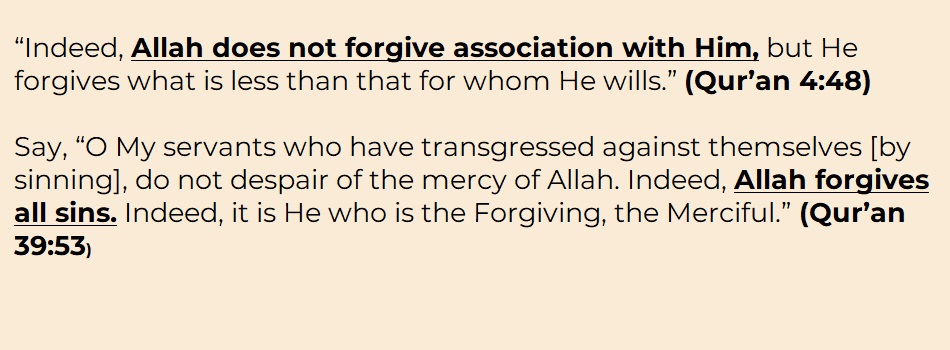
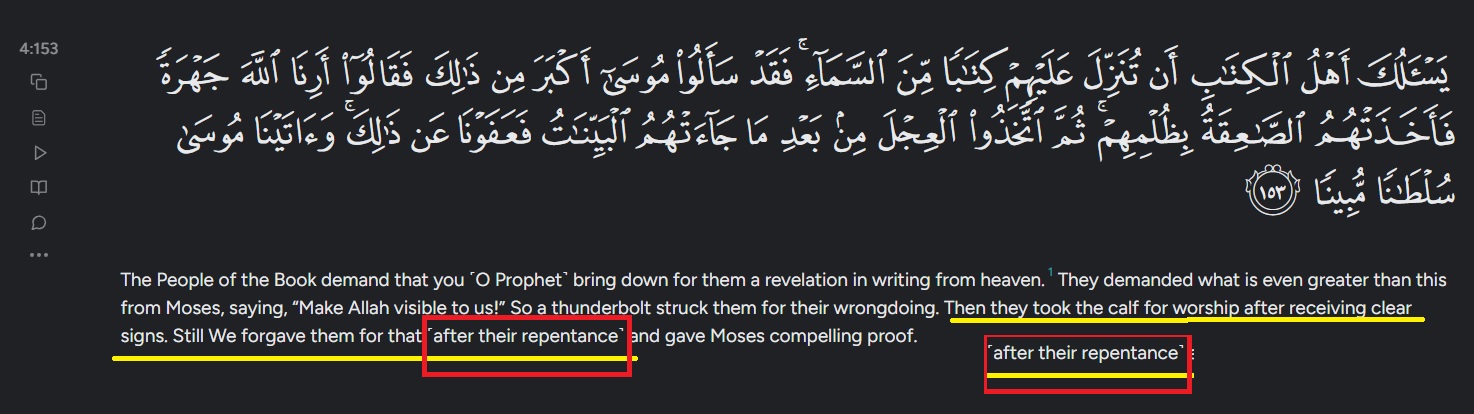


 Prima Quran