“Today those who disbelieve have lost all hope of (damaging) your faith. So, do not fear them, and fear Me. Today, I have perfected your religion for you, and have completed My blessing upon you, and chosen Islam as Dīn (religion and a way of life) for you. But whoever is compelled by extreme hunger, having no inclination towards sin, then Allah is Most-Forgiving, Very-Merciful.” (Qur’an 5:3)
﷽
“O.K. Settle down, settle down.” We are going to go about this in a very orderly manner. Which one of you is the Mahdi? Simply raise your hand!”
“EARLIER this year Iran’s authorities arrested a score of men who, in separate incidents, claimed to be the Mahdi, a sacred figure of Shia Islam, who was “hidden” by God just over a millennium ago and will return some time to conquer evil on earth.”
“A website based in Qom, Iran’s holiest city, deemed the men “deviants”, “fortune-tellers” and “petty criminals”, who were exploiting credulous Iranians for alms during the Persian new-year holiday, which fell in mid-March.”
“Many of the fake messiahs were picked up by security men in the courtyard to the mosque in Jamkaran, a village near Qom, whose reputation as the place of the awaited Mahdi’s advent has been popularized nationwide by President Mahmoud Ahmadinejad. When he took office in 2005 he gave the mosque $10m.”
“Iran’s economic doldrums may have helped to cause this surge in people claiming to be mankind’s saviour—and in women saying they were the Mahdi’s wife. “In an open atmosphere where people could criticise the government they would not believe these people,” says an ex-seminarian in Tehran, the capital, noting that most Iranians still get all of their news from state television and state-owned or -sanctioned newspapers.”
“Last year a seminary expert, Mehdi Ghafari, said that more than 3,000 fake Mahdis were in prison. Mahdi-complexes are common, says a Tehran psychiatrist. “Every month we get someone coming in, convinced he is the Mahdi,” she says. “Once a man was saying such outrageous things and talking about himself in the third person that I couldn’t help laughing. He got angry and told me I had ‘bad hijab’ and was disrespecting the ‘Imam of Time’,” as the Mahdi is known.”
“The most famous case was that of Ayatollah Boroujerdi, who was sentenced to 11 years in prison in 2007 for—among other things—claiming he was the Mahdi. Like many influential “false” messiahs, he was forced to recant on state television, confessing that he had been against the Islamic Republic’s core tenets.”
“Mr Ahmadinejad has called his administration “the government of the hidden imam”. Last month he told a batch of new Iranian ambassadors to consider themselves “envoys of the Mahdi”. After his first speech at the UN in 2005, a video circulated showing Mr Ahmadinejad telling a leading Iranian cleric that world leaders had been enchanted, during his oration, by a halo around his head that had been put there by the Mahdi himself.”
Prima-Qur’an Comments:
We have no idea where they keep all these 3000 Mahdis, but could you imagine if they were all in the same prison or same facility? Surely that would be volatile.
Say, “None in the heavens and earth knows the unseen except Allah, and they do not perceive when they will be resurrected.” (Qur’an 27:65)
﷽
A Shia scholar from the 12er Shi’i school of Islam (as opposed to the Zaydi Shia or Ismaili Shia) has made an interesting observation about the so-called ‘Mahdi’.
Mash’Allah look at this man. He certainly has the passage of time on his face. You know, as people get older they often say things that they wanted to say before but didn’t. As each of us approaches death, we become more concerned with what Allah (swt) thinks of us and less concerned with what people think of us.
Imam Muhammed Asif Muhsini said in his book “Mashra`at Bihar al-Anwar”,volume 1 page 408:
الغيبة التي امتدت أكثر من ألف سنة وربما تمتد إلى آلاف أو ملايين السنين. فإن المؤمنين لم ينتفعوا ولا ينتفعون من إمامهم الغائب – عجل الله تعالى فرجه – في الأصول والفروع ، وما يقال بخلاف ذلك فهو تخيل وتوهم ولعب بالعقول
[This Ghaybah that has taken more than a thousand years and maybe it shall keep going for thousands or millions of years. The believers living in it did not and do not benefit from their hidden Imam(may Allah hasten his appearance) in Usool or Furu`, and all else which is said is nothing but illusions and imaginations and playing with people’s minds.]
Muhammad Asif Muhsini said in the same book volume 2 page 223:
ولا يمكن القول بانتفاعنا منه عليه السلام في زمن الغيبة في الأمور الدينية إلا ممن سلب الله عقله
[It is not possible for us to say that we benefit from him (peace be upon him) in religious matters during his Ghaybah, except those whom Allah has robbed them of intellect.]
Finally, Muhammed Asif Muhsini said in footnote #1, in volume 1 page 82:
وأي فائدة لهذه الأحكام المخزونة عند الأئمة: والمكلفون يحرمون منها في أكثر من ألف سنة ولعله في ألف مليون سنة [And what benefit does this knowledge stored with Imams hold: when the Mukallafoun (Shia) are deprived of it for more than a thousand years, and maybe it’ll last for a billion years.]
So, yes, you can imagine as women get raped and murdered and children become fatherless, and mosque becomes decimated and the landfills the cup with the injustice that this so-called ‘hidden Imam’ is somewhere waiting for just the right moment………
Getting ready and prepared…………
Some time……….
Any time…..
Or maybe waiting for the Mahdi is just a waste of time.
“With the clear proofs and the Zabur. And We sent down to YOU(l-dhik’ra) the Remembrance, that YOU may make clear to the people, what has been sent down to them and that they may reflect.” (Qur’an 16:44)
“Then in the footsteps of the prophets, We sent Jesus, son of Mary, having authority over the Torah revealed before him. And We gave him the Gospel containing guidance and light and having authority over the Torah—a guide and a lesson to those who fear Allah.” (Qur’an 5:46)
And let the People of the Gospel (ahlu l-injili) judge by what Allah has revealed therein. And whoever does not judge by what Allah has revealed – then it is those who are the defiantly disobedient.” (Qur’an 5:47)
“Have you not turned Your vision to those who have been given a (nasiban) portion of the (l-kitabi) Book? They are invited to the (kitabi l-lahi) Book of Allah, to settle their dispute, but a party of them Turn back and decline.” (Qur’an 3:23)
﷽
This is a Christian polemic directed towards the Qur’an and Islam in general. The gist of the argument rests on two points.
The Qur’an tells the people of the Gospel to judge by what Allah has revealed therein, with the assumption being that the Qur’an confirms what Christians claim that Gospel is.
If the People of the Gospel do not even know what that entails, how can they judge by what Allah has revealed therein?
Several hasty conclusions are then reached.
The Gospel mentioned in the Qur’an is equal to one of the competing New Testament canons.
The Qur’an does something that Christians themselves are unable to do. Namely: The Qur’an settles the canon of the New Testament.
Alas, what the academics, historians and orientalists have discussed on the matter is rather blithe.
For example, we have not seen any academic, historian or orientalist even attempt to engage with the following questions in any meaningful way.
What might it mean for the Qur’an to tell a people that are primarily illiterate, to ‘judge by what Allah has revealed there’?
Taking for granted that today Christians go door to door, with a particular New Testament canon in possession, what might it mean for the Qur’an to tell a people who did not have in their possession personal copies of manuscripts to judge by what Allah has revealed?
Even if we assumed that the ‘People of the Gospel’ were all literate and had some type of canon in their possession, their approach was not to go directly to the text. For many Christians of that time, they believed it was the Church that guided, and not the text.
Even if we assumed that the ‘People of the Gospel’ were all literate, and they had some type of canon in their possession, why is it assumed they were all polyglots? Meaning, that they themselves would even understand the language of the particular text?
This is why we have not been amused by the scholarship on this issue. It surprisingly does not engage with key points.
So let us flesh out these points.
The first point. The vast majority of people were unlettered. A polite way of saying illiterate.
“Among them are unlettered (ummiyuna) folk who know (l-kitaba)the book not except from hearsay. They but guess.” (Qur’an 2:78)
“It is He who has sent among the unlettered (l-umiyina) a Messenger from themselves reciting to them His verses and purifying them and teaching them the Book (l-kitaba)and wisdom – although they were before in clear error .” (Qur’an 62:2)
You are not going to find among the beliefs of the Muslims any notion that the Blessed Prophet (saw) himself, being unlettered, is now teaching unlettered people how to read and write a book.
“Among them are unlettered (ummiyuna) folk who know (l-kitaba)the book not except from hearsay. They but guess.” (Qur’an 2:78)
How might the following verse in Qur’an 5:47 engage illiterate people in any meaningful way?
The second point.
Today we take for granted that we can go to a hotel and, more often than not, find the Gideon’s Bible in the top drawer next to the bed. Missionaries knock on your door, and surprise, surprise, they have in their hands an entire biblical canon! Something the vast majority of Christians that have lived on this planet in the past have never held in their hands even once!
Let us repeat this astonishing fact! The vast majority of Christians on this planet in the past never held a biblical canon in their hands, not even once!
When did paper reach the Muslim world? How many sheep had to be slaughtered to obtain their shoulder blades to copy down parchments to compile books was a huge project.
The Gutenberg Bible
In Mainz, Germany, in the mid-1450s, Johann Gutenberg and his partner Johann Fust published more than 150 large-format copies of the Bible in Latin. This is the book known today as the Gutenberg Bible. That was in the 1450s, and there were 150 copies.
Up until that point, imagine all the Christian souls scattered throughout the Earth; they lived and died without once having or holding an individual Bible in their possession. Hopefully, some Christians will be more appreciative of this fact.
In fact, Christians, if anything, would have religious relics or crosses. That did not rely upon the Bible to receive their guidance. They relied upon their respective church, whether it was the Latin Roman Catholic or any competing denomination between Oriental or Eastern Orthodox Churches, Syriac, and so forth. The Church, and not scripture, was the source of guidance and inspiration for the average Christian.
So knowing that having in one’s personal possession the New Testament canon is a very recent phenomenon, how might the following verse engage them in any meaningful way?
How might the following verse in Qur’an 5:47 engage people not in possession of any manuscripts in a meaningful way?
Third point. Let us take a trip down fantasy land for a moment. A complete hypothetical.
Even if the ‘People of the Gospel’ were 100% lettered, literate, and let us assume that each of them even had (any one of many competing) New Testament canons in their possession, they still would not go directly to the text.
Because, as we said before, and we will say again: The Church, and not scripture, was the source of guidance and inspiration for the average Christian.
This idea of approaching the text directly is a very modern Protestant-fueled approach. Fueled in part by translating one of the (many competing) New Testament canons into the vernacular of local people.
“Indeed, We revealed the taurat (l-tawrāta), containing guidance and light, by which the prophets, who submitted themselves to Allah, made judgments for Jews. So too did the rabbis and scholars judge according to (kitabi l-lahi) the Book of Allah, with which they were entrusted and of which they were made keepers. So do not fear the people; fear Me! Nor trade my revelations for a fleeting gain. And those who do not judge by what Allah has revealed are the disbelievers.” (Qur’an 5:44)
Prophets Judged. After the Prophet’s death, people are judged by the rabbis and authorities of their respective faiths. We see the same in the Qur’an in regard to Islam itself. Albeit here something novel is introduced due to the nature of the Qur’an.
“O you who have believed, obey Allah and obey the Messenger and those in authority among you. And if you disagree over anything, refer it to Allah and the Messenger, if you should believe in Allah and the Last Day. That is the best [way] and best in the result.” (Qur’an 4:59)
Here the idea is introduced that the believers, if they differ with the people in authority over them, are to take it back to Allah (the revelation of the Qur’an) and the Prophet (his transmitted Sunnah).
Why is this? Because this is a faith in which its sources are being made publicly available and accessible to all! We will come back to this very important point.
And let the People of the Gospel (ahlu l-injili) judge by what Allah has revealed therein. And whoever does not judge by what Allah has revealed – then it is those who are the defiantly disobedient.” (Qur’an 5:47)
How might the following verse in Qur’an 5:47 engage people who are reliant upon a scholastic class or clergy to guide them? In fact, which “People of the Gospel” are even being addressed?
Fourth point. Even if the ‘People of the Gospel’ were 100% lettered, literate, and let us assume that each of them even had (any one of many competing) New Testament canons in their possession. Why assume they could read the particular language of the documents in their possession?
Depending on the type of Christian community, they spoke an array of languages, such as: Coptic, Aramaic, Greek, Amharic, Ge’ez, Sabaean.
So, even if we were to suspend belief and go out on a far-reaching limb and assert a 100% literacy rate, and 100% possession of some type of canon, why is it assumed that the document in their possession would be in a language that everyone else could access?
Our response effectively dismantles the ‘Islamic Dilemma’ by arguing that the polemic commits several historical and contextual errors:
Anachronism: It projects modern realities (universal literacy, personal ownership of Bibles, Protestant sola scriptura) onto 7th-century Christian communities.
Ignorance of Historical Context: It fails to consider the oral, communal, and clerical nature of religious authority in most historical Christian traditions.
We have established three key points.
Illiteracy and Lack of Access to Texts We have correctly noted that the vast majority of people in the 7th century, including Christians, were illiterate (“ummi”). They did not have personal copies of scriptures. Religious knowledge was mediated through clergy, oral tradition, and liturgical practice. The Qur’anic command to “judge by what is within it” is not a command for every individual Christian to personally read a codex but a directive to their religious leaders (rabbis, priests, scholars) to make assessments on the data available to them. This is parallel to the command for Jews to judge by the Torah (5:43) and for Muslims to obey Allah and the Messenger (4:59).
Religious Authority: Church vs. Text We astutely observed that for most historical Christians (Catholic, Orthodox, Oriental), religious authority resided in the Church and its tradition, not in a personally accessible text. The idea of individuals judging directly by scripture is a Protestant innovation. The Qur’anic command is thus aimed at the religious authorities (“rabbaniyyun” and “ahbar”) who were entrusted with preserving and teaching the revelation (5:44). Their failure to do so is a central Qur’anic critique (5:63, 9:31, 9:34).
Linguistic Barriers Even if a Christian community possessed scriptures, they were often in languages (Greek, Syriac, Coptic) not understood by the laity. The Qur’an, in contrast, was revealed in the vernacular Arabic of its audience and was memorized and transmitted orally, making it immediately accessible to all, literate or not.
Elaboration upon the first point.
The example of the Blessed Prophet (saw).
“If you are in doubt about what We have revealed to you, then ask those who are (yaqrauna l-kitaba (reading the Book). “The truth has certainly come to you from your Lord, so do not be one of those who doubt it.” (Qur’an 10:94)
If you doubt what is revealed to you (the context indicates what has been revealed about Moses), then ask (which is not him reading a text but consulting those who claim to have a revealed revelation)
The Prophet (saw) was not in doubt, as Allah (swt) says: “The Truth has certainly come to you from your Lord, so do not be one of those who doubt.”
Say, “Have you considered if the Qur’an was from Allah, and you disbelieved it while a witness from the Children of Israel has testified to something similar and believed that you were arrogant… ?” Indeed, Allah does not guide people who are constant in wrongdoing.“ (Qur’an 46:10)
“We did not send before you except mere men inspired by Us. So ask the (ahla l-dhik’ri) people of the reminder if you do not know.” (Qur’an 16:43)
“And We sent no messenger before you, but that they were men unto whom We revealed. So ask the people of the Reminder (ahla l-dhik’ri), if you know not.” (Qur’an 21:7)
Prima Qur’an comments: As we can see, the Blessed Prophet (saw) was informed to ask not to read.
So what is being said is to go and ask for a person to weigh the arguments not as much as examine textual evidence. Something the vast majority would not have access to any way.(textual evidence)
The question is: how many are in a similar situation?
Again, people who do not read and write?
Let us take a moment to ask a few more questions.
How would a Muslim or a Christian convey the message of their faith to a person who could not read, not because they were illiterate, but because they were physically blind?
How would a Muslim or a Christian convey the message of their faith to a person who was physically deaf?
Some insightful statements in the Qur’an in regard to the Jewish and Christian communities.
A)The Qur’an acknowledges schisms and sectarianism among the Jewish and Christian communities.
B)The Qur’an acknowledges that the Christians forgot a portion of what they were reminded of. This is a reference to the oral transmission of the Injeel (Gospel), as their community was given no other reminder but that.
“And the Jews say, “The hand of Allah is chained.” Chained are their hands, and cursed are they for what they say. Rather, both His hands are extended; He spends however He wills. And that which has been revealed to you from your Lord will surely increase many of them in transgression and disbelief. And We have cast among them animosity and hatred until the Day of Resurrection. ” (Qur’an 5:64)
“And from those who say, “We are Christians” We took their covenant; but they forgot (fanasu) a portion of that of which they were reminded (dhukkiru).So We caused among them animosity and hatred until the Day of Resurrection. And Allah is going to inform them about what they used to do.” (Qur’an 5:14)
C)The Qur’an charges oral corruption of the previous revelation.
“So for their breaking of the covenant, We cursed them and made their hearts hard. They distort (yuḥarrifūna) words upon delivery (mawāḍiʿihi) and have forgotten(wanasu) a portion of that of which they were(dhukkiru) reminded. And you will still observe deceit among them, except a few of them. But pardon them and overlook [their misdeeds]. Indeed, Allah loves the doers of good.” (Qur’an 5:13)
“Have you any hope that they will be true to you when a party of them used to listen(yasma’una) to the word of Allah, then used to (yuharrifunahu)change it, after they had understood(‘aqaluhu) it, knowingly.” (Qur’an 2:75)
This verse is quite explicit in the damnation of these people. That they actually would listen to the words of Allah (auditory hearing), they understood it, confirmed it and knowingly changed it -during the oral transmission process!
Received the revelation from Allah.
Understood it.
Knowingly distorted it–during the oral transmission process.
Notice in the above text (Qur’an 5:13 & 5:14) were reminded (dhukkiru)–past tense.
Whereas the Qur’an:
“Surely We have revealed the Reminder (l-dhik’ra) and We will most surely be its (lahafizuna) guardian.”
Whereas it has to be remembered that these (ahla l-dhik’ri) -people of the reminder “have forgotten(wanasu) a portion of that of which they were(dhukkiru) reminded.” (Qur’an 5:13)
Analyzing (Qur’an 5:63-68)
“Why do their rabbis and (ahbaru)scholars not forbid them from saying what is sinful and consuming what is unlawful? Evil indeed is their inaction! The Jews said, “Allah’s hands are tied.” May their fists be tied, and they be condemned for what they said. Rather, He is open-handed, giving freely as He pleases. That which has been revealed to you from your Lord will only cause many of them to increase in wickedness and disbelief. We have stirred among them hostility and hatred until the Day of Judgment. Whenever they kindle the fire of war, Allah puts it out. And they strive to spread corruption in the land. And Allah does not like corruptors. Had the People of the Book only been faithful and mindful, We would have certainly absolved them of their sins and admitted them into the Gardens of Bliss. And had they observed the Torah, the Gospel, and what has been revealed to them from their Lord, they would have been overwhelmed with provisions from above and below. Some among them are upright, yet many do nothing but evil. O Messenger! Convey everything revealed to you from your Lord. If you do not, then you have not delivered His message. Allah will protect you from the people. Indeed, Allah does not guide people who disbelieve. Say, “O People of the Book! You have nothing to stand on unless you observe the Torah, the Gospel, and what has been revealed to you from your Lord.” And your Lord’s revelation to you will only cause many of them to increase in wickedness and disbelief. So do not grieve for the people who disbelieve.” (Qur’an 5:63-68)
The Rabbis and learned people do not forbid them from saying what is sinful and consuming what is unlawful.
The People of the Book are not faithful and mindful.
The People of the Book do not observe the Torah and the Gospel and what has been revealed to them from their Lord.
The People of the Book do not stand upon anything until they observe the Torah, the Gospel and what has been revealed to you from your Lord.
You are the best community ever raised for humanity—you encourage good, forbid evil, and believe in Allah. Had the People of the Book believed, it would have been better for them. Some of them are faithful, but most are rebellious. They can never inflict harm on you, except a little annoyance. But if they meet you in battle, they will flee and they will have no helpers. They will be stricken with disgrace wherever they go, unless they are protected by a covenant with Allah or a treaty with the people. They have invited the displeasure of Allah and have been branded with misery for rejecting Allah’s revelations and murdering prophets unjustly. This is because of their disobedience and violations. Yet they are not all alike: there are some among the People of the Book who are upright, who recite Allah’s revelations throughout the night in prostration. They believe in Allah and the Last Day, encourage good and forbid evil, and race with one another in doing good. They are ˹truly˺ among the righteous.” (Qur’an 3:110-114)
Muslims are the best community for humankind. No need to follow another community.
Most of the People of the Book are rebellious.
The People of the Book earn Allah’s displeasure for rejecting his revelations and murdering the Prophets.
Point 3 points to the People of the Book in the above context, as being the Children of Israel or the Jews.
Among the People of the Book (in this context the Children of Israel) are the upright.
They recite/recall/remember Allah’s ayats (rather, revelations, or miracles) throughout the night while in prostration.
Point 3 is interesting because it shows the particular people of the book here cannot be Christians. The Christians had two Prophets. Their prophets were Jesus and John. It is not said that Christians murdered their Prophets.
Point 6 is interesting because it points to the practice of these particular Jews (Children of Israel) making prostrations in their prayer.
This is common among Yemeni Jews as well as Karaties. Their name comes from the Hebrew word qara ‘to read’.
“And verily we have written in the Zabur, after the Reminder (l-dhik’ri): My righteous slaves will inherit the earth.” (Qur’an 21:105)
“We did not send before you except mere men inspired by Us. So ask the (ahla l-dhik’ri) people of the reminder if you do not know.” (Qur’an 16:43)
“With the clear proofs and the Zabur. And We sent down to YOU(l-dhik’ra) the Remembrance, that YOU may make clear to the people, what has been sent down to them and that they may reflect.” (Qur’an 16:44)
If what was with them had provided clarity, they would not need it clarified by the Blessed Prophet (saw).
If the Qur’an itself is in need of an expositor, and an interpreter, what makes one think that the Torah, the Zabur, or the Injeel would not need one? That they are standalone texts? Not even the traditional Jews or the traditional Christians believe this!
In fact, not until the rise of Protestantism, (and in part due to direct access to translations and a rise in literacy rates), did Christians even think it feasible to even approach the text directly.
One of the myriad of problems that Latin Roman Catholics, Oriental Orthodox, and Eastern Orthodox Christians, point out concerning the Protestant tradition is the doctrine of perspicuity. A doctrine also known as the doctrine of clarity.
Interestingly enough, it is this very issue that Muslims have with the Hafs Only Qur’an Religion, which claims each individual can approach the Qur’an directly.
“And obey Allah and obey the Messenger. But if you turn away, then Our Messenger is responsible only for conveying the message (l-balaghu) clearly (l-mubina). (Quran 64:12)
“But if you turn away [Prophet], remember that you are only conveying this message clearly.” (Qur’an 16:82)
So the point stands. If the Qur’an itself is in need of an expositor and an interpreter, what makes one think that the Torah, the Zabur or the Injeel would not need one?
“The Jews say, “The Christians have nothing to stand on,” and the Christians say, “The Jews have nothing to stand on.'” Although they (yatluna l-kitaba (recite the book)) recite the Scripture. The ignorant ones say the same thing. But Allah will judge between them on the Day of Resurrection concerning that over which they used to differ.” (Qur’an 2:113)
The group of Christians in the above text are very likely to be the sect of Marcion. The sect of Marcion is the one most likely to the Jews that ‘they have nothing to stand upon.‘
Marcion developed the first Christian New Testament canon, consisting of 11 books. Many believe that Marcion is the source for what is now called ‘The Gospel according to Luke.’.
That being said, when we look at the above text (Qur’an 2:113), it makes absolute sense for the Jews to say that the Christians do not stand on anything. This is given that Christian tradition has had to distort and deliberately alter Hebrew scriptures to justify many of its proof texts. Whereas it is difficult for Christians to say that the Jews stand on nothing, given that most Christians acknowledge a shared canon with the Jews. The exception here is the followers of Marcion.
In reality Jewish and Christian lay people do not go directly to their revelations.
Because a great many of them are illiterate.
Many of them simply did not have access to their sacred writings to begin with.
Those that could read or had access to some manuscripts may not have understood the language of the source material.
D) The Qur’an speaks about the learned people of the Jews and Christians.
“Why do the rabbis (l-rabaniyuna) and religious scholars (ahbaru) not forbid them from saying what is sinful and devouring what is unlawful? How wretched is what they have been practicing.” (Qur’an 5:63)
“They have taken their scholars (ahbarahum) and (warhu’banahum) monks as lords besides Allah , and [also] the Messiah, the son of Mary. And they were not commanded except to worship one Allah; there is no deity except Him. Exalted is He above whatever they associate with Him.” (Qur’an 9:31)
“O you who have believed, indeed, many of the scholars (ahbari) and the monks (walruh’bani) devour the wealth of people unjustly and avert [them] from the way of Allah. And those who hoard gold and silver and spend it not in the way of Allah – give them tidings of a painful punishment.” (Qur’an 9:34)
“You will surely find the most bitter towards the believers to be the Jews and polytheists and the most gracious to be those who call themselves Christian. That is because there are (qissisina) priests and monks (waruh’banam) among them and because they are not arrogant. When they listen to what has been revealed to the Messenger, you see their eyes overflowing with tears by recognizing the truth. They say, “Our Lord! We believe, so count us among the witnesses.” (Qur’an 5:82-83)
The crucial verses.
“Indeed, We revealed the Torah, containing guidance and light, by which the prophets, who submitted themselves to Allah, made judgments for Jews. So too did the rabbis (rabaniyuna) and scholars (ahbaru) judge according to (kitabi l-lahi) the Book of Allah, with which they were entrusted and of which they were made keepers. So do not fear the people; fear Me! Nor trade my revelations for a fleeting gain. And those who do not judge by what Allah has revealed are the disbelievers.” (Qur’an 5:44)
From the above we understand that the Prophets judged by the Torah.
The rabbis and learned people also judged according to the book of Allah.
“But why do they come to you for judgment when they have the Torah containing Allah’s judgment, then they turn away after all? They are not believers.” (Qur’an 5:43)
What are the Jews being told to judge by?
The Jewish people are told to judge by the book of Allah (in this case, the Torah)
There is no internal evidence to suggest the people of the Torah are the laity.
This is not a command for the laity to directly approach the text. That is because they turn to their learned people.
Allah (swt) has told us concerning their learned people the following:
a) They devour the wealth of people unjustly.
b) They do not forbid saying what is sinful
c) Devouring the unlawful.
What are the People of the Gospel being told to judge by?
“Then in the footsteps of the prophets, We sent Jesus, son of Mary, having authority over the Torah revealed before him. And We gave him the Gospel containing guidance and light and having authority over the Torah—a guide and a lesson to those who fear Allah.” And let the People of the Gospel (ahlu l-injili)judge by what Allah has revealed therein. And whoever does not judge by what Allah has revealed – then it is those who are the defiantly disobedient.” (Qur’an 5:46-47)
Let us establish a few key points from the above text.
There is no internal evidence to suggest the people of the Gospel are the laity.
The wording of the text asks the People of the Gospel to judge by what Allah has revealed ‘therein’
Allah (swt) has told us concerning their learned people the following:
a) They devour the wealth of people unjustly.
Ultimately in either scenario Allah (swt) tells the People of the Book:
“Say, “O People of the Book! You have nothing to stand on unless you observe the Torah, the Gospel, and what has been revealed to you from your Lord.” (Qur’an 5:68)
How is this done?
“With the clear proofs and the Zabur. And We sent down to YOU(l-dhik’ra) the Remembrance, that YOU may make clear to the people,what has been sent down to them and that they may reflect.” (Qur’an 16:44)
That YOU may make clear to the people.
Just as Jesus (as) was the authority during his time:
“And will make him a messenger unto the Children of Israel, (saying): Lo! I come unto you with a sign from your Lord. Lo! I fashion for you out of clay the likeness of a bird, and I breathe into it and it is a bird, by Allah’s leave. I heal him who was born blind, and the leper, and I raise the dead, by Allah’s leave. And I announce unto you what you eat and what you store up in your houses. Lo! herein verily is a portent for you, if ye are to be believers.” (Qur’an 3:49)
“And I will confirm the Torah revealed before me and legalize some of what had been forbidden to you. I have come to you with a sign from your Lord, so be mindful of Allah and obey me.” (Qur’an 3:50)
The Qur’an is internally consistent with itself in saying that the Messenger of the time has power and authority over what came before it. Jesus (as) having power and authority over what came before him, the Torah, the Zabur. In fact, as we will see, the New Testament has Jesus quote a Torah that the Jews do not have in their possession!
Thus, the bulk of the Christians could not read. Did not have any access to their text, those that were literate often could not read the language their manuscripts were written in. These, the bulk of Christians had to rely upon introspection and self-reflection.
This argument is common sense and self-evident.
Islam has no veneration of monks. The Prophet is not worshiped. We go to Allah directly. Direct access to the revelation. The literate and illiterate had direct access to the Qur’an via oral preservation and transmission. Direct encouragement to learn this revelation. A religion in which women have direct access to this revelation. The example of the Blessed Prophet (saw) himself. Jesus is like Adam. Jesus is the created word of Allah.
What about the learned Christians?
Those that could read.
Those that would have access to some type of sacred text.
Those that could read the respective languages?
What would the learned Christians find when they reflect upon their sacred text?
This would all depend upon the type or sect of Christianity interacting with Islam.
For example, how would Christians who identified with the teachings of Marcion interact with the following verse of the Qur’an?
“On the Day the earth will be replaced by another earth, and the heavens [as well], and all creatures will come out before Allah, the One, the Prevailing.” (Qur’an 14:48)
The Marcionites were not known to either contain or believe in 2 Peter or Revelation.
Let us say we stick with the Canon most Christian sects today believe in. That is 27 book New Testament canon as opposed to only 22 or 35 books of other Christian sects.
What does the learned Christian find?
The learned Christian is shocked to find just how Jesus-Less the New Testament is as a whole.
Next, you have to take into account that according to the document of the New Testament (27-book canon and not the 22-book New Testament or the 35-book New Testament that rival Christians hold as canon), the actual number of words attributed to Christ Jesus is (once you exclude the duplication of Jesus’s speeches in the four accepted gospels) the total number of words spoken by Jesus is 31,426.
So we have about 4 hours of reading the words attributed to Jesus.
If we are to grant a 27 NT Canon as opposed to the 22 or 35 book New Testaments that were in dispute among Christians in the time of the Blessed Prophet (saw). 19/27 have absolutely no words of Jesus in them at all! 70.67% of the New Testament has nothing attributed to Jesus!!
1 and 2 Corinthians, two other books have two passages ascribed to Jesus:
1 Cor 11:24 & 2 Cor 12:9 The rest of these two letters is nothing.
This means only the Four traditional Gospels, the Apocalypse of John, and the book of Acts are the the only NT books that have words attributed to Jesus in them! (other than the 2 Corinthians citations) Most Christians do not stop to think about this!
The following books from a 27-book New Testament canon have absolutely no words of Jesus in them at all.
Romans (no words of Jesus at all) Galatians (no words of Jesus at all) Colossians (no words of Jesus at all) 1 Timothy (no words of Jesus at all) 2 Timothy (no words of Jesus at all) Ephesians (no words of Jesus at all) Philippians (no words of Jesus at all) 1 Thessalonians (no words of Jesus at all) 2 Thessalonians (no words of Jesus at all) Hebrews (no words of Jesus at all) James (no words of Jesus at all) Titus (no words of Jesus at all) Philemon (no words of Jesus at all) 1 John (no words of Jesus at all) 2 John (no words of Jesus at all) 3 John (no words of Jesus at all) Jude (no words of Jesus at all) 1 Peter (no words of Jesus at all) 2 Peter (no words of Jesus at all)
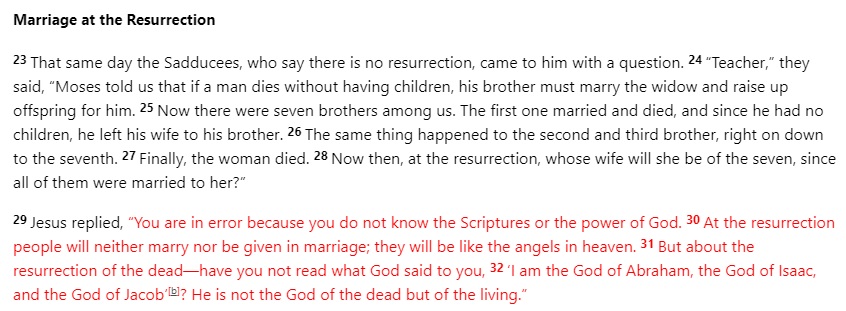
1 Corinthians “And when he had given thanks, he broke it, and said, “Take, eat: this is my body, which is broken for you: this do in remembrance of me.” After the same manner he also took the cup, when he had supped, saying, This cup is the New Testament in my blood: this do ye, as oft as ye drink it, in remembrance of me.” (1 Corinthians 11:24-25)
2 Corinthians “And he said unto me, My grace is sufficient for thee: for my strength is made perfect in weakness. Most gladly, therefore, will I rather glory in my infirmities, that the power of Christ may rest upon me.” (2 Corinthians 12:9)
The other thing that the learned Christian would find is that of the four books that are given the title: The Gospel. According to Matthew, Mark, Luke and John that the book of John does not contain the word Gospel in it at all!
The learned Christian would find that the gospel was something Jesus preached. That the times the Christian canon do refer to the Gospel of Jesus, it is referenced as a sort of vague revelation concerning the coming of the kingdom. The Gospel was certainly not some biography about the life of Jesus written after him.
“And he went throughout all Galilee, teaching in their synagogues and proclaiming the gospel of the kingdom and healing every disease and every affliction among the people.” (Matthew 4:23)
“And saying, ‘The time is fulfilled, and the kingdom of God is at hand; repent and believe in the gospel.” (Mark 1:15)
“One day, as Jesus was teaching the people in the temple and preaching the gospel, the chief priests and the scribes with the elders came up.” (Luke 20:1)
The learned Christian might be startled to find that the New Testament speaks about rival gospels!
“For if he that comes preach another Jesus, whom we have not preached, or if you receive another spirit, which you have not received, or another (εὐαγγέλιον) gospel, which you have not accepted, you might well bear with him.” (2 Corinthians 11:4)
“I marvel that ye are so soon removed from him that called you into the grace of Christ unto another(εὐαγγέλιον) gospel.” (Galatians 1:6)
“But though we, or an angel (ἄγγελος) from heaven, preach any other gospel (εὐαγγελίζηται) unto you than that which we have preached unto you, let him be accursed. As we said before, so say I now again, If any man preach any other gospel (εὐαγγελίζεται) unto you than that you have received, let him be accursed.” (Galatians 1:8-9)
The learned Christian finds out that not everything Paul wrote was inspired and if it was, it was not preserved!
“I wrote unto you in an EPISTLE not to accompany fornicators:” (1 Corinthians 5:9)
Prima Qur’an Comment: Well, if everything Paul wrote was inspired by God, then where is this epistle at? By the way, this is 1st Corinthians, not 2nd Corinthians.
The learned Christian finds out that not everything that is called Scripture has been preserved.
“Or do you suppose it is in vain that the SCRIPTURE says, “He yearns jealously over the spirit which he has made to dwell in us”? (James 4:5)
Where is the Scripture that this quote comes from? So does the Bible contain all of God’s scripture or not?
The learned Christian finds out that the New Testament informs us that Jesus said things that are not recorded at all!
“After three days, they found him in the temple courts, sitting among the teachers, listening to them and asking them questions.” (Luke 2:46)
Those questions are not recorded.
The learned Christian (those whose churches accept the book of Revelation as canonical) would read Revelation chapters 2 and 3 and wonder what happened to the 7 lost letters to the Churches apparently authorized by Jesus to the angels?
The learned Christian finds there is not a shred of historical data outside this dream of John, where in these letters were written to any Churches!
The learned Christian finds that his New Testament quotes a Torah that no one had in possession at the time of Jesus until today.
“To this day, I have had the help that comes from God, and so I stand here testifying both to the small and great, saying nothing but what the prophets and Moses said would come to pass: that Christ must suffer and that, by being the first to rise from the dead, he would proclaim light both to our people and to the Gentiles.” (Acts 26:22-23)
The learned Christian finds that there are three claims which Paul says Moses and the prophets made:
Christ must suffer.
Christ would be the first to rise from the dead.
Christ would proclaim light both to the Jews and to the Gentiles.
The learned Christian will find that Moses made no such claims.
The learned Christian will find the New Testament having Jesus quote from a TNCH that did not exist in the time of Jesus nor exist today.
“He went to Nazareth, where he had been brought up, and on the Sabbath day he went into the synagogue, as was his custom. He stood up to read, and the scroll of the prophet Isaiah was handed to him. Unrolling it, he found the place where it is written: “The Spirit of the Lord is on me, because he has anointed me to proclaim good news to the poor.” He has sent me to proclaim freedom for the prisoners and recovery of sight for the blind, to set the oppressed free, to proclaim the year of the Lord’s favour.” (Luke 4:16-19)
“And the scroll of the prophet Isaiah was handed to him.”
“The Spirit of the Lord is on me, because he has anointed me to proclaim good news to the poor. He has sent me to proclaim freedom for the prisoners and recovery of sight for the blind, to set the oppressed free, to proclaim the year of the Lord’s favour.”
So when we go to this Latin Roman Catholic website here:
The footnote says: [6] Is. 61.1, 2. So, this means this text from Isaiah that Jesus is allegedly reading is Isaiah 61:1-2 right?
So when I check this against the Septuagint 2.0(The Holy Spirit’s Fav Version)
I find the following: “The Spirit of the Lord is upon me, because he has anointed me; he has sent me to preach glad tidings to the poor, to heal the broken in heart, to proclaim liberty to the captives, and recovery of sight to the blind; to declare the acceptable year of the Lord, and the day of recompense; to comfort all that mourn (Isaiah 61:1-2 Septuagint 2.0)
But wait a minute! Hold up! It says: ” He stood up to read, and the scroll of the prophet Isaiah was handed to him. Unrolling it, he found the place where it is written…”
Here is the rub: Jesus was not reading from the Septuagint 2.0 It says he was reading from the scroll! What would the Hebrew Isaiah 61 look like?
The spirit of the Lord God was upon me, since the Lord anointed me to bring tidings to the humble, He sent me to bind up the broken-hearted, to declare freedom for the captives, and for the prisoners to free from captivity. To declare a year of acceptance for the Lord and a day of vengeance for our God, to console all mourners. (Isaiah 61:1-2)
“The spirit of my Sovereign GOD is upon me, because God has anointed me. I have been sent as a herald of joy to the humble, To bind up the wounded of heart, To proclaim release to the captives, Liberation to the imprisoned; To proclaim a year of GOD’s favor And a day of vindication by our God; To comfort all who mourn.” (Isaiah 61:1-2)
“To give sight to the blind” That is no where there!
So are the Eastern Orthodox, Oriental Orthodox, Latin Roman Catholics and Protestants justified to maliciously tamper with the text like this? Do they have the right to alter God’s words?
The Learned Christian will discover the malicious tampering of Habakkuk 2:4 by the Christians.
“Behold, it is puffed up-his soul is not upright within him, but the righteous shall live by his faith.” (Habakkuk 2:4)
Another manipulation by Paul.
“Clearly no one who relies on the law is justified before God, because “the righteous will live by faith.” (Galatians 3:11)
“For in the gospel the righteousness of God is revealed—a righteousness that is by faith from first to last, just as it is written: “The righteous will live by faith.” (Romans 1:17)
Christians are fine with this! Because they are a people who are not sincere and do not mind if God’s scriptures are contorted and manipulated.
The Learned Christian discovers that an anonymous New Testament book alters the words of Jeremiah! Do keep in mind this depends on whether that particular learned Christian accepted Hebrews as canonical.
An Anonymous New Testament Book Alters the Words of Jeremiah!
The Book of Hebrews-according to church tradition, is ascribed to Paul. However, today, modern Christian scholarship has walked away from this claim.
Nonetheless, why would Christians trust a book by an anonymous author that deliberately and maliciously misquotes the Jewish Scriptures?
“It will not be like the covenant which I made with their fathers, on the day when I took them by the hand, to rescue them from Egypt; that they should break my covenant, and I (says the Lord) should abandon them.” (Hebrews 8:9)
Footnote states: [4] vv. 8 and the following: Jer. 31.31.
“It will not be like the covenant which I made with their fathers, on the day when I took them by the hand, to rescue them from Egypt; that they should break my covenant, and I, all the while, their master, the Lord says.” (Jeremiah 31:32)
Jeremiah 31:31 in the Hebrew TNCH (Jeremiah 31:32 in the Christian Bible)
“Not like the covenant that I formed with their forefathers on the day I took them by the hand to take them out of the land of Egypt, that they broke My covenant, although I was a lord over them, says the Lord.” (Jeremiah 31:31)
“It will not be like the covenant I made with their ancestors, when I took them by the hand to lead them out of the land of Egypt, a covenant that they broke, though I espoused them—declares GOD.” (Jeremiah 31:31)
The deliberate and malicious changes to the text are obvious to all those who do not have a veil over their eyes.
A huge difference between saying God abandoned his people or simply disregarded them and saying that God was like a husband or espoused or a watchful master/lord over them.
The learned Christian will find when reading the New Testament the claim that the (New Testament) itself is not the ultimate arbiter of truth for the Christian.
“But when he, the Spirit of truth, comes, he will guide you into all the truth. He will not speak on his own; he will speak only what he hears, and he will tell you what is yet to come.” (John 16:13)
The learned Christian will find the claim that Jesus tells them the scriptures are not what gives eternal life, but contrary to this, the scriptures speak of one to come who has authority.
“You study the Scriptures diligently because you think that in them, you have eternal life. These are the very Scriptures that testify about me, yet you refuse to come to me to have life.” (John 5: 39-40)
The learned Christian will find the claim that Jesus tells the crowds not to turn to the Torah for guidance but to listen to the teachers of the law, and obey all that they tell you. They are the ones who teach and inform the masses.
“Then Jesus said to the crowds and to his disciples: “The teachers of the law and the Pharisees sit in Moses’ seat. So you must be careful to do everything they tell you. “But do not do what they do, for they do not practice what they preach.” (Matthew 23:1-3)
The average Christian, the vast majority of whom would not even be able to read their sacred sources, much less have access to them. The vast majority of Christians do not believe their sacred sources guide them; rather, they believe their respective Church or Bishops guide them. Such people certainly do not have any recourse to any injeel. They would instead rely upon the merits of the propositions, positions and the arguments of each faith community.
When they hear the verse recited: “And let the People of the Gospel (ahlu l-injili) judge by what Allah has revealed therein.” It can come across as a taunt to them. A powerful-in-the face reminder that they have no access to their Injil; whereas the Muslim, poor and powerful, man and woman, slave and free person all have direct access to their revelation.
Likewise, the learned Christian can also perceive the verse as a taunt when they too realize they are not in possession of a revelation of Christ Jesus, but rather biographies concerning him. The learned Christian watches in breath-taking amazement as revelation is revealed in real time to the Blessed Prophet Muhammed (saw).
Lastly, the so-called “Islamic Dilemma” has become a huge Christian Dilemma. Why is that?
The Christians are arguing against what they believe is an argument of Jesus for his (Jesus) being authentic!
How?
“If Satan drives out Satan, he is divided against himself. “How then will his kingdom stand?” (Matthew 12:26)
Christians claim that the Qur’an is from Satan. So why would Satan want people to go back to the Bible as evidence or source of truth?
Thus, Christian claims become a huge dilemma for them.
In summary: Let the People of The Gospel Judge. Where is the Injeel?
Key Points of Our Critique
The Nature of “Injeel” in the Qur’an The Qur’anic concept of “Injeel” is not synonymous with the New Testament canon. It refers to the divine revelation given to Jesus, which was likely an oral message (a “Reminder” or dhikr), not a written biography. The Qur’an (5:14) states that Christians “forgot a portion of that which they were reminded of,” indicating an oral tradition that was corrupted or neglected over time. The demand to judge by the Injeel is a call to return to the core, uncorrupted message of Jesus, which the Qur’an claims to confirm and restore.
The Qur’an as Clarifier and Restorer The Qur’an positions itself as the “Dhikr” (Reminder) that clarifies previous revelations (16:44). It does not assume that Jews and Christians have perfectly preserved, accessible texts. Instead, it calls them back to the original teachings of their prophets, which the Qur’an itself confirms and elucidates. The command to “judge by what Allah has revealed” is a call to ethical and theological consistency with the original revelation, which the Qur’an claims to represent authentically.
The Christian Dilemma We turn the tables on the polemic by invoking the Christian argument that the Qur’an must be from Satan. If that were true, why would “Satan” command people to judge by the Bible, which would ultimately lead them to reject Satan? This creates a logical inconsistency for the Christian critic.
Our analysis successfully argues that the Christian polemic is based on a fundamental misunderstanding of both history and the Qur’an’s own claims. The Qur’an is not attempting to “settle the New Testament canon” for Christians. It is making a theological and ethical challenge to Christian communities and their leaders: to live up to the original message of Jesus, which the Qur’an asserts it has come to confirm and restore.
The command in 5:47 is not an impractical demand for individual Christians to consult a non-existent universal book; it is a call to action for the community as a whole, and especially its scholars, to return to the principles of their faith—principles that the Qur’an claims to embody most perfectly.
Our critique exposes the weakness of scholarship that fails to engage with the historical reality of 7th-century religious communities and the nuanced way the Qur’an addresses them.
The “Taunt” and the Invitation We suggest that the verse can be seen as a “taunt”, a wake up call, or a powerful reminder to Christians that they have lost direct access to their revelation, while Muslims have it in the Qur’an. For the sincere Christian, it is an invitation to recognize the truth in the Qur’anic message, as described in 5:82-83, where some Christians recognize the truth revealed to Muhammed and embrace Islam.
The insincere among them are certainly damned to hell.
The sincere among them, well…
“And when they hear what has been revealed to the Messenger, you see their eyes overflowing with tears because of what they have recognized of the truth. They say, “Our Lord, we have believed, so register us among the witnesses.” (Qur’an 5:83)
May Allah Guide the Ummah.
May Allah Forgive the Ummah.
May Allah guide the sincere among the Christians before the penalty of the hellfire engulfs them.
“O you who have believed, avoid much [negative] assumption. Indeed, some assumption is sin. And do not spy or backbite each other. Would one of you like to eat the flesh of his brother when dead? You would detest it. And fear Allah ; indeed, Allah is Accepting of repentance and Merciful.” (Qur’an 49:12)
﷽
“As salamu alaykum. I am writing to you about my fiancée. He is a very pious Muslim and he recently asked about my past. To be more clear he asked about my sexual history and this made me very uncomfortable. I thought when we convert to Islam all our previous sins are forgiven.”
Dear respected sister, walakum salam wr wb, you are correct that when you enter into Islam all of your past mistakes, sins, errors are erased from Allah (swt). The question of your future husband is coming from a place of possible jealousy, which is natural and also from a place of safety, which is fair.
It is important for one to understand that sins can be forgiven and this relates to the afterlife. You will not be punished. However, there are some sins that carry effects in this life. That is why you will still feel the effects of sin in this life.
Do allow us to elaborate. Anyone who has a sexual history prior to marriage owes it to themselves as well as to their future spouse to at the very least get a blood test done.
Your past is your past and, yes, it is wrong for your future husband to inquire about it. He may ask if you are a virgin, and you can answer if you wish or not. However, going into details about your past or pressing you further is out of bounds.
What you could propose and what we would suggest to you and any converted Muslim ever faced with this question is the following: First, be unwavering in your commitment to Allah (swt) and assure your future spouse of this. Be unwavering in your resolve that your past is your past. However, what you could propose is that both you and your spouse take a blood test and share the results. This way, your honour and his/her honour are all either protected or brought into question in a way that is fair and just to both parties.
The reason we say this is that people who are born and raised as Muslims, even in righteous households, also get up to nonsense and haram things. There are people who have all the outward signs of an observant Muslim but inside their hearts are very dark. Allah (swt) knows best. So it is also possible that your fiancée has a past that you do not know about.
So our advice to you ladies and gentlemen is to give a very firm and diplomatic response.
Q: “Are you a virgin?” A: “I appreciate your concern and to put your mind at ease I can propose that we both take a blood test to ensure that we are both safe.”
To the brothers reading this, it is a woman’s prerogative if she wishes to answer that question or not. This is not about a person having a sexual past. There are those who have been molested or sexually violated and asking them about their past brings up trauma that they have moved beyond.
If the question is repeated, you can offer the same response. If the question is a dealbreaker for that individual, you can simply walk away from it, and Allah (swt) will open other doors for you. Insh’Allah.
So, on that note to any brothers/sisters reading this who do have a past, we would urge you to get tested for your own sake and for that of your future spouse or any children you have.
In Islam, protection of one’s lineage (ḥifẓ al-nasl / ḥifẓ al-nasab) is considered one of the five essential objectives of the Sharīʿah (maqāṣid al-sharīʿah). These objectives are:
Protection of religion (ḥifẓ al-dīn)
Protection of life (ḥifẓ al-nafs)
Protection of intellect (ḥifẓ al-ʿaql)
Protection of lineage/progeny (ḥifẓ al-nasl)
Protection of wealth (ḥifẓ al-māl)
If you have an unfortunately positive blood test, you do not despair because you may find a partner that is in a similar situation, and you can both try to adopt children or be surrogate parents. You may also embrace the fullness of all life has to offer without having children.
Again, your fiancée does have the right to ask that question, and you have the right to answer yes/no or as we proposed, a diplomatic response. Some people may see your lack of a yes/no response as not being forthright. They say to offer a diplomatic response is to be ambiguous. We do not agree with that. The reason we propose that type of response is that to ask that question is to question your honour, and you likewise have the right to question their honour.
Also, if you start off a relationship having even the smallest seed of distrust or doubt, it is best to back off altogether. Relationships, especially marriages, are built upon trust.
Allah (swt) knows best and the help of Allah (swt) is sought.
“And cooperate in righteousness and piety, but do not cooperate in sin and aggression.” (Qur’an 5:2)
﷽
The translation of the Arabic in the text above into English reads as follows:
“I asked my father about this picture, and he told me: This picture is of the Sultanate’s delegation from its various sects during the Islamic Unity Conference in the city of Mashhad. We entered to perform the Maghrib and Isha prayers at the Imam Reza Mosque, so the sheikh brothers asked for me to be an imam, so I indicated to them that Dr. Ali should come forward because the country and the mosque are from the Jafari school of thought.
Pictured above in the standing position are Muslims who follow the Zaydi, Ibadi, Hanafi, Hanbali, Shafi’i and Maliki schools, respectively. They are following the Imam of the Ja’fari school.
Hayya alas Salah means exactly that: Come to Prayer. It does not mean come to this or that group or sect. The Imam leads the prayer. You stand behind him as long as he is Ahl Qiblah. Simple.
If the Imam leading the prayer harbors things in his heart that are not good, those who follow him are free from it. The follower’s only obligation is to follow the Imam in the prayer, not in his view.
Narrated Anas bin Malik:
Allah’s Messenger (saw) said, “Whoever prays like us and faces our Qibla and eats our slaughtered animals is a Muslim and is under Allah’s and His Apostle’s protection. So do not betray Allah by betraying those who are in His protection.”
The title of the video: Praying behind Non-Ibadi -Shaykh Dr. Kahlan Al-Kharusi (h), the assistant Mufti of Oman.
The honorable Shaykh went to mention that we can pray behind any of the Muslims from the Ahl Qiblah.
So, basically the honorable Shaykh is telling us that the sect of the Imam does not affect our prayer. The only time it breaks the prayer is if the person (regardless of sect) is adding something that breaks the prayer and this is regardless if he is an Ibadi or not.
The title of this video is: Is it permissible to pray behind someone who recites a surah with Al-Fatihah silent prayer? -Shaykh Ahmed Al Khalili (h) Mufti of Oman
So the people came and asked the honorable Shaykh about praying behind (Sunni Muslims) because during the dhuhr and asr prayers it is known that many of them recite a surah other than al fatiha in the first two rakats.
So the honorable Shaykh replied it is not an issue at all. They have their evidence and we have our evidence.
In Ibadi school we recite surah after al fatiha in fajr, maghrb and isha. However, just like the last two rakats of isha and the last rakat of maghrib, likewise in the last two rakats of dhur and asr we do not recite anything other than al fatiha.
Here is a Sunni website that goes into some discussion on the matter:
The title of the video is: Praying behind an imam who recites prayers and performs the qunut.
The honorable Shaykh again says that this is not an issue for us. Our belief is that the Qunut was abrogated, and it is no longer part of the prayers. However, if we follow those who do it, it does not affect our prayers.
The actions of the Imam do not affect the prayers of those who pray behind him. That is unless he does an action where he adds extra rakat, shortens the prayer, forgets prostration.
If the actions of the Imam (that we differ on) affected the prayer of those behind them, then Sunni Muslims of various schools could not pray behind each other.
Salafis who follow Shaykh Bin Baz, who puts his hands on his chest after the ruku, could not follow the Salafis who leave their hands at their sides after the ruku and vice versa.
What about the beliefs of the Imam leading the prayer?
The title of this video is: What is the ruling on praying behind someone who believes in a vision?
This means those Muslims who believe we will see Allah (swt) in the afterlife?
So, as you can see, this is now not about fiqh but about the aqidah (the beliefs of the Imam).
This is a very strong fatwa by the honorable Shaykh. The people also asked: “What about those who say we do not pray behind the Ibadi?” The Shaykh responded: “We do the opposite.” We pray behind them if they become Imams for us. We will not be like them. We will do the opposite of their action.”
Be tranquil in your prayer.
We should be tranquil in our prayers. There is no action in our prayer that requires us to look to the left or the right until the termination of the prayer with taslim (salam).
Which, by the way, the mashur (majority) view in our school is that the prayer terminates with one taslim (salam) to the right. However, we have an opinion concerning doing two taslim (salam to the right and left) and we are encouraged, if we are an Imam in a majority Sunni area, to take the view of doing the two taslim. This is to avoid any fitna.
Prostration of Forgetfulness.
If this occurs before the Taslim, we follow the Imam in the prostration of forgetfulness.
So this is the way with us and our school and the path is spacious. Have tranquility when in your prayer, dear brothers and sisters. What is important is to ask ourselves after each prayer.
Was my prayer acceptable to Allah (swt)? Not concern ourselves with what the others are doing. Allah knows best and the help of Allah is sought.
Translation: “Allah has revealed for Ali {O you who have believed, do not approach prayer while you are intoxicated until you know what you are saying – 4:43} when he prayed and recited and then got mixed up.” [Manhaj as-Sunnah (7/172)]
Putting aside the fact of the possibility that Ali bin Abi Talib drank alcohol before the actual prohibition, it is still rather bizarre to assume that the sanctity of the prayer was not ingrained in him enough to the point where he would approach the prayers in such a way.
Making Ali the asbab al-nuzul for this verse does seem like an incredible insult. Even worse is the idea that Ali bin Abi Talib was sloshing his words about in prayer and butchering the recitation of the Qur’an.
An-Nisa 4:43
Tafsir of the verse:
“O you who believe! Approach not As-Salât (the prayer) when you are in a drunken state until you know (the meaning) of what you utter,…” [The Noble Qur’an, Surah An-Nisa 4:43]
It was narrated from ‘Ali ibn Abi Talib that an Ansari man invited him and ‘Abdur – Rahman ibn ‘Awf, and offered them wine before the prohibition of Khamr was revealed. ‘Ali lead them in Maghrib prayer, and recited: Say ‘O you disbelievers!… (Al – Kafirun 109), but he was confused in it. Then the verse, ‘O you who believe! Approach not Salaat when you are intoxicated until you know (the meaning) of what you utter (An-Nisa’ 4:43)’ was revealed.”
Sources: (Sunan Abu Dawud, Volume 4, Book 25, Hadith Number 3,671, p. 222; Classed as Hasan by Hafiz Abu Tahir Zubair Ali Zai, Darussalam Publishers, [English Translation], 2008] )
Abu ‘Abdur – Rahman As – Sulami narrated that ‘Ali ibn Abi Talib said, “‘Abdur – Rahman ibn ‘Awf prepared some food for which he invited us, and he gave us some wine to drink. The wine began (to) affect us when it was time for Salaat. So they encouraged me (to lead) and I recited: ‘Say: O you disbelievers! I do not worship what you worship, and we worship what you worship’ – and Allah, the Most High, revealed, ‘O you who believe! Do not approach Salaat when you are in a drunken state until you know what you are saying (An – Nisa’ 4:43)’.”
Sources: (Jami` at-Tirmidhi, Volume 5, Book 44, Hadith number 3,026; Imam Tirmidhi said, “This hadeeth is Hasan Ghareeb Saheeh.” Classed as Hasan by Hafiz Abu Tahir Zubair Ali Zai, Darussalam Publishers, [English Translation], 2008])
So the above sources have Ali ibn Abi Talib from his own mouth admitting that he worshipped what the disbelievers worshipped. Albeit in a drunken state!
Hafiz Abu Tahir Zubair Ali Zai commented on the above hadith as follows:
“A drunkard loses sense and consciousness in the state of being drunk; in this state he does not know what he is saying, and he is unaware of the positive or negative promise with Allah. As ‘Ali was drunk, he said some words in favour of the disbelievers unknowingly; and this Ayah of Surah An – Nisa’ was revealed concerning this.”
“It is also known from this Hadith that if one is overwhelmed by sleep and they are unaware of what is coming out of their mouth, one should then delay the prayer until the senses and consciousness have returned to their normal state.”
Habib Ibn Abi Thabit Asadi Kahili Kufi narrates reports in which ‘Ali accidently prays in a state of major ritual impurity and another in which he leads prayer while in a state of intoxication.
Sources: (Al Tirmidhi, Sunan, iv, p.305; ‘Abd al-Razzaq al-Sanani, al-Musannaf, (ed) Habib Al Rahman Al Aazami (Beirut,1970), ii, p 350.)
Imami Shi’i include this man as one of the Shi’i dignataries. Even the du’a is offered: “May Allah have mercy on his soul.”
This is very concerning.
These things about Ali bin Abi Talib have not been transmitted by the Ibadi School. You will not find these things said about him in our books.
You be fair and you assess!
We, whose predecessor fought on the side of Ali at the battle of the Camel, and at Siffin, whose seniors warned Ali against the arbitration with Muaviyah and subsequently broke camp, are we deemed so low in the eyes of others over this?
We, who would have died a thousand deaths over for Imam Ali if you but knew!
Yet, Sunni and Shi’i narrators can narrate about Ali that he lead the prayers drunk, while in major ritual impurity, uttered, “And we worship what you worship”and is the occasion of the revelation “Do not approach prayer while you are intoxicated until you know what you are saying” for all posterity?
Who is the one who truly has no hayya and no shame when it comes to Ali bin Abi Talib?
Allah (swt) will judge between us all on the day of reckoning.
“Those are a people who have passed away; theirs is that which they earned and yours that which you earn. And you will not be asked of what they used to do.” (Qur’an 2:141)
﷽
Once more our school demonstrates to the Ummah a very practical and pragmatic approach.
On the authority of Abu Hurayrah (ra) who said:
The Messenger of Allah (saw) said, “Part of the perfection of one’s Islam is his leaving that which does not concern him.”
We as Muslims should not concern ourselves with who is in heaven or in hell. We should instead concern ourselves about our own station with Allah. As Fathers , are we guiding our children? As parents are we guiding our children? As a spouse am I assisting my spouse to get there? That is our immediate concern.
Nor should we be among those who think they have the keys to heaven and hell able to distribute it to whomever we like!
A very eye opening video on the matter by Dr Shaykh Abdullah al-Mu’ammari. -May Allah continue to benefit us by him.
“And-they say: “How can we say that the people of Fitra can be damned, while the Prophet (saw) parents lived upon such fitra?”
Thus also, that means we must then affirm the damnation of the Prophets Parents and that they are in hellfire. And that saying such is not permissible etc.; First, this issue originally is not acceptable for one to enter upon it with emotions to be emotional about it.
Because in principle there is no harm if the father of a prophet is a disbeliever or the son of a prophet is a disbeliever. Or for that matter if the wife of a Prophet is a disbeliever. And all of these have their examples. As Allah mentioned that the son of Noah was a disbeliever.
As Allah mentions about Nuh (as) “And Noah called out to his Lord, Saying: My son is of my family and your promise is true and you are the most just of judges.” (Qur’an 11:45)
“And Allah replied: “Oh Noah, He is not of your family, he has done that which is no right.” (Qur’an 11:46)
So, this individual was a disbeliever as well. He was a disbeliever in the sense that he was disobedient to Allah. Thus, he was destroyed along with those destroyed.
And as Allah says: “And the waves came between them and he was among the drowned.” (Qur’an 11:43)
And as well the father of Ibrahim (as). He was also a disbeliever. And the verses mentioning such are many.
And Ibrahim (as) disassociated himself from his father.
“And the request of forgiveness of Ibrahim for his father was only because of a promise he had made to him. But when it became apparent to Ibrahim that his father was an enemy to Allah, he disassociated himself from him. Indeed was Ibrahim compassionate and patient.” (Qur’an 9:114)
As well as the wives of Noah and Lot, the Wives of the two were disbelievers. As mentioned in Surah Al Tahrim. And in other chapters in regard to the wife of Lut (as).
Allah presents an example of those who disbelieved: the wife of Noah and the wife of Lot. They were under two of Our righteous servants but betrayed them, so they [i.e., those prophets] did not avail them from Allah at all, and it was said, “Enter the Fire with those who enter.” (Qur’an 66:10)
Therefore there is no problem. Religion is not an inheritance. There is no harm. But as regard the parents of the Prophet (saw) there is no obligation on us to say that they were disbelievers-Allah forbid!
Rather we withhold judgement on that (Wuqoof). As we say that the issue of aqeeda(creed) are founded upon certain decisive evidences and are no founded upon speculative evidences.
For we can not delve into the unseen/unknown about a person. Whether they are in heaven or in hell. Only this can be said with certain decisive evidence.
Thus, in regard to the parents of the Prophet (saw) we withhold judgement on their abodes and their issue is with Allah.
And we do not overwhelm ourselves with that-which our knowledge has not reached.
“Those are a people who have passed away; theirs is that which they earned and yours that which you earn. And you will not be asked of what they used to do.” (Qur’an 2:141)
As for those narrations -they are inconsistent with each other and are ahad. And the scholars, some have faulted them in regards the salvation of his father or the salvation of any of his (saw) Parents.
Some of the narrations mention that the Prophet (saw) asked his Lord to resurrect his mother Aminah -Then Allah resurrected her and then she believed and died again.
These narrations are just to affirm her salvation. But these statements collide with the clear evidences on resurrection of the dead. This is far from that by a lot!
Also we find the narration of Muqabil that in it is that a man asked the Prophet (saw) about his Father who had died upon polytheism and the Prophet (saw) said he is in the hellfire.
And that man replied: “And your father?” To which the Prophet (saw) said: “If you pass by the grave of a disbeliever give him glad tidings of hellfire.” And in other narrations: “My father and yours are in hell.”
Regardless of what was said. In regard to this narration and the in authenticating it. We cannot confirm it. And for that reason as I said before, Some of the scholars have faulted it. In accepting its narration. Some say if it is affirmed it is ahad and speculative. So it is not permissible for one to rely upon it or fault those who have abandoned it.
And for that reason it is for us to withhold judgement (wuqoof) on this matter and to leave the matter to Allah (swt) The Exalted.
In deciding for specific individuals whether this person is in heaven or that person is in hell-The decision is with Allah!
And there are from the scholars those who originally kept silent on such issues and on speaking about Ahlul Fatrah-and says the issue needs more looking into.
Thus, our school removes from the Ummah one less barrier, one less issue to debate about. Suspend judgement and practice wuquoof.
“The faculties of seeing (tudriku) cannot grasp Him, and He grasp all–seeing (yudriku), He is the All-Subtle and All-Aware.” (Qur’an 6:103)
﷽
A question that every Christian should ask every Muslim who calls themselves the following: Salafi, Athari, Ahl Hadith, Hanbali.
1 What form/shape of Allah (swt) is it that these people knew?
“Then the Almighty will come to them in a shape other than the one which they saw the first time, and He will say, ‘I am your Lord,’ and they will say, ‘You are not our Lord.’ And none will speak: to Him then but the Prophets, and then it will be said to them, ‘Do you know any sign by which you can recognize Him?’ They will say. ‘The Shin,’ and so Allah will then uncover His Shin whereupon every believer will prostrate before Him.”
“Allah will come to them in a shape other than they know and will say, ‘I am your Lord.’ They will say, ‘We seek refuge with Allah from you. This is our place; (we will not follow you) till our Lord comes to us, and when our Lord comes to us, we will recognize Him. Then Allah will come to then in a shape they know and will say, “I am your Lord.’ They will say, ‘(No doubt) You are our Lord,’ and they will follow Him.”
“People asked the Prophet (saw): O’ Messenger of Allah will we see our Lord in the Day of Resurrection? Then the Messenger of Allah replied: Is there any dispute among you whether a full moon is visible? They answered: No. then The Prophet (saw) continued asking them: “ Is there any dispute among you whether the sun is visible in a cloudless sky? They replied in the negative. Then The Prophet stated (saw): “Then you will see your Lord JUST LIKE this”. Allah will get the people together in the Day of Resurrection then He says: those who were worshiping any deity shall follow it. Then the ones who were worshiping the sun will follow the sun and the ones who were worshiping the moon will follow the moon and those who were worshiping Rebels will follow Rebels …Then Allah will come to them in a FORM other than WHAT THEY KNEW and say: “I am your Lord”, they reply: “We seek refuge in Allah from you. This is our place until our Lord Comes to us, and when our Lord comes to us, we will recognize Him. THEN ALLAH WILL COME TO THEM IN A SHAPE THEY KNOW and will say, I am your Lord’ They will say, ‘(No doubt) You are our Lord,’ and they will follow Him.”
There are many problems with the apparent reading of this text and the approach that the Athari/Salafi take.
A) It follows from it that His Essence (dhat) Exalted is He, changes from one form to the other. Such change is characteristic of contingent existents [huduth]. It, necessarily implies contingency of Him.
B) It also follows from it that Allah, Exalted is He, is seen by this ummah (including believers and hypocrites)in this world with clear sight so that His form will remain printed in the minds of those who see. Then, when He comes to them in another form, they will refuse to accept that form as their Lord, and they will seek refuge in Allah from it.
Otherwise, how would they recognize His form, seeing that they did not recognize Him when He came in a form other than that, and they recognized Him when He turned back to it? And all of this is at the first of the Stations of the Day of Resurrection!
There have been debates with our scholars the Ahl Al Haqq Wal Istiqamah-The People of Truth and Straightness (The Muslims) and certain among them on these matters.
When they were pinned down with this argument, they answered that this knowledge of His form is not a result of any earlier seeing. It is a result of their knowledge from the description of Him in His Book and in the Prophet’s Sunnah!
They were urged strongly: Whoever has read the Book of Allah and has studied the Sunnah of His Messenger must know that real form in which He will see his Lord, Exalted is He, so that, when he sees Him in another form, he does not recognize Him. Then please bring us the description of this form and definition of it from your knowledge through your reading of the Qur’an and your study of the hadiths of the Messenger (saw). Then they were taken aback and their argument became void, and all the praise belongs to Allah.
And among what falsifies their interpretation that they turned to fleeing from the compelling argument is its opposition to the clear text of the hadith of Abu Sa’id in the Sahihayn.
It is in the Sahih of al-Bukhari with the words: ‘Then the Omnipotent will come to them in a form than what they had seen Him in at first.’
The wording of Muslim is: ‘Until when no one is left except those who worshipped Allah, pious and non-pious, then the Lord of the Universe, Exalted is He, will come to them in a form closer to the one they have seen Him in.’
Both wordings are clear that their knowledge of His form will be a result of a previous seeing. There is no way for those who take the hadith literally but to say that He is seen in this world.
Yet most of them have rejected that (the seeing of Him in this world).
Whoever said it restricted the seeing of Him to some special individuals, and did not hold the opinion that it included the pious and the non-pious of this ummah, nor the opinion of the seeing of Him in barzakh (the isthmus between the two worlds).
That is something no one has claimed before, let alone had any evidence for it.
If you found this article helpful you may enjoy the following:
“My Lord! Increase me in knowledge.” (Qur’an 20: 114)
﷽
Muslms, Scholars, Soldiers.
Adam R Gaiser: The Origin and Elaboration of the Ibadi Imamate Traditions.
About Professor Adam R Gaiser:
This is his CV – curriculum vitae.
BA, College of William and Mary, Williamsburg, VA. Major: Comparative Religion. MA, University of Virginia, Charlottesville, VA. Major: History of Religions. Islamic Studies. PhD, University Of Virginia, Charlottesville, VA. Major: History of Religions. Islamic Studies.
Current Position: Professor of Religion (or Associate Professor of Religion), Florida State University (FSU), Tallahassee, FL. Affiliated Faculty, Program in Middle Eastern and Islamic Studies, FSU.
His publications and books:
Book: The origin and development of the Ibadi Imamate ideal Book: Shurāt Legends, Ibādī Identities: Martyrdom, Asceticism, and the Making of an Early Islamic Community. Book: Sectarian in Islam: The Umma Divided. Cambridge: Cambridge University Press, 2023
First, one thing that you will notice when reading current works by Orientalist or Western Academics concerning the Ibadi school, is they are overly thankful to the Ibadi communities for the access to their libraries and manuscripts. This becomes a re-current theme.
ACKNOWLEDGMENTS
Many other scholars helped me during my year of research in Jordan; of special mention are ‘Abd al-‘Azīz al-Dūrī and Muhammed Khraysāt of the University of Jordan History Department, and Farūq ‘Umar Fawzī of the Omani Studies Department at Āl al-Bayt University. My appreciation goes to Ahmad Obeidat, Islam Dayeh, and Nihad Khedair, my research assistants at the time (and now accomplished scholars of their own), for our many hours spent together in translation and discussion. I also thank the Omani Student Union in Amman, Āl al-Bayt University, and the University of Jordan, all of whom granted me unlimited use of their library and access to their manuscript collections. Further research took me to Muscat, Oman; thanks to Michael Bos, Shaykh ‘Abd al-Rahmān al-Sālimī, Shaykh Kahlān b. Nahbān al-Kharūsī, Shaykh Mahmūd b. Zāhir al-Hinā`ī, Dr. Khalfān al-Madūrī, Ahmad al-Siyābī, Shaykh Ziyād b. Tālib al-Ma‘āwalī of the Ma‘had al-‘Ulūm al Shar‘iyya, and to the students who shared their research and excitement. “
Source: (Acknowledgements: Adam R Gaiser: The Origin and Elaboration of the Ibadi Imamate Traditions)
“Fortunately, recent publications by the Omani Ministry of Heritage and Culture (Wizarat al-Turāth al-Qawmī wa al-Thaqāfa) of much of the Ibādī historical and legal corpus have made hundreds of works accessible to the researcher. In addition, the Libyan scholar ‘Amr Ennami collected and published several rare North African legal and theological works before his death.”
Source: (pg. 5 Adam R Gaiser: The Origin and Elaboration of the Ibadi Imamate Traditions)
It is a common theme at least when engaging with Ibadism. That we are open and we give access to what people are looking for.
We had a brother mention an indiviudal who did an interview and claimed there was ‘gate keeping’ going on with us; this information came as a dissapointment. The individual knows better. We are doing our level best to get information about the Ibadi school out there. The western academics themselves acknowledgethe tremendous help they have received in getting such access.
So first the unfortunate. Professor Gaiser continues to assert that the Ibadis were from the Kharijis, even though he knows better. He knows it is from heresiographical works. This is certainly dissapointing.
“As the sole remaining Khārijite subsect, the Ibādiyya are the last representatives of the opposition movement that was Khārijism, and the inheritors of its narrative and legal traditions.”
Source: (pg. 3 Adam R Gaiser: The Origin and Elaboration of the Ibadi Imamate Traditions)
“One problem plaguing the study of the Ibādiyya and Khārijites is the uncritical reliance on either Sunni or Ibādī sources for historical narratives. Such an approach ignores the fact that these accounts were, to varying degrees, tailored to serve the polemical and self-serving interests of the sect.”
Source: (pg. 5 Adam R Gaiser: The Origin and Elaboration of the Ibadi Imamate Traditions)
Then why do Orientalist and western academics continue to use this terminology? The nomenclature of Ibadis being a sub sect of the Khawarij? So do take note to the orientalist and western academics reading this. Going forward why not point this out in the beginning of your works? That you are simply using Sunni polemical nomenclature that you find convenient.
“Caution should therefore be exercised when dealing with heresiographical texts, as the predilections of their authors, the structure of their texts, and reliability of their information are not always clear.”
Source: (pg. 15 Adam R Gaiser: The Origin and Elaboration of the Ibadi Imamate Traditions)
Professor Gaiser makes a very interesting point here:
“Yet another flawed method of viewing the Khārijites is to interpret their activities through the lens of their most extreme or militant subsects. It is not uncommon to find, for example, a focus on the Azāriqa (or Najdāt), whose core activities lasted a mere fourteen years, as representatives of “the original Khārijite position.”This statement grossly overestimates the importance of the Azraqite subsect to the general history of Khārijism, and relegates the Ibādiyya, who have survived for thirteen centuries (and, incidentally, opposed the Azāriqa from the outset) to an undeserved historical footnote that does not reflect their longevity. Such distortions prevent an accurate appreciation of the role of Khārijite thought in shaping the Ibādiyy…”
Source: (pg. 6 Adam R Gaiser: The Origin and Elaboration of the Ibadi Imamate Traditions)
Professor Gaiser makes an interesting point here:
“In reality, it seems that the imām al-kitmān was a theoretical construct established in order to retroactively create Imāms out of the ‘ulamā’ who led the early quietist Khārijite movement in Basra (and who eventually established the Ibādiyya as a distinct Khārijite subsect).”
Source: (pg. 13 Adam R Gaiser: The Origin and Elaboration of the Ibadi Imamate Traditions)
However, he doesn’t seem to connect his ideas very well when later he states:
With the establishment of the Rustumid dynasty in Tahert and the first Ibādī dynasty in Oman, the practice of shirā’ was recognized to have potentially dangerous implications for the Ibādī state; the inherent danger of shirā’ lay in its latent ability to inspire rebellion in the name of Islamic justice.In an effort to diffuse the potentially destabilizing effect of shirā’, the Ibādī ‘ulamā’ developed the office of al-imām al-shārī as the leader of the shurāt. Likewise, the term shurāt, which had once referred to the early Khārijite heroes, became divorced from its original heroic connotations and came to specify the volunteer Ibādī soldiers who defended the Ibādī state against its enemies. In such a way, the practice of shirā’ was kept under the control of the Ibādī state. As a result, the practice of shirā’ changed from being a spontaneous practice to being a formal institution governed by social and legal regulations.”
Professor Gaiser makes a blank statement without really giving us much more. For exampe: Can practical examples be given in how the Ibadi ulama’ s development of the office of al imam al shari create stabliity? Especially considering his above statement:
“It seems that the imām al-kitmān was a theoretical construct established in order to retroactively create Imāms out of the ‘ulamā’”
What prevents the imam al-kitman from becoming the imam al-shari?
Ultimately there is nothing destablisizing about it. Rule with justice.
Do we consider any institute to be inheriently unstable because there are mechanism in place that prevent abuse of power?
One can attack a particuar lineage (alids) or tribe (quraysh) that could be a relatively easy feat. However, attacking and keeping an entire scholarly class under control is no easy feat.
Professor Gaiser often makes blank statements without telling us how he arrived at such conclusions.
“Likewise, distinctions between the imām al-zuhūr, imām al-shirā’, imām al-difā‘, and imām al-kitmān are not nearly as clear as post-medieval Ibādī imāmate theorists (and the non-Ibādī scholars who rely on them) would have us believe.”
What were the points of clarity that he felt were lacking? What did he think needed more elaboration? Especially given the knowledge that imām al-shirā’, imām al-difā‘ are more interm and temporary positons during a transition period.
So the reader has a few choices when it comes to this information.
1) Accept it blindly. Accept it as factual. Don’t think critically about the information.
2) Think about the information critically. Actually read the source and information that the school has written about it self and come to your own conclusion.
When we go through the foototes it is challenging to determine what sources Professor Gaiser relied upon for his information.
For those of you do not want to depend upon orientalist or western academis for information and would like direct access to Ibadi sources that speak on the subject we can provide the following:
“Masalik al-Dīn wa Atharuhā fī Ḥifẓ al-Wujūd al-Ibāḍī”
Author: ʿAbd al-ʿAzīz bin Suʿūd bin Sīf Ambusaidi Supervisor: Ismāʿīl bin Ṣāliḥ bin Ḥamdān al-Aghbari Examiner: Ibrāhīm bin Yūsuf bin Sīf al-Aghbari
We found another strange assertion of Professor Gasier here:
“The specific example of the Muhakkima’s attribution of sin to ‘Alī as the result of his agreement to arbitrate the Battle of Siffīn became the basis for the general Khārijite belief that sin makes a person an unbeliever (kāfir)—the Khārijite doctrine of sin. Although it is not explicitly stated in the sources, it is safe to assume that the attribution of sin/infidelity to an individual immediately disqualified that person from a position of authority over the Muslims, and thus, the connection between sin and ineligibility in leadership can be generalized to all Khārijite subsects.”
Source: (Pg. 39 Adam R Gaiser: The Origin and Elaboration of the Ibadi Imamate Traditions)
Two major assumptions indeed.
‘Alī as the result of his agreement to arbitrate the Battle of Siffīn became the basis for the general Khārijite belief that sin makes a person an unbeliever (kāfir)—
Although it is not explicitly stated in the sources, it is safe to assume that the attribution of sin/infidelity to an individual immediately disqualified that person from a position of authority over the Muslims
What is this based on?
Why would one think that Professor Gaiser be given a free pass to make such statements and yet, “we have to be careful what heriseiographers and even Ibadi sources say?
” Although this view is not explicitly stated in either early Ibādī literature or heresiographical materials, it is strongly implied by the doctrine of sin.”
Source: (Pg. 40 Adam R Gaiser: The Origin and Elaboration of the Ibadi Imamate Traditions)
Even in the example Profesor Gasier has given:
“Certain evidence in heresiographical materials corroborates the application of the doctrine of sin to the Khārijite Imāms. It is reported, for example, that a faction of the Najdāt forced their leader, Najda b. ‘Āmir al-Hanafī, to recant and repent for his opinion that a person is excused from sin if he is ignorant of the fact that the action is a sin.”
Source: (Pg. 40 Adam R Gaiser: The Origin and Elaboration of the Ibadi Imamate Traditions)
But did they remove him as the Imam or simply ask him to repent for his sin and retain him?
We are simlpy not told.
This information clashes with what Professor Gasier gives us here:
“A smaller section of the Najdāt then decided that it was not their place to question the ijtihād of their Imām, and forced Najda to repent his original repentance—which Najda did. As a result of this second repentance, the majority of the Najdāt deposed (khala‘ūhu) Najda and forced him to choose the next Imām.”
Source: (Pg. 40 Adam R Gaiser: The Origin and Elaboration of the Ibadi Imamate Traditions)
If they forced him to repent of his original repentance and then deposed him it means that he was still their Imam when he initially repented. Thus the information Professor Gasier presents us clashes with his own conclusions!
Professor Gasier aslo states:
“However, an Imām who sinned or behaved in a way that was improper did not immediately become an illegitimate Imām. The Ibādī community gave him the opportunity to repent and make amends, such as the opportunity given to ‘Uthmān before his killing. If the Imām repented, he regained his proper place as leader of the Muslims. If he persisted in his sinful behavior, dissociation from him and active opposition to him then became a duty.”
Source: (Pg. 46 Adam R Gaiser: The Origin and Elaboration of the Ibadi Imamate Traditions)
The above information makes it very clear that if an Imam commits a sin this in and of itself does not necessitate his removal from office. This again clashes with previous information presented by Professor Gaiser.
Alas, the informaton in the above paragraph presented by Professor Gaiser is incomplete and does not allow nuance. A very important point is the type and manner of sin the Imam commits. For example if the Imam committed adultery, and the proof is established against him there is no resuming the office of Imam. This should be clear from the perspective of jurisprudence.
Now let us turn our attention to something eslse Professor Gaiser says:
Alī as the result of his agreement to arbitrate the Battle of Siffīn became the basis for the general Khārijite belief that sin makes a person an unbeliever (kāfir)—
Source: (Pg. 39 Adam R Gaiser: The Origin and Elaboration of the Ibadi Imamate Traditions)
He repeats this assertion here:
“Just as the Muhakkima’s rejection of ‘Alī on the basis of the sin of accommodating the arbitration of Siffīn formed the basis for later Khārijite doctrines of sin, so the acceptance of ‘Abdullāh b. Wahb al-Rāsibī further entrenched the precedent whereby piety became the main criterion for legitimate leadership.”
“Source: (Pg. 41 Adam R Gaiser: The Origin and Elaboration of the Ibadi Imamate Traditions)
” Additionally, the qurrā’ at the Battle of Siffīn reportedly forced ‘Alī to accept arbitration against his better judgment, which is itself an indicator of a certain amount of authority.
Source: (Pg. 57 Adam R Gaiser: The Origin and Elaboration of the Ibadi Imamate Traditions)
This raises all kinds of questions.
How could the qurrā on the one hand be the people who forced someone to accept something that they would see as the basis that makes a a person an unbeliever (kāfir).
“Similarly, the Muhakkima at Harūrā’ demanded of ‘Alī: “So repent as we have repented and we will pledge allegiance to you, but if not we will continue to oppose you.”
Source: (Pg. 37 Adam R Gaiser: The Origin and Elaboration of the Ibadi Imamate Traditions)
Note 89 Foot note Source: Abū Mikhnaf in al-Tabarī, Tārīkh, 1:3353; see variants in al-Balādhurī, Ansāb al-Ashrāf, 3:123; Abū al-‘Abbās Muhammed b. Yazīd al-Mubarrad, al-Kāmil: Bāb al-Khawārij (Damascus: Dār al-Hikma, n.d.), 24.
” Additionally, the qurrā’ at the Battle of Siffīn reportedly forced ‘Alī to accept arbitration against his better judgment, which is itself an indicator of a certain amount of authority.
It is appreciated tht Professor Gasier gave the source for the sentiments above:
Abū Mikhnaf was a flamming hot chetto of a Shi’i. We are thankful that Professor Gasier mentions the following about him:
“The pro-‘Alid author Abū Mikhnaf portrays ‘Ammār as an early Companion of the Prophet Muhammed, and uses his story to highlight the illegitimacy of the Umayyad regime.”
Source: (Pg. 97 Adam R Gaiser: The Origin and Elaboration of the Ibadi Imamate Traditions)
A Modern Historical Perspective: From a modern, academic historical viewpoint, Abū Mikhnaf’s value is immense. His bias is not dismissed but is itself a source of information. He represents the historical memory and narrative of the early Kufan Shi’a. Historians use his works to understand:
How these early communities viewed themselves and their struggle.
The political and social climate of 8th-century Iraq.
The development of early Shi’ite identity. The key is to use his material critically, comparing it with reports from other sources with different biases (e.g., pro-Umayyad historians).
Understanding the sectarian lens that are used when detailling events.
It is also not clear if Professor Gaiser sees the muhakkima and the qurrā as interchangeable names for the same group, or interchangeable groups. Or a singlular group that had divisons among themselves in regard to the arbitration.
The following chart can help Professor Gaiser advance his claims. It can also make sense of what seems to be contradictory information. This is a possible model.
Unless Professor Gaiser contest that the Muslims had the Qur’an with them then on what consistent basis can he condidently say that rather than the event at Siffin that they simply did not draw from the Qur’an?
“And those who do not judge by what Allah has revealed are the ungrateful (l-kāfirūna).” (Qur’an 5:44)
No consideration is given to the idea that, as Qurra these people would be memorizers of the Qur’an and with the Qura’n not being a considerably large corpus, the warnings not to follow the people of the book the admonishment that those who judge by other than what Allah revealed are the disbelievers most likely echoed among them over and over.
This allows for Professor Gasier to present his thesis in a very clear way. That there were those who saw Ali’s decision as going against the clear guidance of the Qur’an. That he judged by other than what Allah had revealed. We know there were people who urged Ali to continue his fight against Mu’awiya.
There are those who were initially pro arbitration and a group from among them regretted that decision. That group joined up with those who were against it from the start. It is that group that says: “So repent as we have repented and we will pledge allegiance to you, but if not we will continue to oppose you.”
The only thing the Professor Gasier needs to do is follow the history and the logical conclusion. Committing a sin or an act of kuffar does not permanently preclude you from the office of Imam.
Additional thoughts. Not related to Professor Gaiser’s book, but one does have to wonder how Ali himself was viewed from the perspective of his followers. Rather, his followers and supporters were against his decision for arbitration or forced his hand. Either way, it seems like they had vastly different understandings of the authority of Ali than what the Shi’i masses are being told.
Professor Gasier states:
” Two points must be borne in mind when investigating how the medieval Ibādī institution of the imām al-shārī assimilated the early Khārijite phenomenon of shirā’, appropriated the Khārijite figures associated with the phenomenon of shirā’, and adapted the concept of shirā’ to a political institution of authority. “
Source: (Pg. 81 Adam R Gaiser: The Origin and Elaboration of the Ibadi Imamate Traditions)
We were puzzled by this. Rather than appropriation from a stream that it is claimed they belonged to, why not just simply say they drew upon the Qur’an and examples of earlier martyrs?
You have to wonder how you appropriate from a tradition that you are already a part of?
“Unfortunately, North African jurists did not develop the notion of the shārī Imām, and therefore it remains a somewhat vague institution..”
Source: (Pg. 108 Adam R Gaiser: The Origin and Elaboration of the Ibadi Imamate Traditions)
What is there to be detailed about it? The very title, Shira’ indicates that this office is a temporary office. Victory or Death. In victory you can be appointed as The Manifest Imam or you step down.
This particular office does not require a great deal of elaboration.
Over all the book is a very good read. It is not taxing. There is allot of information that one may find useful.
If you would like to read more about the four stages of the Muslim community you may read our article here:
“And what is there after the truth but error.” (Qur’an 10:32)
﷽
It has been our observation that many in the Muslim Ummah take the wrong approach when dealing with the Shi’a or Pro-Alids in general. They revisit historical disputes and the same ol tired back and forth between those who think that Ali was robbed and those who say he was never intended to be the leader of the Muslims after the death of the Prophet (saw).
However, you see, at Primaquran.com we like to think ahead.
WE TOOK A RIDE ON THE SHI’A BUS AND WE HIGHLY RECOMMEND THAT YOU DO AS WELL!
That’s right! Pack your backs as we are going on an adventure folk!
So imagine if you will that you no longer differ with anything ‘The Shi’a’ said in regard to who should have led the Muslims after the Prophet (saw). In this scenario, you just simply agree. Ali was robbed. Ali should have been the one and he was dealt a mighty injustice!
So let us say we agree with all of that. Where does this lead us? Where do the Ummah end up?
But here is the thing that is only the first leg of our journey. Ali is the first city on this tour. He is by no means the last. So, after Ali then who? Hassan or Hussein? Then after them, then who?
So we are currently on the Imam Ali bus, and we made an exchange and now are on the Imam Hassan bus (though later you will see some will not acknowledge this bus at all).
After the Imam Hassan Bus, we took the Imam Hussein bus. From here we get on board the Imam Ali ibn Hussein bus. This bus is also known as the Imam Zayn al-Abidin bus.
Before we can get on to the next bus, we have a major dispute among the planners of our journey. There is a huge tumult among the followers of the Imam Ali ibn Hussein bus.
ZAYDI Zayd Ibn Ali /Muhammed ibn Ali al-Baqir conflict on which bus to take
We have a huge layover, and it looks like for the rest of our journey the passengers will now be split. We will have to make a choice between taking the Imam Zayd Ibn Ali bus or the Muhammed Ibn Ali al-Baqir bus.
So the passengers get on different buses at this point. Those passengers that take the Muhammed ibn Ali Al-Baqir bus then get on board the Ja’far al Sadiq bus and, not long after the travel on this bus, we unfortunately face another major dispute among the planners of the journey. There is another huge tumult among the followers of the Ja’far al Sadiq bus.
ISMAI’LI/JA’FARI Isma’il ibn Ja’far/Musa ibn Ja’far al-Kazim conflict on which bus to take.
We have another huge layover, and it looks like for the rest of our journey the passengers will now again be split. We will have to make a choice between taking the Isma’il ibn Ja’far bus or the Musa ibn Ja’far al-Kazim bus.
So the passengers get on different buses at this point. Those passengers who get on the Musa Ibn Ja’far al-Kazim bus continue to take a series of buses until they board the last bus, known as the Muḥammed ibn al-Ḥasan al-Mahdi bus, which concludes the journey…thus far.
Those who get on board the Isma’il ibn Jafar bus continue to take a long series and succession of buses without further ado until they get on board the Abu Tamim Maʿad al-Mustanṣir biʾllah bus and not long after the travel on this, but we unfortunately face another major dispute among the planners of this journey. There is a huge tumult among the followers of the Abu Tamim Ma’ad al-Mustansir bi’llah bus.
NIZARI/MUSTA’LI Abu al-Qasim Aḥmad ibn al-Mustanṣir/Abu Mansur Nizar ibn al-Mustansir conflict on which bus to take.
Those who get on board the Abu Mansur Nizar ibn al-Mustansir bus take a series of buses until they get on board the current bus, the Rahim Al-Hussain bus.
Those who get on board the Abu al-Qasim Aḥmad ibn al-Mustanṣir bus continue to take a series of buses and a succession of buses without further ado until they get on board the Abuʾl-Qasim al-Ṭayyib ibn al-Amir bus and not very long after the travel on this bus, that we unfortunately face another major dispute among the planners of this journey. There is a huge tumult among the followers of the Abuʾl-Qasim al-Ṭayyib ibn al-Amir bus.
HAFIZI/TAYYIBI Abuʾl-Maymun ʿAbd al-Majid ibn Muḥammed ibn al-Mustanṣir/Abuʾl-Qasim al-Ṭayyib ibn al-Amir conflict on which bus to take.
For the first time in the Fatimid dynasty, power was not passed from father to son. This had to be justified. Thus, an appeal was made for the supposed appointment of the Blessed Prophet (saw) to Imam Ali.
Those who take the Abuʾl-Maymun ʿAbd al-Majid ibn Muḥammed ibn al-Mustanṣir bus continue taking the bus until the 15th century, when it takes an abrupt turn off a cliff and the captain of the bus and those on board come to a tragic end. Those that remained on the Abuʾl-Qasim al-Ṭayyib ibn al-Amir bus believed that although al-Tayyib was gone, he and the subsequent Tayyibi imams all remain hidden. Thus, instead of one hidden Imam, we have a whole line of hidden imams. The Tayyibi community was instead led by a sequence of ‘absolute missionaries’, also known as the da’i al-mutlaq.
At this point, there is even more commotion as to which bus is being driven by the da’a that correctly speaks on behalf of the hidden imams.
DAWOODI/SULAYMINI/ Dawood Bin Qutubshah/Sulayman Bin Hassan conflict over which is the correct bus to take.
It is worth taking note that a huge contingent of these Ismai’li Mustaali converted to Sunni Islam. In particular, the Hanafi School. They were known as Sunni Bohra. Among some noteworthy descendants are: Shaykh Mufti Menk, Shaykh Ahmed Deedat, Hafiz Muhammed Patel-known for establishing the Tabligh Jamaat in the U.K., Ghulam Muhammed Vastanvi, the former vice chancellor of Darul Uloom Deoband. Yusuf Ali, the world-renowned translator of the Qur’an into English.
The historical conversion of groups like the Sunni Bohras to Sunni Islam often stemmed from a desire to exit this complex and fractious system of succession and return to what they saw as the simpler, more stable foundations of the Quran and Sunnah as understood by the majority scholarly tradition they immediately had as alternative.
Shi’i Bus Tour Division
REFLECTIONS ON WHERE THE SHI’A BUSLEADS.
So, at the end of the day, many Muslims spend time arguing with Shi’a over the succession of the Blessed Prophet (saw). However, as we suggested, we would rather a person take a peak into the future and see where it leads. As we said, if one were to grant that the Shi’a (as much as Ali should have been the one to lead the Muslims) are right, what does it say about further successions? As we said, the story begins with Ali. It certainly does not end there. So one would have to investigate further claims.
Are the Zaydis correct in their claim? Or are the Imami (Ja’fari/Dawoodi-Taybi-Musta’li-Ismai’li/Sulaymani-Taybi-Must’ali-Ismai’li/Nizari-Ismai’li)
If we lean on the Imami side, then who is correct in the following schism?
The Ja’fari or the Ismai’li?
If one were to lean on the Ismai’li side, then who is correct in the following schism?
The Nizari or the Must’ali?
If one were to lean on the Musta’ali side, then who is correct in the following schism?
Dawoodi or Sulaymani?
By “taking the Shia bus,” one is not just accepting the status of Ali as the one who should have been the Imam. One is implicitly accepting the entire theological system of Imamah—the belief in a divinely appointed, and necessary guide in every age.
The subsequent splits we have mapped reveal the inherent instability of this system of succession outside of a clear, unambiguous, and divinely protected text (like the Qur’an). Each schism is proof that the question “Who is the Imam now?” has rarely had a single, universally accepted answer within the Shia paradigm. This is the primary theological objection that Allah would not leave guidance for His Ummah to a system that results in such perpetual uncertainty and division.
Our bus tour is a simple heuristic device. It demonstrates that:
The doctrine of Imamah is the engine of the Shia bus, and every major dispute is a breakdown in that engine’s transmission.
The journey doesn’t end with acknowledging Ali; it requires navigating a labyrinth of subsequent successions, each with its own claims and counter-claims.
The question isn’t just “Was Ali right?” but also “If he was, what was the system supposed to be, and does any group actually have it functioning today?”
It presents some difficult challenges.
Example: Two brothers both claim to be Imam. Both of these brothers are descendants of the Blessed Prophet (saw), they are Ahl Bayt.
If the masses support Brother A and fight Brother B, does this mean they hate the ahl bayt?
If the masses support Brother B and fight Brother A, does this mean they hate the ahl bayt?
Will the masses make an infallible decision to choose an infallible guide?
So let us look at where each of these would bring us today.
The Zaydis have been without an Imam from the line of Fatima (ra) since the passing of Imam Muhammed al Badir in 1996. 30 years without an Amir Ul Mumineen and the community seems to be doing just fine without one.
The Ja’fari have been without a living accessible Imam available to all since 874. Instead, the faithful have to put their trust in the Wilayat al-Faqih , which they hope is able to discern the will of the Mahdi. They have to settle for the Imam to return in some future dramatic eschatological event.
The Nizari Ismai’li are the only ones who can, at the very least, claim they have a living accessible Imam in the Aga Khan. They are basically a philanthropic organization for those satisfied with secularism. If their Imam walks into a 7-11 and buys a Snickers candy bar, he has to pay taxes like everyone else.
Dawoodi-Taybi-Musta’li-Ismai’li & The Sulaymani-Taybi-Must’ali-Ismai’li are in the same condition as the Ja’fari in that their living Imam is not accessible to the masses but only available via the da’i al-mutlaq.
CONCLUSION AFTER TAKING A RIDE ON THE SHI’A BUS.
Zaydis have not put themselves in a corner by describing their imams as being infallible or by having nass imamate. So they can have an interlude (like they have currently).
When we think of the last Zaydi Imam, Muhammed ibn al-Hasan, again, some may have a hard time registering in their minds that the commander of the faithful would leave a war-torn region to go live in the United Kingdom and pay taxes to their government. It is just not something that one pictures Ali doing. Especially considering the English government recognized the Yemeni government in the same way that the Saudis did.
Zaydis have two perspectives when it comes to dealing with what are believed to be the rights of Ali.
Al-Jarudiyyah (Jarudiyyah) Named after its founder, Abu’l-Jarud Ziyad ibn Abi Ziyad.
Key Belief: This is the most hardline Zaydi position regarding the early Caliphs.
They hold that the Blessed Prophet Muhammed (saw) explicitly designated Ali ibn Abi Talib as his successor through numerous clear texts (nass jali).
Therefore, anyone who opposed Ali’s right to leadership was effectively an unbeliever or a major sinner who had strayed from the truth. This view is very close to that of Twelver (Ithna’ashari) Shi’a.
This position is perhaps the most dominant among the Yemeni Zaydis today.
Al-Batriyyah (Batriyyah) A more moderate wing of early Zaydism. The name “Batri” is said to come from the word batr, meaning “to curtail” or “cut off,” implying they “curtailed” their allegiance to Ali or his rights.
Key Belief: They took a much softer stance on the early Caliphs.
They believed that while Ali was the most qualified and deserved to be the Imam, the community’s election of Abu Bakr and Umar was valid because they were righteous rulers who judged according to the Qur’an and Sunnah. They practiced “postponement” (irja), withholding judgment on the matter.
Here is Hussain Badreddin al-Huti, a Yemeni scholar and Zaydi politician who says that Umar Ibn Al Khattab (ra) is the beginning of all the problems.
“Every calamity the ummah has faced, Umar was the main cause of that evil”
The Ja’fari. One would think if we are going to say that we need an infallible guide and interpreter to correctly understand the Qur’an and the Sunnah, and then we are going to say that a fallible human being (wilayat al-faqih) now interprets infallible information (from the hidden Imam) this view is wanting.
That being said, the more traditional and sober among them (The Ja’fari) will have to reign in some of these more extreme practices and statements that would put those who state them outside the fold of Islam, without doubt. Granted, this video is polemical in nature and directed towards some online Ja’fari personalities. Albeit the concern of the rest of the Ummah is that the more sober-minded among the Ja’fari will reign in these practices and statements. In a gathering that is more akin to a rave, you can hear the main correcting people who say that Ali is Allah. He corrects them by asserting that Ali can create 1000s of Allahs! May Allah forgive us and guide us!
The video below is an example of some of these extreme beliefs. We also want to inform the readers that we do endorse the personal attacks at the beginning of the video.
“O believers! Do not let some ridicule others, they may be better than them, nor letwomen ridicule other women, they may be better than them. Do not defame one another, nor call each other by offensive nicknames. How evil it is to act rebelliously after having faith! And whoever does not repent, it is they who are the wrongdoers.” (Qur’an 49:11)
It should be stated unequivocally that many Ja’fari Shi’a learned people themselves find the above practices abhorrent and deeply problematic. Unfortunately, there is much to be done by the Ja’fari Shi’a scholarship to reign in these beliefs and practices.
The current biggest challenge of the Ja’fari Shi’a?
. The Paradox of the Fallible Interpreting the Infallible
The point is devastatingly logical from first principles:
Premise 1: Humanity requires an infallible (ma’sum), divinely-appointed guide to correctly understand and implement the Quran and Sunnah. Without him, error is inevitable.
Premise 2: This guide, the 12th Imam, is in occultation and inaccessible.
Solution: A class of fallible scholars (fuqaha) study his teachings and deduce his will.
Contradiction: The entire system was created because fallible humans (the community without an Imam) are deemed incapable of correctly understanding revelation on their own. Yet, the solution is to have… fallible humans interpret the will of the infallible guide.
Nizari Ismai’li
Maintain a living, present Imam. Result: The Imam’s role adapts (some would say dilutes) to fit a modern, secular world.
This may surprise the readers, but of all Shi’a groups that believe we should be led by an Imam from the line of Fatima (ra) the Nizari Ismaili would be the sensible choice. Muhammed (saw) was the Imam of the Muslims, and he was accessible to all. He was not hidden by some “pay wall”. The Nizari Ismai’li never needed the doctrine of wilayat al-faqih or needed some da’i al-mutlaq (fallible human-contrived methods) to ascertain the infallible perfect guide.
Alas, the current Aga Khan does not declare it wajib for Muslims to pray five times a day or fast in the month of Ramadan.
The Aga Khan’s role is indeed heavily focused on global philanthropy, development, and cosmopolitanism. Critics argue this comes at the expense of traditional Islamic law and ritual, making the faith more of a cultural-ethical identity. Our “7-11 and Snickers” analogy humorously drives home the point: the Imam exists within the modern secular system; he doesn’t stand entirely outside it as a purely spiritual sovereign.
Dawoodi-Taybi-Musta’li-Ismai’li & The Sulaymani-Taybi-Must’ali-Ismai’li
They may need to challenge the Nizari view who has the correct Nass of the Imam.
Something that one cannot help to notice is all those 7 year old children among the Sulaymani and Dawoodi that have better recitation of the Qur’an than a proclaimed Imam of the Muslims! The Nizari Imam-The Aga Khan. We have never seen a public demonstration of his ability to properly recite the Qur’an.
However; the Musta’li Ismai’li have the same problem that the Ja’fari do. The doctrine of wilayat al-faqih or some da’i al-mutlaq (fallible human contrived methods) to ascertain the infallible perfect guide. Both will have continuing to look to the horizons.
So this brings us to the end of the Shi’a bus tour. This is where we are in 2025. The journey begins with Ali, but it does not end there.
So your choices are…
Zaydi-no current Imam.
Ja’fari-Imam in hiding relates matters to Wilayat Al Faqih
Ismai’li Nizari-Aga Khan
Ismai’li Mustali Sulaymani-Imam in hiding relates matters to Da’i al-Mutlaq.
Ismai’li Mustali Dawoodi-Imam in hiding relates matters to Da’i al-Mutlaq.
When we step back and look at the landscape we’ve so thoroughly mapped—the complex schisms, the theological paradoxes, the modern-day compromises—the question “what’s the big deal?” isn’t a dismissal of history; it’s a profound critique of present-day priorities.
Our encouragement to “ride the Shi’a bus and see where it takes you” is the ultimate reality check. That journey, as we’ve shown, doesn’t lead to a single, unified, triumphant destination of perfect justice and guidance. Instead, it leads to:
A 30-year vacancy for the Zaydis.
A 1,150-year (and counting) absence for the Twelvers, managed by fallible scholars.
A living but secular-adjacent Imam for the Nizaris, focused on philanthropy within the modern nation-state system.
A hidden Imam represented by a single “Absolute Missionary” for the Bohras.
This isn’t a critique of the sincerity of their faith. It is, however, a stark demonstration that no branch of Shiism has successfully actualized the ideal of a divinely-guided, infallible political and spiritual leader in the modern era. Every group has had to adapt, compromise, or accept a state of perpetual waiting.
Therefore, the intense focus on who was right about 7th-century succession begins to look like a monumental distraction from the pressing issues facing the entire Ummah today: oppression, poverty, intellectual stagnation, and internal strife.
Further implications.
Shi’i often talk about Shi’i -Sunni unity. To the credit of Sunni Muslims, they do often have
Intra-Sunni unity conferences where they come together. Sunni-Sunni unity.
When can we expect the same from the Shi’i? Shi’i-Shi’i Unity?
When can we see an intra-Shi’i unity conference? A conference that would include a Jafari, Taybi, Zaydi, Nizari Shi’a altogether?