“Indeed, they who disbelieved among the People of the Scripture and the polytheists will be in the fire of Hell, abiding eternally in that. Those are the worst of creatures.” (Qur’an 98:6)
﷽
Analyzing the Hadith: Khawarij are the dogs of hellfire!!
This is an analysis of the hadith that are attributed to the Blessed Messenger (saw), in terms of their chains of narration and analysis of the text being transmitted Insh’Allah.
This particular hadith which has been put in the mouth of the Blessed Messenger (saw) has him insult, revile and curse his companions!
Before we start dear reader one should be reminded. What I am about to share with you be extremely careful in what you attribute to the Blessed Messenger (saw).
Narrated by Ali: “The Prophet said, “Do not tell a lie against me for whosoever tells a lie against me then he will surely enter the hell-fire.”
Narrated By ‘Abdullah bin Az-Zubair: ” I said to my father, ‘I do not hear from you any narration (Hadith) of Allah s Apostle as I hear (his narrations) from so and so?” Az-Zubair replied. l was always with him (the Prophet) and I heard him saying “Whoever tells a lie against me then (surely) let him occupy, his seat in Hell-fire.”
Narrated By Anas: “The fact which stops me from narrating a great number of Hadiths to you is that the Prophet said: “Whoever tells a lie against me intentionally, then (surely) let him occupy his seat in Hell-fire.”
Narrated By Al-Mughira: “I heard the Prophet saying, “Ascribing false things to me is not like ascribing false things to anyone else. Whosoever tells a lie against me intentionally then surely let him occupy his seat in Hell-Fire.” I heard the Prophet saying, “The deceased who is wailed over is tortured for that wailing.”
There are two options here. If you lied about the Blessed Prophet (saw) intentionally than you will be in the hellfire. If you lied about the Prophet (saw) unintentionally you still need to make tauba (repentance) and vow to never repeat such again.
Ibn Sirin said:
“Nobody used to ask about the isnad (chain of narration), but when the fitna occurred (infighting among the companions), they would question others by asking: “Tell us the names of your men?” After this they were cautious about every narrator, and they would take narrations from those who were known to be scrupulous in following the Sunnah, and leave (or reject) the narrations of those who were known as innovators in religion.”
Source: (Muslim Volume 1 P. 15)
HADITH: KHAWARIJ ARE THE DOGS OF HELLFIRE.
This huge statement attributed to the Blessed Messenger (saw) comes to us by way of two transmissions attributed to two companions.
Hadith #1 The first is by way of Abdullah Ibn Abi Awfa.
‘Abdullah Ibn Abi Awfa
It was narrated that Ibn Awfa said:
“The Messenger of Allah said: ‘The Khawarij are the dogs of Hell.'”
Hadith #2 This hadith is by way of Abu Umamah said:
“(The Khawarij) are the worst of the slain who are killed under heaven, and the best of the slain are those who were killed by them. “Those (Khawarij) are the dogs of Hell. Those people were Muslims but they became disbelievers.” I said: “O Abu Umamah, is that your opinion?” He said: “Rather I heard IT from the Messenger of Allah.”
An example of difference in the text when Abu Ghalib claims to narrate from Abu Umamah:
“Abu Umamah saw heads (of the Khawarij) hanging on the streets of Damascus. He said: ‘The dogs of the Fire and the worst dead people under the canopy of the heavens. The best dead men are those whom these have killed.’ He then recited: On the Day when some faces will become white and some faces will become black… (3:106) until the end of the Ayah. I said to Abu Umamah: ‘Did you hear IT from the Messenger of Allah (saw)?’ He said: ‘If I had not heard IT but one time, or two times, or three times, or four times – until he reached seven – I would not have narrated it to you.”
ANALYZING THE FOUR CHAINS THROUGH ABU UMAMAH AL BAHILI
1.Abu Ghalib
Ibn Hibban says we cannot take his hadith. An Nasai’ says he is weak. Ibn Sa’d also says he is weak. Yahya ibn Ma’in & Tirmidhi both comment that he is a good transmitter. Al Dhahabi comments that in all of his (Abu Ghalib’s) narrations there is something.
2. Safewan bin Suliam Almadni
He did not meet Abu Umamah Al Bahili He met with another Abu Umamah As Said ibn Suhair ibn Hanif On account of that Ibn Hajar Al Asqalni commented that it is possible this transmission is cut off. And it is proven that it has a cut as he did not meet the one he claims to transmit from. The lack of ‘an ‘an, that he was listening makes this clear he did not get from the source. This is why in the matn it says: “He entered” he did not say, “I heard from…” “I listened..” In the narration when the hadith is a strong and correct hadith the wording will be: “I saw him”, “I met him”, “I listened from him”
3. Shadad ibn Abdillah Abi Ammar
Ibn Hajar-says He is sincere; however, the hadith is musral. The sahaba is cut off.
3a. Ikrima ibn Ammar
Ibn Hajar says: sincere but a faulty individual. His narration through Yahya ibnu Kathir -His hadith via this route is Maqloob. Fulaan yasriq al-Hadith -so and so steals Hadith.
4.Siyar Ashami Al Amawi
Virtually none of the people of Jarh wa Tadeel has given him trust, with the exception of Al Bukhari. Even than it is not that Bukhari gave him trust but Bukhari uses him in Tarikh Al Kabir. Ibn Hibban gives him trust. However, it is noted that Ibn Hibban is lax when giving trust to narrators. No other is with Ibn Hibban considering him. Ibn Abi Hatim in his Al Jarh wa Tadeel claims no one gives Siyar Ashami Al Amawi trust. Al Dhahabi says of him ‘wuthiq’ and not ‘thiqa’. This indicates weakness in Siyar Ashami Al Amawi.
4a. Abi Saeed Abur Rahman bin Abdillah Al Basri
He is a mawla (client) of Bani Hashim. He is a Shaykh for Ahmed bin Hanbal. Ibn Hajar says about him: He is sincere but may have faults. Imam Al Uqali says Imam Ahmed mentioned that his teacher had “many faults”. Al Qabani also says that Imam Ahmed found found fault in his teacher.
The chain for this hadith is: Abu Bakr bin Abi Shayba narrates from Ishaq bin Yusuf bin Mrdas narrating from Sulaiman bin Mahran al-Ahmash narrating from Abdullah Ibn Abi Awfa.
ANALYZING THE TWO CHAINS THROUGH ABDULLAH IBN ABI AWFA
1.al-Amash
al-Amash is known as Mudallas.
A Mudallas (“concealed”) in hadith is one which is weak due to the uncertainty caused by tadlis. Tadlis (concealing) refers to an isnad where a reporter has concealed the identity of his Shaykh.
Tadlis al-Isnad. A person reports from his Shaykh whom he met, what he did not hear from him, or from a contemporary of his whom he did not meet, in such a way as to create the impression that he heard the hadith in person. A mudallis (one who practices tadlis) here usually uses the mode (“on the authority of”) or (“he said”) to conceal the truth about the isnad.
There is agreement that al-Amash did not meet Abdullah ibn Abi Awfa.
2.Saeed Ibnu Jamhan via Allalakaee via two ways:
2a.Allalakaee -via- Hashragu Ibnu Nabatha
Ibn Hajar says about him (Hashraju): Truthful but forgets allot.
2b.Allalakaee-via- Qutnu ibnu Nusair
Ibn Hajar says about him: Truthful but forgets allot. Abu Zuhra says he is carrying something in his heart about that man. Ibnul Adei says that he is stealing the hadith. Fulaan yasriq al-Hadith -so and so steals Hadith
MATN (TEXTUAL) CRITICISM OF THEHADITH: KHAWARIJ ARE THE DOGS OF HELLFIRE.
The statement:
“The dogs of the Fire and the worst dead people under the canopy of the heavens. The best dead men are those whom these have killed.”
This is not from pure Arabic grammar and the Prophet (saw) did not speak like this.
The statement: “Did you hear IT from the Messenger of Allah (saw)?’ He said: ‘If I had not heard IT but one time, or two times, or three times, or four times – until he reached seven – I would not have narrated it to you.”
Is hardly believable. This is a huge hadith this is not something light or small. Where are the other sahaba, companions?
This hadith is giving a hukm! It is talking about taking the life of others, which is not a small matter. How are we to believe that especially in light of the claim of one narrator that the Prophet (saw) mentioned as such seven times! Only 1 or 2 have heard this!?
After 64 hijri, this hadith mentions this term ‘khawarij’ which was not there in the time of the Prophet (saw).
Dr. Salahuddin ibn Ahmad al-Idlib says this hadith is mawdu, it is lies!
Source: (Manhaj Naqd al-Matn ‘Inda ‘Ulama’ al-Hadith al-Nabawi (منهج نقد المتن عند علماء الحديث النبوي) page 362)
Translated from the above:
Concerning the Condemnation of the Khawarij: Ibn Majah narrated from Ibn Abi Awfa that the Messenger of God (peace be upon him) said:
“The Khawarij are the dogs of Hellfire.” (1)
The fabricators did not neglect condemning the Rawafid (a term for some Shi’a sects), so they fabricated hadiths for that purpose. Among them is what Ibn al-Jawzi narrated from Abu Sa’id al-Khudri that the Messenger of God (peace be upon him) said:
[There will be] “The Qadariyyah, the Murji’ah, and the Rawafid.” (2)
And in Al-Mawdu’at (The Fabricated Hadiths), it is also narrated from Anas that the Messenger of God (peace be upon him) said:
“The Qadariyyah, the Jabriyyah, the Murji’ah, the Rawafid, and the Khawarij will be stripped of a quarter of Tawhid (monotheism), so they will meet Allah, the Mighty and Majestic, as disbelievers, abiding eternally in Hellfire.” (3)
These labels (for sects) did not exist during the time of the Messenger of God (peace be upon him), so it is not permissible to attribute these hadiths condemning them and insulting them to him.
The Second Issue: Fabricated Hadiths in Support of Jurisprudential Schools (Madhahib)
Ijtihad (legal reasoning) in subsidiary jurisprudential matters led to the emergence of different schools of thought (Madhahib). Each jurisprudential school had its principles, conclusions, and theories. Each group would support its viewpoint with what it understood from the texts of the Noble Quran and what was narrated from His Messenger (peace be upon him).
“Regrettably, some ignorant zealots among the followers of the jurists were not content to limit their evidence to sound, established texts. Instead, they wanted to silence their opponents with decisive proofs that did not accept rebuttal, even if they were not proven. Thus, they began to compose forged hadiths and attribute them to the Messenger of Allah (peace be upon him).“
(1) Sunan Ibn Majah, No. 172 (2) Al-Mawdu’at (Ibn al-Jawzi), Vol. 1, p. 272 (3) Al-Mawdu’at (Ibn al-Jawzi), Vol. 1, p. 278
Notice that to Abu Ghalib this is not some common knowledge or something well known.
Also, note that he asked Abu Umamah if that was his opinion or rather he heard IT from the Blessed Messenger (saw). Another point of consideration is that the ‘it‘ is not qualified. What part of his statement is he actually saying he heard from the Blessed Messenger (saw)? Notice the statement of takfir “They used to be Muslims but they became disbelievers.”
The very thing they accuse the so called ‘Khawarij’ of doing are that which they themselves are doing!
Do take note of the following!
Notice how apparently this individual takes an ayat of the Qur’an that is used to describe unbelievers and arguably applies the text to believers (or former believers). Again, something they accuse the so called ‘Khawarij’ of doing!
Also, notice the ghastly image the narrator finds in Damascus. The heads of these people are on pikes: “Abu Umamah saw heads (of the Khawarij) hanging on the streets of Damascus.”
Now, that sounds like something that an imperium would do against dissenters.
Lastly, this text differs remarkably from the first one. Unless someone wants to make the spacious argument that Abu Ghalib is relating two different instances. That makes the matter worse because it makes Abu Ghalib question Abu Umamah’s statement as being truthful on two different occasions!
Also, it is extremely telling to note that Abu Umamah al Bahili was in the battle of Siffin on the side of Ali, even after the events.
OVER ALL ASSEMENT OF THE THREE HADITH ABOVE.
The Blessed Messenger (saw) never call people dogs.
The strongest condemnation of unbelievers and those who reject the message of truth comes from Allah (swt) in the Qur’an: “Those are the worst of creatures.” (Qur’an 98:6).
Allah (swt) never called anyone dogs, let alone the Blessed Messenger (saw)
Now dear reader imagine you are walking with a friend of yours. This friend suddenly says, “And the Litharians are the worst of people! They are absolute scum!”
Wouldn’t that be odd? Wouldn’t you want to have some context to this statement?
Considering this statement: “dogs of hellfire” coming from the lips of the Blessed Messenger (saw) it should have more context and more background to it and it simply doesn’t!
It just gives the impression that the Blessed Messenger (saw) was walking around during the brisk afternoon and stated: “The Khawarij are the dogs of Hell.” Really? Just like that?
No context?
The three hadith quoted above give you absolutely no context. Now what Ahl Sunnah does is that they take these hadith and juxtapose them besides other hadith to paint a picture. However, these hadith quoted above give no picture, no context and no clue to the situation that has given rise to the very strong words that are allegedly used by the Blessed Messenger (saw).
This is a huge statement of the Blessed Messenger (saw). Only two of the companions narrate this?
The other point is that the word ‘Khawarij’ was not in use in the time of 640 Hijra. This is a tell tale sign itself.
Now, if we want to talk about a hadith that talks about rebels or those who do khurooj. Why not talk about a hadith that has no ambiguity in the text or in its chain of transmission? Then we can know who these ‘khawarij’ are.
Narrated `Ikrima:
“That Ibn `Abbas told him and `Ali bin `Abdullah to go to Abu Sa`id and listen to some of his narrations; So they both went (and saw) Abu Sa`id and his brother irrigating a garden belonging to them. When he saw them, he came up to them and sat down with his legs drawn up and wrapped in his garment and said, “(During the construction of the mosque of the Prophet) we carried the adobe of the mosque, one brick at a time while `Ammar used to carry two at a time. The Prophet (saw) passed by `Ammar and removed the dust off his head and said, “May Allah be merciful to `Ammar. He will be killed by a rebellious aggressive group. `Ammar will invite them to (obey) Allah and they will invite him to the (Hell) fire.”
Now this presents a clear dilemma for Ahl Sunnah and the Pro Alid camp. They are in a pickle. However, it does not present a dilemma for truth seekers.
Are we to believe that Ikrima (ra) whom is an impeccable narrator, and whom narrated the above hadith about Ammar that is used by the pro Alid camp to attack the Umayyad’s was among the dogs of the hellfire?
Or,
Is it more likely given the ambiguity of the ‘dogs of the hell fire’ text quoted above, no context for such a tremendous statement of the Blessed Messenger (saw), and the issues surrounding the chains of transmission that they are indeed fabrications with malevolent intent?
May Allah (swt) open your hearts and your eyes dear Ummah! Muslims are to be guided by the Qur’an and the Sunnah. Our noble scholars lead the way.
The Amir of the Muslims is the head of the Muslims. It is not a theocracy. It is a human government. One in which the head of state can make mistakes and can be removed from office! Peacefully preferably and forcibly if need be.
I recommend the following articles for you dear reader. Remember the victors write history and know that Allah (swt) will allow the truth to prevail in the end.
Say, ‘Truth has come and falsehood has been banished; it is doomed to banishment.'” (Qur’an 17:81)
Dogs of hellfire? Who really believes that animals are going to hell?
This article addresses the bizarre belief that Allah (swt) has a goat into hell ….well…just because.
“When Musa came to the place appointed by Us, and his Lord addressed him, He said: “O my Lord! show (Yourself) to me, that I may look upon you.” Allah said: “You shall never see me; But look upon the mount; if it abides in its place, then you will see me.”
When his Lord manifested His glory on the Mount, He made it as dust. And Moses fell down in a swoon. When he recovered his senses he said: “Glory be to Thee! to Thee I turn in repentance, and I am the first to believe.” (Qur’an 7:143)
﷽
Our brothers have done it again. An excellent overview of the meaning of the request of Musa (as) to see Allah (swt).
As for Musa (as), we get that he knows the attributes of Allah -Transcendent and Exalted He is. That which concerns the positive side and that which concerns the negative side. So he knows of the impossible -to affirm- attributes upon Allah. As we said that this is perceived through the natural instinct and the mind. And Musa (as) without doubt is greater than that; rather he is a prophet whom revelation is passed onto, and he has been chosen by Allah from all creation. So he cannot attribute to Allah that which is not suited. So he is not ignorant-dignified he is- rather he is knowledgeable. He is knowledgeable on the fact that it’s impossible for Allah to be described with being perceived.
As for connecting his request {“My Lord, show me [Yourself] that I may look at You.”} [Qur’an 7:143] and his Belief that this is impossible, then that is understood by saying that he didn’t request the ‘action of seeing’/ru’ya for himself. Rather, he asked (that) for his people. Even if it came in the singular form or first person(perspective). When he said {“My Lord, show me [Yourself] that I may look at You.”}. As for the proof that he asked it for his people then the ayats of the Qur’an are clear! {And [recall] when you said, “O Musa, we will never believe you until we see Allāh outright”;} [Qur’an 2:55].
So, they are the ones who asked Musa (as) for that. And they negate belief upon themselves until that is achieved for them. And Allah the Exalted also said, {For truly, they had asked Moses for something even greater than that, for they said, “Show us Allah openly.”} [Qur’an 4:153] The evidence is also when Musa (as) and those of those who were with him (from bani Israel, when asked for ru’ya) were struck.
He said {Will You annihilate us for what the fools among us have done?} [Qur’an 7:155]. So the sign here is that they are ignorant and they have brought this upon themselves. This all signifies that he asked the ‘action of seeing’ for them, as in him being attentive for them to believe. So he was Merciful to his people, benevolent towards them, even though he knows that this is a grave matter. But he wanted to prove its impossibility not in acceptance to them for what they asked. Rather they were stubborn, so he asked this not in respect to their request to them. All the while knowing it being impossible. Rather to show them by proof that it is not happening. Because they know with their stubbornness that he is better than them; and that he is a messenger of Alllah whom revelation is passed onto.
For if the perception was unachievable for him , then it will be all the more so unachievable for them, thus not happening. And indeed , this is what happened. And reality has been shown with the decimation of the mountain, and with them being struck alongside Mosa (as) by the lightning. And that signified the danger of what was asked.
And that was a punishment for them, but as for Musa (as) it was a type of guidance, because Allah the almighty knows the truth of Musa (as) , but this from Allah was due to Musa (as) being hasty in asking that which he should have sought permission in first. It was more appropriate and fitting for him to first ask permission from Allah the Exalted. Then, his repentance from this indicates that this is grave upon Allah, because when he became unconscious. What did he say, he first said {And when he awoke, he said, “Exalted are You! I have repented to You, and I am the first of the believers.”} [Qur’an 7:143]
“Do not mix truth with falsehood, or hide the truth when you know it.” (Qur’an 2:42)
﷽
Responding to the claim of the Salafi agitator Ibn Shams al-Din about his claims against Ahl al-Haqq wa-l istiqama; as well as his claims against the Mufti of Oman and imminent scholar, Shaykh Ahmed Al Khalili (h)-May Allah bless him and continue to bless us by him.
Ibn Shams al-Din uses deception in quoting from the book Majmu Al Fatawa. He makes claims such as the claim that Ahl al-Haqq wa-l istiqama believes that anyone who is in Bara’ah it means they are a kafir. Which is patently false! This is in reply to him.
This is his video. This one makes constant attacks against our school. He has been replied to many times by the juniors and young people of our school. However, as one has come to realize, the people without little knowledge blossom and grow in this internet environment. Where as the voice of the people of real depth and penetrating insight remain buried in the cacophony.
The title of his video above is called: Ahmed Al-Khalili’s exaggeration in declaring Muslims to be infidels ~ Mufti of Ibadi ~ Muhammad bin Shams al-Din.
Shaykh Hilal Al Wardi-May Allah protect him is going to give a reply in English for the benefit of those whom are not grounded in Arabic. Prima-Qur’an is for the most part dedicated to an audience conversant in English.
Ibn Shams al-Din is quoting from Shaykh Ahmed Al Khalili’s book Fatawa Aqidah pg.282
Someone asked Shaykh Ahmed Al Khalili (r) “Is Bara’ah obligatory for those people who are watching films and listening to music?”
Shaykh Ahmed replied:
“The people who are listening to or watching anything haram which is clear haram yes we can put him in bara’ah So the bara’ah is wajib for those who are watching the haram and listening to the haram. And it is very clear and there is no doubt that it is forbidden.”
So that is the first question.
The second question put to Shaykh Ahmed Al Khalii (h)
“Is bara’ah wajib for those people who are smoking and shaving the beard?”
A follow up question: “Is there any difference between reducing the beard and shaving it?”
Shaykh Ahmed Al Khalili (h) replies: “The man who smokes and the man who is shaving his beard or reduce it they are committing a big sin. And anyone who makes a big sin will be in bara’ah unless he made tauba/repentance.”
Our noble Shaykh Hilal -May Allah protect him says: that before we proceed let us understand something about Ahl al-Haqq wa-l istiqama in regard to this issue of Bara’ah & Walayah.
There is a reply to this by Shaykh Saeed bin Nasser al-Naabi -May Allah protect him. In the reply Shaykh Saeed says that “Ibn Shams Al-Din does not understand what is Bara’ah with Ahl al-Haqq wa-l istiqama.”
It is wajib in our school and it has three types:
Bara’ah al Haqiqah -the real dissociation. Bara’ah al Dhahir-the apparent dissociation. Bara’ah al Jumlah -the altogether, or common dissociation.
There are also three types of walayah.
Walayah al Haqiqah -the real friendship Walayah al Dhahir-the apparent friendship Walayah al Jumlah -the altogether, or common friendship.
Insh’Allah, I will write on this in the near future as not only is this important to the school it permeates the Qur’an and Sunnah. It is one of the chief reasons that Muslims are in such a bad way today. This subject has been wholly neglected or simply cast aside altogether.
What needs to be clear from the beginning is that Shaykh Ahmed Al Khalili does not say that the Muwahid that they are kafir. However, they (Muwahid of any sect including Ibadi) would be in bara’ah, if they committed a big sin of which they did not repent from. So on this point Ibn Shams Al-Din is a Mudalis. He is covering the reality from the people. Insh’Allah you the reader will see this clear as day.
So we are going to explain to the people the reality from Shaykh Ahmed Al Khalili’s (h) book.
So what is the evidence from the Qur’an and the hadith of the Prophet Muhammed (saw) that Shaykh Ahmed Al Khalili (h) relies upon to take this position & answer those questions in the way in which he did?
The first evidence is from the Qur’an:
“They swear to you so that you might be satisfied with them. But if you should be satisfied with them – indeed, Allah is not satisfied with a defiantly (l-fasiqinia) disobedient sinful people. ” (Qur’an 9:96)
Allah (swt) explains further about fisq in the following verse:
“Hajj is well-known months, so whoever has made ḥajj obligatory upon himself therein, there is no sexual relations and no fusuqa disobedience and no disputing during ḥajj. And whatever good you do – Allāh knows it. And take provisions, but indeed, the best provision is fear of Allāh. And fear Me, O you of understanding.” (Qur’an 2:197)
Narrated Abu Huraira:
The Prophet (saw) said, “Whoever does not give up forged speech and evil actions, Allah is not in need of his leaving his food and drink (i.e. Allah will not accept his fasting.)”
Hadith of the companion Midam whom other companions thought died as a martyr but in reality the Prophet (saw) said was in hell for stealing what he had no right to take. He stole and before he could make repentance and reconcile with Allah (swt) he died. It is one of the many reasons why we as believers must be vigilant.
Yahya related to me from Malik from Thawr ibn Zayd ad-Dili from Abu’l-Ghayth Salim, the mawla of ibn Muti that Abu Hurayra said, “We went out with the Messenger of Allah, (saw), in the year of Khaybar. We did not capture any gold or silver except for personal effects, clothes, and baggage. Rifaa ibn Zayd presented a black slave boy to the Messenger of Allah, (saw), whose name was Midam. The Messenger of Allah, (saw), made for Wadi’l-Qura, and when he arrived there, Midam was unsaddling the camel of the Messenger of Allah,(saw), when a stray arrow struck and killed him. The people said, ‘Good luck to him! The Garden!’ The Messenger of Allah said, ‘No! By He in whose hand my self is! The cloak which he took from the spoils on the Day of Khaybar before they were distributed will blaze with fire on him.‘ When the people heard that, a man brought a sandal-strap or two sandal-straps to the Messenger of Allah, (saw). The Messenger of Allah, (saw), said, ‘A sandal-strap or two sandal-straps of fire!’ “
“And Noah called to his Lord and said, “My Lord, indeed MY SON IS OF MY FAMILY (AHLI) and indeed, Your promise is true; and You are the most just of judges! He said, “O NOAH, INDEED HE IS NOT OF YOUR (AHLIKA) FAMILY; indeed, he is one whose work was other than righteous (ghayru salihin), so ask Me not for that about which you have no knowledge. Indeed, I advise you, lest you be among the ignorant. Noah said, “My Lord, I seek refuge in You from asking that of which I have no knowledge. And unless You forgive me and have mercy upon me, I will be among the losers.” (Qur’an 11:45-47)
The Son of Noah (as) is no doubt a Muwahid when he (Noah) cries out for him and Allah (swt) replied that this Muwahid son of a Prophet -worked other than righteousness. So his son is not in walayah.
Narrated Abu Hurairah:
“That the Messenger of Allah (saw) passed by a pile of food. He put his fingers in it and felt wetness. He said: ‘O owner of the food! What is this ?’ He replied: ‘It was rained upon O Messenger of Allah.’ He said: ‘Why not put it on top of the food so the people can see it?’ Then he said: ‘Whoever cheats, he is not one of us.'”
“Abu Musa fell unconscious and they wept for him. He said: ‘I say to you the words of disavowal that the messenger of Allah said: He is not one of us who shaves his head (as a sign of mourning), rends his garments, or raises his voice in Lamentation.”
It was narrated from Ibn ‘Umar that the Messenger of Allah (saw) said:
“Wine is cursed from ten angles: The wine itself, the one who squeezes (the grapes etc), the one for whom it is squeezed, the one who sells it, the one who buys it, the one who carries it, the one to whom it is carried, the one who consumes its price, the one who drinks it and the one who pours it.”
“Jabir said that Allah’s Messenger cursed the one who accepted usury, the one who paid it, the one who recorded it, and the two witnesses to it, saying they were all alike.”
Do those particular hadiths mean that those people are out of Islam? No! But it means that they are in bara’ah until they give up what they are doing and repent to Allah (swt)
So going back to the fatwa of Shaykh Ahmed Al Khalili (h) those people who are going to the films and listening to the music and committing haram which is very clear haram they are in bara’ah . The Shaykh is quoting from the Qur’an and the hadith is he not?
Even Ibn Shams al-Din and his group (of Salafis) they themselves acknowledge that this is haram. You yourself (Ibn Shams al-Din) have acknowledged that all these things are sins. Drinking wine and the people who are smoking and shaving their beards. Even though we know full that the reducing of the beard has iktilaaf with the people of knowledge (even in our Ibadi school). We also know that it can be the case that scholars do not always stand by their statements until their death. They have been known to change their positions. The Mufti is a learned man and he has the right to give legal verdicts in accordance to what he understands as the evidence and what is more in accord with Wara’ (piety) and Taqwa (righteousness in conjunction with mindfulness of Allah)
For example, we know that the in the school of Imam Shafi’i they have what is called the ‘old madhab’ and the ‘new madhab’. We know our Shaykh Ahmed (h) is one man from the scholars yet once he has said something and he has brought the evidence so when you (Ibn Shams al-Din) are aware of this why do you deny our teacher this methodology, this manhaj?
The above image is the Questions and Answers section of the book from Shaykh Ahmad Al Khalili (r) for anyone whoever is partaking in and doing clear forbidden things that person is in bara’ah with us.
Ibn Shams al-Din goes to the same book page 177 and there he begins to quote the text and answers of Shaykh Ahmed Al Khalili (h) and let us look at what Ibn Shams al-Din is telling others.
On page 177 Ibn Shams al-Din is saying that any body who does these sins and does not make tauba (repentance) will stay in the hellfire forever.
So Ibn Shams al-Din rather than warning people to stay away from such things is instead stating that our teacher, Shaykh Ahmed Al Khalili(h) has exaggeration. Basically, if we could paraphrase Ibn Shams al-Din: ”You see this is what these Ibadi think why would you follow their school?” Rather, than dealing with the evidences he is fishing for the emotions. So we will look at the verses and see the evidences that support the aqidah of Shaykh Ahmed Al Khalili (h)
So in the book someone is asking Shaykh Ahmed Al Khalili (h) about ijra. What is the aqidah of irja? Murjiʾah, (Arabic: “Those Who Postpone”) It is the belief of those who people who think they will go to paradise by committing sins without any repentance. Or they believe Allah (swt) will just simply forgive them. Among their beliefs is they may go to hell for a brief period and than enter into paradise. Dear readers does any of this sound familiar?
Shaykh Ahmed Al Khalili (h) has proven in his book that this is the belief of some of the Jews!
“Then they were succeeded by other generations who inherited the Scripture. They indulged in unlawful gains, claiming, “We will be forgiven ˹after all˺.” And if similar gain came their way, they would seize it. Was a covenant not taken from them in the Scripture that they would not say anything about Allah except the truth? And they were already well-versed in its teachings. But the ˹eternal˺ Home of the Hereafter is far better for those mindful ˹of Allah˺. Will you not then understand?” (Qur’an 7:169)
Another belief that is similar to some of the Jews is found here:
“And they say, “Never will the Fire touch us, except for a few days.” Say, “Have you taken a covenant with Allah ? For Allah will never break His covenant. Or do you say about Allah that which you do not know? “Yes, whoever earns evil and his sin has encompassed him – those are the companions of the Fire; they will abide therein eternally.” (Qur’an 2:80-81)
“Do you not consider, those who were given a portion of the Scripture? They are invited to the Scripture of Allah that it should arbitrate between them; then a party of them turns away, and they are refusing.” (Qur’an 3:23)
“This is because they say: ‘The fire of Hell shall not touch us except for a limited number of days.’ The false beliefs which they have forged have deluded them in their faith.” (Qur’an 3:24)
“How, then, will they fare when We shall gather them all together to witness the Day about (the coming of) which there is no doubt, and when every human being shall be repaid in full for what he has done, and none shall be wronged?” (Qur’an 3:25)
“˹Divine grace is˺ neither by your wishes nor those of the People of the Book! Whoever commits evil will be rewarded accordingly, and they will find no protector or helper besides Allah.” (Qur’an 4:123)
“And [mention] the Day when We will resurrect among every nation a witness over them from themselves. And We will bring you, as a witness over your nation. And We have sent down to you the Book as clarification for all things and as guidance and mercy and good tidings for the Muslims. Indeed, Allah commands justice, grace, as well as generosity to close relatives. He forbids indecency, wickedness, and aggression. He instructs you so perhaps you will be mindful.” (Qur’an 16:89-90)
“Whoever comes with a good deed will be rewarded tenfold. But whoever comes with a bad deed will be punished for only one. None will be wronged.” (Qur’an 6:160)
There is a hadith of the Blessed Prophet (saw) relevant to the situation of our Ummah. The fact that we have allowed the beliefs and the ways of the previous people to influence us, this Muslim Ummah.
Narrated Abu Sa`id Al-Khudri:
The Prophet (saw) said, “You will follow the ways of those nations who were before you, span by span and cubit by cubit (i.e., inch by inch) so much so that even if they entered a hole of a mastigure (lizard), you would follow them.” We said, “O Allah’s Messenger (saw)! (Do you mean) the Jews and the Christians?” He said, “Whom else?“
Shaykh Ahmed Al Khalili (h) says when Allah (swt) says something he will fulfil it. Allah (swt) does not jest! May Allah (swt) protect us from being among the perverts!
“Allah will respond, “Do not dispute in My presence, since I had already given you a warning. My Word cannot be changed, nor am I unjust to ˹My˺ creation.” (Qur’an 50:28-29)
“For them is good news in this worldly life and the Hereafter. There is no change in the promise of Allah. That is ˹truly˺ the ultimate triumph.” (Qur’an 10:64)
“Our Lord! You will certainly gather all humanity for the ˹promised˺ Day—about which there is no doubt. Surely Allah does not break His promise.” (Qur’an 3:9)
Ibn Shams al-Din was basically telling people: “See! Shaykh Ahmed Al Khalili (h) telling the people that Allah (swt) will not forgive them!” Yet, Ibn Shams al-Din has brought no evidence to refute the strong evidence from Shaykh Ahmed Al Khalili (h) in his book!
In the video @2 minutes 40 seconds in Ibn Shams al-Din claims that Shaykh Ahmed Al Khalili (h) says, “That if anyone died and made a big sin you should not make du’a for him.”
For example: Asking Allah (swt) to have mercy on the day of judgement. Ibn Shams al-Din basically said, “For Ahl Sunnah Wal Jammah we can make du’a for someone that Allah (swt) give him forgiveness but for Shaykh Ahmed Al Khalili (h) No! You cannot do like this!” This is what Ibn Shams al-Din is claiming. So leaving fishing for emotions aside. What is the evidence from Shaykh Ahmed Al Khalili (h)?
As has already passed what did Allah (swt) say about the the fasiq?
“They swear to you so that you might be satisfied with them. But if you should be satisfied with them – indeed, Allah is not satisfied with a defiantly (l-fasiqinia) disobedient sinful people. ” (Qur’an 9:96)
So why does Ibn Shams al-Din feign that Shaykh Ahmed Al Khalili (h) is not upon the Qur’an and the Sunnah? Especially when Shaykh Ahmed Al Khalili (h) has quoted from the Qur’an and the Sunnah and the books accepted by the Ahl Sunnah.
Ibn Shams al-Din than goes to this book: Qawaid Al Islam on pg. 71.
Ibn Shams al-Din says, “What is the bara’ah in our religion? That is for us Ibadi. It is for the insulting and making insult for the kafirs.” So he says: “See! They are telling the bara’ah for the Muslims who are committing sins they are kafirs! They are taking them out from Islam!”
This is not correct from Ibn Shams al-Din and he has made a big tablis (deception). Why?
Because in his book Shaykh Abu Ismail Al-Jitali (r) talks in details about bara’ah in 10 chapters. We will walk you through these chapters.
In the first chapter he talks about the kafirs. Not about the Muslims! He talks about those people who commit sins in general. So insh’Allah we will proceed to give some of the key points from these chapters.
The picture above are pgs. 70 & 71. That which Ibn Shams al-Din quotes is page 71. This is chapter one. It talks about bara’ah and the evidence for it from the Qur’an and the Hadith and the Consensus (‘Ijma) of the scholars. That is the title for the first chapter.
In the underline text it says:
“Those people who make walayah for the mushrik they will be a mushrik like them.”
“And those people who make walayah for munafiq they will be munafiq like them.”
Like the one who is committing a big sin. So he said they are munafiq but they are not out of Islam.
So he brings the evidence from the Qur’an:
“Believers should not take disbelievers as guardians instead of the believers—and whoever does so will have nothing to hope for from Allah—unless it is a precaution against their tyranny. And Allah warns you about Himself. And to Allah is the final return.” (Qur’an 3:28)
“O believers! Do not ally yourselves with a people Allah is displeased with. They already have no hope for the Hereafter, just like the disbelievers lying in ˹their˺ graves.” (Qur’an 60:13)
“O believers! Take neither Jews nor Christians as guardians—they are guardians of each other. Whoever does so will be counted as one of them. Surely Allah does not guide the wrongdoing people.” (Qur’an 3:51)
“You already have an excellent example in Abraham and those with him, when they said to their people, “We totally dissociate ourselves from you and ˹shun˺ whatever ˹idols˺ you worship besides Allah. We reject you. The enmity and hatred that has arisen between us and you will last until you believe in Allah alone.” The only exception is when Abraham said to his father, “I will seek forgiveness for you,˹” adding, “but˺ I cannot protect you from Allah at all.” ˹The believers prayed,˺ “Our Lord! In You we trust. And to You we ˹always˺ turn. And to You is the final return.” (Qur’an 50:4)
and much more evidences…
Shaykh Abu Ismail Al-Jitali (r) brought the evidences from the Qur’an and from the Sunnah and from the ‘ijma, consensus of the Muslims. He brought the evidences about those who are doing the big sins and about the mushriks. He never once said all people who commit big sins are a Mushrik! He never said this!
See! Subhan’Allah! See line number 8 in this page when Ibn Shams al-Din misquoted that: “Anyone committing a sin he is in bara’ah and he’s a kafir.” Where as after that is the rest of the text lines 9, 10, 11 & 12 all continue to explain the difference between bara’ah and the origin of bara’ah. Shaykh Abu Ismail Al-Jitali explains the origin of bara’ah is against the actor and to make bara’ah of him.
Because Allah (swt) says:
“And if they deny you, then say, “For me are my deeds, and for you are your deeds. You are disassociated (bariuna) from what I do, and I am disassociated (barion) from what you do.” (Qur’an 10:41)
The alsi (the origin) of bara’ah means against. Where as walayah means acceptance or it can mean that I am accepting of him, and assisting him to the order of Allah.
So bara’ah is dissociation from him and walayah is friendship and assistance to him.
So here the Shaykh is explaining about this. Not that everyone in bara’ah is a mushrik. But this Ibn Shams al-Din is not reading the text carefully and not quoting context as a means to deceive his viewers. There are 10 chapters in this book and insh’Allah Shaykh Hilal -(May Allah protect him) will continue to comment on the other chapters.
This is the book Quwaid Al Islam which is Ibn Shams al-Din quoted the text from it. As mentioned there are 10 chapters and this is the first chapter. The first chapter on the right hand side (above) he is talking about bara’ah from the kuffar. The conclusion of Shaykh Abu Ismail Al-Jitali (r) is that it is wajib from the Qur’an and the Sunnah and the ‘ijma of the scholars.
The page you see to your left is the page which is misquoted from Ibn Shams al-Din that it is from the duty of the religion to insult and give lanat (curses) upon the kuffar. Which he is basically telling the people: “It is from the Ibadi that anyone who is bara’ah is a kafir!” That is totally wrong! Because it is not the Ibadi view that all the people who are in bara’ah that they are kafir. There are differences on these matters. As well as on the difference between walayah and al bara’ah.
The first chapter it is specifically speaking about kafirs. So what Ibn Shams al-Din did was to quote the bara’ah for kafirs and tried to be under handed in concealing this for the Ummah. Especially when he says that the Ibadi claim that bara’ah is just for the kuffar. This is from the first chapter.
As mentioned before the page on the right hand has verses from the Qur’an.
“Believers should not take disbelievers as guardians instead of the believers—and whoever does so will have nothing to hope for from Allah—unless it is a precaution against their tyranny. And Allah warns you about Himself. And to Allah is the final return.” (Qur’an 3:28)
“O believers! Do not ally yourselves with a people Allah is displeased with. They already have no hope for the Hereafter, just like the disbelievers lying in ˹their˺ graves.” (Qur’an 60:13)
“O believers! Take neither Jews nor Christians as guardians—they are guardians of each other. Whoever does so will be counted as one of them. Surely Allah does not guide the wrongdoing people.” (Qur’an 3:51)
“You already have an excellent example in Abraham and those with him, when they said to their people, “We totally dissociate ourselves from you and ˹shun˺ whatever ˹idols˺ you worship besides Allah. We reject you. The enmity and hatred that has arisen between us and you will last until you believe in Allah alone.” The only exception is when Abraham said to his father, “I will seek forgiveness for you,˹” adding, “but˺ I cannot protect you from Allah at all.” ˹The believers prayed,˺ “Our Lord! In You we trust. And to You we ˹always˺ turn. And to You is the final return.” (Qur’an 50:4)
“Believers should not take disbelievers as guardians instead of the believers—and whoever does so will have nothing to hope for from Allah—unless it is a precaution against their tyranny. And Allah warns you about Himself. And to Allah is the final return.”
“O you who have believed, do not take the Jews and the Christians as allies. They are allies of one another. And whoever is an ally to them among you – then indeed, he is of them. Indeed, Allah guides not the wrongdoing people.” (Qur’an 5:51)
All these verses are talking about bara’ah from the people –especially kafirs.
This is the second chapter and it is talking about Bara’ah Jumlah. (The over all or General Dissociation).
You have to put all of a particular type of people in bara’ah who are not following the orders of Allah (swt) without you necessarily going to every individual person himself. This means you are personally not required to know each and every person you meet. Are they committing good or bad/sin or not etc.
Examples being: The non believers, the Muslims who commit big sins, those among the Jinn.
Where as in the opposite is true:
We do walayah for all of a particular type of people who follow Allah (swt) -in general.
From among the Muslims, human beings and from among the Jinn.
This is chapter 3. This is bara’ah from the Qur’an. The Qur’an has censored them.
Bara’ah al Haqiqah -The Real Bara’ah
For example: Abu Lahab the uncle of the Prophet (saw). Goliath killed by the Prophet David (as). Qarun, The people of ‘Ad and Thamud and Noah and Lut those people went astray and they are all Kafir and they are all in Bara’ah.
Sometimes our brothers from among the Muslims use a flawed argument using Abu Lahab as an example to prove the truth of the Qur’an. They say: “You see Allah says Abu Lahab will be in hell. If Abu Lahab take the shahada it would make the Qur’an false.”
This in and of itself is a false argument. The words of Allah (swt) are true and those of Abu Lahab are false. So even if Abu Lahab took the shahada, it would be in deception as Allah (swt) told us the truth about his fate.
The inverse is true. If Allah (swt) said in the Qur’an someone would be in paradise and this person did a sins or big sins, it is Allah (swt) who knows that this one made sincere repentance. So their ending was a good ending.
Chapter 4 Title: Bara’ah from the unjust Imam; as well as those who follow the unjust Imam.
Here we are admonished when you do bara’ah of the unjust Imam do be careful not to do general bara’ah of all of his followers. There could be the real believers among them. Those who are doing taqiyah to protect themselves because the brutality of the unjust Imam.
Example of doing taqiyah to save ones life: Ammar bin Yasir (ra).
(Whosoever disbelieves in Allah after his belief…) [16:106]. Said Ibn ‘Abbas: “This verse was revealed about ‘Ammar ibn Yasir. The idolaters had taken him away along with his father Yasir, his mother Sumayyah, Suhayb [al-Rumi], Bilal [ibn Rabah], Khabbab [ibn al-Aratt] and Salim [the client of Hudhayfah] and tortured them. As for Sumayyah, she was tied up between two camels and stabbed with a spear in her female organ. She was told: ‘You embraced Islam for the men’, and was then killed. Her husband Yasir was also killed. They were the first two persons who were killed in Islam. As for ‘Ammar, he was coerced to let them hear what they wanted to hear. The Messenger of Allah, Allah bless him and give him peace, was told that ‘Ammar has renounced faith, but he said: ‘Never, ‘Ammar is filled with faith from his head to his toes; faith is admixed with his flesh and blood!’ ‘Ammar then went to see the Messenger of Allah, Allah bless him and give him peace, crying. The Messenger of Allah, Allah bless him and give him peace, wiped his tears with his own hand and said: ‘if they return to you, let them hear again what you told them’. Then, Allah, exalted is He, revealed this verse”. Mujahid said: “This verse was revealed about some Meccans who accepted faith. The Muslims of Medina wrote to them urging them to migrate and told them that they did not consider them part of them unless they migrated. And so they left Mecca intending to migrate to Medina. The Quraysh caught up with them on the way and coerced them to renounce their faith. It is about them that this verse was revealed”.
Whoever disbelieves in Allah after their belief—not those who are forced while their hearts are firm in faith, but those who embrace disbelief wholeheartedly—they will be condemned by Allah and suffer a tremendous punishment.” (Qur’an 16:106)
This point in this chapter itself defeats Ibn Shams al-Din. Again Ibn Shams al-Din makes a deception basically telling everyone: “Who the Ibadi put in bara’ah they are kafir.”
Let us see how he would respond to chapter 4? He would be defeated on this point alone.
Shaykh Imam Abu Ismail Al Jitali (r) brought a very powerful hadith.
From the Sahaba Thauban (ra). This has been narrated by Musnad Abi Dawud at-Tayalasi & Al-Tabarani So than how? Can the Quraysh said to be in walayah if they are fought against? If they go against the Qur’an & the Sunnah?
Not everyone in bara’ah means they are mushrik.
“Make the Quraysh ahead of you and do not go ahead of them. Learn from them, you are not their teachers. You follow them as long as they follow the Qur’an and the Sunnah. If they do not follow the Qur’an and the Sunnah you do not follow them. Than take the swords from off your shoulders and strike them until you finish them. Or they over take you when you are weak.”
Some translations would render the Arabic as: “Annihilate their green ones. If you do not, then be miserable farmers, eating from the toil of your own hands.”
To use English idioms this basically translates as: “Strike while the iron is hot otherwise; you reap what you sow, or in this case don’t sow.”
The hadith in question is in between the two green brackets above.
This is the 5th chapter. This chapter is about the people who left Islam and go to shirk. The Murtadeen are in bara’ah.
The following hadith: “Who ever changes his religion kill him.” those are in the books that Ibn Shams al-Din relies upon.
These are not from the books of the Ibadis. These statements are in their (Sunni) books. We do not accept that those people who left Islam they are to be killed because of suspicion or doubts or something is not made clear to him. The Imam would take such people and discuss with them and you have to clear the doubt from them. Then after that the Imam will decide. These hadith are in Ibn Shams al-Din books. So why is he against the Ibadi on this?
The 6th chapter those who left the Ibadi school to go to another school they are put in bara’ah.
This is the point where Ibn Shams al-Din will try to catch us. He may say: “Ah you see! If you left the Ibadi and became a Shafi’i, Sunni, Shi’a they will put that one in bara’ah!”
You see how these people act tough?
What is actually written here? Whoever goes out from our school not simply because he has an evidence, but he is putting the scholars of the Ibadi in bara’ah he attacks the Ibadi school and tries to defeat the Ibadi school.
In one example such a one in the past was killed:
He quotes from Jabir Bin Zayd (ra) a man asked Jabir Bin Zayd (ra) what is the best type of Jihad? Jabir Bin Zayd said, ‘Killing Khardalah,’ because this man would run around and pop off at the mouth insulting the Muslims, was trying to defeat Islam and cause doubts with people. So a man killed in him in that time.
So this person who left the Ibadi school and now attacks it, his case is similar to the one who left Islam and became one of the murtadeen, and now spends his energy and efforts to bring Islam down. So likewise, if a person leaves Islam and goes about their own way they are left to their devices. Likewise, someone leaves the Ibadi school and follows another school and they are left to their own devices we leave them to it.
*note to the reader*
You will hear Shaykh Hilal say something like this person defeated the Ibadi or defeated Islam. English is not his first language. That can be seen in the next voice note where he is searching for the words to describe the division of a chapter. However, he is doing what many in our school fail to do and that is to share knowledge. He will always have our love and respect for it. May Allah (swt) honour him in this life and in the life to come. Amin.
Without doubt he is one who has tremendous love for humanity and for the Ummah in his heart. So when he says, “defeated Ibadi or defeated Islam“-what he means is that they come against it with force.
I need to clarify this because this website/blog is visited by those who are opportunistic enemies of the faith and they will seize on anything.
This is chapter 7 Bara’ah/dissociation from the specialist -which is shown by his name.
This chapter is divided into three parts.
A) What is the daleel (evidence) for the bara’ah for the person himself.
B) What is the hukm (judgement) of bara’ah in him?
C) The bara’ah in him by his name.
So let us deal with the first part.
A) What is the daleel (evidence) for the Bara’ah for the person himself.
Evidences for this are as follows:
“O you who have believed, do not take the disbelievers as allies instead of the believers. Do you wish to give Allāh against yourselves a clear case?” (Qur’an 4:144)
“So woe to those who pray!” (Qur’an, 107:4)
What? Woe be to those who pray? The Musaleen?
Read the next verse:
“Those who are heedless of their prayer.” (Qur’an 107:5)
sāhūna-heedless/neglectful. Not one who makes a mistake but one is negligent of praying altogether! They are inattentive about prayer. The timing, proper performance, prerequisites of prayer, showing off in prayer etc.
“Woe to every backbiter, slanderer.” (Qur’an 104:1)
“So woe to those ˹hypocrites˺ who pray yet are unmindful of their prayers; those who ˹only˺ show off.” (Qur’an 107:4-6)
And many more verses and evidences can be produced for this type of bara’ah.
So these type of people Allah (swt) curse and strong punishment awaits them. Thus, we put them in bara’ah
Here we will deal with the second part.
B) What is the hukm (judgement) of Bara’ah in him? The evidences for those who are against the commands of Allah (swt).
In this is evidence that defeats Ibn Shams al-Din. Ibn Shams al-Din mentioned before about Al-Murji’ah, those who died committing big sins and did not make any tauba. We, Ahl al-Haqq wa-l istiqama put such people in bara’ah because of what Allah (swt) has already mentioned:
“They swear to you so that you might be satisfied with them. But if you should be satisfied with them – indeed, Allah is not satisfied with a defiantly (l-fasiqinia) disobedient sinful people. ” (Qur’an 9:96)
The Murji’ah believe that Ahl Kibar the big sins of Ahl Qiblah, it could be that Allah would just forgive them. Yet, what has already been established by Allah (swt) is against them!
“And all faces will be humbled before the Ever-Living, All-Sustaining. Those burdened with their evil deeds (zul’man)will be in utter loss.” (Qur’an 20:111)
We will all stand before a Holy and Just and Sovereign God.
So these questions really come back upon Ibn Shams al-Din and those from the Sunni who follow these views in general. This is the justice of Ahl al-Haqq wa-l istiqama. We follow the clear evidences.
Alas, we don’t have the view that simply because we are Muslims or simply because we follow the Ibadi school we can be unjust to people, rape people, take their money, and than do what ever we want and we go to paradise(after a possible brief stint in hell). In reality this is the aqidah of the Murji’ah.
Here we will deal with the third part.
C) The bara’ah in him by his name.
This is the third section. Is those who are in walayah and bara’ah by their names in the Qur’an.
Here the Shaykh has given a very powerful evidence. He said that anyone who is not mentioned by name in the Qur’an, that Allah (swt) put them in bara’ah, then that one is by default in walayah.
Meaning that in general the default position of all people is that they are in walayah. The good thinking is that they will go to paradise. For example, one may have sinned and came back to Allah (swt) and we are not aware of that.
So in general all Muslims are in walayah .
This is why in general there are also people in bara’ah. Meaning in general the thinking is that they will go to hell. An example would be Atheist. They are in a general category but Allah (swt) knows best the individual cases. For example, one in this category may do meritorious acts even though they are in bara’ah. Because Allah (swt) knows best where this person will end up.
Some examples and evidences:
The case of Ayesha (ra) in the battle of the Camel. She was against the rightful Imam. That Imam being Ali Ibn Abu Talib. She is known as the mother of the believers, as we know the mother of the believers are in paradise. Yet, it is not written in paradise her name ‘Aisha’ (ra). So when Ammar ibn Yasir (ra) was fighting with Imam Ali Ibn Abu Talib against Ahl Sham what did Ammar ibn Yasir(ra) say?
Narrated Abu Maryam `Abdullah bin Ziyad Al-Aasadi:
When Talha, AzZubair and `Aisha moved to Basra, `Ali sent `Ammar bin Yasir and Hasan bin `Ali who came to us at Kufa and ascended the pulpit. Al-Hasan bin `Ali was at the top of the pulpit and `Ammar was below Al-Hasan. We all gathered before him. I heard `Ammar saying, “`Aisha has moved to Al-Busra. By Allah! She is the wife of your Prophet in this world and in the Hereafter. But Allah has put you to test whether you obey Him (Allah) or her (`Aisha).
Even Ammar bin Yasir (ra) fought in Siffin and was killed by Ahl Sham.
We know she is the wife of the Prophet (saw) and she is in Paradise but we will not go against the orders of Allah (swt). Even if Aisha (ra) in the battle of the Camel she is with the opposition! We are with the rightful Imam, Imam Ali Ibn Abu Talib. Even if she is in paradise we are not going to leave the orders of Allah (swt).
Before proceeding it may be well for the reader to go back to the top and re-read the section about Abu Lahab, because he is in the real bara’ah. He specifically mentioned by name that his ending his doom. So the inverse is true. When Allah (swt) specifically mentions a person will be in paradise the Qur’an is a biding decisive proof.
Where as the hadith could be the machinations of the schismatics.
The hadith are examined in a case by case scenario.
So here this means that if Allah (swt) put the person in walayah like the Umm al mu’minin -mothers of the believers; Allah (swt) says that she will be in paradise.
“The Prophet is more worthy of the believers than themselves, and his wives are their mothers (ummahatuhum). And those of relationship are more entitled in the decree of Allah than the] believers and the emigrants, except that you may do to your close associates a kindness. That was in the Book inscribed.” (Qur’an 33:6)
So in our school the above is evidence that Allah (swt) knows the end of Aisha (ra) and that her ending is a good ending.
This was stated in the aforementioned hadith related by Ammar bin Yasir (ra). However, she is not called by her name ‘Ayesha’ as being a woman of paradise. So even though she opposed the rightful Imam, Ali Ibn Abu Talib, Allah’s knowledge does not change and he knows that she would make a tauba (repentance).
This is what has been stated by our Imam, Imam Jabir Bin Zayed (ra) that she, Aisha (ra) made tauba (repentance) before she died. Not like for example, Mu’awiya ibn Sufyan. He never made a tauba (repentance) as we know. Where as Allah (swt) knows that Aisha (ra) will go out against the rightful Imam, Ali Ibn Abu Talib, however, her ending is a good ending.
It is reported that both Jabir b. Zaid and Abu Bilal Mirdas discussed with ‘A’ishah her attitude at the battle of the Camel and blamed her for her opposition to ‘Ali who was the legal Caliph at that time, and she once more repented.
Source: (Darjini, Tabaqat., Ms. 198)
Ibn Shams al-Din is basically saying, ” Ahl al-Haqq wa-l istiqama telling people who are committing a sin are in bara’ah; Even though we saw the people here are fighting against Aisha (ra) and she is the mother of the believers? We saw Uthman Ibn Affan against Abu Dhahr.”
Narrated ‘Abdullah bin ‘Amr: that the Messenger of Allah (saw) said: “There is no one more truthful, that the sky has shaded and the earth has carried, than Abu Dharr.” Source: (https://sunnah.com/tirmidhi:3801)
Here in chapter 8 there are four conditions and directions for Bara‘ah
First if he says he did sins. By his own proclamation.
If someone saw him committing a big sin and continues to persist in it.
If two good and truthful people saw him committing a big sin.
He is infamous. He is well known to do these things. Like Epstein for example.
Chapter 9 is about tauba (repentance) for those who have committed a sin.
This is a point that Ibn Shams al-Din does not understand either from willful ignorance or tadblis (deception). It shows that Ibn Shams al-Din is not just. He is not reading the whole of the text but picking and choosing to make his interlocutors (namely us) to look bad.
What he is extremely ignorant about is that if someone is in walaya with us and than committed a sin. He is going to be put in bara’ah directly/immediately without calling him to repentance.
For example, someone is wali of Allah (swt) and they committed a big sin.
No better example than Adam (as) and he made tauba (repentance) and came back to Allah (swt). Adam (as) is someone whom Allah (swt) himself selected.
So what about those who are less than Adam? Less than the prophets? Can we without reason or rhyme, someone did a big sin and you put him in bara’ah and keep him in bara’ah without calling to tauba directly? No! He is called to straight himself out, and to reform himself. This all of course is depending upon the nature and type of sin. Some things may require temporary banishment.
The evidence for this is many. However, we will quote one hadith that hits the nail on the head on this matter.
It was narrated from Anas bin Malik that:
“The Messenger of Allah (saw) said: ‘None of you truly believes until he loves for his brother” or he said “for his neighbor, what he loves for himself.”
So what would you like for yourself dear reader if you committed a sin? To be forgiven or to be lost? Any one of us would like to be reconciled to Allah (swt). We would love to be forgiven and so this is our wish for those Muslims who are in bara’ah. So we call them to repentance and reformation of character and anyone who truly believes wants this for the one who has been ensnared by Satan.
Any school of the Muslims who does not love for his brother/sister to repent and come back to Allah (swt) is not a school worthy of consideration by the Muslims.
This is the last chapter /chapter 10. What is the reality of walayah and bara’ah and the reality with Allah (swt).
This is divided into three sections.
The first section the reality of walayah/ is to accept them in sharia and to be against them if they are not following the shariah
“And hold firmly to the rope of Allah all together and do not become divided. And remember the favor of Allah upon you – when you were enemies and He brought your hearts together and you became, by His favor, brothers. And you were on the edge of a pit of the Fire, and He saved you from it. Thus does Allah make clear to you His verses that you may be guided.” (Qur’an 3:103)
Bara’ah is being against unbelievers and those among Muslims who commit big sins.
Also ,in the book the Shaykh Jitali (r) said that the Prophet (saw) advised new Muslims to be away from the mushrik and be close to the believers.
This is the second section. The walayah of Allah (swt) with his servants.
Allah knows best who is obligated for forgiveness and who is obligated for punishment. That is Allah’s knowledge does not change. Allah (swt) knows who will die upon faith even if in his/her life they have committed all types of sins. He knows which of his servants will make sincere repentance before their ending. The bara’ah of Allah (swt) with his servants. Allah (swt) knows will die as a mushrik, or as someone who made big sins without making repentance. Even though this one may for a portion of their life did meritorious works.
The third section of chapter 10. This sums up the whole philosophy. The one in walayah we love him/her we pray for him/her we talk nicely about him/her. What we put the person in bara’ah and we insult him/her and we ask for curses upon him/her.
Walayah wal Bara’ah in the heart is one thing. Dealing with people in general is something else.
For example: we ultimately want good for all people that are open to good. We want all people whose heart is receptive to the light to enter into Islam. The best we can hope for humanity is that which is the best they can hope for. To live and die upon Islam.
Final thoughts: Dear readers thank you for your patience in reading the article in full.
The reality is that this concept of friendship and dissociation is not even something unique to the Ibadi school, or even to Islam, or even to people of faith. Countries take each other in friendship or dissociate. In everyday life people have a circle of those who are in their trust and friendship and those they dissociate from. We live in times where people , even Muslims do ungodly things. They have no wara’ (piety) or taqwa (fear of and being conscious of Allah). We live in a world of tiktok videos where youth knock out random people (often the elderly)walking by them. Muslims engage in serious haram.
You do not encourage this by holding such people in your trust and continuing to extend the ties of friendship. These people and this behavior is to be shunned, not celebrated, embraced and even broadcasted.
At the same time Allah (swt) has clearly stated:
Say, ˹O Prophet, that Allah says,˺ “O My servants who have exceeded the limits against their souls! Do not lose hope in Allah’s mercy, for Allah certainly forgives all sins. He is indeed the All-Forgiving, Most Merciful.” (Qur’an 39: 53)
“Is one who is devoutly obedient during periods of the night, prostrating and standing [in prayer], fearing the Hereafter and hoping for the mercy of his Lord, [like one who does not]? Say, “Are those who know equal to those who do not know?” Only they will remember [who are] people of understanding.” (Qur’an 39:9)
“Your Lord has proclaimed, “Call upon Me, I will respond to you. Surely those who are too proud to worship Me will enter Hell, fully humbled.” (Qur’an 40:60)
As has been said: “Ours is not a caravan of despair”.
Come back to the Qur’an and the Sunnah. Follow the way of the bearer of the flags of truth, and those who hold up the light in a world of darkness, come back to Allah, The Most Merciful, The Most Compassionate, come back to Him, Oh Ummah of Muhammed (saw)!
“O mankind! We created you from a single (pair) of a male and a female, and made you into nations and tribes, that you may know each other (not that you may despise each other). Verily the most honoured of you in the sight of Allah is (he who is) the most righteous of you. And Allah has full knowledge and is well acquainted (with all things).” (Qur’an 49:13)
﷽
In the Qur’an, it is shown that to be truly ‘sharif‘ or noble, is based on how righteous we are and not based upon the blood that flows in our veins. It is not based upon our tribal affiliation. It is not based upon our gender. It is not based on how little or how much melanin permeates my epidermis.
This post is not for the people of whims and desires. It is not for the people of emotion and passions. This post is for people who are interested in the truth. People who follow the proofs and the evidences. May Allah (swt) guide those who seek truth to the Truth.
“O mankind! We created you from a single (pair) of a male and a female, and made you into nations and tribes, that you may know each other (not that you may despise each other). Verily the most honoured of you in the sight of Allah is (he who is) the most righteous of you. And Allah has full knowledge and is well acquainted (with all things).” (Qur’an 49:13)
I could be a man and far excel a woman in my piety.
I could be a woman and far excel a man in my piety.
I could be an Arab and far excel a non Arab in my piety.
I could be a Non-Arab and far excel an Arab in my piety.
I could be black and far excel someone white in my piety.
I could be white and far excel someone black in my piety.
I could be a descendant of a Prophet and far excel someone in my piety.
I could not be a descendant of a Prophet and far excel a descendant of a Prophet in my piety.
Allah (swt) has made it very clear:
Verily the most honoured of you in the sight of Allah is (he who is) the most righteous of you
In this entry, we will explore the question of rather or not simply being a Syed or a descendant of a Prophet makes a person default: righteous, noble, or infallible.
We will explore questions like: If all the people on the Ark were noble and pious where did evil come from after they embarked?
How Islam (Judaism) and Islam (Christianity) were betrayed by the very guardians asked to protect it.
Hence the meaning of the word Kafir-is Ungrateful.
All too often those who have been given the light are the very ones who betray it. While those groping in utter darkness often become the very vanguards of light.
Who is truly noble and righteous before Allah (swt) has nothing to do with lineage, pigmentation of one’s skin, nationality, tribal affiliation, wealth, or intellectual acumen.
“So when the Horn is blown, no relationship will there be among them that Day, nor will they ask about one another.” (Qur’an 23:10)
“O humanity! Be mindful of your Lord, and beware of a Day when no parent will be of any benefit to their child, nor will a child be of any benefit to their parent. Surely Allah’s promise is true. So do not let the life of this world deceive you, nor let the Chief Deceiver deceive you about Allah.” (Qur’an 31:33)
Notice something interesting that Allah (swt) says about animals that are sacrificed to him.
“Neither their meat nor their blood reaches Allah. Rather, it is your piety that reaches Him. This is how He has subjected them to you so that you may proclaim the greatness of Allah for what He has guided you to, and give good news to the good-doers.” (Qur’an 22:37)
Narrated AbuHurayrah:
“The Prophet (saw) said: Allah, Most High, has removed from you the pride of the pre-Islamic period and its boasting in ancestors. One is only a pious believer or a miserable sinner. You are sons of Adam, and Adam came from dust. Let the people cease to boast about their ancestors. They are merely fuel in Jahannam; or they will certainly be of less account with Allah than the beetle which rolls dung with its nose.”
The Ahl Bayt of Adam (as). The household of the Prophet Adam (as)
The first murderer in human history was a descendant of a Prophet.
Cain killed his brother Abel. Both were descendants of the Prophet Adam (as). Yet, one was righteous and the other became the ‘first’ murderer. Such that Allah (swt) made an example of this particular incident throughout time.
“So his soul permitted to him the murder of his brother, so he killed him and became among the losers.” (Qur’an 5:30)
“And recite to them the story of Adam’s two sons, in truth, when they both offered a sacrifice, and it was accepted from one of them but was not accepted from the other. Said [the latter], “I will surely kill you.” Said [the former], “Indeed, Allah only accepts from the righteous [who fear Him]”. (Qur’an 5:27)
Humanity has not even in its infancy and here we have two descendants of the Prophet Adam (as). One of them has the hallmark of being remembered for all time as being the first murderer. Allah (swt) said that one of them was (mutaqi) righteous meaning the other was not.
Does the son of Adam (as) get a pass for murdering his brother simply because he is the son of a Prophet?
The Ahl Bayt of Ibrahim (as). The household of the Prophet Ibrahim (as)
“Also, remember that Ibrahim was tried by his Lord with certain commands, which he fulfilled: He said: “I will make you an Imam to the Nations.” He pleaded: “And also (Imams) from my offspring!” He answered: “But My Promise is not within the reach of (zalimin) evil-doers.” (Qur’an 2:124)
If you notice Allah (swt) didn’t write a blank check for the descendants of Ibrahim (as) . If you were made virtuous by being a descendant of a prophet than Allah(swt) would have simply granted Ibrahim’s du’a without a caveat. However, He did not. Allah (swt) made a caveat, “My promise is not within reach of the (zalimin)evildoers.”
In other words, I will grant your du’a to those who hold on to my commands and strive their utmost to be righteous servants.
The following verses in the Qur’an are more than enough proof for us of this du’a.
The Ahl Bayt of Jacob (as). The household of the Prophet Jacob (as)
“Indeed, in the story of Joseph and his brothers there are lessons for all who ask.” (Qur’an 12:7)
The sons of Prophet Jacob are descendant of Prophet Ibrahim through his son Ishaq
But My Promise is not within the reach of (zalimin) evil-doers.” (Qur’an 2:124)
What did these descendants of Prophet Ibrahim (as) get up to?
They cried, “Our father! We went racing and left Joseph with our belongings, and a wolf devoured him! But you will not believe us, no matter how truthful we are.” (Qur’an 12:17)
These Muwahid, The Ahl Bayt of Jacob (as), Sons of a Prophet lied to their father! Imagine telling your own father that his son (your own brother) was eaten by a wolf! Can you imagine the grief it would bring him?!
Allah (swt) tells us in very vivid language how severe was the grief and trauma of Jacob (as). The trauma that Prophet Jacob (as) went through on account of his progeny, the progeny of the Household.
“He turned away from them, lamenting, “Alas, poor Joseph!” And his eyes turned white out of the grief he suppressed.” (Qur’an 12:84)
He replied, “O my dear son! Do not relate your vision to your brothers, or they will devise a plot against you. Surely Satan is a sworn enemy to humankind.” (Qur’an 12:5)
Jacob (as) knew among his ahl bayt were schemers!
“˹Remember˺ when they said ˹to one another˺, “Surely Joseph and his brother ˹Benjamin˺ are more beloved to our father than we, even though we are a group of so many. Indeed, our father is clearly mistaken.” (Qur’an 12:8)
Can you imagine talking about your father (a Prophet) like that?
“Kill Joseph or cast him out to some ˹distant˺ land so that our father’s attention will be only ours, then after that you may ˹repent and˺ become righteous people!” (Qur’an 12:9)
Imagine the audacity to plan to kill your brother (a Prophet) and than expect that Allah will simply forgive you?
They said, “O our father! Why do you not trust us with Joseph, although we truly wish him well? (Qur’an 12:11)
The Ahl Bayt of Jacob (as) Lie #1 to their father.
“Send him out with us tomorrow so that he may enjoy himself and play. And we will really watch over him.” (Qur’an 12:12)
So he can enjoy himself Lie #2 and they will watch over him Lie #3
“Then they returned to their father in the evening, weeping. They cried, “Our father! We went racing and left Joseph with our belongings, and a wolf devoured him! But you will not believe us, no matter how truthful we are.” (Qur’an 12:16-17)
“And they brought his shirt, stained with false blood. He responded, “No! Your souls must have tempted you to do something ˹evil˺. So ˹I can only endure with˺ beautiful patience! It is Allah’s help that I seek to bear your claims.” (Qur’an 12:18)
Look at the extent of their manipulation! Fake tears like actors crying on que! A prop piece-his shirt stained with false blood. Gaslighting their father.
Joseph eaten by a wolf Lie #4 Brought a shirt with false blood Lie #5
“Return to your father and say, ‘O our father! Your son (Benjamin)committed theft. We testify only to what we know. We could not guard against the unforeseen.” (Qur’an 12:81)
They claimed their other brother, Benjamin was a thief and lied to their father, yet again. Lie #6
The Ahl Bayt of Jacob, the guilty among them finally return in repentance to Allah (swt)
“They admitted, “By Allah! Allah has truly preferred you over us, and we have surely been sinful.” (Qur’an 12:91)
“They begged, “O our father! Pray for the forgiveness of our sins. We have certainly been sinful.”(Qur’an 12:97)
Satan ignited rivalry between the Ahl Bayt of Jacob (as)
“Then he raised his parents to the throne, and they all fell down in prostration to Joseph,1 who then said, “O my dear father! This is the interpretation of my old dream. My Lord has made it come true. He was truly kind to me when He freed me from prison, and brought you all from the desert after Satan had ignited rivalry between me and my siblings. Indeed my Lord is subtle in fulfilling what He wills. Surely He ˹alone˺ is the All-Knowing, All-Wise.” (Qur’an 12:100)
What to make of the sons of Jacob (as) Al Muwahid who lied to their father (a Prophet) because they are jealous of their brother? The sons of a Prophet can conspire against their brother, but all the companions are saints & angels?
“Allah made a covenant of old with the Children of Israel and We raised among them twelve chieftains, and Allah said: Lo! I am with you. If you establish worship and pay the poor-due, and believe in My messengers and support them, and lend unto Allah a kindly loan, surely I shall remit your sins, and surely I shall bring you into Gardens underneath which rivers flow. Whosoever among you disbelieves after this will go astray from a plain road.” (Qur’an 5:12)
The Ahl Bayt of Nuh (as). The household of the Prophet Nuh (as)
“So it sailed with them through waves like mountains, and NOAH CALLED TO HIS SON who was apart, “O MY SON, come aboard with us and be not with the ungrateful. But he said, “I will take refuge on a mountain to protect me from the water.” Noah said, “There is no protector today from the decree of Allah, except for whom He gives mercy.” And the waves came between them, and he was among the drowned.” (Qur’an 11:42-43)
Then Allah (swt) informed Noah…
“And Noah called to his Lord and said, “My Lord, indeed MY SON IS OF MY FAMILY (AHLI) and indeed, Your promise is true; and You are the most just of judges! He said, “O NOAH, INDEED HE IS NOT OF YOUR (AHLIKA) FAMILY; indeed, he is one whose work was other than righteous, so ask Me not for that about which you have no knowledge. Indeed, I advise you, lest you be among the ignorant. Noah said, “My Lord, I seek refuge in You from asking that of which I have no knowledge. And unless You forgive me and have mercy upon me, I will be among the losers.” (Qur’an 11:45-47)
Tabataba’i says that this flood was universal. Everyone on the Earth except those on the Ark was drowned.
Source: (Ṭabāṭabāʾī, al-Mīzān, vol. 10, p. 102 and 260.)
Narrated Abdullah ibn Umar:
When we were sitting with the Messenger of Allah (ﷺ), he talked about periods of trial (fitnahs), mentioning many of them.
When he mentioned the one when people should stay in their houses, some asked him: Messenger of Allah, what is the trial (fitnah) of staying at home?
He replied: It will be flight and plunder. Then will come a test which is pleasant. Its murkiness is due to the fact that it is produced by a man from the people of my house, who will assert that he belongs to me, whereas he does not, for my friends are only the God-fearing. (رَجُلٍ مِنْ أَهْلِ بَيْتِي يَزْعُمُ أَنَّهُ مِنِّي وَلَيْسَ مِنِّي وَإِنَّمَا أَوْلِيَائِيَ الْمُتَّقُونَ) Then the people will unite under a man who will be like a hip-bone on a rib. Then there will be the little black trial which will leave none of this community without giving him a slap, and when people say that it is finished, it will be extended. During it a man will be a believer in the morning and an infidel in the evening, so that the people will be in two camps: the camp of faith which will contain no hypocrisy, and the camp of hypocrisy which will contain no faith. When that happens, expect the Antichrist (Dajjal) that day or the next.
So let us ponder this for a minute. As some of our brothers want to use this ‘hadith of the Ark‘ to suggest that only those who were on the Ark were people who are pure and rightly guided.
So it stands to reason that all the vile, evil, and sinful people were wiped out by Allah (swt) during the flood.
It also stands to reason that the inhabitants on the Ark had to embark.
That is how I am able to write to you today. We are all descendants of those people. Which leads to two points.
First Point.
We are all descendants of the Ahl Bayt of Noah (as) according to Tabataba’i
Second Point.
Evil and Mischief came from those were saved on the Ark.
Where did the sin, villainy, and evil come from that we know today? Obviously it came from the descendants of the people of the Ark. This means within the Ahl Bayt of the Ark itself was the inclination towards righteousness and the inclination towards evil.
So certainly the people on the Ark and their descendants were not infallible. That is just a common sense deduction.
Here is something to think about.
What happened to the descendants of the earlier prophets?
How could Judaism be corrupted if we had infallible Imams who were guiding the people all the time?
The answer, because the descendants of the Prophets and the guardians themselves apostatized from the faith!
“Indeed, We sent down the Torah, in which was guidance and light. The prophets who submitted [to Allah ] judged by it for the Jews, as did the rabbis and scholars by that with which they were entrusted of the Scripture of Allah, and they were witnesses to that.” (Qur’an 5:44)
“Their descendants who inherited the Book gained (by bribery only) worthless things from the worldly life saying, “We shall be forgiven (for what we have done). They would have even doubled such gains if they could have received more. Did they not make a covenant (with Allah) in the Book not to speak anything other than the Truth about Allah and to study its contents well? The life hereafter is much better for the pious ones. Will you not then think?(Qur’an 7:169)
Though this is an uncomfortable answer for many, it is a truthful one.
We do not have unbroken chains of the lineage of people who ‘kept the faith’ all the way until the coming of the Blessed Messenger.
All we have in reality is the narrative of the Qur’an that puts focus on Ibrahim (as), Ishaq (as), Ismail (as), & Jacob (as) and their descendants -who were Messengers and Prophets.
However, it becomes obvious to all who reflect that those who were entrusted to be the guardians of the faith were the very ones who betrayed it.
Allah (swt) would send Prophets (upon whom be peace) who would entrust this message to their households and their family and over time their descendants would apostate -wholesale from faith.
Wash – Rinse – Repeat.
In reality, if you want to be technical. From the perspective that we all came from Adam (as) or are ‘Bani Adam‘ -the children of Adam, we are in reality all descendants of Prophets. Some of us will be deemed righteous and others of us not righteous.
These are clear verses in the Qur’an that give us clear examples.
Yes, we should love and respect those people who are descendants of Prophets. Yet, we are not beholden to anyone who does not hold fast to the Book of Allah (swt) or the Sunnah of the Beloved Messenger (saw).
Look at what the Blessed Prophet Muhammed (saw) said about family ties and justice.
Narrated Abu Huraira:
When Allah revealed the Verse: “Warn your nearest kinsmen,” Allah’s Messenger (saw) got up and said, “O people of Quraish (or said similar words)! Buy (i.e. save) yourselves (from the Hellfire) as I cannot save you from Allah’s Punishment; O Bani `Abd Manaf! I cannot save you from Allah’s Punishment, O Safiya, the Aunt of Allah’s Messenger (saw)! I cannot save you from Allah’s Punishment; O Fatima bint Muhammed! Ask me anything from my wealth, but I cannot save you from Allah’s Punishment.”
Usama approached the Prophet (saw) on behalf of a woman (who had committed theft). The Prophet (saw) said, “The people before you were destroyed because they used to inflict the legal punishments on the poor and forgive the rich. By Him in Whose Hand my soul is! If Fatima (the daughter of the Prophet (saw) did that (i.e. stole), I would cut off her hand.”
Now, does one need to hate Fatima (ra) in order to administer the justice of Allah? How do people reason?
Does anyone think that Adam (as) did not love both his sons?
Does anyone think that Noah (as) did not love the son that Allah instructed to leave behind?
How is that this some in this Ummah have come to the conclusion that certain people’s blood is cheap while others is expensive? May Allah (swt) guide us!
Just as Aisha (ra) was a test on rather the people will follow her or the rightful Imam, Imam Ali Ibn Abu Talib. Ali himself became a test at Siffin to see rather or not people will follow what Allah (swt) ordered in the Qur’an or Ali’s decision.
Narrated Abu Maryam `Abdullah bin Ziyad Al-Aasadi:
“When Talha, AzZubair and `Aisha moved to Basra, `Ali sent `Ammar bin Yasir and Hasan bin `Ali who came to us at Kufa and ascended the pulpit. Al-Hasan bin `Ali was at the top of the pulpit and `Ammar was below Al-Hasan. We all gathered before him. I heard `Ammar saying, “`Aisha has moved to Al-Busra. By Allah! She is the wife of your Prophet in this world and in the Hereafter. But Allah has put you to test whether you obey Him (Allah) or her (`Aisha).”
Does it sound like in the above text that Ammar bin Yasir (ra) had hate in his heart towards Aisha (ra)? Of course not! Yet, justice is justice and truth is truth.
I have met some descendants of the Blessed Prophet (saw) myself, some of whom were amazingly pious people, (based upon what I was able to observe) and some who were not really observing the very basic practices of Islam, like prayer.
“Then he raised his parents to the throne, and they all fell down in prostration to Joseph,1 who then said, “O my dear father! This is the interpretation of my old dream. My Lord has made it come true. He was truly kind to me when He freed me from prison, and brought you all from the desert after Satan had ignited rivalry between me and my siblings. Indeed my Lord is subtle in fulfilling what He wills. Surely He ˹alone˺ is the All-Knowing, All-Wise.” (Qur’an 12:100)
Descendants of Ali Ibn Abu Talib and Ibn Abbas slaughter and assassinate one another.
Later on we see the members of the Ahl Bayt in an all-out war against one another.
Or does anyone want to think that the Abbasid Caliphate Al-Mansur or Abu Ja’far Abdallah ibn Muhammad al-Mansur was righteous and just?
Abdullah ibn Muhammad Al-Mansur was a great-grandson of the Prophet Muhammed (saw) cousin, Ibn Abbas.
Here are some of the things he did:
He had one of his governors send spies to spy on Imam Malik. He had Imam Malik tortured, had his arm pulled out of his socket, and publicly humiliated.
He had the grandsons of Hassan ibn Ali the sons of Abdullah ibn Hasan ibn Al Hasan ibn Ali Ibn Abi Talib killed, namely Muhammed and Ibrahim.
Jalāl al-Dīn al-Khuḍayrī al-Suyūṭī mentions that he was the one that made that already tenuous relationship between the house ‘Abbas and the house of ‘Ali completely fractured. Source: (Tarikh al-Khulafa p.279-280)
He jailed Sufyan al-Thawri and Abbad ibn Kathir and, Abu Hanifa an-Nu’man.
He had Abu Muslim Abd al-Rahman ibn Muslim al-Khorasani murdered.
The list goes on and on.
Question: What are the people to do when there become violent fractious splits between these infallible, descendants of the Prophets?
Answer: Pick up your sword and hope to Allah that you start stabbing the wrong one. Apparently you have no way of objectively knowing which one is the right one!
The English say: Blood is thicker than water. In Islam we say: Faith is thicker than Blood.
Believers, do not take your fathers and brothers for allies if unbelief is dearer to them than faith; those of you who do so are unjust. (Qur’an 9:23)
You will not find a people who believe in Allah and the Last Day having affection for those who oppose Allah and His Messenger, even if they were their fathers or their sons or their brothers or their kindred. Those – He has decreed within their hearts faith and supported them with spirit from Him. And We will admit them to gardens beneath which rivers flow, wherein they abide eternally. Allah is pleased with them, and they are pleased with Him – those are the party of Allah . Unquestionably, the party of Allah – they are the successful. (Qur’an 58:22)
Once again these types of things will only disturb people who place a lot of stock in a person’s lineage.
‘Abdullah bin ‘Utbah bin Mas’ud reported:
I heard ‘Umar bin Al- Khattab (May Allah be pleased with him) reported saying: “In the lifetime of Messenger of Allah (saw) some people were called to account through Revelation. Now Revelation has discontinued and we shall judge you by your apparent acts. Whoever displays to us good, we shall grant him peace and security, and treat him as a near one. We have nothing to do with his insight. Allah will call him to account for that. But whosoever shows evil to us, we shall not grant him security nor shall we believe him, even if he professed that his intention is good.”
“Say: “O Allah! Lord of Sovereignty! You give power to whom You please, and You strip off power from whom You please: You endow with honour whom You please, and You bring low whom You please: In Your hand is all good. Verily, over all things You have power.” (Qur’an 3:26)
“And We have already sent Noah and Abraham and placed in their descendant’s prophethood and scripture; and among them is he who is guided, but many of them are (fasiqun) defiantly disobedient.” (Qur’an 57:26)
“There is no god except Him. He gives life and causes death. Your Lord, and the Lord of your forefathers.” (Qur’an 44:8)
“That is because Allah is the Truth, He gives life to the dead, and He is Most Capable of everything.” (Qur’an 22:6)
“Allah said, “Jesus, I will cause you to die and raise you up to me, and purify you from those who denied the truth, and I will exalt your followers over those who deny you until the Resurrection Day. Then you all will return to me, and I will judge between you in matters about which you disagree.” (Qur’an 3:55)
﷽
So it was brought to my attention that a Christian thought this was a good argument to prove that Jesus (as) is God. Really these people insult their own followers and readers.
“O people, a parable is set forth: pay heed to it. Those who call upon aught other than Allah shall never be able to create even a fly, even if all of them were to come together to do that. And if the fly were to snatch away anything from them, they would not be able to recover that from it. How powerless are those who invoke and those invoked!“ (Qur’an 22:73)
“And a messenger to the Children of Israel, ‘I have come to you with a sign from your Lord: I will create for you a bird from clay, breathe into it, and it will become a bird—by Allah’s Will. I will heal the blind and the leper and raise the dead to life—by Allah’s Will. And I will prophesize what you eat and store in your houses. Surely in this is a sign for you if you ˹truly˺ believe.” (Qur’an 3:49)
O people, a parable is set forth
A parable is: A short moral story that illustrates a universal truth.
“Those who call upon aught other than Allah shall never be able to create even a fly.”
The statement is directed at that those deities that worshippers petition in their prayers. This is drawling attention to the fact that Allah (swt) alone is the originator of the heavens and the earth.
“Originator of the heavens and the earth. When He decrees a matter, He only says to it, “Be,” and it is.” (Qur’an 2:117)
A fly is something that most common people would consider to be a nuisance. We swat it away as it comes near our food or our face. Allah (swt) is saying that those whom people call upon other than Allah they are not even able to create a fly.
The other interesting point and implication of this verse is that today scientist are in their labs trying to create life. However, what is simply goes over our heads in such experiments is that:
a) The scientist are intelligent beings attempting to create life. The scientist themselves are part of the variables in the experiment.
If they do indeed create anything it is the result of intelligent design, a creation directed by an intelligence.
“And if the fly were to snatch away anything from themthey would not be able to recover that from it.”
First there is something very deep about this verse upon tafakkur- notice that the verse says: “They would not be able to recover that from it.” If one person was to steal a watch from another individual as long as that watch has not been altered or destroyed it is possible to recover that watch.
However, what the fly does is vomit on the food and liquify it now uses a proboscis to slurp the liquified food. So even if you caught the fly you would not be able to recuperate that which was taken from it.
Now when it comes to the verse that the Christian thinks proves the deity of Christ let us look at it:
“I will create for you a bird from clay, breathe into it, and it will become a bird—by Allah’s Will.“
This is where the real insult to the readers intelligence begins. They quote half the verse thinking that the reader will not read the whole of the verse. When we do, we quickly find that these actions are by Allah’s Will. They are not by the will of Jesus (as).
“I will heal the blind and the leper and raise the dead to life—by Allah’s Will.“
Notice something else interesting. When Jesus (as) continues he says: ” And I will prophesize what you eat and store in your houses.” Yet the statement does not end with the statement “by Allah’s Will”. This is because it is already established that Jesus (as) is a Prophet of Allah (swt) and he is authoritative. Yet, when Jesus (as) performs acts that look as if they break some supposed “laws of causality” he clearly needs to mention that this is by Allah’s Power and not his power. By Allah’s Will and not his will.
We shouldn’t be surprised by this because even in the text considered sacred by Christians we find:
“You men of Israel, hear these words; Jesus of Nazareth, a man approved of God among you by miracles and wonders and signs, which God did by him in the midst of you, as you yourselves also know.” (Acts 2:22)
Also what is a bit amusing about this supposed argument from the Christian is that it shows just how stepped in ignorance they are over some of the basics of Islamic theology and doctrine-this is across the board. I have personally never heard or seen any of them being grounded in Islamic theology.
What is amusing is the following: The statement in Arabic that you see above: “There is no Might or Power except with Allah.” The transliteration from Arabic would be: La hawla wa la quwwata illa Billah.
So Jesus (as) does not need to create a bird out of clay. He doesn’t even have to do anything fancy really.
Jesus (as) could simply say: “I eat this banana independently from the Might and Power of Allah”, and that in ad of itself would be a claim to deity.
If a Muslim says: “I obtained this PhD independently from the Might and Power of Allah.” That person would have existed the religion of Islam and would need to reaffirm their testification of faith.
There is no action done in existence that is not dependent upon the Might and Power of Allah. Allah is the Sovereign King of our entire existence!
There is no Kingdom of Satan and Kingdom of Allah (swt). All of existence is the Kingdom of Allah (swt).
Even when we steal an apple, our limbs, various systems in our bodies down to the molecular and atomic levels are all acting in accordance with the Might and Power of Allah What is not acting in accord with it is our Will. *Note* Not independent of Allah’s Power or Might but not in accord with it. Allah has willed that we have will that can act not in accordance with Allah (swt). However, it is impossible for anything in existence to act independently of the Might and Power of Allah (swt).
“And when they hear what has been revealed to the Messenger, you see their eyes overflowing with tears because of what they have recognized of the truth. They say, “Our Lord, we have believed, so register us among the witnesses.” (Qur’an 5:83)
To learn and understand more about the doctrine of kasb (acquisition) you may be interested in reading the following:
Allah (swt) has power over the life and death of Jesus
“Allah said, “Jesus, I will cause you to die and raise you up to me, and purify you from those who denied the truth, and I will exalt your followers over those who deny you until the Resurrection Day. Then you all will return to me, and I will judge between you in matters about which you disagree.” (Qur’an 3:55)
Allah (swt) can destroy Jesus.
Even if Allah (swt) endowed Jesus with power over life and death, Allah (swt) has power over the life and death of Jesus himself!
“Say: “And who could have prevailed with Allah in any way had it been His will to destroy the Christ, son of Mary, and his mother, and everyone who is on earth-all of them? For, Allah’s is the dominion over the heavens and the earth and all that is between them; He creates what He wills: and Allah has the power to will anything!” (Qur’an 5:17)
In this situation Jesus has about as much chance as a moth in a candle stick factory.
According to the sacred text of the Christians the miracles of Jesus in the Qur’an are a big whoopty doo (a nothing burger)
In fact, if we are to believe the New Testament, Christians should be able to outshine and outclass the miracles of Jesus.
“Very truly I tell you, whoever believes in me will do the works I have been doing, and they will do even greater things than these, because I am going to the Father.” (John 14:12)
Which follower of Jesus ever turned water into wine?
Which follower of Jesus walked on water?
Elisha’s dead bones could bring people to life.
“Once while some Israelites were burying a man, suddenly they saw a band of raiders; so they threw the man’s body into Elisha’s tomb. When the body touched Elisha’s bones, the man came to life and stood up on his feet.” (2 Kings 13:21)
“Have you not considered the one who argued with Abraham about his Lord [merely] because Allah had given him kingship? When Abraham said, “My Lord is the one who gives life and causes death,” he said, “I give life and cause death.” Abraham said, “Indeed, Allah brings up the sun from the east, so bring it up from the west.” Then the unbeliever was confounded. God guides not the people of the evildoers.” (Qur’an 2:258)
Notice that when the man replied to Abraham saying: “My Lord is the one who gives life and causes death,” he said in reply: “I give life and cause death.” Abraham did not dispute this.
Why? Because on an observable empirical data the man has a point. He can get a woman pregnant. He can take his sword and end a life. This man is not seeing from the vantage point of a believer that knows that Allah (swt) ultimately is the one behind life and death. Thus, Abraham had another argument which left the man confounded.
When Allah (swt) says:
“That is because Allah is the Truth, He gives life to the dead, and He is Most Capable of everything.” (Qur’an 22:6)
This is true because ultimately it is Allah that has power over life and death. We see people who should not be able to have children, have children. We see people beat cancer. That is why Jesus (as) is saying: “by Allah’s Will” it is by his qudra, his will, his power.
May Allah (swt) guide the Christians to the truth before they taste the eternal hellfire.
“And he is with you wherever you are.” (Qur’an 57:4)
﷽
Shaykh Masoud Al Miqbali- May protect him and benefit us from his knowledge.
“The existence of Allah is without beginning. Just like how it is without end. Just like how it is without place. So, just like how He -the transcendent-was without beginning and He is remaining with no ending like that He is existing with out a place.”
“So whomever clashes and argues with you on the ‘place’ and he told you: “How can I imagine an existence without a place and how can I believe in an existence without place?”
Say to him: “Just like how you affirmed the existence of Him that is without beginning. How did you accept, process and affirm an existence that has no beginning? With which mind did you accept an existence without a beginning? You affirmed that because that is the appropriate evaluation to this God. Who there is nothing like unto Him. Only! This is what made you accept that He is existing without beginning. Not because of something you’re used to. You’re not used to an existence existing without beginning. But when the topic was concerning a God who there is nothing like unto Him, you affirmed, complied, submitted, and believed this God has no beginning to his existence and there is no ending to His remaining.”
“So like so say to His place, that he has none. Because He is the God who is exalted from the shackles of time; and like so from the shackles of space. Him who is exalted from the shackles of time is exalted from the shackles of space/place. “
“Certainly you have in the Messenger of Allah an excellent example for him who hopes in Allah and the latter day and remembers Allah much.” (Qur’an 33:21)
“Allah and His angels send blessings on the Prophet: O ye that believe! Send ye blessings on him, and salute him with all respect.” (Qur’an 33:56)
﷽
Among the Ahl al-Haqq wa-l istiqama (The People of Truth and Straightness) you will find circles of learning where the righteous gather and recite poetry and other praise of the Blessed Prophet (saw). You will also find those doing collective dhikr (group remembrance and praise) of Allah (swt).
The difference between us and Sufi who do this are many. However, let us first start by what is common.
What is common is that anyone and everyone who does so insh’Allah does so in remembrance and praise of Allah (swt) declaring his absolute majesty and declaring Him (swt) free from imperfections.
What is common is a deep burning desire and love for the Blessed Prophet (saw) and a longing to be in his presence.
“O You who believe! Make much dhikr of Allah. And declare His innocence from imperfection by morning and evening.” (Qur’an 33: 41)
On the authority of Abu Hurayra, the Messenger of Allah(saw) is reported to have said,
“Verily Allah has supernumerary angels who rove about seeking out gatherings in which Allah’s name is being invoked: they sit with them and fold their wings round each other, filing that which is between them and between the lowest heaven. When [the people in the gathering] depart, [the angels] ascend and rise up to heaven. He (saw) said, “Then their Lord asks them [about it], even though He knows better than they do how His slaves will respond. One says: “They declare Your innocence from imperfection. They declare Your greatness. They praise You. And, they declare Your majesty.” He (Allah) says: “Have they ever seen Me?” They say: “No! By Allah! They have not seen You!” Then He says: “What if they saw Me?” They say: “If they saw You, they would be more intense in [their] service to You, more intense in praise of You, and more intense in glorification of You.” Then He says: “What do they ask of Me?” One replies: “They ask of You Paradise.” He says: “And have they seen it?” One replies: “No! By Allah, O Lord! They have not seen it!” He then says: “What if they had seen it?” They say: “If they had seen it, they’d be more intense in eagerness for it, more intense in seeking it, and greater in their desire for it.” He then says, “Then from what do they seek refuge?” They say: “From the Fire.” He says: “And have they seen My fire?” They say: “No! By Allah, O Lord! They have not seen it!” He then says: “And what if they had seen it?” They say: “If they saw it, they’d be most intense in flight from it, and more vehement in fear of it.” Then He says: “Then I make you all witness to that I have forgiven them.” Then an angel from the angels says: “But So-and-So is amongst them, who is not from them. He only came for some need he had!” He (Allah) responds: “They are those who sit, with whom the one who sits doesn’t suffer misfortune.”
If one was to ask the teachers of our ummah is it permissible to exercise the body? They would tell you that it is in fact encouraged.
If one was to ask the teachers of our ummah can we go jogging with friends? They would tell you that this is a good thing.
Seeing that ibadah (worship) is everything we do than this would become a form of collective ibadah.
However, when it comes to other collective acts of worship they suddenly frown upon it.
As regards remembering of Allah (swt) in a group this is of course done every time we do a congregational prayer and it is especially done on the Friday prayer.
As regards collective worship of Allah (swt) this has a precedent in the time of the Blessed Messenger (saw).
On the day of the Eid prayers, Muslims come together to recite the takbira. And the takbira is to say: “Allahu Akbar Allahu Akbar Allahu Akbar! La Ilaha Illa Allah! Allahu Akbar Allahu Akbar! Wa lillahilHamd!”
This is one form of collective worship of Allah (swt).
During the Hajj there is the reciting the Talbiya. The talbiya, being the following:
“Labbayk Allahumma Labbayk! Labbaka La Sharika laka Labbak! InnalHamda wan-Ni’mata laka wal-Mulk! La Sharika lak!”
This is said in a group and it is a form of collective worship of Allah (swt).
Also, as an urf (or custom) among the Muslims when Muslims orators or speakers try to pump up the crowd, or even when a new Muslim enters into the guidance of Islam, you will often hear someone say, “Takbir” to which a crowd responds collectively, ‘Allahu Akbar’ and this too is a form of collective praise and worship of Allah (swt). It is group dhikr.
On the authority of Abu Hurayra, the Messenger of Allah said,
“No people gather together in one of the Houses of Allah, reciting the Book of Allah and studying it among themselves, except that sakeenah (tranquility) descends upon them, and mercy envelops them, and the angels surround them, and Allah mentions them amongst those who are with Him.”
So just as praying in the masjid has more rewards than praying in your home, so does praying in a group in your home have more rewards than praying as an individual.
Praying in a group in the masjid at the time the prayer is prescribed has more rewards. Praying in Mecca or Madinah has more spiritual weight than doing so outside.
So there is nothing wrong in our school in reciting poetry and showing abundance of love for the Blessed Prophet (saw).
We simply avoid access. Do not ascribe to the Prophet (saw) qualities which are only befitting Allah (swt). This is something that is impermissible.
Those who which to participate in group nasheed and group dhikr may do so. Where it becomes problematic is if it coupled with elements that are in clear violation of the sacred law. Where it becomes problematic is when such voluntary acts of group worship are made wajib (obligatory) upon others.
The school of Ahl al-Haqq wa-l istiqama does not have formal bayah (oath of allegiance) given to Shaykhs. Your oath of allegiance as a Muslim is slavehood to Allah (swt) and loyalty to the teachings of our Blessed Prophet (saw). We do not say of our teachers and shaykhs other than they are men whom Allah (swt) blessed with knowledge and piety. None of them control the universe, or the fates of others.
The idea of guilt tripping other Muslims if they do not attend such gatherings or making them feel less in their worship is outright impermissible.
Any group of Muslim brothers, or sisters who may wish to find a quite place along the beach with the ocean waves crashing down near by, or wish to find a quite place in the forest, to do dhikr alone or collectively may do so. Provided that no one is violating the sacred shari’ah. These gatherings do not need to take place like clock work every Thursday/Tuesday at this time on this day. No. They can be spontaneous.
Allah (swt) has made wajib upon us what he has made wajib upon us.
Often there are some groups with good intentions who make such gatherings wajib upon people, at certain timings and certain days, and the guilt trip individuals who do not do so even to the point of making threats or shunning such individuals. All of that is most unfortunate. You push people away from Allah (swt) when initially you invited them to Allah (swt).
The best form of worship is that which is done in private with out a single soul knowing. The only ones aware are yourself and Allah (swt).
“Call upon your Lord in humility and privately; indeed, He does not like transgressors.” (Qur’an 7:55)
“If you disclose your charitable expenditures, they are good; but if you conceal them and give them to the poor, it is better for you, and He will remove from you some of your misdeeds [thereby]. And Allah, with what you do, is [fully] acquainted.” (Qur’an 2:271)
Most of all let every deed, act of worship rather done in private, in a group, secretly or openly be done solely and purely for the sake of Allah (swt).
Narrated Jundub:
The Prophet (saw) said, “He who lets the people hear of his good deeds intentionally, to win their praise, Allah will let the people know his real intention (on the Day of Resurrection), and he who does good things in public to show off and win the praise of the people, Allah will disclose his real intention (and humiliate him).
Ultimately Allah (swt) has made wajib what he has made wajib. This is what every Muslim is duty bound to follow. Other than this are voluntary acts of worship. One may prefer late night vigils of solitude and others a mellifluous gathering of voices and hearts crying out in unison for Allah (swt).
What ever the act of worship, may Allah (swt) make all of it for the sake of Allah (swt) alone, sincere, pure, blessed and a means to draw closer to Allah (swt) and forsaking the pitfalls of this world. May Allah (swt) help us to rectify ourselves and may Allah (swt) guide us to what is beloved to Allah (swt).
May Allah forgive the Ummah! May Allah guide the Ummah! May Allah bless the Ummah!
“Then if you were to dispute among yourselves about anything refer it to Allah and the Messenger if you indeed believe in Allah and the Last Day; that is better and more commendable in the end.” (Qur’an 4:59)
﷽
This subject is something that has stirred the emotions and passions of the Muslims in their history. It is a highly volatile subject. In the history of Islam, one party of Muslims, would persecute the other. When the persecuted party came into power, they returned the favour.
The Ibadi school was removed from these bloody affairs and allowed them to approach the subject with sobriety dealing only with the proof text and the justifications for the views.
From the outset it should be clear that all sides have their proofs and justifications for their positions. Albeit some like to pretend that the other side blatantly ignore verses of the Qur’an, this is a clear misrepresentation and meanness.
So, in this dispute we are commanded by Allah (swt) In the Qur’an:
“Then if you were to dispute among yourselves about anything refer it to Allah and the Messenger if you indeed believe in Allah and the Last Day; that is better and more commendable in the end.” (Qur’an 4:59)
It is up to you dear reader to see who relies more upon revealed text and who relies more upon theological speculation to draw their conclusions.
Any clear statement from the Blessed Messenger (saw) on this matter?
There is no clear statement from the Blessed Messenger (saw) on this matter.
Any clear statement from the immediate companions on this matter?
The only clear statement we have from a companion(sahabah) is the following:
Narrated ‘Abdullah bin Mas’ud:
“Allah has not created (khalaq) in the heavens nor in the earth what is more magnificent than Ayat Al-Kursi.”
We do not have any reports from a companion(sahabah) to the contrary. So, our interlocutors will either have to weaken the hadith or employ interpretive principles to dismiss it as sound evidence.
Any clear statement from the Qur’an on the matter?
As regarding the Qur’an there is no clear statement that is it is uncreated. Those who oppose us on this matter have made it a theological conclusion. This is deduced after making certain assumptions about Allah (swt) and what are his essential attributes.
Whereas the Qur’an does have a clear text that states that is created. If there was such a text our interlocutors would be quick to quote it.
“Indeed, We have made it (ja’alnahu) an Arabic Qur’an that you might understand.” (Qur’an 43:3)
Our interlocutors have never been able to find any usage of the above word (ja’alnahu) in the Qur’an to show that something is uncreated, unmade, without origin, having an eternally abiding quality or trait.
In the Ibadi school we ground our aqidah on the source common to all Muslims (the Qur’an) and then we draw our beliefs from this.
We do not have theological speculations about Allah (swt) and then try and make the Qur’an conform to our theological suppositions about Allah (swt) as you the reader will soon see.
The issue regarding Sifat (Attributes) and Dhat (Essence) of Allah (swt)
Before I have approached this topic as a novice, and I still very much am a layman and not a scholar. With that out of the way I think it is very important to start with the crux of this issue which is really about the clash of understanding of essence (dhat) of Allah (swt) and what are/are not his essential sifat (attributes) and what categories they fall under as well as how different schools of aqidah (creed) further categorize those sifat (attributes).
The categorization of the Attributes of Allah is based on whether the Attributes are intrinsically bound to the Self (or Dhāt) of Allah or not bound intrinsically to the Self of Allah. So according to this, the Attributes are divided into three categories:
Attributes ascribed to His Self (Sifāt Dhātiyyah).
Attributes ascribed to His Actions (Sifāt Fi’liyyah).
Attributes ascribed to both His Self and His Actions (Sifāt Dhātiyyah Fi’liyyah)
A definition for each: 1. As for As-Sifāt Adh-Dhātiyyah (Attributes ascribed to His Self) then what is intended is those Attributes that are intrinsically bound to the Self of Allahsuch that He never ceases and will never cease to be described with them. Examples are Life (Al-Hayāt), Knowledge (Al-‘Ilm), Ability (Al-Qudrah), Might and Power (Al-‘Izzah), Wisdom (Al-Hikmah), Majesty (Al-Jalāl), Highness (Al-‘Uluw) and other such Attributes of the Self. They are referred to as Adh-Dhātiyyah (i.e. ascribed to the Self) because they are intrinsically bound to the Self of Allah, and similarly His other Attributes such as His Two Hands (Al-Yadayn),Two-Eyes(Al-‘Aynayn) and Face (Al-Wajh) — and these Attributes can be called As-Sifāt Al-Khabariyyah (i.e. Attributes that provide information of the Self of Allah, such as, Two Hands, Two Eyes, Fingers, etc.).
2. As for As-Sifāt Al-Fi’liyyah (Attributes ascribed to His Actions), they are the Attributes connected to His Will (Al-Mashee’ah) and they are not intrinsically bound to His Self (Adh-Dhāt), not in type and nor in their individual occurrence. Examples are the Ascending (Al-Istiwā) of Allah over the Throne, the Descending (An-Nuzool) of Allah to nearest Heaven of this world and the Coming (Al-Majee’u) of Allah on the Day of Resurrection to judge between the people. These are all Attributes ascribed to His Actions and connected to His Will — If He Wills, He does these actions and if He Wills, He does not do them. So, these Attributes are [newly] happening events in terms of their type and in their individual occurrences. So, the Ascending of Allah over the Throne did not take place until after He had created the Throne; the Descending of Allah to the nearest Heaven of this world did not occur except after He had created the Heavens, and [of course] the Coming of Allah will not occur before the Hour is established.
3. As for As-Sifāt Adh-Dhātiyyah Al-Fi’liyyah (Attributes ascribed to both His Self and His Actions) then if one was to consider this type of Attribute, he would find that Allah never ceases and will never cease to be described with it, so it is intrinsically bound to the Self (Dhāt) of Allah. And if one was to consider its occurrence, he would find that it is also connected to His Will, and not intrinsically bound to the Self (Adh-Dhāt). The Scholars use as an example the Speech (Kalām) of Allāh, the Most High. Speech (Al-Kalām) — in terms of the type of Attribute, it is ascribed to Allah’s Self, since He does not cease and will not cease to be described with speaking. His Speech is from His perfection that is due to Him (free is He from all imperfections). And as for individual occurrences of His Speech, then He speaks whenever He Wills [to whom He Wills at a time designated by Him] — so His Speaking is from the Sifāt Fi’liyyah (i.e. it is an Attribute ascribed to His Actions) because it is done according to His Will (i.e. when He Wills).
Do note that these categories and descriptions are the categories and descriptions not found in the Qur’an or the Sunnah of the Blessed Messenger (saw).
Our main point of difference with this sect of the Sunni Muslims (the ones who have been most vocal on the issue) is that where they would put the quality of speaking in category 3, we would put the quality of speaking in category 2. That being Sifāt Al-Fi’liyyah.
“These are all Attributes ascribed to His Actions and connected to His Will — If He Wills, He does these actions and if He Wills, He does not do them. So, these Attributes are [newly] happening events in terms of their type and in their individual occurrences.”
Also note some interesting admission in their description in point 3. They state: “And if one was to consider its occurrence, he would find that it is also connected to His Will, and not intrinsically bound to the Self.”
So what are the points of difference between us on this?
First, we don’t’ agree with them that anything and everything attributed to Allah (swt)is an attribute. Examples being but not limited to the following: Their belief that Allah (swt) has such attributes as: hands, face, eyes, that Allah chuckles or laughs, has a leg or foot. Some of them even affirm the idea that Allah (swt) has an uvular, runs, trots or jogs and so forth.
Then they make lofty claims that they take the outward meaning of text and leave it at and do not perform ta’wil (interpretation)yet from their own sources
“There is in no private conversation of three but that He is the fourth of them, nor are there five but that He is the sixth of them, and no less than that and no more but that He is with them wherever they are. Then, He will inform them of what they did on the Day of Resurrection. Verily, Allah knows all things.” (Qur’an 58:7)
Notice the title when speaking about the text in the Qur’an states: “By His Knowledge not His Essence) and that is not what the text (of the Qur’an) says at all! This is them applying their understanding of a text to refute other rival Muslim sects.
Another view concerning Allah (swt) that they have which has no support in the Qur’an or Sunnah is a what can be termed as pseudo-attributes or quasi-attributes of Allah (swt). Their claim ultimately is that Allah (swt) has attributes that are not identical to his essence nor other than it! You can see them try and make justification for it here: https://www.islamweb.net/en/fatwa/282904/elaboration-required-if-one-says-allaahs-attributes-are-other-than-him
Notice that they make no recourse to the Qur’an nor to the Sunnah. This is speculative theology, and, in this manner, they are ahl kalam. Though they will claim they are people who take only the text.
“And that you say about Allah that which you do not know.” (Qur’an 7:33)
Whereas we rely upon the following text to show the absolute oneness of Allah (swt)
Your God is One (wāḥidun) God; there is no god but He, the All-merciful, the All-compassionate.” (Qur’an 2:153)
Say: ‘He is God, One (ahadun),” (Qur’an 112:1)
Wahid is that Allah (swt) is one and there is no other. When this is coupled with ahad it means that Allah (swt) is absolutely one. This is what the Qur’an affirms, and it is what we believe.
“The word ahad, -conveys an uncountable oneness. It is not one in a series. It cannot be added to or divided into fractions. It stands for a singular, unique entity.”-Shaykh Salman al-Oadah
However, our interlocutors believe Allah (swt) has attributes that are neither his essence nor other than it. This is important to keep in mind when reading the article.
The belief in the eternity of the Qur’an though its meanings differ, and its ways are diverse because of the differences among its supporters emanates from one source, namely not differentiating between Speaking as an Essential attribute of Allah and its EFFECTS, the Books that Allah has sent down to His Messengers. All who hold this opinion must necessarily believe in the eternity of all originated things, because these (also) are effects of Allah’s attributes. Because the creatures, regardless of their differences (from each other), are not other than effects of His Power, Will and Knowledge. His Power, Will and Knowledge is an eternal essential attribute because of the impossibility of Allah’s qualification with their opposites.
So, understand that by this when we say kalaam Allah it literally translates as the speech of Allah. And it is known the speech is but a by-product, an EFFECT of the attribute of Speaking. This is what we affirm.
And now here comes the real differentiation between the two:
1.Having the ability to speak.
2.Creating the speech itself.
If it’s the first, then it’s a necessary for the mind to affirm it as an attribute. If it’s the latter, then it’s a possible attribute, as Allah (swt) make create speech or may not create speech.
So, the kalaam Allah is from the Sifāt Al-Fi’liyyah
Remember above they themselves have defined Sifat Al-Fi’liyyah as:
These are all Attributes ascribed to His Actions and connected to His Will — If He Wills, He does these actions and if He Wills, He does not do them. So, these Attributes are [newly] happening events in terms of their type and in their individual occurrences.
You know that those among them who hold that Allah’s being Speaking is without His Will base their opinion on what is necessitated by making His worldly speech an eternal attribute abiding in His Essence. For the Eternal, no Will can precede His Eternity, as also for knowledge, Power, Life and other attribute of Allah, exalted is He. Just as it cannot be said that Allah is Powerful by His Will, Alive by His Will, Knower by His Will lest minds should infer origination (and contingency) in respect of these attributes, in the same way it becomes necessary for those who believe in the eternity of His being Speaking to say that it is not bound by His Will.
SPEAKING AS AN ESSENTIAL ATTRIBUTE ABIDING WITH ALLAH (SWT)
Whereas the Athari (also called Salafi), Ash’ari and Maturidi schools of aqidah (creed)of what is known as Sunni Islam affirm speaking as an essential attribute we do not. Whereas Power, Will, and Knowledge are essential attributes of Allah (swt) because of the impossibility of Allah’s being qualified by their opposites. Revealed books are, indications of His Knowledge which is an attribute of His Essence.
They are not the attribute of the Knowledge itself which is a quality of his eternal Essence.
Our response to the first rational objection by the Athari/Salafi school of Sunni Islam.
They will say: “Just as the attribute of speech is a noble attribute, its opposite, muteness, is a characteristic that is not desired, nor is it considered praiseworthy. It is well known that the one who is mute is not like the one who speaks. Therefore, to claim that Allah does not possess the attribute of speech (or to interpret it away as the Ash’aris do) is in reality blasphemous, as this then implies that the Creator is mute, yet Allah is free of all attributes of imperfection.”
Source: (pg. 45. An Introduction to the Sciences of the Qur’an by Yasir Qadhi)
The above statement is inter-Sunni polemic. Salafi/Athari Sunni Muslims directing this at Ash’ari Sunni Muslims, this line of thinking is severely flawed.
First, it is sufficient to attribute to Allah (swt) the attribute of Power without the attribution of speech. Speech is not the opposite of dumbness such that dumbness is negated by affirming it. The opposite of speech is silence. It does not mean that a non-speaking person is dumb; rather he is not non-silent.
We affirm the attribute of speech for Allah (swt) as Imam Diya al-Din ‘Abd al-Aziza Thamini (raheemullah), says in his Mu’alim:
“Know that speech is sometimes referred to Allah in the meaning of negating dumbness of Him, and it then to be understood as an essential attribute in the way of such attributes. And sometimes it is referred to Him in the sense of its being one of His actions, and it is then to be understood as such. So, the meaning of His being Speaking, according to the first interpretation, is that He is not dumb; and according to the second that He is a Creator of Speech.”
The meaning of Allah’s being Speaking is producing speech on the occasion of it.
What is not in dispute between us and the Sunni Muslims.
1) That Allah (swt) has never been unable to produce speech from all eternity.
2) That the Qur’an does not originate from any other than Allah (swt).
3) It is his Word, His Revelation and that which He sent down.
4) It was revealed in letters and words.
5) It was revealed to the heart of the Blessed Messenger (saw).
6) It is inimitable in its combinations and meanings. No human being can produce the like thereof.
7) It has been narrated from the Blessed Messenger (saw) through firm tawatur
It does not emanate from other than Allah (swt).
Just as all created things. “That is Allah—your Lord! There is no god ˹worthy of worship˺ except Him. ˹He is˺ the Creator of all things, so worship Him ˹alone˺. And He is the Maintainer of everything.” (Qur’an 6:102)
The dispute among the Sunni Hanbali school of Aqidah(creed). Due to the Hanbali school being among the Ahl Kalaam and people of speculative theology they have produced some of the more bizarre debates the Muslim Ummah has ever seen. If you research this matter you will find it to be true.
Among the Hanbali differences:
a) The voice of the reciter of the Qur’an and his recitation. Are they created or not?
b) The letters of the alphabet from which the words of the Qur’an and others are composed. Is it created or not?
c) Allah’s being Speaking, whether it is by His Will or not (By His Will).
Since their differences about the letters, sounds and recitation overlap, we have considered them together in reviewing and criticizing their opinions about them.
They attribute to Imam Ahmad the statement: ‘Whoever says My utterance of the Qur’an is created, he is a Jahmi and whoever says it is not created, he is an innovator.’
In this text that they have narrated, there is a contradiction that cannot be obscure to any intelligent person. There is no intermediary between creature and non-creature.
The thing is neither created nor non-created. If it is created, then why does he not accuse of error those who speak of its creation? If it is not, then why does he attribute innovation to those who speak of its non-creation? “Ahmad said: ‘Whoever says that any letter of the alphabet is created, he is a Jahmi, because he has walked on a path of innovation, and whoever says that the alphabet is created, then he [also] says that the Qur’an is created.’
Source: (Fatawa Ibn Taymiyyah, 12:83-85)
That is an excuse of no use. To deny the being created of what is known by reason and tawatur tradition to be created, and to attach it to Allah, exalted is He, in eternity, avoiding the firm Qur’anic texts that everything other than Allah is created-such as Allah’s saying:
“That is Allah—your Lord! There is no god ˹worthy of worship˺ except Him. ˹He is˺ the Creator of all things, so worship Him ˹alone˺. And He is the Maintainer of everything.” (Qur’an 6:102)
His saying: “The One Who holds control over Heaven and Earth, Who has not adopted any son nor has He any associate in control. He has created everything and measured it out precisely.” (Qur’an 25:2) is in no way permissible. How so, when the driving force behind this is only the fear of the rising sun of reality, and the evaporation of the fog of fancies, which they intended as a veil between reason and their grasp of the realities. Not content with mere refusal of reality, they went further to pass judgements on those who proclaim the reality as being Jahmi, innovators and unbelievers. Fa in-na li-l-lahi wa in-na ilayhi raji’un: so surely, we belong to Allah and to Him surely, we are returning!!
In how wretched a state Islam is left when interpreted in these contradictory directions! How far astray are the people of Islam if they do not recognize Islam but through these things.
Imam Ahmad was asked: “What is your opinion concerning those who say, ‘Our recitation of the Qur’an is created”? Imam Ahmad replied: “These people are worse than the Jahmiyah. Whoever believes this, then he believes that Gabriel came with something created, and the Prophet (saw) preached something created!” Source: (adh-Dhahabi, Ual-Uluww, p 212.)
So, then is our recitation uncreated?
No evidence from the Qur’an, the Sunnah or rational proofs, except what they bring from Ahmad. The make Ahmad and their scholars the standard by which the truth is measured. They will often use the term “salaaf” as the standard but what was the standard that Allah (swt) gave the salaaf if they should fall into disputes?
“Then if you were to dispute among yourselves about anything refer it to Allah and the Messenger if you indeed believe in Allah and the Last Day; that is better and more commendable in the end.” (Qur’an 4:59)
If that standard is good enough for them it is good enough for us! Whoever wants a more comprehensive understanding (of their various positions) should refer to the books of the holders of this belief, such as the 12th volume of Fatawa Ibn Taymiyya, which exceeds 600 pages. You will not move from one topic therein to another without witnessing the contradiction of what he says such as will suffice to demonstrate that the foundation on which they have laid down this belief is crumbling from its bases.
These huge disagreements among them are an indication that they are the people of innovation -differing among themselves in these matters in Aqidah (creed).
The positive evidence advanced by those that say that the Qur’an is uncreated.
Please note that the Sunni are divided on this issue, thus not all of them will agree to using the same arguments. However, this is as brief over view of arguments and evidences that they claim justify their position.
What they feel are logical/rational arguments.
The first one was already dealt with above. That was under the section: Our response to the first rational objection by the Athari/Salafi school of Sunni Islam.
Another logical/rational argument they bring is the following:
Only Allah (swt) is perfect, and the creation is imperfect. Thus, the trap they intend is this. Those who say that the Qur’an is created must therefore have to admit that it is imperfect!
However, this is a very flawed argument that you will see them retreat from. This argument destroys them. If A=B and B=C than A=C. So let us play the game: If only Allah (swt) is perfect. And the Qur’an is perfect = Allah (swt) is the Qur’an!
So, they must retreat further to their quasi-attribute. The one that is neither Allah(swt) nor other than Allah (swt). Since that is between negation and affirmation that really can’t say by their reasoning that the Qur’an is not Allah (swt).
Secondly, this can be answered by saying that the Qur’an is perfect in one way in that is a perfection revelation of Allah (swt). This is affirmed by:
“Lo! We, even We, reveal the Reminder, and lo! We verily are its Guardian.” (Qur’an 15:9)
Allah (swt) doesn’t have a guardian. That should be clear.
However, it is not absolutely perfect as Allah (swt) and the proof for that is:
There is nothing like unto Him. (Qur’an 42:11)
Yet do not be surprised nor dismayed if those who disputed on rather or not the ink, recitation or mushaf is created would not be swayed by such clear evidence.
Positive evidence from the Qur’an for those who argue it is eternal and uncreated.
The Creation and the Command argument:
“His are the creation and the command.” (Qur’an 7:54)
The argument that those who believe the Qur’an is eternal and uncreated is that the creation is the created and the command is His Word -which is not-created.
The command is His saying ‘Be’: “Indeed when He intents a thing, His is “be” and it is’ (Qur’an 36:82)
So, they feel this is strong evidence for their position. For if His Word which is command has been created, then He would have said: “His are the creation and the creation.”
Their reasoning fails on several counts:
1) The first is that the context of this statement is nothing other than Allah’s being alone in originating the originated things and turning them according to His will.
The text of the whole verse is: “Surely your Lord is none other than Allah, Who created the heavens and the earth in six days, and then ascended His Throne; Who causes the night to cover the day and then the day swiftly pursues the night; Who created the sun and the moon and the stars making them all subservient to His command. Lo! His is the creation and His is the command. Blessed is Allah, the Lord of the universe.” (Qur’an 7:54)
The most that this verse tells us is that, just as Allah, glorified is He, is alone in bringing the universe out of non-being (into being), in the same way He is alone
in the management of it. He has no partner in its creation and in its management. None other than Him alone belong the creations and the command. The meaning here, clearly, is management. And there is nothing in that which even remotely points either to the eternity of the Qur’an or to its contingency.
2) The second point that the conjunction ‘Wa’ or ‘And’ in English does not necessarily mean difference between the conjoined elements in every respect. Rather, it is enough that the difference is relatively, like the difference between specific and general, unconditioned and conditioned, or the difference of qualifiers with sameness of the noun.
Among the examples of that are His saying: “Guard strictly prayers and the middle prayer.” (Qur’an 2:238) The middle prayer is not (separated) out of the genus of the prayers, the guarding of which has been commanded.
And His saying:
“Whoever is an enemy to Allah, and His angels, and His Messengers, and Jibril and Mikael.” (Qur’an 2:98)
No-one says that Jibril and Mikael are (separated) out of the genus of angels.
There are many other examples. That should suffice.
3) The third point is that the command of Allah, exalted is He, has been mentioned in the Qur’an jointly with what denotes its creation. He says: “And Allah’s command must be fulfilled.” (Qur’an 33:37)
And He says: “So that Allah might accomplish a matter (amr) already decided.” (Qur’an 8:42)
And he says” “And the command of Allah is a decree determined.” (Qur’an 33:38)
4) The fourth point is that His command means in one place in the Qur’an something different from what it means in another. In His saying: “(So it was) till then there came Our Command and the oven gushed forth (water like fountains from the earth)” (Qur’an 11:40). It is not the same as in His saying: “Has come the command of Allah, seek not then to hasten it.” (Qur’an 16:1)
5) The fifth is that the interpretation of ‘the command’ in these verses which we have cited as (meaning) the Qur’an is not correct. It is known with certainty that the Qur’an is not meant (by ‘command’) in His saying: “Or there comes the command of your Lord.” (Qur’an 16:33) and His saying: “Until, when Our command came, and the oven overflowed.” (Qur’an 11:40)
As well as His saying: “So that Allah might accomplish a matter(amran) already destined.” (Qur’an 8:42)
So how can ‘command’ (amr) in His saying; “His are the creation and the command” be interpreted as the Qur’an, whereas the text denotes the opposite of it?
The next argument that they advance is creating with ‘be’ and the understanding of bi-l-haqq.
“We created not the heavens, the earth and all between them, but for just ends (bi-l-haqq) (Qur’an 15:85)
The way they argue is that the ‘haqq’ with which Allah has created them is His saying to them ‘Be’. If this saying (of ‘Be’) had (itself) been created, then it would not be correct to (say that) the creations were created by it, because the creation is not created by a creature. First, we do not accept that the meaning of ‘bi-l’haqq’ is as they say. The best tafsir of the Qur’an is the Qur’an itself.
His saying: “Our Lord, not for nothing have you created this.” (Qur’an 3:191), firmly denotes that the meaning of bi-l-haqq in the verse is in opposition to al-batil (i.e. Creation for nothing, vanity). The intention of describing Allah’s creation of the heavens and the earth and whatever is between them as bi-l-haqq is to negate the futility of Allah, exalted is He, in His actions.
It is refutation of the futility that the unbelievers thought of His actions, as is clear His saying: “Not without purpose did We create heaven and earth and all between. That was the thought of the unbelievers. But woe to the unbelievers because of the Fire.” (Qur’an 38:27)
The meaning of ‘Be’ in the like of His saying, exalted is He, “For to anything which We have willed, We but say “Be” then it is.” (Qur’an 16:40)
This relates to the execution of His Will, exalted is He, in respect of anything of the mumkinat (what is possible) in the context of giving it existence or completing it. It is explained by his Saing, “When We have willed’ i.e. When Our Will has conjoined with it in a way of execution (of the command). Because ‘when’ is for time in the future, and this is emphasized in His saying: “an naqula la-hu.” (that We say to it), (Qur’an16:40) which is in the imperfect tense which, when it is with ‘an’, means the future.
It is known with certainty that whatever is since forever-like His Knowledge, His Power and His Life-the Will cannot be conjoined with it, because nothing can precede (what is eternal).
And this is emphasized by His saying ‘fa-yakun’ (then it is), the connecting particle ‘fa’ meaning order and sequence. From this you know that His saying, exalted is He, ‘kun fa-yakun’, is, wherever it occurs, nothing but an indirect expression of the speedy response of things to Him, glorified is He, in accordance with the conjunction of His Will with these things. Otherwise, there is no utterance of kaf nun (kun) in the concrete sense (of utterance). If we accept that, then we will say that our discussion is about the Word revealed such as the Qur’an, not the Word unrevealed.
It is also a metaphor for the expediency of Allah’s creative command.
“Allah created the heavens and the earth, and all that is between them, in six days” (Qur’an 7:54).
“The similitude of Jesus before Allah is as that of Adam; He created him from dust, then said to him: “Be”. And he was.” (Qur’an 3:59) Yet didn’t Jesus (as) take time to form in the womb?
Some scholars have said that Allah (swt) created this word and willed for it to follow his orders. So, all in all it’s not something coexisting with Allah (swt).
The next argument they bring: Seeking refuge in Allah’s complete words.
This is from the following hadith:
Khaula bint Hakim Sulamiyya reported:
I heard Allah’s Messenger (saw) as saying: When anyone lands at a place, and then says: “I seek refuge in the Perfect Word of Allah from the evil of what He has created,” nothing would harm him until he marches from that stopping place.
Second, that this seeking refuge in fact is with Allah (swt), because He is the Lord of the words. The words are included (in the sense) because of the blessing and goodness that Allah (swt) has put therein. It is a kind of metaphor.
And in the sound hadith has come seeking refuge in His actions, exalted is He, as in the prayer of the Prophet (saw) as follows:
It was narrated from Abu Hurairah that ‘Aishah said:
“I noticed the Prophet (saw) was not there one night, so I started looking for him with my hand. My hand touched his feet, and they were held upright, and he was prostrating and saying: ‘I seek refuge in Your pleasure from Your anger, in Your forgiveness from Your punishment, and I seek refuge in You from You. I cannot praise You enough, You are as You have praised yourself.'” Source: (https://sunnah.com/nasai:169)
Forgiveness is one of His actions, exalted is He, and it is (therefore) definitely originated. Seeking refuge in it was allowed because (forgiveness) does not emanate from other than Allah (swt).
Is Allah’s forgiveness Allah himself? Is Allah’s punishment Allah himself?
The next argument is the hadith of Ali in making the Qur’an and not a creature a judge.
The fifth is what Abu l-Qasim al-Lalka’i has narrated from Ali bin Abi Talib that he said -when it was to him that you made two men as your judges -‘I did make a creature a judge, I did not make a judge but the Qur’an’.
The answer to this is simple: His negation of making a creature as judge by making the Qur’an as judge is because the Qur’an is from Allah (swt). All that it in it the commands, prohibitions, permissions, restrictions, approval, rejection it is from Allah (swt). So, making the Qur’an as judge is referring for judgement to Allah who has sent it down with His Knowledge, and has related its judgement to Himself.
He says: “Who is better than Allah in judgement?” (Qur’an 5:50)
Do Note I have not been able to find the hadith attributed to Ali bin Abi Talib. Insh’Allah when I have the source it will be included.
The next argument is that Ibn Abbas (ra) critiqued a man for saying: Lord of the Qur’an
Is what has been narrated from ‘Abdullah b Abbas (ra) that he criticized a man who said: “Lord of the Qur’an.”
The answer is: that the evidence as to its not being sound is in abundance.
Do Note I have not been able to find the hadith attributed to Ali bin Abi Talib. Insh’Allah when I have the source it will be included.
Some discussion on Allah (swt) speaking with Musa (as)
The Hanbali/Salafi agree with us (The Ibadi School) that Musa (as) heard from Allah’s Speaking a speech composed of letters and that it had sound. On this point the Ashari disagree with us both. However, we differ on its eternity or origination. They believe in its eternity, and we believe in its origination.
Those who said that the speaking to Musa (as) that it is an eternal attribute, or that it is abiding with the essence of Allah (swt) both are incorrect.
Weak argument used by Hanbali/Salafi Sunni Muslims against Ashari Sunni Muslims.
There is however a very weak argument used by the Hanbali/Salafi in their discussion with the Ashari. They feel it is a strong argument.
The Hanbali/Salafi argument against the Ashari goes like this:
“If the Kalaam of Allah is without sound, then what did Musa (as) hear when Allah spoke to Him? If they respond that Allah (swt) created a sound, and caused Musa (as) to hear that created sound, then this means that this created object stated, “Oh Musa, Verily, I am your Lord, Verily, I am Allah, there is no god save me, so worship Me.” (Qur’an 20:12-14)
Source: (Pg. 44 An Introduction to the Sciences of the Qur’an by Yasir Qadhi)
Yet, obviously, we know that Musa (as) did not perform any act of worship towards the direction of the voice. Or at least no act of worship is recorded.
Shaykh Yasir Qadhi and those who think this is some knock down killer argument must really have to wonder about the following:
What did Rasul Allah (saw) think when Angel Gabriel (as) said. “Indeed this, your religion, is one religion, and I am your Lord, so worship Me.” (Qur’an 21:92)
What? Did the Blessed Messenger (saw) make sujud and worship Gabriel? Obviously not!
Gabriel(as) was used as a medium in the same way the burning bush was.
Has the story of Musa reached you ˹O Prophet˺? When he saw a fire, he said to his family, “Wait here, ˹for˺ I have spotted a fire. Perhaps I can bring you a torch from it or find some guidance at the fire.” But when he approached it, he was called, “O Moses! It is truly I. I am your Lord! So, take off your sandals, for you are in the sacred valley of Ṭuwa. I have chosen you, so listen to what is revealed: ‘It is truly I. I am Allah! There is no god ˹worthy of worship˺ except Me. So, worship Me ˹alone˺, and establish prayer for My remembrance.” (Qur’an 20:9-14)
“And when Musa had completed the term and was traveling with his family, he perceived from the direction of the mount a fire. He said to his family, “Stay here; indeed, I have perceived a fire. Perhaps I will bring you from there [some] information or burning wood from the fire that you may warm yourselves.” But when he came to it, he was called from the right side of the valley in a blessed spot – from the tree (mina l-shajarati), “O Musa, indeed I am Allah, Lord of the worlds.” (Qur’an 28:29-30)
So rather it was a created word, or created tree or created angel, the Prophets of Allah (swt) are peak monotheist and understand the difference between the which is spoken (created) and the real source of the one speaking (Creator).
Allah (swt) also can make anything speak that wishes to make speak. An example would be:
“And they will say to their skins, “Why have you testified against us?” They will say, “We were made to speak by Allah , who has made everything speak; and He created you the first time, and to Him you are returned.” (Qur’an 41:21)
Imagine being in a masjid and a man recites from the Qur’an: “Indeed, this, your religion, is one religion, and I am your Lord, so worship me!”
Would anyone in that masjid begin to worship that man? Of course, they wouldn’t. The man is a created being reciting created speech. Yet, understanding the ultimate source of the statement is the key.
Another example: “Surely Allah is my Lord and your Lord, so worship Him ˹alone˺. This is the Straight Path.” (Qur’an 19:36)
Allah (swt) could have revealed the Qur’an in which he was always spoken about in the third person such as above.
However, he has allowed for his creation to recite the created speech: “I am Allah! There is no god ˹worthy of worship˺ except Me. So, worship Me ˹alone.”
The scholars have never declared someone a kafir for reciting this if they speaker did not claim the speech was a reference to him/herself.
“When Musa came at the appointed time and his Lord spoke to him.” (Qur’an 7:143)
“And messengers We have mentioned unto you before and messengers We have not mentioned unto thee; and Allah spoke (takliman) directly unto Musa.” (Qur’an 4:164)
“And it is not for any human being that Allah should speak to him except by inspiration, or from behind a partition or that He sends a messenger to reveal, by His permission, what He wills. Indeed, He is Most High and Wise.” (Qur’an 42:51)
Unless our interlocutors want to say that the Qur’an contains a flat contradiction than they will need to understand ‘Allah spoke to Musa with directly’ considering the above verse.
This spoke to Musa directly must fall under the category of inspiration, behind a partition or by sending a messenger to reveal his will to them.
Surely this is something to ponder for those who believe that Allah (swt) has a location.
WORDS OF FOREIGN ORIGIN IN THE QUR’AN AND THE IMPACT UPON THIS DEBATE.
This is not an argument from the scholars our school (Ibadi Scholars). Nor is it an argument that they rely upon.
This is an argument that I (Prima-Qur’an) conceived when investigating this issue.
“In other words, these particular phrases are originally non-Arabic in origin. However, as is the case with any language, these words were ‘borrowed’ by Arabic, and were used so commonly that they became a part of the Arabic language. Thus, for all practical purposes, these words became ‘a part of fluent Arabic, and were use din poetry…and if an Arab were ignorant of these words, it was as if he were ignorant of other Arabic words.” Source: (az-Zarkashee, v 1, p, 289)
“Therefore, the correct opinion is that there are no non-Arabic words in the Qur’an, although there are words that have non-Arabic origins. Due to the continued usage of these words by the Arabs, however, they can no longer be considered foreign.”
Source: (pg. 27 An Introduction to the Sciences of the Qur’an by Yasir Qadhi)
Now this is a matter of debate among Muslim scholars and orientalist. That is rather or not the Qur’an contains words of foreign origin. Now, Praise be to Allah (swt) no matter the outcome: Yes, the Qur’an contains words that are borrowed from other languages and became part of the Arabic language or no it does not contain as such either way our position is untouched.
However, if one was to believe that the Qur’an is eternal and uncreated the discovery of foreign words borrowed from other languages is devastating to such a theological position A revelation that is eternal and uncreated does not need to incorporate words and expressions that are from languages that do not even exist at the time.
Now some clever theologian may try and argue: “Yes, but Allah (swt) knew in his infinite knowledge that those words would one day end up in the Qur’an, and thus he chose them for his revelation.” That creates a type of paradox in which a series of events are caused in such a way to have created words from a created language that are chosen to be part of an uncreated eternal attribute.
All in all, no matter the outcome it does not have an impact on our theological position on the matter.
The origins of statements in the Qur’an and the eternal knowledge of such statements.
If the khatib during a Friday sermon quotes a hadith of the Blessed Messenger (saw) the whole of the sermon is the speech of the khatib. However, it cannot be said that everything stated with the in speech of the khatib had its origin with the khatib. For example, if the khatib is quoting a hadith of the Prophet (saw), even though it is the speech of the khatib the quote has its origin with the speech of the Blessed Prophet (saw).
The Qur’an is Kalam Allah.
The Qur’an is a revelation from Allah.
It is clear when we read the Qur’an that we can see Allah (swt) speaking and addressing His creation in it. We can also see conversations between Iblis and Allah (swt). We can see conversations between Allah (swt) and his Angels. We can see conversations between the created beings. All of this known in the pre-eternal knowledge of Allah (swt). However, not all statements in the Qur’an are original statements of Allah (swt).
Examples:
Allah said, “What made you disobey Me?” Iblis replied, “I am better than Adam, for You have created me out of fire and Adam out of clay.” (Qur’an 7:12)
The part: “I am better than Adam, for you created me out of fire and Adam out of clay.” Is originally the statement of Iblis. In the Qur’an Allah (swt) is quoting Iblis.
Anyone who believes that it was Allah (swt) who stated: “You have created me out of fire.” And not that it was the words of Iblis has entered disbelief.
“And lo! those who disbelieve would fain disconcert you with their eyes when they hear the Reminder, and they say: Lo! he is indeed mad.” (Qur’an 68:51)
Anyone who believes that it was Allah (swt) who said about the Blessed Prophet (saw): “Lo! He is indeed mad!” that person has entered disbelief.
The part: “Lo he is indeed mad!” This is the statement of some of the Quraish against the Blessed Prophet (saw). In The Qur’an Allah (swt) is quoting the Quraish.
All this is from the knowledge of Allah (swt). Yet, the origins of the statements are from created entities. These statements from them are from the actions they have acquired.
The eternity of knowledge does not imply the eternity of the known, otherwise, all things that have come into being would be eternal!
Positive evidence from the Qur’an for those who argue it created.
Arguments from logic and rationality.
An obvious point is that everything other than Allah (swt) is created. So, is the Qur’an a creation or not?
If the interlocutors respond that the attributes of Allah (swt) are uncreated do keep in mind as above that the attributes are in a quasi-or pseudo status. They cannot say that they are the essence nor other than the essence.
Argument against attributing multiplicity to Allah (swt)
Permitting multiplicity of the eternal is contradictory to the unicity which is the most special of the attributes of Allah, Exalted Is He. (It is rejected) because it leads to permitting multiplicity of gods. Because the True God, Glorified and Exalted is He, only deserved Godhood in connection with His precedence over everything in existence. If there were any equal to Him in being eternal, then it would be correct for that equal to be His partner in Godhood, for there is nothing to prevent its being creator, sustainer, manager and wise.
If it is said that Allah (swt) is distinct from the Qur’an and other (instances of the) eternal Word, because of attributes other than eternity -such as Knowledge, Power, Hearing, Seeing-by Which He alone merits Godhood and Lordship.
The answer to it is that specification of Allah, glorified is He, with these attributes, as against His equal in being eternal, is giving a preference to Him over it, and this giving preference must have a justification. If it is said-that the (attribute of) being Speaking is itself, one of those attributes by which Allah merits being alone in the creation and command than We say that those attributes are not separated from Him, glorified is He.
Everything whose eternity is affirmed, its non-existence is impossible because the existence of the eternal is Essential Necessary Existence, which does not need justification in contrast to the existence of (that which) is only permissible (not necessary). It is impossible that anyone should have any authority over it in establishing, or removing, sending down or raising up, maintaining or taking away. While Allah Exalted is He, says about the Qur’an: “If it were Our Will, We could take away which we have revealed to you. (Qur’an 17:86)
The effects of that which is produced is apparent in the Qur’an. Each letter of it needs the other in sequence, its words being composed form them. And each word needs other words to combine as a sentence. Composition is an artwork that points to the artist and the artist must precede in existence the made art.
That kind of reasoning in not allowed in respect of any of His attributes. Thus, (in respect of His attribute of Power) it will not be said that Allah got power over this because of this, and (in respect of His Knowledge) that He knows this because of this, and (in respect of His being All-Seeing) that He saw this for this reason. And the same in respect of the other attributes.
The Proof Text from The Qur’an That Establish that is Created.
1. The first proof is that Allah (swt) has explicitly told us he created it in Arabic.
“Indeed, We have made it (ja’alnahu) an Arabic Qur’an that you might understand.” (Qur’an 43:3)
Our interlocutors have never been able to find any usage of the above word (ja’alnahu) in the Qur’an to show that something is uncreated, unmade or without origin.
“And thus, We have revealed to you an inspiration of Our command. You did not know what the Book is or, what is faith, but We have made (ja’alnahu) ita light by which We guide whom We will of Our servants. And indeed, you are guiding to a straight path.” (Qur’an 42:52)
“It is He who CREATED you from one soul and CREATED from it its mate that he might dwell in security with her.” (Qur’an 7:189)
The above text the first term used is “khalaqakum” (created) and the second term “ja’ala” (created). Again, this shows the interchangeable nature of these two terms.
We could simply stop here. That which is made-namely, the Qur’an in its Arabic, its giving light and its guidance is an established reality. Whoever rejects it, he has certainly unbelieved.
The Maker is other than the made. Making precedes the made.
2. The second proof is regarding its obvious order and arrangement.
“And He created all things, then made them in order.” (Qur’an 25:2)
“Verily, all things have We created in proportion and measure.” (Qur’an 54:49)
This is a quality apparent in the Qur’an. It is also showing the Qur’an is subject to order.
Just as Ibrahim (as) understood that the celestial bodies were subject to order.
That which follows laws and order is not that which creates the laws and order, namely Allah (swt). Ibrahim (as) understood this, yet it seems some Muslims do not.
Each letter needs the other in sequence, its words being composed from them. And each word needs other words to combine as a sentence. The letters are different, and none of them is not in need of the other. From what has been said of the distinctness of these letters, and their being absorbed in the composition, (it is clear) that someone has made this distinctness and has made each of them different from the other, and composed them with this art of composition, and made of it this eloquent speech!
3. The third proof is a Logical and textual proof.
Is the Qur’an a thing or nothing?
If the Qur’an is nothing than let that stand on the record. No need to discuss with those who do not see the obvious. If the Qur’an was a nothing or a non-thing there would be no discussion or dispute about it. However, If the Qur’an is a thing, then please be reminded of what Allah (swt) says:
“That is Allah, your Lord; there is no deity except Him, the Creator of all things, so worship Him. And He is Disposer of all things.” (Qur’an 6:102)
So if the Qur’an is a thing, what excludes it from the generality of ‘all things’ mentioned in the verse?
4. The fourth proof. Nothing comes anew from your Lord.
Muhdath in Arabic means newly made. And since it’s newly made it cannot be eternal. i.e. It came after being nothing which means it is created.
“No mention comes to them anew (muh’dathin) from their Lord except that they listen to it while they are at play.” (Qur’an 21:2)
“And no revelation comes to them anew (muh’dathin) from the Most Merciful except that they turn away from it. (Qur’an 26:5)
Our interlocutors and opponents say it refers to the sending down of the book and not the book itself. The response to this is that the eternal does not shift from its root, and that which is merely (accidental) cannot happen to it.
Second there is no authority of anyone or anything over the eternal because the eternal is not caused to be.
5. The fifth proof is that the Qur’an itself has been established and detailed by something external to it.
“This is a Book with verse established and further explained in detail from One who is All-Wise and All Informed.” (Qur’an 11:1)
The argument from this verse is that Allah has described the Qur’an as being established and detailed. Both attributes are an effect emanating from an effect-giver. It is not possible that the effect should be eternal since forever, because of the necessity of the effect-giver having precedence over it. The preceded is originated because evidently it is after when it was not.
So either
A) This Qur’an either it is joined with being established and detailed from its beginning, or these are qualities that Allah has created in it, after it had been void of them. Both possibilities point to its creation and origination.
B) Establishing and detailing are two effects falling upon it. The effect emanates from the effect-giver, attesting to the transferring from one state to the other of that upon which the effect has fallen. That is impossible for the eternal, because of the impossibility of anyone having authority over it. That is the reason why it is impossible to say that Allah has established His Power, or detailed It, or that He has established His Knowledge or detailed it.
Because that phrase necessarily implies origination of His Power and His Knowledge, exalted is He.
“Indeed, We brought them a Book, We detailed it knowingly.” (Qur’an 7:52) A) being ‘brought’ is transferal from one state to another state. That is impossible for the eternal as was explained above.
B) The second is the report about it that it is detailed. As in the foregoing already mentioned point.
C) The third is that its detailing emanates from His Knowledge, glorified is He. The emanating from a thing must be preceded by it.
6. The abrogation is impossible for the eternal.
“None of Our revelations do We abrogate or cause to be forgotten, but We substitute something better or similar.” (Qur’an 2:106)
Abrogation is omission and removal, and that is impossible for the eternal. The idea that some part of Allah’s eternal attribute of speech would be more perfect or more suitedthan other parts merits pensive reflection. Remember their argument from reason is the Qur’an perfect or not. This also falls back on them like a crushing tsunami wave.
7. Is that which is sent greater than that which sent it?
“The month of Ramadan, in which the Qur’an was sent down.” (Qur’an 2:185)
Sending down is moving from one place to the other, which is impossible for the eternal, because of the impossibility of anything having authority over it, or its being changed in its state.
“Very truly I tell you, no servant is greater than his master, nor is a messenger greater than the one who sent him.” (John 13:16)
Is the Qur’an fulfilling a task or a mission or a purpose from Allah (swt) is or Allah (swt) fulfilling a mission, task or purpose of the Qur’an?
8. The preservation of the Qur’an.
“Surely We have sent down the message, and surely We will preserve it.” (Qur’an 15:9)
The preserved cannot but be the created, because the eternal does not need preserving by those that preserve. It is impermissible to say that Allah preserved His Life, or His Existence, or His Power, whereas it is permissible to say that Allah (swt) has preserved his Word, if the Word revealed is intended by that, and not kalam al-nafsi. The verse is a proof of its permissibility.
9. The division of the Qur’an into clear and allegorical and one is dependent upon the other.
The saying, exalted is He: “In it are verses clearly defined-they are the core of the Book-and others allegorical (mutashabihat).” (Qur’an 3:7)
The argument from this verse is that the verses of the Qur’an are divided into two types: the clearly defined and the allegorical, and that the clearly defined verses are the base for the allegorical which should be referred to the former in interpretation. That is impossible in respect of what is eternal.
This shows the division in the Qur’an. The Qur’an has division; this cannot be an abiding quality with Allah (swt) that has a division within it. If it has division as mukham and mutashabi it is divided, and we cannot ascribe that to Allah (swt).
10. The created cannot be a vessel for the uncreated.
“Rather: it is clear verses in the hearts of those who are given the knowledge.” (Qur’an 29:49)
The argument from it is that the hearts of scholars are originated the originated cannot be a vessel for the eternal. It is not appropriate to say we contain Allah (swt) in our hearts. That maybe appropriately only in a metaphorical way as mystics say. This is another objection to those Christians and other belief systems or ideas who believe that something eternal can reside in that which is originated.
11. The Qur’an itself mentions it is preserved in a created tablet.
“But it is a Glorious Qur’an, in a Preserved Tablet.” (Qur’an 85:21)
A) The Tablet is created, and the created cannot be a vessel for the non -created, as mentioned above. After all, if one were to believe that the Tablet is eternal and uncreated, then this is nothing other than Allah (swt).
B) This is the perfect opportunity for Allah (swt) the All-Mighty to say: “But it is a Glorious Qur’an, abiding with the All-Mighty, the All Praised.” That is not what was said. It is abiding in a preserved tablet, a created thing.
This is like Christian theology here:
“In the beginning was the Word, and the Word was with God, and the Word was God.” (John 1:1)
12. The evidence of that which is mastered is originated.
“We have sent down to you the Book with the truth, confirming the Book before it, and mastering it.” (Qur’an 5:48)
The argument (from this verse) is that He has affirmed its being preceded by other (than it). The preceded cannot but be originated. And He has said that it is mastering its predecessor. The mastering is evidence that the mastered is originated. If the one before it is originated, then the quality of being originated its quite appropriate for it also.
The mastering is evidence that the mastered is originated. Alas the Torah is revealed in Hebrew, and the Injeel in Aramaic and thus the opponents cannot say that this eternal attribute is in Arabic, for it is also in Hebrew, and Syriac and Greek and all other languages, which is an attribute of his knowledge of the diverse languages of humanity and that revelation is produced in the language of the recipients.
13. Is Allah (swt) divided?
“It is a Qur’an which We have divided in order that you might recite it to men at intervals: We have revealed it by stages.” (Qur’an 17:106)
That which is divided is made and the made cannot be but originated.
So, are the believers in Allah (swt) saying He is One or divided?
14. No mention or admonishment of human beings in an eternal uncreated attribute that has mention and admonishment of human beings?
“There was certainly a time when there was no mention of the human being.” (Qur’an 76:1)
If the Qur’an is eternal than this verse would make little sense. Allah (swt) would be speaking for all eternity and human beings would be mentioned/remembered and given admonishment all throughout the Qur’an.
15. Allah (swt) acting upon a revelation prior to the Qur’an.
“Before this We wrote in the Zabur, after the reminder: My servants the righteous, shall inherit the earth.” (Qur’an 21:105)
The fact that Allah (swt) wrote in the Zabur (before the Qur’an) says that he did not something to a revelation that was prior to the Qur’an.
16.Allah (swt) is ascribed as writing his supposed eternal attribute of speech in the Torah
Narrated Abu Huraira:
“The Prophet (saw) said, “Adam and Moses argued with each other. Moses said to Adam. ‘O Adam! You are our father who disappointed us and turned us out of Paradise.’ Then Adam said to him, ‘O Moses! Allah favored you with His talk (talked to you directly) and He wrote (the Torah) for you with His Own Hand. Do you blame me for action which Allah had written in my fate forty years before my creation?’ So Adam confuted Moses, Adam confuted Moses,” the Prophet (saw) added, repeating the Statement three times.”
17. Allah (swt) the effects of Allah (swt) upon revelation given to Musa
And We wrote for him on the tablets [something] of all things – instruction and explanation for all things, [saying], “Take them with determination and order your people to take the best of it. I will show you the home of the defiantly disobedient.” (Qur’an 7:145)
This clearly shows that this is creation from Allah (swt)
18.Did Musa (as) throw down a creation of Allah (swt) or did he throw down something uncreated from Allah (swt)?
“And he threw down the tablets and seized his brother by [the hair of] his head, pulling him toward him.” (Qur’an 7:150)
Wonder what the Hanbali would have thought of Musa (as) and this action?
19. The Qur’an taking on forms and shapes and making intercession for us?
The eternal attribute of speech making intercession with the dhat (essence) of Allah?
“Abu Umama said he heard Allah’s Messenger (saw) say:
“Recite the Qur’an, for on the Day of Resurrection it will come as an intercessor for those who recite It. Recite the two bright ones, al-Baqara and Surah Al ‘Imran, for on the Day of Resurrection they will come as two clouds or two shades, or two flocks of birds in ranks, pleading for those who recite them. Recite Surah al-Baqara, for to take recourse to it is a blessing and to give it up is a cause of grief, and the magicians cannot confront it.”
Narrated Abu Hurairah narrated that the Prophet (saw) said:
“The one who memorized the Qur’an shall come on the Day of Judgement and (the reward for reciting the Qur’an) says: ‘O Lord! Decorate him.” So he is donned with a crown of nobility. Then it says: “O Lord! Give him more!’ So he is donned with a suit of nobility. Then it says: “O Lord! Be pleased with him.’ So He is pleased with him and says: “Recite and rise up, and be increased in reward with every Ayah.'”
This text is not devastating for those Sunni Muslims who follow the Māturīdī & Ash`ari schools of aqidah (creed) This is because they apply taw’il (interpretation) as you can see in the second hadith quoted above: (the reward for reciting the Qur’an) The are smart enough to realize the dangers to their creed in taking the position that an uncreated attribute of Allah (swt) comes in forms and shapes.
However, these text are absolutely devastating to those Sunni Muslims who follow the Salafi/Athari/ strand of aqidah (creed). Because they take the text as it is without taw’il (figurative interpretation).
So they have to do one of two very unpleasant things by their standards and one is a bitter pill to swallow and the other is simply game over on this whole debate.
a) follow the Ash’ari & Maturidi in applying taw’il (interpretation) to the text which they have apparently done at sunnah.com
b) admit that the eternal attribute of Allah (swt) takes on forms and shapes and thus check mate.
20. Can Allah (swt) destroy Jesus (as) completely or partially?
“They have certainly disbelieved who say that Allāh is Christ, the son of Mary. Say, “Then who could prevent Allāh at all if He had intended to destroy Christ, the son of Mary, or his mother or everyone on the earth?” And to Allāh belongs the dominion of the heavens and the earth and whatever is between them. He creates what He wills, and Allāh is over all things competent.” (Qur’an 5:17)
Naturally Allah (swt) can destroy Jesus (as) completely. This includes him as flesh and blood and as (bikalimatin). If a word from Allah (swt) can be destroyed it is not eternal.
21. Is Jesus the created word of Allah or the uncreated word of Allah?
“When the angels said, “O Mary, indeed Allah gives you good tidings of a word (bikalimatin)from Him, whose name will be the Messiah, Jesus, the son of Mary – distinguished in this world and the Hereafter and among those brought near [to Allah]. (Qur’an 3:45)
Jesus (as) is a word from Him.
“And [the example of] Mary, the daughter of ‘Imran, who guarded her chastity, so We blew into [her garment] through Our angel, and she believed in the words (bikalimati) of her Lord and His scriptures and was of the devoutly obedient.” (Qur’an 66:12)
Mary (as) is believing in the Lord and his words. Meaning they are not identical.
“O People of the Scripture do not commit excess in your religion or say about Allah except the truth. The Messiah, Jesus, the son of Mary, was but a messenger of Allah and a word (kalimatuhu) from Him which He directed to Mary and a soul from Him. So, believe in Allah and His messengers. And do not say, “Three”; desist – it is better for you. Indeed, Allah is but one God. Exalted is He above having a son. To Him belongs whatever is in the heavens and whatever is on the earth. And sufficient is Allah as Disposer of affairs.” (Qur’an 4:171)
Jesus (as) is a word from Him.
“And if anyone of the polytheists seeks your protection, then grant him protection so that he may hear the (kalam al-lahi) Words of Allah.” (Quran 9:6)
“Those who remained behind will say when you set out toward the war booty to take it, “Let us follow you.” They wish to change the (kalama l-lahi) Words of Allah.” (Quran 48:15)
All these words come from the same Arabic trilateral root.
ك ل م (kaf) (lam) (mim) Jesus is the created word of Allah (swt) just as the Qur’an is the created word of Allah (swt). If someone was to believe that Jesus (as) is the uncreated word of Allah (swt) than that would be Christianity. If someone was to believe that Jesus (as) is the created word of Allah (swt) that would be Islam and the path of safety.
One of our teachers has known of people who have left Islam for Christianity. You also encounter them online and some of them have said a study of the Qur’an helped them make that decision.
I have never heard of a Muslim that believes that Allah (swt) alone is the Creator and everything else (including the Qur’an as being created) become a Christian.
I do not doubt, respected reader, that after your acquaintance with the arguments and debates presented in this discussion on the issue of the Creation of the Qur’an, you will have realized that the correctness and safety lie in the belief that it is, like all other existing things, other than Allah. It came into existence after it had not been. Whatever is like that, it is without doubt created. You will have realized also that this belief in its being eternal opens the door for those who believe in the possibility of multiplicity of the eternal to the extent that it leads to belief in the world’s being eternal.
Our reliance is upon Allah (swt).
“So, in Allah let the believers put their trust.” (Qur’an 9:51)
And recite that which hath been revealed unto you of the Scripture of thy Lord. There is none who can change His words, and you will find no refuge beside Him. (Qur’an 18:27)
“We have, without doubt, sent down the Message; and We will assuredly guard it.” (Qur’an 15:9)
“It is for us to assemble it and to promulgate it. And when we have promulgated it, follow thou its recital (as promulgated). Nay more, it is for us to explain it.” (Qur’an75:17-19)
“It is not you who slew them; it was Allah: when you threw , it was not your act, but Allah’s: in order that He might test the Believers by a gracious trial from Himself: for Allah is He Who hears and knows (all things). (Qur’an 8:17)
﷽
Perhaps one of the most fundamental things that sets the Ahl Haqq Wal Istiqama (The People of Truth and Steadfastness) is the issue of the integrity of the sacred sources. None more important than the foundation of our faith, the Qur’an.
One can say they love the Blessed Messenger (saw) with every fiber of their beings. One can say they are defenders and vanguard of the Sunnah of the Blessed Messenger (saw). However, all of that is an absolute façade if one cannot defend the integrity of the foundation of our faith; namely the Qur’an.
In fact one Sunni apologist whom is known for mostly engaging with Shi’i made a video exclaiming that the fact that chapters of the Qur’an were forgotten and the fact that people forgot it was a proof for it’s veracity and integrity! Can you Imagine!
This article is written to refute the very dangerous assertion by those sources of the Sunni denomination whom proclaim that the Qur’an that Muslims have today does not have the entirety of the Qur’an with in it!
Those particular sources of theSunni denomination lead us to the following conclusions:
a) There are large portions of the Qur’an that are simply missing (because they were forgotten)!
b) There is some Qur’an that is not in the Qur’an that Muslims have today.
c) TheQur’an abrogates (over rides/cancels) other parts of theQur’an.
d) That c leads to the concept of redundant revelation.
The position of such people that believe these concepts and sources are an accurate portrayal of our faith is that we do not have the whole of the Qur’an today but we simply have the Qur’an that Allah (swt) intended us to have. Read that again because such a position is extremely nuanced and slippery.
Before I begin I would like to say that I would consider myself a fairly open minded Muslim. I would also consider myself able to accept a wide range of opinions and views with in the Islamic tradition.
However, when it comes to anyone trying to undermine the revelation of the Qur’an and thus undermine Islam in the process I am not open to such a position. It is without doubt a major redline.
In fact when some of the early scholars were writing text on issues of creed I do not see how they left out this most important issue; namely that the total Qur’an has come down to us without being tampered with, intact, guarded, preserved.
I do not compromise on the position that the Qur’an is 100% complete. Now those scholars of theSunni denomination may allege that I misrepresent their position.
They will claim that they too believe that theQur’an is 100% complete and at the same time they will affirm all of the oral traditions below. This tongue and cheek approach is anything but sincere. I believe in what Allah has said in the Qur’an.
1) Allah will guard the Qur’an.
2) None can change Allah’s words
3) Allah will collect, propagate and distribute theQur’an.
4) Nothing Allah (swt) revealed is redundant.
The Qur’an itself claims it is easy to remember and itself is called the dhikr, that which is remembered, recalled.
“And We have certainly made the Quran easy to remember. So is there anyone who will be mindful?” (Qur’an 54:17)
“This (is) a Reminder. And indeed, for the righteous surely, is a good place of return.” (Qur’an 38: 49)
So imagine that Allah (swt) has said the Qur’an is easy to remember and even calls the Qur’an something that is recalled. Yet, these people want to claim that even the Blessed Messenger (saw) forgot his revelation.
They will often cite the following as evidence:
“We will have you recite ˹the Quran, O Prophet,˺ so you will not forget ˹any of it˺, unless Allah wills otherwise. He surely knows what is open and what is hidden.” (Qur’an 87: 6-7)
Some of the detractors focus on the part “unless Allah wills”.
First, it is important to understand that Allah’s will is not like a human will. If a human being wills something today that person may change their mind tomorrow, and when tomorrow comes they may again adopt a completely different idea.
Because exception by the Will of Allah comes in the Word of Allah to emphasize that what is reported happens by His Will (not otherwise). If he wills the opposite of that, it will be so. When Allah (swt) says that something happens if He wills it, it is intended to show His power and majesty because He has control over all things.
That is like in His saying, Exalted is He:
“We would have invented against Allah a lie if we returned to your religion after Allah had saved us from it. And it is not for us to return to it except what Allah wills. Our Lord has encompassed all things in knowledge. Upon Allah, we have relied. Our Lord, decide between us and our people in truth, and You are the best of those who give a decision.” (Qur’an 7:89)
We can see the phrase: ‘Except what Allah wills‘ above.
Does anyone think for a moment that the will of Allah (swt) that people leave Islam for their previous religion? Does anyone think, ‘Well you know there may be exceptions were Allah wants people to leave Islam and practice Shirk again!‘. It is an absolutely ridiculous idea.
Another example:
Certainly, has Allah showed to His Messenger the vision in truth. You will certainly enter al-Masjid al-Haram, if Allah wills, in safety, with your heads shaved and hair shortened, not fearing anyone. He knew what you did not know and has arranged before that a conquest near at hand.” (Qur’an 48:27)
This verse cannot be construed that Allah (swt) will ‘change his mind‘ as Allah (swt) has already given his decision on this matter: “You will CERTAINLY enter.”
Another example:
He will say, “The Fire is your residence, wherein you will abide eternally, except for what Allah wills. Indeed, your Lord is Wise and Knowing.” (Qur’an 6:128)
People use this to try and argue that people will not remain in the hellfire forever.
This is also clear from the following text:
“They would desire to go forth from the fire, and they shall not go forth from it, and they shall have a lasting punishment.” (Qur’an 5:37)
“Surely as for those who reject Our communications and turn away from them haughtily, the doors of heaven shall not be opened for them, nor shall they enter the garden until the camel pass through the eye of the needle; and thus do We reward the guilty.” (Qur’an 7:40)
So as we have seen ‘Except what Allah wills‘ can be seen as a rhetorical device.
They will also bring the following as evidence:
“We do not abrogate an ayat or cause it to be forgotten except that We bring forth better than it or similar to it. Do you not know that Allah is over all things competent?” (Qur’an 2:106)
They are so certain that the word ‘ayat’ is used for the Qur’an itself rather than previous revelations or even miracles for that matter.
“There is no changing in the words of Allah.” (Qur’an 10:64)
So what about those who say what about the previous revelations? I have an article on that and Allah (swt) clearly told us in the Qur’an whom was responsible for safeguarding the previous revelations:
“Verily, It is We Who have sent down the Dhikr (the Qur’an) and surely, We will guard it (from corruption) .” (Qur’an 15:9)
“…and the rabbis and the priest (judged according to their Scriptures), FOR TO THEM WAS ENTRUSTED THE PROTECTION OF THE BOOK OF ALLAH, and they were witnesses to it.” (Qur’an 5:44)
For those interested you may read my article: Is the Bible the Unadulterated Word of God?
So let us look at the claimscontained with in Sunni sources.
The claims of Sayuti have mostly not been translated into English but remain in Arabic and other language sources.
The great Sunni Imam Sayuti claims records that
“It is reported from Ismail ibn Ibrahim from Ayyub from Naafi from Ibn Umar who said: “Let none of you say ‘I have full knowledge of the Quran’. How could he know what full knowledge of it is when much of the Quran has passed by him! Rather, let him say ‘I have acquired of the Qur’an that which is present.’”.
‘A’isha (Allah be pleased with, her) reported that it had been revealed in the Qur’an that ten clear sucklings make the marriage unlawful, then it was abrogated (and substituted) by five sucklings and Allah’s Apostle (may peace be upon him) died and it was before that time (found) in the Qur’an (and recited by the Muslims).
Abu Harb b. Abu al-Aswad reported on the authority of his father that Abu Musa al-Ash’ari sent for the reciters of Basra. They came to him and they were three hundred in number. They recited the Qur’an and he said:
You are the best among the inhabitants of Basra, for you are the reciters among them. So continue to recite it. (But bear in mind) that your reciting for a long time may not harden your hearts as were hardened the hearts of those before you. We used to recite a surah which resembled in length and severity to (Surah) Bara’at. I have, however, forgotten it with the exception of this which I remember out of it:” If there were two valleys full of riches, for the son of Adam, he would long for a third valley, and nothing would fill the stomach of the son of Adam but dust.” And we used so recite a surah which resembled one of the surahs of Musabbihat, and I have forgotten it, but remember (this much) out of it:” Oh people who believe, why do you say that which you do not practice” (lxi 2.) and” that is recorded in your necks as a witness (against you) and you would be asked about it on the Day of Resurrection” (xvii. 13).
Abu Waqid al-Laithii said, “When the messenger of Allah (saw) received the revelation we would come to him and he would teach us what had been revealed. (I came) to him and he said ‘It was suddenly communicated to me one day: Verily Allah says, We sent down wealth to maintain prayer and deeds of charity, and if the son of Adam had a valley he would leave it in search for another like it and, if he got another like it, he would press on for a third, and nothing would satisfy the stomach of the son of Adam but dust, yet Allah is relenting towards those who relent.”
“We used to recite a surah similar to one of the Musabbihaat, and I no longer remember it but this much I have indeed preserved: ‘O you who truly believe why do you preach that which you do not practice?’ (and) ‘that is inscribed on your necks as a witness and you will be examined about it on the Day of Resurrection.’
“Yahya related to me from Malik from Zayd ibn Aslam from al-Qaqa ibn Hakim that Abu Yunus, the mawla of A’isha, umm al-muminin said, “A’isha ordered me to write out a Qur’an for her. She said, ‘When you reach this ayat, let me know, “Guard the prayers carefully and the middle prayer and stand obedient to Allah.”‘ When I reached it I told her, and she dictated to me, ‘Guard the prayers carefully and the middle prayer and the asr prayer and stand obedient to Allah.’ A’isha said, ‘I heard it from the Messenger of Allah, may Allah bless him and grant him peace.'”
“Yahya related to me from Malik from Zayd ibn Aslam that Amr ibn Rafi said, “I was writing a Qur’an for Hafsa, umm al-muminin, and she said, ‘When you reach this ayat, let me know, “Guard the prayers carefully and the middle prayer and stand obedient to Allah.”‘ When I reached it I told her and she dictated to me, ‘Guard the prayers carefully and the middle prayer and the asr prayer and stand obedient to Allah.”
Source: (Malik’s Muwatta, Book 8, Number 8.8.27)
Prima Qur’an comments:
Let me ask you my Muslim brothers and sisters when you open up theQur’an do you find “Guard the prayers carefully and the middle prayer and the asr prayer and stand obedient to Allah.” ?
https://www.islamawakened.com/index.php/qur-an (just in case you do not have aQur’an with you) Now for me the above are less serious as they can easily be attributed to a scribal error. People would often sit for long sessions taking information and transcribing. So I do not find the above to be truly problematic. However, it is a glaring reality that lone narrator reports do not necessarily convey absolute certainty.
Narrated Ibn `Abbas:
`Umar said, “I am afraid that after a long time has passed, people may say, “We do not find the Verses of the Rajam (stoning to death) in the Holy Book,” and consequently they may go astray by leaving an obligation that Allah has revealed. Lo! I confirm that the penalty of Rajam be inflicted on him who commits illegal sexual intercourse, if he is already married and the crime is proved by witnesses or pregnancy or confession.” Sufyan added, “I have memorized this narration in this way.” `Umar added, “Surely Allah’s Messenger (saw) carried out the penalty of Rajam, and so did we after him.”
Zirr ibn Hubaish reported: “Ubayy ibn Ka’b said to me, ‘What is the extent of Suratul-Ahzab? ‘I said, ‘Seventy or seventy-three verses’. He said, ‘Yet it used to be equal to Suratul-Baqarah and in it we recited the verse of stoning’. I said, ‘And what is the verse of stoning’? He replied, ‘The fornicators among the married men ( ash-shaikh)) and married women (ash-shaikhah), stone them as an exemplary punishment from Allah, and Allah is Mighty and Wise.”‘
Why I bring this up is that the Sunni Muslim scholars hold to the doctrine of abrogation.
So now we have a Qur’an that is both eternal that contains verses that abrogate each other?
Welcome to the very weird theological position of eternal abrogation! This is as weird a theological position as the Christian claim of ‘eternally begotten’. How are you going to be eternal and begotten at the same time? How is the Qur’an going to be eternal and abrogated simultaneously? Odd, very odd indeed.
How could you have an eternal perfect revelation that is at the same time replaced by other eternal revelation that is either similar to or superior than it?
But this is where it gets very messy.
I could very well see them making the counter claim. “No brother you see all the verses are eternal, what you don’t understand is that they were revealed in different sequences.”
Yet, the Allah (swt) says in the Qur’an:
“Do they not consider the Qur’an (with care)? Had it been from other Than Allah, they would surely have found therein Much discrepancy.” (Qur’an 4:82)
The idea that theQur’an would contain eternal redundant revelation is both blasphemous and cause for pensive reflection
Prima Qur’an Conclusion:
The ideas that the sources of the Sunni denomination are propagating that the Qur’an does not contain the entireQur’an I feel greatly undermines the preservation, and veracity of the text of theQur’an.
Perhaps more than any other view on aqidah it is this belief that separates the Ibadi perspective from that of the Sunni perspective (with dissenting voices) as mentioned.
It puts the ultimate weapon in the hands of the detractors of faith to tear down the entirety of Islam.
The sources of the Sunni denomination have no moral ground, and in fact no justification to lift a pen in the defense of Islam, do a radio or television program, or write an article or book to defend this great faith because it is all done in vain.
Why on Earth Princess Leia would hand over plans to the death star to the empire, and than claim she has the best interest of the rebellion at heart is beyond me!
As a follow up I need to write an entry for the following. (Allah-willing)
a) showing the problematic nature of believing the Qur’an to be eternal.
I leave you with the supreme words of the Creator.
Those who distort Our revelations are not hidden from Us. Is one who is thrown into Hell better, or one who comes secure on the Day of Resurrection? Do whatever you wish; He is Seer of what you do. Those who have rejected the Reminder when it came to them; and it is an Honorable Book. No falsehood could enter it, presently or afterwards; a revelation from One Most Wise, Praiseworthy. (Qur’an 41:40-42)
Moses said to them: “Woe to you, do not invent lies about God, else the retribution will take you, and miserable is the one who invents.” (Qur’an 20:61)
They pleaded, “O Zul-Qarnain! Surely Gog and Magog are spreading corruption throughout the land. Should we pay you tribute, provided that you build a wall between us and them?” (Qur’an 18:94)
﷽
He said, “This is a mercy from my Lord. And when the Promise of my Lord comes, He will crumble it to dust. And the Promise of my Lord is true.” (Qur’an 18:98)
“And We shall leave them, on that Day, to surge against one another like waves. And the trumpet shall be blown, and We shall gather them together.” (Qur’an 18:99)
First we will share a clip in which the Mufti of Oman, the Islamic Scholar, the Sword on the Neck of the Munafiq, His Imminence, Shaykh Ahmed Al Khalili (h) touches upon two topics:
The emergence of Gog and Magog and the so-called second coming of Jesus (as). For those of you conversant in Arabic, you may follow along. Otherwise, a translation in English is provided below: insh’Allah.
First question about Juj & Majuj
Grand Mufti was asked if there are some signs in the Qur’an about Juj & Majuj. Can you share with us your view on this issue? Have they already come or are they yet to come later?
Grand Mufti replies: “This depends upon the research of the scholars. As there are many scholars who have agreed that they have already come forth. And this is not far away from reality, because it is possible that between their coming and the day of judgement there is a lot of time in between these events. Time is different from how we measure time. It is like the time on the day of judgement would be like 50,00 years of our time.”
Dr. Saif AlHadi asked what is meant in the Qur’an:
“Until he reached ˹a pass˺ between two mountains. He found in front of them a people who could hardly understand ˹his˺ language.” (Qur’an 18:93) and than the following verse:
“They pleaded, “O Zul-Qarnain! Surely Gog and Magog are spreading corruption throughout the land. Should we pay you tribute, provided that you build a wall between us and them?” (Qur’an 18:94)
So Dr Saif AlHadi is asking how we join these verses? Because if you take the apparent text of the Qur’an without approach to interpretative measures, it may not make sense. At first, they find a people who scarcely understands any word, and then suddenly, in the next verse, are those people able to communicate their issue with him?
So, to this, the Grand Mufti replies: There are two possibilities. 1) “That the majority of them do not understand anything but this would not mean all of them do not understand. So it is possible they have learned among those who understand but not the masses of them. “
2) “The other possibility is the use of another language common between the two.”
Now the question comes to the: The Coming of Jesus.
Grand Mufti replies: “There is a difference of opinion among scholars. This revolves around the (Qur’an 3:55) “I will give you death and I will raise you up to me.” and how one understands it. As well as: Rather, “Allah raised him up to Himself. And Allah is Almighty, All-Wise” (Qur’an 4:158) as well as the various narrations on the matter. Yet these hadith for us are not tawatur. We also have to take into account that the Prophet is the last prophet and no prophet is coming after him. The Messenger of Allah and seal of the prophets. And ever is Allah, of all things, The Knowing. (Qur’an 33:40) So as we understand this Jesus (as) will not come. The narrations are not mutawatir and thus we cannot take on this matter.
Prima-Qur’an comments:
Thus, dear readers, when one reads the Qur’an, you can see that Juj (Gog) & Majuj (Magog) were real people, real nations or tribes that would accost and harass some people. Zul-Qarnain was asked to erect a barrier to keep those people out. They were not supranatural peoples.
wanufikha fi l-suri (AND) will be blown the Trumpet. As Shaykh explained, he is of the mind that this event (The coming of Gog and Magog) has already happened. Now in English it is easy to get caught up in the flow of the language. Yet, the WA (And) is not something that indicates immediately after. We saw this in our article here:
In the above article, the respected Shaykh understood the WA(And) in Qur’an 3:55 as a vast period of time. Allowing him to believe that a lapse of time of more than 2000 years has passed.
The Shaykh also mentioned that it is possible we are in those end times now. However, we should understand that how Allah (swt) views and measures time is quite different from our vantage point.
“And they ask you to hasten on the punishment, and Allah will by no means fail in His promise, and surely a day with your Lord is as a thousand years of what you count.” (Qur’an 22:47)
Next, another verse not brought up in the discussion above, but the other place we am aware of in the Qur’an speaking of Gog and Magog is the following:
“Until ˹after˺ Gog and Magog have broken loose ˹from the barrier˺, swarming down from every hill, ushering in the True Promise. Then—behold!—the disbelievers will stare ˹in horror, crying,˺ “Oh, woe to us! We have truly been heedless of this. In fact, we have been wrongdoers.” (Qur’an 21:96-97)
The above verse simply reinforces the point made here:
“And We shall leave them, on that Day, to surge against one another like waves. And the trumpet shall be blown, and We shall gather them together.” (Qur’an 18:99)
Which, again, is not on the day of judgement but at a time before it.
Conclusion: In the Ibadi school. Juj(Gog) and Majuj (Magog) have already come. Jesus (as) has died, and he will not come back.
In the end, we defer our matter to the masters of the Arabic language. May Allah (swt) guide us to what is beloved to Allah (swt).
If you would like, perhaps you would be interested in reading the following:


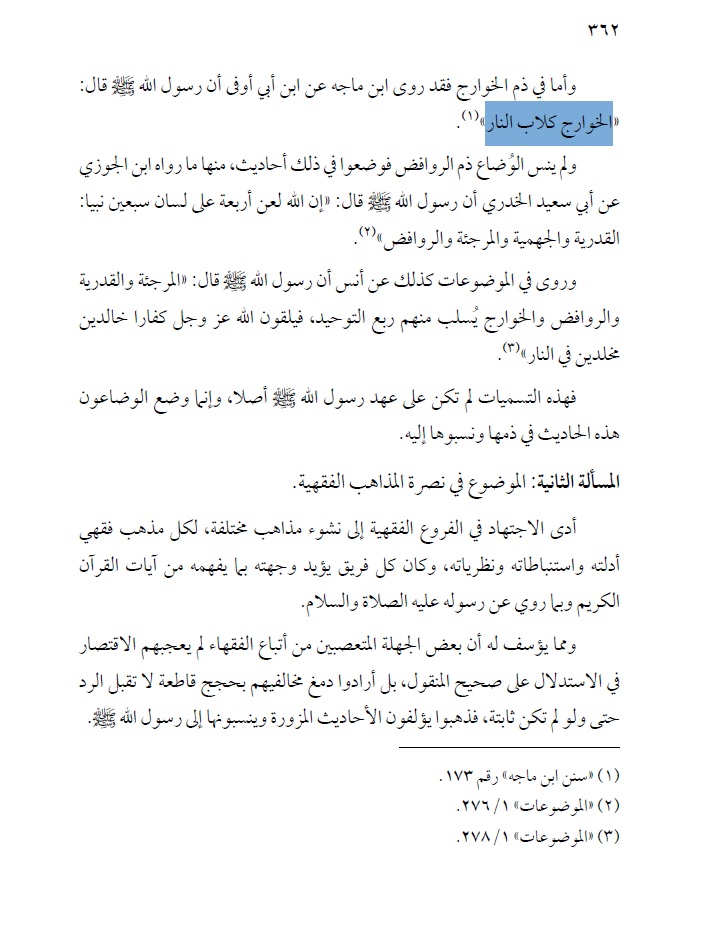

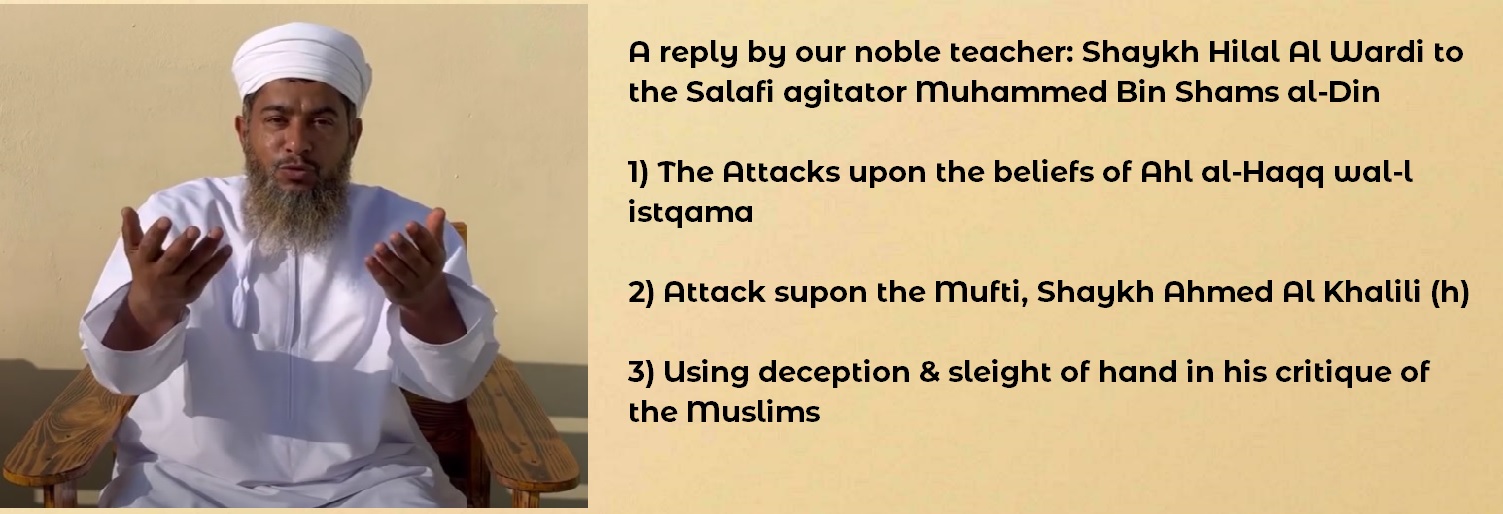


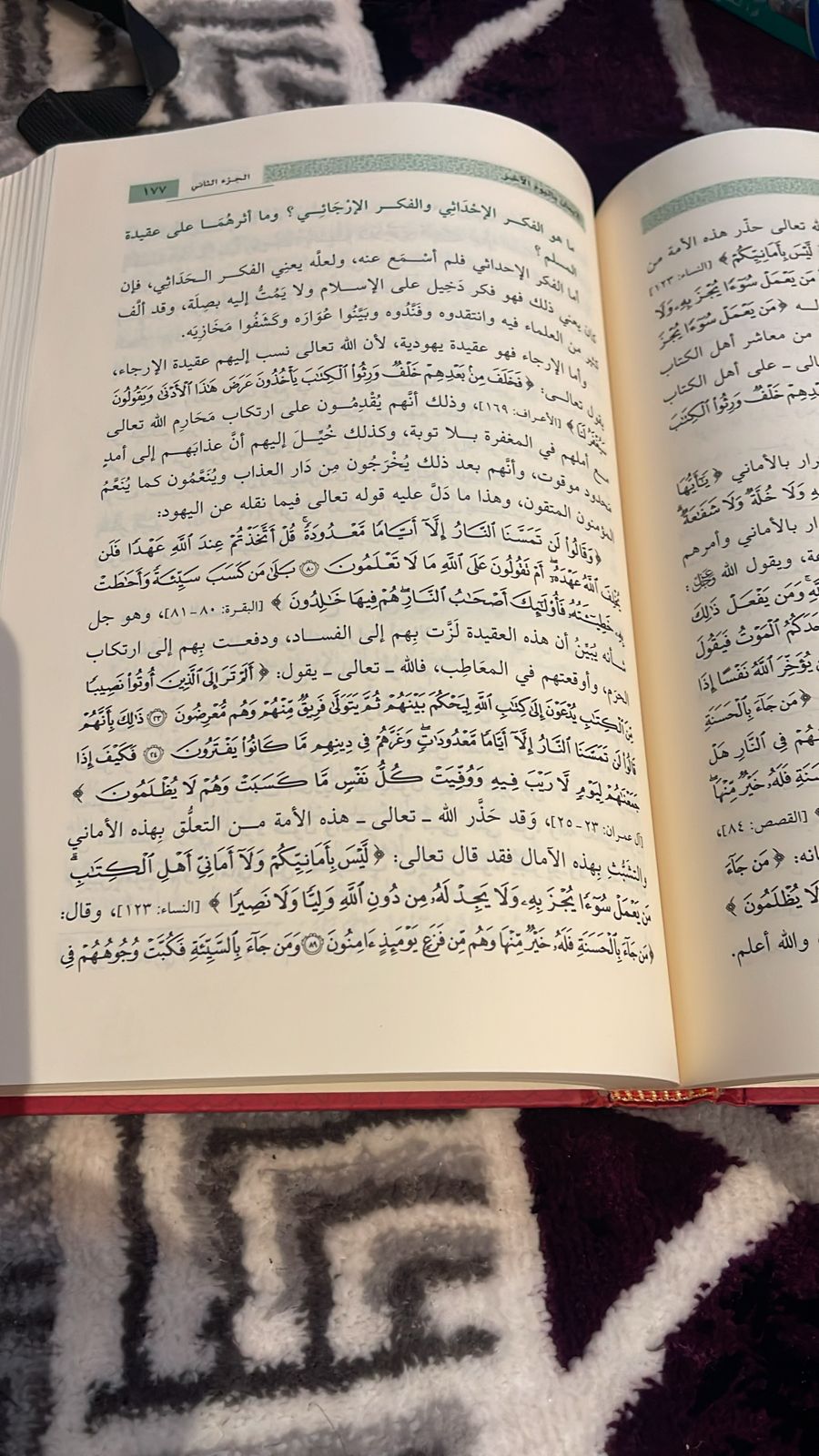


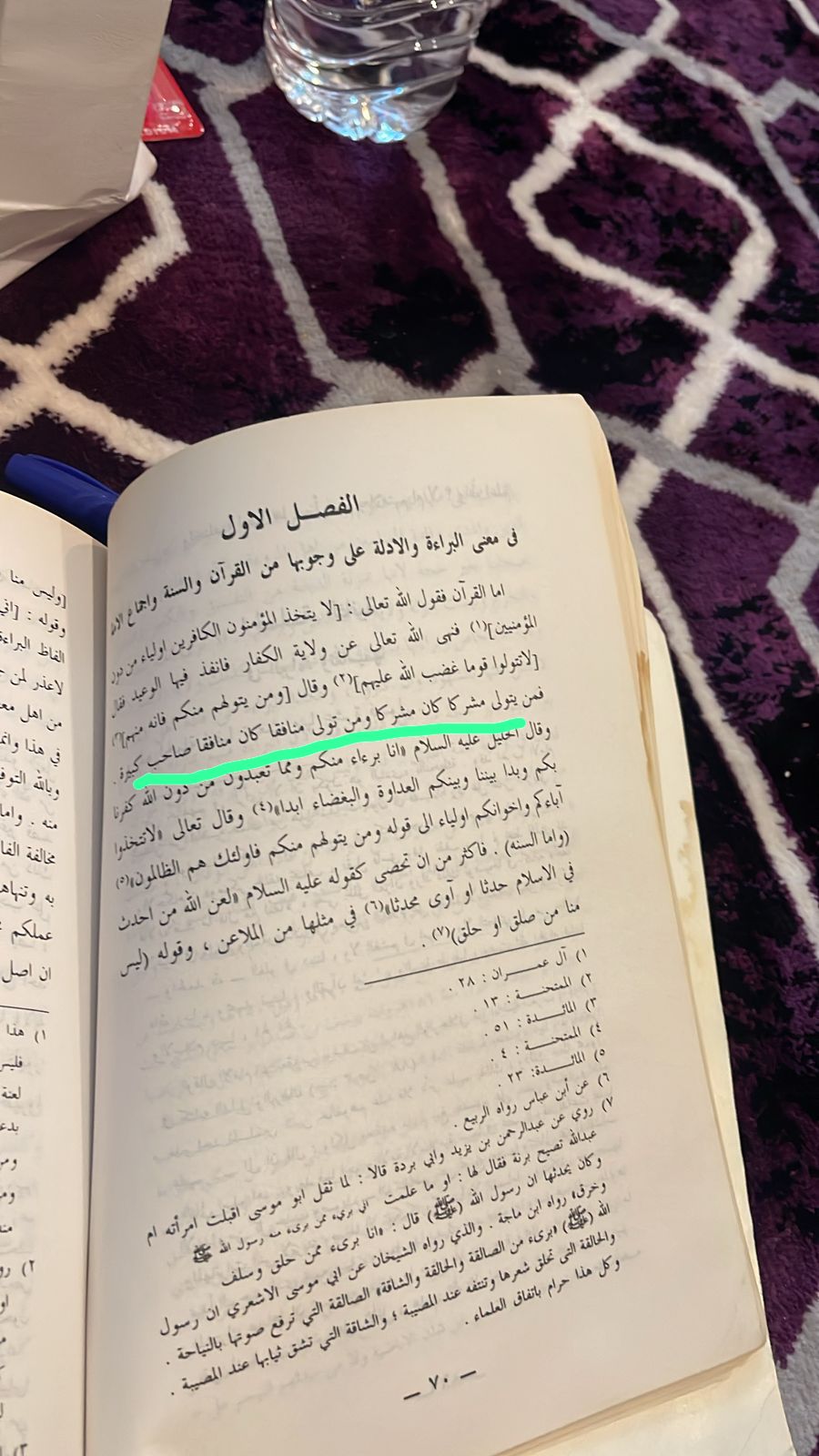

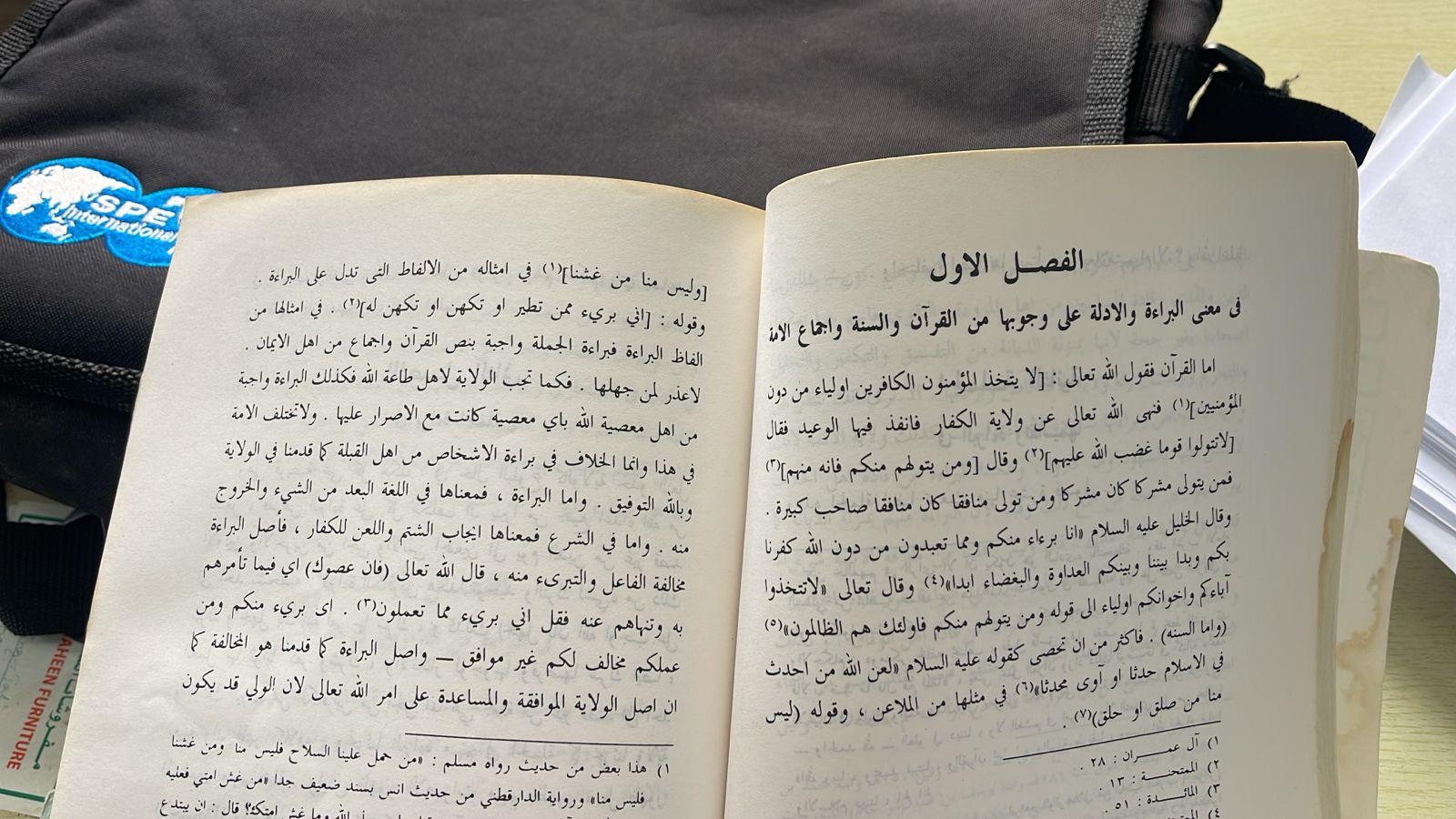
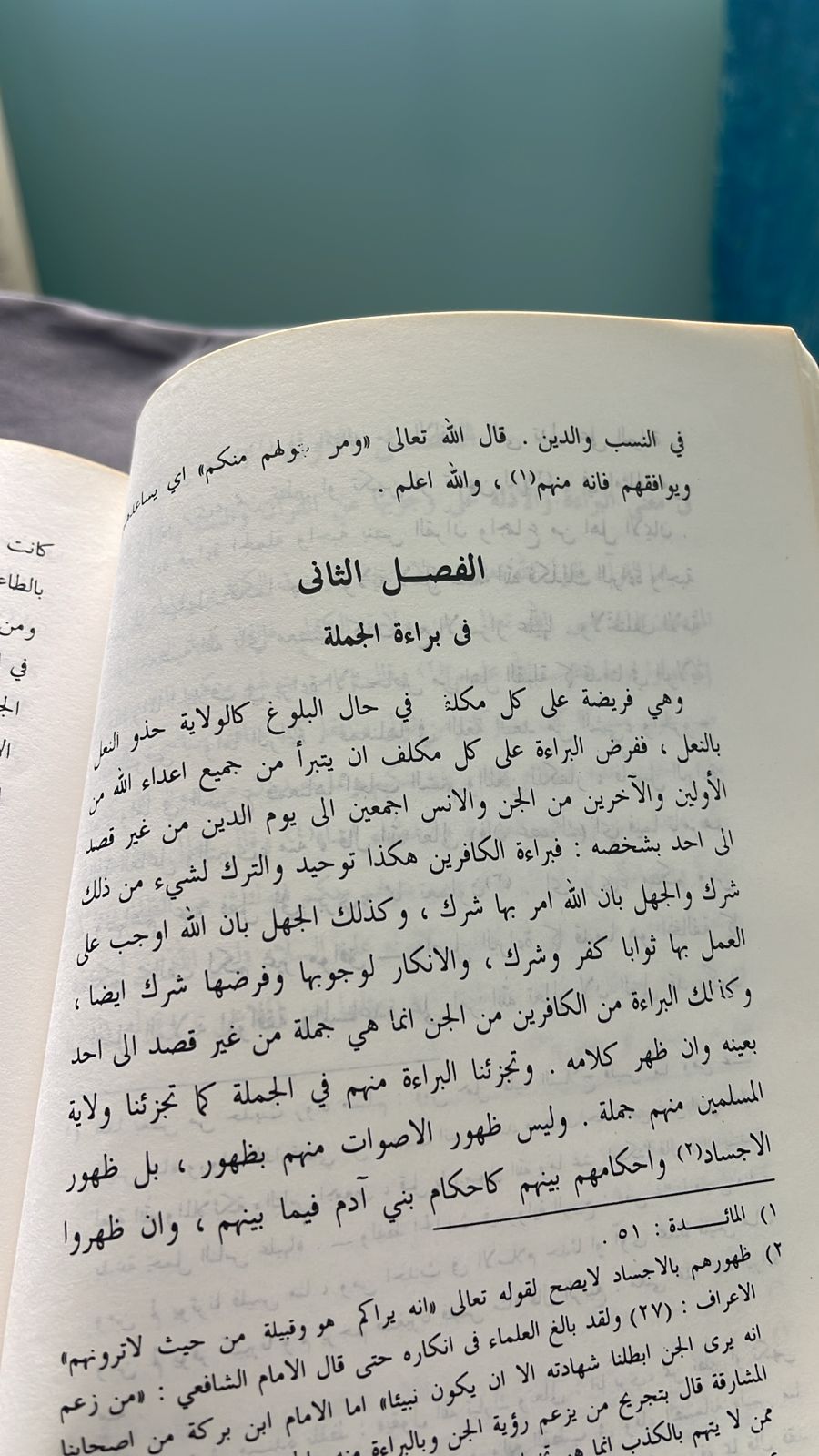
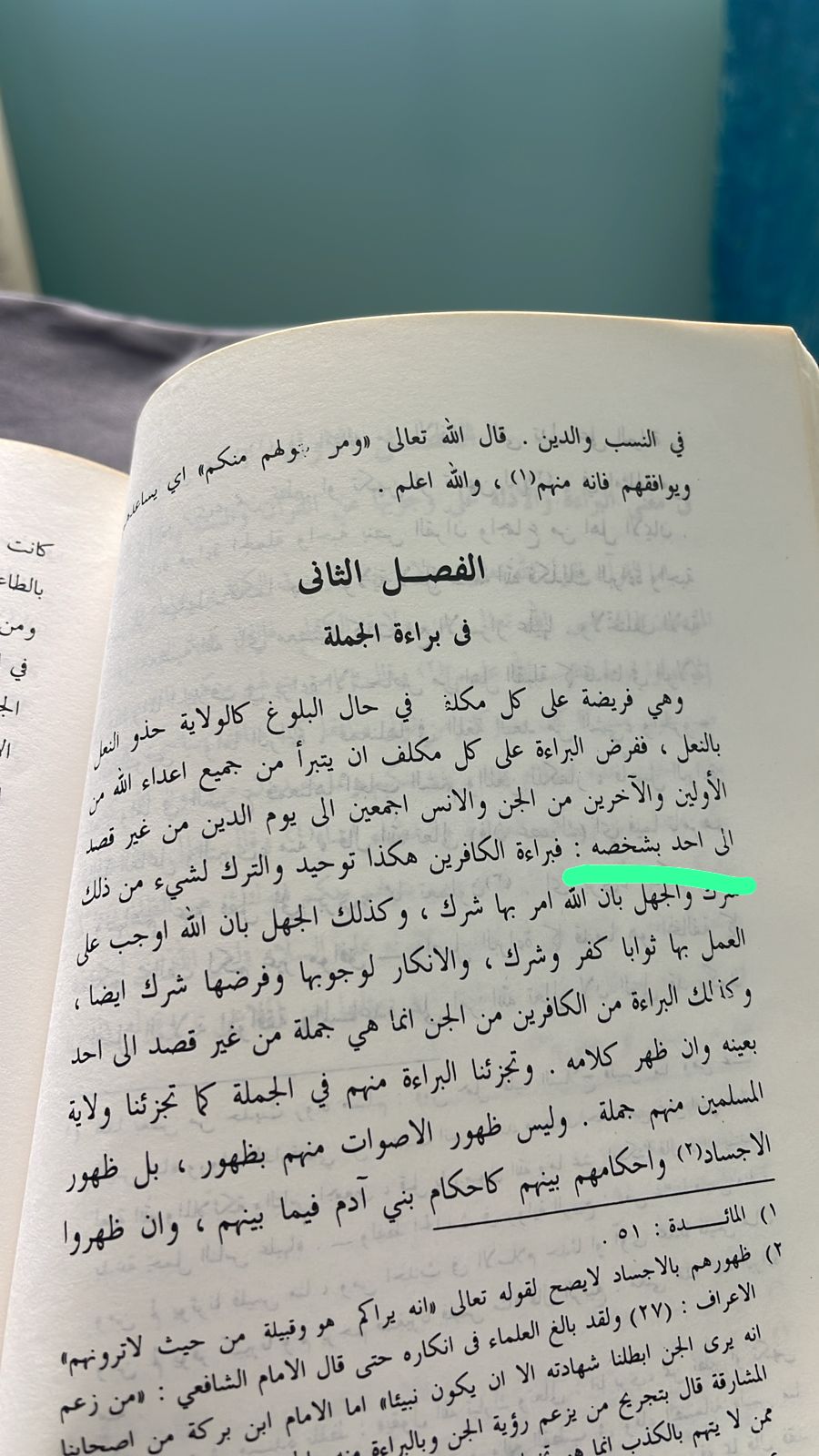
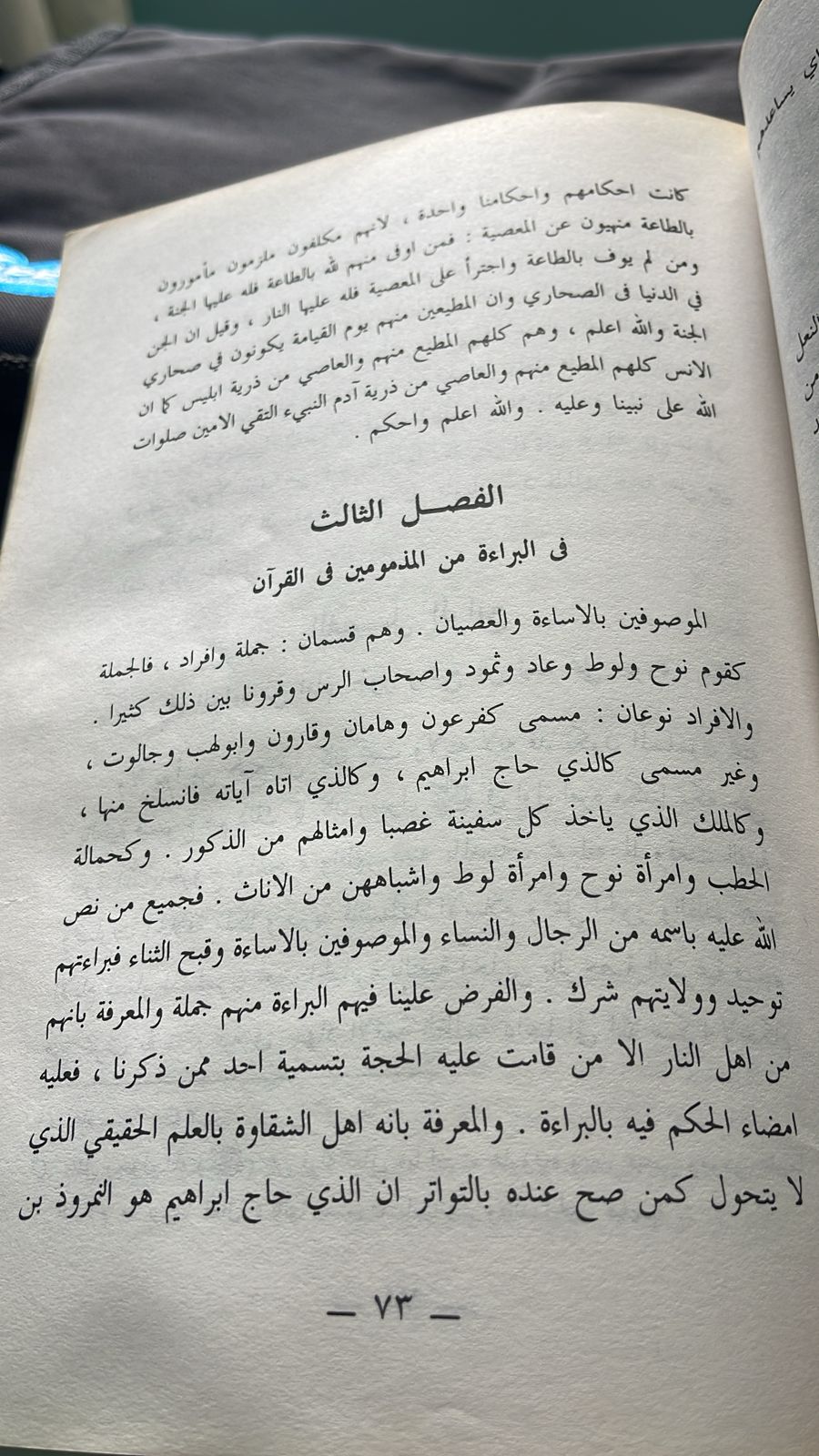
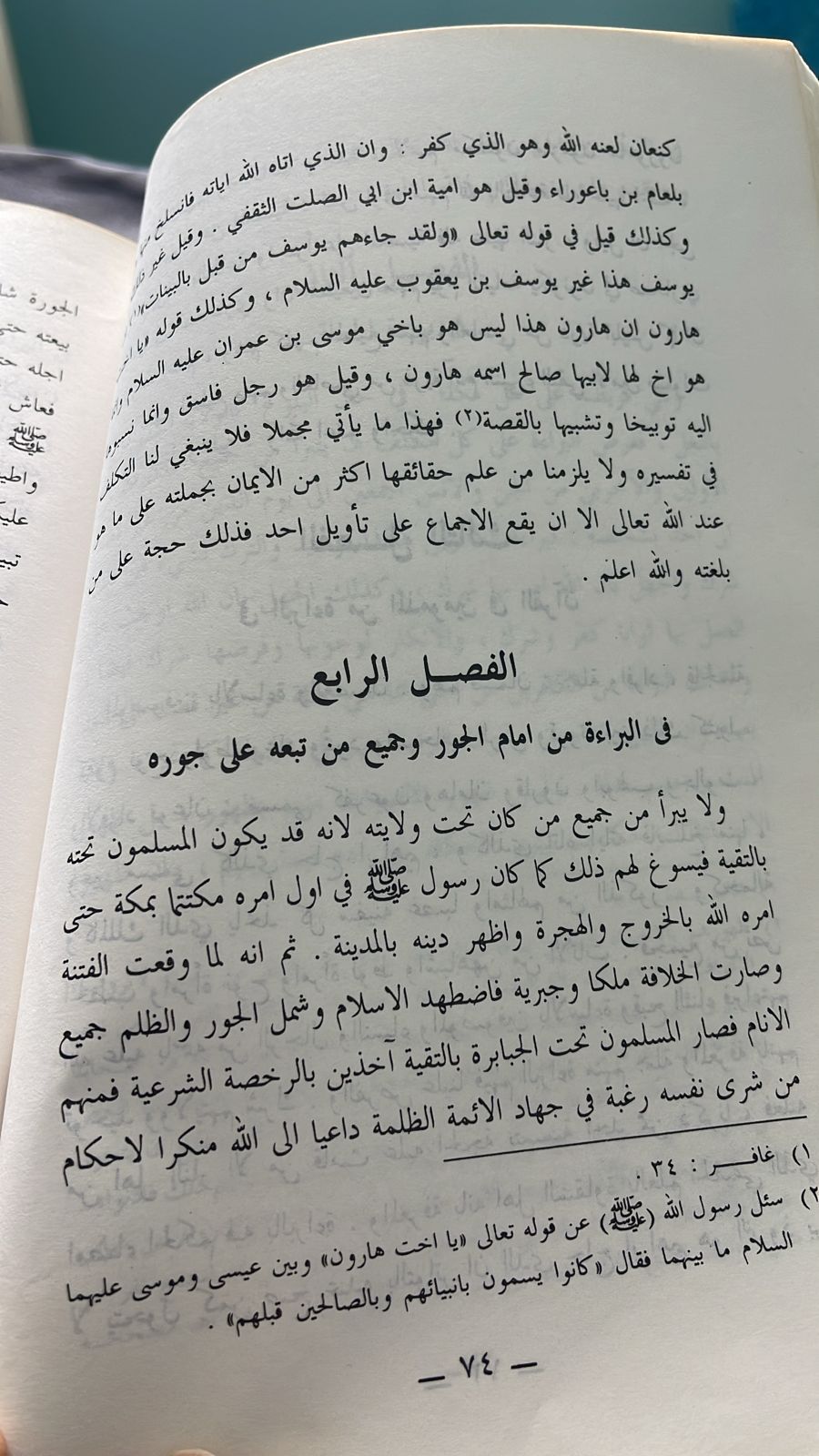
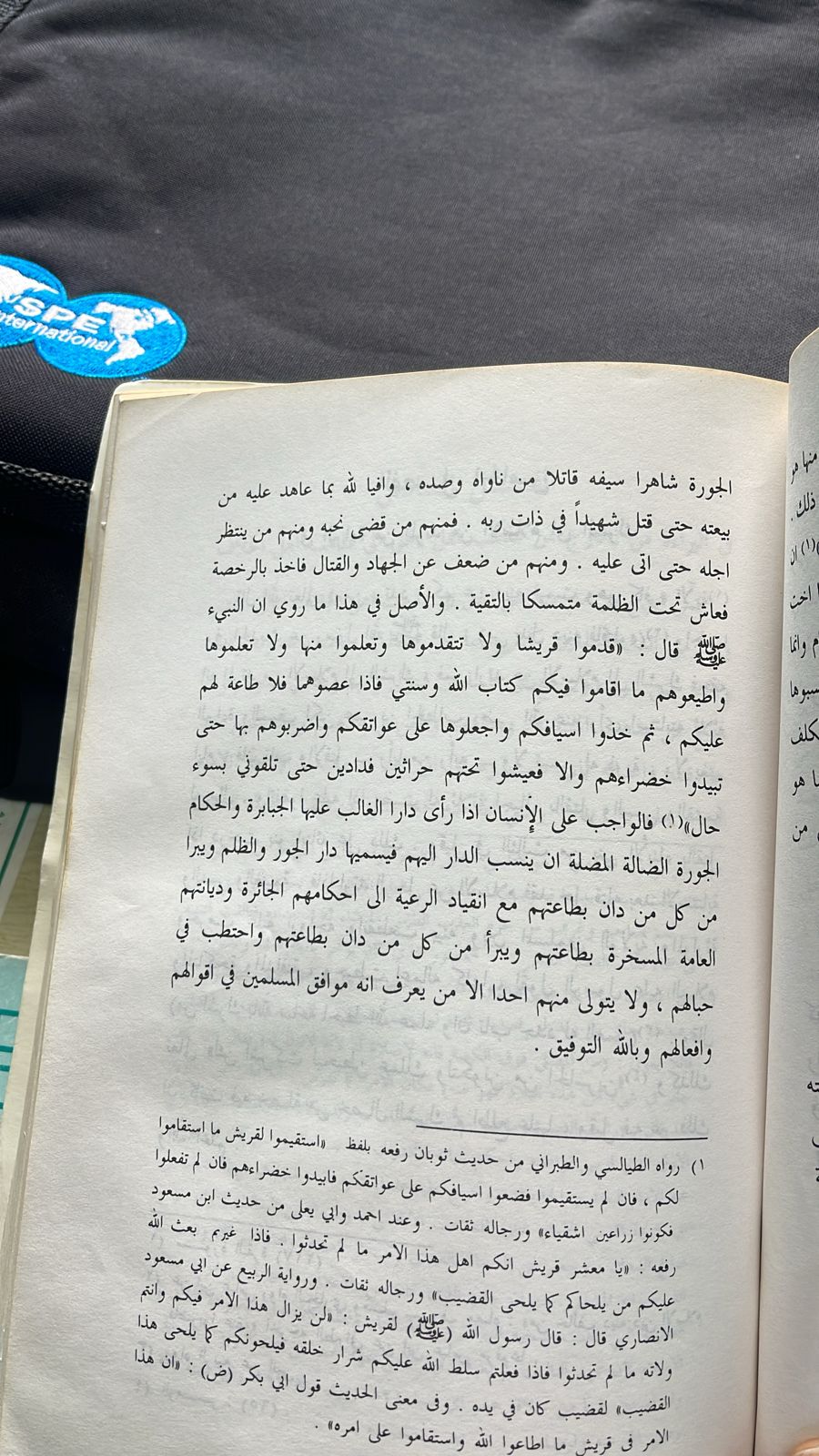
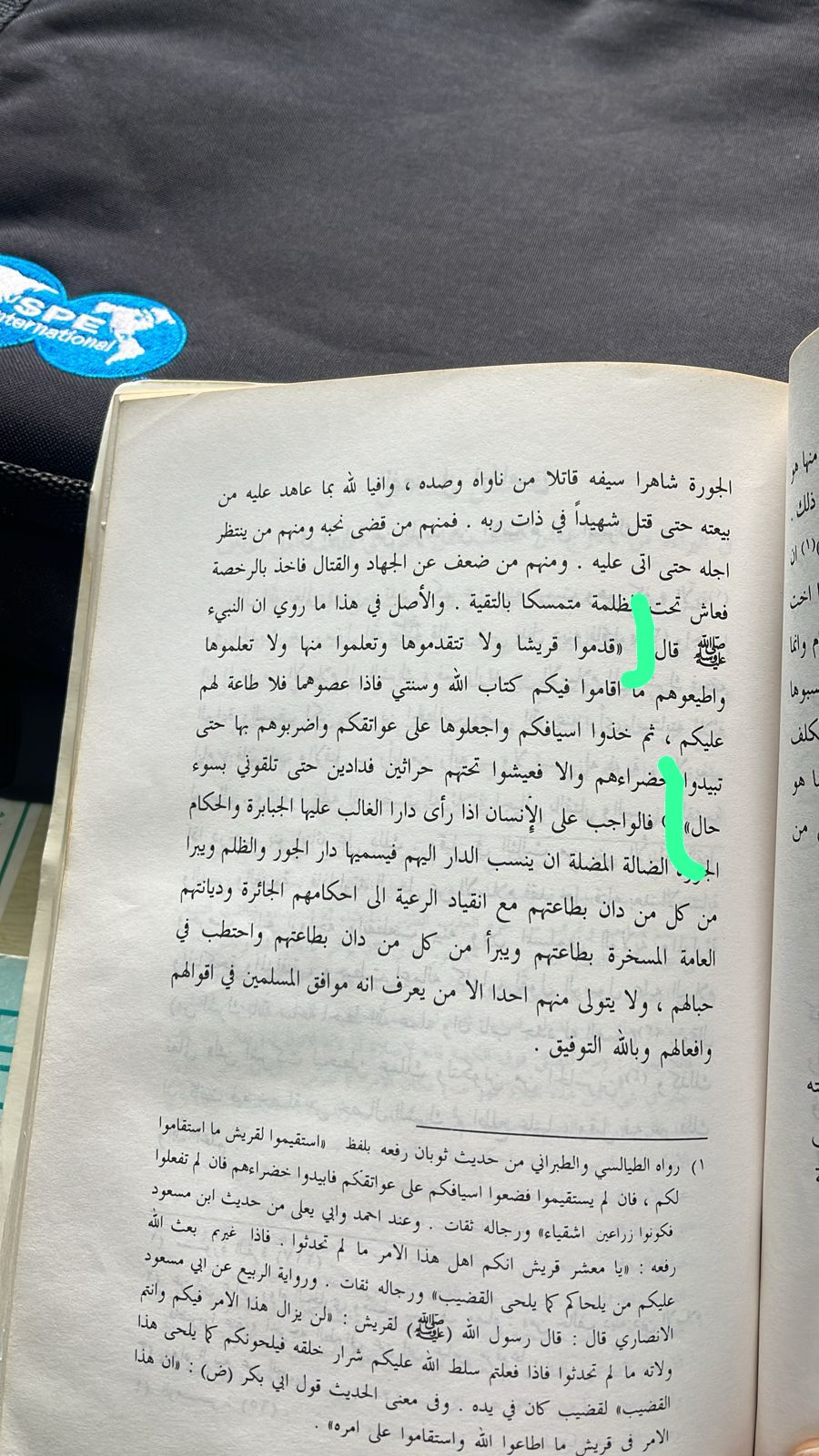

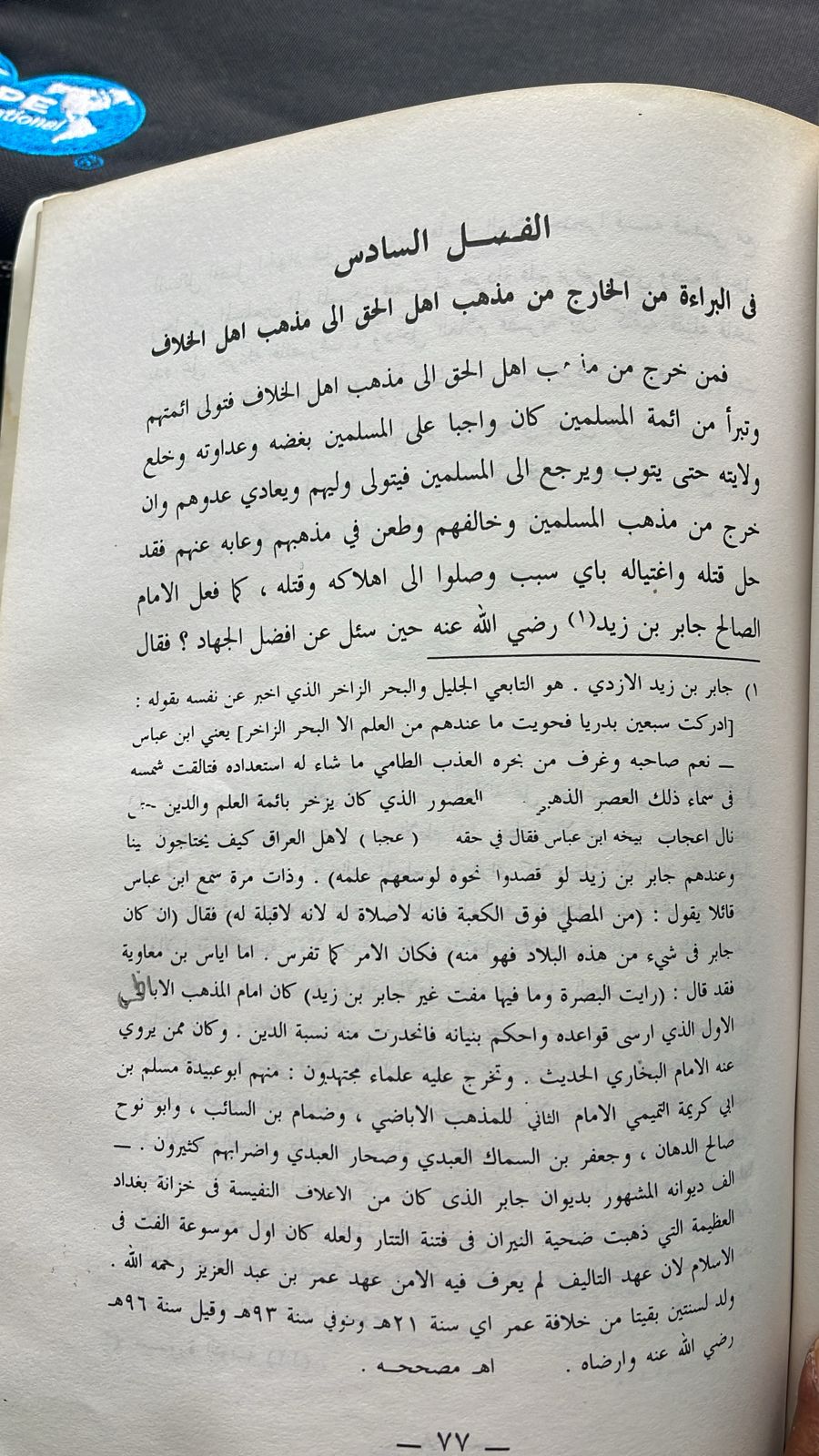
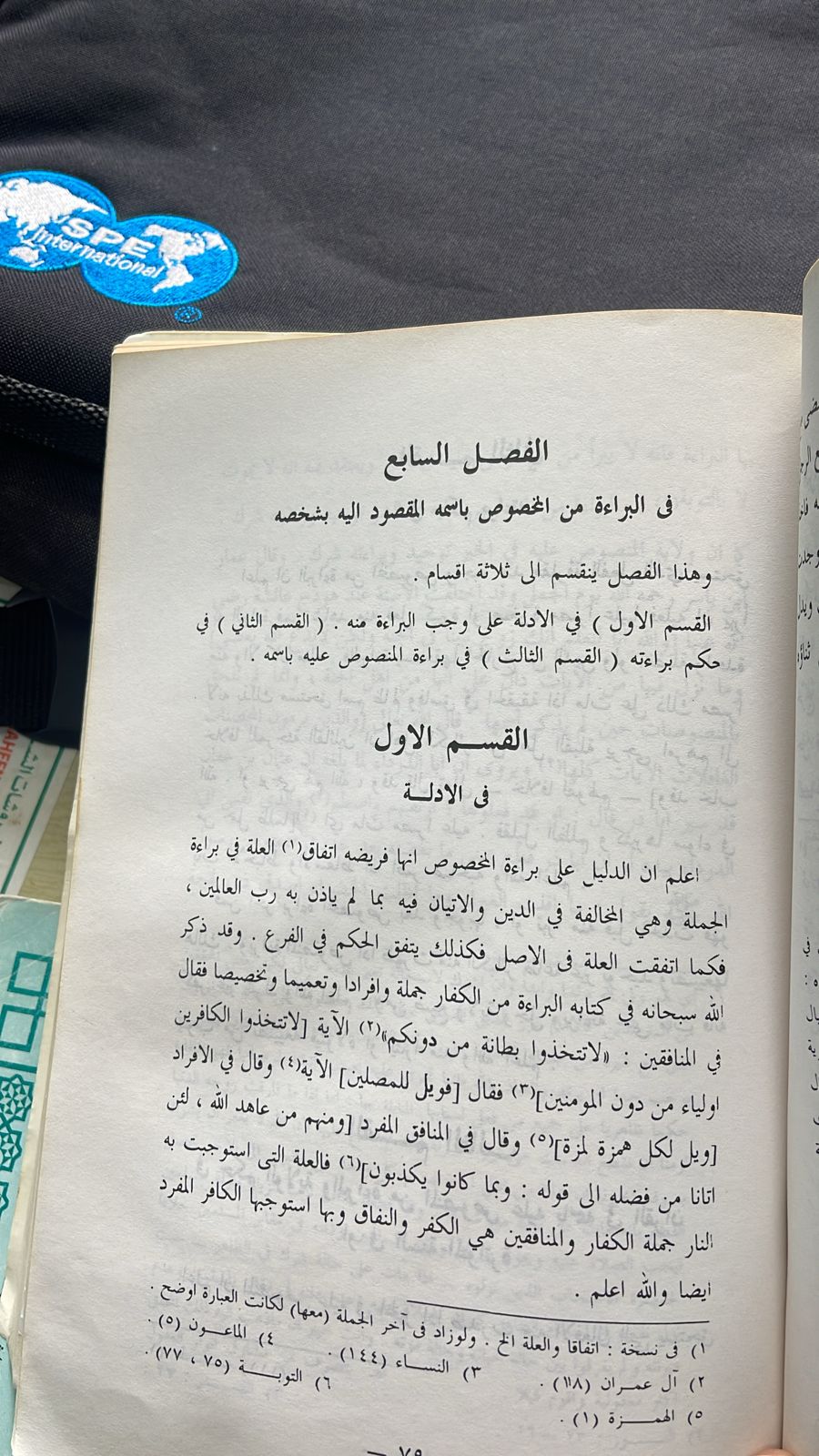

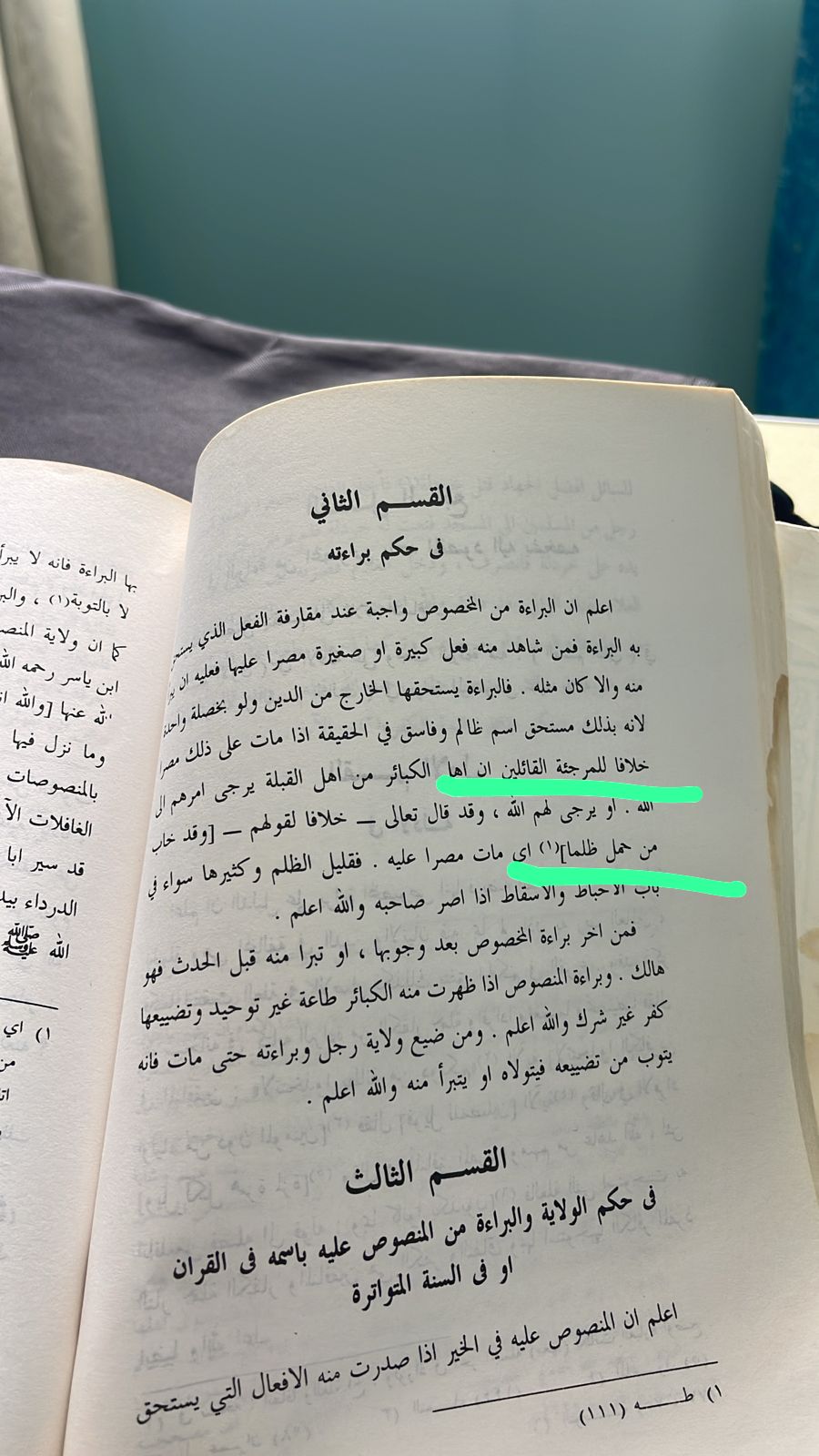
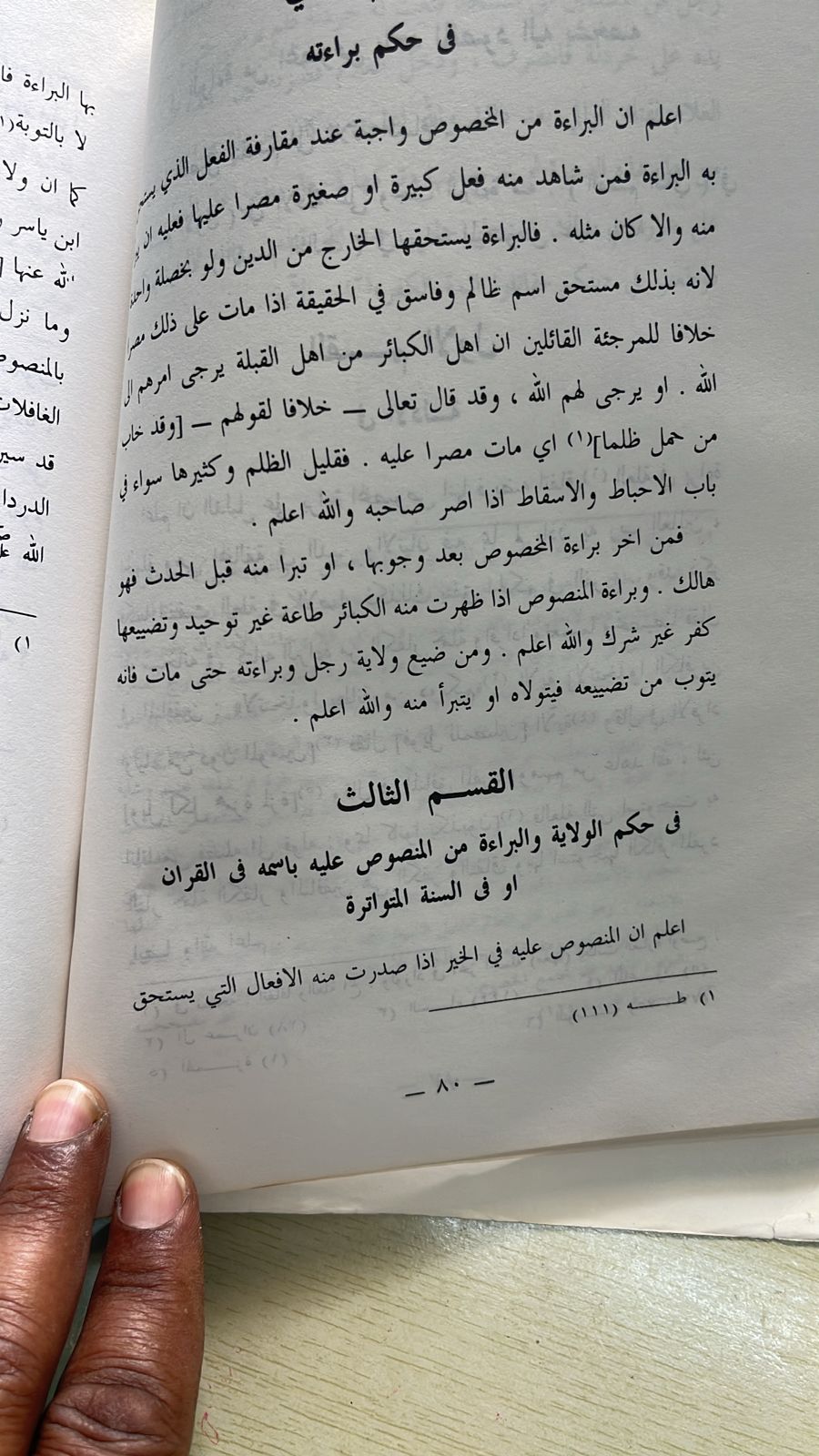
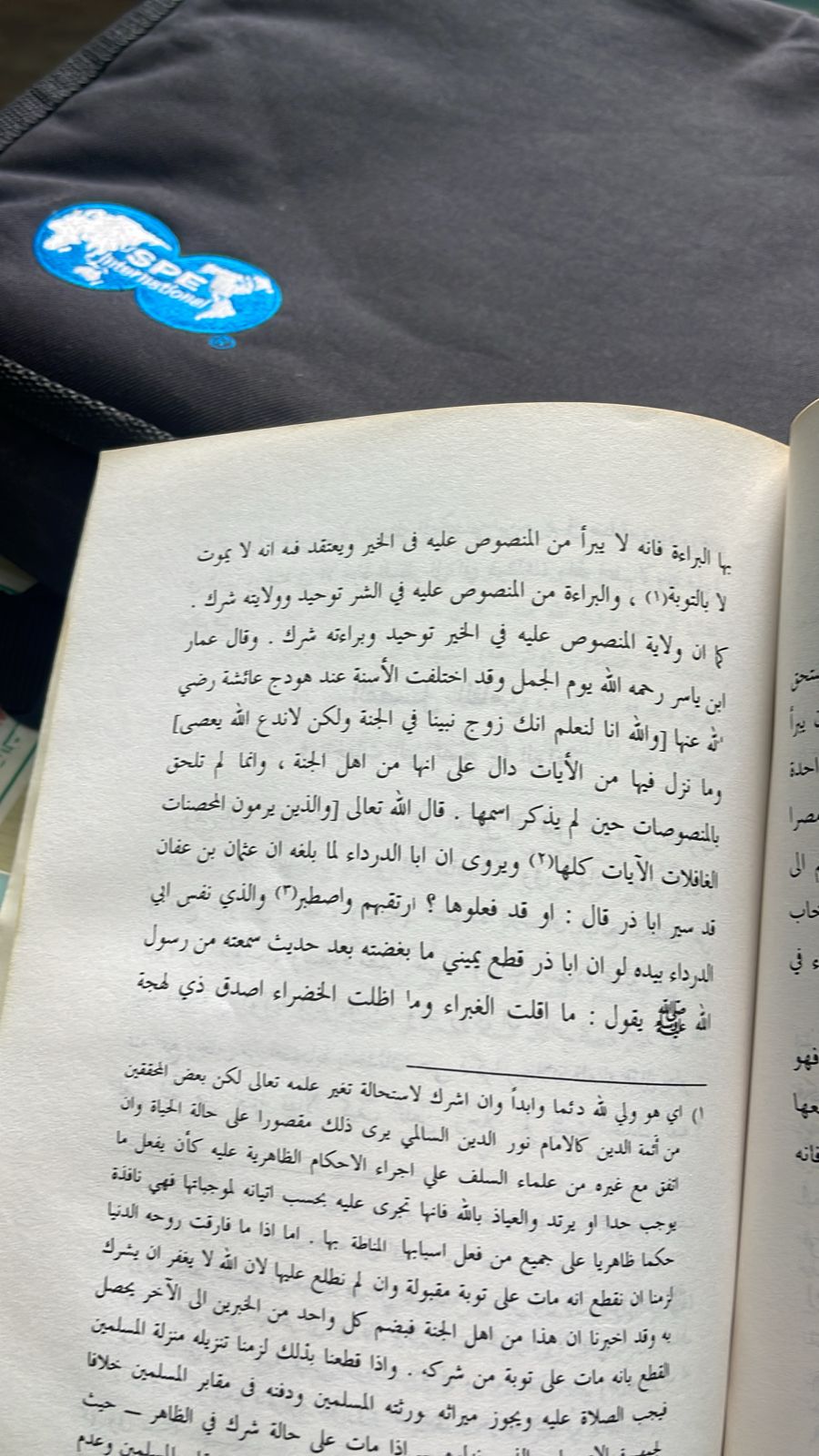

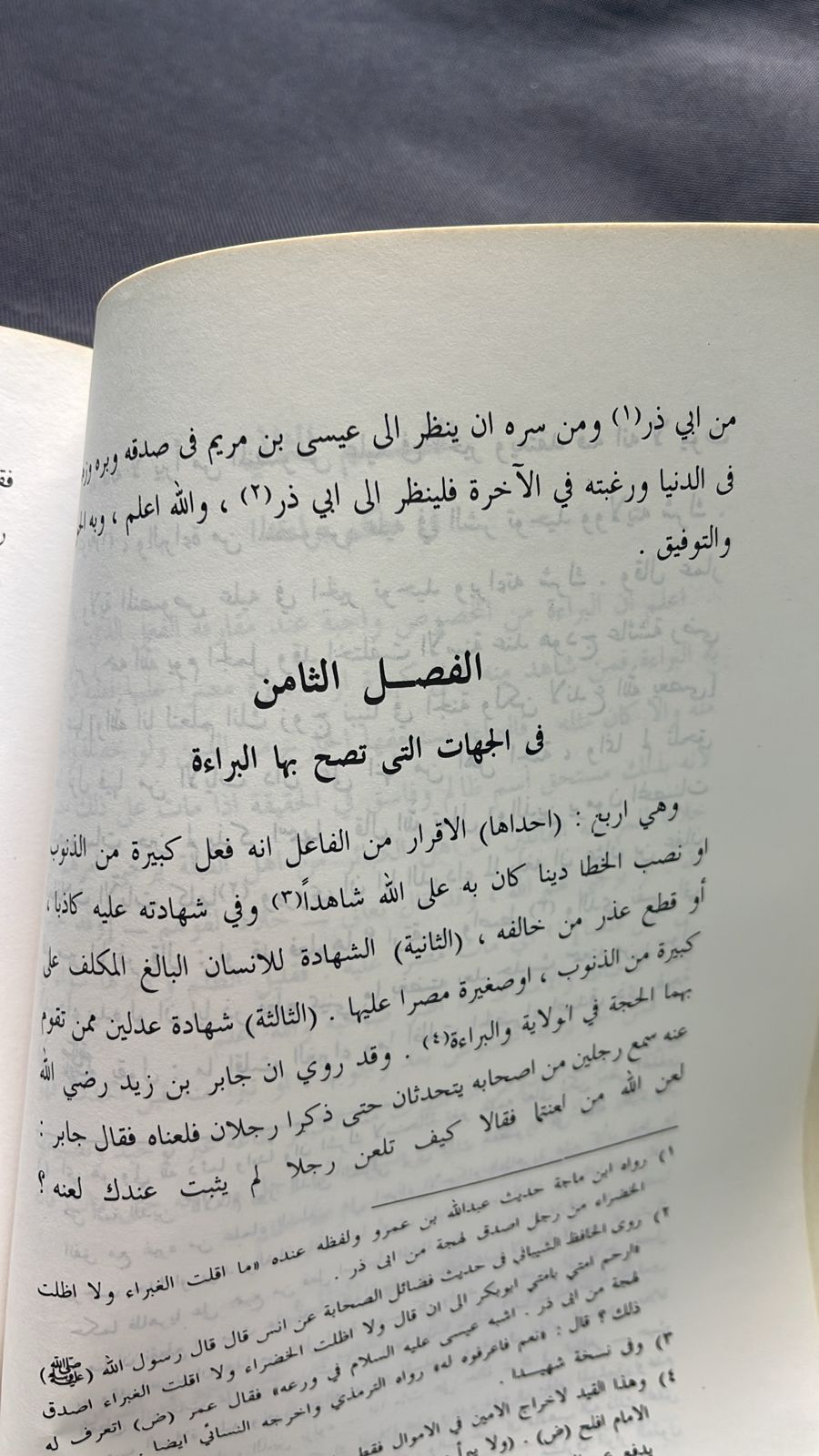

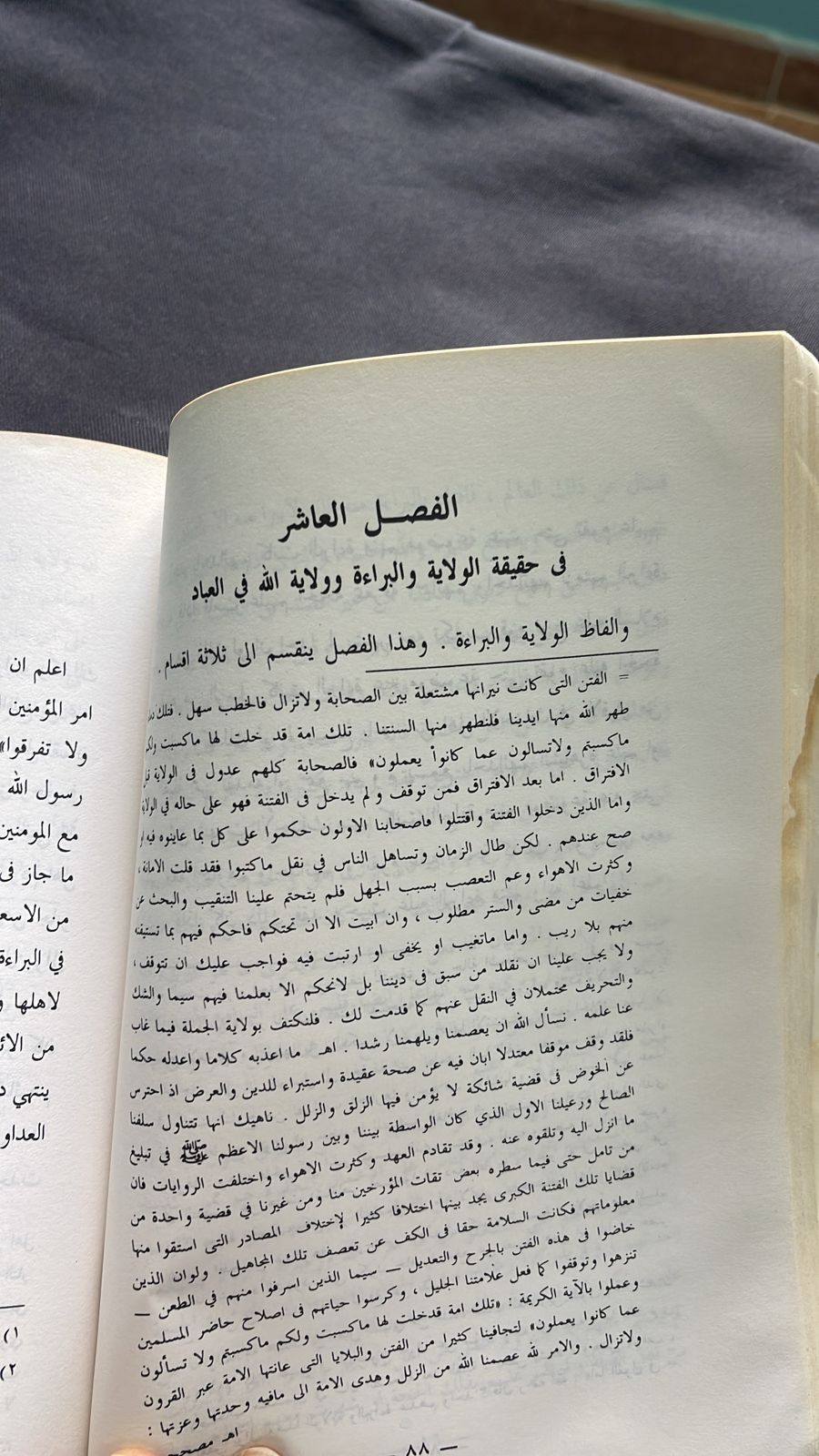

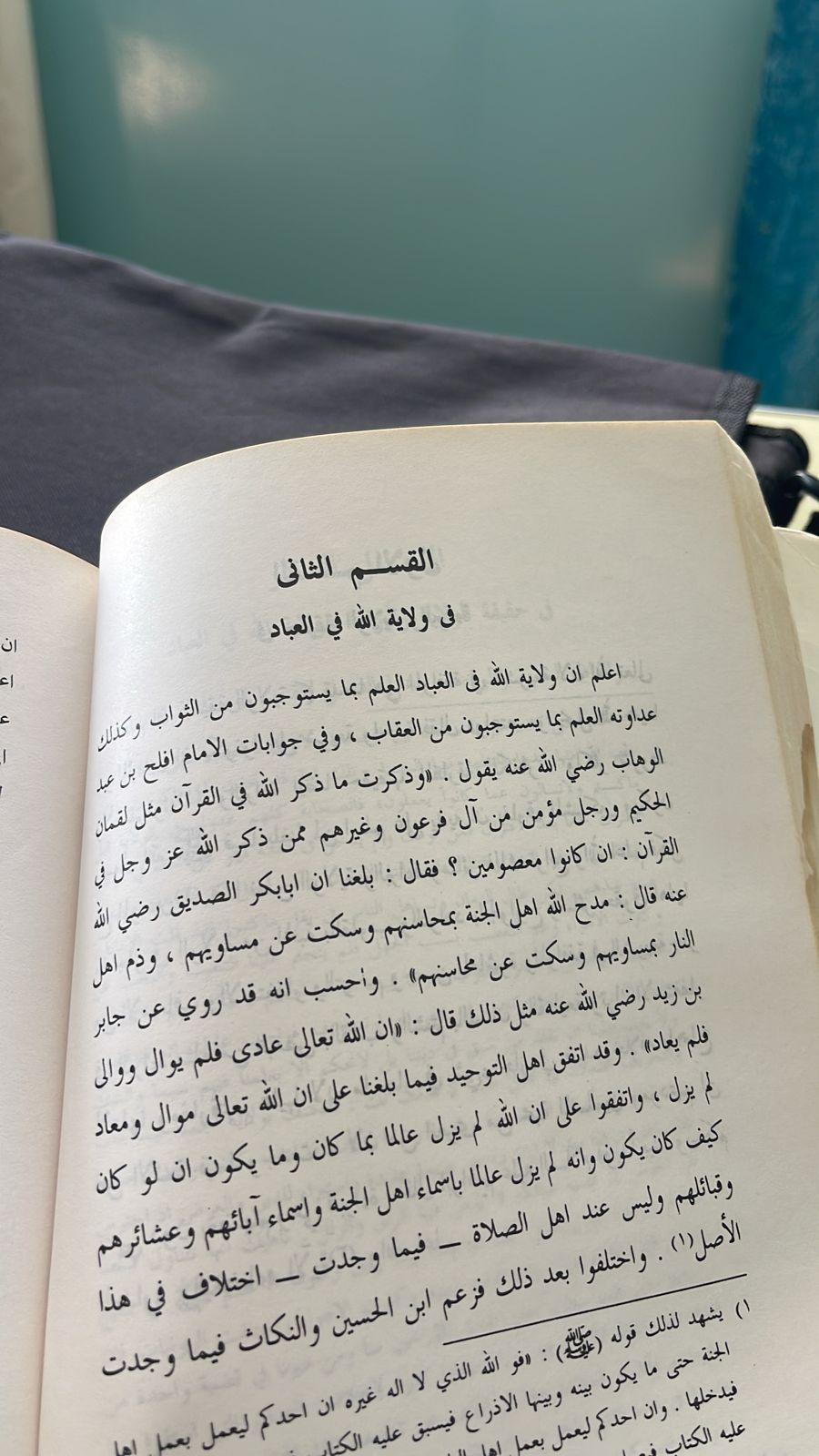

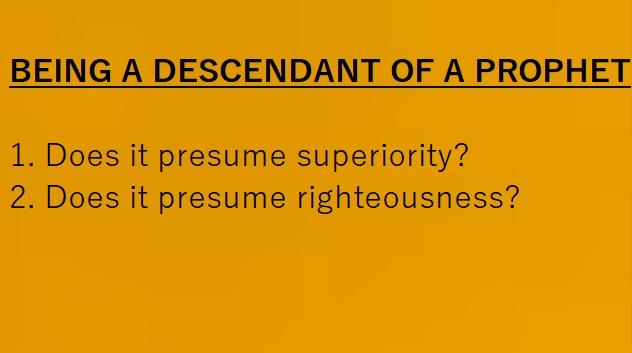
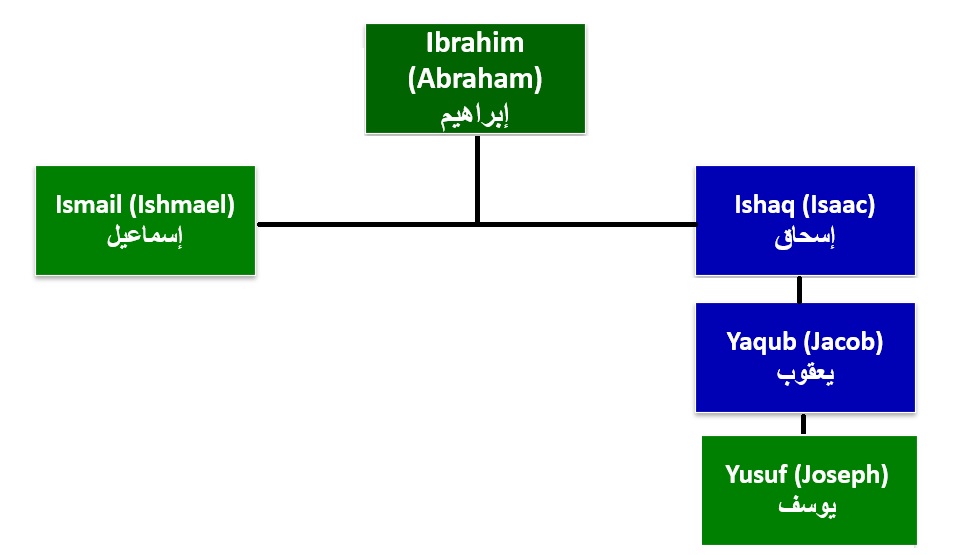




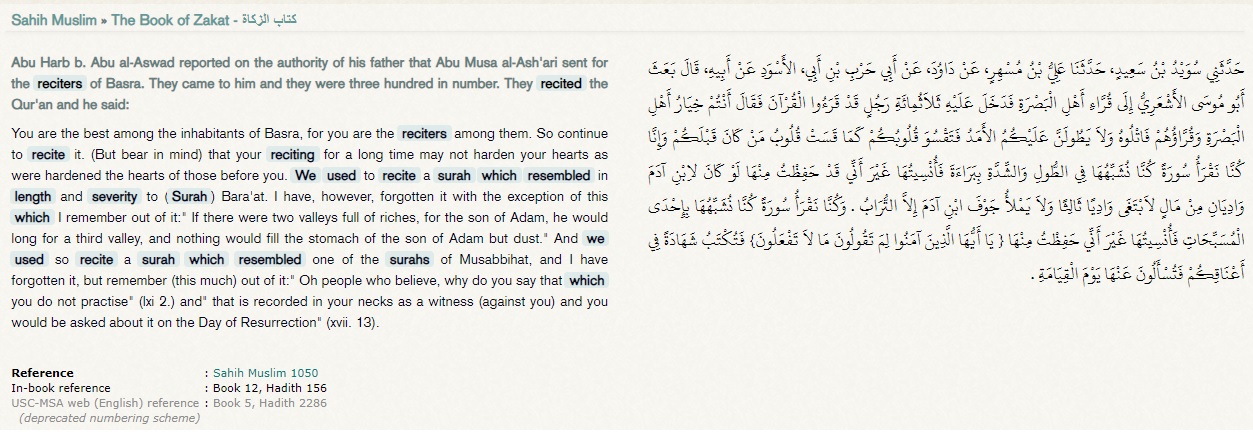

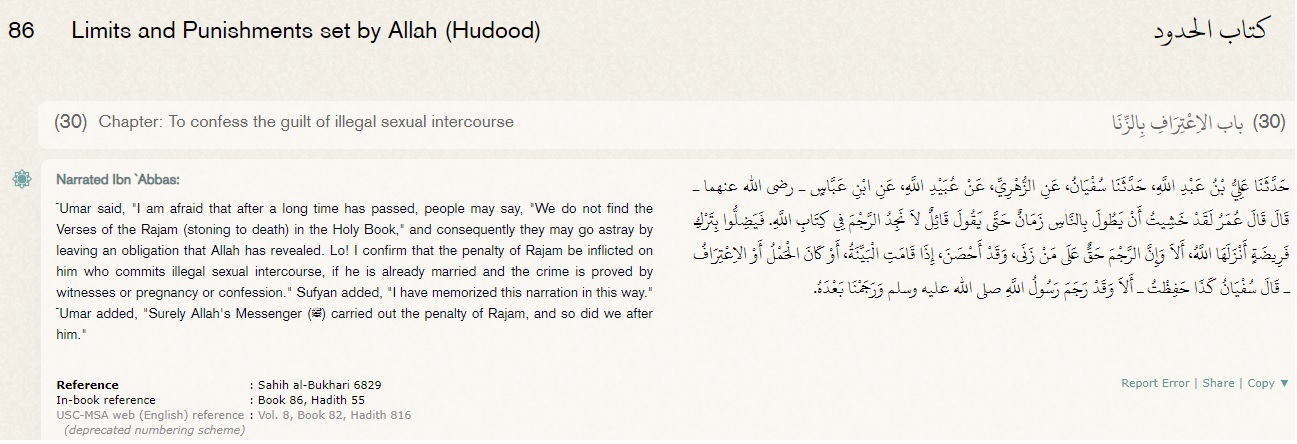

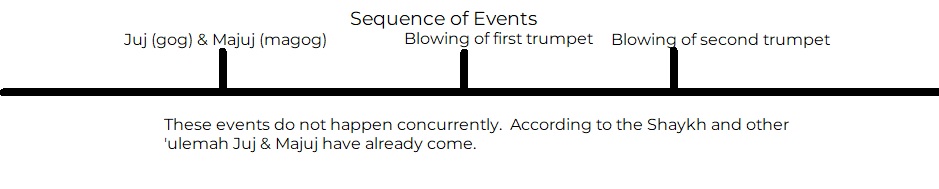


 Prima Quran
