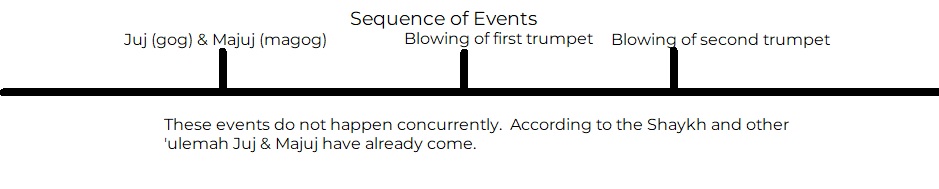
“Do they then only wait for the hour that it should come on them all of a sudden? But already come some tokens thereof, and when it comes to them, how shall they have their reminder?” (Qur’an 47:18).
﷽
Dr. Shabir Ally has a channel called: “Let the Qur’an Speak.” In one particular episode he went over the verses that are often used to justify the return of Jesus -alayi salam. Dr. Shabir Ally has concluded that these verses cannot be used to justify the return of Christ Jesus.
The episode is titled: The Coming Messiah | The Quran in Dialogue with Other Faiths, ep. 29 | Dr. Shabir Ally
Below is the transcript:
“Peace be with you. Thanks for joining me for this continuing chat in which we talk about the Quran in conversation with other scriptures and religions. Today I want to look at the widespread belief that there is going to be a future savior or messiah or some personality who is going to bring about all that we expect to be right with the world and do away with injustice and so on. So why do we have such a pervasive feeling among the world’s religions? Let’s look at them one at a time and see what exactly is expected, and then we will analyze why.” -Dr. Shabir Ally.
“First of all, the Quran. In the Quran, we have some mention of apparently something that is going to happen in the future, and then people have taken this to mean that Jesus, on whom be peace, is coming back. Take Surah 4, verse 159, for example, speaking about Jesus having been raised into heaven. Now it says in verse number 159 (Shabir speaks Arabic). In the English translation: “Every one of the people of the book will definitely believe in him before his death. And on the day of judgment, Jesus will be a witness against them.” Now it is interesting that this verse is being used to justify the belief that Jesus, on whom be peace, will come again. But at the same time, there are very ancient commentators on the Quran who said that this does not mean that at all. You see, there is a question: when it says that there is none of the people of the book except that will believe in him before his death, what does the word “his” refer to? Does it refer to “his” meaning Jesus’ death, or does it refer to “his” meaning the person of the book? So if it refers to the person of the book, it means that before the person of the book dies, all of reality will be open to him or her as it is open to every one of us when we reach that moment of death. That is when the person of the book will understand correctly and believe correctly about Jesus. So those who previously rejected him, such as his Jewish opponents, will come to understand him and believe in him correctly. And the Christians, on the other hand, who had so over-glorified him will come to recognize him truly as he is, as a prophet and as a messenger of God. So on that view, it is not really talking about Jesus coming back. But if it is taken to mean that “his” is a reference to Jesus, before his death, that would mean that Jesus has not died yet, and when he comes back, before he dies, at that time every one of the persons of the book will believe in him. So you cannot take an ambiguous verse like this and make it mean something of such major import as a major figure coming back into the future and doing all of these great things. Of course, that belief is in Hadith, and one who takes the Hadith as very authentic will naturally be constrained to that belief. But we should not read that belief back into the Quranic verses without proper warrant.” -Dr. Shabir Ally.
“Another verse that is cited to refer to the second coming of Jesus is Surah 43, verse number 61. So what does it say in the Arabic? (Shabir speaks Arabic). And the English translation – here, I will read first, then we will try to analyze it: “And his second coming is truly a sign for the hour. So have no doubt about it, and follow me. This is the straight path.” Now when it says “second coming” here in the English translation, the translator has used a half square bracket to insert the word “second” and mark it off as an insertion. But even without marking that word as an insertion, even the word “coming” is not there in the Arabic. There is nothing like (Shabir speaks Arabic) in the Arabic – “his coming” – it just says (Shabir speaks Arabic), which literally means “and he is” or “it is.” Now if it is understood to mean “it is,” then that is a reference to the Quran, which has been mentioned previously within the same context. So it (the Quran) will be a sign of the hour, or as it is also read alternatively, it will contain knowledge of the hour – that the Quran itself is knowledge of the hour, or knowledge personified, something like this. Only if it refers to “he” as a human person can it possibly refer to Jesus. But does it refer to his second coming? It may be just that it is referring to him as a fact because of some miracles pertaining to him or associated with him that he will become a sign, or he is a sign of the hour. By his performing these miracles, people can take heed from that and realize that God, who made it possible for Jesus to do all of these things, is able to bring about what is called the hour. So in short, we can say that there is no verse of the Quran that clearly indicates that Jesus, on whom be peace, is coming again. And apart from that, there is no future messianic figure that is mentioned in the Quran. The closest you have to a figure is Dabbat al Ard (a creature from the earth who will speak to people) or Ya’juj and Ma’juj. They are mentioned in the 18th chapter of the Quran and also in the 21st chapter of the Quran. But there is no future messianic figure in the Quran. Why? We will try to come back and analyze that. But I want to go forward to look at scriptures of the other Abrahamic faiths.” Dr. Shabir Ally.
Prima Qur’an: Dr. Shabir Ally is someone who has been involved in interfaith dialogues, discussions and debates for 35 years. If he felt there was some solid proof for the second coming of Christ Jesus in the Qur’an he would have advanced it.
“Allah said, O Jesus, I shall cause you to die and will raise you up to Me and shall purify you of the ungrateful disbelieving people, and shall place those who follow you above those who deny the truth, until the Day of Judgement; then to Me shall all return and I will judge between you regarding your disputes.” (Qur’an 3:55)
He has been a guest at the behest of Paul Williams of Blogging Theology numerous times to discuss topics of interest in regard to Islam and Christianity.
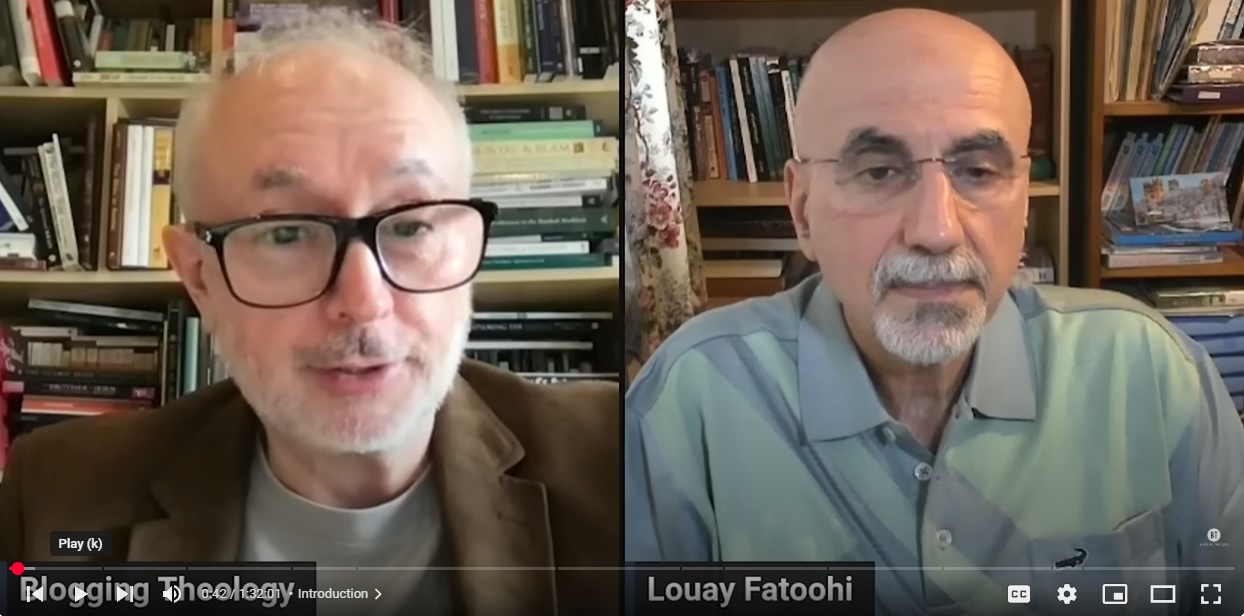
That aside, what has intrigued us about Dr. Louay Fatoohi is that he believes that Jesus (as) has died and that he will not return. This brings him in line with the Ibadi school of Islam, as virtually no other school of Muslims shares this view.
Here is the PDF: The end of Jesus’ Life on Earth in the Qur’an. The title is interesting because it is a bit of bait. Because English can convey a meaning that seems in line with the majority position of Ahl Sunnah. As the majority of Sunni Muslims believe that Jesus (as) Earthly life came to an end (just not that his life itself) came to an end.
The readers are encouraged to show their gratitude for his academic work by subscribing to Dr. Louay’s YouTube channel, visiting his website and purchasing his many, many insightful books!
Now we are going to be very forward in saying we don’t think this particular article is one of Dr. Louay Fatoohi’s best. There is a great deal to be desired.
In some ways, if you are a traditional Sunni who holds the majority traditional views of Jesus (as) being taken up into heaven and returning again towards the end of time, you will enjoy this read….up to a point.
We say, “Up to a point,” because you are in the Jaguar with Dr. Fatoohi doing 160km on the freeway when suddenly he hits the breaks, giving you the biggest whiplash you ever had.
You read this article, and you see the footnotes, you see the scholarly quotations, you see the references from the Qur’an and the arguments that he builds. Then suddenly we get the following bold assertion from the good Doctor:
“In this paper, I have argued in favour of a combination of the majority opinion that Jesus was raised alive in heaven and the minority view that he died naturally. That Jesus died after, not before, he was raised means he died in the abode in heaven to which he was taken.”
“and the minority view that he died naturally.” No, no you didn’t, Dr. Fatoohi. Because you did not quote anyone who says: means he died in the abode in heaven to which he was taken.
No one who argues that Jesus (as) died naturally states he was whisked up to heaven alive in a body and then died in heaven. That is a far cry from any natural death. That is a bit of sleight of hand there. We must call it out for what it is.
Not only that, but indeed you did not give us a single quote from the Qur’an or the Sunnah to substantiate that Jesus died in heaven! Heaven being a place of death is news for us. We have to be quite honest in saying this.
Then there is this bit here:
“This phenomenological perspective seems to lend support to the minority view of al-Suddī (d. 127), which is favoured by al-Ṭabarī, 80 that the dialogue in 5:117 between God and Jesus happened after he was raised to heaven, rather than it will happen on the Day of Judgement.”
That makes little sense as Allah (swt) is already aware of this. It makes the knowledge of Allah (swt) redundant, and we seek refuge in Allah from this.
Yet, to make this happen on the day of judgement where it can be witnessed is more sensible. It is not for Allah (swt) to know redundant information but for those who party to the questioning.
Then we need to come back to the following verse of the Qur’an:
“Peace be upon me the day I was born, the day I die, and the day I will be raised back to life!” (Qur’an 19:33)
What is the point of being raised back to life if you have already been made to die (in heaven) and are presumably there now?
Unless the claim is that Jesus is dead in heaven and will be brought back to life (at a point in the future), what is the purpose of this?
Again, heaven being an abode of death, rather than life, is truly news to us as Muslims. It must also be news to Christians and Jews as well.
There are just too many loose ends that Dr. Fatoohi has in the article.
Dr. Fatoohi offers really no engagement at all with the hadith tradition. That now becomes someone else’s task.
“The support for the traditional view comes mainly from aḥadīth. Such narratives are found in all major ḥadīth sources, including al-Bukhārī and Muslim. This has led to the treatment of Jesus’ return as a fundamental Muslim belief and even conflating it with Islam’s articles of faith,82 accusing those who deny it of kufr. 83 The conclusion of this article implies that those aḥadīth are inauthentic. Indeed, scholars who argue that Jesus died naturally on earth claim the aḥadīth on Jesus’ return are aḥād, rather than mutawātir, so their credal status is at best doubtful.84 Consequently, Jesus’ return is not a tenet of Islam. Books of creeds also distinguish it and other beliefs from the six articles of faith.”
“The conclusion of this article implies that those aḥadīth are inauthentic.”
A conclusion that we must admit, with all candor, is based upon the filmiest ground possible i.e. he (Jesus) died in heaven!
“scholars who argue that Jesus died naturally on earth claim the aḥadīth on Jesus’ return are aḥād, rather than mutawātir.”
Those scholars which have laid charge to the ahadith, none of which have argued that Jesus (as) was brought alive bodily to heaven and then died in heaven.
This became all the more curious in light of Dr. Fatoohi’s recent article:
“Among the Prophet’s (PBUH) sayings regarding Imām ʿAlī is his address to the Muslims at Ghadir Khumm, when he asked, “Do you not know that I have more authority over every believer than they have over themselves?” They replied, “Yes, we bear witness that you have more authority over every believer than they have over themselves.” He then declared, “Then for whomever I am a guardian, this is his guardian,” and he took ʿAlī’s hand.”
“This ḥadīth has been recorded by many scholars, including Aḥmad ibn Ḥanbal,[29] al-Bazzār (d. 292),[30] al-Nasāʾī (d. 303),[31] Abū Yaʿlā (d. 307),[32] and al-Ṭabarānī (d. 360).[33]Ibn Abī ʿĀṣim (d. 287) reported it via eleven companions, and he also documented a ḥadīth in which thirteen unnamed collectively testified to having heard the Prophet (PBUH) utter those specific words regarding ʿAlī.[34] In other words, this ḥadīth is mutawātir.”
So we asked Dr. Fatoohi in his X post the following:
“Another question I have. Would you regard it as Mutawātir Lafẓī or Mutawātir Maʿnawī? Given that we have thirteen unnamed individuals that are claimed to have heard this particular wording?”
Why is this important? It is important because in our article here:
“These scholars suggest that the majority consensus is based on a misunderstanding of the Qur’an, which Muslims have failed to correct for fourteen centuries.” -Louay Fatoohi.
The consensus is that Jesus (as) is coming back. Dr. Fatoohi goes against this consensus.
But as regards the distinction between Mutawātir Lafẓī or Mutawātir Maʿnawī, this is important for the following reasons.
The Sunni consensus is that the hadith on the return of Jesus are Mutawātir Maʿnawī. There are many hadith from many Companions. Some say Jesus will “descend,” others say he will “come,” others focus on him “praying behind the Mahdi.” The exact words differ, but the core meaning (Jesus will physically return at the end of time) is from the Sunni persepective, mass-transmitted and undeniable.
The Sunni consensus is that over 100 Companions narrated the event of Ghadir Khum. Few report the phrase “Whoever’s master I am, Ali is his master.” Others report different wordings or focus on different parts of the sermon. However, the core meaning (the Prophet stopped the caravan at Ghadir Khum and declared Ali had the right to the spoils) is transmitted by so many chains that it is historically certain. It is not considered Lafẓī because the wordings vary, and major collections like Bukhari and Muslim did not include it in its most famous verbatim form.
Concerning Ghadir Khum Shi’i will often try to catch people unaware of this very important point.
However, back to Dr. Fatoohi’s article and his views.
“Ibn ʿĀshūr also accepts that Jesus is dead but he argues he will still return, as stated in ḥadīth. He mentions the possibility that Jesus will have a special early resurrection, rather than the later universal resurrection of all other people and will descend to earth”
He is a well-known Sunni Muslim of the Maliki school of jurisprudence and Ash’ari school of theology.
“Being faithful to aḥadīth about Jesus’ return to earth is also given as a reason for the Muslim misunderstanding of wfy contrary to its more frequently used meaning.”
“I have critiqued these claims in detail elsewhere.”
“It concludes that Jesus was raised to heaven where he continued to live, which is the majority view, but he later died naturally there and will not return to earth, in agreement with the minority view.”
Again we are not sure which scholars hold the view that Jesus (as) ascended to heaven alive and died in heaven. That cannot be described as a natural death at all.
Dr. Fatoohi suggests: “When analysing Qur’ānic terminology, the hermeneutical principle that the Qur’ān interprets itself remains the best option when the Qur’ān provides enough relevant information.”
Prima Qur’an comments: Yet Dr. Fatoohi also states: “Twenty-one occurrences of the verbal root wfy in the Qur’ān are unambiguously associated with death, but the term is also used twice in connection with sleep. This fact suggests the term has a broader meaning than just the end of a person’s life.”
So why Dr. Fatoohi wants to interpret the word in light of it’s less common usage instead of the broader usage merits pensive reflection. He is correct, and it establishes that it has a broader meaning. However, the admission is that the overwhelming majority of the time it is used, it unambiguously means death.
“In the two remaining instances, the Qur’ān uses wfy in the context of describing God’s intervention to protect Jesus from the attempt on his life, so most Muslim scholars have taken this word to mean something other than death in the case of Jesus.”
Prima Qur’an comments: What Dr. Fatoohi does not mention is that this too is influenced by the hadith and the idea that Jesus (as) is coming back. If no such aprior belief was held, then it is more than reasonable for the text to translate as death. Since Dr. Fatoohi is not holding to those traditions, it puzzles one anymore why he takes the position that he does. For the sake of having a novel view? Only Allah (swt) knows what is in one’s heart.
Dr. Fatoohi informs us: “This conclusion is informed by other arguments as well, such as the denial of the crucifixion in 4:157 and the belief in Jesus’ return.”
Dr. Fatoohi states: “The fact that most appearances of wfy are in connection with death or separation of the soul from the body is usually used to conclude there is no justification for claiming the two instances of this verb in Jesus’ story have a different meaning.51 This claim ignores the fact that wfy is also used to mean something other than death.”
Prima Qur’an comments: This is a non-argument. None of the people he quoted are ignoring anything. They are astutely aware of the range of meanings.
Dr. Louay Fatoohi is trying to build an argument off of an objection that no one raised. What he did do correctly was to identify the reasons they felt it was translated as such.
He tries to make it look as if he has an argument based upon the trilateral verb of wfy, stating that almost 2/3 of its appearances in the Qur’an are not related to death. Only to follow that with the very revealing “The only form that is connected with death is the V of the verb, which appears 24 times as tawaffa, including once with reference to Jesus, as mutawaffi, which is the second time it is used in relation to him.”
Dr. Fatoohi says: “Allah yatawaffā the anfus (souls) at the time of their mawt and those that do not die during their sleep. Then He keeps those for which He has decreed mawt and releases the others for a specified term. (39:42) Unlike in death, where wfy donates the permanent taking of the nafs (soul), in the case of sleep, it identifies the temporary taking of the soul. In death, the soul is taken for good, whereas in sleep, the soul is sent back, with wfy used in both cases. This is why Muslim exegetes have identified and distinguished between these two different types of wafat, one of death and the other of sleep.”
Dr. Fatoohi says: “In summary, tawaffī appears in the Qur’ān in the sense of claiming the soul permanently, which denotes death, or claiming it temporarily, which refers to sleep.”
Prima Qur’an comments: But what is very curious is he does not follow through on the conclusion.
If a person’s soul is claimed during sleep and returned, where does the body go? It does not go anywhere. If a person’s soul is claimed during sleep and is not returned to the body, where does the body go? It does not go anywhere.
Keep this very important point in mind when moving forward.
Qur’an 39:42 -manāmihā we have the word for their sleep.
Note Dr. Fatoohi’s translation of Qur’an 6:61 above.
” He sends over you guardians until when mawt comes to one of you, Our messengers tawaffathu, and they do not fail [in their duties].”
The question has to be asked. If they (the messengers, presumably angels) take the soul, what happens to the body? Does it go some place?
On what basis does Dr. Fatoohi make the following claim:
“These multiple Qur’ānic assertations are mainly behind the view of most Muslim scholars that wfy does not mean “cause to die” in the case of Jesus, although aḥadīth about his return are also cited.”
Prima Qur’an comments: How does he know that is the reason why most Muslim scholars believe that wfy does not mean to die? Did we get a list or a chart or even a citation? We did not see any.
The sleepers of the cave.
In the Qur’an 18:9-26 we have the revelation concerning the sleepers of the cave. There is nothing there that indicates that the bodies went any place.
Uzair and the doneky.
Or the one who passed by a city which was in ruins. He wondered, “How could Allah bring this back to life after its destruction?” So Allah caused him to die for a hundred years then brought him back to life. Allah asked, “How long have you remained?” He replied, “Perhaps a day or part of a day.” Allah said, “No! You have remained here for a hundred years! Just look at your food and drink—they have not spoiled. look at your donkey! And ˹so˺ We have made you into a sign for humanity. And look at the bones, how We bring them together then clothe them with flesh!”1 When this was made clear to him, he declared, I know that Allah is Most Capable of everything.” (Qur’an 2:259)
This can not be understood as an ascension. The bodies decomposed and were resurrected.
Dr. Louay Fatoohi then turns his attention to the ascension of Christ Jesus.
“First, all seven verses that use rfʿ in the sense of raising a person in status, not spatially, include a word that makes this meaning abundantly clear. Six (2:253, 6:83, 6:165, 12:76, 43:32 and 58:11) of these verses use the plural word darajāt (ranks). The other verse (7:176) uses āyāt (signs) as the way God would have raised someone in status.”
Prima Qur’an comments: So Dr. Fatoohi informs us that Jesus is a special case and that raising is only used of a person in terms of rank, darajāt (degrees) or the other word that is used is āyāt (signs).
However, this assertion falls apart rather quickly upon further investigation.
“and elevated (wa rafaʿnā)your renown for you?” (Qur’an 94:4) There is no mention of either āyāt or darajāt.
Secondly, the most glaring example is the case of Idris (as) Dr. Fatoohi was too dismissive of the case of Idris.
“And mention in the Book, Idris. Indeed, he was a man of truth and a prophet. And We (warafa’nahu) raised him to a high station. ” (Qur’an 19:56-57)
makānan ‘aliyyan (a high station/place). Not even Jesus (as) has been given this honour. It is the only place in the Qura’n where this is mentioned.
Dr.Fatoohi states: “Also, the makān (place) to which Idrīs was taken is described as ʿaliyyā (high). Each of the three other occurrences of the word makān in the same Qur’ānic chapter of the Idrīs verse also denotes a physical location.”
While that may be true, this is the one place in the Qur’an where makanan ‘aliyyan is used.
Dr. Fatoohi bodly states:
“Expectedly, no attempt has been made by proponents of the metaphorical interpretation to explain what that supposed exaltation of Jesus by God means, as there is no mention of it in the Qur’ān.”
Well, actually there is. In the very first example that he gave to prove his analysis actually goes against him.
Dr. Fatoohi says:
“First, all seven verses that use rfʿ in the sense of raising a person in status, not spatially, include a word that makes this meaning abundantly clear. Six (2:253….)
So what does 2:253 state?
“Those messengers – some of them We caused to exceed others. Among them were those to whom Allah spoke, and He raised some of them in degree. And We gave Jesus, the Son of Mary, clear proofs, and We supported him with the Pure Spirit. If Allah had willed, those [generations] succeeding them would not have fought each other after the clear proofs had come to them. But they differed, and some of them believed and some of them disbelieved. And if Allah had willed, they would not have fought each other, but Allah does what He intends.” (Qur’an 2:253)
So in the very text that Dr. Fatoohi uses to prove that rf’ does not mean spatially but in status none other than Jesus (as) is the first prophet mentioned by name that follows the text!
Recall Dr. Fatoohi’s own words: “When analysing Qur’ānic terminology, the hermeneutical principle that the Qur’ān interprets itself remains the best option when the Qur’ān provides enough relevant information.”
Thus,
Qur’an 4:159 makes perfect sense of raising Jesus (as) in honour, given that an impailed person is, in the eyes of Rabbinical law, cursed.
Also, Allah has already declared that Jesus (as) would be an ayat unto men.
“He said, “Thus [it will be]; your Lord says, ‘It is easy for Me, and We will make him a sign āyāt to the people and a mercy from Us. And it is a matter [already] decreed.’ “
Dr. Fatoohi’s conclusion was thus:
“The traditional, majority view is that Jesus was raised to heaven alive, continues to live there and will descend to earth close to the end-time. A minority view that developed in the last one and a half centuries argues that Jesus died naturally on earth, so he was not raised alive to heaven and will not come back. In this paper, I have argued in favour of a combination of the majority opinion that Jesus was raised alive to heaven and the minority view that he died naturally.”
Now we admire Dr. Fatoohi. We take him to be a serious researcher. However, we were not amused with the line:
“I have argued in favour of a combination of the majority opinion that Jesus was raised alive to heaven and the minority view that he died naturally.”
First. There is no natural scenario where a person is put to sleep, raised bodily to heaven and then dies. Not one! That is supranatural and not natural. Second. There is no minority view that states that Jesus (as) was put to sleep ,raised bodily to heaven and then died.
Dr. Fatoohi states:
“The traditional, majority view is that Jesus was raised to heaven alive, continues to live there and will descend to earth close to the end-time.”
Prima Qur’an what is the traditional view?
Jesus was raised alive in heaven.
Continues to live there.
Will descend at the end of times.
Dr. Fatoohi believes in which of these three? He believes in point 1.
What else can Dr. Fatoohi tell us about points 1–3 above?
“The support for the traditional view comes mainly from aḥadīth.”
Conclusion and Summary.
Fatoohi does not cite any scholar—classical or modern—who explicitly argues that Jesus died in heaven after being raised alive. The minority view he references (e.g., Sayyid Ahmad Khan, Muhammed Abduh, Rashid Rida) holds that Jesus died a natural death on earth, not in heaven. By combining the majority’s “raised alive to heaven” with the minority’s “died naturally,” Dr. Fatoohi creates a hybrid position that lacks clear precedent. This does not make it wrong, but it does mean he is not simply synthesizing existing views—he is proposing something new. His failure to acknowledge this novelty weakens his claim.
Heaven is not described in the Qur’an or Sunnah as a place where death occurs. If Jesus died in heaven, that would imply death exists in the afterlife realm, which contradicts the understanding of Jannah as dār al-ḥayawān (abode of life). Dr.Fatoohi does not address this tension. His reliance on Qur’an 39:42 (sleep vs. death) does not resolve it, because that verse concerns earth, not heaven.
The Hermeneutical Principle – Qur’ān Interprets Itself. Dr. Fatoohi appeals to the principle that the Qur’ān interprets itself. We counter that he then prioritizes the less common meaning of tawaffā (sleep/temporary taking) over the overwhelmingly common meaning (death).
Dr. Fatoohi admits that 20 of 23 occurrences of tawaffā in form V refer to death. Only two refer to sleep, and one refers to Jesus. To then argue that Jesus’ case follows the rare meaning requires external justification (e.g., the denial of crucifixion, the belief in his return). But Dr. Fatoohi claims to be setting aside ḥadīth. Without ḥadīth, why prefer the rare meaning? His argument becomes circular: he assumes Jesus was raised alive (from 4:158) and then reads tawaffā accordingly. That is not the Qur’ān interpreting itself; it is interpretation driven by a prior conclusion.
The Case of Idrīs and Qur’an 94:4. We point out that Dr. Fatoohi’s claim about raf‘ always requiring darajāt or āyāt for non-spatial raising is false, citing Qur’an 94:4 (“We raised your renown”) and the case of Idrīs.
Qur’an 94:4 uses rafa‘nā without any qualifier, and it clearly means elevation in status, not physical ascent. Dr. Fatoohi overstates his case when he says “no attempt has been made by proponents of is claimed to be the ‘metaphorical‘ interpretation” – we have now made that attempt, citing Qur’an 2:253 and Qur’an 94:4.
Qur’an 19:33 – “The day I will be raised back to life” We ask: If Jesus died in heaven, what is the point of a future resurrection? This is a serious problem for Dr. Fatoohi’s view. Qur’an 19:33 lists three events: birth, death, and resurrection. If Jesus already died and is in heaven, then his “death” refers to that heavenly death. But then “raised back to life” would refer to a second resurrection after that death. That would mean Jesus dies twice (once on earth? no – he didn’t die on earth in Dr. Fatoohi’s view; once in heaven) and is resurrected twice. The Qur’ān nowhere suggests such a sequence. The natural reading of Qur’an 19:33 is that death occurs on earth, followed by resurrection on Judgement Day. Dr.Fatoohi does not address this.
Nonetheless we are happy that another independent researcher, and a representative of the ʿAliyya Qādiriyya Kasnazāniyya tariqa no less, has confirmed that Jesus (as) is dead and he will not return to Earth.
“Muhammed is not the father of any man among you, but he is the messenger of Allah and the Seal of the Prophets, and Allah is ever Aware of all things.” (Qur’an 33:40)
“Blessed is He who has revealed the criteria (for discerning truth from falsehood) to His servant so that He could warn all beings.” (Qur’an 25:1)
﷽
All such articles related to this subject will be found here:
This is not an aqidah point for us. Thus, those Muslims who believe in and continue to believe that Jesus (as) will return are not a problem for us.
In regard to the harm or the benefit. The belief that Jesus (as) will return is in the same league with those Muslims who believe in Aliens, Sasquatch or the alleged lost cities of Lemuria and Atlantis. It will only become an issue when those who believe in such things want all others to believe in them as well. When they make it a point of creed or contention.
Of course, no doubt there are innovations introduced to the religion with such beliefs. It certainly undermines the belief that Muhammed (saw) is the last and final messenger. Those who believe that Jesus (as) will return deploy a series of ta’wil (if we want to be nice). copium (if we are being candid).
The idea that Jesus (as) is coming back and Muhammed (saw) is still somehow the last Prophet is usually done via the following three types of novelties (if we want to be nice). bid’ah (innovation if we are being candid).
The first is the idea of the Prophets coming non sequentially. Which has never happened. In order for it not to contradict that the Prophet (saw) is the seal and final Prophet.
The non-sequential argument. Basically, Jesus (as) is A in the diagram below and Muhammed (saw) is B in the diagram below.
It is clear that if A comes before B and comes again after B that B is last in the sequence, and thus the last Prophet. The haqq, the truth about this is so clear that we could ask a small child. Which of the letters appears last? A or B?
The second idea is that a Prophet (saw) left the world with an uncompleted task. In this case, that Prophet would be Jesus -alayi salam.
“And when Jesus, son of Mary, said, “O children of Israel! I am truly Allah’s messenger to you, confirming the Torah which came before me, and giving good news of a messenger after me whose name will be Aḥmad.” Yet when the Prophet came to them with clear proofs, they said, “This is pure magic.” (Qur’an 61:6)
There is nowhere in the Qur’an where Jesus (as) mentions to his people about him returning in the future.
Only in the case of Jesus — alayhi salam is the novelty introduced of a prophet having an unfinished buisness.
The third idea is to strip the prophet from the office of anbiya. In order for it not to contradict that the Prophet (saw) is the seal and final Prophet. No one has the authority to strip a Prophet of Prophethood!
Those who affirm Jesus’ future return cannot, without qualification, say Muhammed (saw) is the last prophet — only the last law-giving prophet.
In effect, Sunnī and Shi’i theology shifted from: “No prophet after Muhammed”
To: “No prophet initiated after Muhammed”
Next, the Sunnī cannot assail the Shi’i belief in the occultation of the Mahdi. Especially if they (Sunnī) believe that Jesus — Alayhi Salam himself is in occultation.
The strength of the belief in the second coming of Christ Jesus is threefold.
It is based upon an erroneous and groundless tafsir of Qur’an 4:157.
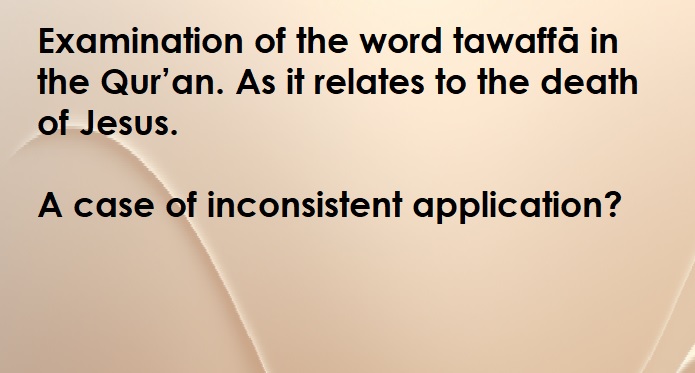
Inconsistent application of tawaffa when it relates to Jesus in (Qur’an 5:117 and Qur’an 3.55)
Based upon Hadith reports in which a great many believe are Tawātur and therefore convincing, if not binding, to believe in it altogether.
Lastly, if indeed we are mistaken in this position, we ask Allah (swt) to forgive us. Certainly there is a difference between not believing that Jesus (alayi salam) will return and not believing in him should he return.
Let’s be honest. Who wouldn’t want to see Prophet Jesus (alayi salam) come back and deal justice to the rebellious children of Banī Isrāʾīl?
The erroneous and groundless tafsir of this verse is partially responsible for this belief.
Muhammad al-Tahir ibn Ashur, a famous Maliki scholar who wrote a tafsir of the Qur’an. He believed that Jesus (as) died. We did not hear any takfir made of him or any excommunication made of him.
Ali Erbaş Turkish Islamic scholar and president of directorate of religious affairs -diyanet in Turkey, believes that Jesus (as) is dead. The Presidency of Religious Affairs (Diyanet) is Turkey’s highest official Islamic authority.
Dr. Louay Fatoohi whom is a Caliph of the Ṭarīqa ʿAliyya Qādiriyya Kasnazāniyya lays out why he believes Jesus (as) is dead and that he will not return to Earth.
Dr. Shabir Ally is someone who has been involved in interfaith dialogues, discussions and debates for 35 years. If he felt there was some solid proof for the second coming of Christ Jesus in the Qur’an he would have advanced it.
“I said not to them except what You commanded me – to worship Allah , my Lord and your Lord. And I was a witness over them as long as I was among them; but when You caused me to die., You were the Observer over them, and You are, over all things, Witness.” (Qur’an 5:117)
“When Allah said, “O Jesus, indeedI will cause you to die and raise you to Myself and purify you from those who disbelieve and make those who follow you [in submission to Allah alone] superior to those who disbelieve until the Day of Resurrection. Then to Me is your return, and I will judge between you concerning that in which you used to differ.” (Qur’an 3:55)
﷽
The verb tawaffā (verbal noun: tawaffī) seems to cause a great deal of needless distress among Muslim exegetes. Why is this so?
We are going to present our case that if it was not for these oral traditions, Muslim exegetes would not argue the way they do at all.
So keep in mind that the interpretation of the verses that clearly say that Jesus died is influenced by ‘the tradition’.
Yet, the Qur’an itself offers no cause for confusion. Tawaffā appears in twenty-five verses in the Qur’an, and twice in relation to Christ Jesus (Qur’an 5:117 and Qur’an 3.55).
For twenty-three of those verses, the Muslim commentators generally follow the standard definition of this term, that is that Allah (swt) separates the soul from the body or makes someone die.
Think about this. For those verses in the Qur’an that are not tied into ahadith about Jesus(as) coming back, they are translated and understood as per usual.
Interestingly enough, we have the following du’a:
“And you do not resent us except because we believed in the signs of our Lord when they came to us. Our Lord, pour upon us patience and let us die as Muslims [in submission to You].” (Qur’an 7:126)
How often do we say this du’a after congregational prayers?
So let us use the ol Google machine — aka—the much feared and dreaded ‘Shaykh Google’ and put two and two together, shall we?
So what we are going to do as an experiment so that you, the reader, can follow along as we are going to call upon the good people at https://www.islamawakened.com-Whoever they are, may Allah (swt) bless them.
They put all the translations out for everyone to see.
So what we are going to do is show you all the disparate translations into the English language. We will then put those that don’t immediately convey the idea of death—at least to us.
Tawaffā appears in twenty-five verses: Let us examine them all.
We will go in order of the chapter and verse they appear in.
Example: 1 (Qur’an 2:234)
“And those who are taken in death among you and leave wives behind – they, [the wives, shall] wait four months and ten [days]. And when they have fulfilled their term, then there is no blame upon you for what they do with themselves in an acceptable manner. And Allah is [fully] acquainted with what you do.” (Qur’an 2:234)
Ya Allah people 51 disparate translations from people coming from different approaches to Islam have translated the passage as DEATH.
The two odd ones out: Ahmed Hulusi, a translation still in progress… and Muhammed Mahmoud Ghali and even then it finally puts “And the ones of you who are taken up, (i.e., those who die).”
You want to talk about consensus? The consensus here is that yutawaffawna means death, to die.
Example: 2(Qur’an 2:24)
“And those who are taken in death among you and leave wives behind – for their wives is a bequest: maintenance for one year without turning [them] out. But if they leave [of their own accord], then there is no blame upon you for what they do with themselves in an acceptable way. And Allah is Exalted in Might and Wise.” (Qur’an 2:24)
Once again, look at the 52 disparate translations and the verdict is that yutawaffawna means death, to die.
Example: 3 (Qur’an 3:193)
“Our Lord, indeed we have heard a caller calling to faith, [saying], ‘Believe in your Lord,’ and we have believed. Our Lord, so forgive us our sins and remove from us our misdeeds and cause us to die with the righteous.” (Qur’an 3:193)
“Gather us to Thee with the pious” — Dr. Laleh Bakhtiar
“And take us with the obedient ones”—The Monotheist Group 2011 edition.
“Take us back to You”—Aisha Bewley
“And take us to You with the ever benign (ones)”—Muhmmed Mahmoud Ghali
“Include us among the righteous people”-Bijan Moeinian
“And take us to Thee with the pious.” -Arthur John Arberry
“And claim us back with the righteous” — N J Dawood (2014)
“You never fail to fulfill your oath” — Ahmed Halusi
44 Translators are in consensus that the term watawaffanā -is to cause to die.
In fact, we would say that N J Dawood, Arberry, Bewley, Bakhtiar or the Monotheist Group, none of them believe that watawaffana here means to be bodily raised up to heaven.
Example: 4 (Qur’an 4:15)
“Those who commit unlawful sexual intercourse of your women – bring against them four [witnesses] from among you. And if they testify, confine the guilty women to houses until death takes them or Allah ordains for them [another] way.” (Qur’an 4:15)
“The angels will ask those whom they claim back while steeped in sin”- N J Dawood 2014
“And those the angels take, while still they are wronging themselves”-Arthur John Arberry
“And the angels who take those who wronged themselves will say”-Hasan Al-Fatih Qaribullah
“When the angles take the should of those who [had compromised and in consequence] were unjust to their own souls”-,Bijan Moeinian
“Surely the ones whom the Angels take up, (while) they are unjust to themselves”-Muhammed Mahmoud Ghali
“Indeed, those whom the angels take away while they are wronging themselves” -Ali Quli Qara’i
“The angels ask those they take while they are wronging themselves” -Aisha Bewley,-
“Those whom the Angels take, while they had wronged their souls.”-The Monotheist Group (2011 Edition)
“While the angels are gathering the souls of those who wronged themselves.”-Safi Kaskas
“Those whom the angels will gather up”- T. B Irving
“Truly, those whom the angels gathered to themselves.”-Dr. Laleh Bakhtiar
The overwhelming consensus of 42 translations is that tawaffāhumu is to die by taking the souls.
Example: 6 (Qur’an 5:117) –text that is about Jesus.
“I said not to them except what You commanded me – to worship Allah , my Lord and your Lord. And I was a witness over them as long as I was among them; but when You caused me to die., You were the Observer over them, and You are, over all things, Witness.” (Qur’an 5:117)
We know the drill on this crucial passage. So let us see the disparate translations here:
“Thou hast caused me to die”-Muhammad Asad
“But when Thou didst cause me to die”-Shakir
“You did cause me to die”-Wahiduddin Khan
“You did cause me to die”- Safi Kaskas
“Ever since You took my soul”-Abdel Haleem
“And after my life had been done”- Ahmed Ali
“After You caused me to die”-Shabbir Ahmed
“but when you gave me Wafat”-Dr. Kamal Omar (NON COMMITTAL)
“You terminated my life”-Monotheist group-2013
“but when You caused me to die” -Muhammed Shafi
“Thou didst cause me to die”-Maulana Muhammad Ali
“so when You made me die”- Muhammad Ahmed-Samira
“Thou didst cause me to die”-Sher Ali
“When You terminated my life on earth”-Rashad Khalifa
“You caused me to die”- Amatul Rahman Omar
“Thou didst cause me to die” -George Sale
39 Translations overwhelming support the view that tawaffaytanī -is to be raised up, gathered up, recalled. We assume the majority believe bodily and alive.
So in the curious case of Jesus (as) the majority view is not to understand tawaffaytanī as death. That was predictable; as it will be when we get to (Qur’an 3:55).
WHAT ABOUT THE TWO VERSES THAT ARE THAN USED TO SUGGEST THAT JESUS HAS BEEN PUT TO SLEEP FOR THESE LAST 2000 YEARS? (Qur’an 6:60) & (Qur’an 39:42)
That is to say they want to argue that Jesus (as) has been put to sleep and will one day wake up at some unspecified time. Presumably as per various hadith traditions etc.
Example: 7(Qur’an 6:60)
“And it is He who takes your souls by night and knows what you have committed by day. Then He revives you therein that a specified term may be fulfilled. Then to Him will be your return; then He will inform you about what you used to do.” (Qur’an 6:60)
“Allah takes the souls at the time of their death, and those that do not die [He takes] during their (manāmihā)sleep. Then He keeps those for which He has decreed death and releases the others for a specified term. Indeed in that are signs for a people who give thought.” (Qur’an 39:42)
This is why we have the well known du’a for going to sleep and rising from sleep:
Narrated Hudhaifa:
Whenever the Prophet (saw) intended to go to bed, he would recite: “Bismika Allahumma amutu wa ahya (With Your name, O Allah, I die and I live).” And when he woke up from his sleep, he would say: “Al-hamdu lil-lahil-ladhi ahyana ba’da ma amatana; wa ilaihi an-nushur (All the Praises are for Allah Who has made us alive after He made us die (sleep) and unto Him is the Resurrection). “
Question: Has anyone observed a person sleeping that their body suddenly disappeared or went some where else?
I think we all know the answer is No.
“And He has made me blessed wherever I am and has enjoined up me prayer and zakah as long as I remain alive.” (Qur’an 19:31)
What kind of embellished claims are you going to make about Jesus (as) giving zakat in the heavens while asleep?!!
Here is the interesting point about these verses. If as some of the exegetes want to understand it as ‘you put me to sleep‘ and ‘than raised me up‘ than what about those who say, “No he raises him up first and than will put him to sleep in the future!”
DO TELL US WHICH VERSION IS CORRECT?
They would be taking into account:
“but Allah raised him to Himself. Allah is All-Mighty, All-Wise.” (Qur’an 4:158)
Does that really make any sense? They can’t both be correct.
Also know that Qur’an 5:117 or Qur’an 3:55 can’t be understood as falling asleep. It is actually negated by Qur’an 6:60 and Qur’an 39:42
Why? Allah (swt) either:
Takes souls at the time of their death. If the souls are taken the person(body) dies.
Other souls are taken during sleep-during an unspecified period of time-if they are not returned than they die in their sleep leaving behind a body.
Other souls are taken during sleep-during an unspecified period of time –If they are returned to their body the person lives the course of their natural life until they die in the future.
In all three examples thebody is left behind. There are no examples where tawaffā means to taking the soul and the body.
So since our interlocutors in this discussion will absolutely rule out points 1 & 2 with regards to Christ Jesus (as) let us look at point 3.
Let us put up the two verses in consideration and juxtapose them. We will put up two translations that are very user friendly to the ‘he didn’t die and was bodily raised up‘ crowd.
“Behold! Allah said: “O Jesus! I will take thee AND raise thee to Myself and clear thee (of the falsehoods) of those who blaspheme; I will make those who follow thee superior to those who reject faith, to the Day of Resurrection: Then shall ye all return unto me, and I will judge between you of the matters wherein you dispute.” (Qur’an 3:55 Yusuf Ali translation)
“Never said I to them aught except what You did command me to say, ‘worship Allah, my Lord and your Lord’; and I was a witness over them while I dwelt among them; when You did take me up You were the Watcher over them, and You are a witness to all things.” (Qur’an 5:117 Yusuf Ali translation)
Now if we only had Qur’an 5:117 and we were feeling really charitable (despite the fact the word is translated as death every where else)- we could say, “O.K. maybe you have a point“.
However, Qur’an 5:117 has to also be in harmony with Qur’an 3:55 doesn’t it?
This is where our interlocutors are in a most difficult situation. Why are they in a most difficult situation? Qur’an 3:55 says, “mutawaffīka WA rāfiʿuka.”
Thus, their arguments make the Qur’an a redundant revelation.
It would be akin to saying: “I am going to take your soul from your body (just like when we sleep) and than I am going to raise up (presumably) your physical body. It would have been sufficient to just say that Allah (swt) ‘took him up’.
However, we have this slight problem. We have this very troublesome conjunction called ‘WA‘ -AND.
Why does Allah (swt) want you to know that he did something to Jesus (as) before “taking him up”? Couldn’t Allah (swt) just say that he “took him up”?
Why would Allah (swt) say, “I made Jesus fall asleep and than I took him up.” What point is being made there?
“Gabriel replied, ‘Muhammed.’ It was asked, ‘Has he been called?’ Gabriel answered in the affirmative. Then it was said, ‘He is welcomed. What an excellent visit his is!’ The gate was opened. When I went over the second heaven, there I saw Yahya (i.e. John) and `Isa (i.e. Jesus) who were cousins of each other. Gabriel said (to me), ‘These are John and Jesus; pay them your greetings.’ So I greeted them and both of them returned my greetings to me and said, ‘You are welcomed, O pious brother and pious Prophet.’ ”
What should we expect concerning the state of those Prophets (May Allah’s peace and blessings be upon them all)?
“The Messiah, son of Mary, is no more than a messenger, certainly the messengers before him have passed away. And his mother was a saintly woman. And they both used to eat (earthly) food. See how We make the revelations clear for them, and see how they are turned away!” (Qur’an 5:75)
So in light of Qur’an 6:60 and Q ur’an 39:42
Are there any indications in Qur’an 5:117 or Qur’an 3:55 that Allah (swt) took a soul out of Jesus -during a sleep phase -only to put it back in, and afterwards raise a body up?
“And has blessed me wherever I might be and has enjoined upon me Prayer and Zakah (purifying alms) as long as I live.” (Qur’an 19: 31)
Is Jesus(as) asleep (hence why he’s not doing zakat-for as long he lives?) being ‘disembodied‘ -meaning his soul is some where and his body is some where else? Yet , he has time for a quick meet and greet with the Blessed Prophet (saw) according to the above hadith?
In fact one of the Mauritanian Shaykhs -Shaykh Salek bin Siddina āl-Māliki whom was called upon to correct Mufti Abu Layth doesn’t buy into the argument of redundancy either.
This Shaykh knows full well what the text says and so he uses a different strategy -to save the hadith traditions-of course!
(We have also downloaded this video-you know-in case it mysteriously vanishes)
Here are some notes we took of the video in the post linked to above.
We thought it was interesting. The translator said: @ 0:55 “Isa alayi salam has died a complete death.”
Prima Qur’an comments: “What other kind of death is there?”
@ 3:30 minutes, the translator addresses what the Shaykh says: “Mutawafikka is a word that can be translated to ‘I will cause you to die.’ It is mentioned in a way that it does not indicate any particular order.”
“Allah says I will cause you to die, and I will raise you to me, it doesn’t it is used…”
@5:11 minutes, the translator addresses what the Shaykh says:
“So this ‘And’ is the type of WA that is being used. Those are both things that are being done, not necessarily in a particular order.” “In the statement that Zayd and Umar came, it doesn’t mean that Zayd came first. Not in any way does it indicate an order of those things.”
Prima Qur’an comments:
Firstly. May Allah (swt) have patience with the translator. The shaykh often would not allow the translator to finish. If the idea is to convey in Arabic let it be conveyed in Arabic, but if there is an agreement that this knowledge is to be transmitted by translation into English, than give the translator time.
Second the respected shaykh knows full well the obvious that ‘mutawafikka‘ means ‘I will cause you to die‘.
Third he definitely is not on board with the interpretation: “No he raises him up first and than will put him to sleep in the future!“
Fourth the shaykh being influenced by the traditions has to make the Qur’an confirm to his presuppositions. As we stated before if it were not for the traditions (which the shaykh brought up quite often) you would wonder if he would have felt the need to use this literary device. In English we call this hysteron proteron.
For example you could say I put on my shoes and socks. No one understands that you put the shoes on and then the socks.
So what is important that we take away from this is that.
The Shaykh understands the word in Qur’an 3:55 means death
A cursory reading of the text would be ‘I will cause you to to die and than elevate you.’
The obvious understanding of the text is made to conform to a literary device. This is obviously based upon the presupposition the shaykh holds to the ahadith.
Another point about Qur’an 5:117
Narrated Ibn `Abbas:
Allah’s Messenger (saw) delivered a sermon and said, “O people! You will be gathered before Allah barefooted, naked and not circumcised.” Then (quoting Qur’an) he said:– “As We began the first creation, We shall repeat it. A promise We have undertaken: Truly we shall do it..” The Prophet (saw) then said, “The first of the human beings to be dressed on the Day of Resurrection, will be Abraham. Lo! Some men from my followers will be brought and then (the angels) will drive them to the left side (Hell-Fire). I will say. ‘O my Lord! (They are) my companions!’ Then a reply will come (from Almighty), ‘You do not know what they did after you.’I will say as the pious slave (the Prophet (as) Jesus) said: And I was a witness over them while I dwelt amongst them. When You took me up. You were the Watcher over them and You are a Witness to all things.’ (Qur’an 5:117) Then it will be said, “These people have continued to be apostates since you left them.”
Now what is the condition of the Blessed Prophet (saw) at this point when he used that phrase “When you took me up?” It is clear that Allah (swt) took his soul and his body is in Madinah. In other words the Prophet Muhammed (saw) died.
Was he taken body and soul into the heavens?
Example: 8 (Qur’an 6:61)
“And He is the subjugator over His servants, and He sends over you guardian-angels until,when death comes to one of you, Our messengers take him, and they do not fail [in their duties].” (Qur’an 6:61)
The unanimous decision of 54 translations is that tawaffathu is death.
Example: 9 (Qur’an 7:37)
“And who is more unjust than one who invents about Allah a lie or denies His verses? Those will attain their portion of the decree until when Our messengers come to them to take them in death, they will say, “Where are those you used to invoke besides Allah ?” They will say, “They have departed from us,” and will bear witness against themselves that they were disbelievers.” (Qur’an 7:37)
“When Our messengers come to gather them”- M.M Pickthall
“Our Messengers drew near to gather them to themselves” -Dr. Laleh Bakhtiar
“Our messengers come to carry them off”-T.B Irving
“So that when Our messengers come to take them”-The Monotheist Group (2011) -changed position in 2013.
“When Our angels arrive to take them back”-Abdel Haleem
“When Our messengers come to take them away”- “Ali Quli Qara’i
“When Our Messengers come to them to take them up”-Muhammed Mahmoud Ghali
“Our Messengers come to take them away.”- Hasan Al-Fatih Qaribullah
“Our messengers come to them, to take them away”- Arthur John Arberry
“Until when Our messengers come to them to take them away”- Sayyed Abbas Sadr-Ameli
44 disparate translations are unanimous in their decision that yatawaffawnahum means to take the souls and or to die.
Worth mentioning is that ‘The Monotheist Group‘ translation changed in 2013.
Example: 10 (Qur’an 7:126)
“And you do not resent us except because we believed in the signs of our Lord when they came to us. Our Lord, pour upon us patience and let us die as Muslims [in submission to You].” (Qur’an 7:126)
“Lift us (from the world)”-Dr. Mohammed Tahir Qadri.
“And gather us unto Thee”- Arthur John Arberry.
“And take us to Thyself resigned”-Edward Henry Palmer
47 disparate translations believe that watawaffana is to die.
Even those that don’t translate it as such take for example Dr. Mohmmed Tahir Qadri, do you really think his belief when making this du’a is that Muslims will be taken bodily into the sky? Does anyone really think Aisha Bewley believes this?
Example: 11 (Qur’an 8:50)
“And if you could but see when the angels take the souls of those who disbelieved… They are striking their faces and their backs and [saying], “Taste the punishment of the Burning Fire.” (Qur’an 8:50)
“Are called to themselves by the angels”-Dr. Laleh Bakhtiar
“See as the Angels take those who have rejected”-The Monotheist Group 2011 -changed in 2013 edition
“When the angels take away the faithless”-Ali Quli Qara’i
“As they take up the ones who disbelieved”, -Muhmmed Mahmoud Ghali
“As the angels take away those who disbelieve”-Talal A. Itani (new translation)
When the angels take the unbelievers”-Arthur John Arberry
47 disparate translations are in agreement that yatawaffameans to separate the soul from the body, to cause to die.
Example: 12 (Qur’an 10:46)
“And whether We show you some of what We promise them, [O Muhammed], or We take you in death, to Us is their return; then, [either way], Allah is a witness concerning what they are doing.” (Qur’an 10:46)
“Or whether We will take you to Ourself”-Hamid S. Aziz
“We definitely take you up to Us” -Muhammed Mahmoud Ghali
“Or We take you back to Us”-Muhammed Taqi Usmani
“Or take you”-Talal A. Itani
“Or We call you unto Us”-Maududi
“We call you towards Us”- Faridul Haque
“Or We call you to Us”- Hasan Al-Fatih Qaribullah
“Or We call you unto Us”- Ahmed Raza Khan (Barelvi)
“We call thee unto Us”-Arthur John Arberry
“Or we will take thee to ourself”-Edward Henry Palmer
“Or whether we first take thee to Ourself”-John Medows Rodwell
“Or claim you back to Us”-N J Dawood (2014)
37 disparate translations are of the view that natawaffayannaka means to cause to die, to separate the soul from the body.
Now there are a few points that need to be mentioned here. Understand that many people who don’t believe that the Prophet (saw) is dead. They believe that the Prophet (saw) was poisoned by a Jewish woman and that made him (saw) a martyr. Therefore, he is alive ‘though we do not perceive it’. However, if you ask them if they believe a body is in the Prophets Mosque in Medina, they will answer ‘of course’.
In fact, every one of those translators who translate as they do asks them point-blank, “Do you believe there is a body in the Mosque in Medina with the Green Dome?”
Remember the point we mentioned earlier about these people making the Qur’an redundant?
Let’s take the translation of Muhammed Mahmoud Ghali
Let us look at he translates the above text:
“And whether We definitely show you something (i.e., some form of punishment) of what We promise them, or We definitely take you up to Us, then to Us will be their return; thereafter Allah is Ever-Witnessing over whatever they perform.” (Qur’an 10:46)
“We definitely take you up to Us” -Muhammed Mahmoud Ghali
Now let us look at he translates Qur’an 3:55
“As Allah said, “O Isa, (Jesus) surely, I am taking you up to Me, and I am raising you up to Me, and I am purifying you of the ones who have disbelieved. And I am making the ones who have closely followed you above the ones who have disbelieved until the Day of the Resurrection. Thereafter to Me will be your return; so I will judge between you as to whatever you used to differ in.” (Qur’an 3:55)
“I am taking you up to Me, and I am raising you up to Me.” – Muhammed Mahmoud Ghali.
Notice the redundancy in the language used? He could have just translated as “I am taking you up to Me” OR “I am raising you up to Me” -because in his mind they both mean the same thing.
This is the exact kind of problems that they run into when they approach the Qur’an with a mind of making it to conform to the oral traditions.
Example: 13(Qur’an 10:104)
“Say, [O Muhammed], “O people, if you are in doubt as to my religion – then I do not worship those which you worship besides Allah ; but I worship Allah , who causes your death. And I have been commanded to be of the believers.” (Qur’an 10:104)
“Who will eventually retrieve you back to Him”- Safi Kaskas
“Who takes me”-The Monotheist Group 2011 edition -changed in the 2013 edition.
“Who will take you back to Him”-Aisha Bewley
“Who takes you to Himself”-Hamid S. Aziz
“Who takes you up to Him”-Muhammed Mahmoud Ghali
“I only serve Allah Who will cause (all of) you to”-Maududi
“Who will gather you to Him”-Arthur John Arberry
“Who takes you to Himself”_Edward Henry Palmer
“Who will claim you back”-N J Dawood (2014)
43 disparate translations understand yatawaffākum to mean to terminate the life of, to take the souls, to cause to die.
Example: 14(Qur’an 12:101)
“My Lord, You have given me [something] of sovereignty and taught me of the interpretation of dreams. Creator of the heavens and earth, You are my protector in this world and in the Hereafter. Cause me to die a Muslim and join me with the righteous.” (Qur’an 12:101)
“Call me to Thyself as one who submits.”-Dr. Laleh Bakthiar
“Gather me in as a Muslim.”-T.B Irving
“Take me as one who has surrendered.”-The Monotheist Group 2011 Edition -changed in the 2013 edition
“O receive me to Thee in true submission.”-Arthur John Arberry
“Take me to Thyself resigned,” -Edward Henry Palmer
49 different disparate translations understand tawaffani as to die , to separate the soul from the body.
Example: 15(Qur’an 13:40)
“And whether We show you part of what We promise them or take you in death, upon you is only the [duty of] notification, and upon Us is the account.” (Qur’an 13:40)
“Or We call you to Us before”- Ahmed Raza Khan (Barelvi)
“Or We lift you.”-Dr. Mohammad Tahir-ul-Qadri
“We call thee to Us”-Arthur John Arberry
“Or we will take thee to Ourself”-Edward Henry Palmer
“Or whether we take thee hence”-John Medows Rodwell
“Or claim you back to Us”-N J Dawood (2014)
37 Disparate translations understandnatawaffayannaka to mean to die , to separate the soul from the body.
Example: 16(Qur’an 16:28)
“The ones whom the angels take in death [while] wronging themselves, and [who] then offer submission, [saying], “We were not doing any evil.” But, yes! Indeed, Allah is Knowing of what you used to do.” (Qur’an 16:28)
“Those whom the angels call to themselves”-Dr. Laleh Bakhtiar
“Whom the angels will carry away”-T.B. Irving
“Those whom the Angels take while they had wronged their souls”-The Monotheist Group 2011 Edition -changed in the 2013 edition.
“Those whom the angels take away while they are wronging themselves”- Ali Quli Qara’i
“Those whom the angels take away while they are wronging their own souls.”-Hamid S. Aziz
“Whom the Angels take up while they are unjust to themselves.”-Muhammed Mahmoud Ghali
“The unjust, who will be seized by the angels, will submit themselves”-Muhammed Sarwar
“Whom the angels take while they were still harming themselves.”-Hasan Al-Fatih Qaribullah
“Whom the angels take while still they are wronging themselves”-Arthur John Arberry
“Those whom the angels took away were wronging themselves;”-Edward Henry Palmer
“Those whom the angels will claim back”- N J Dawood (2014)
43 different and disparate translations have tatawaffāhumu understood to be taken in death.
Example: 17(Qur’an 16:32)
“The ones whom the angels take in death,[being] good and pure; [the angels] will say, “Peace be upon you. Enter Paradise for what you used to do.” (Qur’an 16:32)
“Those whom the angels call to themselves”-Dr. Laleh Bakhtiar
“Whom the angels carry off”-T.B. Irving
“Those whom the Angels take”-The Monotheist Group 2011 Edition-changed in 2013 edition
“Those the angels take in a virtuous state.”-Aisha Bewley
“Those whom the angels take away while they are pure”.-Ali Quli Qara’i
“To those whom the angels take away in a goodly state”-Hamid S. Aziz
“Whom the Angels take up while they are goodly”-Muhammed Mahmoud Ghali
“They will be received by the angels of mercy”-Muhammed Sarwar
“Those who are in a wholesome state when the angels take them”-Talal A. Itani
“Whom the angels take while they are goodly”- Hasan Al-Fatih Qaribullah
“Whom the angels take while they are goodly”-Arthur John Arberry
“To those whom the angels take off in a goodly state:-Edward Henry Palmer
“Whom the angels will claim”-N J Dawood (2014)
41 different and disparate translations understandtatawaffāhumu as to take in death, to take the soul.
Example: 18(Qur’an 16:70)
“And Allah created you; then He will take you in death. And among you is he who is reversed to the most decrepit [old] age so that he will not know, after [having had] knowledge, a thing. Indeed, Allah is Knowing and Competent.” (Qur’an 16:70)
“He will take you”-The Monotheist Group 2011 Edition -2013 edition they changed their position.
“Will take you back again”-Aisha Bewley
“Then He takes you away”-Ali Quli Qara’i
“Then He will take you to Himself”-Hamid S. Aziz
“Thereafter He takes you (to Him)”-Muhammed Mahmoud Ghali
“Then He takes you back”-Muhammed Taqi Usmani
“Then He takes you away”-Talal A. Itani
“Then He will gather you to Him”-Arthur John Arberry
“Then He will take you to Himself”-Edward Henry Palmer
“By and bye will he take you to himself”-John Medows Rodwell
“And He will then reclaim you”-N J Dawood (2014)
41 disparate translations understand yatawaffākum- as to cause to die, to separate the soul from the body.
Example 19: (Qur’an 22:5)
“O People, if you should be in doubt about the Resurrection, then [consider that] indeed, We created you from dust, then from a sperm-drop, then from a clinging clot, and then from a lump of flesh, formed and unformed – that We may show you. And We settle in the wombs whom We will for a specified term, then We bring you out as a child, and then [We develop you] that you may reach your [time of] maturity. And among you is he who is taken in [early] death, and among you is he who is returned to the most decrepit [old] age so that he knows, after [once having] knowledge, nothing. And you see the earth barren, but when We send down upon it rain, it quivers and swells and grows [something] of every beautiful kind.” (Qur’an 22:5)
Prima Qur’an Comments: One thing is certain you cannot escape death. Look at all thes above translators of Qur’an 22:5 who were very reluctant to use the word death or dying. They resisted and resisted and finally they yield.
“And among you there is he whom death will call to itself”-Dr. Laleh Bakhtiar
“[Then] there are some of you who are taken away”-Ali Quli Qara’i –this guy still resist 😉
“And among you there is he who is taken up, (i.e., dies)“-Muhammed Mahmoud Ghali. So now Muhammed Mahmoud Ghali sheds light on what he means by ‘is taken up‘ i.e -death.
“Then We (rear you) that you may attain your (age of) full strength. And among you then is he who is allowed to complete (the normal life-span)”- Dr. Kamal Omar -odd translation
“And some of you die“-Arthur John Arberry
“And of you are some who die“-Edward Henry Palmer
“Some among you die young”-N J Dawood (2014)
Example 20: (Qur’an 32:11)THE MOST POWERFUL VERSE FOR LOOKING AT ALL THESE ODD TRANSLATIONS
Say, “The angel of death will take your soul who has been entrusted with you. Then to your Lord you will be returned.” (Qur’an 32:11)
“Will take you”-The Monotheist Group 2011-the 2013 edition modified their translation
“Will take you up”-Muhammed Mahmoud Ghali
“Will collect you”-Shabbir Ahmed
“Will take you”-Umm Muhmmad Sahih Internationl
“Will reclaim you”-Talal A. Itani
Will gather you”- Hasan Al-Fatih Qaribullah
“Shall gather you”-Arthur John Arberry
“Shall take you away”-Edward Henry Palmer
“Will claim you back.”-N J Dawood (2014)
“Will gather you”-Sayyid Qutb
The reason why this is the most powerful verse yet discussed is because it deals with the angel of death. What does the angel of death do? It is very obvious. The fact that translators who we have seen use that same ambiguity here makes it now both known and clear what they mean.
So for example when we see them use ambiguous terms like:
“gather you”
“call you to itself”
“retrieve you”
“take you up”
“collect you”
“claim you”
“reclaim you”
“summoned”
We now know with certainty that all of these authors meant ‘to die’, ‘to separate the soul from the body’ ‘to take the soul’. What else does the Angel of Death do? Notice you kept seeing practically the same group of people that will over and over use ambiguous terms. Instead of making their case plain in the most obvious situation—”the angel of death” — they still choose to use ambiguous language — which sheds light on their ambiguity in all other places! This actually means that the verb tawaffā (verbal noun: tawaffī) is being translated nearly 100% of the time as to die, to cause to die, to separate the soul from the body!
Thank you! Al hamdulillah!
Example: 21 (Qur’an 39:42)
“Allah takes the souls at the time of their death, and those that do not die [He takes] during their sleep. Then He keeps those for which He has decreed death and releases the others for a specified term. Indeed in that are signs for a people who give thought.” (Qur’an 39:42)
This is another very powerful verse. Not a single translator can play with the text here. It is as Allah (swt) says,
“We have brought them a Scripture – We have explained it on the basis of knowledge – as guidance and mercy for those who believe.” (Qur’an 7:52)
The beautiful thing about this verse is that death is clearly contrasted with sleep (as explained in a similar verse above).
Here there is 100% unanimous approval from the translators that yatawaffā is death, final death, physical death, taking the soul from the body.
Translators (any of us) can try and play fast & loose with the words of Allah (swt) but sooner or latter we will get caught out.
Example :22 (Qur’an 39:42)
“It is He who created you from dust, then from a sperm-drop, then from a clinging clot; then He brings you out as a child; then [He develops you] that you reach your [time of] maturity, then [further] that you become elders. And among you is he who is taken in death before [that], so that you reach a specified term; and perhaps you will use reason.” (Qur’an 39:42)
“And some are summoned before completing the whole cycle”-Bijan Moeinian
“Are taken away before”-Edward Henry Palmer
Once again, there is unanimous understanding that ‘yatawaffa’ means to die, to be taken in death, to take the soul, to separate the soul from the body.
Remember as well that these ambiguous terms: ‘summoned’, ‘taken away’, ‘recalled’, ‘gone with the wind’, ‘spirited away’ etc. None of that is ambiguous to us now. It all means having died.
Example: 23(Qur’an 40:77)
“So be patient, [O Muhammed]; indeed, the promise of Allah is truth. And whether We show you some of what We have promised them orWe take you in death, it is to Us they will be returned.” (Qur’an 40:77)
“We definitely take you up (to Us)”-Muhammed Mahmoud Ghali
“We recall you”-Farook Malik
“Or take you to Us”-Talal A. Itani
“Or We recall you (from this world)”-Maududi
“Call you to Us”- Hasan Al-Fatih Qaribullah
“Or make you depart from the visible life”-Dr. Mohammed Tahir-ul-Qadri (from the visible life-what’s he mean here make you become invisible?) (walk around cloaked from vision)
“We call thee unto Us”-Arthur John Arberry
“Take thee to ourself”-Edward Henry Palmer
“Or claim you back”-N J Dawood 2014
The unanimous decision is that natawaffayannaka means to cause to die, to take the life of, to separate the soul from the body. The only exception seems to be Dr. Mohammad Tahir Ul Qadri who seems to be offering everyone the power of invisibility; however we are sure that you dear reader will see this is not the case.
Exampe: 24 (Qur’an 47:27)
“Then how [will it be] when the angels take them in death, striking their faces and their backs?” (Qur’an 47:27)
“Angels will call them to themselves”-Dr. Laleh Bakhtiar
“Gather them up”-T. B. Irving
“Then the angels take them away”-Ali Quli Qara’i
“Angels take them up”-Muhammed Mahmoud Ghali
“The angels take them”-Arthur John Arberry
Again the unanimous consensus is that tawaffathumu means to die, to cause to die, to take the soul at death, to separate the soul from the body.
Example: 25(Qur’an 3:55)text that is about Jesus.
“When Allah said, “O Jesus, indeedI will cause you to die and raise you to Myself and purify you from those who disbelieve and make those who follow you [in submission to Allah alone] superior to those who disbelieve until the Day of Resurrection. Then to Me is your return, and I will judge between you concerning that in which you used to differ.” (Qur’an 3:55)
We all know the drill of how the masses understand these ayats and how both the bulk of majority scholarship want the masses to understand them.
Tawaffā appears in twenty-five passages in the Qur’an, and twice in relation to Christ Jesus (Qur’an 5:117 & Qur’an 3.55).
Conclusion and Summary
The Qur’anic usage of tawaffā is remarkably consistent
The linguistic facts:
Tawaffā / tawaffī appears ~25 times in the Qur’an.
In every uncontroversial context, it means:
Allah takes the soul
i.e. death (final death or death-like separation, as in sleep, where the body remains)
Even in verses where translators use softer English (“take”, “gather”, “recall”, “claim”), the underlying meaning is still death, as we convincingly demonstrated by:
Context (Angel of Death, punishment, resurrection)
Cross-comparison with Qur’an 39:42 and 6:60
The translators’ own theology (none believe people are bodily lifted into heaven at death)
In other words:
Lexically, contextually, and theologically, tawaffā in the Qur’an means “to take the soul,” resulting in death.
No neutral reader disputes this.
The problem only appears with Jesus (Q 3:55 and Q 5:117)
We correctly identified the anomaly:
23 verses → tawaffā = death
2 verses about Jesus → suddenly reinterpreted
This inconsistency is not driven by Arabic, grammar, or Qur’anic context.
It is driven by extra-Qur’anic commitments.
The real pressure comes from hadith-based eschatology
Classical Sunni theology developed a very detailed end-times narrative in which:
Jesus is alive
He was raised bodily
He will return physically before the Hour
Once that framework is assumed, the Qur’an must be made to fit it.
So when exegetes reach:
Qur’an 3:55 (mutawaffīka wa rāfiʿuka)
Qur’an 5:117 (falammā tawaffaytanī)
They face a dilemma:
Either:
Read tawaffā consistently → Jesus died
Or preserve the tradition → reinterpret the word
They overwhelmingly choose option 2.
How exegetes resolve the tension (as we have documented)
To preserve the tradition, they resort to:
a) Redefinition
Claiming tawaffā here means:
“taking without death”
“taking the soul temporarily”
“taking body and soul”
➡️ None of these meanings exist elsewhere in the Qur’an
b) Literary devices (e.g., hysteron proteron)
Arguing that:
“wa (and) does not imply order”
So:
“I will cause you to die and raise you” does not mean death precedes raising
This move is theologically motivated, not text-driven.
As we have noted:
A plain reading already makes sense
The literary device is introduced only because death is unacceptable
c) Strategic ambiguity in translation
Using phrases like:
“take you to Myself”
“recall”
“gather”
“claim back”
Yet the same translators use these exact phrases for ordinary death elsewhere, including:
The Angel of Death (Qur’an 32:11)
Disbelievers being punished
The Prophet Muhammed (saw) himself
This exposes the inconsistency.
The Qur’an 39:42 destroys the “sleep” theory
We highlighted the decisive verse:
Allah takes the souls at the time of their death, and those that do not die during their sleep…
This verse establishes three categories only:
Soul taken → death
Soul taken during sleep → body remains
Soul returned → life continues
There is no category where the body is taken.
So:
“Jesus was asleep for 2000 years”
“Jesus’ soul was taken but his body raised”
“Jesus is alive somewhere bodily”
➡️ None of these fit Qur’anic anthropology
Qur’an 3:55 and the problem of redundancy
The observation here is crucial:
mutawaffīka WA rāfiʿuka
If tawaffā already means “raise bodily,” then:
rāfiʿuka becomes redundant
The verse collapses into tautology
But if tawaffā means death, the verse is elegant and non-redundant:
Death (completion of earthly mission)
Elevation in rank/status with Allah
Purification from accusations
Vindication of followers
This reading:
Fits Qur’anic style
Fits Qur’anic anthropology
Fits Qur’an 5:75 (“messengers before him passed away”)
Why the distress persists?
So we return to our original question.
Why does tawaffā cause so much distress?
Because:
Accepting its Qur’anic meaning forces a revision of inherited eschatology
That revision feels, to many, like undermining tradition
So the text is bent to protect the framework rather than the reverse
In short:
The distress is not linguistic. It is theological. And it is inherited, not Qur’anic.
Final takeaway
Our documentation shows that:
The Qur’an is internally consistent
The word tawaffā is not ambiguous in usage
The ambiguity appears only when external narratives are imposed
Once those narratives are removed, the verses about Jesus read plainly
As we concluded:
“If it were not for the traditions, Muslim exegetes would not argue this way at all.”
Jesus (alayi salam) he is dead. He is not coming back!
Open your eyes brothers and sisters, dear truth seekers.
“Allah said, O Jesus, I shall cause you to die and will raise you up to Me and shall purify you of the ungrateful disbelieving people, and shall place those who follow you above those who deny the truth, until the Day of Judgement; then to Me shall all return and I will judge between you regarding your disputes.” (Qur’an 3:55)
﷽
Shaykh Hamza Yusuf states in the interview with Kim Iversen: “What Islam Really Says About Jihad, Martyrdom, and Women’s Rights“, which has been shortened to: “What Islam Really Says About Jihad.“
@17:27 minute mark, Shaykh Hamza says: “The vast majority of Muslims believe in the second coming.”
They pleaded, “O Zul-Qarnain! Surely Gog and Magog are spreading corruption throughout the land. Should we pay you tribute, provided that you build a wall between us and them?” (Qur’an 18:94)
﷽
He said, “This is a mercy from my Lord. And when the Promise of my Lord comes, He will crumble it to dust. And the Promise of my Lord is true.” (Qur’an 18:98)
“And We shall leave them, on that Day, to surge against one another like waves. And the trumpet shall be blown, and We shall gather them together.” (Qur’an 18:99)
First we will share a clip in which the Mufti of Oman, the Islamic Scholar, the Sword on the Neck of the Munafiq, His Imminence, Shaykh Ahmed Al Khalili (h) touches upon two topics:
The emergence of Gog and Magog and the so-called second coming of Jesus (as). For those of you conversant in Arabic, you may follow along. Otherwise, a translation in English is provided below: insh’Allah.
First question about Juj & Majuj
Grand Mufti was asked if there are some signs in the Qur’an about Juj & Majuj. Can you share with us your view on this issue? Have they already come or are they yet to come later?
Grand Mufti replies: “This depends upon the research of the scholars. As there are many scholars who have agreed that they have already come forth. And this is not far away from reality, because it is possible that between their coming and the day of judgement there is a lot of time in between these events. Time is different from how we measure time. It is like the time on the day of judgement would be like 50,00 years of our time.”
Dr. Saif AlHadi asked what is meant in the Qur’an:
“Until he reached ˹a pass˺ between two mountains. He found in front of them a people who could hardly understand ˹his˺ language.” (Qur’an 18:93) and than the following verse:
“They pleaded, “O Zul-Qarnain! Surely Gog and Magog are spreading corruption throughout the land. Should we pay you tribute, provided that you build a wall between us and them?” (Qur’an 18:94)
So Dr Saif AlHadi is asking how we join these verses? Because if you take the apparent text of the Qur’an without approach to interpretative measures, it may not make sense. At first, they find a people who scarcely understands any word, and then suddenly, in the next verse, are those people able to communicate their issue with him?
So, to this, the Grand Mufti replies: There are two possibilities.
1) “That the majority of them do not understand anything but this would not mean all of them do not understand. So it is possible they have learned among those who understand but not the masses of them. “
2) “The other possibility is the use of another language common between the two.”
Now the question comes to the: The Coming of Jesus.
Grand Mufti replies: “There is a difference of opinion among scholars. This revolves around the (Qur’an 3:55) “I will give you death and I will raise you up to me.” and how one understands it. As well as: Rather, “Allah raised him up to Himself. And Allah is Almighty, All-Wise” (Qur’an 4:158) as well as the various narrations on the matter. Yet these hadith for us are not tawatur. We also have to take into account that the Prophet is the last prophet and no prophet is coming after him. The Messenger of Allah and seal of the prophets. And ever is Allah, of all things, The Knowing. (Qur’an 33:40) So as we understand this Jesus (as) will not come. The narrations are not mutawatir and thus we cannot take on this matter.”
Prima-Qur’an comments:
The respected Shaykh mentions that the hadith that mention the return fo Jesus (as) are not tawatur and thus they are not decisive as evidence for us.
In fact, if one were to look into the hadith on the matter they will find a what conficts with and contradicts one another as well as the Qur’an.
Dear readers, when one reads the Qur’an, you can see that Juj (Gog) & Majuj (Magog) were real people, real nations or tribes that would accost and harass some people. Zul-Qarnain was asked to erect a barrier to keep those people out. They were not supranatural peoples.
wanufikha fi l-suri (AND) will be blown the Trumpet. As Shaykh explained, he is of the mind that this event (The coming of Gog and Magog) has already happened. Now in English it is easy to get caught up in the flow of the language. Yet, the WA (And) is not something that indicates immediately after. We saw this in our article here:
In the above article, the respected Shaykh understood the WA(And) in Qur’an 3:55 as a vast period of time. Allowing him to believe that a lapse of time of more than 2000 years has passed.
The Shaykh also mentioned that it is possible we are in those end times now. However, we should understand that how Allah (swt) views and measures time is quite different from our vantage point.
“And they ask you to hasten on the punishment, and Allah will by no means fail in His promise, and surely a day with your Lord is as a thousand years of what you count.” (Qur’an 22:47)
Next, another verse not brought up in the discussion above, but the other place we am aware of in the Qur’an speaking of Gog and Magog is the following:
“Until ˹after˺ Gog and Magog have broken loose ˹from the barrier˺, swarming down from every hill, ushering in the True Promise. Then—behold!—the disbelievers will stare ˹in horror, crying,˺ “Oh, woe to us! We have truly been heedless of this. In fact, we have been wrongdoers.” (Qur’an 21:96-97)
The above verse simply reinforces the point made here:
“And We shall leave them, on that Day, to surge against one another like waves. And the trumpet shall be blown, and We shall gather them together.” (Qur’an 18:99)
Which, again, is not on the day of judgement but at a time before it.
Conclusion: In the Ibadi school. Juj(Gog) and Majuj (Magog) have already come. Jesus (as) has died, and he will not come back.
In the end, we defer our matter to the masters of the Arabic language.
May Allah (swt) guide the Ummah to what is beloved to Allah (swt).
If you would like, perhaps you would be interested in reading the following:
“Allah said, O Jesus, I shall cause you to die and will exalt you in my presence and shall purify you of the ungrateful disbelieving people, and shall place those who follow you above those who deny the truth, until the Day of Judgement; then to Me shall all return and I will judge between you regarding your disputes.” (Qur’an 3:55)
﷽
Now we know many are going to be scratching their heads and thinking about “The Third Coming of Jesus”. What could they mean? Well, we know it doesn’t have the grandeur and Hollywood excitement that “The Second Coming” does, but after, it is what it is.
Why don’t Christians and others talk about the “The Third Coming of Jesus” or, for that matter, the “257th Coming of Jesus”? Because it just doesn’t have the bang that Jesus Part 2 has.
Everyone anticipates a good sequel to a great movie. However, it does get overdone when there becomes a Rocky V and then a Rocky VI, one wonders when it will ever end.
You see in the Bible it says the following:
“Now, upon the first day of the week, very early in the morning, they came unto the sepulcher, bringing the spices which they had prepared, and certain others with them. And they found the stone rolled away from the sepulcher….
And returned from the sepulcher, and told all these things unto the eleven, and to all the rest…And, behold, two of them went that same day to a village called Emmaus…
… And they rose up at the same hour, and returned to Jerusalem, and found the eleven gathered together… And as they spake, Jesus himself stood in the midst of them, and said unto them, Peace be unto you….
…And as it came to pass, while he blessed them, he was parted from them, and was carried up into heaven.”(Luke 24:1-51) (Mark 16:9-19)
Jesus went up into heaven on the day of his resurrection.
“And after eight days, again his disciples were within, and Thomas with them: then came Jesus, the doors being shut, and stood in the midst, and said, Peace be unto you.” (John 20:26) So Jesus went up into heaven at least eight days after his resurrection.
Or was it forty days after his resurrection?
“Until the day in which he was taken up…he shewed himself alive after his passion by many infallible proofs, being seen of them forty days, and speaking of the things pertaining to the kingdom of God:….And when he had spoken these things, while they beheld, he was taken up; and a cloud received him out of their sight. (Acts 1:2-3,9)
There are a number of ways to handle this difficulty.
1) Take Luke 24:51 and Mark 16:19 out of the Bible (many have opted for this)
2) Try to harmonize the accounts.
We think if we use our imaginations and exegesis a bit, option 2 is quite feasible. You see, nowhere does the New Testament text say Jesus didn’t return, does it? So what we can speculate on is that Jesus went up into heaven that day, as Luke 24:51 says; however, after doing whatever business he had to do in heaven he decided to, once again, grace us with his presence. Jesus came back and hung around for a while; in fact, this kind of Jesus could come and go as he darn well pleased.
In fact, it becomes even more possible considering that many Christians believe that Jesus appeared whenever he wanted in the ‘Old Testament‘ as the ‘Angel of the Lord‘. Even Satan would appear as the ‘Angel of the Lord’
“And the angel of the Lord found her by a fountain of water in the wilderness, by the fountain in the way to Shur. And he said, Hagar, Sarah’s maid, where you going? And what place do you intend to go? And she said, I flee from the face of my mistress Sarah. And the angel of the Lord said unto her, Return to your mistress, and submit yourself under her hands. The angel of the Lord said unto her, I will multiply thy seed exceedingly, that it shall not be numbered for multitude.” (Genesis 16:7-10)
So we can see from this that Jesus would beam in and out of Earth (like Star Trek) from time to time…
The point is that, instead of waiting for “The Second Coming of Jesus”, everyone should sit back and relax because, indeed, we may be waiting for “The 3rd Coming of Jesus.” We could very well be waiting for “The 125th coming of Jesus.”
If we are to believe the ‘Angel of the Lord’ theory of many Christian sects, we could be waiting for the 125th coming of Jesus, though it won’t sell many videos and T-shirts!
Look busy. Jesus is coming……..again.
May Allah Guide the Christians so that they do not burn in the hellfire.