“It is He Who has revealed the Book to you; some of its verses are decisive, they are the basis of the Book, and others are allegorical; then as for those in whose hearts there is perversity they follow the part of it which is allegorical, seeking to mislead and seeking to give it (their own) interpretation. But none knows its interpretation except Allah, and those who are firmly rooted in knowledge say: We believe in it, it is all from our Lord, and none do mind except those having understanding.” (Qur’an 3:7)
﷽
Now it may escape many of us who are not familiar with either the Arabic text or the various English translations of this; however, there are two very different ways to translate a very key element of this text.
Notice this very mystically and Shi’a influenced translation here:
“It is He Who has sent down the Book upon thee; therein are signs determined; they are the Mother of the Book, and others symbolic. As for those whose hearts are given to swerving, they follow that of it which is symbolic, seeking temptation and seeking its interpretation. And none know its interpretation save God and those firmly rooted in knowledge. They say, “We believe in it; all is from our Lord.” And none remember, save those who possess intellect.” –The Study Qur’an.
Another translation favoured by people who want human beings (that are not Prophets) to have a very heavy influence over the Qur’an is here:
“He is the One who sent down to you the Scripture, from which there are firm verses; they are the essence of the Scripture; and others which are similar to each other. As for those who have a disease in their hearts, they will follow what is similar from it seeking to confuse, and seeking to derive an interpretation. But none know its interpretation except God and those who are well-founded in knowledge, They Say: “We believe in it, all is from our Lord.” And none will remember except the people of understanding.” –The Monotheist group.
Now let us pause for a moment and ponder the theology behind this.
Why do you suppose a translation which is heavily influenced by Shi’a and mystical traditions would translate the Arabic text as “And none know its interpretation save God and those firmly rooted in knowledge.”?
Think about it. You would favour such a translation of the text if you had a concept of esoteric knowledge being passed to a secret inner circle and/or if you had a belief in infallible interpreters.
You would also want to favour such a translation if you use it as a key element of your polemic to claim the totality of the Qur’an is clear in all matters; and hence you would have a very strained translation that reads: “others which are similar to each other.”
So we can see how the bulk of translators from disparate backgrounds have translated the verse here:
Now Rashad Khalafa is the first person that we know of whom, using numerology, plucked a verse out of the Qur’an, and showing utter disdain for its context, began to employ a numerological pattern based upon the number 19 throughout the Qur’an.
In the process of doing so, he cast doubt about the Qur’an, taking two verses out himself. He declared himself a prophet. Declared the multitudes of Muslims as mushriks.
This is what the world looked like 30 years after the death of the last and final Messenger [saw].
30 years after the death of Rashad Khalafa, what do we have?
Dozens of competing Quraniyoon groups. Scattered chat groups in online forums pitching any number of sectarian Quranist ideology to new converts and/or isolated Muslims. Most of them coalesce around one personality. This personality becomes their hermeneutic guide. That is until they find fault with him and someone splits away to form another Quranist group.
So let us look at the verse in question. Let us see if what this numerologist claims pans out.
“Soon will I cast him into Hell–Fire.”
“And what will explain to you what Hell–Fire is?
“Naught does it permit to endure, and naught does it leave alone!”
“Darkening and changing the colour of man!”
“Over it are Nineteen.”
“And We have set none but angels as guardians of the Fire; and We have fixed their number only as a trial for Unbelievers in order that the People of the Book may arrive at certainty, and the Believers may increase in Faith and that no doubts may be left for the People of the Book and the Believers, and that those in whose hearts is a disease and the Unbelievers may say, “What symbol does Allah intend by this?” Thus does Allah leave to stray whom He pleases, and guide whom He pleases: and none can know the forces of your Lord, except He. And this is no other than a warning to mankind.”
(Qur’an 74:27-31)
Now we show the difference between those of us who love the Qur’an and those who follow the Quraniyoon religion.
The first major difference is that those of us who love the Qur’an is that we have a deep love and respect for the Qur’an as a revelation from Allah [swt]. We are not dismissive of what Allah [swt] says. We do not try and superimpose meanings from our nafs -ego upon the Qur’an.
We do our level best not to ignore the context of the Qur’an.
Whereas those who follow the Quraniyoon religion, many of them follow a man named Rashad Khalifa, and it is his self-imposed numerological interpretation that is followed as though it is what Allah [swt] says.
Authubillah minash shaitain ir rajim.
“Over it are Nineteen.” This is the verse that many Quraniyoon have a strong aversion and disdain for.
It reminds us of what Allah [swt] says here:
“He said, “O my people have you considered: if I should be upon clear evidence from my Lord while He has given me mercy from Himself but it has been made unapparent to you, should we force it upon you while you are averse to it?” (Qur’an 11:28)
Those who follow the Quraniyoon religion will go on and on about how they claim they believe that the Qur’an is clear and that it is ‘highly detailed‘ yet when it comes to that verse above, they are averse to it.
“And when Our verses are recited to them as clear evidence, those who do not expect the meeting with Us say, “Bring us a Qur’an other than this or change it.” Say, [O Muhammed], “It is not for me to change it on my own accord. I only follow what is revealed to me. Indeed I fear if I should disobey my Lord, the punishment of a tremendous Day.” (Qur’an 10:15)
“Over it are Nineteen.” – Where in this text does it say that the ‘It’ is a reference to the Qur’an?
“Over it are Nineteen.”-Where does this text say that “It’ is a reference to surah Al Fatiha?
“Over it are Nineteen.”- Where in this text does it say that the ‘Nineteen’ is a reference to letters?
“Over it are Nineteen.”- Where in this text does it say that ‘Nineteen’ is a reference to the basmallah?
“Over it are Nineteen.”- Where does this text say that the ‘basmallah’ is a confirmed verse of Al fatiha?
But those people who follow the Quraniyoon religion who follow their own whims and desires love it when you say:
Qala Rashad — Says Rashad
Qala Edip — Says Edip
But when you say Qala Allah-Says Allah, they will be averse.
They do not like when Allah [swt] says to them:
“So when you recite the Qur’an, seek refuge in Allah from Satan the rejected.” (Qur’an 16:98)
Now, when we allow the context of the Qur’an to speak, what do we find?
“Soon will I cast him into Hell–Fire.”
“And what will explain to you what Hell–Fire is?
“Naught does it permit to endure, and naught does it leave alone!”
“Darkening and changing the colour of man!”
“Over it are Nineteen.”
“And We have set none but angels as guardians of the Fire……”
Prima Qur’an Comments:
The ‘It‘ does not depend on some human beings to come 1400 years later and give it clarity. This verse of the Qur’andidn’t wait until a human being came along and made it clear or gave it a ‘detailed explanation‘.
It becomes clear to all whose eyes are open and whose hearts are not averse to the manifest truth in front of them that the ‘It‘ is a reference to hellfire.
“Over it are Nineteen.”
So what does the nineteen reference?
The following verse tells us:
“And We have set none but angels as guardians of the Fire; and We have fixed THEIR NUMBER only as a trial for Unbelievers in order that the People of the Book may arrive at certainty, and the Believers may increase in Faith and that no doubts may be left for the People of the Book and the Believers, and that those in whose hearts is a disease and the Unbelievers may say, “What symbol does Allah intend by this?” Thus does Allah leave to stray whom He pleases, and guide whom He pleases: and none can know the forces of your Lord, except He. And this is no other than a warning to mankind.” (Qur’an 74:31)
“Over it[hellfire] are Nineteen.”
Allah [swt] informs us:
“O you who have believed, protect yourselves and your families from a Fire whose fuel is people and stones, over which are angels, harsh, and severe; they do not disobey Allah in what He commands them but do what they are commanded.” (Qur’an 66:6)
“Angels as Guardians of the Fire.”
“We have fixed their number only as a trial for Unbelievers.” – You could translate this as “We have made their waiting period as a trial for unbelievers.”
“None can know the forces of your Lord, except He.”
Prima Qur’anComments:
It is evidently clear that nineteen is a reference to angels.
However, those who averse to the book of Allah [swt] and prefer the revelations of men will tell us this simply refers to the static number 19.
The very big problems with this are as follows:
We know that they can’t pin this number 19 on ‘it‘ because they have no internal reference from the Qur’an as to what the ‘it’ is a reference for. For the Muslims, it is obvious for the Quraniyoon Allah [swt] left them in confusion.
They want to connect 19 to ‘their number‘, which produces the inescapable fact of Arabic grammar. Facts that they hide from their followers.
The Arabic text: iddatahum is:
N-accusative feminine noun Prounoun-3rd person masculine plural possessive prounoun.
That is a definitive reference to the angels, not numbers.
The next point of evidence is also something which puts a cherry on top of the sealed deal.
“and none can know the forces of your Lord, except He” – What do you think Allah [swt] is talking about here in the context of 74:31?
Forces–junuda– it is never talking about number 19. Junuda is always used in reference to soldiers, forces, host, army.
Again, not an impersonal number but to the angels.
Now let us entertain the machinations of the Quraniyoon—in reality Qur’an rejecters:
Let us say that this junuda-forces means number 19. This would be self-defeating as it would mean that Allah [swt] is not the only one who knows the number, because human beings know the number as well!
Next points:
Let us remember what Allah [swt] says:
and others are allegorical; then as for those in whose hearts there is perversity they follow the part of it which is allegorical, seeking to mislead and seeking to give it (their own) interpretation (Qur’an 3:7)
and that those in whose hearts is a disease and the Unbelievers may say, “What symbol does Allah intend by this?(Qur’an 74:31)
Notice something here? The people who are asking, ‘Well what is meant by 19?‘ We can stop right then and there and know that they are people with diseased hearts, hearts filled with perversity and are among the ranks of the ungrateful disbelievers.
We know this because Allah [swt] told us clearly that these people would be the ones who are pursuing it.
Now an objection from those who follow the Quraniyoon religion, who do not believe in what Allah [swt] says is as follows:
“How does telling people there are 19 angels guarding the hellfire increase them in faith or convince them about Islam?“
It’s as if they don’t even bother to look at what Allah [swt] said his objectives were.
Let’s recap:
Trial for unbelievers-Fitnatan That people of the book arrive at certainty–liyastayqina believers increase in faith–imanan no doubt left for the people of the book and the believers-yartaba
Those are the objectives:
So how are all these objectives met? Well, we can clearly see that this whole text is a fitna for those whose hearts are a disease and unbelievers.
As regards the other three categories:
“But if he is one of those who denied the truth and went astray.” –alddalleena(Qur’an 56:92)
“The path of those You have blessed; not of those who have incurred Your wrath, nor of those who have gone astray.”- (Qur’an 1:7)
“Then for him is the accommodation of scalding water and burning Hellfire Indeed, this is the true certainty.” (Qur’an 56:92)
All three objectives are met:
If the people of the book arrive in hell, there will be no doubting its certainty.
The believers will increase in faith.
There will be no doubt for either the believers or the people of the book.
The icing on the cake will be to see that hellfire is indeed guarded by 19 something that only Allah [swt] would know: “none can know the forces of your Lord, except He” will be evident to all.
“Surely those who receive our revelations with denial and arrogance, the gates of heaven will not be opened for them, nor will they enter Paradise until a camel passes through the eye of a needle. This is how We reward the wicked. Hell will be their bed; flames will be their cover. This is how We reward the wrongdoers. As for those who believe and do good—We never require any soul more than what it can afford—it is they who will be the residents of Paradise. They will be there forever. We will remove whatever bitterness they had in their hearts. Rivers will flow under their feet. And they will say, “Praise be to Allah for guiding us to this. We would have never been guided if Allah had not guided us. The messengers of our Lord had certainly come with the truth.” It will be announced to them, “This is Paradise awarded to you for what you used to do.” The residents of Paradise will call out to the residents of the Fire, “We have certainly found our Lord’s promise to be true. Have you too found your Lord’s promise to be true?” They will reply, “Yes, we have!” Then a caller will announce to both, “May Allah’s condemnation be upon the wrongdoers, those who hindered ˹others˺ from Allah’s Way, strived to make it ˹appear˺ crooked, and disbelieved in the Hereafter.” There will be a barrier between Paradise and Hell. And on the heights ˹of, that barrier˺ will be people who will recognize ˹the residents of˺ both by their appearance. They will call out to the residents of Paradise, “Peace be upon you!” They will have not yet entered Paradise, but eagerly hope to. When their eyes will turn towards the residents of Hell, they will pray, “Our Lord! Do not join us with the wrongdoing people.” Those on the heights will call out to some ˹tyrants in the Fire˺, who they will recognize by their appearance, saying, “Your large numbers and arrogance are of no use ˹today˺! Are these ˹humble believers˺ the ones you swore would never be shown Allah’s mercy?” ˹Finally, those on the heights will be told:˺ “Enter Paradise! There is no fear for you, nor will you grieve.” The residents of the Fire will then cry out to the residents of Paradise, “Aid us with some water or any provision Allah has granted you.” They will reply, “Allah has forbidden both to the disbelievers, those who took this faith ˹of Islam˺ as mere amusement and play and were deluded by ˹their˺ worldly life.” ˹Allah will say,˺ “Today We will ignore them just as they ignored the coming of this Day of theirs and for rejecting Our revelations.” We have certainly brought them a Book which We explained with knowledge—a guide and mercy for those who believe. Do they just wait for the final fulfillment of the event? On the day the event is finally fulfilled, those who disregarded it before will say: “The apostles of our Lord did indeed bring true (tidings). Have we no intercessors now to intercede on our behalf? Or could we be sent back? then should we behave differently from our behavior in the past.” In fact, they will have lost their souls, and the things they invented will leave them in the lurch.”
(Qur’an 7:40-54)
The absurdity of the interpretation by the Quraniyoon religion.
Imagine that for 1400 years this text had no meaning that was clear and cogent to the Blessed Messenger (saw) or his companions. Instead, rather than the guidance of Allah (swt), humanity had to wait for guidance from a man who used numerology to deduce his conclusions.
In what way was the mentioning of this number producing certainty for the ahl kitab for 1400 years? How does it produce certainty for the over 1 billion Christians who haven’t even heard of this?
Rather, for 1400 years, people from all walks of life have been coming to Islam without numerology. Al hamdulillah.
Obviously, none of the so-called numerology patterns of 19 were known at the time of the Blessed Messenger [saw]. In fact, when this verse was revealed, a great portion of the Qur’an was not even revealed.
Not only that, but you would think that Rashad Khalifa, with such a find, would be able to inspire his own children to carry on with his mission.
However, they are quite uninspired.
Neither Ahmed Rashad Khalifa or Samir Rashad Khalifa take up the mantle of their father.
“Those who reject Faith will not cease to be in doubt concerning revelation until the Hour comes suddenly upon them, or there comes to them the Penalty of a Day of Disaster.” (Qur’an 22:55)
For a further excellent refutation of the claims of the quraniyoon religion, we would recommend the following:
“Indeed, those who believed and those who were Jews or Christians or Sabeans – those who believed in Allah and the Last Day and did righteousness – will have their reward with their Lord, and no fear will there be concerning them, nor will they grieve.” (Qur’an 2:62)
“Indeed, those who have believed and those who were Jews and the Sabeans and the Christians and the Magians and those who associated with Allah – Allah will judge between them on the Day of Resurrection. Indeed Allah is, over all things, Witness.” (Qur’an 22:17)
“Indeed, those who have believed and those who were Jews or Sabeans or Christians – those who believed in Allah and the Last Day and did righteousness – no fear will there be concerning them, nor will they grieve.” (Qur’an 5:69)
﷽
So in this “highly detailed” book that “leaves nothing out” who and what are the Sabeans? If we asked the followers of the Hafs Qur’an Only Religion what they thought.
If Joseph Islam, Sam Gerrans, Hamza Abdul Malik, Shabir Ahmed, Edip Yuksel, Aisha Musa, Qur’an Centric were to all have a conference together, you ask them: “Who are the Sabeans?” Please give me as many Qur’an references and quotations as humanly possible.
What would you come up with?
Edip Yuksel and his co-translators decided to simply throw in the towel. They decided that the Qur’an itself doesn’t explain what the word means, so they relied upon Hadith literature!
This is what they give you instead.
“Surely those who acknowledge, and those who are Jewish, and the Nazarenes,and those who follow other religions, anyone of them who acknowledge God and the Last day, and do reform, they will have their reward with their Lord, with no fear over them, nor will they grieve.*” (Qur’an 2:62 A Reformist Translation)
So they just leave the Sabeans out altogether.
When it comes to 5:69 we are just given a footnote that says, “005:069 See 2:62 “
“Those who acknowledge, the Jews, the Converts, the Nazarenes, the Zoroastrians, and those who have set up partners; God will separate between them on the day of Resurrection. For God is witness over all things.” (Qur’an 22:17 A Reformist Translation)
So here you can see in (Qur’an 22:17) the Sabians get translated as ‘the Converts’ whereas in (Qur’an 2:62) they just get left out completely.
So Edip Yuksel, Layth Saleh al-Shaiban & Martha Schulte-Nafeh came up with the following:
Source: (Reformist Translation of the Qur’an pg. 65)
Apparently, Layth Saleh al-Shaiban, who is the translator, didn’t tell us a source that says: “SaBaA means to be an apostate.” The “detailed Qur’an” that “doesn’t leave anything out of the book” certainly does it tell us this. One of the three mentioned above wrote:
“As for the word Sabiene, it is a mistranslated as a proper name by the majority of commentators.” So which classical commentator understands the word in the way that they do? One of them wrote: “In fact, it derives from the Arabic word SaBaA, meaning to be an apostate, or ‘the follower of other religions’. Hadith books use this word as an accusation of Meccan mushriks directed against Muhammed when he started denouncing the religion of his people, they described his conversion to the system of Islam with the verb ‘SaBaA’.
“In fact, it derives from the Arabic word SaBaA, meaning to be an apostate, OR ‘the follower of other religions’. Where does the “highly detailed” Qur’an that “leaves nothing out of the book” mention this?
Why couldn’t they cross-reference the word with another word in the Qur’an?
Why are Edip and his co-authors/translators referencing the Hadith books? Why is the Qur’an not sufficient to tell us what the word means? Also,
Edip and his co-authors/translators must think that the book of Allah (swt) has some deficiency when using language. Notice that they say, that SaBaA could mean: apostate/follower of other religion/
“The true religion with Allah is Islam(l-is’lamu). Those who were given the Book were not at variance except after the knowledge came to them, being insolent one to another. And whoso disbelieves in God’s signs. God is swift at the reckoning.” (Qur’an 3:19)
If Allah (swt) was meaning that all of those people who believe in God, the Last Day and Work Righteousness, he could just have said: “l-is’lam.” If what is intended by Edip’s thinking is a submitter to God? Also, unfortunately, Edip’s understanding of the verse leaves Buddhism out in the freezing cold.
So does Sabian mean: Apostate/Convert/ Or the very vague: Follower of Other Religions? Obviously, putting the word Apostate in the verses will be very awkward.
This is how it would look for the curious:
“Those who acknowledge, the Jews, the Apostates, the Nazarenes, the Zoroastrians, and those who have set up partners; God will separate between them on the day of Resurrection. For God is witness over all things.” (Qur’an 22:17 A Reformist Translation)
“Surely those who acknowledge, and those who are Jewish, and the Nazarenes, and the Apostates, anyone of them who acknowledge God and the Last day, and do reform, they will have their reward with their Lord, with no fear over them, nor will they grieve.” (Qur’an 2:62 A Reformist Translation)
Simply bizarre. Absolutely no explanation is given for why Allah (swt) would mention converts (presumably to Islam) in these verses when they would already be believers.
So let us plug in “follower of other religions.” This is how it would look for the curious:
“Those who acknowledge, the Jews, the followers of other religions, the Nazarenes, the Zoroastrians, and those who have set up partners; God will separate between them on the day of Resurrection. For God is witness over all things.” (Qur’an 22:17 A Reformist Translation)
“Surely those who acknowledge, and those who are Jewish, Nazarenes, and those who follow other religions, anyone of them who acknowledge God and the Last day, and do reform, they will have their reward with their Lord, with no fear over them, nor will they grieve.” (Qur’an 2:62 A Reformist Translation)
The problem with the Reformist Translation, beyond trying to make the Qur’an say what one wants it to say, is that it looks less and less like it came from a Creator and more and more like a confused, jumbled mess.
Little wonder the only praise the book got was from fellow Qur’an Only Religious believers, those who want to liberalize Islam and oh yes, ‘One anonymous Sunni scholar” (of course…wink, wink).
Here is how a Creator who is trying to convey to us that he sent one system for humanity, and that there is no delineation between any of the systems would convey his message:
“Surely those who acknowledge God and the Last Day, and do reform, they will have their reward with their Lord, with no fear over them, nor will they grieve.” There you go. Very simple.
Sam Gerrans takes a stab at it. In his “Qur’an a Complete Revelation” we have nothing novel there.
“Who are the Sabeans according to this detailed book?”—Sam Gerrans
“I don’t know, but I have a pretty good guess,”—Edip Yuksel.
“Ah sweet bro, let me copy that down!”—Sam Gerrans.
“Those who heed the warning and those who hold to Judaism and the Nazarenes And the Sabaeans Whoso believe in God and the Last day and works righteousness: They have their reward with their lord and they need not fear Nor will they regret.” (Qur’an 2:62 A Complete Revelation Sam Gerrans)
His foot note says:
“’Arabic s-b-‘. This root is also associated in the early Islamic literature with followers of other faiths, or with apostates. I am indebted to Edip Yuksel et al. for this point.”
“Those who heed warning And those who hold to Judaism and the Sabaeans and the Nazarenes Whoso believes in God and the Last Day and works righteousness: They need not fear Nor will they regret.” (Qur’an 5:69 A Complete Revelation Sam Gerrans)
“Those who heed warning and those who hold to Judaism And the Sabaeans And the Nazarenes and the Majus And those who ascribe a partnership God will decide between them on the Day of Resurrection. God is a witness over all things.” (Qur’an 22:17 A Complete Revelation Sam Gerrans)
And he has a footnote that reads in regard to Majus
“Muhammed Asad comments here:
“Al-majus: the followers of Zoroaster or Zarathustra (Zardusht), the Iranian prophet who lived about the middle of the last millennium B.C, and whose teachings are laid down in the Zend-Avesta. They are represented today by Gabrs of Iran and, more prominently, by the Parsis of India and Pakistan. Their religion, though dualistic in philosophy is based in belief in God as the Creator of the universe.”
So as regards Sabeans, Gerrans has decided to leave the word transliterated into English and has copied and pasted Edip et al. and what they have said.
Those who follow the Hafs Qur’an Only Religion have absolutely no recourse to this word, Sabean, other than to reference early Islamic literature. The word appears three times in the “highly detailed revelation” that apparently leaves nothing out, is clear, and explains itself. For this, among many, many other reasons, we do not find the Hafs Qur’an Only Religion to be cogent.
“Then is it other than Allah I should seek as judge while it is He who has revealed to you the Book explained in detail (mufassalan)?” And those to whom We [previously] gave the Scripture know that it is sent down from your Lord in truth, so never be among the doubters.” (Qur’an 6:114)
﷽
“Then is it other than Allah I should seek as judge while it is He who has revealed to you the Book explained in detail (mufassalan)?” And those to whom We [previously] gave the Scripture know that it is sent down from your Lord in truth, so never be among the doubters.” (Qur’an 6:114)
It was actually these verses that made me realize that we need to stop approving comments from those of the Hafs Qur’an Only Religion.
Why? Because every comment from an adherent of that faith would try to explain to us what certain verses mean. They would try to expoundupon certain verses. Knowing that they are already outside of Islam, we did not want to assist them in their sins.
The only comments we would approve from them are simply quotes from the Qur’an In Arabic. Nothing else is needed. If we meet one in person, they can simply recite the Qur’an (if they are able). There is no need to expound, explain, propose, elucidate, expand on, elaborate on, spell out, describe etc.
Because to do that would mean that they (the sects of the Hafs Qur’an Only Religion) are asserting that the Qur’an is not fully detailed. That it needs an outside expositor.
This verse of the Qur’an we take very seriously
“And cooperate in righteousness and piety, but do not cooperate in sin and aggression. And fear Allah ; indeed, Allah is severe in penalty.” (Qur’an 5:2)
So this is why we do not approve comments from adherents of that anymore. Unless, of course, it is simply the Arabic text of the Qur’an. We do not want to assist them in sin, since by expounding, explaining, proposing, elucidating, expanding on, elaborating on, spelling out, describing they are ascribing to Allah (swt) a lie!
We are simply helping them to be consistent in their world view. So next time, dear brothers and sisters, if any of them start to take on the role of the Creator (according to their own view) and start to expound, explain, propose, elucidate, expand on, elaborate on, spell out, describe, tell them to cease and desist and give you the Qur’an only!
These disbelievers claim that Muhammed (saw) is simply a mail carrier, whereas they delegate to themselves a higher role. They do not simply deliver the mail, but rather they expound, explain, propose, elucidate, expand on, elaborate on, spell out, describe the mail.
In fact, most we met commit blatant shirk because they have relied upon the following: Shabir Ahmed, The Monotheist Group, Rashad Khilafa attempting to translate the meaning of the Arabic into other languages!
In fact, Allah (swt) asserts with power the following:
Allah (swt) says: “We have sent it down as an Arabic Qur’an so you people may understand.” (Qur’an 12:2)
If the All Wise Creator wanted you to use another language to convey the message of Islam, he would have done so. Just as he has done in the past with Aramaic and Hebrew! Where did Allah (swt) give a license to these people to put the guardianship of their soul into the hands of these men?
“So We have revealed an Arabic Quran to you, in order that you may warn the capital city and all who live nearby.” (Qur’an 42:7)
“If We had made it a foreign Quran, they would have said, ‘If only its verses were clear! What? Foreign speech to an Arab?’ Say, ‘It is guidance and healing for those who have faith, but the ears of the disbelievers are heavy, they are blind to it, it is as if they are being called from a distant place.” (Qur’an 41:44)
But the blind followers of the Hafs Qur’an Only Religion have committed shirk by entrusting their guidance to translations done by men rather than to entrust their guidance to Allah (swt). This, of course, is using their own vapid and shallow misunderstanding of the Qur’an.
This is to judge them based upon the criteria that they have set for themselves, which as we have seen, has lead to:
Hypocrisy by their attempting to explain and elucidate what Allah (swt) says is clear.
Shirk in entrusting their understanding of Allah’s message to men who translate it.
Now that we have seen how the so-called ” Hafs Qur’an Only Religion” misunderstands the verses, we will now give you the correct understanding of the verses.
“In their stories there is truly a lesson for people of reason. This message cannot be a fabrication, rather ˹it is˺ a confirmation of previous revelation, a detailed explanation of all things(wataafsila kulli shayin), a guide, and a mercy for people of faith.” (Qur’an 12:111)
So Allah (swt) has equipped the human being with mantiq (logic), deductive reasoning and abstract thinking, among other cognitive tools. When we look at the Qur’an we do not find the answers to quantum mechanics, how to change a flat tire, or even how to get to Jonathan’s house. Humanity relies upon Google Maps, Mechanics, and Quantum Physicists.
When we realize that there is a great deal of information that is not contained in the Qur’an, it becomes apparent that: ‘explanation of all things’ is hyperbolic.
This also becomes readily apparent to all when we look at the following verses as well:
“Then We gave Moses the Scripture, making complete [Our favor] upon the one who did good and as a detailed explanation of all things (watafsilan likulli shayin) and as guidance and mercy that perhaps in [the matter of] the meeting with their Lord they would believe.” (Qur’an 6:154)
So, as can be seen from the above verse (Qur’an 6:154) it is similar to (Qur’an 12:111). If what was revealed to Musa (as) is to be taken as a “detailed explanation of all things”, we run into a major, major contradiction and error in understanding.
That is because the Qur’an came after the Torah and there are things revealed in the Qur’an that are not given to Musa (as). Like, for example, the fact that the Qur’an is in Arabic. That the Qur’an speaks of the Torah being corrupted — which would be self-defeating if the Torah contained information that stated that it had been corrupted while also claiming that it is a “detailed explanation of all things.”
This is what happens when you have such a vacuous and shallow understanding of the faith.
“Because of that, We decreed upon the Children of Israel that whoever kills a soul unless for a soul or for corruption done in the land – it is as if he had slain mankind entirely. And whoever saves one – it is as if he had saved mankind entirely. And our messengers had certainly come to them with clear proofs. Then indeed many of them, even after that, throughout the land, were transgressors.” (Qur’an 5:32)
﷽
The problem with the hafs Qur’an only religion is that it has the ability to be fa,r far more violent than anything you would find in the religion of Islam. In Islam, as we follow the Qur’an and the Sunnah, we have very clear restrictions put upon us when it regards war and combat.
Thus, is it any wonder that, the first time any manifestation of this federation of sects had the opportunity to taste a little bit of power, a little bit of control, it manifested on the scene as something ultra violent.
It has been related that the Blessed Messenger (saw) said:
“You will find people who claim to have totally given themselves to God. Leave them to what they claim to have given themselves… Do not kill women or children or an aged, infirm person. Do not cut down fruit-bearing trees. Do not destroy an inhabited place. Do not slaughter sheep or camels except for food. Do not burn bees and do not scatter them. Do not steal from the spoils, and do not be cowardly.” Source: (Mālik ibn Anas, and Abū Muṣ’ab Al-Zuhri. Muwaṭṭa’ Al-Imām Mālik. (Bayrūt: Mu’assasat al-Risālah, 1993) 1:357 #918.)
According to the hafs Qur’an only religion, based upon their faulty understanding of Islam’s sacred text, they believe that there is nothing included in a book that is fully detailed and leaves nothing out that explicitly states: “Do not kill women or children.” This is frightening.
We see this on full display with Kalo Kato
In fact, due to the interpretative principles applied by any number of the federation of sects included in the Hafs Qur’an Only Religion they can manipulate such as the following:
“Because of that, We decreed upon the Children of Israel that whoever kills a soul unless for a soul or for corruption done in the land – it is as if he had slain mankind entirely. And whoever saves one – it is as if he had saved mankind entirely. And our messengers had certainly come to them with clear proofs. Then indeed many of them, even after that, throughout the land, were transgressors.” (Qur’an 5:32)
The apparent and clear reading of this verse is that the killing of a soul, unless for a soul or corruption in the land, is that this is only a decree for the children of Israel, not necessarily for anyone else. The phrase “corruption done in the land” is also not clearly defined or detailed. These types of general and vague expressions allow for sects of the Qur’an Only Religion, like Kalo Kato, to reign down death and terror upon any who get in their way.
“Among those reported killed were two soldiers and two security operatives who were among those deployed to quell the uprising as well as four children said to have been burnt when their house was torched by the rampaging Kalo-Kato sect members.” – Source: https://www.realcourage.org/2009/12/nigeria-bauchi-violence-kala-kato/
“A resident of the area said they sensed trouble when the preacher of the sect during today’s morning prayers started denouncing other Islamic sects as infidels and condemning the action against the Boko Haram sect members when according to him, ‘they were preaching the truth.’ ” — “An eyewitness, Kamal, said the sect members descended on a listener who challenged the preachers before they went wild attacking anyone in sight and burning houses.” Source: https://www.realcourage.org/2009/12/nigeria-bauchi-violence-kala-kato/
You can read more about this violent Hafs Qur’an Only Religion sect here:
What is both revealing and frightening is that the only country on Earth where a sizable portion of the population has followed the Qur’an only ideology that once they gained a foothold in an area, takfiri ideology, and violent fanaticism manifested!
We really hope that is not a portend of things to come. It is hoped that all followers of the Hafs Qur’an Only Religion would condemn the acts of this Qur’an Only Sect and it is hoped that they would interpret the text in a very different way than what Kala Kato has done.
“We have certainly granted you the seven often-repeated verses and the great Quran.” (Qur’an 15:87)
﷽
“We have certainly granted you the seven often-repeated verses AND the great Quran.” (Qur’an 15:87)
So it is true that a position held among some who follow the Umbrella Religion of Qur’an Only that they do indeed believe that Surah Al Fatiha is not a Surah at all. They do not believe that it is part of the Qur’an.
The answer is yes. Among the federation of sects that follow the Qur’an Only Religion, there are indeed those who believe that. So they would accuse the other sects of their religion of heresy and not believing what Allah (swt) says as per:
“It is certainly We Who have revealed the Reminder, and it is certainly We Who will preserve it.” (Qur’an 15:9)
However, other sects of the religion would in turn quote the exact verse to throw back at the accusers of heresy, in turn accusing them of heresy.
This has been a long-standing issue among this religion is their lack of a coherent vision in regard to what actually constitutes the Qur’an.
Where we discussed the sects of their religion, he took out two verses of the Qur’an simply because it did correspond to his supposition of how an interlocking mathematical pattern should be.
Fortunately, as yet, it has not turned into open violence between these sects. However, some sects of the Qur’an Only Religion have certainly not been shy from extreme violence before in the past, even bringing themselves to burn children alive! Nasty!
Now a very quick and easy rebuttal to this business that the ‘seven oft repeated‘ as a definite reference to Al Fatiha comes in the form of Surah Al-Maun here: https://quran.com/ms/al-maun.
In fact, those of that religion(Qur’an Only Religion) have no internal evidence in the Qur’an to reference anything as ‘Al Fatiha’. The fact that the (Qur’an Only Religion) even accepts that the Qur’an we have today is in the order it should be is a huge admission that they have submitted to the authority and traditions of human beings.
Ask them to show you the internal evidence from the Qur’an that it should be in the order that it is in:Example chapter 2: Al Baqarah (with these amounts of verses and words), chapter 3 (with these amounts of verses and words) etc. and watch them flounder and gasp for air like a fish out of water.
So now there will come an even dicier debate between them: how do you determine what is or isn’t the Qur’an!
For a religion that has some very simple understanding of the Qur’an, such as: That the Qur’an is mubeen (clear), which is meant as a barb towards the Islamic religion, these folks sure leave so much unclear.
For example: using their naïve understanding, the Qur’an could say:
“We have certainly granted you the seven often-repeated verses(insert al fatiha here)AND the great Quran.” (Qur’an 15:87)
Or: “We have certainly granted you the seven often-repeated verses: (insert Al-Ma’un here) AND the great Qur’an (Qur’an 15:87)
However, of course, this is not what has happened. Our issue is not leaving Islam to follow the Qur’an only religion to than find out which of its competing sects is correct.. Our issue is leaving Islam to follow another religion that has some of the most shallow understanding of the Qur’an one could ever come across. Not to mention trying to get any of them to recite very simple verses correctly.
Qur’an Only Religion: “You Muslims act as if the Qur’an has a special way in which it should be recited.”
Me: “Or a little more—and recite the Quran in a measured way.” (Qur’an 73:4)
So how do you recite it in a measured way? Certainly the Prophet (saw) did so?
Yet these people prefer lowly desires and their ego. They recite it based upon them.
We have never heard any of them even come close to this powerful and angelic eloquence! Absolutely moving!
If we had to do a public debate with one of them. We would give our opponent 2-3 hours and take :16 seconds. That 16 seconds would be this amazing soul! Some of you have heard about non-Muslims being moved to tears, to the point of taking shahada upon hearing such recitations. Hearts that are enlivened with the Qur’an can enliven other hearts.
Where as the dead hearts, you hear about as much enthusiasm for Allah’s revelation when they recite it (that is when they bother to even attempt it) as you would get from the average child being offered beetroots for dessert.
I have heard some people from the Qur’an only religion try and recite the Qur’an (that is those who can even be bothered to do so) and it was horrendous. To be fair, this goes to anyone who does not really invest in the Qur’an. They just invest in ‘head knowledge.’ Recently a Muslim reformist was debating Daniel Haqiqatjou. When Daniel asked the man to recite Al Fatiha, well, let us just say there was much to be desired. Imagine a whole religion that broke away from Islam, and not one among them that can fulfill what Allah (swt) says…recite the Quran in a measured way.
This is what we realized, and we hope that you too (the sincere truth seeker) will realize. That this religion that calls itself “Qur’an Only” is filled with head knowledge. We never saw any real love of the Qur’an among them.
“There has certainly been for you in the Messenger of Allah an excellent pattern of conduct for anyone whose hope is in Allah and the Last Day and [who] remembers Allah often” (Qur’an 33:21)
﷽
One of the reasons that we know that the Sunnah of the Blessed Prophet (saw) is a source of revelation and guidance for us is that every aspect of his blessed life down to the minute minutia would be regulated and corrected by Allah (swt).
In other words, if there is something that the Blessed Prophet (saw) said, or did that was not approved by Allah (swt), there would be a revelation that would bring correction and guidance.
“And He found you lost and guided [you].” (Qur’an 93:7)
It is very clear that the Sunnah of the Blessed Messenger is an authoritative source of law for us as Muslims.
“He who obeys the Messenger has obeyed Allah, but those who turn away-We have not sent you over them as a guardian.” (Qur’an 4:80)
So it is clear we are not seeking to dispute the Sunnah (words, deeds, actions, treaties) of the Blessed Messenger (saw) as a source of law.
We are simply saying that it is not equal to the authoritative weight of the Qur’an.
Let us start off with something very powerful from Allah (swt).
“This [Qur’an] is sent down from the Lord of all the worlds. If [the Prophet] had said anything against Us, We would certainly have seized his right hand and cut off his artery, and none of you could have defended him.” (Qur’an 69:43-47)
ALLAH!!!
Now can you imagine the Blessed Prophet (saw) being known as Rasūlullāh, Ḥabībullāh, Nabiyyullāh and Shafīʿullāh? That even this blessed being esteemed as He (saw) is that the Lord of the Worlds, the Lord of Might, did not leave out from his revelation that he would cut off his aorta valve!
This is if he said anything against Allah (swt). So we know from this verse that it is impossible for the Prophet (saw) to have said anything contrary to what Allah (swt) said! Nor would the Prophet (saw) act, or speak in a way that displeases Allah (swt). In fact, this article will show you that the life of the Blessed Messenger (saw) was regulated down to the most minute details. It also shows us that this is conclusive proof that the life of the Blessed Messenger(saw) is a source of divine guidance for Muslims.
“And follow that which is revealed to you from your Lord. Indeed, Allah is ever, with what you do, Acquainted.” (Qur’an 33:2)
There are four misunderstandings that are common among Muslims.
That everything that the Prophet (saw) said, or did is revelation.
That everything that the Prophet (saw) said, or did is not revelation.
That the Sunnah is equal in weight to the Qur’an as being authoritative.
The idea that the Sunnah can abrogate or override the Qur’an.
In fact, the above text (Qur’an 69:43-47) is sufficient to prove points 1 & 2 & 3 & 4 above.
This method is internally cogent and consistent and other methods in jurisprudence are hard-pressed to find any flaws in this methodological approach.
The next verse
“Nor does he speak out of desire.” (Qur’an 53:3)
I would honestly say this has to be the most abused text of the entire revelation.
It is this very verse that is unjustifiably used (and abused, might we add) to claim that every action, deed, saying, of the Blessed Messenger (saw) had divine sanction behind it.
We feel that the context of this verse is completely ignored by many fellow traditionalists.
“I swear by the star when it goes down. Your Companion is neither astray nor being misled Nor does he speak out of (l-hawa) desire. It is an inspiration (wahyun) that is inspired (yuha).” (Qur’an 53:1-4)
The ‘It’ is in the revelation is not definitive.
The ‘It’ can refer to the ‘words, deeds, actions, and treaties‘ of the Blessed Messenger (saw).
The ‘It’ can be a reference to the Qur’an itself.
The difference between divine inspiration (the Sunnah) and divine revelation sent down (Qur’an, Torah, Injil)
“And who is more unjust than one who invents a lie about Allah or says, “It has been inspired(uhiya) to me,” while nothing has been (yuha) inspired to him, and one who says, “I will reveal (sa-unzilu) like what Allah (anzala) revealed.” And if you could but see when the wrongdoers are in the overwhelming pangs of death while the angels extend their hands, [saying], “Discharge your souls! Today you will be awarded the punishment of [extreme] humiliation for what you used to say against Allah other than the truth and [that] you were, toward His verses, being arrogant.”(Qur’an 6:93)
Three categories: The one who invents a lie about Allah. The one who says it has been (yuha) inspired to me. The one who says I will (anzala) reveal like what Allah revealed.
“With truth have We sent it (anzalna) down, and with truth hath it (nazala)descended. And We have sent thee as naught else save a bearer of good tidings and a warner.” (Qur’an 17:105)
“And your Lord (ahwa) inspired the Bee to build its cells in hills, on trees, and in (men’s) habitations.” (Qur’an 16:68)
And the verse “He does not speak of his desire” is so badly abused and the claim is that every single thing that came out of the Blessed Prophets mouth was an inspired revelation.
Well, didn’t the Blessed Prophet (saw) have private conversations with his wives?
So if he said something like “Oh Aisha! I am thirsty, so could you give me some water?” Is this revelation?
Or if he said, “I need to go take care of something, and I’ll be back in 5 minutes.”
Is this revelation? Think about it! He was a human being as well as a Messenger of Allah. Surely he had daily conversations with people.
The real truth is everything the Prophet (saw) said or did is inspired revelation unless it was corrected and guided by Allah (swt).
Without a doubt, this misconception begins with the misunderstanding of the previous verses: (Qur’an 53:1-4)
The idea that the Sunnah can abrogate or override the Qur’an
You will never find any instance or example internally in the Qur’an (common agreed-upon point of reference) where the Blessed Prophet (saw) corrected Allah (swt), overturned a decision of Allah (swt). There is not a single reference at all for this.
However, we do have the following internal evidence within the Qur’an (common agreed-upon point of reference) where Allah (swt) corrected the Blessed Messenger (saw), overturned a decision by the Blessed Messenger (saw).
“The Prophet is a friend (awla) to the believers more than they are to their own selves, and his wives are their mothers. Blood relations have more rights to one another, according to the Book of Allah, than do the believers and Muhajirun. Nevertheless, you may act kindly toward your (awla) friends. All this is inscribed in the Book.” (Qur’an 33:6)
The Blessed Prophet (saw) is the mawla (ally, protector) of the believers. Even in this capacity, Allah (swt) has given guidance or correction on where the Blessed Messenger (saw) went, of course.
“O Prophet! Why are you holding something to be forbidden which Allah has made lawful to you? You seek to please your consorts. But Allah is Oft-Forgiving, Most Merciful.” (Qur’an 66:1)
Anyone familiar with what is considered the historical context of this verse knows the Blessed Messenger (saw) swore off honey for a period of time to please some of his jealous and envious wives. Yet, Allah (swt) has reminded the Blessed Messenger (saw), telling him to not make forbidden that which Allah (swt) has made permissible!
We will never find a single example internally within the Qur’an in which the Prophet (saw) corrected Allah (swt), advised Allah (swt), or overturned a decision given by Allah (swt). Not once!
Yet another example:
“Allah has indeed heard (and accepted) the statement of the woman who argues with you concerning her husband and carries her complaint (in prayer) to Allah and Allah (always) hears the arguments between both sides among you: for Allah hears and sees (all things). If any men among you divorce their wives by Zihar (calling them mothers), they cannot be their mothers: None can be their mothers except those who gave them birth. And in fact, they use words (both) iniquitous and false: but truly Allah is one that blots out (sins), and forgives (again and again). But those who divorce their wives by Zihar, then wish to go back on the words they uttered,- (It is ordained that such a one) should free a slave before they touch each other: You are admonished to perform: and Allah is well-acquainted with (all) that you do. And if any has not (the wherewithal), he should fast for two months consecutively before they touch each other. But if any is unable to do so, he should feed sixty indigent ones, this, that you may show your faith in Allah and His Messenger. Those are limits (set by) Allah. For those who reject (Him), there is a grievous Penalty.” (Qur’an 58: 1-4)
As many of you may know regarding what is considered the historical context of these verses, Khawlah bint Tha‘labah (ra) went to the Blessed Messenger (saw) to complain about her husband. Many times it is reported that the Blessed Messenger (saw) gave his verdict on the matter.
Now, this should give us pause.
Here we have the case of this woman who, even after hearing the decision of the Blessed Messenger (saw), continued to argue with him! In other words, the Sunnah of the Prophet (saw) wasn’t good enough for her! That’s right. She didn’t simply say, “Yes, Oh Messenger of Allah, thank you!” No! This woman went to the highest authority of justice and wisdom that there is. She took her pain directly to Allah (swt)!
So Allah (swt) took the side of the woman over the side of the Blessed Messenger (saw)!
That is why there is a distinction between:
When the Messenger decides a matter and when Allah and his Messenger decide a matter.
“It is not for a believer, man, or woman when Allah and His Messenger have decreed a matter that they should have any option in their decision. And whoever disobeys Allah and His Messenger, he has indeed strayed in plain error.” (Qur’an 33:36)
This is why we have:
“The only statement of the [true] believers when they are called to Allah and His Messenger to judge between them is that they say, “We hear and we obey.” And those are the successful.” (Qur’an 24:51)
Now in light of the above verses, if Khawlah bint Tha‘labah (ra) had not received a response in which Allah (swt) responded to her, she would have been sinful for disobeying the Messenger of Allah.
So this lets us know that when the Blessed Messenger (saw) decrees something, it is absolutely authoritative unless Allah (swt) has stated otherwise.
We will never find a single example internally within the Qur’an in which the Prophet (saw) corrected Allah (swt), advised Allah (swt), or overturned a decision given by Allah (swt). Not once!
In fact, this historical narrative shows that the Blessed Messenger (saw) was/is indeed a Messenger of Allah (swt) and not a messenger of his own design and making.
“When you said to the one whom Allah has blessed and you have favored, “Keep your wife and be mindful of Allah” while concealing within yourself that which Allah was about to disclose. In doing so You feared people, whereas it is Allah whom you should fear. So, when Zayd divorced her, We married her to you. We do not want believers to have restrictions concerning their adopted sons’ wives after they divorce them, for Allah’s God’s command must be carried out.” (Qur’an 33:37)
Now while one may ultimately conclude from this that Allah gave to the Blessed Messenger (saw) that which was intended to give him, without this verse he would have no indication of this. The sunnah of the Prophet (saw) was to advise Zayd to stay with his wife. Allah (swt) has overridden the decision.
The Prophet (saw) was guided by Allah (swt) when he used his own ijtihad (his own understanding) in devising a strategy in giving dawah.
“He frowned and turned ˹his attention˺ away, simply˺ because the blind man came to him ˹interrupting. You never know ˹O Prophet˺, perhaps he may be purified, or he may be mindful, benefitting from the reminder. As for the one who was indifferent, you gave him your ˹undivided˺ attention, even though you are not to blame if he would not be purified. But as for the one who came to you, eager ˹to learn˺, being in awe ˹of Allah, you were inattentive to him. But no! This ˹revelation˺ is truly a reminder. (Qur’an 80:1-11)
Another example:
And say not of anything: Lo! I shall do that tomorrow without adding, “if Allah so wills!” But if you forget, then remember your Lord, and say, “I trust my Lord will guide me to what is more right than this.” (Qur’an 18:23-24)
This is an important reminder to the Blessed Prophet (saw) and to the believers.
We do not know if we will even be around the next day or if we will even have the ability to say things. If we ever find ourselves by mistake making a promise, we should remember Allah (swt) immediately with ‘Insh’Allah’
“Verily, you (O Muhammed) guide not whom you like, but Allah guides whom He wills. And He knows best those who are guided.” (Quran 28:56)
So the Blessed Prophet (saw) can make all the du’a and supplications for any person he wishes. Yet, if that person goes against what Allah (swt) has decreed and has gone against the Sunnah of the Blessed Messenger (saw) and has not reformed themselves, they would not be among the guided. Even if they are a beloved companion or a beloved family member.
“˹It does not matter˺ whether you ˹O Prophet˺ pray for them to be forgiven or not. Even if you pray for their forgiveness seventy times, Allah will never forgive them. That is because they have lost faith in Allah and His Messenger. And Allah does not guide the rebellious people.” (Qur’an 9:80)
“May Allah pardon you, [O Muhammed]; why did you give them permission [to remain behind]? [You should not have] until it was evident to you who were truthful and you knew [who were] the liars.” (Qur’an 9:43)
To usdear respected readers, those who have followed Prima-Qur’an: Ibadi perspectives on Islam for some time, this has to be a very big oversight on behalf of some of our respected scholars.
The inability of not being able to distinguish the following:
1) Muhammed (saw) the human being
&
2) Muhammed (saw) the Messenger of Allah (saw).
Take, for example, the following text:
Rafi’ b. Khadij reported that Allah’s Messenger (saw) came to Medina and the people had been grafting the trees. He said:
What are you doing? They said: We are grafting them, whereupon he said: It may be good for you if you do not do that, so they abandoned this practice (and the date palms began to yield less fruit). They made a mention of it (to the Holy Prophet), whereupon he said: I am a human being, so when I command you about a thing pertaining to religion, do accept it, and when I command you about a thing from my personal opinion, keep it in mind that I am a human being. ‘Ikrima reported that he said something like this.
I and Allah’s Messenger (saw) happened to pass by people near the date palm trees. He (the Holy Prophet) said: What are these people doing? They said: They are grafting, i. e. they combine the male with the female (tree) and thus they yield more fruit. Thereupon Allah’s Messenger (saw) said: I do not find it to be of any use. The people were informed about it and they abandoned this practice. Allah’s Messenger (saw) (was later) informed (that the yield had dwindled), whereupon he said: If there is any use of it, then they should do it, for it was just a personal opinion of mine, and do not go after my personal opinion; but when I say to you anything on behalf of Allah, then do accept it, for I do not attribute lie to Allah, the Exalted and Glorious.
Anas reported that Allah’s Messenger (saw) happened to pass by the people who had been busy in grafting the trees. Thereupon he said:
If you were not to do it, it might be good for you. (So they abandoned this practice) and there was a decline in the yield. He (the Holy Prophet) happened to pass by them (and said): What has gone wrong with your trees? They said: You said so and so. Thereupon he said: You have better knowledge (of a technical skill) of the affairs of the world.
Unfortunately, many do not seem to make this distinction.
Recall the above verse:
“This [Qur’an] is sent down from the Lord of all the worlds. If [the Prophet] had said anything against Us, We would certainly have seized his right hand and cut off his artery, and none of you could have defended him.” (Qur’an 69:43-47)
Nor does he speak out of (l-hawa) desire. It is an inspiration (wahyun) that is inspired (yuha)(Qur’an 53:3-4)
“O you who believe, you shall obey Allah, AND obey the messenger. Otherwise, all your works will be in vain.” (Qur’an 47:33)
So we know that obey Allah AND obey the Messenger is a reference to the Qur’an and to the inspiration that Allah (swt) has given to his Messenger (saw).
In regard to the Qur’an, the Prophet (saw) is an expositor or muffasir. That means to explain via his Sunnah those instructions which are not spelled out in the Qur’an. Or to explain that which is not clear, if the message in and of itself is clear, then one would only need to deliver the message if the message contains data that needs to be spelled out or an expositor would need to explain it clearly.
“And obey Allah and obey the Messenger. But if you turn away, then Our Messenger is responsible only for conveying the message (l-balaghu) clearly(l-mubina). (Quran 64:12)
“But if you they turn away [Prophet], remember that your only conveying this message clearly.” (Qur’an 16:82)
We know that the Messenger (saw) spoke like a human being having normal human conversations in his day-to-day interactions with his wives and his companions. We also know that he spoke as an authority just as Allah (swt) informed us. He also spoke under divine inspiration and gave divinely inspired instructions that are not recorded in the Qur’an.
Just as in the time of the Blessed Messenger (saw) he has authority over us and would command us:
“˹Remember, O Prophet,˺ when you left your home in the early morning to position the believers in the battlefield. And Allah is All-Hearing, All-Knowing.” (Qur’an 3:121)
Or, for example, the appointment of the Qibla which is not mentioned at all in the Qur’an.
When the Muslims arrived in Madina, the Blessed Messenger (saw) commanded them to pray facing Jerusalem. This continued until Allah (swt) revealed:
“So turn your face toward al-Masjid al-haram.” (Qur’an 2:144)
Some of the non-Muslims criticized this order, and demanded to know why the Qiblah was originally Jerusalem, but had now been changed. So Allah revealed:
We did not appoint the Qiblah that you were on, except to distinguish the ones who follow the messenger from the ones who would turn back on their heels.” (Qur’an 2:143)
In other words, this was a trial from Allah. However, although Allah attributes the appointment of the previous Qiblah to Himself, this appointment is not found anywhere in the Qur’ān. It was the Blessed Messenger (saw) who told the believers to face Jerusalem, based upon revelation from Allah. This revelation was not part of the Qur’ān, but it was a revelation via the Sunnah which Allah (swt) revealed to the Prophet (saw).
Behold! Allah promised you one of the two parties, that it should be yours: You wished that the one unarmed should be yours, but Allah willed to justify the Truth according to His words and to cut off the roots of the Unbelievers.” (Qur’an 8:7)
Does anyone recall when Allah (swt) made this promise to the Blessed Messenger (saw)? Where is that statement at anywhere in the Qur’an?
Allah promised that the Muslims would either gain the caravan of Abū Sufyān, or defeat the army of Abū Jahl. However, this promise made by Allah is not found anywhere in the Qur’ān.
It was conveyed to the believers by the Blessed Prophet. However, the verse states ‘Allah promised you’ and not ‘the Prophet promised you’. Hence, the Blessed Prophet (saw) received the promise from Allah through unrecorded revelation that is not included in the Qur’an!
“With clear proofs and divine Books. And We have sent down to you the Reminder, so that you may explain to people what has been revealed for them, and perhaps they will reflect.” (Qur’an 16:44)
Where is this explanation at? If the Qur’an was a self-evident revelation, there would be no need for an expositor.
Those who reject the instruction to follow the Blessed Prophet (saw) are dumbfounded about how to carry out the following order:
“and bow down with those who bow down.” (Qur’an 2:43)
and
“and bow along with those who bow down.” (Qur’an 3:43)
They can only offer glibly it means to bow down with others. However, the Qur’an itself does not indicate how this is done or in what manner.
We then become like those whom Allah (swt) warned about in the Qur’an.
“Although they have no knowledge of this. They follow nothing but assumptions. And surely assumptions can in no way replace the truth.” (Qur’an 53:28)
“It is He who has sent among the unlettered a Messenger from themselves reciting to them His verses and purifying them and teaching them the Book and wisdom – although they were before in clear error.” (Qur’an 62:2)
The above verse becomes even more powerful when you reflect on the fact that the masses of people were illiterate at that time, and they were dependent upon oral recitation.
All the Qur’an is revelation but not all of Allah’s revelation is in the Qur’an.
Further proof that the Blessed Messenger (saw) received revelation other than the Qur’ān is that the compilation of the Qur’ān is not in its chronological order. Verses revealed in Makkah are found in Madanī chapters and vice versa. Likewise, chapters revealed in Madina come before the chapters revealed in Makkah. The arrangement of verses within surahs, and the arrangement of the surahs within the Qur’ān could only have been done by the Blessed Messenger (saw) based upon revelation from Allah. As Allah commands the Blessed Messenger (saw) to say:
“When Our clear revelations are recited to them, those who do not expect to meet Us say ˹to the Prophet˺, “Bring us a different Quran or make some changes in it.” Say ˹to them˺, “It is not for me to change it on my own. I only follow what is revealed to me. I fear, if I were to disobey my Lord, the punishment of a tremendous Day.” (Qur’an 10:15)
So, following the Qur’an in the order that it is today, verse after verse everyone who calls themselves a Muslim is following the Sunnah, and not the Qur’an. The Qur’an does not give us the order and arrangement of its verses and surahs.
PRIMA QUR’AN OR PRIMA MUHAMMED?
It had occurred to us that in reality this website could very well be called: “Prima-Muhammed.” In what sense? In the sense that in reality the early community of Muslims had very little Qur’an and a great deal of the Blessed Messenger (saw).
Think about it. Who witnessed the Blessed Prophet (saw) receive the revelation in the Cave?
If Muhammed (saw) was not established as Al Amin (The Trustworthy), would the Qur’an even be accepted? From the seerah (life & history) of the Blessed Messenger (saw), we read how people became Muslim, more so because of the noble and honorable character of the Blessed Messenger (saw) and less so because they actually sat down and pondered over particular verses and chapters of the Qur’an. When these occasions do happen—as in the case of the conversion of Umar (ra)—they stand out and are noteworthy.
And We made them leaders guiding by Our command. (wa-awḥaynā) And We inspired to them the doing of good deeds, establishment of prayer, and giving of zakah; and they were worshippers of Us.” (Qur’an 21:73)
The Blessed and Noble Prophet (saw) his doing of good, his establishing of the Prayer and his method of giving Zakah are all revelation. Those who reject the clear verses of Allah (swt) are none but the disbelievers. The methodology to establish the prayer and the amount and methodology of giving the zakah are revelations not recorded in the Qur’an.
“Say, “If I should err, I would only err against myself. But if I am guided, it is by what my Lord reveals to me. Indeed, He is Hearing and near.” (Qur’an 34:50)
“O you who believe, you shall obey Allah, AND obey the messenger. Otherwise, all your works will be in vain.” (Qur’an 47:33)
“Say, “I am not something original among the messengers, nor do I know what will be done with me or with you. I only follow that which is revealed to me, and I am not but a clear warner.” (Qur’an 46:9)
“When the prayers are over, remember Allah—whether you are standing, sitting, or lying down. But when you are safe, establish regular prayers. Indeed, performing prayers is a duty on the believers at the appointed times.” (Qur’an 4:103)
If Allah revealed to the Prophet (saw) to do the prayer and the zakat, then what is that way that Allah revealed to him obligated upon the Prophet (saw) and not upon us?!
Why is that way preserved for that community and not for us?!
“And follow what is revealed to you, [O Muhammed], and be patient until Allah will judge. And He is the best of judges.” (Qur’an 10:109)
“Recite, [O Muhammed], what has been revealed to you of the Book and establish prayer. Indeed, prayer prohibits immorality and wrongdoing, and the remembrance of Allah is greater. And Allah knows that which you do.” (Qur’an 29:45)
So Muhammed (saw) had to follow prayer, but we do not?
As the Muslims have split into various theological and sectarian factions, we have no choice but to weigh the various oral traditions in light of the Qur’an. However, to dismiss the oral traditions outright is to dismiss the revelation given to the Blessed Messenger (saw) that is extraneous to the Qur’an.
“They are invited to the book of Allah to settle their dispute”. (Qur’an 3:23)
It is theQur’an that regulates and gives authority to the Sunnah; not the other way around.
“It is not for any human being that Allah should give him the Book, and the wisdom and the Prophethood that he should then say to men: ‘Be devoted to me rather than Allah, but rather (he would say): “Become men of Allah by spreading the knowledge of the divine writ, and by your own deep study of it.”(Qur’an 3:79)
You will never find any instance or example internally in the Qur’an (common agreed-upon point of reference) where the Blessed Prophet (saw) corrected Allah (swt), overturned a decision of Allah (swt).
TheQur’an totally dominates the Sunnah and regulates its characteristics and behaviors. It is never the other way around.
In fact, what we feel many Muslim and Christian theologians fail to recognize is that no human being, Prophet, or otherwise can truly be an example for us unless they make mistakes and errors in judgment and learn from them. It is, after all, part of the human experience. That is after all the teaching of Adam and Eve (upon them both be peace).
It is the teaching not of perfect infallible human beings devoid of human experience, so that we can achieve this idea of the Insān-i Kāmil — ‘The Perfect Man’, far from it. The teaching is about Allah (swt), a loving Creator that forgives when we err and guides when we stray. All this provided that we in turn do our part by obeying his commands and asking for repentance when we err.
Often our theologians have imposed their own ideas upon the text and made them say things they didn’t say to begin with.
An example (and in relation to this post). This example is for educational purposes, and it is not intended to slight any of our respected scholars.
“That Allah may forgive you of your errorsthat which is past and that which is to come, and may perfect His favour unto you, and may guide you on a right path,” (Qur’an 48:2)
This verse perhaps has been manipulated in the English translation as well.
*Mohammad Tahir-ul-Qadri* has translated the above as:
“So that Allah forgives, for your sake, all the earlier and later sins (of all those people) of your Umma ([Community]* who struggled, fought and sacrificed by your command), and (this way) may complete His blessing on you (outwardly and inwardly) in the form of Islam’s victory and forgiveness for your Umma (Community), and may keep (your Umma) firm-footed on the straight path (through your mediation).”
This seems like quite an abuse of the text.
* Note: We understand the people of Sufism to be lovers of Al-Haqq (The Truth) and not people who manipulate the religion. So I am suggesting that this is perhaps an oversight on behalf of our respected Shaykh Tahir-ul-Qadri.
Or it is perhaps that the apparent meaning is that the Blessed Messenger (saw) committed minor infractions. Perhaps due to the theological inclinations of respected Shaykh Tahir ul Qadri, it was his intention to have this be interpreted in another manner.
Once a person understands the theological underpinnings that some have concerning the infallibility of prophets, perhaps it becomes crystal clear why he would want to make the text conform to a certain understanding.
May Allah (swt) bless him and bless us. May Allah (swt) guide him and guide us.
The translation of the respected Shaykh clashes with translators from such diverse and disparate backgrounds as (Yusuf Ali, Pickthall, Muhsin Khan, Sahih International, Aisha Bewley, Dr. Ghali, T. B Irving, and Muhammad Asad)
The Arabic text is: Liyaghfira laka Allahu mataqadd
We leave that to you, the reader, to reflect upon.
“He who obeys the Messenger has obeyed Allah, but those who turn away-We have not sent you over them as a guardian.” (Qur’an 4:80)
Both the revelation of Allah revealed as the Qur’an and the revelation as inspiration revealed to the Blessed Messenger are authoritative as guidance for Muslims.
However, as the following verse shows Allah (swt) is in total control over all things.
“This [Qur’an] is sent down from the Lord of all the worlds. If [the Prophet] had said anything against Us, We would certainly have seized his right hand and cut off his artery, and none of you could have defended him.” (Qur’an 69:43-47)
“Allah wishes to make clear to you, and guide you to the traditions of those who were before you, and to accept repentance of you, and Allah is All-Knower, All-Wise.” (Qur’an 4:26)
We as Muslims ask in our five daily prayers in every rakat to follow the straight path.
“Guide us to the the straight path (ih’dina l-sirata l-mus’taqima)” (Qur’an 1:6)
That straight path is adhering to the Qur’an and the Sunnah.
“And thus We have revealed to you an inspiration of Our command. You did not know what is the Book or [what is] faith, but We have made it a light by which We guide whom We will of Our servants. And indeed, you guide to a (siratin mus’taqimin) straight path.”(Qur’an 42:52)
“And We have certainly made the Quran easy to remember. So is there anyone who will be mindful?” (Qur’an 54:40)
﷽
Ramadan Day 28: How to form a meaningful relationship with the Qur’an.
*28th of Ramadan* ——————————– *Heart Illness: Obeying satan* Allah says: “Did I not command you, O Children of Adam, not to follow Satan, for he is truly your sworn enemy.” (Qur’an 36:60)
The scholars mention that satan has ways and openings to deceive people like: First the devil tries to drag the person to denying the existence of Allah, by saying: the universe happened by accident, you should take a medium between you and Allah…etc
If the devil couldn’t go through the previous opening he will try to come through innovations, which is by adding things to the religion that are not in the religion.
The third opening is the aspect of major sins, by convincing the Muslim that as long as he believes in Allah it’s fine to commit major sins.
If the person avoids major sins, the devil will try to come through the aspect of minor sins, by telling the person: you are a believer and you avoid major sins, so it’s fine if you do small minor sins like glimpsing at women or insulting others, so when it becomes a habit, it opens the door of major sins, *do not despise minor sins, as mountains are made up of stones*
If the Muslim has strong faith and avoids all sins, the next opening will be through increasing in permissible things, by convincing him for example that his car is old so he should buy a more expensive car…and so on…until this person is used to luxury and forgets to spend his wealth in obedience.
Instead of his thinking to be for the priorities of the Ummah and the might of Islam, you see him thinking about markets, perfumes, clothes and garments, and when these people meet, their speech is basically: “The fabric of your clothes is beautiful, where did you buy it from?” and the talk becomes about cars and clothes, is it Haram? No, but it shouldn’t be at the expense of more important things, until the mind is not busy with important things but busy with recreation, recreation and recreation.
“By men who are not distracted—either by buying or selling—from Allah’s remembrance, or performing prayer, or paying alms-tax. They fear a Day when hearts and eyes will tremble.” (Qur’an 24:37)
Finally if this person is righteous, the last resort for the devil is to try and lower the reward of the Muslim from doing the important to the less important.
*Walayah and Bara’ah of monotheism and worship* We have mentioned some issues related to walayah and bara’ah.
Today will see another classification in walayah and bara’ah based on the reason for walayah:
Walayah for the sake of monotheism: This type is a part of the creed of the Muslim, under this classification is walayat al jumlah and walayat al haqiqah, because these two types are obligated with a certain text so denying this type puts the person out of the circle of Islam because it means denying a certain text Walayah for the sake of obedience: This type is a form of worship which is walayat ad dahir, and it’s to ally with people based on their appearance to you, so it’s a practical demand, but whoever denys this type is on Kufr Ni’ma only unlike the previous type.
*prostration of recitation* Sujud tilawah: is a single prostration performed by a person who recites a verse of prostration in the Qur’an.
Its ruling: obligatory in the opinion of Shaykh Ahmed Al Khalili (h), recommended in the opinion of Shaykh Saeed Al Qannoobi (h), the latter is the opinion of most our scholars.
The verses of prostration: There is a difference of opinion between our scholars on the verses of (Annajm, Al inshiqaq and Al alaq) the opinion of the two shaykhs is that they include prostration, the second prostration in Surat Al hajj isn’t proven so in total there are 14 positions for prostration in:
When performing Sujud tilawah you should be upon Wudu’ and this is the safee opinion.
You should perform sujud tilawah if you recite a prostration verse or listen to it, when repeating the verse to memorize it, it’s enough to prostrate ones, it’s not necessary to perform the prostration when saying the verse with the intention of quoting it, for example in speeches. Allah knows best.
“My Lord! Increase me in knowledge.” (Qur’an 20:114)
﷽
We have the principle of al-walāya (allegiance) and al-barā’a (disavowal), which are either general or specific. The specificity is either established by truth through a text from the Book of Allah and direct hearing from the Messenger of Allah, peace and blessings be upon him. Or apparent through observation, acknowledgment, testimony of just witnesses, or evident truth supported by proof. If someone’s status is unclear, one should refrain from including them in al-walāya or al-barā’a. No one is definitively assigned to Paradise or Hell except those who are in the state of true allegiance and true disavowal, as established by a text from the Book of Allah and direct hearing from the Messenger of Allah, peace and blessings be upon him.
The Companions and others are equal in this principle, except that the default for the Companions is al-walāya (allegiance) only.
Allah’s rulings encompass everyone, and no one is above the ruling of Allah Almighty.
The status of the companions of the Blessed Prophet (saw).
The position of our school is not in agreement with those who call themselves the people of the Sunnah. Their position is that all the companions are considered just and righteous.
However, our school is not built upon the praise of anyone other than the Blessed Prophet (saw). Nor is it built upon the cursing of anyone other than Iblis and his minions.
We can console ourselves with the noble verse of the Qur’an:
“That is a nation which has passed on. It will have [the consequence of] what it earned, and you will have what you have earned. And you will not be asked about what they used to do.” (Qur’an 2:141)
For the layperson and the laity, the default position is one of wuqoof. This means pausing or to stop on anyone we are not certain of. It is based upon insufficient data. This is the position of the vast majority of people in our school, as the vast majority are the laity.
That is to say they are in wuqoof with all those companions in which there is some dispute about their status in our school. Uthman, Ali, Talha, Zubayr, for example.
They need not concern themselves with these disputes that happened among the companions. However, the scholars or those who have studied under them take various positions based upon what they gather is sufficient data. That sufficient data may lead them to disavow a companion or to put a companion in guardianship.
What is also important is that everyone in our school ascribes to general friendship as well as general dissociation. So, no matter the conclusions we reach based upon apparent evidence, our friendship or dissociation is with people based upon reality.
What does this mean in a practical sense?
Example 1
You put person A in Bara’ah based upon some apparent evidence. Based upon the current condition of person A.
However, since you declared the Walayah al-Jumlah and that person had a good ending, they are in wilayah with you in reality.
You made an ijtihad based upon the conditions of the person that were apparent to you at the time. However, you made a declaration based upon the reality of a person’s condition with Allah (swt).
Example 2
You put person A in Walayah based upon some apparent evidence. Based upon the current condition of person A.
However, since you declared the Bara’ah al-Jumlah and that person had a bad ending, they are in bara’ah with you in reality.
You made an ijtihad based upon the conditions of the person that were apparent to you at the time. However, you made a declaration based upon the reality of a person’s conditon with Allah (swt).
How to declare the intention for the general wilayah and the general bara’ah?
Walayah al-Jumlah – The general or common friendship.
One declares (you reading this can declare now.) “I ally with every single person among mankind and jinn who ever lived or ever will live that has died righteous.”
Bara’ah al-Jumlah – The general or common dissociation.
One declares (you reading this can declare now.) “I disown every person among mankind and jinn whoever lived or ever will live that will be among the denizens of hellfire.”
It is to say in your heart: Anybody Allah loves, I love him. Anyone whom Allah hates, I hate them.
Thus, if Uthman, Ali, Talha, Zubayr fall into either category, we have already declared our walāya with them or a barā’a of them based upon reality. The reality overrides the apparent. And this is well known in our school. As well as the position of those who are students of knowledge is that of wuqoof.
How many are those who declare with their tongues that which is not in their hearts?
“They were closer to disbelief than to belief on that day—for saying with their mouths what was not in their hearts. Allah is All-Knowing of what they hide.” (Qur’an 3:167)
How can an individual be both in walayah and bara’ah with the righteous?
Possible scenario.
Person A left Gwadar Port. The people of that place know person A to be upright and fair dealing. However, Person A, when he arrives in Port Bell, is known to swindle and cheat people.
The righteous people at Gwadar port judge based upon his outward actions. The righteous at Port Bell judge based upon his outward actions.
The actions of the person in Port Bell never reach the people of Gwadar port.
Walayah and Bara’ah are ultimately not about personal relationships.
Allah is always the focus!
Whether it is a relationship between yourself and another person. Or a relationship between person A and person B. You are neither person A nor person B.
Example: You have someone who is very close to you. Your mother, your father, or even your child. You love this person. You have familiar ties to that person. However, if this person is a sinner. They would be in bara’ah for the duration of the time they indulge the sin. It has nothing to do with your relationship to them at any given moment and everything to do with their relationship to Allah at any given moment.
Example: There is a tyrant ruler. This tyrant ruler gives everyone their full rights. This person prays the five daily prayers. However, he gets drunk. He drinks alcohol. In this case, do you ally with him or dissociate from him? Even though he treats you well and gives you your full rights. Because he drinks alcohol in that condition, he is an enemy of Allah (swt). He will be so for the duration of the time he spends doing so. Your relationship with this ruler may be cordial, but you disown him because it has nothing to do with your relationship to him at any given moment and everything to do with his/her relationship to Allah at any given moment.
Example: A fellow Muslim for whom, whatever reason, you do not like. Human beings can be fickle. Maybe it is the way they laugh or anything at all you personally find fault with. However, that person prays, fasts and does not commit any sins that you are aware of. No matter your personal feelings towards this person, you must ally with them. They are in wilaya with you, and you cannot put this person in bara’ah based upon personal feelings or a whim. That is because it has nothing to do with your relationship between you and him at any given moment and everything to do with his/her relationship to Allah at any given moment.
This is more about recognizing the rights of Allah (swt). Allah (swt) reigns supreme over all his creation.
You might be interested to read our other articles on the subject here:
“Woe! Unto those who write the Book with their hands then say, This is from Allah; so that they may take for it a small price. So woe! to them for what their hands write and woe! to them for what they earn.” (Qur’an 2:79)
﷽
Question: What does unadulterated mean?
Answer: unadulterated -complete or pure:
Source: (Longman Active Study Dictionary by Addison Wesley Longman pg. 723)
The reason the word ‘unadulterated’ is used is due to possible misunderstanding among both Christians and Muslims.
What is this possible misunderstanding among Muslims and Christians?
For Muslims, the misunderstanding comes from believing that the Bible as a whole should either be accepted or rejected.
For Christians, the confusion comes from believing that the Injil is equivalent to the ‘New Testament’ and the ‘first five books of Moses‘ are equivalent to the Torah.
According to the Qur’an, is the ‘Bible’ as a whole completely untrustworthy?
Answer: No!
To say that ‘the Bible as a whole‘ is not the word of God is not true.
Question: How do we know?
“Those who follow the Messenger, the Prophet who can neither read nor write, whom they find mentioned with them in the Torah and the Injeel.” (Qur’an 7:157)
Prima Qur’an Comment: It doesn’t say they used to find it. It says whom they find mentioned with them.
This very well could be a reference to:
“If you love me, keep my commandments. And I will pray to the Father, and he shall give you another comforter, that he may abide with you forever” (John 14:15-16)
“Say, He is Allah the absolute One.” (Qur’an 112:1)
This is mirrored in the following: confirmed in
“Hear, O Israel the Lord, your God the Lord is One” (Deuteronomy 6:4)
Prima Qur’an Conclusion: The above passages are enough evidence to show the Qur’an does confirm some of the ‘what is in what could commonly be called in the English vernacular as the ‘Bible’ that came before it.
Thus, Muslims should not say we completely reject all the contents of the ‘Bible’—as a whole.
Does the Qur’an say that the ‘Bible’ as ‘a whole‘ is the word of God?
Answer: No!
How do we know?
“He begets not, nor was he begotten” (Qur’an 112:3)
This conflicts with:
“For God so loved the world that he gave his only-begotten son that whoever believes in him shall not perish but have life everlasting.” (John 3:16)
“Allah, there is no God but He. The Ever-Living, the One Who sustains and protects all that exists. Neither slumber nor sleep overtake him.” (Qur’an 2:255)
This conflicts with:
“And on the seventh day God ended his work which he had made, and he rested on the seventh day from all his work which he had made.” (Genesis 2:2)
“Say not Three (Trinity) desist for it is better for you. Allah is one.” (Qur’an 4:171)
This conflicts with:
“For there are three that bear record in heaven: the Father, the Son, and the Holy Spirit, and these three are one.” (1 John 5:7)
Note: In Latin the word three is Trinitas. This is what the above text would say when rendered in Latin.
Prima Qur’an Conclusion: From the above passages it can clearly be seen that the Qur’an does not accept the ‘Bible’ as ‘a whole‘.
The Qur’an: quality control over the previous revelation
Allah says, in the (Qur’an 5:48)
“And we have sent down to you The Book in truth, confirming the scripture that came before it and MOHAYMINAN over it. So judge by what Allah has revealed, and follow not their vain desires, diverging away from the truth that has come to you. To each among you, We have prescribed a law and a clear way. If Allah willed, He would have made YOU ONE NATION, but that may test you in what He has given you; so strive as in a race in good deeds. The return of you is to Allah; then He will inform you about that in which you used to differ.”
Two major points should be highlighted.
1)Mohayminan, what does it mean? It means having quality control over that which went before it. To assess a thing. If the previous scriptures were intact in Toto, Allah would not need to be a Mohayminan over it.
If Allah willed, He would have made us ONE NATION, with one set of scriptures, one tongue, one color, etc., but Allah says he did not and states clearly it is to test us.
What scripture is discussed in the Qur’an?
Answer: The Qur’an discusses the scripture (revelation) of Abraham, Moses, David, and Jesus.
The Scripture of Abraham.
“Verily! This is in the former scriptures, The SCRIPTURES of ABRAHAM and Moses.” (Qur’an 87:18-19)
Prima Qur’an comments: Do we know where that scripture of Abraham is?
Answer: No.
Question: Do we believe in the principle that he did contain such a scripture?
Answer: Yes, because Allah said so.
Question: Is there evidence of other lost scripture or books within the Bible itself?
Answer: Yes!
Examples of Lost Scripture and Lost Books in the Bible.
“And the sun stood still, and the moon stayed until the nation took vengeance upon their enemies. Is this not written in the book of Jashar?” (Joshua 10:13)
Another example:
“Now the rest of the acts of Solomon, and all that he did, and his wisdom, are they not written in the book of the acts of Solomon?”(1 Kings 11:41)
And yet another example:
“Now the acts of King David, from first to last, are written in the Chronicles of Samuel The Seer, and In The Chronicles Of Nathan The Prophet, and in the Chronicles Of Gad The Seer.” (1 Chronicles 29:29)
Question: Does anyone know where these books are?
Answer: No!
Conclusion:
No one knows where these books are. No one knows where the “Writings of the prophet Nathan” are. However, Allah says in the Qur’an there existed the scripture of Abraham, so we believe in it. So Christians and Jews believe in lost books. I am sure they believe that Allah has some divine wisdom why they cannot go and check the above-mentioned quotes for themselves. Likewise, we do not know where the scrolls of Abraham are.
The Scripture of Moses
“Therefore remind in case the reminder profits. The reminder will be received by anyone who fears him. But it will be avoided by the wretched, Who will enter the Great Fire and make to taste its burning. Wherein he will neither die nor live. Indeed, whosoever purifies himself shall achieve success, And remembers the Name of his Lord, and prays. Nay, you prefer the life of this world, although the Hereafter is better and more lasting. Verily! This is in the former scriptures, The Scriptures of Abraham and Moses.” (Qur’an 87:9-19)
However, a grave misconception exists over what the scripture of Moses is.
It Is not the first five books of the Christian ‘Bible’. Also, it is not the first five books of the Jewish ‘Tanach’. Moses was given the Torah.
It was not something revealed after Him. Traditionally, both Christians and Jews regarded Genesis, Exodus, Leviticus, Numbers, and Deuteronomy as the words of Moses or author Moses.
This has to be rejected in light of the following evidence.
1)(Deuteronomy 34:7)
“Moses was a hundred and twenty years old when he died.”
2) As already mentioned above in (Genesis 2:2)
God rest and needs to be refreshed.
3) A careful reading of the Qur’an quotation above, coupled with a careful reading of the first five books of the ‘Bible‘ fails to show that such things are written there. There is no mention of eternal hellfire, nor mention of the life to come.
4) Internal evidence showing the Torah was lost and has been tampered with.
Point A)
“And Hiil-Kiah, the high priest, said to Shaphan, the scribe, I have found the book of the law in the house of the Lord. And Hil-kiah gave the book to sha phan, and he read it.” (2 Kings 22:8)
“The accession of Josiah and his eagerness to restore the worship of Jehovah led to the renovation of the Temple, and in the course of this, B.C 621, the book of Deuteronomy was discovered. The priest took it to the king, who joyfully welcomed it and set about putting its program of religious reformation into effect. The dramatic story is told in 2 Kings 22 and 23. Josiah put a stop to the idolatrous practice of the people.”
Source: (Edgar J. Godspeed: ‘How came the Bible?’ pgs 22-23)
point B)
“How can you say we are wise, and we have the law of the lord with us when, behold, the lying pen of the scribes have made it into a lie” (Jeremiah 8:8)
Conclusion: The Torah was given to Moses. Not an autobiography of the life of Moses. Moses did not write, “I was 120 years old when I died”. Moses also did not write things that are blasphemous in nature as to the divine might and power of God. The writings of Moses, if it were intact in ‘Toto’, would have had mention of hellfire and a life to come, as the Qur’an says.
Source: (Qur’an 87:9-19)
Lastly, the eternal evidence is that the Torah was lost and that it was also made into a lie by the lying pen of scribes.
The Scripture of David.
As already given above in (Qur’an 21:105), Allah gave David the Zabur…
Zabur is usually thought of as the Psalms of David. The Psalms are those writings contained in the Tanach of the Jews and the Bible of the Christians. There is not much in this collection of writings entitled Psalms that can be understood to be blasphemous or offensive to Islam.
However, we take issue with statements such as…
“I say, “You are gods, Sons of the Most High (GOD), all of you.” (Psalms 82:6)
Also
I will tell the decree of the Lord: He said to me,” You are my son, today I have begotten you.” (Psalms 2:7)
As already mentioned above…
“He begets not, nor was he begotten” (Qur’an 112:3)
Conclusion:
In conclusion, Prophet David never made such statements about Allah. The Psalms in ‘Toto’ are not the Zabur. Allah has no sons. To ascribe to him sons is a monstrous assault on the absolute oneness of God. To call people ‘gods’, even figuratively, has evolved into a lot of problematic theology within Christianity. See: Benny Hinn “Little God Theology.”
The Scripture of Jesus.
“And in their footsteps, We sent Jesus son of Mary confirming the Torah that had come before him, and We gave him The Gospel.” (Qur’an 5:46)
There is also quite a lot of misunderstanding among Muslims and Christians as to what the Injeel (Gospel) is in Islam.
Question: What does the word Gospel mean?
Answer: The Gospel means- the good news from angels.
The Christian missionaries (some honest, some not so) try to equate the Injeel (Gospel) with 22 or 27 books known as the ‘New Testament’. Some Muslims may even believe that the Injeel is the Gospel according to Matthew, Mark, Luke, and John. However, there is good reason to show this again not to be the case.
1) For example:
“And he went about all Galilee, teaching in their synagogues and preaching the gospel of the kingdom.” (Matthew 4:23)
Prima Qur’an comment: Jesus obviously was not walking around with the ‘New Testament’ in his hands.
2) The following as well:
“For God so loved the world that he gave his only-begotten son…” (John 3:16)
Prima Qur’an comments: The Qur’an clearly states that Allah does not beget a son (Qur’an 112:3) So we know that is not the Gospel Allah gave Jesus.
3)Accounts of Jesus in the Qur’an not found in the Christian ‘New Testament’.
“At length she brought the baby to her people, carrying him in her arms. They said: “Oh Mary! Truly an amazing thing have you brought!” “O sister of Aaron! your father was not a man of evil, nor was your mother an unchaste woman!” But she pointed to the baby. They said: “How can we talk to one who is a child in the cradle?”
He said: “ I am indeed a servant of Allah: He has given me revelation and made me a prophet; “And He has made me blessed wherever Ibe, and has enjoined don me Prayer and Charity as long as I live; “He has made me kind to my mother, and not overbearing or miserable; “ So Peace is on me the day I was born, the day that I die, and the day that I shall be raised up to life again” (Qur’an 19:27-33)
“And to appoint him an apostle to the Children of Israel, with this message: “ I have come to you, with a Sign from your Lord, in that I make for you out of clay, as it were, the figure of a bird, and breath into it, and it becomes a bird by Allah’s leave: and I heal those born blind, and the lepers, and I quicken the dead, by Allah’s leave; and I declare to you what you eat, and what you store in your houses. Surely therein is a Sign for you if you did believe;” (Qur’an 3:49)
Prima Qur’an comment: The above-mentioned statements of Jesus are not to be found in any quote “canonical New Testament writings.”
These narratives of Jesus have proximity to ‘The Gospel of Thomas’ and “The Gospel of the Infancy of Jesus Christ”, both of which are 2nd-century apocryphal books. One of these is actually a part of the ‘P52‘ fragment. One of the earliest pieces of evidence that Christians like to boast about.
Why apocryphal? Because the ‘Catholic‘ church does not accept them as cannon. However, let’s look at some interesting statements in the ‘New Testament’.
Apocryphal literature quoted in the New Testament itself.
Jannes and Jambres, for example:
“Now as Jannes and Jambres withstood Moses, so do these also resist the truth: men of corrupt minds, reprobate concerning the faith.” (2 Timothy 3:8)
“There are also many other things that Jesus did, but if these were to be described individually, I do not think the whole world would contain the books that would be written.” (John 21:25)
“Jesus began to preach at about 30 years of age.” (Luke 3:23)
Prima Qur’an comment: It is obvious from these texts that the ‘New Testament’ the Christians have today does not contain everything done or said by Jesus.
For 30 Jesus did not say or do anything? The Qur’an refutes this by saying that Jesus indeed spoke as an infant in defense of his mother’s chastity, long before the age of 30. We personally would want all the evidence possible of his sayings and deeds so we could come to a conclusion about what his Gospel truly was.
4) The Christians, for a very long time, never contained what is now known to be the entire ‘New Testament‘. Many churches only contained some documents. As there was no printing press at the time. The masses did not have access to their scriptures for some time.
There were Christians in the time of Muhammed (saw). for example. who did not believe that the books of James, Jude, Revelation, 1st, and 2nd Peter were to be included as Canon. These include the Syriac Christians among others.
5) Which Gospel: The Gospel of the Circumcision or the Gospel of the Uncircumcision?
Christians also tell us there is but one gospel. Unfortunately, that is not the case as internal evidence within the text of the Bible itself indicates otherwise.
“But Contra wise, When they saw that the Gospel of the Uncircumcision was committed unto me, as the Gospel of the Circumcision was unto Peter.” (Galatians 2:7-9)
“For if someone comes to you and preaches a different Jesus other than the Jesus we preached, or if you receive a different spirit from the Spirit you received, or a different gospel from the one you accepted, you put up with it easily enough.” (2 Corinthians 11:14)
“But even if we or an angel from heaven should preach a different gospel other than the one we preached to you, let them be under God’s curse!” (Galatians 1:8)
These texts all show there was deep early division among Christians. It is also proof to support the Muslim claim that there were indeed various gospels in circulation. Can you imagine if the Blessed Prophet Muhammed (saw) started to talk about a ‘different Qur’ an‘? Christians would have a field day.
Also, note the haughty tone of Paul. Can you imagine if God wanted to send an angel from heaven to preach a gospel different then the one Paul is preaching?
Conclusion: Within the text that Christians call the ‘Gospel‘ or ‘New Testament‘ is self-evident information about Jesus “preaching the gospel (Injeel).” Jesus obviously did not preach from a book or a gospel that came after him, or from an autobiography about him.
That the message of Jesus, when committed to writing, was not preserved in ‘Toto’ can be seen from references stating that Jesus is the ‘son of God‘ or the ‘begotten son of God‘. However, the Qur’an is emphatic in that Allah does not have a son, rather it is through adoption, ‘monogenes‘ or of any kind.
Another further proof is that the Christians themselves are confused as to what really comprises their ‘New Testament‘ Canon. Insha’Allah, this will be discussed shortly.
Lastly, what Muslims dispute is not that Jesus was given the gospel but what were the contents of that gospel. As can be seen from Biblical internal evidence, there were at least two gospels. Muslims believe the Gospel of Jesus was the one of circumcision.
WHAT ACTUALLY IS THE BIBLE?
Before we delve into the topic of ‘what actually is the Bible‘, let us quote some interesting passages from the Qur’an.
“Say If mankind and jinns were together to produce the like of this Qur’an, they could not produce the like thereof, even if they helped one another.” (Qur’an 17:88)
“And if you are in doubt concerning that which We have sent down to Our slave, then produce a Surah (Chapter) of the like thereof and call your witnesses besides Allah, if you are truthful. But if you cannot do it, and you can never do it, then fear the Fire whose fuel is men and stones prepared for the ungrateful.” (Qur’an 2:23-24)
Now, what actually is the Bible…
Question: What does the word Bible mean?
Answer: The word Bible itself comes from the Greek word Biblious, meaning – A library of books.
Just exactly what is to be constituted in this library is a matter of debate among sincere Christians themselves.
The Bible of the Catholic Church
For example, the Catholic Church, which has 1.1 billion followers worldwide, has 73 books in their Bible that their ‘non-traditionalist’ rivals do not have. Among them are Tobias, Judith, Ecclesiastes, Baruch, Wisdom, 1 Machabees, and 2nd Machabees.
In fact, in direct refutation of Martin Luther (the father of Protestant Christianity) and Protestant affirmations about what is and is not to be in the Bible, the Catholic Church had this to say:
“If any man does not accept sacred and canonical these books entire, with all their parts, as have customarily been read in the Catholic Church and are contained in the ancient common Latin edition… LET HIM BE ANATHEMA!”
Source: (Forth session of the council of Trent, April 8, 1546)
The Bible of the Syrian Church.
You also have the ‘Eastern Christians’ (Nestorian, Syrian) church who believe that there should only be 22 books in the New Testament. Excluding books were Revelation, Jude, 2 Peter, 2 and 3 John, and at times James.
Comments by Martin Luther, the father of Protestant Christianity.
Then you have the father of the Protestant Christians – Martin Luther.
Luther believed that the book of James should not have been included in the New Testament. He concluded it to be ‘an epistle of straw‘. The full quote is here:
Martin Luther writes: “In a word, St. John’s Gospel and his First Epistle, St. Paul’s Epistles, especially Romans, Galatians, and Ephesians, and St. Peter’s First Epistle are the books that show you Christ and teach you all that is necessary and good for you to know, even though you were never to see or hear any other book or doctrine. Therefore, St. James’ Epistle is really an epistle of straw, compared to them; for it has nothing of the nature of the Gospel about it.“
Source: (In “Luther’s Preface to the New Testament,” published in 1522, revised in 1545, in the Works of Martin Luther, Philadelphia: Muhlenberg Press, 1932, copyrighted by the United Lutheran Church in America, vol. 6. pp. 443-444., translated by C.M. Jacobs)
The Letter of James is probably the oldest book in the New Testament, but it has a very poor reputation. Eusebius writes, around 325, that the authenticity of this letter is…
“doubted, since few early writers refer to it, any more than to Jude’s…but the fact remains that these two [James and Jude]…have been regularly used in very many churches.”
Source: (The History of the Church, Book 2.23.17)
Martin Luther writes in the sixteenth century of the letter that “I, therefore, refuse him a place among the writers of the TRUE CANON OF MY BIBLE…
Source: (Preface to the Epistles of St. James and St. Jude).
Why was Luther so adamant? Why shouldn’t this oldest of the Christian books be venerated?
Luther’s first reason is that the message of the letter is “in direct opposition to St. Paul and all the rest of the Bible” in ascribing Abraham’s salvation to his work of offering up Isaac.
The second reason is that “In the whole length of its teaching, not once does it give Christians any instruction or reminder of the passion, resurrection, or spirit of Christ. It mentions Christ once and again, but teaches nothing about Him; it speaks only of a commonplace faith in God.”
This is very interesting, seeing that Sweden, Norway, Denmark, Finland, and Lithuania, along with 35 million Americans belong to the ‘Lutheran denomination’ of Christianity.
The Bibles of Evangelical Christianity.
Surprisingly, the greatest critique of the Bible comes from Evangelical Protestant Christianity!
Baptist, Church of Christ, Pentecostals, Jehovah’s Witness, Methodist, and Lutherans: -you name them. In fact, the following passages and versions are very popular among the mentioned Christian sects. Not to mention the new versions of the Bible cast serious doubt on passages accepted canonical by all the aforementioned groups.
Examples from Evangelical Christian Bibles.
Mark (16:9-20) is contained in the King James Bible as well as many older Bibles.
However, since the discovery of more ancient manuscripts upon which the King James Bible has been based, serious doubt has been cast upon such passages as being spurious or at least very doubtful.
John (8:1-11) is yet another example of such a passage.
The above-mentioned passages are contained in the King James Bible.
Yet in the Revised Version of the Bible 1952, the preface states,
“Yet the King James Version has GRAVE DEFECTS. Pg v(5) of the preface states, “The {King James Version} of the New Testament was based upon a Greek text that was marred by mistakes, containing the accumulated errors of fourteen centuries of manuscript copying.” Pg vi(6) of the preface states, “We now possess many more ancient manuscripts of the New Testament, and are far betterequipped to seek to recover the original wording of the Greek text.”
Question: What are some of these GRAVE DEFECTS?
Answer:
Example 1
In the King James Version you have (1 John 5:7)
“For there are three that bare record in heaven: The Father, The Son, and the Holy Spirit, and these three are one.”
This was a big-time ‘proof-text’ for the Trinity. However, the following Bibles have it removed forever!
{New American Bible}
{Revised Standard Bible 1952}
{Revised Standard Bible 1971}
{New International Version}
Prima Qur’an Comment: They have footnotes that say, “There is no manuscript before the 16th Century that contains such a passage.”
One wonders how many other times commentary ‘slipped’’ into the text during copying.
Example 2
The King James Version has Mark (16:9-20) as part of its word of God.
However, about Mark (16:9-20) Edgar J Goodspeed Bible translator noted:
“The short conclusion connects much better with Mark (16:8) than does the long, but neither can be considered as the original part of the Gospel of Mark.”
Source: (The Goodspeed Parallel New Testament, 1944, p 127)
The following Bible Versions have them removed. If they are not removed, there is usually a (footnote) or a line before and after Mark (16:9-20) showing why it is doubted as the word of God.
{New American Bible}
{Revised Standard Bible 1952}
{Revised Standard Bible 1971}
{New International Version}
Prima Qur’an Comment: The text of Mark 16:9-20 has words attributed to Jesus which Christians for over 1600 years believed to be the words of Jesus. One wonders how many other words attributed to Jesus may be taken out next!
Example 3
The King James Version has John (8:1-11) as part of its word of God.
However, Christian scholars have this to say: “The spurious passages in John (7:53-8:11) have obviously been ADDED TO THE ORIGINAL TEXT of John’s Gospel. They are not found in the Sinaitic Manuscript or the Vatican Manuscript No. 1209, though they do appear in the sixth-century Codex Bezae and later Greek manuscripts. They are omitted, however, by most of the early versions. It is evident that they are not part of John’s Gospel. One group of Greek manuscripts places this passage AT THE END OF JOHN’S GOSPEL; another group PUTS IT AFTER LUKE (21:38), supporting the conclusion that IT IS A SPURIOUS AND UNINSPIRED TEXT.”
Source: (Revised Standard Bible 1971)
The following Bible Versions have them removed. If they are not removed, there is usually a (footnote) or a line before and after John (8:1-11) showing why it is doubted as the word of God.
{New American Bible}
{Revised Standard Bible 1952}
{Revised Standard Bible 1971} This version even has the material about where various manuscripts have placed it.
{New International Version}
Conclusion: We can see that there is no such thing as ‘The Bible’ among Christians. There are Bible(s) according to whose camp you belong to, or what church tradition one follows. We can all see that the Bible does not meet the standards of the Qur’an in the passages given at the beginning of this discussion.
The Christians themselves have been led into believing that certain books or passages are the words of God or inspired by him when they are not. Thus, people have made something like the Bible.
I will leave you with this following quotation from the book of Revelation for Christians to think about…
Revelation (22:18-19)
“I warn everyone who hears the words of the prophecy of this book;if anyone adds to them, God will add to him plaguesdescribed in this book, and if anyone takes away from the words of this Book of Prophecy, God will take away his share in the tree of lifeand in the holy city, which are described in this book.”
THE AUTHENTICITY OF THE BIBLE
One of the reasons we didn’t name this topic “The Authenticity of the Bible” is because to be authentic you have to have a genuine original.
Christians never call their documents ORIGINAL. They call them ANCIENT AND MOST ANCIENT. The reason they do this is that they are simply being transparent. However, some of them make the masses feel that the Bible they have is an exact replica of the original manuscripts. However, when they are confronted with point-blank contradictions in the text, they usually resort to saying, “Well I believe those are not in the original autographs.”
“This is necessary to do with the books of the Bible, as with all literary documents of the ancient world, because the originals are no longer extant. Not only this, but of the more than five thousand manuscript copies of the Greek New Testament, no two of them agree completely. It is essential, therefore, that anyone who expounds the Word of God be acquainted to some degree with the science of textual criticism if he or she is to expound that Word faithfully.”- Daniel B Wallace.
If you look up the word Authentic in any dictionary, it has the following meanings: original, real, true, genuine, pure, accurate, reliable, legitimate, factual, actual, concrete, verifiable, authoritative, trustworthy.
So if, by their own admission, they don’t have an authentic original indeed what are they telling us?
This is unlike the Qur’an, in which states that it will be preserved.
“Verily, It is We Who have sent down the Dhikr (the Qur’an) and surely, We will guard it (from corruption) .” (Qur’an 15:9)
Note: Allah tells us that he will guard the Qur’an. This is unlike the previous scriptures. It was up to human beings to guard them.
“…and the rabbis and the priest (judged according to their Scriptures), FOR TO THEM WAS ENTRUSTED THE PROTECTION OF THE BOOK OF ALLAH, and they were witnesses to it.” (Qur’an 5:44)
So, two things can be seen from the viewpoint of the Qur’an.
1) The protection of the Qur’an is under Allah
2) The protection of the previous scriptures is under the religious establishment.
Does the Bible even claim to be from God?
The Qur’an claims to come from God.
“The Most Beneficent. Has taught the Qur’an. He created man. He taught him speech.” (Qur’an 55:1-4)
Again we have…
“Ha Mim. The revelation of the Book is from Allah, the All-Mighty, the All-Wise.” (Qur’an 46:1-2)
Examining the Doctrine of Inspiration: The claim that it comes from God.
The reason for this investigation is simple. Why should a person consider scripture to have come from Allah if it doesn’t claim to come from him?
When we ask Christians a very pointed question. Does your book (scriptures) even claim to come from Allah? They say yes.
The two texts cited by them to prove that the Bible claims to come from Allah are
“All scripture is given by inspiration of God and is profitable for doctrine, for reproof, for correction, for instruction into righteousness” {King James Version} (2 Timothy 3:16)
“For the prophecy came not in old time by the will of man, but holy men of God spoke as they were moved by the Holy Spirit.” (2 Peter 1:21)
If we look at the first text given of 2 Timothy (3:16) in context, he will see that it only certifies the Hebrew Scriptures.
2 Timothy (3:15), ” And from a child you have known the holy scriptures which are able to make the wise to salvation which is in Jesus Christ.”
We can see clearly in the context that IF this text is making a claim to anything, it’s the ‘Old Testament scriptures’.
Why? Because when Timothy was a child there were no ‘New Testament’ writings at that time.
We also know that this scripture DOES NOT verify everything in the Bible as being from Allah! How do we know?
When we get a correct translation. As already mentioned, the Christians have Bible Versions that are more accurate than those they previously possessed.
In the first {Revision Standard Version} of the Bible, the translation of (2 Timothy 3:16) is very revealing.
2 Timothy (3:16)(Revised Standard Version 1881, 1952)
“Every scripture inspired by God is profitable for teaching, forreproof, for correction, for training into righteousness.”
Also, the Douay Rheims Version and the Revised Standard Version 1971 have an alternative reading of this passage.
We hope that the difference above between ‘all scripture IS-inspired‘ and ‘all scripture inspired’, is understood.
For example, if I say ALL the apples are good, it means ALL the apples are good. However, if I say all the apples that are good it means some of them are not good.
Read the above passage once again…
“Every scripture inspired by God (not that all scripture IS inspired by God) is profitable for teaching, for reproof, for correction, for training into righteousness.”
The Internal Evidence is that “not all scripture is inspired.”
We have internal evidence within the Biblical text that shows the above reading ‘All scripture inspired by God’ is correct.
“And unto the married, I command Yet not I, But the Lord Let not the wife depart from her husband: But if she departs, let her remain unmarried, or be reconciled to her husband: and let not the husband put away his wife. But to the rest speak I, not the Lord: If any brother has a wife that believes not, and she is pleased to dwell with him, let him or put her away.” (1 Corinthians 7:10-12)
“Now concerning virgins, I have no commandment from the Lord: yet I give my judgment as one that obtained the mercy of the Lord to be faithful. I suppose therefore that this is good for the present distress. I say that it is good for a man so to be.” (1 Corinthians 7:25-26)
“But she is happier if she so abides. After my judgment, and I THINK (I’m not sure) I also have the Spirit of God.” (1 Corinthians 7:40)
In the first text, it can be seen that in the first text Paul was going to say something and then catch himself. The second text is crystal clear in that Paul says that he doesn’t feel the Holy Spirit, inspiring him to say anything. However, since he does keep in contact with Paul, Paul feels he can give his own judgment. In the third text, Paul is not even sure if the Spirit of God is with him.
More examples of Uninspired scripture.
“One of themselves, even a prophet of their own said, The Cretians are always liars, evil beasts, slow bellies.” (Titus 1:12)
This is not inspired scripture. Paul is quoting Epimenides, who was a 6th Century soothsayer. He was no prophet of God.
“For in him, we live, and move, and have our being; as certain of your own poets have said, For we are also his offspring.” (Acts 17:28)
This is not inspired scripture. Paul is quoting the poet Aratus from Cilicia Lycia and this guy is talking about the pagan deity ZEUS! He is then making a poem about a pagan deity that applies to God!
“Greater love has no man than this, that a man lay down his life for his friends” (John 15:13)
We know this is uninspired scripture because the teachings of the prophets are perfect. Jesus would never have uttered this statement.
The greater teaching is that ‘a man lay down his life for his enemies‘
A very candid presentation by the ‘author’ Luke.
“Inasmuch as many have undertaken to compile a narrative of the things which have been accomplished among us, Just as they were delivered to us by those who from the beginning were eyewitnesses and ministers of the word, it seemed good to me also, having followed all things closely for some time past, to write an orderly account for you most excellent Theophilus, that you may know the truth concerning the things of which you have been instructed.” (Luke 1:1-4)
There are a lot of things to be said about this.
1) Where are the many accounts Luke is talking about?
2)Note: Luke said he was getting second information from ‘those who were eyewitnesses’ who ‘delivered them to us‘. He isn’t getting his information from God but from oral tradition.
3) Luke says ‘it seemed good to me also‘ to write ‘an orderly account’. If Luke thought the accounts already given were sufficient, he would not have felt the need to write his own account.
4) Finally, if Luke writes an ‘orderly account’’ are the other accounts disorderly? Would the Holy Spirit inspire disorder?
This is clearly different from the apostles of Jesus who said:
“For it seemed good to us AND the Holy Spirit to lay upon you no greater burden than these necessary things:” (Acts 15:28)
The Apostles said it seemed good to ‘us and the Holy Spirit’. However, Luke said it seemed good to him (only)
Prima Qur’an Comments: Because of these and other problems, the Evangelical Christians have adopted their position on inspiration.
We will now examine the four points Evangelicals have now adopted.
1) Everything inspired is not scripture.
2) Everything that is scripture is not inspired.
3) Everything that is scripturally inspired is not preserved.
4) Everything that is preserved is not scripturally inspired.
An example of point number 1
“I have a lot to write to you, but I do not wish to write with pen and ink. Instead, I hope to see you soon, when we can talk face to face.” (3 John 1:13)
Prima Qur’an Comment: This writer is clearly stating that everything inspired need not be written. He feels what he needs to say can be said in person “face to face.”
At the least, it shows that everything that is inspired is not necessarily scripture.
An example of point number 2
“Now concerning virgins, I have no commandment from the Lord: yet I give my judgment as one that obtained the mercy of the Lord to be faithful. I suppose therefore that this is good for the present distress. I say that it is good for a man so to be.” (1 Corinthians 7:25-26)
Two examples of point 3
“I wrote unto you in an EPISTLE not to company with fornicators:” (1 Corinthians 5:9)
Prima Qur’an Comment: Well, if everything Paul wrote was inspired by God, then where is this epistle at?
By the way. this is 1st Corinthians, not 2nd Corinthians.
“Or do you suppose it is in vain that the SCRIPTURE says, “He yearns jealously over the spirit which he has made to dwell in us”? (James 4:5)
Prima Qur’an comment: Where is this Scripture at? So does the Bible contain all of God’s scripture or not?
Examples of point 4
The ‘Catholics‘ would say that the book of Tobit has been preserved, but the Protestants would not agree to it being inspired. Many books of antiquity have come down to us today and Christians would readily agree that this is not necessarily a case for inspiration.
Further thoughts on inspiration. The following is taken from Daniel B Wallace. He is a very conservative Christian and has written an excellent essay on various viewpoints among Evangelicals. It is quite an eye-opening essay.
“Sturz gives some further helpful analogies (Byzantine Text-Type, 38): Preservation of the Word of God is promised in Scripture, and inspiration and preservation are related doctrines, but they are distinct from each other, and there is a danger in making one the necessary corollary of the other. The Scriptures do not do this. God has given the perfect revelation by verbal inspiration, was under no special or logical obligation to see that man did not corrupt it.”
“W.N. Pickering, “Identity of the New Testament Text,” 150. In Pickering’s theological construct, then, the doctrine of inspiration has no significance, for elsewhere he argued. “If we do not have the inspired words or do not know precisely which they be, then the doctrine of Inspiration is inapplicable.” (Burgeon, 88)
“Matthew 24:35 “ Heaven and earth will pass away, but my words will not pass away,” is used in support of preservation. But once again, even though this text has the advantage of referring to Jesus’ words (as opposed to the OT), the context is clearly eschatological; thus, the words of Jesus have certainty of fulfillment. That the text does not here mean that his words will all be preserved in written form is absolutely certain, because (1) this is not only foreign to the context but implies that the written gospels were conceived at this stage in Heilsgeschichte decades before a need for them was apparently felt; (2) we certainly do not have all of Jesus words recorded either in scripture or elsewhere (cf John 20:30 and 21:25)”
“Wilbur Pickering, former president of the Majority Text Society, has continued this type of argument into the present debate. In his 1968 master’s thesis done at Dallas Seminary (An Evaluation of the Contribution of John William Burgon to the New Testament Textual Criticism)”
We have seen that Christians are claiming for the Bible what it does not even claim for itself, namely, that it is the inspired word of God. We have given clear proof text that shows many passages in the Bible are not inspired by God. Above all. Luke himself, a major Gospel writer, does not claim inspiration from God.
The Claims of Allah in the Qur’an about previous scripture.
“Then woe to those who write the Book with their own hands and then say, This is from Allah,” to purchase with it a little price! Woe to them for what their hands have written and woe to them for what they earn thereby.” (Qur’an 2:79)
In the sublime oral tradition we have:
Narrated Ubaidullah: Ibn ‘Abbas said, “Why do you ask the people of the scripture about anything while your Book (Quran) which has been revealed to Allah’s Apostle is newer and the latest? You read it pure, undistorted and unchanged, and Allah has told you that the people of the Scripture (Jews and Christians) changed their scripture and distorted it, and wrote the scripture with their own hands and said, ‘It is from Allah,’ to sell it for a little gain. Does not the knowledge which has come to you prevent you from asking them about anything? No, by Allah, we have never seen any man from them asking you regarding what has been revealed to you!”
“And verily, among them is a party who distort the Book with their tongues (as they read), so that you may think it is from the Book, but it is not from the Book, and they say: “This is from Allah,” but it is not from Allah; and they speak a lie against Allah while they know it.” (Qur’an 3:78)
Narrated Abu Huraira: The people of the Book used to read the Torah in Hebrew and then explain it in Arabic to the Muslims. Allah’s Apostle said (to the Muslims), “Do not believe the people of the Book, nor disbelieve them, but say, ‘We believe in Allah and whatever is revealed to us, and whatever is revealed to you.’
2) Different schools of thought reporting in another language and twisting the meanings of the original wording.
Internal evidence shows that the Bible agrees with Allah on this.
“How can you say we are wise, and the ‘law of the lord'(Torah) is with us’? But BEHOLD, THE FALSE PEN OF THE SCRIBES HAS MADE IT (The Torah) INTO A LIE.” (Jeremiah 8:8)
“And about the ninth hour, Jesus cried with a loud voice, “Eli Eli lama sabach-thani?” which is being interpreted, “My God, My God, why hast thou forsaken me?”(Matthew 27:46)
Prima Qur’an Comments:
1) In the first point, the Bible itself claims the Torah was corrupted by the pen of the scribes. Every time you see ‘law of the lord’ that word there is TORAH!
2) On the second point, this has puzzled scholars of the ‘New Testament‘. Why would someone leave the Aramaic statement of Jesus and then put the translation in Greek?
Why not just translate it?
Also, this is evidence that Jesus spoke Aramaic, not evidence that Jesus spoke Greek. So the ‘New Testament‘ documents are not in the language of revelation that Jesus spoke.
DOES THE BIBLE CONTAIN CONTRADICTIONS?
“Do they not consider the Qur’an carefully? Had it been from any other Allah, they would have surely found therein many contradictions.” (Qur’an 4:82)
Now, when talking with Christians, you may see the following positions taken.
1) The Bible is inerrant (error-free). This means being free from contradictions or problems of any kind. This position is usually taken among Evangelical Christians.
2) When you show them a contradiction (or error) they might say, “Well, it has nothing to do with my doctrine.”
They may say, “Well it’s ONLY ONE!” This position is usually taken by many mainstream churches, such as the Catholic Church.
3) They might even say, well, I BELIEVE in the ORIGINAL AUTOGRAPHS. It was error-free. This position is taken by Evangelical Christians when finally confronted with the daunting reality of a flat contradiction or error.
Let’s respond to the above going from 3 to 1.
3) It should be noted that there are NO ORIGINAL DOCUMENTS. They have ‘ancient‘ and ‘most ancient‘ as already discussed. They are just relying on BLIND FAITH.
The Christians do not have a dual preservation method in which people commit the revelation to memory as well as text.
2) If they say, “It’s only one,” it should be pointed out that their doctrine is that the BIBLE IS INNERANT.
Therefore, it’s a MAJOR PROBLEM.
Alas! How many holes does it take to pop a balloon?
What if you were on an airplane and a window was smashed out? Well, it’s only one!
One hole pops the balloon!
1) The fact is that there are flat contradictions and errors in the Bible. The following will give more than enough proof of that.
Question: Should a contradiction from a translation be sufficient to show the Bible has an error?
Answer: No!
When giving contradictions in the Bible, it should be noted that we should show such contradictions from the Greek and Hebrew Text.
Why? Because we as Muslims would not accept any ‘contradictions‘ from a translation.
The Qur’an is in the Arabic text. So we should not set about a double standard.
So surface (seemingly) contradictions will not do.
Question: What is surface contradiction?
Answer:
Example of a surface contradiction in the Bible.
“And Michael, the daughter of Saul, had no child until the day of her death.” (2 Samuel 6:23)
“The king took the two sons of Rizpah, the daughter of Aiah, whom she bore to Saul, Armoi and Mephiboseth; and the FIVE SONS OF MICHAL.” (2 Samuel 21:8)
Prima Qur’an Comment:
This would be a contradiction except that there is an alternative reading of MICHAL with the Hebrew word MERAB. Thus, as the Hebrew text can read ‘ FIVE SONS OF MERAB‘ we don’t have a contradiction.
Thus, the importance of establishing the evidence from the text in the original language is demonstrated.
EXAMPLES OF CLEAR CONTRADICTIONS IN THE TEXT
“When the evening came, they brought unto him MANY that were possessed with devils: and he cast out the spirits with his word, and healed ALL that were sick.” (Matthew 8:16)
“And at evening, when the sun did set, they brought unto him ALL that were diseased and them that were possessed with devils. And ALL the city was gathered together at the door. And he healed MANY that were sick of diverse diseases, and cast out MANY devils; and suffered not the devils to speak, because they knew him.” (Mark 1:32-34)
Prima Qur’an Comment: The Greek word for many is (pantas) and the Greek word for all is (pollous). Matthew saw some deficiency in a Jesus that only healed many, so he switched the Greek words around.
Another example:
“And there came a voice from heaven, saying YOU ARE my beloved Son, in whom I am well pleased.” (Mark 1:11)
“And lo a voice from heaven, saying, THIS IS my beloved Son, in whom I am well pleased.” (Matthew 3:17)
Prima Qur’an Comment: The Greek word for you is su and the Greek word for this is would be (outos). Mark held that Jesus was the adopted son of God, called adoptionist theology. Matthew felt Jesus already knew who he was because he was the son of God based on the Virgin birth and therefore did not need to be told who he was. He changes the wording of the voice, so the people are addressed.
Another example:
“And when he knew it of the Centurion, he gave the body to JOSEPH. And HE brought fine linen, and took him down, and wrapped him in the linen, and laid him in a sepulcher which was hewn out of a rock, and rolled a stone unto the door of the sepulcher.” (Mark 15:45-46)
“And though THEY found no cause of death in him, yet desired THEY Pilate that he should be slain. And when THEY had fulfilled all that was written of him, THEY took him down from the tree, and laid him in a sepulcher.” (Acts 13:28-29)
Prima Qur’an comments: This goes back to the conflict over whether Jesus died and was then impailed on a Tree or rather he was nailed to a Patibulum (T tau or + cross-shaped fixture). Here it says the same Jews who desired his death put him in the tomb and not Joseph.
Another example:
“Saying unto them, Go into the village over against you, and straightaway you shall find an ASS tied, AND A COLT with her: lose THEM, and bring THEM unto me. And if any man says ought unto you, you shall say, The Lord hath need of THEM and straightway he will send THEM. All this was done, that it might be fulfilled which was spoken by the prophet, saying, Tell the daughter of Zion, Behold, thy King comes to you, meek, and sitting upon an ASS, AND A colt the foal of an ass. And the disciples went, and did as Jesus commanded them, And brought the ASS, AND the COLT, and put on THEM their clothes, and they set him thereon.” (Matthew 21:2-7)
“And said unto them, Go your way into the village over against you: and as soon as you be entered into it, you shall find a colt tied, whereon never sat; lose HIM, and bring him. And if any man says unto you, Why do you do this? Say you that the Lord has need of HIM, and straightaway he will send HIM hither. And they went their way and found the colt tied by the door without It a place where two ways met, and they lose HIM. And certain of them stood there and said, What are you doing losing the COLT? And they said unto them even as Jesus had commanded: and they let them go. And they brought the COLT to Jesus, and cast their garments on HIM, and he sat upon HIM.” (Mark 11:2-7)
“Rejoice greatly, O’ daughter of Zion; shout, O’ daughter of Jerusalem: behold, thy King cometh unto thee: he is just, and having salvation; lowly, and riding upon an ass, even upon a colt the foal of an ass,” (Zechariah 9:9)
Prima Qur’an Comment: The Greek word for a colt (singular) is polos and for it (ayton). The Greek word for them is (vavtos). This contradiction is not really on Mark’s part, as it is Matthew’s lack of understanding of Hebrew or else using the Greek Septuagint. In Zechariah 9:9 the original Hebrew shows only one ass, the term even stressing that. However, Matthew didn’t look into the Hebrew text of the matter.
The New American Bible has the following commentary,
“The ass and the colt are the same animal in the prophecy, mentioned twice in different ways, the common Hebrew literary device of poetic parallelism. Matthew takes them as two is one of the reasons why some scholars think that he was a Gentile rather than a Jewish Christian who would presumably not make the mistake. Upon them: upon the two animals; a peculiar picture resulting in Matthew’s misunderstanding of Zechariah 9:9”
Source: (New American Bible pg 1043 commentary on Matthew 21)
Another example:
“And they arrived at the country of GERGESENES, which is over against Galilee. Then the whole multitude of the country of the GERGESENES round about sought him to depart from them; for they were taken with great fear: and he went up into the ship, and returned back again.” (Luke 8:26,37)
“And when he came to the other side into the country of the GADARENES, there met him two possessed with devils, coming out of the tombs, exceeding fierce, so that no man might pass by that way.” (Matthew 8:28)
Prima Qur’an Comment: This error in the Greek text is more due to a scribal gloss in the Greek text.
Another example:
“And when Jesus was entered into Capernaum, there came unto him A CENTURION, beseeching him,” (Matthew 8:5)
“And a certain centurion’s servant, who was dear unto him, was sick, and ready to die. And when he heard of Jesus, HE SENT UNTO THEM ELDERS OF THE JEWS, beseeching him that he would come and heal his servant.” (Luke 7:2-3)
Prima Qur’an Comment:
The Greek phrase for older men is (presbuteros). The Greek word for centurion is (hekatontarchos). The reason this exists has more to do with oral tradition than the ideas either of the writers had.
Another example:
“While he spoke these things unto them, behold, there came a certain ruler, and worshipped him, saying, My daughter is EVEN NOW DEAD: but come and lay thy hand upon her, and she shall live.” (Matthew 9:18)
“And sought him greatly, saying, My little daughter LIES AT THE POINT OF DEATH: I pray thee, come and lay hands on her, that she may be healed; and she shall live.” (Mark 5:23)
Prima Qur’an Comment:
The Greek term for the deceased is (teleute). Again, Matthew thought that a Jesus who could save a dead person was going to be more illustrious than a Jesus who merely saved a dying person. So this contradiction is the result of the developing theology surrounding the person of Jesus.
Another example:
“The first day of the week comes Mary Magdalene early, when it was yet dark, unto the sepulcher, and see THE STONE TAKEN AWAY from the sepulcher. Then she ran, and came to Simon Peter, and to the other disciples, whom Jesus loved, and said unto them, They have taken away the Lord out of the sepulcher, and we know not where they have laid him.” (John 20:1-2)
“And, behold, there was a great earthquake: for the Angel of the Lord descended from heaven, and came and ROLLED BACK THE STONE from the door, and sat upon it.” (Matthew 28:2)
Prima Qur’an Comment: The reason such an anomaly exists is that the writer John believed in a spiritual resurrection of Jesus in which the stone would be no barrier. However, Matthew believed in a physical resurrection and a stone would be a barrier to that.
“The fathers shall not be put to death for the children, neither shall the children be put to death for the fathers: every man shall be put to death for his own sin.” (Deuteronomy 24:16)
“Samuel said to Saul: “It was I the Lord sent to anoint you king over his people Israel. Now, therefore, listen to the message of the Lord.
This is what the Lord of hosts has to say: “ I will punish the Amelek tribe did to Israel when he barred his way as he was coming up from Egypt. Go, now, attack Amalek, and deal with him and all that he has under the ban Do not spare him, but kill men and women, children and infants, oxen and sheep, camels and asses.” (1 Samuel 15:1-3)
Prima Qur’an Comment: One can make all the excuses they want about how infants took part in harming Israel on the way to Egypt, but it would be a real stretch. God did not command the killing of babies. This text here is a forgery. Bloodlust in the name of God is not scripture, and it contradicts God’s clear command in Deuteronomy that children will not be put to death for their father’s misdeeds.
Conclusion: It should be seen that the Bible has contradictions within the text. These contradictions also show that the Bible is not the word of God according to the criteria the Qur’an gave above.
THOSE AMAZING BIBLE ‘PROPHECIES’
If I had to pick THE reason why I think most Christians believe that the Bible is THE word of God, I would say because of the idea of prophecies.
Most Christians think the Bible is filled with amazing Bible prophecies about the future. ‘
However, what does the Bible say about such ‘prophecies’?
“If a prophet arises among you, or a dreamer of dreams, and gives you a sign or wonder, and the sign or wonder which he tells you comes to pass, and if he says, ‘Let us go after other gods ‘which you have not known,’ and let us serve them,’ you shall not listen to the words of that prophet or to that dreamer of dreams; for the Lord, your God is TESTING YOU, TO KNOW WHETHER YOU LOVE THE LORD YOUR GOD WITH ALL YOUR HEART and all your soul.” (Deuteronomy 13:1-3)
So the Bible admits even FALSE PROPHETS can make accurate prophecy fulfillment. However,We think there are better reasons than that to question the ‘amazing prophecies‘ belief held by Christians. Many Christians are not even aware of the following.
1) In the original CONTEXT, they were not even ‘prophecies‘ awaiting fulfillment!
2) Text quoted as ‘prophecy‘ is not even taken as a HOMOGENEOUS UNIT and the context is ignored.
3) Sometimes even the text supposedly quoted IS NOT EVEN TO BE FOUND.
4) Sometimes text from TWO DIFFERENT PROPHETS is attributed to ONE PROPHET.
5) Most importantly, these ‘proof-texts’ were only ‘prophecies’ in the WILD IMAGINATIONS of those that said so.
AN EXAMPLE OF NUMBER 1
An interpolated statement put in the mouth of Jesus
“He who believes in me, as SCRIPTURE SAID,” out of his heart shall flow rivers of living water.” (John 7:38)
Prima Qur’an Comment:
However, there is NO SUCH SCRIPTURE anywhere in the Tanach (Old Testament)! Yet {footnotes} will have the following passages.
“For I will pour water on the thirsty land, and streams on the dry ground I will pour my spirit upon your descendants.” (Isaiah 44:3)
“Lo, everyone one who thirsts come to the waters; and he who has no money come and buy wine and milk without money and without price.” (Isaiah 55:1)
” And the Lord will guide you continually, and satisfy your desire with good things (Hebrew meaning uncertain) and make your bones strong and you shall be like a watered garden, like a spring of water, whose waters fail not.” (Isaiah 58:11)
All of the above passages are not the STATEMENT OF Jesus in (John 7:38). Their are no ‘prophecies‘ awaiting fulfillment.
AN EXAMPLE OF NUMBER 2
Another interpolated statement is put in the mouth of Jesus.
“The son of man does go as it is WRITTEN OF HIM: but one unto that man by whom the Son of Man is betrayed! it had been good for that man if he had not been born.” (Mark 14:21)
Prima Qur’an Comment:
Again, there is NO SUCH STATEMENT in the Tanach (Old Testament)
However, {footnotes} will have the following passage.
“Even my bosom friend in whom I trusted, who ate my bread, has lifted his heel against me.” (Psalms 41:9)
There are two major points we would like to reflect on regarding this.
1) In CONTEXT this passage CANNOT refer to the life of Jesus. Why? Because of the following text.
“As for me, I said, “O Lord, be gracious to me, heal me, FOR I HAVE SINNED AGAINST THEE!” (Psalms 41:4)
So was Jesus sinless or not?
2) If there was a ‘prophecy‘ about a man betraying Jesus, this would mean Judas’ destiny was marked before the poor fellow was even born! So much for salvation!
“He stayed there until the death of Herod, that what the Lord had said through the prophet might be fulfilled, “Out of Egypt I called my son.” (Matthew2:15)
This is taken from:
“When Israel was a child I loved him, out of Egypt I called my son. The more I called them, the farther they went from me, Sacrificing to the Baals and burning incense to idols.” (Hosea 11:1-2)
Prima Qur’an Comment: This is only a prophetic fulfillment in the wild imagination of Matthew. Anyone can clearly see that Hosea 11:1-2 is no amazing prophecy awaiting fulfillment. Not only that but the context refers to Israel and not Jesus.
Only if you ignore the context could it refer to Jesus. Why?
Because a Muslim would never ever accept that Jesus “sacrificed to the Baals and burned incense to idols.”
AN EXAMPLE OF NUMBER 3
“And he went and dwelt in a city called Nazareth, that what was spoken by the prophets might be fulfilled, “HE SHALL BE CALLED A NAZARENE.” (Matthew 2:23)
Prima Qur’an Comment:
There is no such ‘prophecy‘ anywhere in the Tanach (Old Testament). The scholars of Christianity respond with the following two arguments. |
1) Matthew said SPOKEN not WRITTEN.
Response: Well, how can there be proof of divine inspiration in a ‘prophecy statement’ that may have never been made?
2) Those scholars that know better than to use the above ‘reasoning’
say it is fulfilled in (Isaiah 11:1).
Note: In your Bible it is quite likely that you will find a {footnote} will also have you look at (Isaiah 11:1) which says,
“There shall come forth a shoot from the stump of Jesse, and a branch shall grow out of his roots.”
Response: It does not say, “He shall be called a Nazarene.”
Anyhow, in a last-ditch effort, they will say the word BRANCH (NESTER) is derived from the same Hebrew root as Nazareth, the town.
Wrong!
Branch (NSTR), Nazareth (NZRTH) and worse yet, Nazarene (NZRN) are not the same root words.
Strong’s Concordance says the name Nazareth is of “uncertain derivation.”
“Saying unto them, Go into the village over against you, and straightaway you shall find an ASS tied, AND A COLT with her: lose THEM, and bring THEM unto me. And if any man says ought unto you, you shall say, The Lord hath need of THEM and straightway he will send THEM. All this was done, that it might be FULFILLED WHICH WAS SPOKEN BY THE PROPHET, saying, Tell the daughter of Zion, Behold, thy King comes to you, meek, and sitting upon an ASS, AND A colt the foal of an ass. And the disciples went, and did as Jesus commanded them, And brought the ASS, AND the COLT, and put on THEM their clothes, and they set him thereon.” (Matthew 21:2-7)
“And said unto them, Go your way into the village over against you: and as soon as you be entered into it, you shall find a COLT tied, whereon never sat; lose HIM, and bring him. And if any man says unto you, Why do you do this? Say you that the Lord has need of HIM, and straightaway he will send HIM hither. And they went their way and found the colt tied by the door without It a place where two ways met, and they lose HIM. And certain of them stood there and said, What are you doing losing the COLT? And they said unto them even as Jesus had commanded: and they let them go. And they brought the COLT to Jesus and cast their garments on HIM, and he sat upon HIM.” (Mark 11:2-7)
In light of:
“Rejoice greatly, O’ daughter of Zion; shout, O’ daughter of Jerusalem: behold, thy King cometh unto thee: he is just, and having salvation; lowly, and riding upon an ass, even upon a colt the foal of an ass,” (Zechariah 9:9)
Prima Qur’an Comment:
This was only a ‘prophecy‘ in Matthew’s wild imagination. Here “Matthew” or whoever wrote it did not understand the use of Hebrew poetic parallelism and thus misunderstood the text. Or he was using the Septuagint translation of the Hebrew. In any case, it’s no amazing prophecy awaiting fulfillment.
Matthew’s mistake is unique in that it shows many things.
a) It contradicts Mark who says Jesus rode only one colt.
b) Shows Matthew that even in the most ancient manuscripts they have put words in Jesus’ mouth such as “untie THEM”, and “bring THEM.” Jesus had to ride two asses because Matthew thought this is what ‘prophecy’ fulfillment required from him.
“Then was fulfilled what had been said through Jeremiah the prophet, “ And they took the thirty pieces of silver, the value of a man with a price on his head, a price set by some of the Israelites, and they paid it out for the potter’s field just as the Lord had commanded me.” (Matthew 27:9-10)
Prima Qur’an Comment: This is another example of those prophecies the Christians keep telling us about. Try as one might, this statement is nowhere in Jeremiah.
The New American Bible had the following comment to say,
“Matthew’s attributing this text to Jeremiah is puzzling, for there is no such text in that book, and the thirty pieces of silver thrown by Judas ‘into the temple” recall rather Zechariah 11:12-13”
Source: (New American Bible pg 1058 commentary on Matthew 27)
AN EXAMPLE OF NUMBER 5
In the (King James Version) of the Bible we have.
“As it is WRITTEN IN THE PROPHETS, “Behold, I send My messenger before thy face, which shall prepare the way before thee. The voice of one crying in the wilderness, prepare ye the way of the Lord, make his paths straight.” (Mark 1:2-3)
However, Christians can’t hide this error forever. So now the (Revised Standard Version), which is the (corrected King James Version), has the following.
“As it is WRITTEN IN ISAIAH the prophet, “Behold, I send my messenger before thy, face, who shall prepare thy way” (Mark 1:1)
When you read your {footnotes} to (Mark1:2) it has (Malachi 3:1) meaning THIS IS ACTUALLY IN (Malachi 3:1)!
So there we have someone attributing to Isaiah that which was spoken in Malachi. This is no amazing ‘prophecy‘, just a biblical error!
Conclusion: Making any text of the Tanach (Old Testament) into a ‘prophecy‘ the way the New Testament writers did is not really hard to do.
To show some examples, we will take some text IGNORE THE CONTEXT and make some ‘prophecies‘ of our own.
Ready?
MAKING BIBLICAL “PROPHECIES” IS FUN, CREATIVE AND EASY TO DO!
To show the reader that it is not very difficult to take passages out of context in the “Old Testament” and make them apply to Jesus, we decided to see if we were any good at it. You the reader be the judge.
“And Jesus increased in wisdom and in stature and in favor with God and man, thus fulfilling what was WRITTEN of him.” (Luke 2:52)
Well, we would then have a {footnote} that would say (Proverbs 3:4). You, the Christian wanting to see the amazing ‘prophecy’ fulfillment’ would turn to find.
“And you will find favor and understanding in the sight of God and man.” (Proverbs 3:4)
So that is fulfilled in Jesus. If not, why not?
“And they all forsook him and fled, thus fulfilling what was WRITTEN of him.” (Mark 14:50)
We would then have a {footnote} that would say (Isaiah 53:3). You, the Christian wanting to see the amazing ‘prophecy’ fulfilled, would turn to find:
“He was despised and rejected by men; a man of sorrows and acquainted with grief; and as one from whom men hide their faces he was despised, and we esteemed him not.” (Isaiah 53:3)
So that was fulfilled when the disciples all left Jesus. If not, why not?
“Jesus wept, thus fulfilling what the scripture said concerning him.” (John 11:35)
We would then have a {footnote} giving (Psalms 69:3). You, the Christian wanting to see this amazing ‘prophecy’ fulfilled, would then find:
” I am weary with my crying; my throat is parched. My eyes grow dim with waiting for my God.” (Psalms 69:3)
So this was fulfilled when Jesus wept. If not. why not?
OVERALL CONCLUSION: THE BIBLE HAS BEEN ADULTERATED
The statements by Allah in the Qur’an about the Bible (as a whole) show it does not pass the test! The Bible did not meet the 5 points.
1) Anyone can make something like the Bible. The Christians are not even sure what is or what is not revealed. They have been duped into believing certain passages or books are God’s word(s) when they were not.
2) The Bible has not been preserved. The adding and taking away of books and passages show this. If it had been preserved, none of these arguments would have come up among Christians. The fact they don’t have the ‘authentic‘ Bible but just ‘ancient‘ and ‘most ancient’ proves the point as well.
3) The ‘scriptures‘ do not even claim to be of divine origin. They are very candid about the fact they are not.
4) Any book claiming to be from God should be free from contradictions; even one!
5) On the so-called ‘prophecies’ in the Bible, once again their own ‘scripture‘ indicts them on forging scriptures (Jeremiah 8:8) and making up prophecies (Deuteronomy 13:1-3) and attributing them to God.
Is it not time to look at the glorious Qur’an?
To put the Qur’an through the above criteria?
To consider it’s sublime divine guidance for all of humanity?
To consider, last of all, that it is a divine message for all mankind?
“And when they hear what has been revealed to the Messenger, you see their eyes overflowing with tears because of what they have recognized of the truth. They say, “Our Lord, we have believed, so register us among the witnesses.”(Qur’an 5:83)
May Allah Guide the Christians to the truth so that they do not burn in hellfire.
“O People of the Book! Our Messenger has indeed come to you, making things clear to you after an interval between the messengers so you do not say, “There has never come to us a deliverer of good news or a warner.” Now there has come to you a deliverer of good news and a warner. And Allah is Most Capable of everything.” (Qur’an 5:19)
﷽
The Shi’a, from the Zaydi and the Imami persuasions have told us that there are lines of Imams from the time of Ibrahim (as).
However, it has never been made clear to the public what role these Imams had in either being complicit in or bulkwarks against the corruption of the Torah and the Gospel.
In layperson’s terminology: Just what were these Imams doing when Allah’s revelations were being corrupted?
Allah informs us:
“Indeed, those who conceal what We sent down of clear proofs and guidance after We made it clear for the people in the Scripture – those are cursed by Allah and cursed by those who curse…” (Qur’an 2:159)
Islam is a faith based upon proof and evidence. Proof and evidence.
For example: From the time of Jesus (as) to Muhammed (saw), we have absolutely no historical data or information that even remotely suggest a line of Imams from the time of Jesus (as) until the time of Muhammed (saw) in the way that Shi’i suggest.
The Blessed Prophet (saw) never told us who the Imam that came before him? No one concurrent with the time of the Blessed Prophet (saw) seems to know anything about such an individual at all.
The “400 Silent Years“
For Christians, this is the most commonly referenced gap, occurring between the time of prophet Malachi and John the Baptist (as).
In terms of history, there is roughly a 1000-year gap between the Psalms (Zabur) and the time in which Jesus (as) received the Gospel (Injeel).
The 700 Silent Years.
Between the of Jesus (as) and the Blessed Prophet (saw) there is a 700-year gap.
If the Imām’s role is to guard divine truth, what is the practical meaning of that if divine revelation itself became corrupted in public form?
If the Imām was hidden or inaccessible for centuries, how does that differ from him being absent altogether?
“O People of the Book! Our Messenger has indeed come to you, making things clear to you after an interval between the messengers so you do not say, “There has never come to us a deliverer of good news or a warner.” Now there has come to you a deliverer of good news and a warner. And Allah is Most Capable of everything.” (Qur’an 5:19)
You may take a look at disparate translations here:



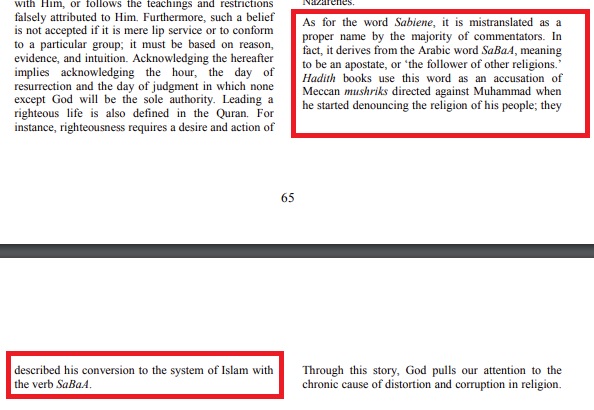




 has translated the above as:





 Prima Quran