Tag Archives: muslims

Genesis chapter 3 separates Islam and Christianity.

“Then learned Adam from his Lord words of inspiration, and his Lord turned towards him; for He is Oft-Returning, Most Merciful” (Qur’an 2:35-37)

“Say, “Is it other than Allah I should desire as a lord while He is the Lord of all things? And every soul earns not [blame] except against itself, and no bearer of burdens will bear the burden of another. Then to your Lord is your return, and He will inform you concerning that over which you used to differ.” (Qur’an 6:164)

 ﷽ 

“Then learned Adam from his Lord words of inspiration, and his Lord turned towards him; for He is Oft-Returning, Most Merciful” (Qur’an 2:35-37)

The above touching heartfelt verse teaches us original forgiveness.. We know that he was forgiven because it was Allah that taught Adam the very words by which to seek reconciliation with The Divine!

Allah! Ar Rahman Ar Raheem! Allah!!!! Most Merciful!!!! The Ever Compassionate!!!!

After he learned to turn towards Allah (swt), he was forgiven. That is it. Full stop!

There is no sin through which death entered the world, causing amoebas and single-celled organisms and everything else to die because of this person’s actions!

Now, dear respected reader, what you read is two different accounts of what happened with Adam and Eve.

You are not reading a Muslim response to Genesis chapter 3. We want to make that very clear.

What you are reading is what God has revealed in the Qur’an.

The choice you need to make is to discern which of these two accounts is true. The account as given by God in the Qur’an or the account as given in Genesis chapter 3.

It is important for you as a Christian, dear reader, to understand that the concepts of Original Sin, Inherited Sin, Total Depravity, Limbo, God Incarnate, the idea of God sending a ‘Son’, the Crucifixion, the Resurrection, Vicarious Atonement, Justification by Faith, Paul’s letters and the entirety of the New Testament all have their basis in Genesis chapter 3.

There is no need for Muslims to engage in any of these other beliefs, because if what God revealed in the Qur’an about Adam and Eve is correct, then all of these Christian beliefs that have their basis in Genesis chapter 3 are in and of themselves irrelevant.

Genesis chapter three is all that stands between Islam and Christianity.

One chapter in the entire Bible is all that separates Islam and Christianity.

If it was not for that chapter in the Bible there would be no Christianity.

That particular chapter gives us the following:

Original Sin

Inherited Sin

Total Depravity

Limbo

The concept of God Incarnate

The need for God to send His Son

The Crucifixion

The Resurrection

Vicarious Atonement

Justification By Faith

Paul’s Letters

The New Testament as a whole.

Adam and the events that unfolded in the Garden of Eden is such a central theme in Christology and if we were to juxtapose the events as related by Genesis chapter 3 with what is revealed in the Qur’an, we will be able to get a deeper appreciation of what is central that divides the two faith traditions.

We will also find out that which brings much needed clarity.

Let us begin with the question:

Who truly committed The First Sin? How does sin enter into the universe?

What does sin mean?

Christians define sin as transgression, lawlessness, and missing the mark.

The first issue to clear up is that Christians are absolutely forced to agree with Muslims on this.

The first sin, missing the mark or transgression against Allah, was done by a non-human entity!

In Christian theology, it is an X-Angel named Lucifer.

In Islamic theology, it is a Jinn named Iblis.

Either way, it was not Adam or Eve (May Allah’s peace be upon them both) that erred first.

“So behold, We said to the angels: “Bow down to Adam: “And they bowed down: not so Iblis: he refused and was arrogant: he was of those who reject Faith. We said: “O Adam! Dwell you and your wife in the Garden, and eat of the bountiful things in that respect as you will, but approach not this tree, or you will run into harm and transgression.”(Qur’an 2:30-37)

Sin enters into the universe via beings created with sovereign choice.

The sovereign choice to obey or to submit to the will of God.

So the position of Islamic theology is clear. Howeve, have you ever read any text anywhere in the Bible that makes the claim that Satan was an X-Angel named Lucifer and that he rebelled against Allah?

There is no such text anywhere in the Bible at all! It is a fable that came into Christian circles from apocryphal sources. The best attempt at trying to glean such a view comes from the following:

“How have you fallen from heaven, the morning star? You have been cut down to earth, You who cast lots on nations.” (Isaiah Chapter 14:12)

Source: (https://www.chabad.org/library/bible_cdo/aid/15945)

What did Protestant reformer John Calvin have to say about this text?

“How art thou fallen from heaven! Isaiah proceeds with the discourse which he had formerly begun as personating the dead, and concludes that the tyrant differs in no respect from other men, though his object was to lead men to believe that he was some god. He employs an elegant metaphor, by comparing him to Lucifer, and calls him the Son of the Dawn; 220 and that on account of his splendor and brightness with which he shone above others. The exposition of this passage, which some have given, as if it referred to Satan, has arisen from ignorance; for the context plainly shows that these statements must be understood in reference to the king of the Babylonians. But when passages of Scripture are taken up at random, and no attention is paid to the context, we need not wonder that mistakes of this kind frequently arise. Yet it was an instance of very gross ignorance, to imagine that Lucifer was the king of devils, and that the Prophet gave him this name. But as these inventions have no probability whatever, let us pass by them as useless fables.”

Source: (https://ccel.org/ccel/calvin/calcom13/calcom13.xxi.i.html)

As Calvin rightly states, it is a metaphor. Otherwise, we have the very awkward situation of calling Jesus ‘Lucifer’ as Lucifer simply means “Morning Star” or a reference to Venus — a star that outshines the others.

Jesus is called “Lucifer” or Morning Star in the following verse in the Bible.

“I, Jesus, have sent my angel to testify to you about these things for the churches. I am the root and the descendant of David, the bright morning star.” (Revelations 22:16)

There are two other texts that Christians often appeal to as well:

“And he said to them, “I saw Satan fall like lightning from heaven.” (Luke 10:18)

This text says nothing about Satan being an X-Angel or that his name was Lucifer etc.

“So war broke out in heaven and Michael and his angels fought against the Dragon and his angels, and the Dragon and his angels prevailed not.” (Revelation 12:7)

This is possibly the closest text as it does mention angels waring with each other in heaven. Yet this text does not mention angels becoming X-Angels, but rather angels at war with each other.

At the very least, the Christian book of Revelation and the Qur’an both point to the fact that a non-human(s) was(were) the first to transgress or sin against Allah; however, there are major points of difference in the two theologies.

In Christian theology, an X-Angel rebelled against Allah. However, in Islamic theology it was a Jinn. In Islamic theology, angels do not go against the divine plan. There is a race of beings known as the Jinn that can go against the divine plan.

So the first question here would be: Why is there not a doctrine of salvation for fallen angels? In Islam, we know that the Qur’an was sent to save humanity and the Jinn.

“So when we (Jinn) heard the guidance, we believed in it. And whoever believes in his Lord will not fear deprivation or burden.” (Qur’an 72:13)

“And We have sent you not but as a mercy for the ‘Alamin.” (Qur’an 21:107)

‘Alamin (mankind, jinn, and all that exists beyond)

“You say you have faith, for you believe that there is one God. Good for you! Even the demons believe this, and they tremble in terror.” (James 2:9)

So, in Islam, any being that sins against Allah (swt) can repent and reconcile with Allah (swt).

“By which Allah guides those who pursue His pleasure to the ways of peace and brings them out of darknesses into the light, by His permission, and guides them to a straight path.” (Qur’an 5:16)

The second question would be: Who wants to go to a heaven where wars break out? I mean people constantly deride the Qur’an for its metaphorical usages of women and wine in paradise; yet the Christian heaven is one of intrigue, assassination attempts, and wars!!!

In Islamic theology, the fall of Iblis (not the fall of humanity) fits logically into the greater picture of Allah’s wisdom.

However, we want to know in Christian theology what is to prevent the next disgruntled angel from trying to create wars and strife in heaven?

Finally, the Qur’an gives us a teaching of original forgiveness!! Allahu Kareem (Allah is Most Generous)

Though Adam did transgress, he was not the first transgressor.

The story of Adam, Eve and the Garden as compared/contrasted by Genesis chapter 3 and the Qur’an.

The whole Genesis account gives us a picture of a capricious divine being that lacks attributes of mercy, wisdom, justice or foreknowledge.

Again, dear truth seeker, contrast again the accounts in Genesis and the Qur’an.

“The Lord saw how great the wickedness of the human race had become on the earth, and that every inclination of the thoughts of the human heart was only evil all the time. The Lord regretted that he had made human beings on the earth, and his heart was deeply troubled. So the Lord said, “I will wipe from the face of the earth the human race I have created—and with them the animals, the birds and the creatures that move along the ground—for I regret that I have made them.” (Genesis 6:5-7)

Now, this does not sound like a divine plan at all. This sounds like a plan going terribly wrong.

How can a person find hope in the Christian tradition when Allah himself is in despair?

To attribute despair and regret to Allah is an affront to divine sovereignty and to the understanding that Allah is All-Knowing, All-Aware.

Contrast dear reader the absolute lack of sovereignty, will, and divine foreknowledge as given in the above passage with what Allah has revealed to us in the Qur’an.

“Behold, your Lord said to the angels: “I will create a vicegerent on earth.” They said: “Will you place therein one who will make mischief therein and shed blood?- while we do celebrate Thy praises and glorify your sanctity?” He said: “I know what you know not.” (Qur’an 2:30)

“So set your purpose for the way of life aligned with humanity’s upright nature – the nature (framed) by Allah, in which He has created humanity. There is no altering of the work wrought by Allah. That is the correct way of life, but most men do not know.” (Qur’an 30:30)

The angels look at the crude form of humanity and immediately see the capacity for violence. Also, notice that the angels are basically saying that they praise and worship Allah (swt) as is so what possible purpose does humanity serve?

The response of Allah (swt) is “I know what you know not.” That was a sufficient response to the angels. In other words, there is a plan for humanity.

You should know, dear reader, that in the order of Creation in Islam there are four types of creation with regard to will (choice).

Two in the unseen world.

  1. Angels which oscillate at frequencies of pure light. They do not go against their nature. Thus, there is no concept of fallen angels in Islam.
  2. Jinn are beings which are made from a fire that does not emit smoke. These beings can go against their nature and go against the divine plan.

Two in the natural seen world.

  1. Animals, plants and other living creations that do not go against their nature.
  2. Humanity can go against nature and go against the divine plan.

The first point of agreement between Christianity and Islam concerning Adam and Eve is that they were both blameless and sinless. They also had to have in some sense had the faculties of reasoning and understanding in order to understand commands and prohibitions.

The whole of Christianity is based upon Genesis chapter 3.

That one chapter presents to humanity a bizarre picture of The Divine Being and human destiny. It is the very foundation upon which Christian theology is built.

Whereas the Islamic Theological position is simply surrendering to the will of Allah. Adam and Eve slipped, they were reprimanded and ultimately forgiven.

Whereas in Christology, Adam and Eve were placed in the company of their mortal enemy with absolutely no heads up and no warning!

Can you imagine what kind of loving father puts their children in a garden with a shape-shifting entity intent on hurting the children and when the shape-shifting entity ends up duping the children, not only are the children punished but the whole of humanity is culpable for their slip?

Contrast this with what Allah revealed in the Qur’an.

“Did I not forbid you from the tree and tell you that Satan is to you a clear enemy?” (Qur’an 7:22-23)


So We cautioned, “O Adam! This is surely an enemy to you and to your wife. So do not let him drive you both out of Paradise, for you would then suffer hardship.” (Qur’an 20:177)

“We cautioned, “O Adam! Live with your wife in Paradise and eat as freely as you please, but do not approach this tree, or else you will be wrongdoers.” (Qur’an 2:35)

Adam and Eve were good creatures with a free will. Yet they chose to sin. Why?

  1. Adam and Eve had sovereign free will.
  2. Adam and Eve were not alone. They had an agent provocateur.

We can see that Allah clearly gave warning to Adam and Eve about their enemy and disobeying Allah. In fact, due to this warning about an adversary in Islam, Adam and Eve are more culpable than they are in the Christian tradition! 

Whereas in Genesis 3 there is no indication of any agent provocateur at all! It’s as if Adam and Eve were walking into an ambush!

“God saw all that he had made, and it was very good. And there was evening, and there was morning—the sixth day.” (Genesis 1:31)

“Now the serpent was more crafty than any other beast of the field that the LORD God had made.”(Genesis 3:1)

All that God creates is very good. God created snakes (serpentes) that were very good and very crafty at the same time?

Not only this, but to show you this vengeful portrayal of the Divine has whole entire species (serpentes) or snakes condemned simply because a shape-shifting entity imitated one of their kind!

“So the Lord God said to the serpent, “Because you have done this, “Cursed are you above all livestock and all wild animals! You will crawl on your belly and you will eat dust all the days of your life.” (Genesis 3:14)

So even more bizarre is the fact that Satan doesn’t get punished at all in Genesis chapter 3. It is the entire species of snakes (serpentes) that get punished instead!

“Allah said, “Descend, both of you, from here together ˹with Satan˺ as enemies to each other. Then, when guidance comes to you from Me, whoever follows My guidance will neither go astray ˹in this life˺ nor suffer ˹in the next˺(Qur’an 20:123)

What was the snake’s method of locomotion before it was to “crawl on it’s belly?”

Why wouldn’t Allah know that Satan was either a shapeshifter who appeared as a snake (serpentes) or that Satan made it appear that a snake (serpentes) was speaking to them?

It doesn’t justify a punishment upon a whole suborder of animals, namely snakes (serpentes).

So none of this is good! None of this is an accurate portrayal of A Wise and Judicious Creator working in this world. None of this is an accurate portrayal of the attributes of mercy, wisdom, justice, foreknowledge, or will at all!

The whole Genesis account gives us a picture of a capricious divine being that lacks attributes of mercy, wisdom, justice or foreknowledge.

Again, dear truth seeker, contrast again the accounts in Genesis and the Qur’an.

“The Lord saw how great the wickedness of the human race had become on the earth, and that every inclination of the thoughts of the human heart was only evil all the time. The Lord regretted that he had made human beings on the earth, and his heart was deeply troubled. So the Lord said, “I will wipe from the face of the earth the human race I have created—and with them the animals, the birds and the creatures that move along the ground—for I regret that I have made them.” (Genesis 6:5-7)

Now, this does not sound like a divine plan at all. This sounds like a plan going terribly wrong.

How can a person find hope in the Christian tradition when Allah himself is in despair?

In the Christian tradition, the agent provocateur is not immediately punished. Rather, wrathful punishment is given to an entire suborder of animals, namely snakes (serpentes). 

To a Muslim reading and reflecting on this, it all seems very bizarre and even a case of misplaced judgement. 

As Allah says in the Qur’an:

“My mercy has encompassed everything.” (Qur’an 7: 156).

Allah (swt) never states that his wrath encompasses everything but his mercy does.

You cannot imagine anything not benefiting from His mercy; otherwise, nothing could have come to existence, and even if so, nothing could have survived.

Even the fact that Satan is able to continue his life is due to Allah’s mercy. When Satan insisted on his wrong behaviour and was cursed, he requested Allah to be given time until the day of Resurrection:

“My Lord. Respite me until the day they will be resurrected.” (Qur’an 15:36)

Allah replied:

“You are indeed among the reprieved until the day of the known time.” (Qur’an 15:37-38)

The very role of Satan/Iblis as laid out in the Qur’an.

He said: “Since you have let me wander off, I’ll waylay them along Your Straight Road; then I´ll come at them from in front of them and from behind them, on their right and on their left. You will not find that most of them are grateful.” (Qur’an 7:16-17)

The whole point of Iblis, the arch enemy of mankind is to show that most of us (humanity) will be kaffir (ungrateful) to Allah (swt).

“And incite whoever you can of them with your voice, mobilize against them all your cavalry and infantry, manipulate them in their wealth and children, and make them promises.” But Satan promises them nothing but delusion.” “You will truly have no authority over My servants.” And sufficient is your Lord as a Guardian.” (Qur’an 17:64-65)

“Allah said, “This is the Way, binding on Me: you will certainly have no authority over My servants, except the deviant who follow you,” (Qur’an 15:41-42)

What is it that Allah makes obligatory on himself? To give certain of his creations choice.

“Allah responded, “Be gone! Whoever of them follows you, Hell will surely be the reward for all of you—an ample reward.” (Qur’an 17:63)

Genesis chapter 3. The Origin of Wrath or the Origin of Forgiveness? Is the woman to blame or are Adam and Eve both culpable?

Apparently, according to the Book of Genesis, after Adam and Eve ate from the tree of good and evil and had a conversation with Allah, they were quite cavalier about the whole ordeal.

Whereas Allah tells us in the Qur’an that the progenitors of the human race were more sensible, whereas they said:

They said, “Our Lord, we have wronged ourselves, and if You do not forgive us and have mercy on us, we will surely be among the losers.” (Qur’an 7:23)

“Then Adam learned from his Lord words of inspiration, and his Lord turned towards him; for He is Oft-Returning, Most Merciful” (Qur’an 2:35-37)

This is the teaching of original forgiveness, and we know that he was forgiven because it was Allah that taught Adam the words by which to seek reconciliation with the divine.

Also, of note that in Islamic theology both Adam and his wife were deceived and both asked for forgiveness, and they were both forgiven. Whereas in Christian theology the woman is the one who was deceived.

“And he succeeded in deceiving them. As soon as the two had tasted [the fruit] of the tree, their nakedness became obvious to them, and they started covering themselves with leaves from the Garden. Their Lord called to them, “Did I not forbid that tree to you and tell you, ‘Satan is your clear enemy?” (Qur’an 7:22)

“And Adam was not the one deceived; it was the woman who was deceived and became a sinner.” (1 Timothy 2:14)

When the woman saw that the fruit of the tree was good for food and pleasing to the eye, and also desirable for gaining wisdom, she took some and ate it. She also gave some to her husband, who was with her, and he ate it. Then the eyes of both of them were opened, and they realized they were naked; so they sewed fig leaves together and made coverings for themselves. (Genesis 3:6-7)

Now pay attention to the above text. The woman was apparently duped by the Snake (Serpentes). However, when she took the fruit and ate it didn’t she realize immediately that she was naked so that she could warn her husband?

Apparently not. The text allows for interpretative story telling. Such that Eve got the fruit (she hadn’t eaten it yet) and then brought some to Adam. They began to eat together and had the joint discovery together. Yet, this is where the text is extremely hurtful to women in a way that the Qur’an never is.

The question now arises.

Did Eve just give Adam the fruit without telling him what it was? Or did Eve tell Adam where that fruit was from, and he ate it anyway?

The text simply does not say.

Imagine a man who steals a fruit from a garden, and he gives it to another man to eat that fruit. In Christian theology, both the man who stole the fruit and the one who ate it are guilty. However, in Islamic theology, as long as the man who eats the stolen fruit is unaware that the fruit is stolen, he is not guilty of eating stolen fruit.

So, in Christian theology, Adam is punished for a sin he very well could have been unaware of! Islamic theology does not allow this type of ambiguity. Especially, in regard to the severity of the consequences of such an action in Christian theology.

The nature of death and dying in Christianity and Islam. Are human beings culpable for the sin and errors of others?

And no burdened soul can bear another’s burden. And if one weighed down by a burden calls another to carry his load, naught of it will be carried, even though he be near of kin. You warn only those who fear their Lord in secret and keep up prayer. And whoever purifies himself purifies himself only for his own good. And to Allah is the eventual coming.” (Qur’an 35:18)

Contrast this with:

“For since death came through a human being, the resurrection of the dead came also through a human being: For just as in Adam all die, so too in Christ shall all be brought to life.” (1 Corinthians 15:21-22).

“Therefore, just as sin entered the world through one man, and death through sin, and in this way death came to all people because all sinned. To be sure, sin was in the world before the law was given, but sin is not charged against anyone’s account where there is no law. Nevertheless, death reigned from the time of Adam to the time of Moses, even over those who did not sin by breaking a command, as did Adam, who is a pattern of the one to come.” (Romans 5:12-14).

Death and the nature of death.

“He is the One Who created you from clay, then appointed a term ˹for your death˺ and another known only to Him ˹for your resurrection˺—yet you continue to doubt!”
(Qur’an 6:2)

“We settle whatever We will in the womb for an appointed term, then bring you forth as infants, so that you may reach your prime. Some of you die earlier, while others are left to reach the most feeble stage of life so that they may know nothing after having known much.” (Qur’an 22:5)

“He brings you out as an infant, then causes you to grow into full maturity, and then causes you to grow further so that you may reach old age, while some of you He recalls earlier. All this is in order that you may reach an appointed term and that you may understand.” (Qur’an 40:67)

“His is the dominion of the heavens and the earth. He gives life and causes death, and He is over all things competent.”(Qur’an 57:2)

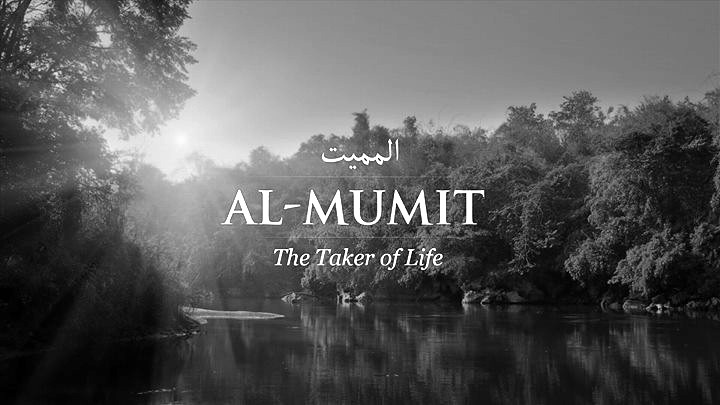
Allah is the giver of death, the taker of life. One of the names of Allah is the Taker of Life.

Because Allah is also the giver of life.

“Say, “Call upon Allah or call upon the Most Merciful. Whichever name you call -To Him belongs the best names.”(Qur’an 17:110)

“For the wages of sin is death: but the gift of God is eternal life in Christ Jesus our Lord.” (Romans 6:23)

Prima Qur’an Comment: “The wages of sin is death.” So because of what Adam and Eve did not only does this sin get transferred to every newborn child, but amoebas, single-celled organisms, insects, fish, and every type of living thing dies because of this.

This peculiar doctrine leads one to reflect on some of the following points:

  • What kind of world would there be if nothing died?
  • Surely if Allah created predatory animals there would be animals that would be the prey?
  • If Allah ordered Adam and Eve to eat all the fruit, surely the fruit would ‘die’ once it was removed from said tree or plant?
  • What would be the population of the planet if nothing died?

Al hamdulilah! We as Muslims do not have such a bizarre and unnatural doctrine. Death is a natural part of life. In fact, we as Muslims believe that Allah (swt) is Al Hayyu (The Ever Living).

What would be the point of calling Allah ‘The-Ever-Living’ if all living things were to be ‘Ever-living’ as well?

The very fact that Allah, God, is ‘The Ever Living’ in and of itself shows you that the nature of everything else is opposite to that. This includes Adam.

Death is a contrast to life so that we understand the sacredness of life, the sanctity of life, and to appreciate the limited time we have been given to live on such a beautiful planet that offers many delights.

There is an entire Goth subculture in the West. They see death as something beautiful.

There is beauty in things not lasting and a peace in knowing that everything is in transition. It causes one to embrace the moment and to cherish the now. Perhaps more than the busy denizens of the city, the goth appreciates the currency of time, and they understand that, perhaps more than most, one must spend it wisely. 

One of the contributors to Primaquran, ‘Abd al-Mumit’ chose this name because of this very fact.

There is no eternal permanence except Allah. 

If Christians claim that Adam’s death was a ‘spiritual death‘, you have to reflect on the following:

  • Why is there absolute silence on Adam’s reconciliation to Allah in the Book of Genesis?
  • In light of Adam’s knowledge of the tree of ‘good and evil‘, why does the Bible portray Adam and Eve as so cavalier regarding their spiritual estrangement from Allah?

Adam is such a central figure, especially in Christology, and we hear nothing more than that he had some children and then died.

The deity of divine forgiveness and restoration for all or the deity of divine wrath, making pain and suffering the path of redemption for the few.

The God that desires that we are sincere, that we repent with a contrite heart and gives opportunity after opportunity for man to reform.

Do see our article here:

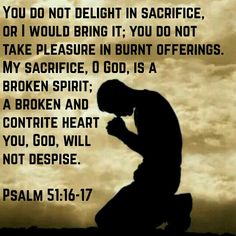
“It is not their flesh, nor their blood, reaches Allah, but it is your piety that reaches him. Thus has He made them subservient to you, that you may magnify Allah for guiding you. And give good news to those who do good.” (Qur’an 22:37)

This statement from the Qur’an is very important.  Accordingly, the first idea of blood sacrifice goes back to the story of Cain and Abel.

The Biblical Version:

“Adam made love to his wife Eve, and she became pregnant and gave birth to Cain. She said, “With the help of the Lord I have brought forth a man.” Later she gave birth to his brother Abel. Now Abel kept flocks, and Cain worked the soil. In the course of time, Cain brought some of the fruits of the soil as an offering to the Lord. And Abel also brought an offering—fat portions from some of the firstborn of his flock. The Lord looked with favour on Abel and his offering, but on Cain and his offering, he did not look with favour. So Cain was very angry, and his face was downcast. Then the Lord said to Cain, “Why are you angry? Why is your face downcast? If you do what is right, will you not be accepted? But if you do not do what is right, sin is crouching at your door; it desires to have you, but you must rule over it.” (Genesis 4:1-7)

The Version in the Qur’an:

“Recite to them the truth of the story of the two sons of Adam. Behold! They each presented a sacrifice (to Allah): It was accepted from one, but not from the other.  He said: I will most certainly slay you.”Surely,” said the former, “Allah does accept of the sacrifice of those who are righteous.” (Qur’an 5:27)

Prima Qur’an comments:

Notice that in both accounts we are not told of the treachery that one of the brothers did. In fact, up until the point of murder, whatever he did that estranged him from his Lord was kept as a personal matter between him and God.

The Christians get the idea [with absolutely no proof] that Allah favoured Abel’s sacrifice because he brought Allah some fat — a sacrifice from one of his flock. Whereas, according to the Christians, Allah didn’t like the vegetables that Abel brought.

Now think about this for a moment. Doesn’t this make God sound capricious? Of course, it does!  

However, you can read in both accounts in the Qur’an and in the Bible that the reason that one sacrifice was accepted was due to the fact that one was righteous. It was the state of his heart and not what was presented!

So who will it be?

Contrasting a divine being that delights in the blood atonement and suffering from an animal, the outward material things of this world, with that of a divine being that looks at the contents of the human heart.

“The Day when neither wealth nor children shall profit, only the one will be saved who comes before God with a sound heart.” (Qur’an 26:88-89).

“And when they hear what has been revealed to the Messenger, you see their eyes overflowing with tears because of what they have recognized of the truth. They say, “Our Lord, we have believed, so register us among the witnesses.” (Qur’an 5:83)

May Allah Guide them to the truth so that they do not burn in hellfire.

10 Comments

Filed under Uncategorized

The Ibadi, Muutazila, Ahl Sunnah & Jahmia: Qur’an and attributes.

“He only orders you to evil and immorality and to say about Allah what you do not know. And when it is said to them, “Follow what Allah has revealed,” they say, “Rather, we will follow that which we found our fathers doing.” Even though their fathers understood nothing, nor were they guided?” (Qur’an 2:169-170)

﷽ 

When it comes to the issue of the Qur’an being created and the topic of the attributes of Allah (swt), we could put this into four views. This brief entry will show where these four denominations have overlapping agreement and/or disagreement.

A. There are four denominations in this subject.

  1. Ibadi.
  2. Muutazila.
  3. Ahl Sunnah.
  4. Jahmia.

Here are the points.

  • Ibadi & Mutazila say: The attributes of Allah (swt) are nothing other than Allah (swt)
  • Ahl Sunnah & Jahmia say: The attributes of Allah (swt) are other things with/than Allah (swt).
  • Ahl Sunnah & Jahmia say: Qur’an is one of the attributes of Allah (swt).
  • Ibadi & Mutzalia say: Qur’an is not an attribute of Allah (swt).
  • Jahmia say: Attributes of Allah are created by Allah (swt).
  • Ahl Sunnah say: All attributes of Allah aren’t created by Allah (swt).

We (The Ibadi) say there is evidence to prove that the Qur’an is created by Allah (swt).

For the Jahmia, the proof that the Qur’an is created by Allah (swt) is that the Qur’an is one of the attributes of Allah (swt). For them, all the attributes of Allah (swt) are created by Allah (swt).

Ibadi, Mutazalia & Ahl Sunnah all say anyone who believes that the attributes of Allah is created are kaafir. (disbelievers of shirk)

We, the Ibadi, say: The Qur’an is a word of Allah and created by Allah, but we don’t say the Qur’an is an attribute of Allah (swt).

“Our belief is upon Haqq and the belief of the Jahmia is upon kufr and batil.” -Shaykh Hamed Hafidh

We want to thank our teacher Shaykh Hamed Hafidh As Sawafi (hafidullah) for this explanation.

For further reading on this subject:

https://primaquran.com/2022/10/04/lets-attack-hamza-yusuf-in-ramadan-the-quran-is-created/

May Allah Guide the Ummah.

May Allah Forgive the Ummah.

4 Comments

Filed under Uncategorized

Every word in the Qur’an is proof that it is created by Allah.

“It is He to whom belongs the dominion over the heavens and the earth, and who has not taken a son and has no associate in His dominion, for He has created all things according to precise measures.” (Qur’an 25:2)

﷽ 

Those people who claim the Qur’an is eternal. They say this precisely because they do not know what the Qur’an is.

We know the number of surahs/chapters is 114. We know each chapter of the Qur’an as well as the number of verses. In each word we know the number of letters. And for each letter we know the harakat.

We know these letters do not operate independently. They combine with other letters that make words and these words combine with other words to make sentences. These sentences combine to make the various chapters of the Qur’an. All of this is clear evidence that the Qur’an is created by Allah (swt).

All scholars, all Muslims believe that all languages are created by Allah (swt).

By this we know that the Arabic language is created by Allah (swt). The Qur’an is informed in the Arabic language. The Arabic language is created by Allah (swt) and by that the Qur’an is created by Allah (swt).

“And of His signs is the creation of the heavens and the earth and the diversity of your languages and your colours. Indeed, in that are signs for those of knowledge.” (Qur’an 30:22)

“And We did not send any messenger except [speaking] in the language of his people to state clearly for them, and Allah sends astray [thereby] whom He wills and guides whom He wills. And He is the Exalted in Might, the Wise.” (Qur’an 14:4)

“Look how We explain signs to them, then see how far they are turned away.” (Qur’an 5:75)

You may be interested in reading the debate among Muslim scholars regarding the foreign words that the Arabic language adopted here:

https://muslimmatters.org/2008/05/21/the-arabic-quran-and-foreign-words/

“Some proponents of this camp quoted the ‘father’ of Arabic grammar,Sībawayh (d. 180/796) himself, who wrote in his al-Kitāb that non-Arabic words could become Arabic if one substituted Arabic letters for the foreign ones, and then appended it to a known morphological form (wazn).”

Source: (Sībawayh, al-Kitāb, v. 4, p. 304.)

Sibawayh’s teacher was the famous Ibadi scholar, Al-Khalili ibn Ahmad al-Farahidi (The one who is credited for teaching your children (no matter what expression of Islam they follow) the harakat of the Qur’an.

A brief entry concerning the famous Ibadi scholar, Al Khalili Ibn Ahmad Al-Farahidi al-Ibadi here:

https://primaquran.com/2023/03/24/harakat-of-the-quran-al-khalili-ibn-ahmad-al-farahidi-al-ibadi/

If you want to learn more on the subject of the Qur’an being created, you may wish to read the following articles:

https://primaquran.com/2022/10/04/lets-attack-hamza-yusuf-in-ramadan-the-quran-is-created/

May Allah Guide the Ummah.

May Allah Forgive the Ummah.

Leave a comment

Filed under Uncategorized

The narrator Ikrima: You cannot have your cake and eat it too.

“And give full measure when you measure, and weigh with an even balance. That is the best [way] and best in result.” (Qur’an 17:35)

﷽ 

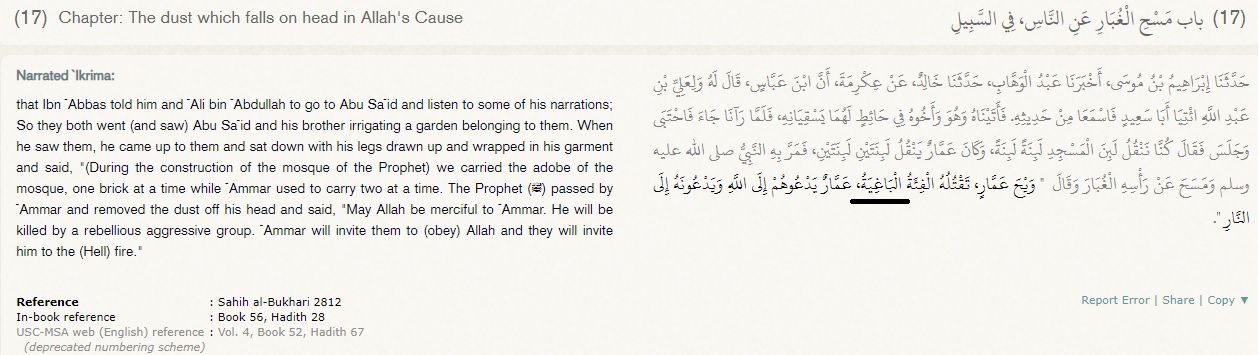
Narrated `Ikrima:

that Ibn `Abbas told him and `Ali bin `Abdullah to go to Abu Sa`id and listen to some of his narrations; So they both went (and saw) Abu Sa`id and his brother irrigating a garden belonging to them. When he saw them, he came up to them and sat down with his legs drawn up and wrapped in his garment and said, “(During the construction of the mosque of the Prophet) we carried the adobe of the mosque, one brick at a time while `Ammar used to carry two at a time. The Prophet (saw) passed by `Ammar and removed the dust off his head and said, “May Allah be merciful to `Ammar. He will be killed by a rebellious aggressive group. `Ammar will invite them to (obey) Allah and they will invite him to the (Hell) fire.”

Source: (https://sunnah.com/bukhari:2812)

One could simply ditch the narration from Ikrima (ra) above. And use the following. Although the following allows for more interpretative scope than does the narration given via Ikrima (ra).

Abu Sa`id Khudri reported:

One who is better than I informed me, that Allah’s Messenger (saw) said to `Ammar as he was digging the ditch (on the occasion of the Battle of the Ditch), wiping over his head: “O son of Summayya, you will be involved in trouble and a group of the rebels would kill you.”

Source: (https://sunnah.com/muslim:2915a)

So why are a group of companions castigated when it becomes even apparent to them that Muaviya and his part were the unjust group? They warned Ali, this was a ruse, and they remembered well what the Blessed Messenger (saw) said: and a group of the rebels would kill you

By the way, Ammar (ra) was killed BEFORE arbitration.

Narrated `Ikrima:

“Some Zanadiqa (atheists) were brought to `Ali and he burnt them. The news of this event reached Ibn `Abbas who said, “If I had been in his place, I would not have burnt them, as Allah’s Apostle forbade it, saying, ‘Do not punish anybody with Allah’s punishment (fire).’ I would have killed them according to the statement of Allah’s Apostle, ‘Whoever changed his Islamic religion, then kill him.’”

Source:  (https://sunnah.com/bukhari:6922)

Some Muslims really do imagine that they can have their cake and eat it too when it comes to Ikrima (ra).

On the one hand, they want to use Ikrima (ra) as a narrator when it comes to clearly showing that the kharijites truly were, none other than Muawiyah and his band.

In the following post you can see how Ibn Taymiyyah tripped over himself with regard to one of the narrations of Ikrima regarding Ammar ibn Yasir (ra).

Imam Ahmad Ibn Hanbal says that Ikrima was of the view of the Ibadi.

Yet, then they want to cast aspersions upon the narrator, Ikirma (ra), because he has none other than Ibn Abbas (ra), who narrates that he himself differed with the ijtihad of Ali, concerning the burning of apostates.

Failing to pin blame on Ikrima (ra) some have now satisfied themselves with casting aspersions on Ibn Abbas (ra). See here:

With Ikrima (ra) you cannot have your cake and eat it too.

You will need to be consistent in your methodology.

May Allah (swt) open the eyes and the hearts.

May Allah Guide the Ummah.

May Allah Forgive the Ummah.

Leave a comment

Filed under Uncategorized

Pro Alid YouTube channel throws Ibn Abbas under the bus!

“Do not mix truth with falsehood or hide the truth knowingly.” (Qur’an 2:42)

﷽ 

So, an ex-12er, Shi’i shared the following video with us and what an eye-opener!

The YouTube channel, known to be Pro-Alid, featured a “Sunni” ?? Scholar Dr. Suhail Zakkar (possibly Shi’i or diet-Shi’i) who pulled out all the stops to throw Ibn Abbas (ra) under the bus!

Ibn ‘Abbas reported that Allah’s Messenger (saw) came to the privy and I placed water for him for ablution. When he came out he said:

Who placed it here? And in one version of Zuhair they (the Companions) said, and in the version of Abu Bakr (the words are): I said: It is Ibn ‘Abbas (who has done that), whereupon he (the Holy Prophet) said: May Allah grant him a deep understanding of religion.

Source: (https://sunnah.com/muslim:2477)

The speaker in the video is Dr. Suhail Zakkar.

Dr. Suhail Zakkar – Curriculum Vitae

Dr. Suhail Zakkar (1936–2020) was a highly respected and prolific Syrian historian and academic, widely considered a leading authority on medieval Arab history, particularly the Crusades and early Islamic history.

  • Early Life & Formative Years: Being born under the French Mandate and experiencing its economic hardships firsthand instilled in him a strong sense of Arab nationalism and a desire to understand the forces—historical and colonial—that shaped the modern Arab world. This personal context deeply influenced his academic pursuits.
  • Academic Credentials: After obtaining his bachelor’s and master’s degrees in Damascus, he earned a doctorate from the prestigious School of Oriental and African Studies (SOAS), University of London. This gave him Western academic training which he combined with his deep knowledge of Arabic sources.
  • Magnum Opus: His life’s work, the “Comprehensive Encyclopedia in the History of the Crusades” (Al-Mawsuʻah al-shamilah fi tarikh al-hurub al-salibiyah), is a monumental 50-volume reference work. It is not a narrative history but a critical compilation and analysis of primary sources, making it an indispensable resource for scholars.
  • Legacy: He represented a school of serious, source-critical Arab historiography. He passed away in Damascus in March 2020.

Ibn Abbas (ra) and his empathy with the Khawarij?

  1. Complete Withdrawal and Neutrality: Ibn Abbas did not just withdraw from his post; he withdrew entirely from the conflict. He did not return to Ali’s camp in Kufa, nor did he offer further political or military support during the escalating war with the so-called Khawarij. This neutrality in a conflict he had previously argued was a matter of truth versus error that could be interpreted by Dr. Zakkar as a fundamental shift in allegiance.
  2. Interpretation of His Silence: From a historical analysis perspective, Dr. Zakkar could argue that Ibn Abbas’s silence and absence during the latter part of Ali’s caliphate and during the period of the so-called Khawarij’s peak activity is deafening. For a figure of his stature and previous unwavering support, this silence could be read as tacit approval or, at a minimum, a strong empathy for the Khawarij’s grievances against Ali.

In our school we know why this is. For those who are reading up on history, and they know that Ibn Abbas (ra) saw the soundness of the argument of the sahaba of Al Nahrawan.

What the good Dr. left out was the fact that Ali sent Ibn Abbas (ra) to the sahaba of Al Nahrawan to try and when them back after leaving Ali’s camp over the arbitration.

Ali knew that they had been correct from the beginning!

The companion Ibn Abbas (ra) debates the companions at Nahrawan.

Argument #1


“O you who believe! Kill not game while in the sacred precincts or in pilgrim garb. If any of you does so intentionally, the compensation is an offering, brought to the Ka’ba, of a domestic animal equivalent to the one he killed, AS ADJUDGED BY TWO JUST MEN AMONG YOU; or by way of atonement, the feeding of the indigent; or its equivalent in fasts: that he may taste of the penalty of his deed. Allah forgives what is past: for repetition, Allah will exact from him the penalty. For Allah is Exalted, and Lord of Retribution.” (Qur’an 5:95)

As adjudged by two just men among you’. Keep this in mind as well. This is a key part of the text.

The companions of the Blessed Prophet (saw) replied:

“Are you comparing the law relating to the killing of game animal on the sacred land or the law that is intended to resolve the misunderstandings that occur between a man and his wife, with the law that is intended to govern the matters of greater magnitude such as the act of shedding of Muslims’ blood?”


Source: (Al-Tabari, Al-Taarikh Vol. 6, p. 13.)

So, through qiyas (analogy), it is logical to reason that, in the above verse, during the pilgrimage, when someone kills a game animal, they are ordered to compensate for the following judgement by two just men than it stands to reason the shedding of Muslim blood has a better claim to be dealt with diplomatically.

In response to what Ibn Abbas (ra) had presented, the companions of the Blessed Prophet (saw) argued that there is a significant difference between the verses Ibn Abbas (ra) refereed to and the verse which is used to justify Ali’s war against Mu’awiya.

In the verses Ibn Abbas (ra) referred to, Allah did not mention any ruling, nor did he make any decision between contending parties. Instead, He assigned the task of arbitrating to men

On this point, there is no issue with Ibn Abbas (ra) and his thought process here.

However, in the verse which gave Ali the right to fight the war against Mu’awiya, Allah (swt) Himself has mentioned step by step the measures that should be taken and decided on. What should be done at each step?

Thus, Allah (swt) lays down the ruling in this case. The verse states:
“Moreover, if two factions among the believers should fight, then make settlement between the two. But if one of them oppresses the other, then fight against the one that oppresses until it returns to the ordinance of Allah. And if it returns, then make settlement between them in justice and act justly. Indeed, Allah loves those who act justly.” (Qur’an 49:9)

Also, another point concerning the text that Ibn Abbas brought forth.

As adjudged by two just men among you


Naturally, people would ask, “Are you saying Amru bin Al-As is a man of justice when it was he who spilled our blood yesterday?” If you believe that he is just, then we (including you — Ibn Abbas and Ali) are not just because we all fought the war against Mu’awiya and Amru bin Al-As who are just!”


So, the unfilled questions put to Ibn Abbas (ra) were.

  • A) Were there two arbitrators or one?
  • B) Were they just or unjust?

To the Shi’i reading this (Zaydi and Imami), we implore you to tell us. Who are the just ones in the camp of Mu’awiya? Can one who takes up arms against Ali be considered just? If you say yes, then let that stand on the record.

To the Sunnis reading this, we implore you to tell us.  The one who rebels against the recognized Imam who has not been proven to go against the Qur’an and Sunnah. Are they just or unjust? 

Ibn Abbas (ra) was quoted by Ahmad Ibn A’tham as saying:
“O, men! Amru bin Al’As was not an arbiter, why then oppose us because of him? He was but an arbiter representing Mu’awiya.”
Source: (Ibn A’tham, Al Futuh Vol. 4, p. 94.)

Is it imaginable that Ibn Abbas (ra) wanted to substantiate his position with a verse which strongly opposed him?


Naturally, our brothers from among the ‘Ahl Sunnah’ or the ‘Shi’i’ are either not informed about this side of the story or simply the learned among them withhold information. Allah (swt) sees and knows all.

It has been narrated on the authority of Aba Sa’id al-Khudri that the Messenger of Allah (saw) said: “When oath of allegiance has been taken for two caliphs, kill the one for whom the oath was taken later.”

Source: (https://sunnah.com/muslim:1853)


Argument #2
Let us look at the other verse that is said that Ibn Abbas (ra) brought as proof.


“If you fear a breach between couples, send an arbiter from his people and an arbiter from her people. If the couple desire to put things right, Allah will bring about a reconciliation between them.  “Allah is All-Knowing, All-Aware” (Qur’an 4:35)

This verse orders us to reconcile between a man and his wife in case of misunderstanding or breach. But the steps that ought to be taken when resolving such domestic disputes have not been mentioned. The arbiters are generally required to do their best, in being fair and just, to reach a peaceful, acceptable resolution for the concerned parties.

When you compare the two mentioned verses you will notice that they are intended for different purposes.


In the verse which gave Ali the right to wage war against Mu’awiya, Allah (swt) delegated no one to rule and decide on the issue. But He rather ordered the believers to abide by what He had ruled.

On the other hand, what Ibn Abbas (ra) armed himself with, was the verse that Allah (swt) granted deciding on a role to two fair and just arbiters. That is a clear and a huge difference between the two verses. So, we can say with confidence that Ibn Abbas’s analogy of linking this verse with the conflict of war between Ali and Mu’awiya is debatable.


It does not seem suitable for a person of his stature and understanding.  Now, as mentioned above, Ibn Abbas (ra), after hearing all of this, knew very well that the arguments produced by the companions of the Blessed Prophet (saw) that were in Nahrawan were airtight!

When Ibn Abbas (ra) was convinced by their arguments, he (Ibn Abbas) sheathed his sword. Meaning he did not assist Ali in his unprovoked attack upon the Muslims at Nahrawan. Remember, as the Dr. said, this same Ibn Abbas (ra) was with Ali at the battle of the Camel & Siffin.

So we are talking about the same Ibn Abbas (ra) who was with Ali opposite a field with Aisha (ra), Talha and Zubayr, and Ibn Abbas (ra) was with Ali opposite a field with Muaviya and Amr ibn al-As.

This same Ibn Abbas (ra) who said after his debate with the sahaba of Al Nahrawan the following:

(The People of Nahrawan) have been on the Right Path

Source: (Al-Shammakhi, Al-Siyar Vol. 1 p, 72,)

Another account says concerning Ibn Abbas (ra) and his debate with the sahaba of Al Nahrwan, that he (Ibn Abbas) “could not crush their proofs.”

Source: (Abu Qahtaan, Al-Siyar p. 107)

Another narration says he (Ibn Abbas) went back from this exchange with them: “Without being able to do anything.”

Source: (Al-Tabari, Al-Taarikh Vol 6, p 18, Al-Barrad Al-Jawaahir p. 122)

He could not prove anything to them!

Source: (Ibn Abi Shaibah, Al-Musannaf Vol. 15, p. 312)

The Nahrawanees established their proofs to him(Ibn Abbas).”

Source: (Al-Ya’qubi, Al-Taarikh Vol. 2 p. 191)

First they (Diet-Shi’i) tried to throw Ikrima (ra) under the bus. So, when they did not turn over any leaves, some of them started to go after Ibn Abbas (ra).

Ibn Abbas (ra) begins to distance himself from Ali

Can’t keep the truth hidden from the Muslims for too long!    

Look at what Ibn Abbas (ra) says here

I swear by Allah, it is better for me that I meet Allah with all that are beneath the Earth, starting with its gold and silver, and all that its surface is full with than meeting Him with my hands having split the blood of this umma (Islamic Nation) so that I may attain a kingship or leadership.” -Ibn Abbas

Ouch!

Source: (Al-Baladhuri, Al Ansab Vol 2, p 398. Ibn Abd Rabbi, Al-‘Iqdu Al-Farid Vol. 4, p. 326. Al Futuh by Ibn A’atham Vol. 4, p.75)

If my act of taking money was wrong, that could be easier to me than taking part in shedding the blood of a believer.” -Ibn Abbas.

Ouch Again!

Source: (Al-Qalhati, Al-Kashf Vol 2, p 251. IbnAbdiRabih, Al-Iqdu Al-Farid Vol. 4, p. 331.)

It is very clear from the aforementioned that Ibn Abbas (ra) had developed a disapproving attitude towards the war fought against the sahaba of Al Nahrawan. A complete change of heart from the previous conflicts.

It is clear that, in this war with the Nahrawanees, Ibn Abbas (ra) found fault with Ali and condemned him for his unjustifiably wrong act of fighting those fellow sahaba.

After he was sent to debate with them, Ibn Abbas (ra) realized they were upon the truth. He accepted that he (Ibn Abbas) was wrong and the sahaba of Al Nahrawan were right. Certainly there is a lesson to be learnt from this experience that the accurate criteria with which to draw a distinction between right and wrong is not a coin-flip, but rather the Qur’an and authentic Prophetic traditions. After all, Ali made his hasty decision in the heat of the moment (giving in to pro-arbitration forces) and possibly did not consider the full ramifications of his decision.

When those sahaba who left Ali’s camp answered Ibn Abbas (ra) and his objections clearly and decisively, there was nowhere to go but the truth.

Having been fully convinced by the position of the Nahrwanees and the evidence that they had for their succession from Ali’s leadership, Ibn Abbas also detached himself from Ali and set out for Mecca.

Source: (Al-Tabari, Al-Taarikh Vol 6, p. 20)

Even though one of the reasons why Ibn Abbas (ra) left Ali and set out to Mecca was from their differences in the bait al-mal (House of Treasury/House of Properties), from which Ibn Abbas (ra) took what he regarded to be his lawful portion of the money, their differences were compounded by the fact that they were on opposing sides of the issue of the Nahrwanees.

Recall the statement:

If my act of taking money was wrong, that could be easier to me than taking part in shedding the blood of a believer,” — Ibn Abbas.

In this statement, Ibn Abbas (ra) is basically saying: If I disagree with you on the issue of bait al-mal, then I am strongly opposing you on the issue of the Companions at Nahrawan. This was about the point in time where Ibn Abbas (ra) detached himself from Ali’s leadership.

May Allah (swt) open the eyes of the truth seekers!

Dear readers, you have been provided the information. All you need to do is to plug in the pieces. You were told that Ibn Abbas (ra) went and debated the companions at Nahrawan and that he (Ibn Abbas) had won hands down. Notice how you are never told their reply or their responses?

Brought to you by the same people who have no problem with mocking their own Imams!

You may also wish to read:

https://primaquran.com/2023/02/19/abd-allah-b-al-abbas-and-the-muhakkima-wilferd-madelung

May Allah (swt) open the eyes of the Ummah.

May Allah (swt) guide the Ummah.

May Allah (swt) forgive the Ummah.

2 Comments

Filed under Uncategorized

Manipulation of Hadith To Advocate Prayer Positions.

“Take what the Messenger gives you, and do without what he forbids you from.” (Qur’an 59:7)

﷽ 

This entry will show the manipulation and changing of the ‘matn’ text in the chains of transmission to advocate various positions for the prayer.

Hopefully, in writing this in the process we will be able to defend the prayer of the Blessed Messenger (saw) as was the practice of the people of Madinah in his time, namely the practice of laying hands at the side. This practice is continued among those who follow the Jafari and Zaydi School of jurisprudence as well as the oldest living school of jurisprudence which the people of Oman are upon, the Ibadi school.

This blog entry will also show that Imam Malik only prayed that way (sadl) because it is what he saw as the practice of the people of Madinah, and it’s not because he was beaten, which is a lie that has been circulated by a certain group whom have invented their own methodology of doing the prayer.

MISUNDERSTANDING NO. 1 Imam Malik only prayed like that (arms to the side) because he was beaten so badly that he couldn’t pray with one hand over the other.

“He was severely beaten in the year 764 CE by the order of the Ameer of Madeenah, because he made a legal ruling that forced divorce was invalid. This ruling opposed the ‘Abbaasid rulers’ practice of adding in the oath of allegiance given to them by the masses the clause that whoever broke the oath was automatically divorced. Malik was tied and beaten until his arms became severely damaged to such a degree that he became unable to clasp them on his chest in Salaah and thus he began the practice of praying with his hands at his sides according to some reports.”

Source: (pg 78. The Evolution of Fiqh Islamic Law & The Madh-habs) By Abu Ameenah Bilal Philips International Islamic Publishing House.)


Some reports” such as? Doesn’t Abu Ammenah Bilal Philips have to give his evidence or are we just supposed to accept what he said?

Can such a claim be verified by and in any of the traditionally relied upon books of Islamic history? One will be hard-pressed to find any evidence substantiating this argument.

Remember what Allah said:

“Verily, those who conceal the clear proofs, evidence, and the guidance, which We have sent down after We have made it clear for the people in the Book, they are the ones cursed by Allah and cursed by those who curse.” (Qur’an: 2:159)

So where is the proof?

Secondly, how could Imam Malik not have enough strength to clasp his hands on his chest but still be able to do the tabkir—, go into ruku, and go into sajdah and to push his hands up from sujuud, since Imam Malik’s view is that the knees go up than the hands after sajdah? What about all the other Tabieen who prayed the way Imam Malik did? Did each one of them have their arms broken as well?

MISUNDERSTANDING NO. 2 The Malikis get their prayer from the Shi’a in Iran!

Now let us ask you, dear reader, something why would Sunni Muslims go and ask the Shi’a about how to pray? That’s just absurd! The second point is this: Why don’t the Malikis follow the Shi’a in everything in prayer, like raising the hands in ruku and when going into sujud? Or making sujud on a stone? Or placing the knees before the hands? Or saying the whole prayer out loud? Or include the basmallah before Al Fatiha like the Shi’a do. Also, a very good question would be where did the Shi’a get their prayer from? Do the Shi’a follow some guy who got his arms broken too?!?

The Shi’a don’t follow Imam Malik because they don’t accept him as one of their Imams in jurisprudence. This whole point, again, is another flat lie. If such a claim were true, then you should give the evidence. You have to have tangible evidence of it.

“And of mankind is he who purchases idle talk (lahwal hadeeth) to mislead from the path of Allah without knowledge (ilm), and takes it by way of mockery. For such there will be a humiliating torment.” (Qur’an 31:6)

We see this ayat as applying directly to those people who will take the Hadith (reports) over the Sunnah (practice). Those who have no ilm (no fiqh). In this instance, those who will take the Hadith over the mass transmitted Sunnah of the blessed Messenger (saw). We have to understand and this cannot be stressed enough. The Sunnah is a ‘living tradition’ that is organically passed down from one generation to the next. The hadith WERE fragments and snippets of the sunnah, which at times became a mechanism to convince people of controversial issues.

“Pray as you see me pray”.

Qur’an and Sunnah not Qur’an and Hadith.

We would like to remind our readers that the Prophet (saw) is reported to have said,” I leave you two things. “The Qur’an and my Sunnah.” He (saw) did not say “I leave you the Qur’an and Hadith.” And with all due respect, We ask anyone reading this to find a single statement where The Blessed Messenger (saw) said I leave you “Qur’an and Hadith”.

People who say that the prophet (saw) said “Qur’an and Hadith” are trying to use Hanbali and Shaf’i usuli methods and impose these methodological principles on the rest of the Muslim ummah.

The so-called ‘Salafiyyah’ today cherry-pick their usuli methods.

The Blessed Messenger (saw) never handed to his followers a Mushaf of the Qur’an or a Sahih Bukhari volumes 1–4 etc. What he gave was a living, breathing revelation from Allah preserved foremost as an oral tradition, and then his living, breathing organic practice, deeds, and ways of living that collectively we call the Sunnah; again, which was orally transmitted.

The living breathing practice is witnessed and transmitted as a living breathing, organic practice. The hadith is transmitted on the basis of one from one and can be corrupted, added to, mistakenly transmitted, leave out important details, have hidden defects, and so on.

The problem today is that people who graduate from Madinah University are using Shaf’i and Hanbali Usuli principles to judge the rest of the Muslim ummah on the Qur’an and Sunnah, and it doesn’t work like that.

The point being Imam Malik saw the living sunnah around him every day. For the Malikis, the ‘Amal’ or practice of the people of Madinah is a mass-established sunnah. They did not need to split hairs trying to find documented sunnah evidence in the form of hadith for everything they do.

In fact, a principle of the Maliki madhab is that even if there is a Sahih hadith, if it clashes with the Sunnah of Madinah, Imam Malik drops it.

Why?

Because, again, you need to understand that Muhammed (saw) said, “I leave you the Qur’an and Sunnah.” If we are talking in terms of what has more weight, Rabia, one of Imam Malik’s teachers said to him, “I would rather take 1000 from 1000 because that 1 from 1 can strip the sunnah right out from your hands!”

The vast majority of Hadith are, which means narrations one from one. Imam Malik is basically saying, “Look people, I live in the city where the 10,000 sahabah are buried and where the Blessed Himself (saw) is buried. If there ever was a sunnah established or practiced, we know about it because we live it every day.

The following examples show corruption in the Hadith traditions that try and promote grasping of the hands in prayer.

Now we will give what we believe to be the original accounts of Sadl, and the transformation of it into Qabd, and for whatever reason, someone found it important to try and undermine the way we understand the Blessed Prophet’s prayer, which Al hamdulillah is being followed by the people of Oman today.

Remember Islam began as a stranger, and it will return to the world as a stranger. Reflect upon that!

An original orally transmitted report.

In the Musannaf of Ibn Abi Shaibah, the following can be found:

Yahyaa Ibn Sa’eed declared to us: On the authority of ‘Abdullah ibn Al- ‘Eezaar. He said: “I used to accompany Sa’eed ibn Jubair: So, he saw a man praying while placing one of his hands on the other. This one on this one, and this one on this one. So, he went, separated them, and then returned (to me).” The Musannaf is one of the earliest hadith canons in Islamic history.

Ibn ‘Abd Al-Barr in his book al-Tamheed narrates that (20:76):

‘Abd Allah ibn al-Izar said, ‘I used to make tawaf around the Kaba with Said ibn

al-Jubayr. Once, he saw a man placing one hand over the other, so he went to him, separated his hands, and then returned to me.

The corrupted oral transmission of the story and the attempt to change it.

The Hadith of Ibn Masud

Actually reported in Abu Dawud and Sunan of Nasai

“The Prophet saw me placing my left hand on my right hand in Salat. So he took my right hand, and then placed it over my left hand.”

Abu Dawud’s chain is: Muhammed ibn Bakkar from Hushaym ibn Bashir from

Al-Hajjaj ibn Abu Zaynab from Abu Abi-Uthman from Ibn Mas’ud.

Nasa’is chain is: Hushaym ibn Bashir from Al Hajjaj ibn Abu Zaynab from Abu Abi

‘Uthman from Ibn Mas’ud.

In the chain is Hushaym ibn Bashir

Dhahabi states in Al Mizan [5/431], and Ibn Hajar states in

Taqrib al-Tahdhib [2/269] that he: “Often used trickery in his reports to convince others to accept unacceptable chains of narration in addition to being guilty of conveying subtly distinguishable incomplete chains of narration.” (kathir at-tadlis wa al-irsal al-khafi).

The Hadith of Jabir ibn ‘Abd Allah Reported by Ahmad and Daraqutni

“The Messenger of Allah passed by a man who was praying while placing

his left hand on the right hand. So he snatched it and placed the right on the left.”

But this is reported by way of Al Hajjaj ibn Abu Zaynab -from Abu Sufyan-from Jabir ibn ‘Abd Allah.

Al Hajjaj ibn Abu Zaynab has been declared to be weak by ‘Ali ibn Al-Madini, Nasa’i, Ahmad, and Daraqutni as stated by Dhahabi in Al Mizan [1/462].

Our comments after using reasoning logic and deduction:

Now in the original report, we see that someone was praying with hands folded (qabd) to which offense was taken and so their hands were separated during the prayer. Now what happens is that, in order to support the practice of folding one hand over the other (qabd), the highest authority in the land, the Blessed Prophet (saw) himself is invoked in the story. To make the argument more insiduous,  the issue is not even the releasing of the hands but ‘how the hands were folded‘. So the person who hears the narration would assume that folding hands leaving at the sides is not an issue at all, but would learn that the person in the narration simply folded it the wrong way! Then Ibn Hajar gives sweeping condemnation of Hushaym ibn Bashir in his commentary. It’s interesting to see that Hushaym Ibn Bashir, in all three reports, gets his information from Al Hajjaj ibn Abu Zaynab, who does not fare any better when he is critically examined.

What was added: The prophet was seen doing it to make it more authoritative.

What was changed: The issue was with how to fold the hands properly (sadl: laying of the hands at the side) was taken out completely!

An original orally transmitted report.

Muwatta of Imam Malik 9.15 Placing One Hand on the Other in the Prayer

Yahya related to me from Malik that ‘Abd al-karim ibn Abi-LMukhariq Al Basri said, “Among the things, the Prophet, may Allah bless him and grant him peace, said and did are: ‘As long as you do not feel ashamed, do whatever you wish’, the placing of one hand on the other in prayer (one places the right hand on the left), being quick to break the fast, and delaying the meal before dawn.”

The corrupted oral transmission of the story and the attempt to change it.

The Hadith of ‘Aisha bint Abu Bakr Reported by Daraqutni and Bayhaqi

Aisha said: “Three things are from prophecy: making haste for breakfast, delaying the predawn meal, and placing the right over the left during Salat.”

Point 1) Ibn Hazm related it in Al-Muhalla [4/113] as a statement of ‘Aisha but without a chain.

Point 2) There is a break in the chain. So it can even be ascribed to ‘Aisha.

Hafiz ibn Hajar said in Talkhis al-Habir [1/223]: “Daraqutni and Bayaqi related it as a statement of ‘Aisha.” And it has a break in its chain.

Prima Qur’an Comments:

Now we do not even apparently have the complete chain of this. Now we do not expect devilry at work at every corner. But if you compare the statement in the Muwatta to that of Imam Malik, then look at the following: It is word for word with two very huge changes.

The change is now some unknown comes along and either intentionally or maliciously invokes Aisha (ra) to make it authoritative. After all, she’s the prophet’s wife and spent so much time with him, so she would be an authority, right?

Or the reporter, relying upon memory, makes a mistake. We believe the former that the change is intentional due to what was actually changed.

So this is a very obvious question.

What is from the prophecy (or from the prophet)?

Did He (saw) say to place the right hand over the left? Or did He (saw) say that doing such indicates that a person really has no shame?

Two original orally transmitted reports

In the following, we will give you two original reports of the hadith in the Muwatta of Imam Malik and then the attempt to combine the two hadiths into one due to oral corruption in the transmission.

Muwatta of Imam Malik 9.15 Placing One Hand on the Other in the Prayer

Yahya related to me from Malik that ‘Abd al-karim ibn Abi-LMukhariq Al Basri said, “Among the things, the Prophet, may Allah bless him and grant him peace, said and did are: ‘As long as you do not feel ashamed, do whatever you wish’, the placing of one hand on the other in prayer (one places the right hand on the left), being quick to break the fast, and delaying the meal before dawn.”

Muwatta of Imam Malik 9.15 Placing One Hand on the Other in the Prayer

Yahya related to me from Malik from Abu Hazim ibn Dinar that Sahl ibn Sa’d said, “People used to be ordered to place their right hands on their left forearms in the prayer.” Abu Hazim added, “I know for sure that Sahl traces that back to the Prophet, may Allah bless him and grant him peace.”

The corrupted oral transmission of the story and the attempt to change it.

Hadith of Abd Allah ibn ‘Abbas, reported by Daraqutni.

“Verily we — the assembly of Prophets—have been ordered to hold our right hands over our left hands.

Weakness #1 One of the transmitters, Talha ibn ‘Amr, has been classified as being an unreliable narrator. The author of Awjaz al-Masalik says, “And in its chain is Talha ibn ‘Amr, who has been relinquished (matruk).

Likewise, it is mentioned in Al-‘Ayni (Sharh of) Al-Bukhari.

Dhahabi said in Al-Mizan (3/54): “Ahmad and Nasai’i said (about Talha)” “(He is) relinquished in hadith. And Bukhari and Ibn Al-Madini said: “He is insignificant” (Laysa bi shayin).”

Prima Qur’an comments:

It can be seen that the original hadith statement in the Muwatta of Imam Malik slowly evolved into a statement that supposedly the Prophets were ‘ordered’ to place one hand over the other.

Finally, the two hadiths were joined together to get the following ‘Sahih’ narration.

(Ibn Hibban relates it in his sahih, (13-14/3 #1767)

“The prophets were ordered to delay the suhoor and expedite the breaking of the fast and hold with our right hands our left hands in our prayer.”

Prima Qur’an comments:

So here you have the finished product. What were two distinct hadiths in the Muwatta of Imam Malik that were transformed into one hadith that combined elements of both?

In this new hadith, we find that it wasn’t the people who were ordered, it was the Prophets who were ordered and, of course, the only one to give orders to the prophets is Allah (swt) himself!

So if we can’t ascribe it to Aisha (ra), let’s ascribe it to the Prophet (saw), and if that doesn’t work, let’s ascribe it as an order to all the Prophets — which only comes from Allah!

So what this Hadith effectively does is eliminate any doubt about where such an order would come from. Also, as in the “Aisha Hadith” quoted above, the original hadith in the Muwatta of Imam Malik was changed so that instead of folding the hands in the fard prayer being an act of shame, it becomes meritorious, and not only that, but something directed by the divine himself!

And this is also supported by the fact that ibn Turkamaanee, the Shaykh of al-Haafidh az-Zayla’i mentioned in his ‘al-Jawhar’ two weak hadith to support his madhab where he said, ‘Ibn Hazm said, “it is reported to us from Abu Hurayra who said, ‘place the hand upon the hand below the navel.’ And from Anas who said, ‘three are from the manners of the Prophethood: hastening the iftaar, delaying the suhoor, and placing the right hand upon the left below the navel in the prayer.’”’

The hadith that ibn Hazm mentions in ‘al-Muhalla’ in ta’leeq form from Anas with the wording, ‘three are from the manners of the Prophet-hood: hastening the iftaar, delaying the suhoor, and placing the right hand upon the left below the navel in the prayer.’

Ash-Shaikh Haashim as-Sindee said in his letter, ‘Diraahim as-Surra’, ‘and from them is what az-Zaahidee mentioned in his ‘Sharh al-Qudooree’, and ibn Ameer al-Haaj and ibn Najeem mentioned in ‘al-Bahr ar-Raa’iq’, that it is reported from the Prophet (saw), “three are from the habit of the Messengers: hastening the iftaar, delaying the suhoor, and placing the right hand upon the left below the navel in prayer.”

He said: “I have not come across the sanad to this hadeeth except that az-Zaahidee added that it is reported by Ali bin Abu Taalib {3} from the Prophet (saw). But ibn Ameer al-Haaj and ibn Najeem said, “that the reporters of hadeeth do not know the wording, ‘below the navel’ from a marfoo or mawqoof narration.”’

Anas reports that there are three aspects from the character of Nubuwwa [Prophethood]: to open fast early, to delay the suhur [pre-dawn meal], and to position the right hand over the left one beneath the navel while in salat. [al-Jawharal-naqiyy 2:31]

Since the graduates of Madinah University cherry-pick Shafi’i and Hanbali usuli principles to establish daleel (namely that a person has to have documented sunnah in the form of hadith), then let us entertain them.

The hadith of Sahl ibn Sa’ad — PEOPLE WERE ORDERED TO PLACE THE RIGHT OVER THE LEFT IN PRAYER

“Abdullah ibn Maslama related to us from Malik from Abu hazim from Sahl ibn Sa’d. He said:

“The people were ordered that a person is to place the right hand over his left forearm during Salat.” Abu Hazim said: “I know only that he attributes that (yanmi dhalika) to the Prophet.” Isma’il said: “(I know only that) That is attributed (yunma dhalika). And he didn’t say: “He attributes” (yanmi).

Source: (Bukhari, 224/2)

The weakness of this hadith

In spite of being in both the Muwatta of Imam Malik and the Sahih of Bukhari, it is not definitive proof that the Prophet’s sunnah was to pray while holding his left hand with his right hand. What weakens such an assumption made from this hadith are the following:

  • This is not an explicit statement, report, or action of the Prophet.
  • Sahl does not say that the prophet gave the order, so it’s possible someone else gave the order.
  • The saying, “I know only that he attributes that (yanmi dhalika) to the Prophet” is not the statement of Sahl. Rather it is the statement of the Tab’i, Abu Hazim. So there is no certainty that Sahl actually attributed this to the Prophet, since Abu Hazim is merely conjecturing about what he remembers.
  • The statement of Ismail that, “(I know only that) That is attributed (yunma dhalika).” And he didn’t say: “He attributes” (yanmi)” further emphasizes the belief that Abu Hazim didn’t actually hear Sahl attribute that order to the Prophet.
  • The above-mentioned Hadith further corroborates with what is in the Musannaf of Ibn Abi Shaiba.

In fact do you want to see how the Salafis and Wahabbis deceive the masses?

Go look at how the render the English over here: https://sunnah.com/bukhari:740

Narrated Sahl bin Sa`d:

The people were ordered to place the right hand on the left forearm in the prayer. Abu Hazim said, “I knew that the order was from the Prophet (saw) .”

What a juciy dishonest lie! In plain sight!

The whole of the Arabic text actually says:

Abdullah ibn Maslamah narrated to us, from Malik, from Abu Hazim, from Sahl ibn Sa’d, who said: “People were commanded that a man should place his right hand on his left forearm during prayer.” Abu Hazim said: “I know of it only as being attributed to the Prophet (peace be upon him).” Isma’il (a narrator in the chain) said: “It is attributed” — and he did not say “he attributes it.”

“Ibn ‘Ulayyah declared to us: On the authority of Ibn ‘Aun about Ibn Seereen that he was asked about the man who holds his right hand with his left. He said: “That was merely done because of the Romans’ (influence).”

Also, people who claim that Imam Malik only prayed sadl because his arms were broken need to look at the above hadith if the people were indeed ‘ordered‘ to pray one hand over the other means that they didn’t always do that!

The proof is out there for anyone to see we know who fabricated the hadith chains. We know claims are inconsistent and who wish to attack the Sunnah of the Prophet (saw) and bring in place of it lahwal hadeeth (Qur’an 31:6)

For further reading you maybe interested in:

May Allah Guide the Ummah.

May Allah Forgive the Ummah.

4 Comments

Filed under Uncategorized

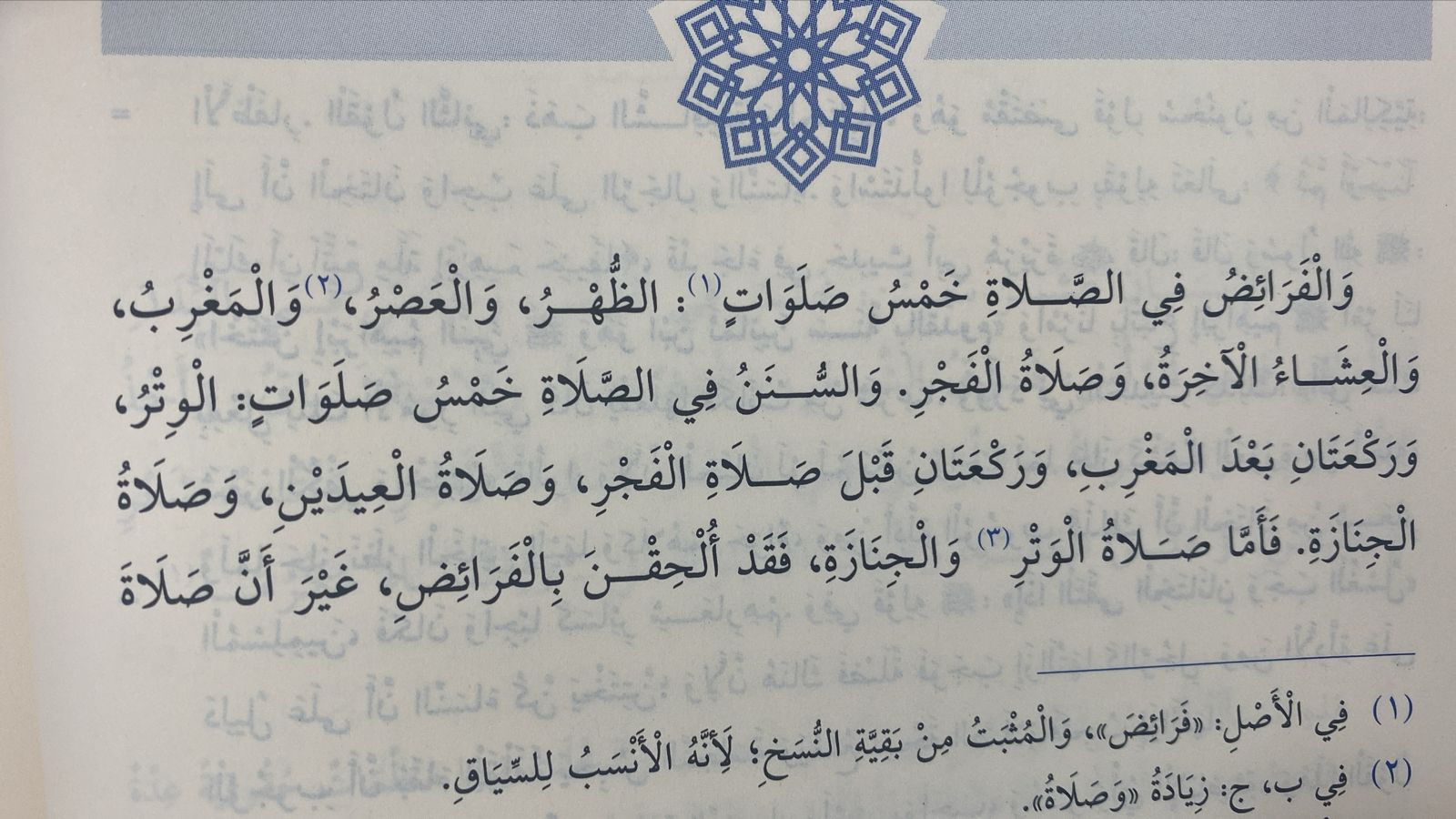
What are the Sunnah prayers in the Ibadi school?

“Indeed, humankind was created impatient: distressed when touched with evil, and withholding when touched with good—except those who pray, consistently performing their prayers.” (Qur’an 70:19-23)

﷽ 

“The prayer was prescribed as consisting of two rak’as both when one was resident and when travelling. Then the travelling prayer was kept as it was, and an increase was made in the prayer (observed) at the place of residence.”

Source: (Al-Jami’i Al-Sahih Musnad Al- Imam Al-Rabii hadith #186)

In other words, contrary to what is commonly believed that the prayers for dhur and asr and isha were 4 rak’as they were initially 2 rak’a and an increase was made when in your resting place (your home).

Now before we start, let us say that the title of this entry may be misunderstood.  That is because the Sunnah, in a legal sense, is understood as the words, deeds, actions and treaties of the Blessed Prophet (saw). 

So even the five daily prayers that we say are fardh (obligatory) are, in a sense, Sunnah, as the Blessed Prophet (saw) did them.

Then there are aspects of the Sunnah where the Blessed Prophet (saw) may have had a personal preference that he did not impose upon others.

Then there are those aspects of the Sunnah that the Blessed Prophet (saw) did and did not stop doing which are wajib for us to do. 

Lastly, there are different reports that are transmitted that do not give us the impression that these were parts of the acts that the Blessed Prophet (saw) did and did not stop doing. So, in those one may have a choice, to observe or not observe it. 

I was prompted to write this entry after a sincere brother (May Allah continue to bless him) asked if the following were the Sunnah prayers according to the Ibadi school:

What is worse is that the information provided by this AI did provide any source for the information. The above is most definitely incorrect, especially the point about 2 rak’as before Maghrib, because it is considered one of those times in which praying is makruh (disliked).

What this article attempts to do is to discuss those prayers that are connected to the fardh (obligatory) prayers. This is commonly called: Sunan Al-Rawatib 

When it comes to prayers, they differ in terms of their level of obligation. Obviously, the five daily prayers are those which are fardh (absolutely obligatory).

They consist of:

2 rak’as for fajr. The fajr prayer itself.

4 rak’as for dhuhr. The dhuhr prayer itself.

4 rak’as for ‘asr. The asr prayer itself.

3 rak’as for maghrib. The maghrib prayer itself.

4 rak’as for isha. The isha prayer itself.

When we say the ‘Sunnah’ prayers, we are talking about those rak’as which the Blessed Prophet (saw) used to pray or perform in addition to those obligatory (fardh) prayers.  

Mu’akkad are the confirmed Sunnah. The Blessed Prophet (saw) ALWAYS did them. He did not leave it. For us, the Mu’akkad are Sunnah, which are Wajib. Wajib means we must perform them. If a person does not do it, that person is considered to be vile.

What is the point in quoting the text of the Qur’an that confirms the Sunnah and then abandoning the Sunnah of the Blessed Messenger (saw) which we know he did not leave?

Ghair mu’akkadah is the non-confirmed sunnah. Meaning the Blessed Prophet (saw) did it sometimes, or sometimes he did not do it. Or, the fact that the lone narrator reports are in conflict on the matter.

What is the difference between: Qabliyah & Ba’diyyah sunnah?

Qabliyah are those sunnah prayers (rather they are mu’akkad or ghair mu’akkadah) that are done BEFORE the obligatory prayers (fardh).

B’adiyyah are those sunnah prayers (rather they are mu’akkad or ghair mu’akkadah) that are done AFTER the obligatory prayers (fardh).

So let us focus on the Mu’akkad, the confirmed Sunnah prayers that are Sunan Al-Rawatib: connected to the 5 daily fardh (obligatory) prayers.

You can see the above information is taken from Shaykh Abu Hassan Ali Muhammed Al Basyawi. May Allah (swt) have mercy on him and grant him the highest paradise. Volume 2 Mokhtasar Al Basyawi (Subuughu Niami) pg. 44-46

So, again, our focus is primarily:  Mu’akkad, the confirmed Sunnah prayers that are Sunan Al-Rawatib–connected to the 5 daily fardh. Those sunnah prayers in which the Blessed Messenger (saw) he never abandoned them.

That would be as follows:

2 Sunnah mu’akkad +2 rak’as for fajr.

4 rak’as for dhuhr.

4 rak’as for ‘asr.

3 rak’as for maghrib. +2 Sunnah mu’akkad

4 rak’as for isha.

So now let us focus on the Ghair mu’akkadah, the non-confirmed Sunnah prayers that are Sunan Al-Rawatib: connected to the 5 daily fardh (obligatory) prayers.

2 Sunnah mu’akkad +2 rak’as for fajr.

4 rak’as sunnah or 2 rak’as sunnah + 4 rak’as for dhuhr. + 4 rak’as sunnah. Or 2 rak’as sunnah.

4 rak’as for ‘asr.

3 rak’as for maghrib. +2 Sunnah mu’akkad

4 rak’as sunnah or 2 rak’as sunnah + 4 rak’as for isha. + 4 rak’as sunnah or 2 rak’as sunnah

Prima Qur’an comments:

Now that which you see highlighted in green, are those Ghair mu’akkadah. They are non confirmed Sunnah prayers. This means that it is possible that the Blessed Prophet (saw) did them at times and other times he did not do them.

So why is there disagreement or dispute over the ghair mu’akkadah? Insh’Allah, we will do our level best to try and explain using an example. It is also hoped that you, the seeker of truth, will understand why one must take care of the lone narrator reports. One narrator reports put a few strokes on the canvas but they do not paint the whole picture.you.

Let us take the following hadith for example:

“Narrated `Abdullah bin Mughaffal:

The prophet said, “There is a prayer between the two Adhans (Adhan and Iqama), there is a prayer between the two Adhans.” And then while saying it the third time he added, “For the one who wants to (pray).”

Source: (https://sunnah.com/bukhari:627)

The above hadith is specific about there being a prayer before every prayer (inclusive of Isha). However, it is not specific as regards the number of rak’as. Are we talking about 2 rak’as or 4 rak’as.

Thus, even though this is a musnad hadith of Imam Bukhari, some may not see it as sufficient evidence to suggest that this was a continued practice.

Interestingly enough, some may leave it so as not to practice bid’ah (innovation). Others, avoid the difficulty by labeling it as nawafil (optional prayers).

So this beloved sunnah is not to be confused with the confirmed sunnah (Sunnah mu’akkad). The beloved sunnah or nafila (if you do it you earn good and if you do not do it you do not accrue sins).

So to recap we have:

2 rak’as (qabliyah) before Fajr, which is Sunnah mu’akkad

2 rak’as (ba’diyyah) after Maghrib, which is Sunnah mu’akkad

You have other Sunnah prayers that are mu’akkadah, like: the two eid prayers, the eclipse prayer, the 2 rak’as Tahiyyatul Masjid (greeting the Masjid) and salat janazah. These are all a MUST.

In the case of salat janazah, this is a fard al kifayyah. In Islam, we have:

Fard al ‘ayn (personal responsibility that others cannot do on your behalf, like the five daily prayers).

Fard al kifayya (collective responsibility) such that if some do, they lift the obligation upon the collective. What this means is that it is not necessary for everyone in a city or village to come to the funeral prayers. What is necessary is that some people come to perform the funeral prayers.

The place of the witr prayer according to the Ibadi school.

The witr prayer is a prayer that falls outside Sunan Al-Rawatib.

That being said, the witr prayer is a Sunnah mu’akkad. This means it is wajib for us to pray it.

“Narrated AbuAyyub al-Ansari:

The Prophet (saw) said: “The witr is a duty for every Muslim, so if anyone wishes to observe it with five rak’ahs, he may do so; if anyone wishes to observe it with three, he may do so, and if anyone wishes to observe it with one, he may do so.”

Source: (https://sunnah.com/abudawud:1422)

The question is: Did the Blessed Prophet (saw) abandon the witr or was it part of his Blessed Sunnah that he never abandoned? For us, it is part of the Sunnah that he never abandoned. That is to say it is Sunnah mu’akkad.

How many rak’as for witr?

Witr itself means odd. As one can see from the hadith above: (1 rak’as, 3 rak’as, 5 rak’as).

In reality, it can be up to 13 rak’as.

There is no need to dispute and set in stone a certain number of rak’as for witr other than the odd numbers. That is because the Blessed Prophet (saw) would perform these rak’as with odd numbers. The reports would come down to us about the odd numbers and people would hold on to these solitary reports as if they were set in stone. What is confirmed by sunnah is that it was done. What is not confirmed sunnah is the number of rak’as.

“Technically speaking, al-witr could be performed with one unit (rak‘ah). Also, it could be done with three, five, seven, nine, eleven or thirteen units; thirteen is the maximum.2
Allāh’s Messenger (saw) is reported to have said: ‘Whoever wants to pray al-witr with seven rak‘ahs, let him do so, and whoever wants to pray al-witr with five rak‘ahs, let him do so, and
whoever wants to pray al-witr with three rak‘ahs, let him do so, and whoever wants to pray al-witr with one rak‘ah, let him do so, and whoever wants to do so gesturing, let him do so’.3
It is allowable to perform al-witr in the al-fașl way or the alwașl way, yet the former is preferred to the latter.”

Source: (Al-Muatamad The Reliable Jurisprudence on Prayer pg. 401.)

al-Fașl way: Is to do taslim after sitting in the second unit. Then, you pronounce the consecrating takbir (takbirat al-Iḥram) after being upright for the third unit.

al-wașl way: It is to perform the three units continuously, without this first taslim after sitting for the second unit; rather, you stand up after sitting, with a transitional takbir for the third unit.

What is the situation of the Sunnah prayers connected to Sunan Al-Rawatib when traveling?

When traveling, the Sunnan prayers fall. Meaning the obligation to perform them falls.

The units of rak’as revert to their origin (recall the hadith at the beginning of this article).
Thus, it would be :

2 rak’as for fajr.

2 rak’as for dhuhr. + 2 rak’as for ‘asr.

3 rak’as for maghrib. + 2 rak’as for isha.

Witr 1 rak’a only.

In general, a person can pray nafila whenever they like. That is apart from the prohibited prayer timings.

The forbidden and disliked times to pray.

The three forbidden times to pray are (sunrise), noon — when the sun reaches its zenith and sunset. The disliked timings are from Asr to Maghrib. 

We pray during the eclipse (rather it is solar or lunar)

We do not pray at these specific times so as not to imitate the solar cults and those who worship the Sun. 

“And he brought me into the inner court of the LORD’S house, and, behold, at the door of the temple of the LORD, between the porch and the altar, were about five and twenty men, with their backs toward the temple of the LORD, and their faces toward the east; and they worshiped the sun toward the east.” (Ezekiel 8:16)

Or, for example, like the majority of Christians who give deference to the Sun. The majority of Christians will worship the birth of their God on December 25th without any biblical textual evidence.

In the ancient Roman calendar, December 25 was the date of the winter solstice. The emperor Aurelian made this the date of the festival Dies Natalis Solis Invicti, the birthday of Sol Invictus or the ‘Invincible Sun’

Although there are Christians that disagree with the date (December 25th), such as the EO and Oriental Orthodox and Jehovah’s Witness.

The Christians worship on Sunday, the day of the Sun. 

The Christian symbol: The Cross, is an adaptation of the Ankh. The symbol was of Re/Ra, who would take his boat to the underworld (the realm of death) associated with the Nile River.

Thus, Muslims do not pray at certain times if we are not to be associated with those solar cults and those who worship the sun and or take their mythos from other earlier-based solar-cults like Christianity.

The status of those who abandoned the Sunnah mu’akkad

“Generally speaking, all Sunnah prayers, be it stressed or non-stressed, are not to be neglected by a faithful believer, as they are authentically proven to have been practiced, or verbally recommended by the one whom Allah set as a good example for us. Once, a Muslim scholar was asked regarding the status of one who habitually leaves as-Sunan ar-Ratibah. He replied, ‘He is religiously inferior’. Thereupon, Imām as-Sālimī (May his soul rest in peace) commented ‘And Paradise is not inhabited by inferiors’. If this is the case with as-Sunan ar-Rātibah, the situation with the emphasized/stressed Sunnah should be even more strict. Likewise, another scholar was questioned about one who does not care to perform the optional prayers that were authentically reported by the Prophet (saw). Upon being asked about this situation, he answered, ‘He is a man of evil’, and furthermore he mentioned that ‘his witness is rejected ’.”

Source: (Al-Muatamad The Reliable Jurisprudence on Prayer pg. 399.)

The following video with the title: He who abandons the confirmed Sunnah is of low status. By His Eminence Shaykh Ahmed bin Hamad Al-Khalili (h).

ما حكم من ترك السنن المؤكدة، وهل يأثم في ذلك؟

من ترك السنن المؤكدة فهو خسيس المنزلة وأمره إلى الله. والله أعلم.

Translated: What is the judgment on someone who abandons the confirmed Sunnahs, and is he sinful for that?

Whoever abandons the confirmed Sunnahs is of lowly status and his matter is up to Allah. And Allah knows best.

The people of the past were fighting to follow the practice of the Blessed Prophet (saw) ; what we call the Sunnah. Now they leave it because it’s a Sunnah!

May Allah (swt) forgive the Ummah.

May Allah (swt) guide the Ummah.

5 Comments

Filed under Uncategorized

Conditions of Takfeer/Excommunicating in the Ibadi School

“That is Allah—your True Lord. So what is beyond the truth except falsehood? How can you then be turned away?” (Qur’an 10:32)

﷽ 

The Conditions of Takfeer/Excommunication in the Ibadi School by Shaykh, Dr Scholar Abdullah bin Saeed bin Abdullah Al Ma’mari May Allah protect him and continue to benefit us from him.

One of the principles established by Ahl al-Istiqama.

The evidence with clear-cut authenticity and clear meaning in theology is taken as definitive, absolute, certain and must be believed.

Whoever opposes this meaning in theology and rejects it is a Mushrik. We seek refuge in Allah from such people. 


That is for those who reject it outright without interpretation.

The one who rejects it by means of interpretation is a fasiq.

In both cases, such people are misguided. Because this evidence can only have one meaning. Rejecting it is unacceptable. This rejection only comes from desire.

Allah (swt) says: “So what is beyond the truth except falsehood?” (Qur’an 10:32)

Whoever opposes clear-cut evidence in terms of authenticity and meaning should not receive sweet words from us.

Again, this is only if it has a clear-cut meaning, is authentic, and it comes from the Qur’an and Sunnah.

Our beloved teacher and respected Shaykh Al-Qanoobi (h) has said:
“Evidence does not become clear-cut unless it goes through certain conditions.”

There are four conditions in our school which must be fulfilled.

1) The first is that it must be authentically transmitted from the Qur’an or Sunnah.

2) The second is that it has a clear-cut authenticity.

3) The third is that the meaning has to be clear.

4) It has to be agreed as being tawatur.

Point 4 has a caveat.

By Tawatur/Mutawattir. That is to say, mass transmitted in practice without additions, accretions or innovations. Alternatively, mass transmitted by disassociated chains of transmission such that it is not possible for them to have conspired upon a falsehood.

For the person who says it is mutawatir. They should take it as part of their creed.

The one who takes a matter disputed as mutawatir by right cannot call another who disagrees as a fasiq. That is because the one who does so takes those hadith as ahad only.

For instance, the belief in Al-Siraat and some say the punishment of the grave.

Shaykh Imam Al-Salimi (r) says:

The evidence regarding the punishment of the grave is mutawatir.

That was his position and he did not call other scholars from the school as fasiqs.

Example: Our luminous scholar Shaykh Imam Nasir bin Abi Nabhan (r) didn’t believe in the punishment of the grave. That is because he didn’t believe the narrations were mutawatir (clear-cut and mass transmitted).

Rather, Shaykh Nabhan (r) saw them as ahad.

Going back to the general principle of the school. No evidence should be accepted in theology unless it is clear-cut with a clear meaning.

However, Shaykh Imam Al-Salimi (r) and other scholars said it is clear-cut with a clear meaning and so they and their followers have to believe it. It is a point of creed.

This is done without calling Fasiq either side due to this difference of opinion.

This is an important principle mentioned by Shaykh Al Qanubi (h) in some of his books.

May Allah Guide the Ummah.

May Allah Forgive the Ummah.

Leave a comment

Filed under Uncategorized

Claims of apocryphal sources in the Qur’an?

“That is from the news of the unseen which We reveal to you. And you were not with them when they cast their pens as to which of them should be responsible for Mary. Nor were you with them when they disputed.”(Qur’an 3:44)

﷽ 

“This is the Book in which there is no doubt, a guide for the righteous. Those who believe in the unseen, and perform the prayers, and give from what We have provided for them. And those who believe in what was revealed to you, and in what was revealed before you, and are certain of the Hereafter.” (Qur’an 2:3-4)

The Qur’an is a book of which there is no doubt. It is for those who believe in the unseen. It is for those who are certain in the life to come. It is for those who believe in what was revealed before the Blessed Prophet (saw).

Those who are skeptical of those points will quite naturally arrive at different conclusions. So that is of no consequence for the believer.

“As for those who persist in disbelief, it is the same whether you warn them or not—they will never believe. Allah has sealed their hearts and their hearing, and their sight is covered. They will suffer a tremendous punishment.” (Qur’an 2:6-7)

Now, historians and orientalists cannot speak of the supra natural as these are matters of belief. They are beyond their point of historical investigation. However, we are always thrilled when we find historians and Orientalists corroborating the testimony of narratives in the Qur’an by finding manuscripts or parchments of information that, though not ad verbatim, closely mimic what Allah (swt) has revealed before. This is the understanding of the believer.

Do we find some information from various cultures that preceded the coming of the Blessed Prophet (saw) that seems to corroborate the beliefs of Islam? Yes! That is not scary! That is exciting! 

Recall what Allah (swt) himself informed us of:

We surely sent a messenger to every community, saying, “Worship Allah and shun false gods.” But some of them were guided by Allah, while others were destined to stray. So travel throughout the land and see the fate of the deniers!” (Qur’an 16:36)

Remember we are not responsible for the conclusions or perceptions of others.

If we look at the above graph. We can see that in block B the apparent (the dhahir) is that there are parchments, manuscripts, scrolls, oral traditions, inscriptions etc. that come before the Qur’an. However, when we look at block B, the haqiqah (the reality) is that Allah’s knowledge of what really happened precedes the information in B. Because of that reality, what is in C (The Qur’an) actually precedes the information in B. This is precisely why this hobbyhorse of orientalist and those who use the historical critical method is of absolutely no consequence for the believing Muslim.

We Muslims have been the first critics of our own sources. The clash of historical narratives between the Ibadi, Sunni and Shi’a is proof positive of this. The grading of the ahadith and the mention of variants in the transmission of the Qur’an have not come from people who lost faith, agnostics or atheists. They came from us, as believers. Subhan’Allah!

These other Johnny Come Lately types, HCM, etc., welcome to the party! 

History and Miracles.

We don’t believe that miracles are historical. This does not mean that we do not believe that miracles did not happen. We just don’t believe that history can capture them. 

Case in point. An Indian king, Cheraman Perumal, was reported to have seen the moon split. History can report such data, but it does not necessarily confirm nor interpret the data. 

This particular entry is directed towards Christians. It is rather shameful that they have taken the approach that they have in these matters. Given that they too claim to believe in the unseen. They claim to believe in a Creator that can narrate past events that present people were not privy to.

“Then she brought him to her people, carrying him. They said, “O Mary, you have certainly done a thing unprecedented. O sister of Aaron, your father was not a man of evil, nor was your mother unchaste.”But she pointed to the babe. They said: “How can we talk to one who is a child in the cradle?” He said: I am indeed a servant of Allah: He has given me revelation and made me a prophet; And He hath made me blessed wheresoever I will be and has enjoined on me Prayer and Charity as long as I live; (He) has made me kind to my mother, and not overbearing or miserable; So peace is on me the day I was born, the day that I die, and the day that I shall be raised up to life (again)”! Such (was) Jesus the son of Mary: (it is) a statement of truth, about which they (vainly) dispute.(Qur’an 19:27-34)

“When Allah will say, “O Jesus, Son of Mary, remember My favor upon you and upon your mother when I supported you with the Pure Spirit and you spoke to the people in the cradle and in maturity; and [remember] when I taught you writing and wisdom and the Torah and the Gospel; and when you designed from clay like the form of a bird with My permission, then you breathed into it, and it became a bird with My permission, and you healed the blind and the leper with My permission; and when you brought forth the dead with My permission; and when I restrained the Children of Israel from [killing] you when you came to them with clear proofs and those who disbelieved among them said, “This is not but obvious magic.” (Qur’an 5:110)

“And a messenger to the Children of Israel, who will say, Indeed I have come to you with a sign from your Lord in that I design for you from clay like the form of a bird, then I breathe into it and it becomes a bird by permission of Allah. And I cure the blind and the leper, and I give life to the dead – by permission of Allah. And I inform you of what you eat and what you store in your houses. Indeed in that is a sign for you, if you are believers.” (Qur’an 3:49)

Prima Qur’an comments:

In this article, we will give a response to those Christians who use as a polemic against Muslims the claim that the Qur’an contains apocryphal material in it and therefore cannot be a revelation from Allah (swt).

Now, of course, they will claim that there are more than the three verses of the Qur’an we quoted above as being from apocryphal material. However, we have chosen to focus on these three, as they are most often used by Christian polemicists in debates with Muslims.

Now, personally, we find this particular line of Christian attack against Islam amusing. However, they have to eventually come up with something, right?

Now let’s look at and listen carefully to what these Christians are actually disputing with us about.

*Note*

  1. They are not raising the issue of “healing the blind.“
  2. They are not raising issues against “curing people affected by leprosy.”
  3. They are not raising issues against “give life to the dead.”

They are not disputing these points because they are miracles attributed to Christ Jesus that they find in their accepted canonical text. We will come to the term canonical in a moment.

What they are disputing is:

  1. Jesus speaking as an infant
  2. Jesus creating birds out of clay

Why do they dispute about these miracles?

Because they are not in what they accept to be their canonical text.

So what do the terms apocryphal and canonical mean?

Canonical in relation to Christian scriptures means:

A biblical canon or canon of scripture is a set of texts (or “books”) which a particular religious community regards as authoritative scripture. … Believers consider canonical books as inspired by God or as expressive of the authoritative history of the relationship between God and his people.”

Apocryphal in relation to Christian scriptures means:

“Biblical or related writings not forming part of the accepted canon of Scripture; or writings or reports not considered genuine.”

So, if a Christian were to come to us and say that these statements in the Qur’an are found in apocryphal sources, the first thing you have to keep in mind that what they are actually saying is that it is apocryphal according to their particular sect of Christianity!

The reason that is important is as follows: As we write this to you on 11/4/2024, Christendom has still not settled the issue of what is and is not apocryphal for the whole of Christianity.

Glaring examples are the following:

Depending on how you want to word it, you could say that the Protestants have 7 fewer books in their version of the Old Testament. Or you could say that the Roman Catholics have 7 extra books in their Old Testament that they accept to be inspired and not apocryphal.

You can read a short write-up about that here:

https://www.catholic.com/magazine/print-edition/how-to-defend-the-deuterocanonicals

The same can be said for the Orthodox Church.

https://www.oca.org/questions/scripture/canon-of-scripture

Yet the Orthodox Church has additional Old Testament texts (or if you want to be neutral, the Protestants and Catholics have less). The same can be said for the Ethiopian Orthodox Church.

The same goes for the New Testament.

What is canonical is an issue that is still not settled among them.

The Chaldean Syrian Church does not accept the following as canon:

2 Peter, 2 John, 3 John, Jude, & Revelation of John.

In fact, many Protestant Christians have declared Mark 16:8-20, & John 7:53–8:11 to not be canonical.

You have to wonder about the Protestant Christian theologians like John Calvin, Martin Luther, and others who most likely held such passages to be canonical. Yet there are Christians who do not agree with the idea that such passages are non-canonical. These Christians very much believe that Mark 16:8-20, & John 7:53–8:11 are inspired scripture.

So what is the point that is being made?

The point is that when a Christian says to us that those verses in the Qur’an are allegedly taken from apocryphal sources, it is important to understand that:

  1. That though it may be apocryphal for that particular Christian, we can’t say for certain that it was apocryphal for the other Christians.
  2. To keep in mind that what is and is not apocryphal has been and continues to be an internal dispute among Christians.

If the Christian is to counter by saying, “Can you name for me any Christian denomination today that accepts such and such text as canonical?”

The answer to that is: “No we can’t.” Many Christian sects and denominations over time have long perished. Most often the information we do have about them comes from their opponents.

What is also interesting, and we hope Muslims reading this bear in mind, is that no Christian committed to a consistent world view in which the supra-natural happens can tell us that:

  1. Jesus did not speak as an infant.
  2. Jesus did not create birds out of clay.

This assertion is also supported by the text they accept as canon. Namely, the following:

And Jesus did many other miracles in the presence of his disciples which are not written in this book: But these are written that you might believe that Jesus is the Christ, the Son of God; and that believing you might have life through his name” (John 20:30-31).

Prima Qur’an comments:

Now this writer, apparently inspired by Allah, felt that it was necessary to inform his readers that Jesus did many other miracles that are not contained within this book.

There are many more things that Jesus did. If all of them were written down, I suppose that not even the world itself would have space for the books that would be written.” (John 21:25)

Prima Qur’an comments: Though we can all agree this statement is hyperbole, yet it is obvious that the writer knew that there was much more information about Jesus that could be shared.

Now, a possible Christian objection to our understanding of John 20:30-31 is that ‘the many other miracles that are not present in this book‘ could only be a reference to the miracles listed in Matthew, Mark, Luke that are not in the Gospel according to John.

The response to this is that it is simply an assumption.

It could be that:

  1. It could be a reference only to the miracles present in Matthew, Mark, Luke that are not in the Gospel, according to John.
  2. It could be a reference to miracles that are not present in any of those Gospel accounts.
  3. It could be a reference to miracles present in Matthew, Mark, Luke as well as those not present in any Gospel accounts.

Christians could well ask: “Why wouldn’t these accounts of Jesus speaking as an infant or making birds out of clay make it into any of the Four Gospels commonly accepted among all of Christendom?”

Well, we have a clue about that from a text we have already mentioned.

“And Jesus did many other miracles in the presence of his disciples, which are not written in this book: But these are written, that you might believe that Jesus is the Christ, the Son of God; and that believing you might have life through his name” (John 20:30-31).

Prima Qura’n comments: This Gospel writer is telling us that he is informed about other miracles, but the seven particular miracles that he has selected is so that we may believe that Jesus is:

  1. The Christ
  2. The Son of God
  3. Having eternal life through his name.

So, in the example of this Gospel writer, we have the reasons plainly stated why some miracles were chosen over others. Whereas for the other Gospels it’s hard to discern why they may have left out certain miracles.

For example, John’s Gospel includes the story of Lazarus rising from the dead. I’m puzzled why such an awesome event is not recorded by the other Gospels. Or Jesus turning water into wine is only included in the Gospel, according to John.

Equally puzzling is the following awesome account, which is not recorded by any ancient documents outside of Matthew itself.

“And behold, the curtain of the temple was torn in two, from top to bottom. And the earth shook, and the rocks were split. The tombs also were opened. And many bodies of the saints who had fallen asleep were raised, and coming out of the tombs after his resurrection they went into the holy city and appeared to many. When the centurion and those who were with him, keeping watch over Jesus, saw the earthquake and what took place, they were filled with awe and said, ‘Truly this was the Son of God’” (Matthew. 27:51-54).

There are no extra-biblical sources that mention this awesome event. Surely witnessing such an event would have been worthy of mention somewhere. In fact, this particular text created controversy even among conservative Christians when New Testament scholar and associate professor of theology Michael Licona raised questions about this text.

You can read about where Christians have done some damage control concerning this at the following:

http://www.evidenceunseen.com/theology/scripture/is-matthew-2751-53-historical/

So, again, going back to the Christian inquiry into why some awesome and miraculous events are recorded by some sources and not others, we can only surmise as to the motives behind this.

  1. Why is it Jesus speaking as an infant is recorded in some sources and not others?
  2. Why is Jesus making birds out of clay recorded in some sources and not others?
  3. Why is it that the Gospel of Mark is now considered not to have a resurrection narrative, but other sources have it?
  4. Why is it that Jesus raised Lazarus from the dead from some sources and not others?
  5. Why is it that Jesus turned water into wine from some sources and not others?
  6. Why is that only the Gospel of Matthew has this narrative about the mass resurrections of people appearing to many in the city?

Another interesting point to note is that, in the case of the Christian tradition that many of us will encounter today, Roman Catholics, Orthodox, and Protestants of many types, we have 30 years of the life of Christ Jesus that is completely missing altogether!

“Now Jesus himself was about thirty years old when he began his ministry. He was the son, so it was thought, of Joseph, the son of Heli.” (Luke 3:23)

So imagine all the people who needed to be healed, those who needed salvation, and what does the current Christian canon tell us about the early life of Jesus? Its silence about the early life of Jesus is awkward, to say the least.

It is honestly both shocking and disappointing that Christians would use these types of arguments against the Qur’an. It absolutely reeks of atheism, smacks of radical skepticism, and is stepped in a worldview bereft of the supra-natural.

For us, as Muslims, we are informed about what happened concerning Jesus through divine revelation. As Allah (swt) says to the Blessed Messenger (saw):

“That is from the news of the unseen which We reveal to you. And you were not with them when they cast their pens as to which of them should be responsible for Mary. Nor were you with them when they disputed.” (Qur’an 3:44)

Also, notice that when the Christians make their particular claim about the Qur’an, they more often than not do put up the sources which they claim the Qur’an takes the following from:

  1. Speaking as an infant.
  2. Creating birds out of clay.

We also find it interesting that Muslims don’t ask them for their sources.

The Christian polemicist usually has two sources in mind for this:

Those sources are: The Infancy Gospel of Thomas & The Proevangelian of James

“This little child Jesus when he was five years old was playing at the ford of a brook: and he gathered together the waters that flowed there into pools, and made them straightway clean, and commanded them by his word alone. 2 And having made soft clay, he fashioned thereof twelve sparrows. And it was the Sabbath when he did these things (or made them). And there were also many other little children playing with him.

“And a certain Jew when he saw what Jesus did, playing upon the Sabbath day, departed straightway and told his father Joseph: Lo, your child is at the brook, and he has taken clay and fashioned twelve little birds and has polluted the Sabbath day. 4 And Joseph came to the place and saw: and cried out to him, saying: Why are you doing these things on the Sabbath, which it is not lawful to do? But Jesus clapped his hands together and cried out to the sparrows and said to them: Go! and the sparrows took their flight and went away chirping. 5 And when the Jews saw it they were amazed, and departed and told their chief men that which they had seen Jesus do.”

Source: (Infancy Gospel of Thomas Chapter 2:1-5)

Prima Qur’an Comments:

This narrative speaks about Jesus creating 12 birds. The emphasis on the number 12 is there twice. This must relate to the 12 disciples. Whereas in the Qur’an we find no mention of this.

Indeed I have come to you with a sign from your Lord in that I design for you from clay like the form of a bird, then I breathe into it and it becomes a bird by permission of Allah.” (Qur’an 3:49)

There is no mention of Jesus doing this act on the Sabbath Day. There is no mention of Jesus creating 12 birds. It is interesting to note that the Qur’an does not name the number of Jesus’ disciples. Christians have not addressed this.

It would be interesting to know where the writer(s) of the Infancy Gospel of Thomas’ got their information from. The earliest possible date of authorship is 80 A. D to 250 A. D. This is also roughly the time that the date of authorship is ascribed to ‘The Epistle to Titus‘, which is considered canonical by Christians today. These scholars date the epistle from the 80 A. D up to the end of the 250 A. D.

Source: (Raymond E Brown An Introduction to the New Testament. New York: Anchor Bible, p. 662)

“And when Jesus was five years old, there fell a great rain upon the earth, and the boy Jesus walked up and down through it. And there was a terrible rain, and He collected it into a fish-pond, and ordered it by His word to become clear. And immediately it became so. Again He took of the clay which was of that fish-pond, and made of it to the number of twelve sparrows. And it was the Sabbath when Jesus did this among the boys of the Jews. And the boys of the Jews went away and said to Joseph His father: Behold, thy son was playing along with us, and he took clay and made sparrows, which it was not lawful to do on the Sabbath; and he has broken it. And Joseph went away to the boy Jesus, and said to Him: Why have you done this, which is not lawful to do on the Sabbath? And Jesus opened His hands, and ordered the sparrows, saying: Go up into the air and fly; nobody shall kill you. And they flew, and began to cry out, and praise God Almighty. And the Jews seeing what had happened, wondered, and went away and told the miracles which Jesus had done.”

Source: (Infancy Gospel of James Chapter 4)

Prima Qur’an Comments:

This story is very similar to the one in the Infancy Gospel of Thomas’. What becomes apparent is that both of these sources are relying upon some oral tradition–one in which does not have a chain of transmission.

Now here is what is interesting about the Protoevangelion Jacobi or Infancy Gospel of James. One of the Christian polemicists that used this type of attack upon the Qur’an was himself put in a difficult position in relation to this text.

Observe:

https://ehrmanblog.org/video-bart-ehrman-vs-james-white-debate

@19:20 Erhman asks: “What other documents are found in P72 as this is a document that resonates with you?”


James responds, “There are some non-canonical documents in P72 …


Erhman replies, “Right, so I am just wondering about you resonating with this document”. Do you think that the scribe thought what he was copying was scripture?


James, “Well, I don’t think you can simply jump to the conclusion that, because scribes included books in a single codex that they believed that everything within that codex was necessarily scripture.” There are sorts of works that were considered to be beneficial to people that were included in codices that were not necessarily canonical.”


Erhman, “Yeah, I just think that it was odd that that particular manuscript was one that you resonated with because it’s the earliest attestation that we have of the protoevangelium jacobi.” (The Infancy Gospel of James) ..

Prima Qur’an Comments:

In other words, you can’t know for certain if the scribe who was copying this text (obviously from an even earlier source) was transcribing what he thought was divine writing! Especially in light of the fact that it is in the same genre of manuscripts that are generally described as “the most significant” papyrus of the New Testament to be discovered so far.

“Now, when the Lord Jesus had completed seven years from His birth, on a certain day He was occupied with boys of His own age. For they were playing among clay, from which they were making images of asses, oxen, birds, and other animals; and each one boasting of his skill, was praising his own work. Then the Lord Jesus said to the boys: The images that I have made I will order to walk. The boys asked Him whether then he was the son of the Creator, and the Lord Jesus made them walk. And they immediately began to leap; and then, when He had given them leave, they again stood still. And He had made figures of birds and sparrows, which flew when He told them to fly, and stood still when He told them to stand, and ate and drank when He handed them food and drink. After the boys had gone away and told this to their parents, their fathers said to them: My sons, take care not to keep company with him again, for he is a wizard: flee from him, therefore, and avoid him, and do not play with him again after this.”

Source: (The Arabic Infancy Gospel of Jesus)

Prima Qur’an Comments:

This text has Jesus not only making birds but apparently donkeys, oxen, and other (undisclosed) animals out of clay. There is an inquiry about him being the son of the Creator. There is no mention of the sabbath or any mention of the animals being of any number.

It’s thought that this Gospel has its origins in Syriac sources in the 5th or 6th century.

“We find what follows in the book of Joseph the high priest, who lived in the time of Christ. Some say that he is Caiaphas. He has said that Jesus spoke, and, indeed, when he was lying in His cradle, said to Mary His mother: “I am Jesus, the Son of God, the Logos, whom you have brought forth, as the Angel Gabriel announced to you; and my Father has sent me for the salvation of the world.”

Source: (The Arabic Infancy Gospel of Jesus).

Prima Qur’an Comments:

There is no mention of Mary carrying Jesus as a baby. There is no mention of the people asking Mary where this baby came from. This text has Jesus addressing his mother, the Qur’an has him addressing the people. The text above is filled with Christian doctrine: Jesus is the Son of God, he has a ‘Father’ and he was sent for the salvation of the world.

None of this is found in the account of the Qur’an.

Conclusion:

The attacks that Christian polemicists have leveled towards the Qur’an are the kind one would expect from radical skepticism, and a worldview bereft of the supra-natural.

We can see that these sources the Christians point to have important details and radically different theological statements that we do not find at all within the Qur’an.

More telling is that Christians do not even quote these sources, or give the details of the accounts. Many of the people they speak to will not go and double-check the sources for themselves.

The fact that some Christians find these sources apocryphal is of no concern to us as Muslims. We as Muslims do not rely upon them or accept them as revelation either. Our acceptance of what is stated in the Qur’an comes from our faith in it as divine revelation and in what Allah (swt) himself has stated:

“That is from the news of the unseen which We reveal to you. And you were not with them when they cast their pens as to which of them should be responsible for Mary. Nor were you with them when they disputed.” (Qur’an 3:44)

Just as our faith in Jesus as the Messiah, the Word of Allah, and the Son of Mary are not dependent upon any book of the New Testament (even if the whole of Christendom) accepts it as canonical.

Christians themselves cannot totally rule out the possibility of Jesus having spoken as an infant or having given life to the clay birds based upon the following evidence:

“And Jesus did many other miracles in the presence of his disciples, which are not written in this book: But these are written, that you might believe that Jesus is the Christ, the Son of God; and that believing you might have life through his name” (John 20:30-31).

As well as the fact that the Gospel writers themselves have admitted to leaving out particular miracles that did not suit their desired goals.

“The truth is from your Lord, so never be among the doubters.”(Qur’an 2:147)

“And when they hear what has been revealed to the Messenger, you see their eyes overflowing with tears because of what they have recognized of the truth. They say, “Our Lord, we have believed, so register us among the witnesses.” (Qur’an 5:83)

May Allah (swt) guide the truth seekers!

If you enjoyed this article you may enjoy the following:

May Allah Guide the Ummah.

May Allah Forgive the Ummah.

1 Comment

Filed under Uncategorized

The Sunni Misunderstanding of Qur’an 4:159 concerning Jesus second coming.

“And there is none of the People of the Book but must believe in him before his death; and on the Day of Judgment he will be a witness against them.” (Qur’an 4:159)

﷽ 

The misunderstanding of the verse is used as evidence for them to believe in some ‘Second Coming’ of Jesus (as).

You may look at all the various ways the verse has been translated into English here:

https://www.islamawakened.com/quran/4/159/

In this article we will focus on the justifications and proofs as they are given by the respected Mufti Zameel Ur Rahman. That is because what he states is the majority view on the matter.

Here is what Mufti Zameel Ur Rahman has laid out:

https://www.themadinanway.com/single-post/2018/03/13/The-Second-Coming-of-%E2%80%98%C4%AAs%C4%81-A-Fundamental-Islamic-Belief

MUFTI ZAMEEL UR RAHMANS UNDERSTANDING OF QUR’AN 4:159

Let us examine what Mufti Zameel Ur Rahman has put forward:

These verses then state that the Jews will believe in him before he dies. That is, before ‘Īsā (‘alayhissalām) dies (after he defeats the Dajjāl), the Jews that are remaining on the earth will all believe in him as the Messiah/Masīḥ about whom they were foretold. This is the dominant interpretation of the concluding verse that reads: “There will be none from the people of the scripture [i.e. Jews] but will believe in him before his death.” This has been recorded authentically from Abū Hurayrah (raḍiyallāhu ‘anhu) (see below).”

Al-Ṭabarī transmits through two chains from Sufyān al-Thawrī from Abū Ḥaṣīn from Sa‘īd ibn Jubayr from Ibn ‘Abbās that he said “before his death” means “before the death of ‘Īsā ibn Maryam”. (Tafsīr al-Ṭabarī, Maktabah Hajr, 7:664) This is an authentic chain.”

“He also narrates with an authentic chain to the Tābi‘ī, Abū Mālik Ghazwān al-Ghifārī (ca. 25 – 100 H), that he said of this verse: “That is, upon the descent of ‘Īsā ibn Maryam – none from the people of the scripture will remain but will believe in him.” (ibid. 7:665) He also transmits with an authentic chain to the eminent Tābi‘ī, al-Ḥasan al-Baṣrī (21 – 110 H), that he said: “Before the death of ‘Īsā. By Allāh! He is now alive in the presence of Allāh; but when he comes down, they will all believe in him.” (ibid.)”

“This is also transmitted from the mufassir of the Tābi‘īn, Qatādah ibn Di‘āmah. Al-Ṭabarī also transmits authentically from ‘Abd al-Raḥmān ibn Zayd ibn Aslam (d. 182), a mufassir from the Tab‘ Tābi‘īn, that he said of this verse: “When ‘Īsā ibn Maryam descends and then kills the Dajjāl, no Jew will remain on the earth but will believe in him.” (ibid. 7:666)”

Ibn Jarīr al-Ṭabarī explains that this is the most correct explanation. (ibid. 7:672) He explains that thus the meaning of the verse is: “[There is none from the people of the book] but will believe in ‘Īsā before the death of ‘Īsā – and that is about a specific [group] of the people of the book; those intended are the people of one particular time from them, not people of all times, who came after ‘Īsā; and that this will occur after his descent.” (ibid. 7:674)”

“Similarly, Ibn Kathīr says after mentioning this interpretation: “This opinion is the truth,” (Tafsīr Ibn Kathīr, Maktabah Awlād al-Shaykh, 4:342), and further states: “There is no doubt that what Ibn Jarīr said [giving preference to this interpretation] is what is correct, as that is what was intended from the context of the verses.” (ibid. 4:344) As Ibn Kathīr mentions, it is clear from the context that this is what is meant. The verses are talking about the Jews’ claim to have executed ‘Īsā (‘alayhissalām). Allāh says they did not kill or execute him but Allāh raised him up to Himself. Furthermore, not one of them will remain but will believe in ‘Īsā before his actual death. Hence, these verses clearly demonstrate that ‘Īsā (‘alayhissalām) was not killed, but was taken up alive into the sky, and further indicate that he will return and the Jews who remain (after he kills the Dajjāl) will believe in him.”

Notice that Mufti says,

These verses then state that the Jews will believe in him before he dies. That is, before ‘Īsā (‘alayhissalām) dies (after he defeats the Dajjāl).”

However, that is not what the verse says, and he knows this! If he was simply reading the traditions into the commentary, that is one thing, but forcing them into the text is altogether dishonest!

“This is the dominant interpretation.” Well, Mufti, on what basis do you say this is the ‘dominant interpretation’ ? Can you tell us the total amount of tafsir literature you studied on this matter to conclude this? Also, if this is the ‘dominant interpretation’, it is by your own admission not necessarily the only one!

Truth vs. Popularity: The truth is not a matter of democratic opinion but of sound evidence from the Quran itself.

Next, Mufti seems to quote from a disparate number of tafsir commentaries (albeit selectively). So let’s keep count, shall we?

Tafsir #1, Ibn Kathir

Tafsir #2, Ibn Jarir Al-Tabari

Tafsir #3, Qatada ibn Di’amah

Looking at the Tafsir of Qatada Ibn Di’amah.

Qatada Ibn Dia’ama has two traditions — disconnected from unknown sources about (Qur’an 4:157-158)

  • “And it was related to us that the prophet of God, Jesus son of Mary, said to his disciples: ‘Who of you will have my likeness [shibh/shabah] cast upon him and thereby be killed? One of the disciples said, ‘I, Oh prophet of God!’ ‘Thus that man was killed and God protected [mana’a] His prophet as HE RAISED HIM TO HIMSELF.
  • Concerning his statement: “AND THEY DID NOT KILL HIM AND THEY DID NOT CRUCIFY HIM, BUT IT APPEARED SO TO THEM. Qatada said: ‘The likeness of Jesus was cast upon one of his disciples, and he was killed. Jesus had appeared before them and said: “Whoever of you will have my likeness cast upon him will have paradise.” And one said: “Upon me!”

Prima Qur’an comments:

  1. Qatada Ibn Dia’ama has two traditions from disconnected unknown sources.
  2. This information is from Israʼiliyyat material.
  3. There is a 700 year gap in the chain of transmission!
  4. Also notice how there is no attempt to identify or name the substitute.

Looking at the Tafsir of Ibn Jarir Al-Tabari

Al-Tabari cites eleven traditions all going back to Wahb ibn Munabbih concerning (Qur’an 4:157-158)

Here is the verdict of Al-Tabari:

“Or the affair was according to what ‘Abd al-Samad related (that is the second tradition) from Wahb ibn Munabbih, that is, that the people who were with ‘Isa in the house scattered from the house before the Jews came upon him. ‘Isa remained, and his LIKENESS was cast upon one of his companions, who still remained with him in the house. And ‘Isa was RAISED UP, and one who was changed in the LIKENESS of ‘Isa was killed. And his companions through that the one CRUCIFIED was ‘Isa, because of what they saw happens to the one who was made to look like him. And the truth of the matter was hidden from them, because his being RAISED UP and the changing of the one who was killed into his LIKENESS happened after the SCATTERING of his friends. and [because] they [had] heard ‘Isa that night announce his death, and mourn because he thought that death was approaching him. And they related what happened as true, but the affair with God was really quite different from what they related. And those disciples who related this do not deserve to be called liars.”

Source: (Al-Tabari, vol 9, p 374)

Remember that Al-Tabari is getting his information from Wahb ibn Munabbih, so maybe we spend just a little bit of time on him.

Remember that Mufti Zameel ur Rahman had the following to say about Mufti Abu Layth on the matter:

Recently, an individual has been promoting the misguided belief that the Prophet ‘Īsā (‘alayhissalām) will not return, claiming that this is an idea that has mistakenly been imported into Islām and the teachings of the Prophet (ṣallallāhu ‘alayhi wasallam) from Christianity.”

Well, let us see if Mufti Zameer ur Rahman would be humble enough to apologize to Mufti Abu Layth concerning Wahb ibn Munabbih:

“It is not known clearly if he converted to Islam from Judaism or that his father is a convert from Judaism. There are various reports.” “He was known for reporting Isra’ilyyat material. -well known.” “He required a reputation from trustworthy to audacious liar.”

Source: (Aḥmad ibn Muḥammad ibn Khallikān (d. 1282 CE) and his work Wafayāt al-aʿyān wa-anbāʾ abnāʾ al-zamān (وفيات الأعيان وأنباء أبناء الزمان,) The Obituaries of Eminent Men and the History of the Contemporaries p. 673)

Ibn Khallikān was a renowned Shafi’i jurist, judge (qāḍī), and historian of the 13th century. He is celebrated for his scholarly rigor and intellectual integrity.

Ibn Ishaq used his work for the beginnings of Christianity but did not take from him as a source for the Prophet (saw) biography!

Ibn Khaldun didn’t have a high opinion, mentioning that he frequently told flat lies.

Source: (“Notices et Extraits des Manuscrits,” xx.part 1, p. 461; De Slane, Ibn Ḥallikan, iii. 673, note 2 | Notices et Extraits des Manuscrits de la Bibliothèque du Roi et autres bibliothèques.

For the English readers:  (Notices and Extracts from the Manuscripts of the King’s Library and Other Libraries. The Citation (xx.part 1, p. 461): This refers to Volume 20, Part 1, page 461. The article claims that on this page, there is a discussion about Wahb ibn Munabbih that references Ibn Khaldun’s low opinion of him.

Companions and scholars like Abdullah ibn Mas’ud warned people not to learn Tafsir from the ‘Ahl Kittab’ and his argument was that they may use it to interpolate their own biblical beliefs, teachings and history replacing the Islamic belief and preaching.

Source: (Dr. Muhammed Husayn al-Dhahabi and his monumental work Al-Tafsīr wa al-Mufassirūn (التفسير والمفسرون, Quranic Exegesis and Its Exegetes Volume 1) 

Why Dr. Dhahabi’s scholarship is important.

al-Dhahabi provides a powerful, mainstream Sunni scholarly critique of the very sources that underpin the traditional narrative about Jesus’ death. The reference serves several key argumentative purposes:

  1. Historical Validation of the Problem: Al-Dhahabi meticulously documents how these foreign narratives entered Islamic scholarship. This was primarily through early converts from Judaism and Christianity (like Ka’b al-AḥbārWahb ibn Munabbih, and Abdullah ibn Salam) who, while well-intentioned, began to fill in the gaps in Quranic stories with details from their own traditions. This gives historical credence to the warning from the Companion Abdullah ibn Mas’ud that the article also references.
  2. al-Dhahabi, argues that the classical commentaries on verses like 4:157-159 are contaminated with unreliable material. Al-Dhahabi’s work is essentially a scholarly condemnation of the uncritical acceptance of Isrā’īliyyāt.

So let us take a look again at what Al-Tabari believed:

“Or the affair was according to what ‘Abd al-Samad related (that is the second tradition) from Wahb ibn Munabbih, that is, that the people who were with ‘Isa in the house scattered from the house before the Jews came upon him. ‘Isa remained, and his LIKENESS was cast upon one of his companions, who still remained with him in the house. And ‘Isa was RAISED UP,  and one who was changed in the LIKENESS of ‘Isa was killed. And his companions through that the one CRUCIFIED was ‘Isa, because of what they saw happens to the one who was made to look like him. And the truth of the matter was hidden from them, because his being RAISED UP and the changing of the one who was killed into his LIKENESS happened after the SCATTERING of his friends. and [because] they [had] heard ‘Isa that night announce his death, and mourn because he thought that death was approaching him. And they related what happened as true, but the affair with God was really quite different from what they related. And those disciples who related this do not deserve to be called liars.”

Source: (Al-Tabari, vol 9, p 374)

Prima Qur’an comments:

So, basically, in this narrative, Allah (swt) didn’t fool the non-believers, but he actually fooled the believing disciples of Jesus into believing that He (Jesus) was killed—when he wasn’t?!? Also, the 12 disciples couldn’t use logic, deduction and simple basic math and say, (Well, you know Jesus is gone and so is ….such and such disciple) Hey, maybe Jesus didn’t die?! Maybe so-and-so took his place! Notice the obfuscation especially with the quote from Qatada Ibn Dia’ama? We don’t get to know who this legendary disciple is? Who is this masked man? Oh well, you can hear them saying, ‘it doesn’t matter his reward is with his Lord’.

Looking at the Tafsir of Ibn Kathir

So what is the view of Ibn Kathir concerning Qur’an 4:157-158?

“They disobeyed Jesus and tried to harm him in every possible way, until God led His prophet away from them-Jesus and Mary traveled extensively to avoid such persecution. Ultimately, the Jews notified the King of Syria that there was a man in the holy house was was charming and subverting the people. The king wrote to his deputy in Jerusalem to be on guard against this. Moreover, the deputy was instructed to crucify the culprit (Jesus) and place thorns on his head to stop him from harming the flock. The deputy obeyed the order and led a group of Jews to where Jesus was staying with his twelve or thirteen followers. When Jesus was aware that they were after him, he asked for a volunteer to take his place. One stepped forward and was taken by the Jews and crucified, while Jesus was himself raised through the roof of the house. The Jews then announced that they had crucified Jesus and boasted about it. In their ignorance and lack of intellect ,a number of Christians accepted this claim. The fact that the other disciples had seen Jesus raised was ignored. Everyone else though that the Jews had crucified Jesus.”

Source: (Ibn Kathir, ‘Umdat al-tafsir, ed Ahmad Muhammed Shakir, 5 vols located in: vol 4 pp.28-34)

Prima Qur’an comments :

So notice how Ibn Kathir’s commentary is totally different from Al-Tabari on very key points. Again, obfuscation is a common theme. We don’t know if Jesus had 12 or 13 disciples. The brave unsung hero disciple who just jumped at the chance to be killed (we have no idea who he is). However, unlike Al-Tabari, who was ready to accept on face value the claim of Jesus’ disciples — although they were apparently fooled by Allah (swt), Ibn Kathir isn’t ready to pen that on the disciples. Instead, he simply offers that the Christians were ignorant and lacked intellect, so they accepted that Jesus died. The fact that ‘other disciples’ saw what went down was just simply ignored.

Summary of the Tafsir Sources:

The three tafsir sources that Mufti Zameer ur Rahman are all ultimately reliant upon anonymous, disconnected chains and sources that are traceable to the very sources (Ahl Kitab) that Ibn Masud warned us about!

How can Mufti Zameer ur Rahman (and anyone else who holds his position) claim with confidence that they know what (Qur’an 4:157-159) is talking about?  This so-called ‘unified tradition’ holds disparate and conflicting perspectives that are frankly all over the place.

The testimony of Ibn Masud (ra)

Al-Barqānī informed me, saying: Abū Bakr al-Ismāʿīlī narrated to us, saying: I heard Abū ʿAbd Allāh al-Ḥāfiẓ, and he was asked about tafsīr (Qur’an exegesis): From where should a person begin it? He replied: From the Book of Allah, the Exalted. If that is difficult for him, then he should rely upon the transmitted reports (al-athar). If that is difficult for him, then he should resort to reasoning (al-naẓar). Then he said: It is necessary that above all of this he gives precedence to the Book of Allah. Then he said: I heard Abū al-ʿAbbās Muḥammad ibn Isḥāq al-Thaqafī say: I heard ʿAbdān ibn Aḥmad say: I heard ʿAbd Allāh ibn al-Mubārak say: ʿAbd Allāh ibn Masʿūd used to say: ‘Transmit the Qur’an (faithfully), and do not follow the People of the Book, for indeed they relate to you the most false of narrations, and they burden you with their falsehoods.”

Source: ( Imam Al-Khatib al-Baghdadi Work: Al-Jāmi‘ li-Akhlāq al-Rāwī wa Ādāb al-Sāmi‘ (الجامع لأخلاق الراوي وآداب السامع) – A Compendium of the Ethics of the Narrator and the Etiquette of the Listener.  Volume 1, Page 289 )

Chapter: The Qurra from among the Companions of the Prophet (saws)

Narrated Masriq:

`Abdullah bin `Amr mentioned `Abdullah bin Masud and said, “I shall ever love that man, for I heard the Prophet (saw) saying, ‘Take (learn) the Qur’an from four: `Abdullah bin Masud, Salim, Mu`adh and Ubai bin Ka`b.’ “

Source: (https://sunnah.com/bukhari:4999)

“Waki’ narrated to us, from Sufyan, from Abu Hasin, from Abu Wa’il, from Abdullah (ibn Mas’ud), who said:

‘When the People of the Book narrate to you, do not believe them nor disbelieve them. Rather, say: “We believe in what has been revealed to us and what has been revealed to you.”‘”

Source: (Al-Musannaf by Ibn Abi Shaybah, Dar al-Taj, Riyadh (1st ed., 1409 AH), Volume 6, Page 101, Hadith Number 29990.)

The testimony of the Blessed Prophet (saw).

Narrated Abu Huraira:

The people of the Book used to read the Torah in Hebrew and then explain it in Arabic to the Muslims. Allah’s Messenger (saw) said (to the Muslims). “Do not believe the people of the Book, nor disbelieve them, but say, ‘We believe in Allah and whatever is revealed to us, and whatever is revealed to you.’ “

Source: (https://sunnah.com/bukhari:7362)

Conclusion: In the Ibadi school we will take the firm testimony of the Blessed Prophet (saw). We will take the advice of one of the best people to learn the Qur’an from, Ibn Masud (ra). What we will not do is take the testimony of a person who is narrating Israʼiliyyat with a 700-year gap in the chain of transmission. What we will do is disobey the Blessed Prophet (saw) by taking this material from the people of the book as if they inform us about our religion!

You find that the Sunni and the Shi’i get themselves into a huge exegetical mess over this.  They somehow imagine that Qur’an4:157 is speaking about something the Romans are claimed to have done to Jesus!  

We discussed this here:

Ahl al-Haqq wa-l istiqama (The People of Truth and Straightness) The Ibadi school and Quran 4:159

How does the Ibadi school understand Qur’an 4:159?

“And there is none of the People of the Book but must believe in him before his death; and on the Day of Judgment he will be a witness against them.” (Qur’an 4:159)

The death mentioned here could refer either to the death of Jesus (as) or to the death of each and every Jew. The text lends itself to both meanings.

  1. It is important to note that from the (Qur’an 4:153-to 4:159) the entire theme is directed towards Jews.
  2. None among the Jews that Jesus preached to but that it is a prerequisite for them to believe in him before their death.
  3. Jesus is a witness against those who witnessed his preaching and rejected him.
  4. If the people died believing in Jesus, then he would be a witness for them, not against them.
  5. This is confirmed by: “I said not to them except what You commanded me – to worship Allah , my Lord and your Lord. And I was a witness over them as long as I was among them; but when you caused me to die, You were the Observer over them, and You are, over all things, Witness. (Qur’an 5:117)
  6. Who else would he be a witness against?
  7. What is so special about those particular Jews who are alive when Jesus (as) supposedly returns is that they get to witness and see Jesus (as) whereas the Jews who have lived for the last 2000 years simply died upon batil (falsehood)?

If we believe in the interpretation that Mufti Zameer ur Rahman gives (and those like him) they need to answer the following questions:

  1. Why would Jesus be a witness against them if they all died believing in him?
  2. Wouldn’t Jesus be a witness against those who did not believe in him?
  3. If you interpret it, none must believe in him, but before their death, surely thousands of Jews and Christians died without believing Jesus was a prophet.
  4. How can this apply to Christians if they already believe in him?
  5. How do you answer that if it meant to believe in him as a prophet before his alleged return, then he wouldn’t need to be a witness against them anyway.
  6. Prove grammatically that Qur’an 4:159 is a break in theme from 4:153 onwards and refers to some future eschatological event.
  7. Prove grammatically and thematically that the verse in question includes Christians.

Further Proofs:

“And when Allah will say: O Jesus son of Mary! did you say to men, Take me and my mother for two gods besides Allah, he will say: Glory be to You, it did not befit me that I should say what I had no right to (say); if I had said it, You would indeed have known it; You know what is in my mind, and I do not know what is in your mind, surely you are the great Knower of the unseen things. I did not say anything to them except what you commanded me with: That worship Allah, my Lord and your Lord, and I was a witness over them as long as I was among them, but when you caused me to die (Arabic: Tawafaytani), you were the watcher over them, and you are witness of all things.(Qur’an 5:116-117)

There are several things to take from the above passage:


1) This dialogue takes place on the Day of Judgment, where Prophet Jesus suggests that he has no knowledge of what has happened since his demise on Earth and after his ministry ended. “I was a witness over them as long as I was among them.”

2) From the discussion, it is clear that Prophet Jesus only came to Earth once, acting as a witness over his people. If indeed there was a ‘second coming‘ before the Day of Judgment, he would have full knowledge of what had happened since his first departure. After all, he abolished the Jizya and forced the Christians to convert to Islam. This conversation with Allah (swt) would make little to no sense.

3) Imagine if the ahadiths that are put in the mouth of the Blessed Prophet (saw) were true for a moment. So now Jesus (as) comes back and everyone becomes a Muslim. The Dajjal is defeated. Jesus (as) gets married. Then Allah (swt) causes Jesus (as) to die.

Then we have Jesus (as) saying after he dies to Allah (swt):  “I was a witness over them as long as I was among them, but when you caused me to die, you were the watcher over them, and you are witness of all things.”

A rather bizarre understanding, it seems.

Especially if we take the following text into consideration: “And there is none from the People of the Scripture but that he will surely believe in Jesus before his death.” (Qur’an 4:159)

It is clear to all whom Allah has lifted the veils that Qur’an 5:116-117 is talking about Jesus (as) earthly life and ministry.

The very presence of Jesus creates a bizarre redundant time paradox if we are to believe the Sunni position.

Think about it.

Look at the verse again: Imagine that Allah is saying this to Jesus, who came down from the skies, fought the Dajjal, got married and died.

“Allah said, O Jesus, I shall cause you to die and will raise you up to Me and shall purify you of the ungrateful disbelieving people, and shall place those who follow you above those who deny the truth, until the Day of Judgement; then to Me shall all return and I will judge between you regarding your disputes.” (Qur’an 3:55)

If Jesus is alive in the heavens, why is he not aware of this already?

Why is he not aware that Allah has already cleared him of falsehood by the Qur’an?

Even if he wasn’t aware after 2000 plus years, then surely he would have access to the Qur’an when he came back to Earth? Would he not be aware of the text that had already cleared him? Can you imagine Jesus (as) attending the tarweeh prayers in Ramadan and hearing Qur’an 5:116-117 being recited? 

Whereas if we understand the text (Qur’an 3:55) as a revelation from Allah [swt] to his Prophet Jesus (as) it at the time of his death, it comes across as very comforting and reassuring. That Allah [swt] is the cause of your death, and you will return to your lord as the statement: “Indeed, to Allah we belong and to Allah we shall return.” That he [Jesus] will be cleared of false accusations. That his followers will be superior over the detractors on the day of judgment.

Sunni Muslims begin to take a new approach to Qur’an 4:159

Jesus bin Maryam will come down to them. Their leader will step backwards so that Jesus can come forward and lead the people in prayer, but Jesus will place his hand between his shoulders and say to him: “Go forward and pray, for the Iqamah was given for you.” Then their leader will lead them in prayer. When he has finished, Jesus (as), will say: “Open the gate.” So they will open it and behind it will be Dajjal with seventy thousand Jews, each of them carrying an adorned sword and wearing a greenish cloak. When Dajjal looks at him, he will start to melt as salt melts in water. He will run away, and Jesus (as), will say: “I have only one blow for you, which you will not be able to escape!” He will catch up with him at the eastern gate of Ludd, and will kill him. Then Allah will defeat the Jews, and there will be nothing left that Allah has created which the Jews will be able to hide behind, except that Allah will cause it to speak – no stone, no tree, no wall, no animal – except for Al-Gharqad (the box-thorn), for it is one of their trees, and will not speak – except that it will say: “O Muslim slave of Allah, here is a Jews, come and kill him!

Source: https://sunnah.com/ibnmajah:4077

In our discussion with respected Dr. Shaykh Shadee El Masry (and a recent clash he had with the Ahmadi religion) We were curious as to the way Dr. Shadee translated Qur’an 4:159

We never did get an answer to which Arabic word(s) he used to translate the text into ‘Hardly’. Do you, the reader, the truth seeker, see what is happening here? We Love Dr. Shaykh Shadee Elmasry and if you are in his community, Allah-willing, you are in good hands. However, sometimes people will be tenacious in defending the indefensible.

The Jews and Christians will be at each other’s throat until the day of judgement

“Every one of the People of the Book will definitely believe in him before his death.” (Qur’an 4:159) If you were to take the standard Sunni misunderstanding this would flatly contradict the following:

“And the Jews say, “The hand of Allah is chained.” Chained are their hands, and cursed are they for what they say. Rather, both His hands are extended; He spends however He wills. And that which has been revealed to you from your Lord will surely increase many of them in transgression and disbelief. And We have cast among them animosity and hatred until the Day of Resurrection. ” (Qur’an 5:64)

“And from those who say, “We are Christians” We took their covenant; but they forgot a portion of that of which they were reminded. So We caused among them animosity and hatred until the Day of Resurrection. And Allah is going to inform them about what they used to do.” (Qur’an 5:14)

So the above verses do not give one the impression that Jesus (as) is going to come back and sing kumbaya with the Jews and the Christians. 

We would not be surprised if some really desperate (clutching at straws) interpretation came that argued. Yes, Jesus (as) will bring the Jews and & Christians together, but they will still have animosity and hatred among them!!  

Which begs the question: Why is he coming back?

Those of the Jews and Christians who see the truth and embrace insh’Allah are upon the path of safety. Those of the Jews and Christians who see the truth and reject it will be in hellfire.

“Indeed, that is My Path—perfectly straight. So follow it and do not follow other ways, for they will lead you away from His Way. This is what He has commanded you, so perhaps you will be conscious ˹of Allah˺” Qur’an 6:153)

“O mankind! Surely has come to you a convincing proof from your Lord, and We (have) sent down to you a clear light.” (Qur’an 4:174)

Our final point. We finish where we began.

“This is the dominant interpretation.” Well, Mufti, on what basis do you say this is the ‘dominant interpretation’ ? Can you tell us the total amount of tafsir literature you studied on this matter to conclude this? Also, if this is the ‘dominant interpretation’, it is by your own admission not necessarily the only one!

Truth vs. Popularity: The truth is not a matter of democratic opinion but of sound evidence from the Quran itself.

So dear respected readers which understanding of Qur’an 4:159 do you accept as being more cogent?

The Sunni position.

The position of Mufti Zameer ur Rahman, Ahl Sunnah Wal Jammah and the mufassirun — whom rely upon hearsay and disconnected chains coming often from anonymous sources.

A position that allows for whispering, speculation, doubt and uncertainty?

A position that ignores the advice of one of the four we are to learn the Qur’an from—none other than Ibn Masud (ra)? 

A position that structures a belief that goes against the Sunnah? “Do not believe the people of the Book, nor disbelieve them.”

The Ibadi position.

A position that takes the sincere council of one of the four we are to learn the Qur’an from—none other than Ibn Masud (ra)? 

A position that does not go against the clear Sunnah. A position where we do not disbelieve them but we certainly do not build a belief based upon their reports.

A position that ask if it is reasonable to accept a 700 year gap in the chain of transmission as admissible evidence.

A position that is primarily reliant upon  Tafsir al-Quran bi-l-Quran. (Interpreting the Qur’an by the Qur’an).

A position that allows the Qur’an to be interpreted by the use of other passages in the Qur’an, the use of grammar, context and theme?

A position that provides certainty and conviction?

May Allah Guide the Ummah.

May Allah Forgive the Ummah.

6 Comments

Filed under Uncategorized