“Take what the Messenger gives you, and do without what he forbids you from.” (Qur’an 59:7)
﷽
This entry will show the manipulation and changing of the ‘matn’ text in the chains of transmission to advocate various positions for the prayer.
Hopefully, in writing this in the process we will be able to defend the prayer of the Blessed Messenger (saw) as was the practice of the people of Madinah in his time, namely the practice of laying hands at the side. This practice is continued among those who follow the Jafari and Zaydi School of jurisprudence as well as the oldest living school of jurisprudence which the people of Oman are upon, the Ibadi school.
This blog entry will also show that Imam Malik only prayed that way (sadl) because it is what he saw as the practice of the people of Madinah, and it’s not because he was beaten, which is a lie that has been circulated by a certain group whom have invented their own methodology of doing the prayer.
MISUNDERSTANDING NO. 1 Imam Malik only prayed like that (arms to the side) because he was beaten so badly that he couldn’t pray with one hand over the other.
“He was severely beaten in the year 764 CE by the order of the Ameer of Madeenah, because he made a legal ruling that forced divorce was invalid. This ruling opposed the ‘Abbaasid rulers’ practice of adding in the oath of allegiance given to them by the masses the clause that whoever broke the oath was automatically divorced. Malik was tied and beaten until his arms became severely damaged to such a degree that he became unable to clasp them on his chest in Salaah and thus he began the practice of praying with his hands at his sides according to some reports.”
Source: (pg 78. The Evolution of Fiqh Islamic Law & The Madh-habs) By Abu Ameenah Bilal Philips International Islamic Publishing House.)
“Some reports” such as? Doesn’t Abu Ammenah Bilal Philips have to give his evidence or are we just supposed to accept what he said?
Can such a claim be verified by and in any of the traditionally relied upon books of Islamic history? One will be hard-pressed to find any evidence substantiating this argument.
Remember what Allah said:
“Verily, those who conceal the clear proofs, evidence, and the guidance, which We have sent down after We have made it clear for the people in the Book, they are the ones cursed by Allah and cursed by those who curse.” (Qur’an: 2:159)
So where is the proof?
Secondly, how could Imam Malik not have enough strength to clasp his hands on his chest but still be able to do the tabkir—, go into ruku, and go into sajdah and to push his hands up from sujuud, since Imam Malik’s view is that the knees go up than the hands after sajdah? What about all the other Tabieen who prayed the way Imam Malik did? Did each one of them have their arms broken as well?
MISUNDERSTANDING NO. 2 The Malikis get their prayer from the Shi’a in Iran!
Now let us ask you, dear reader, something why would Sunni Muslims go and ask the Shi’a about how to pray? That’s just absurd! The second point is this: Why don’t the Malikis follow the Shi’a in everything in prayer, like raising the hands in ruku and when going into sujud? Or making sujud on a stone? Or placing the knees before the hands? Or saying the whole prayer out loud? Or include the basmallah before Al Fatiha like the Shi’a do. Also, a very good question would be where did the Shi’a get their prayer from? Do the Shi’a follow some guy who got his arms broken too?!?
The Shi’a don’t follow Imam Malik because they don’t accept him as one of their Imams in jurisprudence. This whole point, again, is another flat lie. If such a claim were true, then you should give the evidence. You have to have tangible evidence of it.
“And of mankind is he who purchases idle talk (lahwal hadeeth) to mislead from the path of Allah without knowledge (ilm), and takes it by way of mockery. For such there will be a humiliating torment.” (Qur’an 31:6)
We see this ayat as applying directly to those people who will take the Hadith (reports) over the Sunnah (practice). Those who have no ilm (no fiqh). In this instance, those who will take the Hadith over the mass transmitted Sunnah of the blessed Messenger (saw). We have to understand and this cannot be stressed enough. The Sunnah is a ‘living tradition’ that is organically passed down from one generation to the next. The hadith WERE fragments and snippets of the sunnah, which at times became a mechanism to convince people of controversial issues.
“Pray as you see me pray”.
Qur’an and Sunnah not Qur’an and Hadith.
We would like to remind our readers that the Prophet (saw) is reported to have said,” I leave you two things. “The Qur’an and my Sunnah.” He (saw) did not say “I leave you the Qur’an and Hadith.” And with all due respect, We ask anyone reading this to find a single statement where The Blessed Messenger (saw) said I leave you “Qur’an and Hadith”.
People who say that the prophet (saw) said “Qur’an and Hadith” are trying to use Hanbali and Shaf’i usuli methods and impose these methodological principles on the rest of the Muslim ummah.
The so-called ‘Salafiyyah’ today cherry-pick their usuli methods.
The Blessed Messenger (saw) never handed to his followers a Mushaf of the Qur’an or a Sahih Bukhari volumes 1–4 etc. What he gave was a living, breathing revelation from Allah preserved foremost as an oral tradition, and then his living, breathing organic practice, deeds, and ways of living that collectively we call the Sunnah; again, which was orally transmitted.
The living breathing practice is witnessed and transmitted as a living breathing, organic practice. The hadith is transmitted on the basis of one from one and can be corrupted, added to, mistakenly transmitted, leave out important details, have hidden defects, and so on.
The problem today is that people who graduate from Madinah University are using Shaf’i and Hanbali Usuli principles to judge the rest of the Muslim ummah on the Qur’an and Sunnah, and it doesn’t work like that.
The point being Imam Malik saw the living sunnah around him every day. For the Malikis, the ‘Amal’ or practice of the people of Madinah is a mass-established sunnah. They did not need to split hairs trying to find documented sunnah evidence in the form of hadith for everything they do.
In fact, a principle of the Maliki madhab is that even if there is a Sahih hadith, if it clashes with the Sunnah of Madinah, Imam Malik drops it.
Why?
Because, again, you need to understand that Muhammed (saw) said, “I leave you the Qur’an and Sunnah.” If we are talking in terms of what has more weight, Rabia, one of Imam Malik’s teachers said to him, “I would rather take 1000 from 1000 because that 1 from 1 can strip the sunnah right out from your hands!”
The vast majority of Hadith are, which means narrations one from one. Imam Malik is basically saying, “Look people, I live in the city where the 10,000 sahabah are buried and where the Blessed Himself (saw) is buried. If there ever was a sunnah established or practiced, we know about it because we live it every day.
The following examples show corruption in the Hadith traditions that try and promote grasping of the hands in prayer.
Now we will give what we believe to be the original accounts of Sadl, and the transformation of it into Qabd, and for whatever reason, someone found it important to try and undermine the way we understand the Blessed Prophet’s prayer, which Al hamdulillah is being followed by the people of Oman today.
Remember Islam began as a stranger, and it will return to the world as a stranger. Reflect upon that!
An original orally transmitted report.
In the Musannaf of Ibn Abi Shaibah, the following can be found:
Yahyaa Ibn Sa’eed declared to us: On the authority of ‘Abdullah ibn Al- ‘Eezaar. He said: “I used to accompany Sa’eed ibn Jubair: So, he saw a man praying while placing one of his hands on the other. This one on this one, and this one on this one. So, he went, separated them, and then returned (to me).” The Musannaf is one of the earliest hadith canons in Islamic history.
Ibn ‘Abd Al-Barr in his book al-Tamheed narrates that (20:76):
‘Abd Allah ibn al-Izar said, ‘I used to make tawaf around the Kaba with Said ibn
al-Jubayr. Once, he saw a man placing one hand over the other, so he went to him, separated his hands, and then returned to me.
The corrupted oral transmission of the story and the attempt to change it.
The Hadith of Ibn Masud
Actually reported in Abu Dawud and Sunan of Nasai
“The Prophet saw me placing my left hand on my right hand in Salat. So he took my right hand, and then placed it over my left hand.”
Abu Dawud’s chain is: Muhammed ibn Bakkar from Hushaym ibn Bashir from
Al-Hajjaj ibn Abu Zaynab from Abu Abi-Uthman from Ibn Mas’ud.
Nasa’is chain is: Hushaym ibn Bashir from Al Hajjaj ibn Abu Zaynab from Abu Abi
‘Uthman from Ibn Mas’ud.
In the chain is Hushaym ibn Bashir
Dhahabi states in Al Mizan [5/431], and Ibn Hajar states in
Taqrib al-Tahdhib [2/269] that he: “Often used trickery in his reports to convince others to accept unacceptable chains of narration in addition to being guilty of conveying subtly distinguishable incomplete chains of narration.” (kathir at-tadlis wa al-irsal al-khafi).
The Hadith of Jabir ibn ‘Abd Allah Reported by Ahmad and Daraqutni
“The Messenger of Allah passed by a man who was praying while placing
his left hand on the right hand. So he snatched it and placed the right on the left.”
But this is reported by way of Al Hajjaj ibn Abu Zaynab -from Abu Sufyan-from Jabir ibn ‘Abd Allah.
Al Hajjaj ibn Abu Zaynab has been declared to be weak by ‘Ali ibn Al-Madini, Nasa’i, Ahmad, and Daraqutni as stated by Dhahabi in Al Mizan [1/462].
Our comments after using reasoning logic and deduction:
Now in the original report, we see that someone was praying with hands folded (qabd) to which offense was taken and so their hands were separated during the prayer. Now what happens is that, in order to support the practice of folding one hand over the other (qabd), the highest authority in the land, the Blessed Prophet (saw) himself is invoked in the story. To make the argument more insiduous, the issue is not even the releasing of the hands but ‘how the hands were folded‘. So the person who hears the narration would assume that folding hands leaving at the sides is not an issue at all, but would learn that the person in the narration simply folded it the wrong way! Then Ibn Hajar gives sweeping condemnation of Hushaym ibn Bashir in his commentary. It’s interesting to see that Hushaym Ibn Bashir, in all three reports, gets his information from Al Hajjaj ibn Abu Zaynab, who does not fare any better when he is critically examined.
What was added: The prophet was seen doing it to make it more authoritative.
What was changed: The issue was with how to fold the hands properly (sadl: laying of the hands at the side) was taken out completely!
An original orally transmitted report.
Muwatta of Imam Malik 9.15 Placing One Hand on the Other in the Prayer
Yahya related to me from Malik that ‘Abd al-karim ibn Abi-LMukhariq Al Basri said, “Among the things, the Prophet, may Allah bless him and grant him peace, said and did are: ‘As long as you do not feel ashamed, do whatever you wish’, the placing of one hand on the other in prayer (one places the right hand on the left), being quick to break the fast, and delaying the meal before dawn.”
The corrupted oral transmission of the story and the attempt to change it.
The Hadith of ‘Aisha bint Abu Bakr Reported by Daraqutni and Bayhaqi
Aisha said: “Three things are from prophecy: making haste for breakfast, delaying the predawn meal, and placing the right over the left during Salat.”
Point 1) Ibn Hazm related it in Al-Muhalla [4/113] as a statement of ‘Aisha but without a chain.
Point 2) There is a break in the chain. So it can even be ascribed to ‘Aisha.
Hafiz ibn Hajar said in Talkhis al-Habir [1/223]: “Daraqutni and Bayaqi related it as a statement of ‘Aisha.” And it has a break in its chain.
Prima Qur’an Comments:
Now we do not even apparently have the complete chain of this. Now we do not expect devilry at work at every corner. But if you compare the statement in the Muwatta to that of Imam Malik, then look at the following: It is word for word with two very huge changes.
The change is now some unknown comes along and either intentionally or maliciously invokes Aisha (ra) to make it authoritative. After all, she’s the prophet’s wife and spent so much time with him, so she would be an authority, right?
Or the reporter, relying upon memory, makes a mistake. We believe the former that the change is intentional due to what was actually changed.
So this is a very obvious question.
What is from the prophecy (or from the prophet)?
Did He (saw) say to place the right hand over the left? Or did He (saw) say that doing such indicates that a person really has no shame?
Two original orally transmitted reports
In the following, we will give you two original reports of the hadith in the Muwatta of Imam Malik and then the attempt to combine the two hadiths into one due to oral corruption in the transmission.
Muwatta of Imam Malik 9.15 Placing One Hand on the Other in the Prayer
Yahya related to me from Malik that ‘Abd al-karim ibn Abi-LMukhariq Al Basri said, “Among the things, the Prophet, may Allah bless him and grant him peace, said and did are: ‘As long as you do not feel ashamed, do whatever you wish’, the placing of one hand on the other in prayer (one places the right hand on the left), being quick to break the fast, and delaying the meal before dawn.”
Muwatta of Imam Malik 9.15 Placing One Hand on the Other in the Prayer
Yahya related to me from Malik from Abu Hazim ibn Dinar that Sahl ibn Sa’d said, “People used to be ordered to place their right hands on their left forearms in the prayer.” Abu Hazim added, “I know for sure that Sahl traces that back to the Prophet, may Allah bless him and grant him peace.”
The corrupted oral transmission of the story and the attempt to change it.
Hadith of Abd Allah ibn ‘Abbas, reported by Daraqutni.
“Verily we — the assembly of Prophets—have been ordered to hold our right hands over our left hands.“
Weakness #1 One of the transmitters, Talha ibn ‘Amr, has been classified as being an unreliable narrator. The author of Awjaz al-Masalik says, “And in its chain is Talha ibn ‘Amr, who has been relinquished (matruk).
Likewise, it is mentioned in Al-‘Ayni (Sharh of) Al-Bukhari.
Dhahabi said in Al-Mizan (3/54): “Ahmad and Nasai’i said (about Talha)” “(He is) relinquished in hadith. And Bukhari and Ibn Al-Madini said: “He is insignificant” (Laysa bi shayin).”
Prima Qur’an comments:
It can be seen that the original hadith statement in the Muwatta of Imam Malik slowly evolved into a statement that supposedly the Prophets were ‘ordered’ to place one hand over the other.
Finally, the two hadiths were joined together to get the following ‘Sahih’ narration.
(Ibn Hibban relates it in his sahih, (13-14/3 #1767)
“The prophets were ordered to delay the suhoor and expedite the breaking of the fast and hold with our right hands our left hands in our prayer.”
Prima Qur’an comments:
So here you have the finished product. What were two distinct hadiths in the Muwatta of Imam Malik that were transformed into one hadith that combined elements of both?
In this new hadith, we find that it wasn’t the people who were ordered, it was the Prophets who were ordered and, of course, the only one to give orders to the prophets is Allah (swt) himself!
So if we can’t ascribe it to Aisha (ra), let’s ascribe it to the Prophet (saw), and if that doesn’t work, let’s ascribe it as an order to all the Prophets — which only comes from Allah!
So what this Hadith effectively does is eliminate any doubt about where such an order would come from. Also, as in the “Aisha Hadith” quoted above, the original hadith in the Muwatta of Imam Malik was changed so that instead of folding the hands in the fard prayer being an act of shame, it becomes meritorious, and not only that, but something directed by the divine himself!
And this is also supported by the fact that ibn Turkamaanee, the Shaykh of al-Haafidh az-Zayla’i mentioned in his ‘al-Jawhar’ two weak hadith to support his madhab where he said, ‘Ibn Hazm said, “it is reported to us from Abu Hurayra who said, ‘place the hand upon the hand below the navel.’ And from Anas who said, ‘three are from the manners of the Prophethood: hastening the iftaar, delaying the suhoor, and placing the right hand upon the left below the navel in the prayer.’”’
The hadith that ibn Hazm mentions in ‘al-Muhalla’ in ta’leeq form from Anas with the wording, ‘three are from the manners of the Prophet-hood: hastening the iftaar, delaying the suhoor, and placing the right hand upon the left below the navel in the prayer.’
Ash-Shaikh Haashim as-Sindee said in his letter, ‘Diraahim as-Surra’, ‘and from them is what az-Zaahidee mentioned in his ‘Sharh al-Qudooree’, and ibn Ameer al-Haaj and ibn Najeem mentioned in ‘al-Bahr ar-Raa’iq’, that it is reported from the Prophet (saw), “three are from the habit of the Messengers: hastening the iftaar, delaying the suhoor, and placing the right hand upon the left below the navel in prayer.”
He said: “I have not come across the sanad to this hadeeth except that az-Zaahidee added that it is reported by Ali bin Abu Taalib {3} from the Prophet (saw). But ibn Ameer al-Haaj and ibn Najeem said, “that the reporters of hadeeth do not know the wording, ‘below the navel’ from a marfoo or mawqoof narration.”’
Anas reports that there are three aspects from the character of Nubuwwa [Prophethood]: to open fast early, to delay the suhur [pre-dawn meal], and to position the right hand over the left one beneath the navel while in salat. [al-Jawharal-naqiyy 2:31]
Since the graduates of Madinah University cherry-pick Shafi’i and Hanbali usuli principles to establish daleel (namely that a person has to have documented sunnah in the form of hadith), then let us entertain them.
The hadith of Sahl ibn Sa’ad — PEOPLE WERE ORDERED TO PLACE THE RIGHT OVER THE LEFT IN PRAYER
“Abdullah ibn Maslama related to us from Malik from Abu hazim from Sahl ibn Sa’d. He said:
“The people were ordered that a person is to place the right hand over his left forearm during Salat.” Abu Hazim said: “I know only that he attributes that (yanmi dhalika) to the Prophet.” Isma’il said: “(I know only that) That is attributed (yunma dhalika). And he didn’t say: “He attributes” (yanmi).
Source:(Bukhari, 224/2)
The weakness of this hadith
In spite of being in both the Muwatta of Imam Malik and the Sahih of Bukhari, it is not definitive proof that the Prophet’s sunnah was to pray while holding his left hand with his right hand. What weakens such an assumption made from this hadith are the following:
This is not an explicit statement, report, or action of the Prophet.
Sahl does not say that the prophet gave the order, so it’s possible someone else gave the order.
The saying, “I know only that he attributes that (yanmi dhalika) to the Prophet” is not the statement of Sahl. Rather it is the statement of the Tab’i, Abu Hazim. So there is no certainty that Sahl actually attributed this to the Prophet, since Abu Hazim is merely conjecturing about what he remembers.
The statement of Ismail that, “(I know only that) That is attributed (yunma dhalika).” And he didn’t say: “He attributes” (yanmi)” further emphasizes the belief that Abu Hazim didn’t actually hear Sahl attribute that order to the Prophet.
The above-mentioned Hadith further corroborates with what is in the Musannaf of Ibn Abi Shaiba.
In fact do you want to see how the Salafis and Wahabbis deceive the masses?
The people were ordered to place the right hand on the left forearm in the prayer. Abu Hazim said, “I knew that the order was from the Prophet (saw) .”
What a juciy dishonest lie! In plain sight!
The whole of the Arabic text actually says:
Abdullah ibn Maslamah narrated to us, from Malik, from Abu Hazim, from Sahl ibn Sa’d, who said: “People were commanded that a man should place his right hand on his left forearm during prayer.” Abu Hazim said: “I know of it only as being attributed to the Prophet (peace be upon him).” Isma’il (a narrator in the chain) said: “It is attributed” — and he did not say “he attributes it.”
“Ibn ‘Ulayyah declared to us: On the authority of Ibn ‘Aun about Ibn Seereen that he was asked about the man who holds his right hand with his left. He said: “That was merely done because of the Romans’ (influence).”
Also, people who claim that Imam Malik only prayed sadl because his arms were broken need to look at the above hadith if the people were indeed ‘ordered‘ to pray one hand over the other means that they didn’t always do that!
The proof is out there for anyone to see we know who fabricated the hadith chains. We know claims are inconsistent and who wish to attack the Sunnah of the Prophet (saw) and bring in place of it lahwal hadeeth (Qur’an 31:6)
“The Messenger of Allah is certainly a good example for those of you who have hope in Allah and in the Day of Judgment and who remember Allah very often.” (Qur’an 33:21)
“And perform the prayer, and pay the alms, and bow with those that bow.” (Qur’an 2:43)
﷽
The picture on your left is the Sunnah of the Blessed Messenger (saw) to make du’a or supplication with the hands open. We do not tie the hands or fold our hands in prayer. That is the method of other traditions.
Opening of the hands is the way of the supplicant getting ready to receive some mercy or guidance from above. Leaving the hands at the side leaves the heart open and uncovered. It signifies stillness, tranquility and humbleness before a Sovereign and Mighty God.
Most of the world’s Muslims have it right when it comes to making du’a (supplication).
We open our hands, and we do not tie or fold our hands when making du’a (supplication).
We do not fold or tie hands in prayer.
This is the correct way. This is the Sunnah of the Blessed Messenger (saw). No tying or folding of the hands. You should be tranquil in your prayer
FROM SUNNAH TO INNOVATION: AN EVOLUTION OF CHANGE IN THE SUNNI SCHOOLS.
How does one come to such radically different approaches to one of the most witnessed and beloved acts of the Blessed Messenger (saw)? Insh’Allah, we have another article at the end of this that you may wish to read and ponder over.
As you can see in the begging in the fitra period, and early period the Sunnah of the Blessed Messenger (saw) was to not tie the hands or fold the hands in prayer…AT ALL!
Listen to this interesting clip from brother Hamed Rashid Malik
NONE OF THE FOUR SURVIVING SUNNI SCHOOLS OF JURISPRUDENCE SAY ITS OBLIGATRY TO PRAY WITH THE HANDS FOLDED.
Now, they may say it is preferred to tie or fold the hands. However, none of them say it’s prohibited or bid’ah or anything even close to that to keep the hands open in prayer.
School of Ahmed Ibn Hanbal
Imam Ala’ al-Din al-Mardawi, the Munaqqih & Musahhih of the Madhhab who authored an explanation on the Muqni’ in a 12-volume work he named “al-Insaf”. It is reported that Imam Ahmad would open his hands and leave them to his sides always.
In the Ṭabaqāt al-Ḥanābilah
Abdullah asked his father, Ahmad bin Hanbal, about the hadith of Abi Ma’sher. “It’s not allowed to do takfeer in salat,” so Ahmad said, “It means putting his right on his chest.”
Ibn ul-Qayyim, in his Badaaī’ al-Fawaaid, cites al-Muzani, the student of Imam Ahmad, as follows:
ونقل المزني عنه…ويكره أن يجعلهما على الصدر، وذلك لما روي عن النبي -صلى اللَّه عليه وسلم- أنه نهى عن التكفير، وهو وضع اليد على الصدر
بدائع الفوائد
Imam Ahmad said:
“It is reprehensible for him to place both of them (hands) upon the chest. And that is because of what is related from the Prophet (saw) that he prohibited al-Takfeer – and that is, placing the hand upon the chest.”
School of Imam Shafi’i
In the book of “Al Um” by Shafi’i you’ll not find mention of tying or folding the hands in the prayer, he didn’t ever mention it.
Also, the book of Nawawi “Al Minhaj” didn’t mention Qabd (tying or folding the hands in the prayer)
And all who have explained it from Shafi’ees didn’t mention it as obligatory in the prayer.
We also know that Imam Shafi’i was a student of Imam Malik, and we will come to that insh’Allah.
School of Imam Abu Hanifa.
Imam Abu Hanifa, we have nothing written from him on this subject. We just do not.
School of Imam Malik
Narrated by Ibn al-Qasim in al-Mudawanna (1:74) and in al-Tamheed (20:75) al-Layth as-Sa’d is reported to have said:
Not tying or folding the hands in prayer is preferred, unless he is standing for an extended period and becomes tired, then there is no problem (la ba’as) with putting the right hand over the left.
LOOKING AT THE NARRATIONS USED BY THOSE WHO ADVANCE TYING/FOLDING THE HANDS
And the only narration that they really have is:
Yahya related to me from Malik from Abu Hazim ibn Dinar that Sahl ibn Sad said, “People used to be ordered to place their right hands on their left forearms in the prayer.”
Abu Hazim added, “I know for sure that Sahl traces that back to the Prophet, may Allah bless him and grant him peace.”
This exact hadith came by way of Imam Malik and Imam Malik himself doesn’t do it!
And when a narrator narrates something about the Blessed Messenger (saw) and doesn’t follow it he’s either:
A fasiq
He knows that it isn’t Authentic about the Blessed Messenger (saw)
He may have forgotten
And since Malik is a respectable scholar, then the first option is removed. The last option is also removed because Imam Malik mentioned the hadith in his Muwatta. Which means only option 2 is left, because he saw another thing than what was reported.
Just two other points about the hadith that’s used.
Also, he didn’t say, “We were Ordered,” but said, “People were ordered.”
And only Abu Hazm the Tabi’e has claimed that it’s from the Prophet (saw).
THE PEOPLE WERE ORDERED? INNOVATION BY BANI UMMAYAD
وحدثني عبد الرحمن بن إبراهيم عن عبدالله بن يحيى المعافري عن حيوة عن بكر بن عمرو أنه لم ير أبا أمامة -يعني ابن سهل- واضعا إحدى يديه على الأخرى قط ولا أحدا من أهل المدينة حتى قدم الشام فرأى الأوزاعي وناسا يضعونه
Look what Imam Abu Zur’ah the Shaykh of Imam Al Bukhari had to say:
Abd al-Rahman ibn Ibrahim told me on the authority of Abdullah ibn Yahya al-Ma`fari on the authority of Haywa on the authority of Bakr ibn Amr that he had never seen Abu Umamah – meaning Ibn Sahl – ever put one of his hands on the other, and no one from the people of Medina did that either, until he came to Syria, so he saw al-Awza`i and people putting him on.
Better archive/save the following before it suddenly disappears from the internet.
Abu Umama bin Sahl is one of the Sahaba. His full name is Asad bin Sahal bin Hunaif Al Ansari and The Blessed Messenger (saw) used to call him Abu Umama.
So the pedigree, the start of this practice of tying and folding the hands in prayer, started in Sham, where the Umayyads country was.
All the scholars of the great Scholars of Tabi’een that opposed the Umayyads, it’s authentic about them that they didn’t tie or fold the hands in Salat!
May Allah (swt) open your eyes WIDE dear Muslim ummah! May Allah (swt) put in your hearts a love for the Sunnah of the Blessed Messenger (saw).
If you are interested or keen to pray the way the Blessed Prophet (saw) prayed, we would encourage you to read the following. May Allah (swt) bless those responsible for its compilation.
HOW TO DO THE PRAYER ACCORDING TO THE BLESSED SUNNAH?
“Indeed, humankind was created impatient: distressed when touched with evil, and withholding when touched with good—except those who pray, consistently performing their prayers.” (Qur’an 70:19-23)
﷽
“The prayer was prescribed as consisting of two rak’as both when one was resident and when travelling. Then the travelling prayer was kept as it was, and an increase was made in the prayer (observed) at the place of residence.”
In other words, contrary to what is commonly believed that the prayers for dhur and asr and isha were 4 rak’as they were initially 2 rak’a and an increase was made when in your resting place (your home).
Now before we start, let us say that the title of this entry may be misunderstood. That is because the Sunnah, in a legal sense, is understood as the words, deeds, actions and treaties of the Blessed Prophet (saw).
So even the five daily prayers that we say are fardh (obligatory) are, in a sense, Sunnah, as the Blessed Prophet (saw) did them.
Then there are aspects of the Sunnah where the Blessed Prophet (saw) may have had a personal preference that he did not impose upon others.
Then there are those aspects of the Sunnah that the Blessed Prophet (saw) did and did not stop doing which are wajib for us to do.
Lastly, there are different reports that are transmitted that do not give us the impression that these were parts of the acts that the Blessed Prophet (saw) did and did not stop doing. So, in those one may have a choice, to observe or not observe it.
I was prompted to write this entry after a sincere brother (May Allah continue to bless him) asked if the following were the Sunnah prayers according to the Ibadi school:
What is worse is that the information provided by this AI did provide any source for the information. The above is most definitely incorrect, especially the point about 2 rak’as before Maghrib, because it is considered one of those times in which praying is makruh (disliked).
What this article attempts to do is to discuss those prayers that are connected to the fardh (obligatory) prayers. This is commonly called: Sunan Al-Rawatib
When it comes to prayers, they differ in terms of their level of obligation. Obviously, the five daily prayers are those which are fardh (absolutely obligatory).
They consist of:
2 rak’as for fajr. The fajr prayer itself.
4 rak’as for dhuhr. The dhuhr prayer itself.
4 rak’as for ‘asr. The asr prayer itself.
3 rak’as for maghrib. The maghrib prayer itself.
4 rak’as for isha. The isha prayer itself.
When we say the ‘Sunnah’ prayers, we are talking about those rak’as which the Blessed Prophet (saw) used to pray or perform in addition to those obligatory (fardh) prayers.
Mu’akkad are the confirmed Sunnah. The Blessed Prophet (saw) ALWAYS did them. He did not leave it. For us, the Mu’akkad are Sunnah, which are Wajib. Wajib means we must perform them. If a person does not do it, that person is considered to be vile.
What is the point in quoting the text of the Qur’an that confirms the Sunnah and then abandoning the Sunnah of the Blessed Messenger (saw) which we know he did not leave?
Ghair mu’akkadah is the non-confirmed sunnah. Meaning the Blessed Prophet (saw) did it sometimes, or sometimes he did not do it. Or, the fact that the lone narrator reports are in conflict on the matter.
What is the difference between: Qabliyah & Ba’diyyah sunnah?
Qabliyah are those sunnah prayers (rather they are mu’akkad or ghair mu’akkadah) that are done BEFORE the obligatory prayers (fardh).
B’adiyyah are those sunnah prayers (rather they are mu’akkad or ghair mu’akkadah) that are done AFTER the obligatory prayers (fardh).
So let us focus on the Mu’akkad, the confirmed Sunnah prayers that are Sunan Al-Rawatib: connected to the 5 daily fardh (obligatory) prayers.
You can see the above information is taken from Shaykh Abu Hassan Ali Muhammed Al Basyawi. May Allah (swt) have mercy on him and grant him the highest paradise. Volume 2 Mokhtasar Al Basyawi (Subuughu Niami) pg. 44-46
So, again, our focus is primarily: Mu’akkad, the confirmed Sunnah prayers that are Sunan Al-Rawatib–connected to the 5 daily fardh. Those sunnah prayers in which the Blessed Messenger (saw) he never abandoned them.
That would be as follows:
2 Sunnah mu’akkad +2 rak’as for fajr.
4 rak’as for dhuhr.
4 rak’as for ‘asr.
3 rak’as for maghrib. +2 Sunnah mu’akkad
4 rak’as for isha.
So now let us focus on the Ghair mu’akkadah, the non-confirmed Sunnah prayers that are Sunan Al-Rawatib: connected to the 5 daily fardh (obligatory) prayers.
2 Sunnah mu’akkad +2 rak’as for fajr.
4 rak’as sunnah or 2 rak’as sunnah + 4 rak’as for dhuhr. + 4 rak’as sunnah. Or 2 rak’as sunnah.
4 rak’as for ‘asr.
3 rak’as for maghrib. +2 Sunnah mu’akkad
4 rak’as sunnah or 2 rak’as sunnah + 4 rak’as for isha. + 4 rak’as sunnah or 2 rak’as sunnah
Prima Qur’an comments:
Now that which you see highlighted in green, are those Ghair mu’akkadah. They are non confirmed Sunnah prayers. This means that it is possible that the Blessed Prophet (saw) did them at times and other times he did not do them.
So why is there disagreement or dispute over the ghair mu’akkadah? Insh’Allah, we will do our level best to try and explain using an example. It is also hoped that you, the seeker of truth, will understand why one must take care of the lone narrator reports. One narrator reports put a few strokes on the canvas but they do not paint the whole picture.you.
Let us take the following hadith for example:
“Narrated `Abdullah bin Mughaffal:
The prophet said, “There is a prayer between the two Adhans (Adhan and Iqama), there is a prayer between the two Adhans.” And then while saying it the third time he added, “For the one who wants to (pray).”
The above hadith is specific about there being a prayer before every prayer (inclusive of Isha). However, it is not specific as regards the number of rak’as. Are we talking about 2 rak’as or 4 rak’as.
Thus, even though this is a musnad hadith of Imam Bukhari, some may not see it as sufficient evidence to suggest that this was a continued practice.
Interestingly enough, some may leave it so as not to practice bid’ah (innovation). Others, avoid the difficulty by labeling it as nawafil (optional prayers).
So this beloved sunnah is not to be confused with the confirmed sunnah (Sunnah mu’akkad). The beloved sunnah or nafila (if you do it you earn good and if you do not do it you do not accrue sins).
So to recap we have:
2 rak’as (qabliyah) before Fajr, which is Sunnah mu’akkad
2 rak’as (ba’diyyah) after Maghrib, which is Sunnah mu’akkad
You have other Sunnah prayers that are mu’akkadah, like: the two eid prayers, the eclipse prayer, the 2 rak’as Tahiyyatul Masjid (greeting the Masjid) and salat janazah. These are all a MUST.
In the case of salat janazah, this is a fard al kifayyah. In Islam, we have:
Fard al ‘ayn (personal responsibility that others cannot do on your behalf, like the five daily prayers).
Fard al kifayya (collective responsibility) such that if some do, they lift the obligation upon the collective. What this means is that it is not necessary for everyone in a city or village to come to the funeral prayers. What is necessary is that some people come to perform the funeral prayers.
The place of the witr prayer according to the Ibadi school.
The witr prayer is a prayer that falls outside Sunan Al-Rawatib.
That being said, the witr prayer is a Sunnah mu’akkad. This means it is wajib for us to pray it.
“Narrated AbuAyyub al-Ansari:
The Prophet (saw) said: “The witr is a duty for every Muslim, so if anyone wishes to observe it with five rak’ahs, he may do so; if anyone wishes to observe it with three, he may do so, and if anyone wishes to observe it with one, he may do so.”
The question is: Did the Blessed Prophet (saw) abandon the witr or was it part of his Blessed Sunnah that he never abandoned? For us, it is part of the Sunnah that he never abandoned. That is to say it is Sunnah mu’akkad.
How many rak’as for witr?
Witr itself means odd. As one can see from the hadith above: (1 rak’as, 3 rak’as, 5 rak’as).
In reality, it can be up to 13 rak’as.
There is no need to dispute and set in stone a certain number of rak’as for witr other than the odd numbers. That is because the Blessed Prophet (saw) would perform these rak’as with odd numbers. The reports would come down to us about the odd numbers and people would hold on to these solitary reports as if they were set in stone. What is confirmed by sunnah is that it was done. What is not confirmed sunnah is the number of rak’as.
“Technically speaking, al-witr could be performed with one unit (rak‘ah). Also, it could be done with three, five, seven, nine, eleven or thirteen units; thirteen is the maximum.2 Allāh’s Messenger (saw) is reported to have said: ‘Whoever wants to pray al-witr with seven rak‘ahs, let him do so, and whoever wants to pray al-witr with five rak‘ahs, let him do so, and whoever wants to pray al-witr with three rak‘ahs, let him do so, and whoever wants to pray al-witr with one rak‘ah, let him do so, and whoever wants to do so gesturing, let him do so’.3 It is allowable to perform al-witr in the al-fașl way or the alwașl way, yet the former is preferred to the latter.”
Source: (Al-Muatamad The Reliable Jurisprudence on Prayer pg. 401.)
al-Fașl way: Is to do taslim after sitting in the second unit. Then, you pronounce the consecrating takbir (takbirat al-Iḥram) after being upright for the third unit.
al-wașl way: It is to perform the three units continuously, without this first taslim after sitting for the second unit; rather, you stand up after sitting, with a transitional takbir for the third unit.
What is the situation of the Sunnah prayers connected to Sunan Al-Rawatib when traveling?
When traveling, the Sunnan prayers fall. Meaning the obligation to perform them falls.
The units of rak’as revert to their origin (recall the hadith at the beginning of this article). Thus, it would be :
2 rak’as for fajr.
2 rak’as for dhuhr. + 2 rak’as for ‘asr.
3 rak’as for maghrib. + 2 rak’as for isha.
Witr 1 rak’a only.
In general, a person can pray nafila whenever they like. That is apart from the prohibited prayer timings.
The forbidden and disliked times to pray.
The three forbidden times to pray are (sunrise), noon — when the sun reaches its zenith and sunset. The disliked timings are from Asr to Maghrib.
We pray during the eclipse (rather it is solar or lunar)
We do not pray at these specific times so as not to imitate the solar cults and those who worship the Sun.
“And he brought me into the inner court of the LORD’S house, and, behold, at the door of the temple of the LORD, between the porch and the altar, were about five and twenty men, with their backs toward the temple of the LORD, and their faces toward the east; and they worshiped the sun toward the east.” (Ezekiel 8:16)
Or, for example, like the majority of Christians who give deference to the Sun. The majority of Christians will worship the birth of their God on December 25th without any biblical textual evidence.
In the ancient Roman calendar, December 25 was the date of the winter solstice. The emperor Aurelian made this the date of the festival Dies Natalis Solis Invicti, the birthday of Sol Invictus or the ‘Invincible Sun’
Although there are Christians that disagree with the date (December 25th), such as the EO and Oriental Orthodox and Jehovah’s Witness.
The Christians worship on Sunday, the day of the Sun.
The Christian symbol: The Cross, is an adaptation of the Ankh. The symbol was of Re/Ra, who would take his boat to the underworld (the realm of death) associated with the Nile River.
Thus, Muslims do not pray at certain times if we are not to be associated with those solar cults and those who worship the sun and or take their mythos from other earlier-based solar-cults like Christianity.
The status of those who abandoned the Sunnah mu’akkad
“Generally speaking, all Sunnah prayers, be it stressed or non-stressed, are not to be neglected by a faithful believer, as they are authentically proven to have been practiced, or verbally recommended by the one whom Allah set as a good example for us. Once, a Muslim scholar was asked regarding the status of one who habitually leaves as-Sunan ar-Ratibah. He replied, ‘He is religiously inferior’. Thereupon, Imām as-Sālimī (May his soul rest in peace) commented ‘And Paradise is not inhabited by inferiors’. If this is the case with as-Sunan ar-Rātibah, the situation with the emphasized/stressed Sunnah should be even more strict. Likewise, another scholar was questioned about one who does not care to perform the optional prayers that were authentically reported by the Prophet (saw). Upon being asked about this situation, he answered, ‘He is a man of evil’, and furthermore he mentioned that ‘his witness is rejected ’.”
Source: (Al-Muatamad The Reliable Jurisprudence on Prayer pg. 399.)
The following video with the title: He who abandons the confirmed Sunnah is of low status. By His Eminence Shaykh Ahmed bin Hamad Al-Khalili (h).
ما حكم من ترك السنن المؤكدة، وهل يأثم في ذلك؟
من ترك السنن المؤكدة فهو خسيس المنزلة وأمره إلى الله. والله أعلم.
Translated: What is the judgment on someone who abandons the confirmed Sunnahs, and is he sinful for that?
Whoever abandons the confirmed Sunnahs is of lowly status and his matter is up to Allah. And Allah knows best.
The people of the past were fighting to follow the practice of the Blessed Prophet (saw) ; what we call the Sunnah. Now they leave it because it’s a Sunnah!
“Glory to Him who journeyed His servant by night, from the Sacred Mosque to the Farthest Mosque, whose precincts We have blessed, in order to show him of Our wonders. He is the Listener, the Beholder.” (Qur’an 17:1)
“Perform the prayer at the decline of the sun, until the darkness of the night; and the Qur’an at dawn. The Qur’an at dawn is witnessed. And keep vigil with it during parts of the night, as an extra prayer. Perhaps your Lord will raise you to a laudable position. And say, “My Lord, lead me in through an entry of truth, and lead me out through an exit of truth, and grant me from You a supporting power.”. And say, “The truth has come, and falsehood has withered away; for falsehood is bound to wither away.”. We send down in the Qur’an healing and mercy for the believers, but it increases the wrongdoers only in loss.” (Qur’an 17:79-82)
﷽
Many believe that Muslims only pray five times a day. However, Muslims have many invocations of divine remembrance throughout the day. There are invocations that are said by Muslims when we eat, embark on a journey, or even sleep.
Embark on a voyage of great spiritual discovery.
The ‘sublime oral tradition’, or hadith, reports that the Blessed Prophet Muhammed, (saw), received the five times daily prayer of Islam during his mystical ascension through the heavens into the glorious (Garden of Spiritual Essence). During this journey, the Noble Prophet was able to contemplate angels performing each of the various movements of prayer.
Prayer is a gift from the Creator, A spiritual technology, displayed first through angelic beings, rather than springing from human intellect, will or initiative. It is reported that The Prophet of Islam proclaimed, “Prayer is the ascension of the faithful.”
Prayer is more of a way of intimate discussion with the Creator than an offering to the Creator. The Creator does not ask for or need any offering. Prayer exists beyond the kingdom of personal will. Rather, it is the key to the kingdom of Divine Will.
The Blessed Prophet Muhammed, (saw), could have brought back from his ascension any gift from the infinite Divine Treasury. Since he returned with the technology of prayer, we can infer that it is most precious.
For Muslims, prayer is ordained by the Creator as the most effective way to unfold the fullness of our humanity. The Creator does not need our prayers but offers the technology of prayer to us as His supreme gift.
We as Muslims pray not only from a sense of obligation but as an act of tender responsiveness, just as a lover desires to fulfill every wish of the Most Beloved, the Most Covetous.
The unified lines of prayer, with the intention of the hearts in perfect alignment as well, produces such an experience of spiritual power and communion, it is as though all humanity was standing together in prayer.
To humble oneself and prostrate during prayer is to plunge directly into the ocean of Divine Mercy. How sublime for the one who discovers it and how unfortunate to miss even a single occasion of it.
“The Messenger of Allah is certainly a good example for those of you who have hope in Allah and in the Day of Judgment and who remember Allah very often.” (Qur’an 33:21)
“And perform the prayer, and pay the alms, and bow with those that bow.” (Qur’an 2:43)
“And obey Allah and obey the Messenger. But if you turn away, then Our Messenger is responsible only for conveying the message clearly. (Quran 64:12)
﷽
What you are about to see cannot be unseen.
You are about to learn information concerning the prayer of the Blessed Prophet (saw). Whoever adopts it adopts and is blessed and whoever leaves it is accountable.
It has been attributed to the Blessed Messenger (saw) in the following hadith:
Malik ibn Al-Huwayrith reported:
We came to the Prophet (saw) while we were young men, and we stayed with him twenty nights. Then the Prophet considered that we were anxious to see our families, so he asked us who we had left behind to take care of them, and we told him. The Prophet was kindhearted and merciful, and he said, “Return to your families, teach them, and enjoin good upon them.” Pray as you have seen me praying. When the time of prayer arrives, then one of you should announce the call to prayer and the eldest of you should lead the prayer.
The hadith above has been used by many people to advocate that Muslims should try and pray the way that the Blessed Messenger (saw) prayed.
Often what they really mean is to pray the way they think he prayed.
Clarity from Obfuscation: Where to place the hands in the prayer?
We have a situation in the Muslim Ummah in which there are certain groups who go around and police other people’s prayers. They are like the ‘prayer police’. I honestly think that many of them are coming from a place of sincerity in that they only want you to follow what they believe the Blessed Messenger (saw) was doing.
However, they give the false impression that the correct way of doing the prayer is to place the right hand over the left hand (somewhere…) –we will come to this latter. Thus, they will give the impression that anyone who does anything different from this is not doing the prayer of the Blessed Messenger (saw) or worse, ye,t they are doing innovation!
Interestingly enough, the statement “placing the hands on the chest” is not contained in either of the two most authentic collections of the Sunni hadith corpus, namely, al-Bukhari or Muslim!
What we have are two ways of obtaining evidence about the way the Blessed Messenger (saw) performed his prayer.
Since we do not have a video recording of how the Blessed Prophet (saw) prayed how is the sunnah of the Blessed Messenger (saw) preserved and transmitted?
1. Diagram A: Sunnah preserved via mass living connected chains via the mass transmitted living sunnah as actual practice. This means that masses of people pray who observe their seniors, scholars and learned people pray who observe their seniors and scholars, and learned people pray who observe their seniors, scholars and learned people pray who observed the Prophet (saw) prayed.
2. Diagram B: Sunnah preserved in the form of an oral report as theoretical practice. Theoretical practice because these are scholar’s interpretations of what the lone narrator reports entail. Often they contain many conflicting suggestions about how the Prophet (saw) prayed. Often the scholar who employs this method does his/her best to deduce how the Prophet (saw) might have prayed. These become documented in writings.
3. Diagram C: Now, obviously, the hadith (report) or sunnah (practice) — which we have in our hands in the form of writings, started off as khabar al-wahid or lone narrator oral reports. However, without context, (mass living and mass transmitted practice) it is difficult to determine with certainty and clarity the authority they convey. This is why these reports are often called dhaani, which means they imply certainty about a matter but do not necessarily convey it.
Diagram B & Diagram C, for all practical purposes, are the same methodologies.
An example of context in regard to the sunnah is knowing if a prophetic practice was enforced or abrogated.
An example of abrogated sunnah
“Narrated Al-Bara:
The Prophet (saw) prayed facing Bait-ul-Maqdis (i.e. Jerusalem) for sixteen or seventeen months but he wished that his Qibla would be the Ka`ba (at Mecca). (So Allah Revealed (2.144) and he offered `Asr prayers(in his Mosque facing Ka`ba at Mecca) and some people prayed with him. A man from among those who had prayed with him, went out and passed by some people offering prayer in another mosque, and they were in the state of bowing. He said, “I, (swearing by Allah,) testify that I have prayed with the Prophet (saw) facing Mecca.” Hearing that, they turned their faces to the Ka`ba while they were still bowing. Some men had died before the Qibla was changed towards the Ka`ba. They had been killed and we did not know what to say about them (i.e. whether their prayers towards Jerusalem were accepted or not). So Allah revealed:– “And Allah would never make your faith (i.e. prayer) to be lost (i.e. your prayers offered (towards Jerusalem). Truly Allah is Full of Pity, Most Merciful towards mankind.” (2.143)
What this means is that it was the sunnah of the Blessed Messenger (saw) to pray facing towards Jerusalem and then the sunnah was to pray facing towards the Ka’ba and there were companions who died, and this information did not reach them.
An example of the sunnah in theoretical practice as interpreted by scholars.
“Abdullah ibn Maslama related to us, on the authority of Malik from Abi Hazim from Sahl ibn Sa’d He said:
“The people were ordered that a person is to place their right hand over their left forearm during prayer” Abu Hazim said, “I know only that he attributes that (yanmi dhalika) to the Prophet.” Isma’il said,” (I only know that) That is attributed (yunma dhalika).”
#1) It is not an explicit report or statement or action of the Prophet (saw).
#2) The statement, “That the people were ordered that a person is to place their right hand over their left forearm during prayer” is the statement of the Companion, Sahl. And he doesn’t say that the Prophet (saw) gave this order. So there is a possibility that another could have given this order.
#3) The statement, “I know only that he attributes that (yanmi dhalika) to the Prophet” is not the statement of Sahl. Rather, it is the statement of the Tab’i Abu Hazim. So there is no certainty that Sahl actually attributed this to the Prophet (saw), since Abu Hazim is merely conjecturing about what he remembers.
#4) The statement of Isma’il is that (I only know that) That is attributed to (yunma dhalika).” And he didn’t say, “He attributes (yanmi).” Further emphasizes the belief that Abu Hazim didn’t actually hear Sahl attribute the order to the Prophet (saw).
TAKING THE SUNNAH BY THE METHOD OF DIAGRAM Bor DIAGRAM C
The problem with scholars’ interpretations of lone narrator’s reports will be shown.
Notice that many Muslims pray with their right hand over their left hand below their navel or up midway above the navel or high up on the chest. So, obviously that hadith above (which has been shown not to be firmly established by the Prophet) doesn’t help us to know where to place the hands.
You could even do takbir and then put your hands behind your back taking the left forearm with the right hand as in the picture above! Of course, no one among Muslims is doing this. However, this clearly demonstrates why relying upon the methodology relied upon in diagrams B & C above can be problematic.
The group(s) that proclaim the ‘Salafi Manhaj’ are in major dispute in regard to the Prophets prayer based upon the principles of interpretation in diagrams B & C
Sticking with the already previously mentioned Hadith: “The people were ordered that a person is to place their right hand over their left forearm during prayer” and showing the challenges of interpretation rather than going by mass-living mass-transmitted practice.
A very important point.
Many among the Salafis think that just quoting the above hadith is enough to negate sadl-laying the arms at the side. However, that is simply not the case at all! Because that hadith does not indicate if this was to be done before the ruku (see fig 3. and fig 4. below)or the returning position after ruku.
Salafi Interpretation number 1.
The Salafi will place the right hand over the left hand before bowing and after bowing, they leave the hands at the side (sadl).
In figure 4, the majority of Muslims, Ibadi, Shi’i, Shafi’i, Maliki, Hanafi leave their hands at the side after bowing.
Salafi Interpretation number 2.
The Salafi will place right hand over the left hand before bowing and after bowing, they again place the right hand over the left!
In figure 4, the majority of Muslims, Ibadi, Shi’i, Shafi’i, Maliki, Hanafi do not grasp their hands after bowing.
For some strange reason someone didn’t want you to see the above video. As if it was a national intelligence secret. Thankfully, for you dear reader, we saved it. Voilà!
So you can see those Salafis who follow interpretation number 2 in the video below. They place the right hand over the left hand after bowing.
It is a point of dispute among those Muslims who claim to be following: “The way of the Salaaf.”
Among the big Salafi Shaykhs who practice this are:
Shaykh Badeeu deen As-Sanadi and Shaykh Bin Baaz, whereas Shaykh al-Albaani declared that those who did that are innovators.
The proof text that Bin Baaz uses for his position is the very hadith under discussion above! So this hadith does not tell us if the hand is placed one over the other (where they are to be placed) and if they are to be folded (before or after the bowing- ruku)!
So who was the correct way of praying? Who was upon innovation? If people say this is just a matter of ijtihad (interpretation), what they are saying is that one can still be rewarded for guessing how the Prophet (saw) prayed. One of them, either Bin Baz or Albaani, went their entire life without praying one prayer correctly? Yikes!
Possible Salafi Interpretation number 3.
A possible interpretation of the above hadith is to leave the hands at the side before bowing and, after bowing, they place the right hand over the left.
In figure 4, now no one is currently doing this, but it does show the problem of simply relying upon interpretation of the hadith.
In the above hadith you will not find any of the following information:
It doesn’t tell you to place your right hand over your left forearm behind your back.
It doesn’t tell you to place your right hand over your left forearm below your navel.
It doesn’t tell you to place your right hand over your left forearm in the mid-section.
It doesn’t tell you to place your right hand over your left forearm before ruku.
It doesn’t tell you to place your right hand over your left forearm after ruku.
It doesn’t tell you to place your right hand on your left shoulder.
It doesn’t tell you to place your right hand under the chin at the top of the sternum.
THE PEOPLE WERE ORDERED THAT A PERSON IS TO PLACE THEIR RIGHT HAND OVER THEIR LEFT FOREARM DURING PRAYER.
Various Muslim polities and empires would often force their viewpoints and positions on the masses. They would also force people to change their acts of worship.
Example being: The Shirazi Shi’a dynasty that forced people to adopt their prayer as well as adopt their version of Shiasm in general!
“It was, however, nothing less than a reign of terror that inaugurated the new dispensation. On capturing Tabriz in 907/1501, a city two-thirds Sunnite in population, Shah Esmāʿil threatened with death all who might resist the adoption of Shiʿite prayer ritual in the main congregational mosque, and he had Qezelbāš soldiers patrol the congregation to ensure that none raise his voice against the cursing of the first three caliphs, viewed as enemies of the Prophet’s family. In Tabriz and elsewhere, gangs of professional executors known as the tabarrāʾiān would accost the townsfolk at random, forcing them to curse the objectionable personages on pain of death. Selective killings of prominent Sunnites occurred in a large number of places, notably Qazvin and Isfahan, and in Shiraz and Yazd, outright massacres took place. Sunnite mosques were desecrated, and the tombs of eminent Sunnite scholars destroyed (Aubin, 1970, pp. 237-38; idem, 1988, pp. 94-101).”
Another example of prayer being an issue of politics is the history of the rivalry in West Africa between the two Sufi Tariqah: The Tijani and The Qadiri.
“Beginning with the 1949 demolition of the Tijani mosque in Sokoto Province at the order of the sultan of Sokoto, tensions between Tijaniyya and Qadiriyya periodically erupted into violence throughout the 1950s and 1960s. A 1956 riot in two districts of Sokoto resulted in four deaths, including that of a Qadiri imam. In 1965, again in Sokoto Province, clashes attributed to Tijaniyya-Qadiriyya disputes resulted in the deaths of eleven policemen. As in Mali , a potent symbol of and perhaps pretext for inter-brotherhood antagonism remains the posture of arms during prayer: Tijanis cross their arms over the chest (kabalu), whereas Qadaris keep their arms straight at their sides. The Qadiris regard kabalu as heretical.”
Source: (The History of Islam in Africa page 219)
“The exact ritual of prayer has long been an expression of difference-especially whether the arms are folded (kablu) or at one’s side(sadlu) when standing in the course of prayer. After Friday prayer, there is also the issue of what dhikr is said and for how long-and whether, as a novelty, bandiri drums are used. There were thus very visible and audible differences between Qadiri and Tijani Muslims, and these could become a source of much controversy. In some emirates, the Tijaniyya clearly represented opposition to the ruling establishment when that establishment was Qadiri. Given that ‘Uthman dan Fodio was a Shaikh of the Qadiriyya and his son was a successor Muhammad Bello refused to abandon his father’s tariqa in favour of the new, radical Tijaniyya (which a visitor to Sokoto, ‘Umar al-Futi, was then strongly promoting), then joining the Tijaniyya was in effect an act of dissidence or at least dissent.”
Source: (Sects & Social Disorder: Muslim Identities & Conflict in Northern Nigeria page 43)
The issue of the kabalu (folding the hands) or the sadlu (leaving them) was ordered in the Tijani Tariqa as an outward display of political dissonance and a means of separating them and making them distinct.
“For example, Shaykh al-Tijani (RA) strongly recommended us to recite the Basmalah loudly before the Fatihah. This is against the Maliki and Hanafi Madhhabs, but we have to follow it. Shaykh Ibrahim (RA) ordered his (mostly Maliki) followers to pray with folded hands, so Maliki Tijanis have to do it, even if it goes against the Maliki Madhhab. Indeed, when he was ordered by Allah, Rasul (SAW), and Shaykh al-Tijani (RA) to order the people to pray with folded hands, many people in West Africa fought him. They said to him: “But your father (RA) prayed with open arms???” He replied: “Al-Humduli’Llah! Allah has not ordered us to follow anyone absolutely but the Prophet (SAW)”. Also, when someone said: “But Shaykh al-Tijani (RA) is related to have prayed with open arms too?” Baye (RA) replied: “We take the Tariqah from Shaykh al-Tijani (RA) and we don’t go an inch against him. But, we take the Shari’ah from Rasul-Allah (SAW).” As Shaykh Mahy Cisse told me, Shaykh al-Tijani (RA) also wished to pray Qabd but was not given the permission than as he had other affairs to see to, as well as the fact that his following in Fes and Morocco was not big enough to bring about such a major change. Everything has a time, and the Shaykh al-Tijani (RA) ordered Shaykh Ibrahim (RA) to revive this Sunnah among the Malikis.”
We should be careful not to take our fiqh and our ijtihad from dreams as anyone can say anything.
If a Shaykh, especially a Sufi Shaykh, does such a thing, they put you in a difficult position. They are either lying or telling the truth.
Shaykh Hamza Yusuf on the politics of prayer.
Shaykh Hamza Yusuf had quoted something very interesting from the great Hanafi master of fiqh and hadith: Mulla ‘Ali al-Qari.
Quoting from Mulla ‘Ali Qari Shaykh Hamza Yusuf says,
“Mulla ‘Ali Qari says it could have been the Prophet, It could have been the Khulafa, or it could have been the rulers that were telling people to do that.”
Shaykh Hamza Yusuf continues:
“So even the Hanafi, one of the great Hanafi scholars of Hadith, it’s not clear who was telling who to do what.”
Shaykh Hamza Yusuf continues:
My conclusion is, I actually think it’s a political thing. Because the two people who were leaving their hands at their side were the people who were most resistant to the Umayyad rule. And that was the Khawarij and the Shi’a. So it’s very interesting that the thing that immediately distinguishes your political allegiance is the prayer.”
Source is: @ 07:20 seconds into the video
In fact, further proof of what Shaykh Hamza Yusuf says comes to us in the following hadith:
Ibn ‘Abd Al-Barr in his book al-Tamheed narrates that:
‘Abd Allah ibn al-Izar said, ‘I used to make tawaf around the Kaba with Said ibn al-Jubayr. Once, he saw a man placing one hand over the other, so he went to him, separated his hands, and then returned to me.
Source: (al-Tamheed Ibn ‘Abd al-Barr 20:76)
Placing one hand over the other was considered to be munkar by Said ibn Al-Jubayr because you can only change an act that is known to be munkar. It is also interesting that he (Said ibn Al-Jubayr) observed a man doing this, meaning that this novel practice ‘stood out to him’. So the majority practice during the time of the companions and their successors was to place the arms at the side.
Keep in mind that Said ibn Al-Jubayr took part in the Battle of Dayr al-Jamājim against the Umayyds!
Also, keep in mind that not everyone who prayed sadl (hands to the side) opposed the Umayyads.
An example of this is: Sa’id ibn al-Musayyib. Sa’id ibn al-Musayyib refused to give allegiance to Abdullah ibn Al-Zubayr, who was opposed to the Umayyads.
Also, the hadith narrated in al-Tamheed: ‘Abd Allah ibn Yazid said, “I never saw Said ibn al-Musayyib holding his left hand with his right hand in the prayer, he used to lay them straight.”
Sa’id ibn al-Musayyib was one of the biggest Tabi’een in Madina, and this was thus the practice of the people of Madina that Imam Malik witnessed.
Source: (al-Tamheed Ibn ‘Abd al-Barr 20:76)
These pieces of information are important and anyone who takes this religion seriously needs to pause and reflect.
Where did these men get the practice of laying their hands straight in prayer from?
Where these people innovators? If they were, how can we trust information from them?
Is there anyone from among the Salafi, or any other group of Muslims who claims that Sadl (laying hand straight) was a sunnah of the Prophet (saw) that was abrogated?
If yes to question 3, what is the proof?
HOW DID ABU UMAMA BIN SAHL PRAY?
How did Abu Umama Bin Sahl Ibn pray?
Abu Umama bin Sahl is one of the Sahaba. His full name is Asad bin Sahal bin Hunaif Al Ansari and The Blessed Messenger (saw) used to call him Abu Umama.
Look at the hadith of Imam Abu Zur’ah, the Shaykh of Imam Al Bukhari!
وحدثني عبد الرحمن بن إبراهيم عن عبدالله بن يحيى المعافري عن حيوة عن بكر بن عمرو أنه لم ير أبا أمامة -يعني ابن سهل- واضعا إحدى يديه على الأخرى قط ولا أحدا من أهل المدينة حتى قدم الشام فرأى الأوزاعي وناسا يضعونه
Source: (Tarikh Abu Zur’ah pg. 319. Hadith 1785)
“Abd al-Rahman ibn Ibrahim told me on the authority of Abdullah ibn Yahya al-Ma`fari on the authority of Haywa on the authority of Bakr ibn Amr that he had never seen Abu Umamah – meaning Ibn Sahl -ever put one of his hands on the other [in prayer], and no one from the people of Madinah did that either. When he came to Syria he saw al-Awza`i and other people placing one hand on the other.”
In other words, Bakr ibn Amr observed that this was a practice of the Syrians.
Recall the hadith:
“Abdullah ibn Maslama related to us, on the authority of Malik from Abi Hazim from Sahl ibn Sa’d He said:
“The people were ordered that a person is to place their right hand over their left forearm during prayer” Abu Hazim said, “I know only that he attributes that (yanmi dhalika) to the Prophet.” Isma’il said,” (I only know that) That is attributed (yunma dhalika).”
Sahl ibn Sa’d — the same one who has informed us that people were ordered by an undisclosed source to initiate a practice in prayer (namely, put the right hand over the left arm in the prayer),is the same one who informed usthat some vile undisclosed individual ordered him (Sahl ibn Sa’d) to curse Ali.
Sahl b. Sa`d reported that a person from the offspring of Marwan was appointed as the governor of Medina. He called Sahl b. Sa`d and ordered him to abuse `Ali. Sahl refused to do that. He (the governor) said to him:
If you do not agree to it (at least), say: May Allah curse Abu Turab. Sahl said: There was no name dearer to `Ali than Abu Turab (for it was given to him by the Prophet himself) and he felt delighted when he was called by this name. He (the governor) said to him: Narrate to us the story of his being named as Abu Turab. He said: Allah’s Messenger (saw) came to the house of Fatima, and he did not find `Ali in the house; whereupon he said: Where is your uncle’s son? She said:”There was something that cropped up between me and him which had annoyed him. He went out and did not rest there. Allah’s Messenger (saw) asked a person to find out where he was. He came and said: Allah’s Messenger, he is sleeping in the mosque. Allah’s Messenger (saw) came to him and found him lying in the mosque and saw that his mantle had slipped from his back and his back was covered with dust and Allah’s Messenger (saw) began to wipe it away from him (from the body of Hadrat `Ali) saying: Get up, covered with dust (Abu Turab); get up, covered with dust.
THE THREE PIECES OF EVIDENCE THAT ARE USED BY SOME MUSLIMS TO ADVOCATE CLASPING THE HANDS ABOVE THE NAVEL.
Now we will be looking at the only three pieces of evidence to support the majority practice (all three of them hotly disputed).
1) The Hadeeth of Wa’il Ibn Hujr in Ibn Khuzaimah
2) The Hadeeth of Halb At-Taa’ee in Tirmidhi3)
The Mursal report of Tawus in Sunan Abu Dawud
Now we will be looking at the only three pieces of evidence to support the idea of placing the hands on the chest in prayer (all three of them hotly disputed).
Before we begin this section,we want to say that the proofs and evidence are largely taken from the Sunni Maliki scholar, Mukhtar ibn Muhaydimat ad-Daudi ash-Shinqiti.
He wrote a treatise called: “The Legality of Draping the Arms in Salah”. His works are often used but rarely is the source credited. Allah (swt) has certainly rewarded all who have contributed towards learning and truth!
1) The Hadith of Wa’il Ibn Hujr in Ibn Khuzaimah
2) The Hadith of Halb At-Taa’ee in Tirmidhi
3) The Mursal hadith of Tawus in Sunan Abu Dawud
HADITH NO. 1 THE HADITH OF WA’IL IBN HUJR
Sayyiduna Wail bin Hujr says, ‘I prayed with the Prophet (saw) and he placed his right hand over his left on his chest’.
Source: (Ibn Khuzaimah, 479)
This hadith has been reported by Muammal bin Ismaeel from Sufyan al Thawri from Aasim bin Kulaib from Wail bin Hujr.
However, it is only Muammal who reports these additional words from Sufyan al Thawri.
Sufyan’ al Thawri’s other student, Abdullah bin al Waleed, who also narrates this hadith from him, does not include these words in his narration as recorded in Imam Ahmad’s Musnad. Source: (Ahmad 18392)
It is an accepted principle of hadith that if a certain authentic and reliable narrator contradicts other equally authentic or more reliable narrators in his wording of a hadith, then his narration will be declared shaadh (irregular) and will not be accepted.
Ibn al Qayyim al Jawziyyah also says in I’laam al Muwaqqieen, ‘No one has said upon the chest apart from Muammal bin Ismaeel.’
Source: (I’ilaam al Muwaqqieen 2/361)
Study the following observations of the scholars of Jarh and T’adeel about Muammal bin Ismaeel:
Hafiz Ibn Hajar Al Asqalani has made it clear in his Fath al-Bari that there is daif (weakness) in Muammal bin Ismaeel’s narration from Sufyan. The above hadith has this very chain of narration
Source: (Fath al Bari, 9/297).
WHY IS SUCH A HADITH NOT INCLUDED IN BUKHARI OR MUSLIM?
Imam Bukhari mentions that Muammal ibn Ismaeel is among the munkarul Hadith (denounced in hadith).
Source: (Aathar Us-Sunan Pg. 65, Chapter: Placing the hand on the chest).
(People who view Imam Bukhari as the ultimate authority in matters of hadith should note his following statement:
“It is not permissible to narrate from anyone whom I have labeled munkar al hadith” Source: (Mizan al I’itidal. 1/119)
Shaykh ibn al-Hammaam said in ‘at-Tahreer’, ‘when al-Bukhari says about someone, “there is a problem in him” then his hadith is not depended upon or used for support, or given any consideration.’
Observe the following list of narrators who have all reported the same hadith from Aasim bin Kulaib but none of them have included the additional words‘upon the chest’reported by Muammal bin Ismaeel
Sh’ubah, Abdul Wahid, and Zubair bin Muawiyah as in Imam Ahmad’s Musnad.
Source: (Ahmad 18398, 18371 & 18397)
Zaidah as in Imam Ahmad’s Musnad, Darimi, Abu Dawood. Nasai and Baihaqi
Source: (Ahmad 18391, Darimi 1357, Abu Dawood 726, Nasai 889 and Baihaqi 2325)
Bishr bin al Mufaddhal as in Ibn Majah, Abu Dawood, and Nasai
Source: (Ibn Majah 810, Abu Dawood 726 & 957, and Nasai 1265)
Abdullah bin Idrees as in Ibn Majah
Source: (Ibn Majah 810)
Salam bin Saleem as in Abu Dawood Tayalisi’s Musnad
Source: (Abu Dawood Tayalisi 1020)
In Layperson understanding, it is like this.
A -B-C-D-E-F than G says… A -B-C-D-E-F A -B-C-D-E-F A -B-C-D-E-F
So what happens if we go and double-check what G says? So after double-checking what G says, we go back and see transmissions from F through other chains and none of them say what G is saying. G stands alone in his statement!
Those who claim the Salafi approach have some bizarre logic.
We have 7 people in the example above who narrate this hadith from Aasim bin Kulaib. 6 out of 7 confirm they do not have the extra wording. One of these students, Sufyan Al Thawri, now has two people narrating from him. One of the two students, Abdullah bin al Waleed, also narrated the same as the other 6 students of Aasim bin Kulaib. However, one of Sufyan’s students, Muammal bin Ismail, has the extra wording.
This is what passes as daleel for the Salafi!
Which should be a huge eye-opener to anyone reading this. If the prayer of the Blessed Messenger (saw) was folding the right hand over the left upon the chest, it would be a mass-transmitted practice.
This is something as frequent as praying five times a day, every day until He (saw) died! The very fact that they need to go and double-check these statements should open some eyes!
Questions:
So, before we would be inclined to accept such a description of the prayer, just our hearts and curiosity:
1) Is it possible to have the quote from Sufyan Al Thawri or Aasim bin Kulaib where he said the Blessed Prophet (saw) prayed with his hands upon his chest?
We would ike to ensure thjat we are following the Salaaf and not someone’s simple mistake by making an added addition.
2) Why did Imam Bukhari denounce Muhammal ibn Ismaeel, and why does he not use him in his narrations?
3) Why did Ibn Hajar Al Asqalani declare Muhammal’s narrations from Sufyan At Thawri as weak?
HADITH NO. 2 THE HADITH OF HULB AT-TA’I
The hadith of Hulb Al-Ta’i reported by Imam Ahmad in his ‘Musnad’. Also reported in Tirmidhi, Ibn Majah, and Daraqutni,
“That Yahya bin Sa’eed narrated to us from Sufyan At Thawri , from Simak bin Harb from Qabisa bin Hulb from his father that, ‘I saw the Messenger of Allah (saw) turn from his left to right, and place these on his chest, and Yahya al-Yamanee depicted this by placing the right hand upon the left (on the chest) above the level of the elbows.’
The above hadith contains the words ‘upon his chest‘. This extra wording is not firmly established or confirmed, because of all the narrators who report this hadith from Simak, only one reports this extra wording.
Observe the following narration of the same hadeeth without the extra wording of ‘upon his chest’.
Abu al Ahwas reports from Simak bin Harb from Qabisa bin Hulb from his father that the Prophet (saw) would lead us in prayer and would clasp his left hand with his right.
Source: (Ibn Abi Shaibah 3934, Ahmad 21467, Ibn Majah 809 and Tirmidhi 252. Imam Tirmidhi adds that it is a hasan-fair hadith)
Shareek reports from Simak from Qabisa bin Hulb from his father, who says (towards the end of a longer hadith), ‘I saw him place one of his hands on the other and I also saw him turn once towards his right and once towards his left.’
Source: (Ahmad 21464)
Wakee reports from Sufyan from Simak bin Harb from Qabisa bin Hulb from his father, who says, ‘I saw the Prophet (saw) place his right hand upon his left in prayer and I also saw him turn away from both his right and left.’
Source: (Ahmad2146I & 21475. Daruqutni 1087. al T’aleeq al Hasan 1/145)
Daraqutni narrates from Abdul Rahman bin Mahdi and Wakee’, from Sufyan from Simak bin Harb from Qabisa bin Hulb from his father who says, ‘I saw the Prophet (saw) place his right hand upon his left in prayer.’ Source: (Daruqutni 1087)
The above narrations all clearly show that the wording ‘upon his chest’ is an unreliable addition on the part of one of the reporters and therefore this particular narration is shaadh.
The weakness of this Hadith.
Weakness #1: Qabisa ibn Hulb has been classified as weak and unknown.
Shawkani said: “In the chain of this hadith is Qabisa ibn Hulb. Simak bin Harb is the only one to narrate from him. Al-‘Ijli considered him to be reliable. And Ibn Al-Madini and Nasa’i said: “(He is) Unknown.”
Source: (Nayl Al-Awtar [2/200])
Weakness #2: Simak bin Harb has been classified as weak.
Dhahabi said about him: “Sufyan At Thawri, Shu’ba, and others declared him to be weak. And Imam Ahmad said: “He is unstable (mudtarib) in Hadith.” And Nasa’i said: “He used to be dictated to. And he would learn (from those dictated notes.).”
Source: (Al-Mizan [2/422 &423])
So there is a weak transmitter that transmits from another who is unknown. So no attention is to be shown to it!
As for what Tirmidhi relates from Simak bin Harb from Qabisa ibn Hulb from his father, who said:
“The Messenger of Allah used to lead us, and take his left with his right.” and declared it to be Hasan (of fair grading), then said, “Action is in accordance with this among the companions of the Prophet (saw). “
There is no doubt that he (Tirmidhi) depended upon the hadith of Hulb in attributing this action, since there is a distance (in time) between him, and between the Sahaba and Tabieen. Also, because he didn’t mention any support for that (placing hands on the chest) other than the Hadith of Hulb.
If it (the hadith) had been Sahih (sound) in chain and text, it could have possibly passed as evidence. However, it is one of the narrations of Simak and Qabisa. And it has already preceded that Simak is weak… and Qabisa is unknown (majhool). And only Simak narrates on his authority. And Tirmidhi’s choosing of this chain from (all) the different chains going back to the Prophet in this chapter is proof that all chains of transmission fall in the center of embarrassment.
In the layperson’s understanding, it is like this: A -B-C-D-E-F than G says…H…says A -B-C-D-E-F A -B-C-D-E-F A -B-C-D-E-F
So, what happens is we go and double-check what G says. So after double-checking what G says, we go back and see transmissions from F through other chains and none of them say what G is saying from F. Not only that, but it is known that G is unstable as a transmitter. Not only this but G is relying upon H and no one seems to know who H is!
Those who claim the Salafi approach have some bizarre logic.
Three transmitters transmit from Simak without the extra wording, and out of those three transmitters, one of them, Sufyan, has three transmitters and only one of them, Yahya bin Sa’eed, has the extra wording. It is highly likely that this is a text corruption by a scribe.
Questions:
1) Again why isn’t such a Hadith in Bukhari or Muslim?
2) Why did Tirmidhi choose this chain from all the different ones going back to the Prophet (saw)?
3) Why did Imam Ahmad declare him (Simak bin Harb) to be unstable in Hadith?
4) Why did Imam Nasa’i declare Qabisa ibn Hulb as unknown?
HADITH NO. 3 THE HADITH OF TAWUS
And from the Hadith these people depend upon is the hadeeth of Tawus.
Reported by Abu Dawud in ‘al-Maraaseel’ who said, ‘Abu Tawba narrated to us from al-Haytham (ibn Humaid) from Thawr bin Yazeed from Sulaiman bin Musa from Tawus who said, ‘The Messenger of Allah (saw) placed his right hand upon his left and then hold them tight on his chest while in prayer.’’
Source: (Abu Dawud 759)
Weakness #1:
This report is incompletely transmitted since there are undisclosed companion and/ or even non-companion intermediaries between these Tabi’in.
So the Hadith of Tawus is Musral, because Tawus is a Taabi’ee. So he could not have seen the Blessed Messenger (saw).
However, the mursal hadith is considered a proof by Imam Abu Hanifa, and the Hanafi’s have their response to this.
Status of Mursal Hadith.
How did the Sunni Imams deal with mursal Hadith?
It is a proof with Imam Malik when it confirms the Amal of Madinah. This does not confirm the Amal of Madinah from a Maliki point of view, because the view of Imam Malik is that the hands are laid to the sides.
Unless the report describes the nawaafil or sunnah prayers.
It’s a proof with Imam Ahmad in general, and we all know the best position of Imam Ahmad is that the hands are below the navel.
And according to Imam Shafi’i, the mursal hadith are not acceptable unless there is another chain with a complete isnaad that backs it up.
Weakness #2: The first narrator of this tradition is Abu Tawba, whose full name is Ahmed bin Salem. IIbn Hajar Al-Asqalani, said of him, “He is famous for tailoring fake traditions.”
Source: (Mizan ul E’tidaal, volume 1, page 100
Ibn Hajar writes in Taqreeb al-Tehzeeb that, “he was unreliable and an extreme liar“. “He used to make changes in the traditions and steal traditions, he could never find a person more of a liar than him.”
Source: (Taqreeb al-Tehzeeb, volume 2, page 69.)
Weakness #3: The second narrator is Haytham, whose full name is Haytham bin Hameed al-Damishqi; Abu Dawud himself has called Haytham a follower of Qadri religion, Abu Mushar Ghasani has called him a Qadri and unreliable.
Source: (Al Mizan ul E’tidaal volume 4, page 319, series 9289)
Weakness #4:
This hadith is mursal and its isnad contains Sulaiman bin Musa, who has been classified as weak by some scholars.
Bukhari claims that he has munkar narrations.
Source: (Aathar Us-Sunan Pg. 65, Chapter: Placing the hand on the chest)
Dhahabi said about him that Nasa’i says that he is a weak narrator of hadith.
Source: (Al-Mizan volume 2, page 225)
Weakness #5:
The third narrator is Thawr bin Yazeed; he too followed the Qadri faith.
Source: (Mizan ul E’tidaal, volume 1, page 373)
In the Layperson’s understanding, it is like thisA -B-C-D-E-F than G says… A -B-C-D-E-F A -B-C-D-E-F A -B-C-D-E-F
So in this case, we have a report from G, who has been declared to be an outright liar and someone who is known for making up traditions. Then G takes from F, who apparently has issues with his creed. F takes from E, who is apparently classified as weak by some scholars, and Bukhari outright claims he has denounced traditions! E takes from D, who again has issues with his creed. D claims to get information from C, who relates information from an undisclosed source.
Which hadith are these popular da’i following?
In the picture below I see most gripping the left forearm with the right hand. I see placement just above the navel, on the stomach and on the sternum.
“Placed his right hand upon his left and then hold them tight on his chest while in prayer.” -Hadith of Tawus
“By placing the right hand upon the left (on the chest) above the level of the elbows.” -Hadith of Hulb At-Tai
“‘I prayed with the Prophet (saw) and he placed his right hand over his left on his chest’. ” -Hadith of Wail ibn Hujr
The above picture is not to defame or discredit any of the teachers above. The picture is for illustration purposes to show that they themselves do not have uniformity in the approach to prayer.
Questions:
1) Why isn’t such a report in Bukhari, or Muslim?
2) Why is such a description of the prayer such as ‘pressing one hands to the chest tightly‘ only a Musral Hadith?
3) Is it possible that, since there is a break in this chain the Blessed Messenger (saw) may not have even done it at all?
4) Since Abu Dawud mentions many ahadith about the positions of the hands in prayer, can we know for certain the hadith that he followed?
Abu Dawud transmits hadith with different placements for the hands.
Abu Dawud transmitted the following hadith:
hands below the navel
on the chest
and even hands to the sides
Just like Imam Malik related the hadith from Sahl ibn Sa’d, in his Muwatta as mentioned above. Imam Malik related this hadith to show his awareness of this hadith being in circulation.
Similarly, Abu Dawud has transmitted three hadith that he was aware of in regard to the placement of the hands.
Proof that Imam Malik related the same hadith above:
“Yahya related to me from Malik from Abu Hazim ibn Dinar that Sahl ibn S’ad said,
The people were ordered that a person is to place their right hand over their left forearm during prayer” Abu Hazim said, “I know only that he attributes that (yanmi dhalika) to the Prophet.” Isma’il said,” (I only know that) That is attributed (yunma dhalika).”
Source: (pg. 59 Al Muwatta of Imam Malik ibn Anas translated by Aisha Abduurrahman Bewley)
Yet, Imam Malik, who was from the city of Madinah, was of the view that the hands should be placed at the sides during the prayer.
This is the opinion narrated by his student Ibn al-Qasim.
Source: (al-Mudawanna (1:74) )
Salafis claim to be people of evidence, and yet they spread rumors about Sunni Mujtahid Imams.
The false claim regarding Imam Malik.
Yet there are some untruths and some huge lies being circulated concerning why Imam Malik prayed with his hands to the side. One of these lies is being circulated by Salafi preacher Abu Ameenah Bilal Philips.
“He was severely beaten in the year 764 CE by the order of the Ameer of Madeenah, because he made a legal ruling that forced divorce was invalid. This ruling opposed the ‘Abbaasid rulers’ practice of adding in the oath of allegiance given to them by the masses the clause that whoever broke the oath was automatically divorced. Malik was tied and beaten until his arms became severely damaged to such a degree that he became unable to clasp them on his chest in Salaah and thus he began the practice of praying with his hands at his sides according to some reports.”
Source: (pg 78. The Evolution of Fiqh Islamic Law & The Madh-habs) By Abu Ameenah Bilal Philips International Islamic Publishing House.)
“Some reports” such as? Doesn’t Abu Ammenah Bilal Philips have to give his evidence or are we just supposed to accept what he said?
Can such a claim be verified by and in any of the traditionally relied upon books of Islamic history? No! One will be hard-pressed to find any evidence substantiating this argument.
Remember what Allah said:
“Verily, those who conceal the clear proofs, evidence, and the guidance, which We have sent down after We have made it clear for the people in the Book, they are the ones cursed by Allah and cursed by those who curse.” (Qur’an: 2:159)
So where is the proof? Secondly, how could Imam Malik not have enough strength to clasp his hands on his chest but still be able to do the tabkir—, go into ruku, and go into sajdah and to push his hands up from sujuud, since Imam Malik’s view is that the knees go up than the hands after sajdah? What about all the other Tabieen who prayed the way Imam Malik did? Did each one of them have their arms broken as well? Also, don’t you think Imam Malik would have said as plain as day, “Hey everyone, as you know, I’m only praying this way because my arm was pulled out of my socket, don’t follow me, follow the Blessed Messenger!”
Likewise, where did the Shi’a get the idea of praying with the arms to the side?
Where did the so-called Khawarij get the idea of praying with their arms to the side?
Where did the Ibadi get the idea of praying with their arms to the side?
Are they all following someone who got their arms pulled out of their shoulder joint? We need to use some common sense!
AAnd when a narrator narrates something about the Blessed Messenger (saw) and doesn’t follow it he’s either:
A fasiq
He knows that it isn’t Authentic about the Blessed Messenger (saw)
He may have forgotten
And since Malik is a respectable scholar, then the first option is removed. The last option is also removed because Imam Malik mentioned the hadith in his Muwatta. Which means only option 2 is left, because he saw another thing than what was reported.
THE THREE POSITIONS OF IMAM ABU DAWUD ON WHERE THE HANDS GO DURING THE PRAYER:
So what was Abu Dawud’s position on the matter? Did he pray with hands below the navel, at the sides, just above the navel or pressed tight to the chest? Abu Dawud transmits three hadith concerning the position of the hands in prayer.
Inquiring minds want to know!
For example:
Abu Dawud also narrates the following:
Place them below the navel.
Narrated / Authority Of Abu Huraira (The established way of folding hands is) to hold the hands by the hands in prayer below the navel.
Reported by Abu Dawud in ‘al-Maraaseel’ who said, ‘Abu Tawba narrated to us from al-Haytham (ibn Humaid) from Thawr bin Yazeed from Sulaiman bin Musa from Tawus who said, ‘The Messenger of Allah (saw) placed his right hand upon his left and then hold them tight on his chest while in prayer.’’
No indication that the hands were to be lifted or placed anywhere.
It has been related by Abu Dawud on the authority of `Amr ibn `Ataa al-Qurashi al-`Aamiri who said:
He said: “I heard Abu Humayd as-Sa`adi, who was present among ten of the Companions of the Messenger of Allah, (saw), among whom was Abu Qatada, say the following. ‘ I am the most learned of you regarding the prayer of the Messenger of Allah, (saw).’ They said to him: ‘How is this? By Allah! You did not follow him more than us nor did you proceed us in companionship to him.’ He replied: ‘Indeed, this is true.’ They then said: ‘Then show us.’ He said: ‘The Messenger of Allah, may Allah bless him and grant him peace when he stood for the prayer he would raise his hands equal with his shoulders.
يَقِرَّ كُلُّ عَظْمٍ فِي مَوْضِعِهِ مُعْتَدِلًا
He would then make the takbir letting all of his limbs settle in their proper places... … قَالُوا صَدَقْتَ هَكَذَا كَانَ يُصَلِّي صَلَّى اللهُ عَلَيْهِ وَسَلَّمَ They all said: “You have told the truth. Likewise did he, may Allah ta`ala bless him and grant him peace perform his prayer.”
This hadith can be found in the Sunan of Abu Dawud, Ibn Maajah, and others and is sound!
So far, we quoted the ahadith from Abu Dawud about pressing the hands on the chest and two hadith about placing the hands under the navel, and leaving the arms and hands to the side.
Anyone who studies these Hadiths knows they are fraught with issues and intra-madhab rivalry and intra-Sunni conflict about where the hands are to be placed and how they are to be placed.
Does this mean he found this to be the strongest evidence or acted upon it? Why even narrate such a hadith at all?
Similarly, Imam Malik narrated the hadith that people were ordered to place ‘the right over the left’ (unspecified place). Does this mean he found this to be the strongest evidence or acted upon it?
Why even narrate such a hadith at all? Malik related such hadith just as Abu Dawud did to let people know he was aware of such a narration. So, just because Malik narrates a hadith doesn’t mean he acts upon it. Just as Abu Dawud narrates a hadith does not mean he acts upon it.
*Note* It should be understood that placing the hands below the navel is the view of the Hanafi school of Sunni jurisprudence. It is also one of many views that are ascribed to Imam Ahmed of the Hanbali school of jurisprudence.
The Hanafi school brings us an anomaly. This anomaly consists of instructing men to place their hands below the navel and instructing women to place their hands on their chest.
The placing of the hands on the chest is considered ‘makrooh’ and extremely disliked in the Hanafi school.In the school it is next to haram. One then wonders why one standard for the men and another for the women?
Certainly, this issue has perturbed many in the Hanafi school.
THE IBADI SCHOOL FOLLOWS THE PRAYER OF THE BLESSED PROPHET AS SHOW CASED IN BUKHARI
So then what about the hadith about praying with arms on the side (which is not disputed or controversial) and actually is in Bukhari and is simply brushed aside?
It is related from Abu Hurayra, “The Messenger of Allah, may Allah bless him and grant him peace, entered the mosque and a man entered and prayed. He greeted the Prophet, may Allah bless him and grant him peace, who returned the greeting and said, ‘Go and back and pray. You have not prayed.’ He went back and prayed as he had prayed before. Then he came and greeted the Prophet, may Allah bless him and grant him peace, who said three times, ‘Go back and pray for you have not prayed.’ He said, ‘By the One who sent you with the truth, I cannot do any better than that, so teach me.’ He said, ‘When you stand for the prayer, say the takbir and then recite something you know well from the Qur’an and then do ruku’ until you are at rest in your ruku’ . Then stand back up until you are completely upright. Then go into sajda until you are at rest in your sajda. Then sit back until you are at rest in the sitting position. Do that throughout all of your prayers.’
So where is all the critique of this hadith? Where is the critique of its chains of transmissions, its matn, its narrators?
By the way, we do not even need these lone narrator reports. Everyone knows that our school has lived in relative isolation from the rest of the ummah. Anyone who has met and lived and studied with our scholars knows they have the utmost circumspect adherence to the Blessed Sunnah of the Blessed Messenger (saw).
We follow the Sunnah preserved via mass living connected chains via the mass transmitted living sunnah as actual practice. This means that masses of people pray, who observe their scholars and elders and learned people pray, who observe their scholars and elders, and learned people pray, who observe their scholars and elders and learned people pray who observed the Prophet (saw) pray.
Whereas the confusion of the rest of the ummah began with a hadith that says that the people were ordered to place their hands somewhere. It doesn’t even tell you where to place your hands and this has led to confusion and debate about where to place one’s hands in the prayer. Leading to some bizarre displays in the prayer that do not resemble anything remotely close to tranquility and serenity.
Now our dear brothers and sisters and respected readers, after reading all of this, we have to do some reflection.
How is that the Ibadi, Shi’a, Maliki and even people like Said ibn Al Musayyib who were all opposed to each other historically and would jump at the opportunity to cite the other for innovation and infraction can all agree that the method of the prayer of the Blessed Messenger (saw) is to let the hands be at the side?
How is it the ‘Ahl Sunnah Wal Jammah’ who seem to have a clearer majority than any of the groups mentioned above, and yet have such conflicting views on where the hands are to be placed in the prayer?
We have, in the Hanafi school, men placing their hands below the navel and women placing them on the chest. We have disputes among the Salafi, who do not know if they place their hands on the chest after the ruku or not.
In fact, the Salafi have disputes about actually where to place their hands. The Arabic word yad could refer to any part of the human arm up to and including the shoulder joint.
This is why you see them placing their hands:
Pressed on the chest.
Clasped over the left hand.
On the forearm.
On the shoulder.
Just below the chin…
After examination and close consideration, you will find that the practice of placing one hand over the other above the navel has as their evidence basically only two ahadith and one mursal hadith.
We can see that our brothers are relying upon lone narrator’s reports that are chalked full of problems. However, a very clear report about the Blessed Messenger (saw) praying without placing one hand over the other is reported in Abu Dawud, Bukhari, Muslim, Ibn Majah, and the only ones who seem to be following it are a few Sunni Muslims of the Maliki school.
“If you stand up for prayer say ‘Allāhū Akbar’ then read that which is easy for you from the Qurʾān. Then bow (make rukūʿ) until you are at ease and tranquil in your rukūʿ. Then stand up fully until you are standing up straight. Then prostrate until you are at ease and tranquil in your sujūd. Then sit until you are tranquil in you sitting – and do this in your entire prayer. Source: (Bukhārī (757), Muslim (397) from Abū Hurayrah)
So, when it comes to anyone who wants to separate us from the Blessed Sunnah of the prayer of the Blessed Messenger (saw), we will say to them:
“Produce your proof, if you should be truthful” (Qur’an 2:111)
May Allah (swt) open the hearts and the eyes of this Ummah!
With Allah (swt) is success!
If you would like to learn the prayer of the Blessed Prophet (saw), you are encouraged to use the following as a guide.
“Indeed, Satan is an enemy to you; so take him as an enemy. He only invites his party to be among the companions of the Blaze.” (Qur’an 35:6)
﷽
“Do not follow Satan’s steps; he is clearly your enemy.” (Qur’an 2:168)
Imami Shi’a sources state that Iblis loves Imam Ali and that Iblis can narrate from the Prophet (saw) concerning him (Ali).
Narration from Iblis -that He loves Imam Ali also.
From Al-Hussayn B. Ahmad Al-Alawi From Ali B. Ahmad B. Ibn Ali From Hassan B. Ibrahim Al-Abbasy From Umayr B. Mirdas Al-Dawaqli From Ja’afar B. Nasheed Al-Malakeyyi From Waki’a From Al-Masoudi: That He Heard that Salman Al Farisi(May Allah have mercy on him)) Say: Iblees(May Allah’s curse be upon him) Once came upon a people that were backbiting The Amir ul Mumineen So, he stood in front of them and the people then said: : ‘Who is this that stands in front of us?’ He said: ‘I Am Abu Murrah’ Then they replied: “Do you not hear what we say?” So he said: “Do you insult your master Ali B. Abi Talib?” They then said: “And where did you get this that he is our master?” So He said: “From the sayings of your Prophet that “Whoever I am his master Ali is also his master. Oh Allah avow whoever avows him and disavow whoever disavows him and aid whoever aids him and abandon whoever abandons him.” So they then asked: “Are you of those who Avow him and of his party?’” He replied: “I am not of those who avow him nor am I of his party but I am one who loves him.“
This hadith is contained in the following Imami Shi’i sources.
Sources: 1 (Al-Amāli by Al-Shaykh Al-Sadūq, in Session 88 (Majlis 88), Hadith #10.)
The issue with the above narration should be self-evident. This hadith is not problematic at all if it is a reference to the immediate audience and those who have first hand seen the Blessed Prophet (saw). However, it becomes problematic thereafter in that no one has seen the Blessed Prophet (saw) firsthand, all we have are descriptions of his noble being.
Thus, the proof against taking dreams as evidence has been established. Why? The admission here is that Satan cannot imitate the Prophet (saw). But, if one has not seen him first hand then you have no reasonable objective way to know that it is indeed the Prophet (saw).
So to be clear we are not rejecting the hadith of the Blessed Prophet (saw) about those seeing his blessed being in a dream (from those who actually saw him and met him). We believe that the narration is authentic and the Blessed Prophet (saw) said this.
In our article here there is a video with a number of Imami Shi’a wishing peace upon Iblis after saying his name:
“We have not sent down to you the Qur’an that you be distressed.” (Qur’an 20:2)
﷽
“Allah does not require any soul more than what it can bear. All good will be for its own benefit, and all evil will be to its own loss. “Our Lord! Do not punish us if we forget or make a mistake. Our Lord! Do not place a burden on us, like the one you placed on those before us. Our Lord! Do not burden us with what we cannot bear. Pardon us, forgive us, and have mercy on us. You are our Guardian. So grant us victory over the disbelieving people.” (Qur’an 2:286).
The above verse is an often misunderstood verse. It is misunderstood to mean a personal life crisis. Notice the phrase: “Do not place a burden on us, like the one you placed on those before us our Lord!”
This is a reference to the Children of Israel.
“The example of those who were entrusted with the Torah and then did not take it on is like that of a donkey who carries volumes [of books]. Wretched is the example of the people who deny the signs of Allah . And Allah does not guide the wrongdoing people.” (Qur’an 62:5)
By not observing what Allah (swt) had ordered them and forbade them and by not applying laws to context, they made the law a burden for themselves. The donkey carries books, yet it has no grasp of their contents, and it does not benefit from them. In fact, the donkey is looking forward to having that weight removed from it.
The Shariah law is meant to be the path to victory. Notice the verse above also states:
“So grant us victory over the disbelieving people.”
In Arabic, Shariah (شريعة) literally means “a path to water.”
Allah does not require any soul more than what it can bear.
This is in regard to the Shariah. There is no aspect of the sacred law that is difficult for anyone to carry out. If there becomes a difficulty or a challenge, an ease or a dispensation is introduced.
So, surely with hardship comes ease. Surely with hardship comes ease. (Qu’ran 94:5-6)
Certainly it is enough for the Creator to say something once. Yet, here there is a repetition.
This is not a redundancy. This is an example of (tikrār) for the purpose of confirmation, consolation, and emphasis. The repetition drives home the message of hope and divine assurance, making it absolutely unequivocal.
The above verse is understood by us that periods of hardship are followed by periods of ease. It is also understood in jurisprudence that difficulties create dispensations.
There are many examples in the Qur’an where a challenge or hardship may come and Allah (swt) grants an ease.
Eating something generally forbidden is an act of worship when faced with starvation.
“Ad-dararatu tubīhu al-mahzūrāt” (Necessity permits the prohibited).
“Indeed, He has only forbidden to you dead animals, blood, the flesh of swine, and that which has been dedicated to other than Allah. But whoever is forced [by necessity], neither desiring [it] nor transgressing [its limit], there is no sin upon him. Indeed, Allah is Forgiving and Merciful.” (Qur’an 2:173)
Key Points:
It provides an important exception: in a situation of genuine necessity where no other food is available to preserve life, a person may consume it without sin.
It lists four primary prohibitions: carrion (dead meat), blood, pork, and meat sacrificed to idols.
“And there is no blame upon you for that in which you have erred but what your heart intended. And ever is Allah Forgiving and Merciful.” (Qur’an 33:5)
Exemptions due to honest mistakes and not intentional acts.
The following verse deals with the accidental misuse of names in adoption
The key distinction is made between an honest mistake (akhta’tum) and an intentional act (ta’ammadat qulubukum).
This principle is generalized in Islamic law. For example, if someone unknowingly eats pork because they were deceived or, it was mislabeled, they are not considered to have sinned.
There was a video circulating online that showed a father playing a cruel prank on him (who embraced Islam). Only telling him after the meal that he had eaten pork. The young man committed no sin. Only the father will answer for his evil. Anyone who thinks that by deceiving a Muslim in such a way has only deceived themselves.
Exemption Under Duress (Ikrah)
The following verse was revealed about a companion, Ammar ibn Yasir, who was tortured into uttering a word of disbelief while his heart was firm in faith.
“Whoever disbelieves in Allah after his belief… except for one who is forced while his heart is secure in faith. But those who [willingly] open their breasts to disbelief, upon them is wrath from Allah, and for them is a great punishment.” (Qur’an 16:106)
Exemption from using water for prayers.
“O believers! Do not approach prayer while intoxicated until you are aware of what you say, nor in a state of impurity—unless you merely pass through —until you have bathed. But if you are ill, on a journey, or have relieved yourselves, or been intimate with your wives and cannot find water, then purify yourselves with clean earth, wiping your faces and hands. And Allah is Ever-Pardoning, All-Forgiving.” (Qur’an 4:43)
The first point to notice here is that Earth is something purifying for Muslims. We do not view the world as something that in and of itself is filthy.
Some other schools of jurisprudence have attacked Ibadis by saying that we don’t perform wudhu or ghusl with water when there is the presence of wells. That is not true. The situation is evaluated.
Some schools may take a literalist approach. They take the part that says, “Until you have bathed” and “cannot find water” as the priority. So, if there was a man in a caravan who was intimate with his spouse and needed to perform major ritual purity and there is the availability of a well. That school may deem it necessary for that man to wash himself with the available water. Our school would evaluate the distance or journey to the next well or wadi. How many people are in the caravan? If it is deemed that water is more necessary for drinking and preservation of life, then it is used for this purpose and not ritual washing.
Should the whole tribe or group die of dehydration, so one man can wash his private parts?
A recent fiqh ruling.
A man asked about a condition where a person takes medications in the afternoon. This medication is necessary for him to take. However, the medication makes him excessively drowsy. This individual will usually sleep through the asr and the maghrib prayers. So what are they to do?
A man asked about a condition where a person takes medications in the afternoon. This medication is necessary for him to take. However, the medication makes him excessively drowsy. This individual will usually sleep through the asr and the maghrib prayers. So what are they to do?
Notice the above verse says:
“O believers! Do not approach prayer while intoxicated until you are aware of what you say.”
“Allah intends for you ease and does not intend for you hardship.” (Qur’an 2:185)
Shaykh Rashid Al Miskiri (h) had replied to the man with the following:
“Ibn ‘Abbas reported:
The Messenger of Allah (saw) observed the noon and afternoon prayers together in Medina without being in a state of fear or in a state of journey. (Abu Zubair said: I asked Sa’id [one of the narrators] why he did that. He said: I asked Ibn ‘Abbas as you have asked me, and he replied that he [the Holy Prophet] wanted that no one among his Ummah should be put to [unnecessary] hardship.)
Thus, the man is advised to do 4 rakats of dhuhr immediately followed by 4 rakats of asr. When he wakes up, he has to perform 3 rakats of maghrib followed by 4 rakats of isha.
Delaying your prayer if you need to relieve yourself by going to the toilet.
Section on Disliked Acts in Prayer
“It is clear to you, O alert reader, that disliked acts of prayer are matters alien to its essence, and they are inconsistent with its Sunnah acts and its desirable etiquettes. They might distract one’s attention from his prayer. Thus, they should be abandoned to attain the reward despite the fact that there is no sin with the one who does any of them. Therefore, hold fast to the Sunnah and avoid heresy. The following are a number of reprehensible acts in prayer: 1 — Praying when one is resisting urine or stool. This is a disliked act because it disturbs one during prayer. Indeed, it makes one miss the greatest pillar of prayer, which is Khushū‘1. The proof was correctly ascribed to the Prophet (PBUH) when he forbade prayer while resisting the two akhbathayn, body wastes (urine and stool).2”
Source: ( pg 283 Shaykh Al-Muatasim Al-Mawali (Religious Studies Supervisor at Sultan Qaboos University). This book, Al-Muatamad (The Reliable Jurisprudence on Prayer)
2 3- Khushū‘ in prayer is to have reverence, consciousness and attentiveness. – ar-Rabī‘. Ḥadīth number 301. – ar-Rabī‘. Ḥadīth number 253.
So does this mean that bodily waste is more important than prayer or our Creator? Of course not. It is simply reasonable that one will not be able to give the Creator the proper focus and respect while they need to answer the call of nature.
Exemption from fasting in Ramadan and/or paying back the missed fast.
“˹Fast a˺ prescribed number of days. But whoever of you is ill or on a journey, then ˹let them fast˺ an equal number of days ˹after Ramaḍân˺.” (Qur’an 2:184)
“So whoever is present this month, let them fast. But whoever is ill or on a journey, then ˹let them fast˺ an equal number of days ˹after Ramaḍân˺. Allah intends ease for you, not hardship, so that you may complete the prescribed period and proclaim the greatness of Allah for guiding you, and perhaps you will be grateful.” (Qur’an 2:185)
There are among us in the Muslim community those whose hearts have become hardened and are often bereft of mercy, empathy, compassion. They recite Ar Rahman and Ar Raheem before the recitation of the Qur’an again and again and yet never seem to grasp concepts like mercy and compassion.
In fact, the most often repeated verses of the Qur’an are “Then which of the favors of your Lord would you deny?” are repeated 31 times after every description of Allah’s blessings and power. Where are these verses repeated? They are found in Surah Ar-Rahman (Chapter 55), a chapter titled: The Most Merciful.
So, in reality, those who seek hardship and difficulty with religion, it is they who are having a spiritual crisis. They possibly wake up in the middle of the night in cold sweats wondering if someone somewhere is taking a dispensation that will create ease in their life.
We have seen such people and been among them. They never want to shepherd their own souls. They are too busy wanting to shepherd the souls of others and even then it is not with sincerity they only wish in the darkness of their hearts to see others fall short, to fail.
We know of Muslims afraid to eat soup in front of others in Ramadan when they are sick.
Muslim women who have menses in Ramadan are often afraid to eat in front of other people simply because of this attitude that some people have, as if Allah (swt) and his angels are not sufficient as witnesses. Authubillah min dhalik!
You will hear that taking an easy fatwa—legal verdicts or taking the easiest opinion is a sign of weak faith or a giving into your nafs (self/ego).
Even though, as we have seen above that time and time again that Allah (swt) has permitted ease in our faith and that he doesn’t want to impose difficulty upon us.
What these people (those who accuse others of having weak faith or taking the easy way out) is that they themselves may be having a disease of the heart.
Even in the Qur’an, where a man insults his wife by calling her ‘like the back of my mother’, such a heinous thing even then Allah (swt) gives dispensation after dispensation.
“Those who pronounce thihar (saying you are to me like the back of my mother) among you to separate from their wives-they are not their mothers. Their mothers are none but those who gave birth to them. And indeed, they are saying a dishonorable statement and a flat lie. But indeed, Allah is Pardoning and Forgiving. 1) And he who does not find a slave to set free-then 2) a fast of two months consecutively before they touch one another; and he who is unable -then 3) the feeding of sixty poor persons. That is for you to believe in Allah and His Messenger, and those are the limits set by Allah. And for the disbelievers is a painful punishment (Qur’an 58:2-4)
Cannot set a slave free? Then fast for two consecutive months.
Cannot fast for two consecutive months than feed 60 poor people.
Those are the limits set by Allah.
The Sunnah of Allah is to want ease for his servants.
As we have seen at the beginning of this blog post that Allah (swt) desires ease. This is the Sunnah of Allah (swt).
“This is the way of Allah (Sunnat Allah) with those who passed away before, and you will not find any alteration in the way of Allah (Sunnat Allah).” (Qur’an 33:62)
“Allah does not intend to make difficulty for you.” (Qur’an 5:6)
“He has chosen you and has not placed upon you in the religion any difficulty” (Qur’an 22:78)
“And Allah wants to lighten for you your difficulties” (Qur’an 4:28)
“Recite then only that which is easy for you.” (Qur’an 73:20)
“It is part of the mercy of Allah that you deal gently with them. If you were severe or hardhearted, they would have broken away from you.” (Qur’an 3:159)
So which of the favours of your Lord would you deny?
Ibadi fiqh of prayer when traveling.
You may be surprised to know that in our school the combining of the prayers is for the duration that a person is traveling from what is considered their permanent home. This even means for business or going to school overseas. So this could be for weeks, months or even years. There are some exceptions to this.
*Traveling prayer* When traveling, prayers are a little bit different. Here are some rulings regarding prayer when traveling: – The traveling distance: 12 Km – There is no time limit for these rulings as long as you are not at home. – When traveling, you pray the 4 Rak’a prayers (Duhr, Asr and Isha’) in 2 Rak’as, and this is *mandatory*. – When traveling you can join Dhuhr and Asr (2+2) and Maghrib with Isha (3+2), and when joining them you don’t need to pray the Sunan Rawatib. – Joining the (congregational) prayer is not mandatory, but they are recommended when actively traveling, and discouraged when staying at some place.
-When you find a congregation, you always follow the Imam. If he prays 4, you pray 4 When choosing an Imam, the priority is for the resident over the traveler, because otherwise he will only pray 2 in Jama’a — If a traveler prays behind a resident, he prays 4 If a resident prays behind a traveler, he prays until the Imam finishes, but then he shouldn’t do Tasleem with the Imam but continue the 3rd and 4th Rak’a and only then he does the Tasleem The 2 prayers can be joined normally, so after finishing Dhuhr, for example, a new Iqama is said and the Asr prayer starts. There are two options when joining, you can join them at the time of the first prayer (Duhr/Maghrib) or join them at the time of the second prayer (Asr/Isha’) and in both cases the prayer is the same, it’s only about the time.
When you decide to pray Jam’ Ta’khir (the time of the second prayer), you cannot return home before praying the first prayer. For example: we are traveling, and it’s the time of Maghrib, and we decide that we will join them later with Isha’ at the time of Isha’. If the Maghrib time is out, and we return home without praying it, then we commit a sin by not praying a prayer at its time. Another important issue is that we pray based on our current location and not based on where we used to be at the time of Athan, so if the time of Duhr started when you were home, but you traveled at the time of Duhr, you should pray it as a traveler, and the opposite is true, but as we said you should be careful about returning home after the time runs out. Regarding the ruling about joining the prayers, first, it’s always allowed when traveling. There are distinctions when actively traveling (on the road/ moving) and staying (in a city/visiting someone).
We would like to give some practical examples:
1. Joining Duhr with Asr in a congregation: we are traveling. It’s time for Dhuhr. We decide to pray Jam’ Taqdeem with Asr (at the time of the first prayer), we enter a mosque, we find a normal congregation, what should we do? We should pray with the normal Jama’a 4 Rak’as, when we finish, one of us stands up and recites the Iqama, then another person leads 2 Rak’as of Asr.
2. Actively traveling: We were traveling from Muscat to Nizwa to visit the fort, before slightly before Maghrib time, when we reached Samail, it was time for Maghrib. We remembered that later we would be busy in Nizwa, so it’s better for us to pray Maghrib and Isha’ now (Jam’ Taqdeem), because we don’t know when we will pray later if we decide to pray Jam’ Ta’kheer, so we finally decide to join Maghrib and Isha’ at the time of Maghrib.
3. Staying when traveling: I am from Muscat and my family is in Nizwa, so I decided to visit them on the weekend, so during the weekend I am not home, but I am not actively traveling, so I have to pray Qasr, but it’s better not to join but to pray each prayer in its time.
This can be extended for longer time frames. For example: ‘Amr went to Russia to study for 4 years. He should pray Qasr as long as he doesn’t consider his place his stable home.
=============================
Some say that Qur’an 4:101 only allows (not orders) halving the rakat when you fear for your safety during traveling. They also add that the verse says nothing about the length of the trip. So the main excuse for halving the rakat is the absence of safety.
“When you travel through the land, it is permissible for you to shorten the prayer—˹especially˺ if you fear an attack by disbelievers. Indeed, the disbelievers are your sworn enemies.” (Qur’an 4:101)
===========================
We don’t see the argument against Safar prayer. While it’s true, in the verse it says you can pray Qasr if you fear the disbeliever, but it doesn’t say don’t pray Qasr in Safar. For us, this sounds like a logical error.
If one is looking for evidence, then there are many Hadiths. Among them is when the Blessed Proohet (saw) went to “Thil Hulaifa”, which is 2 Farsakh away from Medina ≈ 12 km, he prayed Salat Safar, and told the companions I came here to teach you Salat Safar, and all the other details on this topic is taken from different texts.
=============================
Here is some of our evidence on this topic:
1- The Blessed Prophet (saw), performed Qasr in all his travels, and there is no piece of evidence that he prayed a full prayer when traveling, not even once.
The Hadith: “He used to shorten and complete his prayers, and fast and eat in his travels” is a very weak Hadith, and can’t be used as an argument, as said by Shaykh Saeed Al Qannoobi — May Allah bless us with his knowledge.-
2. The Hadith of Aisha May (ra) (The prayer was obligated two Rak’as two Rak’as in residency and travel, then the prayer was fixed in travel and increased in residency)
‘A’isha, the wife of the Messenger of Allah (saw), reported:
The prayer was prescribed as two rak’ahs, two rak’ahs both in journey and at the place of residence. The prayer while travelling remained as it was (originally prescribed), but an addition was made in the prayer (observed) at the place of residence.
*note* Most Muslims are unaware that the shortened rak’ahs were initially the default.
3. “Ibn ‘Abbas reported that the Messenger of Allah (saw) said: ‘Upon the resident are seventeen rak’ahs, and upon the traveler are eleven rak’ahs.‘”
Source: (Musnad al-Bazzar. by Hafiz Abu Bakr Ahmed al-Bazzar )
Even though this specific hadith is weak, the numbers it mentions (17 for resident, 11 for traveler) arefactually correct and are established through the consistent, practical Sunnah (Fi’l) of theBlessed Prophet (saw) and the consensus of the Muslims.
We know the number of rak’ahs not from a single statement, but from the Blessed Prophet’s continuous, witnessed actions:
For the Resident:
Fajr: 2 Rak’ahs
Dhuhr: 4 Rak’ahs
Asr: 4 Rak’ahs
Maghrib: 3 Rak’ahs
Isha: 4 Rak’ahs
Total:17 Rak’ahs for the obligatory prayers.
For the Traveler: The traveler shortens the four-rak’ah prayers (Dhuhr, Asr, Isha) to two rak’ahs each.
Fajr: 2 Rak’ahs (cannot be shortened)
Dhuhr: 2 Rak’ahs (shortened from 4)
Asr: 2 Rak’ahs (shortened from 4)
Maghrib: 3 Rak’ahs (cannot be shortened)
Isha: 2 Rak’ahs (shortened from 4)
Total:11 Rak’ahs for the obligatory prayers.
Both of these two Hadiths are narrated by Imam Rabi’ May Allah have mercy on him.
Allah does not require any soul more than what it can bear
The Shariah law is neither a curse nor a burden.
However, ignorance of Shariah law is both a curse and a burden.
Dear seeker of truth do not make your ignorance a curse nor a burden. Seek knowledge.
Jabir said:
We set out on a journey. One of our people was hurt by a stone, that injured his head. He then had a sexual dream. He asked his fellow travelers: Do you find a concession for me to perform tayammum? They said: We do not find any concession for you while you can use water. He took a bath and died. When we came to the Prophet (saw), the incident was reported to him. He said: They killed him, may Allah kill them! Could they not ask when they did not know? The cure for ignorance is inquiry. It was enough for him to perform tayammum and to pour some drops of water or bind a bandage over the wound (the narrator Musa was doubtful); then he should have wiped over it and washed the rest of his body.
“That is Allah—your True Lord. So what is beyond the truth except falsehood? How can you then be turned away?” (Qur’an 10:32)
﷽
The Conditions of Takfeer/Excommunication in the Ibadi School by Shaykh, Dr Scholar Abdullah bin Saeed bin Abdullah Al Ma’mari May Allah protect him and continue to benefit us from him.
One of the principles established by Ahl al-Istiqama.
The evidence with clear-cut authenticity and clear meaning in theology is taken as definitive, absolute, certain and must be believed.
Whoever opposes this meaning in theology and rejects it is a Mushrik. We seek refuge in Allah from such people.
That is for those who reject it outright without interpretation.
The one who rejects it by means of interpretation is a fasiq.
In both cases, such people are misguided. Because this evidence can only have one meaning. Rejecting it is unacceptable. This rejection only comes from desire.
Allah (swt) says: “So what is beyond the truth except falsehood?” (Qur’an 10:32)
Whoever opposes clear-cut evidence in terms of authenticity and meaning should not receive sweet words from us.
Again, this is only if it has a clear-cut meaning, is authentic, and it comes from the Qur’an and Sunnah.
Our beloved teacher and respected Shaykh Al-Qanoobi (h) has said: “Evidence does not become clear-cut unless it goes through certain conditions.”
There are four conditions in our school which must be fulfilled.
1) The first is that it must be authentically transmitted from the Qur’an or Sunnah.
2) The second is that it has a clear-cut authenticity.
3) The third is that the meaning has to be clear.
4) It has to be agreed as being tawatur.
Point 4 has a caveat.
By Tawatur/Mutawattir. That is to say, mass transmitted in practice without additions, accretions or innovations. Alternatively, mass transmitted by disassociated chains of transmission such that it is not possible for them to have conspired upon a falsehood.
For the person who says it is mutawatir. They should take it as part of their creed.
The one who takes a matter disputed as mutawatir by right cannot call another who disagrees as a fasiq. That is because the one who does so takes those hadith as ahad only.
For instance, the belief in Al-Siraat and some say the punishment of the grave.
Shaykh Imam Al-Salimi (r) says:
The evidence regarding the punishment of the grave is mutawatir.
That was his position and he did not call other scholars from the school as fasiqs.
Example: Our luminous scholar Shaykh Imam Nasir bin Abi Nabhan (r) didn’t believe in the punishment of the grave. That is because he didn’t believe the narrations were mutawatir (clear-cut and mass transmitted).
Rather, Shaykh Nabhan (r) saw them as ahad.
Going back to the general principle of the school. No evidence should be accepted in theology unless it is clear-cut with a clear meaning.
However, Shaykh Imam Al-Salimi (r) and other scholars said it is clear-cut with a clear meaning and so they and their followers have to believe it. It is a point of creed.
This is done without calling Fasiq either side due to this difference of opinion.
This is an important principle mentioned by Shaykh Al Qanubi (h) in some of his books.
“The Truth is from your Lord.’ Then whoever wills, let him believe, and whoever wills, let him disbelieve.” (Qur’an 18:29)
﷽
We are very disheartened to learn that this is a position held among those who hail from the Deobandi movement. To see them fall short on this particular point of theology is hurtful. This is an important point of theological difference as it can undermine our confidence in some of the most basic and fundamental aspects of our faith.
It is clear though, that this matter has split the ranks of the Ahl Sunnah. This is the declaration of Shaykh, Saleh bin Siddina al-Maliki. He is himself a Sunni Muslim and a follower of the Maliki school of jurisprudence. The Shaykh has said that holding such a view or opinion is kufr (disbelief).
This false belief that is certainly so problematic for Muslims theologically that it is challenging to understand how anyone could entertain it, to begin with.
The theological musings of Darul Uloom Deoband have concerning Allah (swt) have to be among the most dangerous of theological speculations that have come from theology.
If we are to speak using emotive we would say that it is perhaps the absolutely most monstrous attributions to Allah (swt)! Not even the Christians ascribe the possibility of lying to Allah (swt)!
This, of course, is not speaking to the laity and the regular adherents of the Deobandi school of thought, the common person. To those valiant brothers in the Tabligh Jamaat that go out in the path of Allah (swt) and call people back to the Deen of Allah (swt). They are, for the most part, ignorant of this position. In fact, the Tablighi Jamaat are one of the greatest dawah force in the Muslim Ummah (imo).
Deobandi scholars in general are known among the Muslim scholars to be people of wara and taqwa and among those who cling to the Sunnah of the Blessed Messenger (saw).
That being said, we absolutely and utterly abhor the theological position that the Deobandi scholars have. Namely, that Allah (swt) can lie. (May our Rabb forgive us and bring us back to our senses.)
So first thing is first. Let us read and listen from their own sources what they say on the matter.
“Falling into the topic which you have mentioned in your question, is extremely dangerous for the Iman of a believer“
Prima Qur’an comment: Yes, it should cause anyone who has an ounce of love for Allah (swt) and understanding of sound doctrine should flee as far away from this speculation as they can!
“The ulama of Deoband have explained this issue to the best of their knowledge according to the Quran and Sunnah. Therefore we need to look at this from an academic perspective rather than an emotional one.”
Prima Qur’an comment: They are correct in that the truth is truth regardless of how we feel about it. Islam is based upon proofs and evidences.
In the article in the link above after affirming that Allah doesn’t lie they then turnaround and affirm the following possibility:
“Thereafter they explained that Allah has the power to do whatever he wants. SO IF HE WANTED TO LIE, NOBODY CAN STOP HIM. No one can take that power away from him. There is a difference between “Allah does lie” and “ALLAH CAN LIE.”
Or the monstrous assertion that it is possible for Allah (swt) to create another like him!
Watch the following video:
@ 2:11 He says, “Let no man go away today and say Shaykh Mumtaz was saying Allah CAN lie, No!”
However, he turns around @ 1:38 and says, “But the OPTION Is there for Allah (swt), because he is Haqq he will never take that OPTION.”
Prima Qur’an comment: So he is saying that he CAN and worse he says that Allah (swt) could create another Allah (swt) but chooses not to! Yikes! (Oh Allah (swt) Rabb of Grace and Abundant Mercy, please forgive us and forgive our brothers and guide them to a course that is more just than this!) Amin!
The following verse of the Qur’an that absolutely grinds to powder and scatters into the four corners of the known existence such absurd theological speculation!
“There is nothing like unto Him, and He is the Hearing, the Seeing.” (Qur’an 42:11)
So what does Shaykh Mumtaz have in mind should Allah (swt) wish to create another Allah (swt)? Some type of Binitarian belief? Or if He can create another like himself, what’s the limit? Three? Some type of Trinitarian belief?
It is our sincere hope that those from Deoband will refrain from this type of theological speculation. We hope that they recant from this position and make sincere repentance to Allah (swt). Death waits for no one.
By Allah (swt) our hearts have never felt more heavy and filled with sadness than to know that these people hold these positions!
It really does go to show you that Allah (swt) spoke the Haqq (unlike what scholars muse) when He said
“Is not Allah sufficient for His Servant? And yet, they threaten you with those they worship other than Him. And whoever Allah allows to stray-for him there is no guide. And whoever Allah guides-no one can misguide. Is not Allah Exalted in Might and Owner of Retribution?” (Qur’an 39:36-37)
Refutation of this problematic doctrine.
The first issue is part of a much larger discussion centered around the following: Allah (swt) can do anything versus Allah (swt) has power over all things. We would recommend you read that article first:
Attributes ascribed to His Self (Sifāt Dhātiyyah).
Attributes ascribed to His Actions (Sifāt Fi’liyyah).
Attributes ascribed to both His Self and His Actions (Sifāt Dhātiyyah Fi’liyyah)
The attribute of The Liar could not be attributed to category 1 because Allah (swt) has described himself as Al Haqq. It is not possible to be The Truth and The Liar simultaneously. Second the attribute of The Liar implies something eternal and external with Allah (swt). If Allah (swt) is The Liar than in relation to what? Third if Allah (swt) is to be described by the attribute of The Liar this means there can be no cohesion or symmetry in the universe. The universe can never make sense nor can it be intelligible in any meaningful way.
The attribute of lying can not be in category 2 as a possible act that Allah (swt) can dispense if he so chooses because of what is discussed in the above article: Allah can do anything versus Allah has power over all things.
Humans may need to lie or deceive due to some need, want, desire, or fear. None of this is applicable to Allah (swt). Alas, Allah (swt) does not have redundant attributes.
Lying is never a praiseworthy trait or quality.
“They think to deceive Allah and those who believe, but they deceive not except themselves and perceive it not.” (Qur’an 2:9)
“In their hearts is a disease, so Allah has increased their disease, and for them it is a painful punishment because they habitually used to lie.” (Quran 2:10)
“So He penalized them with hypocrisy in their hearts until the Day they will meet Him – because they failed Allah in what they promised Him and because they habitually used to lie.” (Qur’an 9:77)
“And who is more unjust than one who invents a lie about Allah or says, ‘It has been inspired to me,’ while nothing has been inspired to him, and one who says, ‘I will reveal something like what Allah revealed.’ And if you could but see when the wrongdoers are in the overwhelming pangs of death while the angels extend their hands, saying, ‘Discharge your souls! Today you will be awarded the punishment of [extreme] humiliation for what you used to say against Allah other than the truth and that you were, toward His verses, being arrogant.’” (Qur’an 6:93)
We sincerely implore the scholars of Deoband – to read these verses and immediately fall into sujud begging the Almighty Allah (swt) for forgiveness!
Dear brothers, this theological position is unbecoming of people who have produced some of the best scholars and students of knowledge in many fields of Islamic sciences!
Is this verse not befitting of them?
“Who is more unjust than one who events a lie about Allah (swt). One who says ‘it has been inspired by me’.” (Qur’an 6:93)
Dark whispering to the subconscious mind that found fertile ground within their minds and souls to plant the most insidious theological speculation.
Surely Allah (swt) is our salvation! May Allah (swt) protect us from the evil insinuations of the one who whispers.
Allah (swt) says:
“Moreover, they have no knowledge. They follow not except assumption, and indeed, assumption avails not against the truth at all.” (Qur’an 53:28)
“And a believing man from the family of Pharaoh who concealed his faith said, ‘Do you kill a man merely because he says, “My Lord is Allah” while he has brought you clear proofs from your Lord? And if he should be lying, then upon him is the consequence of his lie; but if he should be truthful, there will strike you some of what he promises you. Indeed, Allah does not guide one who is a transgressor and a liar.’ ” (Qur’an 40:28)
“However, if they intend to deceive you – then sufficient for you is Allah. It is He who supported you with His help and with the believers. “(Qur’an 8:62)
“However, We have certainly tried those before them, and Allah will surely make evident those who are truthful, and He will surely make evident the liars.”(Qur’an 29:3)
“Only they forge the lie who do not believe in Allah’s communications, and these are the liars.” (Qur’an 16:105)
“So who is more unjust than he who invents a lie about Allah? Those will be presented before their Lord, and the witnesses will say, “These are the ones who lied against their Lord.” Unquestionably, the curse of Allah is upon the wrongdoers.” (Quran 11:18)
They have no means of knowing whether they are deceived. They can only trust that they are not being deceived, but they have no certainty. This destroys the very foundation of the religion of truth, the science of hadith, and everything else along with it. The big question for anyone who holds the position that Allah (swt) CAN lie is this:
If you believe that Allah (swt) CAN lie on what objective basis, can you determine if anything from Allah (swt) to be true?
We have seem them evade this question. There is no evasion on the last day.
They have certainly erred in their theological speculation about the divine by having the audacity to attribute to Allah (swt) the capacity and capability to lie!
May Allah (swt) protect our minds, our hearts from the whispers of devils, and from the approach of the hellfire and from theological speculation that brings us to the very depths of darkness where there is no light therein.
Their shameful musings about Allah (swt) opened the doors of sophistry, which in turn would call into question the probity of the sources of religious knowledge altogether.
In reality, this theological speculation is an absolute feast for atheists and Christians!
How can we trust anything from Allah (swt)
The truth about Allah (swt), his oneness?
The truth about Rasul Allah (saw) being a Messenger of Allah (swt). That he is the last and final messenger?
The truth about the Qur’an is that it is a revelation from Allah (swt), the last and final message?
Issues of certainty and morality. All of these things become issues of doubt and speculation due to the theological speculation of the scholars of Deoband.
Deobandis have effectively stripped every argument Muslims have against atheists, Christians, or anyone else. Why should an agnostic trade in his/her uncertainty for the uncertainty of Muslims?
They have also put themselves in a precarious situation. It would be very difficult for any other Muslim to take it seriously or even discuss any matter or point of jurisprudence, theology, etc. with a representative of Deoband because there is nothing to be discussed. They can’t even say with all sincerity that they are upon the Haqq.
These people, the Deobandi, believe that it is possible for Allah (swt) to both lie and to be truthful! Because if Allah (swt) is Haqq and Allah (swt) does not change, then why the theological speculation with regard to this?
To say that Allah (swt) has the potential to be both liar and truth sayer not only imputes lies to Allah azzawajala but it would entail a logical contradiction.
This reminds one of the atheists.
The atheist poses the following paradoxical question.
If Allah is Infinite and Unlimited in Power, can He create a rock he cannot lift?
Which is a non-question? It is like asking if Allah (swt) can make a squared circle. It is a no-thing.
Such a rock can’t exist, not because Allah (swt) is not All-Powerful but because He is!
Allah (swt) has Unlimited, Infinite Powers. This theoretical rock would also have to have MORE than infinite and unlimited powers so that Allah (swt) could not move it. There’s no such thing as beyond infinite and unlimited, so the question is flawed.
Infinity +1 There is no such thing, there is simply infinity.
Allah (swt) cannot act contrary to his being. Allah acts consistently within his own essence, his own being.
The reason people fall into this trap is because of very poor training in theology and/or philosophy. They do not have an excellent foundation concerning the divine being. After all don’t they accept power as a basis for Allah (swt) being God? That is the whole point. There are certain qualities that make Allah, God.
Allah cannot, for example Not-Be Allah. Allah (swt) cannot be a sinner or be unholy. Allah (swt) cannot commit shirk.
Allah (swt) cannot be contained by space/time. All these things are inherent to the divine logic that is Allah (swt).
Based on logic there are things that cannot exist if another thing exists.
As Allah (swt) is Infinite and Unlimited in Power, a thing he can not do cannot exist because it violates the very principle of being Infinite and Unlimited in Power.
“He knows what is before them and what will be after them, but they do not encompass in knowledge. And all faces will be humbled before the Ever-Living, The Self Existent. And he will have failed who carries injustice.” (Qur’an 20:110-111)
Allah (swt) is described as the Ever-Living, so it is IMPOSSIBLE for Allah (swt) to die. Allah (swt can’t will himself to die because it goes against what is intrinsic to the divine logic.
Their ridiculous claim is that you deny the power of Allah (swt). So ask them in turn this very simple question that will crush their falsehood.
If Allah (swt) can do anything, can Allah (swt) create a reality where he can’t do everything?
If the answer is no, they just admitted that Allah (swt) can’t do everything.
If they say yes, then it means they admit the possibility of a reality where Allah (swt) is not able to do all things.
Another point that crushes their speculation is the following:
The difference between us and those who hold the view that Allah (swt) CAN lie when it comes to the power of Allah (swt) is this:
They believe Allah (swt) is All-Powerful based upon speculation. Whereas the believers we believe Allah (swt) is All-Powerful based upon certainty.
“To Allah is your return, and He has power over all things.'” (Qur’an 11:4)
The basis for which those who say that Allah (swt) CAN lie is this verse. However, this verse is dependent upon Allah (swt) being Haqq and only Haqq.
The Deobandis have no objective basis on which to rest their argument. Because if both Truth and Lies can come from our Lord on what objective basis do they know that the verse in Qur’an 11:4 is true to begin with? Whereas the believers we believe that Allah (swt) is Al Haqq and thus we have certainty in what Allah (swt) reveals to us. It is not POSSIBLE for Allah (swt) to lie to us.
So coming to the doctrine of the Deobandis let us see what Allah (swt) says about Truth.
“The Truth is from your Lord.’ Then whoever wills, let him believe, and whoever wills, let him disbelieve.” (Qur’an 18:29)
Allah (swt) clearly says that Truth is from Him. Otherwise the phrase -“sadaqallahul azeem” -The Truth from Allah the Almighty, it would lose all meaning.
As truth is from Allah (swt) it is not even a POSSIBILITY for non-truth to come from Allah (swt).
Allah (swt) says:
“That is because Allah He is the Truth (Al Haqq) -the Only True God of all that exists, Who has no partners or rival, the ultimate reality, and what they (those who associate) invoke besides Him, it is Batil (falsehood) And verily, Allah He is the Highest, The Most Great.” (Qur’an 22:62)
“Truth has come and falsehood has vanished. Surely, falsehood is ever bound to vanish.” (Qur’an 17:81)
“No! We hurl the Truth against Falsehood, and it crushes it. Behold, falsehood does perish! Woe to you for the false things you ascribe.” (Qur’an 21:18)
Oh, Allah (swt) please guide these people. Guide them and us. How can they attribute to Allah (swt) a possible attribute that can vanish or be overcome by other attributes?
Subhan’Allah! What more evidence do the Deobandi need?
May Allah (swt) bring us from darkness into light and may Allah (swt) cause the Muslims to be on guard against this type of theological speculation.
Allah (swt) says that He is Al Haqq. Allah (swt) says that is The Truth. Allah (swt) clearly contrasts himself with batil (falsehood). Allah (swt) cannot contain both batil and haqq and have this as part of his being. Both can never be attributed to Allah (swt)
Allah (swt) says:
“Truly, it is not the eyes that grow blind, but it is the hearts which are in the breast that grow blind.” (Qur’an 22:46)
Allah (swt) says:
“So do not mix the truth with falsehood or conceal the truth while you know it.” (Qur’an 2:42)
Mixing truth with falsehood is something that sinful man does. Are we going to really attribute the ability to mix truth with falsehood to the one who shaped and formed us in the womb, who provides for our every need, who is the very Lord of the Throne?!!
Moreover, again we have:
“So to Allah belong the best names, so invoke Him by them. And leave [the company of] those who practice deviation concerning His names. They will be recompensed for what they have been doing.” (Qur’an 7:180)
How could they even conceive as a possibility that one of the best attributes of Allah (swt) could be “The Untruthful” ?!?
This is what Allah (swt) says about those who believe that Allah (swt) has the potential of having sons.
“Where at the heavens might well-nearly be rent into fragments, and the earth be split asunder, and the mountains fall down in ruins!” (Qur’an 19:90)
This is for attributing to Allah (swt) the mere potentiality of having sons can you imagine what Allah (swt) has in store for those who would attribute the mere possibility and potentiality of being “The Lord of Untruthfulness“? May Allah (swt) forgive them and us. May Allah (swt) guide them and us.
Deoband certainly needs to reconsider this. There is nothing to lose and everything to gain by simply stating that this is no longer a theological position that they hold to. Their scholars believe that Allah (swt) CAN lie.
They give arguments and ammunition that will unfortunately tickle the imagination of the enemies of the faith.
As shown in the video above even one of their learned people believes that Allah (swt) CAN create another Allah (swt) !!
“Therefore be patient; surely the promise of Allah is true and let not those who have no certainty hold you in light estimation. (Qur’an 30:60)
Dear readers, fellow Muslim brothers and sisters reading this. We strongly advocate for unity and cooperation among all Muslims. We are very strongly against this theological position of Deoband.
We would implore, urge, beg them to reconsider it. If not for the good of this Muslim ummah, for the safety and passage of their own well-being into the next life. To refrain from stating with the tongue theological speculation that can not bring any good. If we human beings are not infallible and a scholar is not infallible, what harm would come to Deoband, and its reputation if they simply admitted to an error here? Everyone in the Muslim Ummah knows there are giants of knowledge among them.
We humbly thank Allah that he saved us from what others have been afflicated with.
“And say: …So, after the truth, what else can there be, save error?” (Qur’an 10:32)
“That is Allah , your Lord; there is no deity except Him, the Creator of all things, so worship Him. And He is Disposer of all things.” (Qur’an 6:102)
﷽
In many circles of knowledge this question had been debated. The debate centered around the Pen, the Throne, and Water.
The creation of the Throne.
The following narrations are often cited:
Narrated `Imran bin Hussain:
While I was with the Prophet (saw) , some people from Bani Tamim came to him. The Prophet (saw) said, “O Bani Tamim! Accept the good news!” They said, “You have given us the good news; now give us (something).” (After a while) some Yemenites entered, and he said to them, “O the people of Yemen! Accept the good news, as Bani Tamim have refused it. ” They said, “We accept it, for we have come to you to learn the Religion. So we ask you what the beginning of this universe was.” The Prophet (saw) said “There was Allah and nothing else before Him and His Throne was over the water, and He then created the Heavens and the Earth and wrote everything in the Book.” Then a man came to me and said, ‘O `Imran! Follow your she-camel for it has run away!” So I set out seeking it, and behold, it was beyond the mirage! By Allah, I wished that it (my she-camel) had gone but that I had not left (the gathering). “
I went to the Prophet (saw) and tied my she-camel at the gate. The people of Bani Tamim came to the Prophet (saw) who said “O Bani Tamim! Accept the good tidings.” They said twice, ‘You have given us the good tidings, now give us something” Then some Yemenites came to him and he said, “Accept the good tidings, O people of Yemem, for Bani Tamim refused them.” They said, “We accept it, O Allah’s Messenger (saw)! We have come to ask you about this matter (i.e. the start of creations).” He said, “First of all, there was nothing but Allah, and (then He created His Throne). His throne was over the water, and He wrote everything in the Book (in the Heaven) and created the Heavens and the Earth.” Then a man shouted, “O Ibn Husain! Your she-camel has gone away!” So, I went away and could not see the she-camel because of the mirage. By Allah, I wished I had left that she-camel (but not that gathering).
The above hadith supply the following information.
There was nothing.
The throne was over the water
Allah wrote everything in a book.
Created the heavens and the earth.
The Qur’an is cited:
““And He it is Who has created the heavens and the earth in six Days and His Throne was on the water, that He might try you, which of you is the best in deeds” (Qur’an 11:7)
When reading the above verse one may get the impression that the Heaven and Earth were created first and then the water and then the Throne. This is not true.
The above verse only list facts:
Heaven was created.
Earth was created.
Water was present.
The throne was on the water.
The above verse does not present an order.
The creation of the pen.
Abdul-Wahid bin Sulaim narrated:
“I arrived in Makkah and met ‘Ata bin Abi Rabah. I said to him: ‘O Abu Muhammed! The people of Al-Basrah speak about Al-Qadar.’ He said: ‘O my son! Do you recite the Quran?’ I said: ‘Yes.’ He said: ‘Then recite Az-Zukhruf to me.'” He said: ‘So I recited: Ha Mim. By the manifest Book. Verily, We have made it a Qur’an in Arabic that you may be able to understand. And verily, it is in the Mother of Book with Us, indeed exalted, full of wisdom. Then he said: ‘Do you know what Mother of Books is?’ I said: ‘Allah and His Messenger know better.’ He said:’It is a book that Allah wrote before He created the Heavens, and before He created the earth. In it, it is (written): Fir’awn is among the inhabitants of the Fire, and in it is: Perish the two hands of Abu Lahab, and perish he!’Ata said: ‘I met Al-Walid the son of ‘Ubadah bin As-Samit the Companion of the Messenger of Allah (saw) and asked him:’What was your father’s admonition when he died?” He said:”He called me and said: ‘O my son ! Have Taqwa of Allah, and know that you will never have Taqwa of Allah until you believe in Allah, and you believe in Al-Qadar- all of it-its good and its bad. If you die upon other than this you shall enter the Fire. Indeed I heard the Messenger of Allah (saw) saying: “Verily the first of what Allah created was the Pen. So He said: ‘Write.’ It said : ‘What shall I write?’ He said : ‘Write Al-Qadar, what it is , and what shall be, until the end.'”
The above hadith supply the following information.
The very first of Allah created was the Pen.
None of the information that has been supplied mentions anything about spatiality.
So this leaves us with some points of discussion.
If spatiality is not a creation but something that co-exist with Allah. Then who or what creates spatiality? How do we square this with the belief that Allah creates all things?
If spatiality is a creation and the first thing that was created before spatiality was either the Pen or the Throne. This means that the Pen or the Throne existed prior to spatiality. Since we do not posit a place for Allah (swt) then one could conclude the Pen is like Allah (swt) in existing without a place.
If created things such as the Pen or the Throne can exist without spatiality how much more the Lord of the Pen and the Lord of the throne?
أنا متوقف تماما عن البحث عن أول مخلوق، وأقطع بلا أدى الشك أن كل مفتقر لغيره مسبوق بما يفتقره وعليه فالمكان والموقع سابقان على ما زعموا أنه أول مخلوق، وعليه لا شك ولا ريب أن خلق الفضاء سابق على خلق كرسي وقلم ولوح وعرش لأنها أجسام مفتقرة لمواقعها.
فقول الوهابية السلفية لا يمكن الايمان به إلا بتعطيل العقل وكل معتقد باطل أساسه تعطيل العقل.
وإن قالوا بأن تلك الأشياء غنية عن المكان والمواقع فقد أوجبوا على أنفسهم القول أن الله فقير للموقع والمكان بسؤالهم أين الله؟ وباعتقادهم أنهم سيرونه بأعينهم فتكون تلك الأشياء غنية والله فقير فما أبشع من قول باطل.
وإن قالوا بافتقارها للمكان والموقع فقد ألزموا أن المكان مخلوق قبلها.
والله الموفق.
We are fully certain without any doubt that everything in need of something else is necessarily preceded by that which it depends on. Accordingly, space and location must have existed before what they claim to be the first creation. Thus, there is no doubt that the creation of the void (space) preceded the creation of the Throne, the Pen, the Tablet, and the Chair, since these are bodies dependent on their locations.
Therefore, the saying of the Wahhabi Salafis cannot be believed in except by suspending the intellect — and every false belief is founded on disabling the intellect.
And if they say that those things are independent of space and location, then they obligate themselves to say that Allah is in need of location and place by asking, “Where is Allah?” and by believing that they will see Him with their eyes. This would make those created things independent while making Allah needy — and what could be more abominable than such a false claim?
And if they say that those things do indeed require space and location, then they are compelled to accept that space was created before them.


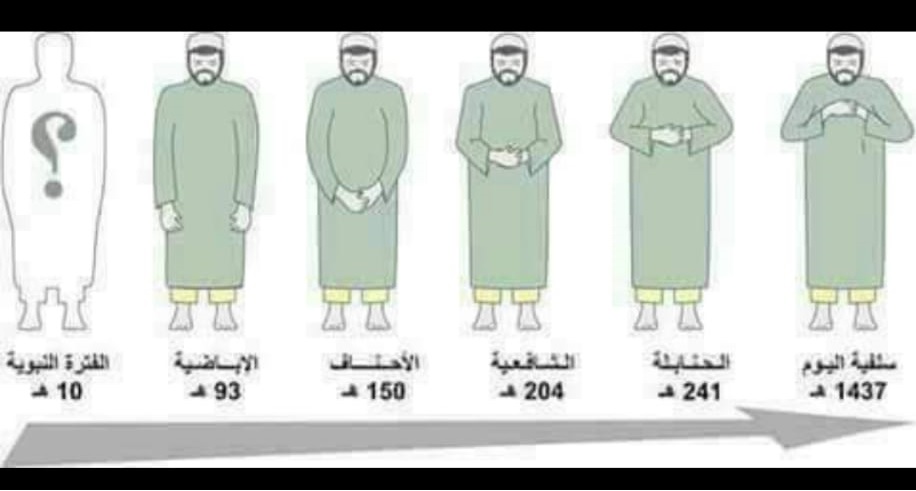
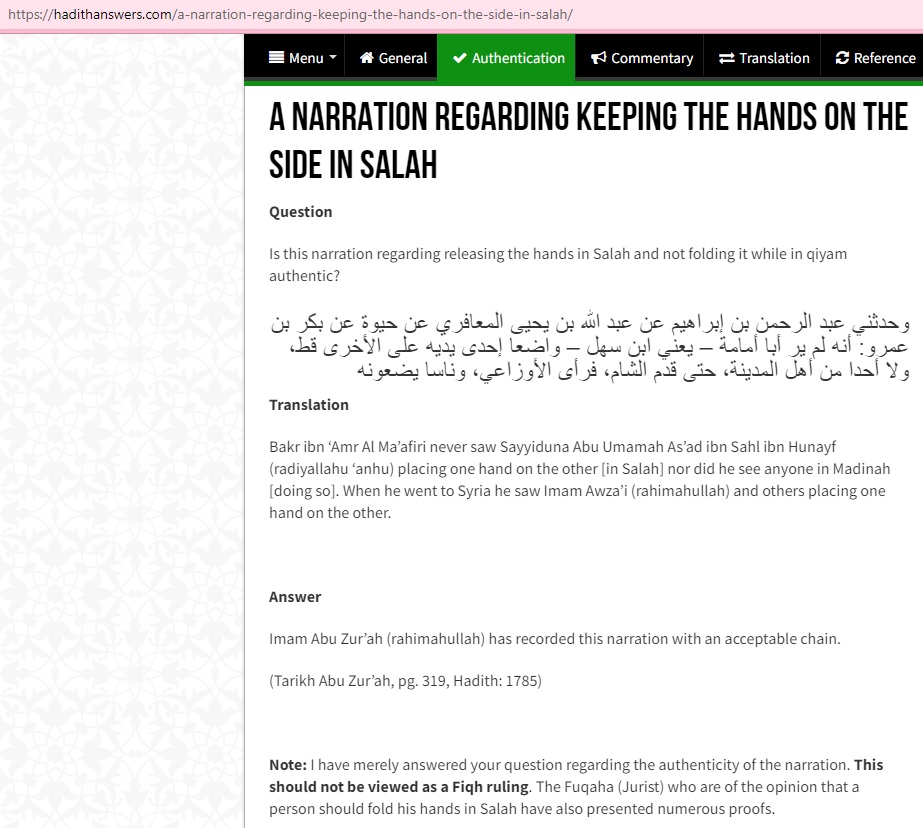


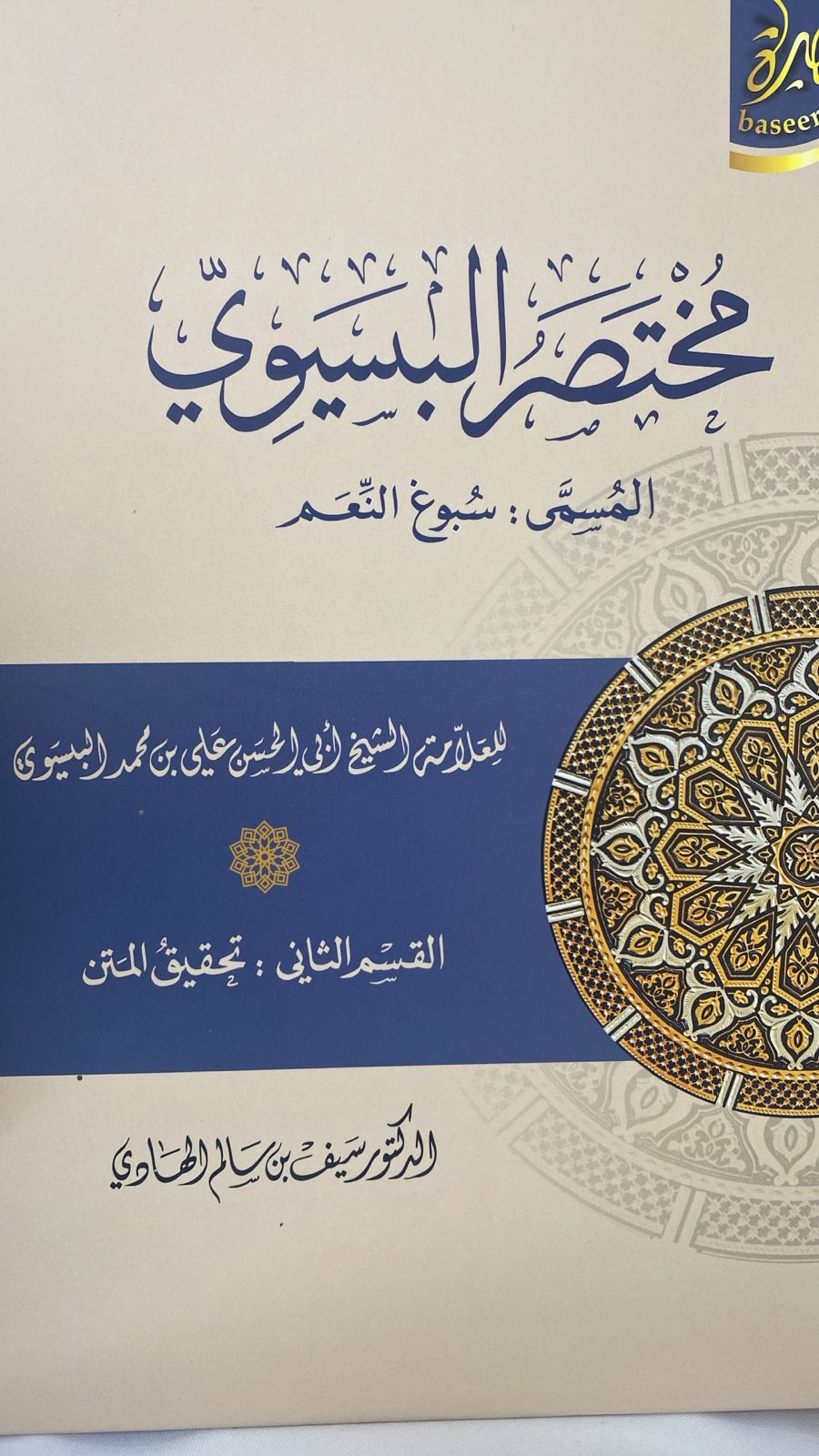
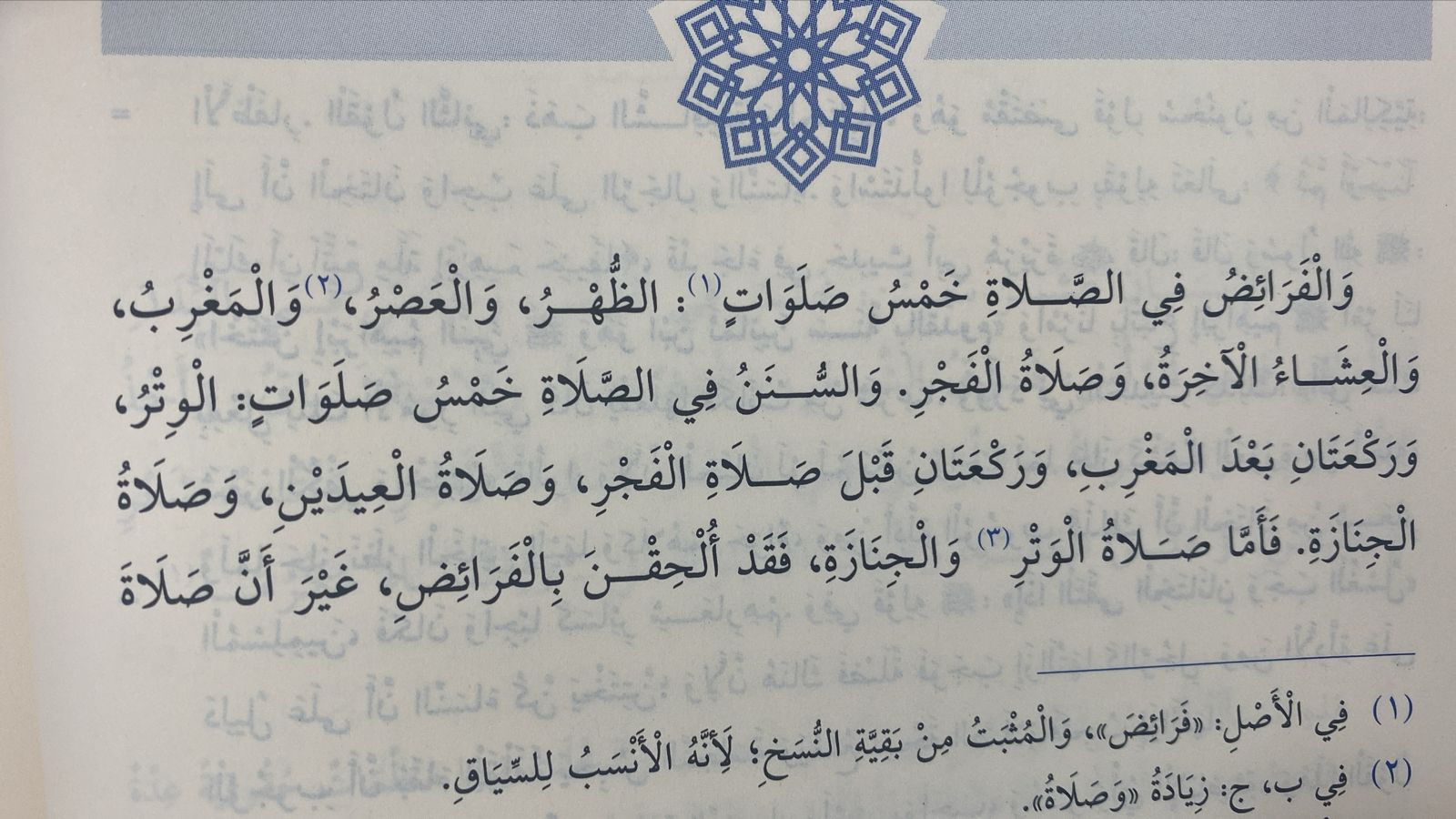


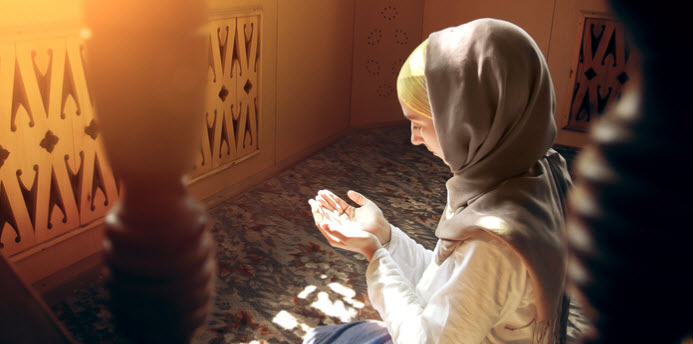
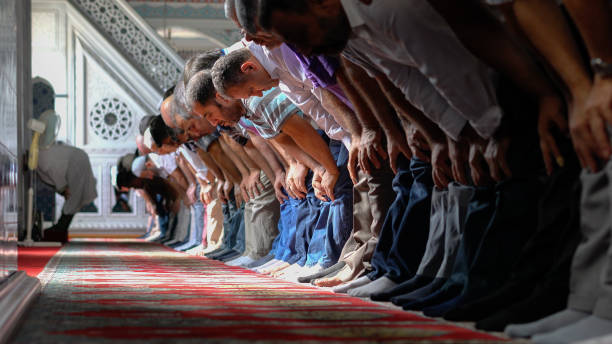
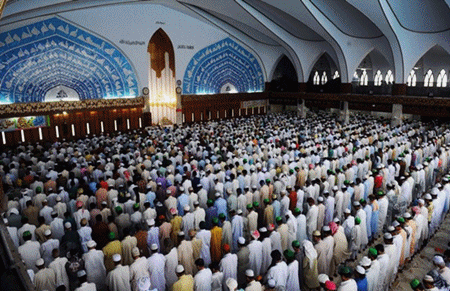
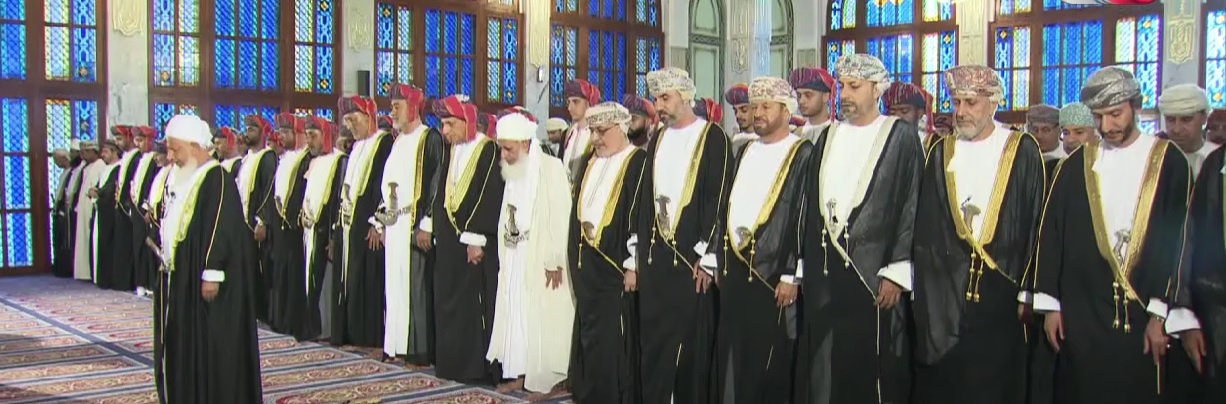
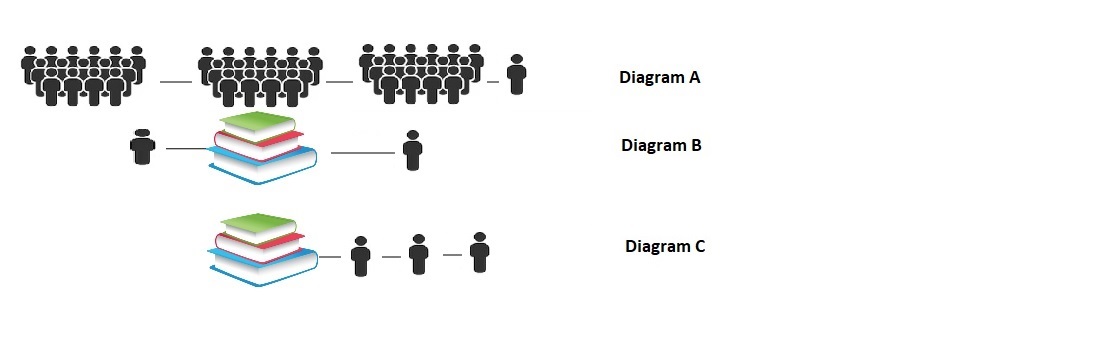

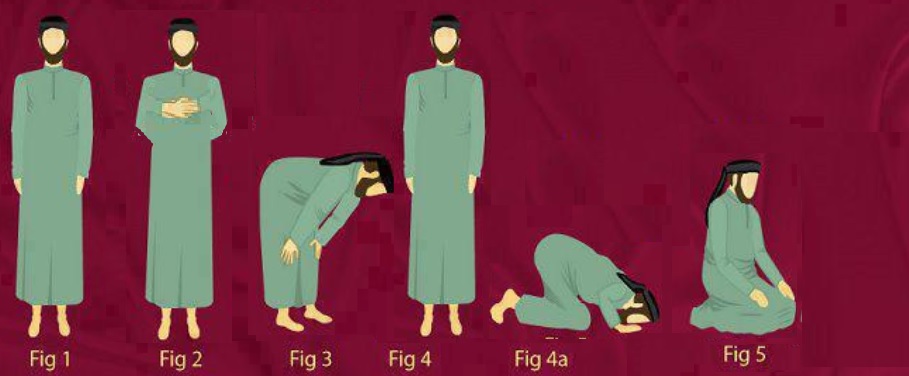
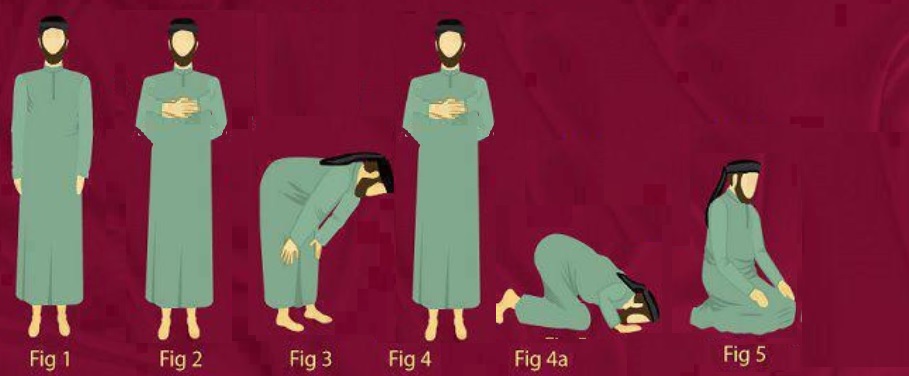
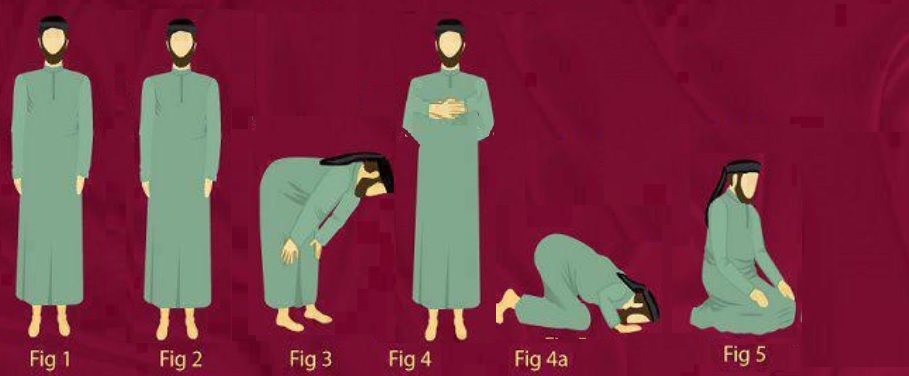

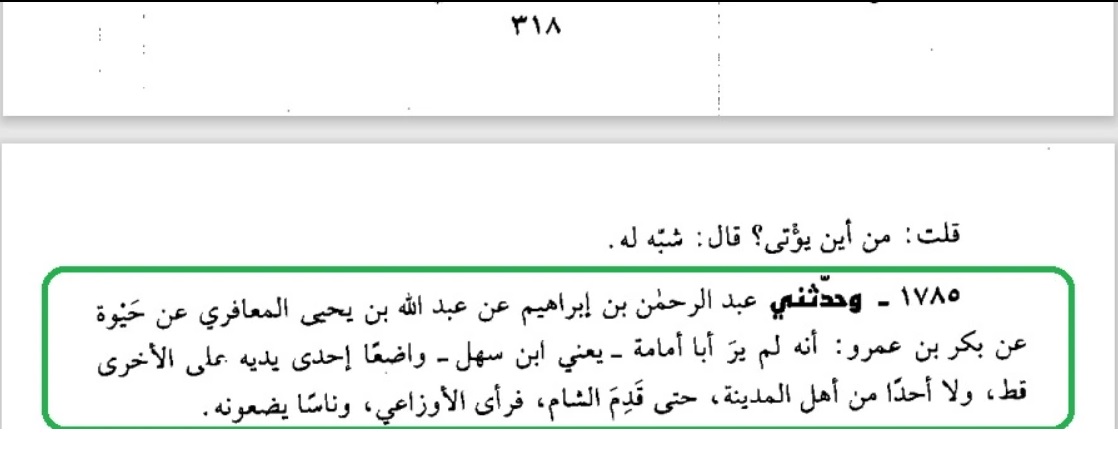
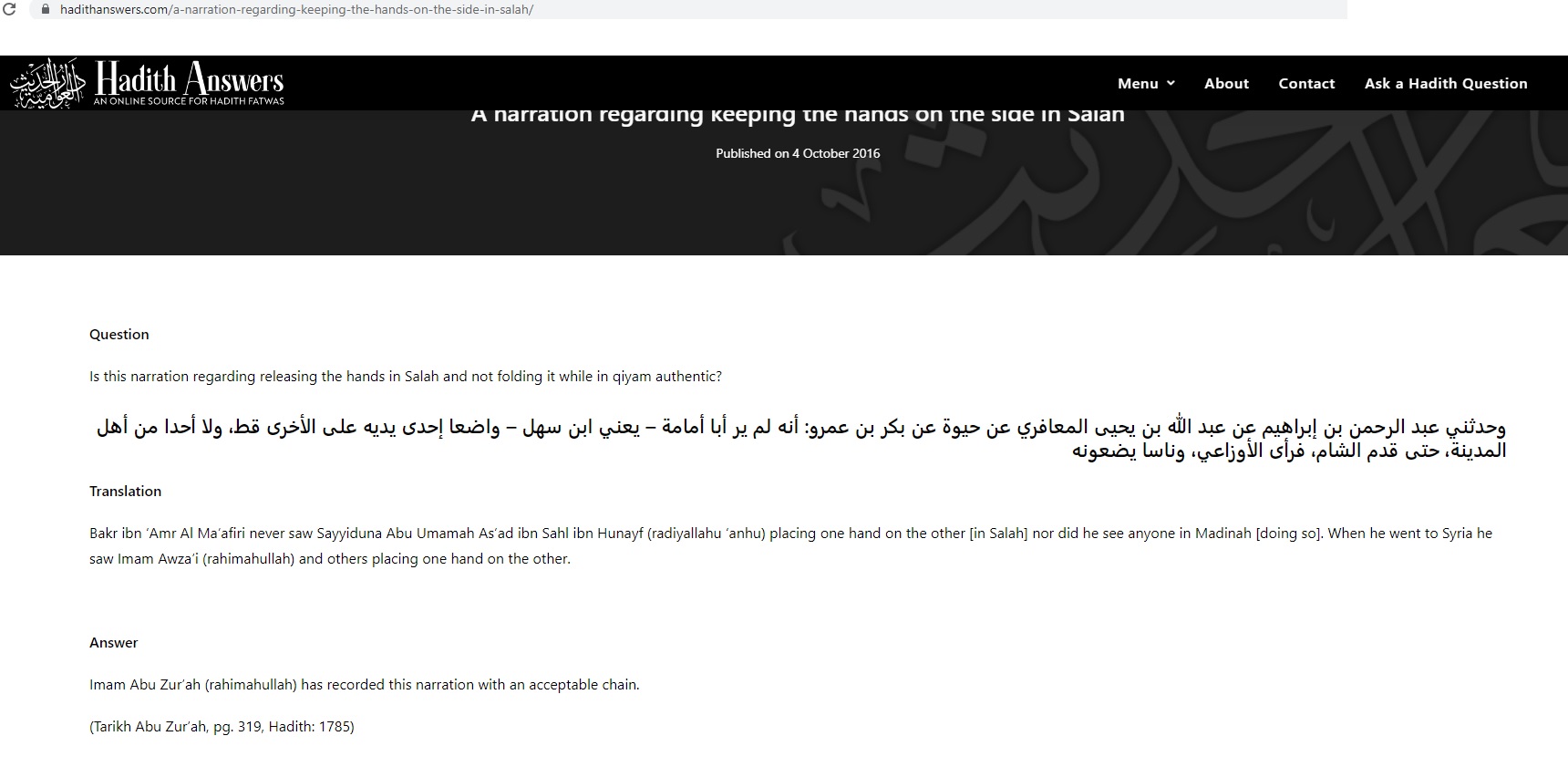


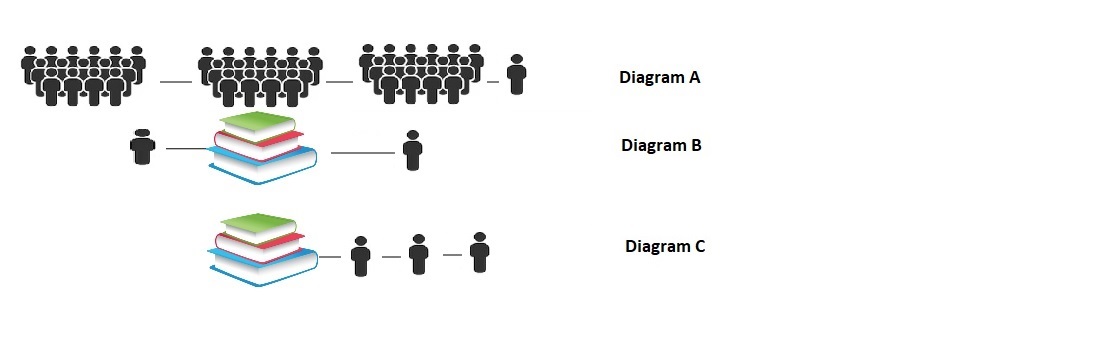








 Prima Quran