“And [there are] those [hypocrites] who took for themselves a mosque for causing harm and disbelief and division among the believers and as a station for whoever had warred against Allah and His Messenger before. And they will surely swear, “We intended only the best.” And Allah testifies that indeed they are liars.” (Qur’an 9:107)
﷽
The right hand sword of the Umayyad Imperium, the Salafi Madhkalis, and left hand shield of the Zionist expansionism are at it once more.
Instead of giving focus to what is happening to our brothers and sisters in Palestine, Gaza, Rafah the Madhkalis being the agent provocateurs that they are try to cause fitna in the Ummah my digging up the graves of scholars long since past. They dig through the books seeking and finding what can cause strife between the Muslims.
Their swords are ever thirsty for the blood of the believers. Their vigor and fervor is for strife among the Muslims. While the people of Sudan and Libya are the victims of their tyranny they tire not in their fight against the Muslims.
We have already covered in an previous article that every group among the Muslims and even Pseudo-Islamic sects have exclusivist views. There is no exception.
We have covered the statement of Imam Malik there.
We also need to recall the words of Imam Malik himself: كُلُّ كَلَامٍ فِيْهِ مَقْبُوْلٌ وَ مَرْدُوْدٌ إِلّا كَلَامُ صَاحِبِ هَذا القَبْرِ
So his words can be rejected.
All of these statements of past scholars have social/political context. They were said in the context of which they live.
Yet the majority of the world’s Muslims want to live together and coexist. Sure, we can still have debates concerning who is upon truth and error upon this or that point. Albeit this should in reality be the domain of the scholars.
Do these agents really think that the Muslim Ummah are that gullible?
When the scholars of this Ummah had asked Shaykh Ahmed Al Khalili (h) to be head of the International Union of Muslim scholars do you not think they are aware of various positions stated in their books from long ago? Do you not think they are not aware of tough positions among some of our scholars? Of course they are!
These Wahhabi Madhkhali believe all people of Palestine who die not upon their creed will be people of the hellfire! The quote as evidence the hadith of 73 sects. Now we can ask these people that bark so loud the following? The 72 sects are they in hell for awhile only or forever?!
Actually not just Palestine but everyone and anyone.
a) If they are in hell only for a while than insh’Allah we will all see each other in heaven.
b) If they are in hell forever than at least be honest and transparent with the Ummah!
What Was the Position of the Salaf Concerning Praying Behind the so-called Khawarij According to Ibn Taymiyya?
– The Path of the Prophetic Sunnah
2. *في نقض كلام الشيعة القدرية*
– In Refutation of the Shiite Qadariyyah Doctrine
3. *لابن تيمية*
– By Ibn Taymiyyah
4. *أبو العباس تقي الدين أحمد بن عبد الحليم*
– Abu Al-Abbas Taqi al-Din Ahmad ibn Abd al-Halim
5. *تحقيق الدكتور محمد رشاد سالم*
– Edited by Dr. Muhammed Rashad Salim
6. *الجزء الخامس*
– Volume Five
“And what indicates that the Companions did not consider the Khawarij to be disbelievers is that they used to pray behind them. Abdullah ibn Umar -RA- and others[companions] used to pray behind Najda al-Haruri. They also used to engage in debates with them, as the Muslim would debate with a Muslim, as Abdullah ibn Abbas debated with Najda al-Haruri when he was sent to him to ask about certain issues, and his hadith is in Al-Bukhari. Likewise, Nafi’ ibn Al-Azraq debated on famous issues. Nafi’ used to debate on matters in the Quran, as any two Muslims would debate among themselves”
Prima Quran Comment: By the way that admission above is enough for any thinking Muslim to come to understand that these so called hadith about the Khawarij that are put in the mouth of the Blessed Prophet (saw) are forgeries and blasphemy! These are no doubt the creation of a redactor.
“It was narrated about Ibn Umar, (ra), that it was said to him during the time of Ibn Al-Zubair, the Khawarij, and Al-Hajjaj: ‘Do you pray with these people while some of them are killing others?’ He replied: ‘Whoever says “Come to prayer,” I answer him, and whoever says “Come to success,” I answer him. And whoever says “Come to kill your Muslim brother and take his property,” I say: No.'” Source: (Musannaf ibn Abi Shaybah)
Also, look what our teacher Shaykh Hamed Hafidh Al Sawafi (May Allah continue to benefit us by him) says:
هناك ما يشير إلى أن الصحابي عبدالله بن عمر رضي الله عنهما لم يبايع الخليفة الرابع عليا بن أبي طالب كرم الله وجهه.
وكان من يسمون أنفسهم بأهل السنة على مذهبه حتى جاء أحمد بن حنبل فجاء بالتربيع بعلي فقاموا عليه فقالوا له إن التربيع بعلي طعن في طلحة والزبير وخروج عن نهج عبدالله بن عمر…. وكانت بينهم محاججة انتهت بالتسليم لموقف أحمد بن حنبل
ومعروف أن أحمد بن حنبل من علماء القرن الثاني الثالث الهجري. (فترة مملكة بني عباس وهم خصماء مملكة بني أمية)
“There is evidence that the companion Abdullah Ibn Umar, (May Allah be pleased with them both, did not pledge allegiance to the fourth caliph, Ali bin Abi Talib, May Allah honour his face. Those who call themselves ‘Sunnis’ adhered to his doctrine until Ahmad ibn Hanbal came and brought them to be square with Ali, so they rose up against him (Imam Ahmad) and told him that trying to make them square with Ali was an attack on Talha and al-Zubayr and a departure from the approach of Abdullah ibn Umar…. There was an argument between them that ended with them submitting to the position of Ahmed ibn Hanbal. It is well known that Ahmad bin Hanbal is one of the scholars of the second and third century AH. The period of the Bani Abbas Imperium, who were opponents of the Umayyad Imperium.” -Shaykh Hamed Hafidh Al Sawafi
The source for that is as follows:
Anticipating a response from the Wahhabi Madhkhali
Now, if these Wahhabi Madhkhali want to reply and say:
“Oh! you are quoting the evidence of Ibn Taymiyya so does this mean you accept you are Khawarij?”
The Answer to that is: No! But you call us (the Ibadi as Khawarij) so even if we are by your standards than you must make the prayer behind us!
So the next time you get someone like Shaykh Assim Al-Hakeem (who admits he drinks alcohol and is proud of it) telling you that you cannot pray behind Ibadi it is best you get your information and sources from more sober minded people.
Hayya alas Salah means exactly that: Come to Prayer. It does not mean come to this or that group or sect. The Imam leads the prayer. You stand behind him as long as he is Ahl Qiblah. Simple.
“Allah said, O Jesus, I shall cause you to die and will exalt you in my presence and shall purify you of the ungrateful disbelieving people, and shall place those who follow you above those who deny the truth, until the Day of Judgement; then to Me shall all return and I will judge between you regarding your disputes.” (Qur’an 3:55)
“And they have thereof no knowledge. They follow not except assumption, and indeed, assumption avails not against the truth at all.” (Qur’an 53:28)
﷽
The Pseudo-Salafis are attacking Imam Imran Hossein because he basically doesn’t believe that the Qur’an says the following:
“And for their saying, “Indeed, we have killed the Messiah, Jesus, the son of Mary, the Messenger of Allah.” And they did not kill himnor did they impalecrucify him but Allah made some random individual look exactly like Jesus and that person was crucified instead of Jesus. Those who differ therein are full of doubts. They have no certain knowledge of it, but only follow conjecture. For certainly, they did not kill him.” (Qur’an 4:157)
“What did Allah do to make it appear…that he died? Let me warn you! And my language some time is very harsh. Because that is the only language some people can understand. Don’t come with this nonsense! Because it is not only pathetic nonsense it is absolutely sinful! To say that Allah (authubillah) caused someone else to take the appearance of Nabi Isa (a.s) and that innocent man, innocent because he never claimed to be the Messiah! He was crucified. Wait for judgement day with that nonsense! Pathetic nonsense! It’s not there in the Qur’an. It’s in your imagination. That’s where it is. Yet it took the world of Islam by storm. What a brain washed ummah we are today! Well than what happened? Well, then why don’t you go to the Qur’an and let the Qur’an explain rather than go on fancy flights of imagination. “-Shaykh Imran Hossein.
Now notice that @ 1:27 this “Nasir Al Hanbali” states:
“We will bring the Ayah in the Qur’an and the Tafsir from ibn Kathir narrated by Shaykh Salih al-Fawzan, but notice how this creep (Shaykh Imran Hossein) says: “why don’t you go to the Qur’an and let the Qur’an explain…” but he brings no Ayah from the Qur’an, just his weird: “LET ME WARNN YOUUU!!!“
“You gonna tell Allah on judgement day you caused that man to assume the appearance of someone? And he who never claimed to be the Messiah he was crucified that is an act of injustice! You are attributing injustice to Allah what foolishness. Where are the scholars who will correct this foolishness? That’s why I have to be so forceful in my language. Allah took his soul. That he was dead. They took down the body. They put the body in a cave. They sealed the cave. Allah returned the soul. As simple as that. Nobody knew that the body, that the soul was returned and Allah raised him. But let me warn you one more time. If you stick with this theory of substitution you are going to be in a pathetic state on judgement day. Let me warn you one more time. This is a simple explanation from the Qur’an. “- Shaykh Imran Hossein.
So than “Nasir Al Hanbali” puts the following recitation up:
“Nasir Al Hanbali” than ask us: “Do you think Shaykh Ali Jaabir was wrong and the creep was right?”
My comment:
Where did Shaykh Ali Jabir recite “the resemblance of Isa was put over another man (and they killed that man” ? Shaykh Ali Jabir did not recite that at all! Yet the text put up there fools those who do not understand the Arabic text!
Then, ‘Nasir Al Hanbali’ gives us another reciter.
“Nasir Al Hanbali” than ask us: “Do you think Shaykh Abu Bakr ash-Shatiri was wrong and the creep was right? Let us listen to the next reciter, Shaykh Sa’ood ash-Shuraim.”
Prima Qur’an comment:
Where did Shaykh Abu Bakr ash-Shatiri recite “the resemblance of Isa (Jesus) was put over another man (and they killed that man)”? Shaykh Abu Bakr ash-Shatiri did not recite that at all! Yet the text put up there fools those who do not understand the Arabic text!
Prima Qur’an comment:
Where did Shaykh Sa’ood ash-Shuraim recite “the resemblance of Isa (Jesus) was put over another man (and they killed that man)” ? Shaykh Sa’ood ash-Shuraim did not recite that at all! Yet the text put up there fools those who do not understand the Arabic text!
This is simply pure deception on behalf of the one who put the video up.
“Allah said to Isa: Allah said: O Isa (Jesus)! I will take you and raise you to Myself [Qur’an 3:55] Allah said: “Ya Isa” referring to Isa ibn Maryam (a.s) when the Jews plotted against him, they wanted to kill him. They entered upon him wanting to kill him [because] their norm was to kill Prophets. When they entered upon [Isa ibn Maryam], Allah raised him from amongst them. He made another man resemble him. They grabbed that man, crucified him and killed him thinking that he was Isa. As for Isa, then Allah raised him from amongst and they did not perceive it. That is why Allah says: “but they killed him not, nor crucified him, but it appeared so to them [the resemblance of Isa (Jesus) was put over another man (and they killed that man)],” [Qur’an 4:157] -Shaykh Salih al-Fawzan
Prima Qur’an comment:
Shaykh Salih al-Fawzan has invented an outright lie about Allah (swt)! Let the Shaykh be reminded the following:
“And who is more unjust than one who invents a lie about Allah or says, ‘It has been inspired to me,’ while nothing has been inspired to him, and one who says, ‘I will reveal something like what Allah revealed.’ And if you could but see when the wrongdoers are in the overwhelming pangs of death while the angels extend their hands, saying, ‘Discharge your souls! Today you will be awarded the punishment of [extreme] humiliation for what you used to say against Allah other than the truth and that you were, toward His verses, being arrogant.’” (Qur’an 6:93)
Prima Qur’an comment:
Where did Shaykh Salih al-Fawzan get the daleel from the Qur’an and Sunnah that ” He made another man resemble him.” This is Aqeedah! The Qur’an does not say this! This is not from the Sunnah!
Shaykh Salih al-Fawzan continues:
“Allah made this man resemble the Messiah, Isa. He himself accepted it and ransomed himself; he ransomed himself and he accepted that he would be killed and crucified. Allah honored him and did not waste this person and what he did with the Messiah. It is said that the one who Allah made to resemble Isa was the one who practiced treason; the one who led [the Jews] to Isa. The one employed treachery or betrayed Isa and led the Jews to him. Allah made him resemble Isa, so they killed him. However, the first opinion is more famous, that the one who chose to resemble Isa was honored and he chose to take his place. This man sacrificed himself for the sake of Allah, he was crucified and killed, so the Messiah Isa ibn Maryam could be saved from them. And Allah knows best. Allah raised him alive with him soul and his body. Not how some of the ignorant individuals say: “he was only raised with his soul.” He was raised with his soul and body alive. They were not able to touch him with any harm.” -Shaykh Salih al-Fawzan
Prima Qur’an comment:
Where did Shaykh Salih al-Fawzan get the daleel from the Qur’an and Sunnah that “Allah made this man resemble the Messiah.” This is Aqeedah! The Qur’an does not say this! This is not from the Sunnah! How can we be so carefree in ascribing to Allah (swt) such things and in the next breath say, “he first opinion is more famous.” Of course the opinion that some random person volunteered to be killed sounds better than just some random guy being chosen! The point being Shaykh Salihi al-Fawzan we don’t attribute opinions and conjecture to Allah (swt) !! It would have been appropriate to say that this is an interpretation of the text that was taken from the People of the Book and it does not have a sound chain of narration.
Also, which text in the Qur’an says that Allah (swt) “He was raised with his soul and body alive.”
Shaykh Salih al-Fawzan continues:
“As for His statement: I will take you.. [Qur’an 3:55] The word Wafaat can mean death and it can also mean to sleep. “It is He who takes your souls by night (when you are asleep), and has knowledge of all that you have done by day,. [Quran 6:60]” -Shaykh Salih al-Fawzan
“Wafaat here means to sleep and Allah knows best or I will take you…[Qur’an 3:55], It can also mean to take you. Mutawaffi also means to take; Tawaffa haqqahu min fulaan [he took his rights from so and so]. The word Wafaat here does not mean death. Because the Messiah is still Alive and will descend at the end of times, he will kill the Dajjal and then he will die after that.” -Shaykh Salih al-Fawzan
“Because: “Every soul shall taste death.” [Qur’an 3:185] He [Isa a.s] will die after that. The point of evidence here is that [the Ayah]: “I will take you and raise you to Myself” [Qur’an 3:55] To raise him to him is not done except to a higher place. This is proof that Allah is [always] high and above [His creation]. -Shaykh Salih al-Fawzan
Prima Qur’an comment:
Shaykh Salih al-Fawzan quotes the verses: “It is He who takes your souls by night (when you are asleep), and has knowledge of all that you have done by day,. [Quran 6:60]” Does he not realize that he further proves our point that Jesus is dead? If there is any confusion as to what happens when we “sleep” let the Blessed Messenger (saw) explain it to you.
When we sleep we die. Our soul travels. If Allah (swt) does not return to the soul to the body than we die in our sleep. As far as Shaykh Salih al-Fawzan statement: “To raise him to him is not done except to a higher place. This is proof that Allah is [always] high and above [His creation].”
To Allah (swt) shall all return [not just Jesus].
“Indeed, to Allah we belong and to Allah we shall return.” [Qur’an 2: 156]
It does not mean spatial location. Even though Shaykh Salih al-Fawzan who is fond of taking his creed from the people of the book Allah (swt) is not contained in a spatial location.
“And he said: Lo! I am going to my Lord Who will guide me.” [Qur’an 37:99]
Ibrahim a.s says I am going to my Lord did he mean from place to place? No.
It is unfortunate because the more you investigate the beliefs of ‘Ahl Sunnah Wal Jammah‘ on this you can see they are in disarray over it.
Some say someone random was made to look like Jesus and he was put on a cross.
Other’s say Jesus was on a cross and died.
Other’s say that Jesus was on a cross but he passed out and latter was resuscitated.
“And they have thereof no knowledge. They follow not except assumption, and indeed, assumption avails not against the truth at all.” (Qur’an 53:28)
“We do not abrogate an ayat or cause it to be forgotten except that We bring forth better than it or similar to it. Do you not know that Allah is over all things competent?” (Qur’an 2:106)
“And when We substitute an ayat in place of an ayat – and Allah is most knowing of what He sends down – they say, “You, [O Muhammed], are but an inventor [of lies].” But most of them do not know.” (Qur’an 16:101)
﷽
One of the major differences in aqidah (creed) between the Ibadi school and those from ‘Ahl Sunnah’ is on the issue of the preservation of the Qur’an.
The Ibadi position is this:
We have the entire Qur’an. (Chart A)
We have the Qur’an that Allah (swt) intended for us to have which is Chart A
The Sunni position is this:
We have the Qur’an that Allah (swt) intended for us to have. Chart B
We do not have the entire Qur’an.* Chart B
*Note. This is not an outlier or strange position. This is the major position with in what is called ‘Ahl Sunnah Wal Jammah‘. You may be surprised at those who call themselves Sunni who are simply ignorant of this. However; as with any school of theology, jurisprudence or approach taken it is always possible to have minority voices and or those that dissent from the mashur (majority view).
This entry will discuss some observations by a Sunni apologist whom is replying to what is commonly referenced on internet culture as team: “Atheist-Christ*” . In this particular response to 1/2 of team Atheist-Christ an enterprising Sunni apologist gives what he feels is a robust response.
*Note: For those not familiar, an Atheist-Christ is a Christian unbothered by an unsaved Atheist among them. He (the Christian) teams up with the Atheist and they jointly attack Islam.
Thus, 1/2 of team Atheist-Christ is an apologist whom has taken issue with the idea of the Qur’an having lost and/or forgotten chapters/verses/words and so forth.
When it comes to the idea or concept of abrogation the only consensus that the Sunni Muslims seem to have is that such a concept exist. What actually abrogates what is anyone’s guess.
Some of them even believe in scenarios such as that the Qur’an used to have verses that explicitly mention stoning adulterers to death and that the verses were abrogated/lost/forgotten/eaten by a goat. However, the ruling remains! In our school this concept is one in which refuge in Allah (swt) is sought.
You get into issues such as the Qur’an abrogating the Qur’an. The Sunnah abrogating the Sunnah. Or even the Sunnah abrogating the Qur’an. The last one being the most dangerous of all, as the sunnah is primarily preserved and transmitted via lone narrator reports. It is an excellent opportunity for something that is dhan (uncertain) to overrule or overwrite something that is qati (decisive) such as the Qur’an.
The basis for this belief is the following text from the Qur’an.
“We do not abrogate an ayat or cause it to be forgotten except that We bring forth better than it or similar to it. Do you not know that Allah is over all things competent?” (Qur’an 2:106)
The assumption here is that the word ayat is referencing a verse in the Qur’an. It is not assumed for example that is a reference to miracles, that are no longer witnessed or tangible. or that it a reference to even the previous revelations. Now there are so many things to be said about this in and of itself. Notice that it does not say the word surah (chapter). For example in the following verse:
“And if you are in doubt about what We have sent down upon Our Slave, then produce a Surah (chapter) the like thereof and call upon your witnesses other than Allah , if you should be truthful.” (Qur’an 2:23)
This part also deserves pensive reflection on the part of those who believe the Qur’an is eternal and uncreated.
“We bring forth better than it or similar to it“
Abrogation is omission, removal and it is impossible for that which is eternal. The idea that some part of Allah’s sifat of attribute of ‘speech‘ would be ‘better‘ or “improved upon” over other parts merits pensive reflection.
“We bring forth better than it or similar to it”
If a person believes that this statement is a reference to the Qur’an than it creates a circular reasoning. If you no longer have the original source to compare it with than you have no way of knowing in what way that which was brought was improved upon.
An example:
As mentioned there is the view among a great many Sunni scholars that there used to be verses of stoning the adulterers in the Qur’an and that was abrogated/lost/forgotten/eaten by a goat. Recall the verse they base their belief on states: “We bring forth better than it or similar to it.” So which verse in the Qur’an now is now similar to it or better than it?
Why are Christians scolded for forgetting the revelation where as for Muslims it becomes a proof and a miracle for Islam? So much so that for the Christians hate and enmity was stirred up between them?!
“And with those who say ‘We are Christians’ We took compact; and they have forgotten (fanasu)a portion of that they were reminded of. So We have stirred up among them enmity and hatred, till the Day of Resurrection; and Allah will assuredly tell them of the things they wrought.” (Qur’an 5: 14)
In fact because I can anticipate how these people think. I can almost guarantee you the immediate response will be something akin to the following: “The difference here is that Allah made the companions forget where as the Christians forgot from negligence.”
Which also baffles me. The Creator causes you to forget his revelation = something meritorious.
The Arabic word Insan is derived from the Arabic nasiya meaning to forget. In fact you can see that in the very text of Q 5:14 above.
So allow me to share with you the video from a Sunni apologist who goes by the name of Farid. I think he means well and over all he some good material.
So after listening to 1/2 of team Atheist-Christ put up his objections against the Qur’an Farid had the following to say:
“”Alright. So Firstly the common answer to this which is the answer I adopt is that this this chapter was abrogated. That’s what that’s the classical position. So the argument for that is really simple. Uh basically this specific verse. This specific verse that speaks of the son of Adam having valleys of gold or valleys of wealth, this specific uh verse was memorized and documented by um according to Sayuti 15 companions. That’s quite a high number. and yet it never got into the Qur’an.” -Farid
Prima Qur’an comments:
Actually, it is very surprising that Farid says this. Perhaps to give him the benefit of the doubt what he means is the Uthmanic codex; because to say that it was never part of the Qur’an is to totally misread what was plainly stated.
Look again:
“We used to recite a surah which resembled in length and severity to (Surah) Bara’at. I have, however, forgotten it with the exception of this…..”
It is clear that was considered part of the Qur’an. We do not call du’a and invocations surah. So the more correct perspective here (if it were true at all) is that it was part of the Qur’an. It just doesn’t become part of the Uthmanic codex.
Farid continues:
“Now there is nothing controversial about the verse. There’s no reason for someone to hide the verse away or anything like that. So yes the traditional Islamic answer is this verse EXCUSE ME THIS CHAPTER was abrogated. And that itself will be convincing to any Muslim.”-Farid
Prima Qur’an comments:
Well, I am a Muslim and I am not the only one that doesn’t buy this at all. The Mufti of Oman, learned scholar and Shaykh, has this to say:
“Abrogation is never permitted in the reports of the Law-Maker because His Knowledge is not refreshed and He is not ignorant of anything that happens, and He does not reveal but the truth.”-Shaykh Ahmed Al Khalili (h)
Notice that Farid does a kind of bait and switch. In the above paragraph he uses the word ‘verse’ twice and the third time finally says, “Excuse me This CHAPTER.” Because that is what is being discussed. Recall “We used to recite a surah which resembled in length and severity to (Surah) Bara’at. I have, however, forgotten it with the exception of this…..”
So since the entirety of the chapter(surah) was lost or forgotten Farid is in no position to say that nothing controversial was in its contents. The reason he cannot say that is accordingly the chapter (surah) as a whole was lost/forgotten. However, the portion the chapter that was remembered was: “If there were two valleys full of riches, for the son of Adam, he would long for a third valley, and nothing would fill the stomach of the son of Adam but dust.”
Also, recall the verse in the Qur’an that is the basis for this belief.
“We bring forth better than it or similar to it”
So what verse did Allah (swt) bring that was better than or equivalent to the one of the two valleys full of riches?
Farid continues.
“Now before getting to my arguments I want you to be aware that the concept of abrogation is not something that is specific to Islam. It’s something that existed in Christianity previously you have the laws of Christianity abrogating the laws of Judaism. Right? Umm You even have specific examples of works that were abrogated because they were not important um in Judaism. So this is again this is not something that’s exclusive to Islam.”-Farid
Prima Qur’an comments:
It would have been great if Farid would have given an example of a law in Christianity abrogating a law of Judaism. If he done that perhaps we could see even how problematic such a concept was in their traditions as well. For example:
Jesus replied, “Moses permitted you to divorce your wives because your hearts were hard. But it was not this way from the beginning. I tell you that anyone who divorces his wife, except for sexual immorality, and marries another woman commits adultery.” (Matthew 19:8-9)
“If a man marries a woman who becomes displeasing to him because he finds something indecent about her, and he writes her a certificate of divorce, gives it to her and sends her from his house, and if after she leaves his house she becomes the wife of another man, and her second husband dislikes her and writes her a certificate of divorce, gives it to her and sends her from his house, or if he dies, then her first husband, who divorced her, is not allowed to marry her again after she has been defiled. That would be detestable in the eyes of the Lord. Do not bring sin upon the land the Lord your God is giving you as an inheritance.” (Deuteronomy 24:1-4)
So initially Jesus (whom is God the Son) according to the Athanasian Trinity gave Moses this command that it was o.k to divorce a woman if he found something displeasing or indecent about her. After she marries another man and he too divorces her or dies she cannot go back to the first husband as that would be ‘detestable’ in the eyes of the Lord. Yet, this same Jesus (whom is God the Son) than tries to say it was Moses who gave such a law because “your hearts’ were hard”
Christian damage control
“Jesus now answers that Moses allowed divorce because of the hardness of the Israelites’ hearts. This means that God created a set of rules limiting the damage which divorce might cause. Jesus adds that it was not so from the beginning. In other words, God’s intention in creation was that all human marriage between man and woman should be lifelong. To separate what God had joined was a violation of God’s design. Under Moses, however, Israel was allowed to break the design because of the sin-hardened hearts of the people—providing limits and restraints on the practice.”
God (Jesus as God the Son) first allowed this type of divorce even though it was a violation of his (Jesus) design. Mostly because of the recognition that people’s hearts were hard. However, he suddenly changes that. Umm why? Aren’t the hearts still hard? You mean to say that human hearts are not hard anymore?
Do you know the irony of all this dear readers?
Religious Jews will see this a proof against Christianity and the capricious nature of how they perceive God.
Religious Christians will see this a proof for Jesus divinity because: Who else can give laws that they personally dislike, and violate the very intended pattern hey have planned for human beings (but not yet cause their hearts are hard) but some time 2000 years ago (possibly their hearts were not as hard) and yes you know what that was not adultery than but it is now: who can do that but God?
Religious Muslims who are involved in polemic with Christians (people like brother Farid) would possibly use arguments like this against the Christian faith and yet see things like this as a case for Islam.
This doesn’t become about being consistent and defending the haqq (truth). It’s about the football jersey that I wear and yours doesn’t’ match mine!
Farid continues.
“Now in regards to this specific matter what I find really interesting here this is referring to Abu Musa Al Ashari; who taught the Qur’an in Basra who taught the Qur’an in Yemen he was seen as one of the main reciters of the Qur’an. We rely upon Abu Musa for our Qir’aat today however, however, interestingly Abu Musa forgot a complete chapter of the Qur’an And what’s really interesting about that specific chapter is like we have no information about it.”-Farid
Prima-Qur’an comments:
These statements by Farid prove my previous points. Namely,
A) We can’t say that the chapter contained anything controversial because as he stated, “We have no information about it.”
B) Farid stated earlier that “and yet it never got into the Qur’an.” Than he says, “Abu Musa forgot a complete chapter of the Qur’an” This is why I give him the benefit of the doubt that what he means is the Uthmanic codex. Not that it was never part of the Qur’an ever.
Farid continues.
“Now in this specific hadith we find Abu Musa not saying not saying I forgot this chapter. He says, I was made to forget this chapter. Where do we find this concept? Well we find it in the Qur’an in verse 106 in Surat al Baqarah mā nansakh min āyatin aw nunsihā nati bikhayrin min’hā aw mith’lihā (We do not abrogate a verse or cause it to be forgotten except that We bring forth [one] better than it or similar to it.”-Farid
Prima Qur’an comments:
Actually, Abu Musa does not say, “I was made to forget this chapter.” He says, “I have, however, forgotten it with the exception of this.” Thus, he did not forget the whole chapter. He forgot all of it with the exception of a certain portion. A portion which Farid admits was recited as the Qur’an and it is still there (as it is in the hadith) but it not recited as part of the Qur’an today.
Is this really what Qur’an 2:106 is saying?
Does it say, “We do not abrogate an entire chapter, with the exception of some verses that will remain but will not be in the final version of this Qur’an, or cause it to be forgotten except that We bring forth [one] better than it or similar to it, except for the two valleys verse which will remain and not be included in the final compilation.”
This is absolutely bizarre.
Farid continues.
“Now I want you to focus on the words cause it to be forgotten. That is what Abu Musa is saying I was made to forget this. That’s what Abu Musa is saying. Now, how can that even be proven right? I mean that’s the concept is very strange in itself, but is there any precedence for this? Now what really blew my mind was this specific narration That is narrated by Abu Umamah ibn Sahl in which he says, One night a man tried to read a chapter of the Qur’an that he had but he could not. Another man tried to read it but he also could not. Another man also tried to read it but failed. In the morning they went to the Messenger of Allah and gathered there. One of them said: “O Messenger of Allah! Yesterday night I tried to read chapter so-and-so but I could not.” The other said: “I have come for this very reason.” The third man said: “Me too.” The Messenger (saw) said: “It was abrogated yesterday.” Uh this specific hadith is narrated in nasikh wal mansukh by Abi Obaid; it was also narrated in other works like (I did not catch this part) Um it was also narrated by Tabarani in his Mu’jam al-Kabir in which he says that the Ansar that actually go to recite this verse only managed to recite the words bismillah ir rahman ir raheem, in the name of Allah, The Most Gracious, Most Merciful, and than they just freeze. Not knowing forgetting the rest of the chapter. Which is just it’s really interesting.Basically, what happened was you have this collective amnesia that occurred. Now, now I don’t have the answers in regards to why this occurred. I have no idea what was in that chapter. I have no idea what was in the chapter that abu musa narrated. Um it may even be the same chapter; but for some reason God in his infinite wisdom decided to abrogate that chapter in the same way he decided to abrogate the laws of the old testament and the..(pause) and other books in the old testament as well.”
Prima Qur’an comments:
Al hamdulillah. At least Farid realizes that this whole thing does seem “very strange'”
Farid proposes that there was some how this “collective amnesia” that occurred.
Now neither Farid or myself (to my knowledge) are medical doctors. However, what I can see is that there are considered to be three types of amnesia.
Types of Amnesia
Retrograde amnesia. Having retrograde amnesia means you’ve lost your ability to recall events that happened just before the event that caused your amnesia. …
Anterograde amnesia. …
Transient global amnesia (TGA).
You may read more the distinction between Anterograde Amnesia VS. Retrograde Amnesia here:
I was not satisfied that what Farid describes really fits into any of these categories. At first I thought that maybe Transient global amnesia (TGA) would fit the description. Yet this seems temporary with the memories coming back. So than I thought I would search selective amnesia. This seems to fall under a type of dissociative psychiatric disorder. I do not believe that Farid attributes that to the companions at all.
Farid quotes an example of a few people not being able to remember a particular surah (chapter) and than the Blessed Messenger (saw) is attributed with saying that it was abrogated the night before.
Farid than quotes two other sources but does not bring the references.
“ it was also narrated in other works like (I did not catch this part) Um it was also narrated by Tabarani in his Mu’jam al-Kabir.”
So for example we do not know the type of “amnesia” they had. Was it temporary?
There seems to be temporary memory loss. Where did I place those car keys? There seem to be permanent memory loss, associated above with one of the types of amnesia.
There seems to be forgetfulness of something tangible and non tangible. There seems to be a situation where you were forgetful of what you are forgetful of. Another is something tangible.
So again this creates a type of circular reasoning where if you do not really recall a particular chapter or verse it is possible that you did not forget it at all but just think that you did. You could misplace or forget where you put your car keys. Yet, you know the item in question is tangible, they are car keys. But where did you place them? However, if you think about something obscure like a passage from a book and you think you forgot how to recollect it, it is very possible that actually didn’t commit it to memory to begin with. A type of paradox.
Farid continues.
“Now the Non-Muslim that’s watching this video naturally will be skeptical. Um will probably say, but you see this hadith of Abu Musa it’s speaking about a miracle why should I believe this narration that’s speaking about a miracle there’s no reason for me to believe this. Now I understand where you’re coming from. But that’s why the hadith of Abu Musa that David{1/2 of Atheist-Christ} is quoting is really interesting; and the reason is because again it’s narrated by around 15 people um at least of course at least that’s what we have received. Right? Now none of those 15 actually provide um any context to this. They simply say stuff like oh I heard Rasulullah (saw) recite this verse that speaks of the son of Adam having two valleys of wealth right? Um and you have them narrating this and it’s preserved arbitrarily. It’s narrated at different times at different places. So, yes you have Abu Musa narrating this in Basra. Uh Ibn Abbas, Ibn Zubair narrating this in Mecca. You have Zaid bin Arqam narrating this in Kufa; and of course you have the rest of the sahaba um narrating this in Medina. That’s really interesting. Their narrating this without a context. No one, none of them are arguing that there is a um collective amnesia going on. However, there is absolutely no trace of this chapter. We don’t know anything about this chapter; except for this one verse. Subhan’Allah. Now, there’s one last thing that comes to mind, which is why does this verse exist. Why do they all remember this verse? And why have they all forgotten the rest of the chapter? Now it seems to me like wallahu’alim that Allah (swt) has left this as a trace to point to there being something there once, and now it’s all gone. Subhan’Allah. And Subhan’Allah I mean I wouldn’t have even come across this if it weren’t for our good friend David Wood {1/2 of Atheist-Christ} Um so thank you David {1/2 of Atheist-Christ} I really appreciate this one. Um trust me I wouldn’t have come across this if not for your video. So please keep it up I’m enjoying, I’m learning I’m hoping that everyone else is enjoying the show as well.” -Farid
Prima-Qur’an comments:
Notice that Farid says, “it’s narrated by around 15 people” latter on he states: “Why do they all remember this verse? And why have they all forgotten the rest of the chapter?“
Now I know that English may not be brother Farid’s native language. May Allah (swt) bless him for doing his level best to combat the false narratives about Islam. However, for an English speaker following along the way Farid words things it gives the impression that these 15 narrators all made comments similar to Abu Musa Al Ashari above; namely, “We used to recite a surah which resembled in length and severity to (Surah) Bara’at. I have, however, forgotten it with the exception of this.” However, that is simply not the case at all. This is why it is important to double check sources and to have those sources available for everyone to scrutinize. Source “Trust me bro” is not helpful. For example:
Anas reported Allah’s Messenger (saw) as saying: قَالَ قَالَ رَسُولُ اللَّهِ
If the son of Adam were to possess two valleys of riches. he would long for the third one. And the stomach of the son of Adam is not filled but with dust. And Allah returns to him who repents.
Ibn Abbas reported Allah’s Messenger (saw) as saying:
If there were for the son of Adam a valley full of riches, he would long to possess another one like it. and Ibn Adam does not feel satiated but with dust. And Allah returns to him who returns (to Him). Ibn Abbas said: I do not know whether it is from the Qur’an or not; and in the narration transmitted by Zuhair it was said: I do not know whether it is from the Qur’an, and he made no mention of Ibn Abbas.
Now it is not possible for the companions to not know the difference between a saying or statement of the Blessed Messenger (saw) and the Qur’an.
Narrated Sahl bin Sa`d:
I heard Ibn Az-Zubair who was on the pulpit at Mecca, delivering a sermon, saying, “O men! The Prophet (saw) used to say, “If the son of Adam were given a valley full of gold, he would love to have a second one; and if he were given the second one, he would love to have a third, for nothing fills the belly of Adam’s son except dust. And Allah forgives he who repents to Him.” Ubai said, “We considered this as a saying from the Qur’an till the Sura (beginning with) ‘The mutual rivalry for piling up of worldly things diverts you..’ (102.1) was revealed.”
If anything is correct about this it is most likely of a similar nature to the Qudsi hadith. That is the content being attributed to Allah (swt) but actually the words of the Blessed Messenger (saw).
Now there is something that Farid said above that sounds sensible when it comes to his point about a trace of something. However, trying to make a connection between 15 narrators and the exact statements of Abu Musa Al Ashari is not something he established. Nonetheless when he says, “Now it seems to me like wallahu’alim that Allah (swt) has left this as a trace to point to there being something there once, and now it’s all gone.“
That is how you avoid the paradox I mentioned earlier. You have to be able to recall that you forgot something and having a trace of that can help to establish something was forgotten(temporarily, forever) that is not established. The point that I made above:
“So again this creates a type of circular reasoning where if you do not really recall a particular chapter or verse it is possible that you did not forget it at all but just think that you did.”
Prima-Qur’an Conclusion:
I do not think that anything presented by Farid presents any type of proof or miracle for Islam and/or the preservation of the Qur’an. Not being able to know if a particular thing forgotten was temporary or permanent is important.
The very hadith cited that kicked off the conversation could very well fall into the genre of Qudsi hadith. There is evidence that the companions felt this was a saying of the Blessed Messenger (saw).
The statement from At Tabarani was not given the source or actual quote. You would think something this phenomena would be more wide spread as well. The concept of abrogation as mentioned in my other entry here: https://primaquran.com/2022/10/04/why-abrogation-in-the-quran-is-a-false-doctrine/ is an absolute train wreck of a doctrine!
Sunni Muslims (with dissenting voices) believe things like there used to be verses about stoning in the Qur’an and it was removed (abrogated) and yet the ruling remains! Why?
Than as Farid states apparently one companion is made to forget an entire chapter of the Qur’an (with the exception of one verse) and even that verse does not end up in the Qur’an we have today.
The idea that Allah’s verses (his eternal speech) and sifat is superseded by (other eternal speech) better than before merits pensive reflection.
When it comes to our school, Ahl Haqq Wal Istiqama we believe the following:
A) We have the whole of the Qur’an with us.
B) We have the Qur’an that Allah (swt) intended for us to have.
Sunni Muslims (with dissenting voices) for the most part hold to position B. They do not hold position A, as they believe whole chapters, verses etc. were lost/forgotten/ etc.
I am motivated to write articles like this because I imagine there is someone persuaded by the depth, comfort, beauty and cohesiveness of Islam. That person than becomes deterred by others telling them, have you seen this video by Atheist-Christ? Than that well intentioned person watches that video and in fairness watches Farid’s video. That person maybe driven further into doubt because Farid’s video could come across as massive copium. In fact that video response could be what drives that person away from embracing the faith!
I want individuals to find responses like this so that they may know that yes Islam is cogent, beautiful, comforting and has depth. If you find certain presentations of Islam disheartening that is not an aspersion on Islam, it is an aspersion on that particular presentation of Islam.
May Allah (swt) guide us to what is beloved to Allah (swt). May Allah (swt) grant victory to our brothers in Palestine amin!
For those interested I also have some entries on abrogation here:
This was in response to statements by Dr. Abdullah Bin Hamid Ali of Lamppost productions and affiliate of Zaytuna Institute in the United States. He is a Sunni Maliki Ashari’i Islamic scholar.
And recite that which hath been revealed unto you of the Scripture of thy Lord. There is none who can change His words, and you will find no refuge beside Him. (Qur’an 18:27)
“We have, without doubt, sent down the Message; and We will assuredly guard it.” (Qur’an 15:9)
“It is for us to assemble it and to promulgate it. And when we have promulgated it, follow thou its recital (as promulgated). Nay more, it is for us to explain it.” (Qur’an75:17-19)
“It is not you who slew them; it was Allah: when you threw , it was not your act, but Allah’s: in order that He might test the Believers by a gracious trial from Himself: for Allah is He Who hears and knows (all things). (Qur’an 8:17)
﷽
Perhaps one of the most fundamental things that sets the Ahl Haqq Wal Istiqama (The People of Truth and Steadfastness) is the issue of the integrity of the sacred sources. None more important than the foundation of our faith, the Qur’an.
One can say they love the Blessed Messenger (saw) with every fiber of their beings. One can say they are defenders and vanguard of the Sunnah of the Blessed Messenger (saw). However, all of that is an absolute façade if one cannot defend the integrity of the foundation of our faith; namely the Qur’an.
In fact one Sunni apologist whom is known for mostly engaging with Shi’i made a video exclaiming that the fact that chapters of the Qur’an were forgotten and the fact that people forgot it was a proof for it’s veracity and integrity! Can you Imagine!
This article is written to refute the very dangerous assertion by those sources of the Sunni denomination whom proclaim that the Qur’an that Muslims have today does not have the entirety of the Qur’an with in it!
Those particular sources of theSunni denomination lead us to the following conclusions:
a) There are large portions of the Qur’an that are simply missing (because they were forgotten)!
b) There is some Qur’an that is not in the Qur’an that Muslims have today.
c) TheQur’an abrogates (over rides/cancels) other parts of theQur’an.
d) That c leads to the concept of redundant revelation.
The position of such people that believe these concepts and sources are an accurate portrayal of our faith is that we do not have the whole of the Qur’an today but we simply have the Qur’an that Allah (swt) intended us to have. Read that again because such a position is extremely nuanced and slippery.
Before I begin I would like to say that I would consider myself a fairly open minded Muslim. I would also consider myself able to accept a wide range of opinions and views with in the Islamic tradition.
However, when it comes to anyone trying to undermine the revelation of the Qur’an and thus undermine Islam in the process I am not open to such a position. It is without doubt a major redline.
In fact when some of the early scholars were writing text on issues of creed I do not see how they left out this most important issue; namely that the total Qur’an has come down to us without being tampered with, intact, guarded, preserved.
I do not compromise on the position that the Qur’an is 100% complete. Now those scholars of theSunni denomination may allege that I misrepresent their position.
They will claim that they too believe that theQur’an is 100% complete and at the same time they will affirm all of the oral traditions below. This tongue and cheek approach is anything but sincere. I believe in what Allah has said in the Qur’an.
1) Allah will guard the Qur’an.
2) None can change Allah’s words
3) Allah will collect, propagate and distribute theQur’an.
4) Nothing Allah (swt) revealed is redundant.
The Qur’an itself claims it is easy to remember and itself is called the dhikr, that which is remembered, recalled.
“And We have certainly made the Quran easy to remember. So is there anyone who will be mindful?” (Qur’an 54:17)
“This (is) a Reminder. And indeed, for the righteous surely, is a good place of return.” (Qur’an 38: 49)
So imagine that Allah (swt) has said the Qur’an is easy to remember and even calls the Qur’an something that is recalled. Yet, these people want to claim that even the Blessed Messenger (saw) forgot his revelation.
They will often cite the following as evidence:
“We will have you recite ˹the Quran, O Prophet,˺ so you will not forget ˹any of it˺, unless Allah wills otherwise. He surely knows what is open and what is hidden.” (Qur’an 87: 6-7)
Some of the detractors focus on the part “unless Allah wills”.
First, it is important to understand that Allah’s will is not like a human will. If a human being wills something today that person may change their mind tomorrow, and when tomorrow comes they may again adopt a completely different idea.
Because exception by the Will of Allah comes in the Word of Allah to emphasize that what is reported happens by His Will (not otherwise). If he wills the opposite of that, it will be so. When Allah (swt) says that something happens if He wills it, it is intended to show His power and majesty because He has control over all things.
That is like in His saying, Exalted is He:
“We would have invented against Allah a lie if we returned to your religion after Allah had saved us from it. And it is not for us to return to it except what Allah wills. Our Lord has encompassed all things in knowledge. Upon Allah, we have relied. Our Lord, decide between us and our people in truth, and You are the best of those who give a decision.” (Qur’an 7:89)
We can see the phrase: ‘Except what Allah wills‘ above.
Does anyone think for a moment that the will of Allah (swt) that people leave Islam for their previous religion? Does anyone think, ‘Well you know there may be exceptions were Allah wants people to leave Islam and practice Shirk again!‘. It is an absolutely ridiculous idea.
Another example:
Certainly, has Allah showed to His Messenger the vision in truth. You will certainly enter al-Masjid al-Haram, if Allah wills, in safety, with your heads shaved and hair shortened, not fearing anyone. He knew what you did not know and has arranged before that a conquest near at hand.” (Qur’an 48:27)
This verse cannot be construed that Allah (swt) will ‘change his mind‘ as Allah (swt) has already given his decision on this matter: “You will CERTAINLY enter.”
Another example:
He will say, “The Fire is your residence, wherein you will abide eternally, except for what Allah wills. Indeed, your Lord is Wise and Knowing.” (Qur’an 6:128)
People use this to try and argue that people will not remain in the hellfire forever.
This is also clear from the following text:
“They would desire to go forth from the fire, and they shall not go forth from it, and they shall have a lasting punishment.” (Qur’an 5:37)
“Surely as for those who reject Our communications and turn away from them haughtily, the doors of heaven shall not be opened for them, nor shall they enter the garden until the camel pass through the eye of the needle; and thus do We reward the guilty.” (Qur’an 7:40)
So as we have seen ‘Except what Allah wills‘ can be seen as a rhetorical device.
They will also bring the following as evidence:
“We do not abrogate an ayat or cause it to be forgotten except that We bring forth better than it or similar to it. Do you not know that Allah is over all things competent?” (Qur’an 2:106)
They are so certain that the word ‘ayat’ is used for the Qur’an itself rather than previous revelations or even miracles for that matter.
“There is no changing in the words of Allah.” (Qur’an 10:64)
So what about those who say what about the previous revelations? I have an article on that and Allah (swt) clearly told us in the Qur’an whom was responsible for safeguarding the previous revelations:
“Verily, It is We Who have sent down the Dhikr (the Qur’an) and surely, We will guard it (from corruption) .” (Qur’an 15:9)
“…and the rabbis and the priest (judged according to their Scriptures), FOR TO THEM WAS ENTRUSTED THE PROTECTION OF THE BOOK OF ALLAH, and they were witnesses to it.” (Qur’an 5:44)
For those interested you may read my article: Is the Bible the Unadulterated Word of God?
So let us look at the claimscontained with in Sunni sources.
The claims of Sayuti have mostly not been translated into English but remain in Arabic and other language sources.
The great Sunni Imam Sayuti claims records that
“It is reported from Ismail ibn Ibrahim from Ayyub from Naafi from Ibn Umar who said: “Let none of you say ‘I have full knowledge of the Quran’. How could he know what full knowledge of it is when much of the Quran has passed by him! Rather, let him say ‘I have acquired of the Qur’an that which is present.’”.
‘A’isha (Allah be pleased with, her) reported that it had been revealed in the Qur’an that ten clear sucklings make the marriage unlawful, then it was abrogated (and substituted) by five sucklings and Allah’s Apostle (may peace be upon him) died and it was before that time (found) in the Qur’an (and recited by the Muslims).
Abu Harb b. Abu al-Aswad reported on the authority of his father that Abu Musa al-Ash’ari sent for the reciters of Basra. They came to him and they were three hundred in number. They recited the Qur’an and he said:
You are the best among the inhabitants of Basra, for you are the reciters among them. So continue to recite it. (But bear in mind) that your reciting for a long time may not harden your hearts as were hardened the hearts of those before you. We used to recite a surah which resembled in length and severity to (Surah) Bara’at. I have, however, forgotten it with the exception of this which I remember out of it:” If there were two valleys full of riches, for the son of Adam, he would long for a third valley, and nothing would fill the stomach of the son of Adam but dust.” And we used so recite a surah which resembled one of the surahs of Musabbihat, and I have forgotten it, but remember (this much) out of it:” Oh people who believe, why do you say that which you do not practice” (lxi 2.) and” that is recorded in your necks as a witness (against you) and you would be asked about it on the Day of Resurrection” (xvii. 13).
Abu Waqid al-Laithii said, “When the messenger of Allah (saw) received the revelation we would come to him and he would teach us what had been revealed. (I came) to him and he said ‘It was suddenly communicated to me one day: Verily Allah says, We sent down wealth to maintain prayer and deeds of charity, and if the son of Adam had a valley he would leave it in search for another like it and, if he got another like it, he would press on for a third, and nothing would satisfy the stomach of the son of Adam but dust, yet Allah is relenting towards those who relent.”
“We used to recite a surah similar to one of the Musabbihaat, and I no longer remember it but this much I have indeed preserved: ‘O you who truly believe why do you preach that which you do not practice?’ (and) ‘that is inscribed on your necks as a witness and you will be examined about it on the Day of Resurrection.’
“Yahya related to me from Malik from Zayd ibn Aslam from al-Qaqa ibn Hakim that Abu Yunus, the mawla of A’isha, umm al-muminin said, “A’isha ordered me to write out a Qur’an for her. She said, ‘When you reach this ayat, let me know, “Guard the prayers carefully and the middle prayer and stand obedient to Allah.”‘ When I reached it I told her, and she dictated to me, ‘Guard the prayers carefully and the middle prayer and the asr prayer and stand obedient to Allah.’ A’isha said, ‘I heard it from the Messenger of Allah, may Allah bless him and grant him peace.'”
“Yahya related to me from Malik from Zayd ibn Aslam that Amr ibn Rafi said, “I was writing a Qur’an for Hafsa, umm al-muminin, and she said, ‘When you reach this ayat, let me know, “Guard the prayers carefully and the middle prayer and stand obedient to Allah.”‘ When I reached it I told her and she dictated to me, ‘Guard the prayers carefully and the middle prayer and the asr prayer and stand obedient to Allah.”
Source: (Malik’s Muwatta, Book 8, Number 8.8.27)
Prima Qur’an comments:
Let me ask you my Muslim brothers and sisters when you open up theQur’an do you find “Guard the prayers carefully and the middle prayer and the asr prayer and stand obedient to Allah.” ?
https://www.islamawakened.com/index.php/qur-an (just in case you do not have aQur’an with you) Now for me the above are less serious as they can easily be attributed to a scribal error. People would often sit for long sessions taking information and transcribing. So I do not find the above to be truly problematic. However, it is a glaring reality that lone narrator reports do not necessarily convey absolute certainty.
Narrated Ibn `Abbas:
`Umar said, “I am afraid that after a long time has passed, people may say, “We do not find the Verses of the Rajam (stoning to death) in the Holy Book,” and consequently they may go astray by leaving an obligation that Allah has revealed. Lo! I confirm that the penalty of Rajam be inflicted on him who commits illegal sexual intercourse, if he is already married and the crime is proved by witnesses or pregnancy or confession.” Sufyan added, “I have memorized this narration in this way.” `Umar added, “Surely Allah’s Messenger (saw) carried out the penalty of Rajam, and so did we after him.”
Zirr ibn Hubaish reported: “Ubayy ibn Ka’b said to me, ‘What is the extent of Suratul-Ahzab? ‘I said, ‘Seventy or seventy-three verses’. He said, ‘Yet it used to be equal to Suratul-Baqarah and in it we recited the verse of stoning’. I said, ‘And what is the verse of stoning’? He replied, ‘The fornicators among the married men ( ash-shaikh)) and married women (ash-shaikhah), stone them as an exemplary punishment from Allah, and Allah is Mighty and Wise.”‘
Why I bring this up is that the Sunni Muslim scholars hold to the doctrine of abrogation.
So now we have a Qur’an that is both eternal that contains verses that abrogate each other?
Welcome to the very weird theological position of eternal abrogation! This is as weird a theological position as the Christian claim of ‘eternally begotten’. How are you going to be eternal and begotten at the same time? How is the Qur’an going to be eternal and abrogated simultaneously? Odd, very odd indeed.
How could you have an eternal perfect revelation that is at the same time replaced by other eternal revelation that is either similar to or superior than it?
But this is where it gets very messy.
I could very well see them making the counter claim. “No brother you see all the verses are eternal, what you don’t understand is that they were revealed in different sequences.”
Yet, the Allah (swt) says in the Qur’an:
“Do they not consider the Qur’an (with care)? Had it been from other Than Allah, they would surely have found therein Much discrepancy.” (Qur’an 4:82)
The idea that theQur’an would contain eternal redundant revelation is both blasphemous and cause for pensive reflection
Prima Qur’an Conclusion:
The ideas that the sources of the Sunni denomination are propagating that the Qur’an does not contain the entireQur’an I feel greatly undermines the preservation, and veracity of the text of theQur’an.
Perhaps more than any other view on aqidah it is this belief that separates the Ibadi perspective from that of the Sunni perspective (with dissenting voices) as mentioned.
It puts the ultimate weapon in the hands of the detractors of faith to tear down the entirety of Islam.
The sources of the Sunni denomination have no moral ground, and in fact no justification to lift a pen in the defense of Islam, do a radio or television program, or write an article or book to defend this great faith because it is all done in vain.
Why on Earth Princess Leia would hand over plans to the death star to the empire, and than claim she has the best interest of the rebellion at heart is beyond me!
As a follow up I need to write an entry for the following. (Allah-willing)
a) showing the problematic nature of believing the Qur’an to be eternal.
I leave you with the supreme words of the Creator.
Those who distort Our revelations are not hidden from Us. Is one who is thrown into Hell better, or one who comes secure on the Day of Resurrection? Do whatever you wish; He is Seer of what you do. Those who have rejected the Reminder when it came to them; and it is an Honorable Book. No falsehood could enter it, presently or afterwards; a revelation from One Most Wise, Praiseworthy. (Qur’an 41:40-42)
Moses said to them: “Woe to you, do not invent lies about God, else the retribution will take you, and miserable is the one who invents.” (Qur’an 20:61)
“Verily! In the creation of the heavens and the earth, and in the alternation of night and day, there are indeed signs for men of understanding.” (Qur’an 3:190)
﷽
There has been circulating around social media a recent talk done by Dr. Ali Ataie of Zaytuna institute. It looks as if he was defending the concept that the earth is circular and flat rather than circular and spherical.
Note: This article has been updated as of 20/7/2023 in light of new developments. Please see the end of this article.
This seems to have spread from the venue of a YouTube channel for MCC East Bay and then quickly deleted.
Deleting the video was a bad move to begin with. Why?
Because it looks as if something was being covered up and, quite naturally, it got thinking people curious. The title of the video itself could go either way. Meaning Dr. Ataie could be discussing competing views while sharing his own. Or, Dr. Ataie could be sharing competing views while debunking another view.
The video title says: “Views on the Shape of the Earth: Flat Earth & Geocentrism| Dr. Ali Ataie“
Interestingly, the pro-Zionist, MEMRI channel picked up on this with lightning speed! MEMRI was co-founded by former Israeli military intelligence officer Yigal Carmon and Israeli-American political scientist Meyrav Wurmser.
You can see the video clip above:
Now some who do not think Dr. Ali Ataie was promoting flat earth may ask “Where is the time stamp where he says the Earth is flat?” In fact, Dr. Abdullah bin Hamid Ali posted this on his Twitter feed:
Three things to note from this:
“I was just raising some common arguments that flat earthers raise.” Which is not a denial that he is a flat-earther.
“Notice I never said that I believed in the flat earth.” But he never said he didn’t either.
“My position is always Allah Alim, it’s not essential to me either way.”
Also, the talk went very quickly into free-mason territory. Everyone from Sir Isaac Newton being a knighted Freemason occultist, to around 94% of astronauts being Freemasons to Neil deGrasse Tyson.
These are the type of things you would want to seed in the minds of the population if you wanted to say there was a massive effort to distort reality.
Now that being said, we want to say what our position is. We personally will stop using the terminology “conspiracy theory”. We believe such terminology is created by those who do not want us to think. Yes, indeed there are conspiracies. Not all conspiracies are nefarious. People could conspire to throw a colleague a surprise party, for example.
Yet, we do not believe in labeling things as conspiracy as a pejorative to shut down a particular view point.
Every theory is a theory that merits rigorous principles of logic, investigation, reflection and experimentation where possible.
In fact, we find it strange that those people who consider themselves skeptics or open-minded do not welcome the exploration of all theories.
So, for us it is all on the table.
Did the moon landing happen? Was JFK an inside job? Is COVID-19 a massive data collection ploy and a means to boost the revenue of big pharma?
Maybe it is plausible that Robert F. Kennedy Jr. is a plant that said what he said to make anyone who challenged the official narrative of covid-19 look like anti-Jewish quack.
Who knows anymore!
There is something that strikes a cord with what Dr. Ali Ataie said, though that merits pensive reflection:
“If we are on a flat surface and all the stars and planets go around us, then this is clearly designed for us. Someone put us on a pedestal. But by insisting that we are all apes, living on some random planet, going around the sun, in the corner of some random galaxy among billions of others, then we are easier to control by people in power. They can convince us that our lives are all about dunya, and to obey them, not God” — Dr. Ataie
Now let us suspend judgement for half a second. If, for the sake of argument, that model of the flat Earth was/is true, it would be such, in your face, evidence that we really are a special creation that one would have to have veils upon veils of darkness upon them to deny Allah.
May Allah (swt) guide us to what is beloved to Allah (swt).
We have two other related articles on the subject you, the reader may be interested in:
This article has been updated as of 20/7/2023 in light of new developments.
Dr. Ali Ataie has unequivocally stated that he is not a flat earther!
Because this does not help either brother Ataie. People will wonder
“Wallahi, anyone who calls me a flat earther is a liar.” -Dr. Ali Ataie
“I am not a flat earther.” -Dr. Ali Ataie
“But I am not a flat earther.” -Dr. Ali Ataie
Prima Qur’an comments:
Dr. Ataie states:
“The article by memri is an inaccurate hit piece written by a Zionist organization.”
Hence, the reason why the video should not have been deleted by MCC East Bay. Because that video would have provided much needed context, if any. However, we are the ones that pointed out that this organization (MEMRI) is run by Zionists, and we were also amazed at how quickly that organization picked up on some small discussion which was not at a convention or even well advertised. Dr. Ataie is not really all that well known. I do not mean that as a slight. Really makes you wonder who is who in our Muslim community. How did that organization(MEMRI) get that material and publish it ?
That being said, it would help if MCC East Bay did not delete the video. Because, on the one hand, Dr. Ataie is saying:
“The article by memri is an inaccurate hit piece written by a Zionist organization.”
While also stating:
“I made several ill-advised off-the-cuff comments during a random Q &A…”
“It was not wise to make those comments and cause confusion.”
We really, really wish Dr. Ataie wouldn’t have made that statement: “is an inaccurate hit piece.” The rest of his statement is absolutely fine.
However, by making that comment, Muslims are now going to wonder why the original video was deleted and if it would be made public and this has the potential to lend credibility to that cursed organization (Memri). That is if nothing was taken out of context.
Dr. Abdullah Bin Hamid Ali, who meant well by defending his friend, most likely triggered more people by tweeting a flurry of controversial tweets.
Views should be weighed by the evidence and the arguments.
That being said, we do not think that Dr. Abdullah, Dr. Ataie or anyone for that matter should be castigated for having views that others find that go against mainstream scientific convictions.
Naturally, some Muslims chimed in and rightfully mentioned that much of this could have been clarified from the first post.
The problem with this clarification is that it comes down to a situation of damned if you do and damned if you do not. So, because Dr. Ataie brought up the free masons, some flat Earthers who support Dr. Ataie (based upon their presumptions of his own views) are now going to think that Dr. Ataie is caving in to pressure from such groups. They fail to realize that Dr. Ataie was simply sharing their perspective without necessarily endorsing it.
People, it is not easy to be in the public eye.
Our sincere advice to Muslim speakers. Whoever is recording such public events should give full disclosure to the one being recorded and be completely transparent with them on how and where the contents are to be released.
Conclusion: Dr. Ali Ataie has not retracted or recanted anything. To recant or retract would be to state something and then change positions. He never claimed he was a flat earther. He has simply clarified in no uncertain terms. He is not a flat earther.
As regards those Muslims who associate with and support Zionist and Zionist supporters.
May Allah guide you! May Allah (swt) free Palestine and either guide or crush the oppressors! Amin
(After rebuking his people) Moses turned to Aaron and said: “Aaron! What prevented you, when you saw them going astray, from following my way? Have you disobeyed my command? Aaron answered: “Son of my mother! Do not seize me with my beard, nor by (the hair of) my head. I feared that on returning you might say: ‘You sowed discord among the Children of Israel, and did not pay heed to my words.” (Qur’an 20:91-93)
﷽
This is in response to other hadith that the Shi’i often use. They try to justify their claims of Ali being the correct or rightful Imam of the Muslims after the Blessed Messenger (saw).
It is another example (of many) of them making a mountain out of a molehill.
The following hadith comes to mind:
Narrated Sa`d:
Allah’s Messenger (saw) set out for Tabuk, appointing Ali as his deputy (in Medina). Ali said, “Do you want to leave me with the children and women?” The Prophet (saw) said, “Will you not be pleased that you will be to me like Aaron to Moses? But there will be no prophet after me.”
The hadith about Umar (ra) neutralizes any attempt to single out Ali for a uniquely elevated status.
This hadith (https://sunnah.com/bukhari:4416) shows clear as daylight that Ali was not pleased being left to take charge of the affairs of the people of Medina. So how much more the whole Ummah?!
Rather than seeing this as an honor bestowed upon him as one being the most trustworthy to take care of the most vulnerable, Ali saw it as a slight.
So not being content with trusting his station to his Imam, which is none other than the Blessed Messenger (see), Ali quipped, “Do you want to leave me with the children and women?”
Was Ali not aware of this verse of the Qur’an?
“Whoever obeys the Messenger has truly obeyed Allah. But whoever turns away, then ˹know that˺ We have not sent you ˹O Prophet˺ as a keeper over them.” (Qur’an 4:80)
Because the Shi’i cannot prove their case for the concept of the Imamate of Ahl Bayt from the Qur’an, they must quickly pivot the conversation to Hadith, which they feel justifies their position.
The Blessed Prophet (saw) is said to have replied to the recalcitrant Ali,
“Will you not be pleased that you will be unto me like Aaron to Moses? But there will be no prophet after me.”
Somehow, the Shi’i seemed to close their eyes over the fact that the Blessed Messenger (saw) was trying to console his otherwise temperamental cousin.
Perhaps Ali sought glory or standing on the battlefield? Allah (swt) knows best. Yet, the Blessed Messenger (saw) gave Ali a more noble task than what Ali could have longed for.
The Shi’i run wild.
So, the Shi’i became laser focused on the part: “You will be unto me like Aaron to Moses? But there will be no prophet after me.”
They start to surmise that this must be a strong indication that Ali, without a doubt, is the one who will lead the Muslims after the Blessed Messenger (saw) is gone.
So they start to imagine that the Blessed Messenger (saw) said things that he did not say. For example, the Hadith says, ‘no prophet after me’ but it does not say ‘no messenger after me’.
So perhaps Ali could be a Messenger after the Prophet Muhammed (saw) ?
The Shi’i who are known to be lovers of Qiyas (analogy) so well …maybe just this once.. 😉 🤫
So, with the above hadith in tow, we can quickly turn to the Qur’an and find:
“We made an appointment of thirty nights with Moses (On Mount Sinai), to which We added ten more; so the term set by the Lord was completed in forty nights. Moses said to Aaron, his brother: “Deputize for me ((ukh’luf’nī) among my people. Dispose rightly, and do not follow the way of the authors of evil.” (Qur’an 7:142)-Ahmed Ali
“And We treated with Musa thirty nights, and We completed them with ten; so the appointment of his Lord was completed by forty nights. And Musa said unto his brother Harun: act thou (ukh’luf’nī) in my place among my people, and rectify, and follow not the way of the corrupters.” (Qur’an 7:142)=Abdul Majid Daryabadi
As archaic and jumbled as Abdul Majid Daryabadi’s translation sounds to us, it best represents both the Arabic and the context. Although Ahmed Ali’s translation is good as well.
As always, because we are not here to tell you how to think or what to think, but for you to research and come to your own conclusions, please proceed to:
Even some of the more modern translations do a very horrible job of translating the verse:
For example, Sahih International has:
“And We made an appointment with Moses for thirty nights and perfected them by [the addition of] ten; so the term of his Lord was completed as forty nights. And Moses said to his brother Aaron, “Take my place among my people, do right [by them], and do not follow the way of the corrupters.” (Qur’an 7:142)
“Take my place.” No. Moses was not going anywhere permanently. Moses went somewhere briefly.
The following translators translate (ukh’luf’nī) in a Shi’i friendly manner.
Dr. Laleh Bakhtiar-Iranian Christian translator Muhammed Mahmoud Ghali -Al Ahzar Ali Quli Qara’i -Shi’i translator Ali Bakhtiari Nejad -Shi’ia translator The Monotheist Group [2013 Edition]-Quranist
The following translates the verse that we feel best expresses the meaning of ukh’luf’nī given the context.
Abdul Majid Daryabadi Ahmed Ali Hamid S Aziz A.L Bilal Muhammed et al Mushraff Hussain Mohammed Shafi
So we know that it cannot mean to “take my place” permanently because Moses came back. We also know that it cannot mean taking my place in succession. How do we know this?
The historical data does not support this.
“Now Joshua son of Nun was filled with the spirit of wisdom because Moses had laid his hands on him. So the Israelites listened to him and did what the Lord had commanded Moses.” (Deuteronomy 34:9)
The following, which is quite literally, is titled: Joshua to Succeed Moses.
Then Moses went out and spoke these words to all of Israel: “I am now a hundred and twenty years old, and I am no longer able to lead you. The Lord has said to me, ‘You shall not cross the Jordan.’ The Lord your God himself will cross over ahead of you. He will destroy these nations before you, and you will take possession of their land. Joshua also will cross over ahead of you, as the Lord said. And the Lord will do to them what he did to Sihon and Og, the kings of the Amorites, whom he destroyed along with their land. The Lord will deliver them to you, and you must do to them all that I have commanded you. Be strong and courageous. Do not be afraid or terrified because of them, for the Lord your God goes with you; he will never leave you nor forsake you.”
Then Moses summoned Joshua and said to him in the presence of all Israel, “Be strong and courageous, for you must go with this people into the land that the Lord swore to their ancestors to give them, and you must divide it among them as their inheritance. The Lord himself goes before you and will be with you; he will never leave you nor forsake you. Do not be afraid; do not be discouraged.”
Next time your overly excited Shi’a friend starts to tell you about the above Hadith and quotes the above verse of the (Qur’an 7:142), inform them what it says just 8 verses later.
“And when Moses returned to his people, angry and grieved, he said, “How wretched is that by which you have replaced me after [my departure]. Were you impatient over the matter of your Lord?” And he threw down the tablets and seized his brother by his head, pulling him toward him. [Aaron] said, “O son of my mother, indeed the people oppressed me and were about to kill me, so let not the enemies rejoice over me and do not place me among the wrongdoing people.” (Qur’an 7:150)
“And recall when We summoned Moses for a term of forty nights, and then you set up the calf as your god in his absence. You indeed committed a grave wrong.” (Qur’an 2:51)
Moses scolded, “O Aaron! What prevented you, when you saw them going astray, from following after me? How could you disobey my orders? Aaron pleaded, “O son of my mother! Do not seize me by my beard or my head. I really feared that you would say, ‘You have caused division among the Children of Israel, and did not observe my word.’” (Qur’an 20:92-94)
So, if the Shi’i want to make Ali analogous to Harun (as) in a very literal way, we have some real problems.
Let us replace the words Moses (as) with the Prophet Muhammed (saw) and wewill replace Aaron (as) with Ali and let us see how this works.
“And when Muhammed returned to his people, angry and grieved, he said, “How wretched is that by which you have replaced me after [my departure]. Were you impatient over the matter of your Lord?” And he threw down the tablets and seized Ali by his head, pulling him toward him. [Ali] said, “O son of my mother, indeed the people oppressed me and were about to kill me, so let not the enemies rejoice over me and do not place me among the wrongdoing people.” (Qur’an 7:150)
Muhammed scolded, “O Ali! What prevented you, when you saw them going astray, from following after me? How could you disobey my orders? Ali pleaded, “O son of my mother! Do not seize me by my beard or my head. I really feared that you would say, ‘You have caused division among the Children of Israel, and did not observe my word.’” (Qur’an 20:92-94)
Are we to believe that it only takes the Prophet Muhammed (saw) to be gone for 40 days as Ali, fearing for his life, allows the people to fall into blatant shirk?
Are we to believe there could be a scenario where the Blessed Prophet Muhammed (saw) is so furious with Ali that he snatches him up by his beard?!
Are we to believe there is a scenario where the Blessed Prophet (saw) scolded Ali for disobeying his orders? Even to the point where Ali feared that the Blessed Prophet (saw) would say that he (Ali) caused division among the Muslims?
Keep in mind that Moses (as), like the Blessed Prophet Muhammed (saw) would have been given knowledge by Allah (swt) that Aaron (as) was not, in any way shape or form, in dereliction of his duties. Yet Musa (as) snatched Aaron (as) up!
We do not believe these are things the Shi’i are willing to entertain regarding Ali.
The Moses Aaron comparison is also devastating to Shi’i claims.
Why? Because they do not have equal authority.
“When there comes to them some matter touching (public) safety or fear, they divulge it. If they had only referred it to the Messenger, or to those charged with (ulī l-amri) authority among them, the proper investigators would have tested it for them (direct). Were it not for the Grace and Mercy of Allah unto you, all but a few of you would have fallen into the clutches of Satan.” (Qur’an 4:83)
Aaron did not have the knowledge of the divine will that Moses had.
“I really feared that you would say, ‘You have caused division among the Children of Israel, and did not observe my word.’
“And [recall] when Moses said to his people, “O my people, indeed you have wronged yourselves by your taking of the calf [for worship]. So repent to your Creator and kill yourselves [i.e., the guilty among you]. That is best for [all of] you in the sight of your Creator.” Then He accepted your repentance; indeed, He is the Accepting of Repentance, the Merciful.” (Qur’an 2:54)
This line: “I really feared that you would say, ‘You have caused division among the Children of Israel, and did not observe my word.” This absolutely does not refer to Ali ibn Abi Talib at all! This was a man who, instead of pursuing the killers of Uthman, wasted no time in collecting his army to go fight the people of Sham!
Translation of the above:
“This year of his caliphate, the Commander of the Faithful, Ali ibn Abi Talib, assumed leadership and appointed governors over the regions. He appointed Abdullah ibn Abbas over Yemen, Samurah ibn Jundab over Basra, Imarah ibn Shihab over Kufa, Qays ibn Sa’d ibn Ubadah over Egypt, and over Syria, Sahl ibn Hunayf in place of Muawiyah. Sahl marched until he reached Tabuk, when the close associates of Muawiyah met him and said, “We want to say…” It was said, “He knows.” They said, “We want to say…” It was said, “He knows.” They then said, “If Uthman sent you in his capacity [as the rightful caliph, then proceed], but if it was someone else, then go back.” They said, “Have you not heard what happened?” They replied, “Yes.” So he returned to Ali.”
“As for Qays ibn Sa’d, the people of Egypt differed concerning him. The majority pledged allegiance to him, but a group said, “We will not pledge allegiance until the killers of Uthman are brought to us.” The situation was similar in Basra. As for Imarah ibn Shihab, who was sent as governor to Kufa, Talhah ibn Khuwaylid prevented him from entering out of anger for Uthman. He returned to Ali and informed him. The strife intensified, the matter became grave, and opinions differed. Abu Musa wrote to Ali informing him of the obedience and pledge of allegiance of the people of Kufa, except for a few. Ali sent many letters to Muawiyah, but he did not receive any reply. This continued repeatedly until the third month after the murder of Uthman, in Safar.”
“Then Muawiyah sent a scroll with a man who came to Ali. Ali asked, “What news do you bring?” The man replied, “I come to you from people who desire nothing but revenge, deeply aggrieved. I left seventy thousand elderly men gathered under the shirt of Uthman, which is displayed on the pulpit of Damascus.” Ali said, “O Allah, I declare myself innocent before You of the blood of Uthman.” Then the messenger of Muawiyah left Ali’s presence, and those Kharijites who had killed Uthman intended to kill him, but he barely escaped after much effort.”
“Ali, may Allah be pleased with him, resolved to fight the people of Syria. He wrote to Qays ibn Sa’d in Egypt, urging the people to mobilize for fighting them, and to Abu Musa in Kufa. He also sent word to Uthman ibn Hunayf about this. He addressed the people, inciting them for that purpose. He was determined to prepare and depart from Medina, appointing Qutham ibn Abbas as his deputy over it. He was resolved to fight, with those who obeyed him, against those who disobeyed him, rebelled against his command, and did not pledge allegiance to him along with the people.”
“His son, Al-Hasan ibn Ali, came to him and said, “O my father, abandon this, for it involves the shedding of Muslim blood and the occurrence of division among them.” But he did not accept that from him; rather, he insisted on fighting and organized the army. He gave the standard to Muhammed ibn al-Hanafiyyah, appointed Ibn Abbas to be in charge of important matters, and Umar ibn Abi Salama over the vanguard. It is also said he appointed Umar ibn Sufyan ibn Abd al-Assad over the vanguard. He appointed as the commander of his advance guard Abu Layla ibn Amr ibn al-Jarrah, the nephew of Abu Ubaydah. He appointed Qutham ibn Abbas as his deputy over Medina. Nothing remained except for him to depart from Medina heading towards Syria, until there came to him what diverted him from all of that, which we will mention.”
Source: Al-Bidāyah wa al-Nihāyah (البداية والنهاية) by Ibn Kathir Volume: around Vol. 7 or 8 (depending on the edition)
Prima Qur’an comments:
Ali claimed that he is in Bara’ah with those who killed Uthman.
He did not spend his time looking for these killers. Ali did not seem concerned at all about finding the killers of Uthman.
Trying to find the killers of Uthman could have easily disuaded the tension or at the very least exposed Muawiyah as a hypocrite.
Rather, Ali wasted no time in raising an army for the continued fighting, and killing and slaughter among the Muslims.
Al Hasan ibn Ali was much wiser than his father (Ali), who was spoiling for a fight.
Look at the words of Al Hasan ibn Ali.
“O my father, abandon this, for it involves the shedding of Muslim blood and the occurrence of division among them.” But he (Ali) did not accept that from him.”
So try to apply the following statement of Aaron (as) to Ali : “I really feared that you would say, ‘You have caused division among the Children of Israel, and did not observe my word.” This absolutely does not apply to Ali.
In addition to that, we have the following:
Narrated by ‘Abdullah bin Abbas
“Ali bin Abu Talib came out of the house of Allah’s Apostle during his fatal illness. The people asked, “O Abu Hasan (i.e. Ali)! How is the health of Allah’s Apostle this morning?” ‘Ali replied, “He has recovered with the Grace of Allah.” ‘Abbas bin ‘Abdul Muttalib held him by the hand and said to him, “In three days you, by Allah, will be ruled (by somebody else), And by Allah, I feel that Allah’s Apostle will die from this ailment of his, for I know how the faces of the offspring of ‘Abdul Muttalib look at the time of their death. So let us go to Allah’s Apostle and ask him who will take over the Caliphate. If it is given to us we will know as to it, and if it is given to somebody else, we will inform him so that he may tell the new ruler to take care of us.” ‘Ali said, “By Allah, if we asked Allah’s Apostle for it (i.e. the Caliphate) and he denied it us, the people will never give it to us after that. And by Allah, I will not ask Allah’s Apostle for it.”
It is quite clear that Ibn Abbas was not aware of any Shi’i interpretations that Ali should be the one to lead the Muslims after the death of the Blessed Prophet (saw).
Ali himself was not of the understanding that it was something that was his to take simply by being related to the Blessed Prophet (saw).
This is another reason why it is best to make the Qur’an the pillar of our theology and faith, as the hadith themselves have narrations that the Shi’i themselves wince at.
Then there is this straight from Nahjul balagha itself. Straight from a Shi’i website:
“By Allah, I had no liking for the caliphate nor any interest in government, but you yourselves invited me to it and prepared me for it. When the caliphate came to me, I kept the Book of Allah in my view and all that Allah had put therein for us, and all that according to which He has commanded us to take decisions; and I followed it, and also acted on whatever the Prophet – may Allah bless him and his descendants – had laid down as his sunnah. In this matter I did not need your advice or the advice of anyone else, nor has there been any order of which I was ignorant so that I ought to have consulted you or my Muslim brethren. If it were so I would not have turned away from you or from others.”
This sermon is said to have happened long after the Blessed Prophet Muhammed (saw) died. This sermon itself proves that Ali never considered that he was already the appointed Khilafa of the Muslims.
He said, “When the Caliphate came to me.” This means he was not the Caliph at the time, he recognized it as such and nor did he want it. Someone who is divinely appointed by Allah (swt) to the Khilafa of the Muslims takes pride in it, claims it and upholds that as a great trust.
It shows Ali himself viewed the caliphate as something that came to him by people’s invitation after Uthman’s death, not as a pre-appointed right he was claiming.
Someone who recognizes they are not divinely appointed but that people have chosen who will lead them and then gets pushed into a position of leadership makes the kind of statements that Ali made above.
May Allah (swt) guide us to what is beloved to Allah (swt).
“As for those who divide their religion and break up into (sects), you have no part in them in the least: their affair is with Allah: He will, in the end, tell them the truth of all that they did.” (Qur’an, 6:159)
﷽
This idea of the Muslims following 12 Imams is a total concoction.
First and foremost, it has absolutely no support from the Qur’an.
The Sunni Muslims the following hadith that the Shi’i will often use against them.
Narrated Jabir Ibn Samura:
I heard the Prophet (saw) saying, “There will be twelve commanders (Amir).” He then said a sentence which I did not hear. My father said the Prophet (saw) added, “All of them will be from Quraish.”
It has been narrated on the authority of Jabir b. Samura, who said:
I heard the Messenger of Allah (saw) say: Islam will continue to be triumphant until there have been twelve Caliphs. Then the Prophet (saw) said something which I could not understand. I asked my father: What did he say? He said: He has said that all of them (twelve Caliphs) will be from the Quraish.
It is actually quite easy-peasy lemon squeezy from a Sunni Muslim perspective to shut down Shi’i intrigue over these hadiths.
None of these hadith say anything at all about the family of the Blessed Prophet (saw). So the wide-eyed speculation stops there.
None of these hadith say anything at all about them ruling in succession. That is to say, one after the other.
Did Hussein ibn Abi Talib ever rule over the Muslim ummah? We all know the answer to this is a resounding No! He didn’t rule over jack squat!
The reason we mention Hussein ibn Abi Talib is that the Shi’i who are quite imaginative see the succession of the Blessed Prophet (saw) as:
Ali ibn Abi Talib Hasan ibn Ali Husayn ibn Ali (Hussein ibn Abi Talib) Ali ibn Husayn
So, from the perspective of a Sunni Muslim or an Ibadi Muslim, that’s a wrap. That means there is nothing more to discuss. Because the points that the Shi’i want to desperately prove from these hadiths cannot be established at all.
We will come back with our critique of this hadith. However, let us first look at the history of this number 12 prior to the advent of the Blessed Prophet Muhammed (saw).
THE NUMBER 12 HAS NO SIGNIFICANCE IN ISLAM.
The number 12 is not significant or important, in any shape or form, in Islam. It is the atomic number of atoms in Magnesium. 12 is the number of zodiac characters in both the Western and Chinese models. There are 12 months in a year of the Gregorian calendar. The 12th surah in the Qur’an is called ‘Yusuf’ or Joseph.
The 12th chapter and 12th verse of the Qur’an say the following:
“Send him with us tomorrow to enjoy himself and play, and we shall take every care of him.” (Qur’an 12:12)
“Surely, the number of months with Allah is twelve months in Allah’s ordinance since the day when He created the heavens and the earth, of these four being sacred.” (Qur’an 9:36)
Nothing here is analogous to 12 Imams. The verse says of the 12 months, 4 of them are sacred.
Are the Shi’i going to tell us that of the 12 Imams only four of them are sacred?
This holds no significance to 12 tribes, 12 disciples or 12 imams, or 12 rulers at all.
12 relates to Israel, and the tribes. It has absolutely nothing to do with Islam.
THE NUMBER 12 AND THE TRIBES OF ISRAEL
Let us look at Israel (Jacob) and the 12 tribes in the Qur’an and in the Bible.
“Allah made a covenant of old with the Children of Israel and We raised among them twelve chieftains, and Allah said: Lo! I am with you. If ye establish worship and pay the poor-due, and believe in My messengers and support them, and lend unto Allah a kindly loan, surely I shall remit your sins, and surely I shall bring you into Gardens underneath which rivers flow. Whoso among you disbelieves after this will go astray from a plain road.” (Qur’an 5:12)
“Moreover, We divided them into twelve tribes And when his people asked Moses for water, We inspired him, “Strike the rock with your staff!” -after which twelve springs gushed forth from it so that all the people knew whence to drink., And We caused the clouds to comfort them with their shade, and We sent down unto them manna and quails, [saying:] “Partake of the good things which We have provided for you as sustenance.” And [by all their sinning] they did no harm unto Us-but [only] against their own selves did they sin.” (Qur’an 7:160)
“So We dispersed them as separate communities all over the earth; some of them were righteous, and some of them less than that: and the latter We tried with blessings as well as with afflictions so that they might mend their ways.” (Qur’an 7:168)
“Say (O Muslims): We believe in Allah and that which is revealed unto us and that which was revealed unto Abraham, and Ishmael, and Isaac, and Jacob, and the tribes, and that which Moses and Jesus received, and that which the prophets received from their Lord. We make no distinction between any of them, and unto Him, we have surrendered.” (Qur’an 2:136)
“Nay! do you say that Abraham and Ismail and Jacob and the tribes were Jews or Christians? Say: Are you better knowing or Allah? And who is more unjust than he who conceals a testimony that he has from Allah? And Allah is not at all heedless of what you do.” (Qur’an 2:140)
“Truly We gave unto Moses nine tokens, clear proofs (of Allah’s Sovereignty). Do but ask the Children of Israel how he came unto them, then Pharaoh said unto him: Lo! I deem you one bewitched, O Moses.” (Qur’an 7:101)
“Say: We believe in Allah and what has been revealed to us, and what was revealed to Abraham and Ismail and Ishaq and Jacob and the tribes, and what was given to Musa and Isa and to the prophets from their Lord; we do not make any distinction between any of them, and to Him do we submit. ” (Qur’an 3:84)
“Lo! Thus spoke Joseph unto his father: “O my father! Behold, I saw [in a dream] eleven stars, as well as the sun and the moon: I saw them prostrate themselves before me!” (Qur’an 12:6)
Here Joseph mentions 11 stars and, altogether, 13 celestial bodies. No mention of anything 12 here.
There is absolutely nothing in the entirety of the Qur’an that would assign or even remotely hint that the 12 sons of Israel (Jacob) played any role that the 12er Shi’i designates for their 12 Imams. Nothing analogous here at all.
Now, what does the Bible say about these 12 sons of Jacob/Israel?
While Israel was living in that region, Reuben went in and slept with his father’s concubine Bilhah, and Israel heard of it. Jacob had twelve sons:
The sons of Leah:
Reuben, the firstborn of Jacob,
Simeon, Levi, Judah, Issachar and Zebulun.
The sons of Rachel:
Joseph and Benjamin.
The sons of Rachel’s servant Bilhah:
Dan and Naphtali.
The sons of Leah’s servant Zilpah:
Gad and Asher.
These were the sons of Jacob, who were born to him in Paddan Aram.
Source: (Genesis 35:22-26)
“All these are the twelve tribes of Israel, and this is what their father said to them when he blessed them, giving each the blessing appropriate to him.” (Genesis 49:28)
There is absolutely nothing in the entirety of the Bible that would assign or even remotely hint that the 12 sons of Israel (Jacob) played any role that the 12er Shi’i designate for their 12 Imams.
Were the 12 Imams the names of 12 tribes? Did the descendants of these Imams fight each other in a bitter civil war as was the case with Judah and Benjamin against the other 10 tribes? We all know that the answer to all of this is a resounding No! Nothing analogous here at all.
The tribes descended from the twelve sons of Jacob. They all existed alive simultaneously as separate people. According to the Imami Shi’i, was there any point in history in which their 12 imams existed simultaneously as separate people? We all know that the answer to all of this is a resounding No! Nothing analogous here at all.
Reuben
Simeon
Levi
Judah
Issachar
Zebulun
Dan
Naphtali
Gad
Asher
Joseph
Benjamin
NUMBER 12 AND THE DISCIPLES OF JESUS.
Jesus had 12 disciples because they were to go to each of the 12 tribes of Israel as previously mentioned. That’s it.
Now let us turn our attention to the disciples of Christ Jesus (as), as they are mentioned in the Qur’an.
“When Jesus found Unbelief on their part He said: “Who will be My helpers to (the work of) Allah?” Said the disciples: “We are Allah’s helpers: We believe in Allah, and do bear witness that we are Muslims.” (Qur’an 3:50)
“And behold! I inspired the disciples to have faith in Me and Mine Messenger: they said, ‘We have faith, and do you bear witness that we bow to Allah as Muslims'”. (Quran 5:111)
“O you who believe! Be Allah’s helpers, even as Jesus son of Mary said unto the disciples: Who are my helpers for Allah? They said: We are Allah’s helpers. And a party of the Children of Israel believed while a party disbelieved. Then We strengthened those who believed against their foe, and they became the uppermost.” (Qur’an 61:14)
There is absolutely no mention of the number of disciples anywhere in the Qur’an, which is both telling and interesting.
Now let us turn our attention to the disciples of Jesus (a.s) as they are mentioned in the New Testament.
“The names of the twelve apostles are these: first, Simon, who is called Peter, and Andrew his brother; James the son of Zebedee, and John his brother; Philip and Bartholomew; Thomas and Matthew the tax collector; James the son of Alphaeus, and Thaddaeus; Simon the Zealot, and Judas Iscariot, who betrayed Jesus.” (Matthew 10: 2-4)
“Jesus said to them, “Truly I tell you, at the renewal of all things, when the Son of Man sits on his glorious throne, you who have followed me will also sit on twelve thrones, judging the twelve tribes of Israel.” (Matthew 19:28)
“These twelve Jesus sent out with the following instructions: “Do not go among the Gentiles or enter any town of the Samaritans. Go rather to the lost sheep of Israel.” (Matthew 10:6)
“It had a great, high wall with twelve gates, and with twelve angels at the gates. On the gates were written the names of the twelve tribes of Israel.” (Revelation 21:12)
The Twelve Disciples (Apostles)
Peter the Apostle (Simon Peter)
Andrew the Apostle (Peter’s brother)
James the Great
John the Apostle
Philip the Apostle
Bartholomew the Apostle
Thomas the Apostle
Matthew the Apostle
James son of Alphaeus
Thaddeus
Simon the Zealot
Judas Iscariot
Replacement after Judas
After the betrayal and death of Judas Iscariot, the remaining apostles selected:
Matthias the Apostle
We have no record anywhere of the 12 sons of Jacob or the 12 disciples of Jesus giving legal verdicts, and so forth to anyone.
Not only that but the analogy creates real problems for the 12er Shi’i concept because the 12 sons of Jacob and the 12 disciples of Jesus were concurrent (not in succession).
Not only that, but one of the 12 disciples of Jesus was a traitor.
So, if this is analogous to the 12er Shi’i do tell us which of the “12 imams” was a traitor to Rasul Allah (saw)?
In fact, the 12er Shi’i seem to catch the unsuspecting Sunni Muslims with something that they may be remotely familiar with or something that seems vague.
“You remember about the 12 tribes of Israel?” “Oh yeah,” says the Sunni layman. “You remember Jesus had 12 disciples?” “Hmm, sounds right”, says the unsure Sunni Muslim who has never bothered to look into these matters.
So, after they “establish” something murky about the number 12 being significant, then they come and put their spin on the ahadith from Bukhari and Muslim about 12 rulers, and so forth. Even then, as we saw, those hadiths did not even allow the Shi’i to put their spin on the aware Sunni Muslim.
Now, note that these 12 disciples of Jesus, according to the above text, were with him concurrently, not in succession. None of these disciples ever disappeared, waiting until the present. One of these disciples betrayed Jesus. Which of the “12 Imams” betrayed Rasul Allah (saw)?
Also, you will note that these 12 disciples were to go unto the 12 tribes of Israel (Jacob). The whole of the New Testament is about Jesus (The Messiah) coming for his people, not the whole wide world. That is why you have the names of the 12 tribes of Israel at the gates of heaven in the vision.
Are these 12 Shi’i Imams going to have their names on 12 gates for 12 tribes of Arabs (only) numbering 12,000 each?
The only thing analogous between the 12 Imams and the 12 disciples of Jesus, who were sent to the 12 descendant tribes of Jacob, is in fact the number 12. That is all.
We have clearly pulled the rug out of the 12er Shi’i idea of there being anything analogous here.
Unfortunately, our respected Imams of Hadith were not infallible in their collection of Hadith. They allowed a bizarre narration about 12 leaders to slip in their corpus.
The 12er Shi’i then use that hadith to persuade Sunni Muslims to their perspective.
Mohammed Hashim Kamali explains the situation best.
“Hadith critics have expressed reservations. Nevertheless, over the authenticity of various hadiths. Some politically tendentious hadith have come under criticism. One such hadith that al-Bukhari has recorded on the authority of Jabir b Samura is as follows:
“I heard the Prophet, peace be on him, saying that ‘there will be twelve rulers (amiran), ‘ and then the Prophet uttered words which I did not hear-but my father believed they were ‘…all of them will be from Quraysh’. “
“The Shi’i scholars have taken this hadith as “decisive evidence”, on the veracity of their belief in the twelve Imams. The Sunnis themselves have advanced different interpretations of this hadith. One interpreter thus understood this to mean that the twelve amirs will be simultaneous, all to whom will be laying claim to leadership, and the context is, therefore, one of tumult (al-fitna). “
“The various versions of probably this same hadith that Muslim and Abu Dawud have recorded say something different. Briefly, Muslim recorded a hadith to the effect that “this matter (i.e the Caliphate) will not go away until twelve Caliphs have come and gone.” Abu Dawud similarly recorded a hadith to the effect that “this religion shall remain until twelve Caliphs have ruled, all of them with the agreement and support of the umma.”
“The commentator of al-Bukhari, Ibn Hajar al-‘Asqalani, has quoted these views, and reading all of them together, he thought that the reference in that respect was to the Caliphate. But this only added to complication in view of the common knowledge that the approved Caliphs were only four, not twelve, According to Qadi ‘Iyad Al-Yahsubi the hadith “probably meant just leaders (‘a’immat al’adl) of whom four have lived and the rest may emerge any time before the day of resurrection.” This was “just the right sort of interpretation,” according to Jawad Yasin, for its Shi’i readers with which to vindicate their belief in occultation and the return of their twelfth Imam any time before the day of resurrection.”
“Ibn al -Jawzi surmised the meaning of the hadith at issue and commented that the Prophet had probably meant twelve rulers, excluding his companions. It was then suggested that the hadith had referred to the Umayyad Caliphs. The problem here was that the Umayyad Caliphs, starting from Mu’awiya (d. 41 H) to Marwan al-Thani (d. 127 H) numbered fourteen, not twelve. Ibn al-Jawzi’s response to this was that Mu’awiya may be excluded since he was a Companion. Then he added that Marwan Ibn al-Hakam (d. 65 H) should also be excluded as he was a usurper and took office after the people had elected ‘Abd Allah b al-Zubayr. This rather imaginative interpretation fitted in with the counting of the Umayyad Caliphs at twelve and the image that was consequently conveyed of them was that they were leaders who ruled with the support of the umma.”
“This interpretation was based on several questionable assumptions, one of which excluded the first four Caliphs from the counting altogether, then it was assumed that Mu’awiya as not a usurper of political power; that Marwan b. al-Hakam was not to be counted as a Caliph, and that ‘Abd Allah b al-Zubayr had been conclusively elected to be the Caliph.”
“All of these rather weak interpretations were attempted with the pious yet questionable motive of upholding the reliability of the leading hadith collections and also to lend support perhaps to the Umayyad rule. The episode sustained itself simply because the chain of transmitters of the hadith in question appeared sound. Al-Bukhari and Muslim evidently recorded it because of its isnad without paying much attention to its meaning. And then a series of apologetic commentaries followed suit to justify what they had done.”
“If the true purpose of all hadith is to clarify and interpret the Qur’an and those aspects of Islam that can properly be said to be a necessary part of its belief structure and its Shari’a, then the hadith we have just reviewed is so peripheral that it hardly merits all the speculative effort that is undertaken to justify it.”
Source: (A Textbook of Hadith Studies, pages 206-208 by Mohammed Hashim Kamali)
However, all this fuss is over nothing. As we have shown it is too easy to refute the Shi’i claims in regard to the above hadith.
Critique of the matn (text) of the hadith.
Narrated Jabir Ibn Samura:
“I heard the Prophet saying, “There will be twelve commanders (Amir).” He then said a sentence which I did not hear. My father said the Prophet added, “All of them will be from Quraish.”
It has been narrated on the authority of Jabir b. Samura, who said:
I heard the Messenger of Allah (saw) say: Islam will continue to be triumphant until there have been twelve Caliphs. Then the Prophet (saw) said something which I could not understand. I asked my father: What did he say? He said: He has said that all of them (twelve Caliphs) will be from the Quraish.
Our critique of this hadith will not focus so much on the chain of narration as it will focus on the text itself, but rather using aql and mantiq.
Is it not odd that Jabir Ibn Samura is to have related something of purportedly such importance to the Messenger of Allah (saw) and yet, did not catch all of it so that his father (or the man standing next to him) had to be the one to inform him of the missing bits?
Why is Jabir Ibn Samura the only one narrating this? He was possibly only 10 years of age at the time.
Why is no clarification sought? The companions are known to ask the Blessed Messenger (saw) about the most minute details of his blessed life. Why is there no clarification sought on a matter of purportedly such weight?
If the Blessed Prophet Muhammed (saw) narrated about the future, why not simply mention Abu Bakr, or Ali as his successor?
What if the missing bits were as follows:
“I heard the Prophet saying, “There will be twelve commanders (Amir).” He then said they would all be corrupt and vile. My father, said the Prophet added, “All of them will be from Quraish.”
It does seem odd that the Blessed Messenger (saw) would foretell about 12 rulers and yet not state plainly that Abu Bakr, or Ali, was to be the successor?
Look at this map of the umayyad dynasty. That is quite an accomplishment for an empire that did not put the familiy of Ali at the centre of thier doctrine!
The Shi’i have yet to produce a single hadith where the Blessed Messenger (saw) explicitly stated in no uncertain terms that Ali would be the Amir of the Muslims, after his death. Not one!
We know you might be thinking about the incident at Ghadir Khum. Don’t worry, we have you covered.
“Travel through the land and observe how He began creation. Then Allah will produce the final creation. Indeed Allah, over all things, is competent.” (Qur’an 29:20)
﷽
Our colleague recounts their encounter with Shi’i
Now when I say, “My experience with the Shi’i”, I should clarify that by that I mean the 12er Shi’i. The bulk of my experience has been with them.
When I was studying at Zaytuna before it became Zaytuna college, a fellow student and I named Wasif and I went for an afternoon stroll. I recall how he was telling me, “C’mon brother, just one more burger before we walk the straight and narrow.” He had a love for American burgers and was bound and determined to have just one more before going completely halal.
The time for Maghrib came upon us and there was a mosque on the side of a street. We walked in, and it was certainly a 12er Shi’a Mosque. You can see pictures of various Imams on the wall. We did not hesitate to join the congregation for the Maghrib prayer. I only noted to myself afterward that it was interesting that the whole prayer was out loud. Of course, when we went back to Zaytuna, the brothers were sharing their day-to-day things, and the subject came up. One brother approached Wasif and I said, “You prayed behind the Shi’i. Your prayer may not be valid. You better go and talk to Shaykh Mohamed Yaqubi.”
Well, low and behold, we were advised to do our prayer over again. I cannot speak for Wasif, but I didn’t take the advice. I saw no valid reason to. They prayed and I prayed. My prayer is not for them or their school. It is for Allah (swt).
Then there was the time I went for the ATMT (Awareness Through Mosque Tour) training course in Manama, Bahrain. Very beautiful team, great host, and amazing instructors! Unfortunately, during my first Friday prayer there, after everyone does there two nawafil many gather in small groups to simply chit-chat. So, one of the people with us nearby was talking about how “The Shi’i are spreading like cock roaches”. I was really disgusted by the fact that he would like this about other Muslims, and in the mosque no less! So I told him, “We should not talk about other Muslims like this.”
On another occasion, we (the trainees) were going on a guided tour of museums. A Mualif (convert) sister, who came from either the Czech Republic or Hungary was talking to a very stout Arab man. As we were walking they were discussing the current(then) volatile situation in Iraq. I made the comment that, “Sunni and Shi’i Muslims should unite.” To which he quipped: “Who said they are Muslims?” I responded, “What do you mean?” He replied, “The Shi’i who said they are Muslims?” I responded, “Our scholars (Sunni) say they are deviant, but Muslims nonetheless.” At that time I was still following the Maliki School.
The adhaan had sounded. Frustrated with what I had just heard, I stormed off from the group and happened upon a local mosque just a few blocks away. I sat in the front row waiting for the Imam to come forward. The congregants of the Mosque seemed primarily Indo-Pakistani from what I could tell. One brother said the Iqama and an elderly man was pushing me to lead the salaah! I looked around and was wondering if the actual Imam would come forward, and they kept pushing me to lead the prayer. Well, I did just that. Let me tell you it is a huge thing to lead the prayer. It was like a huge weight to lead the congregational prayer. My respect to every Imam of every Masjid on the planet. You can really feel the weight of doing something that one would think is a simple task. After the salaah, I made du’a, did more rakats and left.
Later, that robust Arab brother came up to me during dinner and apologized to me. That took me by surprise because, to be honest, he did not strike me as the type of person who would do that. I later found out from some organizers of ATMT that this brother’s family was killed by a Shi’i death squad in Iraq. May Allah (swt) soften his heart and grant him ease.
Let me tell you, you need to choose your words very carefully when traversing this Earth. Once, in what I thought was a casual conversation, when talking about the region (I being from the States), I called the waters around Bahrain, the “Persian Gulf”. Boy! That’s a blunder! “It is the Arabian Sea!” One man interrupted. I responded with, “Why not call it the sea of Islam, or the Gulf of Allah?”
I remember not far from the hotel we were staying I went out one evening to do dhikr by the “Gulf of Allah” all the while staring off into the direction of Iraq. The cool breeze of the water filled the surrounding air. It was surreal because just a few hundred kilometers was the closest I ever was physically to a war zone. I reflected on the events of the day and made du’a that Allah (swt) would fill the region with peace.
Another encounter was with when I was in Singapore. A brother I met at the Sultan Masjid. Brother Ali Al Ausi, a very kind and jovial brother. I do not want to take from his good deeds by publicly stating the many good things he has done, but Al hamdulillah I saw first hand how he was there to help those in need (fisabilillah). We were roommates for a while, and sometimes I would lead the salaah and other times he would. l was sometimes amused by his method of salah because he would wear jeans that have loops (where the belt goes through) and he would put his thumbs there and hang them during the prayer. Quite cavalier I thought to myself! Haha.
He told about his family leaving Najaf and going to Russia and from there eventually settling in the United Kingdom. His father worked in pizza shops until he became a manager and worked very hard to put his family on a proper footing.
He also told me about his doubts concerning Shi’sm and that he agreed Muslims should be Qur’an centric. He told me about how Shi’i get worked up in the Mosque during sermons on Karbala and that they would want to go out and beat up the first Sunni they saw. By Allah, these are his words, not mine.
Interestingly enough, for those of you who remember the man in Iraq who took off his shoe and threw it at president George Bush Jr, well, that man (the man who threw the shoe) was going to marry his daughter to my friend Ali. They met in Damascus, Syria, and once Ali confided in her that he didn’t believe in some of the stuff about Shi’ism, she stormed off saying, “I would rather marry a Sunni than you!”
He also divulged to me about some rather wealthy Shi’a Arabs that would practice Muta with some of the poorer Arab women in Egypt, and he was rather disgusted by it all. I recall how he remarked, “If everyone is doing Muta, then who will get married?”
I just wanted to say that this book was given to me by my good friend Dr. Ali Al-Ausi, upon my request. He informed his mother that he had a friend wanting to know more about the 12er jurisprudence. The book is still in my collection. Brother Ali is one of the kindest, honest, generous, and most truthful Muslims I have ever met.
My meeting with the respected, Ali Larijani (The Former Speaker of the Parliament of Iran). This was an occasion at the Sultan Mosque in Singapore when his delegation came to Singapore. I was actually scheduled to give a talk to him and his delegation and there was a change of plans. I prepared before he came by trying to find out about his background. I saw that he studied Philosophy and particularly liked the philosopher Immanuel Kant.
His entourage created quite a shock at the Mosque because the ladies who were with them prayed in the main prayer hall (where the men usually pray). I was amused by it all. Nonetheless, after the prayer, I approached Ali Larijani, who had two bodyguards and one cleric with him. I greeted him, “Assalamu alaikum warahmutallahi wabaraktuh.” He replied the same. I then told him, “I am from America and I wish for peace between us and Iran.” He replied, “That they too wish for peace.” I then asked him what his favourite quote from Kant was. I could tell by his reaction. He was surprised. He responded with Kant quoting the golden rule: “Do not do that to others that you would not like them to do to you.”
Now that is the sum total of my personal experience and interaction with Shi’i or anything in relation to them in my lifetime. If you think, based upon what I shared above, that I hate Shi’i, that is really up to you.
That being said, when it comes to what I encounter online, via various social media platforms and what have you, I have found Shi’a (12er,especially) to be very dishonest, disingenuous and not very forward.
The one thing I do admire about Salafis, Sunnis of all stripes, even those who follow the Hafs Qur’an only religion. Ahmadiyyah etc. is there willingness to be forthright.
Their willingness to say, “I am such and such and this is where I stand.” With the Shi’i, I don’t get this. What I find is they often join groups posing that they are part of this or that and keeping quiet about being Shi’a.
Look! If we were in Syria, Iraq, Lebanon or other places where sectarianism is highly charged and a person’s life is in danger, I would get it. However, this skulking around various platforms pretending to be Hanafi, or Quranist. Anything else is simply just cowardly. It truly is.
All these people saying Ya Ali, Ya Ali Madad. How they would have loved to be at Karbala, or have lifted their sword for Ali. Look, mate, you cannot even be honest enough with yourself to say what you are openly.
And honestly, what I do see on YouTube, of the interactions of 12ers and Zaydi’s with Sunnis, is that the Shi’a end up getting intellectually owned, time and again.
“And Noah called to his Lord and said, “My Lord, indeed MY SON IS OF MY FAMILY (AHLI)and indeed, Your promise is true; and You are the most just of judges! He said, “O NOAH, INDEED HE IS NOT OF YOUR (AHLIKA) FAMILY; indeed, he is one whose work was other than righteous, so ask Me not for that about which you have no knowledge. Indeed, I advise you, lest you be among the ignorant. Noah said, “My Lord, I seek refuge in You from asking that of which I have no knowledge. And unless You forgive me and have mercy upon me, I will be among the losers.”(Qur’an 11:45-47)
﷽
We are often told that our presuppositions may preclude us from being fair in accessing certain hadith traditions. That we would approach the text with our own suppositions. I don’t disagree with this statement. The real point is who doesn’t approach something with their own suppositions?
However, I think the point is we all approach any situation with our own suppositions. The point is to be mindful of this, and know when it may impede our ability to look at something from a different perspective, or not.
What better example than the attacks upon ‘sahih’ -ahadith found in the collection of Muslim, by those who hold to the Ashari theological school.
In particular, things that the ‘Sufi‘ find troubling about the following sahih hadith. As well as those who have been affected by the Shia-fication of Sunnism as follows:
Narrated from Anas (ra) that a man said: “O Messenger of Allah, where is my father?” He said: “In Hell.” When he turned away he called him back and said: “My father and your father are in Hell.”
Some may say why even talk about this subject? It is bad manners?
The very people who say that, are the very people themselves who have brought the topic up.
There is actually no good reason to reject this hadith. The only reason to reject this hadith is based upon an emotional attachment to the ‘Ahl Bayt‘ and to the family of the Blessed Prophet (saw).
“Say, [O Muhammed], “If your fathers, your sons, your brothers, your wives, your relatives, wealth which you have obtained, commerce wherein you fear decline, and dwellings with which you are pleased are more beloved to you than Allah and His Messenger and jihad in His cause, then wait until Allah executes His command. And Allah does not guide the defiantly disobedient people.” (Qur’an 9:29)
If this is the state of faith that Muslims are to have in regards to Allah (swt) It is certain that the Blessed Messenger (saw) had this state of faith, a state of faith that none of us would pale in comparison to.
There is also the reality that hellfire is real. That some people will go to hellfire. Those people will be other people’s fathers, mothers, sons, daughters, brothers, and sisters. All of us live with the reality that either ourselves or our most beloved family will not be in paradise.
With the Blessed Messenger (saw) making that statement about his father, it makes the Blessed Prophet (saw) very relatable to our grievances.
Now the “Sufis” will go on and on about knowledge of the unseen that the Blessed Messenger (saw) is said to have had.
However, when it comes to something like this they simply cannot accept that the Blessed Messenger (saw) may have had some insight into what happened to His (saw) parents; albeit a very painful insight.
The same people will go absolutely ballistic when anyone challenges their Sahih hadith canons, but themselves will pull out all the stops when they come across something that goes against their presuppositions.
It is worth it to watch the entire video presentation of Dr. Jonathan Brown. However, for the purpose of this entry, it would suffice to watch from @42:50, to see exactly what I am talking about.
At @43:50 Dr. Jonathan Brown takes liberties by saying ‘there is an important principle in Islam that in order to be accountable for anything you have to have knowledge‘.
First, it should be very clear what he is about to present to the audience is not necessarily the position of ‘Islam’. It is a position of creed, one that a certain group of Muslims with their own presuppositions hold to.
Basically what Dr. Jonathan Brown is doing is expounding upon a position in the Ashari theological school. (Albeit in a very superficial manner)
They assume that just because people have not heard about Islam, these people would automatically enter into paradise.
In other words, if divine guidance has not come to you, you will automatically enter paradise.
Think of the implications of that for a moment. Now, if your going to talk about justice this creedal position of the Ashari turns the justice of Allah (swt) into a cosmic comedy.
Why?
Well, how is it fair for people who have been exposed to Islam entered into it and possibly still end up in hell?
Whereas it would have been more preferable (I mean we are talking about eternity here) for said people to have never heard about Islam, and enter into heaven automatically, simply by virtue of the fact of not receiving guidance.
So if you do not receive divine guidance you automatically enter into heaven?
However, if you do hear about divine guidance and reject it you will go to hell.
In General: Assurance of salvation is not a doctrine in Islam.
Then if you embrace the divine guidance you have a 50/50 chance of going to heaven/hell.
Something seems very inconsistent here.
As educated and eloquent as Dr. Jonathan Brown is he gives an example. What that would be relatable to the Ashari school. He gives the example about ‘the man living in a remote part of Nebraska‘.
So you mean to tell us this man who lives in a remote part of Nebraska and never heard about Islam, or even had an adequate presentation of Islam delivered to him, can steal from his mother, rape a child, rob a bank, never pay back any of his loans, constantly lie, beat his wife and lead an overall horrible life and he will enter heaven?
Whereas countless Muslims all of the world are trying their utmost to have a relationship with their Creator and to fulfill the commands as they understand them, in a sea of competing sects and schism, and then there is a very likely chance that they could end up in hell?
Does that honestly make any sense to anyone at all?
Notice Dr. Jonathan Brown says @45:13 “God will judge them on the day of judgement like God judges everybody“
So why would God judge them? If they would automatically enter into heaven? If God judges them than doesn’t that mean they stand a chance to be condemned?
If they do stand the chance to be condemned than the Ashari needs to explain based upon what.
Apologies to the readers, as I digress.
However, this is fundamentally important to the discussion, because it is an ironclad proof! It is an ironclad proof from within that if those from the Ashari school find something that goes against their presuppositions they will discard a hadith!
Gibril Fouad Haddad is a modern scholar who gave a lengthy apologetic response to the issue in pages 51-64 of his book “The Four Imams and Their Schools“
Which by the way if you don’t have that book you absolutely should buy it. You should buy everything written by Gibril Fouad Haddad for that matter. He has absolute astute attention to detail. He is in our view one of the most, candid and truthful traditonalist scholars in our time. Surely he will receive his reward with his Lord.
In the pages of his book, there are some eye-opening admissions. His book also contains his own biases and leanings for example:
Mulla ‘Ali al-Qari and his Minah Al-Rawd Al-Azhar, commentary on Al-Fiqh Al-Akbar is simply thrown under the bus.
Shaykh Haddad states:
“Mulla Ali al-Qari claimed in Sharh al-Fiqh Al Akbar, Mu’taqad Abu Hanifa, and Shar al-Shifa that Imam Abu Hanifa said, “The parents of the Prophet (saw) died as disbelievers.” and that this was the Maturidi position. He was refuted harshly by his student, the Faqih and Friend of Allah, Imam Abd al-Qadir ibn Muhammed ibn Ahmad al Tabari, during the latter’s lessons in the Makkan Sanctuary, Al-Qari died in Makka shortly after those lectures from a bad fall-May Allah have mercy on him and forgive him. Shaykh Ibrahim al-Halabi, the Hanafi faqih, held the same view as Mulla Ali al-Qari as well as does al-Azim Abadi in AAwn al-Mabud.” (pg 51 The Four Imams and Their Schools)
The innuendo is certainly not subtle at all.
“Al-Qari died in Makka shortly after those lectures from a bad fall-May Allah have mercy on him and forgive him.”
The implication is Allah (swt) made the learned scholar, Mulla Ali al-Qari die from a bad fall for simply repeating what he found attributed to Imam Abu Hanifa.
Is what is attributed to Imam Abu Hanifa a forgery?
Shaykh Haddad quotes Dr. Inayatullah Iblagh al-Afghani in the 1987 2nd edition of his published doctoral thesis titled ‘al-Imam al-A’zam Abu Hanifa al-Mutakallim (“The Greatest Imam, Abu Hanifa, the Theologian”), said:
“Regarding the text [of al-Fiqh al-Akbar] we find in some of them: “and the two parents of the Prophet (saw) died according to pristine disposition” (mata ala al-fitra), In some others, it is: “did not die as disbelievers” (ma mata ala al-kufr) while in others yet, we find: “died as disbelievers” (mata ala-al kufr)”
Shaykh Haddad continues: The erudite scholar al-Kawthari noted that the word fitra can be easily altered to read kufr in Kufic Arabic calligraphy. It is highly probable, therefore, that the copy with “died according to pristine disposition” was changed to “died disbelievers.” The original reading implies that the Greatest Imam was arguing against those who adduce the hadith; “My father and your father are both in Hellfire.” (pg 57The Four Imams and Their Schools.”
So now let us think about this claim.
The text could read:
did not die as disbelievers/did not die in pristine disposition
or
could read died as disbelievers/died according to pristine disposition.
Now, we can’t assume that the version that Shaykh Hadad prefers is the original version. Especially if it simply a copyist error. However, something that was not pondered upon at all is the possibility of forgery. The reason I believe this was not discussed is that to discuss forgery we need to discuss a motive. We have a high motive for someone to change the text from disbeliever to pristine disposition. However, what possible motive would any Muslim have for changing the text from pristine disposition to disbeliever?
Let us look at some other evidence that shows contrary to what some people desire that relatives of the Blessed Messenger (saw) were indeed people who do not make it to paradise.
“The daughter of Abu Lahab, Subay’a came to the Messenger of Allah (saw) and said, “Messenger of Allah!” The people are calling me the daughter of the Fuel of the Hellfire! The Messenger of Allah (saw) stood angry and said on the pulpit: “What is the matter with the people that harm me in my relatives? Whoever harms my relatives harms me, and whoever harms me has harmed Allah!”
Source: (Narrated from Ibn ‘Umar, Abu Hurayra, and Ammar bin Yasir by Ibn Abi ‘Asim in al-Ahad wal-Mathani (5:470 & 3165).
“May the hands of Abu Lahab be ruined, and ruined is he.” (Qur’an 111:1)
Did Allah (swt) find it insensitive to name someone’s father as a resident of hellfire?
Ali himself said that Abu Bakr is the only Companion to have both parents, Abu Quhafa and Umm al-Khayr enter Islam.
Sources: (Aisha by Malik in Muwatta, Ibn Sa’d (3:194-195) Al-Bayhaqi in Al-Sunan al-Kubra (6:169-170 & 11728, 6:178 & 11784, 6:257 & 12267, Abd Al-Razzaq (9;101) , Al-Tahawi in Sharh Ma’ani al-Athar (4:880, Istiab (4:1807), Nasb (2:630), al-Lalika’i in Karamat al-Awliya (p 117), al-Mizzi in Tadhib al-Kamal (35:380) and Muhhib al-Din al-Tabari in al-Riyad al-Nadira (2:122-123 & 576)
Narrated by Al Musaiyab:
“When Abu Talib’s death approached, the Prophet went to him while Abu Jahl and ‘Abdullah bin Abi Umaiya were present with him. The Prophet said, “O uncle, say: None has the right to be worshipped except Allah, so that I may argue for your case with it before Allah.” On that, Abu Jahl and ‘Abdullah bin Abu Umaiya said, “O Abu Talib! Do you want to renounce ‘Abdul Muttalib’s religion?” Then the Prophet said, “I will keep on asking (Allah for) forgiveness for you unless I am forbidden to do so.” Then there was revealed: ‘It is not fitting for the Prophet and those who believe that they should invoke (Allah) for forgiveness for pagans even though they are of kin after it has become clear to them that they are companions of the Fire.’ (9.113)”
The point being is that all of these groups and factions you are hard-pressed to find anyone to be consistent.
People will attack Shaykh Nasir Ad-Deen Al Abani because he said that Bukhari itself was bound to have mistakes.
However, the same people in our humble opinion apply double standards. They use their own presuppositions to evaluate the truthfulness of a text even if it said hadith is within the category of something deemed ‘sahih’ -sound!
“O you who have believed, why do you say what you do not do?” (Qur’an 61:2)
It is not for the Prophet and those who have believed to ask forgiveness for the polytheists, even if they were relatives after it has become clear to them that they are companions of Hellfire.” (Qur’an 9:113)
So extreme are these presuppositions concerning that the father of the Prophet (saw) that these same people have taken some strange approaches concerning the father of Prophet Ibrahim (as)
“Indeed, Allah commands you to render trusts to whom they are due and when you judge between people to judge with justice. Excellent is that which Allah instructs you. Indeed, Allah is ever Hearing and Seeing.” (Qur’an 4:58)
﷽
This is a sociological experiment our colleague conducted on their social media regarding the tale of some from among the Shi’i in relation to Umar (ra), Ali and Fatima (ra).
Narrated `Aisha:
Once, Fatima came walking and her gait resembled the gait of the Prophet (saw). The Prophet (saw) said, “Welcome, O my daughter!” Then he made her sit on his right or on his left side, and then he told her a secret and she started weeping. I asked her, “Why are you weeping?” He again told her a secret and she started laughing. I said, “I never saw happiness so near to sadness as I saw today.” I asked her what the Prophet (saw) had told her. She said, “I would never disclose the secret of Allah’s Messenger (saw).” When the Prophet (saw) died, I asked her about it. She replied. “The Prophet (saw) said: ‘Every year Gabriel used to revise the Qur’an with me once only, but this year he has done so twice. I think this portends my death, and you will be the first of my family to follow me.’ So I started weeping. Then he said. ‘Don’t you like to be the chief of all the ladies of Paradise or the chief of the believing women? So I laughed for that.”
If indeed the Shi’i believe that this narration is true and that Fatima (ra) would be the first from among the family of the Beloved Messenger (saw) to die, it cannot also be true that the “unborn” son of Fatima would die as he would technically be the ‘first of my family’ to follow.
Ali bin Abi Talib said:
“When al Hassan was born, the Prophet (saw) came and said: Show me, my boy, what have you named him? I said: I called him Harb, he said: Nay,” He is Hassan When al Hussein was born, the Prophet (saw)said: Show me my boy, what have you named him? I said: Harb, he said: Nay, he is Hussein, and when the third was born, the Prophet (saw) came, then said: Show me, my boy, what have you named him? I said: Harb. He said: Nay, he is Muhassin, then he said: I have named them after the names of the children of Haroun(Aaron). They are Shibr, Shubeir, Mushabbar.”
Source: (Musnad Ahmad 1/98, Isnad is sound)
لمَّا وُلِد الحَسنُ فقال أروني ابنِي ما سمَّيْتُموه قُلْتُ حَرْبًا قال بل هو حَسنٌ قال فلمَّا وُلِد الحُسَينُ سمَّيْتُه حَرْبًا فجاء رسولُ اللهِ صلَّى اللهُ عليه وسلَّم فقال أروني ابنِي ما سمَّيْتُموه قُلْتُ حَرْبًا قال بل هو حُسَينٌ فلمَّا وُلِد الثَّالِثُ سمَّيْتُه حَرْبًا فجاء النَّبيُّ صلَّى اللهُ عليه وسلَّم فقال أروني ابنِي ما سمَّيْتُموه قُلْتُ حَرْبًا قال بل هو مُحَسِّنٌ ثُمَّ قال سمَّيْتُهم بأسماءَ ولدِ هارونَ شَبَرٍ وشُبَيرٍ ومُبشِّرٍ [ وفي روايةٍ ] قال سمَّيْتُهم بأسماءِ ولدِ هارونَ جَبَرٍ وجُبَيرٍ ومُجَبِّرٍ. خلاصة حكم المحدث: رجالهما رجال الصحيح غير هانئ بن هانئ وهو ثقة الراوي: علي بن أبي طالب المحدث: الهيثمي المصدر: مجمع الزوائد الصفحة أو الرقم: 8/55 التخريج : أخرجه أحمد (769)، وابن حبان (6958)، والطبراني (3/ 96) (2773) جميعا بلفظه.
It’s not believable to say that Muhassin was aborted as a fetus and yet the above narration says that he was born.
Here is a video of Ayatollah Sayyid Fadhlallaha, a Shi’i Imam, who thinks this whole tale about Ali, Umar (ra) and Fatima (ra) is a big fat, juicy fabrication. For those who can’t click on English subtitles in the post, we have put the YouTube link where you can click on English subtitles.
Surely the Imam has his reward with Allah (swt) for seeking truth on the matter.
Also, remember the presence of a statement in a book does not necessarily make it authentic. We do not know of anyone who holds this position. The chains of narrators the isnad needs to be scrutinized. Do the reports contradict other pieces of evidence? This is what needs to be understood when engaging in dialogue with anyone from among the Muslims.
Now let us assume, for the sake of argument, that this incident took place as suggested by the Shi’i. Obviously, learned people like the Ayatollah above don’t buy it for a hot minute.
SOCIOLOGICAL EXPERIMENT ON FACEBOOK.I CALL THIS: “THE FATIMA EXPERIMENT”
So, knowing that Muslims have a vested interest in this alleged incident and there are emotional attachments to it, I decided to ask people who were absolutely clueless about this incident.
I decided that I would ask my non-Muslim friends about their thoughts concerning the characters of the two major individuals in this incident. So this is the data that I gave to them:
I want my non-Muslim friends to answer this question. Any Muslim who comments, I’ll delete it. This is a sociological experiment.
What would you say about a man (person A) who punched another man’s wife (person B) in the stomach and caused her to miscarry? Person B (a man) does absolutely nothing in response to person A (a man).
Later, person B marries one of his daughters to person A.
Person B names his son after person A.
In the Fatima experiment. Person A is Umar Ibn Al Khattab (ra) and Person B is Ali ibn Abu Talib.
What follows are their responses. Some of them are quite interesting. I have covered up their names to protect/respect their personal privacy. These are mostly U.S. Americans. They hold nothing back.
Well, so there you have it. 20 different responses to this scenario. Not favourable views of Umar (ra) and almost unanimously unfavourable views of Ali
Now we have The Lady of Heaven film that has created quite a controversy.
May Allah (swt) guide our tongues to speak the truth and our hearts to have the courage to say it. May Allah (swt) guide us from speaking falsely about any person’s incident or matter. Amin!


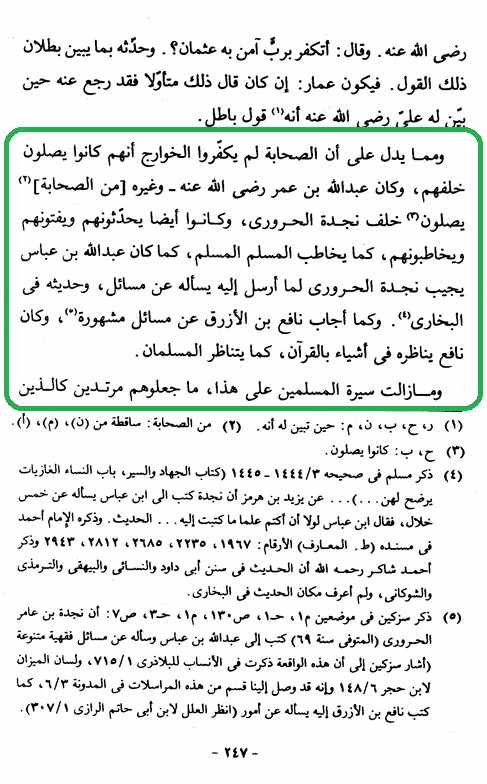
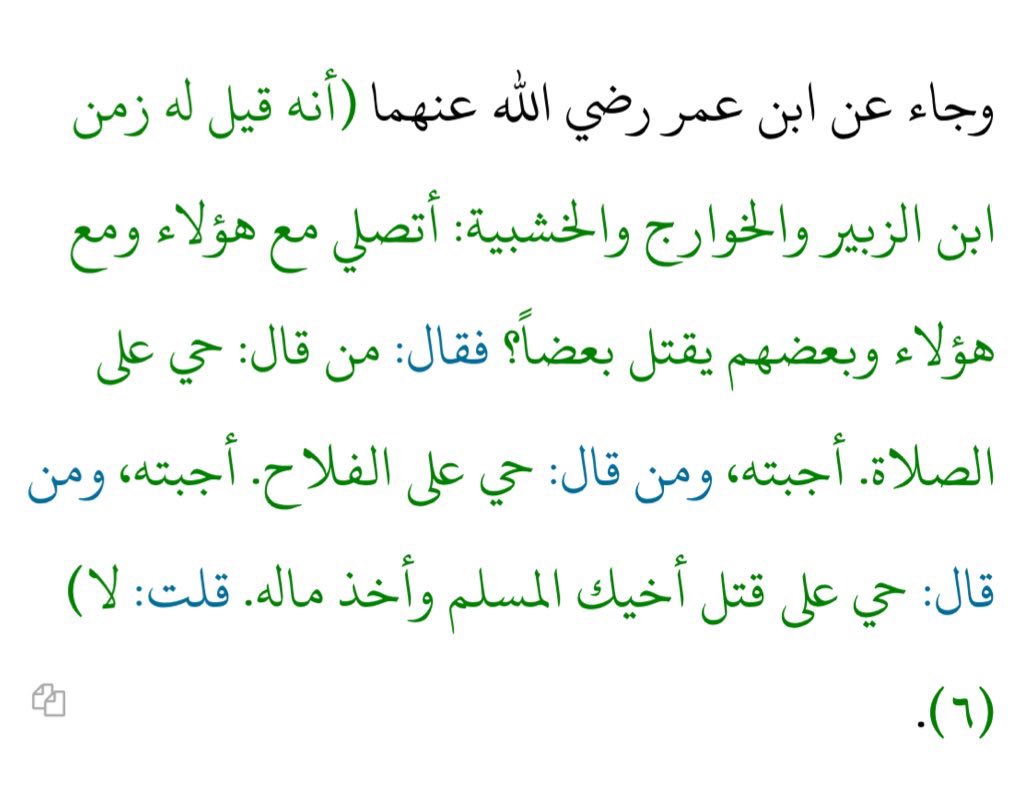
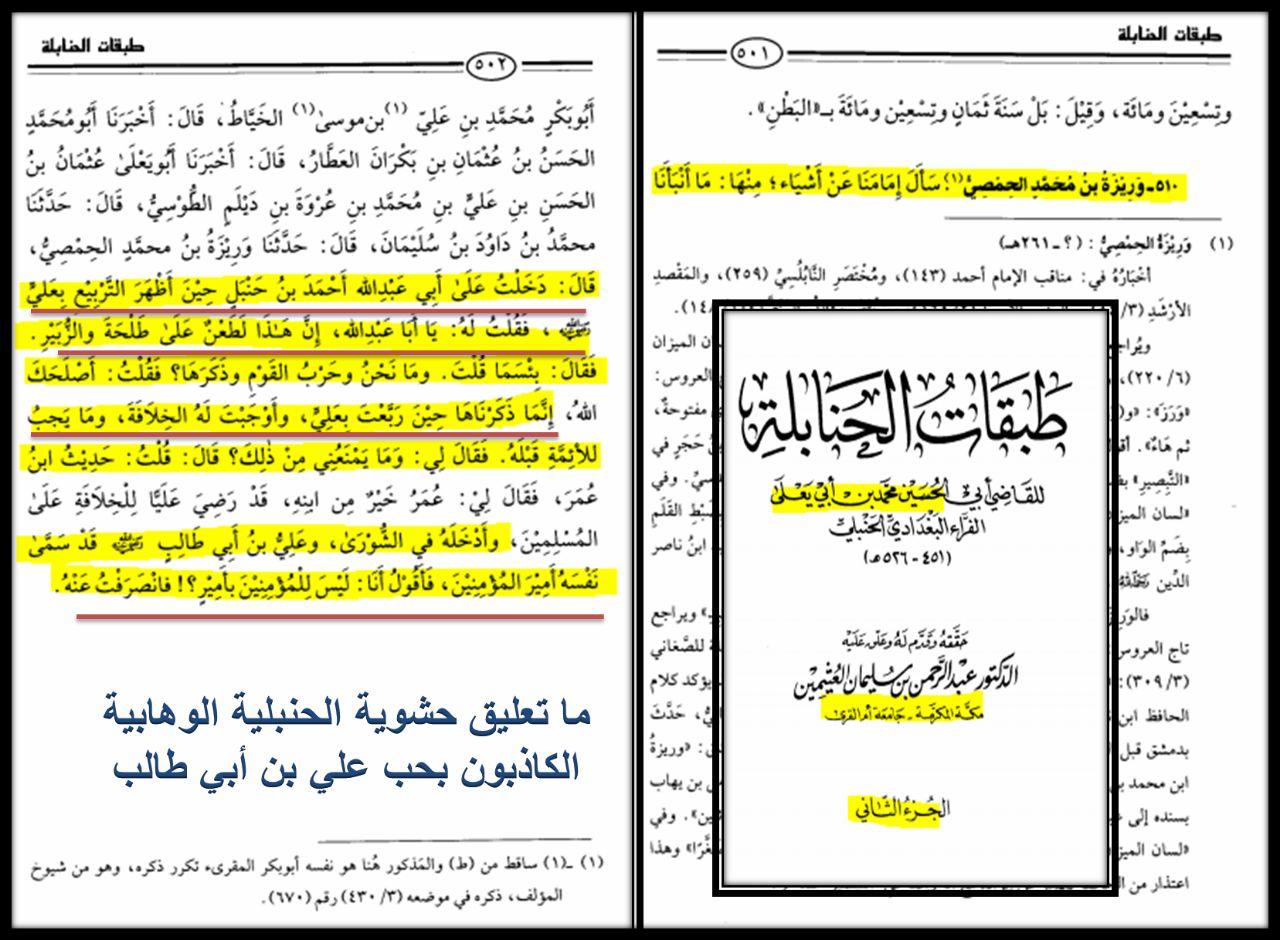


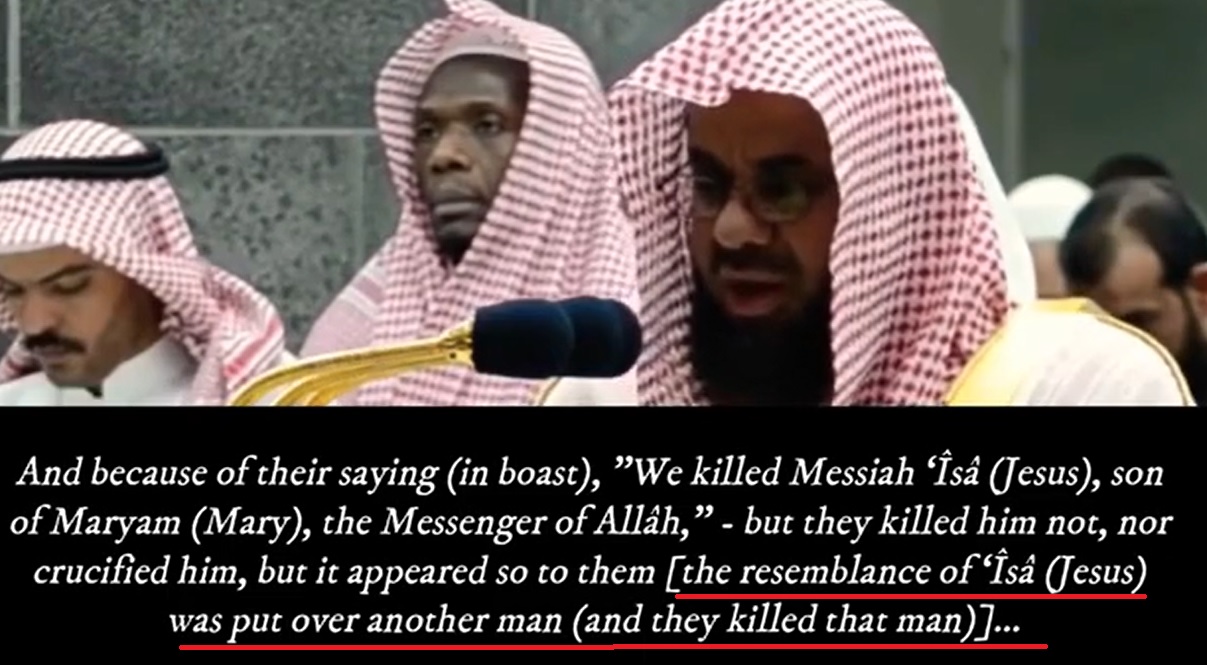
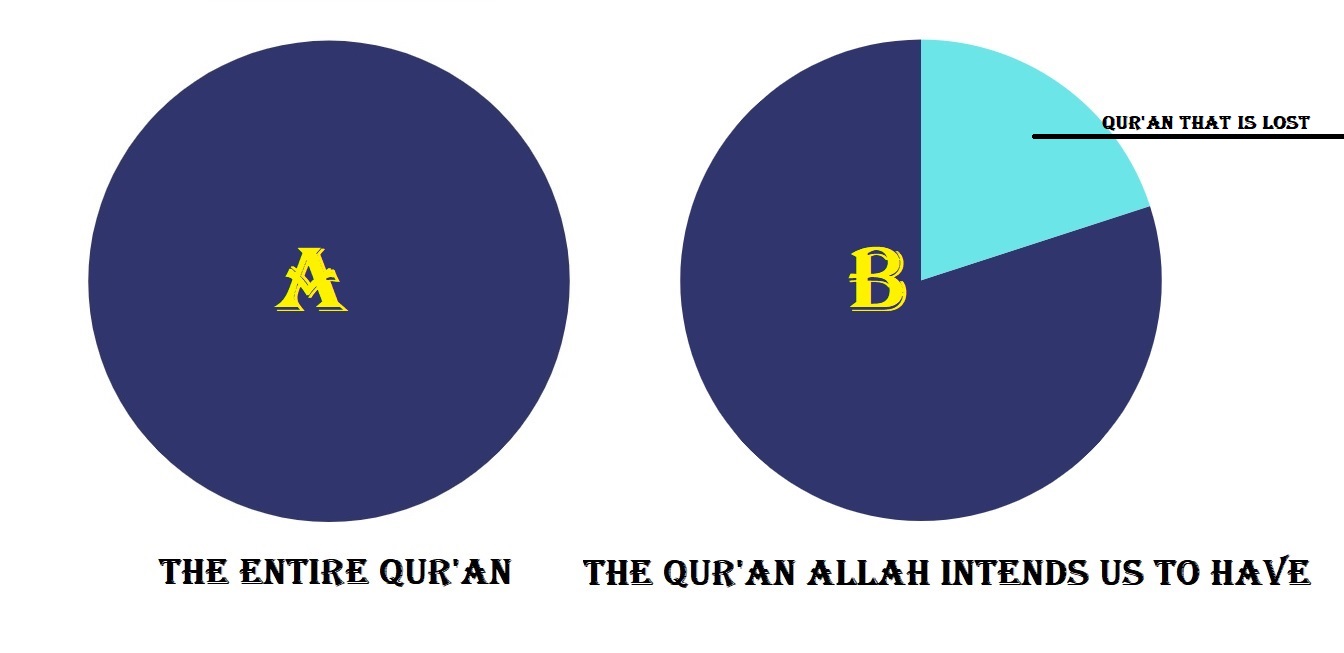
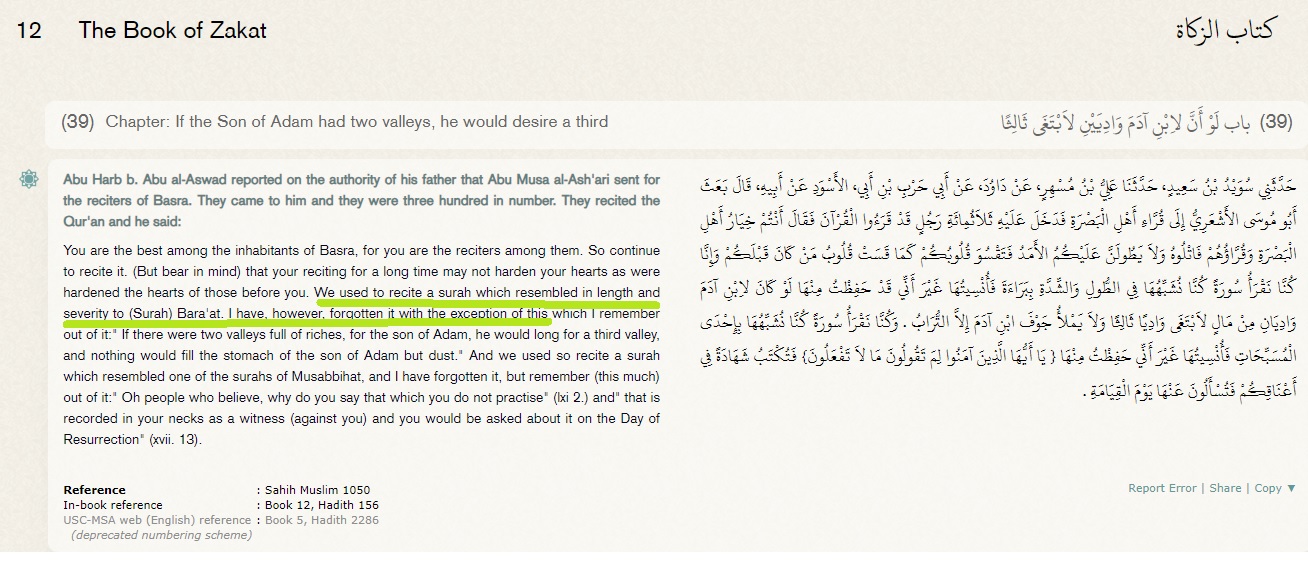
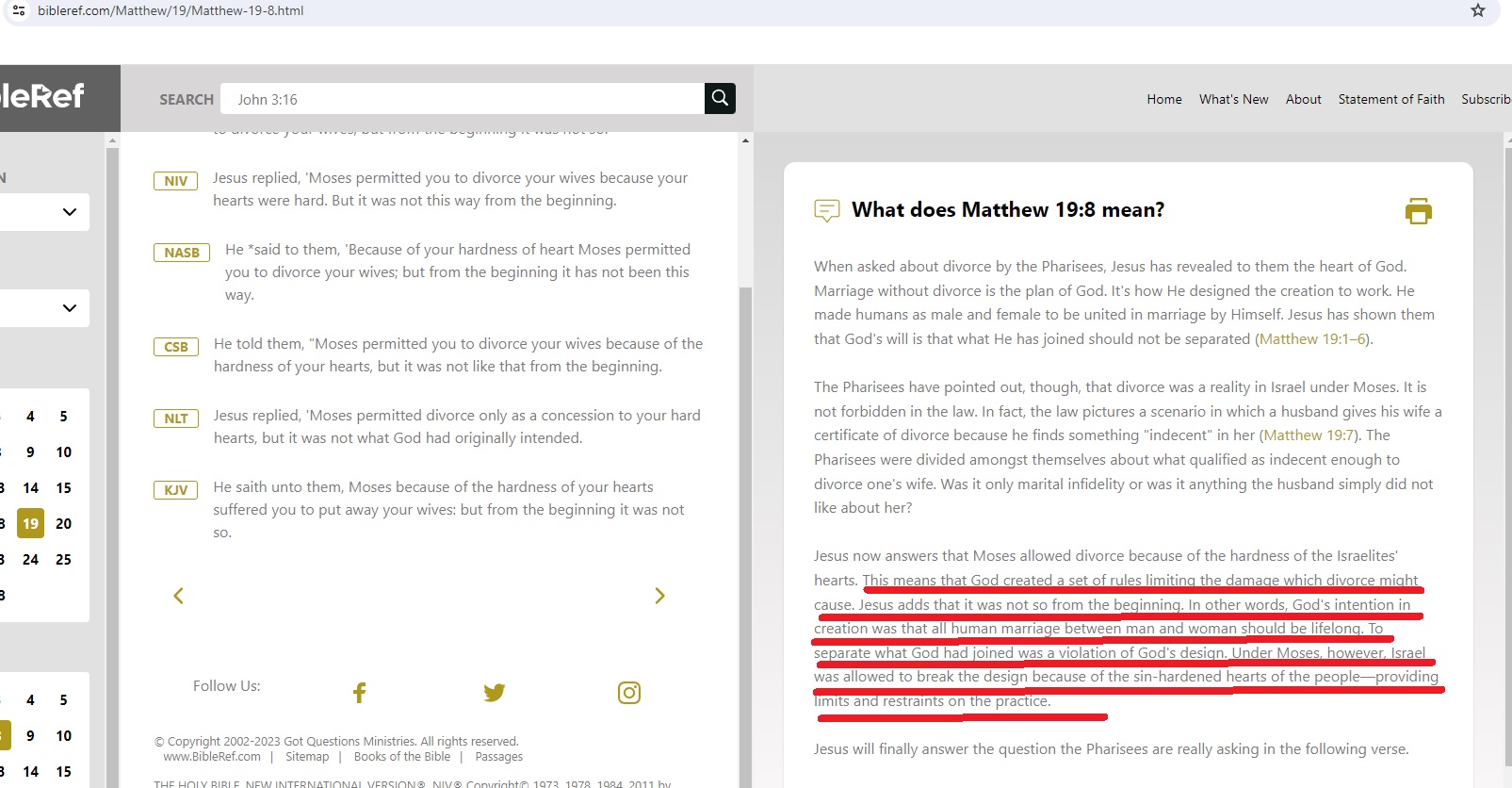
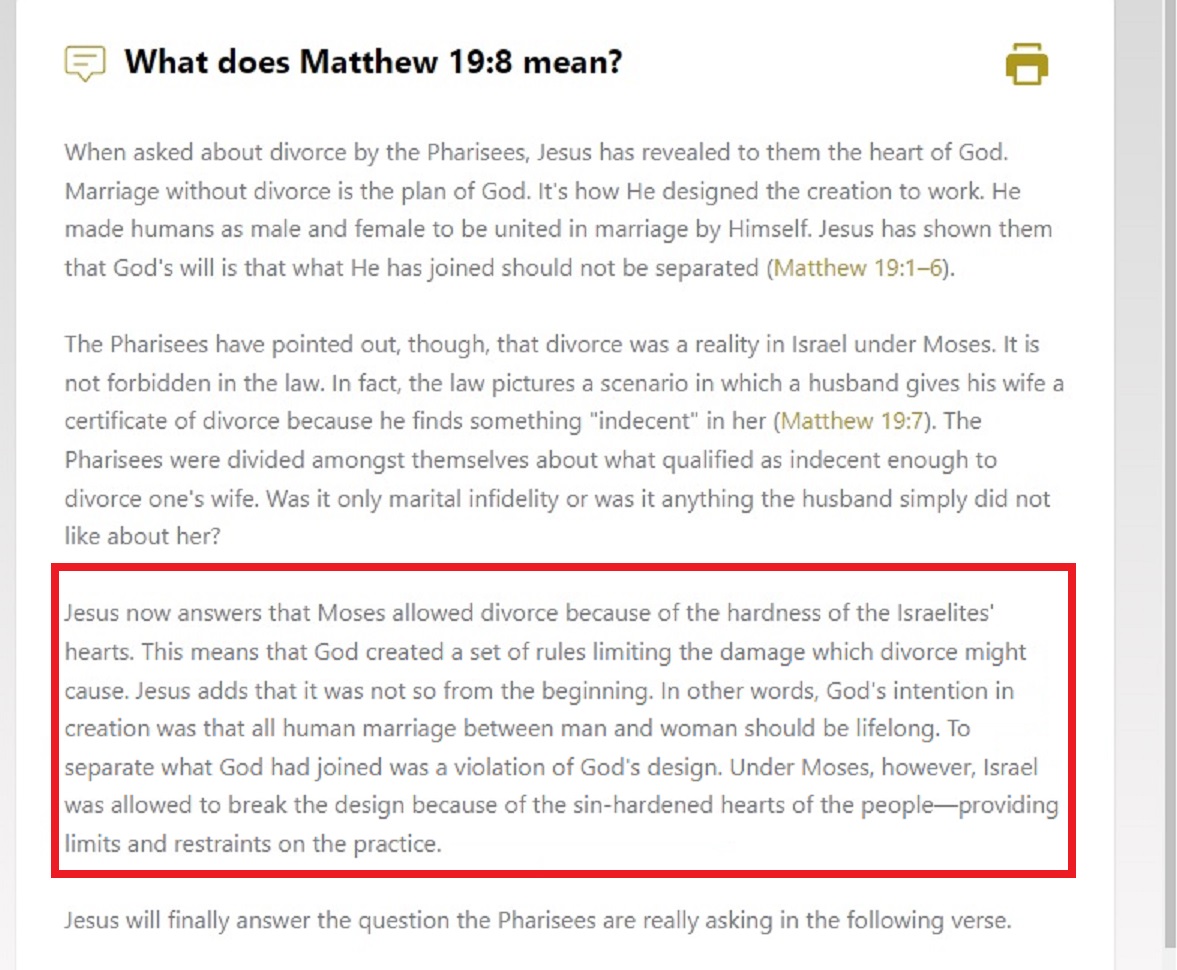
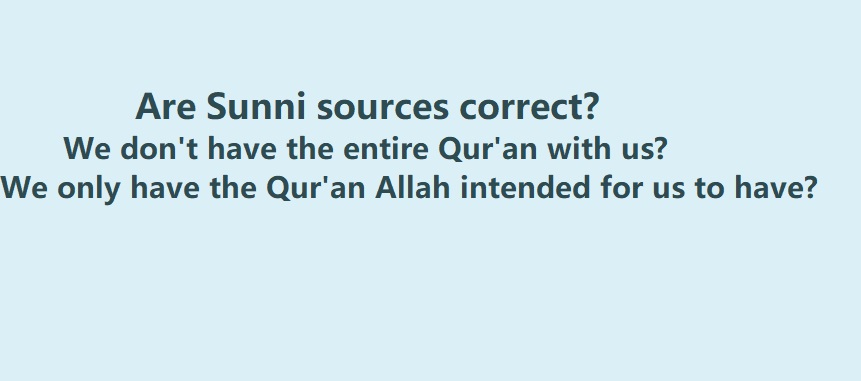

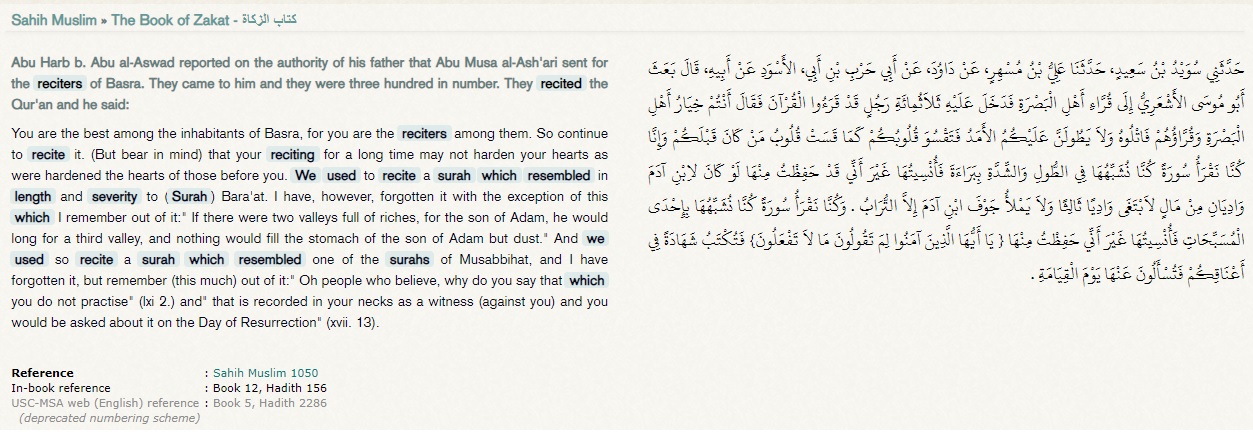

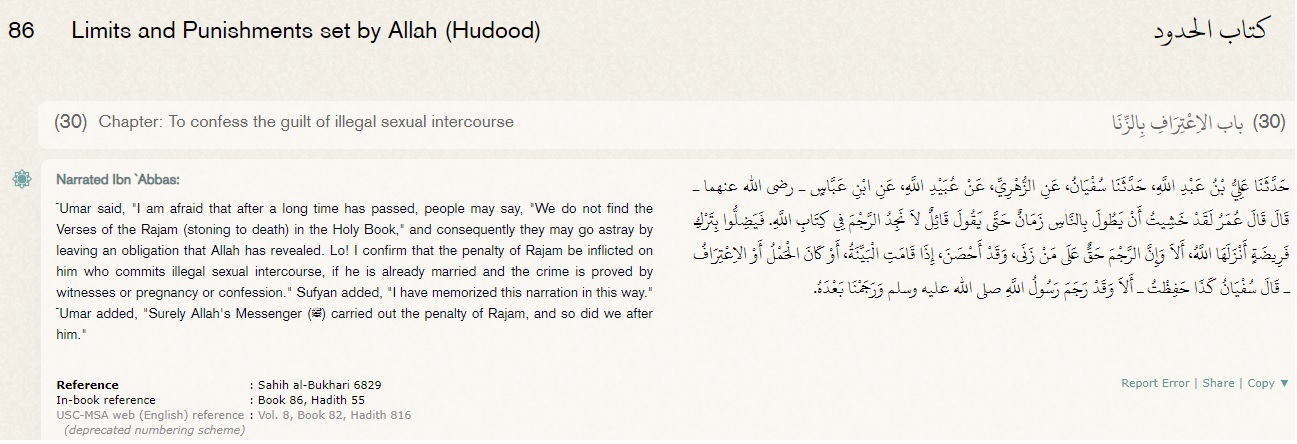

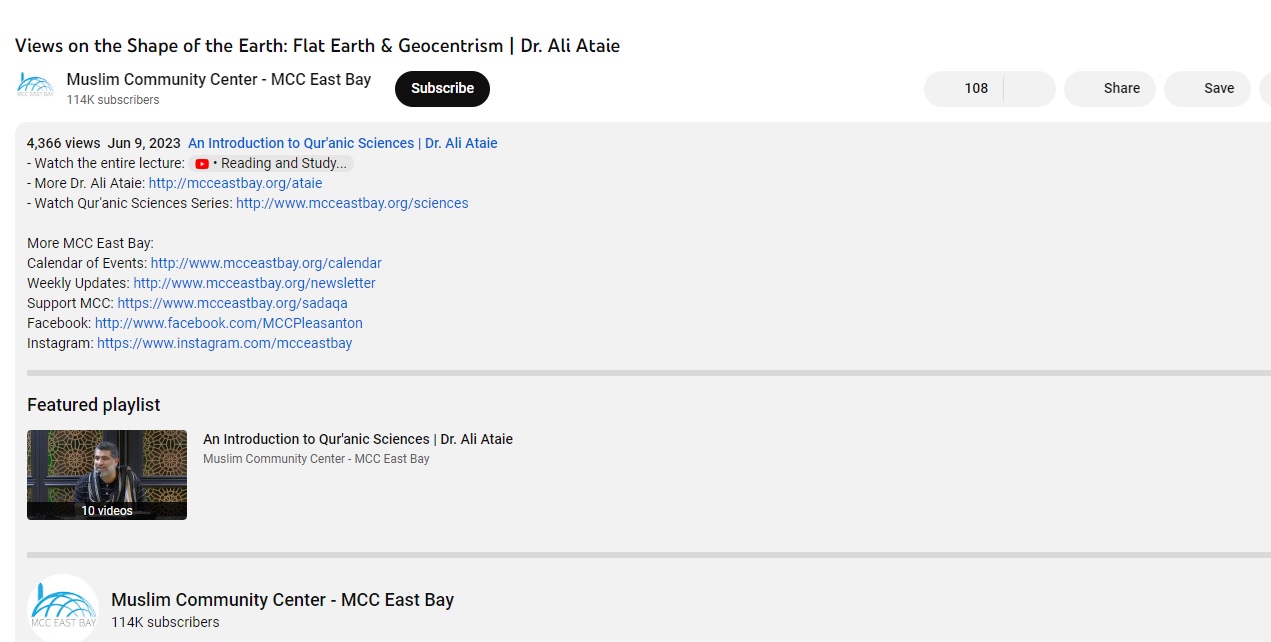
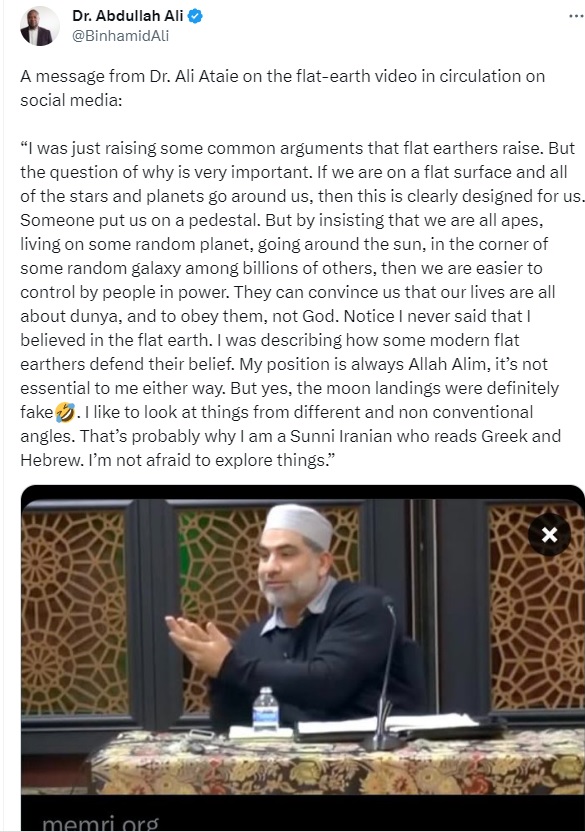
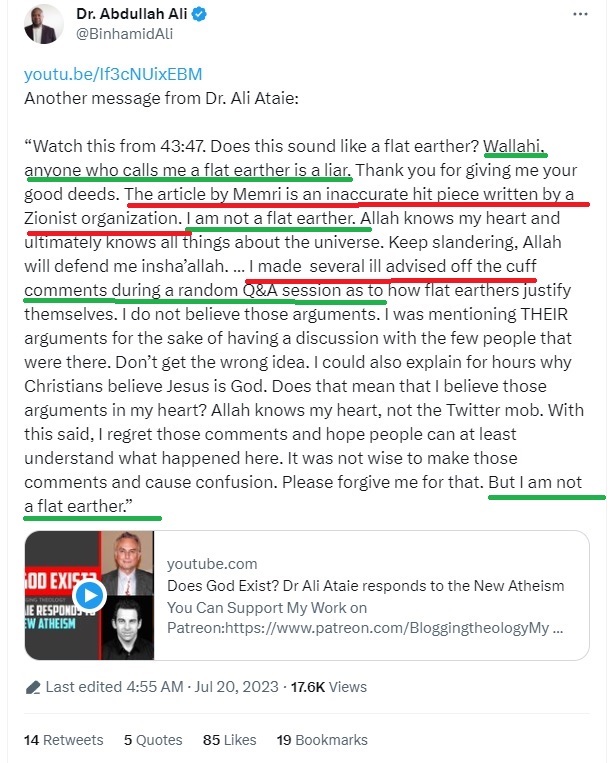

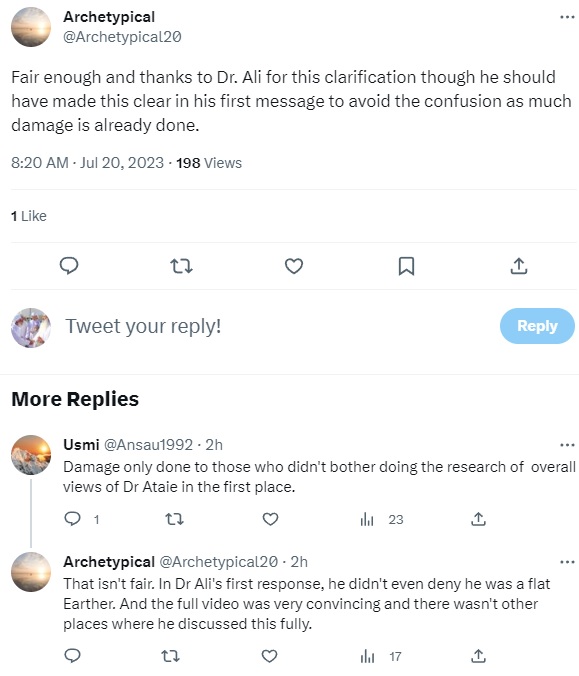
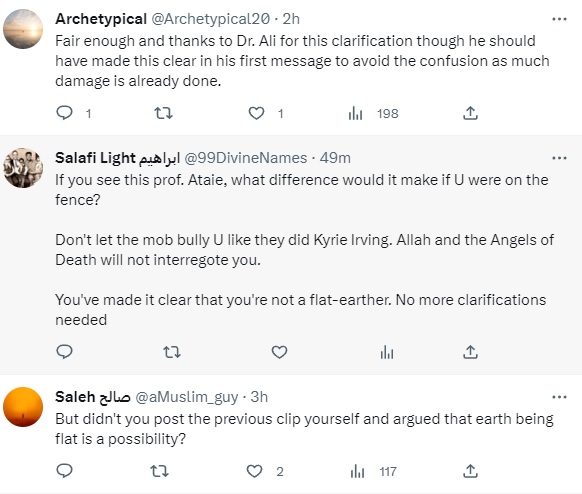
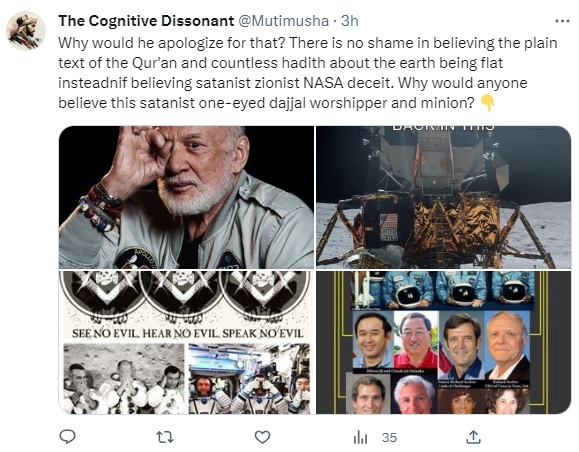

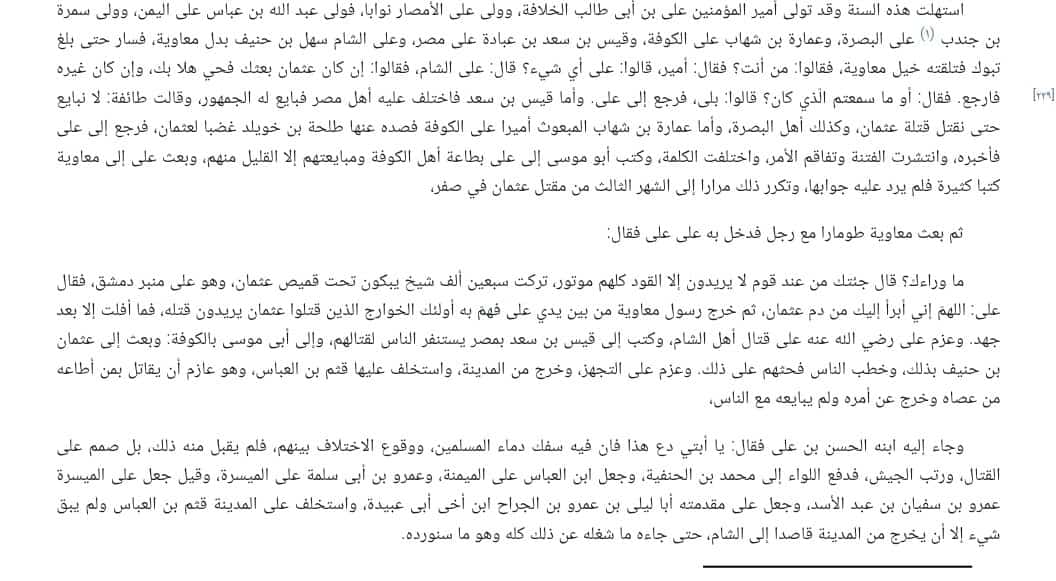
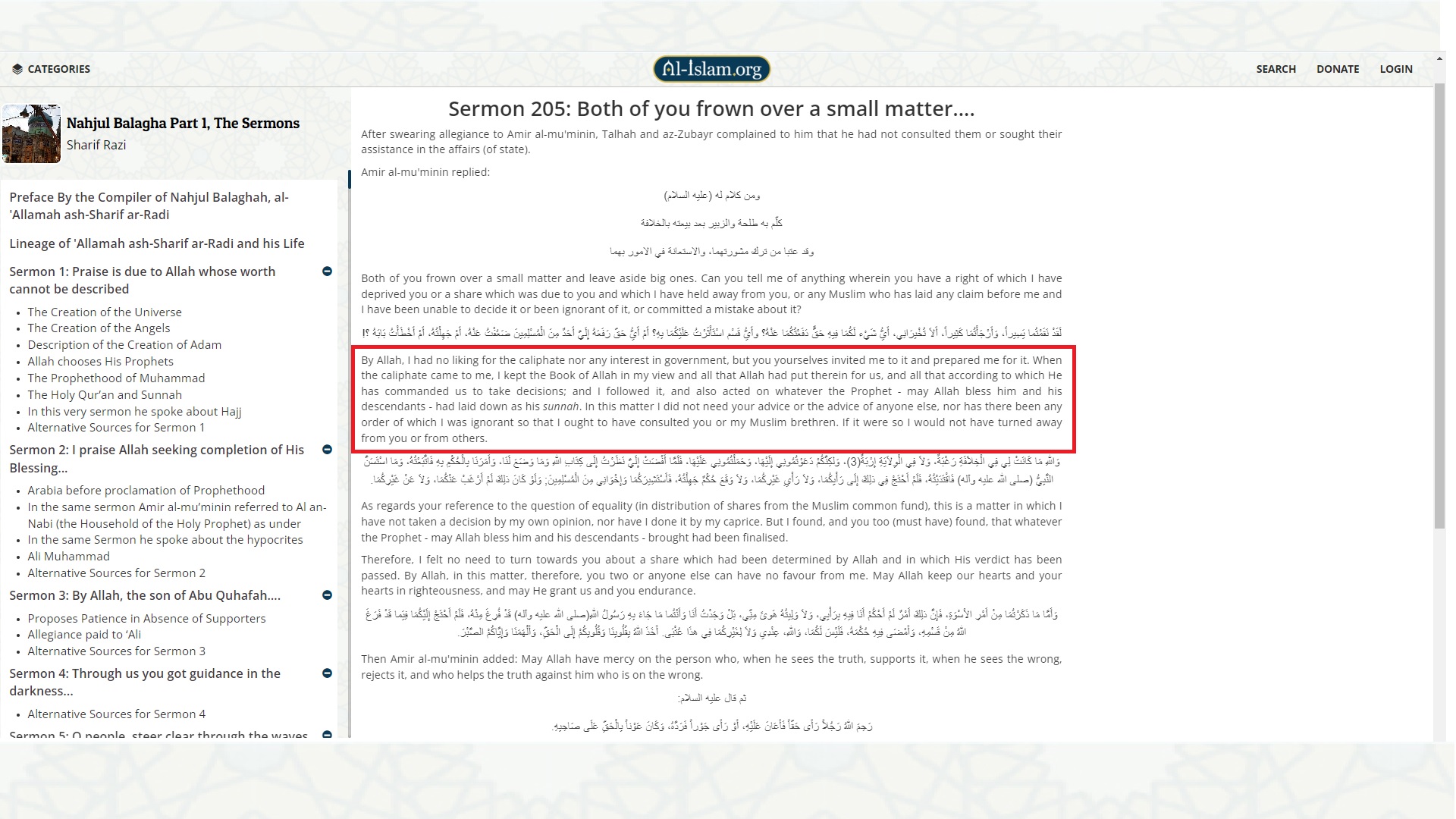
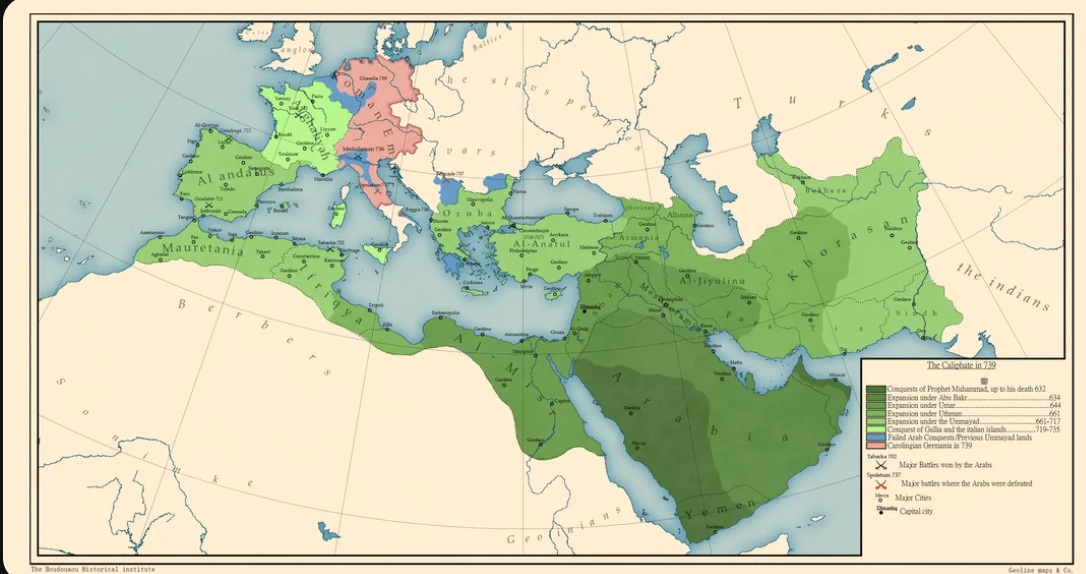

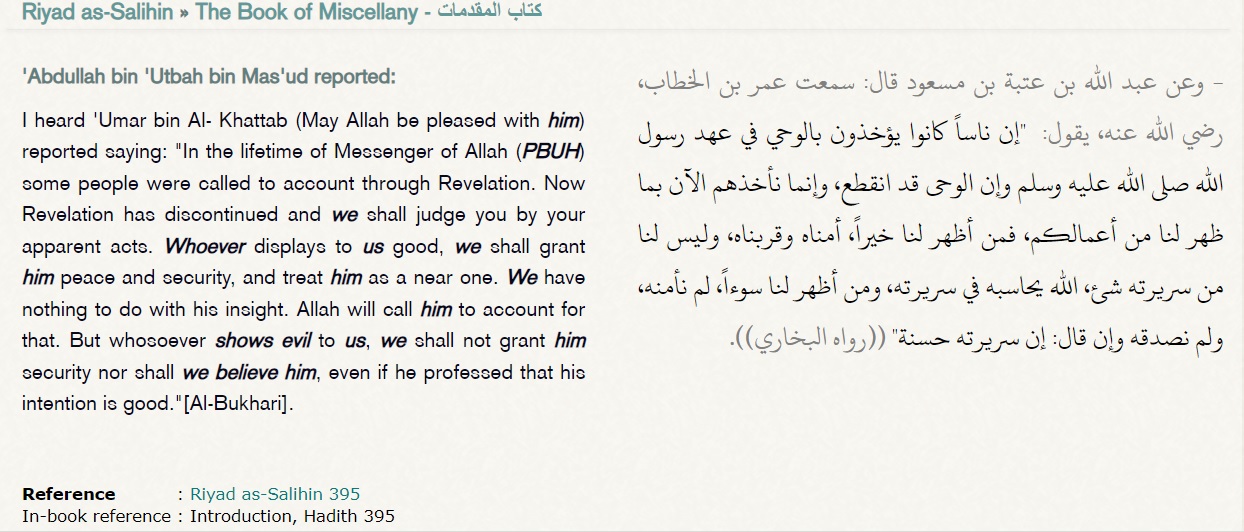
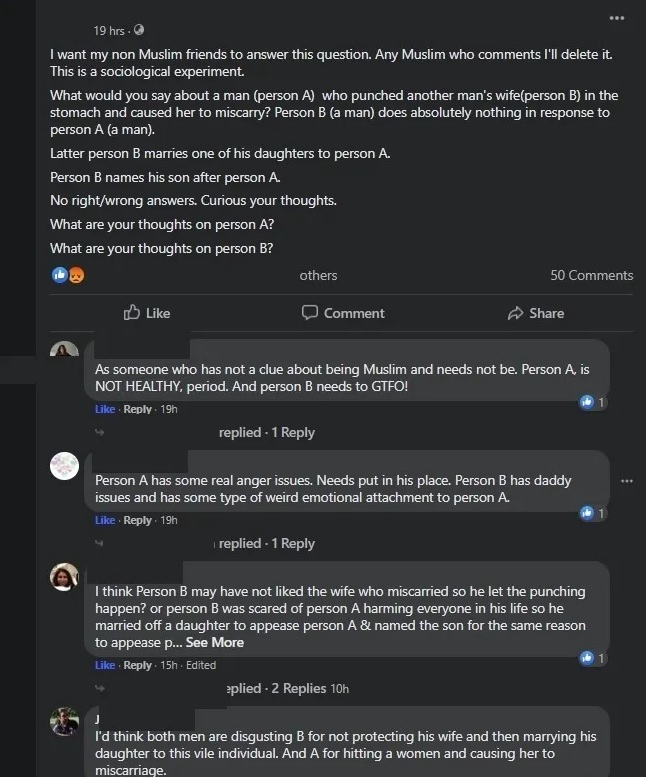


 Prima Quran