“The Messiah, son of Mary, was not but a messenger; [other] messengers have passed on before him. And his mother was a supporter of truth. They both used to eat food. Look how We make clear to them the signs; then look how they are deluded.” (Qur’an 5:75)
“There is nothing like unto Him, and He is the Hearing, the Seeing.” (Qur’an 42:11)
“There is no comparison to His absoluteness.” (Qur’an 112:4)
﷽
I used to think that the Salafi/Athari were people who had subtlety in their doctrine. And people who at least claimed to take the apparent meaning of a text. They would claim that Allah (swt) is not like his creation and that they do not liken Allah (swt) to the creation.
I couldn’t have been more wrong!
I am now of the view that the God of the Salafis is one that has a form or a shape. This is from THEIR understanding of certain text.
It was narrated that Abu Umamah Al-Bahili said:
“The Messenger of Allah (saw) addressed us, and most of his speech had to do with telling us about Dajjal. He warned about him, and among the things he said was: ‘There will not be any tribulation on earth, since the time Allah created the offspring of Adam, that will be greater than the tribulation of Dajjal. Allah has not sent any Prophet but he warned his nation about Dajjal. I am the last of the Prophets, and you are the last of the nations. He will undoubtedly appear among you. If he appears while I am among you, I will contend with him on behalf of every Muslim, and if he appears while I am not among you, then each man must fend for himself and Allah will take care of every Muslim on my behalf. He will emerge from Al-Khallah, between Sham and Iraq, and will wreak havoc right and left. O slaves of Allah, remain steadfast. I will describe him to you in a manner in which none of the Prophets has described him before me. He will start by saying “I am a Prophet,” and there is no Prophet after me. Then a second time he will say: “I am your Lord.” But you will not see your Lord until you die. He is one-eyed, and your Lord is not one-eyed, and written between his eyes is Kafir. Every believer will read it, whether he is literate or illiterate.”
Notice that the text that is attributed to the Blessed Prophet (saw) does not even remotely begin to refute the idea that Allah could be in the form of a human being.
The text only gives the following assurances.
Your Lord is not One-Eyed.
You will not see your Lord until you die.
In other words it is not at the core of one’s innate fitra or it is not innate to the mind that Allah (swt) is not something that takes on forms and shapes!
To have such an assurance tied to this particular hadith, of which the multitude have not even heard of!?
The proof is irrefutable.
The Prophet (saw) said, “Allah did not send any prophet but that he warned his nation of the one-eyed liar (Ad-Dajjal). He is one-eyed while your Lord is not one-eyed, The word ‘Kafir’ (unbeliever) is written between his two eyes.”
Now those who follow the Neo-Salafi Athari school will use the above text to claim that Allah (swt) has two eyes. Although that is pure speculation. Saying that the Dajjal has eye one does not necessitate that Allah (swt) has two eyes. Or saying that Allah (swt) isn’t defective in one eye does not entail Allah (swt) has more than one eye. You could say that a spider has 8 eyes and that it does not have a defective eye and both statements could be true.
However, when Allah (swt) opened my eyes to something deeper and more sinister. That the Neo-Salafi believe that the above text is trying to teach a theological point!
So what they are saying and think about this…what they are saying is that the way to DISTINGUISH Allah (swt) from the dajjal, is that the dajjal has ONE EYE and ALLAH DOES NOT HAVE ONE EYE.
What about the fact that the very hadith says, “THE WORD KAFIR IS WRITTEN BETWEEN HIS TWO EYES.”? Wouldn’t that be a big tale tell sign that THIS IS NOT Allah (swt)?
But even more bone chilling and down right frightening is that this flawed analogy leads one to think what seems to be THE ONLY thing that distinguishes Allah (swt) from the dajjal? Wouldn’t it be OBVIOUS that if a PERSON, ANY PERSON were to claim to Allah (swt) that we as Muslims would KNOW that this person is a charlatan, simply on the basis of:
Allah (swt) cannot be and is not a man/human being.
Allah (swt) cannot and does not assume form/shape.
Allah (swt) cannot be and is not a person.
However, if one is to take the Neo-Salafi perspective apparently not! Think about this good people.
What if you were to find a person that does amazing feats of magic, or breaks the laws of physics or does the unexplained. Would YOUR criteria as a Muslim be, well the person has two eyes, 20/20 vision, so maybe, possibly it COULD be Allah?
REALLY?
If the Neo-Salafi do not understand this hadith as the Blessed Messenger (saw) simply informing that Allah (swt) is not unaware and has full grasp, and has no defects than brothers and sisters, dear readers…
WE HAVE A BIG PROBLEM!
We have a big problem because nothing else is obvious; like the fact that the dajjal is:
human
has eyes.
has hands.
has feet.
has curly hair.
has a mouth.
most likely eats food (Qur’an 5:75) thus answers the call of nature.
has mass.
occupies space.
needs to have an army to effect change. Where as Allah (swt) gives the command ‘Kun faya kun’ (be and it is) ?wouldn’t ALL THESE BE A DEAD GIVE AWAY THAT THIS IS NOT ALLAH? According to the Neo-Salafi, NOPE!
But one way to POSSIBLY TELL THAT IT IS NOT ALLAH IS THIS: Is the person blind in one eye?
Imagine being brought up with this belief and you are out on police patrol one night in Saudi Arabia and you spot someone with one eye. “Hello, headquarters this is dispatch. Suspect has one defective eye. Possibly Dajjal, Definitely not Allah.”
So according to the Neo-Salafi the above hadith has come to teach us a theological point concerning Allah (swt). That being don’t be fooled because dajjal has one eye (one eye is defective) and your Lord does not have a defective eye.
This is what lead me to believe beyond a shadow of a doubt that these people believe that Allah (swt) has a form, and can even come in the form of a human being!
Saying that the Lord is not one eyed is not an affirmation that he has two eyes!
“The Originator of the heavens and earth. How could He have children when He has no mate? He created all things and has knowledge of everything.” (Qur’an 6:101)
This is a negation that Allah (swt) could not have children as he has no companion. So does this entail the opposite? If Allah (swt) had a companion he could have children? How bizarre is this type of thinking! That Allah (swt) would need anything in order to accomplish what he wants is not the belief of the Muslims.
Subhan’Allah!
May Allah (swt) rescue the Muslims and save the Muslims from perversion in their faith!
“And he is with you wherever you are.” (Qur’an 57:4)
﷽
First and foremost let us be clear.
There is no such hadith of the Slave Girl.
As if it is an ahad narration with only one type of matn (textual tradition).
What is true however, is that there is the incident of the slave girl and then we have many narrations of that incident with many textual variations.
We can see that those who call themselves the Sunni Muslims will dispute over the question: Where is Allah?
They get into conflict among themselves in regard to the following ahadith:
Narrated Mu’awiyah b. al-Hakam al-Sulami:
I said: Messenger of Allah, I have a slave girl whom I slapped. This grieved the Messenger of Allah (saw). I said to him: Should I not emancipate her? He said: Bring her to me. He said: Then I brought her. He asked: Where is Allah ? She replied: In the heaven. He said: Who am I ? She replied: You are the Messenger of Allah. He said: Emancipate her, she is a believer.
A man brought the Prophet (saw) a black slave girl. He said: Messenger of Allah, emancipation of believing slave is due to me. He asked her: Where is Allah ? She pointed to the heaven with her finger. He then asked her: Who am I ? She pointed to the Prophet (saw) and to the heaven, that is to say: You are the Messenger of Allah. He then said: Set her free, she is a believer.
So what happens is that the Sunni Muslims that are Ash’ari or Maturidi will usually quote the hadith about the woman using an action by “pointing to heaven“.
This gives opportunity for a quick counter rebuttal (to those who believe Allah is in a defalt location) because we know that Earth is spinning on its axis. Thus, if the Blessed Prophet (saw) were to ask the woman the same question a few hours from that point or eleven hours later the same response would hold true.
The Sunni Muslims that are Athari/Salafi/Wahabbi they tend to prefer the first hadith where the woman is reported to have verbally replied: “In the heaven”.
Not withstanding that some of their scholars have graded the hadith on pointing with the finger as being weak.
I have always found their appeal to this particular narration about the woman replying: “In the heaven” to be quite fascinating and perplexing. Why I find it as such is because I was always of the impression that Athari/Salafi/Wahhabi have always found the concept of Hulul (divine indwelling) in the creation to be blasphemous.
Yet, not so fast….Prima Qur’an!
Do the Athari/Salafi/Wahabbi REALLY BELIEVE ALLAH IS IN THE HEAVEN as the woman affirmed?
No, no they don’t.
“The text which describe Allah as being in heaven mean that He is high above his creation: they do not mean that the heavens surrounds and encompasses Him. That is because heaven [sama’] here means high, and it is not referring to the created heaven. Or it may be said that the proportion in [fi] in this case means above [‘ala], i.e, above the heaven.”
In other words these people practice Ta’wil figurative interpretation of text that state that Allah (swt) is IN and replace it with ABOVE. Even thought the text have an explicit meaning.
Narrated `Abdullah:
A (Jewish) Rabbi came to Allah’s Messenger (saw) and he said, “O Muhammed! We learn that Allah will put all the heavens on one finger, and the earths on one finger, and the trees on one finger, and the water and the dust on one finger, and all the other created beings on one finger. Then He will say, ‘I am the King.’ Thereupon the Prophet (saw) smiled so that his pre-molar teeth became visible, and that was the confirmation of the Rabbi. Then Allah’s Messenger (saw) recited: ‘They made not a just estimate of Allah such as is due to Him. And on the Day of Resurrection the whole of the earth will be grasped by His Hand and the heavens will be rolled up in His Right Hand.Glorified is He, and High is He above all that they associate as partners with Him.‘ (39.67)
“They did not recognise the true worth of Allah.(Such is Allah’s power that) on the Day of Resurrection the whole earth will be in His grasp, and the heavens (wal-samāwātu) shall be folded up in His Right Hand. Glory be to Him! Exalted be He from all that they associate with Him.” (Qur’an 39:67)
“Have you taken security from Him Who is in the heaven(fi samwati) that He will not cause the earth to swallow you when lo! it is convulsed?” (Qur’an 67:16)
So this is how we know that there is majaz figurative language in the Qur’an and the Sunnah. There is a section of Muslims who endanger the creed of themselves and the Ummah because they take the apparent meaning of text (well they do when they can’t except for when they are trapped like we demonstrated above).
The above verse of the (Qur’an 39:67) states that the heavens will be rolled up.
Narrated Imran bin Husain:
I went to the Prophet (saw) and tied my she-camel at the gate. The people of Bani Tamim came to the Prophet (saw) who said “O Bani Tamim! Accept the good tidings.” They said twice, ‘You have given us the good tidings, now give us something” Then some Yemenites came to him and he said, “Accept the good tidings, O people of Yemem, for Bani Tamim refused them.” They said, “We accept it, O Allah’s Messenger (saw)! We have come to ask you about this matter (i.e. the start of creations).” He said, “First of all, there was nothing but Allah, and (then He created His Throne). His throne was over the water, and He wrote everything in the Book (in the Heaven) and created the Heavens and the Earth.” Then a man shouted, “O Ibn Husain! Your she-camel has gone away!” So, I went away and could not see the she-camel because of the mirage. By Allah, I wished I had left that she-camel (but not that gathering).
Is is quite obvious from even the apparent reading of the above text that Allah (swt) is not above the heavens and the earth at the point of which they are not even have been created.
Waki’ bin Hudus narrated that his paternal uncle Abu Razin said:
“I said: ‘O Messenger of Allah (saw), where was our Lord before He created His creation?’ He said: He was above the clouds, below which was air, and above which was air and water. Then He created His Throne above the water.'”
This hadith has a grading of Hassan (it is fair) and before the establishment of various categories of hadith it would have received the grading of sahih (sound). Yet, the problem with it is very clear from the matn (text) itself.
Clouds, air, water are all creations. The wording of the text indicates that these things existed along with Allah (swt) and that his relation with them is simply in being above them but not being the creator of them. This can be solved by harmonizing it with other text that Allah (swt) clearly mention Allah (swt) is the creator of all things and by that it would mean the clouds, air and water.
There are other obvious problems with just taking the hadith of the slave girl at face value: Even if she replied that Allah is in the heaven how would that be taken to mean that she is a believer?
The belief that “Allah is in the heaven” neither establishes monotheism nor negates polytheism — because some polytheists acknowledged the existence of Allah, as do Christians, yet they associate others with Him in divinity.
The Christians believe that as well:
“He sat down at the right hand of the Majesty in heaven.” (Hebrews 1:3)
“But Stephen, full of the Holy Spirit, looked up to heaven and saw the glory of God, and Jesus standing at the right hand of God. “Look,” he said, “I see heaven open and the Son of Man standing at the right hand of God.” (Acts 7:55-56)
The very fact of something being in heaven does not indicate that it is God.
The very concept or idea of God being in heaven does not indicate that someone believes that this God is one being that is not comprised of persons.
Recall what the Ahl Khilaf (people of the opposition) of the truth: Salafi/Athari/Wahhabis have said above:
“The texts which describe Allah as being in heaven mean that He is high above His creation: they do not mean that the heaven surrounds and encompasses Him. That is because heaven [sama’] here means high, and it is not referring to the created heaven. Or it may be said that the proposition in [fi] in this case means above [‘ala], i.e., above the heaven.”
DOES THE IBADI HADITH COLLECTION HAVE ANYTHING INTERESTING TO SAY ON THIS MATTER?
We find in the Al Jami al Sahih, musnad al rabi’
47) – “Freeing of a Slave”
681- ‘Abū Ubayda narrated from Jābir ‘Ibn Zayd that a man went to the Prophet (saw), and said to him: “O Prophet, I have a slave girl who tends my flock of sheeps. But, I just found out that I lost a sheep. When I questioned her about this, she replied that the wolf had devoured her. I became irritated so much that I slapped her. Now, I have to free a slave. Should I free her?” The Prophet (saw) said: “If she can come, bring her to me!”. The man went to get her and brought her with him. The Prophet, (saw) said to her: “Who is your lord?“. She said: “Allah is my lord”. The Prophet, (saw) said: “Who then is your Prophet?”. She replied: “You are Muḥammad, the Prophet of Allah”. So, the Prophet, (saw) said at that time: “free her because she is a believer”.
Source:al-Imām al-Rabī‘ — His Status and His Musnad, by Shaykh Sa‘īd al-Qanūbī.
(“Who is your lord”) Source: https://sunnah.com/nasai:3653 this matches with the hadith in the ibadi hadith collection.
There are many other issues with the particular version of the hadith
First: It contradicts what has been mutawātir (mass-transmitted) from the Prophet (saw) — that when someone came to him wanting to accept Islam, he would command them to utter the two testimonies (shahādah), without asking them this question or anything similar.
Second: It contradicts what has been authentically established from the Prophet (saw)— that when he sent some of his Companions to call people to Islam, he instructed them to order the people to testify “that there is no god but Allah and that Muhammad is the Messenger of Allah”, without commanding them to explain or ask about this alleged belief.
Third: The Prophet (saw) explained the pillars of Islam and faith in the Hadith of Jibrīl (Gabriel) — peace be upon him — and did not mention the belief that “Allah is in the heaven”, which is the belief of the anthropomorphist (mujassimah). Exalted is Allah far above that.
Fourth: It contradicts the Hadith: “I have been commanded to fight the people until they testify that there is no god but Allah and that Muhammed is the Messenger of Allah. If they do so, they have protected from me their blood and their wealth, except by the right of Islam, and their reckoning is with Allah.” Many have stated that this Hadith is mutawātir.
Fifth: It contradicts the consensus of the ummah — that whoever utters the two testimonies and believes in what the Messenger (saw) brought has entered Islam.
Sixth: As mentioned from the beginning there is no such thing as ‘the hadith of the slave girl’. Rather we have many narrations of that incident with many textual variations
Among them: it has also been reported as: “Do you testify that there is no god but Allah?” She replied: “Yes…” etc. Reported by Mālik, Ahmad (vol. 3 p. 452), ‘Abd al-Razzāq in al-Muṣannaf (vol. 9 p. 175), ‘Abd ibn Ḥumayd, al-Bazzār, al-Dārimī (vol. 2 p. 187), al-Ṭabarānī (vol. 12 p. 27), Ibn Abī Shaybah, Ibn al-Jārūd (no. 931), and al-Bayhaqī (vol. 10 p. 57). Al-Haythamī said in Majma‘ al-Zawā’id (vol. 4 p. 244): “The men of Ahmad’s chain are those of the authentic collections”, and similarly in vol. 1 p. 23. Ibn Kathīr said in his Tafsīr (1/547): “Its chain is authentic, and the anonymity of the Companion does not harm it.” It was also authenticated by Ibn ‘Abd al-Barr in al-Tamhīd (vol. 9 p. 114)
The second wording is correct, as it conforms to the mutawātir practice of the Prophet (saw), as explained above.
If it is said: The first wording is correct because Imām Muslim narrated it — we reply: Preferring the narration of the two Shaykhs (al-Bukhārī and Muslim) or one of them over others merely for that reason is very weak, rather baseless, for there is no evidence for it. In fact, the evidences — by Allah’s grace — are abundant against it. This is the view of the majority of the ummah.
Among those who adopted this view from later scholars are: the great scholar Qāsim, al-Kamāl ibn al-Humām in Fatḥ al-Qadīr and al-Taḥrīr, his commentators Ibn Amīr al-Ḥajj Muḥammad al-Amīn (known as Amīr Bād Shāh), Ibn Kathīr, al-Qasṭallānī, ‘Alī al-Qārī, al-Ṣan‘ānī, Akram al-Sindī, Aḥmad Shākir, al-Kawtharī, and others — and it is the truth
Seventh: Even if we hypothetically accepted that Muslim’s wording is equal to the other two, it would still not be permissible to use it as proof, because in that case the Hadith would be open to multiple interpretations. And when there is such uncertainty, the proof is invalidated, as is established among the people of knowledge and virtue.
Eighth: Yaḥyā ibn Abī Kathīr — one of the narrators of this Hadith — was a mudallis (one who conceals the source of his narration). Although he did explicitly state hearing in some reports, some scholars still do not accept the narration of a mudallis even if he states hearing. There is no doubt that what is agreed upon takes precedence over what is disputed.
Ninth: This Hadith contradicts definitive rational and textual proofs indicating that the Exalted Lord is not confined to the direction above. A solitary (āḥād) Hadith is not used as proof in matters of creed — as we have clarified in the treatise Akhbār al-Āḥād — especially when it contradicts definitive proofs.
Be careful of those who are not sound in their theology.
“Allah said, O Jesus, I shall cause you to die and will exalt you in my presence and shall purify you of the ungrateful disbelieving people, and shall place those who follow you above those who deny the truth, until the Day of Judgement; then to Me shall all return and I will judge between you regarding your disputes.” (Qur’an 3:55)
“And they have thereof no knowledge. They follow not except assumption, and indeed, assumption avails not against the truth at all.” (Qur’an 53:28)
﷽
The Pseudo-Salafis are attacking Imam Imran Hossein because he basically doesn’t believe that the Qur’an says the following:
“And for their saying, “Indeed, we have killed the Messiah, Jesus, the son of Mary, the Messenger of Allah.” And they did not kill himnor did they impalecrucify him but Allah made some random individual look exactly like Jesus and that person was crucified instead of Jesus. Those who differ therein are full of doubts. They have no certain knowledge of it, but only follow conjecture. For certainly, they did not kill him.” (Qur’an 4:157)
“What did Allah do to make it appear…that he died? Let me warn you! And my language some time is very harsh. Because that is the only language some people can understand. Don’t come with this nonsense! Because it is not only pathetic nonsense it is absolutely sinful! To say that Allah (authubillah) caused someone else to take the appearance of Nabi Isa (a.s) and that innocent man, innocent because he never claimed to be the Messiah! He was crucified. Wait for judgement day with that nonsense! Pathetic nonsense! It’s not there in the Qur’an. It’s in your imagination. That’s where it is. Yet it took the world of Islam by storm. What a brain washed ummah we are today! Well than what happened? Well, then why don’t you go to the Qur’an and let the Qur’an explain rather than go on fancy flights of imagination. “-Shaykh Imran Hossein.
Now notice that @ 1:27 this “Nasir Al Hanbali” states:
“We will bring the Ayah in the Qur’an and the Tafsir from ibn Kathir narrated by Shaykh Salih al-Fawzan, but notice how this creep (Shaykh Imran Hossein) says: “why don’t you go to the Qur’an and let the Qur’an explain…” but he brings no Ayah from the Qur’an, just his weird: “LET ME WARNN YOUUU!!!“
“You gonna tell Allah on judgement day you caused that man to assume the appearance of someone? And he who never claimed to be the Messiah he was crucified that is an act of injustice! You are attributing injustice to Allah what foolishness. Where are the scholars who will correct this foolishness? That’s why I have to be so forceful in my language. Allah took his soul. That he was dead. They took down the body. They put the body in a cave. They sealed the cave. Allah returned the soul. As simple as that. Nobody knew that the body, that the soul was returned and Allah raised him. But let me warn you one more time. If you stick with this theory of substitution you are going to be in a pathetic state on judgement day. Let me warn you one more time. This is a simple explanation from the Qur’an. “- Shaykh Imran Hossein.
So than “Nasir Al Hanbali” puts the following recitation up:
“Nasir Al Hanbali” than ask us: “Do you think Shaykh Ali Jaabir was wrong and the creep was right?”
My comment:
Where did Shaykh Ali Jabir recite “the resemblance of Isa was put over another man (and they killed that man” ? Shaykh Ali Jabir did not recite that at all! Yet the text put up there fools those who do not understand the Arabic text!
Then, ‘Nasir Al Hanbali’ gives us another reciter.
“Nasir Al Hanbali” than ask us: “Do you think Shaykh Abu Bakr ash-Shatiri was wrong and the creep was right? Let us listen to the next reciter, Shaykh Sa’ood ash-Shuraim.”
Prima Qur’an comment:
Where did Shaykh Abu Bakr ash-Shatiri recite “the resemblance of Isa (Jesus) was put over another man (and they killed that man)”? Shaykh Abu Bakr ash-Shatiri did not recite that at all! Yet the text put up there fools those who do not understand the Arabic text!
Prima Qur’an comment:
Where did Shaykh Sa’ood ash-Shuraim recite “the resemblance of Isa (Jesus) was put over another man (and they killed that man)” ? Shaykh Sa’ood ash-Shuraim did not recite that at all! Yet the text put up there fools those who do not understand the Arabic text!
This is simply pure deception on behalf of the one who put the video up.
“Allah said to Isa: Allah said: O Isa (Jesus)! I will take you and raise you to Myself [Qur’an 3:55] Allah said: “Ya Isa” referring to Isa ibn Maryam (a.s) when the Jews plotted against him, they wanted to kill him. They entered upon him wanting to kill him [because] their norm was to kill Prophets. When they entered upon [Isa ibn Maryam], Allah raised him from amongst them. He made another man resemble him. They grabbed that man, crucified him and killed him thinking that he was Isa. As for Isa, then Allah raised him from amongst and they did not perceive it. That is why Allah says: “but they killed him not, nor crucified him, but it appeared so to them [the resemblance of Isa (Jesus) was put over another man (and they killed that man)],” [Qur’an 4:157] -Shaykh Salih al-Fawzan
Prima Qur’an comment:
Shaykh Salih al-Fawzan has invented an outright lie about Allah (swt)! Let the Shaykh be reminded the following:
“And who is more unjust than one who invents a lie about Allah or says, ‘It has been inspired to me,’ while nothing has been inspired to him, and one who says, ‘I will reveal something like what Allah revealed.’ And if you could but see when the wrongdoers are in the overwhelming pangs of death while the angels extend their hands, saying, ‘Discharge your souls! Today you will be awarded the punishment of [extreme] humiliation for what you used to say against Allah other than the truth and that you were, toward His verses, being arrogant.’” (Qur’an 6:93)
Prima Qur’an comment:
Where did Shaykh Salih al-Fawzan get the daleel from the Qur’an and Sunnah that ” He made another man resemble him.” This is Aqeedah! The Qur’an does not say this! This is not from the Sunnah!
Shaykh Salih al-Fawzan continues:
“Allah made this man resemble the Messiah, Isa. He himself accepted it and ransomed himself; he ransomed himself and he accepted that he would be killed and crucified. Allah honored him and did not waste this person and what he did with the Messiah. It is said that the one who Allah made to resemble Isa was the one who practiced treason; the one who led [the Jews] to Isa. The one employed treachery or betrayed Isa and led the Jews to him. Allah made him resemble Isa, so they killed him. However, the first opinion is more famous, that the one who chose to resemble Isa was honored and he chose to take his place. This man sacrificed himself for the sake of Allah, he was crucified and killed, so the Messiah Isa ibn Maryam could be saved from them. And Allah knows best. Allah raised him alive with him soul and his body. Not how some of the ignorant individuals say: “he was only raised with his soul.” He was raised with his soul and body alive. They were not able to touch him with any harm.” -Shaykh Salih al-Fawzan
Prima Qur’an comment:
Where did Shaykh Salih al-Fawzan get the daleel from the Qur’an and Sunnah that “Allah made this man resemble the Messiah.” This is Aqeedah! The Qur’an does not say this! This is not from the Sunnah! How can we be so carefree in ascribing to Allah (swt) such things and in the next breath say, “he first opinion is more famous.” Of course the opinion that some random person volunteered to be killed sounds better than just some random guy being chosen! The point being Shaykh Salihi al-Fawzan we don’t attribute opinions and conjecture to Allah (swt) !! It would have been appropriate to say that this is an interpretation of the text that was taken from the People of the Book and it does not have a sound chain of narration.
Also, which text in the Qur’an says that Allah (swt) “He was raised with his soul and body alive.”
Shaykh Salih al-Fawzan continues:
“As for His statement: I will take you.. [Qur’an 3:55] The word Wafaat can mean death and it can also mean to sleep. “It is He who takes your souls by night (when you are asleep), and has knowledge of all that you have done by day,. [Quran 6:60]” -Shaykh Salih al-Fawzan
“Wafaat here means to sleep and Allah knows best or I will take you…[Qur’an 3:55], It can also mean to take you. Mutawaffi also means to take; Tawaffa haqqahu min fulaan [he took his rights from so and so]. The word Wafaat here does not mean death. Because the Messiah is still Alive and will descend at the end of times, he will kill the Dajjal and then he will die after that.” -Shaykh Salih al-Fawzan
“Because: “Every soul shall taste death.” [Qur’an 3:185] He [Isa a.s] will die after that. The point of evidence here is that [the Ayah]: “I will take you and raise you to Myself” [Qur’an 3:55] To raise him to him is not done except to a higher place. This is proof that Allah is [always] high and above [His creation]. -Shaykh Salih al-Fawzan
Prima Qur’an comment:
Shaykh Salih al-Fawzan quotes the verses: “It is He who takes your souls by night (when you are asleep), and has knowledge of all that you have done by day,. [Quran 6:60]” Does he not realize that he further proves our point that Jesus is dead? If there is any confusion as to what happens when we “sleep” let the Blessed Messenger (saw) explain it to you.
When we sleep we die. Our soul travels. If Allah (swt) does not return to the soul to the body than we die in our sleep. As far as Shaykh Salih al-Fawzan statement: “To raise him to him is not done except to a higher place. This is proof that Allah is [always] high and above [His creation].”
To Allah (swt) shall all return [not just Jesus].
“Indeed, to Allah we belong and to Allah we shall return.” [Qur’an 2: 156]
It does not mean spatial location. Even though Shaykh Salih al-Fawzan who is fond of taking his creed from the people of the book Allah (swt) is not contained in a spatial location.
“And he said: Lo! I am going to my Lord Who will guide me.” [Qur’an 37:99]
Ibrahim a.s says I am going to my Lord did he mean from place to place? No.
It is unfortunate because the more you investigate the beliefs of ‘Ahl Sunnah Wal Jammah‘ on this you can see they are in disarray over it.
Some say someone random was made to look like Jesus and he was put on a cross.
Other’s say Jesus was on a cross and died.
Other’s say that Jesus was on a cross but he passed out and latter was resuscitated.
“And they have thereof no knowledge. They follow not except assumption, and indeed, assumption avails not against the truth at all.” (Qur’an 53:28)
“Our Lord, do not take us to task in case we forget or we make mistakes.” (Qur’an 2:286)
﷽
APOLOGY TO FELLOW MUSLIMS AND TRUTH SEEKERS.
May Allah (swt) forgive me. Praise be to Allah (swt) who guides us to a way that is best.
I used to rely upon a particular translation of the Qur’an 4:31 until upon closer examination I realized the game that was being played upon the unaware.
I’m thankful to Shaykh Hafidh Hamed Al Sawafi for pointing this out to me!
Most people are usually familiar with this translation:
“If you avoid major sins that you are prohibited, We will absolve YOU YOUR MINOR SINS and cause you to enter a generous gate.” (Qur’an 4:31)
Any translation that comes remotely close to that is a FALSE
Take a look at the different translations into English here:
Those people who are either translating this text as such are doing so according to their i’tiqad or without giving much thought about it -according to the i’tiqad of others.
The most correct translation is: the one from Yusuf Ali (1985) which states:
“IF (but) eschew the evilest of the things which you are forbidden to do, We shall expel out of (Saiyiatikum) YOU ALL THE EVIL IN YOU, and admit you to a gate of great honor.” -(Qur’an 4:31)
The reason that certain translators translate it the way that they do is because of their theology. Which is that the small sins get wiped out and the big sins get purified in the hell-which one latter is released from.
However, the correct understanding is that if a Muslim avoids the major big sins, or if they do them and rush to repent and reform, Allah (swt) will forgive our minor mistakes and faults.
Imposing their theological suppositions upon the Qur’an Al-Kareem!
As one Muslim brother pointed out: “Saiyiatikum” is “all evil in you”.
To interpret it as “minor sins” or the likes is but an interpretation.
The literal meaning takes precedence over an interpretation unless there’s a hujjah to support the interpretation.
Insh’Allah in time I will begin to replace the translation with the appropriate translation free from i’tiqad -may Allah (swt) help me.
Kindly take note. My humble and sincere apologies.
“And protect them from the evil consequences [of their deeds]. And he whom You protect from evil consequences that Day – You will have given him mercy. And that is the great attainment.” (Qur’an 40:9)
“When Musa came to the place appointed by Us, and his Lord addressed him, He said: “O my Lord! show (Yourself) to me, that I may look upon you.” Allah said: “You shall never see me; But look upon the mount; if it abides in its place, then you will see me.”
When his Lord manifested His glory on the Mount, He made it as dust. And Moses fell down in a swoon. When he recovered his senses he said: “Glory be to Thee! to Thee I turn in repentance, and I am the first to believe.” (Qur’an 7:143)
﷽
Our brothers have done it again. An excellent overview of the meaning of the request of Musa (as) to see Allah (swt).
As for Musa (as), we get that he knows the attributes of Allah -Transcendent and Exalted He is. That which concerns the positive side and that which concerns the negative side. So he knows of the impossible -to affirm- attributes upon Allah. As we said that this is perceived through the natural instinct and the mind. And Musa (as) without doubt is greater than that; rather he is a prophet whom revelation is passed onto, and he has been chosen by Allah from all creation. So he cannot attribute to Allah that which is not suited. So he is not ignorant-dignified he is- rather he is knowledgeable. He is knowledgeable on the fact that it’s impossible for Allah to be described with being perceived.
As for connecting his request {“My Lord, show me [Yourself] that I may look at You.”} [Qur’an 7:143] and his Belief that this is impossible, then that is understood by saying that he didn’t request the ‘action of seeing’/ru’ya for himself. Rather, he asked (that) for his people. Even if it came in the singular form or first person(perspective). When he said {“My Lord, show me [Yourself] that I may look at You.”}. As for the proof that he asked it for his people then the ayats of the Qur’an are clear! {And [recall] when you said, “O Musa, we will never believe you until we see Allāh outright”;} [Qur’an 2:55].
So, they are the ones who asked Musa (as) for that. And they negate belief upon themselves until that is achieved for them. And Allah the Exalted also said, {For truly, they had asked Moses for something even greater than that, for they said, “Show us Allah openly.”} [Qur’an 4:153] The evidence is also when Musa (as) and those of those who were with him (from bani Israel, when asked for ru’ya) were struck.
He said {Will You annihilate us for what the fools among us have done?} [Qur’an 7:155]. So the sign here is that they are ignorant and they have brought this upon themselves. This all signifies that he asked the ‘action of seeing’ for them, as in him being attentive for them to believe. So he was Merciful to his people, benevolent towards them, even though he knows that this is a grave matter. But he wanted to prove its impossibility not in acceptance to them for what they asked. Rather they were stubborn, so he asked this not in respect to their request to them. All the while knowing it being impossible. Rather to show them by proof that it is not happening. Because they know with their stubbornness that he is better than them; and that he is a messenger of Alllah whom revelation is passed onto.
For if the perception was unachievable for him , then it will be all the more so unachievable for them, thus not happening. And indeed , this is what happened. And reality has been shown with the decimation of the mountain, and with them being struck alongside Mosa (as) by the lightning. And that signified the danger of what was asked.
And that was a punishment for them, but as for Musa (as) it was a type of guidance, because Allah the almighty knows the truth of Musa (as) , but this from Allah was due to Musa (as) being hasty in asking that which he should have sought permission in first. It was more appropriate and fitting for him to first ask permission from Allah the Exalted. Then, his repentance from this indicates that this is grave upon Allah, because when he became unconscious. What did he say, he first said {And when he awoke, he said, “Exalted are You! I have repented to You, and I am the first of the believers.”} [Qur’an 7:143]
“And he is with you wherever you are.” (Qur’an 57:4)
﷽
Shaykh Masoud Al Miqbali- May protect him and benefit us from his knowledge.
“The existence of Allah is without beginning. Just like how it is without end. Just like how it is without place. So, just like how He -the transcendent-was without beginning and He is remaining with no ending like that He is existing with out a place.”
“So whomever clashes and argues with you on the ‘place’ and he told you: “How can I imagine an existence without a place and how can I believe in an existence without place?”
Say to him: “Just like how you affirmed the existence of Him that is without beginning. How did you accept, process and affirm an existence that has no beginning? With which mind did you accept an existence without a beginning? You affirmed that because that is the appropriate evaluation to this God. Who there is nothing like unto Him. Only! This is what made you accept that He is existing without beginning. Not because of something you’re used to. You’re not used to an existence existing without beginning. But when the topic was concerning a God who there is nothing like unto Him, you affirmed, complied, submitted, and believed this God has no beginning to his existence and there is no ending to His remaining.”
“So like so say to His place, that he has none. Because He is the God who is exalted from the shackles of time; and like so from the shackles of space. Him who is exalted from the shackles of time is exalted from the shackles of space/place. “
“Then if you were to dispute among yourselves about anything refer it to Allah and the Messenger if you indeed believe in Allah and the Last Day; that is better and more commendable in the end.” (Qur’an 4:59)
﷽
This subject is something that has stirred the emotions and passions of the Muslims in their history. It is a highly volatile subject. In the history of Islam, one party of Muslims, would persecute the other. When the persecuted party came into power, they returned the favour.
The Ibadi school was removed from these bloody affairs and allowed them to approach the subject with sobriety dealing only with the proof text and the justifications for the views.
From the outset it should be clear that all sides have their proofs and justifications for their positions. Albeit some like to pretend that the other side blatantly ignore verses of the Qur’an, this is a clear misrepresentation and meanness.
So, in this dispute we are commanded by Allah (swt) In the Qur’an:
“Then if you were to dispute among yourselves about anything refer it to Allah and the Messenger if you indeed believe in Allah and the Last Day; that is better and more commendable in the end.” (Qur’an 4:59)
It is up to you dear reader to see who relies more upon revealed text and who relies more upon theological speculation to draw their conclusions.
Any clear statement from the Blessed Messenger (saw) on this matter?
There is no clear statement from the Blessed Messenger (saw) on this matter.
Any clear statement from the immediate companions on this matter?
The only clear statement we have from a companion(sahabah) is the following:
Narrated ‘Abdullah bin Mas’ud:
“Allah has not created (khalaq) in the heavens nor in the earth what is more magnificent than Ayat Al-Kursi.”
We do not have any reports from a companion(sahabah) to the contrary. So, our interlocutors will either have to weaken the hadith or employ interpretive principles to dismiss it as sound evidence.
Any clear statement from the Qur’an on the matter?
As regarding the Qur’an there is no clear statement that is it is uncreated. Those who oppose us on this matter have made it a theological conclusion. This is deduced after making certain assumptions about Allah (swt) and what are his essential attributes.
Whereas the Qur’an does have a clear text that states that is created. If there was such a text our interlocutors would be quick to quote it.
“Indeed, We have made it (ja’alnahu) an Arabic Qur’an that you might understand.” (Qur’an 43:3)
Our interlocutors have never been able to find any usage of the above word (ja’alnahu) in the Qur’an to show that something is uncreated, unmade, without origin, having an eternally abiding quality or trait.
In the Ibadi school we ground our aqidah on the source common to all Muslims (the Qur’an) and then we draw our beliefs from this.
We do not have theological speculations about Allah (swt) and then try and make the Qur’an conform to our theological suppositions about Allah (swt) as you the reader will soon see.
The issue regarding Sifat (Attributes) and Dhat (Essence) of Allah (swt)
Before I have approached this topic as a novice, and I still very much am a layman and not a scholar. With that out of the way I think it is very important to start with the crux of this issue which is really about the clash of understanding of essence (dhat) of Allah (swt) and what are/are not his essential sifat (attributes) and what categories they fall under as well as how different schools of aqidah (creed) further categorize those sifat (attributes).
The categorization of the Attributes of Allah is based on whether the Attributes are intrinsically bound to the Self (or Dhāt) of Allah or not bound intrinsically to the Self of Allah. So according to this, the Attributes are divided into three categories:
Attributes ascribed to His Self (Sifāt Dhātiyyah).
Attributes ascribed to His Actions (Sifāt Fi’liyyah).
Attributes ascribed to both His Self and His Actions (Sifāt Dhātiyyah Fi’liyyah)
A definition for each: 1. As for As-Sifāt Adh-Dhātiyyah (Attributes ascribed to His Self) then what is intended is those Attributes that are intrinsically bound to the Self of Allahsuch that He never ceases and will never cease to be described with them. Examples are Life (Al-Hayāt), Knowledge (Al-‘Ilm), Ability (Al-Qudrah), Might and Power (Al-‘Izzah), Wisdom (Al-Hikmah), Majesty (Al-Jalāl), Highness (Al-‘Uluw) and other such Attributes of the Self. They are referred to as Adh-Dhātiyyah (i.e. ascribed to the Self) because they are intrinsically bound to the Self of Allah, and similarly His other Attributes such as His Two Hands (Al-Yadayn),Two-Eyes(Al-‘Aynayn) and Face (Al-Wajh) — and these Attributes can be called As-Sifāt Al-Khabariyyah (i.e. Attributes that provide information of the Self of Allah, such as, Two Hands, Two Eyes, Fingers, etc.).
2. As for As-Sifāt Al-Fi’liyyah (Attributes ascribed to His Actions), they are the Attributes connected to His Will (Al-Mashee’ah) and they are not intrinsically bound to His Self (Adh-Dhāt), not in type and nor in their individual occurrence. Examples are the Ascending (Al-Istiwā) of Allah over the Throne, the Descending (An-Nuzool) of Allah to nearest Heaven of this world and the Coming (Al-Majee’u) of Allah on the Day of Resurrection to judge between the people. These are all Attributes ascribed to His Actions and connected to His Will — If He Wills, He does these actions and if He Wills, He does not do them. So, these Attributes are [newly] happening events in terms of their type and in their individual occurrences. So, the Ascending of Allah over the Throne did not take place until after He had created the Throne; the Descending of Allah to the nearest Heaven of this world did not occur except after He had created the Heavens, and [of course] the Coming of Allah will not occur before the Hour is established.
3. As for As-Sifāt Adh-Dhātiyyah Al-Fi’liyyah (Attributes ascribed to both His Self and His Actions) then if one was to consider this type of Attribute, he would find that Allah never ceases and will never cease to be described with it, so it is intrinsically bound to the Self (Dhāt) of Allah. And if one was to consider its occurrence, he would find that it is also connected to His Will, and not intrinsically bound to the Self (Adh-Dhāt). The Scholars use as an example the Speech (Kalām) of Allāh, the Most High. Speech (Al-Kalām) — in terms of the type of Attribute, it is ascribed to Allah’s Self, since He does not cease and will not cease to be described with speaking. His Speech is from His perfection that is due to Him (free is He from all imperfections). And as for individual occurrences of His Speech, then He speaks whenever He Wills [to whom He Wills at a time designated by Him] — so His Speaking is from the Sifāt Fi’liyyah (i.e. it is an Attribute ascribed to His Actions) because it is done according to His Will (i.e. when He Wills).
Do note that these categories and descriptions are the categories and descriptions not found in the Qur’an or the Sunnah of the Blessed Messenger (saw).
Our main point of difference with this sect of the Sunni Muslims (the ones who have been most vocal on the issue) is that where they would put the quality of speaking in category 3, we would put the quality of speaking in category 2. That being Sifāt Al-Fi’liyyah.
“These are all Attributes ascribed to His Actions and connected to His Will — If He Wills, He does these actions and if He Wills, He does not do them. So, these Attributes are [newly] happening events in terms of their type and in their individual occurrences.”
Also note some interesting admission in their description in point 3. They state: “And if one was to consider its occurrence, he would find that it is also connected to His Will, and not intrinsically bound to the Self.”
So what are the points of difference between us on this?
First, we don’t’ agree with them that anything and everything attributed to Allah (swt)is an attribute. Examples being but not limited to the following: Their belief that Allah (swt) has such attributes as: hands, face, eyes, that Allah chuckles or laughs, has a leg or foot. Some of them even affirm the idea that Allah (swt) has an uvular, runs, trots or jogs and so forth.
Then they make lofty claims that they take the outward meaning of text and leave it at and do not perform ta’wil (interpretation)yet from their own sources
“There is in no private conversation of three but that He is the fourth of them, nor are there five but that He is the sixth of them, and no less than that and no more but that He is with them wherever they are. Then, He will inform them of what they did on the Day of Resurrection. Verily, Allah knows all things.” (Qur’an 58:7)
Notice the title when speaking about the text in the Qur’an states: “By His Knowledge not His Essence) and that is not what the text (of the Qur’an) says at all! This is them applying their understanding of a text to refute other rival Muslim sects.
Another view concerning Allah (swt) that they have which has no support in the Qur’an or Sunnah is a what can be termed as pseudo-attributes or quasi-attributes of Allah (swt). Their claim ultimately is that Allah (swt) has attributes that are not identical to his essence nor other than it! You can see them try and make justification for it here: https://www.islamweb.net/en/fatwa/282904/elaboration-required-if-one-says-allaahs-attributes-are-other-than-him
Notice that they make no recourse to the Qur’an nor to the Sunnah. This is speculative theology, and, in this manner, they are ahl kalam. Though they will claim they are people who take only the text.
“And that you say about Allah that which you do not know.” (Qur’an 7:33)
Whereas we rely upon the following text to show the absolute oneness of Allah (swt)
Your God is One (wāḥidun) God; there is no god but He, the All-merciful, the All-compassionate.” (Qur’an 2:153)
Say: ‘He is God, One (ahadun),” (Qur’an 112:1)
Wahid is that Allah (swt) is one and there is no other. When this is coupled with ahad it means that Allah (swt) is absolutely one. This is what the Qur’an affirms, and it is what we believe.
“The word ahad, -conveys an uncountable oneness. It is not one in a series. It cannot be added to or divided into fractions. It stands for a singular, unique entity.”-Shaykh Salman al-Oadah
However, our interlocutors believe Allah (swt) has attributes that are neither his essence nor other than it. This is important to keep in mind when reading the article.
The belief in the eternity of the Qur’an though its meanings differ, and its ways are diverse because of the differences among its supporters emanates from one source, namely not differentiating between Speaking as an Essential attribute of Allah and its EFFECTS, the Books that Allah has sent down to His Messengers. All who hold this opinion must necessarily believe in the eternity of all originated things, because these (also) are effects of Allah’s attributes. Because the creatures, regardless of their differences (from each other), are not other than effects of His Power, Will and Knowledge. His Power, Will and Knowledge is an eternal essential attribute because of the impossibility of Allah’s qualification with their opposites.
So, understand that by this when we say kalaam Allah it literally translates as the speech of Allah. And it is known the speech is but a by-product, an EFFECT of the attribute of Speaking. This is what we affirm.
And now here comes the real differentiation between the two:
1.Having the ability to speak.
2.Creating the speech itself.
If it’s the first, then it’s a necessary for the mind to affirm it as an attribute. If it’s the latter, then it’s a possible attribute, as Allah (swt) make create speech or may not create speech.
So, the kalaam Allah is from the Sifāt Al-Fi’liyyah
Remember above they themselves have defined Sifat Al-Fi’liyyah as:
These are all Attributes ascribed to His Actions and connected to His Will — If He Wills, He does these actions and if He Wills, He does not do them. So, these Attributes are [newly] happening events in terms of their type and in their individual occurrences.
You know that those among them who hold that Allah’s being Speaking is without His Will base their opinion on what is necessitated by making His worldly speech an eternal attribute abiding in His Essence. For the Eternal, no Will can precede His Eternity, as also for knowledge, Power, Life and other attribute of Allah, exalted is He. Just as it cannot be said that Allah is Powerful by His Will, Alive by His Will, Knower by His Will lest minds should infer origination (and contingency) in respect of these attributes, in the same way it becomes necessary for those who believe in the eternity of His being Speaking to say that it is not bound by His Will.
SPEAKING AS AN ESSENTIAL ATTRIBUTE ABIDING WITH ALLAH (SWT)
Whereas the Athari (also called Salafi), Ash’ari and Maturidi schools of aqidah (creed)of what is known as Sunni Islam affirm speaking as an essential attribute we do not. Whereas Power, Will, and Knowledge are essential attributes of Allah (swt) because of the impossibility of Allah’s being qualified by their opposites. Revealed books are, indications of His Knowledge which is an attribute of His Essence.
They are not the attribute of the Knowledge itself which is a quality of his eternal Essence.
Our response to the first rational objection by the Athari/Salafi school of Sunni Islam.
They will say: “Just as the attribute of speech is a noble attribute, its opposite, muteness, is a characteristic that is not desired, nor is it considered praiseworthy. It is well known that the one who is mute is not like the one who speaks. Therefore, to claim that Allah does not possess the attribute of speech (or to interpret it away as the Ash’aris do) is in reality blasphemous, as this then implies that the Creator is mute, yet Allah is free of all attributes of imperfection.”
Source: (pg. 45. An Introduction to the Sciences of the Qur’an by Yasir Qadhi)
The above statement is inter-Sunni polemic. Salafi/Athari Sunni Muslims directing this at Ash’ari Sunni Muslims, this line of thinking is severely flawed.
First, it is sufficient to attribute to Allah (swt) the attribute of Power without the attribution of speech. Speech is not the opposite of dumbness such that dumbness is negated by affirming it. The opposite of speech is silence. It does not mean that a non-speaking person is dumb; rather he is not non-silent.
We affirm the attribute of speech for Allah (swt) as Imam Diya al-Din ‘Abd al-Aziza Thamini (raheemullah), says in his Mu’alim:
“Know that speech is sometimes referred to Allah in the meaning of negating dumbness of Him, and it then to be understood as an essential attribute in the way of such attributes. And sometimes it is referred to Him in the sense of its being one of His actions, and it is then to be understood as such. So, the meaning of His being Speaking, according to the first interpretation, is that He is not dumb; and according to the second that He is a Creator of Speech.”
The meaning of Allah’s being Speaking is producing speech on the occasion of it.
What is not in dispute between us and the Sunni Muslims.
1) That Allah (swt) has never been unable to produce speech from all eternity.
2) That the Qur’an does not originate from any other than Allah (swt).
3) It is his Word, His Revelation and that which He sent down.
4) It was revealed in letters and words.
5) It was revealed to the heart of the Blessed Messenger (saw).
6) It is inimitable in its combinations and meanings. No human being can produce the like thereof.
7) It has been narrated from the Blessed Messenger (saw) through firm tawatur
It does not emanate from other than Allah (swt).
Just as all created things. “That is Allah—your Lord! There is no god ˹worthy of worship˺ except Him. ˹He is˺ the Creator of all things, so worship Him ˹alone˺. And He is the Maintainer of everything.” (Qur’an 6:102)
The dispute among the Sunni Hanbali school of Aqidah(creed). Due to the Hanbali school being among the Ahl Kalaam and people of speculative theology they have produced some of the more bizarre debates the Muslim Ummah has ever seen. If you research this matter you will find it to be true.
Among the Hanbali differences:
a) The voice of the reciter of the Qur’an and his recitation. Are they created or not?
b) The letters of the alphabet from which the words of the Qur’an and others are composed. Is it created or not?
c) Allah’s being Speaking, whether it is by His Will or not (By His Will).
Since their differences about the letters, sounds and recitation overlap, we have considered them together in reviewing and criticizing their opinions about them.
They attribute to Imam Ahmad the statement: ‘Whoever says My utterance of the Qur’an is created, he is a Jahmi and whoever says it is not created, he is an innovator.’
In this text that they have narrated, there is a contradiction that cannot be obscure to any intelligent person. There is no intermediary between creature and non-creature.
The thing is neither created nor non-created. If it is created, then why does he not accuse of error those who speak of its creation? If it is not, then why does he attribute innovation to those who speak of its non-creation? “Ahmad said: ‘Whoever says that any letter of the alphabet is created, he is a Jahmi, because he has walked on a path of innovation, and whoever says that the alphabet is created, then he [also] says that the Qur’an is created.’
Source: (Fatawa Ibn Taymiyyah, 12:83-85)
That is an excuse of no use. To deny the being created of what is known by reason and tawatur tradition to be created, and to attach it to Allah, exalted is He, in eternity, avoiding the firm Qur’anic texts that everything other than Allah is created-such as Allah’s saying:
“That is Allah—your Lord! There is no god ˹worthy of worship˺ except Him. ˹He is˺ the Creator of all things, so worship Him ˹alone˺. And He is the Maintainer of everything.” (Qur’an 6:102)
His saying: “The One Who holds control over Heaven and Earth, Who has not adopted any son nor has He any associate in control. He has created everything and measured it out precisely.” (Qur’an 25:2) is in no way permissible. How so, when the driving force behind this is only the fear of the rising sun of reality, and the evaporation of the fog of fancies, which they intended as a veil between reason and their grasp of the realities. Not content with mere refusal of reality, they went further to pass judgements on those who proclaim the reality as being Jahmi, innovators and unbelievers. Fa in-na li-l-lahi wa in-na ilayhi raji’un: so surely, we belong to Allah and to Him surely, we are returning!!
In how wretched a state Islam is left when interpreted in these contradictory directions! How far astray are the people of Islam if they do not recognize Islam but through these things.
Imam Ahmad was asked: “What is your opinion concerning those who say, ‘Our recitation of the Qur’an is created”? Imam Ahmad replied: “These people are worse than the Jahmiyah. Whoever believes this, then he believes that Gabriel came with something created, and the Prophet (saw) preached something created!” Source: (adh-Dhahabi, Ual-Uluww, p 212.)
So, then is our recitation uncreated?
No evidence from the Qur’an, the Sunnah or rational proofs, except what they bring from Ahmad. The make Ahmad and their scholars the standard by which the truth is measured. They will often use the term “salaaf” as the standard but what was the standard that Allah (swt) gave the salaaf if they should fall into disputes?
“Then if you were to dispute among yourselves about anything refer it to Allah and the Messenger if you indeed believe in Allah and the Last Day; that is better and more commendable in the end.” (Qur’an 4:59)
If that standard is good enough for them it is good enough for us! Whoever wants a more comprehensive understanding (of their various positions) should refer to the books of the holders of this belief, such as the 12th volume of Fatawa Ibn Taymiyya, which exceeds 600 pages. You will not move from one topic therein to another without witnessing the contradiction of what he says such as will suffice to demonstrate that the foundation on which they have laid down this belief is crumbling from its bases.
These huge disagreements among them are an indication that they are the people of innovation -differing among themselves in these matters in Aqidah (creed).
The positive evidence advanced by those that say that the Qur’an is uncreated.
Please note that the Sunni are divided on this issue, thus not all of them will agree to using the same arguments. However, this is as brief over view of arguments and evidences that they claim justify their position.
What they feel are logical/rational arguments.
The first one was already dealt with above. That was under the section: Our response to the first rational objection by the Athari/Salafi school of Sunni Islam.
Another logical/rational argument they bring is the following:
Only Allah (swt) is perfect, and the creation is imperfect. Thus, the trap they intend is this. Those who say that the Qur’an is created must therefore have to admit that it is imperfect!
However, this is a very flawed argument that you will see them retreat from. This argument destroys them. If A=B and B=C than A=C. So let us play the game: If only Allah (swt) is perfect. And the Qur’an is perfect = Allah (swt) is the Qur’an!
So, they must retreat further to their quasi-attribute. The one that is neither Allah(swt) nor other than Allah (swt). Since that is between negation and affirmation that really can’t say by their reasoning that the Qur’an is not Allah (swt).
Secondly, this can be answered by saying that the Qur’an is perfect in one way in that is a perfection revelation of Allah (swt). This is affirmed by:
“Lo! We, even We, reveal the Reminder, and lo! We verily are its Guardian.” (Qur’an 15:9)
Allah (swt) doesn’t have a guardian. That should be clear.
However, it is not absolutely perfect as Allah (swt) and the proof for that is:
There is nothing like unto Him. (Qur’an 42:11)
Yet do not be surprised nor dismayed if those who disputed on rather or not the ink, recitation or mushaf is created would not be swayed by such clear evidence.
Positive evidence from the Qur’an for those who argue it is eternal and uncreated.
The Creation and the Command argument:
“His are the creation and the command.” (Qur’an 7:54)
The argument that those who believe the Qur’an is eternal and uncreated is that the creation is the created and the command is His Word -which is not-created.
The command is His saying ‘Be’: “Indeed when He intents a thing, His is “be” and it is’ (Qur’an 36:82)
So, they feel this is strong evidence for their position. For if His Word which is command has been created, then He would have said: “His are the creation and the creation.”
Their reasoning fails on several counts:
1) The first is that the context of this statement is nothing other than Allah’s being alone in originating the originated things and turning them according to His will.
The text of the whole verse is: “Surely your Lord is none other than Allah, Who created the heavens and the earth in six days, and then ascended His Throne; Who causes the night to cover the day and then the day swiftly pursues the night; Who created the sun and the moon and the stars making them all subservient to His command. Lo! His is the creation and His is the command. Blessed is Allah, the Lord of the universe.” (Qur’an 7:54)
The most that this verse tells us is that, just as Allah, glorified is He, is alone in bringing the universe out of non-being (into being), in the same way He is alone
in the management of it. He has no partner in its creation and in its management. None other than Him alone belong the creations and the command. The meaning here, clearly, is management. And there is nothing in that which even remotely points either to the eternity of the Qur’an or to its contingency.
2) The second point that the conjunction ‘Wa’ or ‘And’ in English does not necessarily mean difference between the conjoined elements in every respect. Rather, it is enough that the difference is relatively, like the difference between specific and general, unconditioned and conditioned, or the difference of qualifiers with sameness of the noun.
Among the examples of that are His saying: “Guard strictly prayers and the middle prayer.” (Qur’an 2:238) The middle prayer is not (separated) out of the genus of the prayers, the guarding of which has been commanded.
And His saying:
“Whoever is an enemy to Allah, and His angels, and His Messengers, and Jibril and Mikael.” (Qur’an 2:98)
No-one says that Jibril and Mikael are (separated) out of the genus of angels.
There are many other examples. That should suffice.
3) The third point is that the command of Allah, exalted is He, has been mentioned in the Qur’an jointly with what denotes its creation. He says: “And Allah’s command must be fulfilled.” (Qur’an 33:37)
And He says: “So that Allah might accomplish a matter (amr) already decided.” (Qur’an 8:42)
And he says” “And the command of Allah is a decree determined.” (Qur’an 33:38)
4) The fourth point is that His command means in one place in the Qur’an something different from what it means in another. In His saying: “(So it was) till then there came Our Command and the oven gushed forth (water like fountains from the earth)” (Qur’an 11:40). It is not the same as in His saying: “Has come the command of Allah, seek not then to hasten it.” (Qur’an 16:1)
5) The fifth is that the interpretation of ‘the command’ in these verses which we have cited as (meaning) the Qur’an is not correct. It is known with certainty that the Qur’an is not meant (by ‘command’) in His saying: “Or there comes the command of your Lord.” (Qur’an 16:33) and His saying: “Until, when Our command came, and the oven overflowed.” (Qur’an 11:40)
As well as His saying: “So that Allah might accomplish a matter(amran) already destined.” (Qur’an 8:42)
So how can ‘command’ (amr) in His saying; “His are the creation and the command” be interpreted as the Qur’an, whereas the text denotes the opposite of it?
The next argument that they advance is creating with ‘be’ and the understanding of bi-l-haqq.
“We created not the heavens, the earth and all between them, but for just ends (bi-l-haqq) (Qur’an 15:85)
The way they argue is that the ‘haqq’ with which Allah has created them is His saying to them ‘Be’. If this saying (of ‘Be’) had (itself) been created, then it would not be correct to (say that) the creations were created by it, because the creation is not created by a creature. First, we do not accept that the meaning of ‘bi-l’haqq’ is as they say. The best tafsir of the Qur’an is the Qur’an itself.
His saying: “Our Lord, not for nothing have you created this.” (Qur’an 3:191), firmly denotes that the meaning of bi-l-haqq in the verse is in opposition to al-batil (i.e. Creation for nothing, vanity). The intention of describing Allah’s creation of the heavens and the earth and whatever is between them as bi-l-haqq is to negate the futility of Allah, exalted is He, in His actions.
It is refutation of the futility that the unbelievers thought of His actions, as is clear His saying: “Not without purpose did We create heaven and earth and all between. That was the thought of the unbelievers. But woe to the unbelievers because of the Fire.” (Qur’an 38:27)
The meaning of ‘Be’ in the like of His saying, exalted is He, “For to anything which We have willed, We but say “Be” then it is.” (Qur’an 16:40)
This relates to the execution of His Will, exalted is He, in respect of anything of the mumkinat (what is possible) in the context of giving it existence or completing it. It is explained by his Saing, “When We have willed’ i.e. When Our Will has conjoined with it in a way of execution (of the command). Because ‘when’ is for time in the future, and this is emphasized in His saying: “an naqula la-hu.” (that We say to it), (Qur’an16:40) which is in the imperfect tense which, when it is with ‘an’, means the future.
It is known with certainty that whatever is since forever-like His Knowledge, His Power and His Life-the Will cannot be conjoined with it, because nothing can precede (what is eternal).
And this is emphasized by His saying ‘fa-yakun’ (then it is), the connecting particle ‘fa’ meaning order and sequence. From this you know that His saying, exalted is He, ‘kun fa-yakun’, is, wherever it occurs, nothing but an indirect expression of the speedy response of things to Him, glorified is He, in accordance with the conjunction of His Will with these things. Otherwise, there is no utterance of kaf nun (kun) in the concrete sense (of utterance). If we accept that, then we will say that our discussion is about the Word revealed such as the Qur’an, not the Word unrevealed.
It is also a metaphor for the expediency of Allah’s creative command.
“Allah created the heavens and the earth, and all that is between them, in six days” (Qur’an 7:54).
“The similitude of Jesus before Allah is as that of Adam; He created him from dust, then said to him: “Be”. And he was.” (Qur’an 3:59) Yet didn’t Jesus (as) take time to form in the womb?
Some scholars have said that Allah (swt) created this word and willed for it to follow his orders. So, all in all it’s not something coexisting with Allah (swt).
The next argument they bring: Seeking refuge in Allah’s complete words.
This is from the following hadith:
Khaula bint Hakim Sulamiyya reported:
I heard Allah’s Messenger (saw) as saying: When anyone lands at a place, and then says: “I seek refuge in the Perfect Word of Allah from the evil of what He has created,” nothing would harm him until he marches from that stopping place.
Second, that this seeking refuge in fact is with Allah (swt), because He is the Lord of the words. The words are included (in the sense) because of the blessing and goodness that Allah (swt) has put therein. It is a kind of metaphor.
And in the sound hadith has come seeking refuge in His actions, exalted is He, as in the prayer of the Prophet (saw) as follows:
It was narrated from Abu Hurairah that ‘Aishah said:
“I noticed the Prophet (saw) was not there one night, so I started looking for him with my hand. My hand touched his feet, and they were held upright, and he was prostrating and saying: ‘I seek refuge in Your pleasure from Your anger, in Your forgiveness from Your punishment, and I seek refuge in You from You. I cannot praise You enough, You are as You have praised yourself.'” Source: (https://sunnah.com/nasai:169)
Forgiveness is one of His actions, exalted is He, and it is (therefore) definitely originated. Seeking refuge in it was allowed because (forgiveness) does not emanate from other than Allah (swt).
Is Allah’s forgiveness Allah himself? Is Allah’s punishment Allah himself?
The next argument is the hadith of Ali in making the Qur’an and not a creature a judge.
The fifth is what Abu l-Qasim al-Lalka’i has narrated from Ali bin Abi Talib that he said -when it was to him that you made two men as your judges -‘I did make a creature a judge, I did not make a judge but the Qur’an’.
The answer to this is simple: His negation of making a creature as judge by making the Qur’an as judge is because the Qur’an is from Allah (swt). All that it in it the commands, prohibitions, permissions, restrictions, approval, rejection it is from Allah (swt). So, making the Qur’an as judge is referring for judgement to Allah who has sent it down with His Knowledge, and has related its judgement to Himself.
He says: “Who is better than Allah in judgement?” (Qur’an 5:50)
Do Note I have not been able to find the hadith attributed to Ali bin Abi Talib. Insh’Allah when I have the source it will be included.
The next argument is that Ibn Abbas (ra) critiqued a man for saying: Lord of the Qur’an
Is what has been narrated from ‘Abdullah b Abbas (ra) that he criticized a man who said: “Lord of the Qur’an.”
The answer is: that the evidence as to its not being sound is in abundance.
Do Note I have not been able to find the hadith attributed to Ali bin Abi Talib. Insh’Allah when I have the source it will be included.
Some discussion on Allah (swt) speaking with Musa (as)
The Hanbali/Salafi agree with us (The Ibadi School) that Musa (as) heard from Allah’s Speaking a speech composed of letters and that it had sound. On this point the Ashari disagree with us both. However, we differ on its eternity or origination. They believe in its eternity, and we believe in its origination.
Those who said that the speaking to Musa (as) that it is an eternal attribute, or that it is abiding with the essence of Allah (swt) both are incorrect.
Weak argument used by Hanbali/Salafi Sunni Muslims against Ashari Sunni Muslims.
There is however a very weak argument used by the Hanbali/Salafi in their discussion with the Ashari. They feel it is a strong argument.
The Hanbali/Salafi argument against the Ashari goes like this:
“If the Kalaam of Allah is without sound, then what did Musa (as) hear when Allah spoke to Him? If they respond that Allah (swt) created a sound, and caused Musa (as) to hear that created sound, then this means that this created object stated, “Oh Musa, Verily, I am your Lord, Verily, I am Allah, there is no god save me, so worship Me.” (Qur’an 20:12-14)
Source: (Pg. 44 An Introduction to the Sciences of the Qur’an by Yasir Qadhi)
Yet, obviously, we know that Musa (as) did not perform any act of worship towards the direction of the voice. Or at least no act of worship is recorded.
Shaykh Yasir Qadhi and those who think this is some knock down killer argument must really have to wonder about the following:
What did Rasul Allah (saw) think when Angel Gabriel (as) said. “Indeed this, your religion, is one religion, and I am your Lord, so worship Me.” (Qur’an 21:92)
What? Did the Blessed Messenger (saw) make sujud and worship Gabriel? Obviously not!
Gabriel(as) was used as a medium in the same way the burning bush was.
Has the story of Musa reached you ˹O Prophet˺? When he saw a fire, he said to his family, “Wait here, ˹for˺ I have spotted a fire. Perhaps I can bring you a torch from it or find some guidance at the fire.” But when he approached it, he was called, “O Moses! It is truly I. I am your Lord! So, take off your sandals, for you are in the sacred valley of Ṭuwa. I have chosen you, so listen to what is revealed: ‘It is truly I. I am Allah! There is no god ˹worthy of worship˺ except Me. So, worship Me ˹alone˺, and establish prayer for My remembrance.” (Qur’an 20:9-14)
“And when Musa had completed the term and was traveling with his family, he perceived from the direction of the mount a fire. He said to his family, “Stay here; indeed, I have perceived a fire. Perhaps I will bring you from there [some] information or burning wood from the fire that you may warm yourselves.” But when he came to it, he was called from the right side of the valley in a blessed spot – from the tree (mina l-shajarati), “O Musa, indeed I am Allah, Lord of the worlds.” (Qur’an 28:29-30)
So rather it was a created word, or created tree or created angel, the Prophets of Allah (swt) are peak monotheist and understand the difference between the which is spoken (created) and the real source of the one speaking (Creator).
Allah (swt) also can make anything speak that wishes to make speak. An example would be:
“And they will say to their skins, “Why have you testified against us?” They will say, “We were made to speak by Allah , who has made everything speak; and He created you the first time, and to Him you are returned.” (Qur’an 41:21)
Imagine being in a masjid and a man recites from the Qur’an: “Indeed, this, your religion, is one religion, and I am your Lord, so worship me!”
Would anyone in that masjid begin to worship that man? Of course, they wouldn’t. The man is a created being reciting created speech. Yet, understanding the ultimate source of the statement is the key.
Another example: “Surely Allah is my Lord and your Lord, so worship Him ˹alone˺. This is the Straight Path.” (Qur’an 19:36)
Allah (swt) could have revealed the Qur’an in which he was always spoken about in the third person such as above.
However, he has allowed for his creation to recite the created speech: “I am Allah! There is no god ˹worthy of worship˺ except Me. So, worship Me ˹alone.”
The scholars have never declared someone a kafir for reciting this if they speaker did not claim the speech was a reference to him/herself.
“When Musa came at the appointed time and his Lord spoke to him.” (Qur’an 7:143)
“And messengers We have mentioned unto you before and messengers We have not mentioned unto thee; and Allah spoke (takliman) directly unto Musa.” (Qur’an 4:164)
“And it is not for any human being that Allah should speak to him except by inspiration, or from behind a partition or that He sends a messenger to reveal, by His permission, what He wills. Indeed, He is Most High and Wise.” (Qur’an 42:51)
Unless our interlocutors want to say that the Qur’an contains a flat contradiction than they will need to understand ‘Allah spoke to Musa with directly’ considering the above verse.
This spoke to Musa directly must fall under the category of inspiration, behind a partition or by sending a messenger to reveal his will to them.
Surely this is something to ponder for those who believe that Allah (swt) has a location.
WORDS OF FOREIGN ORIGIN IN THE QUR’AN AND THE IMPACT UPON THIS DEBATE.
This is not an argument from the scholars our school (Ibadi Scholars). Nor is it an argument that they rely upon.
This is an argument that I (Prima-Qur’an) conceived when investigating this issue.
“In other words, these particular phrases are originally non-Arabic in origin. However, as is the case with any language, these words were ‘borrowed’ by Arabic, and were used so commonly that they became a part of the Arabic language. Thus, for all practical purposes, these words became ‘a part of fluent Arabic, and were use din poetry…and if an Arab were ignorant of these words, it was as if he were ignorant of other Arabic words.” Source: (az-Zarkashee, v 1, p, 289)
“Therefore, the correct opinion is that there are no non-Arabic words in the Qur’an, although there are words that have non-Arabic origins. Due to the continued usage of these words by the Arabs, however, they can no longer be considered foreign.”
Source: (pg. 27 An Introduction to the Sciences of the Qur’an by Yasir Qadhi)
Now this is a matter of debate among Muslim scholars and orientalist. That is rather or not the Qur’an contains words of foreign origin. Now, Praise be to Allah (swt) no matter the outcome: Yes, the Qur’an contains words that are borrowed from other languages and became part of the Arabic language or no it does not contain as such either way our position is untouched.
However, if one was to believe that the Qur’an is eternal and uncreated the discovery of foreign words borrowed from other languages is devastating to such a theological position A revelation that is eternal and uncreated does not need to incorporate words and expressions that are from languages that do not even exist at the time.
Now some clever theologian may try and argue: “Yes, but Allah (swt) knew in his infinite knowledge that those words would one day end up in the Qur’an, and thus he chose them for his revelation.” That creates a type of paradox in which a series of events are caused in such a way to have created words from a created language that are chosen to be part of an uncreated eternal attribute.
All in all, no matter the outcome it does not have an impact on our theological position on the matter.
The origins of statements in the Qur’an and the eternal knowledge of such statements.
If the khatib during a Friday sermon quotes a hadith of the Blessed Messenger (saw) the whole of the sermon is the speech of the khatib. However, it cannot be said that everything stated with the in speech of the khatib had its origin with the khatib. For example, if the khatib is quoting a hadith of the Prophet (saw), even though it is the speech of the khatib the quote has its origin with the speech of the Blessed Prophet (saw).
The Qur’an is Kalam Allah.
The Qur’an is a revelation from Allah.
It is clear when we read the Qur’an that we can see Allah (swt) speaking and addressing His creation in it. We can also see conversations between Iblis and Allah (swt). We can see conversations between Allah (swt) and his Angels. We can see conversations between the created beings. All of this known in the pre-eternal knowledge of Allah (swt). However, not all statements in the Qur’an are original statements of Allah (swt).
Examples:
Allah said, “What made you disobey Me?” Iblis replied, “I am better than Adam, for You have created me out of fire and Adam out of clay.” (Qur’an 7:12)
The part: “I am better than Adam, for you created me out of fire and Adam out of clay.” Is originally the statement of Iblis. In the Qur’an Allah (swt) is quoting Iblis.
Anyone who believes that it was Allah (swt) who stated: “You have created me out of fire.” And not that it was the words of Iblis has entered disbelief.
“And lo! those who disbelieve would fain disconcert you with their eyes when they hear the Reminder, and they say: Lo! he is indeed mad.” (Qur’an 68:51)
Anyone who believes that it was Allah (swt) who said about the Blessed Prophet (saw): “Lo! He is indeed mad!” that person has entered disbelief.
The part: “Lo he is indeed mad!” This is the statement of some of the Quraish against the Blessed Prophet (saw). In The Qur’an Allah (swt) is quoting the Quraish.
All this is from the knowledge of Allah (swt). Yet, the origins of the statements are from created entities. These statements from them are from the actions they have acquired.
The eternity of knowledge does not imply the eternity of the known, otherwise, all things that have come into being would be eternal!
Positive evidence from the Qur’an for those who argue it created.
Arguments from logic and rationality.
An obvious point is that everything other than Allah (swt) is created. So, is the Qur’an a creation or not?
If the interlocutors respond that the attributes of Allah (swt) are uncreated do keep in mind as above that the attributes are in a quasi-or pseudo status. They cannot say that they are the essence nor other than the essence.
Argument against attributing multiplicity to Allah (swt)
Permitting multiplicity of the eternal is contradictory to the unicity which is the most special of the attributes of Allah, Exalted Is He. (It is rejected) because it leads to permitting multiplicity of gods. Because the True God, Glorified and Exalted is He, only deserved Godhood in connection with His precedence over everything in existence. If there were any equal to Him in being eternal, then it would be correct for that equal to be His partner in Godhood, for there is nothing to prevent its being creator, sustainer, manager and wise.
If it is said that Allah (swt) is distinct from the Qur’an and other (instances of the) eternal Word, because of attributes other than eternity -such as Knowledge, Power, Hearing, Seeing-by Which He alone merits Godhood and Lordship.
The answer to it is that specification of Allah, glorified is He, with these attributes, as against His equal in being eternal, is giving a preference to Him over it, and this giving preference must have a justification. If it is said-that the (attribute of) being Speaking is itself, one of those attributes by which Allah merits being alone in the creation and command than We say that those attributes are not separated from Him, glorified is He.
Everything whose eternity is affirmed, its non-existence is impossible because the existence of the eternal is Essential Necessary Existence, which does not need justification in contrast to the existence of (that which) is only permissible (not necessary). It is impossible that anyone should have any authority over it in establishing, or removing, sending down or raising up, maintaining or taking away. While Allah Exalted is He, says about the Qur’an: “If it were Our Will, We could take away which we have revealed to you. (Qur’an 17:86)
The effects of that which is produced is apparent in the Qur’an. Each letter of it needs the other in sequence, its words being composed form them. And each word needs other words to combine as a sentence. Composition is an artwork that points to the artist and the artist must precede in existence the made art.
That kind of reasoning in not allowed in respect of any of His attributes. Thus, (in respect of His attribute of Power) it will not be said that Allah got power over this because of this, and (in respect of His Knowledge) that He knows this because of this, and (in respect of His being All-Seeing) that He saw this for this reason. And the same in respect of the other attributes.
The Proof Text from The Qur’an That Establish that is Created.
1. The first proof is that Allah (swt) has explicitly told us he created it in Arabic.
“Indeed, We have made it (ja’alnahu) an Arabic Qur’an that you might understand.” (Qur’an 43:3)
Our interlocutors have never been able to find any usage of the above word (ja’alnahu) in the Qur’an to show that something is uncreated, unmade or without origin.
“And thus, We have revealed to you an inspiration of Our command. You did not know what the Book is or, what is faith, but We have made (ja’alnahu) ita light by which We guide whom We will of Our servants. And indeed, you are guiding to a straight path.” (Qur’an 42:52)
“It is He who CREATED you from one soul and CREATED from it its mate that he might dwell in security with her.” (Qur’an 7:189)
The above text the first term used is “khalaqakum” (created) and the second term “ja’ala” (created). Again, this shows the interchangeable nature of these two terms.
We could simply stop here. That which is made-namely, the Qur’an in its Arabic, its giving light and its guidance is an established reality. Whoever rejects it, he has certainly unbelieved.
The Maker is other than the made. Making precedes the made.
2. The second proof is regarding its obvious order and arrangement.
“And He created all things, then made them in order.” (Qur’an 25:2)
“Verily, all things have We created in proportion and measure.” (Qur’an 54:49)
This is a quality apparent in the Qur’an. It is also showing the Qur’an is subject to order.
Just as Ibrahim (as) understood that the celestial bodies were subject to order.
That which follows laws and order is not that which creates the laws and order, namely Allah (swt). Ibrahim (as) understood this, yet it seems some Muslims do not.
Each letter needs the other in sequence, its words being composed from them. And each word needs other words to combine as a sentence. The letters are different, and none of them is not in need of the other. From what has been said of the distinctness of these letters, and their being absorbed in the composition, (it is clear) that someone has made this distinctness and has made each of them different from the other, and composed them with this art of composition, and made of it this eloquent speech!
3. The third proof is a Logical and textual proof.
Is the Qur’an a thing or nothing?
If the Qur’an is nothing than let that stand on the record. No need to discuss with those who do not see the obvious. If the Qur’an was a nothing or a non-thing there would be no discussion or dispute about it. However, If the Qur’an is a thing, then please be reminded of what Allah (swt) says:
“That is Allah, your Lord; there is no deity except Him, the Creator of all things, so worship Him. And He is Disposer of all things.” (Qur’an 6:102)
So if the Qur’an is a thing, what excludes it from the generality of ‘all things’ mentioned in the verse?
4. The fourth proof. Nothing comes anew from your Lord.
Muhdath in Arabic means newly made. And since it’s newly made it cannot be eternal. i.e. It came after being nothing which means it is created.
“No mention comes to them anew (muh’dathin) from their Lord except that they listen to it while they are at play.” (Qur’an 21:2)
“And no revelation comes to them anew (muh’dathin) from the Most Merciful except that they turn away from it. (Qur’an 26:5)
Our interlocutors and opponents say it refers to the sending down of the book and not the book itself. The response to this is that the eternal does not shift from its root, and that which is merely (accidental) cannot happen to it.
Second there is no authority of anyone or anything over the eternal because the eternal is not caused to be.
5. The fifth proof is that the Qur’an itself has been established and detailed by something external to it.
“This is a Book with verse established and further explained in detail from One who is All-Wise and All Informed.” (Qur’an 11:1)
The argument from this verse is that Allah has described the Qur’an as being established and detailed. Both attributes are an effect emanating from an effect-giver. It is not possible that the effect should be eternal since forever, because of the necessity of the effect-giver having precedence over it. The preceded is originated because evidently it is after when it was not.
So either
A) This Qur’an either it is joined with being established and detailed from its beginning, or these are qualities that Allah has created in it, after it had been void of them. Both possibilities point to its creation and origination.
B) Establishing and detailing are two effects falling upon it. The effect emanates from the effect-giver, attesting to the transferring from one state to the other of that upon which the effect has fallen. That is impossible for the eternal, because of the impossibility of anyone having authority over it. That is the reason why it is impossible to say that Allah has established His Power, or detailed It, or that He has established His Knowledge or detailed it.
Because that phrase necessarily implies origination of His Power and His Knowledge, exalted is He.
“Indeed, We brought them a Book, We detailed it knowingly.” (Qur’an 7:52) A) being ‘brought’ is transferal from one state to another state. That is impossible for the eternal as was explained above.
B) The second is the report about it that it is detailed. As in the foregoing already mentioned point.
C) The third is that its detailing emanates from His Knowledge, glorified is He. The emanating from a thing must be preceded by it.
6. The abrogation is impossible for the eternal.
“None of Our revelations do We abrogate or cause to be forgotten, but We substitute something better or similar.” (Qur’an 2:106)
Abrogation is omission and removal, and that is impossible for the eternal. The idea that some part of Allah’s eternal attribute of speech would be more perfect or more suitedthan other parts merits pensive reflection. Remember their argument from reason is the Qur’an perfect or not. This also falls back on them like a crushing tsunami wave.
7. Is that which is sent greater than that which sent it?
“The month of Ramadan, in which the Qur’an was sent down.” (Qur’an 2:185)
Sending down is moving from one place to the other, which is impossible for the eternal, because of the impossibility of anything having authority over it, or its being changed in its state.
“Very truly I tell you, no servant is greater than his master, nor is a messenger greater than the one who sent him.” (John 13:16)
Is the Qur’an fulfilling a task or a mission or a purpose from Allah (swt) is or Allah (swt) fulfilling a mission, task or purpose of the Qur’an?
8. The preservation of the Qur’an.
“Surely We have sent down the message, and surely We will preserve it.” (Qur’an 15:9)
The preserved cannot but be the created, because the eternal does not need preserving by those that preserve. It is impermissible to say that Allah preserved His Life, or His Existence, or His Power, whereas it is permissible to say that Allah (swt) has preserved his Word, if the Word revealed is intended by that, and not kalam al-nafsi. The verse is a proof of its permissibility.
9. The division of the Qur’an into clear and allegorical and one is dependent upon the other.
The saying, exalted is He: “In it are verses clearly defined-they are the core of the Book-and others allegorical (mutashabihat).” (Qur’an 3:7)
The argument from this verse is that the verses of the Qur’an are divided into two types: the clearly defined and the allegorical, and that the clearly defined verses are the base for the allegorical which should be referred to the former in interpretation. That is impossible in respect of what is eternal.
This shows the division in the Qur’an. The Qur’an has division; this cannot be an abiding quality with Allah (swt) that has a division within it. If it has division as mukham and mutashabi it is divided, and we cannot ascribe that to Allah (swt).
10. The created cannot be a vessel for the uncreated.
“Rather: it is clear verses in the hearts of those who are given the knowledge.” (Qur’an 29:49)
The argument from it is that the hearts of scholars are originated the originated cannot be a vessel for the eternal. It is not appropriate to say we contain Allah (swt) in our hearts. That maybe appropriately only in a metaphorical way as mystics say. This is another objection to those Christians and other belief systems or ideas who believe that something eternal can reside in that which is originated.
11. The Qur’an itself mentions it is preserved in a created tablet.
“But it is a Glorious Qur’an, in a Preserved Tablet.” (Qur’an 85:21)
A) The Tablet is created, and the created cannot be a vessel for the non -created, as mentioned above. After all, if one were to believe that the Tablet is eternal and uncreated, then this is nothing other than Allah (swt).
B) This is the perfect opportunity for Allah (swt) the All-Mighty to say: “But it is a Glorious Qur’an, abiding with the All-Mighty, the All Praised.” That is not what was said. It is abiding in a preserved tablet, a created thing.
This is like Christian theology here:
“In the beginning was the Word, and the Word was with God, and the Word was God.” (John 1:1)
12. The evidence of that which is mastered is originated.
“We have sent down to you the Book with the truth, confirming the Book before it, and mastering it.” (Qur’an 5:48)
The argument (from this verse) is that He has affirmed its being preceded by other (than it). The preceded cannot but be originated. And He has said that it is mastering its predecessor. The mastering is evidence that the mastered is originated. If the one before it is originated, then the quality of being originated its quite appropriate for it also.
The mastering is evidence that the mastered is originated. Alas the Torah is revealed in Hebrew, and the Injeel in Aramaic and thus the opponents cannot say that this eternal attribute is in Arabic, for it is also in Hebrew, and Syriac and Greek and all other languages, which is an attribute of his knowledge of the diverse languages of humanity and that revelation is produced in the language of the recipients.
13. Is Allah (swt) divided?
“It is a Qur’an which We have divided in order that you might recite it to men at intervals: We have revealed it by stages.” (Qur’an 17:106)
That which is divided is made and the made cannot be but originated.
So, are the believers in Allah (swt) saying He is One or divided?
14. No mention or admonishment of human beings in an eternal uncreated attribute that has mention and admonishment of human beings?
“There was certainly a time when there was no mention of the human being.” (Qur’an 76:1)
If the Qur’an is eternal than this verse would make little sense. Allah (swt) would be speaking for all eternity and human beings would be mentioned/remembered and given admonishment all throughout the Qur’an.
15. Allah (swt) acting upon a revelation prior to the Qur’an.
“Before this We wrote in the Zabur, after the reminder: My servants the righteous, shall inherit the earth.” (Qur’an 21:105)
The fact that Allah (swt) wrote in the Zabur (before the Qur’an) says that he did not something to a revelation that was prior to the Qur’an.
16.Allah (swt) is ascribed as writing his supposed eternal attribute of speech in the Torah
Narrated Abu Huraira:
“The Prophet (saw) said, “Adam and Moses argued with each other. Moses said to Adam. ‘O Adam! You are our father who disappointed us and turned us out of Paradise.’ Then Adam said to him, ‘O Moses! Allah favored you with His talk (talked to you directly) and He wrote (the Torah) for you with His Own Hand. Do you blame me for action which Allah had written in my fate forty years before my creation?’ So Adam confuted Moses, Adam confuted Moses,” the Prophet (saw) added, repeating the Statement three times.”
17. Allah (swt) the effects of Allah (swt) upon revelation given to Musa
And We wrote for him on the tablets [something] of all things – instruction and explanation for all things, [saying], “Take them with determination and order your people to take the best of it. I will show you the home of the defiantly disobedient.” (Qur’an 7:145)
This clearly shows that this is creation from Allah (swt)
18.Did Musa (as) throw down a creation of Allah (swt) or did he throw down something uncreated from Allah (swt)?
“And he threw down the tablets and seized his brother by [the hair of] his head, pulling him toward him.” (Qur’an 7:150)
Wonder what the Hanbali would have thought of Musa (as) and this action?
19. The Qur’an taking on forms and shapes and making intercession for us?
The eternal attribute of speech making intercession with the dhat (essence) of Allah?
“Abu Umama said he heard Allah’s Messenger (saw) say:
“Recite the Qur’an, for on the Day of Resurrection it will come as an intercessor for those who recite It. Recite the two bright ones, al-Baqara and Surah Al ‘Imran, for on the Day of Resurrection they will come as two clouds or two shades, or two flocks of birds in ranks, pleading for those who recite them. Recite Surah al-Baqara, for to take recourse to it is a blessing and to give it up is a cause of grief, and the magicians cannot confront it.”
Narrated Abu Hurairah narrated that the Prophet (saw) said:
“The one who memorized the Qur’an shall come on the Day of Judgement and (the reward for reciting the Qur’an) says: ‘O Lord! Decorate him.” So he is donned with a crown of nobility. Then it says: “O Lord! Give him more!’ So he is donned with a suit of nobility. Then it says: “O Lord! Be pleased with him.’ So He is pleased with him and says: “Recite and rise up, and be increased in reward with every Ayah.'”
This text is not devastating for those Sunni Muslims who follow the Māturīdī & Ash`ari schools of aqidah (creed) This is because they apply taw’il (interpretation) as you can see in the second hadith quoted above: (the reward for reciting the Qur’an) The are smart enough to realize the dangers to their creed in taking the position that an uncreated attribute of Allah (swt) comes in forms and shapes.
However, these text are absolutely devastating to those Sunni Muslims who follow the Salafi/Athari/ strand of aqidah (creed). Because they take the text as it is without taw’il (figurative interpretation).
So they have to do one of two very unpleasant things by their standards and one is a bitter pill to swallow and the other is simply game over on this whole debate.
a) follow the Ash’ari & Maturidi in applying taw’il (interpretation) to the text which they have apparently done at sunnah.com
b) admit that the eternal attribute of Allah (swt) takes on forms and shapes and thus check mate.
20. Can Allah (swt) destroy Jesus (as) completely or partially?
“They have certainly disbelieved who say that Allāh is Christ, the son of Mary. Say, “Then who could prevent Allāh at all if He had intended to destroy Christ, the son of Mary, or his mother or everyone on the earth?” And to Allāh belongs the dominion of the heavens and the earth and whatever is between them. He creates what He wills, and Allāh is over all things competent.” (Qur’an 5:17)
Naturally Allah (swt) can destroy Jesus (as) completely. This includes him as flesh and blood and as (bikalimatin). If a word from Allah (swt) can be destroyed it is not eternal.
21. Is Jesus the created word of Allah or the uncreated word of Allah?
“When the angels said, “O Mary, indeed Allah gives you good tidings of a word (bikalimatin)from Him, whose name will be the Messiah, Jesus, the son of Mary – distinguished in this world and the Hereafter and among those brought near [to Allah]. (Qur’an 3:45)
Jesus (as) is a word from Him.
“And [the example of] Mary, the daughter of ‘Imran, who guarded her chastity, so We blew into [her garment] through Our angel, and she believed in the words (bikalimati) of her Lord and His scriptures and was of the devoutly obedient.” (Qur’an 66:12)
Mary (as) is believing in the Lord and his words. Meaning they are not identical.
“O People of the Scripture do not commit excess in your religion or say about Allah except the truth. The Messiah, Jesus, the son of Mary, was but a messenger of Allah and a word (kalimatuhu) from Him which He directed to Mary and a soul from Him. So, believe in Allah and His messengers. And do not say, “Three”; desist – it is better for you. Indeed, Allah is but one God. Exalted is He above having a son. To Him belongs whatever is in the heavens and whatever is on the earth. And sufficient is Allah as Disposer of affairs.” (Qur’an 4:171)
Jesus (as) is a word from Him.
“And if anyone of the polytheists seeks your protection, then grant him protection so that he may hear the (kalam al-lahi) Words of Allah.” (Quran 9:6)
“Those who remained behind will say when you set out toward the war booty to take it, “Let us follow you.” They wish to change the (kalama l-lahi) Words of Allah.” (Quran 48:15)
All these words come from the same Arabic trilateral root.
ك ل م (kaf) (lam) (mim) Jesus is the created word of Allah (swt) just as the Qur’an is the created word of Allah (swt). If someone was to believe that Jesus (as) is the uncreated word of Allah (swt) than that would be Christianity. If someone was to believe that Jesus (as) is the created word of Allah (swt) that would be Islam and the path of safety.
One of our teachers has known of people who have left Islam for Christianity. You also encounter them online and some of them have said a study of the Qur’an helped them make that decision.
I have never heard of a Muslim that believes that Allah (swt) alone is the Creator and everything else (including the Qur’an as being created) become a Christian.
I do not doubt, respected reader, that after your acquaintance with the arguments and debates presented in this discussion on the issue of the Creation of the Qur’an, you will have realized that the correctness and safety lie in the belief that it is, like all other existing things, other than Allah. It came into existence after it had not been. Whatever is like that, it is without doubt created. You will have realized also that this belief in its being eternal opens the door for those who believe in the possibility of multiplicity of the eternal to the extent that it leads to belief in the world’s being eternal.
Our reliance is upon Allah (swt).
“So, in Allah let the believers put their trust.” (Qur’an 9:51)
“The faculties of seeing (tudriku) cannot grasp Him, and He grasp all–seeing (yudriku), He is the All-Subtle and All-Aware.” (Qur’an 6:103)
May Allah (swt) bless our teacher, Shaykh Juma Muhammed Rashid Al-Mazrui.
These are notes I have taken from our Aqidah class on the subject: On the visibility of Allah (swt).
In the class we look at the proofs that other schools give to prove the visibility of Allah (swt). We go through each ayat of the Qur’an that is used. We go through the ahadith that are used. We than go through our proofs and evidences to show that Allah (swt) will not be seen in the life to come.
The hadith in question:
Narrated Jarir:
We were sitting with the Prophet (saw) and he looked at the moon on the night of the full-moon and said, “You people will see your Lord as you see this full moon, and you will have no trouble in seeing Him, so if you can avoid missing (through sleep or business, etc.) a prayer before sunrise (Fajr) and a prayer before sunset (`Asr) you must do so.” (See Hadith No. 529, Vol. 1)
Shaykh Juma was going to show the weakness in the chain of the transmitters in the sanad as well as problems with the matn. However, in this class there was a change of pace.
Of course we reject the hadith “That we shall see our Lord in the like manner as we see the full moon.”
So Shaykh Juma mentioned that next time (which has already passed and that lesson was recent) that there are many contradictions in the matn and the hadith is not logical and it is not acceptable.
HOWEVER…
For the sake of argument let us agree with those who say it is authentic. What is our interpretation of this hadith?
In the science and fundamentals -we have a principle -reconciliation between the text are apparently in conflict or contradictory to one another.
A verse that apparently contradicts another verse for example.
What is really intended by this verse. An example:
“Wherever you may be, death will overcome you—even if you were in fortified towers.” When something good befalls them, they say, “This is from Allah,” but when something evil befalls them, they say, “This is from you.” Say, ˹O Prophet,˺ “Both have been destined by Allah.” So what is the matter with these people? They can hardly comprehend anything!” (Qur’an 4:78)
Then immediately verse 79:
“Whatever good befalls you is from Allah and whatever evil befalls you is from yourself. We have sent you ˹O Prophet˺ as a messenger to ˹all˺ people. And Allah is sufficient as a Witness.” (Qu’ran 4:79)
“Good is from Allah and what ever misfortunes is from yourself.” or the “Good and the misfortunate are both from Allah”
So, apparently this looks like a conflict.
So what is the interpretaton here? Here we apply the principle of reconcilation.
When Allah says everything is from Allah, he determines everything from his limitless, eternal knowledge. The second verse that says only good is from Allah and the bad from ourselves, that we are the real cause of those bad things.
The best thing to use to understand the Qur’an is the Qur’an itself.
“And if not that a disaster should strike them for what their hands put forth [of sins] and they would say, “Our Lord, why did You not send us a messenger so we could have followed Your verses and been among the believers?” (Qur’an 28:47)
“If We give people a taste of mercy, they become prideful ˹because˺ of it. But if they are afflicted with an evil for what their hands have done, they instantly fall into despair.” (Qur’an 30:36)
Something inflicts them because of their own actions and their own sins
Now when we read the same chapter:
“Corruption has spread on land and sea as a result of what people’s hands have done, so that Allah may cause them to taste ˹the consequences of˺ some of their deeds and perhaps they might return ˹to the Right Path˺.” (Qur’an 30:41)
So we have seen how this principle works.
Now to the subject: Is Allah visible? Will Allah be seen in the hereafter or not?
We reject it based upon the matn, but we say for the sake of the argument for those who say it is authentic, what is interpretation. Rueya is the word used.
You see or you will see, rueya , it also means to know or knowledge.
In other words you will have certainty of Allah (swt). That we will know Allah (swt).
Where do we get this interpretation of seeing to mean knowing?
“Have you not seen ˹O Prophet˺ how your Lord dealt with the Army of the Elephant?” (Qur’an 105:1)
So it is logical to ask someone this question if he did not see those people. That is if you interpret and understand optical seeing. This means that Allah (swt) would ask the Prophet (saw) about something that is not logical.
“Have not those who are ungrateful disbelievers seen how Heaven and Earth were once one solid mass which We ripped apart? ” (Qur’an 21:30)
Have not they seen?
“Have you not seen what your Lord did deal with ‘Aad?” (Qur’an 89:6)
So we use this method to understand and reconcile text.
“Did they not see how many generations we destroyed before them.” (Qur’an 36:31)
Did they not see: This means to know. They are aware about something to some degree or another.
“The heart did not lie about what it saw.” (Qur’an 53:11)
(The Prophet’s) heart did not deny what he (Muhammed) saw. His heart did not lie about what he saw. His (the prophet’s) heart/mind did not deny what he saw. His heart didn’t deny what he saw.
The poet says, “I have seen Allah is greater than anything in power and he has most soldiers.”
The Poet saw Allah (swt) ?
Another poet says: “I have seen Allah destroyed the people of aad, thamud and Noah as well.”
So we need to use methodological principles that are also acceptable to the other schools so that they can see the point.
So the hadith about seeing Allah like the moon.
We have to interpret it since the Qur’an is clear.
“The faculties of seeing (tudriku) cannot grasp Him, and He grasp all–seeing (yudriku), He is the All-Subtle and All-Aware.” (Qur’an 6:103)
That no eyes will see Allah (swt), no optical vision.
Next week we will look at the sanads (chains of transmission)
May Allah (swt) guide us to what is beloved to Allah (swt).
For further articles on this subject kindly read the following:
“Creator of the heavens and the earth. He has made for you from yourselves, mates, and among the cattle, mates; He multiplies you thereby. There is nothing like unto Him, and He is the Hearing, the Seeing.” (Qur’an 42:11)
Above credit is to Kennst du schon die Umkreisel photo taken from: pexels.com
﷽
This entry is to educate and enlighten those Muslims who hold the view that Allah (swt) is everywhere.
They may rely upon the following proof text:
“It is He who created the heavens and earth in six days and then established Himself above the Throne. He knows what penetrates into the earth and what emerges from it and what descends from the heaven and what ascends therein, and He is with you wherever you are. And Allah, of what you do, is Seeing.” (Qur’an 57:4)
“Have you not considered that Allah knows what is in the heavens and what is on the earth? There is in no private conversation three but that He is the fourth of them, nor are there five but that He is the sixth of them – and no less than that and no more except that He is with them wherever they are. Then He will inform them of what they did, on the Day of Resurrection. Indeed Allah is, of all things, Knowing.” (Qur’an 58:7)
“And to Allah belongs the east and the west. So wherever you turn, there is the Face of Allah. Indeed, Allah is all-Encompassing and Knowing.” (Qur’an 2:115)
In the Ibadi school, we understand that Allah (swt) has full power and knowledge of all things. We do not believe that Allah (swt) is omnipresent.
A text that seemingly conflicts with the belief that Allah (swt) is everywhere is the following:
“Nay, when the earth has been pounded with a great pounding and your Lord and the angels come row upon row.” (Qur’an 89:21-22)
If Allah (swt) is everywhere it would make little sense to believe that our Allah (swt) would ‘come‘ to a place he already ‘is‘.
“It is He who created for you all that the earth contains: then He turned to the heavens and made them seven skies-and He is the Knower of All Things.” (Qur’an 2:29)
If Allah (swt) is everywhere it would make little sense to believe that Allah (swt) would ‘turn‘ anywhere, for he is already ‘there‘.
“Creator of the heavens and the earth. He has made for you from yourselves, mates, and among the cattle, mates; He multiplies you thereby. There is nothing like unto Him, and He is the Hearing, the Seeing.” (Qur’an 42:11)
The verses above demolishes any concept of Allah (swt) resembling the creations. This shows that Allah (swt) exists without a place because whatever exists in a place is by nature composed of particles, body, occupying space. Allah (swt) is clear of occupying space.
This means Allah (swt) does not occupy one place (the throne) or (every place). After all space is a creation and one would need to ask who created spatiality? If it has always co-existed with Allah (swt) it cannot said to be created by our Lord.
The very idea of ‘where‘ is Allah (swt) is inappropriate. Just as the very idea of ‘when‘ is Allah (swt) is inappropriate.
All the above verses that quote Allah (swt) being ‘with you wherever you are’, or Allah (swt) ‘turning’ or Allah (swt) ‘coming’ are all interpreted using the sound principles embedded in the Arabic language in a way that conforms to Qur’an 42:11.
We also have two very important pieces of information. One from Imam Ali ibn Abi Talib and the other from the Blessed Messenger (saw).
The saying “Allah existed eternally without a place, and He is now as He ever was” is related – without chain – from ‘Ali ibn Abi Talib
Sources: (Ibn ‘Ata’ Allah al-Sakandari (d. 709) cites it as one of his Hikam (#34). As cited by ‘Abd al-Qahir al-Baghdadi (d. 429) in his al-Farq Bayn al-Firaq page. 256)
We also have from the Blessed Messenger (saw) who is reported to have said:
“Allah was when there was nothing else than Him, and His Throne was upon the water, and He wrote in the Reminder (al-dhikr) all things, and he created the heavens and the earth.”
Source: (Narrated from ‘Imran ibn Husayn by al-Bukhari, in the Book of the Beginning of Creation: https://sunnah.com/bukhari/59/2 )
Some people especially perennialist may like to argue that Allah (swt) is everywhere because it will end up supporting concepts like pantheism or pan-deism. Everywhere is basically pantheism or pan-deism. Allah (swt) exist as he was before all Creation (time/space).
Some questions for those who believe in the omnipresence of Allah (swt) is to ask them:
Is Allah (swt) fully present or partially present? What proof text would be offered to show ‘fully‘ or ‘partially‘?
Why not fully present? If fully present than why is it wrong to worship idols, Jesus, Iblis, Demons, or anything for that matter? Authubillah min dhalik!
If Allah (swt) is only partially present where is the other part that isn’t there?
The belief of Muslims is that Allah (swt) is not present in all of his Creation nor that Allah (swt) is his creation or that Allah (swt) became the universe.
“All will perish except His face.” (Qur’an 28:88)
If This verse is taken by its apparent meaning, it would indicate that that the Creator would increase or decrease. If the universe or reality ‘expands‘ or ‘retreats‘ it entails that the Creator ‘expands‘ or ‘retreats‘.
The only challenge to Allah as a “being” that I am aware of is Process Theology (or Process Theism) in Christianity where they state: “God is becoming” not being.
The irony is that the one opening for process theology in Islam is the following hadith Qudsi:
“Abu Huraira(ra) reported:
The Messenger of Allah, (saw), said, “Allah Almighty said: The son of Adam abuses me. He curses time and I am time. In my hand are the night and day.”
Sources: (Al Bukhari 4549, and Muslim 2246)
The irony here is that this one opening also defeats process theology of becoming a reality among Muslims. It defeats the whole idea of ‘becoming‘ if you are omnipresent or time itself. Glory be to Allah!!
“And when Musa came at Our appointed time and his Lord spoke to him, he said: My Lord! Show me (Yourself), so that I may look upon You. He said: You will not see Me but look at the mountain if it remains firm in its place, then will you see Me; but when his Lord manifested His glory to the mountain He made it crumble and Musa fell down in a swoon; then when he recovered, he said: Glory be to You, I turn to Thee, and I am the first of the believers.” (Qur’an 7:143)
Know that the creation cannot contain the Creator nor is the Creator present in the Creation.
May Allah (swt) guide us to what is beloved to Allah (swt).
For those who are interested you may wish to read the following:
“And he is with you wherever you are.” (Qur’an 57:4)
﷽
*There is no place for him* Just as there is *No when for him*
Be careful of the tricky questions the slicksters use. These people are the real Ahl Kalam, though they deny it for themselves. When the text clear text no longer support them they run to their kalam arguments.
The choice between two false proposition. They may ask you:
“Is Allah inside the creation or outside the creation?”
In reality the one who is asking this question believes that Allah (swt) is inside his creation. Because he believes that Allah (swt) occupies place.
This is a graphical representation of the thought process behind this trap.
And we know that there is nothing like unto Allah (swt).
They want you to say “Outside of the Creation” so that you posit for Allah (swt) a place.
Inside/Outside/Up/Down/Left/Right all relate to spatial location.
The response to that question is: Allah exist without a place.
Realizing you didn’t take the bait they will try and follow up with a second tricky question they will ask you is as follows:
When Allah (swt) created the creation did he create the creation inside himself or outside of himself?
Answer them by saying: “Mash’Allah! What an excellent question! When Allah (swt) created space and location where/when was Allah (swt)?”
That will give them their answer.
At this point your objective is to bring the Salafi/Athari away from their kalam and back to the revelation.
“Allah is Creator of all things, and He is Guardian over all things.” (Qur’an 39:62)
Like if you ask me can I comprehend the idea of my Creator w/o spatiality?
I can
Do I have a visual or a model?
I do not.
What I DO KNOW is that to say Allah co exist with something that he did not create is problematic.
Ibn Abbas reported: The Messenger of Allah (saw) said, “Reflect deeply upon the creation, but do not reflect upon the essence of the Creator. Verily, His essence cannot be known other than to believe in it.”
Source: (Musnad al-Rabī’ 742 عَنِ ابْنِ عَبَّاسٍ قَالَ قَالَ رَسُولُ اللَّهِ صَلَّى اللَّهُ عَلَيْهِ وَسَلَّمَ تَفَكَّرُوا فِي الْخَلْقِ وَلا تَتَفَكَّرُوا فِي الْخَالِقِ فَإِنَّهُ لا يُدْرَكُ إِلا بِتَصْدِيقِهِ 742 مسند الربيع بن حبيب 2976 المحدث الألباني خلاصة حكم المحدث حسن في صحيح الجامع)
* *وجود الله لا افتتاح له* *كما أن بقاءه لا انتهاء له* *كما أن وجوده لا مكان له* *فكما أنه سبحانه كان ولا إبتداء له وهو باقٍ ولا إنتهاء له كذلك هو موجود ولا مكان له* *فمن جادلك وحاجك في المكان، وقال لك : كيف لي أن أتصور موجودا لا مكان له، وكيف لي أصدق بموجود لا مكان له* *قل له : كما صدقت بموجود لا ابتداء له* *كيف تعقلت وتصورت وصدقت بموجود لا افتتاح لوجوده، بأي عقل صدقت، موجود ليس لوجوده نقطة بداية* *صدقت بذلك لأنه المقام اللائق بهذا الرب الذي ليس كمثله شيء* *فقط، هذا الذي دعاك للتسليم بأنه موجود بلا إبتداء ، لا عادتك التي اعتدتها ، أنت لم تعتد لوجود لا إفتتاح له* *لكن لما كان الكلام متعلقا برب ليس كمثله شيء، صدقت وأذعنت وسلمت وأمنت أن هذا الرب لا افتتاح لوجوده، ولا نهاية لبقائه* *فكذلك قل في مكانه لا مكان له؛ لأنه الرب الذي تعالى عن ظروف الازمنة وكذلك يتعالى عن ظروف الامكنة* *المتعالي عن ظروف الازمنة متعالي عن ظروف الأمكنة*
Some may also believe that Allah (swt) is omni present. Meaning that Allah (swt) is located every where (omni) all present. This is also an error.
May Allah (swt) guide us to what is beloved to Allah (swt). May Allah (swt) protect this Ummah from those who believe that Allah (swt) is inside of his creation and than provide the caveat: “In a way that befits him.”



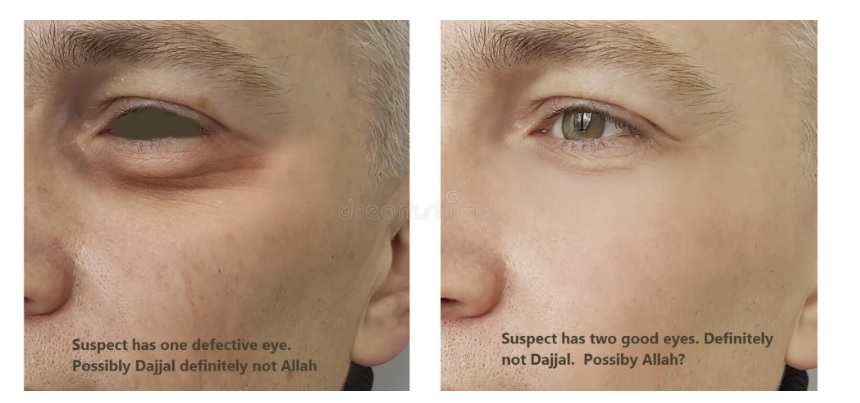
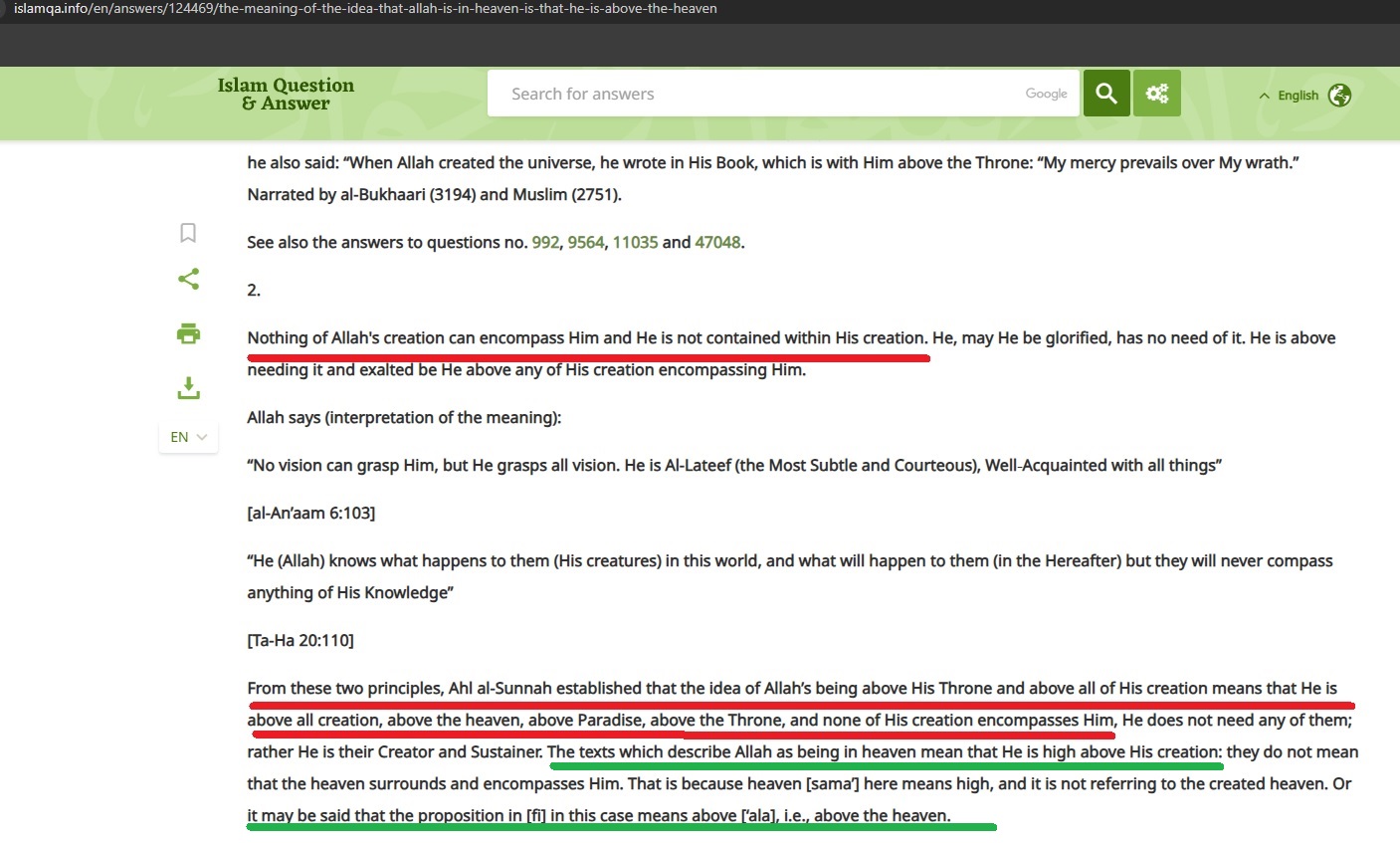


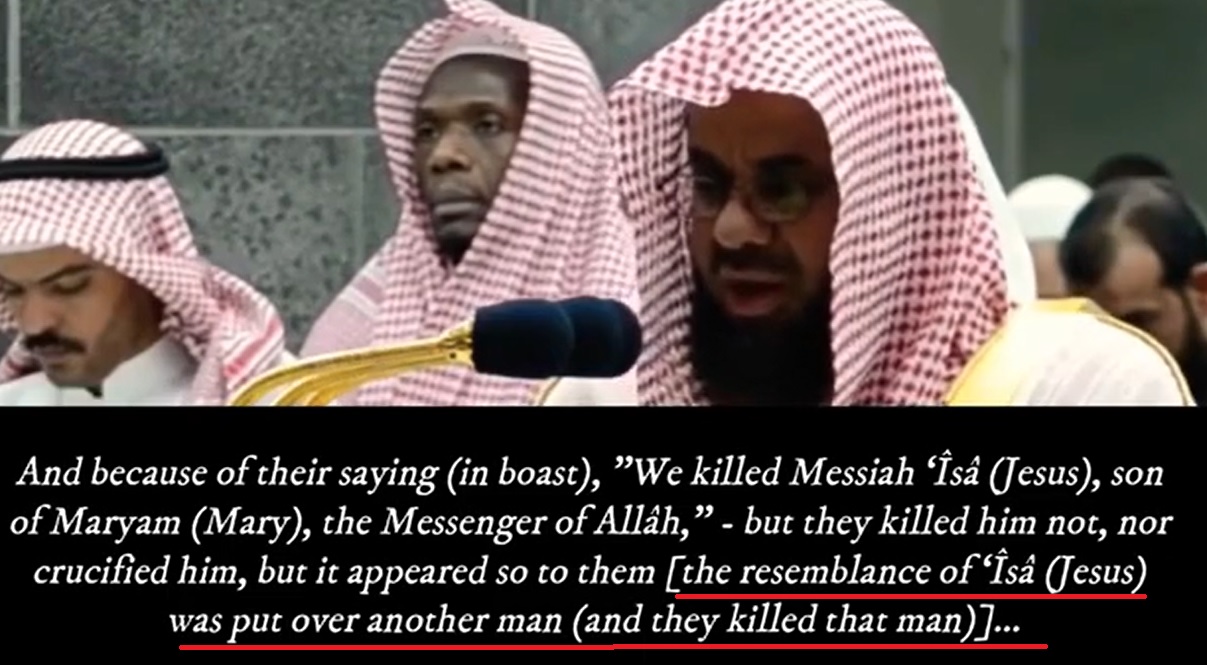
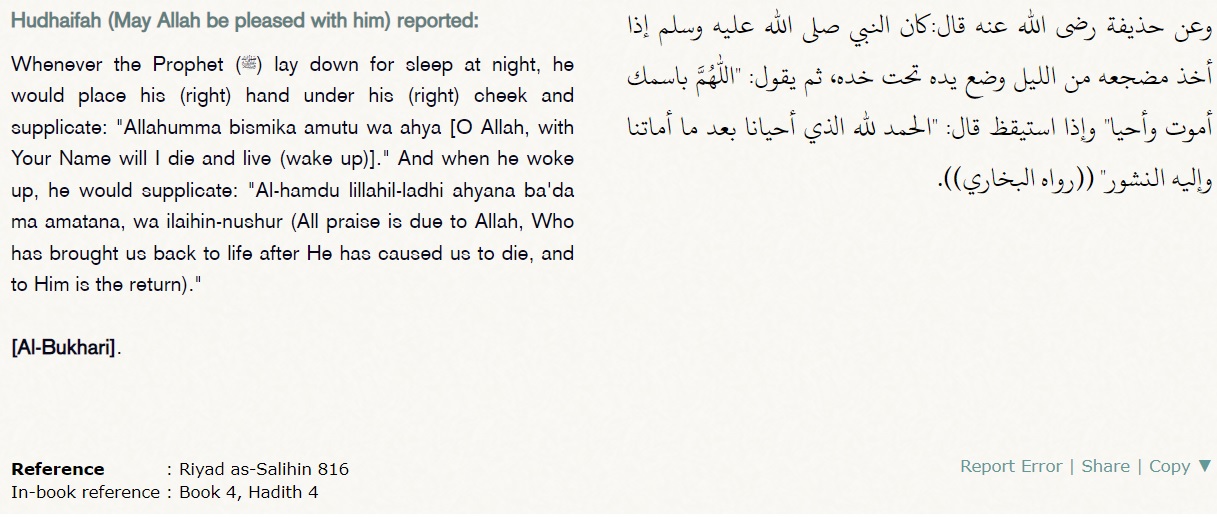



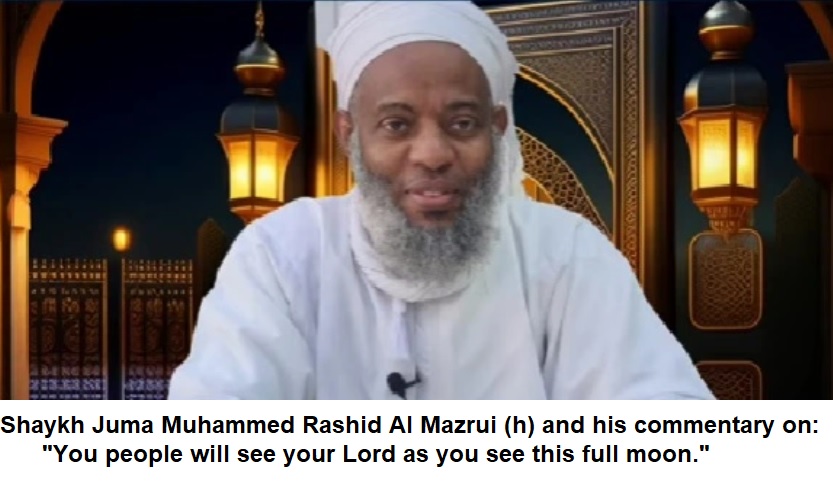



 Prima Quran
