“(Some) faces, that day, will be radiant. Looking towards their lord.” (Qur’an 75:22-23)
﷽
May Allah (swt) reward brother Assad, the servant of Allah (swt) who did the translation from our noble Shaykh and teacher.
From his book “Bughyat al-Rāqī fī Sharḥ Khulāṣat al-Marāqī” By Shaykh Rashid bin Salim Al-Busafi (h)
The Impossibility of Seeing Allah (SWT): Evidences and Analysis.
1. Qur’anic Evidence: The Permanence of Non-Perception
Surah al-An’am 6:103
{لَّا تُدْرِكُهُ الْأَبْصَارُ وَهُوَ يُدْرِكُ الْأَبْصَارَ وَهُوَ اللَّطِيفُ الْخَبِيرُ} “Vision perceives Him not, but He perceives [all] vision; and He is the Subtle, the Acquainted.”
Linguistic Analysis:
“لَا” (Lā al-Nāfiyah): Implies permanent negation (“visions do not and will never perceive Him”).
“الْأَبْصَارُ” (Al-Abṣār): Plural of baṣar (vision), emphasizing all types of sight fail to perceive Him.
Divine Contrast: Allah’s complete perception of creation vs. creation’s inability to perceive Him underscores His transcendence.
Context: The verse is a declarative praise, not a reproach, confirming Allah’s incomparability.
Surah al-A’raf 7:143: The Case of Prophet Musa (AS)
{قَالَ لَن تَرَانِي} “[Allah] said, ‘You will never see Me.'”
“لَن” (Lan) vs. “لَا” (Lā):
“لَن”: Stronger negation, implying eternal impossibility (not just in this world but also the Hereafter).
Context: A rebuke to the demand for visual perception, linked to the Israelites’ disbelief (Qur’an 2:55).
The Mountain’s Destruction:
Allah’s tajallī (manifestation) to the mountain reduced it to dust, proving physical creation cannot endure His manifestation.
Logical conclusion: If a mountain cannot withstand Allah’s presence, how could human vision perceive Him?
3. Linguistic and Theological Principles
A. Meaning of “Idrāk” (الإدراك):
Literally: “To catch up/comprehend fully” (e.g., “أدركته بيدك” = “You grasped it with your hand”).
In the Qur’an: Used for complete perception, not mere sight (e.g., “إِنَّا لَمُدْرَكُونَ” [7:38] = “We are overtaken”).
B. The Three Parts of Ayah 6:103:
Negation of Perception (لَّا تُدْرِكُهُ الْأَبْصَارُ).
Allah’s Full Perception (وَهُوَ يُدْرِكُ الْأَبْصَارَ).
Divine Attributes (وَهُوَ اللَّطِيفُ الْخَبِيرُ).
“Al-Laṭīf”: The Subtle (beyond physical perception).
“Al-Khabīr”: The All-Aware (knows creation’s limitations).
C. Muqābala (Contrastive Rhetoric):
The juxtaposition of “لَّا تُدْرِكُهُ الْأَبْصَارُ” and “وَهُوَ يُدْرِكُ الْأَبْصَارَ” emphasizes asymmetry: Creation’s incapacity vs. Allah’s omnipotence.
Refutation of “Seeing Allah in the Hereafter”
A. Qur’an 75:22-23: {وُجُوهٌ يَوْمَئِذٍ نَّاضِرَةٌ إِلَىٰ رَبِّهَا نَاظِرَةٌ}
“نَاظِرَةٌ” (Nāẓirah): Does not necessarily mean “seeing”:
Alternate meanings: “Awaiting” (e.g., Qur’an 3:77: “وَلَا يَنظُرُ إِلَيْهِمْ” = “He will not look upon them”).
Context: Contrast between radiant faces (awaiting mercy) and gloomy faces (fearing punishment).
The correct meaning is confirmed through the context it has been mentioned in, so the Al Nathar (النظر) comes with the meaning of waiting even if it was preceded by (Ila) إلى
“Indeed, those who exchange the covenant of Allah and their [own] oaths for a small price will have no share in the Hereafter, and Allah will not speak to them or look at them on the Day of Resurrection, nor will He purify them; and they will have a painful punishment.” (Qur’an 3:77)
So is it said that, those who sell out Allah’s covenant and their own oaths for a small price, is it said that Allah doesn’t see them in the Akhira?!
This Ayah came in the context of describing the day of judgment, and the day of gathering to be exact. And that’s by the proof of its context {{On that Day ˹some˺ faces will be bright,() Awaiting the mercy of their lord ()And ˹other˺ faces will be gloomy,() ا ِض َرةٌ ُو ُجوهٌ َيْو َمِئٍذ } {.in anticipation of something devastating ن )22ٰ )ى َّ لَ ِإ َنا ِظ َرةٌ )23ِ )إ َرِّب َها َت ن ُظ َبا ِس َرةٌ )24ُّ )ن َوُو ُجوهٌ َيْو َمِئٍذ َأ َع َل َأ ُيف َها ْ ِ ٌرة َقِفا َب { so if (Nathira) (ناظرة (was of the meaning of seeing then it won’t be except on that day; because he described that by saying (on that day) (ذٍيومئ (and those who differ with us they have not agreed on it happening on the gathering, add to that, the ayah came with the style of comparison between two types of faces, so these are radiant, happy, waiting for the mercy of its lord, while the others are contorted and gloomy expecting what will break their backs from punishment. So, it’s in pity waiting for it to come. Add to that that the description by faces in this ayah means the known organ which the feelings appear on. What is in the soul. What the soul is feeling will be expressed on the face. As the contentment and happiness can be identified through his face, and fearful and frightened can also be identified by his face, and the face organ is not the organ responsible for seeing.
B. Hadith of the “Two Gardens”:
Claim: The ridā’ al-kibriyā’ (Cover of Majesty) is the only barrier to seeing Allah.
Rebuttal:
The “barrier” is an eternal attribute of Allah’s majesty, not a temporary veil.
Asserting its removal implies Allah changes His essence, which is impossible.
C. Theological Absurdity:
If seeing Allah were possible, it would necessitate:
Spatial limitation (violating His transcendence).
Change in divine attributes (e.g., “pride” being removed).
5. Critique of Pro-Visual Perception Arguments
A. Misinterpretation of “نَاظِرَةٌ”:
Error: Assuming it means “seeing” despite contextual evidence to the contrary.
Qur’anic Precedent: “وَلَا يَنظُرُ إِلَيْهِمْ” (3:77) cannot mean “He does not see them,” as Allah is All-Seeing.
B. Anthropocentric Fallacy:
Claiming “seeing Allah is the ultimate reward” reduces worship to physical gratification, contrary to the Qur’an’s emphasis on spiritual nearness (e.g., “قُرْبًا إِلَى اللَّهِ” [3:45]).
C. Quotes from Classical Scholars:
Ibn al-Qayyim’s Attribution to al-Shafi’i:“If Muhammed ibn Idris [al-Shafi’i] knew he would not see his Lord in the Hereafter, he would not have worshipped Him.”
Rebuttal: This contradicts the Qur’anic principle that worship is due to Allah’s lordship, not contingent on visual perception.
This is not acceptable to us. It is as if one links to Imam al-Shafi’i the belief of the Atheist!
And they hold that seeing Allah is the thing that made Allah the Exalted worthy to be worshiped, and that if he Allah Tabaraka wa Ta’ala was not seen in the Akhira then he was not worthy to be worshiped in this dunya, and to you some of what they said: we find ibn Al Qayyim links to Imam Shafi’e that he said “if Mohammed bin Idrees did not known that he won’t see his lord in the akhira then he wouldn’t have worshiped him” and he said “I oppose ibn Aliyyah in everything even in saying La Illaha Illa Allah, as I say: la Illaha Illa Allah that can be seen in the akhira, and he says: La Illaha Illa Allah that cannot be seen in the Akhira…” and in another narration he said “ If Mohammed ibn Idrees was not certain that he’ll see Allah Azza Wa Jal he wouldn’t have worshiped him”. And this is talk that makes bodies grasp, and minds flabbergasted, as this is the Quran within our hands, we do not find that that the worship of Allah the Exalted was conditioned in any position of it with seeing him swt!! This is the belief of the Atheist!
“There is nothing like Him: He is the All Hearing, the All Seeing.” (Qur’an 42:11)
“Do you say things regarding Allah that you do not know?” (Qur’an 7:28)
﷽
There are those who make it a point of aqidah/imam a creedal position to assert that Allah (swt) has two hands, and both of these hands are right hands and one of these right hands is a left hand.
We must accept this “without asking how“. Then they also turn around and say, “but the meaning is known.“
Interestingly this issue is not about denying/affirming any attribute of Allah (swt). Nor is about the way of the Salaaf. It is a simply a matter of does the Arabic language have idioms and expressions?
Apparently some people in the Muslim community simply do not get this! Kindly read the four articles linked at the end.
Thus, they will go on an inquisition and label as deviants anyone who does not hold to the idea that Allah (swt) has two hands, both of those hands are right hands and one of those right hands is a left hand.
The Salafi Aqidah Check List:
1. Two hands
2. Both his hands are right hands.
3. One of those right hands is a left hand.
4. He has two additional hands (we do not talk about). Which makes four but we affirm two.
That is correct you heard them. Allah (swt) has “two right hands“
I came across a Hadith of Sahih Muslim which states:
“Abdullah b. ‘Umar reported Allah’s Messenger (may peace be upon him) saying: Allah, the Exalted and Glorious, would fold the Heavens on the Day of Judgment and then He would place them on His right hand and say: I am the Lord; where are the haughty and where are the proud (today)? He would fold the’ earth (placing it) on the left hand and say: I am the Lord; where are the haughty and where are the proud (today)?
The God of the Bible has hands (plural).
“The sea is his, for he made it, and his hands formed the dry land.” (Psalm 95:5)
“So I reflected on all this and concluded that the righteous and the wise and what they do are in God’s hands, but no one knows whether love or hate awaits them.” (Ecclesiastes 9:1 )
The God of the Bible has a right hand and Jesus is sitting next to it.
“He sat down at the right hand of the Majesty in heaven.” (Hebrews 1:3)
The God of the Bible has a right hand and Jesus is standing next to it.
“But Stephen, full of the Holy Spirit, looked up to heaven and saw the glory of God, and Jesus standing at the right hand of God. “Look,” he said, “I see heaven open and the Son of Man standing at the right hand of God.” (Acts 7:55-56)
*NOTE* NO WHERE DOES THE BIBLE SAY GOD HAS A LEFT HAND!
Thus it can be deduced that the God of the Bible has two right hands (if not more right hands).
Now you can clearly see from the above text that many Salafi preachers have asserted that Allah (swt) has two hands and that “both his hands are right hands.” They get that from the above hadith!
Mudraj – interpolated: an addition by a reporter to the text of the hadith being narrated. It even tells you in the hadith itself! Muhammad (one of the narrators said in his Hadith: “And both of His hands are right hands.”
How does one not see that?!
This cannot be said to be attributed to the Blessed Messenger (saw). This is the statement of the sub-narrator.
These people in their guilty conscious did not want people to think Allah (swt) has a left hand. Which also shows they are involved in dhan (speculation) about Allah (swt). They did not just let the words pass they had to make bold assertions without proof!
Some of the claimants to the Salaaf who hold these positions will expose themselves by blatantly comparing Allah (swt) to the creation by saying something along the following:
“You see akhi All of Allah’s attributes (hands, shin, face ect) can be described as right. Right here means blessed (تَيَمُّن). As Muslims we know the right is preferred and more virtuous than the left. For example the verse in the Qur’an that says:
“So those on the Right Hand (i.e. those who will be given their Records in their right hands) – how (fortunate) will be those on the Right Hand! (As a respect for them, because they will enter Paradise).” (Qur’an 56:8)
Or for example:
“And those on the Left Hand (i.e. those who will be given their Record in their left hands) – how (unfortunate) will be those on the Left Hand! (As a disgrace for them, because they will enter Hell).”(Qur’an 56:9)
This is Tamthil clear as day. Let us say for the sake of discussion that Allah (swt) does indeed have a left hand as the hadith Sahih Muslim clearly says he does above. Why would any attribute of Allah (swt) not be blessed? That is a bizarre thought.
Then, the person commits a clear act of Tamthil (likening Allah (swt) to the creation) by negating a left hand for Allah (swt)!! They do this by comparing/contrasting the unfortunate news of people receiving their records in their left hands and right hands on the day of judgement. But these are actual hands of people!
This claimant to Salafiyah has committed a clear act of Tamthil.
Is negating what clearly says he has: “a left hand” according to the sahih hadith.
Making claims that an attribute of Allah (swt) would not be blessed?!
ALLAH (SWT) ACTUALLY HAS FOUR HANDS, TWO HANDS, BOTH OF WHICH ARE RIGHT HANDS EXCEPT ONE OF THOSE RIGHT HANDS IS A LEFT HAND!
“And He (is) the One Who sends the winds (of glad news between the two hands of his Mercy, until, when they have carried clouds ”(Qur’an 7:57)
Allah sends winds like herald of glad news, between the two hands of his Mercy.
Now his Mercy has two hands?
So those who believe in literal translations tell us that Allah (swt) has two right hands, and he has an attribute of Mercy and this attribute has two hands. Are they also right hands? Does Allah (swt) now have a total of four hands?
Please see for yourself at Islam Awakened the literal translation that the Salafi do not use.
Thank you gentleman for some honest translations. So now not only does Allah (swt) have two hands, and both of his hands are right hands and one of those right hands is a left hand, but his attribute of mercy also has two hands.
One of their scholars likened Allah (swt) to the moon!
Let us get something out of the way from the very beginning. There is not a single narration from the Blessed Messenger (saw) where when he speaks of Allah’s “hands” where the Blessed Messenger (saw), says, “In a way that befits his majesty” or “unlike his creation.”
That is an open challenge. For the person who can bring that I will shutdown this website!
I challenge any of those people who make such a disclaimer statement after mentioning “hands”, “foot”, “eyes”, “shin” “leg” “foot” or “side” to show this!
The fact that such people have to put a disclaimer after such a statement is an innovation!
“They have not appraised Allah with true appraisal, while the earth entirely will be within His grip on the Day of Resurrection, and the heavens will be folded in His right hand. Exalted is He and high above what they associate with Him.”(Qur’an 39:67)
“Allah said, “O Iblis, what prevented you from prostrating to that which I created with My hands? Were you arrogant then, or were you already among the haughty?” (Qur’an 38:75)
Some of these people have tried to argue that this word translated as “hands” must be understood as “hands” as something special concerning the creation of Adam. However, this is refuted by the following text of the Qur’an:
“Do they not see that We have created for them from what Our hands have made, grazing livestock, and then they are their owners?”(Qur’an 36:71)
Are we to say that cattle have an advantage or distinction over other animals because they were created by the “hands” of Allah (swt)?
“And the sky we built it with hands.” (Qur’an 51:47)
Look at the following three Saudi English translations of the Qur’an translate the above text!!
“And the heaven We constructed with strength, and indeed, We are its expander.”(Qur’an 51:47 Sahih International)
“With power did we Construct heaven. Truly, We can extend the vastness of space thereof.” (Qur’an 51:47 Muhsin Khan & Muhammed Al Hilali)
“With power and skill did We construct the Firmament: for it is We Who create the vastness of pace.” (Qur’an 51:47 Yusuf Ali Saudi 1985)
The hands of Allah (swt) tied up?
“And the Jews say, ‘The hand of Allah is tied up.’ Chained are their hands, and cursed are they for what they say. Rather, both His Hands are extended, HE spends however He Wills.” (Qur’an 5:64)
It is obvious, to begin with, that this very verse is allegorical. The Jews are not literally saying that Allah’s hand is “tied up”. Rather they are claiming that Allah (swt) is not bestowing upon them what they feel he should bestow. What this verse means is that both the power and generosity of Allah (swt) is on full display.
“Indeed, those who pledge allegiance to you, they are actually pledging allegiance to Allah. The hand (yadu) of Allah is over their hands (aydihim). So he who breaks his word only breaks it to the detriment of himself. And he who fulfills that which he has promised Allah – He will give him a great reward.” (Qur’an 48:10)
This is a metaphorical usage of the word hand that is allowed within the context of the Qur’an itself. Will it be said that people who have no hands or people who are amputees could never make such a pledge?
The word that is used for hand (yadu) the singular noun is also used for the plural noun (aydihim) above. The apparent understanding of the text, is that Allah (swt) has a hand and people have hands. Yet the following verse should make the matter more clear.
“Oh Prophet, say to whoever is in your hands (aydikum) of the captives, “If Allah knows any good in your hearts, He will give you something better than what was taken from you, and He will forgive you, and Allah is Forgiving and Merciful.” (Qur’an 8:70)
Are we supposed to imagine that the Blessed Prophet (saw) was a giant with little tiny people in his hands!?!
“Moreover, whatever strikes you of disaster – it is for what your hands have earned, but He pardons much.” (Qur’an 42:30)
Are we to understand from the above verse that as long as we do evil with our tongues, eyes, feet that disaster will not befall us? As far as those who do not have physical hands does this verse still apply to them?
“And remember Our servants Ibrahim and Ishaq and Yaqoub, men who possessed hands (l-aydi) and vision.” (Qur’an 38:45)
l-aydi is a plural noun literally it would be hands.
Here the word hands literally does mean power. Look how virtually everyone under the sun translates this!
O you who have believed, obey Allah and obey the Messenger and those in authority among you. And if you disagree over anything, refer it to Allah and the Messenger, if you should believe in Allah and the Last Day. That is the best [way] and best in the result. (Qur’an 4:59)
1) In this clear verse, we find that in matters of disagreement between those in authority and those under authority, we need to refer back to Allah and the Messenger.
Had it been that those in authority were infallible or divinely appointed then, Allah wouldn’t have given any scope to disagree with them.
The fact that there is disagreement proves that “those in authority, aka the Ulil Amr”, are neither an absolute nor an infallible authority.
It means that Ali Ibn Abu Talib and Ibn Abbas can disagree with one another. Yet, if they have a disagreement, they would refer the matter back to Allah (swt) and his Blessed Messenger.
2) If their authority was infallible, Allah(swt) wouldn’t have put authority above them. (.i.e) Allah and His Prophet.
3) If “those in authority, aka the Ulil Amr” were divinely appointed, then Allah would have asked the believers to refer them along with Allah and the Prophet in matters of disagreement.
But Allah(swt), giving the possibility of disagreement with those in authority, asked us to refer back to Allah (swt) and the Blessed Messenger; which is clear evidence that “those in authority aka the Ulil Amr” were not divinely appointed.
The huge advantage that the Sunni have over the Imami Shi’i’ is as follows:
Since in Sunni Islam they do not believe that their Imams are infallible or above reproach, a mistake in jurisprudence, reasoning, deduction or logic does not entail disaster for Sunni Islam. However, just one mistake in jurisprudence, reasoning, deduction or logic would be absolutely disastrous for the Imami Shi’i’.
“You see, then the Imamate goes from the Imam to his first cousin, and when the first cousin dies, then the Imamate goes to his first cousin and so on. Because that is the Sunnah of the Prophet (saw).”
Huh?
The battle of Siffin and practical implications of the above verse.
O you who have believed, obey Allah and obey the Messenger and those in authority among you. And if you disagree over anything, refer it to Allah and the Messenger, if you should believe in Allah and the Last Day. That is the best [way] and best in the result. (Qur’an 4:59)
The battle of Siffin gives us a demonstration of how some of the companions understood the above verse. If we are to believe the historical narrative as told by Shi’i and Sunni sources.
If we are to believe the Shi’i narrative.
Ali agreed to arbitration with Muaviya on the basis that they would judge by the Qur’an. If Ali understood that he was of the same authority as the Qur’an and the Messenger (saw) he would not have submitted to arbitration. He would have been on the same page as those in his army who wanted to continue the fight. However, if he did think he was of the same authority as the Qur’an and the Messenger (saw), then he would be a hypocrite for going against what he himself believed. Or he was not sincere in submitting to the authority of the Qur’an.
If we are to believe the Sunni narrative.
If those in Muaviya’s camp believed that the Shi’i held any of the views about Ali that Imami Shi’i held, namely that he (Ali) was maʿṣūm (معصوم) and he (Ali) held ʿiṣmah (عصمة) they themselves would have never asked for arbitration as it too would have simply been a ruse. This becomes very clear that these concepts were not among the followers of Ali because Muaviya’s camp would have known this and would have never cooked up the idea of raising the Mushafs as it would have easily backfired
May Allah (swt) guide us all to what is beloved to Allah (swt).
Allah asked, “What prevented you from prostrating when I commanded you?” He replied, “I am better than he is: You created me from fire and him from mud.” (Qur’an 7:12)
﷽
THE VERY FIRST SIN ACCORDING TO ISLAM IS THE BOASTFUL PRIDE OF ONE’S ORIGIN…. (TRIBALISM)
If there is one sad and shameful takeaway (from the recent New Zealand Christchurch massacre) that is directed towards our own community (as Muslims) is that SOME in the Muslim community will take this opportunity to deflect the ugly and heinous way that MANY of them treat Muslims who are Black, African, Sub-Sahara African, West African, South Indian etc.….
So, instead of using this as an opportunity to teach, to learn, to grow and to heal…..they deflect their collective guilt upon another group, ‘The Whites’.
Let it be a reminder that, according to Allah Most High that the first sin ever was the PRIDE OF ONES ORIGIN.
When Allah had ordered all the dominions to bow down before the creation of humanity, only one creation stood in rebellion to this command.
Allah asked, “What prevented you from prostrating when I commanded you?” He replied, “I am better than he is: You created me from fire and him from dark mud.”
Iblis felt that it was unbecoming to subservient to one he deemed being of an inferior origin. This is the attitude that SOME White people exhibit towards non White people. This is the attitude that SOME Jews exhibit towards Arabs. This is the attitude that SOME Chinese exhibit towards Non Chinese. This is the attitude that SOME Pathans exhibit towards Punjabis. This is the attitude that SOME Arabs exhibit towards Non Arabs. This is the attitude that SOME fair skinned Mexicans exhibit towards non fair skinned Mexicans. This is the attitude that SOME Japanese exhibit towards non Japanese. This is the attitude that SOME North Indians exhibit towards South Indians. This is the attitude that SOME Hutu exhibit towards Tutsi. This is the attitude that SOME Tutsi exhibit towards Hutu.
Humans are a very interesting and curious species. We often decorate our walls with accolades and awards and many of us like to boast about our lineage and ancestry.
We believe self-esteem is a good thing, and it is especially important to instill this in our children. Yet, we should be cautious as not to make our degrees, accomplishments, accolades or lineage as an opening for whispers to the heart that can cause us to be vainglorious.
Being proud of one’s achievements is a good thing. It can help you in landing a job or to show others that you are competent in a particular field. Yet for those in our community who are constantly boasting about ethnicity, tribal heritage or lineage, it is tantamount to taking a picture of your parents’ privates and proudly displaying that on a wall!
We have seen even some of the most pious and erudite in the Muslim communities do just that.
When Allah (swt) PUTS ALL OF US IN OUR PLACE when He (swt) says the following:
“He (Allah) has created man from a sperm-drop; and behold, this same (man) becomes an open disputer!” (Qur’an 16:4)
“His companion said to him, in the course of the argument with him: “Do you deny Him Who created you out of dust, then out of a sperm-drop, then fashioned you into a man?” (Qur’an 18:37)
Now, except Adam, Eve and Jesus (upon them all be peace), every other single human being created had been created from nutfah or spermatos -semen.
Now there maybe some people who will boast that Adam and Eve were from their tribe, their lineage and their ancestors. The first man and woman on the Earth were not created from sperm, so that tribe or lineage must somehow be better than other humans, correct?
Well, consider that Adam (alayi salam), his son Cain, was the first reordered murderer on Earth. What is there to be boastful about in that?
Especially since in Qur’an 16:4, Allah (swt) has used this to show the very, very low state of human beings who then rise up to become haughty, arrogant, boastful and vainglorious.
SO WHAT IS THE SOLUTION?
“O mankind, indeed We have created you from male and female and made you peoples and tribes that you may know one another. Indeed, the most noble of you in the sight of Allah is the most righteous of you. Indeed, Allah is Knowing and Acquainted.” (Qur’an 49:13)
Allah (swt) did not count nobility, ethnicity, tribal affiliation, family lineage or anything of the kind.
Allah (swt) has recognized us based upon what emanates from our hearts and souls. Our nobility is in how we treat each other, tread upon this earth, fear and love Allah (swt).
Allah (swt) made us with variance so that we may know each other. So that we may learn to live with variance.
What is interesting about this? The interesting thing about this is we will truly know who outranks who in the sight of Allah only on the day of judgement.
There is no annual award or ceremony (most righteous Muslim of the year goes to …..)
You may also be interested in reading the following:
“O you who have believed, be persistently standing firm in justice, witnesses for Allah, even if it be against yourselves or parents and relatives. Whether one is rich or poor, Allah is more worthy of both. So follow not [personal] inclination, lest you not be just. And if you distort [your testimony] or refuse [to give it], then indeed Allah is ever, with what you do, Acquainted.” (Qur’an 4:135)
﷽
I thought that for today’s entry I would share with you dear readers some of my personal experience with those who call themselves ‘Salafi’ or follow what is known as “daawat salafiyyah” as well as those who call themselves ‘Sufi’ and are associated with Sufi Tariqah (spiritual orders).
For the record I am writing this as someone who is not a ‘Salafi’ nor do I follow the manhaj that is known as “daawat salafiyyah”. I am inclined towards some ‘Sufi’ practices -with the exception of tawassul, and I do not belong to any tariqah.
But I want to share my experience with some people who are affiliated with or identify with either ‘Salafi’ or ‘Sufi’.
When I was in Manama Bahrain at the Discover Islam training centre there was a man who was driving us around in one of the vans around the city. To be honest I thought any moment we would meet our Lord because of the way he was driving. I was doing a loud dhikr to myself la ilaha il law lah. Some other brothers in the van joined in. One brother also began to do the dhikr but his Shaykh put his hand on his shoulder and said, “We don’t do that.” That was it. He didn’t condemn me or the others, he simply said of himself and his student that they do not do this.
Also, I observed at the great Masjid in Manama that the tourist were allowed to go into the Masjid unrestricted. They had to wear appropriate attire but they could go anywhere. All the way up to the niche in the wall facing the qiblah.
The hotel I stayed in Manama there was a small Masjid nearby and I can tell you that the Imam and nearly everyone in that masjid prayed in the style of brothers who are known to practice, ” “daawat salafiyyah” and at that time I was following the Maliki school of jurisprudence and I was praying with my arms to the side (as is one of the positions of the Maliki school). No one said anything to me, everyone greeted me, returned my salam, and smiled. They were all very kind.
The same can be said about the people of Discover Islam, whom I gather were a mixture of ‘Salafiyyah’ and ‘Ikwani’ influences.
Whereas when I went with a particular Tariqah (sufi group) to a place in Malaysia called, ‘hulul langat’, just outside of Kuala Lumpur. We had a wonderful group dhikr together. However one day one of the murids was relating how the shaykh got sick and blew his nose in the tissue paper. So one of the followers of the tariqah took the tissue paper out of the wastebasket boiled it in water and drank the water. I couldn’t have been more disgusted.
There was another time when I was with a tariqah in Singapore ‘Firqat ul Huda’ the sect of guidance, a Qadiri tariqah. Beautiful beautiful dhikr, wouldn’t trade it for anything. Yet one time of the murids invited me to his house for tea. Very hospitable brother. He then discussed with me about the hadith about the Blessed Messenger (saw) existing before Adam (as). So then he asked me what I understood about “The Prophet being called the Nur of Allah.” I told him that I thought it meant that he was an illuminating guide and representative of Allah (swt). He replied, “brother the light of Allah IS Allah.” I thanked him for the tea and the hospitality and I told him that he went to a place that I could not follow him in. I parted ways with him and have never seen him since.
I witnessed first hand with my own eyes as I volunteered at the Sultan Mosque in Singapore (predominantly Sunni/Shaf’i/Ashari/Balawi) I have witnessed first-hand tourists being clapped at and shooed away from the Masjid.
One brother came up to me and said, “how do we know they don’t have maniyy (sperm) on their underwear.” To which I exclaimed, “How do you know that I don’t?” Are we going to ask everyone to drop their pants for inspection before they enter the Masjid?”
Now this was coming from someone who
a) followed a madhab -Shafi’i
b- Ashari I cannot clarify this but I’ll assume because
c) he was associated with the Balawi Tariqah.
Whereas in the same Masjid (Sultan Mosque), I witnessed a Salafi brother bring his young daughter to the afternoon salah (prayer) and pray beside him (he would pray at the furthest end so his daughter would be between him and a wall) -this was done to respect the other’s views, and even then many of them shook their head at the brother.
Then came the ban of Mufti Menk from Singapore! Now I am not a follower of Mufti Menk and again it is clear that he is following what is called, ” “Daawat-us-Salafiyyah” -which for those who may not know what this means it is a claim to be following what the Blessed Messenger (saw) and his companions followed.
So Mufti Menk was banned from Singapore because someone asked him if we could say or respond to ‘Merry Christmas’ in kind with ‘Merry Christmas’ and he replied, ‘no’. Now because those Sunni Muslims who follow schools of jurisprudence and who are often associated with Sufi Tariqah are rivals of those Sunni Muslims who claim not to follow a particular school of jurisprudence this was an opportunity for them to ban Mufti Menk from Singapore.
Personally, I thought the way Mufti Menk was dealt with was quite cowardly. After all, if someone would have asked Mufti Menk can we celebrate the ‘Mawlid An Nabi’ (celebration of the Blessed Prophet’s birthday) he would say, ‘no we cannot’. It’s not like this was some personal swipe at Christianity. Mufti Menk comes from a school of thought that doesn’t recognize such ‘urf-customs, or anything such as bid’ah hasanah – (innovations that encourage good and do not contravene establish practices of the faith).
I just thought it was strange that since Christians have been such a huge presence in Syria, Jordan, Lebanon, Egypt etc…that surely there was something from the traditional schools that would warrant replying, ‘Merry Christmas‘ or something that the followers of Imam Shafi’i could have used to refute his (Mufti Menk) position.
I’m telling you this dear reader because not everything is chalk and cheese. Not all of these groups are alike and many of them even have subgroups. There is fierce competition among rival Salafi groups just as there is fierce competition among rival Tariqah groups.
However, as Muslims, we are always commanded to speak plainly, truthfully, and justly about one another even if that group does not share our world view or our approach to the Qur’an and Sunnah.
May Allah (swt) guide us all to what is beloved to Allah (swt).
“And hold firmly to the rope of Allah all together and do not become divided. And remember the favor of Allah upon you – when you were enemies and He brought your hearts together and you became, by His favor, brothers. And you were on the edge of a pit of the Fire, and He saved you from it. Thus does Allah make clear to you His verses that you may be guided.” (Qur’an 3:103)
“Turn you back in repentance to Him, and fear Him: establish regular prayers, and be not among those who join gods with Allah,- Those who split up their Religion, and become (mere) Sects,- each party rejoicing in that which is with itself!” (Qur’an 30:31-32)
“O mankind! there hath come to you a direction from your Lord and a healing for the (diseases) in your hearts,- and for those who believe, a guidance and a Mercy.” (Qur’an 10:57)
﷽
When looking at the issue of forgeries of hadith one does not have to look further than the pro-Sufi and anti-Sufi forces within the ‘Ahl Sunnah‘.
Abd Allah ibn al-Mubarak said, “The isnad is from the religion; were it not for the isnad anyone could say anything they wanted.”
Source: (Reported by Muslim in the introduction to his Sahih, vol. 1, pg. 9, Dar Taibah.)
The isnad -is the chain of narration.
The word hadith in the title of the article is used in the Arabic sense of a report. Thus, for the purposes of this article it is not necessarily a statement attributed to the Blessed Prophet (saw).
Anyone who has been among people who claim to practice ‘Sufism‘ and/ or have inclinations towards a branch of study in Islam called ‘tassawuf‘ has most likely heard innumerable times the following statement attributed to Imam Malik.
“He who practices tassawuf without learning Sacred Law corrupts his faith (tazandaq) , while he who learns Sacred Law without practicing Tasawwuf corrupts himself (tafassaqa).”
Now when I studied at Zaytuna I was told time and again the importance of being connected in an ‘unbroken‘ chain of sacred knowledge that goes all the way back to the Blessed Messenger (saw) himself.
Of course, what I’m about to say may seem cynical to you the reader, but it is the atmosphere that was created around Zaytuna when I was there.
The atmosphere seemed to say to me, “Don’t you dare question anything that is presented to you, because after all who are you to question? You don’t have the requisite tools; and you didn’t study under a Shaykh who toes the line that we tell you to tow. Therefore, all of your sincere lines of inquiry are invalid.”
So let us say that someone has reservations about giving their complete allegiance (the custody of their soul) to a Shaykh. However, this person agrees to or understands the necessity of following someone learned in jurisprudence.
Thus, the concept of the following someone learned in jurisprudence is used as a jump-off point for handing over complete sovereignty of your soul to a Spiritual guide or Shaykh. Many who call themselves ‘Sufi’ today use the following modus operandi:
Start by getting the spiritual aspirant the necessity of following someone learned in jurisprudence. Use the idea of following Imams in jurisprudence to advance their position. Thus, if Imams like Shaf’i and Malik are seen to be in favor of Sufism or ‘Tassawuf‘ then whom are we to question it!
So even until today, you have world-renown people like Shaykh Hamza Yusuf attributing such statements to Imam Malik.
You can see the following video where he attributes the above-mentioned statement to Imam Malik. http://www.youtube.com/watch?v=2_5d9c2UdiU @ 1:14 in the video you can hear Shaykh Hamza attribute this statement to Imam Malik
Interestingly the term Sufi was applied to those given the appellation “Mutazalites” long before it was applied to Junayd.
“The term Sufi was applied to Mu’tazili ascetics before it was to Junayd and his circle. Early Mu’tazili ascetics and the later Karramiyya, who more or less absorbed Mu’tazili asceticism, sometimes exalted complete renunciation of normal gain, counting it best to live off alms.”
Origins of the term ‘Ahl al sunnah’
Christopher Melchert also gives some very keen insights into the term ‘Ahl al sunnah’ and the fact that a great many factions were called themselves by this appellation.
He says,
“The 9th-century hadith folk’s own preferred term for themselves was“Ahl al-sunna.” It is not convenient for us to call the hadith folk “Sunnis” because that term now calls to mind the great tripartite division of Sunnis, Shi’is, and Kharijis. At least for the 9th century and earlier, a mere tripartite division is simplistic and practically impossible to document. To begin with, 9th-century definitions of Shi’ism were considerably different from those of later times; for example, traditionalist rijal critics regularly distinguished between ‘tashayyu’, special regard for ‘Ali and his house that the hadith folk was willing to overlook, and rafid, the rejection of Abu Bakr and ‘Umar that they thought put one outside the Muslim community. With equal emphasis, the 9th-century hadith folk distinguished themselves from Qadariyya, Murji’a, Mu’tazila, and other theological parties not accounted for by a simple, anachronistic dichotomy between Sunnis and Shi’is. The polarity of Sunni and Shi’i was not strong until the mid-10th century, and full Sunni mutual recognition and self-awareness appeared only in the mid 10th century. Finally, modern scholars should avoid endorsing the hadith folk’s own estimate that they were the overwhelming majority, as calling them “Sunnis” might do.”
” The significance of their calling themselves ‘Ahl al-sunna’ is not that their views were identical to those of the later, great Sunni community, which they were not, but that the later community deliberately identified them as its forebears. We need to understand their piety. Their adversaries preferred not to call them ‘Ahl al-sunna’ and proposed various other terms.’ Al-Jahiz disparaged the nabita, those who sprouted up like weeds to extol the enemies of ‘Ali and to promulgate such crass ideas as assigning God an imaginable body (tajsim, taswfr). Other writers attributed similar errors to the hash- wiyya (vulgar). The hadith folk complained that the Murji’a called them shukkak (doubters) for saying, “I am a believer, God willing,” while the Qadariyya called them mujbira or jabriyya for upholding divine predestination. To use any of these terms for the hadith folk would mean taking sides as much as it would mean calling them ‘Ahl al-sunna’, which is needless for modern scholars.”
“The hadith folk emerged as a distinct group at about the end of the 8th century. They lost importance in the 10th century. Chroniclers usually refer to their 10th-century successors in Baghdad as the Hanabila or simply al-‘amma (the general), periodically rioting against the Shias. Meanwhile, their own name for themselves, ‘Ahl al-sunna’, was claimed by virtually all parties except the Shi’is.Even Mu’tazila called themselves Ahl al-sunna wa-al-jama’a, on the plea that if they were not actually the great majority, they ought to have been. (I have not compared the piety of the hadith folk with that of 9th-century Shi’is, rewarding though such a comparison would be. At least a wing of the Shi’ movement probably had something very close, which ought to show up in Shi’i hadith.)”
So again we can see there was a lot of conflict and turmoil in the very early history of Islam. Conflict and turmoil that is with us until this very day. So less I digress let me go back to the opening quotation attributed to Imam Malik:
“He who practices tassawuf without learning Sacred Law corrupts his faith (tazandaq) , while he who learns Sacred Law without practicing Tasawwuf corrupts himself (tafassaqa).”
Gibril Fouad Haddad who is a follower of the Sufi group ‘The Naqshabandi Haqqani‘ * has provided some very insightful information to this claim above.
* note: This Sufi group is to be distinguished from their rivals the ‘Naqshabandi Mujaddidi‘ as well as other rival Sufi groups.
He has the following to say about the above quotation attributed to Imam Malik :
“Cited without the chain of transmission by Al-Qari in Sharh ‘Ayn al-Ilm and Mirqat al-Mafatih, Ahmad Zarruq in the Forth of his Qawa’id al-Tassawuf in his commentary on Ibn Abi Zayd’s Risal a (Beirut: Dar Ihya al-Kutub al Arabiyyah, Ibn Ajiba in Iaqaz, Al Himan fi Sharh al-Hikam and Al-Tata’i in his commentary on Ibn Rushd’s Muaqaddima.”
Source: (The Four Imams and their Schools page 180)
Ponder that for a moment, respected readers. A statement seemingly in support of ‘Tassawuf‘ put into the mouth of Imam Malik and then repeated by men like Al Qari, Ahmad Zarruq, Ibn Abi Zayd, Ibn Ajiba, and At Tata’i. Yet, no chain of narration!
In my previous conversations with Dr. Abdullah bin Hamid Ali and Ustadh AbdasSamad Clarke, both have confirmed to me that it is not authentically ascribed to Malik.
Anti-Sufi reports attributed to Imam Malik
Incident no. 1 )
“Al -Tinnisi said: We were sitting with Malik with his companions around him. A man from the people of Nasibin said, ‘We have some people who go by the name of Sufis. They eat a lot then they start (chanting) poems (qasa’id), after which they stand and start (chanting) dancing.” Malik asked, “Are they boys (sibyan)?” He said no. Malik asked, “Are they insane?” He said, No, they are old men (mashaykh) and other than that, and they are mature and sane (‘uqala.” Malik said, “I never heard that any of the people of Islam do this.” The man said to him, “Indeed, they do! They eat, then they stand up and start dancing intensively (dawa’ib), and some of them slap their heads, and some of their faces.” Malik started laughing then went into his house. His companions said to the man. “You were, O man, ill luck (mash’um) for our friend [Malik]. We have been sitting with him thirty-odd years and never saws him laugh except today.” “Narrated without a chain by Al-Qadi ‘Iyad in Tartib Al-Madarak.”
Source: (The Four Imams and their Schools by Gibril Fouad Haddad page 180)
Incident no.2 )
“Abd al-Malik ibn Ziyad al-Nasibi said: “We were with Malik when I mentioned to him Sufis in our city. I said to him that they wear fancy Yemenite clothes, and do such and such. He replied, ‘Woe to you! Are they Muslims?’. He then laughed until he lay on his back. Some of his companions said to me, ‘What is this?’ We have not seen more trouble (fitna) caused to the Shaykh than you, for we never saw him laugh!” “Narrated by al-Khallal in al-Hathth ‘ala al-Tijara wal-Sina’a wal-Amal (Abu Ghudda) with a weak chain because of ‘Abd al-Malik ibn Ziyad al-Nasibi who is “disclaimed in his narrations and untrustworthy” (munkar al hadith, gahyr thiqa) according to al-Aazdi as per Ibn al-Jawzi in al-Du’afa wal-Matrukin (1:149) while Ibn Hibban in his Thiaqat (8:390) said he reports oddities from Malik.”
Source: (The Four Imams and their Schools by Gibril Fouad Haddad page 181)
So you can imagine the incongruity of all of this. Notice the similarities between the two seemingly Anti-Sufi reports attributed to Imam Malik.
1) His strong reaction: ‘I never heard that any of the people of Islam do this. &Woe to you! Are they Muslims?’
2) His hearty laugh after hearing of their doings. ‘Malik started laughing then went into his house. &He then laughed until he lay on his back’.
3) The shock of the people present at Maliks’ reaction. ‘You were O man, ill-luck (mash’um) for our friend [Malik]. We have been sitting with him thirty-odd years and never saws him laugh except today. & What is this?’ We have not seen more trouble (fitna) caused to the Shaykh than you, for we never saw him laugh’!
You can scroll down to the section: “Imam Malik and the Sufis” Gibril Fouad Haddad has the following to say about the two incidents, reported above:
Concerning the first incident, he says, “This is narrated without chain by al-Qadi `Iyad. in Tartib al-Madarik (2:53-54).” That is all he has to say. There is no chain of transmitters. Case closed.
Concerning the second incident, he simply gives the reason one of the transmitters is dismissed. Then he concludes by saying:
“Content-wise, neither of the above reports shows unambiguous condemnation of group dhikr but only that some people who passed for Sufis in the Imam’s time reportedly committed certain childish excesses or irrational breaches of decorum. The reports only show that Imam Malik found the story amusing. The delator seems obsessed with the ‘eating and dancing’ which he mentions twice as if afraid Malik didn’t hear it the first time. There is also on the part of Malik’s circle clear disapproval of the delator who is apparently perceived as an interloper. And Allah knows best.”
Actually what the reports show assuming they are true at all is the following:
The reports show that Imam Malik does not even seem to be even vaguely familiar with such groups. The asking ‘if the people are Muslim‘, and making statements such as ‘the people of Islam are not heard of doing this‘ would be very difficult for Muslims having a pro-Sufi bias to fathom. Especially, in the first report since, we don’t have Imam Malik laughing until after hearing about people slapping their faces.
Say, “My Lord has only forbidden immoralities – what is apparent of them and what is concealed – and sin, and oppression without right, and that you associate with Allah that for which He has not sent down authority, and that you say about Allah that which you do not know.” (Qur’an 7:33)
﷽
Once I was approached by a Salafi Muslim in a Masjid who asked me, “Brother where is Allah?” I thought this was an extraordinary question to ask but I asked him “What time it was“. He seemed puzzled but told me the current time. I thereby responded, “Allah is in London, England!”
He rapidly started to stroke his beard rapidly repeating “istaghfirullah!'” “‘istaghfirullah!” “Allah forgive you!” “Allah forgive you!”
This seemed like very neurotic behavior so I offered the following mutawatir hadith.
Abu Huraira reported Allah’s Messenger (saw) as saying:
“Allah descends every night to the lowest heaven when one-third of the first part of the night is over and says: I am the Lord; I am the Lord: who is there to supplicate Me so that I answer him? Who is there to beg of Me so that I grant him? Who is there to beg forgiveness from Me so that I forgive him? He continues like this till the day breaks.”
I don’t see what was so wrong with saying that Allah was in London, England considering that it was around 4:45 a.m London time (which would be the last third of the night).
I guess that was not the answer he was expecting. He was visibly upset as he said, “But brother Allah is in the highest heaven.” “What?!” I responded. I thought this was very strange for how could Allah be in London England and in heaven at the same time! Surely this man does not believe that Allah is multi-present? Could it be that he believed that Allah (swt) was in many places simultaneously?
“Who said Allah is in heaven?” I asked.
“Firaun (Pharoah) said Allah is in heaven.” the brother offered.
“Where does he say this?” I demanded!
The brother quoted the following,
“And Fir’aun (Pharaoh) said: “O Hâmân! Build me a tower that I may arrive at the ways, The ways of the heavens, and I may look upon the Ilâh (God) of Mûsa (Moses) but verily, I think him to be a liar.”(Qur’an 40:37)
I was simply shocked by this! “Brother,” I said, “I do not think we need to be taking our Aqidah (belief) from Fir’aun (Pharaoh)! We do not need to build a tower of babel to reach heaven.“
This was a real conversation that happened between me and a Malay Salafi brother in a Masjid in Singapore. Needless to say, I feigned ignorance of the subject and admittedly baited the brother because I am all too familiar with these topics.
However, keep in mind he did approach me first.
However, I did advise him that in the future he may wish to use the hadith of the blind woman pointing upwards into heaven or when asked, ‘Who said Allah is in heaven‘ perhaps he could say, ‘Allah himself says this.’ It is also advisable to simply use the verse of the Qur’an “The Beneficent One, Who is established on the Throne.” (Qur’an 20:5)
I am quite sure that our Salafi brothers continue to improve their techniques.
Yet the problem remains. The issue of Allah (swt) presumably being over the throne and descending down into the lowest part of the earth every night of course (in a way that befits his majesty) …..of course.
Now the Ashari and Maturidi among our Sunni brothers are quite sensible on this issue. However, those Sunni Muslims from the Salafi, Hanbali, Athari can get quite agitated over this very sensitive issue.
So sensitive that they tell you to just shut up and accept it! Blind faith!
You can’t make taqlid to a legal school but you damn well better make taqlid to their belief system!
Don’t worry yours truly has screenshots of the entire Q & A as many people make web sites, articles, and entries that disappear in a flash!
So here we go… I’ll highlight the text of interest.
Question
When asked, “Where is Allah ?” I reply “Above the seven Heavens and the Arsh” But taking the Hadith regarding that Allah descends to the lowest heaven in the latter part of the night. If someone asks where is Allah (swt) and they state He is the latter 3rd of the night now. What reply should you give?
Another point is that some people say it is the latter part of the night all the time (somewhere on the earth at a particular point in time) From this they conclude that Allah is not above His Arsh.
Answer
Praise be to Allah.
Firstly, we have to know the ‘aqeedah (belief) of Ahl al-Sunnah wa’l-Jamaa’ah concerning the names and attributes of Allah. The belief of Ahl al-Sunnah wa’l-Jamaa’ah is to affirm the names and attributes which Allah has affirmed for Himself, without distorting or denying them, discussing how they are or likening them to anything else. They believe that which Allah has commanded them to believe, for Allah says (interpretation of the meaning):
“There is nothing like Him, and He is the All-Hearer, the All-Seer”
[Qur’an 42:11]
Allah has told us about Himself. He says (interpretation of the meaning):
“Indeed, your Lord is Allah, Who created the heavens and the earth in Six Days, and then He rose over (Istawaa) the Throne (really in a manner that suits His Majesty).
Prima Qur’an comments: “The Throne (really in a manner that suits His Majesty)…” So now they are going to say no one knows how but then use the word ‘really’. Interesting.
[Qur’an 7:54]
“The Most Gracious (Allah) rose over (Istawaa) the (Mighty) Throne (in a manner that suits His Majesty).
[Qur’an 20:5]
and there are other ayats which mention that Allah rose over His Throne.
The rising of Allah over His Throne, which means that He Himself is High and above the Throne, is of a special nature which befits His Majesty and Might. No one knows how it is except Him.
This was proven in the saheeh Sunnah, where it is narrated from the Prophet (peace and blessings of Allaah be upon him) that Allaah descends during the last third of the night. It was narrated from Abu Hurayrah that the Messenger (peace and blessings of Allaah be upon him) said: “Our Lord descends every night to the lowest heaven when the last third of the night remains, and He says, ‘Who will call Me that I might answer him, who will ask of Me that I might give him, who will ask My forgiveness, that I might forgive him?’” (narrated by al-Bukhaari, Kitaab al-Tawheed, 6940; Muslim, Salaat al-Musaafireen, 1262)
According to Ahl al-Sunnah, the meaning of this descent is that Allaah Himself comes down to the lowest heaven in a real sense, as befits His Majesty, and no one knows how that is except Him.
Prima-Qur’ancomments: I thought that the doctrine of Ahl al-Sunnah according to the Hanbali, Salafi, and Athari is that no one knows how? So how are they saying tongue in cheek, “comes down to the lowest heaven in a real sense, as befits His Majesty.”
They continue:
“But does the fact that Allaah comes down means that He vacates the Throne or not? Shaykh Ibn ‘Uthaymeen said concerning a similar question: we say that this question is based on unnecessary and excessive questioning and that the one who asked this is not to be thanked for his question. We ask, are you keener than the Sahaabah to understand the attributes of Allah? If he says yes, we tell him, you are lying. And if he says no, we tell him, then be content with what they were content with. They did not ask the Messenger of Allah (peace and blessings of Allah be upon him), ‘O Messenger of Allah, when He comes down, does He vacate the Throne?’ Why do you need to ask this question? Just say, He comes down. Whether or not the Throne is vacated is not your business. You are commanded to believe the reports, especially concerning the essence of Allah and His attributes, for this matter is above rational thought.”
Prima-Qur’an comments: I have read many of Shaykh ‘Uthaymeen’s legal verdicts and this is as close to ‘Shut the hell up‘ as I have ever seen the Shaykh get. The whole of his response is about intimidation and shutting down the inquiry of the questioner.
They continue:
Majmoo’ Fataawa Shaykh Muhammad al-‘Uthaymeen, 1/204-205
Shaykh al-Islam Ibn Taymiyah (may Allaah have mercy on him) said concerning this matter:
“The correct view is that He descends and that He does not vacate the Throne. A person’s soul remains attached to his body night and day until he dies, but when he is asleep it ascends… It was said, night varies, and the last third of the night comes sooner in the east than in the west, so the descent of Allaah to the lowest heaven, of which His Messenger spoke, happens in the east first and then in the west…”
Prima-Qur’an comments: Whoa there Shaykh Ibn Taymiyah! Hold your horses! Are you now likening the descent/ascent of Allah (swt) to a human soul leaving the body? Furthermore are you saying that Allah (swt) has division with him self? A part of him that travels and a part of him that remains? By saying that Allah (swt) does not ‘vacate‘ the throne you are in fact establishing a ‘how’ for Allah swt! Authubillah min dhalik! Or if the Shaykh is suggesting that by his comparison to human beings that Allah (swt) can be in two places at the same time than my initial response to the brother that questioned me is not wrong at all!
They continue:
See Majmoo’ Fataawa Ibn Taymiyah, 5/132
Rising over (istiwaa’) and descending are two of the practical attributes which have to do with the will of Allaah. Ahl al-Sunnah wa’l-Jamaa’ah believe in that, but in this belief they avoid likening Allaah to any of His creation or discussing how He is. It cannot occur to them that Allaah’s descending is like the descending of any of His creatures or that His rising over the Throne is like the rising over of any of His creatures, because they believe that there is nothing like unto Allaah and He is the All-Hearer, All-Seer. They know on rational grounds that there is a great difference between the Creator and His creatures, in their essence, attributes and actions. It cannot occur to them to ask how He descends, or how He rose over His Throne. The point is that they do not ask how His attributes are; they believe that there is a ‘how’, but it is unknown, so we can never imagine how it is.
Prima Qur’an comments: Respected Shaykh Taymiyah you said, ‘we can never imagine how it is’ and yet you also say in the paragraph above, A person’s soul remains attached to his body night and day until he dies, but when he is asleep it ascends.
“We know for certain that what is narrated in the Book of Allaah or the Sunnah of His Prophet (peace and blessings of Allaah be upon him) is true and is not self-contradictory, because Allaah says (interpretation of the meaning):
“Do they not then consider the Qur’aan carefully? Had it been from other than Allaah, they would surely, have found therein many a contradiction”
[Qur’an 4:82]
Prima Qur’an comments: Well, you see 4:82 actually is a reference to the Qur’an. It is not a reference to hadith, sunnah, fiqh, ijtihad of imams, or anything else. How you lump the sunnah in with the Qur’an is anyone’s guess.
He continues:
“Because contradictions in the reports would mean that some of them were showing others to be false, and this is impossible in the case of that which Allaah and His Messenger tell us.
Whoever imagines that there are any contradictions in the Book of Allaah or the Sunnah of His Messenger (peace and blessings of Allaah be upon him), or between the two, it is either because of his lack of knowledge or because he has failed to understand properly or to ponder the matter correctly, so let him seek further knowledge and strive to think harder until the truth becomes clear to him. Then if the matter is still not clear to him, let him leave it to the One Who is All-Knowing and let him put a stop to his illusions and say, as those who are firmly grounded in knowledge say, “We believe in it; the whole of it (clear and unclear Verses) are from our Lord” [Aal ‘Imraan 3:7 – interpretation of the meaning]. Let him know that there is no contradiction in the Qur’aan and Sunnah and no conflict between them. And Allaah knows best.”
Prima Qur’an comments: Well, you see 3:7 actually is a reference to the Qur’an. It is not a reference to hadith, sunnah, fiqh, ijtihad of imams, or anything else. How you lump the sunnah in with the Qur’an is anyone’s guess.
He continues:
“See Fataawa Ibn ‘Uthaymeen, 3/237-238
Imagining that there is a conflict between Allaah’s descending to the lowest heaven and His having risen over the Throne and His being high above the heavens stems from making a comparison between the Creator and the created being. For man cannot imagine the unseen things of His creation, such as the delights of Paradise, so how can he imagine the Creator, may He be glorified and exalted, the Knower of the Unseen. So we believe in what has been narrated of His rising over (the Throne), His descending and His being High and Exalted. We affirm that (and state that it is) in a manner that befits His Majesty and Might.”
Prima-Qur’an comments: So there you have it. ‘Uthaymeen telling a person to shut up. Ibn Taymiyah basically resorted to blatant Tashbih and Tamthil. (Making resemblance and drawling parallels to) the creation.
Being accurate and circumspect in our beliefs. So the next time someone asks you, “Where is Allah?”’ in order to answer the question accurately one would need to ask the person back. “Do you believe Allah is the creator of all things?” “Do you believe Allah is the creator of space and time?”
Because apparently Allah (swt) is separate and distinct from his creation. Who said that? This website affirms that Imam Ahmad (r) said that.
“So Yoosuf bin Moosaa al-Qattaan, the Shaykh of Abu Bakr al-Khallaal, said: It was said to Abu Abdullah (Ahmad bin Hanbal): “Allaah is above the seventh heaven, over His Throne, separate and distinct (baa’in) from His creation, and His power and knowledge are in every place?” He said:
Yes, He is over His Throne, and nothing escapes His knowledge.”
If the answer is yes, you have to wonder if the throne is a creation or not. If the throne, space, and time are all creations you have to wonder at the question: “Where is Allah?” before the creation of the throne.
We also have this interesting verse. This has to be taken into consideration since some of our brothers from Ahl Sunnah say that Allah (swt) will “come in ranks with the angels.”
“So your Lord comes and also the angels in ranks..” (Qur’an 89:22)
“Lo! those who swear allegiance unto you (Muhammed), swear allegiance only unto Allah. The Hand of Allah is above their hands. So whoever breaks his oath, breaks it only to his soul’s hurt; while whoever keeps his covenant with Allah, on him will He bestow immense reward.” (Qur’an 48:10)
We also have to take into account this hadith:
Narrated Anas:
The Prophet (saw) said, “The people will be thrown into the (Hell) Fire and it will say: “Are there any more (to come)?’ (50.30) till Allah puts His Foot over it and it will say, ‘Qati! Qati! (Enough Enough!)'”
THE DIFFERENCE BETWEEN WHERE IS ALLAH AND WHEN IS ALLAH?
So what does all this mean? Especially if it is admitted that Allah (swt) is separate and distinct from his creation?
It means that the true answer of an Athari, someone who takes the apparent meaning of a text, that the true answer to the question “Where is Allah?” is to respond by saying:
Allah is as he is before space/time. While also being over the throne, while also coming down in the third part of the night (depending upon the time) and coming with rows of his angels. Allah’s foot is on the hellfire. His hand is over their hands. All of that in a way that befits his majesty.
Because here is the point. I challenge anyone to show me where the Blessed Messenger (saw) or any of the companions disputed any of those points above?
Why is Allah (swt) being over the throne: The Default Answer to the Question-Where is Allah?
Why is ‘Allah being over the throne’ THE DEFAULT POSITION?
Again I challenge anyone to show me where the Blessed Messenger (saw) or the companions made ‘above the throne’ as the default position to the exclusion of the other text/positions? Thus, making everything else like ‘coming down’ or ‘existing as he was before creation’ or ‘coming in rows’ relational to that?
Because keep in mind the person is asking you, “Where is Allah?” They are not asking you, “When is Allah?” They are not asking you ‘Where is Allah now?” Because ‘now‘ does not apply to Allah (swt).
Who gave them the authority to make ‘the throne’ the default position? So yes, when someone asks, “Where is Allah?” You could reply, “London England” depending upon what time of day/night it is where you are.
Those who say that Allah (swt) is over the throne bi dhati (in essence) have made a reprehensible innovation because we have nothing reliably transmitted to us on this account.
This is the state of these people who want to police the beliefs of the Muslims and do actually approach people in the Masjid and ask random people, “Where is Allah?” With beliefs like this no wonder, they go around asking such a question, because it certainly seems they have lost their Lord. If only Allah (swt) was always in the dhirk of their minds and and in their hearts they would not need to ask this. They are searching for Allah (swt).
“So do not assert similarities to Allah. Indeed, Allah knows and you do not know.” (Qur’an 16:74)
“There is nothing like unto Him.” (Qur’an 42:11)
﷽
In his commentary of the following verse in the Qur’an:
“He is with you wherever you are” Ibn Taymiyya compares Allah (swt) to the moon!
“The phrase “and He is with you” Does not mean that He blends into creation. Nay the moon one of the smallest of Allah’s creations is both placed in the heaven (mawdu’un fi al-samaa’) and present with the traveler and the non-traveler wherever they may be. And the Exalted is above (fawq) the Throne, as a watchful guardian of His creatures and their protector Who is cognizant of them.”
Source: (Ibn Taymiyya, al’-Aqida al-wasitiyya Salafiyya ed. 1346/1927 p. 20)
“They (Ahlus-Sunnah) do not make the resemblance between His Attributes and the attributes of the creation, because, for Him, Glorified is He, there is no comparison, nor equal, nor partner, and there is no analogy for Him with His creation.”
Source: (al-Aqeedah al-Waasitiyyah 1/p.127 with the commentary of ibn al-Uthaymeen)
No one from among the early generations of Muslims compared Allah (swt) to the moon or Allah’s knowledge to the moon’s rays!
Not only this but the moon occupies an orbit as well as it is dependent upon the orbit! The moon’s rays cannot penetrate the ocean depths. Whereas Allah is aware of us even in the ocean depths!
So all that I have seen from the sect that calls itself ‘Salafiyyah’ is that if you read carefully their responses they do not deny that Ibn Taymiyya made this comparison of Allah (swt) to his creation.
I could say in this entry blue and blue. Then I will say green. The fact that I have said blue does not negate the fact that I also said green in this entry.
Followers of Ibn Taymiyya reply: “Oh, he was using it to teach people.” It doesn’t make it correct.
In fact, the smart thing to do at this point for those people who do love Ibn Taymiyya is to simply say he made an error in this regard.
“What! he who is obedient during hours of the night, prostrating himself and standing, takes care of the hereafter and hopes for the mercy of his Lord! Say: Are those who know and those who do not know alike? Only the men of understanding are mindful.” (Qur’an 39:9)
﷽
The Life and Works of Imam Jabir Bin Zayd
Abu al-Sha’tha’ Jabir b. Zaid al-‘Azdi al-Jawfi al-Basri of Banu ‘Amr b. al-Yahmad, a branch of al-‘Azd tribe. He comes from Farq, a village between Manah and Nazwa in Oman where he was probably born and where he moved with his family to settle in Darb al Jawf in Basrah, a place which took its name from the area in which the tribe of Jabir was living in Oman.
HIS BACKGROUND
Al-Salimi suggests that Jabir was born in Farq in Oman and traveled to Basrah to acquire learning. Basrah was one of the Iraqi centres of scholarship at the time. Jabir spent his life in Basrah – as did most of his eminent fellow Successors– disseminating knowledge in mosques and religious centres, instilling good morals in people, enjoining strong adherence to the noble religion and the preservation of its principles and methods, and pronouncing fatwas on problems encountered by the people, to such an extent that Iyas b. Mu’awiyah once said: ‘I have been all over Basrah and there is nomufti in it besides Jabir b. Zaid.’
The following dates are given for Jabir’s birth; 18 A.H. (639 A.D.) and 21 A.H. (639 A.D.). Some sources aver that Jabir was present in Medina on the day on which the first Caliph Abu Bakr was elected. There is no information about Jabir’s childhood or early life; and nothing is known about his parents.
HIS TEACHERS
Jabir was fortunate enough to be a contemporary of a large number of veteran Companions. He met seventy of the Companions who were present at the greater battle of Badr and learned from them all the history (akhbar) and Traditions they knew. Jabir once said: ‘I met 70 of those that fought at Badr and I took on all their knowledge, except for the Bahr (‘vast sea’ in terms of knowledge)’, referring to Abd Allah b. Abbas, may God be satisfied with both of them. his principal teacher was ‘Abdullah b. ‘Abbas, the most learned man among the younger Companions and known as Habr al-‘Ummah (the learned man of the Muslim community and as al-Bahr (the sea) because of his vast knowledge both of the Qur’an, its interpretation, and of the Sunnah. Jabir was a close friend of Ibn ‘Abbas and his favourite pupil.
He also met A’ishah, mother of the believers, and asked her about the private life of the Prophet, and discussed with her the political problems of the Muslim community in which she played a major part.
He also received knowledge from Abdullah b. ‘Umar, Abdullah b. Mas’ud, Anas b. Malik, and Jabir b. Abdullah, may God be satisfied with them.
HIS STUDENTS
The knowledge of Jabir was transmitted to later generations through two channels; the main one based upon what was recorded by his Ibadhi students such as Dhuman b. al-Sa’ib, Abu ‘Ubaidah Muslim b. Abi Karimah, Abu Nuh Salih al- Dahhan, Hayyan al-‘A’raj, and others. The second is based upon what was recorded by his non-Ibadhi students, among whom were ‘Amr b. Harim, Qatadah b. Di’amah al-Sadusi, and Aiyub al Sikhtiyani. Other individuals who took knowledge from Jabir were Abdullah b. Abadh, and Amr b. Dinar.
HIS KNOWLEDGE
Jabir acquired a wide knowledge of the Qur’an, Traditions, and Futya. His teacher Ibn ‘Abbas was completely satisfied with him. It is reported that Ibn ‘Abbas said, “If the people of Basrah turned to the knowledge of Abu al- Sha’tha’, he would enrich them with the knowledge of the Book of God.” He also described Jabir as one of the learned men and believed that Jabir had attained such a high standard of knowledge that no-one, even Ibn ‘Abbas himself, need be resorted to in order to formulate legal decisions if Jabir had already expressed his opinion. When al-Rabi, a man from Basrah, asked Ibn ‘Abbas for his legal decision concerning certain problems, Ibn; Abbas said, “How can you ask us when you have Jabir b. Zaid among you?” Other Companions, viz., ‘Abdullah b ‘Umar, Jabir b. ‘Abdullah al-‘Ansari, hold the same opinion of Jabir as Ibn ‘Abbas; al-Bukhari reported from Jabir b. Zaid that he said, Ibn ‘Umar came across me while I was performing the tawaf (circumambulation of Ka’bah) and said to me, ‘Jabir, you are one of the learned men of Basrah, people will come to you asking for fatwas, so do not give any legal decision unless it is clearly stated in the Qur’an or a genuine Sunnah, otherwise you will go astray and lead the people astray.” It is also reported that Zaid b. Jubair consulted the Companion Jabir b. ‘Abdullah al-‘Ansari about a certain case. After he had given his opinion, he said, “Why do you ask me when Abu al- Sha’tha’ is among you?” So then Jabir was one of the outstanding learned men of Basrah – according to Muhammad b. Mahbub, Jabir had more knowledge than al-Hasan al-Basri. Jabir became the Mufti of Basrah and spent his life delivering legal opinions, teaching the Traditions of the Prophet, and transmitting his vast knowledge of Islam to his students.
When Jabir died, Anas b. Malik, said: ‘The most knowledgeable person on the face of the earth has now died’. Thabit al-Bunani visited Jabir b. Zaid when he was near death and asked him: ‘Do you desire anything?’ He said: ‘I desire to see al-Hasan al-Basri’. Al-Hasan was in hiding out of fear of the tyranny of the Umayyads and their agents. Thabit, knowing his whereabouts, went to al-Hasan and brought him to his dear friend, now on the edge of death the great Muslim Successor spoke to the great Muslim scholar and they exchanged mutual advice in preparation for a long separation in this world and in hope of a happy encounter in the next. Al-Hasan said of his colleague, companion and friend who had departed from this world and met with the next: ‘By God, this man was a learned faqih.
TAWTHEEQ (RELIABILITY)
Jabir’s wide knowledge of the interpretation of the Qur’an and the Sunnah made him an outstanding figure in this field of knowledge, and he is described by the Traditionalists as reliable (thiqah). The only exception to this was al-‘Asili, who regarded him as weak (dha’if) Traditionalist, but his view was rejected by Ibn Hajar al-‘Asqalani. Apart from his regular students who studied Traditions and Futya with him, people used to come to him seeking his legal opinions on religious matters. Some of these opinions were written in the form of questions sent to him by friends outside Basrah. He is described as the most learned man in the field of Fatawa. Many of his students used to put down his legal opinions in writing, but Jabir was not in favour of recording his opinions in this way; On hearing of his students writing them down, Jabir commented, “To God, we belong (Inna lilah). They are writing down the opinions which I may change tomorrow! Yet not-withstanding, most of his opinions and narrations (riwayat) were recorded by his students.
Based on the reliability which Imam Jabir obtained from the Companions of the Messenger of God (PBUH), as well as the Successors, he was considered by the Scholars of Al-Jarh wa Al-Taadeel (invalidation and validation) as one of the most eminent jurists of the 1st Century AH. Al-Ajli declared him thiqah (reliable) and Ibn Hibban said: ‘He was one of the Successor Scholars, knowledgeable of the Qur’an and one of the religious jurists of people of Basrah. And no one has disparaged his Adaalah (integrity).
The position of Jabir in Ijma (scholarly consensus) is prestigious. Imam Ibn Hazm mentioned in his book al-Muhalla that he deplores every Ijma that is opposed by Ali bin Abi Talib, Abdullah bin Masoud, Anas bin Malik, Ibn Abbas, and the Companion in Sham, and then the Successor in Sham, Ibn Sirin, and Jabir bin Zaid.
PIETY
With regard to his way of life, Jabir led a pious and ascetic existence. He once said, “I asked of my God three things which He granted me; a good wife, a good riding camel and my daily bread upon which to live from day to day.” Speaking about his wealth, Jabir told his companions, “I am the richest of all of you; I possess no dirham, nor do I owe anyone a dirham.” al-Hajjaj b. ‘Uyaynah said, “Jabir b. Zaid used to visit us in our mosque; one day he came wearing an old pair of shoes and said, “Sixty years of my life have passed; these shoes of mine I like more than any other thing which is past unless it be good work I have done.” Muhammad b. Sirin said, “Abu al-Sha’tha’ was pious. Simplicity and piety are the main attributes of Jabir’s life.
Jabir was well-known for never bargaining in three things: the cost of traveling to Makkah, the price of a slave that he bought in order to set free, and a sheep bought for sacrificial slaughter. He used to say: ‘One does not bargain over something through which he seeks closeness to God Almighty. Whenever a stuq came into his possession, he would break it and throw it away, so that no Muslim would be tempted to use it: a stuq is a counterfeit dirham.
His heart was filled with faith in God, sincere calls to God’s religion were always on his lips and his limbs constantly performed the good deeds that please God. Hind bt. al-Muhallab said, ‘Jabir b. Zayd more than anyone used to give much of his time to myself and my mother. Anything that he knew would bring me closer to God, may He be exalted and glorified, he would command me to do, and anything” which he knew would make me distant from God, he would forbid me to do; he also used to tell me where to wear the veil’. She used to place her hand on her forehead, indicating the place for the veil on a Muslim woman’s face.
He was more intelligent than to be deceived by the temptations of bid’ah (heresy), whether manifest or hidden. He was more fearful of God than to keep quiet about an evil act when he saw it. He was more courageous than to comply with the actions of oppressors or be satisfied with the conduct of tyrants. He was more concerned with fulfilling Islam’s message than to weary of the duties of teaching in every place
He once noticed one of the chamberlains performing prayers on top of the Ka’bah. So he shouted out to him: ‘You, praying on top of the Ka’bah! You are not facing any qiblah!’ ibn Abbas heard him from another part of the mosque and said: ‘Jabir b. Zaid is somewhere in town. That is him speaking.’ This gifted teacher knew which of his students had a sound mind, a spark of talent, and a keen eye, as well as being concerned for the affairs of Muslims and working to better guide them and direct them to the nobler path.
POLICY
Living in Basrah, one of the major centres of political activities, and being contemporary with the events of the lively period (28-93 A.H.), Jabir was able to form a clear understanding of the complicated course of the political and religious affairs of the growing Muslim community. As a result, he chose the most effective way to attain his aims. He kept himself apart from all Political activities and followed a very careful course in his relations with the ‘Umayyad rulers. On the other hand, he devoted his time to teaching people Islam and formulating legal opinions on religious problems.
Al-Hajjaj had a secretary called Yazid b. Muslim, who loved Jabir very much and admired him greatly. One day, the circumstances of everyday life led to Jabir going to visit this admiring secretary. It seems the secretary wanted to please both his master and his friend, and so he set up a meeting without them being aware of it. Al-Hajjaj listened to the great imam and, admiring his knowledge and his manners offered him the position of judge. He said to him: ‘You need not seek the pleasure of anyone, we shall appoint you as judge for the Muslims.’ This had been the intention of his secretary friend, but Jabir was not one who sought the things of this world. So he said to him: ‘I am not up to the task.’ Al-Hajjaj then asked him: ‘What makes you incapable?’ He said: ‘An evil [a dispute] is occurring between a woman and her servant, but I cannot make peace between them.’ Al-Hajjaj said: ‘That is certainly a weakness’.
In this way, the great imam was able to extricate himself from this prestigious offer, which someone else would have been overjoyed with. It seems, however, that his secretary friend had not understood the imam’s purpose in extricating himself (from the offer), desiring to exploit, the occasion to the benefit of the imam, and to do him a long-term favour. Thus he said to al-Hajjaj: ‘Here is an idea – it is of no burden for the shaykh and of assistance to Muslims: employ him as an assistant to the Treasurer in Basrah’. Al-Hajjaj agreed to the suggestion, but the devout scholar did not accept it. He said Yazid: ‘You have accomplished nothing: do you see me as an assistant to the Treasurer?’
The imam did not accept the second offer which this loving and admiring person had brought to him. He avoided employment in an oppressive government: how could it be right for Jabir to assist such oppressors, when he criticized their actions on a daily basis and called for them to grant what is due to those who deserve it, to release payment and stipend to those who had a right thereto, and to give such jobs to trustworthy and careful people who fear God and dread His reckoning?
When it was time for him to return home after the visit and prepared for the journey, Yazid ordered his slaves to saddle a horse. But the imam was too ashamed before his Lord to ride a mount picked out for him by luxury-loving tyrants and bestowed upon him by opulent despots. He accordingly excused himself from his friend. A male was then brought for him. He accepted it and rode off on it, knowing full well that riding on a male was rougher and less comfortable, as well as being the opposite of prestigious, but it was closer to the Sunnah of God’s Messenger, may God bless him and grant him peace: the best of creation used to ride on a grey mule called Duldula. Yazid went to excess in his generosity towards the imam, as the rich and wasteful rulers in an oppressive state are wont to do. He ordered his servants to perfume Jabir’s head and beard with musk and ambergris. The great imam made his way to the Tigris and washed his head and beard, scrubbing them hard and saying: ‘O God do not make it my fate that I be amid these people.’
It was Jabir’s custom to do the pilgrimage each year. In one year, the governor of Basrah sent him a message asking him not leave town that year because people were in need of him for teaching and fatwas. Jabir, however, insisted on his custom and informed the governor that he would not abandon a deed for God’s cause on account of a command issued by a human being, even if that human being was a governor of the Umayyad state. The governor arrested him and put him in jail.
When the crescent moon began to appear in Dhul-Hijjah, people went to see the governor and pleaded with him: ‘May God make the emir good! the new moon of Dhul-Hijjah is upon us and there is almost no time left to make the journey from Basrah to Makkah’. The emir released him. When Jabir got to his house, he began to saddle up a she-camel of his- he would race her to the pilgrimage. He said: Whatsoever mercy God opens to men, none can withhold [Fatir, 2]. Then he asked Aminah, ‘Do you have anything (I can take)?’ She said that she did, and presented some provisions in a pair of knapsacks. He asked her not to tell anyone that he was leaving that day. When he arrived at Arafat where the people were standing (in the rite of pilgrimage), his she-camel struck the ground with the front part of her neck and began to tremble. People shouted: ‘Slaughter her! slaughter her!’ He then said: ‘It is not fitting for a she-camel that has seen the new moon of Dhul-Hijjah in Basrah and reached people in (pilgrimage) sanctity that this be done to her.’ The she-camel was unharmed. He traveled on her 24 times to do hajj and umrah.
Among the powerful families with whom Jabir established good relations was the Muhallabid family, his kinsmen; but, what was more important than kinship, Jabir was the religious teacher of this family. He used to visit them and teach them Islam and “command them to do good.”
HIS DEATH
The biographers who wrote Jabir’s biography gave five different dates for his death. According to those who report that Jabir died on the same week as Anas b. Malik the Companion, there are two dates; the first is 91/709,as reported by Ibn Hibban,98 the second is 93/711. This date is given by al-Rabi’ b. Habib, Bukhari, Ahmad b. Hanbal, al-Fallas, al-Najjar, Abu Nu’aim, al- Salimi, and Ibn Hiyyan. All these are Traditionalists, who must be more accurate in giving nearly the exact date of the death of the Muhaddith (Traditionalist), for it is of great value to them, regarding the correctness of the isnad (Chain of authorities reporting a Tradition).
The Historians such as Ibn Sallam, Ibn Sa’d, Waqidi, al-Mas’udi, al-‘Asma’i and Ibn Midad gave the date 103/721,100 while Shammakhi alone gave the date 96/714; Ibn Hajar quoted from Ibn ‘Adiy that Jabir died in the year 104/722.
The following facts must be considered in order to try to establish the exact date of Jabir’s death:
a) Most of the sources reported that on the night of his death, Jabir wised to see al Hasan al-Basri, who was at that time in hiding from al-Hajjaj. According to this information, Jabir’s death must have occurred before the death of al-Hajjaj in 95/713.
b) Most of the sources reported that Jabir died before the death of the Companion Anas b. Malik who said, on hearing of Jabir’s death, “Today died the most learned man of the people of the earth” Dates given for the death of Anas are 91 and 93. Although the precise date cannot be arrived at in a case such as this, the year 93, given by the Traditionalists and confirmed by the Ibadhi authorities, is to be considered fairly close to the truth.
HIS WRITINGS
Jabir is considered one of the earliest, if not the earliest, authors of Islam. Among the extant works in which legal opinions (Fatawa) and narrations (Riwayat) from Jabir are recorded are: –
1) Riwayat Dumam; narrated by Abu Sufrah ‘Abd al-Malik b. Sufrah, from al-Rabi’ b. Habib, from Dumam from Jabir b. Zaid.
2) Musnad al-Rabi b. Habib al-Farahidi, from Abu ‘Ubaidah, and Duman from Jabir b. Zaid.
3) Jabir’s correspondence (Jawabat) which contains some of his legal opinions sent in letters to some of his friends and followers.
All these were recorded by Ibadhis. There are also the following works:-
1) Kitab al-Nikah, which contains legal opinions on marriage, reported from Jabir. It is still not known by whom this book was narrated.
2) K. al-Salat, this book is narrated by Habib b. Abu Habib al-Harmi, from ‘Amr b. Harim from Jabir b. Zaid.
3) The narrations from ‘Amr b. Dinar, and ‘Amr b. Harim, included in parts V and VI of K. Aqwal Qatadah, contain Traditions and legal opinions mainly on the subject of marriage, zakat, and prayers, besides his other legal opinions and Traditions reported from him by Qatadah.
It is reported that the books of Jabir were in the possession of Abu ‘Ubaidah Muslim b. Abu Karimah, then they came to al-Rabi’ b. Habib, then Abu Sufyan Mahbub b. al Rahil, then his son Mohammad b. Mahbub, from whom they were transcribed in Mecca.
Some Ibadhi historians reported that Jabir himself wrote a large book of Traditions and legal opinions (Futya) known as Diwan Jabir b. Zaid, and that a copy of the Diwan was extant in the library of the ‘Abbasid Caliph Harun al- Rashid (786-809 A.D.) It is also reported that the Ibadhi scholar of Jabal Nufusah, Naffath (Faraj) b. Nasr, managed to transcribe the Diwan and brought it to Jabal Nufusah, but being in opposition to the ruler of the Jabal and Rustumid Imamate, Naffath destroyed the copy of the Diwan so that his opponents would not get access to it. The Diwan was of great value on account of the knowledge and guidance it contained, its proximity to the age of Prophethood, and its author’s direct transmission from Companions, may God be satisfied with them. Its other valuable feature was as a historical relic, in that it was the first large work composed in Islam. However, Ibadhi Jurisprudence was established mainly on the basis of the Traditions, and legal opinions handed down by Jabir to his Ibadhi students. Abu ‘Ubaidah Muslim b. Abi Karimah said: “Every man of Tradition who has not an Imam in jurisprudence is fallen into error. If God Almighty had not favoured us with Jabir b. Zaid we too would have fallen into error.”
References:
Ibadhism in History: The emergency of the Ibadi school; by Ali Yahya Muammar.
Studies in Ibadhism; by Amr Ennami. T
he Doctrines of the Ibadhi Creed Till the End of the Second AH Century; by Musallam Salim Al-Wahibi
“Everyone upon the earth will perish but The face of your Lord will remain, possessor of majesty and honor.”(Qur’an 55:27)
﷽
“Everything will perish except His face.” (Qur’an 28:88)
Ibn Taymiyya related that Ja’far al-Sadiq’s interpretation of Allah’s “face” as meaning the Religion of Islam, and al-Dahhak’s interpretation of the face in the same verse as meaning: “Allah’s essence, Paradise, the Fire, and the Throne.”
You can imagine the kind of struggle those who say we do not apply ta’wil had when coming to the verses above. If taken at their apparent meaning it indicates that the face is the only attribute of Allah (swt) that would remain while the other attributes would perish.
You cannot have a divine being that is both annihilated and existing forever at the same time. So what does Ibn Taymiyya do in this situation? What any other rational human being would do. Using the rules of grammar he applied ta’wil!
As for Ibn Taymiyya himself, he interprets ‘his face’ as meaning direction (jiha), so that the meaning would be for him: “Everything will perish save that by which Allah’s direction is sought.” He then adds, “This is what the vast majority of the Salaf have said.”
Source: (Ibn Taymiyya, Majmu’at al-fatawa 2:428)
“This is what the vast majority of the Salaf have said.” -which if we are to believe Ibn Taymiyya it means the vast majority of the salaaf applied ta’wil.
Now only one of two scenarios are possible according to Ibn Taymiyya’s statement.
The vast majority of the salaaf applied ta’wil.
The salaaf didn’t apply ta’wil because they knew the Arabic language better than we do and understood that ‘wajh’ meant essence or direction.
Now proponents of inconsistency will exclaim “This is no ta’wil at all!” “The face is not necessarily an attribute.”
Yet Ibn Taymiyya in Al-Aqidah al-Wasitiyyah has clearly stated that the face is an attribute of Allah (swt).
However, the response is that whatever made the “wajh” not necessarily refer to one of the attributes is precisely the type of ta’wil that Ibn Taymiyya has allowed for others to open the door!


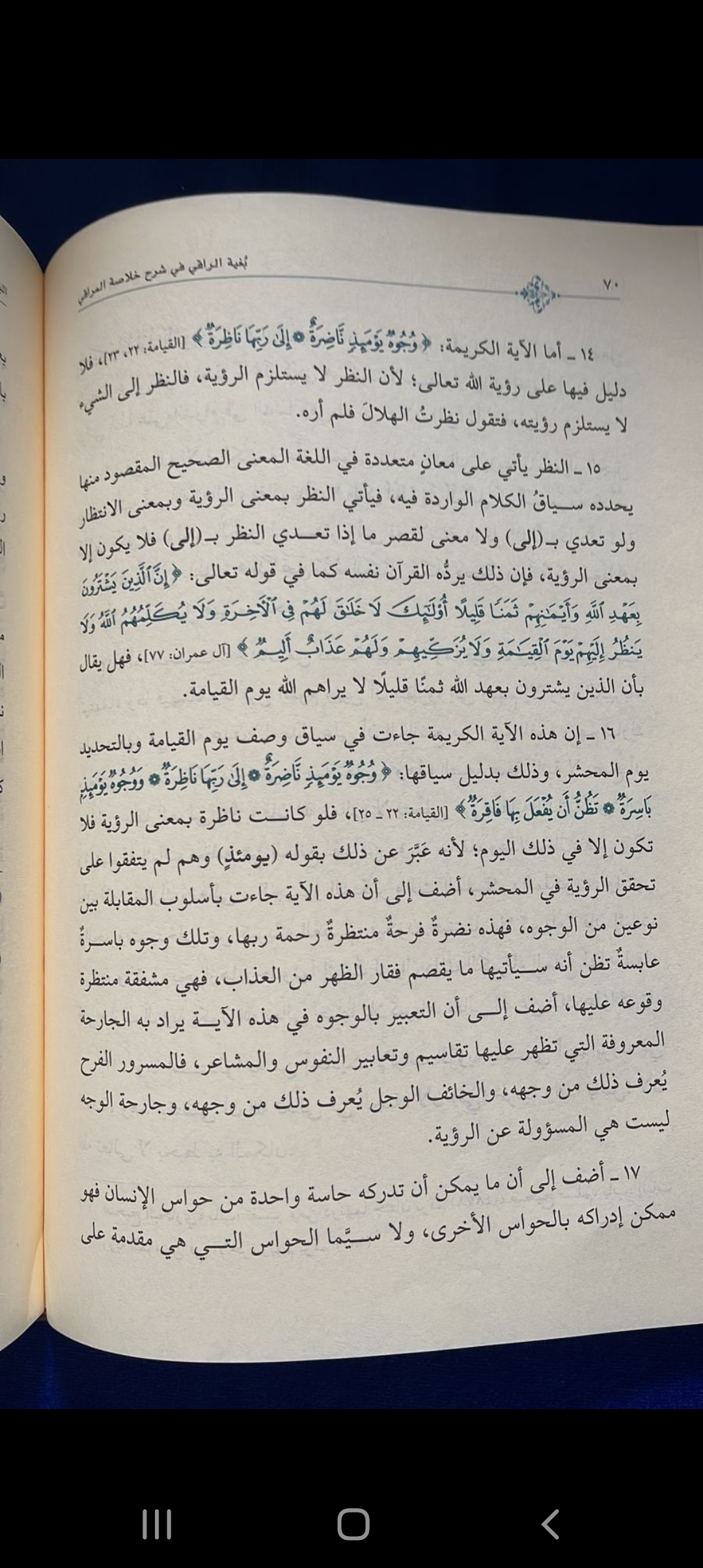
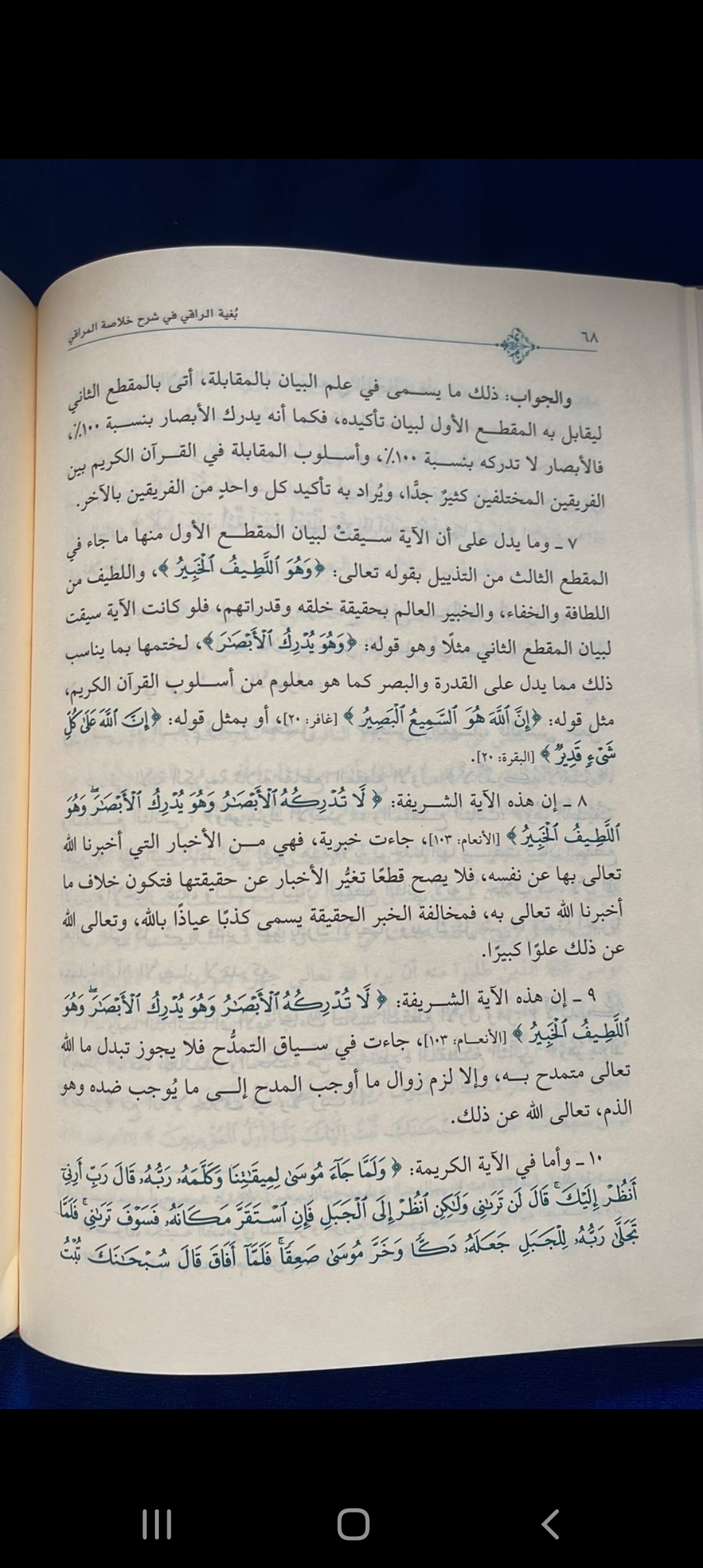

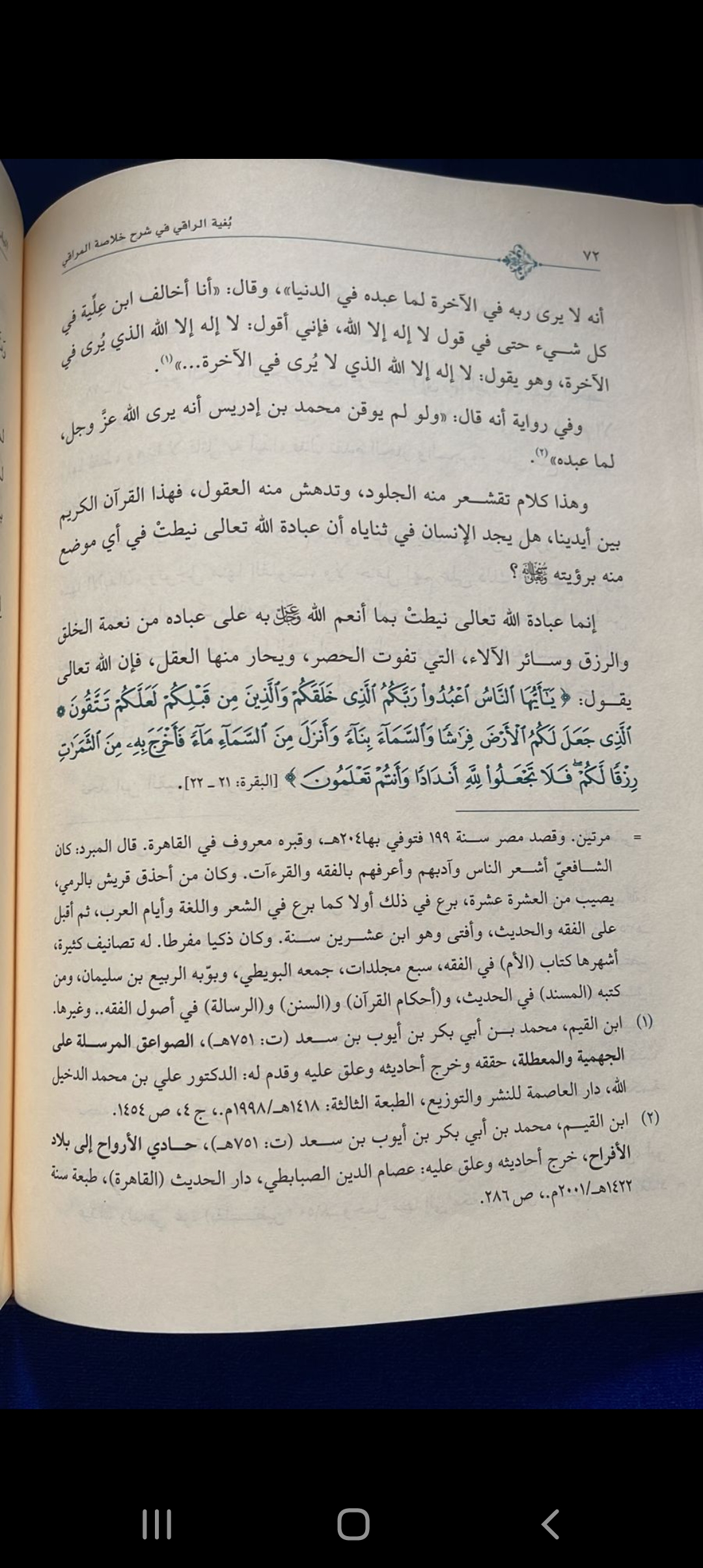


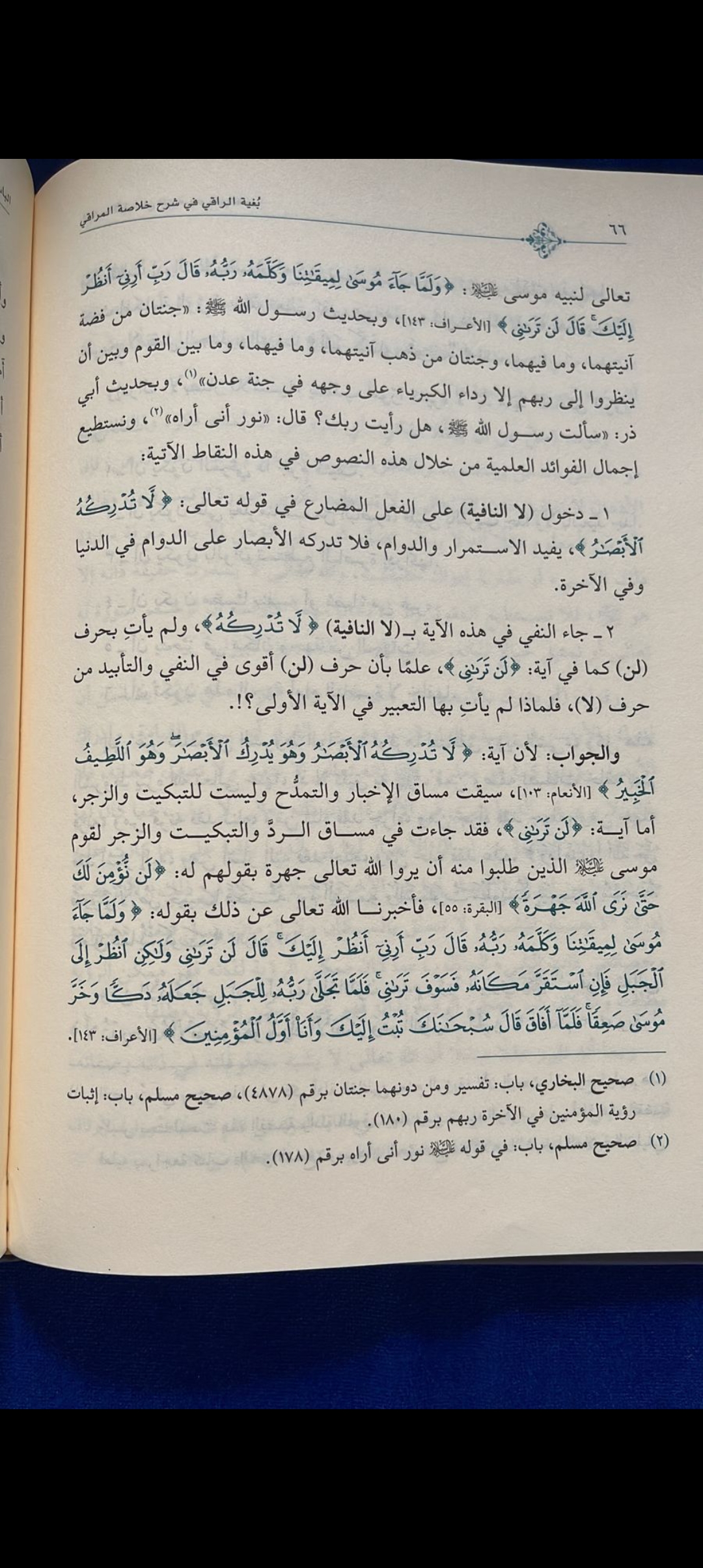
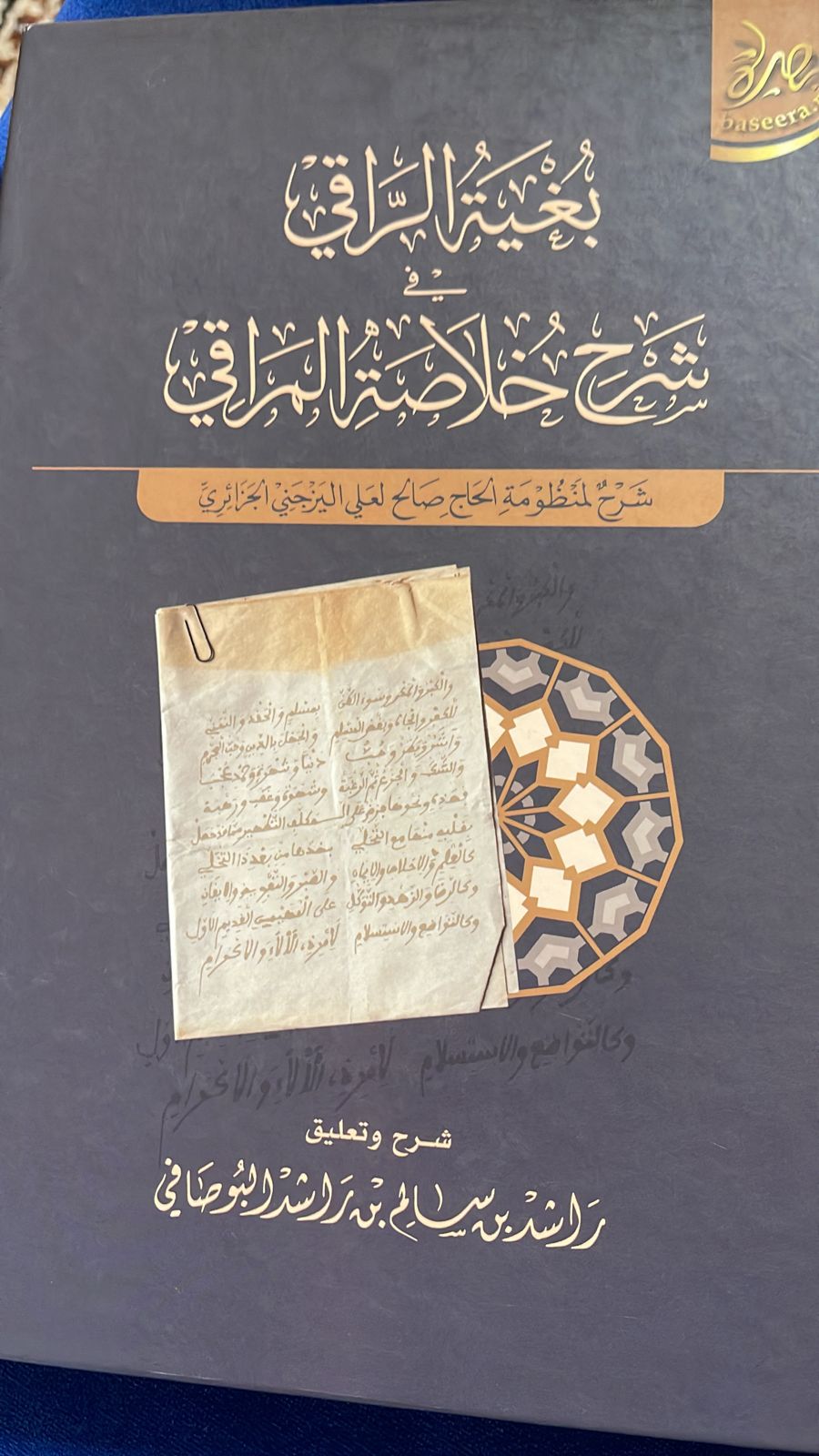

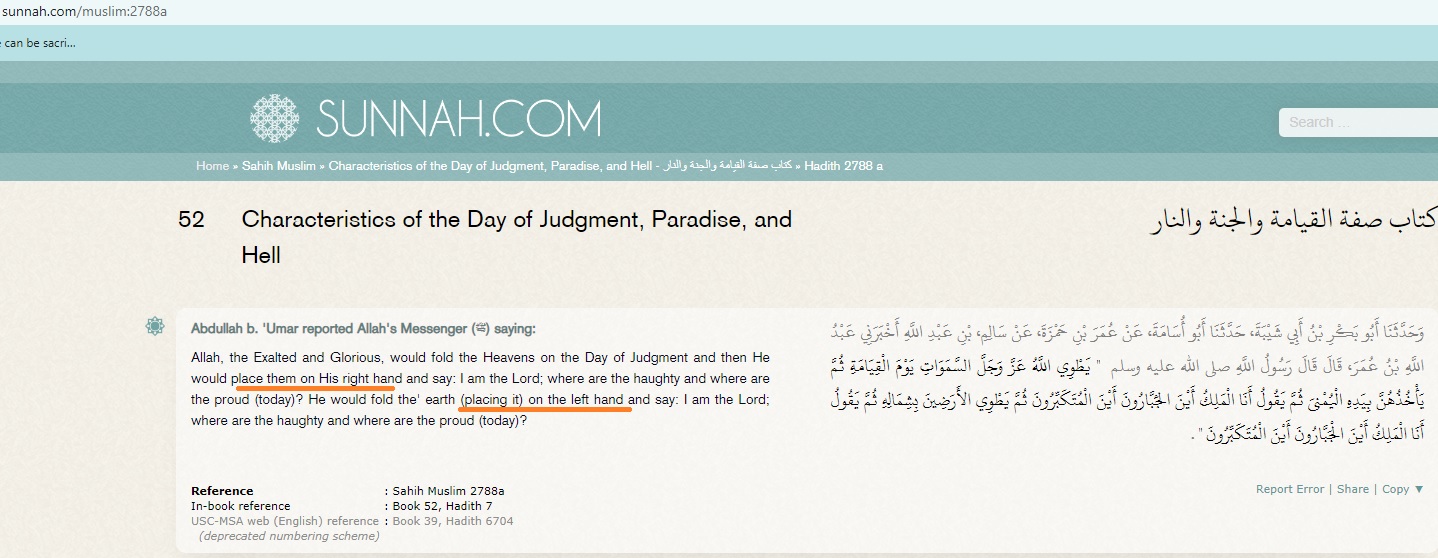






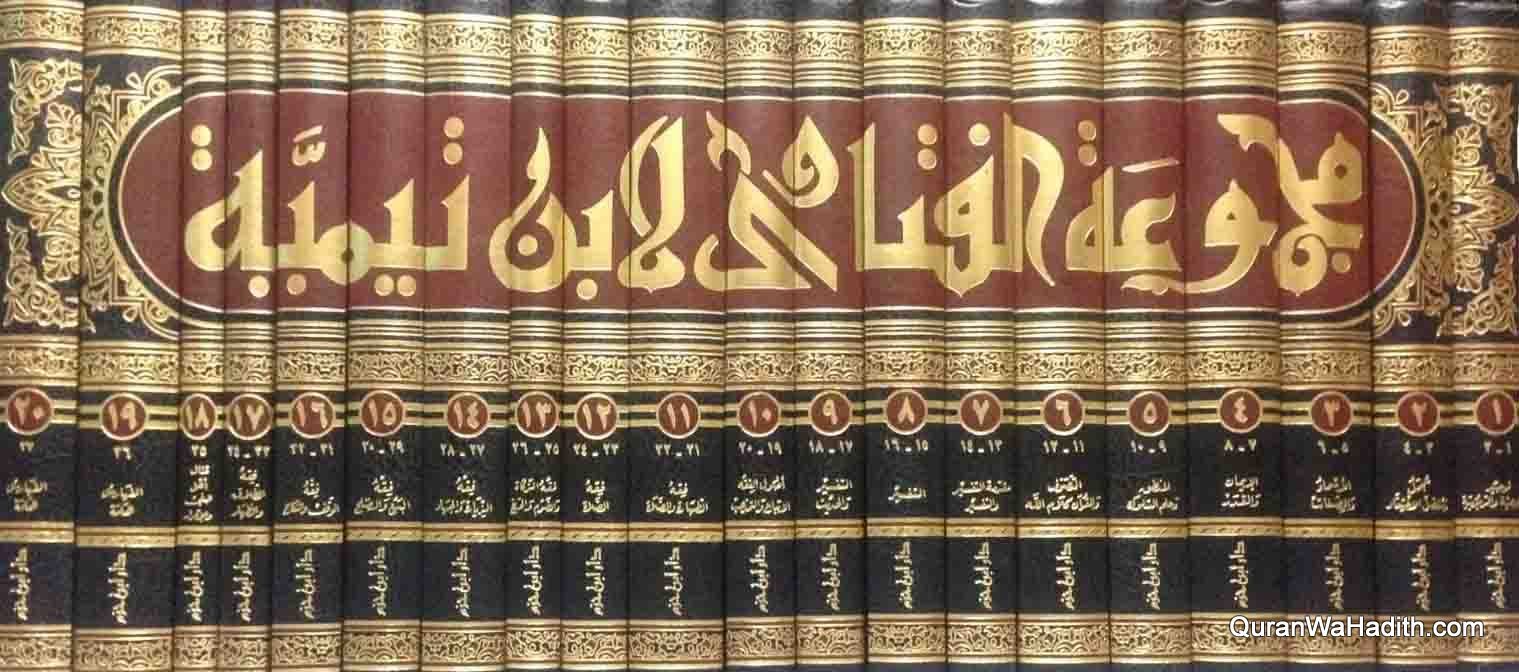


 Prima Quran