“The Night of Glory is better than a thousand months.” (Qur’an 97:3)
﷽
Ramadan Day 24:Getting distracted by shopping for Post-Ramadan to pull you from Laylat Ul Qadr
24th of Ramadan ——————————– *Heart Illness: Anger* Anger is from the things that corrupt the heart and the soul, it pushes the person out of the circle of balance and mildness.
Anger in its natural form is good, like the anger when seeing evil, or seeing the sanctities being violated.
When The Blessed Prophet (saw) was asked for advice he said: (do not get angry).
Narrated Abu Huraira:
A man said to the Prophet (saw) , “Advise me! “The Prophet (saw) said, “Do not become angry.” The man asked (the same) again and again, and the Prophet (saw) said in each case, “Do not become angry.”
If someone gets angry, then Islam gave some solutions to this problem, the most important steps are: To think about the rewards of holding back anger, Allah says:
“Be gracious, enjoin what is right, and turn away from those who act ignorantly.” (Qur’an 7:199)
To mention the name of Allah so that no evil comes out of him, which would cause the anger of Allah
To seek refuge from the devil when he gets angry, and it’s preferred to sit if he was standing, and to lay down if he was sitting, after that to perform Wudu’ if that doesn’t help.
*The Amulet of the Religion* The amulet here is the protection or the cause of safety.
It’s by allying with the righteous(walayah), dissociating the sinners(Bara’ah) and to remain ambivalent from those you are unsure of (Wuquf).
This is the protection by strengthening the links between the righteous, by advising each other and helping each other, so Walayah is like a spiritual bond between believers, until the believer dislikes for his brother what his dislikes for himself, and to have his best interest like he wants his best interest, and that is why the prominent feature of believers in Walayah is enjoining good and forbidding evil, as Allah said:
“The believing men and believing women are allies of one another. They enjoin what is right and forbid what is wrong and establish prayer and give zakāh and obey Allāh and His Messenger. Those – Allāh will have mercy upon them. Indeed, Allāh is Exalted in Might and Wise.” (Qur’an 9:71)
The way this protection works is: For the believers: They find a safe zone to return to. A place of comfort where they are helped to do good and discouraged from doing evil. They are assisted in the matters of this life and the hereafter. For the sinners: They feel like an outcast in the believers community and that the earth has closed in on them. So they would have to either have some self accountability and return to the truth or they would have to find a more fitting environment for them, and in both cases the community would be safe from their evil.
To learn more about Walayah & Bara’ah (a very important teaching in Islam) kindly see the following:
“My Lord! Increase me in knowledge.” (Qur’an 20:114)
﷽
This was a short interview between the writer Anthony T. Fiscella and a friend from our brothers in the Mzab community of Algeria. (May Allah keep them steadfast and support them). Most notable was the semi-autonomy granted to the community and their self governing principles. Located in the Wilaya of Ghardaïa
Most of the brothers here are of Amazigh or Free-Men origins.
Although most of the brothers in the region read and write Arabic, they speak the Zenata dialect of the Berber language, for which there is no written form.
Despite political changes in Algeria over the years, the community continues to peacefully resist interference in the affairs of their community and strive to preserve their unique religious and cultural identity.
They have a reputation of being honest and astute businessmen. They also continue to be productive farmers in the M’zab Valley, supplying the fresh produce needs for their own communities and for marketing elsewhere.
The beautiful M’zab Valley of Algeria was given UNESCO World Heritage Site status in 1982, as a superb example of a traditional human habitat that has been adapted to the environment. This is confirmation that although values in the rest.
In Ghardaïa, is said that there are no beggars and that no thieves exist. The people of this society is very tightly knit with such activities from business to studies and marriage all done through the community. They cling to the unique clothing, language, architecture, and lifestyle.
Wherever they are, They always have one foot in Ghardaïa. Whatever their social situation, they never sever their roots and actively contribute to the life of the community.
Ghardaïa was founded over 1,000 years ago to provide shelter for their community after the fall of the the Ibadi Rustamid state. The village, 500 kilometres south of Algiers, was founded in the middle of a rocky desert. Other towns from the era existing to this day include El Atteuf, Melika, Bounoura, and Beni Izguène.
It is said that their insular nature has preserved the area, and the Ibāḍī Σezzaba continue to dominate the social life of the area. A federal council, Majlis Ammi Said, unites representatives of the seven settlements as well as Ouargla, an ancient town located 200 km South-East of the Mzab valley. This council forms a federative body for religious, social and, increasingly, cultural matters. This religious federal council represents an “Islamic type of government” unique today.
Numerous details of Ibāḍiyya social life are ruled by this Islamic government, such as the weight of gold given as a dowry to a woman (maximum 60 grams) to the length of wedding celebrations (three days). The council makes decisions on details such as dowries, celebrations, dress. It used to impose punishments including exile, and a form of tabriyya “quarantine”, where the offender may not interact with his fellow citizens. I would imagine this is a time of dissociation or bara’ until the offender has repented and amended his/her ways.
May Allah (swt) continue to bless them. May Allah (swt) preserve them! May Allah (swt) bring stability and peace to Algeria. May they continue to be the light in the region for the good people of Algeria. Amin!
This remains true as the people M’zab valley Algeria, Nafusa Mountains in Libya, Djerba Tunisia, have remained steadfast upon the Haqq. As well as the revival of the Qur’an and Sunnah via the Ibadi school among the Hausa, Tuareg, and Fulani peoples. Al hamdulillah!
It is hard to imagine how this paper granted Jason Van Riel a Master’s thesis. I have said it before and I will say it again. Universities are basically just handing credentials to people.
I can’t imagine writing about another people’s history, culture and religion and writing with the type of smug dismissiveness and pretention that Orientalist and others often write with.
It is simply gross.
1st Jason van Riel rides on the tired coattails of the Ibadis being Khawarij and worse yet, a sect from among the Khawarij; and even bigger blunder rest assured.
We can see this in his thesis where he states:
He asserts: “Ibāḍī Islam has its origins in the Khārijite sect that came into existence during the first fitna (37/657), the civil war…”
“although the Ibāḍīs were not Azraki they were still a Khārijite sub sect.”
“To ensure that Ibāḍī traders were not restricted in and around Sijilmasa, to the commercial and financial advantage of both the Rustamids and Midrārirds, the two ruling houses frequently intermarried with each other, even though they were of rival Khārijite sects.”
Calling groups of Muslims by the pejorative labels used by their opponents is anything but academic.
To support my position on why I believe universities almost feel obligated to confer credentials upon people because they paid their course fees will be readily seen. How on Earth does one read a paper like Jason Van Riel and not wonder what basis are his smug and dismissive comments made?
Here just some samples:
“Although it must be noted that only the Ibāḍī doctrine of “all-Muslim equality regardless of social or ethnic origin” was what the Berbers cared for, they had very little interest in any of the other aspects of Ibāḍīsm and Khārijism.”
For example if I am reading his paper I would press him. Van Riel on what basis did you draw this conclusion?
“The control and maintenance of these trade routes was an important source of income for these Berber tribes, either through the levying of tolls or through the blackmail of merchants travelling the roads under their control.”
Again you have to wonder where Van Riel has basis for this. Why would you need to blackmail travelers via trade routes that are mutually beneficial for all involved?
Does it not occur that if trade routes are the subject of blackmail they become troublesome?
“And even though the Arab chroniclers would want to have the their readers believe that the local rulers of Bilād al-Sūdān were Muslim (and converted in a most spectacular fashion) they were in most cases Muslim in name only.”
This is the type of comment that a non serious person would make. This is where if I were grading Van Riel’s paper I would ask him why does he need to muse on the intentions and sincerity of people’s conversion to Islam? If he said it was perhaps possible that some were not sincere that maybe possible.
However, to assert : “They were in most cases Muslim in name only.” It is really hard to see this as unacademic disdain.
However it is perfectly fine for orientalist and so called historians to “fill in the blanks” so to speak.
We read:
“One of the main concerns that this thesis faces is a lack of available sources, and this will be explained – along with an elaboration of the available sources – in the next section. In my opinion it is important for scholars to be creative when they face a lack of sources, as this does not entail that historical events did not occur. In combination with this I also strongly believe in Karl Popper’s criterion of falsifiability whereby “only if I can say how my theory might be refuted, or falsified, can I claim that my theory has the character of an empirical theory.”
This is very cringe.
Then Van Riel also states:
“Even if these sources can be located, the families owning them are wary of outsiders digging through their, sometimes centuries old, papers for fear of “secrets” being divulged.“
He doesn’t care to elaborate what these “secrets” might be. Just another off the cuff comment that strikes one as truly bizarre. In fact, this would have been a perfect opportunity for Van Riel to make another smug remark about other cultures by saying something along the lines of:
“Given the poverty that many people face in these countries, historians should seize the opportunity as locals would only be too willing to hand over parchments for a paltry sum!”
Surprised he didn’t!
Van Riel states:
The main problem with Lewicki’s work is that his articles tend to focus on a single category and, more importantly, Lewicki is considered to have approached Ibāḍī documents uncritically. Or as E. Savage puts it: “Curiously, Lewicki never takes up the theme of the historiographic context of his Ibāḍī sources but appears to have accepted them a priori as historical.”
Huh?! The treachery of it all! Imagine! Allowing a people to present their own history and narrative!
The orientalist must always approach and other the ‘other’ as being dishonest, having a motive and or an agenda. Did it not occur to Van Riel that even Ibadi opponents acknowledge our honesty and transparency.
Kitman is one thing when needed. Yet, lying is a major sin. We do not play with fire!
So that is my critique. I did find the thesis informative over all.
These are some notable bits of information.
“Even though Ibāḍī merchants were not the first Muslims to reach Bilād al-Sūdān, they did end up staying to ensure that the trans-Saharan trade became a constant source of gold and slaves for the north and salt and other general trade goods for the south.”
“It is generally believed that in pre-Almoravid times the majority of Muslim merchants in Bilād al-Sūdān, those who originated from the Maghreb, were Ibāḍī.”
According to Professor T. Lewicki’s research the Ibāḍī merchant-shayks where very active missionaries who tried to convert the pagan populace in Bilād al-Sūdān to Ibāḍīsm. And Lewicki continues by stating that these Ibāḍī merchant-shayks represented “the only form of Islam in West Africa, until the Almoravids brought their Sunni-Islam.”
“The reason why it is generally accepted that the kings of Ghana were converted to Ibāḍī Islam was because of the combination of Ibāḍī architecture used for the Grand Mosque of Gao, the capital of Ghana, and because of the historically close ties between Gao and Tahert, since the 2nd/8th century, that still existed when the kings of Ghana converted to Islam.”
“After the rulers of Ghana were defeated by the Almoravids and forced to convert to Sunni Islam (Malikite Islam), halfway through the 5th/11th century, Tādmekka became one of the many towns in the western part of Bilād al-Sūdān that was cleansed of all Ibāḍī influences
“Because many prominent Ibāḍī ‘ulamā’ had left Basra for either Oman or the Maghreb, its Ibāḍī community went through a period of intellectual decline which ultimately meant that it lost its position as the most important center of theology and jurisprudence in the Ibāḍī world.”
“It was not long before Ibāḍī merchants could be found all the way from the Maghreb to India, and it is even alleged that Ibāḍī merchants were amongst the first to set up business ventures in China.”
“And they say, “Never will the Fire touch us, except for a few days.” Say, “Have you taken a covenant with Allah? For Allah will never break His covenant. Or do you say about Allah that which you do not know?” Yes, whoever earns evil and his sin has encompassed him – those are the companions of the Fire; they will abide therein eternally.” (Qur’an 2:80-81)
﷽
This is by no means an exhaustive list. However, this should suffice. Yet there is much much more hadith evidence.
Abu Musa al-Ash’ari reported the Prophet as saying, “There are three who will not enter paradise: one who is addicted to wine, one who breaks ties of relationship, and one who believes in magic.” Ahmad transmitted it.
“But the Children of Israel certainly knew that whoever purchased the magic would not have in the Hereafter any share. And wretched is that for which they sold themselves, if they only knew.” (Qur’an 2:102)
Hudhaifah (ra) narrated that the Messenger of Allah (saw) said:
“A backbiter will not enter Paradise.” Agreed upon.
Narrated Abu Shuraih:
The Prophet (saw) said, “By Allah, he does not believe! By Allah, he does not believe! By Allah, he does not believe!” It was said, “Who is that, O Allah’s Messenger (saw)?” He said, “That person whose neighbor does not feel safe from his evil.”
Abu Hurayra reported that the Messenger of Allah, may Allah bless him and grant him peace, said, “A person whose neighbors are not safe from his evil will not enter the Garden.”
“Worship Allah and associate nothing with Him, and to parents do good, and to relatives, orphans, the needy, the near neighbor, the neighbor farther away, the companion at your side, the traveler, and those whom your right hands possess. Indeed, Allah does not like those who are self-deluding and boastful.” (Qur’an 4:36)
Jubair bin Mut’am (RAA) narrated that the Messenger of Allah (saw) said: “The one who severs the ties of kinship will not enter Paradise.” Agreed upon.
Jubayr ibn Mu’tim reported that he heard the Messenger of Allah, may Allah bless him and grant him peace, say, “The one who severs ties of kinship will not enter the Garden.”
Jubair b. Mut’im reported on the authority of his father that Allah’s Messenger (saw) said:
The severer would not enter Paradise. Ibn Umar said that Sufyan (explained it as): One who severs the tie of kinship would not enter Paradise.
Narrated Jubair bin Mut`im:
That he heard the Prophet (saw) saying, “The person who severs the bond of kinship will not enter Paradise.”
“So would you perhaps, if you turned away, cause corruption on earth and sever your ties of relationship.” (Qur’an 47:22)
Abu Umamah (May Allah bepleased with him) reported:
Messenger of Allah (saw) said, “Allah decrees the (Hell) Fire and debars Jannah for the one who usurps the rights of a believer by taking a false oath.” One man asked: “O Messenger of Allah! Even if it should be for an insignificant thing?” He said, “Even if it be a stick of the Arak tree (i.e., the tree from which Miswak sticks are taken)”.
“They took their false oaths as a cover, so they averted people from the way of Allah , and for them is a humiliating punishment.” (Qur’an 58:16)
Narrated Ma’qil:
Allah’s Messenger (saw) said, “If any ruler having the authority to rule Muslim subjects dies while he is deceiving them, Allah will forbid Paradise for him.”
Narrated Ma’qil:
I heard the Prophet (saw) saying, “Any man whom Allah has given the authority of ruling some people and he does not look after them in an honest manner, will never feel even the smell of Paradise.”
On the authority of Jundub ibn Abdullah (may Allah be pleased with him), who said that the Messenger of Allah (peace be upon him) said: There was a among those before you a man who had a wound. He was in [such] anguish that he took a knife and made with it a cut in his hand, and the blood did not cease to flow till he died. Allah the Almighty said: My servant has himself forestalled Me; I have forbidden him Paradise. It was related by al-Bukhari.
May Allah (swt) protect us and guide and keep us on a path that is straight. We seek the forgiveness of Allah (swt) and turn in repentance to Allah (swt).
“And they say, “Never will the Fire touch us, except for a few days.” Say, “Have you taken a covenant with Allah? Allah will never break His covenant. Or do you say about Allah that which you do not know?” Yes, whoever earns evil and his sin has encompassed him – those are the companions of the Fire; they will abide therein eternally(khaliduna).”(Qur’an 2:80-81)
﷽
For those of you familiar with the parker brothers board game, monopoly one of the cards one could draw is the ‘get out of jail free card’. Thus, if you landed on the spot that says, ‘go to jail’ you could play this card. The card name is a bit of a misnomer as you don’t go to jail to begin with. You bypass going completely.
Well, believe it or not because of these interpretations and influences upon our faith, there are Muslims who believe in the ‘hadith of the card’. The ‘get out of hell free card!
Narrated ‘Abdullah bin ‘Amr bin Al-‘As:
that the Messenger of Allah (saw) said: “Indeed Allah will distinguish a man from my Ummah before all of creation on the Day of Judgement. Ninety-nine scrolls will be laid out for him, each scroll is as far as the eye can see, then He will say: ‘Do you deny any of this? Have those who recorded this wronged you?‘ He will say: ‘No, O Lord!’ He will say: Do you have an excuse?’ He will say: ‘No, O Lord!‘ So He will say: ‘Rather you have a good deed with us, so you shall not be wronged today.” Then He will bring out a card (Bitaqah); on it will be: “I testify to La Ilaha Illallah, and I testify that Muhammad is His servant and Messenger.” He will say: ‘Bring your scales.’ He will say: ‘O Lord! What good is this card next to these scrolls?’ He will say: ‘You shall not be wronged.’ He said: ‘The scrolls will be put on a pan (of the scale), and the card on (the other) pan: the scrolls will be light, and the card will be heavy, nothing is heavier than the Name of Allah.'”
This means that there are No Muslims who will go to hell at all (even briefly) as the Sunni believe. That is if Allah (swt) is fair and just, as every Muslim has said this statement!
Are we going to invite the world to Islam and inform the world of the moral decline of society and then present to them a model of so called justice in which a person who claims to be a Muslim did rape, killed a person without right, molested their relatives, committed adultery and/or fornication and died without any repentance for these things?!
All the horrific things that Zionist are currently doing to Palestinians that disgust each and everyone of us would be absolutely fine as long as they said: la ilaha illallah
The above hadith is absolutely destroyed by the following verse of the Qur’an.
“And those who do not invoke with Allah another deity or kill the soul which Allah has forbidden [to be killed], except by right, and do not commit unlawful sexual intercourse. And whoever should do that will meet a penalty. Multiplied for him is the punishment on the Day of Resurrection, and he will abide therein humiliated –Except for those who repent, believe and do righteous work. For them Allah will replace their evil deeds with good. And ever is Allah Forgiving and Merciful.” (Qur’an 25:70)
Emaan or faith is uttered by the tongue , takes root in the heart and is affirmed by the limbs by either doing the actions one is required to do and/or restraining the limbs from doing what is prohibited.
If the Emaan by the tongue or heart is enough than why are there are so many verses and ahadith that exhort the believers to make tauba (repentance)?
This type of belief makes repentance ineffectual and renders it of no consequence. May Allah (swt) protect and guide the ummah!
Mu`adh bin Jabal (May Allah be pleased with him) reported:
The Messenger of Allah (saw) said, “He whose last words are: `La ilaha illallah’ (There is no true god except Allah) will enter Jannah.”
This can only mean He was living his life in accordance with this and righteousness, and finally he end his life like this. In this condition.
THE GET OUT OF HELL FREE CARD!
It is reported on the authority of Abu Huraira:
We were sitting around the Messenger of Allah (saw). Abu Bakr and Umar were also there among the audience. In the meantime, the Messenger of Allah got up and left us. He delayed coming back to us, which caused anxiety that he might be attacked by some enemy when we were not with him; so, being alarmed, we got up. I was the first to be alarmed. I, therefore, went out to look for the Messenger of Allah (may peace and blessings be upon him) and came to a garden belonging to the Banu an-Najjar. A section of the Ansar went round it looking for a gate but failed to find one. Seeing a rabi’ (i.e. streamlet) flowing into the garden from a well outside, I drew myself together, like a fox, and slinked into (the place) where Allah’s Messenger was. He (the Holy Prophet) said: Is it Abu Huraira? I (Abu Huraira) replied: Yes, Messenger of Allah. He (the Holy Prophet) said: What is the matter with you? You were among us but got up and went away and delayed for a time, so fearing that you might be attacked by some enemy when we were not with you, we became alarmed. I was the first to be alarmed. So when I came to this garden, I drew myself together as a fox does, and these people are following me. He addressed me as Abu Huraira and gave me his sandals and said: Take away these sandals of mine, and when you meet anyone outside this garden who testifies that there is no god but Allah, being assured of it in his heart, gladden him by announcing that he shall go to Paradise. Now the first one I met was Umar. He asked: What are these sandals, Abu Huraira? I replied: These are the sandals of the Messenger of Allah with which he has sent me to gladden anyone I meet who testifies that there is no god but Allah, being assured of it in his heart, with the announcement that he would go to Paradise. Thereupon ‘Umar struck me on the breast and I fell on my back. He then said: Go back, Abu Huraira, So I returned to the Messenger of Allah (saw), and was about to break into tears. ‘Umar followed me closely and there he was behind me. The Messenger of Allah (saw) said: What is the matter with you, Abu Huraira? I said: I happened to meet ‘Umar and conveyed to him the message with which you sent me. He struck me on my breast which made me fall down upon my back and ordered me to go back. Upon this the Messenger of Allah (saw) said: What prompted you to do this, ‘Umar? He said: Messenger of Allah, my mother and father be sacrificed to thee, did you send Abu Huraira with your sandals to gladden anyone he met and who testified that there is no god but Allah, and being assured of it in his heart, with the tidings that he would go to Paradise? He said: Yes. Umar said: Please do it not, for I am afraid that people will trust in it alone; let them go on doing (good) deeds. The Messenger of Allah (saw) said: Well, let them.
In the above hadith we are told that Abu Huraira gets this information from the Blessed Prophet (saw) and he is met by Umar and than Umar is basically telling the Blessed Prophet (saw) please do not do it as the people will trust in it alone.
Abu Huraira receives the information.
Umar is the one who is startled by this information.
The Prophet (saw) wants this information to be known.
Narrated Anas bin Malik:
“Once Mu`adh was along with Allah’s Messenger (saw) as a companion rider. Allah’s Messenger (saw) said, “O Mu`adh bin Jabal.” Mu`adh replied, “Labbaik and Sa`daik. O Allah’s Messenger (saw)!” Again the Prophet (saw) said, “O Mu`adh!” Mu`adh said thrice, “Labbaik and Sa`daik, O Allah’s Messenger (saw)!” Allah’s Messenger (saw) said, “There is none who testifies sincerely that none has the right to be worshipped but Allah and Muhammed is his Apostle, except that Allah, will save him from the Hell-fire.” Mu`adh said, “O Allah’s Messenger (saw) ! Should I not inform the people about it so that they may have glad tidings?” He replied, “When the people hear about it, they will solely depend on it.”Then Mu`adh narrated the above-mentioned Hadith just before his death, being afraid of committing sin (by not telling the knowledge).
.In the above hadith Mu’adh ibn Jabal receives the information.
The Blessed Prophet (saw) apparently does not want the information broadcasted.
Now we can reconcile the issue of who the Blessed Prophet (saw) told the information to. Because him telling Mu’adh ibn Jabal does not preclude him telling Abu Huraira. Likewise him telling Abu Huraira does not preclude him telling Mu’adh ibn Jabal.
What does raise an eye brow are the following points.
In the first narration it is Umar who makes the statement: Please do it not, for I am afraid that people will trust in it alone
Where as in the second narration it is the Blessed Prophet (saw) who makes the statement:
“When the people hear about it, they will solely depend on it.”
In the first narration the Blessed Prophet (saw) seems to not mind if this information is distributed in fact he tells Abu Huraira to inform all those he meets along the way.
In the second narration the Blessed Prophet (saw) seems to not want the information disclosed.
The information that the sub narrator provides is also a bit concerning.
Then Mu`adh narrated the above-mentioned Hadith just before his death, being afraid of committing sin (by not telling the knowledge).
How does Mu ‘adh know better than the Prophet (saw)?!
How is Mu’adh portrayed as someone who is afraid of the sin of not disclosing knowledge but apparently the Prophet (saw) is fine with the sin of not disclosing knowledge?
May Allah (swt) protect us from perversion of the pure faith!
“O Messenger, announce that which has been revealed to you from your Lord, and if you do not, then you have not conveyed His message. And Allah will protect you from the people. Indeed, Allah does not guide the disbelieving people.” (Qur’an 5:67)
“Those who hide the clear proofs and guidance that We have revealed—after We made it clear for humanity in the Book—will be condemned by Allah and ˹all˺ those who condemn.” (Qur’an 2:159)
“And do not conceal testimony, for whoever conceals it – his heart is indeed sinful, and Allah is Knowing of what you do.” (Qur’an 2:283)
Not to mention…
You can see just a handful of these hadith here:
There is the whole issue of rather or not there are scales to begin with!
“And give full measure whenever you measure, and weigh with a balance that is true” (Qur’an 17:35)
﷽
It was narrated that ‘Uqbah bin ‘Amir said:
“I heard the Messenger of Allah (saw) say: ‘The Muslim is the brother of another Muslim, and it is not permissible for a Muslim to sell his brother goods in which there is a defect, without pointing that out to him.”‘
That the Messenger of Allah (saw) passed by a pile of food. He put his fingers in it and felt wetness. He said: ‘O owner of the food! What is this ?’ He replied: ‘It was rained upon O Messenger of Allah.’ He said: ‘Why not put it on top of the food so the people can see it?’ Then he said: ‘Whoever cheats, he is not one of us.'”
He said: There are narrations on this topic from Ibn ‘Umar, Abu Al-Hamra’, Ibn ‘Abbas, Buraidah, Abu Burdah bin Niyar, and Hudhaifah bin Al-Yaman.
[Abu ‘Eisa said:] The Hadith of Abu Hurairah is Hasan Sahih Hadith. This is acted upon according to the people of knowledge. They dislike cheating and they say that cheating is unlawful.
A Muslim is one who does not cheat others. We do not cheat our employers by looking for short cuts or by not giving them the best of our efforts. We do not cheat our employees by not giving them what is due to them. Or by trying to extract more from them then what is fair.
We do not cheat others by being inconsistent. We have one measure for one group and another measure for another group. We do no cheat others by being dishonest about what we sell to them in terms of products or services.
One of our dear brothers from Turkey mentioned to us about a person in Germany who approached a man selling trinkets. (Neither the seller nor the buyer are Muslim).
The buyer says to the one selling, “I do not have this amount can you lower the cost of the item as it is for my mother?” The seller agreed to this and lowered the amount substantially. He is under no obligation to do so.
However, the buyer was someone who was looking out for people who would be generous. Thus, the buyer wanted to give the seller 1000 Euros for his act of generosity. Even then the seller said, “If you have the amount I am selling the item for simply give me that amount!”
Subhan’Allah. This is from the non-Muslims. May Allah (swt) guide them both.
Yet, our dear brother from Turkey informed us that if you are a foreigner in Istanbul and the driver knows you are a foreigner they will extract from you an exorbitant amount.
This is unfortunately true in many countries where Muslims are the majority. This is bad because not only are you committing a big sin, you are giving Islam a bad name and by extension due to your greed and not looking at the bigger picture you can ruin the economic opportunity of your respective country.
Stealing is certainly a sin.
But this all becomes problematic when there are certain schools of jurisprudence that have problematic rulings when it comes to Non-Muslims. Thus, many Muslims may feel encouraged to do the things that they do by these rulings.
May Allah (swt) straighten our affairs.
Again, the problematic thinking of certain Muslims who think if they proclaim the testimony of faith or they simply proclaim themselves to be Muslims that they can go on living and doing as they please.
“Those who humble (khāshi‘ūn)themselves in prayer.” (Qur’an 23:2)
﷽
The Ibadis do not raise their hands at all during the prayers.
We do not raise our hands at the opening takbir, nor before or after ruku, nor after tashahud, nor before or after sujud nor after the end of the prayer.
The issue of raising the hand (raf’ al-yadayn) in the prayer is one in which there has been debate and discussion among the different schools of jurisprudence in Islam.
It has two aspects.
The initial Takbirat Al-lhram’ (the act that consecrates or initiates the actual prayer).
The second would be raising hands during various aspects of the prayer.
There are 8 schools of jurisprudence on this matter.
Ibadis
Zaydis
Imami Jafar
Imami Ismaili
Hanafi
Shafi’i
Hanbali
Maliki
* Among the Zaydis there are two positions on this matter:
1.That the hands are raised only at the beginning of the prayer. This is similar to the Hanafis.
That the hands are not raised at the beginning of the prayer. This is similar to the Ibadis.
The following Zaydi Imams are said to hold to the first view: Yahya b. Hamza, Zayd b Ali, al-Qasim b. Ibrahim & Al-Mu’ayyad Billah.
The following Zaydi Imams are said to hold the second view: Mahdi Ahmed, al-Qasim b. Muhammed, al-Qasim b. Ibrahim & al-Hadi ila al-Haqq. This view is ascribed to the hadawi branch or the dominant branch of the Zaydi school.
What is quite interesting when looking at the chart above is that it runs the gamut in terms of scope. You have Ibadis and Zaydis doing no raf’ al-yadayn (or raising of hands) throughout the prayer at all. Then you have the 12er Imami Jafari school having raf’ al-yadayn (raising of hands) being a very prominent feature of their prayers.
For the Malikis, both in the Al-Muqaddimah Al-Izziyah & Matn al-‘Ashmawiyyah, both by Egyptian Maliki scholars, mention the “permissibility” of raising the hands in the prayer. However, the obligation is only for the Takbirat Al-lhram’.
Another interesting aspect is that in the Sunni and Shi’a branches of Islam there are quite a number of divergent opinions on the matter of (raf’ al-yadayn). Whereas in the Ibadi school, there is uniformity on the matter.
There is an intersection on the issue between the Ibadi, Zaydi and Hanafi schools. With the Zaydi and Hanafi being closer (as there is an opinion in the Zaydi school of an initial raising of hands at Takbirat Al-lhram’. You could technically put the Maliki school here as well if we are to take what is said to be the favoured position of Imam Malik.
Another interesting aspect is that the Ibadi school, and the dominant position of the Zaydis of not raising hands during the Takbirat Al-Ihram’ goes against the position of all the other schools of Islam, including the Hanafi and Maliki (on this point).
The issue of raising the handsin prayer is one on which there has been much discussion and debate. It may surprise those who have been in the habit of practicing (raf’ al-yadayn) that, rather than being something firmly established by the Blessed Prophet, (saw) has been subject to criticism from the most erudite and learned scholars.
The purpose of this article is to make the reader aware of some of the discussions and contention surrounding this particular issue of jurisprudence.
This article will be divided into two parts.
We look at the evidence for those who support raising the hands (raf’ al-yadayn) at various intervals of the prayer. *
We will look at the evidence of those who do not support raising the hands (raf’ al-yadayn) at any intervals during the prayer. *
* kindly note that the hyper focus will be on (raf’ al-yadayn) during Takbirat Al-Ihram’ and before and after the ruku (bowing)
Only a cursory glance will be given to the Imami schools on this matter. That is because, ultimately, for them, authority is derived from Imams that are descendants of the Blessed Prophet (saw) and this would entail an entirely different approach and line of discussion..
When it comes to the Shia sects, they are divided into Imamis and the Zaydis. The Imamis consist of both the Twelver Shia and the Isma’ilis. The Imamis narrate various views from their imams. For example, they narrate in their collections the following:
This report appears in Usul al-Kafi’ of the Twelvers.
It is a narration from him (narrator of previous Hadith) by his father from Hammad from Hariz from Zurarah who has said the following: “Abu Ja’far , has said, ‘When you stand up for Salah (prayer) say Takbir (Allah is great beyond description) and raise your hands. Do not allow your palms (hands) to rise higher than your ears. Keep them on the sides of your face.’”
Note: We did reach out to two Ismaili, Nizari and Musta’li, for a reference from Da`im al-Islam, but unfortunately, neither got back to us.
Thus, for the most part, this article will focus on the four surviving Sunni schools of jurisprudence. The hadawi branch of the Zaydi school, as well as the Ibadi school share the same view on the matter.
An examination of the proofs of those who advocate for raising the hands in the various aspects of the prayer.
In the following section we will look at the references of those reports that are deemed to be the strongest evidence for the practice of ((raf’ al-yadayn) raising the hands in prayer.
Are these narrations free from defects? Are they wholly reliable and sufficient for proof ?
1st evidence advanced.
“Narrated Nafi`:
Whenever Ibn `Umar started the prayer with Takbir, he used to raise his hands: whenever he bowed, he used to raise his hands (before bowing) and also used to raise his hands on saying, “Sami`a l-lahu liman hamidah”, and he used to do the same on rising from the second rak`a (for the 3rd rak`a). Ibn `Umar said: “The Prophet (saw) used to do the same.”
I saw that whenever Allah’s Messenger (saw) stood for the prayer, he used to raise both his hands up to the shoulders, and used to do the same on saying the Takbir for bowing and on raising his head from it and used to say, “Sami`a l-lahu liman hamidah”. But he did not do that (i.e. raising his hands) in prostrations.
The above hadith is said to be the strongest proof for the practice of raising the hands in prayer. One of the principles of hadith sciences is that a hadith can be relied upon as a proof when the ‘matn’ or text is free of conflicting details with narrations of equal strength.
Without examining the chain of narrators (the sanad) of the above hadith, we can see that it has reached us through various chains where in the ‘matn’ or text contains conflict with other narrations of equal strength.
For example: In the Muwatta of Imam Malik, a report narrated by the same companion, only two raisings of hands are mentioned; whereas Bukhari has mention of three hand raisings! All the while being narrated by the same companion!
Yahya related to me from Malik from Ibn Shihab from Salim ibn Abdullah from Abdullah ibn Umar that the Messenger of Allah, (saw) used to raise his hands to the level of his shoulders when he began the prayer and when he raised his head from the ruku he raised them in the same way, saying, “Allah hears whoever praises him, our Lord and praise belongs to You.” He did not raise them in the sujud.
The following hadith indicates this is an action of Ibn Umar and not of the Blessed Prophet (saw)
Yahya related to me from Malik from Ibn Shihab from Salim ibn Abdullah that Abdullah ibn Umar used to say “Allah is greater” in the prayer whenever he lowered himself and raised himself. Yahya related to me from Malik from Nafi that Abdullah ibn Umar used to raise his hands to the level of his shoulders when he began the prayer and when he raised his head from the ruku he would raise them less than that.
This is what led one of the Hanafi scholars, Shaykh Yusuf Banuri, to mention in his book Al-Ma’arif as-Sunan, that the weakness of this report is based on the fact that six different variations of Ibn ‘Umar’s report exist with variant details that conflict with one another!
I have highlighted Ibn Shihab Az-Zuhri because he was notorious for Tadlees.
Tadlees is when a narrator aims to conceal defects in the information they transmit. It is seen as a form of blatant dishonesty. As for the chain of transmission, there is a long discussion, such as the deception of Al-Zuhri.
The absence of mentioning of raising the hands three times in Al-Muwatta as an attribute of the Blessed Prophet (saw) is rather revealing.
It is the earliest of the hadith books for Sunni Muslims. It has a chain of transmitters much shorter than the later texts.
This raises the question: Where did the additional raising of the hands before the bowing come from?
There is no mention of Ibn ‘Umar raising his hands three times in the report by Imam Malik. It is also telling that despite the existence of these two reports in Al-Muwatta, the author, Imam Malik, did not act upon this narration of Ibn ‘Umar, even though he reported it from him.
This would mean that although Imam Malik’s report on the authority of Ibn ‘Umar is older and foundational and its chain is shorter than that of the texts that came after it, the author still saw the practice as weak. This would raise doubt and uncertainty regarding the narration’s authenticity.
Ibn Abdul Barr (a Maliki scholar) mentions in his book Al-Istidhkar, vol. 4, page 99, from Ibn al-Qasim, who was a student of Malik, that what raises doubt is Imam Malik’s reliance on what he personally narrated. Ibn al-Qasim narrates from Imam Malik that he said: ‘Raising the hands is done at the opening Takbir and not at other times.’ Malik saw raising the hands in prayer as weak and said, ‘If it is in the opening Takbir, then it is permissible.’
The hadith from Ibn Umar about the Blessed Prophet (saw) raising his hands to his shoulders conflicts with reports stating that the Blessed prophet (saw) raised his hands in front of his ears.
Narrated Wa’il ibn Hujr:
I witnessed the Prophet (saw) raise his hands in front of his ears when he began to pray. I then came back and saw them (the people) raising their hands up to their chest when they began to pray. They wore long caps and blankets.
So this has led the proponents of (raf’ al-yadayn) to claim that the Blessed Prophet (saw) did both.
2nd evidence advanced.
The second report cited as proof for the raising of the hands is related by Muslim, Abu Dawud, an-Nisa’i, as well as others on the authority of Wa’il b. Hujr.
Wa’il b. Hujr reported:
He saw the Messenger of Allah (saw) raising his hands at the time of beginning the prayer and reciting takbir, and according to Hammam (the narrator), the hands were lifted opposite to ears. He (the Holy Prophet) then wrapped his hands in his cloth and placed his right hand over his left hand. And when he was about to bow down, he brought out his hands from the cloth, and then lifted them, and then recited takbir and bowed down, and when (he came back to the erect position) he recited:” Allah listened to him who praised Him.” And when he prostrated, he prostrated between his two palms.
As one can see, this hadith is found in the collection of Muslim and has the grade of ‘sahih’ or sound. Let us examine the issues concerning this hadith:
The narration of Waʾil ibn Hajar regarding raising the hands in prayer is weak because it was transmitted through Alqamah ibn Waʾil. Scholars have differed on whether he heard it from his father or not.
It was also narrated by Abd al-Jabbar ibn Waʾil by his family members about his father, but his family members are unknown, and the narration is weak.
It was further narrated by ʿAsim ibn Kulayb from his grandfather about Waʾil ibn Hajar, which is another weak chain of transmission. There are other weak chains as well.
3rd evidence advanced.
The third proof brought forward is the report of Abu Humayd as-Sā’idi in which he said in the presence of ten companions:
Muhammed bin Amr bin Ata‘ narrated from Abu Humaid As-Saidi, :
He (Muhammed) said: “I heard him saying – while he was among ten of the Companions of the Prophet, one of whom was Abu Qatadah bin Ribi – ‘I am the most knowledgeable among you of the Salat of the Allah’s Messenger.’ They said: ‘You did not precede us in his companionship, nor were you in his company more than us.’ He said: ‘Even still.” They said: ‘Go ahead.’ So he said: ‘When Allah’s Messenger stood for Salat he would stand with his back straight and raise his hands until they were at the level of his shoulder. Then he would say: (Allahu Akbar) “Allah is Most Great” and bow. Then he would straighten (his back) so that he would not lower his head, nor raise it, and he placed his hands on his knees. Then he said: (Sami Allahu liman hamidah) “Allah listens to those who praise Him.” And he raised his hands and stood up straight until all of his bones completely returned to their places. Then he went down to the ground prostrating, then he said: (Allahu Akbar) “Allah is Most Great.” Then he held his upper arms away from his midsection, and opened his toes on his feet (facing the Qiblah), then he bend his left foot and sat on it then straightened up until all of his bones completely returned to their placed, then he went down to prostrate. Then he said: (Allahu Akbar) …….
Reasons why a cursory look at this hadith looks impenetrable from several vantage points. Among them are:
It appears in quite a number of hadith canons.
It was reported by a companion in the presence of at least ten companions.
The companions seemingly affirm that what was described was correct. Why would they collectively agree upon an error?
1st point. Who would know the prayer of the Blessed Prophet (saw) better than a companion? The Blessed Prophet (saw) himself would know better, of course!
Abu Huraira reported:
The Messenger of Allah (saw) entered the mosque and a person also entered therein and offered prayer, and then came and paid salutation to the Messenger of Allah (saw). The Mes- senger of Allah (saw returned his salutation and said: Go back and pray, for you have not offered the prayer. He again prayed as he had prayed before, and came to the Messenger of Allah (may peace be upon. him) and saluted him. The Messenger of Allah (saw) returned the salutation and said: Go back and say prayer, for you have not offered the prayer. This (act of repeating the prayer) was done three times. Upon this the person said: By Him Who hast sent you with Truth, whatever better I can do than this, please teach me. He (the Holy Prophet) said: When you get up to pray, recite takbir, and then recite whatever you conveniently can from the Qur’an, then bow down and remain quietly in that position, then raise your- self and stand erect; then prostrate yourself and remain quietly in that attitude; then raise yourself and sit quietly; and do that throughout all your prayers.
2nd point. It was transmitted by Muhammed ibn ʿAmr ibn Ata’ from Abu Humaid As-Sa’idi, but Muhammed Bin Amr never heard from Abu Humaid.
The report is narrated by the authority of Muhammed b. ‘Amr b. ‘Ata, about whom the scholars of Hadith differ over whether he even met Abu Humaid or Abu Qatada, another companion who was said to have been present at the aforementioned gathering. The reason that they disagree is that there is a difference of opinion as to the year that Muhammed b. ‘Amr b. ‘Ata was reported to have died as well as his age at the time of death. Some of the dates of his purported death and age create discrepancies that make it unlikely that he even came into contact with the aforementioned companions.
3rd point. Some of the chains of this report contain a sub-narrator known as Abdul-Hamid b. Ja’far whom some scholars of hadith have weakened. Adh-Dhahabi has said in his Al-Mizan:
“Abu Hatim said that he cannot be used as a proof…and although he is reliable according to us, Sufyan [ath-Thawri] weakened him.”
The fourth evidenced advanced.
Hadith of Malik bin Al-Huwayrith regarding raising the hands in prayer.
It was narrated that Malik bin Huwairith said that when the Messenger of Allah (saw) said Allahu Akbar, he would raise his hands until they were close to his ears; when he bowed in Ruku’ he did likewise, and when he raised his head from Ruku’ he did likewise.
I saw Malik bin Huwairith saying Takbir and raising both his hands (on starting the prayers and raising his hands on bowing and also on raising his head after bowing. Malik bin Huwairith said, “Allah’s Messenger (saw) did the same.”
The first problem with this hadith comes from Abu Qulabah al-Mudalis himself!
Ibn Hajar said in his At-Tahdhib that Ibn at-Tīn, who authored a commentary on Sahih al-Bukhari, weakened Abu Qulabah
Adh-Dhahabi declared him to be reliable in his Al-Mizan, but he nonetheless admitted that Abu Qulabah narrated deceptive traditions (tadlis).
The second problem is that the sub-narrator is Khalid Al-Hatha’ , about whom Abu Hatim said that he cannot be used as a proof. Although other traditionalists declare him reliable, there is some criticism of his narrations. Such that his memory was unreliable towards the later years of his life.
The third problem is the above Hadith states: “he would raise his hands until they were close to his ears.” which goes against: “and raise his hands until they were at the level of his shoulder. Then he would say: (Allahu Akbar)“
This has led to the advocates of raf’ al yadayn to say that the blessed Prophet (saw) did both!
The justification of the Ibadi school for not implementing the practice raf’ al yadayn (raising the hands) at any juncture during the prayer.
It can be said after study, observation and participation that the Ibadi prayer is the only prayer that is unanimously agreed upon by all sects and madhabs, making it the most authentic and safest prayer. There is no fear of an increase or decrease of the Sunnah. Al hamdulillah!
The evidence and proof text advanced will mostly be taken from:
عشرة أسباب تمنع من رفع اليدين وضمها في الصلاة
10 reasons why one should not lift or squeeze the hands in prayer.
للشيخ ناصر بن سليمان السابعي
Shaykh Naser Bin Sulaiman As-Sabe’i (May Allah preserve him and continue to benefit the ummah by means of him).
Before we start, it is perhaps important to understand that many Muslims who practice raf’ al yadayn at any interval of prayer do so thinking that it is a sunnah of the Blessed Prophet (saw).
However, this is not correct. What we will see is that this was the action of some of the companions. Because there was seemingly no objection to it, others would imitate them and would transmit it. This became conflated as something the Blessed Prophet (saw) did. However, whenever the Blessed Prophet (saw) saw people doing raf’ al yadayn, he stopped them.
Some depend upon narrations that are attributed to the Blessed Prophet (saw) which, as shown, have weaknesses. If there are hadiths that are sound (sahih), they would conflict with those narrations that are even stronger and that contain no irregularities or contradictions in the text.
Lastly, it is important to know that our school does not censure nor abuse the Muslims who practice raf’ al yadayn in any part of their prayers. We are not against them. However, because they are our brothers we are giving the evidence of the Blessed Prophet (saw).
Proofs advanced by those in the Ibadi school who do not practice raf’ al yadayn (raising of hands) in any part of their prayers.
1st evidence or proof.
Jabir b. Samura reported:
The Messenger of Allah (saw) came to us and said: “How is it that I see you lifting your hands like the tails of headstrong horses? Be calm in prayer.” He (the narrator) said: He then again came to us and saw us (sitting) in circles. He said: “How is it that I see you in separate groups?” He (the narrator) said: He again came to us and said: “Why don’t you draw yourselves up in rows as angels do in the presence of their Lord?” We said: Messenger of Allah, how do the angels draw themselves up in rows in the presence of their Lord? He (the Holy Prophet) said: “They make the first rows complete and keep close together in the row.”
When we look at this hadith we will see that the Blessed Prophet (saw) asked them not a question out of curiosity but rather a rhetorical question of criticism.
The question shows that the Blessed Prophet (saw) himself was unaware of such actions. This in and of itself calls into question all those narrations in which it is said that he raised his hands in prayer.
So the people who rejected raising the hands at any juncture during the prayer held onto the agreed-upon clear prohibition among all the Ummah from the Blessed Prophet (saw) against raising the hand in the prayer. They are closer to the Sunnah of the Blessed Prophet (saw), avoiding his prohibitions, working with the agreed-upon views and dropping those in which there is vast difference in opinion.
The Ahl Sunnah say the hadith is correct (about the lifting of the hands like horse tails). However, they are making tawil or an interpretation of this hadith. They say this is not a reference to lifting the hands when standing, but rather lifting hands when sitting.
(Ironically, some Sunnis actually continue this supposed practice.) As you see, the Jafari Shi’a do this throughout their prayer.
*Note: An example of this is in the video of Shaykh Dr. Aziz bin Farhan Al Anzi, PhD in Islamic Jurisprudence from King Saud University. You will come across this shortly.
If the hadith was talking about tashahud or julus (sitting), the Blessed Prophet (saw) would specifically state it. However, in this Hadith he does not specifically state this.
The hadith we rely upon no one has said it did not come from the Prophet (saw). It is a correct hadith, no one said it was incorrect. Who attacked it? So our evidence is stable.
That which has agreement we are upon; and what has suspicion and doubt we have left.
There is another hadith from Jabir b. Samura.
Jabir b. Samura reported:
We said our prayer with the Messenger of Allah (saw) and, while pronouncing salutations, we made gestures with our hands (indicating)” Peace be upon you, peace be upon you.” The Messenger of Allah (saw) looked towards us and said: “Why is it that you make gestures with your hands like the tails of headstrong horses? When any one of you pronounces salutation (in prayer) he should only turn his face towards his companion and should not make a gesture with his hand.”
Now those who are advocates of raf’ al yadayn in other than the Takbirat Al-lhram’ will claim that the above hadith relate to the same occasion. Thus, they both relate to raising the hands in the sitting position.
We disagree:
Point 1.
The first incident does not indicate that the Blessed Prophet (saw) was initially with them:
“The Messenger of Allah (saw) came to us.”
The second incident indicates that the Blessed Prophet (saw) was with them:
“We said our prayer with the Messenger of Allah.”
Point 2.
The first report clearly says that the companions were raising their hands in the prayer, but the second report says that they were gesturing with their hands at the final salutations, which indicates the completion of the prayer.
Point 3.
Next, this whole incident also proves that there were indeed those who did actions in the prayer that the Blessed Prophet (saw) did not approve of. Note he did not say that what they were doing was something once approved and now it is not.
Point 4.
Even if they wanted to argue that the two narrations refer to the same occasion, the statement: “Be settled in your prayer.” is general and not restricted to the final salutations because the Blessed Prophet (saw) said: “in your prayer” and not “…in your sitting.”
Point 5.
Next: Notice the ire of the Blessed Prophet (saw). He gave reason as to why he did not like the acts that they were doing. In both Hadith, the Blessed Prophet (saw) states:
“How is it that I see you lifting your hands like the tails of headstrong horses?“
&
“you make gestures with your hands like the tails of headstrong horses?“
Now our interlocutors have already admitted that the prohibited action is a reference to raf’ al yadayn (raising hands in the prayer) but they state it was in the sitting position and not while in the standing position.
The Hanafi will not use the following argument because they will be called out for consistency’s sake.
The point of consistency in which the Ahnaf/Hanafi may be called into question is: Why do the Hanafi say this applies to raising the hands before and after the ruku but not to the Takbirat Al-lhram‘?
Both the Hanafi and Ismaili Sh’ia keep the initial takbira and both schools refrain from raf’ al yadain (raising the hands) for the duration of the prayer after. We can say the same of the Malikis if we are to take a particular view ascribed to Imam Malik. Both the (Hanafi/Ismaili Shi’ia) schools have ladies practice qabd (folding of hands) on the chest during prayer, while the men fold hands below the navel (Hanafi) or drape arms to the side (Ismaili). Whereas the Maliki school has both men and women draping the arms to the side..
Tails of headstrong horses: to be or not to be consistent, that is the question.
Before we proceed, we want the followers of these particular schools to know this is not done with the intention of mocking or ridicule. This is a point of difference in jurisprudence in trying to understand on what consistent basis some schools form their views.
Actual horse tails in action.
(raf’ al-yadayn) raising the hands after the Tashahud by Shaykh Dr. Aziz bin Farhan Al Anzi, PhD in Islamic Jurisprudence from King Saud University.
@0:08 he raised his hands after the Tashahud.
(raf’ al-yadayn) raising the hands before and after Ruku in the Shafi’i school.
@0:51 he raised his hands before the ruku.
(raf’ al-yadayn) raising the hands before after sujud (prostration) in the Imami Jafari Shi’a School.
@1:48 he raised his hands twice after the sujud and after the sujud before resuming qiyam (standing).
So we do not know about you, dear reader, but all of those actions of raising the hands (raf’ al-yadayn) at different places in the prayer look exactly the same. The only difference is when they are done, at what intervals or places in the prayer.
So, seeing that these are the exact same actions and seeing that the Blessed Prophet (saw) specifically said that such actions resemble the tails of headstrong horses on what consistent basis is the action condemned for the sitting position and not the standing position?
On what consistent basis is the action condemned before and after ruku and not at the Takbirat Al-lhram’ ?!
It certainly is food for thought for the thoughtful.
So, in summary, in regard to the two hadith of Jabir b. Samura one is different from the other. They affirm what came in it, the prohibition of absolutely any movement of the hand by either raising them, pointing with them or moving them left and right, through the rule by the scholars of Usul; if a text came with a specific reason, then the moral is in the broadness of the wording, not the specificity of the reason.
2nd evidence or proof.
Imam ar Rabi’i narrated from Abu ‘Ubayda Muslim Bin Abi Karima at Tamimi who narrates from Jabir ‘Ibn Zayd Al Azdi from ‘Ibn ‘Abbas (ra) that the Prophet, (saw), said: “I have the impression of seeing people who will come after me, and who will raise their hands in prayer like the tails of wayward horses”.
This hadith is only found with us, the Ibadi school. All the men that transmit are trustworthy, truthful. This is proof for us against the raising of the hands (raf’ al-yadayn) in total at any juncture during the prayer.
What makes this hadith absolutely crushing for our opponents is that the Blessed Prophet (saw) was not present as in the other two hadith of Jabir b. Samura witnesses something.
This was a revelation given to him about all future acts of (raf’ al-yadayn)!!
Seeing the Ummah continue this wayward practice is also proof of the credibility and truthfulness of the Blessed Prophet (saw).
So we not only have hadith where the Blessed Prophet (saw) saw people do activities in front of his eyes and he stopped them, but those who come after will continue this practice.
Many reasons why this is:
Maybe this information did not reach them. Maybe they heard this and did not understand it. Or perhaps, as we see, people will follow their own schools and scholars on the matter.
3rd evidence or proof.
(raf’ al-yadayn) raising the hands in prayer contradicts Kushu’ (humility)
Do I recall in the first evidence or proof that the Blessed Prophet (saw) said:
“How is it that I see you lifting your hands like the tails of headstrong horses? Be calm in prayer.”
Khushu’ in prayer is an obligation, which is a way to achieve success, as Allah (swt) says:
“Successful indeed are the believers. Those who humble (khashi’una) themselves in prayer.” (Qur’an 23:1-2)
The point is that though the description of this verse is a reference to the humility of the internal, it doesn’t preclude the humility of the external.
“And [all] voices will be humbled (khasha’at) before the Most Merciful.” (Qur’an 20:108)
Qur’anic exegetes point out that this lowliness mentioned in the verse can be a reference to both outward and inward states.
Through Jabir ‘Ibn Zayd Al Azdi , the mother of believers Aisha (ra) said: the Blessed Prophet (saw) said: “Everything has a core, and the core of prayer is humility.”
Falsely attributed to the Blessed Prophet (saw) but accurately attributed to the tabi’i, Sa’id ibn Al Musayyab, who saw a man playing with his beard in prayer and remarked:, ‘If his heart was devoted, his limbs would also have been devoted?’
(raf’ al-yadayn) falls under the category of ‘amal kathir (excessive movement), similar to waving at a friend, talking or eating, all of which would nullify the prayer.
Many scholars have defined Tuma’neenah as praying while a person’s limbs remain motionless between the movements or positions of the prayer.
Narrated `Aisha (ra):
I asked Allah’s Messenger (saw) about looking hither and thither in prayer. He replied, “It is a way of stealing by which Satan takes away (a portion) from the prayer of a person.” Source: (https://sunnah.com/bukhari:751)
4th evidence or proof.
A reason that prevents raising the hand in prayer is the clear prohibition by the Blessed Prophet (saw), for the Muslim to do things that resemble animal forms or actions during prayer. It was not uncommon for the Blessed Prophet (saw) to prohibit or discourage the actions of the companions in the prayer by comparing them to the actions of animals.
The guidance of the person praying is different from the guidance of animals.
“It was narrated that ‘Abdur-Rahman bin Shibl said:
“The Messenger of Allah (saw) forbade three things: Pecking like a crow, spreading (the forearms) like a beast of prey, and a man having a place in the masjid in which he usually offers the prayer, like a camel has a place to which it usually goes.” Source: (https://sunnah.com/ibnmajah:1429)
So among the animals the Blessed Prophet (saw) is said to have mentioned that people imitate during the prayer, are the crow, the dog, the fox, the black crow, the rooster, the monkey, the camel and the horses. All of these comparisons to the actions of animals show a form of extremely strong censure.
5th evidence or proof.
A reason that prevents raising the hands in the prayer is the weakness of all the Hadiths and narrations on this topic.
Those who advocate for raising the hands, are not unanimous on the authenticity of the narrations regarding it. They differ greatly on this matter, and there is not a single narration about raising the hands, except that it contains disputation, criticism, and rejection. The Hanafis weaken all the narrations that mention raising the hands after the opening Takbir, whereas on the other hand, the Hadith scholars and Shafi’is, and others like them, weaken the narrations used by the Hanafis, which limit the raising of the hands to the opening Takbir only.”
Muhammed ibn Ahmad al-Qurtubi (a Maliki scholar) stated in his book Al-Jamiʿ li-Ahkam al-Qurʾan, vol. 20, page 222: ‘What is not summarized in the (Mukhtasar ma laisa fi Al- Mukhtasar) from Malik is that he does not raise his hands in any part of the prayer.’ Ibn al-Qasim said: “I never saw Malik raising his hand in Ihram”, and said: “I prefer not raising my hands in Ihram.”
The scholar Al-Awtabi narrated in his book Al-Dhiyaʾ, vol. 5, page 153, that Imam Malik retracted the opinion about raising the hands in prayer altogether.
Shaykh Zakariyya Kandhlawi, a hadith master of the Hanafi school commented:
Al-Kandahlawi (one of the Hanafi scholars) stated:
“The truth is that the narration of Ibn Umar, even though it is found in the two Sahihs, is confused regarding the instances of raising the hands. The reason for this confusion may lie in the fact that Imam Malik did not adopt it in his well-known opinion.” Source: (Al-Kandahlawi, Awjaz al-Masalik, v.1, p.82)
Even those who hold to the hadith of raising their hands are not in agreement. They are in disarray on the matter. They have disagreements among them. The Hanafi say that all the hadith on raising the hands after takbirat ihram are daif (weak).
Shafi’i scholars say all the hadith that the Hanafi rely upon that one raises the hands only at the opening of the prayer, they are daif (weak).
6th evidence or proof.
Hadith transmissions in which the prayer of the Blessed Prophet (saw) is described without mentioning raising the hands (raf’ al-yadayn) as well as those narrated traditions in which the Blessed Prophet, (saw), verbally described the prayer but mentioning nothing about (raf’ al-yadayn) raising of the hands.
The first type of report: Report about the Prayer of the Blessed Prophet (saw) being described without mention of (raf’ al-yadayn)
Abu Huraira reported:
When the Messenger of Allah (saw) got up for prayer, he would say the takbir (Allah-o-Akbar) when standing, then say the takbir when bowing. then say:” Allah listened to him who praised him,” when coming to the erect position after bowing, then say while standing:” To Thee, our Lord, be the praise”, then recite the takbir when getting down for prostration, then say the takbir on raising his head, then say the takbir on prostrating himself, then say the takbir on raising his head. He would do that throughout the whole prayer till he would complete it, and he would say the takbir when he would get up at the end of two rak’as after adopting the sitting posture. Abu Huraira said: My prayer has the best resemblance amongst you with the prayer of the Messenger of Allah (saw).
The second type of report: Report where the Blessed Prophet (saw) himself verbally describes the prayer without mention of (raf’ al-yadayn)
Abu Huraira reported:
The Messenger of Allah (saw) entered the mosque and a person also entered therein and offered prayer, and then came and paid salutation to the Messenger of Allah (saw). The Mes- senger of Allah (saw returned his salutation and said: Go back and pray, for you have not offered the prayer. He again prayed as he had prayed before, and came to the Messenger of Allah (may peace be upon. him) and saluted him. The Messenger of Allah (saw) returned the salutation and said: Go back and say prayer, for you have not offered the prayer. This (act of repeating the prayer) was done three times. Upon this the person said: By Him Who hast sent you with Truth, whatever better I can do than this, please teach me. He (the Holy Prophet) said: When you get up to pray, recite takbir, and then recite whatever you conveniently can from the Qur’an, then bow down and remain quietly in that position, then raise your- self and stand erect; then prostrate yourself and remain quietly in that attitude; then raise yourself and sit quietly; and do that throughout all your prayers.
In this report as well as a number of others, the prayer of the Blessed Prophet (saw) is described but, the raising of the hands is not even mentioned or implied.
This is significant because the prayer’s visible features were known to all and the neglect of mentioning something that was apparent would raise objections from the listeners.
All those matters and points of controversy among the schools are missing from the above hadith. Among them are: (raf’ al-yadayn) -raising the hands, squeezing and gripping the hands, movement of the finger in the tashahud etc.
Notice that these are general physical descriptions of the outward actions of the prayer. It would therefore be unnecessary to mention what the Blessed Prophet, (saw), recited or did outside the visible actions of the prayer. However, if (raf’ al-yadayn) raising the hands was a necessary attribute of the outward actions, it would not be missing from such descriptions.
There is another report similar to the one above that is rather telling regarding the fact that it does not mention (raf’ al-yadayn) raising the hands. It is narrated by Abu Dawud and others on the authority of Salim al-Barrad and declared sahih or ‘sound’ by traditionalists. It is related as follows:
Narrated Uqbah ibn Amr al-Ansari:
Salim al-Barrad said: We came to Abu Mas’ud Uqbah ibn Amr al-Ansari and said to him: Tell us about the prayer of the Messenger of Allah (saw).
He stood up before us in the masjid and said the takbir. When he bowed, he placed his hands upon his knees and put his fingers below, and kept his elbows (arms) away from his sides, so everything returned properly to its place. Then he said: “Allah listens to him who praises Him”; then he stood up so that everything returned properly to its place; then he said the takbir and prostrated and put the palms of his hands on the ground; he kept his elbow (arms) away from his sides, so that everything returned to its proper place. Then he raised his head and sat so that everything returned to its place; he then repeated it in a similar way. Then he offered four rak’ahs of prayer like this rak’ah and completed his prayer.
Then he said: Thus we witnessed the Messenger of Allah (saw) offering his prayer.
In this report, the narrator did not fail to mention other actions of the hands, such as firmly grasping the knees, placing his palms on the ground and keeping his elbows away from his sides; yet, he did not mention raising the hands at all. This is quite evident from the report.
When we couple the above hadith along with those in which (raf’ al-yadayn) is explicitly prohibited, it becomes quite evident that there is no “absence of raising the hands” in these reports, for the simple fact that it wasn’t done to begin with.
Why fail to mention an act that is supposed to be a Mu’akkadah sunnah or a sunnah that is a ‘consistent and emphasized action’ of the prayer that the Blessed Prophet (saw) never left out?
The proponents of raising the hands (raf’ al-yadayn) respond by saying that this report does not imply that the hands were not raised; rather, the purpose of this report is to emphasize the obligatory actions of the prayer. If this is their position, then, by their own admission, our prayer, as well as that of the Zaydis who follow this, is sound and correct.
Leaving aside the fact that dividing the prayer into obligations and ‘Sunnah’ actions was not something done by the Blessed Prophet (saw) or his companions but rather something later developed by the fuqaha (jurists).
7th evidence or proof.
The consensus of the Muslim Ummah is that the prayer without raising the hands is considered valid. If a person were to perform the opening supplication and then raise their hands without uttering the opening takbir and pray, their prayer would be considered invalid? The consensus is yes. Likewise if a person were to perform the opening supplication and declare the opening takbir without raising their hands, would their prayer be considered valid and complete even though no raising of hands occurred? The consensus is yes.
Look what Imam Al-Nawawi states:
“No type of raising the hands is mandatory with consensus.”
Source: (Al-Nawawi, Sharh Sahih Muslim, v.4, p.95)
If these actions were something essential to the prayer and absolutely necessary, why are an overwhelming number of scholars saying that this action is mustahab only?
8th evidence or proof.
The next evidence and proof for not doing is actually the weakness and contradictions inherent in the evidence and narrations of those who support doing this action.
The massive contradictions in various reports about raising the hands (raf’ al-yadayn)
The number of raises of the hand in the prayer based on all opinions are around:
once
5 times
7 times
8 times
9 times
10 times
13 times
19 times
20 times
25 times
26 times
By this we see that some people raise their hand 26 times in one prayer!
And for the rulings related to raising the hand in prayer, they varied as follows:
In the opening, some say disliked, some say recommended، some say Sunnah, some say an obligation but leaving it isn’t a sin, some say an obligation and leaving it is a sin, some say a pillar, some say who drops it is a sinner.
After Ruku’ Some say allowed, some say it’s from the perfection of the prayer, some say Sunnah, some say obligatory, some say Bid’ah, some say who drops it is a sinner.
In other positions. Some say recommended, some say allowed, some say it’s disliked, some say not allowed.
For the position of fingers during raising the hand, it is as follows:
First opinion: The individual raises their hands with their fingers spread apart, facing the palms toward the Qibla, without excessive spacing between the fingers.
Second opinion: The individual places the palms of each hand facing the other.
Third opinion: The individual raises the backs of the hands upward toward the sky and the palms downward toward the ground.
Fourth opinion: The individual slightly bends the hands while raising them.
For the formation of fingers when raising the hand, it is as follows:
First opinion: It’s recommended to space between fingers.
Second opinion: individuals shouldn’t overburden themselves with the spacing and just position the fingers naturally.
Third opinion: Spacing the fingers should be medium.
Fourth opinion: It’s recommended to spread the fingers while joining them together.
For the time of raising the hand:
Say the Takbir, then raise the hands.
Raise the hands then say the Takbir
Raising the hands should match the Takbir, and this opinion has further subdivision of five opinions:
First opinion: The hands are raised without uttering the Takbir, and then the Takbir is initiated while lowering the hands simultaneously with the completion of the Takbir.
Second opinion: The hands are raised without uttering the Takbir, followed by the Takbir, and then the hands are lowered.
Third opinion: The raising of the hands begins with the start of the Takbir and ends simultaneously with its completion.
Fourth opinion: Both the raising of the hands and the Takbir begin together and conclude with the lowering of the hands.
Fifth opinion: The raising of the hands begins with the start of the Takbir but does not necessarily end with its completion. If one finishes raising their hands before completing the Takbir, they should pause with their hands in position until the Takbir is completed. Conversely, if the Takbir is completed before the hands are fully raised, they should continue raising their hands to the intended position.
For where the hands are raised to, there are several opinions as follows:
To the shoulder
To the chest
To the shoulder or chest
To the ear
To over the head
The first Takbir is higher than the rest, even behind the head.
Maybe we could say that one of these is correct, or none of these are correct, but to say that all of them are correct is patently false.
These are exactly the type of points this Hanafi Imam makes here:
This proof or evidence is admittedly a circular argument. However, it is sufficient for us. That we are the earliest of the schools in Islam. The(Ibadi) see that it is not proven, and all the evidence to the contrary is weak. If it were true, the people of truth and integrity would not have left it. However, it is not acted upon and it is not found with us.
Imam Noor Ad-deen As-Salemi says: It has not been proven for us what has been narrated from the Messenger of Allah (saw), and even if it were proven, it would contradict what has been established from the Hadith of Jaber.
Source: (As-Salemi, Ma’arig Al’amal, v.3, p.612)
10th evidence or proof.
Imam Noor Ad-deen As-Salemi says:
“It has been narrated that the practice of raising the hands was reported by a significant number of the Companions. However, if it is authentic — and I do not see it as such — it would be abrogated by what we mentioned, and it might be possible that the Prophet (saw)raised his hands once for a specific excuse; but even this has no firm evidence.”
“Those who believe and whose hearts find comfort in the remembrance of Allah. Surely in the remembrance of Allah do hearts find comfort.” (Qur’an 13:28)
﷽
Ramadan Day 23:There is nothing better than the remembrance of Allah.
23rd day of Ramadan ——————————– *Heart Illness: The Ego* Arrogance is from the characteristics that kills the heart, Allah had vilified it in many verses such as: “I will turn away from My signs those who act unjustly with arrogance in the land.” (Qur’an 7:46).
The Blessed Prophet (saw) said:
“A person doesn’t enter the paradise if he has arrogance the weight of an atom.”
The types of arrogance: 1- Arrogance against Allah: And it is by rejecting to believe in him and to obey him, just like the Pharaoh who claimed to be a god, and Iblis who rejected the command of Allah to prostrate to Adam
2- Arrogance against prophets: By rejecting to believe in them and follow them, just like the people of Quraish who said that “Muhammed is an orphan, how can Allah send him to us?”
3- Arrogance against people: This can be caused by many things: Your knowledge/academic level. The amount of worship you engage in. Your lineage. Your beauty. Your wealth Your social status
Each one of these has a solution, but a good comprehensive solution to All these things is as
Ahnaf ibn Qays would often sit with Mus’ab ibn Zubayr. On one occasion, when he arrived, Mus’ab had extended his legs and didn’t make room. Ahnaf took his seat, feeling somewhat cramped. In response, he remarked, “It’s truly remarkable how a person can be proud and arrogant, considering that he has passed through the urinal passage twice.” [i.e., At the time of conception and birth]
Source: (At-Tawāḍuʿ wal-Khumūl (Humility and Modesty) – p. 201)
*The Sorting of People in the Religion* People are sorted to three: 1. A believer: we spoke about the attributes of a believer before.
2. A hypocrite: Is someone who shows outside the opposite of what is in his inside, and it’s of two types:
Doctrinal hypocrisy: It’s when someone shows belief in Islam and hides his Shirk as a way to protect them from being treated as such, and this type was described a lot in the Qur’an like: “When the hypocrites come to you ˹O Prophet˺, they say, “We bear witness that you are certainly the Messenger of Allah”—and surely Allah knows that you are His Messenger—but Allah bears witness that the hypocrites are truly liars.” (Qur’an 63:1)
Practical hypocrisy: It’s better than the previous type but it’s still a grave matter, and it’s when someone claims to be a Muslim but does not commit to the obligations of Islam by doing commands nor leaving prohibitions, and there are many evidences for this type. The Blessed Prophet (saw) said:
“Four things whoever has them is a pure hypocrite, and whoever has one of them he has an attribute of hypocrisy until he leaves it, if he was trusted he betrays, if he spoke he lies, if he made a covenant he breaks it, and if he quarrels he deviates from the truth.”
3. A Mushrik: Someone who rejects Islam outwardly and inwardly, this includes idol worshippers, atheists or the people of the book, and from the rulings of Mushriks: no inheritance between them, they are not buried in the Muslim cemeteries, we don’t pray for their dead, they aren’t greeted with the greeting of Islam. If they die between Muslims and there is no one from their faith the Muslims should bury them somewhere else without praying for them nor washing them, but their body should be covered to save the human sanctity.
We will discuss this later in the topic of the six doctrines/faiths -Allah Willing.
*Disliked Things in Prayer* Here are some disliked things that should be avoided when praying: Praying while holding back urine and faeces, in one opinion it doesn’t break the prayer until you raise a leg. Praying while fighting back sleepiness. Praying when the food is present. Praying in front of a distraction like a mirror or a picture. Adhering to a specific position in the mosque. Slightly looking around without a reason, some say the prayer doesn’t break until he looks at the sky or looks behind, and if the person looks around too much then his prayer is corrupted. Smiling slightly by accident. Performing Sahu prostration without having to. Yawning.
“so vie with one another in good works. Wheresoever you may be, Allah will bring you all together. Lo! Allah is Able to do all things.” (Qur’an 2: 148)
﷽
Ramadan Day 22:See you at the finish line. Allah-willing.
Heart Illness: Envy
Envy is the most dangerous characteristic, which leads to heart illness, and it’s to wish that some blessing is striped from others and given to you.
Allah says: “and from the evil of an envier when they envy.” (Qur’an 113:5), in another verse: “Or do they envy the people for Allah’s bounties? Indeed, We have given the descendants of Abraham the Book and wisdom, along with great authority.” (Qur’an 4:54)
Envy coupled with pride of one’s origin is the first sin ever committed, when Iblis envied Adam -(as)- and objected to perform Sujud for him, and it’s also the first sin on earth, when Qabil envied Habil so he killed him.
And an important note: There is a difference between Hasad (envy) and “ghibtah غبطة” Hasad is a bad attribute as we said, but ghibtah is to hope to get the blessing of others while not wishing for that blessing to be taken from them, the Blessed Prophet (saw) said: “No envy except in two: a man who was given knowledge by Allah and he teaches it in the morning and night, and a man who is given wealth by Allah and he spends it on those who deserve it.”
*The stages of the religion* The ways that Muslims take based on the surrounding conditions are called Masalik (ways/paths/stages) so that they do what they can to raise the flag of truth, and to establish the system of the religion.
Imam of concealment (Kitman): It’s the opposite of the manifest Imamate in meaning and in rulings, and it’s taken when the Muslims are weak and dispersed, and they can’t take any other path, and this was the way of the Blessed Prophet (saw) when he was in Mecca, and this was the way of Imam Jaber Bin Zaid when he realized that the Muslims cannot organize an Islamic system. He was followed by the great scholar, the pious, the leader, Imam Abu Ubaida Muslim Bin Abi Karima who was in concealment in Basra, but four of his students were able to establish manifest Imamates later on, and they are mentioned above, just like how the concealment of the Blessed Prophet (saw) produced a strong Islamic nation.
Then comes the Shira’ way: Shira’ linguistically means to sell, and it comes from many verses in the Qur’an like: “Allah has indeed purchased from the believers their lives and wealth in exchange for Paradise. They fight in the cause of Allah and kill or are killed. This is a true promise binding on Him in the Torah, the Gospel, and the Quran. And whose promise is truer than Allah’s? So rejoice in the exchange you have made with Him. That is ˹truly˺ the ultimate triumph.” (Qur’an 9:111). The Shira’ stage is taken when Muslims are oppressed and unable to raise the flag of truth, when there is an unjust ruler over them, an example of this is in the time of the Ummayads when Ziad Bin Abih was locating the people of truth to kill them and punish them, and the situation was unbearable, forty from the Shurah pledged allegiance to Imam Abu Bilaal Mirdas Bin Hudair Al Tamimi to repel by not fighting anyone except those who fight them, and these forty were able to defeat 1000 in the battle of ‘Asik. Shira’ can only be done with a minimum of forty people, and non of them can go back except if he dies, and in an opinion if there are only three left alive.
The final way is Manifestation (Dhuhur): it’s built on strength and unity of the Ummah, where the people can sail the ship of the Ummah, and this was the way of the Abu Bakr and Umar may Allah be pleased with them, and because this is the purest way, Ahl Alhaqq Wal Istiqamah never hesitated to establish it, some examples would be: in Hadhramout Imam Talib Al Haqq Al Kindi, in Oman Imam Al Julanda Bin Mas’ood Al Ma’wali and the righteous Imams after him, and in the west Imam Abu Al Khattab Al Ma’afiri and in the Rustumi state Imam Abdulrahman Bin Rustum may Allah be pleased with them all.
Difa’ (defence): It’s to make a temporary Imam in the situation of defense, when the state is invaded by an enemy.
To explain how the above takes place on a practical and pragmatic level in western nations like the former United States and the United Kingdom.
A) What the establishment thinks are progressive, liberal and reformist Muslims. These are perhaps the most important component of the plan. Their task is to ingratiate themselves to the left leaning thinkers and academia.
Related to them are fake apostates to Christianity or Agnosticism. This allows the Muslims to understand the networking and strategies of various Christian organizations.
Also related to them are people who have language speaking skills in Arabic, Farsi, Urdu etc. They are often tapped by intelligence apparatus in the above communities to act as informants. Some times these intelligence communities catch on that these people are double agents. Likewise and more often than not information via various channels is passed down to the relevant people.
The task of what the naïve think are ‘progressive’ , ‘liberal’ or ‘reformist’ Muslims are to form an echo chamber for anxious liberals or left leaning academic types. To give them the illusion that Islam can be molded and shaped according to the desires of these interest groups.
Among them are two sub groups:
Those who placate anxious left leaning and liberal leaning politicians all the while Islam grows in the country.
Those who may even call for the banning and vetting of Muslims from certain nations. While to the untrained eye this looks promising; it puts Western nations in a moral dilemma of hypocrisy. a) It makes the Western nations look as if they are compromising on plurality, and multiculturalism. b) It gives a strong hand to those Imams who teach the masses that the two world views are incompatible hence their restrictions.
B) What the establishment thinks are the moderate Muslims. The task of these Muslims is to be fluid between the political left and the political right. It also allows Western nations to save face by saying: “See we allow practicing Muslims in our societies and we welcome it!”
These Muslims are more often than not the activist types. Building Masjids, and Madrasah and grass roots organizations. One of the objectives of these ‘moderate’ Muslims is to create the illusion of conflict with the ‘progressive’ , ‘reformist’ or ‘liberal’ Muslims. So elaborate and orchestrated is this performance that by the time the policy makers know is happening it is already too late. So elaborate and orchestrated is this performance that the common Muslim actually perceives their is some kind of ideological battle between the two.
It is one of the reasons I am so confident to write this information. We are already beyond the threshold. We as Muslims just need to continue to have strong families, resilient communities, and keep winning hearts and minds. May Allah guide them to the truth!
Islam is salvation for the whole of mankind.
The west will try. They will do their best. Atheist will become cultural Christians as the realization sets in that perhaps pervasive hedonism wasn’t a great idea.
The moral relativism of the left is no match for Islam. The political right as they abandon Christianity will lean more into nativism, white nationalism.
All of this helps the Muslim communities and objectives.
In the end when the violence comes and it is coming (Allah knows best) -it will be from the political right. The violence will not be from the Muslims.
We just have to be patient. Act in accordance with the principles of justice and remember that none of those people truly are our enemies. They are people upon misguidance.
For those who want to read more about the four conditions of Islam.
*The Disliked in Wudu’* You should know dear believer that there are some actions that are disliked in Wudu’: 1. to perform it while standing 2. to talk in something other than mentioning Allah 3. to waste water 4. to increased the times of washing more than three times, and one in wiping 5. to perform it in a filthy place (to avoid the filth) 6. nudity in isolation, and it’s haram if people can see 7. to leave a Sunna of Wudu’
“It is He who has sent His Messenger with guidance and the religion of truth to manifest it over all religion, although they who associate others with Allah dislike it.” (Qur’an 9:33)
The four conditions (Masalik al-din) according to Ahl al-Haqq wa-l istiqama (The People of Truth and Straightness) are as follows:
Kitman: The State of Secrecy.
Shira’: The state of trading one’s life for the cause of Allah.
Dhuhur: The state of being Manifest.
Difa’: State of Defense.
The arrival of the Umayyad Imperium completed the cycle of four stages that the Muslim community underwent. From the Blessed Prophet (saw) teaching Islam in secret (Kitman), to the command in Qur’an 15:94 to teach Islam openly and to fight in the cause of Allah (Shira’), to when Madinah was under the rule of Islam and the rule was total (Dhuhur), until the fighting among the companions and the appointment of the 5th Imam, Imam Ar Rasibi (May Allah be pleased with him) (Difa’).
This is the Prophecy of the Blessed Prophet (saw)
It was narrated that Anas bin Malik said:
“It was said: ‘O Messenger of Allah, when should we stop enjoining what is good and forbidding what is evil?’ He said: ‘When there appears among you that which appeared among those who came before you.’ We said: ‘O Messenger of Allah, what appeared among those that came before us?’ He said: ‘Kingship given to your youth, immorality even among the old, and knowledge among the base and vile.’”
IMPORTANT! The rulings of the sharīʿah tighten or loosen depending upon the condition of the Muslims and the context that they find themselves in.
You could ask an audience a trick question: Can Muslims eat pork yes or no? The deception is in the false dichotomy. The correct answer is: It depends on context.
KITMAN: The State of Secrecy
Kitman means hiding one’s beliefs. In reality, the word kitman comes from the verb katama, which means to hide, to conceal. In this state the believers keep their beliefs in secret to avoid suppression by their enemies who will not allow the Ibadis to profess their beliefs if they discovered them. In this sense, hiding one’s beliefs is the best way to preserve them. So ‘secrecy’ becomes an obligation in such a case. Ibadis started their movement in secrecy to avoid suppression by the Umayyad rulers. Both Ibadi leaders Jabir b. Zaid (ra) and his successor Abu Ubaidah Muslim b. Abi Karimah (ra) acted in the stage of secrecy (kitman). All their activities were carried out in secret. During this time, secrecy was recommended almost in everything.
“He said, “O my son, do not relate your vision to your brothers or they will contrive against you a plan. Indeed Satan, to man, is a manifest enemy.” (Qur’an 12:5)
Kitman is of much greater importance when we realize that it is a type of trust. When one discloses some of his secrets to you and asks you to keep them secret from others, then it is your duty to keep them secret as required by that person. Even between the two spouses, they have to practice kitman, i.e. they are in no way allowed to talk to others about the details or generalities of their conjugal life or intimate relations. Kitman may extend to cover the secrets of the whole state at the time of war and peace where a person who is loyal to his people cannot divulge to anyone or tell the enemy about his country’s affairs.
Also, we know that not everyone needs to know about all of our day to day affairs. There are some real busy bodies in this world.
Mu’adh ibn Jabal reported: The Messenger of Allah, peace and blessings be upon him, said, “Seek help in the fulfillment of your needs by being discrete, for everyone who is given a blessing will be envied.”
Ibadi scholars claim that the stage of secrecy (kitman) in their doctrine is derived from the life of the Blessed Prophet (saw) ; but they differ in fixing the exact period of secrecy in the life of the Prophet. According to Shaikh Muhammad Yusuf Atfaiyish (r), it is the period between the beginning of the revelation up to the time when the number of the Muslims reached forty by Umar b. al-Khattab (ra) declaring his acceptance of Islam. Abu Sulaiman Dawud b. Ibrahim al-Talati (r) regards all the period before the Prophet’s immigration to Madina as a stage of secrecy, while Abu Ammar Abd al-Kafi (r) says, “The Prophet stayed in Mecca for some time after the revelation, in secrecy.” It seems that he meant the period of three years of the prophethood before the revelation of this verse: “Proclaim what you have been ordered and turn aside from the polytheists.” (Qur’an 15:94) However, this was the basis on which Ibadi scholars furnished the proof for the obligation of secrecy (kitman) as a religious duty ordered in the Qur’an.
Special rules that apply when in kitman and/or living under the rule of tyrants and/or any situation where one fears for their life.
The most important aspect is the suspension of the hadd punishment during kitman.
During kitman Ibadis have to live under the rule of tyrants. Special rules were laid down for Ibais regarding their relationship with ‘tyrants’ in the time of kitman. The main principle is that the Ibadis must not be of any help to tyrants in their rule, so they must not hold any posts for them. The exception to this rule is that those members of the Ibadi community who are known for their opposition to the ‘tyrants’ and were capable of commanding them to good and forbidding them from evil, such members can hold posts in the rule of ‘tyrants’; they can lead their troops in jihad, be in charge of the spoils (ghanaim), Qadiship, or futya (delivering legal opinions on religious questions). Ibadis, in this attitude, follow the example of Ibn Abbas, Jabir b. Zaid, al-Hasan al-Basri and Shuraih al-Qadi. All these great scholars were known for their opposition to the rule of ‘tyrants’ and held posts under them. The condition for such an attitude is to run the posts according to the shari’ah and not fear anybody in practising justice.
The teachings of Islam still continue as per the following verses:
It was narrated that Abu Hurairah said:
“The Messenger of Allah (saw) said: ‘Whoever is asked about knowledge that he has and he conceals it, will be bridled on the Day of Resurrection with reins of fire.'”
“Verily those who conceal that which We have revealed of clear signs and guidance, after We have made it clear for people in the Book – on them shall be Allah’s curse, and the curse of those who curse. Except those who repent, make amends, and make manifest [the truth]; to them I relent, for I am Oft-returning, Most Merciful.” (Qur’an 2:159-160)
There are certain occasions on which the ‘tyrants’ force Ibadis to act or speak contrary to their beliefs. In such circumstances, Ibadi school allows its followers to use a special dispensation (rukhsah) under the principle of religious dissimulation (taqiyah) to avoid the punishment of death. They can, for example, say that there is more than one God, or claim walayah for the enemies of Allah, and baraah from the true believers, or give false testimony, or tell lies, all these with the tongue only without believing it. They also can eat during the day in Ramadhan, or eat carrion, blood, or pork, all this to avoid the punishment of death.
Some of the proofs for the above views are as follows:
“Whoever disbelieves in Allah after their belief—not those who are forced while their hearts are firm in faith, but those who embrace disbelief wholeheartedly—they will be condemned by Allah and suffer a tremendous punishment.” (Qur’an 16: 106)
“He has only forbidden to you dead animals, blood, the flesh of swine, and that which has been dedicated to other than Allah . But whoever is forced [by necessity], neither desiring [it] nor transgressing [its limit], there is no sin upon him. Indeed, Allah is Forgiving and Merciful.” (Qur’an 2:173)
“The believers must not take the disbelievers as friends instead of the believers. And whoever does that has no relation with Allah whatsoever, unless you (do so) as a protective measure (in order to) save yourself from them. Allah warns you of Himself, for unto Allah is the return.” (Qur’an 3:28)
Exceptions to Kitman: When you must risk your life being forfeit.
As the whole point of Kitman is the preservation of human life you may not do the following:
There are certain actions that must not be done even if that should cause the one using kitman the loss of their lives. Such as slaying the innocent. If you are asked to kill someone unjustly you must drop your cloak of kitman as the point of kitman was preservation of your life. In this case you trade your life for the innocent. May Allah (swt) reward the one who does it. Other instances where the cloak of kitman must be dropped: One cannot seize people’s property or lay waste to it. One must not give up their weapons to their enemies. One must not drink wine, commit adultery or eat and drink unclean (najas) things like urine or excrement.
One may not fail to note that khamr (alcohol) is given stricter treatment than that of pork. Both are haram, yes, but the former opens up more doors to greater sins while the later just stops there. The drinking of khamr (alcohol) also affects judgement, which in turn can affect the point of kitman.
“Whoever disbelieves in Allah after their belief—not those who are forced while their hearts are firm in faith, but those who embrace disbelief wholeheartedly—they will be condemned by Allah and suffer a tremendous punishment.” (Qur’an 16: 106)
If we revisit the above verse for a moment there is an interesting asbab-an-nuzul or occasion for this revelation being revealed.
In the Asbab Al-Nuzul by Al-Wahidi we find:
Said Ibn ‘Abbas: “This verse was revealed about ‘Ammar ibn Yasir. The idolaters had taken him away along with his father Yasir, his mother Sumayyah, Suhayb [al-Rumi], Bilal [ibn Rabah], Khabbab [ibn al-Aratt] and Salim [the client of Hudhayfah] and tortured them. As for Sumayyah, she was tied up between two camels and stabbed with a spear in her female organ. She was told: ‘You embraced Islam for the men’, and was then killed. Her husband Yasir was also killed. They were the first two persons who were killed in Islam. As for ‘Ammar, he was coerced to let them hear what they wanted to hear. The Messenger of Allah (saw), was told that ‘Ammar has renounced faith, but he said: ‘Never, ‘Ammar is filled with faith from his head to his toes; faith is admixed with his flesh and blood!’ ‘Ammar then went to see the Messenger of Allah (saw), crying. The Messenger of Allah (saw) wiped his tears with his own hand and said: ‘if they return to you, let them hear again what you told them’. Then, Allah, exalted is He, revealed this verse”. Mujahid said: “This verse was revealed about some Meccans who accepted faith. The Muslims of Medina wrote to them urging them to migrate and told them that they did not consider them part of them unless they migrated. And so they left Mecca intending to migrate to Medina. The Quraysh caught up with them on the way and coerced them to renounce their faith. It is about them that this verse was revealed
Besides, Ibadis, although living under the rule of ‘tyrants’, must have their own organisation to look after their affairs, and to plan for the safety of their community and to preserve the teachings of their schools; in other words, to prevent the Ibadis from melting into the large body of their opponents, and to ultimately prepare for ‘manifestation’
Saving yourself is from one of the major rules in Islam. Self preservation is a very basic rule in Islam.
In Islam we have what is known as : Ad-Darooriyyaat Al-Khams-The Five Basic Necessities that are protected and recognized by the Islamic law (shari’ah).
Protection and sanctity of ones: Life Religion Wealth Lineage Mind (intellect)
A modern example of this in action is where those who have have adopted the Ibadi school from other schools (be they Hanafi, Shafi’i, Hanbali, Maliki, Imam Shi’i, etc.) fear that if they pray the way the Blessed Prophet (saw) prayed they maybe violently attacked. So they are allowed to join the congregation and pray according tot he ijtihad of the prevailing school.
Another example: A woman in some remote part of the former United States or Canada embraces Islam. If her family knows she could be expelled from her home. She could be violently attacked even by members of her own family. If she outwardly adorns the khimar she could become violently attacked. So, in a place where the people wear winter attire (examples: Toboggan, Tuque, Toque, Touque, and neck scarfs) that woman can adorn winter wear and dress as modestly as she can. She can and must blend in to protect the sanctity of her life. However, the moment she moves to an area where the believers are both strong and able to defend her she must adorn the appropriate attire or be in a state of rebellion to Allah (swt) and his commands.
SHIRA’: The Sacrifice of one’s life for the cause of Allah
The Arabic word shira’ means buying and selling. This term is used in Ibadi writings for the action of sacrificing one’s life in the cause of Allah to attain Paradise.
Shira’ as an individual obligation; it is understood as a voluntary duty only.
Shurat (pl.) are: Those who have sold their souls for the cause of Allah .
The term al-shira’ is derived from the following verses of the Qur’an:
“Allah has bought from the believers their selves and their possessions against the gift of Paradise; they fight in the way of Allah; they kill, and are killed; that is a promise binding upon Allah in the Torah, and the Gospel, and the Qur’an; and who fulfil his covenant truer than Allah? So rejoice in the bargain you have made Him.”(Qur’an 9:111)
*Note* the above verse of the Qur’an teaches us clearly that Jesus (as) taught martyrdom against oppressors.
“So let them fight in the way of Allah who sell the present life for the world to come, and whosoever fights in the way of Allah and is slain, or conquers, We shall bring him a mighty wage.” (Qur’an 4:74)
“But other men there are that sell themselves desiring Allah’s pleasure.” (Qur’an 2:207)
The first to practice shira’ was none other than the Blessed Prophet (saw) and his noble companions who fought in the cause of Allah (swt) against those who wanted to physically stop the teaching and call to Islam.
Latter, after the arrival of the Umayyad Imperium it was practised by Abu Bilal Mirdas b. Hudair (ra). The idea of shira’ or Khuruj (coming out) occurred to him when he saw the harm caused by The Umayyad Imperium under Ubaidullah b. Ziyad against his fellow-Muslims. His comment on the situation was, “Surely, being content with tyranny is an offence, and drawing the sword and frightening the people is grave, but we come out and fight no one but those who do us wrong.”
They, i.e. the Shurat, agree that they sell themselves desiring Allah’s pleasure, and show no claim for ruling, but to end tyranny and revive righteousness. They must not revolt with less than forty men; they can complete the number with a woman. If their intention was not to return before ending falsity, batil), they, therefore, must not return to their homes unless they ended falsehood or died. If they went out with the intention to return if they wanted, they can return at any time. Their homes are their swords, so if they return to their original homes for any purpose, they must pray short prayers qasr and pray complete prayers during their revolt even though they were far away from their original homes
The following are the main principles of Shira’:
Shira’ is a voluntary duty for Ibadis in general, and an obligation for those who imposed it on themselves.
The minimum number of forty persons must carry it out.
.They must elect their leader among themselves. Imam of Shira‘. The authority of their leader is binding on his followers only.
Religious dissimulation, Taqiyah, does not behoove the Shurat, they have to fight till they bring tyranny to an end or are killed. Some scholars say that they can return if only three of them were left
They have no home except the places where they gather to fight their enemies; if they return to their original homes to get supplies, or information, or for any other purpose, they must consider themselves travelers and pray short prayers (qasr) while in their original homes.
They must not fight anyone except those who fight them, must not follow the defeated or kill the injured, must not kill old men, women, or children, and must not take any spoils or property unless they have a right to it
Regarding the stage of Shira’, it has already been mentioned that it is a voluntary duty for more than forty persons, and that they must pray full prayer during their revolt though they are far from their original homes. In case the Shurat wanted to take over during the Imamate of defence, they have all the right to do so, for the Imam of the Shurat, for his intention of sacrificing his life for the cause of the Ibadi community, is more entitled to the right of leadership than the Imam of defence.
Some scholars suggest that the state of Shira’ was practised first during the Meccan period of the Prophet’s life. They point out that the Prophet declared Islam openly when the number of his followers reached forty, this was about the time that Umar ibn al-Khattab (ra) had embraced Islam. It was thus, directed by the Qur’an to leave the house of al-Arqam b. Abi al-Arqam which was “the centre of his preaching activities.” When he had passed the stage of secrecy, Allah revealed to him, “O Prophet, Allah suffices you, and the believers who follow you.” (Qur’an 8:64)
DHUHUR:The State of Manifestation
The Blessed Prophet (saw) died leaving the Muslims in the stage of manifestation (Dhuhur). It is when Islam is established and it is dominant. It is not in a state of fracture or subjugation by enemies.
It is obligatory for Muslims to maintain this state in order to execute the commands of Allah (swt). Hadd punishments, the Friday prayers, the collection of zakat and protection tax (jizyah), fighting such enemies as Polytheists and rebels (al-bughat) the proper division of spoils and zakat, none of these obligations can be carried out without the authority of the Imam.
Note about Zakat. Yes Zakat is being paid by the Muslims today. However, it is being done by will alone. In reality the Zakat is a forced taxed collection by the Amir (Imam) to make sure that those who can do contribute to the betterment of the society. Abu Bakr (ra) fought people who refused to pay Zakat.
Ibadi scholars cite the Caliphates of Abu Bakr and Umar (May Allah be pleased with them both) as examples of the stage of manifestation in early Islam. Whenever Muslims attain satisfactory conditions of proper, wealth, and knowledge of religion, so that they can execute the commands of Allah, and when they number about half of the enemy around them, they must move from the condition of kitman via shira’ to the condition of Dhuhur by electing their own Imam from among their outstanding men.
The Imazighen or Free-Men of North Africa were the last to try to establish the Imam Adh- Dhuhur or the Manifest Imam. Manifestation (Dhuhur)
After the collapse of the Rustamid Imamate in Tahert in 909 A.D. Ibadis of North Africa tried to revive their Imamate under the leadership of Abu Khazr Yaghla b. Zaltaf, but they lost the battle of Baghy which they fought against the Fatimids on the year 358 A.H. After this the Ibadis entered the stage of secrecy up to our times. No attempt was made afterwards by the Ibadis of North Africa to establish the Imam Adh Dhuhur.
So a question arises: Are the Ibadis today without an Imam?
The answer to that is no. The Ibadis today are not without an Imam. The Imam today is the Imam Kitman. That is to say, the Imam in a state of secrecy. This Imam is known to his inner circle and it kept as such until the condition changes.
DIFA’:The state of Defence
Defence becomes the obligatory duty in the absence of manifestation (Dhuhur).
When under attack, or suspecting a sudden attack, the Muslims must elect a leader to lead them in fighting their enemy. Such a leader is calledImam al difa’, Imam of defence. He must be a learned man of high military capability. He has the same full authority as the Imam of Dhuhur until the end of the war. At the end of the war his Imamate dissolves automatically, so the Muslims would have no difficulty in removing him from his office. The Muslims must then elect their new Imam as required by the resultant state, either of ‘manifestation’ or ‘secrecy’. The first Imam of defence given in Ibadi sources is Abdullah b. Wahb al-Rasibi (ra) who was elected before the battle of al-Nahrawan. The other Imams of defence of North Africa included Abu Hatim al-Malzuzi (r) who tried to revive the Imamate of ‘manifestation’ which was established by Abu al-Khattab Abd al-Ala b. al-Samh al-Ma’afiri (r) and Abu Khazr Yaghla b. Zaltaf (r) who tried to revive the Rustamid Imamate and fought the Fatimids for this purpose.
Concerning the stage of difa’, it is already mentioned that the Imamate of defence (Imamat al-difa’) dissolves automatically after the end of the war, but some scholars hold that the Imamate of defence can remain after the end of the war as well. In the case of Imam Ali Ibn Abu Talib if he would have repented for the arbitration the Muslims would have rejoined him and the Imam of defense (Abdullah b. Wahb al-Rasibi –might have pledged allegianceto him (Ali) and rejoined him again, and Imam Ali would have been the Imam Adh-Dhuhur. However, this is only apossibilityas Ali also removed himself from the authority; so the people were free to choose their Imam. People think that the Ibadi position is that if a leader makes one mistake than we do khurooj against him or make tafkir. This is not correct. It depends on the type and nature of the mistake. IF he has committed a sin for which there is a required punishment such as adultery, or the act of the people of Lut, or theft, or drinking alcohol, unlawful killing and the arguments and proofs are established against him are proven by the Shari’ah judiciary, then there must be another Imam to carry out the Sharia punishment against him. He must retire or be isolated by the people of the contract and someone else is to be chosen. If he refuses, he will be judged as a transgressor and a revolt against him will be legislated.
May Allah (swt) guide the Ummah!
May Allah (swt) forgive the Ummah!
May Allah (swt) grant us the strength to return to the commands of Allah (swt).


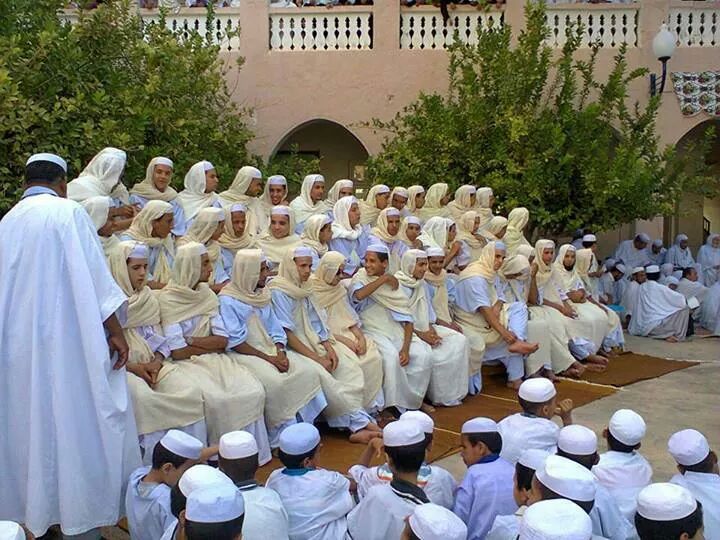
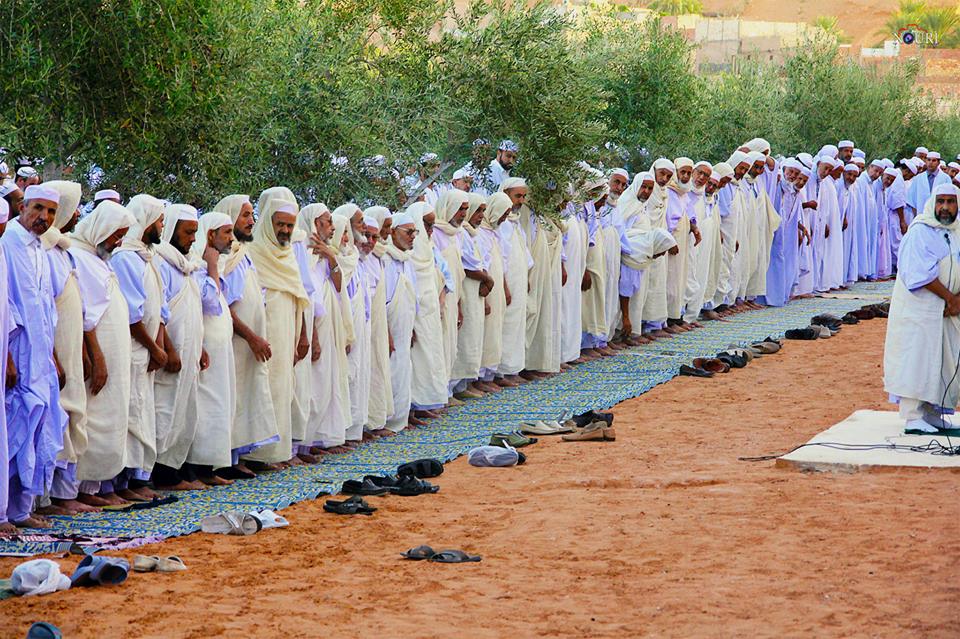


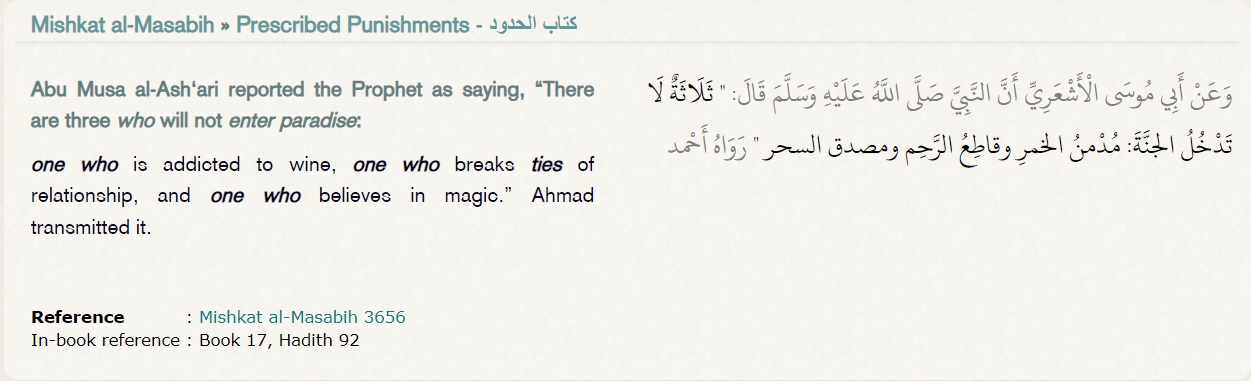
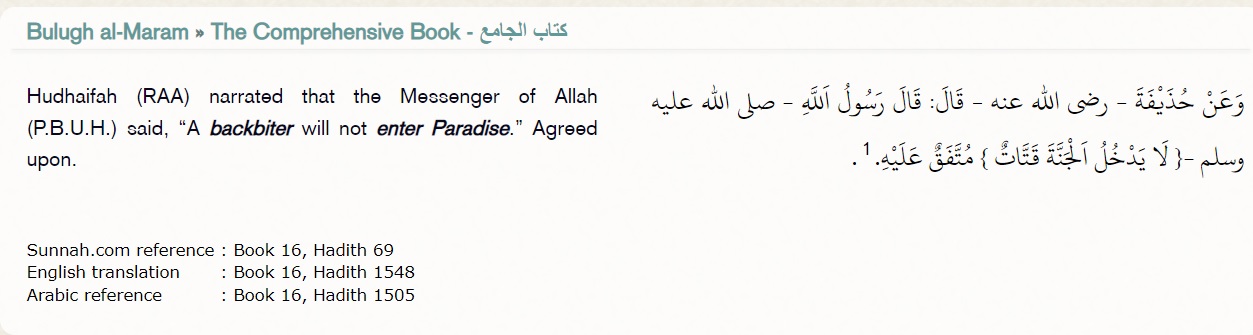
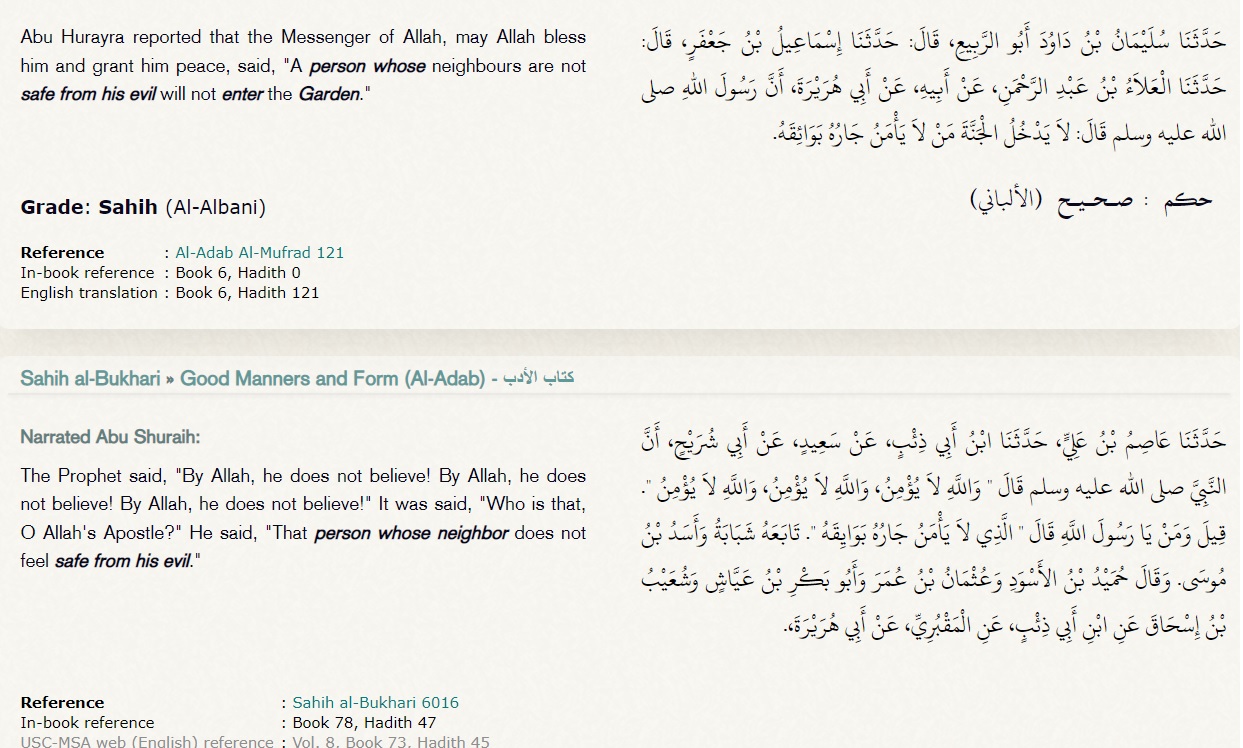

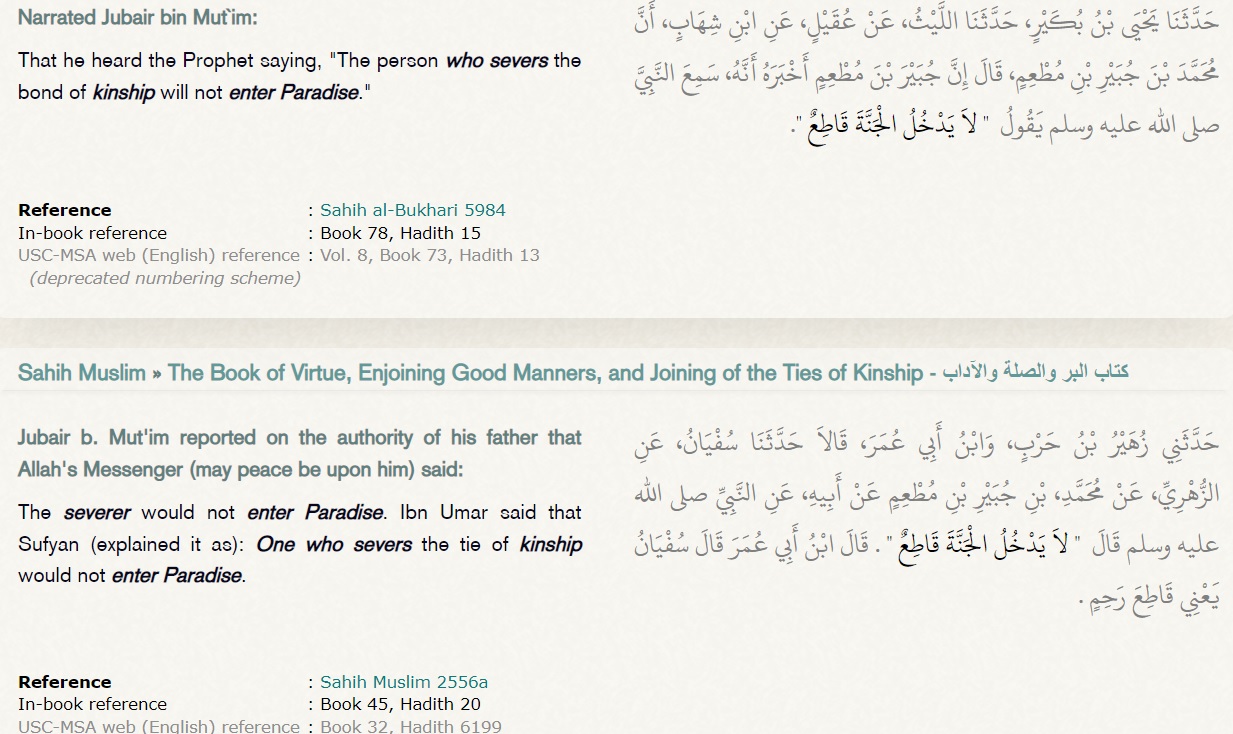
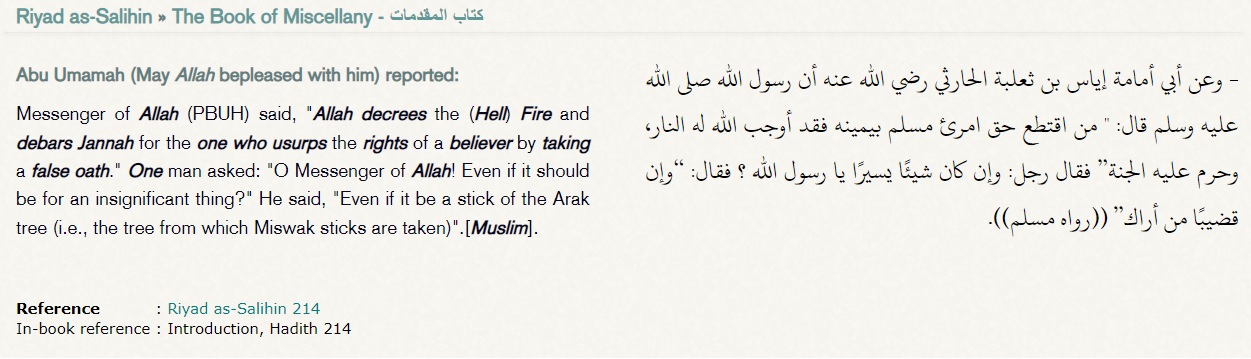


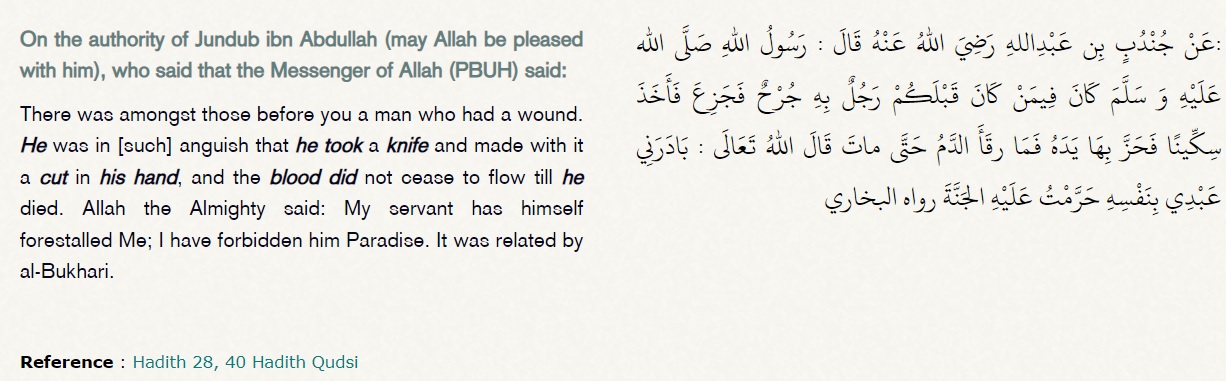


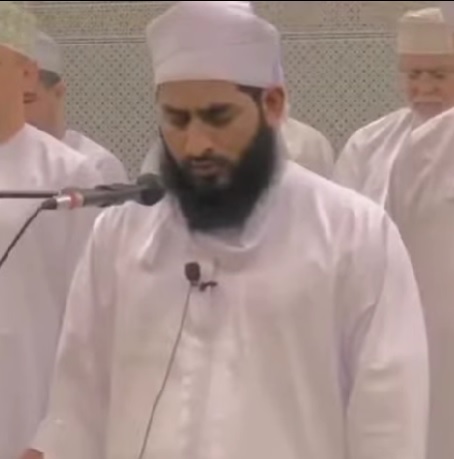
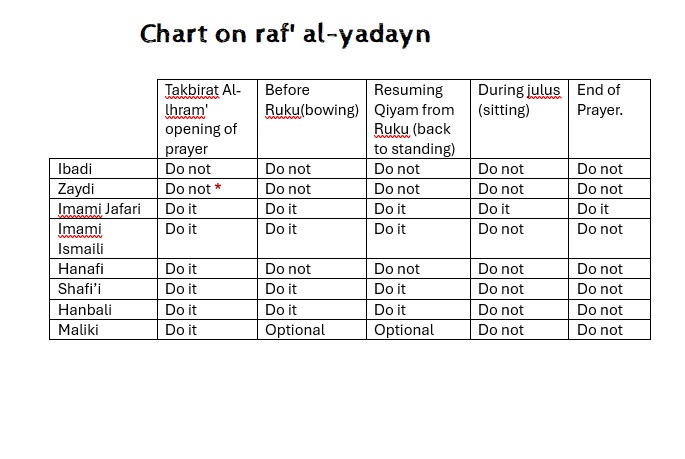
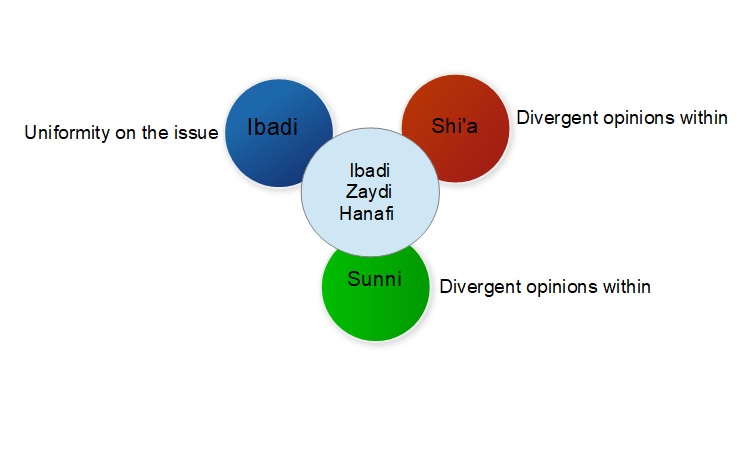
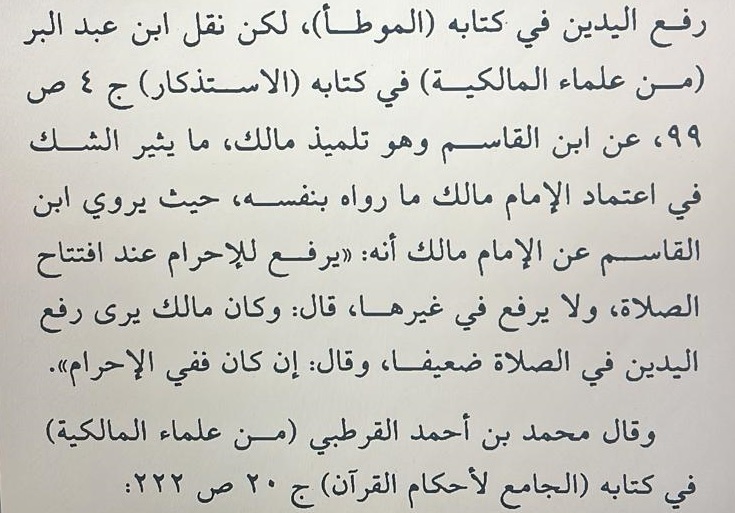
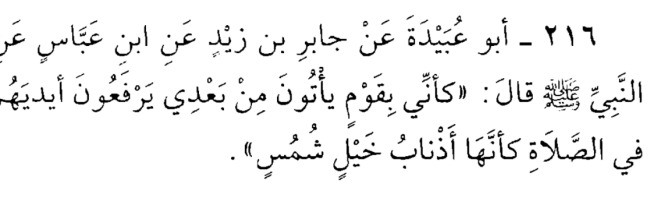
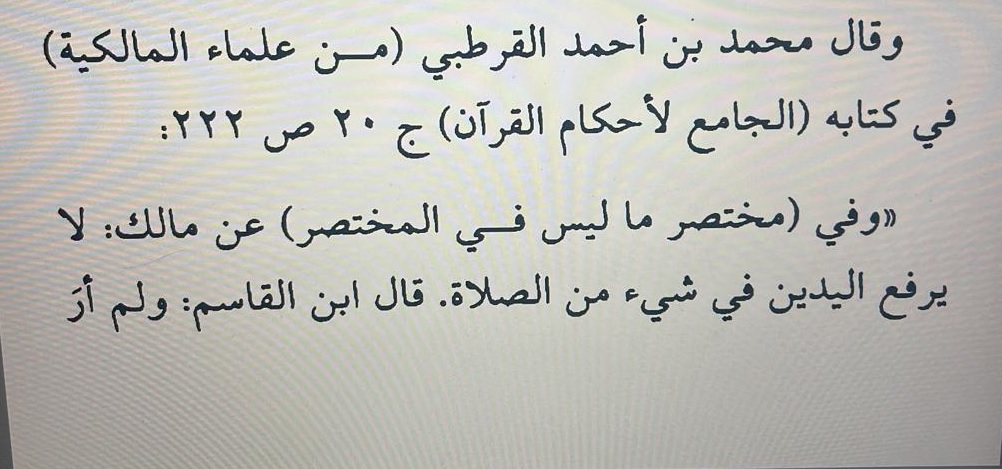
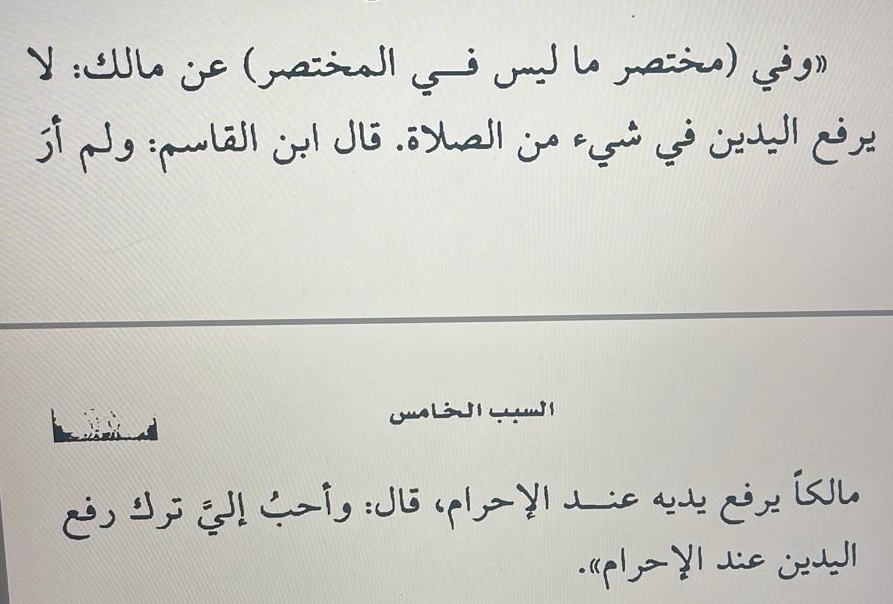
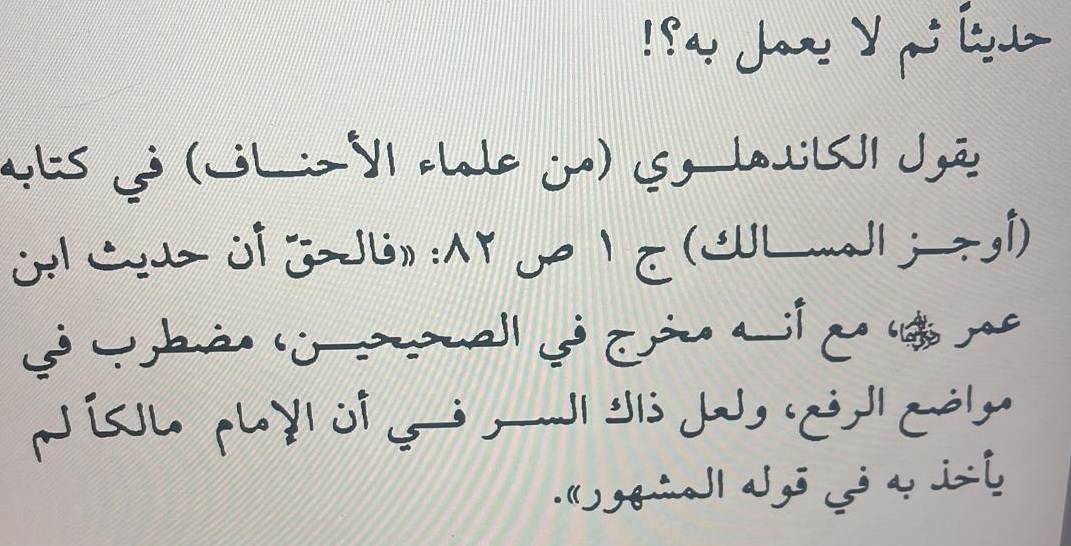
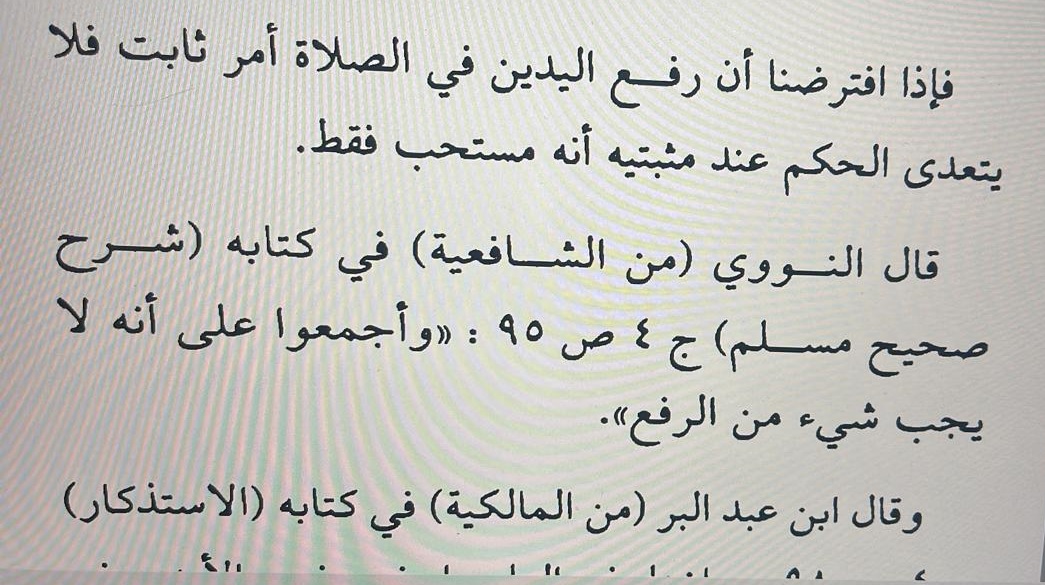

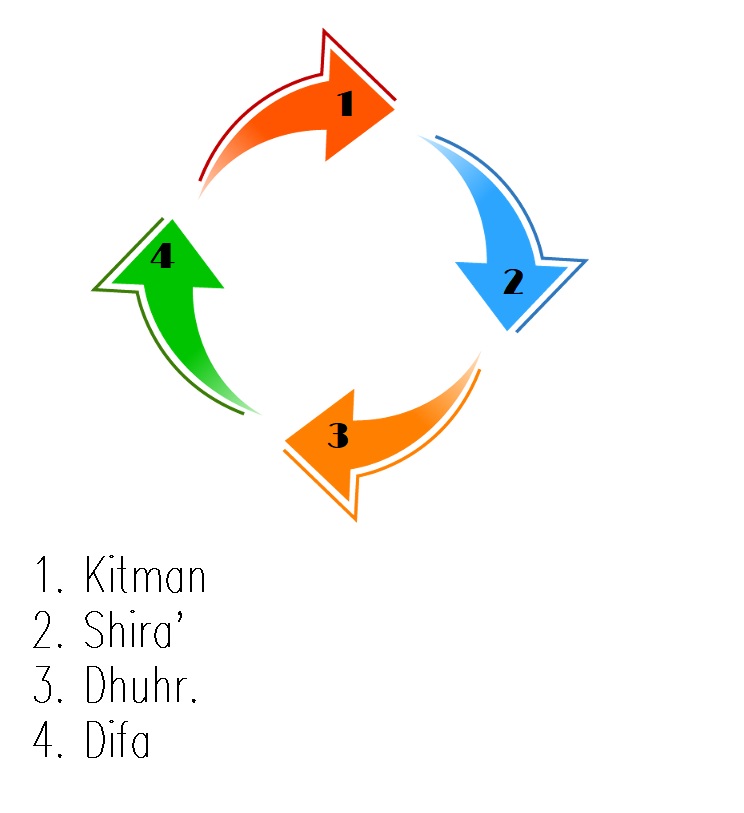


 Prima Quran