
Tag Archives: mutazila

The Ibadi vs the Mu’tazila Where does knowledge of morality come from?

“And if it was not for the favor of Allah upon you, and His mercy, a group of them would have determined to mislead you. But they do not mislead except themselves, and they will not harm you at all. And Allah has revealed to you the Book and wisdom and has taught you that which you did not know. And ever has the favor of Allah upon you been great.” (Qur’an 4:113)

“By Allah , We did certainly send messengers to nations before you, but Satan made their deeds attractive to them. And he is the disbelievers’ ally today [as well], and they will have a painful punishment.” (Qur’an 16:63)

“And when Satan made their deeds seem fair to them and said: No-one of mankind can conquer you this day, for I am your protector.” (Qur’an 8:48)

“If only, when Our calamity came upon them, they humbled themselves. But their hearts hardened, and Satan made their deeds appear good to them.” (Qur’an 6:43)

“And Satan had made pleasing to them their deeds and averted them from the path, and they were endowed with perception.” (Qur’an 29:38)

﷽ 

“As for the disbelievers, their deeds are like a mirage in a desert, which the thirsty perceive as water, but when they approach it, they find it to be nothing. Instead, they find Allah there ˹ to settle their account. And Allah is swift in reckoning. Or ˹ like the darkness in a deep sea, covered by waves upon waves, topped by clouds. Darkness upon darkness! If one stretches out their hand, they can hardly see it. And whoever Allah does not bless with light will have no light!” (Qur’an 24:39-40)

This entry is not to say that the Ibadi school holds disdain for the Mu’tazila for they agree with us on many positions. Positions that are based upon the Qur’an & Sunnah. This is where the Ashari school agrees with the Ibadis of Basra on this matter.

However, as Allah (swt) has informed us:

“Such is Allah, your Lord, the Truth. So after the truth, what else can there be, save error? How then are you turned away?” (Qur’an 10:32)

We should state that our team has neither a theologians or a philosophers and not classically trained in either field. We weigh in on this matter as a students. Much of the depth, richness and treasure of the Ibadi perspective in is behind the grasp of the Arabic language.

Surely the point of difference with the Mu’tazila on this matter are twofold

  1. That human beings via reason alone can reach absolute truth of moral laws apart from divine revelation or divine inspiration. Which leads people to believe in point 2.
  2. That actions have innate qualities of ‘good’ or ‘bad’ and/or that actions have innate qualities of ‘evil’ and ‘righteousness’ apart from being informed by revelation on the matter.

Our school stands apart from the Mu’tazila on these doctrinal errors.

That is to say the Ibadi school stands on the belief of what is called by others as ‘Divine Command Theory‘.

What is divine command theory? That is the belief that actions in and of themselves are neither morally evil nor good. Rather it is divine revelation that reveals to us if actions are morally ‘good’ or ‘bad’.

Take eating pork for example. In general Muslims are prohibited from eating pork. Thus eating pork would be morally wrong according to revelation. However, revelation has also revealed that there are situations in which eating pork is necessary, and therefore a meritorious act. So it is not that the action of eating the pork in and of itself is morally repugnant or morally meritorious. It is what divine guidance informs us about the matter.

“Prohibited to you are dead animals, blood, the flesh of swine, and that which has been dedicated to other than Allah, and killed by strangling or by a violent blow or by a head-long fall or by the goring of horns, and those from which a wild animal has eaten, except what you slaughter, and those which are sacrificed on stone altars, and that you seek decision through divining arrows. That is grave disobedience. This day those who disbelieve have despaired of your religion; so fear them not, but fear Me. This day I have perfected for you your religion and completed My favor upon you and have approved for you Islam as religion. But whoever is forced by severe hunger with no inclination to sin – then indeed, Allah is Forgiving and Merciful.” (Qur’an 5:3)

Some of us used to hold to the position 1. That was before we were graced with this right guidance on this matter.

So as what they published on the matter was public they hereby make a public repentance to Allah (swt) and to all thosethey may have unknowingly mislead on this essential epistemological matter.

Another point is this. Many in the Muslim ummah understand the problems of ascribing Allah (swt) parts such as limbs and hands and a foot. Yet, we equally must be careful in creating an idol of Allah (swt) in our minds by superimposing upon the Creator that he should or should not be like this or that.

Allah (swt) has never been, is not and never will be under the sovereignty of his Creation. Allah is sovereign and we are under him!

Allah is not constrained by any laws. Physical, Natural or Moral laws. The only constraints upon Allah are that which he imposes upon himself.

“The word will not be changed with Me, and never will I be unjust to the servants.” (Qur’an 50:29)

Allah has clearly stated that he has the capability and capacity to be unjust. However, it is something that he has forbidden to himself.

Note that Allah (swt) has never ascribed himself with the ability or capacity to lie.

We have an article on that here:

“Those messengers – some of them We caused to exceed others. Among them were those to whom Allah spoke, and He raised some of them in degree. And We gave Jesus, the Son of Mary, clear proofs, and We supported him with the Pure Spirit. If Allah had willed, those [generations] succeeding them would not have fought each other after the clear proofs had come to them. But they differed, and some of them believed and some of them disbelieved. And if Allah had willed, they would not have fought each other, but Allah does what He intends.” (Qur’an 2:253)


Allah tells us that it IS his will that they fight each other, otherwise they would not.

“Mankind was a single community, then Allah sent prophets to bring good news and warning, and with them He sent the Scripture with the Truth, to judge between people in their disagreements. It was only those to whom it was given who disagreed about it after clear signs had come to them, because of rivalry between them. So by His leave Allah guided the believers to the truth they had differed about: Allah guides whoever He will to a straight path.” (Qur’an 2:213)

“Indeed, those who say, “Allah is the Messiah, son of Mary,” have fallen into disbelief. Say, ˹O Prophet,˺ “Who has the power to prevent Allah if He chose to destroy the Messiah, son of Mary, his mother, and everyone in the world all together?” To Allah ˹alone˺ belongs the kingdom of the heavens and the earth and everything in between. He creates whatever He wills. And Allah is Most Capable of everything.” (Qur’an 5:17)

When Allah (swt) says and who would prevent Allah from destroying Jesus the son of Mary, including his mother and everyone on the earth altogether? The answer is no one. Allah is a the ultimate sovereign creator.

“He is not questioned about what He does, but they will be questioned.” (Qur’an 21:23)

So a major difference between Ahl al-Haqq wa-l istiqama (The People of Truth and Straightness) and the Mu’tazila is that we believe that Allah (swt) is Sovereign above all. Allah (swt) determines what is good or bad via his commands and prohibitions.

Where as for the Mu’tazila Allah is good and must do good because we want Him to be good. A god of our own making.

Note the following:

” Verily, we know with certainty that some things are [morally] good and some things are [morally] bad, [and we know this] without considering revelation. Thus, every sane person firmly believes that charity is good, and they praise the charitable, and [firmly believes] that injustice is [morally] bad, and they blame the unjust. These [moral beliefs] are necessary judgments, and not subject to any doubt; and they are not acquired from Sharia, as the Brahmins and atheists, who do not believe in any Sharia, also make the [moral] judgments.”

Sources: (al-Ṭūsī & al-Ḥillī, Kashf al-murād, 281. Cf. al-ʿAllāma al-Ḥillī, Nahj al-ḥaqq, 83.
For an articulation of the argument in earlier kalām periods, see ʿAbd al-Jabbār, al-Mughnī, vol. 6, part 1, 18, 106, and 109; vol. 14, 152)

Prima-Qur’an comments. So the Mu’tazila claim that it is innate that charity is good.

Our position is that charity is not some how innately ‘good’. Charity can breed short term dependency this can become long term dependency, stops one from becoming self reliant and makes them feel dependent upon others. Charity can be used to manipulate people, organizations and institutes.

The aim of charity often cultivates a false sense of duty to society.

As Warren Buffet stated:

“The American investor and philanthropist Warren Buffett acknowledges that he would not have acquired his own wealth without certain necessary conditions: “If you stick me down in the middle of Bangladesh or Peru, you’ll find out how much this talent is going to produce in the wrong kind of soil.” Without stable infrastructures, it will be difficult if not impossible to rise above poverty, no matter how hard you work or how talented you are .”

Source: (Peter Singer, The Life You Can Save, p. 31).

Thus, instead of tackling the core reasons why people need charity, charity becomes
a simple cop out to make one feel they have done some moral good for society.

To make statements like: “every sane person firmly believes that charity is good.” is emotive rhetoric and poisons the well.

As regard what is just and what is injustice that is also begging the question. What is justice and what is injustice?

As the Brahmins and atheists, who do not believe in any Sharia, also make the [moral] judgments.”

Note the Mu’tazila appeal to atheism. We will crush this argument soon enough. Allah-willing.

It is also this man made inclination to make Allah in our own image that lead to strife among the Mu’tazila, The position of the Zaydi, Twelver Shi’i, and Ibadi is that hellfire is eternal for whoever enters it. However, some under the umbrella of Mu’tazila notions of ‘justice’ present the idea of an eternal hellfire as not just. Does any evil action truly merit eternal suffering and damnation?

Interestingly and perhaps ironically the Ibadi school recognizes the logical outcome of Nihilistic societies wherein we are left with moral relativism. The irony here being that adherents of the Mu’tazila school often appeal to absolute truth and revelation in the push back against moral relativism.

Yet, when the human reason is left at the seat of power moral relativism is one of logical outcomes.

“These are the ones who have purchased straying with guidance; their trade did not profit them, nor were they guided.” (Qur’an 2: 16)

“It is they who take error in exchange for guidance, and suffering in exchange for forgiveness: yet how little do they seem to fear the fire.” (Qur’an 2:175)

The two schools of Islam that follow the position of the Mu’tazila are Twelver Imami Shi’i and Zaydis.

The Twelver  Imami Shi’i believe that divine guidance comes from the infallible interpretation of a divinely appointed Imam.

Yet, the Mu’tazila position undermines guidance from divinely appointed Imams. It certainly does not make the juristic position of a learned Imam from the line of Fatima (ra) conclusive; especially If human beings can reach absolute truth concerning morality via reason then being led by Imams or practicing taqlid becomes moot.

Questions for the Mu’tazila position.

Is belief in Allah morally good?

Is it morally evil?

Is belief in Allah inherently good or inherently bad?

How is this reasoned apart from divine revelation, or divine inspiration?

So what does it say about a worldview in which a person can be moral atheist?

Because our argument is there are moral atheist but there is no moral atheism.
Mu’tazila would bring in a world view in which moral atheism is plausible.

The Mu’tazila position is able to accept and accommodate a deist view of God. No God at all. Pantheism, Pan-deism. It is an accommodating model.

So when having such an accommodating model one must ask:

How does that enjoin the good and forbid the bad?
How does this invite people to believe in Allah?

The Mu’tazila effectively strip the da’wah of Muslims against moral relativism.

Have we not noticed that people like Sam Harris whom are trying to argue for a world in which science will be able to tell us what we ought to do to live the best lives possible.

Concerning his book: A Moral Landscape

We read in the following:

https://www.samharris.org/books/the-moral-landscape

“Sam Harris’s first book, The End of Faith, ignited a worldwide debate about the validity of religion. In the aftermath, Harris discovered that most people—from religious fundamentalists to non-believing scientists—agree on one point: Science has nothing to say on the subject of human values. Indeed, our failure to address questions of meaning and morality through science has now become the most common justification for religious faith. It is also the primary reason why so many secularists and religious moderates feel obligated to “respect” the hardened superstitions of their more devout neighbors.”

“In this explosive new book, Sam Harris tears down the wall between scientific facts and human values, arguing that most people are simply mistaken about the relationship between morality and the rest of human knowledge. Harris urges us to think about morality in terms of human and animal well-being, viewing the experiences of conscious creatures as peaks and valleys on a “moral landscape.” Because there are definite facts to be known about where we fall on this landscape, Harris foresees a time when science will no longer limit itself to merely describing what people do in the name of “morality”; in principle, science should be able to tell us what we ought to do to live the best lives possible.”

“Bringing a fresh perspective to age-old questions of right and wrong, and good and evil, Harris demonstrates that we already know enough about the human brain and its relationship to events in the world to say that there are right and wrong answers to the most pressing questions of human life. Because such answers exist, moral relativism is simply false—and comes at increasing cost to humanity. And the intrusions of religion into the sphere of human values can be finally repelled: for just as there is no such thing as Christian physics or Muslim algebra, there can be no Christian or Muslim morality.”

Just a quick comment about the above statement:

Harris foresees a time when science will no longer limit itself to merely describing what people do in the name of “morality”; in principle, science should be able to tell us what we ought to do to live the best lives possible.”

Allah (swt) knows best the future. Yet, given that this world is dominated by global conglomerates and economic interest watch and see a dark utopian world unfold where science does not merely tell us what we ought to do but science compels us to do what we must do.

The Mu’tazila have objections against divine command theory. However, they do not have solid epistemological evidence for their position.

It’s good because it’s good is circular. In order for reason to be reasonable it must have imposed limitations on it.

Who or what imposes those limitations upon reason?

The same in our position against moral relativism. Sam Harris has to make a case for some kind of morality otherwise he and his colleagues lose a basis or a grounding to attack hudud laws of the Shari’a. He has to make a case (under the rubric of the so called ‘neutrality’ of science) so as to mask the attacks for what they really are: Namely arguing for the cultural/civilizational superiority of one people over another.

So just as the there has to be an objective basis to determine what is moral there therefore needs to be an objective basis to determine what is reasonable. Otherwise it would not have an opposite: unreasonable.

In order for reason to be reasonable it must have imposed limitations on it.

The self evident and self refuting nature of reason being some type of objective basis to determine what is rationally good or rationally bad is that people have not come to a consensus on the matter.

Killing animals to sustain ourselves. Is this ethical? On what reasonable basis is such an action deemed good or bad?

Are our positions more or less justified and/or reasonable on the basis concerning the manner in which we kill the animal? Bullet to the head, strangulation, arrow to the jugular?

What about plants? If they are sentient on what objective basis grounded in reason is it morally good or bad to uproot them and eat them? What about destroying trees to make way for the building of residences?

If I have been informed that over population of the planet will most definitely lead to the extinction of our species would it be unreasonable for me to develop a virus with the intent to save the species by killing of a huge number of people in the process? I could cover my tracks by releasing said virus near a biolab to make it look like it was an accidental contagion leak. I could further justify my reasoning by stating to myself that the virus is indiscriminate it kill rich and poor and all ethnic groups alike.

In fact, in 2019 Marvel Studios debuted a movie called: End Game. The Protagonist, a not-very-well-thought-out villain named ‘Thanos’ did not see himself as a villain. His objective was to collect a series of 6 stones with the ability to grant him any wish he wanted. His motive or his reasoning was that the universe is filling up with life forms, thus he wanted to indiscriminately annihilate half of all life so that the other half could be grateful and thrive.

However, his reasoning is deeply flawed on many accounts.

  1. By annihilating half of all living things including those living things that other living things consume, eat or depend upon for their own survival essentially made things the way they were before.
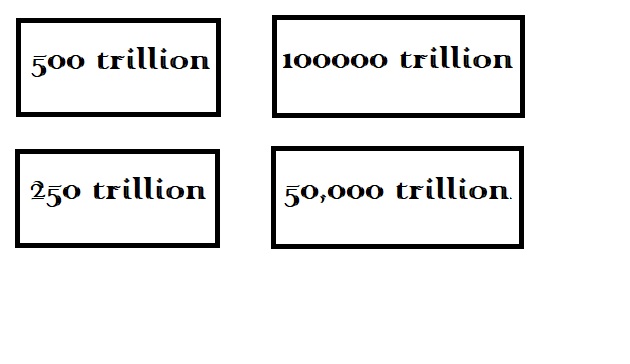
The above example amounts to 500 trillion we can say represent higher life forms and sentient beings. The 1000000 trillion represent the living things that the 500 trillion depend on. Thus, Thanos by eliminating half of all life forms across the board did not really fix much of anything. His reasoning being deeply flawed.

Lastly, he could have willed for a universe of infinite resources and cooperation across all sentient species. But that would not have made for an interesting film.

Metaethics. Who would you kill and why?

This question tries to determine the basis or reason that each party would give for doing what they do. The very fact that there are different responses to this question also shows that human reasoning is limited. It is limited in both its ability and capacity to see what is ultimately good or bad.

  1. The question also assumes that a person would want to make the decision to kill anyone at all. Though the counter is that by not acting the person is killing. The counter to that counter is that by not acting the person is taking into account the possibility of train malfunction or derailment etc..
  2. Many might reason that killing one is preferable to killing five. Thus life is quantified. However, are there situations when killing more people is preferable to killing less? Think of a battlefield. Killing more of the enemy soldiers does it instill in them reason to come to the negotiating table or surrender or does it instill in them hardened resolve wanting them to press on to victory?
  3. What if a person reasons killing the five is better than killing the one. The justification, basis or reasoning can be that they know nothing about the one or the individual. The one is a potentially nasty person and the five are nasty people. Thus sparing one nasty person is better than sparing five nasty people.

On and on it goes. In fact there could be organizations willing to test the moral fabric of a human being on the basis of reasoning alone by posing hypothetical questions to see how far they would be willing to go to commit certain acts.

  1. There is a perfectly healthy human child. Humans are born all the time. This child has not manifested anything note worthy about themselves. Yet we have five well known philanthropist and entrepreneurs who contribute a great deal to human culture and civilization. Each of them are gong to die unless they get a Heart, Kidney, Liver, Lungs and Pancreas respectively. It could be perfectly reasonable to kill the child who has yet to manifest any potential and harvest those organs.

Recall Harris remark:

Harris foresees a time when science will no longer limit itself to merely describing what people do in the name of “morality”; in principle, science should be able to tell us what we ought to do to live the best lives possible.”

There are already people on this planet who have a great deal of disdain for the impoverished.

We learn our ethics and our morality and our right and wrong via our culture.

The Ibadi view is that culture conditions us where as revelation breaks this conditioning.

The limits of the mind and the limits of human sensory perception.

“The human intellect is a gift from Almighty Allāh, and the ability to think and reason is one of his favours bestowed upon us. Thus, pondering over the written verses of the Qur’ān and
reflecting over visual signs of Allāh are things both the Book of Allāh and His Prophet’s Sunnah urge us to practice. However, deactivating the mind from understanding the texts in their entirety leads to serious issues, such as likening all-Powerful Allāh to human beings and giving Him some of His creatures’ physical and non-physical attributes. This group of literalists became captives to the apparent literal wordings of the texts, forgetting that the Qur’ān is an Arabic book, including both literality and metaphor. On the one hand, it is beyond doubt that the human mind is limited, just like any limb or organ in a human being. Likewise, the human senses that feed the mind with intellectual material are also limited. On the other hand, it is well-known that the human mind cannot work in a vacuum without intellectual material to deal with, and to conduct its logical processes. Hence, al-Akmah (who was born blind) cannot imagine in his mind colours, such as red and yellow, even if he or she hears about their beauty and descriptions of them.”-Shaykh Al-Muatasim Al-Mawali

Shaykh Al-Muatasim continues…


“Similarly, the person who was born deaf and never heard people’s speech cannot, even with his sound mind, express with his tongue what he finds within himself. This is because of the
fact that his mind does not perceive such images or words, due to the simple fact that the receivers for this data are not working. In the same manner, it is said regarding the rest of
these human faculties. Likewise, it is said about the favours of paradise, the human being cannot imagine its reality, as is narrated in the tradition: ‘There will be bounties which no eye
has seen, no ear has heard and no human heart has ever perceived
’.” -Shaykh Al-Muatasim Al-Mawali

Source: (https://sunnah.com/bukhari:7498)

“The senses that represent the mind’s intellectual sources, even in their ideal condition, are limited. Our bare eyes cannot see what is too far away, such as those millions of stars, planets and galaxies with their magnificent sizes; neither can they see what is too close to them, nor the millions of microscopic living creatures floating around us. Equally, we are unable to see sound and electromagnetic waves, even though they undoubtedly exist, as proven by specially designed devices. On the contrary, the human eyesight might see a mirage from afar and would think it is fresh water. This optical scene has been affirmed in His saying:


‘But those who disbelieved – their deeds are like a mirage in a lowland which a thirsty one thinks to be water until, when he comes to it, he finds it is nothing’ (Qur’an 24:39).


“The same is applicable to the other source of the mind, hearing. The human ear cannot perceive the super-fine sounds around it, despite them being very close to the ears. It does not hear loud and noisy voices if they are too far away, nor can it hear the voices of earthly explosions that might take place under our feet.” -Shaykh Al-Muatasim Al-Mawali


“With all that in mind, and with the assumption that the inputs entering through these limited senses are correct, the mental outputs do not have to be necessarily correct and conclusive, because the mind might be influenced by various secondary factors caused by the impact of the surrounding environment. Another influencing factor is the different beliefs and ideologies that different people assume to be unquestionable reality. Had all these differences not existed, people would not have been different from each other. But such difference is the divine will and an ongoing precedent in creatures, as Allāh states:

And if your Lord had willed, He could have made mankind one community; but they will not cease to differ. Except whom your Lord has given mercy, and for that He created them’ (Qur’an 11:118-119).


“Besides these external factors, some people might be influenced by some inner diseases, such as pride, arrogance and showing off, with which some are obsessed. Consequently, such
subtle diseases could mask reality from people so much so that they view reality as an illusion, the truth to be falsehood and a mirage to be sweet water.”-Shaykh Al-Muatasim Al-Mawali


“Additionally, the soundness of the mind is a prerequisite of responsibility/accountability (taklīf). Thus, none of the legal responsibilities are binding upon the insane, as the scholars say: ‘If Allāh takes what he granted (i.e. the mind), he drops what he obliged’. Hence, the mind is just a condition of obligation, and not a legislating source for legally responsible/accountable humans (mukallaf). The issue of legislation is tied to sending messengers of warning, as the all-Powerful says:


“And We never punish until We have sent a Messenger’ (Qur’an 17:15).


“We can see here, in this verse, that He did not say until We have fixed minds. Otherwise, everybody around the globe would have his unique religion, due to the variety of thoughts and ways of thinking. Therefore, even if the mind arrives at a conclusion regarding
something being good or bad, that does not mean in any way that it is permissible or prohibited, because the matters of Sharī‘ah and legal rulings are dependent on the two kinds of revelation: explicit (the Qur’ān) and implicit (His Prophet’s Sunnah).” -Shaykh Al-Muatasim Al-Mawali

Source: (Shaykh Al-Muatasim Al-Mawali Al-Muatamad The Reliable Jurisprudence on Prayer pgs. 32-35)

Section 9: Divine Law Has No Rational Foundation

“The corruption of the Mu‘tazilite doctrine that the laws of the Shari‘a concerning human acts can be rationally discerned, even without a prophetic mission, can also be clarified by admitting, for the sake of argument, the principle of the rational necessity of deeming something good or evil because of the contradiction between different perspectives, in order that the corruption of their opinion on this matter may become manifest.”

“If we consider gratitude to The Most High for His blessings on us before the coming of the law, according to them reason would make gratitude to The Most High obligatory, without requiring the coming of a lawgiver, because knowledge of The Most High and the knowledge that He bestows blessings are rationally comprehended without the law, as are the goodness of thanking the One who bestows blessings and the evil of ingratitude to Him. Therefore, the obligation to give thanks and the prohibition of ingratitude are understood without the law.”


“We will say to them: This obligation to give thanks before the Shari‘a must have a benefit, because if there is no benefit to it, then it is not good until it becomes obligatory. But the affirmation of a benefit before the coming of the Shari‘a is absurd, because either its benefit goes to the person who gives thanks, or to the Lord Who is thanked. If it goes to the person, the benefit is either immediate or postponed, or all the allotments [of benefit] are void. Th e falseness of its going to the person immediately is because the immediate impact on him is only fatigue. The falseness of its going to him later is because, according to consensus,
the intellect had no ability to understand the affairs of the afterlife before the coming of the law. The falseness of its going to the Lord Most High is because He transcends any renewal of His perfection; indeed, in His essence He has no need of people and their deeds.”

“This point of view is rational and repels the obligation of giving thanks and contradicts their point of view which makes it obligatory, which is the comprehension that The Most High bestows blessings.”


“If they say, “We do not accept that there is no benefit to giving thanks before the coming of the Law; indeed, there is a benefit to the person, and that is safety from the punishment that could be imposed for turning away from giving thanks,” we say that likewise it is possible for the act of giving thanks to be punished, for two reasons:


“First, he has caused fatigue to someone who belongs to Allah Most High and has done this without His permission. In this he is like someone who thanks a king who has enabled him to receive a blessing, in that he causes the king’s servant fatigue by giving thanks for it without his permission. There is no doubt that by thanking the king for this blessing, he has exposed himself to punishment.”


“Second, it is a matter of an extremely generous king giving him a little piece of barley bread, for example, while he has treasure-houses of different types of food and infinite wealth, and it would not diminish him in any way for him to give him from his stores. Then that poor, needy person mentions the king and praises him in social gatherings for giving him this piece of barley bread. He would deserve punishment from the king for mocking him and thinking little of him, making him out to be a coward by praising him for something that imposes no burden on him at all. There is no doubt that all the blessings of this life and the next are like nothing compared to the greatness of Allah Most High and the wideness of His dominion and majesty. So it is clear to you by this that for reason to enter into the laws of Allah Most High concerning acts with the scale of approval and disapproval is to enter with a faulty scale that will make its owner turn back exhausted.”


“If you say, “All this clashes with what you have affirmed before from the teaching of your imams, who agree with the doctrine of the Mu‘tazila,” I say, as for its clashing with it, you are right; what I have affirmed here is the teaching of the company of our companions, as well as the Ash‘arites. As for the teaching of some of our imams being the same as that of the Mu‘tazila, this is incorrect, as I have already explained, because of the evident difference between the two schools: the Mu‘tazila say that the judge is reason and that the law is an affirmation of rational judgment, and that it does not bring anything that differs from this, whereas the teaching of those imams is that judgment belonged to reason before the coming of the law, but after it comes, the law is the foundation, and it may bring something
that does not accord with human reason. So there is a difference.”

“Another thing that demonstrates the denial of the principle that good and bad can be rationally known is that we say, regarding someone with respect to whom all acts are equal, that nothing he does can be deemed good or bad. Acts are equal with respect to the Creator; nothing He does can be deemed good or bad, because if an act is deemed good, this requires a preference for doing it over not doing it, and if it is deemed bad, this requires a preference for abandoning it over doing it, but deeming them equal negates any preference. This is why we said previously that what is preferred in contingent things is simply whatever The Most High wills.”


“The demonstration (bayan) that all acts are equal with respect to Him is that the Glorified One transcends benefit and harm. If we are able to do something that causes us no harm, and if by not doing it no benefit escapes us, then there are no repercussions from our doing it or not doing it. All acts with respect to The Most High are like this supposed act with respect to us. Furthermore, if all acts were not equal with respect to Him, it would be better for Him to bring them into existence than not to bring them into existence, which would lead to His perfection being due to His acts, and you know that He is perfect in His essence and in His attributes, which are the same as His essence, not by His acts. So the conclusion is that with respect to The Most High, nothing is either good or evil. And Allah grants success (wa-bi-’l-lahi ’l-tawfi q).”

Source: (Shaykh ‘Abd al-Aziz al-Thamini al-Mus’abi on God’s Power and Human Acts, from Kitab Ma’alim al-Din)

What about the justice of Allah in creating humanity?

One may say, “I was never asked to be created. I was never asked to be brought into an existence in which I had to choose between heaven and hell.” “The stakes are so high. I could go to heaven but I could end up in hell.” “I never asked for this reality to be foisted upon me!”

If Allah must do what is good at all times cannot it not be effectively and rationally argued that given the choice between non being and non existence and being brought into being exposed to a world of different belief sets, choosing the wrong belief set or the wrong course of action could damn one to eternity in hell; than what is maximally good is to not create or bring that individual into being in the first place. Unless, no matter what choices or what actions the individual does they would be guaranteed paradise.

“He is not questioned about what He does, but they will be questioned.” (Qur’an 21:23)

The Role of Fitra in knowing Allah

We have expanded more on that here:

https://primaquran.com/2024/07/12/ashari-aqidah-ibadi-aqidah-on-ahl-al-fatrah

The proof of “Fitrah” (natural inborn belief in Allah)

Allah (swt) has informed us in the Qur’an:

“I did not create jinn and humans except to worship Me.” (Qur’an 51:56)

For those Arabic grammarians out there look closely at the above text.

the lam [translated here as “so that”] is placed there only to indicate the outcome (al-sayrura wa-’l-‘aqiba) thus the verse can be understood as: “I created the jinn and humans therefore they worship.”

There is a growing field of scientific research centered around neurology that states: ‘Human beings are wired for worship.’

https://www.psychiatrictimes.com/view/neurotheology-are-we-hardwired-god

“When your Lord brought forth from the loins of the children of Adam their descendants and had them testify regarding themselves. “Am I not your Lord?” They replied, “Yes, You are! We testify.” “Now you have no right to say on Judgment Day, ‘We were not aware of this.’” (Qur’an 7:172)

 “So, set your face toward the religion in uprightness. That is the “Fitrah” of Allah, upon which He has created mankind. Let there be no changing of Allah’s creation.” (Quran 30:30)

The pledge which Allah took from the soul of every one of us before we came into this world.

“And [remember], when your Lord took from the children of Adam, their children behind them, and made them testify over their own selves, [saying to them], ‘Am I not your Lord?’ They said, ‘Yea.'” (Quran 7:172)

The human being has an inherent and inborn recognition of the Creator.

Abstract language.

The very fact that the word ‘nothing’ has a meaning that we understand but cannot give a physical representation to. If you were to close your eyes and try to imagine nothingness you would either imagine an all black space or an all white space, both of which would still be something.

How many times have we known about atheists who find themselves in the middle of turbulence on an airplane reaching out to Allah? And how feeble and uncertain are the disbelievers when death or old age approaches one of them. Suddenly, they are not so arrogant.

 “[Allah] it is who causes you to travel over land and sea; until, when you are in the ships, and they sail with [their passengers] with a fair breeze, and they are glad therein, a tempestuous wind reaches them, waves are coming at them from everywhere, and they think that they are overwhelmed therein; [then] they call to Allah, making their faith pure for Him [alone], ‘If You save us from this, we will surely be among the thankful!'” (Quran 10:22)

“Yet, this sincerity is often short-lived. Allah Says (what means): “Then, when He saves them, behold, they rebel upon the earth wrongfully.”  (Quran, 10:23)

“Even though they were convinced, they rejected them out of spite and pride. So consider what happen to those who spread corruption.” (Qur’an 27:14)

Objections that the Mu’tazila raise against our position.

“If [moral] goodness and badness are determined by Sharia, then it would be fine for Allah to command disbelief, denying the prophets, glorifying the idols, observing adultery and theft … as the actions would not be evil per se . . . and thanking the benefactor, returning the deposit, and truth-telling would not be good per se; if Allah were to prohibit them they would become evil. But since it happened, without any objective or reason, that Allah commanded them, they became good. Likewise, it happened that Allah prohibited those [former] actions, and so they became evil. Before He commanded [the latter actions] and prohibited [the former actions] there was no difference between the actions. Anyone whose reason leads him to follow someone whose conviction is this is the most ignorant of the ignorant, and the most foolish of the foolish.”

Source: (al-ʿAllāma al-Ḥillī, Nahj al-ḥaqq, 84. Cf. al-Ṭūsī & al-Ḥillī, Kashf al-murād, 281)

Prima Qur’an responds: If these are the best arguments they have surely they are upon error. An argument like this is half mad and half sound. Allah commands people to disbelieve in him is circular in reasoning. “I am Allah therefore disbelieve in me!”

As regard the points on adultery and theft if Allah commanded it than it would be what is done. Do they not say that Muslims can take the property of the mushrik in battle?

By theft are we not talking about the acquisition of a good, item or property that belonged to one and is considered unlawfully taken by another. But than again who or what determines if an item good or property was taken unlawfully if not Allah? Consider for example war booty.

And know that anything you obtain of war booty – then indeed, for Allāh is one fifth of it and for the Messenger and for [his] near relatives and the orphans, the needy, and the [stranded] traveler, if you have believed in Allāh and in that which We sent down to Our Servant on the day of criterion [i.e., decisive encounter] – the day when the two armies met [at Badr]. And Allāh, over all things, is competent.” (Qur’an 8:41)

From the vantage point of those who have had their booty taken from them would they not argue that this was indeed theft and acquisition of their property that was not taken with consent?

Again as regard the comment on adultery who or what defines what is a legal marriage and what is not if not Allah? The Mu’tazila wants to impose some moral order on the Sovereign, Allah. However, for those who submit to the Sovereign Allah it comes down to: “Did Allah command this or not?” “Is this something permissible or not?”

Again we turn to the Qur’an.

“O you who have believed, when the believing women come to you as emigrants, examine them. Allah is most knowing as to their faith. And if you know them to be believers, then do not return them to the disbelievers; they are not lawful [wives] for them, nor are they lawful [husbands] for them. But give the disbelievers what they have spent. And there is no blame upon you if you marry them when you have given them their due compensation. And hold not to marriage bonds with disbelieving women, but ask for what you have spent and let them ask for what they have spent. That is the judgement of Allah ; He judges between you. And Allah is Knowing and Wise.” (Qur’an 60:10)

So it can be asked is it not inherently morally wrong to marry a woman who is already “lawfully” married to another man according to their custom, beliefs or creed?

Notice I said lawfully in brackets. Because who determines what is or is not? So in the above text that believing woman is indeed married to a disbelieving man according to the laws, customs and beliefs of his society and his people. Thus, she is in adultery in accordance to them. However, Allah (swt) has made that marriage null and void!

In fact, Allah (swt) is being rather magnanimous by ordering: But give the disbelievers what they have spent. When Allah (swt) could have ordered that they receive nothing!

Example of two sisters taking in marriage.

“And [also prohibited are] the wives of your sons who are from your [own] loins, and that you take [in marriage] two sisters simultaneously, except for what has already occurred. Indeed, Allāh is ever Forgiving and Merciful.” (Qur’an 4:23)

Was it morally wrong to do that before? If so why the quasi-tolerance of it by Allah (swt) during the transition period of the Muslims?

Allah is not constrained nor shaped by morality but morality is constrained and shaped by Allah.

The Mu’tazila say that Allah does not do anything immoral -so they want to put human constraints upon Allah. How is it possible for Allah (swt) to do anything immoral when morality itself is defined by Allah (swt).

Thus, is it not surprising to find those who want to shape Islam in accordance with whatever the moral whim of society is to often claim themselves as the inheritors of the Mu’tazila.

Another argument used by the Mu’tazila is as follows:

“If morality is determined by Allah’s will, then, given that Allah might will different things for different communities, morality would turn out to be relative. Thus, one and the same action would be good for one community and bad for another community. However, morality is not relative. Therefore, morality is not determined by Allah’s will.”

Prima Qur’an responds: Not at all. As in the case that context determines the will of Allah. Just as he wills a woman one thing and a man a different thing he can will one community one thing and another community different. Saying it makes morality relative makes man the author of what is and what is not moral. This is man centric not Allah centric.

This was also addressed by Shaykh Al-Muatasim above.

“To each of you We have ordained a code of law and a way of life. If Allah had willed, He would have made you one community, but His Will is to test you with what He has given ˹each of˺ you. So compete with one another in doing good.” (Qur’an 5:48)

The Question the Mu’tazila cannot address.

Below map let us say represents the entirety of Earth. The Mu’tazila would have to prove that the idea of human reason deciphering or learning that something is inherently good or inherently evil happened in isolation far from any religious tradition. That there was no mark of having any contact with any religious tradition and therefore able to thwart the charge that what they claim that what they claim happened apart from revealed faith, was actually inspired by those who either received revealed faith or received it from those before them.

There has not been until this day an effective response from the Mu’tazila on this point.

Mu’tazila argument:

“Then people who do not believe in any revelation will not have moral knowledge.”


False it is possible for people to have remnants of knowledge based upon previous moral codes before.

For every community We appointed a code of life to follow. So do not let them dispute with you in this matter. And invite to your Lord, for you are truly on the Right Guidance.” (Qur’an 22:67)

The other thing is people can simply assume. They can assume but how certain is that?
Would it be Relative or Absolute? (Again what is the objective criteria)

“And they have thereof no knowledge. They follow not except assumption, and indeed, assumption avails not against the truth at all.” (Qur’an 53:28)

“If you obey most of those on earth they would mislead you far from Allah’s way. They follow naught but an opinion, and they do but guess.” (Qur’an 6:116)

The guess, zann, assumption. They have the probability of being correct and the probablity of being incorrect.

Where are all these ancient cultures and societies where everyone was an atheist?
Or did they have theist and atheist? The assumption is that they did not get their morality from revealed revelation.

A massive assumption on behalf of the Mu’tazila considering the default position of humanity is Adam (as) who learned words from his lord!

Nothing in the Mu’tazila position entails a readiness to accept a sovereign God that interacts with humanity.

If Mu’tazila believe in good and bad independent of sharia than it stands to reason that they must have an objective means to determine what is truth from what is not truth.
Where does this objective means come from?

The Mu’tazila argue as follows:

“We can only make sense of divine justice if God abides by predetermined moral principles.”

Again these put human reasoning of what is and is not concerning the moral law before Allah. Who is in control of what gets pre-determined by God? Man of course!

Mu’tazila believe in a constructed deity that is perfect moral being (because we deem it so).

Other poor arguments -directed against the Ash’ari (but by that token us as well)

They may propose a scenario as follows: One might appeal to cases where no clear end is served by an appreciably good action. For instance, suppose whether you tell the truth or lie, you will achieve your desired end.”

The question itself contains a contradiction. How can there be no clear end being served along with the idea of an achievable desired end?

This Machiavellian reasoning by the Mu’tazila further strengthens our argument because the argument itself is that telling the truth or lying in this scenario is not ethically or morally wrong as the desired outcome was achieved either way.

But this cannot be. This maybe so for this life but not in the life to come. Allah’s curse is upon the liars. How can it said to be an argument at all?

“Allah certainly does not guide whoever persists in lying and disbelief.” (Qur’an 29:3)

As regard the ‘beneficial truth telling’ and ‘harmful lying’ -who or what determines it to be ‘beneficial’ or ‘harmful’.

Beneficial to the one telling the truth or to the one being told the truth? The same applies to harmful lying. Harmful to the one lying or to the one being lied to?

No to mention the unseen motives of the individual telling this supposed ‘beneficial truth telling’ or the ‘harmful lie’- is the individual altruistic or egocentric?

Lastly, as this is a thought experiment it is difficult to concede that this happening in a society independent of revelation and guidance as this was the default position of humanity and as mentioned Allah (swt) had sent prophets to every people.

And again, there are cases where being transparent and truthful are deemed by Allah (swt) not to be morally or ethically the best judgement call.

“Whoever disbelieves in Allah after their belief—not those who are forced while their hearts are firm in faith, but those who embrace disbelief wholeheartedly—they will be condemned by Allah and suffer a tremendous punishment.” (Qur’an 16: 106)

Again it only solidifies our position.

“Or, suppose that a child is drowning, that saving the child will not benefit you, and that it may even be a hardship for you. In such a scenario, it is still appreciably good to save the child, even though no benefits are gained from the action.”

Another poor argument. Everything is taken into account by Allah (swt)

“And be not slack so as to cry for peace and you have the upper hand, and Allah is with you, and He will not bring your deeds to naught.” (Qur’an 47:35)

Question for the Mu’tazila is Allah telling the truth when he says:

“Fighting has been made obligatory upon you, though you dislike it. Perhaps you dislike something which is good for you and like something which is bad for you. Allah knows and you do not know.” (Qur’an 2:216)

That you can incline towards something that is ultimately not good for you. You can recoil from something that is ultimately good for you? So does Allah know or do you know?

This includes the moral law and ethics. Remember, culture conditions us. Revelation breaks that conditioning.

The Qur’an itself is testimony to this. It is filled with edicts that repeal what was culturally acceptable to the Arabs of that time.

In order for us to be truly objective concerning Allah (swt) we would have to encompass all knowledge and it is known that only Allah (swt) encompasses all knowledge. We cannot encompass the whole but we are encompassed by the whole.

We and the Mu’tazila both posit a belief in Allah. We both believe that the need and desire to worship Allah or practice ritual is instilled in us. We believe that an aspect of that is trigged from our fitra; which leads us to Allah.

Our challenge lies therein where we impose upon Allah (swt) our concepts of what is morally good or morally evil. If we are to talk about Free Will & Suffering.

Take for example the Komodo Dragon.

“Any prey manages to escape an attack might not consider themselves lucky for long. A Komodo dragon’s killing power is intensified by a combination of secondary weapons: venom and bacteria. The sharp, serrated shape of a Komodo dragon’s tooth makes it easy for bits of rotten flesh to get caught in the reptile’s mouth, turning their saliva into a mini-habitat for harmful bacteria that can cause untreated bite wounds to become septic. Researchers have also documented a venom gland in the dragon’s lower jaw. This venom prevents their prey’s blood from clotting, which causes massive blood loss and induces shock. Even larger prey animals like water buffaloes may succumb to their wounds after escaping an initial attack—although it may take days for that to happen.”

This is how this creature was designed by Allah (swt) to survive. It’s survival comes at the cost of immense , immense unimageable pain and suffering in this case to this water buffalo. Already imagine the discomfort of sepsis setting in after a bite from one of these Komodo Dragons. Sepsis lasting days and these Buffalo do not have a natural form of defense against it. It is plausible that Allah (swt) could have given them any number of means to defend against this bacteria. Than as you slow down imagine being over powered and eaten alive.

WARNING THIS VIDEO CONTAINS GRAPHIC IMAGES.

Whereas it cannot be effectively argued that it is a must for this creature to exist; or even to survive in this way. There are a myriad of other living things that exist that are not sustained through such obvious suffering.

So does this reflect Allah’s power, terror, wrath, wisdom it is not something readily discernable.

Notable personalities that are influenced by this Mu’tazila position water down sharia.

Lastly, we were thinking of using ad hominem to actually launch a blistering attack upon known personalities that take on Mu’tazila positions. What have we seen from them? Watering down of the sharia. Fantastical interpretations of text they find problematic. Open to accepting LGBTQ+

This is a fundamentally important position of belief that cannot be emphasized enough.


Muslims are having to justify themselves according to the world views of others;
and we have done that long enough.

If morality is fully deductible by reason, then what’s the point of revelation to begin with?

If one can just ponder and reach answers on moral questions it completely robs religion of any meaningful role really.

And this is doubly worse for imami shi’i who try to put forth their imamate doctrine in everything. So it is bizarre for those imami shi’i who do take this counterintuitive view.

Let us rather be justified by our Creator, by submitting to his commands and avoiding his prohibitions and let us not give a concern for the detractors of truth.

 “And they say, ‘Our hearts are in a covering from that to which you call us, and in our ears is a deafness, and between us and you is a veil, so act, we [also] are acting.” (Quran 41:5)

 “Those against whom the decree of your Lord has been verified, will not believe, although every sign should come to them, until they see the painful punishment.” (Quran 10:96-97)

You may also enjoy the following articles:

May Allah (swt) guide the Ummah.

May Allah (swt) forgive the Ummah.

Leave a comment

Filed under Uncategorized

The Ibadi vs the Mu’tazila on kasb (acquisition)

“While Allah created you and that which you do?” (Qur’an 37:96)

“That is Allah—your Lord! There is no god except Him. The Creator of all things, so worship Him . And He is the Maintainer of everything.” (Qur’an 6:102)

“Say, “Who is Lord of the heavens and earth?” Say, ” Allah.” Say, “Have you then taken besides Him allies not possessing even for themselves any benefit or any harm?” Say, “Is the blind equivalent to the seeing? Or is darkness equivalent to light? Or have they attributed to Allah partners who created like His creation so that the creation of each seemed similar to them?” Say, ” Allah is the Creator of all things, and He is the One, the Prevailing.” (Qur’an 13:16)

“It was not you who killed them, but it was Allah Who did so. Nor was it you who threw , but it was Allah Who did so, rendering the believers a great favour. Surely Allah is All-Hearing, All-Knowing.” (Qur’an 8:17)

﷽ 

This view of the Ibadi school is believed to be borrowed by the Ash’ari; meaning they have adopted the view after it was firmly rooted among the Ahl al-Haqq wa-l istiqama (The People of Truth and Straightness).

Or have they attributed to Allah partners who created like His creation so that the creation of each seemed similar to them?” Say, ” Allah is the Creator of all things, and He is the One, the Prevailing.” (Qur’an 13:16)

The above verse shows that the Mu’tazila have a belief in a multitude of beings that are creators. They also open themselves and their adherents why these low level and ultimately silly Christian polemic catch them flat footed.

An example being the following:


But those grounded in strong theology are amused at these feeble attempts by Christian polemics.

In fact, our theology solves real dilemma that are faced by the Christian tradition that have given them the unfortunate choices of Calvinism that God creates the evil and wills the person to do the evil and God chooses the evil for the person to act upon. Calvinism removes the free will of human beings.

Than there is the choice of Molinism which is that the truth values of subjective conditionals of human freedom is Not under God’s control. It is something imposed upon God, but from who or where? Not only this but it is absolutely unnecessary for an all-knowing Creator to have ‘middle knowledge’. Lastly, it gives human beings the ability to resist the decree of God.

These are the messy theological conundrums that the Christians find themselves in.

Allah (swt) creates all things.

Human beings acquire the actions and are responsible for their choice and consequence of the acquisition.

“Allah does not charge a soul except with that within its capacity. It will have the consequence of what good it has earned, and it will bear the consequence of what evil it has earned. “Our Lord, do not impose blame upon us if we have forgotten or erred. Our Lord, and lay not upon us a burden like that which You laid upon those before us. Our Lord, and burden us not with that which we have no ability to bear. And pardon us; and forgive us; and have mercy upon us. You are our protector, so give us victory over the disbelieving people.”
(Qur’an 2:286)

(kasabat wa’alaya ma ik’tasabat)

Man Wills -Allah creates his actions. Man freely chooses and acquires the actions that Allah (swt) creates.

The following is from Shaykh Abd al-‘Aziz al-Thamini al-Mus‘abi on God’s Power and Human Acts, from Kitab Ma‘alim al-Din translated into English via Professor Valerie Hoffman.

Kitab Ma’alim al-Din is a basic book on Aqida that would be taught as an introduction to the subject matter.


Demonstrating That God Creates Human Acts


If you understand the preceding concerning the necessity of the absolute oneness of God Most High, you will know that one may use the proof of mutual prevention (dalil al-tamanu‘) to demonstrate that the Most High is the one who brings human acts (af‘al al-‘ibad) into existence, without any effect from human power on them. Rather, [human power] comes into existence only at the moment of [the act for which it is created]. This is in opposition to the Mu‘tazila, in their claim that human power is what produces (hiya ’l-mu’aththira fi ) the acts according to their choice, and that the eternal power (al-qudra ’l-qadima) has no effect at all on those voluntary acts, and neither does it flow according to the will of God Most High.


The way to prove [that God creates human acts] is the proof that a multiplicity of gods necessarily implies the affirmation of God’s impotence when His will is not implemented—which is exactly what the teaching of the Mu‘tazila entails, for they have said that the attachment of human power and will to the act prevents the attachment of the power and will of God Most High to that act, although that act is one of the possible things that have been conclusively proven to be necessarily attached to the power and will of God Most High, through a general attribution of [His power and will] to all [possible things]. This act, therefore, is subject to both human power and will and the power and will of our Lord, because of what you know of the generality of the attachment of God’s power and will.

The Qadariyya claimed that what produced and influenced human acts and inhered in them is the weaker of the two powers and more feeble of the two wills, human power and will. This despicable doctrine is nothing other than an affirmation that the Most High has a partner in [the act] and that the Most High should, on the contrary, be described as impotent and overpowered by another. For this reason, the Messenger of God, may God bless him and grant him peace, called them the Magians of this umma (al-Rabi‘ b. Habib n.d., 3:10; Abu Dawud 2000, Kitab al-sunna [41], bab 17, no. 4693), for what their teaching requires is not considered a [genuine Islamic] doctrine. Since it is a defamation of His divinity and an affirmation of His deficiency and of the nonexistence of His essence to assert that God is made impotent through the effective power of the will of another god, how could the effective power and will of a human being make Him impotent? They are not helped by their response, which is that it is not necessary that the Most High have no power over an act produced by a human being, because the Most High is capable of bringing it into existence by stripping the person of power over it and of will for it, and by making it an act of coercion, like the act a person who is shivering, because we say that it is absolutely impossible for God to be overpowered or unable to bring any possible thing into existence. This answer of theirs requires that the Most High be unable to bring the act of the person into existence, unless the person is stripped of power and will. So, according to them, that possible act is beyond His power and He is unable to bring it into existence, and He is overpowered by the power and will of the person, although their aforementioned answer does not accord with their corrupt principle that God must do what is good and best, because it is impossible for Him to strip the person of the power He created for him after making him accountable; indeed, He must help him by making [good] acts easy for him.


If you understand this, you know that the correct teaching is that of the majority (al-jumhur), and is indicated by the obvious meaning of the Book and Sunna, and was agreed upon by the early Muslims (al-salaf) before the appearance of heresies: that God is the Creator and all else is created, that the Most High has no partner in His dominion, and that having an effect on things and the power to bring things into existence are His characteristics and cannot
be affirmed of anything else. It is reported that al-Juwayni said that originated [human] power does affect acts, but not independently [of divine power], as the Mu‘tazila said; rather, human power affects acts according to the measure determined by God Most High and in the manner He intended.

Al-Baqillani and al-Isfarayini also said that human power affects the particular quality of the act, but does not bring it into existence, although al-Baqillani said that it is a particular quality, whereas al-Isfarayini, who denied the modes (al-ahwal), said that the particular quality is only an aspect and expression. Some of the Ash‘arites chose the teaching of
al-Baqillani and distinguished between the aspects of production (ikhtira‘) and acquisition (kasb), in that the movement, as a movement, is attributed to the act of God Most High in terms of its production and being brought into existence. This requires that He know it in all its aspects, and that the movement not act upon the essence of the Most High, nor is He described by it in the sense that it subsists in Him; nor can one say that He moves by it because He brought it into existence and produced it.


The act is attributed to the human being in terms of its particular qualities, such as prayer, for example, or illegal seizure or theft or adultery, and human power has no effect except in that aspect; there is no stipulation that the person know all aspects of the act. His body is the locus of the act and of his acquisition of it, and the act is attributed to him, so it is said that he is moving or at rest or praying or illegally seizing or stealing or committing adultery, and so forth. If a command is attached to it and the act accords with it, it is called an act of obedience and of worship. If a prohibition attaches to it and the act opposes it, it is called an act of disobedience and a crime. That is the aspect concerning which the person is commanded through words that are addressed to him, ordering him to pray and fast and not to commit illegal seizure or theft , and it [is this aspect] that makes an act worthy of reward, punishment, praise, or blame. However, concerning its coming into existence, there is no difference between voluntary and involuntary acts.


Nonexistence, as has been explained; existence, according to them, is added to the essence, which is shared by each mode and is an intermediary between existence and nonexistence. So the one who does an act does nothing concerning things except bring it into existence, which is a mode concerning which there is no intelligible distinction according to the difference of realities. Command and prohibition do not attach to a specific mode, but to particular characteristics and expressions. Acts are either good or bad according to these characteristics, and these entail praise or blame.


According to them, acts that are commanded or prohibited are not determined for a person; what is determined for a person are things for which there is no human accountability. In this way they differ from the teaching of al-Baqillani, whose opinion meets the demands of both reason and revelation, as indeed do the opinions of all three of them, although what al- Juwayni reports concerning the teaching of al-Baqillani and al-Isfarayini drift s into the teaching of the Mu‘tazila, but without going so far as their heinous belief or [on the other
extreme] so far as requiring people to do what is impossible for them, with the assessment that human power has no effect on anything at all, as the majority say, whereas the Mu‘tazila say to us that the outcome of obligation according to this estimation is “Act, you who have no act: do what I am doing,” although that is weak.


What al-Baqillani and his companions rely on in attributing all possible things to God Most High is their possibility; the particular characteristic of one is no better than another [in this regard]. This is an extension of what they attributed to the human being, for this aspect is either possible or not. If it is possible, it must be linked to His power. If it is not possible, its attribution to any power is impossible. The compulsion from which they fled is forced upon them, because in that case one cannot imagine an intention to bring it into existence in view of its impossibility (‘ala hiyaliha), so the act is not produced from the person as long as God Most High has not done the act in that body (dhat). On the other hand, when He does the act in that body, one cannot imagine the person abandoning it, as they claim. So compulsion is forced upon them. Al-Isfarayini is forced into this even more, because he says that this aspect is just an expression in the mind, so how can one intend to do something that has no objective existence (wujud fi ’l-kharij)?


In sum, there are five opinions on this question: (1) that of the majority, which is that human power has no effect at all, and comes into existence only at the time of the act; (2) that of al-Juwayni; (3) that of al-Baqillani and his followers; (4) that of the Compulsionists (al-Mujbira or al-Jabriyya), who deny that the human being has any choice concerning his acts; and (5) that of the Mu‘tazila.


Note: Our companions say that a [voluntary act] does not issue from a person unless these five conditions are met: (1) God wills it and creates it for him; (2) human power to act occurs at the time of the act, not before it or after it; (3) the person wills it and acquires it; (4) God helps (i‘ana) him to do it if it is an act of obedience; (5) God abandons him to it if it is an act of disobedience. More investigation of this follows.

on what is possible concerning the most high


[By “possible,”] I mean what is neither necessary nor impossible, but is possible for Him. This chapter is divided into sections.


The Doctrine of Acquisition


A person who is subject to the law must believe that God the Glorious created human beings (al-‘ibad) and created their acts and created reward and punishment for these acts, and that they acquire (iktasabu) their acts and do them, and are not compelled or forced to do them. There is disagreement concerning the definition of an act, insofar as it is [their] act. The best definition of it, according to the principle of our companions and those who agree with them on this, is that it is an accident 1(see note) brought into being at the same time as the capacity (istita‘a) to do it. This matter is referred to as “acquisition” (kasb), which is one of
the obscure topics of study in theology (min ghawamid mabahith ‘ilm al-kalam). The truth is that a person does not create his [or her] own acts, but merely acquires them by the necessity of the attachment of accountability to them (darurat ta‘alluq al-taklif bi-ha). We know by demonstration (bi-’l-burhan) that there is no creator but God Most High, and we know of necessity that power that is originated for a person (al-qudra ’l-haditha li-’l-‘abd) attaches to some of his deeds, such as getting up, but not others, such as falling. The effect of the originated power is called “acquisition.”

  1. In the philosophical sense of something that is nonessential, transitory, and changeable

Although we cannot completely understand it, it is said that a person’s acquisition of an act occurs at the same time as his power and will, without his affecting anything or bringing anything into existence; he is merely the locus (mahall) for the act.


Acquisition does not make necessary the existence of the act for which a person is given power, although it does necessitate the ascription of the act to the person doing it. Because of this ascription, the person is variably described according to the deed: good if it is an act of obedience and bad if it is an act of disobedience, because a bad deed done intentionally and willfully is bad, unlike the creation of evil, which does not negate a praiseworthy benefit; indeed it may be both, because it is established that the Creator is wise and that He does not create things without a praiseworthy outcome, although we may not understand it. So anyone who imagines that the Most High does evil must understand that there may be wisdom and good in His creating them, just as there is in the creation of ugly, harmful or painful bodies—unlike the acquirer, who may do good or evil. Therefore we say that the acquisition of evil after its prohibition is evil, foolish, and deserving of blame and punishment.


One cannot say, “The Most High’s independence in creating acts is proven, and a single object of power cannot come under two different powers, as is necessary by your assertion that the act is both created by God and acquired by the person who does it,” because we say that since it has been demonstrated that the creator of the act is God, and it is necessary that the power and will of the person enter into some acts, such as the movement of anger, but not others, such as shivering, we need to avoid this difficulty by saying that God Most High creates the act and the person acquires it. It has been established that the application of a person’s power and will to an act is limited to acquisition and that God, as the one who brings the act into being, is its creator. Therefore, a single object of power (almaqdur al-wahid) is subject to two different powers from two diferent aspects; it is subject to human power from the aspect of acquisition. This determination of meaning is necessary, although we cannot say more than to summarize by saying that human acts are created and brought into being by God at the same time as human power and choice. We may distinguish between acquisition and creation by saying that acquisition occurs with an instrument, and creation occurs without an instrument.


Those who say humans are compelled to act say that humans have absolutely no choice concerning what they do; rather, they are compelled to do them and are an instrument for them, just as a knife is an instrument for cutting and a tree is an instrument for wind—rather, like a string attached to the air, twisted by the wind to the right and then to the left , powerless to oppose or resist it. According to them, animals are like inanimate things in relation to their acts and have no power over them, either to produce them or to acquire them. The fallacy of this argument is obvious, for we necessarily judge that we choose some of our acts, such as extending our hand to take something, and are compelled toward others, such as shivering. They are compelled to hold that human beings are not accountable for anything they do, and that it is literally and legally inappropriate to ask them to do something or to prohibit it or praise or blame or reproach them for doing it, and that there should be no surprise over their disbelief, as expressed by “How can you disbelieve in God?” (Qur’an 2:28). All this is false, by the consensus of the monotheists.


One cannot say, “You must believe in compulsion, since you do not assign to human beings any effect in their acts,” because we say that the compulsion of which one should beware is what we can sense (hissi). The compulsion that we understand with our intellect, on the other hand, is the removal of [the attribution of] creation from human beings, for all [Muslim] sects agree on this—indeed, that is faith itself. Just as whatever God Most High wills to occur from a person necessarily occurs through his choice, the necessity of its occurrence through choice is inevitably actualized because of that choice, a truth that no one denies.


Note: Some say that the meaning of choice is that when it occurs to a person to do something and he hesitates to do it and abandons it, there arises from his hesitation an inclination toward preferring one alternative over the other. This inclination is called “will,” and the preference is called “choice.” If he suddenly tries to do something and prefers it, the One who brings it from nonexistence into existence is God, who is glorified and exalted.


Human Power Comes into Being with Its Act

Know that we only speak of a power belonging to a human being at the time of the act that is its object because of the necessary distinction you find between the movements of coercion (idtirar) and of acquisition. Th is characteristic (hukm), which is conjunction, is not permanent insofar as it is a power, but rather insofar as it is an accident (‘arad). One of the characteristics of accidents is that they pass into nonexistence after the time of their existence, and it is usually (fi ’l-akthar) impossible for them to remain beyond that time in order to exist in another, as has been explained earlier. If the impossibility of their remaining is established, it is clear that originated power cannot exist before [the act for which it is created], because if it existed before the act, it would have to pass into nonexistence
at the time that the act that is its object comes into existence, in which case it would come into existence through a nonexistent power, which is impossible. To affirm that means that if the power is nonexistent, the existence of its opposite, impotence, is possible, in which case the act would be subject to a person’s power at a moment when he is impotent, which would mean that he is unable to do it. So something would happen that at the time of its occurrence is the result of an impotent power, which is impossible.


One of their scholars who has reflected on the impossibility of the existence of power to act before the act said that if this is taken only with respect to the impossibility of the endurance of accidents, then the power is not really a cause of the act’s coming into existence, nor does it affect it. If it does not bring the empowered act into existence, it is possible for it to exist before the act that it is empowered to do, then pass into nonexistence, and then a similar power could come into existence. In that case, the power that comes into existence at
that time is attached to the act, and the power that existed before the act is [also] attached, so one could say that this power was attached to the act before it passed into nonexistence and ceased to exist, and its attachment to it ceased to exist, and a similar power came into existence.


It is as if someone knew by true information that Zayd would come into existence tomorrow at sunrise, for example. Then we could renew his knowledge that this would happen at the known time, until its occurrence at the time he was told it would occur. So the [knowledge] that comes into existence at that point, attaching to the previous existence [of knowledge], attaches to Zayd’s coming into existence at the specified time. So the object of knowledge is attached to both of them, one earlier and one later. If it were possible for something that is the opposite of knowledge to occur at the time that an object of knowledge comes into existence, such as bewilderment, neglect, ignorance or doubt, then, at the time that the object of knowledge came into existence, it would be unknown by knowledge that occurs at the same time, although it attaches to the knowledge that existed before the object of knowledge came into existence. So a consideration of its lack of attachment to the one who knew of it beforehand at the time it comes into existence enables us to understand that an empowered act is not attached to a preexistent power at the time that it comes into existence.

This does not prevent its preexistence, especially since we have said that [the power] does not affect [the empowered act], but merely attaches to the empowered act, without producing
an effect on it. Since we say that knowledge can attach to an object of knowledge before it comes into existence, what is to prevent power from attaching to an empowered act before the act? A person can sense in himself, before he does something, the difference between his act of shivering and something he does when he is healthy. That is simply because he finds an essential attribute attached to the act before it occurs, and then similar powers are renewed until the time the empowered act comes into existence.


Proof for the assertion (ithbat) of originated power is that we can imagine two movements going (mutajarradatayn) in the same direction (jiha) and having similar force (jabr), but one of them is coerced (idtirariyya) and the other is acquired (iktisabiyya). There is no doubt that we find a necessary distinction between the two movements, but this distinction cannot be due to a difference in the movements themselves, because they resemble each other and belong to the same person who is doing these movements; what can be discerned concerning both is the same. So the distinction must be due to an additional attribute in the
mover. It cannot be due to a mode (hal), because a mode cannot be examined by itself in a substance, as modes cannot be discerned by themselves, but would have to be distinguished by another mode subsisting in it, and that by another mode, and so on, which would result in an infinite series. The distinction [between the two movements] cannot be due to the soundness of the construction [of the body of the mover] because that is not [necessarily] lost in a coerced movement, for example, if someone else is moving the person’s hand, despite the distinction, in which case the attribute would be an accident. Furthermore, this attribute must be something that either requires life or does not. The second [alternative] is wrong, because it would have no attachment to movement, and because it is shared between two things, so it is not the basis of the distinction between the two movements. So it must be the first, something that carries this stipulation.

This [attribute] cannot be knowledge or life or speech, because all of these exist with both movements in the case of bewilderment. So it must be an accident with a relation and attachment to the movement. This is what we call “power.” Although we and the Mu‘tazila disagree concerning whether it is one of the attributes that exist from the start, we agree that it is one of the attributes that have attachments (annaha min al-sifat al-muta‘allaqa).


Accountability Attaches to Acquisition


What is meant by “acquisition” is nothing but the attachment of this originated power in the locus of the empowered act, at the same time as the act, without producing any effect. Acquisition is the attachment of legal accountability and entails the attainment of reward and punishment. So the teaching of the Compulsionists (al-Jabriyya), is wrong, because compulsion implies necessity and the nullification of the locus of accountability and the aforementioned entailment [of reward and punishment]. For this reason, it is a heresy (bid‘a) that impacts the contract (‘aqd) of faith.


The teaching of the Mu‘tazila is also wrong, which is that a person produces (yakhtari‘u) his own acts according to his will by the power that God Most High created (khalaqa) for him by the enabling He has given him (bi-wasitat iqdarihi la-hu). They agree with us that it is created by the Most High, because if it were created [by the person] that would entail an infinite series [of creators], and the falsity of that has already been explained in the proof of God’s oneness and the impossibility of His having a partner.

Note: The later Mu‘tazila, however, did say that humans create their own acts


The doctrine of acquisition occupies a position between those two corrupt teachings. The attachment of accountability, meaning that the empowered act comes into existence with the originated power, is required by the law in the matters for which the human being is held accountable, because in the case of an empowered act without human power, like the movement of shivering, for example, our glorified Lord graciously removes accountability from us, whether negatively by prohibiting it or positively by commanding it. A person who falls from a high place cannot be prohibited from falling at the time that this occurs, though someone may wish this of him by telling him, “Don’t fall on it.” Nor can he be commanded to fall by telling him, “Fall on it.” Likewise, the person who shivers can neither be commanded to do that movement nor prohibited from it, although if the Glorious One reversed accountability or made everyone accountable, that would [still] be good, because the power of the accountable person has no effect on anything, but the Most High in His wisdom deemed what is fixed by the law to be most appropriate, as has been explained.

Note: According to this theological perspective, anything God does is good, because goodness is defined by what God does, not by human judgment of what is good. So even if God commanded what we perceive to be evil and prohibited what we perceive to be good, or if He made people accountable regardless of their ability to obey His commands, that would still be good. God is therefore gracious when He removes accountability for things over which we have no power.


In sum, these acts that are created by God Most High have legal implications (nasabaha ’l-shar‘) when they come close (‘inda iqtirabiha) to originated accidents like power and will, entailing the attainment of reward and punishment or something else, meaning whatever reward has been set for it, according to whether, with the intention of obedience, one has done something obligatory or recommended, or not done something that is prohibited or reprehensible, and punishment for doing something that is prohibited or failing to do what is obligatory, or the absence of reward and punishment for doing something that is permitted
or reprehensible or for failing to do something that is recommended or for failing to do something that is reprehensible, without the intention of obedience. What we asserted earlier does not negate this, because it is an example that need not be restricted, and because the abandonment of obligatory duties is categorized as prohibited and the abandonment of recommended acts is categorized as reprehensible.


Judgment concerning individual felicity and misery [in the afterlife] exists from all eternity without any cause for it except that God Most High does what He likes and judges as He wills. The outcome of the teaching of the Compulsionists (al-Mujbira), which results in stupidity and weakness of intellect, goes against the Shari‘a, because it removes accountability for acts for which there is usually no possible alternative (didd), whether through existence or nonexistence. Accountability usually exists for what is easy for a person to do or not to do. What a person does has no definable effect on anything, contrary to the claim
of the Mu‘tazila.


There is no distinction between acts for which the law makes people accountable and those for which it does not make people accountable, except the presence or absence of acquisition. If all acts were equal, as the Compulsionists say, the legal distinction between them would be nullified, and accountability for doing them would also be nullified—that is, for an act that is within the capacity of the accountable person, not any other act. In that case, no acts would ordinarily be within human capacity, so there would be no accountability for anything, because of the words of the Most High, “God does not place an obligation on a
soul that is beyond its capacity” (Qur’an 2:286). Their teaching nullifies the Book of God, the Sunna of the Prophet, and the consensus [of the umma].

Human Power Cannot Nullify God’s Power


There are two other pitfalls in the doctrine of the Mu‘tazila, in addition to the previously mentioned proof of the impossibility of the impotence of the eternal power. One of these is that it requires that a possible thing be impossible. The second is that it gives more weight to that which has less (tarjih al-marjuh),(see note) which is obvious from their aforementioned arguments. Concerning the first, it is said that a human act is possible before the power is created for it, and every possible thing is subject to the power of God Most High. The result is obvious: if He creates a power for a person, the Mu‘tazila say that at that point the possibility that the act could come into existence by the power of God Most High ceases by what He has established for the person, and it becomes impossible for it to come into existence by [God’s power]. So what was possible with respect to the power of the Most High has become impossible with respect to it. One cannot say that [the empowerment of] an accident is impossible for Him due to a cause, namely the attachment of originated power to it, or that it is impossible for a single act to be brought into existence through two different powers.

Note: This is because the Mu‘tazila say that human power (which has less weight) over an act
means that God’s power (which has more weight) does not affect the act, so what has less weight predominates over what has more.

The impossibility of something with regard to an accident does not affect its possibility with regard to the essence, because we say that there is no good reason for it to be impossible. Their allegation requires that the impossibility apply to the essence, because the originated power that they see as impeding the attachment of the eternal power to the act cannot impede it; rather, what is correct, according to both reason and revelation (‘aqlan wa-naqlan), is the reverse. They say: It remains possible concerning the act of a person that he could be stripped of the power to do it. We say: In that case, the act cannot be due to human power. Furthermore, according to your principle of [God’s] obligation to do what is best, stripping a person [of power to do an act] would not be possible after a person has been ordered to do it.


They say: If a person’s power has no effect on his act, he cannot be rewarded or punished for doing it. It is known that the latter is false, so therefore so is the former. Their interdependence is proven by the fact that if the act is not an effect of his power, there would be no difference between him and his body and all other bodies in the world, (see note) and if his accidents were joined together, their union would have no effect on him. Just as there would be no reward or punishment for this act, because he has no effect on any aspect of it, likewise there would necessarily be no reward or punishment for any of his acts, because he has no effect on any aspect of them.

Note: That is, a person’s relationship to his own acts would be no different from the relationship of any other person or thing to his acts.

We say: Their interdependence is prevented by acquisition, which is sufficient for a person to attain reward and punishment for his act, and what you say does not make acquisition of the act impossible.


They say: How can a person be praised or blamed for what he does not do? In that case, people could have a basis for making a plea in the afterlife, and God Most High has said, “So the people may have no plea against God [for punishing them] after the Messengers [had warned them]” (Qur’an 4:165). We say: This concerns the first type [of act], and that results from his acquisition of it. They are also obligated by what we already said of their teaching, namely that they say that originated power has an effect on voluntary acts, although they agree with us that the Most High is the creator of that power and is the one who calls it into being by creating desire in the person and the power to decide to do it, and other such causes of the act.

If the causes of its existence are from the Most High, and with these causes the act becomes necessary and unavoidable, then the person is forced to do the act; God has forced him and made him do it by creating for him all the causes and things on which it depends, so that, given the existence of these causes, the person has no way to avoid doing the act. In addition, the Glorified One knows what act of obedience or disobedience the person is doing, so the disobedient person would also have a plea [before God] according to their principle [that God must do what is best for His creatures], by saying, “Lord, why did You create desire in me? Indeed, why did You create me, since You knew that I am not one of those who are able to obey You? And since You did create me, why didn’t You cause me to die when I was little, before I reached the age of accountability? And since you did cause me to reach it, why didn’t you make me insane, not a commander of the earth from heaven, for that would be easier for me than enduring torture [in hellfire]. And since You made me rational, why did
You make me accountable, when You knew that accountability would not benefit me in any way? Indeed, it is more disastrous for me than anything else!”


Fakhr [al-Din al-Razi] said, “One of the most clever of the Mu‘tazila said, ‘These two questions are the enemies of our school. Were it not for them, we would hold the place of honor [among theologians] comparable to the rank of chess among games.’” What he means is that the answers to these two questions would solve all the problems introduced by the Mu‘tazila. The answers come from two directions: first, that God Most High knows that whatever He brings into existence must occur, and that whatever He will not bring into existence cannot occur; second, no preponderance of impetus exists that prevents an act (lam yujad rujhan al-da‘i imtana‘ al-fi ‘l); if that were necessary, a problem would arise against them on these two issues.


Th is is what Imam Suhar al-‘Abdi meant when he said, “They should be asked about [God’s] knowledge [of what people will do], for if they affirm it, they also affirm [His] creation [of their acts],”(see note) referring to His words “God knows all things” (Qur’an 2:282) and “God is the creator of all things” (Qur’an 13:16), “for they are two general questions concerning their attachment to human acts.

Note: At least one of the earliest Muslim groups identified by the heresiographers as upholding human power over their own acts, the Shabibiyya, allegedly felt that God’s knowledge of what people will do would remove their free will, so they felt compelled to say that God does not know what people will do. Most of the Qadariyya and Mu‘tazila, however, denied this linkage between God’s knowledge and His power.

Neither of them has anything to distinguish it from the other in this regard, for if you say
this, and that whatever God knows He will not bring into existence cannot occur, that goes against your teaching, and your companions will disagree that God has knowledge of a possible thing that will not occur, so what about something that is innately impossible (fa-ma zannuka bi-’l-mumtani‘ al-wuqu‘)?” We have already answered this question concerning the attachment of [God’s] knowledge [to human acts]. By what is innately impossible, he is speaking comprehensively (ma huwa shamil) concerning that possible thing.


Note: Know that when the Glorified and Exalted One habitually gives a person the desire [to do something], followed by the power [to do it], so that he does not feel that he is forced to do the act that comes to him, no matter how determined (mahma sammama ‘azmahu) the person may be to do the act, God the Glorified helps him by creating it and creating the power to do it, whether it be an act of obedience or disobedience, as the Most High said: “Whoever desires this fleeting life shall soon receive in it whatever We will; We bestow Our gifts on whomever We please. But then We have prepared hell for him, where he will burn,
disgraced and rejected” (Qur’an 17:18). He also said, “We bestow the bounty of your Lord on all—on these and those” (Qur’an 17:20). Th is bestowal (imdad) is arranged according to their desire, if He wills, and that bestowal is called help (‘awn) and abandonment (khidhlan). So if you say that you interpret abandonment as a failure to help, in what sense is this a bestowal?

I say it means that when the Glorified One does not help a person, but lets him have what is ruinous to his soul while creating that in him, He has bestowed on him [the state implied by the Prophet’s prayer,] “God of majesty and generosity, do not leave us to ourselves (la takilna ‘ala anfusina) for an instant (tarfat ‘ayn)” (cf. Abu Dawud 2000, Kitab al-adab [42], bab 110, no.
5092) and by that bestowal the person appears to bring his act into existence, so fantasy and imagination have no doubt about that. Many have entered into that [fantasy and imagination], and were it not for the fact that God, by His grace and generosity, has supported the minds of the believers and torn away the veils of fantasies that darken the mind and exposed them to the suns of knowledge by which they understood the truth of the matter, they would be like others. Therefore, some of them have interpreted the meaning of acquisition as the attachment of reward and punishment to a deed, in esteem, law, custom and intellect, and for this reason it is appropriate for a person be praised or blamed for his acts. But if we look to the inner meaning, as has been stated, and to the truth of the matter, it is not correct to make his act a rational cause of something. The Qur’an and the Sunna sometimes refer to human acts in the manner of “Enter the Garden because of what you have done” (Qur’an 16:32), and sometimes in the manner of “None of you will enter the Garden because of what he does.”

Because one can find texts coming down on both sides of the issue, and in consideration of the obscurity of what is meant by acquisition, it is said that the scope of human volition (al-jaza’ al-ikhtiyari) is narrower (adaqq) than a hair in the thought of al-Ash‘ari. Our shaykh (may God love him greatly!) said, “What is affirmed for us in this matter is that we attribute to God Most High what He has attributed to Himself, namely creation, and to the human being what He attributed to him, namely acquisition. We refrain from describing that acquisition in such a way that would lead to a doctrine of compulsion, because of the words [of the Prophet], peace and blessings be upon him, from our glorified and exalted Lord: ‘Determination (qadar) is my secret. No one may know my secret.’ Therefore, some of
them say, “The human being is compelled (majbur) in the form of choice (fi qalib
mukhtar),” which links the Qur’anic verse and the hadith in a number of ways:

First, it expresses the aspect of human acts found in the Qur’anic verse, which makes them the cause of reward, because of the appearance of choice a person has, which is not expressed in the hadith, which shows the hidden aspect of compulsion in human acts, which makes them like necessary acts, like the movement of the person who shivers, or colors and foods, and other such things that are not the cause of reward or punishment.


Second, it expresses human agency, because he appears to choose the act, although the reason the verse affirms this is because, legally speaking, human acts are the cause of reward, whereas the reason the hadith denies that works are the cause of reward is that, rationally speaking, human acts are not the cause of reward. So the denial and the affirmation are not of the same thing; rather, the denial is of a rational cause, and the affirmation is of a legal cause.

Third, the meaning of the Qur’anic verse, “Enter it because of what you did” is [that it is] a mercy from God, and the meaning of the hadith is that no one enters Paradise because he deserves it because of what he did.

Fourth, the meaning of the verse is “Enter it because of what you did,” although guidance and acceptance are only due to God’s favor, so in fact no one enters it because of deeds alone.


Fifth, the hadith can be taken to mean only entering Paradise, whereas the verse can be taken to mean the attainment of ranks within it.


Sixth, “because of” in the verse means “in exchange for,” whereas in the hadith it implies a causal relationship.


Seventh, the meaning of the hadith is that good deeds, insofar as they are human acts, do not allow the doer to enter Paradise unless they are accepted, and since that is so, and the matter of acceptance belongs to God Most High, only those whose deeds are accepted by Him receive His mercy. T e meaning of the verse is “Enter it because of what you did,” namely an act that is accepted. In this case there is no contradiction between the verse and the hadith. Ibn al-Banna’11 al-Marrakushi said, concerning acquisition, “Everyone finds in himself the ability to advance toward something (al-iqdam) or refrain from it (al-ihjam). A person does not advance or refrain because he knows what God wants concerning this; rather, he advances or refrains because of what his own soul wills and desires, and because he is able to do so. After the fact, he knows that he was compelled to make that particular choice (majbur fi ‘ayn ikhtiyarihi), but not beforehand. Th e direction from which he advanced or refrained (according to his understanding) is acquisition, and the direction from which the act actually occurred is compulsion.

Both are correct (haqq): acquisition from the mode of being God’s viceroy (khalifa), and compulsion with respect to reality (min wajh al-haqiqa). Accountability, reward and punishment are all placed by God Most High on acquisition with respect to the human being (min wajh alkhalq), not on compulsion with respect to reality.”

That is what he said. This is enough to guide a person to the path of guidance. It is best to avoid delving into obscure questions and their answers and argumentation with opponents, for although it was once a theological battle in need of defense, today it is a struggle (jihad) without enemies, and it tarnishes the purity of the hearts of God’s friends, because much investigation into futile matters disturbs the purity of the light of truth in the darkness of the hearts, and that is one of the greatest defects.


Human Power Has No Effect on Anything


You know that originated power has no effect on any possible thing; it attaches [to them] without effect; its relationship to them is like the relationship of knowledge to its object. [Human power] merely attaches to its object in the locus for which it is created (bi-mahalliha) and does not go beyond its locus; there is no relationship between [the empowered act] and [human power], whether of effect or of anything else.


You know that the Mu‘tazila say that a person produces (yakhtari‘u) his own acts, although they agree with us that the originated power does not attach directly to anything except the empowered act, which is in the locus of the originated power, although they think that in the locus there is a cause that brings into existence something outside the locus of human power. They claim that the cause and the thing that is caused are both objects of human power at the same time, one directly and the other through the mediation of the cause. They do not speak of the generation of secondary effects (tawallud) in the locus of the originated
power, except abstract knowledge (al-‘ilm al-nazari), which they say is produced as a secondary effect by reflection (al-nazar) in the locus of the power over it. According to their teaching, the generation of a secondary effect means that an originated thing is brought into existence by means of something produced by originated power. This does not contradict what we said earlier about the acknowledgment of secondary causes. They took this teaching from the philosophers concerning natural causes, according to what was said earlier, that nature (al-tabi‘a) has an effect on its object, (see note) as long as no impediment exists to prevent it.

Note: That is, that causes necessarily produce certain effects.

According to them, necessary intelligence (al-‘aqliyya ’l-wajiba) is not like knowledge, because of characteristics belonging to its essences (li-ahkam li-dhawatiha), (see note) because nothing can prevent it, as was already explained. So the Mu‘tazila took this teaching and called it generation [of secondary effects] (tawallud). They did not place secondary causes (al-sabab al-muwallad) on the same plane as rational causes (al-‘illa ’l-‘aqliyya), because an impediment may prevent a secondary eff ect.14 They also changed the expression, so the source of their teaching would not be obvious; they said it is the act of the one who has produced the secondary cause.

Note: A primary cause necessarily produces its effect, but this is not the case with secondary
causes.


If this were true, it could not produce a result, because a single effect cannot result from two causes (mu’aththirayn); of necessity, the effect of the cause on it prevents the effect of the power [that produced the cause] on it. To say that the person affects it by means of a secondary cause deflects the result of what is said, as has already been demonstrated, to mean that it is the act of its cause. Likewise, according to them, the exalted Creator [does not produce] human acts; rather, people produce their own acts, and their acts are not acts of God Most High, because they do not allow the attribution of human acts that are evil to Him. Their assertion of secondary causation compels them toward the very thing from which they were fleeing, namely that, according to their teaching, a secondary effect is the act of the one who produced its cause.


One cannot say that the Mu‘tazila were all in agreement concerning secondary causes, since al-Nazzam, who was one of them, attributed secondary effects to the glorified Creator, not in the sense that He did them, but in the sense that He created bodies according to natures and characteristics that require the origination of temporally produced effects arising from those natures and characteristics. He did not say that they are the act of the person who produced their cause. Hafs al-Fard said that [a secondary effect] occurs as a construct of the locus of [human] power and is determined by the choice of the person who produced the cause, so it is the act of the of one who produced the cause, like cutting, bloodletting and slaughter, but not if it does not involve the choice of the person who produced the cause, like the rush of air caused by rapid propulsion (alindifa‘) or something similar; the rush of air is not his act.


They also disagree concerning the time that human power no longer attaches to a secondary effect. Some said that it remains determined (maqdur) by the original act as long as the occurrence of something that is produced by the act is a cause that necessitates the occurrence of the effect; after this point, the effect of [human] power ceases. Others said that it only ceases to be determined [by the original act] when the secondary effect occurs and comes into existence, not when only the cause [of the secondary effect] occurs. They also disagree concerning whether human color and foods can be secondary effects of human acts. Thumama b. Ashras said that these secondary effects are acts without an actor, but that would nullify proof for the affirmation of the Maker. (see note)

Note: The cosmological argument for the existence of God is based on the idea that all things
are produced by a cause. The idea that an act can exist without an actor undermines this classic linchpin of theology.

Mu‘ammar, the author of Al-Ma‘ani, said that all accidents occur in the natures of bodies, except will. According to them, there are four types of secondary effects: force (i‘timad),
proximity (mujawara), reflection (nazar) that generates knowledge, and fragmentation
(waha’), which is the separation of generated parts due to pain (ift iraq alajza’
al-mutawallida li-’l-alam). Al-Jubba’i and his son [Abu Hashim] disagreed on whether the secondary effect is the force or the movement [produced by the act]; al-Jubba’i favored the latter, and his son [280] the former. According to the Mu‘tazila, forces are due to the pull of muscles and the strength of the connection of nerves to limbs. All this is from the teaching of the naturalists (al-tabayi‘in). The result of the foregoing is that they disagree on the cause of pain. Some say it results from a force of one thing on another through a blow or cutting. Abu
Hashim leaned toward this but then turned against this idea and settled on the answer that force produces the separation of parts, and he called this separation fragmentation; he said 19 that force generates fragmentation, and fragmentation generates pain. So if God creates pain in a body without the separation of parts or force, scholars agree that it is necessary (daruri). (see note)

Note: That is, not the result of a human act


The difference in their opinions concerning colors and foods has to do with what happens when color is caused by the act of a dyer or washer, possibly from washing after boiling with bleach or other such things: is this an effect generated from a human act or did God simply create this without any human effect or act?


The same question arises concerning foods that are prepared by cooking, or drinks
and pastes (ma‘ajin) that are prepared from several ingredients, or other such things that are described in medical books. One of the things that makes them say that colors are secondary effects from human acts is that if the juice produced from fresh, ripe dates is stirred in a natiq, which is the vessel [used for this], as is done for all juices, its color changes only when it is stirred. Most do not accept this as a secondary effect of human action. A small group of the Mu‘tazila of Baghdad and Basra said that it is a secondary effect by extension, through analogy (li-qiyasihim). The Mu‘tazila also disagreed about whether or not it is possible for the acts of the glorified and exalted Creator to generate secondary effects. One group said no,
because the power of the Most High is effective over the generality of all things. Another group said it is possible, because one cannot exclude the possibility that something that can occur from God Most High will produce a secondary cause that in turn produces an effect, unless there is an impediment; the issuance of a secondary cause is not an impediment, unless that is evident, so it must produce a secondary effect. That is a summary of what they say about secondary causation.


Against the Generation of Secondary Effects


You know from the foregoing, by decisive proof (al-burhan al-qat‘i), that all originated
things depend on the Creator, and that there is no effect from anything but Him on anything, whether in whole or in part. That is a refutation of what they teach about secondary causation. There is no harm in our indicating some of the corollaries that necessarily derive from their insistence on the existence of an effect from two things, namely originated power and the act empowered by it, which is the secondary cause, because they claim that the secondary effect is produced of necessity once the secondary cause exists, and that the secondary effect is the act of the person who did the original act through originated power.


This teaching leads to the absurd conclusion that there can be an act without a
doer who willed it or feels that he has done it. If a person shoots an arrow and he falls down dead before it reaches its target, but then it reaches it and hits a living person, who is wounded by it, who continues to experience pain until he finally dies, for example, this bleeding (sariyat) and the pains [according to the Mu‘tazila] are the deeds of the one who shot the arrow, whose bones had [perhaps] already disintegrated
(cf. al-Juwayni 1950, 233;
al-Juwayni 2000, 127).

There is no absurdity greater than attributing a killing to a dead man, given the elimination of what is required for the dead person to act; otherwise, there would be no proof for the existence of an act when the doer is alive. The existence of an act when there is no one to do it makes it impossible to formulate a proof for the existence of a Maker from the existence of originated things. Even if they say that the act does indicate an actor, their teaching does not
require the existence of an actor at the time that the act takes place. The correct response is that an act must be attributed to an actor, and its issuance (suduruhu) cannot be attributed to a person at a time that he cannot act, since its issuance from him requires that his condition be [sufficiently] sound [to perform the act], and prevention (al-imtina‘) eliminates soundness.

This also requires that the death which follows the pains be a secondary effect from the one
who caused the pain. To attribute to the shooter what happens to the victim after the pains that occur as a consequence of his act is tantamount to attributing the subsequent death to him. As has already been stated, they have no way to avoid this. Al-Jubba’i had no way to avoid this and had the audacity to rend the consensus of the umma by attributing the victim’s death to the shooter who caused the pain, whereas the umma agrees that the glorified Creator is the One Who gives life and death. Al-Jubba’i said the giver of death is someone else. If a person can give death, then he must also be able to give life, as that is the opposite of giving death, and according to the Mu‘tazila power is over a thing and its opposite. They argue that secondary effects must be attributed to the person who did the original act, if these effects accord with the person’s intention and motive, just like the act that is directly caused by originated power.


The response to them is that events follow others according to [God’s] habit (bi-hasab majra ’l-‘ada); their habitual sequence does not prove that one of these events has an effect on the other.(see note) If this is rejected, then the root, to which one makes an analogy, and the branch, which is the thing being compared [to the root], are of equal value, falling upon the lack of proof for secondary effects, according to most scholars.

Note: For example, God is in the habit of creating wetness of ground after creating the falling of raindrops. Our School, The Ibadis school, like the Ash‘ari, do not see this habitual sequence as proof that the wetness of the ground was caused by the falling of rain.


Another thing that contradicts their doctrine is their argument that we find that things happen according to motives and intentions. [Through this argument] they have helped us to prove that there is no secondary causation. Some examples [the Mu‘tazila give to prove that secondary effects occur according to human motives and intentions] are satiation and quenching of thirst when we eat or drink; illness, health and death, according to most of the Mu‘tazila; the heat produced from rubbing one body forcefully against another; the sparks flying from a fire steel when it is struck; the understanding of speech; the feeling of embarrassment or fear when speech is understood; and causing someone to feel embarrassed or afraid [when one speaks] (cf. al-Juwayni 1950, 234; al-Juwayni
2000, 128).

Some of them say that satiation, quenching of thirst and heat are secondary effects produced [of necessity] by their causes, though most of them do not say this, and they are those who are right (wa-’l-muhassilin min-hum). Th is first group alleges that bodies can be produced by secondary causes, although they are not, according to consensus, the type of thing that can be produced by human power. This is because if the flying of sparks from a fire steel when it is struck is a secondary effect, because it occurs according to human intention, then all other bodies should be able to generate such effects, because they are comparable. If they claim that the fire was hidden within the body, which then moved, and that the cause of the secondary effect was the movement of the body, not the existence of a body, no rational person could accept this, for there is nothing in flint or a fire steel before they are struck.

Likewise, if one cuts open a piece of wood like markh, for example, with a saw, there is no fire in it, but when it is rubbed it appears. If they reply that in these cases there are no secondary effects in these matters for which they have made them necessary, they say this only because they cannot deny that one may intend a certain amount of food to produce satiation, yet it may not, or for a certain amount of water to quench one’s thirst, yet it may
not, or to injure someone by striking him, and yet he may not be injured. Likewise,
a physician may treat a sick person so he might recover, and he may [not] recover. Likewise, one may strike something with the aim of producing a spark, but it is possible that no spark will be produced. The same applies with trying to make someone understand or feel embarrassed or afraid, and with the heat produced from rubbing. So the effect is not caused by these things.


One should say to them: It has thus been established that there can be no extending (itrad) the effects of human power in the examples you have given, like shooting, wounding, lifting and carrying a heavy body, and other things that are in dispute. Concerning shooting, a person shoots and sometimes hits his mark, and sometimes does not; the wound may bleed, or it may heal without bleeding. A person who wishes to lift and carry something may succeed in doing so sometimes, and not succeed other times.


The teaching of the Mu‘tazila concerning the movement of heavy things is that a heavy thing is moved to the right and to the left , not by pushing against it and lifting it, or, if someone wishes, lifting it and carrying it. They disagreed concerning this: the earlier Mu‘tazila said that the pushing that moves it to the right and to the left then lift s it upward, but [Abu] Hashim and his followers said that is incorrect; rather, more movements are needed besides those that move it to the right and left , because what we depend on to produce a secondary effect
is what we feel from the process, according to our motives and intentions, and there is no doubt that we fi nd that a person who has the power to move something to the right and to the left may not be able to lift it, so such a movement must not be sufficient for lifting.


They also disagreed concerning a group that lift s a heavy object, and what each individual in the group independently carries. Al-Ka‘bi and ‘Abbad al-Daymari and their followers said that each one carries parts not carried by the others, and that no two people share in carrying a single part. Other Mu‘tazila said that each one of them affects each part, resulting in sharing. This is the teaching of most of them, but what they all say on both issues is false. If we hold to the true teaching, which is to nullify the principle of secondary causation and to say that all contingent things depend a priori on God Most High, then there is no problem. If we accept it for the sake of argument, the teaching of the earlier scholars on the first issue is false by what Abu Hashim said, though what he says is also wrong, because it entails the conjoining of two comparable things (ijtima‘ al-mithlayn), because he said that there must be more movements, which is impossible.

For the sake of argument, we may accept the possibility that two comparable things may be conjoined, but one should say to him: If the lifter produces one movement in this heavy object, it cannot be lifted except by moving it, for the person must undertake a movement in a body while it remains at rest (sakin) in its location (bi-hayyizihi). That would nullify the reality of the movement, because movement requires expulsion (tafrij), which is impossible. So the stipulation of more movements in an upward direction, in such a manner that it
is moving in all directions, is a stipulation of something that will happen without stipulating it, which negates the reality of the stipulation.


As for their disagreement on the second problem concerning a group carrying a heavy object, if each one of them carries it independently, someone who held the first opinion, according to which no part is carried by any particular one of the carriers, or it is unclear [which of them is carrying it], said to ‘Abbad: “If it is unclear [which of them is carrying it], then it would be impossible to lift the part concerning which there is no clarity, because the meaning of its lack of clarity is that it is taken up as a whole, or rather that the effect is on any one of its parts, not this particular part. This is impossible, because the whole does not exist except in one of its members; it has no separate existence. So if one of its individual parts is taken, that is an effect on a particular part, and that is the second section, which is what follows. If it is taken in only one of its individual parts, then the thing is nonexistent and is not a thing, in which case it could not be lifted. If the effect on it is particular to that part, it is also impossible to lift a particular part of it; it is no better than specifying any other part, because if the outcome is that it is receptive by itself, the carrying is of all the parts, so in what
sense can one part be taken by itself without any other?

That is because if the carrying of none of the bearers is independent of that of the whole group, the aspect of specifying the part that is carried becomes clear, for example, if it is something that follows its head, because one cannot carry more than it. It would be similar for another part. The other, unlike what can be carried independently, has no way of being specified in that case.” When he said this to ‘Abbad, [the latter] said, “I don’t know how one can specify the part you mentioned.”


One should say to those who hold the second opinion: Is the secondary effect of the act of one of the bearers the same as the secondary effect of the act of another of them, or not? If so, a single effect would be caused by two things, which is impossible. If not, then the lifting of the body is accomplished by one of them, in which case the addition of the others is pointless. So those who say this are delivering a purely fantastical judgment.


One should say to those who say that the effect of each one of them is on each part: Concerning the secondary effect on this part from the act of Zayd, for example, is it the same as the secondary effect from the act of ‘Amr? In other words, is the lifting caused by Zayd the same as the lifting caused by ‘Amr, or is there an effect on this piece from one person’s lifting of it, and another effect from another person’s lifting of it? In the first case, a single effect would result from two causes, and in the second case the lifting of the body is by only one of
the two effects. If you look in the books of jurisprudence written by our companions, you
will find that they speak of secondary effects in some matters of jurisprudence, but not in matters of doctrine, because to believe in that is pure fantasy, leading to bewilderment and corruption, because the outcome is the necessity of positing a single effect existing between two causes, and the existence of an act without an actor, or an actor who has no will or sense of what he has done, or other such impossibilities discussed here at length.


God’s Knowledge of What People Will Do Does Not Compel Them to Do These Things


Once you know that all acts depend on (mustanida ila) God Most High from the outset, without intermediary, and that no one else has any effect on any aspect of them, you will know that all acts are equal with respect to God; none of them may be called good with respect to His essence or His attribute, nor can any of them be called bad. Th ere is, therefore, no room for the mind to understand any of God’s laws, for they have no cause (sabab), as you know. So what is good according to the Shari‘a pertains only to what they are commanded to do (illa ma qila fi -hi if‘aluhu). Likewise, nothing is bad except what is prohibited (illa ma qila la
taf‘aluhu), as has already been explained.


The Mu‘tazila say that voluntary acts are rationally good or bad, and that some of them are necessarily understood by the mind, like the goodness of beneficial truthfulness and faith, and the evil of harmful lying and unbelief, and that others are not rationally comprehensible through reflection, like the goodness of telling the truth when it brings harm, and the evil of telling a beneficial lie, and others that cannot be understood without the teaching of the law, like the goodness of fasting on the last day of Ramadan, and the evil of fasting on the first day of Shawwal. They say concerning this type of law that the lawgiver [the Prophet] brings information from the mode of the locus, not that he establishes a law, like a wise man who informs people that a particular land is hot or cold, for example. They also disagree among themselves.

The earlier Mu‘tazila said that deeds are inherently good or bad, and some of them said this is because of a characteristic that attaches to the deed. For example, fasting breaks lust, which leads to a lack of corruption, whereas adultery includes the mixing of lineages, which leads to the birth of illegitimate children. Another group of them distinguished between evil and good by saying that evil is bad because of its attribute (lisifatihi), whereas good is good because of its essence (li-dhatiha). Their proof is that all essences are equal, and the distinction between them is only because of their attributes, so if a deed were bad because of its essence, its evil would attach to the Most High. Al-Jubba’i and his followers said that the mind approves and disapproves [of an act] because of an aspect (wajh) and consideration (i‘tibar), so the beating of an orphan is approved if it is for purposes of discipline, and disapproved if it is for some other reason.


The refutation of all this is in what was said earlier: that human beings have no effect on any aspect of their acts, so their obligation or prohibition are not good because of human reason. Th e laws of the Shari‘a are all based on the fact that these deeds are commanded because they entail reward or punishment, or do not entail reward or punishment, as has already been explained. If deeds were described as good or bad because of their essences or because of a necessary attribute, God would not have ordered the unbelievers to believe, and this last is false by consensus.


Th e clarification of the dependence (al-mulazama) [of judgment concerning acts on God’s will alone] is that the Most High knew that the unbeliever would not believe, so to order him to believe is to order him to do the impossible, which is bad [from the perspective of human reason]. Furthermore, if a deed is good or bad because of its essence or because of a necessary attribute, it would never vary, sometimes being good and sometimes being bad, or else opposites would be conjoined, as if somebody says, “Tomorrow I will tell a lie,” which could be either true or false. In other words, if his saying this is good, because he told the
truth, but it is [also] bad, because it necessarily entails the occurrence of its corollary, telling a lie, which is bad. There is no doubt that it would be good for him to go against his word and avoid what is bad. To say that a good deed is always good and a bad deed is always bad necessitates in daily speech the conjunction of the characteristics of inherent good and evil, which are necessarily contradictory—the good cannot be bad, because of the inherent contradiction in their meaning, according to usage and understanding, as Sa‘d [al-Taft azani] said, that good and bad are equal because they are opposites. It can also be explained another way, that the person [who said he would lie the next day] must either lie the next day or tell the truth: in the first case, evil attaches to him because he lied, and good attaches to him because he told the truth in what he said in the first place, and goodness must attach to what is good.


So in what he said the second day what is good and what is not good (al-hasan wa-’l-la hasan) are conjoined, and that is the conjoining of opposites. In the second case [if he tells the truth on the second day], the goodness of what he said on the second day attaches to him, because he told the truth, and its evil attaches to him because he told a lie on the first day, so two opposites are conjoined. This conjoining of opposites occurs in the first three [Mu‘tazilite] opinions, but not in the fourth, [that of al-Jubba’i and his followers,] because in this case a deed is not simultaneously being described as good and bad, but through different considerations, for example, the conjoining of paternity and prophethood in a single
person through two distinct attributions.

On the issue of the Ahl Al Fatrah the Mu’tazila & Ibadi agree. The Ibadi and Ash’ari disagree.

On the issue of the knowledge of the Moral Code. The Ibadi and the Ash’ari agree. The Mu’tazila and the Ibadi disagree.

On the issue of acquisition (kasb) the Ibadi and Ash’ari agree. The Ibadi and the Mu’tazila disagree.

May Allah (swt) guide the Ummah to sound doctrine.

May Allah (swt) forgive the Ummah.

Leave a comment

Filed under Uncategorized