
“They ask you what is lawful to them (as food). Say: lawful unto you are all things good and pure: and what you have taught your trained hunting animals (to catch) in the manner directed to you by Allah: eat what they catch for you, but pronounce the name of Allah over it: and fear Allah; for Allah is swift in taking account.” (Qur’an 5:4)


﷽
This is written to show that the practice of the Blessed Prophet Muhammed (saw) is that dogs are pure in Islam, and this is the way of many Muslims all over the world until today. It is possible that outsiders of Islam have the perspective that the view that dogs are ritually unclean is due to the fact that one of the Islamic schools of jurisprudence (The Hanafi school) is also the most prevalanet Islamic school. This is also the position of other Islamic schools.
This blog entry will attempt to show the validity of those of us who hold that dogs are pure. By using the primary and secondary sources of Islam. It will also show the inconsistency of the views opposed to this understanding, as well as common objections to this view, usually by citing oral traditions.
Some people who have been brought up and trained their whole lives to hear that dogs are not tahir (clean or pure) are going to have to rethink what they were taught in light of the evidence presented.
Imam Ash-Shawkaani (rahimahullah) states in his masterpiece: “Nayl Al-Awtaar Sharh Muntaqaa Al-Akhbaar” the following:
It has been attributed to the Prophet Muhammed (saw)
“From Abu Hurayrah who said that Rasulullah (alayhis salaam) said, “When a dog licks one of your vessels (e.g. bowl), apply dirt to it and then wash the vessel seven times.”
[Says Shawkaani]: And this narration also proves that the dog is najaasah (impure)…and the Jumhoor (majority) hold this opinion. And ‘Ikrimah and Malik in a report from him ,state ,“Verily it is Taahir (pure)”. And their proof is the statement of Allah ta’alaa,
فَكُلُواْ مِمَّا أَمْسَكْنَ عَلَيْكُمْ وَاذْكُرُواْ اسْمَ اللّهِ عَلَيْهِ وَاتَّقُواْ اللّهَ إِنَّ اللّهَ سَرِيعُ الْحِسَابِ
(Say: lawful unto you are (all) things good and pure: and what ye have taught your trained hunting animals (to catch) in the manner directed to you by Allah eat what they catch for you, but pronounce the name of Allah over it: and fear Allah; for Allah is swift in taking account.” (Qur’an 5:4)
Another proof is what is established in Abu Dawud from the hadith of Ibn ‘Umar with the words, “Dogs would come freely into the masjid and urinate in the time of the Rasulullah (‘alayhis salaam), and they would not pour water over it (i.e. the urine).”
Source: (https://sunnah.com/bukhari:174)
[Note that Ibn Hajr states this occurred before doors were put on the masjids and the command to keep them clean was established.This is the opinion of a Shafi’i and not that of the Maalikis] – End quote from Nayl Al-Awtaar.
The Shafi’i Judge and Jurist Qadhi As-Safadi states, “Malik says that dogs are pure and what they lick is not made impure, but that a vessel licked by a dog should be washed to avoid filth.”
The following quotes are statements from Imam Malik as reported in the Mudawwanah of Imam Malik regarding the dog:
“One may eat what it catches in a hunt. How then can we declare Makrooh (hated or disliked) what it drinks (or places its tongue in).” (page 116)
Malik said, “If one desires to make wudhu’ from a vessel wherein a dog has drunk (or put its tongue in), it is OK for him to make wudhu’ from it and pray.” (pg 115)
Malik said, “If a dog puts his tongue in a vessel of milk (labn) there is no harm (la ba’as) if one takes (i.e. eats) from that milk.” (ibid)
Note that there are many other quotes from him within Volume 1 of the Mudawwana regarding the purity of the dog. We have chosen these only as a sample. Source: (Vol. 1 published by Daar Al Kutub Al-‘Ilmiyyah published in 2005 CE)
The Maliki Faqih (jurist consult) of Andalus, Ibn Rushd states in his “Bidayatul-Mujtahid”,
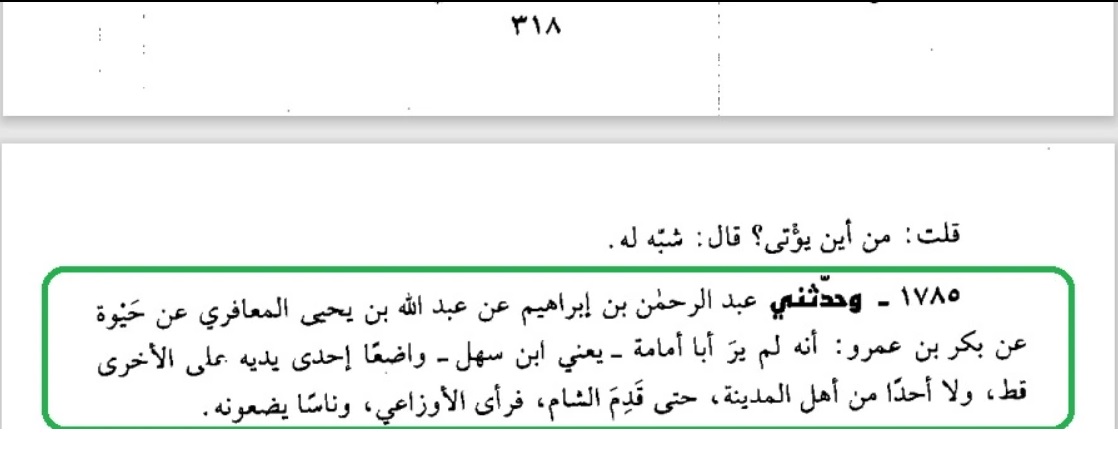
“Malik held the view that the leftovers of a dog should be spilled, and the utensil should be washed, as it is a ritual act of non-rational worship, because the water that it has lapped up is not unclean (najas). He did not require, according to the widely known opinion from him, the spilling of things other than water, which a dog had licked. The reason, as we have said, is the conflict with analogy, according to him. He also believed that, if it is to be understood from the tradition that a dog is unclean, it opposes the apparent meaning of the Book, that is, the words of Allah ta’alaa, “So eat what they catch for you…” meaning thereby that if the dog had been unclean the prey would become unclean by the touch of the dog’s (mouth). He supported this interpretation by the required number of washings, as number is not a condition in the washing of unclean things. He held that this washing was merely an act of worship. He did not rely upon the remaining traditions as they were weak, in his view.”
Source: (pg 27 published by Garnet; also see Al-Hidayah of Imam Al-Ghumaari Vol. 1 page 288 for a detailed discussion of the chains of narration)
This narration is reported by Imam Muslim in his Sahih 89/279 as well as by An-Nasaa’i hadith number 66
Source: Taken from “The Mercy in the Difference of the Four Sunni Schools of Islamic Law” translated by ‘A’ishah Bewley, printed by Dar-al-taqwa. Page 4
May we turn our attention to the hadith again, which seems to bring a lot of misunderstanding in relation to dogs in Islam.
“When a dog licks one of your vessels (e.g. bowl), apply dirt to it and then wash the vessel seven times.”
We would encourage the reader to look at the following information ,and then we would like to comment about this as well.
The hadith above that requires us to wash the utensil licked by a dog seven times is pretty much explained away as follows:
First, if it is done with the intention in the heart to obey the Messenger (saw), then it counts as worship, Furthermore, as Ibn Rush stated, the fact that the washing is a set number of times is a proof that this constitutes a ritual act of worship.
Second, the command for us to perform this action is purely for hygienic reasons and has nothing do with ritual purity. It’s a leap of reasoning to connect the command to ritual purity.
Modern science is testament to the fact that there are certain strains of bacteria in dog saliva which are not part of the human normal flora. If a container licked by a dog is left unwashed (especially in hot climate regions), it provides a fertile breeding ground in which those bacteria will multiply at geometric rates and render the container useless thereafter. Thus, the command to wash the container is purely a medical precaution.
And similar to what was alluded to in Bidayat al-Mujtahid by Ibn Rushd, this only applies to containers which contain water. Containers which contain other useful contents are not to be discarded and washed.
Overall, it appears as if Imam Malik had high respect and esteem for dogs. They had a special status with him, unlike any other animal, as the following excerpt from the Mudawanna shows us:
Regarding ablution with the leftovers of animals, chickens, and dogs: [Ibn Al Qasim] said: I asked Malik about the leftovers of donkeys and mules and Malik said: There is no problem with them. I [Sahnun] said: Did you see if he communicated regarding anything other than such? Ibn Al-Qasim said: it and others beside it are equal. Ibn Al-Qasim said: And Malik said: There is no problem with the sweat of the horse, mule, or donkey; Ibn Al-Qasim further added, and Malik retorted: In the container that contains water licked by a dog with which a man makes wudu? Ibn Al Qasim said: Malik Said: If he makes wudu with it and subsequently performs salah, then this is permitted. Ibn Al Qasim said: And [Malik] does not see the dog like other animals. Ibn Al Qasim Said: Malik Said: If those repugnant species of birds and predatory animals drink from the water container, one is not to make wudu with that container. Ibn Al Qasim said: And Malik said: If a dog licks a container which contains milk, then there is no problem with consuming that milk. I [Sahnun] said: Did Malik use to say wash the container seven times when the dog licks inside the container? Ibn Al Qasim Said: Malik Said: This tradition has definitely come to us and I do not know its truth/authenticity. Ibn Al Qasim said: And it is as if (Malik) viewed the dog as if the dog was a member of the household (Ahl Al-Bayt) and that it was not like other predatory beasts, and Malik used to say: the container is not washed of margarine or milk and what the dog licked from that IS to be eaten, and I see it as an enormity to purposefully intend (waste) towards the bounty from the bounty of God and discard what the dog licked.
Here is something that we would like to ask people.
Let us say that, indeed, we did witness a dog lick from a dish that we left on a carpeted area and then this dish was washed 6 or 7 times and with earth as well. How many of you would actually drink this dish afterward?
Not many, which is exactly our point!
People are trying to make the halal (permissible) into the haram (forbidden). Now you want to make the whole of the contents and the dish unusable?
Case in point: The Shaf’i School of jurisprudence.
People who are not aware that Shaf’i critiqued Imam Malik have not read or are unfamiliar with the Shaf’i corpus known as Al-Risala (The Message).
Thus, as history has it,Imam Shaf’i’ and his critique of Imam Malik would not go unanswered.
MALIKI SCHOLAR IBN AL LABBAD’S REFUTATION OF IMAM SHAF’I
The following information is taken from a small tract in which a Sunni Maliki scholar, Ibn Al Labbad, gave full response to Shaf’i. This is where we will take our information from, since it critiques the Shaf’i view on the matter.
The following is titled:
Kitab fihi radd(u) Abi Bakr ibn Muhammed ala Muhammed ibn Idris Al-Shaf’i fi munqadaati qawlihi wa fima qala bihi min al-tahdid fi mas’ail qalaha khalfa fiha al-Kitab wal-sunna (A treatise containing Abu Bakr Muhammed’s refutation of Muhammed Ibn Idris Al-Shaf’i for the latter’s self contradictions and his arbitrariness in setting legal limits in matters regarding which his doctrine violated the Book and the Sunnah).
Al’Shaf’i added, however, that both the vessels and their contents were rendered ritually impure.
This extrapolation drew heavy criticism from Ibn Al-Labbad, who argued that while the Prophet (saw) ruled that vessels from which dogs had drunk had to be washed seven times; he never stated that either the vessels or their contents were ritually impure. This was simply al-Shaf’is invention, according to Ibn al-Labbad, which he concocted on the basis of his own ra’y (reasoning) and then injected into the hadith. That al-Shaf’i’s position was deficient could be easily proved by reference to the Qur’an, where there are verses permitting the eating of game seized by hunting dogs. (Qur’an chapter 5:4)
To make matters worse, Ibn al-Labbad cites Al-Shafi’is argument to the effect that neither the vessels nor their contents were rendered ritually impure if such contents exceeded two qullas in volume, since, according to al-Shaf’i, anything more than two qullas was not subject to ritual impurity.
On this view, he ends up, according to Ibn al-Labbad completely undermining the Prophet’s rule. On the one hand, he holds vessels from which dogs have drunk but which contain more than two qullas not to require ritual washing, while the Prophet (saw) stated explicitly that whenever a dog laps from a vessel it is to be washed seven times. On the other hand, he holds the contents of vessels containing less than two qullas to be ritually impure, while the Prophet himself never designated them as such.
At first blush, it might appear that ibn Al-Labbad is donning the Shaf’i-inspired robe of Zahirism in order to slam the door to logical inference in Al-Shaf’is face. But this turns out not to be altogether true. Ibn al-Labbad is not saying al-Shaf’i is wrong for attempting to understand the underlying implications of the Prophet’s command but merely that the results of this attempt were flawed.
For while it may be reasonable to assume a connection between the command to wash vessels and the status of their contents, the Prophet made it clear, according to Ibn al-Labbad, that dogs drinking from vessels constitute a sui generis category. As proof, he cites instances as the Bedouin who urinated in the mosque and the infant who relieved himself on the Prophet’s lap. In neither case did the Prophet order a seven-fold washing. This, according to Ibn al-Labbad, clearly indicated that urine and other ritually impure substances constituted one category. Meanwhile, vessels from which dogs have lapped constitute another. The two issues, in other words, were simply unrelated, and Al-Shaf’i was misguided in extending the logic of ritual impurity to vessels from which dogs had lapped and their contents.
Once again, however, Ibn al-Labbad case would not end there. Al Shaf’i had extended the ruling on dogs drinking from vessels to pigs, arguing that ‘if pigs were not worse than dogs, they were certainly no better than them.’ This, argued Ibn Al Labbad was pure ra’y, for the validity of which Al-Shaf’i had provided no textual proof. Similarly, regarding the use of earth for the first or last cleansing of vessels, Al Shafi’i held that if one was unable to find earth (turab), one could use something that functions like earth,
e.g., potash or the like. Yet, when it came to tayammun, al Shaf’i flatly disallowed these things, insisting instead on the use of pure earth (turab). All of this went to show, according to Ibn Al-Labbad, just how inconsistent and arbitrary Al-Shafi could be. In the end none of this was based upon information related on the authority of the Prophet (saw).
Source: (“Setting the Record Straight: Ibn al-Labbād’s Refutation of al-Shāfiʿī” (published in the Journal of Islamic Studies), Sherman A. Jackson analyzes the critiques leveled by the 10th-century Maliki jurist Muhammad b. Idrīs al-Labbād (d. 333/944) against Imam al-Shāfiʿī)
This is an intra-Sunni critique. A scholar of the Maliki School of jurisprudence giving a rebuttal to the founding jurist of one of Sunni Islam’s most prominent schools of jurisprudence.
Now let us take a look at the contradictory hadith reports concerning dogs in various situations and see if we can make sense of all of this.
The Hadith should be understood in light of the Qur’an and the practice of the Sunnah that was orally transmitted and practiced by the masses of Muslims across all cities and regions.
So first let us take a look at what the Qur’an itself says concerning dogs.
There are three places where the Qur’an mentions dogs.
“They ask you what is lawful to them (as food). Say: lawful unto you are all things good and pure: and what you have taught your trained hunting animals (to catch) in the manner directed to you by Allah: eat what they catch for you, but pronounce the name of Allah over it: and fear Allah; for Allah is swift in taking account.” (Qur’an 5:4)
“This is of the signs of Allah. He whom Allah guides, he is on the right way; and whom He leaves in error, you will not find for him a friend to guide aright. And you might think them awake while they were asleep, and We turned them about to the right and to the left with their dog outstretching its paws at the entrance. If you did look at them, you would turn back from them in flight, and you would be filled with awe because of them. And thus did We rouse them that they might question each other. A speaker from among them said: How long have you tarried? They said: We have tarried for a day or a part of a day. (Others) said: Your Lord knows best how long you have tarried. Now send one of you with this silver (coin) of yours to the city, then let him see what food is purest, and bring you provision from it, and let him behave with gentleness, and not make your case known to anyone. For if they prevail against you, they would stone you to death or force you back to their religion, and then you would never succeed. And thus did We make (men) to get knowledge of them, that they might know that Allah’s promise is true and that the Hour — there is no doubt about it. When they disputed among themselves about their affair and said: Erect an edifice over them. Their Lord knows best about them. Those who prevailed in their affair said: We shall certainly build a place of worship over them.(Some) say: (They were) three, the fourth of them their dog; and (others) say: Five, the sixth of them their dog, making conjectures about the unseen. And (others) say: Seven, and the eighth of them their dog. Say: My Lord best knows their number — none knows them but a few. So contend not in their matter but with an outward contention, and question not any of them concerning them. And say not of anything: I will do that tomorrow, Unless Allah please. And remember your Lord when you forget and say: Maybe my Lord will guide me to a nearer course to the right than this. And they remained in their cave three hundred years, and they add nine. Say: Allah knows best how long they remained. His is the unseen of the heavens and the earth. How clear His sight and His hearing! There is no guardian for them beside Him, and He associates none in His judgment.” (Qur’an 18:9-26)
The question from reading this is why would a dog be worthy of mention in the last revelation given to humanity if it is such an unclean and impure animal? These are the questions that need to be answered.
However, here is a passage from the Qur’an that compares the behavior of dogs to some people who reject faith.
“Thus, If it had been Our Will, We should have elevated him Our Signs; but he inclined to the earth, and followed his vain desires. His similitude is that of a dog: if you attack him, he lolls out his tongue, or if you leave him alone he (still) lolls out his tongue. That is the similitude of those who reject Our Signs, so relate the story, perchance they may reflect.”(Qur’an 7:176)
Can you see this verse giving explicit command to attack dogs? No! It simply says that ‘IF’ you were to attack him, this dog is going to behave in the same way even if you let him be. This is the only thing that we could see in the Qur’an portraying the dog in a negative light. Yet the similitude is more directed at mankind than it is making any statement about dogs.
THE AHADITH AND DOGS
Allah forgave a prostitute her sins because she gave water to a dying dog.
Allah’s Messenger (saw) is reported to have said, “A prostitute was forgiven by Allah, because, passing by a panting dog near a well and seeing that the dog was about to die of thirst, she took off her shoe, and tied it with her head-cover. She drew out some water for it. So, Allah forgave her because of that.”
Source: (https://sunnah.com/bukhari:3321)
Of course, this means that the woman was sincere in repenting for her sins and this action, coupled with her repenting of her sins, became a source of mercy for her.
Question: If dogs are so vile and evil, why was a prostitute forgiven by Allah because of showing this act of mercy and kindness to the animal?
TheBlessed Prophet is reported to have said, ‘A man felt very thirsty while he was on the way, there he came across a well, He went down the well, quenched his thirst and came out. Meanwhile he saw a dog panting and licking mud because of excessive thirst. He said to himself, “This dog is suffering from thirst as I did.” So, he went down the well again and filled his shoe with water and watered it. Allah thanked him for that deed and forgave him. The people said, “O Allah’s Apostle! Is there a reward for us in serving the animals? He replied: Yes, there is a reward for serving any living being.”
Source: (https://sunnah.com/bukhari:2466)
Question: If dogs are so vile and evil, why would Allah thank a man for the act of kindness that he showed this particular animal?
The Blessed Prophet (saw) is reported to have said, “A man saw a dog eating mud because of the severity of thirst. So, that man took a shoe and filled it with water and kept on pouring the water for the dog till it quenched its thirst. So Allah approved of his deed and made him enter Paradise.”
Source: (https://sunnah.com/bukhari:173)
And narrated Hamza bin ‘Abdullah: My father said. “During the lifetime of Allah’s Apostle, the dogs used to urinate and pass through the mosque (come and go), nevertheless they used to sprinkle water on it (urine of the dog.)”
Source: (https://sunnah.com/bukhari:174)
KEEPING DOGS AS PETS
The Blessed Prophet is reported to have said, “Angels do not enter a house which has either a dog or a picture in it.”
Source: (https://sunnah.com/bukhari:3322)
Narrated Salim’s father: “Once Gabriel promised the Prophet (that he would visit him, but Gabriel did not come) and later on he said, “We, angels, do not enter a house which contains a picture or a dog.”
Source: (https://sunnah.com/bukhari:3227)
Prima Qur’an Comment: This is not a command not to keep dogs but simply that they should have seperate areas from where people reside.
Malik related to me from Nafi from Abdullah ibn Umar that the Messenger of Allah, may Allah bless him and grant him peace, said, “Whoever acquires a dog other than a sheepdog or hunting dog, will have two qirats deducted from the reward of his good actions every day.”
Source: (https://sunnah.com/malik/54/13)
It was narrated that ‘Abd-Allah ibn Umar said: The Messenger of Allah (saw) said: “Whoever keeps a dog, except a dog for herding livestock or a dog that is trained for hunting; two qiraats will be deducted from his reward each day.”
Source: (https://sunnah.com/muslim:1574a)
It was narrated from Abu Hurayrah that the Prophet (saw) said,“Whoever keeps a dog, except a dog for herding, hunting or farming, one qiraat will be deducted from his reward each day.”
Source: (https://sunnah.com/muslim:1575a)
In a hadeeth narrated by Ibn ‘Umar, The Prophet (saw) said, “Whoever keeps a dog which is neither a watch dog nor a hunting dog, will get a daily deduction of two Qiraat from his good deeds.”
Source: (https://sunnah.com/bukhari:5480)
Prima Qur’an Comment: The above hadith mentions that the dog should have a utility. Thus, it has been argued by some scholars that seeing eye dogs that help blind people are utility dogs. Dogs that guard the home and property from would-be attackers and thieves are utility dogs. Animals can also generate soothing effects that relieve high blood pressure in people.
IS IT PERMISSIBLE TO KEEP A DOG TO GUARD HOUSES?
Al-Nawawi said: “There is a difference of opinion about whether it is permissible to keep dogs for purposes other than three, such as guarding houses and roads. The most correct view is that it is permissible by analogy with these three and based on the reason that it is to be understood from the hadith, which is based upon necessity. ”
Source: (Sharh Muslim, 10/236)
Prima Qur’an Comments:
If we look at all the hadith evidence above, something becomes very obvious and that there is not an explicit prohibition on keeping a dog as a pet.
There are reports that talk about one or two good deeds being removed from a person who keeps a dog other than for the purpose of (hunting, sheepdog, guard dog, guards live stock, guarding family).
So, for example, a person may get a poodle and claim that it is for guarding the family and this may be an unlikely scenario. However, dogs also make noise when there is intrusion, and they serve their purpose to guard human lives.
The former United States of America (under the Zionist occupation) has one of the highest percentages of gun ownership out of any populace on earth. Think of how many people have access to guns in the family. Many people may agree that it is more safe to have a dog securing the parameters of the house, protecting and guarding the family than it is to own a gun.
Again, there is no prohibition against owning a dog in one’s home. Simply saying that rewards are moved for keeping a dog for an intention other than serving some use is also not a prohibition.
Even if a person said it was their intention to keep a dog simply for the purpose of entertainment, the traditionalist may consider that person to be negligent.
Today, in the United Arab Emirates, Morocco, West Africa, Oman and places where the Sunnah of the Prophet (saw) is practiced and maintained with vigilance, we find that people keep dogs as pets.
Blind people also need dogs as a part of their life to help protect and guide them. The issue of angels not entering houses is because the presence of a dog is not because the dog is impure. The dog is pure in the ‘law’ of Islam. If the angels did not enter because the dog was not pure, then the angels would not enter houses and mosques (masjids) because of the presence of toilets.
You can also find a hadith that has been narrated that includes the phrase (except the angel of death) which should raise an eyebrow. Most likely, if angels never entered an abode where a dog was present, this would mean the angel of death and thus a person could be guaranteed eternal life on the basis of keeping a dog as a pet!
So you will find the above hadith to include the exception (except the angel of death).
Those who are still opposed to dogs, namely the Shaf’i and Hanafi schools of jurisprudence, are really going to have to rethink their positions in today’s world that we live in. What works for the Shaf’i in Somalia and for the Hanafi in India and Pakistan is not going to work in New York City, London or Minneapolis, where a man or woman may get into a cab with his or her seeing eye dog.
Not only that, but angels ‘not entering the house’ should be pondered over due to the fact that many people live in apartment complexes, so what would actually constitute a house? Could an angel be in your apartment while your neighbor has a loud barking dog? These questions have to be answered to keep people from doing extreme things or taking issues out of context.
The hadith about Angel Gabriel not entering the house where Prophet Muhammed (saw) was because he had a female dog under his bed with puppies needs to be taken into context with all the other information that is given.
DIDN’T THE BLESSED PROPHET MUHAMMED (SAW) ORDER DOGS TO BE KILLED?
“Malik related to me from Nafi from Abdullah ibn Umar that the Messenger of Allah, may Allah bless him and grant him peace, said, “Whoever acquires a dog other than a sheepdog or hunting dog will have two qirats deducted from the reward of his good actions every day.”
Source: (https://sunnah.com/malik/54/13)
Malik related to me from Nafi from Abdullah ibn Umar that the Messenger of Allah, may Allah bless him and grant him peace, ordered dogs to be killed.
Source: (https://sunnah.com/malik/54/14)
Without going into the various hadeeth that talk about the killing of dogs, the two statements above alone will suffice.
Why?
They suffice because Imam Malik, the ‘founder’ of the Maliki school of jurisprudence, related both ahadith, but he understood the practice. He did not take ahadith (lone narrator reports) in isolation as do many Muslims today.
He is taking the whole of the practice as it was orally mass transmitted and practiced by the people of his city in Madinah.
The reports about killing dogs seem to be in the context of a mass outbreak of some virus, rabies, scabies, ring worm and Allah knows best!
If you have actually seen a dog with a severe case of the mange or scabies, it is a very sad sight to behold.
The point is that the Muwatta of Imam Malik (quoted above) and the views he holds and transmits from the people of Madinah and those before him is that dogs are not to be killed.
We hope Muslims will better understand Islam. This is why we ask Muslims that it is imperative for them to take the Qur’an and the mass transmitted practice over the Hadith.
The vast majority of Muslims, YouTube Preachers, and even those who have taken ‘alim courses are not very well grounded in Islamic jurisprudence. Also, when it comes to Hadith transmission, it was never meant to be understood in isolation as it is being done today.
One of Imam Malik’s major shaykhs, Rab’a Abu ‘Abd al-Rahman, nicked named Rabi’a al-Ra’y, stated: “I will take a thousand from a thousand before I will take one from one, because that one from one can strip the practice out of your hands.”
If the Muslims insist on taking hadith (one from one) in isolation over the practice (mass transmitted tradition), then we will continue to be a source of embarrassment and rage.
We leave you with the following story in which an old blind man was denied entry on a bus because of the ignorance of us Muslims.
https://www.bbc.com/news/uk-england-leicestershire-38745910
If you enjoyed the above article you may be interested in reading the following:
May Allah (swt) continue to guide us to that which is beloved to Allah (swt)!
May Allah (swt) forgive the Ummah! May Allah (swt) guide the Ummah!














 Prima Quran