“He only orders you to evil and immorality and to say about Allah what you do not know. And when it is said to them, “Follow what Allah has revealed,” they say, “Rather, we will follow that which we found our fathers doing.” Even though their fathers understood nothing, nor were they guided?” (Qur’an 2:169-170)
﷽
When it comes to the issue of the Qur’an being created and the topic of the attributes of Allah (swt), we could put this into four views. This brief entry will show where these four denominations have overlapping agreement and/or disagreement.
A. There are four denominations in this subject.
Ibadi.
Muutazila.
Ahl Sunnah.
Jahmia.
Here are the points.
Ibadi & Mutazila say: The attributes of Allah (swt) are nothing other than Allah (swt)
Ahl Sunnah & Jahmia say: The attributes of Allah (swt) are other things with/than Allah (swt).
Ahl Sunnah & Jahmia say: Qur’an is one of the attributes of Allah (swt).
Ibadi & Mutzalia say: Qur’an is not an attribute of Allah (swt).
Jahmia say: Attributes of Allah are created by Allah (swt).
Ahl Sunnah say: All attributes of Allah aren’t created by Allah (swt).
We (The Ibadi) say there is evidence to prove that the Qur’an is created by Allah (swt).
For the Jahmia, the proof that the Qur’an is created by Allah (swt) is that the Qur’an is one of the attributes of Allah (swt). For them, all the attributes of Allah (swt) are created by Allah (swt).
Ibadi, Mutazalia & Ahl Sunnah all say anyone who believes that the attributes of Allah is created are kaafir. (disbelievers of shirk)
We, the Ibadi, say: The Qur’an is a word of Allah and created by Allah, but we don’t say the Qur’an is an attribute of Allah (swt).
“Our belief is upon Haqq and the belief of the Jahmia is upon kufr and batil.” -Shaykh Hamed Hafidh
We want to thank our teacher Shaykh Hamed Hafidh As Sawafi (hafidullah) for this explanation.
“It is He to whom belongs the dominion over the heavens and the earth, and who has not taken a son and has no associate in His dominion, for He has created all things according to precise measures.” (Qur’an 25:2)
﷽
Those people who claim the Qur’an is eternal. They say this precisely because they do not know what the Qur’an is.
We know the number of surahs/chapters is 114. We know each chapter of the Qur’an as well as the number of verses. In each word we know the number of letters. And for each letter we know the harakat.
We know these letters do not operate independently. They combine with other letters that make words and these words combine with other words to make sentences. These sentences combine to make the various chapters of the Qur’an. All of this is clear evidence that the Qur’an is created by Allah (swt).
All scholars, all Muslims believe that all languages are created by Allah (swt).
By this we know that the Arabic language is created by Allah (swt). The Qur’an is informed in the Arabic language. The Arabic language is created by Allah (swt) and by that the Qur’an is created by Allah (swt).
“And of His signs is the creation of the heavens and the earth and the diversity of your languages and your colours. Indeed, in that are signs for those of knowledge.” (Qur’an 30:22)
“And We did not send any messenger except [speaking] in the language of his people to state clearly for them, and Allah sends astray [thereby] whom He wills and guides whom He wills. And He is the Exalted in Might, the Wise.” (Qur’an 14:4)
“Look how We explain signs to them, then see how far they are turned away.” (Qur’an 5:75)
You may be interested in reading the debate among Muslim scholars regarding the foreign words that the Arabic language adopted here:
“Some proponents of this camp quoted the ‘father’ of Arabic grammar,Sībawayh (d. 180/796) himself, who wrote in his al-Kitāb that non-Arabic words could become Arabic if one substituted Arabic letters for the foreign ones, and then appended it to a known morphological form (wazn).”
Source: (Sībawayh, al-Kitāb, v. 4, p. 304.)
Sibawayh’s teacher was the famous Ibadi scholar, Al-Khalili ibn Ahmad al-Farahidi (The one who is credited for teaching your children (no matter what expression of Islam they follow) the harakat of the Qur’an.
A brief entry concerning the famous Ibadi scholar, Al Khalili Ibn Ahmad Al-Farahidi al-Ibadi here:
We do not have any reports from a companion(sahabah) to the contrary. So, our interlocutors will either have to weaken the hadith or employ interpretive principles to dismiss it as sound evidence.
Alas, Saudi, Salafi translations cannot hide the fact that the Qur’an is created.
The making the Qur’an Arabic is natural making, because it is a meaning abiding with the Qur’an, namely its being Arabic. This means that it will either be transforming from one quality to another.
1) It was first not-Arabic then Allah invented in it this quality (of being Arabic).
2) Or (it will be) creating it with this quality from the beginning
As Allah created, the sun joined with the quality of being a lamp; and as Allah created the night with the quality of being a covering, and created the day with the quality of being a space for seeking livelihood. That is definitely the sense that it is used here. In the case of making an Arabic Qur’an. This is also because of the non-existence of anything to indicate that it was not non-Arabic before, and then Allah transformed it into Arabic. As for its being Arabic since forever, relating the verb ‘making’ to it in this way is impermissible in reason and in the dictionary, because ‘making’ is an action and action precedes what is enacted, so ‘making’ definitely precedes the made.
The same will be said about His saying, Glorified is He: ‘But We made it a light, We guide by it whoever We will from among Our servants’ (Qur’an 42:52)
This will appear as self-evident to whoever reflects on the meaning of ‘making’, and thinks about the Eternal Necessary attributes of Allah, Exalted is He, and the impossibility of relating ‘making’ to these attributes. For it is impossible in law that one should say that Allah has made His Knowledge All-Encompassing, or His Power All-Containing, or that Allah has made His Existence Pre-Eternal and Sempiternal, or that He has made His Hearing catch all sounds, or made His Seeing encompass all that is visible-because these phrases imply Allah’s production of these attributes.
Even if the interlocutors want to state that Allah (swt) could have made his revelation in Hebrew or Aramaic or Hindi or Greek, they have no escape from the two categories above.
A) First, there is no textual proof that the Qur’an was non-Arabic before being Arabic. Even if it was the case, that would be a clear admission of defeat. That is because of the admission of contradiction-an eternal abiding quality going through a change. From one state to another.
B) Because there is no proof for A we are left with the clear meaning of the Qur’an. One in which we do not superimpose our theology upon it. The Qur’an has been made in Arabic.
The knock-out blow has already been delivered. However, some are tenacious in clinging to false beliefs. They will often use every day Arabic vernacular that they think are great examples that the layperson will understand. However, those examples actually work against them!
“He made us dance.” ”He made his son the King.”
So, even in both of these examples, we need to ask:
Is being the King an eternal quality abiding in the individual or was this something that came about before it did not exist?
Can it be said that dancing is an eternal action abiding in the individual or is it merely a transitional state from non-dancing to dancing?
Made — is that which is transferred from one state to the other, which cannot be except in that which is created. The second is the reasoning of its being made in the Arabic language with the intention that the one being addressed may understand it.
Like that verse are all the verses which make it clear that it is made. For example, His saying, Exalted is He: “But We have made it a light, We guide by it whomever We will from among our servants.” (Qur’an 42:52).
Imam Muhammad b. Aflah, (Ra) has commented on the evidence of ‘making’ as affirmation of its being created; he says:
“The ummah is in consensus that every doer is before his doing, and the maker is before the making, and the artist is before the art, and that the maker is other than the made. When the difference and precedence between them has been affirmed, then it is true that they are two things, and that the first and precedent is the Eternal Maker, and the second, the made, is the originated, being after it had not been.” Source: (The Overwhelming Truth)
He has argued from ‘making’ when referred to Allah, in many verses which denote it-such as His saying, Exalted is He: “He made the darkness and the light”. (Qur’an 6:1)
His saying: “Me made from it, its pair.” (Qur’an 7:189)
His saying: “He it is that has made for you the night that you may rest therein, and the day to make things visible to you.” (Qur’an 10:67)
His saying: “Or who has made the earth firm to live in; made rivers in its midst; set thereon mountains immovable; and set a separating barrier between the two seas.” (Qur’an 27:61)
His saying: “Of the hills He made some for your shelter.” (Qur’an 16:81)
His saying: “And has made for you ships and cattle on which you ride.” (Qur’an 43:2)
His saying: “And made the sun as a lamp.”(Qur’an 71:16)
His saying: “And We made the night and the day signs.” (Qur’an 17:12). Similar to those (verses is the meaning of ‘making’) in His saying:
“Have WE not made the earth as a place to draw together.” (Qur’an 77:25)
His saying: ‘Have We not made the earth as a wide expanse; and the mountains as pegs; and created you in pairs; and made your sleep for rest; and made the night as a covering; and made the day as a means of subsistence’. (Qur’an 78:6-11) and other verses.
Imam Abu l-Yaqazan Muhammed b.Aflah (May Allah have mercy on him), says:
“The meaning of ‘made’ in these places that we have cited is ‘created’. And so it is for the one who opposes [our argument], but not, he claims, in the context of the Qur’an, because ‘making’ in the Qur’an is other than creation. If that is allowed for him, then it must be allowed [also] for another to oppose that and say some similar thing about [something] other than the Qur’an-that the ‘making’, about which we [Ibadis and Hanbalis] agree, has the meaning ‘creation’, has [for him] another meaning than ‘creation’. But what is the difference between the two ‘makings’? For [if there is a difference] it means that Allah has addressed the Arabs with what they do not understand of their speech, and what they do not know of their language, and with what there in it is allowed for them to be in doubt and uncertainty about. In one place, ‘making’ is in the meaning of ‘creation’, ‘origination’ and ‘management’. And in another place [it has] another meaning that we do not understand, and we do not know. The All-Wise is not described as such!”
When we and they agree that ‘making’ in His saying ”And He made the sun a lamp.” (Qur’an 71:16)
His saying: “Indeed, We have made what is on the earth an adornment for it.” (Qur’an 18:7) His saying: “He made for you from yourselves pairs.” (Qur’an 42:11)
His saying: “And He made darkness and light.” (Qur’an 6:1) -is in the meaning of ‘creation’, then all ‘making’ when it is by Allah is in the meaning of creation. In that will be included the Qur’an and other than the Qur’an. Otherwise, debating will become pointless and any evidence [for the argument] will not be valid.
“If they oppose -relying on the saying of Allah: “It was not Allah who made slit eared she-camels or she-camels let loose in pasture.” (Qur’an 5:103) It will be said-Yes Allah did not create a slit-eared she-camel as a slit-eared she-camel, as you claim, nor a she-camel let loose in pasture as a she-camel let loose in pasture, as you claim. Rather, He negated from Himself what He did not do as the polytheist claimed [that He did]. So he criticized them because of their innovation. Its meaning is that We did not create you as you have described, rather, We created against that which you have described. The negation here is of the particular qualifier, not of the particular creation.”
“Like that is His saying: “Surely I will make you a leader for mankind.” (Qur’an 2:124) i.e. I will create in you the quality that was not in you, and the meaning that was not found in you, and I had not done so in you before that. The meaning of ‘made’ wherever it is found is ‘created’, ‘managed’, and all that is the same meaning, though the words are different.”
Prima-Qur’an comment: Another example is the following:
“Allāh has not made (ja’ala) for a man two hearts in his interior. And He has not made (ja’ala) your wives whom you declare unlawful your mothers. And He has not made (ja’ala) your claimed [i.e., adopted] sons your [true] sons. That is [merely] your saying by your mouths, but Allāh says the truth, and He guides to the [right] way.” (Qur’an 33:4)
One of them actually made the comment to us: “Can we say that Allah didn’t create sons or hearts or wives?” Of course not! Such a bizarre conclusion. Again, the negation is of a particular type or qualifier, not of the creation itself. Another thing we wish they had pondered is that if Allah (swt) had made (ja’ala) for man two hearts, or made (ja’ala) our wives our mothers, or made (ja’ala) our adopted sons our real sons the same word (ja’ala) would still be applicable.
That is Muhammad b. Aflah’s statement about ‘making’. (May Allah’s abundant mercy be upon him).
We add to that, we investigated occurrences of ‘making’ in the Qur’an referred to Allah, and we found it fell in either of two classes.
The ‘making’ is either natural or legal. In both there is creation of what did not exist (before).
In natural making, for example, there are the following:
In His saying: “He made from it its pair.” (Qur’an 7:189)
His saying: “And has made for you ships and cattle on which you ride.” (Qur’an 32:12)
His saying: “He made the sun a lamp.” (Qur’an 71:16) –The meaning of origination and contingency is clear.
The legal ‘making’ is as in His saying in the following:
“Surely I will make you a leader for mankind.” (Qur’an 2:124)
Another example of the same is the negated making in His saying, Exalted is He: “It was not Allah Who made a slit-ear she-camel or a she-camel let loose in pasture.” (Qur’an 5:103) i.e. He did not legalize the slitting of its ear. An(other) example of the legal ‘making’ is His saying, Exalted is He: “And He made the qiblah to which you were used only to test those who followed the Messenger from those who would turn on their heels.” (Qur’an 2:143)
The differences between the two ‘makings’ are as follows:
The first of them is bringing into existence the essence of the made thing or an abiding quality of it which did not exist before. That implies bringing the made from one state to another state, or from one quality to another quality. That (turning from one to another state) is accomplished when ‘making’ is referred to mankind, and it is in the meaning of turning from one state to another, as (when) I made the dough bread, the flour dough. In both cases, there is a turning of the made from one state to another state in which it was not before. The flour being made dough was not dough, and the dough before being made bread was not bread. It is not understood from this other than that the thing made is moving with the making from what it was before (to the changed state).
The second is inventing a law that turns (the object of the action) from one verdict to another one, like the Ka’bah being made the qiblah of the Muslims after Bayt al-Maqdis had been their qiblah.
Dealing with objections: May Allah (swt) guide the sincere.
An objection has been offered to the argument for the creation of the Qur’an from its being made Arabic-that ‘making’ is sometimes other than creation, as in the following examples:
“They make for Allah daughters, Glorified Is He.” (Qur’an 16:57)
“Still, the pagans have made some of His creation out to be a part of Him. Indeed, humankind is clearly ungrateful.” (Qur’an 43:15)
“They made angels who are servants of the Most Gracious females.” (Qur’an 43:19)
His saying: “You make it your provision that you lie.” (Qur’an 56:82).
The answer to this is that the distance between the two ‘makings’ and makers is immense. The making, in the context of what we are here discussing,is an affirmed action referring to Allah, Exalted is He. Whoever rejects it or rejects its effect (namely, the Qur’an), has unbelieved. That which is made—namely, the Qur’an in Arabic, its giving light and its guidance is an established reality. Whoever rejects it, he has certainly unbelieved.
The ‘making’ in what they have objected to is a falsehood referring to the unbelievers. They made—namely, the angels being feminine — is nothing. Whoever affirms that will be regarded as an unbeliever. Who affirms that the made some of his creation to be a part of him is an unbeliever.
There is no problem with the sameness of the letters of the verb (ja’ala)in both references—namely,jim, ‘ayn, lam—because the verb in reference to Allah has one meaning, and in reference to someone else has another meaning regardless of there being no difference in the word. Examples:
“He is who created you and those before you.” (Qur’an 2:21)
“And Allah created you and whatever you do.” (Qur’an 37:96)
“Indeed We have created man from a quintessence of clay.” (Qur’an 23:12)
“We have indeed created man in the best of molds.” (Qur’an 95:4)-and other similar verses where the creation is referred to Allah.
It is in all cases with the meaning of bringing from non-being into being. You will find this same verb, the same word and the same letters, referred to the unbelievers. It has (in those references) a sense that is not proper to the righteous servants of Allah, let alone its being permissible in respect of Allah, the Lord of the Worlds, Exalted is He. That (meaning) is (explicit) in His saying: “And you created falsehood.”(Qur’an 29:17).
So the meaning of the word is the same.
Is there any way to interpret that in one place according to the meaning of the other?
Or is the comparison between the two verbs as impossible as the impossibility of the comparison between the two doers?
“For that is Allah, your Lord, the Truth. And what can be beyond truth except error? How then are you turned away?”(Qur’an 10: 32)
For more information you may wish to read our article here:
“Truly, the likeness of Jesus, in God’s sight, is as Adam’s likeness; He created (khalaqahu) him of dust, then said He unto him, ‘Be,’ and he was.” (Qur’an 3:59)
﷽
The Qur’an is Created because Jesus is Not God.
That is to say, because Jesus (as) is not the uncreated word of Allah, neither is the Qur’an the uncreated word of Allah.
The Qur’an is Uncreated = Jesus is the eternal attribute of Allah.
This would mean, according to Sunni theology (Athari, Ash’ari, Maturidi), that Jesus is not identical to Allah’s essence, but he is not other than Allah’s essence either.
Christian theology states that Jesus (as) existed as the Word of Allah before being placed inside of Mary (as).
فِي البَدْءِ كَانَ الكَلِمَةُ مَوْجُودًا -In the beginning the Word (AlKalimat) Existed.
وَكَانَ الكَلِمَةُ مَعَ اللهِ، -And the Word (AlKalimat) was with Allah.
وَكَانَ الكَلِمَةُ هُوَ اللهَ. –And the Word (AlKalimat) was Allah.
كَانَ الكَلِمَةُ مَعَ اللهِ فِي البَدْءِ – The Word (AlKaimat) was with Allah in the beginning.
بِهِ خُلِقَ كُلُّ شيءٍ، -By Him all things were created.
وَبِدُونِهِ لَمْ يُخلَقْ شَيءٌ مِمَّا خُلِقَ. -And without Him nothing would have been created.
Is Jesus the created word of Allah or the uncreated word of Allah?
“When the angels said, “O Mary, indeed Allah gives you good tidings of a word (bikalimatin)from Him, whose name will be the Messiah, Jesus, the son of Mary – distinguished in this world and the Hereafter and among those brought near [to Allah]. (Qur’an 3:45)
Jesus (as) is a word from Him.
“And [the example of] Mary, the daughter of ‘Imran, who guarded her chastity, so We blew into [her garment] through Our angel, and she believed in the words (bikalimati) of her Lord and His scriptures and was of the devoutly obedient.” (Qur’an 66:12)
Mary (as) is believing in the Lord and his words. Meaning they are not identical.
“O People of the Scripture do not commit excess in your religion or say about Allah except the truth. The Messiah, Jesus, the son of Mary, was but a messenger of Allah and a word (kalimatuhu) from Him which He directed to Mary and a soul from Him. So, believe in Allah and His messengers. And do not say, “Three”; desist – it is better for you. Indeed, Allah is but one God. Exalted is He above having a son. To Him belongs whatever is in the heavens and whatever is on the earth. And sufficient is Allah as Disposer of affairs.” (Qur’an 4:171)
Jesus (as) is a word from Him.
“And if anyone of the polytheists seeks your protection, then grant him protection so that he may hear the (kalam al-lahi) Words of Allah.” (Quran 9:6)
“Those who remained behind will say when you set out toward the war booty to take it, “Let us follow you.” They wish to change the (kalama l-lahi) Words of Allah.” (Quran 48:15)
All these words come from the same Arabic trilateral root.
ك ل م (kaf) (lam) (mim) Jesus is the created word of Allah (swt) just as the Qur’an is the created word of Allah (swt). If someone was to believe that Jesus (as) is the uncreated word of Allah (swt), then that would be Christianity. If someone was to believe that Jesus (as) is the created word of Allah (swt), that would be Islam and the path of safety.
One of our teachers has known of people who have left Islam for Christianity. You also encounter them online and some of them have said a study of the Qur’an helped in making that decision. We would submit that it was not the Qur’an that lead them to this decision but a certain theological perspective about the Qur’an and Jesus being Allah’s creation and command not being able to distinguish between the two.
We have never heard of a Muslim who believes that Allah (swt) alone is the Creator and everything else (including the Qur’an as being created) becomes a Christian.
So what we are looking for is consistency.
On what consistent basis is Jesus ‘the word of Allah’ (kalimatuhu) created but the Qur’an (kalam al-lahi) ‘the words of Allah’ uncreated? Listen to what Mohamed Hijab says above.
“The word is actually defined as Kun.” -Mohamed Hijab
If the word is defined as ‘Kun’, then according to the following Sunni Muslims, then Jesus (as) is the uncreated Word of Allah.
We have actually had one Sunni Muslim brother from India (no doubt equipped with his Shaykhs and Alims) come and assert the following thinking it would be some powerful argument and not realizing they had erred in the following:come
1) The lack of depth in understanding the Qur’an and Arabic.
2) The bizarre theological implications of their view.
So they advanced the following:
“He is the One Who has originated the heavens and the earth, and when He wills to (originate) a thing, He only says to (lahu) it: ‘Be’, and it becomes.” (Qur’an 2:117)
“All it takes, when He wills something ˹to be˺, is simply to say to (lahu) it: “Be!” And it is!” (Qur’an 36:82)
So their argument was that if the ‘kun’ was created, then you would need another ‘kun’ to create that ‘kun’, leading to an infinite number of ‘kun’ regressing back through time.
If this saying (of ‘Be’) had (itself) been created, then it would not be correct to (say that) the creations were created by it, because the creation is not created by a creature.
Going back to the opening verse of this article:
“Truly, the likeness of Jesus, in God’s sight, is as Adam’s likeness; He created (khalaqahu) him of dust, then said He unto him, ‘Be,’ and he was.” (Qur’an 3:59)
A transliteration would be:
inna mathala ʿīsā ʿinda l-lahi kamathali ādama khalaqahu min turābin thumma qāla lahu kun fayakūn
The audio of it is here:
A) It is not really explained by our interlocutors how the word ‘kun’in which the sound‘n’ is eternal when that sound itself is preceded by the sound‘k’, which presumably is eternal.
B) One will not fail to note that in all the verses above (Q 3:59, 2:117, 36:82) that grammatically the structure of the sentence is that Allah (swt) is saying to the ‘lahu’ translated above as ‘he’ or ‘it. “Be!”
Thus, they want us to believe that Allah (swt) is saying to his knowledge of all things (which exist for all eternity) to ‘be’ and it becomes!
The meaning of ‘Be’ in the like of His saying, exalted, is He, “For to anything which We have willed, We but say “Be” then it is.” (Qur’an 16:40)
This relates to the execution of His Will. Exalted is He, in respect of anything of the mumkinat (what is possible) in the context of giving it existence or completing it. It is explained by his Saing, “When We have willed’ i.e. When Our Will has conjoined with it in a way of execution (of the command). Because ‘when’ is for time in the future, and this is emphasized in His saying: “an naqula la-hu.” (that We say to it), (Qur’an 16:40) which is in the imperfect tense which, when it is with ‘an’, means the future.
It is known with certainty that whatever is since forever-like His Knowledge, His Power and His Life-the Will cannot be conjoined with it, because nothing can precede (what is eternal).
And this is emphasized by His saying ‘fa-yakun’ (then it is), the connecting particle ‘fa’ meaning order and sequence. From this you know that His saying, exalted is He, ‘kun fa-yakun’, is, wherever it occurs, nothing but an indirect expression of the speedy response of things to Him, glorified is He, in accordance with the conjunction of His Will with these things. Otherwise, there is no utterance of kaf nun (kun) in the concrete sense (of utterance). If we accept that, then we will say that our discussion is about the Word revealed, such as the Qur’an, not the Word unrevealed.
It is also a metaphor for the expediency of Allah’s creative command.
“Allah created the heavens and the earth, and all that is between them, in six days” (Qur’an 7:54).
“And they say: The Beneficent has adopted a son. Glory be to Him! Nay, they are honored, slaves.”(Qur’an 21:26)
“But the Jews and the Christians say, “We are the children of Allah and His beloved.” Say, “Then why does He punish you for your sins?” Rather, you are human beings from among those He has created. He forgives whom He wills, and He punishes whom He wills. And to Allah belongs the dominion of the heavens and the earth and whatever is between them, and to Him is the [final] destination.” (Qur’an 5:18)
﷽
“They say: “(Allah) Most Gracious has begotten a son!” Indeed you have put forth a thing most monstrous! At it the skies are ready to burst, the earth to split asunder, and the mountains to fall down in utter ruin, That they should invoke a son (like-kind) for (Allah) Most Gracious. For it is not consonant with the majesty of (Allah) Most Gracious that He should beget a (like-kind) son.” (Qur’an 19:88-92)
“Say: “Allah Is Absolutely One.” Who is independent of all and whom all depend on. He does not bring forth like-kind nor was he brought forth from like-kind; And there is none comparable to Him.” (Qur’an 112:1-4)
THE BIBLE’S POSITION
“For God so loved the world that he gave his only begotten son that whosoever shall believe in him will not perish but have everlasting life.” (John 3:16 King James Version)
What does begotten mean? (According to the English language)
Answer: Begotten is a past participle of beget.
Beget begot, begotten: To become the father of: sire
Sire 1: Father 2: The male parent of an animal (as a horse or dog) sired, siring, PRO-CREATE
Source:(The Merriam Webster’s Dictionary For Large Print Users)
Beget – give birth to
Source: (Webster’s Dictionary)
It is indeed blasphemous to ascribe offspring to the Almighty Allah. It is also insulting to the human intellect of any rational person. All Christians of every sect believe Jesus is the ‘Son of God’.
Allah declares that ascribing a son or any offspring to him is a thing most blasphemous.
We as human beings have children to pro-create our species, and to ensure that humanity survives. We will all die; therefore it is a necessity that sons and daughters take our place.
However, Allah is Ever-Living and needs no such means for survival.
Christians will object and say this is a misrepresentation of their beliefs. Yet, they will claim we know it means ‘Sired by God’, but that is not what we believe!
What does begotten mean? (According to the Greek language)
Their own dictionaries describe Christ Jesus as God’s ‘offspring’ and ‘stock’.
We will now walk through the development of this all-important Christian concept. We will show conclusively how an innocuous expression ‘Son of God‘ became Jesus ‘The Son of God’ in the very theologically loaded sense that it is today.
This very belief latter transforms into ‘God the Son’ the second member of the ever infamous Tri-theistic Trinity of the Athanasian Creed.
SONS BY THE TONS
As Sheikh Ahmed Deedat used to say:
The terms ‘Son of God’ and ‘children of God’ are often used throughout the Bible.
EXAMPLES:
“You are children of the Lord your God” (Deuteronomy 14:1)
“He shall build a house for my name, and he shall be my son, and I will be his father.” (I Chronicles 22:10)
“Now there was a day when the sons of God came to present themselves before the Lord, and Satan came also among them.” (Job 1:6)
“I have said, you are gods; and all of you are children of the Most High” (Psalms 82:6-7)
“...For I am a father to Israel, and Ephraim is my firstborn.” (Jeremiah 31:9)
“Have we not one father?” “Has not one God created us?” (Malachi 2:10)
“Blessed are the peacemakers: for they shall be called the sons of God” (Matthew 5:9)
“For unto which of the angels, said he at any time, You are my Son, this day have I begotten you? And again, I will be to him A FATHER, and he shall be tome A SON?” (Hebrews 1:5)
Prima Qur’an Comments:
In none of the above quotations are the terms ‘children of God’ or ‘Son of God’ understood to be non-allegorical. So why in the case of Jesus is he understood to be the non-allegorical ‘Son of God’.
If you will pay special attention to the last quotation of Hebrews 1:5 you will see that Jesus is ‘A’ Son and God is ‘A’ Father unto him. It does not say Jesus is ‘THE’ Son and God is ‘THE’ father of Jesus.
The reason why Jesus is ‘a’ son and God is ‘a’ father has to do with adoptionist theology.
Jesus a righteous man or ‘son of God’?
When the centurion and those with him who were guarding Jesus saw the earthquake and all that had happened, they were terrified, and exclaimed, “Surely he was the Son of God!” (Matthew 27:54)
“The centurion, seeing what had happened, praised God and said, “Surely this was a righteous man.”(Luke 23:47)
So we can see that Matthew and Luke report the centurion saying two different things? So is this a contradiction or an acceptable allegory? We would say that this is not a contradiction it is an acceptable allegory. That ‘son of God’ simply meant a righteous servant, one near to God.
Son of God or Slave of God?
“And they say: The Beneficent has adopted a son. Glory be to Him! Nay, they are honored, slaves.“(Qur’an 21:26)
“Unto you first God, having raised up his Son Jesus, sent him to bless you, in turning away every one of you from his iniquities.” (Acts 3:26 King James Version)
“To you first, God, having raised up His Servant Jesus, sent Him to bless you, in turning away every one of you from your iniquities.” (Acts 3:26 New King James Version)
Notice that the King James Version calls Jesus “his Son”,Whereas the New King James Version calls Jesus “His Servant” and whenever you see that word “servant” in the New Testament, it means slave.
WHAT IS ADOPTIONIST THEOLOGY?
Adoptinonist theology:
Adoptionist refers to a person who believes that Jesus became the Son of God at his baptism, while adoptionism is the theological doctrine that Jesus was born a mere mortal and was later adopted as the Son of God.
What are the text used in the Bible to support this view held by early Christians?
“I will be to him a father, and he shall be to Me a son; so that when he goes astray I will chasten him with the rod of men, and with the stripes of the sons of Adam.” (2 Samuel 7:14)
Prima Qur’an comments:
I am not currently his father but I will be.
He is not currently my son but he will be.
I will be to him ‘a’ father. Not ‘the’ father.
He will be to me ‘a’ son. Not ‘the’ son.
If he goes astray he will be chastened.
Here we have a concept of God appointing someone to be his son, or we may say a righteous servant.
This is also stated in Psalms 2:2 and Psalms 2:7 in a reference to King David.
“The kings of the earth set themselves, and the rulers take counsel together, against the Lord, and against his anointed.” (Psalms 2:2)
“I will declare the decree: the Lord has said unto me, You are my Son; This day have I begotten you.” (Psalms 2:7)
Note: It has this day I have begotten you. It is being said to King David while he is alive and a grown adult. David was appointed by adoption to be the ‘son of God’.
A THEOLOGY TAKES SHAPE
We will now show how ‘Son of God’ in New Testament theology takes a total and complete departure from how ‘Son of God’ was used in the Old Testament.
Now I will give you the proof text which shows how Jesus went from being the adopted ‘Son of God’ to the non-allegorical ‘Son of God’.
ADOPTIONIST THEOLOGY BEHIND THE BAPTISM OF JESUS
“And there came a voice from heaven, saying, YOU ARE my beloved Son, in whom I am well pleased.” (Mark 1:11)
Note: The voice from heaven addressed Jesus. The Greek for YOU is su (SU).
“And there came a voice from heaven, saying, “THIS IS my beloved Son, in whom I am well pleased.” (Mathew 3:17)
Note: The voice from heaven talks about Jesus. The Greek for THIS IS outos (HOUTOS).
Question: Why the change in voice?
Why would one writer deliberately alter the wording of the text?
Answer: The theology!
Mark’s theology held that Jesus became the ‘Son of God’ at baptism, much like David’s coronation in 2 Samuel 7:14
Matthew’s theology held that Jesus was already the ‘Son of God’ based on the virgin birth.
So Jesus does not need to know who he is. Thus, the voice is changed from “You are my son” to an announcement to the ignorant crowd: “This is my son.”
The Qur’an and the Gospel of Luke reject Matthew’s claim.
Note: Look at the Gospel of Luke and Qur’an say in response to Matthew’s claim about Jesus being the ‘son of God’ based upon the virgin birth.
“And they had no child because Elizabeth was barren, and they were now well stricken in years.” (Luke 1:7)
“And Zacharias said unto the angel, how shall I know this? I am an old man, and wife is well stricken in years. And the angel answered said to him, “I am Gabriel who stands in the presence of God; I am sent to speak unto you and to show you glad tidings.” (Luke 1:18-19)
(His prayer was answered): “O Zakariya!” We give you good news of a son: His name shall be Yahya: on none by that name have We conferred distinction before.” He said: “O my Lord”! How shall I have a son, when my wife is barren, and I have grown quite decrepit from old age?” He said: “So (it will be) your Lord says, ‘that is easy for Me: I did indeed create you before when you had been nothing!‘” (Qur’an 19:7-9)
Prima Qur’an Comment: Allah asks Zechariah to reflect upon the fact that he was created indeed before he was nothing
“Relate in the Book (the story of) Mary, when she withdrew from her family to a place in the East. She placed a screen (to screen herself) from them; then We sent her our angel, and he appeared before her as a man in all respects. She said: “I seek refuge from thee to (Allah) Most Gracious: (come not near) if thou dost fear Allah.” He said: ” I am only a messenger from your Lord, (to announce) to you the gift of a holy son. She said: “How shall I have a son, seeing that no man has touched me, and I am not unchaste?” He said: “So (it will be): Your Lord says, ‘that is easy for Me: and (We wish) to appoint him as a Sign unto men and a Mercy from Us’: It is a matter (so) decreed.” (Qur’an 19:16-21)
“The similitude of Jesus before Allah is as that of Adam; He created him from dust, then said to him: “Be”. And he was.” (Qur’an 3:59)
Prima Qur’an Comment: All glory to be to Allah! Allah explains things in a very simple manner for Christians. Allah says that Adam was made from dust(nothingness) and he was simply willed into being. Thus, as Allah (swt) made Adam from nothingness, likewise Christ Jesus, as the word of Allah, is the created word of Allah. Just as all of Allah’s words are created. Jesus, as the kalim of Allah, was created from nothingness.
THE CREATION OF 5 TYPES OF HUMAN BEINGS:
1) Adam was made without a man or a woman and not divine!
2) Eve made without a woman and not divine!
3) Jesus made without a man and not divine!
4) Isaac and John made while their parents were old, infertile, and not divine!
5) The rest of humanity is made of man and woman and not divine!
THE LUKE FACTOR…
Luke’s version of the baptism of Jesus:
“And the Holy Ghost descended in a bodily shape like a dove upon him, and a voice came from heaven, which said, YOU ARE my beloved Son; in you, I am well pleased.” (Luke 3:22)
Note:
1) Luke has the story of the virgin birth
2) Luke has Jesus addressed ‘you are’.
“A few MSS [“D”, “o”, “b”] and Patristic citations representing the “Western” text, have, instead of (You are my beloved Son, in you, I am well pleased), the words of Psalms 2:7, You are my son this day have I begotten you.
“Numerous expositors (e.g. W. Mason, Zahn, Klostermann, Harnack, Moffat, Streeter) accept this variant reading as the original. The majority then explain the alteration of the text from the fact that copyists regarded these words as a contradiction to the reality of the virgin birth.”
Source: [The New International Commentary on the New Testament: The Gospel of Luke by Norval Geldenhuys p. 148]
Prima Qur’an Comment: If we take the above evidence, then the baptism of Jesus (according to Luke) would look like this:
“And the Holy Ghost descended in a bodily shape like a dove upon him, and a voice came from heaven, which said, “You are my son, this day have I begotten you”. (Luke 3:22)
This would mean that Jesus became the ‘son of God’ at his baptism as an adult in the same way David became the ‘son of God’ as an adult.
Let’s continue…
“More important still is the fact that the heavenly voice which greeted Jesus at his baptism hailed him in the opening words of the decree of Psalms 2:7 ‘You are my Son’ Mark 1:11”
“Indeed, the “Western” text of Luke 3:22 represents the fuller wording from Psalms 2:7 which is quoted here by the author of Hebrews 1:5”
“For unto which of the angels said he at any time, You are my Son. “This day have I begotten you?” (Hebrews 1:5)
“The words were evidently in widespread use as a testimonial in the apostolic age, as Acts 13:33 bears witness, and not only these words but the other parts of psalms were given a messianic interpretation, as may be seen from the quotation and explanation of its first two verses in Acts 4:25.
Source: [The New International Commentary on the New Testament: The Epistle to the Hebrews FF. Bruce]
“God has fulfilled the same unto us, their children, in that he has raised Jesus again; as it is also written in the second psalms, You are my Son, this day have I begotten you.” (Acts 13:33)
“Why does the heathen rage, and people imagine a vain thing? “The kings of the earth set themselves, and the rulers take counsel together, against the Lord, and against his ANOINTED.” (Psalms 2:1-2)
“Who, by the mouth of your SERVANT David, has said, Why DID the heathen rage, and the people imagine vain things? “The kings of the earth stood up, and the rulers were gathered together against the Lord, and against his CHRIST.” (Acts 4:25-26)
Note: Some important points need to be made.
David was called ANOINTED (Christ). Also, Luke says David was a SERVANT (Slave) of God. This also means Jesus is like David: He is Anointed, meaning appointed by God. Jesus is also the Servant (slave) of God!
Let’s continue…
“Likewise, certain early manuscripts of Luke quote all of Psalms 2:7: Luke 3:22 in Codex Bezae, and certain old Latin Manuscripts used by Justin, Clement, Origen, and Augustine read, “You are my Son this day have I begotten you.”
But interestingly, Luke also used Psalms 2:7, in a speech composed for Paul.
In Paul’s theology, Jesus was “DECLARED to be the Son of God with power, according to the spirit of holiness, by the resurrection from the dead” (Romans 1:4)
“Luke apparently knew of this Pauline teaching for he has Paul quoting Psalms 2:7 as a speech uttered to Jesus at his resurrection, and not his baptism! Acts 13:32-33
“For Luke and Paul Psalms 2:7 is a RESURRECTION prophecy and not a BAPTISM prophecy.”
LUKE: He sees the water Jesus is baptized in as ‘the grave’. When Jesus comes out of the water, it is his ‘resurrection.’ The water is symbolic: of ‘being washed by the blood’ of Jesus.
MARK: believed Jesus to be the adopted ‘Son of God’. In the same way, David was the adopted ‘Son of God’, Thus Jesus became the ‘Son of God’ at his baptism.
MATTHEW: believed Jesus was the non-allegorical ‘Son of God’ based on the virgin birth.
LUKE AND PAUL: believe Jesus was the non-allegorical ‘Son of God’ based on his resurrection from the dead.
Note: Paul said Jesus was ‘Declared’ to be the ‘Son of God’ not that HE WAS the ‘Son of God’
Source: Romans 1:3
What do Christians mean: Jesus is the ‘Son of God’?
Examination time!
We have already seen what begotten means. Not only this but every modern translation of the Bible does away with the term ‘begotten‘?
Why?
Answer:
1) Because David was called, ‘the begotten Son of God’: in Psalms (2:7). You cannot have Jesus be the ‘only-begotten’ when David is already begotten.
2)Hebrews 11:17
“By faith, Abraham, when he was tried, offered up Isaac; and he that had received the promise offered up his only-begotten son.”
a) This is a flat contradiction because Ishmael was begotten before Isaac was.
b) Or this is not to be understood as allegorical.
We know this is not understood literally. Isaac is not the only-begotten son; just as Jesus is not the non-allegorical ‘son of God’.
Question: Is Jesus ‘eternally begotten’ by the father?
Answer: No!
Hebrews 1:5
For unto which of the angels said he at any time, You are my Son?” This day have I begotten you?”
Prima Qur’an Comment: Jesus cannot be ‘eternally begotten’ by the father when this passage clearly states ‘This day’ have I begotten you. Indeed, one would wonder what day that is.
Tertullian did not believe in the eternality of the son.
For example, to me, it is very clear that Tertullian did not believe in the eternality of the son based upon the following:
“Because God is in like manner a Father, and He is also a Judge; but He has not always been Father and Judge, merely on the ground of His having always been God. For He could not have been the Father previous to the Son, nor a Judge previous to sin. There was, however, a time when neither sin existed with Him, nor the Son; the former of which was to constitute the Lord a Judge, and the latter a Father.”
When the Church decided upon the doctrine of Tri-theism they had to make Jesus co-equal and co-eternal with the father in so doing the doctrine of adoption created huge problems for them. Not only this but if Jesus was indeed begotten ‘this day’ he would not be co-eternal. This is why the Church called Jesus ‘eternally begotten’.
There is no Greek text to support the idea that Jesus is ‘eternally begotten‘ That is why to meet the strong arguments of Bishop Arius his fellow Christians could only respond with two things:
1. Violence.
2. Use an oxymoron ‘eternally begotten‘.
The Greek text is monogenes
How do other Bibles translate John 3:16
“For God so loved the world that he gave his only son (or the unique son of God), that whosoever believes in him shall not perish but have life eternal.” [The Living Bible]John 3:16
“For God so loved the world that he gave his one and only son, that whosoever shall believe in him shall not perish but have everlasting life.” [New International Version] John 3:16
“For God so loved the world that he gave his only son, that whosoever shall believe in him shall not perish but have eternal life.” [Revised Standard Version] John 3:16
“For God so loved the world that he gave his only son that whosoever shall believe in him shall not perish but have eternal life.” [The New American Bible] John 3:16
Note: All of the above translations say something like ‘Only Son’ or ‘Unique Son’.
a) Either this is a flat contradiction because, as shown from Hebrews 1:5 Jesus is ‘A’ Son not ‘Thee’ Son of God.
b) Or this is to be understood as allegorical!
We know this is not to be taken nonallegorically. Jesus is not the only son because, as already proven, God has many ‘sons’.
As far as the ‘Unique Son’ is concerned, every ‘Son of God’ is unique! So, once again, Christians are at a loss to explain how Jesus is the non-allegorical ‘Son of God’.
Remember that Jesus never once claimed to be the ‘only son’ of God!
Christians started to see the problem with John 3:16 translations. In a classic debate between Christian televangelist Jimmy Swaggart and Muslim debater Ahmed Deedat, Swaggart anticipated a possible question of Deedat by saying the following:
@ 8:53 minutes “Now I want to start this off tonight by quoting a passage of scripture that Mr. Deedat and myself disagree somewhat over. But which is one of if not the dearest passage in the word of God to the world of Christendom. Found in St. John 3:16
“For God so loved the world that he gave his only unique Son (Fooled you there Mr. Deedat), his only unique son that whosoever believeth in him should not perish but have everlasting life.”
The Christians should repent to Allah for every ascribing a non-allegorical son to him. Glory be to Allah who has not adopted a son or daughter! It can be seen how Jesus was called the ‘Son of God’ in the same way that previous people were called ‘Sons of God’.
However, this concept slowly evolved from being the adopted son of God into Jesus being the non-allegorical ‘Son of God’ and eventually led to him being ‘eternally begotten God’
May Allah bring the people out of the great darkness into the light. May Allah guide us to the truth!
“And when they hear what has been revealed to the Messenger, you see their eyes overflowing with tears because of what they have recognized of the truth. They say, “Our Lord, we have believed, so register us among the witnesses.”(Qur’an 5:83)
“The Truth is from your Lord.’ Then whoever wills, let him believe, and whoever wills, let him disbelieve.” (Qur’an 18:29)
﷽
We are very disheartened to learn that this is a position held among those who hail from the Deobandi movement. To see them fall short on this particular point of theology is hurtful. This is an important point of theological difference as it can undermine our confidence in some of the most basic and fundamental aspects of our faith.
It is clear though, that this matter has split the ranks of the Ahl Sunnah. This is the declaration of Shaykh, Saleh bin Siddina al-Maliki. He is himself a Sunni Muslim and a follower of the Maliki school of jurisprudence. The Shaykh has said that holding such a view or opinion is kufr (disbelief).
This false belief that is certainly so problematic for Muslims theologically that it is challenging to understand how anyone could entertain it, to begin with.
The theological musings of Darul Uloom Deoband have concerning Allah (swt) have to be among the most dangerous of theological speculations that have come from theology.
If we are to speak using emotive we would say that it is perhaps the absolutely most monstrous attributions to Allah (swt)! Not even the Christians ascribe the possibility of lying to Allah (swt)!
This, of course, is not speaking to the laity and the regular adherents of the Deobandi school of thought, the common person. To those valiant brothers in the Tabligh Jamaat that go out in the path of Allah (swt) and call people back to the Deen of Allah (swt). They are, for the most part, ignorant of this position. In fact, the Tablighi Jamaat are one of the greatest dawah force in the Muslim Ummah (imo).
Deobandi scholars in general are known among the Muslim scholars to be people of wara and taqwa and among those who cling to the Sunnah of the Blessed Messenger (saw).
That being said, we absolutely and utterly abhor the theological position that the Deobandi scholars have. Namely, that Allah (swt) can lie. (May our Rabb forgive us and bring us back to our senses.)
So first thing is first. Let us read and listen from their own sources what they say on the matter.
“Falling into the topic which you have mentioned in your question, is extremely dangerous for the Iman of a believer“
Prima Qur’an comment: Yes, it should cause anyone who has an ounce of love for Allah (swt) and understanding of sound doctrine should flee as far away from this speculation as they can!
“The ulama of Deoband have explained this issue to the best of their knowledge according to the Quran and Sunnah. Therefore we need to look at this from an academic perspective rather than an emotional one.”
Prima Qur’an comment: They are correct in that the truth is truth regardless of how we feel about it. Islam is based upon proofs and evidences.
In the article in the link above after affirming that Allah doesn’t lie they then turnaround and affirm the following possibility:
“Thereafter they explained that Allah has the power to do whatever he wants. SO IF HE WANTED TO LIE, NOBODY CAN STOP HIM. No one can take that power away from him. There is a difference between “Allah does lie” and “ALLAH CAN LIE.”
Or the monstrous assertion that it is possible for Allah (swt) to create another like him!
Watch the following video:
@ 2:11 He says, “Let no man go away today and say Shaykh Mumtaz was saying Allah CAN lie, No!”
However, he turns around @ 1:38 and says, “But the OPTION Is there for Allah (swt), because he is Haqq he will never take that OPTION.”
Prima Qur’an comment: So he is saying that he CAN and worse he says that Allah (swt) could create another Allah (swt) but chooses not to! Yikes! (Oh Allah (swt) Rabb of Grace and Abundant Mercy, please forgive us and forgive our brothers and guide them to a course that is more just than this!) Amin!
The following verse of the Qur’an that absolutely grinds to powder and scatters into the four corners of the known existence such absurd theological speculation!
“There is nothing like unto Him, and He is the Hearing, the Seeing.” (Qur’an 42:11)
So what does Shaykh Mumtaz have in mind should Allah (swt) wish to create another Allah (swt)? Some type of Binitarian belief? Or if He can create another like himself, what’s the limit? Three? Some type of Trinitarian belief?
It is our sincere hope that those from Deoband will refrain from this type of theological speculation. We hope that they recant from this position and make sincere repentance to Allah (swt). Death waits for no one.
By Allah (swt) our hearts have never felt more heavy and filled with sadness than to know that these people hold these positions!
It really does go to show you that Allah (swt) spoke the Haqq (unlike what scholars muse) when He said
“Is not Allah sufficient for His Servant? And yet, they threaten you with those they worship other than Him. And whoever Allah allows to stray-for him there is no guide. And whoever Allah guides-no one can misguide. Is not Allah Exalted in Might and Owner of Retribution?” (Qur’an 39:36-37)
Refutation of this problematic doctrine.
The first issue is part of a much larger discussion centered around the following: Allah (swt) can do anything versus Allah (swt) has power over all things. We would recommend you read that article first:
Attributes ascribed to His Self (Sifāt Dhātiyyah).
Attributes ascribed to His Actions (Sifāt Fi’liyyah).
Attributes ascribed to both His Self and His Actions (Sifāt Dhātiyyah Fi’liyyah)
The attribute of The Liar could not be attributed to category 1 because Allah (swt) has described himself as Al Haqq. It is not possible to be The Truth and The Liar simultaneously. Second the attribute of The Liar implies something eternal and external with Allah (swt). If Allah (swt) is The Liar than in relation to what? Third if Allah (swt) is to be described by the attribute of The Liar this means there can be no cohesion or symmetry in the universe. The universe can never make sense nor can it be intelligible in any meaningful way.
The attribute of lying can not be in category 2 as a possible act that Allah (swt) can dispense if he so chooses because of what is discussed in the above article: Allah can do anything versus Allah has power over all things.
Humans may need to lie or deceive due to some need, want, desire, or fear. None of this is applicable to Allah (swt). Alas, Allah (swt) does not have redundant attributes.
Lying is never a praiseworthy trait or quality.
“They think to deceive Allah and those who believe, but they deceive not except themselves and perceive it not.” (Qur’an 2:9)
“In their hearts is a disease, so Allah has increased their disease, and for them it is a painful punishment because they habitually used to lie.” (Quran 2:10)
“So He penalized them with hypocrisy in their hearts until the Day they will meet Him – because they failed Allah in what they promised Him and because they habitually used to lie.” (Qur’an 9:77)
“And who is more unjust than one who invents a lie about Allah or says, ‘It has been inspired to me,’ while nothing has been inspired to him, and one who says, ‘I will reveal something like what Allah revealed.’ And if you could but see when the wrongdoers are in the overwhelming pangs of death while the angels extend their hands, saying, ‘Discharge your souls! Today you will be awarded the punishment of [extreme] humiliation for what you used to say against Allah other than the truth and that you were, toward His verses, being arrogant.’” (Qur’an 6:93)
We sincerely implore the scholars of Deoband – to read these verses and immediately fall into sujud begging the Almighty Allah (swt) for forgiveness!
Dear brothers, this theological position is unbecoming of people who have produced some of the best scholars and students of knowledge in many fields of Islamic sciences!
Is this verse not befitting of them?
“Who is more unjust than one who events a lie about Allah (swt). One who says ‘it has been inspired by me’.” (Qur’an 6:93)
Dark whispering to the subconscious mind that found fertile ground within their minds and souls to plant the most insidious theological speculation.
Surely Allah (swt) is our salvation! May Allah (swt) protect us from the evil insinuations of the one who whispers.
Allah (swt) says:
“Moreover, they have no knowledge. They follow not except assumption, and indeed, assumption avails not against the truth at all.” (Qur’an 53:28)
“And a believing man from the family of Pharaoh who concealed his faith said, ‘Do you kill a man merely because he says, “My Lord is Allah” while he has brought you clear proofs from your Lord? And if he should be lying, then upon him is the consequence of his lie; but if he should be truthful, there will strike you some of what he promises you. Indeed, Allah does not guide one who is a transgressor and a liar.’ ” (Qur’an 40:28)
“However, if they intend to deceive you – then sufficient for you is Allah. It is He who supported you with His help and with the believers. “(Qur’an 8:62)
“However, We have certainly tried those before them, and Allah will surely make evident those who are truthful, and He will surely make evident the liars.”(Qur’an 29:3)
“Only they forge the lie who do not believe in Allah’s communications, and these are the liars.” (Qur’an 16:105)
“So who is more unjust than he who invents a lie about Allah? Those will be presented before their Lord, and the witnesses will say, “These are the ones who lied against their Lord.” Unquestionably, the curse of Allah is upon the wrongdoers.” (Quran 11:18)
They have no means of knowing whether they are deceived. They can only trust that they are not being deceived, but they have no certainty. This destroys the very foundation of the religion of truth, the science of hadith, and everything else along with it. The big question for anyone who holds the position that Allah (swt) CAN lie is this:
If you believe that Allah (swt) CAN lie on what objective basis, can you determine if anything from Allah (swt) to be true?
We have seem them evade this question. There is no evasion on the last day.
They have certainly erred in their theological speculation about the divine by having the audacity to attribute to Allah (swt) the capacity and capability to lie!
May Allah (swt) protect our minds, our hearts from the whispers of devils, and from the approach of the hellfire and from theological speculation that brings us to the very depths of darkness where there is no light therein.
Their shameful musings about Allah (swt) opened the doors of sophistry, which in turn would call into question the probity of the sources of religious knowledge altogether.
In reality, this theological speculation is an absolute feast for atheists and Christians!
How can we trust anything from Allah (swt)
The truth about Allah (swt), his oneness?
The truth about Rasul Allah (saw) being a Messenger of Allah (swt). That he is the last and final messenger?
The truth about the Qur’an is that it is a revelation from Allah (swt), the last and final message?
Issues of certainty and morality. All of these things become issues of doubt and speculation due to the theological speculation of the scholars of Deoband.
Deobandis have effectively stripped every argument Muslims have against atheists, Christians, or anyone else. Why should an agnostic trade in his/her uncertainty for the uncertainty of Muslims?
They have also put themselves in a precarious situation. It would be very difficult for any other Muslim to take it seriously or even discuss any matter or point of jurisprudence, theology, etc. with a representative of Deoband because there is nothing to be discussed. They can’t even say with all sincerity that they are upon the Haqq.
These people, the Deobandi, believe that it is possible for Allah (swt) to both lie and to be truthful! Because if Allah (swt) is Haqq and Allah (swt) does not change, then why the theological speculation with regard to this?
To say that Allah (swt) has the potential to be both liar and truth sayer not only imputes lies to Allah azzawajala but it would entail a logical contradiction.
This reminds one of the atheists.
The atheist poses the following paradoxical question.
If Allah is Infinite and Unlimited in Power, can He create a rock he cannot lift?
Which is a non-question? It is like asking if Allah (swt) can make a squared circle. It is a no-thing.
Such a rock can’t exist, not because Allah (swt) is not All-Powerful but because He is!
Allah (swt) has Unlimited, Infinite Powers. This theoretical rock would also have to have MORE than infinite and unlimited powers so that Allah (swt) could not move it. There’s no such thing as beyond infinite and unlimited, so the question is flawed.
Infinity +1 There is no such thing, there is simply infinity.
Allah (swt) cannot act contrary to his being. Allah acts consistently within his own essence, his own being.
The reason people fall into this trap is because of very poor training in theology and/or philosophy. They do not have an excellent foundation concerning the divine being. After all don’t they accept power as a basis for Allah (swt) being God? That is the whole point. There are certain qualities that make Allah, God.
Allah cannot, for example Not-Be Allah. Allah (swt) cannot be a sinner or be unholy. Allah (swt) cannot commit shirk.
Allah (swt) cannot be contained by space/time. All these things are inherent to the divine logic that is Allah (swt).
Based on logic there are things that cannot exist if another thing exists.
As Allah (swt) is Infinite and Unlimited in Power, a thing he can not do cannot exist because it violates the very principle of being Infinite and Unlimited in Power.
“He knows what is before them and what will be after them, but they do not encompass in knowledge. And all faces will be humbled before the Ever-Living, The Self Existent. And he will have failed who carries injustice.” (Qur’an 20:110-111)
Allah (swt) is described as the Ever-Living, so it is IMPOSSIBLE for Allah (swt) to die. Allah (swt can’t will himself to die because it goes against what is intrinsic to the divine logic.
Their ridiculous claim is that you deny the power of Allah (swt). So ask them in turn this very simple question that will crush their falsehood.
If Allah (swt) can do anything, can Allah (swt) create a reality where he can’t do everything?
If the answer is no, they just admitted that Allah (swt) can’t do everything.
If they say yes, then it means they admit the possibility of a reality where Allah (swt) is not able to do all things.
Another point that crushes their speculation is the following:
The difference between us and those who hold the view that Allah (swt) CAN lie when it comes to the power of Allah (swt) is this:
They believe Allah (swt) is All-Powerful based upon speculation. Whereas the believers we believe Allah (swt) is All-Powerful based upon certainty.
“To Allah is your return, and He has power over all things.'” (Qur’an 11:4)
The basis for which those who say that Allah (swt) CAN lie is this verse. However, this verse is dependent upon Allah (swt) being Haqq and only Haqq.
The Deobandis have no objective basis on which to rest their argument. Because if both Truth and Lies can come from our Lord on what objective basis do they know that the verse in Qur’an 11:4 is true to begin with? Whereas the believers we believe that Allah (swt) is Al Haqq and thus we have certainty in what Allah (swt) reveals to us. It is not POSSIBLE for Allah (swt) to lie to us.
So coming to the doctrine of the Deobandis let us see what Allah (swt) says about Truth.
“The Truth is from your Lord.’ Then whoever wills, let him believe, and whoever wills, let him disbelieve.” (Qur’an 18:29)
Allah (swt) clearly says that Truth is from Him. Otherwise the phrase -“sadaqallahul azeem” -The Truth from Allah the Almighty, it would lose all meaning.
As truth is from Allah (swt) it is not even a POSSIBILITY for non-truth to come from Allah (swt).
Allah (swt) says:
“That is because Allah He is the Truth (Al Haqq) -the Only True God of all that exists, Who has no partners or rival, the ultimate reality, and what they (those who associate) invoke besides Him, it is Batil (falsehood) And verily, Allah He is the Highest, The Most Great.” (Qur’an 22:62)
“Truth has come and falsehood has vanished. Surely, falsehood is ever bound to vanish.” (Qur’an 17:81)
“No! We hurl the Truth against Falsehood, and it crushes it. Behold, falsehood does perish! Woe to you for the false things you ascribe.” (Qur’an 21:18)
Oh, Allah (swt) please guide these people. Guide them and us. How can they attribute to Allah (swt) a possible attribute that can vanish or be overcome by other attributes?
Subhan’Allah! What more evidence do the Deobandi need?
May Allah (swt) bring us from darkness into light and may Allah (swt) cause the Muslims to be on guard against this type of theological speculation.
Allah (swt) says that He is Al Haqq. Allah (swt) says that is The Truth. Allah (swt) clearly contrasts himself with batil (falsehood). Allah (swt) cannot contain both batil and haqq and have this as part of his being. Both can never be attributed to Allah (swt)
Allah (swt) says:
“Truly, it is not the eyes that grow blind, but it is the hearts which are in the breast that grow blind.” (Qur’an 22:46)
Allah (swt) says:
“So do not mix the truth with falsehood or conceal the truth while you know it.” (Qur’an 2:42)
Mixing truth with falsehood is something that sinful man does. Are we going to really attribute the ability to mix truth with falsehood to the one who shaped and formed us in the womb, who provides for our every need, who is the very Lord of the Throne?!!
Moreover, again we have:
“So to Allah belong the best names, so invoke Him by them. And leave [the company of] those who practice deviation concerning His names. They will be recompensed for what they have been doing.” (Qur’an 7:180)
How could they even conceive as a possibility that one of the best attributes of Allah (swt) could be “The Untruthful” ?!?
This is what Allah (swt) says about those who believe that Allah (swt) has the potential of having sons.
“Where at the heavens might well-nearly be rent into fragments, and the earth be split asunder, and the mountains fall down in ruins!” (Qur’an 19:90)
This is for attributing to Allah (swt) the mere potentiality of having sons can you imagine what Allah (swt) has in store for those who would attribute the mere possibility and potentiality of being “The Lord of Untruthfulness“? May Allah (swt) forgive them and us. May Allah (swt) guide them and us.
Deoband certainly needs to reconsider this. There is nothing to lose and everything to gain by simply stating that this is no longer a theological position that they hold to. Their scholars believe that Allah (swt) CAN lie.
They give arguments and ammunition that will unfortunately tickle the imagination of the enemies of the faith.
As shown in the video above even one of their learned people believes that Allah (swt) CAN create another Allah (swt) !!
“Therefore be patient; surely the promise of Allah is true and let not those who have no certainty hold you in light estimation. (Qur’an 30:60)
Dear readers, fellow Muslim brothers and sisters reading this. We strongly advocate for unity and cooperation among all Muslims. We are very strongly against this theological position of Deoband.
We would implore, urge, beg them to reconsider it. If not for the good of this Muslim ummah, for the safety and passage of their own well-being into the next life. To refrain from stating with the tongue theological speculation that can not bring any good. If we human beings are not infallible and a scholar is not infallible, what harm would come to Deoband, and its reputation if they simply admitted to an error here? Everyone in the Muslim Ummah knows there are giants of knowledge among them.
We humbly thank Allah that he saved us from what others have been afflicated with.
“And say: …So, after the truth, what else can there be, save error?” (Qur’an 10:32)
“That is Allah , your Lord; there is no deity except Him, the Creator of all things, so worship Him. And He is Disposer of all things.” (Qur’an 6:102)
﷽
In many circles of knowledge this question had been debated. The debate centered around the Pen, the Throne, and Water.
The creation of the Throne.
The following narrations are often cited:
Narrated `Imran bin Hussain:
While I was with the Prophet (saw) , some people from Bani Tamim came to him. The Prophet (saw) said, “O Bani Tamim! Accept the good news!” They said, “You have given us the good news; now give us (something).” (After a while) some Yemenites entered, and he said to them, “O the people of Yemen! Accept the good news, as Bani Tamim have refused it. ” They said, “We accept it, for we have come to you to learn the Religion. So we ask you what the beginning of this universe was.” The Prophet (saw) said “There was Allah and nothing else before Him and His Throne was over the water, and He then created the Heavens and the Earth and wrote everything in the Book.” Then a man came to me and said, ‘O `Imran! Follow your she-camel for it has run away!” So I set out seeking it, and behold, it was beyond the mirage! By Allah, I wished that it (my she-camel) had gone but that I had not left (the gathering). “
I went to the Prophet (saw) and tied my she-camel at the gate. The people of Bani Tamim came to the Prophet (saw) who said “O Bani Tamim! Accept the good tidings.” They said twice, ‘You have given us the good tidings, now give us something” Then some Yemenites came to him and he said, “Accept the good tidings, O people of Yemem, for Bani Tamim refused them.” They said, “We accept it, O Allah’s Messenger (saw)! We have come to ask you about this matter (i.e. the start of creations).” He said, “First of all, there was nothing but Allah, and (then He created His Throne). His throne was over the water, and He wrote everything in the Book (in the Heaven) and created the Heavens and the Earth.” Then a man shouted, “O Ibn Husain! Your she-camel has gone away!” So, I went away and could not see the she-camel because of the mirage. By Allah, I wished I had left that she-camel (but not that gathering).
The above hadith supply the following information.
There was nothing.
The throne was over the water
Allah wrote everything in a book.
Created the heavens and the earth.
The Qur’an is cited:
““And He it is Who has created the heavens and the earth in six Days and His Throne was on the water, that He might try you, which of you is the best in deeds” (Qur’an 11:7)
When reading the above verse one may get the impression that the Heaven and Earth were created first and then the water and then the Throne. This is not true.
The above verse only list facts:
Heaven was created.
Earth was created.
Water was present.
The throne was on the water.
The above verse does not present an order.
The creation of the pen.
Abdul-Wahid bin Sulaim narrated:
“I arrived in Makkah and met ‘Ata bin Abi Rabah. I said to him: ‘O Abu Muhammed! The people of Al-Basrah speak about Al-Qadar.’ He said: ‘O my son! Do you recite the Quran?’ I said: ‘Yes.’ He said: ‘Then recite Az-Zukhruf to me.'” He said: ‘So I recited: Ha Mim. By the manifest Book. Verily, We have made it a Qur’an in Arabic that you may be able to understand. And verily, it is in the Mother of Book with Us, indeed exalted, full of wisdom. Then he said: ‘Do you know what Mother of Books is?’ I said: ‘Allah and His Messenger know better.’ He said:’It is a book that Allah wrote before He created the Heavens, and before He created the earth. In it, it is (written): Fir’awn is among the inhabitants of the Fire, and in it is: Perish the two hands of Abu Lahab, and perish he!’Ata said: ‘I met Al-Walid the son of ‘Ubadah bin As-Samit the Companion of the Messenger of Allah (saw) and asked him:’What was your father’s admonition when he died?” He said:”He called me and said: ‘O my son ! Have Taqwa of Allah, and know that you will never have Taqwa of Allah until you believe in Allah, and you believe in Al-Qadar- all of it-its good and its bad. If you die upon other than this you shall enter the Fire. Indeed I heard the Messenger of Allah (saw) saying: “Verily the first of what Allah created was the Pen. So He said: ‘Write.’ It said : ‘What shall I write?’ He said : ‘Write Al-Qadar, what it is , and what shall be, until the end.'”
The above hadith supply the following information.
The very first of Allah created was the Pen.
None of the information that has been supplied mentions anything about spatiality.
So this leaves us with some points of discussion.
If spatiality is not a creation but something that co-exist with Allah. Then who or what creates spatiality? How do we square this with the belief that Allah creates all things?
If spatiality is a creation and the first thing that was created before spatiality was either the Pen or the Throne. This means that the Pen or the Throne existed prior to spatiality. Since we do not posit a place for Allah (swt) then one could conclude the Pen is like Allah (swt) in existing without a place.
If created things such as the Pen or the Throne can exist without spatiality how much more the Lord of the Pen and the Lord of the throne?
أنا متوقف تماما عن البحث عن أول مخلوق، وأقطع بلا أدى الشك أن كل مفتقر لغيره مسبوق بما يفتقره وعليه فالمكان والموقع سابقان على ما زعموا أنه أول مخلوق، وعليه لا شك ولا ريب أن خلق الفضاء سابق على خلق كرسي وقلم ولوح وعرش لأنها أجسام مفتقرة لمواقعها.
فقول الوهابية السلفية لا يمكن الايمان به إلا بتعطيل العقل وكل معتقد باطل أساسه تعطيل العقل.
وإن قالوا بأن تلك الأشياء غنية عن المكان والمواقع فقد أوجبوا على أنفسهم القول أن الله فقير للموقع والمكان بسؤالهم أين الله؟ وباعتقادهم أنهم سيرونه بأعينهم فتكون تلك الأشياء غنية والله فقير فما أبشع من قول باطل.
وإن قالوا بافتقارها للمكان والموقع فقد ألزموا أن المكان مخلوق قبلها.
والله الموفق.
We are fully certain without any doubt that everything in need of something else is necessarily preceded by that which it depends on. Accordingly, space and location must have existed before what they claim to be the first creation. Thus, there is no doubt that the creation of the void (space) preceded the creation of the Throne, the Pen, the Tablet, and the Chair, since these are bodies dependent on their locations.
Therefore, the saying of the Wahhabi Salafis cannot be believed in except by suspending the intellect — and every false belief is founded on disabling the intellect.
And if they say that those things are independent of space and location, then they obligate themselves to say that Allah is in need of location and place by asking, “Where is Allah?” and by believing that they will see Him with their eyes. This would make those created things independent while making Allah needy — and what could be more abominable than such a false claim?
And if they say that those things do indeed require space and location, then they are compelled to accept that space was created before them.
“To Allah is your return, and He has power over all things.’” (Qur’an 11:4)
“Verily, His Command, when He intends a thing (shayan), is only that He says to it, “Be!” and it is! So Glorified is He and Exalted above all that they associate with Him, and in Whose Hands is the dominion of all things (shayin), and to Him you shall be returned.” (Qur’an 36: 82-84)
“Say, Allah is the absolutely one. All is dependent upon Allah but Allah is independent of all. Allah is not generated from like-kind and like-kind is not generated from Allah. There is no equivalent to this absolute oneness.” (Qur’an 112:1-4)
﷽
There is a very important theological point that we as Muslims must understand. That theological point is the difference between saying that Allah (swt) can do anything and saying that Allah (swt) has power over all things.
There is no-thing and there is something. A no-thing is non-existent. It has no existence to begin with. It has no reality. Whereas a ‘shay’ or thing has existence. It has a reality.
If you were to ask any Muslim, does Allah (swt) have power over nothing? We will respond, of course not! Allah (swt) has power over everything.
So the three options are:
Allah has power over nothing.
Allah has power over somethings.
Allah has power over all things.
“To Allah is your return, and He has power over all things.’” (Qur’an 11:4)
One of the issues seems to be the question of what makes God, God.
Allah is all Powerful. Allah is all Knowledgeable. Allah is eternally Self-Existent. Allah is The Truth and the Ever Living. These are not some attributes of Allah (swt) it is what Allah (swt) IS!
These only appear to be multiple attributes due to our own limited perception and understanding and usage of language.
“There is nothing (shayon) like unto Him, and He is the Hearing, the Seeing.” (Qur’an 42:11)
So unfortunately, many Muslims in the field of Daw’ah will often get caught up in the trick question posed by Christian missionaries. “Can God become a man?” The answer to that is no, God cannot become a man because it is a no-thing. It is a non-shay.
You could ask Christians, for example: “Can God Sin?” “Can God Lie?” “Can darkness dwell in God?” “Can the Trinity exist without the Son?”
This reminds one of the atheists.
The Atheist who poses the following paradoxical question.
If Allah is Infinite and Unlimited in Power can He create a rock he cannot lift?
Which is a non-question. It is a non-shay, a no-thing.
It is like asking if Allah (swt) can make a squared circle. It is a no-thing. A non-shay.
Such a rock can’t exist, not because Allah (swt) is not All-Powerful but because He is!
Allah (swt) has Unlimited, Infinite Power. This theoretical rock would also have to have MORE than infinite and unlimited power so that Allah (swt) could not move it. There’s no such thing as beyond infinite and unlimited, so the question is flawed.
Infinity +1. There is no such thing, there is simply infinity.
Based on logic, there are things that could not exist if another thing existed.
As Allah (swt) is Infinite and Unlimited in Power, a thing he can not do cannot exist because it violates the very principle of being Infinite and Unlimited in Power.
Allah (swt) cannot act contrary to his being. Allah acts consistently within his own essence, his own being.
Allah can do anything, versus Allah has power over all things?
The reason people fall into this trap is because of very poor training in theology and/or philosophy. They do not have a very solid foundation concerning the divine being.
Please reflect on this dear reader. Do tafakkur (reflection).
After all, the people who ask if Allah (swt) can do anything obviously must accept power as a basis for Allah (swt) being God, or they will not ask the questions to begin with. That is the whole point. There are certain qualities that make Allah, God.
Allah cannot, for example, not be Allah. Allah (swt) cannot be a sinner or be unholy. Allah (swt) cannot commit shirk. Allah (swt) cannot be ignorant. Allah (swt) cannot be dead or die. Allah (swt) cannot be contained by space/time.
All these examples are no things. They are non-shay.
All the aforementioned examples are contrary to divine logic, that is Allah (swt).
Allah doesn’t have power over nothing. Allah has power over all things.
“Those are a people who have passed away; theirs is that which they earned and yours that which you earn. And you will not be asked of what they used to do.” (Qur’an 2:141)
﷽
Once more our school demonstrates to the Ummah a very practical and pragmatic approach.
On the authority of Abu Hurayrah (ra) who said:
The Messenger of Allah (saw) said, “Part of the perfection of one’s Islam is his leaving that which does not concern him.”
We as Muslims should not concern ourselves with who is in heaven or in hell. We should instead concern ourselves about our own station with Allah. As Fathers and Mothers, are we guiding our children? As a spouse am I assisting my spouse to get there? That is our immediate concern.
Nor should we be among those who think they have the keys to heaven and hell able to distribute it to whomever we like!
A very eye opening video on the matter by Dr Shaykh Abdullah al-Mu’ammari. -May Allah continue to benefit us by him.
“And-they say: “How can we say that the people of Fitra can be damned, while the Prophet (saw) parents lived upon such fitra?”
“Thus also, that means we must then affirm the damnation of the Prophets Parents and that they are in hellfire. And that saying such is not permissible etc.; First, this issue originally is not acceptable for one to enter upon it with emotions to be emotional about it”.
“Because in principle there is no harm if the father of a prophet is a disbeliever or the son of a prophet is a disbeliever. Or for that matter if the wife of a Prophet is a disbeliever. And all of these have their examples. As Allah mentioned that the son of Noah was a disbeliever.”
“As Allah mentions about Nuh (as) “And Noah called out to his Lord, Saying: My son is of my family and your promise is true and you are the most just of judges.” (Qur’an 11:45)
“And Allah replied: “Oh Noah, He is not of your family, he has done that which is no right.” (Qur’an 11:46)
“So, this individual was a disbeliever as well. He was a disbeliever in the sense that he was disobedient to Allah. Thus, he was destroyed along with those destroyed.”
“And as Allah says: “And the waves came between them and he was among the drowned.” (Qur’an 11:43)
“And as well the father of Ibrahim (as). He was also a disbeliever. And the verses mentioning such are many.”
“And Ibrahim (as) disassociated himself from his father.”
“And the request of forgiveness of Ibrahim for his father was only because of a promise he had made to him. But when it became apparent to Ibrahim that his father was an enemy to Allah, he disassociated himself from him. Indeed was Ibrahim compassionate and patient.” (Qur’an 9:114)
“As well as the wives of Noah and Lot, the Wives of the two were disbelievers. As mentioned in Surah Al Tahrim. And in other chapters in regard to the wife of Lut (as).”
“Allah presents an example of those who disbelieved: the wife of Noah and the wife of Lot. They were under two of Our righteous servants but betrayed them, so they [i.e., those prophets] did not avail them from Allah at all, and it was said, “Enter the Fire with those who enter.” (Qur’an 66:10)
“Therefore there is no problem. Religion is not an inheritance. There is no harm. But as regard the parents of the Prophet (saw) there is no obligation on us to say that they were disbelievers-Allah forbid!”
“Rather we withhold judgement on that (Wuqoof). As we say that the issue of aqeeda(creed) are founded upon certain decisive evidences and are no founded upon speculative evidences.”
“For we can not delve into the unseen/unknown about a person. Whether they are in heaven or in hell. Only this can be said with certain decisive evidence.”
“Thus, in regard to the parents of the Prophet (saw) we withhold judgement on their abodes and their issue is with Allah.”
“And we do not overwhelm ourselves with that-which our knowledge has not reached.”
“Those are a people who have passed away; theirs is that which they earned and yours that which you earn. And you will not be asked of what they used to do.” (Qur’an 2:141)
“As for those narrations -they are inconsistent with each other and are ahad. And the scholars, some have faulted them in regards the salvation of his father or the salvation of any of his (saw) Parents.”
“Some of the narrations mention that the Prophet (saw) asked his Lord to resurrect his mother Aminah -Then Allah resurrected her and then she believed and died again.”
“These narrations are just to affirm her salvation. But these statements collide with the clear evidences on resurrection of the dead. This is far from that by a lot!”
“Also we find the narration of Muqabil that in it is that a man asked the Prophet (saw) about his Father who had died upon polytheism and the Prophet (saw) said he is in the hellfire.”
And that man replied: “And your father?” To which the Prophet (saw) said: “If you pass by the grave of a disbeliever give him glad tidings of hellfire.” And in other narrations: “My father and yours are in hell.”
“Regardless of what was said. In regard to this narration and the in authenticating it. We cannot confirm it. And for that reason as I said before, Some of the scholars have faulted it. In accepting its narration. Some say if it is affirmed it is ahad and speculative. So it is not permissible for one to rely upon it or fault those who have abandoned it.”
“And for that reason it is for us to withhold judgement (wuqoof) on this matter and to leave the matter to Allah (swt) The Exalted. In deciding for specific individuals whether this person is in heaven or that person is in hell-The decision is with Allah!”
“And there are from the scholars those who originally kept silent on such issues and on speaking about Ahlul Fatrah-and says the issue needs more looking into.”
Thus, our school removes from the Ummah one less barrier, one less issue to debate about. Suspend judgement and practice wuquoof!
Tashayyu’ and Ghulāt in Sunni Islam.
Whereas the people who call themselves Ahl Sunnah Wal Jammah go into extremes over this matter. They will throw their own scholars under the bus.
Under the Abbasid empire, a Shi’ification of Sunnism took place. The form of Sunni Islam that most people are familiar with today is a very sanitized Abbasid Sunnism.
As most are ignorant of history they do not know that for about a century, from 945 to 1055, the Abbasid Caliphs in Baghdad were effectively puppets of the Buyid dynasty.
A Shi’a “Protectorate”: The Buyids were a powerful Shi’i dynasty from Iran. They kept the Abbasid Caliph as a figurehead to appease the majority Sunni population. While they held the real political and military power.
It will start with having love for the family of the Prophet (saw). Then it becomes about his parents and uncle and even the unbelieving parents of previous prophets. They even event fantastical narratives and go to extreme lengths.
Shaykh Gibril Fouad Haddad went to great lengths rampaging through the books to prove that The the word fitra can be easily altered to read kufr in Kufic Arabic calligraphy.
Shaykh Haddad states:
“Mulla Ali al-Qari claimed in Sharh al-Fiqh Al Akbar, Mu’taqad Abu Hanifa, and Shar al-Shifa that Imam Abu Hanifa said, “The parents of the Prophet (saw) died as disbelievers.” and that this was the Maturidi position. He was refuted harshly by his student, the Faqih and Friend of Allah, Imam Abd al-Qadir ibn Muhammed ibn Ahmad al Tabari, during the latter’s lessons in the Makkan Sanctuary, Al-Qari died in Makka shortly after those lectures from a bad fall-May Allah have mercy on him and forgive him. Shaykh Ibrahim al-Halabi, the Hanafi faqih, held the same view as Mulla Ali al-Qari as well as does al-Azim Abadi in AAwn al-Mabud.” (pg 51 The Four Imams and Their Schools)
The innuendo is certainly not subtle at all.
“Al-Qari died in Makka shortly after those lectures from a bad fall-May Allah have mercy on him and forgive him.”
The implication is Allah (swt) made the learned scholar, Mulla Ali al-Qari die from a bad fall for simply repeating what he found attributed to Imam Abu Hanifa!
Even inventing hadith that make it seem like Ibrahim (as) ransomed his father with a sacrificial animal! You have just given Christian missionaries a powerful talking point.
Then we have Shaykh Hamza Yusuf going to some far fetched scenarios all to save this doctrine that they have! We have this video archived incase it gets deleted (as other videos of his have). Even while admitting that his own teacher practices tawakkuf on the issue.
Abu Talib. He talks about a tradition where Al Abbas heard him say the sahahada on the deathbed but The Prophet (saw) did not hear it. So Shaykh Hamza quotes this debated report, which as you guessed, is ahad. Yet he turns around and dismisses an ahad report from the Blessed Prophet (saw) saying Abu Talib is punished and receives less punishment in hellfire.
Allah (swt) says: “However, repentance is not accepted from those who knowingly persist in sin until they start dying, and then cry, “Now I repent!” nor those who die as disbelievers. For them We have prepared a painful punishment.” (Qur’an 4:18)
Then Shaykh Hamza goes on to discuss that aqidah is something that you can establish with solitary narrations.
Then Shaykh Hamza mentions what his teacher Shaykh Abdullah bin Bayyah said to him about it. He just said Tawakkuf. Meaning his Shaykh does not hold either or. Basically the same with the Ibadi!
Then Shaykh Hamza pivots to a hadith that, by his own admission, is weak. That the Blessed Prophet (saw) was allowed to visit his mother from the dead and they (we believe Shaykh Hamza meant her) believed in the Prophet (saw). Dr Shaykh Abdullah al-Mu’ammari mentioned is a far cry from the truth.
How many converts to Islam are reading this thinking chee be nice if that happened for my parents.
There are people who want anyone related to the Prophet (saw) to be in paradise, be they his uncle or his parents. This comes more from our affiliation with Sufi Tariqa than it does with any intellectual honesty and consistency with ourselves. His parents, his uncle? Allah knows best. We should be more concerned about where we will end up. This is a non-issue in total. Both the Sufi and the Salafi will have us taking positions on things that just simply DO NOT concern us at all.
“The faculties of seeing (tudriku) cannot grasp Him, and He grasp all–seeing (yudriku), He is the All-Subtle and All-Aware.” (Qur’an 6:103)
﷽
A question that every Christian should ask every Muslim who calls themselves the following: Salafi, Athari, Ahl Hadith, Hanbali.
1 What form/shape of Allah (swt) is it that these people knew?
“Then the Almighty will come to them in a shape other than the one which they saw the first time, and He will say, ‘I am your Lord,’ and they will say, ‘You are not our Lord.’ And none will speak: to Him then but the Prophets, and then it will be said to them, ‘Do you know any sign by which you can recognize Him?’ They will say. ‘The Shin,’ and so Allah will then uncover His Shin whereupon every believer will prostrate before Him.”
“Allah will come to them in a shape other than they know and will say, ‘I am your Lord.’ They will say, ‘We seek refuge with Allah from you. This is our place; (we will not follow you) till our Lord comes to us, and when our Lord comes to us, we will recognize Him. Then Allah will come to then in a shape they know and will say, “I am your Lord.’ They will say, ‘(No doubt) You are our Lord,’ and they will follow Him.”
“People asked the Prophet (saw): O’ Messenger of Allah will we see our Lord in the Day of Resurrection? Then the Messenger of Allah replied: Is there any dispute among you whether a full moon is visible? They answered: No. then The Prophet (saw) continued asking them: “ Is there any dispute among you whether the sun is visible in a cloudless sky? They replied in the negative. Then The Prophet stated (saw): “Then you will see your Lord JUST LIKE this”. Allah will get the people together in the Day of Resurrection then He says: those who were worshiping any deity shall follow it. Then the ones who were worshiping the sun will follow the sun and the ones who were worshiping the moon will follow the moon and those who were worshiping Rebels will follow Rebels …Then Allah will come to them in a FORM other than WHAT THEY KNEW and say: “I am your Lord”, they reply: “We seek refuge in Allah from you. This is our place until our Lord Comes to us, and when our Lord comes to us, we will recognize Him. THEN ALLAH WILL COME TO THEM IN A SHAPE THEY KNOW and will say, I am your Lord’ They will say, ‘(No doubt) You are our Lord,’ and they will follow Him.”
There are many problems with the apparent reading of this text and the approach that the Athari/Salafi take.
A) It follows from it that His Essence (dhat) Exalted is He, changes from one form to the other. Such change is characteristic of contingent existents [huduth]. It, necessarily implies contingency of Him.
B) It also follows from it that Allah, Exalted is He, is seen by this ummah (including believers and hypocrites)in this world with clear sight so that His form will remain printed in the minds of those who see. Then, when He comes to them in another form, they will refuse to accept that form as their Lord, and they will seek refuge in Allah from it.
Otherwise, how would they recognize His form, seeing that they did not recognize Him when He came in a form other than that, and they recognized Him when He turned back to it? And all of this is at the first of the Stations of the Day of Resurrection!
There have been debates with our scholars the Ahl Al Haqq Wal Istiqamah-The People of Truth and Straightness (The Muslims) and certain among them on these matters.
When they were pinned down with this argument, they answered that this knowledge of His form is not a result of any earlier seeing. It is a result of their knowledge from the description of Him in His Book and in the Prophet’s Sunnah!
They were urged strongly: Whoever has read the Book of Allah and has studied the Sunnah of His Messenger must know that real form in which He will see his Lord, Exalted is He, so that, when he sees Him in another form, he does not recognize Him. Then please bring us the description of this form and definition of it from your knowledge through your reading of the Qur’an and your study of the hadiths of the Messenger (saw). Then they were taken aback and their argument became void, and all the praise belongs to Allah.
And among what falsifies their interpretation that they turned to fleeing from the compelling argument is its opposition to the clear text of the hadith of Abu Sa’id in the Sahihayn.
It is in the Sahih of al-Bukhari with the words: ‘Then the Omnipotent will come to them in a form than what they had seen Him in at first.’
The wording of Muslim is: ‘Until when no one is left except those who worshipped Allah, pious and non-pious, then the Lord of the Universe, Exalted is He, will come to them in a form closer to the one they have seen Him in.’
Both wordings are clear that their knowledge of His form will be a result of a previous seeing. There is no way for those who take the hadith literally but to say that He is seen in this world.
Yet most of them have rejected that (the seeing of Him in this world).
Whoever said it restricted the seeing of Him to some special individuals, and did not hold the opinion that it included the pious and the non-pious of this ummah, nor the opinion of the seeing of Him in barzakh (the isthmus between the two worlds).
That is something no one has claimed before, let alone had any evidence for it.
If you found this article helpful you may enjoy the following:



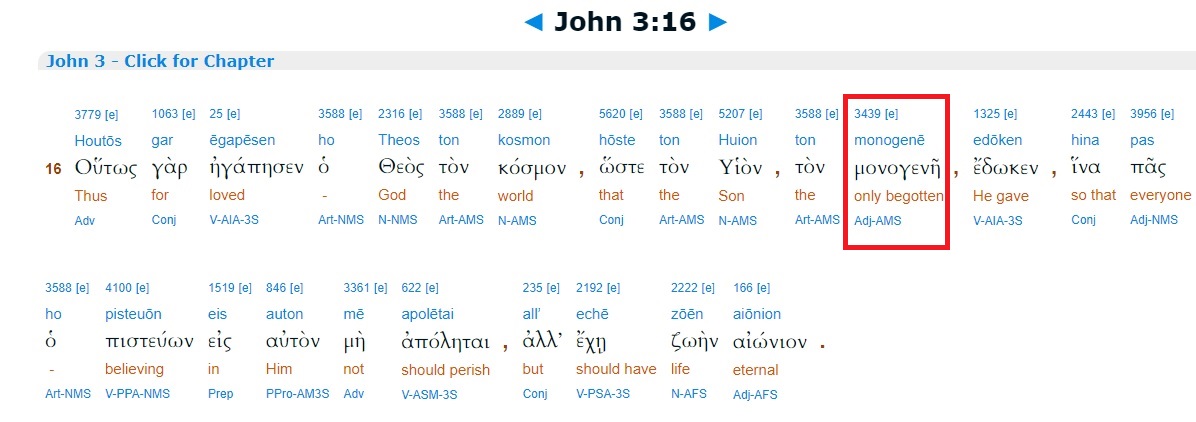
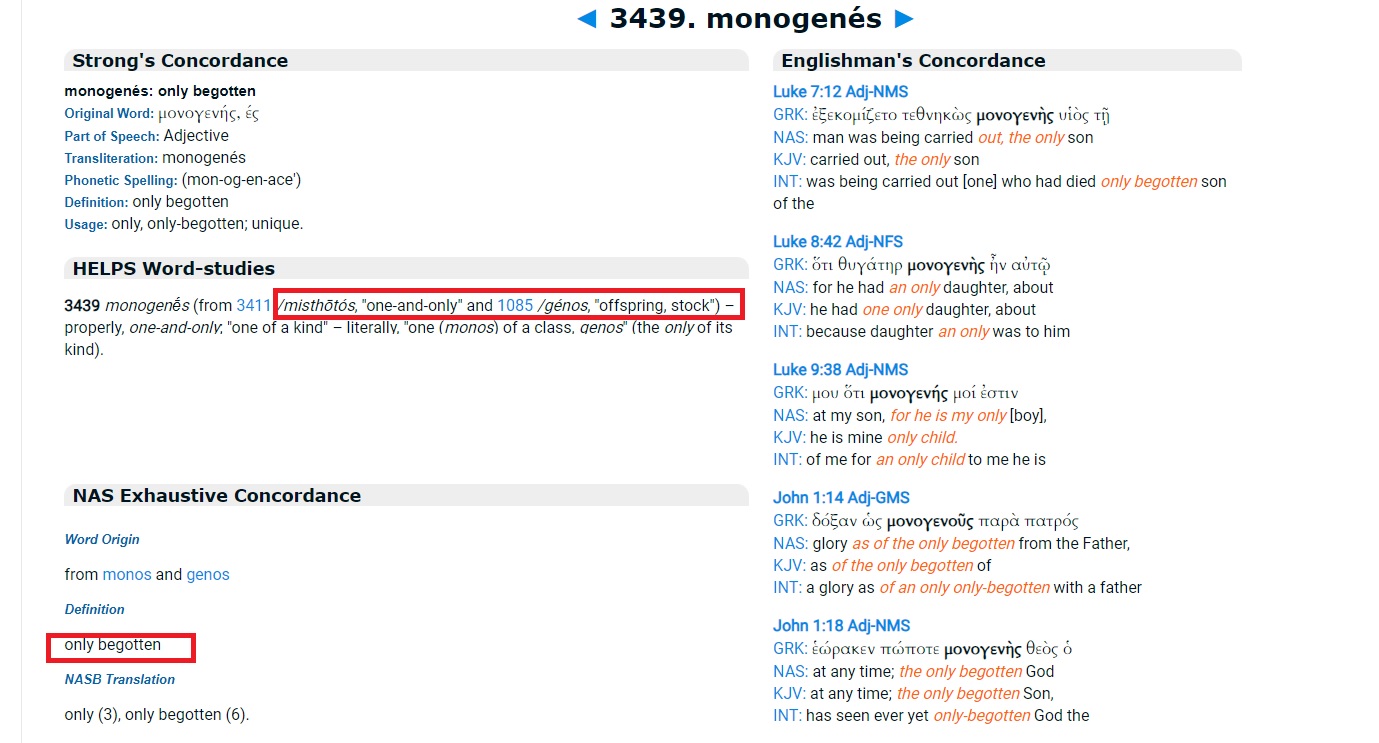




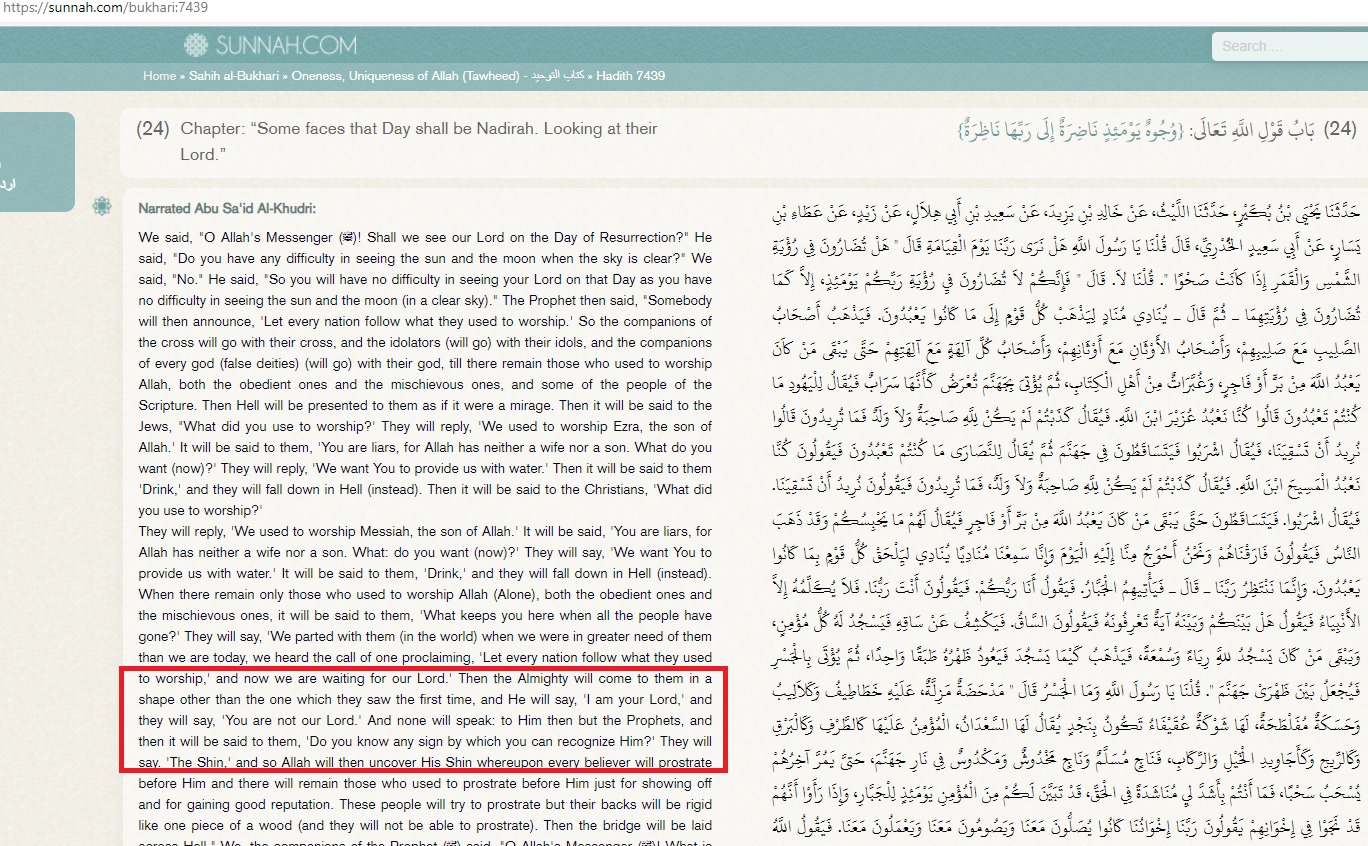
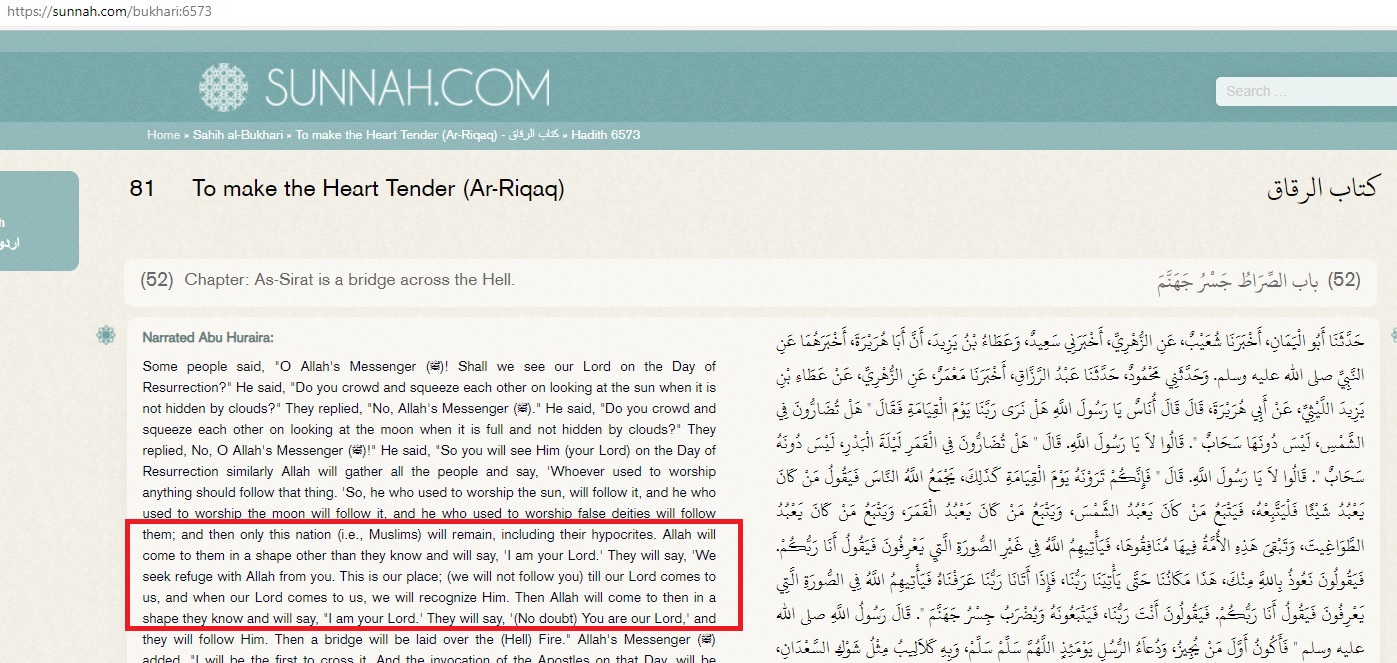
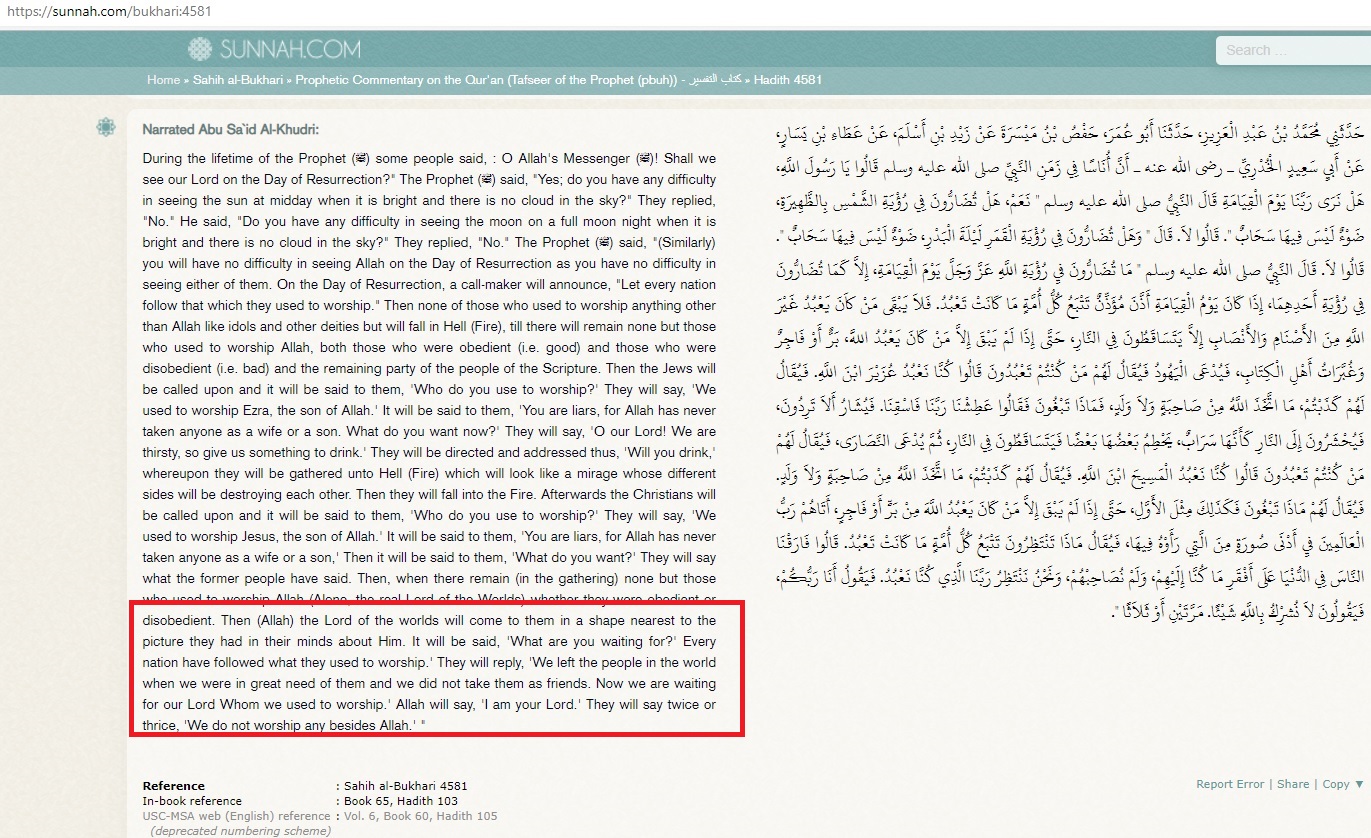


 Prima Quran