“Allah said, O Jesus, I shall cause you to die and will raise you up to Me and shall purify you of the ungrateful disbelieving people, and shall place those who follow you above those who deny the truth, until the Day of Judgement; then to Me shall all return and I will judge between you regarding your disputes.” (Qur’an 3:55)
﷽
Dr Kahlan Al-Kharusi, assistant Mufti of Oman on questions in relation to the so-called “Second Coming” of Jesus and the Mahdi.
We apologize if the English subtitles are not so clear. As the Shaykh mentioned some of the Ibadis in North Africa used to hold to this belief (about Jesus return). We do not know of any scholars today that hold this view. (about the return of Jesus). The Mahdi all of those chains concerning it are broken.
If you are interested in reading more, you may wish to read the following:
“So after the truth, what else can there be, save error? How then are you turned away?” (Qur’an 10:32)
﷽
We were alerted to a fascinating discussion recently between Shaykh Dr. Muhammed bin Yahya Ninowy and Tafhim Kiani on the subject: The Sunni Identity: Can Salafis Be Seen As Sunni Muslim? – Shaykh Ninowy
You may watch the very informative discussion here:
Before we comment further, we feel it is important to give some background information on Shaykh Dr. Muhammed bin Yahya Ninowy .Dr. Muhammed bin Yahya al-Ninowy is widely recognized as a descendant of the Blesed Prophet Muhammed (saw)through the line of Imam al-Ḥusayn ibn ʿAlī ibn Abī Ṭālib
Shaykh Ninowy was featured in ‘The Muslim 500’ as regards those who were deemed to exert a great deal of influence on the Muslim Ummah.
“Sheikh Dr Muhammad Al-Ninowy is a Syrian-American scholar, author, and medical doctor based in Atlanta, Georgia, whose lineage is traced back to the Prophet Muhammad (blessings and peace be upon him). In addition to a PhD in Islamic studies from the University of Georgia, he holds a Doctor of Medicine degree. He is the founding director of Madina Institute and Seminaries, The Center for Non-Violence and Peace Studies, and the charitable organization Planet Mercy, with campuses in the USA, Canada, the UK, South Africa, Malaysia, and Norway. Al-Ninowy also leads a school that follows the Sufism of Ahl-Al-Hadith. He was appointed by the Sultan of Malaysia in 2020 to serve as a member of the board of directors of the Islamic University. An upcoming book is: Nonviolence; a fundamental Islamic principle.”
In the above exchange, Shaykh Dr. Muhammed Al-Ninowy had some eye-opening statements concerning ahadith in relation to “The Mahdi.”
@1:19:33 “The hadith of the Mahdi is frankly in our Sunni tradition and also in the Shi’a tradition, but let’s say in the Sunni tradition there are one and half hadith that are ambiguous in my view. So, Sahih lilghairihi ghair sahih, the explicit are not authentic; and the authentic are not explicit. So, therefore you see, the earlier scholars did not even put it as part of the… did not put the Mahdi as part of the Aqaid.”
This is a welcome statement. It is welcomed because we can see more and more come to this realization.
Recently even Shaykh Hamza Yusuf made an interesting statement when he said:
The vast majority of Muslims believe in the second coming.
Which means there are Muslims who do not believe in the coming of Jesus (as)
Wonder which Muslims those are?
You can find Shaykh Hamza’s statement in an interview here;
Now, Shaykh Dr. Muhammed Al-Ninowy did have a little blurb about the Ibadi school in the above interview.
@1:16:05 “The Khawarij of today, the Ibadis.”@1:16:52 “Not as verbally violent anymore to be honest with you.” Their tradition is.”
He was rather mild. The important thing is that for him, we are Muslims. Albeit he is clearly in error in terms of understanding our history. We also have to keep in mind that it is claimed he is a descendant of Husayn, the son of Imam Ali, as well as being disciplined in the Shaadhili Tariqah. Thus, given his own admission (in the above interview) of Sufism and its connection to Imam Ali, you can’t expect Shaykh Ninowy to give away the store. Albeit we are hopeful that gaps in information are an opportunity to learn about the Ibadi school. He has access to the Arabic language and resources, and surely he will not be excused on the day of judgement.
“So after the truth, what else can there be, save error? How then are you turned away?” –(Qur’an 10:32).
One of our team members has met him before, and he does not strike us as a person who is egotistical or driven by winning points and debates.
May Allah (swt) continue to support Shaykh Ninowy when he strives to build bridges of mutual trust and cooperation throughout the world. Personally, we feel Muslims who attend his Masjid and his circles of learning are in good hands, and Allah (swt) knows best.
“It is He who has sent His Messenger with guidance and the world view that is based on the truth to manifest it over all other world views, although they who rely upon other than or associate partners with Allah dislike it.” (Qur’an 9:33)
﷽
Dr. Bashar Awad Maarouf, a Sunni historian and hadith specialist, has concluded that there is not a single authentic narration concerning the coming of some Mahdi.
While it is common knowledge that the Qur’an does not speak about the Mahdi at all. That the two most authentic collections of hadith, according to Sunni Muslims, Sahih Bukhari & Sahih Muslim, do not speak about the Mahdi at all, what is not so commonly known is the general weakness and unreliability of all other reports.
If you are interested to see the full interview we would recommend:
Some background concerning Dr. Professor Bashar Awad Maarouf.
Bashar Awad Marouf was born in 1940 in Alazamiyah, northern Baghdad. He graduated from primary and secondary schools in the 1960s. He enrolled in the Department of History at the College of Arts in Baghdad University from which he graduated in 1964. In that same year, he enrolled in the Master’s Program of History and Archeology at Baghdad University. Professor Marouf was appointed in 1967 as the teacher at the College of Shari’a Studies at Baghdad University. He later earned his PhD from the College of Arts at the same university in 1976. His doctoral thesis was titled: “Ad-Dhahabi’s Approach in the History of Islam.” Professor Marouf worked at Baghdad University and advanced through academic work, eventually earning a professorship in 1981. He has been keenly interested in studying and minutely scrutinizing the Prophet’s Hadiths. He has been particularly devoted to studying biographies, narrators and the ‘hidden defects’ of some of the Hadiths. He has taught as Professor of Hadith at several universities. Many of Marouf’s studies have been published in Baghdad, Cairo, Damascus, Beirut, Amman, Tunis and London.
Notable among his publications are: “The Impact of Hadith on the Emergency of Muslim History.”, “Al-Mundhiri and his ‘Al Takmila”, “Baghdad’s Biographical Histories.”, “Ad Dhahabi’s approach to the History of Islam.” , “A Journey through Thought and Heritage.” , “The History of Islam and the concept of the Arab Leadership of the Islamic Ummah.” , “Explanation of the Rulings on Chanting the Qur’an.” “A Selection of the Prophet’s Hadith.” , “The Whole Musnad (22 volumes)” “Classified and Verified Musnad” (41 volumes)
Among the many books Professor Marouf verified are: “Al-Wafayat” by Abu Masoud Al Hajji, “Ahlu Al Mi’a and Upward” by Al Hafiz Ad Dahabi. “Postscripts of the History of Baghdad, City of Peace by Ibn Al-Daybathi (5 volumes). “The Grand Mosque” -by Imam Abu Issa Al Tirmidhi (six volumes), “Sunan Ibn Majah by Imam Muhammed Ibn Yazid Al Qazwini (6 volumes), “The Hstory of the City of Peace” by Hafiz Abu Bakr Al Khatib Al-Baghadadi (17 volumes). “The History of Islam and the Deaths of Celebrities and the Famous” by Al Hafiz Shams Addeen Ad-Sahabi (17 volumes) and many more.
Some of his works and publications may be purchased here:
A dean of investigators in the science of Prophetic Hadith. Former rector at the Islamic University in Baghdad. He is a Fellow of the Royal Aaal Al-Bayt Institute for Islamic Thought in Amman, Jordan.
Dr. Professor Bashar Awad Maarouf does not fear the blame of the blamer. He made his conclusion after thorough investigation, tracking all the narrators and investigating all the paths.
In regard to those who say: “But our club says this, and if you differ with the club it is a departure from faith!”
Is the weakness of these hadiths considered a denial of the Sunnah and a departure from Islam!!! Fear Allah!
We personally have considered that there are many such scholars among Ahl Sunnah who have come to this conclusion. However, they do not come out to the public for one of two reasons.
Being ostracized and condemned. Not being welcomed to the table anymore.
The fear that if this widely held belief is now considered mistaken it could cause the masses to wonder what other views or beliefs are mistaken. Thus, a desire to protect the tradition.
“They ask you, [O Muhammed], about the Hour: when is its arrival? Say, “Its knowledge is only with my Lord. None will reveal its time except Him. It lays heavily upon the heavens and the earth. It will not come upon you except unexpectedly.” They ask you as if you are familiar with it. Say, “Its knowledge is only with Allah, but most people do not know.” (Qur’an 7:187)
﷽
3471246720
days
hours minutes seconds
until
Arrival of Imam Mahdi
The day of Judgement was already supposed to happen.
A’isha reported:
“That when the desert Arabs came to Allah’s Messenger (saw) they asked about the Last Hour as to when that would come. And he looked towards the youngest among them and said:
If he lives he would not grow very old that he would find your Last Hour coming to you (he would see you dying).”
“They ask you, [O Muhammed], about the Hour: when is its arrival? Say, “Its knowledge is only with my Lord. None will reveal its time except Him. It lays heavily upon the heavens and the earth. It will not come upon you except unexpectedly.” They ask you as if you are familiar with it. Say, “Its knowledge is only with Allah, but most people do not know.” (Qur’an 7:187)
Ibn Hajar Al Asqalani made a calculation that the time of the Ummah should have already come and gone:
Narrated `Abdullah bin `Umar:
I heard Allah’s Messenger (saw) while he was standing on the pulpit, saying, “The remaining period of your stay (on the earth) in comparison to the nations before you, is like the period between the `Asr prayer and sunset. The people of the Torah were given the Torah and they acted upon it till midday, and then they were worn out and were given for their labor, one Qirat each. Then the people of the Gospel were given the Gospel and they acted upon it till the time of the `Asr prayer, and then they were worn out and were given (for their labor), one Qirat each. Then you people were given the Qur’an and you acted upon it till sunset and so you were given two Qirats each (double the reward of the previous nations).” Then the people of the Torah said, ‘O our Lord! These people have done a little labor (much less than we) but have taken a greater reward.’ Allah said, ‘Have I withheld anything from your reward?’ They said, ‘No.’ Then Allah said, ‘That is My Favor which I bestow on whom I wish.’ “
Hafiz Ibn al-Hajr al-Asqalani says in his Fath al-Bari, (in vol.4, the book of hijara, page 448-449) commenting on these two narrations: “and it is evident ( from these stated narrations) that the lasting of this Islamic nation is somewhat a thousand years, this is because the age of the Jewish nation is equivalent to that of the time periods of the Christian and Muslim ages combined, and the people of transmission (ahl an naql) have agreed that the period of the Jews till the advent of Allah’s final Apostle Muhammad was more than 2000 years, and the span of the age of the Christians was 600 years from them. And also this narration points the fact about how little of the age of this world has remained.”
Torah time is = to Injil time + Qur’an time.
Torah time =2000 years.
Torah time = 2000 years -600 years = (1400) From Moses to Jesus.
Let us be generous and add 100 years.
The time of this ummah of the Blessed Messenger [saw] is 1500-600 which means only 900 years and now we are in 1441.
When Muslims reached the 1,000th year they thought they were nearing the end because of these Sahih ahadith which indicated we will have half the time the Jewish nation had, but Imam as-Suyuti [the author of the Tafsir al jalalayn] who was born in the 10th century and lived into the 11th century was alive during these times, he wrote a fatwa [legal ruling] to reassure Muslims, in which he said it was supposed to be 1000 years but there is a dua of Rasul Allah in which he supplicates Allah to give his Ummah another half a day and the companions asked the prophet how long is half a day and he answered 500 years. So the imam said the life of this Ummah is 1,500 years.
Imam as Suyuti mentions in his book: “Risalah Al-Kashf ‘An Mujawazt Hadehel Ummah Al Alf” ”, or “Treatise on Revealing of the Proceeding of this Nation Beyond the Thousand,” page 206 about the advent of the Mahdi that:
“From what the narrations reveal is that the age of this ummah extends beyond a thousand but it doesn’t exceed in increase another 500 in actuality beyond this thousand.”
So if you do the math 1500-1443=59 years left. So in these next 59 years according to them, we should see this Mahdi, the coming of Jesus, the Gog and Magog causing havoc on the Earth, the Sun rising in the West.
Keep in mind according to the above hadith: “He will destroy the Antichrist and will live on the earth for forty years and then he will die.” 59-40=19. So accordingly Jesus will show up in the year 2039.
So what is going to happen to these Muslims who, after 59 years have passed and nothing of the sort has happened? Will they apostate from the faith? Will they leave the deen?
Ya Allah [swt] I sincerely hope not. We hope that they realize that just because certain interpretations and understandings of Islam are wrong, it does not mean that Islam is wrong.
The Ibadi school, we know what it is that influenced our brothers in ‘Ahl Sunnah’.
We know that many Christians and Jews who embraced Islam in the past influenced our religion, its understanding and teachings.
We know they got this concept straight from the following:
Matthew: 20: 1-16
You may also be interested in reading the following:
“Today those who disbelieve have lost all hope of (damaging) your faith. So, do not fear them, and fear Me. Today, I have perfected your religion for you, and have completed My blessing upon you, and chosen Islam as Dīn (religion and a way of life) for you. But whoever is compelled by extreme hunger, having no inclination towards sin, then Allah is Most-Forgiving, Very-Merciful.” (Qur’an 5:3)
﷽
“O.K. Settle down, settle down.” We are going to go about this in a very orderly manner. Which one of you is the Mahdi? Simply raise your hand!”
“EARLIER this year Iran’s authorities arrested a score of men who, in separate incidents, claimed to be the Mahdi, a sacred figure of Shia Islam, who was “hidden” by God just over a millennium ago and will return some time to conquer evil on earth.”
“A website based in Qom, Iran’s holiest city, deemed the men “deviants”, “fortune-tellers” and “petty criminals”, who were exploiting credulous Iranians for alms during the Persian new-year holiday, which fell in mid-March.”
“Many of the fake messiahs were picked up by security men in the courtyard to the mosque in Jamkaran, a village near Qom, whose reputation as the place of the awaited Mahdi’s advent has been popularized nationwide by President Mahmoud Ahmadinejad. When he took office in 2005 he gave the mosque $10m.”
“Iran’s economic doldrums may have helped to cause this surge in people claiming to be mankind’s saviour—and in women saying they were the Mahdi’s wife. “In an open atmosphere where people could criticise the government they would not believe these people,” says an ex-seminarian in Tehran, the capital, noting that most Iranians still get all of their news from state television and state-owned or -sanctioned newspapers.”
“Last year a seminary expert, Mehdi Ghafari, said that more than 3,000 fake Mahdis were in prison. Mahdi-complexes are common, says a Tehran psychiatrist. “Every month we get someone coming in, convinced he is the Mahdi,” she says. “Once a man was saying such outrageous things and talking about himself in the third person that I couldn’t help laughing. He got angry and told me I had ‘bad hijab’ and was disrespecting the ‘Imam of Time’,” as the Mahdi is known.”
“The most famous case was that of Ayatollah Boroujerdi, who was sentenced to 11 years in prison in 2007 for—among other things—claiming he was the Mahdi. Like many influential “false” messiahs, he was forced to recant on state television, confessing that he had been against the Islamic Republic’s core tenets.”
“Mr Ahmadinejad has called his administration “the government of the hidden imam”. Last month he told a batch of new Iranian ambassadors to consider themselves “envoys of the Mahdi”. After his first speech at the UN in 2005, a video circulated showing Mr Ahmadinejad telling a leading Iranian cleric that world leaders had been enchanted, during his oration, by a halo around his head that had been put there by the Mahdi himself.”
Prima-Qur’an Comments:
We have no idea where they keep all these 3000 Mahdis, but could you imagine if they were all in the same prison or same facility? Surely that would be volatile.
Say, “None in the heavens and earth knows the unseen except Allah, and they do not perceive when they will be resurrected.” (Qur’an 27:65)
﷽
A Shia scholar from the 12er Shi’i school of Islam (as opposed to the Zaydi Shia or Ismaili Shia) has made an interesting observation about the so-called ‘Mahdi’.
Mash’Allah look at this man. He certainly has the passage of time on his face. You know, as people get older they often say things that they wanted to say before but didn’t. As each of us approaches death, we become more concerned with what Allah (swt) thinks of us and less concerned with what people think of us.
Imam Muhammed Asif Muhsini said in his book “Mashra`at Bihar al-Anwar”,volume 1 page 408:
الغيبة التي امتدت أكثر من ألف سنة وربما تمتد إلى آلاف أو ملايين السنين. فإن المؤمنين لم ينتفعوا ولا ينتفعون من إمامهم الغائب – عجل الله تعالى فرجه – في الأصول والفروع ، وما يقال بخلاف ذلك فهو تخيل وتوهم ولعب بالعقول
[This Ghaybah that has taken more than a thousand years and maybe it shall keep going for thousands or millions of years. The believers living in it did not and do not benefit from their hidden Imam(may Allah hasten his appearance) in Usool or Furu`, and all else which is said is nothing but illusions and imaginations and playing with people’s minds.]
Muhammad Asif Muhsini said in the same book volume 2 page 223:
ولا يمكن القول بانتفاعنا منه عليه السلام في زمن الغيبة في الأمور الدينية إلا ممن سلب الله عقله
[It is not possible for us to say that we benefit from him (peace be upon him) in religious matters during his Ghaybah, except those whom Allah has robbed them of intellect.]
Finally, Muhammed Asif Muhsini said in footnote #1, in volume 1 page 82:
وأي فائدة لهذه الأحكام المخزونة عند الأئمة: والمكلفون يحرمون منها في أكثر من ألف سنة ولعله في ألف مليون سنة [And what benefit does this knowledge stored with Imams hold: when the Mukallafoun (Shia) are deprived of it for more than a thousand years, and maybe it’ll last for a billion years.]
So, yes, you can imagine as women get raped and murdered and children become fatherless, and mosque becomes decimated and the landfills the cup with the injustice that this so-called ‘hidden Imam’ is somewhere waiting for just the right moment………
Getting ready and prepared…………
Some time……….
Any time…..
Or maybe waiting for the Mahdi is just a waste of time.
“With the clear proofs and the Zabur. And We sent down to YOU(l-dhik’ra) the Remembrance, that YOU may make clear to the people, what has been sent down to them and that they may reflect.” (Qur’an 16:44)
“Then in the footsteps of the prophets, We sent Jesus, son of Mary, having authority over the Torah revealed before him. And We gave him the Gospel containing guidance and light and having authority over the Torah—a guide and a lesson to those who fear Allah.” (Qur’an 5:46)
And let the People of the Gospel (ahlu l-injili) judge by what Allah has revealed therein. And whoever does not judge by what Allah has revealed – then it is those who are the defiantly disobedient.” (Qur’an 5:47)
“Have you not turned Your vision to those who have been given a (nasiban) portion of the (l-kitabi) Book? They are invited to the (kitabi l-lahi) Book of Allah, to settle their dispute, but a party of them Turn back and decline.” (Qur’an 3:23)
﷽
This is a Christian polemic directed towards the Qur’an and Islam in general. The gist of the argument rests on two points.
The Qur’an tells the people of the Gospel to judge by what Allah has revealed therein, with the assumption being that the Qur’an confirms what Christians claim that Gospel is.
If the People of the Gospel do not even know what that entails, how can they judge by what Allah has revealed therein?
Several hasty conclusions are then reached.
The Gospel mentioned in the Qur’an is equal to one of the competing New Testament canons.
The Qur’an does something that Christians themselves are unable to do. Namely: The Qur’an settles the canon of the New Testament.
Alas, what the academics, historians and orientalists have discussed on the matter is rather blithe.
For example, we have not seen any academic, historian or orientalist even attempt to engage with the following questions in any meaningful way.
What might it mean for the Qur’an to tell a people that are primarily illiterate, to ‘judge by what Allah has revealed there’?
Taking for granted that today Christians go door to door, with a particular New Testament canon in possession, what might it mean for the Qur’an to tell a people who did not have in their possession personal copies of manuscripts to judge by what Allah has revealed?
Even if we assumed that the ‘People of the Gospel’ were all literate and had some type of canon in their possession, their approach was not to go directly to the text. For many Christians of that time, they believed it was the Church that guided, and not the text.
Even if we assumed that the ‘People of the Gospel’ were all literate, and they had some type of canon in their possession, why is it assumed they were all polyglots? Meaning, that they themselves would even understand the language of the particular text?
This is why we have not been amused by the scholarship on this issue. It surprisingly does not engage with key points.
So let us flesh out these points.
The first point. The vast majority of people were unlettered. A polite way of saying illiterate.
“Among them are unlettered (ummiyuna) folk who know (l-kitaba)the book not except from hearsay. They but guess.” (Qur’an 2:78)
“It is He who has sent among the unlettered (l-umiyina) a Messenger from themselves reciting to them His verses and purifying them and teaching them the Book (l-kitaba)and wisdom – although they were before in clear error .” (Qur’an 62:2)
You are not going to find among the beliefs of the Muslims any notion that the Blessed Prophet (saw) himself, being unlettered, is now teaching unlettered people how to read and write a book.
“Among them are unlettered (ummiyuna) folk who know (l-kitaba)the book not except from hearsay. They but guess.” (Qur’an 2:78)
How might the following verse in Qur’an 5:47 engage illiterate people in any meaningful way?
The second point.
Today we take for granted that we can go to a hotel and, more often than not, find the Gideon’s Bible in the top drawer next to the bed. Missionaries knock on your door, and surprise, surprise, they have in their hands an entire biblical canon! Something the vast majority of Christians that have lived on this planet in the past have never held in their hands even once!
Let us repeat this astonishing fact! The vast majority of Christians on this planet in the past never held a biblical canon in their hands, not even once!
When did paper reach the Muslim world? How many sheep had to be slaughtered to obtain their shoulder blades to copy down parchments to compile books was a huge project.
The Gutenberg Bible
In Mainz, Germany, in the mid-1450s, Johann Gutenberg and his partner Johann Fust published more than 150 large-format copies of the Bible in Latin. This is the book known today as the Gutenberg Bible. That was in the 1450s, and there were 150 copies.
Up until that point, imagine all the Christian souls scattered throughout the Earth; they lived and died without once having or holding an individual Bible in their possession. Hopefully, some Christians will be more appreciative of this fact.
In fact, Christians, if anything, would have religious relics or crosses. That did not rely upon the Bible to receive their guidance. They relied upon their respective church, whether it was the Latin Roman Catholic or any competing denomination between Oriental or Eastern Orthodox Churches, Syriac, and so forth. The Church, and not scripture, was the source of guidance and inspiration for the average Christian.
So knowing that having in one’s personal possession the New Testament canon is a very recent phenomenon, how might the following verse engage them in any meaningful way?
How might the following verse in Qur’an 5:47 engage people not in possession of any manuscripts in a meaningful way?
Third point. Let us take a trip down fantasy land for a moment. A complete hypothetical.
Even if the ‘People of the Gospel’ were 100% lettered, literate, and let us assume that each of them even had (any one of many competing) New Testament canons in their possession, they still would not go directly to the text.
Because, as we said before, and we will say again: The Church, and not scripture, was the source of guidance and inspiration for the average Christian.
This idea of approaching the text directly is a very modern Protestant-fueled approach. Fueled in part by translating one of the (many competing) New Testament canons into the vernacular of local people.
“Indeed, We revealed the taurat (l-tawrāta), containing guidance and light, by which the prophets, who submitted themselves to Allah, made judgments for Jews. So too did the rabbis and scholars judge according to (kitabi l-lahi) the Book of Allah, with which they were entrusted and of which they were made keepers. So do not fear the people; fear Me! Nor trade my revelations for a fleeting gain. And those who do not judge by what Allah has revealed are the disbelievers.” (Qur’an 5:44)
Prophets Judged. After the Prophet’s death, people are judged by the rabbis and authorities of their respective faiths. We see the same in the Qur’an in regard to Islam itself. Albeit here something novel is introduced due to the nature of the Qur’an.
“O you who have believed, obey Allah and obey the Messenger and those in authority among you. And if you disagree over anything, refer it to Allah and the Messenger, if you should believe in Allah and the Last Day. That is the best [way] and best in the result.” (Qur’an 4:59)
Here the idea is introduced that the believers, if they differ with the people in authority over them, are to take it back to Allah (the revelation of the Qur’an) and the Prophet (his transmitted Sunnah).
Why is this? Because this is a faith in which its sources are being made publicly available and accessible to all! We will come back to this very important point.
And let the People of the Gospel (ahlu l-injili) judge by what Allah has revealed therein. And whoever does not judge by what Allah has revealed – then it is those who are the defiantly disobedient.” (Qur’an 5:47)
How might the following verse in Qur’an 5:47 engage people who are reliant upon a scholastic class or clergy to guide them? In fact, which “People of the Gospel” are even being addressed?
Fourth point. Even if the ‘People of the Gospel’ were 100% lettered, literate, and let us assume that each of them even had (any one of many competing) New Testament canons in their possession. Why assume they could read the particular language of the documents in their possession?
Depending on the type of Christian community, they spoke an array of languages, such as: Coptic, Aramaic, Greek, Amharic, Ge’ez, Sabaean.
So, even if we were to suspend belief and go out on a far-reaching limb and assert a 100% literacy rate, and 100% possession of some type of canon, why is it assumed that the document in their possession would be in a language that everyone else could access?
Our response effectively dismantles the ‘Islamic Dilemma’ by arguing that the polemic commits several historical and contextual errors:
Anachronism: It projects modern realities (universal literacy, personal ownership of Bibles, Protestant sola scriptura) onto 7th-century Christian communities.
Ignorance of Historical Context: It fails to consider the oral, communal, and clerical nature of religious authority in most historical Christian traditions.
We have established three key points.
Illiteracy and Lack of Access to Texts We have correctly noted that the vast majority of people in the 7th century, including Christians, were illiterate (“ummi”). They did not have personal copies of scriptures. Religious knowledge was mediated through clergy, oral tradition, and liturgical practice. The Qur’anic command to “judge by what is within it” is not a command for every individual Christian to personally read a codex but a directive to their religious leaders (rabbis, priests, scholars) to make assessments on the data available to them. This is parallel to the command for Jews to judge by the Torah (5:43) and for Muslims to obey Allah and the Messenger (4:59).
Religious Authority: Church vs. Text We astutely observed that for most historical Christians (Catholic, Orthodox, Oriental), religious authority resided in the Church and its tradition, not in a personally accessible text. The idea of individuals judging directly by scripture is a Protestant innovation. The Qur’anic command is thus aimed at the religious authorities (“rabbaniyyun” and “ahbar”) who were entrusted with preserving and teaching the revelation (5:44). Their failure to do so is a central Qur’anic critique (5:63, 9:31, 9:34).
Linguistic Barriers Even if a Christian community possessed scriptures, they were often in languages (Greek, Syriac, Coptic) not understood by the laity. The Qur’an, in contrast, was revealed in the vernacular Arabic of its audience and was memorized and transmitted orally, making it immediately accessible to all, literate or not.
Elaboration upon the first point.
The example of the Blessed Prophet (saw).
“If you are in doubt about what We have revealed to you, then ask those who are (yaqrauna l-kitaba (reading the Book). “The truth has certainly come to you from your Lord, so do not be one of those who doubt it.” (Qur’an 10:94)
If you doubt what is revealed to you (the context indicates what has been revealed about Moses), then ask (which is not him reading a text but consulting those who claim to have a revealed revelation)
The Prophet (saw) was not in doubt, as Allah (swt) says: “The Truth has certainly come to you from your Lord, so do not be one of those who doubt.”
Say, “Have you considered if the Qur’an was from Allah, and you disbelieved it while a witness from the Children of Israel has testified to something similar and believed that you were arrogant… ?” Indeed, Allah does not guide people who are constant in wrongdoing.“ (Qur’an 46:10)
“We did not send before you except mere men inspired by Us. So ask the (ahla l-dhik’ri) people of the reminder if you do not know.” (Qur’an 16:43)
“And We sent no messenger before you, but that they were men unto whom We revealed. So ask the people of the Reminder (ahla l-dhik’ri), if you know not.” (Qur’an 21:7)
Prima Qur’an comments: As we can see, the Blessed Prophet (saw) was informed to ask not to read.
So what is being said is to go and ask for a person to weigh the arguments not as much as examine textual evidence. Something the vast majority would not have access to any way.(textual evidence)
The question is: how many are in a similar situation?
Again, people who do not read and write?
Let us take a moment to ask a few more questions.
How would a Muslim or a Christian convey the message of their faith to a person who could not read, not because they were illiterate, but because they were physically blind?
How would a Muslim or a Christian convey the message of their faith to a person who was physically deaf?
Some insightful statements in the Qur’an in regard to the Jewish and Christian communities.
A)The Qur’an acknowledges schisms and sectarianism among the Jewish and Christian communities.
B)The Qur’an acknowledges that the Christians forgot a portion of what they were reminded of. This is a reference to the oral transmission of the Injeel (Gospel), as their community was given no other reminder but that.
“And the Jews say, “The hand of Allah is chained.” Chained are their hands, and cursed are they for what they say. Rather, both His hands are extended; He spends however He wills. And that which has been revealed to you from your Lord will surely increase many of them in transgression and disbelief. And We have cast among them animosity and hatred until the Day of Resurrection. ” (Qur’an 5:64)
“And from those who say, “We are Christians” We took their covenant; but they forgot (fanasu) a portion of that of which they were reminded (dhukkiru).So We caused among them animosity and hatred until the Day of Resurrection. And Allah is going to inform them about what they used to do.” (Qur’an 5:14)
C)The Qur’an charges oral corruption of the previous revelation.
“So for their breaking of the covenant, We cursed them and made their hearts hard. They distort (yuḥarrifūna) words upon delivery (mawāḍiʿihi) and have forgotten(wanasu) a portion of that of which they were(dhukkiru) reminded. And you will still observe deceit among them, except a few of them. But pardon them and overlook [their misdeeds]. Indeed, Allah loves the doers of good.” (Qur’an 5:13)
“Have you any hope that they will be true to you when a party of them used to listen(yasma’una) to the word of Allah, then used to (yuharrifunahu)change it, after they had understood(‘aqaluhu) it, knowingly.” (Qur’an 2:75)
This verse is quite explicit in the damnation of these people. That they actually would listen to the words of Allah (auditory hearing), they understood it, confirmed it and knowingly changed it -during the oral transmission process!
Received the revelation from Allah.
Understood it.
Knowingly distorted it–during the oral transmission process.
Notice in the above text (Qur’an 5:13 & 5:14) were reminded (dhukkiru)–past tense.
Whereas the Qur’an:
“Surely We have revealed the Reminder (l-dhik’ra) and We will most surely be its (lahafizuna) guardian.”
Whereas it has to be remembered that these (ahla l-dhik’ri) -people of the reminder “have forgotten(wanasu) a portion of that of which they were(dhukkiru) reminded.” (Qur’an 5:13)
Analyzing (Qur’an 5:63-68)
“Why do their rabbis and (ahbaru)scholars not forbid them from saying what is sinful and consuming what is unlawful? Evil indeed is their inaction! The Jews said, “Allah’s hands are tied.” May their fists be tied, and they be condemned for what they said. Rather, He is open-handed, giving freely as He pleases. That which has been revealed to you from your Lord will only cause many of them to increase in wickedness and disbelief. We have stirred among them hostility and hatred until the Day of Judgment. Whenever they kindle the fire of war, Allah puts it out. And they strive to spread corruption in the land. And Allah does not like corruptors. Had the People of the Book only been faithful and mindful, We would have certainly absolved them of their sins and admitted them into the Gardens of Bliss. And had they observed the Torah, the Gospel, and what has been revealed to them from their Lord, they would have been overwhelmed with provisions from above and below. Some among them are upright, yet many do nothing but evil. O Messenger! Convey everything revealed to you from your Lord. If you do not, then you have not delivered His message. Allah will protect you from the people. Indeed, Allah does not guide people who disbelieve. Say, “O People of the Book! You have nothing to stand on unless you observe the Torah, the Gospel, and what has been revealed to you from your Lord.” And your Lord’s revelation to you will only cause many of them to increase in wickedness and disbelief. So do not grieve for the people who disbelieve.” (Qur’an 5:63-68)
The Rabbis and learned people do not forbid them from saying what is sinful and consuming what is unlawful.
The People of the Book are not faithful and mindful.
The People of the Book do not observe the Torah and the Gospel and what has been revealed to them from their Lord.
The People of the Book do not stand upon anything until they observe the Torah, the Gospel and what has been revealed to you from your Lord.
You are the best community ever raised for humanity—you encourage good, forbid evil, and believe in Allah. Had the People of the Book believed, it would have been better for them. Some of them are faithful, but most are rebellious. They can never inflict harm on you, except a little annoyance. But if they meet you in battle, they will flee and they will have no helpers. They will be stricken with disgrace wherever they go, unless they are protected by a covenant with Allah or a treaty with the people. They have invited the displeasure of Allah and have been branded with misery for rejecting Allah’s revelations and murdering prophets unjustly. This is because of their disobedience and violations. Yet they are not all alike: there are some among the People of the Book who are upright, who recite Allah’s revelations throughout the night in prostration. They believe in Allah and the Last Day, encourage good and forbid evil, and race with one another in doing good. They are ˹truly˺ among the righteous.” (Qur’an 3:110-114)
Muslims are the best community for humankind. No need to follow another community.
Most of the People of the Book are rebellious.
The People of the Book earn Allah’s displeasure for rejecting his revelations and murdering the Prophets.
Point 3 points to the People of the Book in the above context, as being the Children of Israel or the Jews.
Among the People of the Book (in this context the Children of Israel) are the upright.
They recite/recall/remember Allah’s ayats (rather, revelations, or miracles) throughout the night while in prostration.
Point 3 is interesting because it shows the particular people of the book here cannot be Christians. The Christians had two Prophets. Their prophets were Jesus and John. It is not said that Christians murdered their Prophets.
Point 6 is interesting because it points to the practice of these particular Jews (Children of Israel) making prostrations in their prayer.
This is common among Yemeni Jews as well as Karaties. Their name comes from the Hebrew word qara ‘to read’.
“And verily we have written in the Zabur, after the Reminder (l-dhik’ri): My righteous slaves will inherit the earth.” (Qur’an 21:105)
“We did not send before you except mere men inspired by Us. So ask the (ahla l-dhik’ri) people of the reminder if you do not know.” (Qur’an 16:43)
“With the clear proofs and the Zabur. And We sent down to YOU(l-dhik’ra) the Remembrance, that YOU may make clear to the people, what has been sent down to them and that they may reflect.” (Qur’an 16:44)
If what was with them had provided clarity, they would not need it clarified by the Blessed Prophet (saw).
If the Qur’an itself is in need of an expositor, and an interpreter, what makes one think that the Torah, the Zabur, or the Injeel would not need one? That they are standalone texts? Not even the traditional Jews or the traditional Christians believe this!
In fact, not until the rise of Protestantism, (and in part due to direct access to translations and a rise in literacy rates), did Christians even think it feasible to even approach the text directly.
One of the myriad of problems that Latin Roman Catholics, Oriental Orthodox, and Eastern Orthodox Christians, point out concerning the Protestant tradition is the doctrine of perspicuity. A doctrine also known as the doctrine of clarity.
Interestingly enough, it is this very issue that Muslims have with the Hafs Only Qur’an Religion, which claims each individual can approach the Qur’an directly.
“And obey Allah and obey the Messenger. But if you turn away, then Our Messenger is responsible only for conveying the message (l-balaghu) clearly (l-mubina). (Quran 64:12)
“But if you turn away [Prophet], remember that you are only conveying this message clearly.” (Qur’an 16:82)
So the point stands. If the Qur’an itself is in need of an expositor and an interpreter, what makes one think that the Torah, the Zabur or the Injeel would not need one?
“The Jews say, “The Christians have nothing to stand on,” and the Christians say, “The Jews have nothing to stand on.'” Although they (yatluna l-kitaba (recite the book)) recite the Scripture. The ignorant ones say the same thing. But Allah will judge between them on the Day of Resurrection concerning that over which they used to differ.” (Qur’an 2:113)
The group of Christians in the above text are very likely to be the sect of Marcion. The sect of Marcion is the one most likely to the Jews that ‘they have nothing to stand upon.‘
Marcion developed the first Christian New Testament canon, consisting of 11 books. Many believe that Marcion is the source for what is now called ‘The Gospel according to Luke.’.
That being said, when we look at the above text (Qur’an 2:113), it makes absolute sense for the Jews to say that the Christians do not stand on anything. This is given that Christian tradition has had to distort and deliberately alter Hebrew scriptures to justify many of its proof texts. Whereas it is difficult for Christians to say that the Jews stand on nothing, given that most Christians acknowledge a shared canon with the Jews. The exception here is the followers of Marcion.
In reality Jewish and Christian lay people do not go directly to their revelations.
Because a great many of them are illiterate.
Many of them simply did not have access to their sacred writings to begin with.
Those that could read or had access to some manuscripts may not have understood the language of the source material.
D) The Qur’an speaks about the learned people of the Jews and Christians.
“Why do the rabbis (l-rabaniyuna) and religious scholars (ahbaru) not forbid them from saying what is sinful and devouring what is unlawful? How wretched is what they have been practicing.” (Qur’an 5:63)
“They have taken their scholars (ahbarahum) and (warhu’banahum) monks as lords besides Allah , and [also] the Messiah, the son of Mary. And they were not commanded except to worship one Allah; there is no deity except Him. Exalted is He above whatever they associate with Him.” (Qur’an 9:31)
“O you who have believed, indeed, many of the scholars (ahbari) and the monks (walruh’bani) devour the wealth of people unjustly and avert [them] from the way of Allah. And those who hoard gold and silver and spend it not in the way of Allah – give them tidings of a painful punishment.” (Qur’an 9:34)
“You will surely find the most bitter towards the believers to be the Jews and polytheists and the most gracious to be those who call themselves Christian. That is because there are (qissisina) priests and monks (waruh’banam) among them and because they are not arrogant. When they listen to what has been revealed to the Messenger, you see their eyes overflowing with tears by recognizing the truth. They say, “Our Lord! We believe, so count us among the witnesses.” (Qur’an 5:82-83)
The crucial verses.
“Indeed, We revealed the Torah, containing guidance and light, by which the prophets, who submitted themselves to Allah, made judgments for Jews. So too did the rabbis (rabaniyuna) and scholars (ahbaru) judge according to (kitabi l-lahi) the Book of Allah, with which they were entrusted and of which they were made keepers. So do not fear the people; fear Me! Nor trade my revelations for a fleeting gain. And those who do not judge by what Allah has revealed are the disbelievers.” (Qur’an 5:44)
From the above we understand that the Prophets judged by the Torah.
The rabbis and learned people also judged according to the book of Allah.
“But why do they come to you for judgment when they have the Torah containing Allah’s judgment, then they turn away after all? They are not believers.” (Qur’an 5:43)
What are the Jews being told to judge by?
The Jewish people are told to judge by the book of Allah (in this case, the Torah)
There is no internal evidence to suggest the people of the Torah are the laity.
This is not a command for the laity to directly approach the text. That is because they turn to their learned people.
Allah (swt) has told us concerning their learned people the following:
a) They devour the wealth of people unjustly.
b) They do not forbid saying what is sinful
c) Devouring the unlawful.
What are the People of the Gospel being told to judge by?
“Then in the footsteps of the prophets, We sent Jesus, son of Mary, having authority over the Torah revealed before him. And We gave him the Gospel containing guidance and light and having authority over the Torah—a guide and a lesson to those who fear Allah.” And let the People of the Gospel (ahlu l-injili)judge by what Allah has revealed therein. And whoever does not judge by what Allah has revealed – then it is those who are the defiantly disobedient.” (Qur’an 5:46-47)
Let us establish a few key points from the above text.
There is no internal evidence to suggest the people of the Gospel are the laity.
The wording of the text asks the People of the Gospel to judge by what Allah has revealed ‘therein’
Allah (swt) has told us concerning their learned people the following:
a) They devour the wealth of people unjustly.
Ultimately in either scenario Allah (swt) tells the People of the Book:
“Say, “O People of the Book! You have nothing to stand on unless you observe the Torah, the Gospel, and what has been revealed to you from your Lord.” (Qur’an 5:68)
How is this done?
“With the clear proofs and the Zabur. And We sent down to YOU(l-dhik’ra) the Remembrance, that YOU may make clear to the people,what has been sent down to them and that they may reflect.” (Qur’an 16:44)
That YOU may make clear to the people.
Just as Jesus (as) was the authority during his time:
“And will make him a messenger unto the Children of Israel, (saying): Lo! I come unto you with a sign from your Lord. Lo! I fashion for you out of clay the likeness of a bird, and I breathe into it and it is a bird, by Allah’s leave. I heal him who was born blind, and the leper, and I raise the dead, by Allah’s leave. And I announce unto you what you eat and what you store up in your houses. Lo! herein verily is a portent for you, if ye are to be believers.” (Qur’an 3:49)
“And I will confirm the Torah revealed before me and legalize some of what had been forbidden to you. I have come to you with a sign from your Lord, so be mindful of Allah and obey me.” (Qur’an 3:50)
The Qur’an is internally consistent with itself in saying that the Messenger of the time has power and authority over what came before it. Jesus (as) having power and authority over what came before him, the Torah, the Zabur. In fact, as we will see, the New Testament has Jesus quote a Torah that the Jews do not have in their possession!
Thus, the bulk of the Christians could not read. Did not have any access to their text, those that were literate often could not read the language their manuscripts were written in. These, the bulk of Christians had to rely upon introspection and self-reflection.
This argument is common sense and self-evident.
Islam has no veneration of monks. The Prophet is not worshiped. We go to Allah directly. Direct access to the revelation. The literate and illiterate had direct access to the Qur’an via oral preservation and transmission. Direct encouragement to learn this revelation. A religion in which women have direct access to this revelation. The example of the Blessed Prophet (saw) himself. Jesus is like Adam. Jesus is the created word of Allah.
What about the learned Christians?
Those that could read.
Those that would have access to some type of sacred text.
Those that could read the respective languages?
What would the learned Christians find when they reflect upon their sacred text?
This would all depend upon the type or sect of Christianity interacting with Islam.
For example, how would Christians who identified with the teachings of Marcion interact with the following verse of the Qur’an?
“On the Day the earth will be replaced by another earth, and the heavens [as well], and all creatures will come out before Allah, the One, the Prevailing.” (Qur’an 14:48)
The Marcionites were not known to either contain or believe in 2 Peter or Revelation.
Let us say we stick with the Canon most Christian sects today believe in. That is 27 book New Testament canon as opposed to only 22 or 35 books of other Christian sects.
What does the learned Christian find?
The learned Christian is shocked to find just how Jesus-Less the New Testament is as a whole.
Next, you have to take into account that according to the document of the New Testament (27-book canon and not the 22-book New Testament or the 35-book New Testament that rival Christians hold as canon), the actual number of words attributed to Christ Jesus is (once you exclude the duplication of Jesus’s speeches in the four accepted gospels) the total number of words spoken by Jesus is 31,426.
So we have about 4 hours of reading the words attributed to Jesus.
If we are to grant a 27 NT Canon as opposed to the 22 or 35 book New Testaments that were in dispute among Christians in the time of the Blessed Prophet (saw). 19/27 have absolutely no words of Jesus in them at all! 70.67% of the New Testament has nothing attributed to Jesus!!
1 and 2 Corinthians, two other books have two passages ascribed to Jesus:
1 Cor 11:24 & 2 Cor 12:9 The rest of these two letters is nothing.
This means only the Four traditional Gospels, the Apocalypse of John, and the book of Acts are the the only NT books that have words attributed to Jesus in them! (other than the 2 Corinthians citations) Most Christians do not stop to think about this!
The following books from a 27-book New Testament canon have absolutely no words of Jesus in them at all.
Romans (no words of Jesus at all) Galatians (no words of Jesus at all) Colossians (no words of Jesus at all) 1 Timothy (no words of Jesus at all) 2 Timothy (no words of Jesus at all) Ephesians (no words of Jesus at all) Philippians (no words of Jesus at all) 1 Thessalonians (no words of Jesus at all) 2 Thessalonians (no words of Jesus at all) Hebrews (no words of Jesus at all) James (no words of Jesus at all) Titus (no words of Jesus at all) Philemon (no words of Jesus at all) 1 John (no words of Jesus at all) 2 John (no words of Jesus at all) 3 John (no words of Jesus at all) Jude (no words of Jesus at all) 1 Peter (no words of Jesus at all) 2 Peter (no words of Jesus at all)
1 Corinthians “And when he had given thanks, he broke it, and said, “Take, eat: this is my body, which is broken for you: this do in remembrance of me.” After the same manner he also took the cup, when he had supped, saying, This cup is the New Testament in my blood: this do ye, as oft as ye drink it, in remembrance of me.” (1 Corinthians 11:24-25)
2 Corinthians “And he said unto me, My grace is sufficient for thee: for my strength is made perfect in weakness. Most gladly, therefore, will I rather glory in my infirmities, that the power of Christ may rest upon me.” (2 Corinthians 12:9)
The other thing that the learned Christian would find is that of the four books that are given the title: The Gospel. According to Matthew, Mark, Luke and John that the book of John does not contain the word Gospel in it at all!
The learned Christian would find that the gospel was something Jesus preached. That the times the Christian canon do refer to the Gospel of Jesus, it is referenced as a sort of vague revelation concerning the coming of the kingdom. The Gospel was certainly not some biography about the life of Jesus written after him.
“And he went throughout all Galilee, teaching in their synagogues and proclaiming the gospel of the kingdom and healing every disease and every affliction among the people.” (Matthew 4:23)
“And saying, ‘The time is fulfilled, and the kingdom of God is at hand; repent and believe in the gospel.” (Mark 1:15)
“One day, as Jesus was teaching the people in the temple and preaching the gospel, the chief priests and the scribes with the elders came up.” (Luke 20:1)
The learned Christian might be startled to find that the New Testament speaks about rival gospels!
“For if he that comes preach another Jesus, whom we have not preached, or if you receive another spirit, which you have not received, or another (εὐαγγέλιον) gospel, which you have not accepted, you might well bear with him.” (2 Corinthians 11:4)
“I marvel that ye are so soon removed from him that called you into the grace of Christ unto another(εὐαγγέλιον) gospel.” (Galatians 1:6)
“But though we, or an angel (ἄγγελος) from heaven, preach any other gospel (εὐαγγελίζηται) unto you than that which we have preached unto you, let him be accursed. As we said before, so say I now again, If any man preach any other gospel (εὐαγγελίζεται) unto you than that you have received, let him be accursed.” (Galatians 1:8-9)
The learned Christian finds out that not everything Paul wrote was inspired and if it was, it was not preserved!
“I wrote unto you in an EPISTLE not to accompany fornicators:” (1 Corinthians 5:9)
Prima Qur’an Comment: Well, if everything Paul wrote was inspired by God, then where is this epistle at? By the way, this is 1st Corinthians, not 2nd Corinthians.
The learned Christian finds out that not everything that is called Scripture has been preserved.
“Or do you suppose it is in vain that the SCRIPTURE says, “He yearns jealously over the spirit which he has made to dwell in us”? (James 4:5)
Where is the Scripture that this quote comes from? So does the Bible contain all of God’s scripture or not?
The learned Christian finds out that the New Testament informs us that Jesus said things that are not recorded at all!
“After three days, they found him in the temple courts, sitting among the teachers, listening to them and asking them questions.” (Luke 2:46)
Those questions are not recorded.
The learned Christian (those whose churches accept the book of Revelation as canonical) would read Revelation chapters 2 and 3 and wonder what happened to the 7 lost letters to the Churches apparently authorized by Jesus to the angels?
The learned Christian finds there is not a shred of historical data outside this dream of John, where in these letters were written to any Churches!
The learned Christian finds that his New Testament quotes a Torah that no one had in possession at the time of Jesus until today.
“To this day, I have had the help that comes from God, and so I stand here testifying both to the small and great, saying nothing but what the prophets and Moses said would come to pass: that Christ must suffer and that, by being the first to rise from the dead, he would proclaim light both to our people and to the Gentiles.” (Acts 26:22-23)
The learned Christian finds that there are three claims which Paul says Moses and the prophets made:
Christ must suffer.
Christ would be the first to rise from the dead.
Christ would proclaim light both to the Jews and to the Gentiles.
The learned Christian will find that Moses made no such claims.
The learned Christian will find the New Testament having Jesus quote from a TNCH that did not exist in the time of Jesus nor exist today.
“He went to Nazareth, where he had been brought up, and on the Sabbath day he went into the synagogue, as was his custom. He stood up to read, and the scroll of the prophet Isaiah was handed to him. Unrolling it, he found the place where it is written: “The Spirit of the Lord is on me, because he has anointed me to proclaim good news to the poor.” He has sent me to proclaim freedom for the prisoners and recovery of sight for the blind, to set the oppressed free, to proclaim the year of the Lord’s favour.” (Luke 4:16-19)
“And the scroll of the prophet Isaiah was handed to him.”
“The Spirit of the Lord is on me, because he has anointed me to proclaim good news to the poor. He has sent me to proclaim freedom for the prisoners and recovery of sight for the blind, to set the oppressed free, to proclaim the year of the Lord’s favour.”
So when we go to this Latin Roman Catholic website here:
The footnote says: [6] Is. 61.1, 2. So, this means this text from Isaiah that Jesus is allegedly reading is Isaiah 61:1-2 right?
So when I check this against the Septuagint 2.0(The Holy Spirit’s Fav Version)
I find the following: “The Spirit of the Lord is upon me, because he has anointed me; he has sent me to preach glad tidings to the poor, to heal the broken in heart, to proclaim liberty to the captives, and recovery of sight to the blind; to declare the acceptable year of the Lord, and the day of recompense; to comfort all that mourn (Isaiah 61:1-2 Septuagint 2.0)
But wait a minute! Hold up! It says: ” He stood up to read, and the scroll of the prophet Isaiah was handed to him. Unrolling it, he found the place where it is written…”
Here is the rub: Jesus was not reading from the Septuagint 2.0 It says he was reading from the scroll! What would the Hebrew Isaiah 61 look like?
The spirit of the Lord God was upon me, since the Lord anointed me to bring tidings to the humble, He sent me to bind up the broken-hearted, to declare freedom for the captives, and for the prisoners to free from captivity. To declare a year of acceptance for the Lord and a day of vengeance for our God, to console all mourners. (Isaiah 61:1-2)
“The spirit of my Sovereign GOD is upon me, because God has anointed me. I have been sent as a herald of joy to the humble, To bind up the wounded of heart, To proclaim release to the captives, Liberation to the imprisoned; To proclaim a year of GOD’s favor And a day of vindication by our God; To comfort all who mourn.” (Isaiah 61:1-2)
“To give sight to the blind” That is no where there!
So are the Eastern Orthodox, Oriental Orthodox, Latin Roman Catholics and Protestants justified to maliciously tamper with the text like this? Do they have the right to alter God’s words?
The Learned Christian will discover the malicious tampering of Habakkuk 2:4 by the Christians.
“Behold, it is puffed up-his soul is not upright within him, but the righteous shall live by his faith.” (Habakkuk 2:4)
Another manipulation by Paul.
“Clearly no one who relies on the law is justified before God, because “the righteous will live by faith.” (Galatians 3:11)
“For in the gospel the righteousness of God is revealed—a righteousness that is by faith from first to last, just as it is written: “The righteous will live by faith.” (Romans 1:17)
Christians are fine with this! Because they are a people who are not sincere and do not mind if God’s scriptures are contorted and manipulated.
The Learned Christian discovers that an anonymous New Testament book alters the words of Jeremiah! Do keep in mind this depends on whether that particular learned Christian accepted Hebrews as canonical.
An Anonymous New Testament Book Alters the Words of Jeremiah!
The Book of Hebrews-according to church tradition, is ascribed to Paul. However, today, modern Christian scholarship has walked away from this claim.
Nonetheless, why would Christians trust a book by an anonymous author that deliberately and maliciously misquotes the Jewish Scriptures?
“It will not be like the covenant which I made with their fathers, on the day when I took them by the hand, to rescue them from Egypt; that they should break my covenant, and I (says the Lord) should abandon them.” (Hebrews 8:9)
Footnote states: [4] vv. 8 and the following: Jer. 31.31.
“It will not be like the covenant which I made with their fathers, on the day when I took them by the hand, to rescue them from Egypt; that they should break my covenant, and I, all the while, their master, the Lord says.” (Jeremiah 31:32)
Jeremiah 31:31 in the Hebrew TNCH (Jeremiah 31:32 in the Christian Bible)
“Not like the covenant that I formed with their forefathers on the day I took them by the hand to take them out of the land of Egypt, that they broke My covenant, although I was a lord over them, says the Lord.” (Jeremiah 31:31)
“It will not be like the covenant I made with their ancestors, when I took them by the hand to lead them out of the land of Egypt, a covenant that they broke, though I espoused them—declares GOD.” (Jeremiah 31:31)
The deliberate and malicious changes to the text are obvious to all those who do not have a veil over their eyes.
A huge difference between saying God abandoned his people or simply disregarded them and saying that God was like a husband or espoused or a watchful master/lord over them.
The learned Christian will find when reading the New Testament the claim that the (New Testament) itself is not the ultimate arbiter of truth for the Christian.
“But when he, the Spirit of truth, comes, he will guide you into all the truth. He will not speak on his own; he will speak only what he hears, and he will tell you what is yet to come.” (John 16:13)
The learned Christian will find the claim that Jesus tells them the scriptures are not what gives eternal life, but contrary to this, the scriptures speak of one to come who has authority.
“You study the Scriptures diligently because you think that in them, you have eternal life. These are the very Scriptures that testify about me, yet you refuse to come to me to have life.” (John 5: 39-40)
The learned Christian will find the claim that Jesus tells the crowds not to turn to the Torah for guidance but to listen to the teachers of the law, and obey all that they tell you. They are the ones who teach and inform the masses.
“Then Jesus said to the crowds and to his disciples: “The teachers of the law and the Pharisees sit in Moses’ seat. So you must be careful to do everything they tell you. “But do not do what they do, for they do not practice what they preach.” (Matthew 23:1-3)
The average Christian, the vast majority of whom would not even be able to read their sacred sources, much less have access to them. The vast majority of Christians do not believe their sacred sources guide them; rather, they believe their respective Church or Bishops guide them. Such people certainly do not have any recourse to any injeel. They would instead rely upon the merits of the propositions, positions and the arguments of each faith community.
When they hear the verse recited: “And let the People of the Gospel (ahlu l-injili) judge by what Allah has revealed therein.” It can come across as a taunt to them. A powerful-in-the face reminder that they have no access to their Injil; whereas the Muslim, poor and powerful, man and woman, slave and free person all have direct access to their revelation.
Likewise, the learned Christian can also perceive the verse as a taunt when they too realize they are not in possession of a revelation of Christ Jesus, but rather biographies concerning him. The learned Christian watches in breath-taking amazement as revelation is revealed in real time to the Blessed Prophet Muhammed (saw).
Lastly, the so-called “Islamic Dilemma” has become a huge Christian Dilemma. Why is that?
The Christians are arguing against what they believe is an argument of Jesus for his (Jesus) being authentic!
How?
“If Satan drives out Satan, he is divided against himself. “How then will his kingdom stand?” (Matthew 12:26)
Christians claim that the Qur’an is from Satan. So why would Satan want people to go back to the Bible as evidence or source of truth?
Thus, Christian claims become a huge dilemma for them.
In summary: Let the People of The Gospel Judge. Where is the Injeel?
Key Points of Our Critique
The Nature of “Injeel” in the Qur’an The Qur’anic concept of “Injeel” is not synonymous with the New Testament canon. It refers to the divine revelation given to Jesus, which was likely an oral message (a “Reminder” or dhikr), not a written biography. The Qur’an (5:14) states that Christians “forgot a portion of that which they were reminded of,” indicating an oral tradition that was corrupted or neglected over time. The demand to judge by the Injeel is a call to return to the core, uncorrupted message of Jesus, which the Qur’an claims to confirm and restore.
The Qur’an as Clarifier and Restorer The Qur’an positions itself as the “Dhikr” (Reminder) that clarifies previous revelations (16:44). It does not assume that Jews and Christians have perfectly preserved, accessible texts. Instead, it calls them back to the original teachings of their prophets, which the Qur’an itself confirms and elucidates. The command to “judge by what Allah has revealed” is a call to ethical and theological consistency with the original revelation, which the Qur’an claims to represent authentically.
The Christian Dilemma We turn the tables on the polemic by invoking the Christian argument that the Qur’an must be from Satan. If that were true, why would “Satan” command people to judge by the Bible, which would ultimately lead them to reject Satan? This creates a logical inconsistency for the Christian critic.
Our analysis successfully argues that the Christian polemic is based on a fundamental misunderstanding of both history and the Qur’an’s own claims. The Qur’an is not attempting to “settle the New Testament canon” for Christians. It is making a theological and ethical challenge to Christian communities and their leaders: to live up to the original message of Jesus, which the Qur’an asserts it has come to confirm and restore.
The command in 5:47 is not an impractical demand for individual Christians to consult a non-existent universal book; it is a call to action for the community as a whole, and especially its scholars, to return to the principles of their faith—principles that the Qur’an claims to embody most perfectly.
Our critique exposes the weakness of scholarship that fails to engage with the historical reality of 7th-century religious communities and the nuanced way the Qur’an addresses them.
The “Taunt” and the Invitation We suggest that the verse can be seen as a “taunt”, a wake up call, or a powerful reminder to Christians that they have lost direct access to their revelation, while Muslims have it in the Qur’an. For the sincere Christian, it is an invitation to recognize the truth in the Qur’anic message, as described in 5:82-83, where some Christians recognize the truth revealed to Muhammed and embrace Islam.
The insincere among them are certainly damned to hell.
The sincere among them, well…
“And when they hear what has been revealed to the Messenger, you see their eyes overflowing with tears because of what they have recognized of the truth. They say, “Our Lord, we have believed, so register us among the witnesses.” (Qur’an 5:83)
May Allah Guide the Ummah.
May Allah Forgive the Ummah.
May Allah guide the sincere among the Christians before the penalty of the hellfire engulfs them.
“O you who have believed, avoid much [negative] assumption. Indeed, some assumption is sin. And do not spy or backbite each other. Would one of you like to eat the flesh of his brother when dead? You would detest it. And fear Allah ; indeed, Allah is Accepting of repentance and Merciful.” (Qur’an 49:12)
﷽
“As salamu alaykum. I am writing to you about my fiancée. He is a very pious Muslim and he recently asked about my past. To be more clear he asked about my sexual history and this made me very uncomfortable. I thought when we convert to Islam all our previous sins are forgiven.”
Dear respected sister, walakum salam wr wb, you are correct that when you enter into Islam all of your past mistakes, sins, errors are erased from Allah (swt). The question of your future husband is coming from a place of possible jealousy, which is natural and also from a place of safety, which is fair.
It is important for one to understand that sins can be forgiven and this relates to the afterlife. You will not be punished. However, there are some sins that carry effects in this life. That is why you will still feel the effects of sin in this life.
Do allow us to elaborate. Anyone who has a sexual history prior to marriage owes it to themselves as well as to their future spouse to at the very least get a blood test done.
Your past is your past and, yes, it is wrong for your future husband to inquire about it. He may ask if you are a virgin, and you can answer if you wish or not. However, going into details about your past or pressing you further is out of bounds.
What you could propose and what we would suggest to you and any converted Muslim ever faced with this question is the following: First, be unwavering in your commitment to Allah (swt) and assure your future spouse of this. Be unwavering in your resolve that your past is your past. However, what you could propose is that both you and your spouse take a blood test and share the results. This way, your honour and his/her honour are all either protected or brought into question in a way that is fair and just to both parties.
The reason we say this is that people who are born and raised as Muslims, even in righteous households, also get up to nonsense and haram things. There are people who have all the outward signs of an observant Muslim but inside their hearts are very dark. Allah (swt) knows best. So it is also possible that your fiancée has a past that you do not know about.
So our advice to you ladies and gentlemen is to give a very firm and diplomatic response.
Q: “Are you a virgin?” A: “I appreciate your concern and to put your mind at ease I can propose that we both take a blood test to ensure that we are both safe.”
To the brothers reading this, it is a woman’s prerogative if she wishes to answer that question or not. This is not about a person having a sexual past. There are those who have been molested or sexually violated and asking them about their past brings up trauma that they have moved beyond.
If the question is repeated, you can offer the same response. If the question is a dealbreaker for that individual, you can simply walk away from it, and Allah (swt) will open other doors for you. Insh’Allah.
So, on that note to any brothers/sisters reading this who do have a past, we would urge you to get tested for your own sake and for that of your future spouse or any children you have.
In Islam, protection of one’s lineage (ḥifẓ al-nasl / ḥifẓ al-nasab) is considered one of the five essential objectives of the Sharīʿah (maqāṣid al-sharīʿah). These objectives are:
Protection of religion (ḥifẓ al-dīn)
Protection of life (ḥifẓ al-nafs)
Protection of intellect (ḥifẓ al-ʿaql)
Protection of lineage/progeny (ḥifẓ al-nasl)
Protection of wealth (ḥifẓ al-māl)
If you have an unfortunately positive blood test, you do not despair because you may find a partner that is in a similar situation, and you can both try to adopt children or be surrogate parents. You may also embrace the fullness of all life has to offer without having children.
Again, your fiancée does have the right to ask that question, and you have the right to answer yes/no or as we proposed, a diplomatic response. Some people may see your lack of a yes/no response as not being forthright. They say to offer a diplomatic response is to be ambiguous. We do not agree with that. The reason we propose that type of response is that to ask that question is to question your honour, and you likewise have the right to question their honour.
Also, if you start off a relationship having even the smallest seed of distrust or doubt, it is best to back off altogether. Relationships, especially marriages, are built upon trust.
Allah (swt) knows best and the help of Allah (swt) is sought.
“Then one of the two women came to him, walking bashfully. She said, “My father is inviting you so he may reward you for watering ˹our animals˺ for us.” When Moses came to him and told him his whole story, the old man said, “Have no fear! You are ˹now˺ safe from the wrongdoing people.” (Qur’an 28:25)
﷽
“O wives of the Prophet! You are not like any other women: if you are mindful ˹of Allah˺, then do not be overly seductive in speech ˹with men˺ or those with sickness in their hearts may be tempted, but speak in a moderate tone.” (Qur’an 33:32)
So our noble teacher, and scholar Shaykh Dr. Abdullah bin Sa’ed Al Ma’mari (May Allah continue to bless and protect him) has stated: That this matter of women speaking to men who are not their mahram has been severely criticized by a group of scholars, to the point that they claim that the woman’s voice is awrah, and we do not know of any evidence for that in the Book of Allah (swt), Nor in the Sunnah of His Blessed Messenger (saw).
As has been quoted in the Qur’an:
“She said, “My father is inviting you so he may reward you for watering ˹our animals˺ for us.” (Qur’an 28:25)
Musa (as) is a high caliber person himself, being a Messenger of Allah (swt). This itself shows that it is O.K. for a woman to speak to a man, and a man to speak to a woman. As long as the speech is not seductive. This is to protect the woman from a man who has some illness in the heart who can seek to active upon it.
Although it is permissible for her to talk in terms of origin with a foreign man, this conversation should be as much as needed, so that it does not exceed what is required, for fear of going too far in this matter, because excessive speaking is not desirable for both the man and the woman.
Likewise, when a woman speaks, she is forbidden to be seductive when speaking. That is why those of the scholars that said a woman’s voice is a fitnah, if she is seductive in speech. It is not said that it is ‘awrah, rather, it is said that it is a fitnah — i.e. for a man — if she is seductive in speaking.
“O wives of the Prophet! You are not like any other women: if you are mindful ˹of Allah˺, then do not be overly seductive in speech ˹with men˺ or those with sickness in their hearts may be tempted, but speak in a moderate tone.” (Qur’an 33:32)
“We only give this talk so that the truth is between these two extremes, so the woman is not stressed. To the point that her existence is folded, and she does not have any role in society, nor does the woman become vulgar, so that the door is opened for her to be a cause of sedition, and thus, the Muslim woman knows today that her modesty does not prevent her from taking her part in the reformation of society.” -Shaykh Dr. Abdullah bin Sa’ed Al Ma’mari (May Allah continue to bless him and benefit many by him)
For those who are interested you may wish to read:
“Sadaqah are for the poor and the needy, and those employed to administer the (funds); for those whose hearts have been (recently) reconciled (to Truth); for those in bondage and in debt; in the cause of Allah; and for the wayfarer: (thus is it) ordained by Allah, and Allah is full of knowledge and wisdom.” (Qur’an 9:60)
﷽
This post is for you, the Muallafatul Quloob. What a beautiful description. Those whose hearts have been reconciled to Allah.
Some people who have recently reconciled their hearts to Allah prefer to be called converts and some prefer to be called reverts. There is no need to have a huge ordeal about this.
Convert has its etymology in Latin, which can mean: To turn around, to transform, to alter direction. All of these are apt descriptions of the Muallafatul Quloob.
Revert is to turn to a previous state. So those who choose this word mean that they are returning to the fitra.
First advice: On declaring your testification of faith. As has been transmitted as the mass practice from the time of the Blessed Messenger (saw), you need to say the testimony of faith in front of two sane adult individuals. The moment you believe in Islam in your heart, you are already a Muslim and insh’Allah. If you die before your testimony, you die upon Islam! However, the testimony of faith is because you are entering a community of 1.7 billion people worldwide. You have rights upon them, and they have rights upon you. You have obligations to them, and they have obligations to you.
Introverted personalities. Please do not be dissuaded from becoming a Muslim because you have seen countless YouTube videos of people declaring their faith publicly in front of huge crowds or throngs at the Masjid (Mosque). It is your right to disclose this to the local Imam of the Masjid (Mosque). You are an introverted personality type, perhaps have anxiety issues. Therefore, you do not need to take your shahada in such a public setting. As long as you do so in front of the two required witnesses. This includes speaking engagements or public talks. If it is outside your comfort zone, you are simply not obliged.
You do not need to wear your Islam on your sleeve. That means you don’t have to feel obligated to go out and buy the “I Love Islam” T-Shirt or “Islam is my way of life” bumper sticker and put that on your car. For those who do that, Al hamdulillah, that is good! But it is not necessary.
Take things slowly. Do not be overwhelmed by all the information that well-intentioned brothers/sisters will send to you. So, at this point, the most important aspects of Islam from a ritualistic aspect are the following:
The most important sacred connection rites. In English the bland word ritual is used.
However, we are talking about sacred technology.
Learning how to take a proper bath (junuub/ghusl). Sounds silly, but we are not talking about popping in for a hot shower and a quick scrub.
Learning how to make wudhu (ritual ablution before prayer)
Learning the prayer. We would highly recommend for the prayer for you to have a note pad or something visual in which you can read along during the prayer. You keep doing this until you no longer need that note pad or visual guide. May Allah suffice you!
There are selected invocations also called du’a that Muslims incorporate throughout the day.
We would highly recommend the following:
Selected Prayers : A Collection of Du’a (Supplications) from the Qur’an and Sunnah by Dr. Jamal Badawi -a fantastic book.
Fasting during Ramadan.
If it is Ramadan, then you are advised to learn what is required of you for the month of fasting. If you have health conditions, or are prescribed medication, you must consult with your trusted Muslim advisor on this. The best would be an Imam who is trained in Islamic jurisprudence.
Other aspects of Islamic jurisprudence you as a convert/revert may wish to take note of.
Your inheritance. What happens to your assets and belongings when you die? Who does it go to? Do you inherit from your non-Muslim family? Do they inherit from you?
Funeral arrangements. Any of us could die at any time. Islam has its own prescribed method of washing and burying the dead.
For married women/men, converts/reverts. If you are married and your husband/wife is not a Muslim. What are you advised to do?
Dietary requirements. Most people think that Muslims do not eat pork and that is all. There is more to it than this.
Not everything Muslims say is Islam actually is Islam.
(Beware false information and cultural Islam)
What we mean by this is the following: Islam is a faith based upon proof and evidence. Anyone can advance any claim in this faith as long as they have proof or evidence to back this up. That being said, even if they produce proof or evidence the way they understand it may not be the proper way to understand it. It could have nuance or context that is even missed out by the one relaying the information.
If someone says, for example, you must wear socks when you pray in the mosque, or not wear pink in the mosque, or whatever, our advice do not argue with them. Many of them are mean well. Thank them for their advice. “I will take that on board.” “May Allah bless you”. “I will look into this.” If you have any questions, please consult the Imam or the one learned in Islamic jurisprudence.well-intentioned
Know that by entering into Islam all past sins are forgiven…..HOWEVER.
Once you have entered into Islam, all of your past sins are forgiven without doubt. Be it the most heinous or unspeakable. Allah (swt) calls you, “Muallafatul Quloob” That means your conflict with Allah, with God, is now over. You are a Muslim. This means you humbly surrender, you gladly and willfully submit to the will of Allah.
Your conflict with yourself is ongoing until you master yourself. Your conflict with Satan is on going until he gives up hope of inciting you to go astray.
That being said, in the world and the realm of humans, if you break a law or infraction, anything from a traffic violation, to tax evasion, to murder, you will still be held accountable by their legal code.
Likewise, in Islam, if you owe anyone any legal debt, you need to settle with them.
If you have hurt anyone in your life or wronged anyone, you need to at the very least reach out to that person and ask forgiveness or make amends. If they do not welcome reconciliation, that is upon them. You tried.
Maintain your ties to your family and friends. As long as those ties are not toxic or unhealthy for your new walk with Allah, you are recommended to keep those ties.
Do not disclose every personal detail about yourself, your past etc. Not everyone (including Muslims) has the best intentions.
We have seen this time and time again. Many converts, especially westerners, want to tell the world about their unislamic past. You did this with that many women or men, you did drugs, you drank alcohol, you were abused, you were in gangs. That is not only absolutely unnecessary but totally unadvisable. Not only are you broadcasting sins that Allah (swt) has now forgiven by your conversion, but you are opening yourself up to being judged by the community. Muslims are not perfect; Muslims use Islam as a guide to strive towards perfection.
We cannot underscore this point enough. Less is more. You need to learn to deflect conversation and be assertive at times.
We know as converts many times we want to tell about our ordeal in life, it’s almost therapeutic. You want to unload all the trauma and ordeal. Unload that now upon Allah (swt).
We know it sucks, however, we are going to tell you here and now. That community that is happy that you embraced Islam and sees you as someone elevated in their eyes, as soon as you talk about your past bf’s, gang life, failed marriages etc. many of them begin to write you off as a potential candidate for their son or daughter to marry. We are being honest with you. You take our advice or you leave it.
Sure, talk about your passions, your goals in life, hobbies and interests. Leave the personal stuff to the trusted people in your life. (Who may or may not be Muslim).
Remind them and remind yourself, “Every time Satan reminds you of your past, you remind Satan of his future.” Your past has now been changed by becoming “Muallafatul Quloob” whereas Iblis, Satan, is consigned to the flames and what an evil destination that is!
Go where love is.
What do we mean by this? Different people and different communities have different atmospheres and vibes. So, if one particular Mosque (Masjid) or community does not feel welcoming insh’Allah, find one that is. You may also wish to check out reviews of local mosque or islamic centres online.
Do not be a KPI convert & do ask for help!
What do we mean by KPI convert? You have people working for organizations trying to bring the message of Islam to the not-yet Muslims. These organizations will often put soft pressure on their representatives to convert people to Islam. So, they have a KPI (Key Performance Index) of how many people converted to Islam this week or this month. Your shahada (testification of faith) is recorded and maybe uploaded on social media (often without your consent). You are given some books and literature and off you go!
This is so wrong on so many levels!
When a man or woman converts to Islam, you should have two people assigned or attached to you to check up on you on a day-to-day basis. They should try and direct you to the scholars and learned people. They should inquire (if you are open to it) about if you have any pressing problems, financial, emotional, psychological. Again, access if you want to share as some of these pressing challenges can be deeply personal.
In other words, there should not be a situation where you convert to Islam and people just wash their hands of you. Beyond injustice is this approach.
Likewise, you have to have realistic expectations of the Muslim community. Not everyone is going to be able to assist with paying your debts, medical expenses, etc.(should you have them). Often, individual Muslims themselves struggle with and juggle many things. May Allah (swt) suffice us all.
Conversion to Islam is solely about connection to Allah (swt) and benefiting from the teachings of Islam to navigate one’s way through life, come what may.
Special warning or advice to women converts to Islam.
We would strongly advise you sisters to be extra careful about sudden marriage proposals and request; especially from those who are not citizens of your respective country.We are not saying such requests are not sincere. However, there are too many cases where a good-hearted and naïve Muslim convert woman rushes to marry someone from overseas, only to find out later that she was being used as a springboard for visa sponsorship, permanent residency and citizenship and later divorced. May Allah suffice us. Do reach out to your circle of Muslim sisters and have their spouses, brothers, and fathers assist you in vetting the background and intention of those seeking your hand in marriage. Do have your interests safeguarded as well.
If they do not teach you recitation of the Qur’an or do not emphasize learning Arabic. RUN!
This is usually a sure sign that you have stumbled upon a deviant expression of Islam that is far from the path. There should not be any reason why anyone would want to keep you from learning Arabic.
Of course, you go at your own pace and at your own target. Yet any community you join spends too much time talking about esoteric matters, conflicts that happened among Muslims in the past, politics and such, and they do not encourage you to learn how to read and recite the Qur’an, they do not encourage you to learn classical Arabic. RUN!
There is no good reason that if you show an interest or an aptitude to want to learn how to read the Qur’an or learn Arabic that you should not be assisted in this matter. Any community or group who belies the importance of this is a community that does not want to empower you. A community that does not want you to be connected to the sources is a community that does not want you to reflect and research.
When asked challenging questions about Islam from the sincere, the insincere, the scoffers, or the antagonistic,
Remember there may be more than one response to a particular question. The best and brightest scholars do not have all the answers. Sometimes what Allah (swt) has given in insight to one scholar has not been given to another scholar. Always seek out various responses to thorny issues or difficult subjects. Look at what is honest and consistent and what corresponds to the Qur’an and the teachings of the Blessed Prophet (saw).
We do hope this is helpful and honest for you as the Muslim convert/revert.
May Allah forgive our short comings and to all of you welcome to Islam. Welcome home!
We can recommend this basic book for learning Islam:

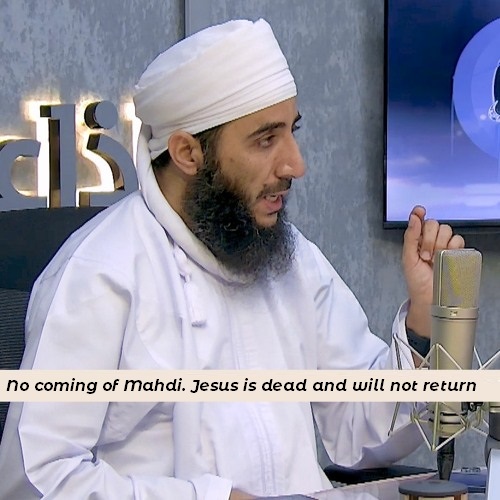
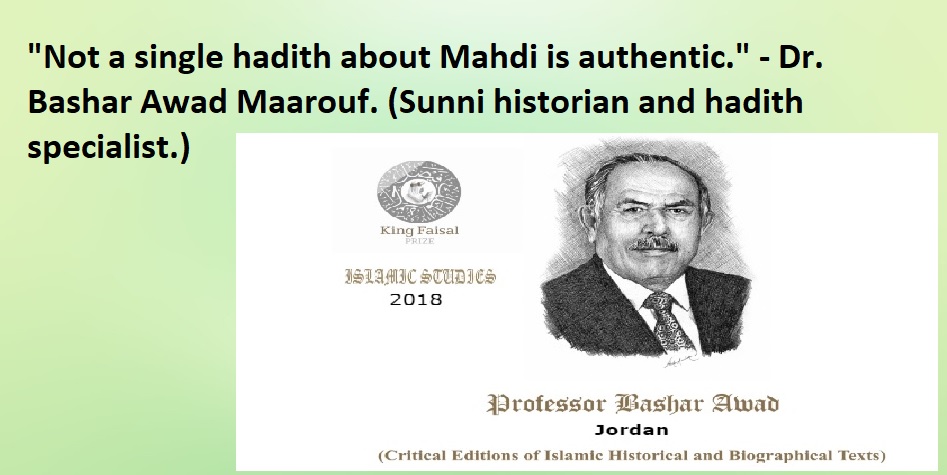




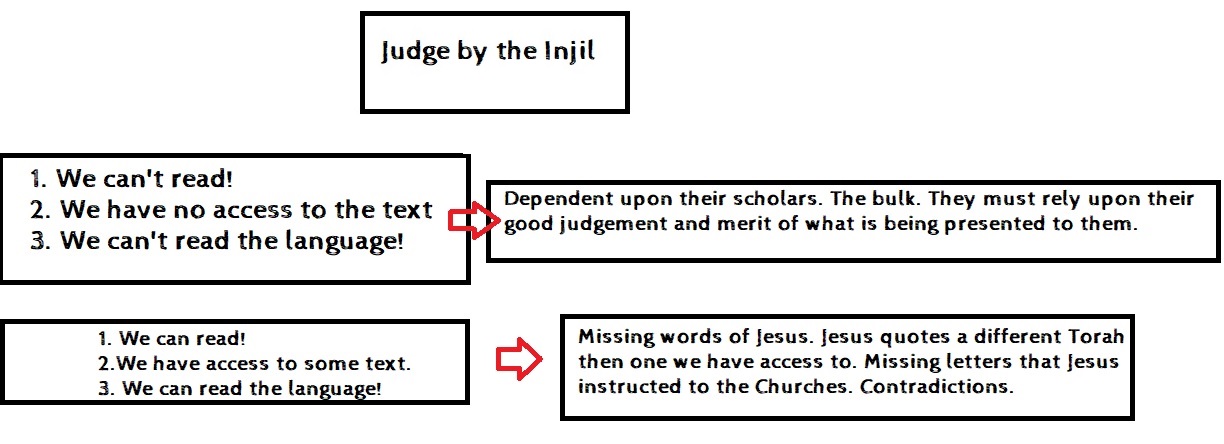





 Prima Quran