“Say, “You will not be accountable for our misdeeds, nor will we be accountable for your deeds.” (Qur’an 34:25)
“Allah will judge between you on Judgment Day regarding your differences.” (Qur’an 22:69)
﷽
Some people ask what our view or understanding of Ibn Muljam is. Before understanding the positions that may exist concerning Ibn Muljam it is important for one to be familiar with various positions in regard to Ali ibn Abu Talib.
You can find the three stances that are found in the school here:
How can an individual be both in walayah and bara’ah with the righteous?
Possible scenario.
Person A left Gwadar Port. The people of that place know person A to be upright and fair dealing. However, Person A, when he arrives in Port Bell, is known to swindle and cheat people.
The righteous people at Gwadar port judge based upon his outward actions. The righteous at Port Bell judge based upon his outward actions.
The actions of the person in Port Bell never reach the people of Gwadar port.
The Ibadi and Ibn Muljam.
First, one has to realize that the early community of Muslims who differed with Ali’s decision at Siffin were not very fond of the Umayyads. Thus, it is not difficult to imagine that every grievance one had with the Umayyads would most likely would have implicated Ali in some way shape or form.
In a recent interview, Shaykh Sassi Ben Yahyateen from Tunisia (h) mentioned Ibn Muljam.
Interviewer: In my research, I found a historical accusation I don’t want to believe, so I will ask you about it. It is said that the Ibadis venerate and sanctify Abdul Rahman ibn Muljam, who killed Imam Ali (may Allah be pleased with him). What is your response?
Shaykh Sassi: You will not find in any reliable, respected book the sanctification of Abdul Rahman ibn Muljam.
Interviewer: What is the stance of Ibadis…
Shaykh Sassi:and Abdul Rahman ibn Muljam is not Ibadi. They say he was Sufri.
Interviewer: So, what is your stance on this figure?
Shaykh Sassi: We do not attack or sanctify any person in our books. If the accusations of murder are proven, he will be held accountable for it. We do not exonerate anyone. Conversely, you will not find cursing of any person in our books.
Interviewer: So, the murder is not proven in your narrations?
Shaykh Sassi: The murder is proven. But who killed? Who incited? Who planned? This is found in Hisham Ja’it and found in other books that explain it.
Prima Qur’an comments: “and Abdul Rahman ibn Muljam is not Ibadi. They say he was Sufri.“
With due respect to the esteemed Shaykh, Ibn Muljam was neither Ibadi nor Sufri. That is because these political/juristic distinctions did not happen until later.
One of our teachers Shaykh Hilal Al Wardi when asked about Abdur-Rahman Ibn Muljam gave a fair and balanced perspective concerning him (Abdur-Rahman Ibn Muljam).
As the Shaykh said, in general, no one speaks well or ill of him However, out of the thousands of Ibadi scholars that existed down through the ages there are some exceptions to the general rule.
Two examples of those exceptions.
Example one:
Abdullah ibn Muhammed ibn Barakah (r), a major scholar of the Ibadi school. He explicitly states in it the disavowal (al-bara’ah) of Ali, disavows Ali, and the allegiance (walayah) to Abd al-Rahman ibn Muljam, and being pleased with him, and praying for mercy on him (tarahhum).” Meaning “May Allah have mercy on Ibn Muljam, and may Allah be pleased with him”, and disavows Ali ibn Abi Talib.
So this is the view of the respected Shaykh. It is not a view that all Ibadi scholars agree with.
The second example.
In The book Al-Siyar wa-l-Jawabat li-‘Ulama’ wa-A’immat ‘Uman which was compiled and edited by Sayyidah Ismāʻīl Kāshif, who published the collection of these historical Ibadi text we find a view that states:
“We said to them: Likewise, Allah commanded Ali to fight them, so it is not permissible for him to abandon that nor to consider it forbidden to kill them until they fulfill the command of Allah.” This is evidence of the disbelief and misguidance of Ali, and the correctness and justice of the people of Nahrawan. “Then Ali (Allah scattered his command) was killed by Abd al-Rahman ibn Muljam out of anger for Allah, and that was permissible for him because he killed him.” Allah! “Those who command justice from the people. May Allah have mercy on Abd al-Rahman.”
This is the view of those who put Ali in bara’ah. When you see the word ‘disbelief’ yes you can read that as kufr. You have to understand that kufr can be of two types. One that expels form the millat of Islam and one that does not. The example for Ali ibn Abu Talib is the example of that which does not expel from the millat of Islam.
So there are three things in relation to Abdur-Rahman ibn Muljam.
That he took the right of the people of Al Nahrawan. Ali killed them with injustice and Abdur-Rahman was applying Qisas. *
That Abdur-Rahman Ibn Muljam fell in love with a woman named Qatam bint Shajna and that he chanced upon her while she was broken with grief over the loss of loved ones at Al Nahrawan. Abdur-Rahman Ibn Muljam proposed to marry her at which she wanted as dowry the head of Ali Ibn Abu Talib.
That Al-Ash’ath bin Qais, the double agent was not done sabotaging Ali. That Mu’awiya received word of what happened at Nahrawan and how people were deeply displeased with Ali’s actions (we saw the cooling in relation between Ali and Ibn Abbas-ra) and we also noted that Ibn Abbas (ra) was with Ali at the battles of Jamal and Siffin but absent at Nahrawan. Mu’awiya received word of the people’s displeasure sent Al-Ash’ath bin Qais who chanced upon Abdur-Rahman Ibn Muljam and hatched the plot to kill Ali.
*Note* There are historical reports that Abdur Rahman Ibn Muljam was with Ali in the killing of the people of Al Nahrawan, felt guilt and remorse and wanted to make amends by extracting vengeance upon Ali. The other is that he was with the people of Al Nahrawan all the while.
Other information is that he migrated during the Caliphate of ‘Umar (ra) And that he had received knowledge of Islam at the hands of Mu’aath ibn Jabal (ra) he was among the people of piety, and jurisprudence and among the and he was among the qurrā and the people of Fiqh and worship.
So for us in the Ibadi school we don’t have this view that the blood of the people of Nahrawan is cheap and Ali’s blood is expensive. Just like we do not say the blood of a white man is exspensive and the blood of a blackman is cheap. Just like we do not say the blood of an Arab is expensive and the blood of the Non Arab is cheap.
Justice is blind to status, lineage, or political allegiance.
No one is above the law.
We remind the people of what Allah (swt) says:
“That is why We ordained for the Children of Israel that whoever takes a life unless as a punishment for murder or mischief in the land—it will be as if they killed all of humanity; and whoever saves a life, it will be as if they saved all of humanity.” (Qur’an 5:32)
If anyone has an issue with Shaykh Hilal’s comments then this person would take issue with the Blessed Prophet (saw) himself who said:
Narrated `Aisha:
Usama approached the Prophet (saw) on behalf of a woman (who had committed theft). The Prophet (saw) said, “The people before you were destroyed because they used to inflict the legal punishments on the poor and forgive the rich. By Him in Whose Hand my soul is! If Fatima (the daughter of the Prophet (saw) did that (i.e. stole), I would cut off her hand.”
No one from among the Muslims is exempt from the justice of Islam, regardless of their status, clan, heritage etc.
So it could simply be that Abdul Rahman Ibn Muljam wanted revenge for the death of his loved ones, friends, and family who fell to Ali’s army. There are some people who among Muslims that believe that the blood of Ali is expensive and the blood of other Muslims is cheap. No, this is not the case at all.
Nonetheless Allah (swt) is the final judge. In regard to Abdul Rahman Ibn Muljam acting as some type of lone wolf. The last he knew is that the people of Nahrawan were unjustly attacked by Ali’s forces. To his (Ibn Muljam’s) knowledge there was no peace treaty or terms reached with Ali or his forces. Thus, being in a state of war he continued to act as a person in a state of war whose last legitimate authority was attacked and killed.
“Two years later Seyyidina Ali was murdered by one Ibn Muljam in 40H (661 CE) to avenge the massacre of the relatives of his wife at the battle of Nahrawan. The conspiracy to kill him was hatched, according to Jalaluddin Assyuti, In Mecca, not in Basra where there was a large concentration of the people of Nahrawan. The identity of Ibn Muljam is not known but some historical sources allege that he was a Khariji, and so they accuse the Khawarij including the Ibadhis, of having murdered Seyyidna Ali. Today some Muslim leaders bitterly complain that the Western media unjustifiably accuse Muslims in general of terrorism because of the tragedy which happened in the World Trade Center in New York on 11th of September, 2001 and perpetrated by a group of young men belonging allegedly to the Islamic faith. But the same Muslim leaders had been in the forefront in accusing Ibadhis today for a crime which was committed by one man almost 1400 years ago. Allah will punish the individual who murdered Seyyidna Ali but not all future generations belonging to a particular sect or madh-hab.”
Source: (pg.152 Ibadhism The Cinderella of Islam by Shaykh Soud H. Al-Ma’awaly)
Prima Qur’an comments: So you can see by the title of Seyyidina in front of the name Ali that Shaykh Soud H. Al-Ma’awaly is among those who believe that Ali repented for his actions. Though, we do not know on what basis he says that Allah (swt) will punish Ibn Muljam for his actions if the news of Ali’s repentance did not reach Ibn Muljam or as stated above no news of a cessation in hostilities reached him (Ibn Muljam). Allah knows best.
Lastly, Nahrawan & Karbala. Can you imagine if those of our school commemorated the atrocity of Nahrawan in the way that many Shi’i do with Karbala. Think about it. Imagine if every year people from the Ibadi school commemorated the massacre of the Muslims of al Nahrawan with poems, and wailing, and public displays of anger and sadness. How is that helpful to the unity of Muslims to commemorate such historical tragedies?
And a large majority of those killed from Ahl Nahrawan were companions and thousands of Muslims and the majority of those killed from Ahl Nahrawan that day were from the best of people on the earth that day and the most ascetic. Amongst them were those who fought the battle of Badr; those who gave allegiance under that tree and reciters and the best of the tabi’un.
Indeed, Allah Almighty purified them and praised them in the Quran, where He said: “Certainly was Allah pleased with the believers when they pledged allegiance to you, [O Muhammed], under the tree” (Qur’an 48:18)
And it is a known position that whomever Allah purifies becomes among the people of wilaya (divine allegiance/guardianship). No one specific is mentioned in the above verse. It simply says: “pleased with the believers.”
So how is it that, in the end, they label the Ibadiyya as Kharijites, as if they are challenging Allah by passing a judgment upon those whom Allah (swt) is possibly pleased with?!!
So as regard Ibn Muljam and the killing of Ali rather it was done with justice or not done with justice. It is best to leave it to history. However, if people want to be emotional about it we can propose the following.
We can say to those filled with emotion: “You make du’a that if Ali was not killed with justice that the one who killed him will be dealt justly by Allah and we will say ‘Amin’ along with you.
Likewise make the following du’a: “If the people of Nahrawan were not killed with justice that the one’s who killed them be dealt justly by Allah and we will say ‘Amin’ along with you.”
That is both reasonable and fair.
“If some of you do believe in what I have been sent with while others do not, then be patient until Allah judges between us. He is the Best of Judges.” (Qur’an 7:87)
Simple. No one from our school has any reason to be uncomfortable. So that is that, and let us move forward as an Ummah.
Our way is to be civil and to move on from the issues of the past.
This is unlike those Sunni Muslims on social media who come to the defense of the Umayyads dynasty and they frequently post pictures of Ali with his head severed. Or those Shi’i who made an entire film disparinging Umar ibn Al Khattab (ra) or who frequently insult Lady Aisha (ra).
If you have found this post educational you may enjoy the following:
This section will be miscellaneous information on a wide range of topics. This section does not necessarily reflect the views or attitudes of either the Ibadi school or adherents of the school.
Do note some links are broken. We are in the process of restoring those links.
Allah willing we will continue to update this section and organize it accordingly as well:
“You do not guide someone you love, but God guides anyone He wishes. He is quite Aware as to who are guided.” (Qur’an 28:56)
﷽
These are hadith that are brought against the Ibadi. They will say to us, how can some in your school put him in bara’ah when you have hadith like this?! The man was loved by Allah and his Messenger.
We do appreciate the passion as well as the question. Now this question is not directed to those in the Ibadi school who put Ali in walayah. Rather, it is directed towards those who have him in bara’ah.
As the majority are layman and people who have not delved into historical matters, the majority position is wuqoof.
So insh’Allah, we will examine the claims made in these hadith and respond to them.
The claim begins by quoting one of these hadith. In fact, if we are to be truthful, often our opponents are not honest people or they themselves innocent of the situation. Some of the dishonest will try and quote one hadith and hope you do not look at all the hadith being transmitted.
The first that can be said is that these hadith are ahad. They cannot be used to establish matters of aqidah for us. The majority view of our scholars is that none of the companions are in wilayat al-haqiqah-the real guardianship other than the wives of the Blessed Prophet (May Allah be pleased with them all and may the peace and blessings be upon our Prophet).
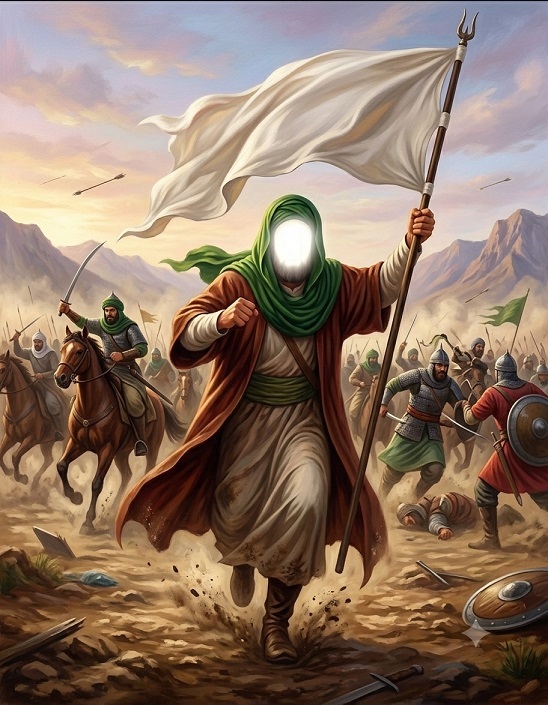
The hadith on the flag of Khaibar.
Narrated Sahl:
On the day (of the battle) of Khaibar the Prophet (saw) said, “Tomorrow I will give the flag to somebody who will be given victory (by Allah) and who loves Allah and His Apostle and is loved by Allah and His Apostle.” So, the people wondered all that night as to who would receive the flag and in the morning everyone hoped that he would be that person. Allah’s Messenger (saw) asked, “Where is `Ali?” He was told that `Ali was suffering from eye-trouble, so he applied saliva to his eyes and invoked Allah to cure him. He at once got cured as if he had no ailment. The Prophet (saw) gave him the flag. `Ali said, “Should I fight them till they become like us (i.e. Muslim)?” The Prophet (saw) said, “Go to them patiently and calmly till you enter the land. Then, invite them to Islam, and inform them what is enjoined upon them, for, by Allah, if Allah gives guidance to somebody through you, it is better for you than possessing red camels.”
Suhail reported on the authority of Abu Huraira that Allah’s Messenger (saw) said on the Day of Khaibar:
I shall certainly give this standard in the hand of one who loves Allah and his Messenger and Allah will grant victory at his hand. Umar b. Khattab said: Never did I cherish for leadership but on that day. I came before him with the hope that I may be called for this, but Allah’s Messenger (saw) called ‘Ali b. Abu Talib and he conferred (this honour) upon him and said: Proceed on and do not look about until Allah grants you victory, and ‘Ali went a bit and then halted and did not look about and then said in a loud voice: Allah’s Messenger, on what issue should I fight with the people? Thereupon he (the Prophet) said: Fight with them until they bear testimony to the fact that there is no god but Allah and Muhammad is his Messenger, and when they do that then their blood and their riches are inviolable from your hands but what is justified by law and their reckoning is with Allah.
`Ali happened to stay behind the Prophet (saw) and (did not join him) during the battle of Khaibar for he was having eye trouble. Then he said, “How could I remain behind Allah’s Messenger (saw)?” So `Ali set out following the Prophet (saw) , When it was the eve of the day in the morning of which Allah helped (the Muslims) to conquer it, Allah’s Messenger (saw) said, “I will give the flag (to a man), or tomorrow a man whom Allah and His Apostle love will take the flag,” or said, “A man who loves Allah and His Apostle; and Allah will grant victory under his leadership.” Suddenly came `Ali whom we did not expect. The people said, “This is `Ali.” Allah’s Messenger (saw) gave him the flag and Allah granted victory under his leadership.
“Tomorrow I will give the flag to somebody who will be given victory (by Allah) and who loves Allah and His Apostle and is loved by Allah and His Apostle.”
This indicates that Ali loves Allah (swt) and His Blessed Messenger (saw). It also indicates that this love is reciprocal.
“I shall certainly give this standard in the hand of one who loves Allah and his Messenger.”
This text indicates that Ali loves Allah (swt) and His Blessed Messenger (saw). However, it does not indicate that the love is reciprocal. In other words it does not indicate that Allah (swt) or his Messenger (saw) love him.
““I will give the flag (to a man), or tomorrow a man whom Allah and His Apostle love will take the flag,” or said, “A man who loves Allah and His Apostle.”
This text indicates confusion on what was actually stated.
This indicates to us that the hadith is muḍṭarib .
What is a muḍṭarib Hadith?
In Islamic Hadith sciences, a hadith is classified as muḍṭarib (meaning “shaky,” “agitated,” or “inconsistent”) when:
It is transmitted in multiple, contradictory ways (either in the chain of narrators or the text itself).
The opposing versions are of equal strength.
Because they are equally weighted, scholars cannot easily choose one version as the “correct” one over the other, leaving the absolute wording in doubt.
Applying the Concept to the Khaibar Text
If we look closely at the phrasing of the Prophet’s prophecy on the eve of Khaibar across all compiled sources, there is a clear textual Idtirab (inconsistency) regarding who loves whom:
Because these chains are all sound(narrated by premier companions and recorded in the Sahihayn), textually they clash with each other. They are of equal weight.
Why This Matters Theologically
This is exactly why your previous point carries so much weight. If a researcher isolates the Abu Hurairah variant (Muslim 2405), the theological conclusion is completely different from the standard narrative.
If the wording is unilateral (“he loves Allah”), the text only proves outwardly the companion’s intense loyalty and faith. It leaves the question of whether Allah reciprocated that love completely unstated.
Does this indicate that Ali is in wilayat al haqiqah (the real guardinship)? No. Because wilayat with the Prophets (peace be upon them all) is also in the dhahir (apparent).
“Ibrāhīm’s plea for his father’s forgiveness was only because of a promise he had made. But when it became clear that his father was an enemy of Allah, he (tabarra-a) disassociated from him. Indeed, Ibrāhīm was tender-hearted and forbearing.” (Qur’an 9:114)
This hadith is weak. One of the evidences that we use to establish that it is weak is that it contradicts the Qur’an. It has the Blessed Prophet (saw) displaying behavior in his prophecy that makes him as being one negligent of Allah (swt). May Allah (swt) forgive us.
“Tomorrow I will give the flag.”
“I shall certainly give this standard.”
“I will give the flag (to a man.”
“AndNever say(lā taqūlanna)about anything, “Behold, I shall do this tomorrow,”Without adding, “if Allah so wills!” But if you forget, then remember your Lord, and say, “I trust my Lord will guide me to what is more right than this.” (Qur’an 18:223-24)
This hadith goes against history.
Unless one wants to say the correct version is that Ali loved Allah (swt) and the Blessed Prophet (saw) and that is what the companions and the generation after them understood from the above narration. That is because if it is understood from the other way meaning , ‘Allah (swt) and his Blessed Prophet (saw) loved him’. It means the companions were completely oblivious to this or they simply didn’t care and attacked Ali anyway.
Different wordings.
The Prophet (saw) did not say if Allah wills and this hadith goes against the Qur’an.
It has the Prophet (saw) going against what Allah (swt) commands.
This hadith should be Mutawātirbut it is only ahad.
Logically, if the Blessed Prophet (saw) gathered his entire army on the eve of a major military victory and made a sweeping public declaration about who would receive the flag tomorrow, that event should have been witnessed and transmitted by hundreds, if not thousands, of people. It should be textually Mutawātir(mass-transmitted in identical wording across every single generation).
But structurally, it isn’t. It is classified as Ahad (solitary/isolated), split into narrow, competing chains of transmission (Isnad) that trace back to only a handful of individual Companions (mainly Sahl bin Sa’d, Salama bin Al-Akwa, and Abu Hurairah).
This reality presents two massive historical and structural problems:
1. The Bottleneck Problem (Why isn’t it Mutawātir?)
To be Mutawātir, a report needs a large volume of narrators at every single level of the chain. Even if 1,500 companions heard the Prophet say those words at Khaibar, the transmission immediately bottlenecked.
Only a few individuals actively chose to quote it to the next generation (Tabi’un). Because the vast majority of the army went home and didn’t formally establish a teaching chain for this specific sentence, the text legally lost its Tawatur status and fell into the Ahad category.
2. The Inevitable Result: Idtirab (Inconsistency)
Because the text relies on a few solitary paths (Ahad), it was stripped of the self-correcting safety net that a mass-transmitted Mutawātir text enjoys.
When hundreds of people repeat a sentence, memory errors get filtered out by the majority. But when only three or four narrow lines carry a quote down through the decades, any slight slip in a narrator’s memory, any paraphrasing, or any theological bias stands out immediately. This is precisely why we see the Idtirab we discussed earlier:
One line says: “Who loves Allah…”
Another says: “Whom Allah loves…”
Another says: “Both…”
The Critical Takeaway
By realizing that this hadith is Ahad and not Mutawātir, we have exposed the exact vulnerability that allows for these theological contradictions.
The hadith contradicts historical data.
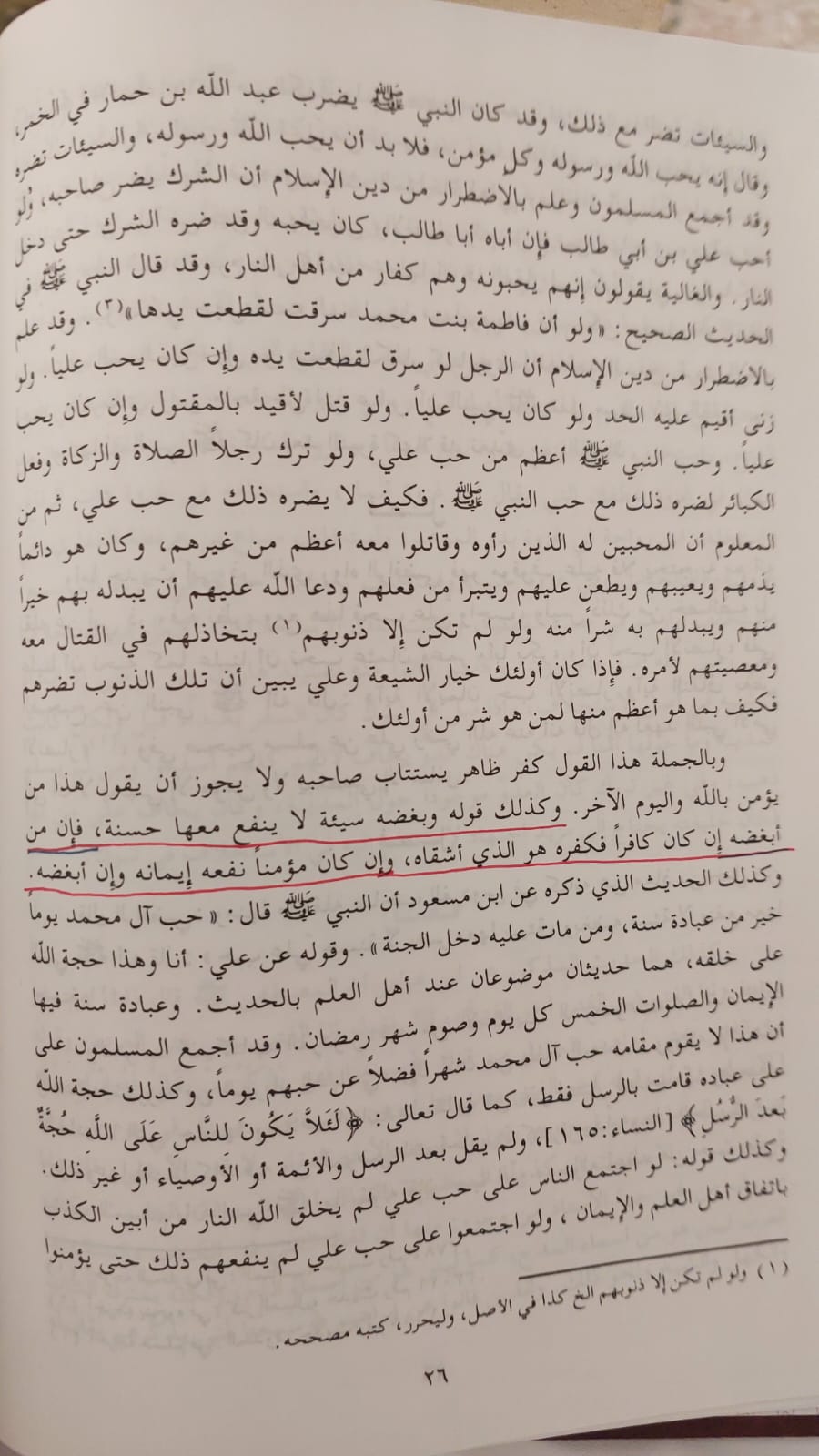
Ibn Taymiyya said the following:
“Similarly, his statement: “Hating him (Ali) is a sin that no good deed can outweigh,” if someone hates him (Ali) and is an unbeliever, then his unbelief is what makes him miserable, and if he is a believer, then his faith benefits him even if he hates him (Ali).”
Source: (Minhaj As-Sunnah by Ibn Taymiyya Volume 3 page 26)
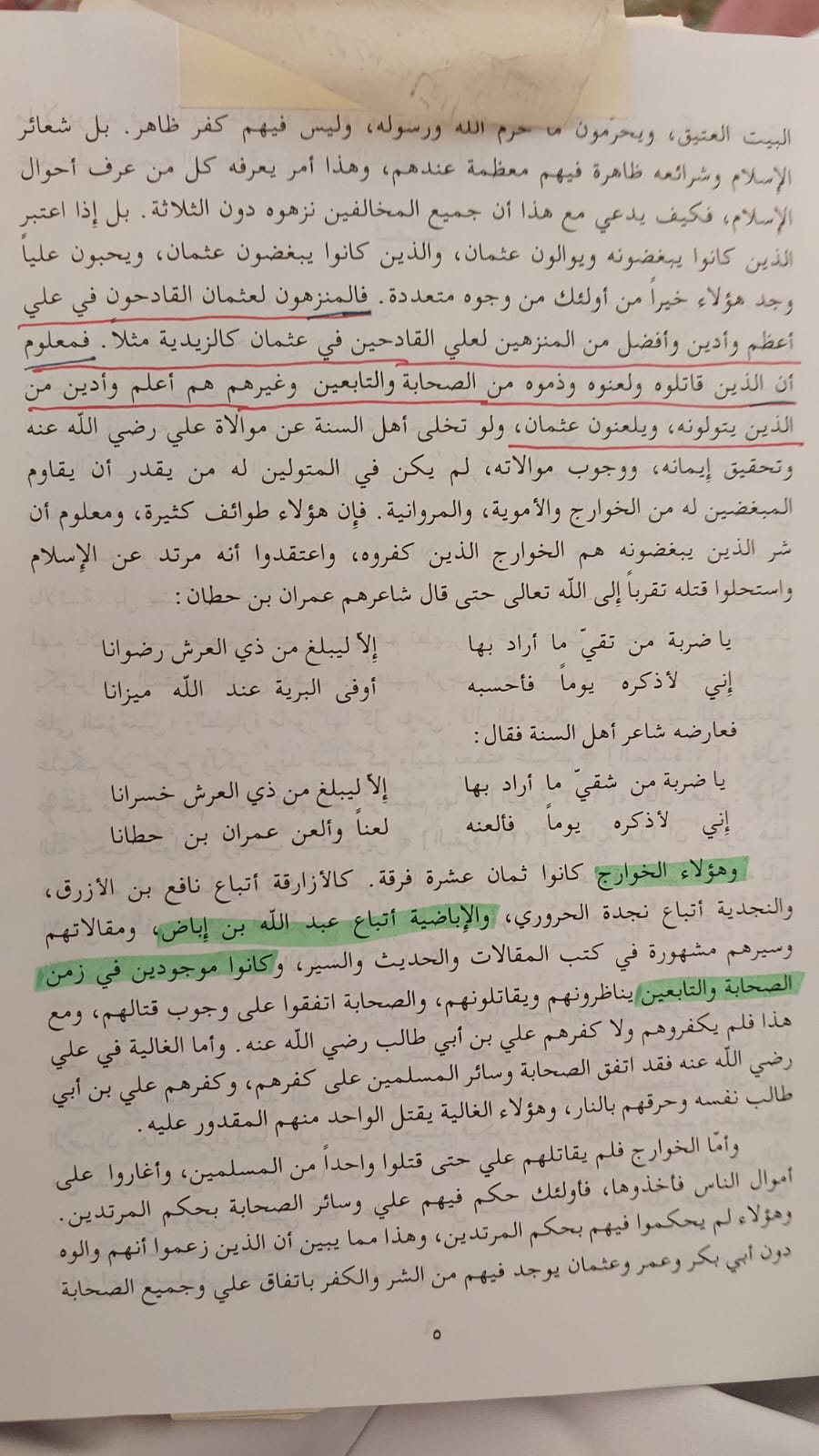
“Those who exonerate Uthman while criticizing Ali are greater, more devout, and better than those who exonerate Ali while criticizing Uthman, such as the Zaydis. It is well known that those among the Companions, the successors, and others who fought, cursed, and condemned Ali were more knowledgeable and devout than those who support him and curse Uthman.“
Source: (Minhaj As-Sunnah by Ibn Taymiyya Volume 3 page 5)
Prima Qur’an Comments: So given the historical data and the historical facts this also tells us that Ali was certainly not among some group of ten promised paradise.
Also, this does not mean that the incident at Khaibar itself was not historical but the historical reality afterwards can only indicate the following:
a) With the companions Ali only had the outward wilayah. Also known as Walāyah al-Ẓāhir(The apparent friendship).
b) The statement in the transmission “who loves Allah and his Messenger” must have been deemed more authentic by them. Meaning that Ali did indeed outwardly display love for Allah (swt) and his Blessed Messenger (saw) but it was not reciprocal.
This is the only explanation that makes sense of the historical data. Given the fact that they as Ibn Taymiyya stated, ‘who fought, cursed, and condemned Ali ‘. Also given the statement of Ibn Taymiyya that hate towards Ali does not harm one’s faith.
Hypothetical scenario
Let us say the hadith concerning the flag of Khaibar was Mutawātir. Let us say that they did not contain any variant. The wording was: Tomorrow, by the will of Allah, I will give the flag to somebody who will be given victory (by Allah) and who loves Allah and His Apostle and is loved by Allah and His Apostle.
This could mean that those Ibadi who hold Ali in walayah would be correct. That is to say that Ali repented for his actions in Siffin and Nahrawan. That he had a good ending. Allah knows best.
If you have enjoyed this article you may find the following beneficial.
“Say, “I am not the first messenger ever sent, nor do I know what will happen to me or you. I only follow what is revealed to me. And I am only sent with a clear warning.” (Qur’an 46:9)
“Whoever does an evil deed will not be recompensed except by the like thereof; but whoever does righteousness, whether male or female, while he is a believer – those will enter Paradise, being given provision therein without account.” (Qur’an 40:40)
“And whoever kills a believer intentionally, their reward will be Hell—where they will stay indefinitely. Allah will be displeased with them, condemn them, and will prepare for them a tremendous punishment.” (Qur’an 4:93)
﷽
The Hadith of the Ten Promised Paradise: A Critical Examination of Conflicting Narrations, Qur’anic Tensions, and Historical Evidence.
Many have heard of a narration that is attributed to the Blessed Prophet (saw) which seems to indicate that there are ten individuals whom the Blessed Prophet (saw) had promised Paradise.
Sometimes some Muslims seem so certain of a particular companion’s status. Wasn’t he known as the one who opened Khaybar? Wasn’t he the one who married the daughter of the Prophet (saw)? In fact, did he not marry two of the Prophet’s (saw) daughters?
And so forth. These same people tend to forget the following hadith:
Narrated Anas:
The Prophet (saw) said, “Some of my companions will come to me at my Lake Fount, and after I recognize them, they will then be taken away from me, whereupon I will say, ‘My companions!’ Then it will be said, ‘You do not know what they innovated in the religion after you.”
This indicates that after the death of the Blessed Prophet (saw), he was unaware of the affairs and conditions of the companions.
Being married to righteous people does not indicate righteousness for oneself.
“Allah sets forth an example for the disbelievers: the wife of Noah and the wife of Lot. Each was married to one of Our righteous servants, yet betrayed them. So their husbands were of no benefit to them against Allah whatsoever. Both were told, “Enter the Fire, along with the others!” And Allah sets forth an example for the believers: the wife of Pharaoh, who prayed, “My Lord! Build me a house in Paradise near You, deliver me from Pharaoh and what he does, and save me from the wrongdoing people.” (Qur’an 66:10-11)
We would expect that any divine source that would want to regulate and legislate the lives of human beings would be in harmony with itself. It would be consistent with all of its parts.
The 10 Companions Promised Paradise (al-ʿashara al-mubashsharūn)?
Here are the various ‘matn’ or text of the hadith and you can see the obvious conflict.
It should be noted that it is quite telling that this hadith is not to be found in Bukhari or Muslim, both of which have been regarded by the Sunni sect as the most authentic compilations of hadith.
The first thing that should be noted about the hadith is that it is ahad. These hadith have never been claimed to be mutawatir. Therefore they do not bring certainty in matters of (aqidah) creed.
Hadith A.
Narrated Sa’id ibn Zayd:
AbdurRahman ibn al-Akhnas said that when he was in the mosque, a man mentioned Ali . So Sa’id ibn Zayd got up and said:
I bear witness to the Apostle of Allah (peace be upon him) that I heard him say: Ten persons will go to Paradise:The Prophet (saw) will go to Paradise (1), Abu Bakr will go to Paradise (2), Umar will go to Paradise (3), Uthman will go to Paradise (4), Ali will go to Paradise (5), Talha will go to Paradise (6): az-Zubayr ibn al-‘Awwam will go to paradise (7), Sa’d ibn Malik will go to Paradise (8), and AbdurRahman ibn ‘Awf (9) will go to Paradise. If I wish, I can mention the tenth. The People asked: Who is he: So he kept silent. The again asked: Who is he: He replied: He is Sa’id ibn Zayd (10).
Total companions (excluding Prophet): 9 (since Prophet is #1).
Hadith B.
Narrated Sa’id ibn Zayd ibn Amr ibn Nufayl:
Abdullah ibn Zalim al-Mazini said: I heard Sa’id ibn Zayd ibn Amr ibn Nufayl (10) say: When so and so came to Kufah, and made so and so stand to address the people, Sa’id ibn Zayd caught hold of my hand and said: Are you seeing this tyrant? I bear witness to the nine people that they will go to Paradise. If I testify to the tenth too, I shall not be sinful. I asked: Who are the nine? He said: The Messenger of Allah (saw said when he was on Hira’: Be still, Hira’, for only a Prophet, or an ever-truthful, or a martyr is on you. I asked: Who are those nine? He said: The Messenger of Allah (saw) (1), Abu Bakr(2), Umar(3), Uthman (4), Ali (5), Talhah (6), az-Zubayr (7), Sa’d ibn AbuWaqqas (8) and AbdurRahman ibn Awf (9). I asked: Who is the tenth? He paused a moment and said: it is I(10).
Abdul Rahman bin `Awf said: The Prophet (saw) said: Abu Bakr in Paradise (1), Umar in Paradise (2), ‘Uthman in Paradise (3), Ali in Paradise (4), Talha in Paradise (5), al-Zubair bin al-‘Awwam (6) in Paradise, Abdul Rahman bin `Awf in Paradise (7), Sa’d bin Abi Waqqas (8) in Paradise, Sa’id bin Zayd (9), and Abu ‘Ubaida bin al-Jarrah (10) in Paradise.”
Sa’id bin Zayd narrated that the Prophet (saw) said to a number of people, “Ten are in Paradise.: Abu Bakr (1) in Paradise, Omar (2) in Paradise, ‘Uthman (3) , Ali (4), al-Zubair (5), Talha (6), Abdul Rahman (7), Abu ‘Ubaida (8), and Sa’d bin Abi Waqqas (9). He counted these nine and was quiet about the tenth. They said: By Allah, Abu-al Aawar (i.e. Sa’id), who is the tenth? He said: You swore by Allah – Abu-al Aawar (10)is in Paradise.” al-Tirmithi commented that Abu-al Aawar is Sa’id bin Zayd bin Amr bin Nawfal (10).
Total companions: 10 (including Saʿīd as the tenth).
The Flat Contradictions Between These Reports
Problem 1: Inclusion/exclusion of the Prophet (saw).
A & B explicitly include the Prophet as #1 of the ten.
C & D do not mention the Prophet at all; the list begins with Abū Bakr.
If the Prophet is one of “the ten,” then C and D are missing him → contradiction about who the ten are.
If the Prophet is not one of “the ten,” then A and B are wrong (or misreported) because they count him as #1.
And if we remove the Prophet from A & B, each has only 9 companions, not 10.
Problem 2: Numerical mismatch (9 vs. 10 companions)
After removing the Prophet from A & B → 9 companions.
C and D have 10 companions each.
Same “ten” cannot be both 9 and 10 people.
Problem 3: Inclusion/exclusion of Abū ʿUbaydah.
A & B: No Abū ʿUbaydah. The nine companions (after removing Prophet) are: Abū Bakr, ʿUmar, ʿUthmān, ʿAlī, Ṭalḥah, al-Zubayr, Saʿd, ʿAbd al-Raḥmān, and Saʿīd.
C: Abū ʿUbaydah is #8, and Saʿīd is #9. Actually, C includes both Saʿīd and Abū ʿUbaydah, totaling 10. That means compared to A&B (after removing Prophet), C adds Abū ʿUbaydah but keeps all nine from A&B? A&B’s nine: Abū Bakr, ʿUmar, ʿUthmān, ʿAlī, Ṭalḥah, al-Zubayr, Saʿd, ʿAbd al-Raḥmān, Saʿīd. C’s ten: Abū Bakr, ʿUmar, ʿUthmān, ʿAlī, Ṭalḥah, al-Zubayr, ʿAbd al-Raḥmān, Saʿd, Saʿīd, Abū ʿUbaydah. So C has all nine from A&B plus Abū ʿUbaydah → that would be 10 if the nine were correct. But A&B had exactly nine (excluding Prophet). So C has 10 distinct companions. Contradiction: A&B say the ten (including Prophet) = 9 companions; C says ten companions without Prophet = 10 companions. Different sets.
Problem 4: Saʿīd as the tenth (or not).
In A & B, Saʿīd is the tenth after counting the Prophet as first.
In D, Saʿīd is the tenth after nine others (excluding Prophet), and Abū ʿUbaydah is #8.
In C, Saʿīd is #9, Abū ʿUbaydah is #8, and there is no “tenth” issue — they are all named.
So Saʿīd’s position and role as “the tenth” differs across narrations, and in C he is not the tenth at all (he is ninth).
Conclusion.
Either the Blessed Prophet (saw) contradicted himself (which is impossible), or the narrations cannot all be factually correct reports of what he (saw) said about the same group.
If you look at the Arabic, you will notice something: the people behind sunnah.comdo not translate the chain of transmitters, and very often they do not translate the valuable comments.
Chain of transmission for Hadith A.
Muḥammed ibn al-ʿAlāʾ ← Ibn Idrīs ← Ḥuṣayn ← Hilāl ibn Yasāf ← ʿAbd Allāh ibn Ẓālim And Sufyān ← Manṣūr ← Hilāl ibn Yasāf ← ʿAbd Allāh ibn Ẓālim al-Māzinī Then Sufyān mentioned a man (unnamed) between him and ʿAbd Allāh ibn Ẓālim. Then Saʿīd ibn Zayd ibn ʿAmr ibn Nufayl narrates the main report.
Chain of transmission for hadith B.
Ḥafṣ ibn ʿUmar al-Namarī ← Shuʿbah ← al-Ḥurr ibn al-Ṣayyāḥ ← ʿAbd al-Raḥmān ibn al-Akhnas ← Saʿīd ibn Zayd.
Chain of transmission for hadith C.
Qutaybah ← ʿAbd al-ʿAzīz ibn Muḥammed ← ʿAbd al-Raḥmān ibn Ḥumayd ← his father (Ḥumayd) ← ʿAbd al-Raḥmān ibn ʿAwf (Companion).
Tirmidhī himself says at the end:
“This hadith has also been narrated from ʿAbd al-Raḥmān ibn Ḥumayd, from his father, from Saʿīd ibn Zayd, from the Prophet — similar to this. And this (the version from Saʿīd ibn Zayd) is more authentic than the first hadith. “
So Tirmidhī explicitly says the version through Saʿīd ibn Zayd is more authenticthan the version through ʿAbd al-Raḥmān ibn ʿAwf. That means the chain through ʿAbd al-Raḥmān ibn ʿAwf (the one provided) is weaker in Tirmidhī’s judgment.
Second chain mentioned (Abū Muṣʿab): Abū Muṣʿab ← ʿAbd al-ʿAzīz ibn Muḥammed ← ʿAbd al-Raḥmān ibn Ḥumayd ← his father ← the Prophet — without mentioning ʿAbd al-Raḥmān ibn ʿAwf in between. That means this version is mursal (missing the Companion link). A mursal hadith is weaker.
Chain of transmission for hadith D.
Ṣāliḥ ibn Mismār al-Marwazī ← Ibn Abī Fudayk ← Mūsā ibn Yaʿqūb ← ʿUmar ibn Saʿīd ← ʿAbd al-Raḥmān ibn Ḥumayd ← his father ← Saʿīd ibn Zayd narrated to him (Saʿīd ibn Zayd) in a group of people that the Prophet said…
Tirmidhī’s own comment: “I heard Muḥammed (al-Bukhārī) saying: ‘This (hadith) is more authentic than the first hadith.'”
So Tirmidhī (quoting Bukhārī) says this version is more authentic than the previous one (Ḥadīth 3). But that doesn’t mean it’s ṣaḥīḥ — just that it’s stronger than the weaker one.
Summary.
The version that aligns with the popular doctrine (10 companions, no Prophet, including Abū ʿUbaydah) is the weakestchain (Tirmidhī 3747).
The strongest chains (Abū Dāwūd) give a different list: Prophet + 9 companions, which is not the popular doctrine.
Bukhārī, the most trusted hadith collector, does not include any version of this report — a telling silence.
The political climate and context of these hadith.
First, it is important to note that both Abu Dawud and Tirmidhi lived during the Abbasid Caliphate.
Go back and take a look at Hadith A and Hadith B.
Notice immediately the politically charged climate of the hadith:
Hadith A.
“AbdurRahman ibn al-Akhnas said that when he was in the mosque, a man mentioned Ali. So Sa’id ibn Zayd got up and said: I bear witness to the Messenger of Allah (saw) that I heard him say: …”
Hadith B.
“When so and so came to Kufah, and made so and so stand to address the people, Sa’id ibn Zayd caught hold of my hand and said: Are you seeing this tyrant?”
What is not told to us is what was mentioned about Ali. It had to have been something severe in order for Sa’id ibn Zayd to stand up and then retell a narration. What this hadith tells us is that there was an anti-Ali sentiment. Also, the narrator is very careful about what he says. He cannot name the one who comes to Kufah — the one whom Sa’id ibn Zayd called a tyrant.
It is just very bizarre that such a hadith that could have diffused so much violence between Muslims becomes a sacred gem in the hands of the few. The few who seemingly only appeal to it in very odd circumstances.
Talha and Imam Ali fought each other in the Battle of the Camel. How can they both be people of Paradise?
This is further substantiated by the following hadith:
Narrated Al-Ahnaf bin Qais:
I went to help that man (i.e., `Ali), and on the way I met Abu Bakra who asked me, “Where are you going?” I replied, “I am going to help that man.” He said, “Go back, for I heard Allah’s Messenger (saw) saying, ‘If two Muslims meet each other with their swords then (both) the killer and the killed one are in the (Hell) Fire.’ I said, ‘O Allah’s Messenger (saw)! It is alright for the killer, but what about the killed one?’ He said, ‘The killed one was eager to kill his opponent.”
I set out with the intention of helping this person (Hadrat ‘Ali) when Abu Bakra met me. He said: Ahnaf, where do you intend to go? I said: I intend to help the cousin of Allah’s Messenger (saw), viz. ‘Ali. Thereupon he said to me: Ahnaf, go back, for I heard Allah’s Messenger (saw) as saying: When two Muslims confront one another with swords (in hand) both the slayer and the slain would be in Fire. He (Ahnaf) said: I said, or it was said: Allah’s Messenger, it may be the case of one who kills. but what about the slain (why he would be put in Hell-Fire)? Thereupon he said: He also intended to kill his companion.
The above hadith indicates that the Blessed Prophet (saw) did not interpret Qur’an 49:9 as it is being taught to the majority today.
“And if two partiesfrom among the believers engage in fighting make peace between them. But if one of them transgresses against the other, then fight against the transgressing group until they submit to the rule of Allah. If they do so, then make peace between both in all fairness and act justly. Surely Allah loves those who uphold justice.” (Qur’an 49:9)
Is there anywhere in the Qur’an where Allah (swt) addresses the believers by these words baghat and tabghī?
Can it be attributed to Allah (swt) that the transgressor takes life with right and with justice?
If one takes the life of the believer intentionally and without right what does Allah (swt) says?
“And whoever kills a believer intentionally, their reward will be Hell—where they will stay indefinitely. Allah will be displeased with them, condemn them, and will prepare for them a tremendous punishment.” (Qur’an 4:93)
Which brings us to another point. Where is this hadith during all these conflicts among the companions?
If this hadith were indeed true, then why did one not see Uthman use it in protest against those who found it lawful to murder him? Nor did any of his companions come to his aid, protesting the unlawfulness of killing someone who was guaranteed Paradise
The answer we get: He was being humble!
Umar (ra) is uncertain about his position before Allah.
“May Allah reward you with goodness and benefit others through you.
Is it true that Hudhayfah ibn al-Yaman (may Allah be pleased with them both) was present in Medina when the Commander of the Faithful, Umar (may Allah be pleased with him), was assassinated? Did the story of the Commander of the Faithful asking Hudhayfah if he was one of the hypocrites happen after he was stabbed? Did the Commander of the Faithful say he wanted to be buried beneath the feet of the Messenger of Allah (saw), or next to him? And who led the funeral prayer for the Commander of the Faithful after his death?
Hudhayfah narrated:
“Umar was invited to a funeral procession, so he went out for it or intended to go. I caught up with him and said, ‘Sit down, O Commander of the Faithful, for the deceased is one of them [the hypocrites].’ Umar said, ‘I adjure you by Allah, am I one of them?’ Hudhayfah replied, ‘No, and I will not clear anyone after you.'”
Al-Haythami stated in Majma al-Zawa’id: “Narrated by Al-Bazzar, and its narrators are trustworthy (Thiqat).”
Dr. Abd al-Salam Al-Isa, in his thesis (A Critical Study of Narrations Concerning the Personality of Umar ibn al-Khattab), attributed this to Ibn Abi Shaybah in Al-Musannaf, Al-Fasawi in Al-Ma’rifah wal-Tarikh, Waki’ in Al-Zuhd, and Al-Kharai’ti in Masawi al-Akhlaq. He concluded: “The chain of transmission with Waki’ is connected (Muttasil) and its narrators are trustworthy… therefore, the report is authentic (Sahih).”
Furthermore, this question was not unique to Hudhayfah. Umar also asked Umm Salamah (the Prophet’s wife) when she said: “I heard the Messenger of Allah (saw) say: ‘Among my Companions are those who will never see me again after I part from them.’ Umar asked her, ‘By Allah, am I one of them?’ She replied, ‘O Allah, no. And I will never clear anyone after you.'” (Narrated by Ahmad, Ibn Rahwayh, Abu Ya’la, Al-Bazzar, Al-Tabarani, and others).
Umar ibn Al-Khattab found out that Hudhayfa Al-Yaman was informed of the names of twelve hypocrites by the Prophet (saw). Umar asked Hudhayfa, “I adjure you by Allah! Tell me, am I one of them? Hudhayfa replied, “No, and I will not tell anyone anything further after this.”
Source: Sh. Gibril Haddad, Sunna Notes, p. 126, from Tabari in his Tafsir (11:11), Al-Bazzar through trustworthy narrators according to Al-Haythami (3:42), Al-Bayhaqi in Sunan Al-Kubra (8:200).
We are told that this is the mark of sincerity. Actually, it is not. These people are accusing Umar (ra) of being a hypocrite. If the Blessed Prophet (saw) had told him that he would be in Paradise, he would have no cause to doubt his status. So the only logical conclusion is that he was not informed of such.
Did Sa’d Ibn Abi Waqqas (ra) ever hear about the hadith of the 9/10 companions promised paradise?
Hadith 1.
“Narrated Sa`d bin Abi Waqqas:
I have never heard the Prophet (saw) saying about anybody walking on the earth that he is from the people of Paradise except`Abdullah bin Salam. The following Verse was revealed concerning him: “And a witness from the children of Israel testifies that this Qur’an is true” (46.10)”
“‘Amir b. Sa’d reported that he heard his father (Sa’d b. Abi Waqqas) say: never heard Allah’s Messenger (saw) say unto one living and moving about that he was in Paradise except to ‘Abdullah b. Salim.”
No Contradiction: Scholars like Ibn Hajar al-Asqalani explain that Sa’d made this statement before the Blessed Prophet Muhammed (saw) explicitly listed the 10 Companions.
Prima Qur’an response: We have already established that there is a contradiction in the list. Second what is the evidence that it was before the alleged statement?
Individual vs. Collective Glad Tidings: Sa’d’s statement refers to the Prophet (saw) singling out a random, specific individual while they were casually walking by. He noted that apart from Abdullah ibn Salam, the Prophet (saw) did not generally go about pointing at people and saying “this person is going to heaven.”
Prima Qur’an response: There is nothing in the hadith that indicates that Sa’d b. Abi Waqqas (ra) made any type of distinction.
Abdur Rahman Ibn Awf and Umar Ibn Al Khattab are uncertain about their position before Allah
Abdur Rahman ibn Awf entered upon ‘Umm Salamah and said: “O Mother of the Believers! I fear that I have been ruined; I am the wealthiest of the Quraysh [and recently] sold a piece of land of mine for forty thousand dinars.” She replied: “O my son, spend it! For indeed, I heard the Messenger of Allah (saw) say: ‘Indeed, among my companions are those who will never see me again after I separate from them.‘” [Abdur Rahman said]: “So I went to Umar and informed him. Umar then went to her and asked: ‘By Allah, am I among them?’ She answered: ‘O Allah, no. And I will not clear anyone after you.'”
Sunni response: This is also answered by saying, ‘Oh, this was revealed before the Prophet mentioned the ten in paradise.’
Prima Qur’an response: No, this is not the case. The reason this is not the case is because, in a matter of such gravity and severity, if the Prophet (saw) is still living, Abdur Rahman ibn Awf doesn’t need to go to Umar at all. Umar also doesn’t need to go back to Umm Salamah because he can verify the information directly with the Prophet (saw).
The Prophet (saw) himself was not in any position to gurantee anyone paradise.
Say, “I am not the first messenger ever sent, nor do I know what will happen to me or you. I only follow what is revealed to me. And I am only sent with a clear warning.” (Qur’an 46:9)
Now latter the Prophet (saw) received the following revelation from Allah (swt).
“So that Allah may forgive you for your past and future shortcomings, perfect His favour upon you, guide you along the Straight Path.” (Qur’an 48:2)
Some Sunni Muslims were seemingly not happy that (Qur’an 48:2) did not grant a special status to companions. So in their frustration they translated the above verse as follows:
“So that Allah forgives, for your sake, all the earlier and later sins (of all those people) of your Umma ([Community]* who struggled, fought and sacrificed by your command), and (this way) may complete His blessing on you (outwardly and inwardly) in the form of Islam’s victory and forgiveness for your Umma (Community), and may keep (your Umma) firm-footed on the straight path (through your mediation).” (Qur’an 48:2 Dr. Mohammed Tahir-ul-Qadr).
Narrated ‘Um Al-`Ala:
An Ansari woman who gave the pledge of allegiance to the Prophet (saw) said that the Ansar drew lots concerning the dwelling of the Emigrants. `Uthman bin Maz’un was decided to dwell with them (i.e. Um Al-`Ala’s family), `Uthman fell ill and I nursed him till he died, and we covered him with his clothes. Then the Prophet (saw) came to us and I (addressing the dead body) said, “O Abu As-Sa’ib, may Allah’s Mercy be on you! I bear witness that Allah has honored you.” On that the Prophet (saw) said, “How do you know that Allah has honored him?” I replied, “I do not know. May my father and my mother be sacrificed for you, O Allah’s Messenger (saw)! But who else is worthy of it (if not `Uthman)?” He said, “As to him, by Allah, death has overtaken him, and I hope the best for him. By Allah, though I am the Apostle of Allah, yet I do not know what Allah will do to me,”By Allah, I will never assert the piety of anyone after him. That made me sad, and when I slept I saw in a dream a flowing stream for `Uthman bin Maz’un. I went to Allah’s Messenger (saw) and told him of it. He remarked, “That symbolizes his (good) deeds.”
The above hadith that is attributed to the Blessed Messenger (saw) was from the very early period of Islam, because Uthman bin Maz’un was the first companion to be buried in Al-Baqi’. So when you consider the statement, “By Allah, I will never assert the piety of anyone after him,” this means that for the hadith of ‘The 10 promised Paradise’ to be true, it should have been saidbeforethis event.
So this means this knowledge was in circulation before. However, that would contradict the statement of the Blessed Prophet (saw): “By Allah, though I am the Apostle of Allah, yet I do not know what Allah will do to me.” Also, the hadith of ‘The 10 promised Paradise’ cannot come later than this event because it would be contradicted by the statement: “By Allah, I will never assert the piety of anyone after him.” What is calling 10 people the people of Paradise if not asserting their piety?
Even with this mountain of evidence one may still claim that the Prophet (saw) was informed by Allah who the 9 or 10 companions were.
“I swear by the star when it goes down. Your Companion is neither astray nor being misled. nor does he speak out of (l-hawa) desire. It is an inspiration (wahyun) that is inspired (yuha).” (Qur’an 53:1-4)
The problem with this is the evidence from what we have already established. We do not have anything definitive from the Blessed Prophet (saw) — not a definitive list. Such a list would contradict the information in a stronger hadith like the one presented above.
Why 10 promised Paradise? Why not 14? Why not 5?
Other companions of the Blessed Messenger (saw) were said to have been promised Paradise, such as Bilal bin Rabah, Ammar bin Yassir, Salman al-Farsi, Hamza bin Abdul Muttalib, Hassan, Hussein, Sa’d ibn Mu’adh, and Mu’adh ibn Jabal.
So what is the rhyme or the reason to clump these particular 9 or 10 together?
Many verses in the Qur’an and other hadiths promise Paradise to all early companions (Muhajirun and Ansar), the people of Badr, and the people of the Pledge of Ridwan. Critics argue that establishing a specific list of just ten implies exclusivity, making the rest of the companions seem inferior or unassured of their salvation despite their sacrifices.
The Qur’an and The Redundancy Problem.
“And the vanguard among (min al) the emigrants and the helpers, and those who followed them in goodness, Allah is well pleased with them and they are well pleased with Him, and He has prepared for them gardens beneath which rivers flow, to abide in them forever; that is the mighty achievement. And among (min al) those around you of the Bedouins are hypocrites, and also from the people of Madinah…” (Qur’an 9:100-101)
Key points:
The (vanguard) of early Muhājirūn and Anṣār is promised Paradise — not just ten individuals.
The verse explicitly contrasts them with hypocrites among the Bedouins and people of Madinah.
The phrase min al (among) indicates that within these groups there are hypocrites — but the sincere vanguard are promised Paradise.
If the Qur’an already promises Paradise to the entire vanguard of Muhājirūn and Ansar, then what is the purpose of the “ten promised Paradise” hadiths?
They are not adding new information. The ten are all from the vanguard of Muhājirūn. They are already included in the broad Qur’anic promise. So the hadiths are either:
Redundant (merely specifying examples of a larger category), or
Contradictory (if they imply that only these ten are promised Paradise, or that they have a special status not shared by other equally sincere Companions).
The Qur’an remains consistent: belief and righteousness determine Paradise, not association with any particular person or political faction.
If you have enjoyed this article, you may find the following articles beneficial.
“Allah who created the heavens and the earth! How can God have a child, when He did not have a wife?” (Qur’an 6:101)
“Allah who created the heavens and the earth! How can Allah have a child, when He did not have a companion” (Qur’an 6:101)
﷽
Ultimately the rejection of the Virgin birth of Christ Jesus is not due to any plain reading of the Qur’an. It is due to aprior belief that some how miracles violate laws of causality.
Muhammed Asad was of this view. Notice how he deals with the text of the Qur’an that talks about Jesus creating the clay birds.
“And [will make him] an apostle unto the children of Israel.” “I have come unto you with a message from your Sustainer. I shall create for you out of clay, as it were, the shape of [your] destiny, and then breathe into it, so that it might become [your] destiny by God’s leave; and I shall heal the blind and the leper, and bring the dead back to life by God’s leave; and I shall let you know what you may eat and what you should store up in your houses. Behold, in all this there is indeed a message for you, if you are [truly] believers.” (Qur’an 3:49)
One may think he mentioned healing the blind, the leper and bringing the dead back to life. However, in this frame work Jesus heals the spiritually blind, and the spiritually sick and spiritually brings dead hearts back to life.
“The sunnah of Allah with those who passed on before; and you will not find in the sunnah of Allah any change.” (Qur’an 33:62)
“No change will you find in Allah’s Sunnah, and no turning off will you find in Allah’s Sunnah.” (Qur’an 35:43)
The above verses are often appealed to at the very least ground the argument in something textual. Which is certainly appreciated. However, these same people believe that Allah (swt) created the first thing he created directly. Yet, after that they have two options.
Option 1: Allah Creates Everything Directly.Meaning he has willed what the state of any given thing will be at any particular time. If Allah’s Sunnah requires that every effect has a prior physical cause, then the first created thing had no prior physical cause. This means Allah willed what state a particular thing would be at any given time.
But if Allah can create the first thing directly—violating the supposed “rule” that every effect needs a prior physical cause—then He can create anything directly at any time.
This includes:
Creating Jesus without a father.
Creating a snake from a staff.
Creating life from clay.
Conclusion: Miracles are not violations of Allah’s Sunnah. They are direct acts of Allah, just like the original creation.
Option 2: Allah Creates Through an Intermediary Chain. If you insist that Allah never creates directly but always through a chain of causes and effects, then you face an infinite regress:
Who created the first cause?
And who created the cause of that cause?
To avoid infinite regress, you must eventually arrive at a first cause that creates directly—which is Option 1.
Alternatively, if you say the chain is eternal (no first cause), that is philosophical nonsense (and shirk, as it implies an uncreated universe alongside Allah).
The Neoplatontonic Trap. If miracle-deniers insist that Allah never creates directly but only through intermediaries, they fall into a Neoplatonic emanationist framework:
A series of intelligences or spheres that mediate creation.
The “First Intellect” emanates from Allah, then creates the next, and so on.
This effectively creates demi-gods—intermediary creators.
This is shirk because it attributes creative power to beings other than Allah. The Qur’an is clear:
“Allah is the Creator of all things, and He is, over all things, Disposer of affairs.” (Qur’an 39:62)
“Is there any creator other than Allah who provides for you from the heaven and earth?” (Qur’an 35:3)
Allah created the first thing directly, without any prior cause. This act of direct creation is itself the origin of Allah’s Sunnah, not a violation of it. Allah may choose what state or conditoin anything will be in at any given time-what are called miracles. They do not change Allah’s Sunnah; they are expressions of His absolute power to create as He wills.
The verse that our opponents use (Qur’an 35:43) actually proves our position.
The verse speaks of Allah’s sunnah in dealing with arrogant nations—His pattern of sending messengers, giving them time to repent, and then punishing them if they persist in evil. This has nothing to do with physical causality.
They are committing category error by taking a verse about divine justice and applying it to physics. The “no change” in Allah’s Sunnah refers to His moral and historical patterns—not to whether He can create a fatherless child.
This article will be addressing points that Mufti Abu Layth made in regards to the ‘Virgin birth of Jesus’. We should say that, for the most part, We disagree with Mufti Abu Layth on few issues. He was willing to make himself accessible to the general public and found favour among some Muslim youth. Many of those Muslim youth were reconsidering their own convictions about Islam. For that effort and ijtihad, surely his reward is with Allah.
However, We don’t really feel that this article is a refutation of points raised by Mufti Abu Layth at all. That is because to those who pay attention to detail will find that these are in reality not arguments presented by Mufti Abu Layth.
Another article that We wrote was in agreement with Mufti Abu Layth on the issue of the ‘Second coming of Jesus’. Yet, even in that article We pointed out that perhaps Mufti Abu Layth may have some misgivings about the Christian tradition.
@40:12 ” The second coming of Jesus is so important in Christianity. It perhaps is the second most important belief in Christianity. It is on the back of this belief that Christianity rose. If you don’t believe me go do your research. Because…the…believe it or not things like the virgin birth…Jesus uh uh Mary having a virgin birth are actually not that important in Christianity. Contrary to what many people think. They’re actually not, hence many early Christians did not even believe in that. The Gospel of Matthew doesn’t accept the virgin birth. The uh St. Paul didn’t even accept things like that. It was only 2-300 years after Jesus that the Christian Church made the virgin birth as part of its belief. But this, Jesus coming back was so important for Christianity.”
There are in our opinion some problematic statements in the aforementioned.
Mufti Abu Layth has said: “It perhaps is the second most important belief in Christianity.” Not even close. In fairness he did say, “perhaps.”
Mufti Abu Layth has said: ”It is on the back of this belief that Christianity rose. “
Perhaps he misspoke here. Or perhaps We misunderstood him.
We have to believe that he did, because it doesn’t even make any sense. How does an belief in the second coming of Jesus become the bedrock and foundation of Christianity?
Christianity would have to be established first before you could even know what its basic doctrines even are! In other words Jesus has to be credible the first time around before We can even start talking about him returning. We have to believe he misspoke here. Or perhaps We misunderstood his point.
Mufti Abu Layth has said: “Things like the virgin birth…Jesus uh uh Mary having a virgin birth are actually not that important in Christianity.“
Mufti Abu Layth couldn’t make this claim to any reputable Christian scholar, without being taken to task for it. The immaculate conception of Christ Jesus, his nature, the nature of his birth, the prophecies concerning his birth are of utmost importance to the Christian faith tradition.
Mufti Abu Layth has said: “Contrary to what many people think. They’re actually not, hence many early Christians did not even believe in that. “
From that it follows We may inquire:
Which early Christians didn’t believe in the virgin birth?
What are your sources?
Whom are you relying upon for this information?
Mufti Abu Layth has said: “The Gospel of Matthew doesn’t accept the virgin birth.“
The response to that is: “Behold, a virgin shall be with child and shall bring forth a son, and they shall call his name Emmanuel, which being interpreted is, God with us.” (Matthew 1:23)
Mufti Abu Layth has said: “ The uh St. Paul didn’t even accept things like that.”
This claim is being made on the basis of what?
What text?
What source?
We would be willing to respectfully suggest to him that Perhaps he had Galatians 4:4 or Romans 1:3 in mind?
Mufti Abu Layth has said: It was only 200-300 years after Jesus that the Christian Church made the virgin birth as part of its belief.”
Ourresponse: That is not accurate.Not even close. In fact, it is a belief of Muslims as well.
You can see the evidence for it being a belief of Muslims here:
The actual evidences that are brought to reject the virgin birth of Christ Jesus.
Now, let us turn our attention to his statements concerning the Qur’an and this matter.
So please see what Mufti Abu Layth has said on the subject here:
So this is the video that is titled: “Does the Qur’an Mention a Virgin Birth for Jesus?” Mufti Abu Layth lays out his view, his proofs and justifications.
So where do We begin with the 20 minutes and 21 seconds that have been allotted to this subject by Mufti Abu Layth?
Well, the beginning of course!
Allow us to preface by saying that We do not think that people are unbelievers for saying that Jesus the son of Mary was conceived through a father and mother. We certainly don’t believe that.
We will say this though, something has to be said about combing through the mountain of scholarship that exists across the Shia/Sunni/Ibadi communities and coming up with two names; both of whom which are anonymous and not given to us.
Now, just because We may not have heard of these people does that mean anything bad? No, it is simply a demonstration of my ignorance and those of us who have never heard of them. However, the absolute, overwhelming, tsunami of scholarship across sectarian lines in Islam is that Jesus the son of Mary was born of a virgin. That being said We agree with Mufti Abu Layth that truth is not a democracy.
Truth is truth and it stands or falls based upon the veracity and scrutiny of it’s own claims.
We would also add that it is the theological view of Mufti Abu Layth in denying miracles that is what drives him to impose this view upon the text. After all, if you are going to deny miracles taking place you are either all in or all out.
That has been a particular view held by some Muslims in Islamic history, namely that miracles violate the laws of causality.
An interesting thought experiment in regards to the available text.
What would be interesting as a social experiment would be to find a group of people, who are not Muslims and who are not privy to these discussions in Islam and give them all the relevant text on the subject and after they read the text to ask them the following:
Based upon the available data in the text you read do you believe that the text teaches that Jesus was born miraculously and/or from a virgin birth?
Based upon the available data in the text you read do you believe that the text teaches that Mary got married and she conceived Jesus through a natural process?
That would be most intriguing.
Mufti Abu Layth @0:35 makes an astonishing claim in the beginning. He says that the language of the Qur’an is quite interesting and that it is styled in a way that no Muslim believes about Jesus the son of Mary.
Our response: We certainly believe that Jesus is a word proceeding from Allah (swt). We certainly believe that Jesus is a spirit proceeding from Allah (swt).
Mufti Abu Layth claims that ‘That it is styled in a way that no Muslim believes about Jesus’ that claim of his is patently false.
Certainly what our respected brother Mufti Abu Layth has said is factually incorrect.
In fact, We are telling you in all our years and exposure to Islam and Muslims, and an array of opinions and perspectives this is the very first time We are seeing any Muslim raise an objection. So it is quite the opposite of what he claimed.
@0:38 Mufti Abu Layth says, “For example, Jesus is referred to on more than one occasion in the Qur’an as ‘The word of God’, now that doesn’t resonate with Muslims.”
Again, this is absolute news to us. That it does not resonate with Muslims?
Yet, it is a curiosity that he chose to render the text as ‘The word of God‘?
@0:56 Mufti Abu Layth We feel he meant to quote Qur’an 3:45 and not 3:43 but he quotes:
“Allah says, when giving glad tidings to Mary that she had received bi kalimatin min’hu (of the word coming from God) us’muhu l-masīḥu ʿīsā ub’nu maryama (the Messiah, Jesus the son of Mary).”
Comment: Notice that Mufti Abu Layth himself translates as “the word coming from God.” We didn’t tell him to do that. No one else told him to do that either.
@1:20 Mufti Abu Layth continues: “In another verse surah al Nisa 170 (4:170) innamā l-masīḥu ʿīsā ub’nu maryama rasūlu l-lahi wakali (that Jesus is the messenger of God and his Word which he sent down or threw down onto Mary, and the Spirit of God)warūḥun min (once again what are these words. No Muslim really believes this about Jesus. If you want to accept literal no Muslim believes that.”
Comment: Notice that Mufti Abu Layth himself translates “his word which he sent down.” We didn’t tell him to do that. No one else told him to do that either.
@1:54 Mufti Abu Layth continues: “You see this is very very like in the Gospel of John that in the beginning there was the you know the the in the beginning there was the word, and the word was with God and the word was God.”
Mufti Abu Layth has stated: @0:38 “For example Jesus is referred to on more than one occasion in the Qur’an as ‘the word of God‘, now that doesn’t resonate with Muslims.”
He says that the Qur’an says on more than one occasion Jesus is called, ‘the word of God’ but he himself didn’t give us one example of this. Instead, he himself translated the text as ‘his word sent down’ and ‘word coming from God.’
If Mufti Abu Layth doesn’t know the vast theological difference between the Qur’anic concept of Jesus as ‘a word proceeding from Allah’ (swt) and the Christian idea of the Word being the Logos than he might want to take some time to read up on and research these matters.
“Kalimatullah” is an honorific title given most likely by the Sunni Muslim tradition to Jesus the son of Mary. However, We haven’t personally seen the Qur’an refer to Jesus as ‘The Word of Allah’. We have no idea where Mufti Abu Layth derived that from.
The concept put forth in the prologue of the Gospel according to John, the Christian understanding of Jesus as the Logos is understood by the following text:
“He is the image of the invisible God, the firstborn over all creation. For by him all things were created: things in heaven and on earth, visible and invisible, whether thrones or powers or rulers or authorities; all things were created by him and for him.”—(Colossians 1:15–16)
There is no theological school among Muslims (that We are aware of) that comes even remotely close to such an understanding of Jesus role as ‘word’.
However, if Jesus is not understood as the Created word of Allah than this indeed is problematic. If this is the point that Mufti Abu Layth is driving home than he and us are of one accord.
For example is statement here @2:03 with:
“And as Muslims, IF you believe that ‘the word of God’ is uncreated than by that it follows almost ties into Jesus being uncreated.”
This point Mufti Abu Layth is echoing comes from those of us who do not believe that the Qur’an is uncreated. The Qur’an is created.
We do recall a brother sending us a clip of Mufti Abu Layth claiming that this theological controversy surrounding the Qur’an was a non-issue. However, We can see by the point that he has raised by those us who do not believe the Qur’an to be eternal, that it is an issue.
In fact, We think it would be great if Mufti Abu Layth cleared up for us what his position is on this issue. Does Mufti Abu Layth believe that the Qur’an is eternal and uncreated or does he believe it is created? He certainly hasn’t been shy from controversy in the past so why not make this stance clear?
Mufti Abu Layth says, @2:17, “Now Muslims will say oh by ‘the word of God’ here We just mean he was a miracle. No, but that word of God isn’t used for any other prophet.”
Our comments:
We think Mufti Abu Layth is making a non-argument. We are certainly not in the habit of calling Jesus, ‘the word of God.’
The Holy Spirit.
Mufti Abu Layth continues @2:42 “And than the word ‘The Holy Spirit’ is used with no other prophet. We mean it’s used as revelation coming down with the ‘Holy Spirit’ but otherwise it’s used on three occasions just for Jesus. So you have for example Allah says in Surah al Baqarah verse 87, wa-ayyadnāhu birūḥi l-qudusi (We assistedWe gave him assistance, help with the Holy Spirit)”
He continues @3:12 “In Surah Baqarah verse 253, waātaynā ʿīsā ib’na maryama l-bayināti (We gave him the clear signs) wa-ayyadnāhu birūḥi l-qudus (and We helped him with the Holy Spirit).”
He continues @3:23 “In Surah Maidah verse 115 Allah says,” idh qāla l-lahu yāʿīsā ib’na maryama (and when God said oh Jesus the son of Mary) udh’kur niʿ’matī ʿalayka (remember my blessing upon you and your mother) wālidatika idh ayyadttuka birūḥi l-qudusi (when I helped you with the Holy Spirit).”
Mufti Abu Layth continues @ 3:43 “What is this Holy Spirit? This isn’t mentioned with any other prophet generally you don’t get any of the…So there’s allot of rhetoric being used that when it comes to Jesus was generally the kind of Christian rhetoric that is used in the Qur’an perhaps in a sense of building bridges; between the Muslims and the Christian communities and to maybe A) Find an ally in them. And B) maybe for many of them to convert and come closer. Find themselves in greater proximity to Islam and thereby embrace the message.”
Perhaps We are misunderstanding Mufti Abu Layth’s summary. Although, his language suggests someone who views the Qur’an as a product of the Prophet’s mind (saw) rather than divine revelation.
In other words, rather than the Qur’an being a divine revelation, in which common points of theology are discussed, it is simply a strategy or a device used to win over Christians. We would expect that train of thought from an Orientalist who sees the Qur’an as the product of the Prophet Muhammed’s mind. (saw).
Again maybe We are reading too much into what he is trying to convey; However, the language is concerning.
The Virgin Birth
So now we finally come to this section. Mufti Abu Layth starts off with making some rather bizarre statements.
He says, @6:22 “Now when it comes to the virgin birth, first of all, it’s a different topic that even in the Bible right, now, with the exception of the Gospel of Luke and Matthew, generally the Bible never really referred to in essence the virgin birth. I mean this wasn’t a the early Christians it’s not it’s most likely that the early Christians did not believe in a virgin birth.”
Our comments: We thought this statement was bizarre because the central theme of the Bible is about God acting in history to save his people (The Children of Israel). The central theme is a lost humanity that needs to be reconciled back with God. Thus the theme of salvation and redemption are central. So We thought it was a bizarre statement to imply that just because the Bible (New Testament) refers the virgin birth only twice We could somehow be dismissive of it.
He continues @6:59 “and the prophecy that they are referring to in the Old Testament even Biblical scholars highlight that word does not say, ‘betul’ (virgin) it says ‘almah’ (which meant a young girl); as in like a young maiden. Uh which most likely was a virgin, but didn’t have to be. So the same word is used with Solomon and the same word is used on a certain occasion ‘almah’ who had a child. So it’s one of the prophecies that they mentioned in the old testament that they kind of fall back on. But you will see before the Gospels are written, So any of the letters of the Apostles of the letters for example Paul and all of these there is never a mention of a miraculous birth of Jesus. And this comes much later, definitely by the second century, after Jesus. This becomes doctrine.”
Our comments: We feel that some Muslims most likely are deeply affected and moved by Western Orientalists. So the thinking here is that whoever wrote the virgin birth narrative wanted to justify this by appealing to text in the Old Testament.
The reliance of this author upon the Greek Septuagint could be a mistranslation error. So the Muslim thinking is, “Wouldn’t be odd if We incorporated into our faith (The Qur’an) something that turned out to be a simple translation error?”
I’m happy to see that Mufti Abu Layth has acknowledged that Matthew does mention the virgin birth, whereas before he made an error in saying that it didn’t.
Mufti Abu Layth’s train of thought on the writings of Paul is that he didn’t explicitly mention any narrative of the virgin birth and thus he does not believe it. However, this belies a few points.
1) Is it the task for Paul to reacquaint Christians with beliefs they already held?
2) Luke (who did indeed write about the virgin birth) was a companion of Paul.
3) Paul didn’t even mention Mary not a single time ever. So are We to assume that Paul didn’t believe that Mary existed?
We believe that Mufti Abu Layth is making some solid points but he needs to be prepared for what the other side will say.
Where Mufti Abu Layth really tries to force the points is where We can see that in this video he decries the fact that Muslims hold beliefs that are similar to Christians and yet tries to convince us that Christians themselves didn’t believe in the virgin birth!
The point here is that the text of the Qur’an is not beholden to what 1st, 2nd, or 3rd century Christians believed or did not believe.
@8:15 Mufti Abu Layth says, “Mary was definitely married and she was most likely definitely not a virgin.“
Our comments: What proof do you have Mufti Abu Layth that Mary was married and was ‘most likely definitely not’ a virgin?
@8:28 Mufti Abu Layth asserts, “Jesus had brothers and sisters. In fact, the Gospel of Mark and definitely Matthew 13 mention James, Joses, Jude, Simeon, and unnamed sisters were the children of Mary.”
Our comments: No where does the text of Matthew assert that the brothers of Jesus were the children of Mary. That is an open challenge to anyone; and not just Mufti Abu Layth.
We believe the text that Mufti Abu Layth had in mind is:
“When Jesus had finished these parables, he moved on from there. Coming to his hometown, he began teaching the people in their synagogue, and they were amazed. “Where did this man get this wisdom and these miraculous powers?” they asked. “Isn’t this the carpenter’s son? Isn’t his mother’s name Mary, and aren’t his brothers James, Joseph, Simon and Judas?Aren’t all his sisters with us? Where then did this man get all these things?” And they took offense at him.” (Matthew 13:54-57)
We do not know from memory what reference he had in mind for the Gospel of Mark.
So let’s unpack this further. Why do the ‘brothers of Jesus’ have to have come from Mary and not simply from another marriage of Joseph? The text not once calls any of them the children of Mary. That is an assumption.
Second, you have to understand that the name Mary itself was just as common as John is among English speakers today.
“Among whom were Mary Magdalene, and Mary the mother of James and Joseph, and the mother of the sons of Zebedee” (Matthew 27:56); “There were also women looking on from afar, among whom were Mary Magdalene, and Mary the mother of James the younger and of Joses, and Salome” (Mark 15:40).“But standing by the cross of Jesus were his mother, and his mother’s sister, Mary the wife of Clopas, and Mary Magdalene” (John 19:25)
Ahmed Deedat used to say, ‘sons by the tons’ now We have ‘Marys by the millions’.
Remember the difficulty Christians and Orientalist would give us over the following text in the Qur’an:
“At length she brought the (babe) to her people, carrying him (in her arms). They said: “O Mary! truly an amazing thing hast thou brought! “O sister of Aaron! Thy father was not a man of evil, nor thy mother a woman unchaste!” (Qur’an 19:27-28)
Today no one understands that Mary the mother of Jesus is the literal sister of Aaron the brother of Moses. This was certainly due to them not understanding Arabic and the context of how the language was used than.
@9:16 Mufti Abu Layth says, “Although no verse in the Qur’an says that she had a virgin birth.”
My response: The Qur’an nowhere says that Mary was married to Joseph or anyone. The Qur’an nowhere calls him, ‘ Jesus the son of Joseph’ or the son of any man.
The Qur’an taken as a whole conclusively proves that Jesus was born of the Virgin Mary.
@10:00 minutes into the video Mufti Abu Layth mentions the name of only two scholars that state that the birth of Jesus was from a mother and a father.
What would be nice is to have the references or citations from these two anonymous men so that one could look at what they said.
Now, all We have to go on is what Mufti Abu Layth relates from these two anonymous scholars. However, if what he relates from them is as he says then it is simply not grounded in anything concrete.
Mufti Abu Layth continues…
“What these people said that it was a natural birth and that’s not the case. The miracle they highlighted is that when she got married to Joseph that Joseph would abstain and he was not interested in any kind of intimacy. And hence when the angel came and she, ‘But how can I have a child when I haven’t even been touched.’ That after that she did conceive. She conceived naturally. Just as Ibrahim (as) wife said How can I have a child when the angel came to her and she said I’ve reached menopause I’m an old lady. And they said and the angel said its the decree of God. It doesn’t mean she had a natural somehow kind of non sexual birth. It didn’t mean that. Just as the wife of Zachariah in the Qur’an who says that uh she was barren. She says, ‘How can I have a child.’ And the angel says, It is the decree of God. It doesn’t’ mean she just conceived just like that. She had a husband Zechariah. So these people who have argued this point have gone with just those two prophets before them. They said, well the same thing was said to them. Same thing was said to Mary. Every body accepts Mary had a husband at the time Joseph. The difference however was was that birth a virgin birth. Muslims do not believe she remained a virgin throughout her life.”
Comments: So let us pause here and unpack what brother Mufti Abu Layth presented to us.
Mufti Abu Layth and/or these two scholars tell us that “She got married to Joseph and that Joseph would abstain” Where do We find this statement in the Qur’an or the Sunnah? Remember Mufti Abu Layth likes to say, “Quran wa Sunnah”, “Quran wa Sunnah.”
Mufti Abu Layth and/or these two scholars tell us that “How can I have a child when the angel came to her and she said I’ve reached menopause I’m an old lady.”
This is the part in the article where We step away from the keyboard and hand it over to my mother or sister…
“Dear Mufti Abu Layth did you just say this woman reached menopause?”
“Dear Mufti Abu Layth did you know that during menopause ovulation ceases and a woman is unable to have children naturally?”
Now, this is the point where We can proclaim a checkmate on Mufti Abu Layth on three points.
The first is that he actually believes in a miraculous conception after all. A woman giving birth when she is no longer producing eggs is quite the miracle indeed!
Second, since this woman is having miraculous birth without eggs We can no longer discount the virgin birth of Christ Jesus.
The Third is that Mufti Abu Layth admits to angels being sent to break the natural laws. Why? Nothing in the text indicates that these women would have had children otherwise if not that an angel had appeared to them.
Why send an angel in the first place?
So this concept that Mufti Abu Layth doesn’t believe that the divine violates the natural laws has been brought into disrepute.
If Allah hadn’t intervened Ibrahim’s wife wouldn’t conceive after menopause, Zechariah’s wife would still be barren, and presumably, Joseph’s libido would be abysmal.
One last point on what Mufti Abu Layth said before We move on.
He rendered the Arabic text of Mary’s response as, “And hence when the angel came and she said, ‘But how can I have a child when I haven’t even been touched.”
Now Ustadh We have to say that was clever, clever indeed. You sir, naugty, naughty.
Again, We would like to ask you when you say, “Everybody accepts Mary had a husband at the time Joseph” and when you say, “Muslims do not believe she remained a virgin throughout her life.”
Where did you get this from?
We thought it was, “Quran wa Sunnah” Quran wa Sunnah” or do We take our beliefs from the Christians now?
Mufti Abu Layth continues @11:31
“And here’s another verse. Now this is an interesting one. Now Shaykh Yasir Qadhi who is saying, ‘No We only must go with literal readings of the Qur’an’, in Surah Al-Tahrim verse 12 you have the verse about Mary, wamaryama ib’nata ʿim’rāna allatī aḥṣanatfarjahā (And Mary who had been chased and safeguarded her private parts) and ‘ahsana‘ by the way is a verb that is used often in Arabic to do wife safe guarding through marriage. So hence they say somebody is in trouble for adultery were they ‘wahsan’. As Allah says in the Qur’an, ‘Waalmuhsanatu mina alnnisa’. Which is the beginning of the fifth Juz. Is referring to those women who were married. Who are chased through marriage. O.K? ‘nata ʿim’rāna allatī aḥṣanat farjahā fanafakhnā fīhi min rūḥinā’ You see this verse reads, ‘And Maryam the daughter of Imran who safeguarded her genitals her private parts We breathed into that, into it. Says, ‘ fanafakhnā fīhi’ (into her private parts) min rūḥinā (of our spirit) Now that’s in Surat Al Tahrim. As far as I’m aware no Muslim would generally believe that to be literal.”
My response: Yet, it doesn’t occur to Mufti Abu Layth, Allah (swt) using quite a literal language to get a point across?
No one else in the Qur’an is described with this type of language.
This language was not used of either Zecharia’s wife or Ibrahim’s wife. Allah (swt) again and again and again, addresses Jesus as ‘The son of Mary’, Jesus is called ‘A Spirit Proceeding from Him’ and even very strong literal language that shocked Muslim commentators is employed.
Are We really to believe as Mufti Abu Layth wants us to believe so that We as Muslims can believe that Jesus was born to a father named Joseph who is not even mentioned in the Qur’an, or Sunnah so that We can eventually adopt the Christian belief that Joseph is the father of Jesus? That is really quite something isn’t it.
@15:47 Mufti Abu Layth says, “Yes Allah could have clearly said and Yes Jesus didn’t have a dad but Allah doesn’t say that once in the Qur’an. He does not say that.”
My response: Yes and Allah could have clearly said and Yes Jesus does have a dad. But Allah doesn’t once say that Jesus had a dad.
In fact, what does Allah (swt) tell us?
There is a proof from the Qur’an that weighs in on this.
Allah (swt) tell us the following:
“Call them by the names of their fathers; it is more just in the sight of Allah.” (Qur’an 33:5)
So why doesn’t Allah (swt) do this when it comes to Jesus if he had a father?
Wouldn’t it be more just in the sight of Allah (swt) to call Jesus the son of (X) rather than Jesus the son of Mary?
Doesn’t’ this pique your interest at all brother Mufti Abu Layth? You don’t find it a bit odd that Allah (swt) calls Jesus the son of Mary over and over and over again?
With all due respect, you have resorted to incorporating Christian beliefs into Islam!
There is no mention of Joseph being the husband of Mary or the father of Jesus in the Qur’an.
There is no mention from the Blessed Prophet (saw) about Joseph being the husband of Mary or the father of Jesus from the lips of the Blessed Prophet (saw).
On what consistent basis do you tell us to guard against the idea of the second coming of Jesus as a belief that ‘crept into Islam’ when you have stormed the front gate with this? On what consistent basis can you do this?
@16:18 In fact, what does Allah (swt) tell us? is going to bring us the arguments of the two scholars he mentioned earlier. These supposedly rock-solid arguments against the idea that Jesus was born of a virgin. They are supposed to be arguments that Jesus was born of a natural father. So let us have at it.
Argument #1
And Zechariah and John and Jesus and Elias – and all were of the righteous. And Ishmael and Elisha and Jonah and Lot – and all of them We preferred over the worlds. And some among their fathers and their descendants and their brothers – and We chose them and We guided them to a straight path. (Qur’an 6:85-87)
Comments: So for those who may not follow the argument, basically the line of thinking here is that it mentions a whole grouping of Prophets and mentions in this context their fathers. So somehow Mufti Abu Layth and his scholars use this to advocate that all the prophets had fathers.
We will give you our understanding of this verse and We will show you why our understanding is valid and Mufti Abu Layth’s understanding is not.
Our understanding is that when it says, “their fathers and their descendants and their brothers” that this doesn’t mean that all of the prophets had fathers and children and brothers. Our understanding is that this verse addresses those who did have ‘fathers, descendants and brothers’.
Whereas if Mufti Abu Layth is going to be consistent and assert that ‘their fathers’ means ‘they all had fathers’ than the text that reads ‘their descendants’ if We are to be consistent must mean ‘they all had descendants.’
This would make Mufti Abu Layth the first Muslim to my knowledge to assert that John the Baptist and Jesus had children. That verse no more ‘weighs in on the side’ that Jesus had a father than it does ‘weigh in on the side’ that Jesus had children.
So that argument fails.
Argument #2
@17:40 Mufti Abu Layth brings the other argument that these scholars use. Mufti Abu Layth thinks that this is a very ‘powerful verse’ that they use!
“Allah who created the heavens and the earth! How can God have a child, when He did not have a wife or a companion” (Qur’an 6:101)
First We find it interesting that Mufti Abu Layth has decided to translate the Arabic term ‘sahibatun’ as ‘wife’ or a ‘companion’. The Arabic term ‘zawja‘ it is not used in this context. Whereas We would have translated it as ‘companion’ and for good reason. Whereas Mufti Abu Layth focuses on the term ‘wife’.
Mufti Abu Layth and his two scholars’ understanding of this verse is both theologically unsound and outright egregious.
The way they understand the text, We must either choose between a Creator that is impotent (May Allah forgive us and guide us) or a Creator that is like his creation (May Allah forgive us and guide us).
Some questions that Mufti Abu Layth and his scholars would need to reflect on in order to come to the proper understanding of the verse would be:
Why can’t Allah (swt) have a son without a wife?
If you understand it the way that Mufti Abu Layth and his two scholars do, it makes Allah (swt) imply that he would need to have a wife. On what consistent basis could you make this claim if taking the verse as a whole?
Would they be opposed to the idea of Allah (swt) having a wife or a son based upon their logic? In other words do they or do they not find it a theological impossibility for Allah (swt) to have a wife and/or a son? So could Allah (swt) have a wife or a son? (May Allah forgive us and guide us).
Why do they (Mufti Abu Layth) and his two scholars assert that Allah (swt) would need to be like his creation or unlike his creation in the process of bringing a son into being?
“There is nothing like unto Him.” (Qur’an 42:11)
@19:26 Mufti Abu Layth makes what has to be the most incoherent statement thatWe are aware of since making You-Tube videos. “God doesn’t need to. God could just make a child without having a female. That’s an argument, that’s an argument against God, for using that as an argument. The only way that verse can make sense is if all births follow a natural law of order.”
How about We actually look at the whole verse, and not just a section of the verse? Why not look at the whole verse? Is that fair?
“Originator of the heavens and the earth. How could He have a child when He does not have a companion and He created all things? And He is, of all things, Knowing.”(Qur’an 6:101)
Allah (swt) is the originator of the heavens and the earth. Does Mufti Abu Layth and/or his two scholars believe that there was a wife or an associate, or a partner or a companion that helped Allah (swt) in this?
Could Mufti Abu Layth and/or his two scholars tell us what natural laws did Allah (swt) follow or was beholden to when creating our reality and our existence?
The verse says, “He created all things.” In other words, if He Allah (swt) had a companion it would have to be a peer (a an equal to God). So Allah (swt) does not have a companion to begin with.
What is meant by having a companion?
Why do people seek out companionship/friendship/associates and peers?
Anything that human beings can receive from companions/friends/peers and associates stems from needs, and Allah (swt) is free from needs. Whatever people get from having associates and companions Allah (swt) can simply create it.
“There is nothing like unto Him.” (Qur’an 42:11)
If Allah (swt) had a companion /associate/ or peer it would entail being of the exact divine nature of Allah (swt). Allah (swt) crushes that notion with the following ‘He created ALL things’.
It is only logical that you can’t have two uncreated beings.
It is only logical that you can’t have two originators. This would also entail having a walad (a child)
Mufti Abu Layth is adamant that Allah (swt) is showing them their reasoning.
Mufti Abu Layth is focused on the issue of ‘walad’ whereas Allah (swt) is saying he doesn’t have a ‘sahibatun’ or a companion to begin with!
She said, “How can I have a boy while no man has touched me and I have not been unchaste?” (Qur’an 19:20)
So according to Mufti Abu Layth and his select scholars, they understand this as Mary saying, “But I’ll have a child when I get pregnant by my husband.”
“How can God have a child, when He did not have a wife or a companion” (Qur’an 6:101)
So according to Mufti Abu Layth and his two scholars, they understand Allah as saying, “But if I had a wife I could have a child.”
Which is simply theologically unsound.Their interpretation of the text ignores the whole of the verse; and worse yet, it doesn’t negate for Allah (swt) the possibility of having a companion! (May Allah pardon us).
If anything in this article is good and beneficial, all praise be to Allah (swt). If there are any mistakes then surely this is from us. May Allah (swt) continue to guide and bless us. We seek the help of Allah (swt) and the help of Allah (swt) is sought.
May Allah (swt) bless Mufti Abu Layth for what he has brought that is good and May Allah (swt) forgive him and forgive us. May Allah (swt) guide him and guide us.
For those interested you may wish to read the following articles:
“O humanity, indeed We have created you from male and female and made you peoples and tribes that you may know one another. Indeed, the most noble of you in the sight of Allah is the most righteous of you. Indeed, Allah is Knowing, Well Acquainted.” (Qur’an 49:13)
“And do not approach unlawful sexual intercourse. Indeed, it is ever an immorality and is evil as a way.” (Qur’an 17:32)
“Allah (swt) reminded us of the promise of Satan where he said: And I will command them so they will change the creation of Allah.” (Qur’an 4:119)
﷽
All of human existence that is observable and known has come through the pairing of a male with a female. Every single person in existence today who claims to be a part of LGBT+ is the result of heterosexual reproduction.
So set thy face to the way of life that is upright and in harmony with nature, the pattern which He originated mankind. There is no changing Allah’s creation. That is the upright way of life; but most men know it not. (Qur’an 30:30)
The exceptions to this have come through supernatural means. Adam being the first of the creation was created without a mother and a father. Eve being created without a female. Christ Jesus being created without a father.
This entry is to address whether or not the Qur’an (the foundation of Islam) allows for or makes room for same sex marriage. We will also likewise be addressing the issue of LGBT in particular transsexuals and people who inject hormones and have physical operations to change their gender.
First We would like to share a personal story of a friend of one of our colleagues (who will remain anonymous). This friend of theirs would see attend the Friday prayer on a regular basis. At that time they actually were not friends; however as Muslims they were brothers in faith.
He approached our colleague and asked them about the work (giving guided tours to tourists) at the Masjid. They became good friends and went out for lunch. Our colleague believes that they understood from his mannerisms that our colleague knew he was homosexual or “gay”. So he confided in our colleague and our colleague told him that they knew that he had those inclinations.
So he asked our colleague, “So what do you think? Where am I going when I die?” Our colleague told him, “My brother and my friend, if you were to reach your hand into my pocket you will not find a ticket with my name on it that says seat number 7 aisle 10 guaranteed paradise. If that is the case for myself, who am I to say about you or anyone else? You should know that to act upon your desire is sinful in the same way that if an unmarried man or woman acted upon their desire it is a sin.”
Al hamdulillah, this brother goes to the masjid. Accordingly, our colleague has never known him to intentionally miss prayers. They known that he does his best to support his mother and sister in Malaysia. He has compassion and love for others in his heart. Allah (swt), the All-Wise, the Just, and the Compassionate is his judge, not me.
Sowe feel the first thing to do is look at the following verse of the Qur’an again.
“So set thy face to the religion that is upright and in harmony with nature, the pattern which He originated mankind. There is no changing Allah’s creation. That is the upright religion; but most men know it not.” (Qur’an 30:29)
As Islam is a worldview and a way of life that is in harmony and balance with nature, the first question should be: Does Allah (swt) disallow or absolutely abhor the idea of any species changing its sex?
The answer to that would be an emphatic No! The proof of that is that the majority of snails are hermaphrodites — that is, they carry both sexual organs and need only one other snail to procreate their species.
The purpose of this in nature is to allow proliferation of their species.
*Note* Snails do not undergo any physical operating procedures; this is their fitra.
There are also species of fish that will change from male into female and female into male. Our colleague used to keep a reef tank and learned quite a bit about corals, inverts, and the various fish species that they desired to keep and learn about.
One such gorgeous species is the Anthias.
“Harem groups usually consist of several females, their young (both male and female), and a single dominant male. Parrotfishes, wrasses, anemonefishes, and anthias form harem groups, but harems are not unique to reef fishes. Elephant seals, common pheasants, and several species of baboons also use this reproductive strategy. The single dominant male defends his group of females, and he may reproduce with one or several of his choosing. The advantages are for the females to reproduce with the strongest male and for the male to produce many offspring. The single largest disadvantage is that reproductive success for the females may be seriously jeopardized in the absence of the male. It is such a disadvantage that most families of reef fishes that practice this form of social behavior have evolved an interesting solution to the lack of a reproductive partner; the largest female will turn into a male and assume harem control and reproductive responsibilities. This reproductive strategy, whereby an individual begins life as one sex and switches to the opposite sex at some point in their life, is called sequential hermaphroditism. In the case of females turning into males, it is called protandrous hermaphroditism, or protandry.” see link: https://coraltriangleadventures.com/sex-changing-anthias/
The purpose of this in nature is to allow proliferation of their species.
*Note* Anthias do not undergo any physical operating procedures; this is their fitra.
Another example is the Ocellaris ‘Clown Fish’. Our colleague witnessed this first hand. Our colleague had two small male clownfish and over time one of them became larger than the other and this one actually became a female.
“Clownfish are all born males and the dominant male of a group will turn female when the female of that group dies.”
“Clownfish, also known as anemonefish, are sequential hermaphrodites that first develop into males. In fact, they live in regimented schools made up of all males and just one female — the lone female being the dominant and generally the largest fish in a given group. The second in command of the school is usually the largest, and most aggressive, male of the group. Due to his dominance of the other males, he’ll tend to ensure they stay small via taking the best food opportunities for himself and the like. Besides the perks of more food, he’s also the only one that gets to breed with the female.” see link: http://www.todayifoundout.com/index.php/2011/08/clownfish-are-all-born-male-a-dominant-male-will-turn-female-when-the-current-female-of-the-group-dies/
The purpose of this in nature is to allow proliferation of their species.
*Note* Clownfish do not undergo any physical operating procedures; this is their fitra.
These three examples will suffice. It should be noted in all these examples there are no physical operations or physical procedures being done to these species. These are all built-in mechanisms. These are all done with the purpose and drive to proliferate their species. All of this is permitted and allowed by Allah (swt). Allah (swt) deemed it an appropriate mechanism for their proliferation and survival of their species.
However, Allah (swt) has not allowed this for humans. This is not the strategy that Allah (swt) has devised for human proliferation.
There has never been a recorded case in human history of a situation where a male or female human being has undergone or experienced sequential hermaphroditism. Even in all-male prisons or all-female prisons or in other cases where males/females have been more numerous than the other.
We should also be aware that just as there are genetic disorders in animals (a subject that is still vastly under-researched), there are also genetic disorders among humans. There is also a whole field of science called abnormal psychology, among them is gender dysphoria. This is a branch of science that studies unusual patterns of behavior, emotion and thought, which may or may not be understood as precipitating a mental disorder.
In conclusion, transgender marriage, or even changing one’s sexuality through outside physical operations, is something that goes against the natural order and is against the fitra as prescribed by Allah (swt).
What about same sex marriage between gays and lesbians?
Before we get into the Qur’an on this issue we would also like to take the time to post a video that we highly recommend from Professor Richard Dawkins. Professor Richard Dawkins is a well-known evolutionary biologist who is no friend to religion.
Watch in the first video how Professor Richard Dawkins struggles to make the case for the ‘gay gene’.
“The gay gene was passed on in the bodies of the children that were being protected by the gay uncles.” — Professor Richard Dawkins
It is highly astonishing that someone of Oxford education could even make a statement like this. It begs the question: where did the ‘gay uncle’ come from? How was the ‘gay gene’ passed on in the bodies of the children? That could only come from ‘bisexual’ uncles, not from purely homosexual men.
He then proceeds to his “Sneaky Fucker Theory”.
Listen carefully to what he says:
“Which is the idea that the males who possess the gay gene — many of them may not have been wholly homosexual, they may be bisexual. In that case, go back to our scenario of the dominant males going off hunting and leaving behind the women and children in the charge of other males — and if there were other males who were known to be homosexual, then the dominant males would have trusted them not to mate with the females.” — Professor Richard Dawkins
“Being gay would have been a pretty good certificate that you can safely leave your women with me.” “If they were bisexual, that would have been the first assumption. We now have a way in which the gay gene would have been passed on.” — Professor Richard Dawkins
Once again this is not addressing the ‘gay gene’ at all. He’s still on the topic of men who have a sexual predilection towards females and males. There is no ‘gay gene’ being passed on. What we do have here are opportunistic men sleeping with women and children when their fathers/husbands were away hunting.
Notice that the homosexual man (whom Professor Dawkins was actually throwing a life vest) actually discarded Professor Dawkins’ theory altogether! He said from experience:
He says:
“I don’t know that, but it seems to be that a lot more women are bisexual. I can’t think of too many guys who start out as bisexual and then usually come out as gay later. Now there are men who are bisexual. I just think it’s a smaller percentage than people might think, just from my experience having met and been in the gay community, running organizations or meeting thousands of people over the years. I can’t think of too many people that hop back and forth.” — From the interview
Also notice the facial expression as the man begins to realize that Professor Dawkins hasn’t made a case for the ‘gay gene’ at all. At best he made a case for the ‘bisexual gene’.
We feel that Professor Richard Dawkins, with all his intelligence, also like many of us, doesn’t like being rebuffed. You can see this in his third response, in which he actually says “there really is no such thing as the gay gene.”
In the third attempt, Professor Richard Dawkins gives his weakest example yet, suggesting that this ‘gay gene’ manifests differently in different environments. He almost seemed to suggest that the homosexual in his scenario manifests in a world where we move away from breast feeding to bottle feeding.
The suggestion here is that at a very young age we moved away from the natural breast feeding to sucking on bottles — this carries heavy innuendo for those able to read between the lines. Finally, Professor Richard Dawkins submits: “There really is no such thing as the gay gene.” This may not go over very well with many in the LGBT+ community because what Professor Dawkins is saying is that environmental conditions, triggers, or learned behavior cause this to be expressed.
We think at this point the wise thing for Muslims who are trained in biology, Darwinian and Lamarckian evolution and so forth, is to be courageous enough to put forth the question:
“What is the Darwinian reason for possessing non-beneficial traits for reproduction and survival?”
For example, why are people born with achondroplasia or ‘dwarfism’? What about people who are born with poor eyesight? What about people who are born with genes that cause Down Syndrome, Hemophilia, Muscular Dystrophy, or Sickle Cell Anemia?
In what way does evolution favor such things?
“And we will surely test you with something of fear and hunger and a loss of wealth and lives and fruits, but give good tidings to the patient, Who, when under any condition say, “Indeed we belong to Allah, and indeed to Him we will return.” (Qur’an 2:155-156)
In other words, why can’t it be possible that being ‘gay’ or being ‘lesbian’ is either a genetic or psychological disorder? My understanding is that science is to be neutral and free of our societal pressures, as well as our own presuppositions.
Now what does the Qur’an say about same sex marriage?
“And do not approach unlawful sexual intercourse. Indeed, it is ever an immorality and is evil as a way.“ (Qur’an 17:32)
So two things to note here:
We are obviously not to do unlawful sexual intercourse.
We are not to even approach unlawful sexual intercourse.
The first one is very obvious. The second, however, has been governed by a whole set of ethos guided by the respective culture that one lives in. So not only is the act of unlawful sexual intercourse forbidden but any and all acts that lead up to it as well.
This is something that doesn’t have to be spelled out in minutiae. Human beings are intelligent, and that is why in Islam we are judged by the intentions behind every single action.
However, you can see guidance given by the Qur’an on this matter again:
“Tell the believing men to reduce some of their vision and guard their private parts. That is purer for them. Indeed, Allah is Acquainted with what they do. And tell the believing women to reduce some of their vision and guard their private parts.” (Qur’an 24:30-31)
This is a clear command not to look upon with lust those to whom we are not married, cannot marry, or have no intention of marrying. What is interesting is that men are told to reduce some of their vision but it is not said exclusively in reference to women, and women are told to reduce some of their vision and it is not said exclusively as a reference to men.
It is said as a general injunction and gives a strong indicator when the Almighty tells us ‘do not approach unlawful sexual intercourse’.
We feel it is worth mentioning here the following statement attributed to Christ Jesus in the Gospel according to Matthew.
“You have heard that it was said to those of old, ‘You shall not commit adultery.’ But I say to you that whoever looks at a woman to lust for her has already committed adultery with her in his heart.” (Matthew 5:27-28)
So what is unlawful sexual intercourse as defined by the Qur’an?
“And do not marry those women whom your fathers married, except what has already occurred. Indeed, it was an immorality and vile, indeed it was evil as a way. Prohibited to you for marriage are your mothers, your daughters, your sisters, your father’s sisters, your mother’s sisters, your brother’s daughters, your sister’s daughters, your milk mothers who nursed you, your sisters through nursing, your wives’ mothers and your step-daughters under your guardianship from your wives, unto whom you have gone in. But if you have not gone in unto them, there is no sin upon you. And also prohibited are the wives of your sons who are from your own loins, and that you take in marriage two sisters simultaneously, except for what has already occurred. Indeed, Allah is ever Forgiving and Merciful.” (Qur’an 4:22-23)
You cannot marry women your fathers married.
You cannot marry your mothers.
You cannot marry your daughters.
You cannot marry your sisters.
You cannot marry your aunts from either your mother or father’s side.
You cannot marry your nieces.
You cannot marry milk nurses who nursed you.
You cannot marry your maternal grandmother.
You cannot marry step-daughters that come under your ward from women who were previously married, widowed, etc.
You cannot marry the wives of your sons.
You cannot marry sisters. You have to marry one or the other.
Prima Qur’an Comments: One cannot fail to notice that the address is to men as to what type of women they cannot marry. Although no mention in the Qur’an at all about who the women can marry, in this text by inference or istidlal one can deduce that the reverse applies to women as well.
Examples:
You cannot marry brothers (because women have only one husband).
You cannot marry the husband of your daughter.
You cannot marry step-sons that come under your ward from men who were previously married or widowed.
You cannot marry your nephews.
You cannot marry uncles from either your mother or father’s side.
You cannot marry your maternal grandfather.
You cannot marry your brothers.
You cannot marry your sons.
You cannot marry your fathers.
You cannot marry men your mothers married.
Prima Qur’an comments: Likewise, the text did not explicitly mention not marrying one’s paternal grandmother or one’s paternal grandfather. However, through istidlal or inference we can deduce that it is similarly forbidden.
The above text is also not explicitly forbidding the following types of marriage.
The text above is not forbidding same sex marriage.We are not saying same sex marriage is not forbidden; We are simply saying the above text does not address it.
The above text does not address the issue of bestiality or humans who have a desire or inclination towards performing sexual acts towards animals.
The above text does not address necrophilia — the desire or inclination to perform sexual acts with the dead or dead bodies.
“And We had sent Lot when he said to his people, ‘Do you approach such sexual immorality as no one has preceded you with from among the worlds? Indeed, you approach men with desire, along with and other than women. Rather, you are a transgressing people.'” (Qur’an 7:80-81)
The Arabic word ‘duni’ means that they had desire for both men and women as well as simply just men. This means both bisexual and homosexual desire.
Also note ‘latatuna’ — approach.
Now notice what this text is and is not saying. This text is addressing people who were ‘caught in the act’. There is no mention of anyone penetrating anyone. In fact it is much stronger than this. The text is giving strong condemnation of both bisexual and homosexual men who even approach men with the desire and passion to be with them.
Even in classical Shafi’i books of jurisprudence, it is disliked for a man to return or initiate a greeting of ‘as salamu ‘alikum’ to a boy youth who was considered to have effeminate characteristics or voice. This was done to avoid any passions being stirred.
“And mention Lot, when he said to his people, ‘Do you approach sexual immorality while you are seeing? Do you indeed approach men with desire other than/along with that of women? Rather, you are a people behaving ignorantly.'” (Qur’an 27:54-55)
Prima Qur’an Comments: Again notice the Arabic words: Do you approach (atatuna) and latatuna (approach). duni (instead of/along with) addressing bisexual men and homosexual men. It is very important to keep this in mind because if you are not allowed to approach men with sexual passion, then it stands to reason you are not allowed to engage in sexual acts with other men, and by that would mean to marry them.
Marriage in Islam serves three very basic objectives:
To have sex legally in a way that is blessed by the Creator.
To procreate the species.
To have a family unit that supports one another and shapes the next generation of human beings.
This does not mean that marriage cannot encompass companionship and objectives other than sex, procreation, or having a family.
As two men cannot have sex that is recognized as sacred in Islamic law, nor have any two men in the history of humanity ever produced another human being, they do not meet the basic objectives for a marriage.
What is also important as mentioned before is atatuna and latatuna — to approach.
The reason this is important is that often critics will focus on the act of ‘penetration‘ for men, and the reason for that is because where there is no penetration where women are concerned, there is no harm done. Yet, we can see that the two texts above mention simply approaching men with the intention and desire of lust for them.
As mentioned above when giving the categories of women that men cannot marry, it was also understood that similar categories applied to men that women cannot marry.
Likewise, as men are not to approach sexual immorality with men, it is understood that women are not to approach sexual immorality with women. This is through the principle of istidlal. Likewise, in any case, same sex marriage among women would not be able to meet the basic objectives of marriage:
To have sex legally
To procreate the species
To have a family unit that supports one another and shapes the next generation of human beings
Punishment for Homosexuality in The Qur’an?
As can be seen in the cases of the Prophet Lut (upon him be peace), in both cases Allah (swt) is fully capable of meting out punishment.
The punishment for any type of sexual immorality is mentioned here:
“The woman and the man guilty of adultery or fornication — flog each of them with a hundred stripes. Let not compassion move you in their case, in a matter prescribed by Allah, if ye believe in Allah and the Last Day; and let a party of the Believers witness their punishment.” (Qur’an 24:2)
There is no death penalty for homosexual acts in the Qur’an meted out by human beings. If four witnesses are produced and a man was found with a man or a woman with a woman or a man and woman who are unmarried, then the above prescribed punishment would be meted out.
Note The Qur’an does not condemn men living together with men, or women living together with women. What it does condemn is sexual immorality. What people do in the privacy of their own homes is between them and their Rabb.
Holding hands of the same sex.
It should be noted here that men who desire men and women who desire women are allowed to hold hands. This is because the punitive measures of Islam are only meted out based on the apparent and the obvious, whereas men and women who desire — or do not desire — each other of the opposite sex are to avoid unnecessary physical contact altogether, unless they are mahram.
This is a cultural practice that you commonly find throughout India, the Arab lands, and European nations influenced by Latin culture. Men holding hands with men is not something the Germanic and Nordic cultures in general embrace.
Other thoughts on the subject.
Possible wisdom/hikma in all of this?
Again keep in mind this is (the author of Prima-Quran) personal thoughts. They are based upon reason — which often can be flawed. It is possible that as a countermeasure to overpopulation, Allah (swt) in His wisdom allowed people to be born with such inclinations as a countermeasure to overpopulation. This is so the homosexual will not reproduce and thus prevent the species from being overpopulated.
It could be reasoned that without this trait, heterosexuals alone could put an enormous strain on the ecosystem, leading to species-wide extinction. Thus, species that are able to curb their reproduction to manageable levels are better able to survive.
What about the alleged injustice of this?
A person with gay/lesbian inclinations may argue, “It is not fair. Heterosexuals are allowed an outlet to express their sexuality and we are not.”
First of all, as mentioned above, there are people who are born into this world with all kinds of physical and psychological challenges. There are mothers who die in childbirth and children who are born with leukemia.
There are heterosexual people who cannot get married because of their financial challenges, or other restrictions imposed on them by parents, culture, and society.
There are heterosexual people who are divorcees or advanced in years — often society is not kind to them.
There are heterosexuals who get married and do not feel sexual gratification from their respective partners.
Likewise, being homosexual doesn’t guarantee one a partner or sexual gratification either. There are very many people in the homosexual LGBT+ community who are lonely and depressed. Like heterosexuals, they face the same stigma of being divorced, aged, and so forth.
As regards to what is just and what is not just, Allah (swt) reminds us in the revelation:
“He is not questioned about what He does, but they will be questioned.” (Qur’an 21:23)
So ultimately it is about filling our lives with those things which are meaningful, fruitful, and give us joy and bring joy to others within the parameters of Allah’s guidance.
It should also be remembered that the following promise is also true of all believers (even those believers who have inclinations towards the same sex).
So whoever you are, wherever you are right now, We would advise you to take solace in knowing that beings of light, the holy angels, are praying for your protection and your salvation by Allah’s permission.
“Those who bear the power and those around Him celebrate the praise of their Lord and believe in Him and ask protection for those who believe: Our Lord! You embrace all things in mercy and knowledge, therefore grant protection to those who turn (to You) and follow Your way, and save them from the punishment of hell.” (Qur’an 40:7)
What should be the attitude of Heterosexual Muslims towards Homosexuals (both Muslim and Non Muslim)?
First, keep in mind the following verses:
“If Allah were to punish men according to what they deserve, He would not leave on the back of the (earth) a single living creature: but He gives them respite for a stated Term: when their Term expires, verily Allah has in His sight all His Servants.” (Qur’an 35:45)
So this verse includes both heterosexual and homosexual. When it rains outside, it rains on all of us. We should always have mercy and compassion towards all human beings. We should call each other towards piety and patience. We should ourselves strive to be patient and upright.
As one shaykh said, “Do not look down upon people because their sins are different than yours.” In other words, we are all struggling. The highest struggle of them all is jihad an nafs (struggling with the inner self and one’s desires).
Perhaps we as Muslims also push people to sin because of our attitude towards them. Perhaps if more people in our community were not stigmatized for having various psychological disorders like bipolar, depression, or even certain sexual inclinations (homosexuality), these people would likely be more fruitful, productive members of the Muslim community, as well as living more wholesome lives in general if there wasn’t always condemnation waiting at the door.
People, human beings, have a desire to belong and be a part of something bigger than themselves.
So we feel as Muslims and as a community we need to make it abundantly clear. We do not embrace same sex marriages. We do not embrace the LGBT+ agenda.Marriage in Islam was, is, and always will be between a man and a woman. Those in our communities who force this upon us should be debated and repudiated with the utmost of intellectual vigor.
What about men and women with same sex inclination — should they be forced or pressured to marry the opposite sex?
The answer to that is absolutely not! This is part of the problem as mentioned above. You have people in the Indo-Pak, Arab, Malay, Turkish, and other Muslim communities who think the solution is to get their homosexual son or daughter married off! That is the worst possible thing they can do.
They are now forcing that person towards an inclination that they do not feel. Not only this, but it is totally unfair to the man or woman they are being married off to. Because believe us when we tell you, you are dooming such marriages to failure. You will have a partner who spiritually will be crushed and depressed and the other who will never feel sexual gratification because their partner is simply ‘not into it’.
First off, as a parent you should actually say, ‘Al hamdulillah.’ Why? Al hamdulillah that you have done such an amazing job as a parent that your son/daughter has felt comforted and confident enough to confide in you their inclination and their immense struggle with opposite sex partnership. Then you should encourage your son/daughter to be the best Muslim that they can be, enjoining the good and forbidding the wrong. To be healthy, happy, productive members of both the Muslim community and the larger communities to which they may belong.
Allah (swt) knows best, and the help of Allah (swt) is always sought.
Our Noble Shaykh and Teacher, Ahmed bin Hamad al-Khalili (hafidhahullah) has given a live telecast as well as publishing a book on the dangers of LGBT. This among other insidious trends of liberalism aims to destroy the family and go against the fitra.
May Allah (swt) safe guard the family. May Allah (swt) grant us strong families. May Allah (swt) help us to have strong family bonds and to impart good character and conduct to our children! Amin!
“And we will surely test you with something of fear and hunger and a loss of wealth and lives and fruits, but give good tidings to the patient, Who, when under any condition say, “Indeed we belong to Allah, and indeed to Him we will return.” (Qur’an 2:155-156)
“We will certainly test you with a touch of fear and famine and loss of property, life, and crops. Give good news to those who patiently endure—and in difficulty say, “Truly! To Allah we belong and truly, to Him we shall return.” (Qur’an 2:155-156)
﷽
The following is a summary of the four types of punishments.
Al-ʿAdhāb al-Adnā -The Lesser Punishment which typically refers to minor trials, afflictions, or punishments in this worldly life.
“And We will surely make them taste the nearer punishment before the greater punishment so that perhaps they will return.” (Qur’an 32:21)
An example can be something as seemingly trivial as one’s car not starting in the morning. One person might only look at the mechanics of this. The key is turning but no ignition. It is possible that on a metaphysical level this is for some sin the person committed. This can even be a common cold. This is known to be an expiation and a purification for the soul of the believer.
However, when you see someone who is stranded along the road, whose car has broken down, or they are ill or have a disease or lost a loved one or job we cannot say, ‘Ah this must be Allah is punishing this person’. No. This is not correct.
Because Allah (swt) also told us he will test us.
“Do the people think that they will be left to say, “We believe” and they will not be tried?” (Qur’an 29:2)
This is known as Ibtilah.
Al-ʿAdhāb al-Muḥeeṭ – The Lesser Punishment which overwhelms their self or wealth or at times thier health.
“And strike for them a parable of two men. We made for one of them two gardens of grapevines, and We surrounded them with palm trees and placed between them crops. Each of the two gardens yielded its produce and did not fall short in anything. And We caused a river to flow through them. And he had wealth. So he said to his companion while he was conversing with him, “I am greater than you in wealth and stronger in men.” And he entered his garden while wronging himself. He said, “I do not think that this will ever perish. And I do not think the Hour will occur. And if I should be brought back to my Lord, I will surely find better than this as a return.” His companion said to him while conversing with him, “Have you disbelieved in He who created you from dust, then from a sperm-drop, then fashioned you into a man? But as for me, He is Allah, my Lord, and I do not associate anyone with my Lord. And why, when you entered your garden, did you not say, ‘That which Allah wills [will come to pass]. There is no power except with Allah’? Although you see me less than you in wealth and children, it may be that my Lord will give me [something] better than your garden and will send upon it a calamity from the sky, and it will become a smooth, slippery ground. Or its water will become sunken [into the earth], so you will never be able to seek it.” And his fruits were encompassed [by ruin]. So he began to turn his hands about [in dismay] over what he had spent on it, while it had collapsed upon its trellises, and he said, “Oh, I wish I had not associated anyone with my Lord.” And there was for him no company to aid him other than Allah, nor could he defend himself. There, [all] authority belongs to Allah, the True. He is best in reward and best in outcome. (Qur’an 18:32-44)
You have to understand also the parable or the teaching of this verse. The second man thought about his lush, thriving garden that it will never perish, that perhaps there will be no end to it. The seasons and the cycles will continue on and on. So when the man’s garden did come to ruin, all the efforts simply collapsed. This was an analogy of his own life. That he (the keeper of the garden) will come to an end. So Allah (swt) let the reality sink in for this man. Before death overcame him.
“Indeed, We have tried them as We tried the companions of the garden, when they swore to cut its fruit in the morning, without making exception [i.e., without saying “if Allah wills”]. Then a calamity from your Lord passed over it while they were asleep. And it became as a garden stripped [of all fruit]. And they called out to one another at morning, “Go early to your crop if you would cut the fruit.” So they set off, whispering to one another, “No poor person shall enter it today against you.” And they went early in determination, [thinking themselves] able. But when they saw it, they said, “Indeed, we are lost! Rather, we have been deprived.” The most moderate of them said, “Did I not say to you, ‘Why do you not exalt [Allah]?'” They said, “Exalted is our Lord! Indeed, we were wrongdoers.” Then they approached one another, blaming each other. They said, “O woe to us! Indeed, we were transgressors. Perhaps our Lord will substitute for us [a garden] better than it. Indeed, we are towards our Lord desirous.” Such is the punishment [of this world]. But the punishment of the Hereafter is greater, if they only knew.” (Qur’an 68:17-33)
In this scenario the men above had an evil intention to go and cut their fruit so that the poor would not come and take it. Allah (swt) deprived them of the entire garden for their greed, and possibly put them in the same state as those seeking sustenance from their garden.
“It is He who enables you to travel on land and sea until, when you are on ships and they sail with them by a good wind and they rejoice therein, there comes a storm wind and waves come upon them from every place and they think that they are encompassed [by death], they call upon Allah, being sincere to Him in religion, “If You save us from this, we will surely be among the thankful.”But when He saves them, at once they commit injustice upon the earth without right. O mankind, your injustice is only against yourselves, [being merely] the enjoyment of worldly life. Then to Us is your return, and We will inform you of what you used to do.” (Qur’an 10:22-23)
Many people experience these situations. A scenario where you are certain that death is going to overcome you and yet Allah had restrained the jaws of death from taking you.
This is the case with Atheists, Muslims, Christians, Hindus or anyone else for that matter.
ʿAdhāb al-Halāk- The Punishment of Destruction.
This refers to catastrophic, annihilating punishments sent to disobedient nations in the past (e.g., floods, earthquakes, or storms) that utterly destroyed them. Like the case of Firaun. Death over came him and he is finished. There is no chance for him.
“And We took the Children of Israel across the sea, and Pharaoh and his soldiers pursued them in tyranny and enmity until, when drowning overtook him, he said: ‘I believe that there is no deity except the One in whom the Children of Israel believe, and I am of the Muslims.’” (Qur’an 10:90)
Al- ‘ Adhāb al-Akbar- The Greatest Punishment.
This refers to the eternal punishment of Hellfire in the Hereafter, which is vastly more severe than any earthly or lesser punishment.
“Our Lord, give them double the punishment and curse them with a great curse.” (Qur’an 33:68)
This is important to keep in mind when discussing aqidah (theological) points with Sunni Muslims.
First and foremost because their position on believers entering the hellfire or a kafir leaving hellfire has no basis in the foundational text of Islam. That is to say they have no evidence from the Qur’an.
Therefore they turn to the hadith. So not with standing the fact that each hadith brought forth as evidence has to be put to the test of all the rigors of hadith science one must be certain what punishment is mentioned in a hadith.
So for example. If someone were to bring a hadith that says the believer is punished before he/she enters the paradise. That person would first have to establish from the text that the punishment described is actually Al-ʿAdhāb al-Akbar before advancing it as evidence.
If they cannot prove that, then it is very possible that the punishment being described is talking about something other than hellfire.
Of course when engaging with the Sunni it always important to keep in mind two types. The Sunni Muslim that believes lone narrator reports or khabar ahad can convey certainty in theology (aqidah).
So for this person a single authentic hadith that states a believer will be in hellfire is sufficient for them.
Whereas a Sunni Muslim who believes the matters of theology (aqidah) need to be conveyed by mutawatir hadith weakening the mutawatir is enough to weaken their position.
“Originator of the heavens and the earth. When He decrees a matter, He only says to it, “Be,” and it is.” (Qur’an 2:117)
“And when your Lord took from the children of Adam – from their loins – their descendants and made them testify of themselves, [saying], ‘Am I not your Lord?’ They said, ‘Yes, we have testified.’ [This] – lest you should say on the day of Resurrection, ‘Indeed, we were of this unaware.'” (Qur’an 7:172)
﷽
Jesus (as) pre-exists in Islam the same way that you, the dear readers, pre-exist in Islam. Allah has knowledge of all things; However, eternal knowledge of a thing does not include the thing being eternal itself.
Jesus (as) is singled out as a word from Him due to the nature of his birth.
“Truly, the likeness of Jesus, in God’s sight, is as Adam’s likeness; He created him of dust, then said He unto him, ‘Be,’ and he was.” (Qur’an 3:59)
In other words, Jesus is a created word of Allah. “Be and it is” is an idiom for the expediency by which Allah brings something from non being into being.
Is Jesus the created word of Allah or the uncreated word of Allah?
“When the angels said, “O Mary, indeed Allah gives you good tidings of a word (bi-kalimatin) from Him, whose name will be the Messiah, Jesus, the son of Mary – distinguished in this world and the Hereafter and among those brought near [to Allah]. (Qur’an 3:45)
Jesus (as) is a word from Him.
“And [the example of] Mary, the daughter of ‘Imran, who guarded her chastity, so We blew into through Our angel, and she believed in the words (bi-kalimati) of her Lord and His scriptures and was of the devoutly obedient.” (Qur’an 66:12)
Mary (as) is believing in the Lord and his words. Meaning they are not identical.
“O People of the Scripture do not commit excess in your religion or say about Allah except the truth. The Messiah, Jesus, the son of Mary, was but a messenger of Allah and a word (kalimatuhu) from Him which He directed to Mary and a soul from Him. So, believe in Allah and His messengers. And do not say, “Three”; desist – it is better for you. Indeed, Allah is but one God. Exalted is He above having a son. To Him belongs whatever is in the heavens and whatever is on the earth. And sufficient is Allah as Disposer of affairs.” (Qur’an 4:171)
Jesus (as) is a word from Him.
“And if anyone of the polytheists seeks your protection, then grant him protection so that he may hear the (kalam al-lahi) Words of Allah.” (Quran 9:6)
“Those who remained behind will say when you set out toward the war booty to take it, “Let us follow you.” They wish to change the (kalama l-lahi) Words of Allah.” (Quran 48:15)
All these words come from the same Arabic trilateral root.
ك ل م (kaf) (lam) (mim) Jesus is the created word of Allah (swt) just as The Qur’an is the created word of Allah (swt). If someone were to believe that Jesus (as) is the uncreated word of Allah (swt), then that would be Christianity. If someone were to believe that Jesus (as) is the created word of Allah (swt), that would be Islam and the path of safety.
One of our teachers has known people who left Islam for Christianity.
We have never heard of a Muslim who believes Allah (swt) alone is the Creator and everything else (including The Qur’an as being created) become a Christian.
We do not doubt, respected reader, that after your acquaintance with the arguments and debates presented in this discussion on the issue of the Creation of The Qur’an, you will have realized that the correctness and safety lie in the belief that it is, like all other existing things, something other than Allah. It came into existence after it had not been. Whatever is like that, it is without doubt created. You will have realized also that this belief in its being eternal opens the door for those who believe in the possibility of multiplicity of the eternal to the extent that it leads to belief in the world’s being eternal.
Sunni Muslims often assume that everyone operates with the same definition and understanding of an attribute, even though these definitions were not explicitly given by the Blessed Prophet (saw) nor laid out in The Qur’an.
Sunni concept & Ibadi concept.
Sunni/Salafi: Attributes ascribed to His Self (Sifat Dhatiyyah).
Attributes ascribed to His Actions (Sifat Fi’liyyah).
Attributes ascribed to both His Self and His Actions. (Sifat Dhatiyyah Fi’liyyah).
Ibadi: Attributes are of two types: essential (dhatiyyah) and active (fi’liyya).
Sunni: Speech is an eternal attribute. Ibadi: The power to produce is eternal (essential); the spoken revelation is created (active).
Sunni: The Qur’an is the attribute of speech. Ibadi: The Qur’an is the product of the attribute of speech, not the attribute itself.
Sunni: “Attribute of Speech” = eternal, uncreated.” Ibadi: “Attribute of Speech” = relates to Allah’s eternal power. Just like Allah’s ability to create = relates to Allah’s eternal power. However, Allah’s creation is temporal.
So when Sunnis say: “Either you believe one of Allah’s attributes is created and have likened him to creation, or you deny it being an attribute and reject Allah’s ability to truly speak.
We reply:
“We do not believe the attribute (power to speak) is created. We believe the product of that attribute (The Qur’an) is created. You have conflated the two. Your dilemma does not apply.
This is why we are not bothered when The Qur’an is referenced as the word of Muhammed (saw) or Gabriel (as) depending on the interpretation.”That this is verily the word of an honoured messenger.” (Qur’an 69:40)
“Verily this is the word of a most honourable Messenger.” (Qur’an 81:19)
Nor do we have problems with Jesus (as) being the Created word of Allah, as The Qur’an is the Created word of Allah.:
“The Messiah, Jesus the son of Mary, was but a messenger of Allah and a word (kalimatuhu) from Him which He directed to Mary and a soul from Him”. (Qur’an 4:171)
If Jesus is called a “word” and is clearly created, then being designated as a “word of Allah” does not by itself imply eternality or uncreatedness. Therefore, the Qur’an can also be understood as a created word proceeding from Allah’s eternal power to speak.
Jesus is called ‘a word’ but no Muslim says Jesus is an attribute of Allah. Likewise, the Qur’an as a recited, sequential, Arabic text is a creation. What is uncreated is Allah’s eternal ability to speak, not any particular spoken thing.
Has that attribute of Allah entered into Creation?
Since the recited, audible, sequential Qur’an does exist in creation, it cannot be the eternal attribute itself. Therefore, what entered creation is created. The eternal attribute is simply Allah’s power to speak — which never “enters” anywhere, as it is not a thing but a capacity.
Honoured messenger.
By contrast, when Jesus is called “a word from Him” (kalimatun minhu) in Qur’an 3:45 or “His word which He cast unto Mary” in Qur’an 4:171. .The Qur’an too is a word from Him, either cast into Gabriel or Muhammed. Look at the verse of the Qur’an: “That this is verily the word of an honoured messenger” (Qur’an 69:40); see also Qur’an 81:19.
Thus, the disagreement is not really over whether 69:40 calls the Qur’an the word of a messenger. Both sides acknowledge the verse. The disagreement is over what follows from that fact.
The Sunni tradition says the verse concerns transmission, not ontology; the Ibadi argument says that once speech is spoken, revealed, and directed to creation, it is already an act and therefore created.
For example:
“And you did not kill them, but it was Allah who killed them. And you did not throw when you threw, but it was Allah who threw.” (Qur’an 8:17)
Key implications of this verse:
The apparent human action is real — Muhammed (saw) did physically throw.
But the creative origin is Allah’s — Allah created the act of throwing.
The act itself is temporal and created — no one claims “the throw” is eternal.
Attribution to the human does not negate creation — saying “Muhammed threw” is true in one sense, but ontologically the act is Allah’s creation.
“That this is verily the word of an honoured messenger.” (Qur’an 69:40)
Key implications of this verse:
The apparent human/angelic speech is real — The messenger (understood by classical exegetes as Muhammed (saw) in Qur’an 69:40, and as Jibril (as) in Qur’an 81:19) did physically utter or convey these words.
But the creative origin is Allah’s — Allah created the act of speech and the words themselves, just as He created the act of throwing in Qur’an 8:17.
The act itself is temporal and created — No one claims “the utterance” or “the conveyed speech” is eternal. The messenger spoke it in time; it was heard, recited, and transmitted in time.
Attribution to the messenger does not negate creation — Saying “this is the word of a messenger” is true in one sense (the messenger conveyed it), but ontologically the speech is Allah’s creation, just as the throw in Qur’an 8:17 is Allah’s creation despite being attributed to Muhammed.
“He has created you (all) from a single soul; then made its mate from it. He has sent down(wa-anzala)eight types of livestock for you. He creates you in your mothers´ wombs, one creation following upon another creation in three [stages of] darkness. Such is Allah, your Lord. Control belongs to Him; there is no god except for Him. Yet you disregard [Him]!” (Qur’an 39:6)
“He has (nazzala) sent down upon you, [O Muhammed], the Book in truth, confirming what was before it. And He revealed the Torah and the Gospel.” (Qur’an 3:3)
﷽
Shaykh Khalid Al Abdali (h) explains.
The Ibadi say that the Qur’an is created. What is your opinion on this, and what does it mean? What is the issue here? I hear people asking me: the Ibadi say that Allah brought the Qur’an into existence. So what is your opinion? It’s as if they are saying there are two groups: one group says that Allah Almighty brought the Qur’an into existence, and another group says that Allah did not bring the Qur’an into existence. So what is your view?
My view is that He brought it into existence, because creation — some people think creation means [something like] hair and blood. He created death. You know that death is a created thing among the created beings. Death, death, death, death is created. Alright.
Then he says: Is the Qur’an created or uncreated? What kind of question is this? This is a wrong question. Say to me: Did Allah send down the Qur’an or did He not send it down? I say to you: He sent it down, because we all believe that He sent it down, and it is His speech and His revelation, clearly.
Alright, let us focus on this issue: The Qur’an is the speech of Allah, without doubt. No one has a problem with that. I say that the Qur’an is the speech of Allah; Allah sent it down. Correct or not?
Do you have camels, cattle, sheep, goats in your country? Alright, did Allah send them down or create them? A little child, this young one, this offspring — did Allah create them or send them down? Look, if someone asks like this, what would you say? He would say, “He created them.” May Allah bless you. Since you answered, you first — Allah willing, you will read the verse for us. Give us the mushaf (Quran). He knows it by heart.
“I seek refuge with Allah from Satan the accursed. He created you from one soul, then made from it its mate, and sent down for you of the cattle eight pairs.” — Once with “sent down” and once with “created”? “Of the cattle eight pairs” — “sent down”? Or “created”? “Sent down, sent down, sent down” — or “created”? Let’s see. “Sent down” — “sent down” — “sent down.” He focuses on the question: “sent down” or “created”? “Of the cattle” — so He sent them down. When did you see this verse? First time you see it today? First time you focus on it, yes. Because I told you, many Muslims hear but do not read. Not him, but this is an example so you understand.
“Send down” — therefore, Ibn Kathir said regarding this verse: “Send down” means “created.” Something — the interpretation of Ibn Kathir here. Whoever wants to read: “And He sent down for you of the cattle eight pairs” — meaning He created for them from the cattle eight pairs. Enough, enough. “Send down” means “created.” Do you understand? Yes. Therefore, he is amazed at people who do not want to understand this issue. They may become fanatical — “not allowed,” “disbelief,” “not allowed,” “no way.” You say the truth, but you do not know. Emotion has taken you because so-and-so was imprisoned and beaten, then released. While so-and-so who said the opposite was imprisoned, beaten, slaughtered, and killed, yet you did not grieve for him, even though he was the one with the truth — you grieved for this one. Do you understand? Therefore, focus well.
The Qur’an — Allah Almighty brought it into existence. It did not exist, so He brought it into existence. Is it possible for Allah Almighty to have His life go away? Can a attribute of Him go away?
Some people say: The speech of Allah is an attribute of Him. Who told you — from your destruction? Listen. One day I ask: Do you know that one whose attribute is from his destruction? His speech — is it his speech or not his speech? He says: “It is an attribute of Him, from His attributes.” From his destruction, from His attributes. Why did he say? Because of His speech. And who told you that speech can be an attribute? Do you understand? Therefore, I give you advice: Most Muslims on earth say that the Qur’an is created, except a small group that terrorizes Muslims. They say “no,” and they clothe falsehood for people. Why? Because the Ash’aris — according to them — either the internal speech or the Qur’an. The internal speech is uncreated, but this Qur’an is created. They write this in their books. So this small group that dominates the world says to people regarding these Ash’aris: Are there two Qur’ans? Why? Because they say: “Internal speech” and “Qur’an” — internal speech is uncreated, and the Qur’an is created. Do you understand it? Cut.
Look, the issue of the creation of the Qur’an is not, meaning, of great benefit. Unfortunately, Muslims made it bigger than its actual worth. Had they remained silent and all said: “The Qur’an is the speech of Allah, Allah sent it down, His revelation” — enough, Almighty Allah speaks the truth — enough. But do not come and say to people: “Say ‘uncreated,’ and it is not allowed to say ‘created.’ No, no, I do not agree with you.” Let us agree together: “The Qur’an is the speech of Allah, His revelation, and His sending down. He sent it down, revealed it, and it is Allah’s speech.” Agreed? No problem. We stop here, and this belief accommodates all Muslims. Beware of saying to the one who speaks the truth that you are upon falsehood. Do you understand? Yes.
What is the reason? It is said: It was a Jew or a Christian — Abu Shakir al-Daysani — it is said it was one of them who said that Jesus is the word of Allah. So they said: If it (the word) is uncreated, then Jesus is uncreated. Thus, they confused the Islamic world.
Prima Qur’an comments: Online reference for Ibn Kahtir is the following:
((And He has sent down for you of cattle eight pairs.) means, He has created for you from among the cattles, eight pairs. These are the ones that are mentioned in Surat Al-An`am, eight kinds — a pair of sheep, a pair of goats, a pair of camels and a pair of oxen.) -Tafsir Ibn Kathir.
For those who would like to read more on this subject you may enjoy the following:
“And give full measure when you measure, and weigh with an even balance. That is the best way and best in result.” (Qur’an 17:35)
﷽
Shaykh Uthman Ibn Farooq doing what he does best which is giving the Daw’ah on the streets of America. Cannot underscore how important this is. Calling people to Islam IS the work of the Prophets. It is the best way. It is a collective obligation upon the Muslims. So may Allah (swt) continue to bless Shaykh Uthman in that regards.
However, equally important is to call them to the Qur’an and Sunnah. To call them to sound doctrine.
Listen to the interaction in the video above:
Shaykh Uthman says: “Let me ask you a question o.k? If you don’t accept Jesus can you go to heaven?” The woman replies, “No.”
Shaykh Uthman says, ‘O.K Let me ask you a scenario, right?” “And, and so. There’s a girl doesn’t believe in Jesus. Let’s say she’s Hindu right? 14,15, 18 year old girl, and a man, a Christian man rapes and murders her. Rapes her cuts her up cuts her throat but he believes in Jesus. Who goes to heaven?”
Woman inquires, “She does not believe in Jesus?” Shaykh Uthman reiterates: “She does not believe in Jesus.”
The woman states: “If she has not like received or trusted (Shaykh Uthman inputs “yes”) due to the fact (unintelligible).”
Shaykh Uthman says, “She does not believe in Jesus she’s Hindu.”
The woman responds: “Than she is eternally separated from (unintelligible)”
Shaykh Uthman says, “she’s gonna go to hell, and he, the murderer, rapist is gonna go to heaven?” “You guys, you guys I can’t believe your telling me this. I cannot believe you’re saying this. And I’m really sad.” “You’re saying that rapist, murderer is gonna go to heaven and the poor innocent girl that got raped and murdered is gonna go to hell, going to be separated from hell/heaven and go to hell!?”
The woman responds: “She doesn’t know the Lord, yes.”
Shaykh Uthman responds: “That is that is you can’t believe that?!”
However, what would his response be if someone asked him, “What would your response be if a Muslim did that?”
What is the Shaykh response to his belief if this rapist/murderer was a Muslim?
Now for the Christian who likes to speak about the justice of God Shaykh Uthman’s question does present a conundrum for them. Now the more learned Christian may try and reply using the following text:
“For certain individuals whose condemnation was written about long ago have secretly slipped in among you. They are ungodly people, who pervert the grace of our God into a license for immorality and deny Jesus Christ our only Sovereign and Lord.” (Jude 1:4)
But the point still stands. No one is saying that grace is a license for immorality; however, this Christian man in a moment of passion being weak in the flesh raped this woman and killed her. However, according to the Christian woman’s reasoning that man will go to heaven.
Now, the best Shaykh Uthman can do is say that the Muslim rapist and murderer will take a detour to hell (for an unspecified period of time) however, he too enters heaven.
Now what would have made this more interesting is if it was asked what happened if the murderer/rapist died immediately after the incident (as a Christian/ as a Muslim). The Christian response has been given. However, the Muslim response?