Say, “My Lord has only forbidden immoralities – what is apparent of them and what is concealed – and sin, and oppression without right, and that you associate with Allah that for which He has not sent down authority,and that you say about Allah that which you do not know.” (Qur’an 7:33)
“Say (O Muhammed): What thing is of most weight in testimony? Say: Allah is Witness between me and you.” (Qur’an 6:19)
Ibn Abbas reported: The Messenger of Allah (saw) said, “Reflect deeply upon the creation, but do not reflect upon the essence of the Creator. Verily, His essence cannot be known other than to believe in it.”
Source: (Musnad al-Rabī’ 742 عَنِ ابْنِ عَبَّاسٍ قَالَ قَالَ رَسُولُ اللَّهِ صَلَّى اللَّهُ عَلَيْهِ وَسَلَّمَ تَفَكَّرُوا فِي الْخَلْقِ وَلا تَتَفَكَّرُوا فِي الْخَالِقِ فَإِنَّهُ لا يُدْرَكُ إِلا بِتَصْدِيقِهِ 742 مسند الربيع بن حبيب 2976 المحدث الألباني خلاصة حكم المحدث حسن في صحيح الجامع)
﷽
This is a (PrimaQur’an) critique of it. So, rather than this being any robust response or engagement from our school, this is an endeavor from a team of non-specialists in philosophy.
The arguments contained here are by no means original from us either. However, this article is sprinkled with our thoughts and conclusions when looking at this particular approach to theology.
For those not formally trained traditionally or academically in theology or philosophy, it is also by no means a deep dive. These are very elementary critiques that we think would appear before any seasoned mind.
Apophatic theology is another name for theology by way of negation. From the Greek ἀπόφημι (apóphemi) ‘to say no’. This is to say that God is known by negating concepts that might apply to him using the insufficiency of human language and rational concepts to describe God.
Ultimately, it is the theology of making no affirmative or positive attributes or assertions of any kind about God. That God is so completely unknowable that we can only engage in conversation about the divine by means of negation. What God is not.
Hopefully, one might appreciate the irony in such an approach, in that both negative and positive statements about God are both equal propositions about divine nature. One is put forward in the positive and the other in the negative. For apophatic theologians, ultimately they must take on the mantle of mysterions and appreciate the complete mystery, otherness and unknowability of God rather than say what could lead to misleading theological concepts about God.
One of our colleagues has said before in this article about an encounter they had while giving a guided tour of a Masjid where a man from California just out of nowhere blurted out the statement: “There is no truth, nothing is true!”
So they turned to the man and said: “Is that true?”
It entails a logical contradiction. It is a logical contradiction because we can be certain that we do not know anything for certain. Which in turn renders our uncertainty very uncertain itself!
Rather, one states that a triangle has three sides or one states that it does not have three sides. Both statements, rather positive or negative, are still both propositions.
” That you say about Allah that which you do not know.” (Qur’an 7:33)
So you could approach this statement: “and that you say about Allah that which you do not know,” from two angles.
Both angles do not support apophatic theology at all.
The first approach may seem clever. That would be to question: “What is it that we actually know about Allah?” They would affirm: “We do not know anything about Allah.” The proponents of apophatic theology would begin with negations.
What is it that we actually know about Allah? Which entails the opposite of an Apophatic theological approach.
What we say about Allah that which we do not know itself entails there are things that we do know about Allah.
You would have to know what something is in order to negate what it is not.
How can we say in any consistent and meaningful way what God is not like unless we have a model or conception of what God is like?
What is a hamburger not like?
How could one provide an answer to this question unless he/she has some idea of what a hamburger is like?
“Creator of the heavens and the earth. He has made for you from yourselves, mates, and among the cattle, mates; He multiplies you thereby. There is nothing like unto Him, and He is the Hearing, the Seeing” (Qur’an 42:11)
This verse poses a number of problems for proponents of apophatic theology.
The verse does not negate Allah (swt) being a ‘shay’. It simply states that there is no shay like unto him.
The verse in context then affirms that Allah (swt) is the Hearing the Seeing. Thus, it immediately supplies us with two affirmations about Him.
So even if we give ta’wil interpretations to Hearing, Seeing and Him, they would be interpretations that would tell us something about Allah (swt).
This immediately shows that apophatic theology is inherently contradictory. In saying that God is unknowable or inexpressible, we have already described God’s nature that it is unknowable and inexpressible, thus asserting propositions about God.
Just as they would when trying to exegete the above text of the Qur’an.
In fact, apophatic theology is not something that can be derived from revelation as one of the purposes of revelation is to tell us the will of God.
Apophatic theology cannot affirm a will for God. Therefore, apophatic theology is an exercise in philosophy(not a belief in revealed revelation).
It relies upon using the very limitations of 3D carbon-based lifeforms, existing in the space/time continuum equipped only with their very limited abilities of perception and reason — via a 3D carbon-based lifeform -via from the vantage point of existing in the space/time continuum.
In apophatic or negative theology, we cannot know or affirm that Allah is Love. We do not know or cannot affirm that Allah is Loving.
We cannot know or affirm that Allah loves Muhammed (saw).
We cannot know or affirm that Allah loves Ali ibn Abu Talib.
We cannot know or affirm that Allah loves the Ahl Bayt.
At best, we could still advance propositions: Allah is not hateful. Allah does not hate.
Allah does not hate Muhammed (saw).
Allah does not hate Ali.
Allah does not hate the Ahl Bayt.
Because just as Allah (swt) does not love Muhammed (saw) or love Ali or love the Ahl Bayt, he does not hate any of them either.
The greatest mysterions are those who can give no definite propositional answers about God at all!
In fact, in negative theology, God may not be simple at all. Because to state that God is simple is a positive statement.
God is possibly more complex and more complicated than anything we could imagine. Hence, the very premise of apophatic theology could, in a very real sense, be self-defeating.
Ultimately, it is a belief in an unknown ‘other’ that one cannot explicate. Rendering itself more complicated than the Trinitarian Athanasian creed by far!
Because this concept (which is what it is at this point) is completely unknowable, it gets to the point of asking rather or not if it is even God we are talking about.
We could, for all intents and purposes, talk about God-1.
In other words, the philosophers could have beguiled themselves into believing in an entity that is God in every aspect except the most important, ‘the unknowability’. Surely this itself presents a conundrum.
We simply would not have a basis for knowing at all.
We could simply be talking about a being or entity that is beyond our capacity to fathom but would still not necessitate that entity being God/Allah.
That is because, ultimately, in negative theology, God cannot be perceived and is not perceivable.
We cannot say anything in relation to God and space/time. We cannot really say anything in relation to God and God’s relation to any creation. Because we would not have the slightest clue what a relationship would be like.
Allah is nothing? Allah is something? Allah is everything? Which is correct?
Which of the statements has textual support from the Qur’an?
“Say (O Muhammed): What thing is of most weight in testimony? Say: Allah is Witness between me and you.” (Qur’an 6:19)
The above text clearly states in response to the question of what thing has most weight in testimony that Allah (swt) is that thing which has most weight in testimony.
There is no text in the Qur’an that states that Allah is no-thing.
There is no text in the Qur’an that states that Allah is everything. This too would be defeated by logic as there would not be a creator-created distinction.
Apophatic theology leads to bizarre, contradictory conclusions about the attributes of God.
We cannot say that God Creates Perfection.
We cannot say that God Creates Perfection because we cannot say that God Creates at all.
There are also problems with affirmation of negatives to Allah/God.
So when we don’t say that Allah is Hate or Allah is Love. We can only say that Allah does not Hate and Allah does not Love.
But can we affirm the negatives for the following?
Does God have power and control over himself? Is this something to affirm or negate?
Does God have autonomy?
Does God have sovereignty?
Because the moment we assert negative prepositions for these questions, we are now introducing another force besides God.
If you say that the Divine Essence is not autonomous or not sovereign, then this necessitates another actor.
So, logic dictates that we must assert that the Divine Essence has the positive attributes of Autonomy and Sovereignty at the very least; or we are now redirecting our conversation and our interest away from this supposed ‘God’ to that force that God submits to.
Another conundrum of this philosophical discourse is that if this God has the qualities of essence, the very fact there is conversation concerning it makes it among the categories of things that conversation is being held concerning. Even if the conversation is philosophical or speculative in nature.
In other words, another defeat for apophatic theology is that God is being discussed, even if it is only in the sense of negation. Thus, we are affirming a positive about God. That positive being that God’s very nature can be discussed and mused over like any other subject known or unknown.
We can only discuss subjects that have come to our consciousness. Even if those subjects are abstract concepts like time, infinity and nothingness.
We are using language to describe, negate or affirm the concept just as we would use language to negative or affirm any other thing.
So apophatic theology is helpless to deny that God is beyond the realm of pontification, reflection or discussion, or it would render its own position vain. This is because apophatic theologians themselves discuss, pontificate and muse over what is not God.
Apophatic Theology and Proving Negatives.
Apophatic theologians think they can make negative assertions about God without having to prove those negative assertions.
This gets into the debate we have with atheists, where (the uneducated among them) state one cannot prove a negative.
For one thing, a real actual law of logic is a negative, namely the law of non-contradiction. This law states that a proposition cannot be both true and not true. Nothing is both true and false. Furthermore, you can prove this law.
For example: the very statement: “you cannot prove a negative” is itself a negative claim that would not be true if it could be proven true!
Here is another negative we can prove via mathematics.
So, when making negative statements about God. God is not like this and God is not like that. What is the contrast?
Remember the earlier question:
What is a hamburger not like?
You would have to know what something is in order to negate what it is not.
This would lead us to some intrusive and counter-intuitive conclusions. Such as the bizarre perspective that perhaps the one who has never ever thought about God is the closest to the truth concerning God.
Here we are not talking about the Atheist who has made a propositional stance against God. Here we are talking about such a hypothetical person that has never considered God at all.
Recall that even apophatic theologians are among those who believe that God’s very nature can be discussed and mused over like any other subject known or unknown.
Apophatic Theology Is Hostile Towards Certain aspects of Mysticism and Sufism in particular.
Those aspects of mysticism and Sufism that Apophatic Theology is a virulent enemy of the idea of Fan’a (annihilation of the self in the divine) or having a direct experience with the Divine. This is not possible and the aspirant, according to apophatic theology, is in a state of grand disillusionment. How would they objectively know that they have arrived? That arrival could be a veil itself and, in the face of apophatic theology, it most certainly is.
The argument from the Qur’an is that God must be something.
“Or were they created by no-thing (ghayri shayin), or are they ˹their own˺ creators?” (Qur’an 52:35)
A no-thing would be a non-shay. Non-existence. Unless one wants to argue that the Qur’an is utilizing a spacious argument. May Allah protect us from the Shaitan!
Why would the argument be used that they were created from nothing if the first creation was created from nothing?
Thus, logically, a true negative theology would entail that we cannot say anything about God, which ultimately you will see is the conclusion that many of them end up reaching, by stating that God does not exist (has existence).
Maybe their perspective is similar to the Ein-Sof of Kabbalist philosophy. Maybe they reduce the perceivably complex to the least complex. A name which is still a composite consisting of letters; such that to escape even that multiplicity in the naming of the nothing they chose ע
Even then, that is problematic.
The Christian tradition has the following:
“See to it that no one takes you captive through hollow and deceptive philosophy, which depends on human tradition and the elemental spiritual forces of this world rather than on Christ.” (Colossians 2:8)
“For as I walked around and looked carefully at your objects of worship, I even found an altar with this inscription: to an unknown god. So you are ignorant of the very thing you worship—and this is what I am going to proclaim to you.” (Acts 17:23)
If God is unlike anything that we can understand or relate to at all, then how could one justify any response to God? Prayer, worship, obeying his commands and shunning that which is prohibited?
“Thus We have appointed you a middle nation, that you may be witnesses against mankind, and that the messenger may be a witness against you.” (Qur’an 2:143)
Again, these are some of our initial thoughts on the subject.
The Claim: Apophaticism states that no positive predicate can be applied to God. God is beyond all human categories and language.
The Contradiction: To claim that “God is beyond all predicates” is itself a predicate. To say “God is unknowable” is to claim a piece of knowledge about God (namely, that He possesses the property of being unknowable). The statement “No statement about God is true” must, if true, apply to itself, rendering it false.
In essence, the apophatic approach attempts to use language to assert the failure of all language, which is a logical paradox. It tries to climb a ladder of negation and then kick it away, but the act of kicking it away is still a use of the ladder.
God, beyond being, must have the quality of being able to give or ground being.
As the philosopher Anthony Kenny quipped, “The God of the apophatic theologian and the God of the atheist seem to share a remarkable similarity.”
Meaningful negation logically depends on some prior understanding of what is being negated.
This leads to an infinite regress of negation: to negate a concept, you must use another concept, which you must then also negate, ad infinitum. This process can never logically conclude, as every step requires a conceptual framework that the theory itself claims is invalid.
The Unjustified Starting Assumption The entire apophatic edifice is built on one key premise: that the human mind is utterly incapable of forming any true concepts about a transcendent God.
This is an epistemological claim presented as an absolute truth. However, it is not logically proven within the system; it is merely asserted.
A critic can ask: How do you know that human concepts are entirely inadequate? To know this would require having access to God’s nature to compare it to our concepts, which is precisely what the apophatic theologian claims is impossible.
Therefore, the foundational premise of apophaticism is both unproven and, by its own standards, unknowable.
Self-Referential Problem
If we say “God is ineffable” or “God cannot be described,” we are still making a positive assertion about God.
This seems self-contradictory: the claim “God cannot be spoken of” is itself a way of speaking about God.
Epistemic Vacuity
If all positive descriptions are denied, what content remains to distinguish God from nothingness?
A purely negative theology risks collapsing into nihilism: saying “God is not this, not that” could equally describe a void or absence.
This makes it hard to explain how believers know they are actually speaking of God rather than simply of “not-X”.
Dependence on Positive Knowledge
Negation requires a prior positive reference. To say “God is not finite,” one must know what “finite” means and apply it meaningfully.
Thus, negation parasitically depends on the very affirmations it claims to reject.
Pure apophaticism may be logically impossible without at least some cataphatic (positive) foundation.
Oh Allah, if anything that was penned by us was in error, we turn ourselves over to your Mercy. You, the knower of intentions.
“And when your Lord said to the angels, I am going to place in the earth a khalif, they said: Will You place in it such as shall make mischief in it and shed blood, and we celebrate Your praise and extol Your holiness? He said: Surely I know what you do not know.” (Qur’an 2:30)
﷽
This proclamation of Allah (swt) and the subsequent response of the angels is very interesting.
The first point to establish is that the proclamation of Allah (swt) needs to be clear and without ambiguity.
The second point is that the angels understood from the word that Allah (swt) used two possiblities.
Yuf’sidu. That it entails the possiblity that the khalif can do mischief.
wayasfikul-dimāa. That it entails the possibility that the khalif can be the cause of bloodshed and violence.
This both astonishing and astounding in that this is the initial reaction of these noble beings.
In Islamic teachings the angels are pure and love purity. They do not dwell among or around the places that are impure.
Out of all the possible responses of the angels the initial response to this word chosen by Allah (swt) is recoil.
The response of Allah (swt) was not to correct them, or even to suggest that they are wrong. Allah (swt) simply responds with: “I know what you do not know.”
If a person were to offer a child a banana one would not really think much of it. We don’t think that the banana would harm the child. It surely does not have the properties of being sharp or dangerous. It certainly is not going to cut them.
However, if a person were to offer a knife to a child, one may wonder the intention behind it. A knife is a tool. It can be used as an instrument to cut items that may otherwise be cumbersome to deal with as a whole. However, a knife can also be used to injure either oneself or others.
Yet, also notice that the angels said: “and we celebrate Your praise and extol Your holiness?”
In other words, they did not deny the possibility of this word khalif in addition to creating mischief and shedding blood, that it too could celebrate and praise Allah. However, from the perspective of the angels, the creation of this khalif seems redundant.
The word khalif did not entail (at least to those angelic recipients of the word) one who would be flawless, infallible, rightly guided, necessarily just.
Just as it did not entail as such to those angelic recipients of the word, it does not entail as such to the Ibadi school.
We want just leaders. We want to be ruled by the just and the righteous.
The word khalif to those angelic recipients of the word understood that with it could come the possibility of violent upheaval.
All citizens of just governance always pray and hope for a peaceful transition of power. However, often, the transition of power does not come about by peaceful means.
“Oh My Lord Advance me in knowledge.” (Qur’an 20:114)
“Trust in the Lord with all your heart and lean not on your own understanding; in all your ways submit to him, and he will make your paths straight.” (Proverbs 3:5-6)
﷽
One thing one will not fail to notice when reading the Bible is that in some areas God seems very focused on precision.
The angel who talked with me had a measuring rod of gold to measure the city, its gates and its walls. The city was laid out like a square, as long as it was wide. He measured the city with the rod and found it to be 12,000 stadia in length, and as wide and high as it is long. The angel measured the wall using human measurement, and it was 144 cubits thick.” (Revelation 21:15-17)
In the twenty-fifth year of our exile, at the beginning of the year, on the tenth of the month, in the fourteenth year after the fall of the city—on that very day the hand of the Lord was on me and he took me there. In visions of God he took me to the land of Israel and set me on a very high mountain, on whose south side were some buildings that looked like a city. He took me there, and I saw a man whose appearance was like bronze; he was standing in the gateway with a linen cord and a measuring rod in his hand. The man said to me, “Son of man, look carefully and listen closely and pay attention to everything I am going to show you, for that is why you have been brought here. Tell the people of Israel everything you see.” I saw a wall completely surrounding the temple area. The length of the measuring rod in the man’s hand was six long cubits, each of which was a cubit and a handbreadth. He measured the wall; it was one measuring rod thick and one rod high.Then he went to the east gate. He climbed its steps and measured the threshold of the gate; it was one rod deep. The alcoves for the guards were one rod long and one rod wide, and the projecting walls between the alcoves were five cubits thick. And the threshold of the gate next to the portico facing the temple was one rod deep. Then he measured the portico of the gateway;it was eight cubits deep and its jambs were two cubits thick. The portico of the gateway faced the temple.Inside the east gate were three alcoves on each side; the three had the same measurements, and the faces of the projecting walls on each side had the same measurements. Then he measured the width of the entrance of the gateway; it was ten cubits and its length was thirteen cubits.In front of each alcove was a wall one cubit high, and the alcoves were six cubits square.Then he measured the gateway from the top of the rear wall of one alcove to the top of the opposite one; the distance was twenty-five cubits from one parapet opening to the opposite one.He measured along the faces of the projecting walls all around the inside of the gateway—sixty cubits. The measurement was up to the portico facing the courtyard.The distance from the entrance of the gateway to the far end of its portico was fifty cubits.The alcoves and the projecting walls inside the gateway were surmounted by narrow parapet openings all around, as was the portico; the openings all around faced inward. The faces of the projecting walls were decorated with palm trees.Then he brought me into the outer court. There I saw some rooms and a pavement that had been constructed all around the court; there were thirty rooms along the pavement. It abutted the sides of the gateways and was as wide as they were long; this was the lower pavement. Then he measured the distance from the inside of the lower gateway to the outside of the inner court; it was a hundred cubits on the east side as well as on the north.Then he measured the length and width of the north gate, leading into the outer court. Its alcoves—three on each side—its projecting walls and its portico had the same measurements as those of the first gateway. It was fifty cubits long and twenty-five cubits wide. Its openings, its portico and its palm tree decorations had the same measurements as those of the gate facing east. Seven steps led up to it, with its portico opposite them. There was a gate to the inner court facing the north gate, just as there was on the east. He measured from one gate to the opposite one; it was a hundred cubits.Then he led me to the south side and I saw the south gate. He measured its jambs and its portico, and they had the same measurements as the others. The gateway and its portico had narrow openings all around, like the openings of the others. It was fifty cubits long and twenty-five cubits wide. Seven steps led up to it, with its portico opposite them; it had palm tree decorations on the faces of the projecting walls on each side. The inner court also had a gate facing south, and he measured from this gate to the outer gate on the south side; it was a hundred cubits.Then he brought me into the inner court through the south gate, and he measured the south gate; it had the same measurements as the others.Its alcoves, its projecting walls and its portico had the same measurements as the others. The gateway and its portico had openings all around. It was fifty cubits long and twenty-five cubits wide. (The porticoes of the gateways around the inner court were twenty-five cubits wide and five cubits deep.) Its portico faced the outer court; palm trees decorated its jambs, and eight steps led up to it.
Then he brought me to the inner court on the east side, and he measured the gateway; it had the same measurements as the others. Its alcoves, its projecting walls and its portico had the same measurements as the others. The gateway and its portico had openings all around. It was fifty cubits long and twenty-five cubits wide.Its portico faced the outer court; palm trees decorated the jambs on either side, and eight steps led up to it. Then he brought me to the north gate and measured it. It had the same measurements as the others,as did its alcoves, its projecting walls and its portico, and it had openings all around. It was fifty cubits long and twenty-five cubits wide.Its portico faced the outer court; palm trees decorated the jambs on either side, and eight steps led up to it. A room with a doorway was by the portico in each of the inner gateways, where the burnt offerings were washed.In the portico of the gateway were two tables on each side, on which the burnt offerings, sin offerings and guilt offerings were slaughtered.By the outside wall of the portico of the gateway, near the steps at the entrance of the north gateway were two tables, and on the other side of the steps were two tables.So there were four tables on one side of the gateway and four on the other—eight tables in all—on which the sacrifices were slaughtered. There were also four tables of dressed stone for the burnt offerings, each a cubit and a half long, a cubit and a half wide and a cubit high. On them were placed the utensils for slaughtering the burnt offerings and the other sacrifices. And double-pronged hooks, each a handbreadth long, were attached to the wall all around. The tables were for the flesh of the offerings. (Ezekial 40:1-44)
So the above text presents us with a God who seems to be all about precision when it comes to temple measurements.
However, if one were looking for a straightforward answer on the appropriate age for a female to marry and bear children. Here the bible does not give a specific age. In terms of exact precision, you will not find an answer. You will, however, get some clues as to the physical question
“Myriads, like the plants of the field I have made you, and you have increased and grown, and you have come with perfect beauty, breasts fashioned and your hair grown, but you were naked and bare. And I passed by you and saw you, and behold your time was the time of love, and I spread My skirt over you, and I covered your nakedness, and I swore to you and came into a covenant with you, says the Lord, and you were Mine.” (Ezekial 16:7-8)
I let you grow like the plants of the field; and you continued to grow up until you attained to womanhood, until your breasts became firm and your hair sprouted. You were still naked and bare when I passed by you [again] and saw that your time for love had arrived. So I spread My robe over you and covered your nakedness, and I entered into a covenant with you by oath—declares the Sovereign GOD; thus you became Mine. (Ezekial 16:7-8)
So, in the above passage, God is speaking about a betrothal to the nation of Israel. God is noting the development of breasts and hair. The hair here means public hair. It was only then that God saw that her time of love had arrived. Thus, the signs of puberty were appropriate for betrothal.
“We have a little sister, and she has no breasts. What shall we do for our sister on the day when she is spoken for?” (Song of Solomon 8:8)
Little here can mean: least, lesser, little one, smallest, one, quantity, thing, younger,
Taking her by the hand he said to her, “Talitha cumi,” which means, “Little girl, I say to you, arise.” (Mark 5:41)
Much of the discussion around age is based upon social constructs.
In the United States, you can be 18 to go to war, fight and kill another human being. However, you cannot drink a beer until you are 21.
In the United States, it sets 14 as the minimum age of employment. So they must think an individual at the age of 14 is old enough to understand contractual agreements and that if you show up and work on time you will be paid x amount.
In the United States, you legally can leave your home without parental permission.
In Australia and Singapore, the age of consent is 16, meaning that anyone above the age of 16 can legally have sexual relations with a person who is 16.
In the United States, to travel abroad one can generally be 14 or 15. If you are younger You will need a letter from a parent or guardian.
In the United States, most states make it illegal for anyone under the age of 18 to be out later than 10pm or 11pm on school nights.
Age at which someone can be tried as an adult in the United States. Some states allow minors as young as 10,12 or 13 to face adult charges.
Christians when they assail Islam do so under the pretext that one of the wives of the Blessed Prophet (saw) was prepubescent. Although they bring up age as if it is a factor. So if the individual is pubescent, then what?
Thus, any supposed argument they have against Islam collapses.
May Allah (swt) guide them out of the darkness and into the light.
May Allah (swt) forgive the Ummah. May Allah (swt) guide the Ummah.
“It is He Who has sent down to thee the Book: In it are Verses that are entirely clear; they are the foundation of the Book: others are not entirely clear. But those in whose hearts is perversity follow the part thereof that is not entirely clear, seeking discord, and searching for its hidden meanings, but no one knows its hidden meanings except Allah. And those who are firmly grounded in knowledge say: “We believe in the Book; the whole of it is from our Lord:” and none will grasp the Message except men of understanding.” (Qur’an 3:7)
﷽
It is our humble opinion that the verse above in the Qur’an is a very wise and beautiful criterion for establishing when someone or some group is trying to create dissension among the ranks of the Muslims. Namely, when they are trying to create sectarian views and/or break away from the faith of Islam altogether.
It has been our experience time and again that every time we run into some pseudo-Islamic group that want us to join their particular theological, juristic or spiritual understanding of Islam, they will more often than not quote those verses that are not entirely clear. They will attempt to give fixed meanings to verses that are not entirely clear. Rather, what they should do is fear Allah and be humble.
These people should say rather, ‘This is what it could mean.’ ‘This is a possible meaning or an interpretation of the verse.’
One such group is the ‘submitters’. As they have also split into several groups over the years, or there has arisen dissension in their ranks, we will give you links to their websites so that you can read from their perspectives and form your own conclusion. Ultimately, Allah alone is the source of guidance.
We have included two additional websites that are ‘spin-offs’ from the submitters -splinter groups. Those that, over the course of time, ended up having some differences between each other.
These, to our limited knowledge, are the more prominent websites that espouse the view of following one of the many sects among the Qur’an alone religion.
What is interesting is that submission.org claims that the Qur’an is divinely protected and safeguarded by an interlocking mathematical code based upon the number 19.
“Over it are nineteen. And We have not made the keepers of the Fire except angels. And We have not made their number except as a trial for those who disbelieve – that those who were given the Scripture will be convinced and those who have believed will increase in faith and those who were given the Scripture and the believers will not doubt and that those in whose hearts is hypocrisy and the disbelievers will say, “What does Allah intend by this as an example?” Thus does Allah leave astray whom He wills and guides whom He wills. And none knows the soldiers of your Lord except Him. And mention of the Fire is not but a reminder to humanity. (Qur’an 74:30-31)“
What the submission.org people advocate is that this verse above refers to the phrase ‘bismillah ir rahman ir raheem‘ which is translated as ‘with the name of Allah the Most Gracious the Most Merciful’. That this phrase is key to the interlocking mathematical code that the Qur’an is based upon.
To us, the numbernineteen above in context refers to the angels, or ‘soldiers’ who are guarding the hellfire. However, if it is unclear what the number nineteen is a reference to, then this is exactly what Allah warned us about in the (Qur’an 3:7) “But those in whose hearts is perversity follow the part thereof that is not entirely clear, seeking discord, and searching for its hidden meanings…”
The submission.org people also make an issue of the letters that will often appear at the beginning of many chapters of the Qur’an.
For example:
Alif Laam Meem Raa (Qur’an 13:1)
Alif Laam Meen (Qur’an 3:1)
Alif Laam Meem (Qur’an 2:1)
These letters, standing alone at the beginning of chapters, have puzzled many Muslim scholars. However, submission.org attempts to give fixed meaning to that which is not entirely clear.
Rashad Khalifa (chief architect) of submission.org also completely ignored what Allah said by taking two verses out of the Qur’an!
He took them out because the letters in the verses did not tally with his number nineteen interlocking mathematical code.
“We have, without doubt, sent down the Message; and We will assuredly guard it.” (Qur’an 15:9)
So for 1400 years, the Qur’an had these ‘two extra verses’ and no one noticed that until Rashad Khalifa came with his interlocking mathematical code based upon the number nineteen?
The number 19 interlocking mathematical code has not been shown to work with other ahruf/qira’at*of the Qur’an.
*Note. ahruf/qira’at refer to different transmissions of the Qur’an and ways of recitation. Allah willing, we will have some entries about this in the future as well.
To us, these facts alone make the claims of Rashad Khilafa very dubious.
Here is a glaring inconsistency for anyone to investigate for themselves.
You will see them give their take on the prayer. Now notice something very interesting when it comes to the call to prayer (azaan)
This is what they have written:
Azaan is not a part of the Contact Prayers, nor is it required. But it has become a tradition in the Muslim communities to summon the people to prayer through a loud announcement. The original Azaan used to conform with the Quran’s teachings and became corrupted with time.
Originally, the call to prayer consisted of: (1) Allahu Akbar (God is Great), 4 times. (2) Laa Elaaha Ellah Allah (There is no other god beside God), once. Many years later, some people added Muhammad’s name to the Azaan. This violates God’s commandments in 2:136, 2:285, 3:84, 4:150, and 72:18. Later, other groups of Muslims added the names of Ali and his family. Today, the Azaan is severely corrupted throughout the Muslim world and constitutes idol worship, not submission to God ALONE.
Prima Qur’an comments:
1 Notice that there is no problem with the call to prayer being accepted as a handed-down tradition or practice in the Muslim community?
2. “The original Azaam used to conform with the Quran’s teachings, and became corrupted with time.” Notice that they do not even furnish any evidence or proof for this.
3. “Originally, the call to prayer consisted of.” Again noticed that no proof is furnished of how the call to prayer was ‘originally’.
4. When Muslims say in the call to prayer that Muhammed is the Messenger of God, submission takes things too far by declaring it idol worship.
Under the section:
What Nullifies Ablution
“Digestive excretions through the intestines, including gas, solids, or urine nullify ablution. Sleeping also nullifies ablution, since one becomes unaware. Thus, one may observe a number of Contact Prayers with one ablution, provided he or she does not go to the bathroom, pass gas, or fall asleep.”
Notice absolutely no reference from the Qur’an.
2.The Intention
“In your own language, secretly or audibly, state your intention that you are about to observe the Contact Prayer. Remember to state the time (dawn, noon, afternoon, sunset, or night).”
Notice absolutely no reference to the Qur’an. Why would I have to say my intention? Isn’t God aware of what I am about to do?
3. “Raise your hands to the sides of your face: Your thumbs touch your ears, and the palms of your hands face forward.”
Notice absolutely no reference from the Qur’an.
5. The Standing Position:
“You are now standing with your arms resting naturally at your side. Some people place the left hand on the stomach, and the right hand on top of the left hand. Either position is correct – you may place your hands on your stomach while standing, or you may let your arms hang down by your sides.”
Notice absolutely no reference from the Qur’an. How does he know that ‘either position is correct’? The Qur’an does not say anything on the matter!
The Contact Prayers and The Quran’s Mathematical Code
“As noted above, the Dawn, Noon, Afternoon, Sunset, and Night Prayers consist of 2, 4, 4, 3, & 4 units, respectively. When we put these 5 numbers next to each other we get 24434, and this number is a multiple of 19 (24434 = 19 x 1286). The common denominator of the Quran’s code is 19. This phenomenon confirms that the number of units for each Contact Prayer has been preserved intact, but the sequence 2, 4, 4, 3, and 4 is also confirmed.”
Now notice how contrived this is! He claims that the sequence of 2, 4, 4, 3, and 4 is confirmed. Where is it confirmed? Well, accordingly, you can place 24434 divided by 19 and get 1286! Hmm well, o.k! So what is so special about 1286? Also, notice we could shift the number of units around. For example, we could say the night prayer is 2 units, the dawn prayer is 3 units, the sunset prayer is 4 units, the afternoon prayer is 4 units, the noon prayer is 4 units and we would get 23444. In fact, you could shift it around a number of ways.
This is completely contrived! If you don’t believe that, just read on and see what he says concerning the Friday Prayer.
The Friday Prayer
“The Friday Congregational Prayer (Salat Al-Jum`ah) is so important, a whole sura is entitled “Friday” and a commandment is decreed in Verse 62:9 to observe this prayer. Every Submitter – man, woman, and child – is commanded by God to observe the Friday Congregational Prayer.”
“The Friday Prayer replaces the Noon Prayer every Friday. Instead of 4 units, the Friday Prayer consists of listening to two sermons delivered by the Imam, and two units of prayer.”
Where does he get this from? The Qur’an does not say that. Let us see if we use his formula of 19. 22434/19 =1180.7368. Hmm, well o.k. What is so special about 1180.7368?
We have given the links above to their web sites. As far as we are concerned this whole idea of the Qur’an is based upon the number 19 is more arbitrary than anything else.
However, not all of the Qur’an only groups that broke away from Islam to form their own religion direct their anti-tradition stance simply based upon the number 19. Many of the followers of the Qur’an only religion also have broken off from Rashad Khilafa. They do not buy into the number 19 claim. Many of them simply refer to verses contained within the Qur’an itself.
Examples:
“Shall I then seek a judge other than Allah? When it is He Who has revealed to you the Book fully detailed?” (Qur’an 6:114)
“Should We treat the ones who have surrendered the same as those who are criminals? What is wrong with you, how do you judge? Or do you have another book which you study? In it, you find whatever you wish to find?” (Qur’an 68:36-38)
“Have you considered those who were asked to accept judgement from Allah’s Book? When they are asked to accept judgement from Allah’s Book, some of them turn their backs and walk away!” (Qur’an 3:23)
“These are the verses of Allah which we rehearse to you with the truth. Then in what Hadith will they believe in after Allah and His verses? (Qur’an45:6).”
Here are some of the many reasons why we feel it is not practical to take from the Qur’an alone. We will also present some reasons why it can be problematic to take from the Qur’an alone.
1) The position of Qur’an Only Religion simply divorces the Qur’an from history. The Qur’an becomes devoid of any context. There are many verses in the Qur’an that address the Blessed Messenger (saw) and his community. Anyone who even has a cursory reading of the Qur’an will see this is the case. There is no doubt that there is an intimate relationship between the Qur’an and the Blessed Messenger (saw), as well as his community. The Qur’an was revealed in ‘real-time’ to address the needs and concerns of the community.
Allah never says in the Qur’an that we cannot look outside the Qur’an for guidance and elucidation. Allah simply reminds us that the Qur’an is the final criterion for this.
“And they say: “None will enter Paradise unless he is a Jew or a Christian.” Those are their desires. Say: “Produce your proof if you are truthful.” (Qur’an 2:111)
Now can you imagine Allah commanding us to tell the Jews and Christians to produce their proof/evidence, and we do not have people who are qualified to do that? It doesn’t make any sense. You can imagine that the Jews and Christians will indeed produce their proof/evidence. If the claim to produce your proof is a sincere claim, then we have to examine what they produce.
“Say, “I do not find within that which was revealed to me] forbidden to one who would eat it unless it is a dead animal or blood spilled out or the flesh of swine – for indeed, it is impure – or it is disobedience, dedicated to other than Allah. But whoever is forced, neither desiring nor transgressing, then indeed, your Lord is Forgiving and Merciful.” (Qur’an 6:145)
So could we understand from this verse that it is perfectly fine for us to cook food with bone marrow from swine, and we could also consume swine fat. We could technically cook with pig lard. The command in the Qur’an is very clear that the prohibition is only against the flesh of swine. Believe it or not, this is the opinion of the scholar Ibn Hazm. He rejected Qiyas (analogy) though he later modified some of his positions. Ibn Hazm was a follower of Dawud Az-Zahiri and promoted a literal interpretation of the Qur’an.
“Permitted to you, on the night of the fasts, is the approach to your wives. They are your garments and ye are their garments. Allah knoweth what you used to do secretly among yourselves, but He turned to you and forgave you; so now associate with them, and seek what Allah Has ordained for you, and eat and drink, until the white thread of dawn appear to you distinct from its black thread; then complete your fast till the night appears.” (Qur’an 2:187)
How are we to obey this ruling of the Qur’an if we were to live in parts of Alaska, Finland, Norway, and Sweden when there are 6 months of darkness and 6 months of light? If we live in that region, do we just not fast at all?
“And establish prayer and give zakah and bow with those who bow [in worship and obedience].” (Qur’an 2:43)
How much are we to pay for the zakah?
“O you who have believed, when you rise to perform the prayer, wash your faces and your forearms to the elbows and wipe over your heads and wash your feet to the ankles. And if you are in a state of janabah, then purify yourselves. But if you are ill or on a journey or one of you comes from the place of relieving himself or you have contacted women and do not find water, then seek clean earth and wipe over your faces and hands with it. Allah does not intend to make difficulty for you, but He intends to purify you and complete His favor upon you that you may be grateful.” (Qur’an 5:6)
Those who are familiar with the Shafi school of jurisprudence know that they understand ‘have contacted women‘ means simply touching a woman. That, by simply touching a woman, a person would need to perform their ablutions. This is due to an ambiguity in the Arabic word for ‘touch’ or ‘contacted’. So does the phrase above ‘you have contacted women‘ mean sexual intimacy or simply touching them?
“As to the thief, male or female, cut off his or her hands: a punishment,by way of example, from Allah, for their crime: and Allah is Exalted in power.” (Qur’an 5:38)
Would this verse mean a child who steals ice cream from a shop? Would it mean any theft regardless of the monetary value? What happens if the person has one hand? Does that also get lobbed off? What happens if the person has no hands, but is simply an assistant thief? For example, we help a person to steal by filling his or her pockets with items. In this case, we are both stealing something. This person has no hands, so what is the punishment here?
One could go on and on with this.
Conclusion:
It is clear from the Qu’ran itself that it does not explicitly prohibit Muslims from taking other sources of guidance. There is no such verse in the Qur’an that would not allow us to quote the hadith. There is not a single prohibition in the Qur’an. The Qur’an only warns us to be on guard against false teachings. The Qur’an teaches us that it is the filter for any source of guidance. That, ultimately, the Qur’an is the source of guidance. To take the Qur’an alone presents many problems, simply because the Arabic language lends itself to an array of interpretations or understandings. If we were to take a literal approach to the Qu’ran without recourse to customs, analogy, logic, deduction, inference, etc, it would present us with many conundrums.
“Indeed, those who believed and those who were Jews or Christians or Sabeans – those who believed in Allah and the Last Day and did righteousness – will have their reward with their Lord, and no fear will there be concerning them, nor will they grieve.” (Qur’an 2:62)
“Indeed, those who have believed and those who were Jews and the Sabeans and the Christians and the Magians and those who associated with Allah – Allah will judge between them on the Day of Resurrection. Indeed Allah is, over all things, Witness.” (Qur’an 22:17)
“Indeed, those who have believed and those who were Jews or Sabeans or Christians – those who believed in Allah and the Last Day and did righteousness – no fear will there be concerning them, nor will they grieve.” (Qur’an 5:69)
﷽
So in this “highly detailed” book that “leaves nothing out” who and what are the Sabeans? If we asked the followers of the Hafs Qur’an Only Religion what they thought.
If Joseph Islam, Sam Gerrans, Hamza Abdul Malik, Shabir Ahmed, Edip Yuksel, Aisha Musa, Qur’an Centric were to all have a conference together, you ask them: “Who are the Sabeans?” Please give me as many Qur’an references and quotations as humanly possible.
What would you come up with?
Edip Yuksel and his co-translators decided to simply throw in the towel. They decided that the Qur’an itself doesn’t explain what the word means, so they relied upon Hadith literature!
This is what they give you instead.
“Surely those who acknowledge, and those who are Jewish, and the Nazarenes,and those who follow other religions, anyone of them who acknowledge God and the Last day, and do reform, they will have their reward with their Lord, with no fear over them, nor will they grieve.*” (Qur’an 2:62 A Reformist Translation)
So they just leave the Sabeans out altogether.
When it comes to 5:69 we are just given a footnote that says, “005:069 See 2:62 “
“Those who acknowledge, the Jews, the Converts, the Nazarenes, the Zoroastrians, and those who have set up partners; God will separate between them on the day of Resurrection. For God is witness over all things.” (Qur’an 22:17 A Reformist Translation)
So here you can see in (Qur’an 22:17) the Sabians get translated as ‘the Converts’ whereas in (Qur’an 2:62) they just get left out completely.
So Edip Yuksel, Layth Saleh al-Shaiban & Martha Schulte-Nafeh came up with the following:
Source: (Reformist Translation of the Qur’an pg. 65)
Apparently, Layth Saleh al-Shaiban, who is the translator, didn’t tell us a source that says: “SaBaA means to be an apostate.” The “detailed Qur’an” that “doesn’t leave anything out of the book” certainly does it tell us this. One of the three mentioned above wrote:
“As for the word Sabiene, it is a mistranslated as a proper name by the majority of commentators.” So which classical commentator understands the word in the way that they do? One of them wrote: “In fact, it derives from the Arabic word SaBaA, meaning to be an apostate, or ‘the follower of other religions’. Hadith books use this word as an accusation of Meccan mushriks directed against Muhammed when he started denouncing the religion of his people, they described his conversion to the system of Islam with the verb ‘SaBaA’.
“In fact, it derives from the Arabic word SaBaA, meaning to be an apostate, OR ‘the follower of other religions’. Where does the “highly detailed” Qur’an that “leaves nothing out of the book” mention this?
Why couldn’t they cross-reference the word with another word in the Qur’an?
Why are Edip and his co-authors/translators referencing the Hadith books? Why is the Qur’an not sufficient to tell us what the word means? Also,
Edip and his co-authors/translators must think that the book of Allah (swt) has some deficiency when using language. Notice that they say, that SaBaA could mean: apostate/follower of other religion/
“The true religion with Allah is Islam(l-is’lamu). Those who were given the Book were not at variance except after the knowledge came to them, being insolent one to another. And whoso disbelieves in God’s signs. God is swift at the reckoning.” (Qur’an 3:19)
If Allah (swt) was meaning that all of those people who believe in God, the Last Day and Work Righteousness, he could just have said: “l-is’lam.” If what is intended by Edip’s thinking is a submitter to God? Also, unfortunately, Edip’s understanding of the verse leaves Buddhism out in the freezing cold.
So does Sabian mean: Apostate/Convert/ Or the very vague: Follower of Other Religions? Obviously, putting the word Apostate in the verses will be very awkward.
This is how it would look for the curious:
“Those who acknowledge, the Jews, the Apostates, the Nazarenes, the Zoroastrians, and those who have set up partners; God will separate between them on the day of Resurrection. For God is witness over all things.” (Qur’an 22:17 A Reformist Translation)
“Surely those who acknowledge, and those who are Jewish, and the Nazarenes, and the Apostates, anyone of them who acknowledge God and the Last day, and do reform, they will have their reward with their Lord, with no fear over them, nor will they grieve.” (Qur’an 2:62 A Reformist Translation)
Simply bizarre. Absolutely no explanation is given for why Allah (swt) would mention converts (presumably to Islam) in these verses when they would already be believers.
So let us plug in “follower of other religions.” This is how it would look for the curious:
“Those who acknowledge, the Jews, the followers of other religions, the Nazarenes, the Zoroastrians, and those who have set up partners; God will separate between them on the day of Resurrection. For God is witness over all things.” (Qur’an 22:17 A Reformist Translation)
“Surely those who acknowledge, and those who are Jewish, Nazarenes, and those who follow other religions, anyone of them who acknowledge God and the Last day, and do reform, they will have their reward with their Lord, with no fear over them, nor will they grieve.” (Qur’an 2:62 A Reformist Translation)
The problem with the Reformist Translation, beyond trying to make the Qur’an say what one wants it to say, is that it looks less and less like it came from a Creator and more and more like a confused, jumbled mess.
Little wonder the only praise the book got was from fellow Qur’an Only Religious believers, those who want to liberalize Islam and oh yes, ‘One anonymous Sunni scholar” (of course…wink, wink).
Here is how a Creator who is trying to convey to us that he sent one system for humanity, and that there is no delineation between any of the systems would convey his message:
“Surely those who acknowledge God and the Last Day, and do reform, they will have their reward with their Lord, with no fear over them, nor will they grieve.” There you go. Very simple.
Sam Gerrans takes a stab at it. In his “Qur’an a Complete Revelation” we have nothing novel there.
“Who are the Sabeans according to this detailed book?”—Sam Gerrans
“I don’t know, but I have a pretty good guess,”—Edip Yuksel.
“Ah sweet bro, let me copy that down!”—Sam Gerrans.
“Those who heed the warning and those who hold to Judaism and the Nazarenes And the Sabaeans Whoso believe in God and the Last day and works righteousness: They have their reward with their lord and they need not fear Nor will they regret.” (Qur’an 2:62 A Complete Revelation Sam Gerrans)
His foot note says:
“’Arabic s-b-‘. This root is also associated in the early Islamic literature with followers of other faiths, or with apostates. I am indebted to Edip Yuksel et al. for this point.”
“Those who heed warning And those who hold to Judaism and the Sabaeans and the Nazarenes Whoso believes in God and the Last Day and works righteousness: They need not fear Nor will they regret.” (Qur’an 5:69 A Complete Revelation Sam Gerrans)
“Those who heed warning and those who hold to Judaism And the Sabaeans And the Nazarenes and the Majus And those who ascribe a partnership God will decide between them on the Day of Resurrection. God is a witness over all things.” (Qur’an 22:17 A Complete Revelation Sam Gerrans)
And he has a footnote that reads in regard to Majus
“Muhammed Asad comments here:
“Al-majus: the followers of Zoroaster or Zarathustra (Zardusht), the Iranian prophet who lived about the middle of the last millennium B.C, and whose teachings are laid down in the Zend-Avesta. They are represented today by Gabrs of Iran and, more prominently, by the Parsis of India and Pakistan. Their religion, though dualistic in philosophy is based in belief in God as the Creator of the universe.”
So as regards Sabeans, Gerrans has decided to leave the word transliterated into English and has copied and pasted Edip et al. and what they have said.
Those who follow the Hafs Qur’an Only Religion have absolutely no recourse to this word, Sabean, other than to reference early Islamic literature. The word appears three times in the “highly detailed revelation” that apparently leaves nothing out, is clear, and explains itself. For this, among many, many other reasons, we do not find the Hafs Qur’an Only Religion to be cogent.
“Woe! Unto those who write the Book with their hands then say, This is from Allah; so that they may take for it a small price. So woe! to them for what their hands write and woe! to them for what they earn.” (Qur’an 2:79)
﷽
Question: What does unadulterated mean?
Answer: unadulterated -complete or pure:
Source: (Longman Active Study Dictionary by Addison Wesley Longman pg. 723)
The reason the word ‘unadulterated’ is used is due to possible misunderstanding among both Christians and Muslims.
What is this possible misunderstanding among Muslims and Christians?
For Muslims, the misunderstanding comes from believing that the Bible as a whole should either be accepted or rejected.
For Christians, the confusion comes from believing that the Injil is equivalent to the ‘New Testament’ and the ‘first five books of Moses‘ are equivalent to the Torah.
According to the Qur’an, is the ‘Bible’ as a whole completely untrustworthy?
Answer: No!
To say that ‘the Bible as a whole‘ is not the word of God is not true.
Question: How do we know?
“Those who follow the Messenger, the Prophet who can neither read nor write, whom they find mentioned with them in the Torah and the Injeel.” (Qur’an 7:157)
Prima Qur’an Comment: It doesn’t say they used to find it. It says whom they find mentioned with them.
This very well could be a reference to:
“If you love me, keep my commandments. And I will pray to the Father, and he shall give you another comforter, that he may abide with you forever” (John 14:15-16)
“Say, He is Allah the absolute One.” (Qur’an 112:1)
This is mirrored in the following: confirmed in
“Hear, O Israel the Lord, your God the Lord is One” (Deuteronomy 6:4)
Prima Qur’an Conclusion: The above passages are enough evidence to show the Qur’an does confirm some of the ‘what is in what could commonly be called in the English vernacular as the ‘Bible’ that came before it.
Thus, Muslims should not say we completely reject all the contents of the ‘Bible’—as a whole.
Does the Qur’an say that the ‘Bible’ as ‘a whole‘ is the word of God?
Answer: No!
How do we know?
“He begets not, nor was he begotten” (Qur’an 112:3)
This conflicts with:
“For God so loved the world that he gave his only-begotten son that whoever believes in him shall not perish but have life everlasting.” (John 3:16)
“Allah, there is no God but He. The Ever-Living, the One Who sustains and protects all that exists. Neither slumber nor sleep overtake him.” (Qur’an 2:255)
This conflicts with:
“And on the seventh day God ended his work which he had made, and he rested on the seventh day from all his work which he had made.” (Genesis 2:2)
“Say not Three (Trinity) desist for it is better for you. Allah is one.” (Qur’an 4:171)
This conflicts with:
“For there are three that bear record in heaven: the Father, the Son, and the Holy Spirit, and these three are one.” (1 John 5:7)
Note: In Latin the word three is Trinitas. This is what the above text would say when rendered in Latin.
Prima Qur’an Conclusion: From the above passages it can clearly be seen that the Qur’an does not accept the ‘Bible’ as ‘a whole‘.
The Qur’an: quality control over the previous revelation
Allah says, in the (Qur’an 5:48)
“And we have sent down to you The Book in truth, confirming the scripture that came before it and MOHAYMINAN over it. So judge by what Allah has revealed, and follow not their vain desires, diverging away from the truth that has come to you. To each among you, We have prescribed a law and a clear way. If Allah willed, He would have made YOU ONE NATION, but that may test you in what He has given you; so strive as in a race in good deeds. The return of you is to Allah; then He will inform you about that in which you used to differ.”
Two major points should be highlighted.
1)Mohayminan, what does it mean? It means having quality control over that which went before it. To assess a thing. If the previous scriptures were intact in Toto, Allah would not need to be a Mohayminan over it.
If Allah willed, He would have made us ONE NATION, with one set of scriptures, one tongue, one color, etc., but Allah says he did not and states clearly it is to test us.
What scripture is discussed in the Qur’an?
Answer: The Qur’an discusses the scripture (revelation) of Abraham, Moses, David, and Jesus.
The Scripture of Abraham.
“Verily! This is in the former scriptures, The SCRIPTURES of ABRAHAM and Moses.” (Qur’an 87:18-19)
Prima Qur’an comments: Do we know where that scripture of Abraham is?
Answer: No.
Question: Do we believe in the principle that he did contain such a scripture?
Answer: Yes, because Allah said so.
Question: Is there evidence of other lost scripture or books within the Bible itself?
Answer: Yes!
Examples of Lost Scripture and Lost Books in the Bible.
“And the sun stood still, and the moon stayed until the nation took vengeance upon their enemies. Is this not written in the book of Jashar?” (Joshua 10:13)
Another example:
“Now the rest of the acts of Solomon, and all that he did, and his wisdom, are they not written in the book of the acts of Solomon?”(1 Kings 11:41)
And yet another example:
“Now the acts of King David, from first to last, are written in the Chronicles of Samuel The Seer, and In The Chronicles Of Nathan The Prophet, and in the Chronicles Of Gad The Seer.” (1 Chronicles 29:29)
Question: Does anyone know where these books are?
Answer: No!
Conclusion:
No one knows where these books are. No one knows where the “Writings of the prophet Nathan” are. However, Allah says in the Qur’an there existed the scripture of Abraham, so we believe in it. So Christians and Jews believe in lost books. I am sure they believe that Allah has some divine wisdom why they cannot go and check the above-mentioned quotes for themselves. Likewise, we do not know where the scrolls of Abraham are.
The Scripture of Moses
“Therefore remind in case the reminder profits. The reminder will be received by anyone who fears him. But it will be avoided by the wretched, Who will enter the Great Fire and make to taste its burning. Wherein he will neither die nor live. Indeed, whosoever purifies himself shall achieve success, And remembers the Name of his Lord, and prays. Nay, you prefer the life of this world, although the Hereafter is better and more lasting. Verily! This is in the former scriptures, The Scriptures of Abraham and Moses.” (Qur’an 87:9-19)
However, a grave misconception exists over what the scripture of Moses is.
It Is not the first five books of the Christian ‘Bible’. Also, it is not the first five books of the Jewish ‘Tanach’. Moses was given the Torah.
It was not something revealed after Him. Traditionally, both Christians and Jews regarded Genesis, Exodus, Leviticus, Numbers, and Deuteronomy as the words of Moses or author Moses.
This has to be rejected in light of the following evidence.
1)(Deuteronomy 34:7)
“Moses was a hundred and twenty years old when he died.”
2) As already mentioned above in (Genesis 2:2)
God rest and needs to be refreshed.
3) A careful reading of the Qur’an quotation above, coupled with a careful reading of the first five books of the ‘Bible‘ fails to show that such things are written there. There is no mention of eternal hellfire, nor mention of the life to come.
4) Internal evidence showing the Torah was lost and has been tampered with.
Point A)
“And Hiil-Kiah, the high priest, said to Shaphan, the scribe, I have found the book of the law in the house of the Lord. And Hil-kiah gave the book to sha phan, and he read it.” (2 Kings 22:8)
“The accession of Josiah and his eagerness to restore the worship of Jehovah led to the renovation of the Temple, and in the course of this, B.C 621, the book of Deuteronomy was discovered. The priest took it to the king, who joyfully welcomed it and set about putting its program of religious reformation into effect. The dramatic story is told in 2 Kings 22 and 23. Josiah put a stop to the idolatrous practice of the people.”
Source: (Edgar J. Godspeed: ‘How came the Bible?’ pgs 22-23)
point B)
“How can you say we are wise, and we have the law of the lord with us when, behold, the lying pen of the scribes have made it into a lie” (Jeremiah 8:8)
Conclusion: The Torah was given to Moses. Not an autobiography of the life of Moses. Moses did not write, “I was 120 years old when I died”. Moses also did not write things that are blasphemous in nature as to the divine might and power of God. The writings of Moses, if it were intact in ‘Toto’, would have had mention of hellfire and a life to come, as the Qur’an says.
Source: (Qur’an 87:9-19)
Lastly, the eternal evidence is that the Torah was lost and that it was also made into a lie by the lying pen of scribes.
The Scripture of David.
As already given above in (Qur’an 21:105), Allah gave David the Zabur…
Zabur is usually thought of as the Psalms of David. The Psalms are those writings contained in the Tanach of the Jews and the Bible of the Christians. There is not much in this collection of writings entitled Psalms that can be understood to be blasphemous or offensive to Islam.
However, we take issue with statements such as…
“I say, “You are gods, Sons of the Most High (GOD), all of you.” (Psalms 82:6)
Also
I will tell the decree of the Lord: He said to me,” You are my son, today I have begotten you.” (Psalms 2:7)
As already mentioned above…
“He begets not, nor was he begotten” (Qur’an 112:3)
Conclusion:
In conclusion, Prophet David never made such statements about Allah. The Psalms in ‘Toto’ are not the Zabur. Allah has no sons. To ascribe to him sons is a monstrous assault on the absolute oneness of God. To call people ‘gods’, even figuratively, has evolved into a lot of problematic theology within Christianity. See: Benny Hinn “Little God Theology.”
The Scripture of Jesus.
“And in their footsteps, We sent Jesus son of Mary confirming the Torah that had come before him, and We gave him The Gospel.” (Qur’an 5:46)
There is also quite a lot of misunderstanding among Muslims and Christians as to what the Injeel (Gospel) is in Islam.
Question: What does the word Gospel mean?
Answer: The Gospel means- the good news from angels.
The Christian missionaries (some honest, some not so) try to equate the Injeel (Gospel) with 22 or 27 books known as the ‘New Testament’. Some Muslims may even believe that the Injeel is the Gospel according to Matthew, Mark, Luke, and John. However, there is good reason to show this again not to be the case.
1) For example:
“And he went about all Galilee, teaching in their synagogues and preaching the gospel of the kingdom.” (Matthew 4:23)
Prima Qur’an comment: Jesus obviously was not walking around with the ‘New Testament’ in his hands.
2) The following as well:
“For God so loved the world that he gave his only-begotten son…” (John 3:16)
Prima Qur’an comments: The Qur’an clearly states that Allah does not beget a son (Qur’an 112:3) So we know that is not the Gospel Allah gave Jesus.
3)Accounts of Jesus in the Qur’an not found in the Christian ‘New Testament’.
“At length she brought the baby to her people, carrying him in her arms. They said: “Oh Mary! Truly an amazing thing have you brought!” “O sister of Aaron! your father was not a man of evil, nor was your mother an unchaste woman!” But she pointed to the baby. They said: “How can we talk to one who is a child in the cradle?”
He said: “ I am indeed a servant of Allah: He has given me revelation and made me a prophet; “And He has made me blessed wherever Ibe, and has enjoined don me Prayer and Charity as long as I live; “He has made me kind to my mother, and not overbearing or miserable; “ So Peace is on me the day I was born, the day that I die, and the day that I shall be raised up to life again” (Qur’an 19:27-33)
“And to appoint him an apostle to the Children of Israel, with this message: “ I have come to you, with a Sign from your Lord, in that I make for you out of clay, as it were, the figure of a bird, and breath into it, and it becomes a bird by Allah’s leave: and I heal those born blind, and the lepers, and I quicken the dead, by Allah’s leave; and I declare to you what you eat, and what you store in your houses. Surely therein is a Sign for you if you did believe;” (Qur’an 3:49)
Prima Qur’an comment: The above-mentioned statements of Jesus are not to be found in any quote “canonical New Testament writings.”
These narratives of Jesus have proximity to ‘The Gospel of Thomas’ and “The Gospel of the Infancy of Jesus Christ”, both of which are 2nd-century apocryphal books. One of these is actually a part of the ‘P52‘ fragment. One of the earliest pieces of evidence that Christians like to boast about.
Why apocryphal? Because the ‘Catholic‘ church does not accept them as cannon. However, let’s look at some interesting statements in the ‘New Testament’.
Apocryphal literature quoted in the New Testament itself.
Jannes and Jambres, for example:
“Now as Jannes and Jambres withstood Moses, so do these also resist the truth: men of corrupt minds, reprobate concerning the faith.” (2 Timothy 3:8)
“There are also many other things that Jesus did, but if these were to be described individually, I do not think the whole world would contain the books that would be written.” (John 21:25)
“Jesus began to preach at about 30 years of age.” (Luke 3:23)
Prima Qur’an comment: It is obvious from these texts that the ‘New Testament’ the Christians have today does not contain everything done or said by Jesus.
For 30 Jesus did not say or do anything? The Qur’an refutes this by saying that Jesus indeed spoke as an infant in defense of his mother’s chastity, long before the age of 30. We personally would want all the evidence possible of his sayings and deeds so we could come to a conclusion about what his Gospel truly was.
4) The Christians, for a very long time, never contained what is now known to be the entire ‘New Testament‘. Many churches only contained some documents. As there was no printing press at the time. The masses did not have access to their scriptures for some time.
There were Christians in the time of Muhammed (saw). for example. who did not believe that the books of James, Jude, Revelation, 1st, and 2nd Peter were to be included as Canon. These include the Syriac Christians among others.
5) Which Gospel: The Gospel of the Circumcision or the Gospel of the Uncircumcision?
Christians also tell us there is but one gospel. Unfortunately, that is not the case as internal evidence within the text of the Bible itself indicates otherwise.
“But Contra wise, When they saw that the Gospel of the Uncircumcision was committed unto me, as the Gospel of the Circumcision was unto Peter.” (Galatians 2:7-9)
“For if someone comes to you and preaches a different Jesus other than the Jesus we preached, or if you receive a different spirit from the Spirit you received, or a different gospel from the one you accepted, you put up with it easily enough.” (2 Corinthians 11:14)
“But even if we or an angel from heaven should preach a different gospel other than the one we preached to you, let them be under God’s curse!” (Galatians 1:8)
These texts all show there was deep early division among Christians. It is also proof to support the Muslim claim that there were indeed various gospels in circulation. Can you imagine if the Blessed Prophet Muhammed (saw) started to talk about a ‘different Qur’ an‘? Christians would have a field day.
Also, note the haughty tone of Paul. Can you imagine if God wanted to send an angel from heaven to preach a gospel different then the one Paul is preaching?
Conclusion: Within the text that Christians call the ‘Gospel‘ or ‘New Testament‘ is self-evident information about Jesus “preaching the gospel (Injeel).” Jesus obviously did not preach from a book or a gospel that came after him, or from an autobiography about him.
That the message of Jesus, when committed to writing, was not preserved in ‘Toto’ can be seen from references stating that Jesus is the ‘son of God‘ or the ‘begotten son of God‘. However, the Qur’an is emphatic in that Allah does not have a son, rather it is through adoption, ‘monogenes‘ or of any kind.
Another further proof is that the Christians themselves are confused as to what really comprises their ‘New Testament‘ Canon. Insha’Allah, this will be discussed shortly.
Lastly, what Muslims dispute is not that Jesus was given the gospel but what were the contents of that gospel. As can be seen from Biblical internal evidence, there were at least two gospels. Muslims believe the Gospel of Jesus was the one of circumcision.
WHAT ACTUALLY IS THE BIBLE?
Before we delve into the topic of ‘what actually is the Bible‘, let us quote some interesting passages from the Qur’an.
“Say If mankind and jinns were together to produce the like of this Qur’an, they could not produce the like thereof, even if they helped one another.” (Qur’an 17:88)
“And if you are in doubt concerning that which We have sent down to Our slave, then produce a Surah (Chapter) of the like thereof and call your witnesses besides Allah, if you are truthful. But if you cannot do it, and you can never do it, then fear the Fire whose fuel is men and stones prepared for the ungrateful.” (Qur’an 2:23-24)
Now, what actually is the Bible…
Question: What does the word Bible mean?
Answer: The word Bible itself comes from the Greek word Biblious, meaning – A library of books.
Just exactly what is to be constituted in this library is a matter of debate among sincere Christians themselves.
The Bible of the Catholic Church
For example, the Catholic Church, which has 1.1 billion followers worldwide, has 73 books in their Bible that their ‘non-traditionalist’ rivals do not have. Among them are Tobias, Judith, Ecclesiastes, Baruch, Wisdom, 1 Machabees, and 2nd Machabees.
In fact, in direct refutation of Martin Luther (the father of Protestant Christianity) and Protestant affirmations about what is and is not to be in the Bible, the Catholic Church had this to say:
“If any man does not accept sacred and canonical these books entire, with all their parts, as have customarily been read in the Catholic Church and are contained in the ancient common Latin edition… LET HIM BE ANATHEMA!”
Source: (Forth session of the council of Trent, April 8, 1546)
The Bible of the Syrian Church.
You also have the ‘Eastern Christians’ (Nestorian, Syrian) church who believe that there should only be 22 books in the New Testament. Excluding books were Revelation, Jude, 2 Peter, 2 and 3 John, and at times James.
Comments by Martin Luther, the father of Protestant Christianity.
Then you have the father of the Protestant Christians – Martin Luther.
Luther believed that the book of James should not have been included in the New Testament. He concluded it to be ‘an epistle of straw‘. The full quote is here:
Martin Luther writes: “In a word, St. John’s Gospel and his First Epistle, St. Paul’s Epistles, especially Romans, Galatians, and Ephesians, and St. Peter’s First Epistle are the books that show you Christ and teach you all that is necessary and good for you to know, even though you were never to see or hear any other book or doctrine. Therefore, St. James’ Epistle is really an epistle of straw, compared to them; for it has nothing of the nature of the Gospel about it.“
Source: (In “Luther’s Preface to the New Testament,” published in 1522, revised in 1545, in the Works of Martin Luther, Philadelphia: Muhlenberg Press, 1932, copyrighted by the United Lutheran Church in America, vol. 6. pp. 443-444., translated by C.M. Jacobs)
The Letter of James is probably the oldest book in the New Testament, but it has a very poor reputation. Eusebius writes, around 325, that the authenticity of this letter is…
“doubted, since few early writers refer to it, any more than to Jude’s…but the fact remains that these two [James and Jude]…have been regularly used in very many churches.”
Source: (The History of the Church, Book 2.23.17)
Martin Luther writes in the sixteenth century of the letter that “I, therefore, refuse him a place among the writers of the TRUE CANON OF MY BIBLE…
Source: (Preface to the Epistles of St. James and St. Jude).
Why was Luther so adamant? Why shouldn’t this oldest of the Christian books be venerated?
Luther’s first reason is that the message of the letter is “in direct opposition to St. Paul and all the rest of the Bible” in ascribing Abraham’s salvation to his work of offering up Isaac.
The second reason is that “In the whole length of its teaching, not once does it give Christians any instruction or reminder of the passion, resurrection, or spirit of Christ. It mentions Christ once and again, but teaches nothing about Him; it speaks only of a commonplace faith in God.”
This is very interesting, seeing that Sweden, Norway, Denmark, Finland, and Lithuania, along with 35 million Americans belong to the ‘Lutheran denomination’ of Christianity.
The Bibles of Evangelical Christianity.
Surprisingly, the greatest critique of the Bible comes from Evangelical Protestant Christianity!
Baptist, Church of Christ, Pentecostals, Jehovah’s Witness, Methodist, and Lutherans: -you name them. In fact, the following passages and versions are very popular among the mentioned Christian sects. Not to mention the new versions of the Bible cast serious doubt on passages accepted canonical by all the aforementioned groups.
Examples from Evangelical Christian Bibles.
Mark (16:9-20) is contained in the King James Bible as well as many older Bibles.
However, since the discovery of more ancient manuscripts upon which the King James Bible has been based, serious doubt has been cast upon such passages as being spurious or at least very doubtful.
John (8:1-11) is yet another example of such a passage.
The above-mentioned passages are contained in the King James Bible.
Yet in the Revised Version of the Bible 1952, the preface states,
“Yet the King James Version has GRAVE DEFECTS. Pg v(5) of the preface states, “The {King James Version} of the New Testament was based upon a Greek text that was marred by mistakes, containing the accumulated errors of fourteen centuries of manuscript copying.” Pg vi(6) of the preface states, “We now possess many more ancient manuscripts of the New Testament, and are far betterequipped to seek to recover the original wording of the Greek text.”
Question: What are some of these GRAVE DEFECTS?
Answer:
Example 1
In the King James Version you have (1 John 5:7)
“For there are three that bare record in heaven: The Father, The Son, and the Holy Spirit, and these three are one.”
This was a big-time ‘proof-text’ for the Trinity. However, the following Bibles have it removed forever!
{New American Bible}
{Revised Standard Bible 1952}
{Revised Standard Bible 1971}
{New International Version}
Prima Qur’an Comment: They have footnotes that say, “There is no manuscript before the 16th Century that contains such a passage.”
One wonders how many other times commentary ‘slipped’’ into the text during copying.
Example 2
The King James Version has Mark (16:9-20) as part of its word of God.
However, about Mark (16:9-20) Edgar J Goodspeed Bible translator noted:
“The short conclusion connects much better with Mark (16:8) than does the long, but neither can be considered as the original part of the Gospel of Mark.”
Source: (The Goodspeed Parallel New Testament, 1944, p 127)
The following Bible Versions have them removed. If they are not removed, there is usually a (footnote) or a line before and after Mark (16:9-20) showing why it is doubted as the word of God.
{New American Bible}
{Revised Standard Bible 1952}
{Revised Standard Bible 1971}
{New International Version}
Prima Qur’an Comment: The text of Mark 16:9-20 has words attributed to Jesus which Christians for over 1600 years believed to be the words of Jesus. One wonders how many other words attributed to Jesus may be taken out next!
Example 3
The King James Version has John (8:1-11) as part of its word of God.
However, Christian scholars have this to say: “The spurious passages in John (7:53-8:11) have obviously been ADDED TO THE ORIGINAL TEXT of John’s Gospel. They are not found in the Sinaitic Manuscript or the Vatican Manuscript No. 1209, though they do appear in the sixth-century Codex Bezae and later Greek manuscripts. They are omitted, however, by most of the early versions. It is evident that they are not part of John’s Gospel. One group of Greek manuscripts places this passage AT THE END OF JOHN’S GOSPEL; another group PUTS IT AFTER LUKE (21:38), supporting the conclusion that IT IS A SPURIOUS AND UNINSPIRED TEXT.”
Source: (Revised Standard Bible 1971)
The following Bible Versions have them removed. If they are not removed, there is usually a (footnote) or a line before and after John (8:1-11) showing why it is doubted as the word of God.
{New American Bible}
{Revised Standard Bible 1952}
{Revised Standard Bible 1971} This version even has the material about where various manuscripts have placed it.
{New International Version}
Conclusion: We can see that there is no such thing as ‘The Bible’ among Christians. There are Bible(s) according to whose camp you belong to, or what church tradition one follows. We can all see that the Bible does not meet the standards of the Qur’an in the passages given at the beginning of this discussion.
The Christians themselves have been led into believing that certain books or passages are the words of God or inspired by him when they are not. Thus, people have made something like the Bible.
I will leave you with this following quotation from the book of Revelation for Christians to think about…
Revelation (22:18-19)
“I warn everyone who hears the words of the prophecy of this book;if anyone adds to them, God will add to him plaguesdescribed in this book, and if anyone takes away from the words of this Book of Prophecy, God will take away his share in the tree of lifeand in the holy city, which are described in this book.”
THE AUTHENTICITY OF THE BIBLE
One of the reasons we didn’t name this topic “The Authenticity of the Bible” is because to be authentic you have to have a genuine original.
Christians never call their documents ORIGINAL. They call them ANCIENT AND MOST ANCIENT. The reason they do this is that they are simply being transparent. However, some of them make the masses feel that the Bible they have is an exact replica of the original manuscripts. However, when they are confronted with point-blank contradictions in the text, they usually resort to saying, “Well I believe those are not in the original autographs.”
“This is necessary to do with the books of the Bible, as with all literary documents of the ancient world, because the originals are no longer extant. Not only this, but of the more than five thousand manuscript copies of the Greek New Testament, no two of them agree completely. It is essential, therefore, that anyone who expounds the Word of God be acquainted to some degree with the science of textual criticism if he or she is to expound that Word faithfully.”- Daniel B Wallace.
If you look up the word Authentic in any dictionary, it has the following meanings: original, real, true, genuine, pure, accurate, reliable, legitimate, factual, actual, concrete, verifiable, authoritative, trustworthy.
So if, by their own admission, they don’t have an authentic original indeed what are they telling us?
This is unlike the Qur’an, in which states that it will be preserved.
“Verily, It is We Who have sent down the Dhikr (the Qur’an) and surely, We will guard it (from corruption) .” (Qur’an 15:9)
Note: Allah tells us that he will guard the Qur’an. This is unlike the previous scriptures. It was up to human beings to guard them.
“…and the rabbis and the priest (judged according to their Scriptures), FOR TO THEM WAS ENTRUSTED THE PROTECTION OF THE BOOK OF ALLAH, and they were witnesses to it.” (Qur’an 5:44)
So, two things can be seen from the viewpoint of the Qur’an.
1) The protection of the Qur’an is under Allah
2) The protection of the previous scriptures is under the religious establishment.
Does the Bible even claim to be from God?
The Qur’an claims to come from God.
“The Most Beneficent. Has taught the Qur’an. He created man. He taught him speech.” (Qur’an 55:1-4)
Again we have…
“Ha Mim. The revelation of the Book is from Allah, the All-Mighty, the All-Wise.” (Qur’an 46:1-2)
Examining the Doctrine of Inspiration: The claim that it comes from God.
The reason for this investigation is simple. Why should a person consider scripture to have come from Allah if it doesn’t claim to come from him?
When we ask Christians a very pointed question. Does your book (scriptures) even claim to come from Allah? They say yes.
The two texts cited by them to prove that the Bible claims to come from Allah are
“All scripture is given by inspiration of God and is profitable for doctrine, for reproof, for correction, for instruction into righteousness” {King James Version} (2 Timothy 3:16)
“For the prophecy came not in old time by the will of man, but holy men of God spoke as they were moved by the Holy Spirit.” (2 Peter 1:21)
If we look at the first text given of 2 Timothy (3:16) in context, he will see that it only certifies the Hebrew Scriptures.
2 Timothy (3:15), ” And from a child you have known the holy scriptures which are able to make the wise to salvation which is in Jesus Christ.”
We can see clearly in the context that IF this text is making a claim to anything, it’s the ‘Old Testament scriptures’.
Why? Because when Timothy was a child there were no ‘New Testament’ writings at that time.
We also know that this scripture DOES NOT verify everything in the Bible as being from Allah! How do we know?
When we get a correct translation. As already mentioned, the Christians have Bible Versions that are more accurate than those they previously possessed.
In the first {Revision Standard Version} of the Bible, the translation of (2 Timothy 3:16) is very revealing.
2 Timothy (3:16)(Revised Standard Version 1881, 1952)
“Every scripture inspired by God is profitable for teaching, forreproof, for correction, for training into righteousness.”
Also, the Douay Rheims Version and the Revised Standard Version 1971 have an alternative reading of this passage.
We hope that the difference above between ‘all scripture IS-inspired‘ and ‘all scripture inspired’, is understood.
For example, if I say ALL the apples are good, it means ALL the apples are good. However, if I say all the apples that are good it means some of them are not good.
Read the above passage once again…
“Every scripture inspired by God (not that all scripture IS inspired by God) is profitable for teaching, for reproof, for correction, for training into righteousness.”
The Internal Evidence is that “not all scripture is inspired.”
We have internal evidence within the Biblical text that shows the above reading ‘All scripture inspired by God’ is correct.
“And unto the married, I command Yet not I, But the Lord Let not the wife depart from her husband: But if she departs, let her remain unmarried, or be reconciled to her husband: and let not the husband put away his wife. But to the rest speak I, not the Lord: If any brother has a wife that believes not, and she is pleased to dwell with him, let him or put her away.” (1 Corinthians 7:10-12)
“Now concerning virgins, I have no commandment from the Lord: yet I give my judgment as one that obtained the mercy of the Lord to be faithful. I suppose therefore that this is good for the present distress. I say that it is good for a man so to be.” (1 Corinthians 7:25-26)
“But she is happier if she so abides. After my judgment, and I THINK (I’m not sure) I also have the Spirit of God.” (1 Corinthians 7:40)
In the first text, it can be seen that in the first text Paul was going to say something and then catch himself. The second text is crystal clear in that Paul says that he doesn’t feel the Holy Spirit, inspiring him to say anything. However, since he does keep in contact with Paul, Paul feels he can give his own judgment. In the third text, Paul is not even sure if the Spirit of God is with him.
More examples of Uninspired scripture.
“One of themselves, even a prophet of their own said, The Cretians are always liars, evil beasts, slow bellies.” (Titus 1:12)
This is not inspired scripture. Paul is quoting Epimenides, who was a 6th Century soothsayer. He was no prophet of God.
“For in him, we live, and move, and have our being; as certain of your own poets have said, For we are also his offspring.” (Acts 17:28)
This is not inspired scripture. Paul is quoting the poet Aratus from Cilicia Lycia and this guy is talking about the pagan deity ZEUS! He is then making a poem about a pagan deity that applies to God!
“Greater love has no man than this, that a man lay down his life for his friends” (John 15:13)
We know this is uninspired scripture because the teachings of the prophets are perfect. Jesus would never have uttered this statement.
The greater teaching is that ‘a man lay down his life for his enemies‘
A very candid presentation by the ‘author’ Luke.
“Inasmuch as many have undertaken to compile a narrative of the things which have been accomplished among us, Just as they were delivered to us by those who from the beginning were eyewitnesses and ministers of the word, it seemed good to me also, having followed all things closely for some time past, to write an orderly account for you most excellent Theophilus, that you may know the truth concerning the things of which you have been instructed.” (Luke 1:1-4)
There are a lot of things to be said about this.
1) Where are the many accounts Luke is talking about?
2)Note: Luke said he was getting second information from ‘those who were eyewitnesses’ who ‘delivered them to us‘. He isn’t getting his information from God but from oral tradition.
3) Luke says ‘it seemed good to me also‘ to write ‘an orderly account’. If Luke thought the accounts already given were sufficient, he would not have felt the need to write his own account.
4) Finally, if Luke writes an ‘orderly account’’ are the other accounts disorderly? Would the Holy Spirit inspire disorder?
This is clearly different from the apostles of Jesus who said:
“For it seemed good to us AND the Holy Spirit to lay upon you no greater burden than these necessary things:” (Acts 15:28)
The Apostles said it seemed good to ‘us and the Holy Spirit’. However, Luke said it seemed good to him (only)
Prima Qur’an Comments: Because of these and other problems, the Evangelical Christians have adopted their position on inspiration.
We will now examine the four points Evangelicals have now adopted.
1) Everything inspired is not scripture.
2) Everything that is scripture is not inspired.
3) Everything that is scripturally inspired is not preserved.
4) Everything that is preserved is not scripturally inspired.
An example of point number 1
“I have a lot to write to you, but I do not wish to write with pen and ink. Instead, I hope to see you soon, when we can talk face to face.” (3 John 1:13)
Prima Qur’an Comment: This writer is clearly stating that everything inspired need not be written. He feels what he needs to say can be said in person “face to face.”
At the least, it shows that everything that is inspired is not necessarily scripture.
An example of point number 2
“Now concerning virgins, I have no commandment from the Lord: yet I give my judgment as one that obtained the mercy of the Lord to be faithful. I suppose therefore that this is good for the present distress. I say that it is good for a man so to be.” (1 Corinthians 7:25-26)
Two examples of point 3
“I wrote unto you in an EPISTLE not to company with fornicators:” (1 Corinthians 5:9)
Prima Qur’an Comment: Well, if everything Paul wrote was inspired by God, then where is this epistle at?
By the way. this is 1st Corinthians, not 2nd Corinthians.
“Or do you suppose it is in vain that the SCRIPTURE says, “He yearns jealously over the spirit which he has made to dwell in us”? (James 4:5)
Prima Qur’an comment: Where is this Scripture at? So does the Bible contain all of God’s scripture or not?
Examples of point 4
The ‘Catholics‘ would say that the book of Tobit has been preserved, but the Protestants would not agree to it being inspired. Many books of antiquity have come down to us today and Christians would readily agree that this is not necessarily a case for inspiration.
Further thoughts on inspiration. The following is taken from Daniel B Wallace. He is a very conservative Christian and has written an excellent essay on various viewpoints among Evangelicals. It is quite an eye-opening essay.
“Sturz gives some further helpful analogies (Byzantine Text-Type, 38): Preservation of the Word of God is promised in Scripture, and inspiration and preservation are related doctrines, but they are distinct from each other, and there is a danger in making one the necessary corollary of the other. The Scriptures do not do this. God has given the perfect revelation by verbal inspiration, was under no special or logical obligation to see that man did not corrupt it.”
“W.N. Pickering, “Identity of the New Testament Text,” 150. In Pickering’s theological construct, then, the doctrine of inspiration has no significance, for elsewhere he argued. “If we do not have the inspired words or do not know precisely which they be, then the doctrine of Inspiration is inapplicable.” (Burgeon, 88)
“Matthew 24:35 “ Heaven and earth will pass away, but my words will not pass away,” is used in support of preservation. But once again, even though this text has the advantage of referring to Jesus’ words (as opposed to the OT), the context is clearly eschatological; thus, the words of Jesus have certainty of fulfillment. That the text does not here mean that his words will all be preserved in written form is absolutely certain, because (1) this is not only foreign to the context but implies that the written gospels were conceived at this stage in Heilsgeschichte decades before a need for them was apparently felt; (2) we certainly do not have all of Jesus words recorded either in scripture or elsewhere (cf John 20:30 and 21:25)”
“Wilbur Pickering, former president of the Majority Text Society, has continued this type of argument into the present debate. In his 1968 master’s thesis done at Dallas Seminary (An Evaluation of the Contribution of John William Burgon to the New Testament Textual Criticism)”
We have seen that Christians are claiming for the Bible what it does not even claim for itself, namely, that it is the inspired word of God. We have given clear proof text that shows many passages in the Bible are not inspired by God. Above all. Luke himself, a major Gospel writer, does not claim inspiration from God.
The Claims of Allah in the Qur’an about previous scripture.
“Then woe to those who write the Book with their own hands and then say, This is from Allah,” to purchase with it a little price! Woe to them for what their hands have written and woe to them for what they earn thereby.” (Qur’an 2:79)
In the sublime oral tradition we have:
Narrated Ubaidullah: Ibn ‘Abbas said, “Why do you ask the people of the scripture about anything while your Book (Quran) which has been revealed to Allah’s Apostle is newer and the latest? You read it pure, undistorted and unchanged, and Allah has told you that the people of the Scripture (Jews and Christians) changed their scripture and distorted it, and wrote the scripture with their own hands and said, ‘It is from Allah,’ to sell it for a little gain. Does not the knowledge which has come to you prevent you from asking them about anything? No, by Allah, we have never seen any man from them asking you regarding what has been revealed to you!”
“And verily, among them is a party who distort the Book with their tongues (as they read), so that you may think it is from the Book, but it is not from the Book, and they say: “This is from Allah,” but it is not from Allah; and they speak a lie against Allah while they know it.” (Qur’an 3:78)
Narrated Abu Huraira: The people of the Book used to read the Torah in Hebrew and then explain it in Arabic to the Muslims. Allah’s Apostle said (to the Muslims), “Do not believe the people of the Book, nor disbelieve them, but say, ‘We believe in Allah and whatever is revealed to us, and whatever is revealed to you.’
2) Different schools of thought reporting in another language and twisting the meanings of the original wording.
Internal evidence shows that the Bible agrees with Allah on this.
“How can you say we are wise, and the ‘law of the lord'(Torah) is with us’? But BEHOLD, THE FALSE PEN OF THE SCRIBES HAS MADE IT (The Torah) INTO A LIE.” (Jeremiah 8:8)
“And about the ninth hour, Jesus cried with a loud voice, “Eli Eli lama sabach-thani?” which is being interpreted, “My God, My God, why hast thou forsaken me?”(Matthew 27:46)
Prima Qur’an Comments:
1) In the first point, the Bible itself claims the Torah was corrupted by the pen of the scribes. Every time you see ‘law of the lord’ that word there is TORAH!
2) On the second point, this has puzzled scholars of the ‘New Testament‘. Why would someone leave the Aramaic statement of Jesus and then put the translation in Greek?
Why not just translate it?
Also, this is evidence that Jesus spoke Aramaic, not evidence that Jesus spoke Greek. So the ‘New Testament‘ documents are not in the language of revelation that Jesus spoke.
DOES THE BIBLE CONTAIN CONTRADICTIONS?
“Do they not consider the Qur’an carefully? Had it been from any other Allah, they would have surely found therein many contradictions.” (Qur’an 4:82)
Now, when talking with Christians, you may see the following positions taken.
1) The Bible is inerrant (error-free). This means being free from contradictions or problems of any kind. This position is usually taken among Evangelical Christians.
2) When you show them a contradiction (or error) they might say, “Well, it has nothing to do with my doctrine.”
They may say, “Well it’s ONLY ONE!” This position is usually taken by many mainstream churches, such as the Catholic Church.
3) They might even say, well, I BELIEVE in the ORIGINAL AUTOGRAPHS. It was error-free. This position is taken by Evangelical Christians when finally confronted with the daunting reality of a flat contradiction or error.
Let’s respond to the above going from 3 to 1.
3) It should be noted that there are NO ORIGINAL DOCUMENTS. They have ‘ancient‘ and ‘most ancient‘ as already discussed. They are just relying on BLIND FAITH.
The Christians do not have a dual preservation method in which people commit the revelation to memory as well as text.
2) If they say, “It’s only one,” it should be pointed out that their doctrine is that the BIBLE IS INNERANT.
Therefore, it’s a MAJOR PROBLEM.
Alas! How many holes does it take to pop a balloon?
What if you were on an airplane and a window was smashed out? Well, it’s only one!
One hole pops the balloon!
1) The fact is that there are flat contradictions and errors in the Bible. The following will give more than enough proof of that.
Question: Should a contradiction from a translation be sufficient to show the Bible has an error?
Answer: No!
When giving contradictions in the Bible, it should be noted that we should show such contradictions from the Greek and Hebrew Text.
Why? Because we as Muslims would not accept any ‘contradictions‘ from a translation.
The Qur’an is in the Arabic text. So we should not set about a double standard.
So surface (seemingly) contradictions will not do.
Question: What is surface contradiction?
Answer:
Example of a surface contradiction in the Bible.
“And Michael, the daughter of Saul, had no child until the day of her death.” (2 Samuel 6:23)
“The king took the two sons of Rizpah, the daughter of Aiah, whom she bore to Saul, Armoi and Mephiboseth; and the FIVE SONS OF MICHAL.” (2 Samuel 21:8)
Prima Qur’an Comment:
This would be a contradiction except that there is an alternative reading of MICHAL with the Hebrew word MERAB. Thus, as the Hebrew text can read ‘ FIVE SONS OF MERAB‘ we don’t have a contradiction.
Thus, the importance of establishing the evidence from the text in the original language is demonstrated.
EXAMPLES OF CLEAR CONTRADICTIONS IN THE TEXT
“When the evening came, they brought unto him MANY that were possessed with devils: and he cast out the spirits with his word, and healed ALL that were sick.” (Matthew 8:16)
“And at evening, when the sun did set, they brought unto him ALL that were diseased and them that were possessed with devils. And ALL the city was gathered together at the door. And he healed MANY that were sick of diverse diseases, and cast out MANY devils; and suffered not the devils to speak, because they knew him.” (Mark 1:32-34)
Prima Qur’an Comment: The Greek word for many is (pantas) and the Greek word for all is (pollous). Matthew saw some deficiency in a Jesus that only healed many, so he switched the Greek words around.
Another example:
“And there came a voice from heaven, saying YOU ARE my beloved Son, in whom I am well pleased.” (Mark 1:11)
“And lo a voice from heaven, saying, THIS IS my beloved Son, in whom I am well pleased.” (Matthew 3:17)
Prima Qur’an Comment: The Greek word for you is su and the Greek word for this is would be (outos). Mark held that Jesus was the adopted son of God, called adoptionist theology. Matthew felt Jesus already knew who he was because he was the son of God based on the Virgin birth and therefore did not need to be told who he was. He changes the wording of the voice, so the people are addressed.
Another example:
“And when he knew it of the Centurion, he gave the body to JOSEPH. And HE brought fine linen, and took him down, and wrapped him in the linen, and laid him in a sepulcher which was hewn out of a rock, and rolled a stone unto the door of the sepulcher.” (Mark 15:45-46)
“And though THEY found no cause of death in him, yet desired THEY Pilate that he should be slain. And when THEY had fulfilled all that was written of him, THEY took him down from the tree, and laid him in a sepulcher.” (Acts 13:28-29)
Prima Qur’an comments: This goes back to the conflict over whether Jesus died and was then impailed on a Tree or rather he was nailed to a Patibulum (T tau or + cross-shaped fixture). Here it says the same Jews who desired his death put him in the tomb and not Joseph.
Another example:
“Saying unto them, Go into the village over against you, and straightaway you shall find an ASS tied, AND A COLT with her: lose THEM, and bring THEM unto me. And if any man says ought unto you, you shall say, The Lord hath need of THEM and straightway he will send THEM. All this was done, that it might be fulfilled which was spoken by the prophet, saying, Tell the daughter of Zion, Behold, thy King comes to you, meek, and sitting upon an ASS, AND A colt the foal of an ass. And the disciples went, and did as Jesus commanded them, And brought the ASS, AND the COLT, and put on THEM their clothes, and they set him thereon.” (Matthew 21:2-7)
“And said unto them, Go your way into the village over against you: and as soon as you be entered into it, you shall find a colt tied, whereon never sat; lose HIM, and bring him. And if any man says unto you, Why do you do this? Say you that the Lord has need of HIM, and straightaway he will send HIM hither. And they went their way and found the colt tied by the door without It a place where two ways met, and they lose HIM. And certain of them stood there and said, What are you doing losing the COLT? And they said unto them even as Jesus had commanded: and they let them go. And they brought the COLT to Jesus, and cast their garments on HIM, and he sat upon HIM.” (Mark 11:2-7)
“Rejoice greatly, O’ daughter of Zion; shout, O’ daughter of Jerusalem: behold, thy King cometh unto thee: he is just, and having salvation; lowly, and riding upon an ass, even upon a colt the foal of an ass,” (Zechariah 9:9)
Prima Qur’an Comment: The Greek word for a colt (singular) is polos and for it (ayton). The Greek word for them is (vavtos). This contradiction is not really on Mark’s part, as it is Matthew’s lack of understanding of Hebrew or else using the Greek Septuagint. In Zechariah 9:9 the original Hebrew shows only one ass, the term even stressing that. However, Matthew didn’t look into the Hebrew text of the matter.
The New American Bible has the following commentary,
“The ass and the colt are the same animal in the prophecy, mentioned twice in different ways, the common Hebrew literary device of poetic parallelism. Matthew takes them as two is one of the reasons why some scholars think that he was a Gentile rather than a Jewish Christian who would presumably not make the mistake. Upon them: upon the two animals; a peculiar picture resulting in Matthew’s misunderstanding of Zechariah 9:9”
Source: (New American Bible pg 1043 commentary on Matthew 21)
Another example:
“And they arrived at the country of GERGESENES, which is over against Galilee. Then the whole multitude of the country of the GERGESENES round about sought him to depart from them; for they were taken with great fear: and he went up into the ship, and returned back again.” (Luke 8:26,37)
“And when he came to the other side into the country of the GADARENES, there met him two possessed with devils, coming out of the tombs, exceeding fierce, so that no man might pass by that way.” (Matthew 8:28)
Prima Qur’an Comment: This error in the Greek text is more due to a scribal gloss in the Greek text.
Another example:
“And when Jesus was entered into Capernaum, there came unto him A CENTURION, beseeching him,” (Matthew 8:5)
“And a certain centurion’s servant, who was dear unto him, was sick, and ready to die. And when he heard of Jesus, HE SENT UNTO THEM ELDERS OF THE JEWS, beseeching him that he would come and heal his servant.” (Luke 7:2-3)
Prima Qur’an Comment:
The Greek phrase for older men is (presbuteros). The Greek word for centurion is (hekatontarchos). The reason this exists has more to do with oral tradition than the ideas either of the writers had.
Another example:
“While he spoke these things unto them, behold, there came a certain ruler, and worshipped him, saying, My daughter is EVEN NOW DEAD: but come and lay thy hand upon her, and she shall live.” (Matthew 9:18)
“And sought him greatly, saying, My little daughter LIES AT THE POINT OF DEATH: I pray thee, come and lay hands on her, that she may be healed; and she shall live.” (Mark 5:23)
Prima Qur’an Comment:
The Greek term for the deceased is (teleute). Again, Matthew thought that a Jesus who could save a dead person was going to be more illustrious than a Jesus who merely saved a dying person. So this contradiction is the result of the developing theology surrounding the person of Jesus.
Another example:
“The first day of the week comes Mary Magdalene early, when it was yet dark, unto the sepulcher, and see THE STONE TAKEN AWAY from the sepulcher. Then she ran, and came to Simon Peter, and to the other disciples, whom Jesus loved, and said unto them, They have taken away the Lord out of the sepulcher, and we know not where they have laid him.” (John 20:1-2)
“And, behold, there was a great earthquake: for the Angel of the Lord descended from heaven, and came and ROLLED BACK THE STONE from the door, and sat upon it.” (Matthew 28:2)
Prima Qur’an Comment: The reason such an anomaly exists is that the writer John believed in a spiritual resurrection of Jesus in which the stone would be no barrier. However, Matthew believed in a physical resurrection and a stone would be a barrier to that.
“The fathers shall not be put to death for the children, neither shall the children be put to death for the fathers: every man shall be put to death for his own sin.” (Deuteronomy 24:16)
“Samuel said to Saul: “It was I the Lord sent to anoint you king over his people Israel. Now, therefore, listen to the message of the Lord.
This is what the Lord of hosts has to say: “ I will punish the Amelek tribe did to Israel when he barred his way as he was coming up from Egypt. Go, now, attack Amalek, and deal with him and all that he has under the ban Do not spare him, but kill men and women, children and infants, oxen and sheep, camels and asses.” (1 Samuel 15:1-3)
Prima Qur’an Comment: One can make all the excuses they want about how infants took part in harming Israel on the way to Egypt, but it would be a real stretch. God did not command the killing of babies. This text here is a forgery. Bloodlust in the name of God is not scripture, and it contradicts God’s clear command in Deuteronomy that children will not be put to death for their father’s misdeeds.
Conclusion: It should be seen that the Bible has contradictions within the text. These contradictions also show that the Bible is not the word of God according to the criteria the Qur’an gave above.
THOSE AMAZING BIBLE ‘PROPHECIES’
If I had to pick THE reason why I think most Christians believe that the Bible is THE word of God, I would say because of the idea of prophecies.
Most Christians think the Bible is filled with amazing Bible prophecies about the future. ‘
However, what does the Bible say about such ‘prophecies’?
“If a prophet arises among you, or a dreamer of dreams, and gives you a sign or wonder, and the sign or wonder which he tells you comes to pass, and if he says, ‘Let us go after other gods ‘which you have not known,’ and let us serve them,’ you shall not listen to the words of that prophet or to that dreamer of dreams; for the Lord, your God is TESTING YOU, TO KNOW WHETHER YOU LOVE THE LORD YOUR GOD WITH ALL YOUR HEART and all your soul.” (Deuteronomy 13:1-3)
So the Bible admits even FALSE PROPHETS can make accurate prophecy fulfillment. However,We think there are better reasons than that to question the ‘amazing prophecies‘ belief held by Christians. Many Christians are not even aware of the following.
1) In the original CONTEXT, they were not even ‘prophecies‘ awaiting fulfillment!
2) Text quoted as ‘prophecy‘ is not even taken as a HOMOGENEOUS UNIT and the context is ignored.
3) Sometimes even the text supposedly quoted IS NOT EVEN TO BE FOUND.
4) Sometimes text from TWO DIFFERENT PROPHETS is attributed to ONE PROPHET.
5) Most importantly, these ‘proof-texts’ were only ‘prophecies’ in the WILD IMAGINATIONS of those that said so.
AN EXAMPLE OF NUMBER 1
An interpolated statement put in the mouth of Jesus
“He who believes in me, as SCRIPTURE SAID,” out of his heart shall flow rivers of living water.” (John 7:38)
Prima Qur’an Comment:
However, there is NO SUCH SCRIPTURE anywhere in the Tanach (Old Testament)! Yet {footnotes} will have the following passages.
“For I will pour water on the thirsty land, and streams on the dry ground I will pour my spirit upon your descendants.” (Isaiah 44:3)
“Lo, everyone one who thirsts come to the waters; and he who has no money come and buy wine and milk without money and without price.” (Isaiah 55:1)
” And the Lord will guide you continually, and satisfy your desire with good things (Hebrew meaning uncertain) and make your bones strong and you shall be like a watered garden, like a spring of water, whose waters fail not.” (Isaiah 58:11)
All of the above passages are not the STATEMENT OF Jesus in (John 7:38). Their are no ‘prophecies‘ awaiting fulfillment.
AN EXAMPLE OF NUMBER 2
Another interpolated statement is put in the mouth of Jesus.
“The son of man does go as it is WRITTEN OF HIM: but one unto that man by whom the Son of Man is betrayed! it had been good for that man if he had not been born.” (Mark 14:21)
Prima Qur’an Comment:
Again, there is NO SUCH STATEMENT in the Tanach (Old Testament)
However, {footnotes} will have the following passage.
“Even my bosom friend in whom I trusted, who ate my bread, has lifted his heel against me.” (Psalms 41:9)
There are two major points we would like to reflect on regarding this.
1) In CONTEXT this passage CANNOT refer to the life of Jesus. Why? Because of the following text.
“As for me, I said, “O Lord, be gracious to me, heal me, FOR I HAVE SINNED AGAINST THEE!” (Psalms 41:4)
So was Jesus sinless or not?
2) If there was a ‘prophecy‘ about a man betraying Jesus, this would mean Judas’ destiny was marked before the poor fellow was even born! So much for salvation!
“He stayed there until the death of Herod, that what the Lord had said through the prophet might be fulfilled, “Out of Egypt I called my son.” (Matthew2:15)
This is taken from:
“When Israel was a child I loved him, out of Egypt I called my son. The more I called them, the farther they went from me, Sacrificing to the Baals and burning incense to idols.” (Hosea 11:1-2)
Prima Qur’an Comment: This is only a prophetic fulfillment in the wild imagination of Matthew. Anyone can clearly see that Hosea 11:1-2 is no amazing prophecy awaiting fulfillment. Not only that but the context refers to Israel and not Jesus.
Only if you ignore the context could it refer to Jesus. Why?
Because a Muslim would never ever accept that Jesus “sacrificed to the Baals and burned incense to idols.”
AN EXAMPLE OF NUMBER 3
“And he went and dwelt in a city called Nazareth, that what was spoken by the prophets might be fulfilled, “HE SHALL BE CALLED A NAZARENE.” (Matthew 2:23)
Prima Qur’an Comment:
There is no such ‘prophecy‘ anywhere in the Tanach (Old Testament). The scholars of Christianity respond with the following two arguments. |
1) Matthew said SPOKEN not WRITTEN.
Response: Well, how can there be proof of divine inspiration in a ‘prophecy statement’ that may have never been made?
2) Those scholars that know better than to use the above ‘reasoning’
say it is fulfilled in (Isaiah 11:1).
Note: In your Bible it is quite likely that you will find a {footnote} will also have you look at (Isaiah 11:1) which says,
“There shall come forth a shoot from the stump of Jesse, and a branch shall grow out of his roots.”
Response: It does not say, “He shall be called a Nazarene.”
Anyhow, in a last-ditch effort, they will say the word BRANCH (NESTER) is derived from the same Hebrew root as Nazareth, the town.
Wrong!
Branch (NSTR), Nazareth (NZRTH) and worse yet, Nazarene (NZRN) are not the same root words.
Strong’s Concordance says the name Nazareth is of “uncertain derivation.”
“Saying unto them, Go into the village over against you, and straightaway you shall find an ASS tied, AND A COLT with her: lose THEM, and bring THEM unto me. And if any man says ought unto you, you shall say, The Lord hath need of THEM and straightway he will send THEM. All this was done, that it might be FULFILLED WHICH WAS SPOKEN BY THE PROPHET, saying, Tell the daughter of Zion, Behold, thy King comes to you, meek, and sitting upon an ASS, AND A colt the foal of an ass. And the disciples went, and did as Jesus commanded them, And brought the ASS, AND the COLT, and put on THEM their clothes, and they set him thereon.” (Matthew 21:2-7)
“And said unto them, Go your way into the village over against you: and as soon as you be entered into it, you shall find a COLT tied, whereon never sat; lose HIM, and bring him. And if any man says unto you, Why do you do this? Say you that the Lord has need of HIM, and straightaway he will send HIM hither. And they went their way and found the colt tied by the door without It a place where two ways met, and they lose HIM. And certain of them stood there and said, What are you doing losing the COLT? And they said unto them even as Jesus had commanded: and they let them go. And they brought the COLT to Jesus and cast their garments on HIM, and he sat upon HIM.” (Mark 11:2-7)
In light of:
“Rejoice greatly, O’ daughter of Zion; shout, O’ daughter of Jerusalem: behold, thy King cometh unto thee: he is just, and having salvation; lowly, and riding upon an ass, even upon a colt the foal of an ass,” (Zechariah 9:9)
Prima Qur’an Comment:
This was only a ‘prophecy‘ in Matthew’s wild imagination. Here “Matthew” or whoever wrote it did not understand the use of Hebrew poetic parallelism and thus misunderstood the text. Or he was using the Septuagint translation of the Hebrew. In any case, it’s no amazing prophecy awaiting fulfillment.
Matthew’s mistake is unique in that it shows many things.
a) It contradicts Mark who says Jesus rode only one colt.
b) Shows Matthew that even in the most ancient manuscripts they have put words in Jesus’ mouth such as “untie THEM”, and “bring THEM.” Jesus had to ride two asses because Matthew thought this is what ‘prophecy’ fulfillment required from him.
“Then was fulfilled what had been said through Jeremiah the prophet, “ And they took the thirty pieces of silver, the value of a man with a price on his head, a price set by some of the Israelites, and they paid it out for the potter’s field just as the Lord had commanded me.” (Matthew 27:9-10)
Prima Qur’an Comment: This is another example of those prophecies the Christians keep telling us about. Try as one might, this statement is nowhere in Jeremiah.
The New American Bible had the following comment to say,
“Matthew’s attributing this text to Jeremiah is puzzling, for there is no such text in that book, and the thirty pieces of silver thrown by Judas ‘into the temple” recall rather Zechariah 11:12-13”
Source: (New American Bible pg 1058 commentary on Matthew 27)
AN EXAMPLE OF NUMBER 5
In the (King James Version) of the Bible we have.
“As it is WRITTEN IN THE PROPHETS, “Behold, I send My messenger before thy face, which shall prepare the way before thee. The voice of one crying in the wilderness, prepare ye the way of the Lord, make his paths straight.” (Mark 1:2-3)
However, Christians can’t hide this error forever. So now the (Revised Standard Version), which is the (corrected King James Version), has the following.
“As it is WRITTEN IN ISAIAH the prophet, “Behold, I send my messenger before thy, face, who shall prepare thy way” (Mark 1:1)
When you read your {footnotes} to (Mark1:2) it has (Malachi 3:1) meaning THIS IS ACTUALLY IN (Malachi 3:1)!
So there we have someone attributing to Isaiah that which was spoken in Malachi. This is no amazing ‘prophecy‘, just a biblical error!
Conclusion: Making any text of the Tanach (Old Testament) into a ‘prophecy‘ the way the New Testament writers did is not really hard to do.
To show some examples, we will take some text IGNORE THE CONTEXT and make some ‘prophecies‘ of our own.
Ready?
MAKING BIBLICAL “PROPHECIES” IS FUN, CREATIVE AND EASY TO DO!
To show the reader that it is not very difficult to take passages out of context in the “Old Testament” and make them apply to Jesus, we decided to see if we were any good at it. You the reader be the judge.
“And Jesus increased in wisdom and in stature and in favor with God and man, thus fulfilling what was WRITTEN of him.” (Luke 2:52)
Well, we would then have a {footnote} that would say (Proverbs 3:4). You, the Christian wanting to see the amazing ‘prophecy’ fulfillment’ would turn to find.
“And you will find favor and understanding in the sight of God and man.” (Proverbs 3:4)
So that is fulfilled in Jesus. If not, why not?
“And they all forsook him and fled, thus fulfilling what was WRITTEN of him.” (Mark 14:50)
We would then have a {footnote} that would say (Isaiah 53:3). You, the Christian wanting to see the amazing ‘prophecy’ fulfilled, would turn to find:
“He was despised and rejected by men; a man of sorrows and acquainted with grief; and as one from whom men hide their faces he was despised, and we esteemed him not.” (Isaiah 53:3)
So that was fulfilled when the disciples all left Jesus. If not, why not?
“Jesus wept, thus fulfilling what the scripture said concerning him.” (John 11:35)
We would then have a {footnote} giving (Psalms 69:3). You, the Christian wanting to see this amazing ‘prophecy’ fulfilled, would then find:
” I am weary with my crying; my throat is parched. My eyes grow dim with waiting for my God.” (Psalms 69:3)
So this was fulfilled when Jesus wept. If not. why not?
OVERALL CONCLUSION: THE BIBLE HAS BEEN ADULTERATED
The statements by Allah in the Qur’an about the Bible (as a whole) show it does not pass the test! The Bible did not meet the 5 points.
1) Anyone can make something like the Bible. The Christians are not even sure what is or what is not revealed. They have been duped into believing certain passages or books are God’s word(s) when they were not.
2) The Bible has not been preserved. The adding and taking away of books and passages show this. If it had been preserved, none of these arguments would have come up among Christians. The fact they don’t have the ‘authentic‘ Bible but just ‘ancient‘ and ‘most ancient’ proves the point as well.
3) The ‘scriptures‘ do not even claim to be of divine origin. They are very candid about the fact they are not.
4) Any book claiming to be from God should be free from contradictions; even one!
5) On the so-called ‘prophecies’ in the Bible, once again their own ‘scripture‘ indicts them on forging scriptures (Jeremiah 8:8) and making up prophecies (Deuteronomy 13:1-3) and attributing them to God.
Is it not time to look at the glorious Qur’an?
To put the Qur’an through the above criteria?
To consider it’s sublime divine guidance for all of humanity?
To consider, last of all, that it is a divine message for all mankind?
“And when they hear what has been revealed to the Messenger, you see their eyes overflowing with tears because of what they have recognized of the truth. They say, “Our Lord, we have believed, so register us among the witnesses.”(Qur’an 5:83)
May Allah Guide the Christians to the truth so that they do not burn in hellfire.
“So for their breaking of the covenant We cursed them and made their hearts hard. They distort (yuḥarrifūna) words upon delivery (mawāḍiʿihi) and have forgotten(wanasu) a portion of that of which they were (dhukkiru) reminded. And you will still observe deceit among them, except a few of them. But pardon them and overlook [their misdeeds]. Indeed, Allah loves the doers of good.” (Qur’an 5:13)
﷽
This article we will discuss the forceful argument of the Qur’an about the corruption of the previous revelations during the oral transmission process.
“Have you any hope that they will be true to you when a party of them used to listen(yasma’una) to the word of Allah, then used to (yuharrifunahu)change it, after they had understood(‘aqaluhu) it, knowingly.” (Qur’an 2:75)
This verse is quite explicit in the damnation of these people. That they actually would listen to the words of Allah (auditory hearing), they understood it, confirmed it and knowingly changed it — during the oral transmission process!
Received the revelation from Allah.
Understood it.
Knowingly distorted it during the oral transmission process.
One would have to be extremely vile to do such a thing.
Those Christians who accept the following text to be canon (approved by the Church as acceptable) — have something interesting in the following:
“I warn everyone who hears the words of the prophecy of this scroll: If anyone adds anything to them, God will add to that person the plagues described in this scroll. And if anyone takes words away from this scroll of prophecy, God will take away from that person any share in the tree of life and in the Holy City, which are described in this scroll.” (Revelation 22:18-19)
*note* keep in mind that there are Christian sects who do not accept the above as canon. As their particular Church did not approve of the book of Revelation as authoritative.
” Among the Jews are those who distort(yuḥarrifūna) words upon their delivery(mawadi’ihi) and say, “We hear and disobey” and “Hear but be not heard” and “Ra’ina,” twisting their tongues and defaming the religion. And if they had said [instead], “We hear and obey” and “Wait for us [to understand],” it would have been better for them and more suitable. But Allah has cursed them for their ingratitude, so they believe not, except for a few.” (Qur’an 4:46)
Again Allah (swt) says he has cursed them for their ingratitude. By use of their tongues, they change the truth during the oral transmission process.
“O Messenger, let them not grieve you who hasten into disbelief of those who say, “We believe” with their mouths, but their hearts believe not, and from among the Jews. [They are] avid listeners (sammāʿūna) to falsehood(lil’kadhibi), listening (sammāʿūna) to another people who have not come to you. They distort (yuharrifuna)words upon their delivery (mawadi’ihi), saying “If you are given this, take it; but if you are not given it, then beware.” But he for whom Allah intends fitnah – never will you possess [power to do] for him a thing against Allah. Those are the ones for whom Allah does not intend to purify their hearts. For them in this world is disgrace, and for them in the Hereafter is a great punishment.” (Qur’an 5:41)
Because of their disbelief, Allah (swt) caused them to be in fitnah. There can be no greater fitnah than not having certainty about what Allah (swt) revealed. Note the above text states that they will claim belief by their tongues, because in their hearts there is no belief. That they already listen to those who lie. They take from people who lie. That in turn also distorts the oral transmission.
“So for their breaking of the covenant We cursed them and made their hearts hard. They distort (yuḥarrifūna) words upon delivery (mawāḍiʿihi) and have forgotten(wanasu) a portion of that of which they were (dhukkiru) reminded. And you will still observe deceit among them, except a few of them. But pardon them and overlook [their misdeeds]. Indeed, Allah loves the doers of good.” (Qur’an 5:13)
People think that the above text is speaking about scribal alterations to a text. Not at all! The text speaks about something more sinister. The above text is speaking about the oral corruption of the revelation before it becomes committed to text.
So what we can see from the Qur’an 2:75 is that they received revelation and knowingly distorted it during the oral transmission process. We can also see from the Qur’an 5:13 that many of them forgot (wanasu) through the oral transmission process.
We see this same charge directed pointedly towards the Christians.
“And with those who say ‘We are Christians’ We took a covenant; and they have forgotten (fanasū) a portion(ḥaẓẓan) of that they were reminded of. So We have stirred up among them enmity and hatred, till the Day of Resurrection; and Allah will assuredly tell them of the things they wrought.” (Qur’an 5:14)
You can see that the Christians forgot (fanasu) similar to the Jews (wanasu) through the oral transmission process. In fact, it says immediately after, “So we have stirred up among them enmity and hatred.” — The Christians, due to these errors in their transmission process, became a point of strife among them.
For example:
“See to it that no one takes you captive through hollow and deceptive philosophy, which depends on human tradition and the cosmic spirits of this world rather than on Christ.” (Colossians 2:8)
So, in what has passed, there is nothing in those texts that would even remotely suggest to Muslims that the Jews or Christians possess sacred scripture that would not have been free from this. Every text (including the Qur’an) starts as an oral transmission.
ORAL TRANSMISSION IN THE NEW TESTAMENT.
“Many have undertaken to draw up an account of the things that have been fulfilled[a] among us, just as they were handed down to us by those who from the first were eyewitnesses and servants of the word. With this in mind, since I myself have carefully investigated everything from the beginning, I too decided to write an orderly account for you, most excellent Theophilus, so that you may know the certainty of the things you have been taught. (Luke 1:1-4)
There are a few things to unpack here.
This writer (whom tradition says is Luke) does not claim to be an eyewitness to said events that he is about to write about.
His book was based upon oral transmission that was given to him from those who were eyewitnesses.
He does not state if he is receiving information directly from the eyewitnesses or how many links there are in the chains of transmission. In Islam, such a person who transmitted oral reports from the Blessed Prophet (saw) would be known as Mudallas.
This individual, “Luke”, is aware of other written reports, of which he claims his will be ‘orderly’.
This individual, ‘Luke’, feels that his task in writing his document is to give an orderly account that will let this individual (Theophilus) to have certainty.
Most striking of all, this person is not making any claim to write under the inspiration or authority of God.
“Different ways of reporting, e.g. (he narrated to us), (he informed us), (I heard), and (on the authority of) are used by the reporters of hadith. The first three indicate that the reporter personally heard from his shaikh , whereas the fourth mode can denote either hearing in person or through another reporter.”
Keep in mind that the type of attack against Islam on whether the Qur’an affirms the scriptures of Judaism or any number of competing Christian canons is an attack born of the Protestant tradition.Catholics and Orthodox Christians did not develop this line of attack. Nor do they employ them unless they are among the useful ‘idiots’.
Do note the position of the Roman Catholic Church.
“It is not from sacred Scripture alone that the Church draws her certainty about everything which has been revealed.Therefore both sacred Tradition and sacred Scripture are to be accepted and venerated with the same sense of devotion and reverence” (Dei Verbum 9)
“The first objection creates more questions than it answers. However, nowhere in scripture does Jesus command that all or part of what He said should be written down. Jesus Himself never wrote anything down, except in the sand.”
“Nor do the Scriptures make clear what was transmitted orally, so we have no way to know if some or anything of what was said was ever written down. John, at the end of his Gospel, makes the statement the world could not contain all the books that could be written about Jesus (John 21:25). Surely, there is much that was passed down orally that was never written down. Our Bible is simply too small to contain it all!”
except in the sand
“This they said to test him, that they might have some charge to bring against him. Jesus bent down and wrote with his finger on the ground. And as they continued to ask him, he stood up and said to them, “Let him who is without sin among you be the first to throw a stone at her.” And once more he bent down and wrote on the ground.” (John 8:6-8)
What is striking and fascinating to Muslims is that the one place where Christ Jesus is said to have written anything is in a text that Christians now dispute as being an interpolation!
Your Bible likely has brackets around this story with a note that says something like “The earliest manuscripts do not include 7:53-8:11.” The majority of scholars believe a later Christian scribe inserted the passage into John’s Gospel at John 8:1-8:11
This is also interesting considering the following text:
“Heaven and earth will pass away, but my words will never pass away.” (Matthew 24:35)
So Christians have had to come up with alterative ways of understanding the above text beyond the obvious and apparent meaning.
Also, keep in mind that, according to Christians, Jesus, who is supposed to be God in the Human Flesh, was walking around on Earth for 30 years and the New Testament has very little to say about it at all.
“Now Jesus himself was about thirty years old when he began his ministry. He was the son, so it was thought, of Joseph, the son of Heli.” (Luke 3:23)
So can you imagine that the Holy Spirit (God the Third of Three) is inspiring someone to write like this? That Jesus was ‘about’. That he was the son ‘so it was thought’.
What percent of 33 is 30? The answer: 90.91. So the New Testament leaves out approximately 91% of the life of Christ Jesus!
The New Testament holds oral traditions both in a positive light and not in a positive light. It seems to distinguish between those traditions given by men and those approved of by God.
“In the name of the Lord Jesus Christ, we command you, brothers and sisters, to keep away from every believer who is idle and disruptive and does not live according to the traditions you received from us.” (2 Thessalonians 3:6)
So, here a command is given to this particular audience to actually ostracize and keep away from those people who do not hold fast to the traditions.
“Concerning the coming of our Lord Jesus Christ and our being gathered to him, we ask you, brothers and sisters, not to become easily unsettled or alarmed by the teaching allegedly from us—whether by a prophecy or by word of mouth or by letter—asserting that the day of the Lord has already come.” (2 Thessalonians 2:1-2)
So, here the early community is being warned to be careful of letters falsely penned in Paul’s name or oral transmissions that claim to come from authority but are not.
“So then, brothers and sisters, stand firm and hold fast to the traditions we passed on to you, either by our spoken word of mouth or by letter.” (2 Thessalonians 2:15)
“And we also thank God continually because, when you received the word of God, which you heard from us, you accepted it not as a human word, but as it actually is, the word of God, which is indeed at work in you who believe.” (1 Thessalonians 2:13)
“I praise you for remembering me in everything and for holding to the traditions just as I passed them on to you.” (1 Corinthians 11:2)
“And the things you have heard me say in the presence of many witnesses entrust to reliable people who will also be qualified to teach others.” (2 Timothy 2:2)
“That what was spoken by the prophets might be fulfilled, ‘He shall be called a Nazarene.’” (Matthew 2:23)
There is no such prophecy written any where in the TNCH (what Christians call the Old Testament). Christians have tried and failed to deal with this. The most successful response is what the text says, spoken. In other words this came from an oral tradition.
There are examples where the oral tradition is not held in high esteem.
“They are not to ‘honor their father or mother’ with it. Thus you nullify the word of God for the sake of your tradition.” (Matthew 15:6)
“You have let go of the commands of God and are holding on to human traditions.” And he continued, “You have a fine way of setting aside the commands of God in order to observe your own traditions!” (Mark 7:8-9)
“Their worship is a farce, for they teach man-made ideas as commands from God.” (Mathew 15:9)
So, for example, in the Qur’an we are told concerning the Christian tradition of celibacy and becoming Monks and Nuns.
“Then in the footsteps of these, We sent Our messengers, and We sent Jesus, son of Mary, and granted him the Gospel, and instilled compassion and mercy into the hearts of his followers. As for monasticism, they made it up—We never ordained it for them—only seeking to please Allah, yet they did not observe it strictly. So We rewarded those of them who were faithful. But most of them are rebellious.” (Qur’an 57:27)
This teaching is self-destructive, because if the whole of Christianity was to embrace it, it is quite conceivable that their numbers would diminish.
We can see the destructive cost of having low populations in places like Japan and the alarm bells are ringing in many countries to encourage their people to populate.
This goes against an earlier teaching that they claim is from God, namely: “God blessed them and said to them, “Be fruitful and increase in number; fill the earth and subdue it.” (Genesis 1:28)
Allah says, ‘yet they did not observe it strictly’ and we know this because when suppressing one’s natural sexual urges they end up violating small children, being involved in homosexual relationships etc.
So, when we hear that this is a teaching attributed to Jesus (as) we categorically reject it.
“For there are eunuchs who have been so from birth, and there are eunuchs who have been made eunuchs by men, and there are eunuchs who have made themselves eunuchs for the sake of the kingdom of heaven. Let the one who is able to receive this receive it.” (Matthew 19:12)
“Are you pledged to a woman? Do not seek to be released. Are you free from such a commitment? Do not look for a wife. But if you do marry, you have not sinned; and if a virgin marries, she has not sinned. But those who marry will face many troubles in this life, and I want to spare you this. What I mean, brothers and sisters, is that the time is short. From now on those who have wives should live as if they do not” (1 Corinthians 7:27-29)
“These are they which were not defiled with women; for they are virgins. These are they which follow the Lamb whithersoever he goes. These were redeemed from among men, being the first-fruits unto God and to the Lamb” (Revelations 14:4)
You see how the above verse makes women and sexuality something of the flesh, dirty and vile. Most unfortunate.
How did this tampering of the oral tradition start?
This is a rather straightforward in that tradition itself asserts that John the Baptist (Yahya) and Christ Jesus (Isa ibn Maryam) were killed.
Thus, those that, from the perspective of Muslims (The Prophets themselves) that could exercise authority over the process of what is /is not the Injeel were eliminated.
So, relying upon the oral tradition of which the Qur’an mentioned, there was faulty memory involved. This cannot be a ground upon which one places certainty and /or eternal security.
So, relying upon oral tradition, the Gospels, according to Mark and Luke, say some very embarrassing things about why women went to the tomb of Jesus (as).
“When the Sabbath was over, Mary Magdalene, Mary the mother of James, and Salome bought spices so that they might go to anoint Jesus’ body.” (Mark 16:1)
“On the first day of the week, very early in the morning, the women took the spices they had prepared and went to the tomb.” (Luke 24:1)
Why do Jewish women bring spices to anoint a dead body? This is absolute nonsense.
In Islam and in Judaism, men wash the bodies of men (even your own wife does not wash your body) and women wash the bodies of women (even your own husband does not wash your body).
That being said, the idea that women would be coming to anoint the dead body of Jesus (as) is ludicrous.
Bodies are not anointed or bound AFTER they have been buried or entombed! Bodies are anointed with spice BEFORE they are buried, in order to mask the smell during display.
Can you think of any example in history when a body was anointed with spice or fragrance after burial or entombment?
This is total and utter nonsense.
The TNCH itself gives an example of this:
“They buried him in the tomb that he had cut out for himself in the City of David. They laid him on a bier covered with spices and various blended perfumes, and they made a huge fire in his honor.” (2 Chronicles 16:14)
“And with those who say ‘We are Christians’ We took a covenant; and they have forgotten (fanasū) a portion(ḥaẓẓan) of that they were reminded of. So We have stirred up among them enmity and hatred, till the Day of Resurrection; and Allah will assuredly tell them of the things they wrought.” (Qur’an 5:14)
“And do not be like those who forgot Allah, so He made them forget themselves. It is they who are rebellious.” (Qur’an 59:19)
This word, fanasu -forgotten, comes to us by two meanings:
A type of forgetfulness—like when Adam ate from the tree.
An intentional neglect where you want to avoid something so you pretend to forget.
Those who forgot Allah. They forgot who he really is, did not appraise him with a proper appraisal, so Allah made them forget the straight path.
The Qur’an tells us that the Christians, because of his second type of fanasu in relating the revelation, it became a point of strife and hatred among them.
How many actual words attributed to Jesus are even in the New Testament?
Next you have to take into account, that according to the document of the New Testament (27 book canon and not the 22 book New Testament or the 35 book New Testament that rival Christians hold as canon; that the actual number of words attributed to Christ Jesus are (once you exclude the duplication of Jesus’s speeches in the four accepted gospels), the total number of words spoken by Jesus is 31,426.
So we have about 4 hours of reading the words attributed to Jesus.
In the 27 New Testament book canon accepted by Latin Roman Catholics, the Eastern Orthodox and most Protestants, the following words are attributed to Jesus outside the Four Gospels.
Acts 1:4 And, being assembled together with them, commanded them that they should not depart from Jerusalem, but wait for the promise of the Father, which, saith he, ye have heard of me. 1:5 For John truly baptized with water; but ye shall be baptized with the Holy Ghost not many days hence. 1:6 When they therefore were come together, they asked of him, saying, Lord, wilt thou at this time restore again the kingdom to Israel?1:7 And he said unto them, It is not for you to know the times or the seasons, which the Father hath put in his own power.1:8 But ye shall receive power, after that the Holy Ghost is come upon you: and ye shall be witnesses unto me both in Jerusalem, and in all Judaea, and in Samaria, and unto the uttermost part of the earth.
9:4 And he fell to the earth, and heard a voice saying unto him, Saul, Saul, why persecutest thou me? 9:5 And he said, Who art thou, Lord? And the Lord said, I am Jesus whom thou persecutest: it is hard for thee to kick against the pricks.9:6 And he trembling and astonished said, Lord, what wilt thou have me to do? And the Lord said unto him, Arise, and go into the city, and it shall be told thee what thou must do. 9:7 And the men which journeyed with him stood speechless, hearing a voice, but seeing no man. 9:8 And Saul arose from the earth; and when his eyes were opened, he saw no man: but they led him by the hand, and brought him into Damascus. 9:9 And he was three days without sight, and neither did eat nor drink. 9:10 And there was a certain disciple at Damascus, named Ananias; and to him said the Lord in a vision, Ananias. And he said, Behold, I am here, Lord. 9:11 And the Lord said unto him, Arise, and go into the street which is called Straight, and inquire in the house of Judas for one called Saul, of Tarsus: for, behold, he prayeth, 9:12 And hath seen in a vision a man named Ananias coming in, and putting his hand on him, that he might receive his sight. 9:13 Then Ananias answered, Lord, I have heard by many of this man, how much evil he hath done to thy saints at Jerusalem: 9:14 And here he hath authority from the chief priests to bind all that call on thy name. 9:15 But the Lord said unto him, Go thy way: for he is a chosen vessel unto me, to bear my name before the Gentiles, and kings, and the children of Israel: 9:16 For I will shew him how great things he must suffer for my name’s sake.
11:16 Then remembered I the word of the Lord, how that he said, John indeed baptized with water; but ye shall be baptized with the Holy Ghost.
18:9 Then spake the Lord to Paul in the night by a vision, Be not afraid, but speak, and hold not thy peace: 18:10 For I am with thee, and no man shall set on thee to hurt thee: for I have much people in this city.
20:35 I have shewed you all things, how that so labouring ye ought to support the weak, and to remember the words of the Lord Jesus, how he said, It is more blessed to give than to receive.
22:7 And I fell unto the ground, and heard a voice saying unto me, Saul, Saul, why persecutest thou me? 22:8 And I answered, Who art thou, Lord? And he said unto me, I am Jesus of Nazareth, whom thou persecutest. 22:9 And they that were with me saw indeed the light, and were afraid; but they heard not the voice of him that spake to me. 22:10 And I said, What shall I do, Lord? And the Lord said unto me, Arise, and go into Damascus; and there it shall be told thee of all things which are appointed for thee to do.
22:18 And saw him saying unto me, Make haste, and get thee quickly out of Jerusalem: for they will not receive thy testimony concerning me. 22:19 And I said, Lord, they know that I imprisoned and beat in every synagogue them that believed on thee: 22:20 And when the blood of thy martyr Stephen was shed, I also was standing by, and consenting unto his death, and kept the raiment of them that slew him.22:21 And he said unto me, Depart: for I will send thee far hence unto the Gentiles.
23:11 And the night following the Lord stood by him, and said, Be of good cheer, Paul: for as thou hast testified of me in Jerusalem, so must thou bear witness also at Rome.
26:14 And when we were all fallen to the earth, I heard a voice speaking unto me, and saying in the Hebrew tongue, Saul, Saul, why persecutest thou me? it is hard for thee to kick against the pricks. 26:15 And I said, Who art thou, Lord? And he said, I am Jesus whom thou persecutest. 26:16 But rise, and stand upon thy feet: for I have appeared unto thee for this purpose, to make thee a minister and a witness both of these things which thou hast seen, and of those things in the which I will appear unto thee; 26:17 Delivering thee from the people, and from the Gentiles, unto whom now I send thee, 26:18 To open their eyes, and to turn them from darkness to light, and from the power of Satan unto God, that they may receive forgiveness of sins, and inheritance among them which are sanctified by faith that is in me.
1 Corinthians 11:24 And when he had given thanks, he brake it, and said, Take, eat: this is my body, which is broken for you: this do in remembrance of me. 11:25 After the same manner also he took the cup, when he had supped, saying, This cup is the new testament in my blood: this do ye, as oft as ye drink it, in remembrance of me.
2 Corinthians 12:9 And he said unto me, My grace is sufficient for thee: for my strength is made perfect in weakness. Most gladly therefore will I rather glory in my infirmities, that the power of Christ may rest upon me.
Romans (no words of Jesus) Galatians (no words of Jesus) Colossians (no words of Jesus) 1 Timothy (no words of Jesus) 2 Timothy (no words of Jesus) Ephesians (no words of Jesus) Philippians (no words of Jesus) 1 Thessalonians (no words of Jesus) 2 Thessalonians (no words of Jesus) Hebrews (no words of Jesus) James (no words of Jesus) Titus (no words of Jesus) Philemon (no words of Jesus) 1 John (no words of Jesus) 2 John (no words of Jesus) 3 John (no words of Jesus) Jude (no words of Jesus) 1 Peter (no words of Jesus) 2 Peter (no words of Jesus)
Revelation
If we are to grant a 27 NT Canon as opposed to the 22 or 35 book New Testaments that were in dispute among Christians in the time of the Blessed Prophet (saw). 19/27 have absolutely no words of Jesus in them at all! 1 Cor 11:24 & 2 Cor 12:9 The rest of these two letters nothing.
This means only the Four traditional Gospels, the Apocalypse of John, and the Book of Acts are the only NT books that have words attributed to Jesus in them! (other than the 2 Corinthians citations) Most Christians do not stop to think about this.
So Muslims have very little to work with in terms of what is actually attributed to Christ Jesus. This becomes compounded by the fact that what we have to work with presents us with a plethora of contradictions and errors. The corruption of the revelation that took place during the oral tradition becomes evident.
“Then do they not reflect upon the Qur’an? If it had been from [any] other than Allah , they would have found within it much contradiction.” (Qur’an 4:82)
So how do we know what is from Allah or not? Is to apply for this test. A test that Christians often wish to quickly escape from or divert the topic away from.
We are personally not bothered by the issue of preservation. In the sense that if Christians want to imagine that their text has been preserved intact, we will offer little push back against such a claim.
Christian Circular Reasoning. Where is authority derived from?
Our first contention is that a certain text is actually a revelation to begin with.
“And how from infancy you have known the Holy Scriptures, which are able to make you wise for salvation through faith in Christ Jesus.All Scripture God-breathed and is useful for teaching, rebuking, correcting and training in righteousness, so that the servant of God may be thoroughly equipped for every good work.” (2 Timothy 3:15-17)
Most translations are dishonest and will say something like the following:
“All Scripture is God-breathed.” However, this is not in the Greek text at all.
Lastly, how from infancy you have known the Holy Scriptures or the ἱερὰ -heira γράμματα grammata, could only be a reference to the TNCH. Because there were no New Testament writings when Timothy was an infant.
None of that substantiates the New Testament as authoritatively from God. Not only this, but one of the documents called ‘Hebrews’ the authorship is in dispute, (among Christians themselves!)
Of the 27 books of the New Testament (according to the West), not the 22 books of the New Testament (according to Churches in the East) nor the 35 books of the New Testament (according to the Oriental Orthodox Ethiopian Church), Paul wrote 13/14 of them.
So, according to the 27-book New Testament canon, Paul wrote 48% of the New Testament. According to the 22 book New Testament canon, Paul wrote 59% of the New Testament.
Paul’s Unconfirmed “Conversion”.
Question: Did Paul convert to the teachings of Jesus?
Answer: No!
The only testimony we have that Paul is a ‘disciple’ of Jesus is Paul’s own contradictory accounts in Acts chapters 9, 22 and 26.
Acts 9:7 says:
“The men which journeyed with him stood speechless, hearing a voice, but seeing no man.”
Acts 22:9 says:
“And they that were with me saw indeed the light, and were afraid; but they heard not the voice of him that spoke to me.”
Acts 26:14 says:
“And when we were all fallen to the earth, I heard a voice speaking unto me, and saying in the Hebrew tongue, Saul Saul why persecute me? It is hard for you to kick against the pricks.”
Prima Qur’an Comment: All these instances in which Paul speaks about Jesus speaking to him for the first time are obviously flat lies.
Not only that but in Acts 22:9 it says the same people traveling with him “saw indeed the light“.
This is very strange because Paul also says in Acts 26:23
“At midday, O King, I saw in the way a light from heaven, Above the brightness of the sun, shining around me and Them which journeyed WITH me.”
Besides the above contradictions, Paul said this light was brighter than the sun and that those with him “saw indeed the light“ yet read the following:
“And Saul arose from the earth; and when his eyes were opened he saw no man, but they led him by the hand, and brought him into Damascus. And he was three days without sight, and neither did eat nor drink.” (Acts 9:8-9)
Prima Qur’an Comment: Now this light was “brighter than the sun,” yet his companions were fine! Paul’s whole “conversion” story is a fabrication.
Establishing testimony for yourself according to Christ Jesus.
“But if he will not hear thee, then take with thee one or two more that in the mouth of two or three witness every word may be established.” (Matthew 18:16)
Prima Qur’an Comment: According to the criteria set by Christ Jesus, Paul’s testimony of conversion is blatantly false. The only record we have of Paul’s so-called conversion is from the writer Luke. There is no testimonial of the men who traveled with Paul.
The above contradictory accounts of Paul’s conversion in Acts chapters 9,22 and 26 render his account baseless!
Two important points about Paul.
1) Paul never met the historical Jesus.
2) Paul only claimed to have met Jesus in a vision of light.
Paul’s ‘vision of light’ was none other than Satan?
“For such are false apostles, deceitful workers, transforming themselves into the apostles of Christ And little wonder; for Satan himself is transformed into an angel of light” (2 Corinthians 11:13-14)
Ponder these text:
I must go on boasting. Although there is nothing to be gained, I will go on to visions and revelations from the Lord.I know a man in Christ who fourteen years ago was caught up to the third heaven. Whether it was in the body or out of the body I do not know—God knows. And I know that this man—whether in the body or apart from the body I do not know, but God knows—was caught up to paradise and heard inexpressible things, things that no one is permitted to tell. “I will boast about a man like that, but I will not boast about myself, except about my weaknesses. Even if I should choose to boast, I would not be a fool, because I would be speaking the truth. But I refrain, so no one will think more of me than is warranted by what I do or say or because of these surpassingly great revelations. Therefore, in order to keep me from becoming conceited, I was given a thorn in my flesh, a messenger of Satan, to torment me Three times I pleaded with the Lord to take it away from me. But he said to me, “My grace is sufficient for you, for my power is made perfect in weakness.” Therefore I will boast all the more gladly about my weaknesses, so that Christ’s power may rest on me. (2 Corinthians 12:1-9)
“For I received from the Lord what I also passed on to you.” (1 Corinthians 11:23)
“I want you to know, brothers and sisters, that the gospel I preached is not of human origin.I did not receive it from any man, nor was I taught it; rather, I received it by revelation from Jesus Christ.” (Galatians 1:1-12)
So here Paul has bypassed the disciples and the eyewitnesses. He is claiming direct revelation from Jesus!
Muslims have good grounds to question these assertions of Paul.
My second contention is that what they have that is claimed to be preserved is filled with the errors and contradictions that obviously came from the oral tradition that was relied upon.
The Four Canonical Gospels are works of literary fiction
They are derived from disparate oral traditions, embellishments and outright errors.
Allah (swt) has opened the eyes of some Christians to this. Of recent memory was a Christian who debated many Muslims and skeptics and defended the Christian faith tradition. I am speaking of none other than Mike Licona.
“At that moment the curtain of the temple was torn in two from top to bottom. The earth shook, the rocks split and the tombs broke open. The bodies of many holy people who had died were raised to life. They came out of the tombs after Jesus’ resurrection and went into the holy city and appeared to many people. When the centurion and those with him who were guarding Jesus saw the earthquake and all that had happened, they were terrified, and exclaimed, “Surely he was the Son of God!” (Matthew 27:51-54)
The fact that no one else (outside the New Testament) records this has certainly raised eyebrows. Because Dr. Licona was honest and wrote that he thought that this was basically fiction. His fellow Christians hammered him for it!
“Jesus called out with a loud voice, “Father, into your hands I commit my spirit.” When he had said this, he breathed his last.” (Luke 23:46)
“When Jesus had received the sour wine, he said, “It is finished,” and he bowed his head and gave up his spirit.” (John 19:30)
We cannot know the so-called dying words of Jesus or, in light of these contradictions, that there were any at all.
Who was the father of Joseph, husband of Mary?
“And Jacob begat Joseph the husband of Mary, of whom was born Jesus, who is called Christ.” (Matthew 1:16)
“Now Jesus himself was about thirty years old when he began his ministry. He was the son, so it was thought, of Joseph, the son of Heli.” (Luke 3:23)
Jesus descended from which son of David?
“And Jesse the father of King David. David was the father of Solomon, whose mother had been Uriah’s wife, (Matthew 1:6)
“The son of Melea, the son of Menna, the son of Mattatha, the son of Nathan, the son of David.” (Luke 3:31)
“When the evening came, they brought unto him MANY that were possessed with devils: and he cast out the spirits with his word, and healed ALL that were sick.” (Matthew 8:16)
“And at evening, when the sun did set, they brought unto him ALL that were diseased and them that were possessed with devils. And ALL the city was gathered together at the door. And he healed MANY that were sick of diverse diseases, and cast out MANY devils; and suffered not the devils to speak, because they knew him.” (Mark 1:32-34)
Prima Qur’an Comment: The Greek word for many is (pantas) and the Greek word for all is (pollous).
Matthew saw some deficiency in a Jesus that only healed many, so he switched the Greek words around. A Jesus who can heal all is better than a Jesus that can only heal many.
Another example:
“And there came a voice from heaven, saying YOU ARE my beloved Son, in whom I am well pleased.” (Mark 1:11)
“And lo a voice from heaven, saying, THIS IS my beloved Son, in whom I am well pleased.” (Matthew 3:17)
Prima Qur’an Comment: The Greek word for you is su and the Greek word for this is would be (outos). Mark held that Jesus was the adopted son of God, called adoptionist theology. Matthew felt Jesus already knew who he was because he was the son of God based on the Virgin birth and therefore did not need to be told who he was. He changes the wording of the voice, so the people are addressed.
Another example:
“While he spoke these things unto them, behold, there came a certain ruler, and worshipped him, saying, My daughter is EVEN NOW DEAD: but come and lay thy hand upon her, and she shall live.” (Matthew 9:18)
“And sought him greatly, saying, My little daughter LIES AT THE POINT OF DEATH: I pray thee, come and lay hands on her, that she may be healed; and she shall live.” (Mark 5:23)
Prima Qur’an Comment:
The Greek term for the deceased is (teleute). Again, Matthew thought that a Jesus who could save a dead person was going to be more illustrious than a Jesus who merely saved a dying person. So this contradiction is the result of the developing theology surrounding the person of Jesus.
Another example:
“And when he knew it of the Centurion, he gave the body to JOSEPH. And HE brought fine linen, and took him down, and wrapped him in the linen, and laid him in a sepulcher which was hewn out of a rock, and rolled a stone unto the door of the sepulcher.” (Mark 15:45-46)
“And though THEY found no cause of death in him, yet desired THEY Pilate that he should be slain. And when THEY had fulfilled all that was written of him, THEY took him down from the tree, and laid him in a sepulcher.” (Acts 13:28-29)
Prima Qur’an comment: This goes back to the conflict on whether Jesus killed and was impailed on a tree or rather he was nailed to a Patibulum (T tau or + cross-shaped fixture)-while alive. Here it says the same Jews who desired his death put him in the tomb and not Joseph.
Another example:
“And when Jesus was entered into Capernaum, there came unto him A CENTURION, beseeching him,” (Matthew 8:5)
“And a certain centurion’s servant, who was dear unto him, was sick, and ready to die. And when he heard of Jesus, HE SENT UNTO THEM ELDERS OF THE JEWS, beseeching him that he would come and heal his servant.” (Luke 7:2-3)
Prima Qur’an Comment:
The Greek phrase for older men is (presbuteros). The Greek word for centurion is (hekatontarchos) The reason this exists has more to do with oral tradition than ideas either of the writers had.
“In the prophet Isaiah it stands written: “Here is my herald whom I send on ahead of you, and he will prepare your way. A voice crying aloud in the wilderness, ‘ Prepare a way for the Lord; clear a straight path for him.'” (Mark. 1:2·3)
This quote is not directly the text of Isaiah, for he is clearly unaware that half his quotation, supposedly from lsaiah 40:3, is not from Isaiah at all, but is a misquotation of Malachi 3:1, which actually reads, “I am sending my messenger who will clear a path before me.”
These mistakes are typical for drawling from oral traditions.
On and on and on this goes. It is very clear that what Allah (swt) said about oral transmission being the cause of distortion is factual and indisputable.
If you are interested in reading more, we would recommend:
“Allah said, O Jesus, I shall cause you to die and will exalt you in my presence and shall purify you of the ungrateful disbelieving people, and shall place those who follow you above those who deny the truth, until the Day of Judgement; then to Me shall all return and I will judge between you regarding your disputes.”(Qur’an 3:55)
“Allah! There is no god but He,-The Ever Living, the Self-Subsisting, Eternal.” (Qur’an 3:2)
﷽
Can God Die?
The answer to this question is the death knell to Christianity.
This is the question that every Christian who thinks he/or she is saved should really know the answer to. This is the question that anyone who is even considering Christianity as a viable faith tradition should be asking themselves.
This is why Christianity fails as a faith tradition on a very basic and fundamental level.
It simply does not reveal the true nature of God. In Islam, God is the Ever-Living God, and as such it is an impossibility for God to die. A dead god would be no God. A God that dies even for a fraction of a nanosecond in time could not by definition be called ‘The Ever Living’ God.
“God, the blessed and only Ruler, the King of kings and Lord of lords, who alone is immortal and who lives in unapproachable light, whom no one has seen or can see. To him be honor and might forever. Amen.”(1 Timothy 6:15-16)
“Incline Your ear, O Lord, and hear; open Your eyes, O Lord, and see; and listen to all the words of Sennacherib, who sent them to reproach the living God.” (Isaiah 37:17)
So now who or what died on the double-cross?
There are serious intra-Christian debates that rage over this issue until this very day. You would think the answer would be simple: “Jesus died on that double cross.” That is until you investigate the debate that rages between Miaphysis, Monophysis, and Dyophysis.
One group proclaims that Jesus has divinity and humanity continuing in Him without mixture or separation, confusion or change. He is one and the same person both in his eternal pre-existence.
They claim that if you separate the natures after the union and say that Jesus is in two natures, you will be confronted with serious theological problems. For example, you will have to admit that Jesus merely died as a man.
Yet that does not take the Oriental Orthodox off the hook either. Because statements like “without mixture or separation” are really not saying anything at all. Did his one nature that is neither mixed or seperated die?
So, in strict Monophysitism, the crucifixion risks meaning that God’s single nature actually suffers and dies—a view many Christians consider theologically problematic.
If Jesus had only one, divine nature (Monophysis), then He didn’t truly die, as God cannot die. This would make the Crucifixion a sham. In this view people witnessed nothing more than a hologram on the double cross.
If Jesus were two separate persons (called Nestorianism), then only a human person died, and God merely watched. This would mean humanity was not truly saved.
Just as God is not tempted, doesn’t increase in knowledge, doesn’t require sleep, God does not die.
God didn’t die. God’s essence did not die. God the Father did not die. God, the Holy Spirit, did not die. God the Son did not die.
That is the end of Christianity. It so frustrates Christians in debates with Muslims that the Christian immediately pushes a panic button and will either introduce a non sequitur, or statements that are not analogous at all.
“Even my Muslim friends don’t believe that death is the cessation of life!” I have heard one of them say. So the Christian tries a diversion tactic. Say something truthful about your opponent that they are forced to agree with and take the tension out of the room.
To our dismay, time and time again, Muslim debaters let Christians off the hook on this.
True, Muslims believe that there is life after death, but the Christian is trying to avoid the subject of death altogether. Muslims also believe that our souls are created; they are not eternal. Muslims believe that we do indeed die.
So that which Christians claim died on the double-cross: Was it created or eternal? And notwithstanding the fact that there is life after death, back to the pointed question:
Who or what died on the double-cross?
If they say a man died on the double-cross, then there was no redemptive sacrifice. After all, what is the point of the incarnation if man alone can atone for the sins of mankind.
Saying the god-man died is also nonsensical, as that would be saying that the two natures co-joined died.
“Do not be afraid of those who kill the body but cannot kill the soul. Rather, be afraid of the One who can destroy both soul and body in hell.” (Matthew 10:28)
Which also begs the question: what did God really sacrifice?
We can’t say God sacrificed his life because God cannot die.
We can’t really say that God sacrificed his son because he got his son back.
We can’t even really say that God sacrificed time, as God exists outside space/time.
Which also still leaves our Christian friends in their sin.
All that happened, in reality, was a cosmic charade. In the end, a man was left to suffer. God didn’t partake in any suffering. It was simply flesh that was abandoned on the double-cross.
Perhaps this is why the writer of this Gospel is making a theological statement.
It says, “About the ninth hour, Jesus cried out with a loud voice,” ‘My God, my God, why have you forsaken me?’” (Matthew 27:46)
Jesus is speaking as flesh here. The Father can never abandon the Son because they are co-eternally joined in one essence.
All that was left was flesh, the same flesh that we are told can’t please God.
“Those who are in the realm of the flesh cannot please God.” (Romans 8:8)
The Creator cannot be overcome by his creation. Both death and life are creations of God.
“Who has created life and death that He may try you which of you is best in conduct; and He is the Mighty, the Forgiving.” (Qur’an 67:2)
It is both blasphemous and nonsensical to think of a God that is one in essence that is shared with three persons, that anyone of those persons could actually be dead. That in and of itself would destroy the Trinity.
The central theme of Christianity is that the Divine entered into his Creation and died for us. It is the very undoing of the Christian faith tradition itself.
“And say: Truth hath come and falsehood hath vanished away. Lo! Falsehood is ever bound to vanish.” (Qur’an 17:81)
“And when they hear what has been revealed to the Messenger, you see their eyes overflowing with tears because of what they have recognized of the truth. They say, “Our Lord, we have believed, so register us among the witnesses.” (Qur’an 5:83)
May Allah Guide them to the truth so that they do not burn in hellfire.
“And remember, Jesus, the son of Mary, said: “O Children of Israel! I am the messenger of Allah (sent) to you.”(Qur’an 61:6)
“And appoint him a messenger to the Children of Israel.” (Qur’an 3:49)
﷽
From cover to cover, the Bible is a book for the Children of Israel, about the Children of Israel, and to the Children of Israel. 95% of the book is all about the Jews and Israel. There is about 0.5% of the entire book that is bothered to be dedicated to Gentiles.
Jesus was the last prophet sent to Israel. His mission and objective was to be threefold.
A) To reach out to the lost sheep of Israel.
B) To instill a spirit of holy resistance against tyranny and oppression.
C) To tell the Children of Israel about the coming of Ahmad- The Praised One
“And he will go on before the Lord, and in the spirit and power of Elijah, to turn the hearts of the parents to their children and the disobedient to the wisdom of the righteous—to make ready a people prepared for the Lord.” (Luke 1:16-17)
Jesus said to him, “Today salvation has come to this house, because this man, too, is a son of Abraham. For the Son of Man came to seek and to save the lost.” (Luke 19:9-10)
“You Samaritans worship what you do not know; we worship what we do know, for salvation is of the Jews.” (John 4:22)
“Do not give dogs what is sacred; do not throw your pearls at pigs. If you do, they may trample them under their feet, and turn and tear you to pieces.” (Matthew 7:6)
This comes under the teaching of judge,and you will be judged. It is clear that this is a reference for how Jews should deal with each other. It is clear because, within this context, Jesus’ attitude towards non-Jews is reflected by referencing them as dogs and pigs.
A Canaanite woman from that vicinity came to him, crying out, “Lord, Son of David, have mercy on me! My daughter is demon-possessed and suffering terribly. Jesus did not answer a word. So his disciples came to him and urged him, “Send her away, for she keeps crying out after us.” (Matthew 15:22-23)
“My daughter is demon-possessed and suffering terribly.” Jesus did not answer a word.
Can you imagine the level of disregard displayed here? The woman came with her daughter whose soul was vexed by a demon, and she was ‘suffering terribly’. Jesus was unmoved by her plight.
Send her away, for she keeps crying out after us.” He answered, “I was sent only to the lost sheep of Israel.” (Matthew 15:24)
Again, there was absolutely no interest in helping a woman whose daughter was suffering terribly and was vexed by a demon.
“The woman came and knelt before him. “Lord, help me!” she said. He replied, It is not right to take the children’s bread and toss it to the dogs.” (Matthew 15:24-25)
The woman comes herself and pleads to Jesus. He again is completely unmoved. Even puts the lady in the company of dogs.
Jesus never taught a non-Jew anything. There may be 4 or 5 examples of him healing someone, but he never taught a non-Jew anything. No time nowhere!
“Yes, it is, Lord,” she said. “Even the dogs eat the crumbs that fall from their master’s table.” (Matthew 15:27)
Then Jesus said to her, “Woman, you have great faith! Your request is granted.” And her daughter was healed at that moment.”(Matthew 15:27-28)
Only once did the woman recognize her place as not being at the table but only as a dog taking the crumbs that her matter was attended to. Her faith or belief was in knowing her place.
THE ONLY COMMISSION OF JESUS: LOST SHEEP OF ISRAEL
These twelve Jesus sent out with the following instructions:
“Do not go among the Gentiles or enter any town of the Samaritans. Go rather to the lost sheep of Israel.” (Matthew 10:5-6)
“My people have been lost sheep; their shepherds have led them astray and caused them to roam on the mountains. They wandered over mountains and hills and forgot their own resting place.”(Jeremiah 50:6)
“Israel is a scattered sheep; the lions have driven him away: first the king of Assyria hath devoured him, and last this Nebuchadnezzar king of Babylon hath broken his bones.”(Jeremiah 50:17)
Israel =Lost Sheep
Gentiles — The Greek word Ethnos, from where we get the word ethnicity and ethnocentric means ‘nations’. The non-Jews.
“Wherefore remember, that you being in time past Gentiles in the flesh, who are called Uncircumcision by that which is called the Circumcision in the flesh made by hands; That at that time you were without Christ, being aliens from the commonwealth of Israel, and strangers from the covenants of promise, having no hope, and without God in the world.” (Ephesians 2:11-12)
“It is not right to take the children’s bread and toss it to the dogs.”(Matthew 15:24)
THERE IS NO GREAT COMMISSION.
There could be no great commission to go out and evangelize the world because Jesus promised the people that the kingdom of God was coming before that very generation died.
Christians will tell us that there is a great commission in Mark 16:15 and as well as Matthew 28:19.
“Verily I say unto you, This generation shall not pass, till all these things be fulfilled.” (Matthew 24:34)
Christian C.S Lewis called this the most embarrassing verse in the Bible.
“But when they persecute you in this city, flee ye into another: for verily I say unto you, You shall not have gone over the cities of Israel, till the Son of man come.” (Matthew 10:23)
“And he said unto them, Verily I say unto you, That there be some of them that stand here, which shall not taste of death, till they have seen the kingdom of God come with power.“ (Mark 9:1)
“For this, we say unto you by the word of the Lord, then we which are alive and remain unto the coming of the Lord shall not prevent them which are asleep. For the Lord, himself shall descend from heaven with a shout, with the voice of the archangel, and with the trump of God: and the dead in Christ shall rise first: Then we which are alive and remain shall be caught up together with them in the clouds, to meet the Lord in the air: and so shall we ever be with the Lord.”(1 Thessalonians 4:15-17)
THE SO-CALLED GREAT COMMISSION IS A FORGERY AND A CONTRADICTION.
First point.
Note that in Mark 16:15, and 20 there is no baptismal formula given.
“And he said unto them, Go you into all the world, and preach the gospel to every creature. He that believes and is baptized shall be saved, but he that believes not shall be damned.” (Mark 16:15-16)
“And they went forth and preached everywhere, the Lord working with them, and confirming the word with signs following. Amen.”(Mark 16: 20)
Second Point: Peter and tall tells.
“And the apostles and brethren that were in Judaea heard that the Gentiles had also received the word of God. And when Peter was come up to Jerusalem, they that were of the circumcision contended with him, saying, You went to men uncircumcised, and did eat with them. But Peter rehearsed the matter from the beginning, and expounded it by order unto them, saying, I was in the city of Joppa praying: and in a trance, I saw a vision, A certain vessel descend, as it had been a great sheet, let down from heaven by four corners; and it came even to me: Upon the which when I had fastened mine eyes, I considered, and saw four-footed beasts of the earth, and wild beasts, and creeping things, and fowls of the air. And I heard a voice saying unto me, Arise, Peter; slay and eat. But I said, Not so, Lord: for nothing common or unclean has at any time entered into my mouth. But the voice answered me again from heaven, What God has cleansed, do not call common. And this was done three times: and all were drawn up again into heaven. And, behold, immediately there were three men already come unto the house where I was, sent from Caesarea unto me. And the Spirit urged me to go with them, do not hesitate. Moreover, these six brethren accompanied me, and we entered into the man’s house: And he showed us how he had seen an angel in his house, which stood and said unto him, Send men to Joppa, and call for Simon, whose surname is Peter; Who shall tell you words, whereby you and all thy house shall be saved. And as I began to speak, the Holy Ghost fell on them, as on us at the beginning. Then remembered I the word of the Lord, how that he said, John indeed baptized with water; but you shall be baptized with the Holy Ghost. Inasmuch then as God gave them the like gift as he did unto us, who believed on the Lord Jesus Christ; what was I, that I could withstand God? When they heard these things, they held their peace, and glorified God, saying, Then has God also to the Gentiles granted repentance unto life.” (Acts 11:1-18)
“Now they which were scattered abroad upon the persecution that arose about Stephen traveled as far as Phenice, and Cyprus, and Antioch, preaching the word to none but unto the Jews only.” (Acts 11:19)
Prima Qur’an Comments
This entire narration of Acts 11:1-18 is sus through and through. Let’s examine why.
First point.
“And the apostles and brethren that were in Judaea heard that the Gentiles had also received the word of God. And when Peter was come up to Jerusalem, they that were of the circumcision contended with him, saying, You went to men uncircumcised, and did eat with them.”
If Jesus gave a great commission to the disciples, why would they be surprised that Gentiles received the word of God? Peter certainly didn’t need to go through some elaborate story to defend himself. He could simply remind them, “Yeah, remember when Jesus said, to go into the world and preach the Gospel to every creature?” And they could have responded, “Oh yeahhhh!”
Second point.
Whereas we also note that, other than this one-off incident, it clearly states others were preaching ‘to none but the Jews only‘
“The word which God sent unto the children of Israel, preaching peace by Jesus Christ.”(Acts 10:36)
Peter himself taught:
He said to them: “You are well aware that it is against our law for a Jew to associate with or visit a Gentile. But God has shown me that I should not call anyone impure or unclean.”(Acts 10:28)
Third point.
How can Peter be stating he had some vision about not eating things unclean when the New Testament itself is replete with the following message:
“You are to abstain from food sacrificed to idols, from blood, from the meat of strangled animals and from sexual immorality. You will do well to avoid these things. Farewell.” (Acts 15:29)
Fourth point.
“Then remembered I the word of the Lord, how that he said, John indeed baptized with water; but you shall be baptized with the Holy Ghost”
Why would Peter recall this and not recall:
“Therefore go and make disciples of all nations, baptizing them in the name of the Father and of the Son and of the Holy Spirit.” (Matthew 28:19) Seems rather odd.
Fifth point.
” they held their peace, and glorified God, saying, Then has God also to the Gentiles granted repentance unto life.”
Again, why would it be a surprise if Jesus did indeed tell them to go into the world and make disciples of all nations?
Jesus never directed his disciples to preach to gentiles.
“And when James, Cephas, and John, who seemed to be pillars, perceived the grace that was given unto me, they gave to me and Barnabas the right hands of fellowship; that we should go unto the heathen and them unto the circumcision.” (Galatians 2:9)
“And when he had found him, he brought him unto Antioch. And it came to pass, that a whole year they assembled themselves with the church, and taught many people. And the disciples were called Christians first in Antioch.”(Acts 11:25)
Christians meant followers of Christ or those who emulate Christ.
Yet, Christians’ don’t keep the sabbath as Jesus did.
They eat pork and Jesus did not.
Jesus prayed with his face to the ground and Christians do not.
“Remember the sabbath day, to keep it holy.” (Exodus 20:8)
Other than the Seventh Day Adventist, Christians in general do not observe the sabbath
“But pray that your flight is not in the winter, neither on the sabbath day: For then shall be great tribulation, such as was not since the beginning of the world to this time, no, nor ever shall be. And except those days should be shortened, there should no flesh be saved: but for the elect’s sake, those days shall be shortened. Then if any man shall say unto you, Lo here is Christ, or there; believe it not. For there shall arise false Christs, and false prophets, and shall shew great signs and wonders; insomuch that, if it were possible, they shall deceive the very elect.”(Matthew 24:20-24)
When Jesus is talking about eschatological or end-time events, he is not imagining that the sabbath is broken, rather, it is being kept.
“Then Paul and Barnabas waxed bold, and said, It was necessary that the word of God should first have been spoken to you: but seeing you put it from you, and judge yourselves unworthy of everlasting life, lo, we turn to the Gentiles!” (Acts 13:46)
This is a direct violation of the commission of Jesus to the lost sheep of Israel as stated in Matthew 10:5-6.
“Do not go among the Gentiles or enter any town of the Samaritans. Go rather to the lost sheep of Israel.” (Matthew 10:5-6)
MATTHEW 28:19 GREAT COMMISSION AND “TRINITY” FORMULAIS AN INTERPOLATION
“And Jesus came and spoke unto them, saying, All power is given unto me in heaven and in the earth. Go you, therefore, and teach all nations, baptizing them in the name of the Father, and of the Son, and of the Holy Ghost: Teaching them to observe all things whatsoever I have commanded you: and, lo, I am with you always, even unto the end of the world. Amen.” (Matthew 28:18-20)
“And he said unto them, Go you into all the world, and preach the gospel to every creature. He that believes and is baptized shall be saved, but he that believes not shall be damned. And they went forth and preached everywhere, the Lord working with them, and confirming the word with signs following. Amen.”(Mark 16:15-16 and 20)
However, John has it that the disciples were already baptizing people.
“After these things came to Jesus and his disciples into the land of Judaea, and there he tarried with them, and baptized.”(John 3:22)
(Though Jesus himself baptized not, but his disciples,)”(John 4:2)
Peter never used the ‘triad’ formula when baptizing.
Peter would baptize in the name of Jesus only.
There is not a single occurrence of the disciples baptizing anyone according to the triad formula!
“Then Peter said unto them, Repent, and be baptized every one of you in the name of Jesus Christ for the remission of sins, and ye shall receive the gift of the Holy Ghost.”(Acts 2:38)
(For as yet he was fallen upon none of them: only they were baptized in the name of the Lord Jesus.)”(Acts 8:16)
“And he commanded them to be baptized in the name of the Lord. Then prayed they him to tarry certain days.”(Acts 10:48)
“When they heard this, they were baptized in the name of the Lord Jesus.”(Acts 19:5)
Bishop Eusebius of Caesarea is known as The Father of Church History.
Book III of his History, Chapter 5, Section 2,which is about the Jewish persecution of early Christians, we read:
“But the rest of the apostles, who had been incessantly plotted against with a view to their destruction, and had been driven out of the land of Judea, went unto all nations to preach the Gospel, relying upon the power of Christ, who had said to them, “Go forth and make disciples of all the nations in my name.”
Again, in his Oration in Praise of Emperor Constantine, Chapter 16, Section 8, we read:
What king or prince in any age of the world, what philosopher, legislator or prophet, in civilized or barbarous lands, has attained so great a height of excellence, I say not after death, but while living still, and full of mighty power, as to fill the ears and tongues of all mankind with the praises of his name? Surely none save our only Savior has done this, when, after his victory over death, he spoke the word to his followers, and fulfilled it by the event, saying to them, “Go forth and make disciples of all nations in my name.”
We know that Luke and John have no great commission formula.
We know that Matthew 28:19 is corrected by Matthew 19:28
“Jesus said to them, “Truly I tell you, at the renewal of all things, when the Son of Man sits on his glorious throne, you who have followed me will also sit on twelve thrones, judging the twelve tribes of Israel.” (Matthew 19:28)
*note* not judging the whole of mankind but judging the 12 tribes of Israel!
We know that the people were expecting the imminent coming of Christ Jesus.
We know that Mark 16 had no baptismal formula.
We know that Mark 16:9-20 has been removed from many of the biblical texts as a spurious addition. A footnote in the New International Version informs us:
[The earliest manuscripts and some other ancient witnesses do not have verses 9–20.]
We know that we have no records of the disciples using the Triad formula.
We know that we do have New Testament evidence of disciples baptizing ‘in the name of Jesus.
We know that the great Bishop Eusebius quoted from Matthew but without the Triad formula.
We know that in the Gospel, according to John, Jesus’ disciples were already practicing baptism.
We know that it is not feasibly possible to preach the gospel to the whole world when the disciples of Jesus were expecting his imminent return.
We know that the earliest and best manuscripts of Christianity all have Matthew 28:19 containing the Triad formula.
What we do not know is if there are manuscripts or evidence dated prior to the Athanasian creed that contain Matthew 28:19 as having a triad formula.
THE NEW JERUSALEM A GLIMPSE OF THE FUTURE: NO DOOR FOR GENTILES!
“One of the seven angels who had the seven bowls full of the seven last plagues; came and said to me, “Come, I will show you the bride, the wife of the Lamb. “And he carried me away; in the Spirit to a mountain great and high, and showed me the Holy City, Jerusalem, coming down out of heaven from God. It shone with the glory of God, and its brilliance was like that of a very precious jewel, like a jasper, clear as crystal. It had a great, high wall with twelve gates, and with twelve angels at the gates. On the gates were written the names of the twelve tribes of Israel. There were three gates on the east, three on the north, three on the south and three on the west. The wall of the city had twelve foundations; and on them were the names of the twelve apostles of the Lamb.” (Revelation 21:9-14)
Prima Qur’an comments: John sees no gentiles in this picture
Where is the gate for Paul and his gentile following?
“Moses then wrote down everything the Lord had said.
He got up early the next morning and built an altar ;at the foot of the mountain and set up twelve stone pillars representing the twelve tribes of Israel.”(Exodus 24:4)
PAUL IS NOT AN APOSTLEACCORDING TO LUKE:
“May his days be few; may another take his place; of leadership.” (Psalms 109:8)
Luke denies the office of apostle to Paul.
For said Peter, “it is written in the Book of Psalms:
“May his place be deserted; let there be no one to dwell in it, ‘and, “‘May another take his place of leadership.’ Therefore it is necessary to choose one of the men who have been with us the whole time the Lord Jesus was living among us, beginning from John’s baptism; to the time when Jesus was taken up from us. For one of these must become a witness with us of his resurrection.”(Acts 1:20-22)
Prima Qur’an comment: Paul does not mean that criteria at all!
Luke contrasts Paul with the apostles.
“This brought Paul and Barnabas into sharp dispute and debate with them. So Paul and Barnabas were appointed, along with some other believers, to go up to Jerusalem to see the apostles and elders about this question.” (Acts 15:2)
“The apostles and elders met to consider this question.” (Acts 15:6)
“Then the apostles and elders, with the whole church, decided to choose some of their own men and send them to Antioch with Paul and Barnabas. They chose Judas (called Barabbas) and Silas, men who were leaders among the believers.”(Acts 15:22)
JESUS WILL REBUKE THOSE WHO CLAIM TO BE CHRISTIANS
“Not everyone who says to me, ‘Lord, Lord,‘; will enter the kingdom of heaven; but only the one who does the will of my Father who is in heaven. Many will say to me on that day,; ‘Lord, Lord, did we not prophesy in your name and in your name drive out demons and in your name perform many miracles?'”(Matthew 7:21-22 KJV)
Whereas the Revised Standard Version 1881 reads:
None of you who says to me, ‘Lord, Lord, ‘will enter the kingdom of heaven; but only the one who does the will of my Father who is in heaven. Many will say to me on that day, ‘Lord, Lord, did we not prophesy in your name and in your name drive out demons and in your name perform many miracles?’(Matthew 7:21-22 RSV 1881)
“Do not think that I have come to abolish the Law or the Prophets; I have not come to abolish them but to fulfill them. For truly I tell you until heaven and earth disappear, not the smallest letter, not the least stroke of a pen, will by any means disappear from the Law until everything is accomplished.” (Matthew 5:17-18)
Conclusion: The evidence is clear that Jesus was only sent to the children of Israel. He has nothing to do with you or me or anyone else on this Earth. He was only sent to the lost sheep of the house of Israel. If Jesus spoke of ‘the elect’ he would be talking about those whom God sent to Jesus as his disciples. There is no evidence that he is talking about some Motley Crue of Christians from all over the world.
The great commission is self-evidently a forgery. The Bible is a book that concerns itself through and through with the history of the Jews and Israel as a whole.
If you are interested in learning about the Blessed Prophet (saw) that was sent to the whole of mankind we would encourage you to read our article here:
“When they hear what has been revealed to the Messenger, you see their eyes overflowing with tears because of what they have recognized of the truth. They say, “Our Lord, we have believed, so register us among the witnesses.” (Qur’an 5:83)
May Allah Guide them to the truth so that they do not burn in hellfire.
“Indeed, We have made it an Arabic Qur’an that you might understand.” (Qur’an 43:3)
﷽
We never met this beautiful soul, Joshua. May Allah guide him! He is a very intelligent man. This makes sense. We have a feeling that he is keen on Islam. However, just as he is aware that Judaism has various debates on various issues, he is also smart enough to know that the house of Islam, unfortunately, is not one big happy family.
Probing positions and views before deciding to commit to something IS an intelligent thing to do!
This man, Joshua, had Ali Dawah on the ropes when they were discussing the issue of whether Allah (swt) rested. Because, using a consistent approach, Ali Dawah began to realize he had no scope to argue with the forceful position of this young man. To Ali Dawah’s credit, he didn’t force the issue.
Now to this topic: Discussion with Josh (Jewish) | Is the Quran Being Uncreated Against Tawheed?
Abbas: “I don’t think it was its attribute. We, we’ve, I think we’ve answered the question many times that, with the knowledge of Allah, the Qur’an would have existed eternally. See. The actual physical book the mushaaf that was sent down and this is obviously an English translation, but the actual Arabic text when it was written down it is something that once it gets old it’s even burnt or it’s buried or whatever. To dispose of it in a respectful way.”
Abbas: “Burning it is actually not disrespectful in Islam. It’s a valid way of getting rid of an old manuscript that’s damaged and can’t be read, so you would have to have a new copy or whatever and the old one would be respectfully ah sort of ah, you know, gone away with in that way. But the knowledge of Allah, as a Jew, umm I think that you would accept that whatever knowledge Allah has, for example, the Torah itself. Would you say that the Torah itself is something that came into existence or did God have that in his knowledge but bring it into existence when he chose to?”
Josh: “So I believe that the Torah was in fact created. Only God himself is uncreated. But everything within the so-called “knowledge” of God is created at some point.”
Abbas: “Right, so then are you saying that there was a time when God did not know of the Torah?”
Joshua: “No, there was not a “time” before it, because God is above time. So God created time. Rather or not God created the Torah before he created time is not something I know.“
Abbas: “So, basically what were saying is that was there ever a moment when God did not know of the Torah?”
Joshua.” In a sense, yes. Prior to the creation of the Torah, there could be no knowledge of the Torah.”
Abbas: “So there was a moment when God had no knowledge of the Torah. (Now there is a moment there where the video does a flash sequence. I do not know if that means the video was edited or that is just a video effect.)”
Joshua: “Yes.”
Hamza: “So you don’t believe God has all full knowledge.”
Joshua, “No because, because knowledge we believe is an attribute of God. God’s omniscience is an attribute of him. Therefore, he created his own omniscience.”
Abbas: “Josh, is that a mainstream Jewish belief? In terms of actual rabbinical grounding. That the Torah, at one point God did not actually know what he was going to say. What God was going to give to Moses.”
Hamza (interrupts): “Josh, do you believe that God knows the future?”
Josh: “Yes, because there is no future when it comes to God. Cause for God all time, past, present and future” (could make out due to Hamza speaking over).
Hamza: “So then God knows what the Torah isn’t it always?”
(The team got Josh to admit they had a point that there could be no ‘before’ as he (Joshua) just admitted that past/present/future….)
Imran: (The best listener out of the bunch, in our opinion) He pivots back to the original question: “Your question was really an interesting one because you, you raised this as a question about Tawhid. And you said that this is uh, it requires an explanation having the Qur’an as an uncreated statement that the Qur’an is uncreated, and then you have Allah, who is eternal. Does it affect Tawhid in any way? That was really underlying thing that I think you were trying to get to. So I am going to give you an analogy. Now, obviously, all analogies are imperfect, and we can’t perfect analogies, particularly when it comes to the Creator. But I am gonna try and give an analogy to drawn on and explain. So you’re speaking, right Josh?”
Josh: “Yes.”
Imran: “Can your speech exist without you?” (Can you exist without speaking)
Josh: “I don’t know. Can my speech. Theoretically there could be my speech without me. I suppose. I’m not sure though.”
Imran: “I would say that that’s clearly, that clearly the answer to that question is No. Um, I don’t know how your thinking…if you did not exist, could your speech exist?”
Josh: “Depends. If my speech has to, if there’s prerequisite to the existence of my speech is the existence of myself.”
Imran: “Sorry, sorry to interrupt you. Your thinking. I don’t understand your thinking process. What you’re doing is your taking this speech and your giving it attributes. Now we agreed that speech is an attribute of the Creator. We’ve agreed this. Like just as speech manifests from you. Now the question is do the attributes exist on their own or not?”
Joshua: “With regard to attributes of myself or attributes of God?”
Imran: “So the analogy is to get you to think about the Creator. I am trying to use yourself as an example just to try and give that. So, for example is: Can your speech exist without you?”
Joshua: “So if we (God forbid) leave God out of this picture for this particular analogy. Um, otherwise it’s going to get far too complicated. Then for sure, then you would be right that my speech could not exist without me.”
Imran: “So now I’m going to say now let’s talk about the Creator. Now I’m going to say the attributes of the Creator can’t exist without the Creator.”
Joshua: “Yes, that’s true.”
Imran: “Yup, so now we don’t have a conflation between were not comparing two different things. The Qur’an is the speech of Allah. It’s an attribute you understand? So now the question comes. When we’re talking about (holds up the Qur’an) the text, do we/are we referring to that attribute or not? So there’s two things and now we have to differentiate this. The attribute we’ve agreed is eternal. Why? Because the Creator is eternal, the attribute is eternal. Therefore, the Qur’an is uncreated and eternal. So now that’s a dealt with thing. This is a (holding up the Qur’an) a creation, like somebody has put these pages together, written the pages and the ink down. This (holding up the Qur’an) is not that attribute.”
Joshua: “I understand the difference between the written Qur’an and the spoken Qur’an that..” (unintelligible as Imran talked over him.)
Imran: “So that means coming to the concept of Tawhid. It doesn’t impact that at all. Another example would be: Creation. One of the attributes of God is that he is the Creator. Now, (we agree with this yeah?) “
Joshua: “Yes.”
Imran: “So the creative command is not separate from the creator in any sense, right?”
Joshua: “I would disagree with that because, prior to because prior to having created anything, how can God be considered to be a Creator? In order to be a Creator you need to have a creation.”
Imran: “So o.k that’s interesting, so I think that you sorry Hamza, you wanna…”
Hamza: “You don’t need to create to have the attribute of a creator you just need to create to demonstrate the attribute.“
Joshua: “But that depends on how we understand what the attribute is. Um so, let me just think about how to explain.”
Hamza: (getting visibly impatient) “Oh o.k before Allah, before God created the universe, you believe God created the universe?”
Joshua: “Yes.”
Hamza: “Did he have the attribute of Creator?”
Joshua: “Before he created anything he did not….”
Hamza: “Did he have the attribute of Creator?”
Joshua: “No.”
Hamza: (Surprised) “No!? How did he create than?”
Imran: “O.K. Let’s change the word for a moment, Josh. Let’s make the word ability.”
Joshua: “Ability? o.k. Did God have the ability to create? Yes.”
Imran: “O.K so that’s the attribute.”
Hamza: “That’s the attribute.”
Joshua: “Oh that’s what you mean when you say attributes.”
Hamza: “The Creation is the manifestation of the attribute. Evidence of the attribute if you like.”
Joshua: “It’s the manifestation of ‘Ah’..” (light bulb moment).
Comments:
Over all, that was a very good exchange. In reality, the question Joshua poses is two-fold in nature.
Is the Qur’an created or eternal?
If it is created or eternal, does this pose a problem for the doctrine of Tawhid?
The first argument brought by Abbas is not a good argument.
The eternity of knowledge does not imply the eternity of the known. Otherwise, all things that have come into being would be eternal! Imagine saying, because Allah (swt) has eternal knowledge about Christ Jesus, that Christ Jesus would be eternal! Christians would just love that!
Imran seemed the more learned of the three, at least in terms of Sunni theology. He got straight to the point. However, Imran did a very clever cart before the horse when he asked:
Can your speech exist without you? Actually, we could ask: (Can you exist without speaking?)
The answer to that is yes. You can exist without speaking.
We affirm the attribute of “speech” for Allah (swt) as Imam Diya al-Din ‘Abd al-Aziza Thamini (raheemullah), says in his Mu’alim:
“Know that speech is sometimes referred to Allah in the meaning of negating dumbness of Him, and it then is to be understood as an essential attribute in the way of such attributes. And sometimes it is referred to Him in the sense of its being one of His actions, and it is then to be understood as such. So the meaning of His being Speaking, according to the first interpretation, is that He is not dumb; and according to the second that He is a Creator of Speech.”
Now this is where it gets a bit tricky for Sunni theology.
Imran: “So the creative command is not separate from the creator in any sense, right?”
Response: What do you actually mean by the creator and his attributes? Because the Sunni theological position is that the attributes of Allah (swt) are not equal to Allah (swt) nor other than his essence!
This is a very, very BIG problem for Sunni theology.
Questions for the Athari/Salafi school.
So, if the attributes are not identical to the essence or other than the essence, what are they?
Can you prove your claims that the attributes are not identical to the essence using kitab wa sunnah?
Using the Qur’an and the Sunnah?
Will you need to rely upon kalam?
Actually, a VERY GOOD QUESTION FOR ANY SUNNI MUSLIM IS:
‘What do you mean when you say God is one?’
This may come as a surprise to the readers. They may say the being is one, but can they really, since they also have these attributes that have a quasi/pseudo-being status, in that they are not equal to the being nor other than it?
The second point from Imran
Imran: “So the creative command is not separate from the creator in any sense, right?”
“And the angels called to him as he stood praying in the sanctuary: Allah gives you glad tidings of (a son whose name is) John, (who comes) to confirm A WORD (bikalimatin) from Allah lordly, chaste, a prophet of the righteous. (Qur’an 3:39)
Are we sure that we want to say that Jesus (A WORD) from Allah is not separate from the Creator?
On what consistent basis is Jesus Allah’s word and his spirit and yet be created when the Qur’an is Allah’s word and is eternal and uncreated? On what consistent basis is the claim made?
We are quite certain that Christians are going to be asking themselves why should I leave Christianity, which holds (even in the lesser Arian Christology) that Christ Jesus is a word emanating from the divine nature but sharing the divine nature only to embrace a faith that tells me that Christ Jesus is a word emanating from the divine being but not separate from the divine being?
“His are the creation and the command.” (Qur’an 7:54)
This is answered by the context itself:
Indeed, your Lord is Allah, who created the heavens and earth in six days and then established Himself above the Throne. He covers the night with the day, [another night] chasing it rapidly; and [He created] the sun, the moon, and the stars, subjected by His command. Unquestionably, His is the creation and the command; blessed is Allah, Lord of the worlds. (Qur’an 7:54)
The most that this verse tells us is that, just as Allah (swt) is alone in bringing the universe out of non-being (into being), in the same way, He is alone in the management of it. He has no partner in its creation and in its management. None other than Him has anything of the creation and management. Rather, to HIM alone belong the creation and the command. The meaning here, clearly, is management. And there is nothing in that which even remotely points either to the eternity of the Qur’an or to its contingency.
Examples:
“Maintain with care the [obligatory] prayers and [in particular] the middle prayer and stand before Allah, devoutly obedient.” (Qur’an 2:238)
The middle prayer is not (separated) out of the genus of prayers, the guarding of which has been commanded.
“Whoever is an enemy to Allah and His angels and His messengers and Gabriel and Michael – then indeed, Allah is an enemy to the disbelievers. (Qur’an 2:98)
No one says that Gabriel and Michael are separated out of the genus of angels. The difference between them is relative.
“Indeed, Allah orders justice and good conduct and giving to relatives and forbids immorality and bad conduct and oppression. He admonishes you that perhaps you will be reminded.” (Qur’an 16:90)
No intelligent person will argue about justice being the doing of good, and the doing of good being justice.
The command (amr) of Allah (swt) has been mentioned jointly with what denotes its creation in many places.
“And [remember, O Muhammed], when you said to the one on whom Allah bestowed favor and you bestowed favor, “Keep your wife and fear Allah,” while you concealed within yourself that which Allah is to disclose. And you feared the people, while Allah has more right that you fear Him. So when Zayd had no longer any need for her, We married her to you in order that there not be upon the believers any discomfort concerning the wives of their adopted sons when they no longer have need of them. And ever is the command of Allah accomplished.” (Qur’an 33:37)
“[Remember] when you were on the near side of the valley, and they were on the farther side, and the caravan was lower [in position] than you. If you had made an appointment [to meet], you would have missed the appointment. But [it was] so that Allah might accomplish a matter already destined – that those who perished [through disbelief] would perish upon evidence and those who lived [in faith] would live upon evidence; and indeed, Allah is Hearing and Knowing.” (Qur’an 8:42)
“There is not to be upon the Prophet any discomfort concerning that which Allah has imposed upon him. [This is] the established way of Allah with those [prophets] who have passed on before. And ever is the command of Allah a destiny decreed.” (Qur’an 33:38)
“He arranges [each] matter from the heaven to the earth; then it will ascend to Him in a Day, the extent of which is a thousand years of those which you count.” (Qur’an 32:5)
“Indeed, all things We created with predestination And Our command is but one, like a glance of the eye.” (Qur’an 54:49-50)
“Do the disbelievers await [anything] except that the angels should come to them or there comes the command of your Lord? Thus did those do before them. And Allah wronged them not, but they had been wronging themselves.” (Qur’an 16:33)
All of those examples should be more than sufficient to show our response!
May Allah (swt) open the eyes of the Muslim ummah. May Allah (swt) open the heart of Joshua and bring him to the right way.
If you would like to see more articles on the discussion of the Qur’an, is it created or uncreated? You may wish to see the following:




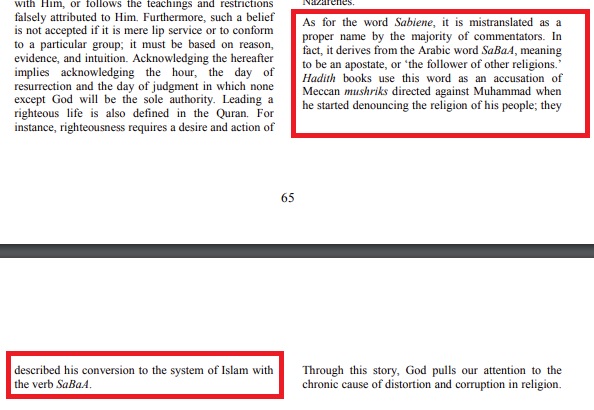




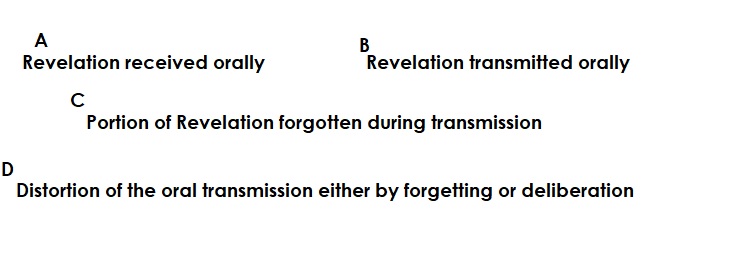
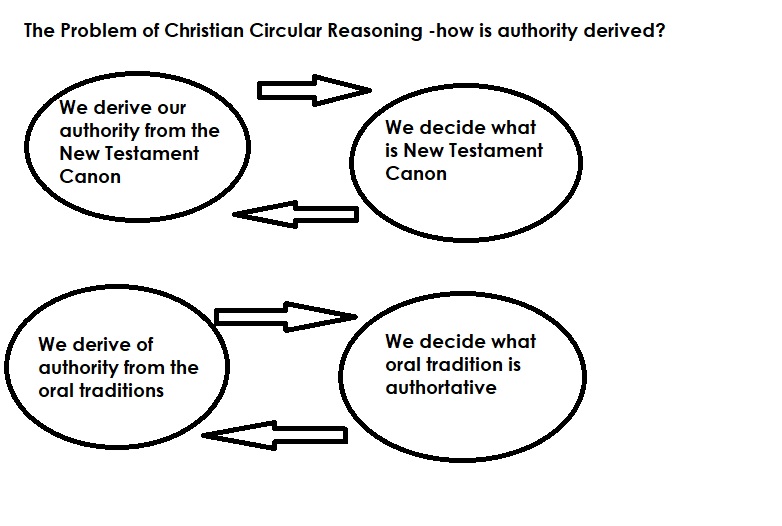
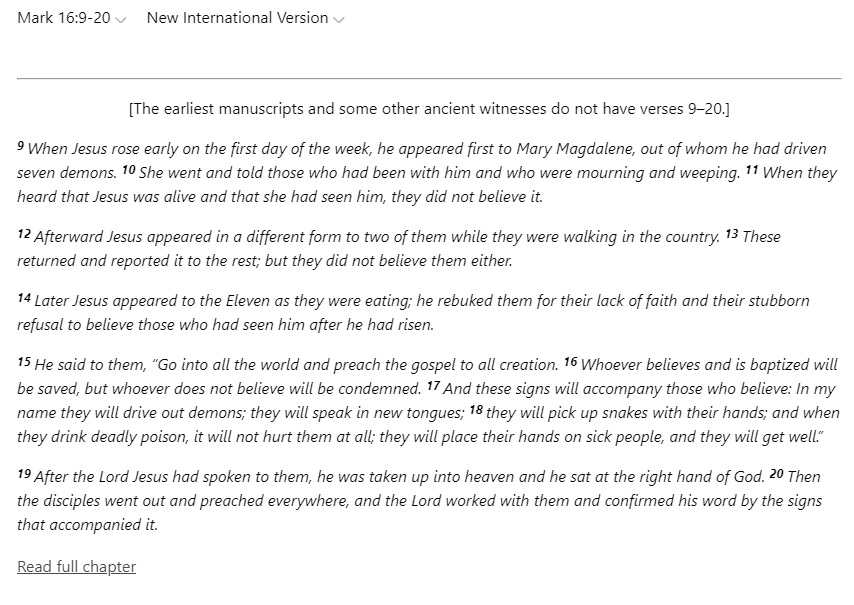


 Prima Quran